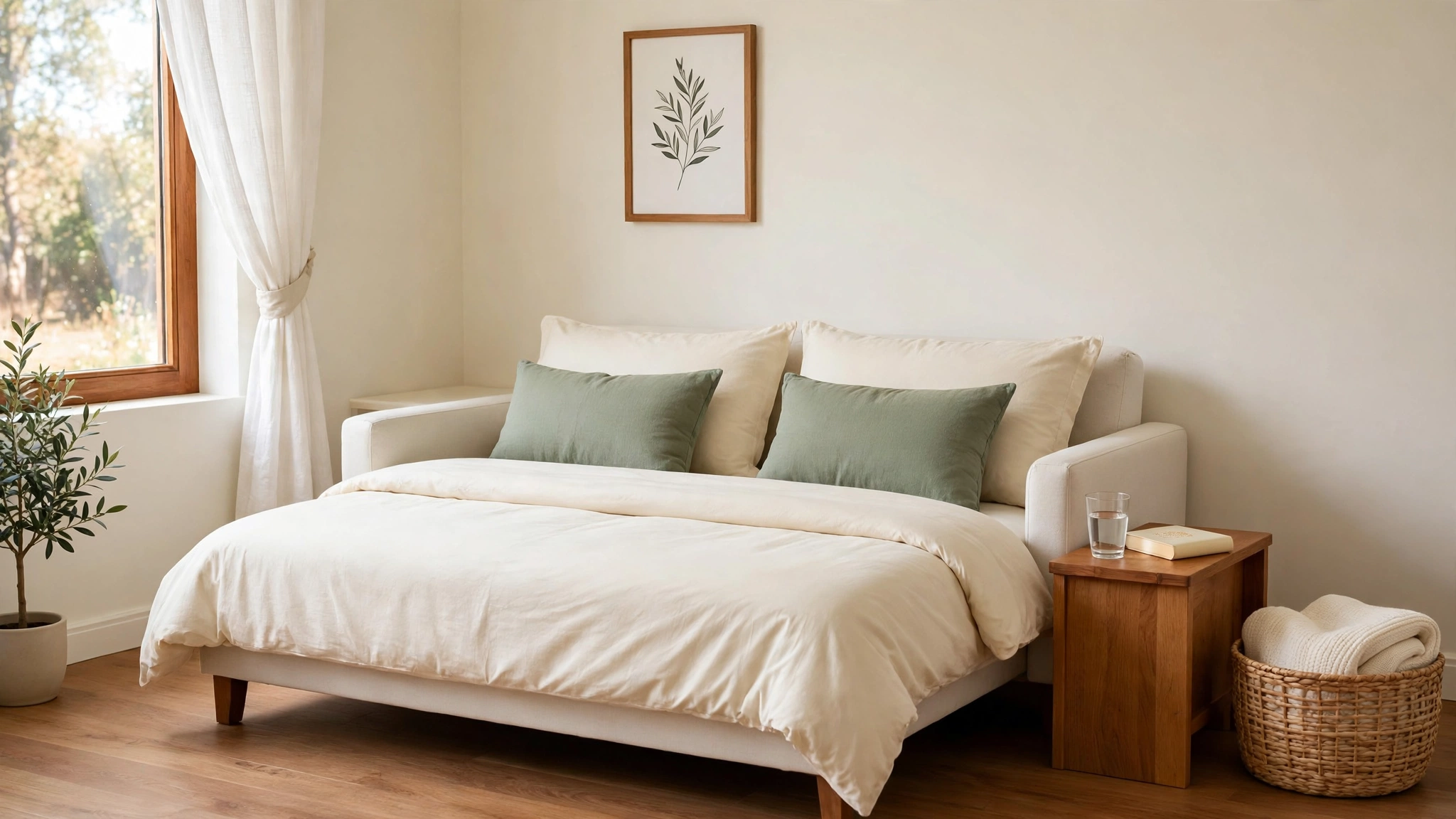
Picture this: a friend calls to say she is in town for the weekend, and instead of panic, you feel calm. You know exactly where she will sleep, where the clean sheets live, and how the living room turns into a cozy guest space in ten minutes. That calm comes from a flexible layout, not from a spare bedroom.
You do not need a dedicated guest room to host people well. You need furniture that converts, bedding that has a home, and a simple routine for flipping a room from everyday use to guest use. These 30 small home layout ideas with flexible guest sleeping spaces will show you how to welcome overnight guests in a small home, whatever rooms you have.
1. Anchor the Living Room With a Pull-Out Sleeper Sofa
A pull-out sleeper sofa is the hardest working guest solution in a small home, because it serves as everyday seating and a real bed in one footprint. By day it holds the living room together as the main sofa, and by night the folded mattress pulls out to a full sleeping surface with proper support. Choose a model with a smooth pull mechanism and a mattress thick enough for a full night of sleep, not just a nap.
Keep the sofa bedding in a lidded basket or a storage ottoman beside the sofa so the changeover takes minutes. A fitted sheet, a flat sheet, two pillows, and a light blanket are all you need for one guest, and the same basket holds them all between visits. When you arrange the rest of the room, leave a clear pull-out zone in front of the sofa, and these small living room layout ideas with two sofas will help you plan seating that still feels balanced when the bed stays folded away.
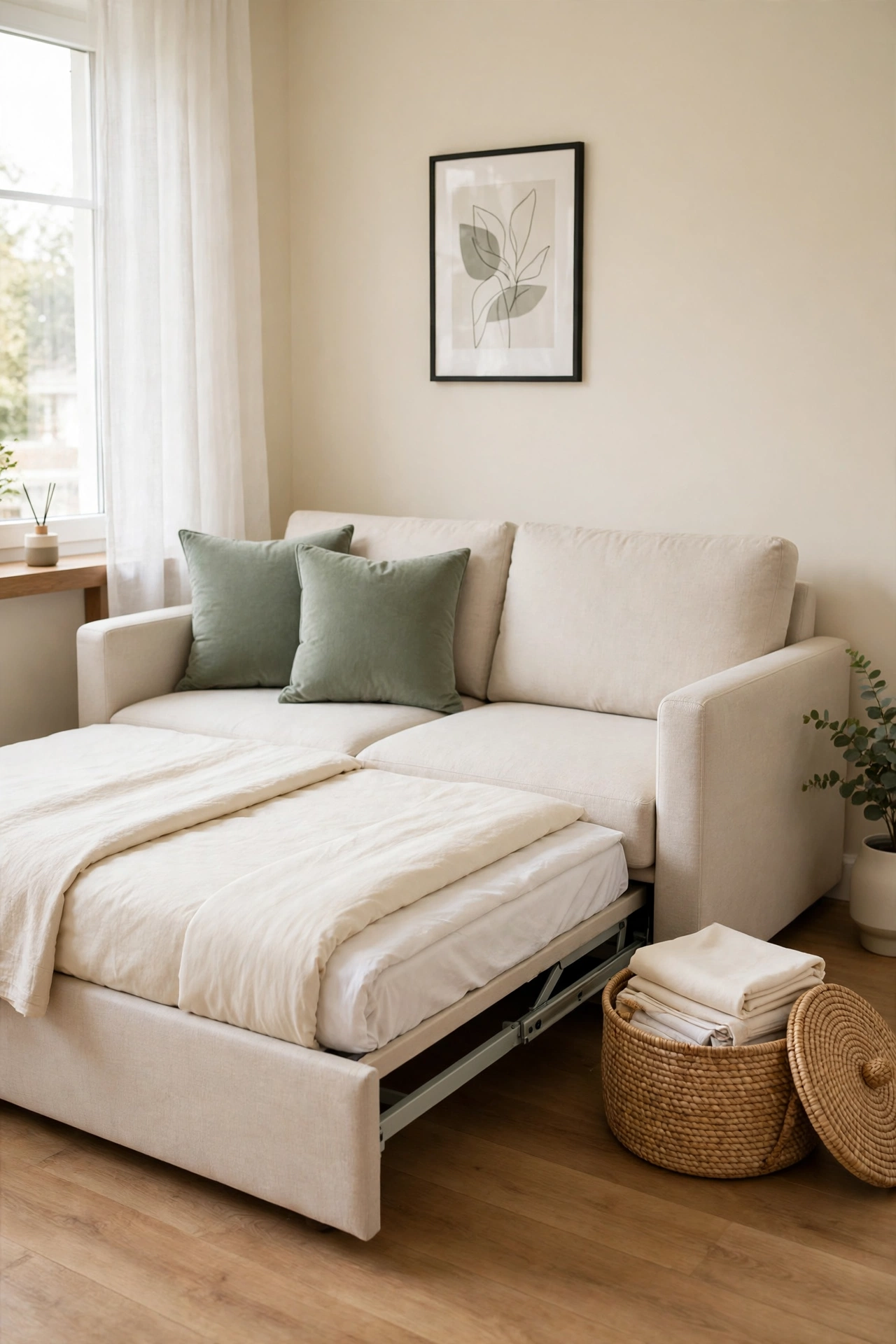
2. Choose a Sleeper Sectional With a Pop-Up Chaise Bed
A sleeper sectional gives you more than a sofa bed, because the chaise section lifts and pops up to extend the sleeping surface. The main sofa pulls out as usual, and the raised chaise fills the gap, so two guests sleep side by side without a center bar or a gap between sections. Sectionals suit open living rooms where one large piece of furniture defines the whole seating area.
Look for a chaise that locks flat at the same height as the pull-out mattress, so the sleeping surface feels level. Store a mattress topper in the sectional storage compartment or a nearby bench to smooth the seams for light sleepers. During the day the chaise is the favorite lounging spot, and at night it becomes the extra width that makes the guest bed genuinely comfortable.

3. Build a Daybed, Trundle, and Guest Closet Zone in the Sunroom
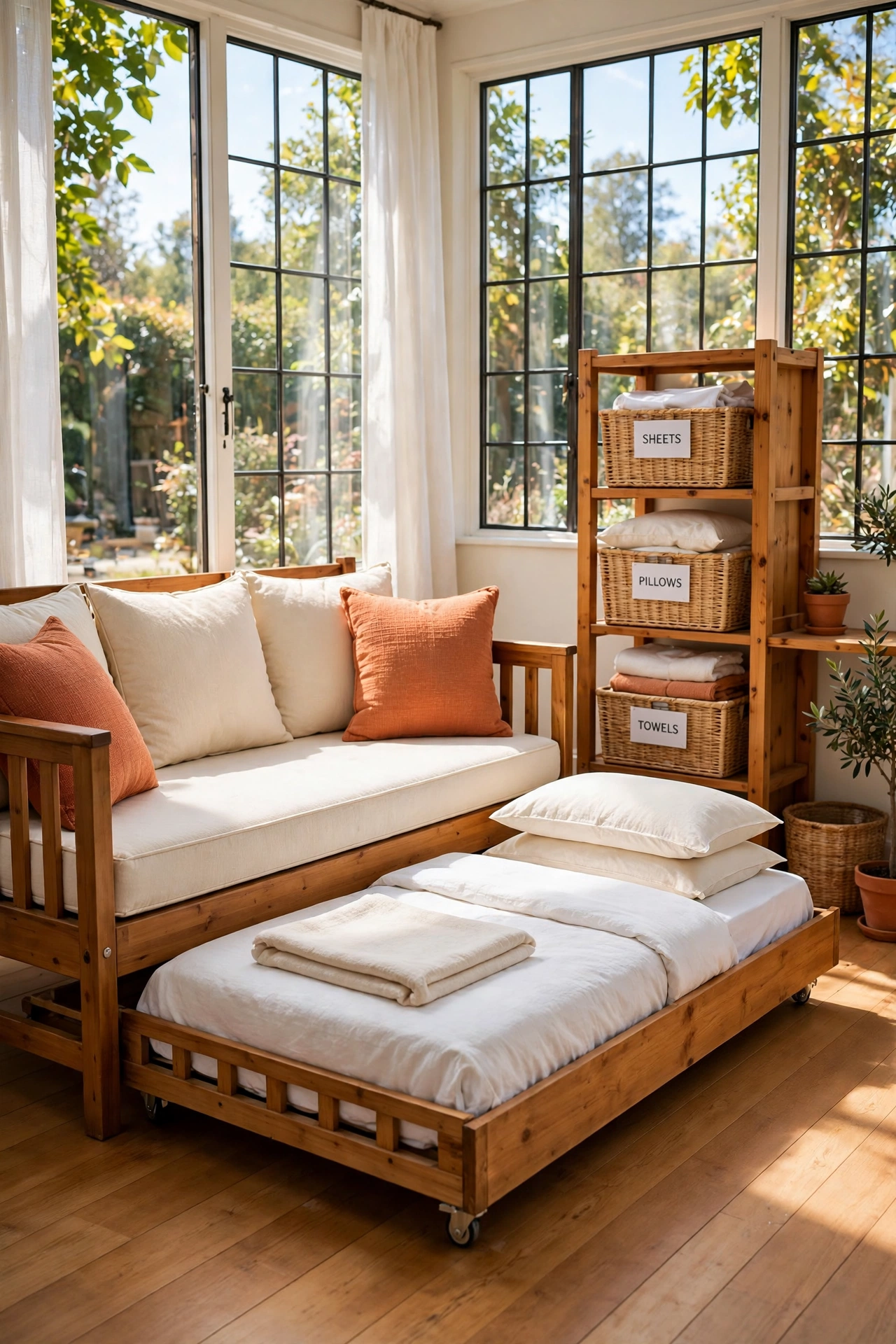
A sunroom becomes a true guest space when three parts work together: a daybed for sitting and sleeping, a trundle that rolls out from beneath it for a second guest, and a small closet zone that holds guest bedding, towels, and a change of clothes. The daybed looks like ordinary sunroom seating during the day, with cushions and a throw, and the trundle stays hidden until it is needed.
Dedicate one shelf or one section of a nearby closet to guest supplies, with labeled bins for sheets, pillowcases, and towels, so nothing gets mixed up with everyday linens. A folding luggage rack leaned against the wall gives guests a place for a suitcase without taking floor space. The three parts together mean the sunroom never needs a full room makeover when someone stays over.
4. Fold a Rollaway Bed Into the Hall Closet
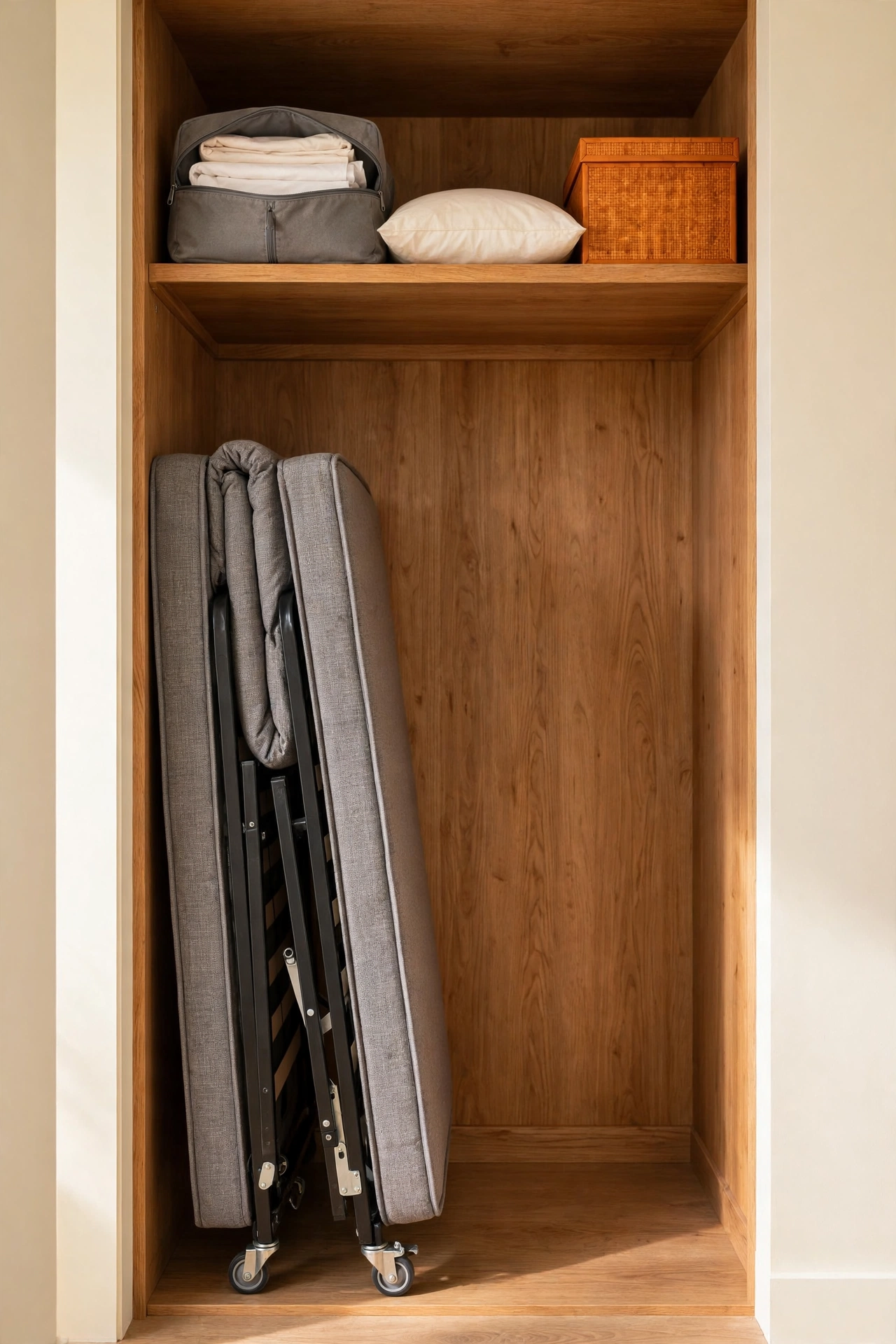
A rollaway bed on wheels is the simplest guest bed to own, because it folds in half and rolls into a closet when the visit ends. Modern rollaways have real mattresses on sturdy frames, so guests sleep at a normal bed height instead of on the floor. The wheels matter more than you think, since they let one person move the bed from closet to living room without help.
Measure the hall closet before you buy, and choose a rollaway that fits standing on its end with the door closed. Keep a small zippered bag of sheets and a pillow on the closet shelf above the bed, so the whole guest setup lives in one place. A rollaway also travels well between rooms, so the same bed can serve the living room, the office, or a bedroom corner depending on who visits.
5. Roll Out a Floor Mattress With a Labeled Storage Bag
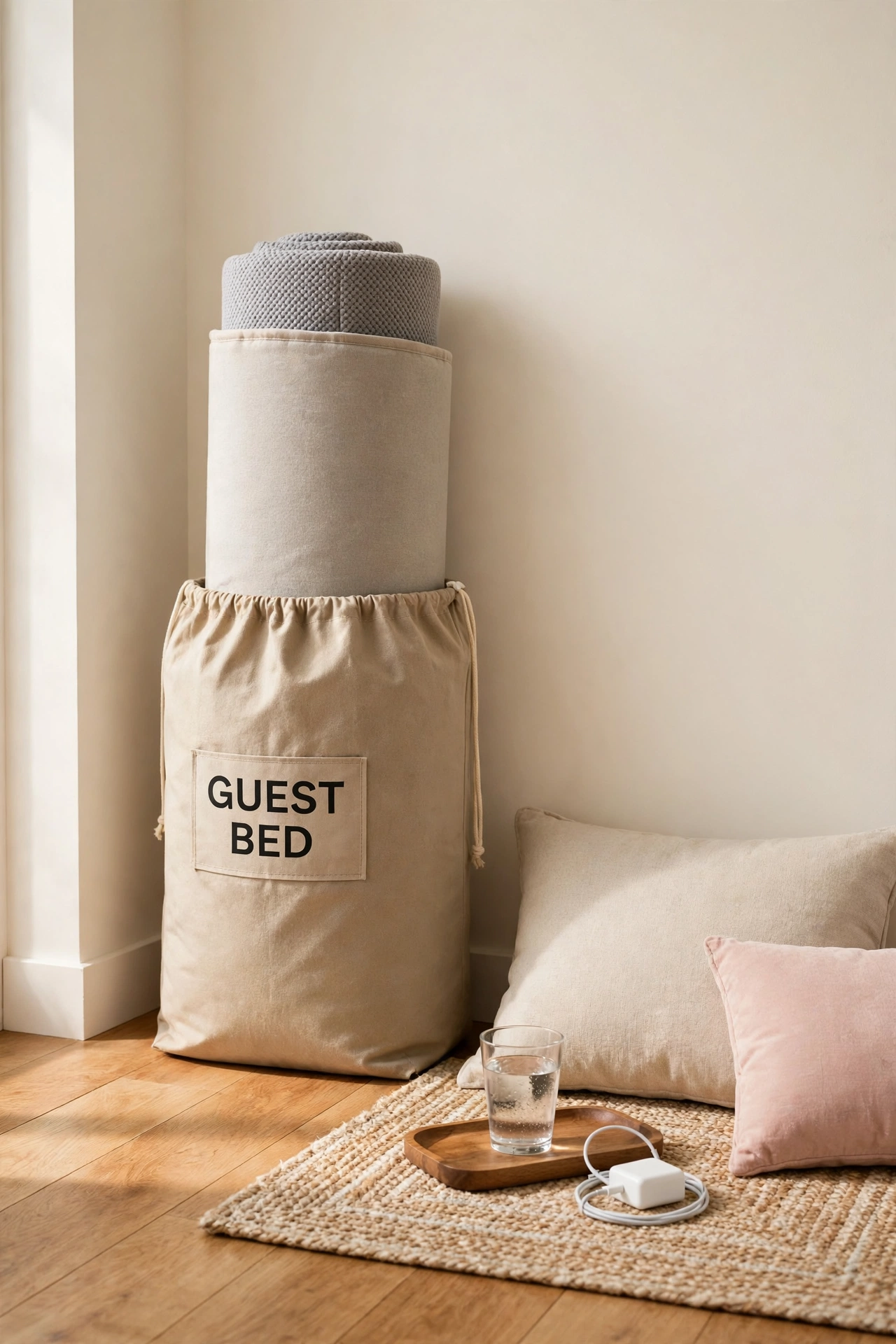
A thick roll-up floor mattress brings guest sleeping to any room with a patch of open floor. Japanese style floor mattresses fold or roll into a compact bundle, and a labeled storage bag keeps the bundle clean and easy to carry from a closet to the guest spot. The low profile suits rooms with low ceilings or spaces where a full bed frame would crowd the furniture.
Pair the floor mattress with a low woven rug underneath for insulation and a firm pillow on top, so the setup feels deliberate rather than improvised. A small tray beside the mattress holds a glass of water, a phone charger, and a reading light. When the guest leaves, the mattress rolls up, the bag goes back on its shelf, and the room returns to normal in minutes.
6. Open a Convertible Ottoman Into a Single Bed
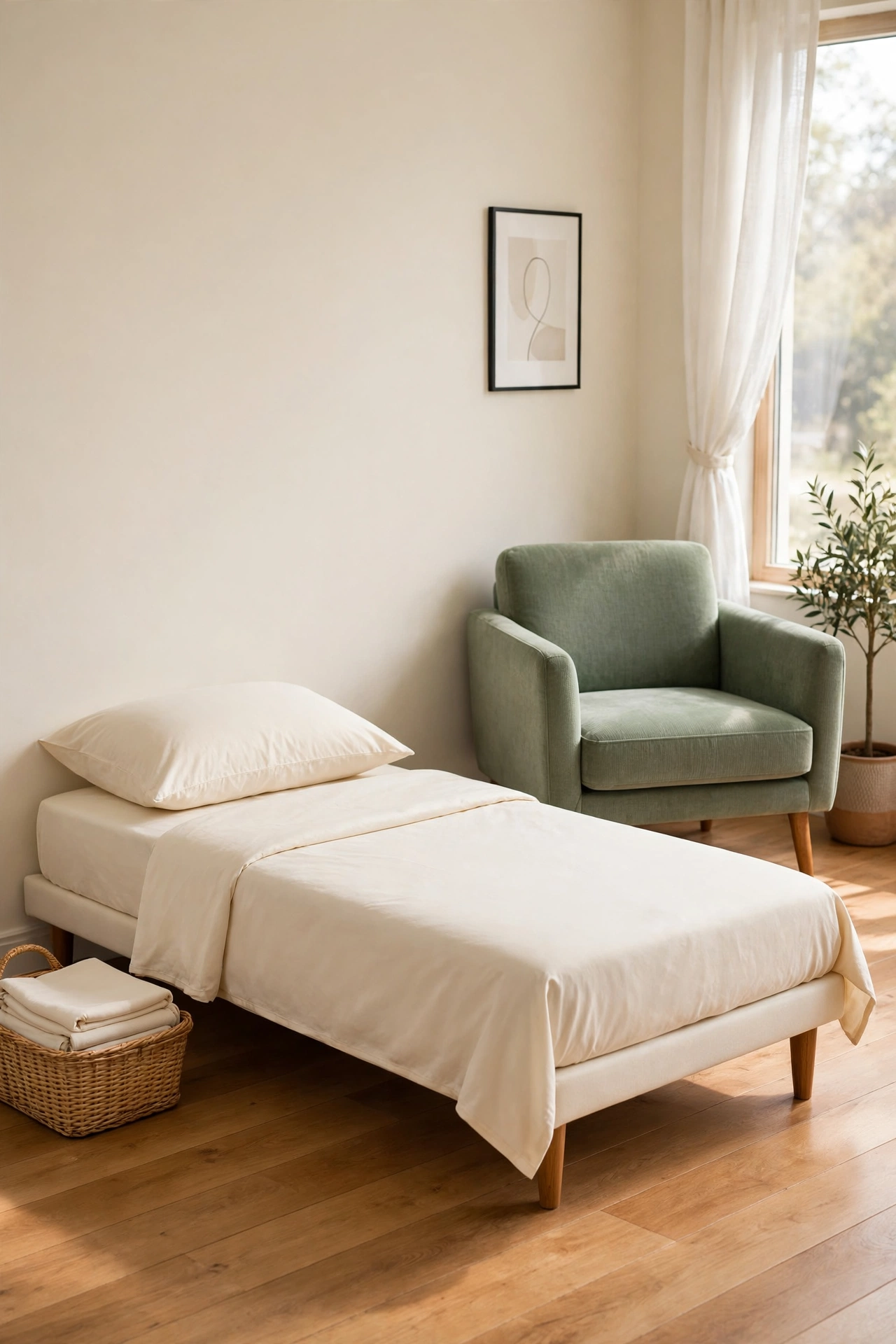
A convertible ottoman hides a single bed inside a piece of furniture you already use every day. The top lifts or the sides fold down, and a slim mattress unfolds to a full single sleeping surface at a comfortable height. Ottomans work best for one guest, which makes them ideal for a friend staying over or a grandchild visiting for the weekend.
Place the ottoman where it serves as a footrest or extra seat during the day, such as beside an armchair or at the end of a sofa. Store a sheet set and a pillow inside the ottoman if it has room, or in a basket directly beside it. The changeover is quiet and quick, which matters when a guest arrives late and you want the room ready without a production.
7. Store a Tri-Fold Mattress Behind a Door
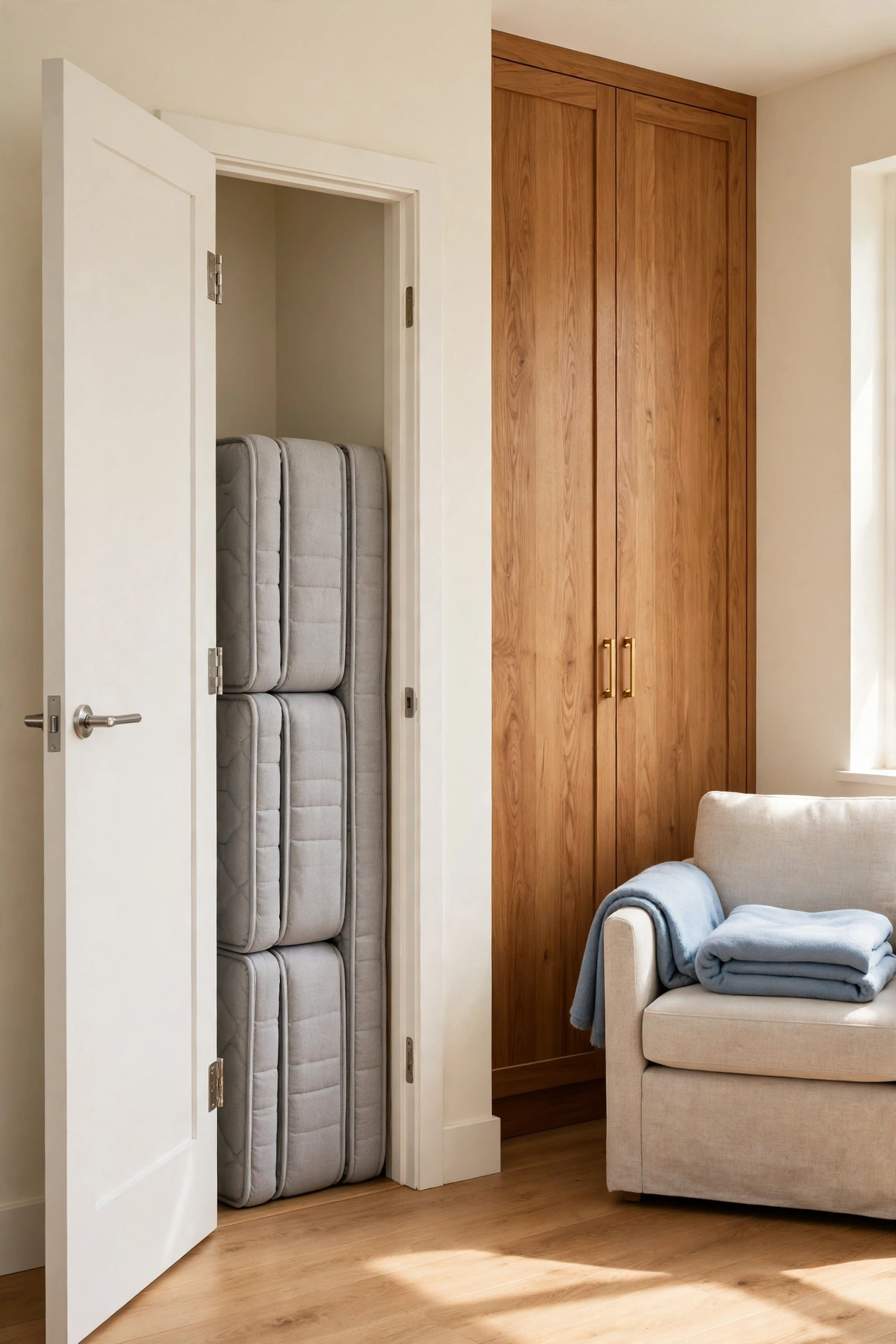
A tri-fold mattress folds into three stacked sections, so it stores in a narrow gap that a regular mattress never could. The space behind a bedroom door, between a wardrobe and a wall, or inside a deep closet can hold a folded tri-fold mattress upright and out of sight. The mattress unfolds in seconds and lies flat on the floor with no frame needed.
Choose a tri-fold with a washable cover, since floor mattresses pick up more dust than raised beds. A fitted sheet keeps the cover clean between washes, and a slim storage cover protects the folded mattress while it waits. Tri-folds are light enough for one person to carry, so a guest can even set up the bed without help.
8. Fold a Futon Flat in the Family Room
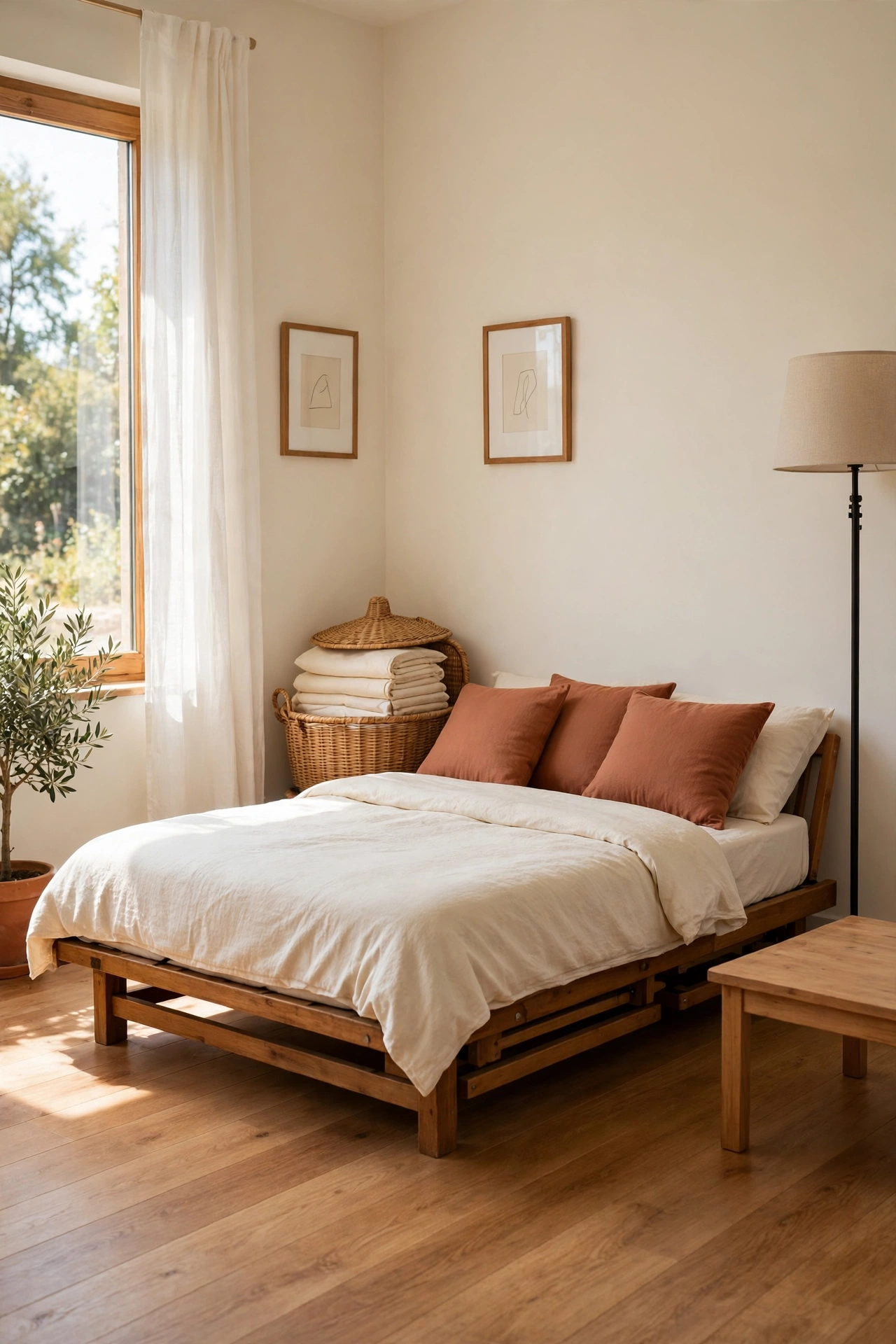
A futon frame that folds flat turns a family room into a guest room with one smooth motion. The frame sits upright as a sofa for movie nights and game nights, then folds down to a flat sleeping surface when a guest stays over. A thick futon mattress with cotton and foam layers sleeps far better than the thin futons of the past, so guests wake up rested.
Anchor the futon with a low coffee table that moves aside easily and a floor lamp that swings over for reading. A lidded basket behind the futon holds the sheet set and a spare blanket, so the room never needs a linen run at bedtime. Futons suit family rooms because the same piece handles daily lounging and occasional sleeping without a second piece of furniture.
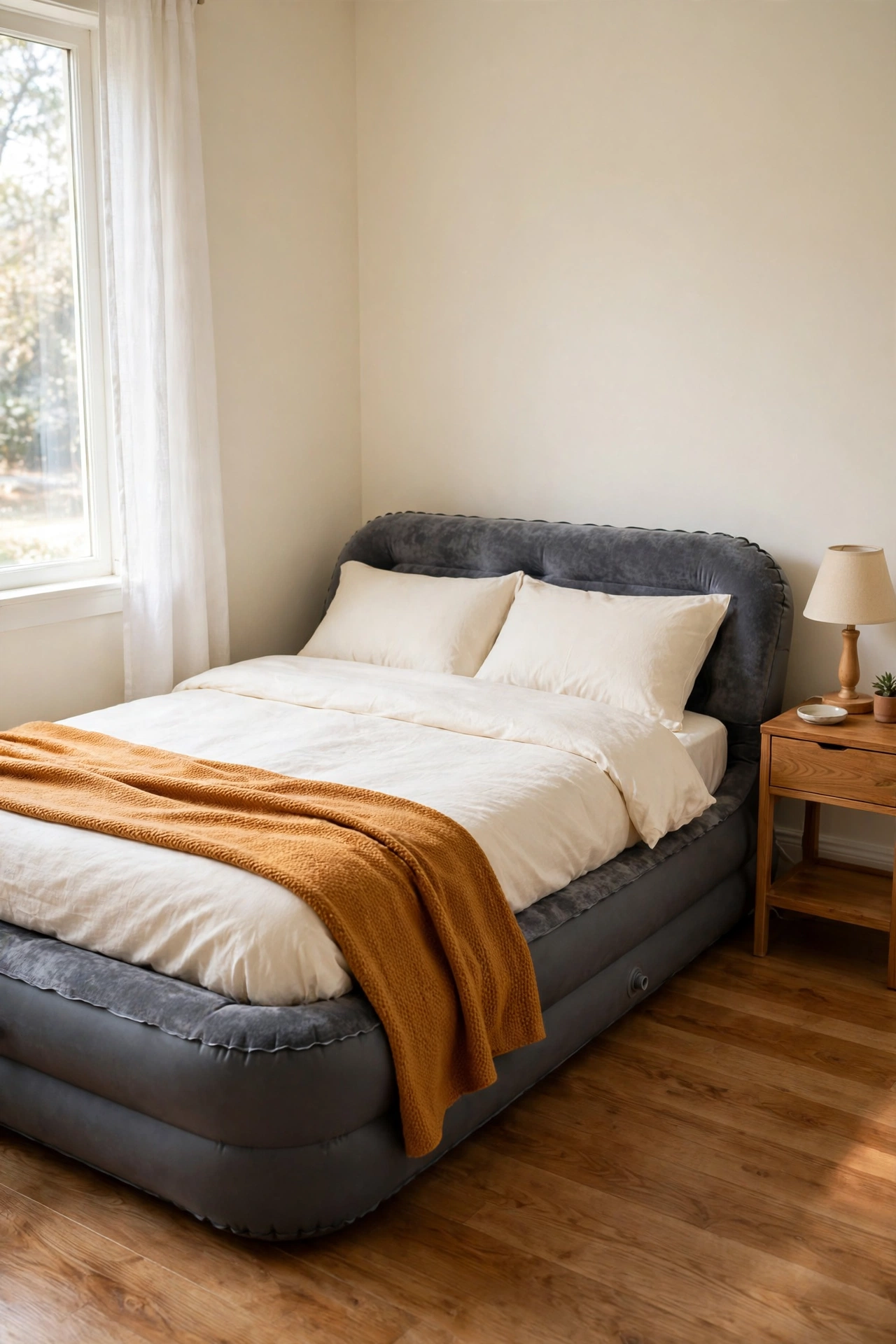
9. Inflate a Raised Air Bed With a Built-In Pump
A raised air bed with a built-in pump inflates to the height of a regular bed in under five minutes, and the pump runs off a wall outlet with no separate equipment. The height matters, because guests can sit on the edge and stand up easily, just like a real bed. Modern air beds have flocked tops that hold sheets in place and internal coils that keep the surface level through the night.
Store the deflated bed in its own box or a labeled bin on a closet shelf, with the power cord wrapped and the repair patch tucked inside. A fitted sheet and a mattress protector make the air bed feel like a proper guest bed rather than camping gear. When the visit ends, the built-in pump deflates the bed just as fast, and the room is back to normal before breakfast.
10. Unfold an Armchair Into a Twin Bed
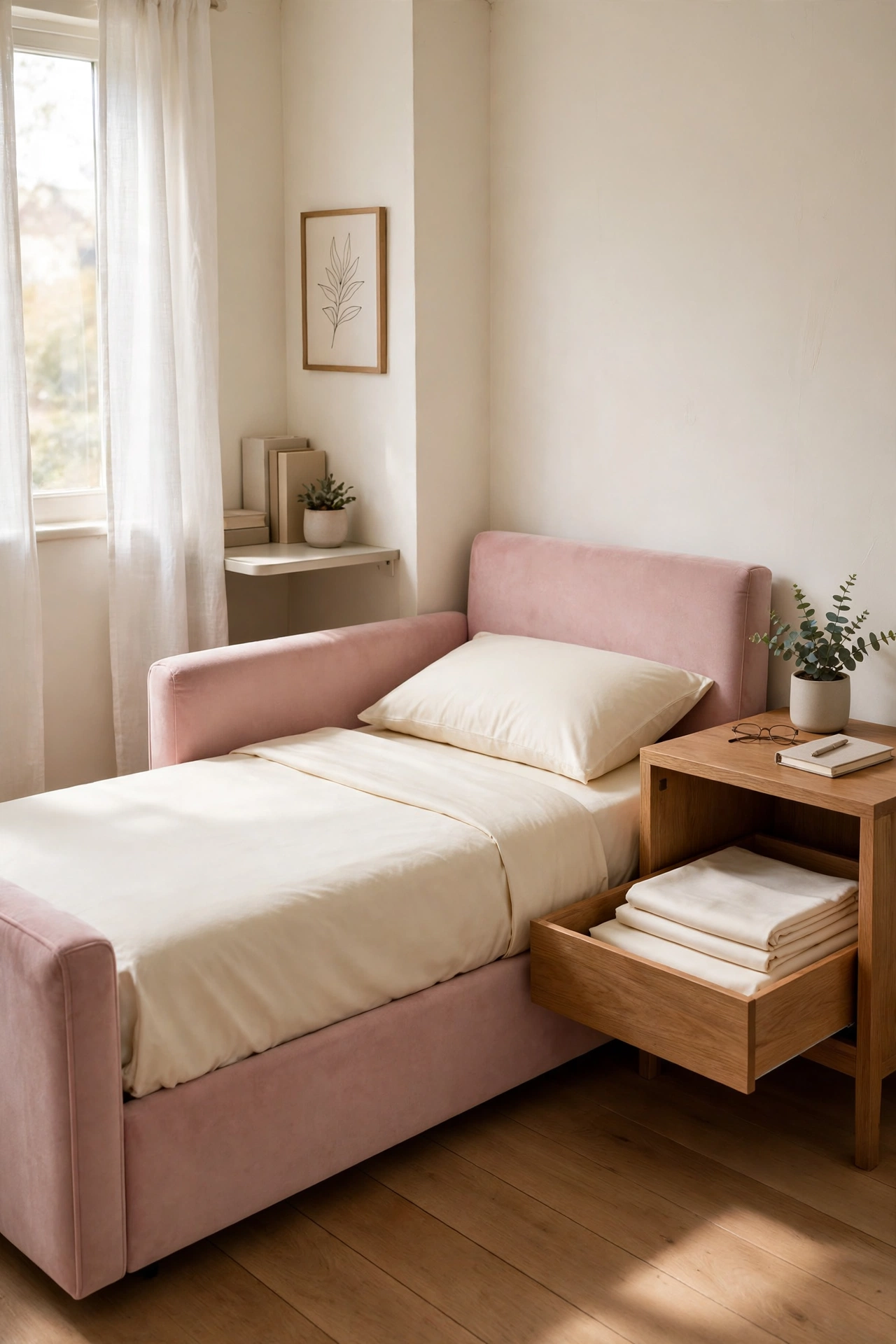
A chair bed looks like an ordinary armchair until the seat pulls forward and unfolds into a narrow twin bed. The compact size suits a single guest in a small room, a study corner, or a den where a full sofa bed would never fit. The chair earns its place every day as reading seating, so it never feels like single-purpose furniture.
Test the unfolding mechanism in person if you can, since a smooth pull matters more than the fabric pattern. Keep a slim sheet set and a compressible pillow in the drawer of a side table beside the chair, so the guest setup stays within arm’s reach. A chair bed is also the kindest option for a guest who arrives unexpectedly, because the room is ready in under a minute.
11. Run a Home Office by Day and a Guest Room by Night
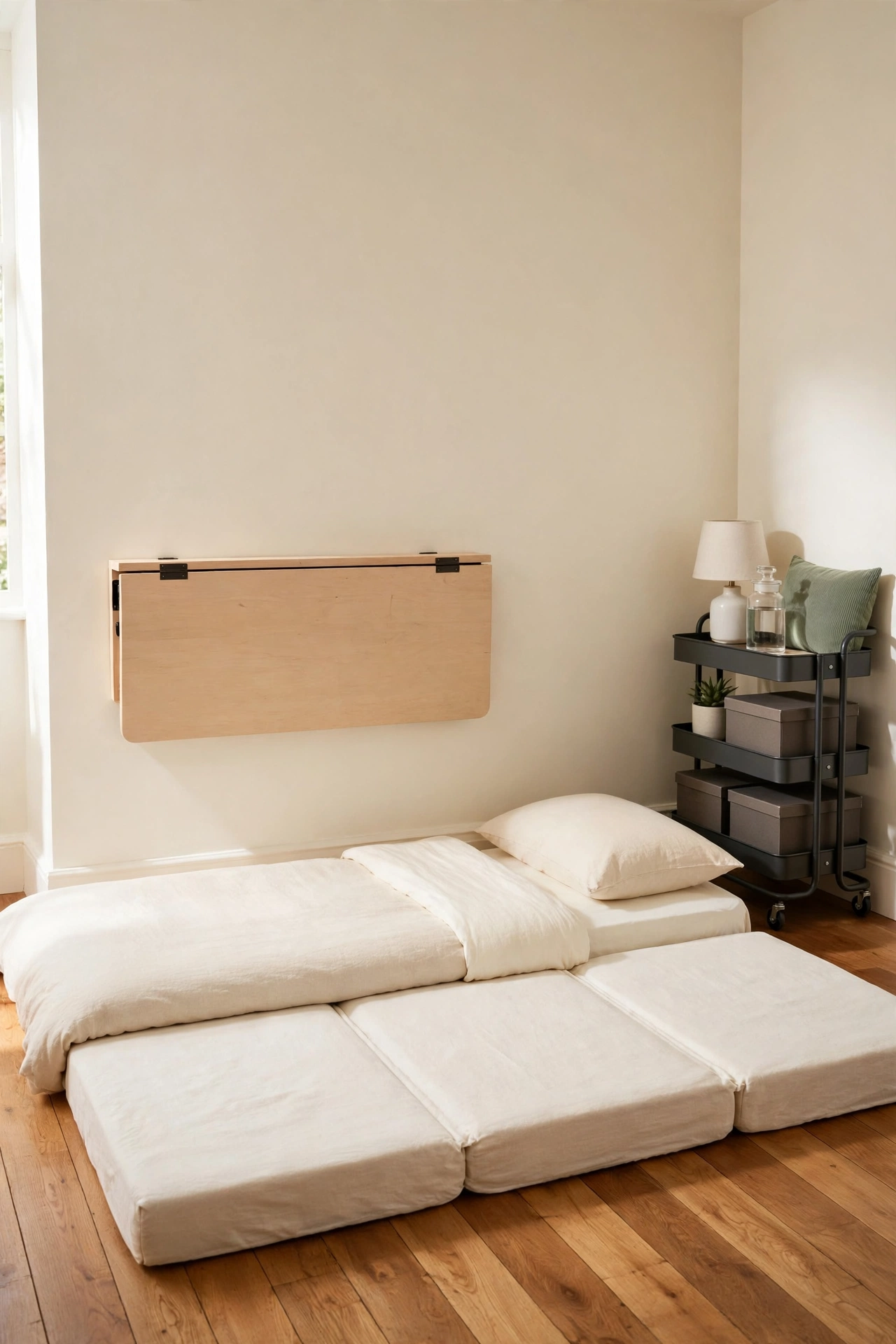
A home office converts to a guest room when the desk folds away and the floor clears for a bed. A wall-mounted drop-leaf desk or a folding desk on casters moves against the wall in seconds, and a tri-fold mattress or rollaway takes the freed floor space. The office chair tucks into a corner, and the room shifts from work mode to sleep mode without moving heavy furniture.
Keep office supplies in closed boxes or a rolling cart that slides into a closet, so the guest never sleeps beside a pile of paperwork. A small bedside setup rides on the same cart: a lamp, a water carafe, and a charging cable. If you plan the office with this double life in mind, these small home office layout ideas will help you place the desk, storage, and open floor in the right balance from the start.
12. Clear the Dining Room for a Rollaway at Night
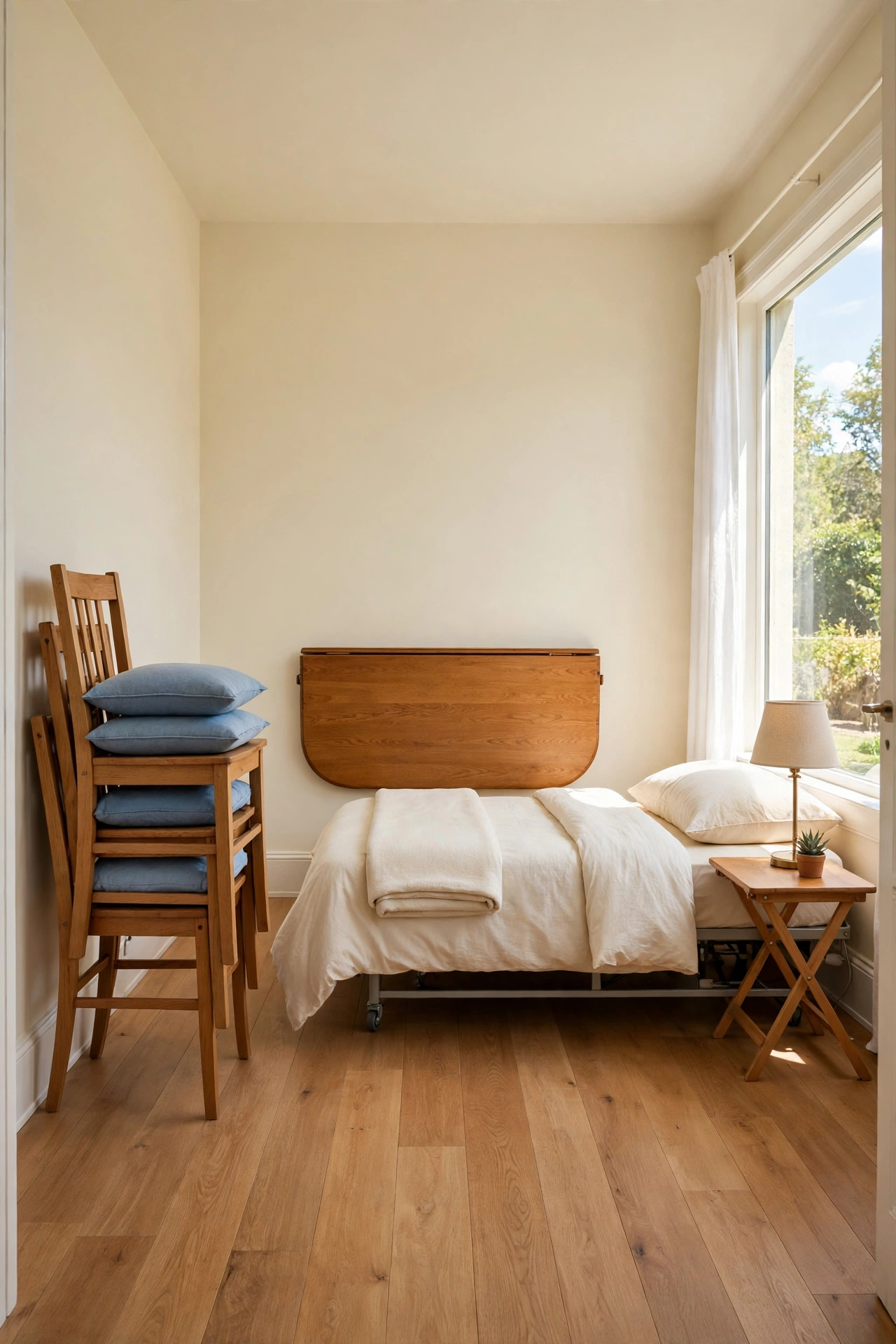
A dining room with a drop-leaf table and stackable chairs clears for a guest bed in minutes. The table leaves fold down, the chairs stack against the wall, and a rollaway bed rolls into the open center of the room. Dining rooms often sit empty after dinner, so the space is already free when a guest needs it most.
Choose a rollaway that fits the cleared floor with walking room on one side, so the guest can get in and out without climbing over furniture. A small folding side table beside the bed holds a lamp and a glass of water, and the dining room curtains give the guest a sense of enclosure. In the morning the bed folds away, the table opens up, and breakfast happens in the same room.
13. Convert a Craft Room for Overnight Guests
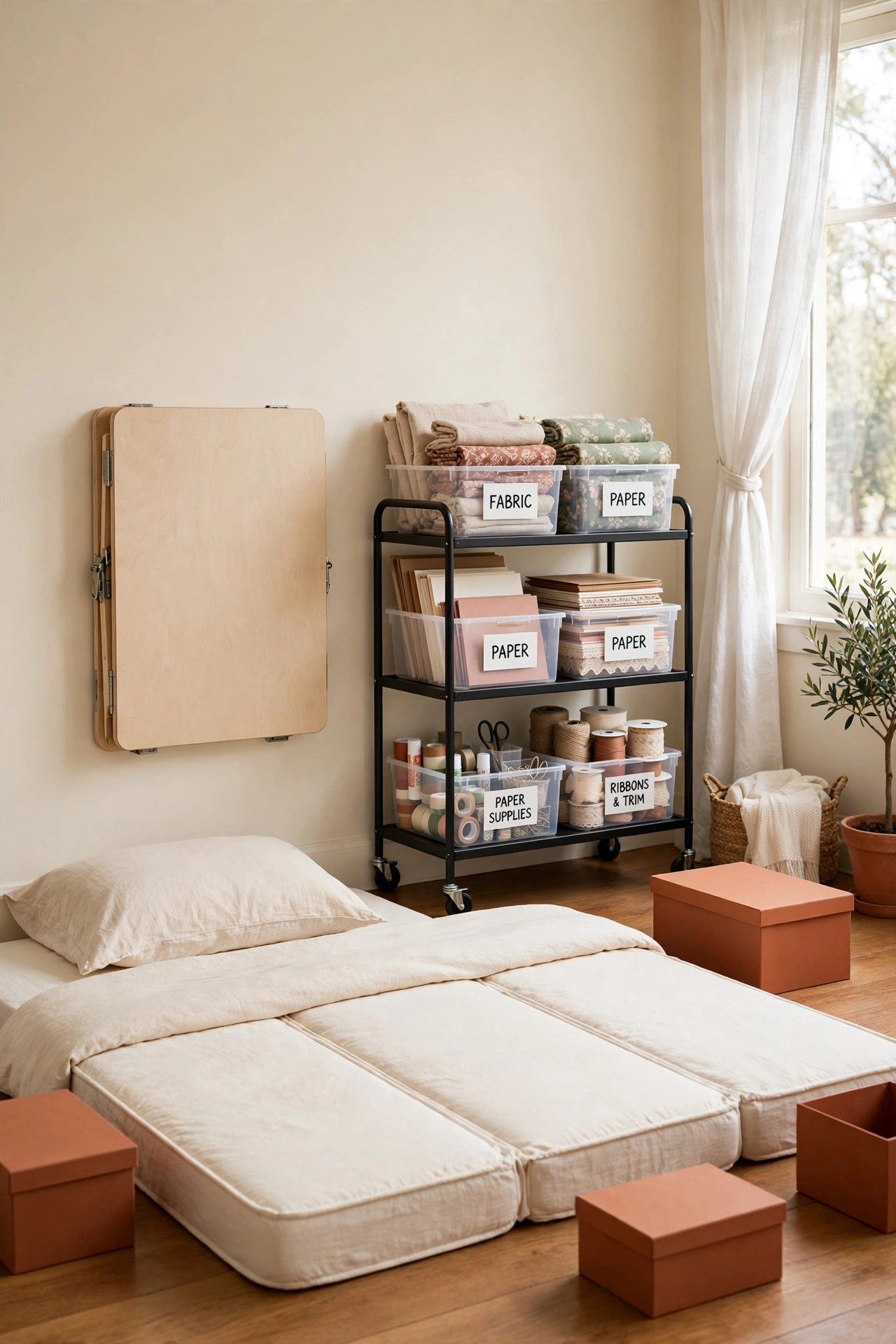
A craft room converts for guests when the work table folds and the supplies roll away. A folding craft table collapses against the wall, and a rolling cart carries fabric, paper, and tools into a closet or a hallway corner. The cleared floor takes a tri-fold mattress or a folding guest bed, and the room that held a sewing project in the afternoon holds a sleeping guest by evening.
Store craft supplies in labeled bins on the cart so nothing fragile sits out where a guest might knock it over. A small basket of guest basics rides on top of the cart when it leaves: a towel, a toothbrush still in its wrapper, and a spare phone charger. The craft room keeps its identity, and the guest gets a real room with a door that closes.
14. Place a Folding Guest Bed in the Primary Bedroom Corner
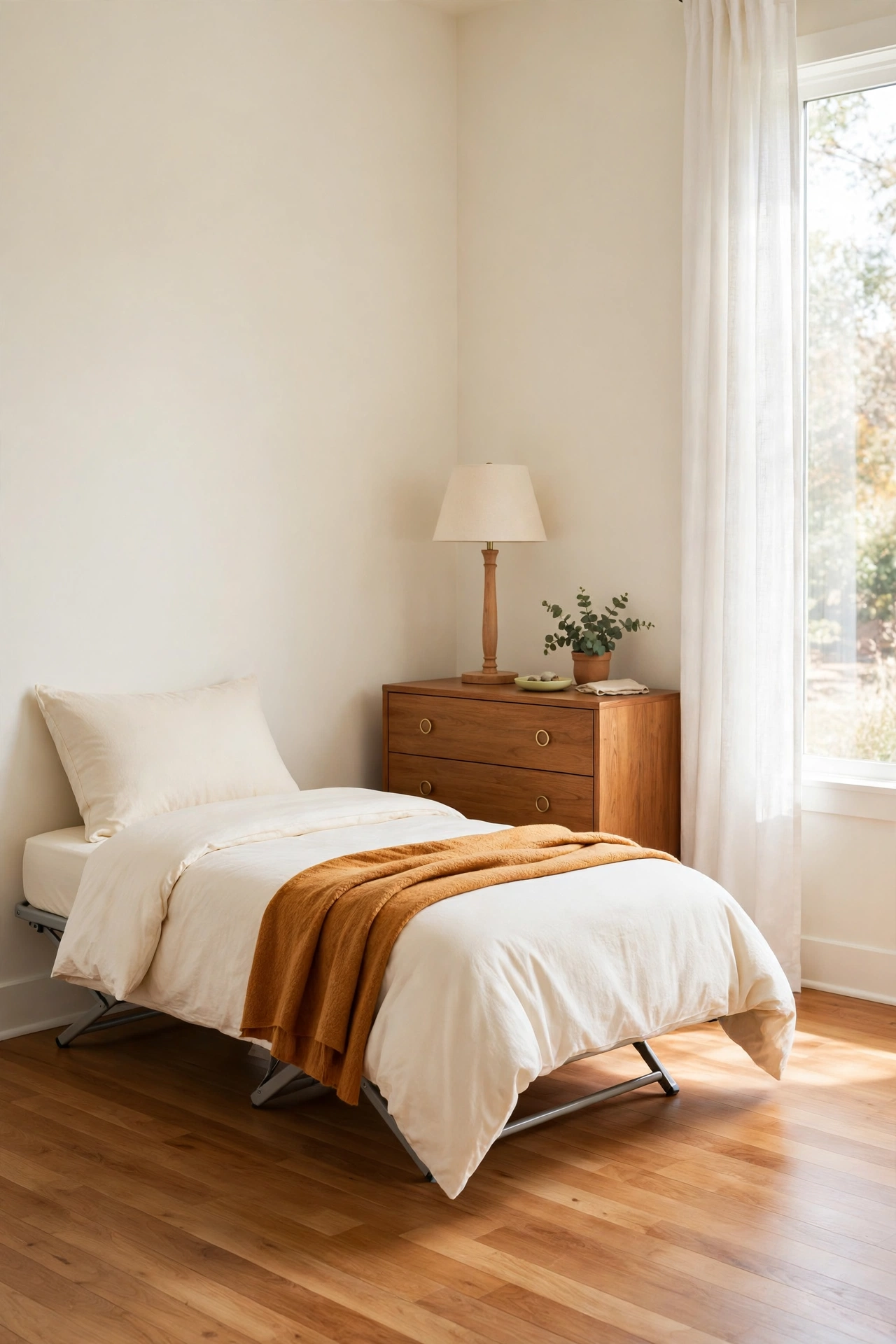
A folding guest bed in the corner of a large primary bedroom gives a visiting parent a place to stay close, which matters when the visitor is older or needs a hand during the night. The bed folds flat with legs tucked in, so it leans against a wall or slides into a closet when it is not in use. A small dresser and a reading lamp beside the corner make the spot feel like a planned part of the room rather than an afterthought.
Choose a folding bed with a full mattress rather than a camp cot, since the guest may stay for several nights. If your home later gains a spare room of its own, these small guest room layout ideas will help you plan a dedicated space, and the same folding bed can move there as a permanent guest bed.
15. Stock Guest Bedding Bins in the Hall Linen Closet
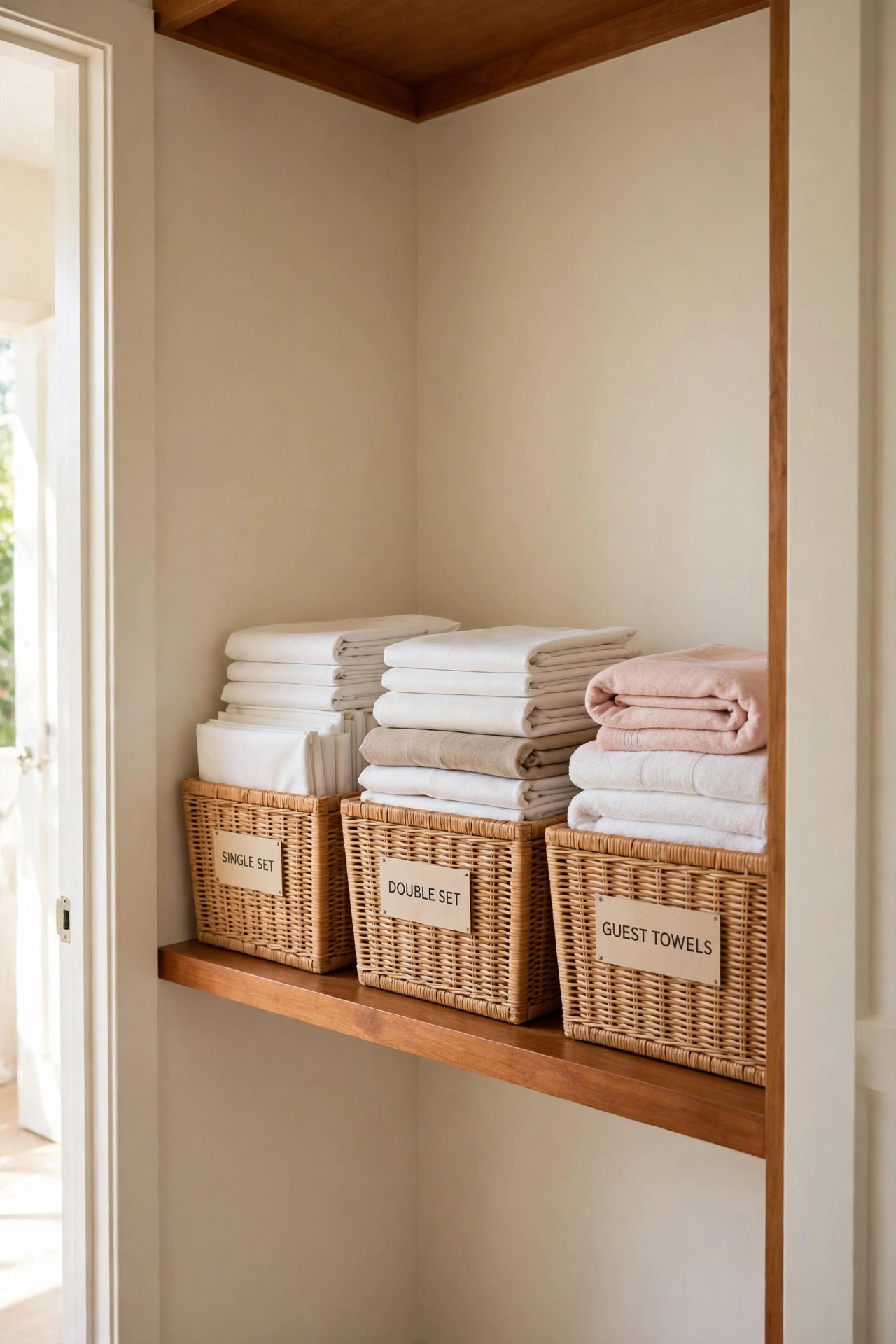
A guest bedding system starts in the linen closet, where one labeled bin per guest holds a complete sheet set, a pillowcase, and a folded blanket. The bins stack on one shelf, so the whole guest supply lives in a single column that you can see at a glance. When a guest arrives, you pull one bin per person and the bed is made without hunting through household linens.
Label each bin with its contents and its size, such as double sheet set or single sheet set, so anyone in the household can make up a guest bed. Wash and return the contents to the same bin after each visit, and the system resets itself. A linen closet organized this way also shows you at a glance when a set needs replacing, because the empty bin is impossible to miss.
16. Set Out a Guest Welcome Kit in a Labeled Basket
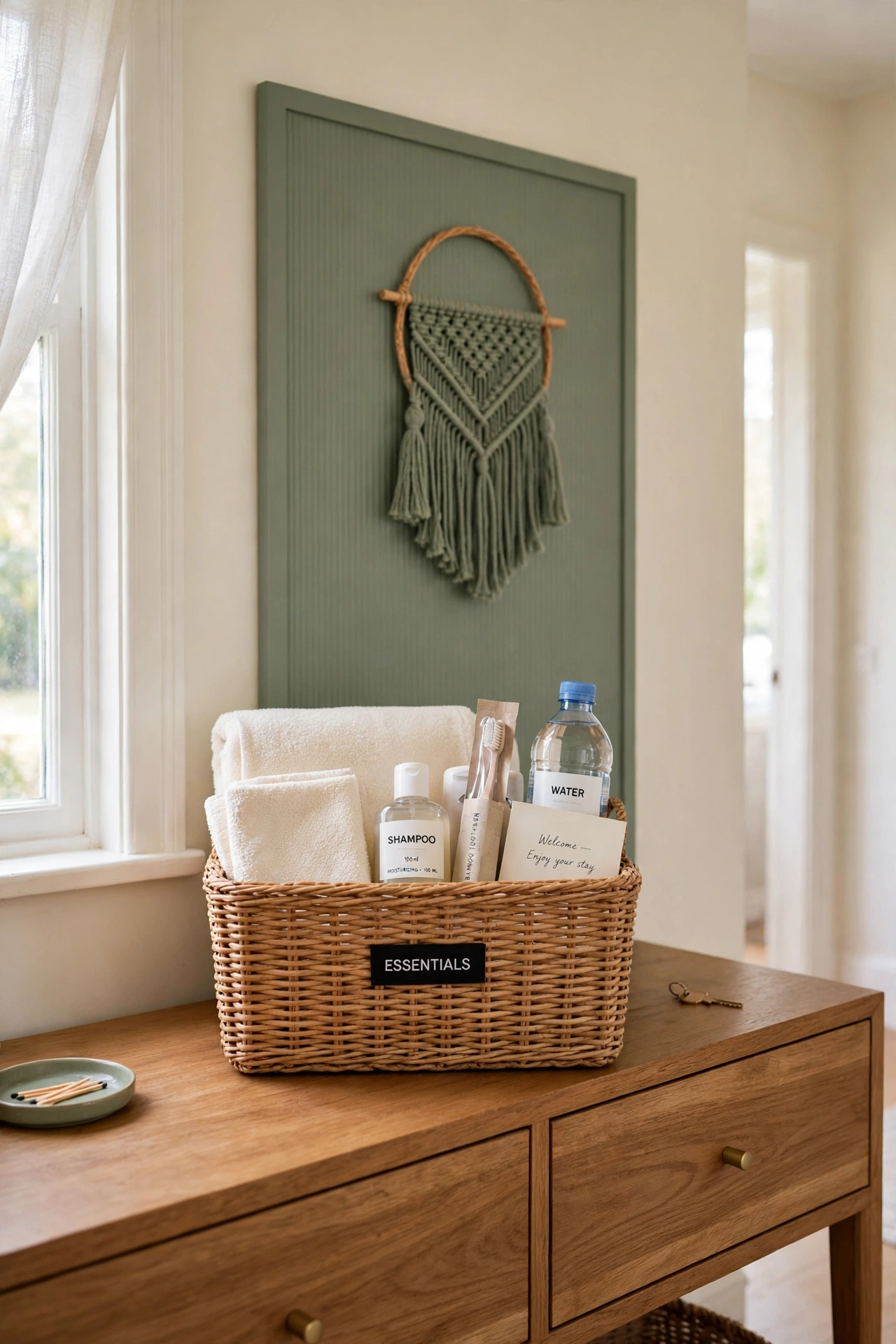
A welcome kit in a labeled basket tells a guest that their stay was planned, not improvised. The basket holds a folded towel, a washcloth, a small bottle of shampoo, a toothbrush still in its wrapper, and a bottle of water. The guest finds everything in one place instead of asking for each item, which puts a shy visitor at ease.
Keep the basket on a closet shelf or a hallway console, ready to carry to whichever room the guest will use. Refill the consumables after each visit and launder the towel and washcloth, so the kit is always ready for the next arrival. A small card with the Wi-Fi password tucked into the basket answers the most common guest question before it is asked.
17. Offer a Folding Luggage Rack and an Empty Drawer
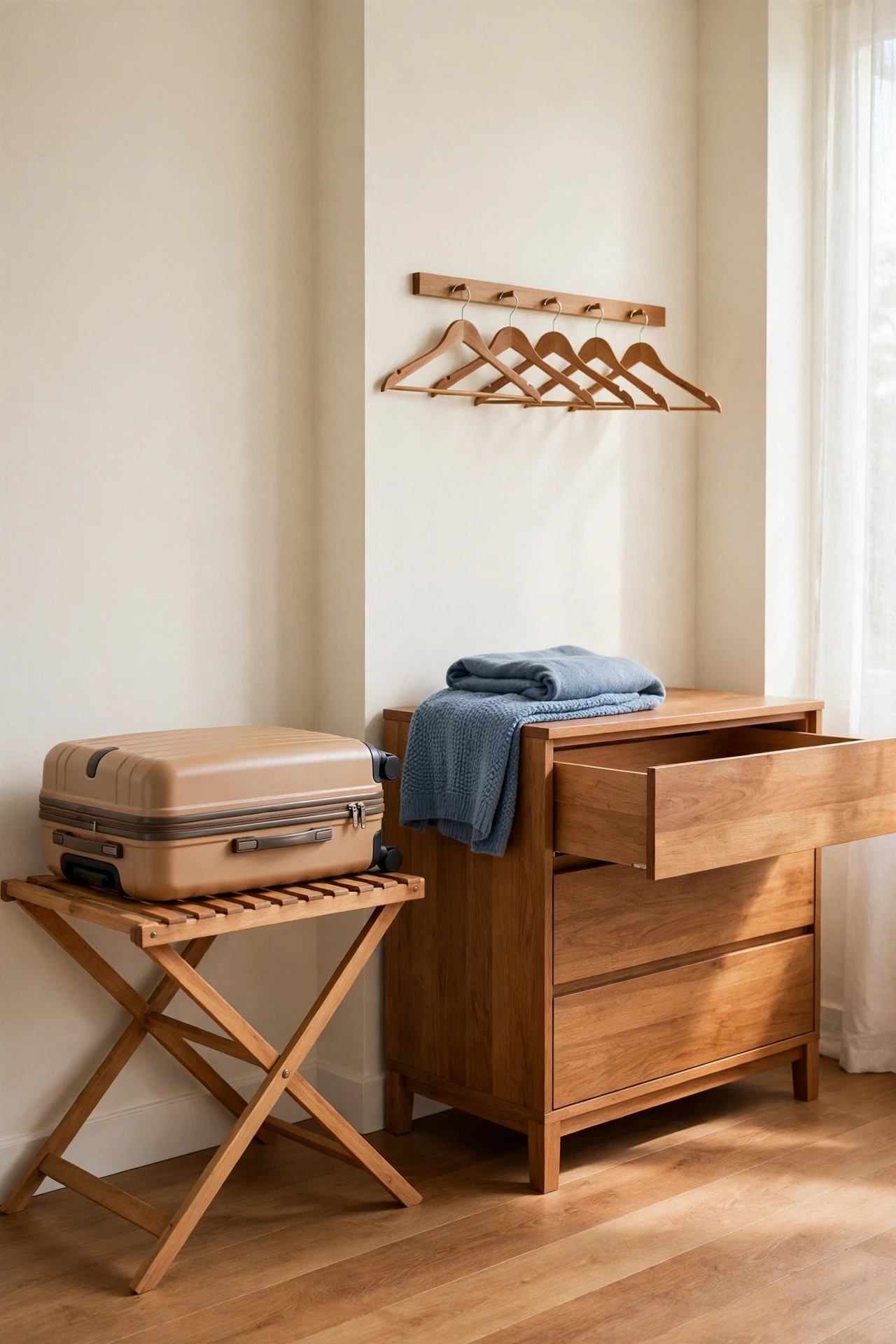
A folding luggage rack gives a guest a proper place for a suitcase, which keeps bags off the bed and off the floor. The rack folds flat and leans in a closet when it is not needed, and it opens in seconds beside any guest bed. An empty drawer in a dresser or a clear shelf in a closet completes the setup, so the guest can unpack a few items instead of living out of a bag.
Keep one drawer empty on purpose, even when storage feels tight, because an unpacked guest settles in faster and sleeps better. A few empty hangers on a hook or a closet rod handle the clothes that wrinkle easily. These two small gestures cost almost nothing and make a convertible guest space feel as welcoming as a dedicated room.
18. Pack a Portable Blackout Kit for Bright Guest Corners
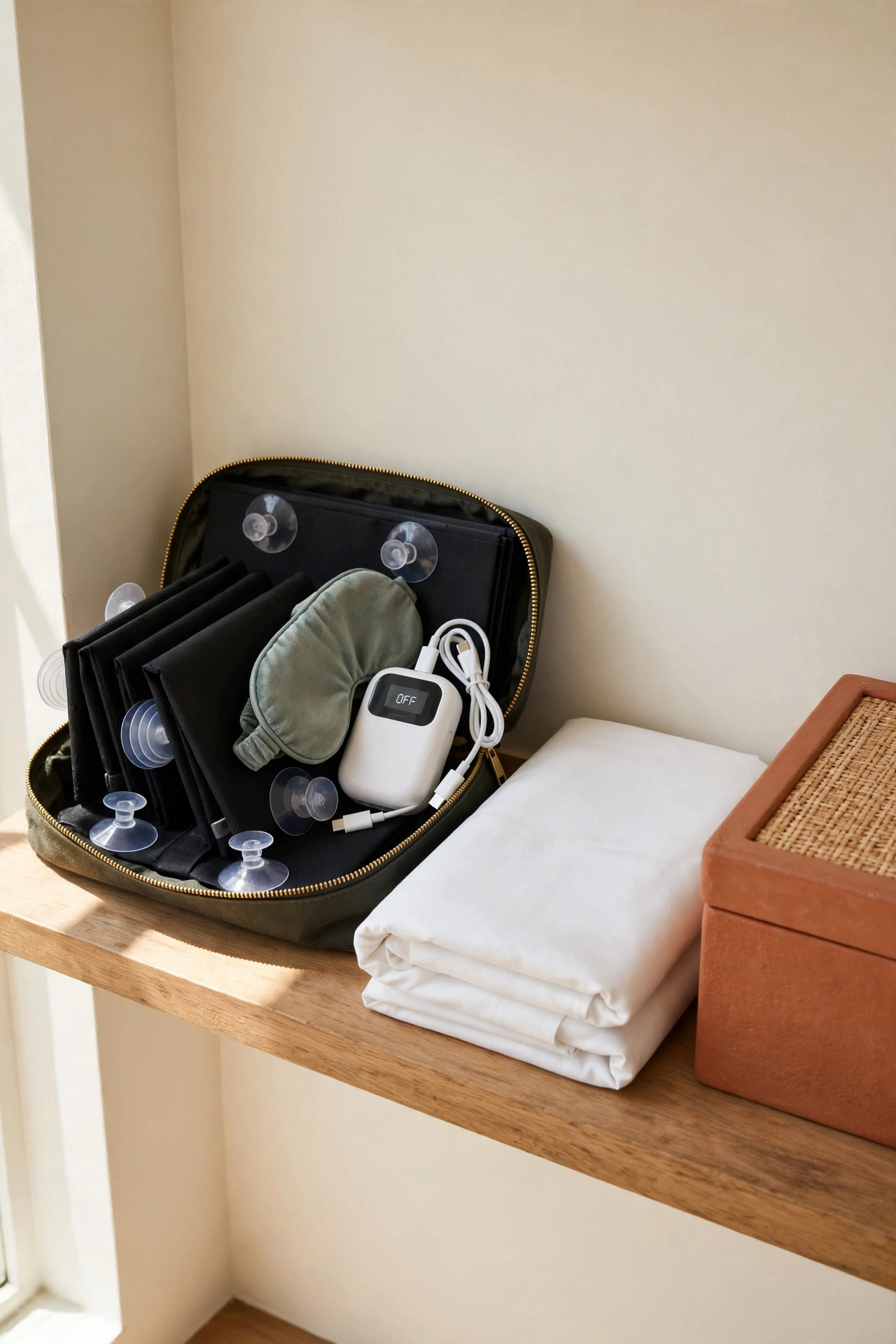
Guest sleeping spots in living rooms and sunrooms often face streetlights or early morning sun, so a portable blackout kit earns its keep. The kit holds suction-cup blackout panels that press onto a window, a soft sleep mask, and a small white noise machine with a charging cable. Everything packs into one zippered pouch that lives with the guest bedding bins.
The blackout panels suit renters especially well, since they need no screws, no drilling, and no permanent hardware. The white noise machine masks household sounds in the morning, so the guest sleeps through breakfast preparation in the next room. A guest who sleeps well remembers the visit fondly, and this small kit is often the difference.
19. Build a Guest Charging and Wi-Fi Station on a Side Table
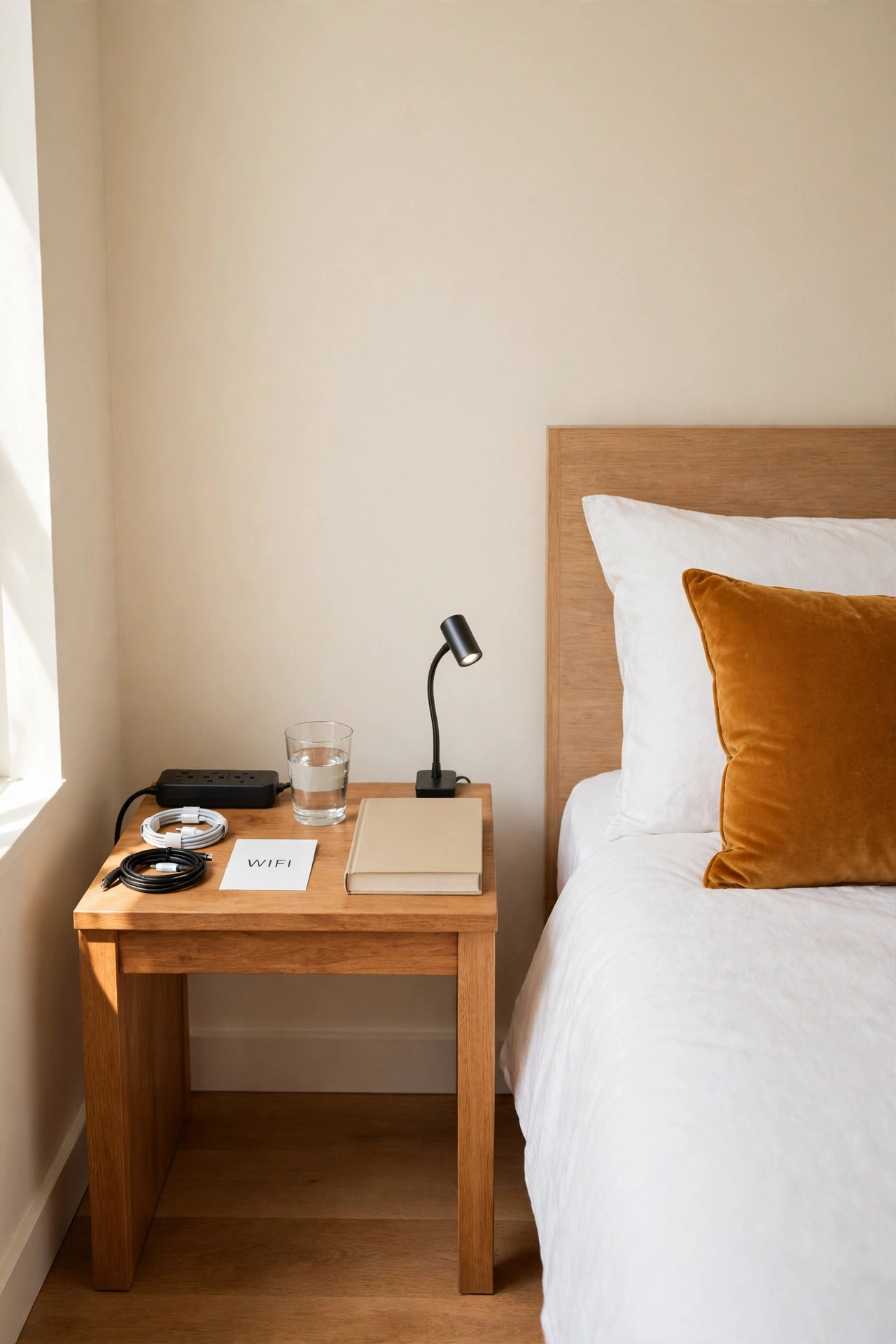
A small side table beside any guest bed becomes a charging and Wi-Fi station with a power strip, two charging cables, and a printed card with the network name and password. Guests arrive with phones, watches, and earbuds that all need power, and a dedicated station means no one hunts for an outlet behind the sofa. The card answers the Wi-Fi question without a conversation at bedtime.
Choose a side table with a drawer or a lower shelf, so the power strip and extra cables stay hidden and the top stays clear for a glass of water and a book. A small clip-on reading light on the same table gives the guest light without waking the household. The station moves with the guest bed, so it works in the living room, the office, or any room that converts for the night.
20. Slide Guest Sheets and Pillows Into Under-Bed Bins
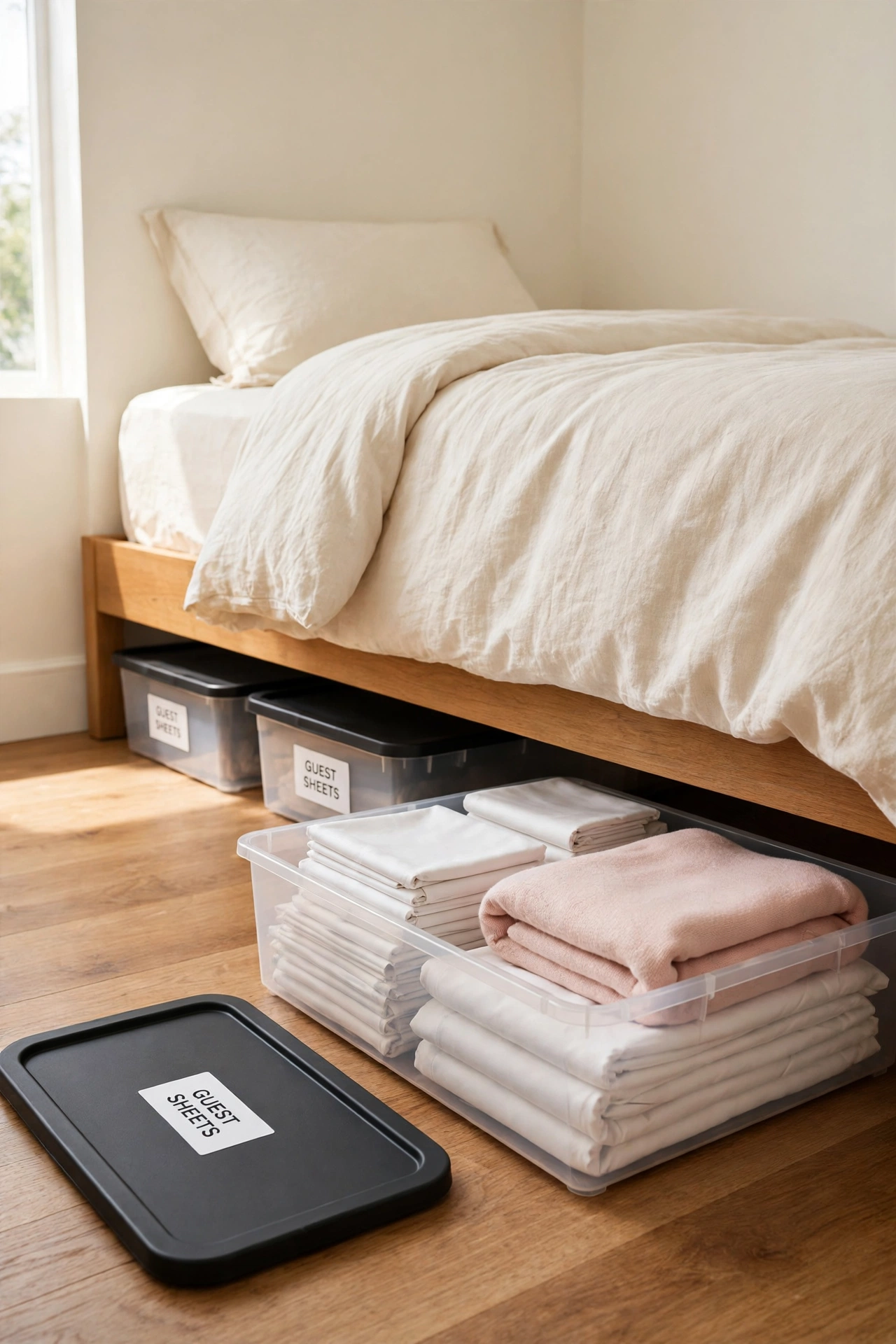
Under-bed bins hold guest bedding in the room where it gets used, which removes the midnight linen hunt entirely. Low, lidded bins slide under the host bed or under the guest sofa, holding a sheet set, two pillowcases, and a folded blanket per bin. The bins stay dust free with lids on, and the bedding stays fresh because it lives in a closed container rather than an open shelf.
Label the short end of each bin so you can read the label without pulling the bin out, and keep one bin per guest bed in the house. These under bed storage organization ideas will help you choose bins that fit your bed height and slide smoothly on your floor type, so the system works without a struggle every time a guest arrives.
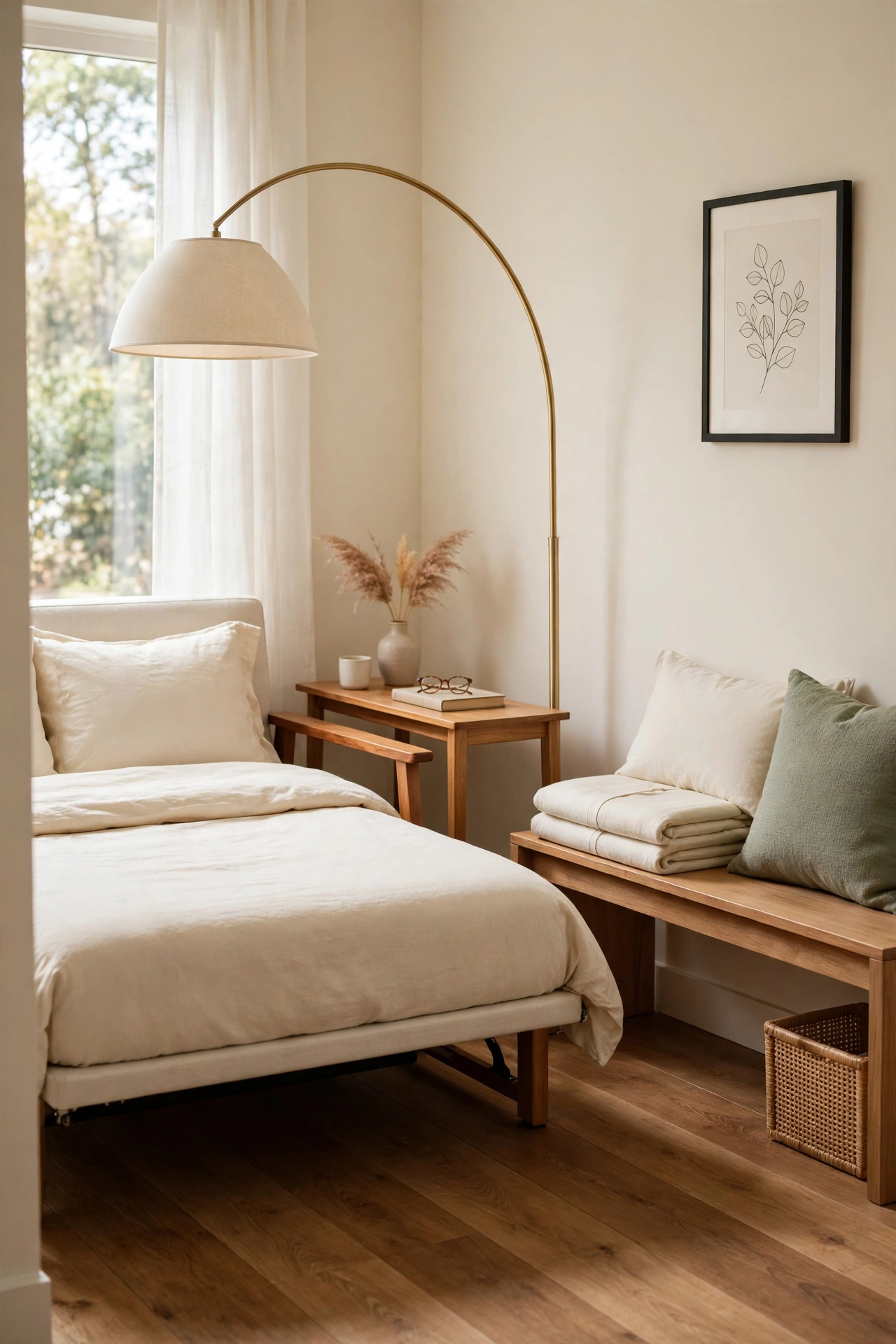
21. Tuck a Sleeper Loveseat Into a Small Den
A sleeper loveseat fits a small den where a full sofa bed would swallow the room. The loveseat seats two people for reading or television during the day, and the pull-out mattress sleeps one adult comfortably at night. Dens and small studies often sit unused in the evening, so the loveseat turns dead hours into guest hours without changing the room.
Pair the loveseat with a narrow side table and a floor lamp that arches over the seat, so the guest has light and a surface within reach. A slim storage bench against the opposite wall holds the sheet set and a pillow, and doubles as a luggage stand. The den keeps its quiet, private feeling, which many guests prefer to a busy living room.
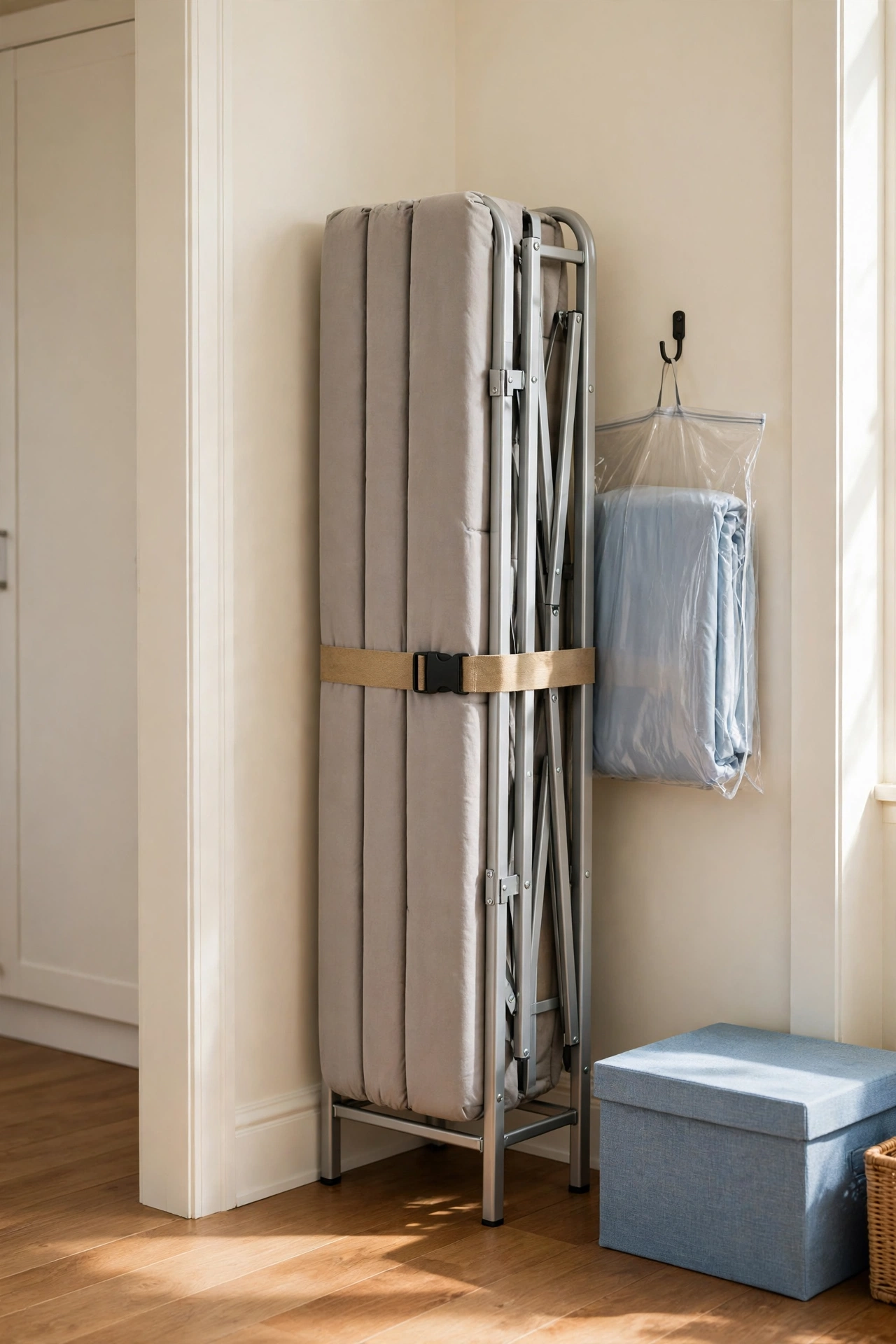
22. Lean a Folding Bed Frame Flat Against a Wall
A folding bed frame with a tri-fold mattress stores flat against a closet wall or behind a door, taking up less than a foot of depth. The frame unfolds and locks into a raised bed in under a minute, and the tri-fold mattress drops on top with no assembly. Guests sleep at a proper bed height, which is kinder to knees and backs than a floor mattress.
Keep the folded frame and mattress together as a pair, with a strap or a large storage bag holding them in one unit. A fitted sheet stored in the same bag means the bed is fully ready the moment it unfolds. This setup suits homes with almost no spare storage, since a flat frame hides in gaps that no other guest bed can use.
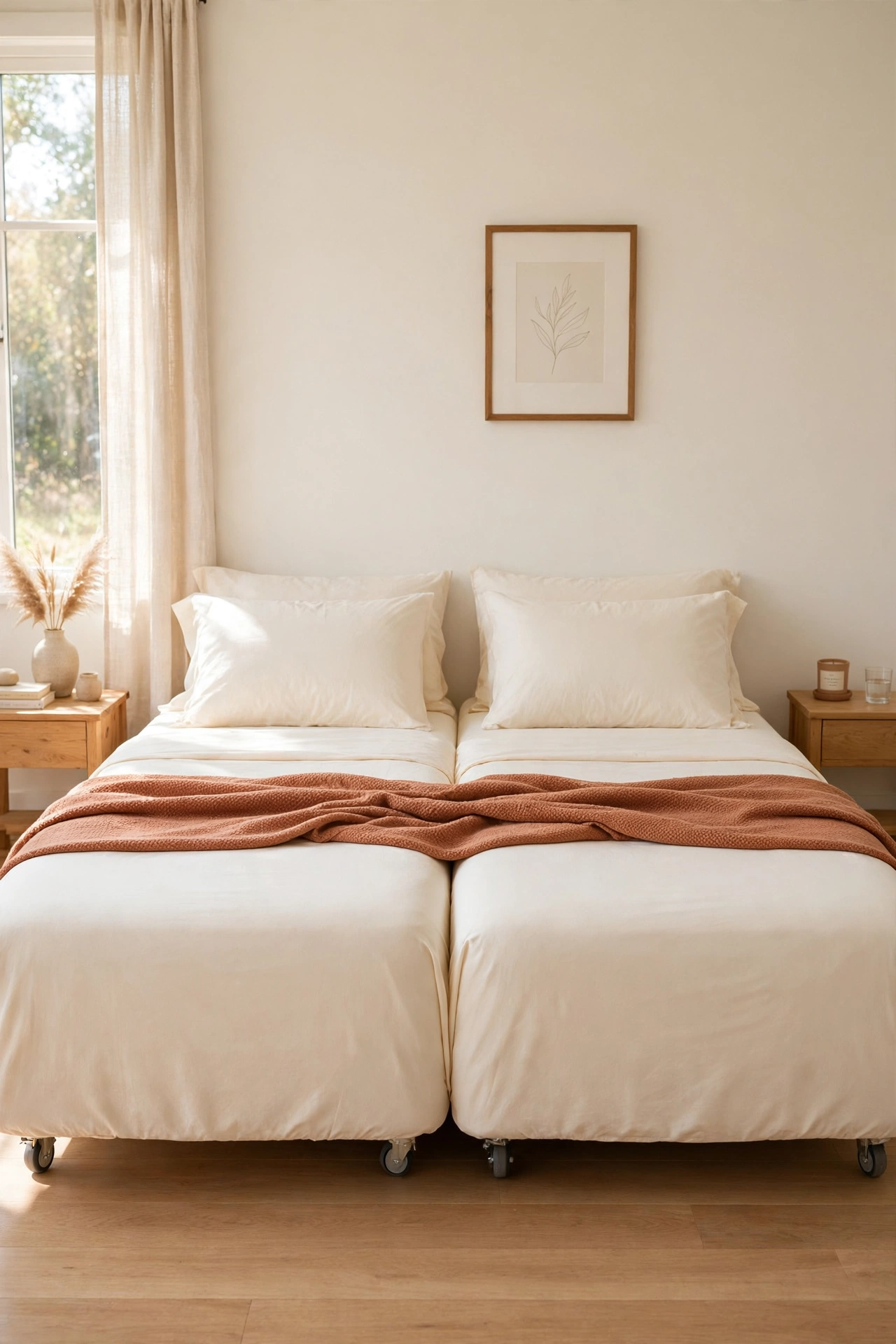
23. Join Twin Beds on Casters Into a King for Couples
Two twin beds on locking casters push together to form a king-size sleeping surface for a visiting couple, and roll apart into two singles when friends visit separately. A joining strap under the mattresses holds the pair together, and a single king fitted sheet over both mattresses hides the center seam. The casters lock firmly, so the beds never drift apart during the night.
Store a king sheet set and a double duvet in the same closet as the joining strap, so the couple setup is one grab away. When the beds stand apart, each one takes a single sheet set and serves as an independent guest bed in the same room or in two different rooms. One pair of beds covers couples, siblings, and solo guests without buying three different solutions.
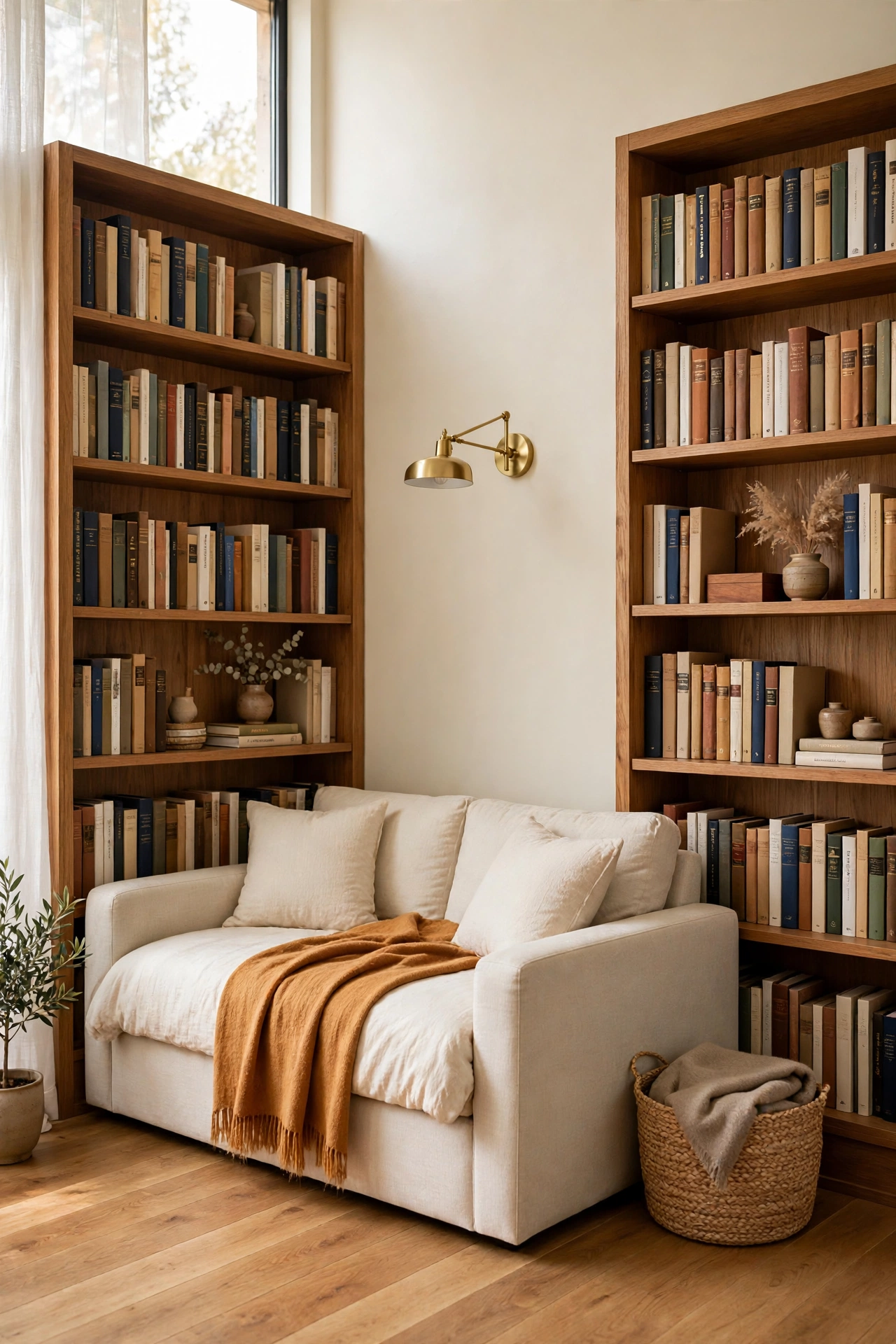
24. Place a Sleeper Sofa in the Home Library
A sleeper sofa between bookshelves turns a home library into the quietest guest space in the house. Readers already treat the library as a calm room, so the guest sleeps away from kitchen noise and morning foot traffic. The sofa serves as reading seating by day, with a throw and a cushion, and pulls out into a bed when the house fills up.
Add a small wall-mounted reading light above the sofa and a narrow shelf for a water glass and a book, so the guest never needs to cross the room in the dark. A basket of spare blankets on the lowest bookshelf keeps bedding within reach without a trip to the linen closet. The library guest setup suits visitors who value quiet mornings and an early night.
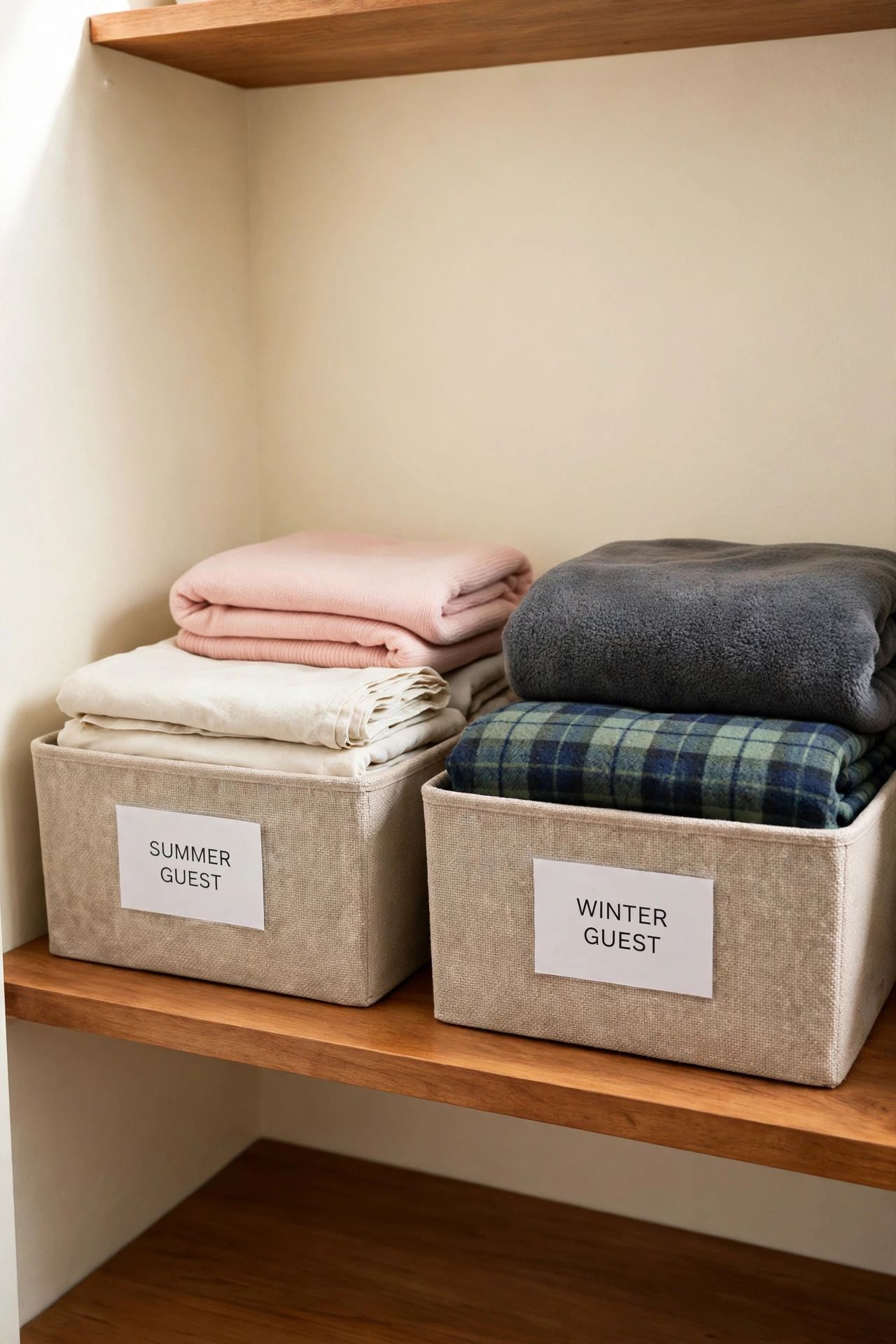
25. Rotate Seasonal Guest Bedding in Labeled Bins
Guest bedding works harder when it rotates with the seasons, because a light cotton set suits summer visits and a heavier flannel set suits winter ones. Two labeled bins per guest bed hold the two seasonal sets, and the off-season bin moves to a higher shelf or a storage closet until its turn comes. The guest always gets bedding suited to the weather, which is a detail they notice.
Swap the bins at the same time you rotate your own bedding, so the change becomes part of an existing routine. Wash each set before it goes back into its bin, and add a lavender sachet to keep the stored set fresh. Seasonal rotation also spreads wear across two sets, so both last longer than one set used all year.
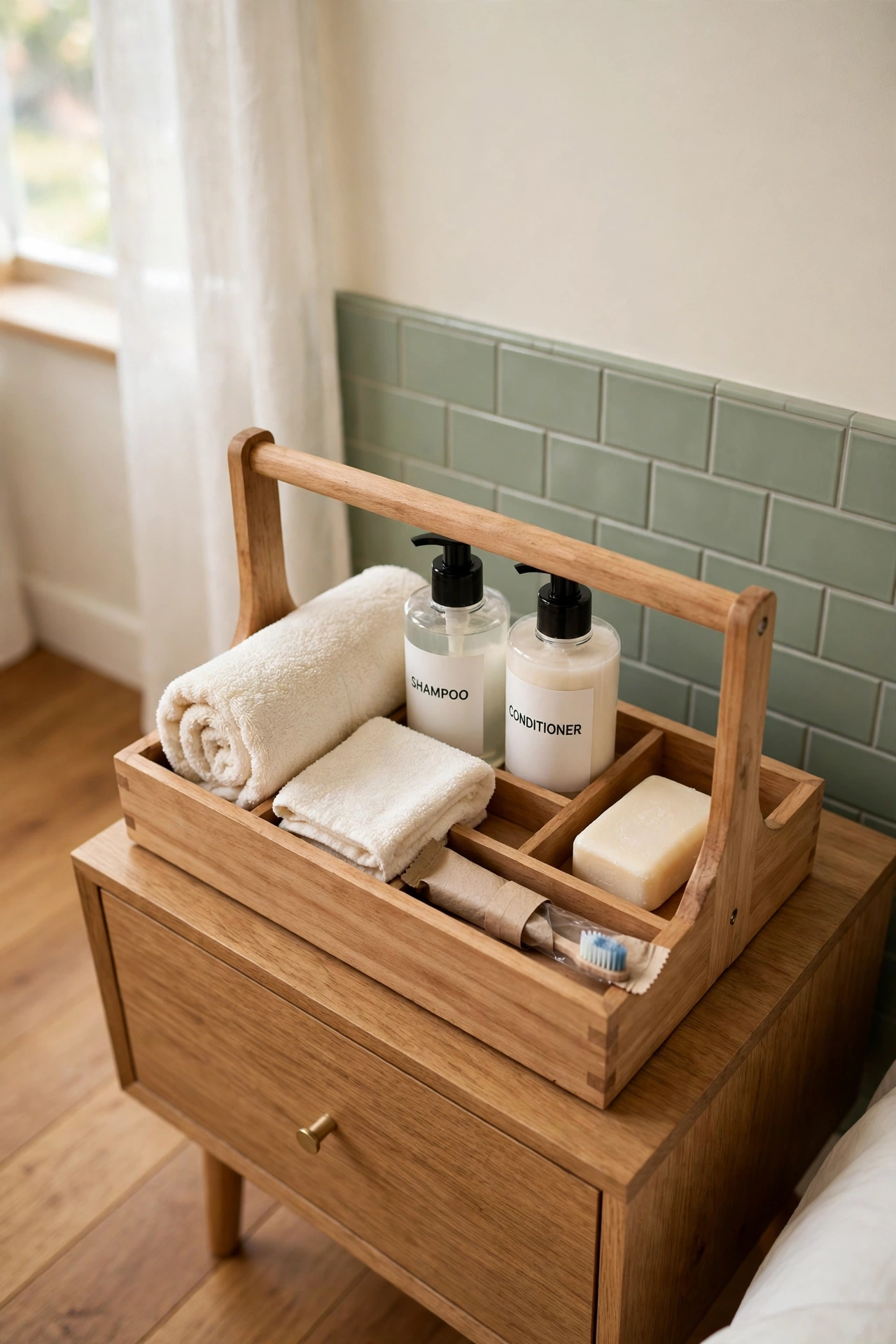
26. Carry a Guest Bathroom Caddy From Room to Room
A stocked bathroom caddy carries guest toiletries to whichever bathroom the guest will use, which matters in a small home where the guest bed moves between rooms. The caddy holds a towel, a washcloth, shampoo, conditioner, soap, and a spare toothbrush, all in one handled carrier. The guest carries it to the bathroom in the morning and returns it to the guest spot afterward.
Keep the caddy on the guest bedding shelf between visits, stocked and ready, so hosting never starts with a shopping trip. Refill the small bottles after each stay and replace the toothbrush, so the next guest finds everything fresh. A caddy also protects your own bathroom storage from clutter, since guest items never need a permanent shelf.
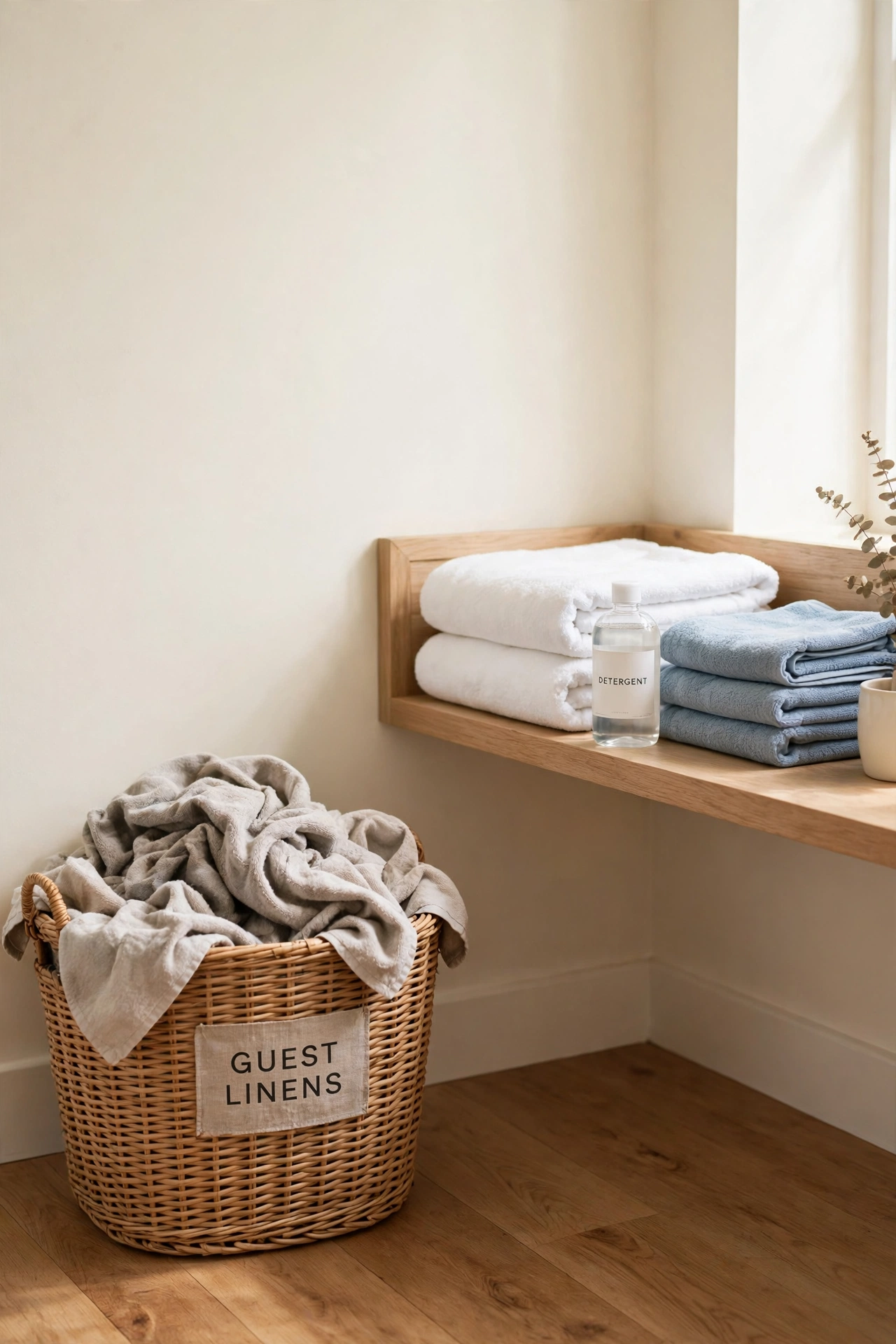
27. Run a Guest Towel and Laundry Rotation
A guest towel rotation keeps fresh towels ready without a full linen closet overhaul. Assign two towel sets per guest bed: one in use and one in the laundry rotation, so a clean set is always ready even when the washer is full. A small laundry basket labeled for guest linens collects used towels and sheets in one place after a visit.
Wash guest linens the day after a visit ends, fold them straight into their labeled bin, and the system resets before the next guest arrives. A short note on the bin, such as wash warm and tumble dry low, helps anyone in the household run the rotation correctly. Fresh towels are the detail guests mention most, and a rotation makes them automatic.
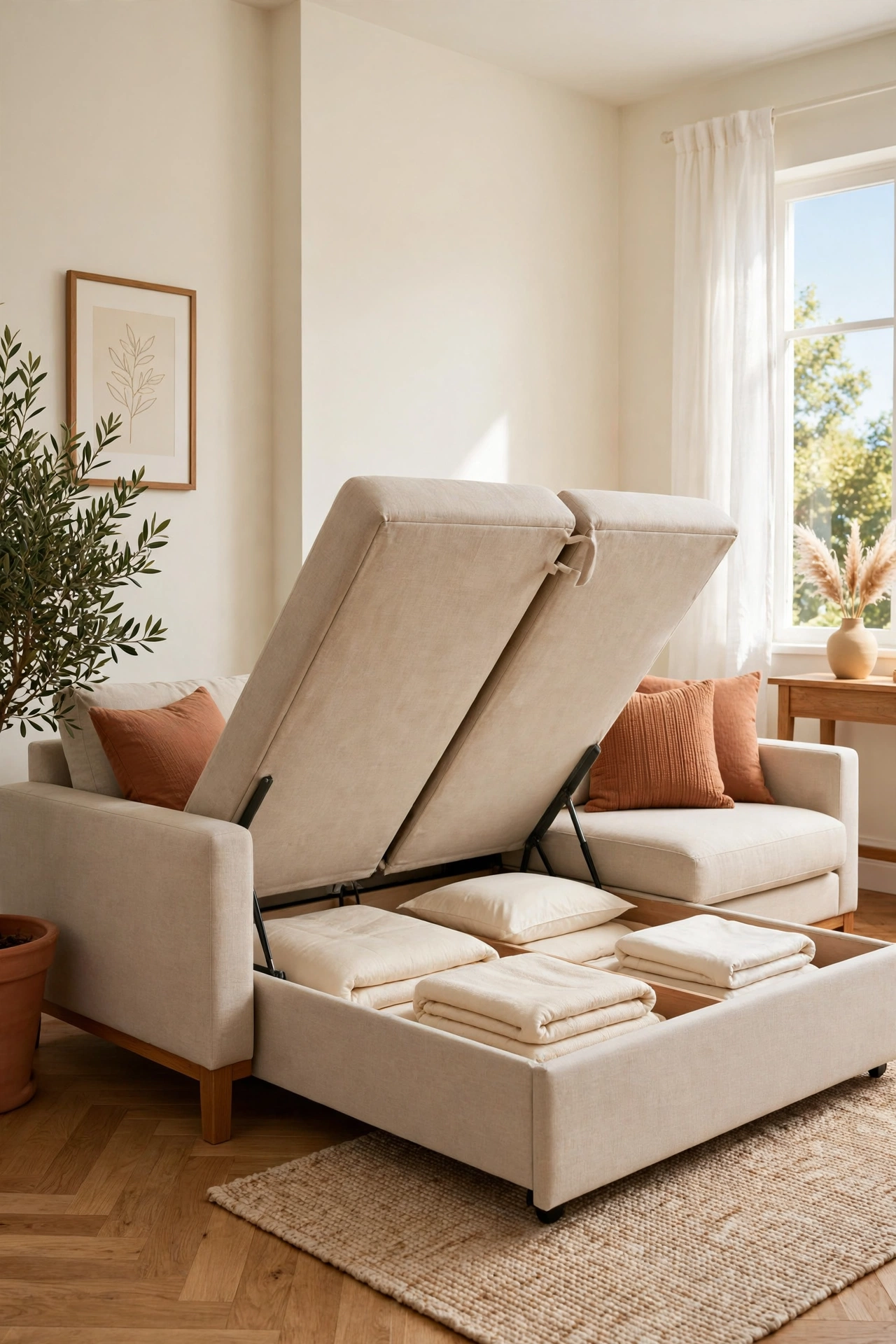
28. Choose a Storage Sofa Bed With Bedding Inside the Base
A storage sofa bed keeps its own bedding inside the base, so the sheet set, pillows, and blanket travel with the bed wherever it sits. The storage compartment opens with the seat cushions lifted, and the bedding stays clean and compressed until the bed pulls out. This self-contained design suits homes with no linen closet to spare, because the bed is its own storage system.
Fold the bedding into the compartment in the order you need it: fitted sheet on top, then the flat sheet, then pillowcases, with the blanket at the bottom. The sequence makes bed-making fast, since each layer comes out in the order it goes on. A storage sofa bed also prevents the classic hosting scramble, because nothing lives in a far closet when the guest is already yawning.
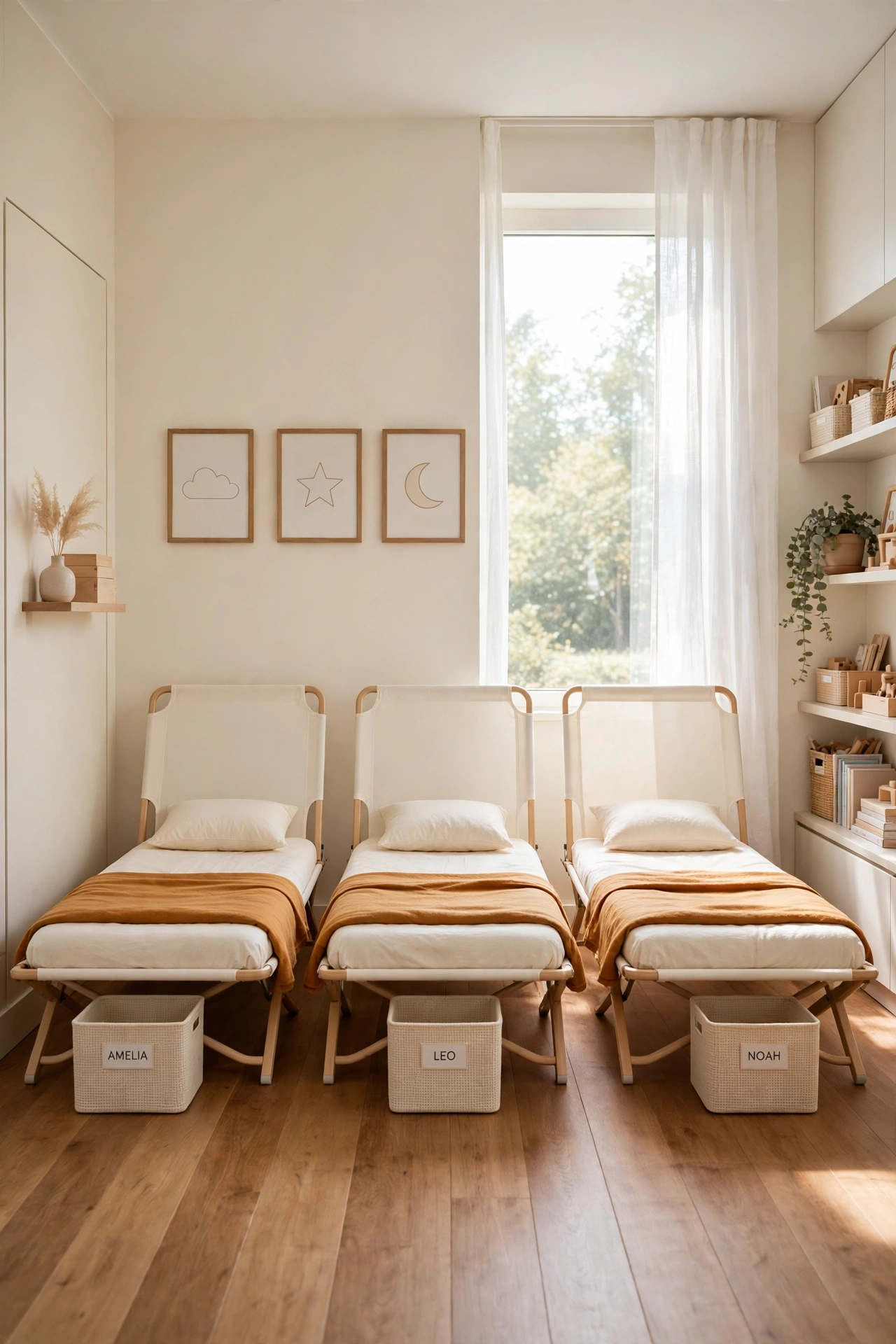
29. Set Up Folding Cots for a Kids Sleepover Zone
Folding cots turn a family room or playroom into a sleepover zone that sets up fast and stores flat. Each cot folds to a slim rectangle that leans in a closet, and unfolds to a raised sleeping surface with a fabric deck that needs only a sheet and a sleeping bag. Children love the camp feeling, and parents love that the cots leave no trace the next morning.
Give each child a labeled bin with a sheet, a pillow, and a small flashlight, so the setup feels like an event rather than a chore. A low table in the center holds water bottles and a night light, and the cots arrange in a row or a circle depending on the room. When the sleepover ends, the cots fold away and the room returns to a playroom before lunch.
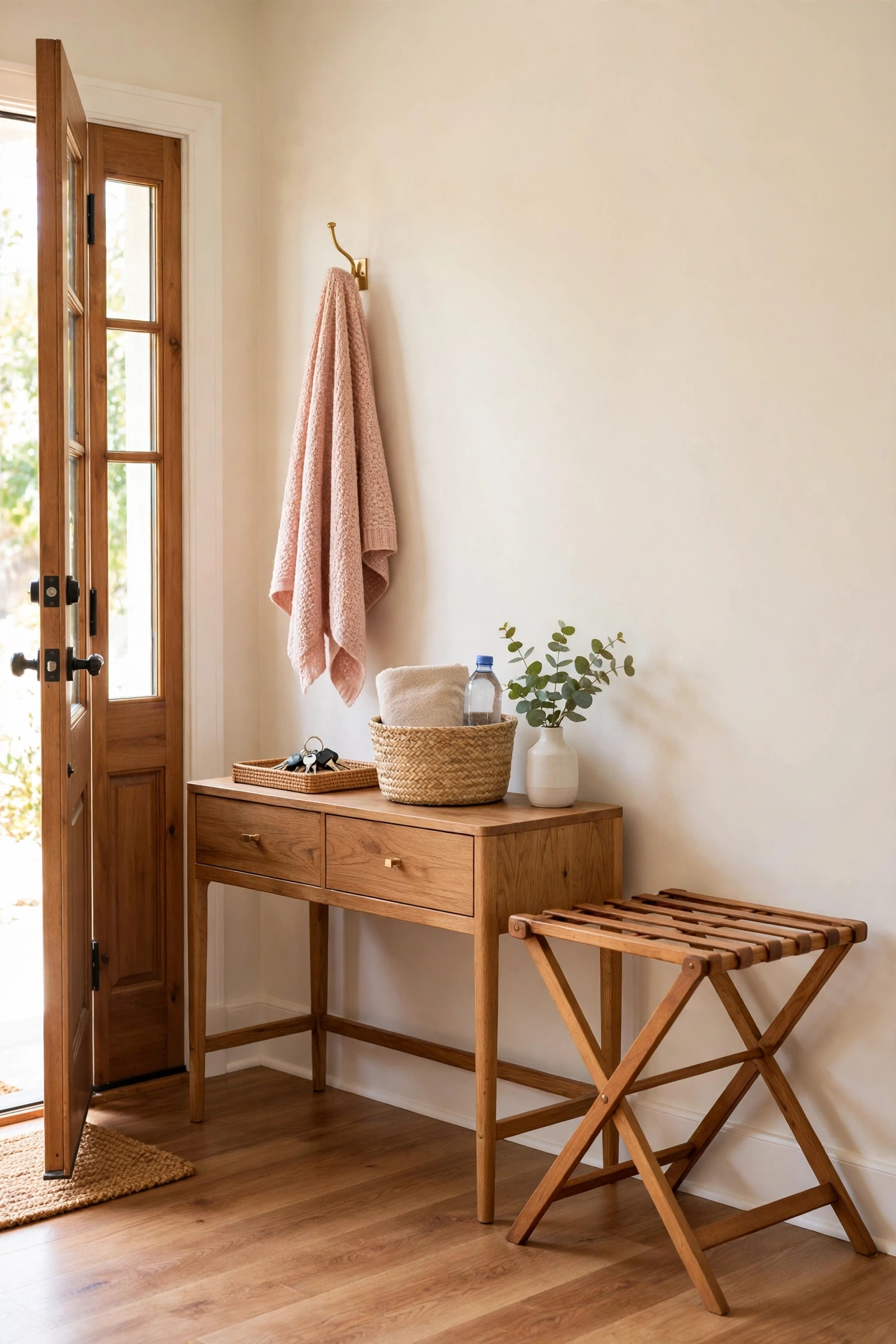
30. Ready the Entry Console for Guest Arrivals
An entry console set up for guests handles the first five minutes of a visit, which set the tone for the whole stay. The console holds a small tray for keys, a hook or two for coats, and the guest welcome basket ready to carry to the guest room. A folding luggage rack leaned beside the console waits for the suitcase, so bags never pile up in the hallway.
Clear the console surface before guests arrive, even if it usually holds mail and keys, because an empty surface signals that the home is ready. A small vase with fresh greenery and a handwritten welcome note cost almost nothing and make the arrival feel personal. The guest walks in, drops the bags in the right spot, and the visit starts smoothly.
Conclusion
Flexible guest sleeping is not about owning a spare bedroom, it is about owning a plan. A sofa that pulls out, a closet that holds bedding bins, and a welcome kit that stays stocked will host more guests, more comfortably, than an unused room ever could. The best setup is the one you can switch on in minutes and switch off just as fast.
Start with one convertible bed and one bedding bin, then add the kits and systems as you host more often. Each visit will teach you what your guests actually need, and your setup will grow smarter with every stay. For a calm reset after the guests leave, these nightly reset routines will help you return every room to everyday order in a few minutes each evening.
Frequently Asked Questions About Small Home Layout Ideas With Flexible Guest Sleeping Spaces
What is the best guest bed for a small home without a guest room?
A pull-out sleeper sofa or a tri-fold mattress suits most small homes, because both store compactly and sleep one or two adults well. Choose a sleeper sofa if the living room has a clear pull-out zone, and choose a tri-fold mattress if storage space is tighter than floor space. A folding guest bed is the best choice when the guest needs a raised bed height for comfort.
How do I store guest bedding in a small home?
Use one labeled bin per guest, holding a sheet set, pillowcases, and a blanket, and store the bins on a linen closet shelf or in under-bed containers. Keep the bins packed and ready between visits, and wash and repack the contents the day after a guest leaves. A system that resets itself means you never hunt for clean sheets when a guest arrives.
Can a home office double as a guest room comfortably?
Yes, if the desk folds away and the floor clears fully for a bed. A drop-leaf desk or a folding desk on casters moves against the wall in seconds, and office supplies ride a rolling cart into a closet. Add a portable blackout kit and a small bedside table, and the office sleeps a guest as comfortably as a spare room.
How do I give guests privacy without a separate room?
Choose the room with a door that closes whenever you can, even if that room is an office or a den. A white noise machine masks household sounds, and a portable blackout kit darkens a bright corner for sleep. A clear schedule for bathroom use and a welcome kit with everything the guest needs also protect privacy, because the guest never has to ask for basics.
How often should I refresh guest bedding and towels?
Wash all guest bedding and towels after every visit, even if they look unused, and repack them into their labeled bins the same day. Air out stored bedding every few months if no guest visits, and replace pillows and sheet sets when they start to look thin or tired. Fresh linens are the detail guests remember most, so a regular refresh is worth the effort.

Hi, I’m Emily! I turn messy corners into cozy, organized spots. DreamNestDecor is where I share simple, practical home ideas — decor, organization, and small-space solutions that work in real life, not just in photos. Every idea here is carefully researched before it’s shared.