Picture this: you step into your garden on a quiet morning, and your eye lands on a sculpture that catches the first light of the day. It stands calm and still among the plants, and the whole garden suddenly feels like a place with a purpose. That single piece of art turns an ordinary yard into a landscape that tells a story.
You do not need a museum budget or a sprawling estate to create that feeling. A thoughtful sculpture, placed with care, can transform even a small garden into an artistic retreat. These 14 outdoor sculpture garden ideas will help you choose the right pieces, place them with confidence, and light them beautifully, so your garden becomes a gallery under the open sky.
1. Anchor the Center of the Garden With a Bold Abstract Sculpture
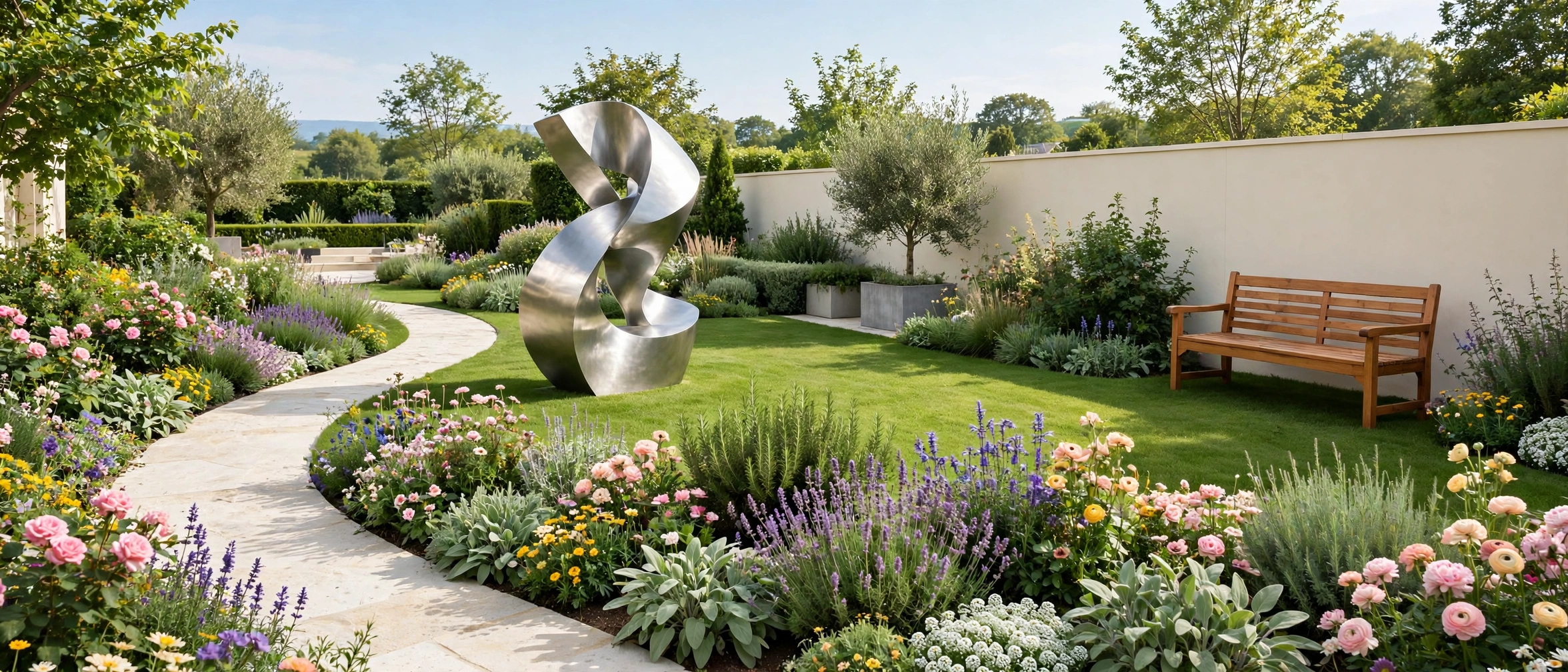
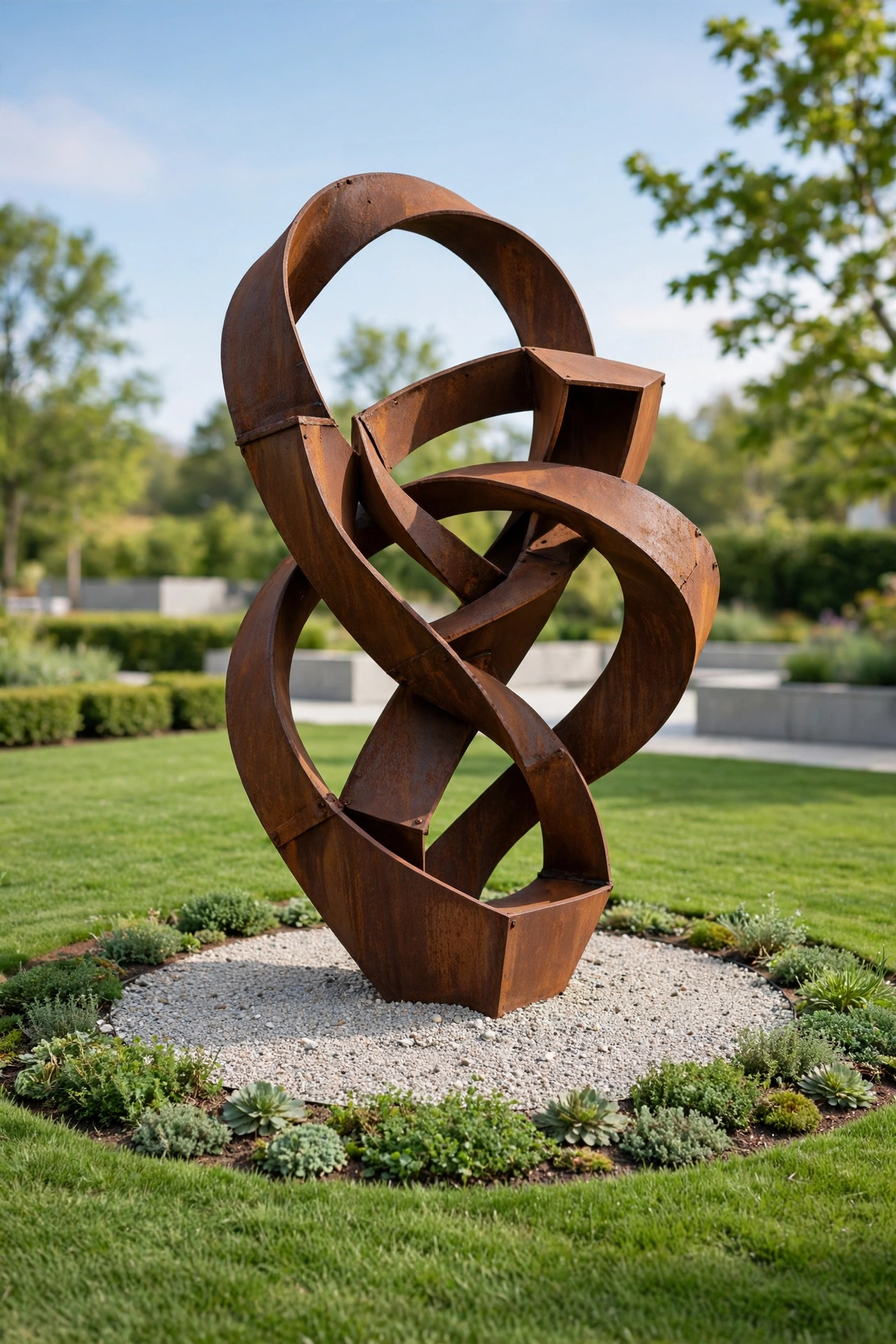
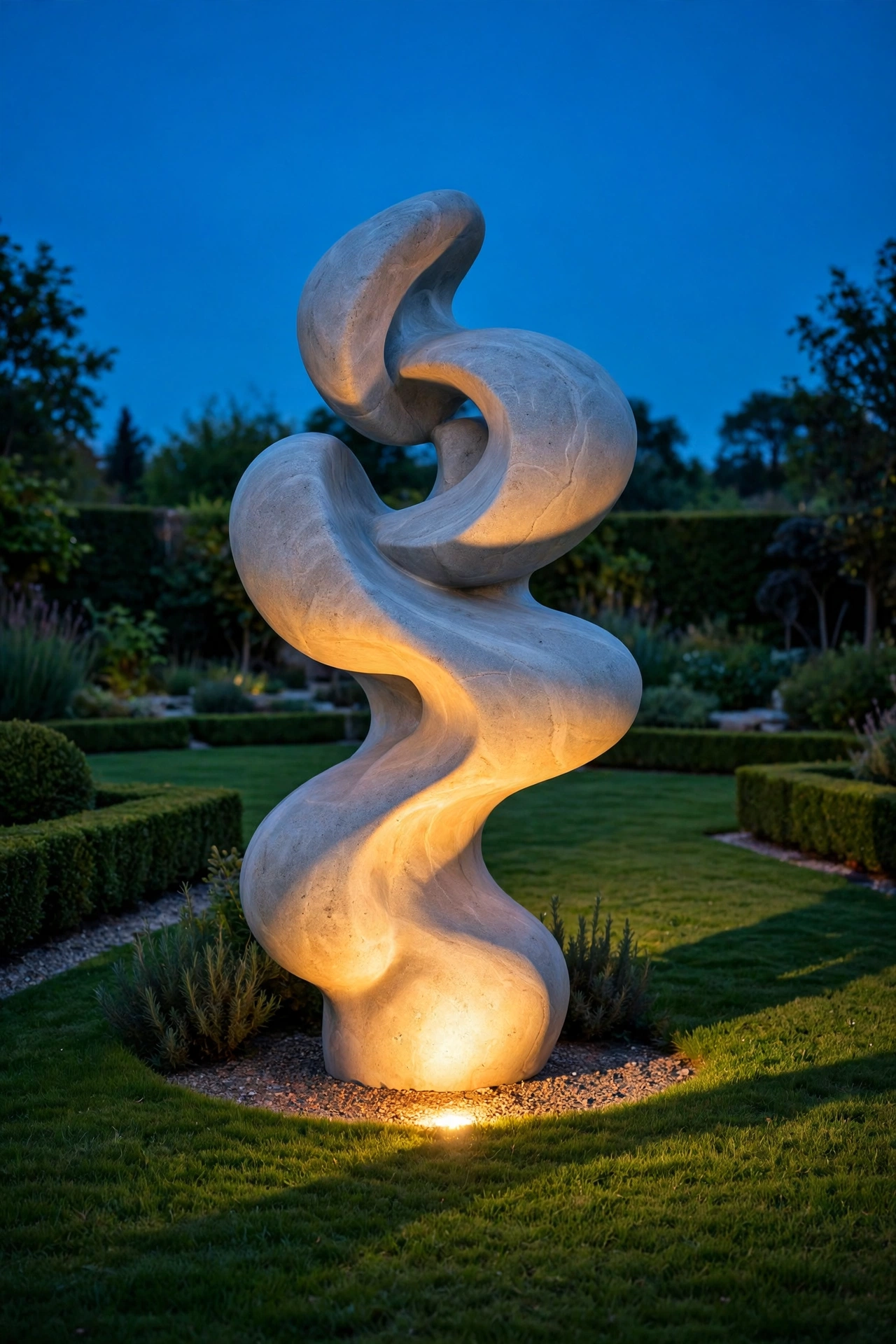
A large abstract sculpture in the middle of the garden gives the entire landscape a focal point. The eye travels naturally toward the center, so a tall curved form in rusted steel, polished stone, or painted metal holds the space the way a fireplace holds a living room. Choose a piece that is taller than the plants around it, so it reads clearly from every corner of the yard.
Keep the ground around the sculpture simple, with low ground cover or a neat circle of gravel, so nothing competes with the form. A single strong piece beats a crowd of small ornaments, because it gives the garden one clear voice. Stand back from the house and check the view from your favorite window, since that is where you will enjoy the sculpture most often.
2. Line a Garden Path With a Series of Small Sculptures
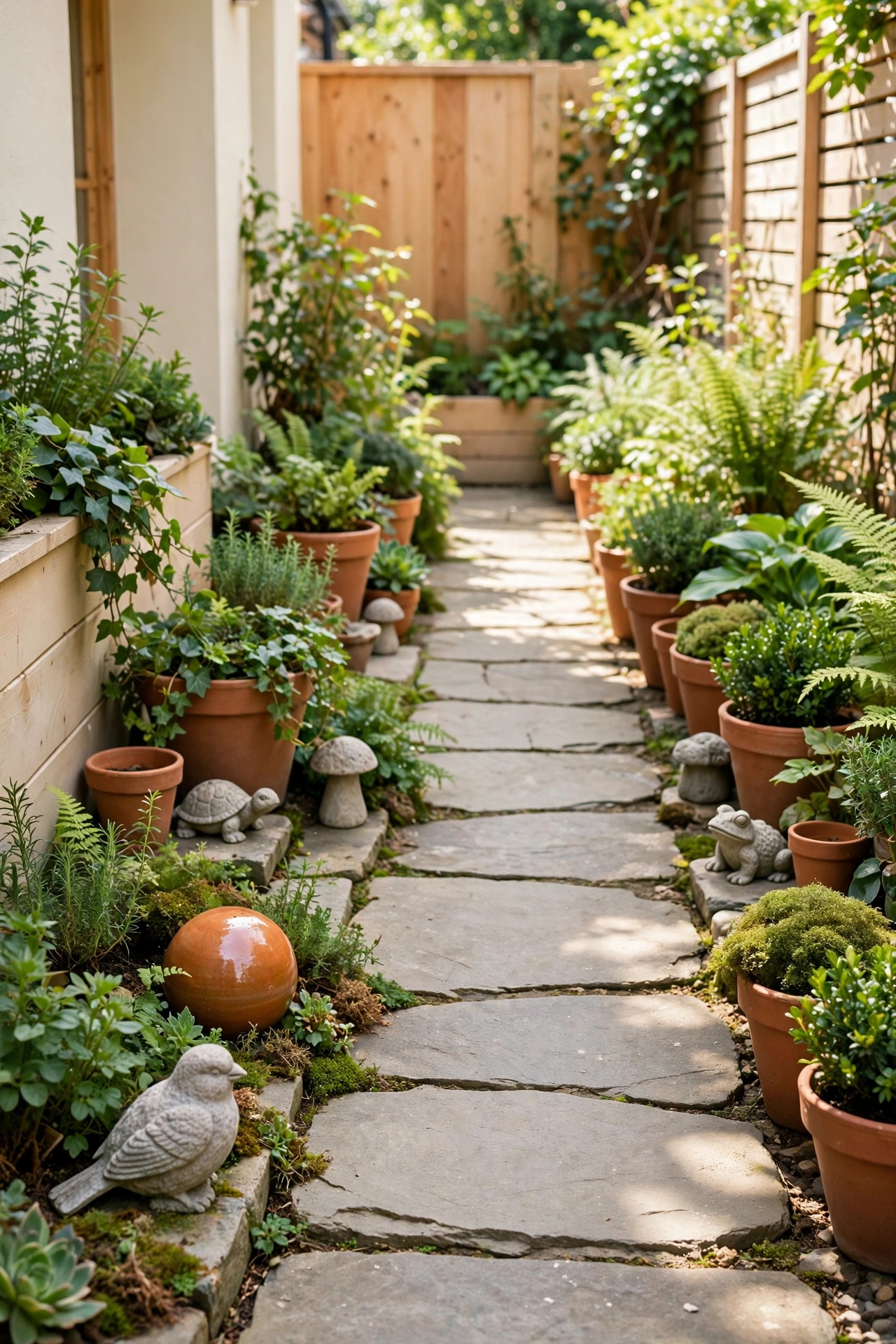
A row of small sculptures along a garden path turns a simple walk into a journey of discovery. Place one piece at each bend or at regular intervals, so visitors meet a new form every few steps. Small stone birds, ceramic orbs, or carved wooden figures work beautifully, because they reward a slow pace and a closer look.
Keep the sculptures at a similar scale and in a related family of materials, so the path feels curated rather than cluttered. Leave generous gaps between pieces, since the empty stretches of path give each sculpture room to breathe. For more ways to shape the walk itself, these garden pathway ideas will help you pair the right path surface with your sculpture trail.
3. Pair Carved Stone Sculptures With a Rock Garden
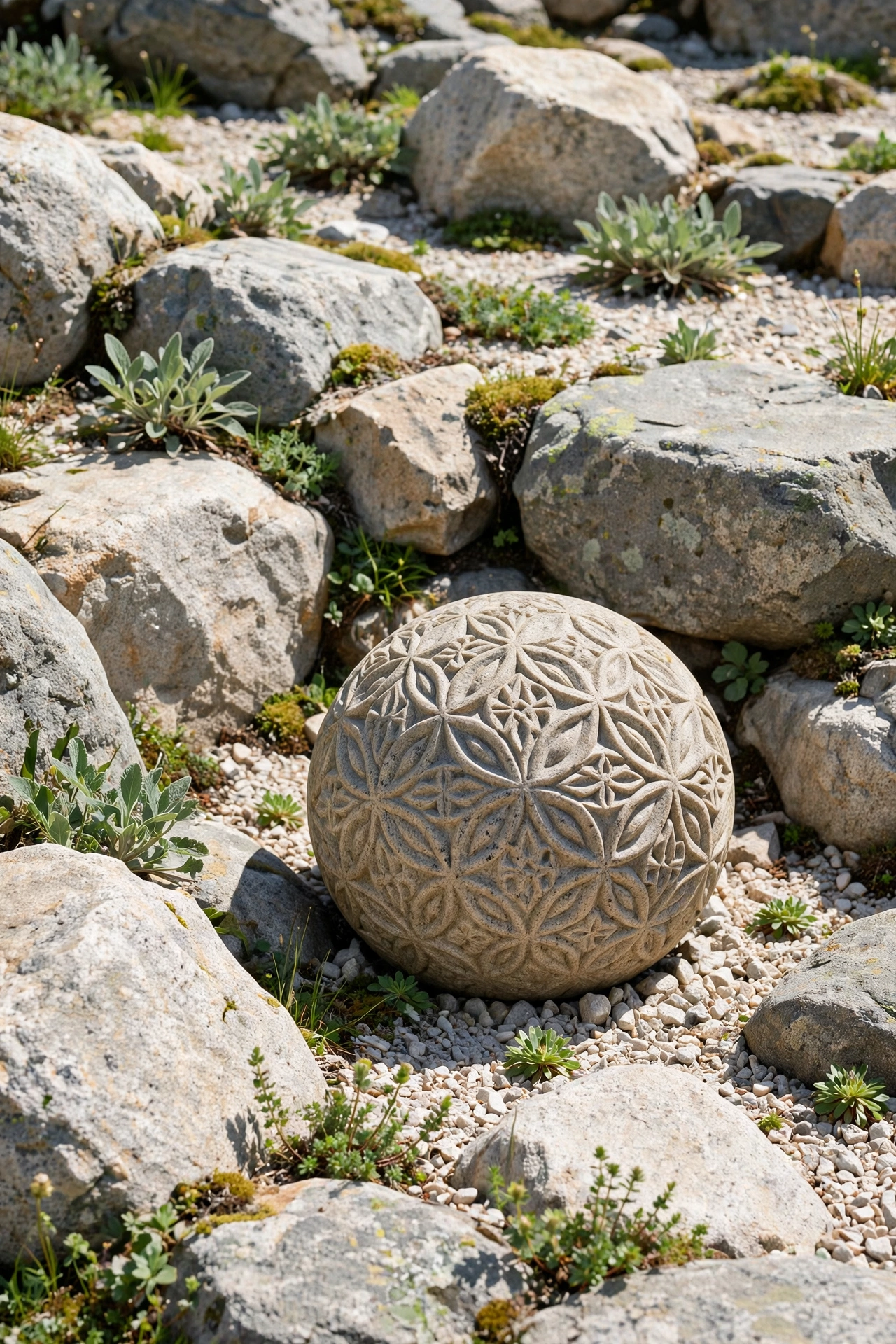
Stone sculptures belong naturally in a rock garden, where their carved surfaces echo the boulders and gravel around them. A carved granite sphere, a stacked stone totem, or a weathered limestone figure sits comfortably among rocks, because the materials speak the same quiet language. The sculpture adds a human touch to a landscape that might otherwise feel wild and untamed.
Choose a sculpture in a stone that contrasts slightly with the surrounding rocks, such as smooth pale marble against rough dark basalt, so the piece stands out without clashing. Set the base firmly into the gravel bed so the sculpture looks rooted and permanent. If you are building the rocky setting from scratch, these rock garden ideas will help you shape a landscape that shows off stone art at its best.
4. Frame the Garden Entry With a Matching Pair of Sculptures
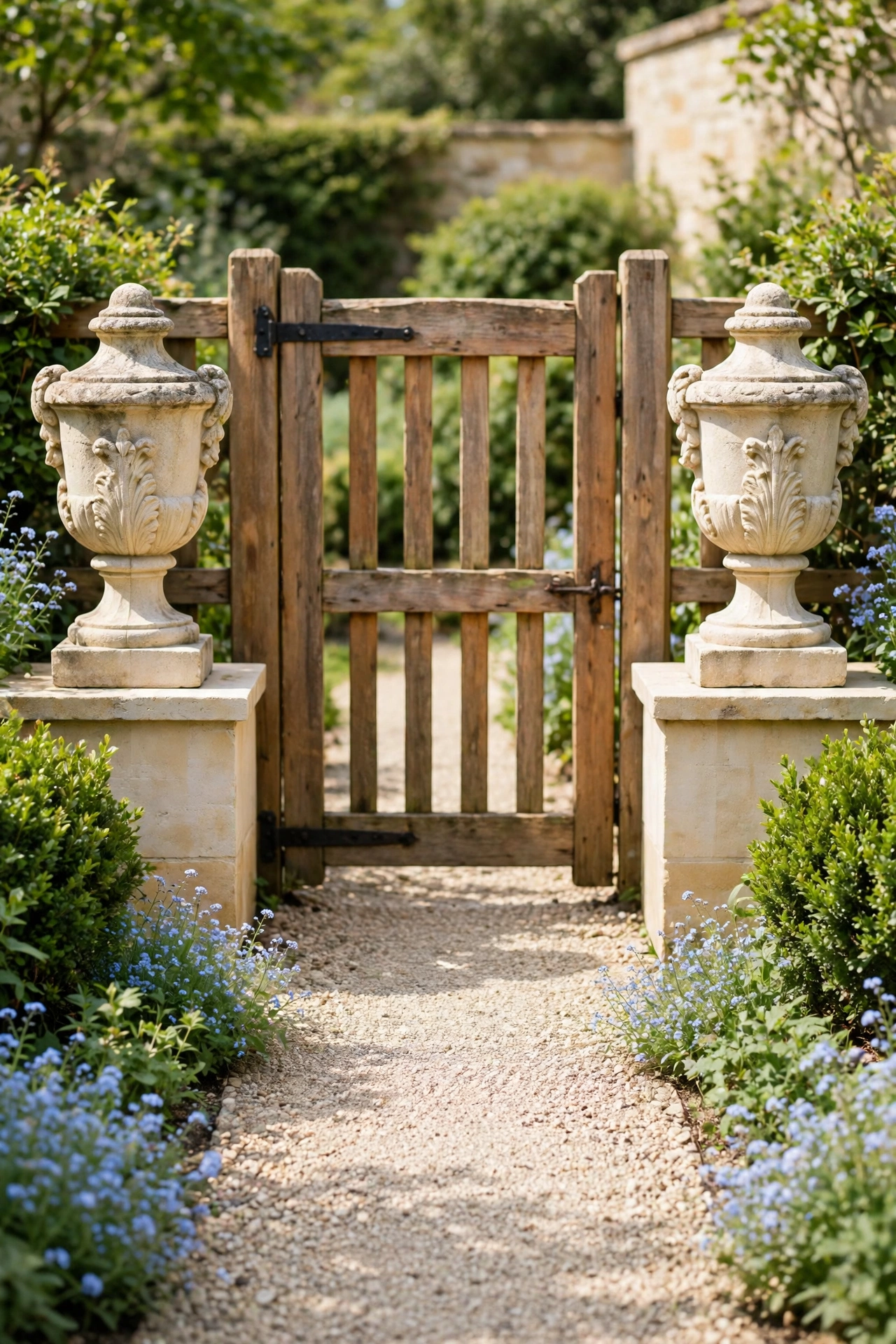
Two matching sculptures flanking a garden gate or entry path create a formal welcome that feels both grand and intentional. A pair of stone lions, bronze cranes, or simple obelisks tells every visitor that the garden beyond is a cared-for place. Symmetry at the entrance sets a tone of order that carries through the whole landscape.
Place each sculpture on a low plinth of the same height, so the pair reads as one composition from the street. Keep the entry itself clear and the planting behind the sculptures low, so the pieces frame the view instead of blocking it. A matching pair works especially well in front gardens, where the entry is the first and most public part of the landscape.
5. Add a Kinetic Wind Sculpture That Moves With the Breeze
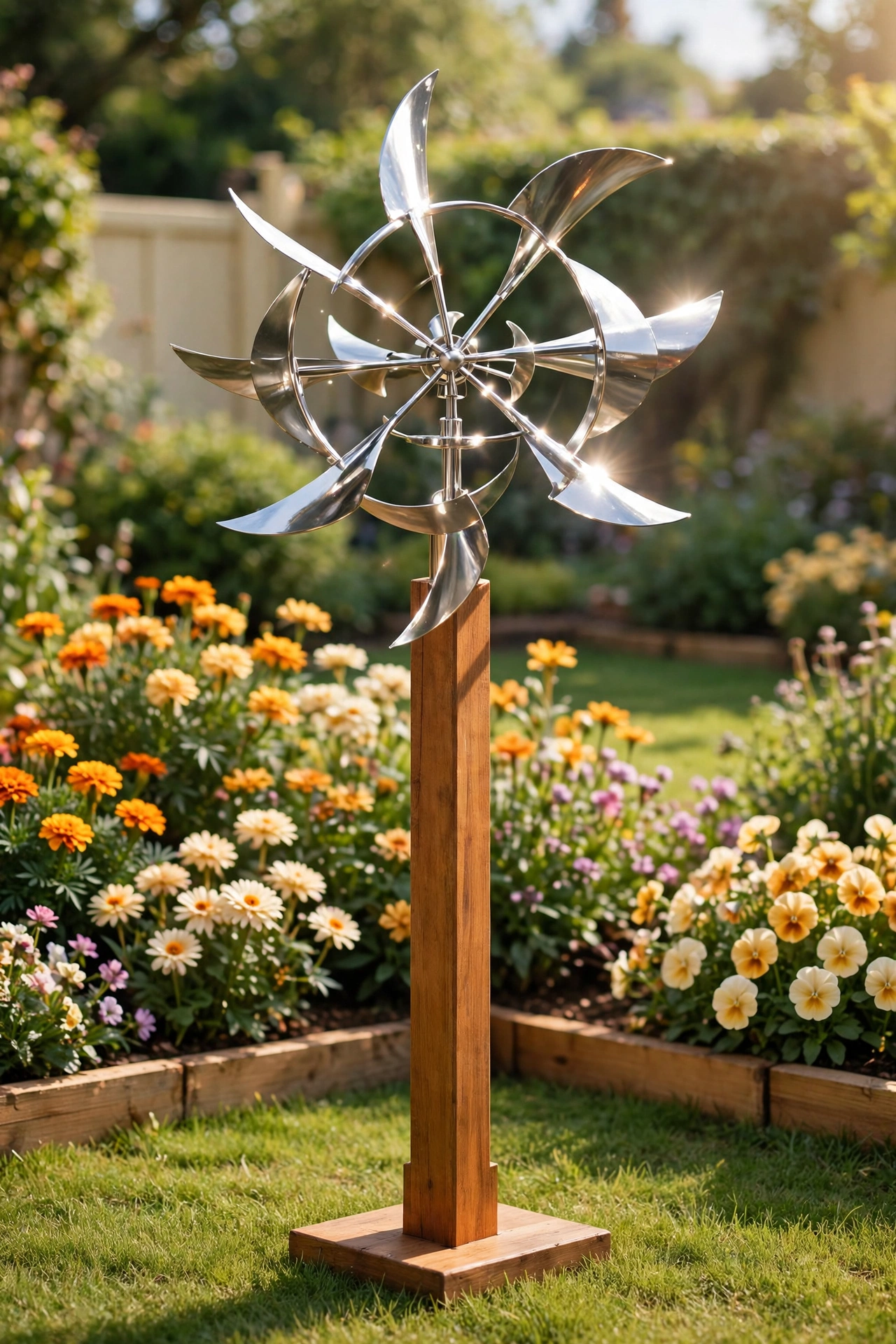
A kinetic wind sculpture brings motion to a garden that might otherwise stand still. Polished metal fins, spinning copper petals, or a gracefully turning wind spinner catch the breeze and shift shape throughout the day. The movement draws the eye again and again, and the soft glint of metal in sunlight adds a touch of magic to an open lawn.
Place a wind sculpture where it catches the prevailing breeze, such as an open corner of the yard or the top of a gentle slope. Keep tall plants and branches well clear of the moving parts, so nothing snags or scratches the finish. A kinetic piece also gives a modern garden a playful, living quality that static sculpture cannot match.
6. Light Sculptures From Below for Drama After Dark
Uplighting transforms a garden sculpture into a completely different artwork once the sun sets. A small ground spotlight aimed upward throws the form into silhouette against the night sky and casts long, dramatic shadows across the lawn. The sculpture you admire by day becomes a glowing landmark by night, visible from every window in the house.
Use warm white lights rather than cool blue ones, since warm light flatters stone and metal and keeps the garden feeling welcoming. Aim the beam from the front and slightly to one side, so the sculpture shows depth and texture instead of a flat wash of light. For more ways to design a garden that shines at night, these moon garden ideas pair beautifully with a lit sculpture display.
7. Choose a Sculptural Birdbath as Art That Serves a Purpose
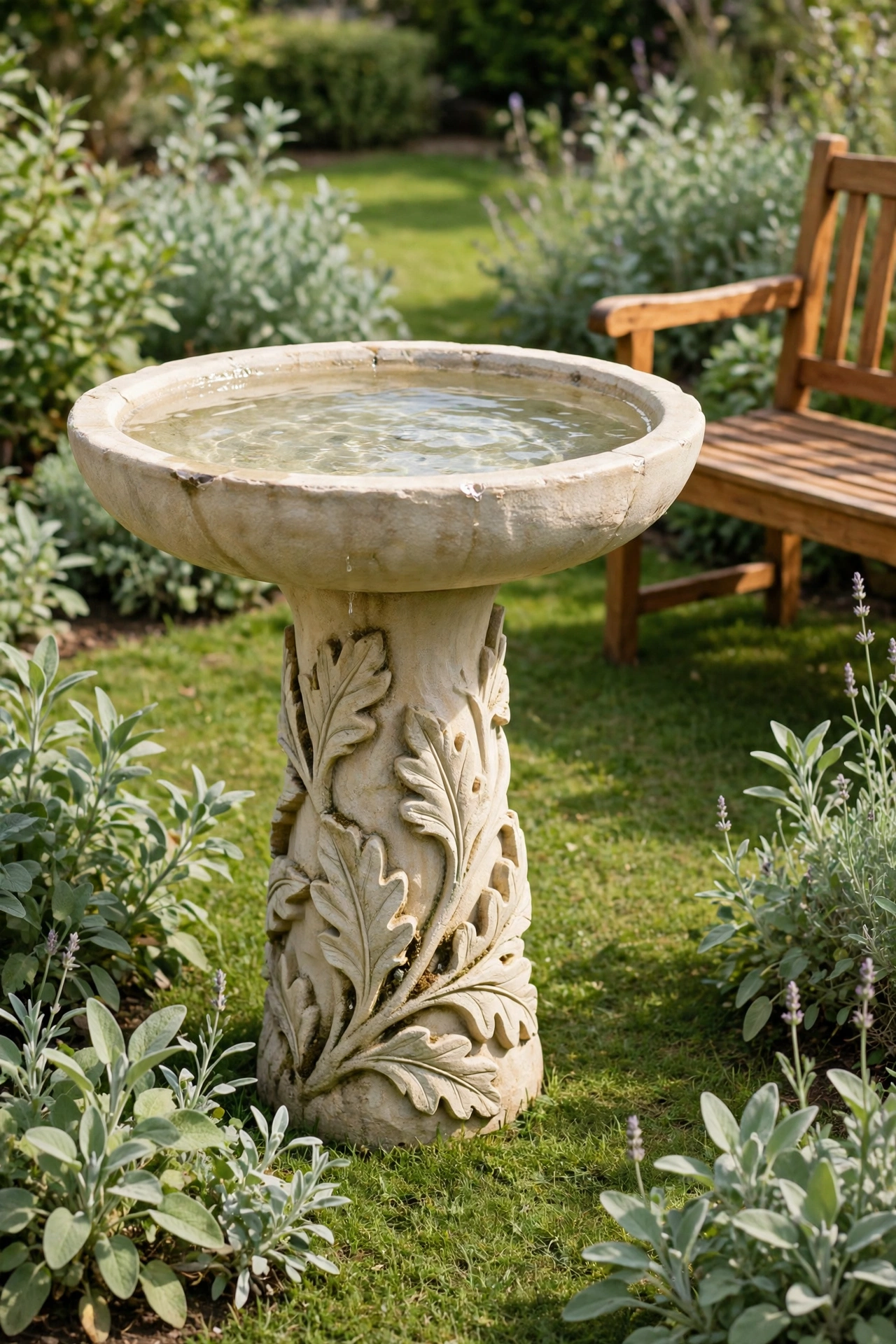
A birdbath with a sculpted base earns its place in the garden twice, as a work of art and as a welcome station for birds. Look for a pedestal carved with leaves, a basin held aloft by bronze figures, or a modern bowl balanced on a twisted metal stem. The piece becomes a focal point on the lawn while it quietly serves the wildlife that visits every day.
Place the birdbath where you can see it from a window, and keep it away from dense shrubs where cats might hide. Fill the basin with fresh water and scrub it weekly, so it stays clean and inviting. A sculptural birdbath suits gardeners who want art with a job to do, and it rewards you with birdsong and movement all through the seasons.
8. Mount Sculpture on a Garden Wall for a Vertical Gallery
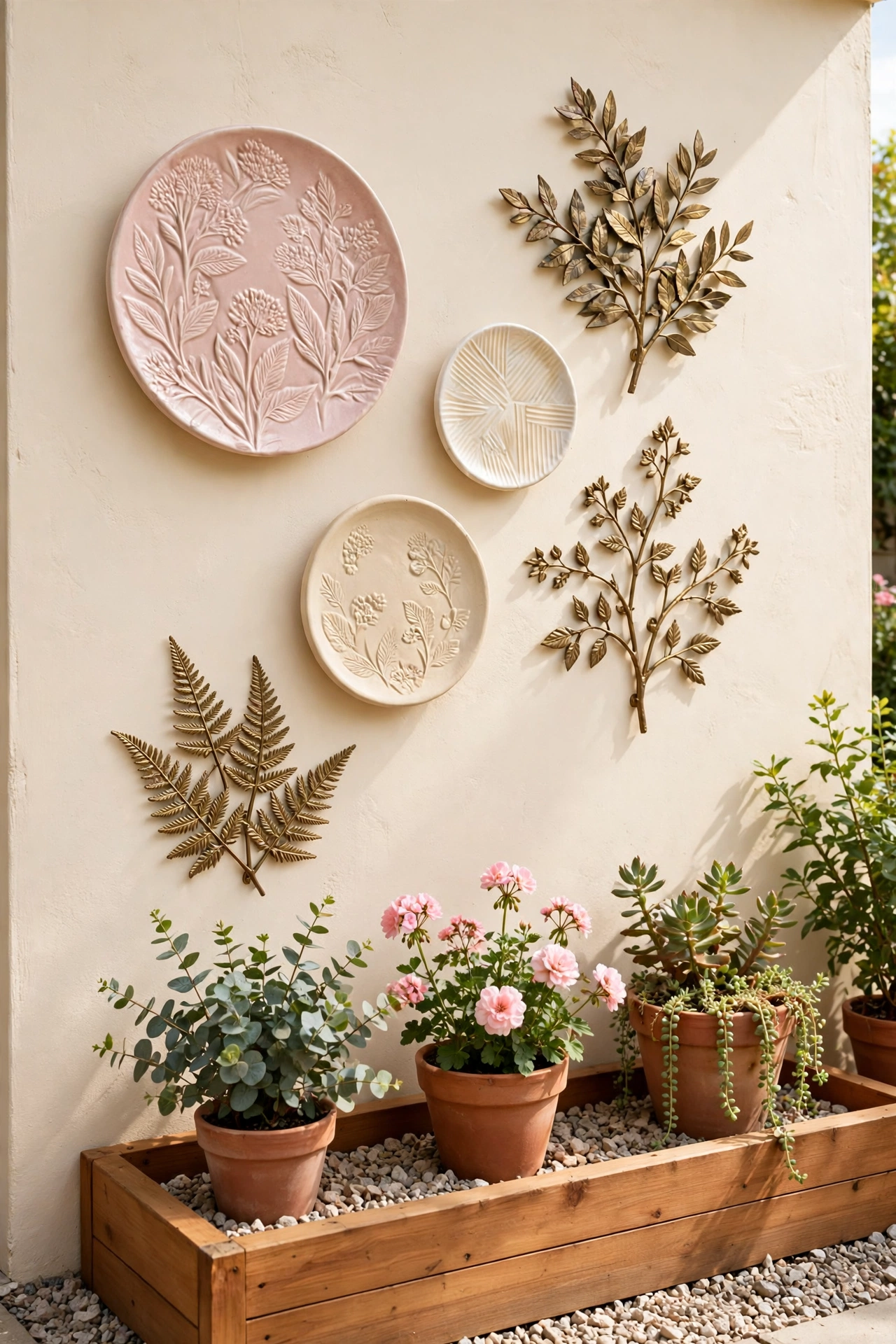
A blank garden wall is a wasted canvas, and wall-mounted sculpture turns it into an outdoor gallery. Ceramic wall discs, metal botanical reliefs, or carved wooden panels add art to a vertical surface without using a single inch of ground space. This idea suits small gardens and courtyards, where floor space is precious and walls are plentiful.
Hang the pieces at eye level and group them in odd numbers, such as three discs of different sizes, so the arrangement feels artful rather than rigid. Choose materials rated for outdoor use, and seal any mounting hardware against rain. A wall gallery also gives a plain fence or boundary wall a finished, intentional look that lifts the whole garden.
9. Hide Animal Sculptures Among the Planting Beds
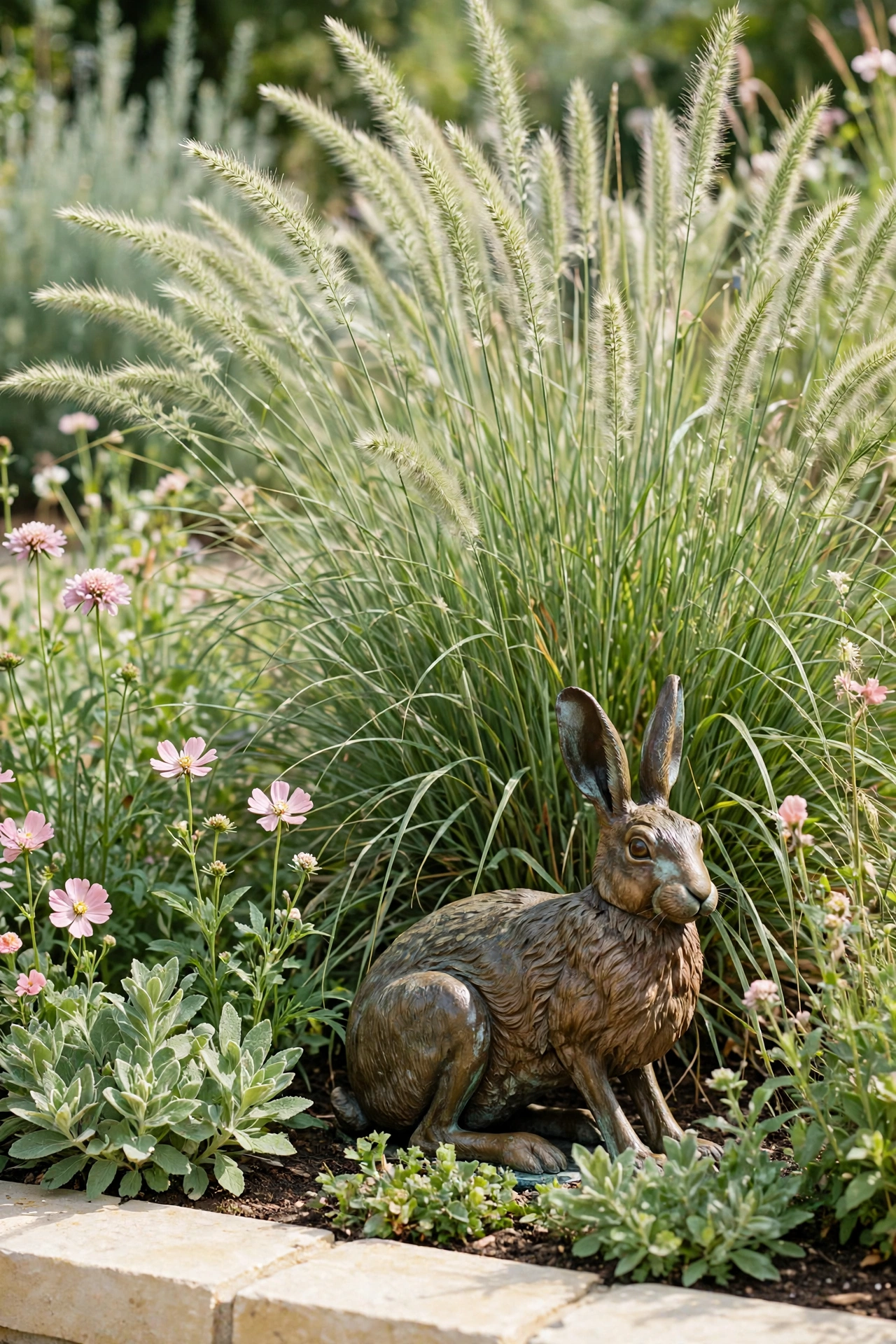
Animal sculptures tucked among the plants reward visitors who look closely. A bronze hare peeking from behind a shrub, a stone tortoise on the edge of a bed, or a ceramic fox half hidden in ornamental grasses turns the garden into a treasure hunt. Children love spotting them, and adults enjoy the quiet surprise of finding art where they least expect it.
Choose a few pieces in natural materials and realistic poses, so they blend into the planting instead of shouting for attention. Place each animal at ground level and angle it toward the path, so a passerby catches its eye. Too many hidden animals will feel like a theme park, so three or four well placed pieces will do more than a dozen scattered ones.
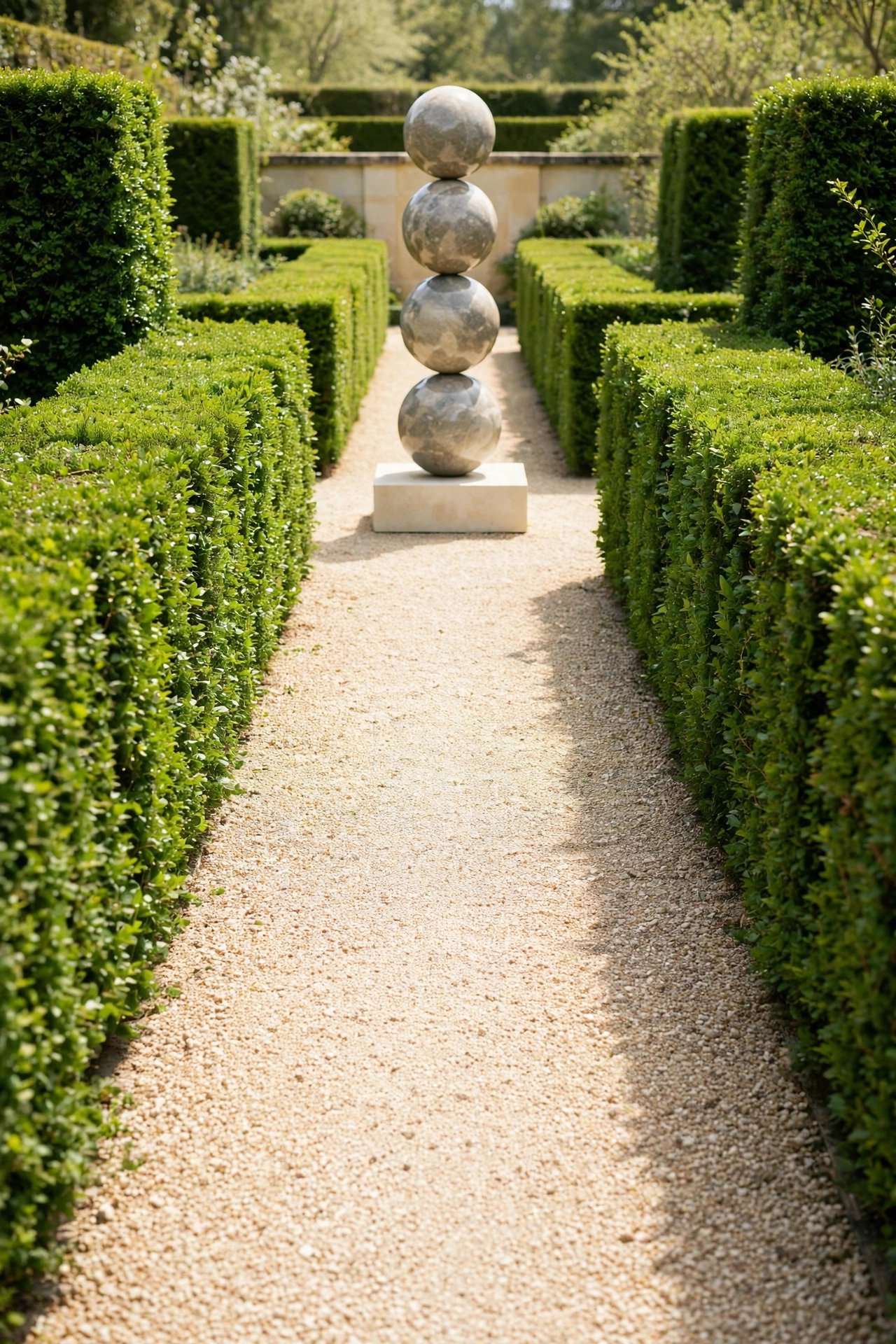
10. Set a Sculpture at the End of a Long Sightline
A sculpture placed at the end of a long view pulls the whole garden together. When you look down a straight path, across a lawn, or through an arbor, a sculpture waiting at the far end gives the eye a destination. The garden feels larger and more composed, because every view ends with a deliberate point of interest.
Choose a tall, bold piece for the end of a sightline, since a small sculpture will vanish at a distance. A tower of stacked stone spheres, a dark bronze form, or a brightly painted abstract piece will all read clearly against a green backdrop. Stand at the start of the view and check the alignment before you set the base, since a few inches off center will weaken the effect.
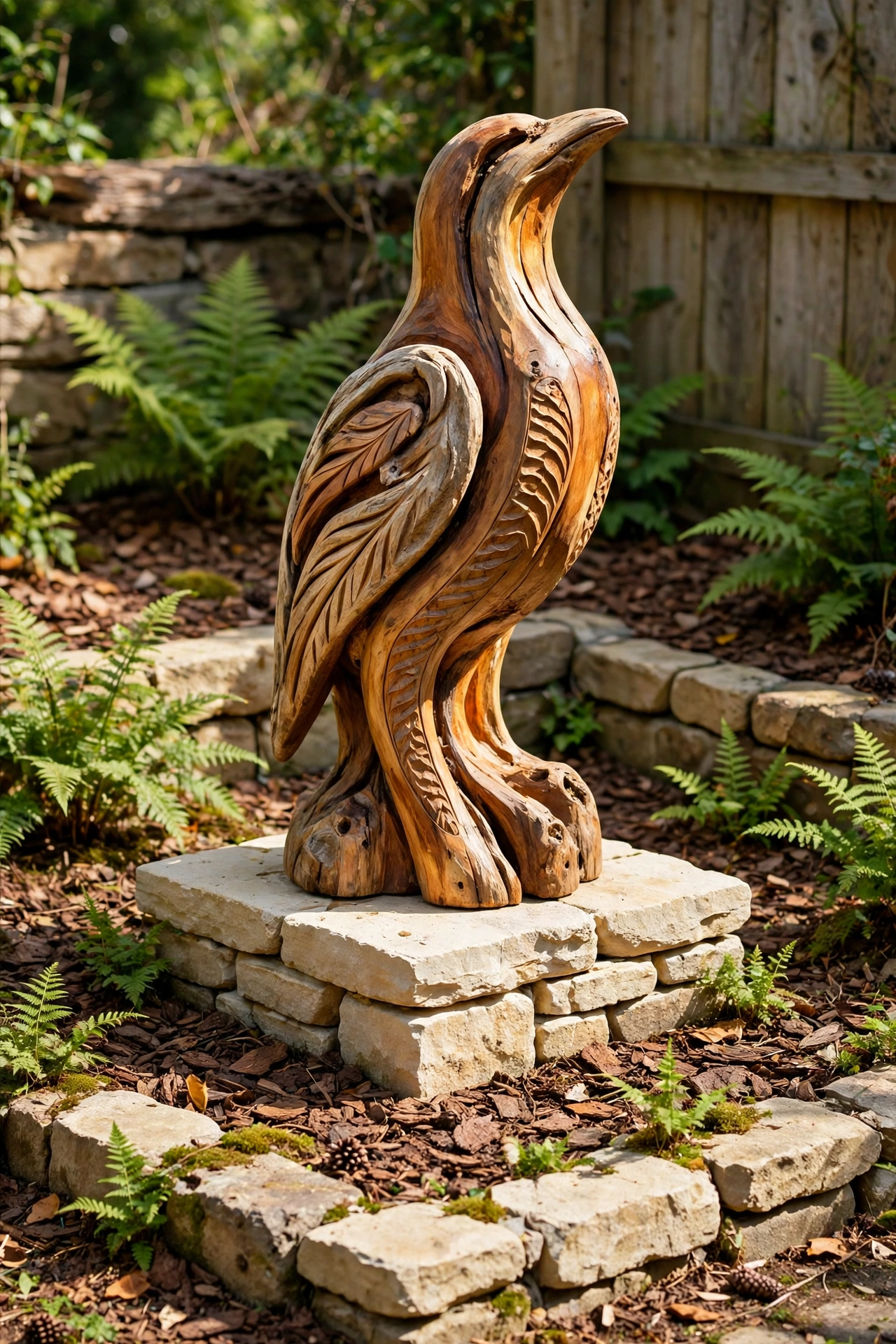
11. Use Weathered Wood Sculptures in a Rustic Garden Corner
Weathered wood sculptures bring warmth and character to a rustic corner of the garden. A carved driftwood totem, a chainsaw-carved owl, or an abstract form in reclaimed timber looks at home among bark mulch, ferns, and rough stone. The natural grain and silvered surface of aged wood age gracefully outdoors, growing more beautiful with every season.
Place wood sculptures where they drain freely and never sit in standing water, since constant damp will shorten their life. A gravel base or a low stone plinth lifts the wood clear of the soil and keeps the bottom dry. Reclaimed wood art suits cottage gardens and woodland edges, where its rough texture matches the relaxed planting around it.
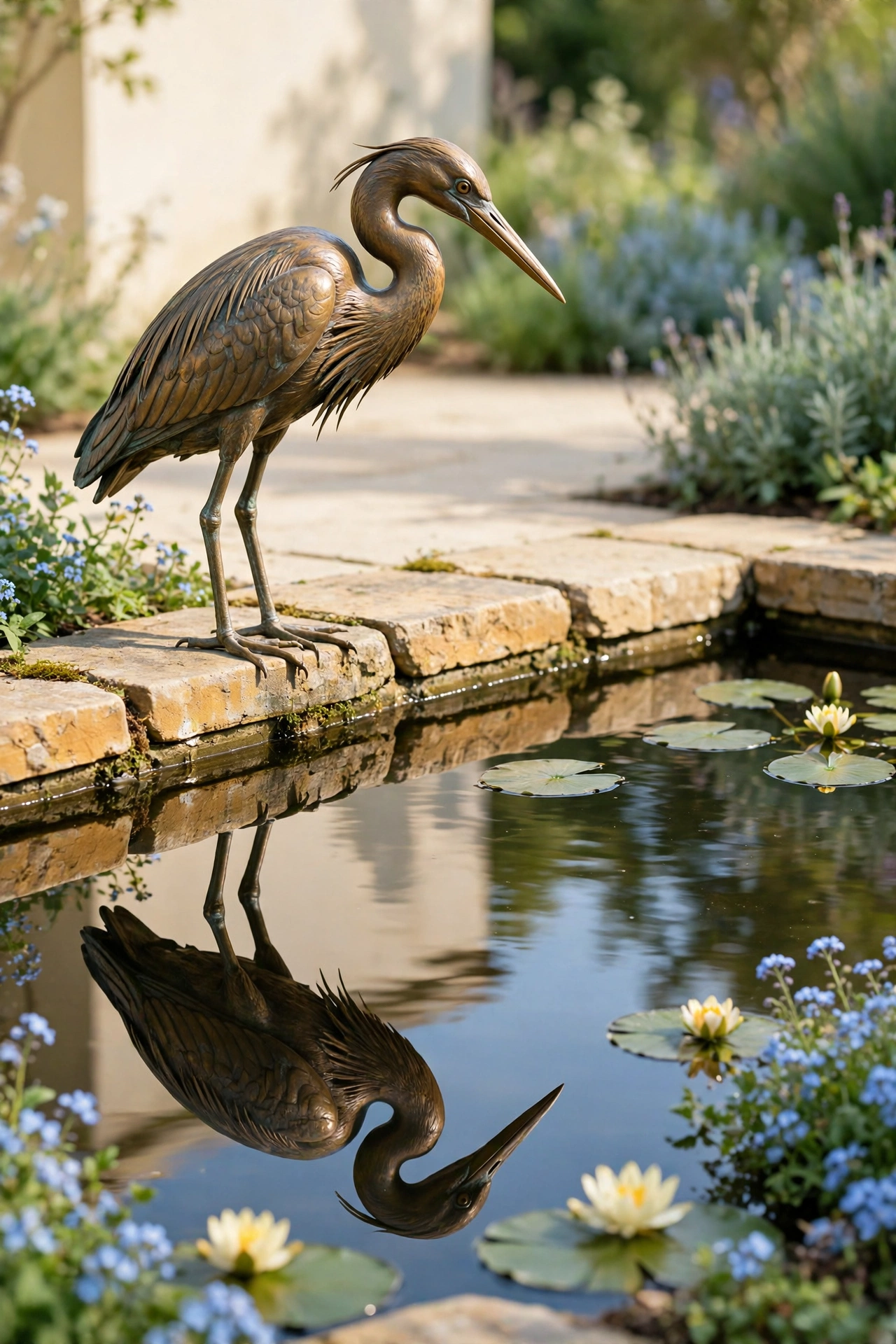
12. Float a Sculpture Beside a Pond or Water Basin
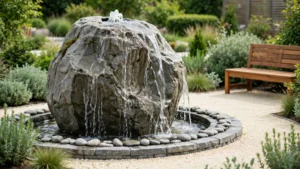
Water doubles the beauty of a sculpture, because the still surface mirrors the form and doubles its presence. A bronze heron standing at the edge of a pond, a stone orb rising from a shallow basin, or a metal sail reflected in a water trough creates a composition that changes with the light and the breeze. The sculpture and the water belong together, each one making the other more beautiful.
Place the sculpture at the edge of the water rather than in the middle, so it anchors the composition without blocking the view across the surface. Keep the water clean and the level steady, since a murky or half empty basin will undermine the whole effect. A waterside sculpture suits calm, reflective corners of the garden, where visitors pause and linger.
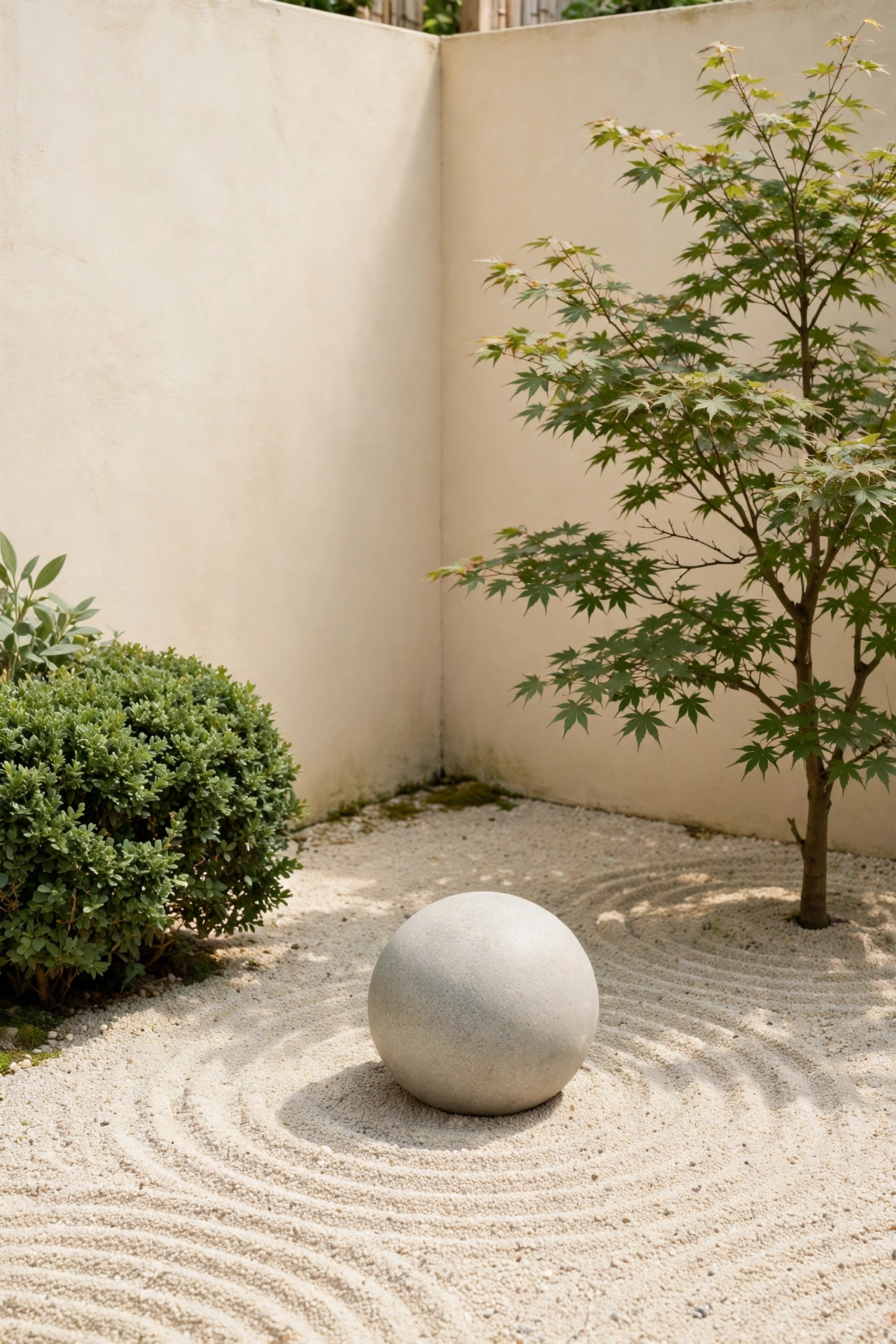
13. Create a Zen Corner With a Single Minimal Sculpture
A zen garden corner asks for restraint, and a single minimal sculpture is all it needs. One smooth stone, one simple ring, or one unadorned steel column set in raked gravel creates a space for stillness and contemplation. The emptiness around the sculpture is part of the art, because it gives the mind room to slow down and the eye a place to rest.
Rake the gravel in clean lines radiating from the sculpture, and keep the surrounding planting to a minimum, with perhaps one clipped shrub or a small maple. Resist the urge to add more pieces, since the power of a zen corner comes from what you leave out. For a fuller approach to calm, minimal garden design, these zen garden landscape ideas will help you shape the setting around your single sculpture.
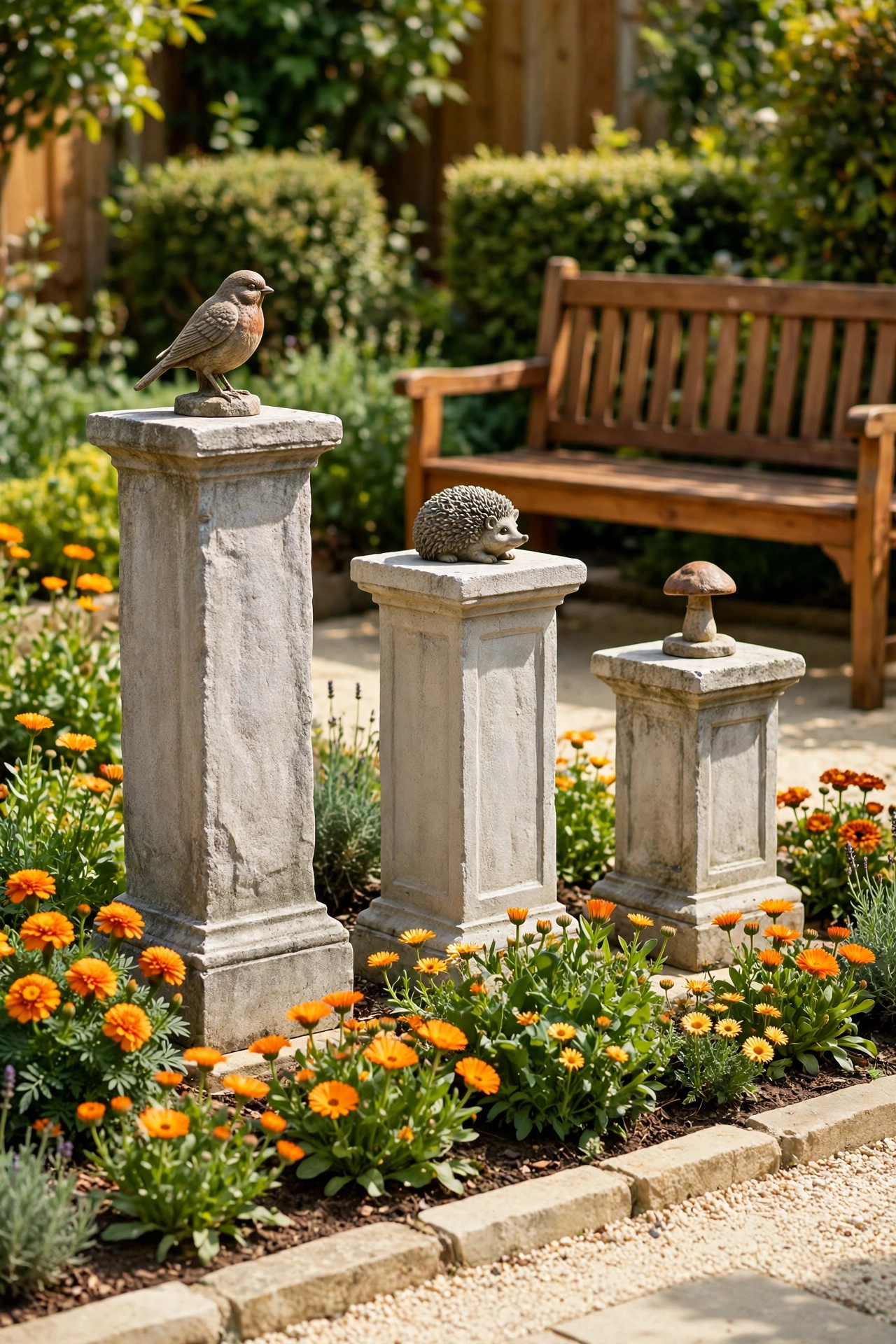
14. Display Sculptures on Pedestals That You Rotate Through the Seasons
A set of empty pedestals is an invitation to change your garden gallery through the year. Place two or three stone or concrete plinths in sunny spots, and rotate the sculptures on top with the seasons: a bright ceramic piece for summer, a bronze figure for autumn, a frost-proof stone form for winter. The garden always feels fresh, because the art never stays the same for long.
Choose pedestals of different heights and sturdy, weatherproof construction, so each one suits a different scale of sculpture. Store the pieces that are resting in a dry shed or garage, wrapped in soft cloth, so they stay clean and undamaged between displays. A rotating display also lets you try new pieces in your own garden before you commit to a permanent placement.
Conclusion
A sculpture garden is not about owning expensive art. It is about placing one thoughtful piece where it can change the way a garden feels, and then building the landscape around it with care. Whether you choose a bold abstract form, a quiet stone figure, or a wind sculpture that dances in the breeze, the right piece will reward you every time you step outside.
Start with one sculpture and one clear spot, and live with it for a season before you add more. Notice how the light changes it through the day, and how the garden grows around it. For a peaceful corner to enjoy your new art, these outdoor reading garden ideas will help you create a quiet seat with a perfect view of your sculpture display.
Frequently Asked Questions About Outdoor Sculpture Garden Ideas for Artistic Landscapes
What materials last longest for outdoor garden sculptures?
Bronze, stainless steel, granite, and cast stone last the longest outdoors, often for decades with little care. Corten steel develops a protective rust patina that suits modern gardens. Ceramic and resin pieces need frost-proof ratings in cold climates, and wood sculptures need a dry base and regular sealing.
How do I choose the right size sculpture for my garden?
Match the sculpture to the space around it. A piece should be roughly one third to one half the height of the nearest backdrop, such as a hedge or fence, so it reads clearly without overwhelming the setting. For a focal point in an open lawn, go larger than you think, since outdoor spaces swallow small pieces quickly.
Should garden sculptures sit on a plinth or directly on the ground?
A plinth lifts a sculpture to eye level and protects the base from soil moisture, so it suits smaller pieces and formal settings. Large, heavy sculptures often sit directly on a gravel or concrete footing, which looks more natural in a landscape setting. Either way, the base must be level and stable, so the piece never leans or sinks.
How do I protect outdoor sculptures in winter?
Move frost-sensitive ceramic and resin pieces into a dry shed before the first freeze. Cover stone and metal sculptures with breathable covers if your climate brings harsh freeze and thaw cycles, and clear snow from horizontal surfaces. Bronze and granite usually need nothing more than a spring wash with mild soap and water.
Can I mix modern and traditional sculptures in one garden?
Yes, if you give each style its own zone. Place modern abstract pieces in one area and traditional stone figures in another, with planting or a path as a buffer between them. A shared material, such as bronze or limestone, will tie the two zones together and keep the garden feeling like one composition.

Hi, I’m Emily! I turn messy corners into cozy, organized spots. DreamNestDecor is where I share simple, practical home ideas — decor, organization, and small-space solutions that work in real life, not just in photos. Every idea here is carefully researched before it’s shared.