Picture this: you step into your garden on a warm afternoon and the first thing you hear is water moving over stone. It is not a loud rush, just a steady, gentle murmur that makes the whole yard feel cooler and calmer. A rock fountain turns an ordinary corner of the garden into a place where you want to slow down and stay a while.
You do not need a large yard or a big budget to enjoy that sound. Rock is one of the most forgiving materials in the garden, and it suits every style from rustic to modern. These 22 garden rock fountain ideas will help you choose a design that fits your space, from a single bubbling boulder to a full stone cascade, so your garden gains the sound of moving water all season long.
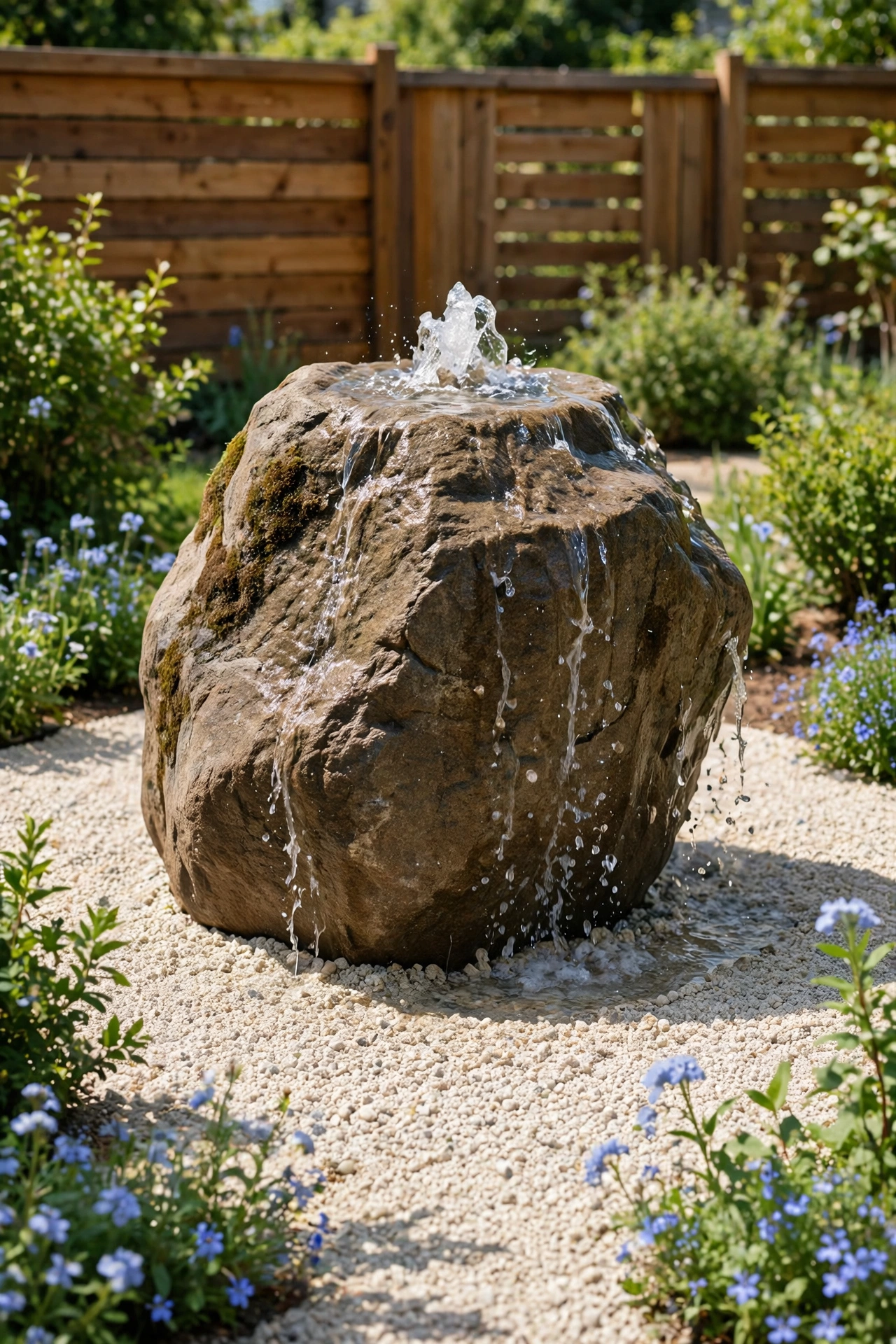
1. Let Water Bubble From a Single Drilled Boulder
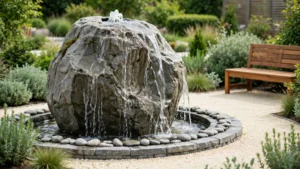
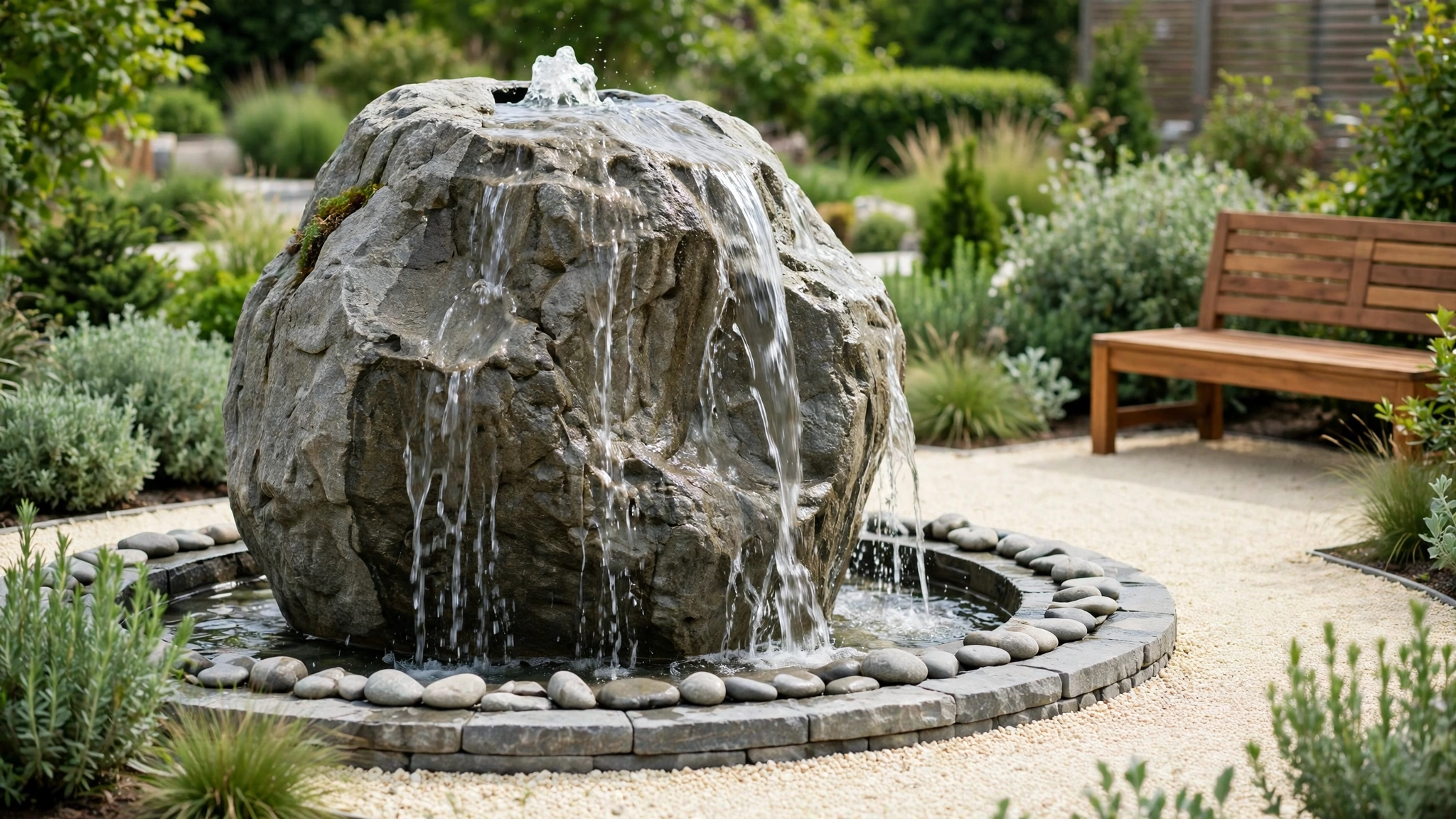
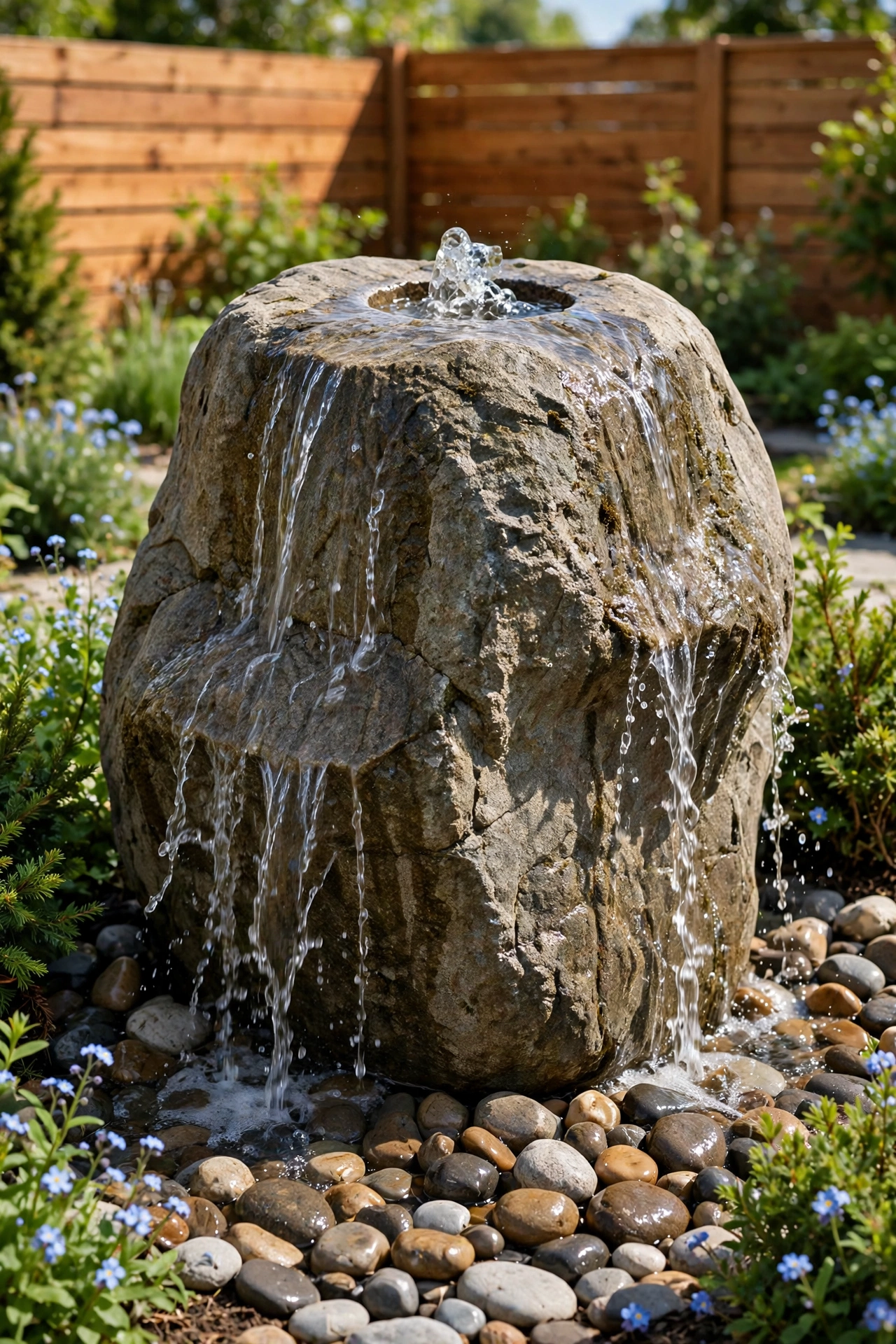
A single drilled boulder is the simplest rock fountain you can build, and it is also one of the most beautiful. A hole runs through the center of a large natural stone, and a small pump pushes water up through the hole so it bubbles over the top and sheets down the sides. The stone looks as if it has always stood in the garden, and the water gives it life.
Choose a boulder with an interesting shape and a mix of colors in the stone, since the rock itself is the whole design. Set it on a hidden basin or a bed of river pebbles so the water recirculates without a visible pond. A drilled boulder works in small gardens too, because it needs only the footprint of the stone itself.
2. Stack Flat Slate Slabs Into a Modern Fountain
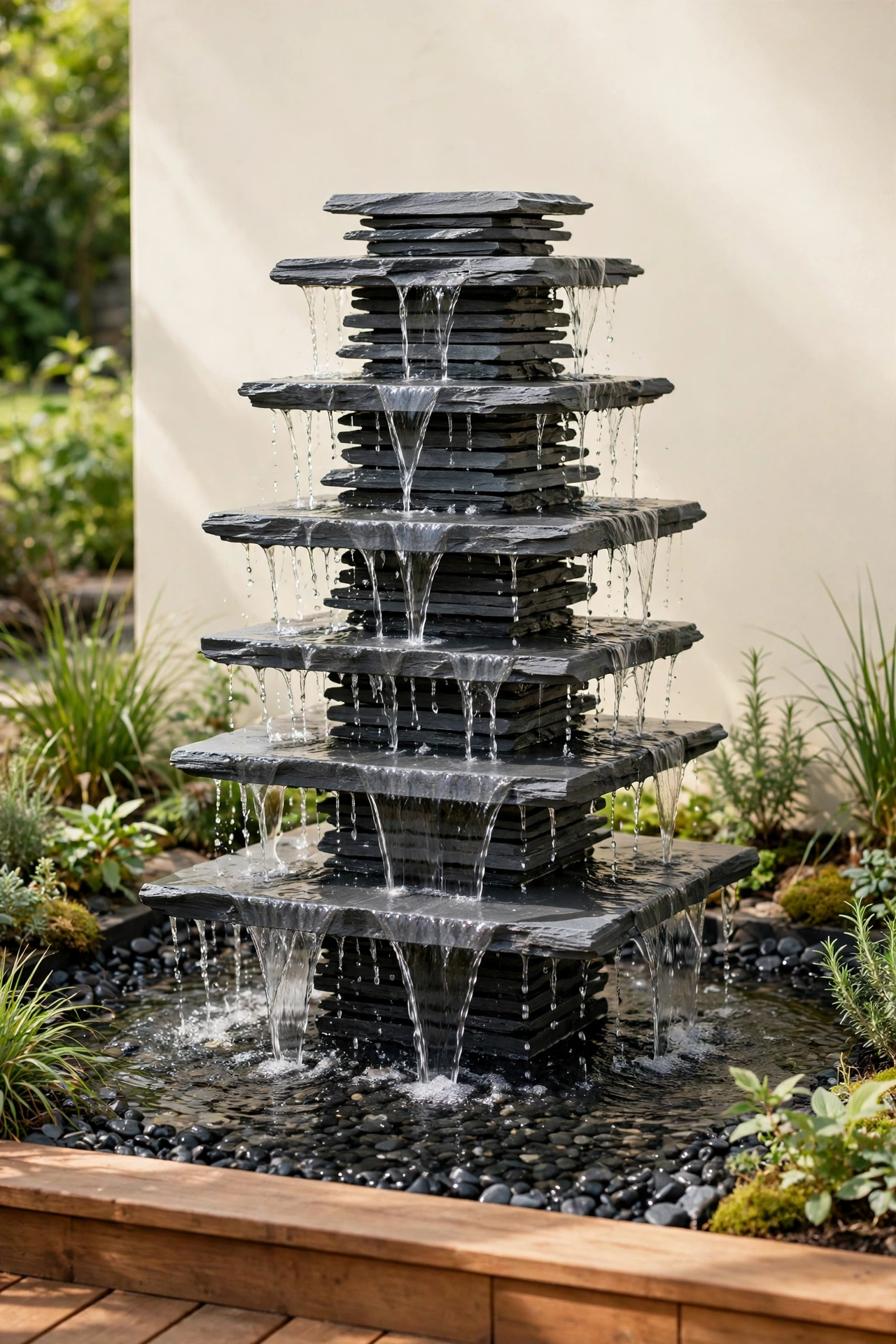
Flat slabs of slate stacked in a neat column give a rock fountain a clean, modern look. Water rises through the center of the stack and spills evenly over the edges of each slab, so the whole column glistens in the sun. The dark gray and blue tones of slate look striking against green planting and warm wood decking.
Keep the stack level and secure, with each slab slightly smaller than the one below it, so the column tapers gently toward the top. A square or round basin of dark pebbles at the base catches the water and hides the pump. This design suits contemporary gardens where crisp lines matter more than rustic charm.
3. Build a Three-Tier Rock Cascade
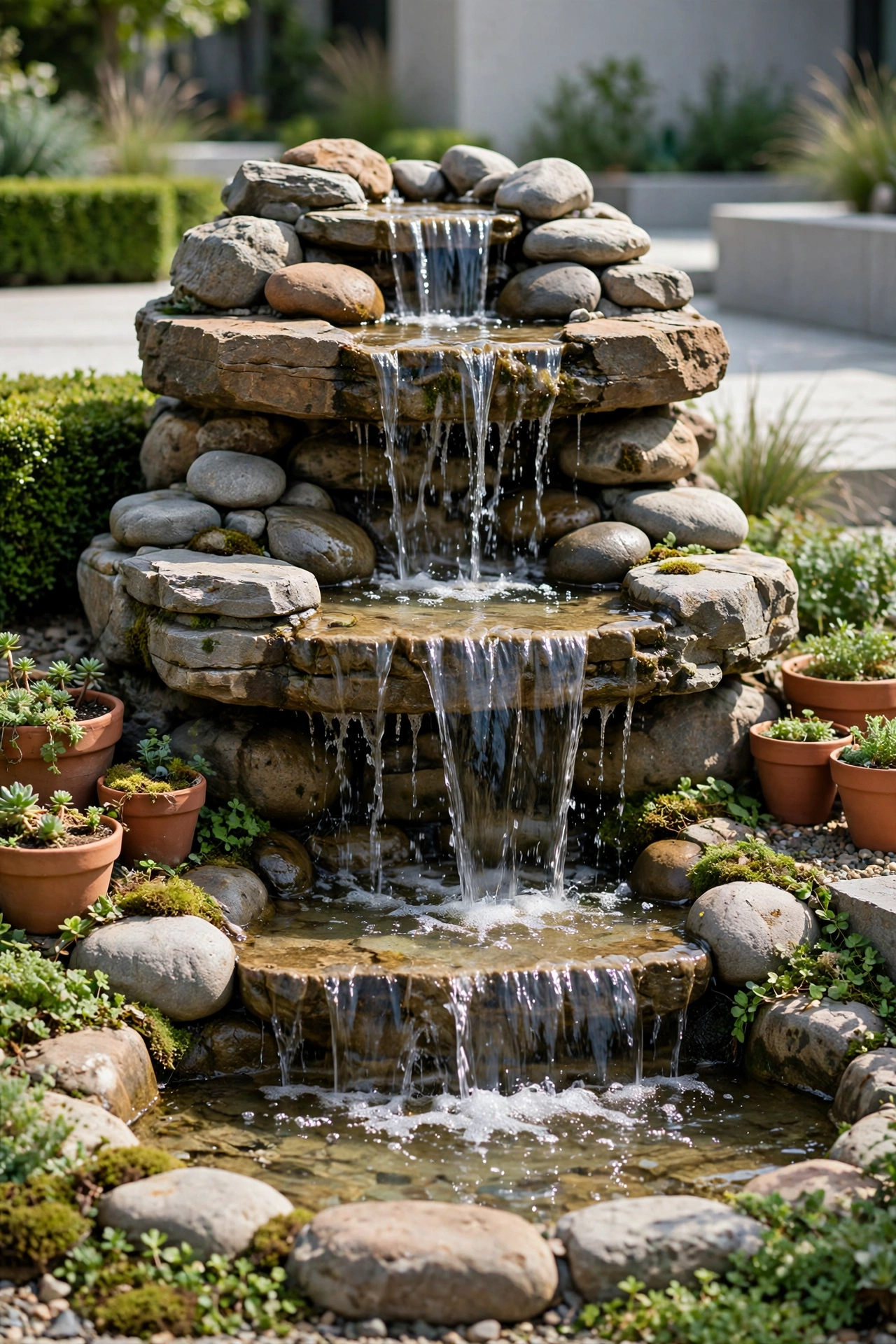
A three-tier cascade moves water down a series of rock ledges, so you hear a soft fall at every level. The top tier can be a wide flat stone, the middle tier a pair of rounded rocks, and the bottom tier a shallow basin that gathers the water for the pump. Each drop adds a new note to the sound, and the whole fountain feels like a small mountain stream.
Build the tiers on a firm, level base and test the water flow before you fix the stones in place. You want a steady sheet of water at each level, not a splash that soaks the surrounding soil. Plant low groundcover around the base to soften the edges and make the cascade look as if it grew there naturally.
4. Set a Millstone Fountain Over a Pebble Basin
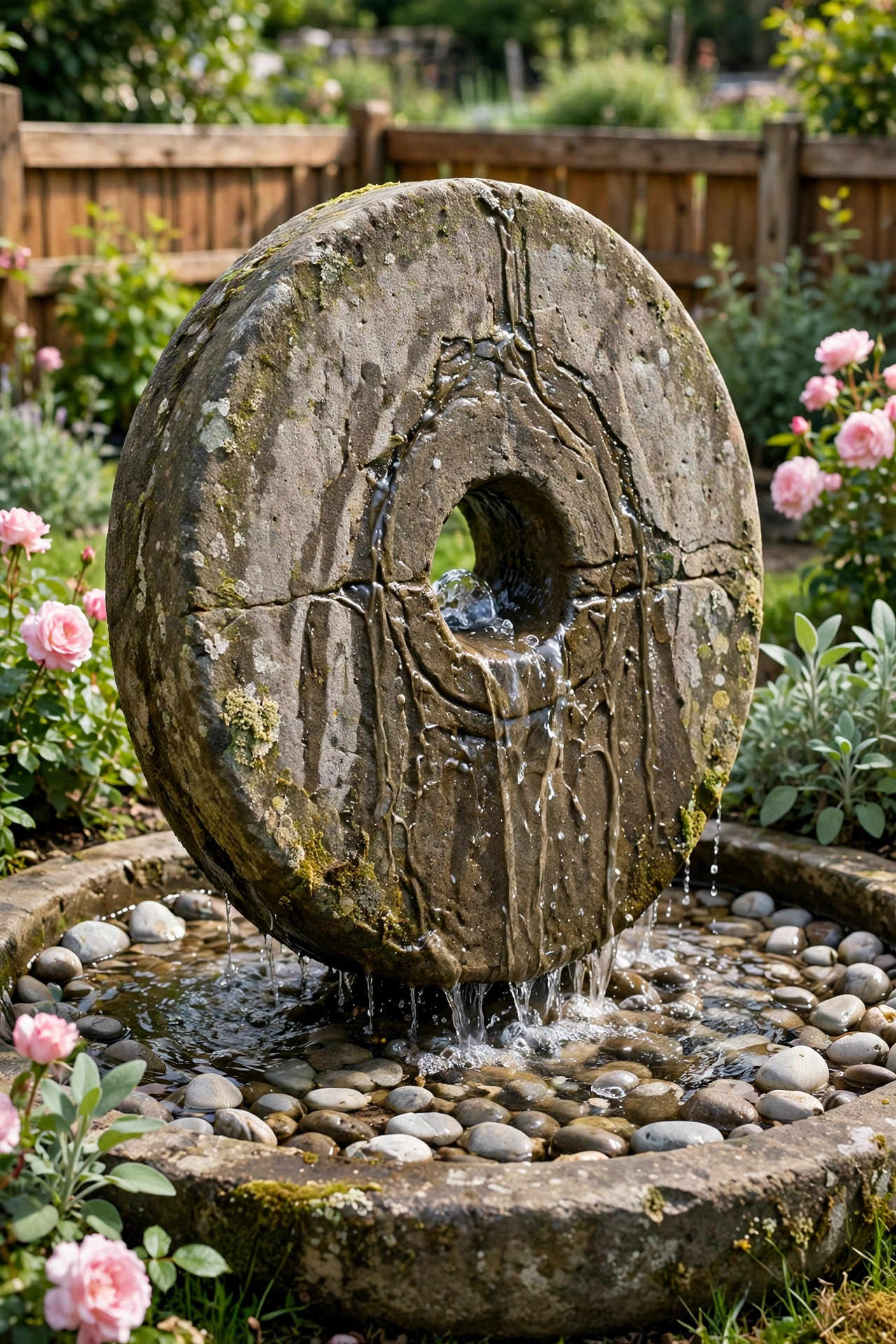
An old millstone makes a wonderful fountain centerpiece, because its round shape and weathered surface carry a sense of history. Water bubbles up through the center hole of the stone and spreads across the flat face before dripping into a basin of smooth pebbles below. The design is simple, but the movement of water across the ancient stone is endlessly interesting.
Millstones are heavy, so set the stone on a sturdy support ring or a low plinth that can hold its weight safely. A wide pebble basin catches every drop and lets you hide the pump and reservoir out of sight. This fountain suits cottage gardens and traditional yards where aged materials feel right at home.
5. Group Three Basalt Columns of Different Heights
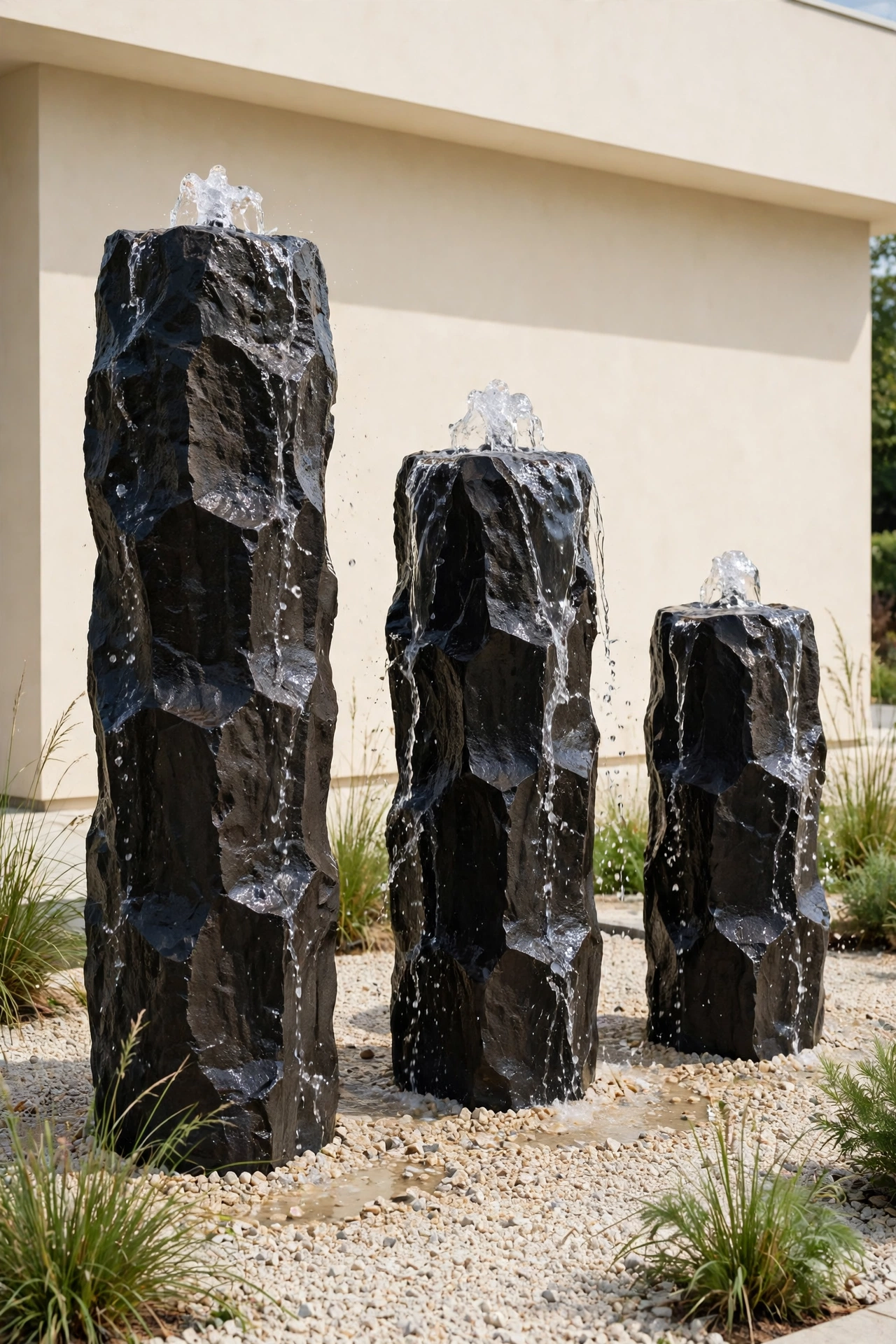
Basalt columns are tall, dark, hexagonal stones that bring a dramatic, sculptural feeling to the garden. Group three of them at different heights, with water bubbling from the top of each one, and the fountain becomes a piece of natural art. The dark stone looks best in bright daylight, where the wet surface shines almost black.
Space the columns close enough to read as one group, but leave small gaps so each column keeps its own shape. A bed of pale gravel around the base makes the dark basalt stand out and catches the water as it falls. This design works well near modern homes and in gravel gardens where bold forms are welcome.
6. Drop a Rock Waterfall Into a Garden Pond
A rock waterfall that drops into a pond gives you the fullest water sound of any garden fountain. Water spills from a raised rock ledge, tumbles over a few rounded stones, and lands in the pond with a pleasant splash. The pond reflects the sky and the planting, so the fountain becomes the center of the whole garden.
Line the waterfall channel with a flexible liner and cover the edges with stones so no liner shows. A pump sized for the height of the fall keeps the flow steady, and a small skimmer keeps the pond surface clear. If you love the idea of water at a larger scale, these natural swimming pool ideas show how ponds and pools can shape an entire backyard. Keep the waterfall height modest so the sound stays soothing rather than overwhelming.
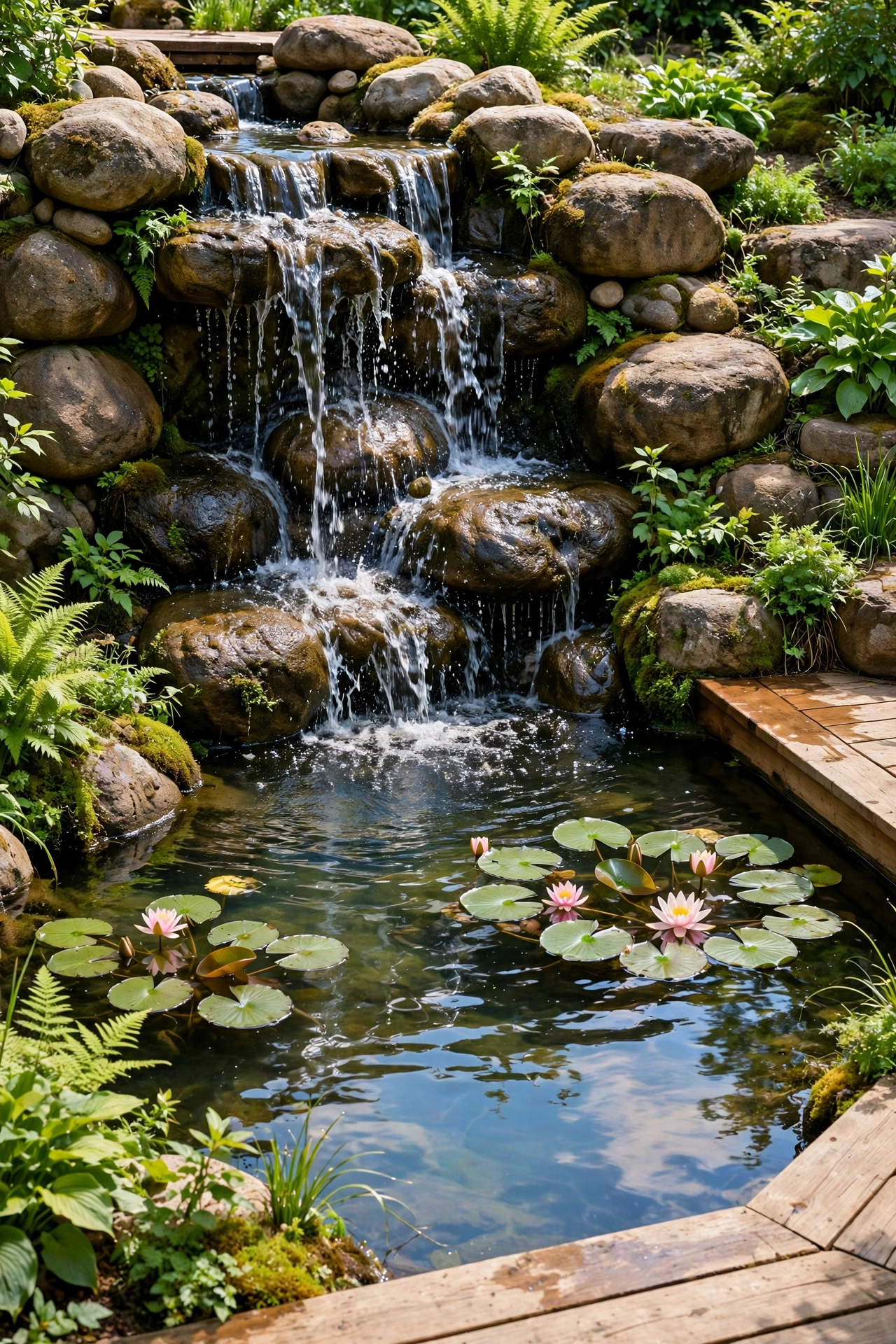
7. Fill a Stone Urn With Stacked River Rocks
A wide stone urn filled with stacked river rocks turns a classic garden ornament into a working fountain. Water rises through a pipe in the center of the urn and bubbles up through the gaps between the rocks, so the whole top of the urn glistens. The rounded stones catch the light differently as the water moves, which keeps the fountain interesting all day.
Choose river rocks in a mix of warm grays and browns, and stack them loosely so the water can find its own path. The urn itself can sit on a patio, a gravel bed, or a low plinth in a flower bed. This fountain is easy to move if you rearrange the garden, since the urn, rocks, and pump travel together as one piece.
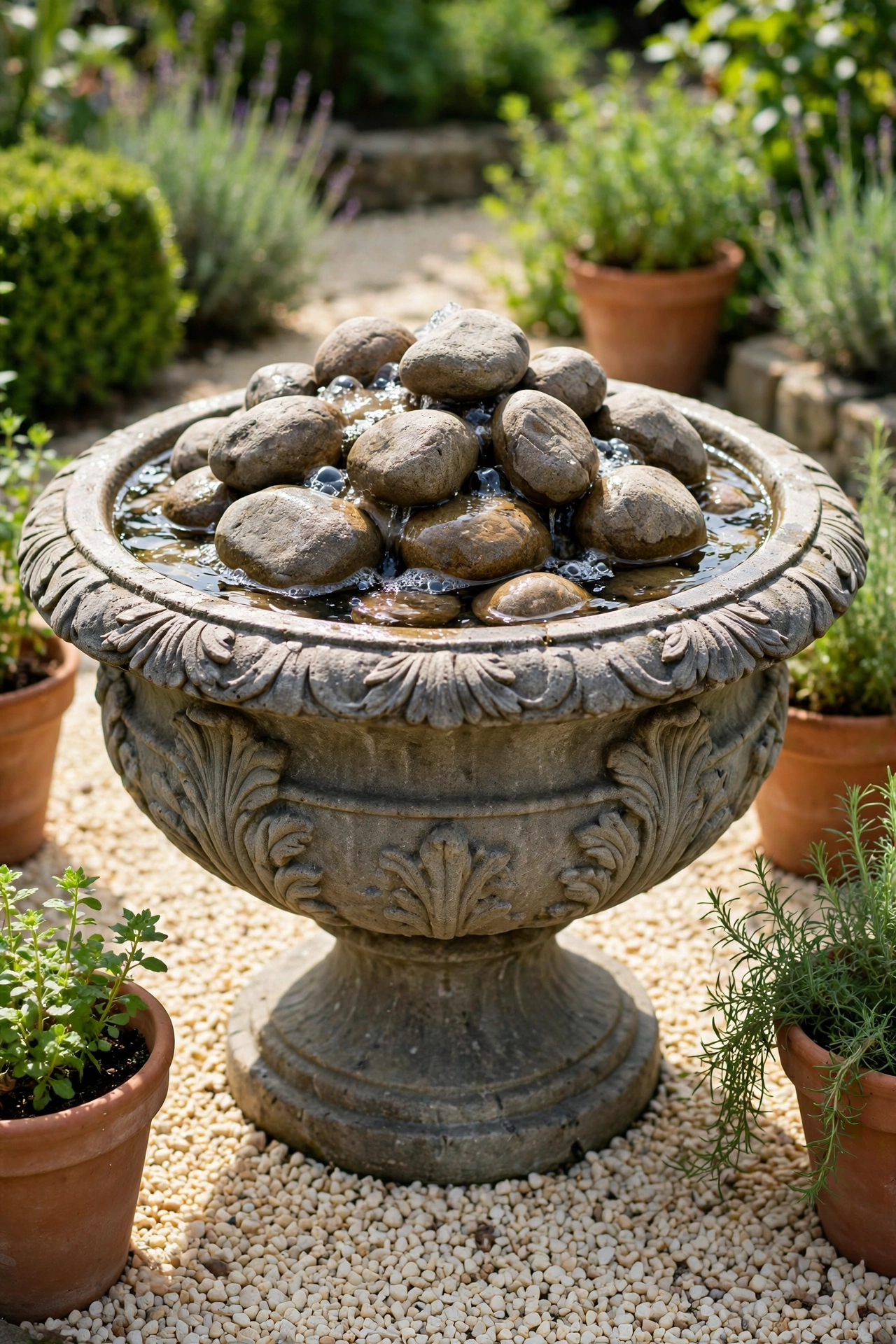
8. Pour a Glassy Sheet Over a Flat Stone Spillway
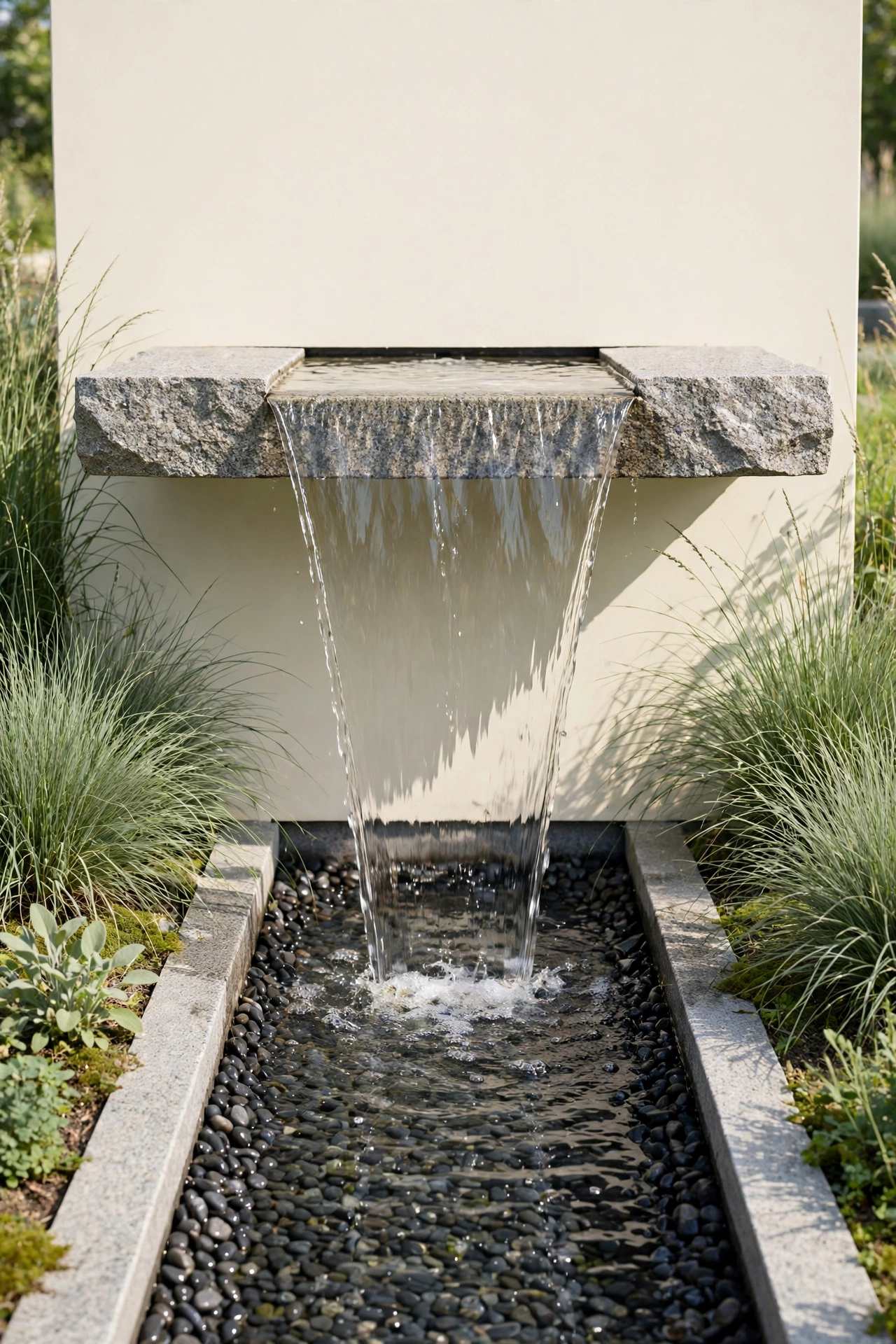
A spillway fountain sends water over a wide, flat stone edge in one smooth, glassy sheet. The effect is quiet and elegant, more like a ribbon of water than a splash, and it suits gardens where calm matters. A long slab of granite or sandstone forms the spillway, with water fed evenly across the back edge.
Level the spillway stone carefully, since even a small tilt will pull the water sheet to one side. A narrow catch basin below, lined with dark pebbles, keeps the water contained and makes the falling sheet easy to see. This design looks best against a plain wall or a hedge, where nothing distracts from the falling water.
9. Hide the Reservoir for a Pondless Boulder Fountain
A pondless fountain gives you the sound of water with no open pool at all. The water bubbles from a boulder or a rock stack and disappears into a bed of gravel, where a hidden reservoir and pump send it back to the top. There is no standing water, which makes this design safe for homes with small children and pets.
Dig the reservoir basin below the gravel bed and cover it with a sturdy grate and landscape fabric so the gravel stays out of the water. A small access panel lets you reach the pump for cleaning without moving the whole fountain. Pondless designs also lose less water to evaporation, so they are a smart choice for dry climates.
10. Carve a Rustic Stone Trough Fountain
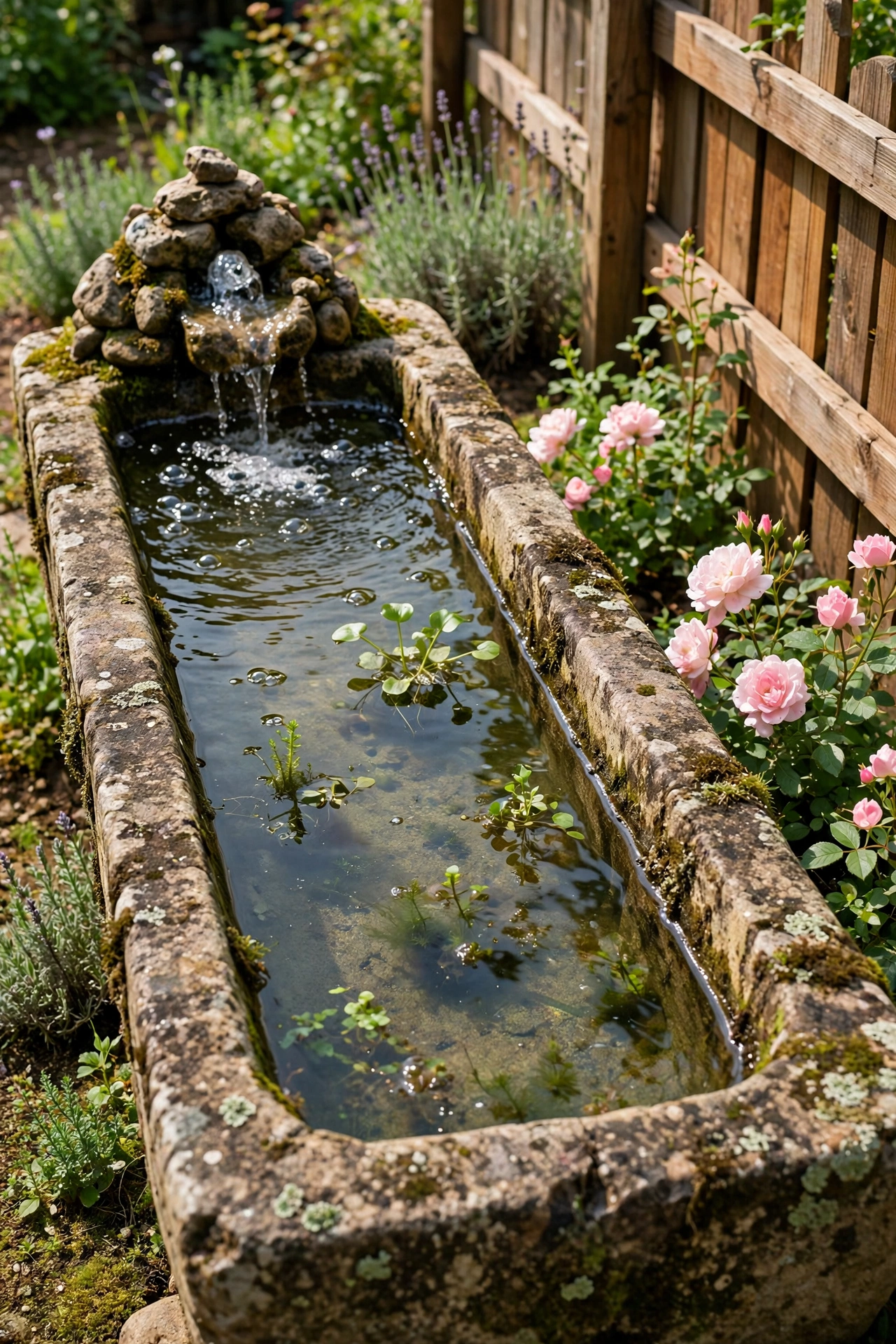
A stone trough fountain uses a long, hollowed stone basin as both the reservoir and the centerpiece. Water bubbles up from one end of the trough or spills from a small rock stack at the center, and the trough holds the water in a calm, shallow pool. Old stone troughs have a rough, weathered finish that suits farmhouse and cottage gardens perfectly.
Set the trough level on a bed of compacted gravel so it does not shift as the ground settles. A small pump hidden under a flat stone at one end keeps the water moving gently, and a few water plants in the trough add softness. This fountain is low and wide, so it fits well along a wall or at the edge of a patio.
11. Terrace a Rock Fountain Down a Gentle Slope
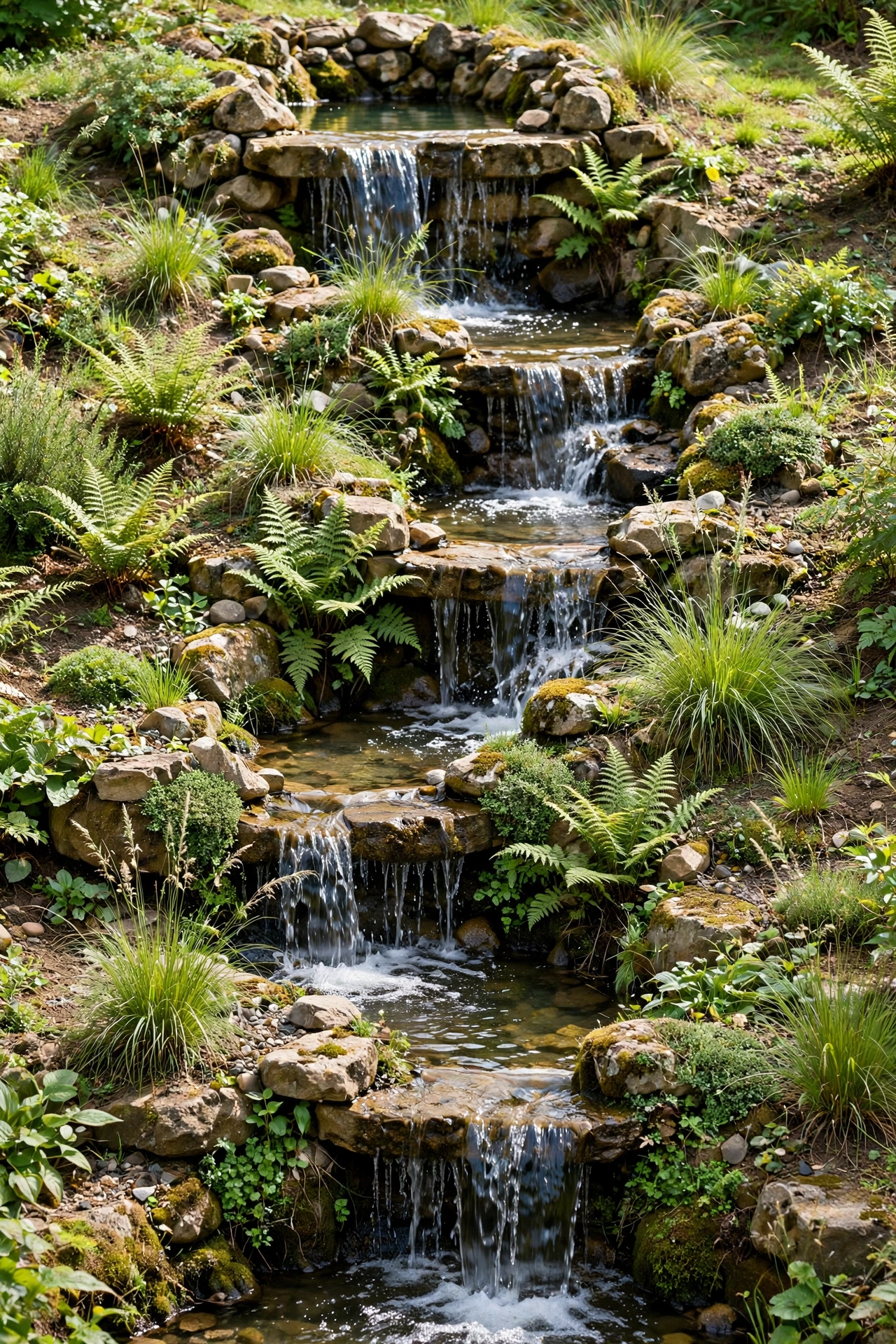
A sloped garden is a gift for a rock fountain, because gravity does the work of moving water. Build a series of rock pools down the slope, each one spilling into the next, and the water will cascade from the top of the garden to the bottom in a chain of small falls. The fountain follows the shape of the land instead of fighting it.
Shape each pool with flat stones for the spill edges and rounded rocks for the sides, and line every pool so water stays in the chain. A single pump at the bottom pool sends water back to the top through a buried pipe. Plant ferns and grasses between the pools to knit the whole cascade into the slope.
12. Roll Water Over a Polished Granite Sphere
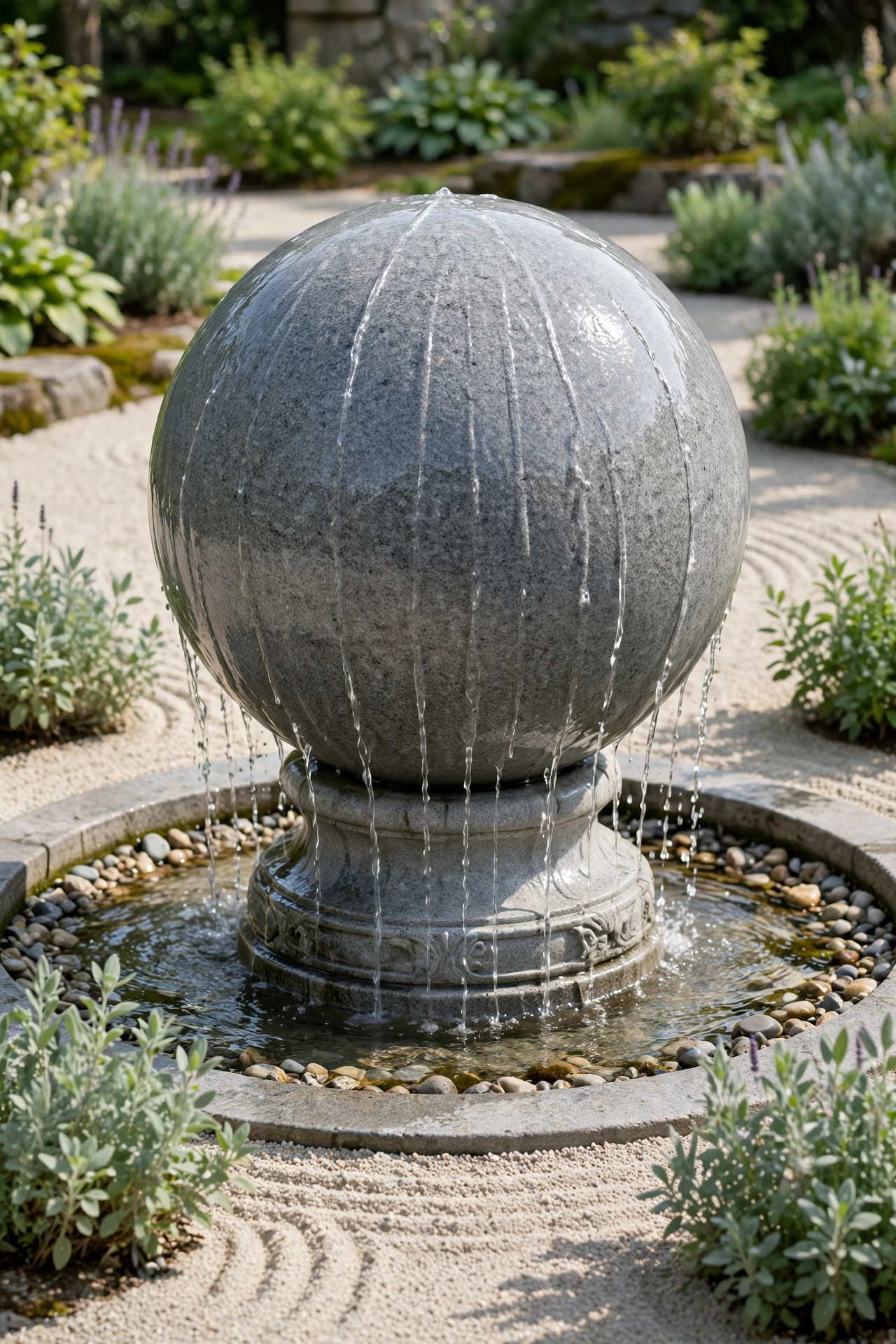
A polished granite sphere fountain sends a thin film of water over a perfectly round stone ball. The water sheets down every side at once, so the sphere shines like a jewel and the sound stays soft and even. Spheres in gray, black, or warm pink granite each change the mood of the garden in a different way.
Set the sphere on a carved stone base with a hidden water feed, and catch the flow in a shallow basin ringed with pebbles. The ball must sit perfectly level so the water sheet stays even all around. This fountain has a calm, meditative feeling, and it pairs beautifully with the simple lines of these zen garden landscape ideas for a peaceful corner of the yard.
13. Shape a Quiet Rock Grotto Fountain
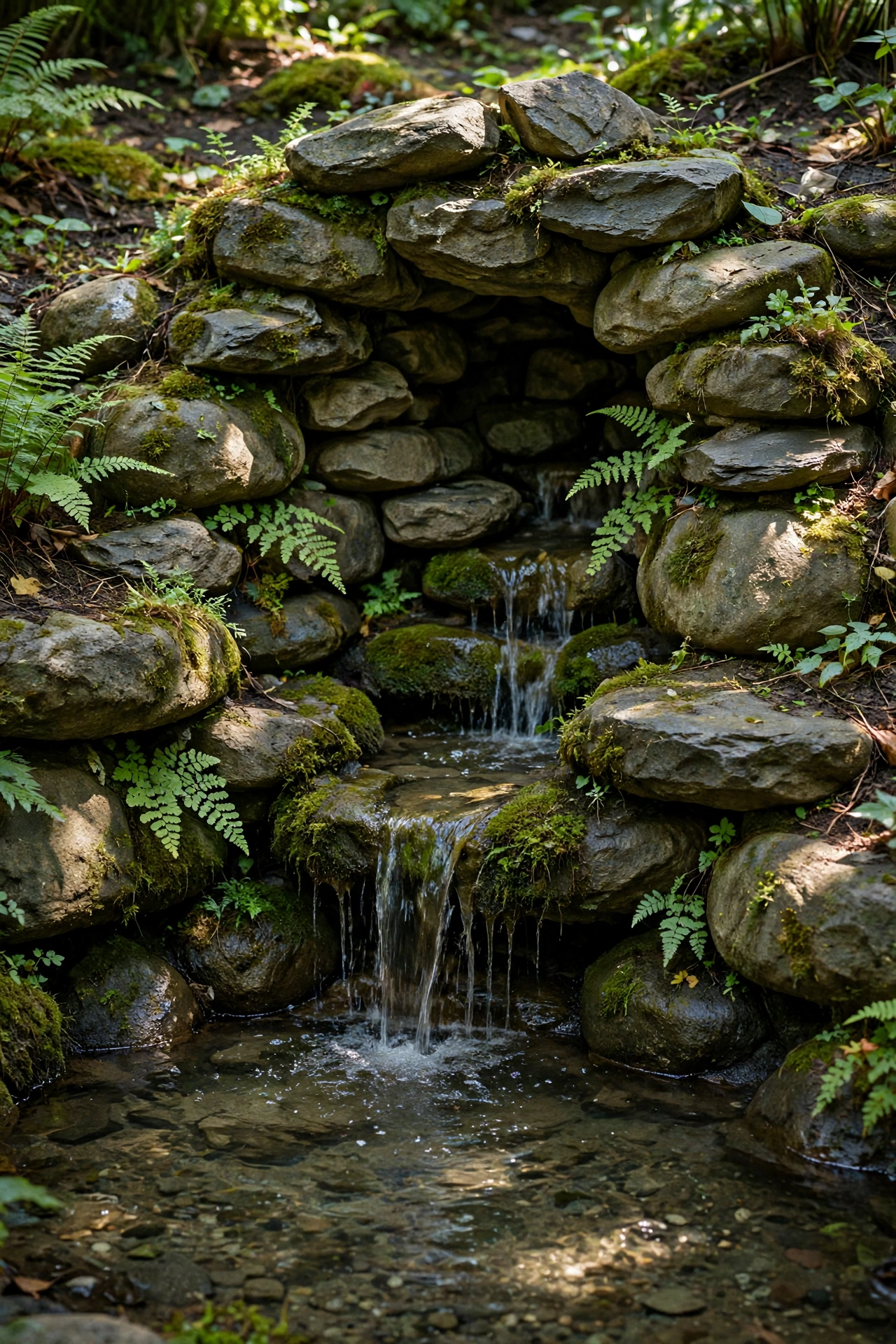
A rock grotto fountain tucks a small waterfall into a sheltered hollow built from stacked stones. The rocks curve around the water like a tiny cave, which softens the sound and creates a cool, shaded retreat on hot days. Ferns and moss planted in the gaps between stones make the grotto feel old and established.
Build the grotto against a bank or a wall so the structure has solid support behind it, and leave an opening at the front for the water to spill into a shallow pool. Keep the water flow gentle, since a grotto is meant to murmur rather than roar. This design suits shady gardens where the cool, damp feeling of the grotto is welcome.
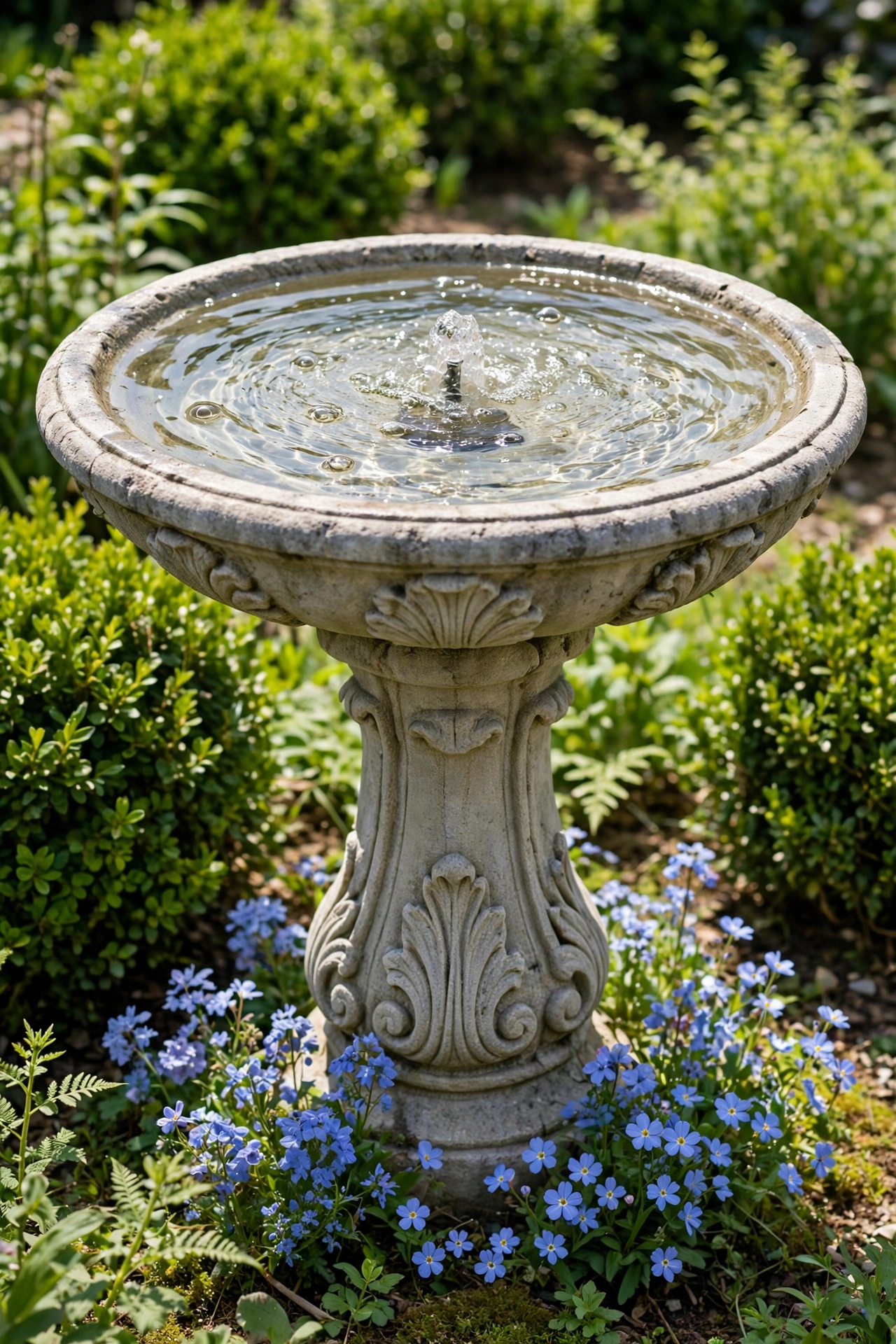
14. Add a Gentle Bubbler to a Stone Birdbath
A stone birdbath with a gentle bubbler gives birds a safe place to drink and bathe while it adds the sound of water to the garden. The bubbler keeps the water moving, which stays fresher than still water and attracts more birds. A wide, shallow bowl with a rough stone rim gives small birds a safe grip.
Place the birdbath in an open spot where birds can see approaching cats, but near shrubs where they can retreat quickly. Keep the water level shallow, no more than a few inches deep, and top it up often in hot weather. A solar bubbler kit removes the need for a power cable, so you can place the birdbath anywhere the sun reaches.
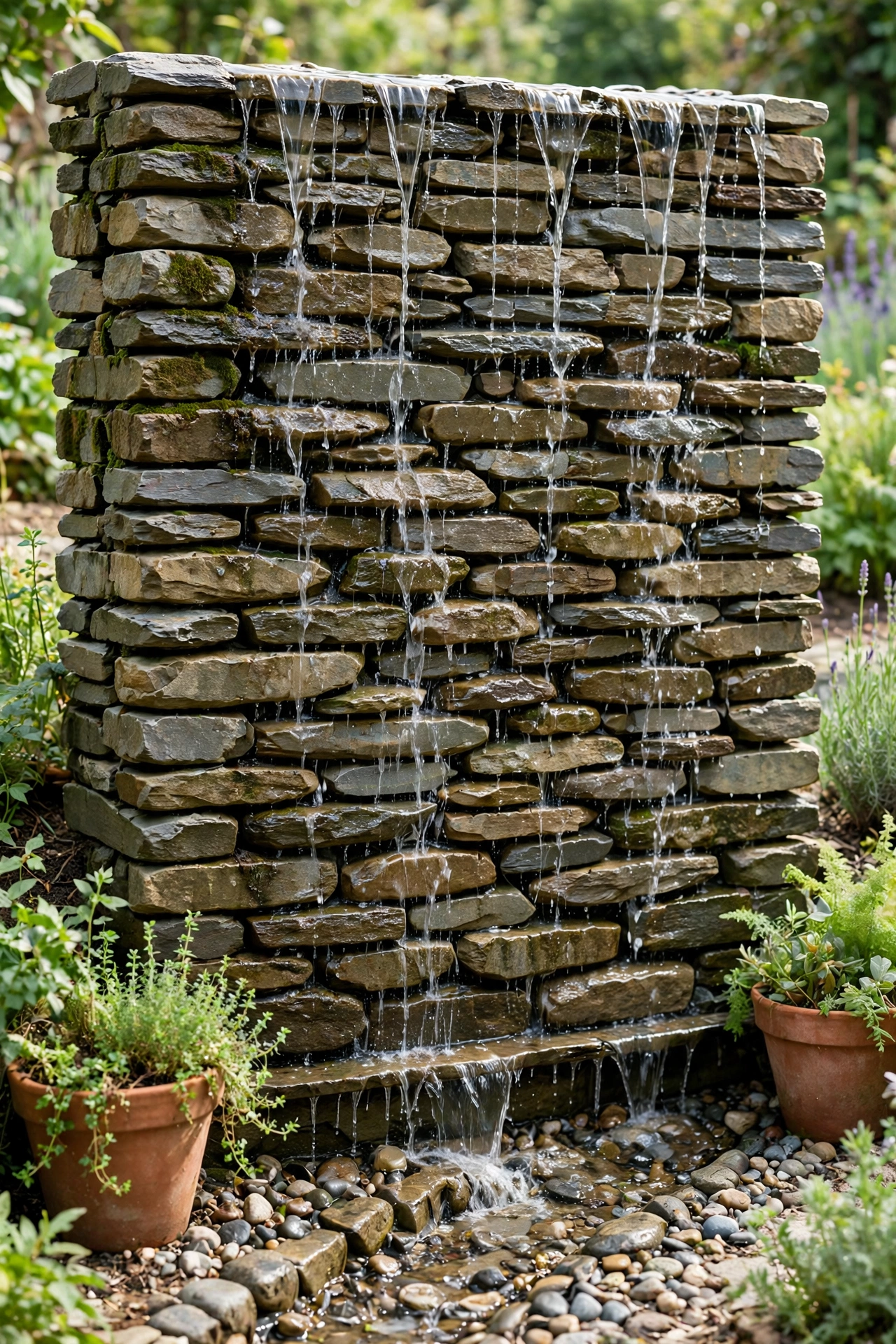
15. Run Water Down a Dry-Stack Stone Wall
A dry-stack stone wall fountain turns a garden wall into a waterfall. Water is fed along the top of the wall and seeps down through the gaps between the stones, so the whole wall face glistens and drips into a narrow channel at the base. The effect is natural and soft, like water finding its way down a cliff face.
Build the wall with flat stones stacked without mortar, and run a perforated pipe along the top behind the cap stones to feed the water evenly. A shallow rill or pebble channel at the foot of the wall gathers the water for the pump. This fountain doubles as a boundary or a backdrop, so it earns its place in gardens where space is tight.
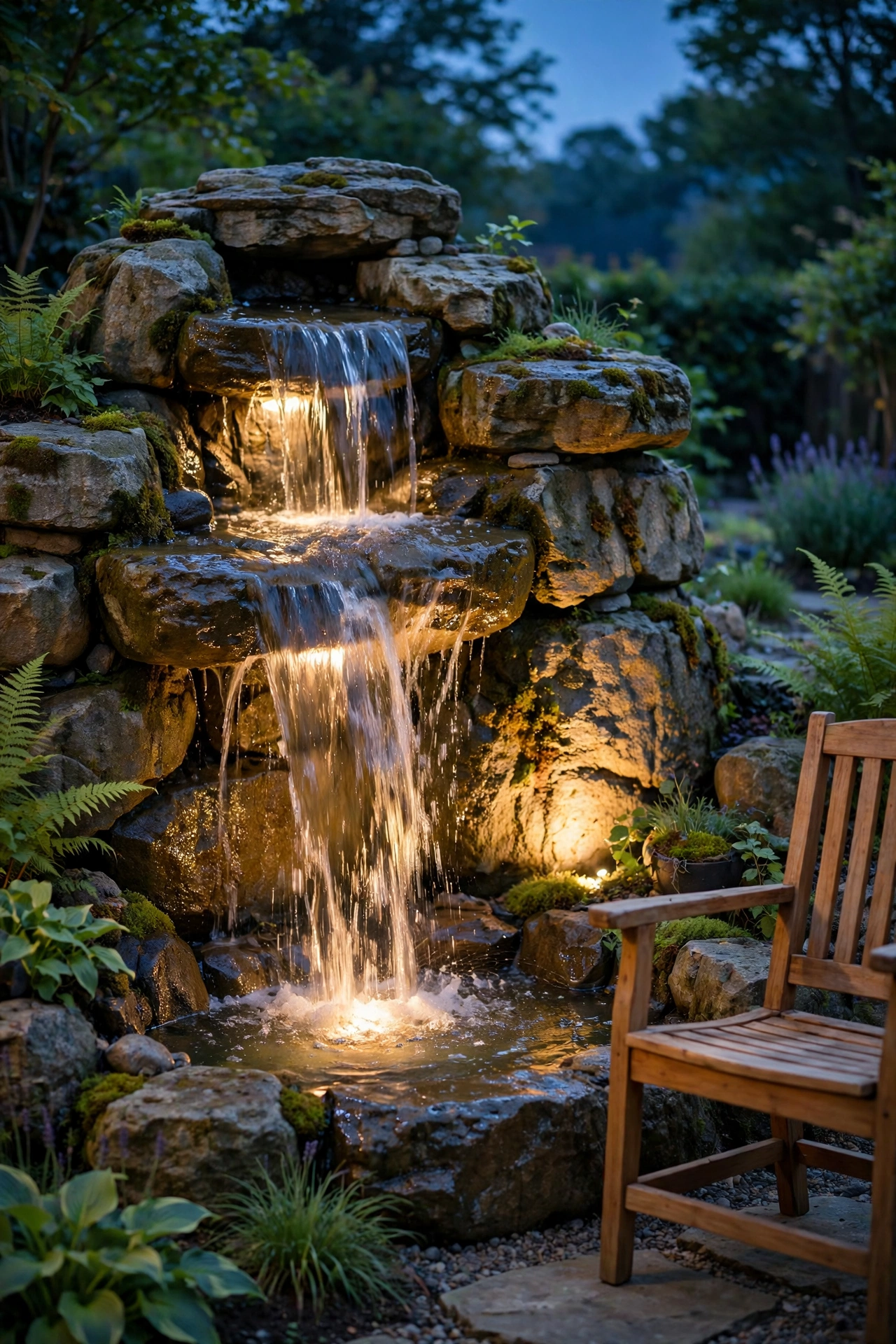
16. Light a Rock Fountain for Calm Evenings
A rock fountain with warm lighting stays beautiful long after the sun goes down. Small waterproof lights set under the water make the falling streams glow, and a soft uplight on the rock face shows off the texture of the stone. The combination of moving water and warm light turns the garden into an evening retreat.
Use warm white lights rather than cool blue ones, since warm light flatters natural stone and feels restful. Place lights where they shine through the water, not straight into the seating area, so the glow feels gentle. A timer switches the lights on at dusk, so the fountain is ready every evening without a thought.
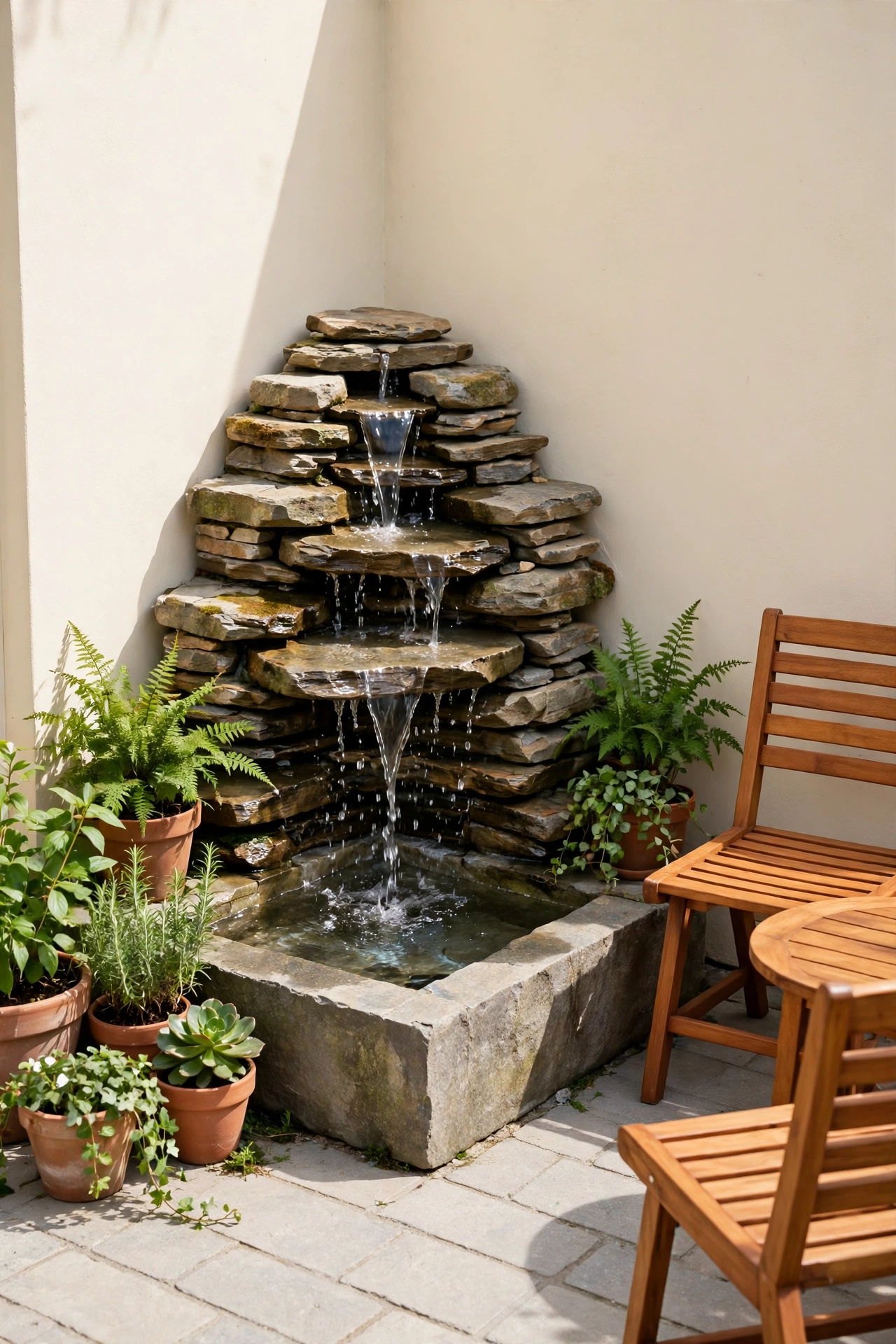
17. Fit a Compact Rock Fountain Into a Patio Corner
A patio corner is often wasted space, and a compact rock fountain fills it perfectly. A small stack of flat stones or a single upright rock in a square basin needs only a couple of square feet, yet it brings the sound of water right up to the seating area. The fountain becomes the backdrop for outdoor meals and quiet morning coffee.
Choose a basin shape that fits the corner, such as a square or quarter-round design, and keep the height low so the fountain does not crowd the patio. A small pump with an adjustable flow lets you dial the sound down for conversation or up for background noise. Add two or three potted plants around the base to blend the fountain into the patio.
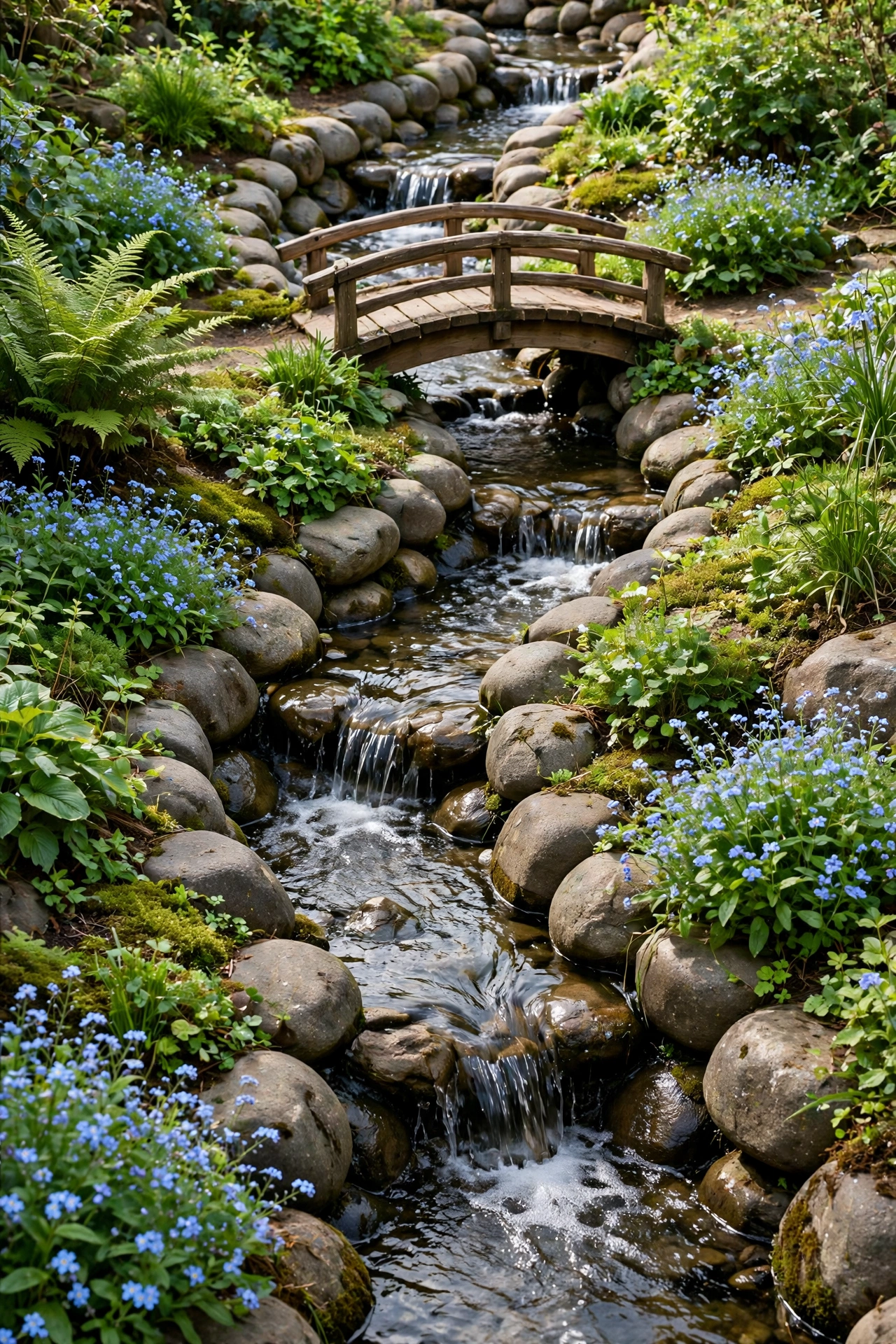
18. Wind a Rock-Lined Stream Through the Garden
A rock-lined stream fountain carries water along a winding channel from one end of the garden to the other. A pump sends water to the top of the stream, and it flows back over rounded stones and small drops to a hidden reservoir at the lower end. The stream ties the whole garden together, since every part of the yard sits near moving water.
Dig the channel with gentle curves rather than straight lines, and line it so the water stays in the stream bed. Vary the width of the channel and add a few flat stones as small dams, so the water speeds up and slows down along the way. A small wooden bridge over the stream adds charm and makes the fountain part of the daily walk through the garden.
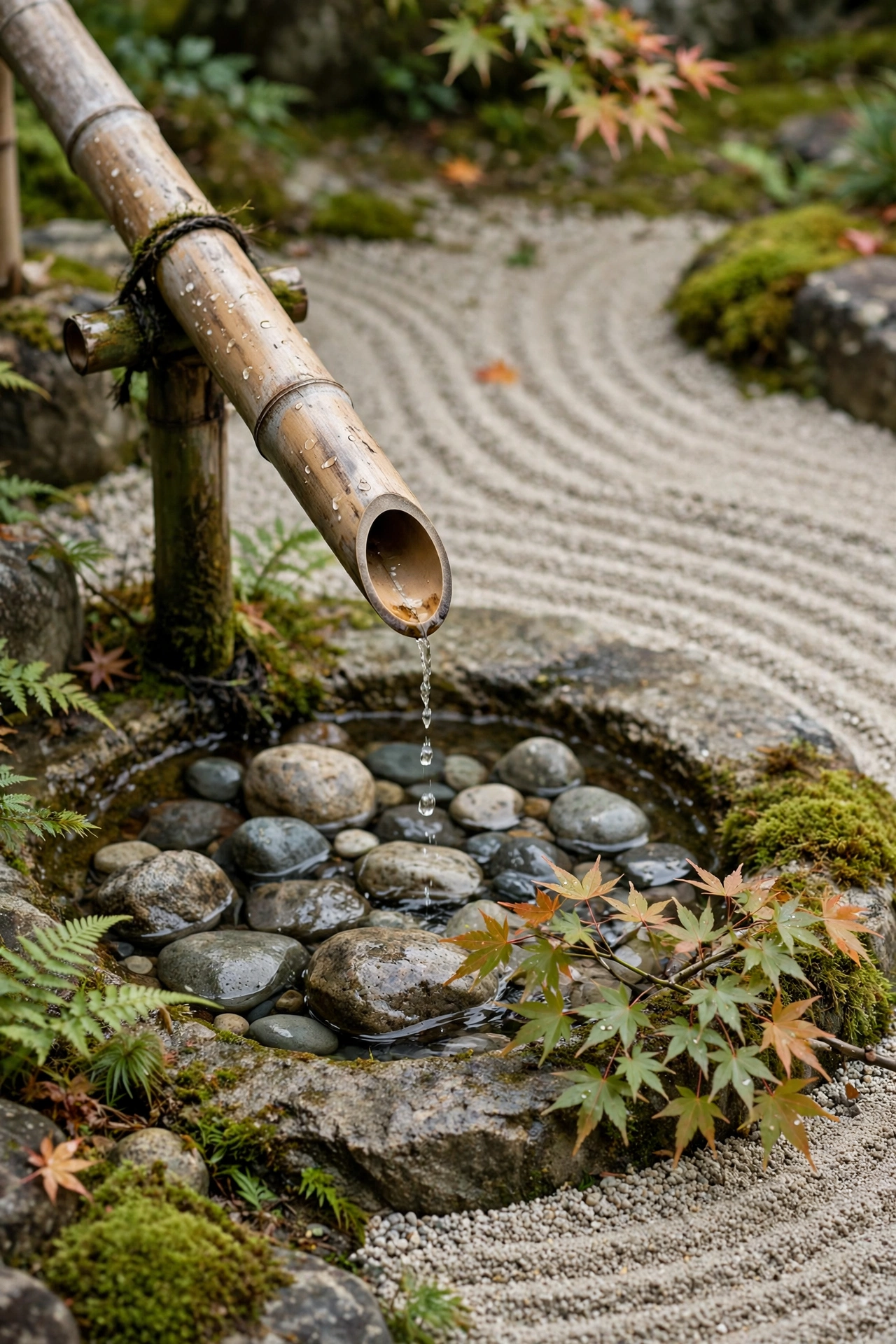
19. Drip Water From a Bamboo Spout Over River Rocks
A bamboo spout fountain borrows a classic Japanese design, where water drips from a hollow bamboo pipe onto a bed of river rocks. The slow, rhythmic drip is one of the quietest fountain sounds, and it suits small, contemplative gardens perfectly. The bamboo weathers to a soft gray that looks natural beside stone and moss.
Mount the bamboo spout above a shallow stone basin filled with smooth river rocks, and run a small pump to feed the pipe. Adjust the flow until the water drips in a steady rhythm rather than a stream. This fountain pairs naturally with the calm planting and clean lines of these Japanese garden design ideas for a serene corner of the yard.
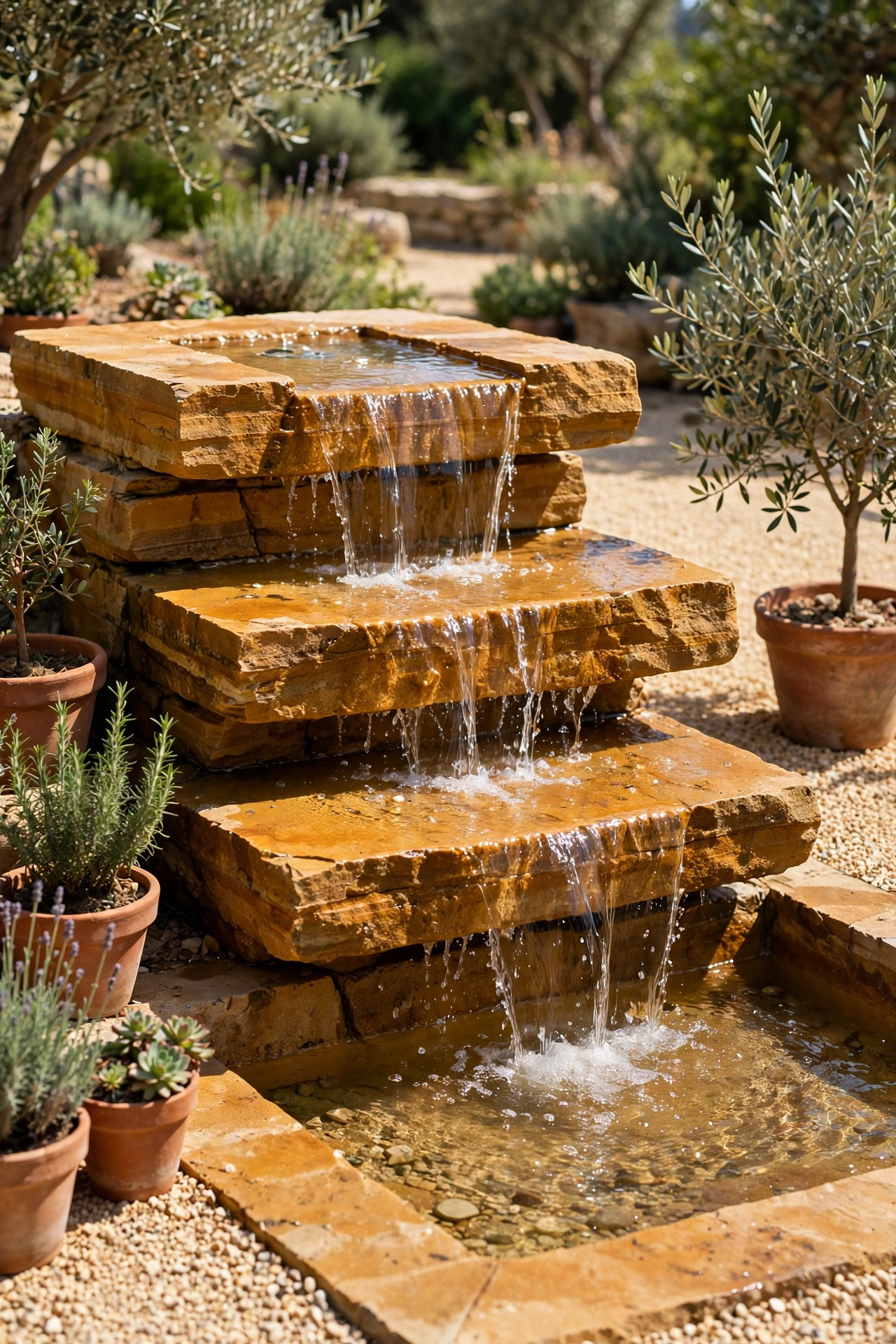
20. Layer Warm Sandstone Slabs Into a Fountain
Sandstone slabs in warm honey and amber tones give a rock fountain a sunny, welcoming glow. Layer the slabs in a low, wide stack with water spilling from the top slab down the face of each layer, and the warm stone will seem to hold the sunlight even on cloudy days. Sandstone suits Mediterranean and desert-style gardens especially well.
Seal the sandstone to slow weathering, since this stone is softer than granite or slate and can wear over time. Keep the stack low and wide rather than tall and narrow, so the fountain feels grounded and stable. Terracotta pots and olive trees planted nearby pick up the warm tones of the stone and complete the look.
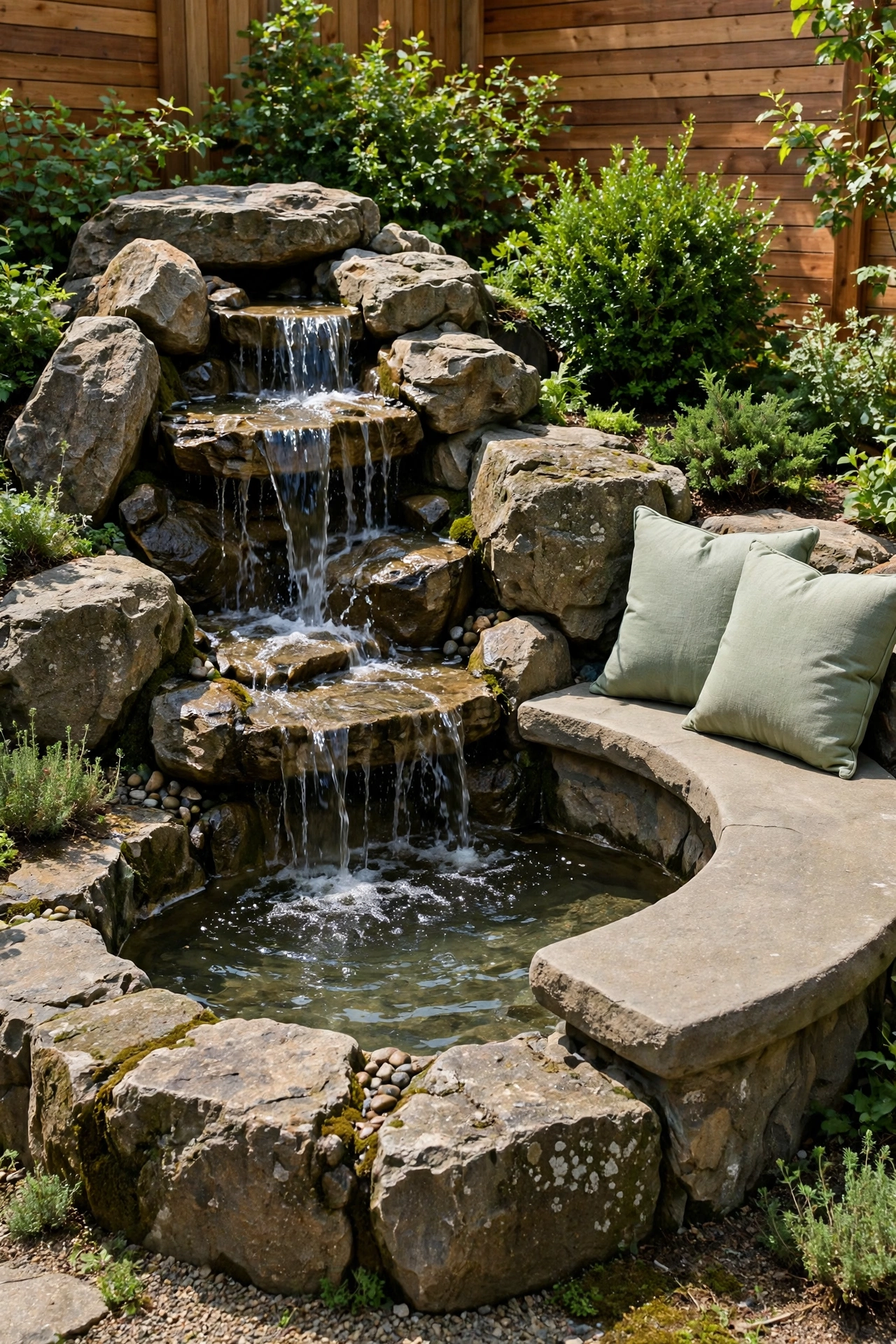
21. Pair a Rock Fountain With a Built-In Stone Bench
A rock fountain with a built-in stone bench invites you to sit beside the water instead of just looking at it. The bench can curve around the basin or run along one side, built from the same stone as the fountain so the whole piece reads as one design. Sitting at water level, you hear the fountain at its best.
Build the bench at a comfortable sitting height with a smooth, flat top stone, and leave enough room for two or three people to sit without crowding the basin. A cushion or two in outdoor fabric softens the stone seat. This design works beautifully at the end of a garden path, where the bench becomes a destination.
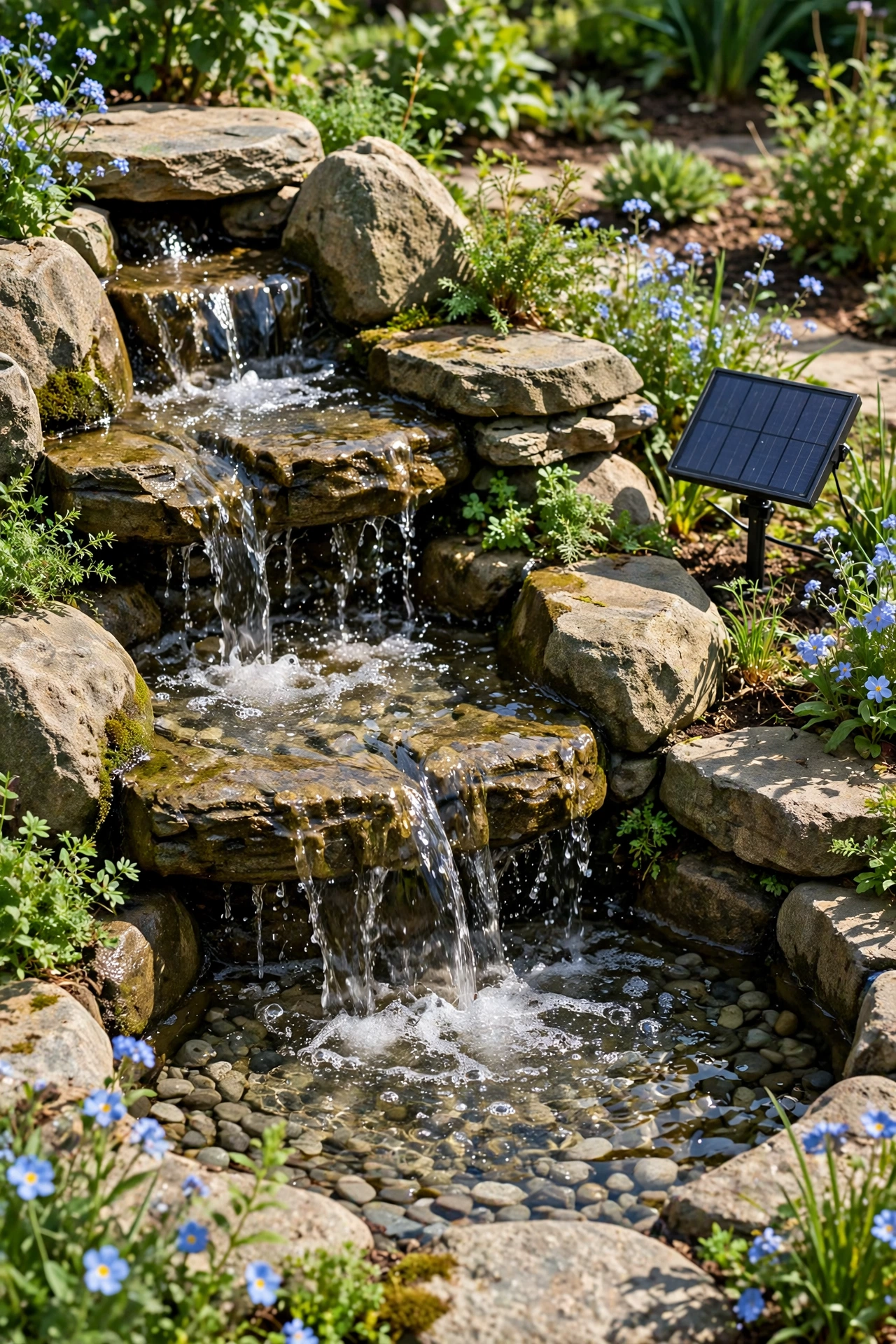
22. Run a Rock Fountain on Solar Power
A solar-powered rock fountain frees you from power cables and lets you place a fountain anywhere the sun shines. A small solar panel drives the pump during daylight hours, so the fountain bubbles and flows whenever the garden is in use. Modern solar pumps are strong enough to run bubblers, small cascades, and spillway fountains.
Place the solar panel where it gets full sun for most of the day, even if the fountain itself sits in partial shade, and keep the panel clean so it works at full strength. A battery backup keeps the water moving through passing clouds. If you want the fountain to use collected rainwater too, these outdoor rainwater harvesting system ideas show how to store and move water around the yard.
Conclusion
A garden rock fountain is one of the simplest ways to change how a garden feels. The sound of water over stone softens noise from the street, cools the air on warm days, and gives every corner of the yard a sense of calm. Whether you choose a single bubbling boulder or a full cascade down a slope, the stone and the water do the work together.
Start with the size of your space and the sound you want, then pick the design that fits both. A small patio fountain and a large pond waterfall both bring the same gift: moving water that makes the garden feel alive. For the paths that lead visitors to your fountain, these garden pathway ideas will help you connect the water feature to the rest of the yard with stone and gravel routes that look as natural as the fountain itself.
Frequently Asked Questions About Garden Rock Fountain Ideas for Natural Water Features
How much maintenance does a rock fountain need?
A rock fountain needs a quick check every week during the season it runs. Top up the water level, clear leaves from the basin, and wipe algae from the stone face with a stiff brush. Clean the pump filter once a month, and drain the fountain before winter in cold climates so ice does not crack the stone or the pump.
Do rock fountains use a lot of water?
Most rock fountains recirculate the same water, so they use very little beyond what evaporates. A small bubbler may lose only a few gallons a week in hot weather, while a tall cascade loses more to spray and evaporation. A pondless design with a hidden reservoir loses the least water of all.
Can I build a rock fountain without a pond?
Yes, a pondless fountain hides the reservoir under a bed of gravel, so there is no open water at all. The water bubbles from the rock and disappears into the gravel, where the pump sends it back to the top. Pondless designs are safe for children and pets and need less cleaning than open basins.
What type of stone is best for an outdoor fountain?
Hard stones like granite, basalt, and slate last the longest and keep their color under constant water. Sandstone and limestone look warm and natural but need sealing and wear faster. Choose a stone that suits your climate, and avoid stones that flake or crumble when they stay wet.
How do I keep algae from growing on my rock fountain?
Algae grows where water, light, and nutrients meet, so shade the basin part of the day and keep leaves out of the water. A small amount of fountain algaecide made for garden features helps, and scrubbing the stone every few weeks stops buildup. Moving water and a clean pump filter also slow algae growth.

Hi, I’m Emily! I turn messy corners into cozy, organized spots. DreamNestDecor is where I share simple, practical home ideas — decor, organization, and small-space solutions that work in real life, not just in photos. Every idea here is carefully researched before it’s shared.