Picture this: you open the back door on a sunny morning and your cat steps outside into fresh air, birdsong, and warm sunlight, all without you worrying for a single second. No busy road, no stray dogs, no risk of your cat wandering too far. A safe outdoor enclosure gives your cat the whole sensory joy of the outdoors inside a space that is fully protected.
You do not need a large yard or a big budget to build one. A window box, a spare corner of the patio, or a small patch of lawn can become a cat paradise with the right structure. These 17 outdoor cat enclosure ideas will help you choose a design that fits your home, your yard, and your cat, so playtime outside is safe every single day.
1. Start With a Window-Box Catio on a Bedroom Window
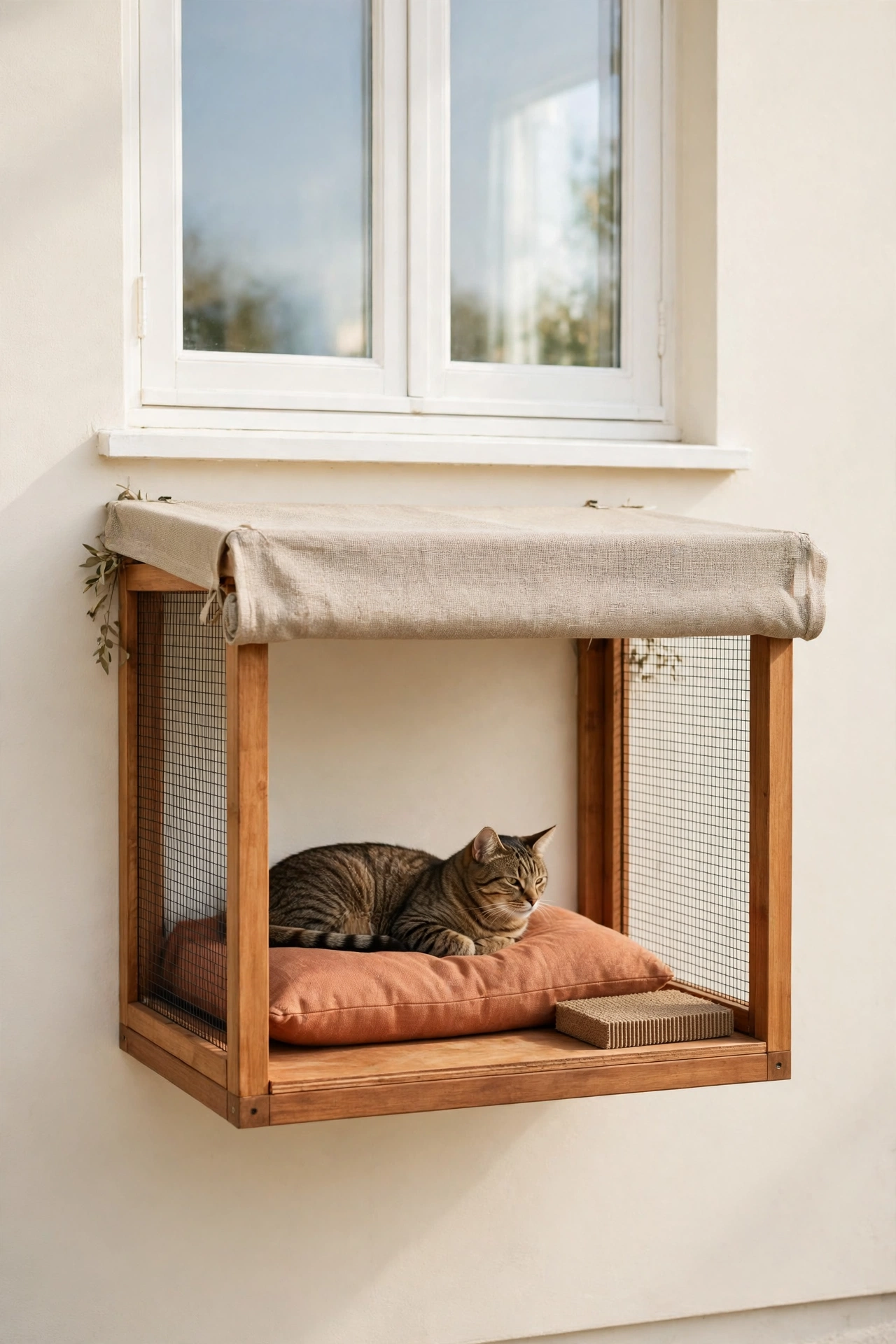
A window-box catio is a small mesh box that attaches to the outside of a window, giving your cat a sunny perch without using any yard space at all. Your cat steps through the open window onto a wooden platform, breathes fresh air, and watches birds from behind sturdy mesh. It is the simplest enclosure you can build, and it suits apartments and small homes perfectly.
Choose a window your cat already loves to sit at, and size the box so your cat can turn around and stretch fully. Add a soft cushion, a small scratching pad, and a shade cloth over the top for hot afternoons. Because the box sits right at the window, your cat can come and go freely whenever the window is open.
2. Build a Freestanding Walk-In Catio in a Corner of the Yard
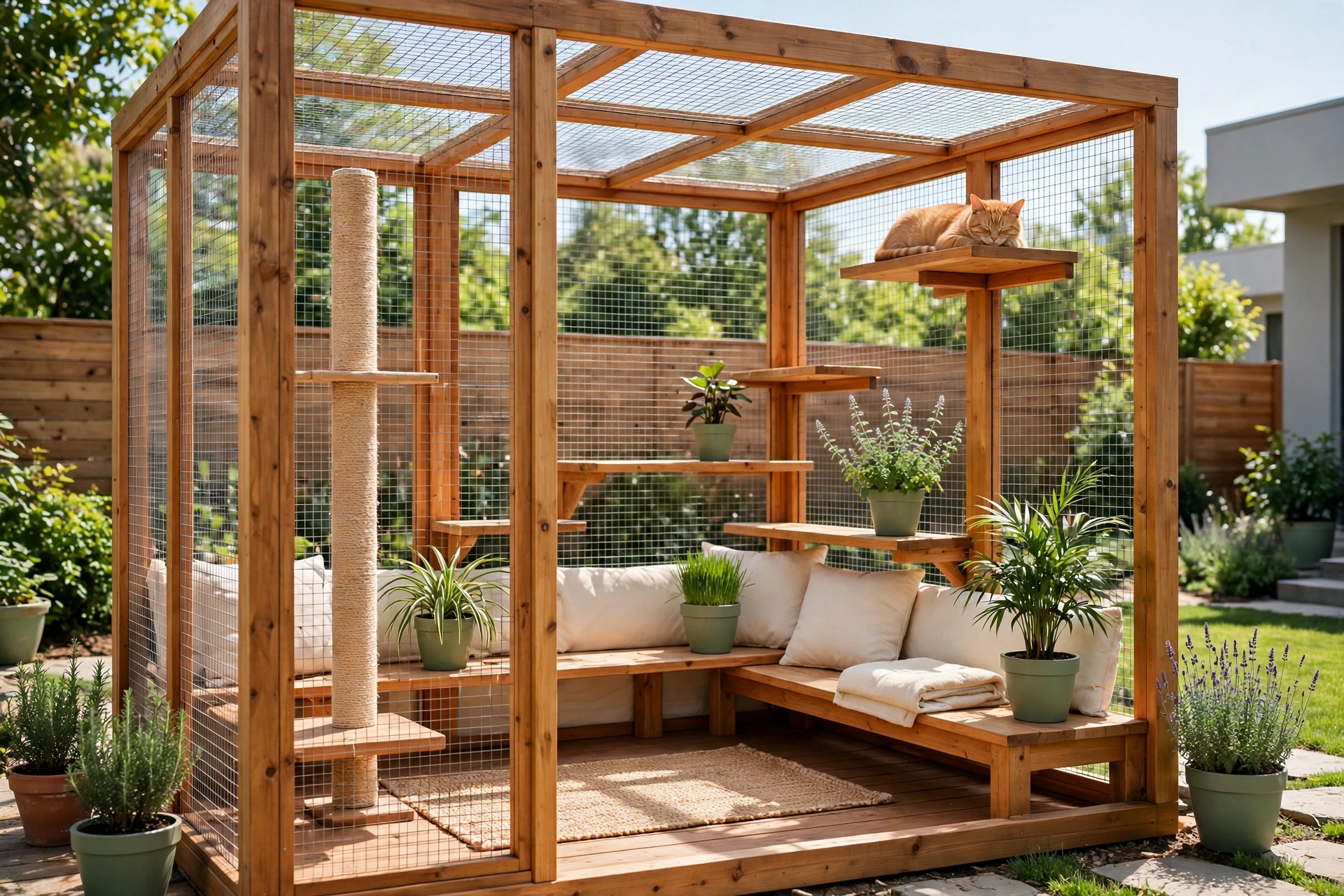
A freestanding walk-in catio is a full outdoor room for your cat, tall enough for you to step inside for cleaning and play. Wooden framing and strong wire mesh form the walls and roof, and the floor can be grass, pavers, or deck boards. Place it in a corner of the yard where it catches morning sun and afternoon shade.
Inside, add climbing shelves at different heights, a scratching post, and a cozy hideaway box for naps. A human-size door with a secure latch makes it easy to enter, and a mesh roof keeps your cat safe from above as well as from the sides. This is the best choice when you have yard space and more than one cat to keep happy.
3. Connect the House to the Catio With a Tunnel System
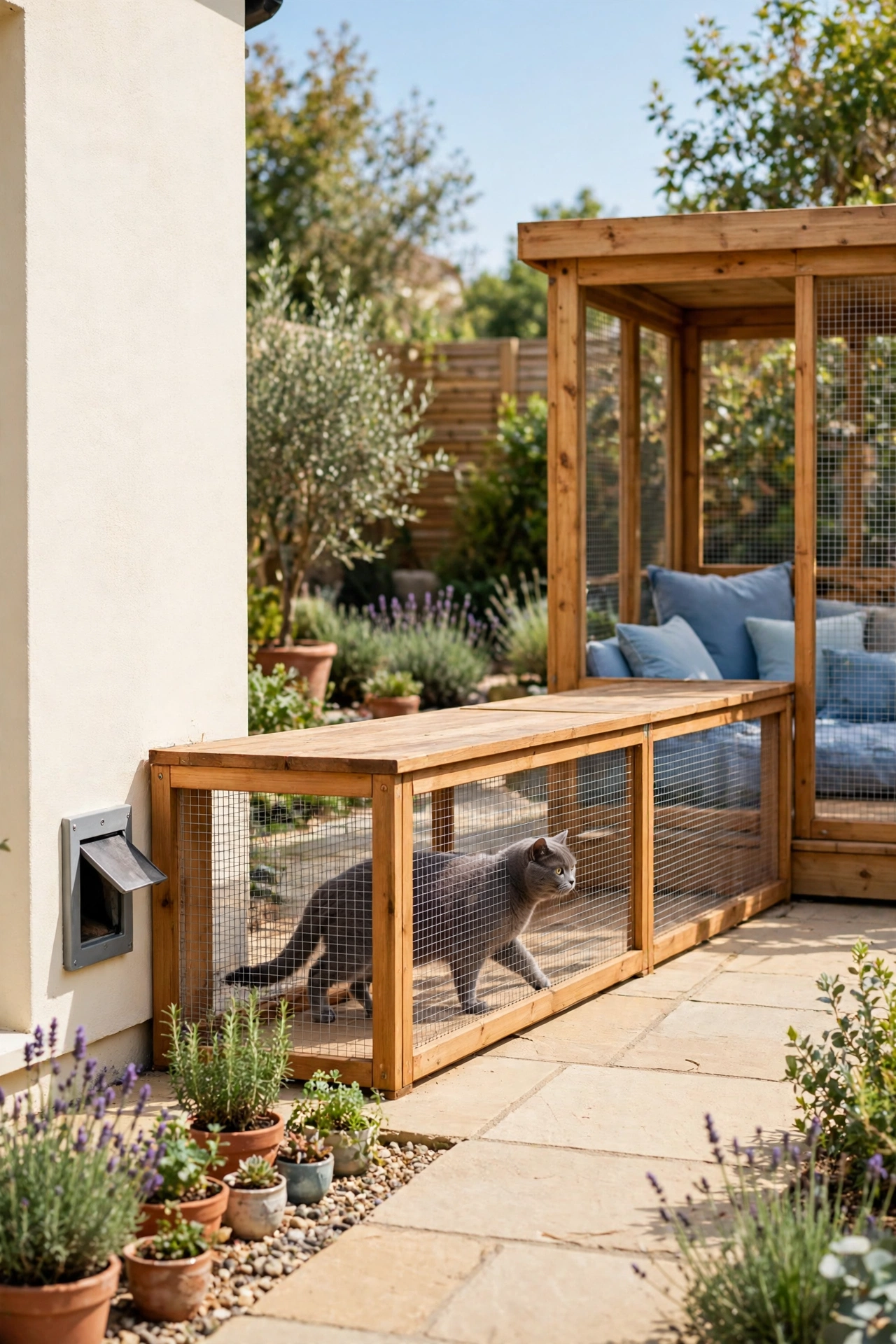
A tunnel system lets your cat travel from the house to the enclosure through a secure mesh tube, so the catio can sit farther out in the yard. The tunnel runs along a fence, across a patio, or through a garden bed, and your cat walks through it like a private highway. A cat flap at the house end gives your cat independent access all day.
Build the tunnel from wooden frames and wire mesh, with a solid top to keep out rain. Make it wide enough for your cat to turn around, and add a small viewing bubble or a mesh window section where the tunnel passes a flower bed. Tunnels turn a distant catio into an extension of the house, and cats love the journey as much as the destination.
4. Screen In the Whole Patio for a Spacious Enclosure
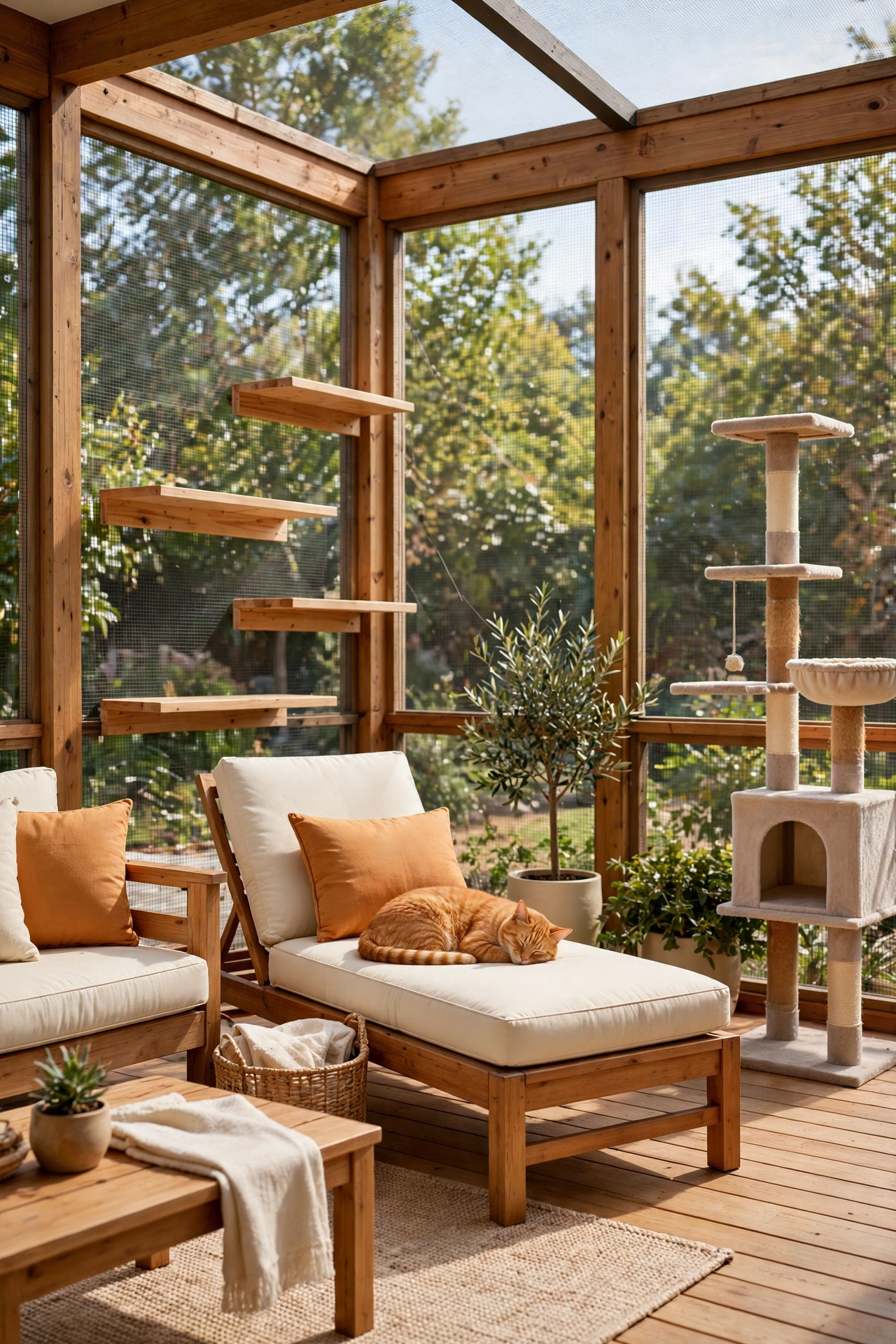
Screening in an existing patio turns the space you already use into a shared indoor-outdoor room for the whole family, cats included. Mesh panels replace open sides, the patio roof becomes the enclosure roof, and your cat gains a large, furnished territory in one project. You can sit out there together on warm evenings while your cat naps nearby.
Use pet-proof screen mesh that resists claws, and check every edge for gaps where a determined cat could push through. Add cat shelves along one wall, a tall cat tree in a corner, and a water bowl on a raised stand. The patio furniture stays in place, so the enclosure feels like a real living space rather than a cage.
5. Wrap a Balcony With Mesh for a High-Rise Catio
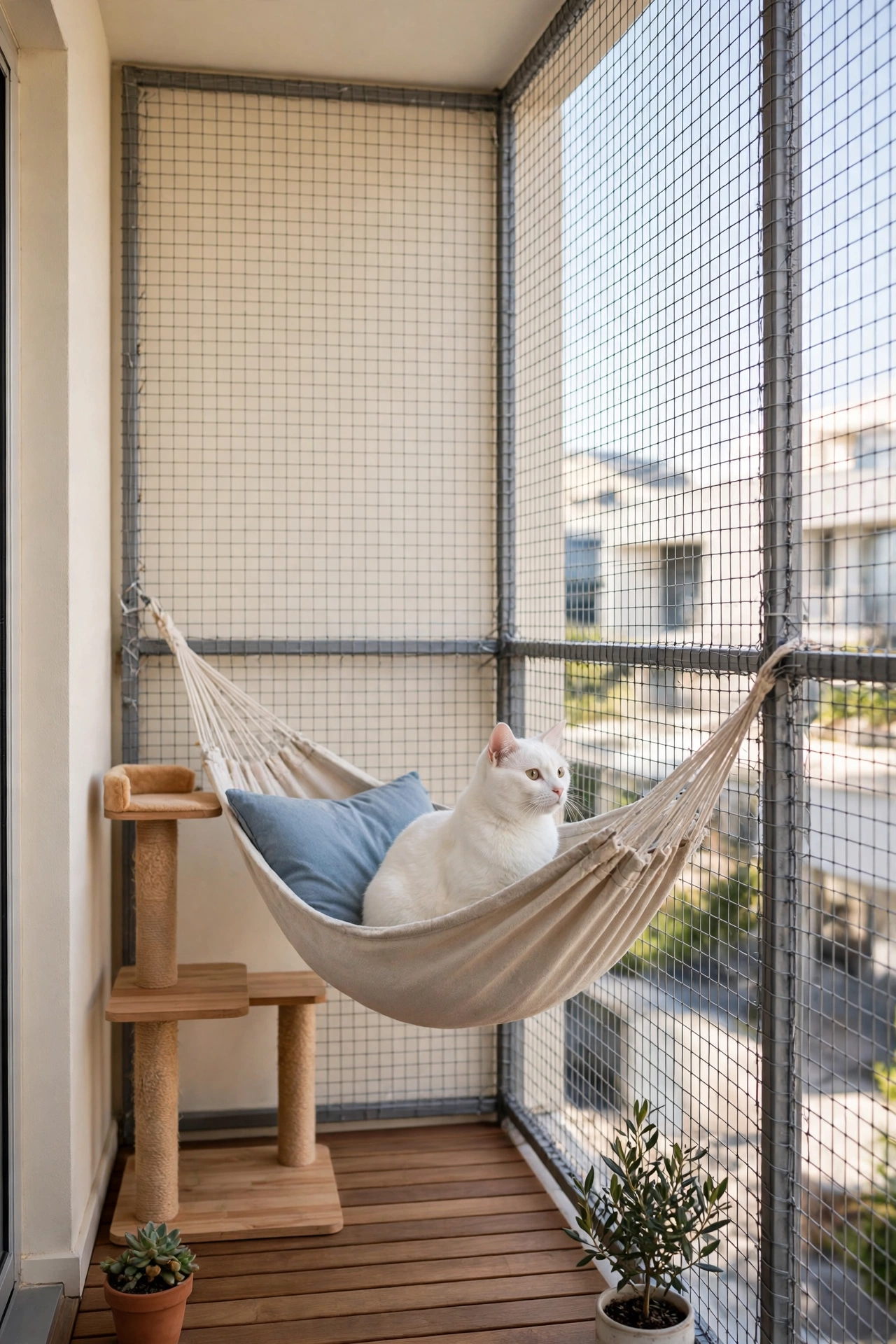
A balcony catio wraps the railing and open sides of a balcony in strong mesh, turning a small outdoor slab into a safe perch in the sky. The mesh attaches to the railing, the ceiling, and the walls, leaving no gap large enough for a cat to slip through. Even a tiny balcony gives a city cat fresh air and a view.
Keep the floor clear for a litter tray in one corner and a compact cat tree in the other, and add a hammock strung between two railing posts for sunny naps. Choose mesh with small openings and test it by pressing firmly from inside before you let your cat out alone. A wrapped balcony is proof that safe outdoor time does not need a yard.
6. Run a Shelf Highway Along the Enclosure Walls
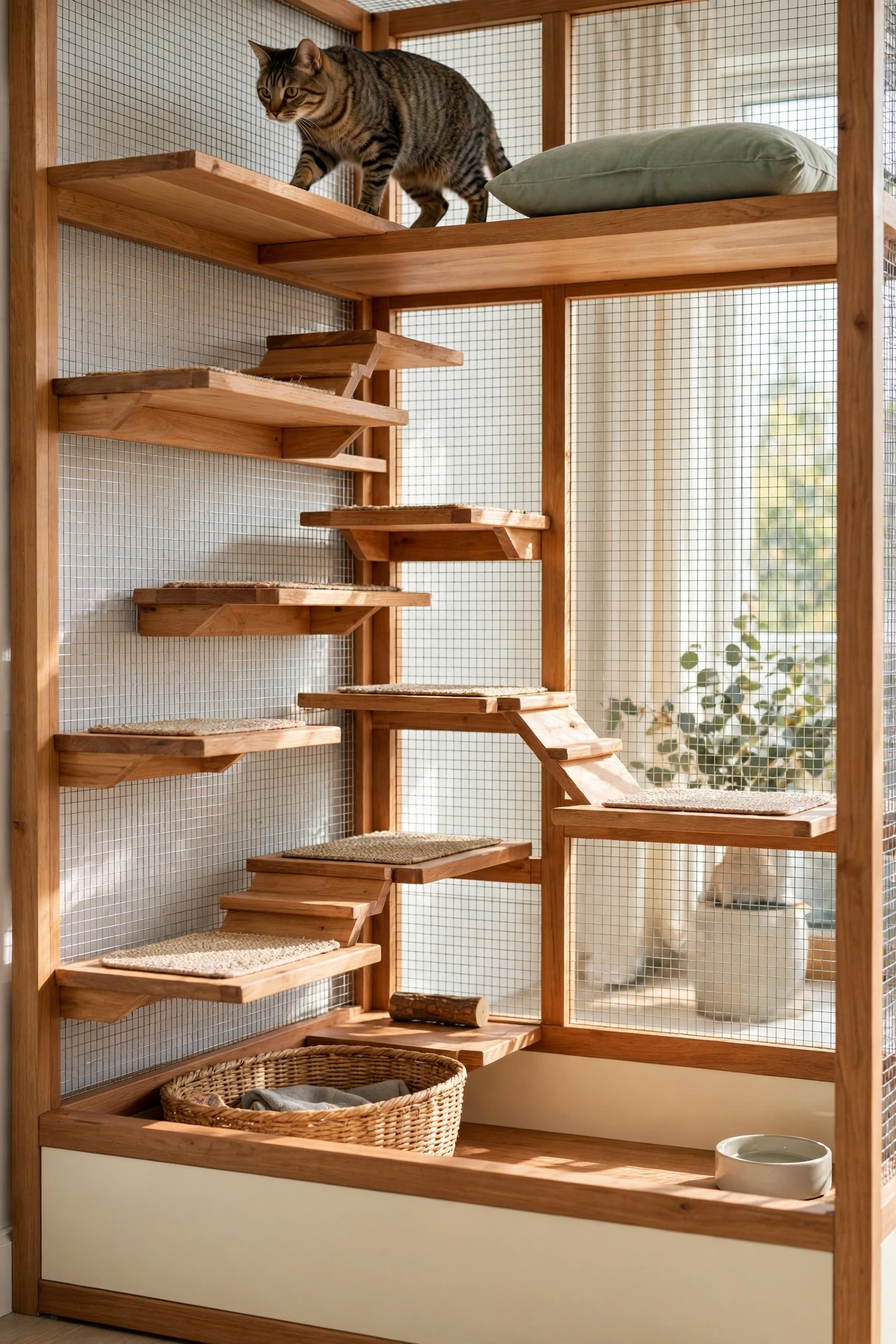
A shelf highway is a series of wall-mounted platforms, steps, and perches that lets your cat travel around the enclosure without touching the floor. Cats feel safest up high, and a highway of shelves gives them a full second level to explore, patrol, and rest on. The shelves follow the walls of the catio in a loop, with ramps or steps linking the levels.
Mount the shelves into the enclosure framing with sturdy brackets, and vary the heights so your cat can climb, jump, and lounge at different levels. Cover each platform with a washable mat or a strip of sisal for grip, and leave one wide shelf near a sunny wall as a dedicated nap spot. A shelf highway doubles the usable space of any enclosure without adding a single square foot to the footprint.
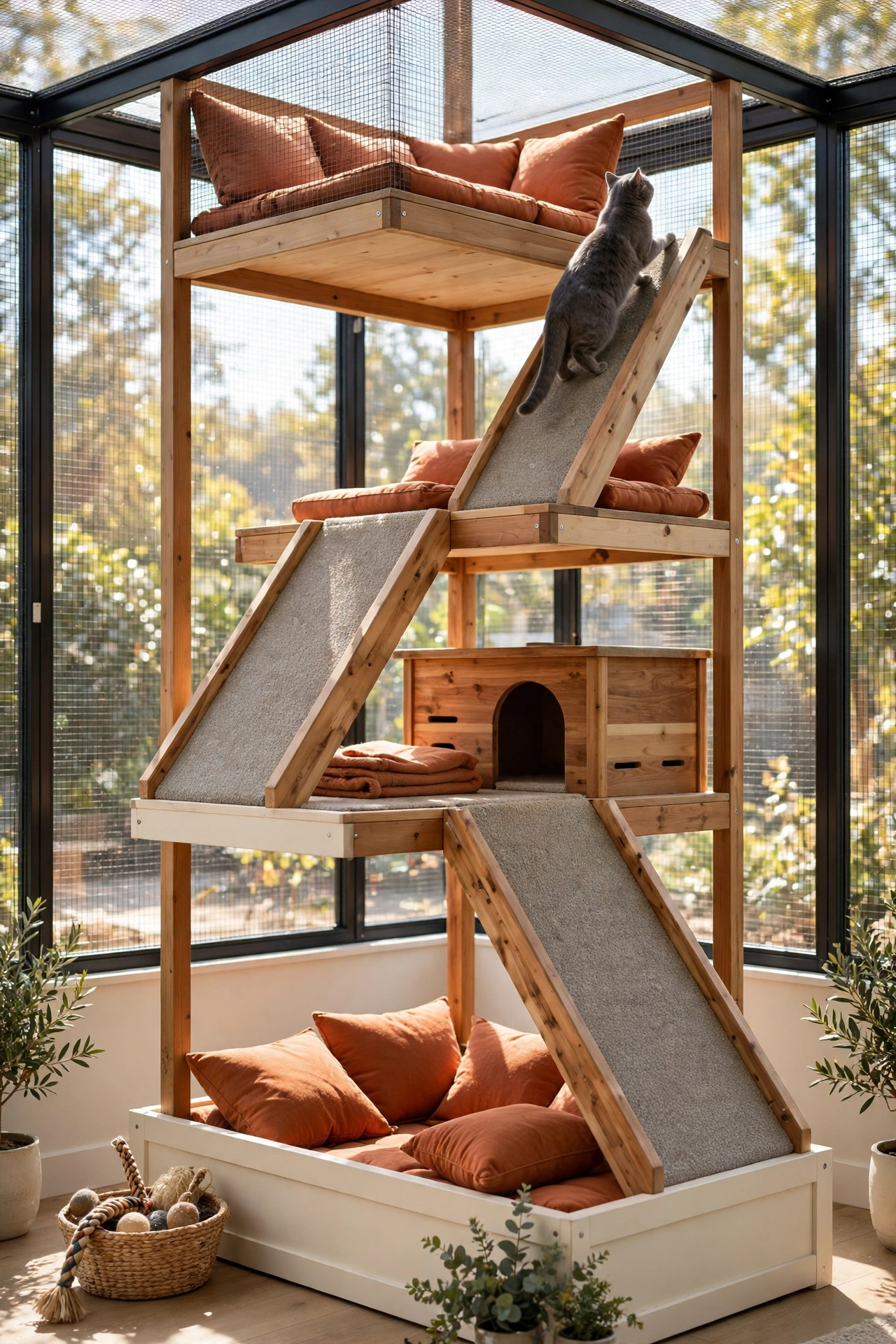
7. Raise a Multi-Level Tower With Ramps for Climbing Cats
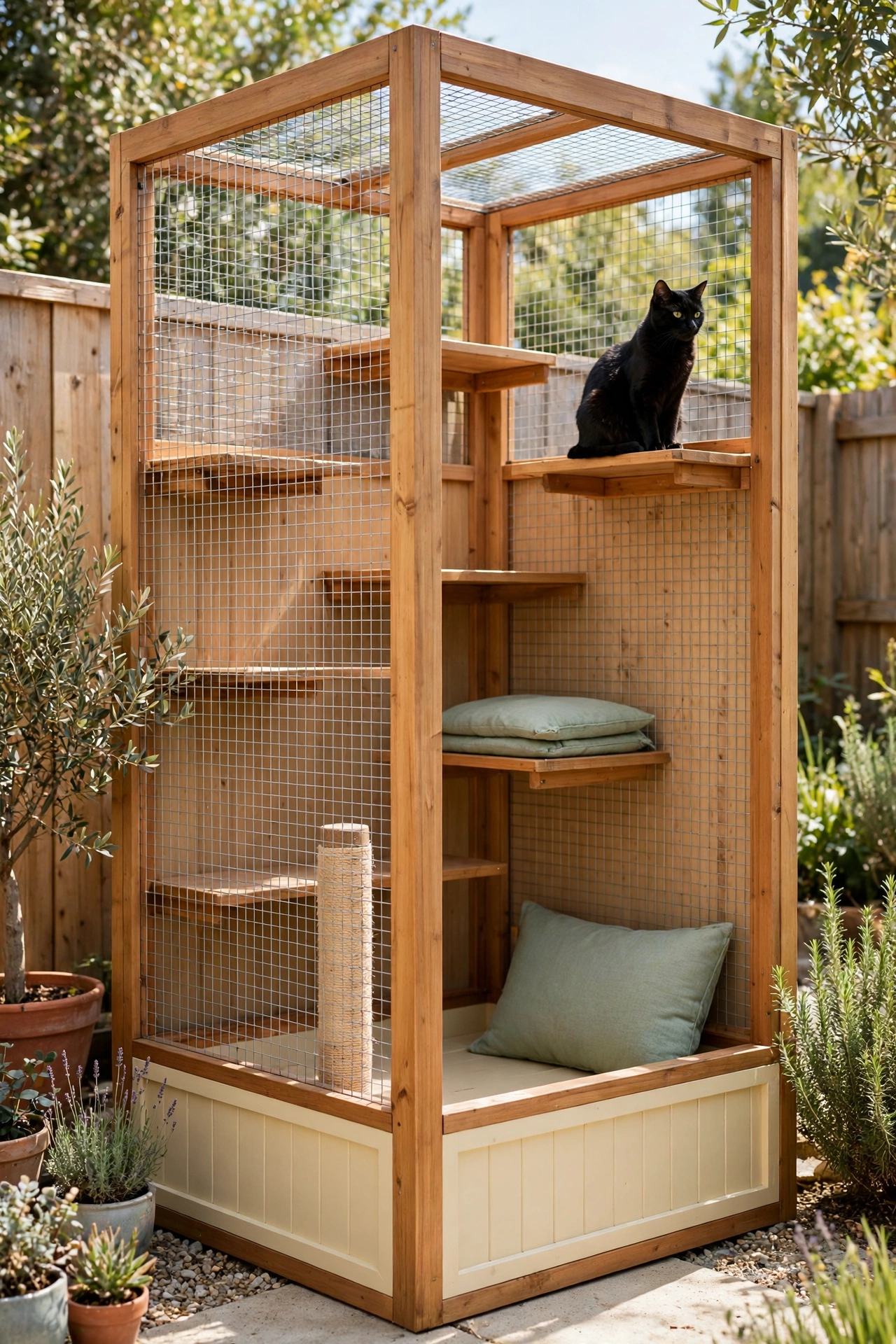
A multi-level tower turns the vertical space inside an enclosure into a climbing gym, with platforms, ramps, and hideaway boxes stacked three or four levels high. Active cats race up the ramps and survey the yard from the top platform, while shy cats retreat to a middle box when the world feels too busy. The tower becomes the centerpiece of the enclosure.
Build the tower from sealed wood with carpeted or sisal-covered surfaces for grip, and anchor it to the enclosure frame so it never wobbles. Each level should be large enough for a full stretch, and the ramps should be wide with side rails for safe climbing. A tower suits young, energetic cats best, and it keeps them exercised on days when outdoor time is short.
8. Add a Covered Roof for All-Weather Play
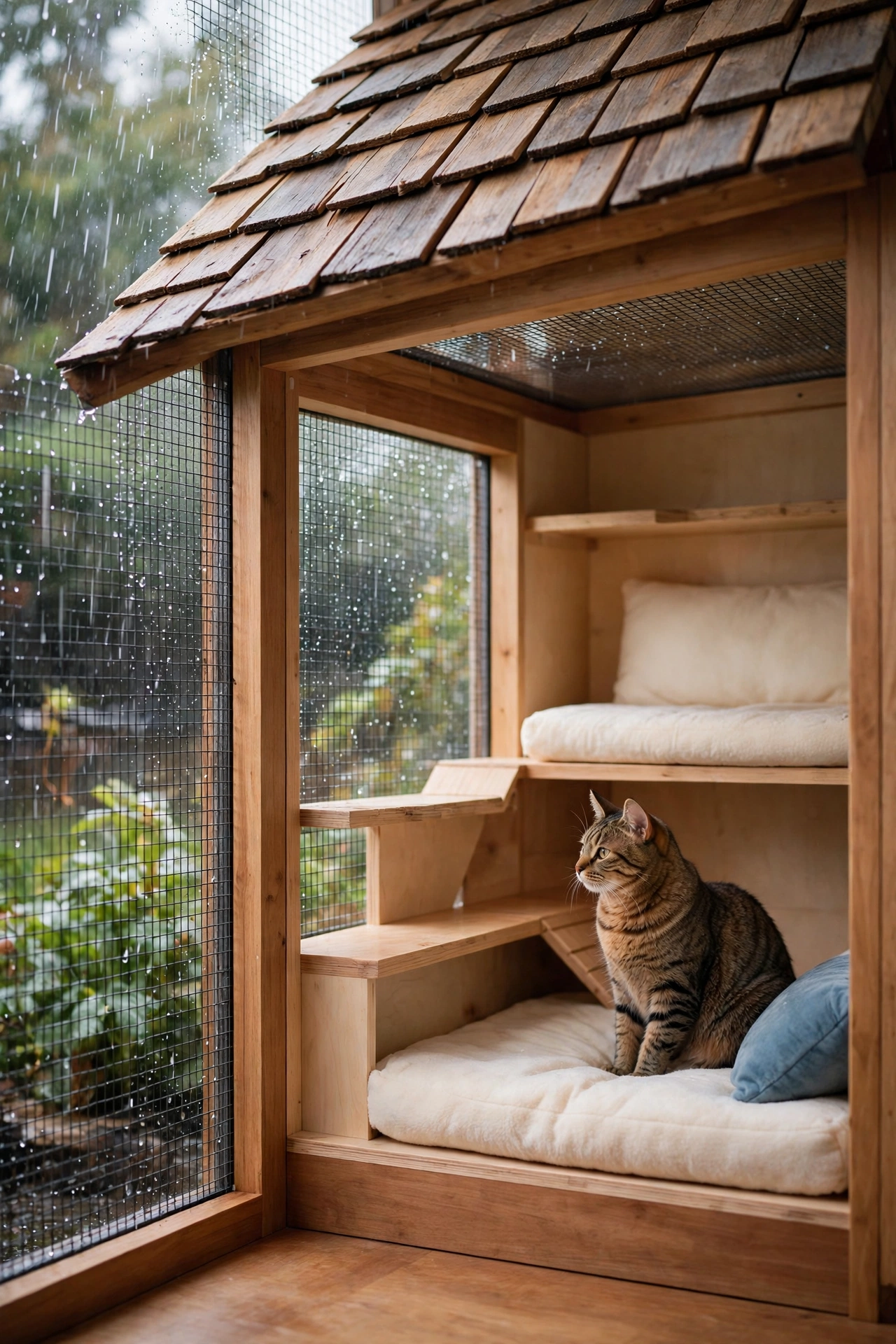
A covered roof lets your cat enjoy the enclosure in light rain and strong sun, because the roof blocks showers and harsh midday rays while the mesh sides keep the air flowing. A sloped wooden roof with shingles matches the house, while a clear polycarbonate roof keeps the interior bright on cloudy days. Either way, the enclosure becomes a year-round space.
Slope the roof so rain runs off the back, away from the main play area, and leave a gap under the eaves for ventilation. A roof also protects wooden shelves and fabric cushions from weather, so the furnishings inside last much longer. Your cat will quickly learn that the covered catio is the best seat in the house during a summer shower.
9. Grow a Planted Green Wall Inside the Enclosure
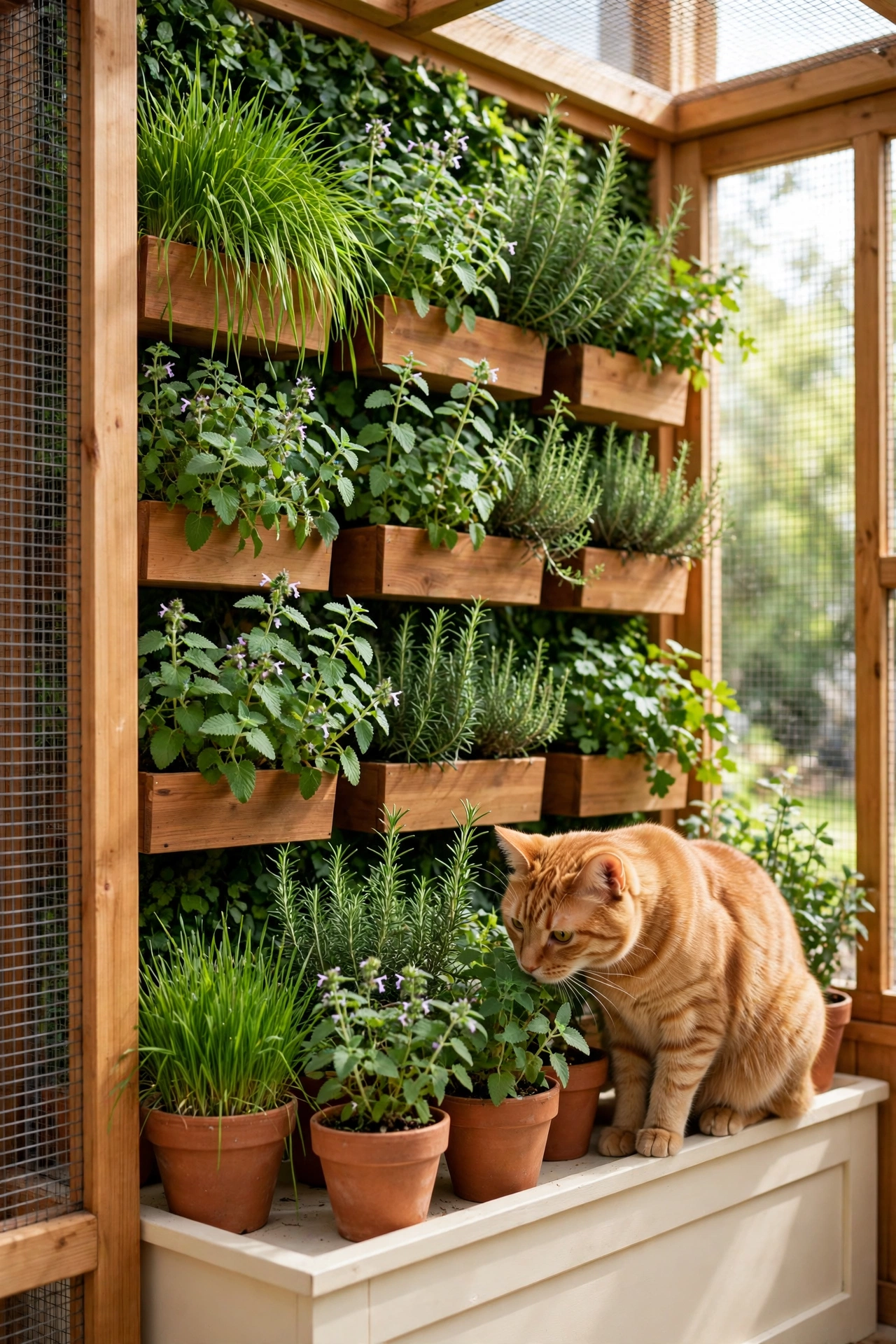
A planted green wall brings living greenery into the enclosure, giving your cat grass to nibble, leaves to brush against, and insects to watch. Mount planters on one interior wall and fill them with cat-safe plants like cat grass, catnip, spider plants, and herbs. The wall softens the look of the mesh and makes the enclosure feel like a real garden room.
Water the planters from outside through a small access panel so you never need to open the enclosure door, and choose sturdy planters your cat cannot knock down. For more ways to use vertical planting in small outdoor spaces, these vertical garden ideas will help you plan a green wall that stays lush and safe for curious cats. Check every plant against a cat-safe list before it goes inside, because many common garden plants are toxic to cats.
10. Build a Sunroom-Style Catio With Clear Panels
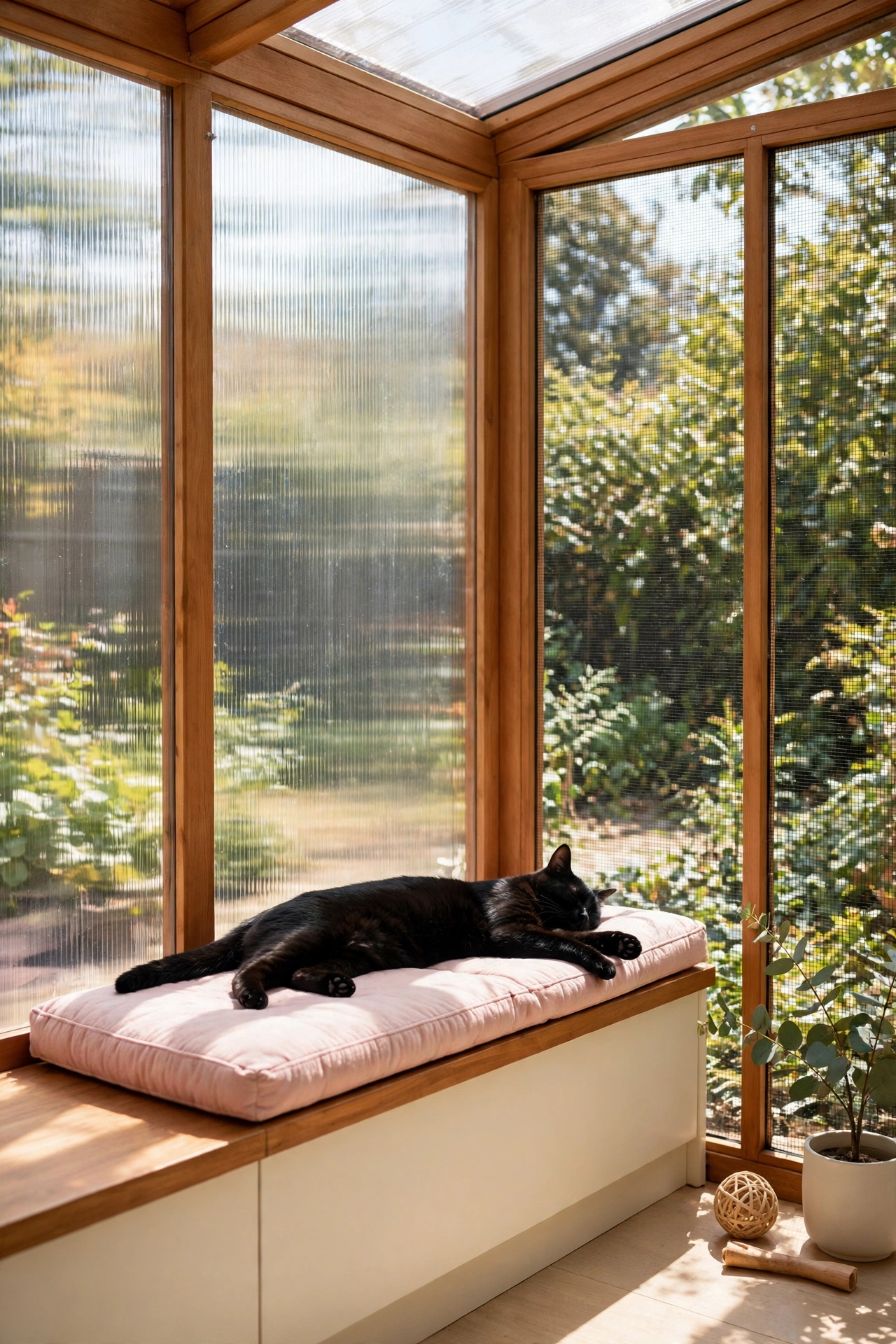
A sunroom-style catio uses clear polycarbonate or acrylic panels for part of the walls, creating a bright, wind-sheltered room that still feels outdoors. The clear panels block cold wind while letting in full sunlight, so the enclosure stays warm on cool spring and autumn days. Mesh sections in the remaining walls keep fresh air moving through.
Place the clear panels on the windward side and mesh on the sheltered side, and add a thermometer inside so you can check that the space never overheats in summer. A cushioned bench along the clear wall becomes a sunbathing spot your cat will claim within minutes. This design extends the outdoor season by weeks on both ends of the year.
11. Create a Hammock and Perch Zone for Lazy Afternoons
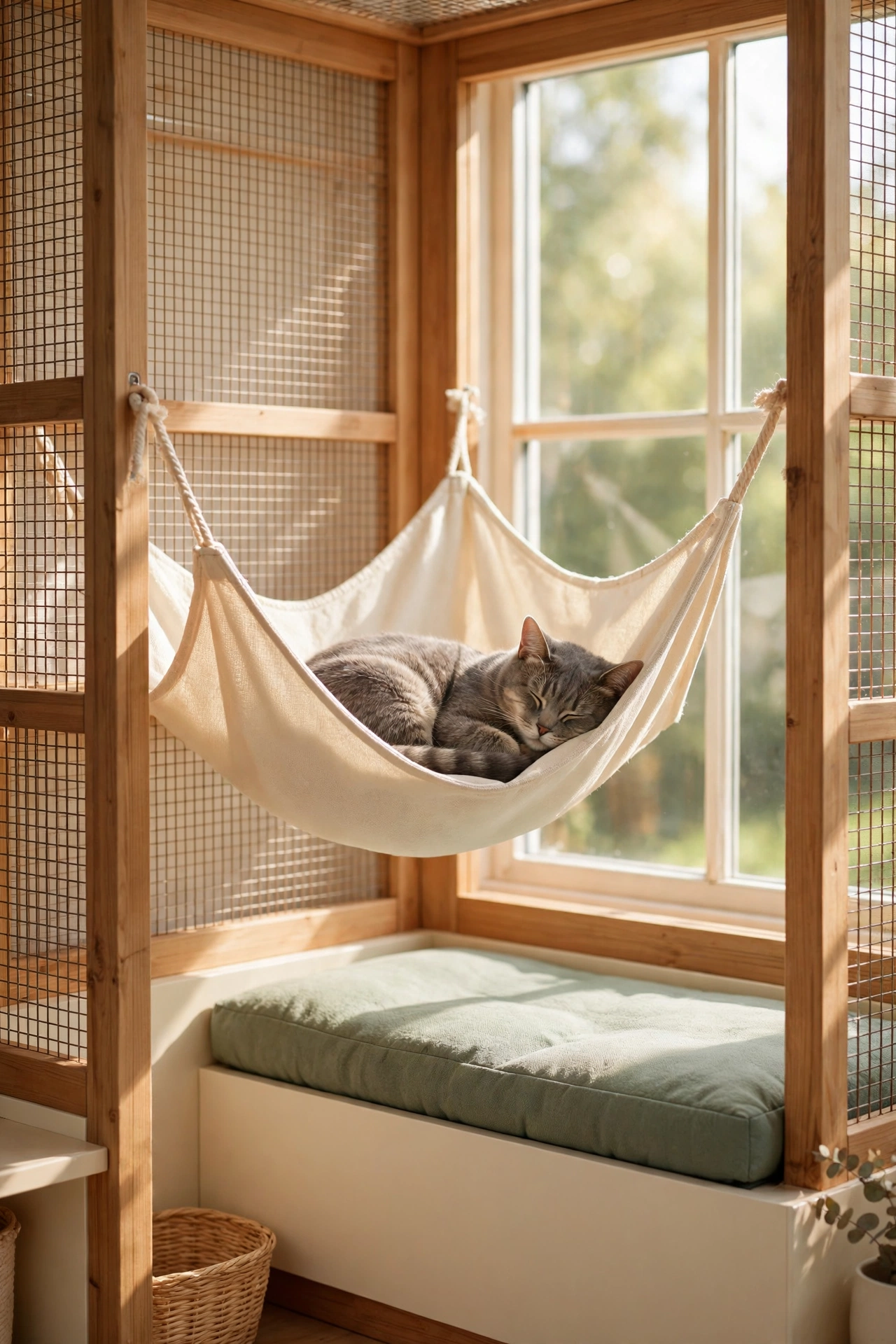
A hammock and perch zone is a relaxation corner inside the enclosure, with a fabric hammock strung between two posts, a wide window perch, and a padded shelf for stretching out. Cats sleep for most of the day, and a dedicated rest zone means the enclosure serves naps as well as play. The gentle sway of a hammock is a favorite with cats of every age.
Hang the hammock low enough for older cats to step into easily, and secure it with strong clips rated for far more than your cat weighs. Place the perch where it catches afternoon sun but stays out of the main traffic path, and wash the hammock fabric regularly to keep it fresh. A rest zone balances the climbing and exploring areas, so the enclosure suits the whole daily rhythm of a cat.
12. Fit a Catio Into the Fence Line of a Small Yard
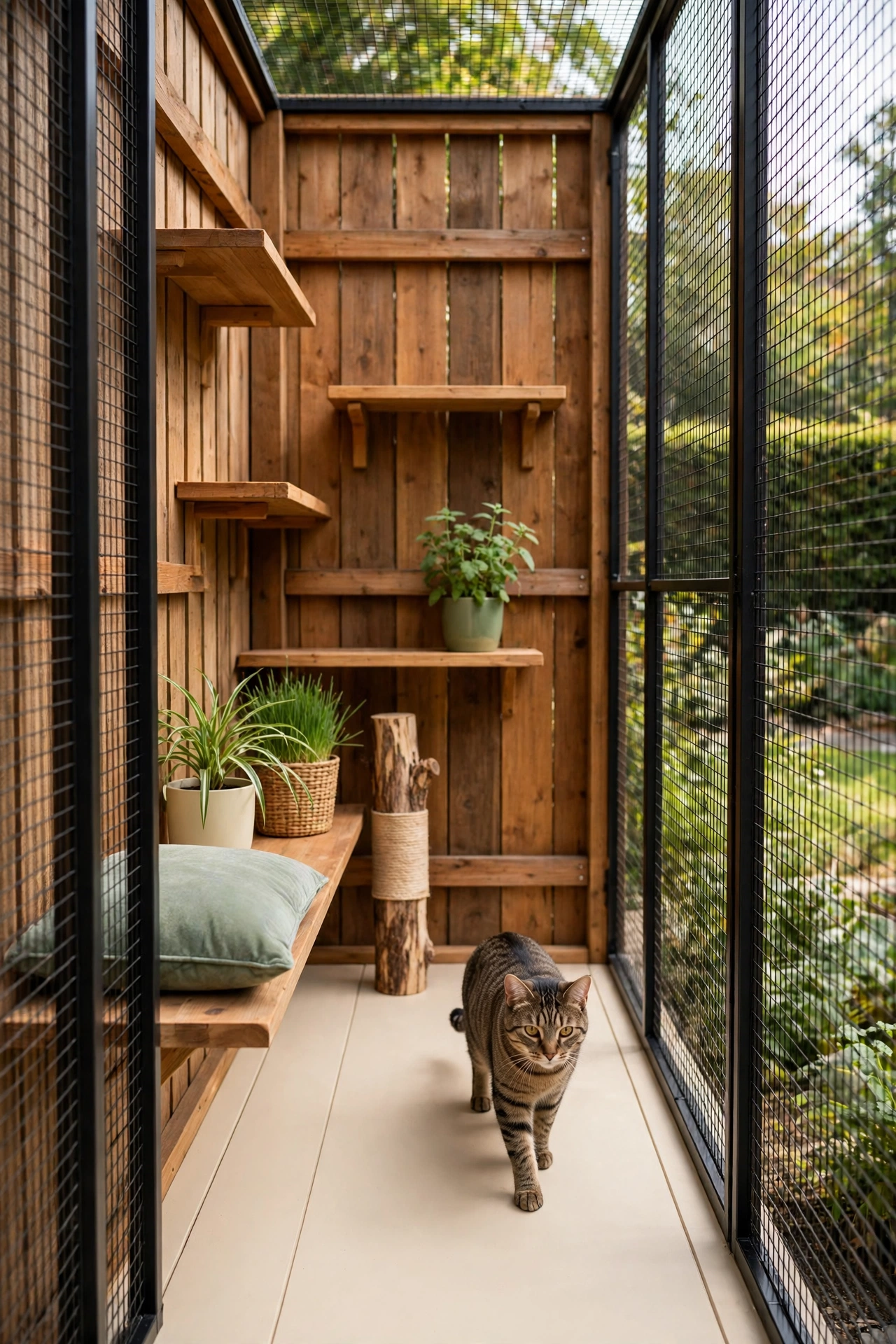
A fence-line catio uses the existing backyard fence as one wall of the enclosure, which saves materials and fits neatly into a narrow side yard. The fence forms the back wall, mesh panels form the front and sides, and a mesh or solid roof closes the top. The long, narrow shape is ideal for a running and exploring lane.
Check the fence for gaps, loose boards, and climbable footholds before you build, and add a mesh apron buried along the base so your cat cannot dig out. Line the lane with staggered shelves, a scratching log, and a few potted cat-safe plants, and the side yard becomes a corridor of enrichment. This design is the smartest use of the most overlooked strip of land in a small yard.
13. Set Up a Feeding and Water Station Inside the Enclosure
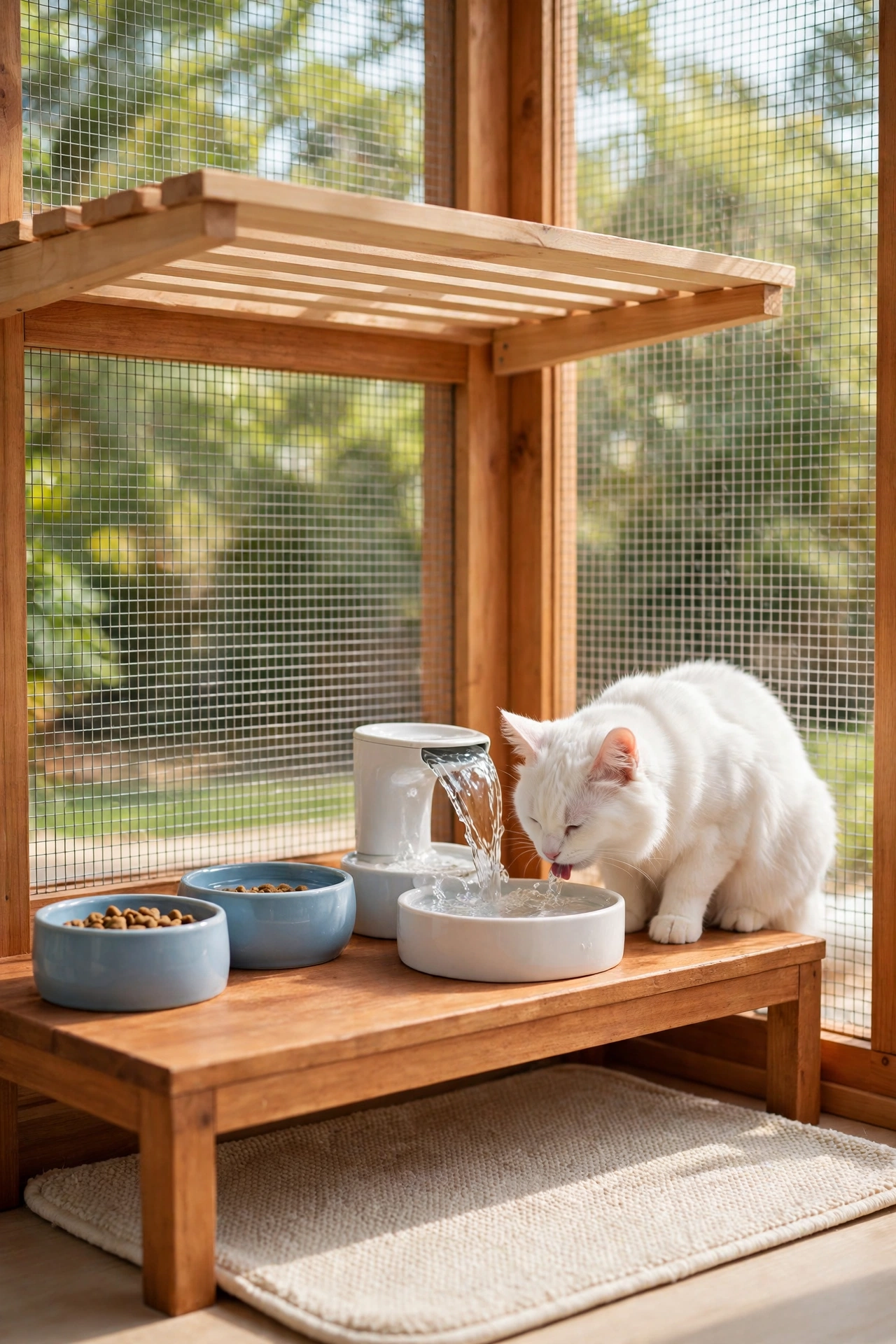
A feeding and water station inside the enclosure gives your cat a reason to spend long, happy hours outside, with fresh water and a small meal waiting in a shaded corner. A raised stand holds the bowls off the ground, a mat underneath catches spills, and a small roof or shelf above keeps the station dry. Cats drink more when water is available in several spots, and an outdoor station adds one more.
Keep the station away from the litter area and wash the bowls daily, because outdoor bowls gather dust and insects faster than indoor ones. A pet water fountain with moving water encourages drinking and stays cleaner than a still bowl. If you feed on a regular schedule, these family pet care schedule ideas will help you fit enclosure mealtimes into a routine that works for the whole household.
14. Hide a Litter Zone in a Ventilated Corner of the Enclosure
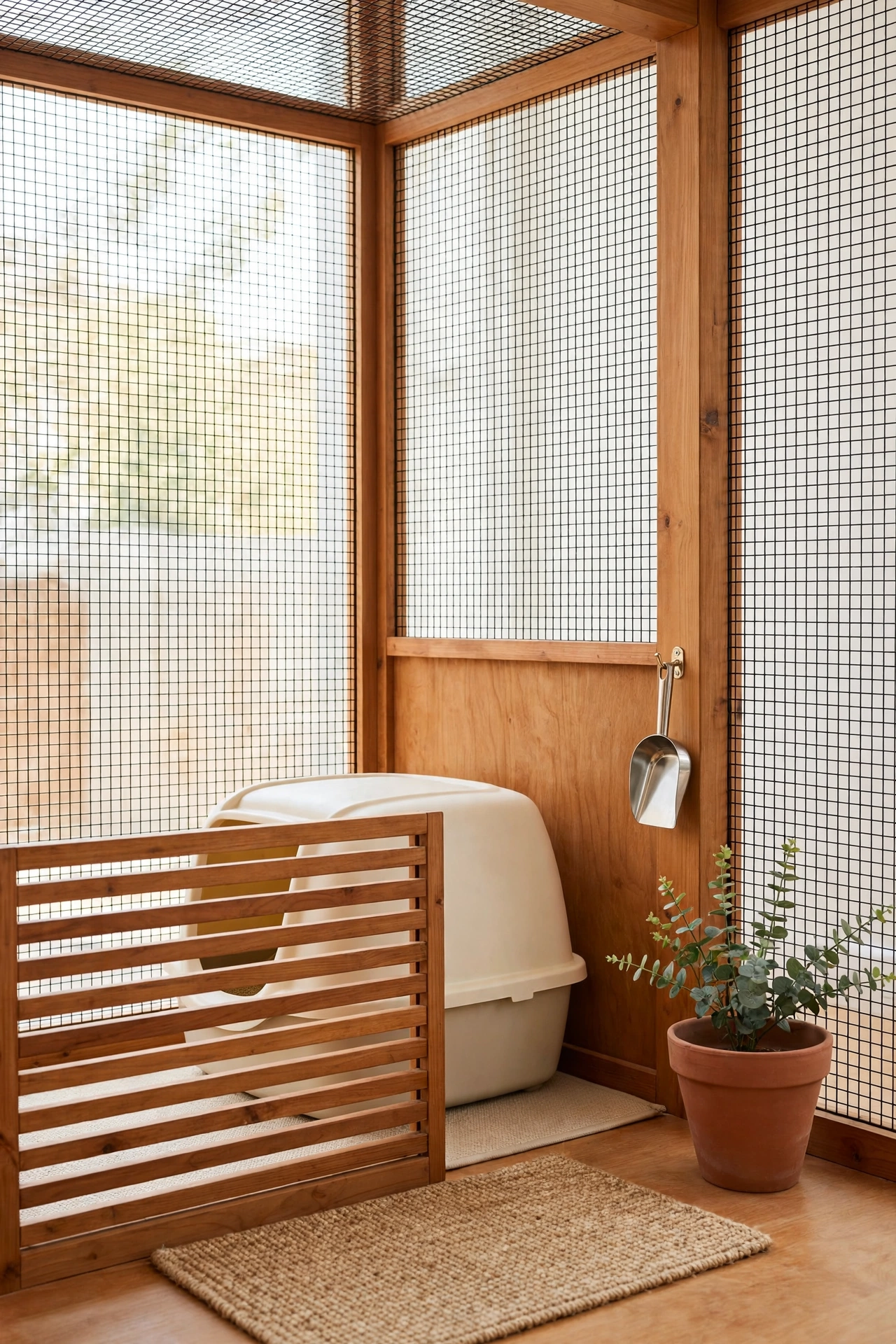
A litter zone inside a large enclosure means your cat never has to end outdoor time early for a bathroom break. Tuck a covered litter box into a ventilated corner, behind a low wooden privacy screen, with mesh above it for airflow. The screen keeps the zone discreet, and the ventilation keeps the whole enclosure smelling fresh.
Choose a litter box with high sides to contain scattering, and scoop it at least once a day, just as you would indoors. Place the zone at the opposite end from the feeding station, because cats strongly prefer their bathroom and dining areas far apart. A well-planned litter corner makes the enclosure a complete outdoor territory rather than a short-visit playpen.
15. Choose a Portable Pop-Up Catio for Renters
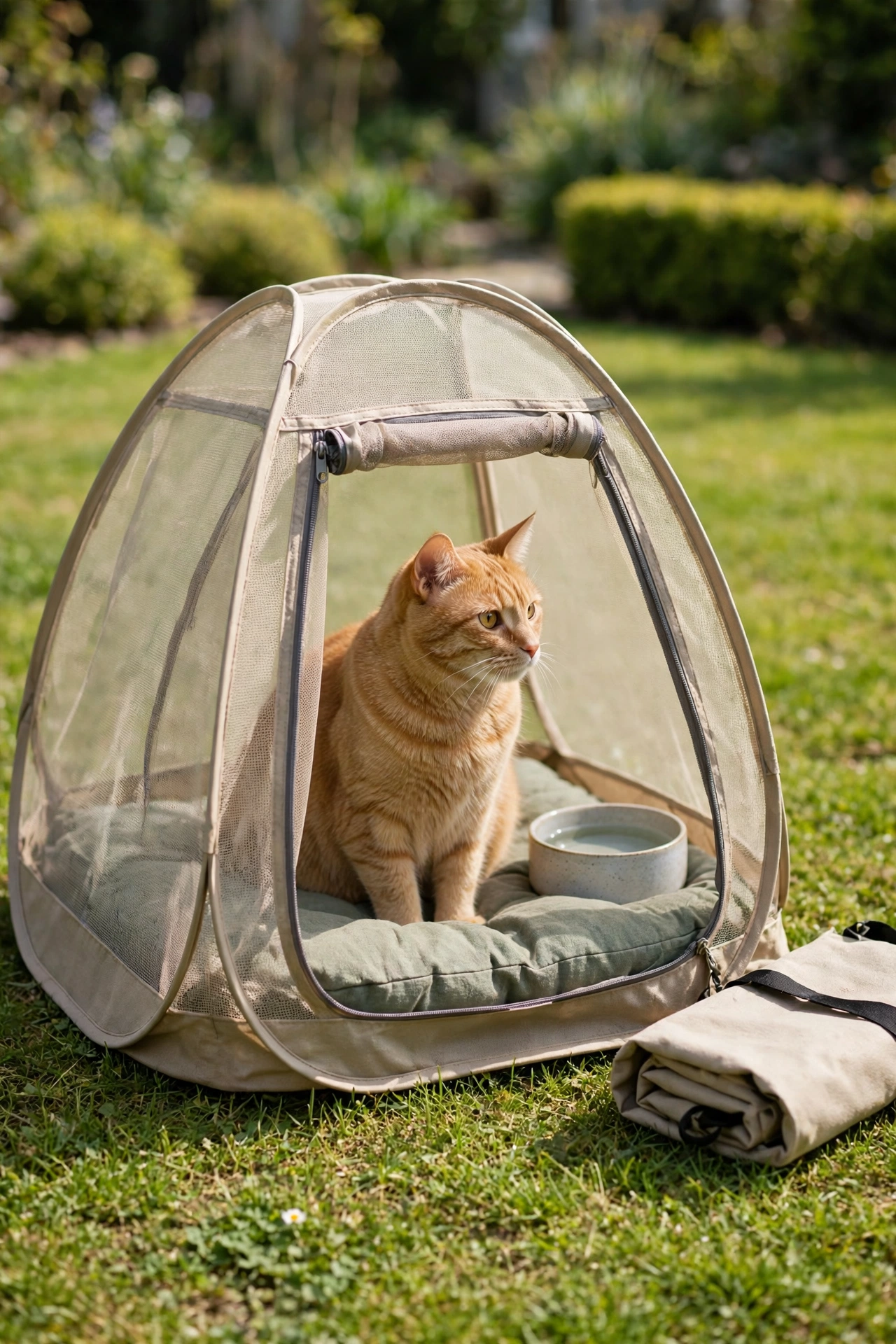
A portable pop-up catio is a lightweight mesh tent that folds flat for storage and sets up in minutes on a patio, lawn, or balcony, with no drilling and no permanent changes. It is the perfect solution for renters, for travel, and for testing whether your cat enjoys outdoor time before you invest in a built structure. Stakes or sandbags hold it steady on grass.
Look for a pop-up with fine, claw-resistant mesh, a zippered door, and a sewn-in floor or a ground skirt that stops escapes underneath. Add a small cushion, a water bowl, and a toy, and supervise the first few sessions until you trust the zippers and seams. When the visit ends, the whole catio folds into a carry bag and the yard looks untouched.
16. Zone a Multi-Pet Yard With a Separate Catio Area
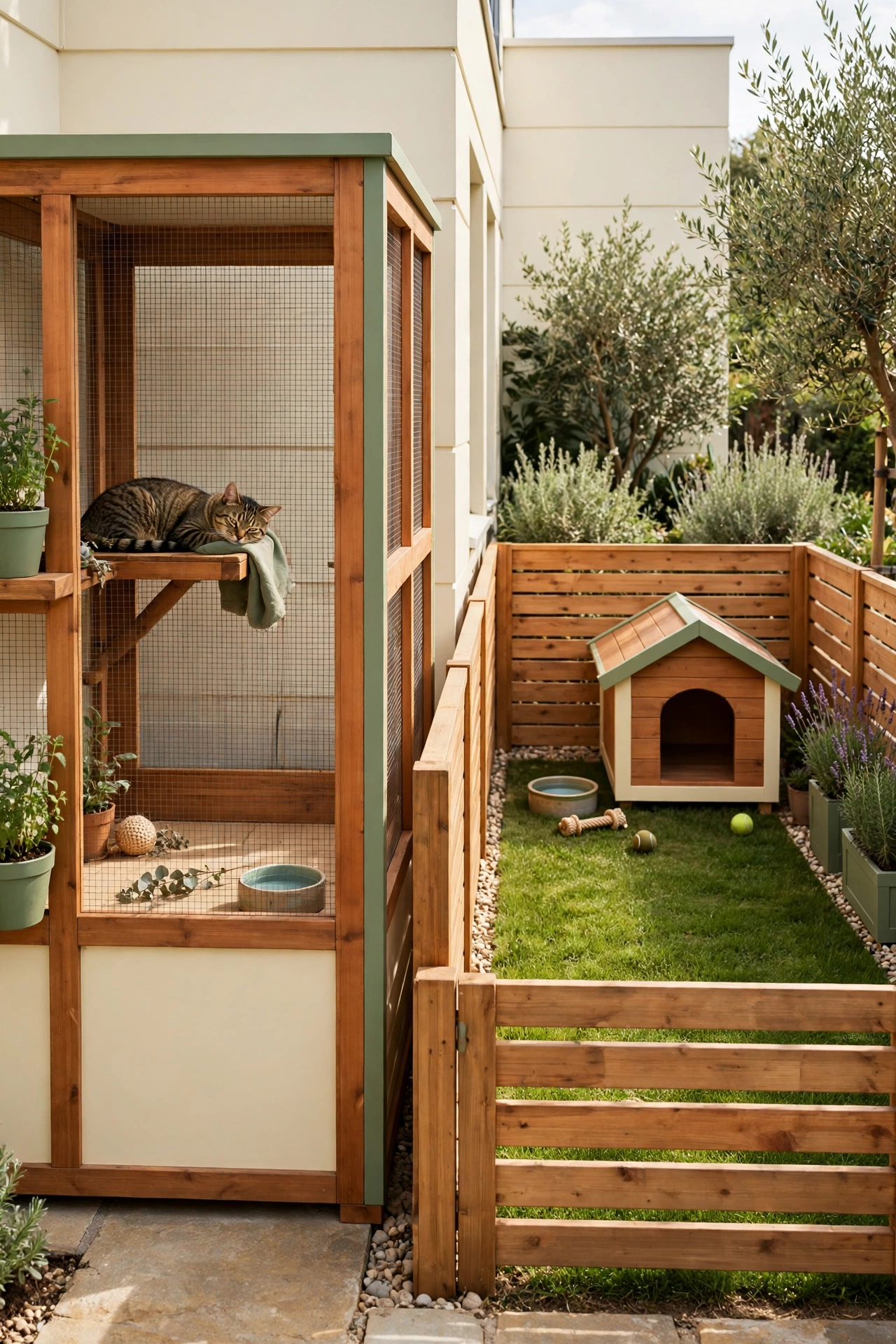
In a yard shared with dogs, a separate catio area gives cats a territory that dogs cannot enter, with its own gate, its own mesh, and its own vertical space. The catio sits in one zone of the yard while the dogs use the rest, and a solid lower panel on the shared side blocks staring and chasing through the mesh. Both species get outdoor time without stress.
Give the catio zone a separate entrance from the house so cats never cross the dog area to reach it, and add high perches where cats can retreat if a dog approaches the shared fence. If the dog side of the yard still needs its own safe structure, these backyard dog run ideas will help you plan a run that keeps dogs exercised and happy in their own zone. Clear boundaries make multi-pet outdoor time calm for everyone.
17. Light the Enclosure With Solar Lanterns for Evening Play
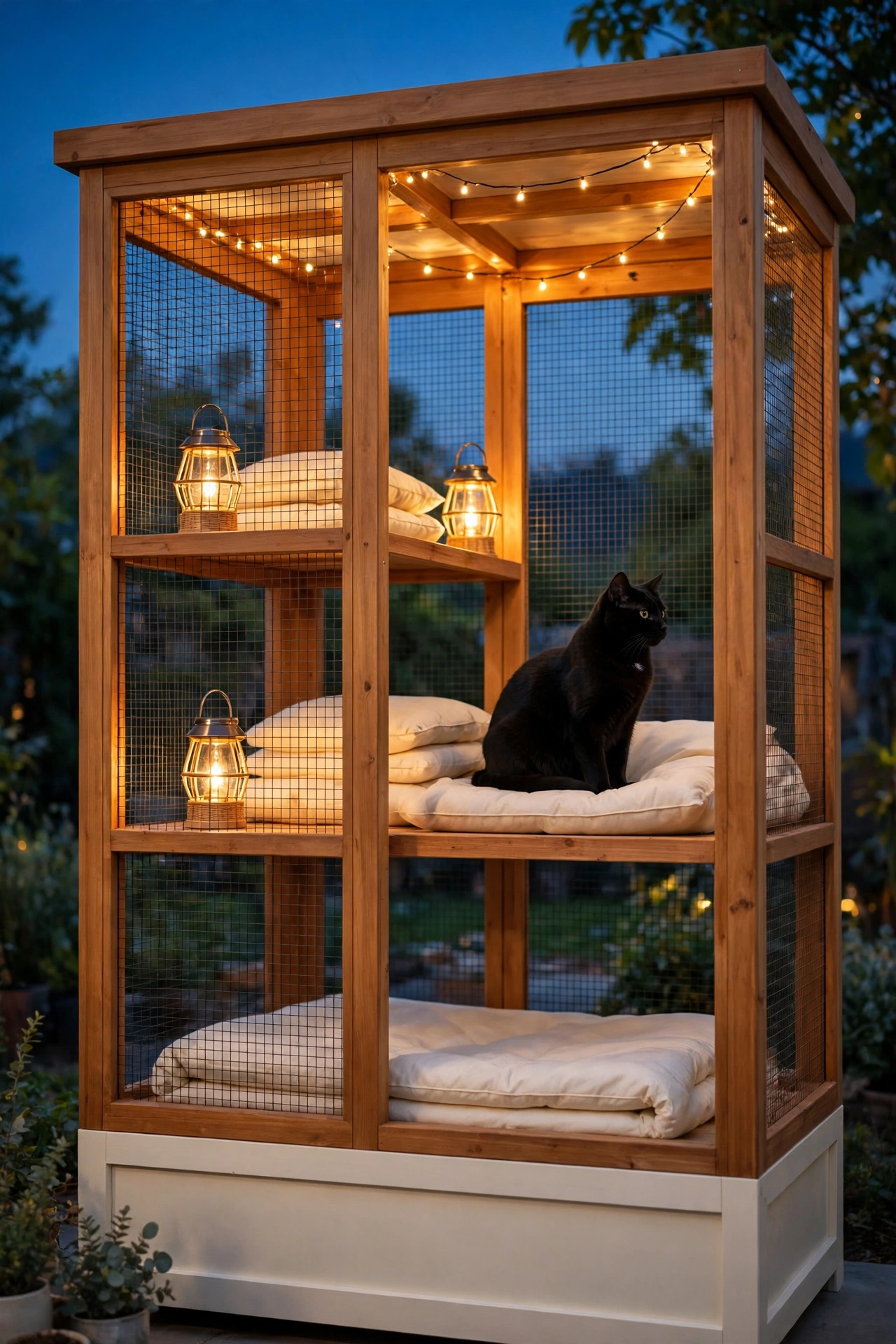
Solar lanterns extend enclosure time into the evening, when cats are naturally most active and the yard cools down. Small solar lights along the shelves, a lantern near the entrance, and a string of warm lights under the roof create a gentle glow that lets you watch your cat play after sunset. The lights charge all day and switch on automatically at dusk.
Choose warm-toned lights rather than bright white ones, because harsh light startles cats and ruins the calm of the evening. Keep all wiring and battery packs outside the mesh or inside sealed housings your cat cannot chew, and avoid any light with an exposed cord inside the enclosure. A softly lit catio turns the busiest hour of the feline day into the best hour of yours.
Conclusion
An outdoor cat enclosure is one of the kindest gifts you can give an indoor cat. It opens up fresh air, sunshine, birdsong, and climbing space while keeping every danger firmly on the other side of the mesh. Whether you start with a small window box or build a full walk-in catio, your cat will use the space every single day.
Start with the design that fits your home and your budget, then add shelves, plants, and cozy spots as you learn what your cat loves most. A few minutes of daily care keeps the enclosure clean and safe, and for a calm whole-home routine, these nightly reset routines will help you tidy the enclosure and the house together in a few minutes each evening.
Frequently Asked Questions About Outdoor Cat Enclosure Ideas for Safe Pet Play
How big should an outdoor cat enclosure be?
A single cat is comfortable in an enclosure of at least six feet by three feet, with room to stretch, climb, and use a litter area. Bigger is always better, and vertical space counts as much as floor space. A tall enclosure with shelves gives a cat far more territory than a flat one of the same footprint.
What mesh is safe for a cat enclosure?
Welded wire mesh with openings of one inch or smaller is the safest choice, because it resists claws and teeth far better than soft netting. Pet-proof screen mesh works for porches and balconies with calm cats. Check the mesh regularly for rust, loose staples, and stretched sections, and replace damaged panels at once.
Can cats stay in an enclosure overnight?
Most cats are safest coming indoors at night, when predators are active and temperatures drop. If your enclosure is fully roofed, predator-proof, and sheltered, short supervised evening visits are fine. For overnight stays, the enclosure needs a weatherproof sleeping box, fresh water, and a secure lock on every door.
What should I put inside a cat enclosure?
Include climbing shelves, a scratching post, a shaded resting spot, fresh water, and a litter zone in larger enclosures. Rotate toys weekly to keep the space interesting, and add cat-safe plants for sniffing and nibbling. For keeping spare supplies tidy at home, these pet supply organization ideas will help you store extra food, toys, and litter where you can find them quickly.
How do I introduce a shy cat to an enclosure?
Start with short visits of ten to fifteen minutes, with treats and a familiar blanket inside. Let the cat explore at its own pace and never force it through the door. Most cats grow confident within a week, and shy cats often settle fastest when a covered hideaway box is waiting inside.

Hi, I’m Emily! I turn messy corners into cozy, organized spots. DreamNestDecor is where I share simple, practical home ideas — decor, organization, and small-space solutions that work in real life, not just in photos. Every idea here is carefully researched before it’s shared.