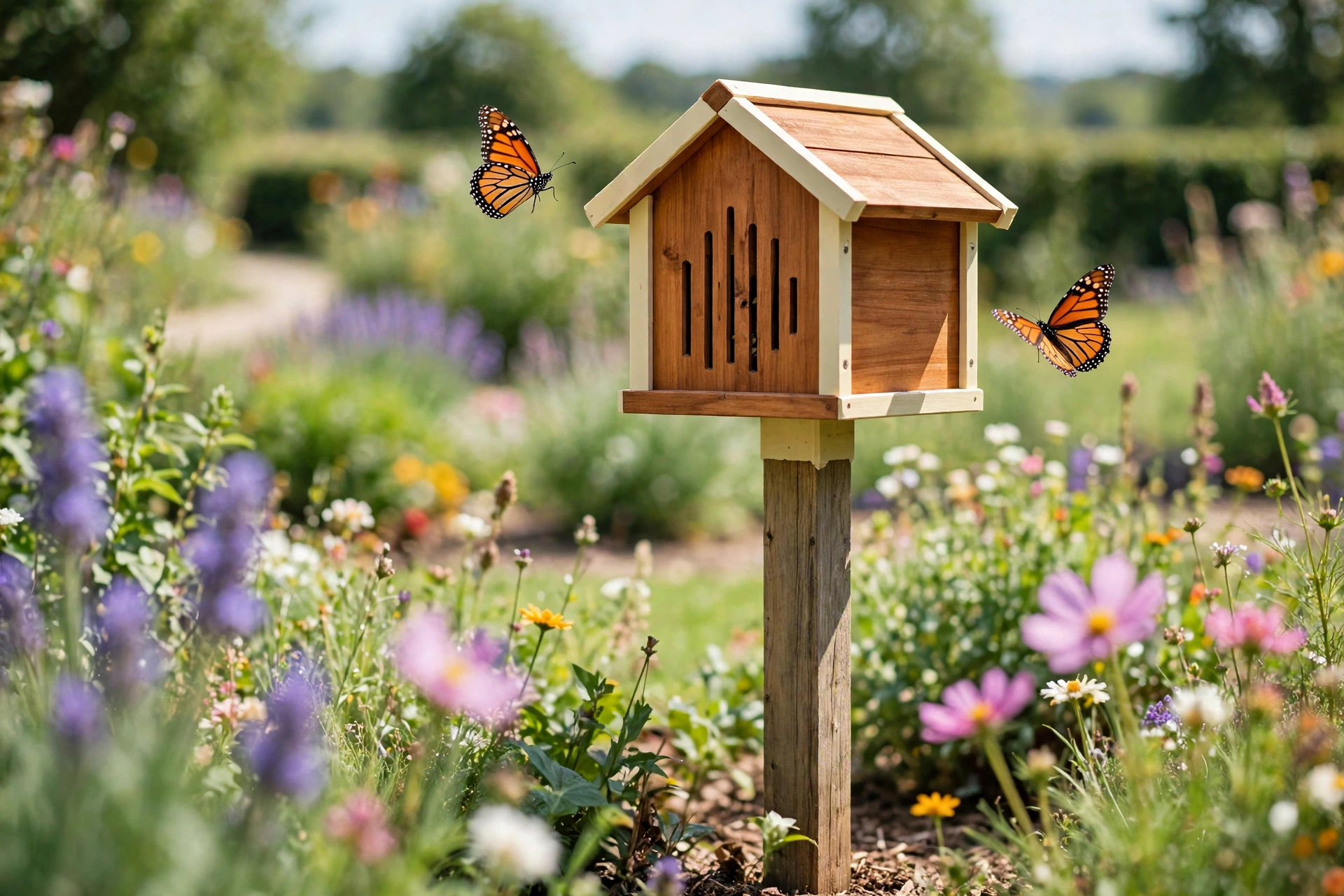
Picture this: you step into your garden on a warm morning and a monarch butterfly rests on a small wooden house at the edge of the flower bed. It opens its wings in the sunlight, safe from wind and rain, and you realize the little shelter you added has become a favorite stop for the garden visitors you love most. That quiet moment is exactly what a butterfly house brings to a wildlife friendly garden.
You do not need a large yard or woodworking skills to offer butterflies a safe place to rest and shelter. All you need is the right structure in the right spot, with narrow openings, a dry interior, and a sunny sheltered position. These 31 butterfly house ideas will help you choose, place, and care for a butterfly shelter that suits your garden, your climate, and the butterflies that visit you.
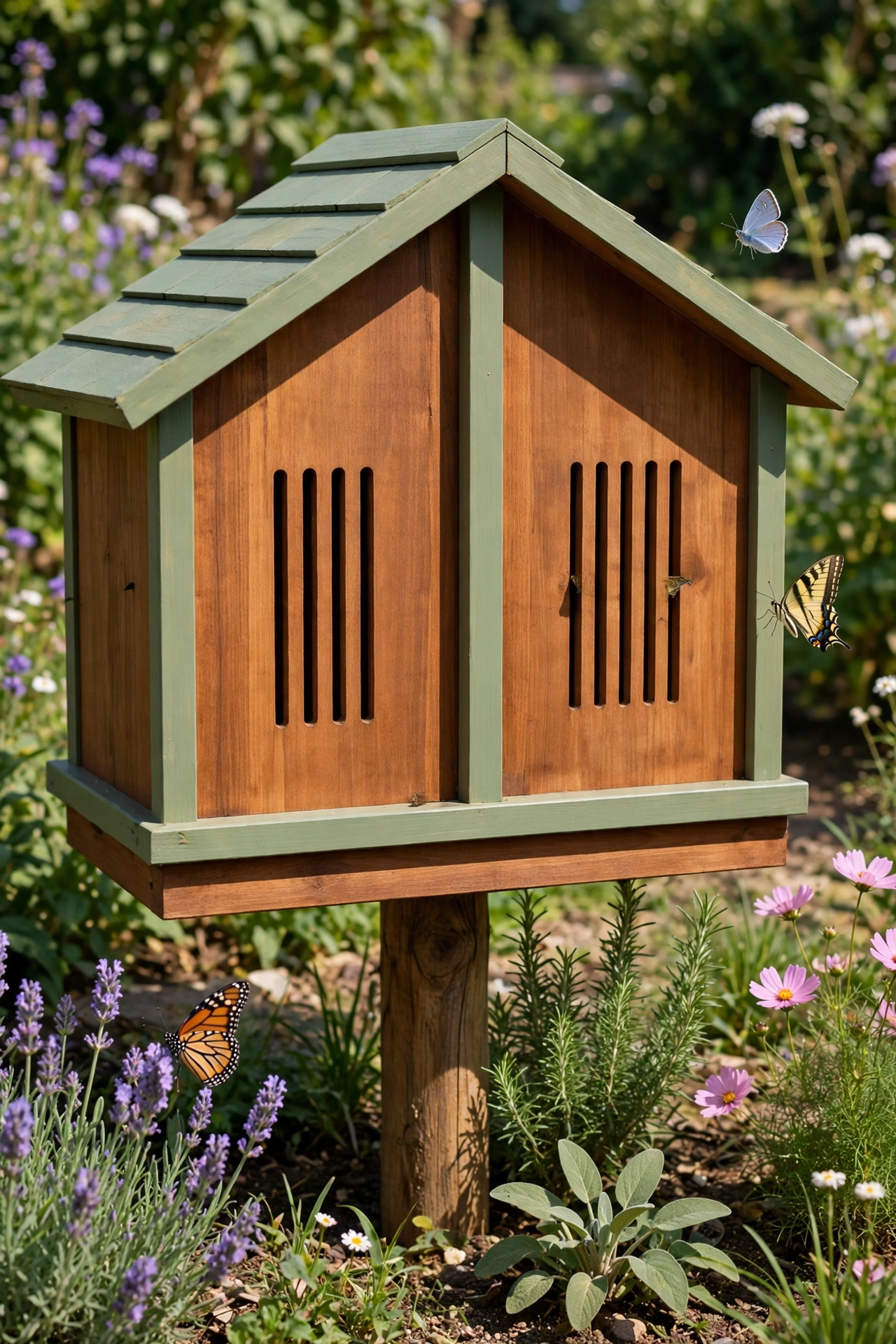
1. Start With a Classic Wooden Butterfly House on a Garden Post
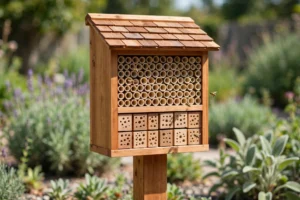
A classic wooden butterfly house on a tall post is the simplest place to start. The house is a narrow box with thin vertical entry slots on the front, a small pitched roof, and rough interior walls that butterflies can grip. The post lifts the house above ground level, where it stays dry and safe from most ground predators.
Place the post in a sunny spot that is sheltered from strong wind, with the entry slots facing south or east so the morning sun warms the interior. Keep the area around the post clear of tall weeds so you can check the house easily. A coat of exterior wood stain in a warm natural tone protects the wood and helps the house blend into the garden.
2. Mount a Butterfly House on a Fence for a Space Saving Shelter
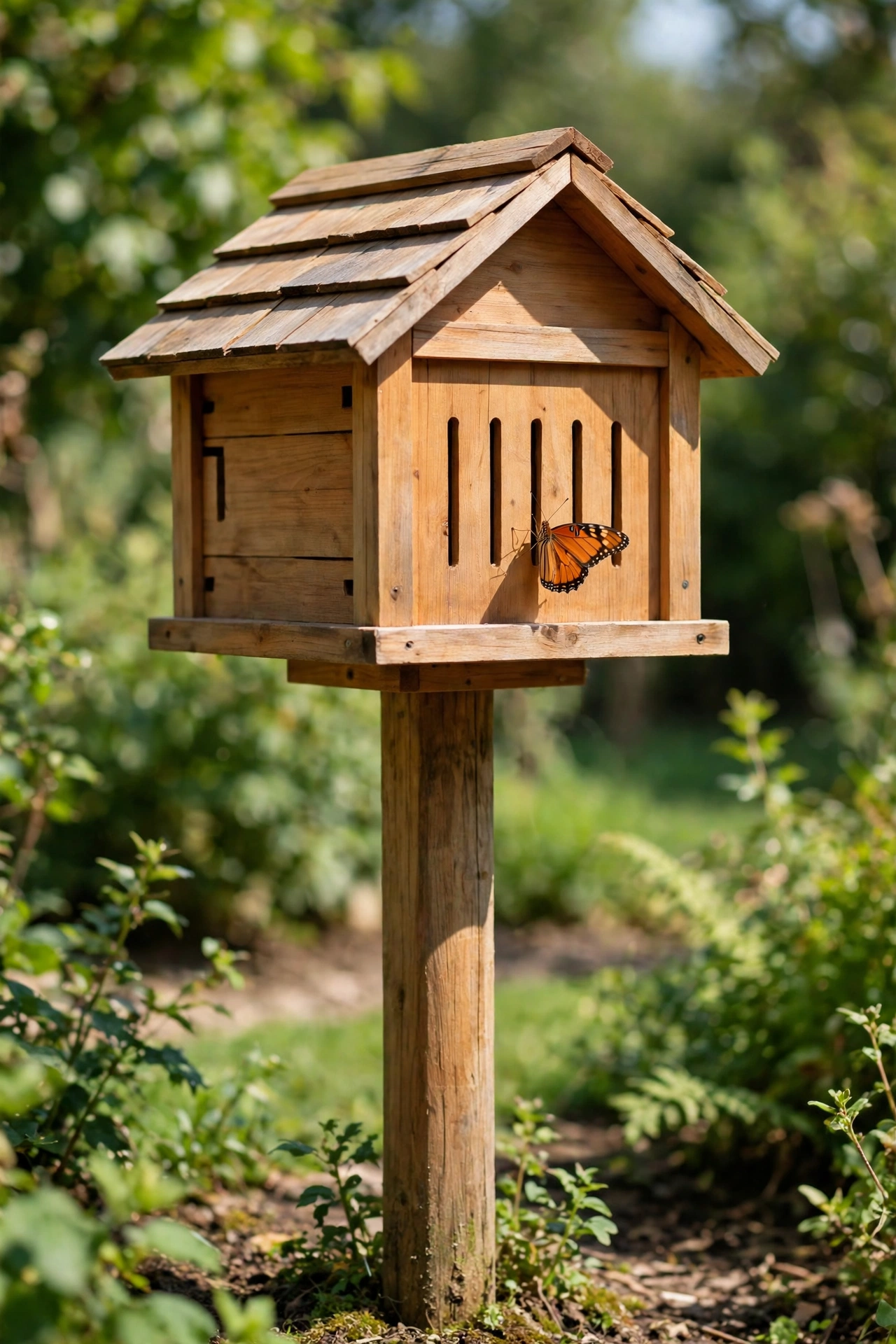
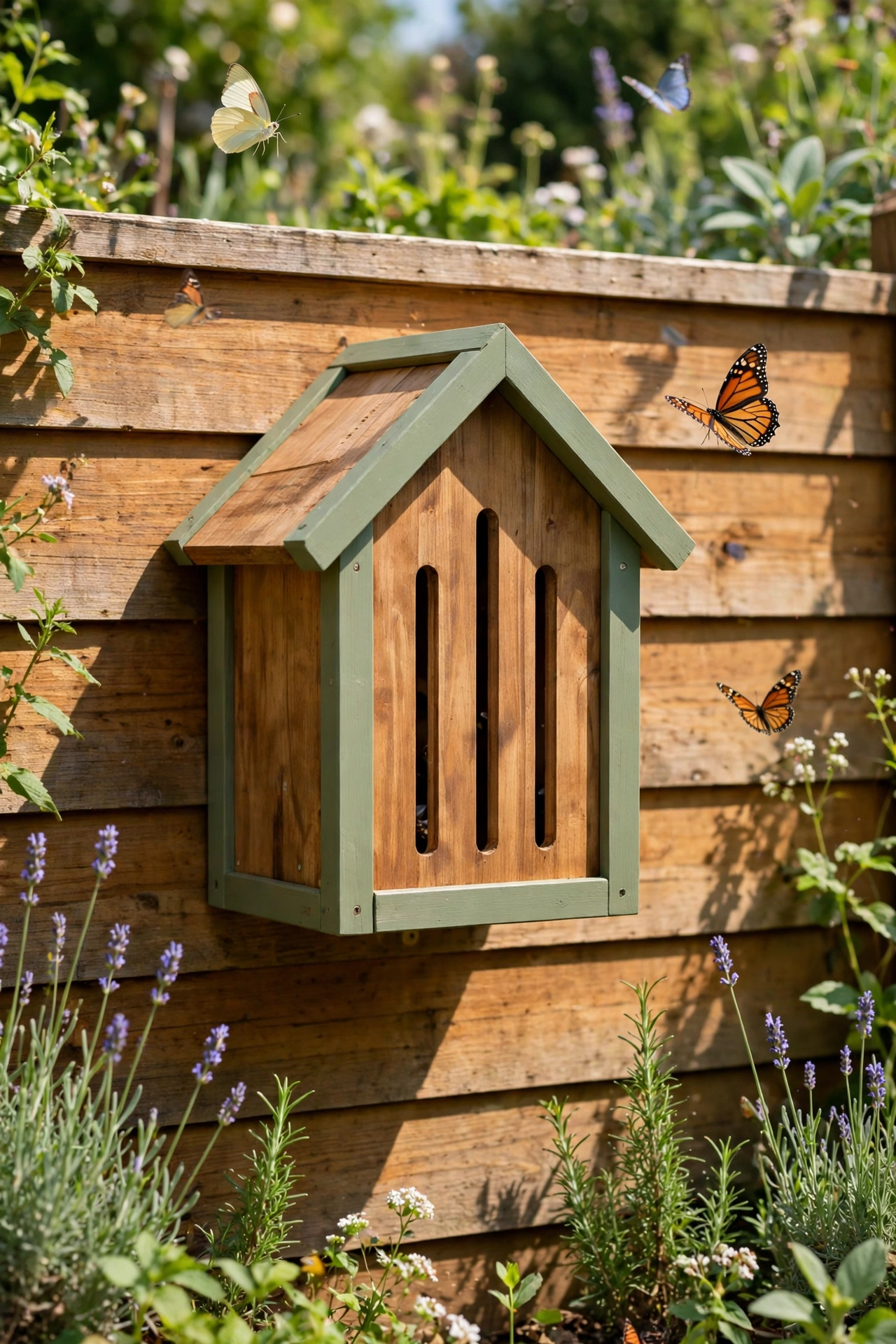
A fence mounted butterfly house is a smart choice when floor space is limited. The house screws flat against a fence board, so it uses no ground space at all and sits at a height that is easy to reach for seasonal cleaning. Fences also block wind, which gives resting butterflies a calm pocket of air behind the boards.
Choose a fence section that gets morning sun and faces away from the strongest winds in your area. Mount the house at least four feet above the ground so cats and other ground visitors cannot reach the entry slots easily. If your fence runs beside a flower bed, the house becomes a natural stop between feeding visits, and these butterfly garden ideas will help you plan the planting around it.
3. Build a Tall Multi-Level Butterfly Tower House
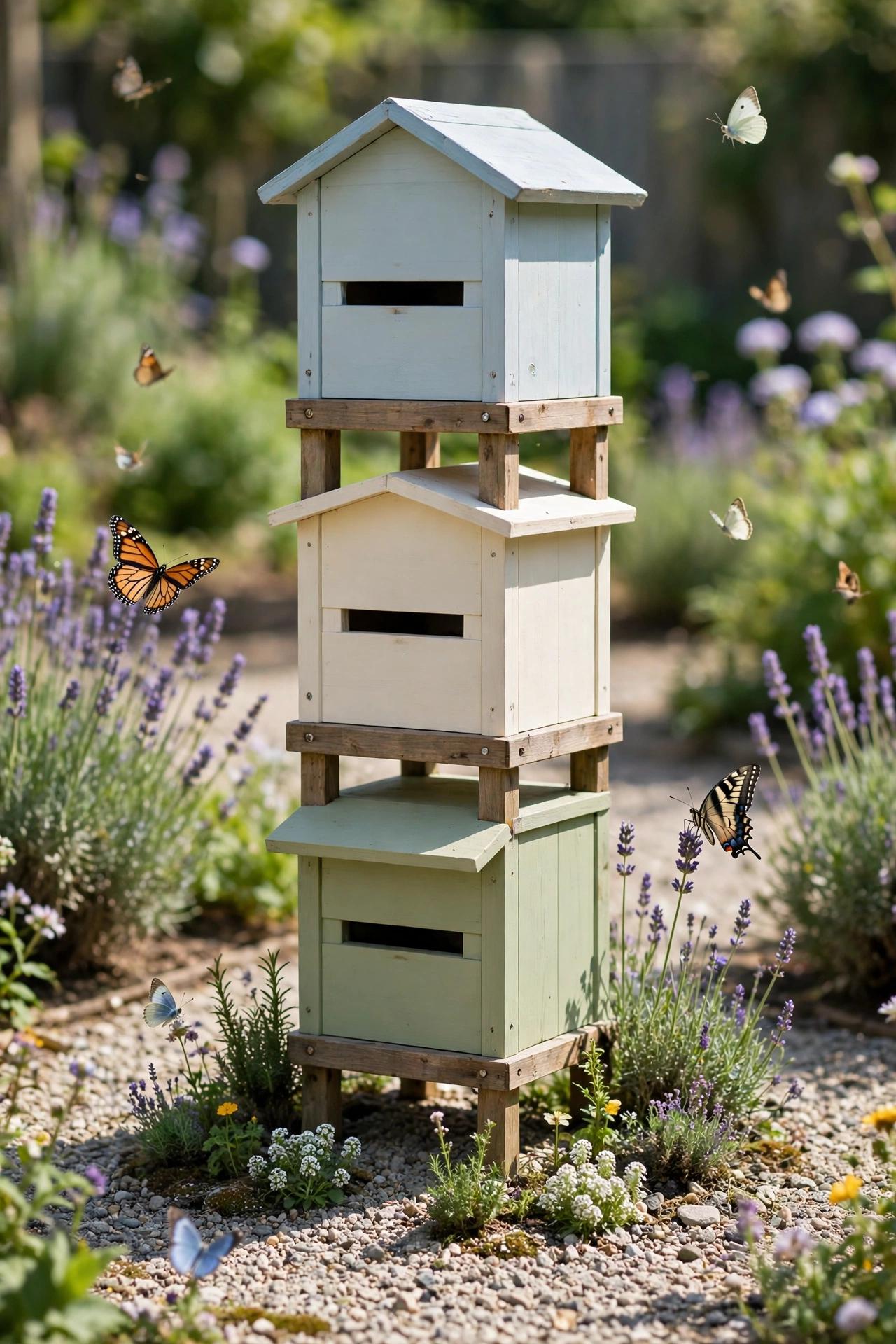
A butterfly tower house stacks two or three shelter chambers in one tall structure, so several butterflies can rest at different heights. Each level has its own entry slots and its own dry interior, and the tower shape makes a striking garden feature that looks like a tiny lighthouse for wildlife.
Set the tower on a level base of gravel or paving stones so it stays upright through storms, and anchor it with a ground stake if your area gets strong gusts. Paint each level in a slightly different soft shade, such as sage, cream, and soft blue, so the tower reads as one cheerful structure. The extra height also keeps the upper chambers well above damp ground.
4. Choose a Butterfly House With a Shingled Pitched Roof
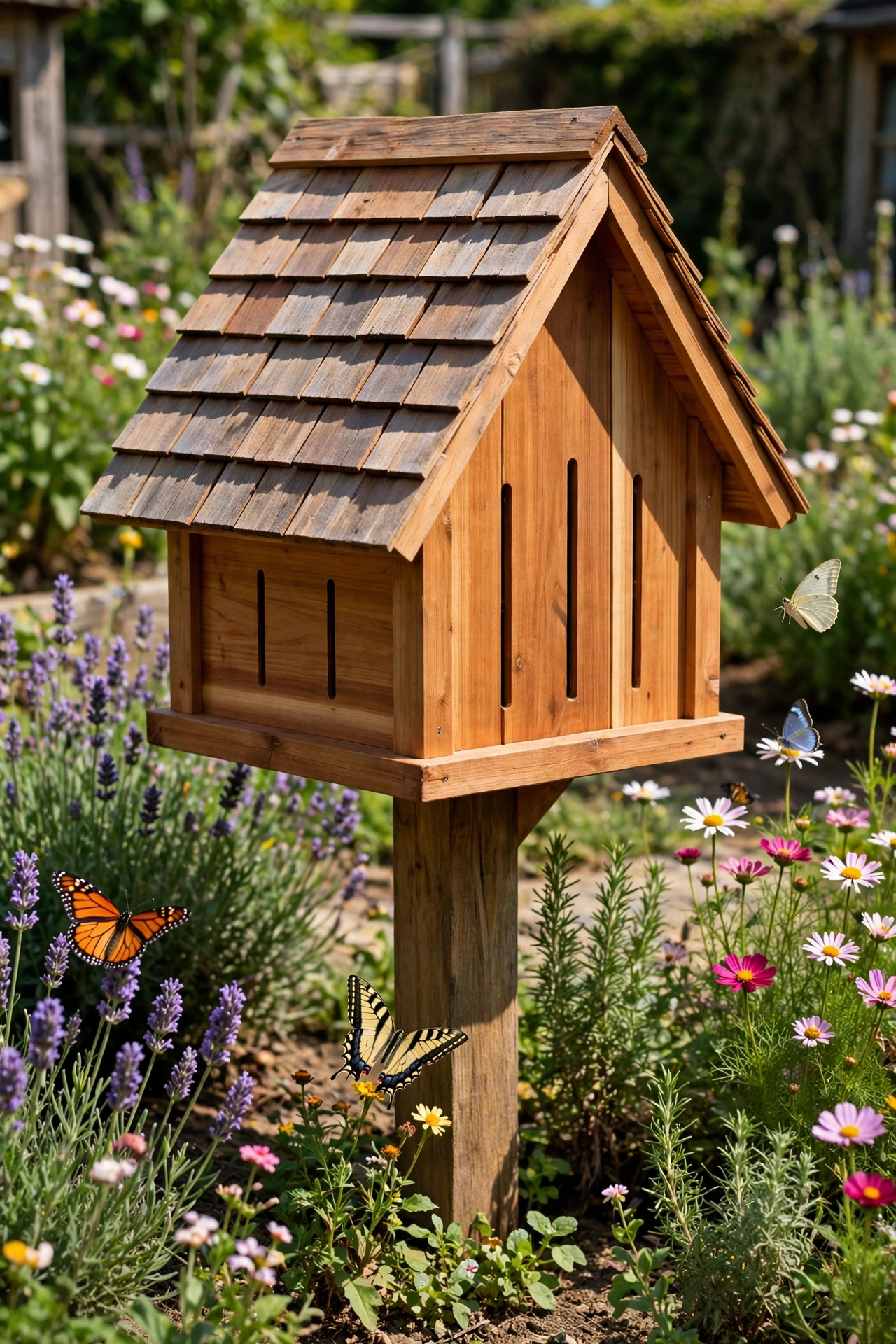
A shingled pitched roof turns a simple butterfly house into a tiny cottage that sheds rain beautifully. The steep slope sends water away from the entry slots, and the overlapping shingles add a crafted look that suits cottage gardens and rustic yards. Cedar shingles weather to a soft silver gray over time.
Make sure the roof overhangs the front of the house by at least an inch so rain cannot drip into the entry slots. A small finial or wooden knob at the peak adds charm without adding weight. Check the shingles once a year and replace any that have curled or cracked, since a dry interior is what makes butterflies return.
5. Paint a Cottage Style Butterfly House in Soft Colors
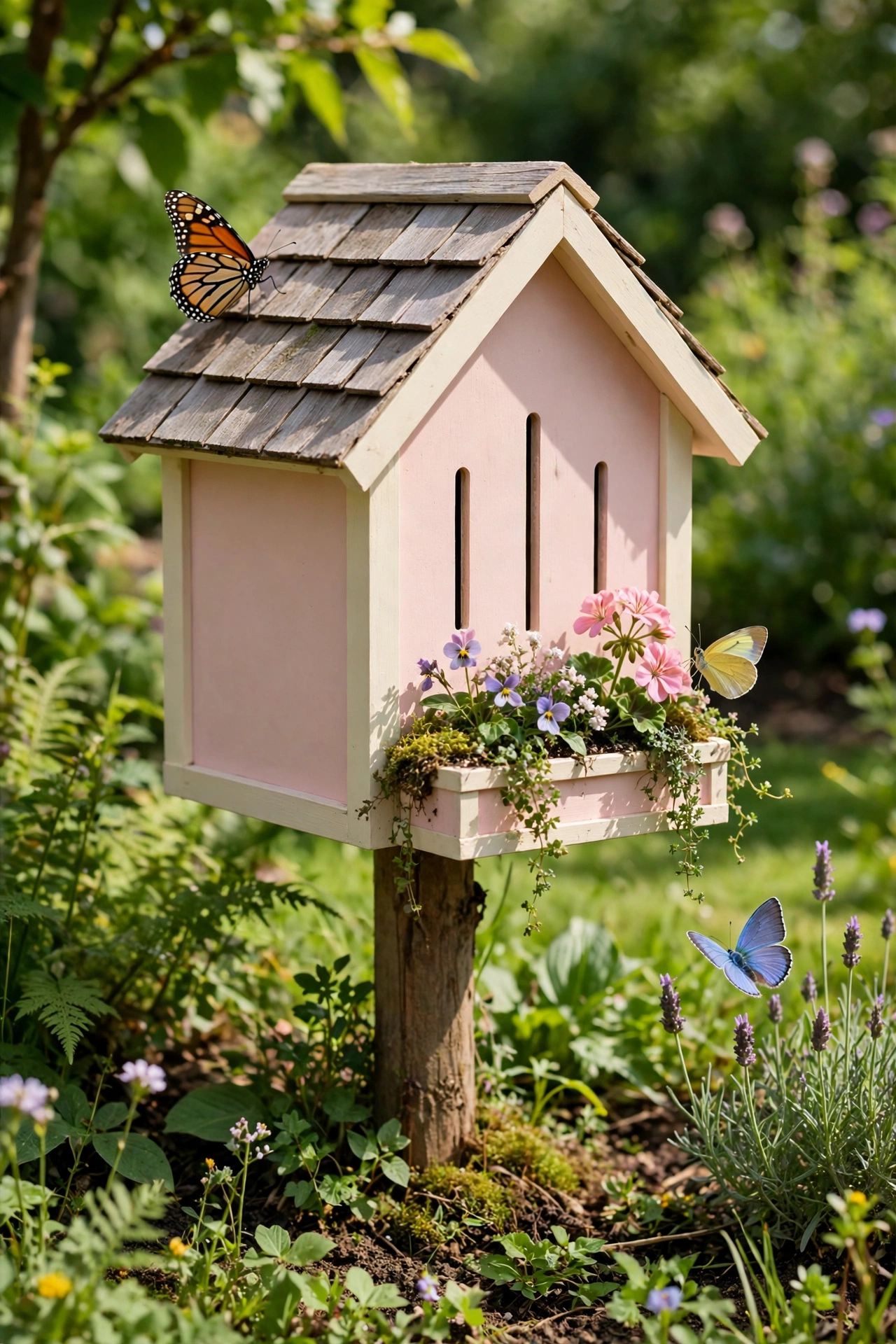
A cottage style butterfly house brings storybook charm to the garden with painted walls, a tiny door outline, and flower boxes that hold no plants but add color. Soft colors like blush pink, butter yellow, and pale sage look lovely against green foliage and make the house easy to spot from a kitchen window.
Use exterior paint that is safe for wildlife and let it dry fully before you hang the house outside. Keep the entry slots unpainted on the inside so butterflies grip bare wood rather than a slick painted surface. A painted house also makes a thoughtful handmade gift for a gardener who loves wildlife.
6. Keep It Rustic With a Log Butterfly Shelter
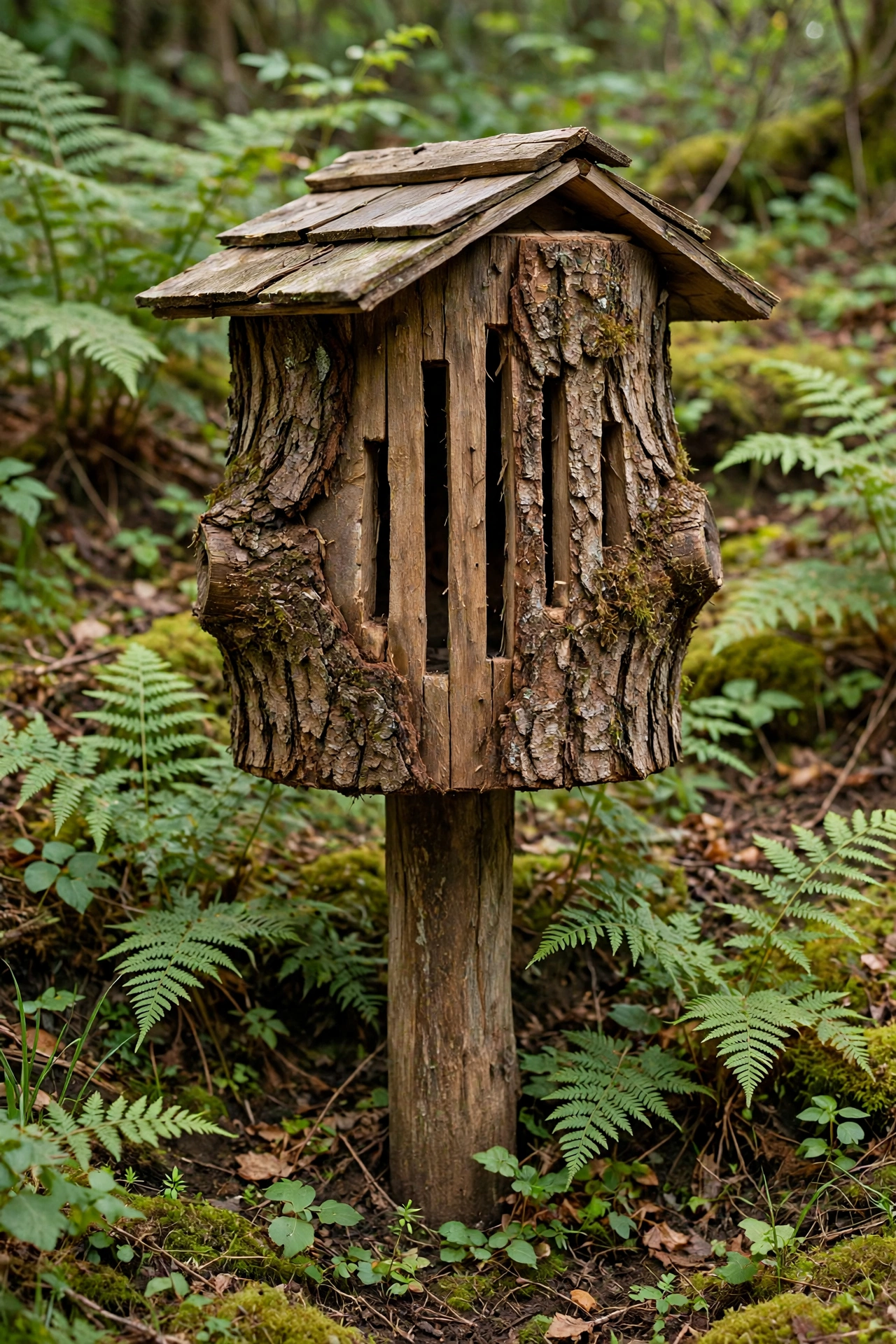
A log butterfly shelter uses a hollowed section of log or thick branch, so the house looks like it grew in the garden. The bark exterior blends with trees and shrubs, and the thick wood walls insulate the interior against temperature swings. Narrow slots cut into the front give butterflies an entry that keeps out rain and larger insects.
Mount the log shelter horizontally on a sturdy post or strap it to a tree trunk with weatherproof brackets. A small wooden roof cap over the top keeps rain from soaking into the end grain. This natural style suits woodland gardens and wild corners where a painted house would look out of place.
7. Add a Front Perch Ledge to Your Butterfly House
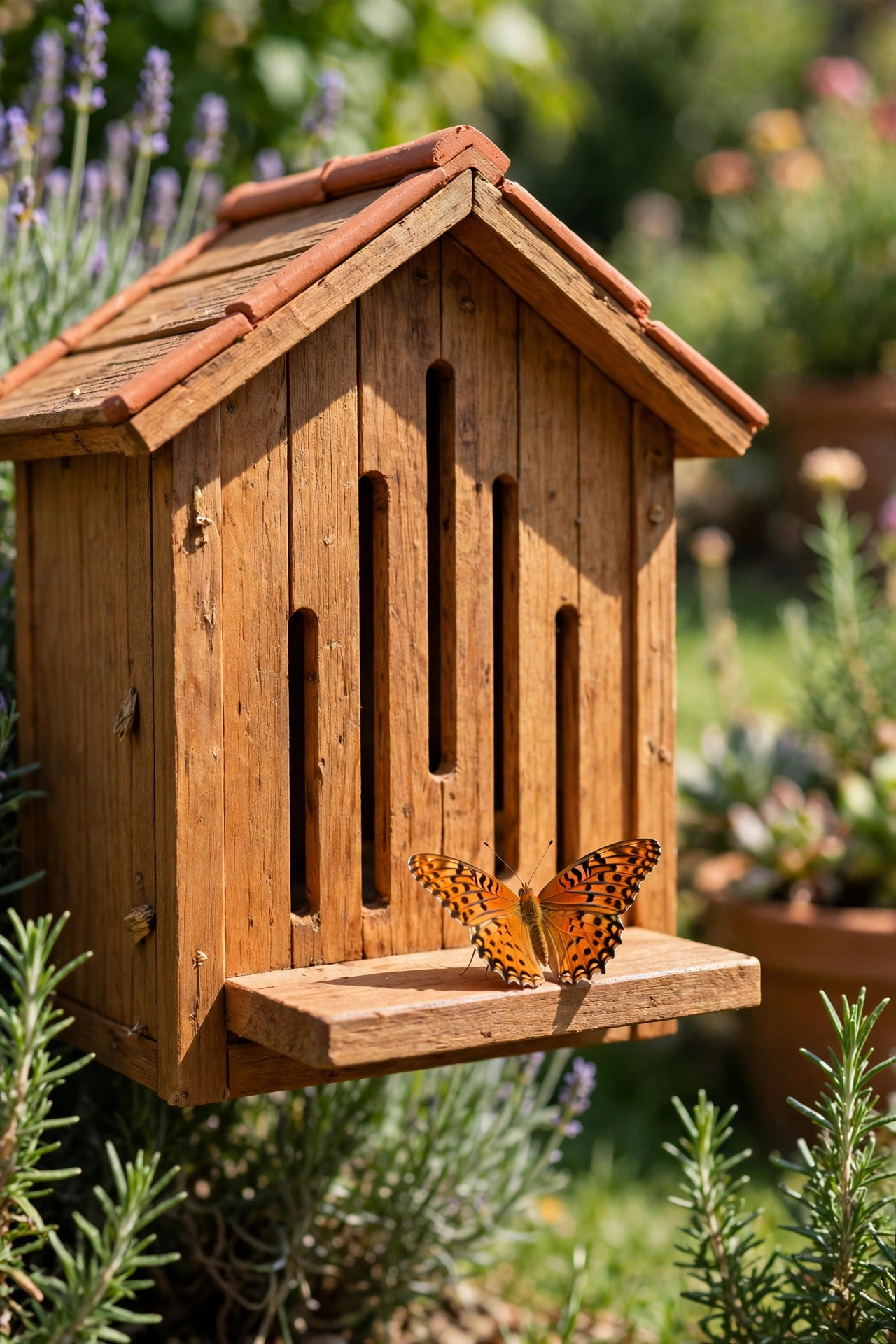
A front perch ledge is a narrow shelf fixed below the entry slots, and it gives butterflies a landing spot before they slip inside. The ledge also serves as a sunning platform on cool mornings, when butterflies spread their wings to warm up before they fly. A ledge only needs to be two or three inches deep.
Fix the ledge with exterior screws and a small support bracket so it stays level through the seasons. Rough sawn wood works best because butterfly feet grip textured surfaces more easily than smooth planed boards. Watch the ledge on sunny mornings and you will often see a butterfly resting there with wings wide open.
8. Offer an Overwintering Butterfly Hibernation Box
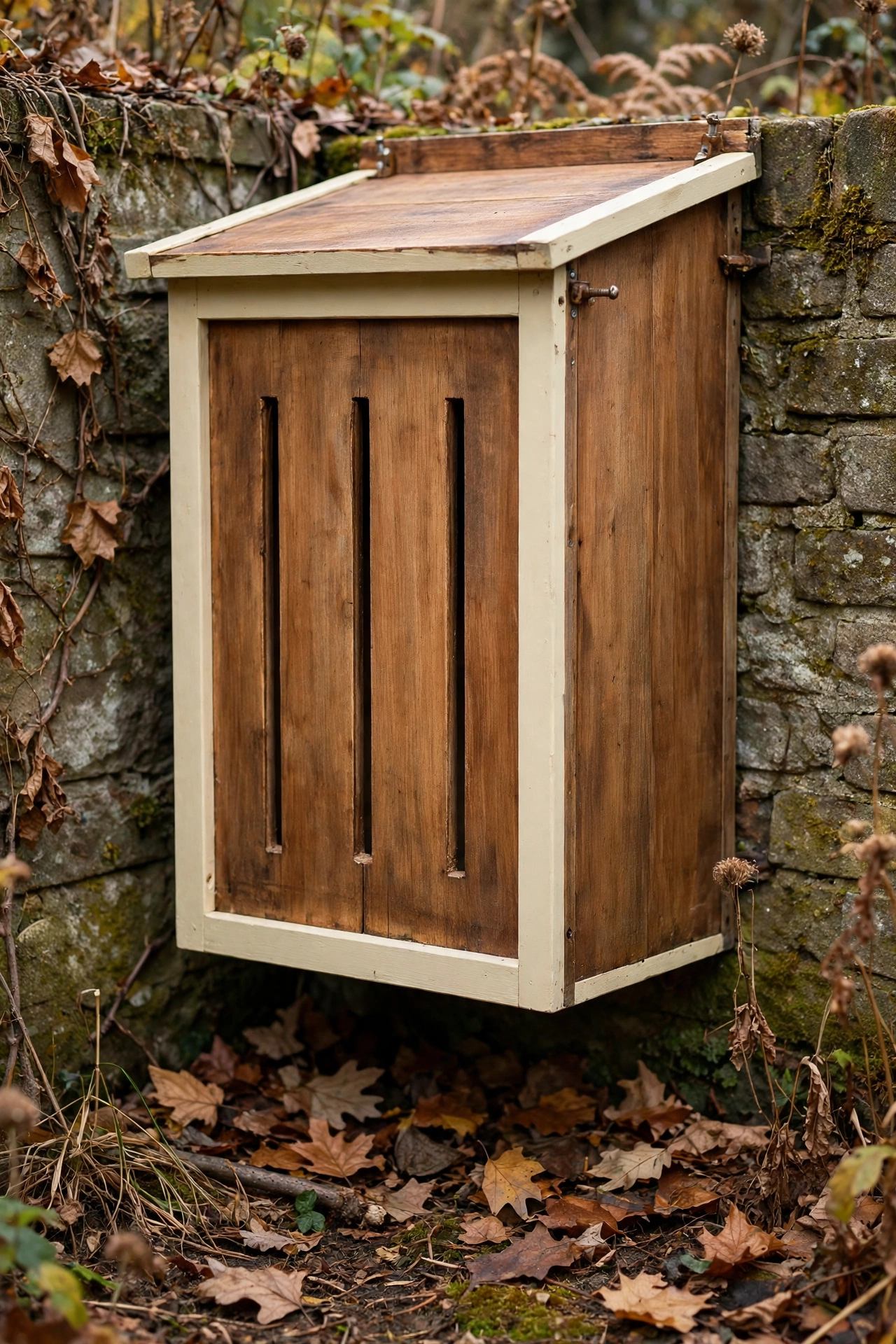
An overwintering box is a deeper butterfly house built for species that hibernate through cold months. The interior holds strips of rough bark and corrugated cardboard that give butterflies safe crevices to cling to, and the thick walls buffer the inside against frost. The box stays closed and quiet all winter, so place it where you will not disturb it.
Set the hibernation box in a cool sheltered spot, such as against a north facing wall or inside an unheated shed with an open entry gap. Never open the box during winter to peek inside, since waking a hibernating butterfly can cost it the energy it needs to survive. In spring, check the box once the weather warms and clean it before the new season begins.
9. Tuck a Butterfly Roosting Box Under a Porch Eave
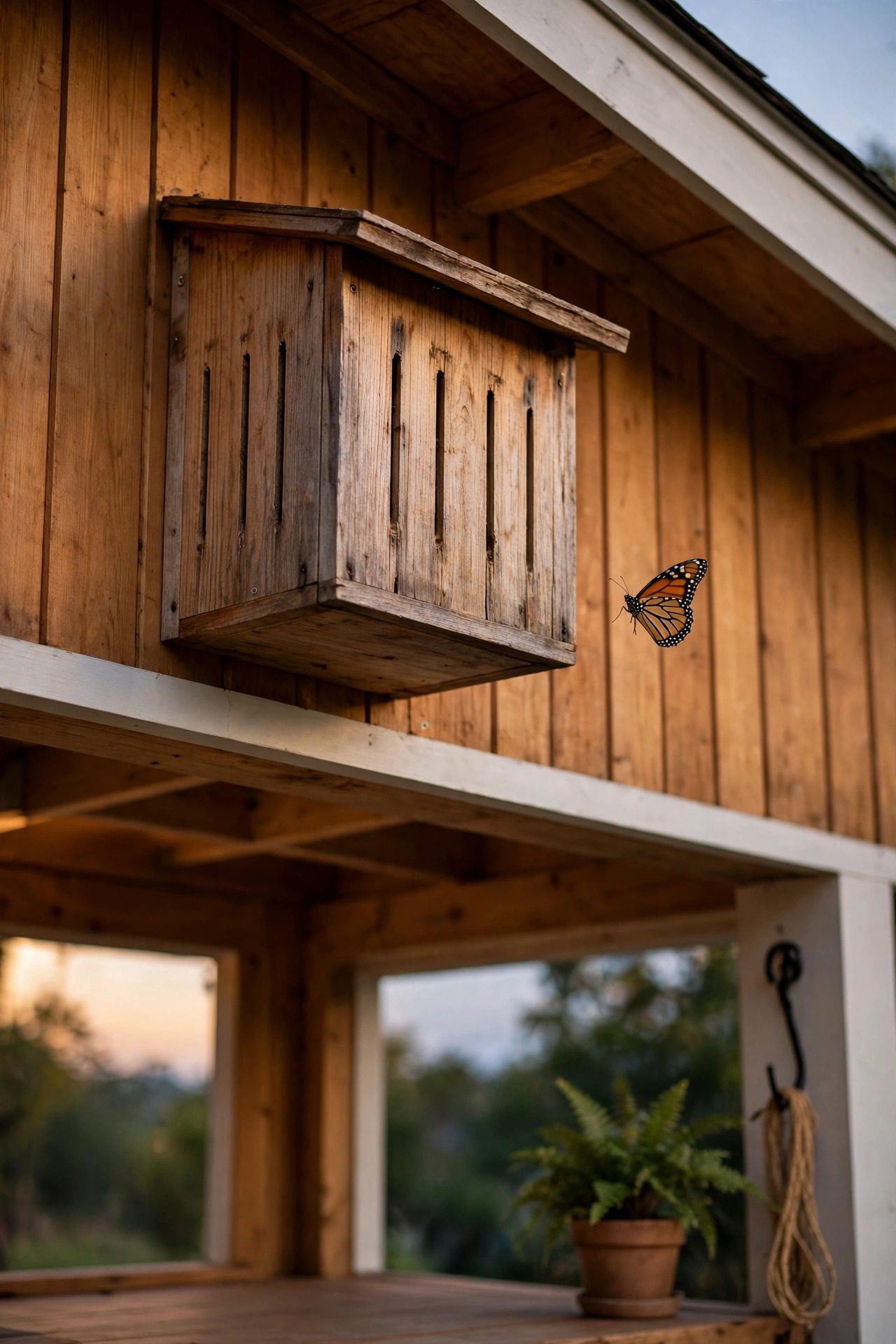
A roosting box under a porch eave gives butterflies an overnight shelter that stays dry in any weather. The eave acts as a second roof, so rain never reaches the entry slots, and the wall behind the box blocks cold night winds. Butterflies that feed in the garden during the day often roost close to the house at night.
Mount the box high under the eave with the slots facing outward, away from the wall, and keep the porch light off at night or switch it to a warm low bulb so resting butterflies are not disturbed. A roosting box near the house also lets you watch butterflies settle in at dusk from a window, which is a lovely end to a garden day.
10. Strap a Butterfly House to a Tree Trunk
A tree trunk is a natural mounting spot for a butterfly house, since it places the shelter at the edge of the shade canopy where butterflies travel between sun and cover. The trunk anchors the house firmly, and the bark behind it gives the whole setup a woodland look that suits mature gardens.
Use wide weatherproof straps or a French cleat rather than nails, so the tree can keep growing without damage. Face the entry slots toward a sunny clearing so butterflies find the house easily when they leave the shade. Check the straps each spring and loosen them slightly as the trunk thickens.
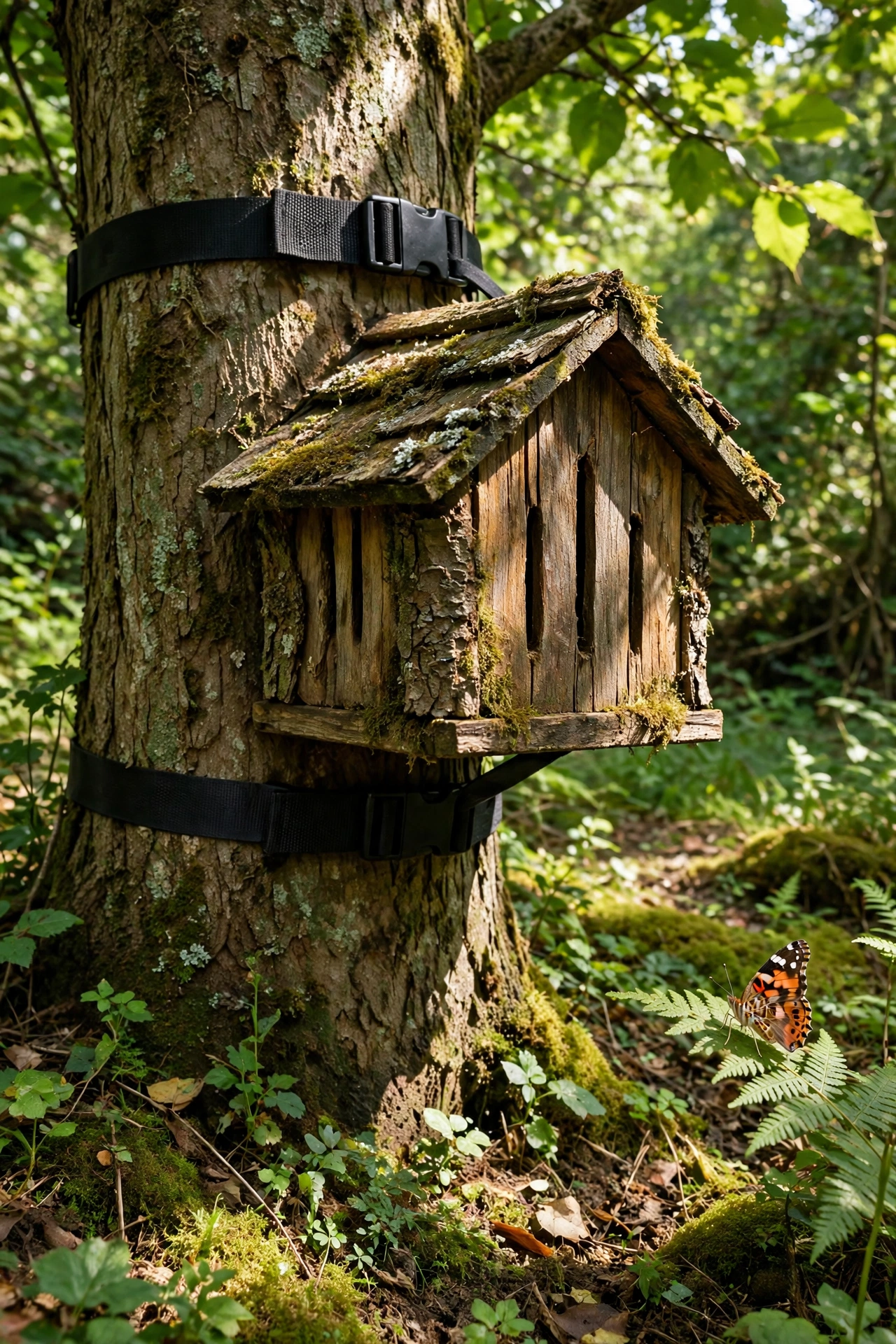
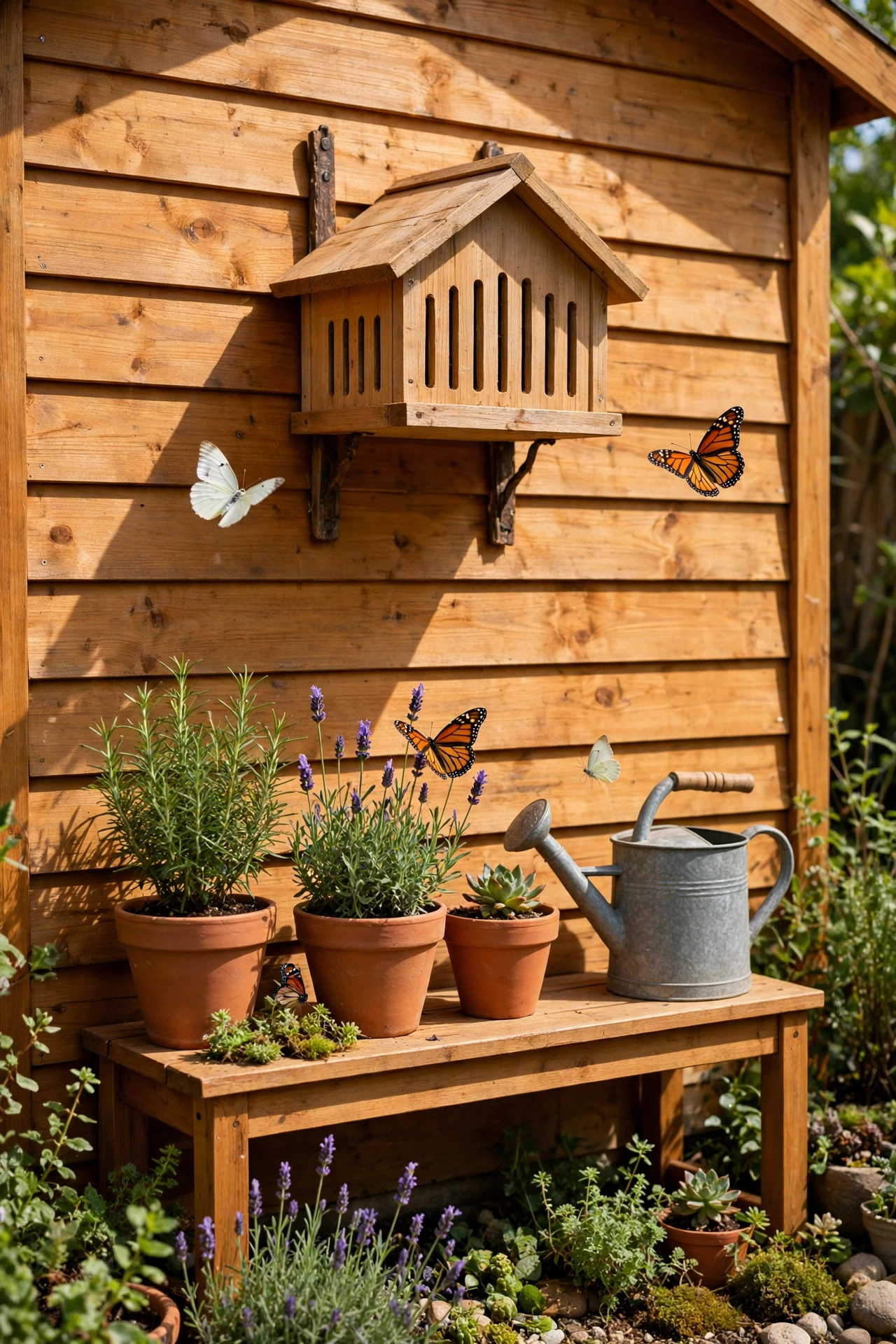
11. Hang a Butterfly House on a Garden Shed Wall
A garden shed wall offers a flat, stable, and sunny surface for a butterfly house, and it keeps the shelter close to the tools and supplies you use for garden care. The shed roof overhang shields the house from heavy rain, and the wall warms up in the sun, which butterflies love on cool mornings.
Hang the house on the south or east wall at a height you can reach with a step stool for annual cleaning. Keep the wall area free of cobwebs and wasp nests, since wasps sometimes claim small shelters for themselves. A shed mounted house pairs well with a potting bench below, where you can keep a small brush and a notebook for wildlife sightings.
12. Try a Double Chamber Butterfly House for More Guests
A double chamber butterfly house divides one wide box into two separate interiors, each with its own entry slots. The divider gives shy species a private chamber and lets you offer two different interior setups, such as bark strips in one side and dried leaves in the other. More chambers mean more butterflies can shelter at once.
Build or buy a house with a solid center divider that reaches the roof, so the chambers stay truly separate. Label the chambers with small painted numbers if you like to track which side gets more visitors. A double chamber house works well on a post at the center of a wildlife garden, where it serves butterflies coming from every direction.
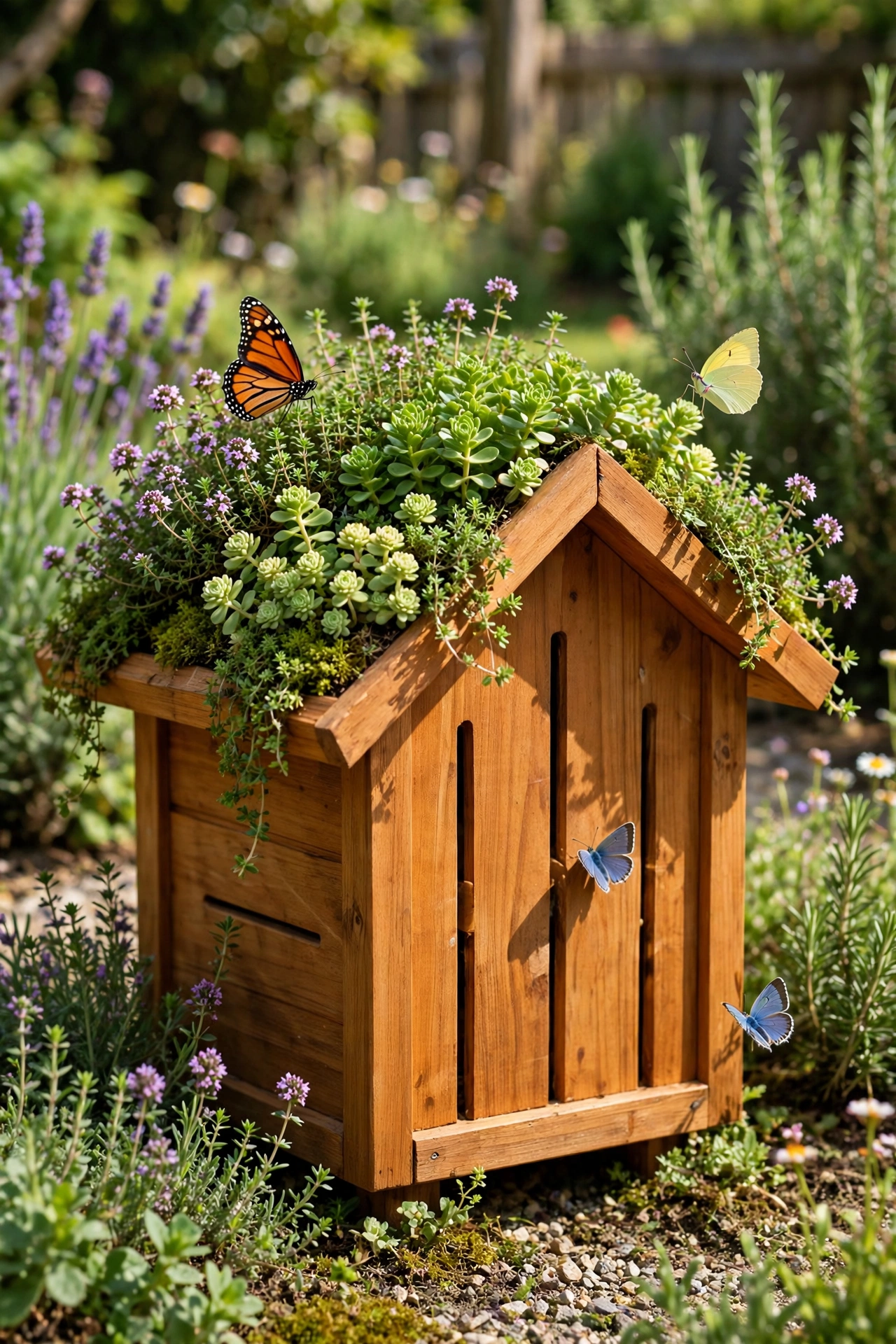
13. Top a Butterfly House With a Living Green Roof
A living green roof turns the top of a butterfly house into a tiny meadow of sedum and creeping thyme. The plants insulate the interior, slow down rainwater, and add a soft natural look that makes the house disappear into the garden. Sedum needs almost no care and survives on rainfall alone in most climates.
Build the roof as a shallow tray with drainage holes and a waterproof liner, then fill it with gritty soil and small sedum cuttings. Keep the tray light so the house and post can support the extra weight when the soil is wet. For planting ideas that support the whole pollinator community around the house, these pollinator garden layout ideas will help you plan the beds nearby.
14. Set Up a Butterfly Feeding Station With Fruit Trays
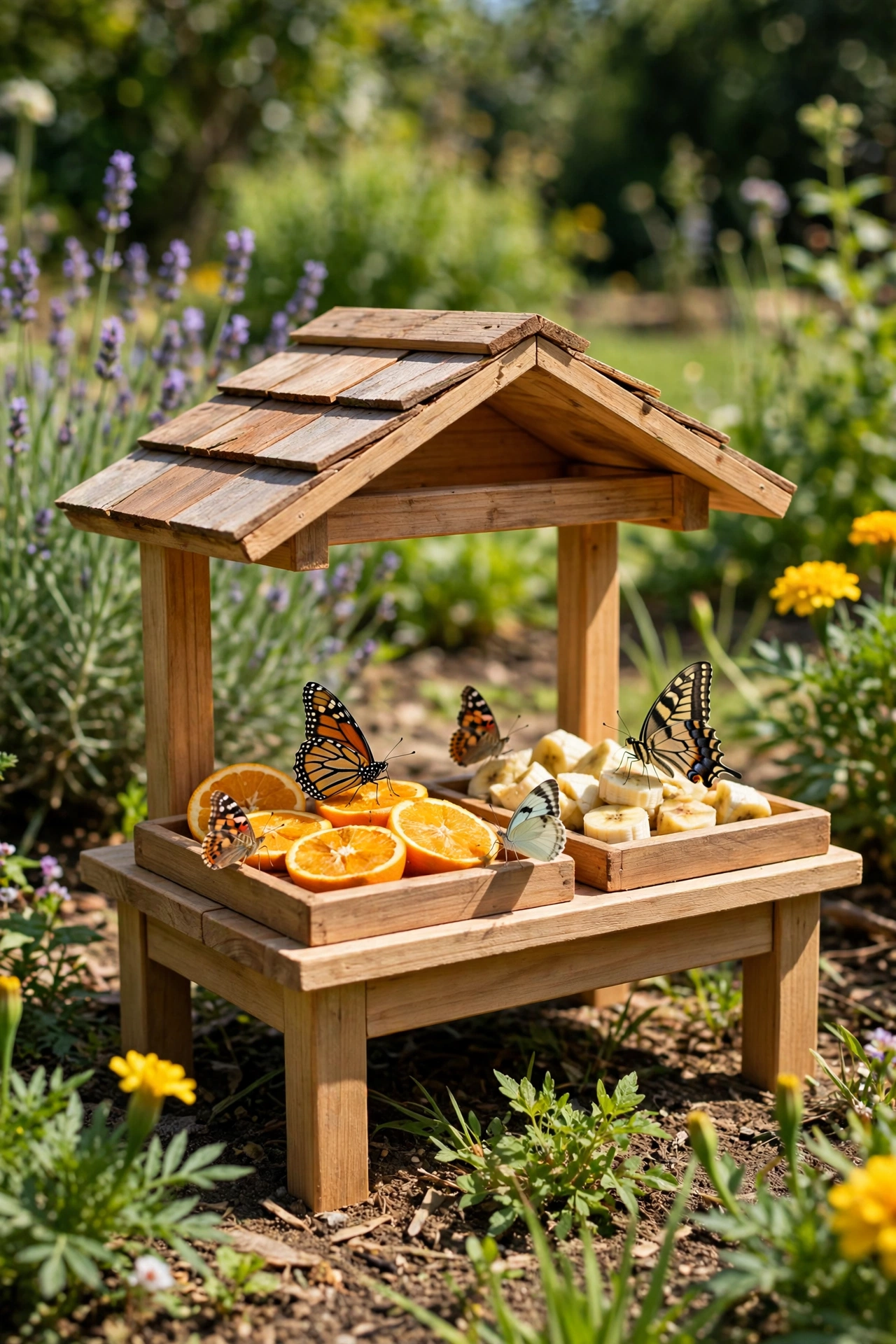
A butterfly feeding station is a small structure with shallow trays that hold overripe fruit, and it gives butterflies an energy source close to their shelter. Banana slices, orange halves, and melon rinds attract species that feed on rotting fruit, and the trays keep the food off the ground where ants and slugs would claim it first.
Build the station as a low table or a hanging tray with a small roof to keep rain off the fruit, and place it within a few feet of the butterfly house. Replace the fruit every two days and wash the trays weekly so the station stays clean and safe. A feeding station also gives you a perfect spot to watch butterflies feed at close range.
15. Attach a Nectar Feeder to the Side of a Butterfly House
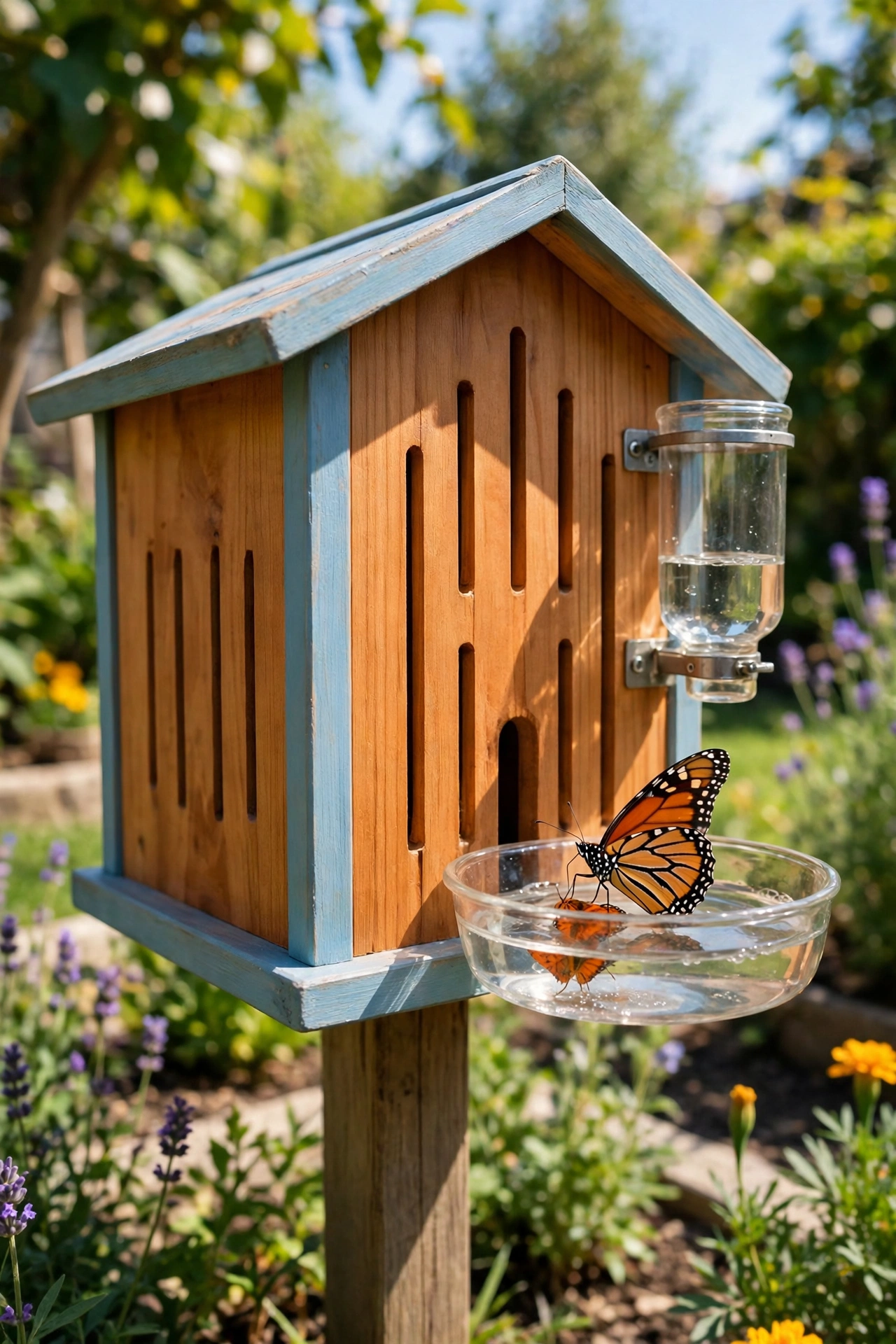
A nectar feeder attached to the side of a butterfly house combines shelter and food in one structure. The feeder is a small reservoir with a shallow dish or sponge pad that holds sugar water, and butterflies sip from the surface while resting on the rim. The attached design saves space and keeps the feeder steady in wind.
Mix one part white sugar with four parts water, boil it briefly, and let it cool before filling the feeder. Never use honey, brown sugar, or artificial sweetener, since those can harm butterflies. Clean the feeder every three days in warm weather and refill it often, since a dirty feeder can spread disease between visitors.
16. Choose Narrow Predator Safe Entry Slots
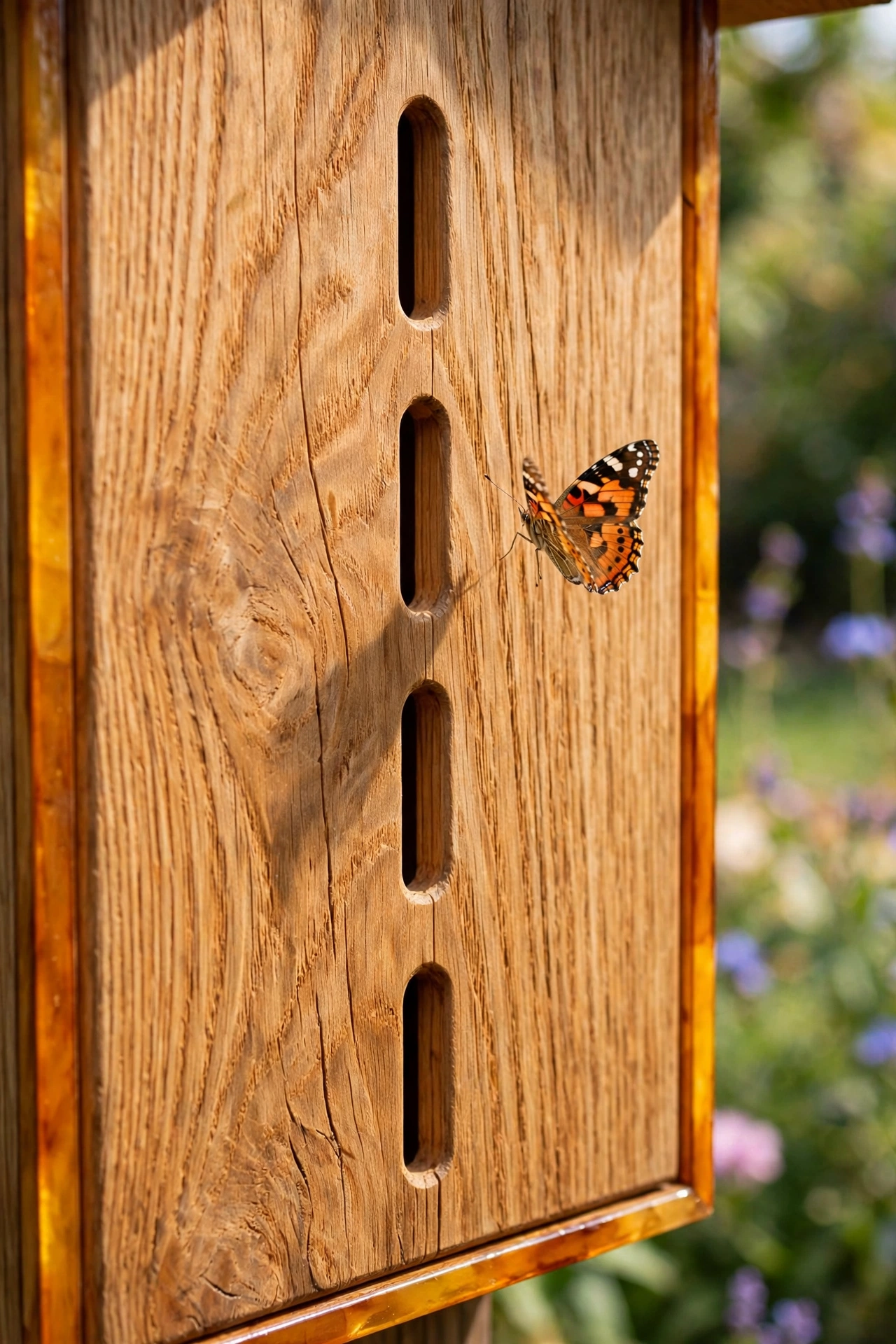
Narrow entry slots are the most important safety feature of any butterfly house. Slots about half an inch wide let butterflies slip through while keeping out birds, mice, and large wasps. Vertical slots work better than round holes because they match the shape of a butterfly with folded wings.
Cut three or four slots across the front panel, each about four inches tall, and sand the edges smooth so delicate wings do not snag. If an existing house has round holes, you can cover them with a new slotted front panel screwed over the old one. Check the slots each season and clear away any spider webs that block the way in.
17. Pick a Butterfly House With a Hinged Clean-Out Door
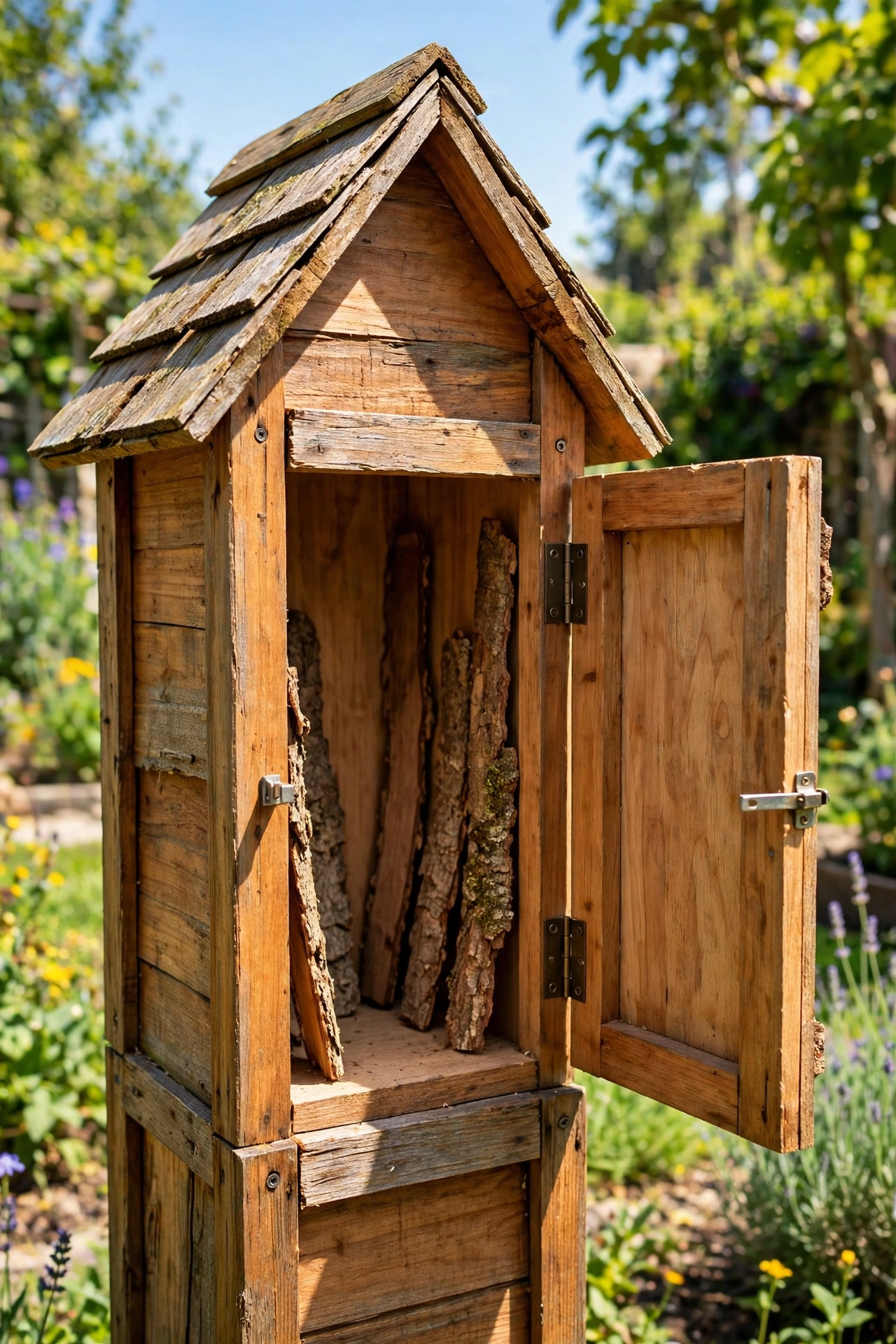
A hinged clean-out door on the back of a butterfly house makes annual maintenance simple. You open the door, sweep out old leaves and debris, and check the interior walls for mold or damage, all without taking the house off its post. A clean dry interior is what keeps butterflies coming back year after year.
Choose a door with a small latch that stays shut in wind but opens easily by hand, and seal the edges with a thin foam strip to keep out drafts. Clean the house once in early spring before the first butterflies arrive, and once in autumn after the last visitors leave. Never use soap or chemicals inside, since residue can harm delicate insects.
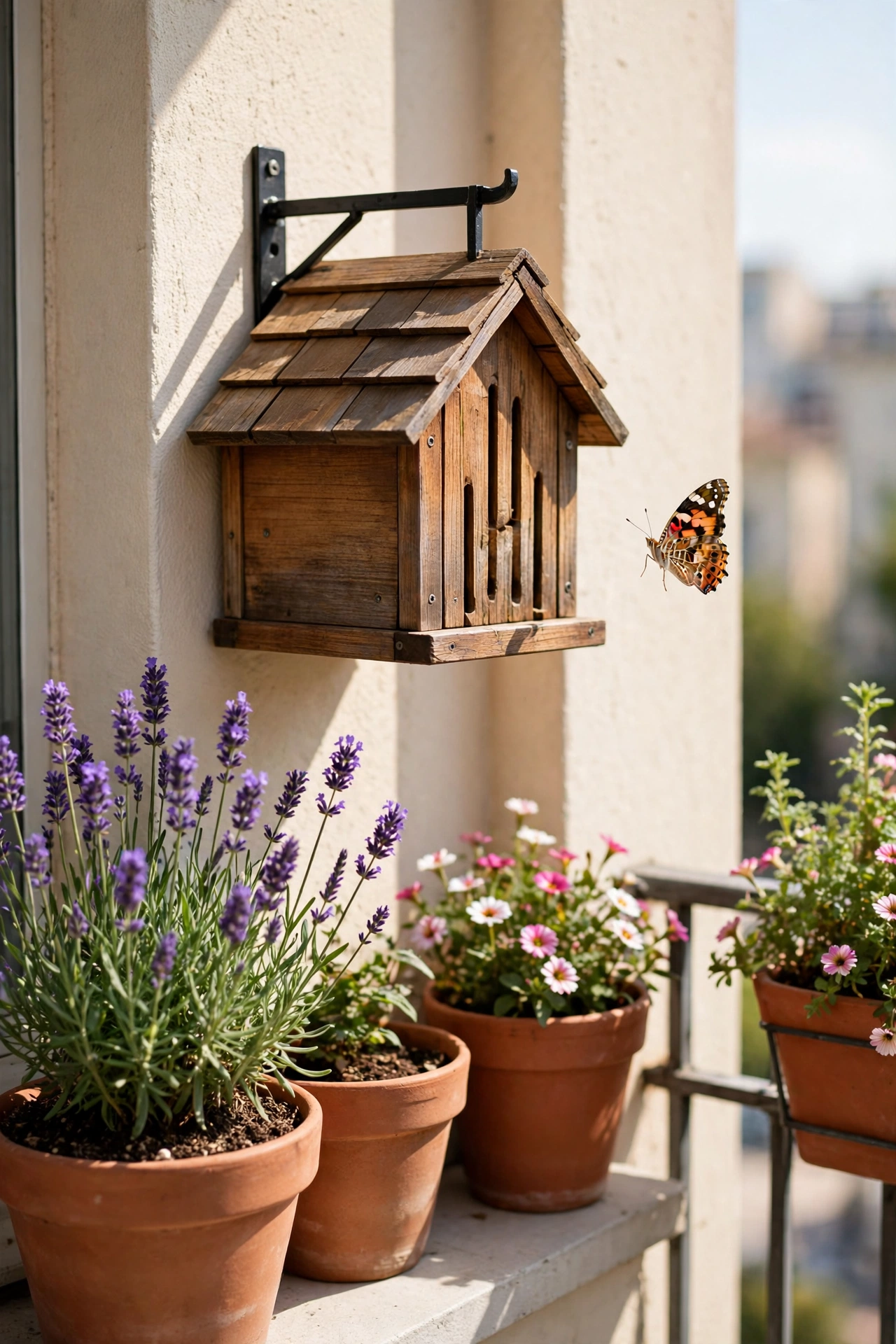
18. Fit a Compact Butterfly House on a Balcony
A compact butterfly house brings wildlife shelter to a balcony or small patio, where butterflies still visit potted flowers and herbs. The house is smaller than a garden model, with one chamber and two or three entry slots, and it hangs from a wall bracket or a railing hook without using any floor space.
Place the house where it gets morning sun and shelter from wind, such as against the balcony wall beside a pot of lavender or buddleia. Even a high balcony can host butterflies, since many species fly at rooftop height during migration. A small house on a balcony is a gentle way to start supporting wildlife in a city home.
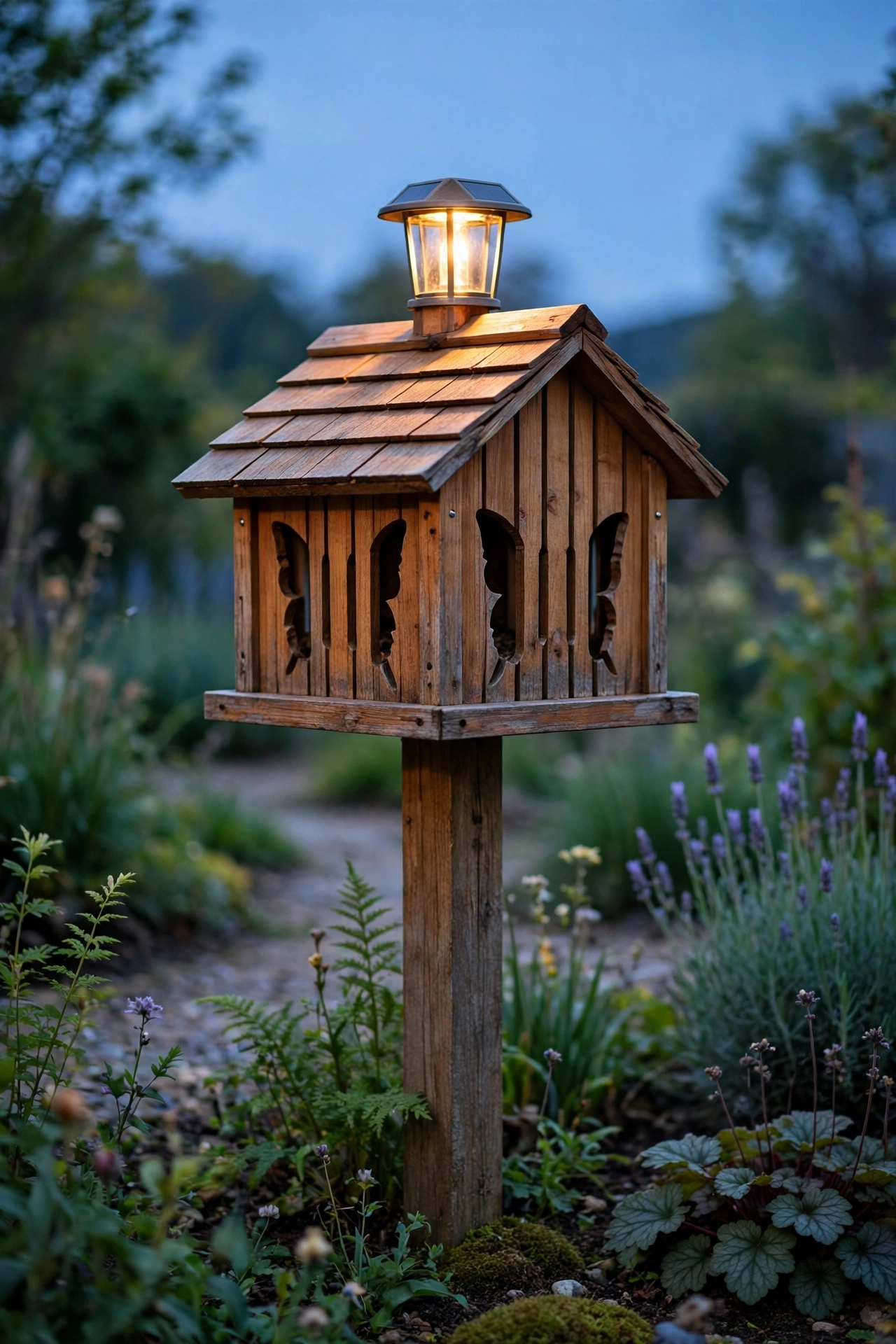
19. Crown a Butterfly House With a Solar Lantern
A small solar lantern on top of a butterfly house marks the shelter at dusk and adds a warm glow to the evening garden. The lantern charges during the day and lights automatically at night, so the house becomes a soft garden feature long after the butterflies have settled inside. Choose a lantern with a warm light rather than a bright white one.
Fix the lantern to the roof peak with exterior adhesive or a small bracket, and keep the light low and shielded so it does not shine into the entry slots. Butterflies rest in darkness, so the glow should fall on the roof and the garden around the house, not inside it. A lantern topped house looks lovely beside a garden path.
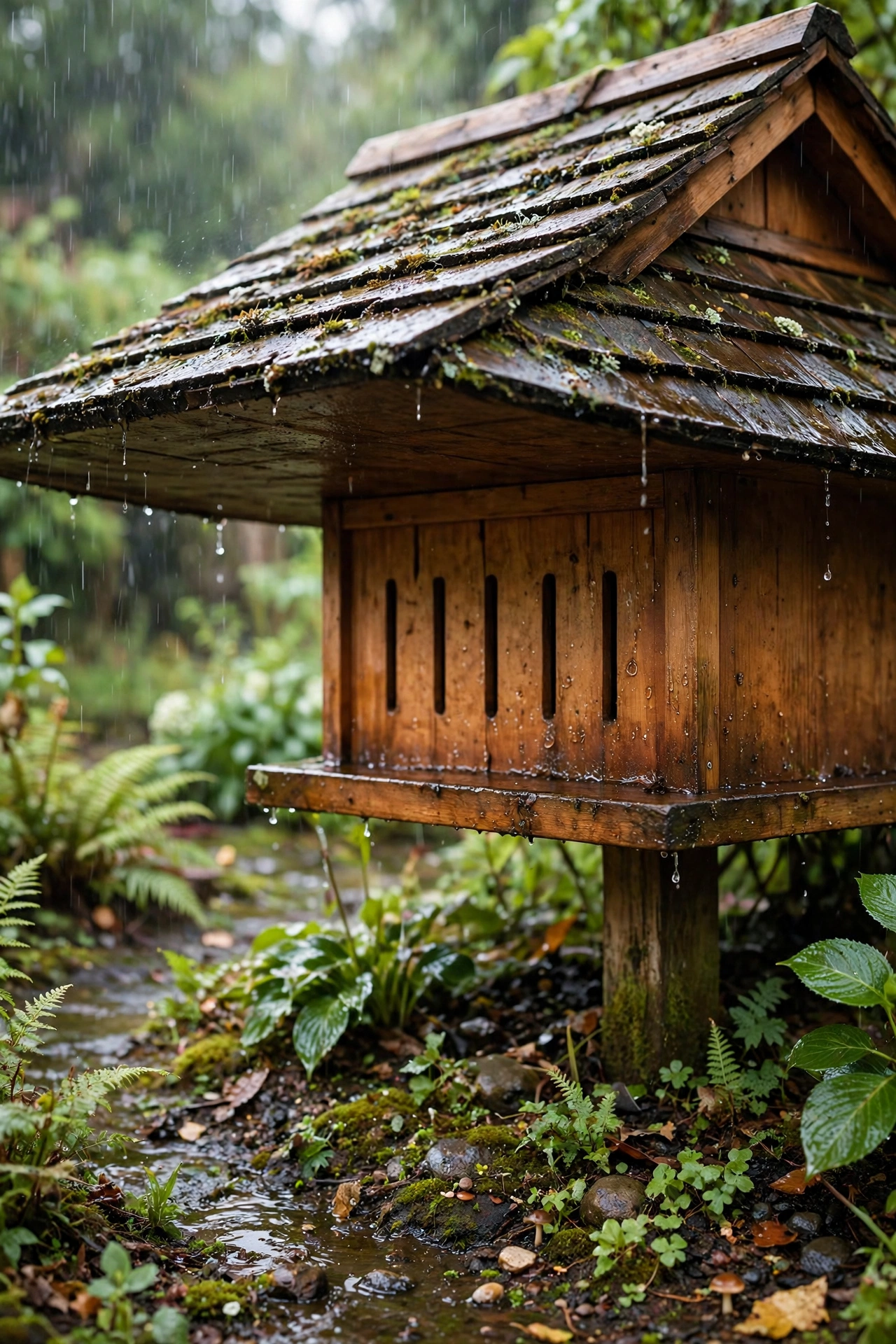
20. Give a Butterfly House a Deep Rain Guard Roof Overhang
A deep roof overhang acts as a rain guard that keeps the entry slots dry in driving rain. The roof extends several inches past the front panel, so water drips clear of the house instead of running down the front. This simple design detail makes the biggest difference in wet climates, where a soaked interior can stay damp for days.
Build or choose a house with at least a three inch overhang on the front and sides, and tilt the roof slightly forward so water runs off the front edge. Add a thin drip strip along the front edge to stop water from curling back under the roof. In dry climates the same overhang provides shade that keeps the interior cool at midday.
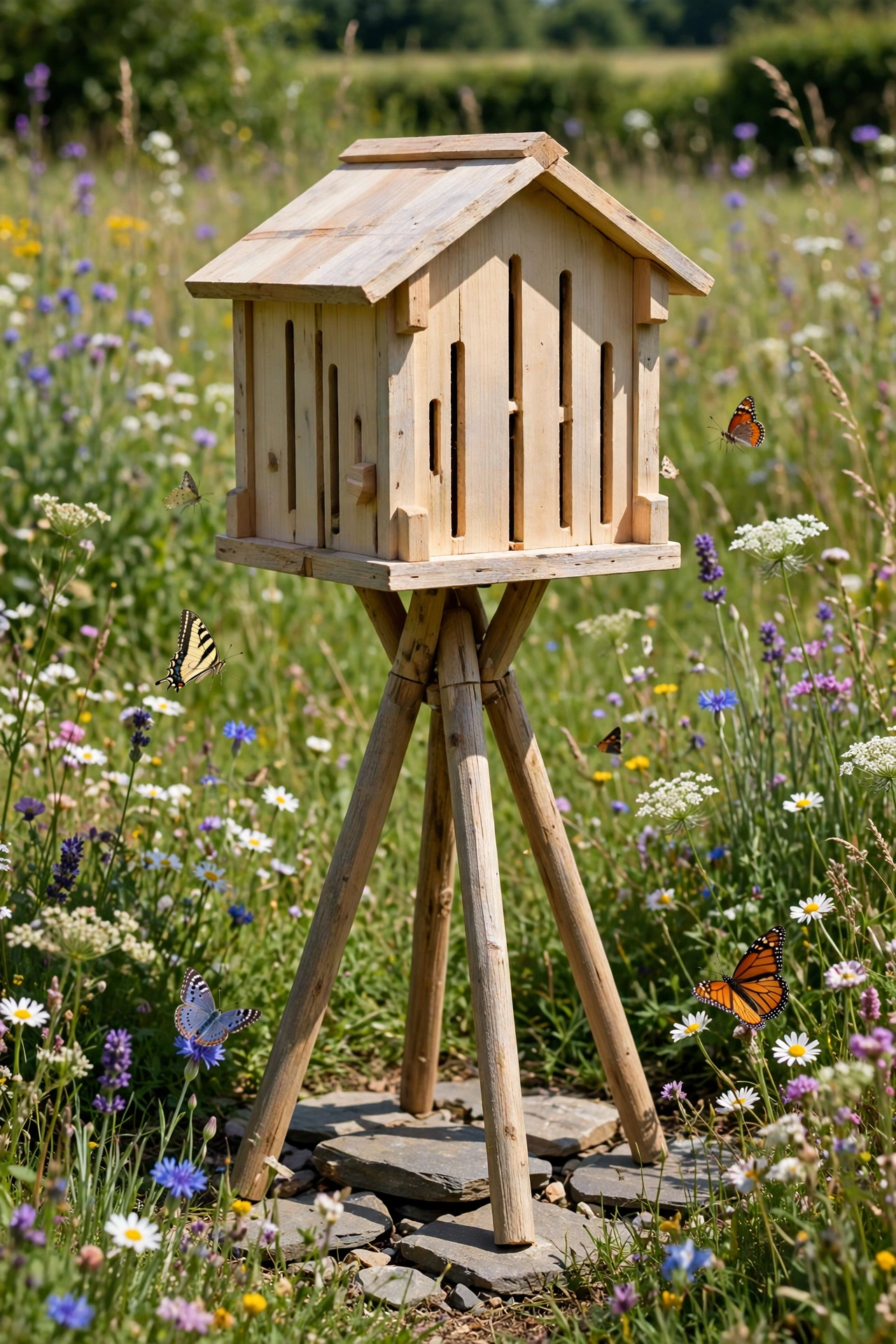
21. Raise a Butterfly House on a Tripod Stand
A tripod stand lifts a butterfly house above the garden on three angled legs, which makes the shelter stable on uneven ground. The tripod design suits sloped gardens and wildflower meadows, where a single post would lean or sink. The open legs also let air flow under the house, which keeps the floor dry.
Set the tripod feet on flat stones and check the level with a small spirit level before you fix the house in place. A tripod stand is easy to move, so you can shift the house to follow the sun through the seasons or move it to a sheltered spot before a storm. The rustic look suits natural gardens and meadow edges.
22. Build a Butterfly House From a Reclaimed Wooden Crate
A reclaimed wooden crate makes a charming butterfly house with almost no building work. The crate already has slatted sides and a solid base, so you only need to add a roof, a front panel with entry slots, and a few strips of bark inside for butterflies to grip. Old fruit crates and wine crates work beautifully.
Sand the crate smooth and check for staples or sharp nails before you add the front panel, since rough edges can tear butterfly wings. Leave the wood unpainted or give it one coat of exterior wood oil for a weathered look. A crate house is a budget friendly weekend project, and it keeps a useful wooden box out of the waste stream. For more ways to reuse garden materials, these backyard greenhouse ideas show how reclaimed wood can shape larger garden structures too.
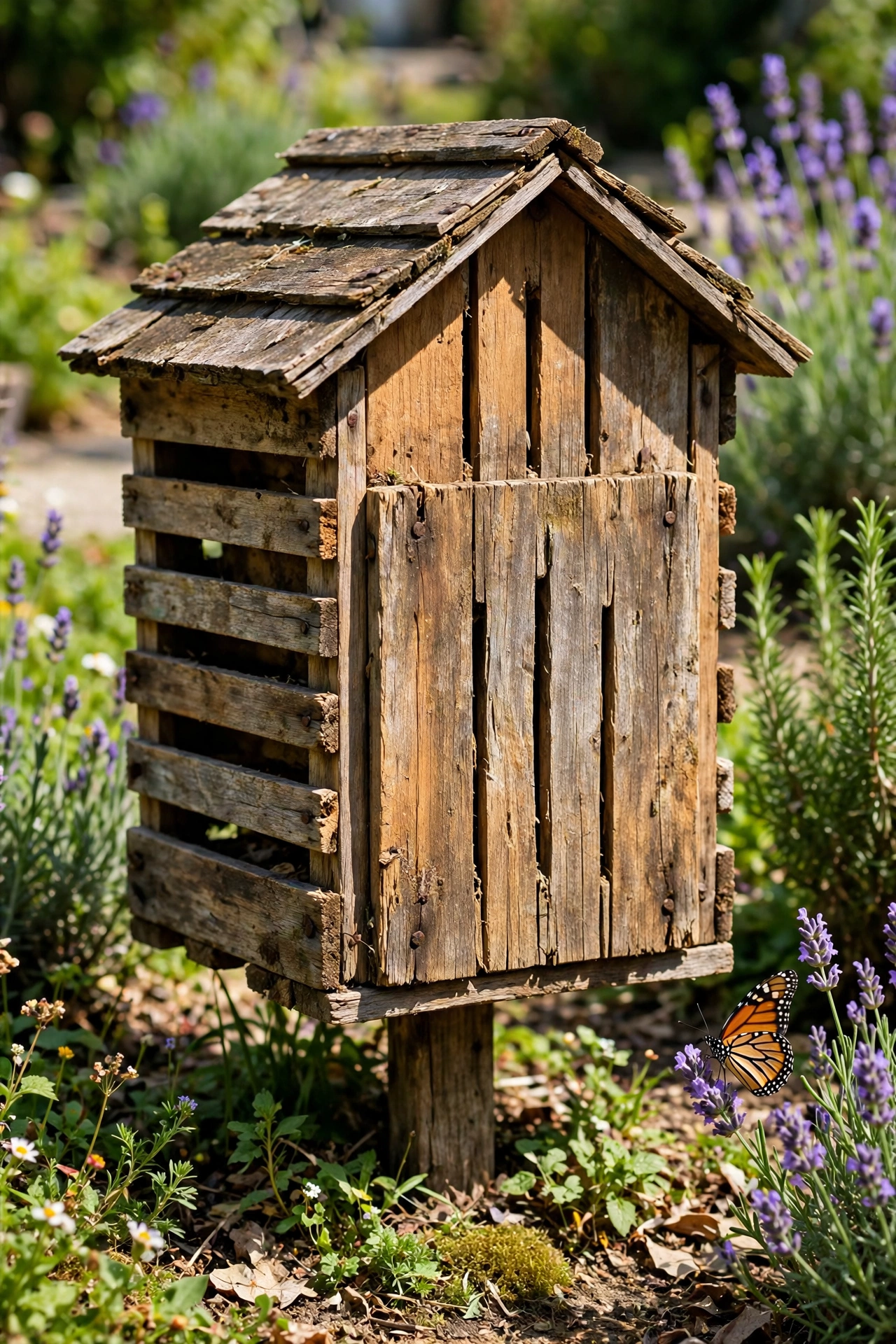
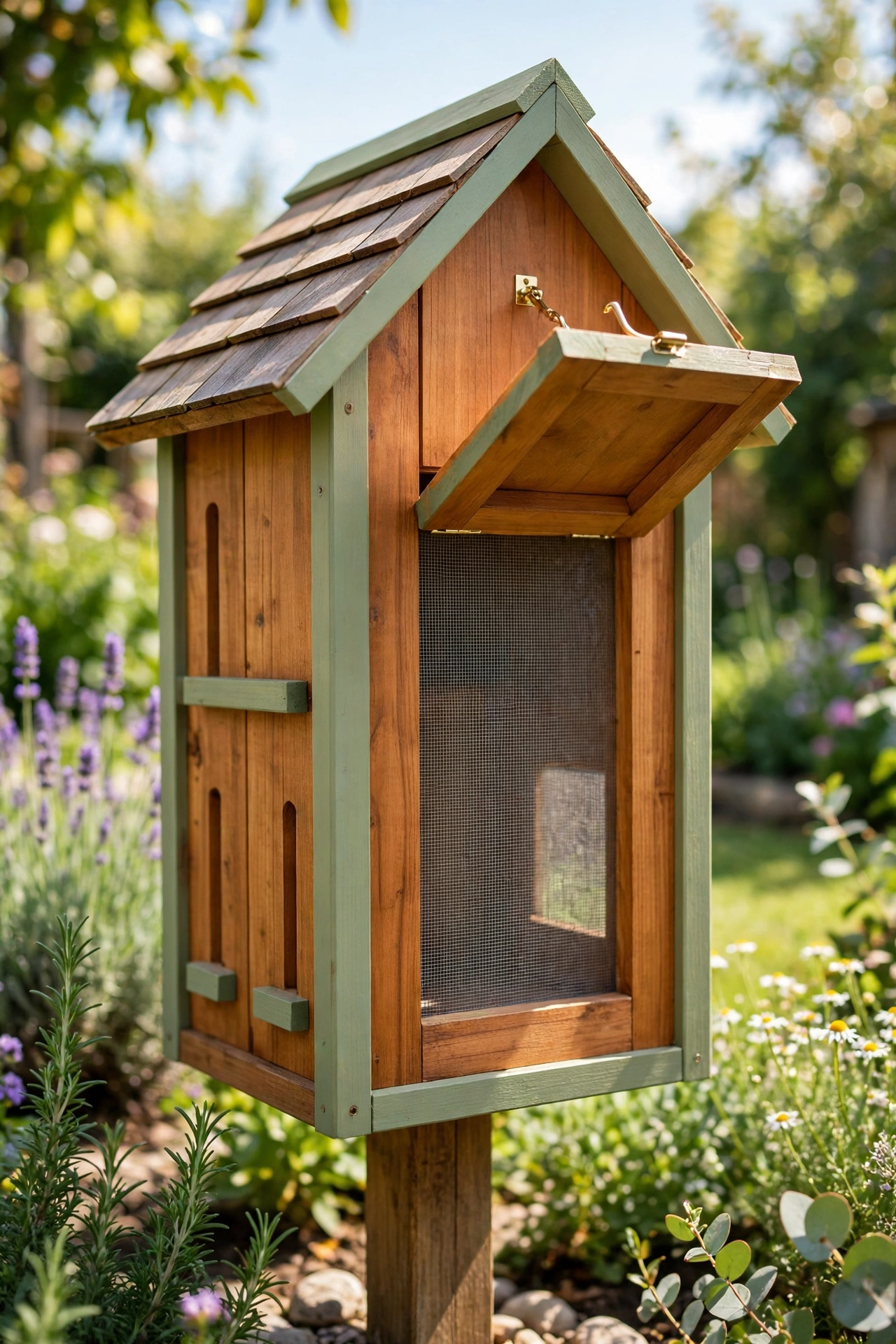
23. Add a Mesh Viewing Window to a Butterfly House
A mesh viewing window on the side of a butterfly house lets you check for visitors without opening the shelter and disturbing them. The window is a small panel of fine insect mesh set into the side wall, covered by a wooden shutter that you lift for a quick look. The mesh also adds ventilation on warm days.
Fix the shutter with a small hinge at the top so it falls closed on its own, and keep it shut most of the time so the interior stays dark and calm. A viewing window is wonderful for children, who can watch a resting butterfly safely without touching the house. Teach young watchers to look quietly and close the shutter gently.
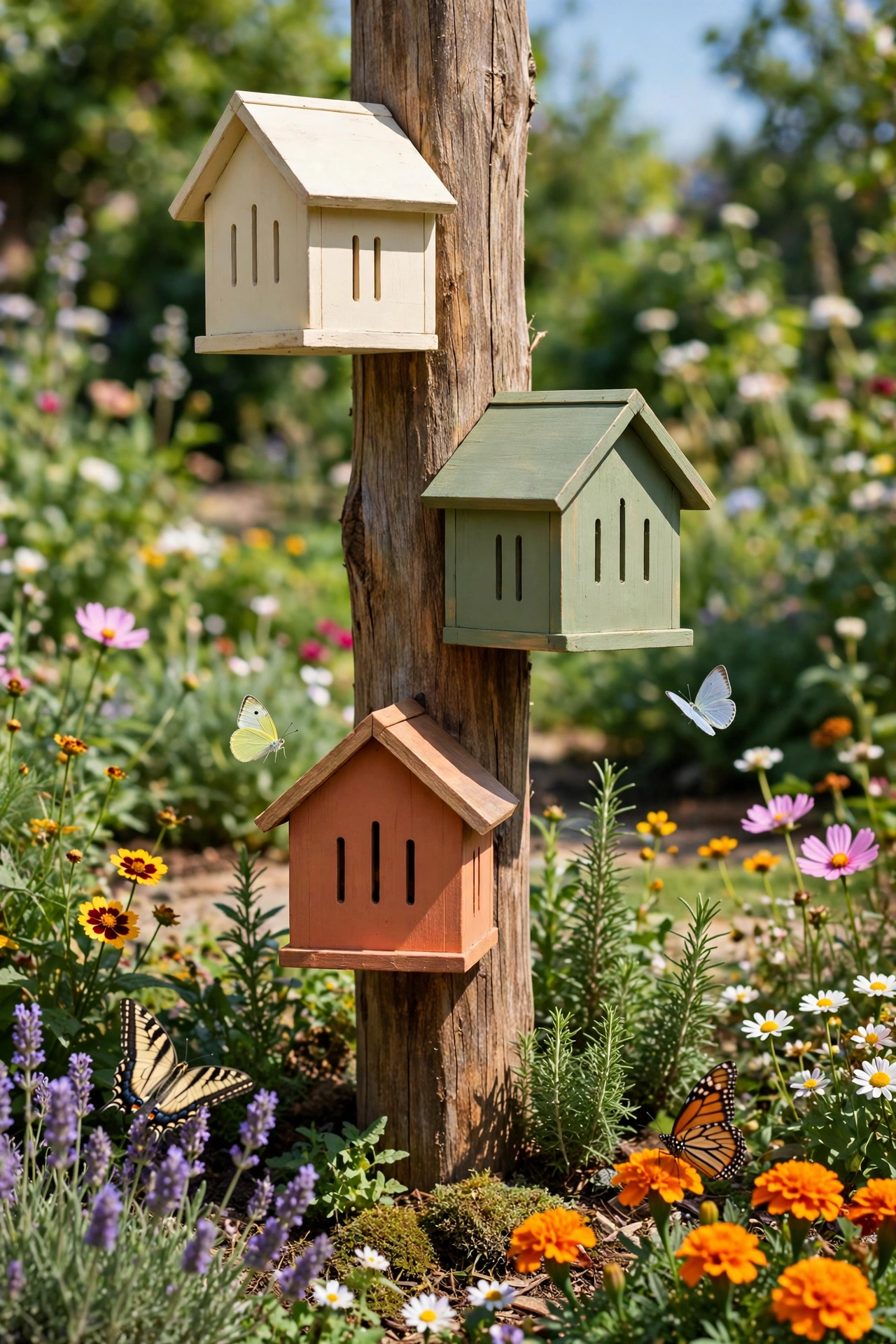
24. Create a Butterfly House Village on a Single Post
A butterfly house village groups three or four small houses at different heights on one sturdy post, like a tiny neighborhood for wildlife. Each house faces a different direction, so butterflies can choose the shelter that suits the wind and sun at any hour. The village makes a delightful focal point in a wildlife garden.
Use a thick post set in concrete so the extra weight stays steady, and stagger the houses so their roofs do not shade each other. Paint the houses in a matching palette of cream, sage, and terracotta so the group looks intentional rather than random. A village also lets you test which direction and height your local butterflies prefer.
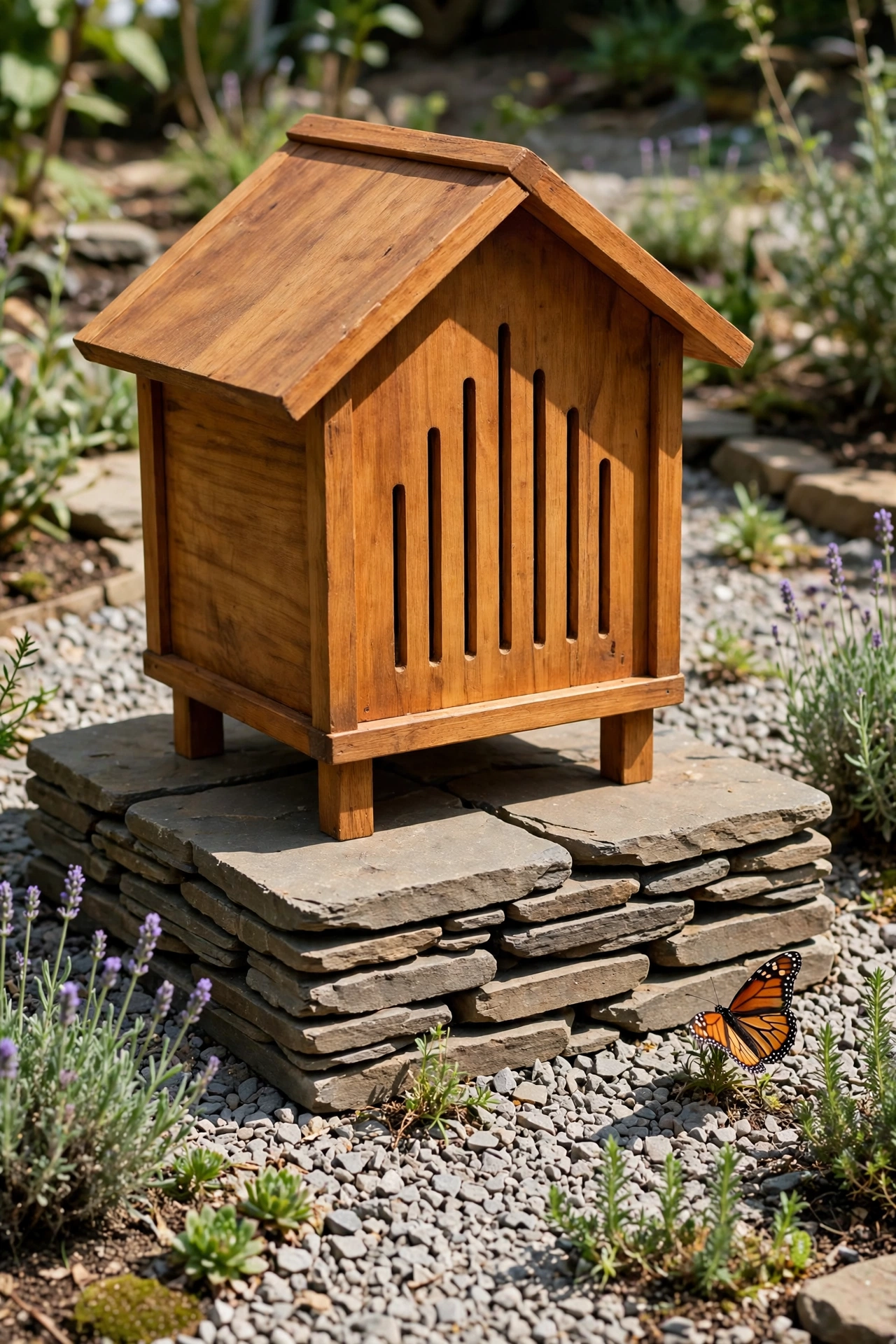
25. Set a Butterfly House on a Raised Stone Base
A raised stone base lifts a butterfly house above damp soil and gives the structure a solid, permanent feel. The base is a low platform of flat stones or a single wide paver, and the house sits on top with its post or legs anchored to the stone. The stone absorbs heat during the day and releases it slowly at dusk.
Level the stones carefully and bed them in sand so the platform does not rock. A stone base also stops the wooden post from rotting at ground level, which extends the life of the whole shelter. In a rock garden or a gravel bed, the stone base helps the house look like part of the landscape rather than an add on.
26. Cut a Butterfly Shaped Entry Into the Front Panel
A butterfly shaped entry cutout turns the front of a butterfly house into a piece of garden art. The cutout is a decorative silhouette of a butterfly, with the actual entry slots hidden in the wings or just below the shape. From a distance the house reads as a charming ornament, and up close it works as a real shelter.
Cut the silhouette with a jigsaw and sand every edge smooth, since rough cuts can damage wings. Keep the decorative cutout small and pair it with proper narrow slots so the house stays safe from predators. A butterfly shaped entry makes the house easy to find in a busy garden and sparks conversation with visitors.
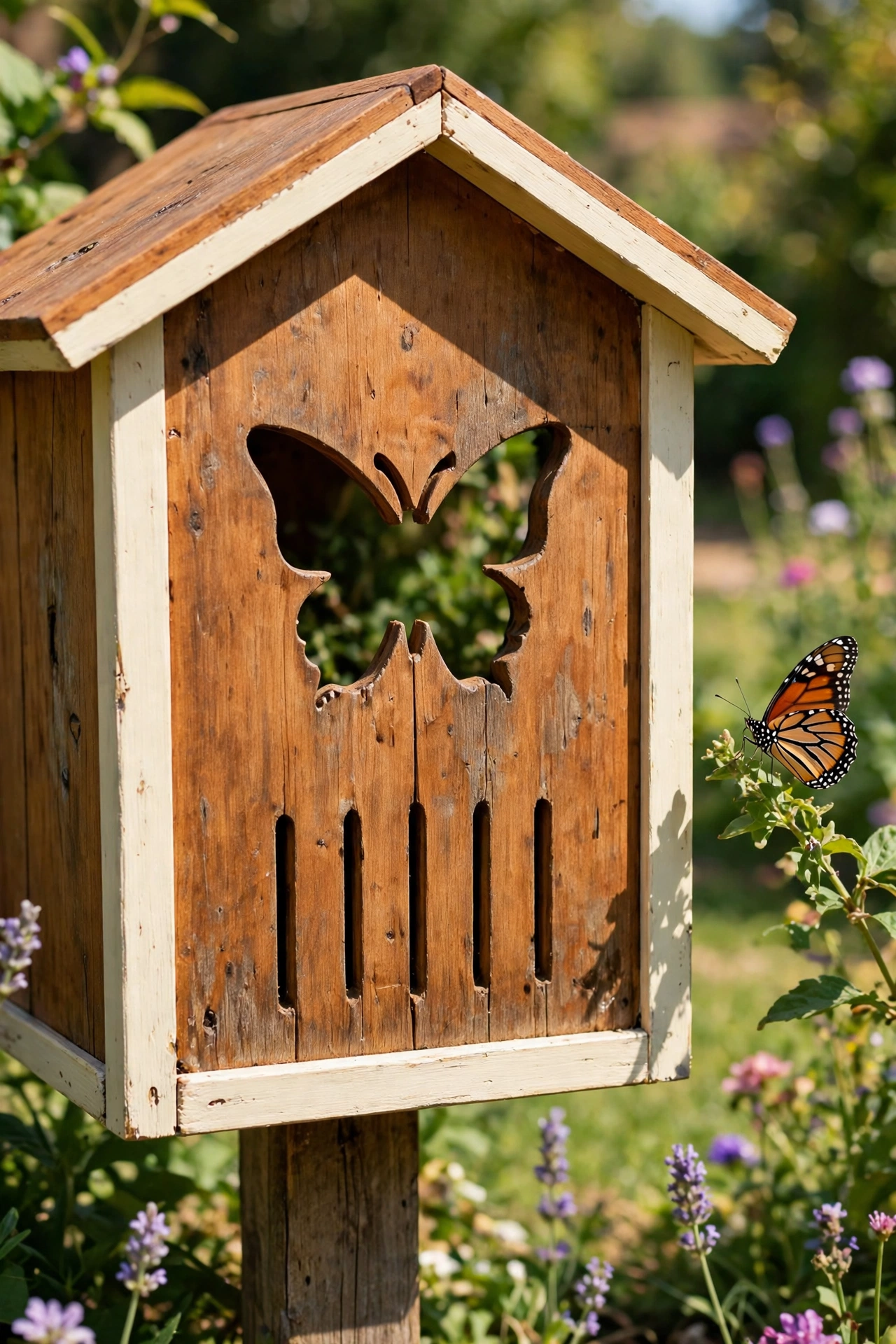
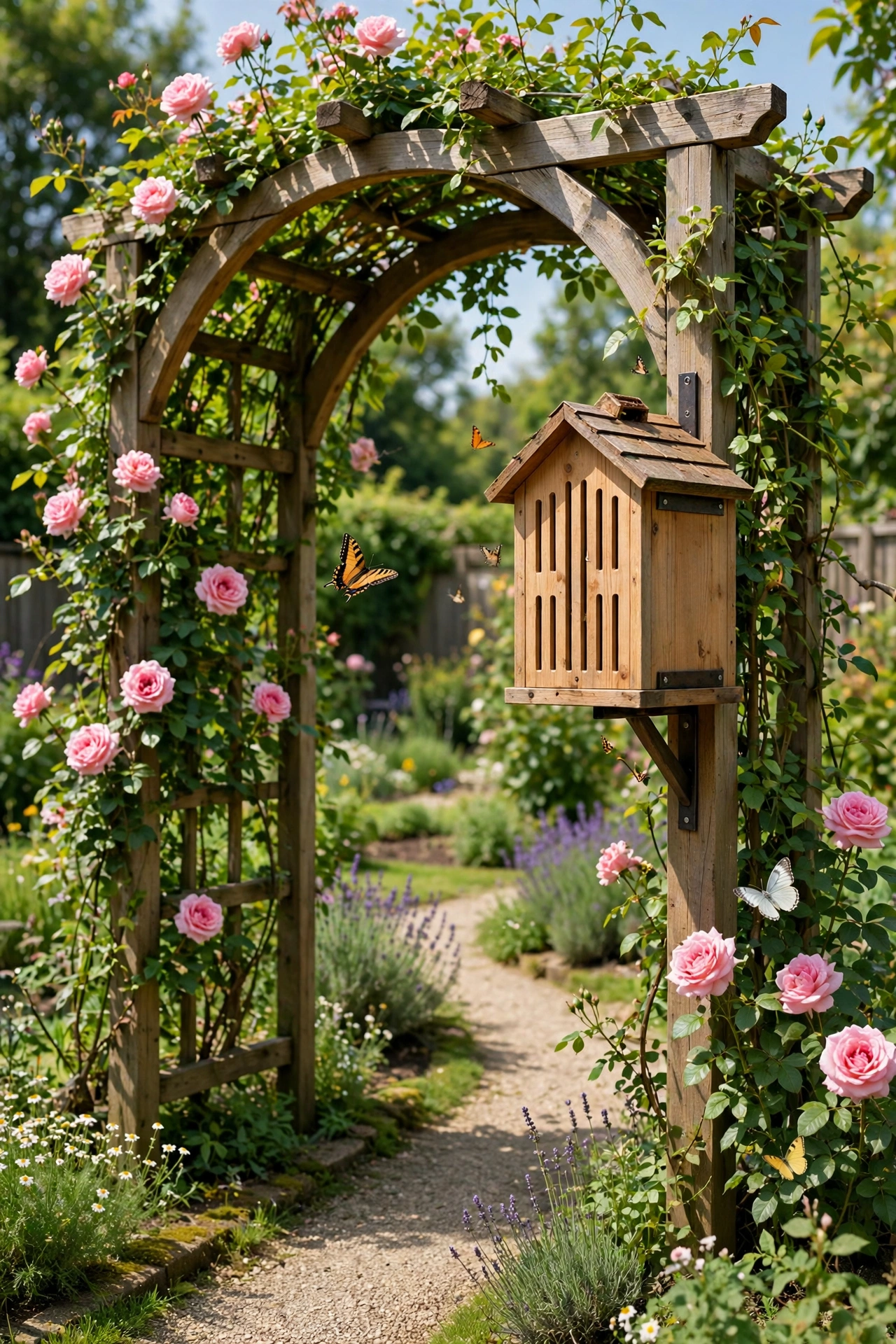
27. Weave a Butterfly House Into a Garden Arch
A butterfly house fixed to the side of a garden arch combines shelter with a vertical garden feature. The arch frames a path or a gate, and the house sits at shoulder height on one upright, where butterflies pass through on their way between flower beds. Climbing plants on the arch give extra shelter from wind.
Fix the house to the upright with sturdy brackets and keep the entry slots facing the path, so you can watch butterflies come and go as you walk through. Choose an arch with a wide enough upright to support the house without wobbling. If you are planning the arch itself, these garden arbor ideas will help you choose a style that suits the house and the garden.
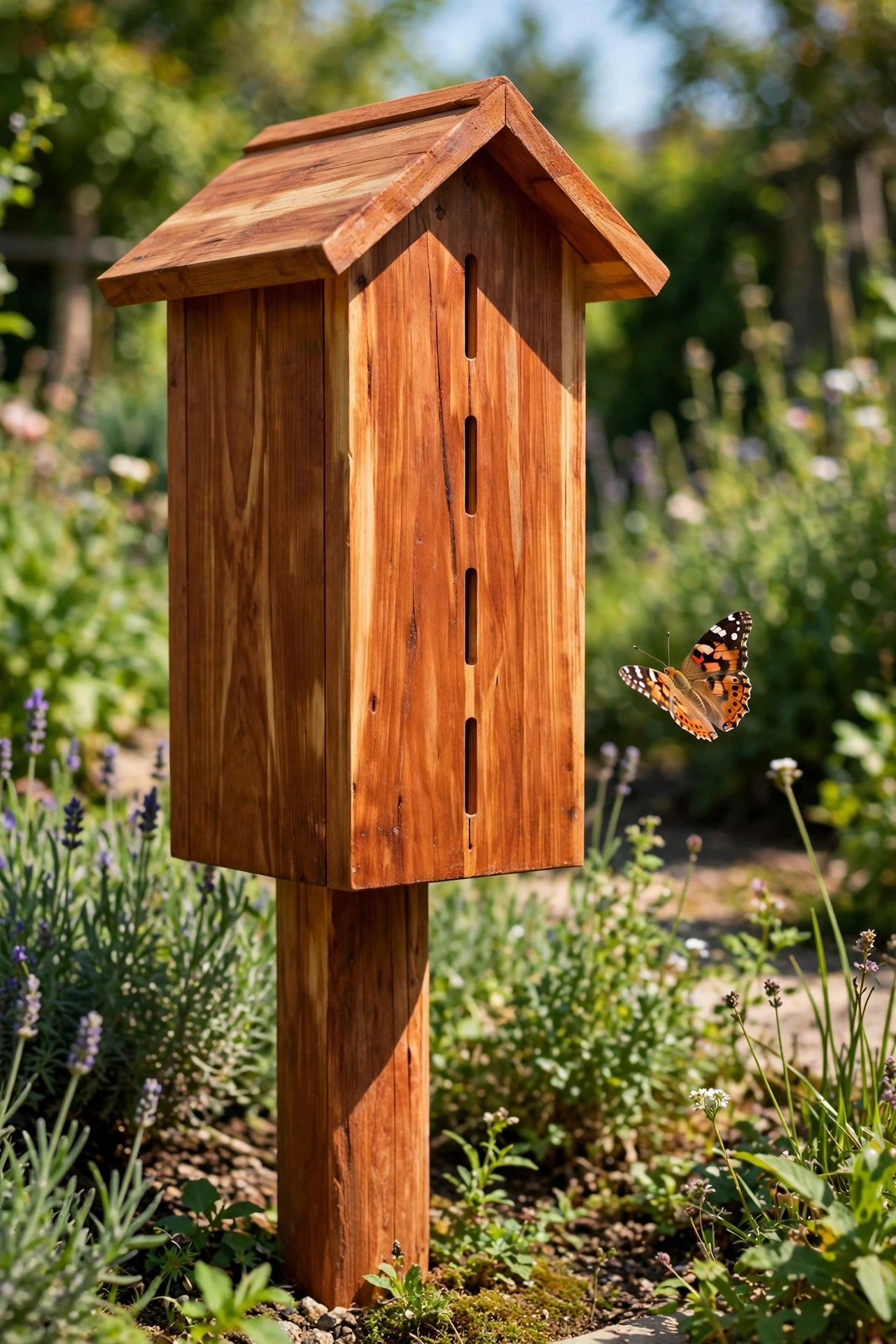
28. Choose a Natural Cedar Butterfly House With a Weatherproof Finish
Cedar is the best wood for a butterfly house because it resists rot and insects naturally, without chemical treatment. A natural cedar house with a simple weatherproof oil finish can last for many years outdoors, and the warm reddish tone of the wood looks beautiful in every garden style. Cedar also smells pleasant and mild.
Apply one coat of exterior wood oil each spring to keep the cedar from drying out and cracking. Leave the interior unfinished so butterflies grip bare wood, and let the outside weather naturally if you prefer a silvered look. A cedar house costs a little more at the start, but it needs far less repair over its life.
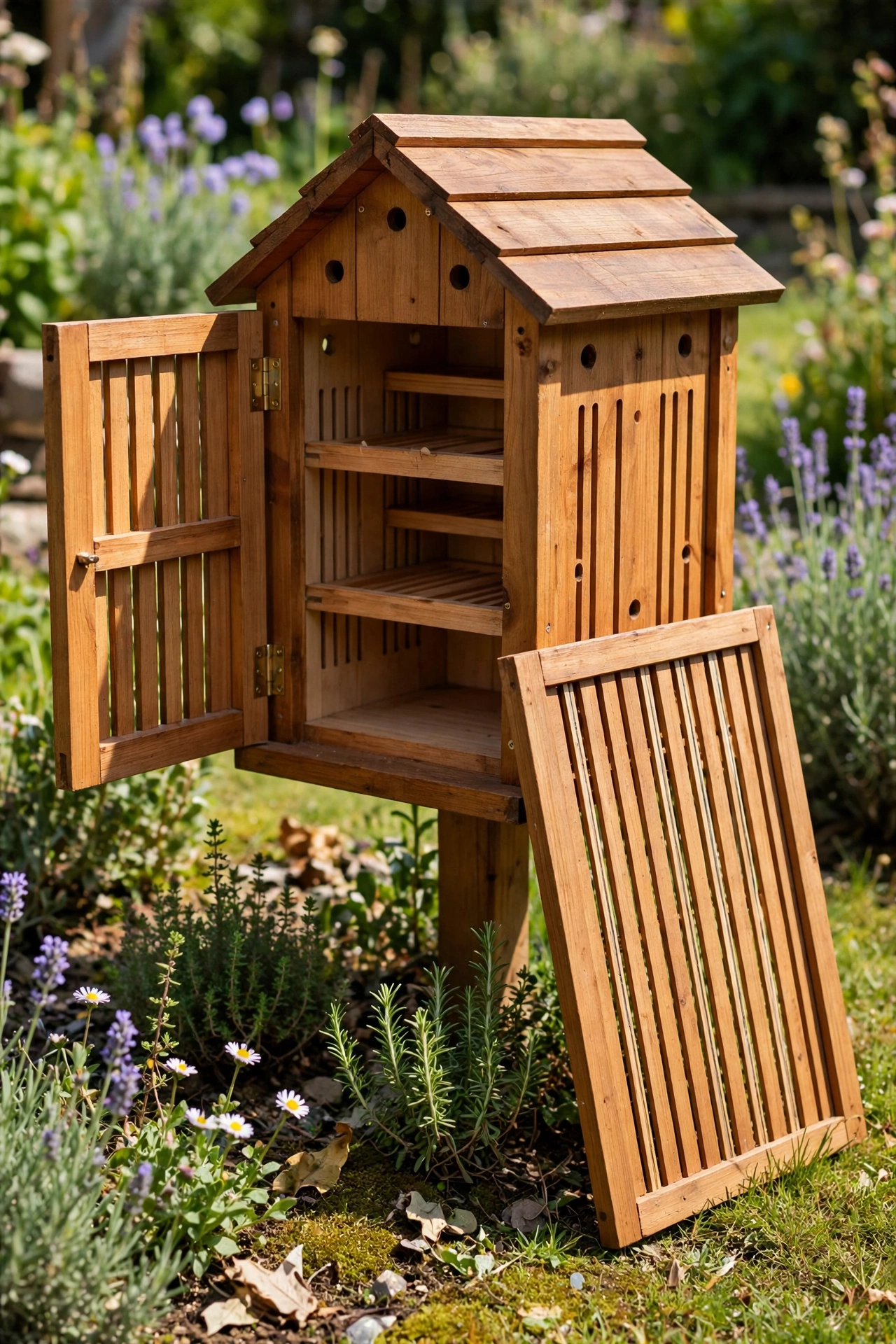
29. Fit a Butterfly House With a Removable Winter Insert
A removable winter insert is a slatted wooden panel that slides into the butterfly house in autumn and comes out in spring. The insert divides the interior into narrow crevices where hibernating butterflies can tuck themselves away from frost, and it lifts out easily for cleaning when the cold season ends.
Make the insert from thin strips of rough wood spaced half an inch apart, fixed to a small frame that matches the interior width. Slide it in during late autumn when the last butterflies have settled, and remove it in early spring before the new season starts. Label the insert with the year so you can track how many winters it has served.
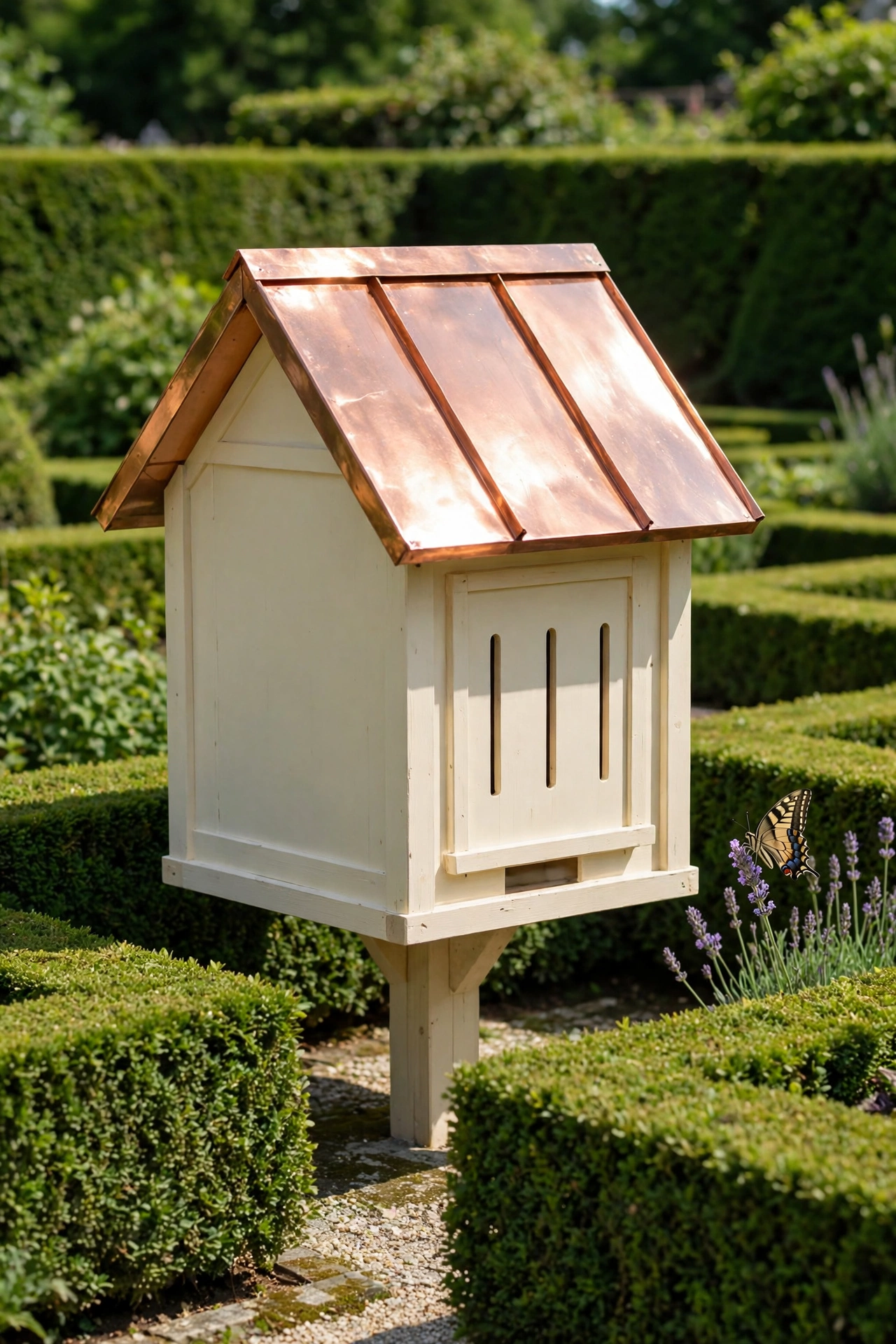
30. Top a Butterfly House With a Copper Roof
A copper roof gives a butterfly house a jewel like finish that ages into a soft green patina over time. Copper sheds rain perfectly, never rots, and needs no paint or sealant, so the roof outlasts the wooden walls beneath it. The warm metallic shine looks striking against green foliage and cream painted walls.
Use thin copper sheet cut to size and folded over the roof edges, fixed with copper nails so no rust stains appear. The patina develops slowly, and you can leave it natural or polish it once a year if you prefer the bright shine. A copper roofed house makes a beautiful centerpiece in a formal garden or a courtyard.
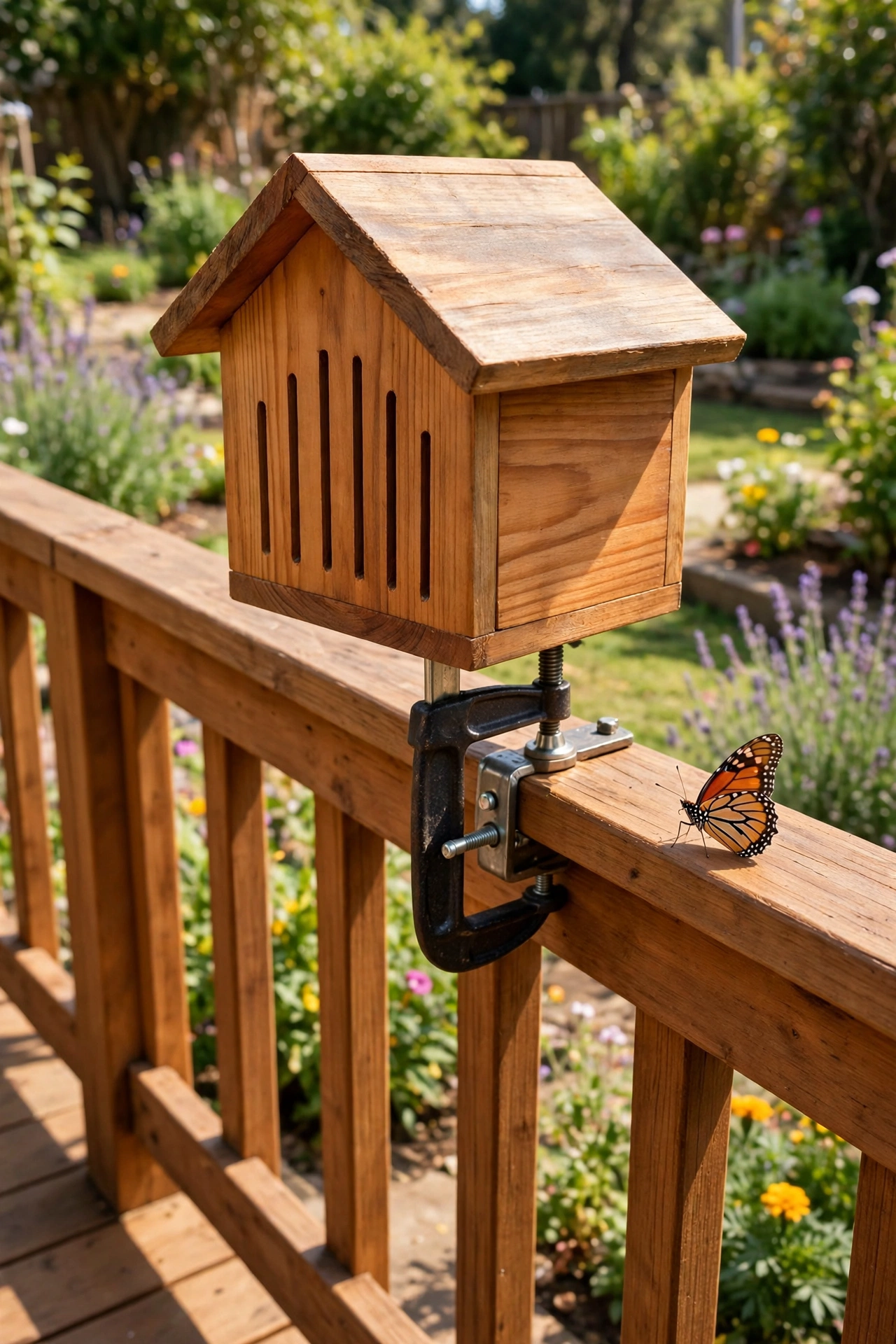
31. Mount a Butterfly House on a Deck Railing
A deck railing mount places a butterfly house right where you relax outdoors, so you can watch butterflies from your chair. The house clamps or screws to the top rail of a deck, with the entry slots facing the garden, and it needs no post or ground space at all. The deck boards below make a clean, dry base.
Choose a railing section that gets morning sun and is away from the grill and high traffic areas, so butterflies feel safe approaching the house. Check the clamp or screws each spring, since deck wood expands and contracts with the seasons. A railing mounted house is the easiest butterfly shelter to install, and it brings wildlife within arm’s reach of everyday life.
Conclusion
A butterfly house is a small structure with a large effect. It gives butterflies a dry place to rest, a safe place to hide from predators, and a warm place to wait out cold nights, all while adding charm and purpose to your garden. The best house is the one that suits your space, your climate, and the butterflies that already visit you.
Start with one well placed house, keep it clean and dry, and watch which butterflies move in through the seasons. You can always add a second house, a feeding station, or a village on a post as your confidence grows. For the planting that makes the whole garden welcoming, these native plant garden ideas will help you build a landscape that feeds and shelters wildlife all year.
Frequently Asked Questions About Butterfly House Ideas for Wildlife Friendly Gardens
Do butterflies actually use butterfly houses?
Some butterflies do use houses for overnight roosting and winter shelter, especially species that hibernate as adults. Butterflies use houses more often when the shelter sits in a sunny, wind protected spot near nectar flowers, and when the interior stays dry and undisturbed. Even if butterflies visit only now and then, the house still supports other gentle garden wildlife.
Where is the best place to put a butterfly house?
Place the house in a sunny spot sheltered from strong wind, with the entry slots facing south or east so the morning sun warms the interior. Mount it four to six feet above the ground on a post, fence, tree, or wall, and keep it near nectar flowers but away from bird feeders and heavy foot traffic.
What should I put inside a butterfly house?
Leave the interior mostly empty with rough interior walls or a few strips of bark for butterflies to grip. Do not add food, water, bedding, or paint inside the house, since butterflies need only a dry, dark, and quiet shelter. A removable winter insert with narrow crevices helps hibernating species during cold months.
How do I keep wasps out of a butterfly house?
Use narrow entry slots about half an inch wide, which let butterflies in while keeping out most wasps and birds. Check the house in early spring and remove any small wasp nests before butterflies arrive, and keep the house away from wasp attractants like open compost and fallen fruit.
How often should I clean a butterfly house?
Clean the house twice a year, once in early spring before butterflies arrive and once in autumn after the season ends. Sweep out leaves and debris, check for mold or damage, and never use soap or chemicals inside. A hinged clean-out door makes the job quick and easy.

Hi, I’m Emily! I turn messy corners into cozy, organized spots. DreamNestDecor is where I share simple, practical home ideas — decor, organization, and small-space solutions that work in real life, not just in photos. Every idea here is carefully researched before it’s shared.