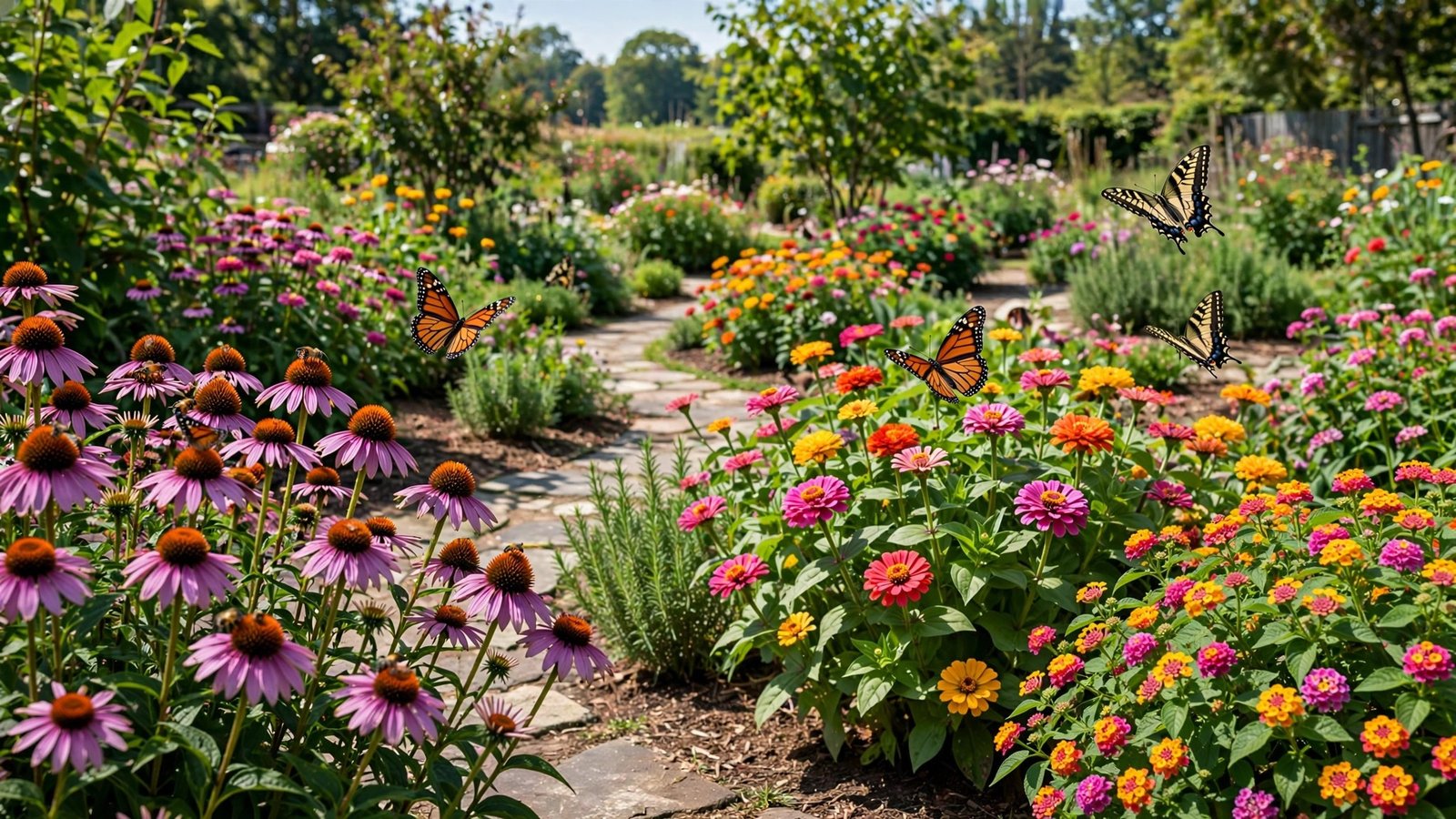
Watching butterflies drift through your garden is pure magic, but they do not visit by accident. These delicate pollinators need more than pretty flowers: they want sunshine, shelter, water, and the right plants blooming from spring through fall. Give them what they need and your yard becomes their favorite stop.
Creating a butterfly garden is one of the most rewarding projects a gardener can take on. Every bloom you plant feeds not just butterflies but bees, hummingbirds, and the whole web of backyard life. These 16 butterfly garden ideas will help you build a pollinator paradise that bursts with wings and color.
1. Butterfly-Shaped Flower Beds
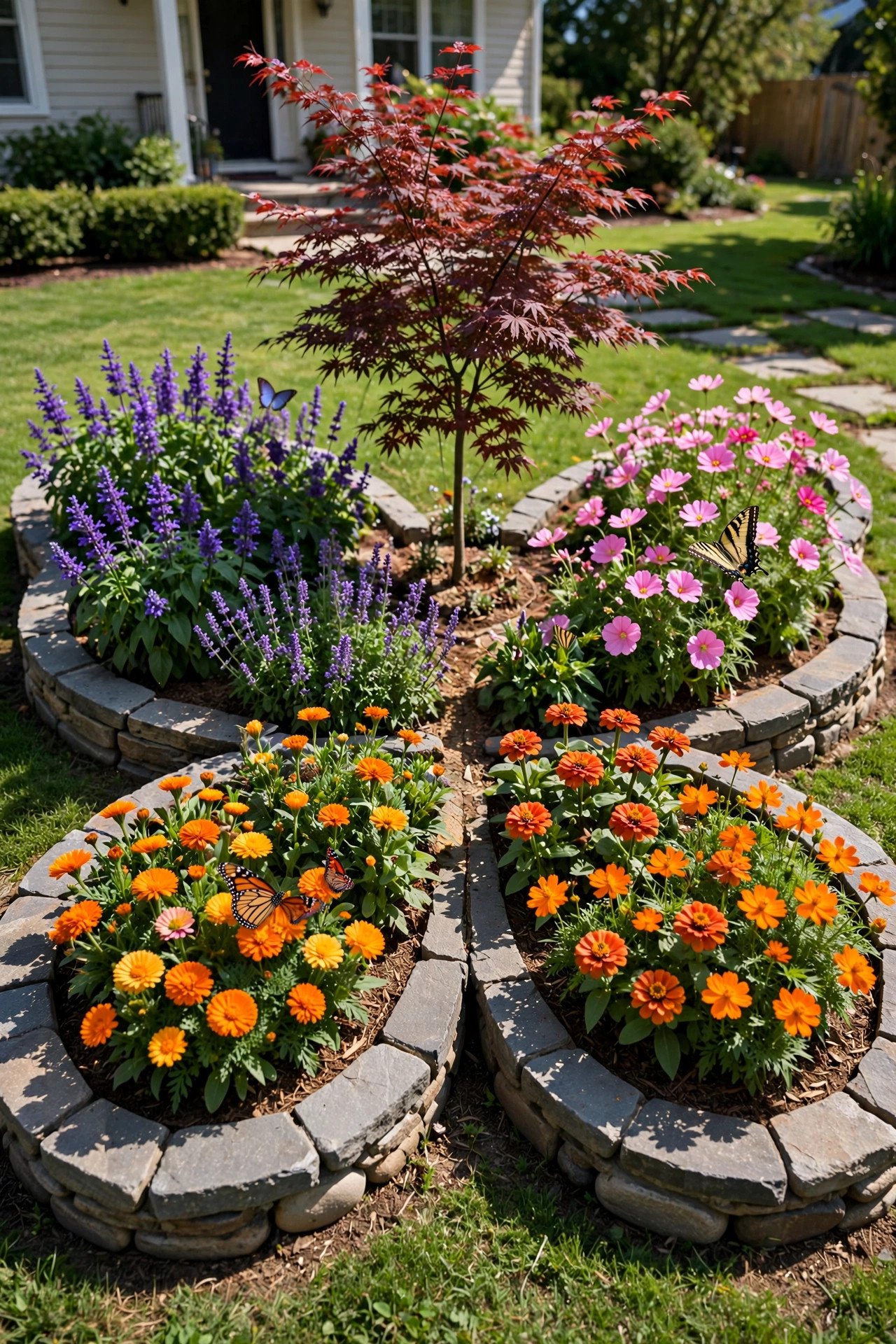
Shaping a flower bed like a butterfly creates a playful centerpiece that celebrates your garden’s purpose. Use curving stone edging to form the wings, plant each section with nectar-rich flowers, and add a small ornamental tree in the center for height. The design delights from every viewing angle.
This eye-catching layout works beautifully in front yards and open garden spaces. A pebble pathway leading to the bed completes the polished look. It is garden art with a mission: every petal feeds a visitor.
2. Quiet Garden Seating Retreat
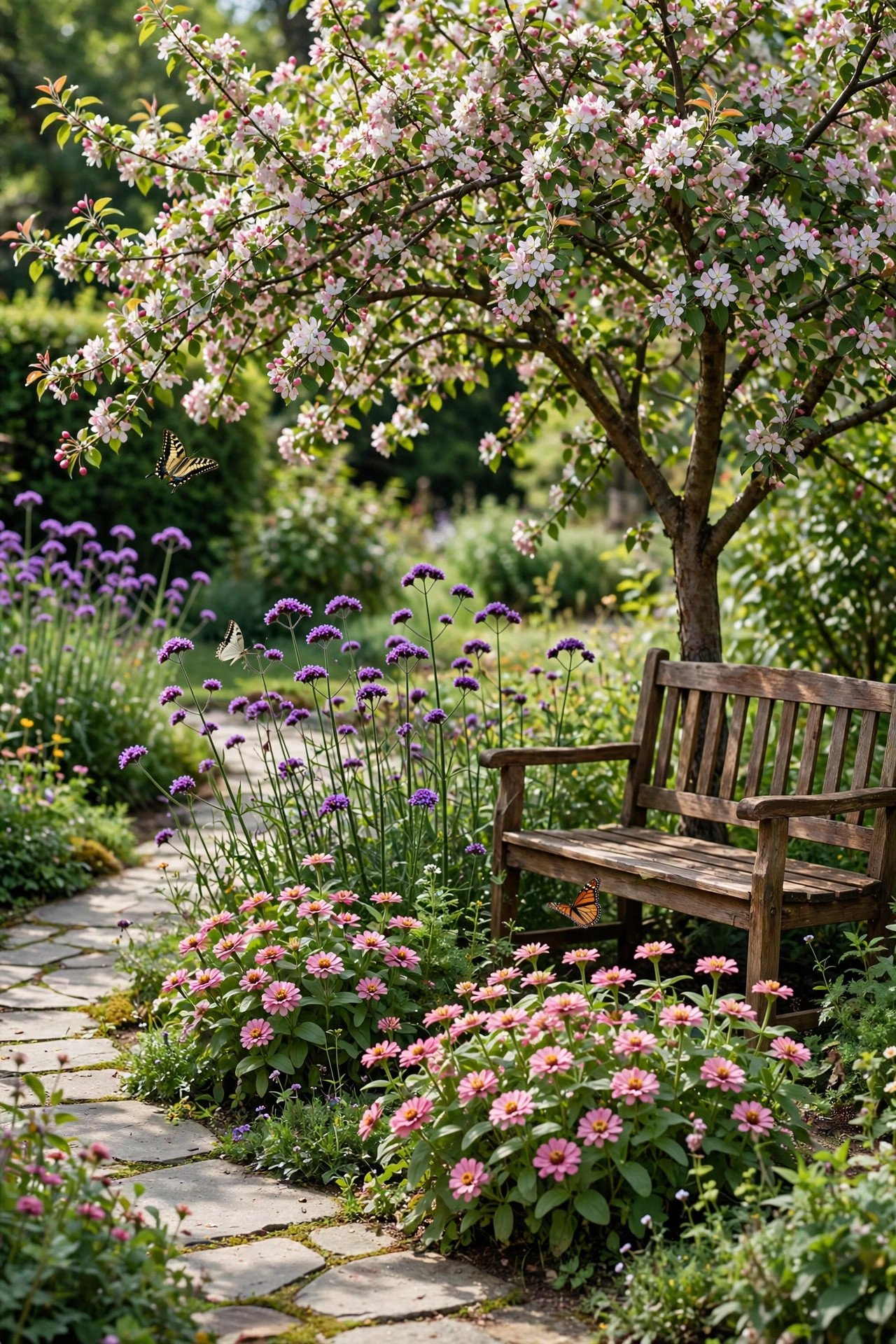
A comfortable bench surrounded by layered blooms lets you watch butterflies up close without disturbing them. Place the seat beneath a small flowering tree, ring it with tall nectar plants behind shorter flowers, and let a curving path lead the way in. The layered planting feeds butterflies at every height.
This peaceful nook becomes your front-row seat to nature’s show. The intimate scale and thoughtful planting echo the charm of romantic garden styling ideas, where every corner invites you to slow down. Bring a book and stay awhile.
3. Flower-Lined Blooming Pathway
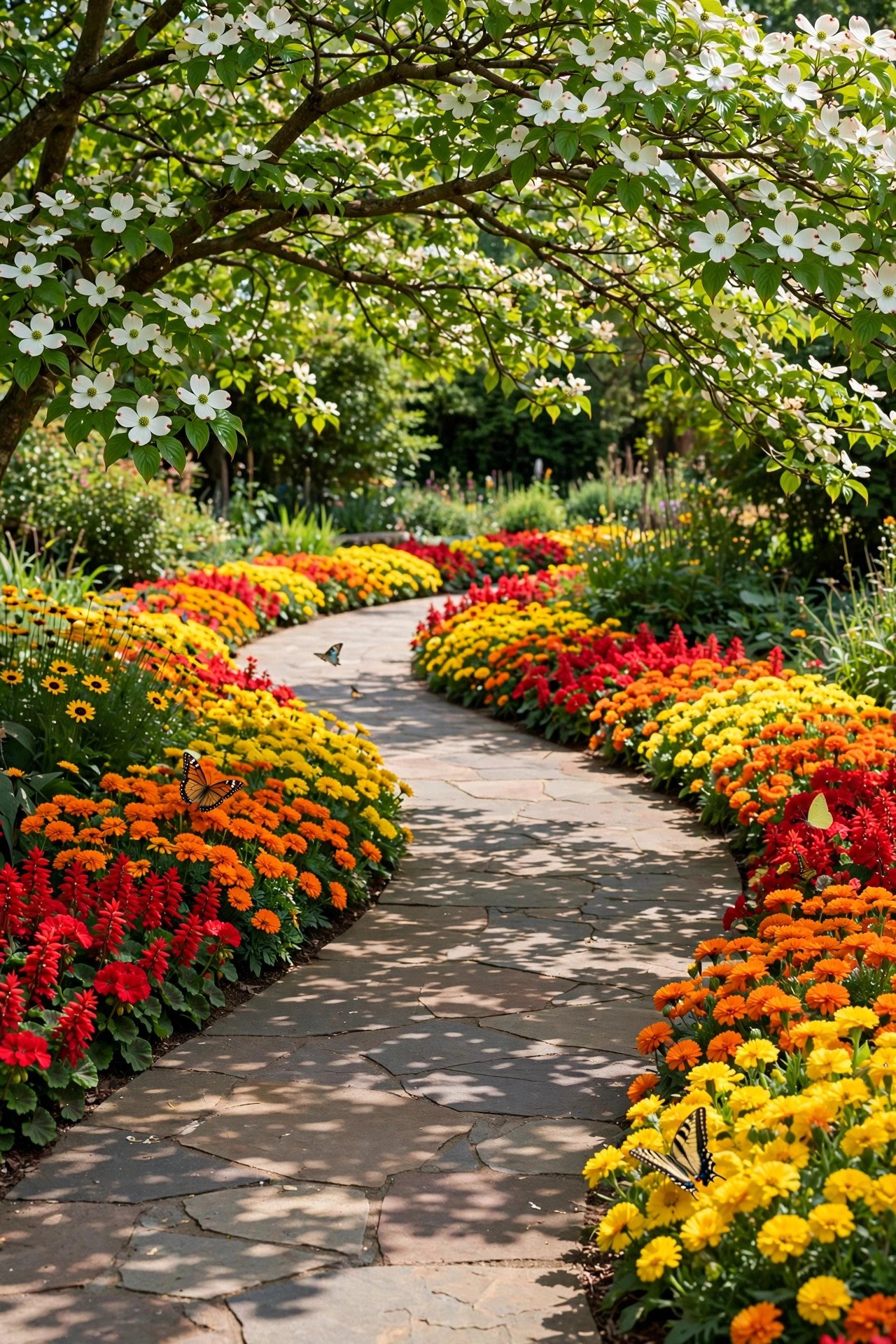
A path edged with continuous blooms turns every walk into a butterfly safari. Plant broad sweeps of bright flowers along both sides, repeating colors for bold impact. Mix early, mid, and late-season bloomers so something is always feeding visitors.
Curved paths work best, naturally guiding guests past each planting bed. Line the route with natural stone and add a flowering tree overhead for dappled shade. The journey becomes just as delightful as the destination.
4. Tree Base Flower Sanctuary
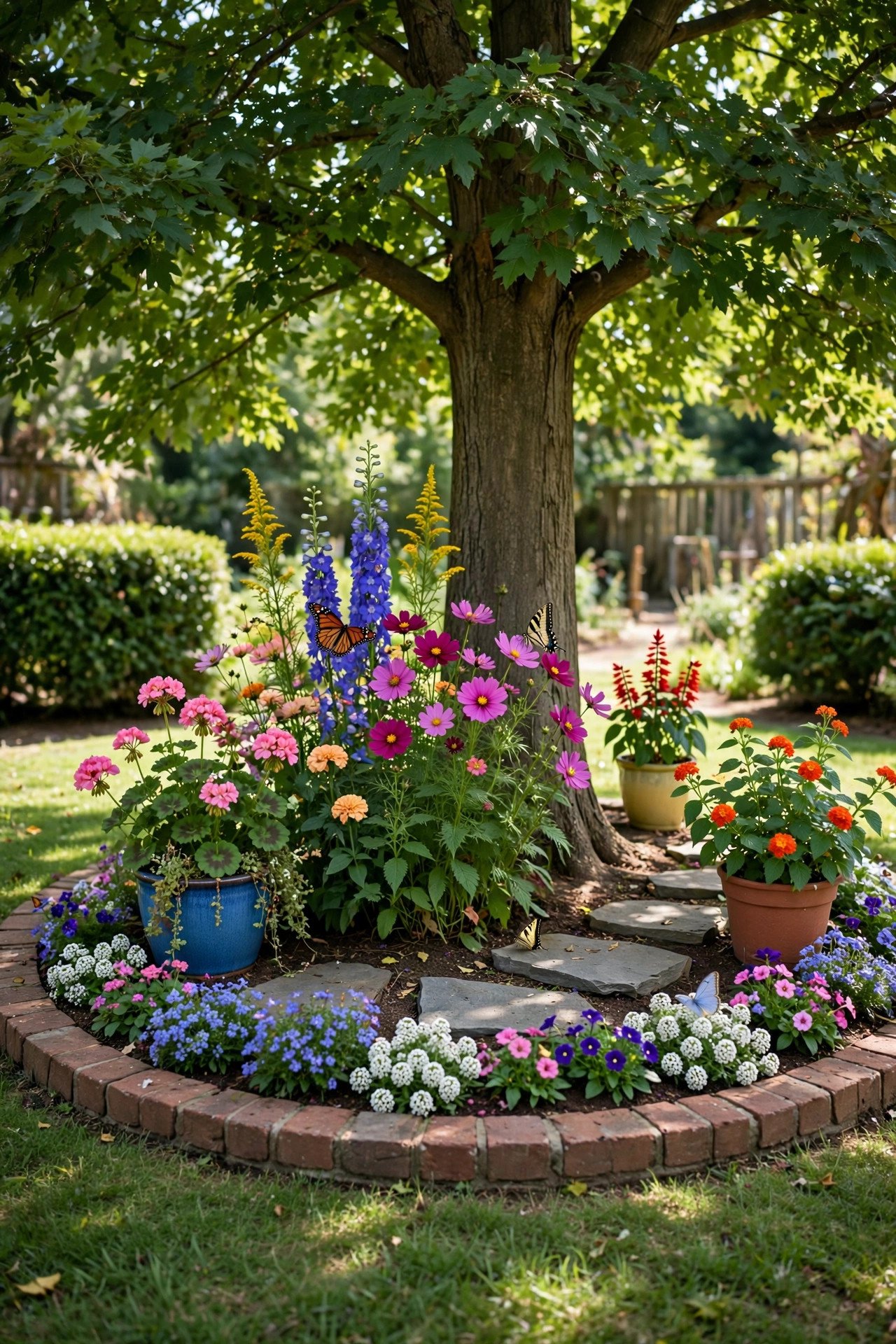
The ground beneath a mature tree becomes a cool sanctuary when planted with layered blooms. Build a circular bed with brick edging, arrange taller flowers near the trunk and shorter ones at the edge, and add stepping stones for easy access. Butterflies rest here after feeding in sunnier spots.
This design turns wasted space under trees into a thriving habitat. Bright containers add height and color where roots make digging difficult. It is a shady retreat within the sunny garden.
5. Evening Garden Escape
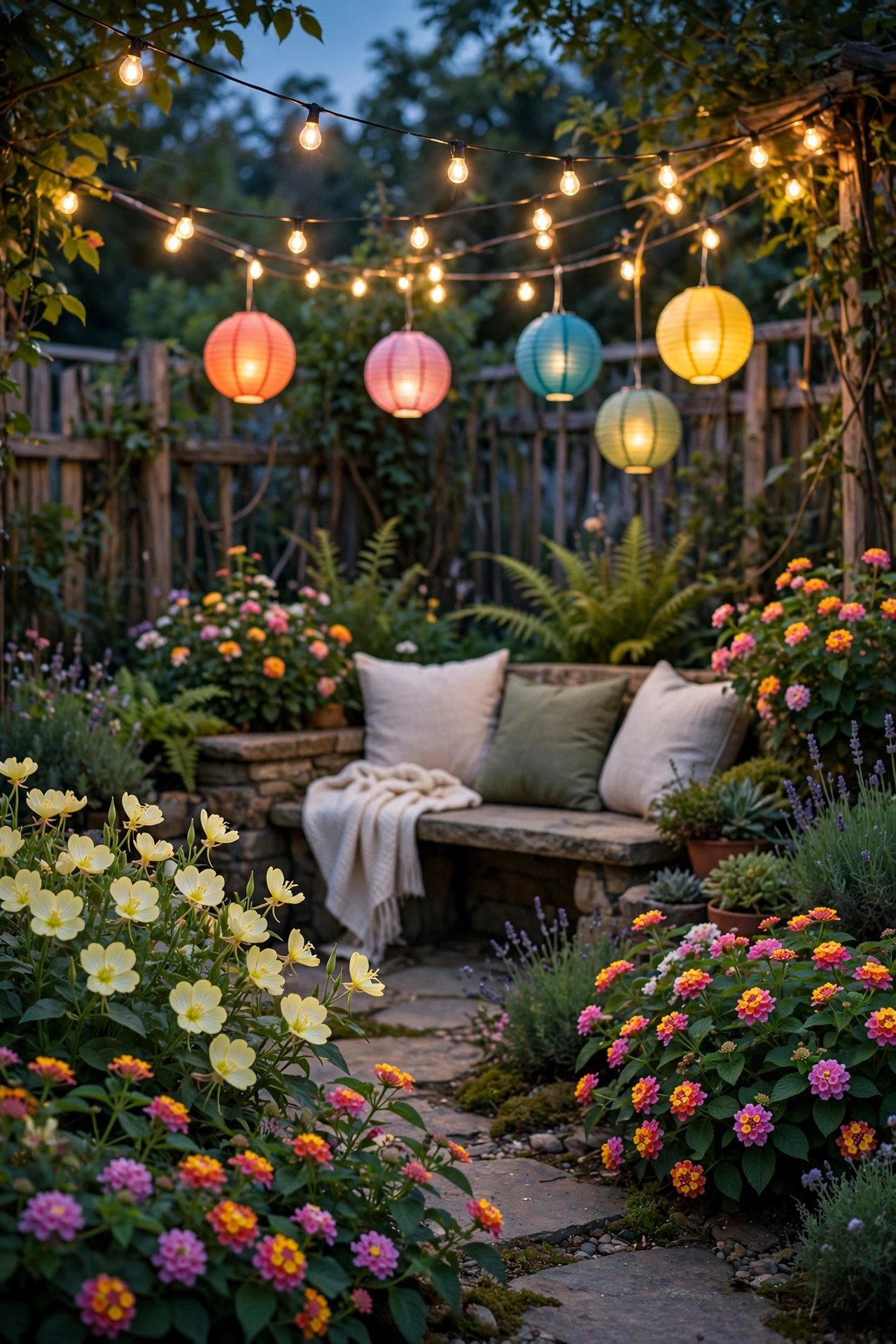
Butterflies may sleep at sunset, but your garden can still shine after dark. A seating nook with warm string lights and colorful lanterns lets you enjoy the space long after the last butterfly settles. Bright planting beds by day become a glowing retreat by night.
Design the seating area with natural stone and edge nearby borders with long-blooming flowers. The soft lighting shows off the garden’s structure beautifully. It brings the cozy, welcoming mood of romantic porch decor ideas into the heart of the pollinator garden.
6. Height-Layered Flower Borders
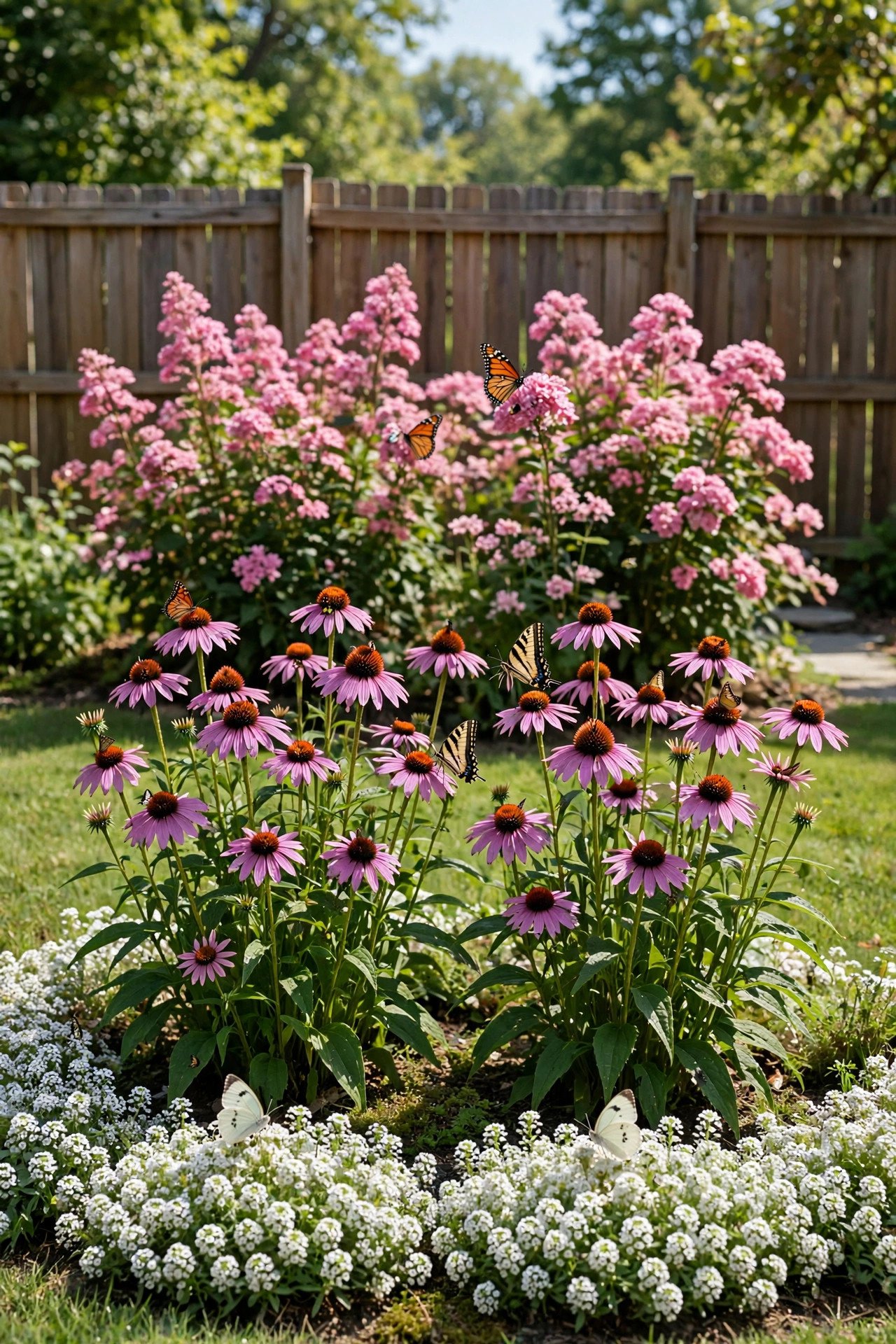
Planting flowers in tiers by height gives the garden a full, natural look that butterflies love. Place tall flowering shrubs at the back, medium blooms in the middle, and low nectar flowers along the edge. Each layer offers feeding spots at different heights.
Repeat a few colors through the border to tie the whole planting together visually. This classic technique suits long beds along fences, paths, and property lines. The depth and abundance keep the display interesting all season.
7. Elegant Formal Parterre
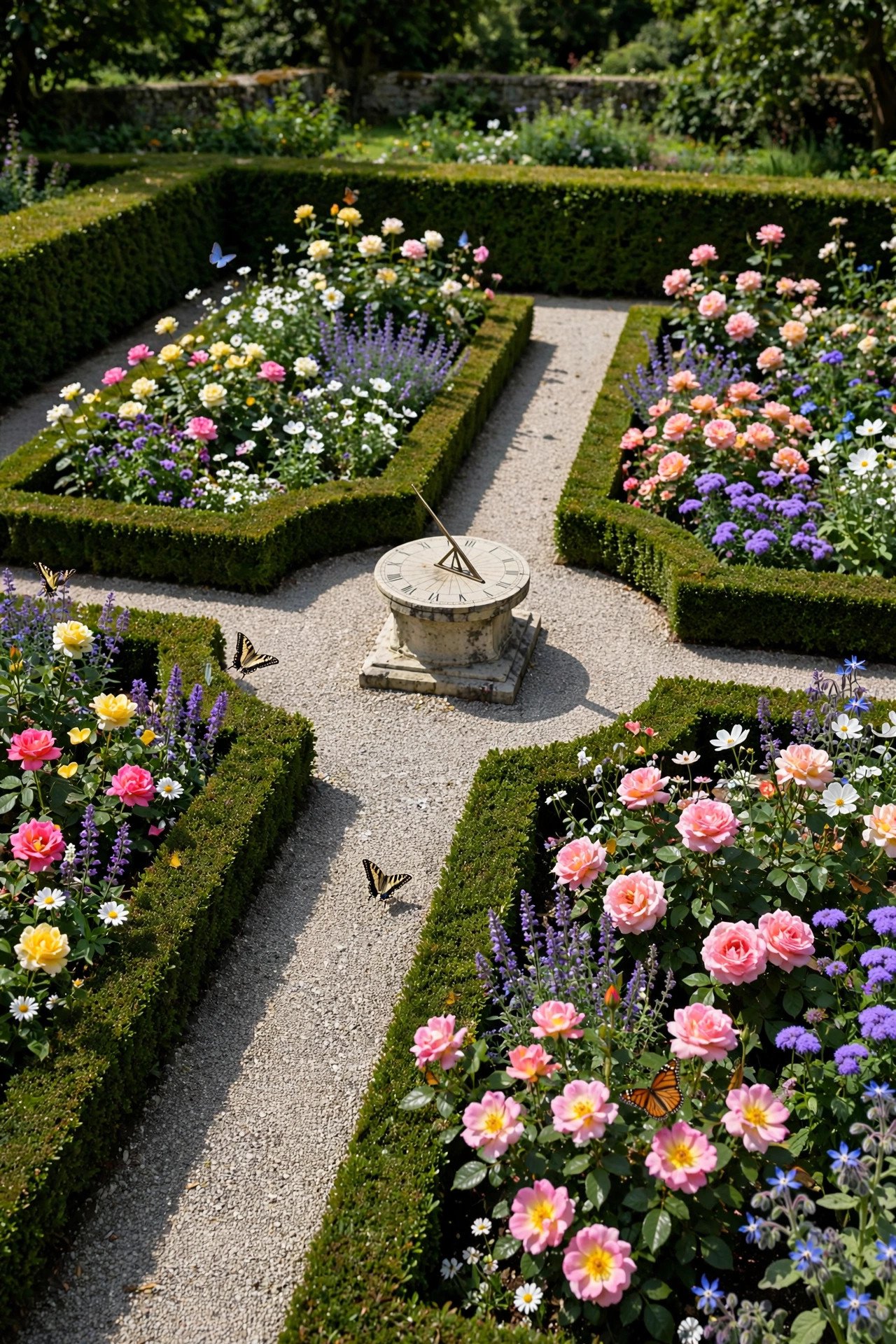
Symmetry and order can still welcome wildlife beautifully. Clipped hedges form neat planting zones while colorful flower beds take center stage. Choose single-petal roses and open flowers so butterflies can easily reach the nectar.
Broad walks between the beds make viewing and maintenance simple. This polished style proves that formal design and pollinator gardening are not opposites. Elegance and ecology grow side by side here.
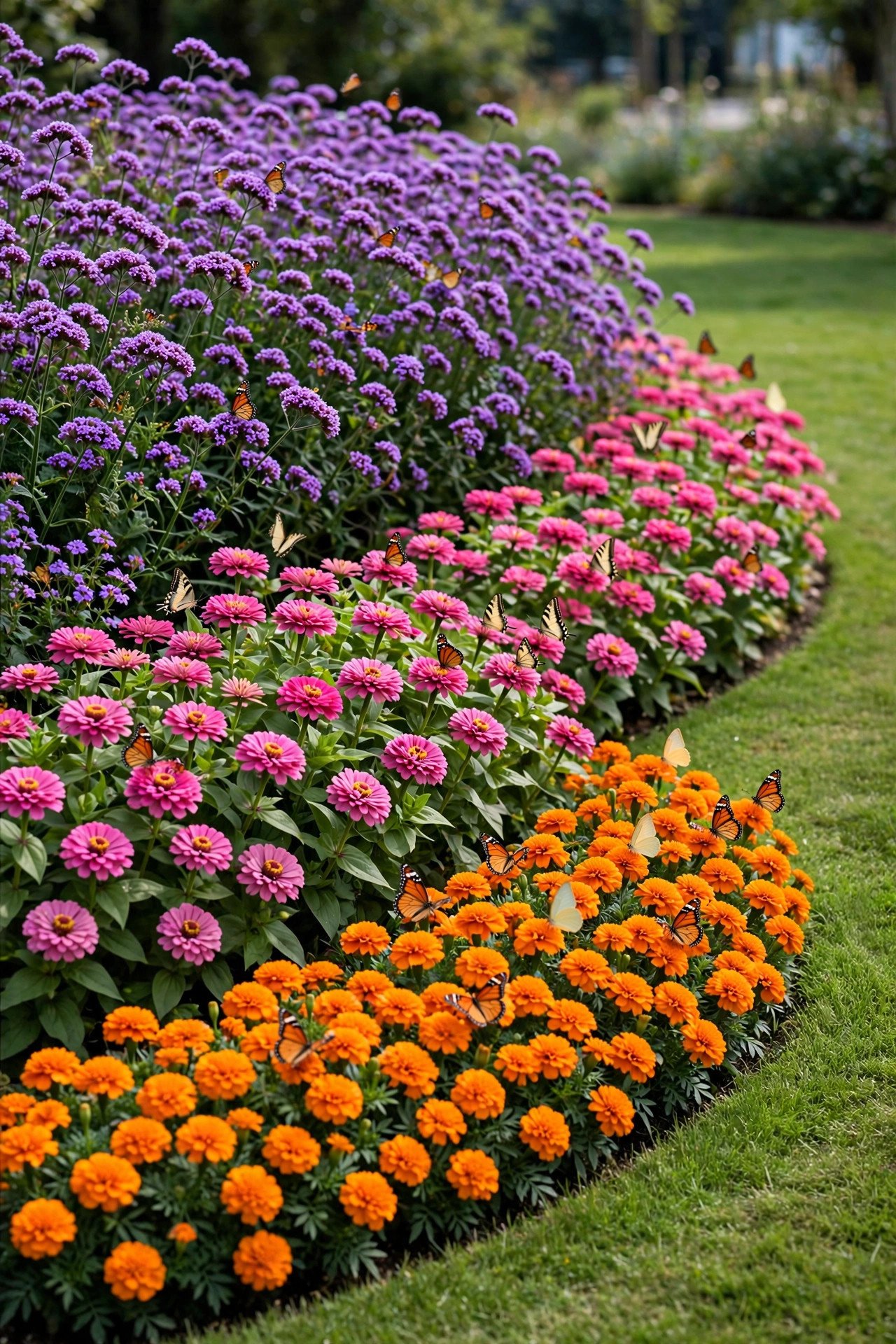
8. Bold Color Cluster Planting
Grouping flowers in large blocks of single colors helps butterflies find your garden faster. Big drifts of purple, pink, or orange create bold visual signals that read clearly from the air. Curved borders along lawns and walkways show off this technique best.
Plant taller varieties at the back and shorter ones at the front for a layered finish. The generous clusters look organized and abundant while giving butterflies bigger feeding areas. Color blocking is as practical as it is pretty.
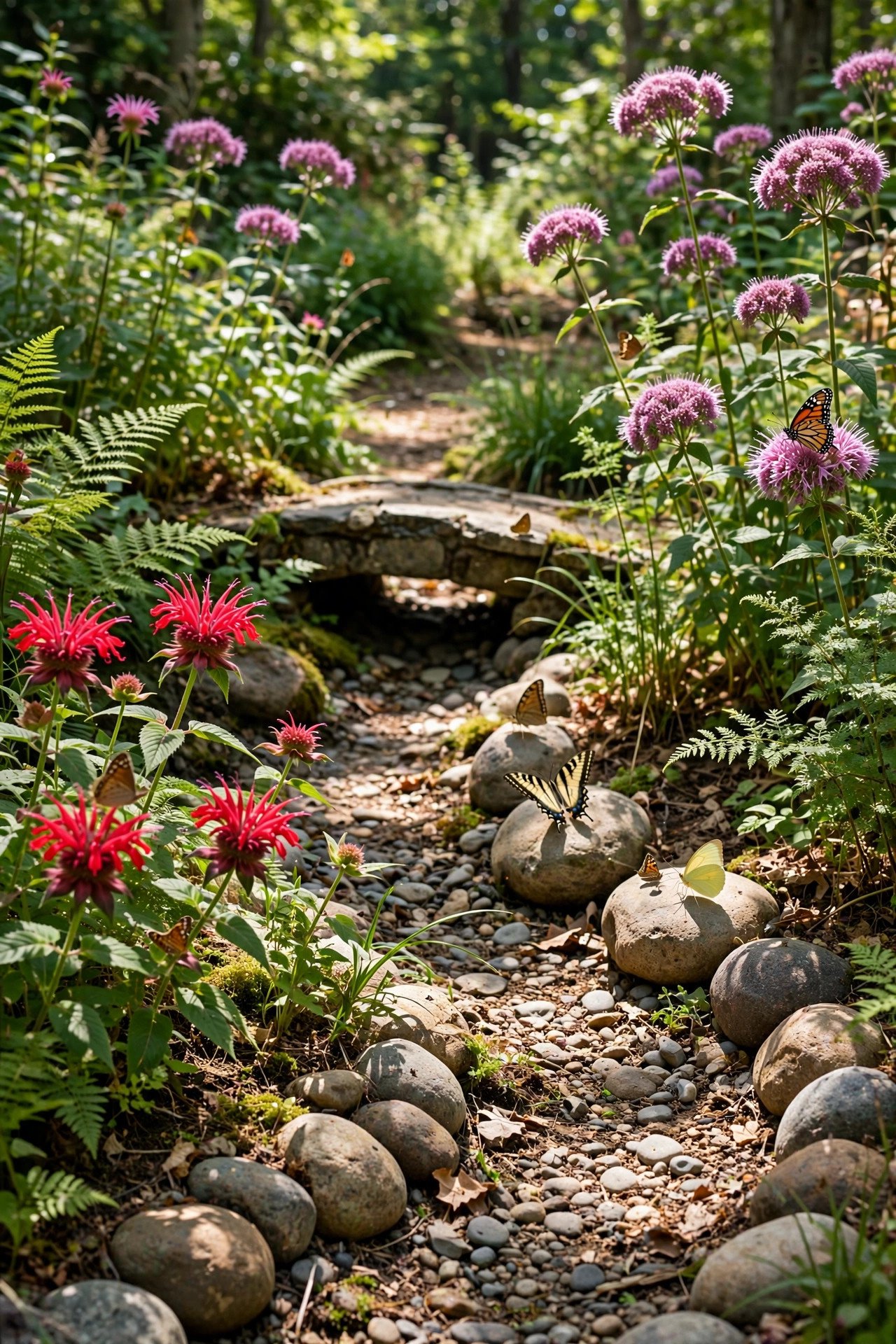
9. Natural Woodland Haven
Garden edges near mature trees become instant butterfly habitat with the right planting. Mix flowering perennials with ornamental foliage, frame the beds with river rocks, and leave sunny pockets open between taller plants. Butterflies feed in the sun and shelter in the green.
A small stone feature or bridge adds a peaceful focal point. This natural style blends seamlessly into existing landscapes. It feels established and wild from the very first season.
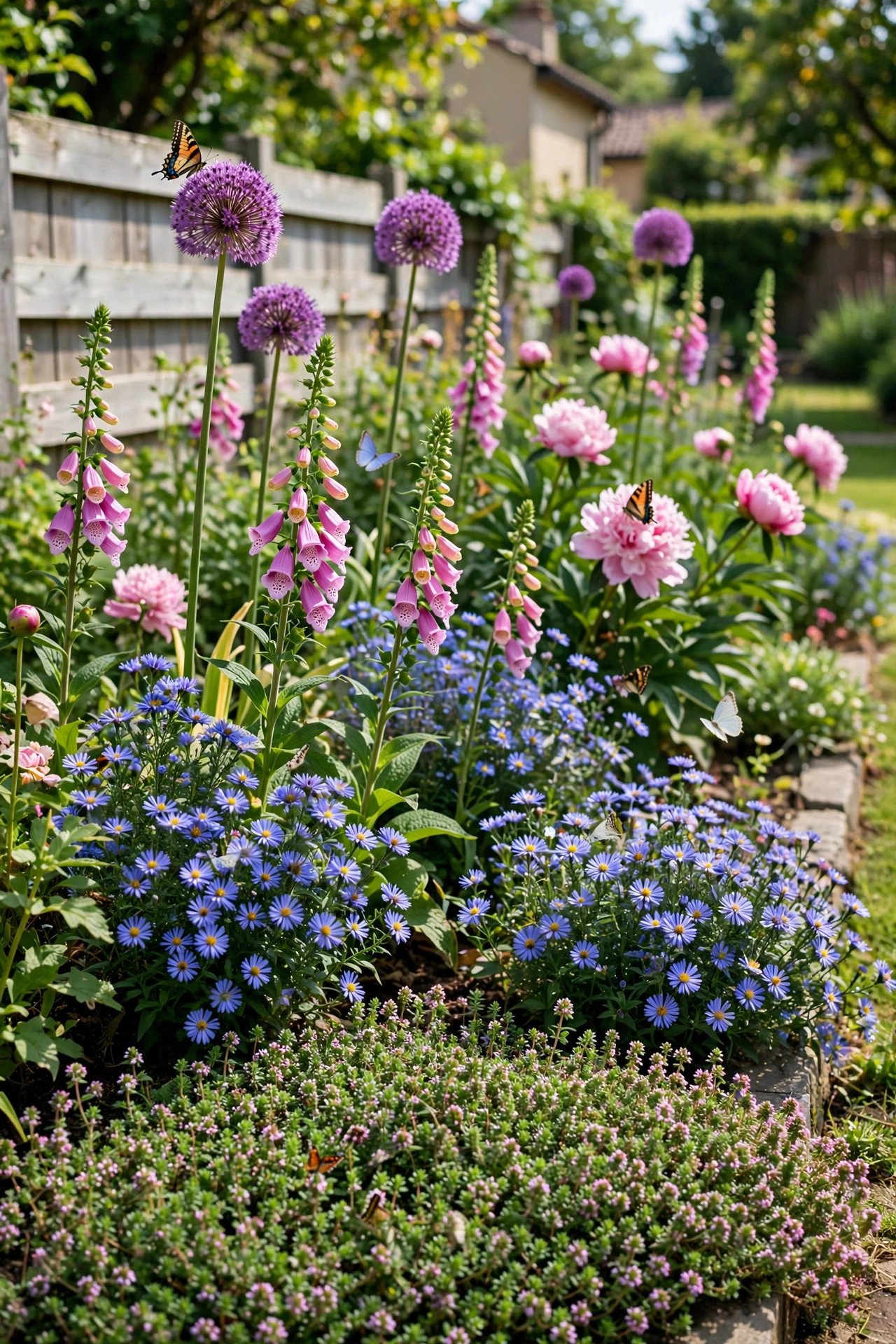
10. Mixed-Height Flower Layers
Strong butterfly gardens rarely depend on one flower type or height. Let tall alliums rise above foxgloves and asters while low nectar plants carpet the ground. Spacing larger blooms throughout the bed draws the eye across the entire planting.
This layered approach suits long borders beside lawns and property lines. The variety creates more feeding opportunities and a richer visual display. Every level of the garden stays busy with wings.
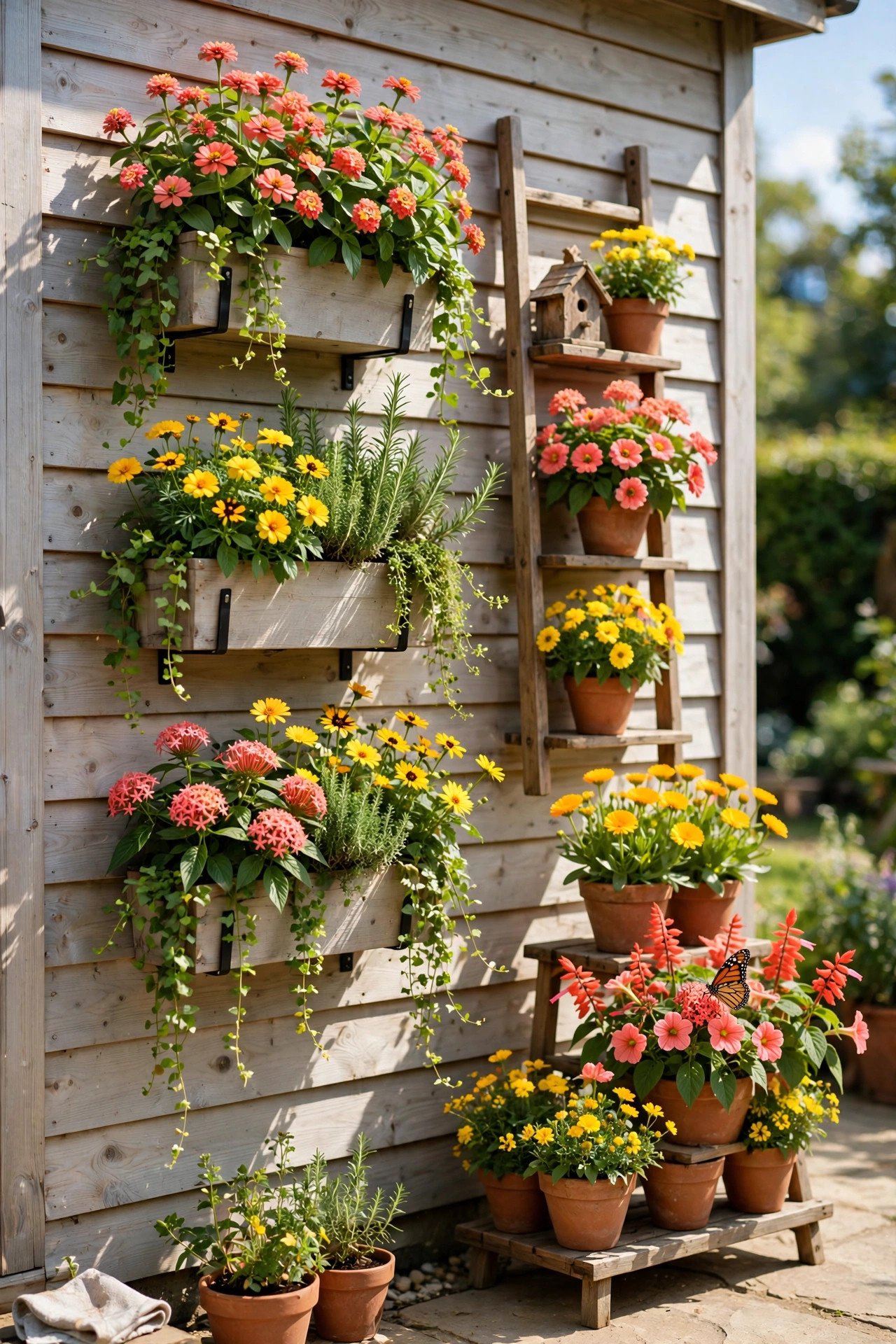
11. Vertical Wall Flower Display
Blank walls become butterfly magnets with layered containers of nectar flowers. Mix wall-mounted planters, ladder shelves, and plant stands for varying heights, then fill them with long-blooming flowers in matching hues. Small spaces gain huge flower power.
This vertical approach fits patios, shed walls, and tiny backyards perfectly, borrowing clever ideas from small space boho styling to maximize every inch. Add a small birdhouse and butterfly decor to complete the display. Up is the way to grow.
12. Winding Gravel Garden Path
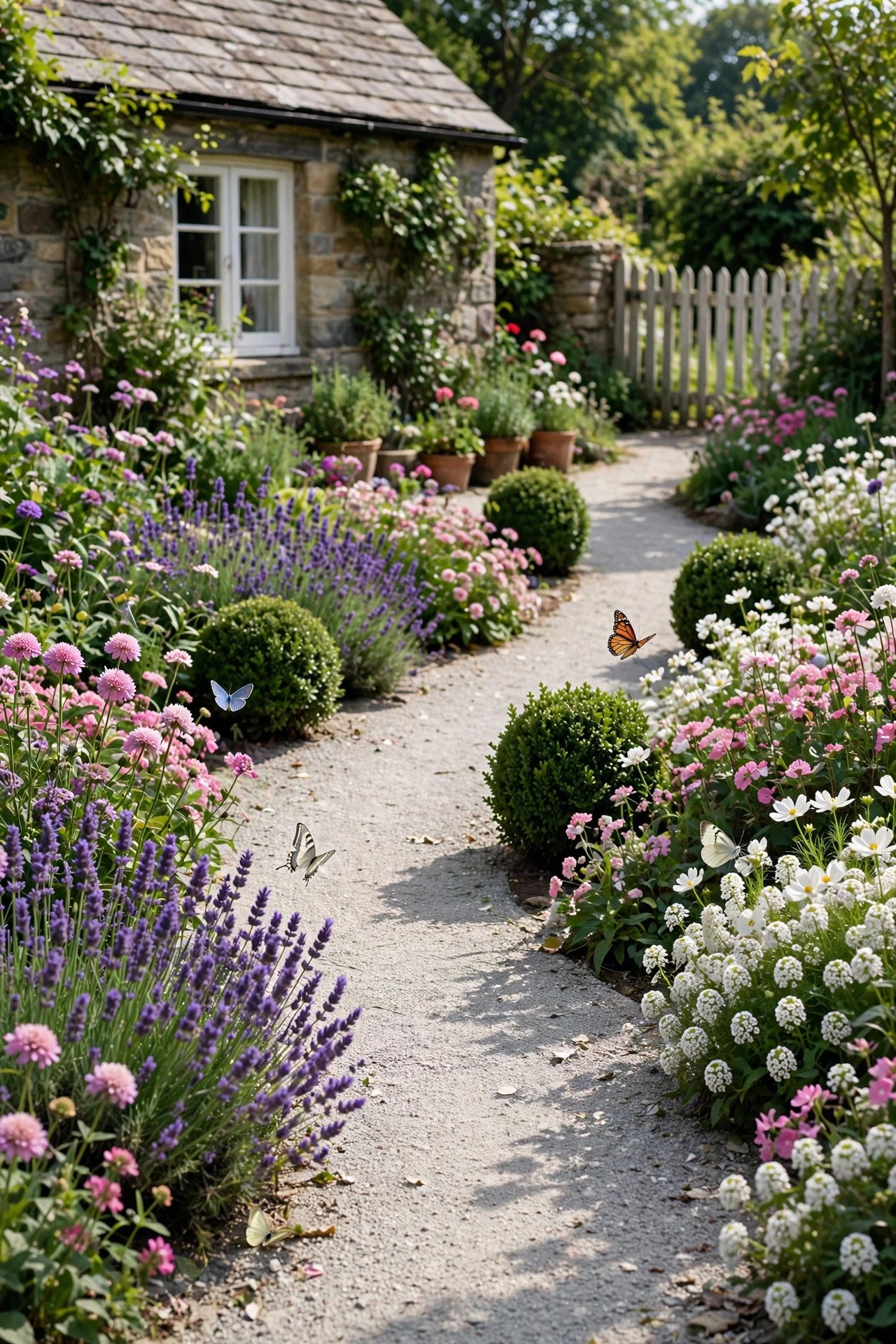
A winding gravel path invites exploration while leading butterflies through drifts of blooms. Fill both sides with nectar-rich perennials in repeating shades of purple, pink, and white. Clipped evergreen shrubs add structure between the flowing color.
Gravel gives the garden a softer, more relaxed character than concrete, and it is easy to reshape as plantings grow. The curved walkway separates dense beds without crowding. Every turn reveals a new drift of flowers.
13. Open Sunny Flower Haven
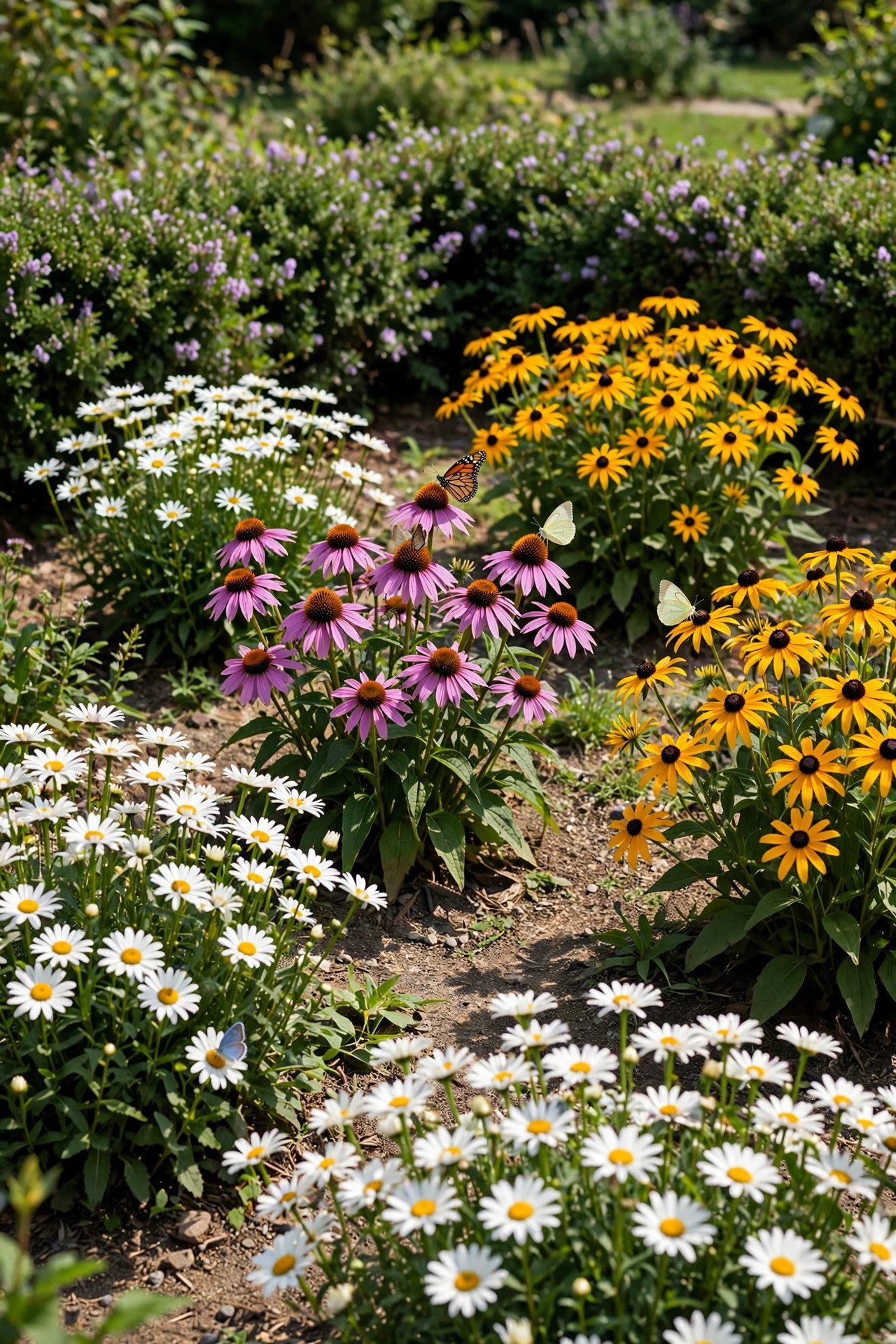
Butterflies linger longest in gardens with generous sunshine. Choose the brightest section of your yard, shelter it from strong wind with flowering shrubs, and fill the center with nectar blooms in generous clusters. Daisy-shaped flowers mixed with long-blooming perennials provide steady food.
Keep the space pesticide-free and add native host plants nearby so butterflies can complete their whole life cycle here. Clear flight paths between clusters help them move easily. Sun, food, and safety: the three things every butterfly wants.
14. Decorative Painted Edging
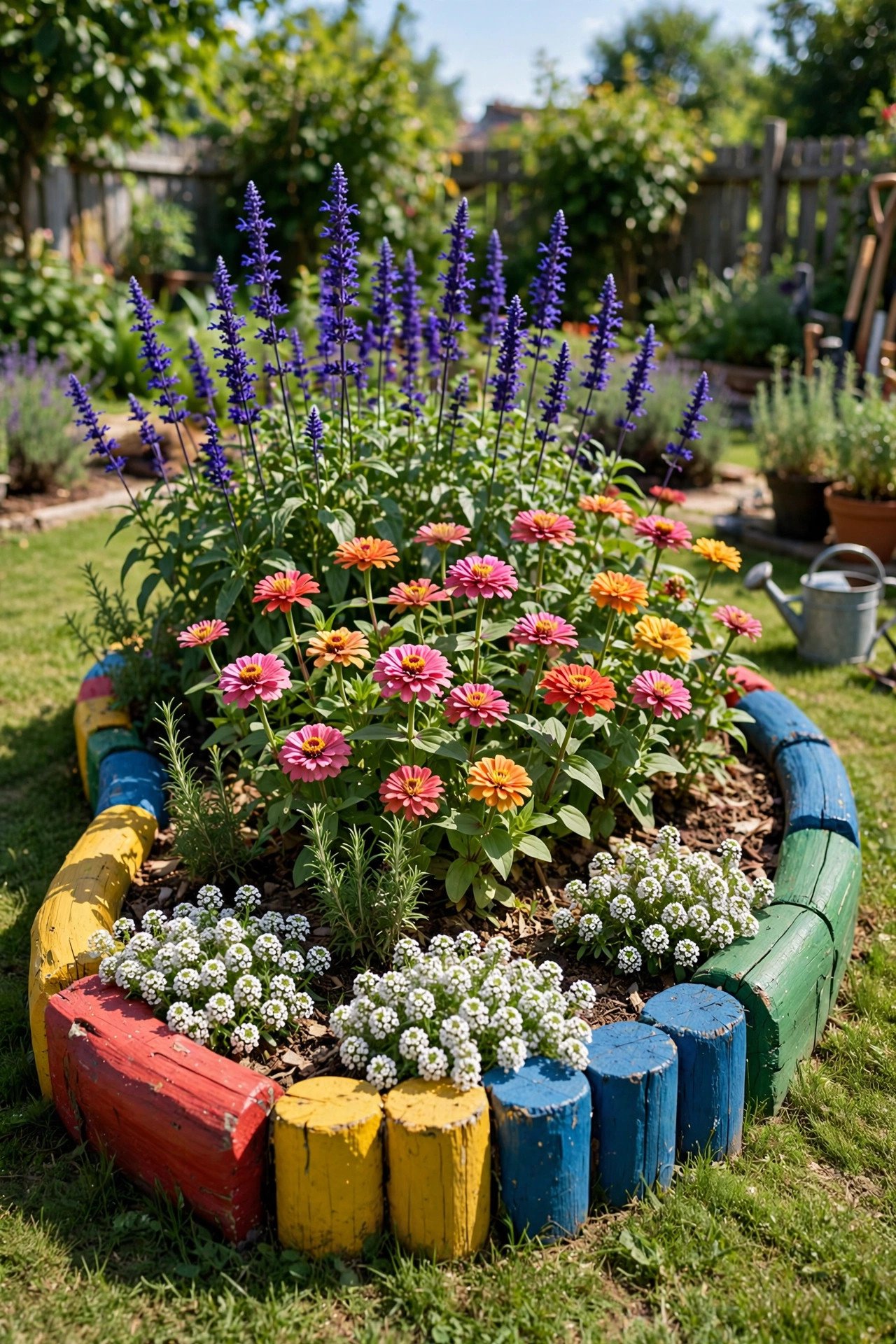
Colorful edging turns ordinary beds into memorable garden features. Painted wooden logs or bright stone borders define the planting while adding cheerful personality. Fill inside with generous clusters of nectar flowers at different heights.
Seal the wood before installing so the colors last through the seasons. The bright border guides the eye through the garden and makes every bed feel intentional. Small details like this make the whole garden feel cared for.
15. Flowering Rose Arch Walkway
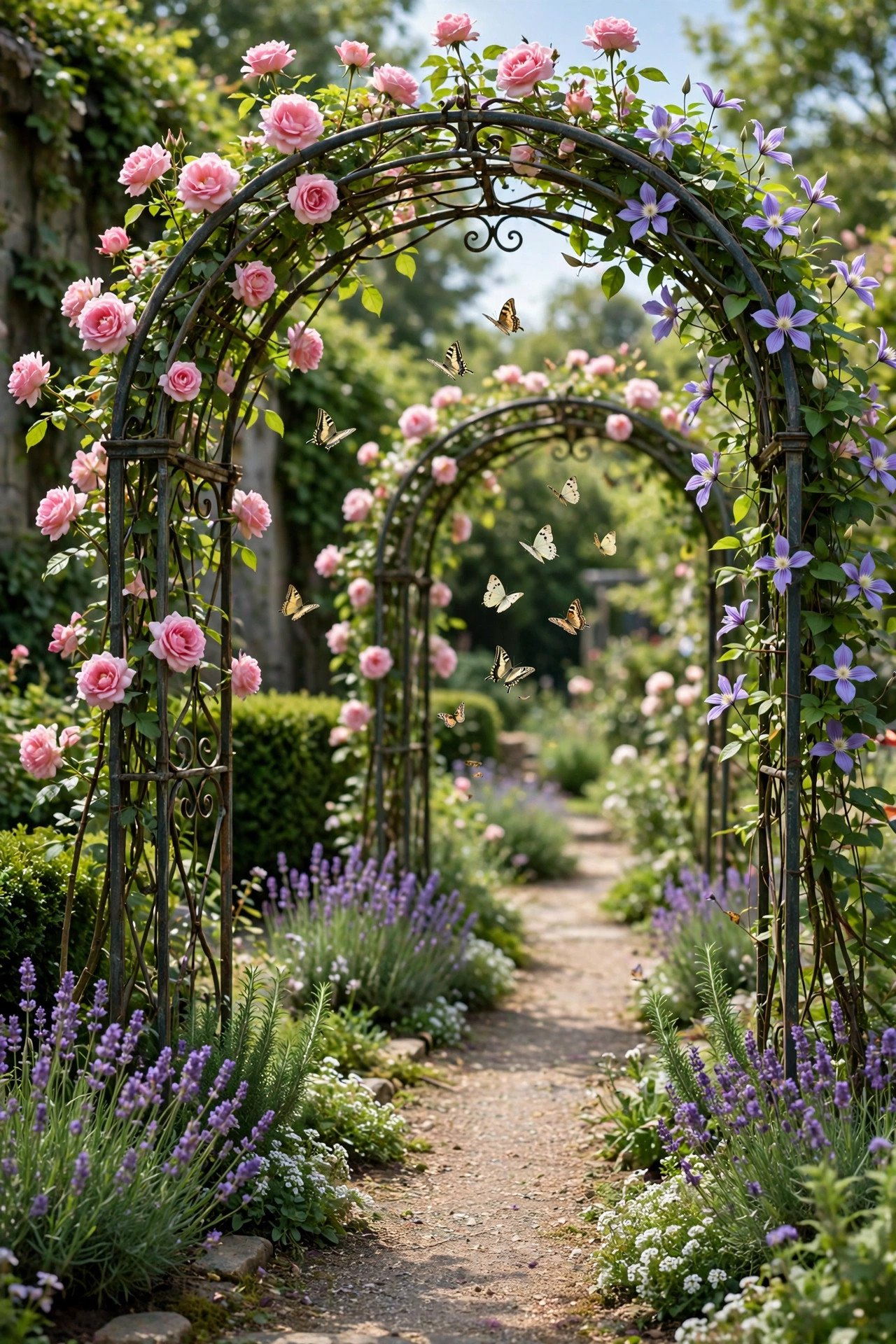
Arches covered in climbing roses add height and drama that flat beds cannot match. Install wooden or metal arches along a path, train roses and flowering vines overhead, and plant low nectar flowers at the base. Butterflies feed from ground level to the blooms above.
Position the arches where they catch several hours of sun so both climbers and flowers thrive. Choose arches with the aged character of european garden antique accents for timeless charm. The walkway becomes a standout feature in every season.
16. Natural Meadow Path Walk
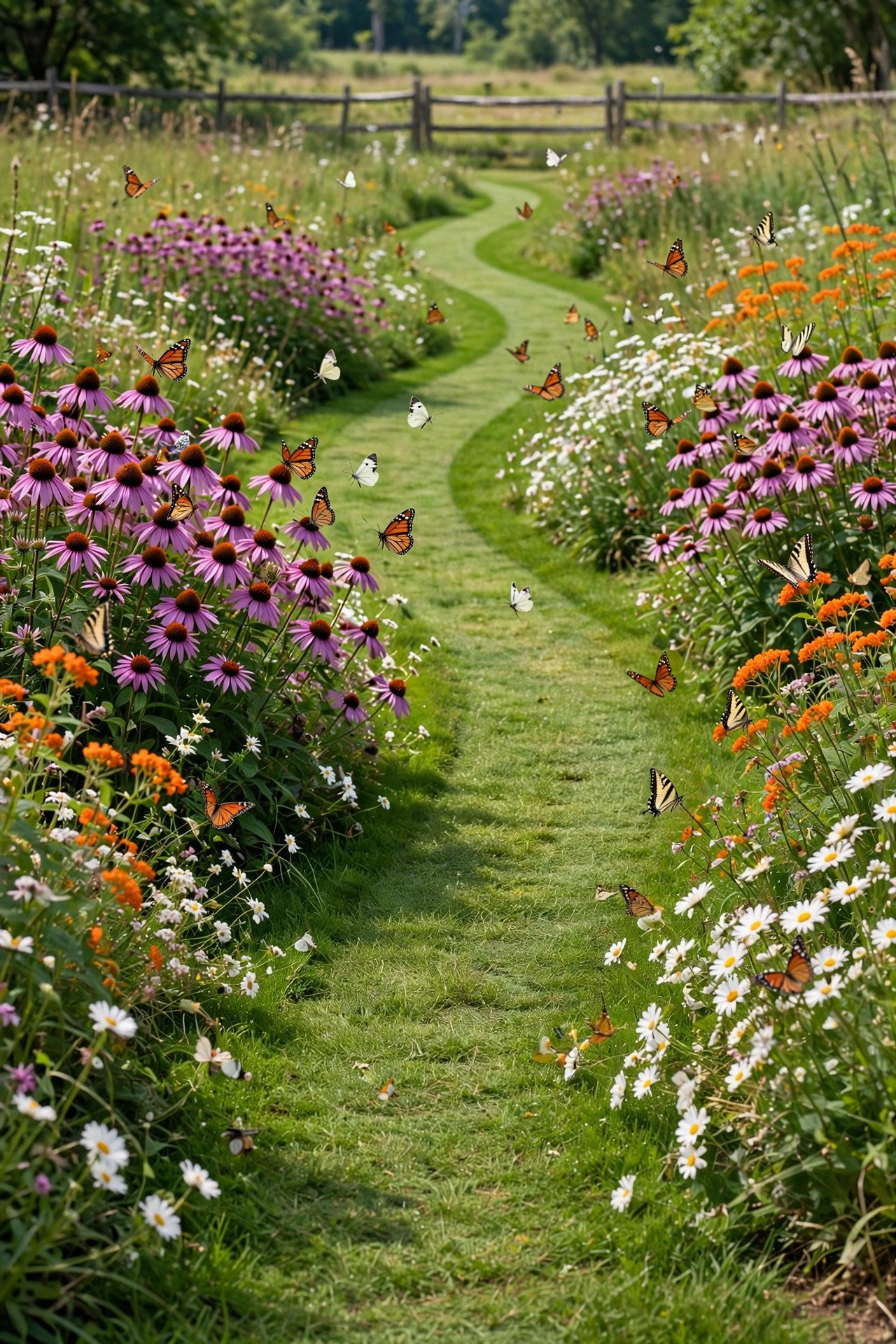
A mown grass path through drifts of wildflowers recreates a natural butterfly sanctuary. Plant generous groups of nectar perennials along both sides, letting a few blooms spill toward the walkway for a relaxed feel. Keep the center neatly mowed for easy strolling.
This meadow style suits larger backyards and cottage gardens beautifully. The continuous ribbon of flowers feeds butterflies all along the route. Walking it feels like wandering through a living painting.
Conclusion
A butterfly garden is so much more than a pretty flower bed; it is a living ecosystem that you create with your own hands. Every nectar flower you plant, every pesticide you skip, and every sunny spot you protect gives butterflies one more reason to visit and stay. The reward is a garden that moves, glows, and changes with the seasons.
Start with the ideas that fit your space, plant generously, and be patient as the habitat matures. Within a season or two, your backyard will flutter with wings from spring through fall. There is no better feeling than watching a butterfly choose your garden as home.
Frequently Asked Questions About Butterfly Garden Ideas to Attract Pollinators
What flowers attract the most butterflies?
Butterfly bush, coneflowers, zinnias, lantana, milkweed, asters, and black-eyed Susans are top butterfly magnets. Choose single, open blooms over doubles so butterflies can reach the nectar easily. Native species to your region work best of all.
How long does it take for butterflies to find a new garden?
Many gardens attract their first butterflies within a few weeks of blooming. A truly thriving habitat usually develops over one or two growing seasons. Planting native flowers, adding host plants for caterpillars, and avoiding pesticides speeds up the process greatly.
Do butterflies need anything besides flowers?
Yes, they also need host plants where caterpillars can feed, shallow water sources or damp sand for drinking, sunny basking spots, and shelter from wind. A garden with all these elements keeps butterflies through their entire life cycle, not just for a quick visit.
Should I avoid pesticides in a butterfly garden?
Absolutely. Even organic pesticides can harm butterflies, bees, and caterpillars. Hand-pick pests, encourage beneficial insects, and accept a little imperfection in the foliage. A pesticide-free garden is the foundation of a true pollinator habitat.
Can I make a butterfly garden in a small space?
Yes, even a balcony or small patio can host butterflies with the right containers. Use large pots of nectar-rich flowers, add a small dish of damp sand for puddling, and choose compact native varieties. Every bloom counts, no matter how small the garden.

Hi, I’m Emily! I turn messy corners into cozy, organized spots. DreamNestDecor is where I share simple, practical home ideas — decor, organization, and small-space solutions that work in real life, not just in photos. Every idea here is carefully researched before it’s shared.