

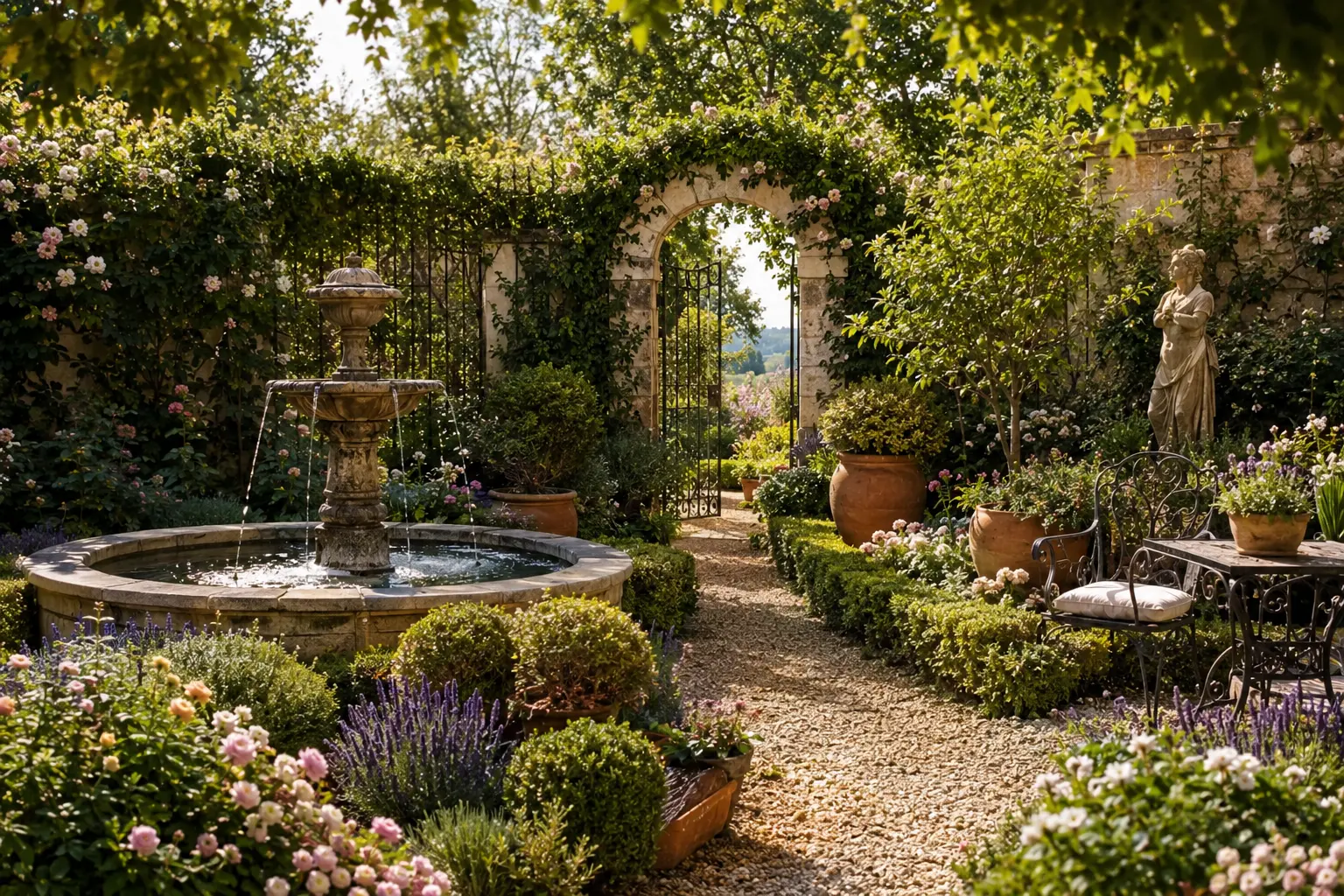
There is a reason old European gardens feel like they belong in a painting, calm, layered, and slightly worn in all the right places. That feeling comes from history, structure, and a handful of carefully chosen antique touches.
Creating this look in your own garden does not require traveling overseas or owning a centuries old estate. It comes down to a few specific design choices, from symmetry to aged materials, and this guide will walk you through each one in detail so you can bring that same timeless charm right outside your door.
1. Plant Clipped Boxwood Hedges:
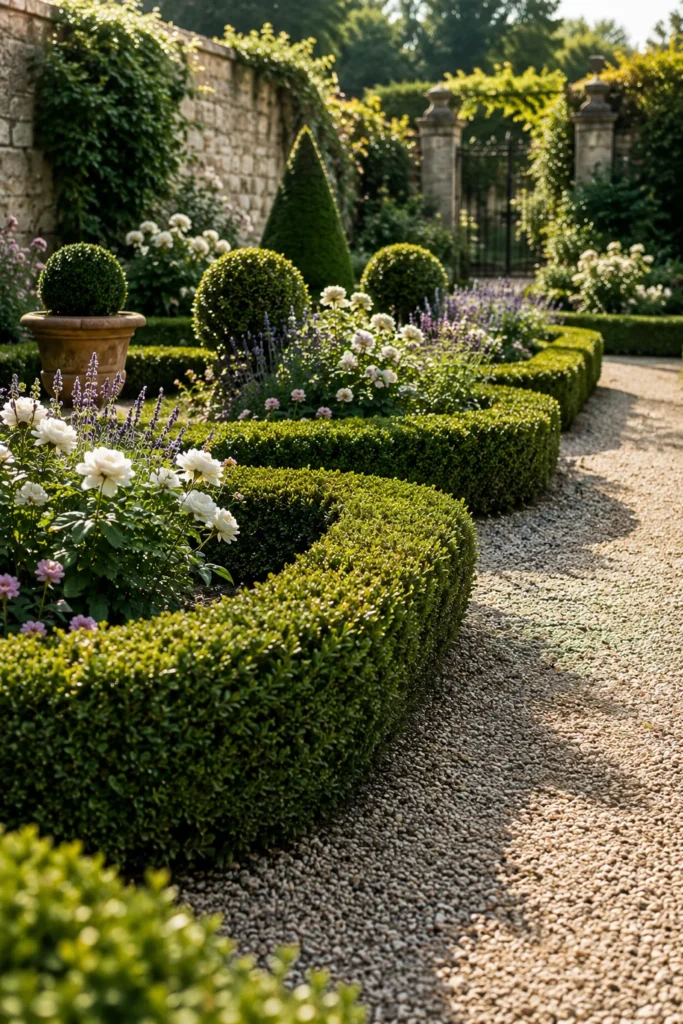
Boxwood hedges trimmed into neat, structured shapes are one of the clearest signatures of European garden design. Their dense, rounded forms create a sense of order that feels formal yet still soft and green, anchoring the entire layout of the space.
Plant them along pathways or as low borders around flower beds to frame the garden the way a picture frame frames a painting. Boxwood also stays green through most of the year, meaning your garden retains its structured, intentional shape even when seasonal flowers are not in bloom.
2. Lay a Gravel or Stone Pathway:
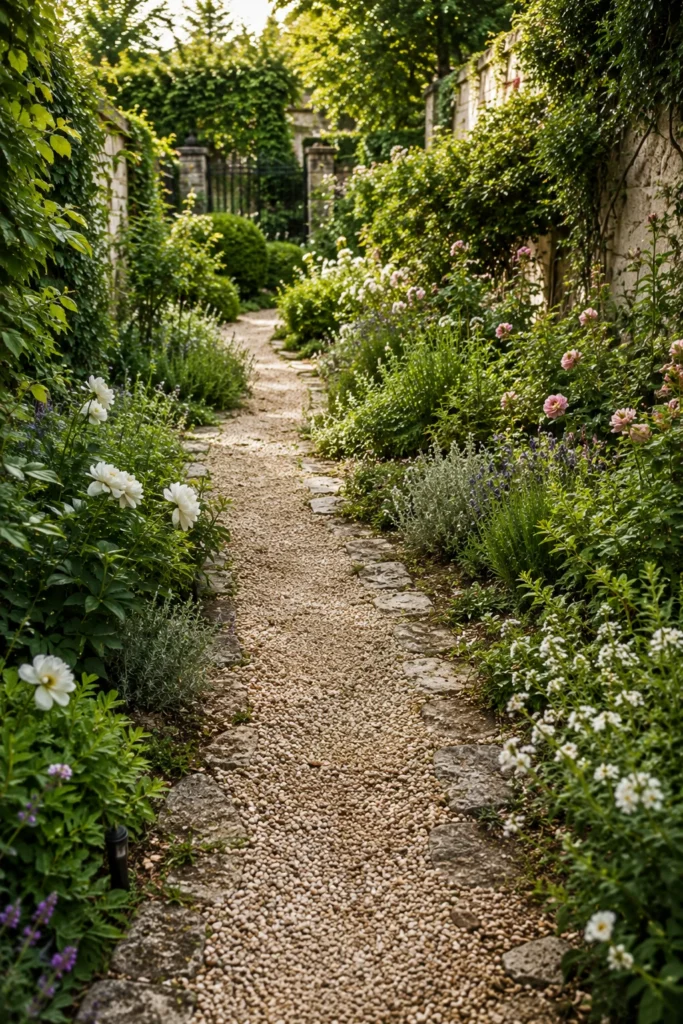
Replace plain grass or concrete walkways with a gravel or natural stone path winding through your garden. This kind of pathway has been used in European gardens for centuries, and the slight crunch underfoot adds a sensory detail that pavement simply cannot offer.
Stone pathways also tend to soften beautifully with age, developing moss in the cracks or a slightly uneven, weathered look over time. This natural aging process is exactly what gives older European gardens their lived in, storied character. For more ideas on creating a beautiful outdoor space, explore these 22 Timeless Mediterranean Porch Ideas for a Stunning Glow Up.
3. Add a Weathered Stone Urn:
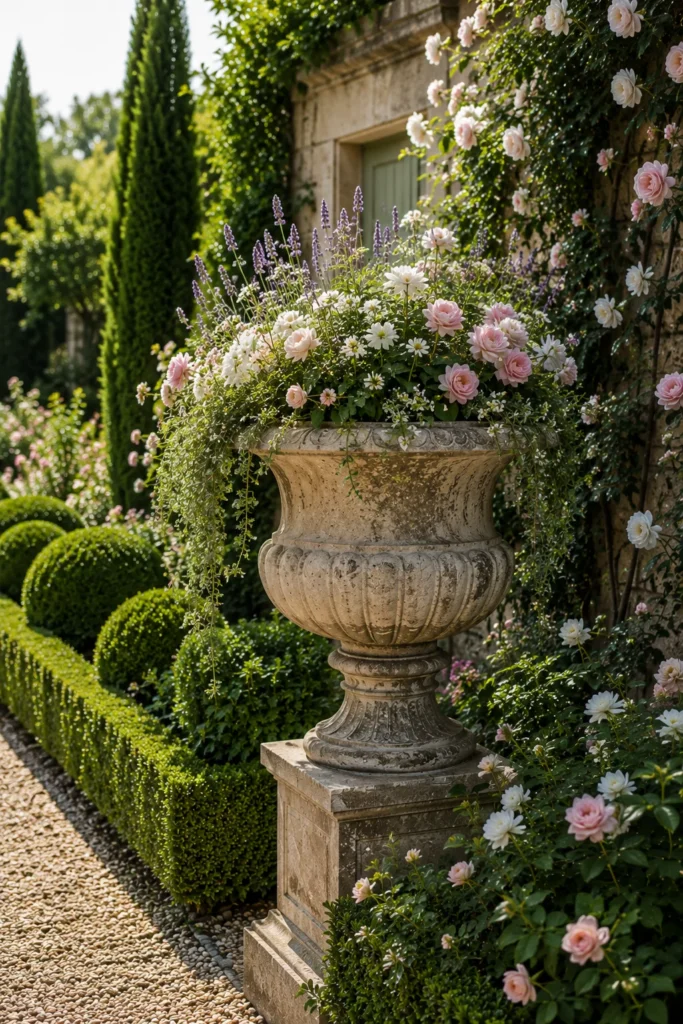
Place a large stone urn, either planted with greenery or left empty as a sculptural piece, somewhere prominent in your garden. These urns were originally used in formal European estates to mark entry points or anchor symmetrical garden beds.
Choose one with a slightly worn, aged finish rather than a smooth, new looking surface, since the texture is part of the appeal. A single well placed urn can instantly elevate a garden corner from ordinary to genuinely elegant.
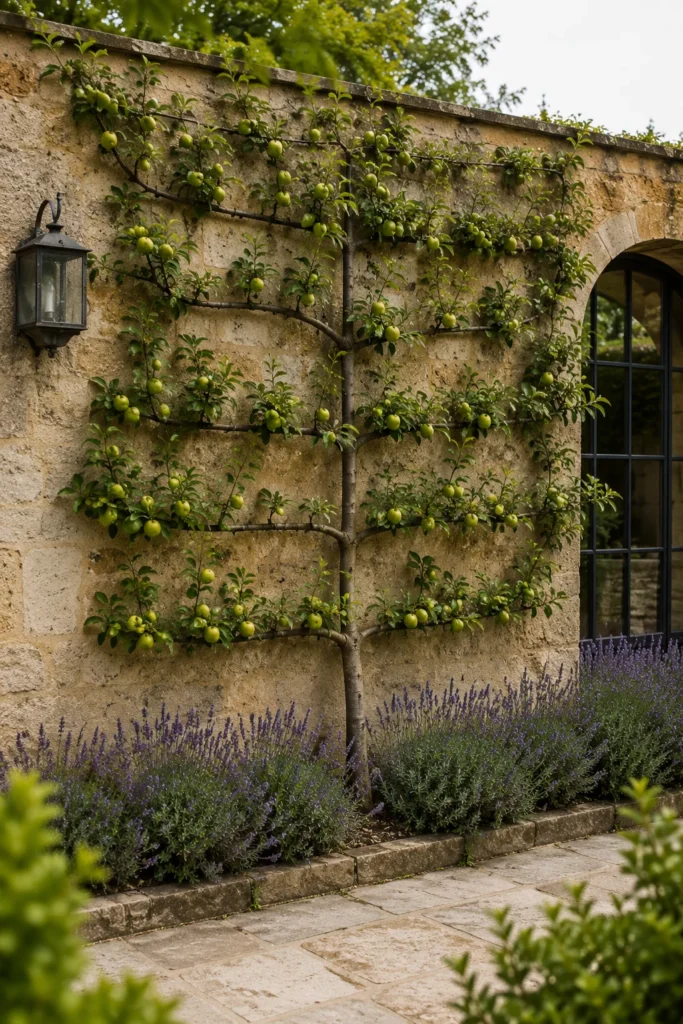
4. Train Espaliered Fruit Trees Along a Wall:
Espalier is a centuries old technique where fruit trees are trained to grow flat against a wall or trellis in a structured pattern. This method was originally developed to maximize limited space in European courtyards, but today it doubles as a striking decorative feature.
An espaliered apple or pear tree adds vertical interest and architectural structure to a wall that would otherwise sit empty. Over several years, the branches form an intricate living pattern that becomes more beautiful and established with every passing season.
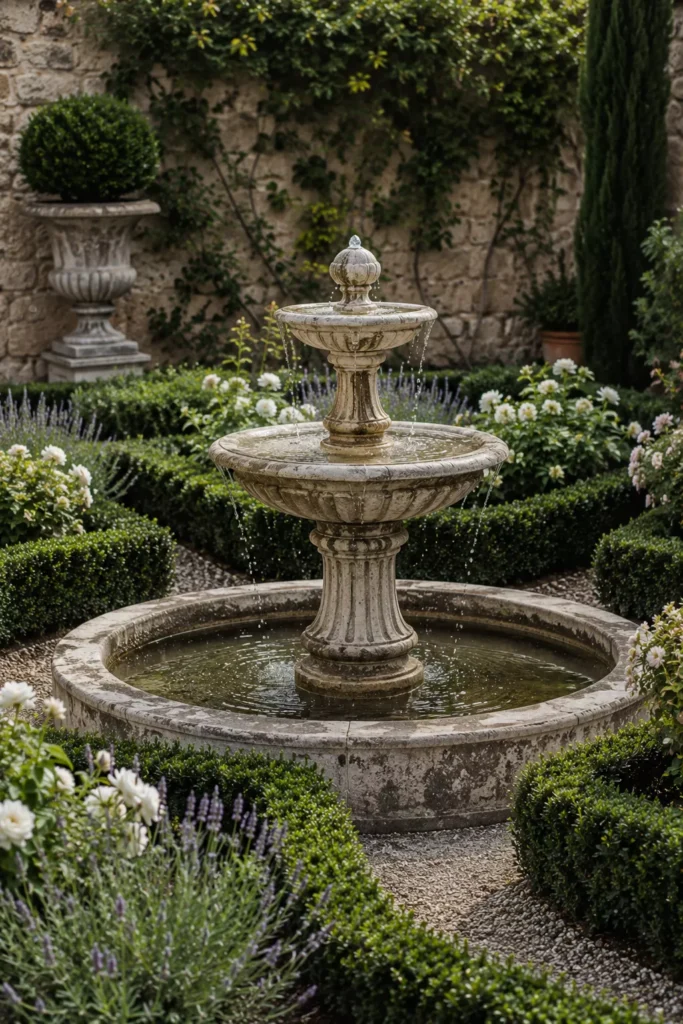
5. Install a Classical Garden Fountain:
A small stone or cast fountain, even a modest tabletop version, brings the gentle sound of moving water that has defined European courtyards for generations. The sound alone shifts the entire atmosphere, adding a sense of calm that static decor cannot replicate.
Look for fountains with classical detailing, like fluted columns or simple tiered basins, rather than overly modern shapes. Positioned at the center of a symmetrical garden bed, a fountain like this naturally becomes the heart of the entire space.
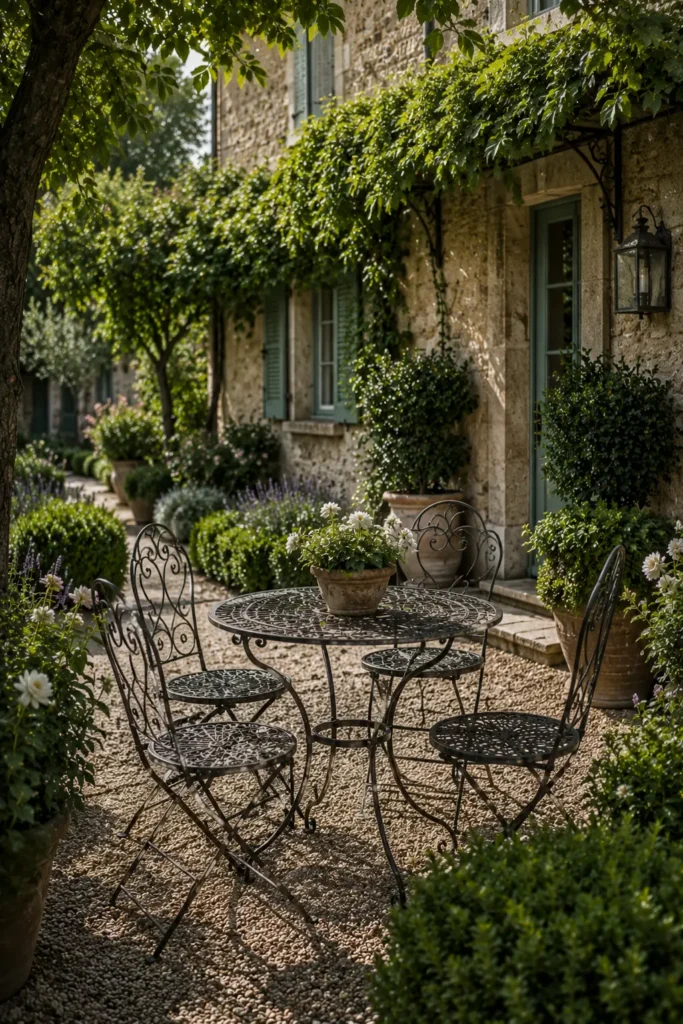
6. Use Wrought Iron Garden Furniture:
Choose wrought iron benches, chairs, or small tables instead of plastic or modern aluminum furniture for your seating areas. The intricate scrollwork found in traditional wrought iron pieces has long been associated with formal European garden design.
This style of furniture is also remarkably durable, often lasting for decades while developing a soft, weathered patina that only adds to its charm. A single wrought iron bench placed beneath a tree can become a quiet, inviting focal point within the garden. If you love creating a cozy outdoor setting with beautiful furniture and decor, these 25 Romantic Porch Decor Ideas for a Dreamy Outdoor Escape offer more inspiration.
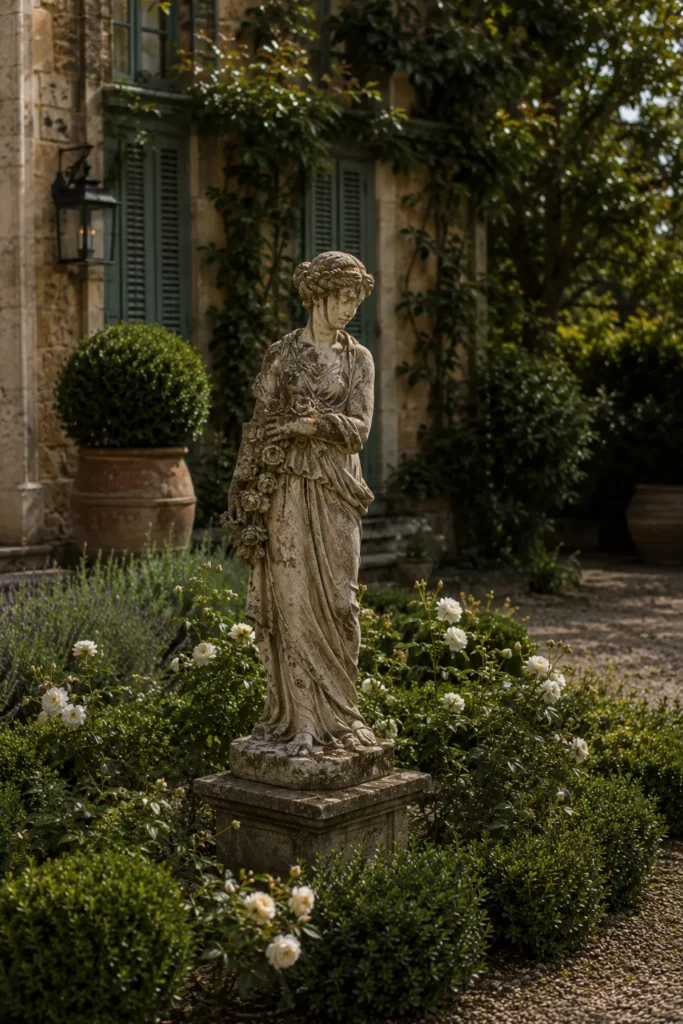
7. Add a Weathered Garden Statue:
A stone or cast statue, whether a classical figure or a simple decorative urn shape, introduces a sense of history and permanence to your garden. These pieces were traditionally used to mark focal points along garden paths or within symmetrical flower beds.
Choose a statue with visible age, like moss growth or a slightly faded surface, rather than something that looks freshly manufactured. This small detail signals that your garden has depth and story behind it, rather than feeling newly assembled.
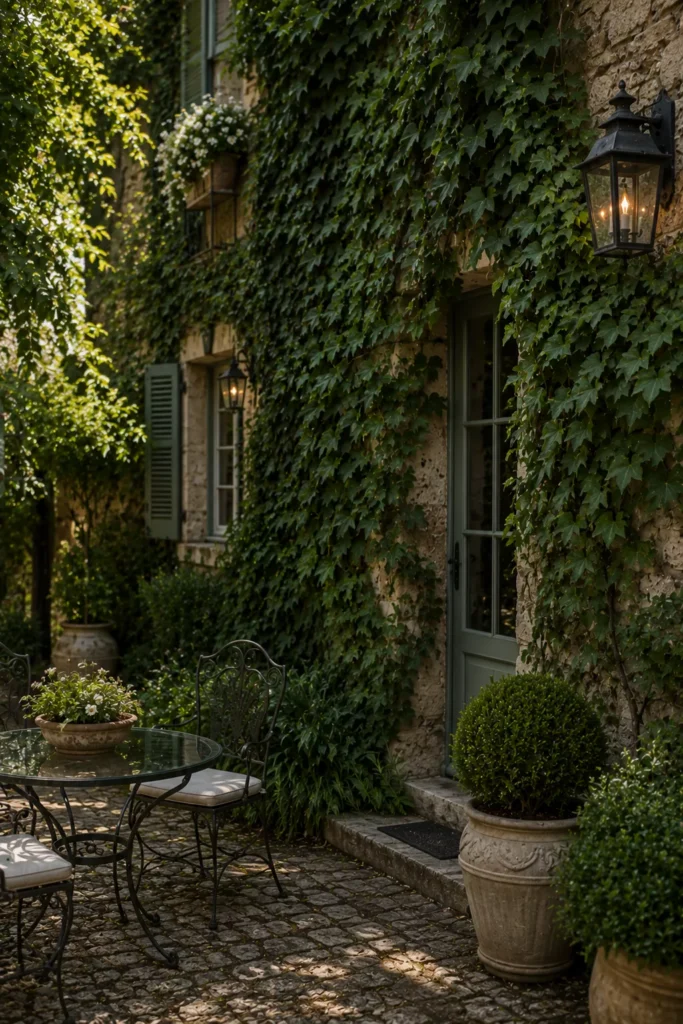
8. Plant Climbing English Ivy:
Let English ivy climb up a wall, fence, or trellis to soften hard architectural edges throughout your garden. This classic climbing plant has covered European buildings and garden walls for centuries, creating that lush, slightly wild yet intentional look.
Ivy also provides year round greenery, which keeps your garden looking established and full even during colder months when other plants go dormant. Over time, it naturally fills in gaps and covers bare surfaces, giving the whole space a more mature, settled feeling.
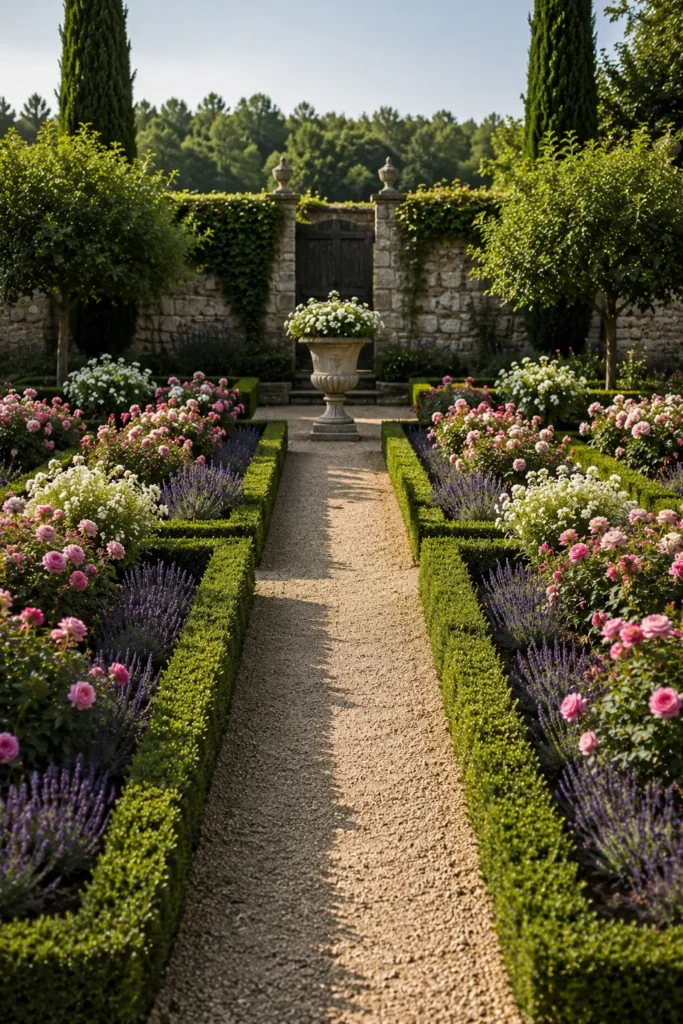
9. Create Symmetrical Flower Beds:
Design your flower beds in matching, mirrored pairs on either side of a central path or feature. This formal symmetry is one of the defining structural principles behind traditional European garden layouts, creating a sense of balance and order.
Fill these symmetrical beds with classic flowers like roses, lavender, or peonies in repeating patterns on both sides. This kind of intentional structure makes even a modest garden feel thoughtfully designed rather than randomly planted.
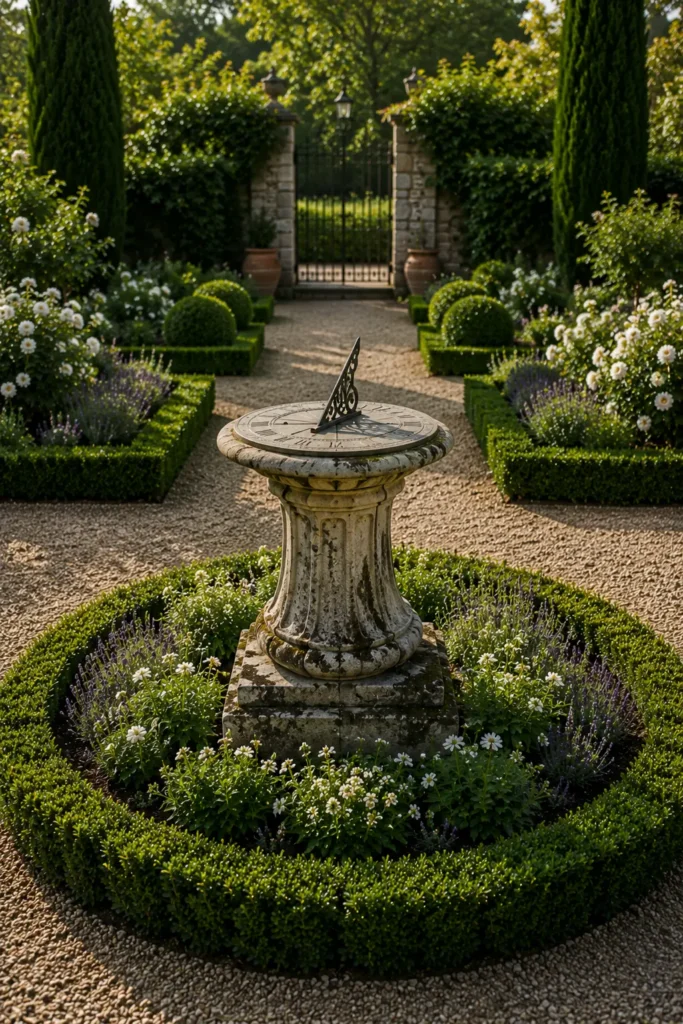
10. Add a Sundial as a Focal Point:
Place a stone or metal sundial at the center of a garden bed or pathway intersection as a quiet, functional centerpiece. Sundials have served as both practical tools and decorative focal points in European gardens for hundreds of years.
Beyond its visual charm, a sundial also adds a sense of timelessness to the space, a quiet reminder that this style of garden has endured for centuries. Positioned correctly, it becomes a natural gathering point where pathways and sightlines converge.
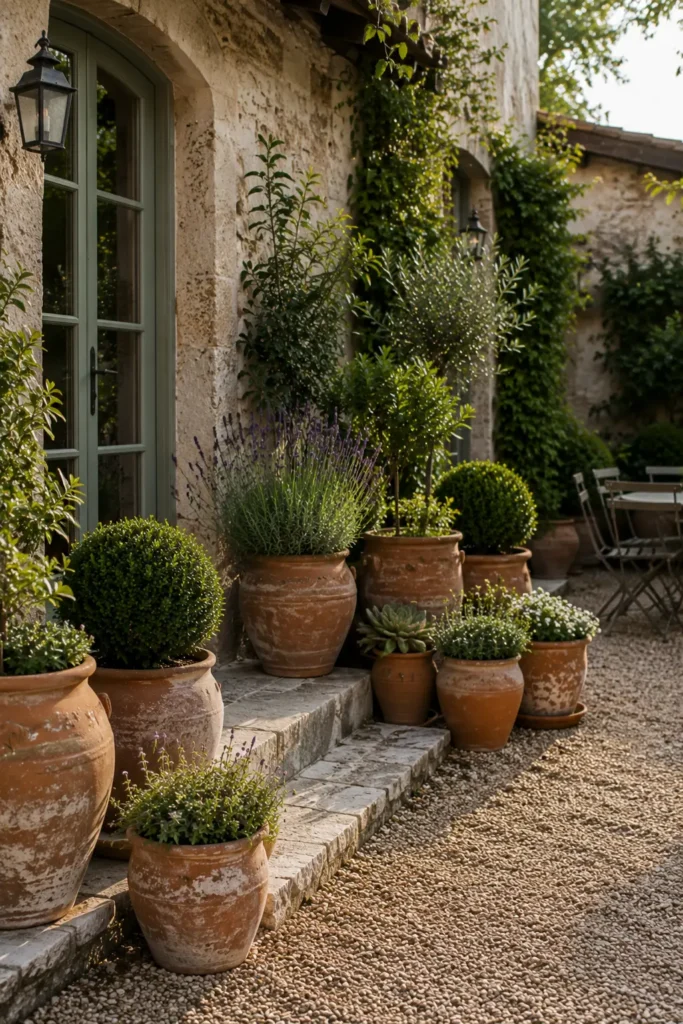
11. Use Aged Terracotta Pots:
Choose terracotta pots with a noticeably weathered, sun faded finish rather than bright, freshly fired ones for your potted plants. This aged material has been a staple of European courtyards and balconies for generations, prized for both its warmth and practicality.
Group pots of varying heights near doorways, along steps, or beside seating areas to create a layered, established look. Over time, terracotta naturally develops a chalky, mineral patina that only deepens its charm the longer you have it.
12. Install a Decorative Iron Gate or Arch:
A wrought iron gate or arched entryway, even a small decorative one, signals a clear transition into your garden space. This architectural detail has long been used in European gardens to mark boundaries and create a sense of anticipation before entering.
Let a climbing rose or ivy grow over the arch for an even softer, more romantic effect as the plant matures. This single feature can transform a plain entrance into a genuinely memorable moment within the overall garden experience. For more ideas on creating a warm and inviting home, explore these 23 Quiet Luxury Decor Ideas That Look Expensive on Any Budget.
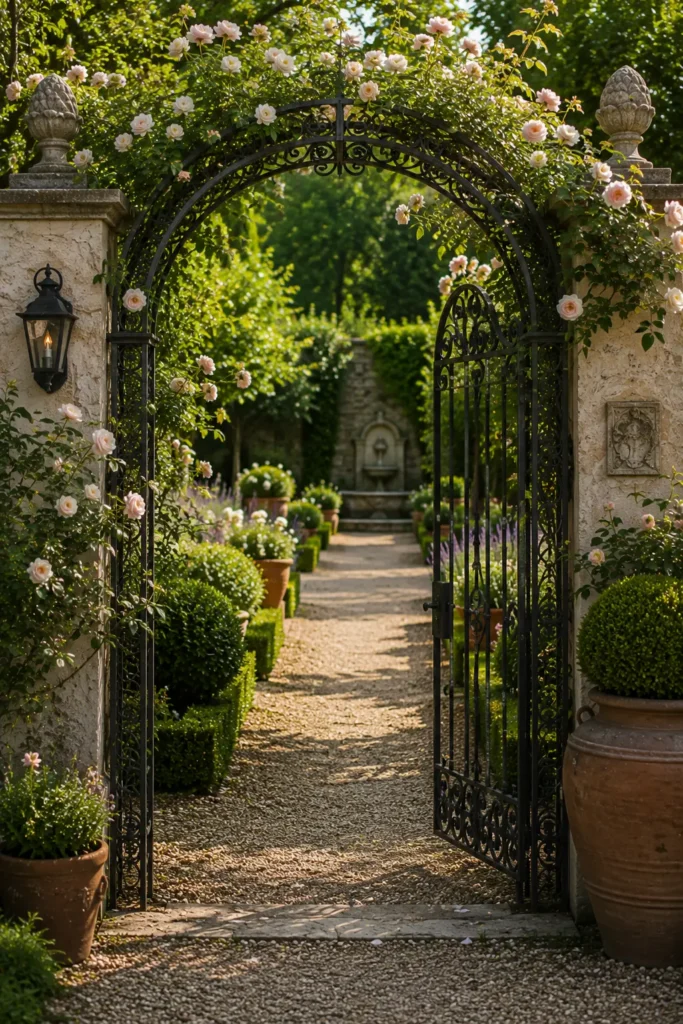
13. Choose a Muted, Classical Color Palette:
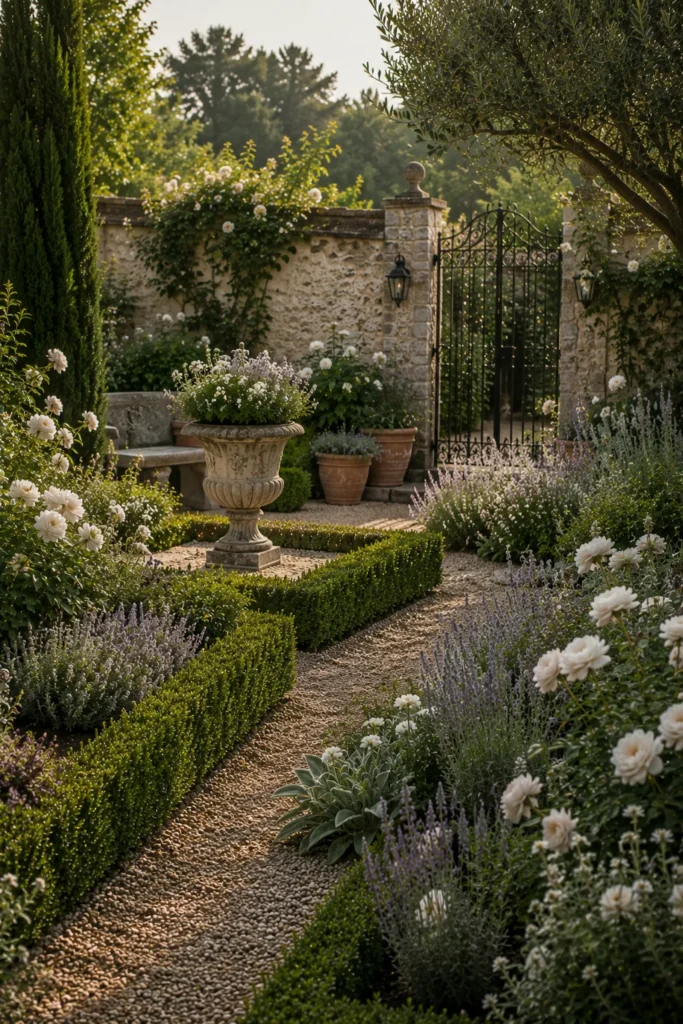
Stick to soft, classical colors throughout your garden, like sage green, dusty lavender, soft white, and warm stone tones. This restrained palette reflects the understated elegance found in traditional European garden design, rather than the bright, saturated colors common in modern landscaping.
Limiting your color choices also helps the structural elements, like hedges, stone, and antique pieces, take center stage rather than competing with overly vibrant flowers. This kind of restraint is often what separates a garden that feels timeless from one that feels trendy.
14. Add a Quiet Bench Beneath a Tree:
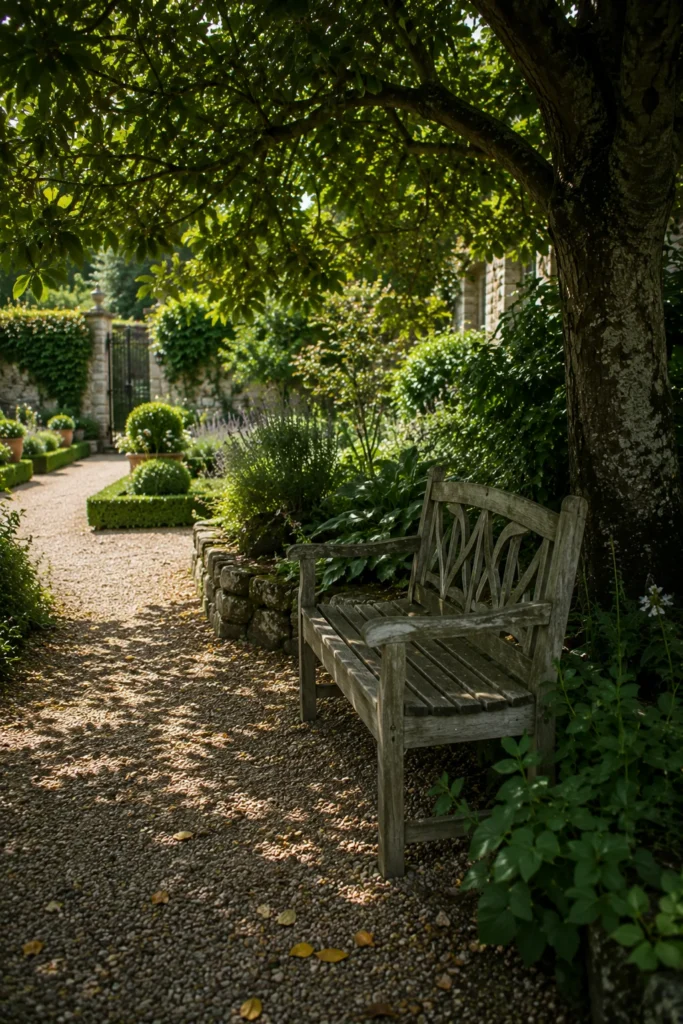
Place a simple, slightly weathered bench beneath a mature tree somewhere in your garden, ideally tucked just off the main path. This kind of quiet, shaded seating area has long been a hallmark of European garden design, offering a place to pause and reflect.
The combination of dappled shade, natural surroundings, and a touch of solitude creates one of the most peaceful spots a garden can offer. Over time, this becomes the kind of spot you find yourself returning to again and again, regardless of what else is happening in the space.
A Garden Rooted in Timeless Charm:
A dreamy European garden is not built overnight, and that is exactly its appeal. It grows slowly, layer by layer, through structured hedges, aged stone, and small antique details that gain even more character with each passing year.
Start with just one or two ideas from this list, like a weathered urn or a simple gravel pathway. Watch how quickly your garden begins to feel like it carries its own quiet, timeless history.
Frequently Asked Questions:
What defines a European style garden?
European garden style is defined by formal symmetry, structured hedges, classical stone elements, and a muted color palette. It often includes antique accents like urns, statues, or fountains that add a sense of history and timeless elegance.
Do I need a large garden for this style to work?
No, many European inspired elements, like a weathered urn, a small fountain, or symmetrical planting, work well in smaller spaces. The key is focusing on structure and quality details rather than the overall size of the garden.
Where can I find authentic antique garden accents?
Architectural salvage yards, estate sales, and specialty antique dealers are good places to find genuine vintage pieces. Many garden centers also sell new items designed to mimic an aged, weathered finish at a lower cost.
What plants are commonly used in European gardens?
Boxwood, roses, lavender, and ivy are commonly used in this style of garden. These plants offer structure, fragrance, and year round greenery that align with the formal, layered look traditional European gardens are known for.
How do I keep boxwood hedges looking neat?
Regular trimming, typically two to three times during the growing season, keeps boxwood hedges looking sharp and structured. Light, consistent pruning works better than infrequent heavy cuts for maintaining clean, formal shapes.
Can I create this look without a fountain or statue?
Yes, structural elements like hedges, gravel pathways, and symmetrical planting can carry the European look on their own. Antique accents add extra charm, but they are not strictly necessary to achieve the overall style.
What materials feel most authentic for this garden style?
Natural stone, aged terracotta, and wrought iron feel the most authentic for European garden design. These materials naturally weather and develop character over time, which is central to the look this style is known for.
Is this garden style high maintenance?
Structured elements like hedges and symmetrical beds do require regular upkeep to stay neat. However, many of the antique accents themselves, like stone urns or statues, need very little ongoing maintenance once they are in place.

Hi, I’m Emily! I turn messy corners into cozy, organized spots. DreamNestDecor is where I share simple, practical home ideas — decor, organization, and small-space solutions that work in real life, not just in photos. Every idea here is carefully researched before it’s shared.