
Walk into a room and somehow you just know. No flashy logos, no loud colors, nothing screaming for attention, yet it feels like a five star hotel suite. You cannot point to one single expensive item, but the whole space whispers money.
That whisper has a name now. It is called quiet luxury, and the wildest part is that most of these rooms are not actually that expensive to create. They just follow 23 quiet rules that most people never notice, until you point them out.
What Quiet Luxury Decor Actually Means?
Quiet luxury is not about buying the most expensive thing in the store. It is about choosing fewer, better quality pieces that are made to last, instead of filling a room with cheap trendy items that look tired within a year.
This style leans on natural materials, soft neutral colors, and clean lines instead of bold patterns or flashy branding. Once you understand this mindset, every tip below will feel less like a rule and more like common sense.
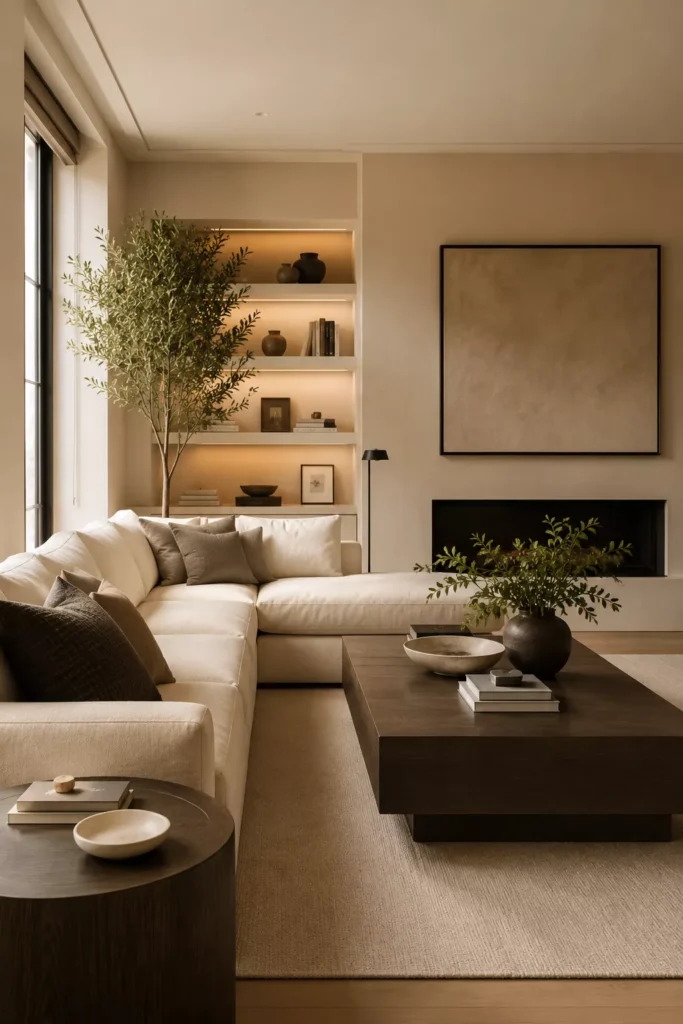
1. Stick to a Tight Neutral Color Palette:
Quiet luxury rooms almost always use a small, tight range of colors, usually three or fewer. Think warm white, soft beige, and one deeper tone like charcoal or espresso brown.
This limited palette instantly makes a room feel curated and intentional, instead of busy or random. Avoid bright accent colors entirely, since even one wrong color can break that calm, expensive feeling.
2. Invest in Quality Over Quantity:
This is the rule that changes everything about quiet luxury. One well made sofa in a beautiful fabric will always look more expensive than three cheaper pieces crammed into the same room, even if the total cost ends up similar.
Before buying anything new, ask yourself if you would still want it in five years. If the answer is no, skip it and save toward something you will actually keep long term, since quiet luxury rooms are built slowly over time rather than all at once.
3. Choose Natural Materials Over Synthetic Ones:
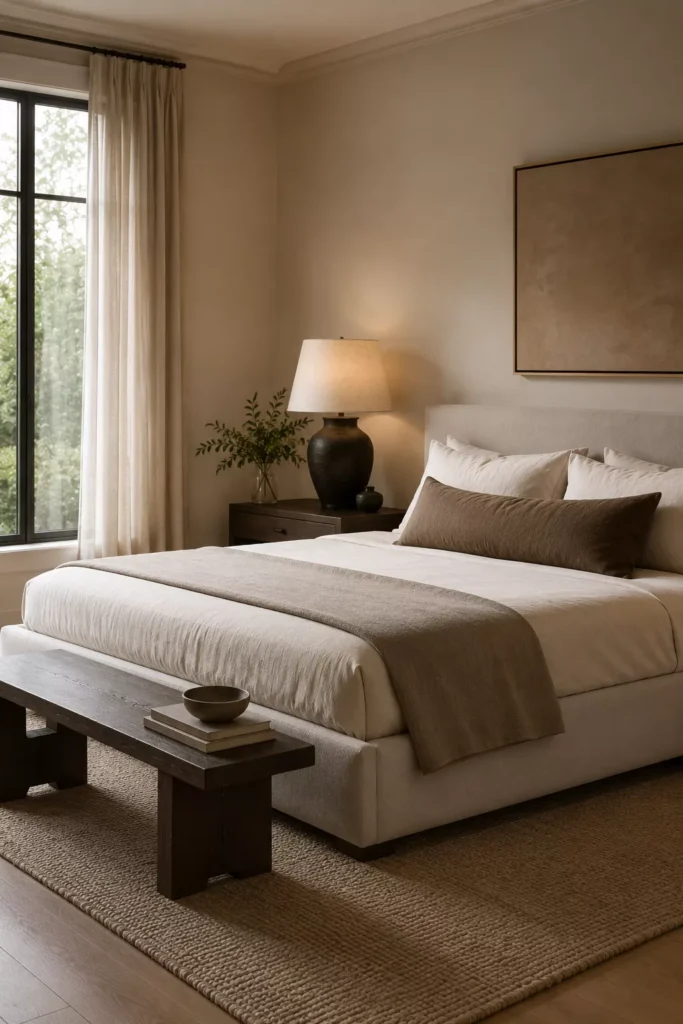
Real wood, natural stone, linen, and wool instantly read as more expensive than plastic, laminate, or polyester, even from across the room. Your eye can tell the difference, even if you cannot explain exactly why.
Swap synthetic throw pillows for linen or wool ones, and choose solid wood furniture instead of particle board pieces. These small swaps add up to a noticeably richer feeling space. If you love the warmth of natural materials, explore these 20 Sustainable Home Decor Ideas That Actually Look High End for more inspiration.
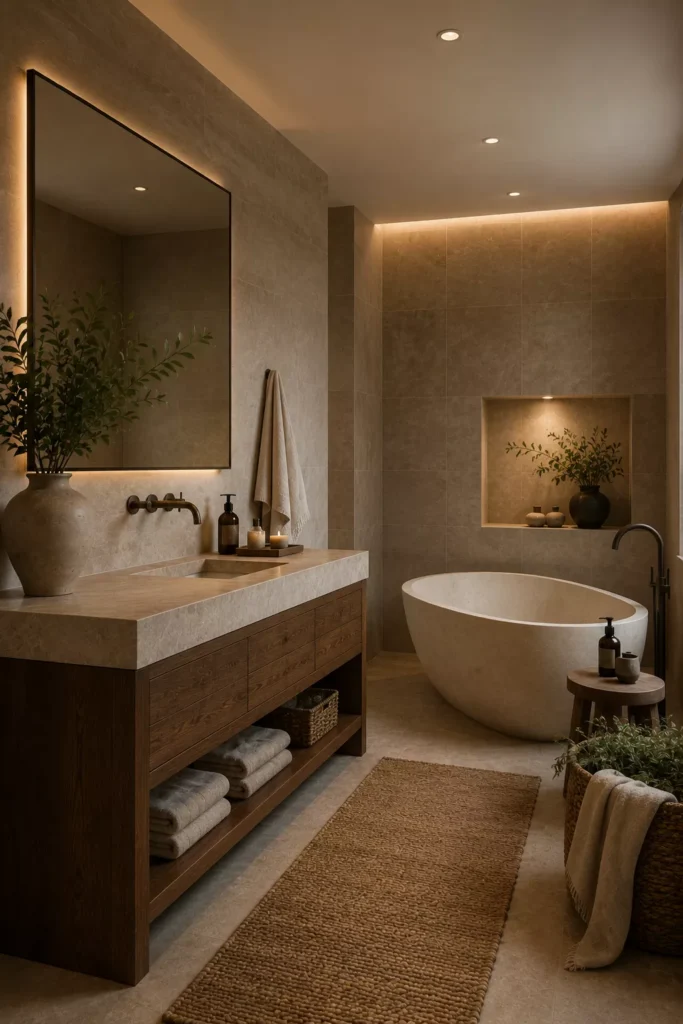
4. Keep Surfaces Mostly Clear:
Cluttered counters and tabletops instantly cheapen a room, no matter how nice the individual items are. Quiet luxury spaces always leave generous empty space on every surface, treating that empty area as part of the design rather than wasted room.
Pick just a few meaningful objects to display, like one ceramic vase or a stack of beautiful books. This restraint is exactly what makes the room feel calm, expensive, and intentional, and it is often the single fastest change you can make in an afternoon.
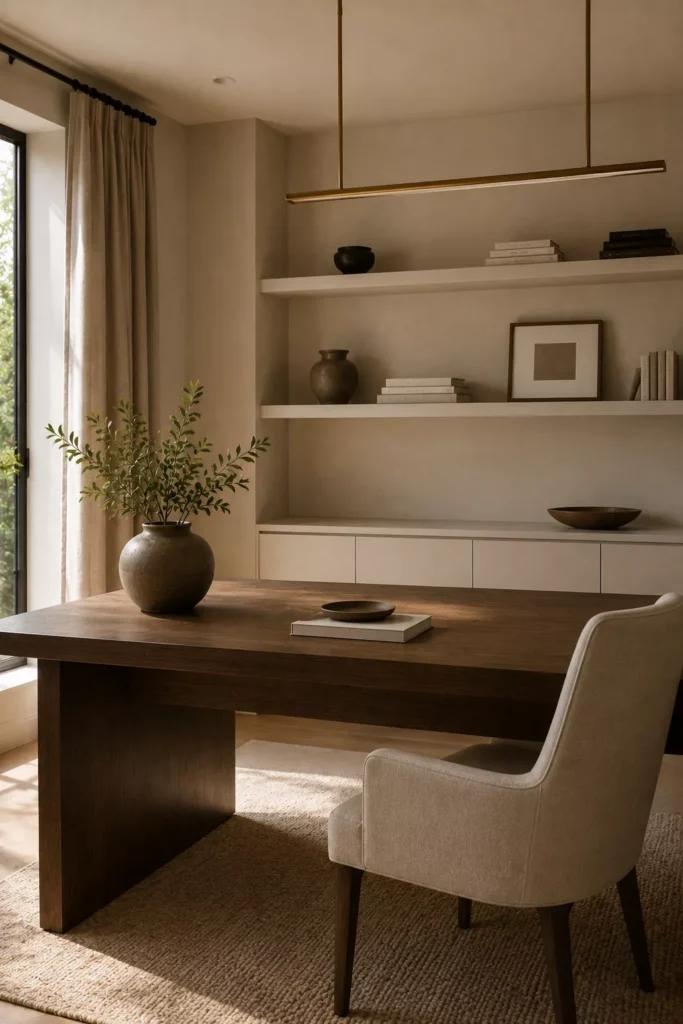
5. Use Layered, Warm Lighting:
Harsh overhead lighting flattens a room and makes everything look cheaper than it actually is. Quiet luxury spaces rely on layered lighting instead, mixing table lamps, floor lamps, and soft sconces at different heights around the room.
Choose warm toned bulbs and dimmer switches wherever possible. This soft, layered glow instantly makes any room feel more like a boutique hotel than a regular living room, especially once the sun goes down and the lamps become the main source of light.
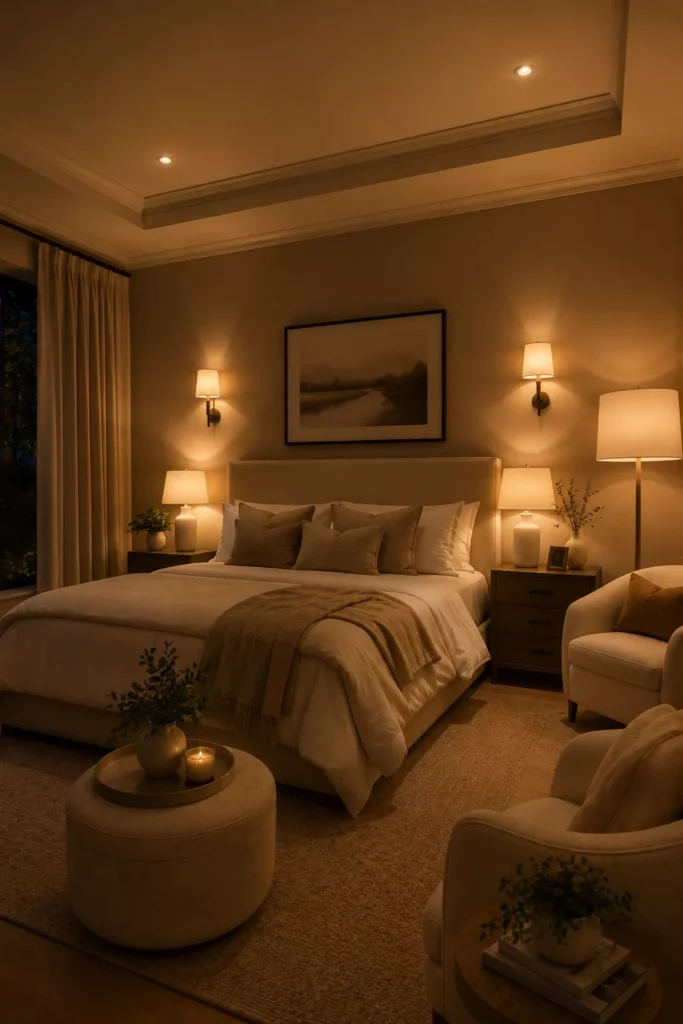
6. Choose Heavy, Substantial Fabrics:
Thin, flimsy curtains and lightweight throws can make a room feel a little cheap, even if the colors are perfect. Heavier fabrics like velvet, thick linen, or wool drape better and instantly feel more luxurious to the touch, holding their shape instead of looking limp.
When shopping for curtains or upholstery, always touch the fabric before buying. A heavier, denser weave almost always signals higher quality, even at a similar price point, and it is one of the easiest ways to compare two similar looking products in person.
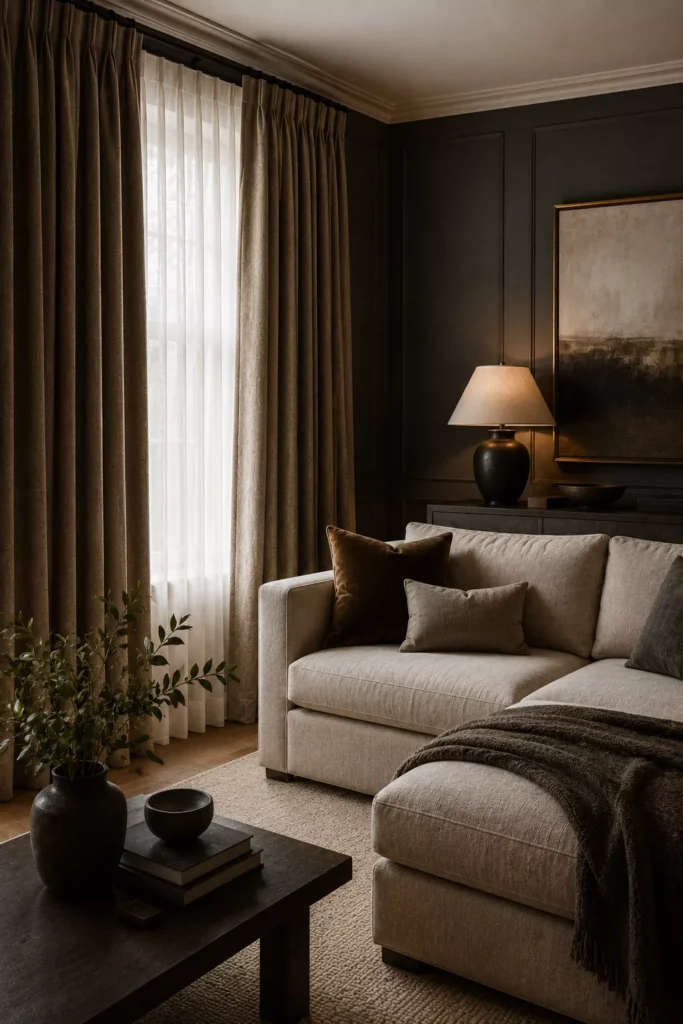
7. Avoid Visible Logos and Branding:
Nothing breaks the quiet luxury look faster than a big visible logo on a candle, pillow, or piece of furniture. True quiet luxury never announces itself loudly, since the quality of the item is meant to speak before the brand name does.
Choose unbranded or subtly branded pieces instead, where the quality speaks for itself. This is one of the easiest rules to follow, and it instantly makes any room feel more sophisticated, even when the items themselves are fairly affordable.
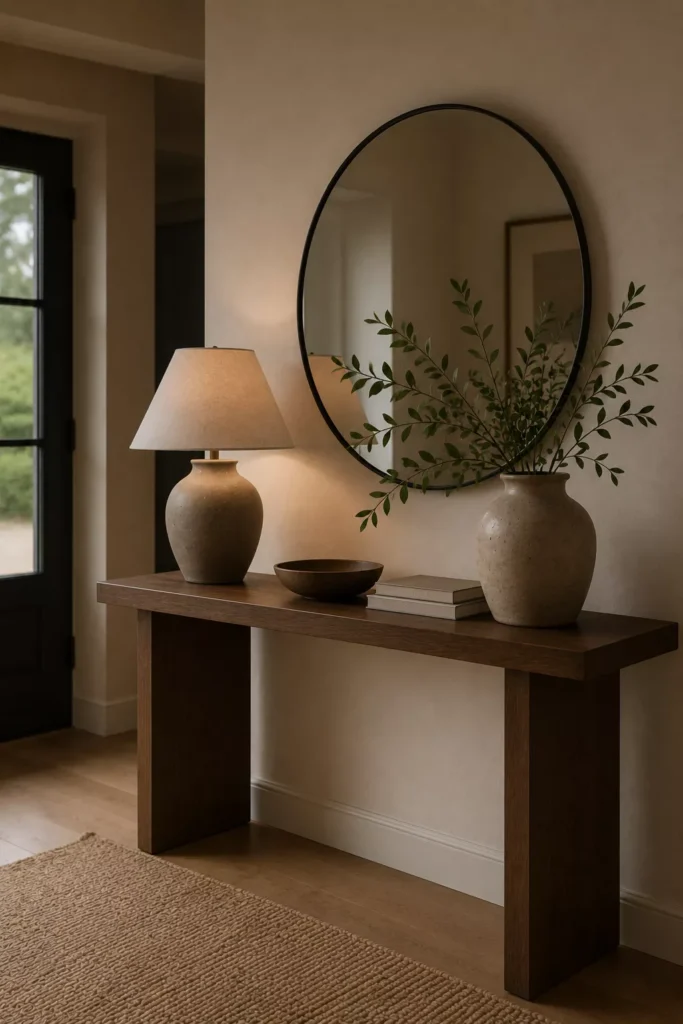
8. Let Architecture Lead the Design:
In quiet luxury spaces, the room’s natural architecture, like trim, molding, or window shape, often gets more attention than the furniture itself. Highlighting these details makes the whole space feel custom built, even in a fairly standard home.
If your home has original trim or molding, paint it to stand out subtly against the walls. If it does not, even simple picture frame molding can add that same architectural richness, and it is a project many homeowners tackle themselves over a weekend. For more ways to create a beautiful focal point, check out these 21 Antique Gallery Wall Ideas That Stop the Scroll.
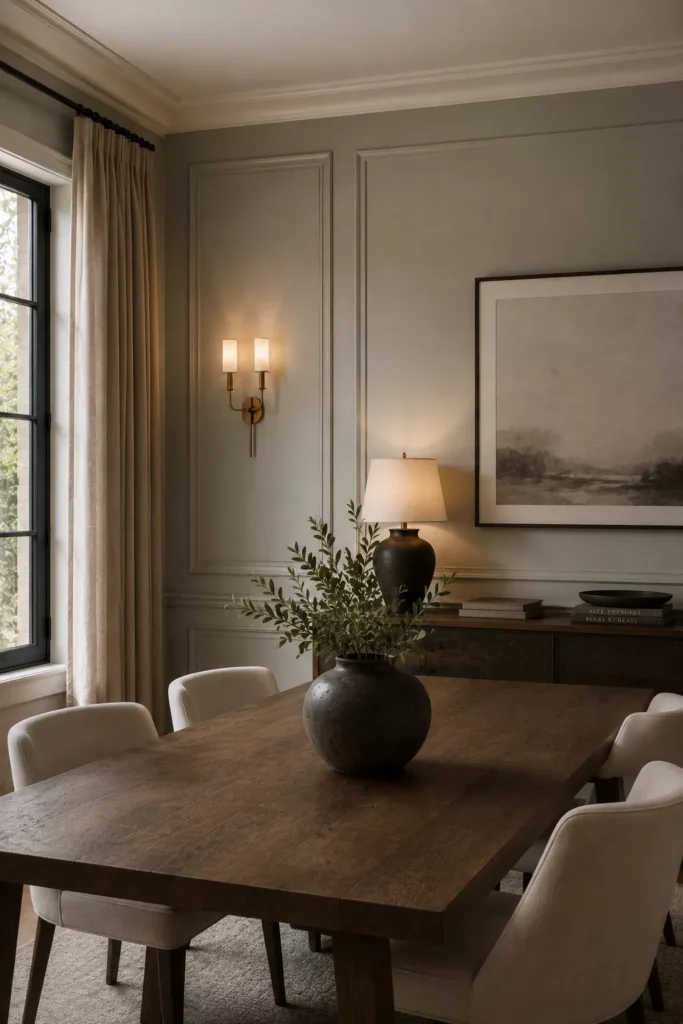
9. Choose a Few Statement Pieces Instead of Many Small Ones:
A room filled with dozens of small decorative items can feel cluttered and cheap, no matter how much each item cost. Quiet luxury favors a few larger, well chosen statement pieces instead, giving each item room to actually be noticed.
Think one beautiful piece of art, one sculptural lamp, or one substantial coffee table. These fewer, bigger choices carry far more visual weight than a shelf full of small trinkets, and they also make the room far easier to keep tidy day to day.
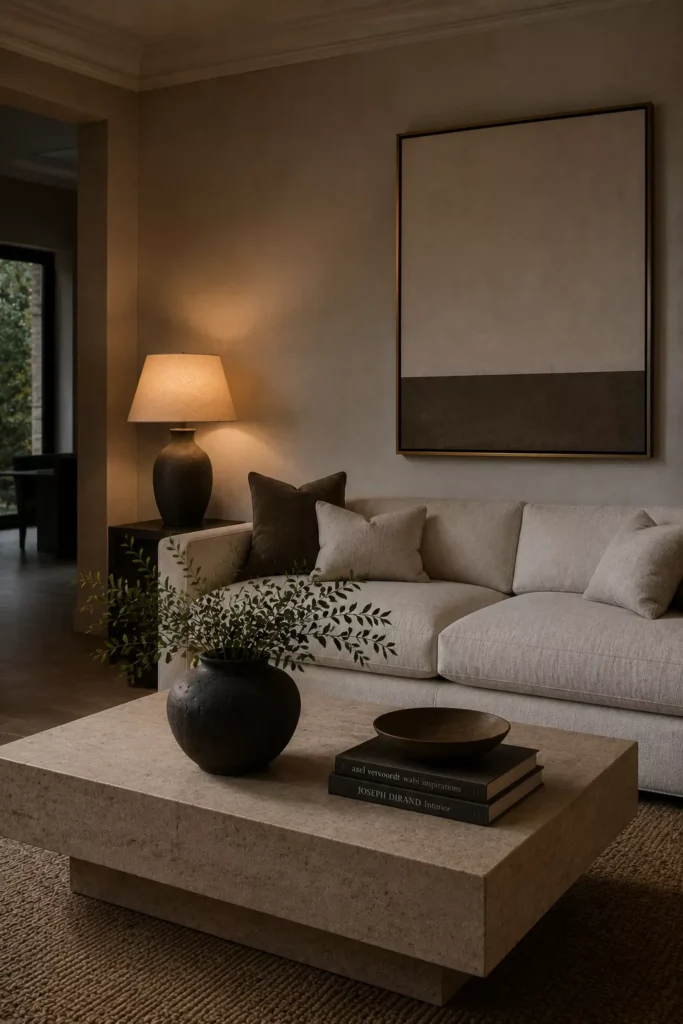
10. Use Symmetry to Create Calm:
Symmetrical arrangements, like matching nightstands or balanced seating, instantly feel more polished and expensive than mismatched, random layouts. Symmetry signals order, and order reads as luxury, since the eye does not have to work to make sense of the room.
Try arranging your furniture and decor in mirrored pairs where possible. This simple shift can make even budget furniture look like it came from a high end showroom, and it is a trick used constantly in hotel design for exactly this reason.
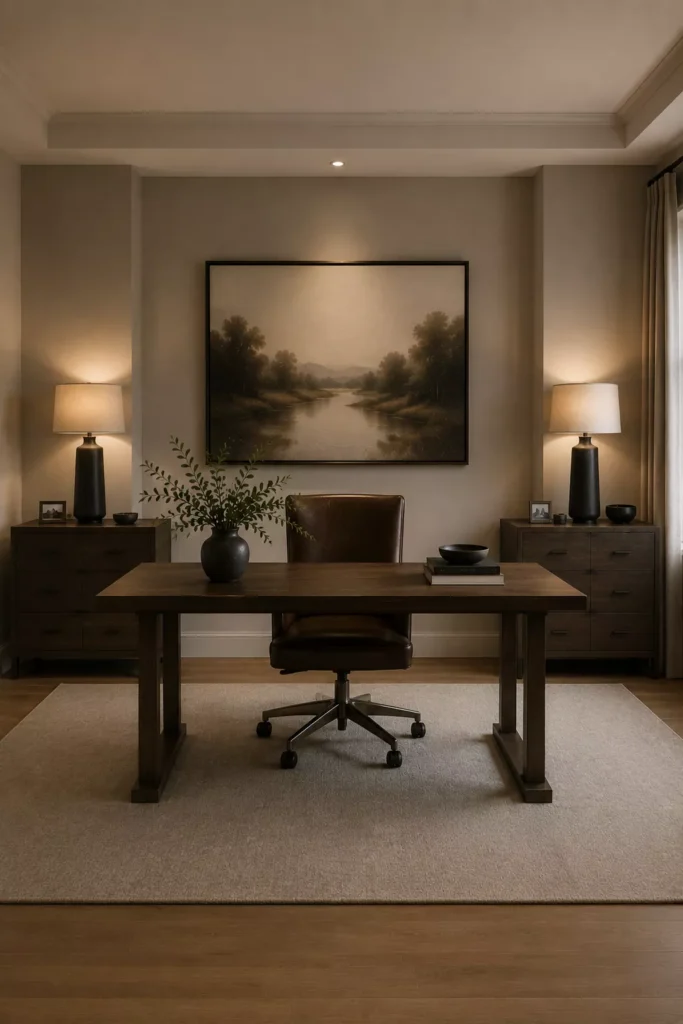
11. Choose Matte and Soft Finishes Over Shiny Ones:
Glossy, plastic looking finishes can cheapen a room instantly, even on furniture that was not actually cheap. Matte finishes on walls, furniture, and fixtures feel more refined and intentional, since they absorb rather than bounce light.
When buying paint, choose matte or eggshell over high gloss for most walls. The softer sheen absorbs light gently instead of bouncing it harshly, giving the whole room a calmer, richer look, especially under warm lamp light in the evening.
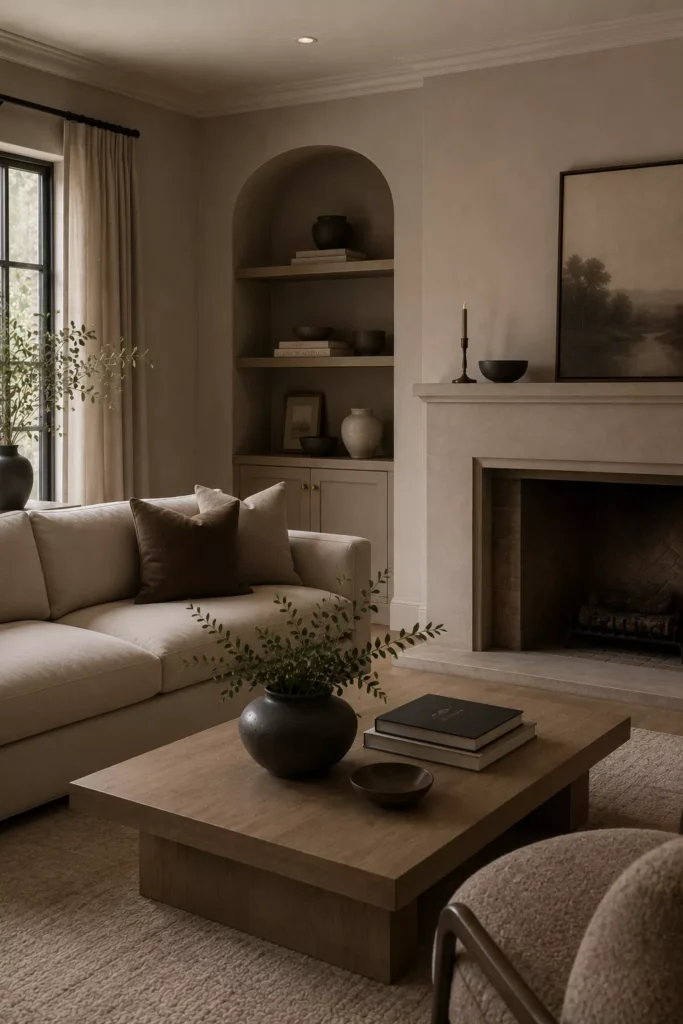
12. Add One Piece of Real Art:
A single piece of real, meaningful art can elevate an entire room more than ten pieces of mass produced wall decor combined. It does not need to be expensive, just genuinely chosen, since the story behind a piece matters as much as its price tag.
Visit local art fairs, small galleries, or independent artist shops online. One thoughtfully chosen piece tells a story that printed canvas art from a big box store never quite can, and it often becomes the first thing guests comment on when they walk in.
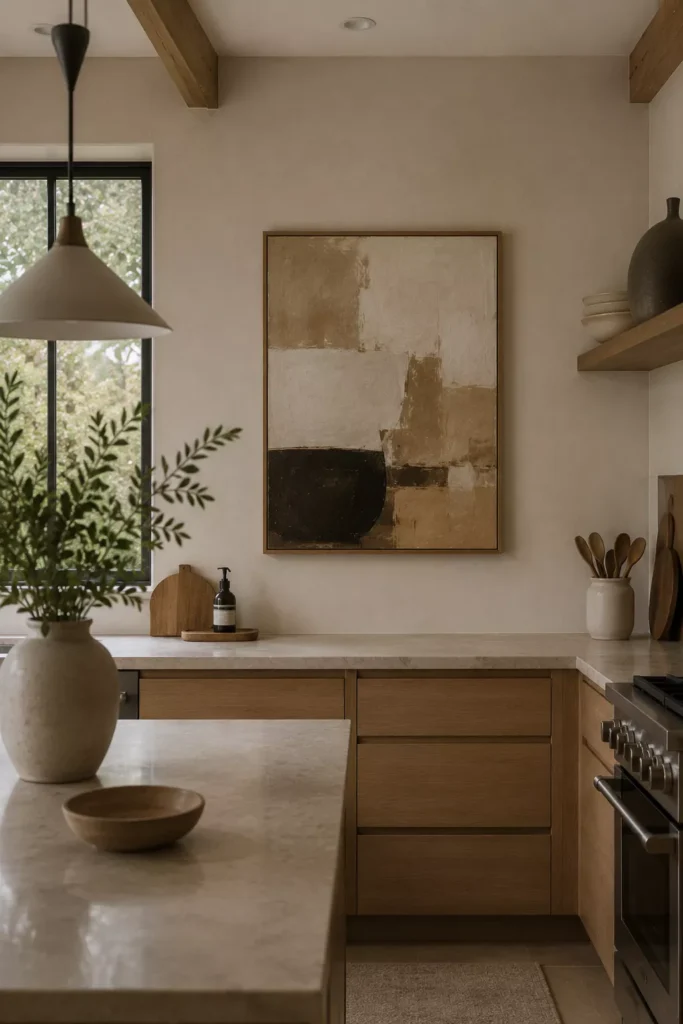
13. Keep Window Treatments Simple and Floor Length:
Short, mismatched curtains instantly make a room feel unfinished and budget conscious. Floor length curtains in a simple, solid fabric instantly elevate any window, no matter the room size, by drawing the eye all the way down to the floor.
Hang your curtain rod high and wide, extending it past the window frame on both sides. This makes the window look larger and the whole room feel taller and more expensive, even if the actual window itself is fairly small or ordinary.
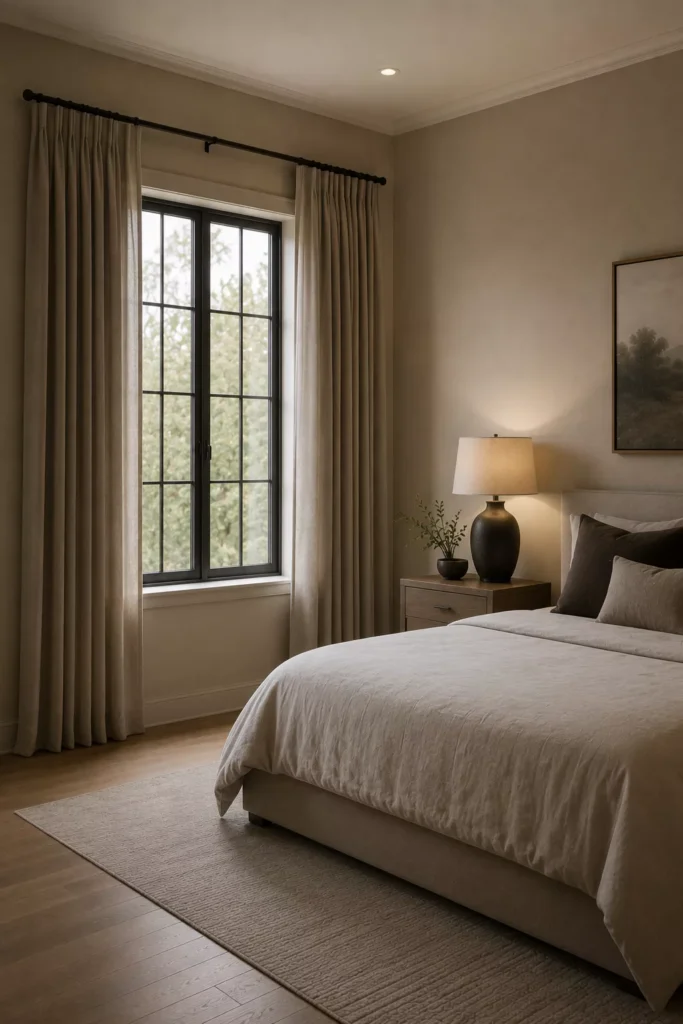
14. Choose a Cohesive Metal Finish:
Mixing too many different metal finishes, like brass, chrome, and black, all in one room can feel chaotic and unplanned. Quiet luxury spaces usually stick to just one or two metal tones throughout, so every fixture feels like part of one cohesive plan.
Pick a primary metal finish, like brushed brass or matte black, and use it consistently across your hardware, lighting, and fixtures. This small consistency creates a surprisingly expensive looking effect, even when each individual fixture was fairly inexpensive on its own. If you love a more polished and timeless look, these 22 Art Deco Minimalist Home Decor Ideas offer beautiful inspiration.
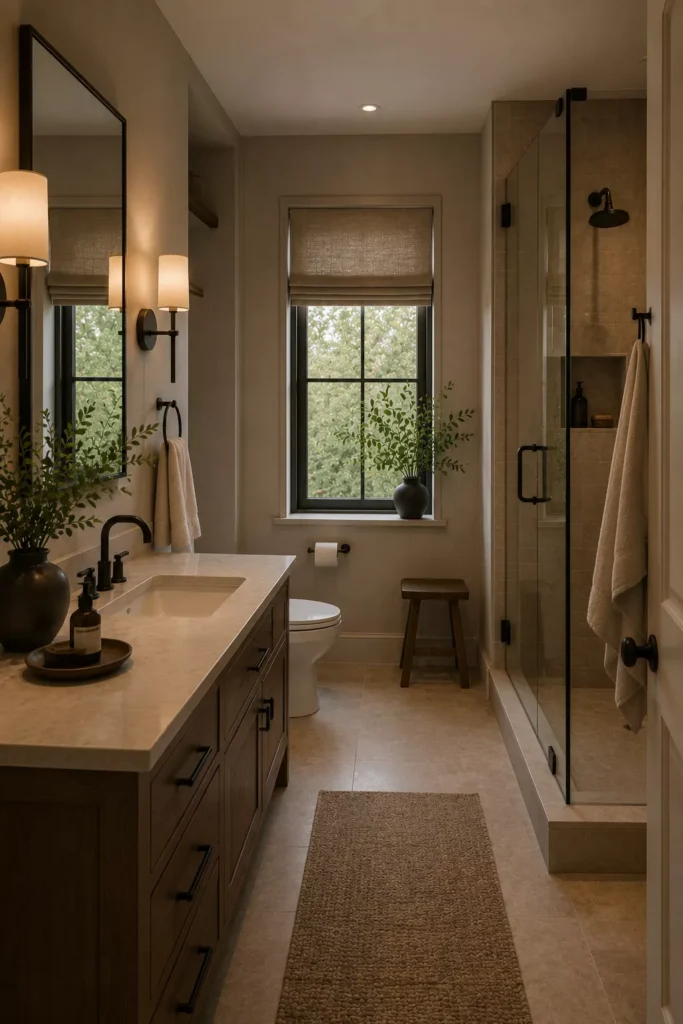
15. Invest in a Quality Area Rug:
A thin, cheap feeling rug can undercut an otherwise beautiful room in seconds. A thick, well made rug in a natural fiber like wool grounds the entire space and instantly raises the perceived value of every piece around it, almost like an anchor for the whole layout.
Choose a rug large enough that your main furniture pieces can sit at least partially on top of it. A rug that is too small is one of the most common reasons a room feels off, even when people cannot say why, and sizing up is almost always the better choice.
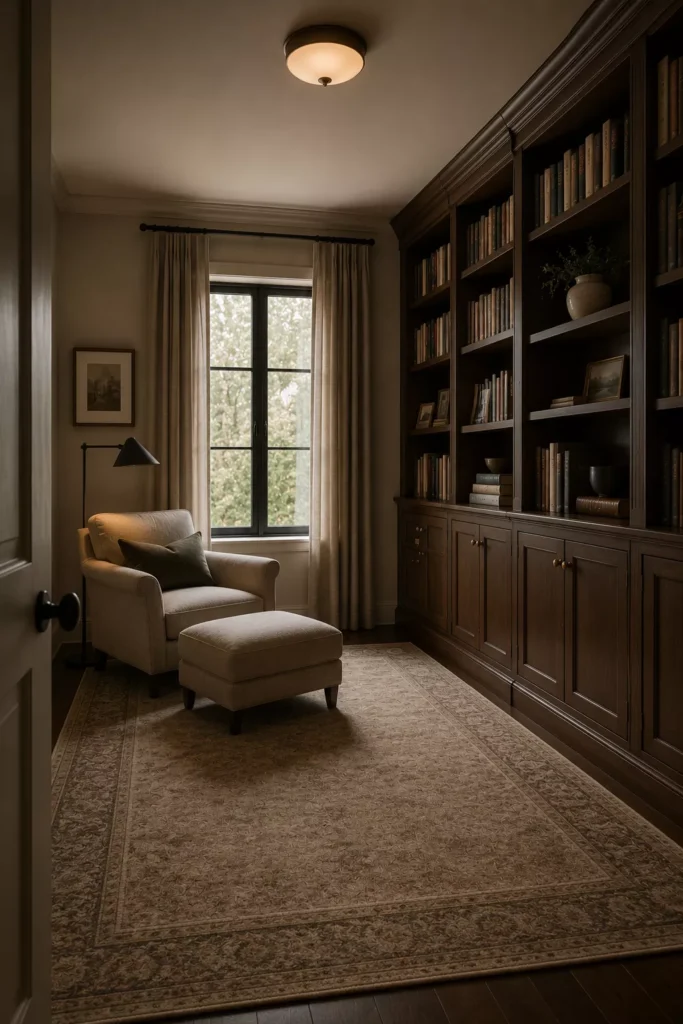
16. Let Negative Space Do the Work:
Quiet luxury spaces are never crammed full of furniture or decor. Empty space, also called negative space, is treated as a design feature, not a problem that needs to be filled, since it gives the eye somewhere calm to rest.
Resist the urge to fill every corner or empty wall. Letting a room breathe a little is one of the simplest, most effective quiet luxury tricks there is, and it often feels harder to do than people expect, simply because we are so used to filling every gap.
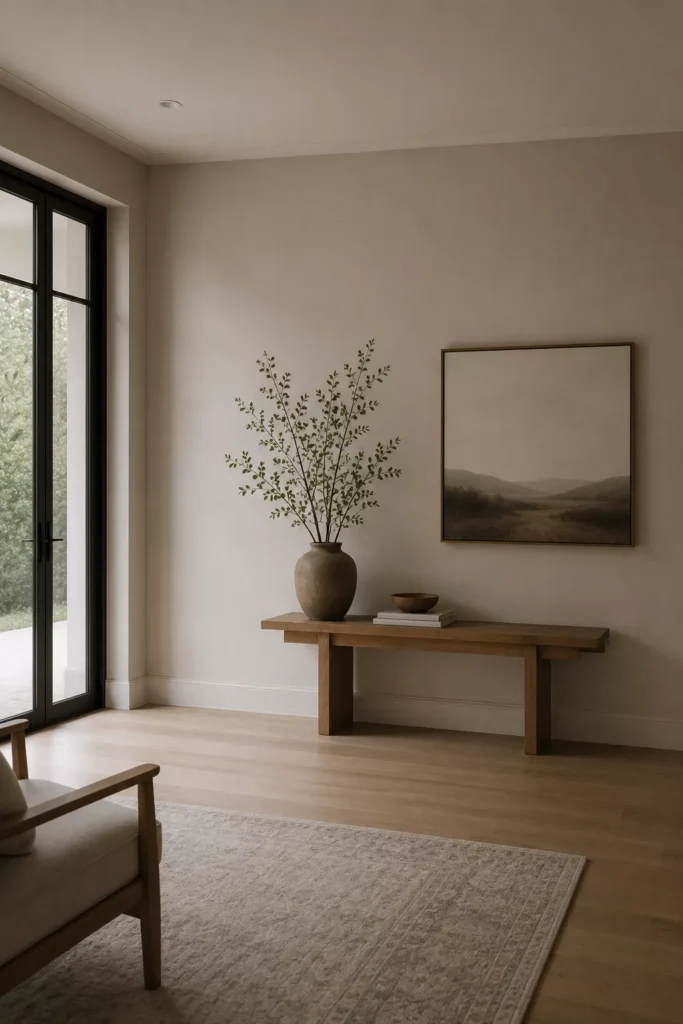
17. Choose Furniture With Clean, Simple Lines:
Ornate, heavily carved furniture can feel dated and busy in a modern quiet luxury space. Clean, simple silhouettes feel more timeless and tend to photograph and live better in almost any room, regardless of the era your home was built in.
Look for furniture with straight or gently curved lines and minimal decorative detail. This simplicity lets the quality of the material itself become the real star of the piece, instead of being hidden behind unnecessary carving or ornamentation.
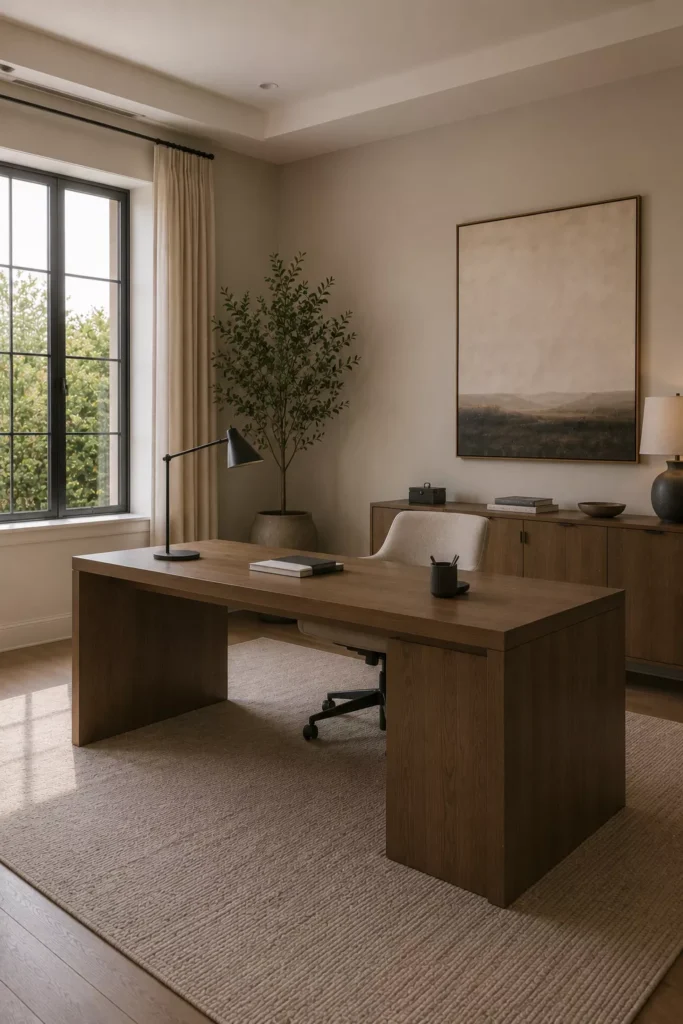
18. Use Candles Instead of Synthetic Scents:
A flickering candle in a simple glass or ceramic vessel instantly adds warmth and quiet sophistication to any room. Synthetic plug in air fresheners, on the other hand, often work against that same calm, expensive feeling, since the scent can feel artificial and overpowering.
Choose candles with simple, unbranded labels and a natural wax base when possible. The soft glow alone does more for a room’s mood than almost any other single decor item, especially when paired with the layered lighting mentioned earlier.
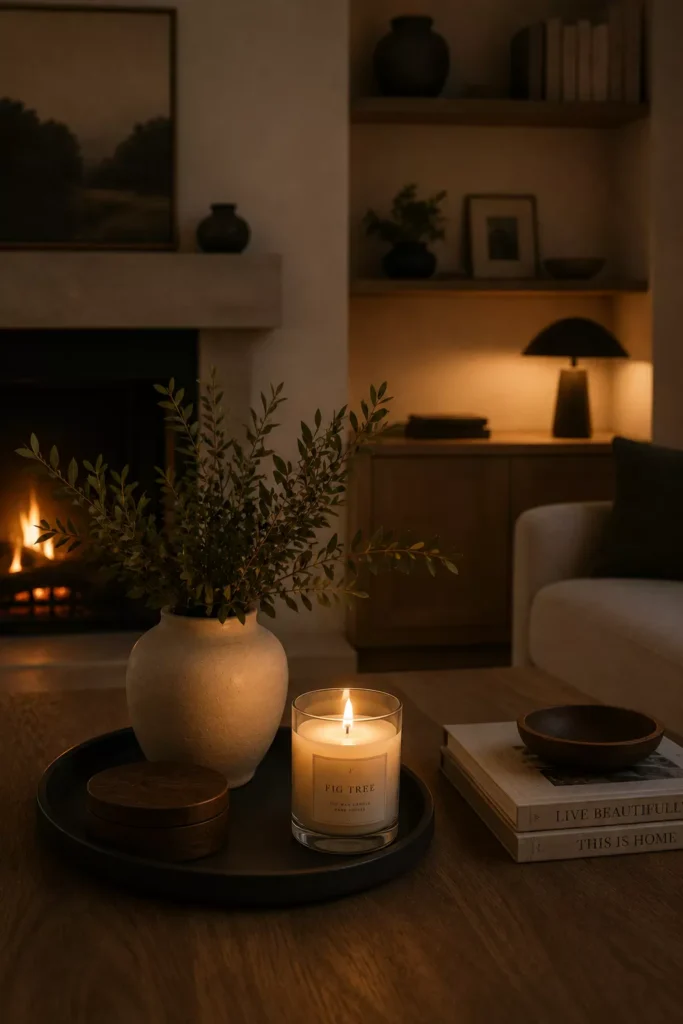
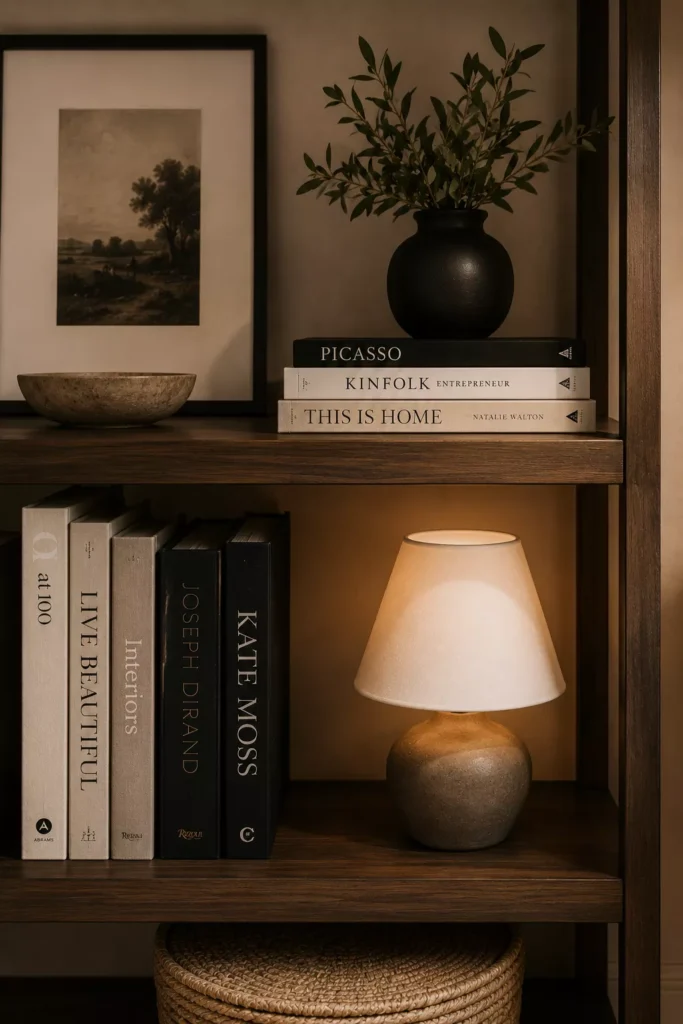
19. Display Books With Intention:
A messy pile of random books can look cluttered, but a thoughtfully arranged stack or shelf of books can instantly add warmth and intellect to a room. The trick is in how you display them, not how many you own, so even a small collection can look impressive.
Group books by color or size for a calmer look, or stack a few horizontally with one small object on top. This small styling trick is a favorite among interior designers for a reason, since it turns an everyday item into part of the actual decor.
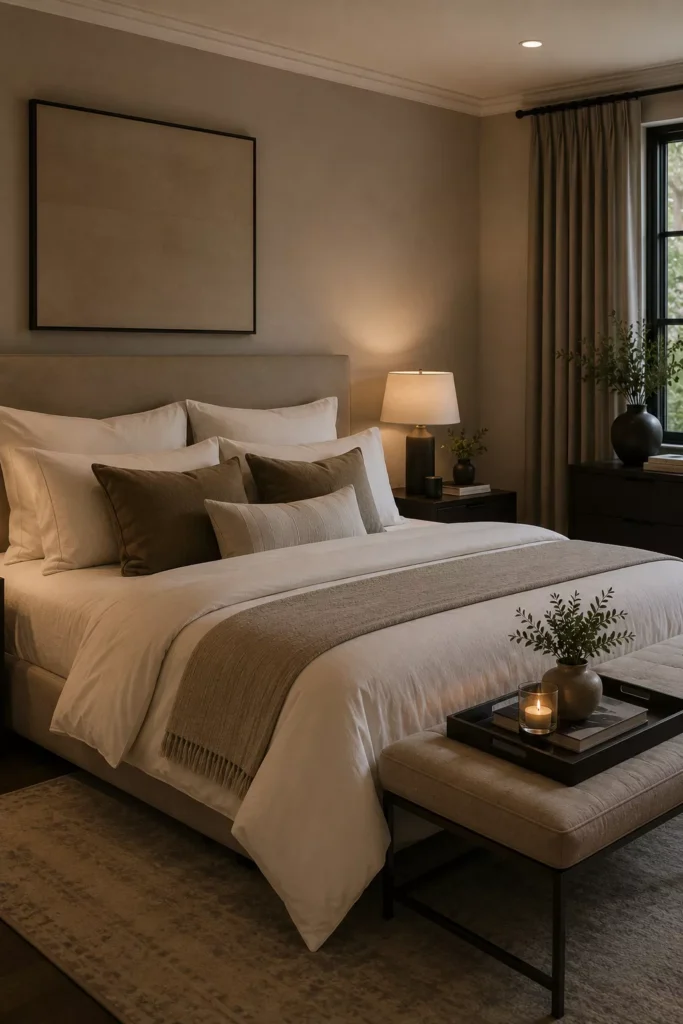
20. Choose Quality Bedding Over Trendy Bedding:
In quiet luxury bedrooms, the bedding itself does most of the work. Crisp, high thread count cotton or soft linen sheets in neutral tones instantly make a bed look like it belongs in a five star hotel, even if the bed frame itself is fairly simple.
Skip busy patterns and bold colors on your bedding. Stick to white, cream, or soft gray, and layer in texture through a textured throw or extra pillows instead of pattern, which keeps the bed looking calm rather than busy. For more bedroom inspiration, explore these 20 Vintage Wardrobe Storage Ideas for a Cozy Organized Space.
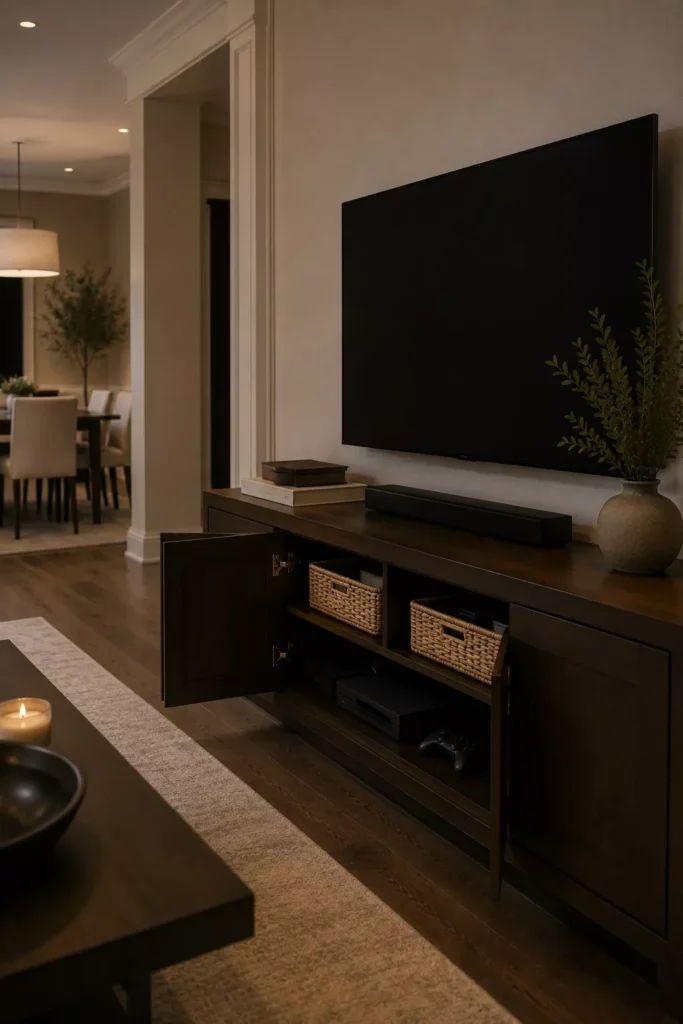
21. Keep Technology Hidden When Possible:
Visible cords, remote controls, and electronics can quietly undercut an otherwise beautiful room. Quiet luxury spaces tend to hide or minimize visible technology wherever it is reasonably possible, since wires and chargers rarely fit the calm, curated look.
Use cord covers, a TV cabinet with doors, or a simple basket to tuck away remotes and chargers. This small effort keeps the visual focus on the materials and design instead of on clutter, and it usually takes less than an hour to set up properly.
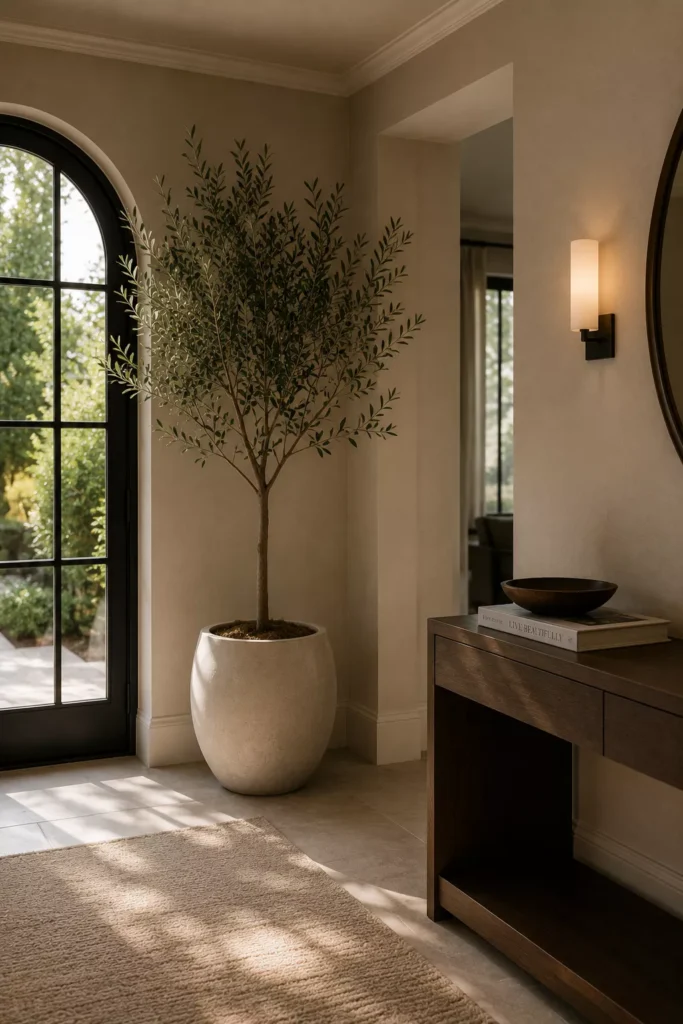
22. Add Greenery Without Overdoing It:
A single, well chosen plant in a simple ceramic or stone pot can soften a room beautifully. Too many plants crammed into every corner, however, can start to feel busy instead of calm, working against the very restraint quiet luxury is built on.
Choose one or two larger plants instead of many small ones scattered around. A simple, structural plant like a fiddle leaf fig or olive tree fits the quiet luxury look especially well, since its shape alone feels intentional and sculptural.
23. Edit Your Space Regularly:
The final and most important rule is simple. Quiet luxury is never finished, it is maintained. Walk through your space every season and remove anything that no longer feels intentional or special, even items you once genuinely loved.
This ongoing editing habit is what actually separates a quiet luxury home from a cluttered one over time. The goal is never to add more, it is to keep only what truly deserves to stay, and most people find this habit gets easier and faster every time they do it.
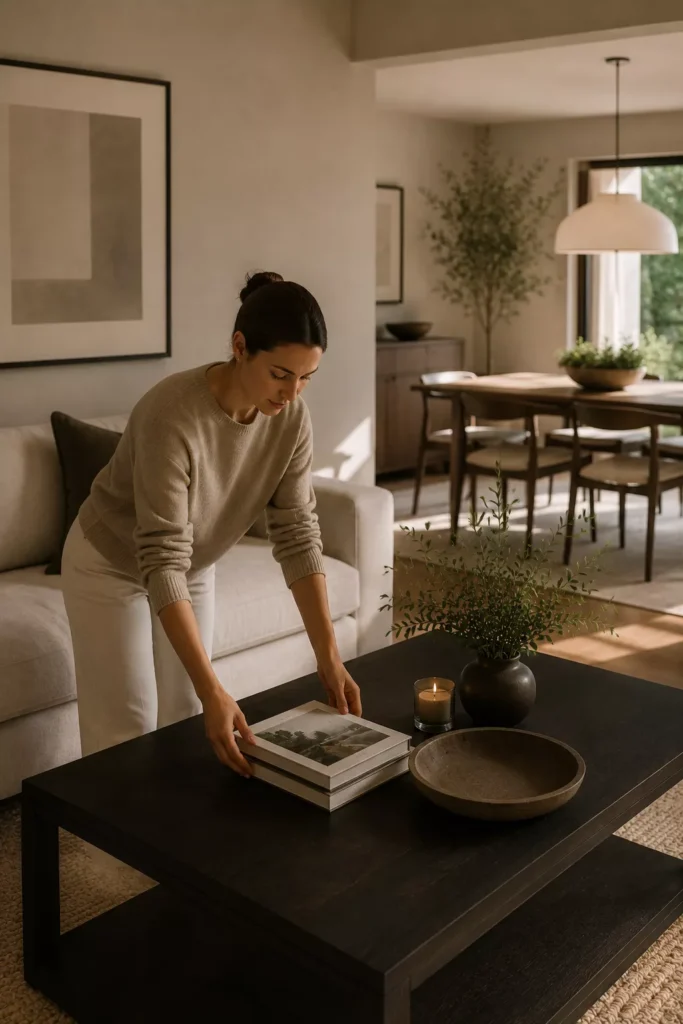
The Quiet Confidence of a Well Made Room:
Quiet luxury was never really about money. It is about choosing things on purpose, taking care of what you already have, and letting a few quality pieces speak louder than a room full of clutter ever could.
Pick three or four ideas from this list and start there. You do not need a full renovation to feel that calm, expensive shift, just a little more intention in the choices you make every single day.
Frequently Asked Questions:
What is quiet luxury decor?
Quiet luxury decor focuses on quality materials, neutral colors, and simple, intentional design instead of flashy branding or trendy items. It values fewer, better pieces over many cheaper ones, creating a calm, expensive looking space.
Is quiet luxury decor expensive to achieve?
Not necessarily. Many quiet luxury principles, like decluttering, choosing neutral colors, and layering soft lighting, cost very little. The style is more about restraint and intention than spending large amounts of money.
What colors are used in quiet luxury homes?
Quiet luxury homes typically use a tight palette of warm neutrals, including beige, cream, soft white, and one deeper accent tone like charcoal or espresso. Bright or bold colors are generally avoided.
How is quiet luxury different from minimalism?
Minimalism focuses on having very little overall, while quiet luxury focuses on having fewer, higher quality pieces that feel intentional. A quiet luxury room can still feel warm and layered, unlike a strictly minimalist space.
Can renters create a quiet luxury look?
Yes, renters can absolutely achieve this look. Focus on portable elements like quality bedding, neutral textiles, layered lighting, and a few statement pieces that can move with you to a new space later.
What materials are common in quiet luxury design?
Natural materials like wood, linen, wool, and stone are common in quiet luxury design. These materials tend to look and feel higher quality than synthetic alternatives, even at a similar price point.
Does quiet luxury decor avoid all patterns?
Not entirely, but patterns are used sparingly and usually in subtle, tonal variations rather than bold prints. The focus stays on texture and material quality rather than busy or colorful patterns.
How do I keep a quiet luxury space from feeling cold?
Layered lighting, soft textiles, and natural materials like wood and linen help keep a quiet luxury space feeling warm. Avoiding harsh overhead lighting and adding one or two meaningful personal touches also helps a lot.

Hi, I’m Emily! I turn messy corners into cozy, organized spots. DreamNestDecor is where I share simple, practical home ideas — decor, organization, and small-space solutions that work in real life, not just in photos. Every idea here is carefully researched before it’s shared.