Picture this: you step into your backyard on a quiet morning and a soft chorus of birdsong greets you before you even reach the garden gate. Inside a handsome wire aviary, finches hop between perches, sunlight filters through the mesh, and the whole structure looks like it was always meant to be part of the yard. A well built aviary turns birdkeeping from a cage in the corner into a living feature of your outdoor space.
You do not need a huge yard or a custom builder to get there. All you need is the right structure for your birds, your climate, and your garden style. These 19 backyard aviary design ideas will help you choose a shape, a frame, and a setup that keeps birds safe, healthy, and happy while making your backyard more beautiful.
1. Build a Walk-In Aviary With a Peaked Roof
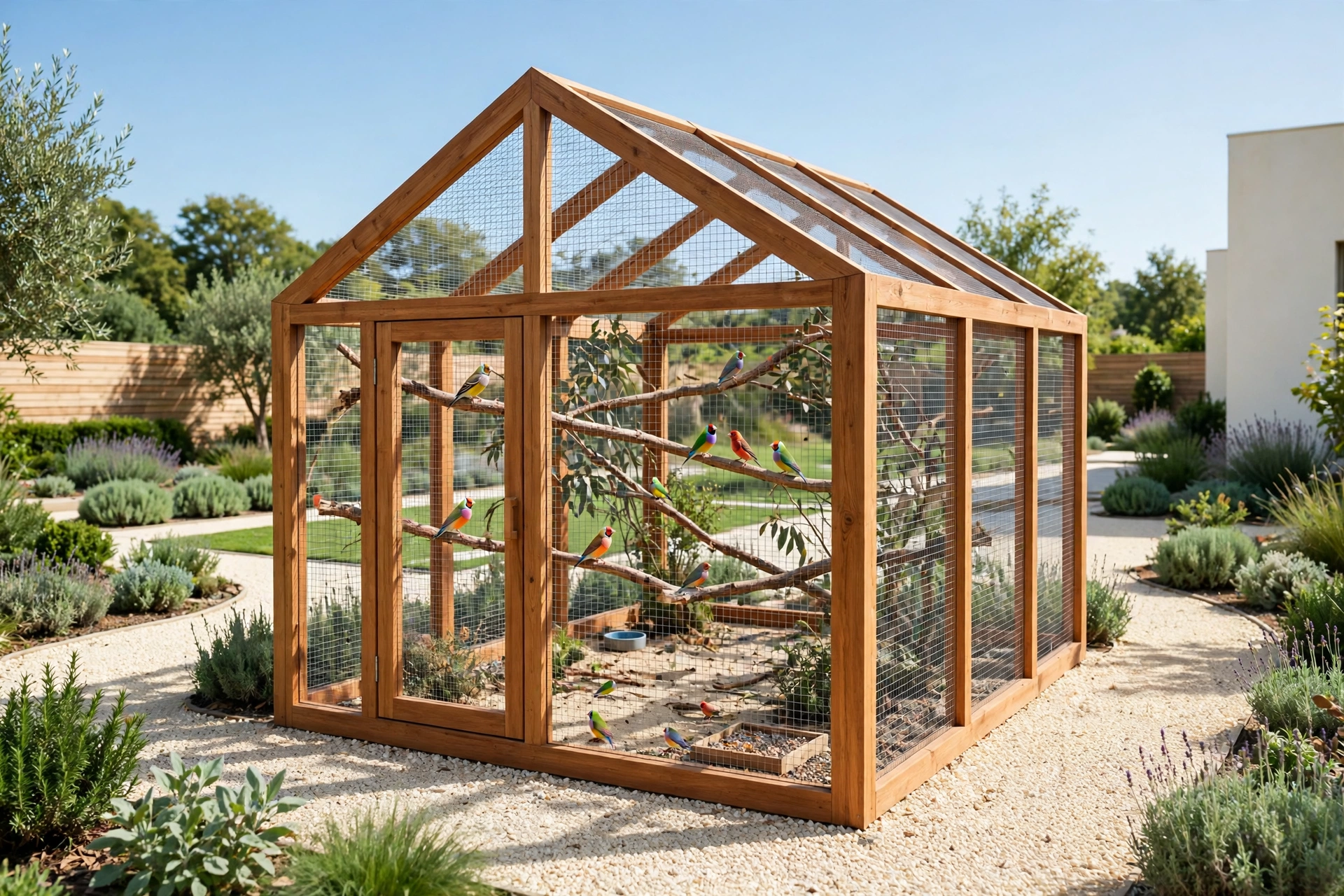
A walk-in aviary with a peaked roof is the classic backyard design for a good reason. The tall center height lets you step inside to clean, feed, and tend the birds without crouching, and the sloped roof sheds rain away from the interior. A wooden frame with sturdy wire mesh panels gives the structure a warm, garden-like look that blends with fences and sheds.
Place the aviary where it gets morning sun and afternoon shade, and add a solid section of roof over one end so birds can shelter from heavy rain. A concrete or paver floor makes cleaning simple and stops predators from digging underneath. This design suits finches, canaries, budgies, and other small birds that thrive in a roomy shared flight.
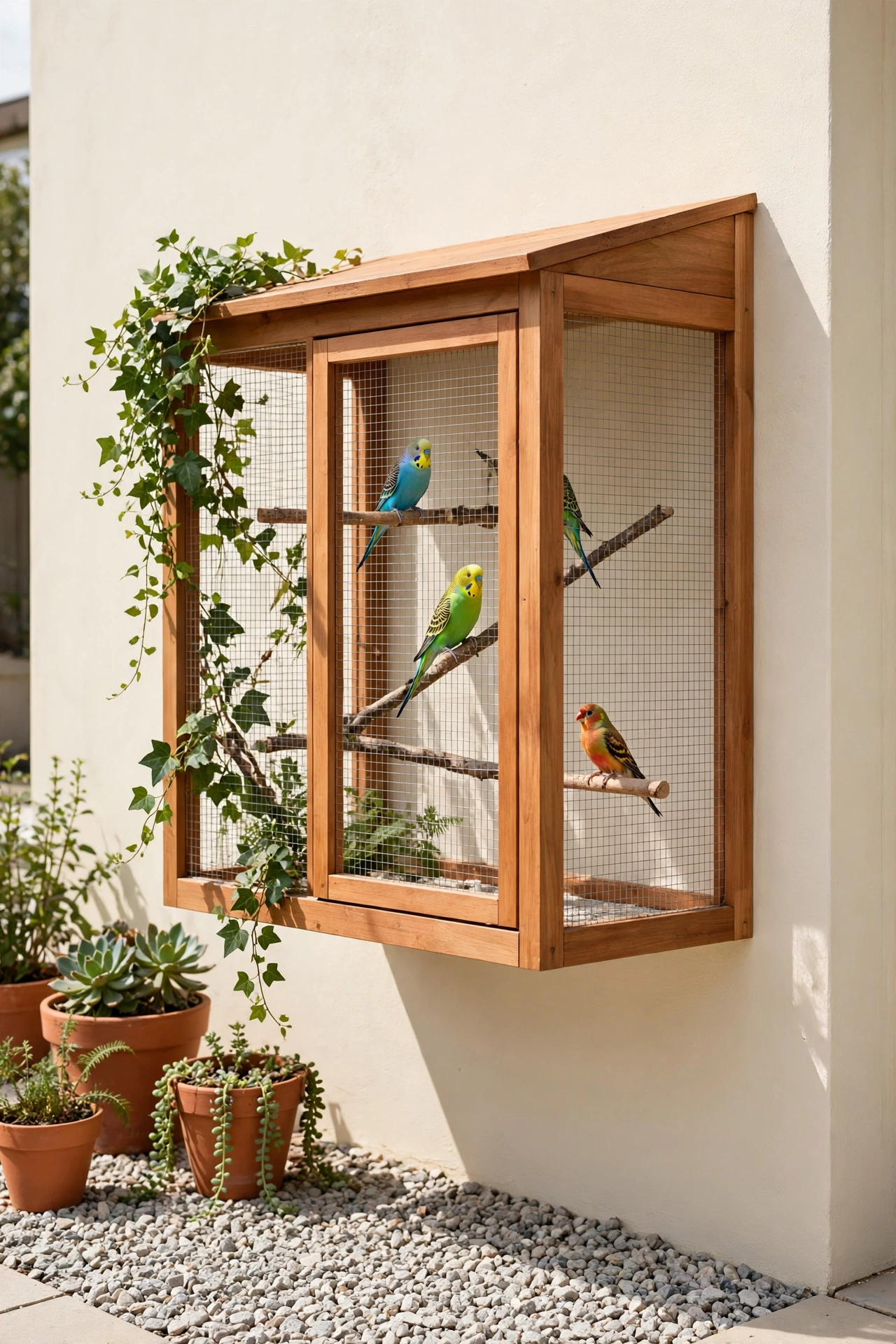
2. Attach an Aviary to the Side of the House
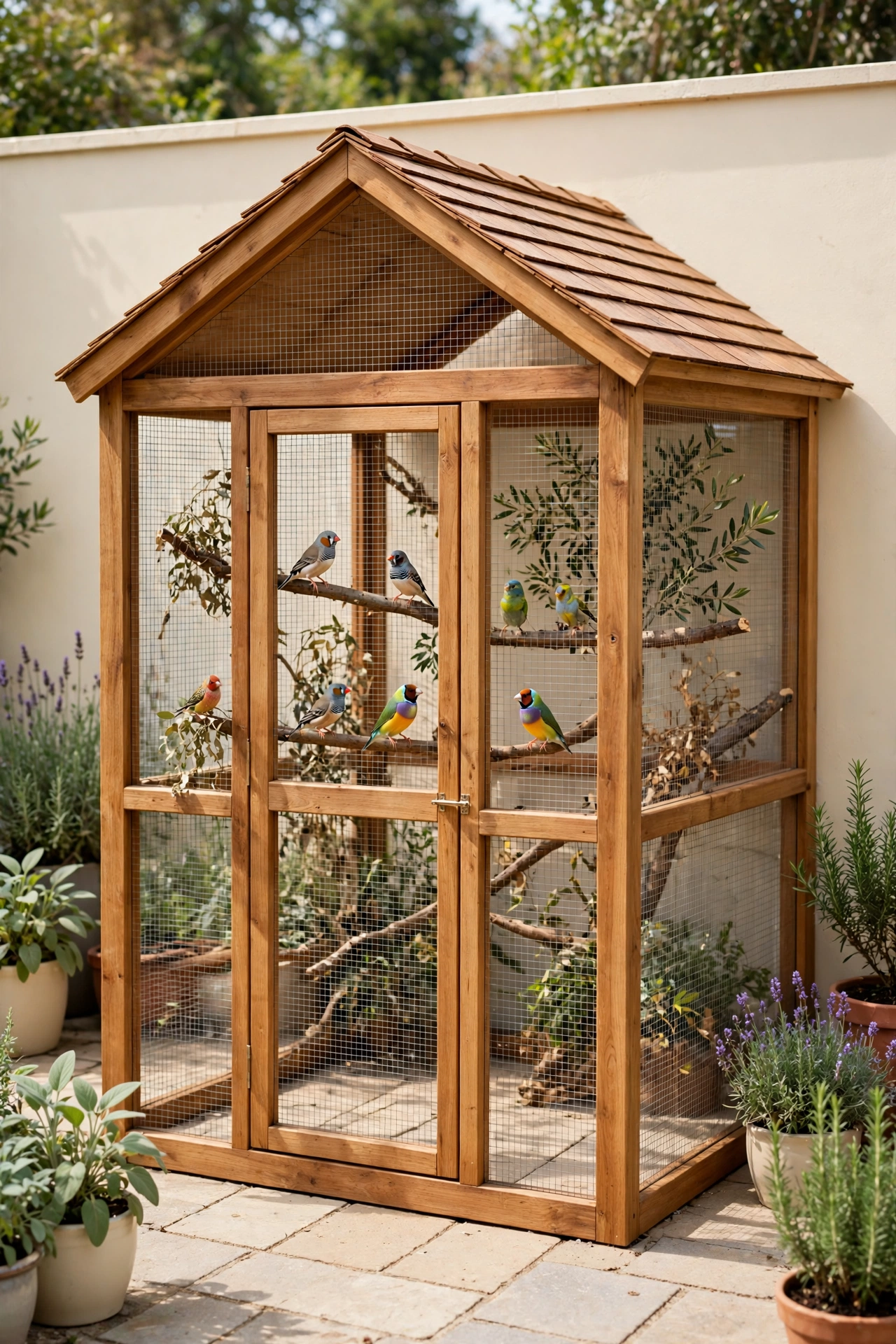
An aviary attached to a house wall uses the wall itself as one solid side, which saves materials and gives birds a sheltered, draft-free corner. The house wall blocks the prevailing wind, and the roof can tie into the existing eaves for a tidy, finished look. A door from a window or a small service hatch lets you tend the birds without walking across the yard in bad weather.
This design works beautifully along a garage wall, a garden room wall, or the side of a shed. Add a narrow planting bed along the open sides so climbing plants soften the wire mesh without blocking the light. Because one side is solid, birds feel more secure, and the structure reads as part of the home rather than a freestanding cage.
3. Choose a Freestanding Flight Cage With a Flat Roof
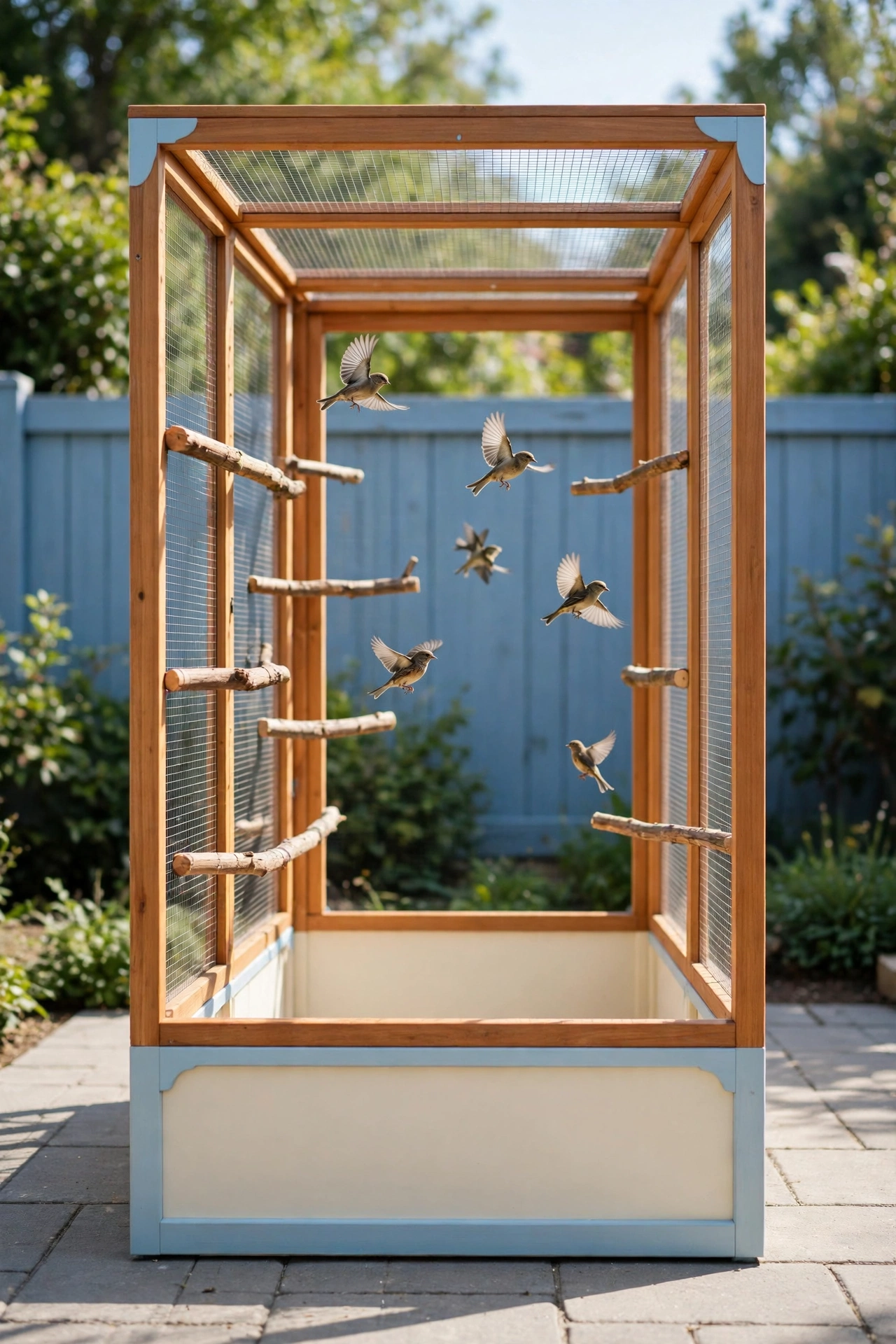
A freestanding flight cage with a flat roof is a simple, rectangular structure that gives birds one long, open flight path. The flat top keeps the build straightforward and the cost down, and a shallow roof overhang shades the interior from harsh midday sun. The open rectangle lets birds fly the full length of the cage, which is the single most important feature for active species.
Set the cage on level pavers or a low concrete pad, and face the long side toward the morning sun so birds can bask in gentle light. Keep perches at different heights along the sides and leave the center clear for flying. This design is ideal for a first aviary because it is easy to build, easy to clean, and easy to extend later.
4. Plant a Living Aviary With Trees and Shrubs Inside
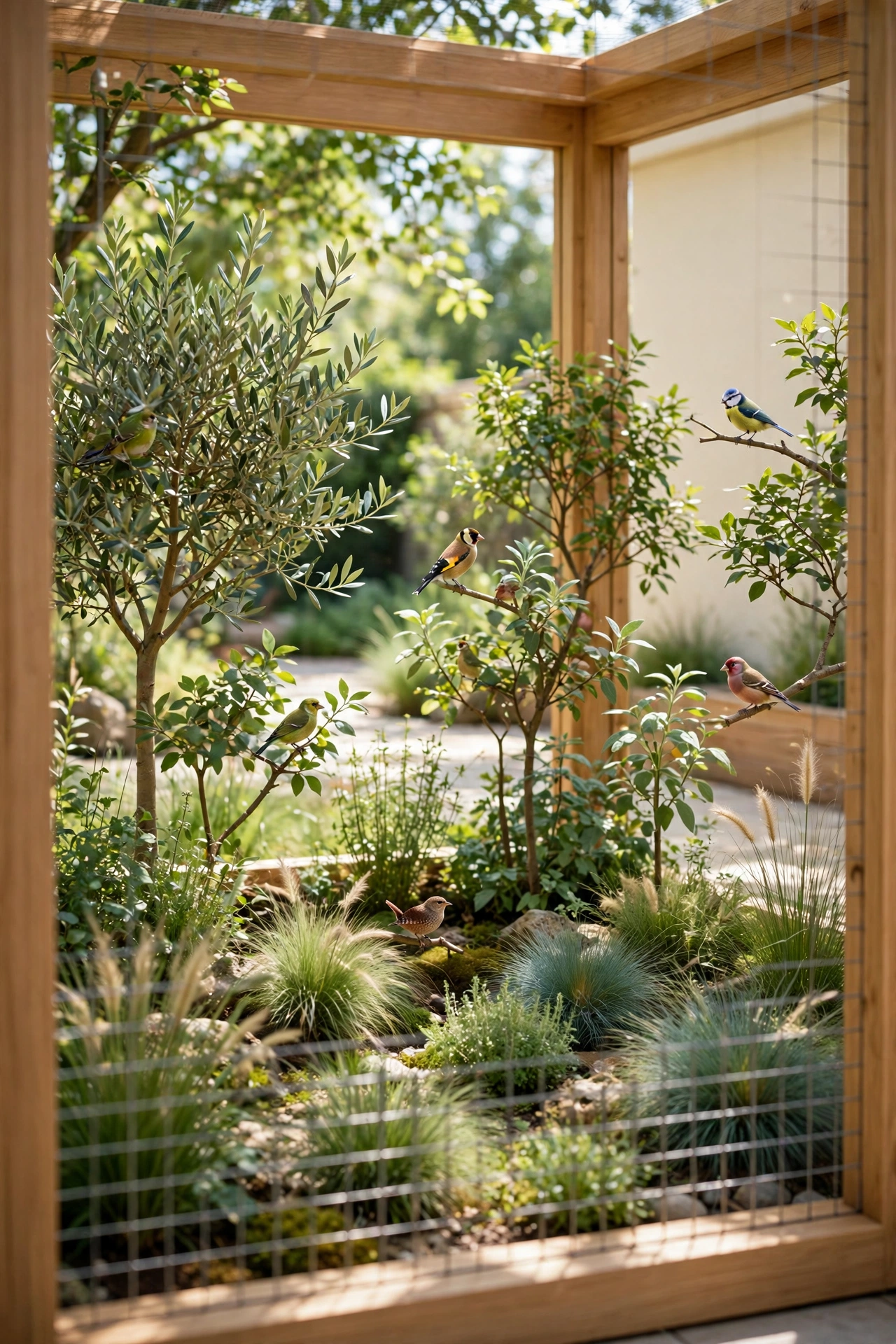
A planted aviary brings the garden inside the wire, with small trees, shrubs, and grasses growing right alongside the birds. Live plants give birds natural perches, shade, and places to hide, and the greenery turns the structure into a miniature landscape instead of a bare cage. Choose bird-safe plants like bamboo, bottlebrush, and native grasses that can handle pecking and pruning.
Protect young plants with wire guards until they are established, and use a soil floor or large planters so roots have room to grow. A planted aviary needs a little more upkeep than a bare one, but the reward is a lush, natural space that birds use every inch of. For planting ideas that support wildlife around the aviary too, these pollinator garden layout ideas will help you shape beds that feed bees and butterflies just outside the wire.
5. Tuck a Corner Aviary Along the Fence Line
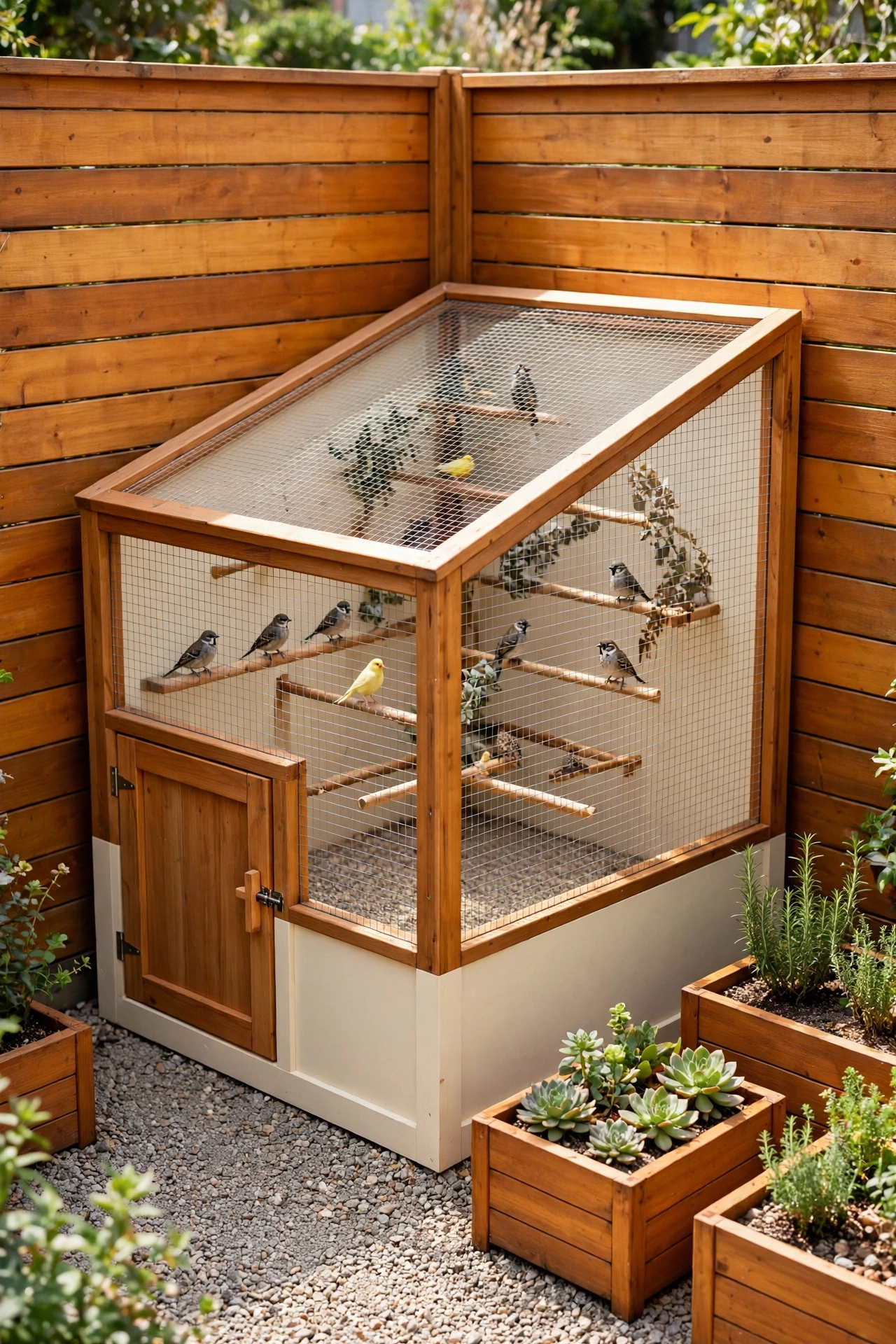
A corner aviary uses two existing fence lines as two of its walls, which makes it one of the most space-efficient designs for a small backyard. The triangular or L-shaped footprint fits neatly into a corner that might otherwise sit empty, and the fences provide solid shelter on two sides. A sloped mesh roof completes the enclosure while keeping the structure open to the sky.
This design is perfect for yards where a freestanding aviary would crowd the lawn. Add a small service door on the open side and a roof panel over the feeding corner to keep seed dry. The corner placement also makes the aviary feel like a natural part of the garden boundary rather than an object dropped in the middle of the yard.
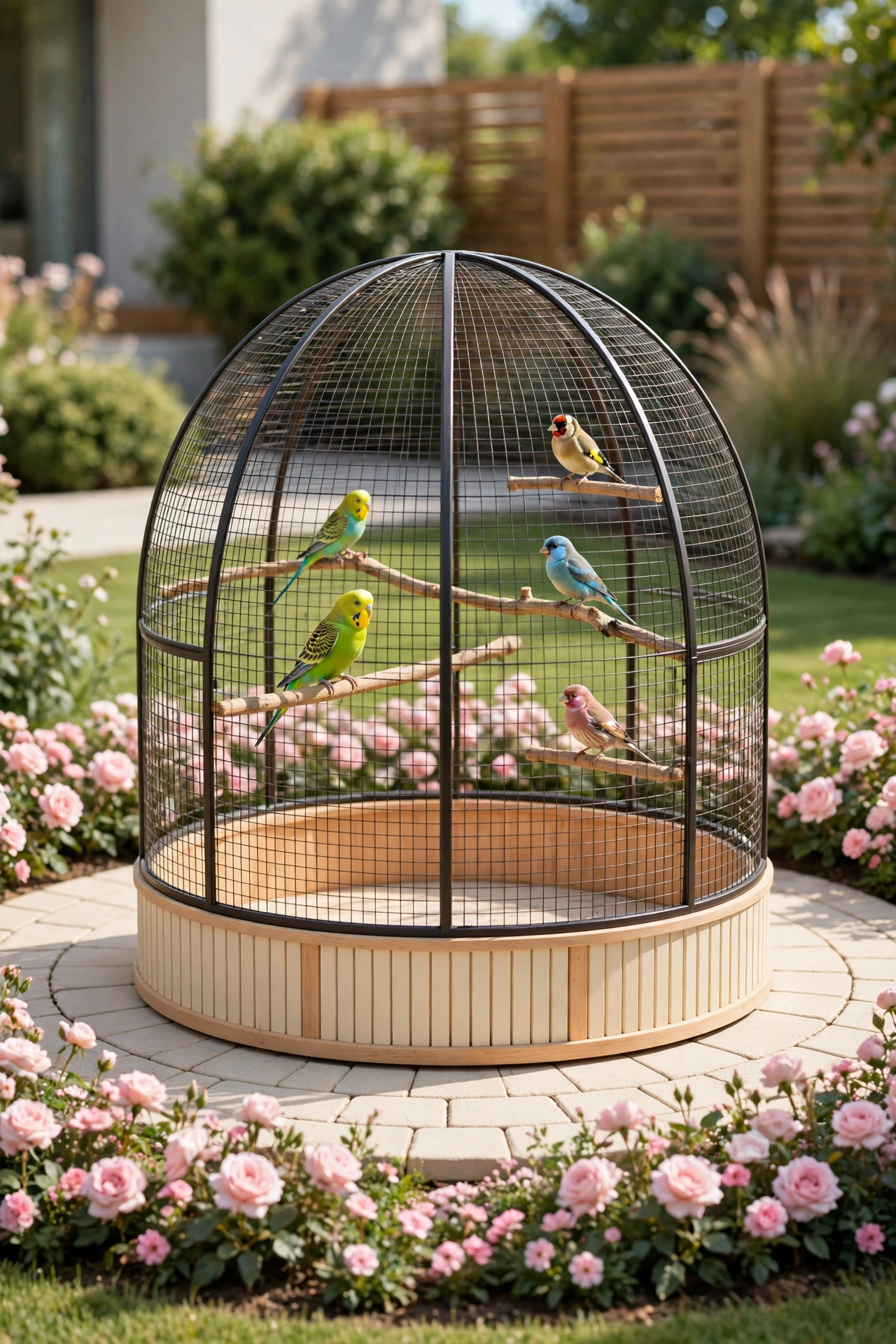
6. Make a Dome Aviary the Focal Point of the Garden
A dome aviary turns birdkeeping into garden art. The curved roofline catches the eye from every angle, and the rounded shape sheds wind and rain better than a flat roof. A metal or bent-wood frame covered in mesh creates a light, airy pavilion that feels more like a garden folly than a cage, and birds love the generous headroom at the center.
Center the dome on a circular paver patio and ring it with low planting beds so the structure anchors the whole garden layout. A dome suits a prominent spot at the end of a path or in the middle of a lawn, where its shape can be appreciated from all sides. If you enjoy statement structures in the garden, these garden arbor ideas will help you pair the dome with arches and entry features that match its graceful curves.
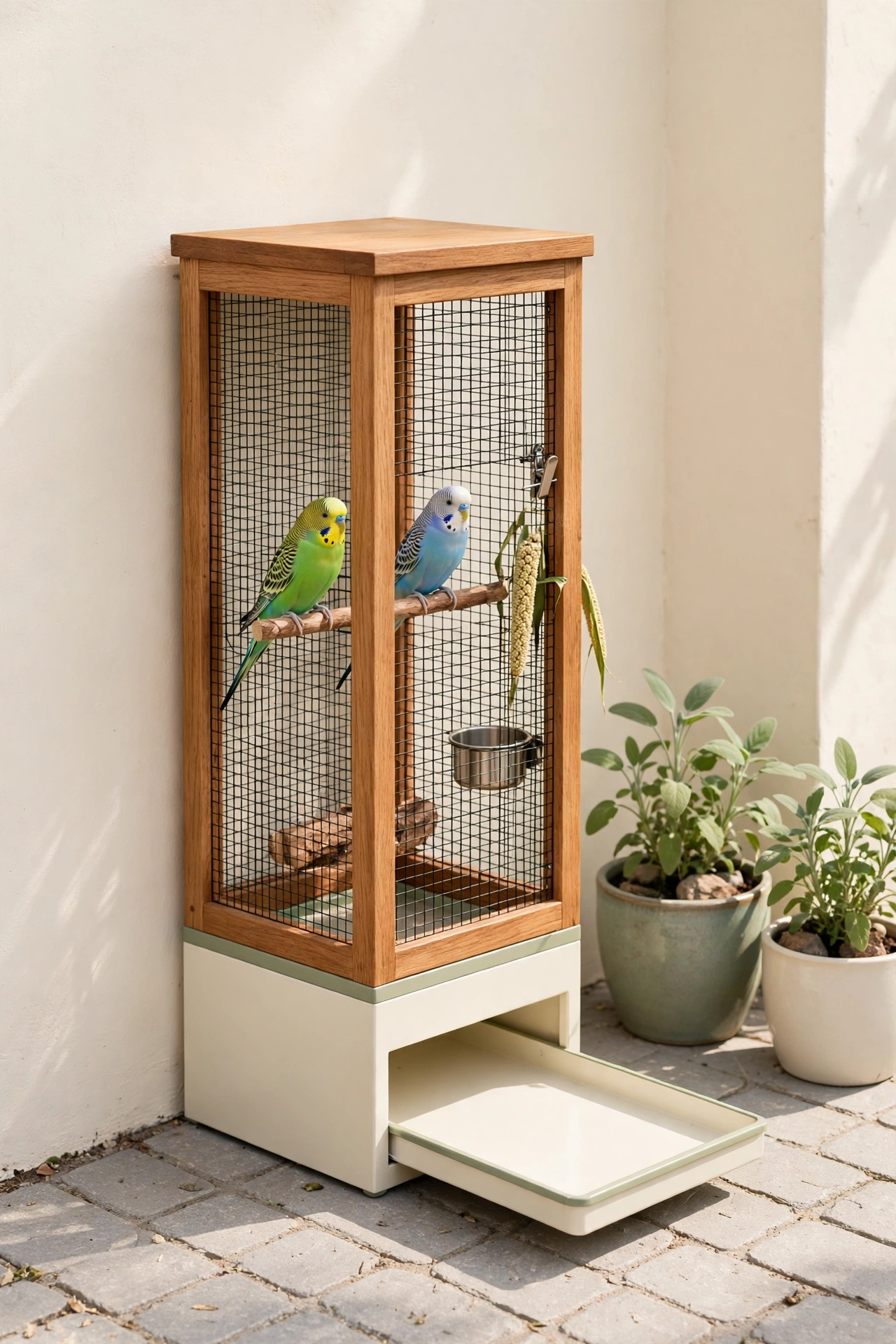
7. Fit a Compact Aviary on a Small Patio
A compact patio aviary proves that you do not need a large yard to keep birds outdoors. A tall, narrow structure with a small footprint fits against a patio wall or in the corner of a paved courtyard, and the vertical height gives birds climbing and flying room even when floor space is tight. A solid roof panel keeps the interior dry, and casters or a lightweight frame let you shift the aviary with the seasons.
Keep the design tidy with a pull-out tray floor for easy cleaning and a feeding station mounted on the door for quick access. A compact aviary suits a pair of finches or a small group of budgies, and its neat proportions suit modern patios and townhouse gardens. The birds get fresh air and daylight, and you get a living display just steps from the back door.
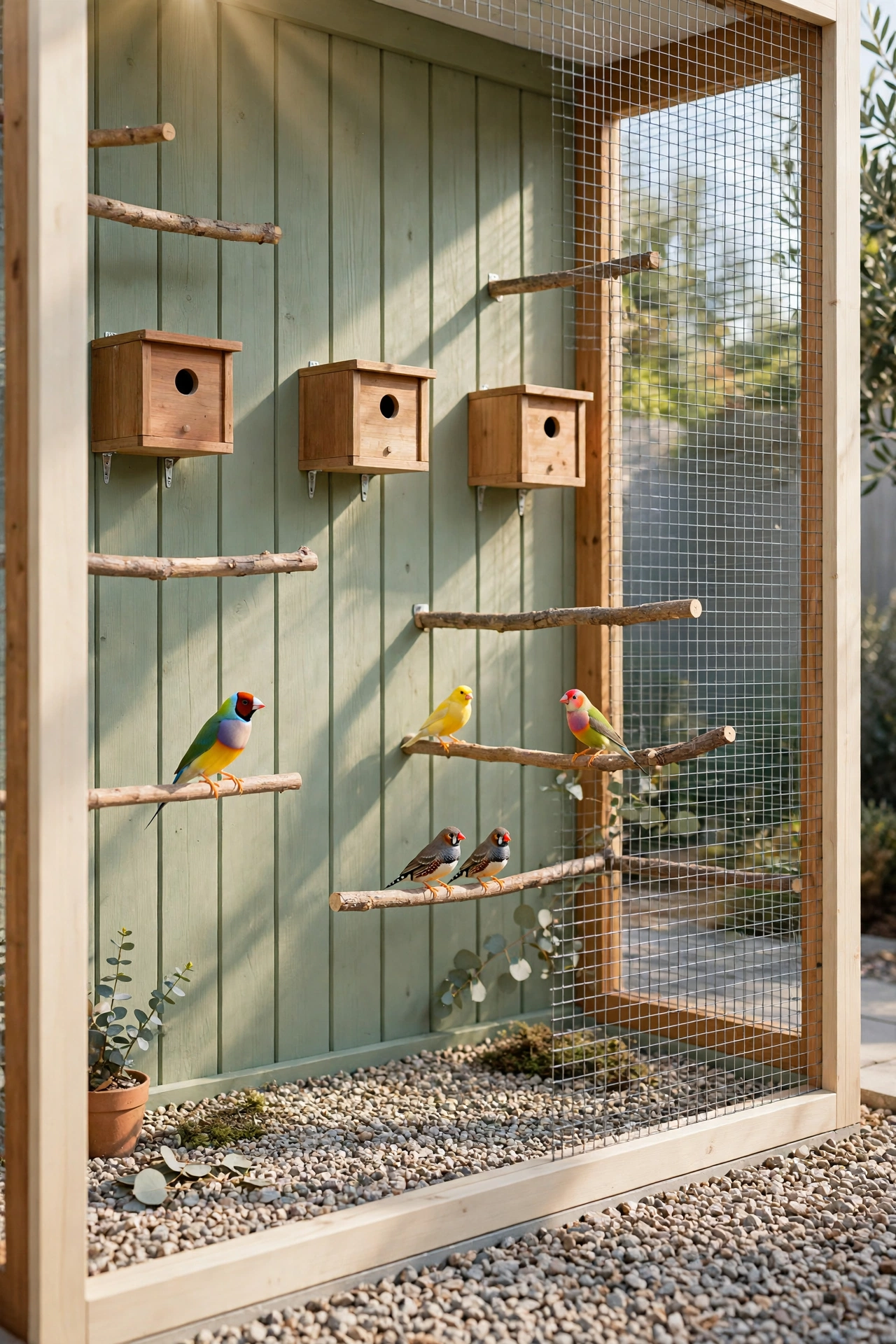
8. Shelter Birds With a Solid Back Wall Aviary
A solid back wall aviary protects birds from cold winds and driving rain while keeping the front open to sun and views. The wall can be timber boards, rendered brick, or colorbond steel, and it doubles as a mounting surface for nest boxes, perches, and feeding stations. Birds retreat to the sheltered wall in rough weather and return to the open mesh front when the sun comes out.
Face the open front toward the north or east so the interior catches gentle morning light without baking in afternoon heat. Paint the wall a warm cream or soft sage so the structure blends with the house and the garden. This design is especially valuable in windy or exposed yards, where a fully open aviary would leave birds chilled and stressed.
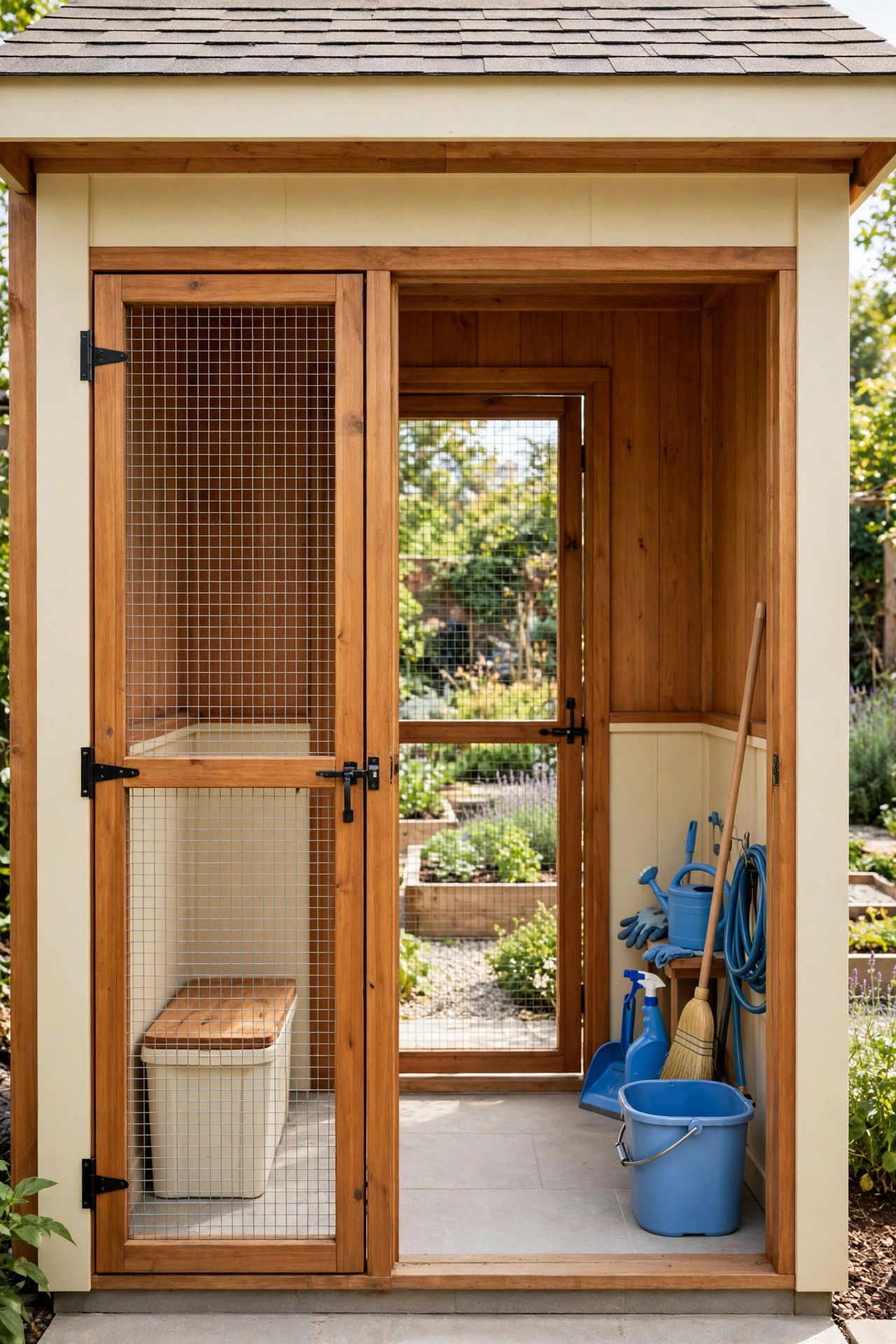
9. Add a Double-Door Safety Porch to the Entry
A double-door safety porch is a small vestibule at the aviary entrance with an outer door and an inner door, so one door is always closed while you pass through. This simple feature prevents escapes, which is the most common heartbreak in outdoor birdkeeping. The porch also gives you a spot to store seed, cleaning tools, and spare perches out of the weather.
Build the porch from the same frame and mesh as the main aviary so it reads as part of the structure, and make it large enough to step into with a feed bucket and close the outer door behind you. A solid roof over the porch keeps the entry dry and gives the aviary a finished, house-like front. Every walk-in aviary benefits from this feature, and it costs very little to add during the build.
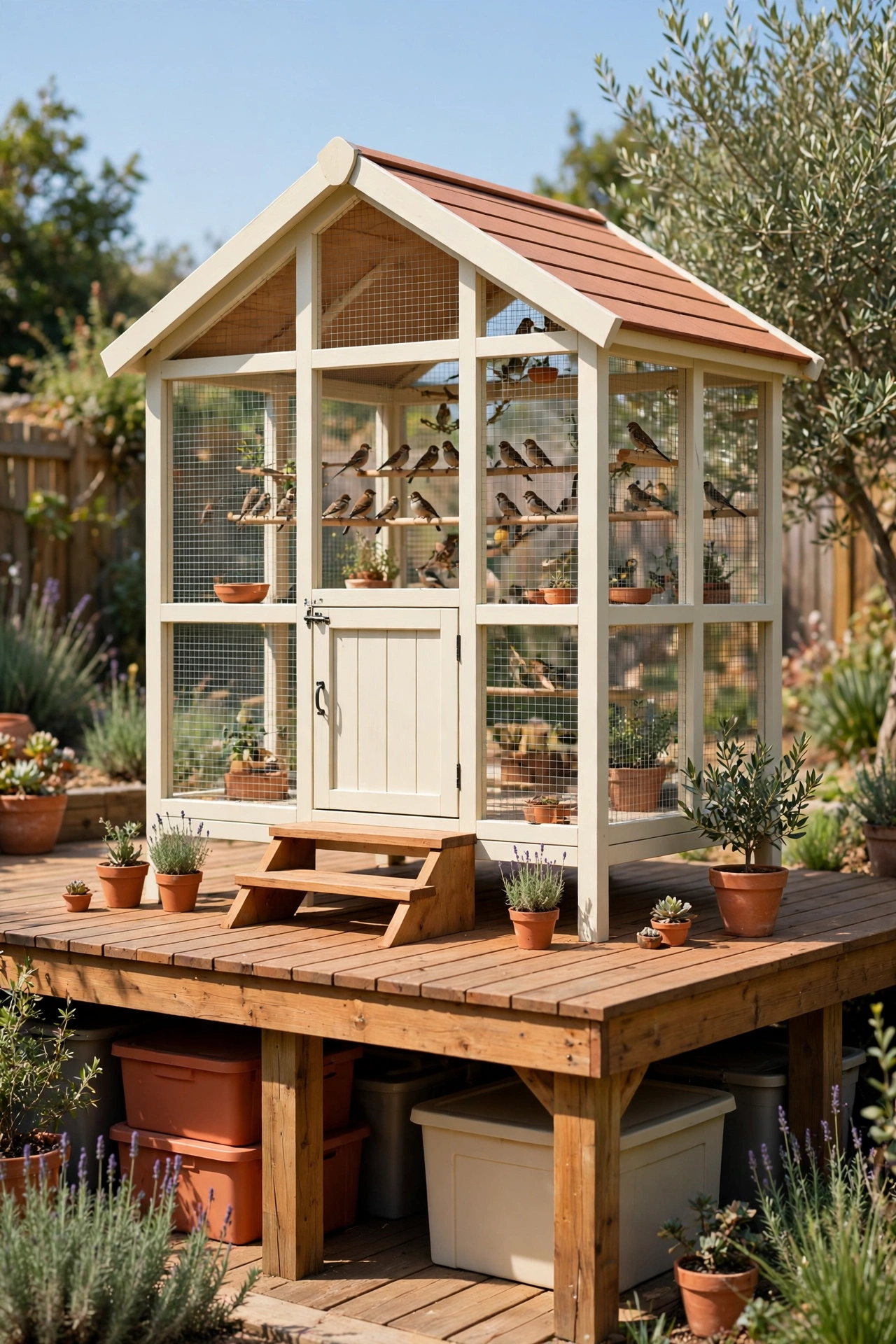
10. Raise an Aviary on a Wooden Deck Platform
Raising an aviary on a wooden deck platform lifts the birds above damp ground, improves drainage, and makes the structure easier to clean underneath. The deck creates a clean, level base on uneven ground, and the space below can hold storage bins for seed and supplies. A low ramp or a step up to the service door keeps access comfortable for daily care.
Choose weather-treated timber for the deck and seal it well, since the platform will face rain and cleaning water all year. A deck platform also lets you place the aviary over a sloped or awkward corner of the yard that would be hard to pave. The raised structure reads as a deliberate garden building, and birds enjoy the extra height and the views it gives them.
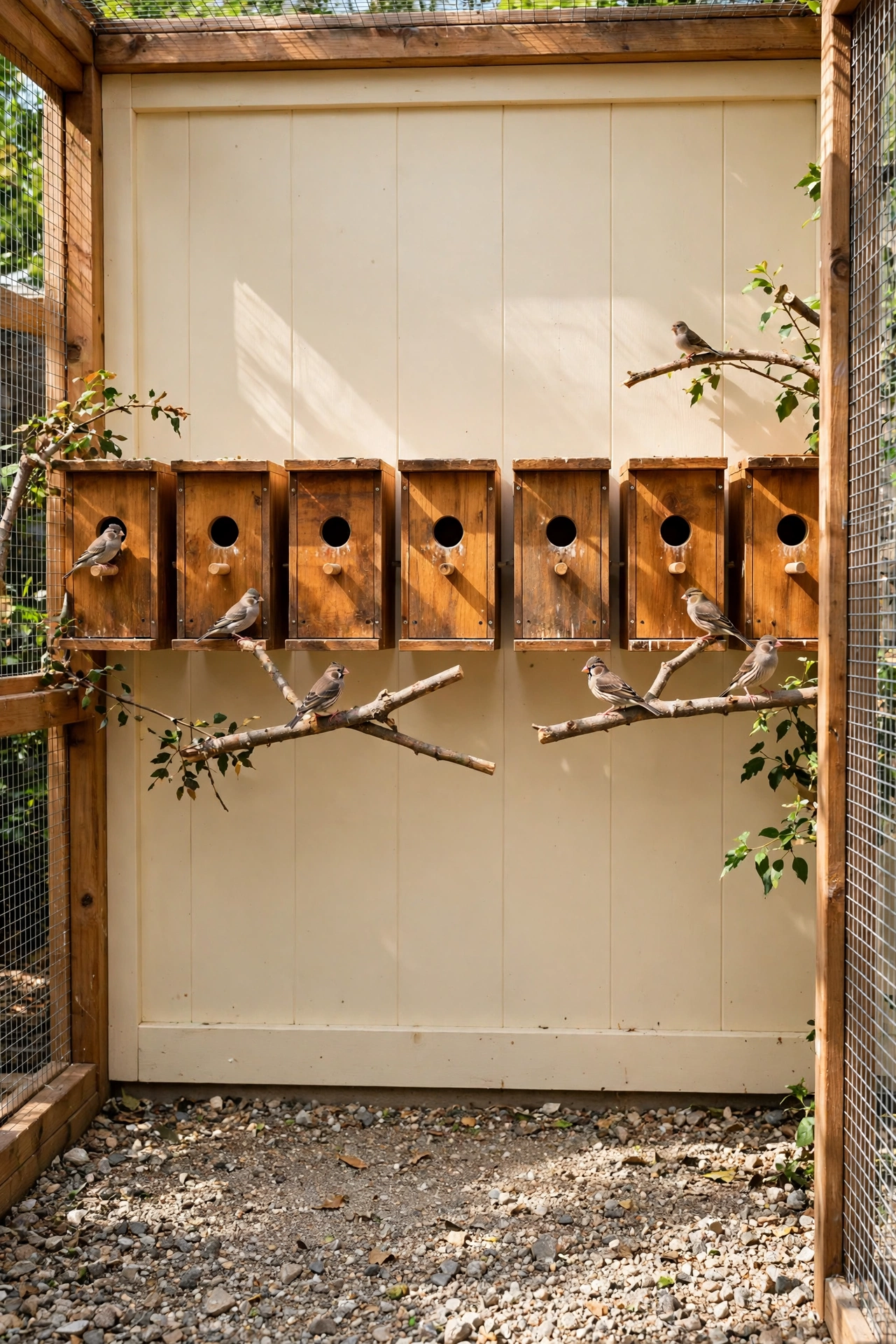
11. Build a Nesting Box Wall Into the Aviary Design
A nesting box wall dedicates one whole side of the aviary to breeding boxes, each mounted at the same height with a small landing perch in front. The tidy row of boxes keeps breeding pairs organized, makes inspection simple, and gives the aviary a purposeful, workshop-like character. External access hatches on the outside of the wall let you check nests without entering the flight and disturbing the birds.
Space the boxes generously so each pair holds a territory, and use different box sizes if you keep more than one species. Label each box with a small painted number so you can track pairs and clutches through the season. This design is the right choice for keepers who breed finches, budgies, or canaries and want the structure to support that goal from the start.
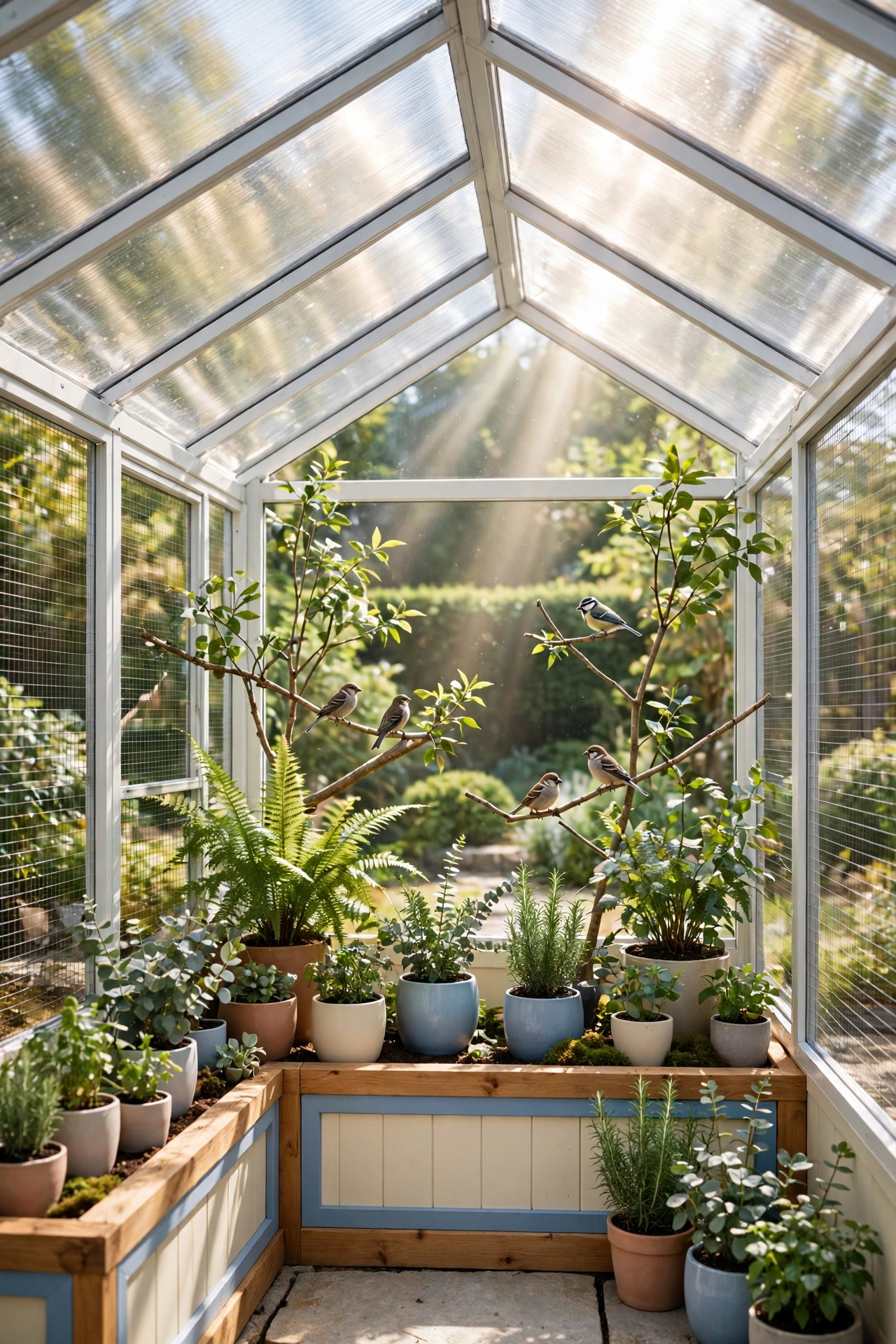
12. Design a Greenhouse-Style Aviary With Clear Panels
A greenhouse-style aviary combines wire mesh with clear polycarbonate or glass panels, creating a bright, sheltered space that stays warm in cool weather. The clear panels act like a sunroom for the birds, trapping gentle warmth on cool mornings while the mesh sections provide ventilation on hot days. A pitched clear roof floods the interior with light and makes the structure glow in the garden.
Use opening panels or vents along the ridge so you can control airflow through the seasons, and add shade cloth over the roof in high summer to prevent overheating. This design suits cooler climates and keepers who want to enjoy the birds year round. For the structure itself, these backyard greenhouse ideas will help you borrow framing, glazing, and ventilation details that work just as well for birds as they do for plants.
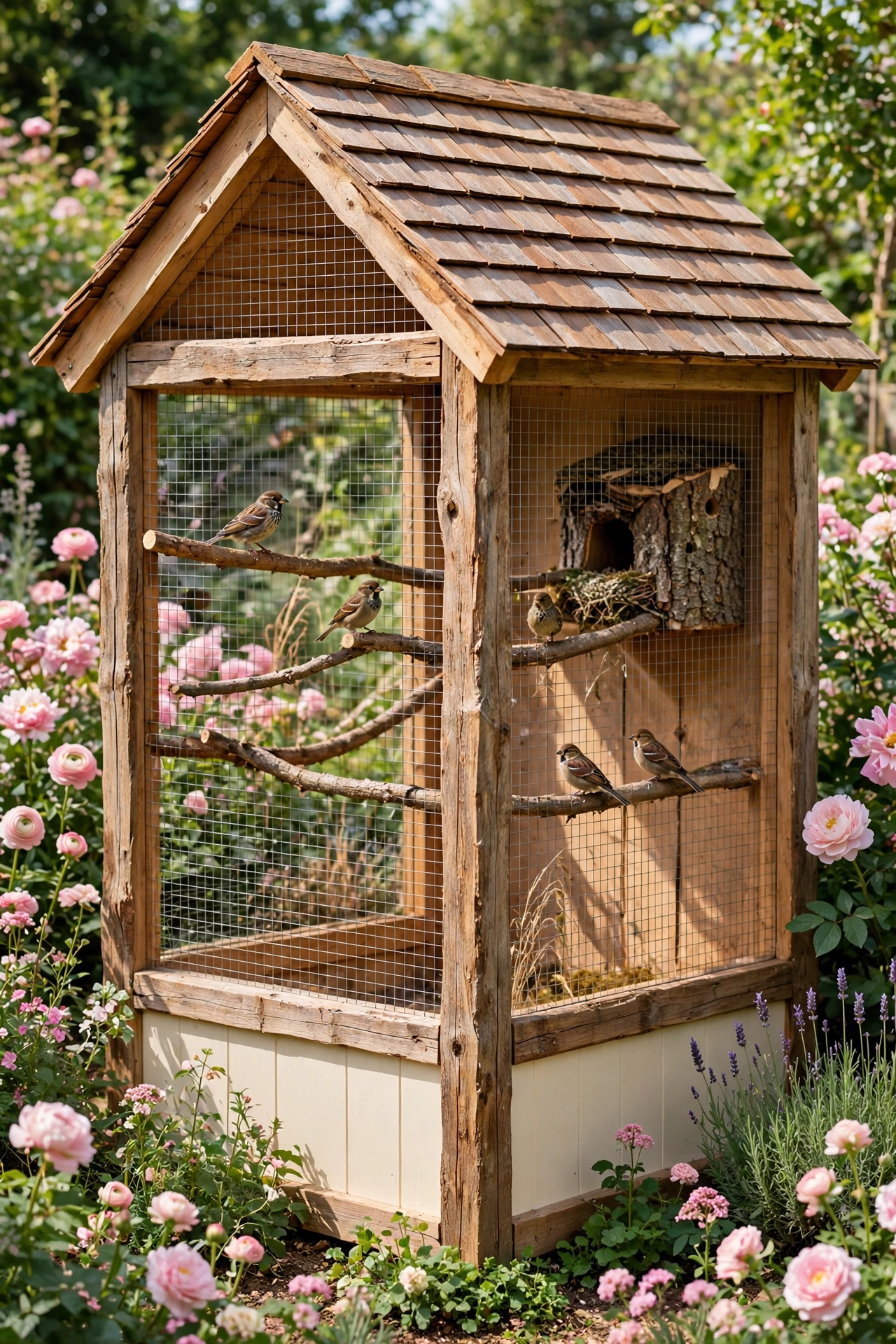
13. Choose a Rustic Timber Aviary With a Shingled Roof
A rustic timber aviary with a shingled roof brings cottage character to the backyard. Rough-sawn posts, natural timber framing, and cedar shingles give the structure the look of a small garden shed or a woodland cabin, and the solid roof keeps the interior dry and shaded. The warm wood tones blend beautifully with fences, raised beds, and mature trees.
Let the timber weather naturally or seal it with a bird-safe oil to keep the grain rich and protected. Inside, use natural branch perches and bark-covered nesting boxes to carry the woodland theme through. This design suits traditional and cottage gardens best, where a sleek metal aviary would look out of place.
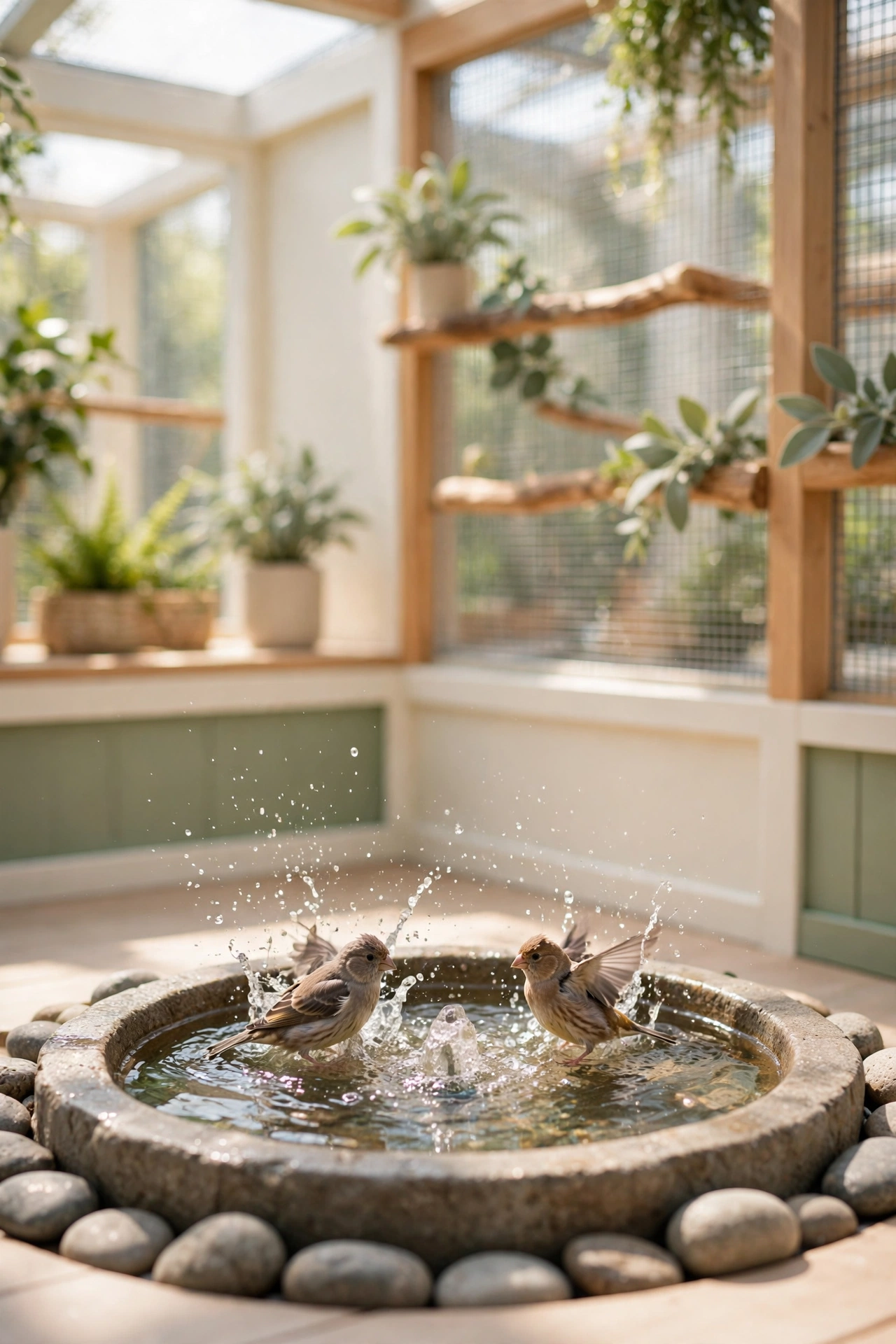
14. Add a Shallow Water Feature Inside the Aviary
A shallow water feature inside the aviary gives birds a place to drink, bathe, and play, and the sound of trickling water makes the whole garden feel alive. A low stone basin with a gentle bubbler or a shallow pebble stream suits small birds, who need only an inch or two of water to bathe safely. The feature becomes a daily gathering point that you can watch from a nearby seat.
Keep the water clean with a small recirculating pump and a filter, and scrub the basin weekly so algae never takes hold. Place the feature away from feeding stations so seed stays dry, and use smooth river stones around the edges so birds can step in and out easily. A water feature turns a good aviary into a great one, because bathing is one of the great joys of a bird’s day.
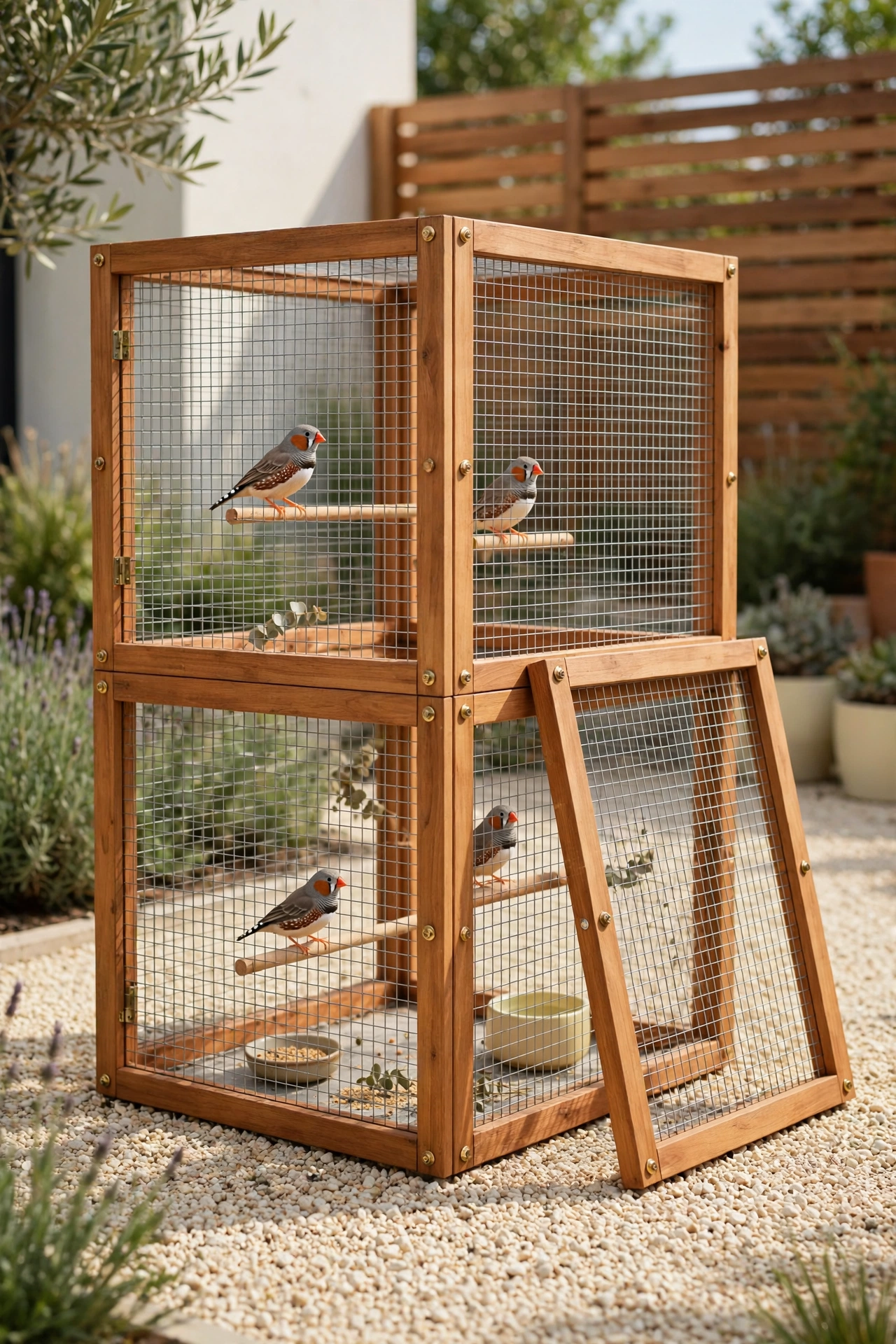
15. Start With a Modular Panel Aviary You Can Expand
A modular panel aviary is built from identical framed mesh panels that bolt together, so you can start small and add sections as your flock or your budget grows. The panels make the build fast and forgiving, because a damaged section can be swapped out without dismantling the whole structure. A modular design also lets you reconfigure the shape, moving from a square to an L-shape or adding a second flight as needs change.
Standardize your panel size before you start, and build a few spare panels for repairs and future growth. Use the same frame timber and mesh throughout so every addition matches. This is the smartest design for a first-time builder who wants flexibility, because the aviary can grow with your interest instead of needing a complete rebuild.
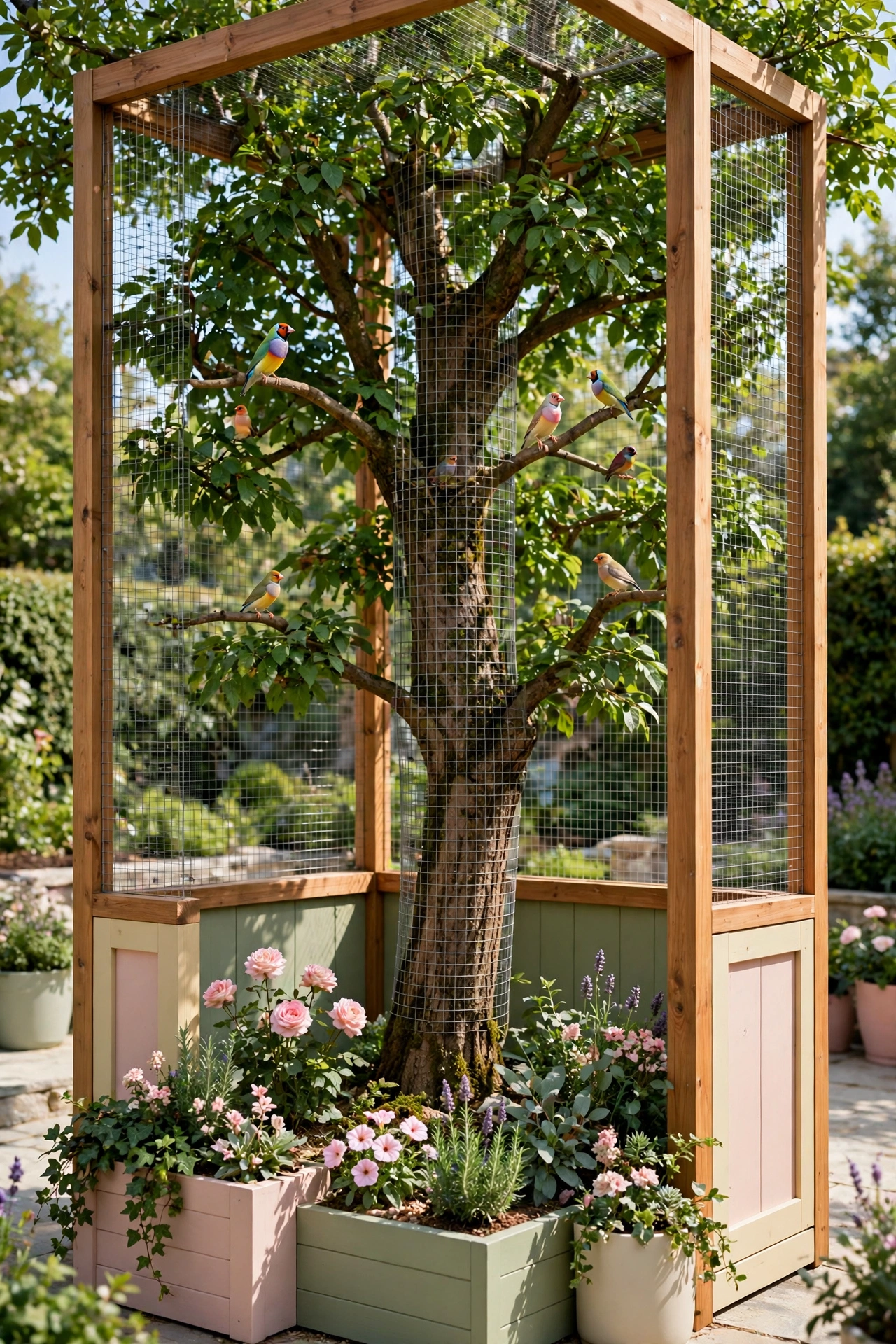
16. Build an Aviary Around an Existing Garden Tree
Building an aviary around an existing tree gives birds a living centerpiece that no artificial perch can match. The tree provides shade, natural branches for perching, and a sense of enclosure that makes birds feel secure. A mesh enclosure wrapped around the canopy and trunk turns the tree into the heart of the aviary, and the structure disappears into the garden because the tree was already there.
Choose a healthy tree with strong limbs and bird-safe foliage, and design the mesh panels to allow for trunk growth over time. Seal the gaps where branches pass through the mesh with flexible flashing so no bird can slip out. The tree will drop leaves into the aviary, which is natural enrichment, and the planting around the base can support more wildlife. These butterfly garden ideas will help you choose flowering plants for the beds around the tree that draw butterflies to the same sunny corner.
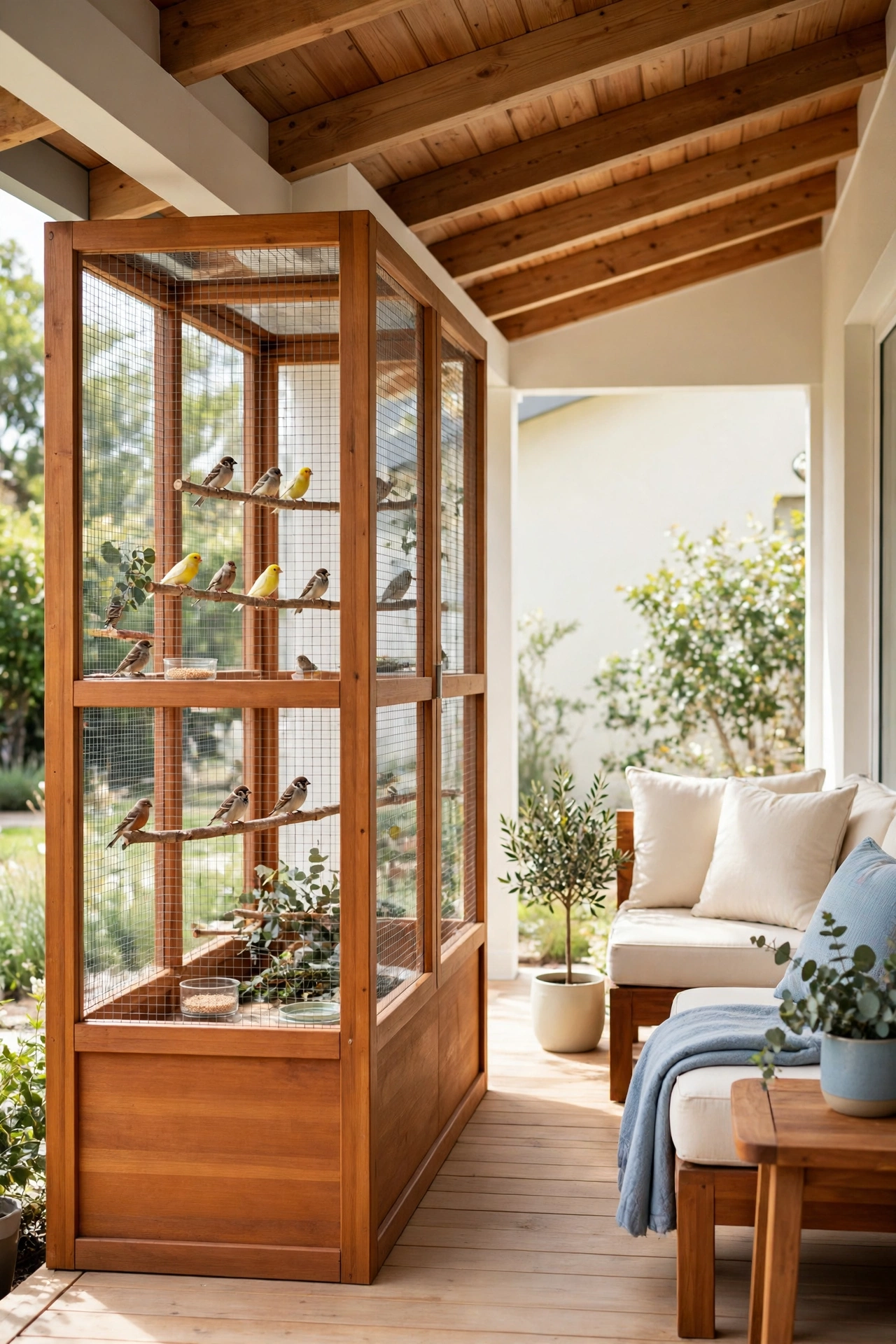
17. Tuck an Aviary Under a Covered Porch Roof
An aviary under a covered porch roof borrows shelter from the house and places the birds right where you spend your evenings. The porch roof keeps rain off the structure, the house wall provides a solid back, and the birds become part of the outdoor living space instead of a distant feature. A mesh front and sides complete the enclosure while leaving the view open from the seating area.
Keep the aviary to one end of the porch so the seating area stays separate, and use a solid kick panel along the base to contain seed and mess. Good ventilation matters under a roof, so leave the mesh sides generous and avoid fully enclosing the space. This design is ideal for keepers who want to watch their birds up close every day, with a cup of tea in hand.
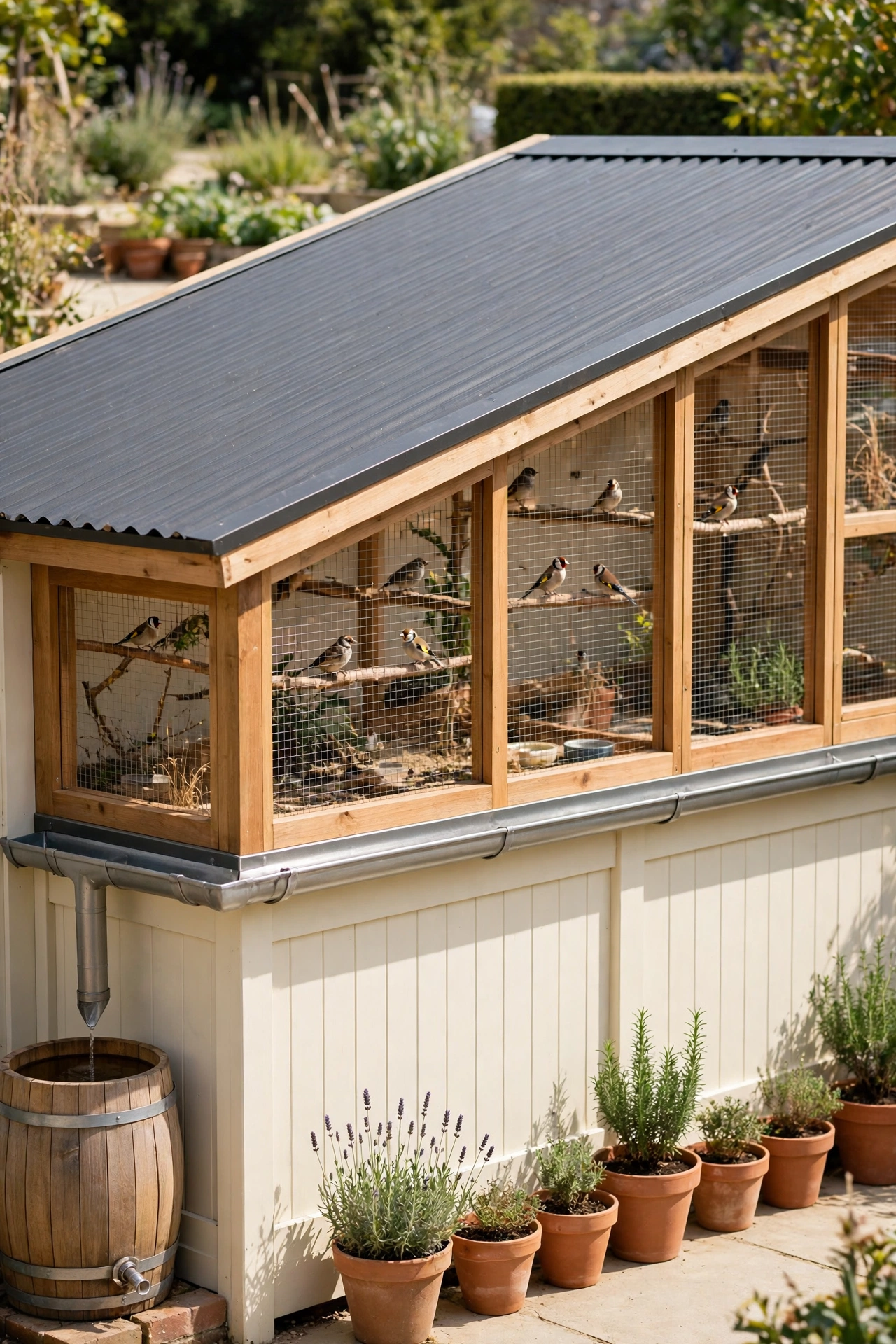
18. Fit a Sloped Roof Aviary With a Rain Gutter
A sloped roof aviary with a rain gutter is a practical design that manages water properly instead of letting it sheet off the roof onto the birds and the ground. The single slope is simple to frame, and the gutter channels rainwater into a barrel or a garden bed. A clear or solid roof panel over part of the slope gives birds a dry zone while the rest stays open to the sky.
Angle the slope away from the prevailing wind so rain blows off the back rather than into the mesh front. A gutter also lets you collect rainwater for the garden, which is a welcome bonus in dry climates. This design suits long, low aviaries along a fence or a wall, where a simple, hardworking roof matters more than decorative shape.
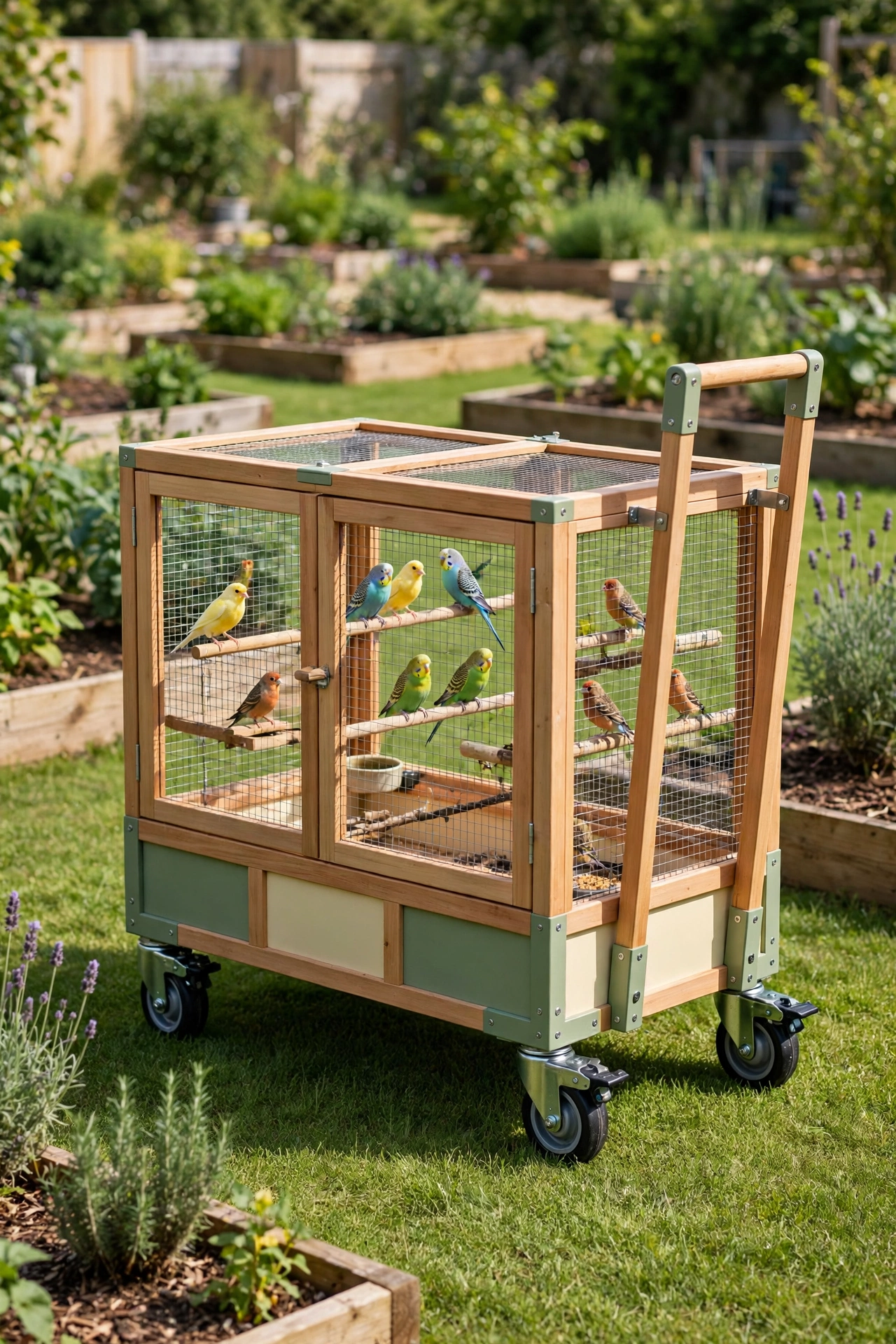
19. Keep a Mobile Aviary on Wheels for Flexible Placement
A mobile aviary on heavy-duty wheels lets you follow the sun, dodge storms, and rest the ground underneath. Roll it into morning light for basking, wheel it under a tree for afternoon shade, or move it onto fresh grass after cleaning. Locking casters hold it firmly in place once positioned, so the structure stays stable even in gusty weather.
Build the frame light but rigid, with a low center of gravity and a handle or tow bar at one end for easy moving. A mobile aviary suits renters especially well, because it needs no footings and leaves no trace when it moves on. It also suits keepers who like to rearrange the garden through the seasons, since the birds can always be placed in the best spot of the moment.
Conclusion
The best backyard aviary is the one that fits your birds, your yard, and the way you like to spend time outdoors. Whether you choose a grand walk-in structure or a compact patio flight, the same principles hold: solid shelter, clean air, safe mesh, and room to fly. Build for the birds first, and the beauty follows naturally.
Start with the design that matches your space, then add the details that make daily care easy, like a safety porch, a solid roof section, and a cleaning-friendly floor. Once the aviary is in place, add a comfortable seat nearby so you can enjoy the birdsong every day. These outdoor reading garden ideas will help you create a quiet corner beside the aviary where you can sit, read, and watch your birds thrive.
Frequently Asked Questions About Backyard Aviary Design Ideas for Bird Lovers
How big should a backyard aviary be?
Length matters more than height for most small birds, because they fly horizontally. A flight of at least 6 feet long suits a small group of finches or budgies, and longer is always better. Taller aviaries suit species that climb and hop, but every design should leave the center clear for flying.
What is the best mesh for an outdoor aviary?
Welded wire mesh with a small gauge is the safest choice, because it resists chewing and keeps predators out. Use half-inch mesh for finches and canaries and slightly larger mesh for bigger birds like cockatiels. Avoid chicken wire, which is too weak and can injure birds, and check the mesh regularly for rust or damage.
Where should I place an aviary in my backyard?
Choose a spot with morning sun and afternoon shade, shelter from strong winds, and good drainage underfoot. Avoid placing the aviary under trees that drop toxic berries or near busy roads where noise and fumes stress the birds. A location you can see from the house helps you spot problems early and enjoy the birds daily.
Do outdoor aviaries need a solid roof section?
Yes, at least part of the roof should be solid so birds can shelter from rain, hail, and harsh sun. A solid section over the feeding area keeps seed dry and gives birds a dry perch in wet weather. The rest of the roof can be open mesh so birds still enjoy direct sunlight and fresh air.
How do I keep predators out of a backyard aviary?
Use strong welded mesh, bury mesh or pavers under the floor edge to stop digging, and fit secure latches that raccoons cannot open. A solid roof and a kick panel around the base block most attacks, and a double-door entry stops escapes during feeding. Check the whole structure monthly for gaps, loose wire, or worn latches.

Hi, I’m Emily! I turn messy corners into cozy, organized spots. DreamNestDecor is where I share simple, practical home ideas — decor, organization, and small-space solutions that work in real life, not just in photos. Every idea here is carefully researched before it’s shared.