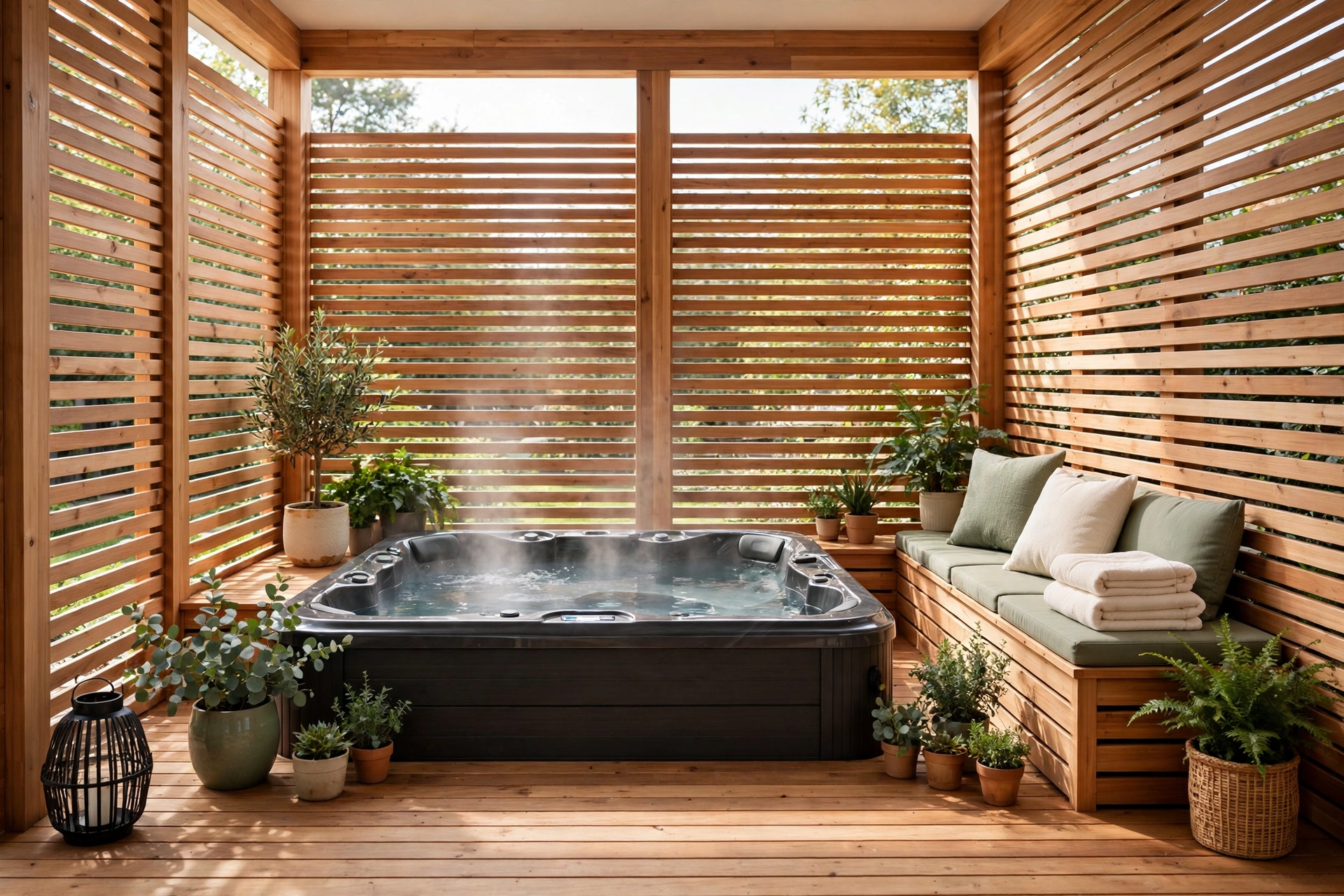
Picture this: the sun is setting, steam rises gently from warm water, and you sink into your hot tub without a single neighbor in sight. Tall cedar walls block the view from every side, a timber roof keeps the evening dew off your shoulders, and the whole space feels like a private spa that belongs only to your household. That feeling of total privacy is what a good enclosure gives you, and it turns an ordinary hot tub into a retreat you will use all year.
You do not need a huge yard or a custom builder to get there. A simple screen wall, a pergola, or a gazebo can give your hot tub the shelter and privacy it deserves. These 24 outdoor hot tub enclosure ideas will help you choose the structure that fits your yard, your budget, and the way you like to unwind.
1. Frame the Tub With a Cedar Slat Privacy Wall
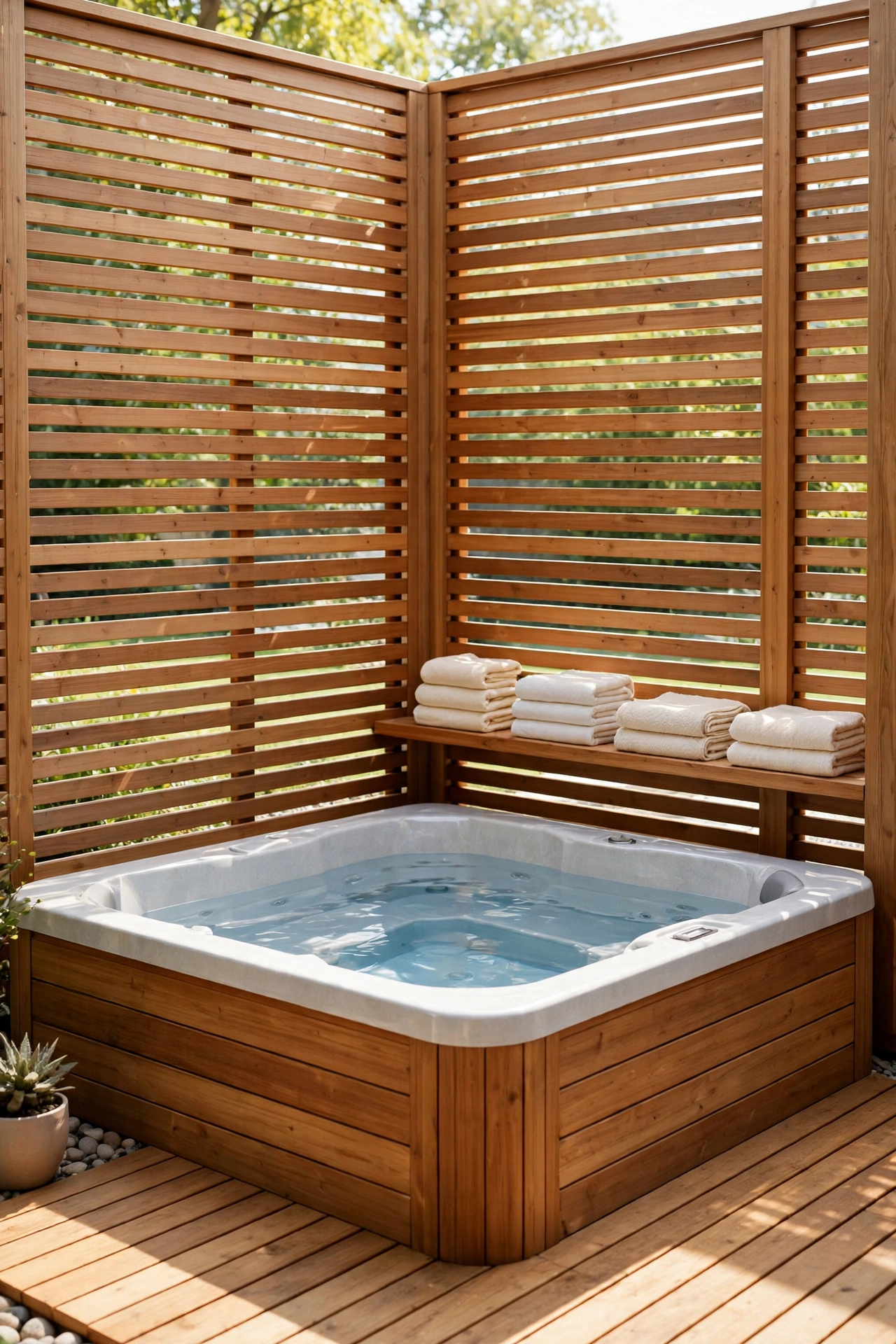
Horizontal cedar slats make one of the cleanest and most popular enclosures for a hot tub. The slats run in even rows with narrow gaps between them, so air moves freely while sightlines from neighboring windows stay blocked. Cedar weathers to a soft silver gray over time, or you can seal it to keep the warm honey tone that looks so good against cream decking and green plants.
Build the slat walls on three sides and leave the fourth side open for steps and easy access. A wall height of about six feet gives full privacy when you are seated in the water. Add a narrow shelf along the inside of one wall for towels and drinks, and the enclosure becomes both a privacy screen and a handy ledge for everything you need within reach.
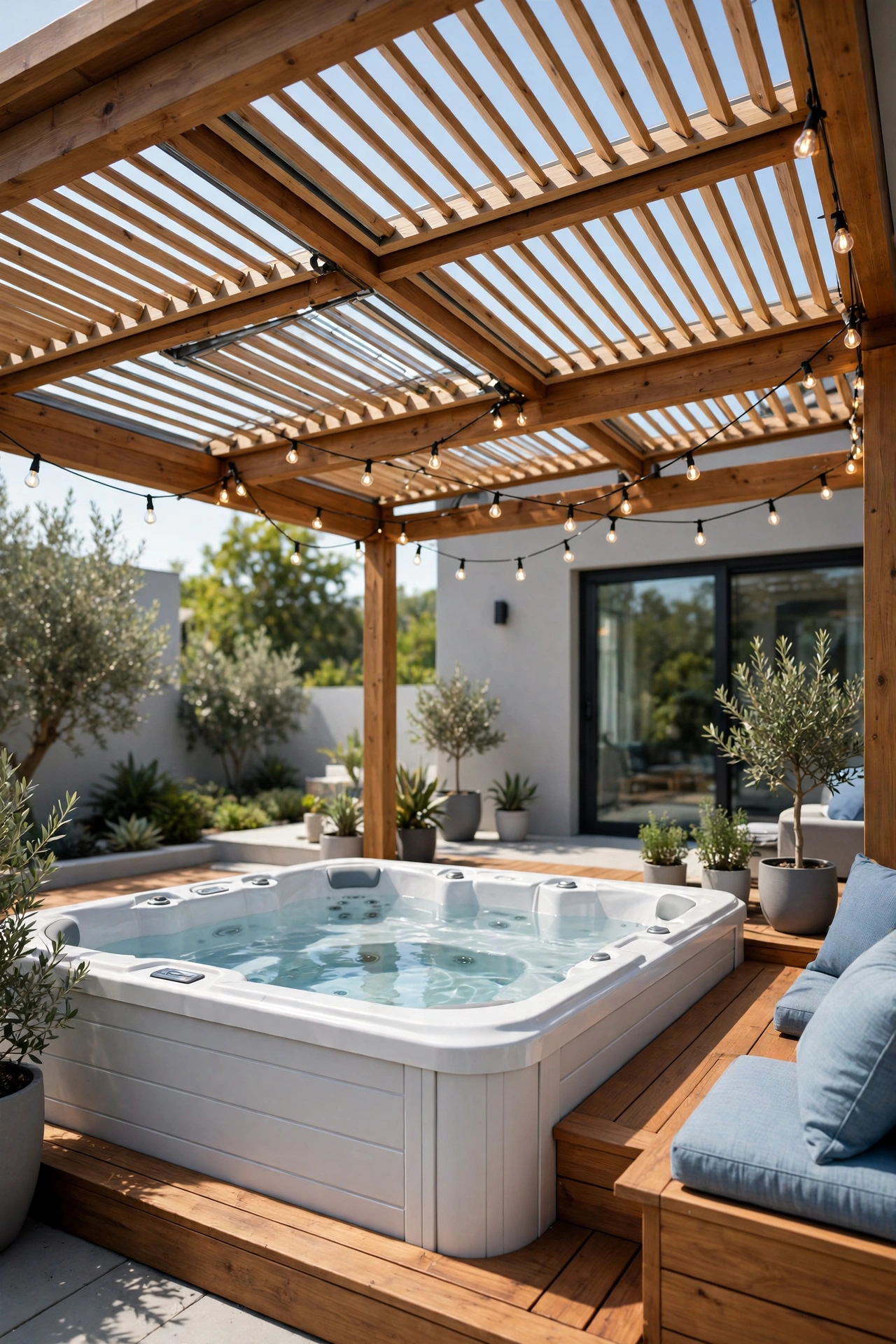
2. Cover the Tub With a Louvered Roof Pergola
A pergola with adjustable louvers lets you control sun and rain with a simple tilt of the slats. Open the louvers on a clear evening to watch the stars from warm water, then close them when rain starts to fall so your soak never gets interrupted. The sturdy posts also give you anchor points for string lights, hanging plants, and outdoor curtains.
Choose a pergola sized a few feet wider than the tub on every side, so the roof covers the steps and a small landing area too. Warm wood beams suit traditional yards, while matte black metal frames suit modern ones. Either way, the louvered roof turns the hot tub area into a true outdoor room that works in almost any weather.
3. Shelter the Tub Inside an Open Gazebo With Curtains
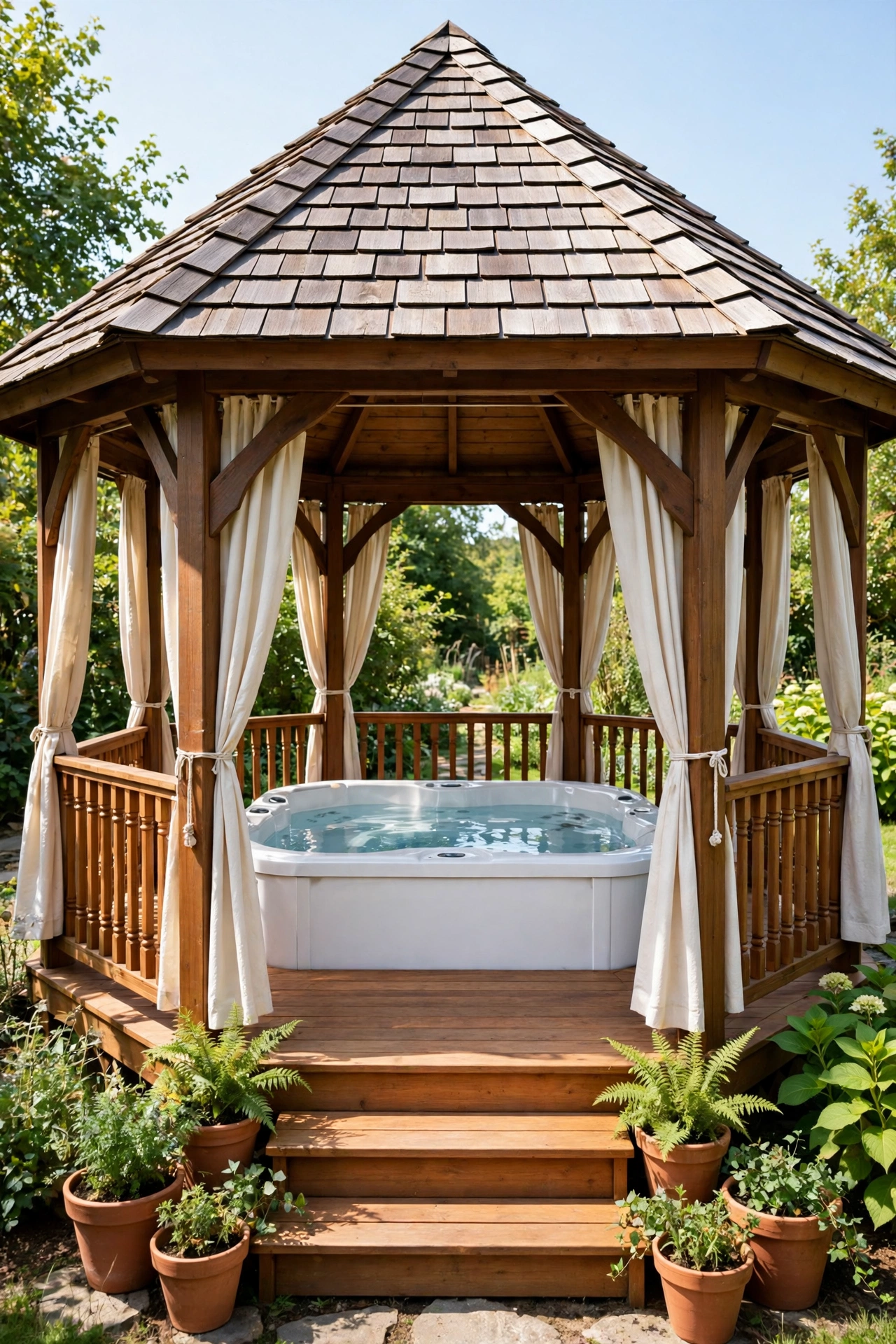
A classic gazebo gives your hot tub a finished roof and a charming shape that suits cottage and traditional gardens. The six or eight sided frame creates a natural focal point in the yard, and the peaked roof sheds rain and snow with ease. Choose a gazebo with wide openings so the space still feels open and connected to the garden.
Hang weatherproof curtains from the gazebo rails and you can close them for privacy or tie them back for an open view. Cream or soft blue outdoor fabric softens the wood frame and moves gently in a breeze. A gazebo enclosure also keeps leaves and debris out of the water, which means less skimming and cleaner water between soaks.
4. Sink the Tub Into a Low Walled Deck Surround
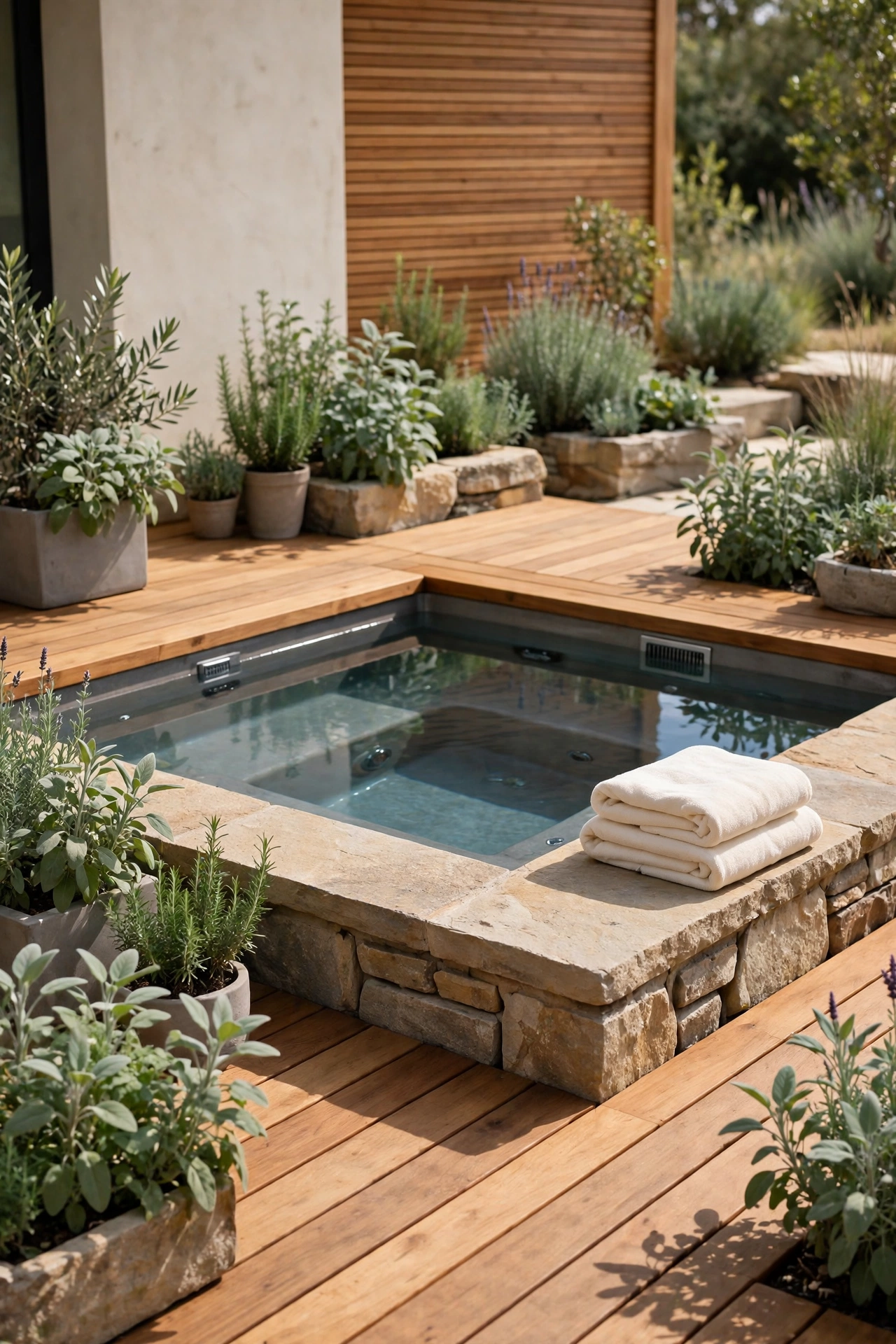
A sunken hot tub sits flush with the deck surface, so you step across flat decking and slide into the water instead of climbing tall steps. The low surrounding wall, usually built from stone or stacked timber, hides the tub shell and creates a clean ledge for towels, books, and drinks. The result looks built in and permanent, like a small plunge pool designed for the yard.
Plan for drainage and service access before you build, because a sunken tub needs a way for water to escape and a removable panel for pump access. A low wall of natural stone pairs beautifully with warm wood decking and sage green planting. If your yard slopes, a sunken design can also work with the grade, and these backyard retaining wall ideas will help you shape the surrounding levels so the whole area feels intentional.
5. Shade the Tub With a Retractable Canopy Frame
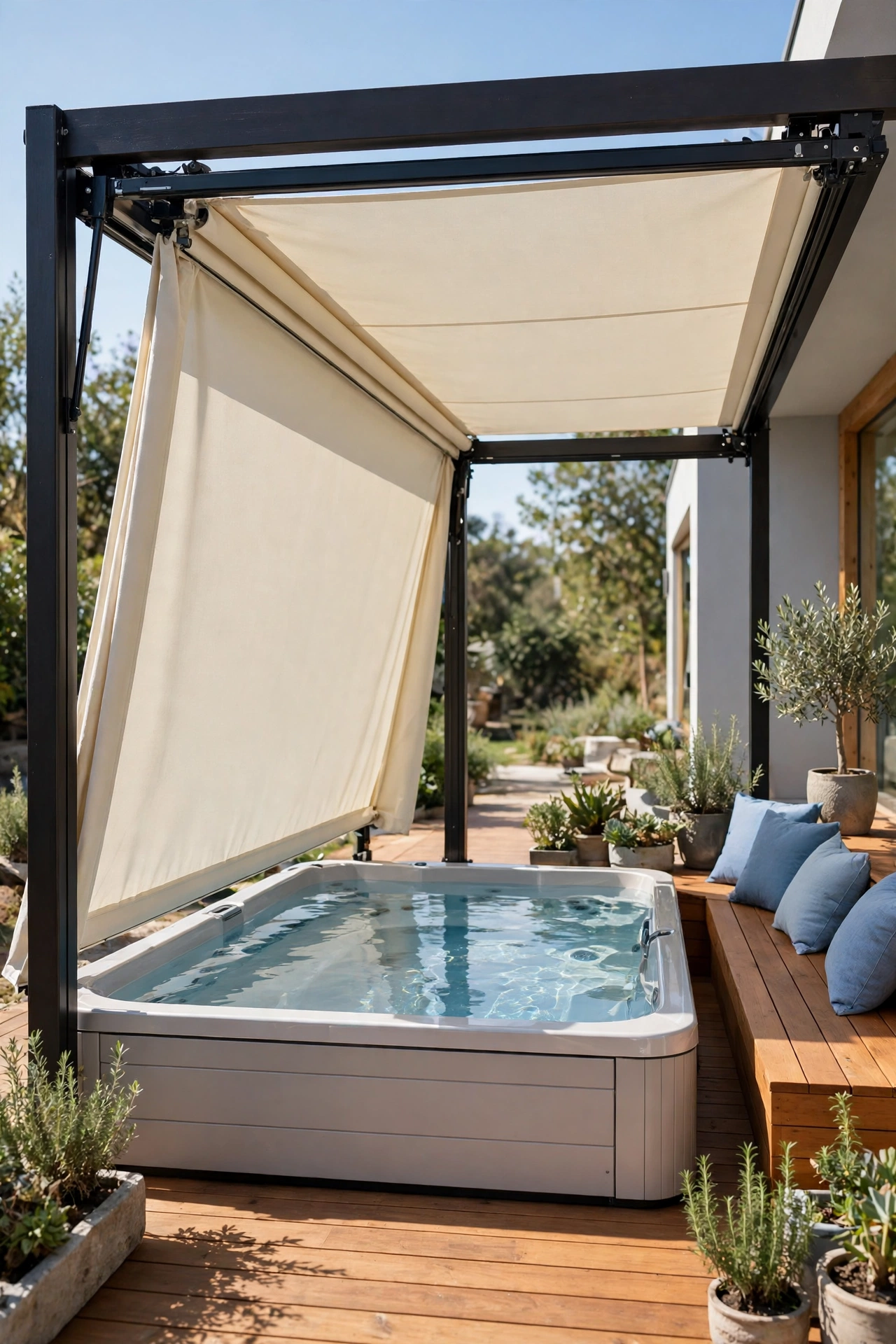
A retractable canopy gives you shade on demand without the weight or cost of a solid roof. The fabric slides along a sturdy frame and locks in place, so you can cover the tub on a harsh sunny afternoon and pull it back for an open sky soak at night. Canopy fabric comes in cream, sand, terracotta, and soft gray, so the cover can match your outdoor palette.
Mount the frame on four posts set firmly in concrete footings, and choose a canopy rated for outdoor use with water resistant fabric. The open sides keep the space airy, so pair the canopy with a low hedge or a screen wall if privacy matters. This enclosure suits renters and budget projects too, since the frame can be unbolted and moved without major construction.
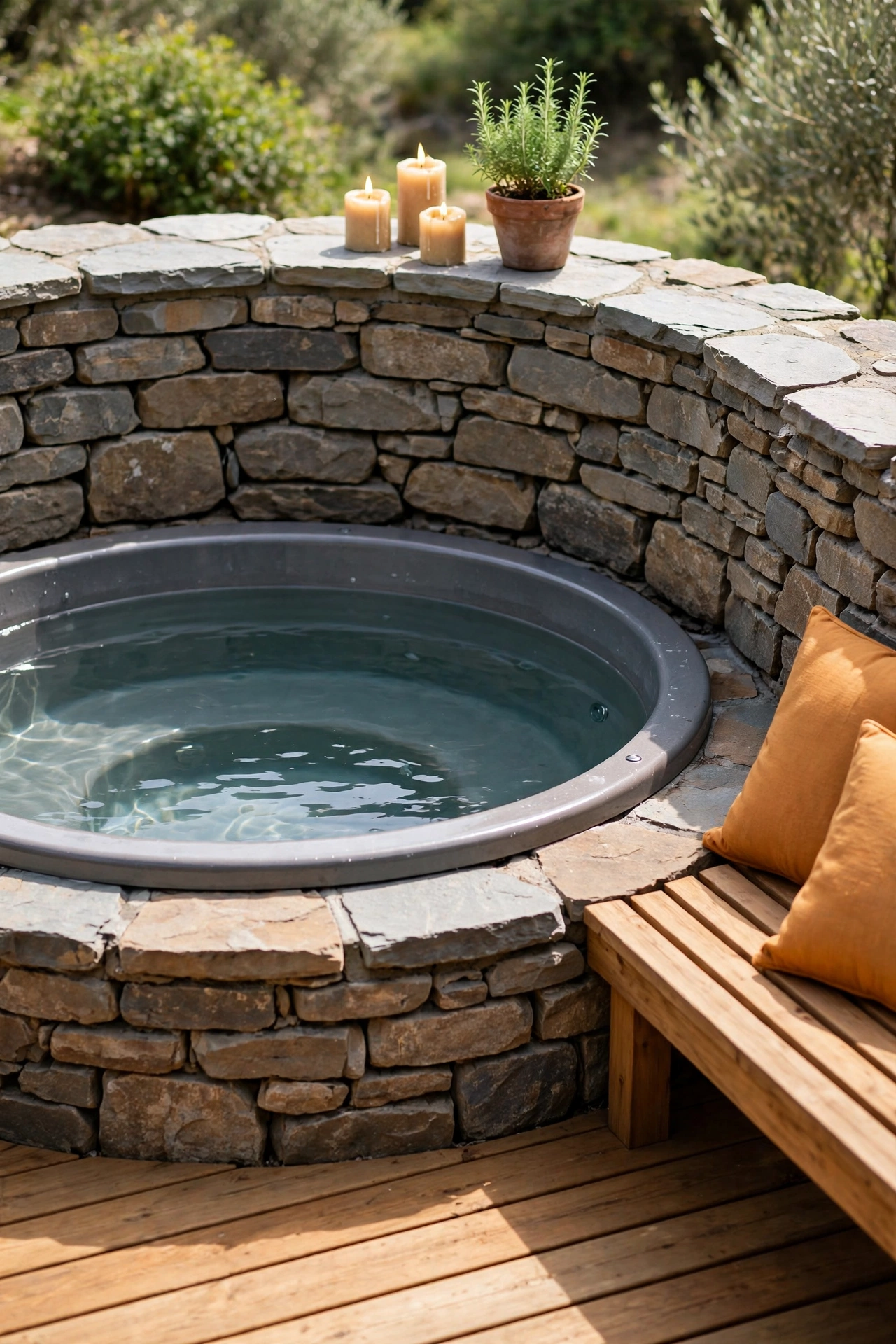
6. Enclose the Tub Behind a Natural Stone Wall
A dry stacked stone wall gives your hot tub enclosure a timeless, grounded feeling that no other material can match. The rough texture and varied tones of natural stone look beautiful against smooth water and soft planting, and the wall blocks wind as well as views. Stone walls need no painting and only rare maintenance, so they age gracefully for decades.
Build the wall to seated shoulder height on the sides facing neighbors, and keep the entry side lower or open with a wide gap for steps. A cap of flat stone along the top creates a ledge for candles and small potted herbs. Pair the stone with warm wood decking and amber cushions to keep the space from feeling cold, and the whole enclosure will read as a natural part of the landscape.
7. Screen the Tub With Tall Bamboo Fencing
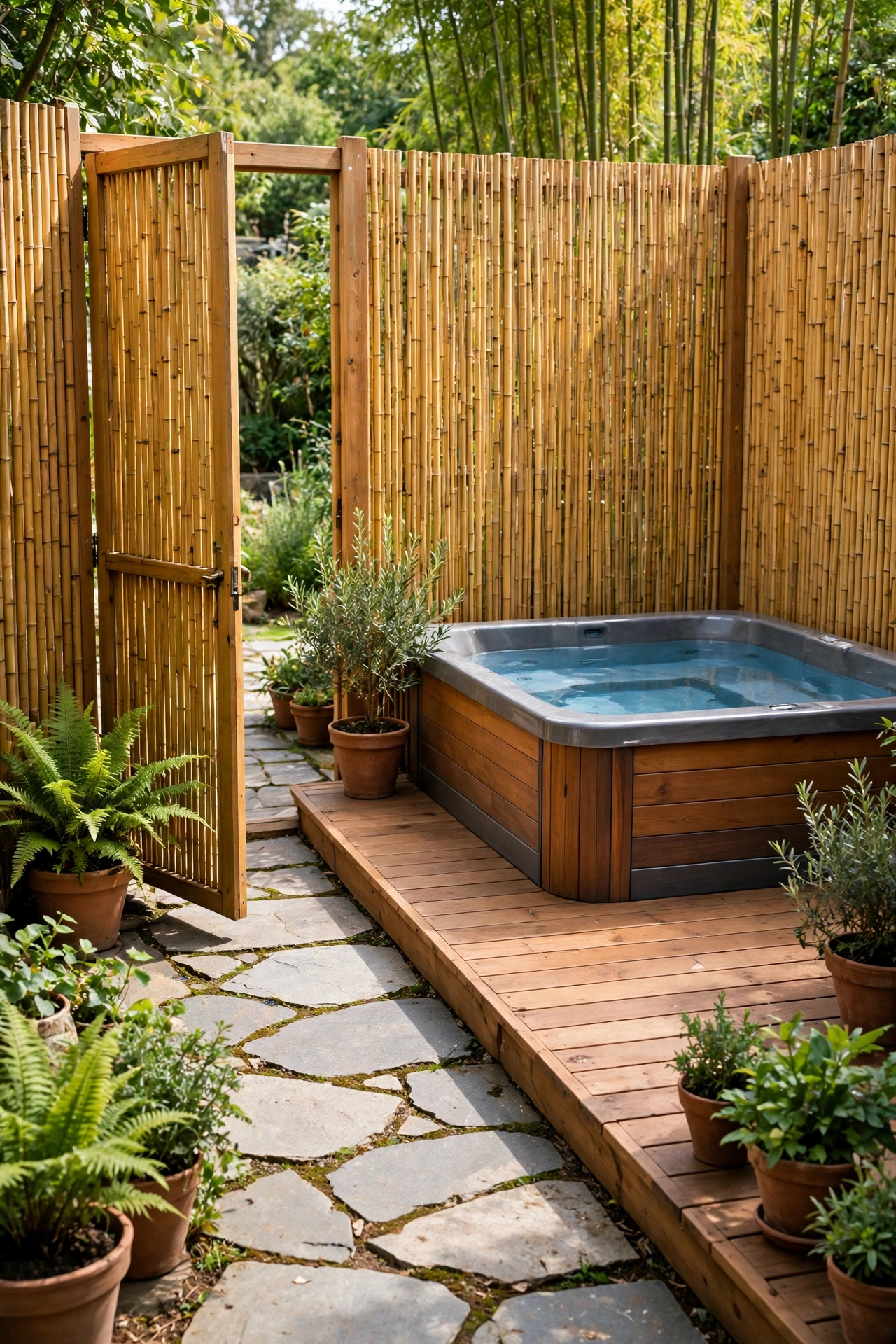
Tall bamboo fencing wraps a hot tub in warm texture and a relaxed, tropical feeling. Rolled bamboo panels attach to posts quickly, so this enclosure goes up in a weekend and costs far less than a built wall. The natural golden tones of bamboo glow in afternoon light and pair well with cream towels, terracotta pots, and lush green foliage.
Choose bamboo panels at least six feet tall for real privacy, and seal them with an outdoor oil to slow weathering. Bamboo screens work best as a full surround with a single gated opening, which keeps the space feeling like a hidden retreat. Add a gravel or stone path leading to the gate, and the walk to the tub becomes part of the escape.
8. Block the Wind With Clear Glass Panels
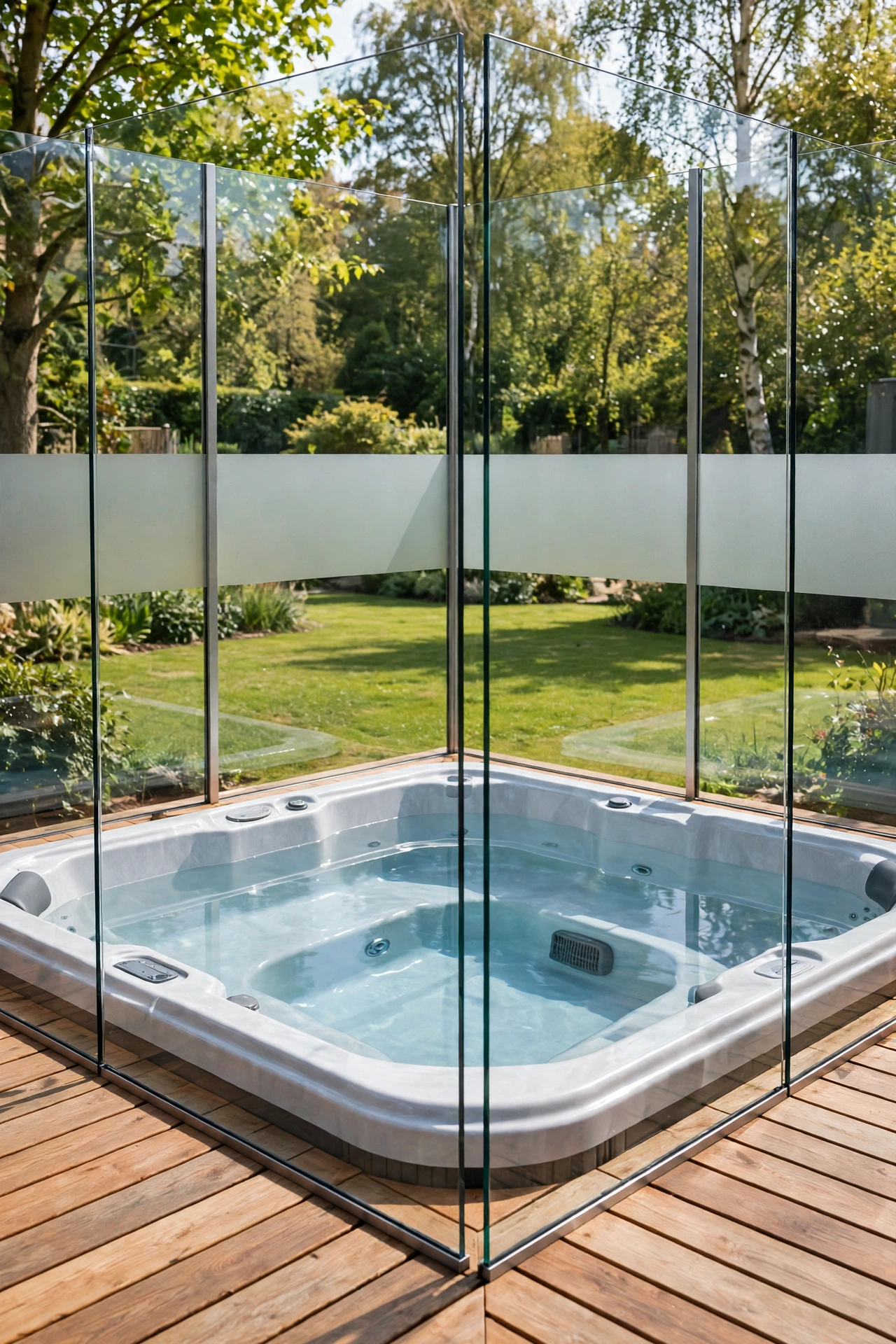
Clear glass panels protect your soak from wind while keeping every bit of the view. Frameless tempered glass clamped to slim posts creates an almost invisible barrier, so a garden, a lake, or a mountain view stays fully visible from the water. Glass also holds warmth around the tub on cool evenings, which extends your soaking season.
Use tempered safety glass rated for outdoor use, and add a subtle frosted band at eye level if you want privacy without losing light. Glass panels suit modern yards with clean lines and minimal planting, where the enclosure should disappear rather than stand out. Keep a squeegee nearby, because water spots show quickly on glass, and a quick wipe after each soak keeps the panels crystal clear.
9. Build a Rustic Log Shelter Around the Tub
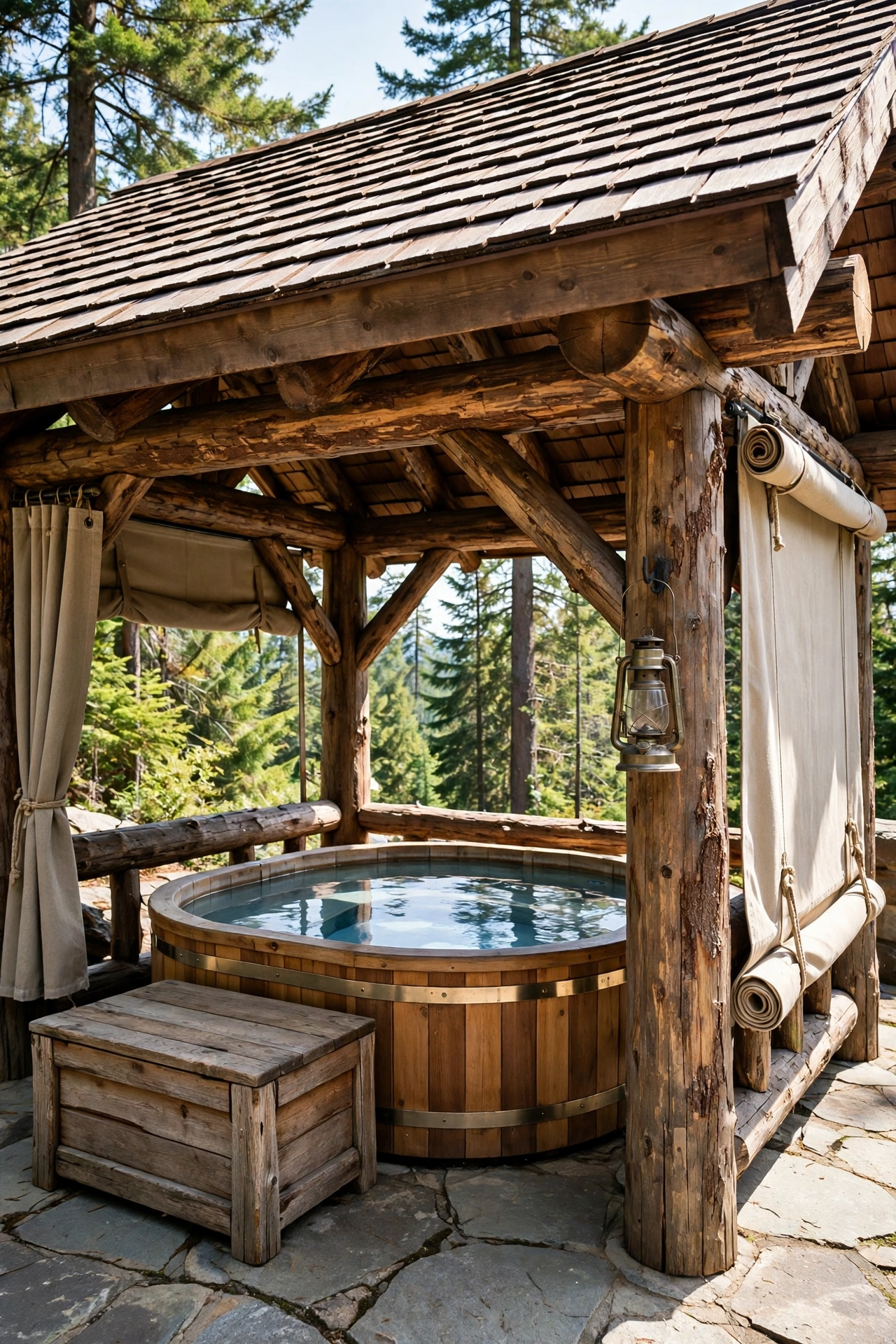
A log shelter gives your hot tub the feeling of a mountain lodge, with thick timber posts, a shingled roof, and the scent of cedar in the air. The heavy frame feels solid and sheltering, and the deep roof overhang keeps rain and snow well away from the water. Rough sawn beams and a stone floor complete the cabin look without any fussy details.
Leave the sides open between the posts for airflow and views, and add roll down canvas shades for the sides that face neighbors. A log shelter suits wooded yards and sloped sites, where the structure can nestle into existing trees. Add a wood storage box and a lantern on a post, and evening soaks will feel like a getaway deep in the woods.
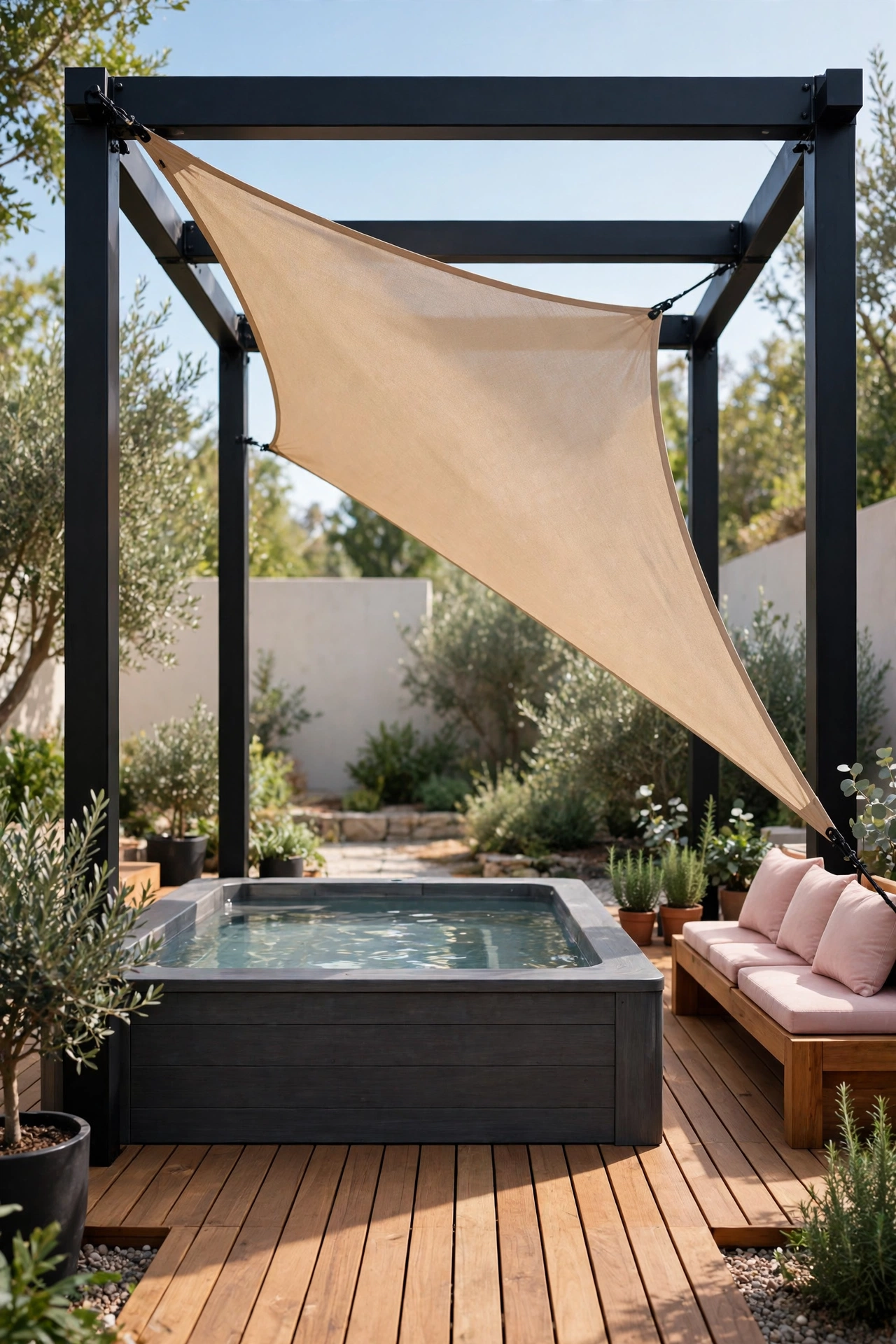
10. Top the Tub With a Black Metal Frame and Shade Sail
A matte black metal frame with a stretched shade sail brings a crisp, modern look to a hot tub enclosure. The sail floats above the tub in a clean triangle or rectangle, blocking harsh sun while letting breezes pass through the open weave. Black steel posts and slim lines suit contemporary homes with flat roofs and large windows.
Stretch the sail taut with proper tension hardware, and angle it so rain runs off to one side instead of pooling in the middle. A sail in warm sand or soft gray keeps the palette calm against the black frame. This enclosure costs less than a solid roof and installs in a day, yet it gives the tub a designed, architectural presence in the yard.
11. Grow a Lattice Wall With Climbing Plants Around the Tub
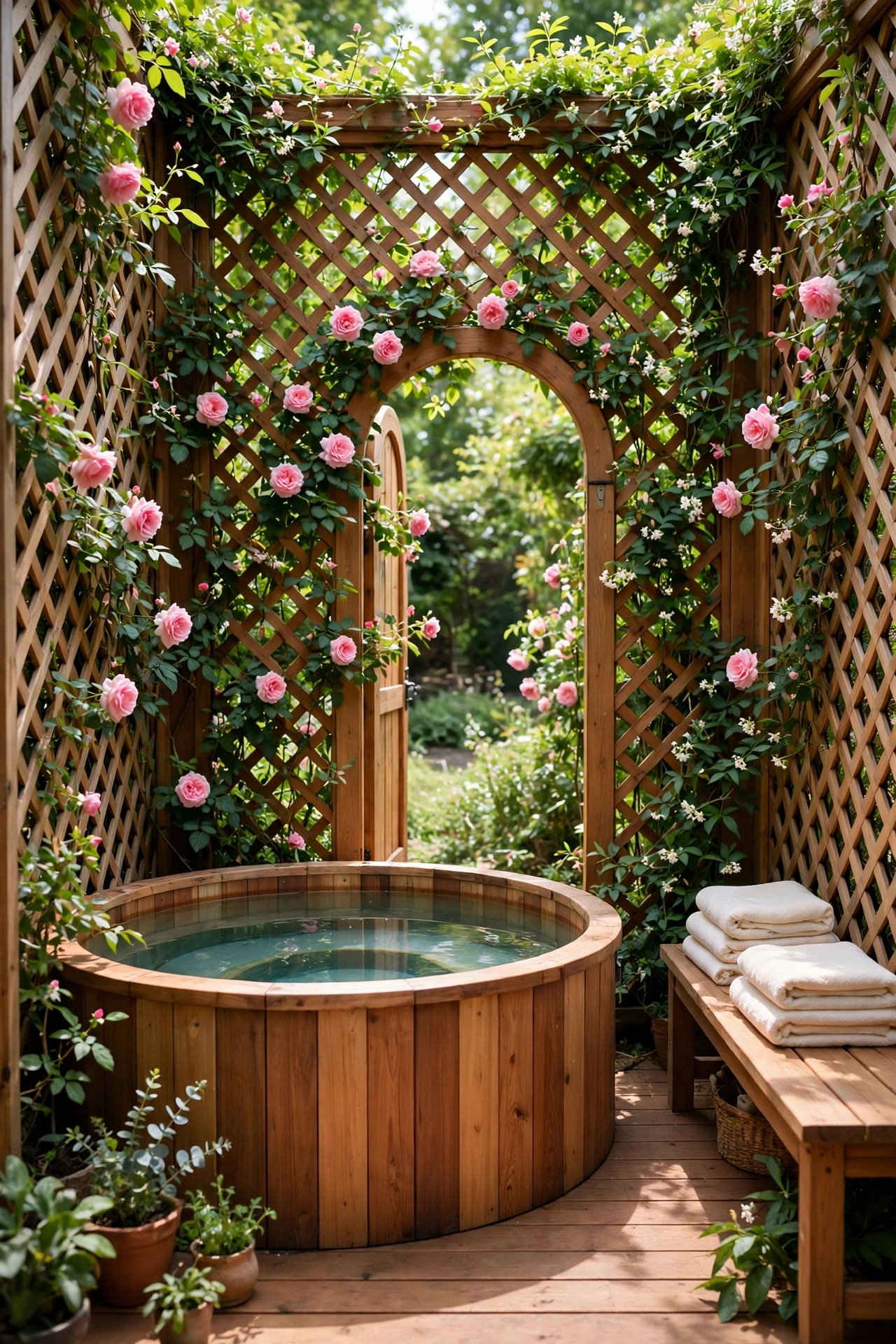
Lattice panels covered in climbing roses, jasmine, or clematis turn a hot tub enclosure into a living garden wall. The lattice gives vines a structure to climb, and within a season or two the plants fill the gaps with green leaves and flowers. The result is privacy that smells wonderful and changes with the seasons.
Build the lattice from cedar or pressure treated wood, and set the panels a few inches away from the tub so leaves stay out of the water. Choose evergreen climbers for year round cover in mild climates, or mix in deciduous vines for summer shade and winter sun. For more ways to shape garden structures, these garden arbor ideas will help you add an arched entry that makes the enclosure feel like a secret garden gate.
12. Turn a Screened Porch Into a Hot Tub Room
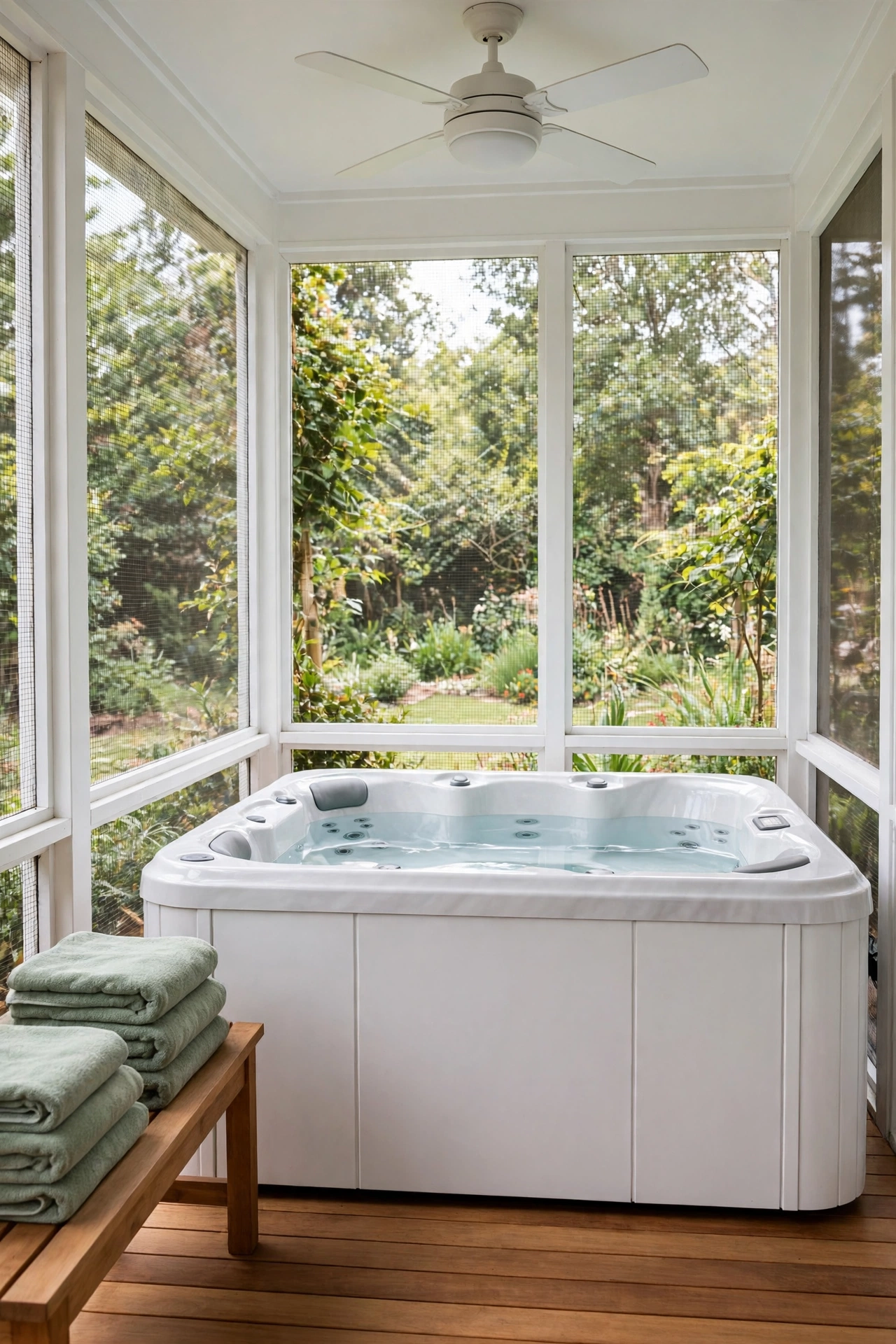
A screened porch gives your hot tub full protection from insects, leaves, and rain while keeping the fresh air feeling of an outdoor soak. The screen walls let breezes through and keep bugs out, which makes evening soaks far more comfortable in warm climates. A solid porch roof also means you can soak through a rainstorm without getting wet from above.
Check that the porch floor can carry the weight of a filled tub before you commit, since water is heavy and older porches may need reinforcement. Add a ceiling fan to move humid air out, and choose outdoor rated lighting for the roof. The porch enclosure works beautifully for homes where the tub sits just steps from a back door, because the path to the water stays dry and sheltered.
13. Raise a Timber Frame Pavilion Over the Tub
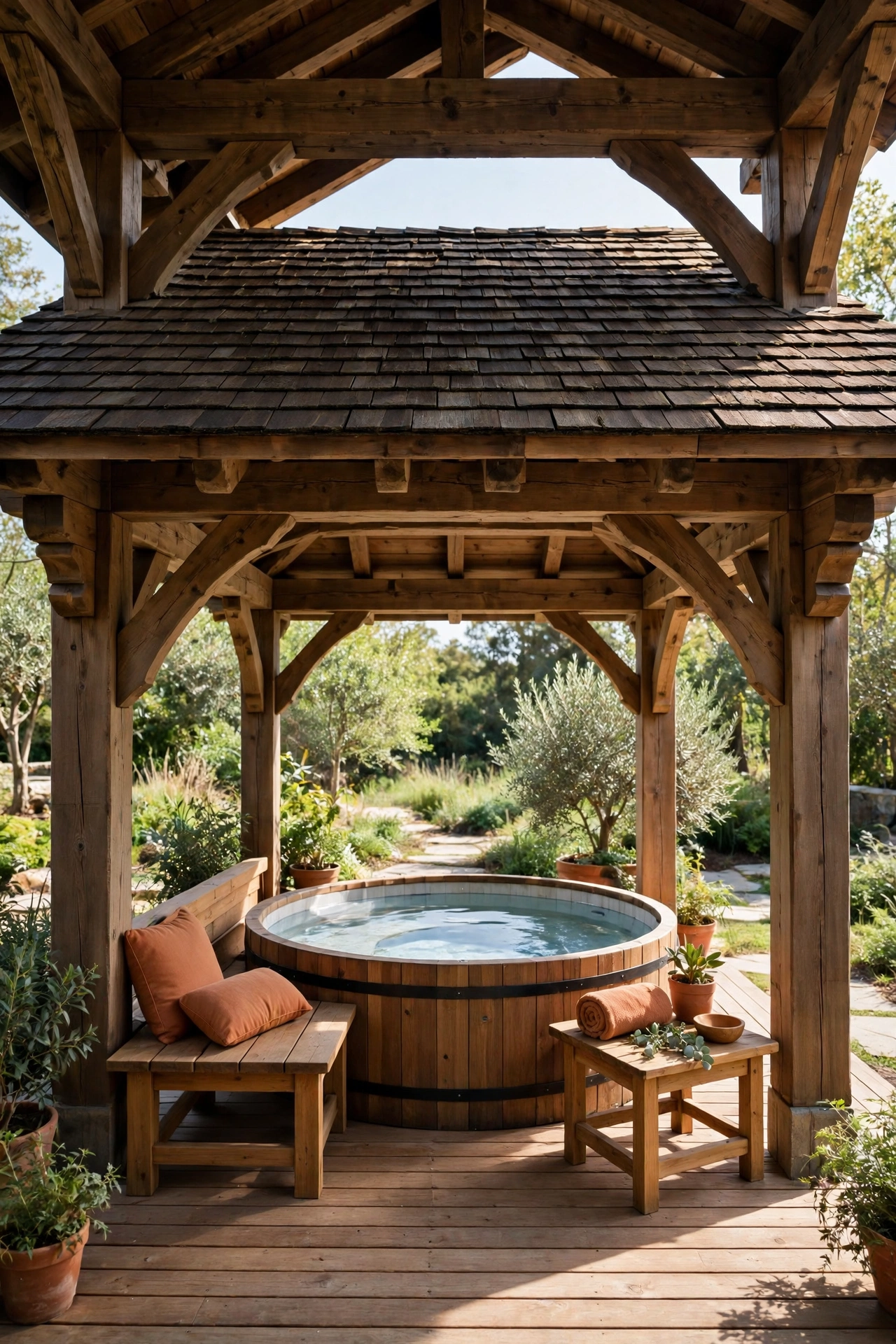
A timber frame pavilion is the most substantial enclosure you can give a hot tub, with heavy posts, exposed joinery, and a solid shingled roof. The structure feels permanent and generous, with room for the tub, a changing bench, and a small side table under one roof. Natural wood beams and a wide roof overhang create deep shade and a strong sense of shelter.
Size the pavilion at least four feet wider than the tub on every side so steam can rise and disperse without soaking the roof timbers. A pavilion suits large yards and homes with craftsman or traditional styling, where the structure can echo the architecture of the house. Add recessed lights under the roof and the pavilion becomes a glowing outdoor room after dark.
14. Hang Outdoor Curtains From a Simple Post Frame
Four sturdy posts and a set of weatherproof curtains make the simplest soft enclosure for a hot tub. The curtains slide along a wire or rod mounted between the posts, so you can draw them closed for a private soak or pull them open to enjoy the garden. Flowing fabric softens the hard lines of the tub and adds a resort feeling to an ordinary backyard.
Choose outdoor fabric in cream, soft blue, or sage, and weight the hems so the curtains hang straight instead of billowing into the water. This enclosure suits renters and anyone who wants privacy without a permanent structure, since the posts can be set in weighted planters instead of concrete. Swap the curtain color each season for a fresh look at very little cost.
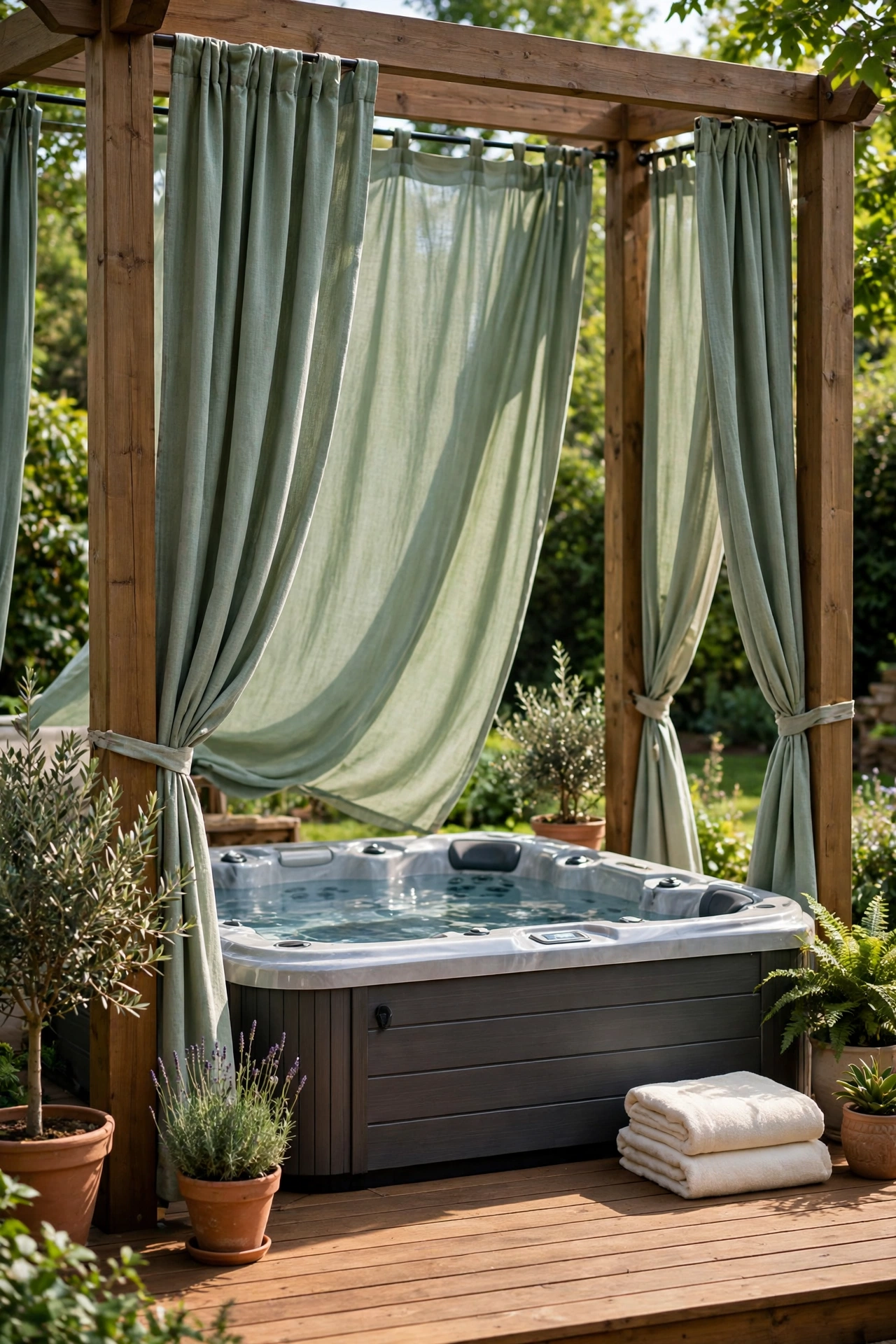
15. Combine a Brick Half Wall With a Wood Fence
A brick half wall topped with a wood fence section combines two classic materials into one handsome enclosure. The brick base gives the structure weight and permanence, while the wood fence above adds warmth and keeps the total height private without feeling like a fortress. Red or warm brown brick pairs beautifully with cedar fencing and cream decking.
Cap the brick with a wide stone ledge that doubles as a shelf for towels and drinks. The solid brick base also blocks wind at water level, which keeps the soak warmer on breezy evenings. This enclosure suits brick homes especially well, because the wall can match the house and make the hot tub area feel like a planned extension of the home.
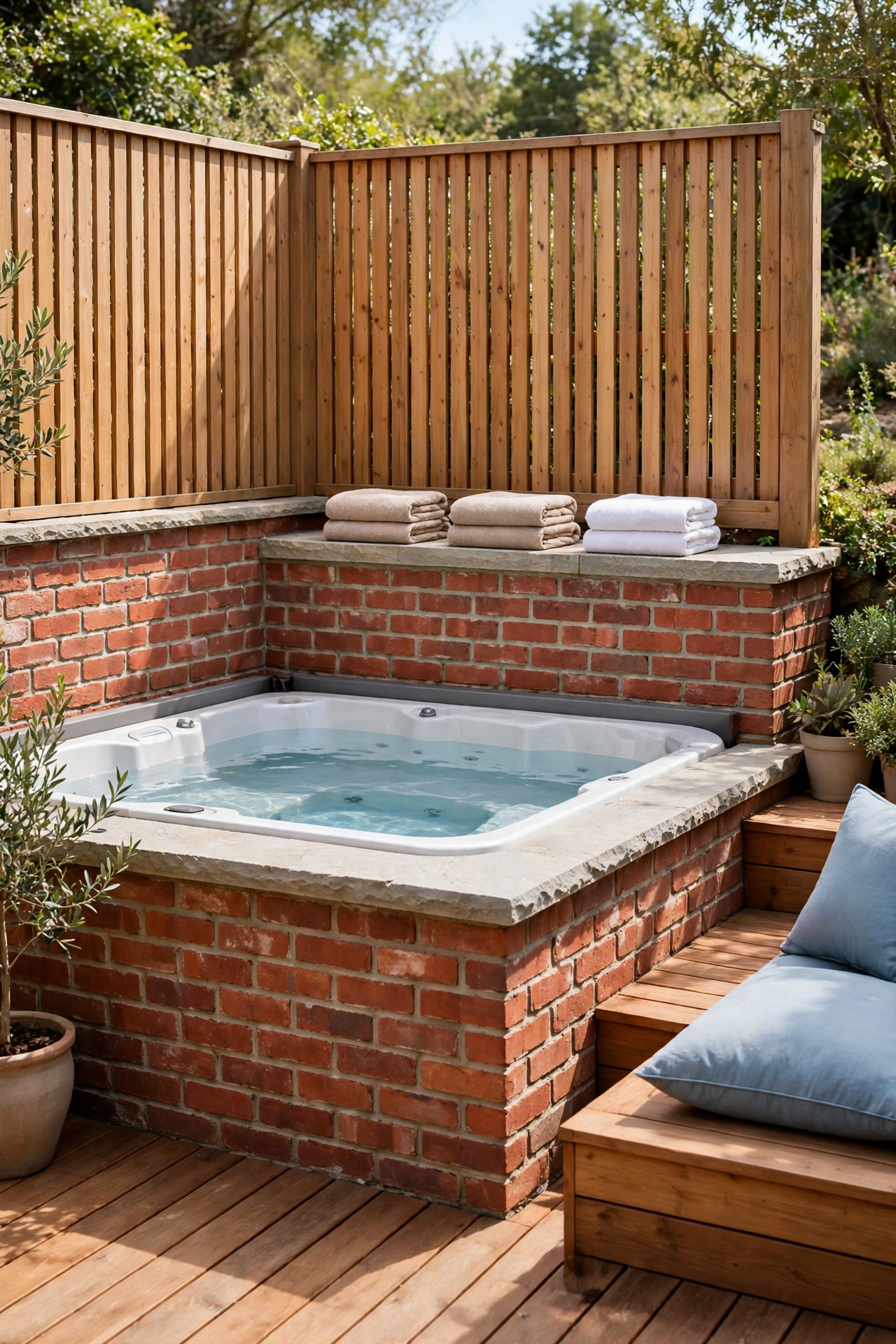
16. Shelter the Tub Under an A-Frame Roof
An A-frame roof gives a hot tub enclosure a striking silhouette, with two steep planes meeting at a ridge high above the water. The tall peak lets steam rise away from the tub, and the steep slope sheds rain and snow better than any flat roof. Open gable ends keep the space bright and connected to the yard while the roof provides full overhead cover.
Build the frame from cedar or Douglas fir and clad the roof in standing seam metal or cedar shingles to match your home. The A-frame suits modern cabins, lake houses, and yards with tall trees, where the sharp peak echoes the surrounding landscape. Add a hanging lantern from the ridge beam and the structure glows like a beacon on evening soaks.
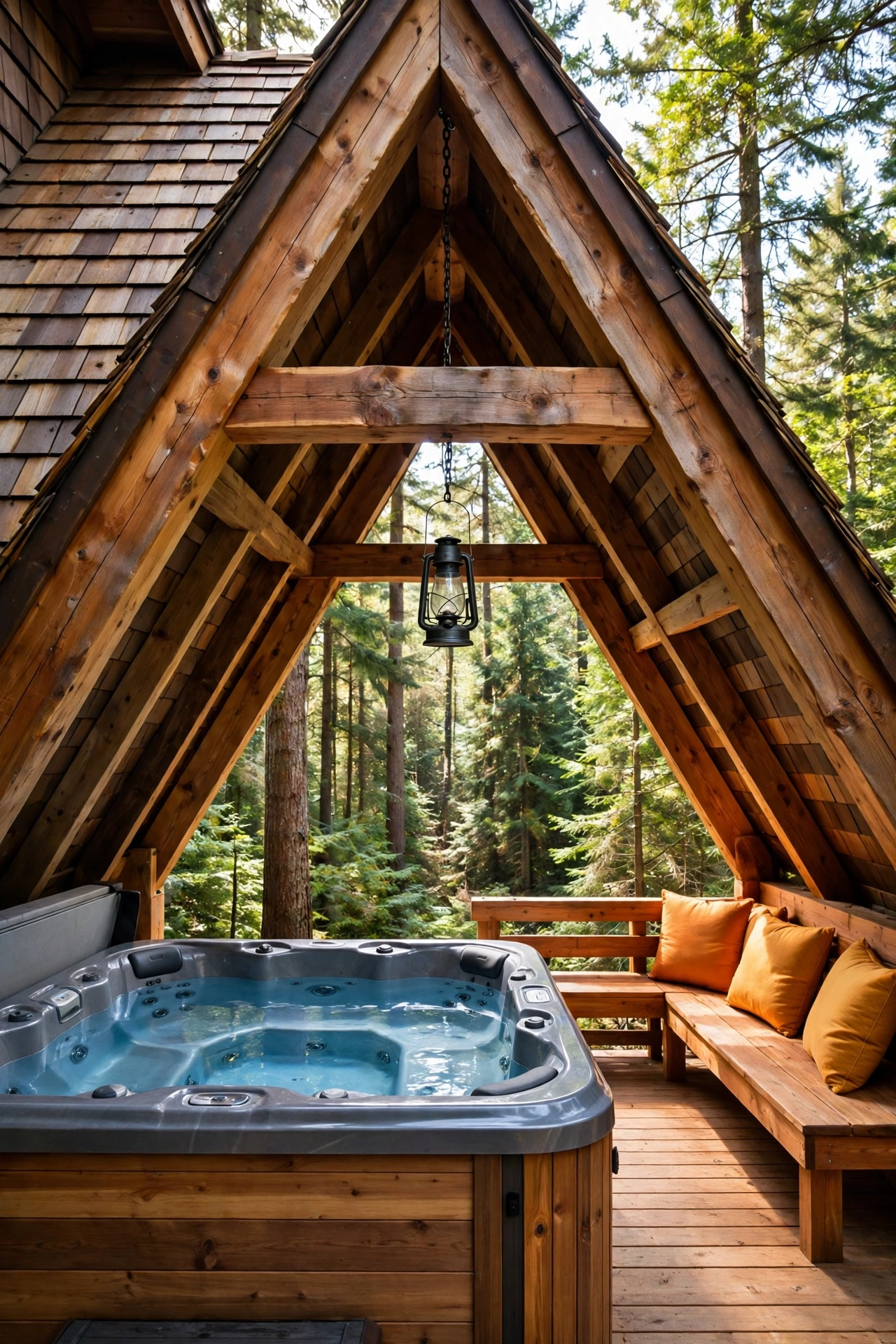
17. Surround the Tub With a Living Hedge Wall
A dense hedge of arborvitae, laurel, or privet grows into a soft green wall that hides the hot tub completely within a few seasons. The living enclosure absorbs sound, filters wind, and smells fresh after rain, and it needs no paint or stain ever. A hedge also blends the tub area into the garden so the structure never dominates the yard.
Plant the hedge at least three feet from the tub edge so falling leaves stay out of the water and you can walk around for maintenance. Leave a gap for a simple wood gate, and edge the hedge with a gravel border to keep soil and mulch away from the deck. This enclosure suits patient gardeners who want privacy that grows more beautiful every year.
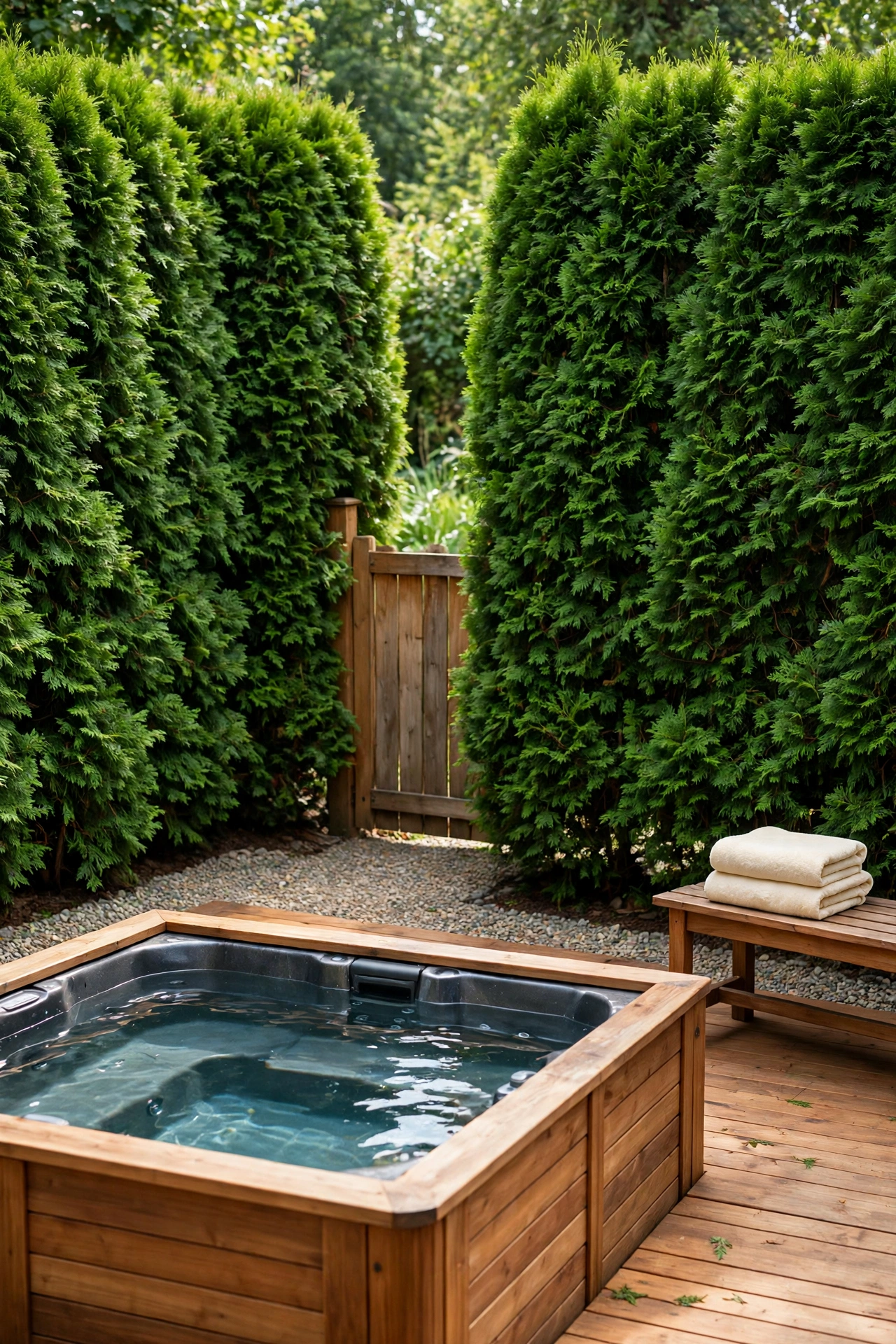
18. Fence the Tub With Horizontal Panels and a Gate
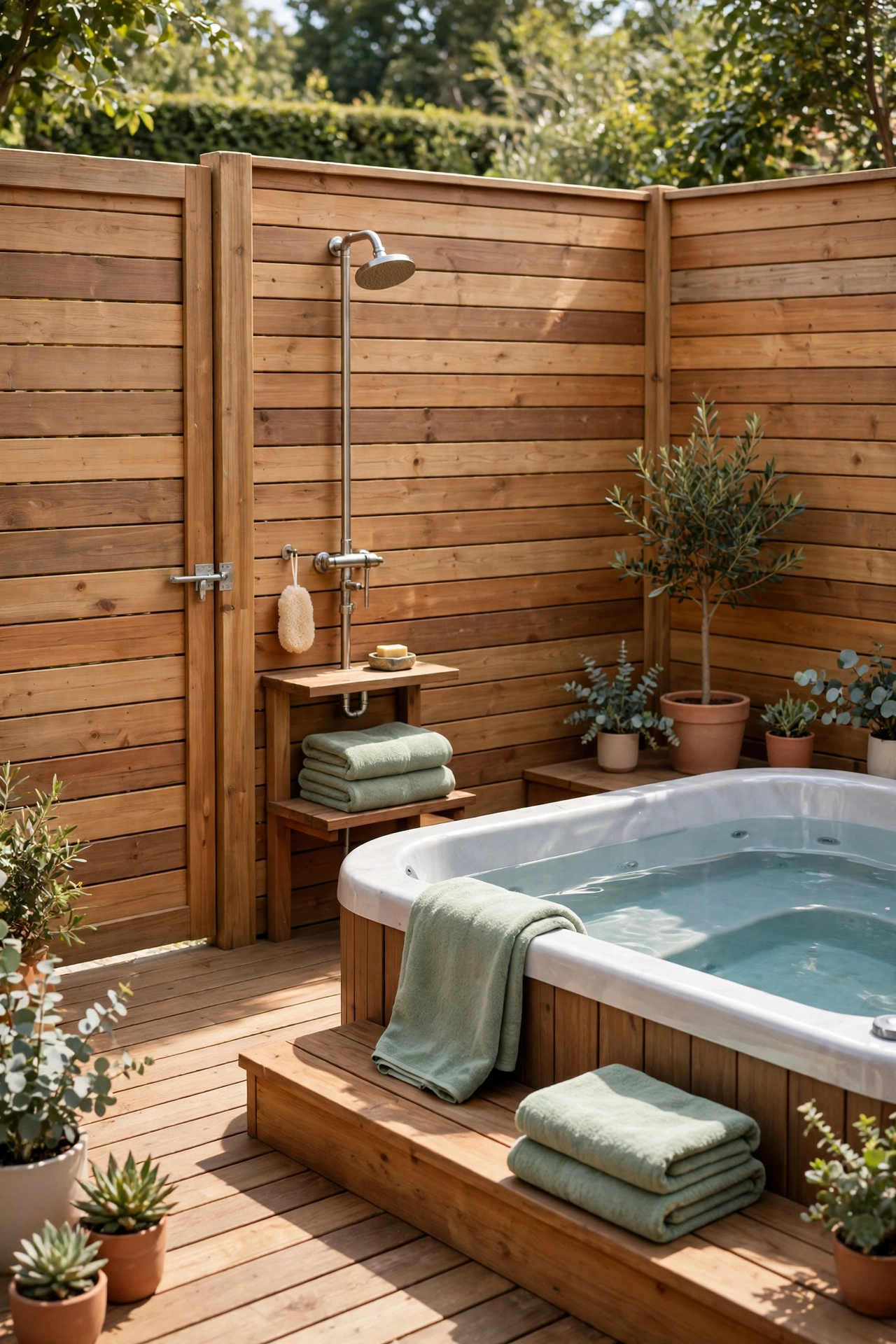
Horizontal fence panels give a hot tub enclosure a clean, contemporary look with strong lines that suit modern yards. The boards run side to side in even rows, and the long horizontal lines make a small yard feel wider. A matching gate with a simple latch keeps children and pets out when the tub is not in use, which is a safety feature every household needs.
Set the fence at least five feet from the tub on the entry side so the gate swings freely and you have room to carry towels and step in comfortably. A small rinse station beside the gate is a thoughtful addition for sandy feet and chlorine free rinsing, and these outdoor shower ideas will help you plan a simple outdoor rinse that keeps the tub water cleaner for longer.
19. Mix Corrugated Metal and Warm Wood Walls
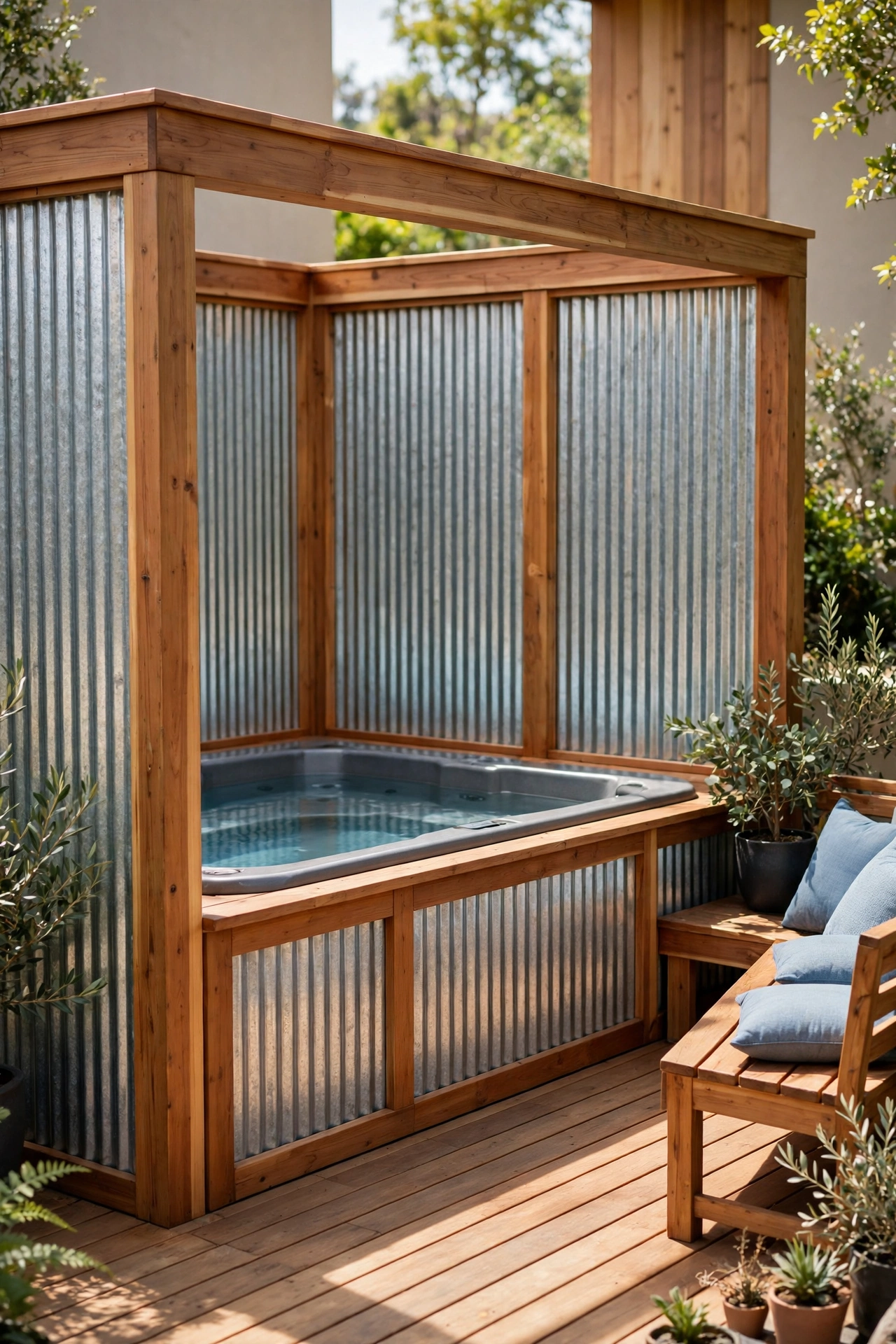
Corrugated metal panels set into warm wood frames give a hot tub enclosure an industrial farmhouse character that stands out from ordinary fences. The ridged metal reflects light in interesting ways and needs almost no maintenance, while the wood posts and top rail soften the look and tie the structure to the deck. Galvanized silver or matte black panels both work well against cedar.
Use the metal panels on the sides facing neighbors for full privacy, and keep one side open or fitted with a wood slat section for airflow and views. The metal surface also bounces warmth back toward the tub on cool evenings. This enclosure suits modern farmhouse yards and anyone who wants a bold material mix without a high price tag.
20. Cover the Tub With a Geodesic Dome
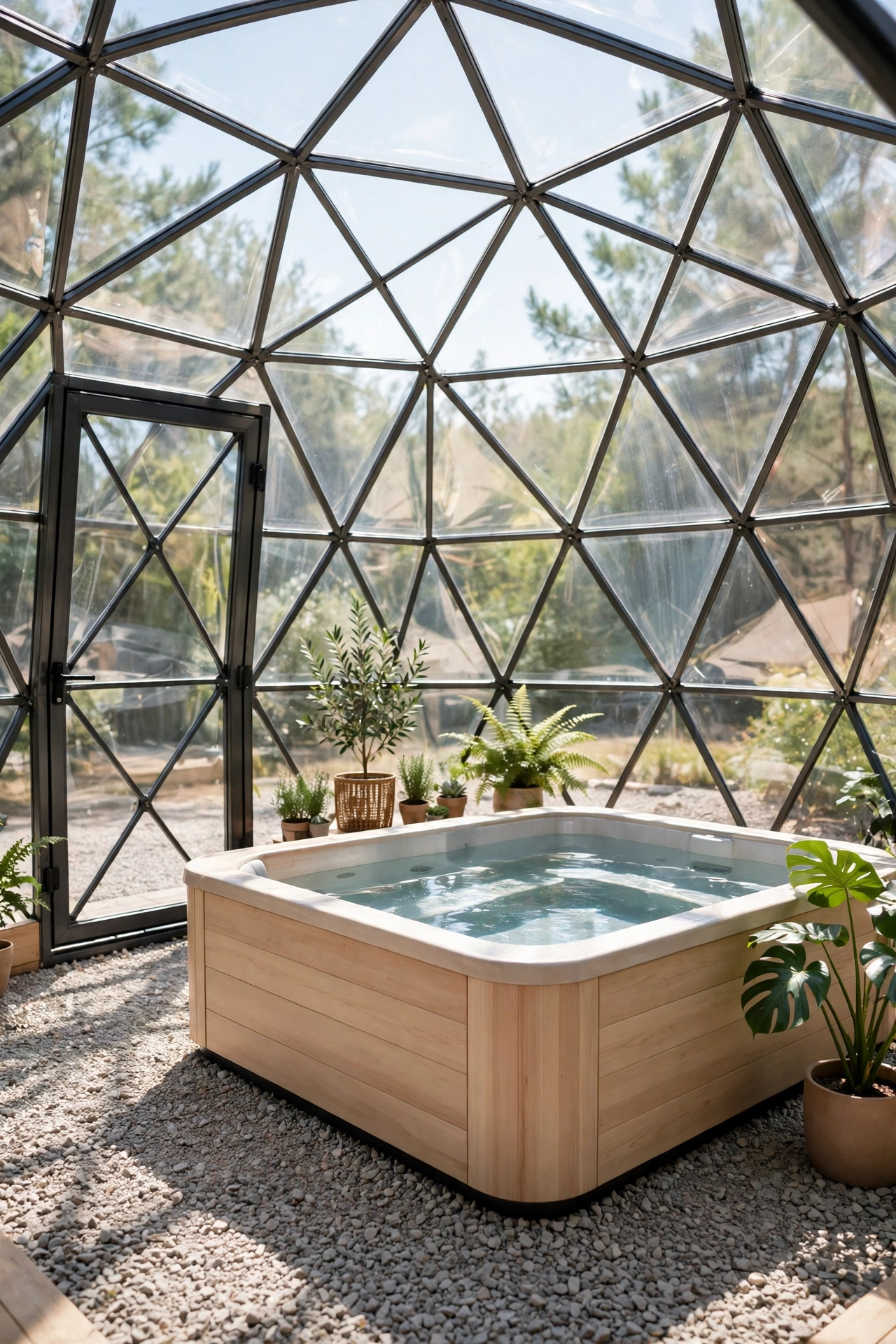
A geodesic dome turns a hot tub into a year round glasshouse, with triangular panels forming a strong, lightweight shell over the water. Clear panels let in full daylight and starlight, while the enclosed shape holds warmth and blocks wind, rain, and snow. The dome looks striking in the yard and gives the tub a futuristic, sculptural presence.
Choose a dome with a door panel and at least two vents, because steam needs somewhere to escape or condensation will cloud the panels. A gravel or deck base keeps the floor dry, and a few potted plants inside the dome thrive in the warm, humid air. This enclosure suits adventurous homeowners who want to soak through winter storms while staying warm and dry.
21. Attach a Lean-To Roof to the House Wall
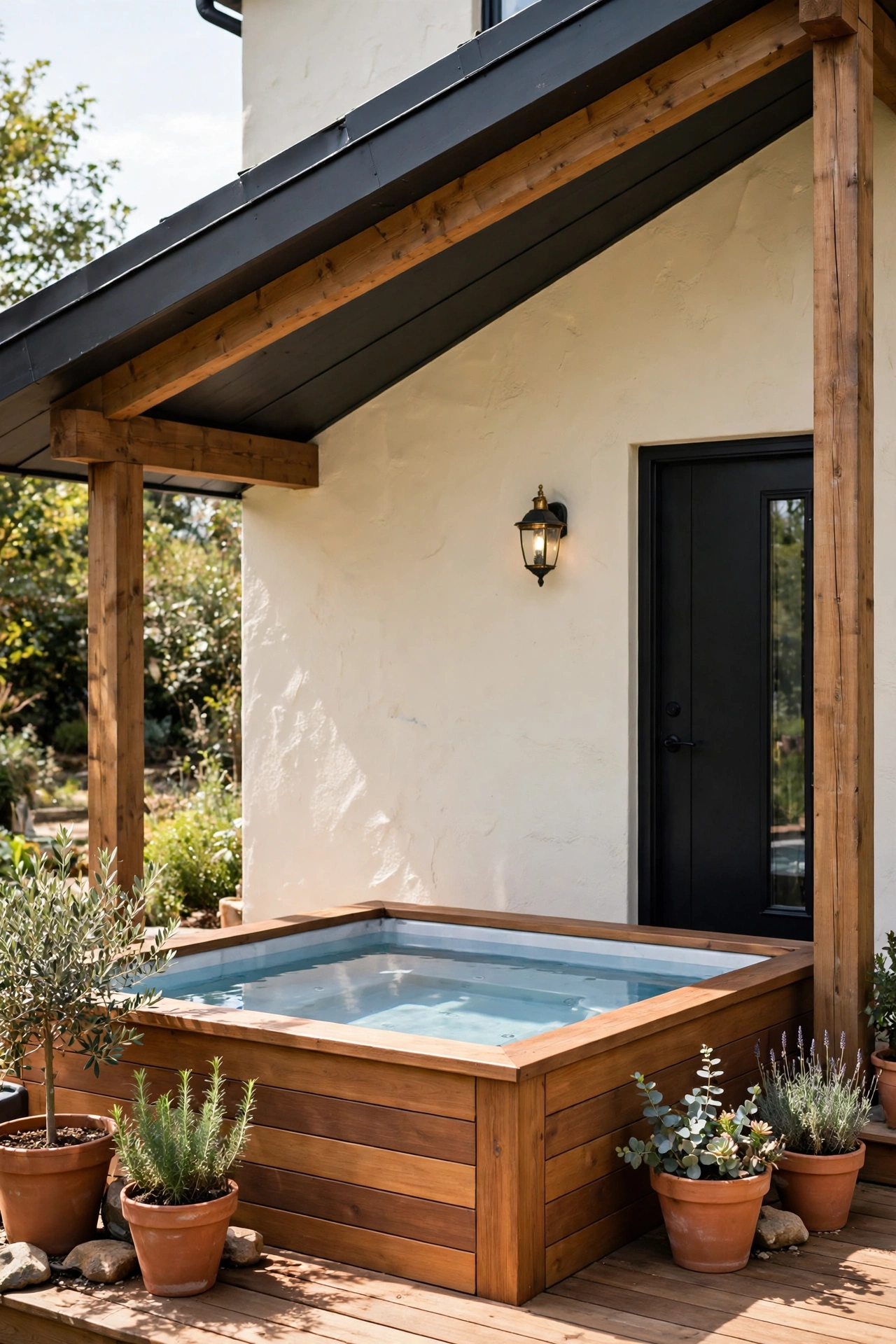
A lean-to roof attached to the house wall is the simplest permanent cover for a hot tub placed near the back door. One side of the roof bolts to the house and the other rests on two posts, creating a sloped shelter that sheds rain away from the building. The short walk from the door to the water stays dry, which matters most on cold winter nights.
Match the roof material to the house, whether that means shingles, metal panels, or polycarbonate sheets that let light through. Add a privacy screen on the outer posts if the tub faces a neighbor, and run an outdoor light from the house so the path stays visible after dark. This enclosure costs less than a freestanding structure and feels like a natural part of the home.
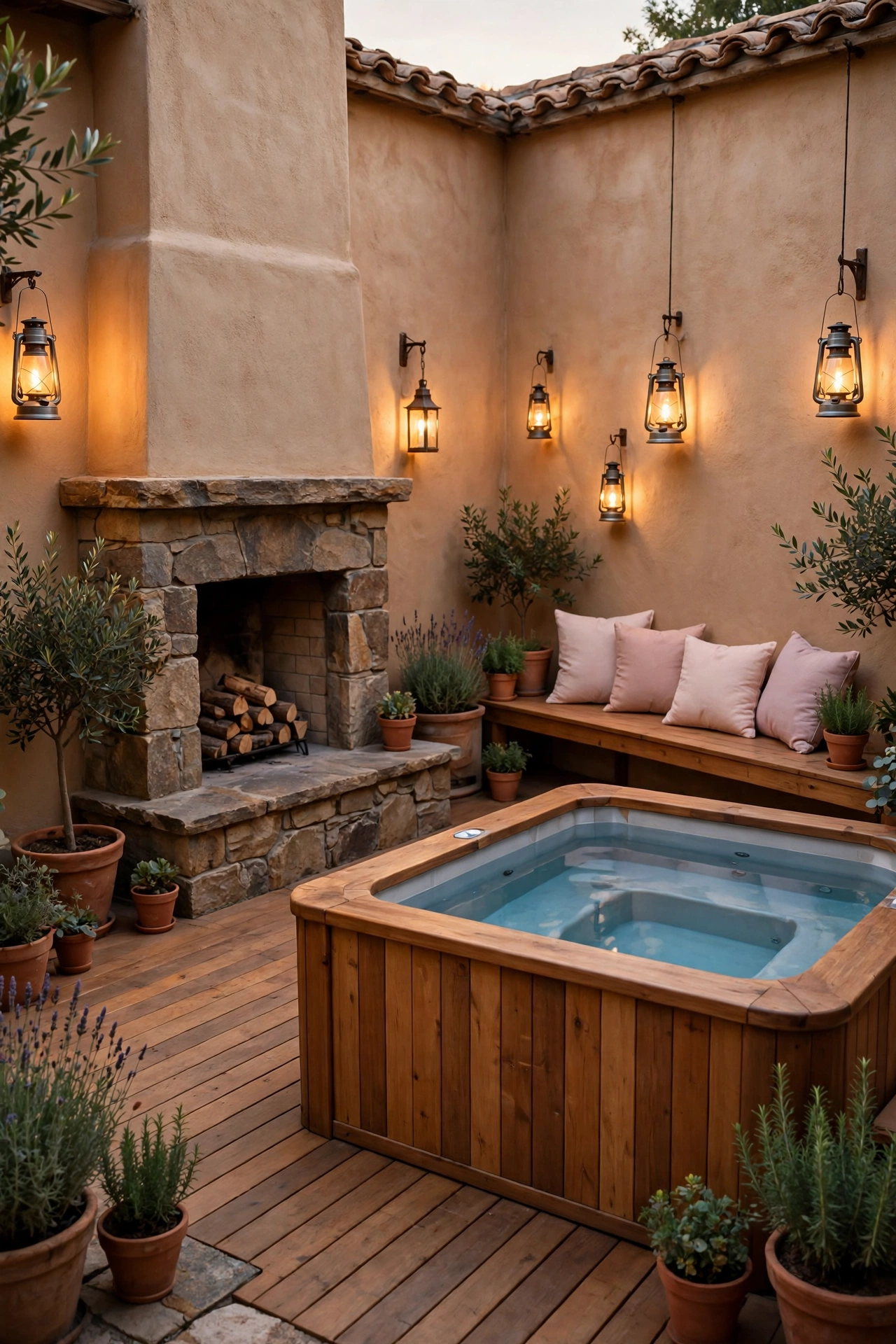
22. Build a Walled Courtyard With a Fireplace
A walled courtyard with an outdoor fireplace turns a hot tub area into a full evening destination. Solid walls on three sides create total privacy, while the fireplace anchors the fourth side and gives the space warmth and a focal point. You can soak in the tub, then dry off beside the fire without leaving the courtyard.
Build the walls from stucco, brick, or stone to match the house, and keep the fireplace at a safe distance from the tub edge with a stone hearth between them. A courtyard suits homes with a side yard or a walled garden, where the enclosure can feel like a private outdoor room. If you enjoy pairing heat and water for wellness, these outdoor sauna ideas will help you plan a heat and soak routine that makes the courtyard useful in every season.
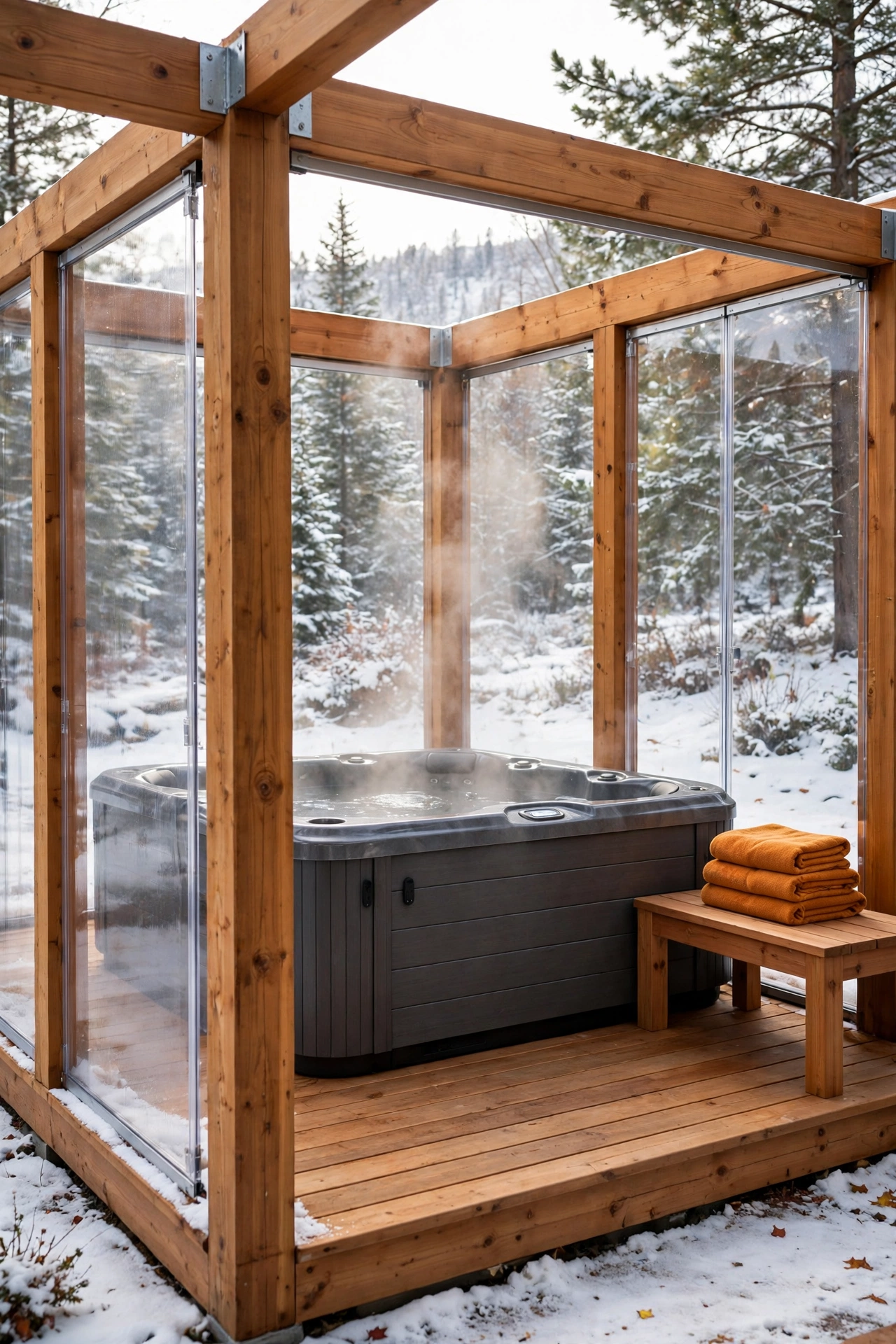
23. Add Removable Clear Panels for Four Season Use
Removable clear panels turn an open pergola or post frame into a four season enclosure without permanent walls. Polycarbonate or acrylic panels slide into tracks or bolt onto the frame in autumn, then come off in spring when open air soaking returns. The clear panels block wind and hold warmth, so winter soaks stay comfortable even when snow covers the yard.
Label each panel and store them flat in a garage or shed during the warm months so they stay scratch free. Choose panels with UV protection so they stay clear for years instead of yellowing. This flexible enclosure suits cold climates best, because it gives you a sheltered winter soak and an open summer soak from the same structure.
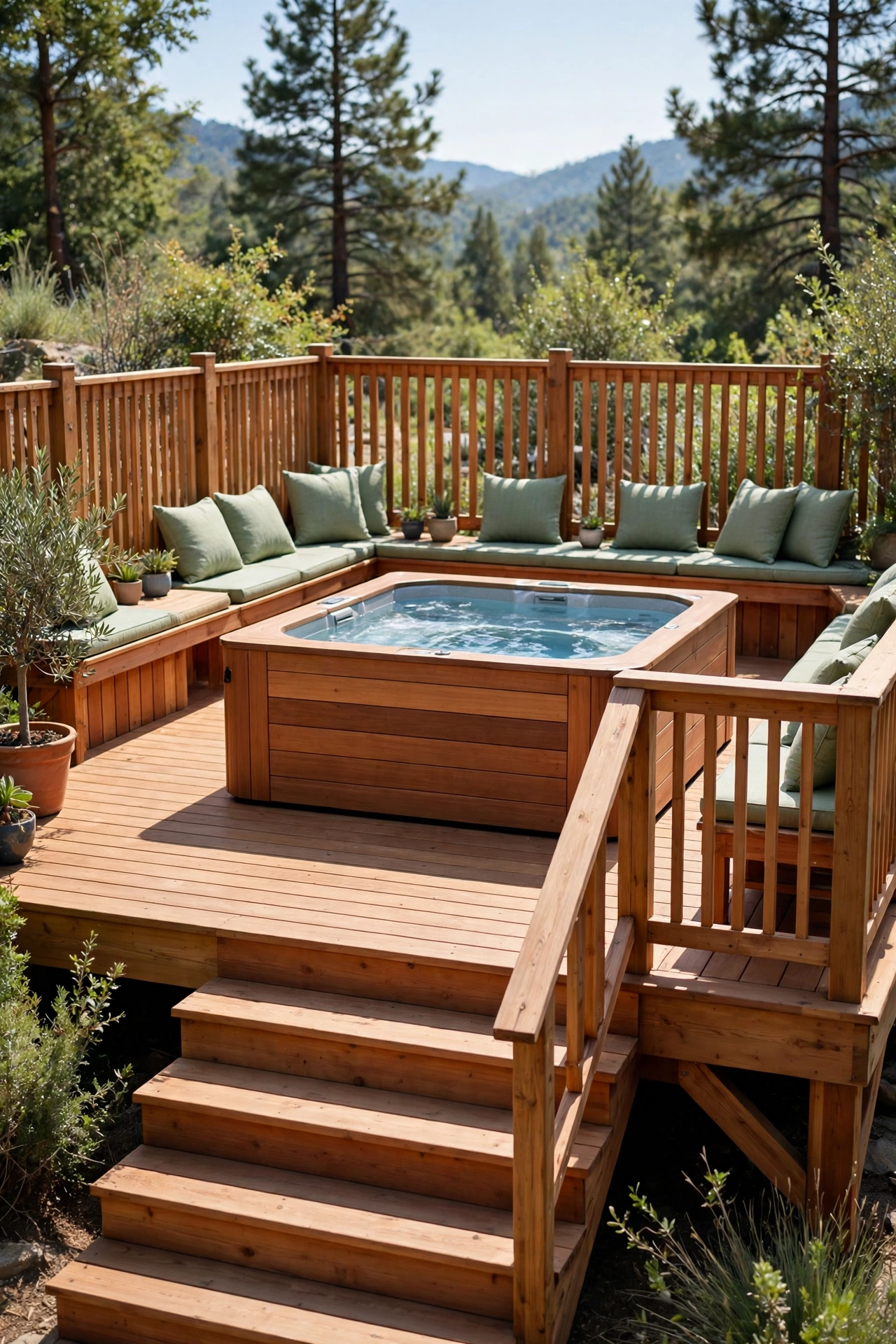
24. Raise the Tub on a Deck With Wraparound Railing
A raised deck with a wraparound railing gives a hot tub a grand, finished setting with clear boundaries and safe access. The deck lifts the tub above the lawn, the railing defines the space, and wide steps with a handrail make entry safe for every age. Built in benches along the railing give you a place to sit, set down towels, and chat with friends who are soaking.
Build the deck from cedar or composite boards in a warm wood tone, and keep the railing height comfortable for leaning while standing. The space under the deck can hide the pump and filter with a removable access panel. For deck shapes, board patterns, and railing styles that suit a raised tub platform, these wooden deck ideas will help you design a deck that looks custom built for the tub.
Conclusion
The right enclosure does more than hide your hot tub from view. It blocks wind, holds warmth, keeps out leaves and insects, and turns a simple soak into a private ritual you look forward to every day. Whether you choose a cedar slat wall, a timber pavilion, or a living hedge, the structure should fit your yard, your climate, and the way you actually use the tub.
Start with privacy and overhead cover as your two priorities, then add the details that make the space yours, such as lighting, a towel shelf, or a fireplace. Measure twice, build once, and your hot tub enclosure will reward you with years of quiet, sheltered soaks in a yard that feels like your own private spa.
Frequently Asked Questions About Outdoor Hot Tub Enclosure Ideas for Private Yards
How tall should a hot tub privacy wall be?
A wall between five and six feet tall gives full privacy for seated soaking in most yards. If a neighbor has a second story window overlooking the tub, you may need a taller screen or a roof structure to block the view from above. Check local fence height rules before you build, since many towns limit fence height to six feet.
Do I need a permit for a hot tub enclosure?
Many towns require a permit for roofed structures, gazebos, and permanent walls, while simple freestanding screens often need none. A hot tub itself may also need an electrical permit for the dedicated circuit. Call your local building office before you start, and ask about setback rules that control how close a structure can sit to a property line.
What is the cheapest way to enclose a hot tub?
Rolled bamboo fencing, outdoor curtains on a post frame, and freestanding lattice panels are among the lowest cost options. All three can be installed in a weekend without a contractor. For a balance of cost and durability, horizontal fence panels with a gate give lasting privacy at a moderate price.
Should a hot tub enclosure have a roof?
A roof is not required, but it extends your soaking season by blocking rain, snow, and harsh sun, and it keeps leaves out of the water. If you skip a roof, choose a cover lifter and a good insulated tub cover to protect the water between soaks. In snowy climates, a roof also spares you from clearing snow off the cover before every use.
How much space should I leave around a hot tub inside an enclosure?
Leave at least three feet of clear space on the sides where you step in and out, and at least eighteen inches on the service side for pump and filter access. More room is better if you plan to add steps, a bench, or a towel shelf inside the enclosure. Measure the tub footprint plus the clearance before you set posts or pour footings.

Hi, I’m Emily! I turn messy corners into cozy, organized spots. DreamNestDecor is where I share simple, practical home ideas — decor, organization, and small-space solutions that work in real life, not just in photos. Every idea here is carefully researched before it’s shared.