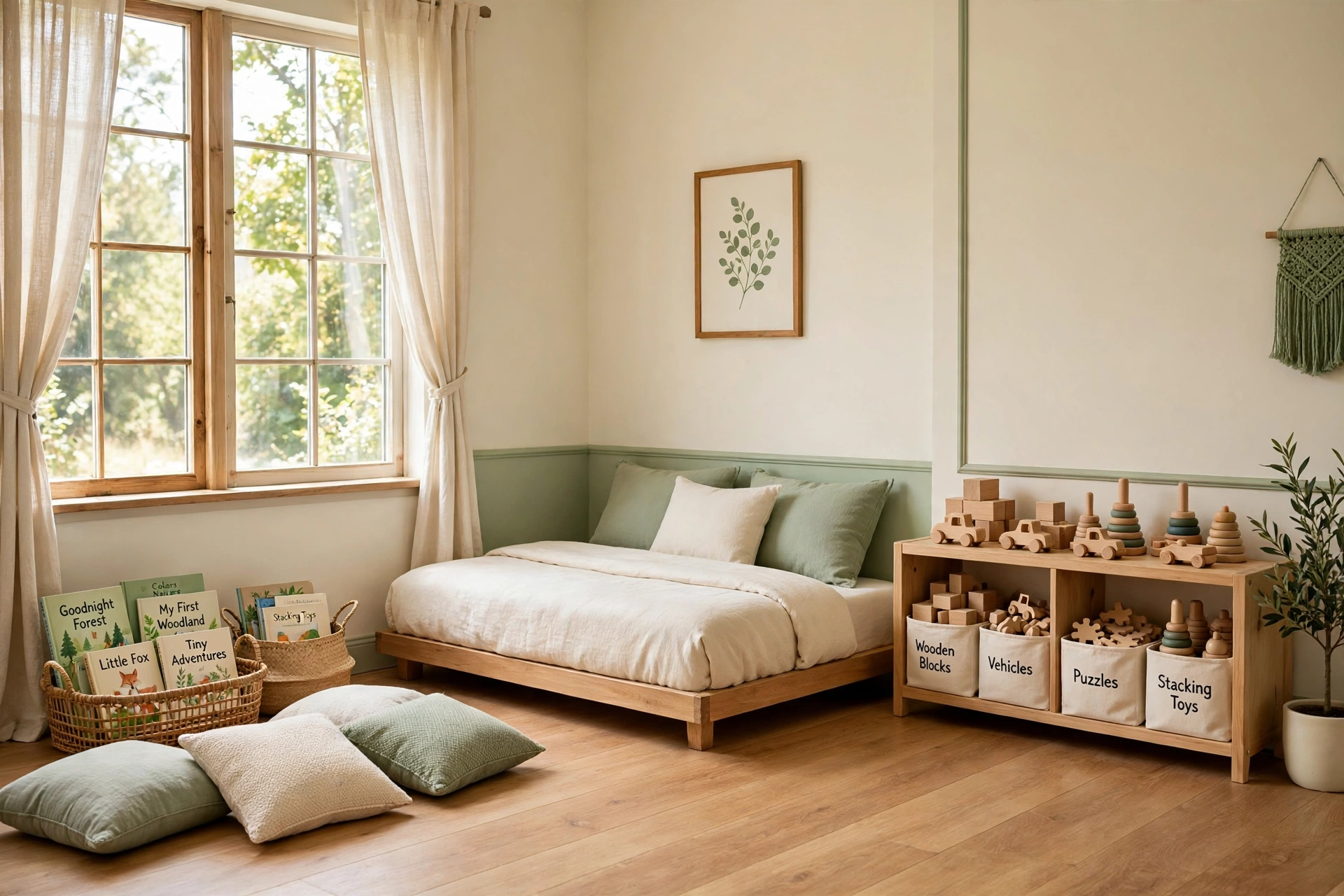
Picture this: it is early morning, your toddler wakes up, climbs out of a bed that sits just inches off the floor, and walks straight to a low shelf to choose a book. No crying for help, no climbing over rails, no risky tumbles. The room itself does the work, because every piece of furniture is sized for small hands and short legs, and every zone has a clear purpose.
You do not need a large room or a big budget to build a space like this. All you need is a layout that puts your toddler in charge of safe choices while keeping hazards out of reach. These 18 small toddler bedroom layout ideas will help you arrange a room where your little one can sleep, play, read, and dress with growing independence, all in a space that stays tidy and safe.
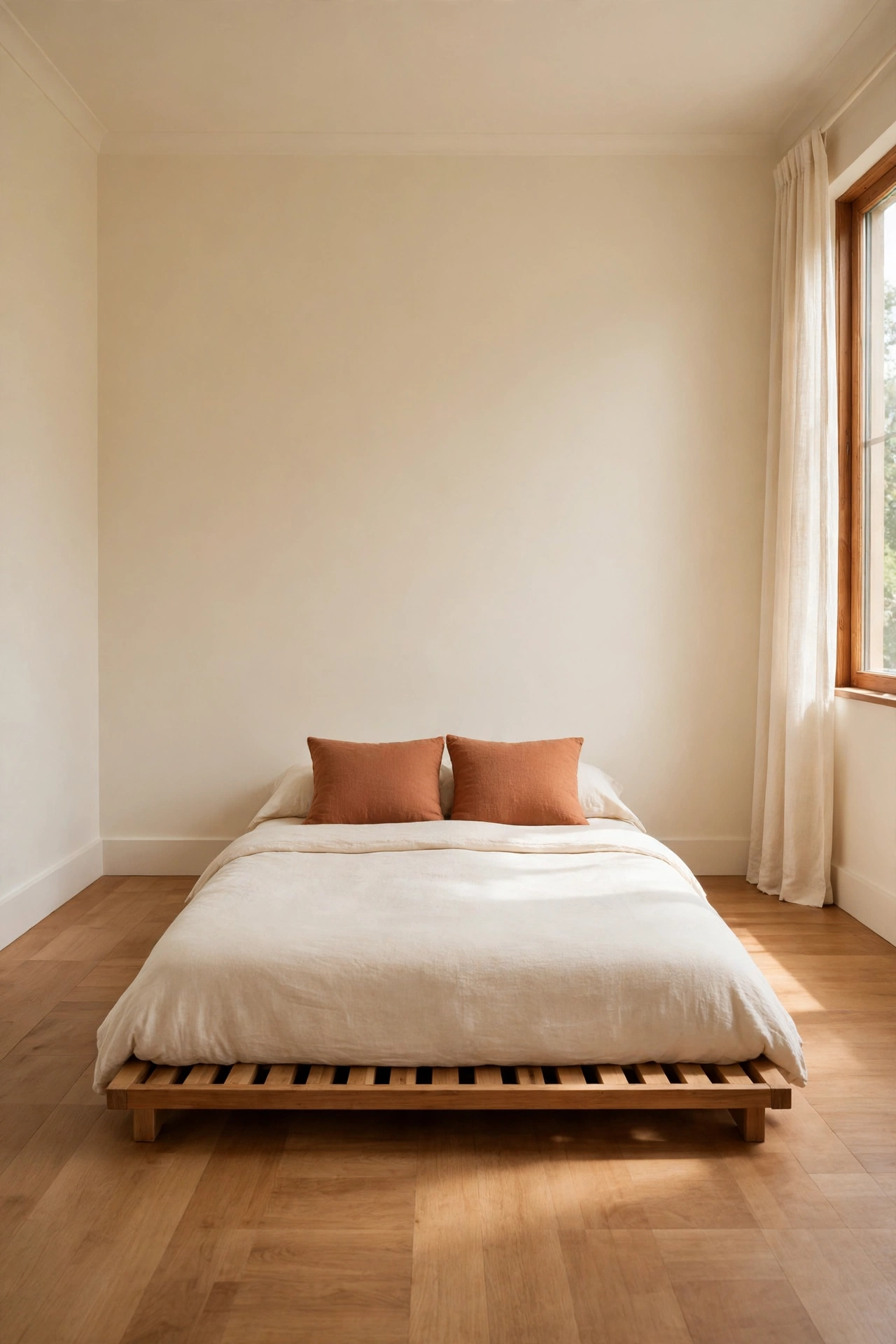
1. Start With a Low Floor Bed in the Center of the Room
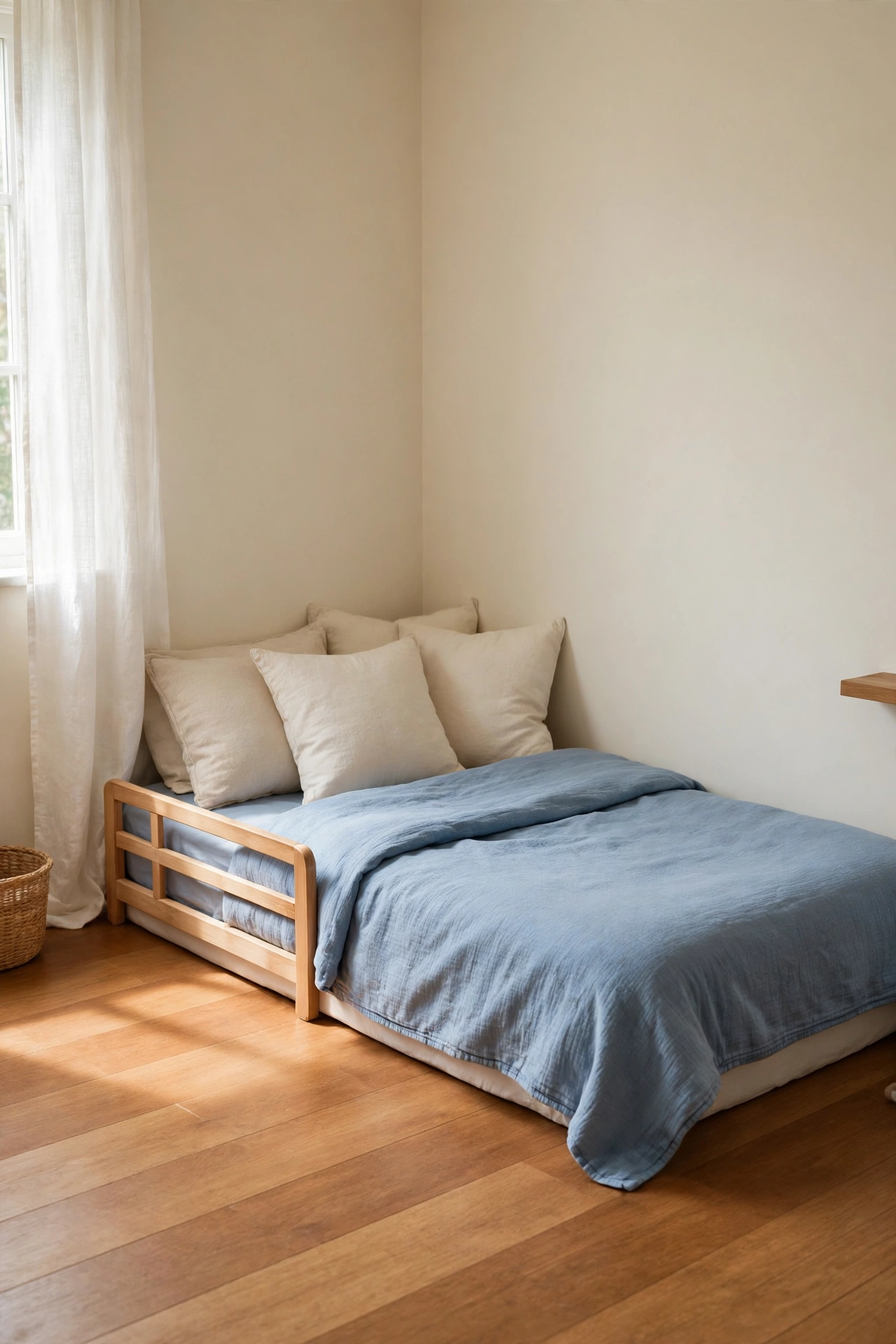
A floor bed is the heart of a toddler bedroom layout, because it lets your child get in and out of bed without help and without a fall. Choose a low wooden house frame or a simple mattress placed on a low platform, and center it on the longest clear wall or in the middle of the room with space to walk around all sides. The low height removes the fear of rolling out of a tall bed, and the open sides invite your toddler to climb in when sleepy and climb out when rested.
Keep the bedding simple with a fitted sheet, a light blanket, and one or two small pillows, and leave the floor around the bed clear of toys so nighttime trips are safe. A soft rug beside the bed gives little feet a warm landing spot in the morning. If you are moving your child out of a nursery setup, these small nursery layout ideas with a convertible crib show the stage your toddler is growing out of, and a floor bed is the natural next step toward independence.
2. Tuck the Floor Bed Into a Corner for a Cozy Sleep Nook
If the center of the room feels too open, push the floor bed into a corner so two walls hug the sleep space. The corner placement creates a natural nook that feels sheltered and calm, and it frees the rest of the floor for play. A small guard rail or a row of firm cushions along the open side keeps your toddler safely on the mattress through the night.
Keep the corner walls free of hanging items within reach, and place a soft night light on a high shelf nearby so the nook glows gently without creating a cord hazard. The rest of the room stays open for morning play, and the bed becomes a quiet retreat your toddler can find alone at nap time and bedtime.
3. Add a Low Front-Facing Bookcase for Independent Reading
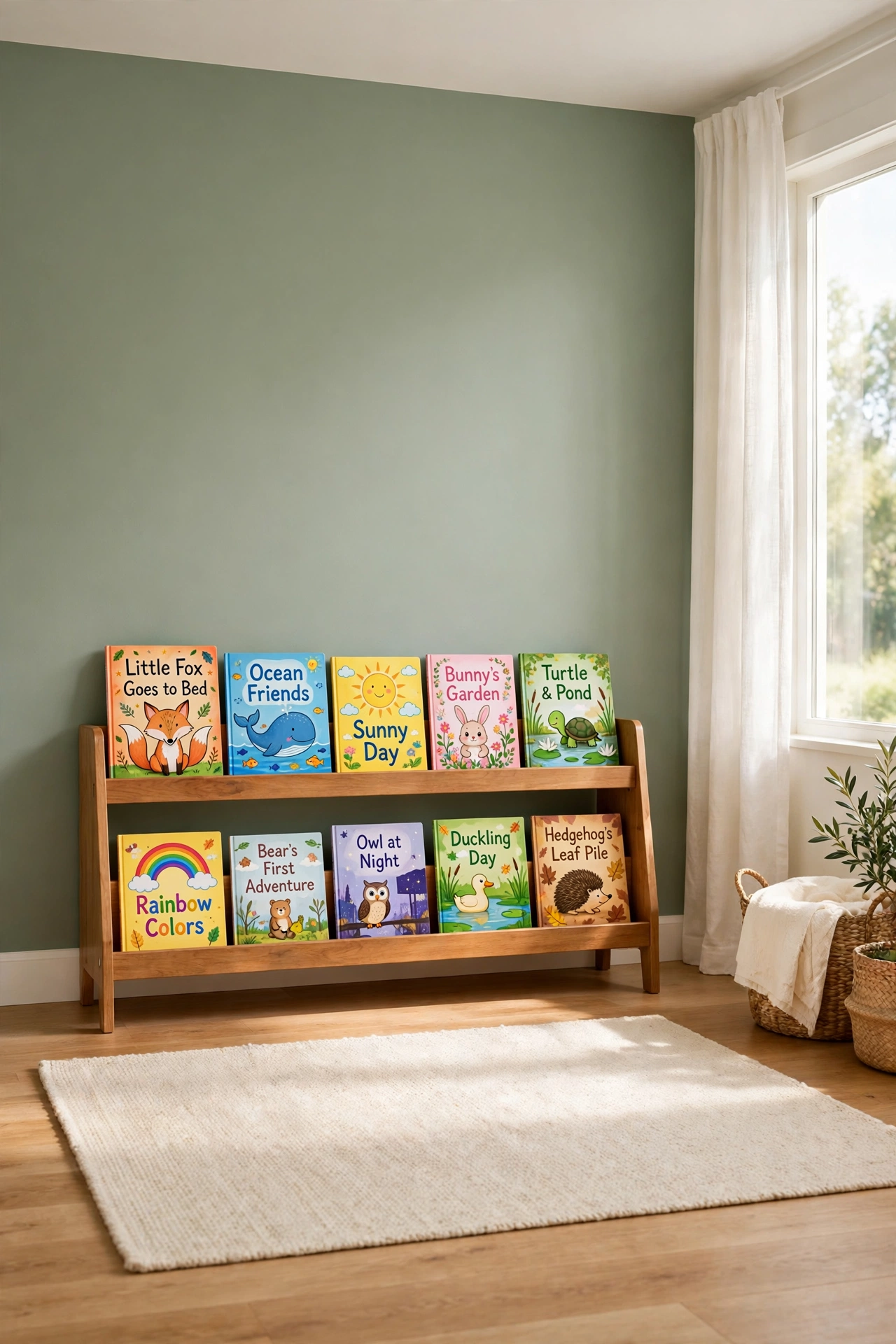
A low bookcase that shows book covers facing forward turns reading into a choice your toddler can make alone. Place the bookcase at the end of the bed or along a short wall, and fill the front ledges with six to eight sturdy board books. Your toddler can see every cover, pull one out, and put it back without stacking books in a pile.
Rotate the books every week or two so the shelf always feels fresh, and keep the total number small so choosing never feels overwhelming. A bookcase with a wide stable base will not tip when little hands pull at the shelves, and the low height means your toddler never needs to climb to reach a favorite story.
4. Build a Canopy Reading Corner With Floor Cushions
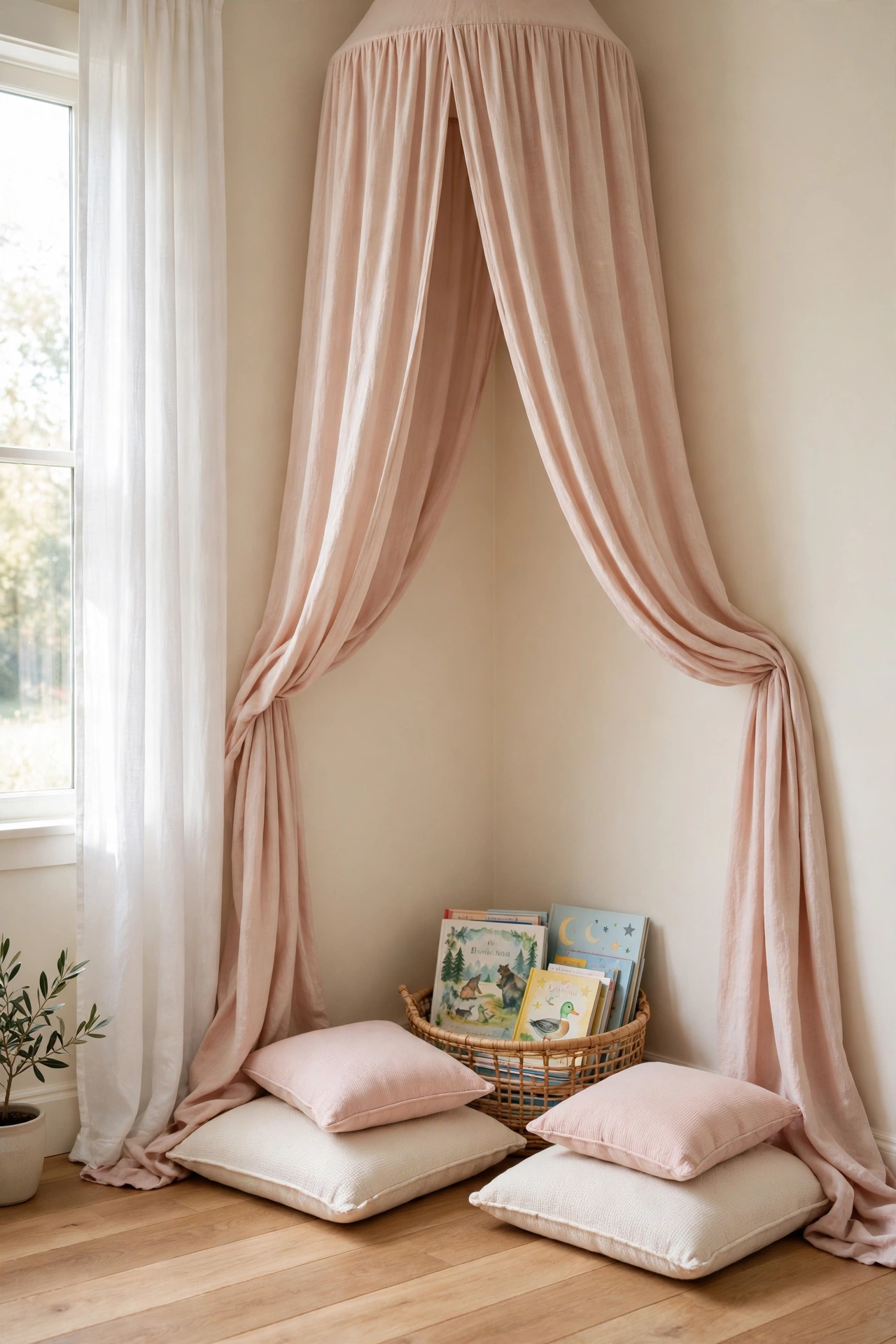
A simple fabric canopy draped from the ceiling or a wall bracket creates a reading corner that feels like a private hideaway. Place two or three firm floor cushions under the canopy, add a small basket of books beside them, and your toddler has a cozy spot to settle in with a story. The canopy marks the corner as a quiet zone, separate from the louder play areas of the room.
Choose a canopy in a soft cream or blush fabric that lets light through, and secure all fabric and cords high out of reach so nothing can wrap around little hands. The cushions should be firm enough to sit on and light enough for your toddler to move, so the corner can shift shape as play changes through the day.
5. Set Up a Low Toy Shelf With Open Bins at Toddler Height
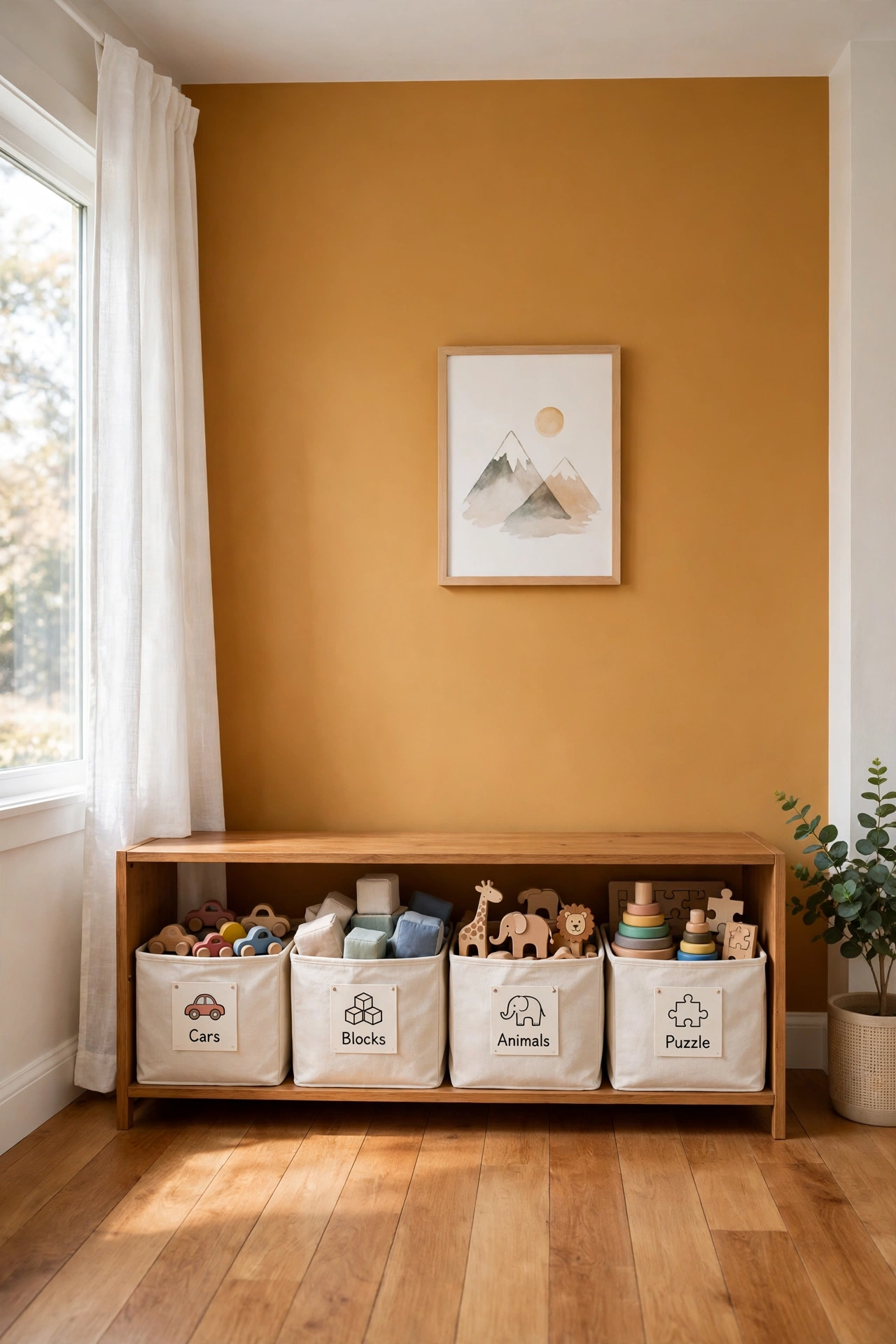
A low open shelf with labeled bins puts every toy within reach and makes cleanup a game your toddler can actually win. Choose a shelf unit no taller than your toddler’s chest, and fill each cubby with a single bin for one type of toy, such as wooden animals, soft blocks, or toy cars. Picture labels on the front of each bin show your toddler exactly where each toy belongs.
Keep the shelf against a wall and anchor it firmly, and limit the number of bins to what fits without crowding. When the shelf holds only a few well chosen categories, your toddler can find toys without emptying every bin onto the floor. For more ways to keep toy storage working hard, these playroom organization ideas will help you extend the same system beyond the bedroom.
6. Use a Toy Rotation Station to Keep Play Fresh
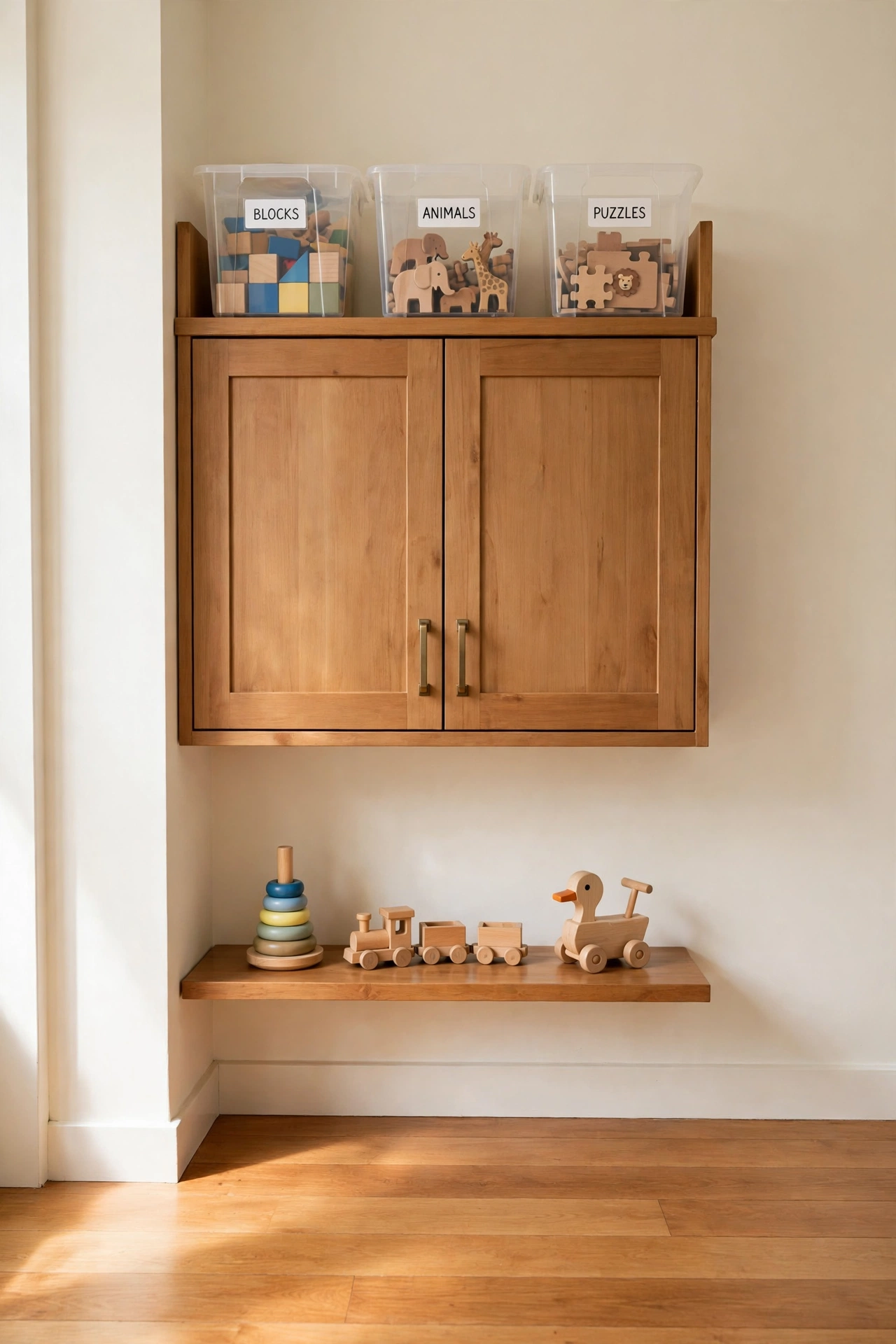
A toy rotation station is a closed cabinet or a high closet shelf where half of the toys wait while the other half stays in play. Every week or two, swap a few toys from storage onto the low shelf, and your toddler will greet old toys like brand new discoveries. The rotation keeps the room from overflowing and keeps play interesting without buying anything new.
Store the waiting toys in clear labeled bins on a high shelf or inside a closed cabinet your toddler cannot open alone. Label each bin with a photo of the toys inside so you can find the right set in seconds. This simple system protects your budget and your floor space, and it teaches your toddler that fewer toys can mean deeper play.
7. Anchor Every Tall Piece of Furniture to the Wall
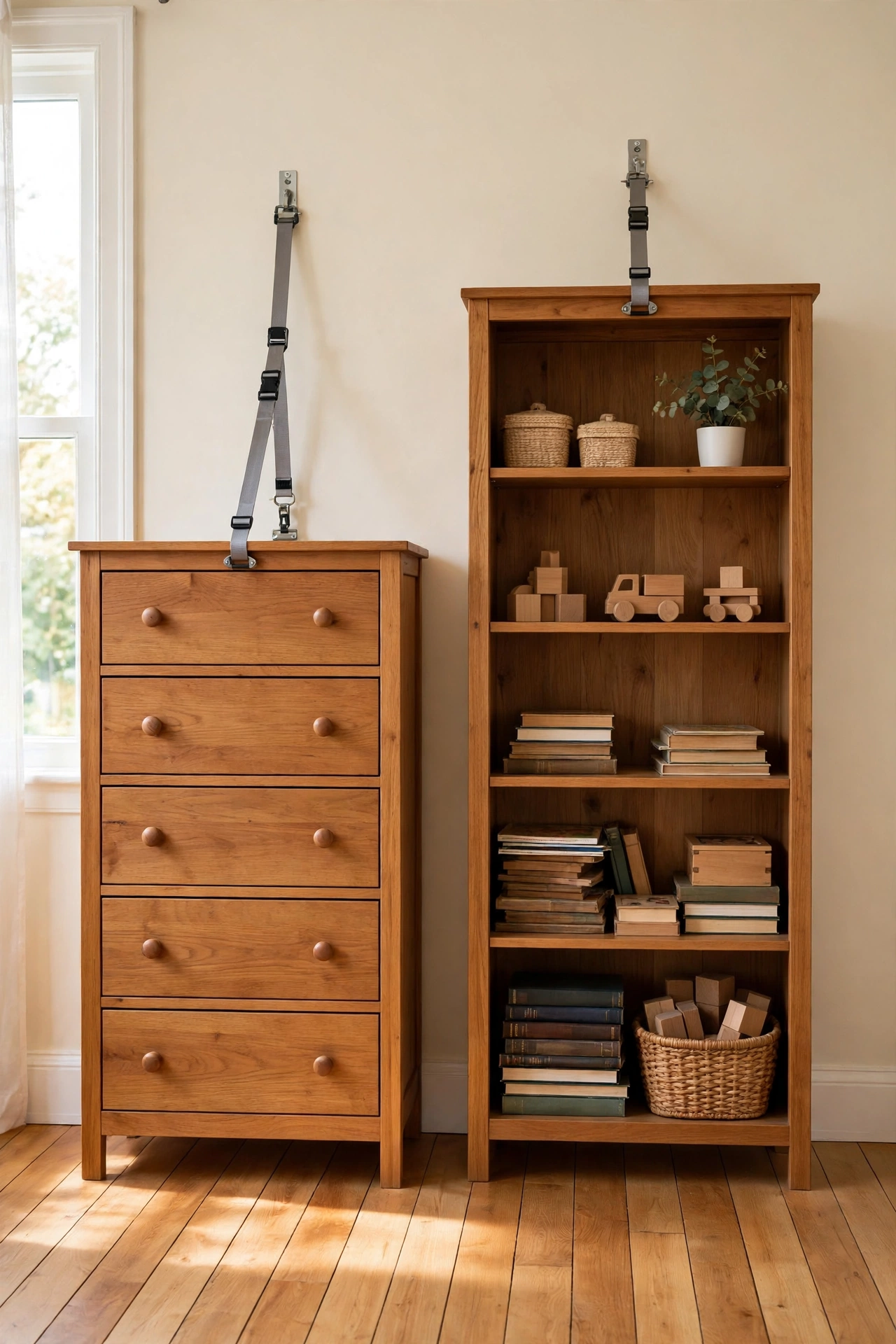
Tall furniture is one of the biggest hidden hazards in a toddler bedroom, because little climbers pull on shelves and drawers to reach what sits on top. Every dresser, bookcase, and shelf unit in the room must be anchored to the wall with anti-tip straps or brackets screwed into studs. The straps stay hidden behind the furniture, and they hold firm even when a determined toddler climbs.
Check the anchors every few months, since straps can loosen as furniture shifts with daily use. Keep heavy items in the lowest drawers and shelves so the center of gravity stays low, and never place tempting toys or snacks on top of tall furniture where they invite climbing. Anchoring takes less than an hour and removes a risk you should never leave to chance.
8. Cover Outlets and Soften Sharp Corners Before Play Begins
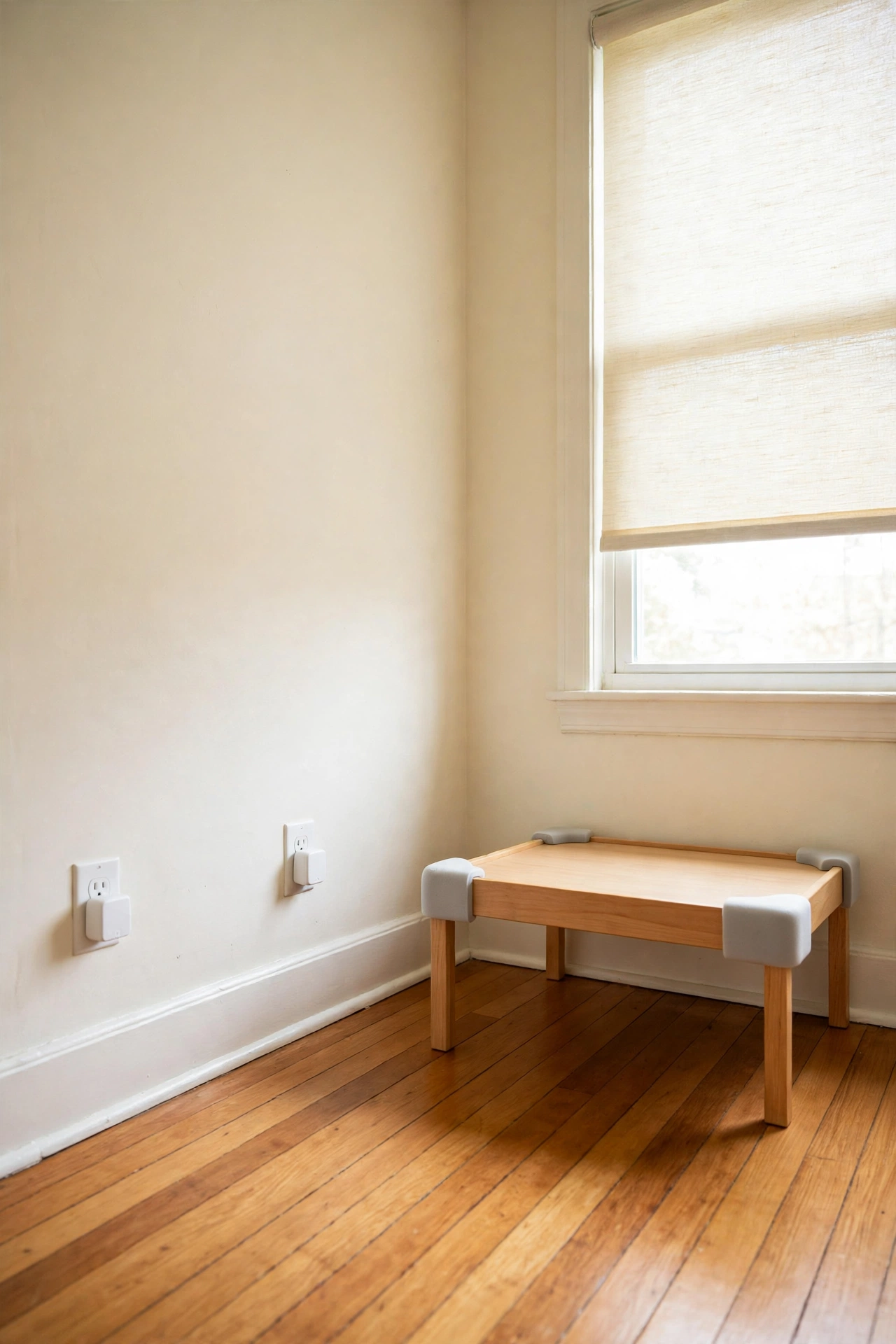
Before your toddler plays freely in the room, walk through it at toddler height and fix every hazard you can see. Slide outlet covers onto every outlet, tuck cords behind furniture or inside cord covers, and stick soft corner guards onto the edges of tables and low shelves. The room should be safe to explore alone, even during the few minutes when your attention turns elsewhere.
Check window blind cords and curtain ties too, and replace them with cordless options or secure them high with a cord cleat. A quick monthly safety sweep keeps new hazards from creeping in as toys and furniture change. Safety work is not the most exciting part of a room layout, but it is the part that lets every other idea in this article work with confidence.
9. Add a Toddler-Height Row of Hooks for Coats and Costumes
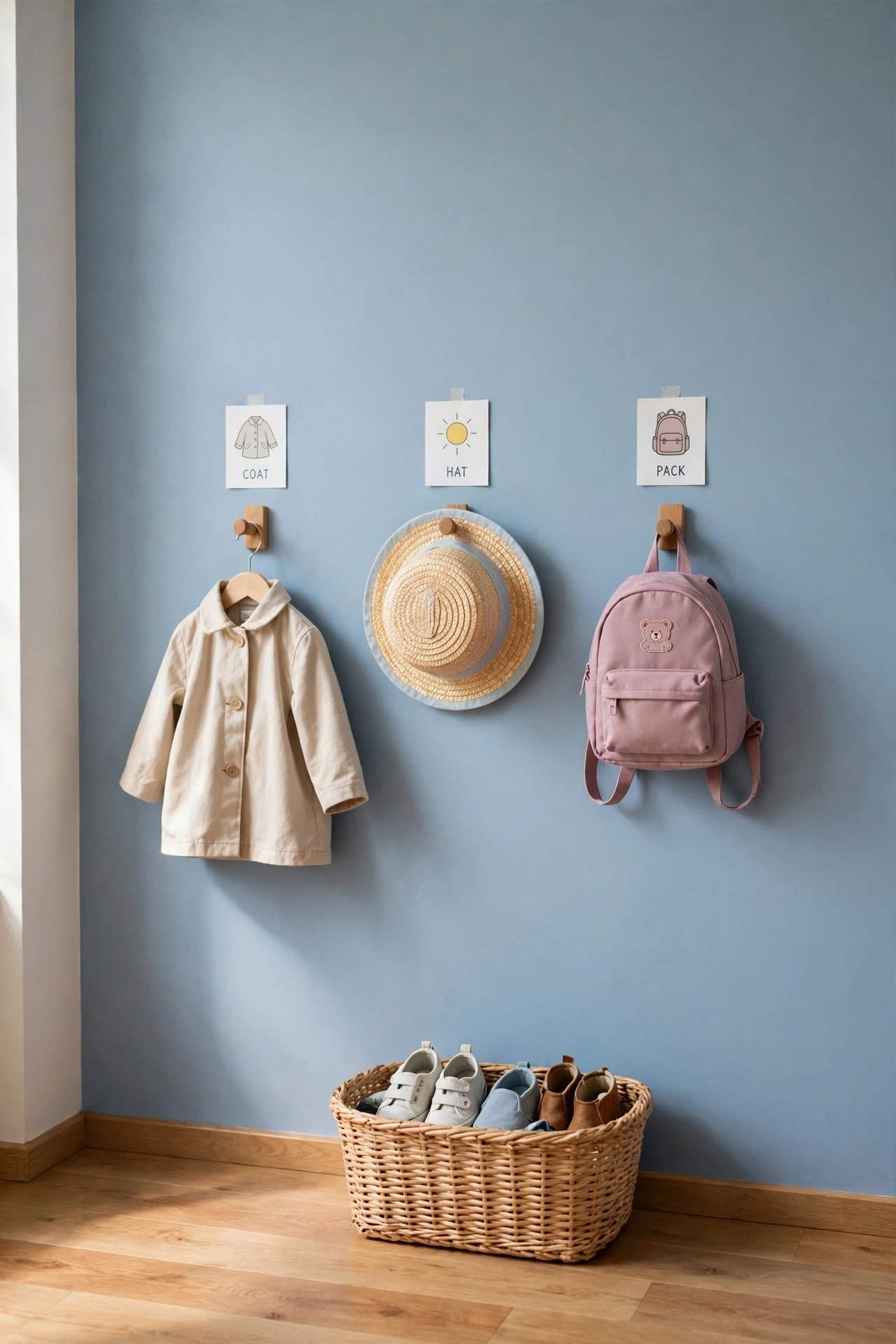
A row of sturdy hooks mounted at toddler height turns getting dressed into an independent job. Your toddler can hang up a coat, grab a hat, or choose a costume without asking for help, and the hooks keep small items off the floor. Mount five or six wooden pegs along a short wall near the door, spaced wide enough that coats do not bunch together.
Add a small printed name label or a picture above each hook so your toddler learns where each item belongs. Keep a tiny basket under the hooks for shoes, mittens, and small bags, and the whole getting ready routine gains a home of its own. Hooks at the right height build independence faster than any closet system ever will.
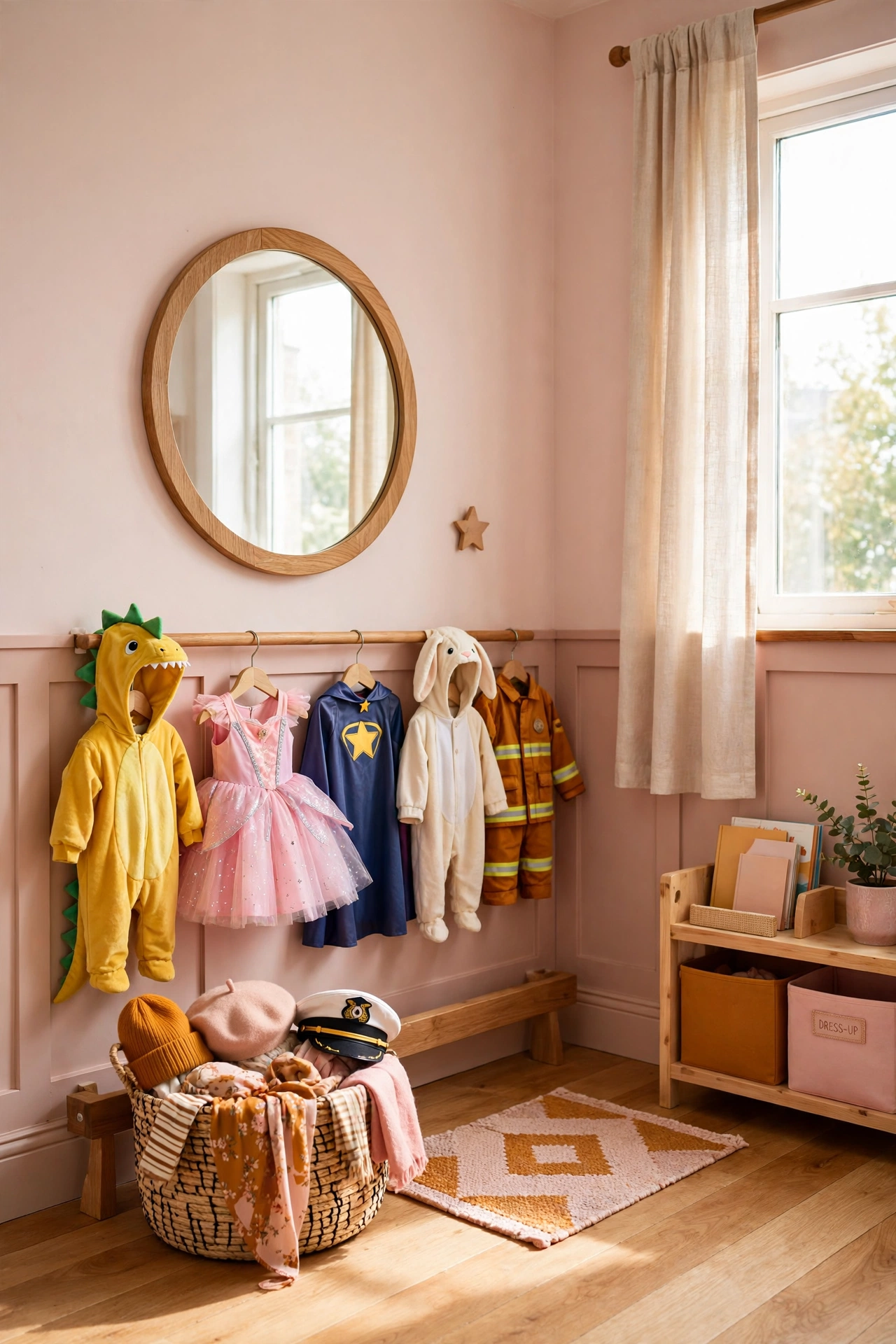
10. Create a Dress-Up Corner With a Low Rail and a Mirror
A dress-up corner gives your toddler a stage for imagination, with a low clothing rail for costumes and a shatterproof mirror mounted at toddler height. Hang four or five dress-up outfits on small hangers, add a basket for hats, crowns, and scarves, and your toddler can transform into a pirate, a chef, or a dancer in minutes. The mirror lets your toddler check the transformation and builds confidence with every costume change.
Choose a rail that stands on a wide stable base or mounts firmly to the wall, and keep the mirror low and secured flat so it cannot tip or slide. A small rug marks the corner as the dress-up stage, and a basket for shoes and props keeps the costumes from spreading across the whole room. This corner earns its floor space many times over in hours of creative play.
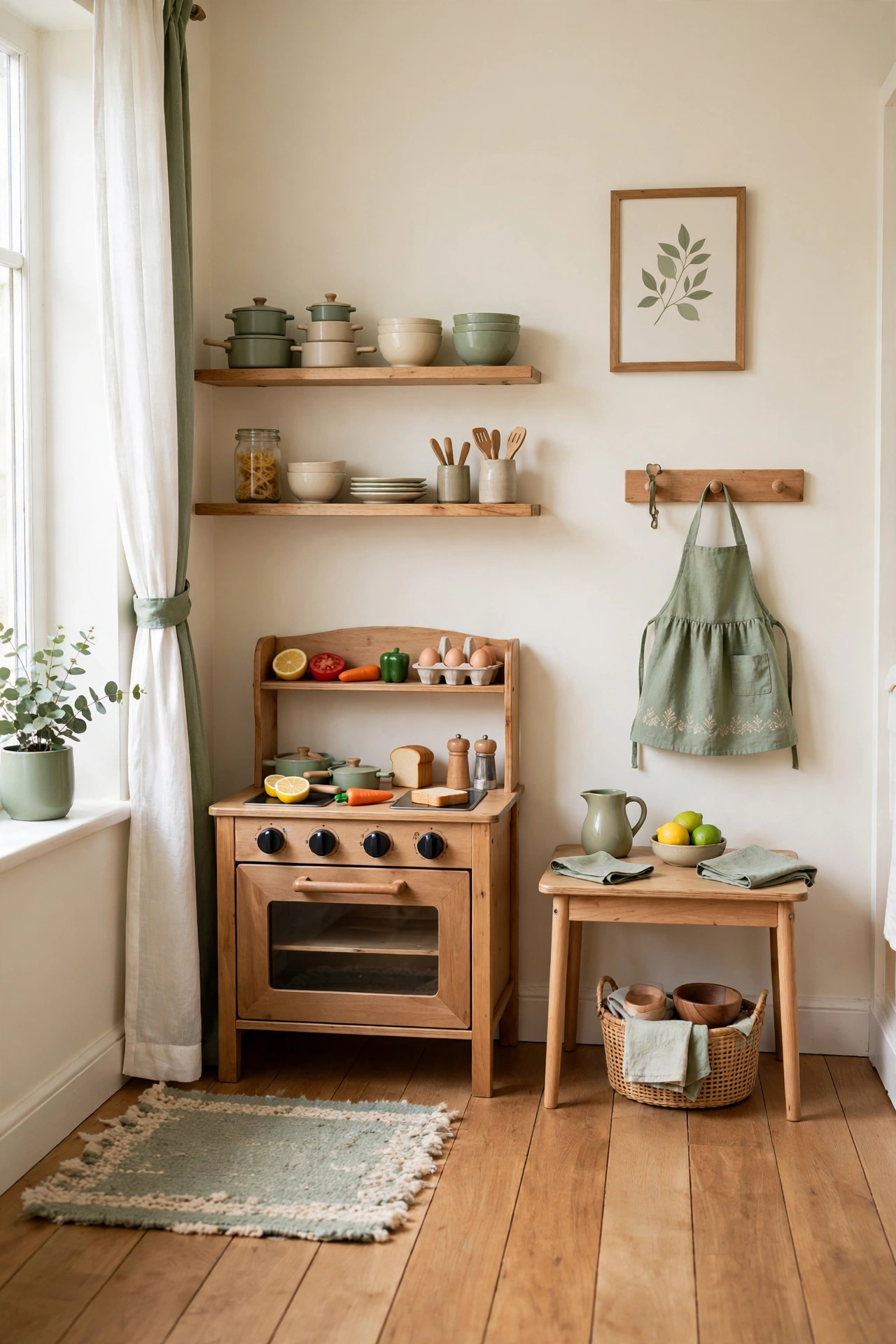
11. Design a Pretend Play Kitchen Zone Along One Wall
A pretend play kitchen tucked along one wall turns a plain stretch of floor into a tiny restaurant, bakery, or market. Place a wooden play kitchen against the wall, add a small table for serving, and stock the shelves with toy food, pots, and dishes your toddler can reach alone. The zone stays contained along one wall, so the rest of the room keeps its open play space.
Choose a play kitchen with doors and knobs that move, since small hands love opening, closing, and turning everything in sight. Add a low basket for play food and a small apron on a hook beside the kitchen, and your toddler will spend long stretches cooking, serving, and tidying up. Pretend play builds language and social skills, and a dedicated zone keeps the playthings from taking over the bedroom.
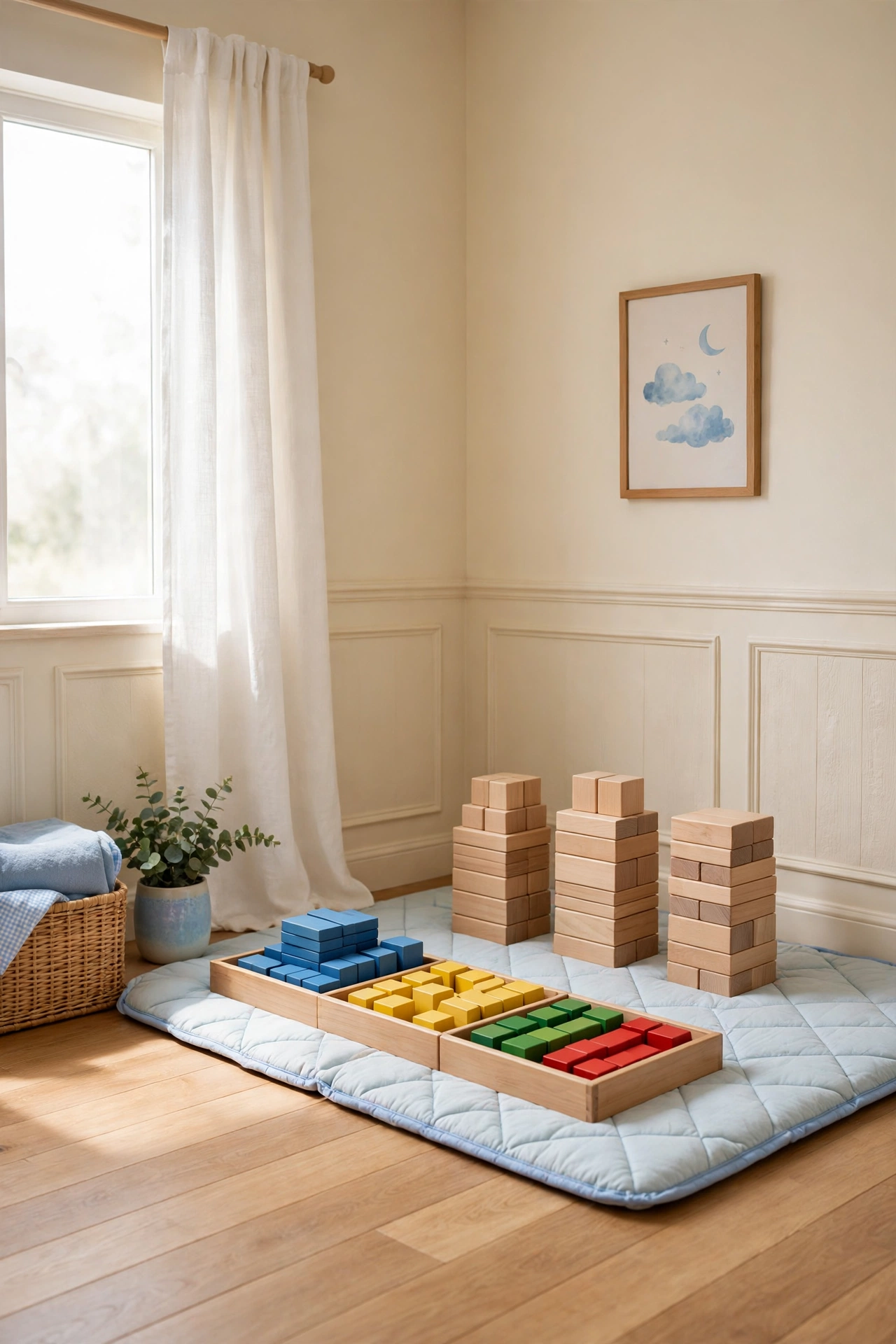
12. Build a Building Block Zone on a Low Mat With Edge Storage
Building blocks need a flat surface and room to spread, so give them a dedicated zone on a low padded mat in a corner or along a wall. A thin foam or cotton mat defines the building area and cushions the floor when towers tumble, while a low tray or bin along the edge holds blocks sorted by size or color. Your toddler can build, knock down, and rebuild without blocks rolling under furniture.
Keep the mat away from the sleep zone so late building sessions do not disturb nap time, and choose blocks in wood or soft foam that stack well and survive daily crashes. For more inspiration on arranging dedicated play spaces, these small playroom layout ideas show how activity zones can shape a whole room around the way children actually play.
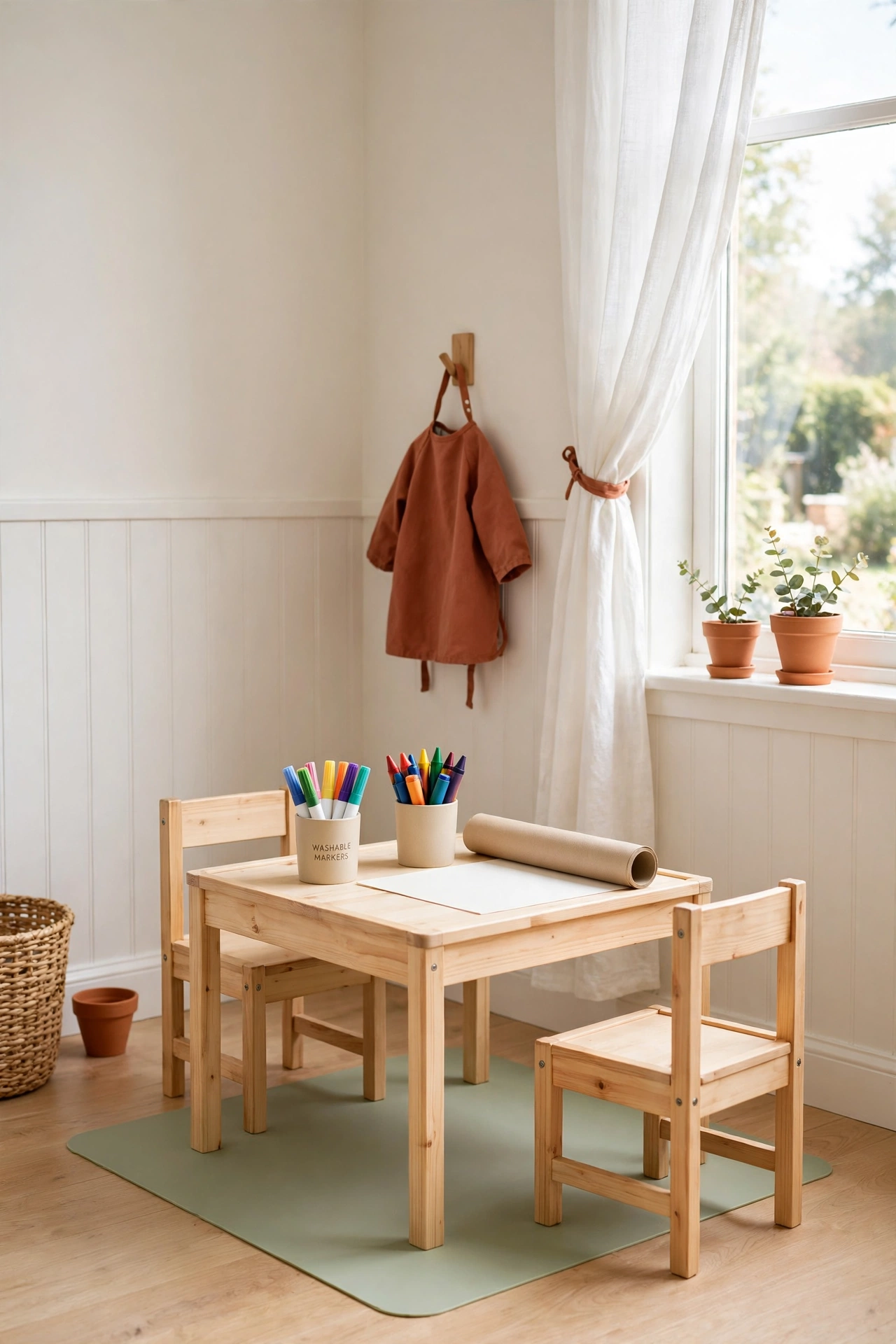
13. Put a Low Art Table With Washable Supplies in a Bright Corner
A low art table near a window gives your toddler a sunny spot for coloring, sticking, and painting without taking over the dining table. Choose a table and one or two small chairs sized for toddler legs, and stock the top with washable markers, chunky crayons, and a roll of paper your toddler can tear off alone. A wipeable mat under the table catches drips and keeps the floor clean.
Hang a small smock on a hook beside the table and store supplies in a caddy your toddler can carry, so art time starts and ends without a mess spreading through the room. Display finished artwork at toddler height on a low wire or a row of clips, and rotate the gallery often. These kids art display ideas will help you turn the wall beside the table into a gallery your toddler is proud to show off.
14. Set Up a Soft Climbing Cushion Zone for Safe Active Play
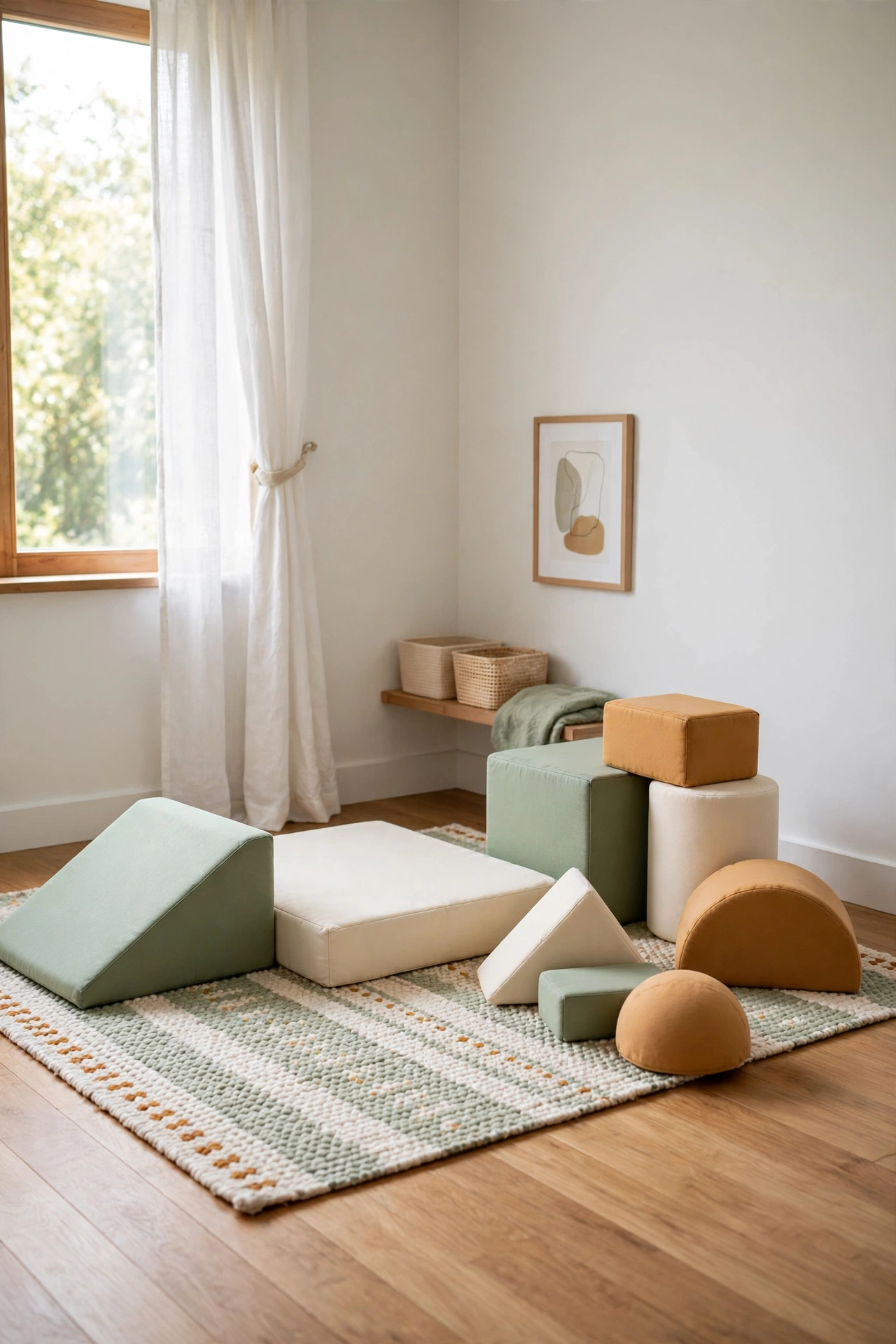
Toddlers need to climb, jump, and tumble, and a soft climbing zone lets them do it safely indoors. Arrange foam climbing blocks, a low wedge, and a thick crash mat in a corner away from hard furniture, and your toddler has a mini playground for rainy days and high energy mornings. The soft shapes absorb falls, and the low heights keep risks small.
Keep the zone on a non slip rug and leave a clear landing area around the blocks, with no sharp table edges within reach of a tumble. Rotate the block shapes every few weeks so the climbing course feels new, and store the blocks in a large bin when the room needs to calm down for sleep. For more ways to build active play into small spaces, these small indoor play area layout ideas show how movement zones fit into shared rooms too.
15. Divide Sleep and Play With a Low Open Shelf
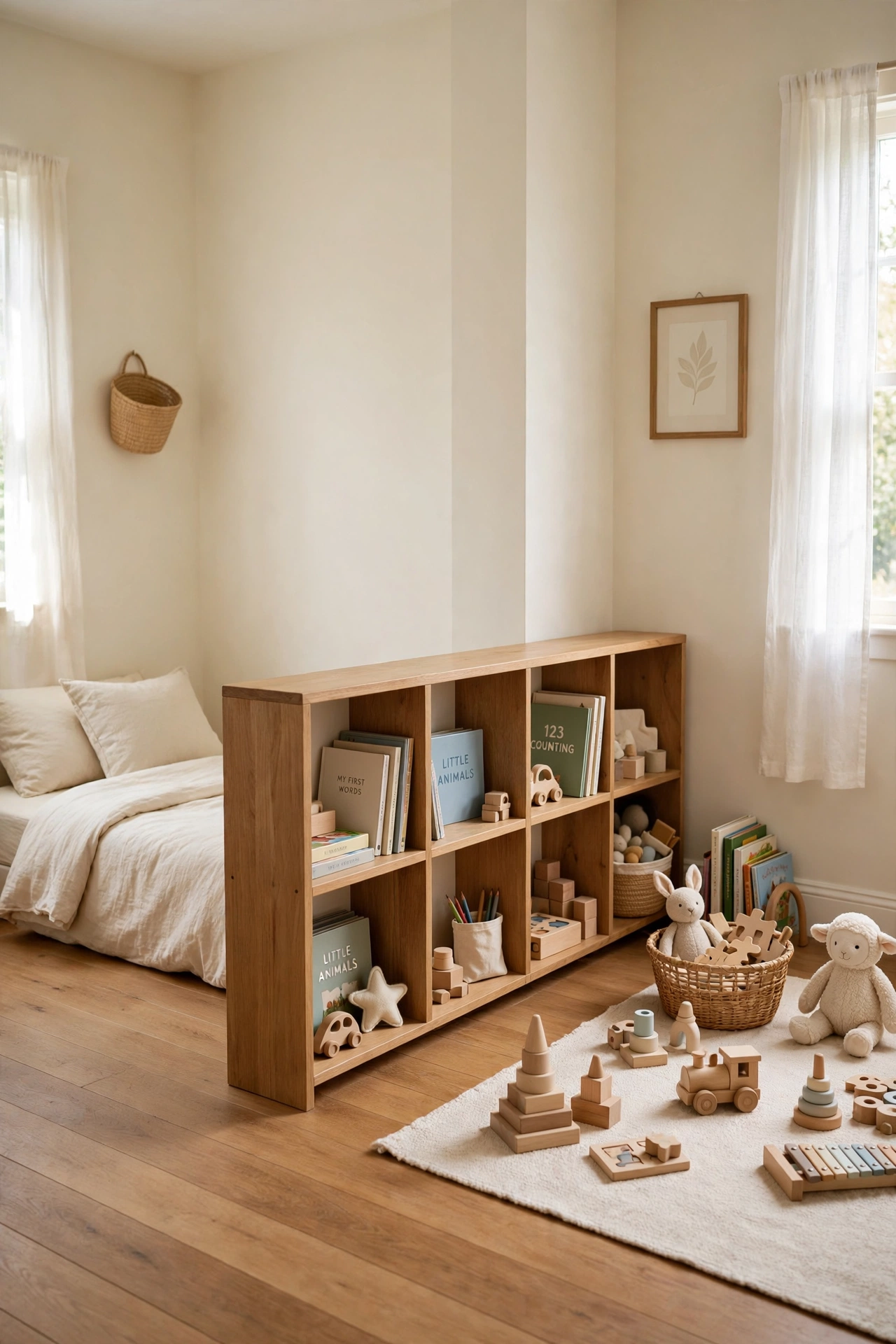
A low open shelf placed across the room creates a gentle boundary between the sleep zone and the play zone without closing off light or air. Your toddler can see over the shelf, so the room still feels open, but the shelf tells the body that one side is for rest and the other side is for play. Fill the cubbies facing the play side with books and quiet toys, and keep the sleep side clear and calm.
Choose a shelf unit with a wide stable base and anchor it to the floor or wall so it cannot tip if your toddler leans on it. The divider also adds storage without adding a wall, and it gives the room a clear rhythm that helps your toddler wind down at bedtime. When the shelf marks the line, the bed stays a restful place instead of becoming another climbing frame.
16. Add a Toddler-Height Wardrobe With Picture Labels
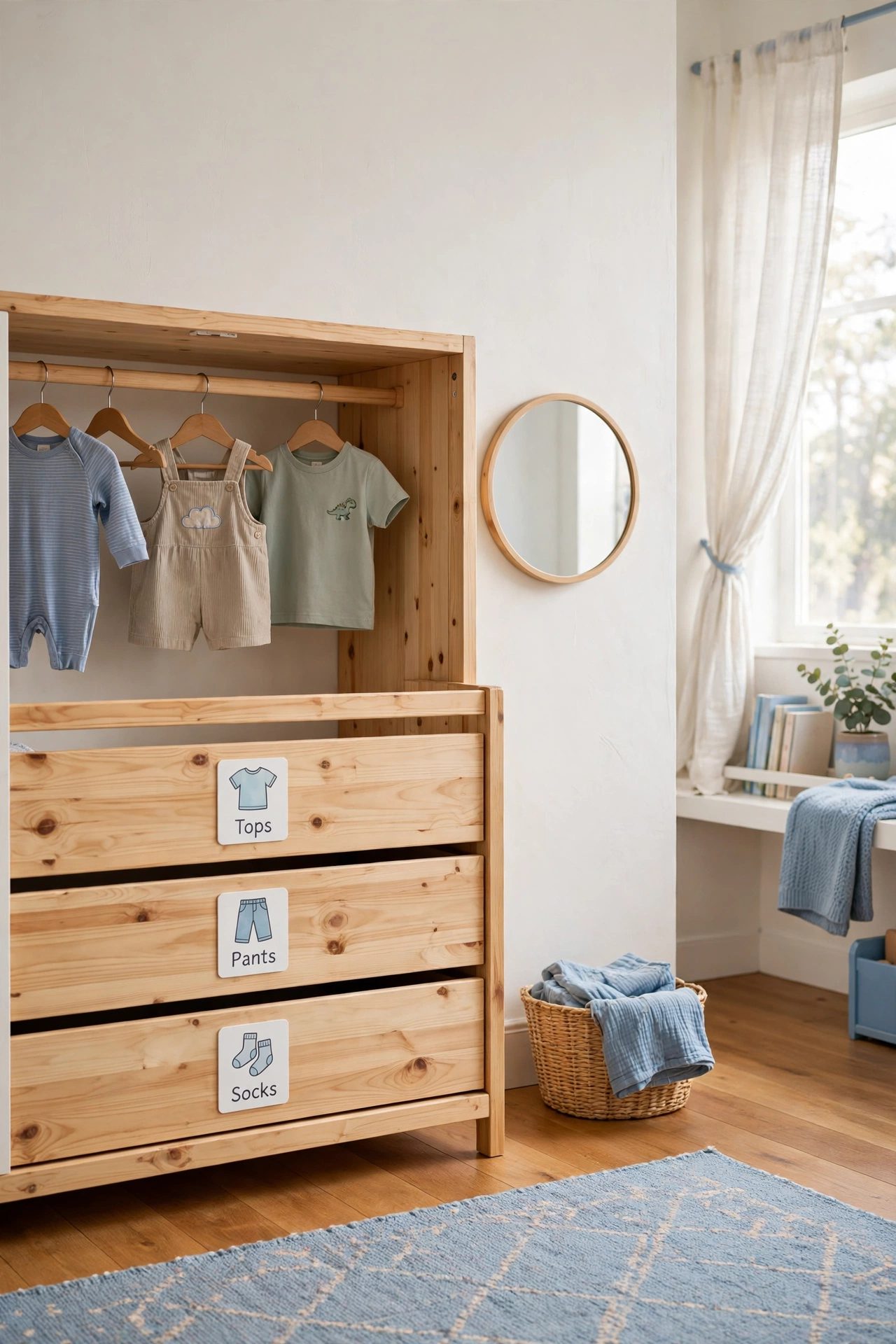
A low wardrobe with a clothing rail at toddler height lets your child choose an outfit and hang it back up without help. Mount the rail low inside a small wardrobe or an open closet frame, and hang five or six weather appropriate outfits on small hangers. Picture labels on drawers and baskets show where socks, shirts, and pajamas live, so getting dressed becomes a matching game.
Limit the choices to a few outfits so mornings stay calm instead of turning into a negotiation, and store out of season clothes on a high shelf. A small mirror beside the wardrobe, secured flat to the wall, lets your toddler check the final look. Independence at the wardrobe builds confidence that carries into every other part of the day.
17. Place a Small Table and Chairs Set for Snacks and Puzzles
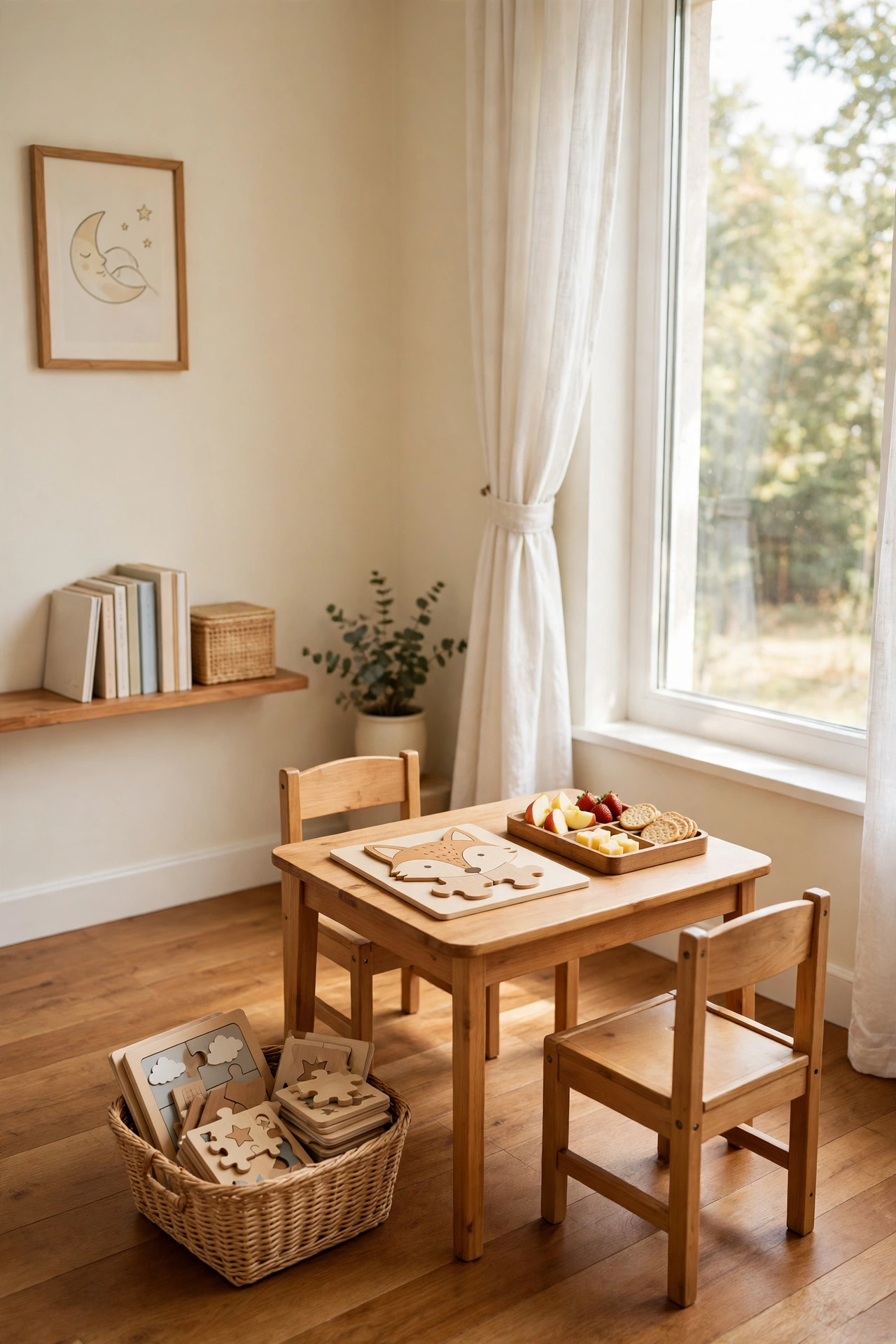
A toddler size table with two small chairs creates a home for puzzles, snacks, and quiet tabletop play. Place the set near a window or beside the bookcase, and keep the top clear except for one puzzle or activity at a time. The chairs should let your toddler sit with feet flat on the floor, so puzzle time feels comfortable and lasts longer.
Add a small tray for snack time and a wipeable placemat that catches crumbs, and the table doubles as a snack station on busy mornings. Store puzzles in a low basket beside the table, with picture labels on the front so your toddler can choose and return each puzzle alone. A dedicated table keeps small pieces off the main play floor, where they can end up underfoot.
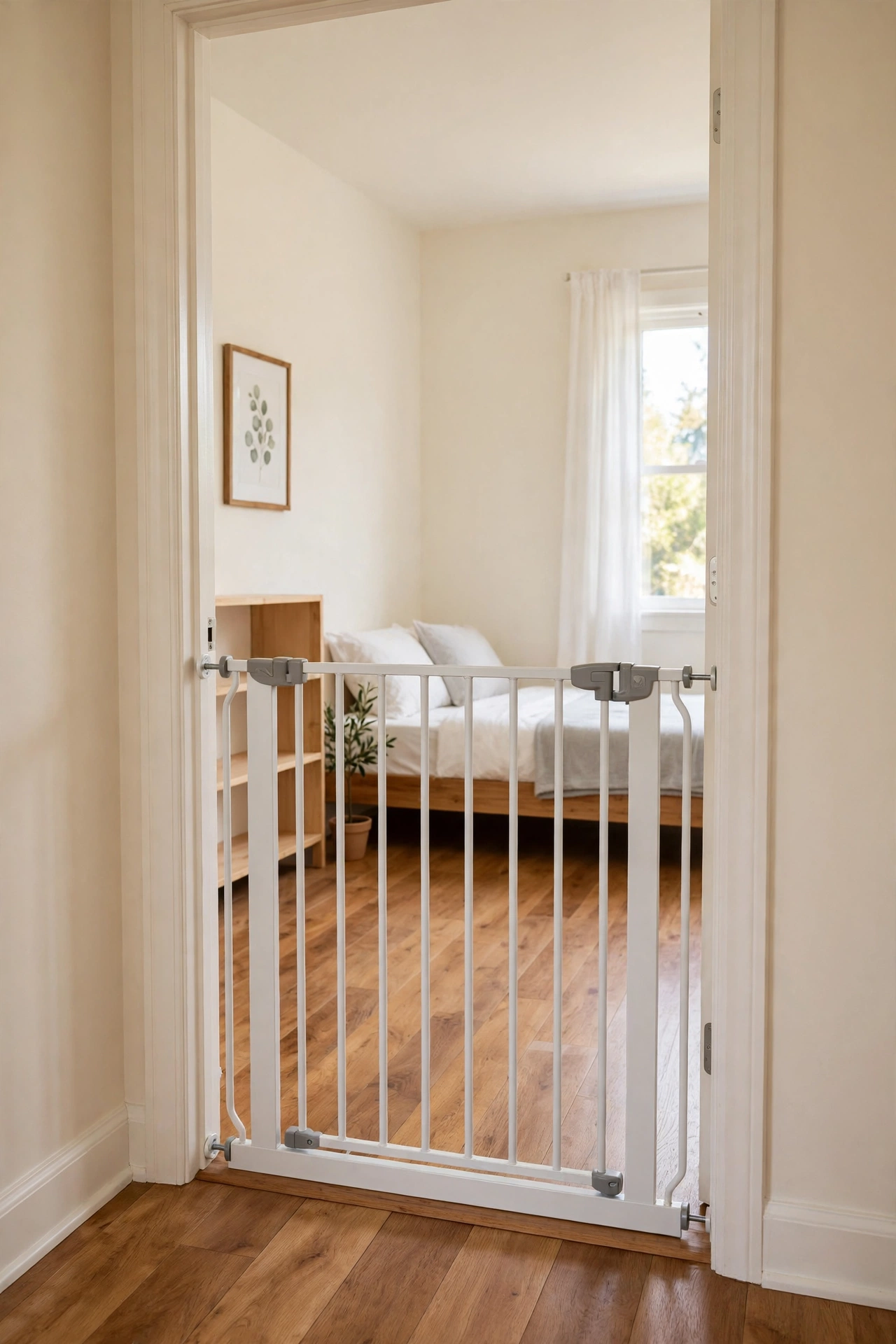
18. Keep the Room Safe With a Gate at the Doorway
A sturdy safety gate at the bedroom doorway turns the whole room into a safe yes space where your toddler can play alone while you are nearby. The gate keeps your toddler from wandering into hallways, stairs, or kitchens unsupervised, and it gives you peace of mind during those early morning minutes before the household wakes up. Choose a gate that mounts firmly to the door frame with no bottom bar to trip over.
Make sure the gate latch is simple for adults and tricky for small hands, and check it monthly for loose fittings. Inside the gate, the room layout does the rest of the safety work, with anchored furniture, covered outlets, and low zones your toddler can use freely. A gate at the door is the final layer of a layout designed for safe independent play.
Conclusion
A toddler bedroom works best when the room itself teaches your child how to use it. Low beds, low shelves, low hooks, and clear zones tell your toddler where to sleep, where to play, and where each toy belongs, without a single word from you. Safety anchors, outlet covers, and a gate at the door let your toddler explore that independence without risk.
Start with the floor bed and one low shelf, then add zones one at a time as you watch how your toddler uses the room. Every small change makes the room safer and calmer, and the independence your toddler gains will surprise you. A room built for a toddler today becomes the foundation for a confident, tidy child tomorrow.
Frequently Asked Questions About Small Toddler Bedroom Layout Ideas for Safe Play
What age is a floor bed safe for a toddler?
Most toddlers move to a floor bed between 18 months and 2 years, once they can climb in and out safely on their own. The mattress should sit directly on the floor or on a very low frame, with the room fully childproofed. Always check with your pediatrician if you are unsure about timing for your child.
How do I keep a toddler bedroom safe for independent play?
Anchor all tall furniture to the wall, cover outlets, remove cords, soften sharp corners, and add a gate at the doorway. Walk through the room at toddler height to spot hazards you might miss standing up. A monthly safety check keeps the room safe as toys and furniture change.
How many toys should stay out in a toddler bedroom?
Fewer toys than you think. Eight to twelve toys across a few categories is plenty for a small bedroom, with the rest stored in a rotation station. A smaller selection helps your toddler play more deeply and makes cleanup fast enough to do together every day.
Where should the bed go in a small toddler bedroom?
A corner placement works well in most small rooms, since two walls shelter the bed and free the center floor for play. In a very small room, a floor bed against the longest wall with a low shelf beside it keeps the layout open. Keep the bed away from windows, cords, and heavy wall hangings.
How do I divide sleep and play in one small room?
Use a low open shelf as a divider, with the bed on one side and play zones on the other. Keep the sleep side calm with plain bedding and low light, and let the play side hold the color and activity. A clear boundary helps your toddler wind down at bedtime and wake ready to play.

Hi, I’m Emily! I turn messy corners into cozy, organized spots. DreamNestDecor is where I share simple, practical home ideas — decor, organization, and small-space solutions that work in real life, not just in photos. Every idea here is carefully researched before it’s shared.