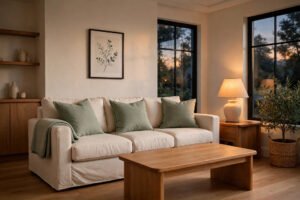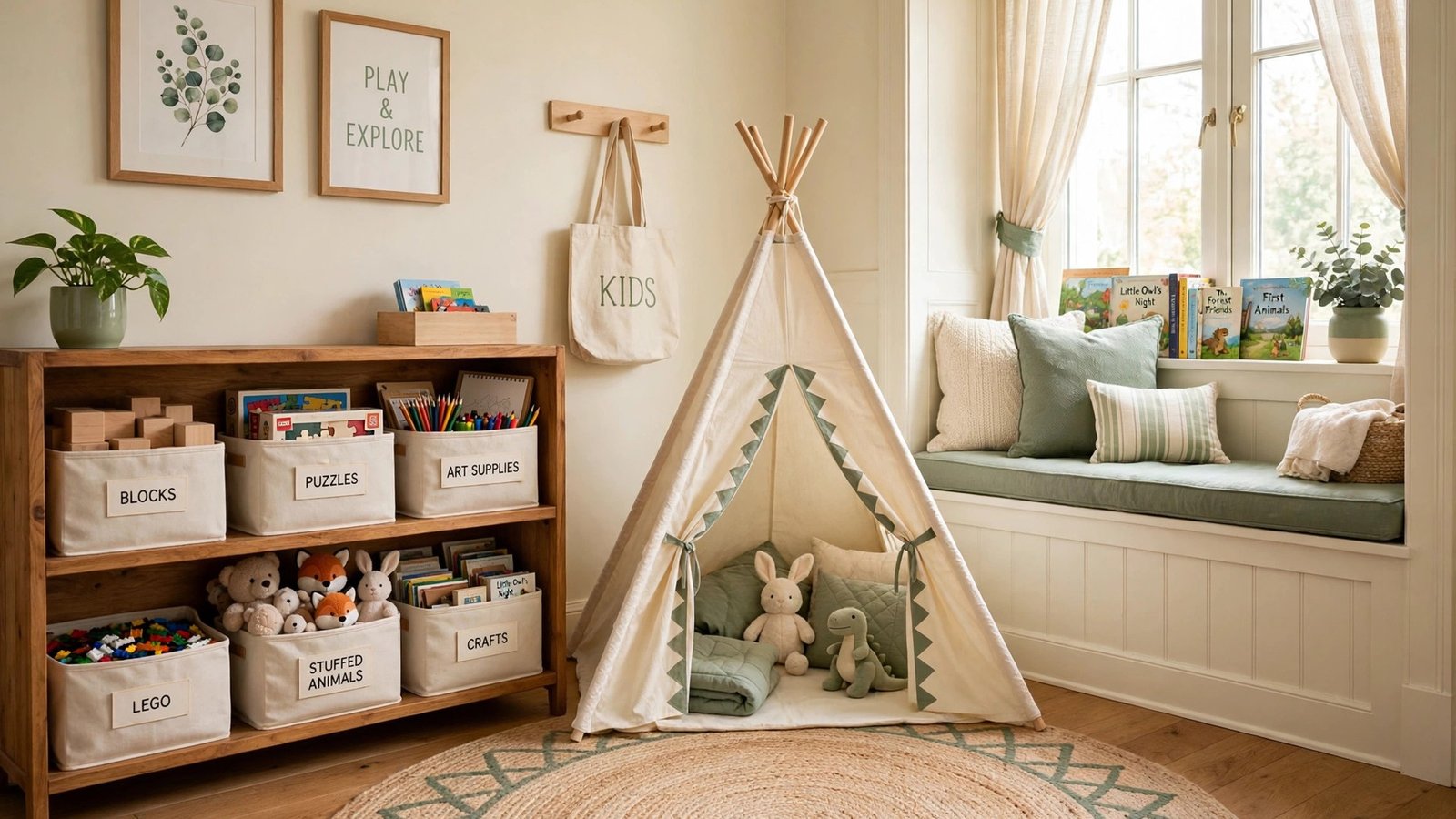
Sara looked at her living room and saw toys in every corner. Her kids needed a play space, but her home had no spare room to give. She wanted a spot that felt fun for them and calm for her.
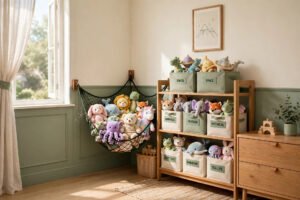
She measured one corner and built a real plan around it. A 6 by 6 foot rug marked the zone, 11 inch cube bins held the toys, and a weekly rotation box kept things fresh. The living room felt bigger, not smaller, because every toy finally had a system.
You can build the same order in your own home. These 20 small playroom layout ideas give you zone sizes, storage specs, and toy systems that keep shared family spaces joyful for kids and peaceful for adults.
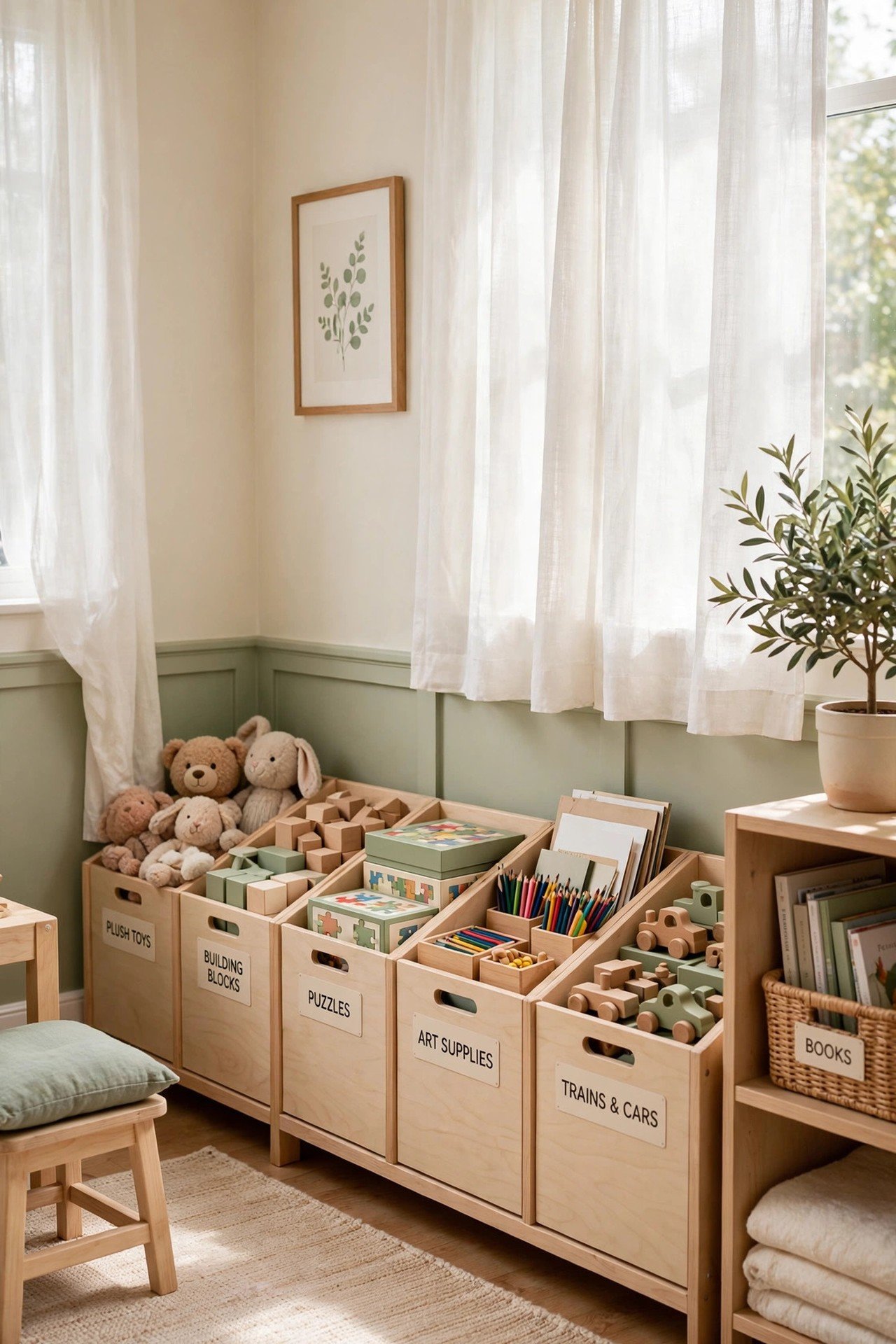
1. Calm Neutral-Tone Playroom
Follow a 60-30-10 color rule, with 60 percent warm white walls, 30 percent light wood furniture, and 10 percent toy color. A calm base makes a 10 by 10 foot room feel larger and lets colorful toys become the decor. Use washable eggshell paint so crayon marks wipe off with a damp cloth.
Layer a 5 by 7 foot textured rug over hard floors to soften falls and noise. Store toys in canvas bins that match the palette so the room stays serene even mid-play. Sheer curtains keep daylight flowing, which small rooms need more than color.
2. Under-Staircase Play Hideout
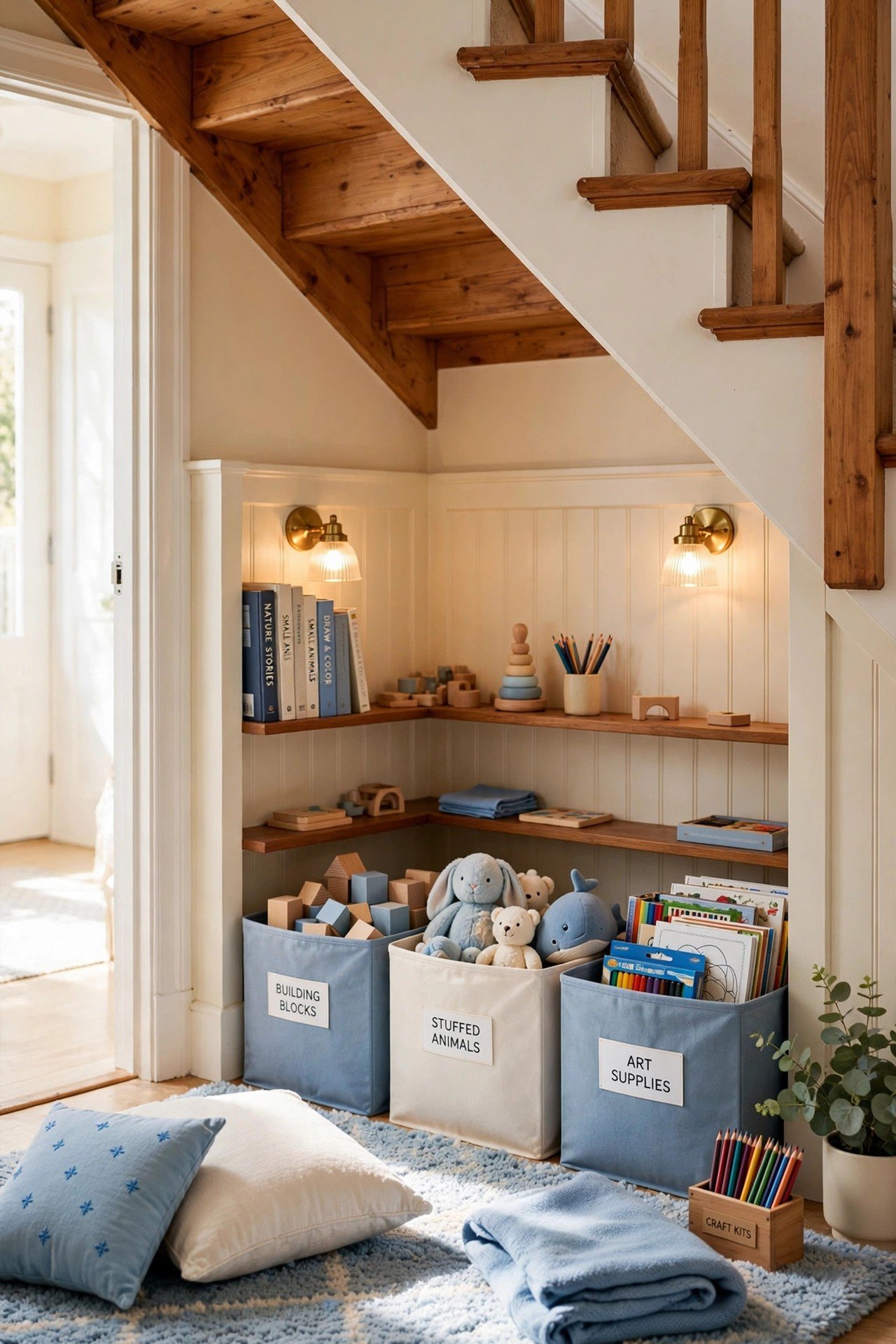
The triangle under your stairs often offers 4 feet of headroom, which suits kids under 8 perfectly. Fit custom shelves along the sloped wall at 12 inch intervals for books and figurines. Stick battery puck lights under each tread so the nook glows without any wiring.
Hang a half-height Dutch door or a simple curtain for the secret-entrance feel kids love. Lay a washable 4 by 6 foot rug to define the floor. Check for sharp stair brackets first and pad them, since little heads bump in low spaces.
3. Closet Turned Play Nook
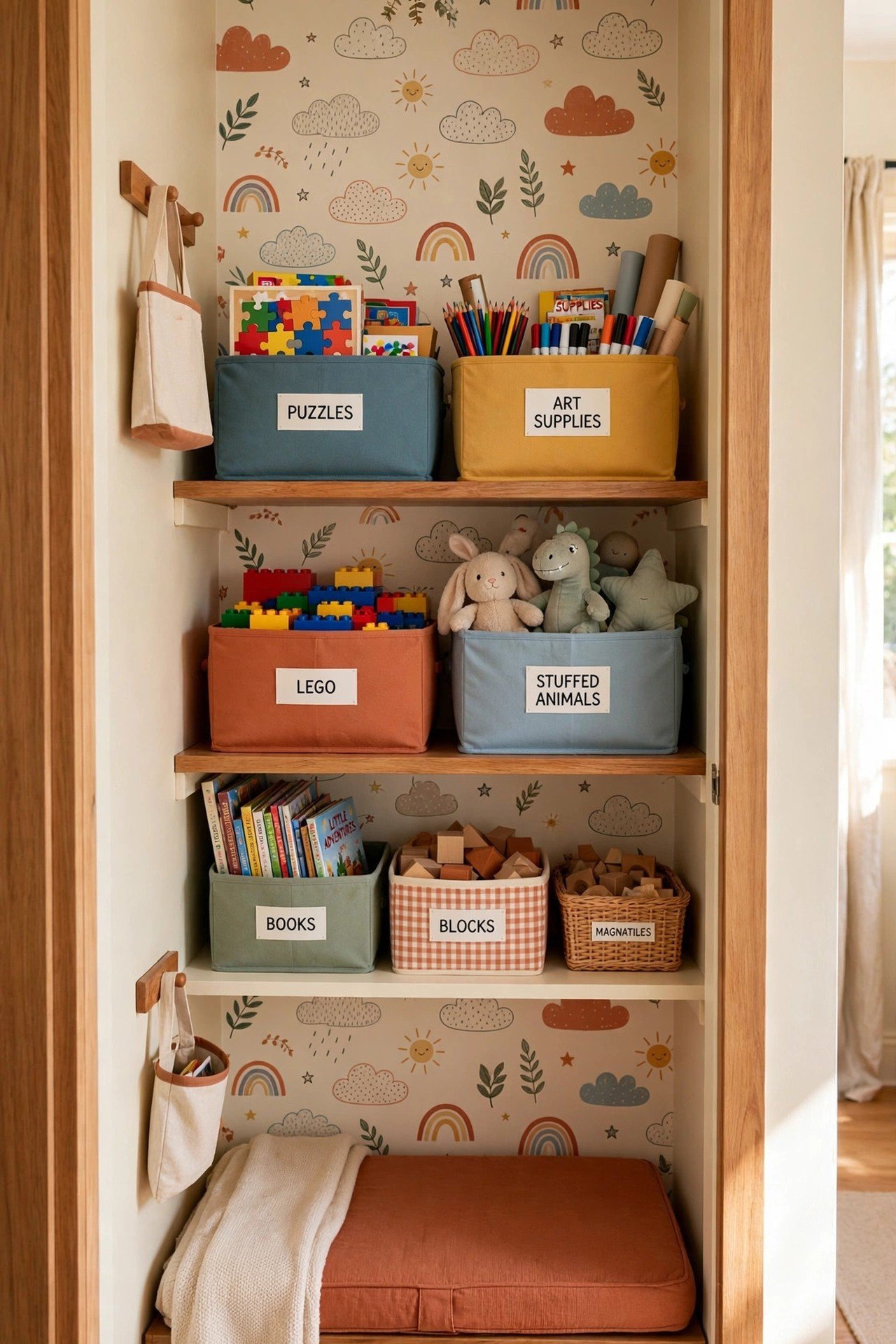
A standard 6 foot wide reach-in closet becomes a contained play zone when you remove the doors. Add a 48 inch bench at 14 inches high for seating that young legs reach easily. Use 11 inch cube bins below for daily toys and reserve upper shelves for supervised craft supplies.
Paint the interior a cheerful washable color so the nook feels like a destination. Add a magnetic child-safe latch if toddlers roam, since closet doors pinch. This setup contains mess to one tidy footprint and suits quiet play like reading and puzzles.
4. Living Room Play Corner
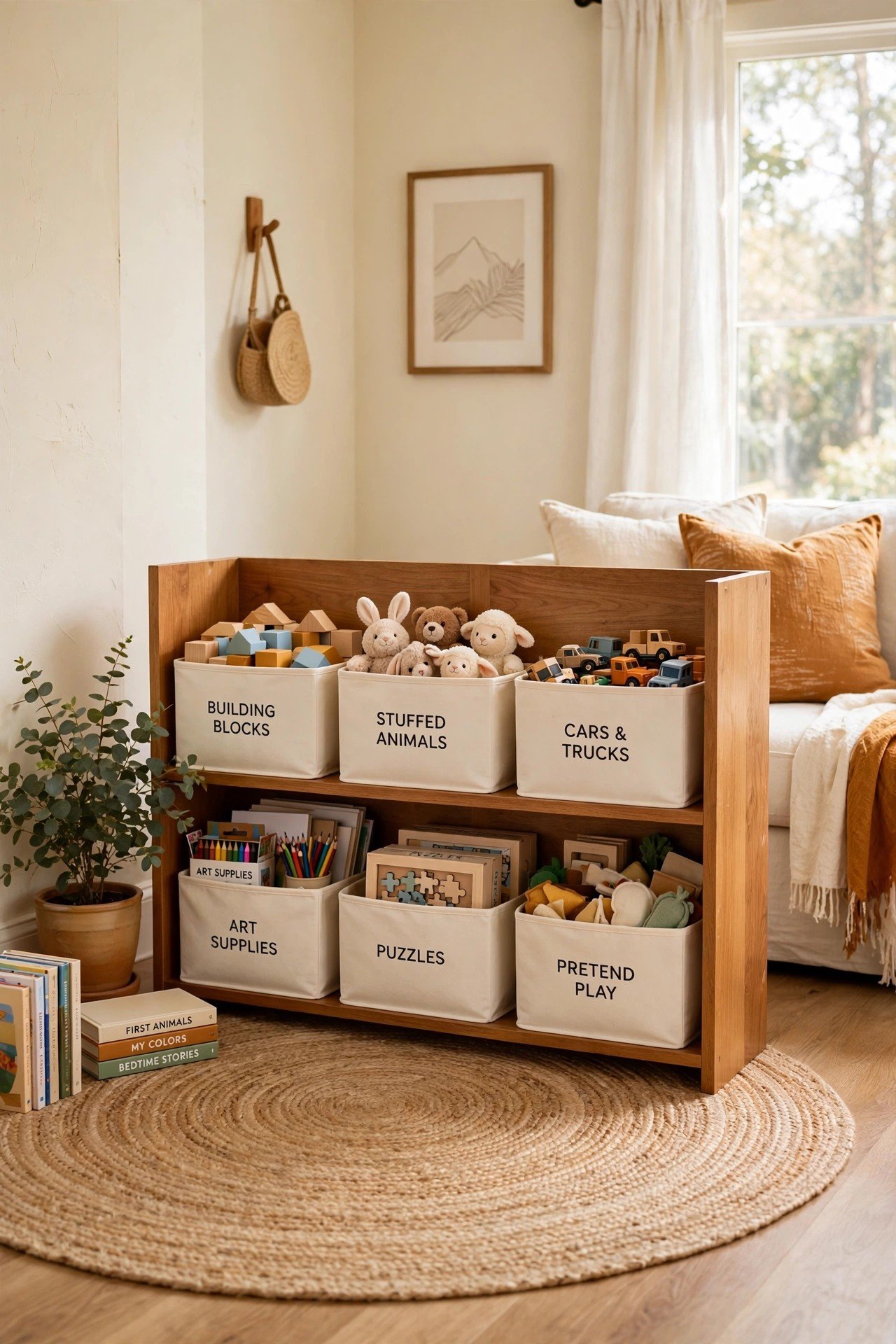
Mark a 6 by 6 foot corner with a round 5 foot rug that visually separates play from lounging. Place a 3 foot tall low shelf perpendicular to the wall as a divider that also stores bins. Keep all furniture under 30 inches high so sight lines stay open across the room.
Face the play corner toward your usual seat so you can supervise without hovering. Choose bins with lids that stack, since open piles spread. When guests come, the corner reads as styled storage, not a toy explosion.
5. Montessori-Style Low Shelving
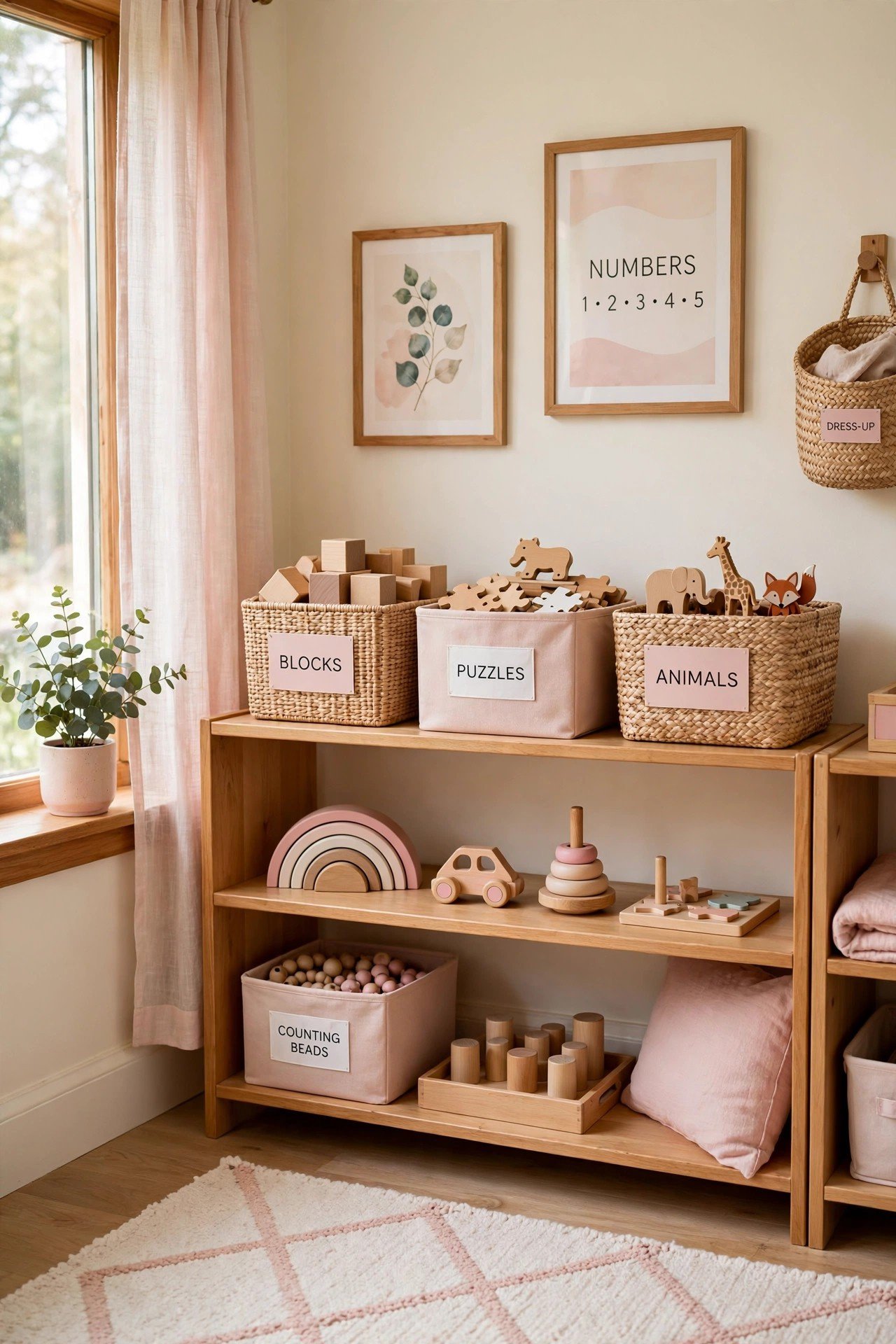
Use shelves no taller than 24 inches so toddlers reach everything safely. Display only 8 to 10 toys at a time on open trays, which research links to longer, calmer play. Rotate the selection weekly from a closet stash to keep interest high without buying more.
Pick natural wood, cotton, and wool for a tactile feel that plastic cannot match. Place a small rug beside the shelf as the work mat for each activity. Kids learn to choose, play, and return items, which builds order into daily life.
6. Cozy Attic Playroom
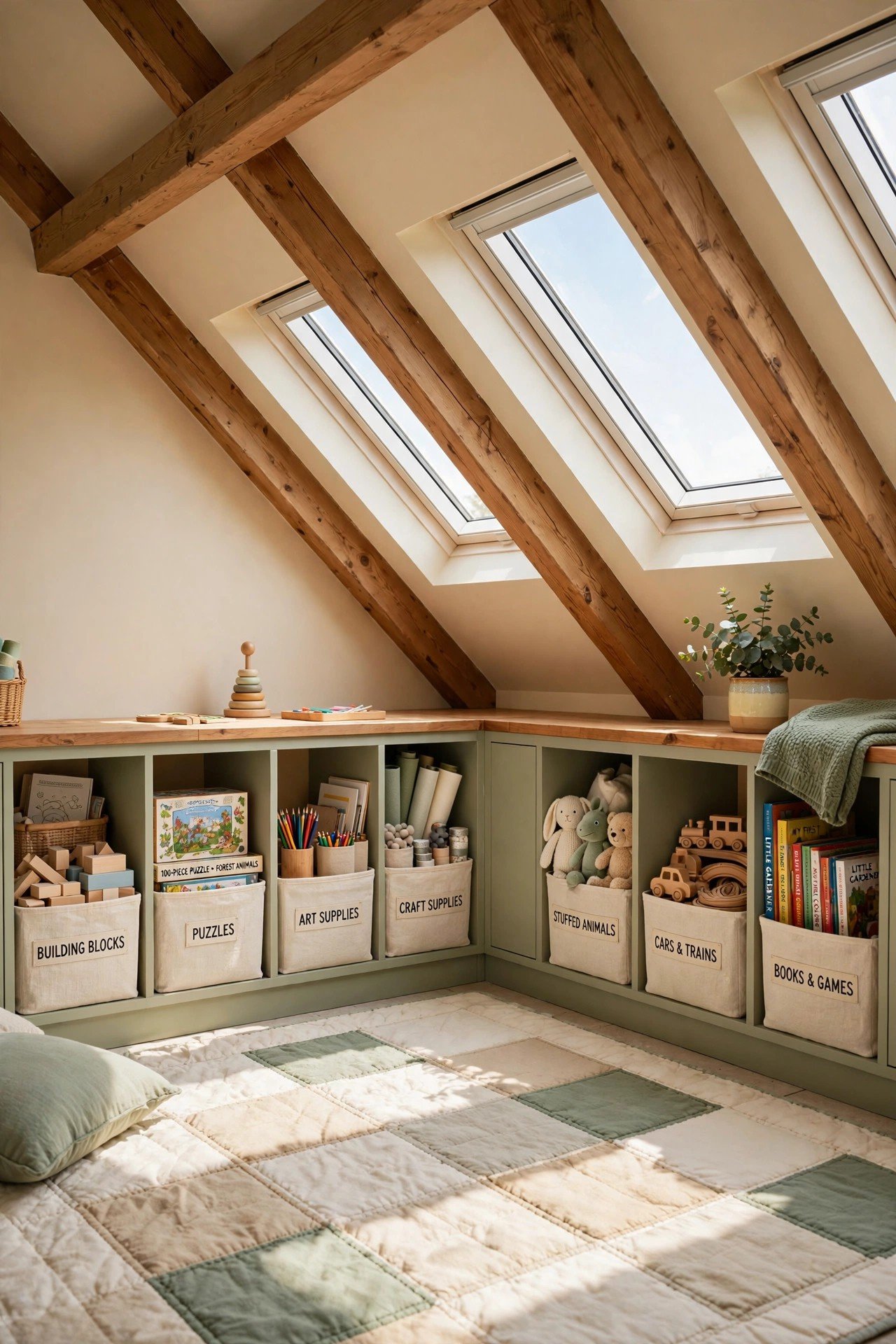
Attic slopes that frustrate adults delight kids, since 4 foot eaves match their scale. Run low cabinets no taller than 24 inches along both eaves for toy storage that never blocks the center. Add skylight shades to control glare during bright afternoons.
Lay interlocking foam mats wall to wall to muffle noise for rooms below. Install a safety gate at the top of the stairs for toddlers. The tucked-away location makes kids feel they own a secret world upstairs.
7. Window Reading Nook
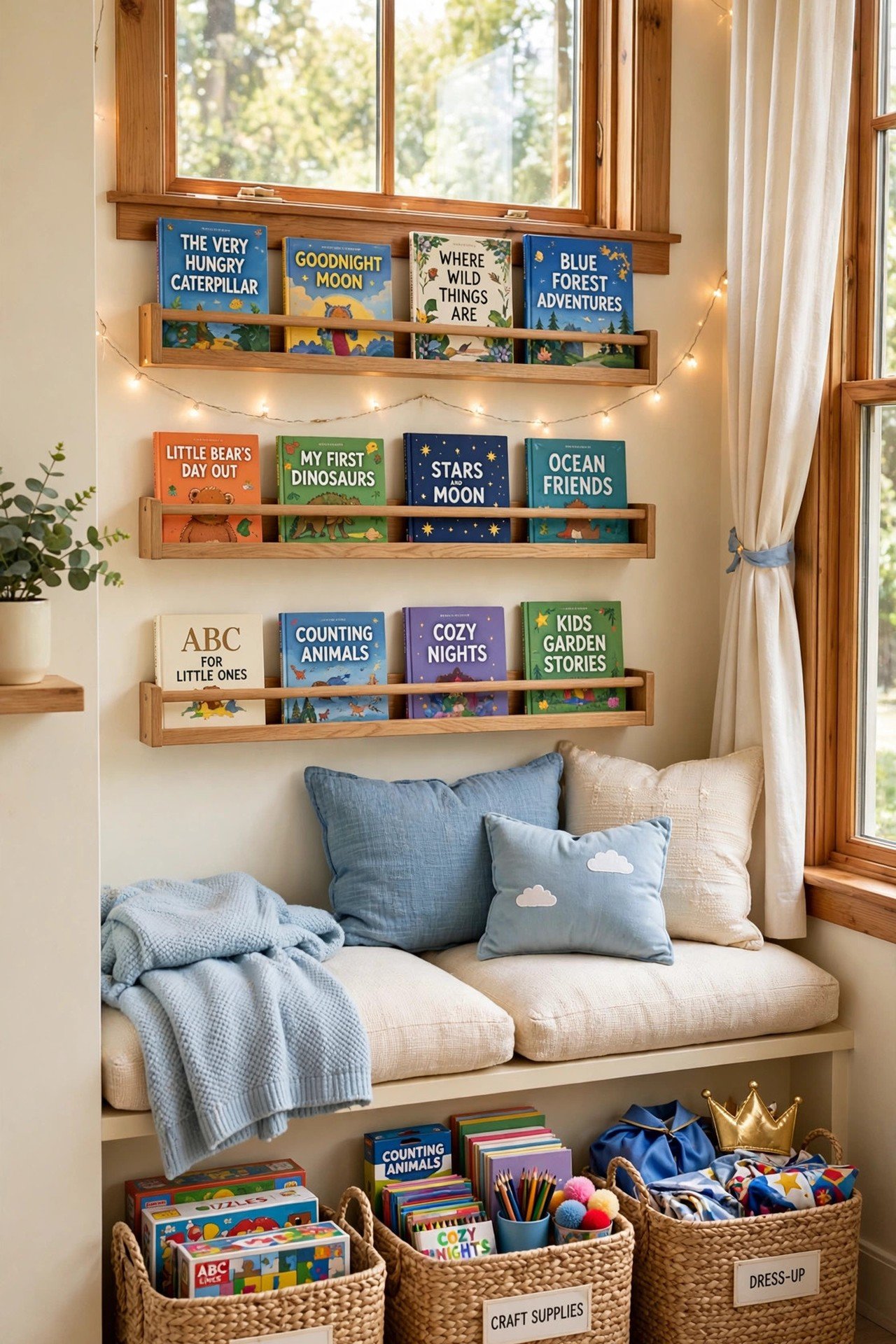
Fit a 36 by 72 inch floor mattress into a 4 by 4 foot window corner for a reading spot two kids can share. Mount book ledges at 36 inches high with covers facing out, since kids pick books by their covers. Drape a simple canopy or string lights overhead for the cozy factor.
Add a basket for 10 rotating books beside the mattress. Keep a small lamp for cloudy days. This quiet zone balances active play and gives restless kids a soft place to reset.
8. Floor-to-Ceiling Storage Wall
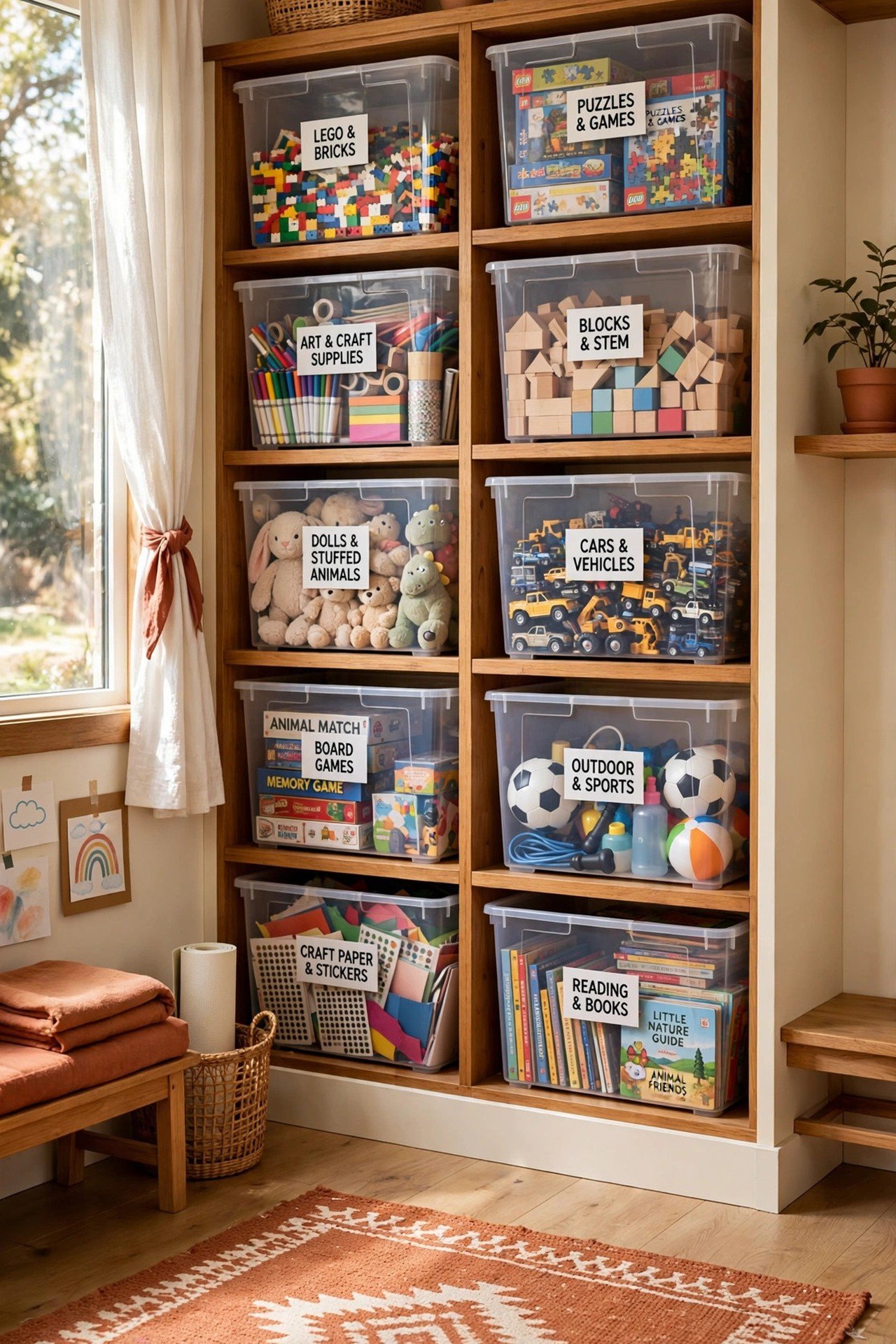
Build one full storage wall with 12 inch deep shelves from floor to ceiling. Use 11 inch cube bins on lower shelves for daily toys and reserve the top two shelves for adult-only items like paint and small parts. Label every bin with a picture label so pre-readers can tidy up alone.
Anchor the unit to wall studs, since climbing kids tip furniture. Keep a 4 by 6 foot open floor area in front for active play. One strong storage wall can absorb the toy load of an entire small home.
9. Indoor Slide Corner
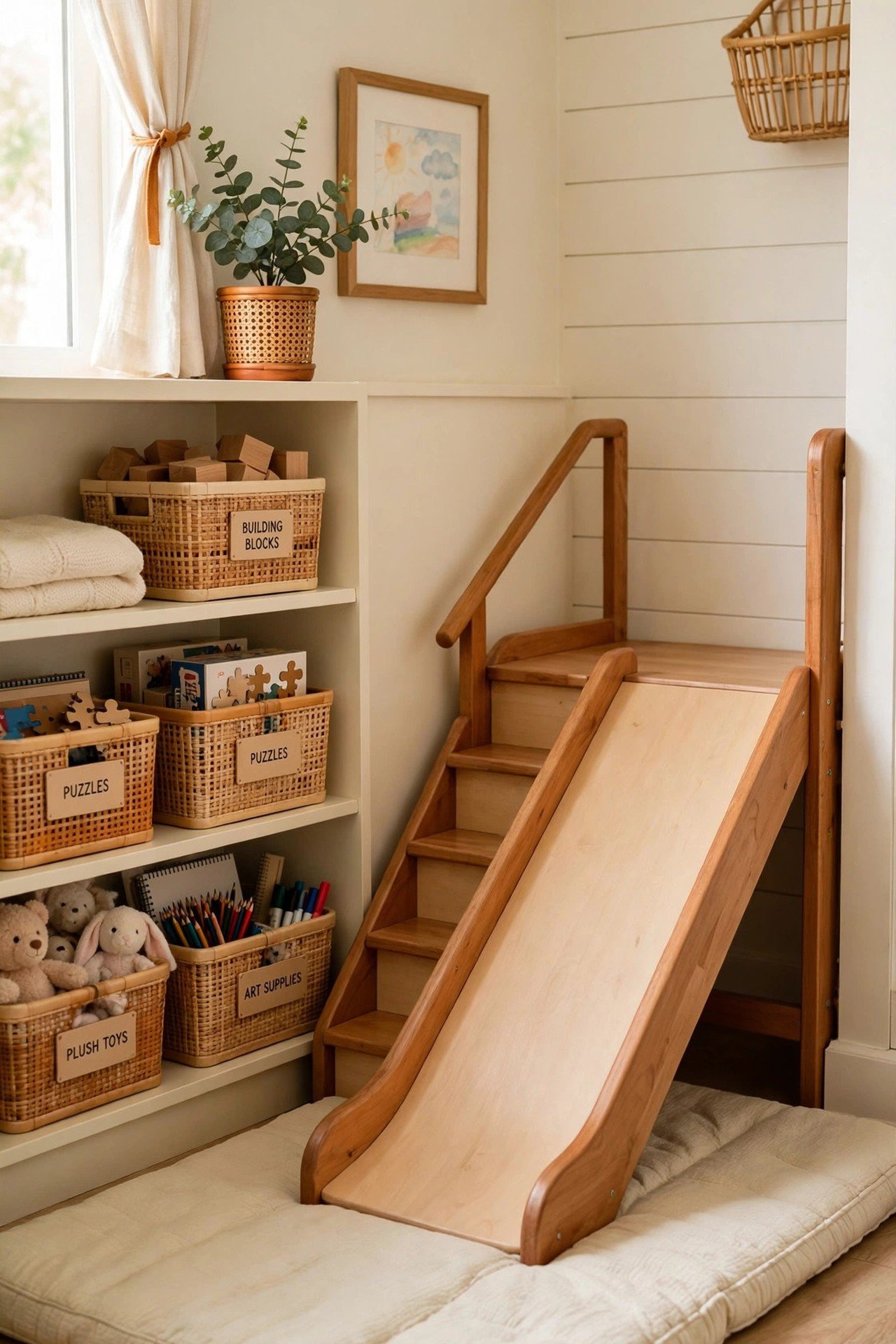
A 5 foot wooden slide needs about 8 feet of total run including a 4 by 6 foot landing mat. Tuck it diagonally into a corner to use dead space. Choose solid wood over plastic for a look that suits your living room.
This suits ages 2 to 6 best, so plan to resell or pass it on as kids grow. Pair the slide with a small ball pit for rainy-day energy burning. Active indoor play builds motor skills when the weather keeps kids inside.
10. Wall-Mounted Art Station
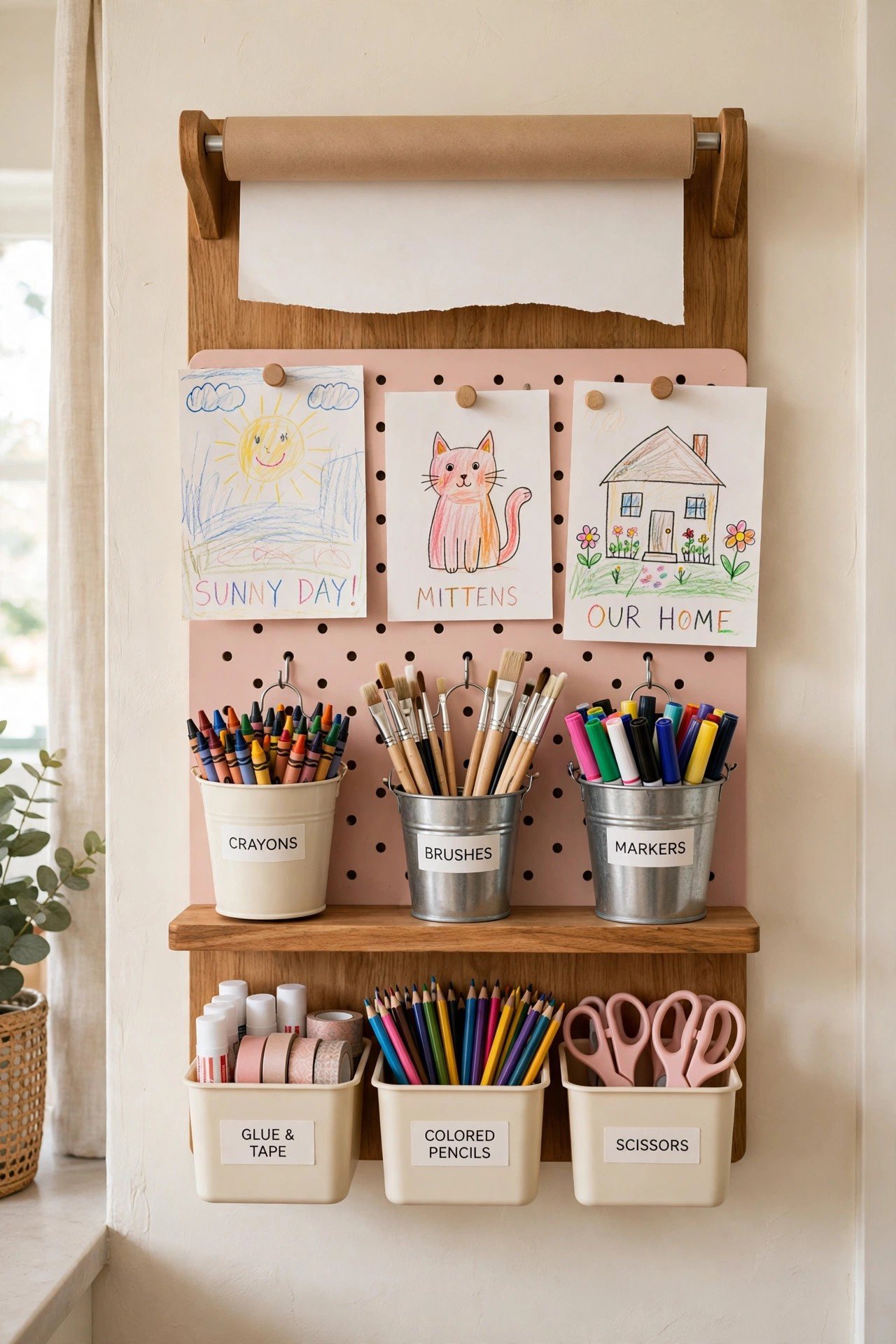
Mount an 18 inch wide paper roll on a wall bracket at 36 inches high, which suits standing young artists. Hang three supply buckets beside it for crayons, markers, and brushes. A washable mat below catches drips and defines the splash zone.
Clip finished art to a wire with mini clothespins for a rotating gallery. Refill the roll monthly since kids draw more when paper never runs out. The wall station keeps creativity ready without a table eating floor space.
11. Fold-Away Craft Table
A 30 by 48 inch folding table seats four kids for crafts and collapses to 4 inches deep against the wall. Wall-mounted drop-leaf versions free even more floor when folded. Choose a laminate top that wipes clean of glue and paint.
Store four stackable stools in a 2 foot closet gap beside it. Set the table up only for project time, then fold it away for active play. One room now hosts both messy crafts and running games.
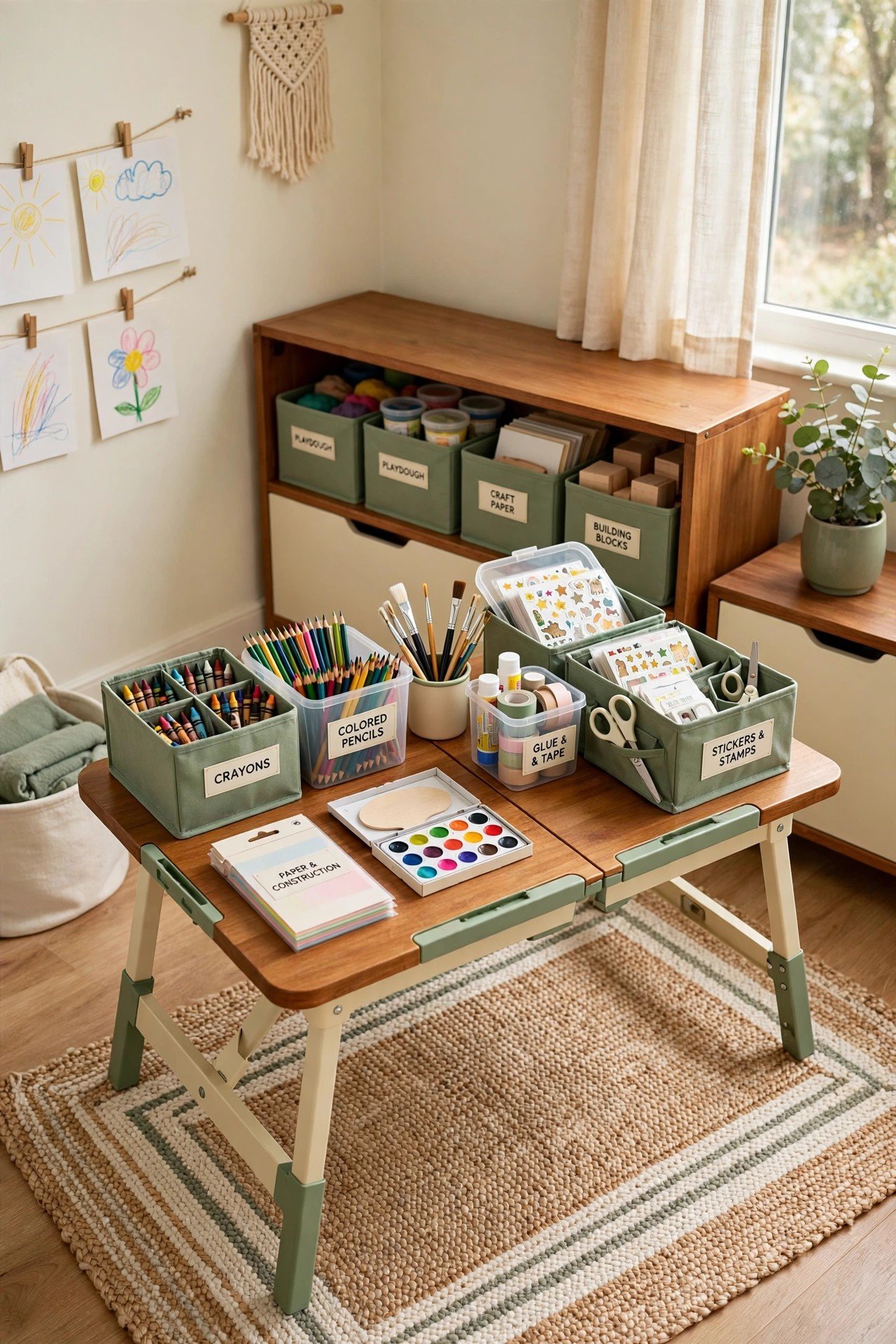
12. Chalkboard Wall Play Zone
Paint a 4 by 6 foot section with magnetic primer first, then two coats of chalkboard paint. Mount a chalk tray at 30 inches high so little hands reach it. Kids draw standing up, which suits their energy better than sitting.
Frame the section with a deep tone from these color drenching ideas to make it look designed. The wall grows with your child from scribbles to spelling practice. Dust it weekly with a damp cloth to keep colors bright.
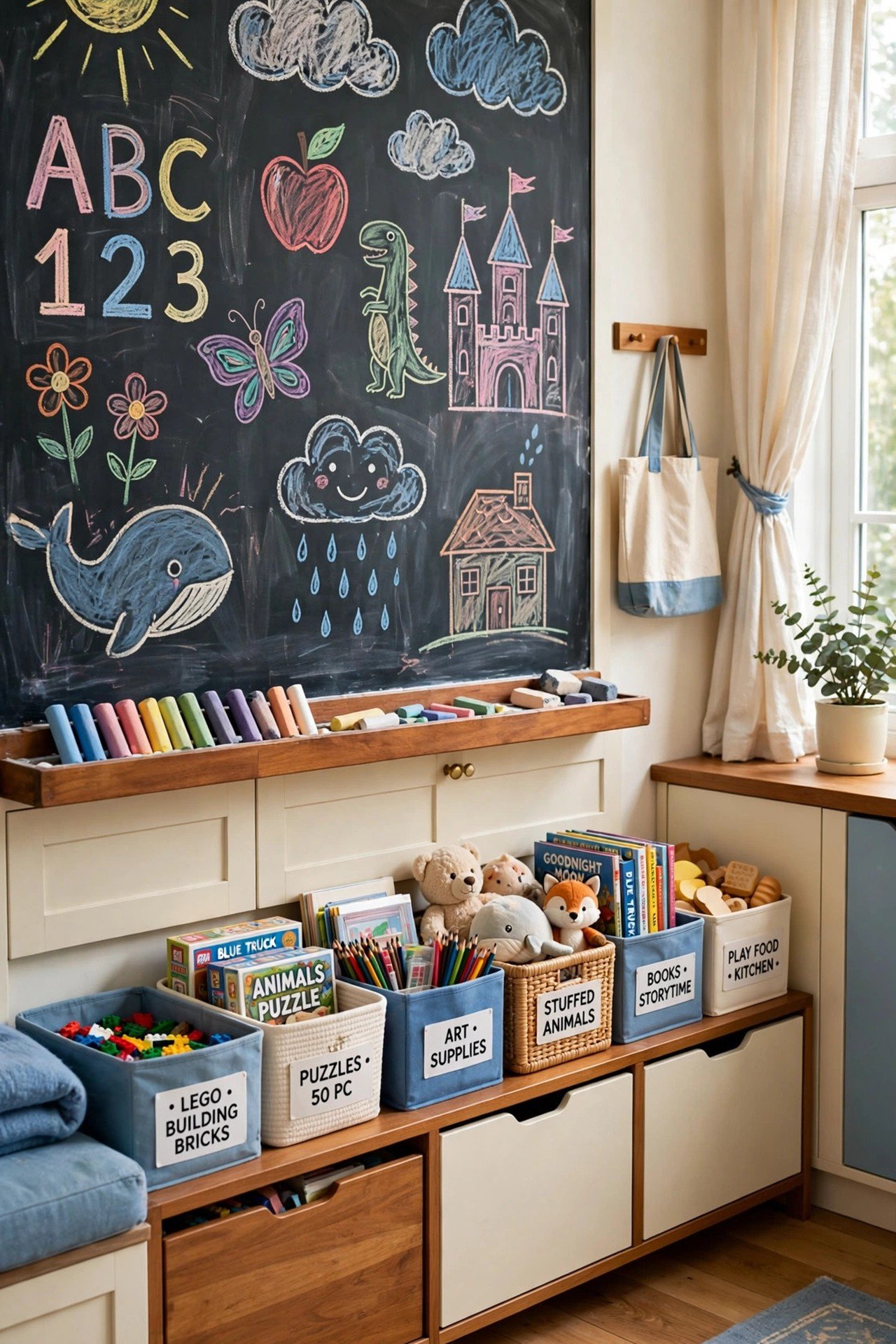
13. Simple Minimalist Play Space
Cap the toy count at 10 quality items and store the rest in a closet rotation bin. Use closed cabinets with soft-close hinges so the room reads calm even during play. A monthly swap from the stash makes old toys feel new again.
Choose open-ended toys like blocks and magnetic tiles that suit many ages. Fewer toys mean faster cleanup, often under 5 minutes. Minimalism gives kids room to invent instead of sorting through clutter.
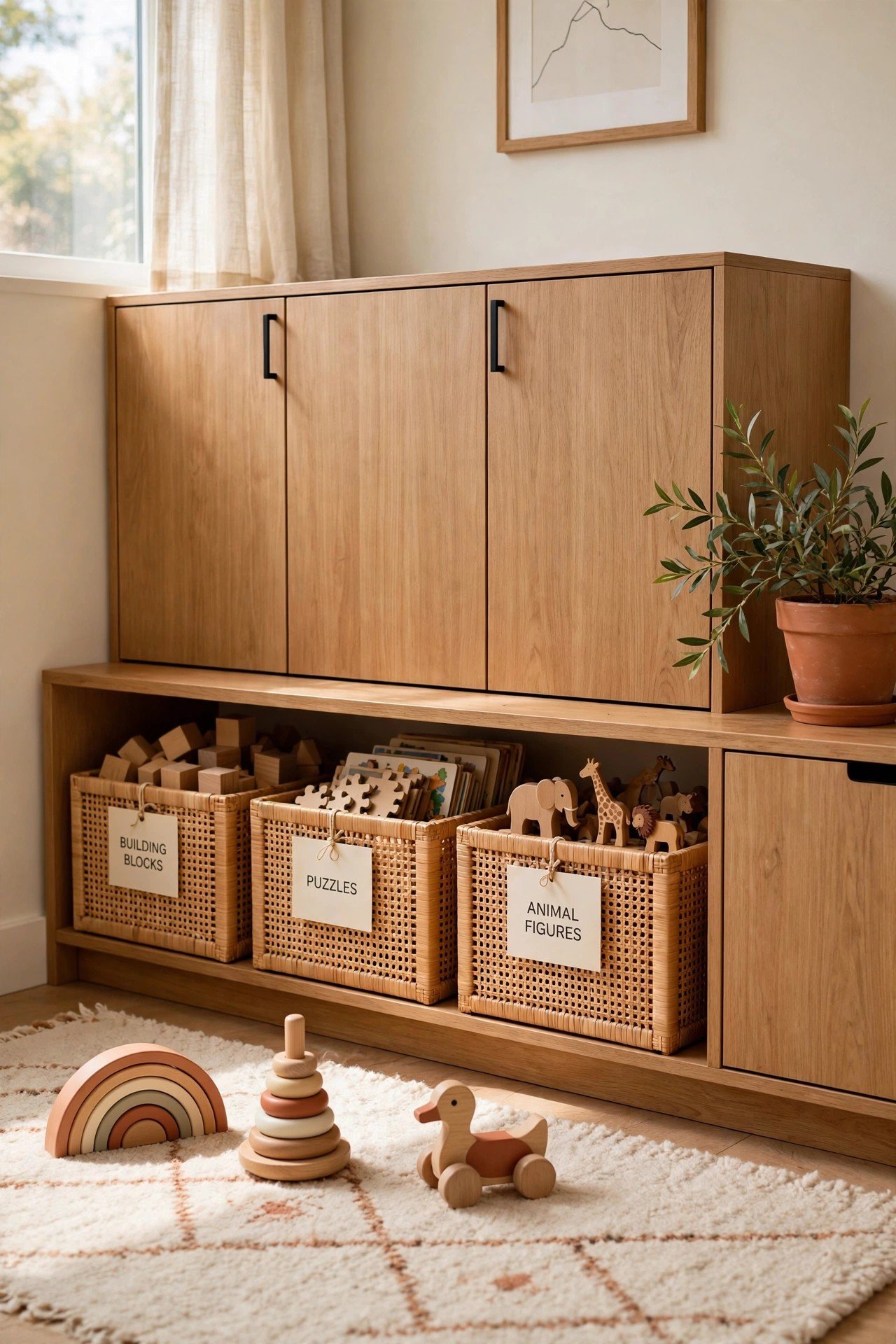
14. Warm Bohemian Kids Corner
Layer a 5 by 7 foot rug with a smaller 3 by 5 foot rug on top for the collected bohemian look. Use 14 inch rattan baskets for toy storage that doubles as texture. Hang one macrame piece and add a trailing plant well out of toddler reach.
Mix patterns in the same warm family so the corner feels curated, not chaotic. This forgiving style hides everyday mess under its layers. Kids relax faster in rooms that feel soft and collected.
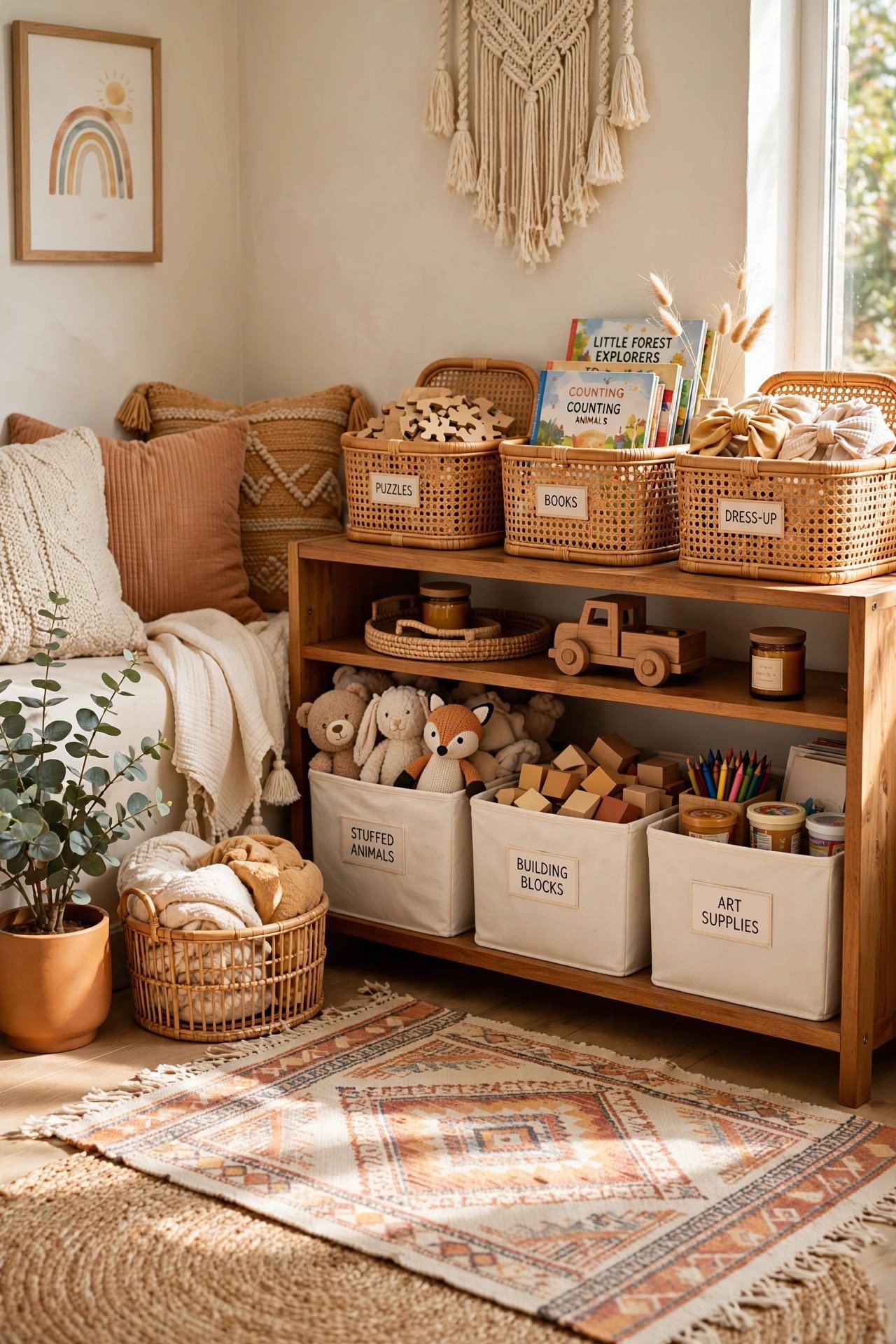
15. Teepee Tent Hideaway
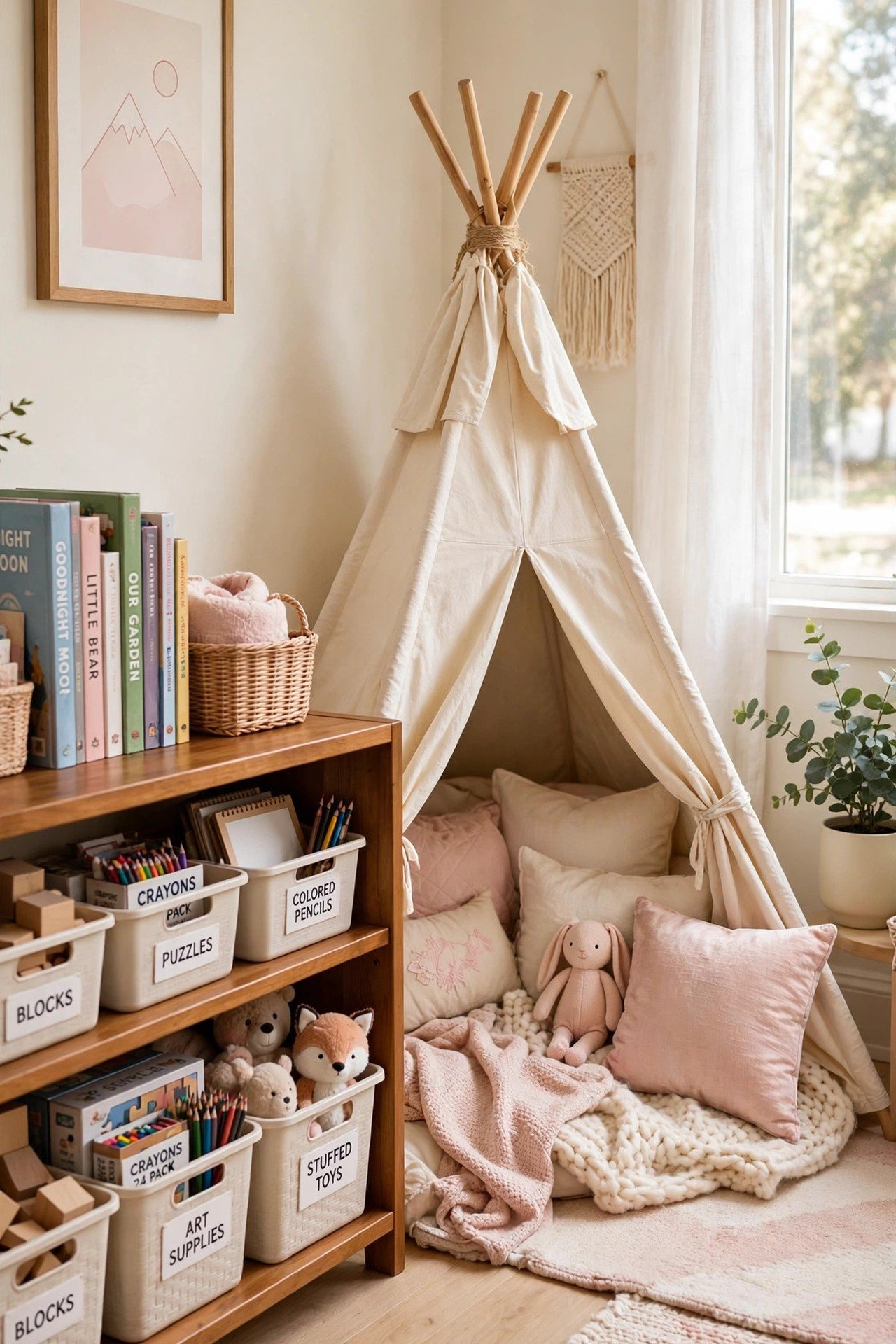
A 5 foot tall teepee needs only a 4 by 4 foot footprint and folds to a 6 inch bundle for storage. Line it with a 36 inch floor cushion and two throw pillows for the ultimate den. Kids use it for reading, doll play, and quiet time.
Place it near a window for natural light inside. Choose cotton canvas that washes well, since tents collect crumbs. A simple tent often becomes the most loved spot in the whole house.
16. Floating Shelf Display Wall
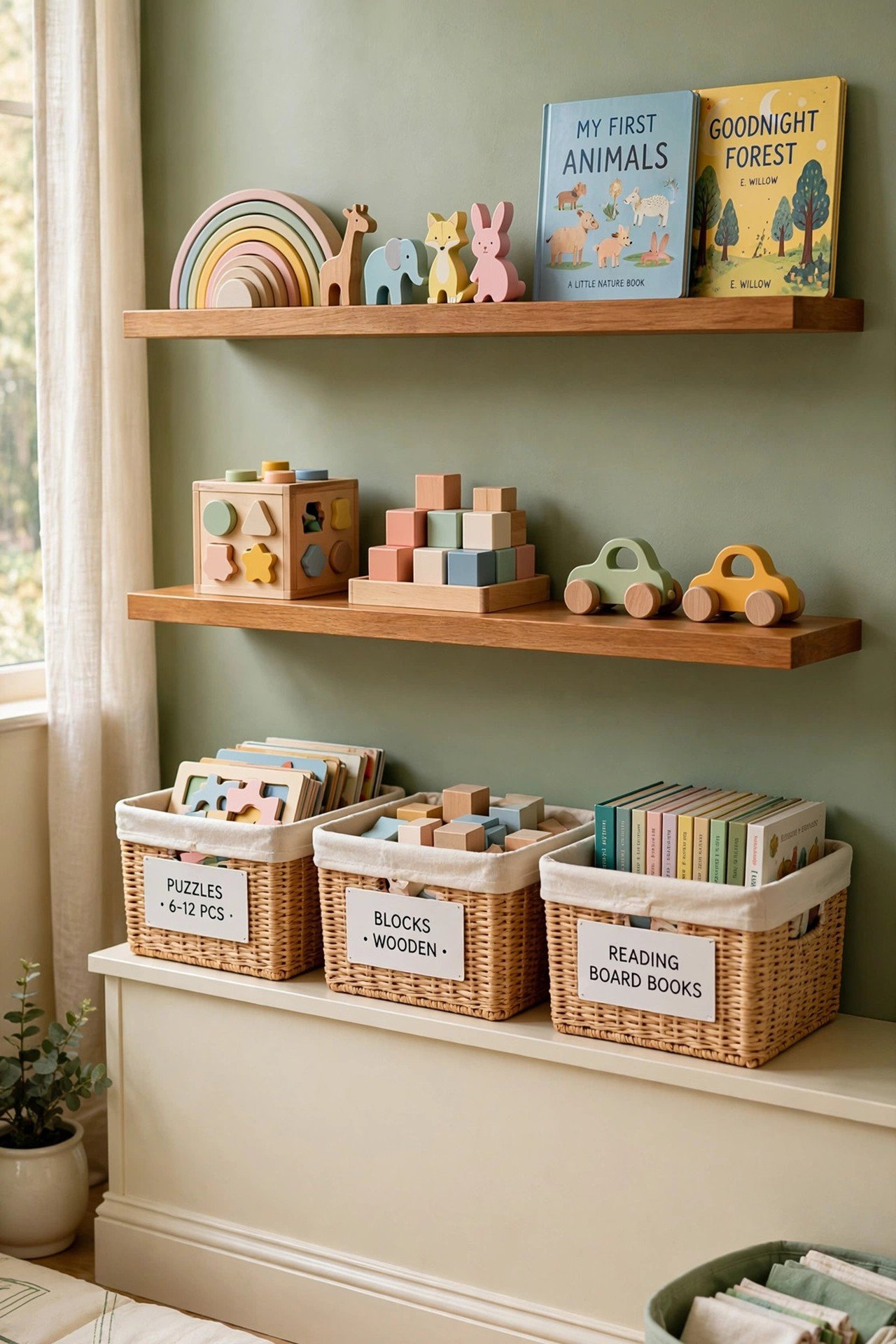
Mount three 36 inch shelves at 24, 36, and 48 inches high for a playful staggered look. Use brackets rated for 20 pounds since kids lean on shelves. Display beautiful wooden toys up high and keep daily books on the lowest shelf.
The open floor below makes the room feel twice as large. This trick rescues narrow bedrooms where bookcases would block walkways. Shelves turn storage into a design feature kids enjoy arranging.
17. Window Seat Play Spot
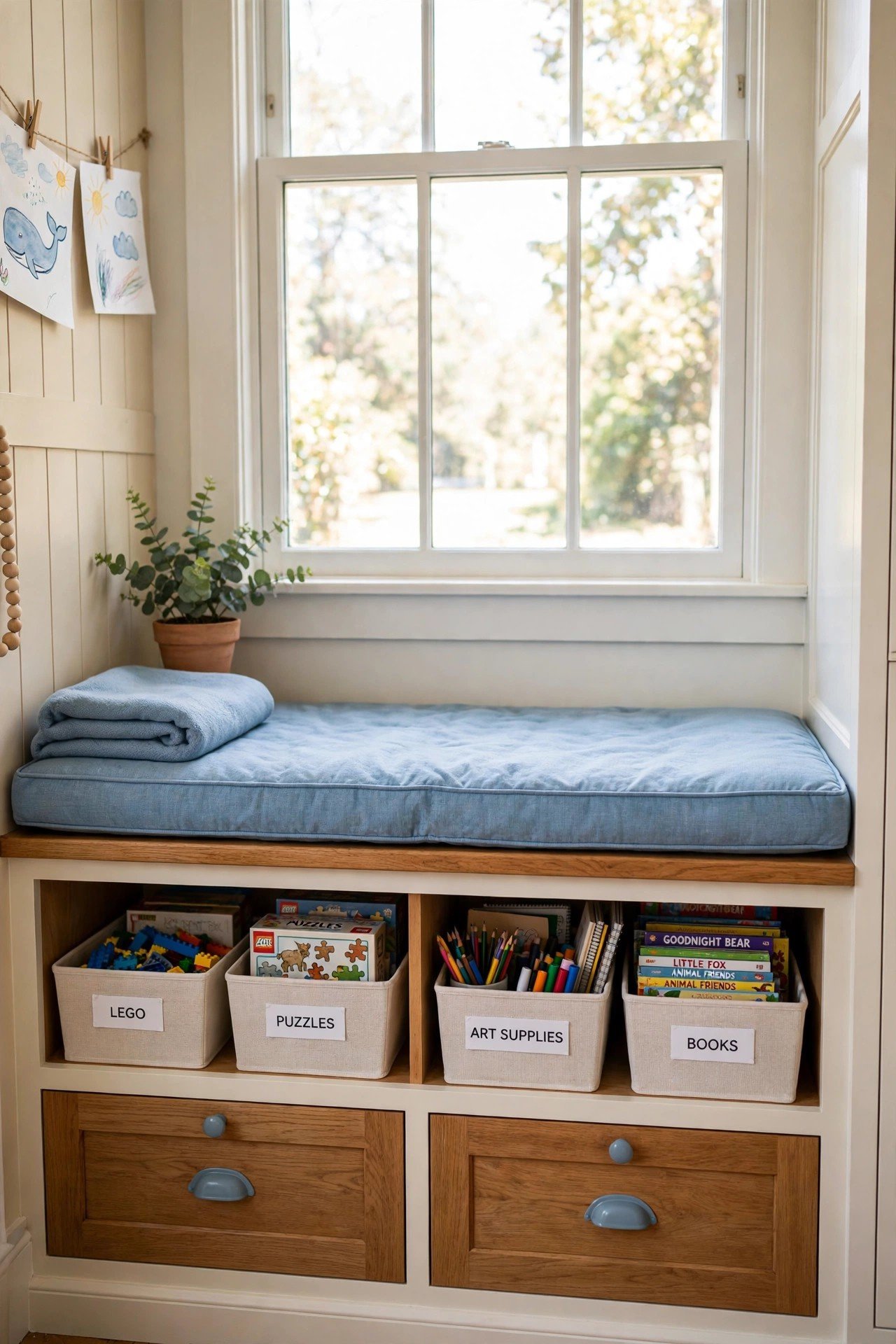
Build the seat 18 inches deep with drawers 24 inches deep below for bulky toys. Top it with 3 inch foam in a washable, stain-resistant fabric. Kids gain a sunny perch while you gain serious hidden storage.
Paint the nearby door with one of these interior door color ideas to tie the spot into the room. Add a safety latch on deep drawers for toddlers. A window seat turns dead wall space into the favorite seat in the house.
18. Bold Accent Wall Playroom
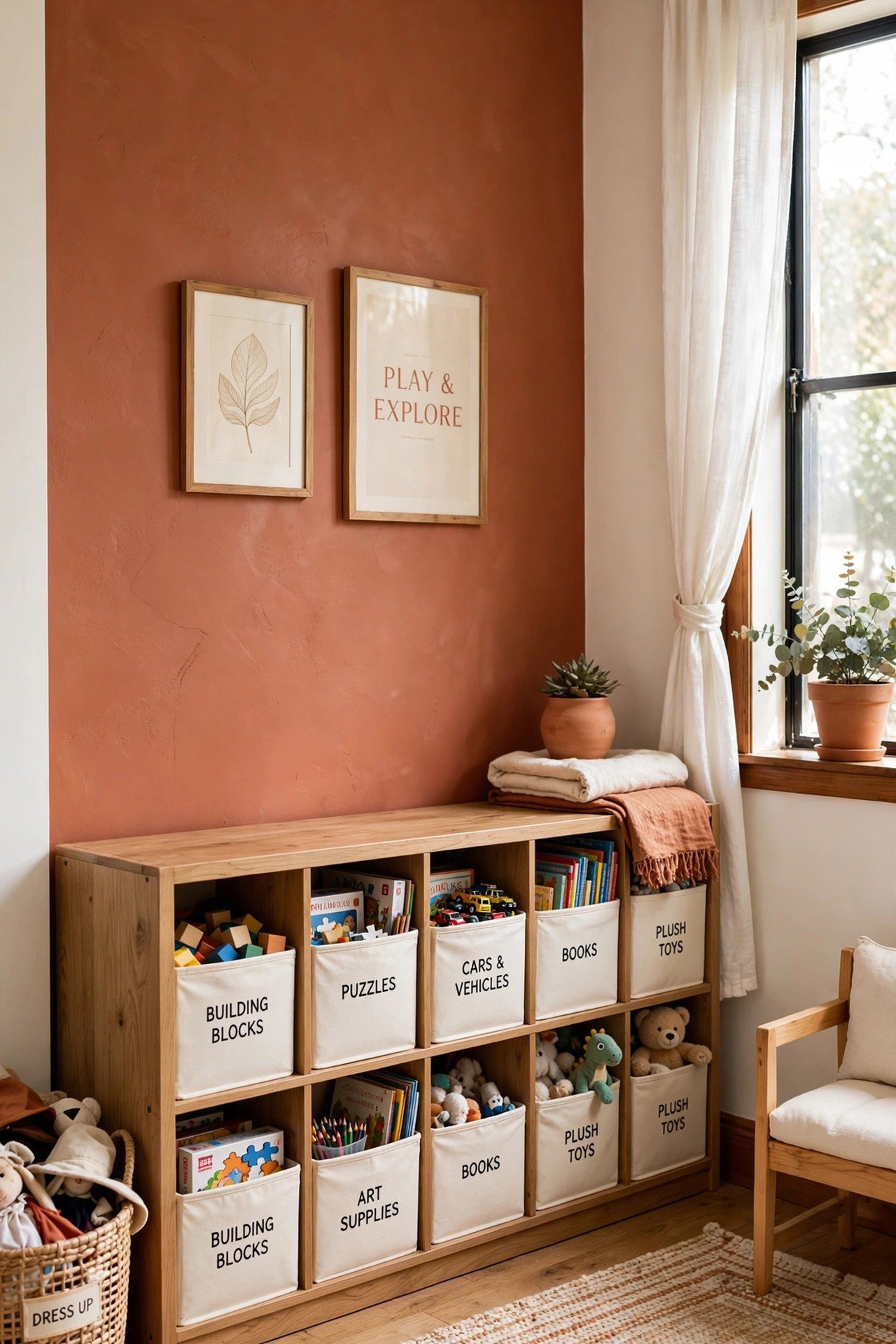
Paint a single wall in a bold washable eggshell to define the play zone in a shared room. Test a 2 by 2 foot swatch first, since bold colors shift in different light. Keep furniture neutral so the wall carries the energy.
A soft textured finish from these venetian plaster wall ideas adds depth without loud color. The accent wall tells kids exactly where their zone begins. It is the fastest room transformation for the lowest cost.
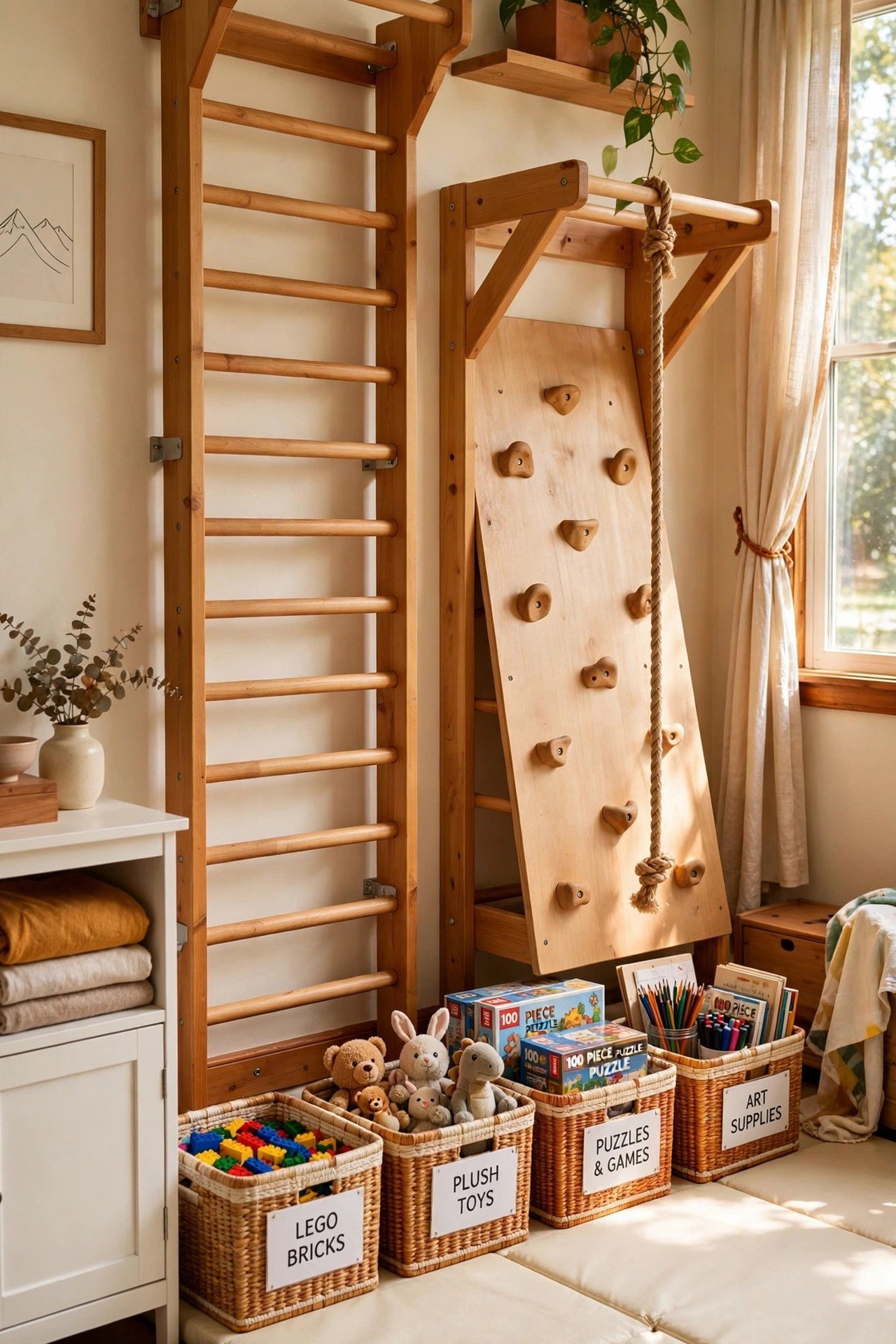
19. Wall-Mounted Climbing Gym
A 7 foot Swedish ladder bolts into wall studs and needs a 4 by 6 foot mat of 2 inch thickness below. Add a climbing rope and a pull-up bar as kids grow stronger. This suits ages 3 and up with adult supervision.
Choose solid beech wood so the gym looks like furniture. Position it away from windows and sharp furniture corners. Indoor climbing burns serious energy on days when parks are out of reach.
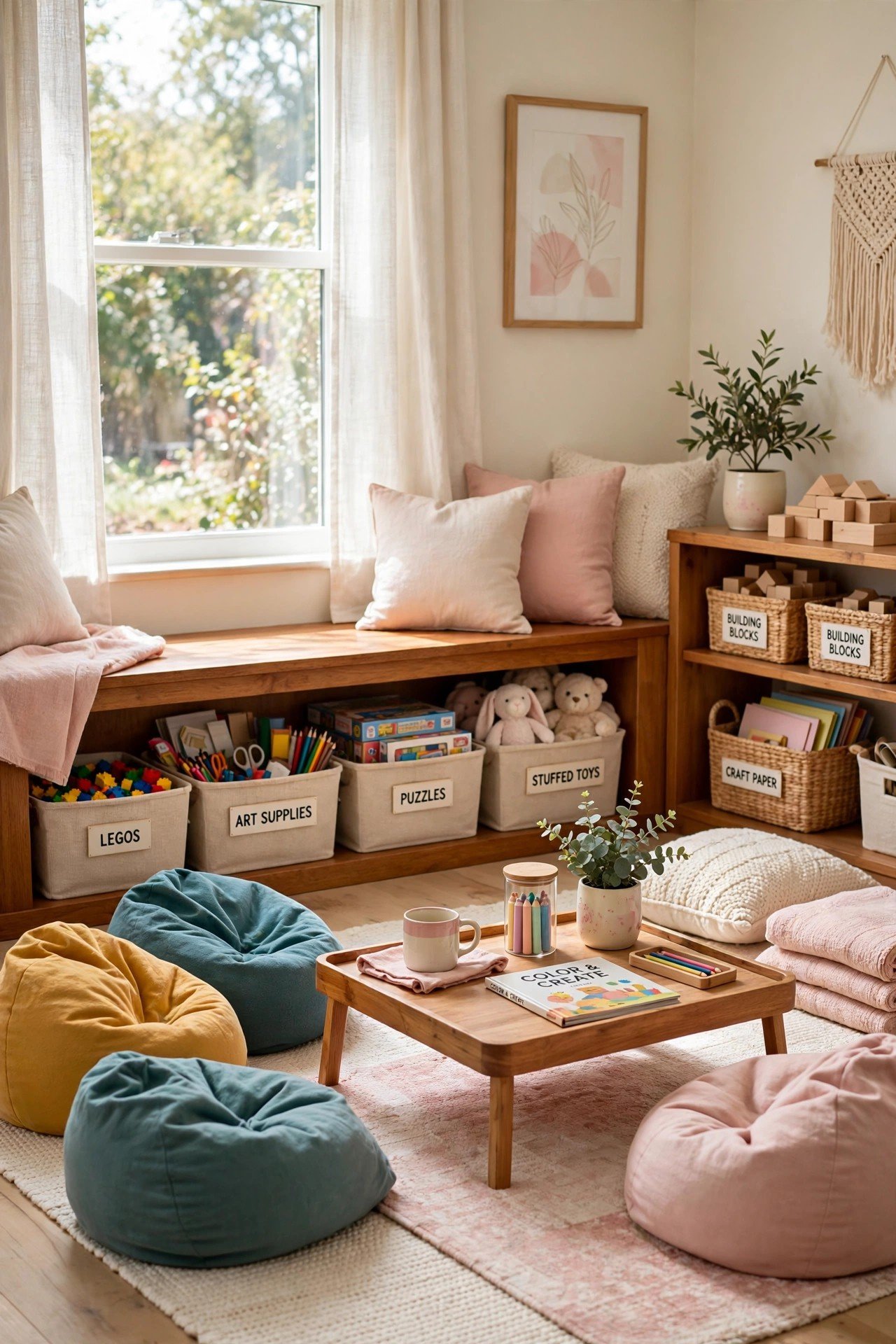
20. Floor Cushion Lounge Zone
Use 24 inch square floor cushions with washable covers instead of bulky chairs. Stack them in a corner when not in use, then spread them for movies and playdates. Low seating suits kids better than adult-scale furniture.
Paint the wall behind the zone with tones from these two-tone wall paint ideas to anchor it with color. Add one low round tray table for snacks and crafts. Cushions make any small room feel like a lounge built for kids.
Conclusion
A shared family space thrives on systems, not square footage. Measured zones, labeled bins, and weekly toy rotation keep play joyful and rooms calm. Start with the storage wall or the corner that bothers you most.
Your kids will remember the fun far more than the room size. Build the zones, teach the tidy-up routine, and enjoy the peace. Small rooms can hold the biggest imaginations.
Frequently Asked Questions
How do I fit a playroom into a shared living room?
Mark one corner with a rug and low shelving to define the play zone. Keep furniture small and storage closed so the area blends with your decor. A clear boundary keeps toys from spreading.
What storage works best for small playrooms?
Vertical shelves, clear bins, and rolling carts make the most of tight space. Label every bin so kids can find and return toys on their own. Less open shelving means less visual clutter.
How can I make a playroom feel calm, not chaotic?
Choose a neutral base palette and let the toys supply the color. Closed cabinets hide the bulk of the mess. A consistent tidy-up routine keeps the room peaceful.
Is a Montessori-style playroom good for small spaces?
Yes, low open shelves with a few toys at a time suit small rooms well. The minimalist approach reduces clutter and helps kids focus. Rotate toys weekly to keep things fresh.
How do I create play zones without walls?
Use rugs, shelving units, and curtains to divide one room into zones. A reading nook, art station, and active corner can share a small space. Visual dividers teach kids where each activity lives.

Hi, I’m Emily! I turn messy corners into cozy, organized spots. DreamNestDecor is where I share simple, practical home ideas — decor, organization, and small-space solutions that work in real life, not just in photos. Every idea here is carefully researched before it’s shared.