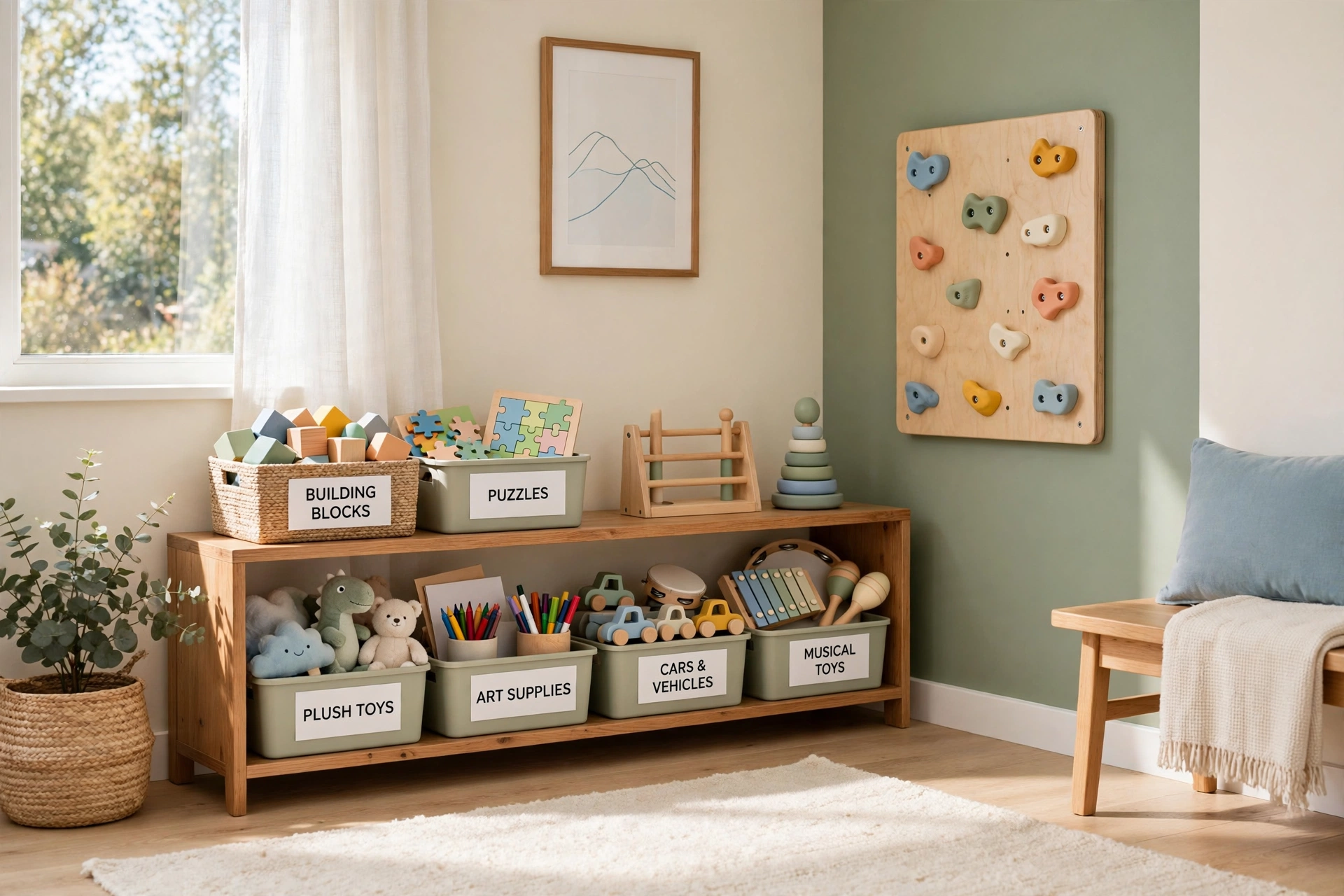
Picture this: it is raining outside, your kids are full of energy, and you have no spare room to give them. Instead of chaos spread across the whole house, imagine one small zone where all that energy has a place to go. A corner of the living room, a stretch of hallway, or the end of a bedroom can become a play area that keeps active kids busy for hours.
You do not need a dedicated playroom or a big budget to make it happen. All you need is a clear zone, the right setup for one activity, and storage that keeps the mess contained. These 25 small indoor play area layout ideas will help you carve active play zones into the shared spaces you already have.
1. Building Block Zone on a Soft Rug Beside the Sofa
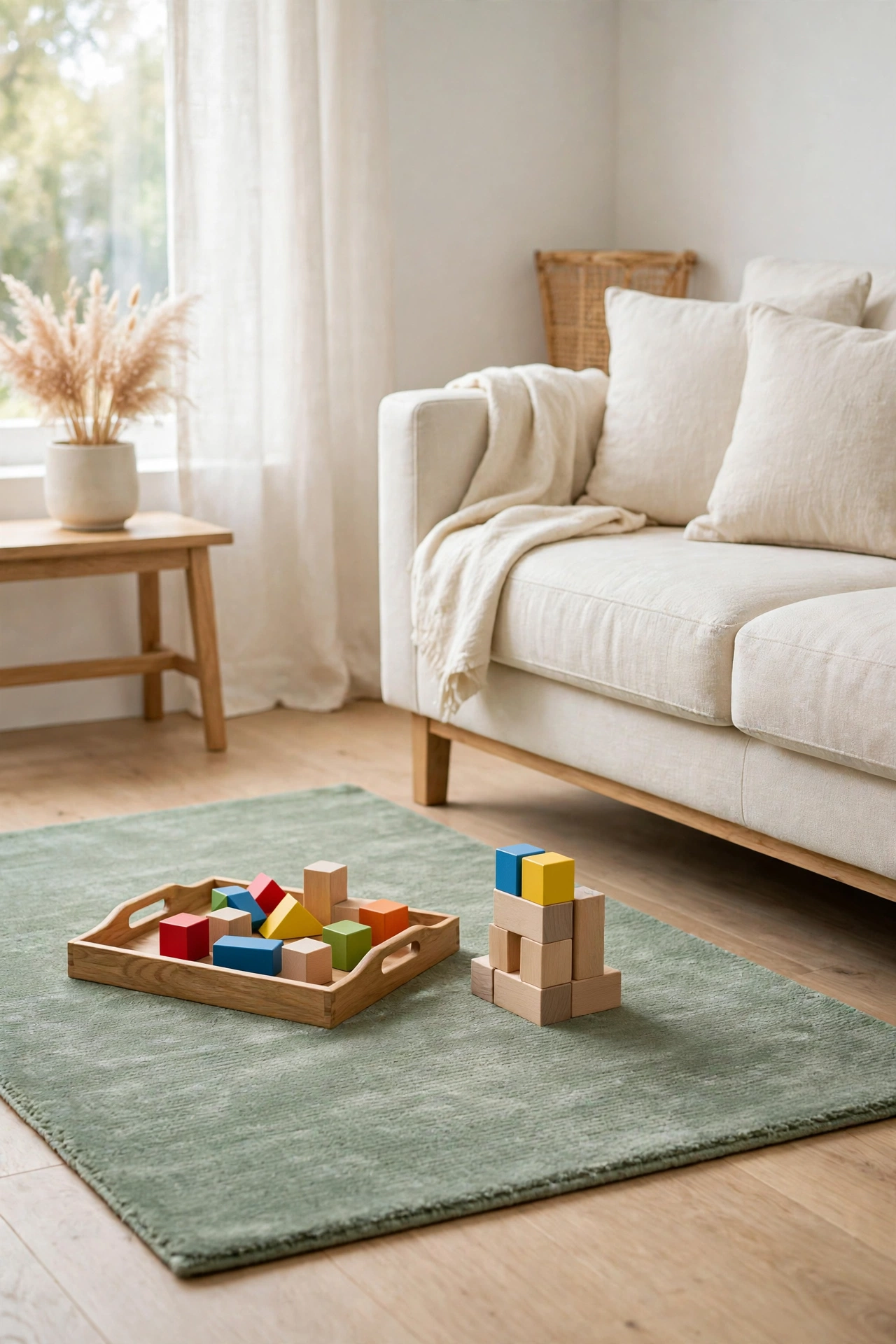
A soft rug beside the sofa can become a building block zone with almost no effort. Lay down a thick rug to mark the boundary, then place a low tray of wooden blocks on one edge. Kids sit on the rug and build towers, roads, and castles while you relax nearby.
The rug does two jobs at once: it defines the play area and it softens the sound of blocks tumbling down. When playtime ends, the blocks go back in the tray and the rug looks like a normal part of the living room. Choose a rug with a simple pattern so the blocks and the room both stand out.
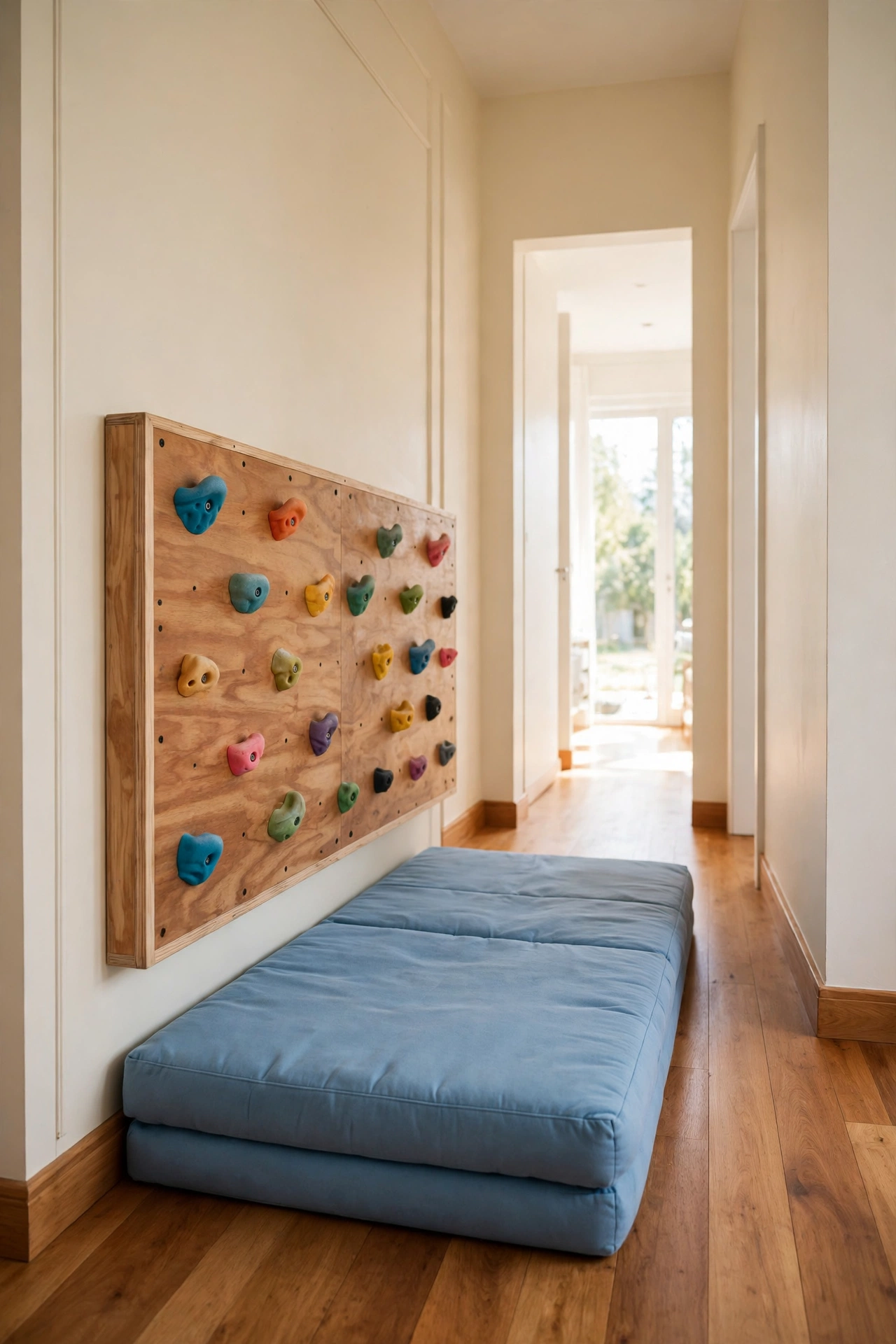
2. Climbing Panel With Holds on a Short Hallway Wall
A short hallway wall can hold a low climbing panel that gives active kids a safe way to climb indoors. Mount a sturdy plywood panel with a few colorful climbing holds at a low height, and place a thick crash mat on the floor below. The panel uses wall space that usually sits empty.
Keep the holds low enough that little feet stay close to the mat, and always supervise climbing play. A panel that is only four feet tall still gives kids a real climbing challenge. The hallway stays a hallway, but one wall now works hard for active play.
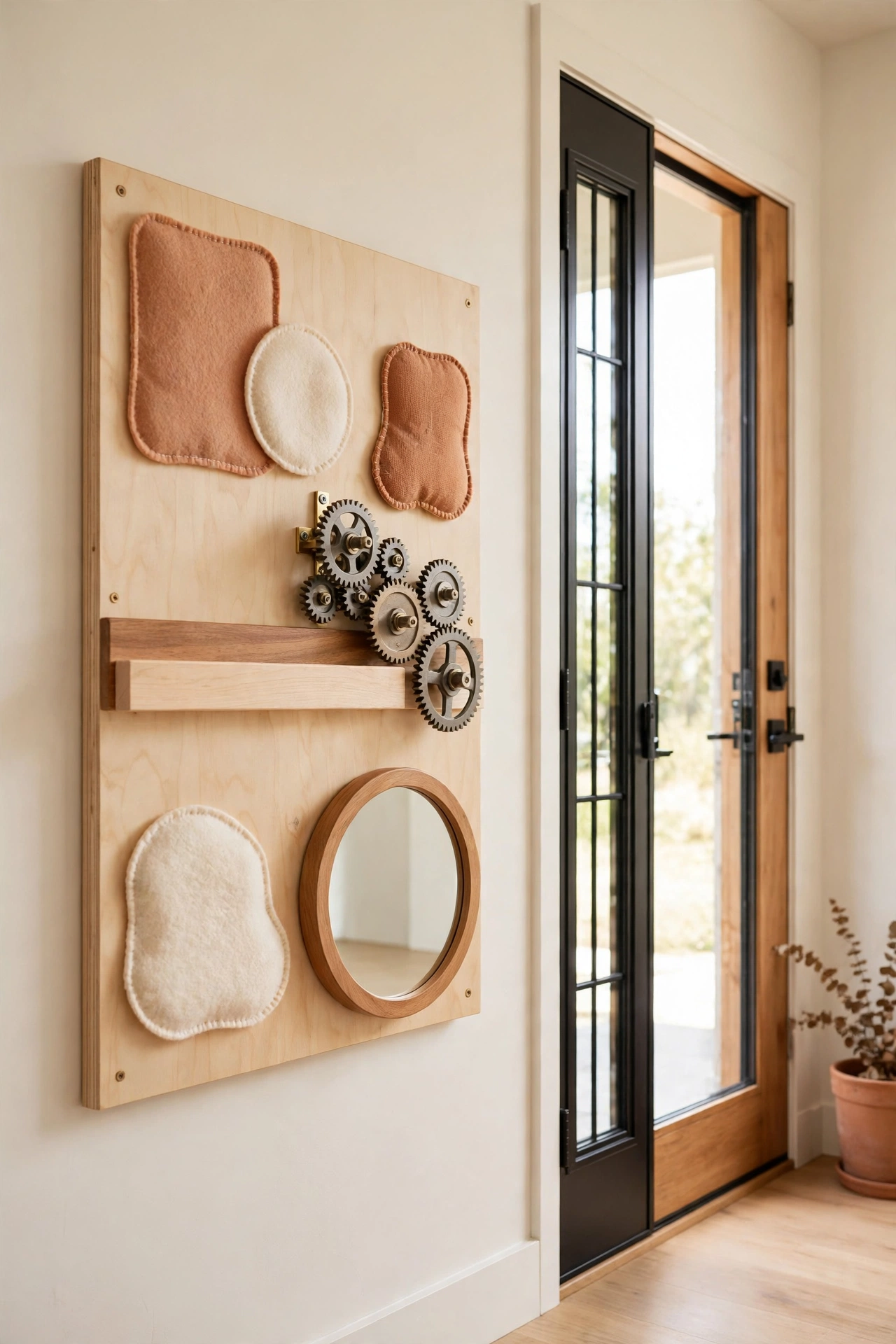
3. Sensory Wall With Textures and Gears by the Front Door
The wall beside the front door is often bare, which makes it a perfect spot for a sensory wall. Mount a board covered with different textures: a patch of soft felt, a strip of smooth wood, a small mirror, and a few turning gears. Kids stop and explore with their hands every time they pass by.
A sensory wall keeps little hands busy during the wait before school or while shoes go on. Everything is fixed to the board, so there are no loose pieces to lose. Use warm wood tones and soft colors so the board looks like intentional wall decor instead of clutter.
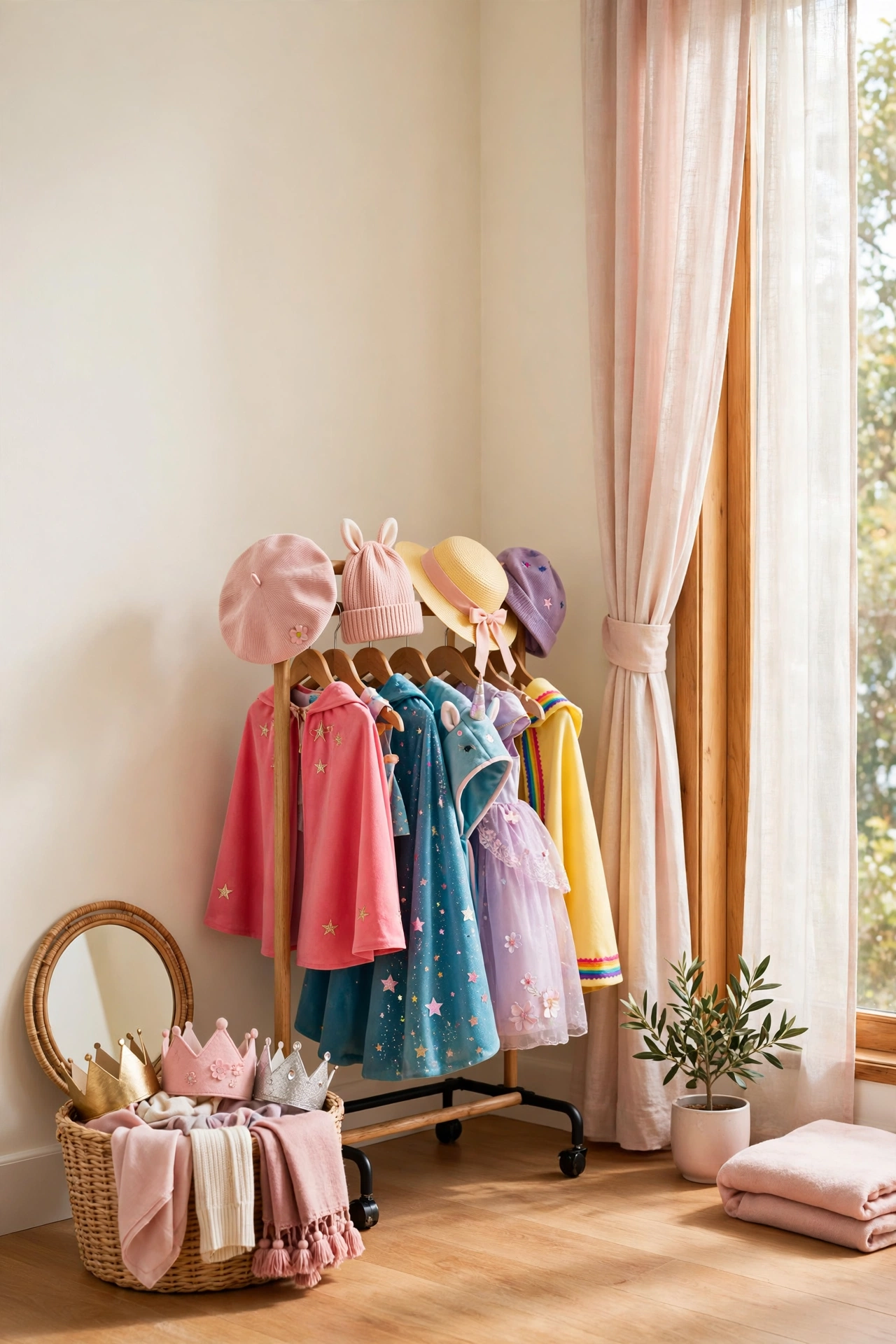
4. Dress Up Station on a Rolling Rack in the Bedroom
A small rolling rack in the bedroom corner can become a dress up station that fuels hours of pretend play. Hang a few costumes, capes, and hats on the rack, and place a basket of accessories like crowns and scarves on the floor below. A small unbreakable mirror beside the rack lets kids admire each new outfit.
The rolling rack moves out of the way when the room needs to change back to a calm sleeping space. Kids learn to hang each costume back on its hook, which keeps the station tidy. This zone works best in a corner where the rack does not block the door or the bed.
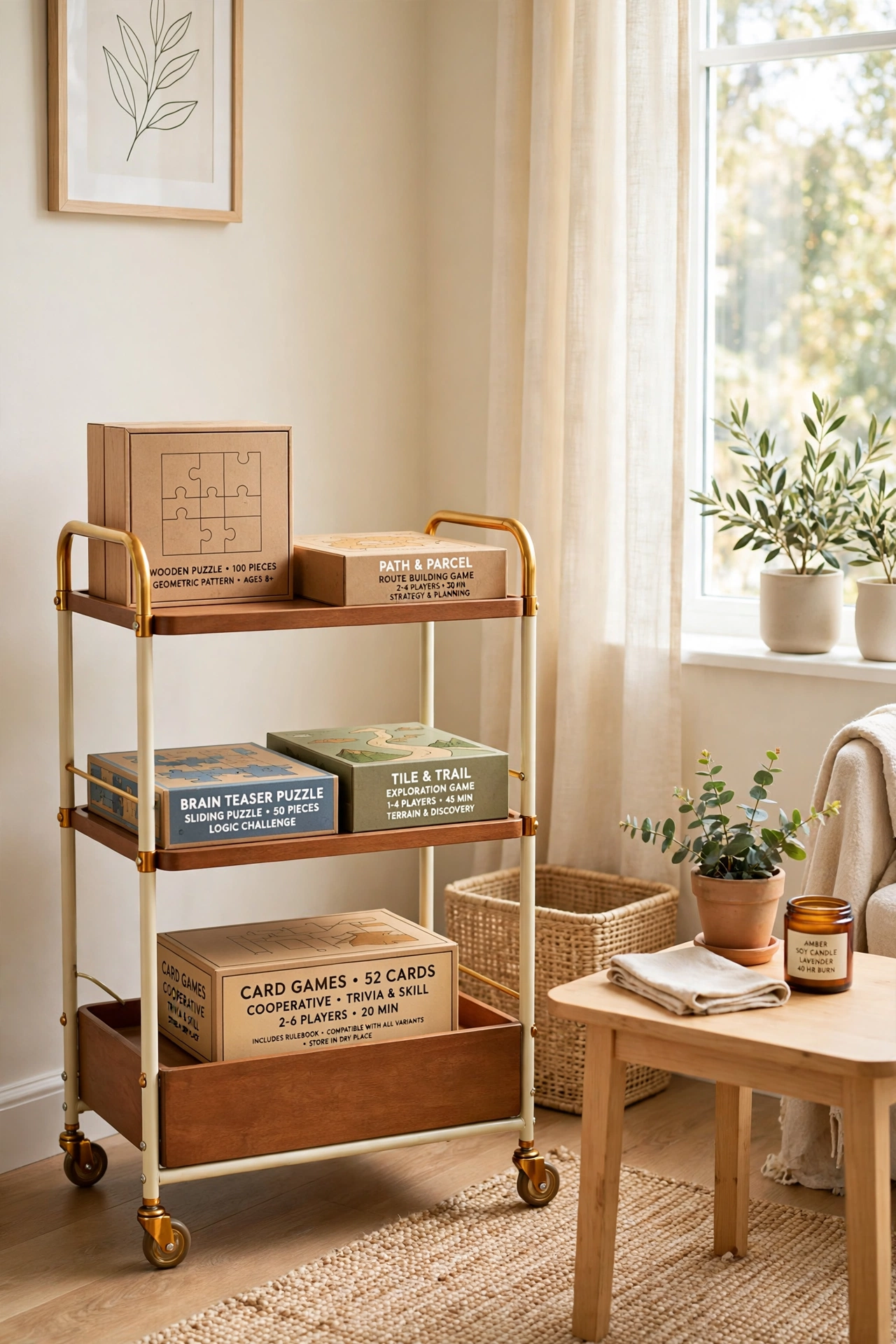
5. Puzzle and Board Game Zone on a Rolling Cart
A rolling cart with three tiers can hold a whole puzzle and board game zone in a tiny footprint. Stack puzzles on the top tier, board games on the middle tier, and card games in a labeled box on the bottom tier. Wheel the cart to the table when it is game time, then roll it back against the wall.
This setup keeps game boxes off the floor and stops pieces from wandering into other rooms. Kids can see every game at a glance and choose one without pulling a whole shelf apart. A cart with locking wheels stays put during play and moves easily when you need the floor space back.
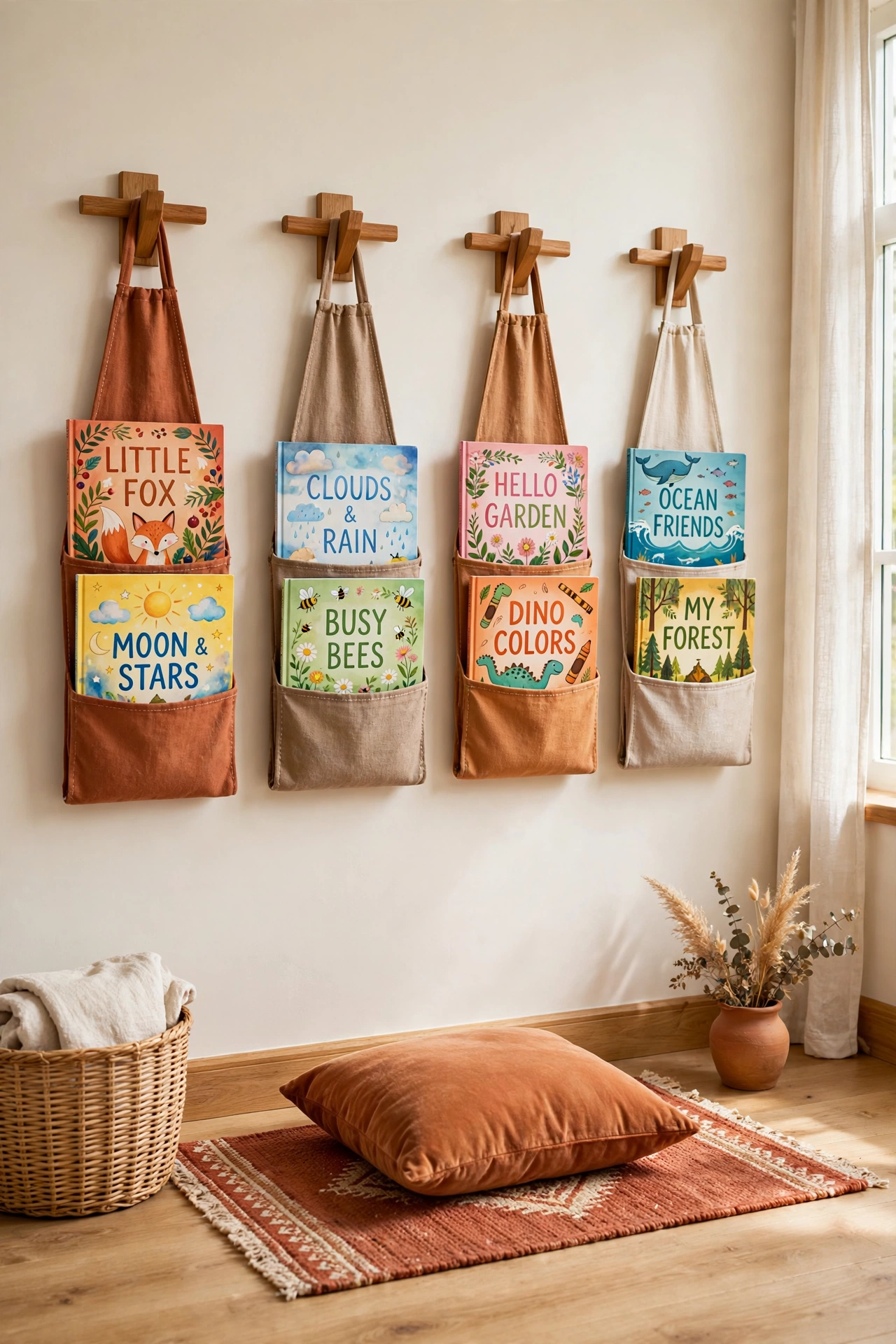
6. Book Sling Zone Along a Bedroom Wall
A row of fabric book slings along a bedroom wall turns a blank stretch of wall into a book zone kids actually use. The slings hold books facing forward, so covers catch the eye and invite little readers to grab one. Place a small rug and a floor pillow in front of the slings to mark the reading spot.
Forward facing storage works better than a regular bookshelf for young kids, because they choose books by their covers. The slings sit low enough for small hands to reach every book. Swap the books every week or two to keep the zone feeling fresh and exciting.
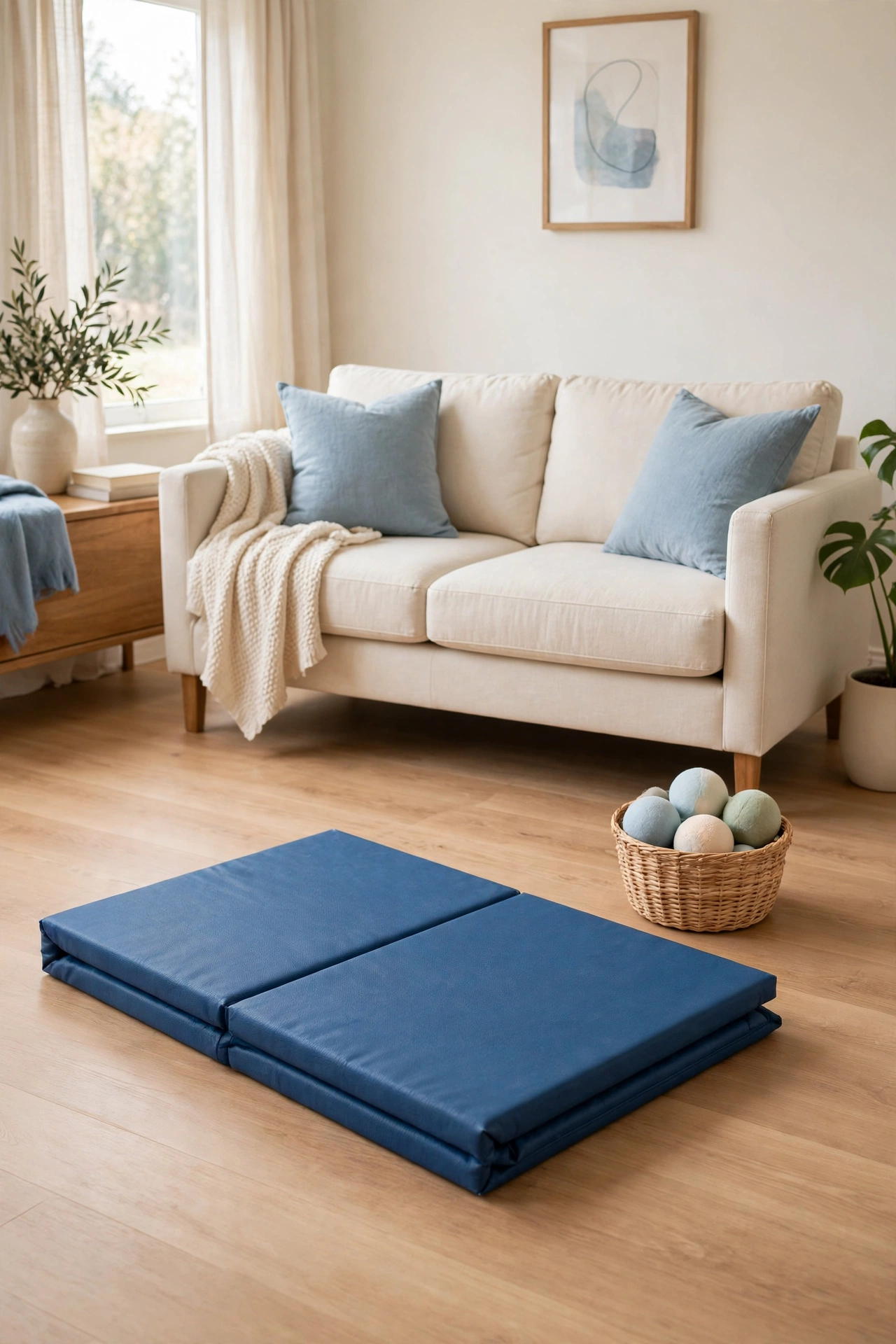
7. Tumbling Mat Zone That Slides Under the Sofa
A folding tumbling mat can turn a patch of open floor into a gymnastics zone, then slide under the sofa when playtime ends. Lay the mat flat in front of the sofa for somersaults, cartwheels, and balance practice. The mat protects the floor and cushions every landing.
This zone needs no permanent furniture at all, which makes it ideal for the smallest living rooms. When the mat is folded away, the room looks completely normal. If you want more ideas for active indoor spaces, these small home gym layout ideas show how to fit movement zones into tight floor plans.
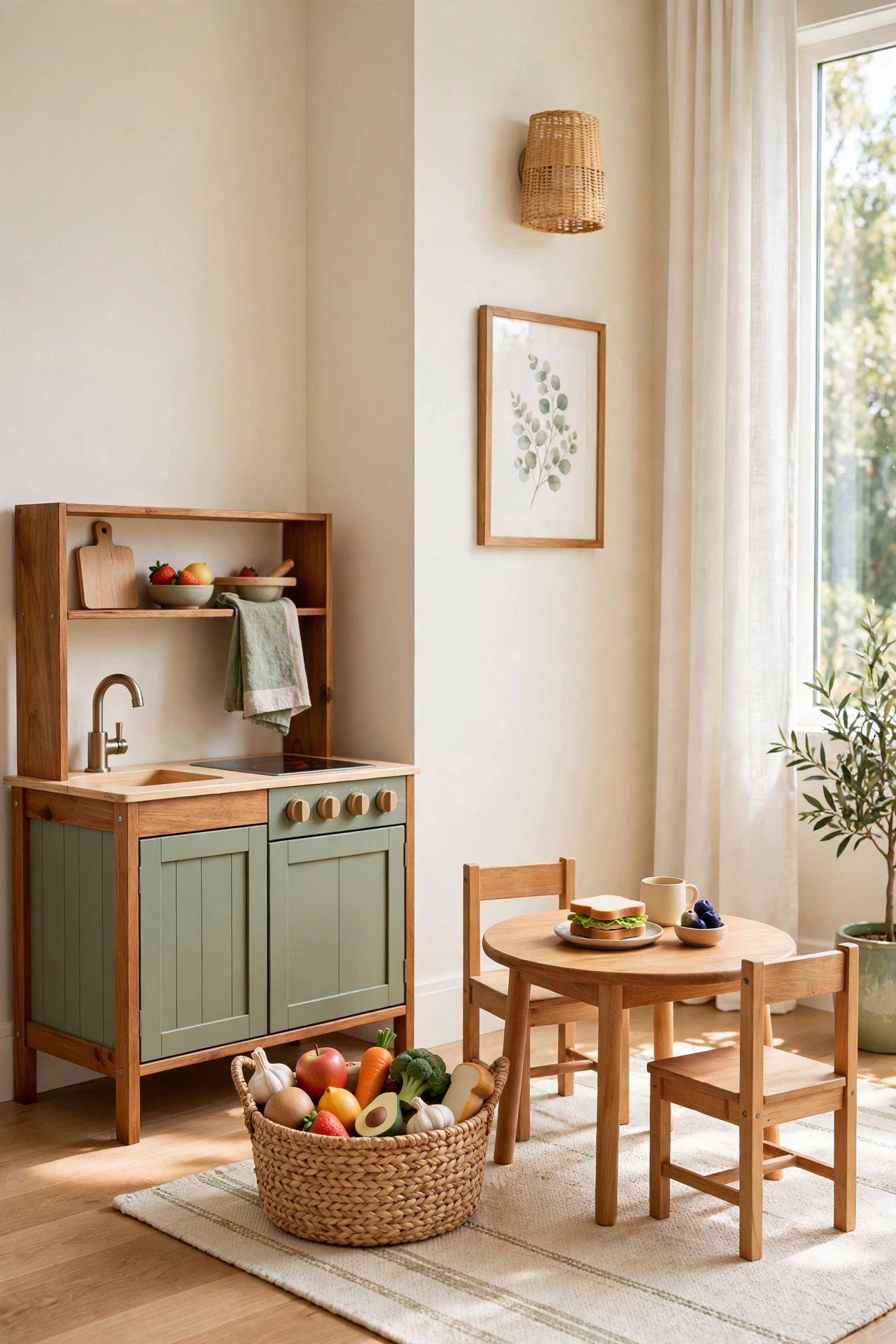
8. Pretend Kitchen Zone in a Dining Room Corner
A play kitchen tucked into a dining room corner gives kids a cooking zone right where the family eats. Set a small wooden play kitchen against the wall, add a basket of play food, and place a tiny table with two chairs beside it. Kids cook pretend meals while you prepare real ones nearby.
This layout works because the dining room already has the right mood for food play. The play kitchen stays in its corner, and the play food stays in its basket. Choose a wooden kitchen in soft colors so it blends with your dining furniture instead of clashing with it.
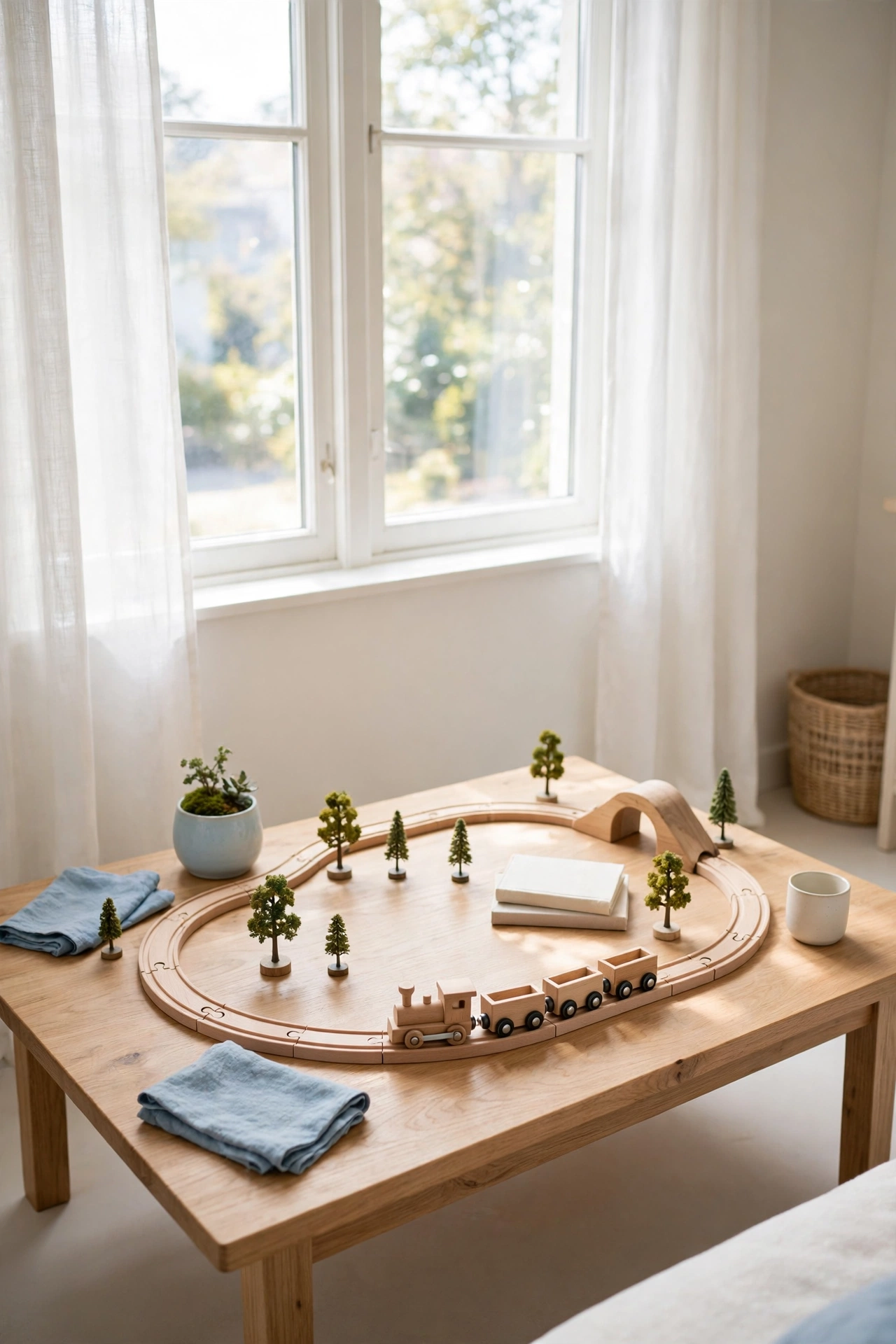
9. Train Track Zone on a Low Table Under a Window
A low table under a window can become a permanent train track zone that kids return to again and again. Build a wooden track on the tabletop, add a few trains and small wooden trees, and leave the setup in place. The natural light from the window makes the little landscape look bright and inviting.
Keeping the track on its own table stops pieces from spreading across the floor. Kids can kneel on a small rug beside the table and play without blocking walkways. Add a shallow drawer or bin under the table for spare track pieces and extra trains.
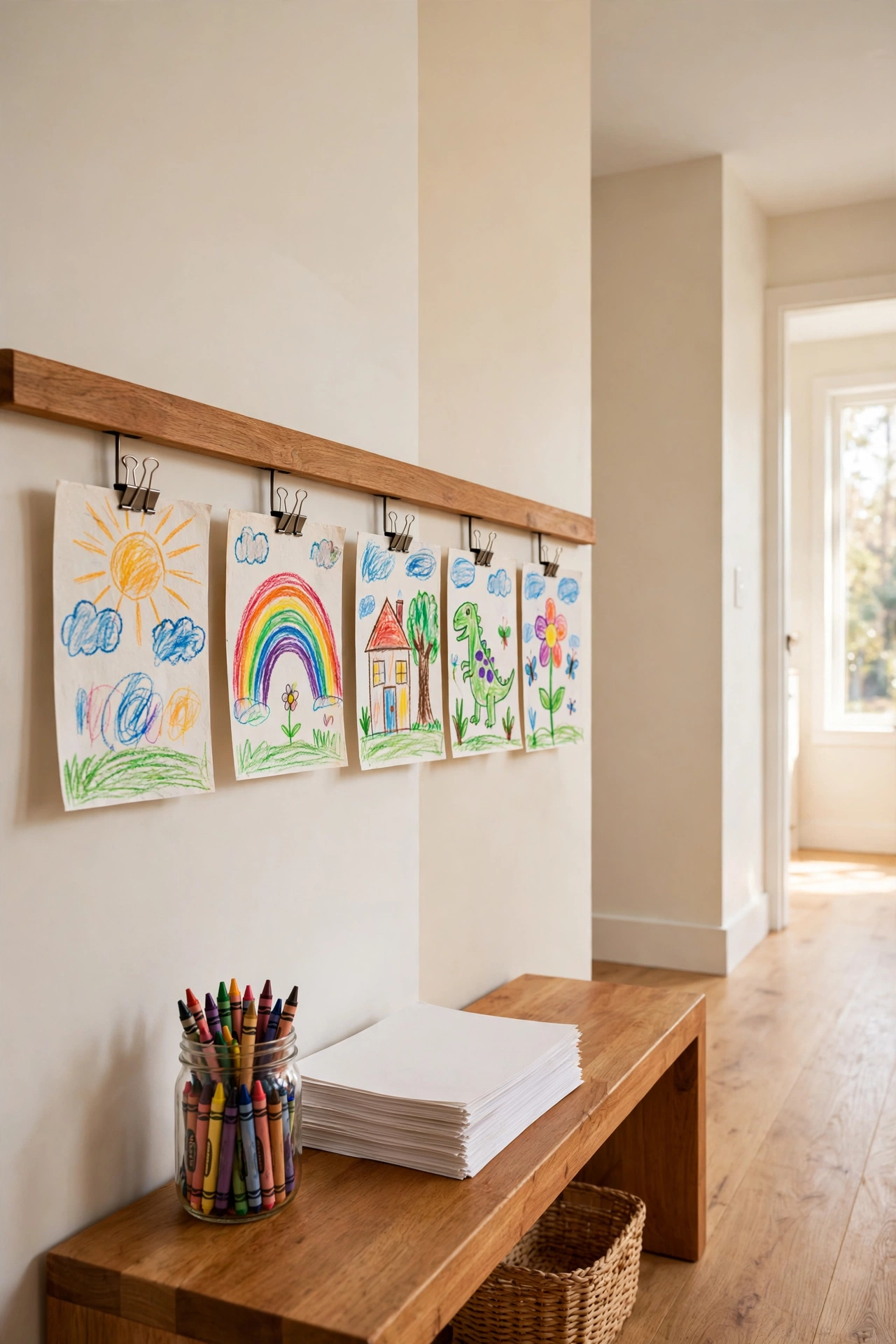
10. Clip Rail Art Display Along the Hallway
A simple wire rail with clips along a hallway wall creates an art display zone that celebrates every drawing. String a wire or mount a wooden rail with metal clips, and let kids choose which artworks to hang. The display changes as often as new art arrives.
This zone turns a plain hallway into a gallery that makes kids proud of their work. Clips hold paper without frames or tape, so swapping art takes seconds. For more ways to show off creative work, these kids art display ideas offer fresh options for every room in the house.
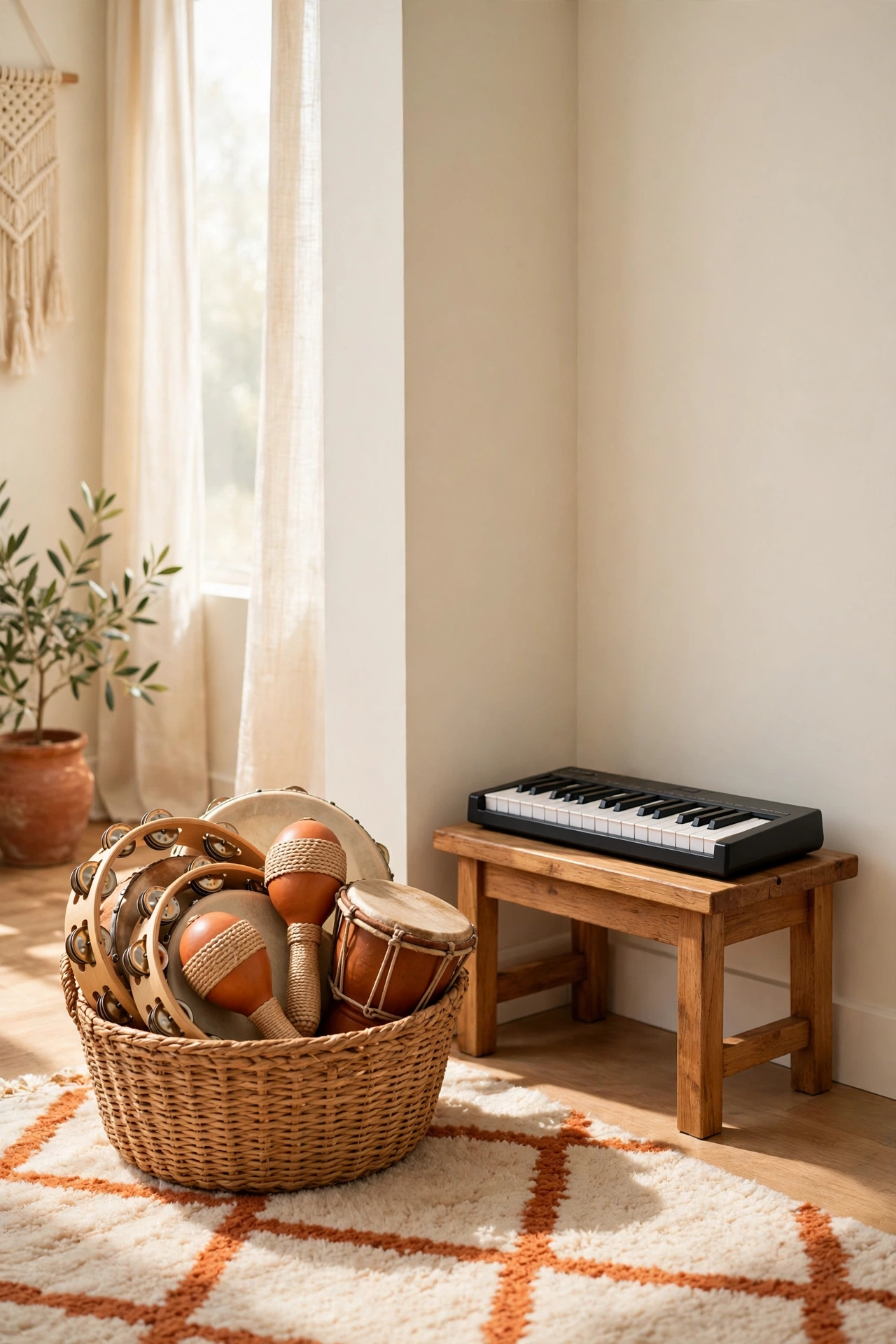
11. Mini Music Station With a Keyboard and Instrument Basket
A corner of the living room can become a mini music station with a small keyboard on a low stand and a basket of hand instruments. Add a tambourine, a pair of maracas, and a small drum to the basket. Kids sit on a rug and make music while the rest of the family listens.
The keyboard stand keeps the instrument at the right height for small players, and the basket keeps every instrument in one spot. This zone encourages noisy, joyful play in a contained area. A rug under the station softens the sound and marks the boundary of the music zone.
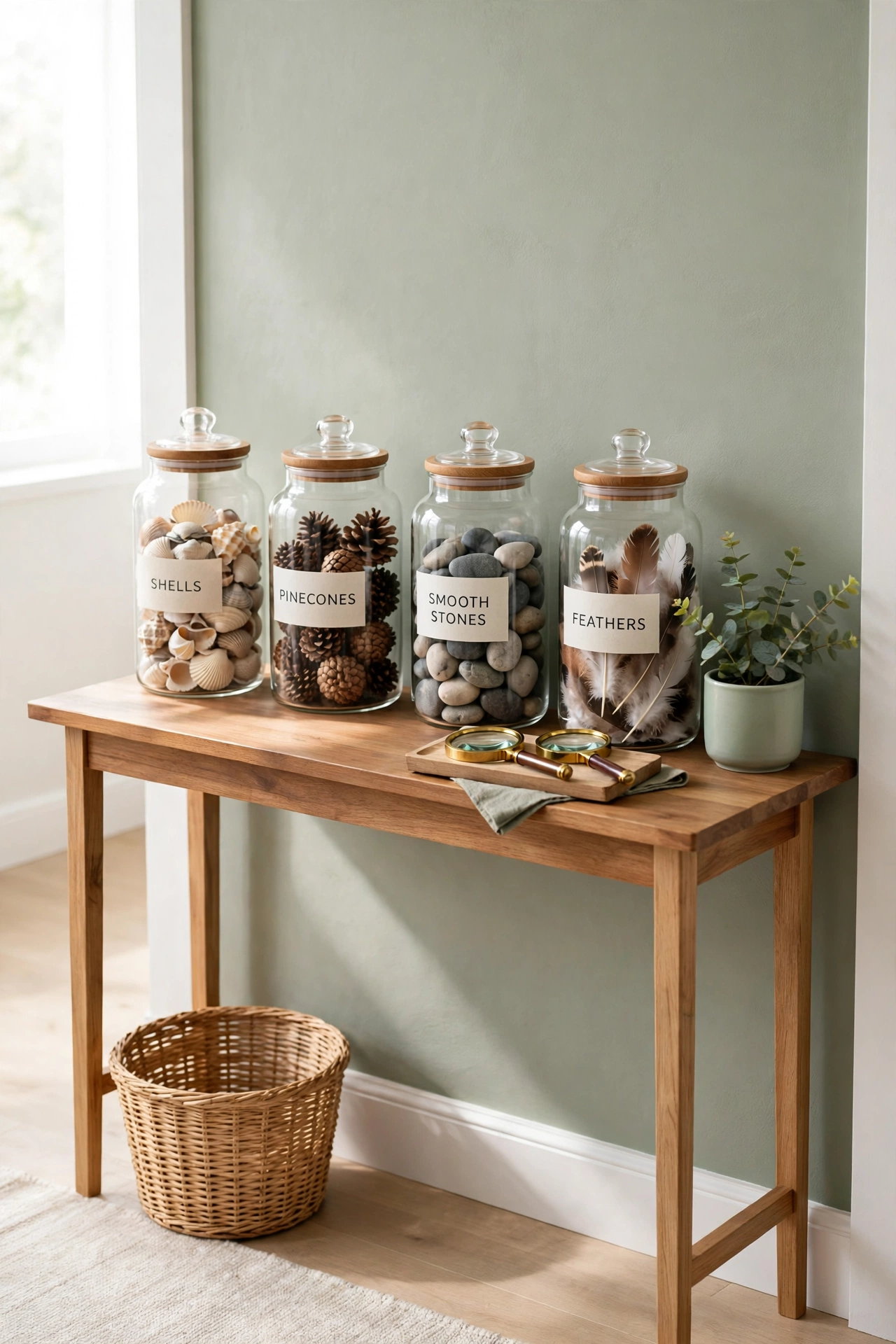
12. Discovery Zone With Jars and Magnifiers on a Console
A narrow console table against a wall can become a discovery zone for curious kids. Line up clear jars filled with shells, pinecones, smooth stones, and feathers, and add two magnifying glasses on a small tray. Kids pick up each jar, study the contents, and put it back in its spot.
This zone feeds curiosity without taking up floor space, because everything lives on the console. Label each jar with a simple printed word so kids learn the names of their treasures. Rotate the contents with the seasons to keep the discovery zone surprising all year.
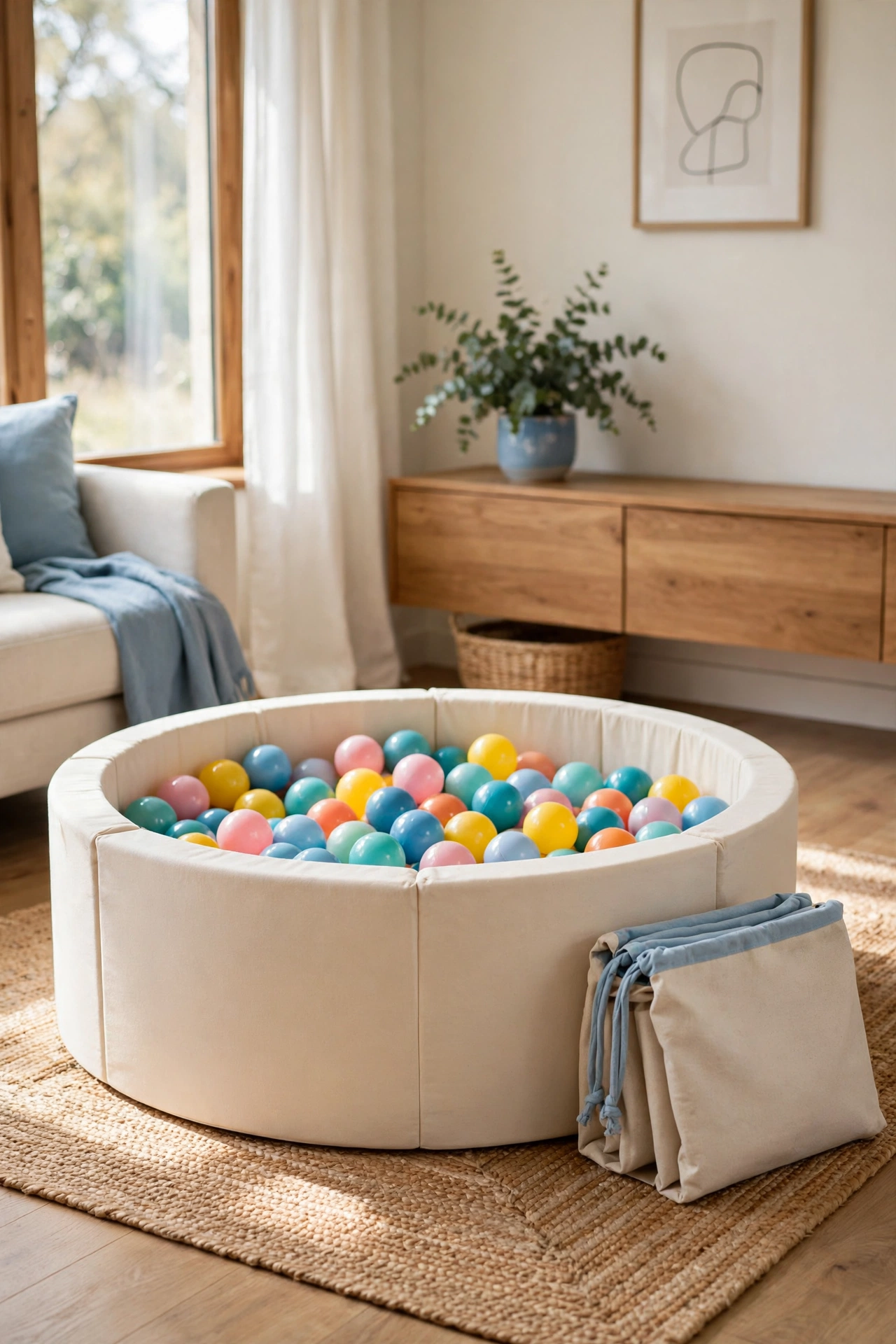
13. Foldable Ball Pit Zone That Packs Away Flat
A foldable ball pit can turn an open patch of floor into a bouncing, giggling play zone in under a minute. Pop the soft-sided pit open, pour in a bag of colorful balls, and let active kids dive in. When the fun ends, the pit folds flat and slides behind a door or under a bed.
This is one of the best active play zones for small homes, because it leaves no trace when it is packed away. Keep the balls in a large labeled bag so cleanup takes only a few minutes. These playroom organization ideas will help you find a storage spot for the folded pit and the ball bag.
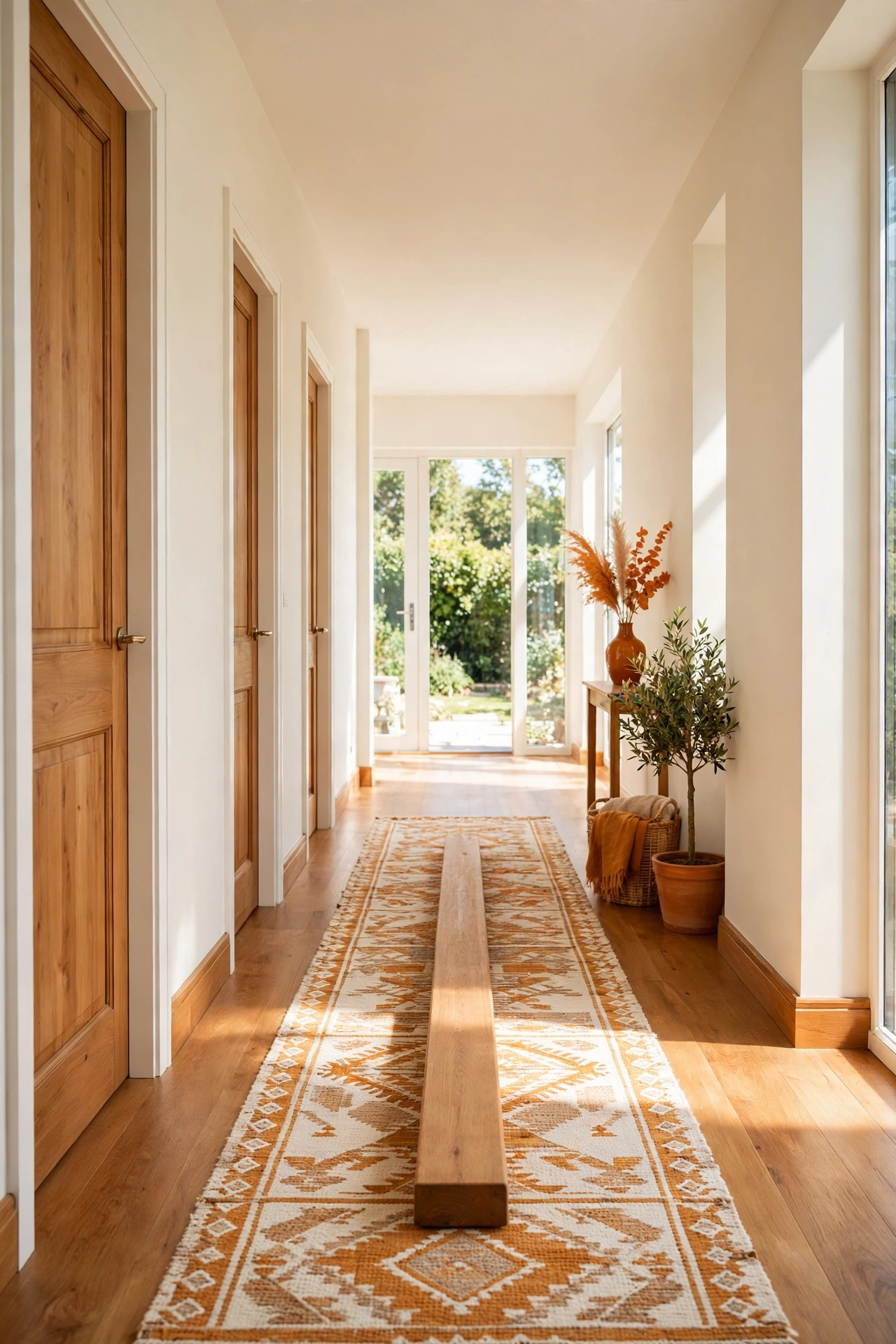
14. Balance Beam Zone Along a Long Hallway Rug
A low balance beam placed along a long hallway rug creates a movement zone that fits a space you already walk through every day. The beam sits flat on the rug, so kids can step on and off safely. They practice balance, hopping, and careful steps on the way to every room.
Choose a beam that is only a few inches high so falls are gentle and the rug adds extra cushioning. The hallway rug keeps the beam from sliding and defines the path. This zone turns an ordinary walk to the bathroom into a mini adventure.
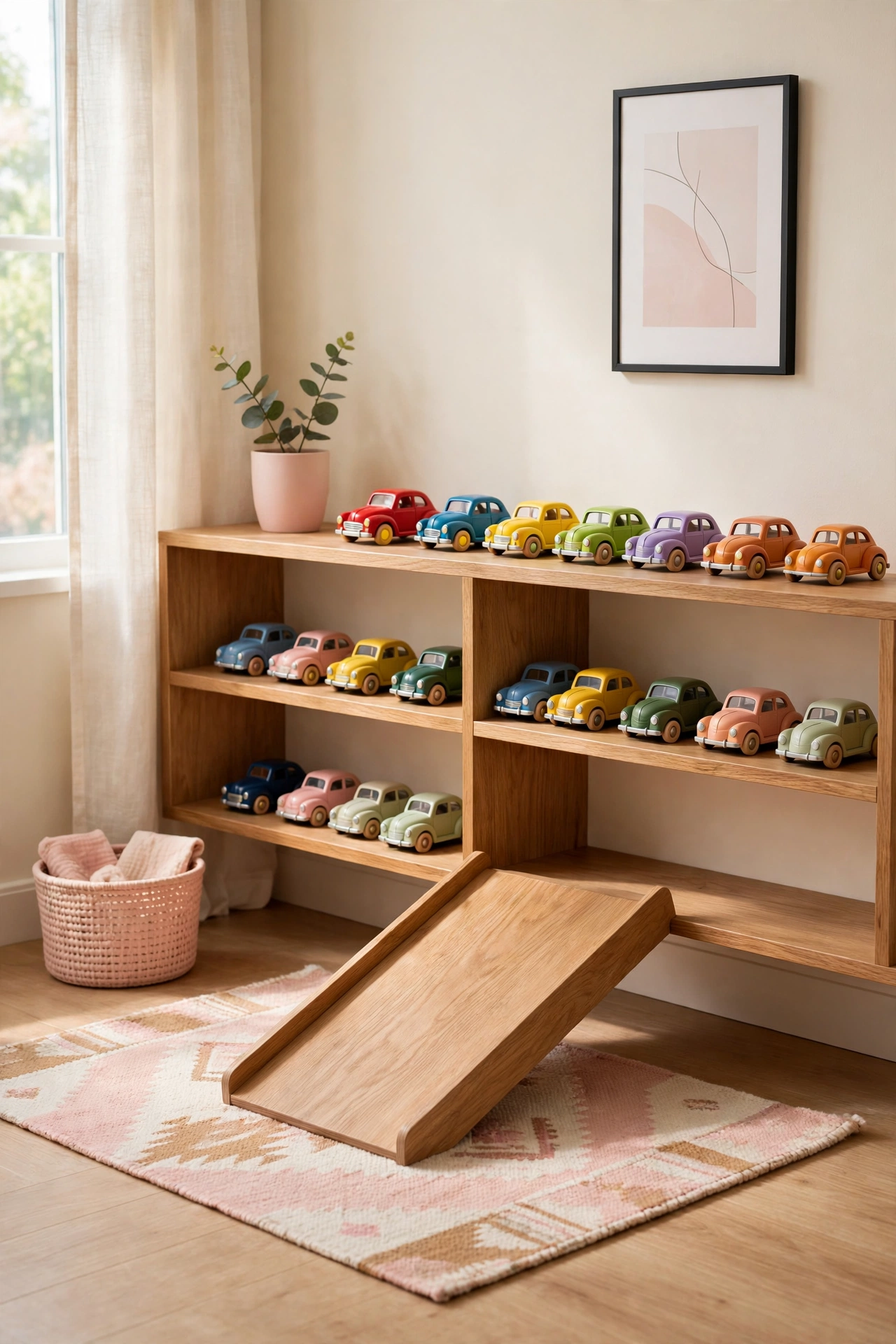
15. Car Ramp Zone on a Low Shelf Run
A low shelf run along a wall can become a car ramp zone with a few wooden ramps and a row of toy cars. Lean a ramp against the lowest shelf, line up cars on the shelf above, and let kids race them down. The shelf keeps every car visible and within easy reach.
This zone uses vertical wall space for storage and floor space only for the ramp. Kids can rearrange the ramps to make steeper or gentler slopes, which adds a building challenge to the racing fun. A small basket on the end of the shelf holds spare cars and track pieces.
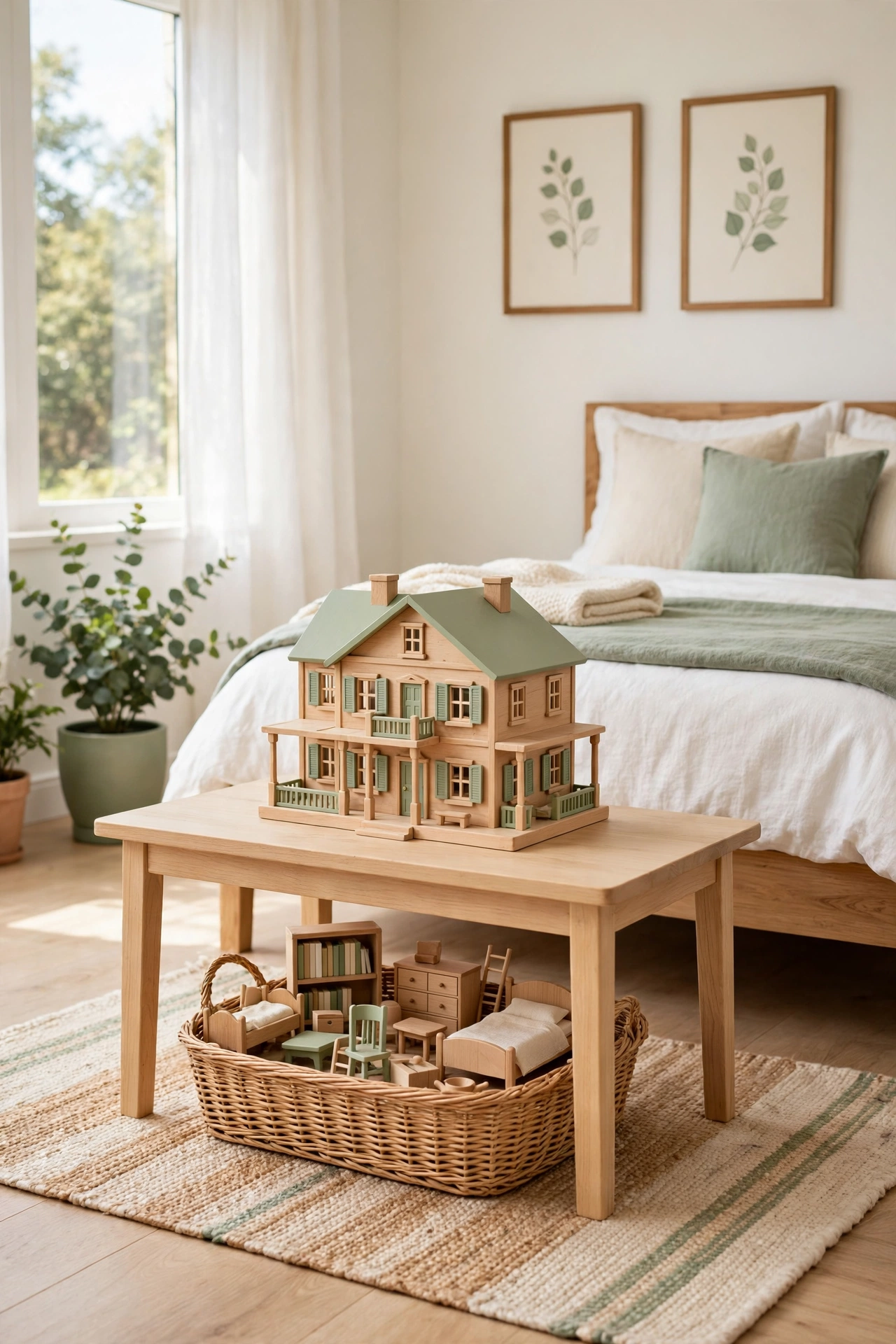
16. Dollhouse Zone on a Low Table in the Bedroom
A wooden dollhouse on a low table in the bedroom gives kids a whole tiny world in one small zone. The table holds the dollhouse at the perfect height for kneeling play, and a basket underneath stores dolls, furniture, and tiny accessories. Everything stays together in one spot.
Keeping the dollhouse on its own table protects it from foot traffic and stops tiny pieces from vanishing under beds. Kids can leave a scene half finished and return to it the next day. A small rug under the table marks the zone and softens kneeling knees.
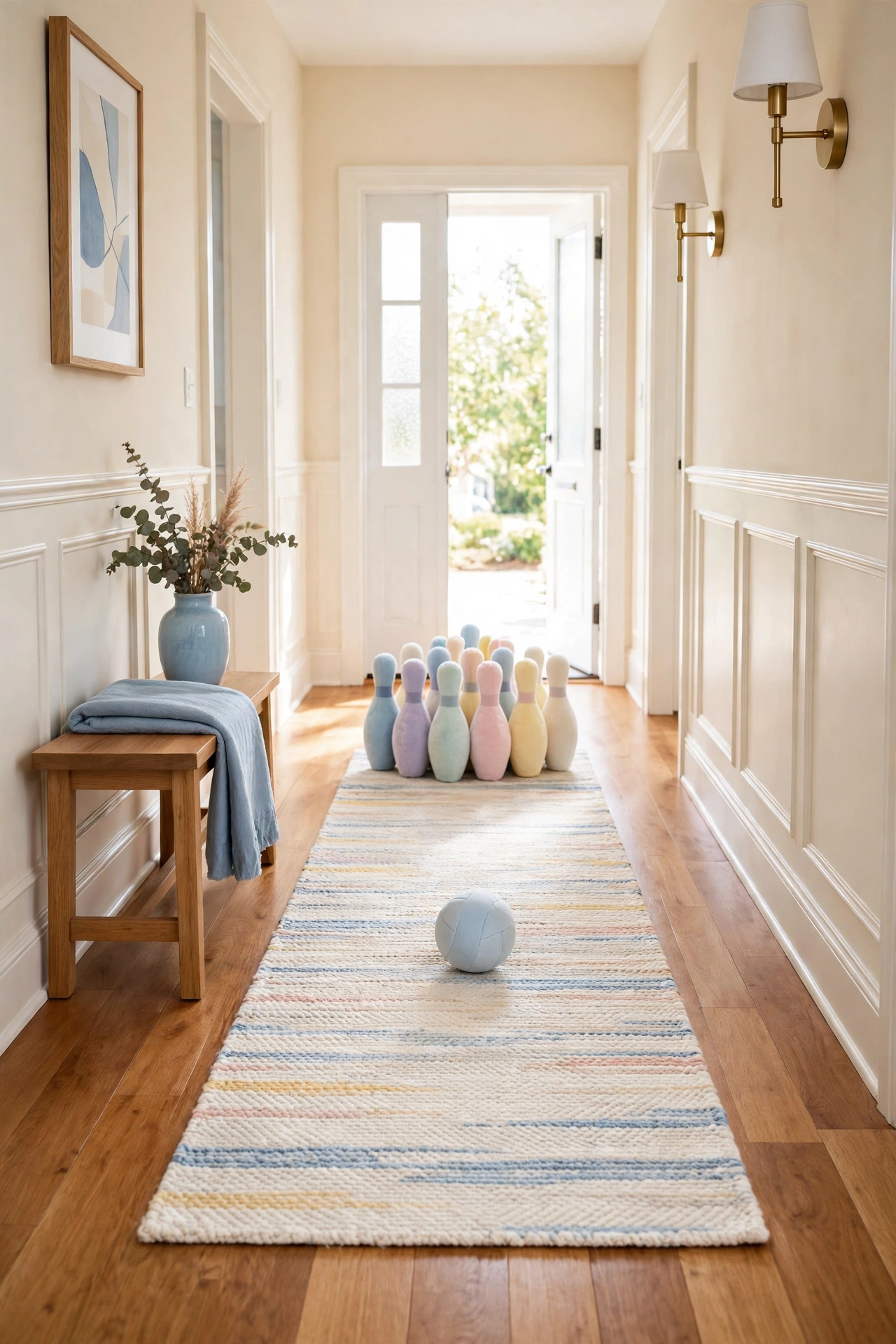
17. Indoor Bowling Lane on a Hallway Runner
A hallway runner can double as a bowling lane with a set of soft pins and one lightweight ball. Set the pins at one end of the runner and mark a throwing line with a strip of tape. Kids roll the ball down the lane and cheer every strike.
The runner keeps the ball rolling straight and protects the floor from bumps. Soft pins are quiet enough for apartment living and safe for small hands. When the game ends, the pins and ball fit in one small bag that hangs on a hallway hook.
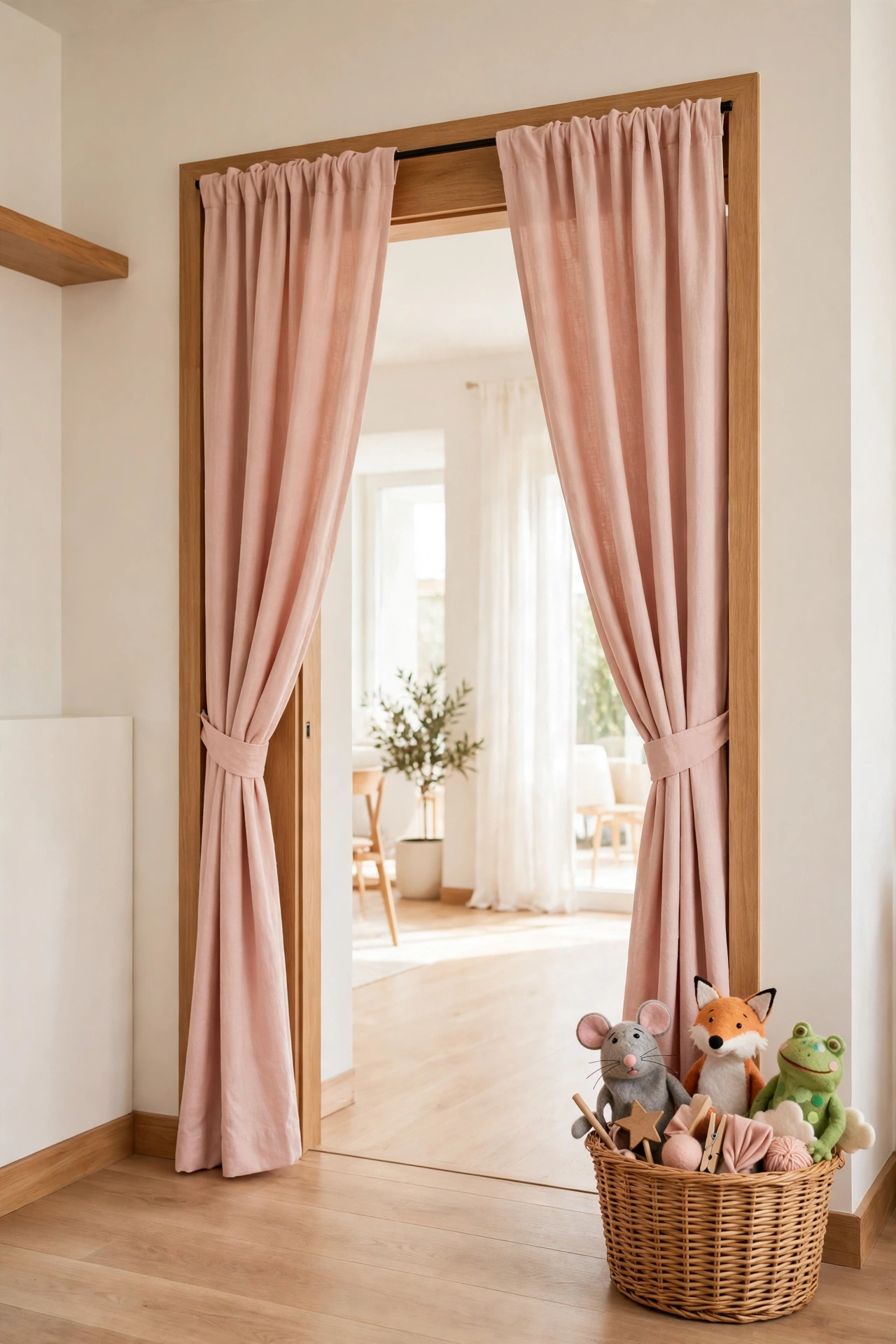
18. Mini Stage Zone With a Curtain in a Doorway
A tension rod and a pair of curtains in a wide doorway can create a mini stage zone for performances. Kids disappear behind the curtain, then sweep it open for a puppet show, a dance, or a magic trick. A small basket of props sits beside the doorway, ready for every show.
This zone needs no floor space at all, because the stage is the doorway itself. The curtain adds drama and gives shy performers a hiding spot before the big reveal. Choose curtains in a cheerful color that suits the room, and the doorway looks charming even between shows.
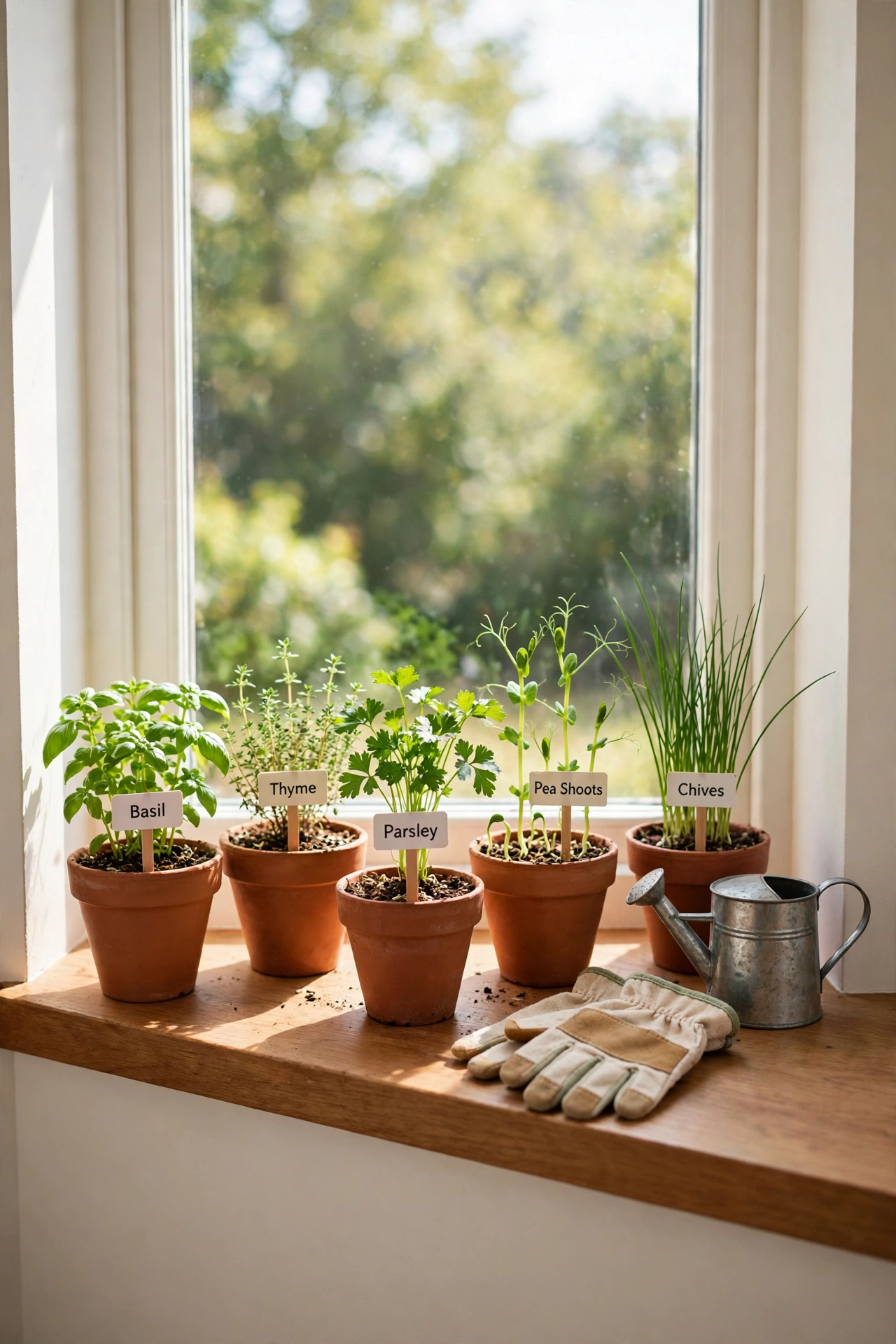
19. Windowsill Garden Zone for Little Growers
A deep windowsill can become a garden zone where kids grow their own plants indoors. Line up small pots with herbs, sprouts, and a tiny flowering plant, and add a small watering can and a pair of child sized gloves. The sunlight does most of the work.
This zone teaches patience and care, because kids water their plants and watch them grow day by day. Everything stays on the sill, so soil and water never reach the floor. Label each pot with a printed plant name so kids learn what they are growing.
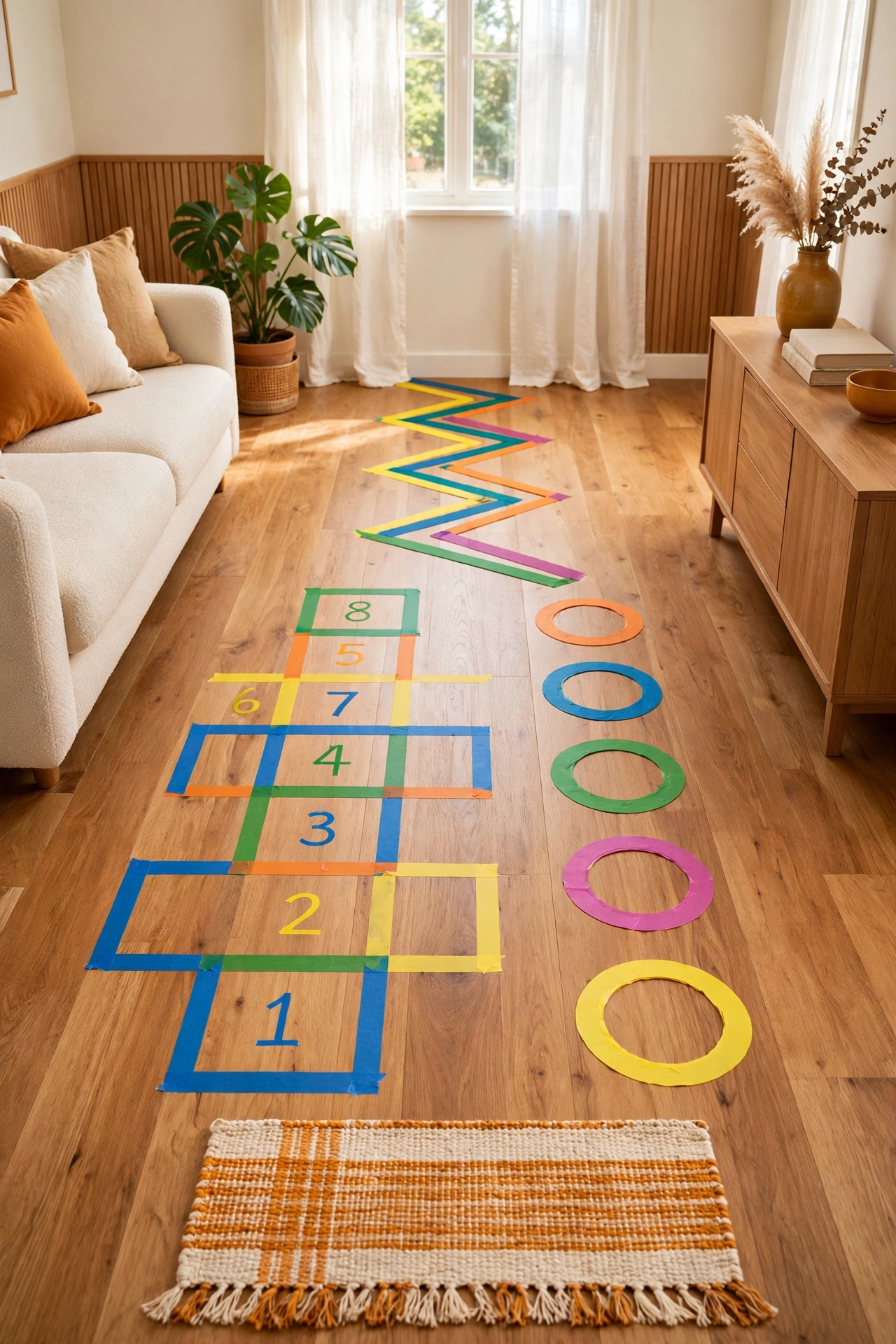
20. Obstacle Course Zone Marked With Tape on the Floor
A roll of painter’s tape can turn an open floor area into an obstacle course zone in minutes. Tape a zigzag path, a hopscotch grid, and a few circles for jumping spots directly onto the floor. Kids follow the course, hopping, balancing, and spinning from mark to mark.
Painter’s tape peels off cleanly, so the course disappears without a trace when playtime ends. You can design a new course every week to keep the challenge fresh. This zone works best on hard floors with a rug at the finish line for a soft landing spot.
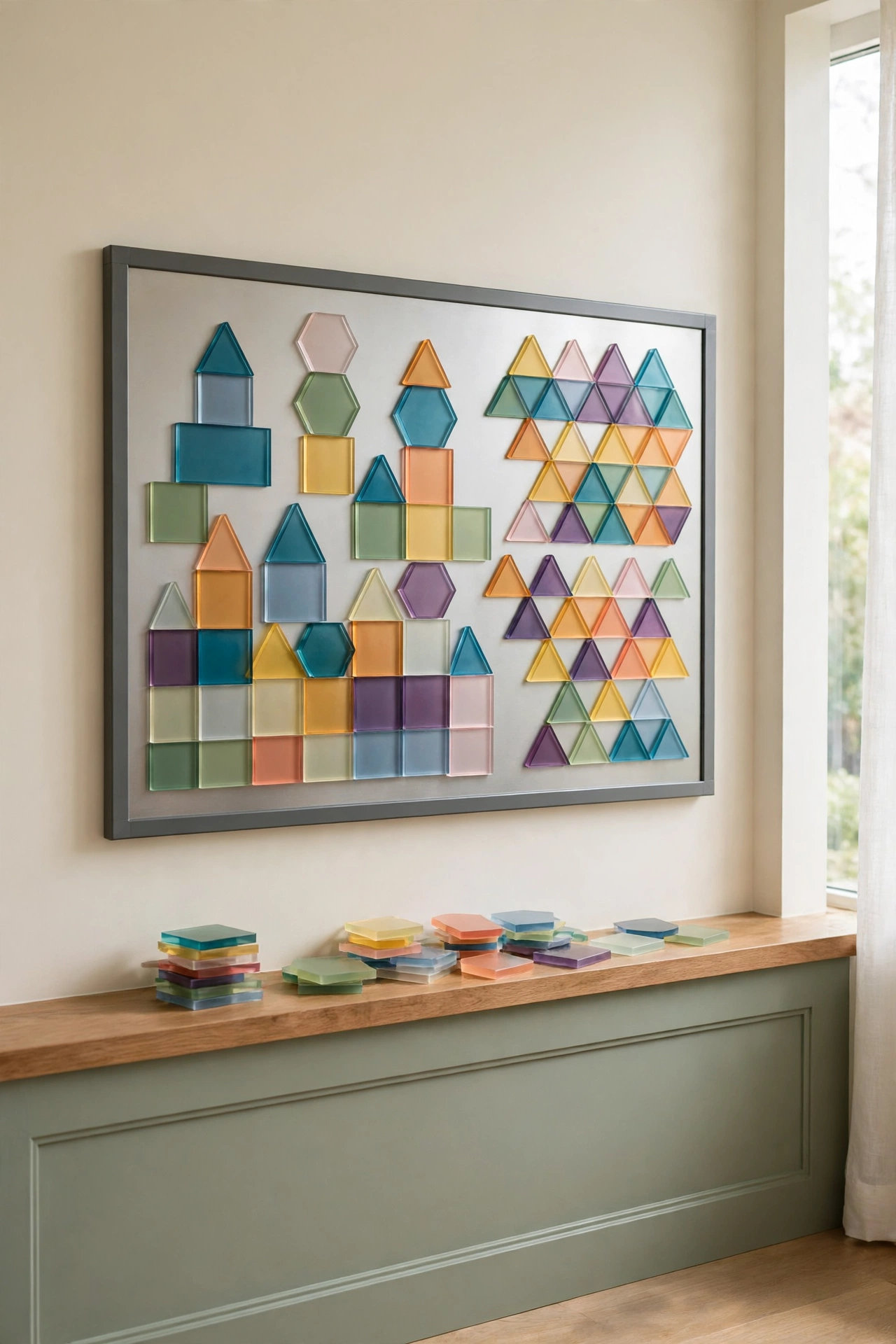
21. Magnet Tile Zone on a Metal Board on the Wall
A large metal board mounted low on a wall turns vertical space into a magnet tile zone. Kids stick colorful magnet tiles to the board and build towers, pictures, and patterns that defy gravity. The tiles stay on the board, so the floor stays clear.
Wall building feels fresh and exciting compared with floor building, and it suits kids who love to stand and create. Mount the board at a height kids can reach from top to bottom. A shallow ledge at the base holds spare tiles and keeps them from sliding onto the floor.
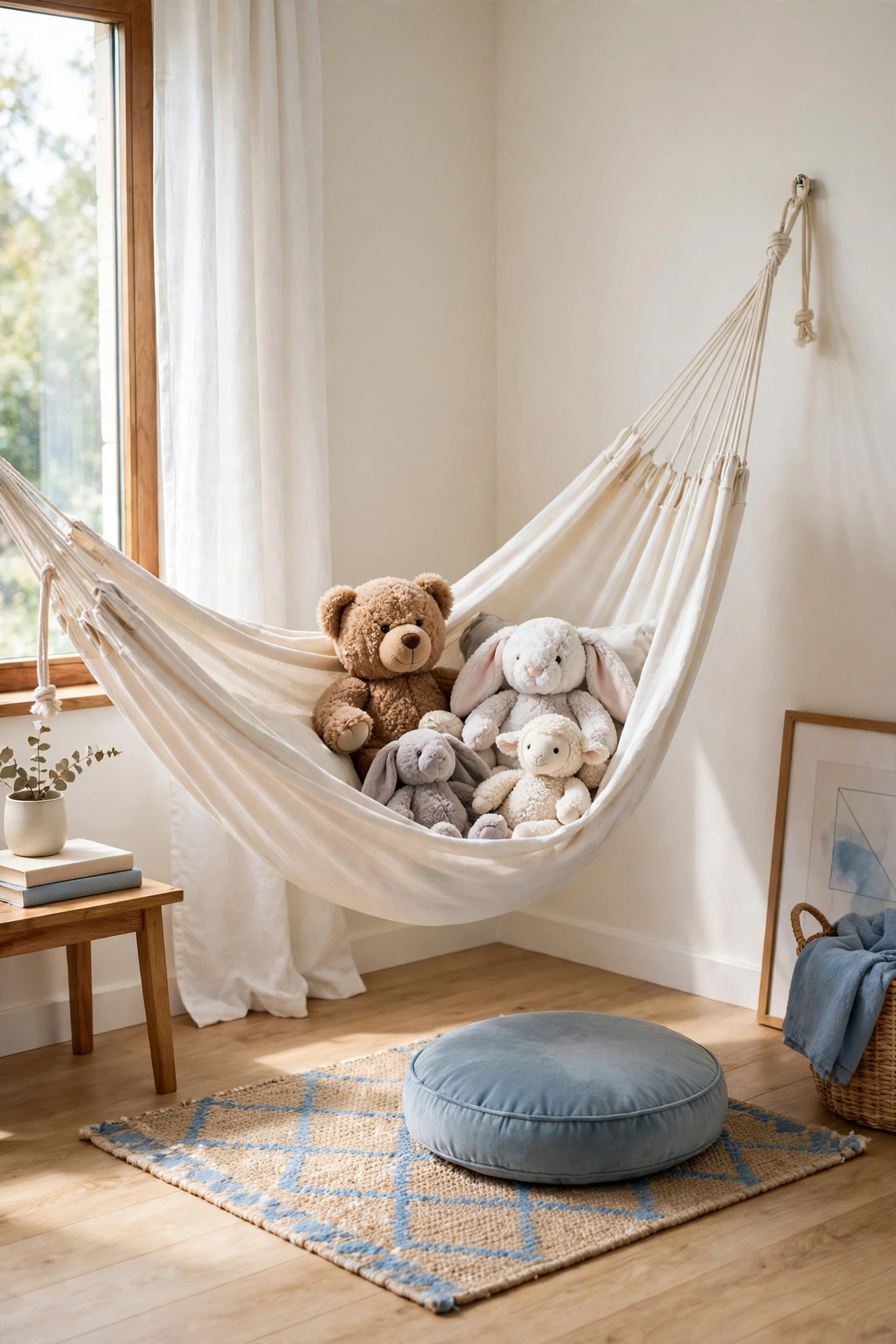
22. Stuffed Animal Hammock Zone in a Bedroom Corner
A fabric hammock strung across a bedroom corner can hold a whole collection of stuffed animals in one tidy zone. The hammock hangs high enough to stay out of the way, yet low enough for kids to reach their favorites. Soft toys pile up in a cozy nest instead of covering the bed.
This zone solves the stuffed animal problem without using any floor space. Kids can see every toy at a glance and pull one out for play, then toss it back when they finish. For more soft toy storage ideas, these stuffed animal storage ideas offer options for collections of every size.
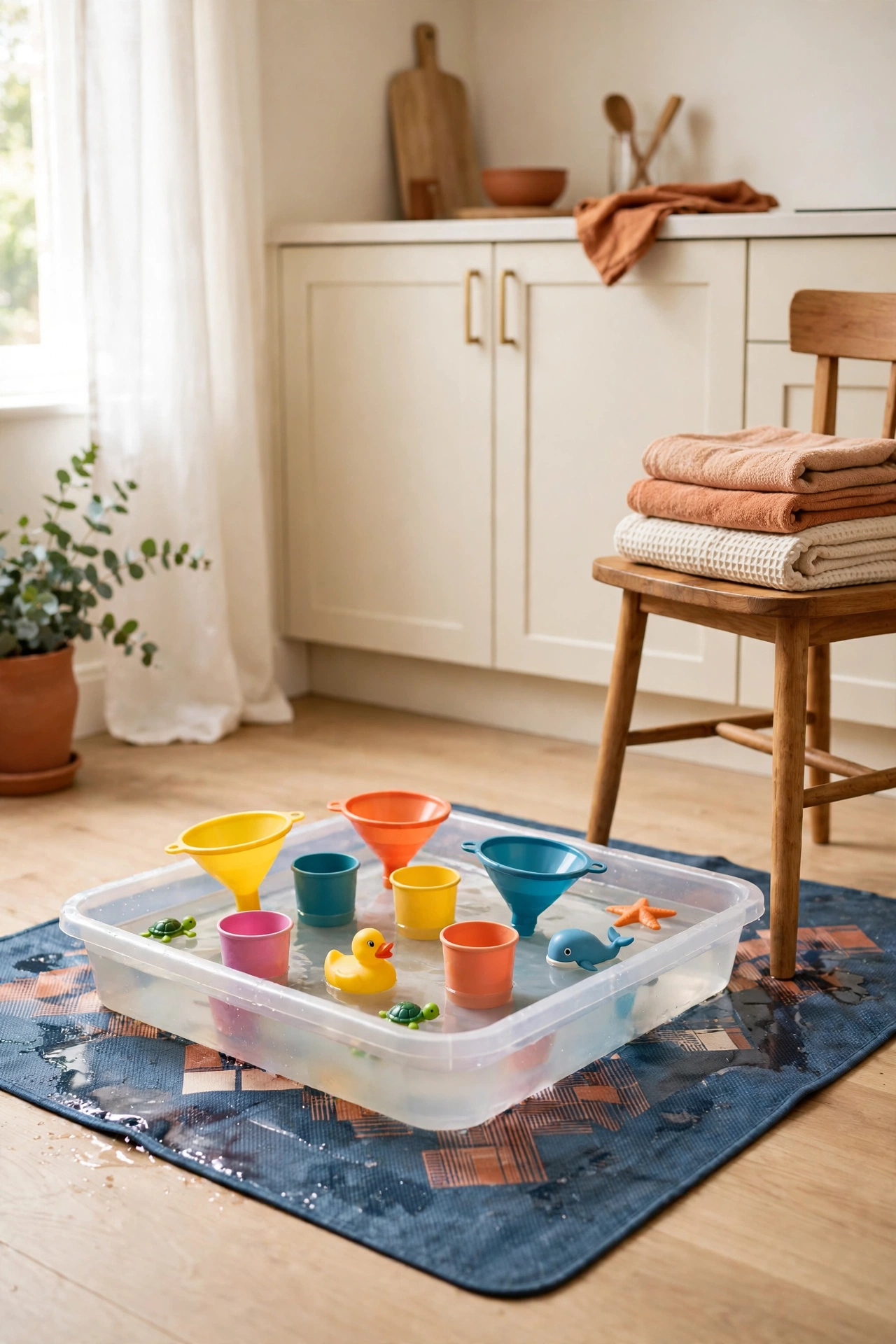
23. Water Play Zone on a Waterproof Mat in the Kitchen
A shallow tray on a waterproof mat in the kitchen can become a water play zone that keeps splashes contained. Fill the tray with a few inches of water, add cups, funnels, and floating toys, and let kids pour, scoop, and splash. The kitchen floor is already easy to wipe clean.
Water play calms busy kids and builds fine motor skills, and the mat catches every drip. Keep towels folded on a nearby chair for quick drying. When the tray empties, it stacks with the baking trays and the mat folds into a drawer.
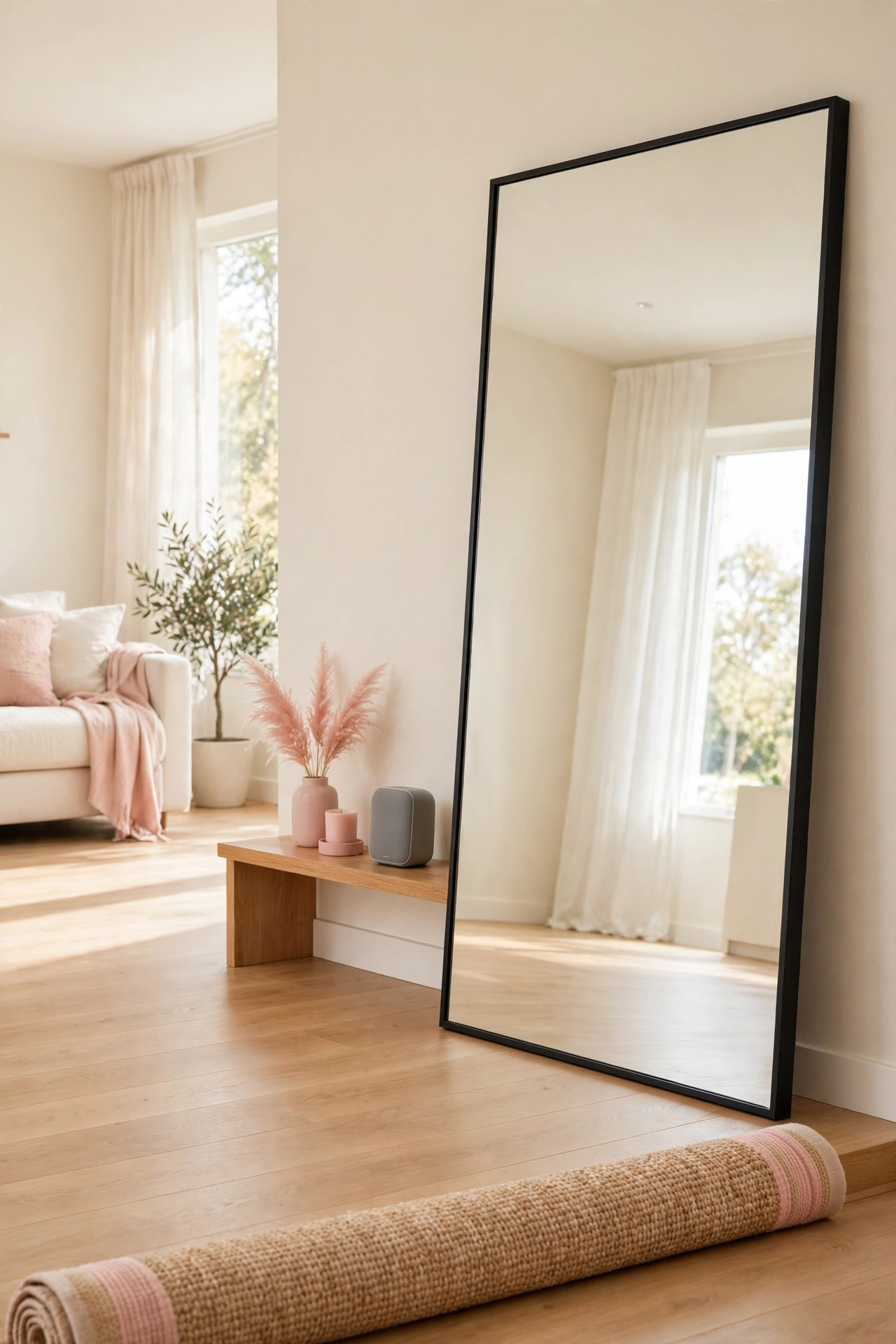
24. Dance and Movement Zone With a Mirror and Open Floor
An open patch of floor beside a large wall mirror can become a dance and movement zone for energetic kids. Clear a small area, lean a shatterproof mirror against the wall, and add a small speaker on a shelf. Kids watch themselves dance, practice moves, and burn off energy.
The mirror makes the zone feel like a real studio and helps kids learn coordination by watching their own movements. Keep the floor clear of toys so there is nothing to trip over. A rolled rug at the edge of the zone gives tired dancers a soft spot to rest between songs.
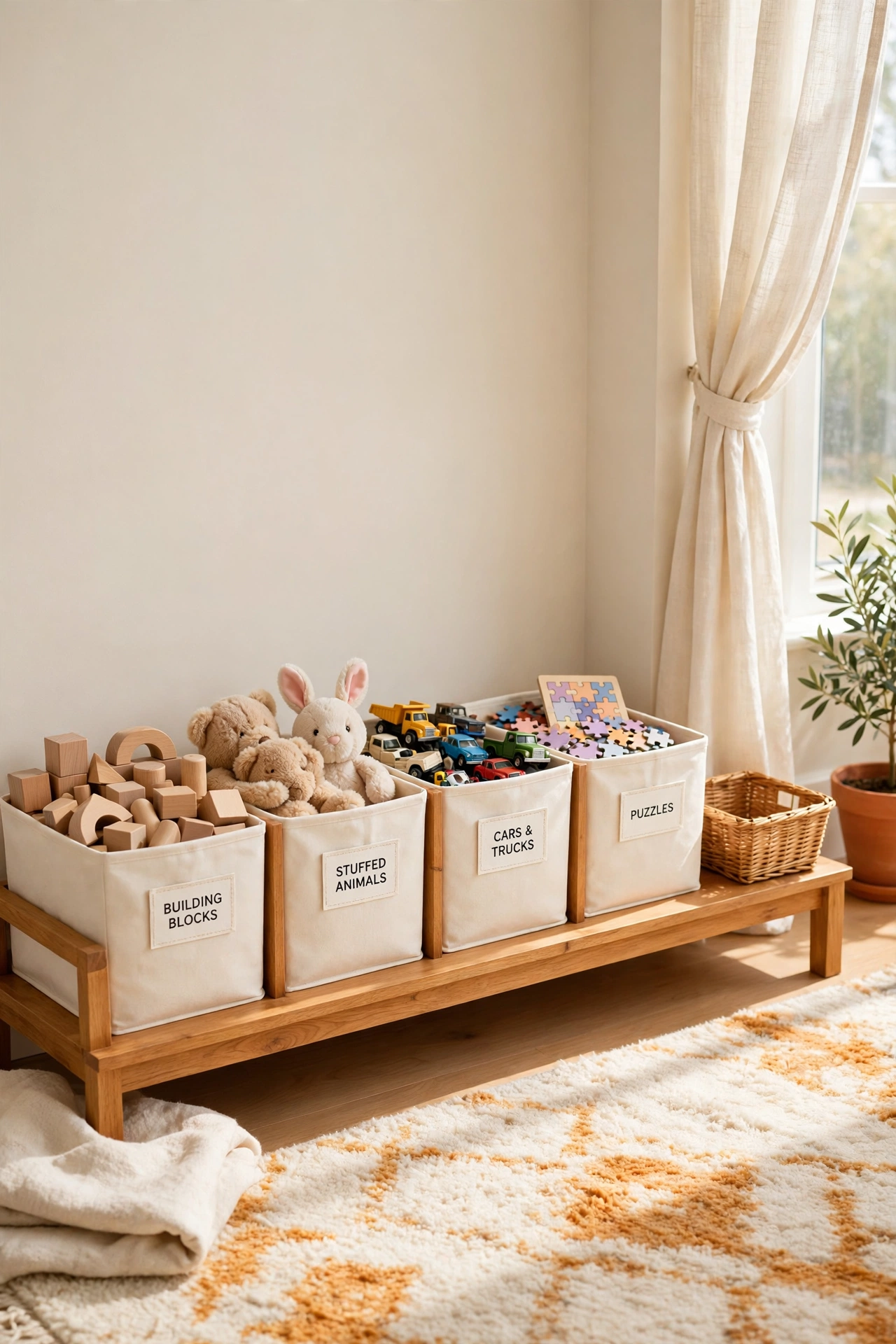
25. Toy Library Zone With a Checkout Basket
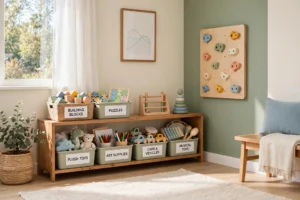
A low shelf with labeled bins can become a toy library zone where kids check out toys like library books. Fill each bin with one type of toy, place a small checkout basket on the end of the shelf, and let kids choose two bins per play session. When the session ends, the toys go back to their bins.
This system keeps the toy collection fresh, because kids rediscover forgotten toys each time they browse the shelf. The checkout basket makes the routine feel like a game instead of a chore. These toy rotation ideas will help you set up a swapping schedule that keeps the library exciting week after week.
Conclusion
Active kids do not need a big playroom to thrive indoors. They need a clear zone, one engaging activity, and a setup that respects the shared spaces around it. From a climbing panel in the hallway to a toy library on a low shelf, every idea here fits into a home that has no room to spare.
Start with the zone that matches your child’s favorite kind of play, and build from there. One small corner done well is better than a whole room done halfway. Your kids get the active play they crave, and you get a home that still feels calm, tidy, and entirely your own.
Frequently Asked Questions About Small Indoor Play Area Layout Ideas for Active Kids
How much space does an indoor play area need?
Most play zones in this article need only a corner, a stretch of wall, or a few square feet of open floor. A rug, a mat, or a strip of tape can define a zone as small as four feet by four feet. The key is a clear boundary, not a large footprint.
How do I keep a play area tidy in a shared living room?
Give every toy a labeled home inside the zone, and make cleanup part of the play routine. Bins, baskets, and trays that stay inside the zone stop toys from spreading into the rest of the room. A five minute tidy up at the end of each play session keeps the area ready for the next day.
What is the safest flooring for an active play zone?
Thick rugs, foam mats, and folding tumbling mats all cushion falls and protect your floors. Place soft flooring under climbing panels, balance beams, and tumbling zones. Hard floors work fine for tape obstacle courses and bowling lanes, as long as the play stays low to the ground.
Can I set up a play area in a rental home?
Yes, most of these zones use no permanent changes at all. Tension rods, rolling carts, foldable mats, and freestanding shelves leave no marks behind. For wall mounted boards and rails, use removable adhesive strips rated for the weight, and check your lease before drilling any holes.
How often should I rotate toys in a small play area?
Rotate toys every one to two weeks to keep the zone feeling new without buying anything. Store the off rotation toys in labeled bins in a closet, then swap a few bins at a time. Kids play longer and more creatively with a small fresh selection than with a large stale pile.

Hi, I’m Emily! I turn messy corners into cozy, organized spots. DreamNestDecor is where I share simple, practical home ideas — decor, organization, and small-space solutions that work in real life, not just in photos. Every idea here is carefully researched before it’s shared.