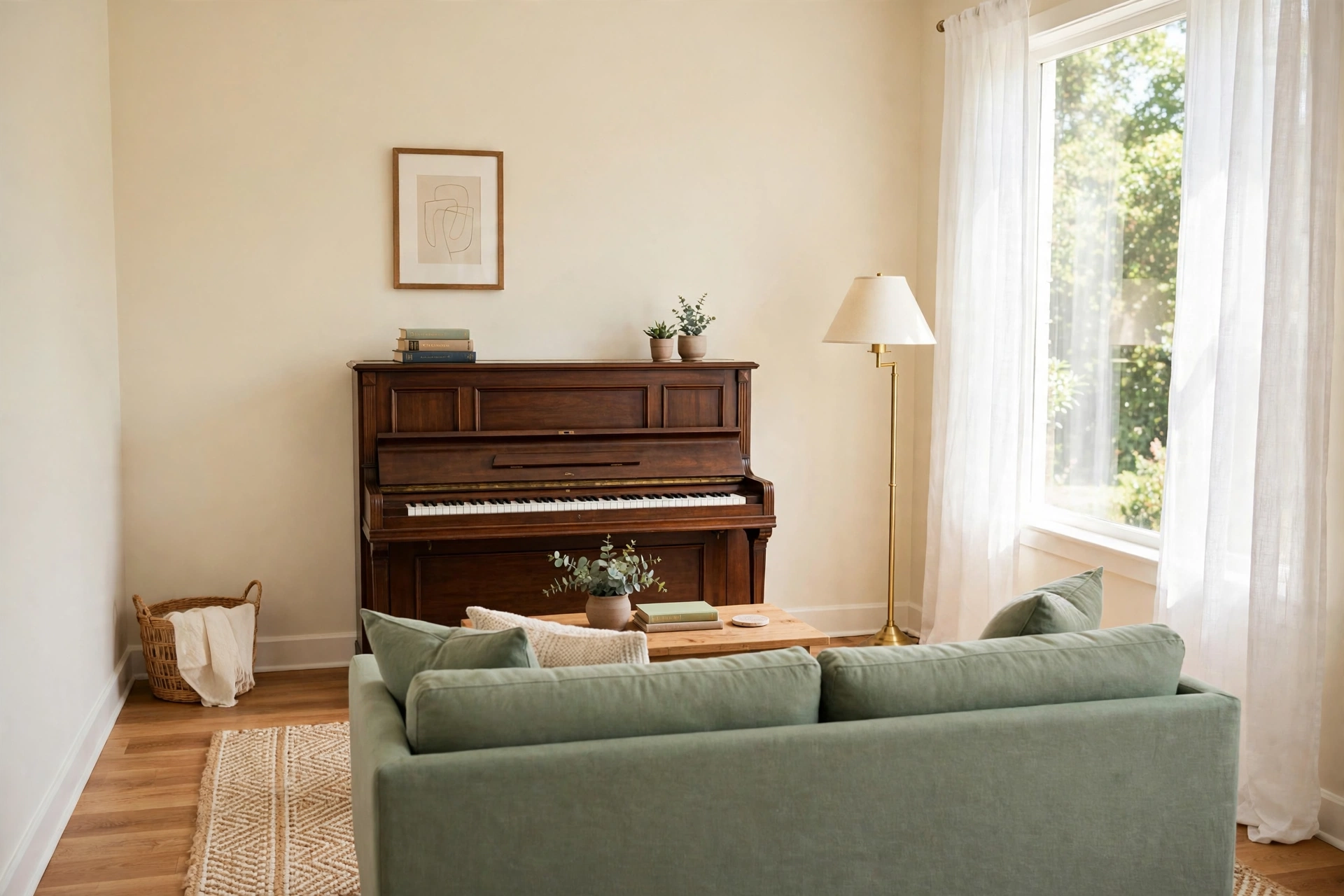
Picture this: you walk into your living room, and instead of a piano squeezed against a wall like an afterthought, you see it sitting proudly as the heart of the room. The sofa faces it, the light falls across the keys, and the whole space feels warm and full of music. That feeling is possible even in a small living room when the layout is planned with care.
A piano does not have to steal your living room. With the right placement, it can anchor the seating, divide open space, and turn an awkward corner into a favorite spot. These 29 small living room layout ideas with a piano will help you fit an upright, a baby grand, or a slim digital piano into your home without giving up comfort or style.
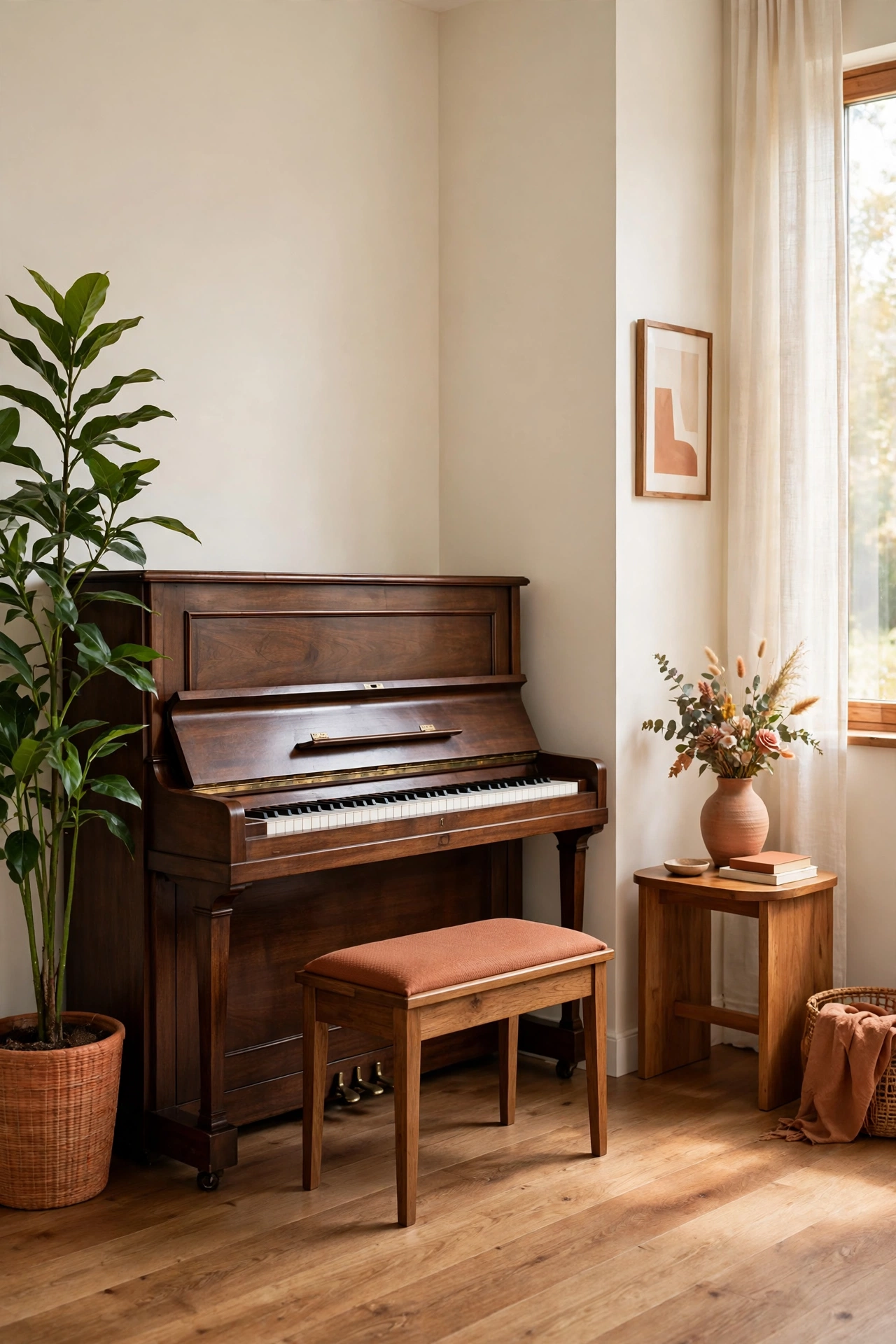
1. Place an Upright Piano Against the Longest Wall
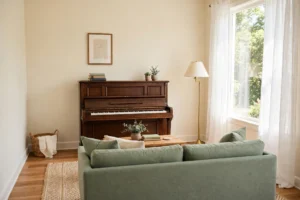
An upright piano sits flat against a wall, so the longest wall in your living room is the most natural home for it. The piano becomes a handsome piece of furniture along the wall, and the rest of the floor stays open for seating and walking. This layout works in almost every small living room shape.
Place your sofa opposite the piano with a low coffee table between them. Leave enough room to pull the bench out and sit down comfortably. Add a framed print above the piano and a small lamp on top, and the wall will look styled rather than crowded.
2. Tuck a Piano Into a Quiet Corner
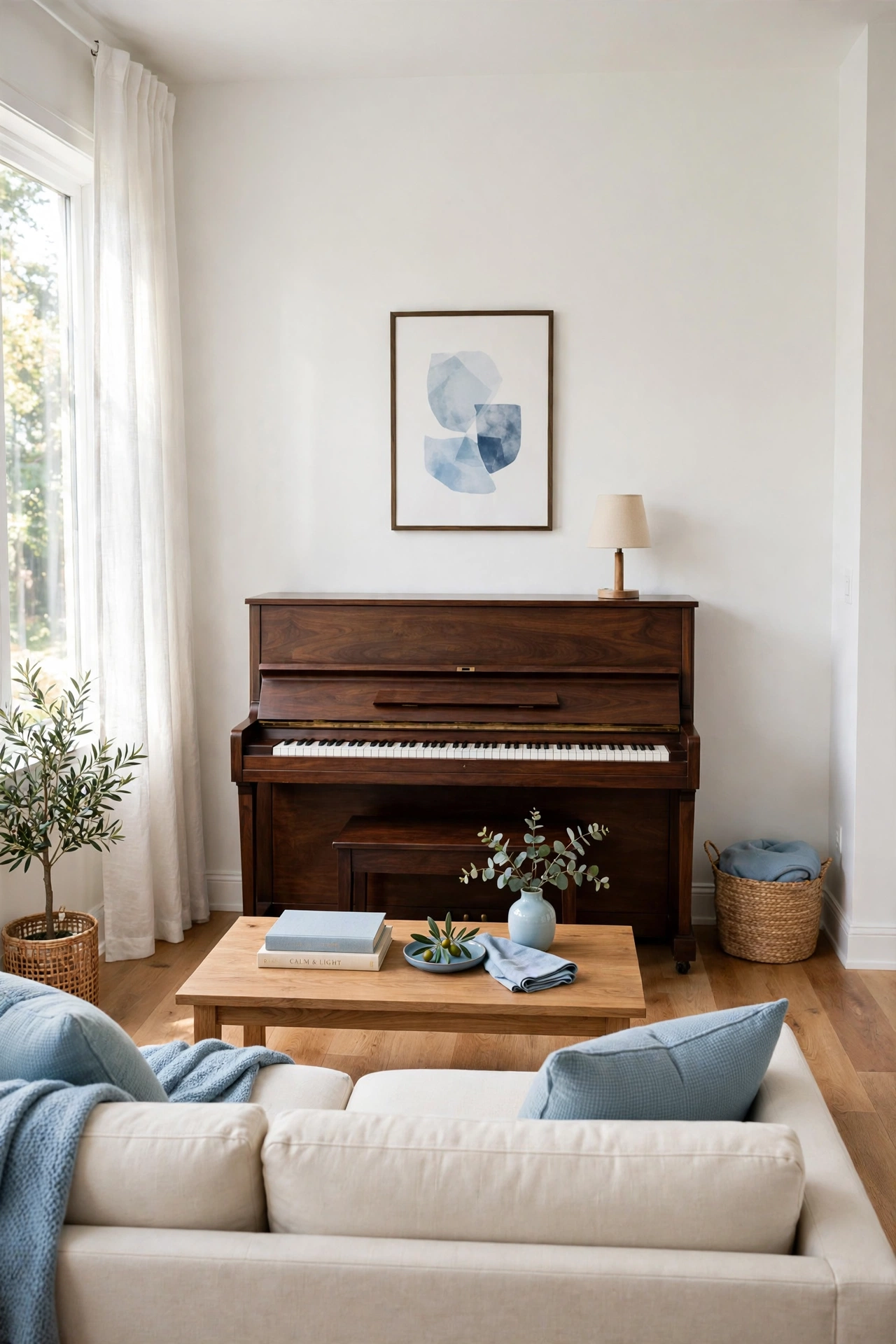
A corner placement turns dead space into a music spot. An upright piano fits neatly into a corner at a slight angle, which softens the lines of the room and leaves the center free. This is a smart choice when the main walls are already taken by a sofa and a television.
Angle the piano just enough to leave breathing room on both sides, and place the bench where it does not block a walkway. A tall plant or a floor lamp beside the piano fills the gap behind it. The corner becomes a cozy nook that invites you to sit down and play.
3. Float the Sofa to Face a Piano in a Narrow Room
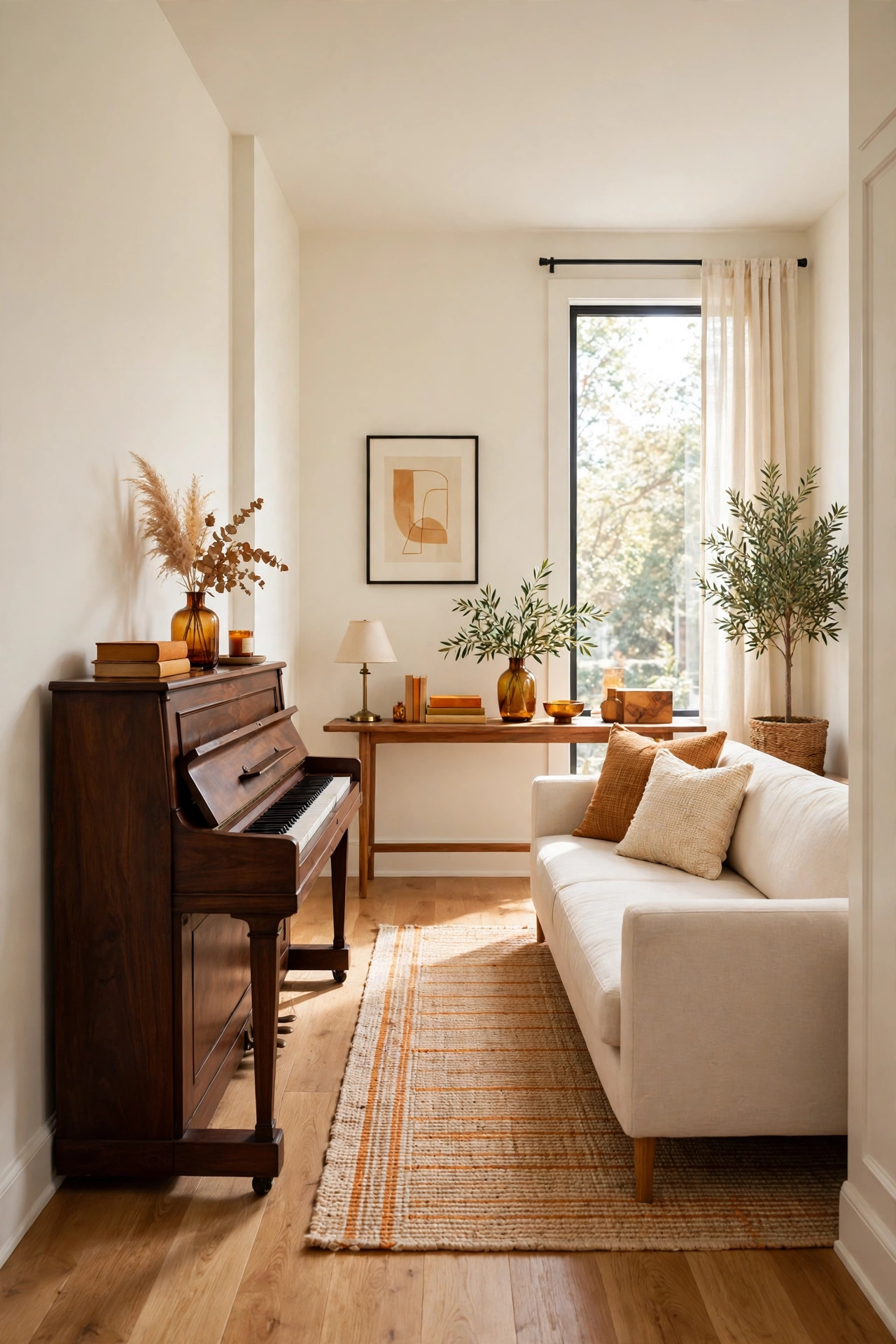
In a narrow living room, pushing all the furniture against the walls can make the space feel like a hallway. Instead, place the piano on one long wall and float a slim sofa facing it, with a narrow console table behind the sofa. The room gains a clear path along the back and a clear purpose in the front.
Keep the sofa low and slim so it does not block the view of the piano. A long, low rug under the seating area ties the two sides together. If your room is very narrow, these narrow living room layout ideas will help you balance walkways and seating before you place the piano.
4. Use a Baby Grand as the Room Divider
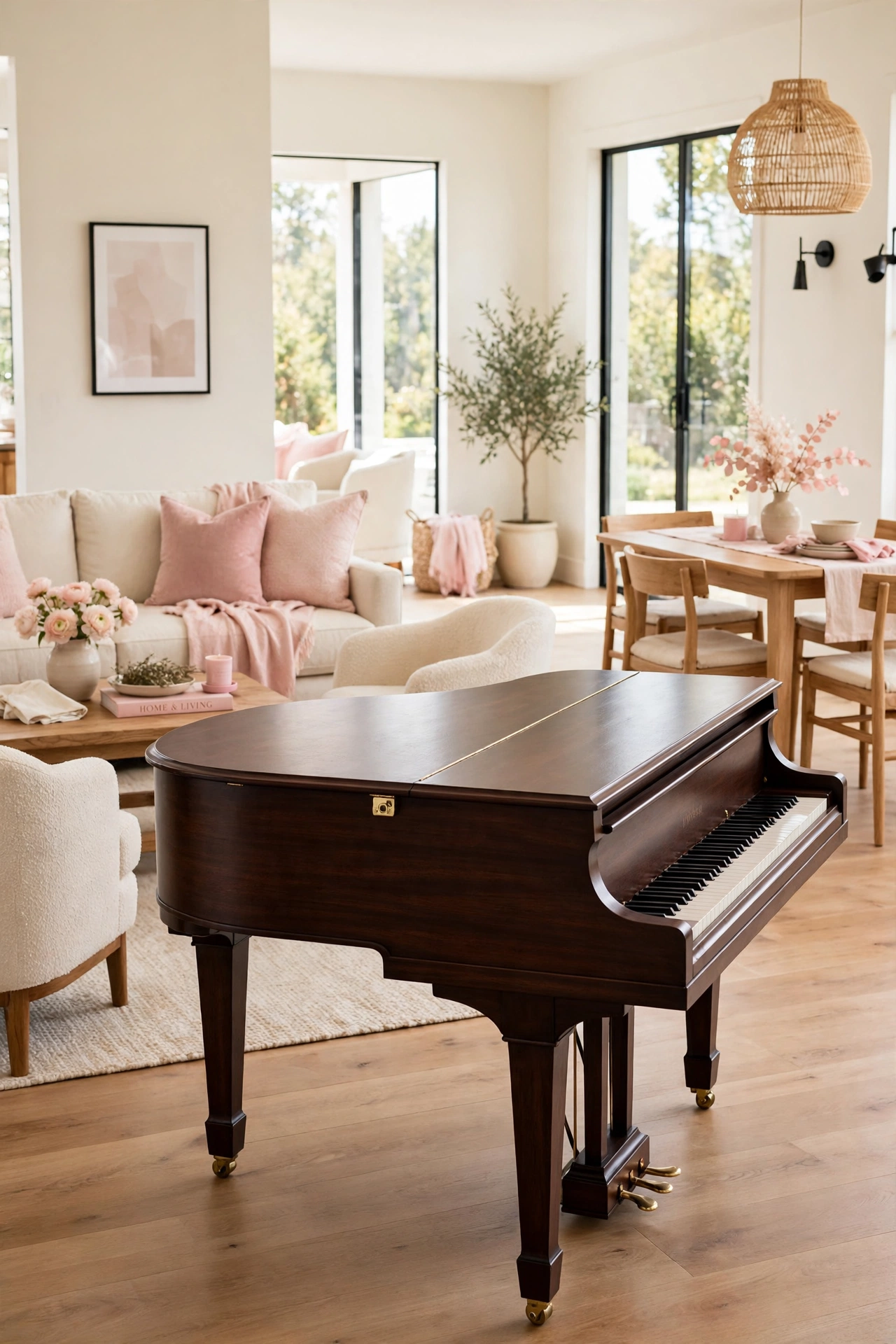
A baby grand piano has a curved shape that naturally divides space. In an open living area, place the grand with its curved side facing the seating area and its straight side toward the dining zone. The piano marks the boundary between the two areas without a wall.
Arrange the sofa and chairs in a curve that mirrors the shape of the piano. Leave generous space around the instrument so the lid can open and people can walk past. The grand becomes a sculptural centerpiece that makes the whole open space feel intentional.
5. Set the Piano Beside the Window for Natural Light
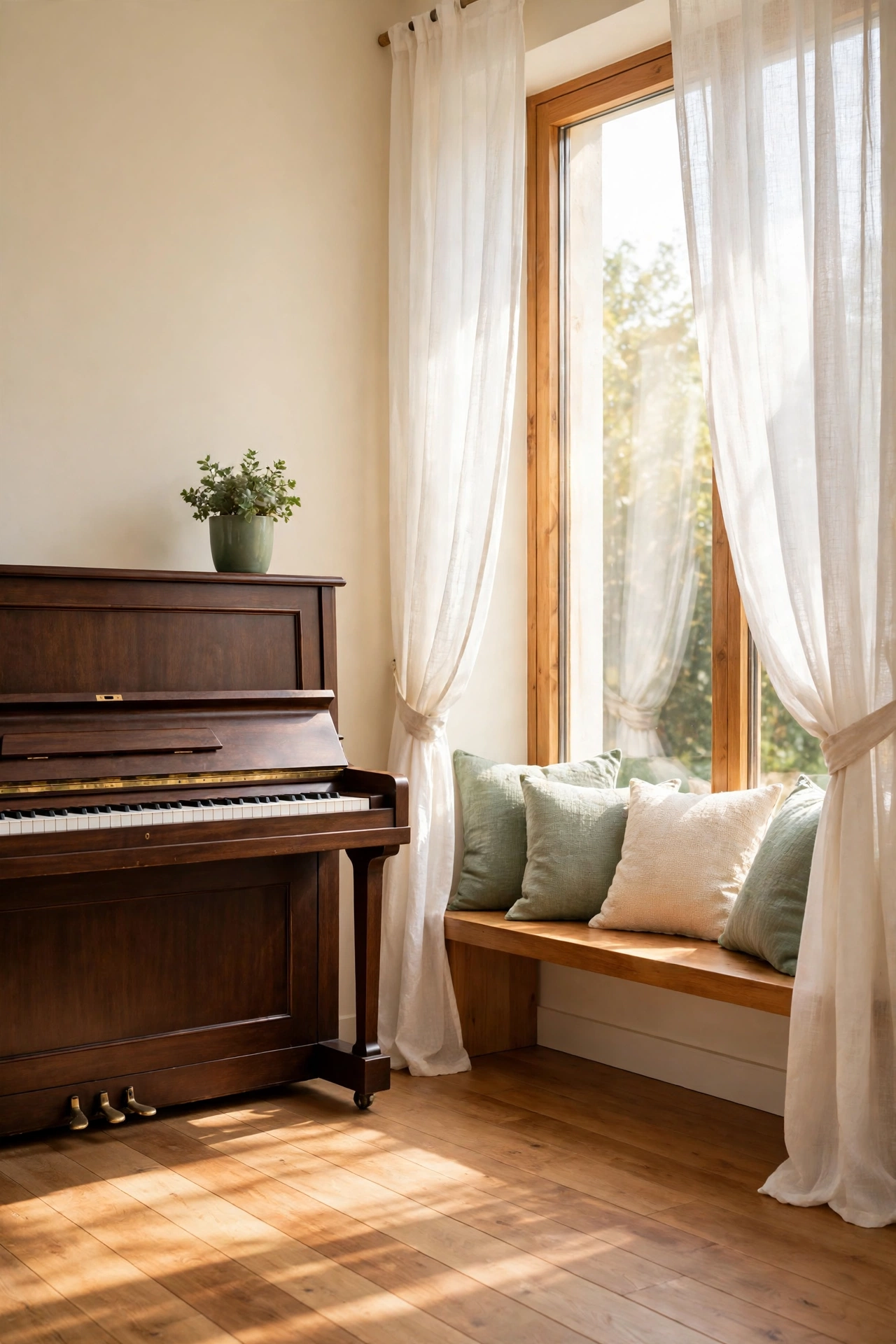
Natural light makes practice time more pleasant, so placing the piano beside a window is a lovely choice. The player gets daylight on the music, and the piano catches the soft glow in the afternoon. Choose a side wall next to the window rather than directly in front of it.
Keep the piano a little away from the glass to protect it from direct sun and drafts. Sheer curtains soften the light and guard the wood finish. A window seat or a low bench under the window completes the bright corner and gives listeners a place to sit.
6. Pair the Piano With a Reading Chair and Floor Lamp
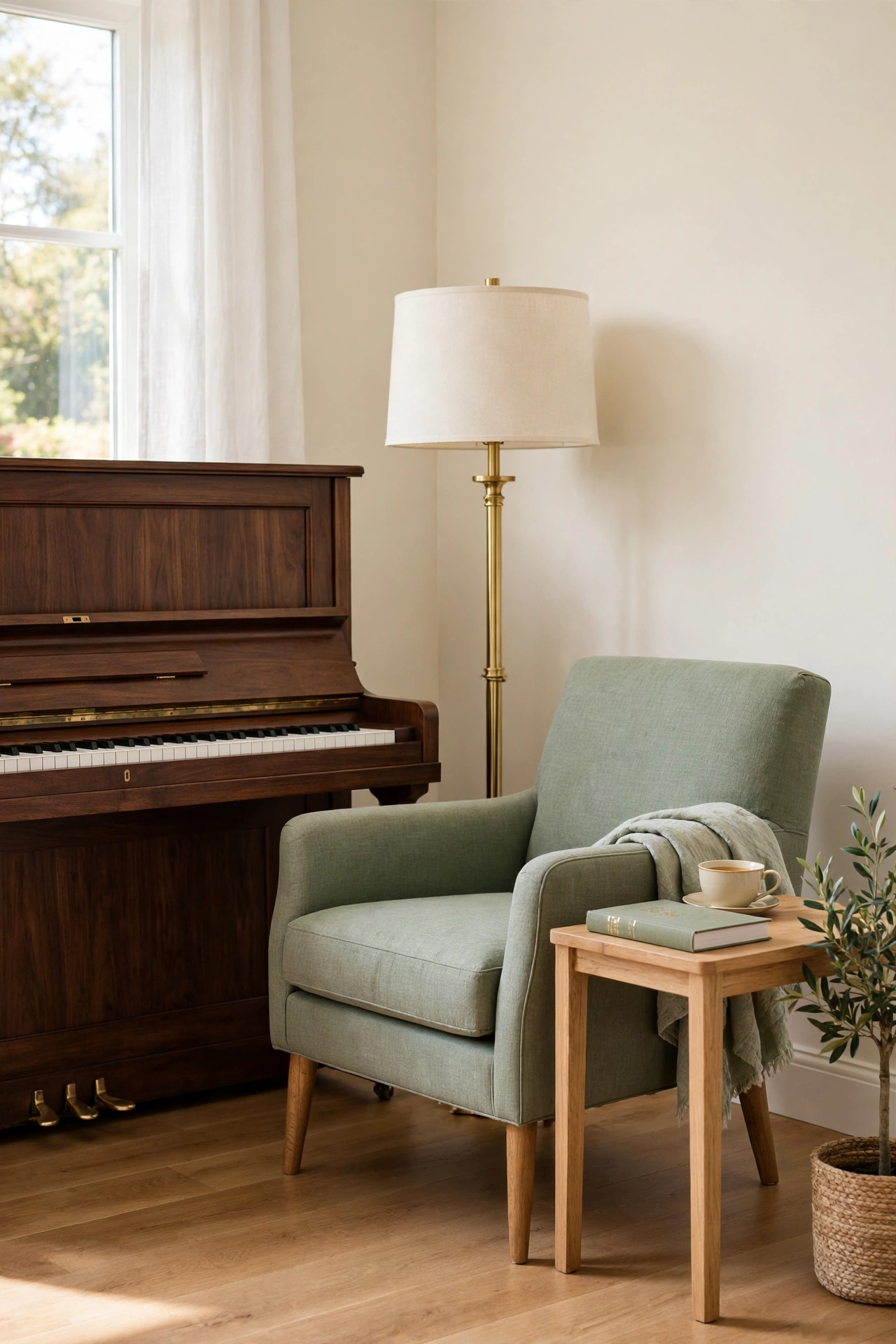
A piano and a reading chair make a natural pair. Place a comfortable armchair at an angle near the piano with a floor lamp behind it. When no one is playing, the corner works as a reading spot. When someone plays, the chair is the best seat in the house.
Choose a chair in a soft accent color that picks up a tone from the room, such as sage green or warm terracotta. Add a small side table for a book and a cup of tea. This pairing gives the piano company and keeps the corner useful all day long.
7. Arrange Two Sofas Around the Piano and Seating Area
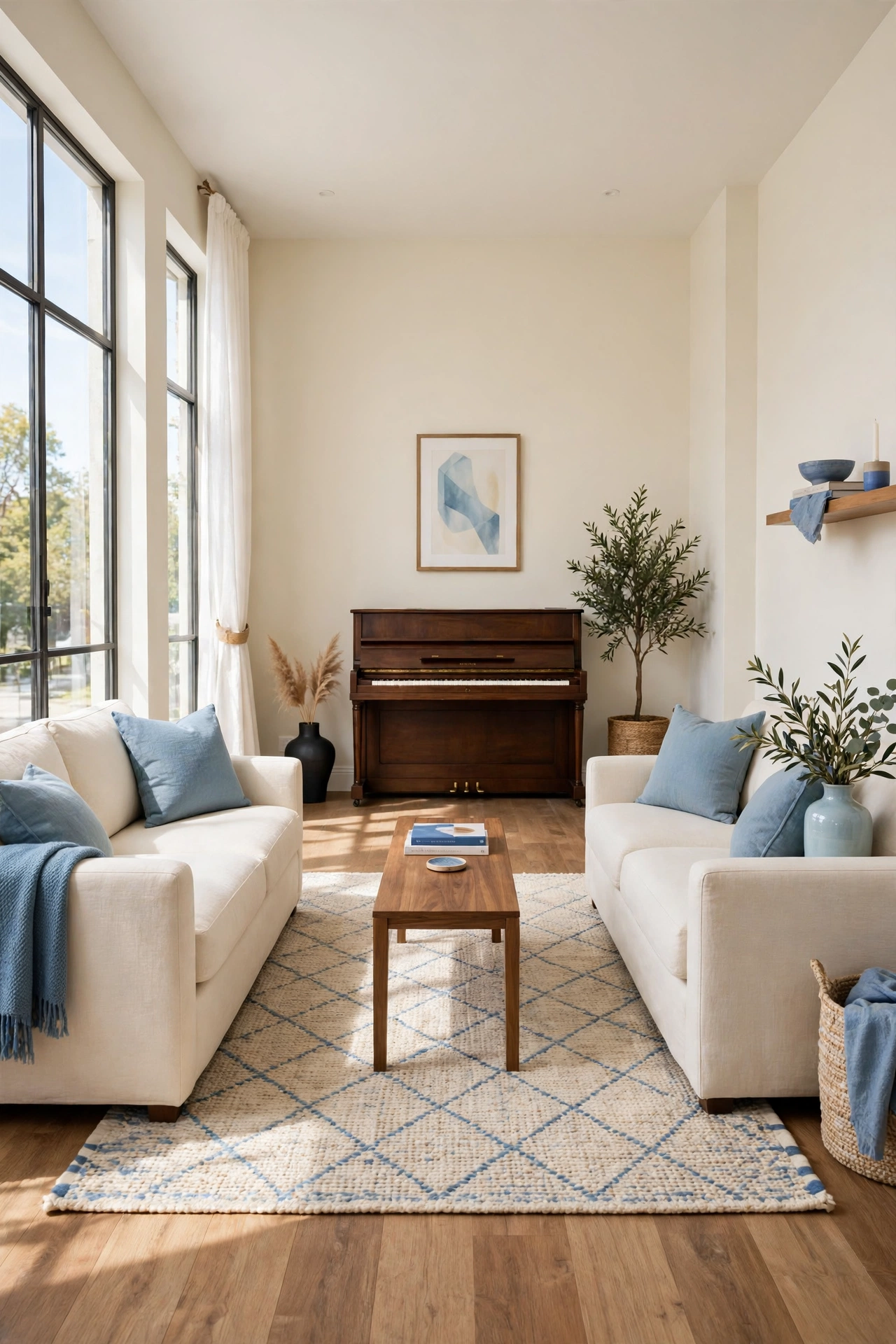
Two sofas facing each other create a conversational layout, and the piano can anchor one end of it. Place the piano on the short wall at the end of the room, with a sofa on each long wall facing inward. The piano becomes the focal point at the end of the room.
This layout suits square living rooms best, because the sofas and the piano form a balanced frame. Keep the coffee table narrow so the walkway stays comfortable. For more ways to balance two sofas in a tight space, these small living room layout ideas with two sofas show how to keep the arrangement open and welcoming.
8. Place the Piano Behind the Sofa as a Backdrop
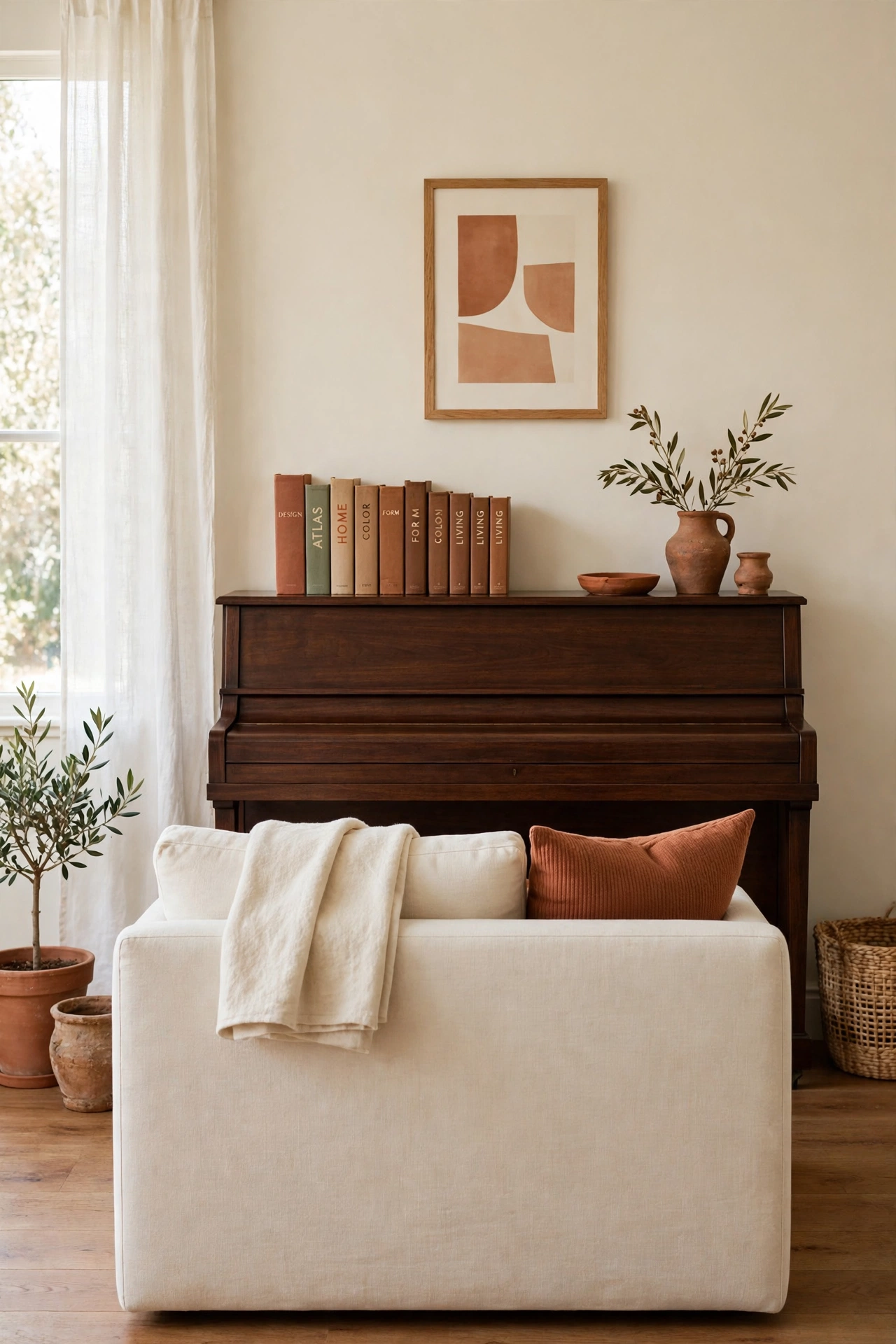
When floor space is tight, the piano can sit behind the sofa against the same wall. The sofa faces away from the piano toward a television or fireplace, and the piano rises above the sofa back like a handsome backdrop. This layout saves a full wall for other uses.
Leave a gap of a few inches between the sofa and the piano so the bench can slide in when you want to play. Style the top of the piano with a low row of books and a small vase. The piano stays visible over the sofa and adds character to the room from every angle.
9. Fit the Piano Into an Alcove or Recessed Nook
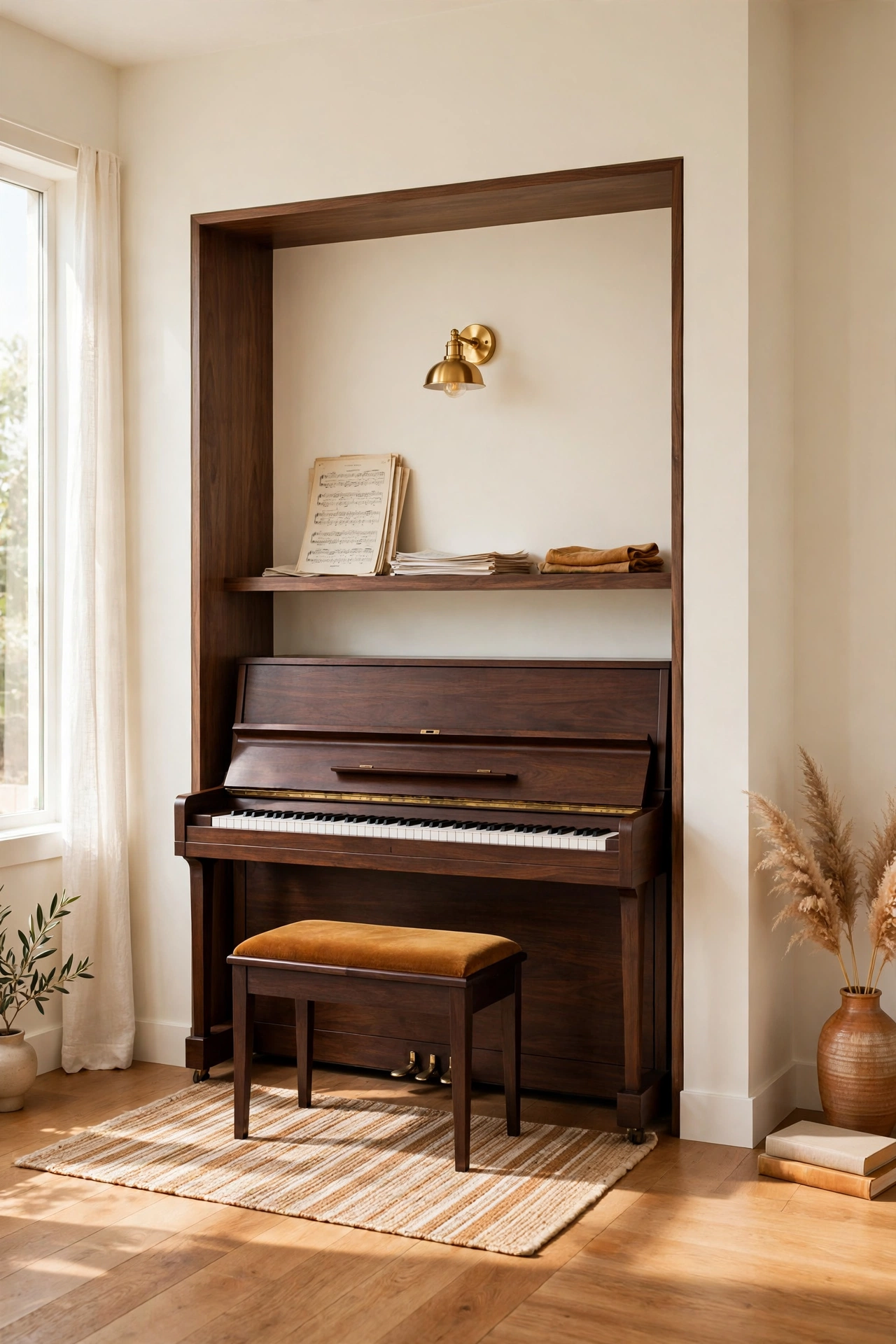
An alcove or recessed nook is a gift for piano owners. An upright piano slides into the recess and sits flush with the wall, which frees the main floor completely. The nook frames the instrument like a stage and keeps it out of the traffic flow.
Measure the alcove carefully before you commit, and leave room for the bench to pull out. Add a picture light or a small wall sconce inside the nook to highlight the piano. If the nook is deep, a narrow shelf above the piano holds sheet music and small decor.
10. Use an L-Shaped Layout With the Piano on the Short Wall
An L-shaped layout places a sectional sofa along the long wall and the piano on the short wall at a right angle. The two pieces form a cozy corner arrangement that leaves the rest of the room open. This is a strong choice for rectangular living rooms.
Keep the sectional low and the piano wall uncluttered so the corner does not feel heavy. A round coffee table softens the angle where the two pieces meet. The layout gives the player a quiet corner while the seating area stays social and open.
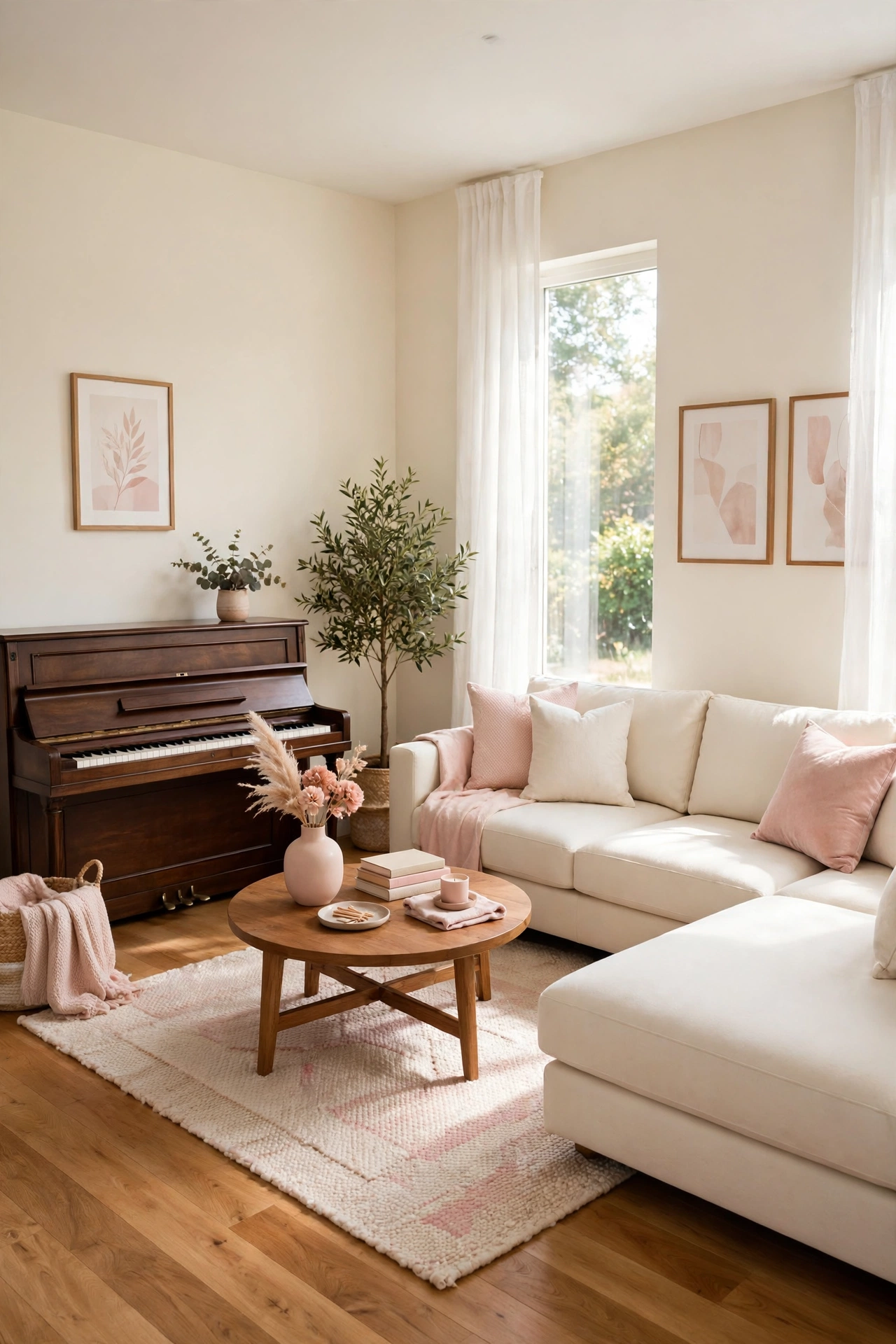
11. Face the Piano Toward the Sofa for Intimate Concerts
Turn the piano to face the seating area so the player looks toward family and friends. This concert style layout works with an upright placed perpendicular to the wall, with the keyboard facing into the room. The sofa becomes the front row.
Place a rug under the piano and the front of the seating to mark the performance zone. Keep the path behind the piano clear for access to the rest of the home. Even a small room feels special when the piano faces the people it entertains.
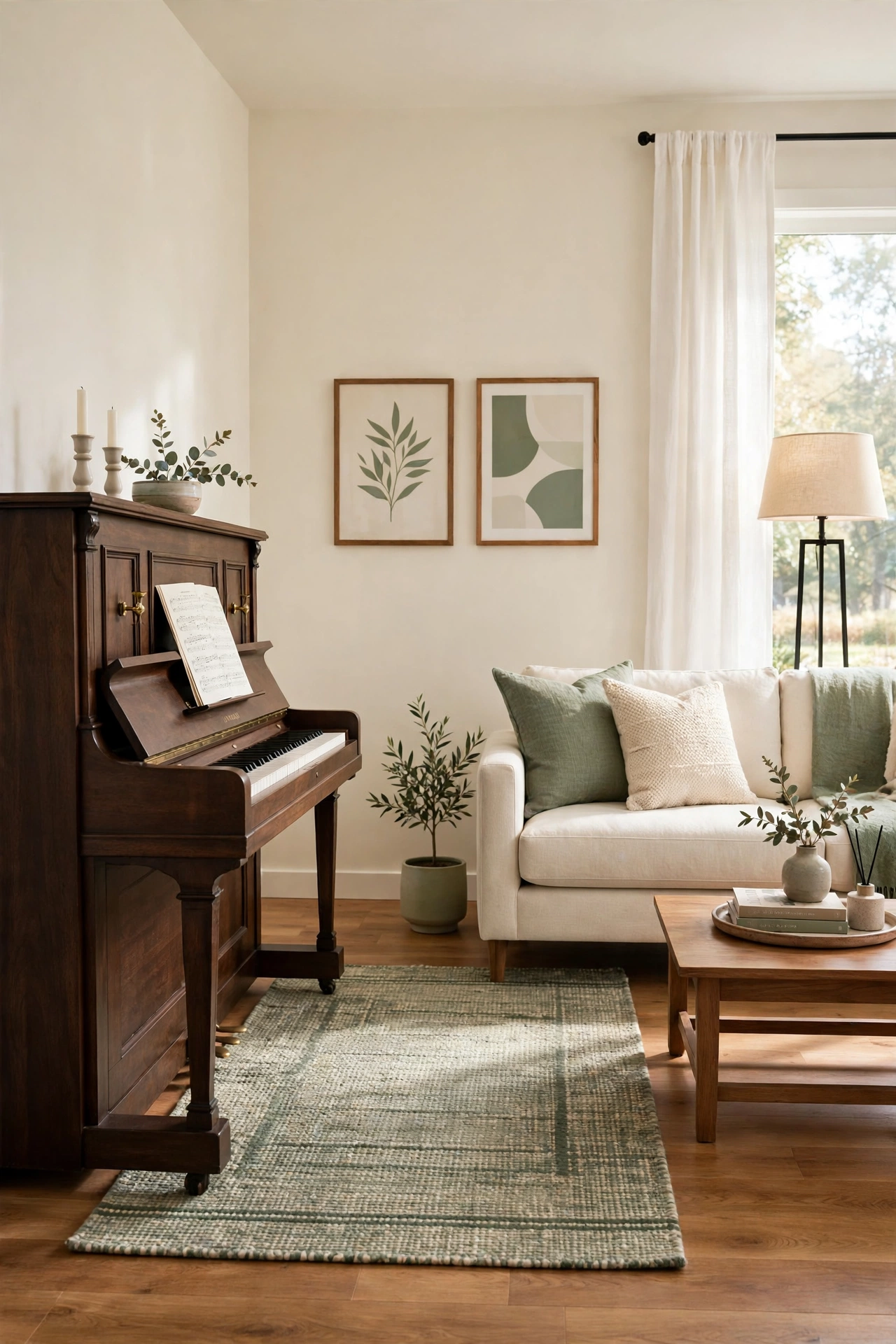
12. Place the Piano Beside a Corner Fireplace
A corner fireplace and a piano can share a wall beautifully. Place the piano on the wall next to the fireplace, and angle the seating to face both focal points. The fire and the music create a warm gathering spot that draws everyone in on cold evenings.
Keep the piano at a safe distance from the heat, and use a fire screen if the fireplace is wood burning. A shared mantel style, with similar frames or candles on both, ties the two features together. These small living room layout ideas around a corner fireplace will help you angle the seating so both the fire and the piano get the attention they deserve.
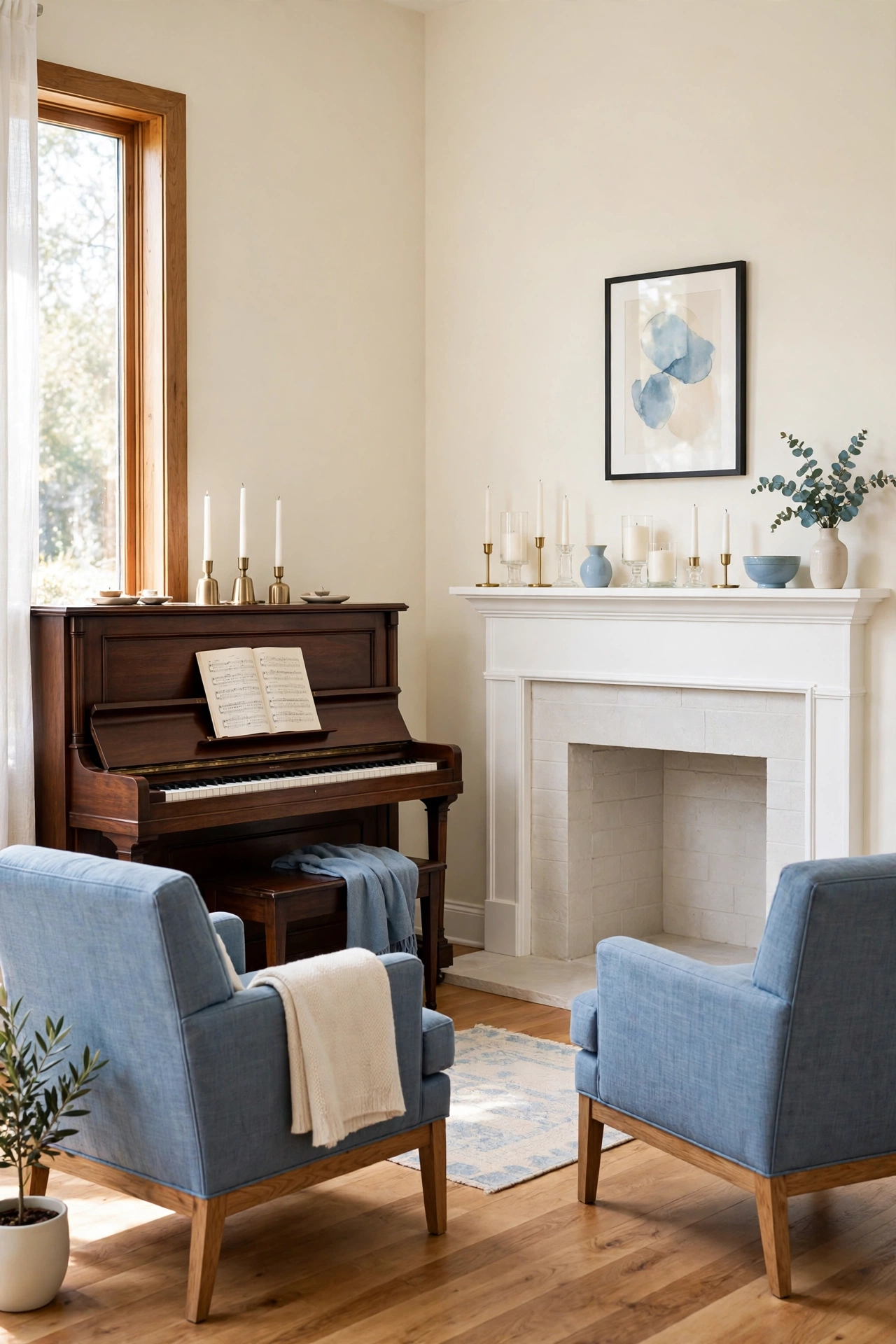
13. Hang a Gallery Wall Above the Piano
The wall above an upright piano is prime space for a gallery wall. A cluster of framed prints, photos, and small art pieces turns the piano wall into a display. The frames draw the eye upward and make the piano feel like part of a curated collection.
Keep the frames in matching tones, such as warm wood or black, for a calm look. Start the gallery a few inches above the piano and leave space for a lamp or a vase on the piano top. The gallery gives the piano personality and fills the tall wall without extra furniture.
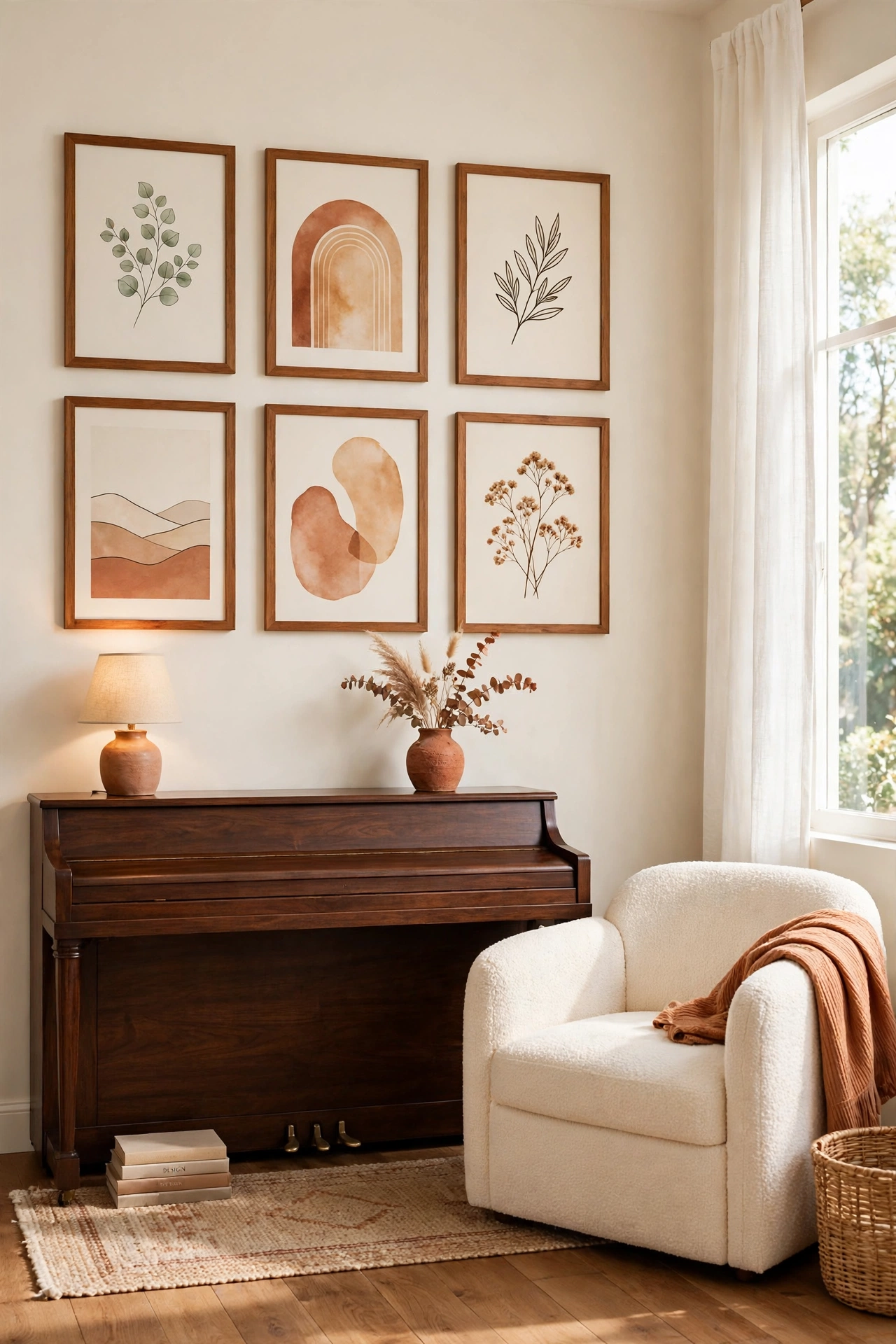
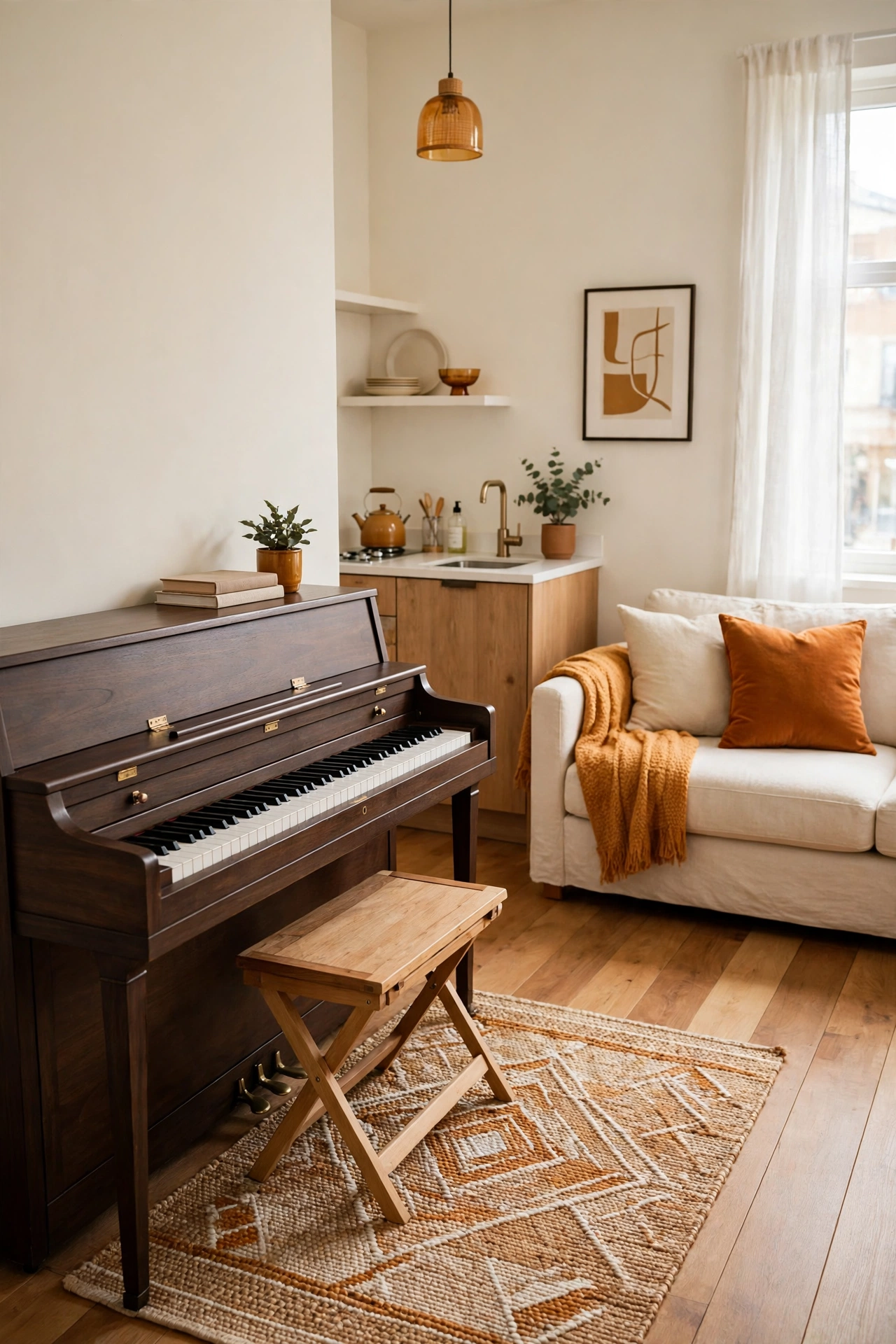
14. Give the Piano a Zone in a Studio Living Area
In a studio apartment, the living area must do many jobs at once. Give the piano its own small zone near the living end of the room, with a rug and a bench marking the boundary. The piano becomes a piece of the living area rather than an obstacle in it.
Choose a slim upright or a digital piano to keep the footprint small. A folding bench tucks away when the piano is not in use. Keep the zone near a wall so the open floor stays free for daily living, and let the piano double as a display surface for plants and books.
15. Flank the Piano With Matching Bookshelves
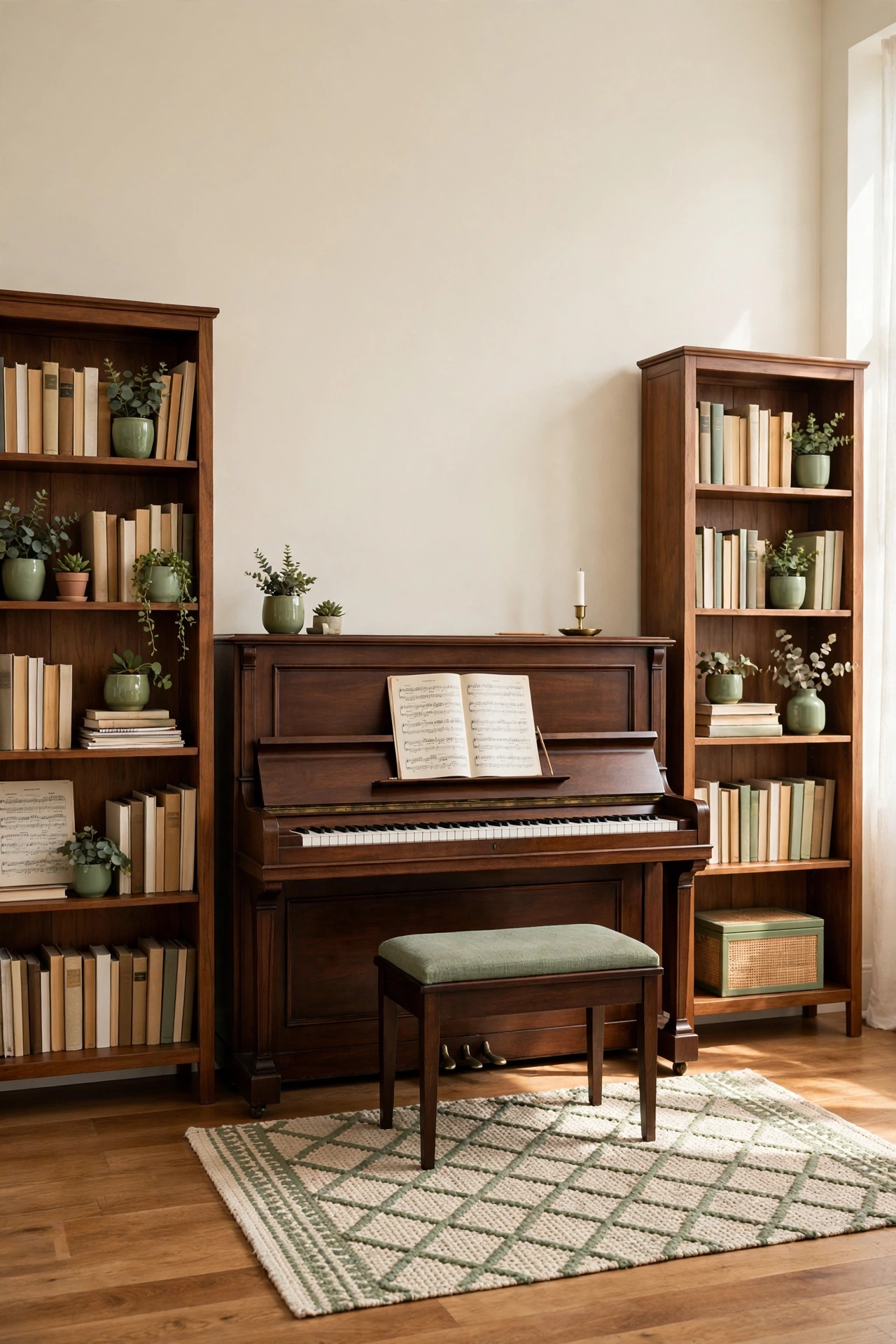
Two matching bookshelves on either side of the piano create a built in look. The shelves hold sheet music, books, and small plants, and they frame the piano like a library centerpiece. This layout suits living rooms with a tall wall and a love of books.
Keep the shelves the same height or slightly taller than the piano for balance. Fill the lower shelves with heavier books and the upper shelves with lighter decor. The symmetrical frame makes the piano wall look finished and gives storage a clear home.
16. Define a Music Zone With a Rug Under the Piano
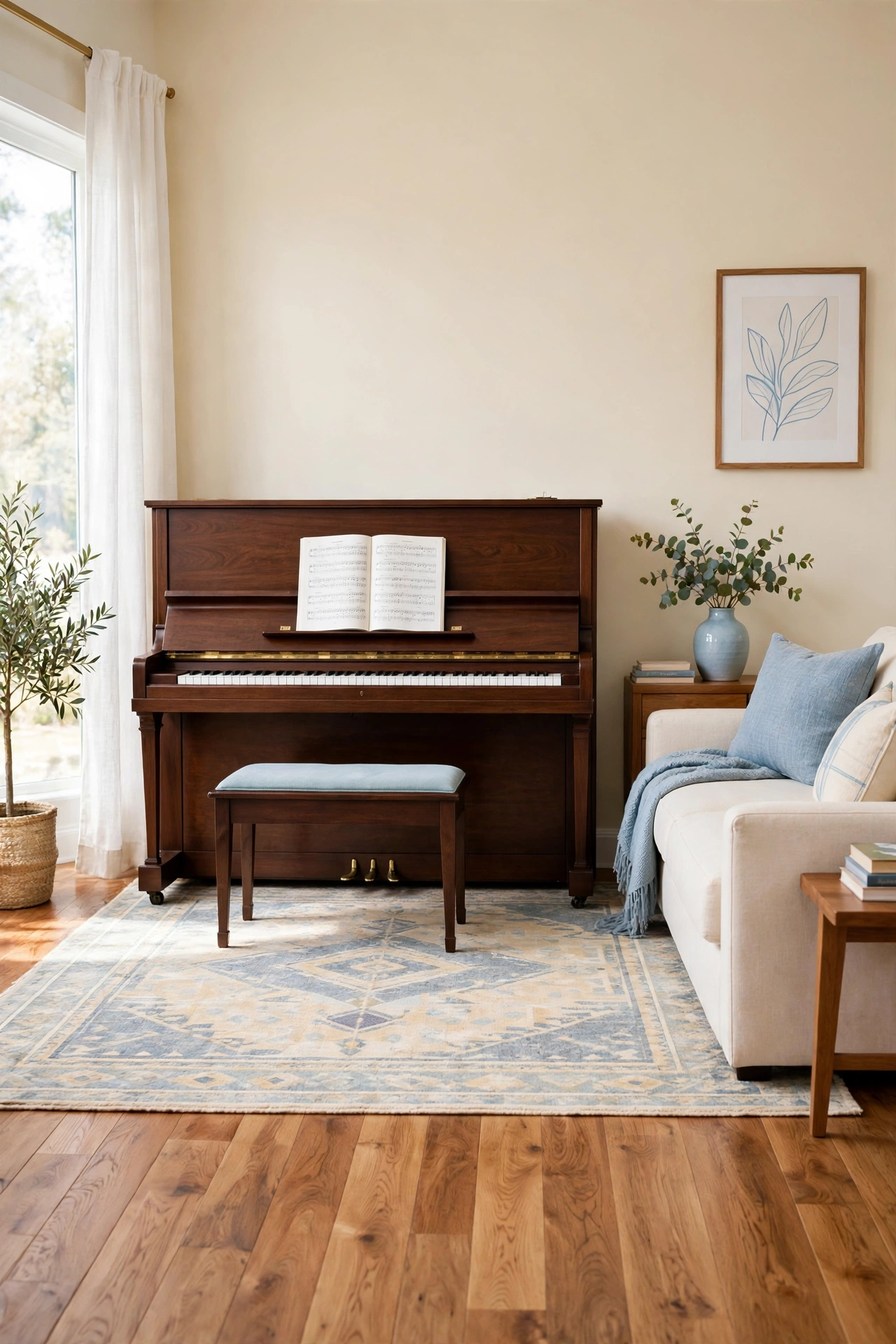
A rug under the piano marks the music zone and protects the floor at the same time. Choose a rug large enough to hold the piano and the bench, with a pattern that suits the room. The rug tells the eye where the music area begins and the rest of the room ends.
Layer the piano rug over a larger neutral rug if you want extra softness underfoot. Keep the rug flat and low pile so the bench slides easily and the piano casters sit steady. A patterned rug also hides the wear that daily practice brings to one spot.
17. Pair the Piano With a Window Seat Storage Bench
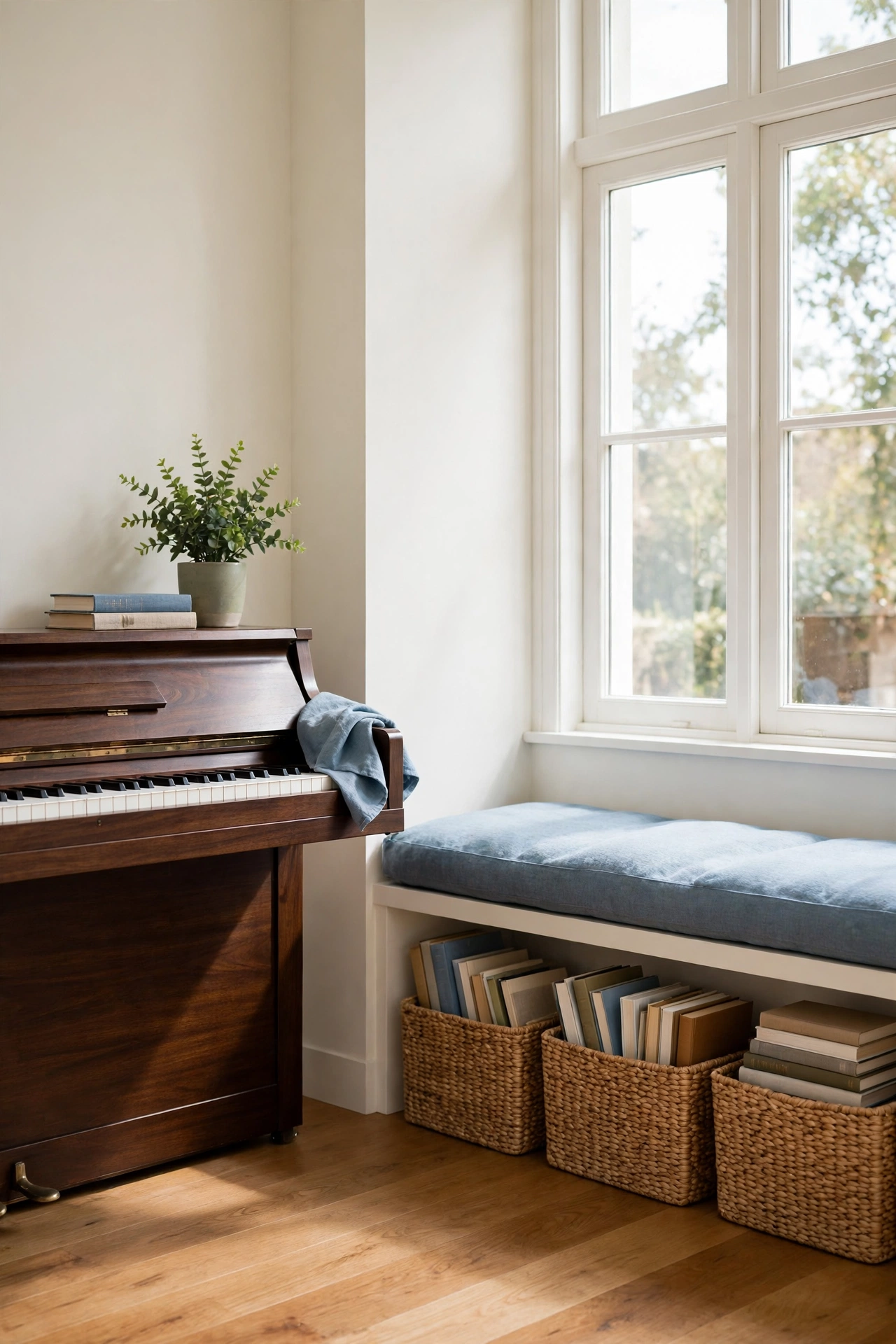
A window seat with storage sits happily beside a piano. The bench holds sheet music, books, and extra cushions, while the seat gives listeners a place to perch. Place the piano on the wall next to the window seat so the two pieces form an L shape.
Choose a window seat cushion in a color that echoes the room, such as soft blue or warm amber. Baskets under the seat keep music books sorted and out of sight. The pairing turns a plain window wall into a functional music corner.
18. Let the Piano Mark the Edge of an Open Plan Living Zone
In an open plan home, furniture must show where one zone ends and another begins. Place the piano at the edge of the living zone, with its back toward the kitchen or hallway. The piano becomes a gentle boundary that keeps the living area feeling defined.
Arrange the sofa to face away from the piano toward the main seating view, so the piano back forms a clean line. A console table behind the sofa adds a second layer of separation. Open plan rooms stay calm when each zone has a clear edge, and a piano is a beautiful way to draw that line.
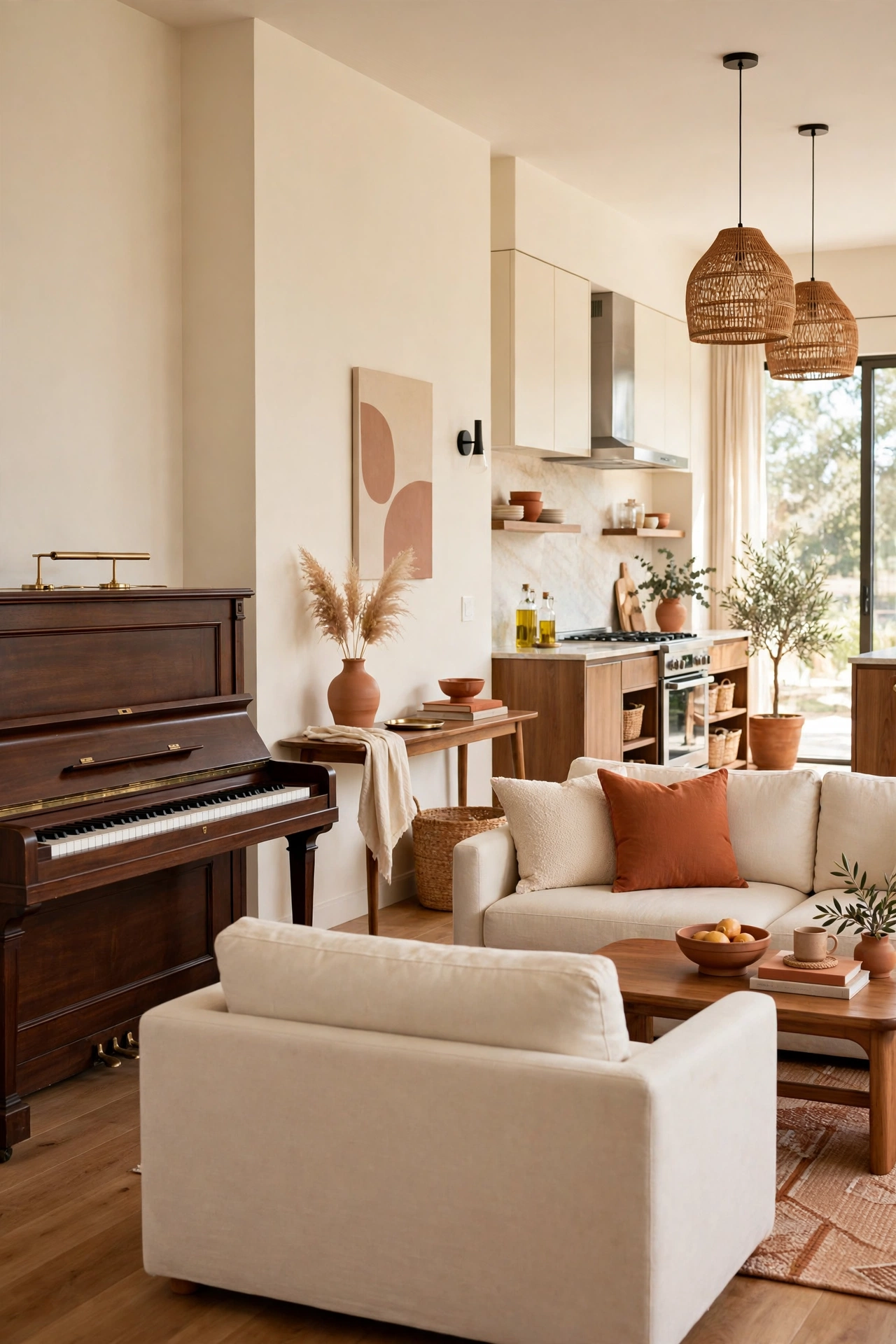
19. Place the Piano in a Bay Window Nook
A bay window nook offers a charming spot for a piano. The angled walls of the bay cradle an upright piano, and the windows bring light from three sides. The nook feels like a small stage set apart from the main room.
Check the width of the bay before you plan this layout, and protect the piano from strong sun with light curtains or blinds. A small bench and a potted plant complete the nook. The bay becomes the prettiest corner in the house.
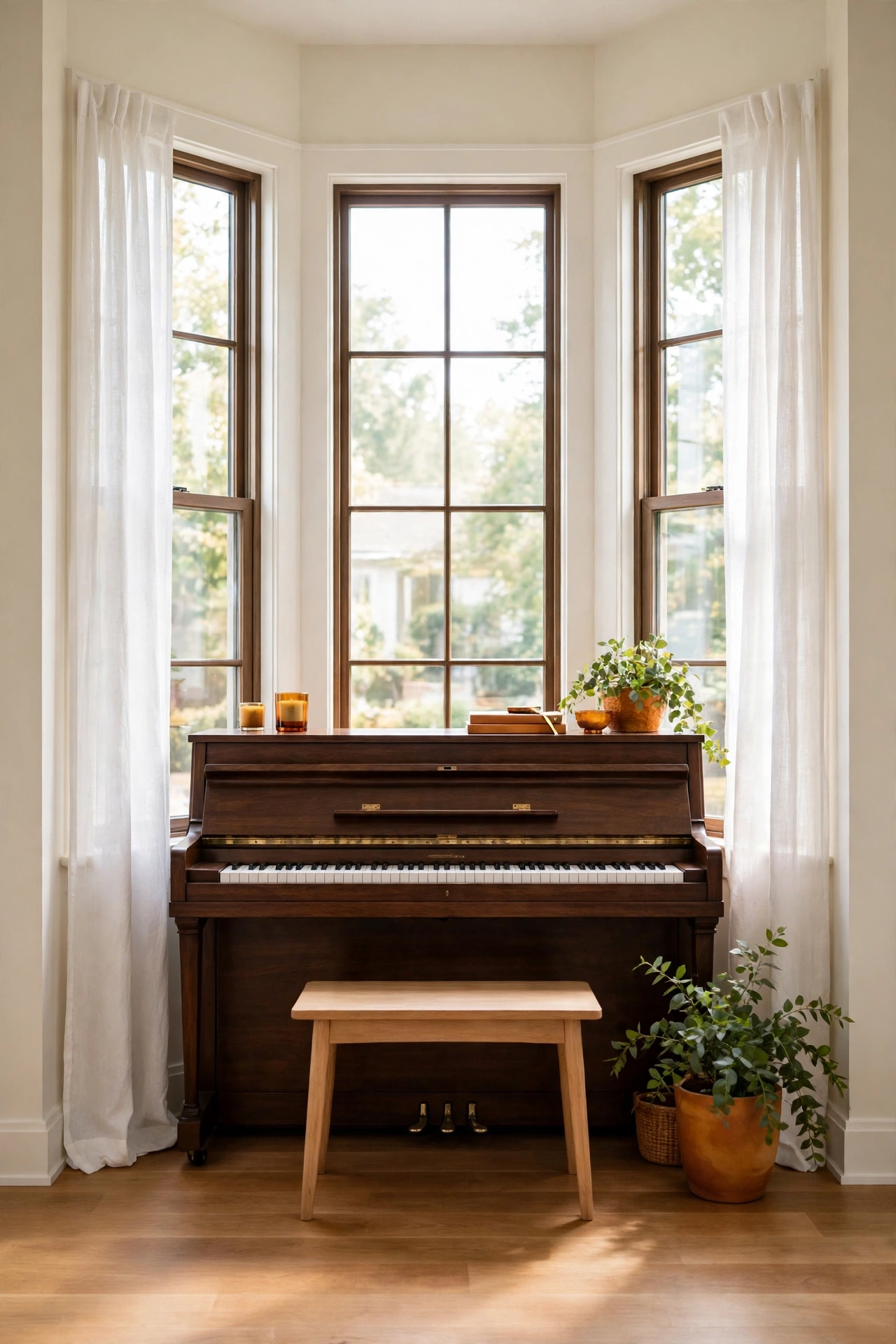
20. Put a Compact Dining Table Behind the Piano
When the living room shares space with dining, the piano can sit between the two zones with a compact dining table behind it. The piano back faces the dining table and acts as a stylish screen. Both zones keep their own identity in a small footprint.
Choose a round or oval dining table to soften the straight lines of the piano. Keep the dining chairs light so they can move easily when the piano bench is in use. The arrangement suits small homes where every piece of furniture must earn its place twice.
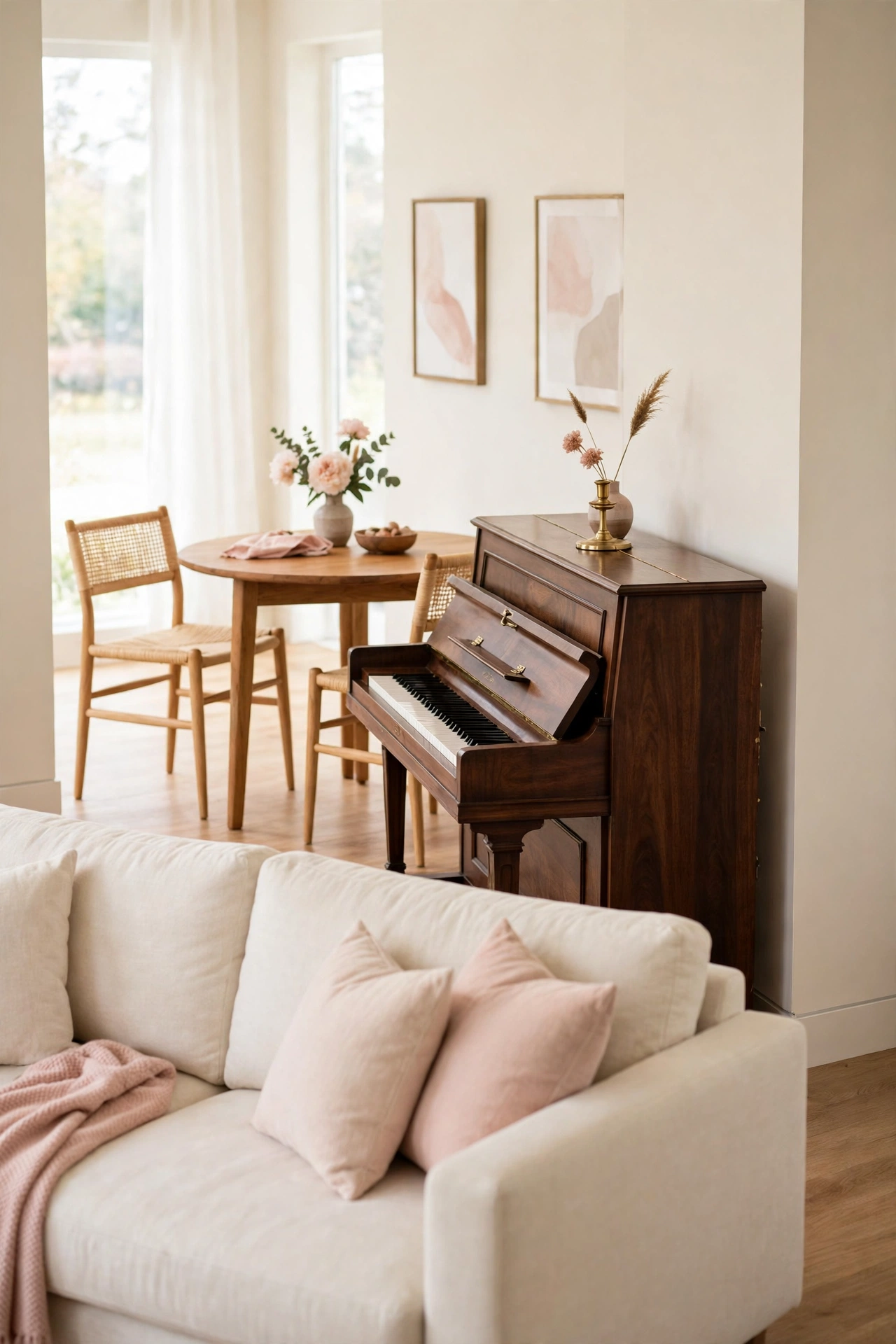
21. Set the Piano Against a Bold Accent Wall
A bold accent wall makes a piano look like a work of art. Paint the wall behind the piano in a rich color, such as deep sage green, navy blue, or warm terracotta, and let the dark wood of the piano stand out against it. The contrast gives the room drama without extra furniture.
Keep the rest of the walls light so the accent wall stays the star. Add one or two simple frames on the accent wall, but do not crowd it. The piano and the color work together as the focal point of the whole room.
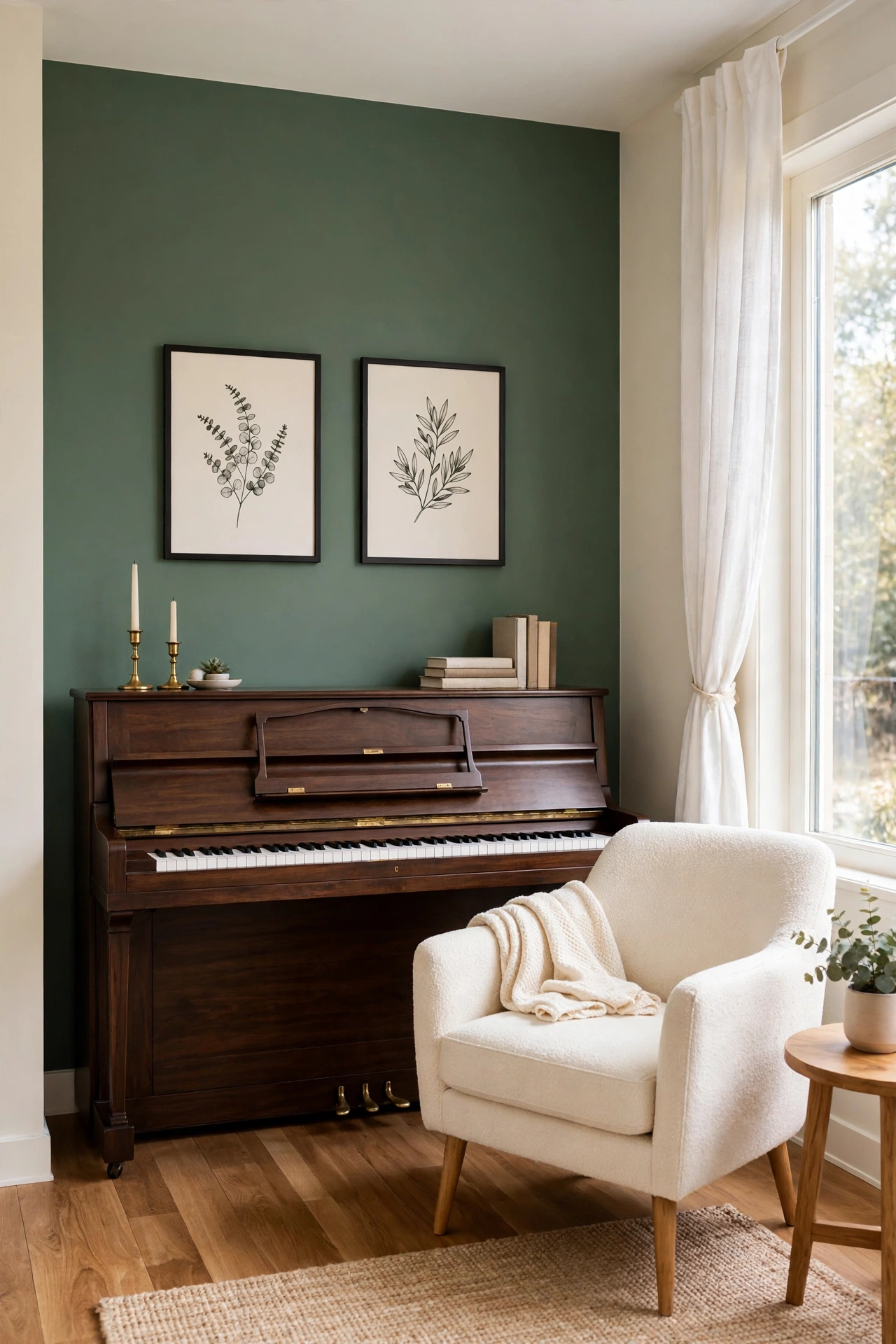
22. Choose a Slim Digital Piano for a Tiny Room
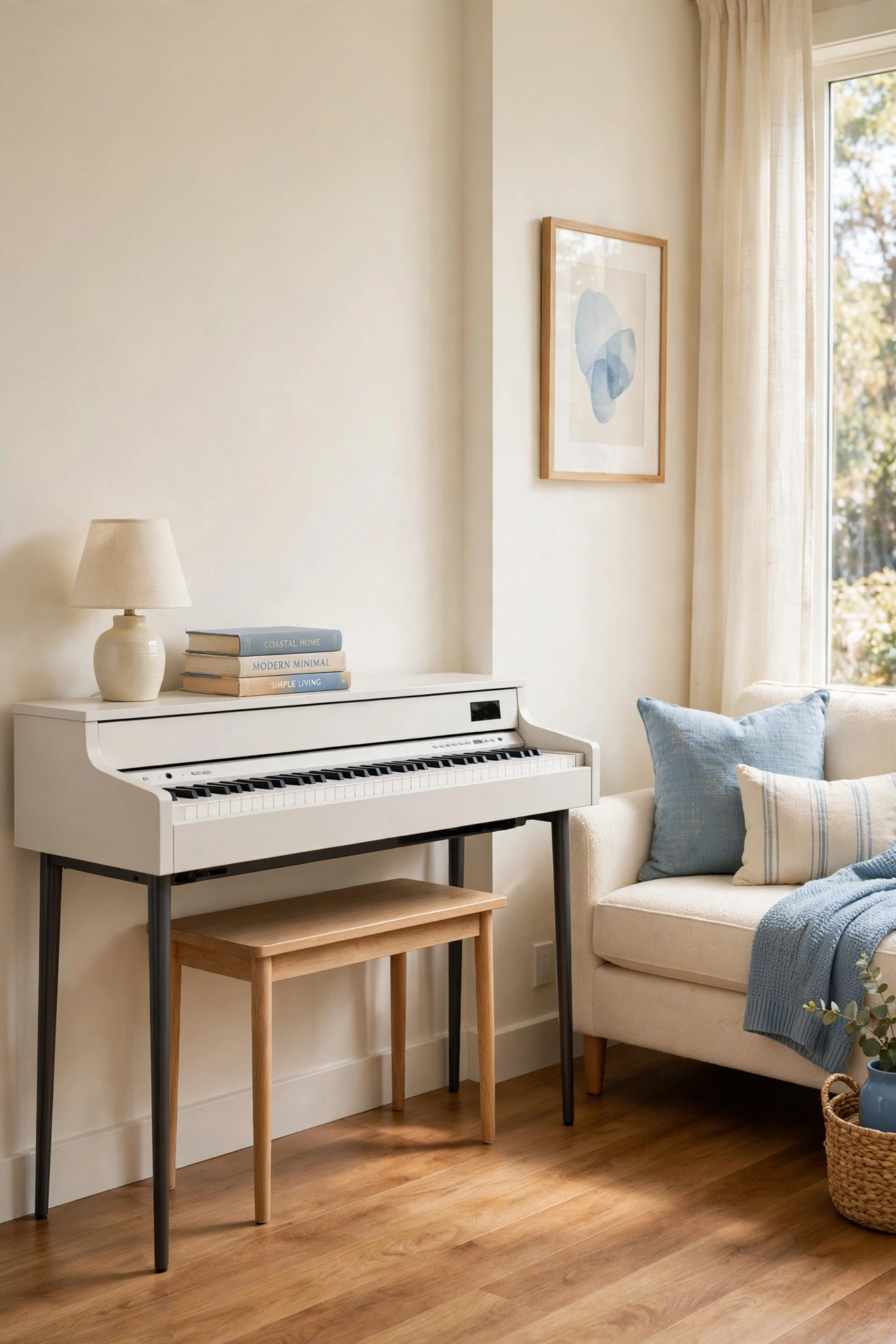
A slim digital piano is a practical answer for a very small living room. It takes up far less depth than an acoustic upright, and many models have a clean console look that blends with modern furniture. Place it against any wall with a bench or a stool.
Style the digital piano like real furniture, with a lamp and a small stack of books on top. A slim bench slides underneath when not in use. You keep the joy of playing without giving up the floor space a full upright would need.
23. Back the Piano With a Low Bookcase Room Divider
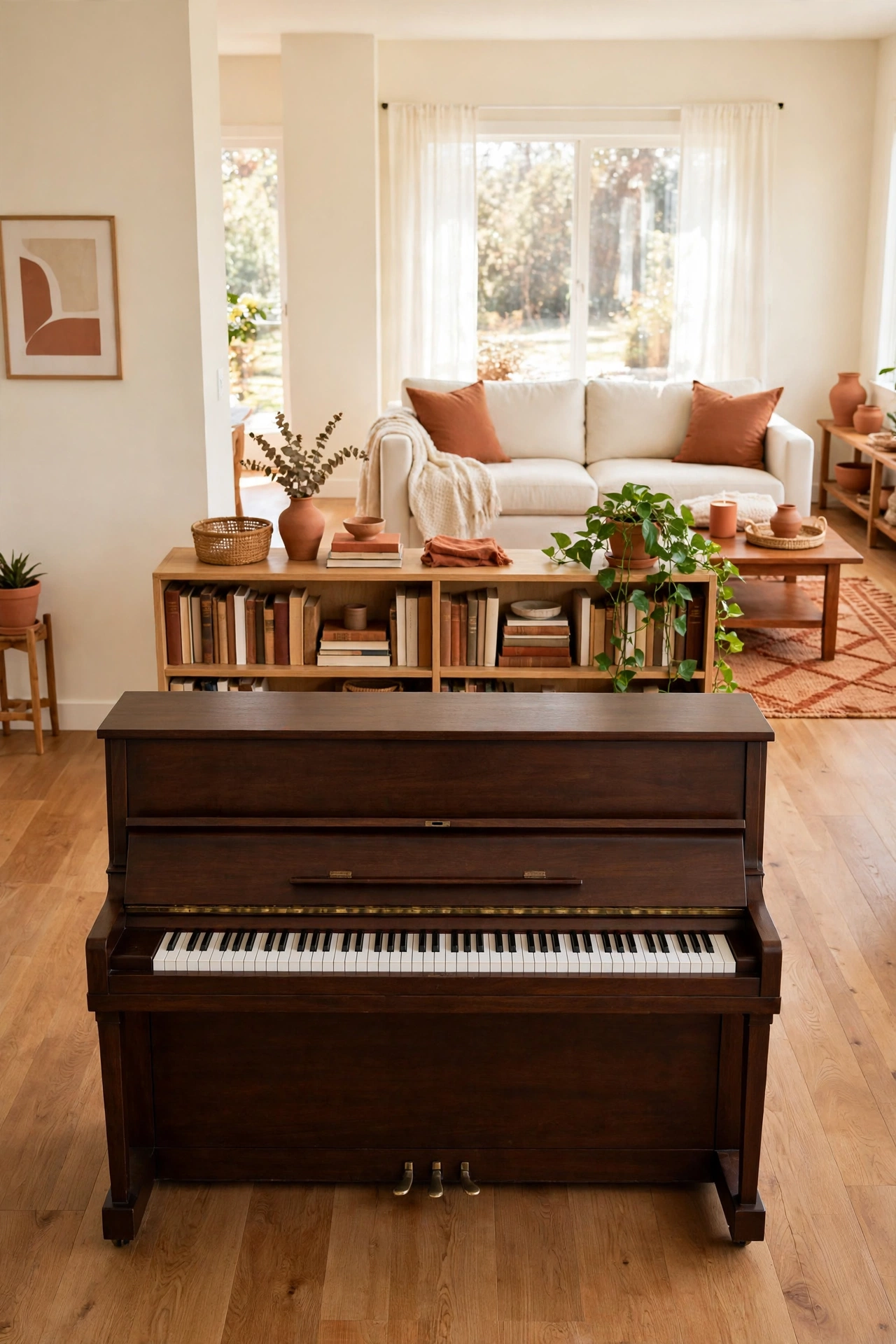
A low bookcase behind the piano creates a room divider that does not block light. Place the piano with its back to the open floor, and set a low bookcase behind it to mark the boundary. The bookcase holds books and plants at a height that keeps the room feeling open.
Keep the bookcase lower than the piano so the instrument stays the taller feature. Style the top with a trailing plant and a few favorite books. The divider gives the piano a finished back view, which matters when the piano floats in the room.
24. Use the Piano to Separate Living and Dining Areas
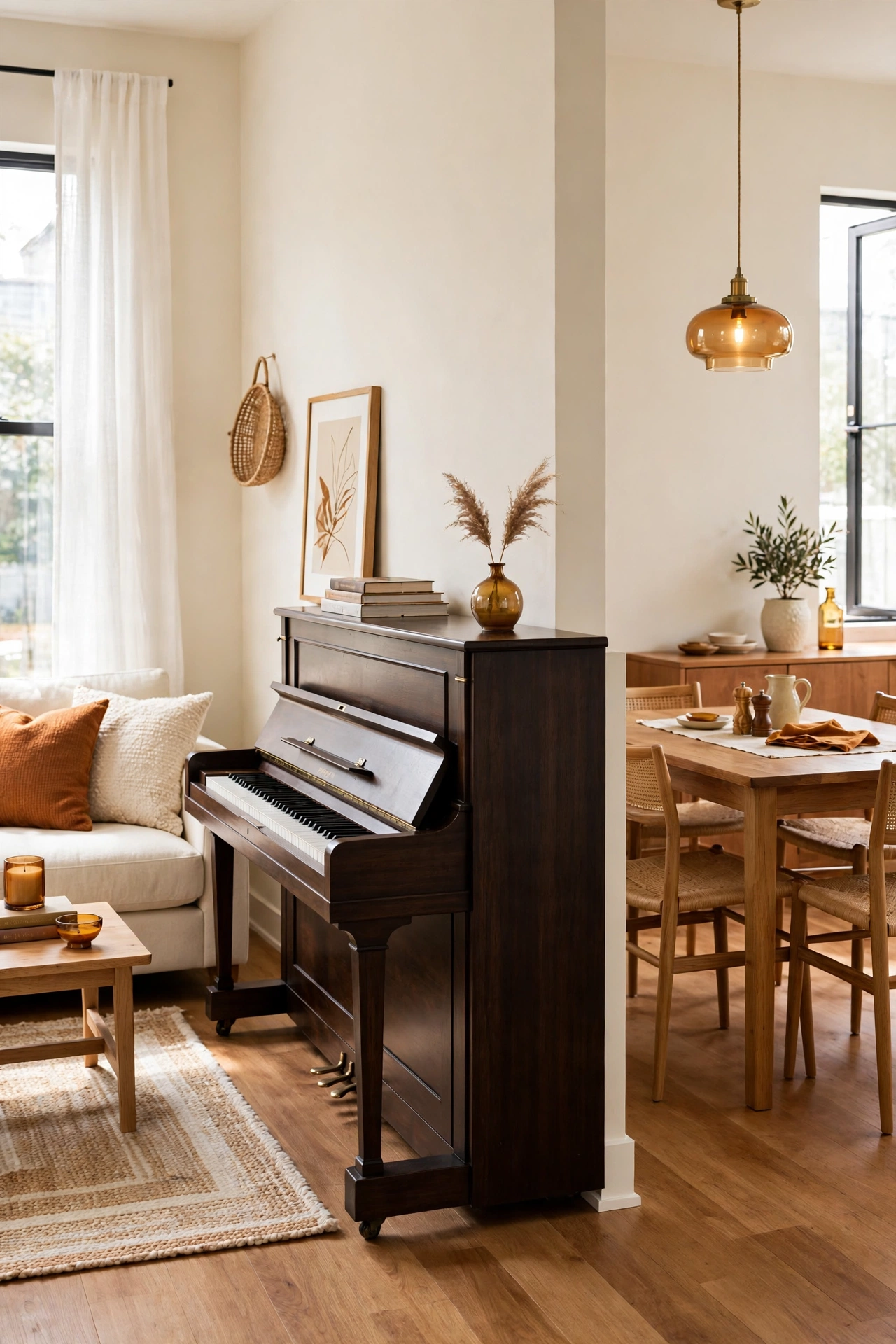
A piano placed across the middle of a combined room separates the living side from the dining side. The sofa faces one way and the dining table sits on the other side of the piano. The instrument becomes the wall that never closes the room in.
Leave clear walkways on at least one side of the piano so people can move between the zones easily. A rug under the seating area and a pendant light over the dining table strengthen the sense of two rooms. These small living dining combo layout ideas offer more ways to divide a shared room without losing light or flow.
25. Fit the Piano Under a Sloped Loft Ceiling
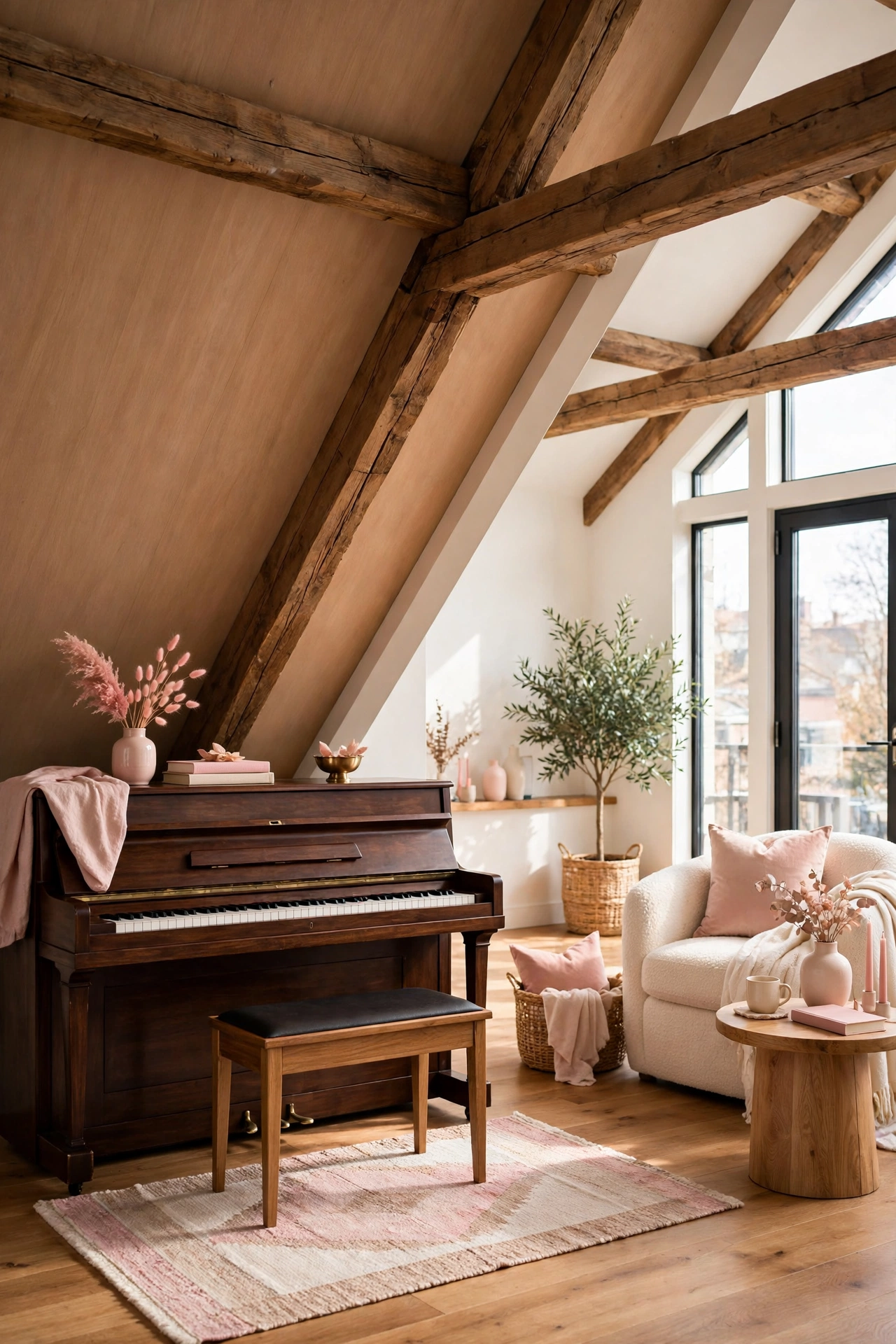
A loft living area with a sloped ceiling has a low wall that often goes unused. An upright piano fits well under the lower part of the slope, where taller furniture would not work. The piano claims the awkward space and leaves the tall part of the room for seating.
Measure the ceiling height at the piano position to make sure the top of the instrument clears the slope. A low rug and a bench complete the setup. The loft gains a music corner that feels tucked away and cozy.
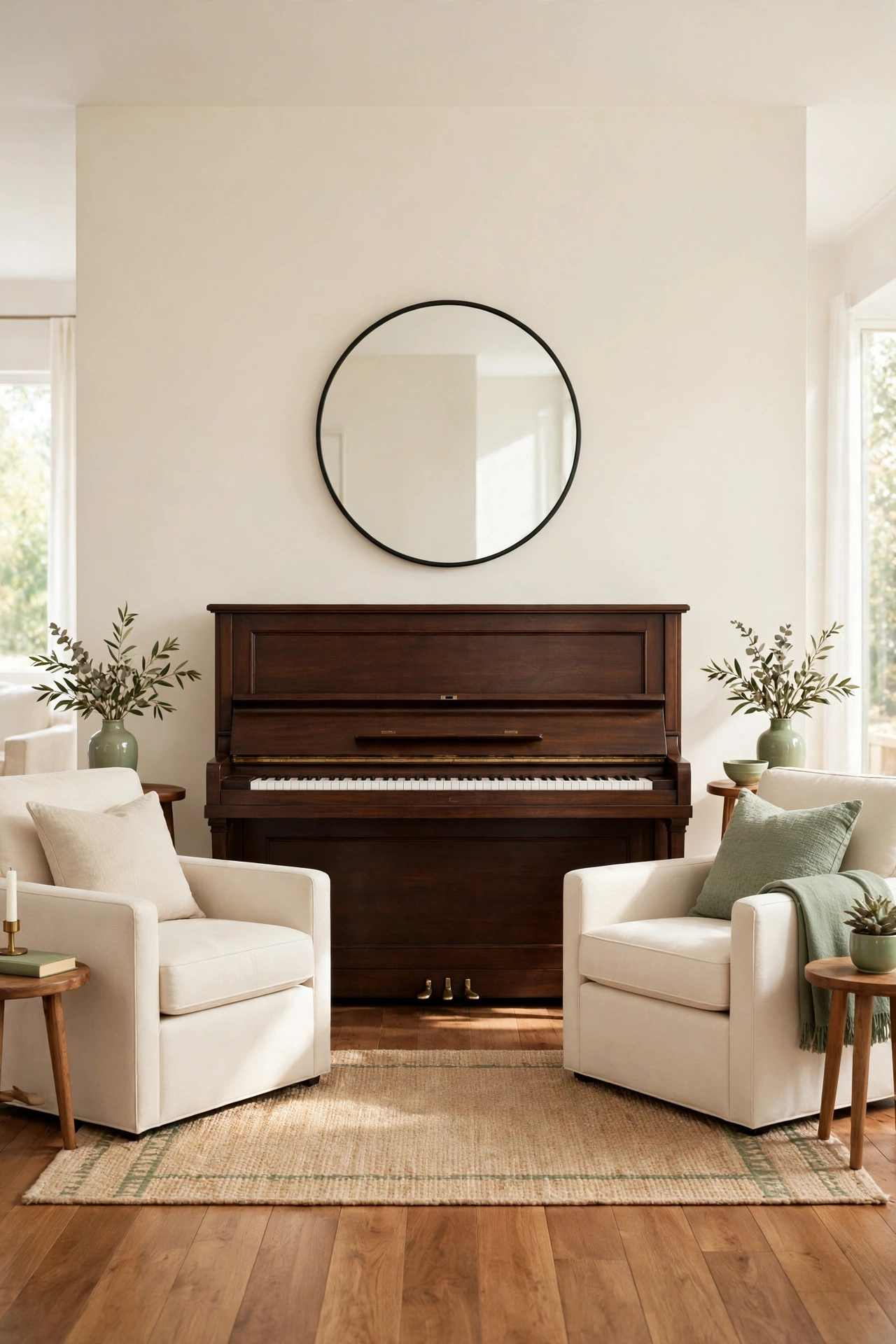
26. Center the Piano on the Wall With Symmetric Seating
A centered piano with matching chairs on each side creates a formal, balanced look. Place the piano in the middle of the main wall, with an armchair and a small table on each side. The symmetry gives the room a calm and orderly feeling.
Keep the chairs in the same fabric or color for a true mirror effect. A single large mirror or artwork above the piano completes the composition. This layout suits living rooms where the piano is the clear star of the space.
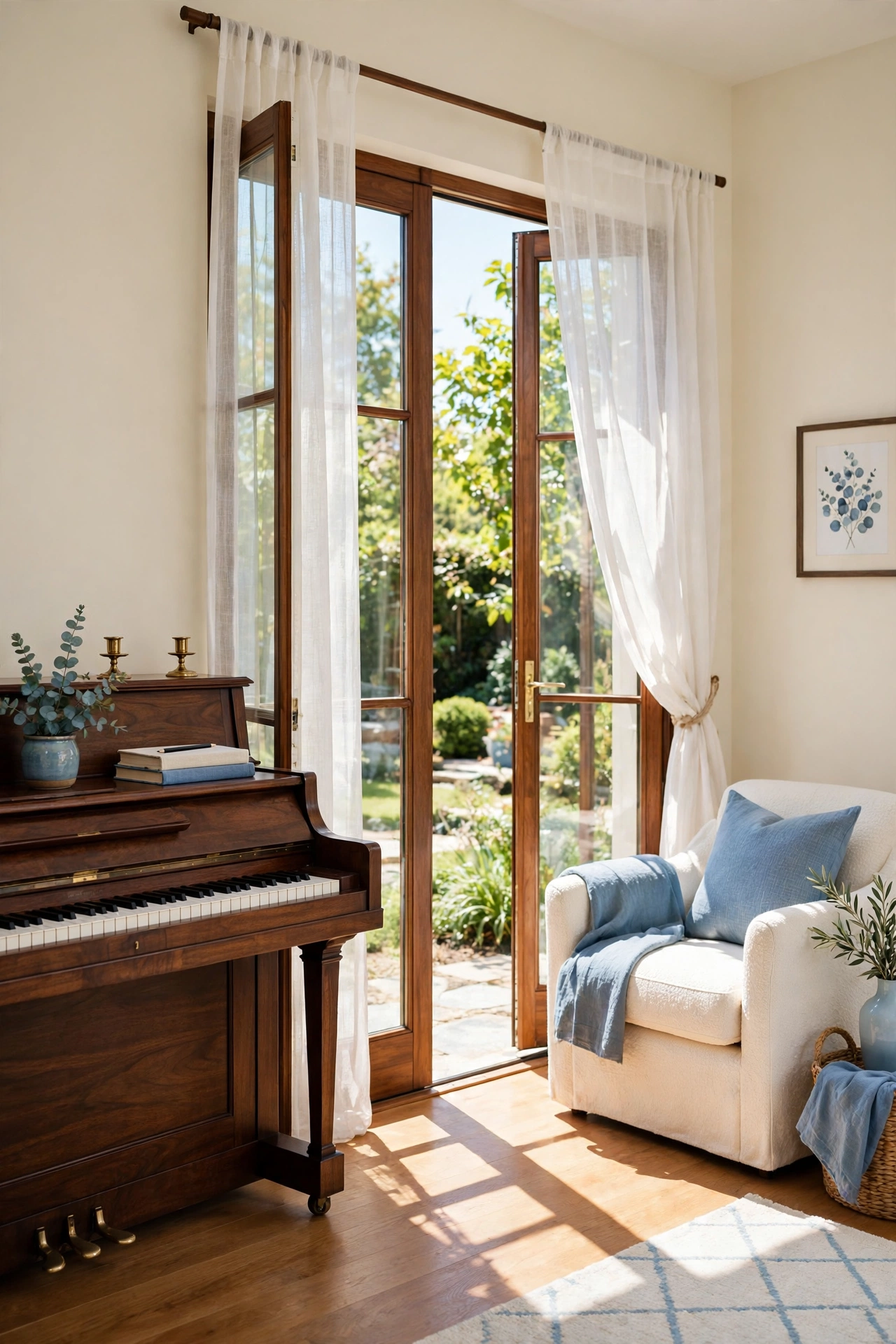
27. Place the Piano Next to French Doors
French doors bring light and a view, and a piano beside them shares in both. Place the piano on the wall next to the doors, so the player enjoys the garden view and the room feels connected to the outdoors. The doors also give the piano wall a natural frame.
Leave the door swing clear and keep the piano a step away from the glass to avoid drafts. Light curtains soften the sun and protect the finish. The piano and the doors together make the wall feel bright and welcoming.
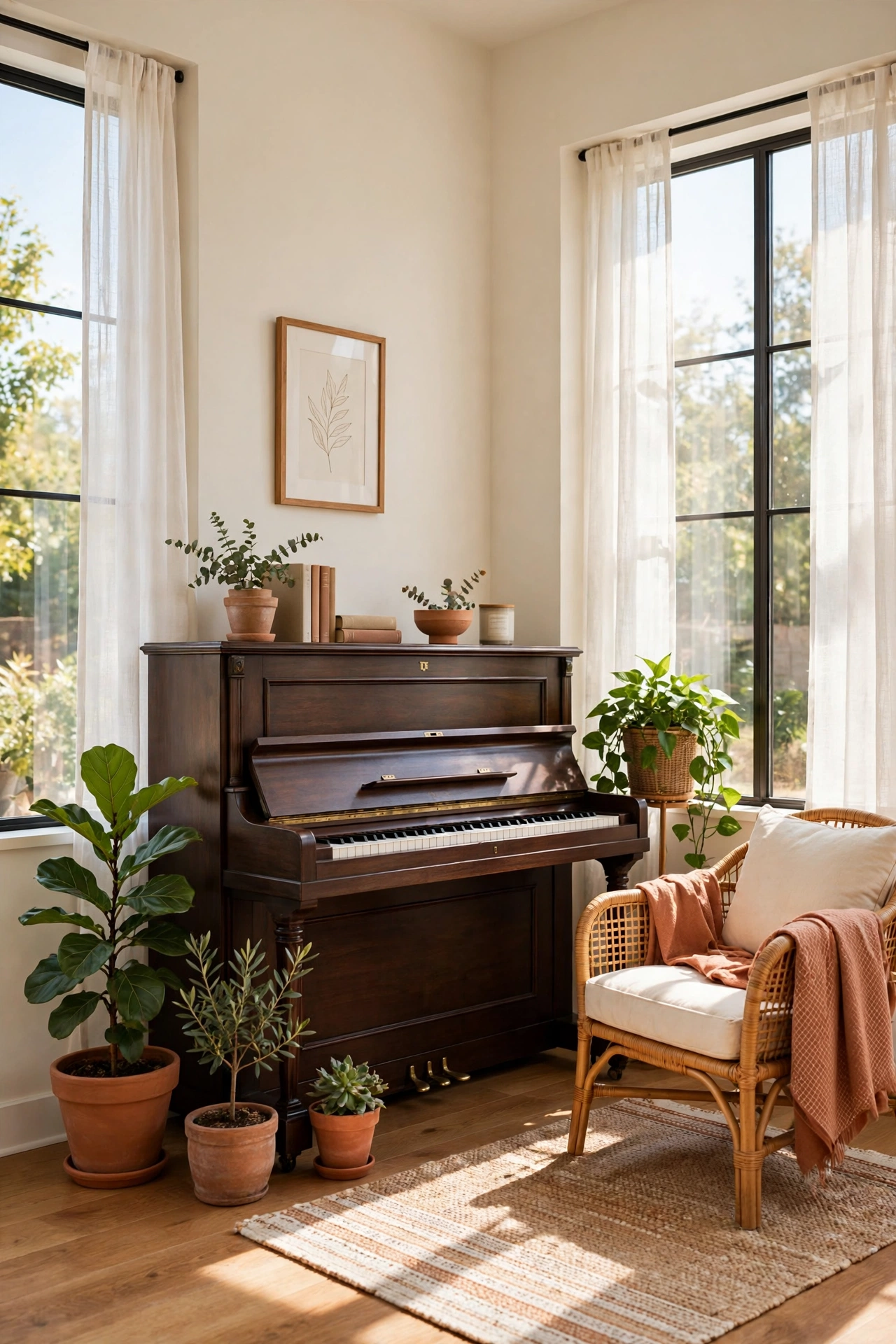
28. Create a Sunroom Style Corner for the Piano
A corner with several windows can become a sunroom style piano spot. Place the piano on the solid wall of the corner, with plants and a rattan chair nearby. The light and the greenery make practice feel like time in a garden room.
Use sheer shades to filter strong midday sun, and keep plants a little away from the piano to avoid water spills. A woven rug and a rattan chair complete the airy look. The corner becomes a retreat for music and quiet mornings.
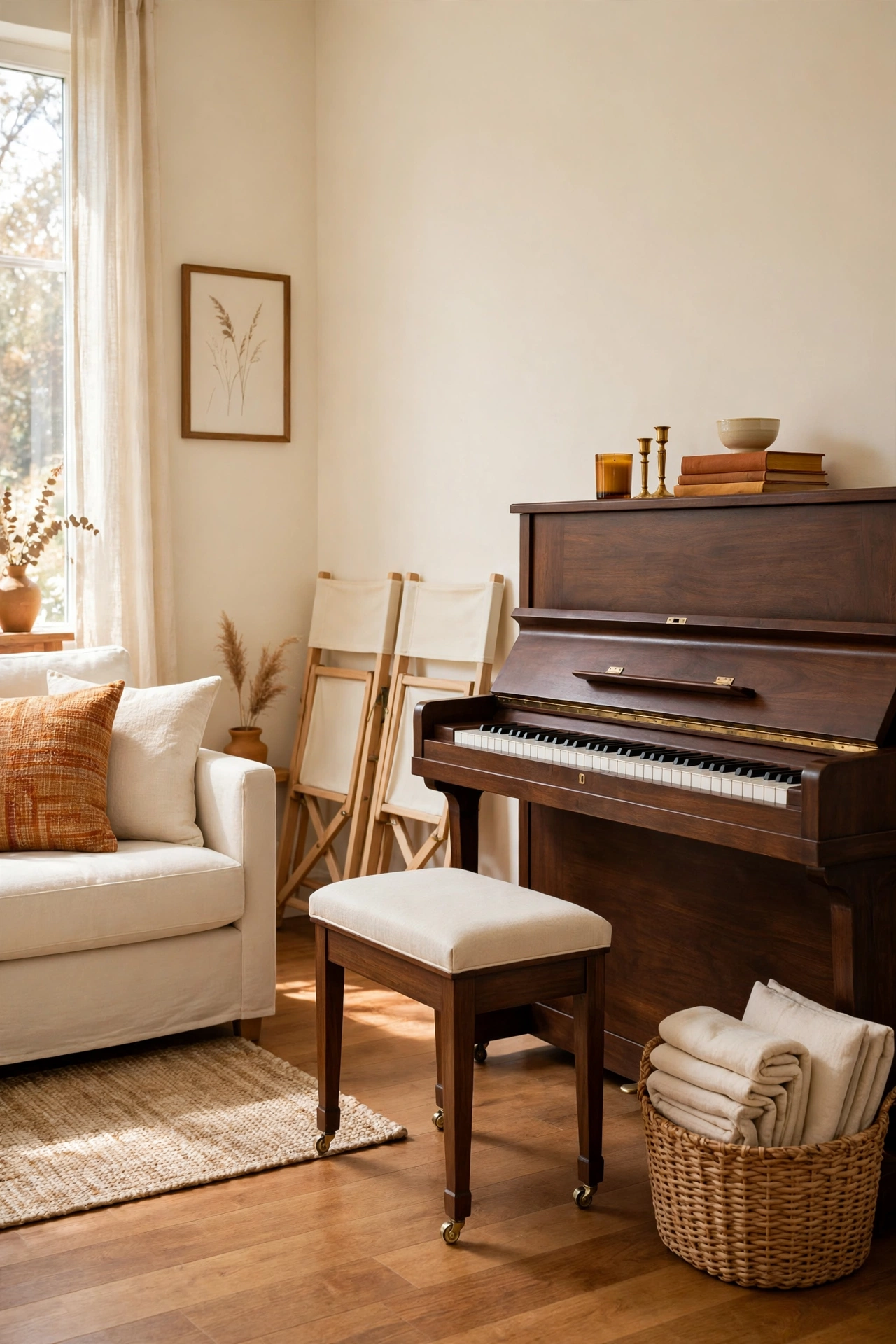
29. Pair the Piano With Flexible Seating for Guests
Flexible seating lets a small living room host a music evening without permanent clutter. Place the piano on its wall, and keep a mix of folding chairs, floor cushions, and a rolling bench nearby. When guests arrive, the seating unfolds around the piano. When they leave, it packs away.
Store the folding chairs in a closet or behind a door, and stack floor cushions in a basket beside the piano. A rolling bench moves easily between the piano and the seating area. The room stays tidy on ordinary days and turns into a concert space in minutes.
Conclusion
A piano and a small living room can live together beautifully when the layout gives each piece a clear role. Whether the piano hugs the longest wall, fills a corner, divides an open plan, or anchors a bay window, the right placement turns it from a space problem into the soul of the room. Start with the wall that suits the piano best, then arrange seating around it with room to walk and room to listen.
Try one layout from this list that matches your room shape, and live with it for a week before you change anything. Small adjustments to the bench, the rug, and the nearby seating will fine tune the arrangement. For a quiet corner to pair with your music space, these small reading nook layout ideas will help you add a calm reading spot beside the piano.
Frequently Asked Questions About Small Living Room Layout Ideas With a Piano
Where is the best place to put a piano in a small living room?
The best place is usually against the longest interior wall, where the piano sits flat and leaves the floor open. A corner or an alcove also works well when the main walls are taken by seating. Keep the piano away from direct sun, radiators, and exterior doors to protect the wood and the tuning.
Can a baby grand piano fit in a small living room?
A baby grand can fit if the room has at least enough space for the piano plus three feet of walking room around the curved side. Baby grands are usually about five feet long, so they suit open plan rooms and square living rooms better than narrow ones. Measure the footprint with tape on the floor before you commit.
Should a piano go against an outside wall or an inside wall?
An inside wall is better, because outside walls can be cold and damp, which harms the wood and throws the tuning off. If an outside wall is the only option, leave a small gap behind the piano for air flow and keep the room at a steady temperature. Avoid walls with direct sun or heating vents.
How much space do you need around a piano bench?
Leave about two feet behind the bench so the player can sit down and stand up comfortably. Add another foot or two if the bench sits in a walkway. The bench itself needs roughly four feet of width along the piano, so plan the rug and nearby furniture with that footprint in mind.
How do you protect a piano near a window?
Use sheer curtains or blinds to filter direct sunlight, and keep the piano a little away from the glass to avoid drafts and temperature swings. A piano cover helps when the sun is strong. Check the humidity in the room, since dry air can crack the soundboard and humid air can swell the action.

Hi, I’m Emily! I turn messy corners into cozy, organized spots. DreamNestDecor is where I share simple, practical home ideas — decor, organization, and small-space solutions that work in real life, not just in photos. Every idea here is carefully researched before it’s shared.