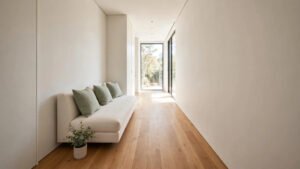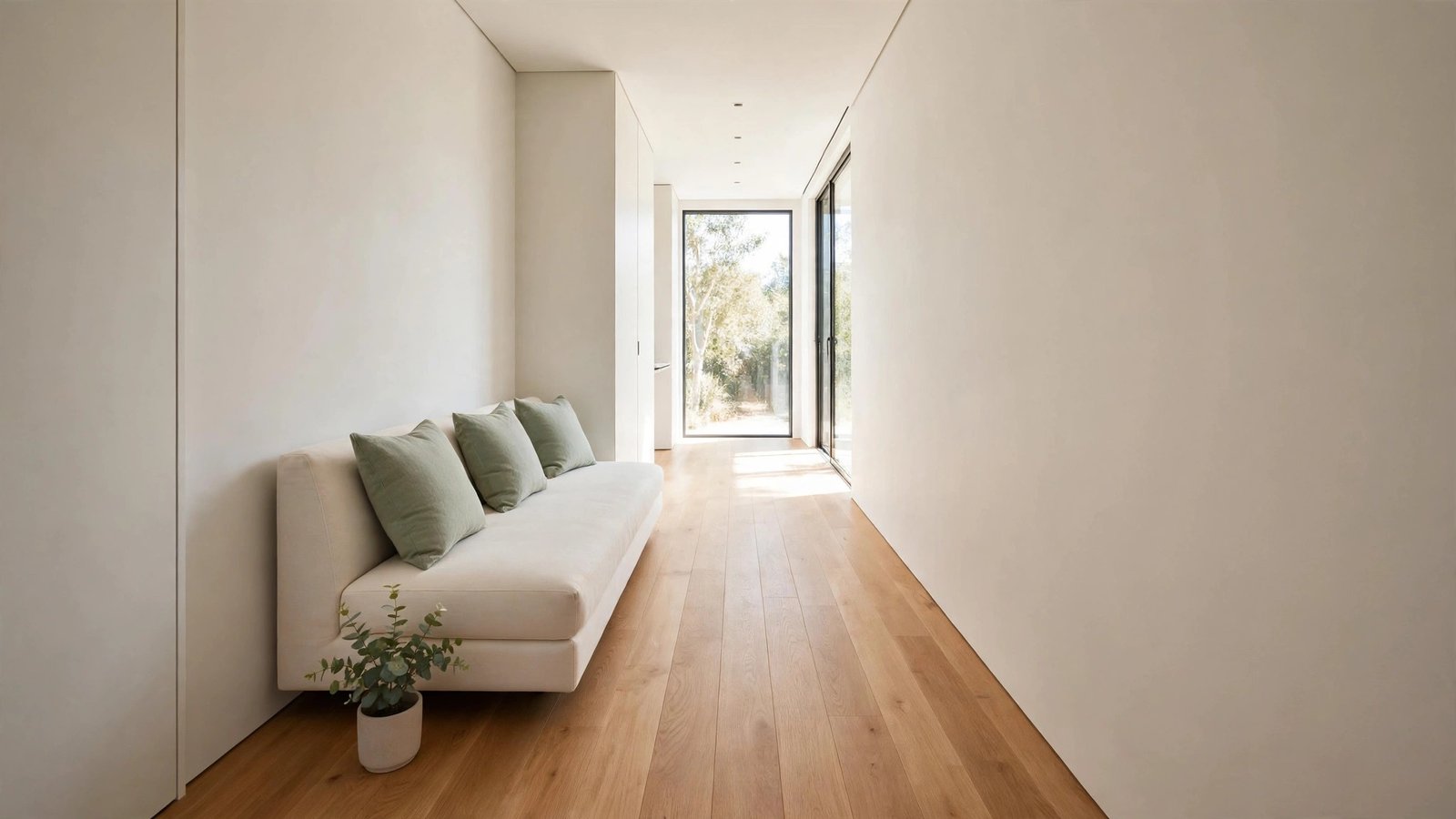
A few months ago I visited my cousin who lives in a city apartment, and her living room was a long, narrow rectangle that looked almost like a hallway with a sofa in it. She had squeezed a chunky sofa, a round coffee table, and two big armchairs into the space, and you could barely walk from the door to the window. I felt like I had to turn sideways just to pass through.
Then we spent one afternoon moving things around, and by the evening the same room felt like a cozy little lounge instead of a tunnel. Nothing new was bought, nothing was thrown out. The secret was simply the layout. Here are 15 narrow living room layout ideas that can make your own long room feel spacious, calm, and easy to move through.
1. Line Your Sofa Straight Along One Wall
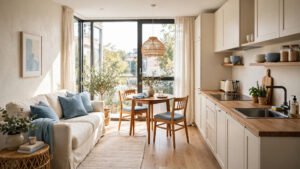
Place a slim sofa along one long wall so it runs in a straight line with the room. This simple move creates one clear pathway from one end of the room to the other, and your eyes can travel down the space without hitting anything. The room instantly feels open instead of blocked.
A slim coffee table works well in front of the sofa, or you can skip the coffee table completely and use a small side table instead. Keep the opposite wall mostly clear so the walkway stays wide and inviting.
2. Pull Your Furniture Slightly Off the Wall
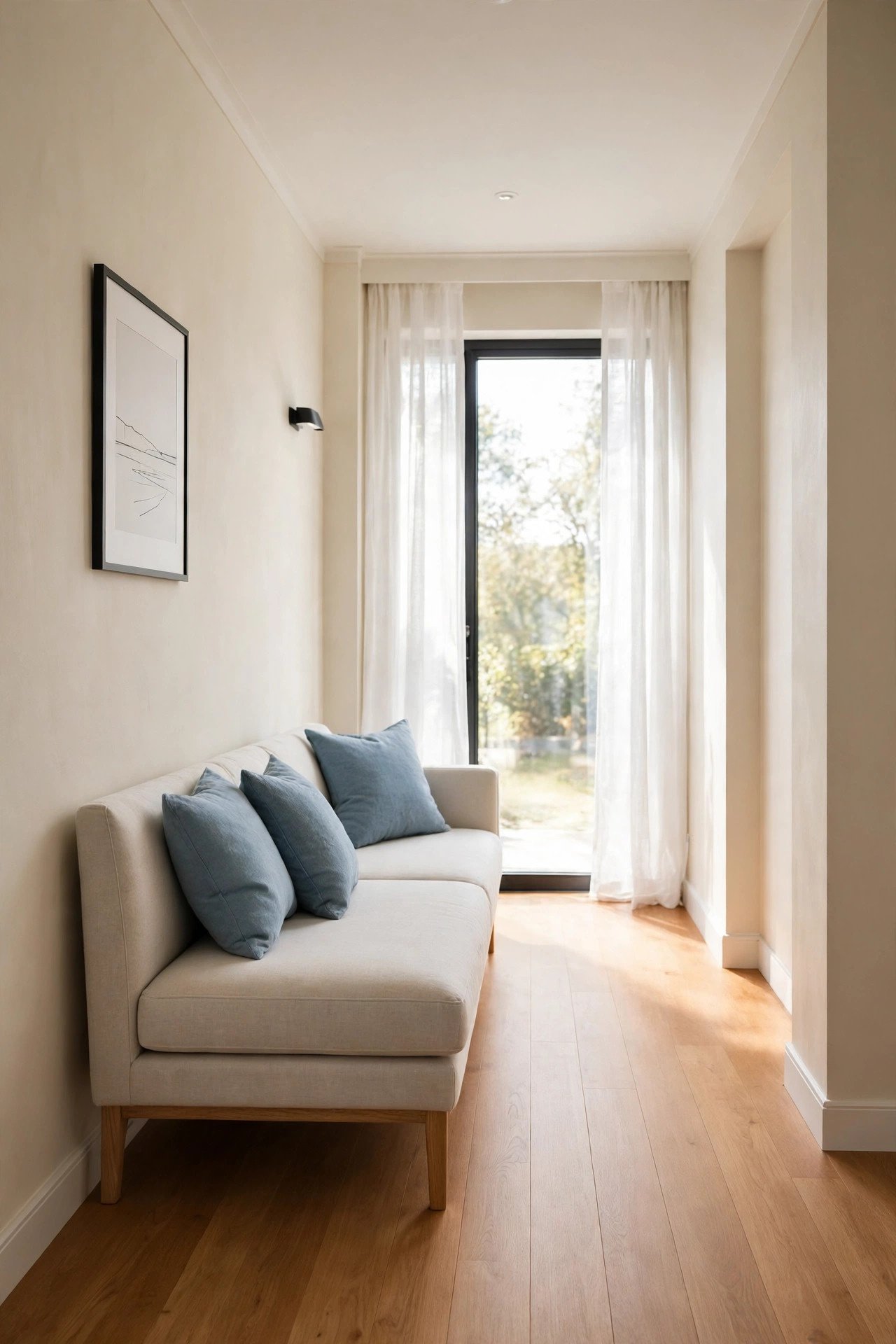
Pulling your sofa a few inches away from the wall sounds strange, but it makes the room feel wider. That small gap lets light and air move behind the furniture, and the room stops feeling boxed in. Even three to five inches of breathing room can change the whole feeling.
Use the space behind the sofa for a slim console table or a tall floor lamp. Anchor the arrangement with a rug so the floating sofa still feels grounded and intentional instead of random.
3. Keep the Palette Light and Calm
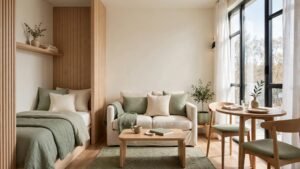
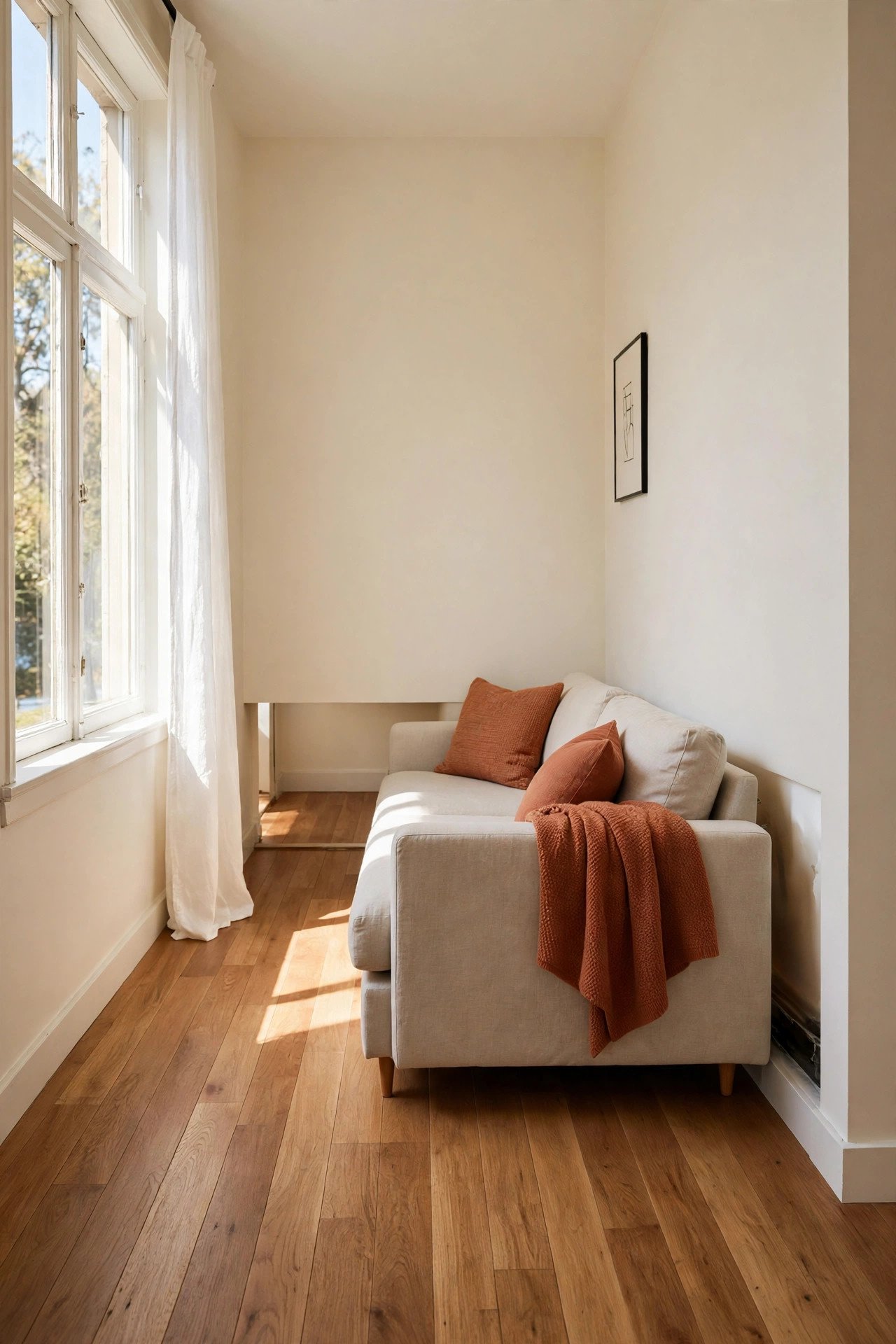
Color shapes how big a room feels even more than the layout does. Soft whites, warm beiges, and light grays reflect daylight and make the walls feel further away. A narrow room painted in light tones feels calmer and less crowded from the moment you walk in.
Keep the wall color consistent instead of breaking it up with many different shades. Add interest through texture, like linen cushions or a woven throw, rather than bold color. If you love small space boho ideas, soft neutral layers are the perfect starting point for them.
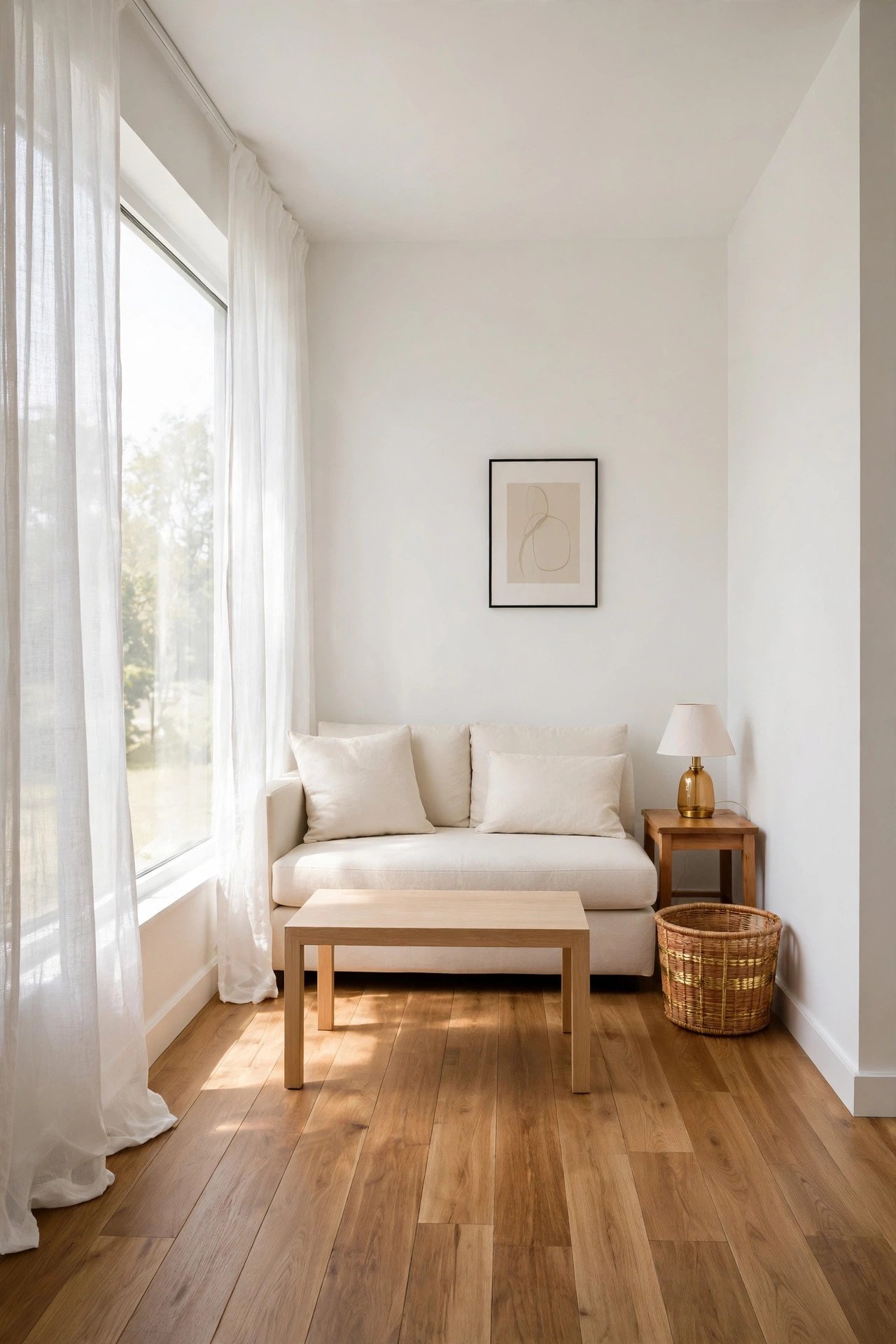
4. Hang One Large Mirror
One large mirror can completely transform a narrow living room without moving a single piece of furniture. It reflects both light and space, so the room looks twice as wide at a glance. Hang it across from a window and it will bounce natural daylight deep into the room.
Choose one oversized mirror rather than a cluster of small ones, which can look busy. Keep the frame simple and slim so the mirror itself does all the work. You will notice the difference the same day you hang it.
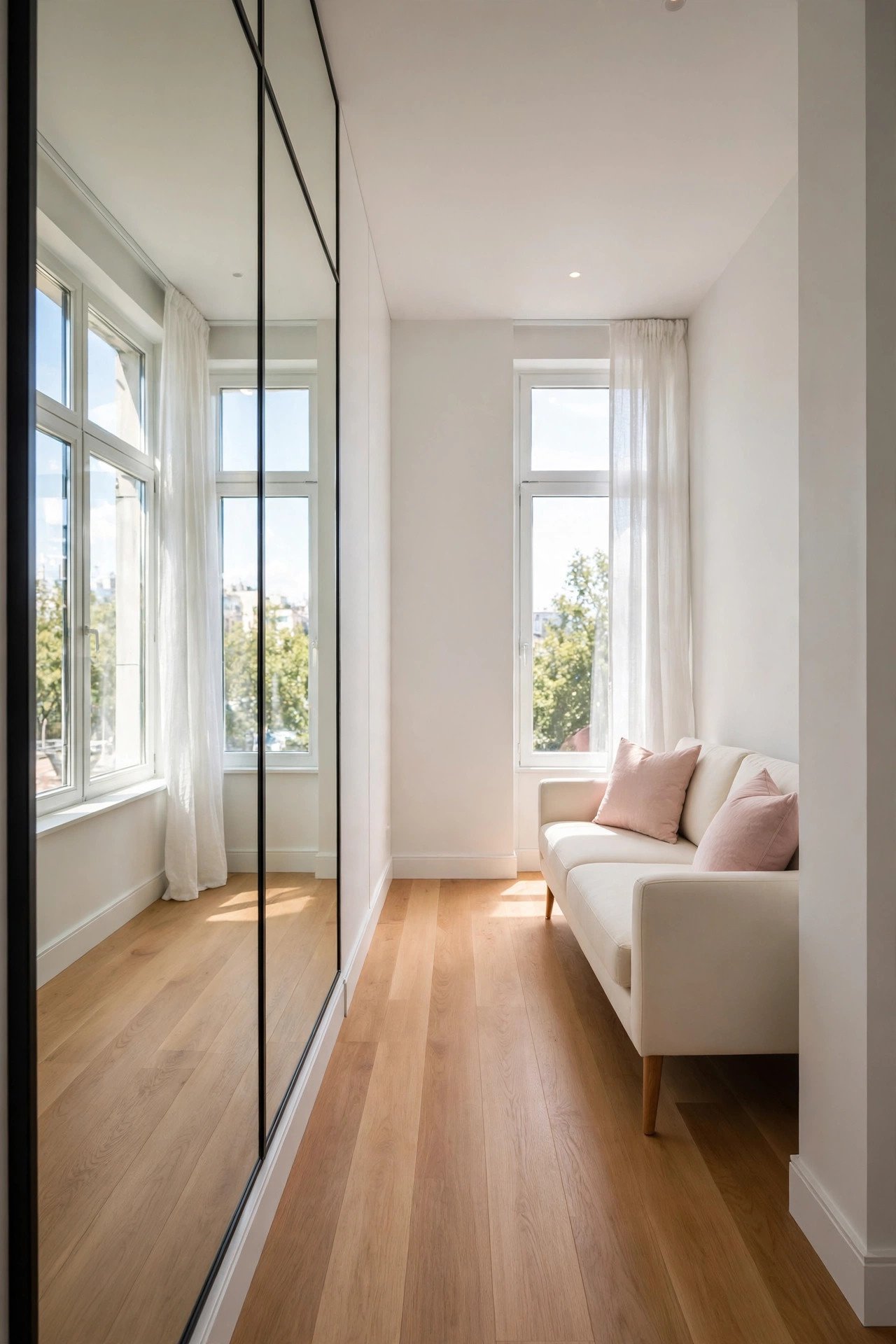
5. Lay a Long Runner Rug
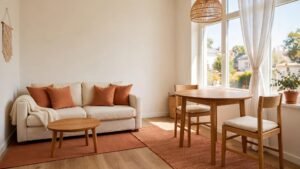
A long runner rug guides your eyes down the length of the room and makes the space feel longer and more connected. It turns a random collection of furniture into one intentional arrangement. The room looks finished instead of scattered.
Choose a rug that runs along the length of the room and keep the pattern simple so it does not feel cluttered. Line your furniture up with the edges of the rug to strengthen the straight, flowing lines of the layout.
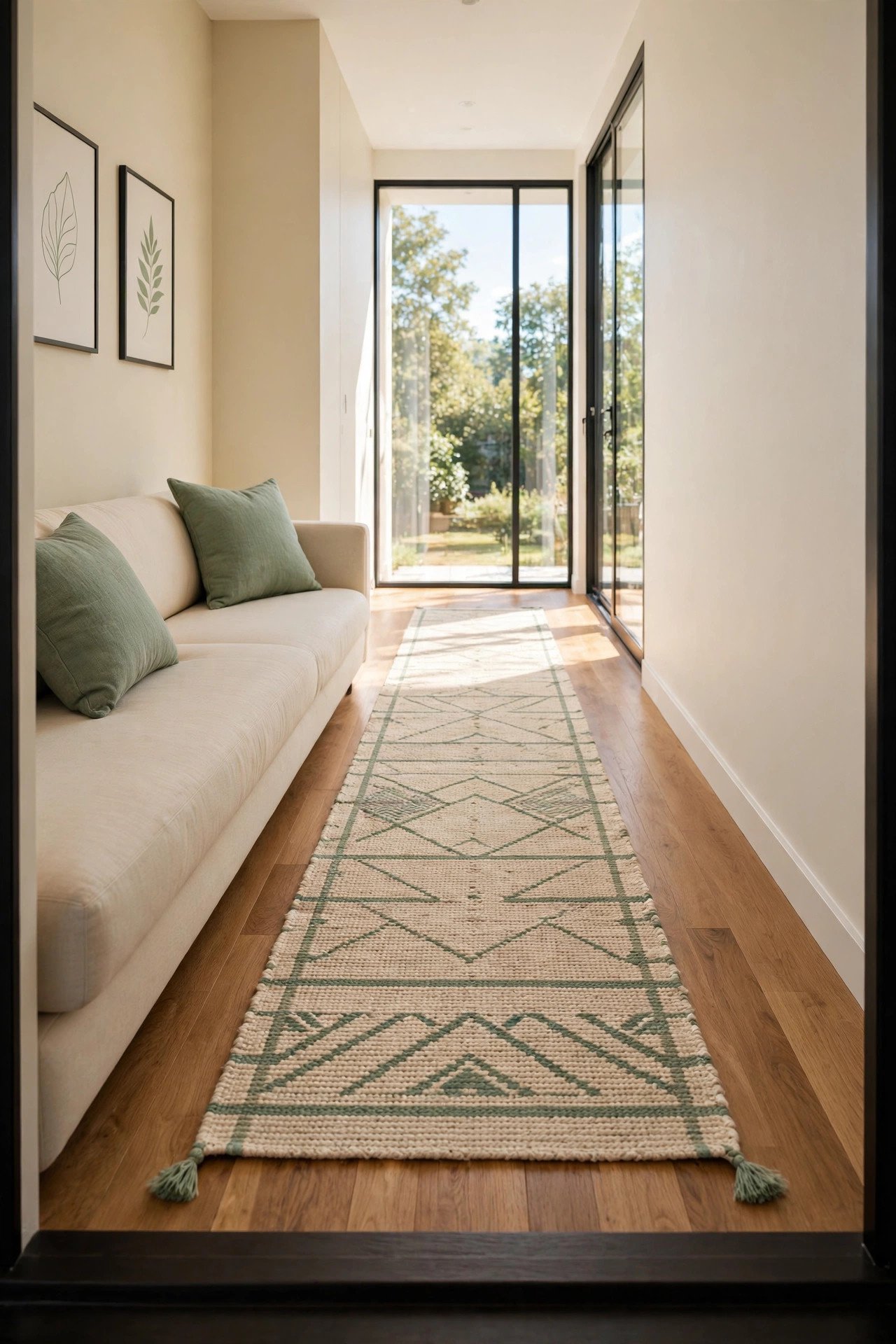
6. Turn One Wall Into Storage
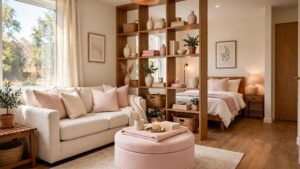
Storage can take over a narrow room very quickly, so give it one dedicated wall and keep the rest clear. Tall shelves or built in cabinets that go all the way up use vertical space instead of eating into your floor area. The room feels custom and tidy instead of crowded.
Mix open shelves for books and pretty objects with a few closed sections for the less attractive things. Keep the lower shelves simple and uncluttered so the wall does not feel heavy. Going upward is the secret that keeps the floor open.
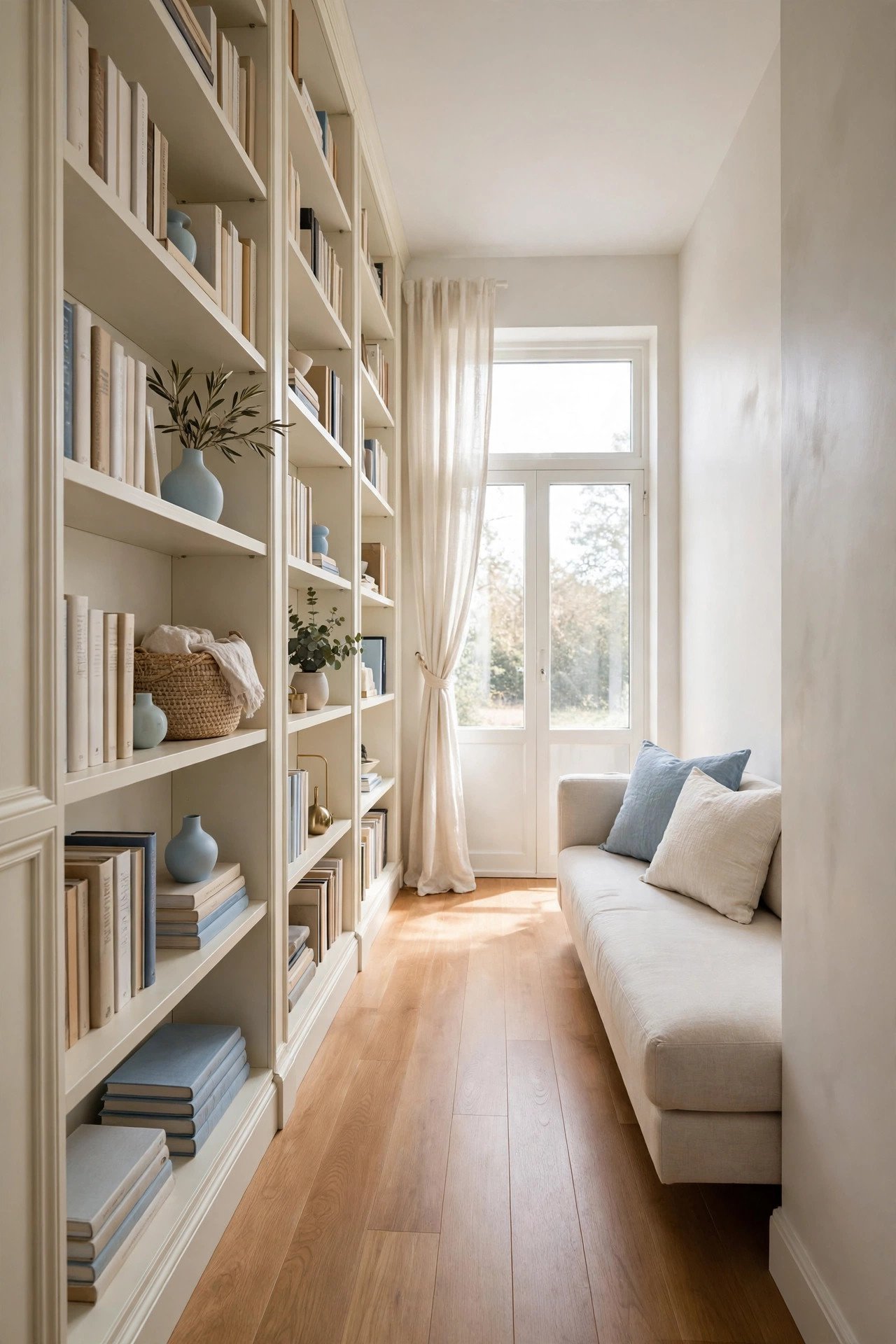
7. Choose Slim Furniture Only
Chunky furniture is the main reason most narrow living rooms feel tight. Swap oversized pieces for slim versions, like a narrow sofa with a smaller depth, a thin coffee table, and lightweight chairs you can move easily. Everything feels lighter and the walkways stay clear.
Look for furniture with clean lines and raised bases rather than solid blocky shapes. You do not need less furniture, you just need furniture in the right size for the room. Measure before you buy and trust the tape measure.
8. Pull the Eye Upward
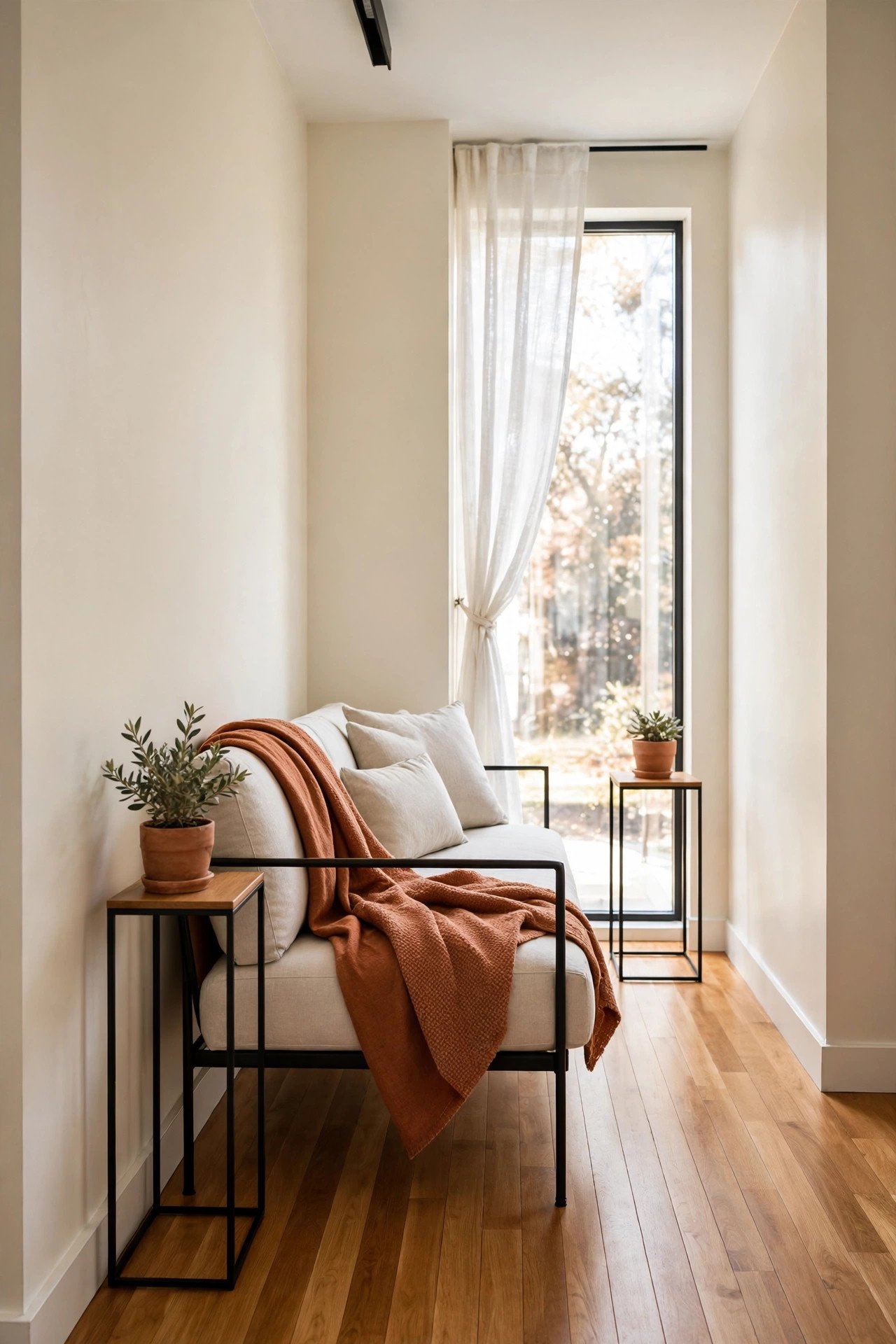
When floor space is limited, the smart move is to draw attention upward instead of sideways. Tall curtains hung above the window frame, vertical wall art, and a slim floor lamp all make the ceiling feel higher and the room less squeezed. The focus shifts from narrow to tall, which feels much better.
Choose one or two tall elements rather than many small decorations scattered around. If you enjoy styling walls, an antique gallery wall arranged in a vertical column can add height without adding visual weight to the sides.
9. Try a Glass Coffee Table
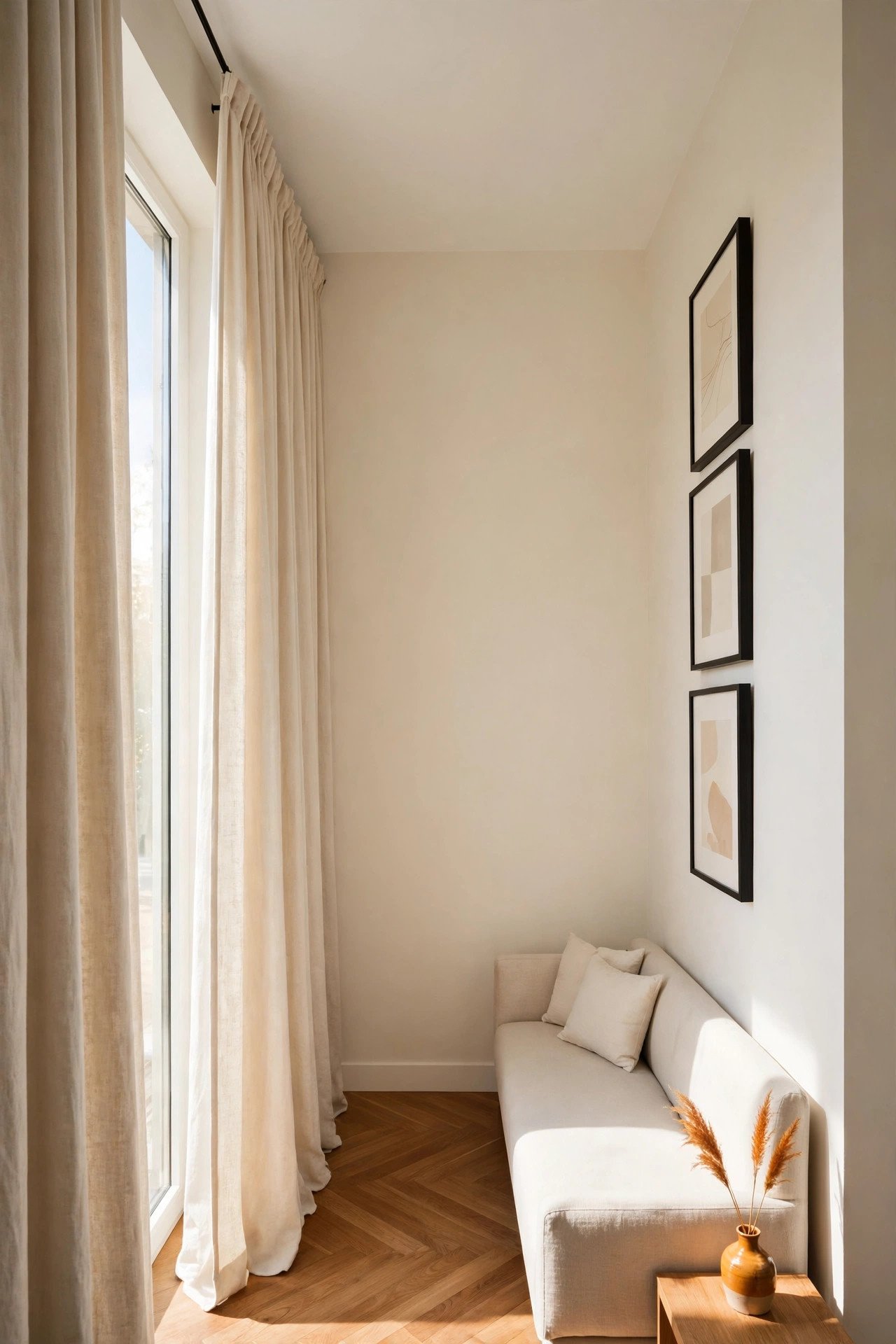
Heavy furniture blocks your view even when there is room to walk around it. A glass or clear acrylic coffee table solves this because your eyes pass straight through it. The center of the room stays visually open, and the whole space feels lighter.
Glass tables work with almost every style, from modern to cozy to classic. Keep the surface lightly styled so the see through effect stays strong. It is one of the easiest single swaps you can make in a narrow room.
10. Put All the Seating on One Side
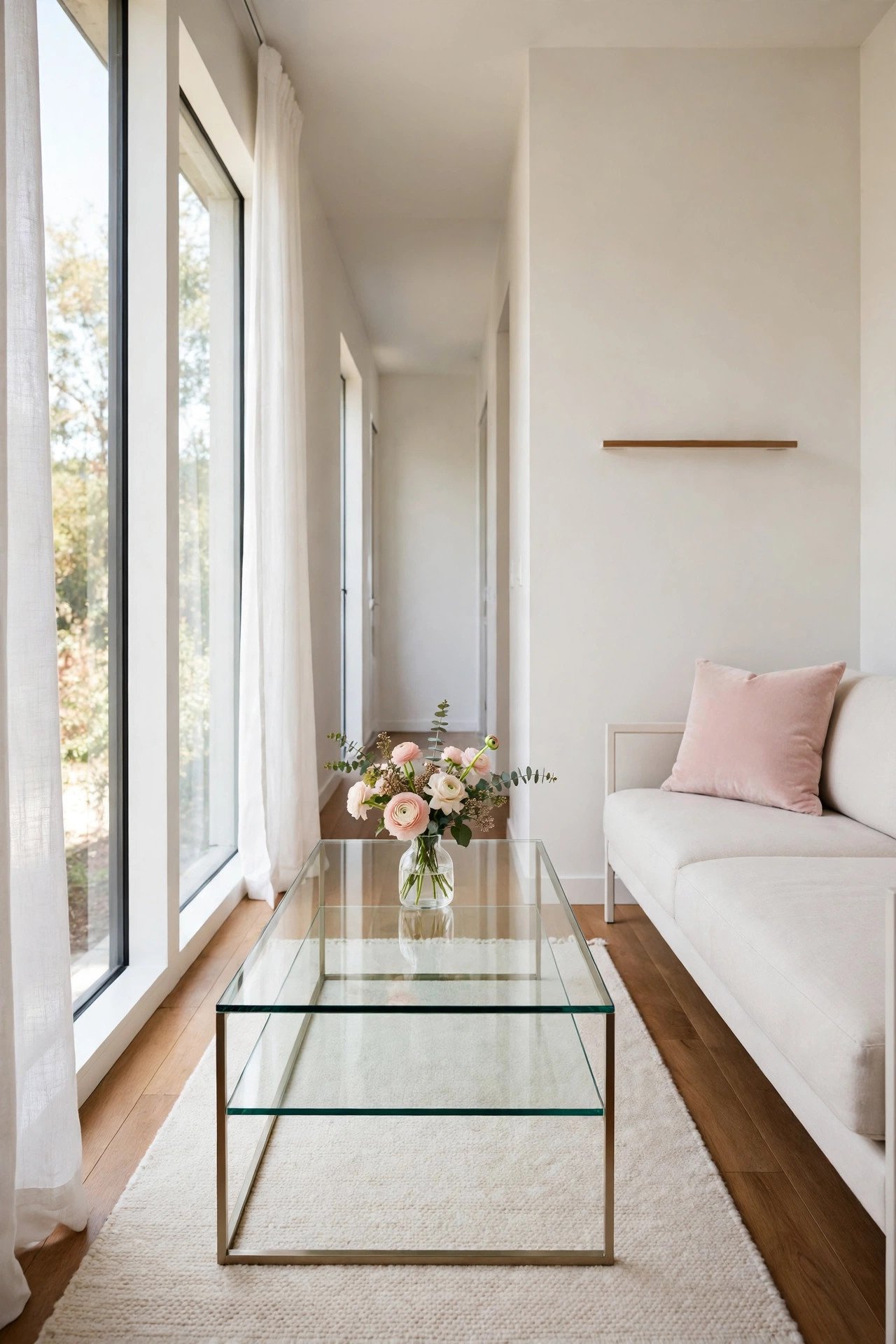
Placing all the seating along one wall and leaving the other side open is one of the most effective narrow room layouts. With one sofa and perhaps a slim side table on the same side, the rest of the room becomes free space for walking. The room feels wider the moment you stop trying to fill both sides.
Keep the open side truly open or styled very lightly, maybe with a tall plant or a single floor lamp. Resist the urge to add a second sofa facing the first one. One sided seating keeps the flow simple and relaxed.
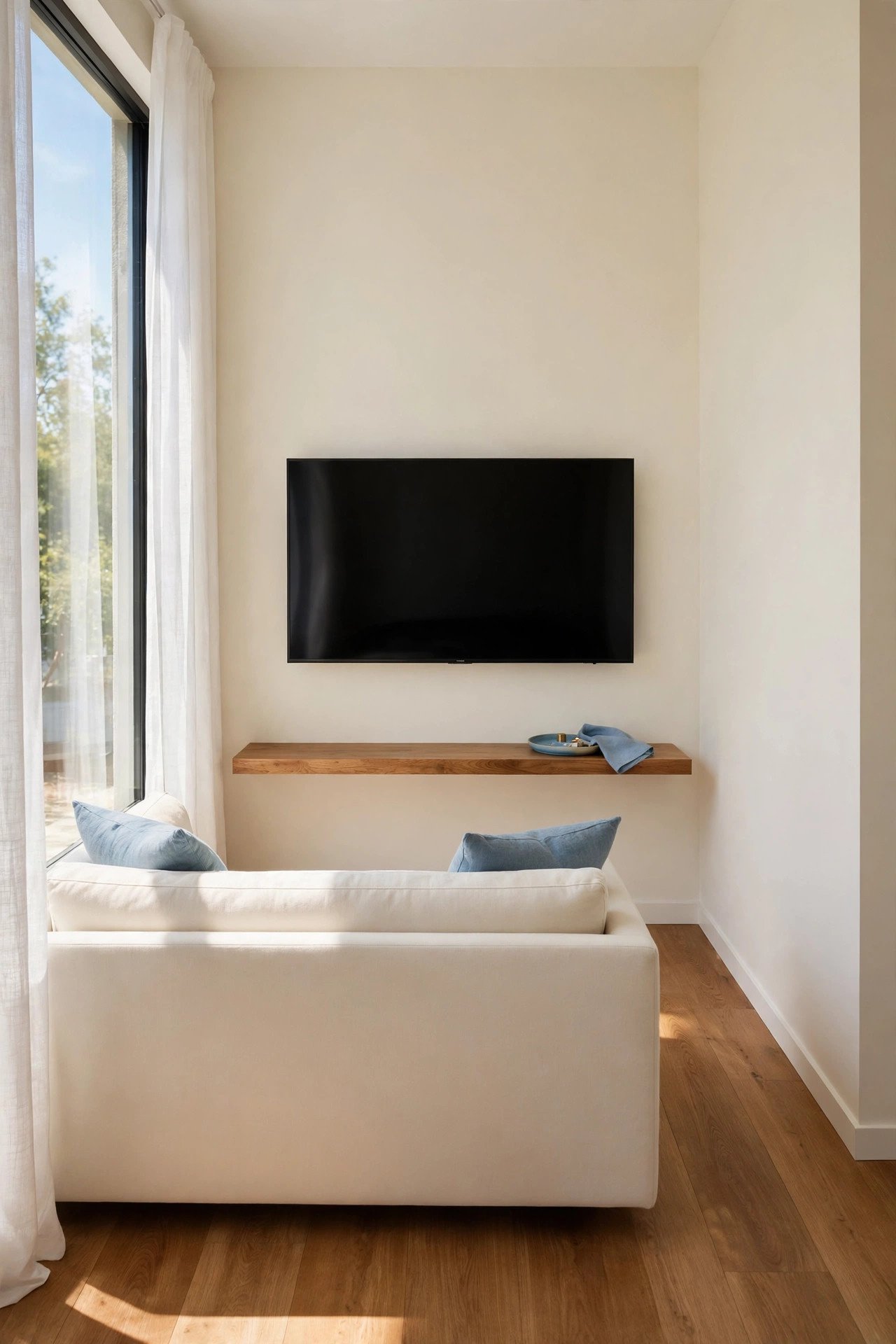
11. Mount the TV on the Wall
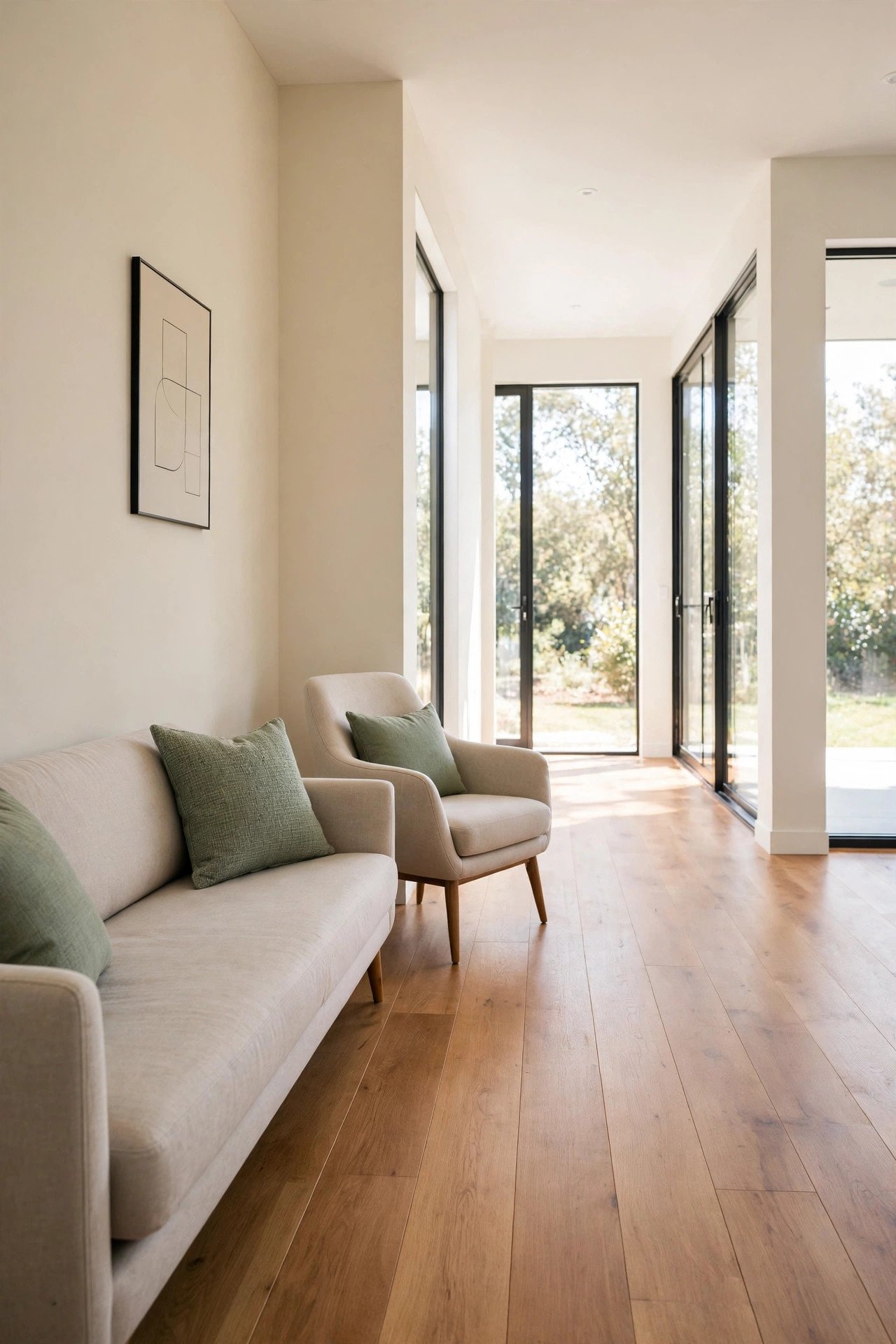
Getting the TV off a bulky stand gives you back precious floor space. A wall mounted screen with a slim floating console below keeps the setup clean and gives you more room to move around. The whole wall looks lighter and more modern.
Hide the cables inside the wall or with a simple cable cover so the look stays neat. Keep the decor around the TV minimal so the screen area does not become a visual magnet. If you are renting, many of these rental friendly decor hacks include damage free ways to mount and style around a TV.
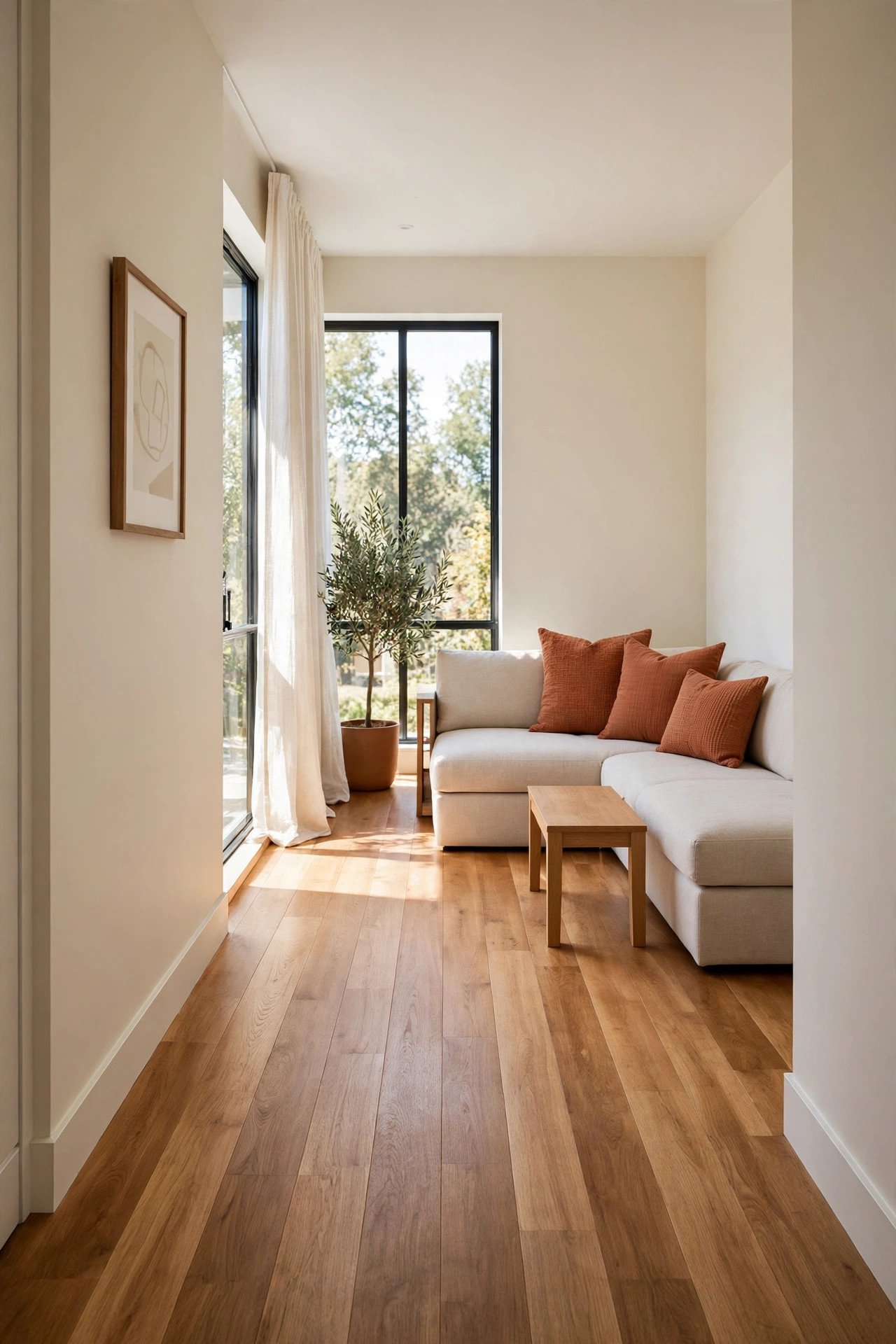
12. Tuck a Compact L-Shape Sofa Into the Corner
An L shaped sofa can work in a narrow living room if you choose a compact one and place it neatly into a corner. It gives you more seating than a straight sofa without reaching across the walkway. The key is picking a low profile design with one shorter side.
Never place a large sectional in the middle of a narrow room, because it will cut the space in two. Measure the corner carefully and leave a generous path along the longer side. Done right, the corner sofa saves space instead of taking it.
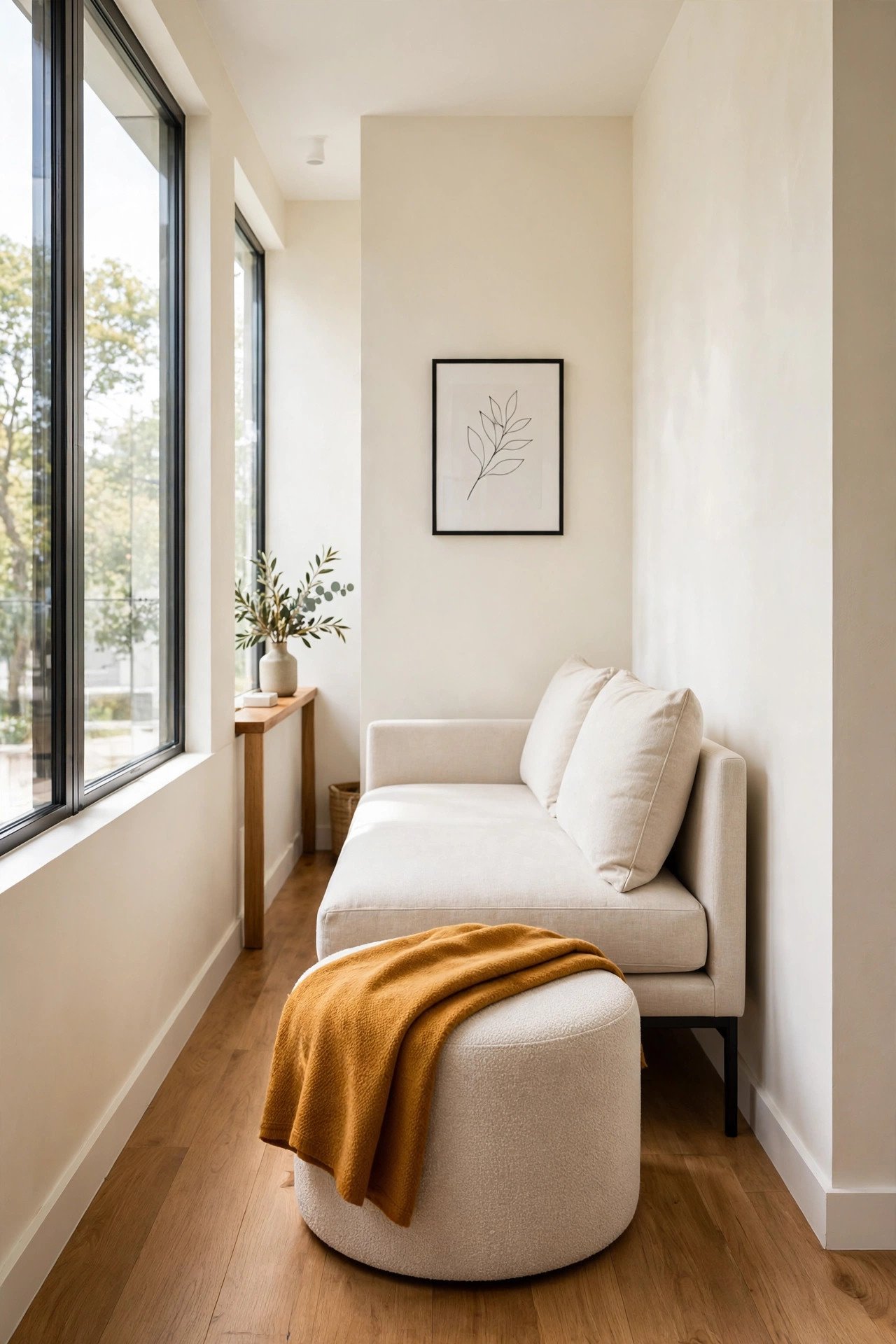
13. Buy Furniture That Does Double Duty
In a narrow living room, every piece should earn its place by doing more than one job. A storage ottoman holds blankets and gives you an extra seat. A bench by the wall stores books and becomes seating when guests visit. Nesting tables tuck together when you need floor space.
Look for pieces with hidden storage built in, so clutter has somewhere to go. Foldable or drop leaf tables are perfect for rooms that need to change roles during the day. Smart pieces in a quiet luxury style can make double duty furniture look elegant instead of practical only.
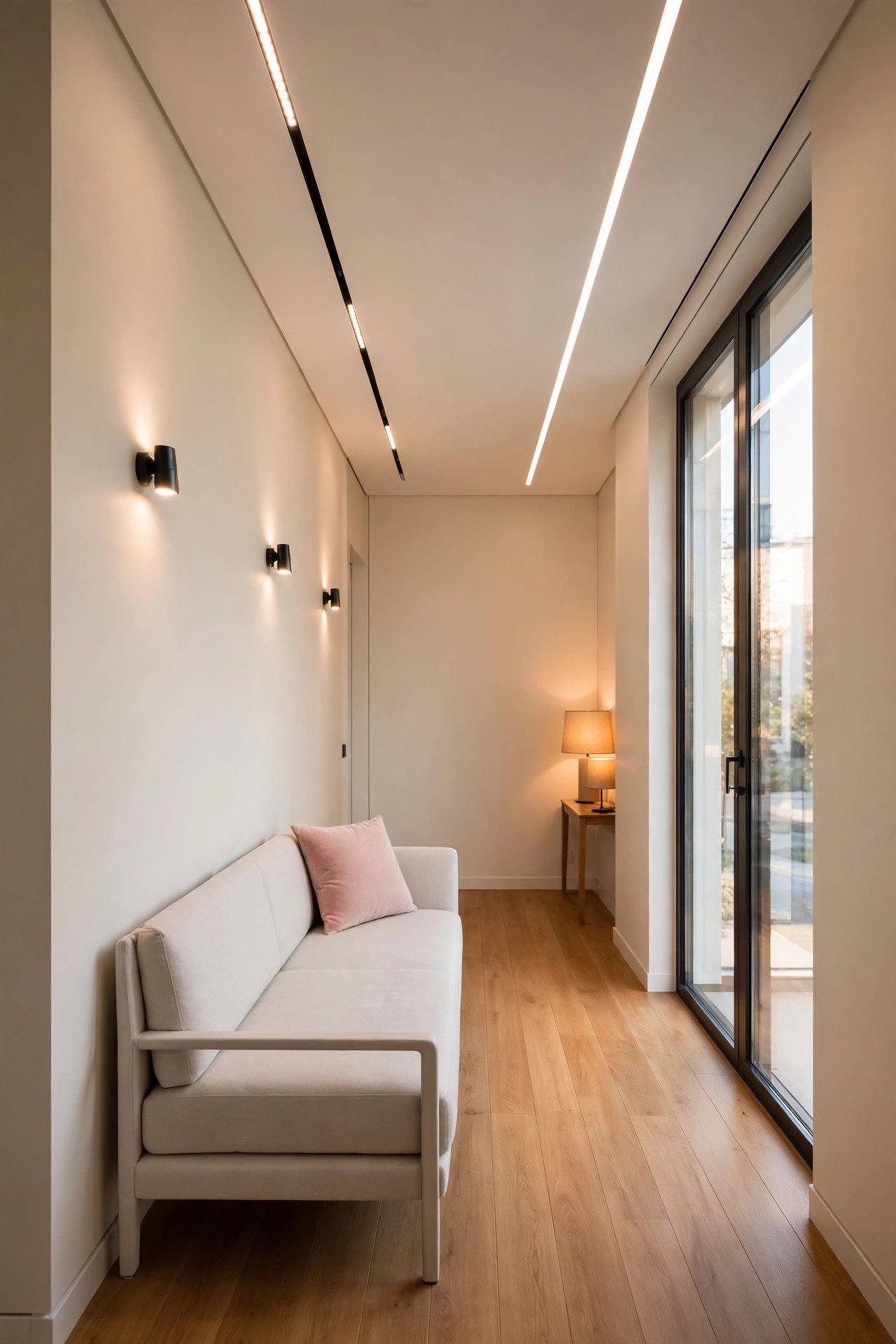
14. Run Lighting Down the Length of the Room
Lighting can quietly shape how a room feels. In a narrow space, lights that follow the length of the room, like a straight row of ceiling lights or track lighting, guide the eye from one end to the other. The room feels more balanced and connected instead of chopped up.
Add wall sconces along one side for depth and a warm floor lamp for cozy evenings. Keep the lighting warm rather than harsh white so the long room feels inviting. Avoid scattered random light sources that break the flow.
15. Hang One Statement Art Piece
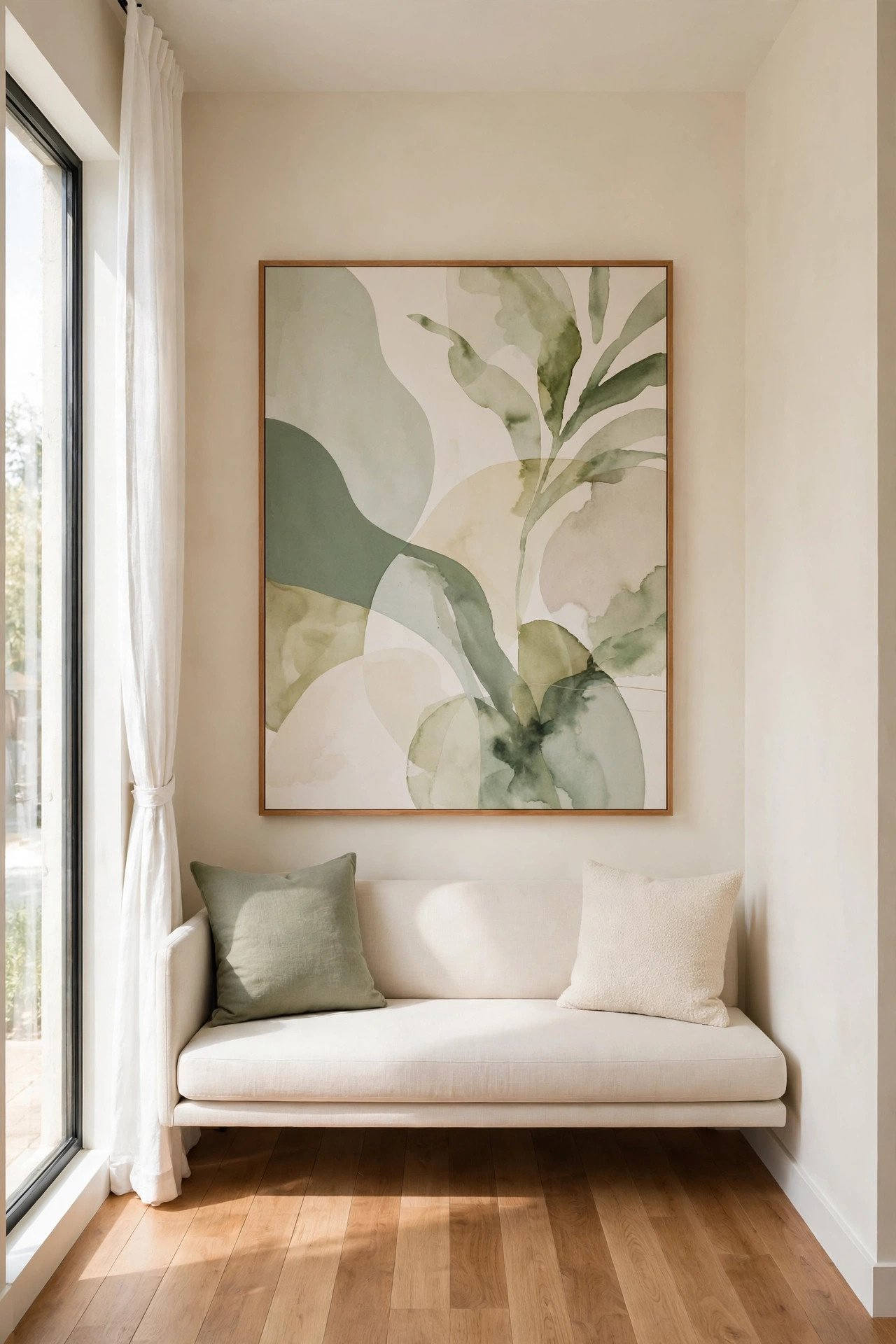
Instead of spreading decorations across every wall, focus on one strong focal point. One oversized piece of art on a single wall draws the eye and gives the room a sense of purpose. The rest of the walls stay calm, which keeps the room from feeling cluttered.
Choose artwork with tones that match the room so it feels like part of the design. Keep the surrounding walls minimal so the statement piece has room to breathe. One confident piece beats ten small frames in a narrow space every time.
Conclusion
A narrow living room does not need more space, it needs smarter choices. One clear walkway, light colors, slim furniture, and a little vertical thinking can turn a tunnel like room into a space you love to spend time in.
Start with one idea from this list and live with it for a few days. You will be surprised how quickly the room feels different. Your narrow living room has more potential than you think, friend.
Frequently Asked Questions About Narrow Living Room Layouts
How do you arrange furniture in a narrow living room?
Place the sofa along one long wall and keep the opposite side open for walking. Use slim furniture, a slim or glass coffee table, and keep the layout in straight lines. One clear pathway from one end of the room to the other makes the whole space feel wider and easier to use.
What is the best sofa for a narrow living room?
A slim sofa with a smaller seat depth works best because it leaves more walking space. Armless or low profile designs also reduce visual bulk. If you want more seating, choose a compact L shaped sofa and tuck it neatly into a corner so it never blocks the walkway.
Should furniture touch the walls in a narrow living room?
Not always. Keeping large pieces against the wall saves space, but pulling the sofa a few inches away from the wall can actually make the room feel wider. The small gap lets light and air move behind the furniture so the room feels less boxed in.
What colors make a narrow living room feel bigger?
Light and calm colors work best because they reflect daylight and make the walls feel further away. Whites, warm beiges, soft grays, and muted pastels keep the room airy. Add depth through texture like linen and woven fabrics instead of dark or bold color contrasts.
Can you use a rug in a narrow living room?
Yes, a long runner rug is one of the best tools for a narrow room. Lay it down the length of the space to guide the eye and make the room feel longer. Keep the pattern simple, and line the furniture up with the edges of the rug so the layout looks intentional and connected.

Hi, I’m Emily! I turn messy corners into cozy, organized spots. DreamNestDecor is where I share simple, practical home ideas — decor, organization, and small-space solutions that work in real life, not just in photos. Every idea here is carefully researched before it’s shared.