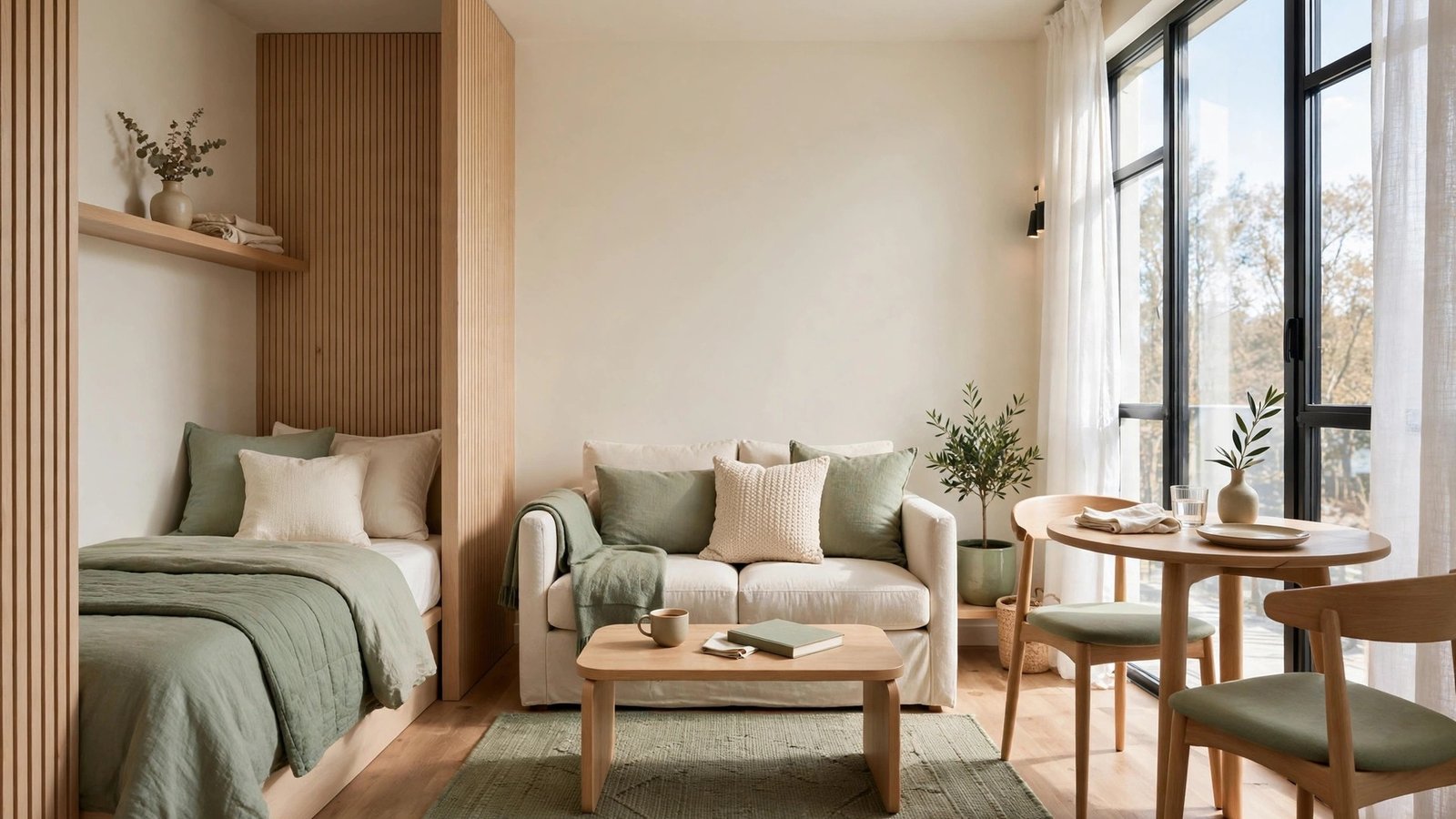
A few years ago I helped my cousin move into her very first studio apartment. We stood in the doorway with her boxes around our feet, and the whole place was one single room with a tiny kitchen along the wall. She looked at me and whispered, “Where does the bedroom go?” We laughed, and then we figured it out together, corner by corner.
That little apartment taught me that a studio works best when every part of your day gets its own clear spot. You do not need more rooms. You need smart zones for sleeping, relaxing, working, and eating, with paths between them that feel natural. Below are 26 tiny studio apartment layout ideas that give one room the feeling of a whole home.
1. Divide the Space With a Bookshelf
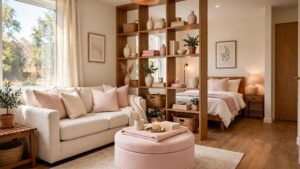
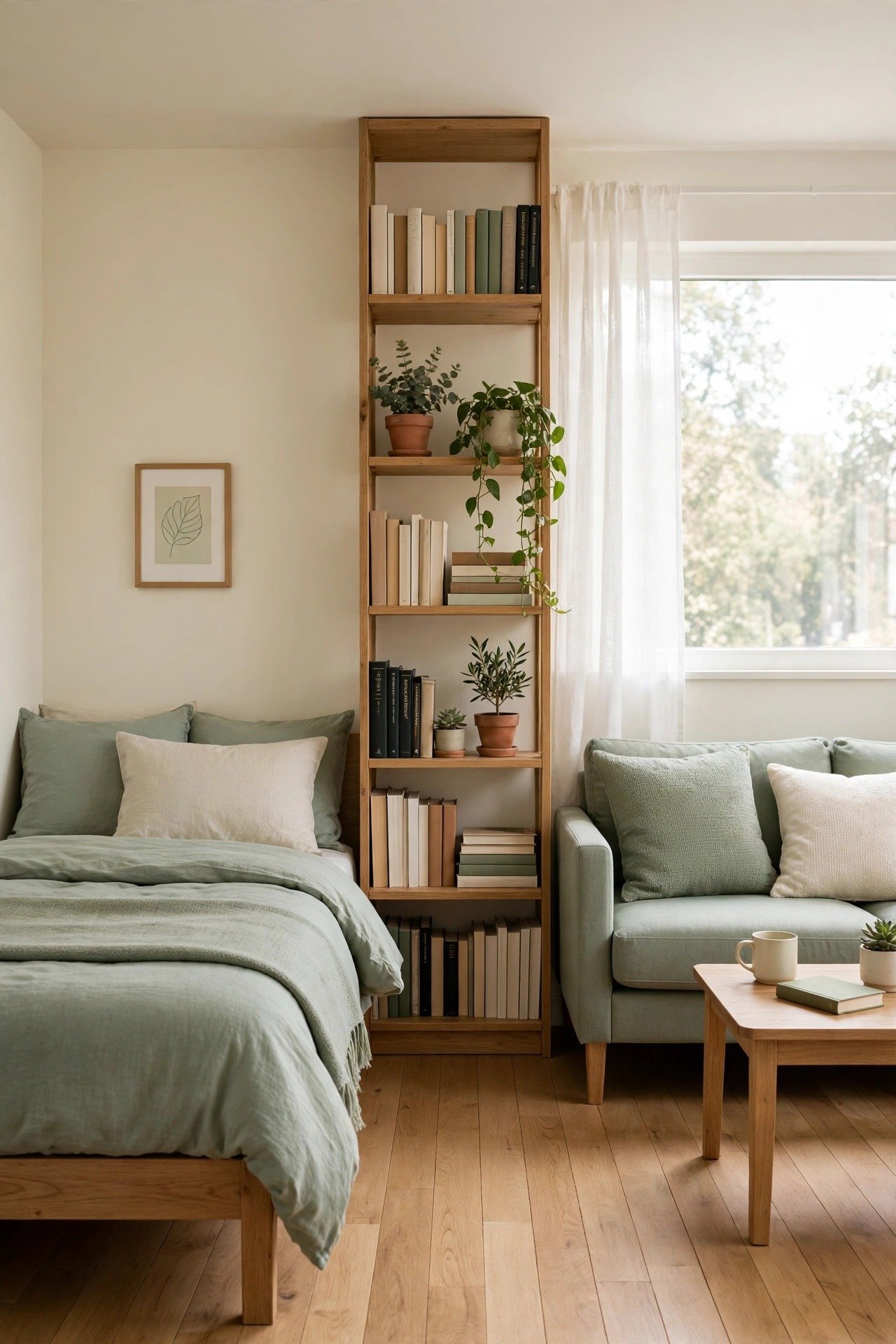
A tall open bookshelf is the friendliest way to split one room into two zones. Place it between your bed and your sofa, and suddenly the bed area feels private while the living area feels like its own room. Because the back is open, light and air still flow through both sides.
Style the shelves with books, a few baskets, and one or two plants so the divider looks intentional. Keep the heaviest books on the lower shelves for stability, and make sure the shelf sits firmly against a rug or non-slip pad. You will love how much larger the studio feels with clear zones.
2. Let Natural Light Fill the Studio
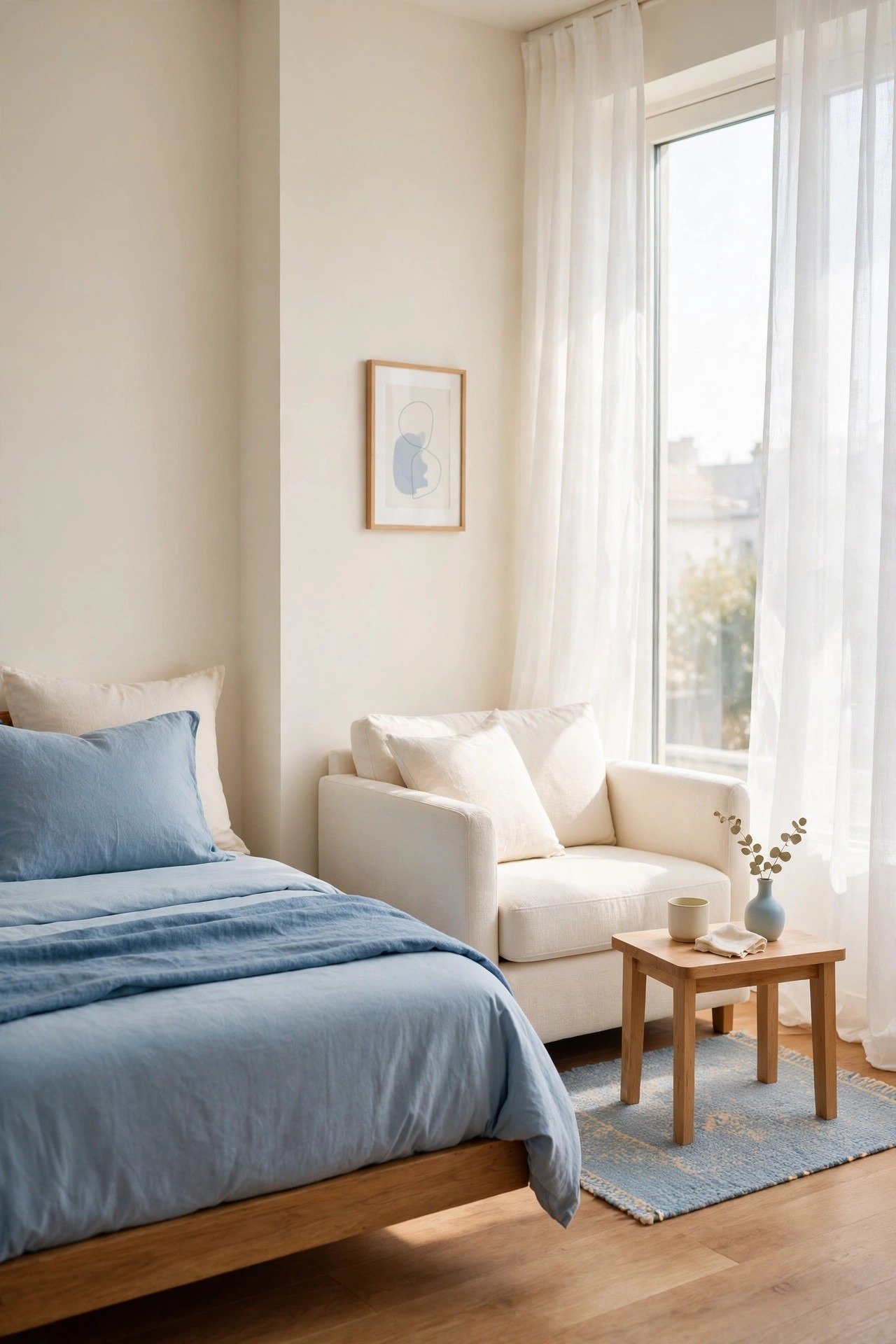
Natural light is the best decorating tool a small studio can have. Keep the window wall as clear as possible so daylight reaches deep into the room. Tall furniture belongs on the walls away from the window, never blocking the glass.
Hang sheer white curtains instead of heavy drapes so light filters through even when you need privacy. Place a mirror across from the window to bounce the light further into the space. You will notice the whole studio feels calmer and more open the moment sunlight takes over.
3. Create Clear Living Zones
Every activity in your studio deserves its own visual cue. Lay a rug under the sofa to mark the living zone, and use a different rug or no rug at all under the bed to mark the sleeping zone. Your eyes will read these cues as separate rooms.
You can also use lighting to separate zones. A floor lamp by the sofa says this is the living room, while a small bedside lamp says this is the bedroom. When each zone has its own light and its own rug, the whole studio feels organized and calm.

4. Push the Bed Against the Wall
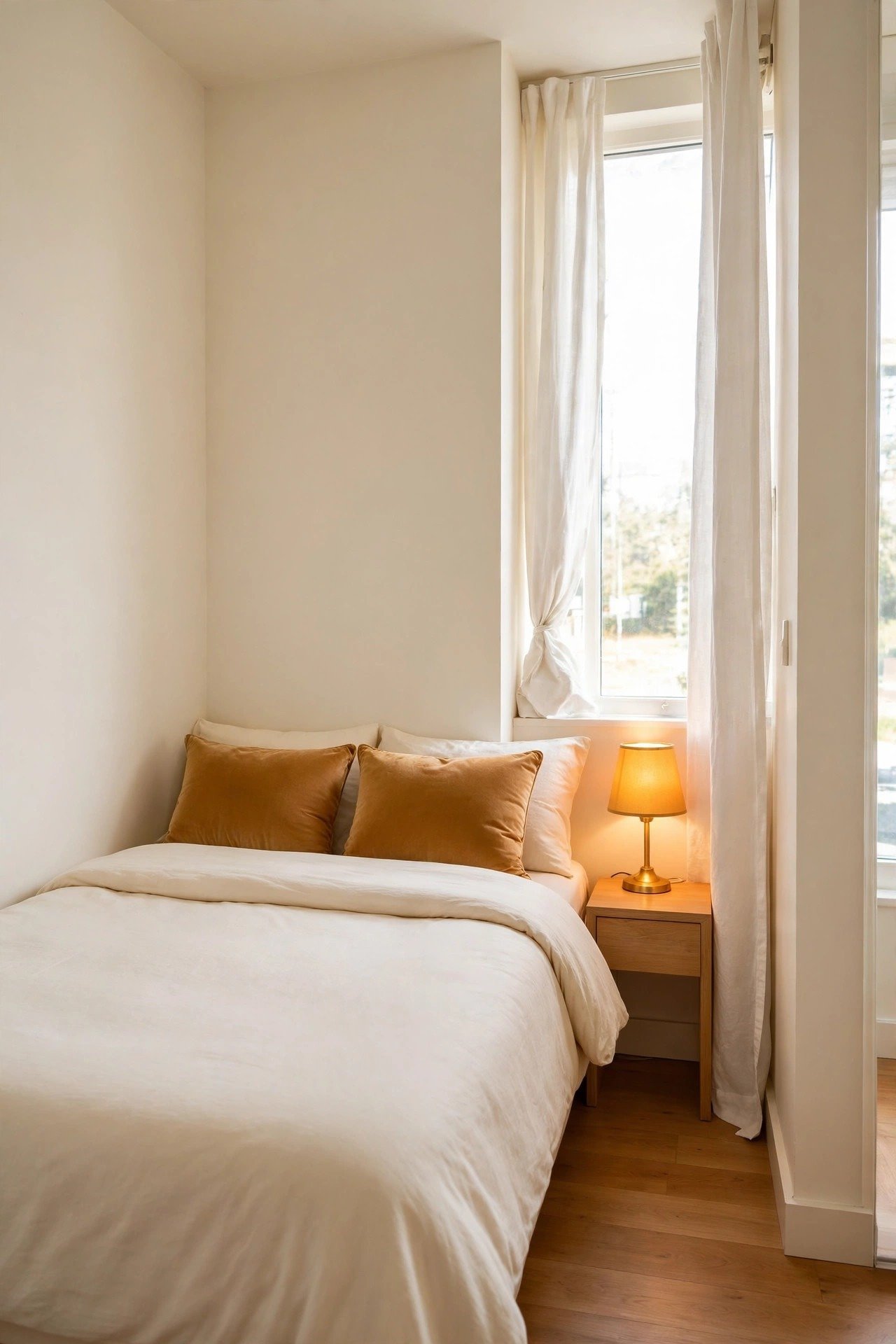
In a tiny studio, a bed floating in the middle of the room eats up precious floor space. Push the bed into a corner or flat against the longest wall, and you free up the center of the room for living and moving. The room instantly feels twice as large.
A corner bed also feels cozier, like a built-in nook. Add a couple of pillows along the wall so the bed can double as a daytime lounge spot. You will be surprised how much you use that corner when it faces the main living area.
5. Keep the Layout Open and Breathing
Resist the urge to push every piece of furniture against the walls. Floating your sofa or desk just a little into the room creates breathing space behind it, and that breathing space makes the studio feel bigger. Leave clear sightlines from the door to the window whenever you can.
You can find more inspiration for airy small rooms in these small space boho solutions that show how to keep tiny rooms feeling light. Even a gap of a few inches behind a sofa lets light pass and air move. Your studio will feel like it has room to spare.
6. Pair Your Dining Table With Your Desk
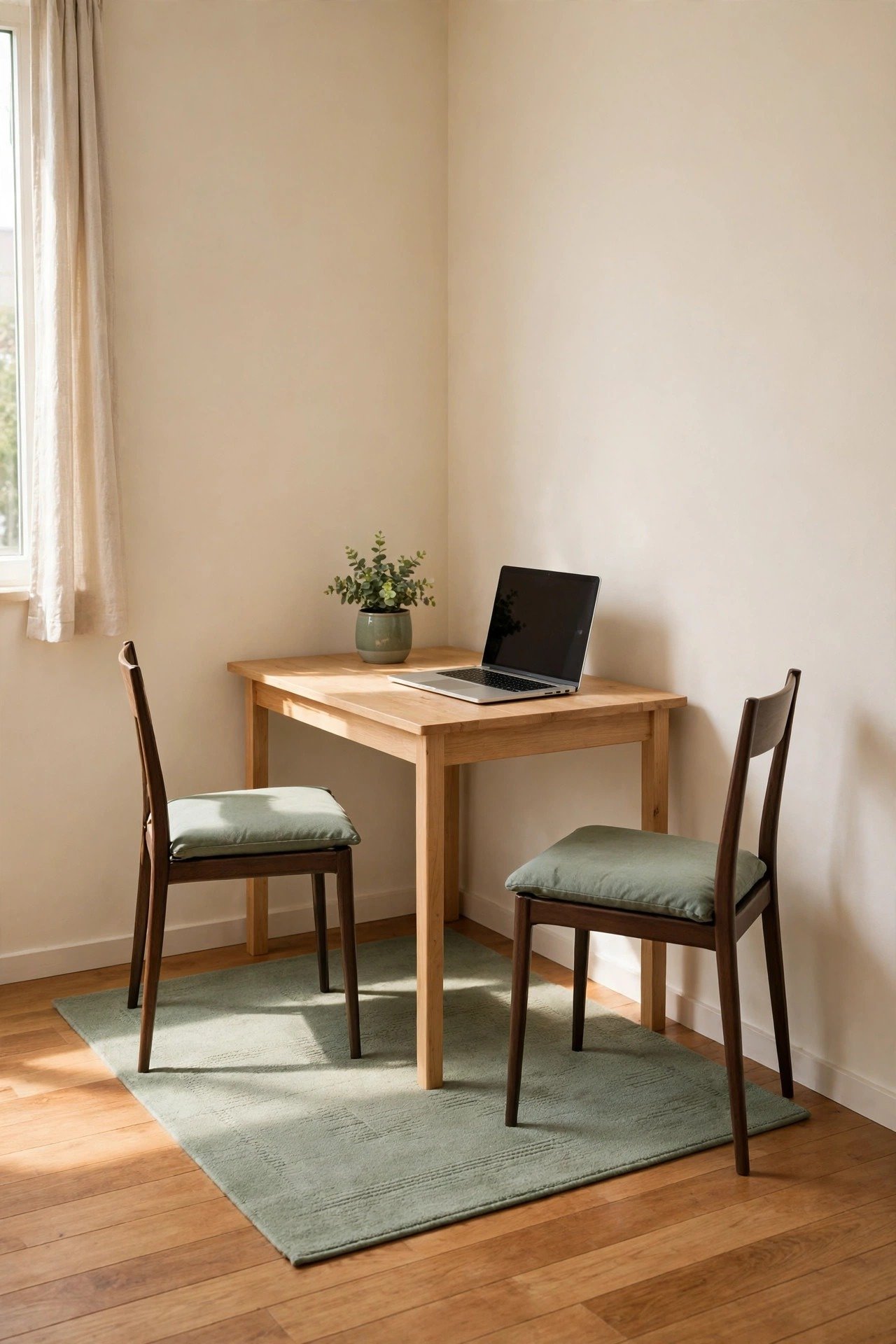
One sturdy table can serve as both your dining spot and your work desk. Choose a table that is comfortable for a laptop and pretty enough for dinner, then keep a comfortable chair at it all day. When work ends, clear the laptop and light a candle, and the same table becomes your dining room.
Place the table near the kitchen side of the studio so meals travel a short distance. A storage bench or two slim chairs tuck neatly under it when you need the floor back. You save a whole furniture footprint by letting one table do two jobs.
7. Keep Every Walkway Clear and Efficient
In a small studio, a blocked path makes the whole home feel cramped. Map out the routes you walk every day, from the front door to the kitchen, from the bed to the bathroom, and make sure no chair back or basket sits in those lanes. Smooth paths make the room feel effortless.
Measure your main walkway and keep it at least two feet wide so you never have to turn sideways. If a piece of furniture keeps getting bumped, it is in the wrong place. You will feel the difference in your daily routine when movement flows easily.
8. Lift the Bed With a Loft
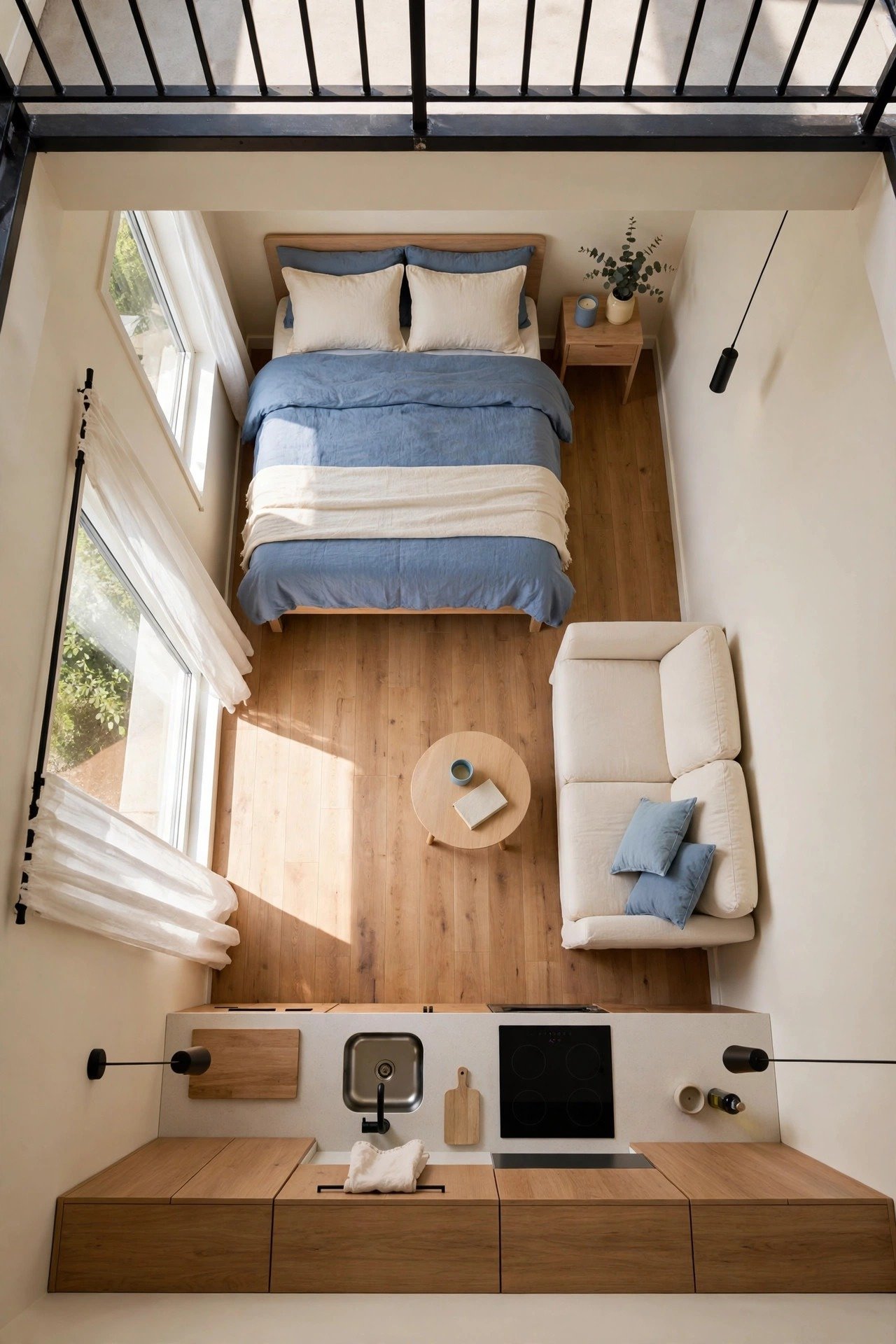
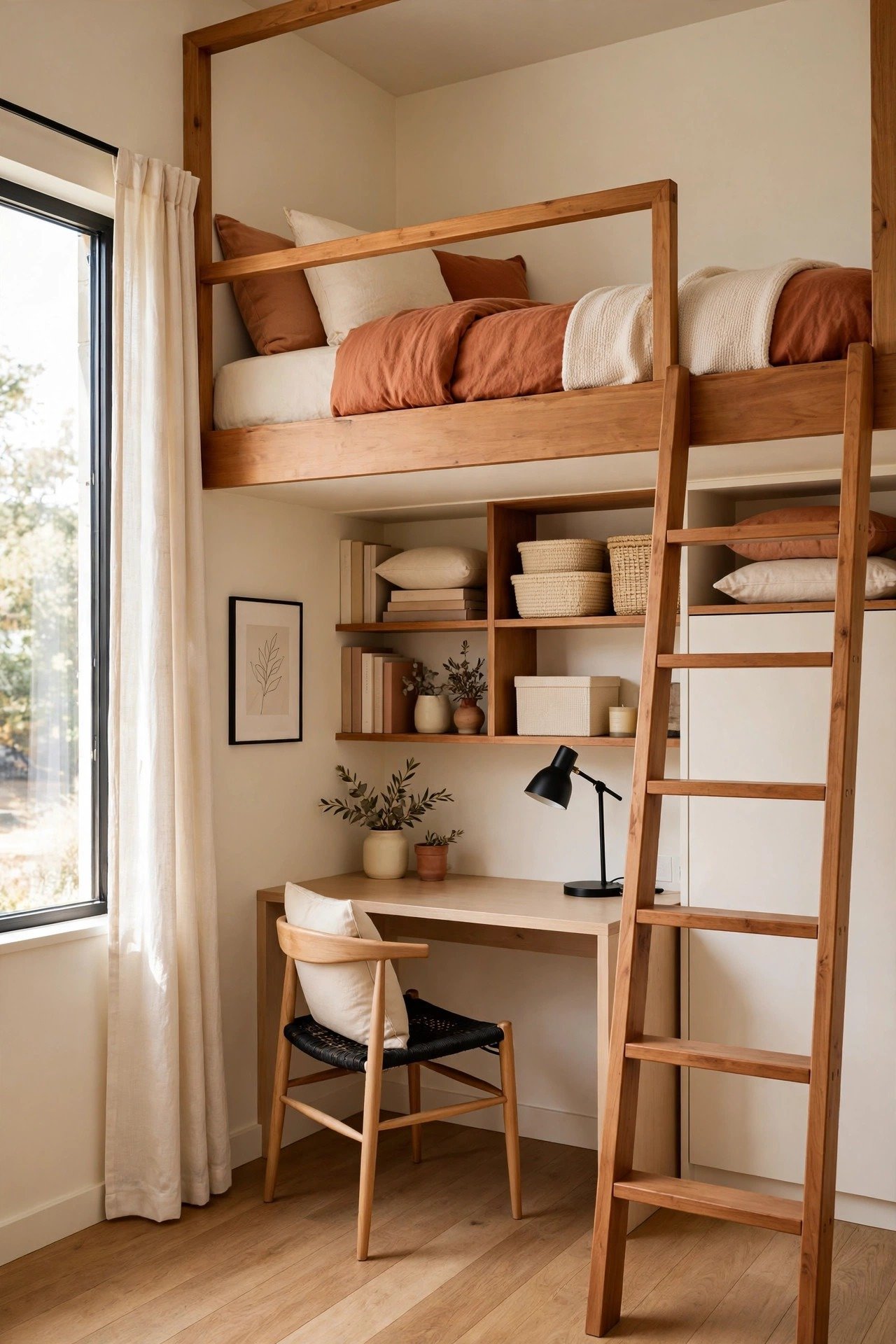
A loft bed is pure magic for a tiny studio because it turns one footprint into two floors. Sleep up top, and use the space underneath for a desk, a reading chair, or a dresser. It is like adding a second room without adding square footage.
Make sure the ceiling is high enough that you can sit up comfortably in bed. Add a small clip lamp and a shelf for your phone and book so the loft feels finished. For clothes storage under or beside the loft, borrow ideas from vintage wardrobe storage ideas to keep every inch working hard.
9. Carve Out a Real Work Corner
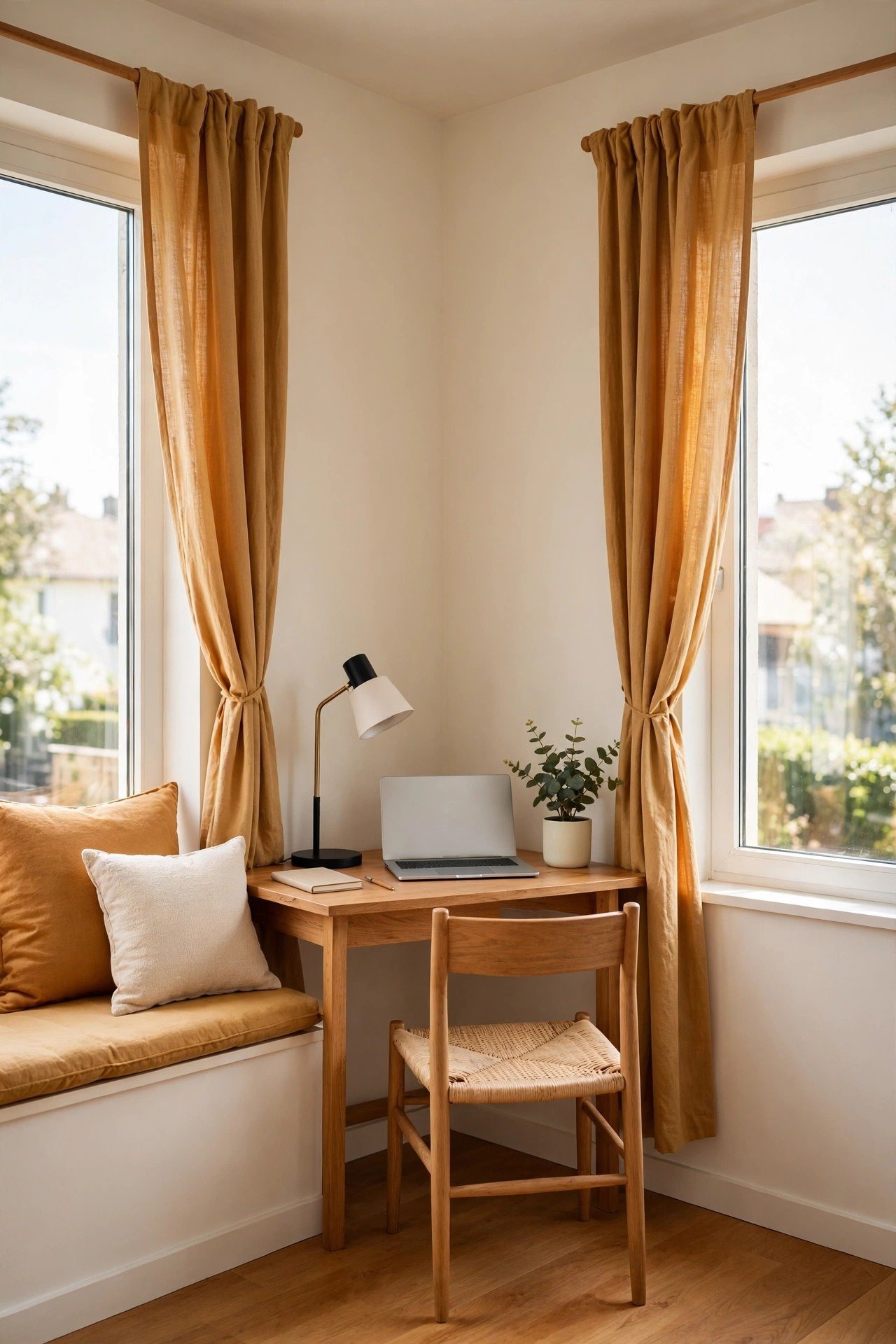
Working from the bed or the kitchen counter gets old fast. Even in a tiny studio, you can carve out a real work corner with a small desk facing a wall or window. A dedicated spot tells your brain that this corner means business.
Choose a slim desk that fits the wall you have, and add a chair that can slide fully underneath when the workday ends. A desk lamp, a small plant, and one organizer tray are all the decoration this zone needs. You will focus better and relax better when work has its own home.
10. Anchor the Room With an L-Shaped Sofa
An L-shaped sofa is one of the best layout tools for a studio because the chaise section naturally marks the edge of the living zone. Place the sofa with its back toward the bed area, and it draws a soft boundary between relaxing and sleeping. The shape invites lounging without needing extra chairs.
Look for a compact loveseat-size sectional rather than a full family-size one. The chaise gives you a footrest, a nap spot, and extra guest seating all in one. You will find the living zone feels like a real living room, even in a few square feet.
11. Keep the Palette Light and Airy
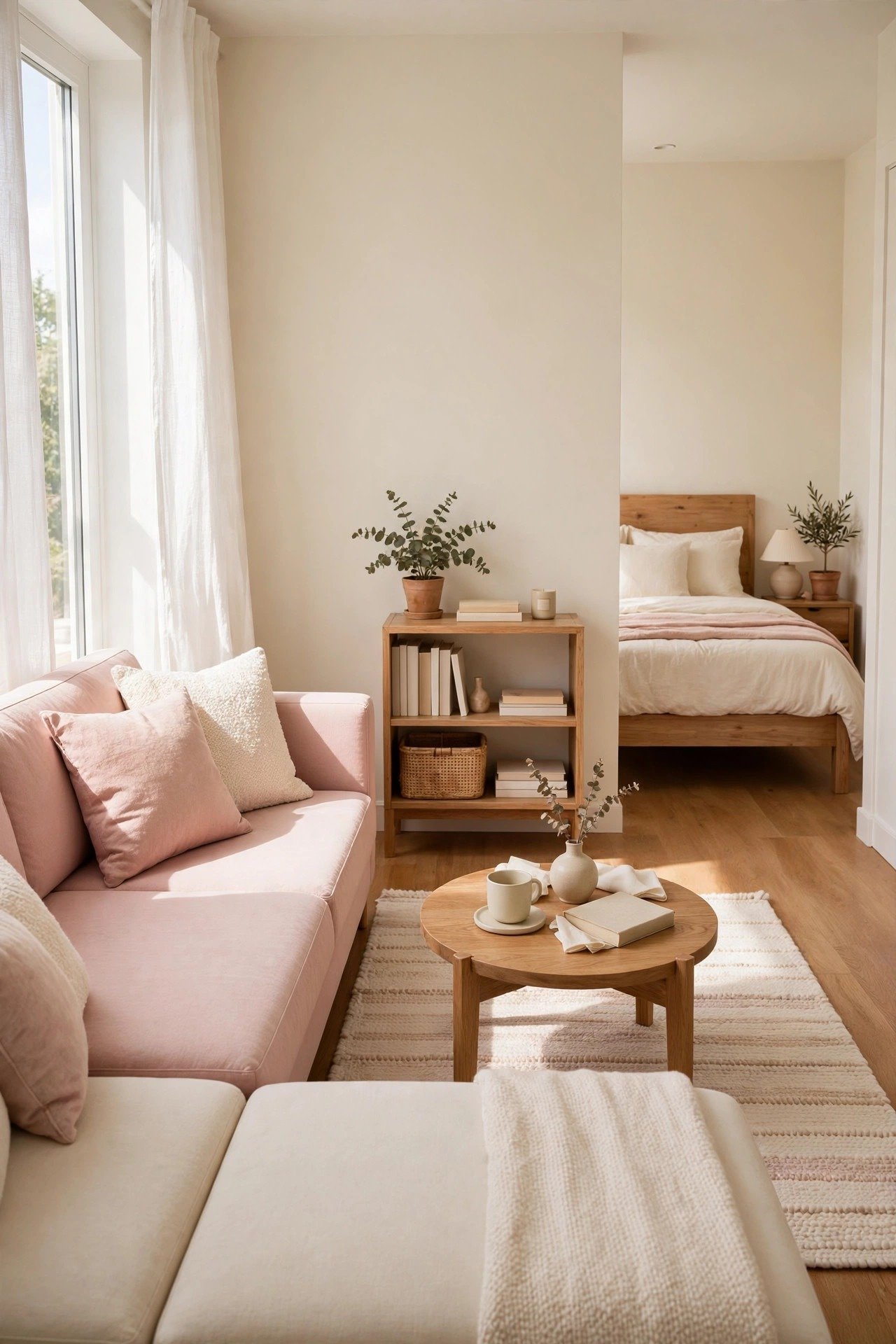
Light colors make walls feel further away and ceilings feel higher. Paint or furnish your studio in whites, creams, and pale tones, and one room will feel much more generous than its actual size. Dark colors can still appear in small doses, but let light tones lead.
Keep your largest pieces, like the bed cover, sofa, and rug, in light shades for the biggest effect. Then add color through small items you can swap easily, like cushions and art. You will feel the room breathe easier the moment the palette lightens up.
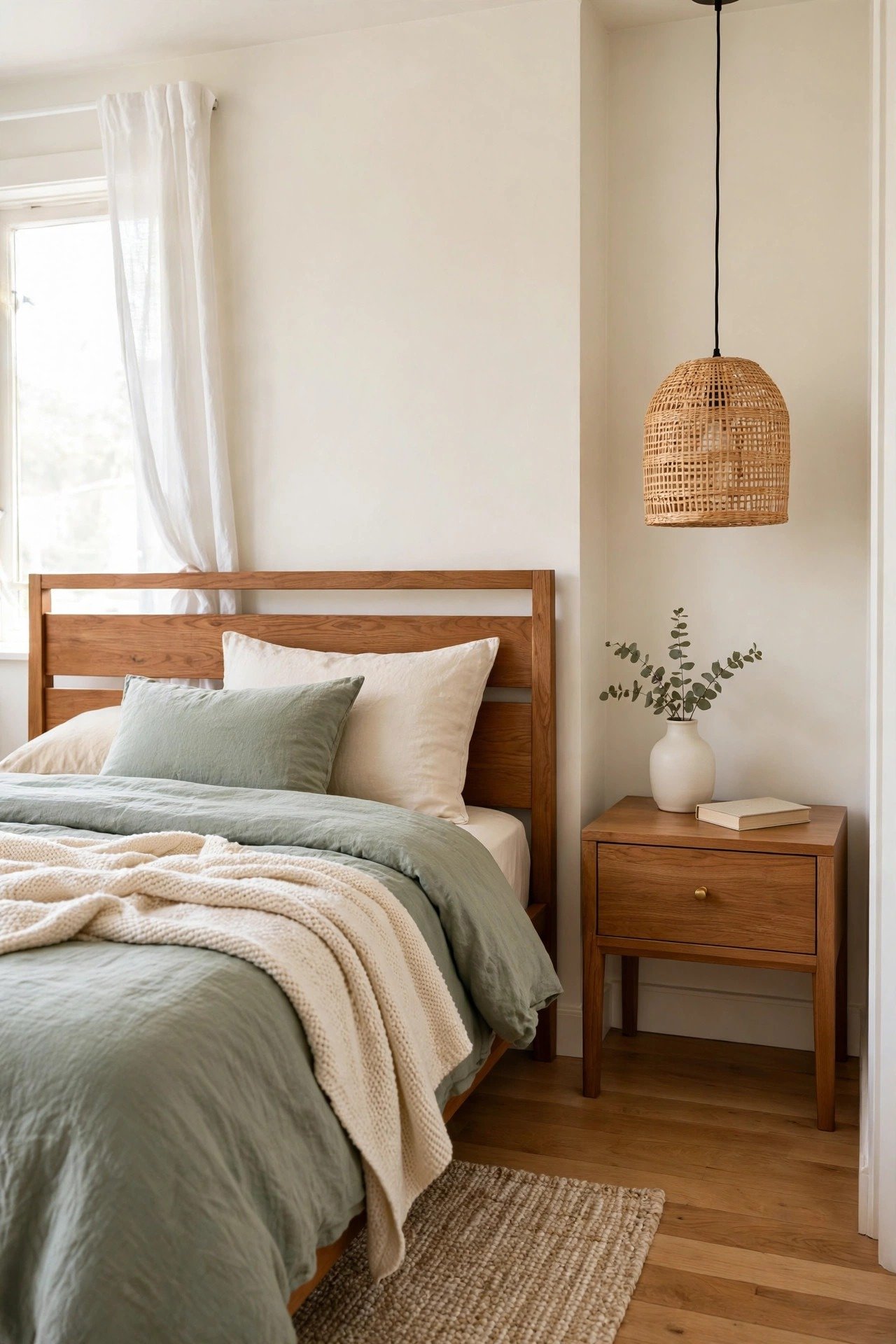
12. Build a Cozy Neutral Retreat
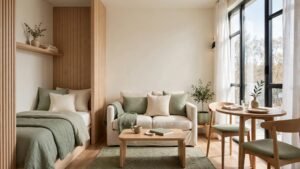
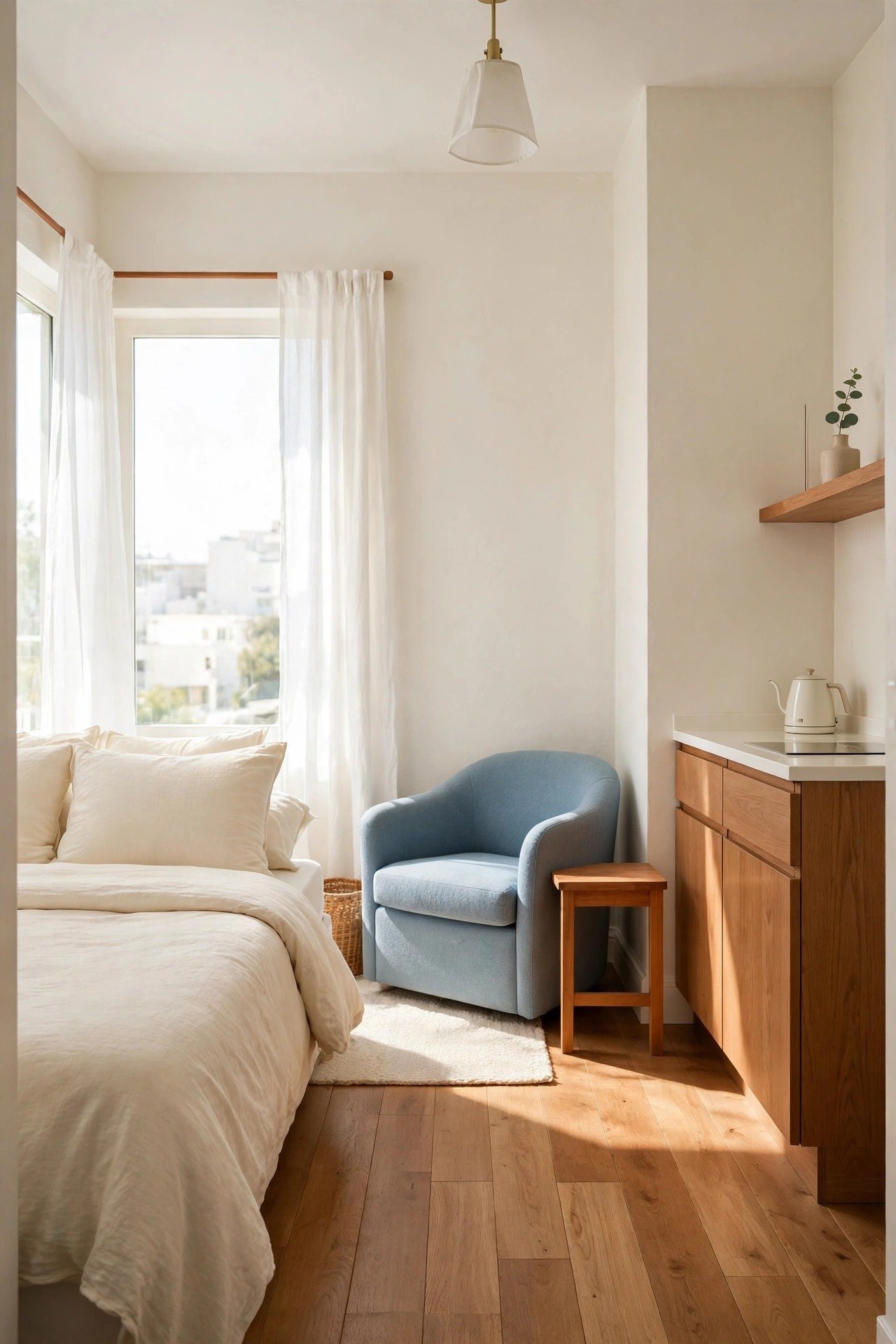
Neutrals do not have to feel boring. Layer warm whites, oatmeal, and soft wood tones with lots of texture, and your studio becomes a calm retreat you never want to leave. A chunky knit throw, a linen cushion, and a wool rug add warmth without adding color chaos.
If your studio has a window with a view, treat it like art. A small chair by the glass can become your favorite seat, much like the seating ideas in small balcony styling turn tiny outdoor views into escapes. You will love coming home to a space that feels like a deep, quiet breath.
13. Tuck In Slim Barstools
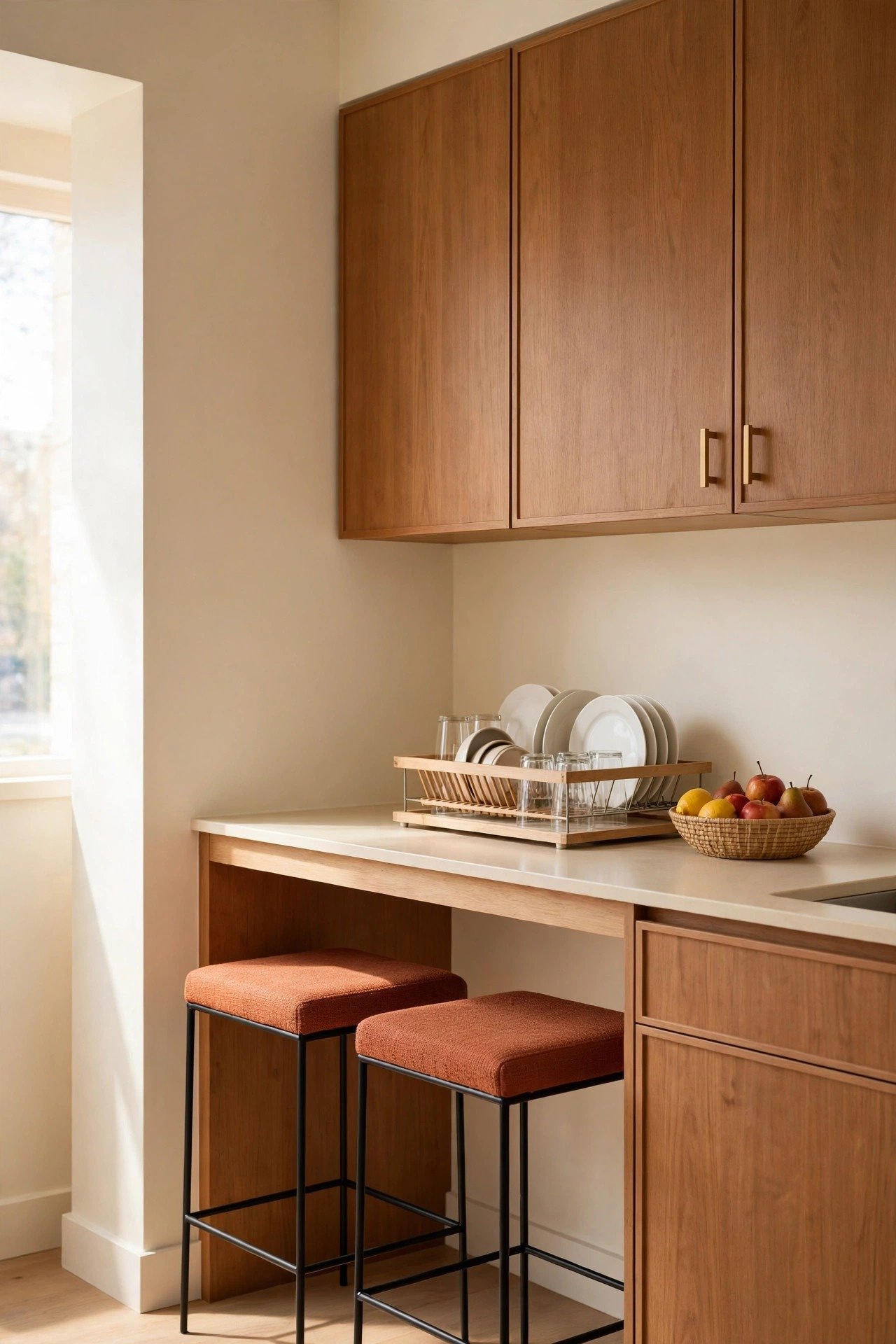
If your kitchen has a counter or breakfast bar, slim barstools give you dining seats that take up almost no floor space. Choose stools that slide fully under the counter so they disappear when you are not eating. The kitchen stays open and easy to move through.
Backless stools are the most space-friendly because they tuck completely out of sight. Pick ones with a comfortable seat height for long breakfasts. You will gain a full dining area without giving up a single extra square foot of floor.
14. Go Up With Wall-Mounted Shelves
When floor space is gone, look up. Wall-mounted shelves give you display and storage space with zero footprint on the ground. A row of shelves above your desk, bed, or sofa holds books, plants, and pretty boxes exactly where you need them.
Keep shelves shallow, around eight to ten inches deep, so they do not press into the room. Style them with a mix of useful and beautiful things, and leave a little empty space so they look calm. You will free up surfaces all over the studio when the walls do the heavy lifting.

15. Put Every Corner to Work
Corners are the most wasted spots in a small studio, and they can be the most useful. A corner desk, a corner shelf tower, or a tiny reading chair with a floor lamp turns dead space into a favorite place. Look at every corner with fresh eyes and ask what it could hold.
Many corner-friendly pieces are also gentle on your lease. You can explore rental-friendly decor hacks for damage-free ways to make corners shine in a rented studio. A corner that works hard makes the whole room work harder for you.
16. Choose Furniture That Fits the Scale
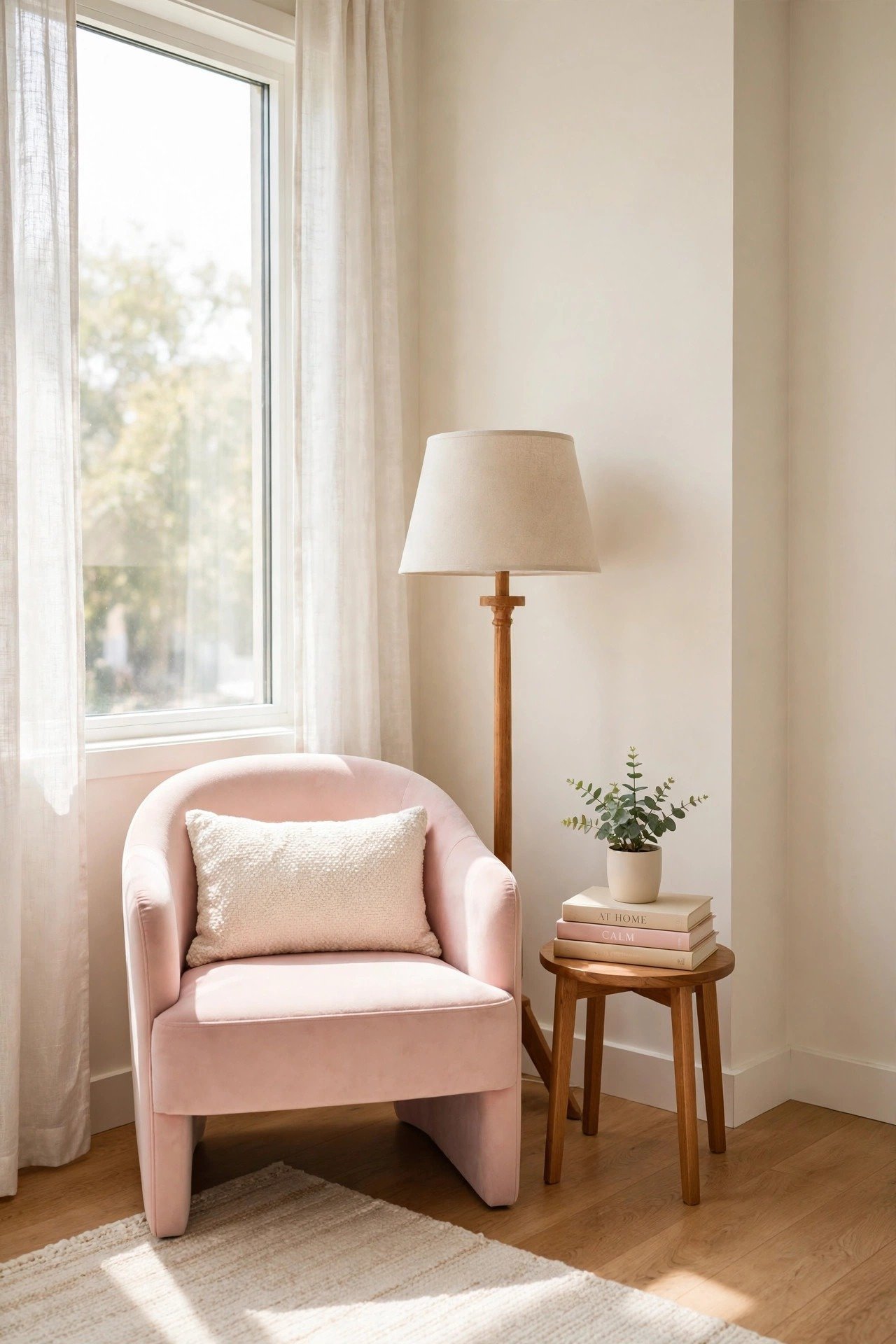
Oversized furniture swallows a studio whole, while apartment-scale pieces leave room to breathe. Look for loveseats instead of full sofas, round café tables instead of large dining sets, and narrow dressers instead of wide ones. Every inch of scale you save becomes walking space.
Measure your room and your doorways before you shop, and tape out each piece on the floor with painter’s tape to check the fit. Furniture that fits the scale will look generous, while furniture that is too large will look like it wandered in. You will thank yourself every time you cross the room easily.
17. Let One Room Wear Many Hats
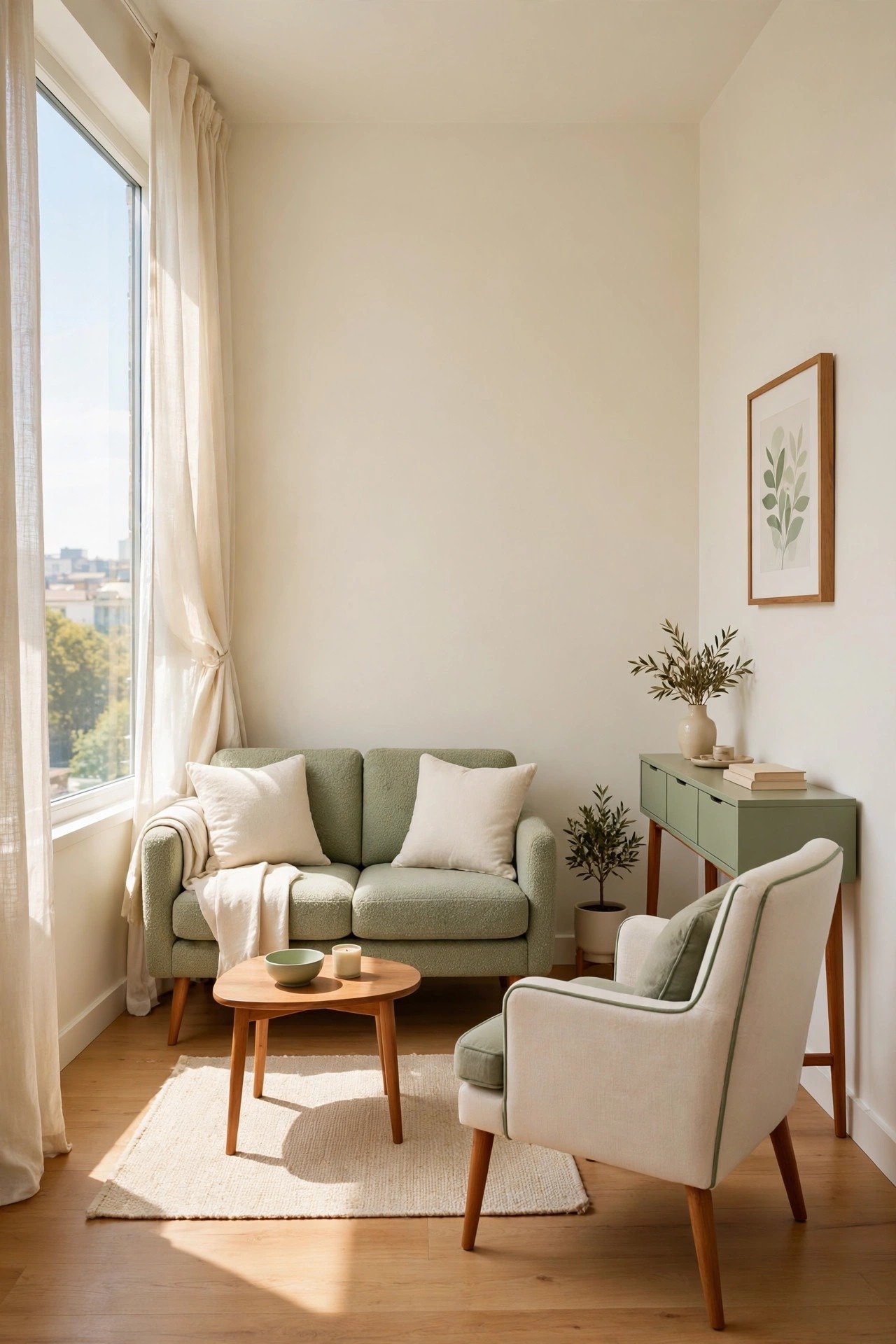
A great studio changes its mood from morning to night. Your living zone can be a bright workspace by day and a cozy lounge by evening with just a few moves. A folding screen, a rolling cart, or a throw that changes the look of the sofa can signal the shift.
Build a simple daily routine around the change. Tuck the laptop away, dim the overhead light, and bring out the cushions, and the room feels like a different place. You will appreciate your studio more when it adapts to your day instead of fighting it.
18. Pick a Couch That Works Double Duty
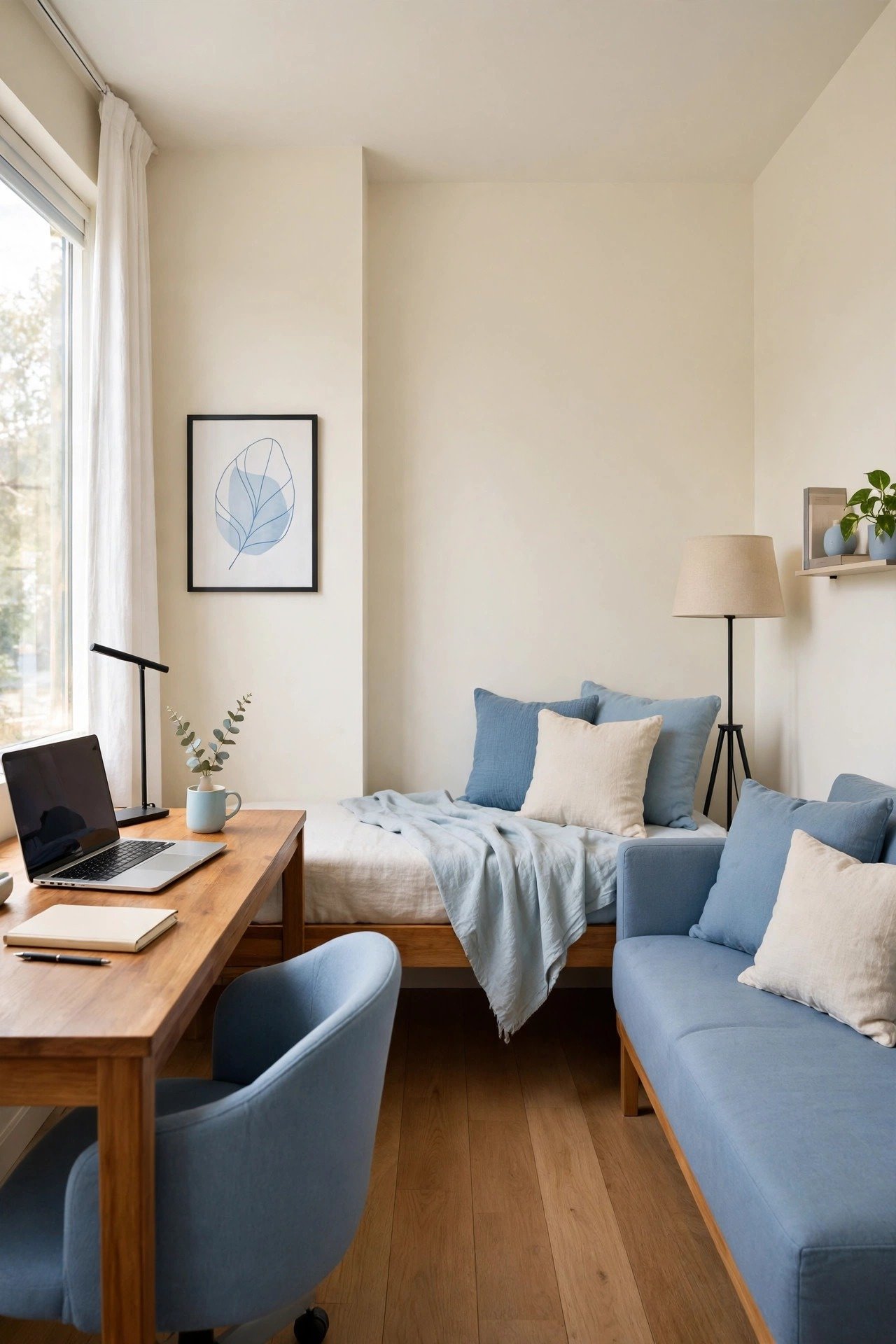
A sleeper sofa or a daybed with a trundle gives your studio a guest room on demand. By day it is your comfortable couch, and by night it unfolds into a bed for a friend. You never need a separate spare room again.
Test the pull-out mechanism in the store so you know it is smooth and easy to use. Keep fresh sheets and a spare pillow in a nearby ottoman so guests are comfortable in minutes. You will love hosting again, even in a tiny space.
19. Keep the Kitchen Open to the Room
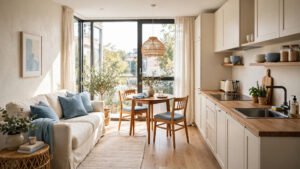
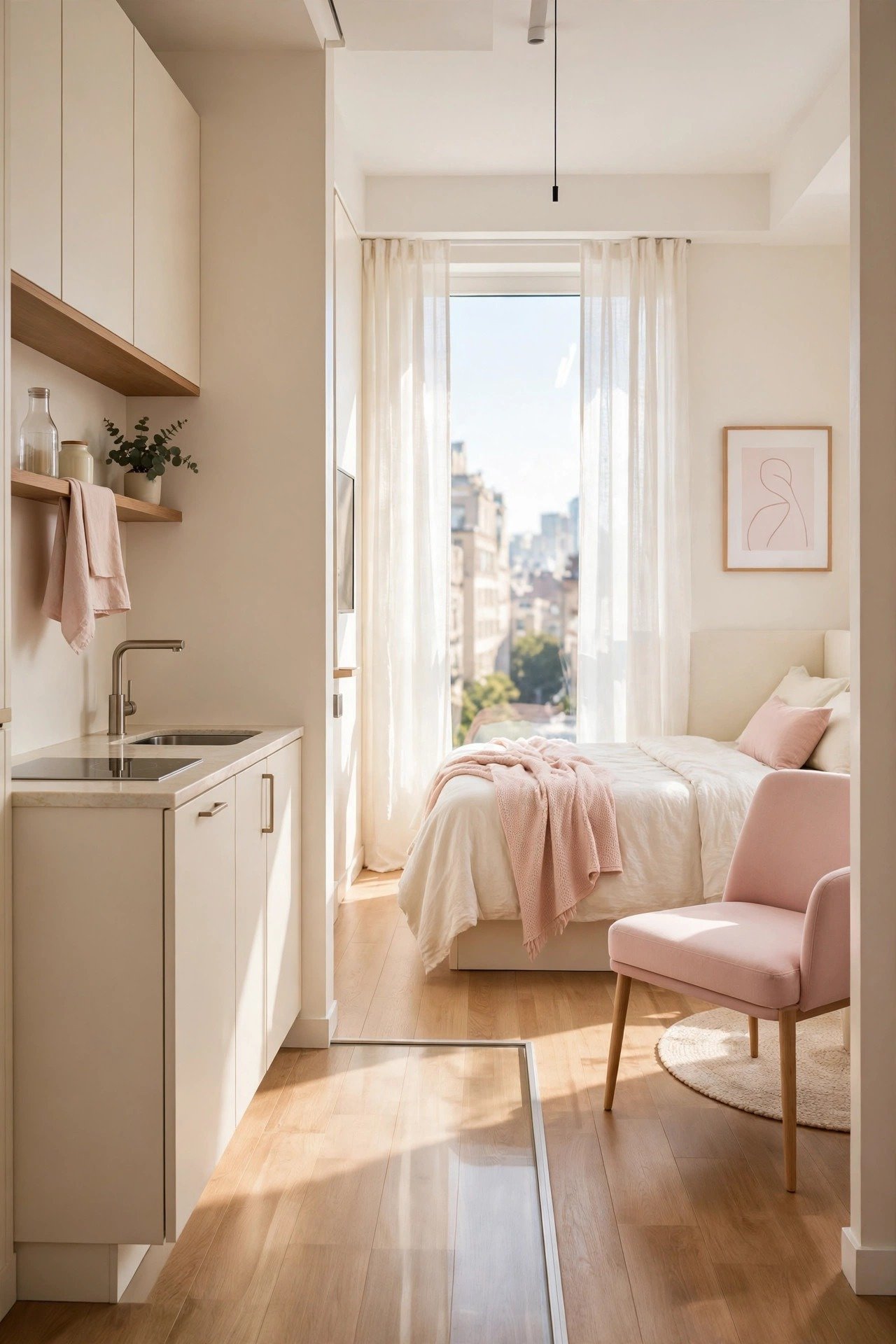
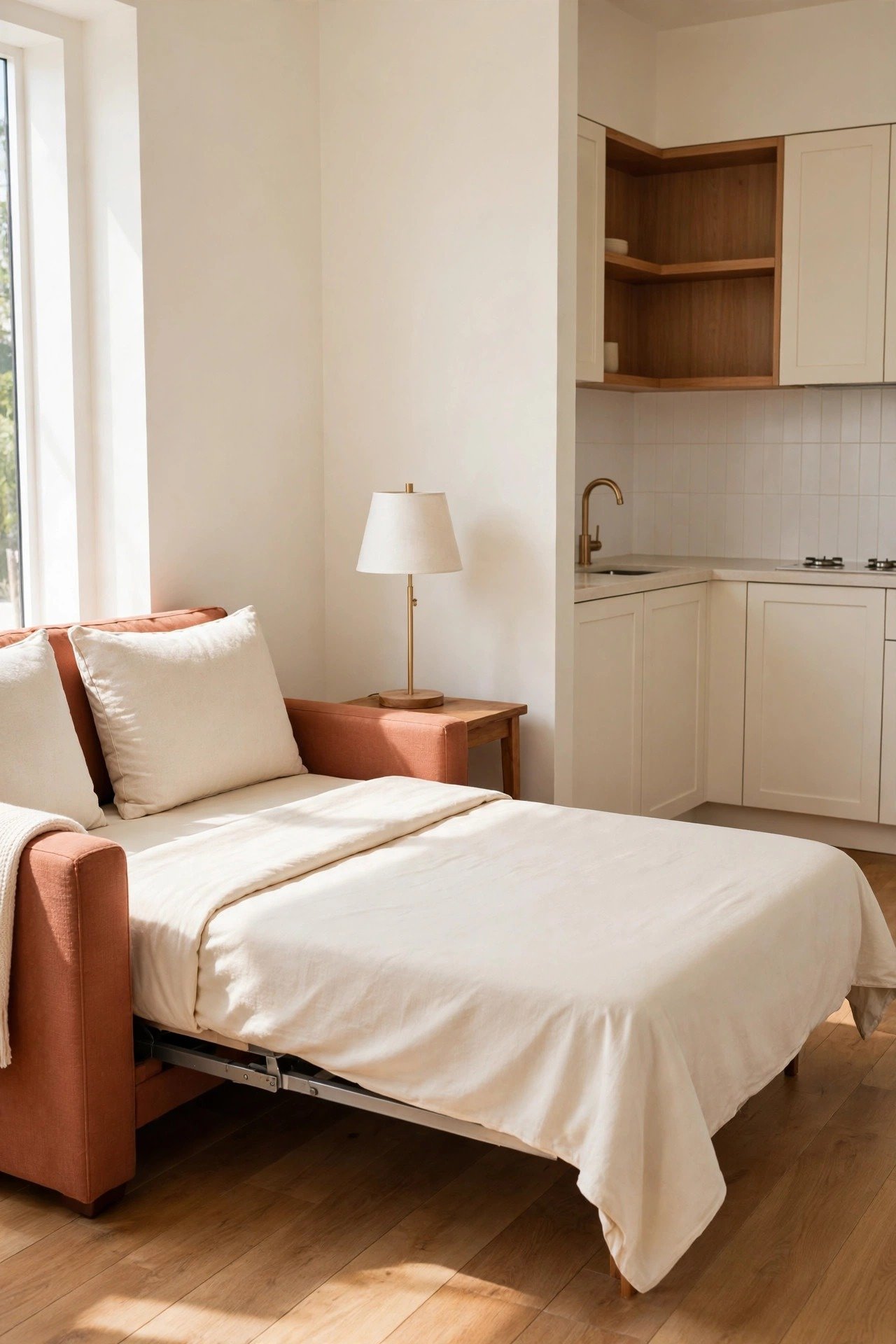
Most studios come with an open kitchen, and that is a gift. Keep it visually connected to the living area instead of walling it off, and the whole studio reads as one generous space. A low counter or a slim island can mark the kitchen zone without blocking sightlines.
Match the kitchen colors to the rest of the room so everything feels like one home. Open shelving instead of upper cabinets keeps the kitchen light, and you can find charming small-kitchen ideas in cottage style small kitchen inspiration. You will cook more often when the kitchen feels like part of the living space.
20. Decorate With a Light, Minimal Hand
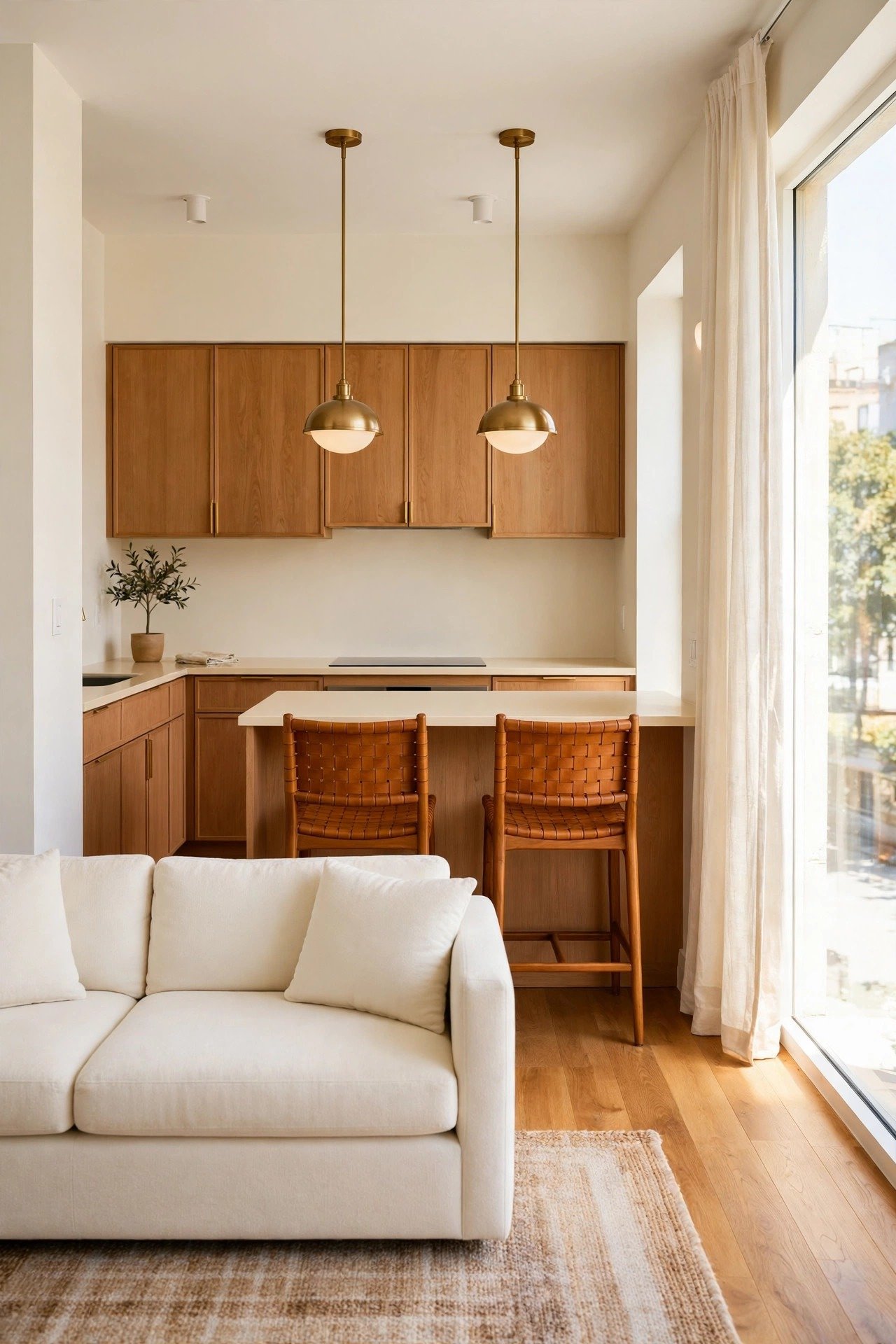
In a tiny studio, every extra object shows, so decorate with a light and thoughtful hand. Choose a few pieces you truly love instead of many pieces that just fill space. A calmer room will always feel larger than a crowded one.
Give each decorative item a little breathing room on the shelf or table where it lives. When you want something new, try removing one thing before adding another. You will enjoy your favorite pieces more when they are not competing for attention.

21. Sleep Low With a Low Bed
A low platform bed keeps your sightlines open across the whole studio. When the bed sits close to the floor, your eye travels right over it to the window or the far wall, and the room feels taller and wider. High beds can chop a small room into visual blocks.
Low beds also feel modern and calm, like a Japanese-inspired retreat. Choose a simple frame with clean lines and keep the bedding light. You will sleep better knowing the whole room still feels open around you.
22. Think Vertical for Storage
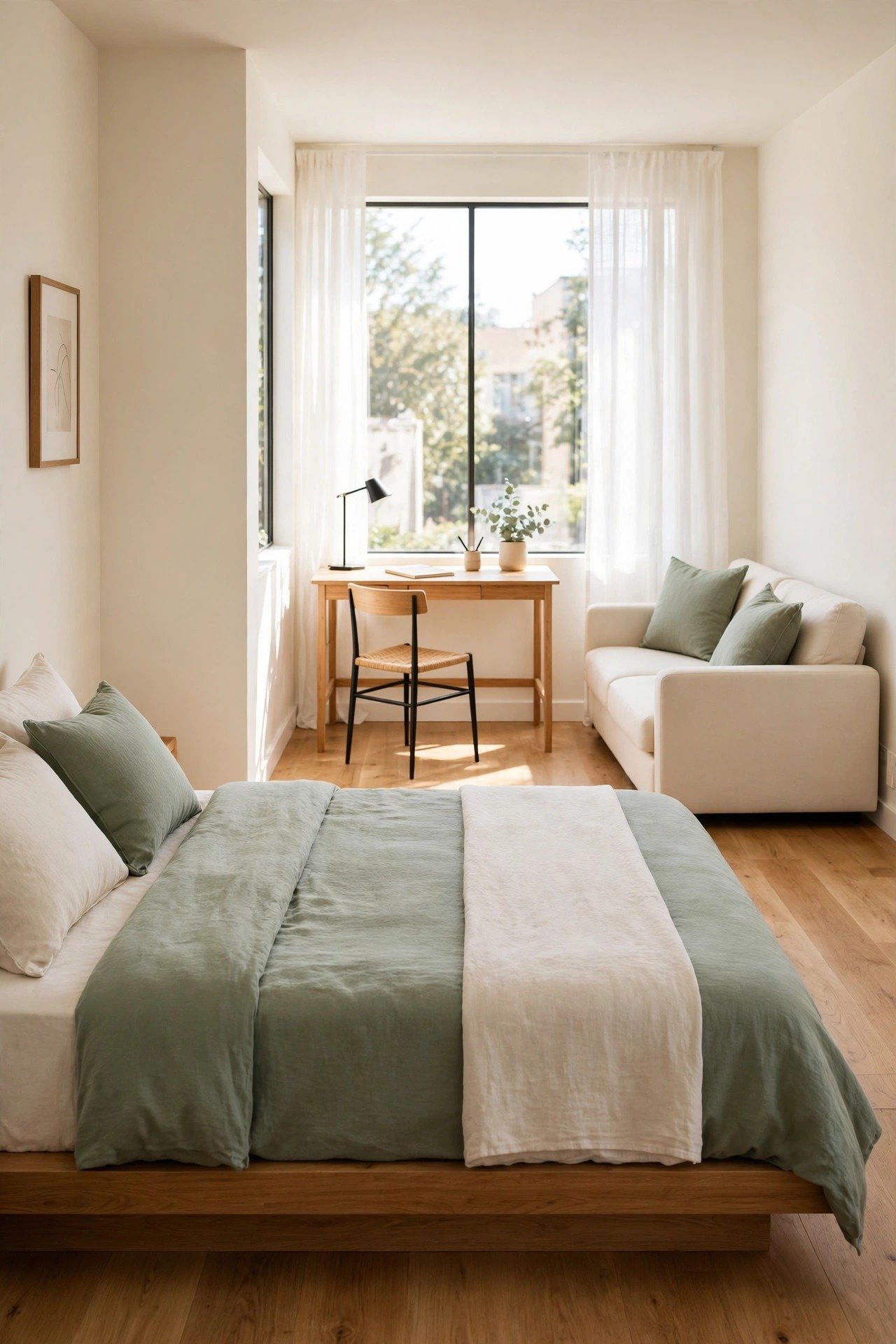
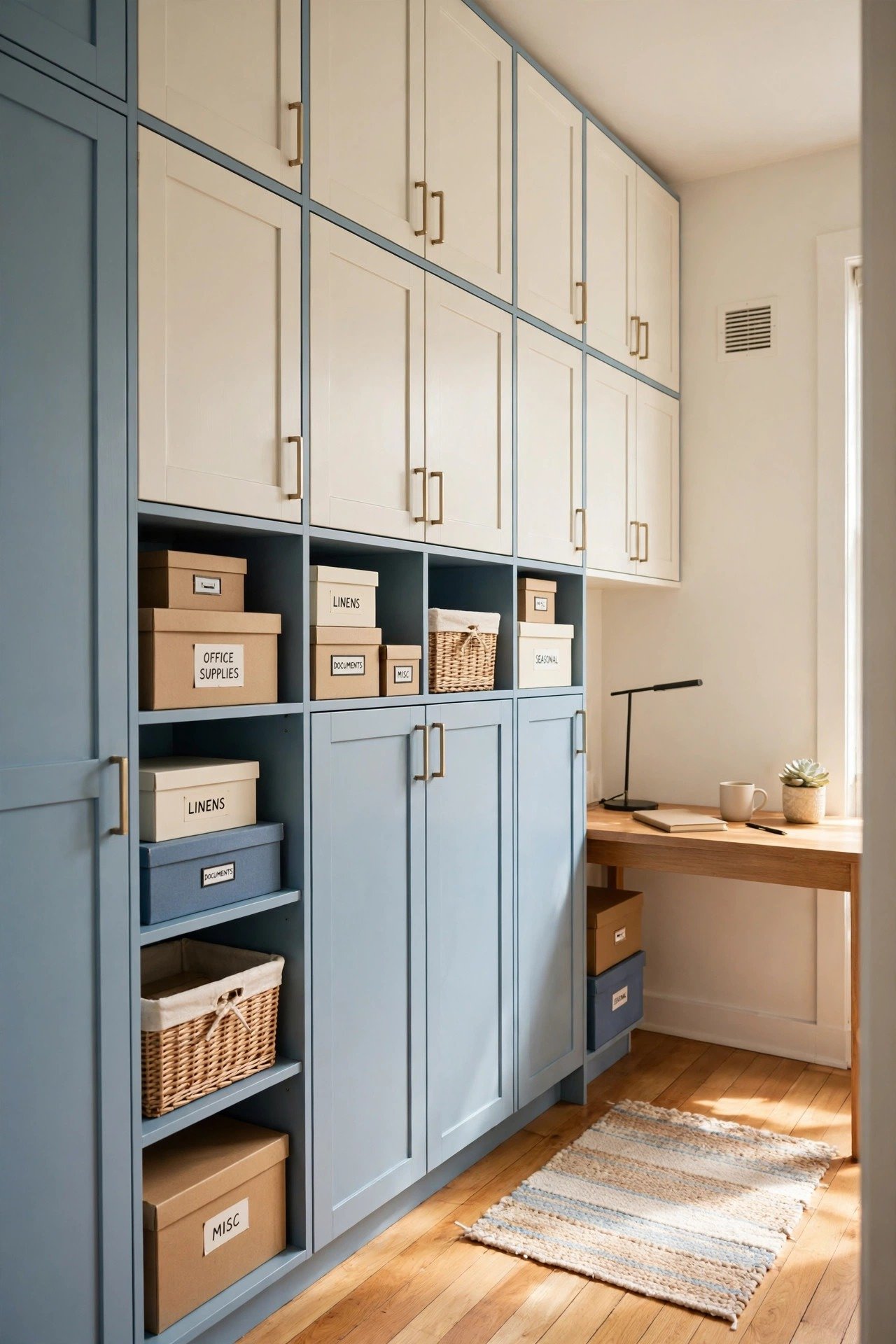
The wall space above your furniture is free storage waiting to happen. Tall bookcases, over-the-door organizers, and cabinets that reach the ceiling give you room for everything without touching the floor. In a studio, vertical storage is the difference between cluttered and calm.
Use the highest shelves for things you need rarely, like seasonal items and spare linens, and keep daily items at arm level. Label the boxes so you can find things without a search mission. You will be amazed how much fits when you store upward instead of outward.
23. Add a Touch of Whimsy
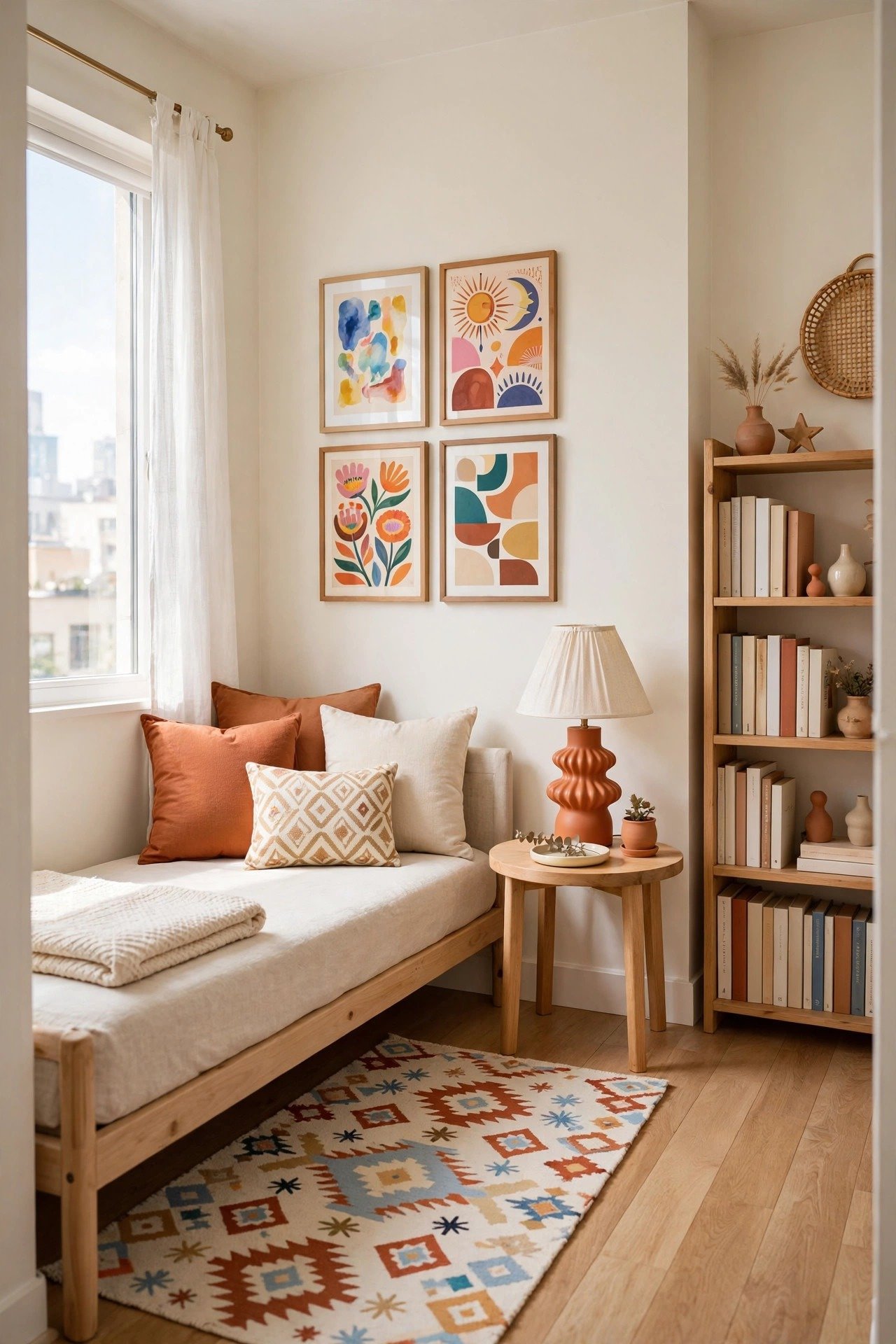
A tiny studio should still feel like you. Add one or two whimsical touches that make you smile, like a bold piece of art, a fun lamp, or a colorful vintage find. Personality keeps a small space from feeling like a showroom.
Keep the playful pieces small in scale so they charm without crowding. One gallery wall, one quirky chair, or one bright textile can be enough. You will love your studio more when it reflects your spirit in the details.
24. Choose Each Piece With Care
In a studio, there is no room for a piece that almost works. Measure your space, check your doorways, and read the dimensions twice before you bring anything home. A thoughtful piece that fits perfectly will always look better than a bargain that crowds the room.
Ask yourself three questions before every purchase: does it fit, does it serve a purpose, and do I love it. If the answer to all three is yes, it belongs in your studio. You will build a home you adore one careful choice at a time.

25. Decorate With Real Purpose
Every item in a tiny studio should earn its place by being useful, beautiful, or both. A pretty basket that holds blankets, a lamp that lights your reading corner, a mirror that doubles the light, these are pieces with real purpose. Decorations that only collect dust have no business in a small space.
Walk through your studio once a season and check each item against this simple test. If something is neither useful nor beautiful to you anymore, let it go. You will keep your studio fresh and functional with this gentle habit.

26. Create a Flexible Sleeping Nook
A flexible sleeping nook gives you a bedroom that appears when you need it and disappears when you do not. Hang a ceiling curtain or place a folding screen around your bed, and you can close off the sleeping zone at night and open it up by day. It is privacy on demand.
Choose a curtain in a fabric you love, since it becomes a design feature when closed. During the day, tie it back to let light flow through the whole studio. You will love the feeling of tucking yourself into your own little room every night, no extra walls required.

Conclusion
A tiny studio apartment does not have to feel tiny when every zone has a clear purpose. With smart furniture, open walkways, and a few clever dividers, one room can hold your bedroom, your living room, your office, and your dining spot in perfect harmony.
Start with one idea that speaks to you, like a bookshelf divider or a low platform bed, and build from there. You will be surprised how quickly your studio starts to feel like a whole home made just for you. Happy decorating, friend.
Frequently Asked Questions About Tiny Studio Apartment Layouts
How do you create separate zones in a tiny studio apartment?
You create zones with visual cues instead of walls. Place a rug under the sofa to mark the living area, push the bed into its own corner, and use an open bookshelf or a curtain as a soft divider. Different lighting for each area helps too, so every part of the room feels like its own little space.
Where should the bed go in a studio apartment?
Push the bed against a wall or into a corner so the middle of the room stays open for living. A corner placement makes the bed feel like a cozy nook and frees up floor space for your sofa, desk, and daily movement. If your ceiling is high, a loft bed gives you a whole second level for sleep.
Can you have a dining area and a work desk in one studio?
Yes, one sturdy table can do both jobs. Use it as your work desk during the day, then clear the laptop and set it for dinner at night. Keep the chair comfortable for long hours, and choose a table that slides a storage bench or slim chairs underneath when you need the floor back.
How do you keep a studio apartment from feeling cluttered?
Give every item a clear purpose and store things vertically so the floor stays open. Tall shelves, wall-mounted racks, and over-the-door organizers hold a lot without taking footprint. Decorate with a light hand, keep walkways clear, and review your belongings once a season to remove what you no longer use.
What furniture is best for a tiny studio apartment?
Choose apartment-scale pieces that fit the room and work double duty. A sleeper sofa gives you guest seating and a guest bed, an L-shaped loveseat marks the living zone, and slim barstools tuck fully under the kitchen counter. Measure your space before buying so every piece fits with room to move around it.

Hi, I’m Emily! I turn messy corners into cozy, organized spots. DreamNestDecor is where I share simple, practical home ideas — decor, organization, and small-space solutions that work in real life, not just in photos. Every idea here is carefully researched before it’s shared.