Last spring my friend Nina moved into a tiny one bedroom apartment, and the first thing she said when I walked in was that the whole place felt like one long hallway. The living room ran straight into a corner she used as a desk, and the bedroom barely fit her bed. We spent one Saturday moving furniture around, and by the evening she had a reading nook, a real dining spot, and a bedroom that felt twice its size. No new furniture, just smarter placement.
That day taught me that a one bedroom layout is really about zones. You have separate rooms already, which is a gift, but each room still has to work hard. Below are 22 small one bedroom apartment layout ideas that will help every corner earn its keep, from clever dividers to visual tricks that make the walls seem to step back.
1. Split the Living Room with Open Shelving
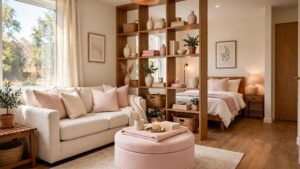
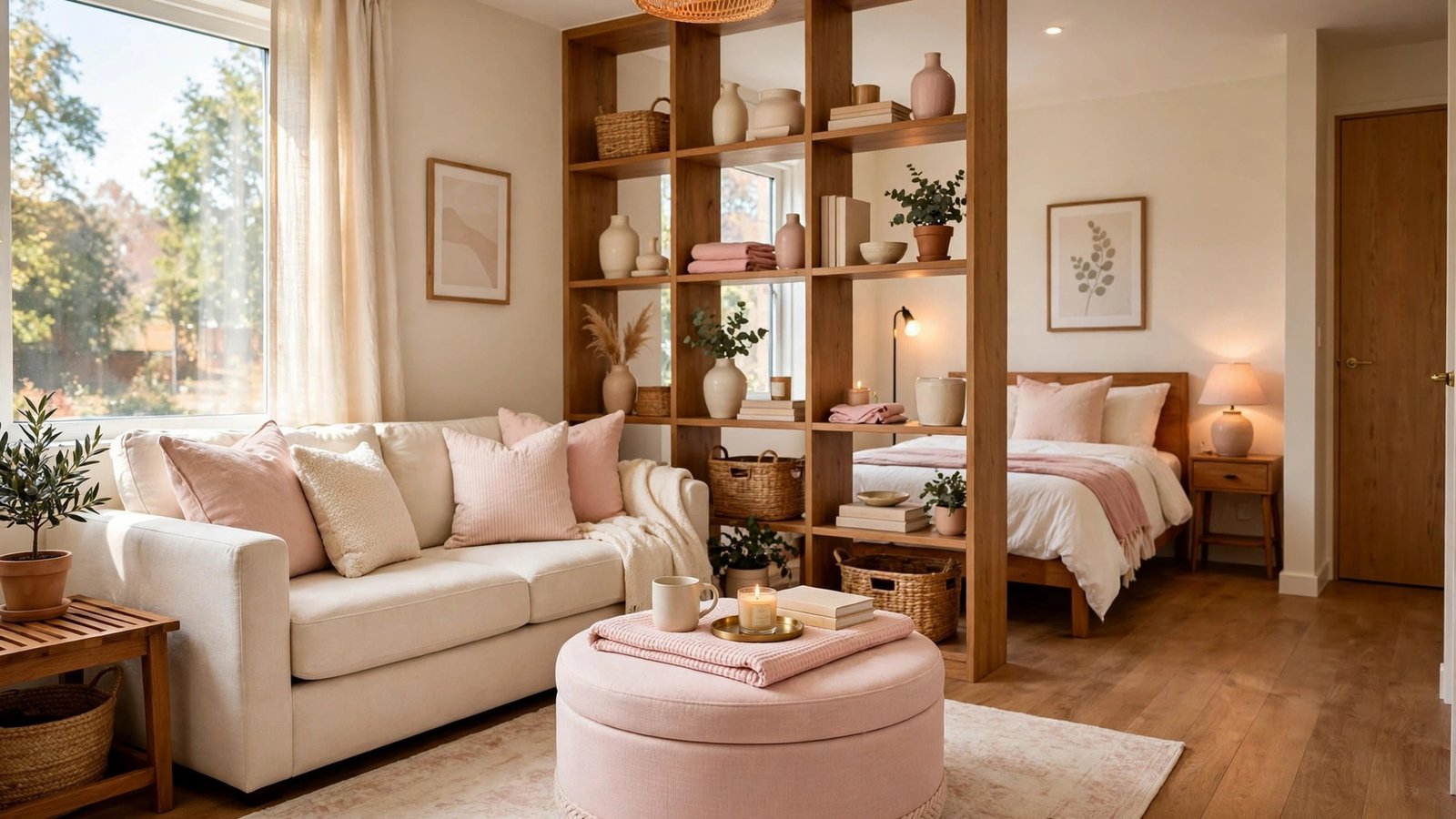
A tall open bookshelf placed sideways can split your living room into two useful zones without blocking a single ray of light. You can keep the seating area on one side and carve out a small dining or work corner on the other. The shelves themselves give you display space and storage at the same time.
Choose a unit with an open back so you can enjoy it from both sides. Style the shelves with books, a few plants, and pretty boxes. It will feel like a natural wall that lets light pass right through.

2. Hang Curtains on Ceiling Tracks for Flexible Zones
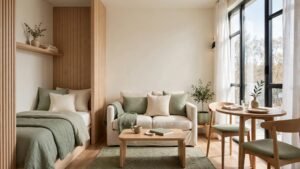
Ceiling-mounted curtain tracks are one of the most flexible zoning tools you can add to a one bedroom apartment. You can open them wide for an airy open feel, then pull them closed when you want a quiet corner for reading or working. Most tracks patch up easily, so landlords rarely mind.
Try light, airy fabric in the living area so daylight still filters through. If you use curtains to close off a work corner, add a heavier panel behind the sheer one to soften street noise. These rental-friendly decor tricks make the whole apartment feel more thoughtful.

3. Raise the Bedroom Bed on a Storage Platform
Your bedroom is small, so the bed has to do more than hold a mattress. A raised platform bed turns the space beneath it into deep storage for spare bedding, off-season clothes, and luggage. The raised height also makes the bed feel like a separate little zone, even in a compact room.
You can build a simple platform with drawers or choose a store-bought frame with a hinged top. Keep everyday items in the easiest drawer and tuck rarely used things toward the back. The extra lift makes the bedroom feel taller and more designed.

4. Use Large Artwork as Invisible Walls
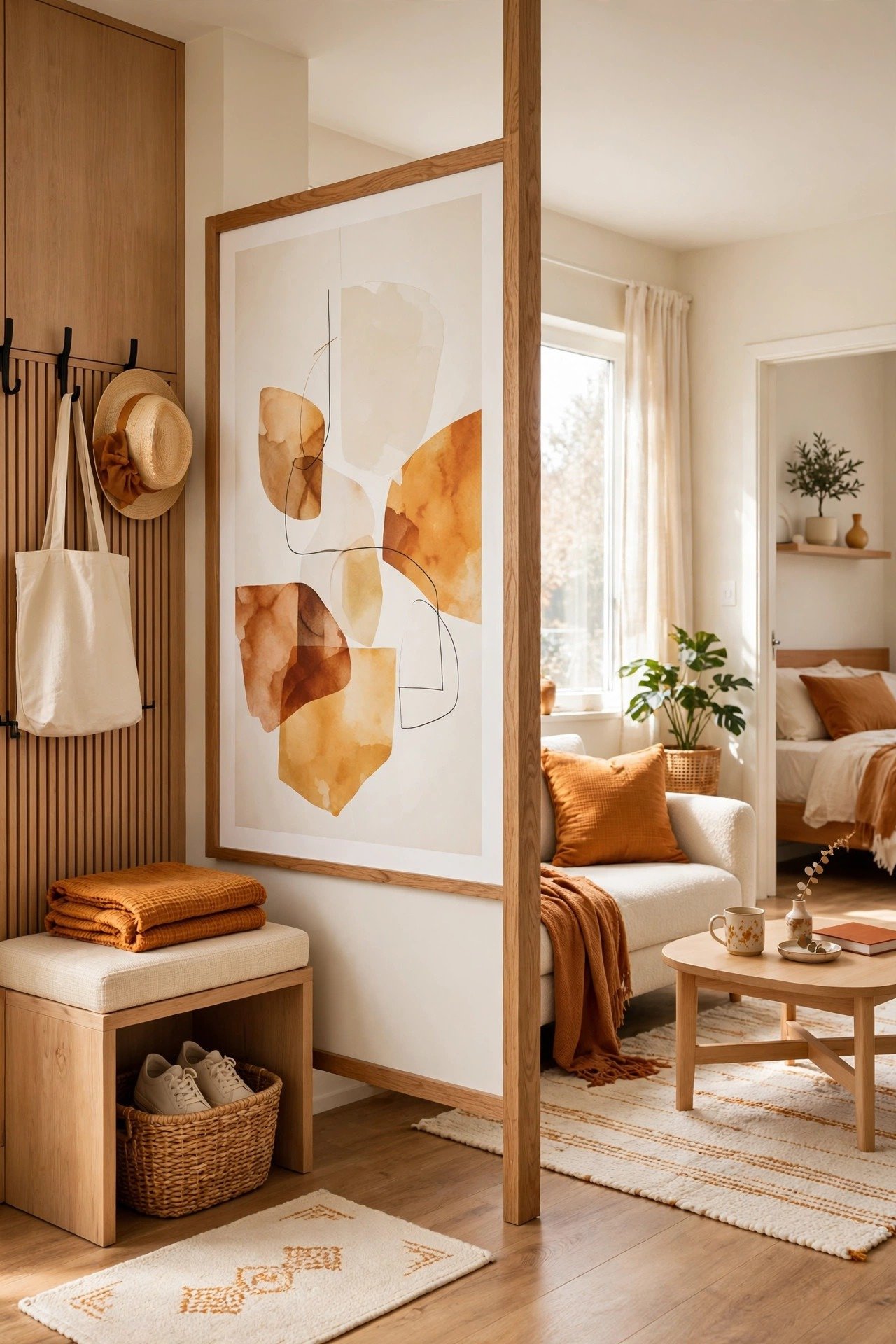
Big art pieces can act like invisible walls that cost zero floor space. Hang an oversized canvas or tapestry where one zone ends and another begins, such as between the entry and the living room. Your eye reads it as a boundary even though nothing blocks the way.
Pick one large piece rather than several small ones for the strongest effect. A landscape print or bold abstract will anchor the wall and give each zone its own personality. It is one of the easiest layout tricks you can try this weekend.
5. Define Zones with Color Blocking
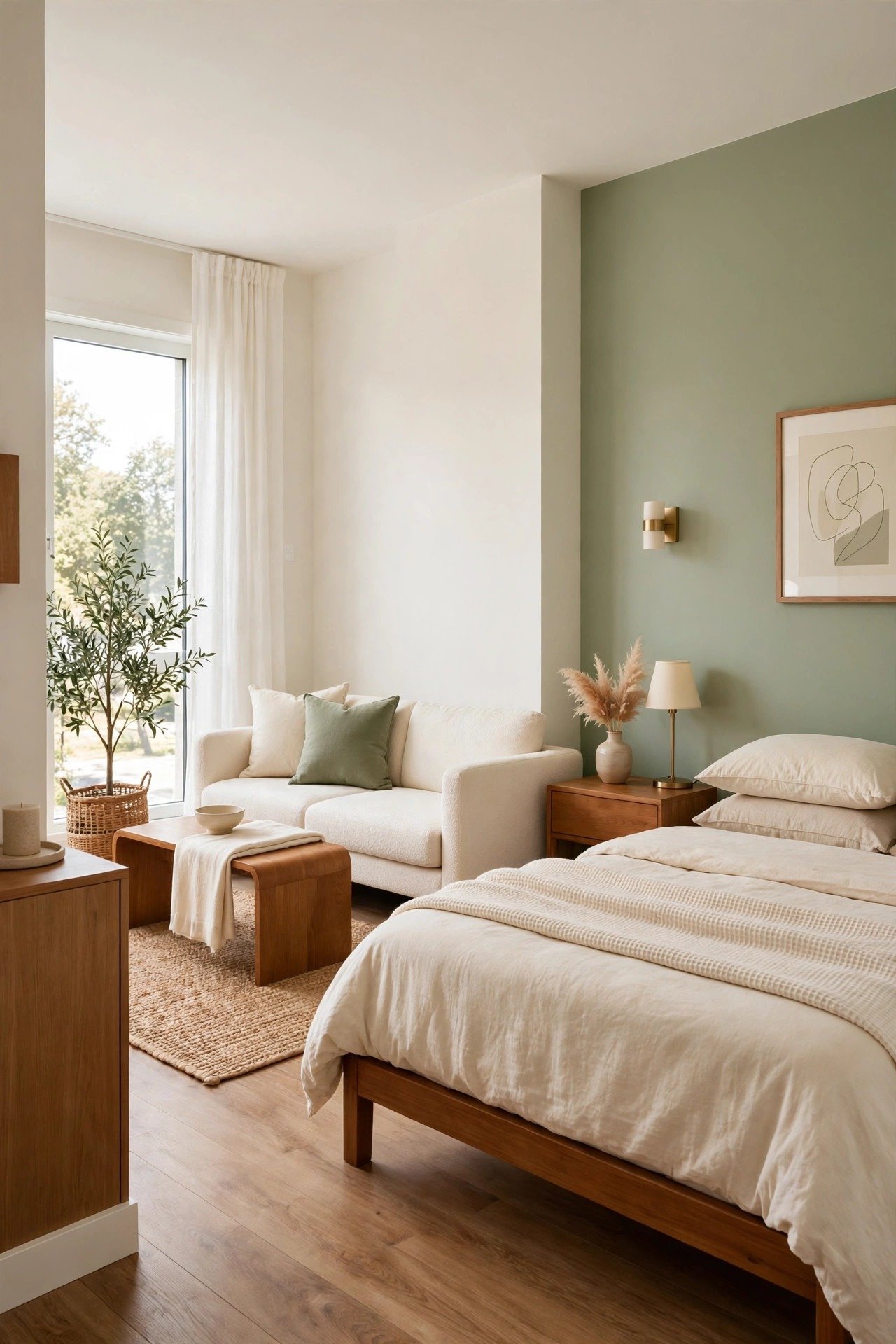
Different paint colors can separate zones more effectively than any divider. Paint your bedroom a soft, restful tone and keep the living room bright and warm, and your brain will register two completely different spaces. This costs very little if your landlord allows painting.
Keep the overall palette light so each room still feels open. A painted headboard wall in the bedroom or a single accent wall in the living area is often enough. A little bedroom accent paint can change how big each room feels.
6. Choose Modular Furniture That Adapts
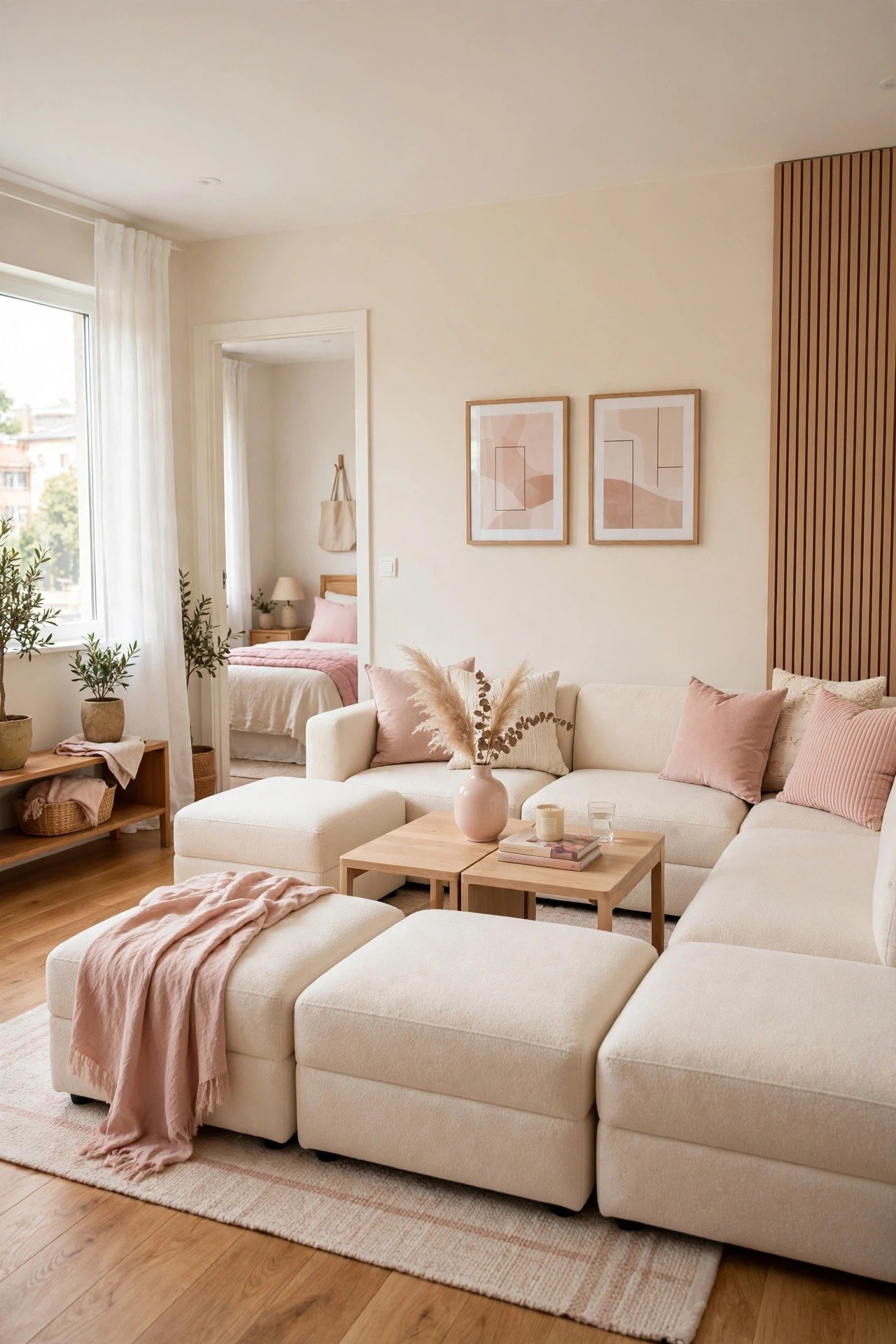
Modular furniture earns its place in a one bedroom because it can change shape with your day. A sectional that splits into a loveseat and a chair lets you open up floor space when you clean and bring it together when friends visit. Stackable cubes and nesting tables work the same magic on a smaller scale.
Look for pieces that connect and disconnect without tools so rearranging takes minutes. Test each configuration before you commit to make sure walking paths stay open. Flexibility is the real luxury in a small apartment.
7. Mount a Folding Desk on the Wall
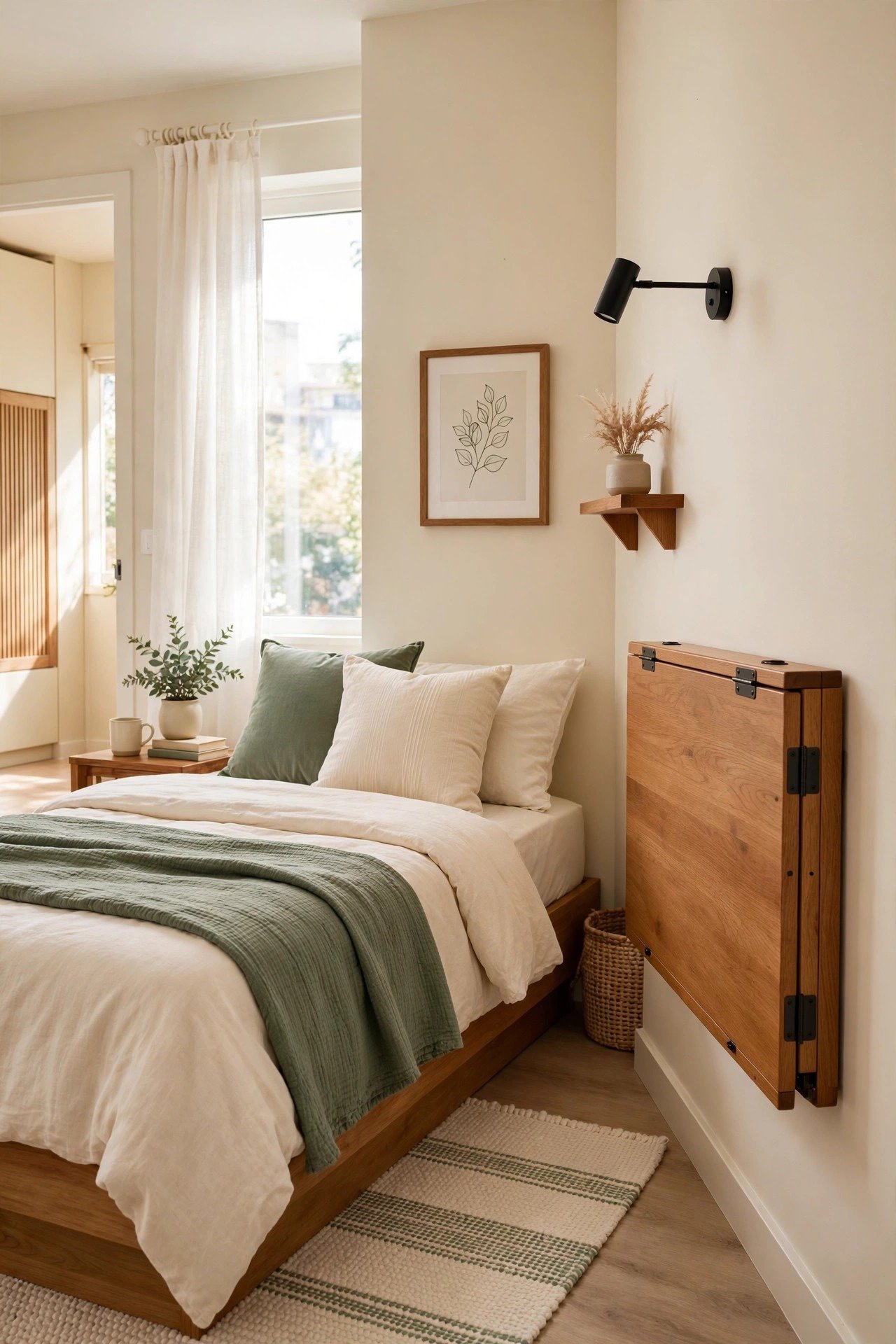
A permanent desk eats floor space all day long, but a wall-mounted folding desk only takes space when you need it. Closed, it looks like a slim cabinet on the wall. Open, it gives you a proper work surface with storage for supplies right inside the door.
Mount it in a bright corner near a window so your work hours feel pleasant. When the day ends, fold it up and let the room turn back into your living space. Your small home office can simply disappear after hours.
8. Center the Living Room on a Storage Ottoman
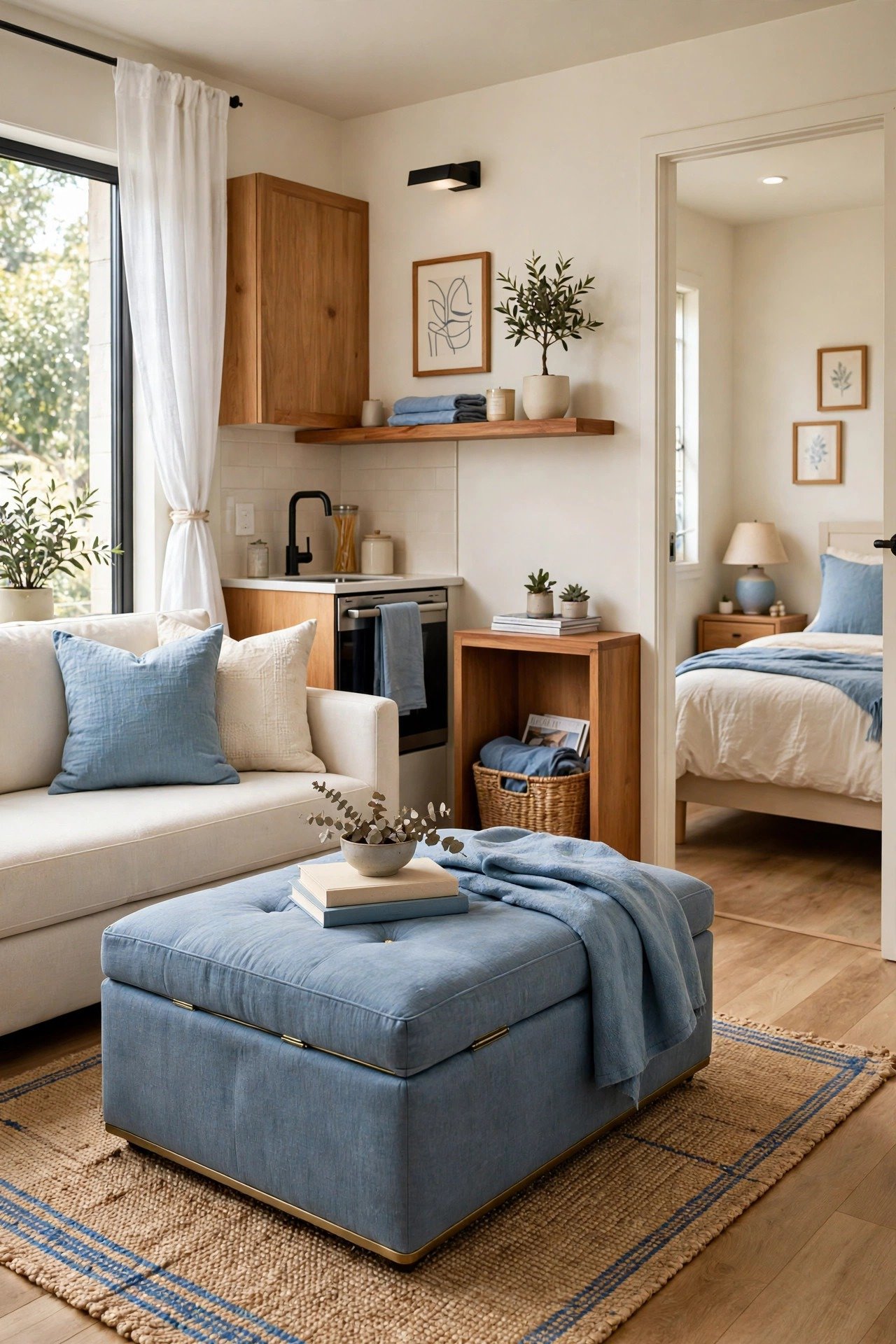
A storage ottoman might be the hardest-working piece of furniture you can own. Place a generous one in the center of your living room and it becomes your coffee table with a tray on top, extra seating when guests arrive, and hidden storage for blankets and magazines.
Choose leather or a sturdy performance fabric so it survives daily use. Rounded shapes help traffic flow around it in tight rooms. It will quietly hold half of your living room clutter while looking completely elegant.
9. Turn Corners into Storage Zones
Corners are the most wasted real estate in a one bedroom apartment. A corner desk, a corner bookshelf, or floating corner shelves can hold an entire collection without pushing a single inch into your walking paths. Look at every corner as square footage waiting to be claimed.
Try tall pieces that draw the eye upward so the corner feels designed rather than stuffed. Keep the styling simple with rows of books or matching baskets. You will be amazed at how much a dead corner can hold.

10. Reflect Light with Mirrored Furniture
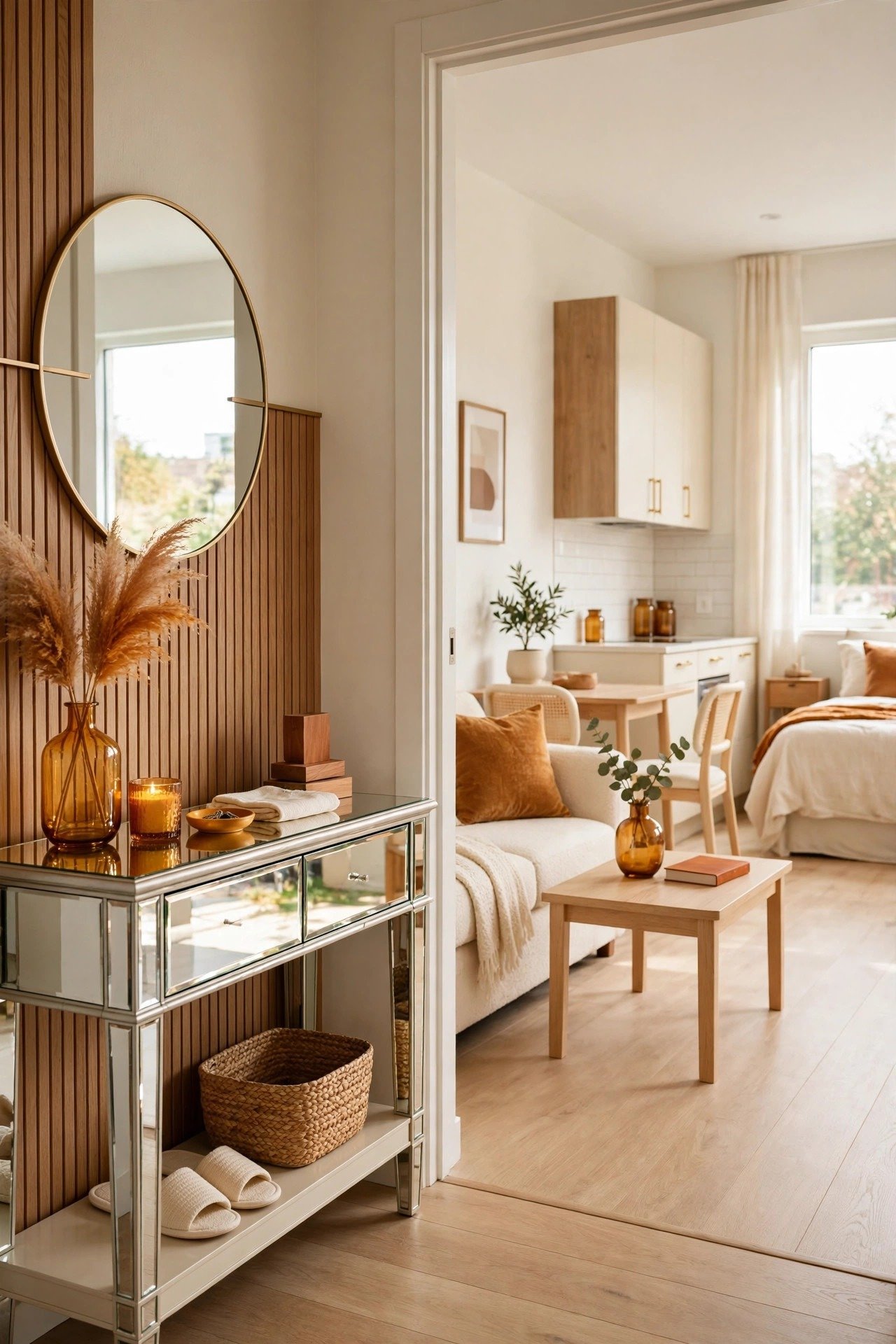
Mirrored furniture almost disappears visually while staying completely useful. A mirrored side table or a small mirrored chest bounces light around the room and softens the boundaries of the space. It is especially effective in a narrow entryway or beside the bed.
Place one mirrored piece opposite a window to double your natural light. One or two pieces are plenty, because too many reflections can feel busy. Used with restraint, they are pure magic.
11. Slide Storage Drawers Beneath the Sofa
The gap under your sofa is hidden storage gold. A sofa with built-in drawers keeps extra throws, board games, or wrapping paper neatly tucked away and easy to reach. If your sofa has no drawers, slim rolling boxes made for under-bed use often slide underneath perfectly.
Measure the clearance before you buy anything, since sofa heights vary. Store items you need occasionally but not daily in this spot. It is one of those places you forget you even have until you need it.

12. Use the Gap Above the Kitchen Cabinets
That dusty strip between your kitchen cabinets and the ceiling is prime storage real estate. Fill it with matching baskets for rarely used items like holiday bakeware or party platters. The baskets hide clutter while freeing up the cabinets below for everyday cooking.
Keep the baskets in one color family so the top of your kitchen looks intentional. Give them a quick wipe whenever you clean, since kitchen air carries grease. These easy small kitchen wins add up fast.

13. Layer Lighting Across the Apartment
One harsh overhead light can make a one bedroom feel like a waiting room. Layer your lighting instead: a warm floor lamp by the reading chair, a table lamp beside the bed, and a soft pendant over the dining spot. Each pool of light becomes its own zone.
Put the lamps on small dimmers so you can change the mood for work, dinner, or movie night. Warm bulbs around 2700K keep the whole apartment feeling cozy. Good lighting is the cheapest renovation you can do.

14. Hang a Floor-to-Ceiling Mirror
A large mirror placed across from your window can visually double the size of your living room or bedroom. It bounces daylight deep into the apartment and creates the illusion that the room continues beyond the wall. The effect is instant and dramatic.
If you rent, simply lean a tall mirror against the wall instead of drilling. The slight tilt actually reflects more of the room and adds depth. Keep the glass clean so it reads as brightness, not streaks.

15. Keep the Palette Light and Airy
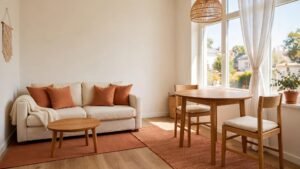
Light colors push walls visually backward while dark colors pull them forward. A palette of warm whites, soft creams, and pale neutrals can make your one bedroom feel noticeably larger with the same furniture. Paint is powerful, but textiles work too.
If you cannot paint, bring in light curtains, a pale rug, and light-colored bedding for a similar lift. Keep one darker accent piece so the room has depth. The right small space decorating palette makes everything breathe.
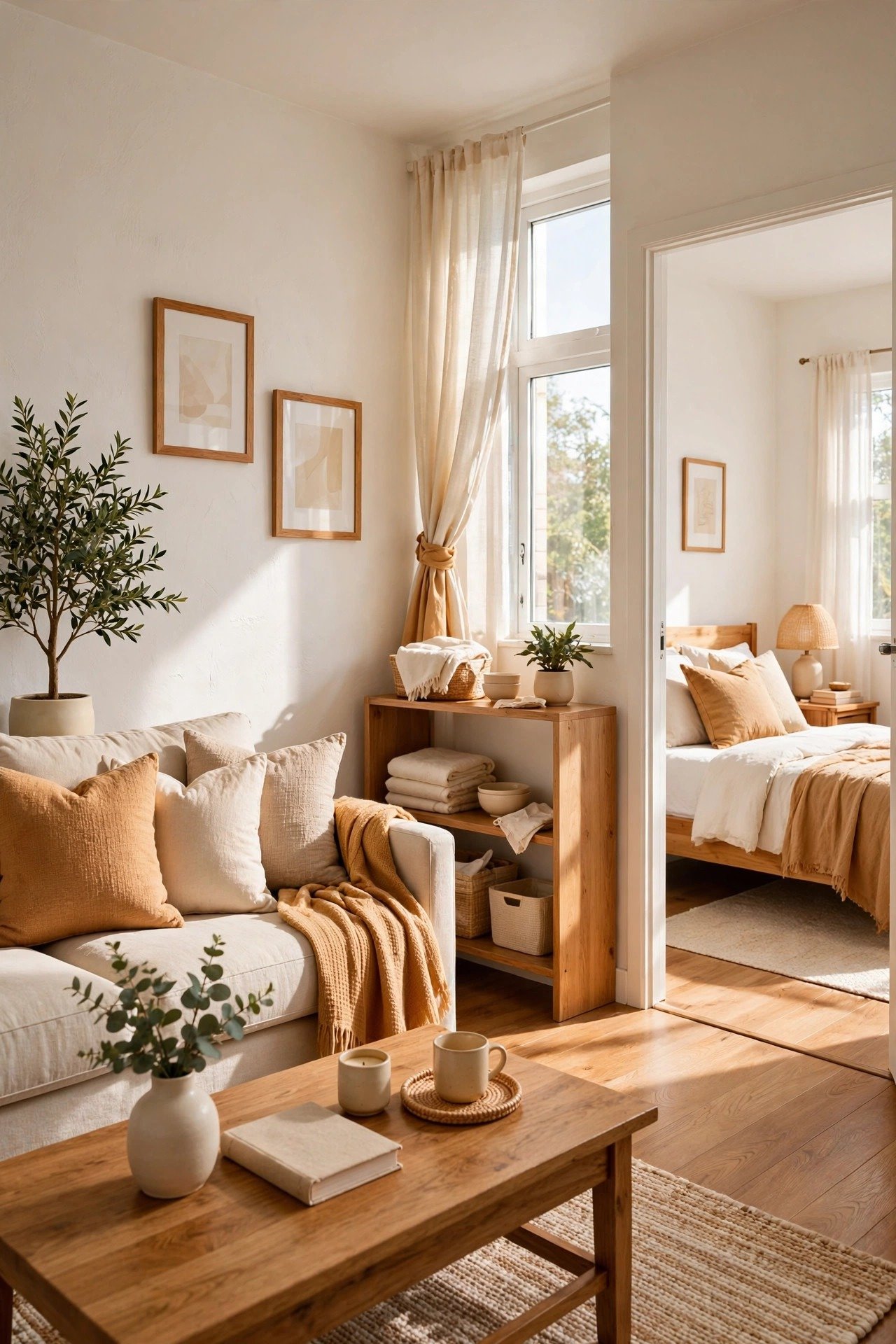
16. Let Natural Light Flow Through Every Window
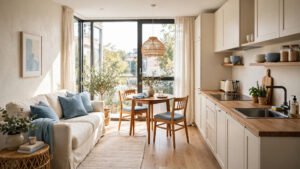
Heavy curtains can steal half the light your windows were meant to give. Swap them for sheer panels or bottom-up shades that let light pour in from the top while protecting your privacy below. The whole apartment will feel taller and brighter.
Keep the window sills clear so nothing blocks the glass. If one room has a poor view, add frosted film that still lets light through. Daylight is free square footage, so never waste it.
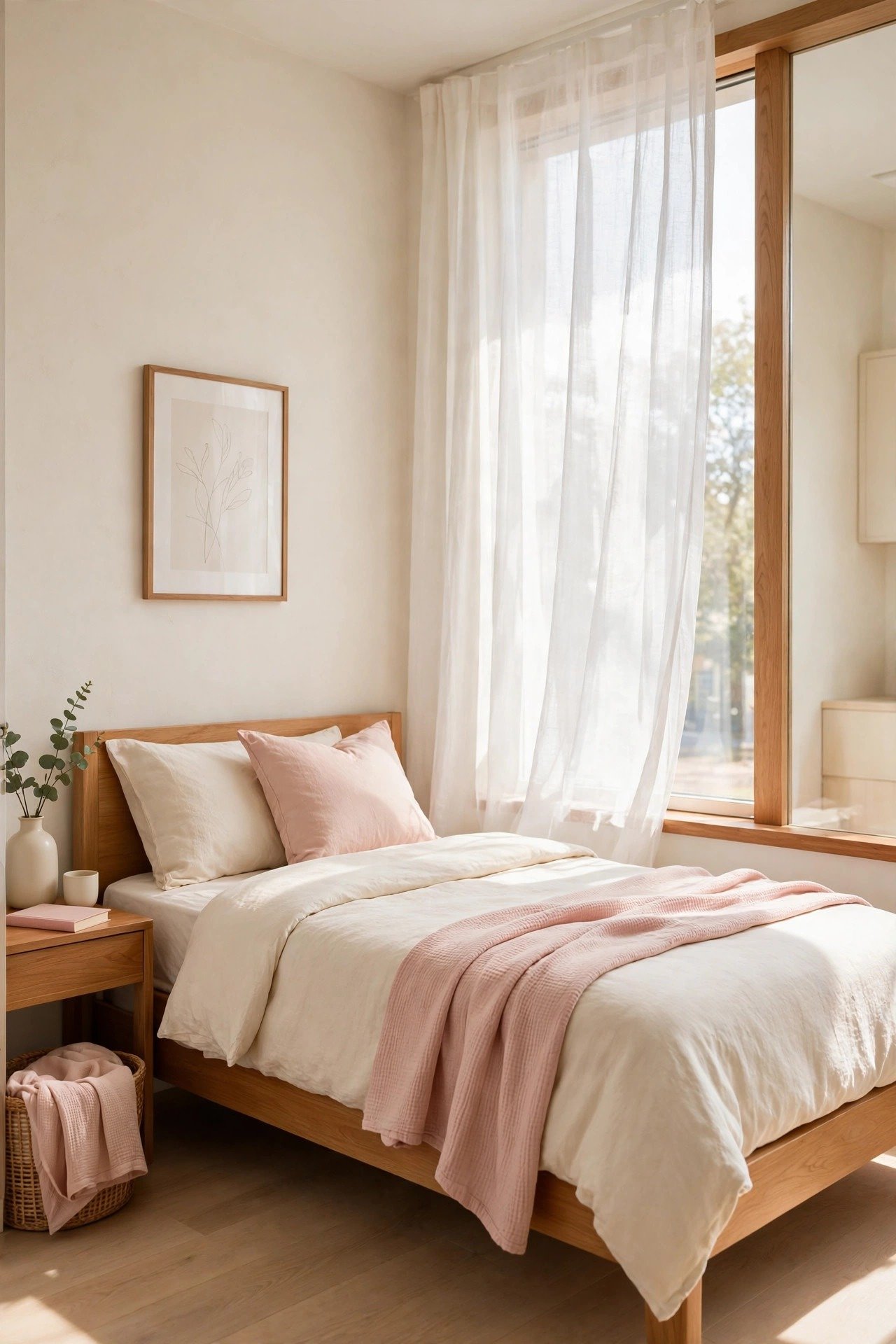
17. Angle Furniture for a Diagonal Layout
Pushing everything flat against the walls feels safe, but it can make rooms look boxy and stiff. Angle your bed slightly in the bedroom corner or tilt the sofa a few degrees in the living room, and the diagonal lines add movement that tricks the eye into seeing more space.
The triangle behind an angled piece becomes a bonus spot for a plant or a slim shelf. Try the position with painter’s tape on the floor before you commit. A small angle can completely change how designed a room feels.

18. Keep Walking Paths Clear
Nothing shrinks a one bedroom faster than squeezing past furniture every day. Before you place anything, walk your natural routes from the door to the kitchen, from the bed to the bathroom, and keep those paths generous. Every room needs clear arteries.
Even a few inches can transform the flow. Shift a chair, rotate a side table, or choose a narrower console until the path feels easy. Your apartment should feel effortless to move through.
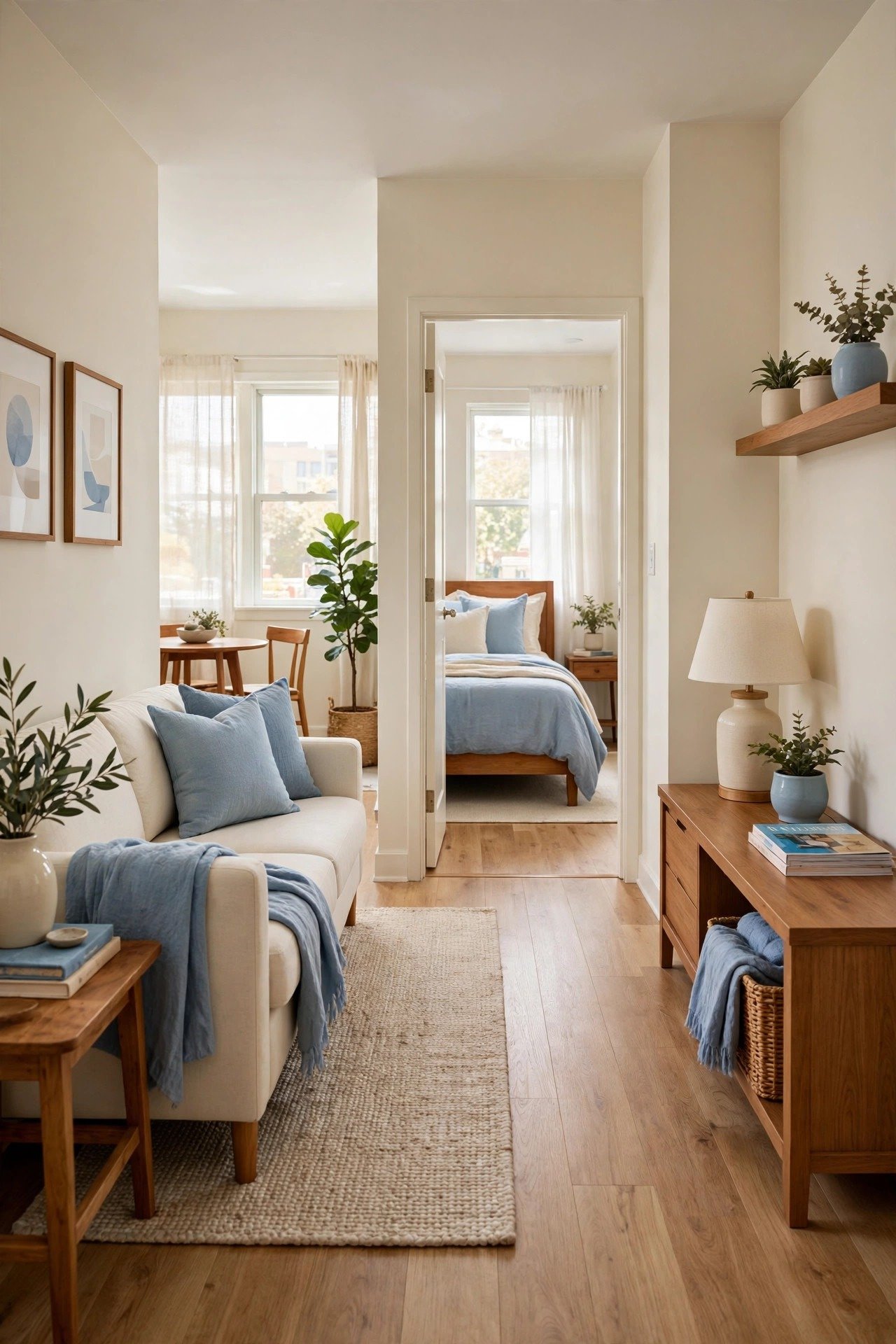
19. Float Furniture Away from the Walls
Pulling the sofa even a few inches away from the wall creates a shadow line that makes the room feel deeper. It stops looking like furniture shoved into storage and starts looking like a real design choice. The back of a floated sofa can also separate zones in an open living area.
Slide a slim console behind the sofa for a mini entry zone or a landing spot for keys and mail. You will need less floor space than you think. Breathing room around furniture reads as luxury.

20. Pick Furniture on Wheels
Wheeled furniture lets your rooms expand and contract with your day. A rolling bar cart can hold office supplies during work hours, serve drinks when friends visit, and add kitchen counter space when you cook. A small side table on casters works the same way.
Choose quality wheels that roll smoothly and lock in place so nothing drifts. Felt pads protect wood floors from scratches. Mobility turns one small room into many different rooms throughout the week.
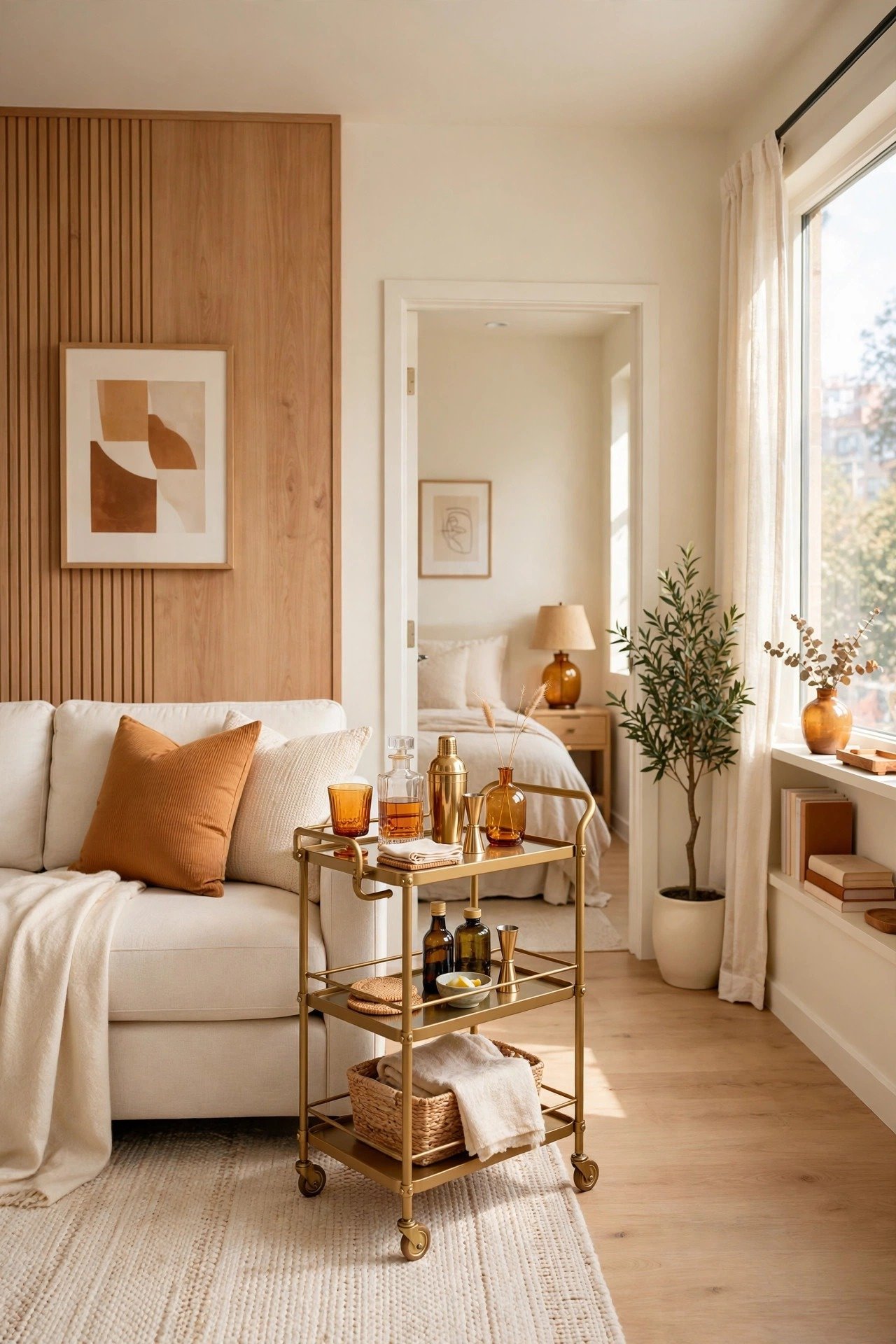
21. Use the Full Ceiling Height
When floor space is limited, the only way to grow is up. Hang plants from a picture rail, run floating shelves near the ceiling for books, and choose tall curtains that reach from ceiling to floor. Every vertical line pulls the eye upward and makes the room feel taller.
Keep the highest shelves for items you rarely need, since reaching them takes effort. A step stool tucked in the closet makes them practical. Height is free space that most people never use.

22. Edit Decor Down to the Essentials
Too many small decorations can make a one bedroom feel cluttered and busy. Edit down to a few pieces you truly love, and let empty space become part of the design. A single beautiful vase says more than twenty tiny trinkets.
Walk through each room and remove anything that does not serve a purpose or bring you joy. You can always rotate seasonal pieces back in later. Negative space is what makes a small apartment feel calm and spacious.
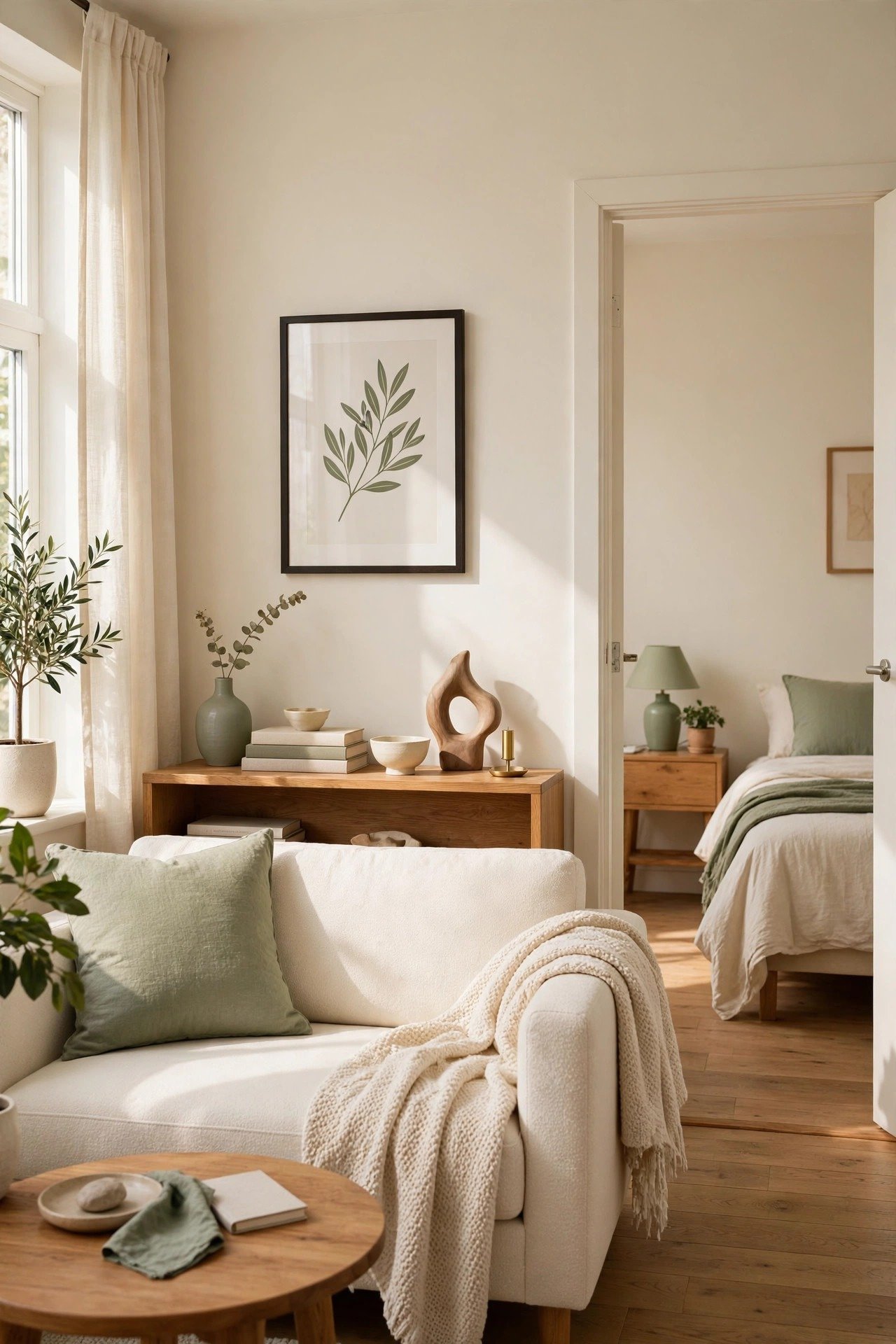
Conclusion
A small one bedroom apartment is not a problem to solve. It is a canvas that rewards every thoughtful choice you make. When you zone with curtains and shelves, choose furniture that works double duty, and let light do the heavy lifting, your home will feel generous instead of tight.
Start with just one or two ideas from this list and see how different your rooms feel by tonight. You will be surprised at how quickly a small space can feel like it was designed just for you. Happy decorating, friend.
Frequently Asked Questions About Small One Bedroom Apartment Layouts
How do you lay out a small one bedroom apartment to feel bigger?
Zone each room by function using rugs, lighting, and furniture placement instead of walls. Float furniture away from walls, keep walking paths clear, and use light colors plus large mirrors to push the walls visually back. Every piece should serve at least one clear purpose.
What is the best layout trick for a small one bedroom?
Flexible zoning is the best trick. Use open shelving, ceiling curtain tracks, or a large piece of art to define separate areas without blocking light. This lets your living room hold a seating zone, a dining spot, and a work corner that each feel distinct.
Which furniture works best in a one bedroom apartment?
Multifunctional furniture works best. Look for storage ottomans, platform beds with drawers, modular seating, folding wall desks, and pieces on wheels. Furniture with visible legs also feels lighter and lets your eye see more floor, which reads as more space.
How do you create privacy in a one bedroom apartment?
Your bedroom already has walls, so focus privacy tricks on the living areas. Hang curtains on ceiling tracks to close off a work or reading corner, use a folding screen for guests, and keep bedroom doors closed during the day. Layered lighting lets each zone feel separate after dark.
What colors make a small one bedroom apartment look bigger?
Light, warm neutrals make rooms feel bigger because they push walls visually backward. Try warm white, soft cream, or pale greige on walls and large textiles. Add one darker accent piece for depth, but keep the overall palette airy so daylight can do its work.

Hi, I’m Emily! I turn messy corners into cozy, organized spots. DreamNestDecor is where I share simple, practical home ideas — decor, organization, and small-space solutions that work in real life, not just in photos. Every idea here is carefully researched before it’s shared.