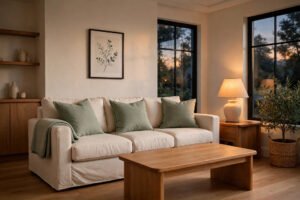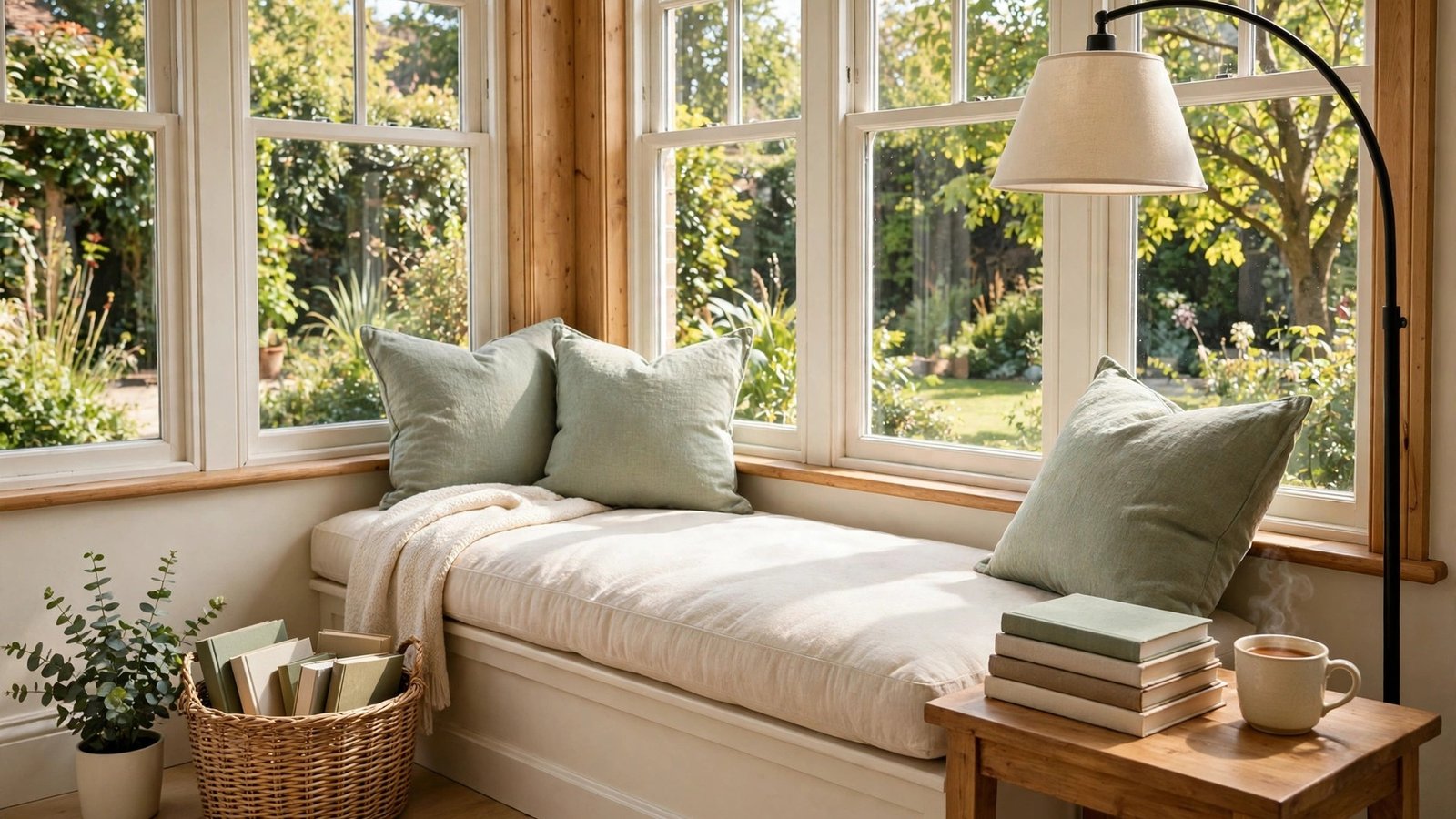
The best reading happens in a spot that holds you right. Not the edge of the bathtub, not a stair step with a pillow jammed behind your back, but a real seat with light falling over your shoulder and your next book within reach. Most homes already have that spot. It is just sitting empty.
A reading nook does not need a spare room. It needs three things: a seat deep enough for your legs, a light placed for pages instead of screens, and a surface for your tea. Get the measurements right and even a closet or a hallway dead end becomes the seat everyone fights over.
Below you will find thirteen layout ideas for the unused corners of your home. Each one gives you exact sizes and placement tips so the nook works for hour-long reads, not just photos. Find your empty corner and claim it.
1. Cushion a Deep Window Sill for Reading
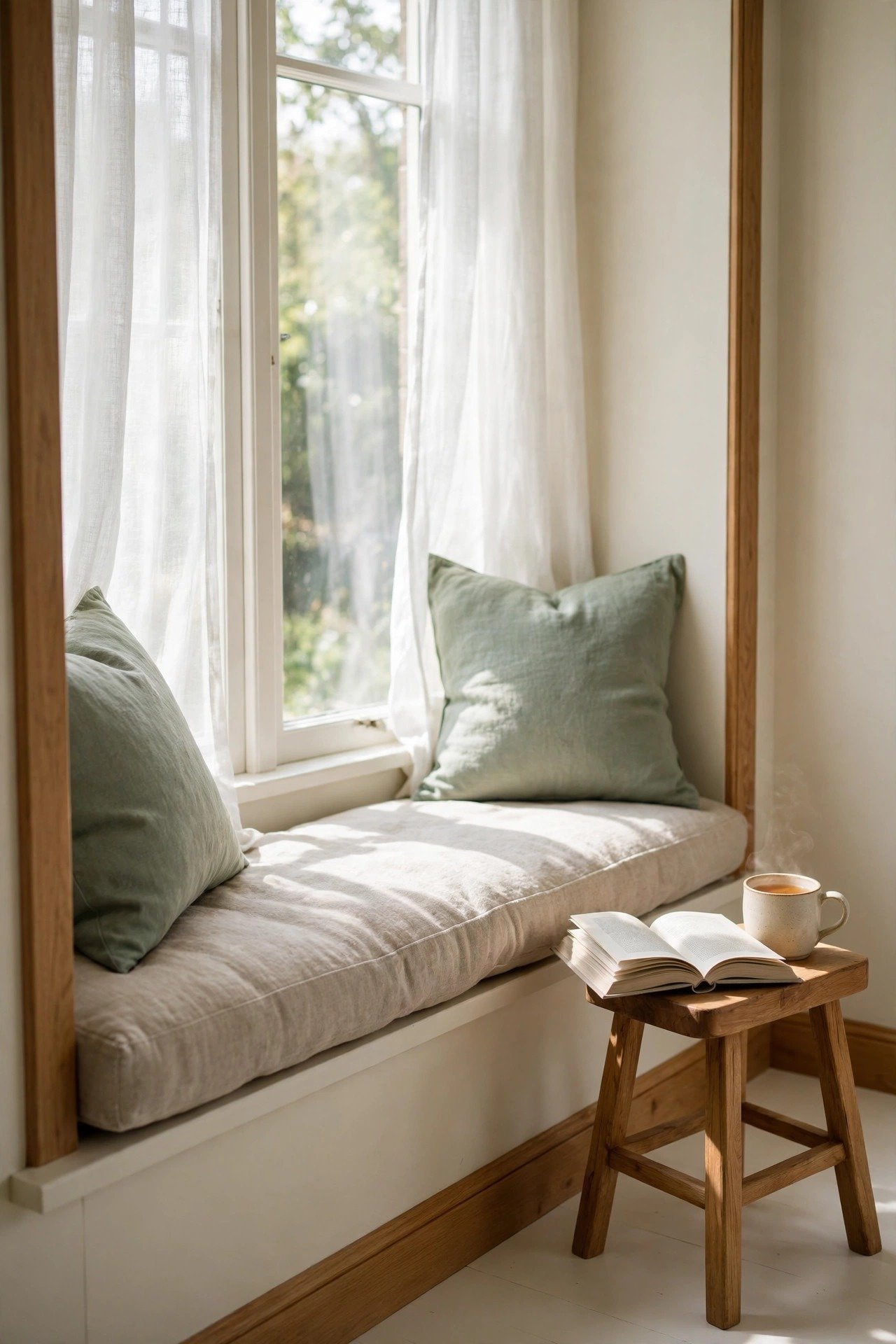
A deep window sill becomes a reading seat with one custom cushion three inches thick. Daylight falls straight onto your pages, and the view gives your eyes a rest between chapters. It is the classic nook because the light does half the work.
Measure the sill twice and order foam cut one half inch short on each side so the cover slides in. Add two pillows for back support and a narrow side table or stool within arms reach for your cup. Hang sheer curtains on each side to soften harsh afternoon sun.
2. Build a Bench Into the Bay Window
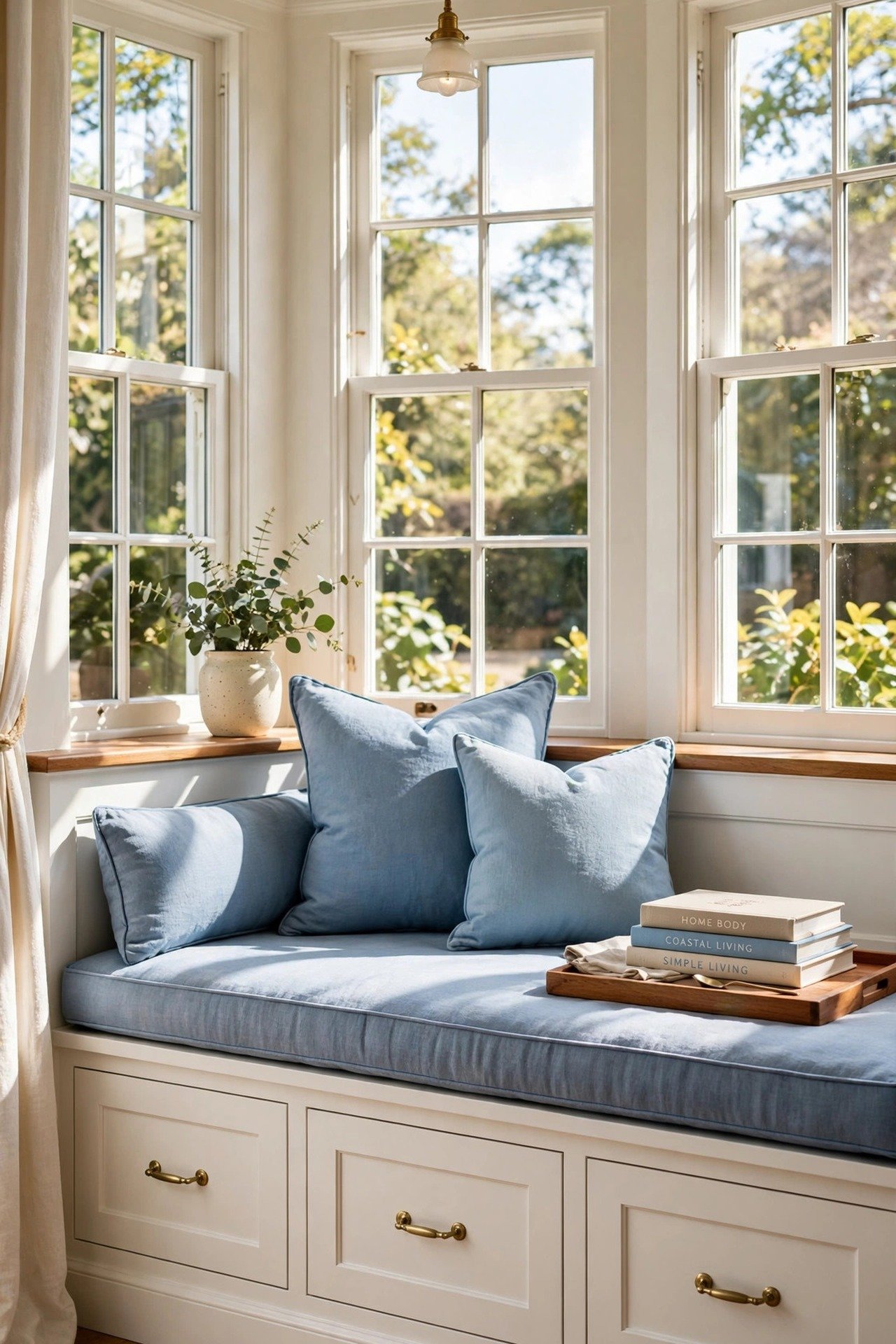
A bay window already curves like a small room, so a built-in bench makes it feel finished. The angled seat wraps you in light from three sides while storage drawers underneath hold blankets and magazines. It turns a bright bump in the wall into a destination.
Build the seat 18 inches high and at least 20 inches deep so you can curl up sideways. Paint it the same color as the window trim for a built-in look. Add a small pendant light centered above the middle for evening reading.
3. Claim the Space Under the Stairs
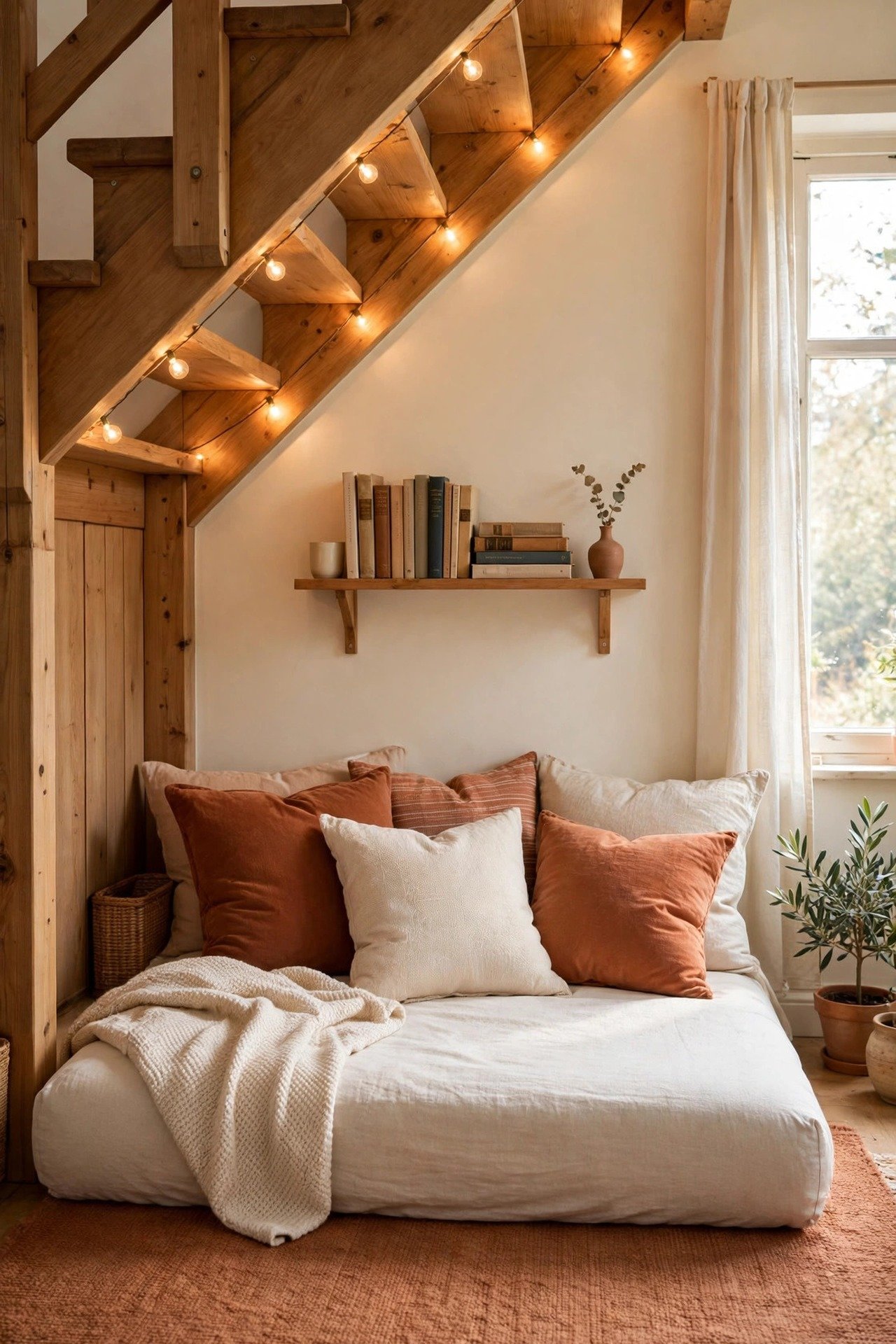
The triangle under the stairs is wasted space in most homes, but it makes a perfect reading hideaway. The low ceiling feels cozy instead of cramped when you sit on the floor. Kids and adults both love the secret-cave feeling.
Lay a thick rug and add a large floor cushion or a low daybed mattress with the pillows at the tall end. Mark the lowest ceiling point with tape on the floor so nobody bumps their head. Run a string of warm lights along the stair underside for a gentle glow.
4. Angle an Armchair in a Bedroom Corner
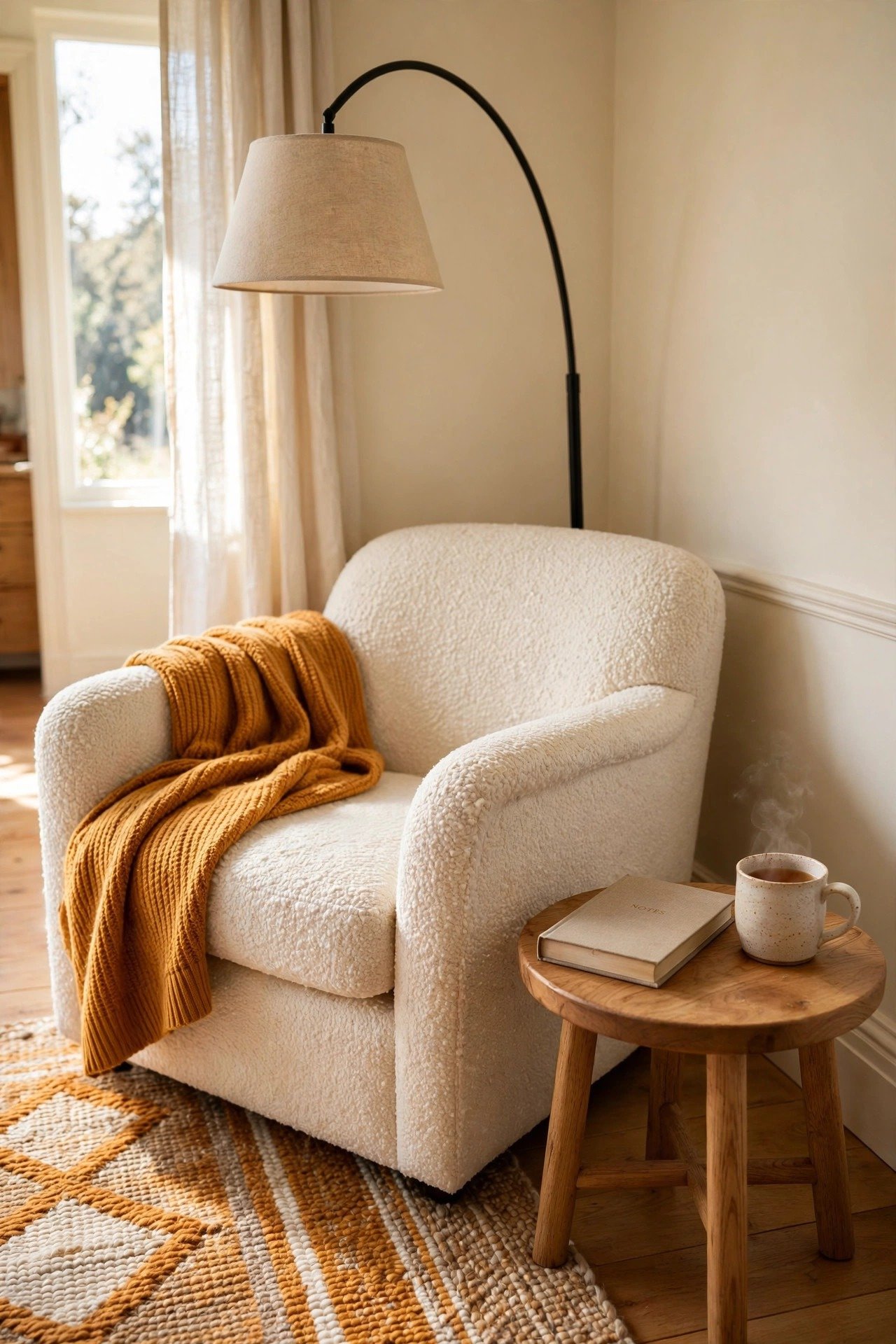
One good armchair turns a bedroom corner into a full reading nook. Angling the chair slightly out from the corner makes it feel welcoming instead of pushed away. It gives you a quiet seat far from the bed and the television.
Choose a chair with a seat at least 22 inches deep so you can tuck your legs up. Place a small round side table on your dominant-hand side and an arc floor lamp behind the chair so light falls over your reading shoulder. A papered accent wall behind the chair, like these wallpaper accent wall ideas, marks the nook as its own zone.
5. Turn a Closet Into a Private Library
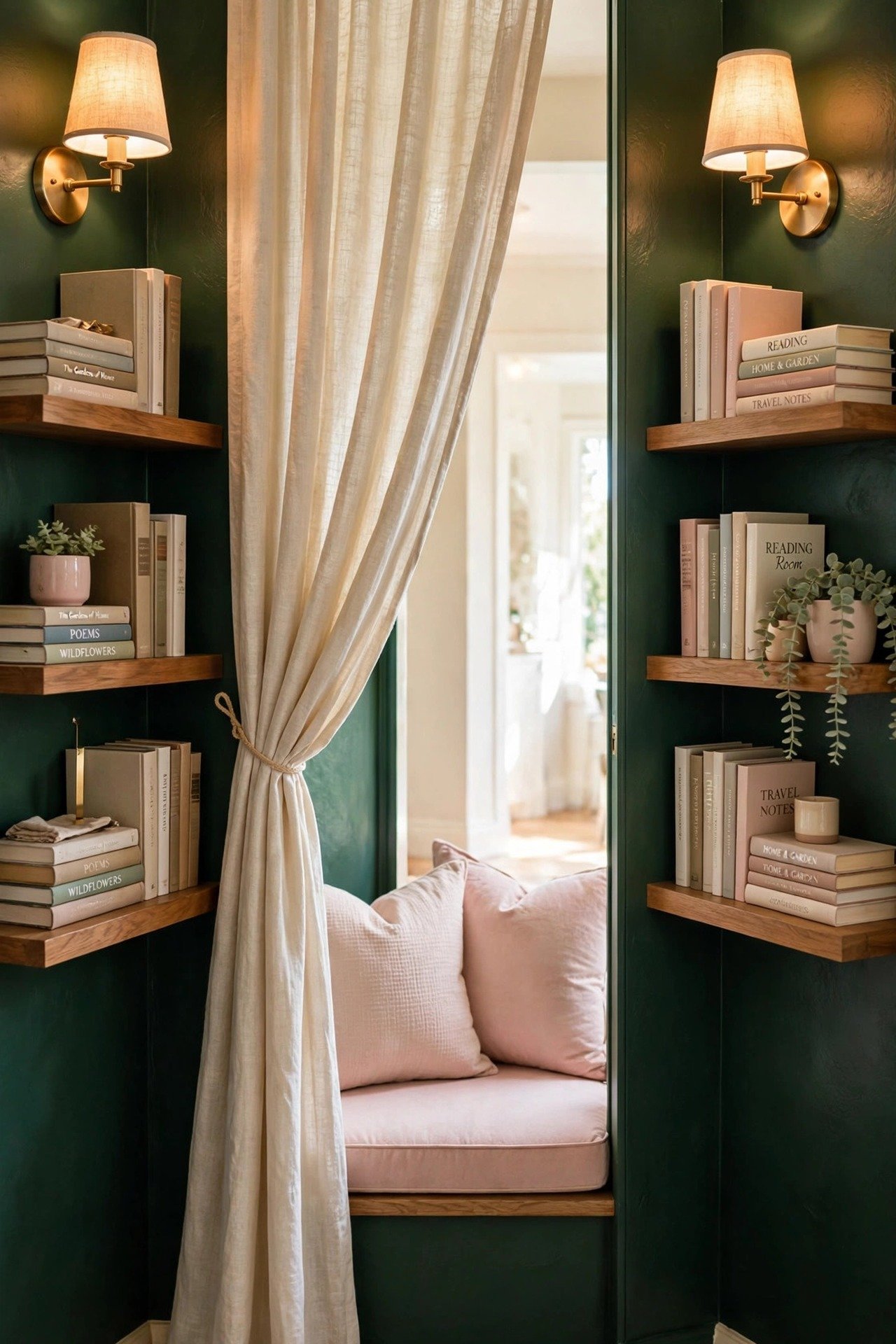
An unused closet becomes the most private reading room in the house once you remove the doors and the hanging rod. The small space wraps around you and shuts out household noise. It feels like a hideout built just for books.
Paint the inside one deep color like forest green or navy, following these color drenching ideas for full coverage. Fit a padded bench or a thick floor cushion at least 24 inches deep at the bottom. Add floating shelves on both sides for books and a battery sconce for warm light.
6. Fill an Alcove With a Bookshelf Bench
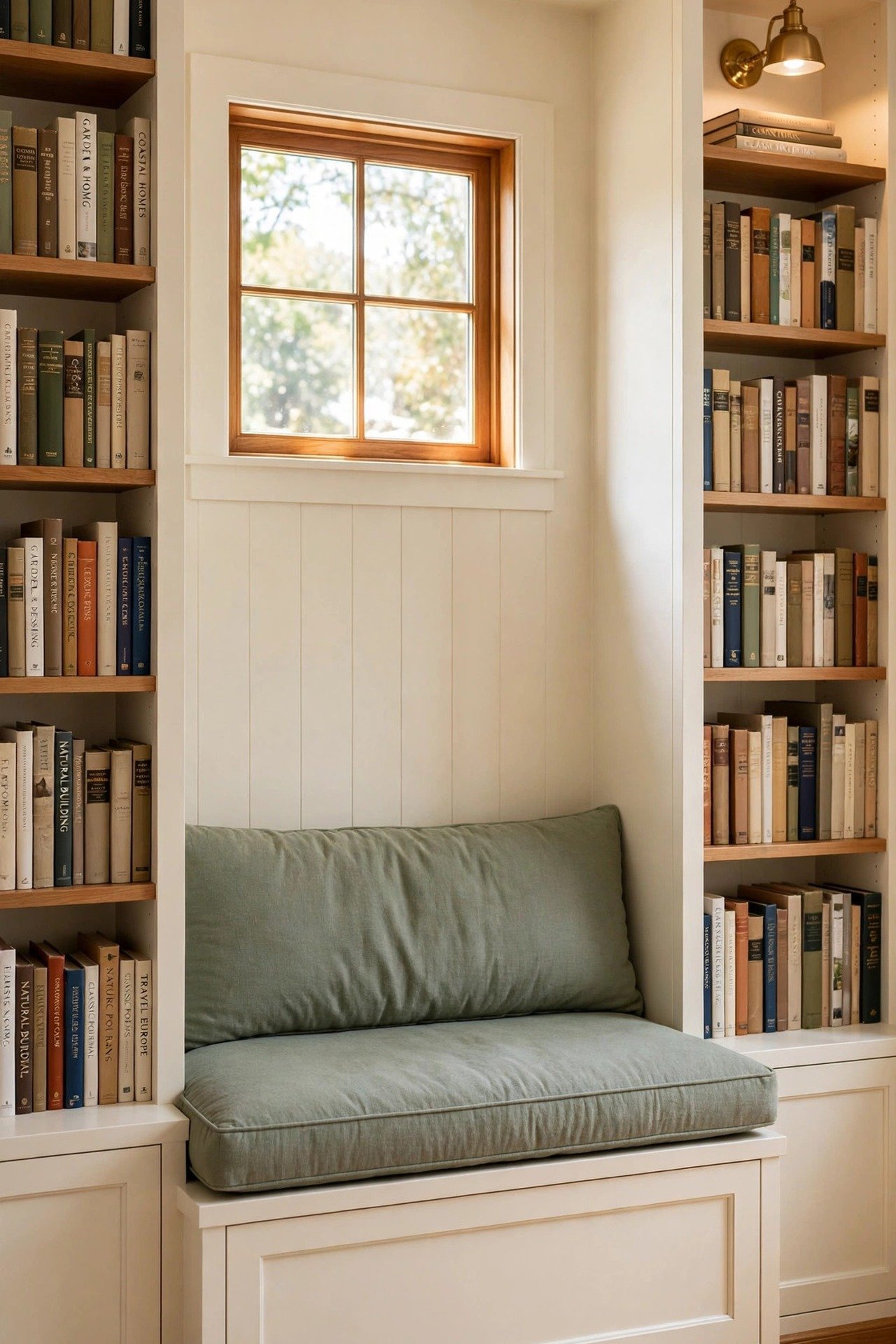
An alcove beside a fireplace or chimney is begging for a built-in bench with shelves. The seat tucks into the wall while books rise on both sides, so your whole library sits within reach. The nook feels custom because it uses the exact shape of your home.
Build the seat at knee height, about 18 inches, with open shelves climbing the walls on each side. Paint the whole unit one color so it blends with the wall, and add trim like these board and batten wall ideas for a finished edge. Mount a small picture light on the top shelf for after-dark reading.
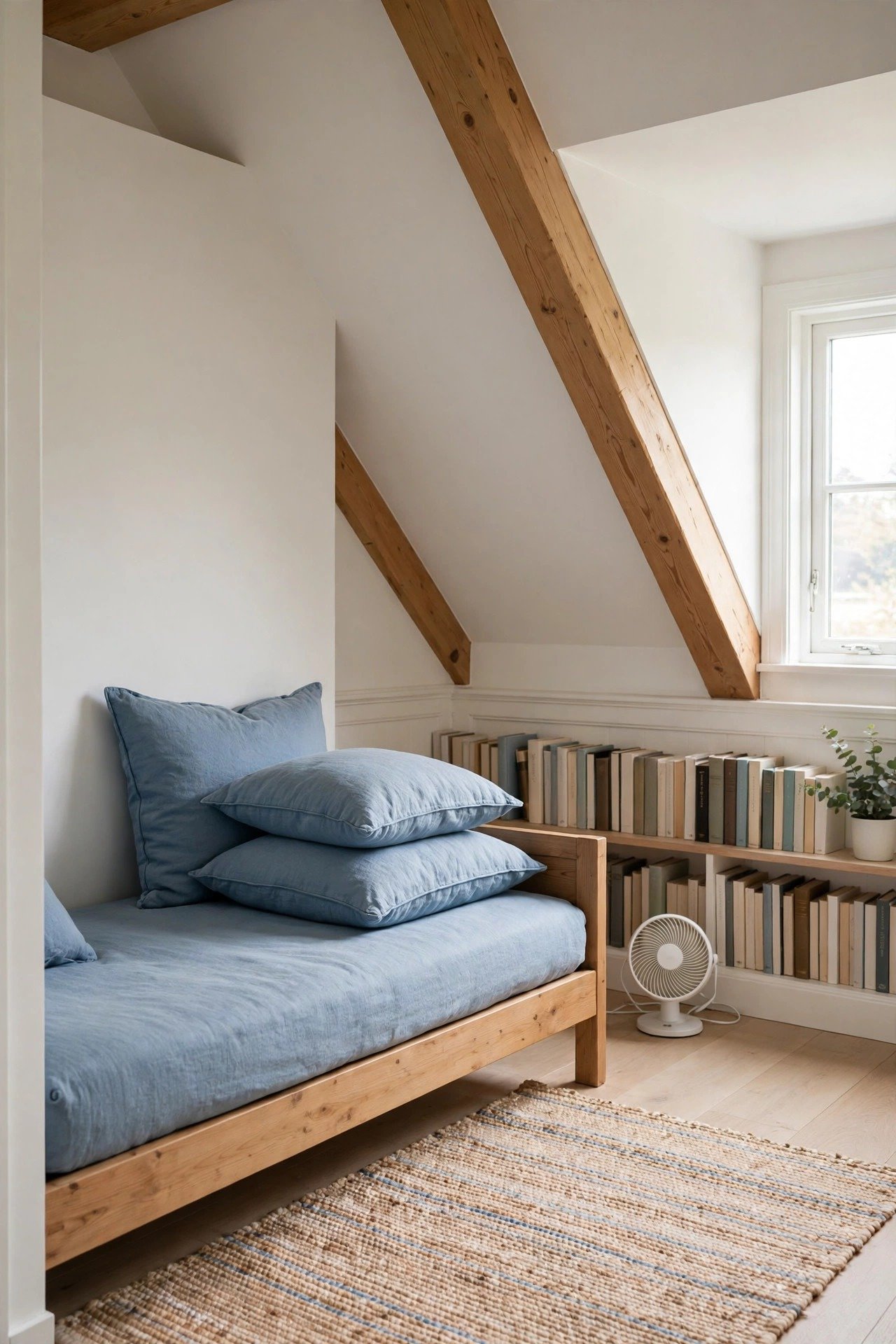
7. Slide a Daybed Under the Sloped Ceiling
Attic slopes create awkward corners that fit nothing except a low daybed. Pushed under the slope, the bed becomes a nest for long reading sessions with the roofline curving overhead. The odd angle turns into the whole point.
Place the daybed where the ceiling is at least four feet high at the sitting edge, with pillows stacked against the tall wall. Run low shelves along the knee wall for books. Since heat rises, keep a small fan nearby or open the window in summer.
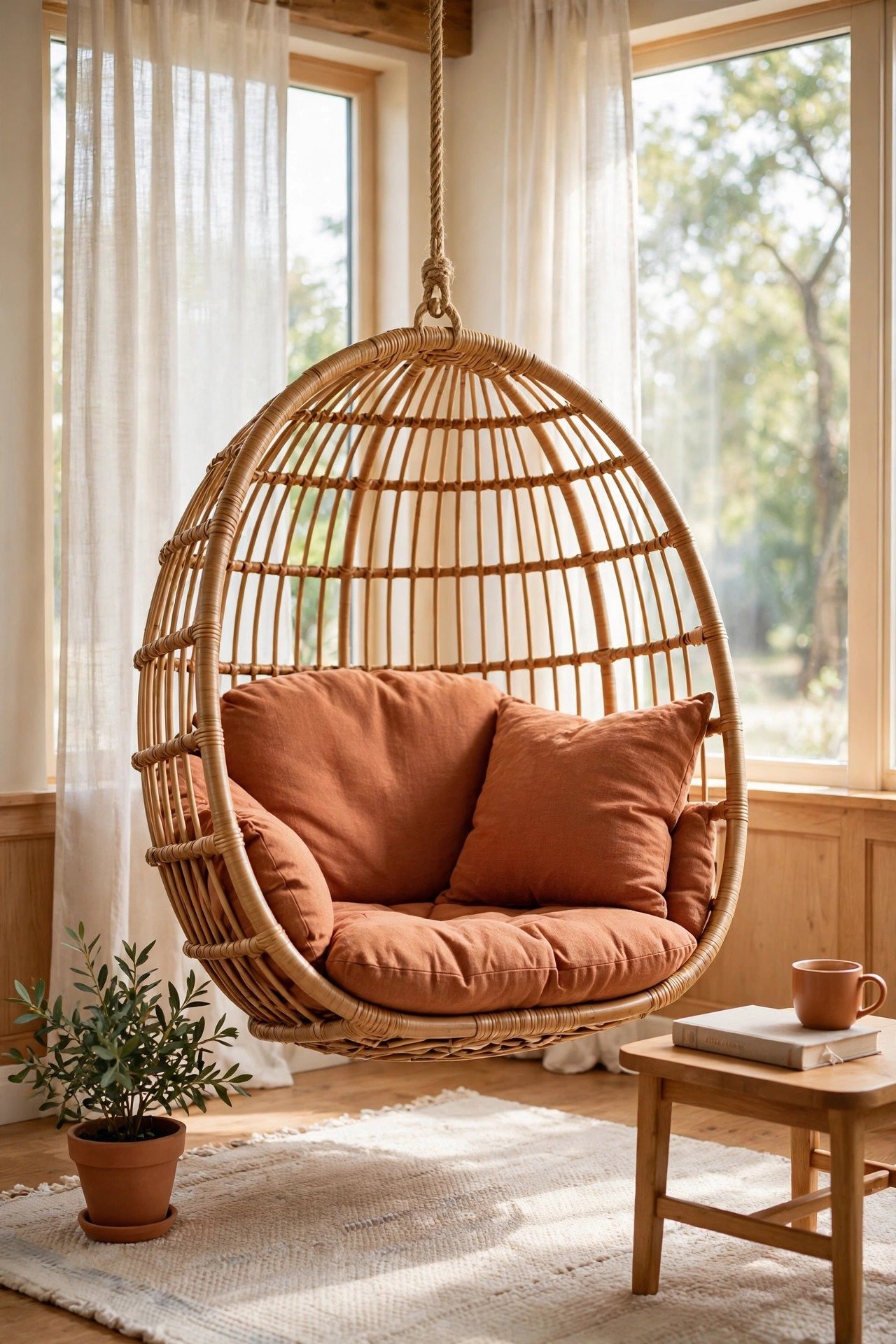
8. Hang an Egg Chair by the Window
A hanging egg chair gives you a gentle swing while you read, which many people find deeply relaxing. The curved shell blocks distractions and holds your focus on the page. It makes an ordinary corner feel playful and calm at once.
Hang the chair from a solid ceiling joist with a heavy-duty hook rated for at least 300 pounds, or use a freestanding stand. Leave three feet of clear space on all sides for a soft swing. Place a small side table within arms reach and a soft rug underneath.
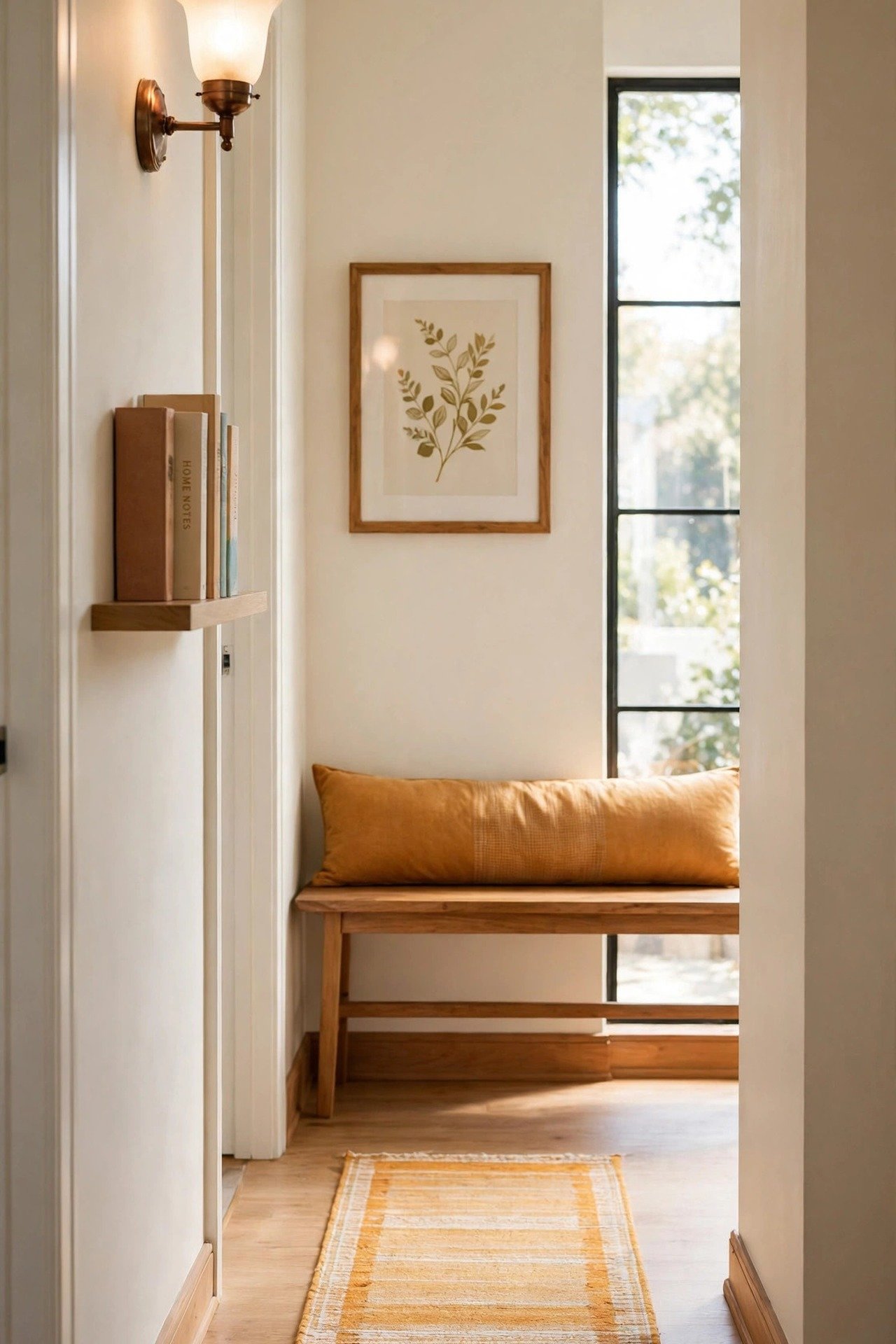
9. Set a Bench at the Hallway Dead End
Many hallways end at a blank wall that nobody uses. A slim bench there turns the dead end into a peaceful reading spot with borrowed light from the corridor. The forgotten stretch of hallway finally earns its keep.
Choose a bench no deeper than 16 inches so it never blocks the walkway, and top it with a long cushion. Mount a wall sconce above for evening light and a slim shelf on the side for a few books. Measure the hallway at its narrowest point before you buy anything.
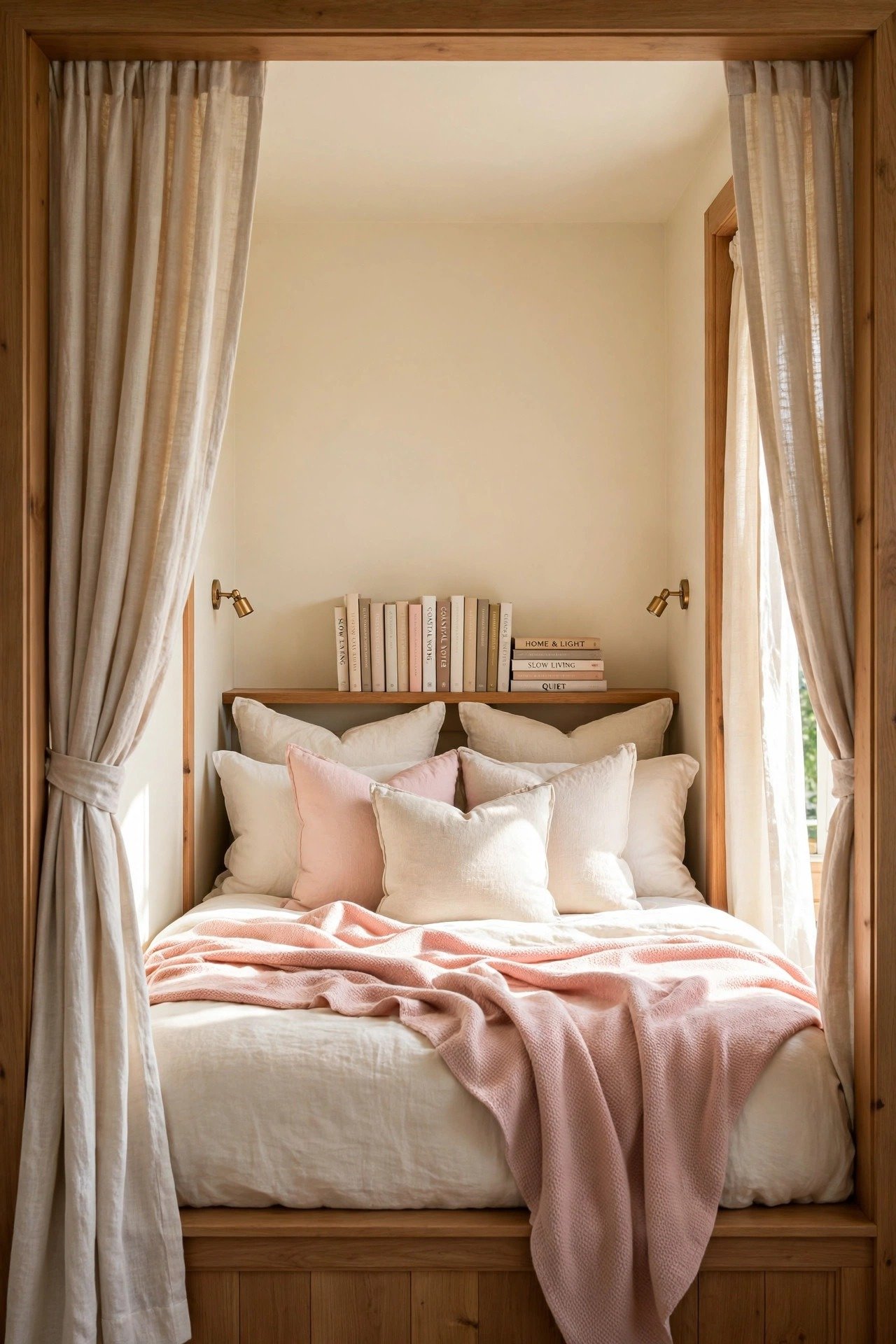
10. Curtain Off a Bed Alcove for Privacy
If your bed sits in an alcove, curtains turn it into a reading cabin in seconds. Drawn closed, the fabric shuts out light and noise for total focus. Opened, the alcove still feels like a defined nook rather than just a bed.
Hang a curtain rod across the front of the alcove and choose linen or velvet in a calm color. Add molding around the alcove opening, inspired by these decorative molding ideas, for a finished frame. Mount a small reading light on each side wall and keep a narrow shelf at the head for books.
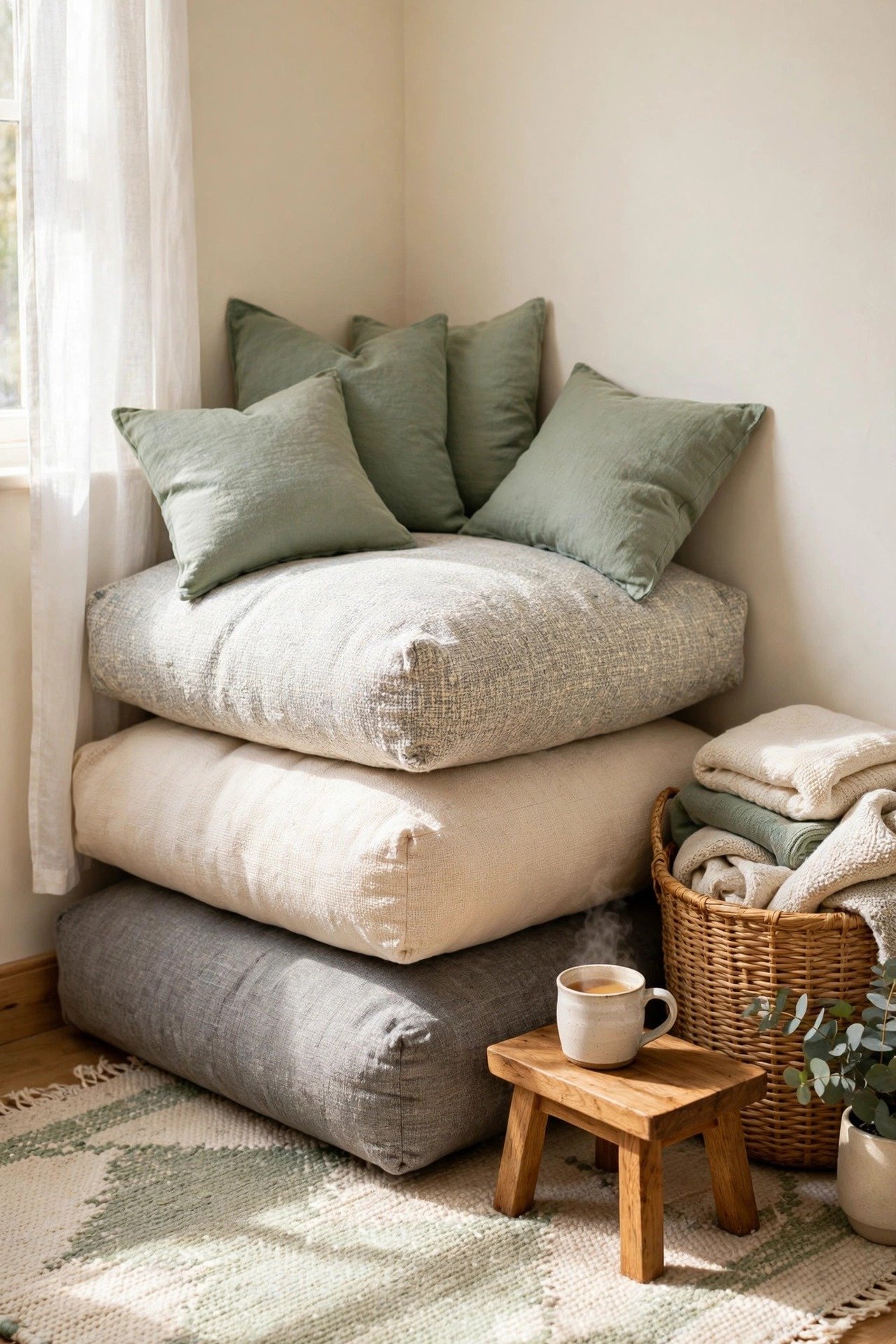
11. Stack Floor Cushions in a Bright Corner
Three large floor cushions stacked against a wall make a reading spot with zero furniture to buy. The pile supports your back at a relaxed angle while the corner holds everything steady. It is the fastest nook on this list to set up.
Choose cushions at least 24 inches square with firm foam so they do not flatten in a week. Layer a soft rug or folded blanket underneath for warmth. Lean a woven basket against the wall for blankets and keep a low stool beside you for tea.
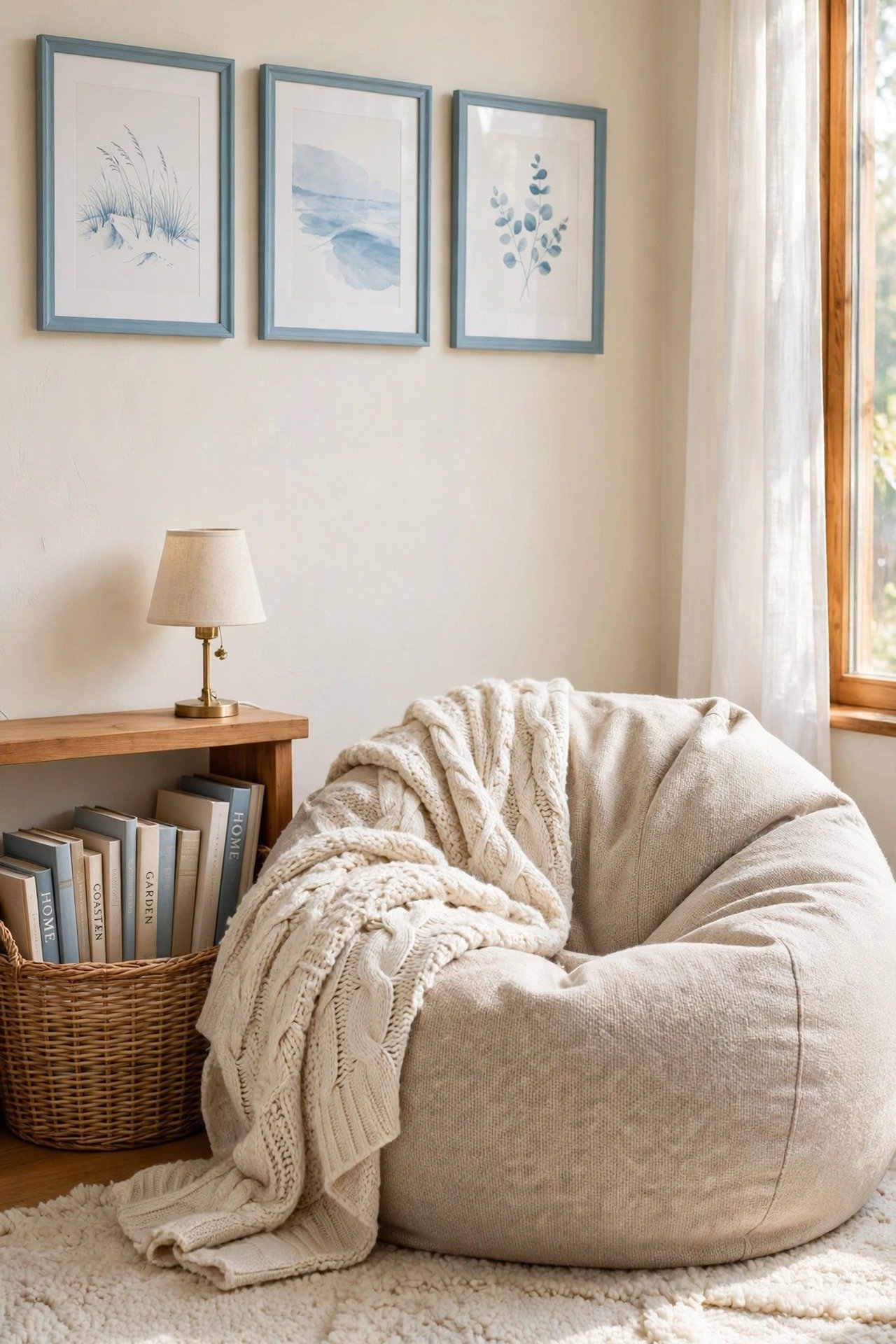
12. Drop a Beanbag Beside a Book Basket
A big beanbag molds around you for the most relaxed reading posture of all. Paired with a basket of books at your side, the corner needs nothing else to work. It is perfect for teens, kids, and anyone who reads curled up.
Pick a beanbag with a washable cover and double stitching so it survives daily use. Fluff it before each session since the filling settles. Set a low shelf or a wicker basket within arms reach so you can swap books without standing up.
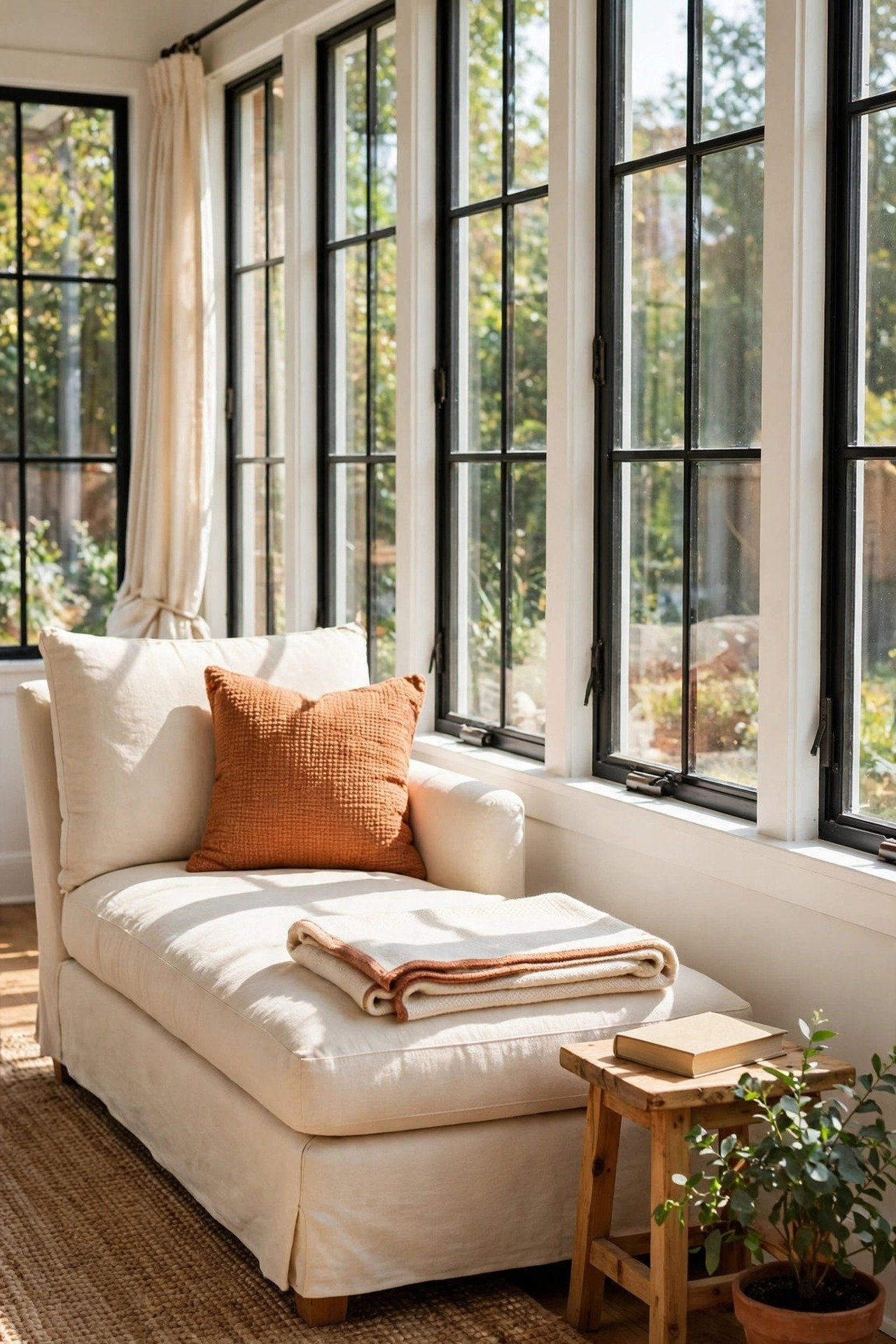
13. Stretch Out on a Chaise in the Sunroom
A chaise lounge in a sunroom gives you full-body support with natural light pouring over the pages. You can stretch out completely, which no armchair allows. Morning and afternoon light mean you rarely need a lamp.
Place the chaise along the longest window and choose fade-resistant outdoor cotton for the cushion. Textured plaster walls glow beautifully behind a chaise, so these venetian plaster wall ideas suit the setting. Keep a folded blanket on the end for cool evenings.
Conclusion
A reading nook succeeds on measurements, not money. Seat depth, light angle, and a surface within reach decide whether you read for ten minutes or two hours. The unused corner you already own is probably enough.
Pick the corner that gets the best light and set up the simplest version this weekend. Add the cushion, the lamp, and the book basket first. The reading habit will follow the seat.
Frequently Asked Questions
How deep should a reading nook seat be?
Aim for at least 20 inches of seat depth so you can curl up, and 24 inches for a closet or floor cushion setup. A seat 18 inches high matches knee height for easy sitting and standing.
Where should the light go in a reading nook?
Place the lamp behind your shoulder on your non-dominant side so light falls over the page without glare. For window nooks, sit sideways to the glass to avoid squinting.
What is the smallest space that can hold a reading nook?
A corner about 30 inches square fits floor cushions, and a closet 24 inches deep holds a bench seat. Measure your spot first and choose the layout that matches its depth.
How do I keep books within reach in a tiny nook?
Use floating shelves on the side walls, a basket at your elbow, or the storage under a bench seat. Keep your current reads at arms length and the rest on higher shelves.
Can a reading nook work without natural light?
Yes. A warm 2700K bulb in a wall sconce or arc lamp gives comfortable reading light. Add a small mirror opposite the lamp to bounce the glow around a dark corner.

Hi, I’m Emily! I turn messy corners into cozy, organized spots. DreamNestDecor is where I share simple, practical home ideas — decor, organization, and small-space solutions that work in real life, not just in photos. Every idea here is carefully researched before it’s shared.