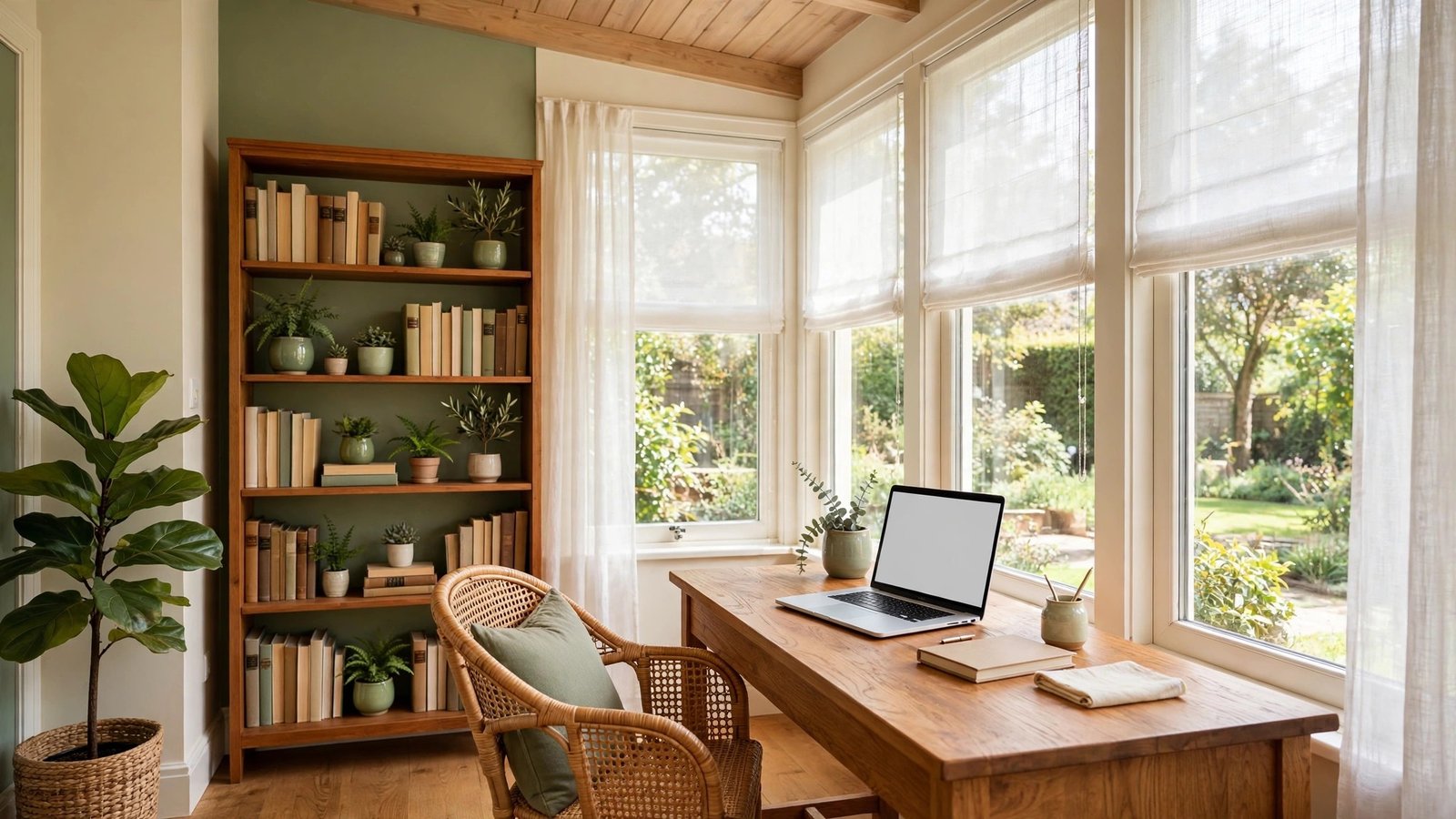
Working from a sunroom sounds like a dream until the afternoon sun hits your screen. The glare washes out your monitor, the glass walls heat up by two o clock, and every video call shows a bright white blur behind you. A sunroom office needs a different playbook than a regular spare bedroom.
The fix is about placement, not square footage. Where your desk sits relative to the windows decides whether you get calm daylight or a headache. Small choices like desk depth, chair height, and blind type turn a glass box into a workspace you can use for eight hours.
Below you will find seventeen layout ideas built for bright workdays in compact sunrooms. Each one solves a real problem like glare, heat, cords, or storage. Set up the layout that matches your window direction, and your sunroom will finally earn its keep as an office.
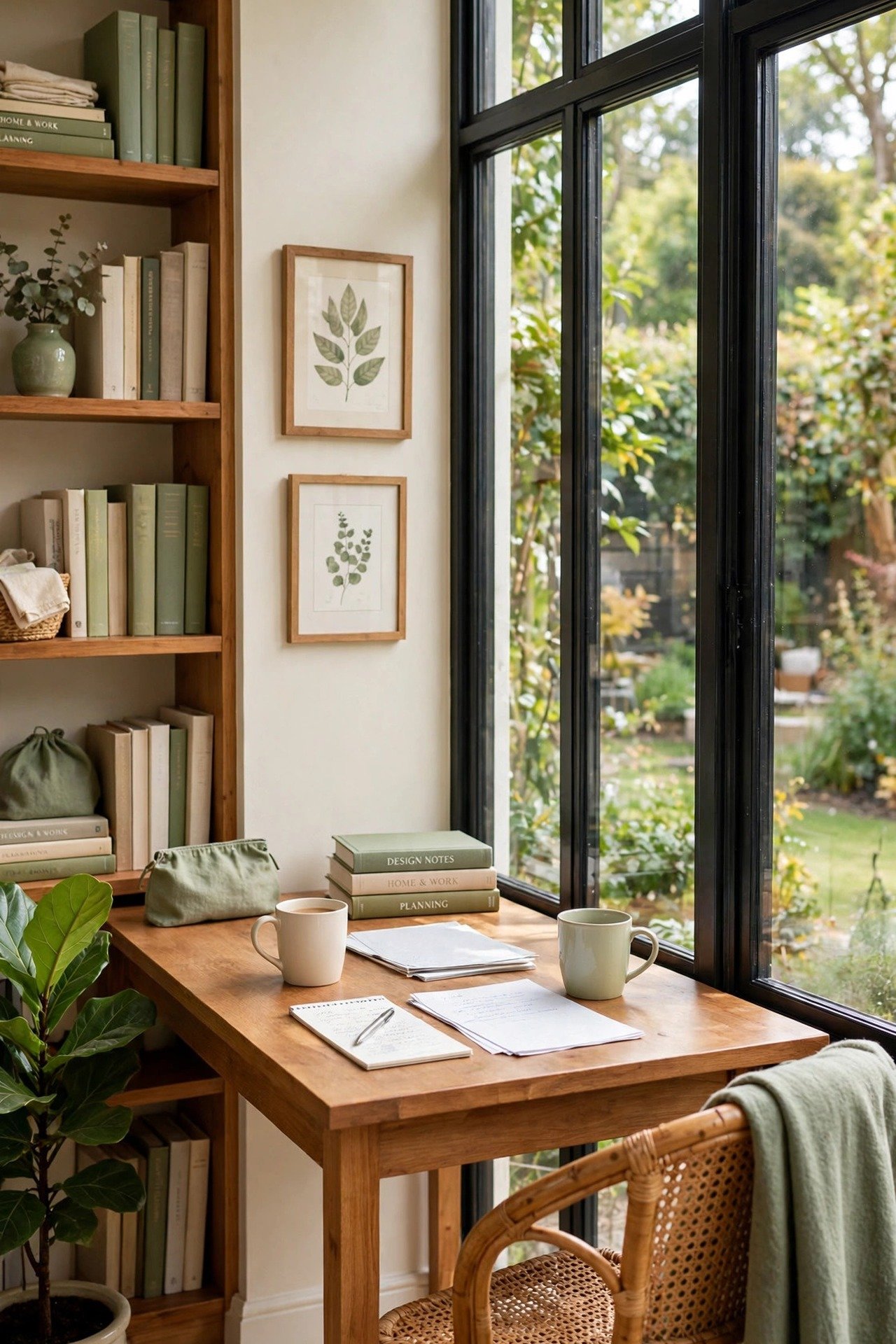
1. Start With a Simple Desk in the Corner
Place a 48-inch-wide desk in the corner where two window walls meet, with the desktop sitting perpendicular to the brightest window. This angle puts daylight on your work surface without throwing glare straight onto your screen. Keep the desk 24 inches deep so your monitor sits a full arms length away from your eyes.
Pair the desk with light wood furniture and one open shelf above for books and a small basket for chargers. Angle the desk five to ten degrees away from direct sun on bright afternoons. This basic corner setup suits east-facing sunrooms best, where the harsh light fades by midday.
2. Soften the Glare With Sheer Blinds
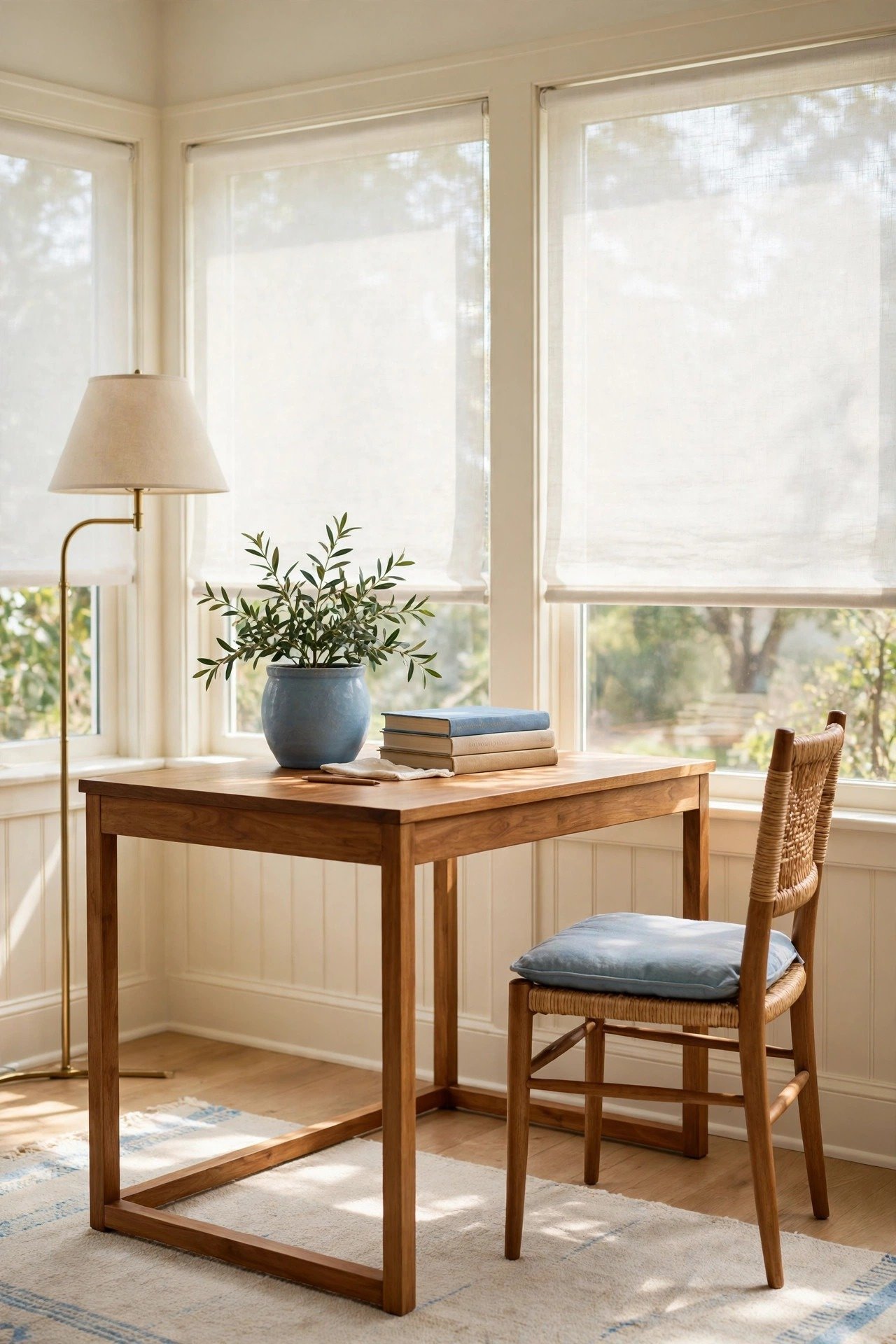
Sheer roller blinds cut glare without killing the daylight that makes a sunroom office pleasant. Mount them inside the window frame so they sit close to the glass and filter the sun evenly. You keep the bright, calm feeling while your screen stays readable.
Choose light-filtering fabric in white or warm cream, and pick blinds you can raise fully on cloudy days. For south-facing glass, layer the sheers with a single linen curtain panel you can draw at peak sun hours. One plant on the sill softens the window line without blocking light.
3. Pair the Desk With a Tucked Bench
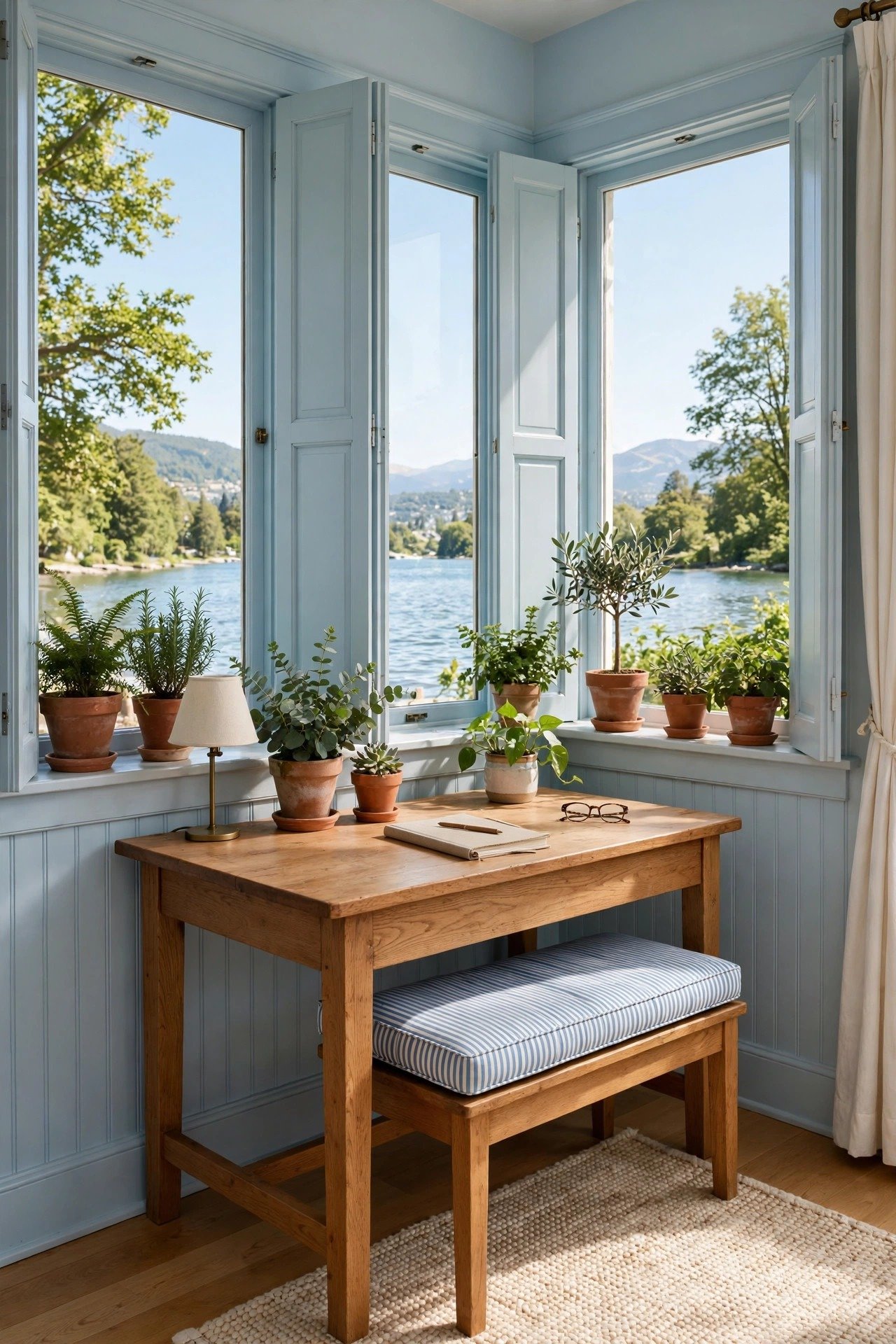
A plain wooden table becomes a desk when you slide a cushioned bench underneath it. The bench pulls out for focused work and pushes fully under the table when you want the floor clear. You get seating and storage of legroom in one slim footprint.
Size the bench two inches narrower than the table on each side so it disappears underneath. Pick a cushion no thicker than three inches so your knees clear the table apron. This pairing suits cottage and coastal sunrooms where a formal office chair would look out of place.
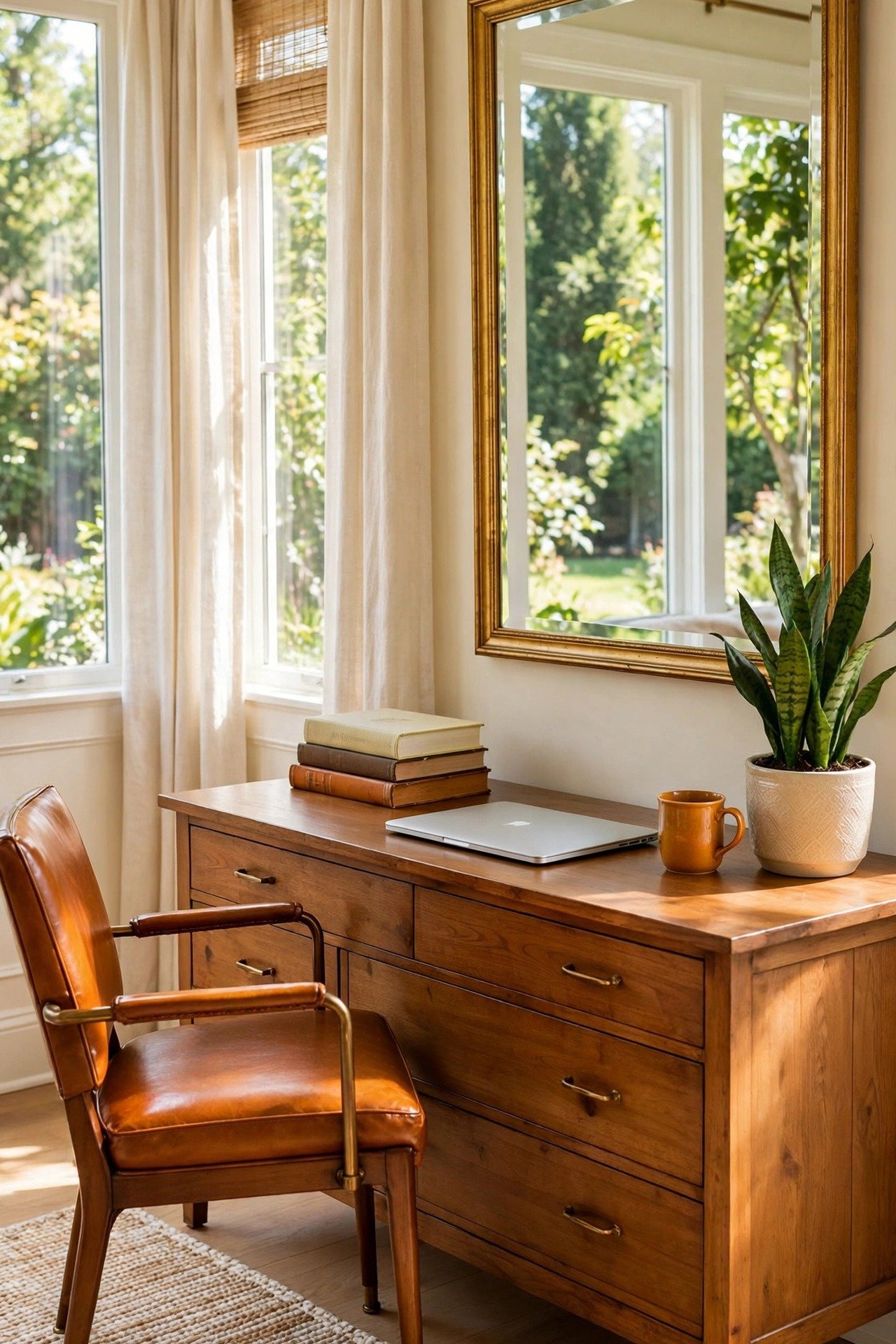
4. Use a Credenza Desk for Hidden Storage
A credenza desk hides printers, paper, and chargers behind closed doors while its top stays clear for your laptop. The low, wide shape fits under sunroom windows without blocking the glass. You get a full office worth of storage in about sixty inches of wall.
Look for a credenza 18 to 20 inches deep with tapered legs so light flows underneath. Drill one discreet cord hole in the back panel and run a slim power strip inside the cabinet. Measure your window wall first so the credenza never crowds the view.
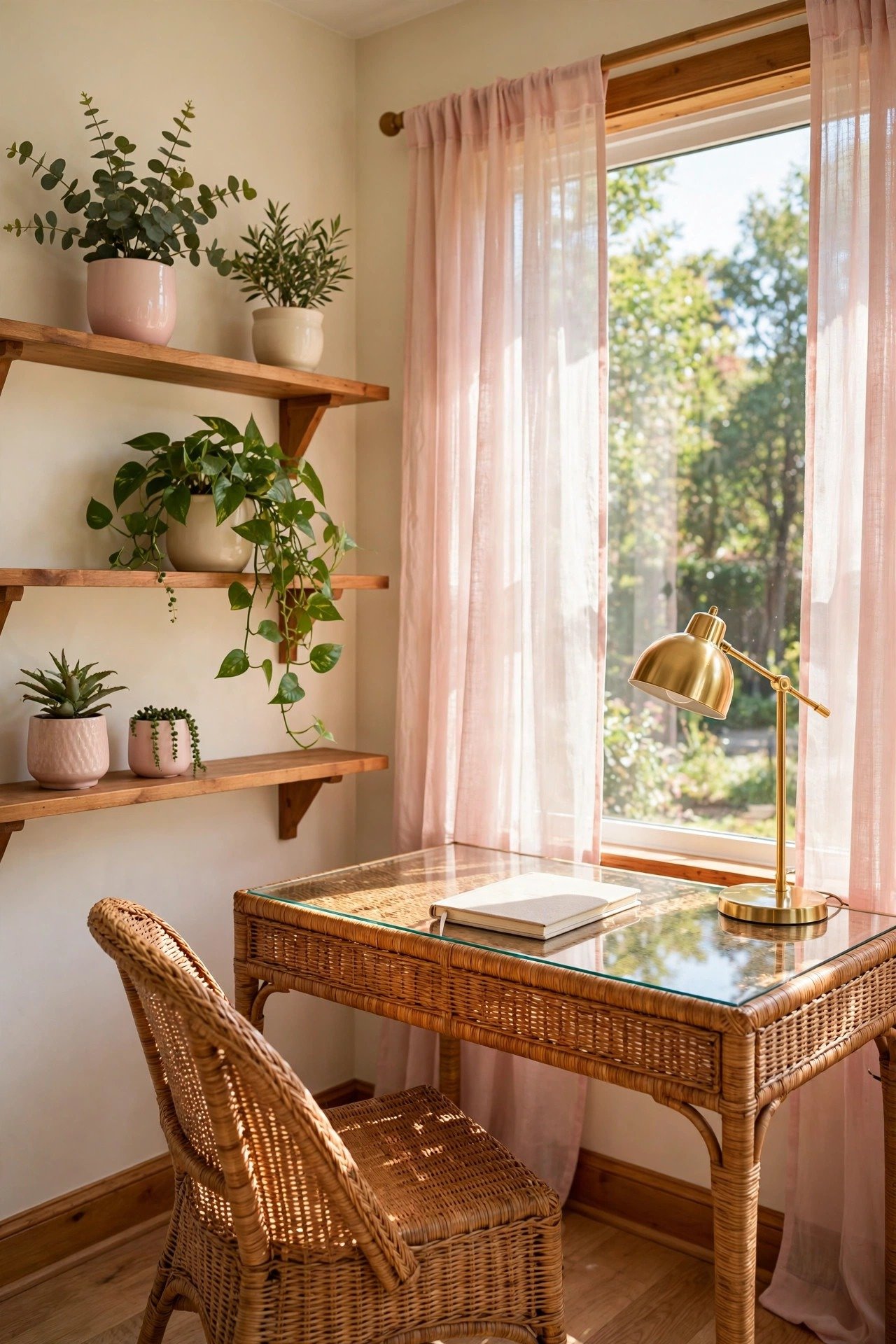
5. Pick a Woven Rattan Desk
A rattan desk with open legs lets light pass under and around it, so the small sunroom never feels blocked. The woven texture catches sunlight beautifully and keeps the workspace feeling relaxed. It reads as furniture, not office equipment.
Choose a desk with a solid top insert or a glass overlay so your mouse and papers sit flat. Keep the footprint under 42 inches wide in tight sunrooms. Skip rattan if your sunroom runs humid in summer, since the fibers dislike constant moisture.
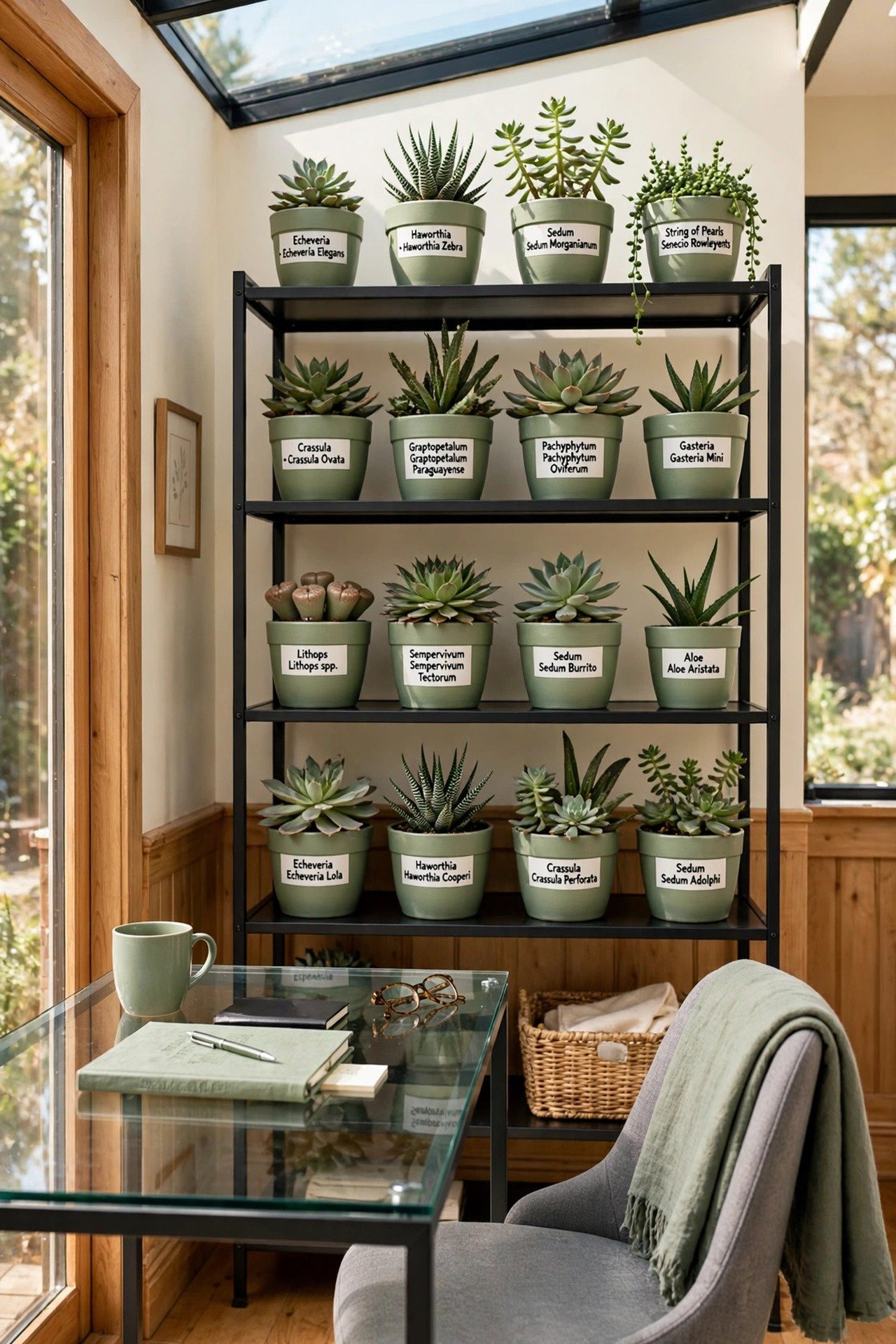
6. Grow a Living Wall Behind the Desk
A tall shelf packed with succulents behind your desk becomes a living backdrop for video calls. The plants fill the frame with calm green instead of a blank wall or a bright window. They also give your eyes a rest spot during long screen hours.
Use a metal shelving unit 12 inches deep with small pots in matching planters for a tidy look. Frame the shelf with simple trim, inspired by these decorative molding ideas, so it reads as intentional. Pick succulents and snake plants that thrive in strong sun with little water.
7. Lean Into Rustic Beams
Exposed ceiling beams give a sunroom office instant character and a natural place to hang task lighting. The timber frames the big windows and makes the glass room feel grounded. A plain wooden desk under the beams completes the calm, cabin-like mood.
Match your desk wood tone to the beams so the room flows as one piece. Hang a pendant or a clip light from a beam to light your keyboard without a desk lamp stealing surface space. Beams count as a ceiling feature, so browse these ceiling design ideas for more ways to use them.
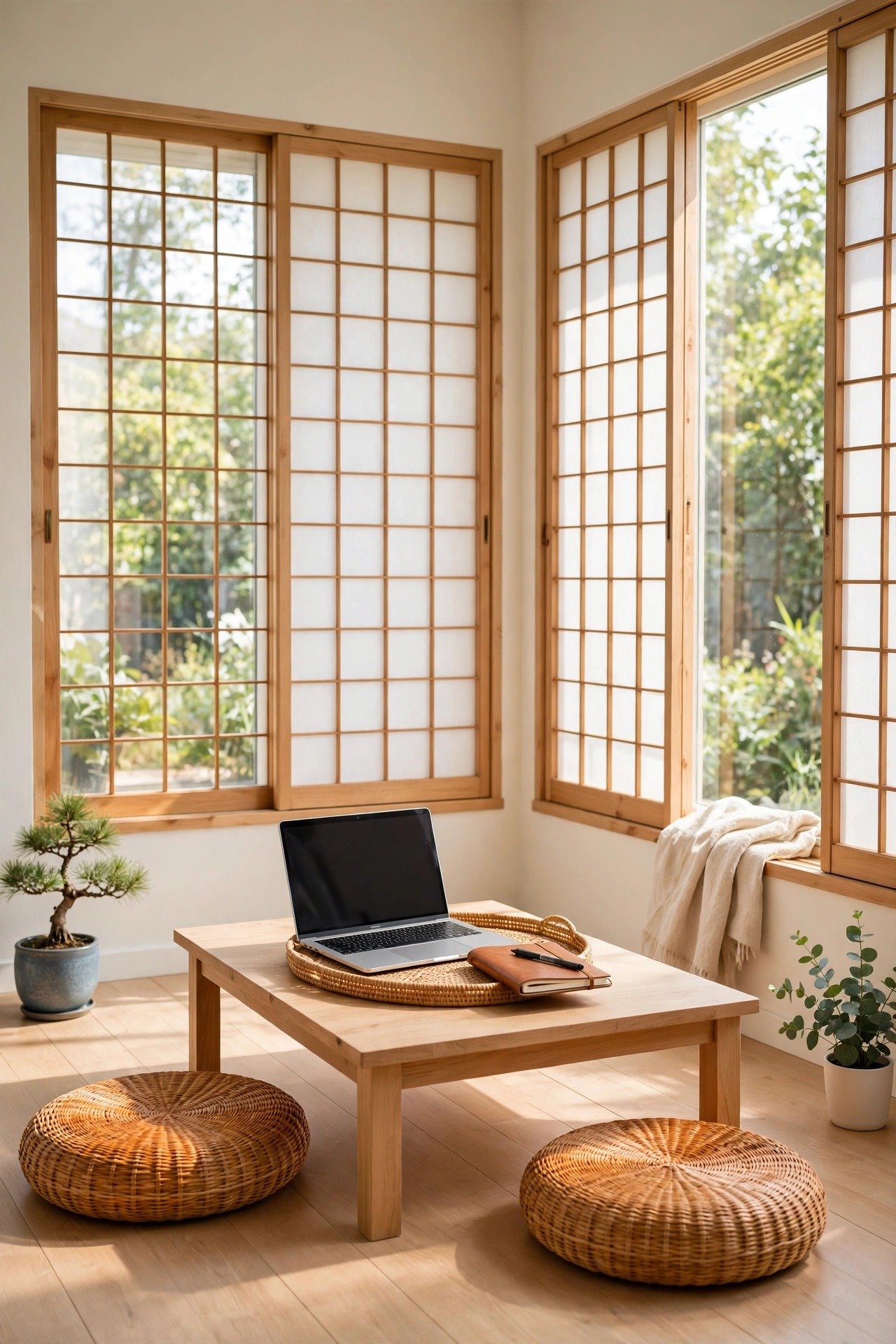
8. Work Low on Floor Cushions
A low table with firm floor cushions creates a grounded workspace that suits reading, sketching, and laptop work. Sitting low changes your posture through the day and frees you from a stiff office chair. The setup takes almost no visual space in a glass room.
Pick a table 14 to 16 inches high and cushions at least four inches thick with firm foam. Add a tray on the table to hold your laptop steady and a small basket beside you for notebooks. This layout suits anyone whose back complains about standard desk chairs.
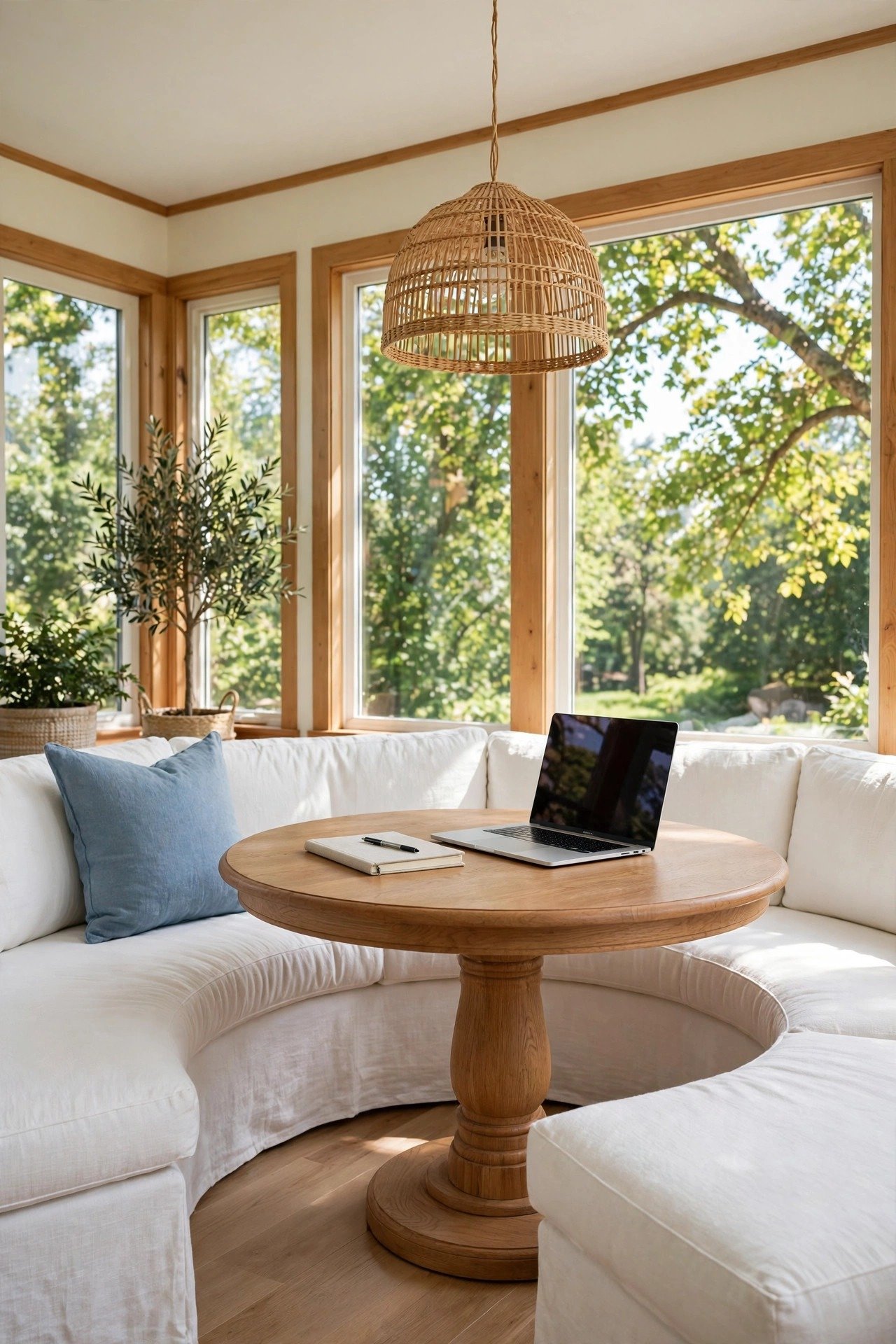
9. Curve a Banquette Around the Table
A curved banquette wraps seating around a round table and fits corners where straight furniture wastes space. Everyone sits close, the middle stays open, and the wraparound shape feels made for long work sessions. It doubles as a meeting spot and a reading nook.
Build or buy the banquette about 20 inches deep with a seat height of 18 inches. Paint the base in a two-tone scheme like these two-tone wall paint ideas to define the nook. Keep the table 30 inches across so laptops and coffee share the surface easily.
10. Let Exposed Brick Ground the Space
An exposed brick wall gives a glass sunroom office the weight it needs to feel like a real workspace. The rough texture softens in daylight and keeps the room from feeling like a greenhouse. Your desk zone gains a natural focal wall for calls.
Place your desk against the brick with the windows to your side for the best light balance. Soften the brick with a limewash coat from these limewash wall paint ideas if the red feels too strong. Dust the brick twice a year since the texture collects it fast.

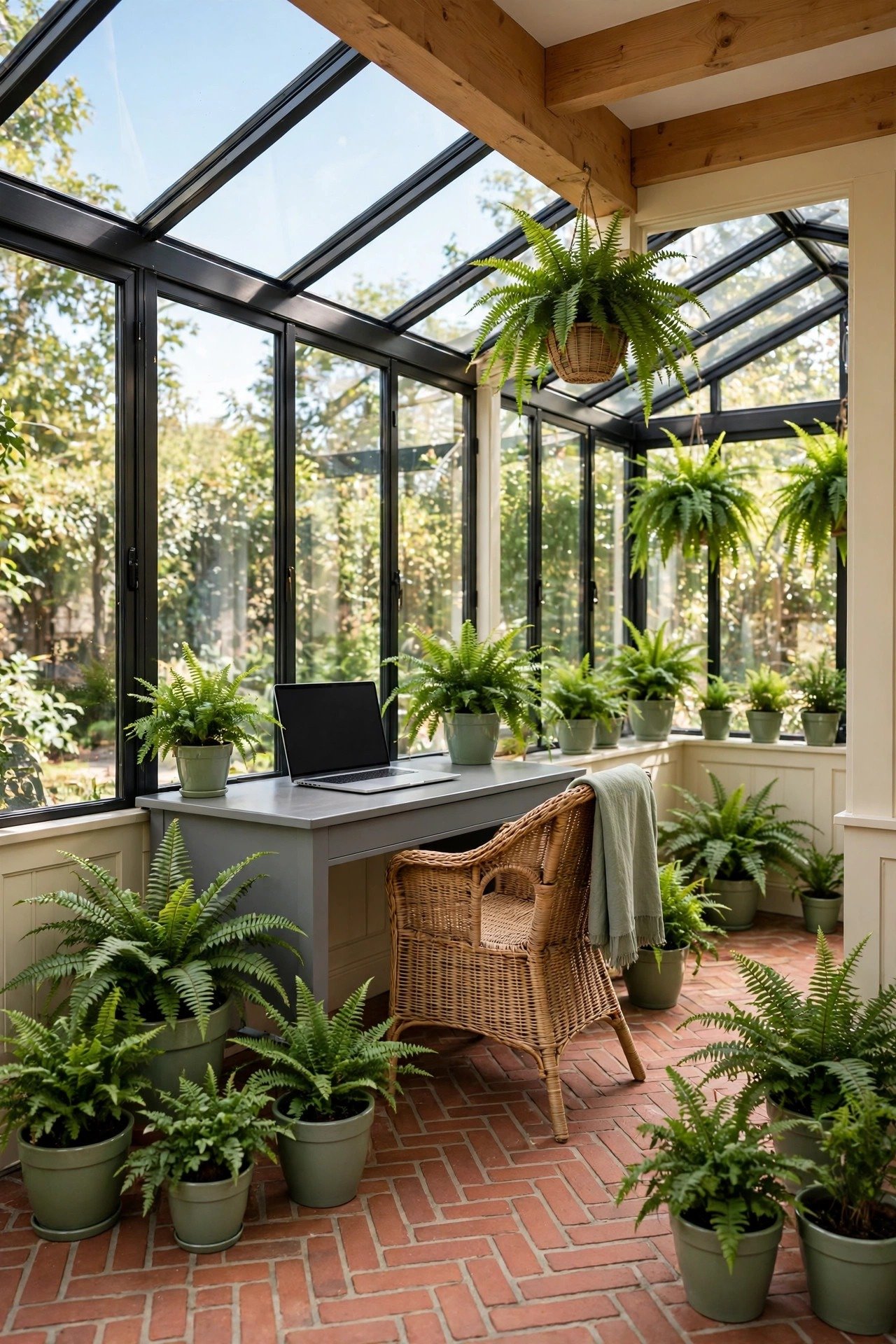
11. Set the Desk Inside a Greenhouse Feel
Surrounding your desk with plants on every side turns work hours into garden hours. Ferns and hanging pots soften the glass walls and cut the stark feeling of a bare sunroom. Studies of real workspaces show that green surroundings lower the stress of long days.
Keep the desk surface clear and let the plants live on shelves, stools, and hanging hooks around you. Choose water-resistant furniture like painted wood or powder-coated metal near the pots. Water in the morning so leaves dry before the hot afternoon sun hits the glass.
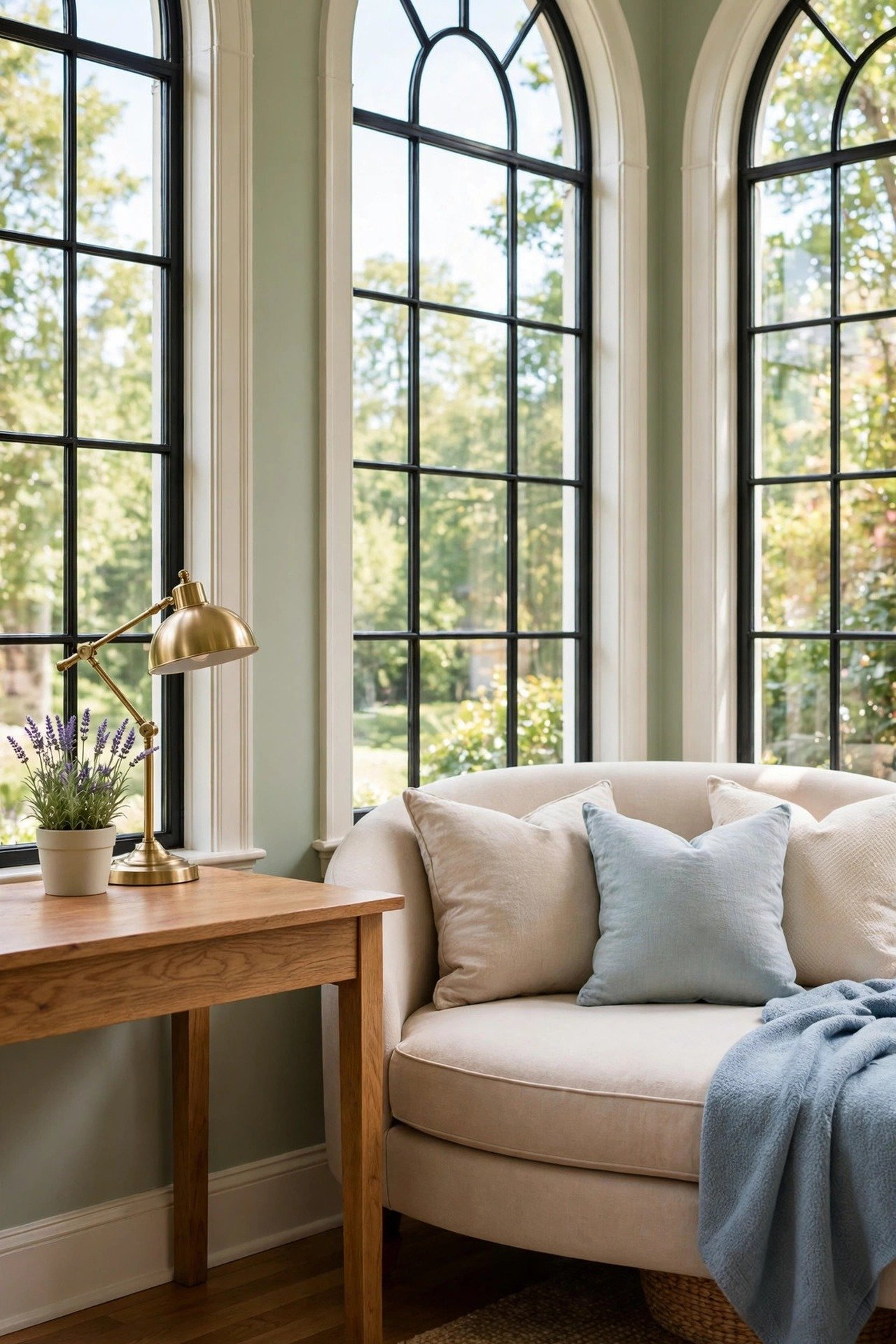
12. Pair the Desk With a Rest Daybed
A daybed beside the desk gives you a place to stretch out between focused blocks of work. Ten minutes lying down with your eyes closed resets an afternoon slump better than another coffee. The sunroom becomes an office with a built-in break room.
Size the daybed to fit snugly along one window wall, ideally 30 by 75 inches for a twin. Keep a light throw and one firm pillow on it so it invites real rest. Store work baskets underneath to keep papers off the desk when you recline.
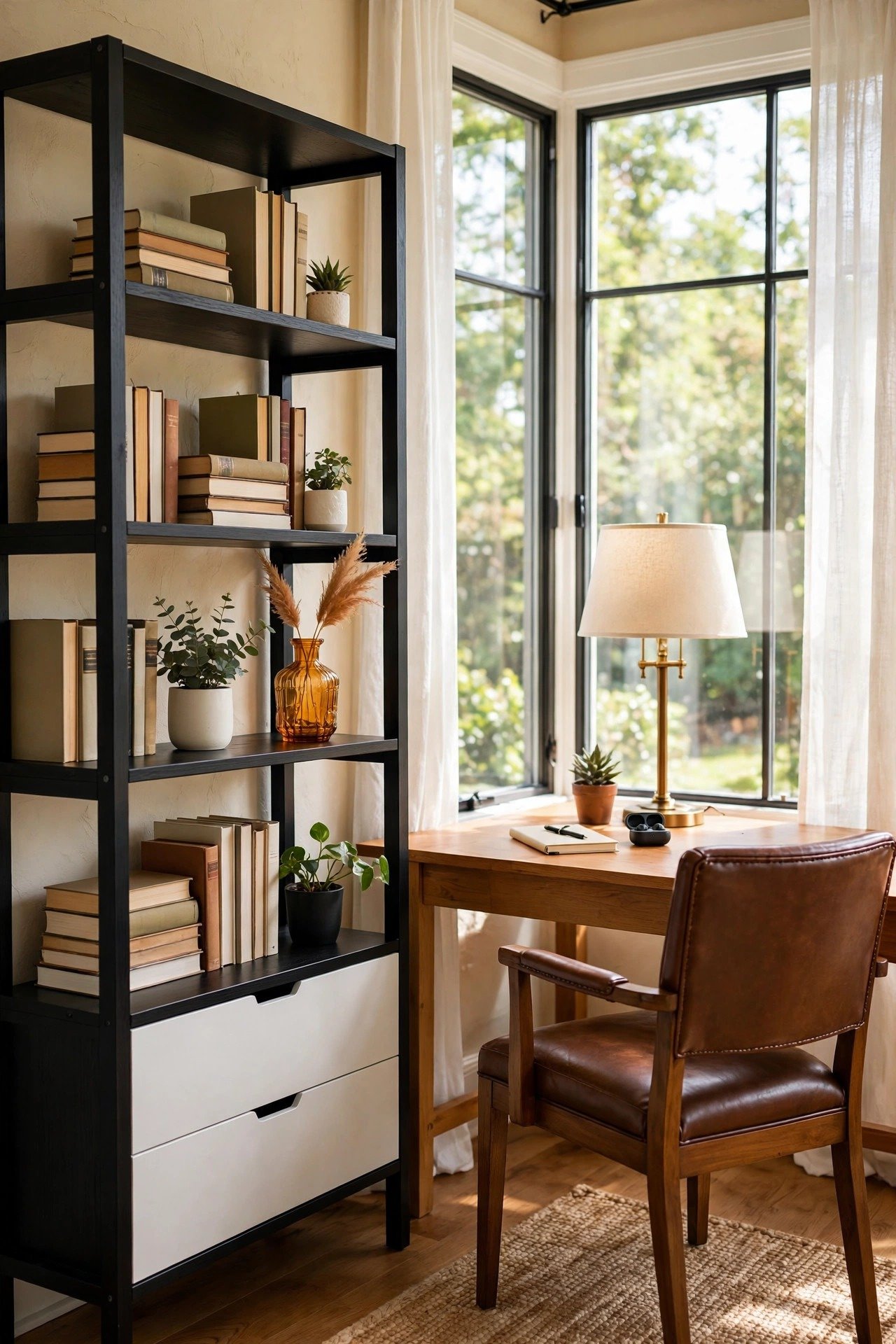
13. Store Everything in a Tall Bookshelf
One tall bookshelf against a solid wall handles all office storage without spreading clutter across the sunroom. Open shelves up top hold books and plants while closed drawers below swallow files and supplies. The room stays calm because everything has one home.
Choose a unit 72 inches tall and no deeper than 14 inches so it never crowds the glass. Anchor it to the wall for safety, and keep the top shelf for light decor only. Adjust the shelves so binders stand upright with one inch of clearance.
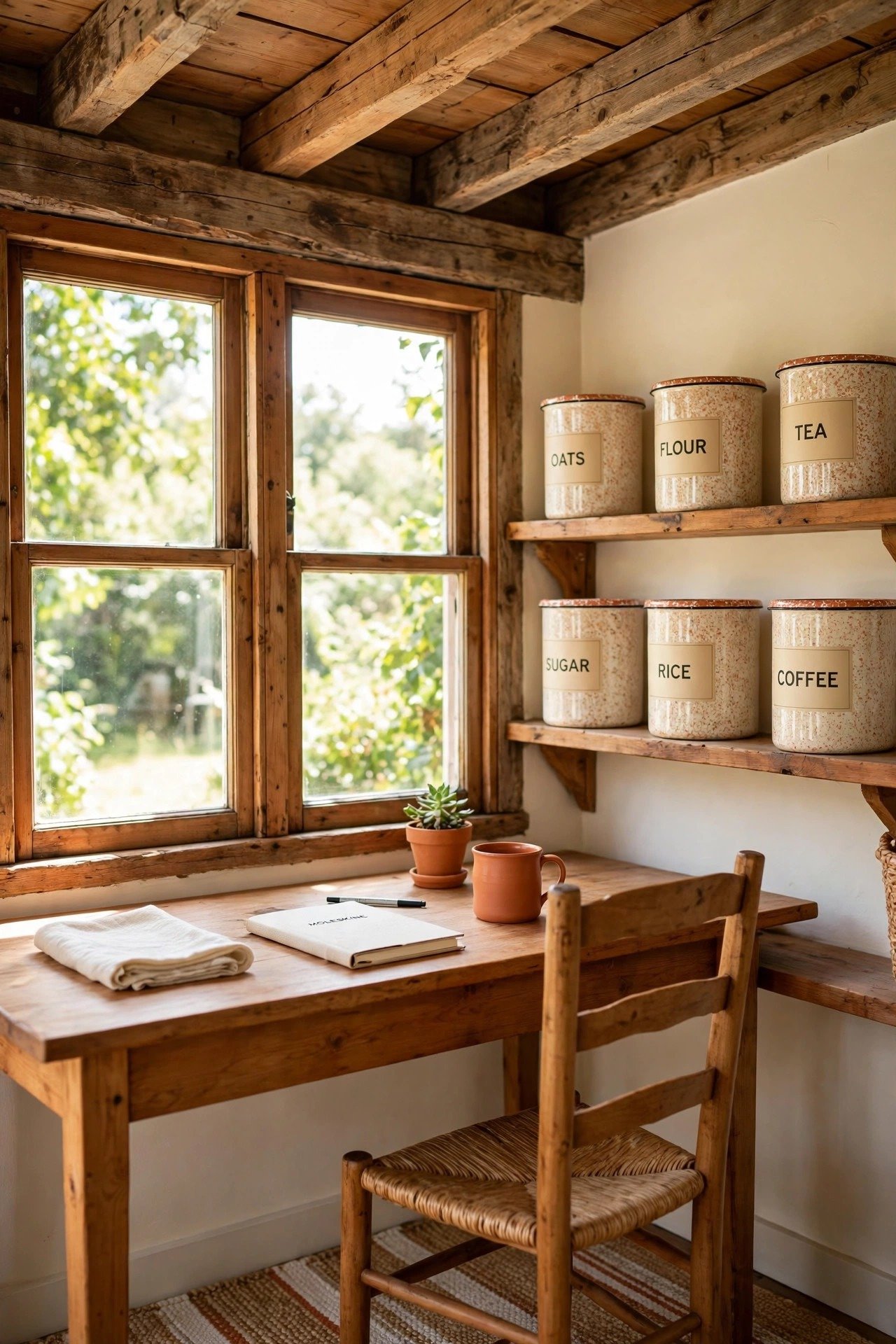
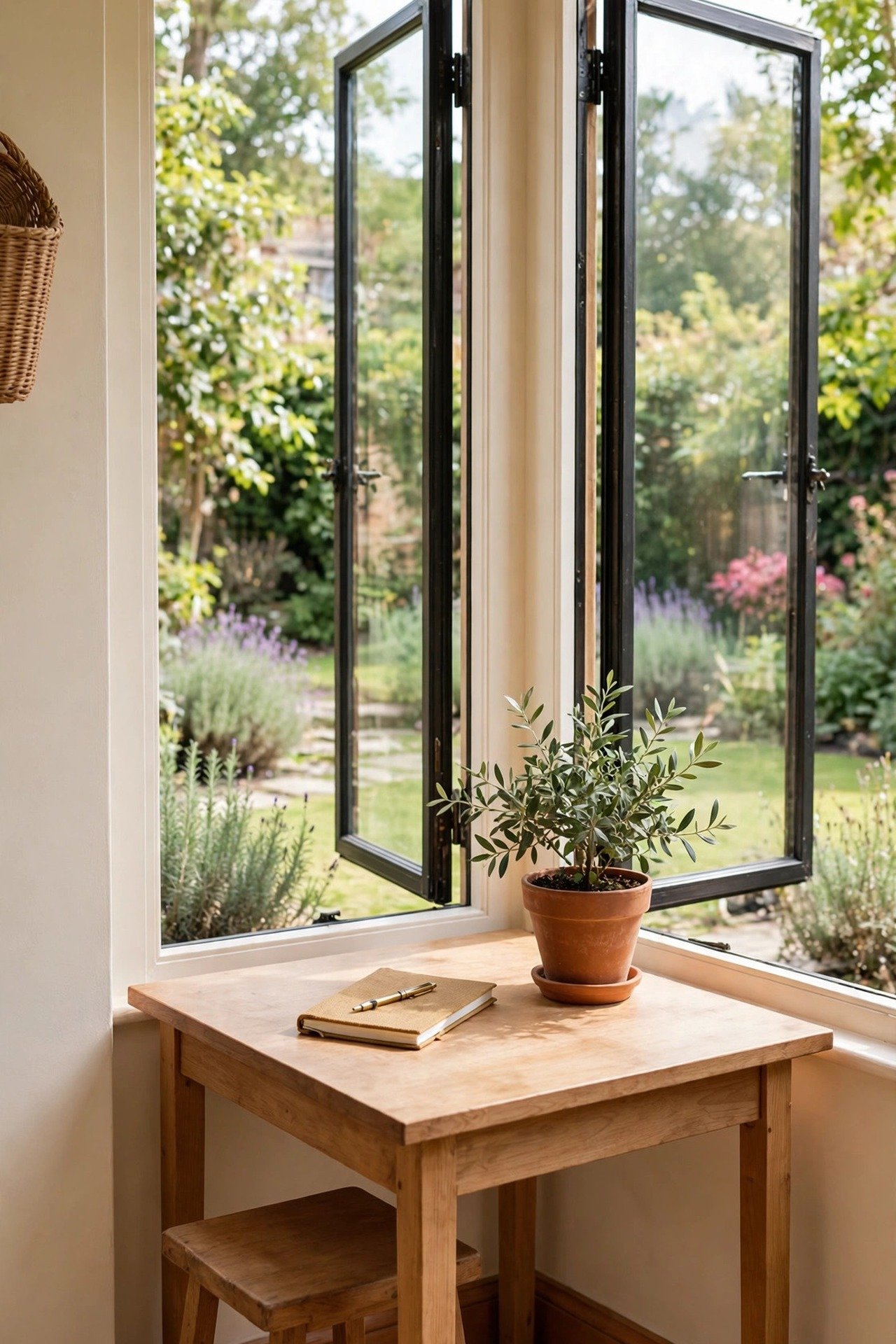
14. Use a Plain Wooden Table as the Desk
A plain wooden table makes an honest, affordable desk for a sunroom office. The simple top holds your laptop and a notebook with nothing to distract you. Rough wood suits casual homes better than a formal office desk ever could.
Pick a table 30 inches high with a top at least 24 inches deep for comfortable typing. Add a slim drawer unit or a rolling cart beside it for supplies. Sand any rough spots smooth so sleeves never snag while you work.
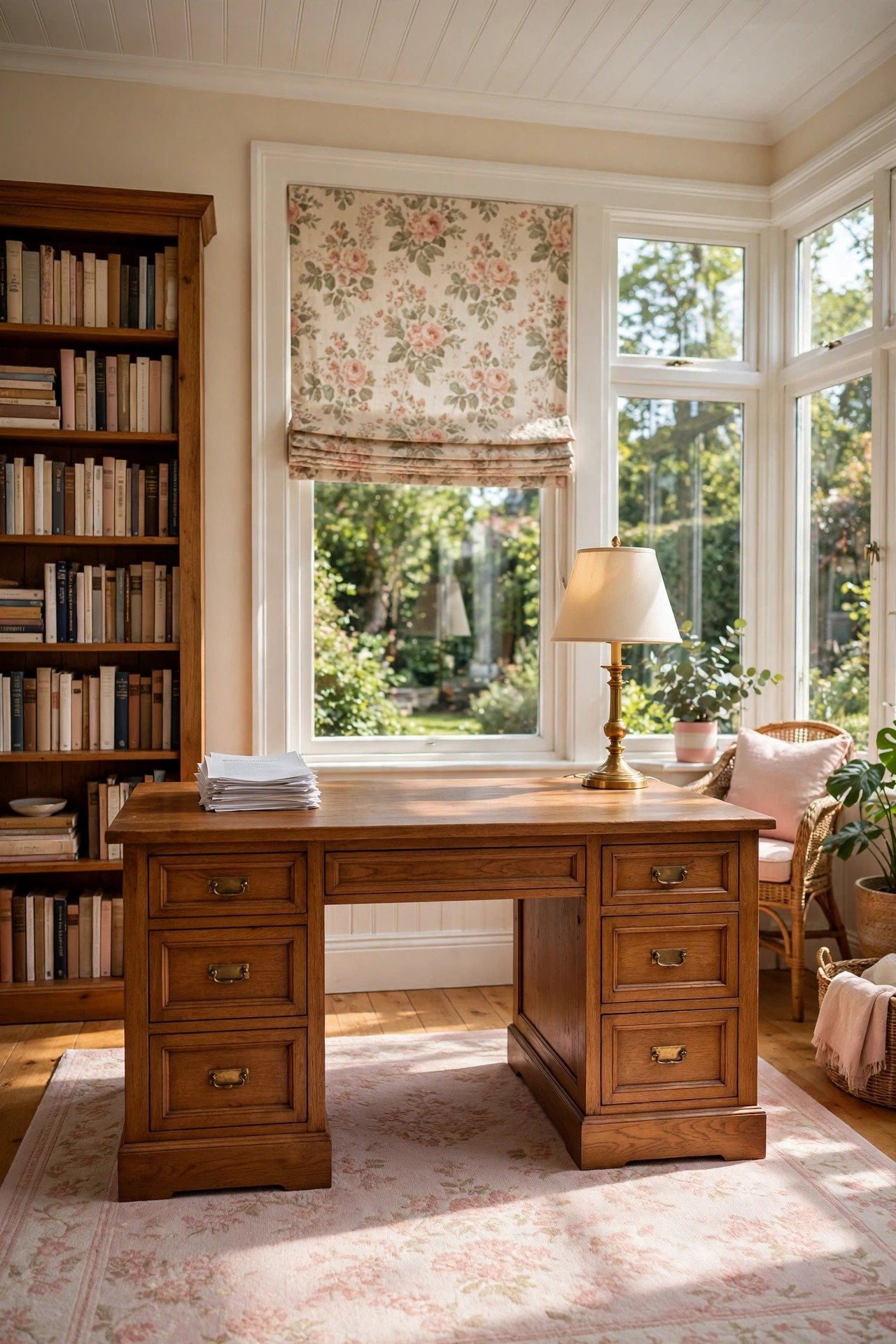
15. Center the Room on a Solid Wooden Desk
A substantial wooden desk with drawers on both sides anchors the whole sunroom office. Floating it near the center lets you face the garden while you work, with light falling over your shoulder. The room finally feels like a destination, not a leftover corner.
Allow 36 inches of clearance behind the chair so you can push back and stand easily. Place a rug under the desk and chair to define the work zone on hard floors. Keep the desktop clear except for a lamp, a plant, and your current project.
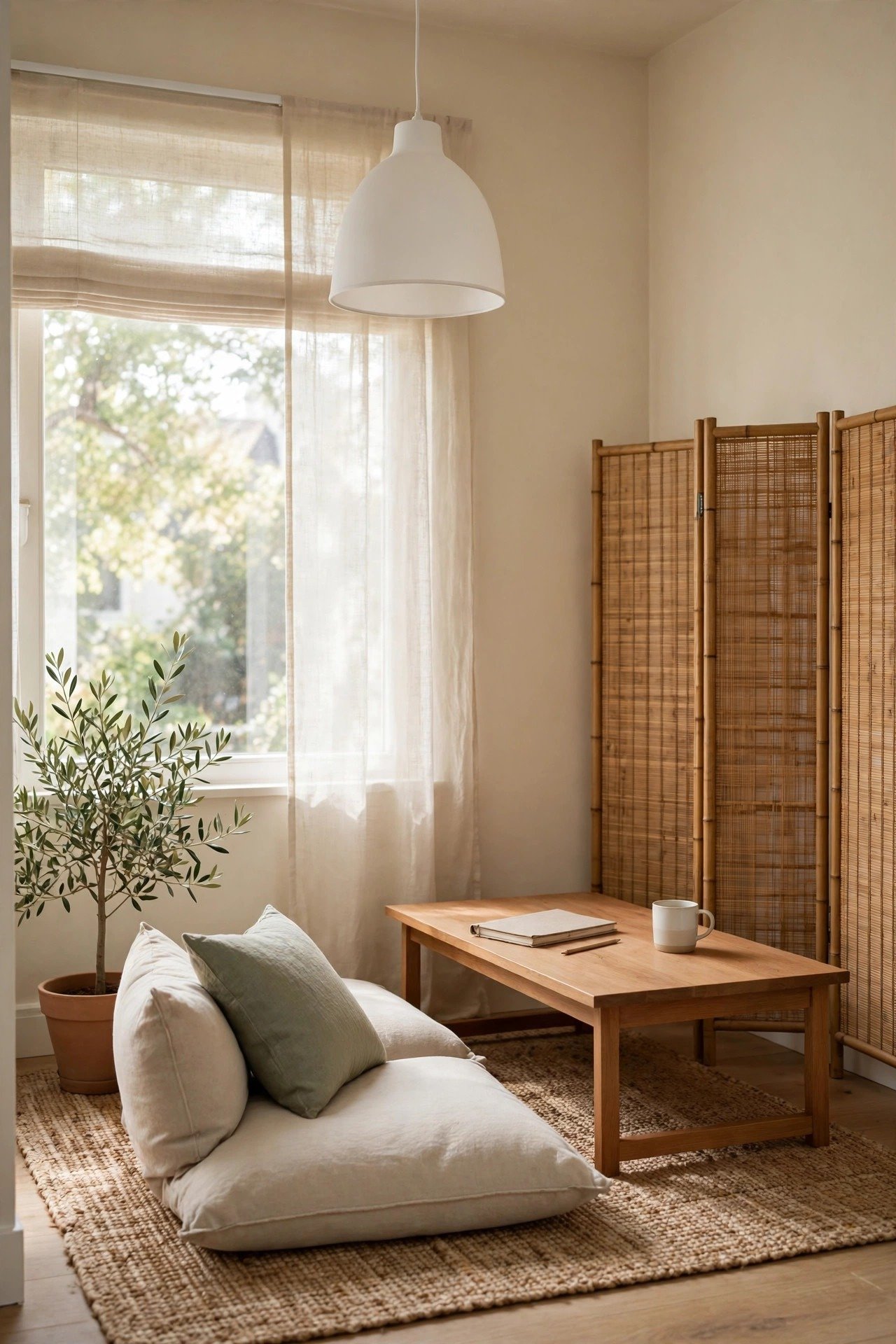
16. Keep the Desk Low and the Mats Soft
A low desk on a soft pebble or woven mat creates a quiet, grounded office nook. Working close to the floor slows the pace of the day and suits writing, planning, and calls. The sunroom feels more like a retreat than a cubicle.
Set the desktop 24 to 26 inches high and pair it with thick floor cushions or a low stool. Drench the nook in one calm color, following these color drenching ideas, so the small zone feels intentional. Make sure the cushions are firm enough for real work sessions, not just lounging.
17. Surround the Desk With Lush Plants
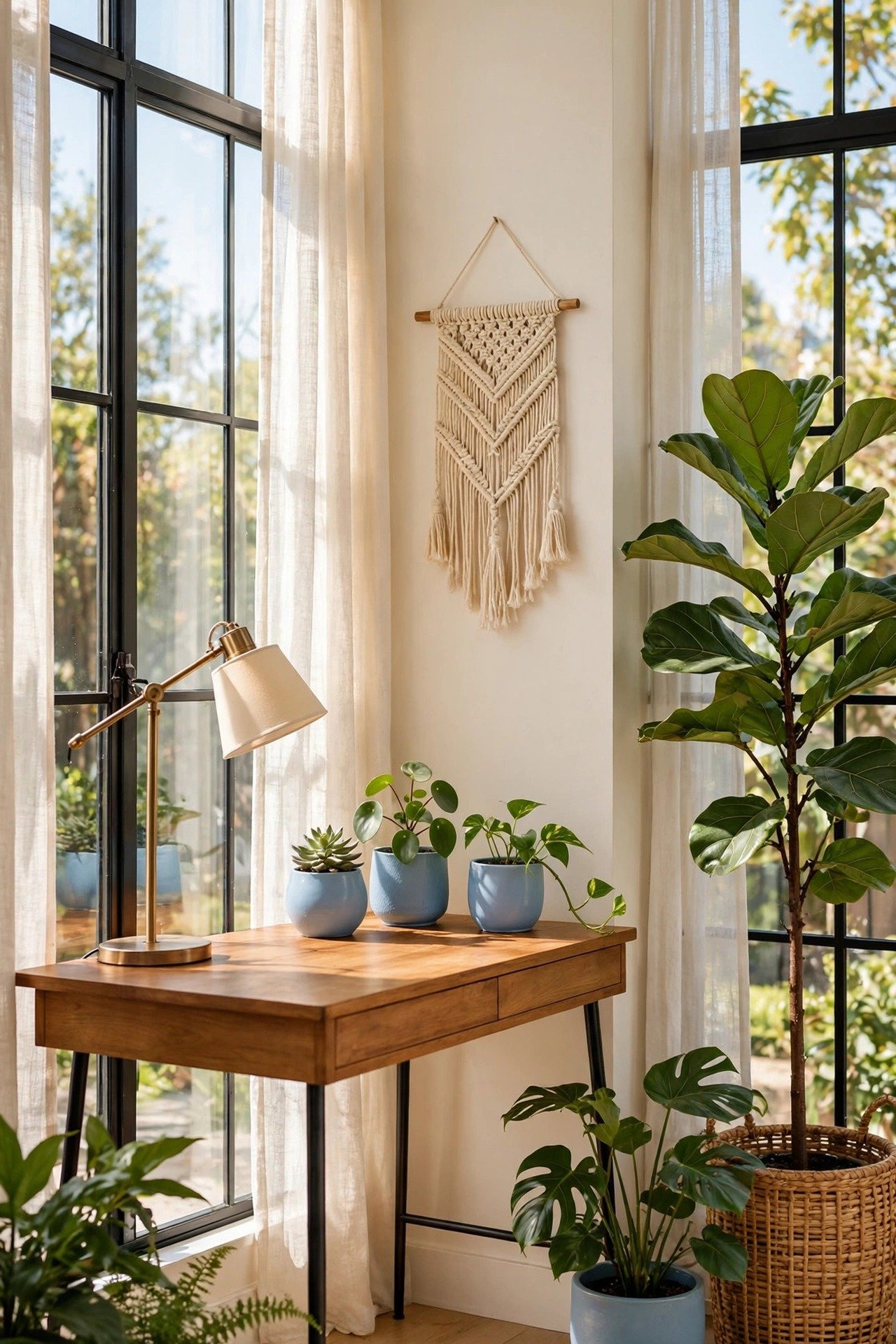
Layering plants of different heights around your desk builds a green buffer between you and the glass. A tall fiddle leaf fig in the corner, medium pots on the floor, and small succulents on the desk create depth. The office feels alive without any single plant blocking your light.
Keep a clear 18-inch lane between the plants and your chair so watering never becomes an obstacle course. Group plants with similar water needs together to simplify care. Wipe broad leaves monthly so dust never dulls the green.
Conclusion
A sunroom office works when you design for the light instead of fighting it. Desk angle, glare control, and heat management matter more than square footage. Get those three right and the glass room becomes the calmest workspace in the house.
Start with your desk position relative to the windows, then add blinds and storage around it. Test the setup through one full sunny day before you buy anything else. Your bright workdays are closer than you think.
Frequently Asked Questions
Where should I place my desk in a sunroom office?
Set the desk perpendicular to the brightest window so daylight lands on your work without hitting your screen. Keep the monitor a full arms length away and angle the desk slightly away from direct sun.
How do I stop glare on my screen in a glass room?
Fit sheer roller blinds inside the window frames to filter sunlight evenly. Raise them fully on cloudy days, and add one linen panel you can draw during peak sun hours.
Will a sunroom office get too hot to work in?
It can on summer afternoons. Work facing east glass for mild mornings, use sheers to cut heat gain, and place your desk away from west-facing panes that bake after two o clock.
How do I hide office clutter in a sunroom?
Choose furniture with closed storage like a credenza desk or a bookshelf with drawers. Run cords through one discreet hole into a slim power strip so cables never cross the floor.
What is the best desk size for a small sunroom office?
A desk 42 to 48 inches wide and 24 inches deep fits most sunrooms. Allow 36 inches of clearance behind your chair so you can push back and stand without hitting the glass.

Hi, I’m Emily! I turn messy corners into cozy, organized spots. DreamNestDecor is where I share simple, practical home ideas — decor, organization, and small-space solutions that work in real life, not just in photos. Every idea here is carefully researched before it’s shared.