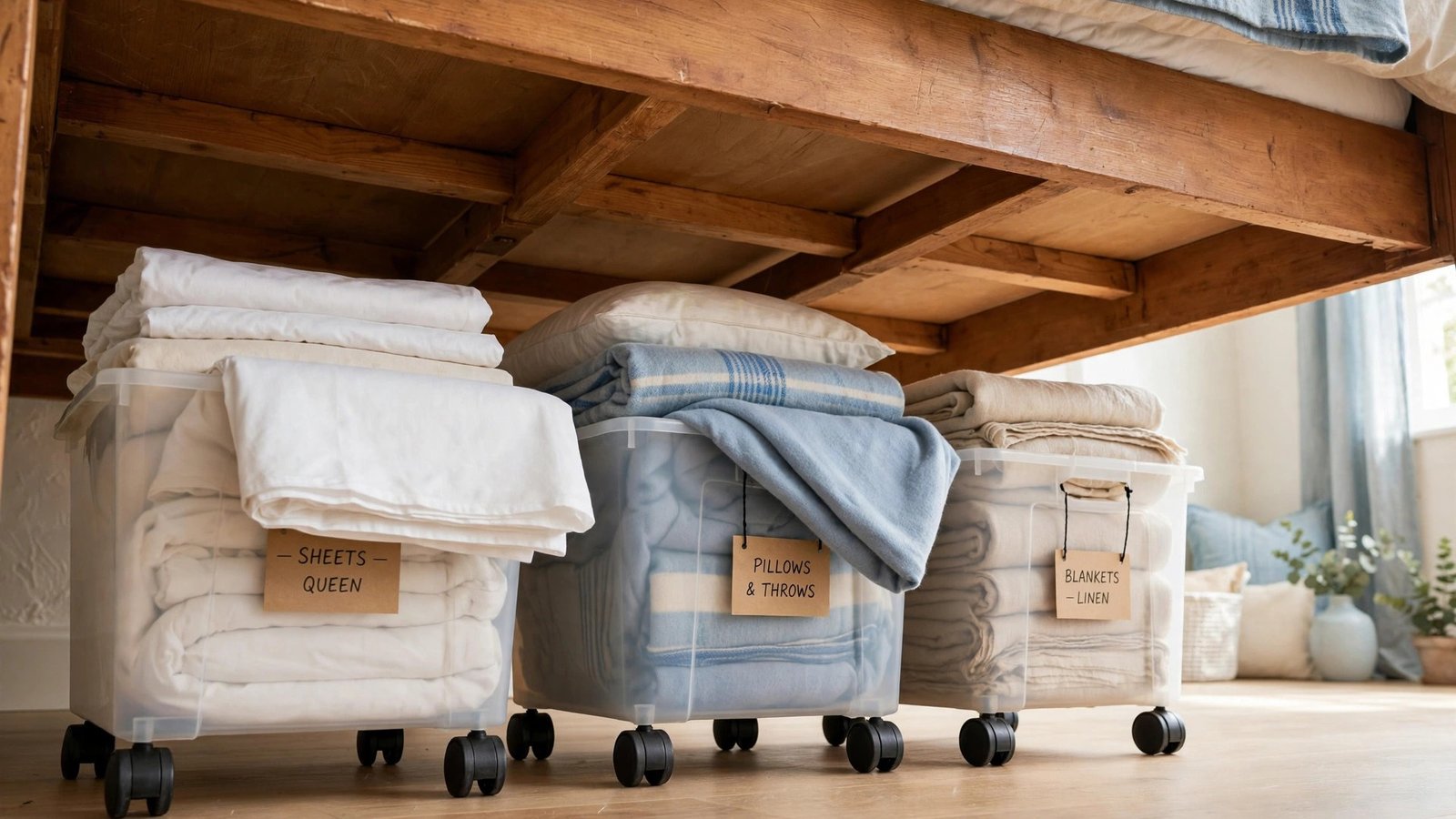
The space under your bed is the largest unused storage zone in your bedroom. It sits there empty while your closets burst and your linen shelves sag. All that square footage, doing nothing.
Extra bedding is the perfect thing to store there. Sheet sets, spare blankets, guest pillows, and seasonal comforters all fit beautifully under the bed when you use the right containers. Out of sight, dust-free, and easy to reach.
These 17 under bed storage organization ideas show you how to measure, choose containers, and arrange extra bedding so the space works hard for years. Start with the tape measure.
1. Measure the Clearance Before You Buy Anything
Under-bed space varies more than people expect. Measure the height from floor to bed frame, the full width, and the depth on each side. Write the numbers on your phone before you shop for a single bin.
Leave at least half an inch of wiggle room above the bin height. A bin that scrapes the frame will drive you mad every time you pull it out. Measuring first saves returns and frustration later.

2. Use Flat Rolling Bins for Easy Access
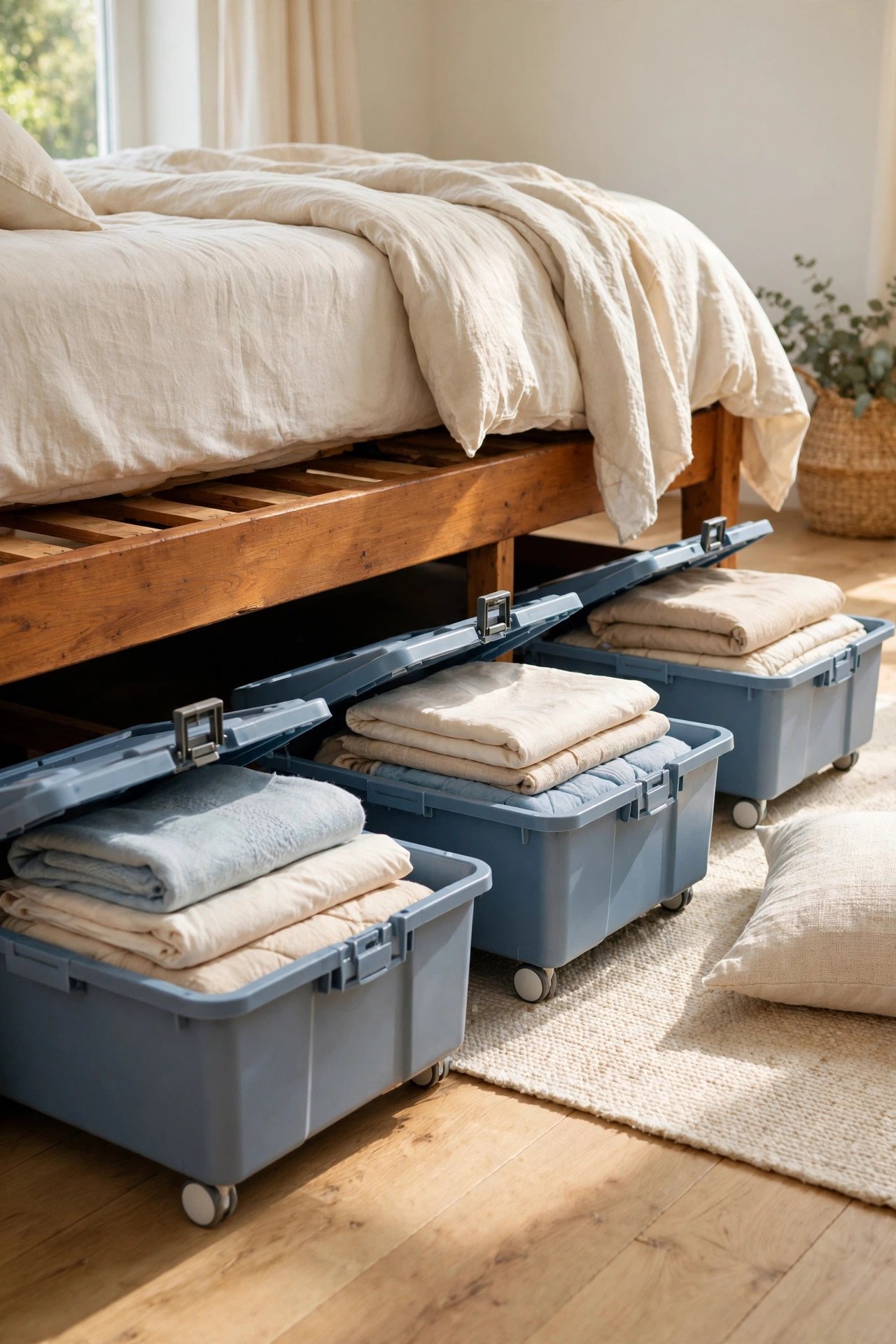
Rolling bins are the workhorses of under-bed storage. Sturdy wheels let you slide a full bin of bedding out with one hand. No lifting the mattress, no dragging, no scratched floors.
Choose bins with lids that latch so bedding stays dust-free. Fill every bin completely, since half-empty bins waste the space you measured so carefully. Rolling bins turn dead space into a real closet extension.
3. Store Sheet Sets Inside Their Pillowcases
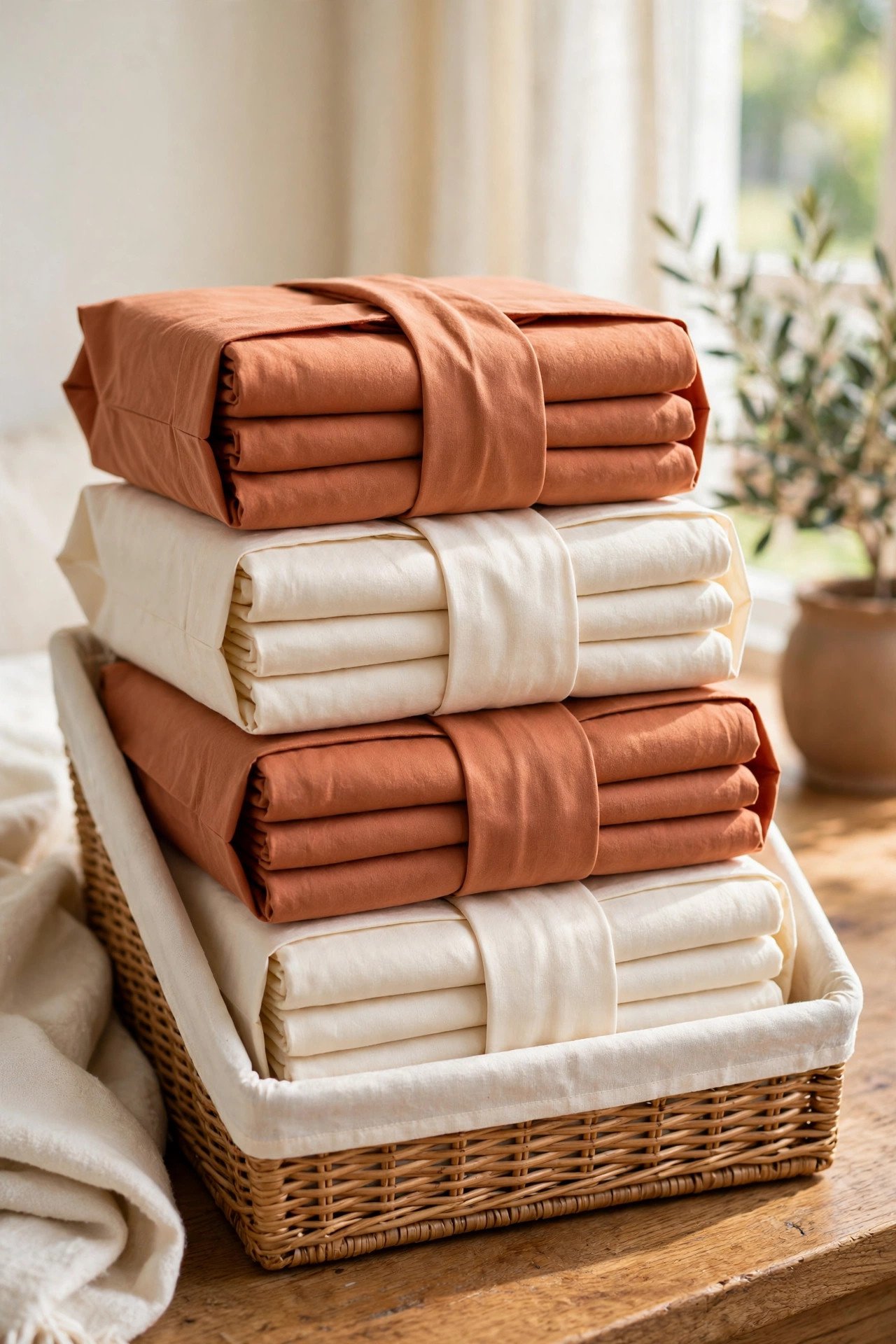
The classic sheet-set trick never fails. Fold the fitted sheet, flat sheet, and spare pillowcase, then tuck the whole set inside one matching pillowcase. Each set becomes a neat little package.
Stack the packages in the bin with the folded edge facing out so you can read the color or pattern. Grabbing a full set takes seconds, and you never hunt for a missing pillowcase again.
4. Vacuum-Seal Bulky Comforters
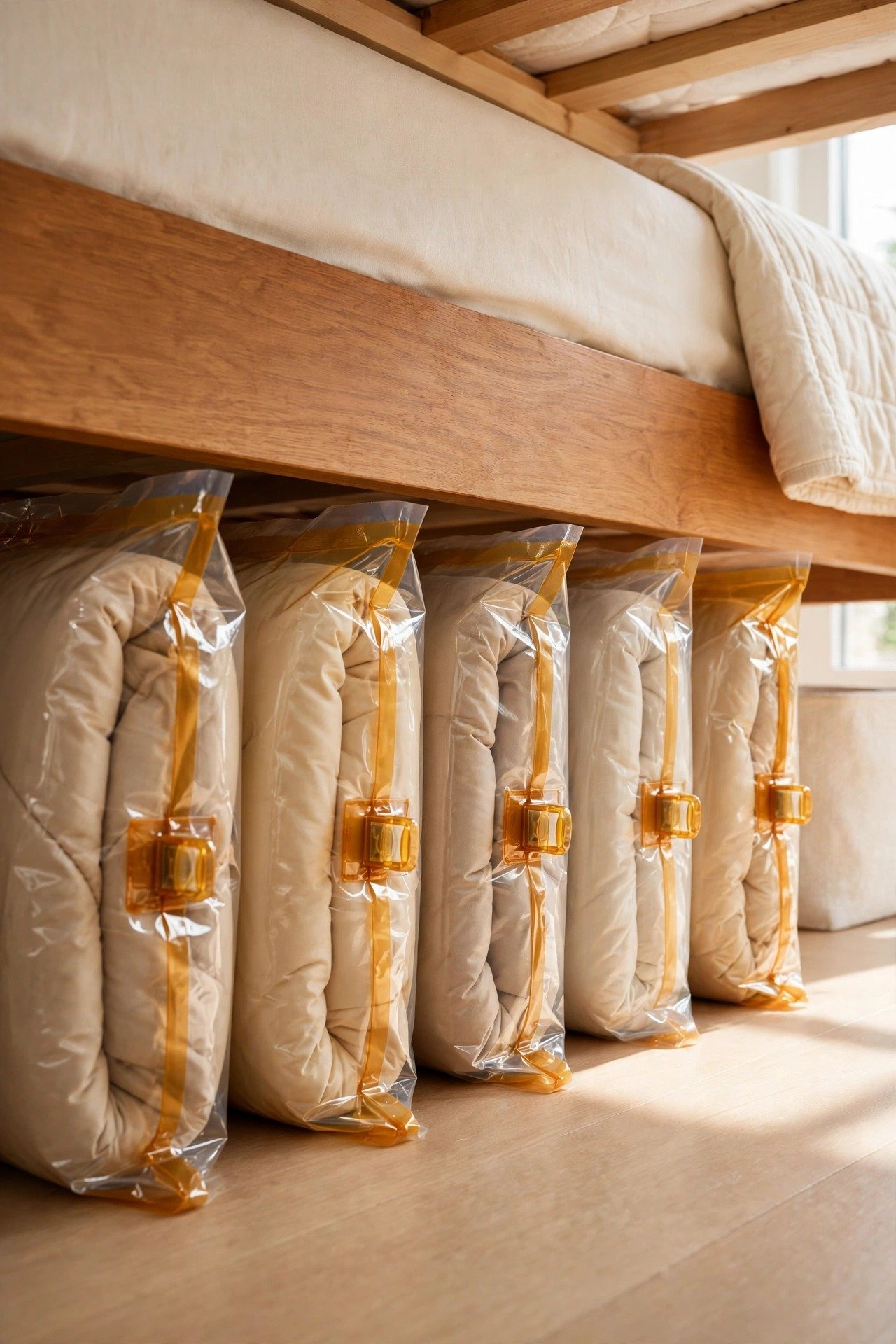
Comforters and duvets eat space fast. Vacuum-seal bags shrink them to a fraction of their size, and the airtight seal protects against dust and moisture. One bulky winter comforter becomes a flat, stackable package.
Do not vacuum-seal down or feather bedding too tightly for long periods, as the fill needs some loft to recover. For synthetic fills, seal away without worry. Sealed bags stack neatly and slide under the bed easily.
5. Label Every Bin on the Long Side
You will slide these bins out from the long side, so that is where the labels go. Use large printed labels reading guest sheets, winter blankets, or kids bedding. Readable labels end all guesswork.
Label both long sides if you access the bed from either side. A label maker or neat handwritten tags both work. When every bin is named, the right bedding appears on the first pull.

6. Keep Guest Bedding in One Dedicated Bin
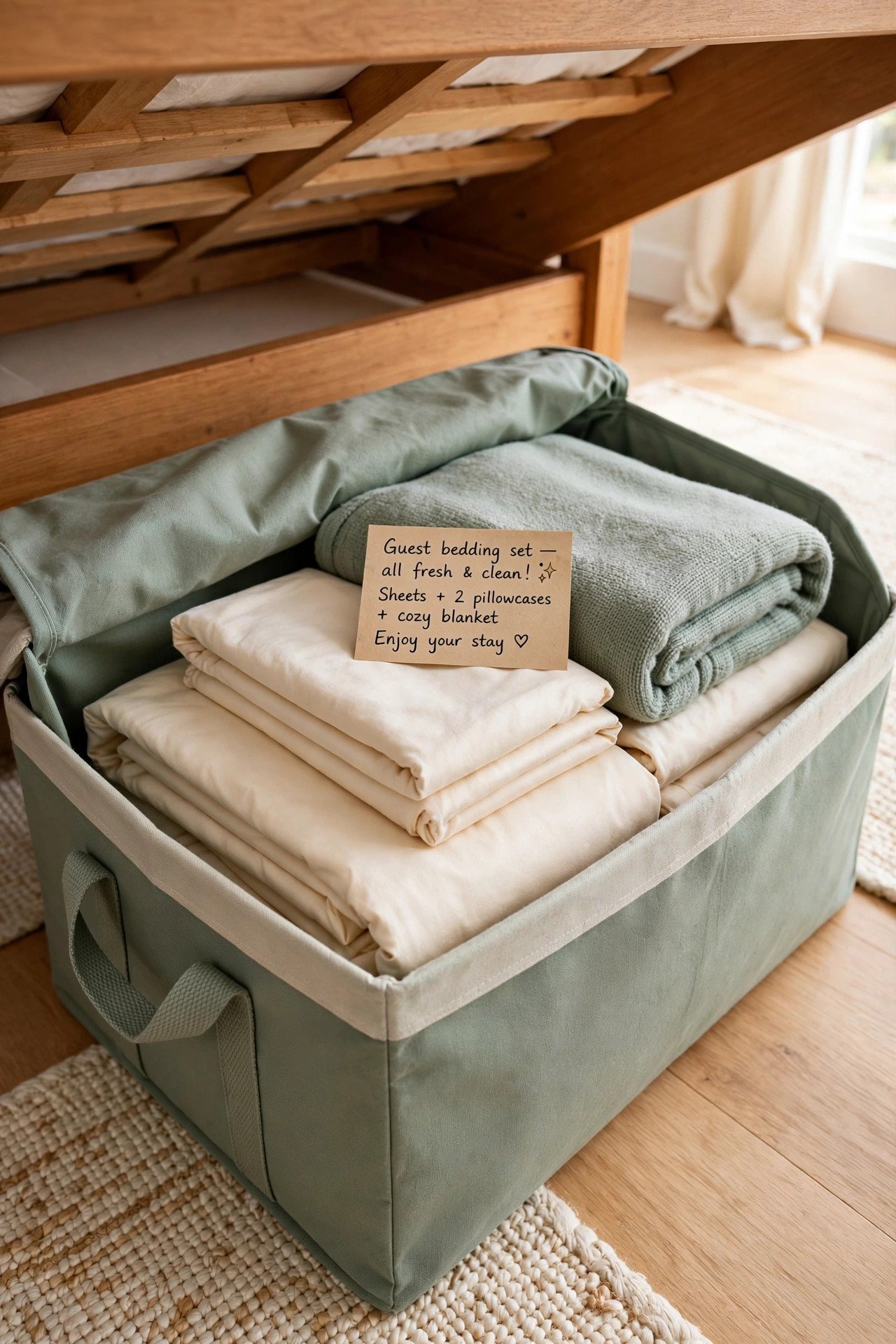
Guests arrive and you need their bedding fast. Keep one bin holding a complete guest set: sheets, pillowcases, a blanket, and spare pillows. Everything for the guest bed lives in one pull-out package.
Refresh the guest bin each season with clean, fresh-smelling linens. Add a small note with the Wi-Fi password for a thoughtful touch. A ready guest bin turns surprise visitors into a pleasure instead of a panic.
7. Use Zippered Bags to Block Dust
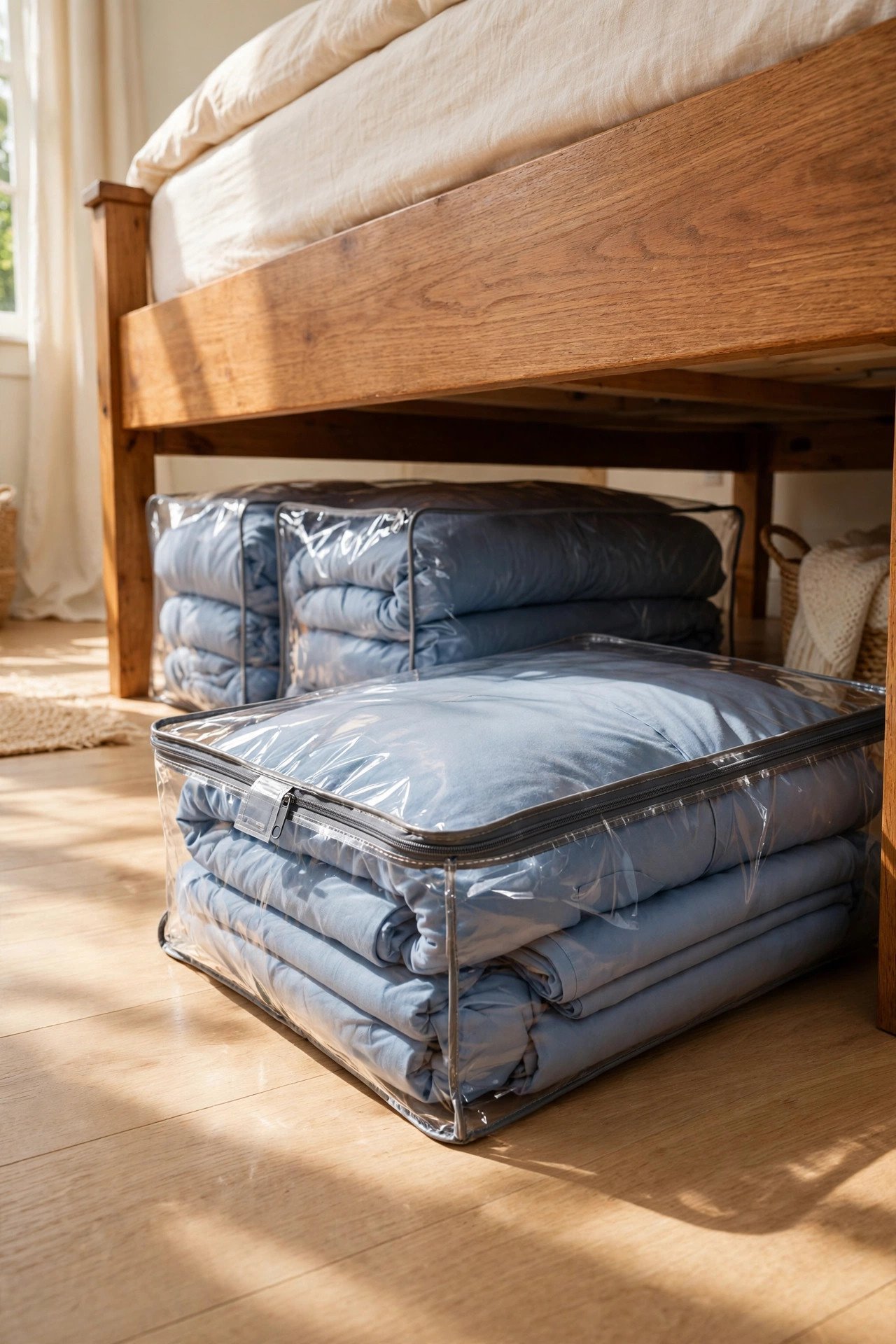
Under-bed storage collects dust faster than closets do. Zippered storage bags create a sealed barrier that keeps bedding fresh for months. Clear panels let you see the contents without opening anything.
Choose bags with sturdy zippers that glide smoothly, not cheap ones that snag. Fill each bag fully so bedding does not shift and wrinkle. Sealed bags mean your spare sheets smell clean whenever you need them.
8. Divide Bins by Season
One bin for warm-weather bedding, another for cold-weather bedding. Seasonal division means you only open the bin that matches the calendar. The off-season bin stays sealed and undisturbed for months.
Swap the bins forward when the seasons change so the current one sits on the most accessible side. Label the seasons clearly on the long side. Seasonal bins make the twice-yearly bedding swap almost automatic.

9. Slide in a Shallow Tray for Pillowcases
Pillowcases are small, slippery, and always needed in pairs. A shallow tray inside the bin keeps them together and easy to grab. No more digging through folded sheets for the matching case.
Sort the tray by bed size or by color family so pairs stay obvious. The tray lifts out for laundry day and drops back in when everything is clean. Small items deserve their own container.

10. Add Cedar Blocks to Keep Things Fresh
Bedding stored for months can smell stale when you finally need it. Tuck a few cedar blocks or lavender sachets into each bin. They absorb mustiness and keep everything smelling clean.
Refresh cedar blocks once a year with a light sanding to renew the scent. Keep the blocks in a small mesh bag so they do not snag delicate fabrics. Fresh-smelling bedding is a small luxury that costs almost nothing.

11. Keep Kids’ Extra Bedding Within Their Reach
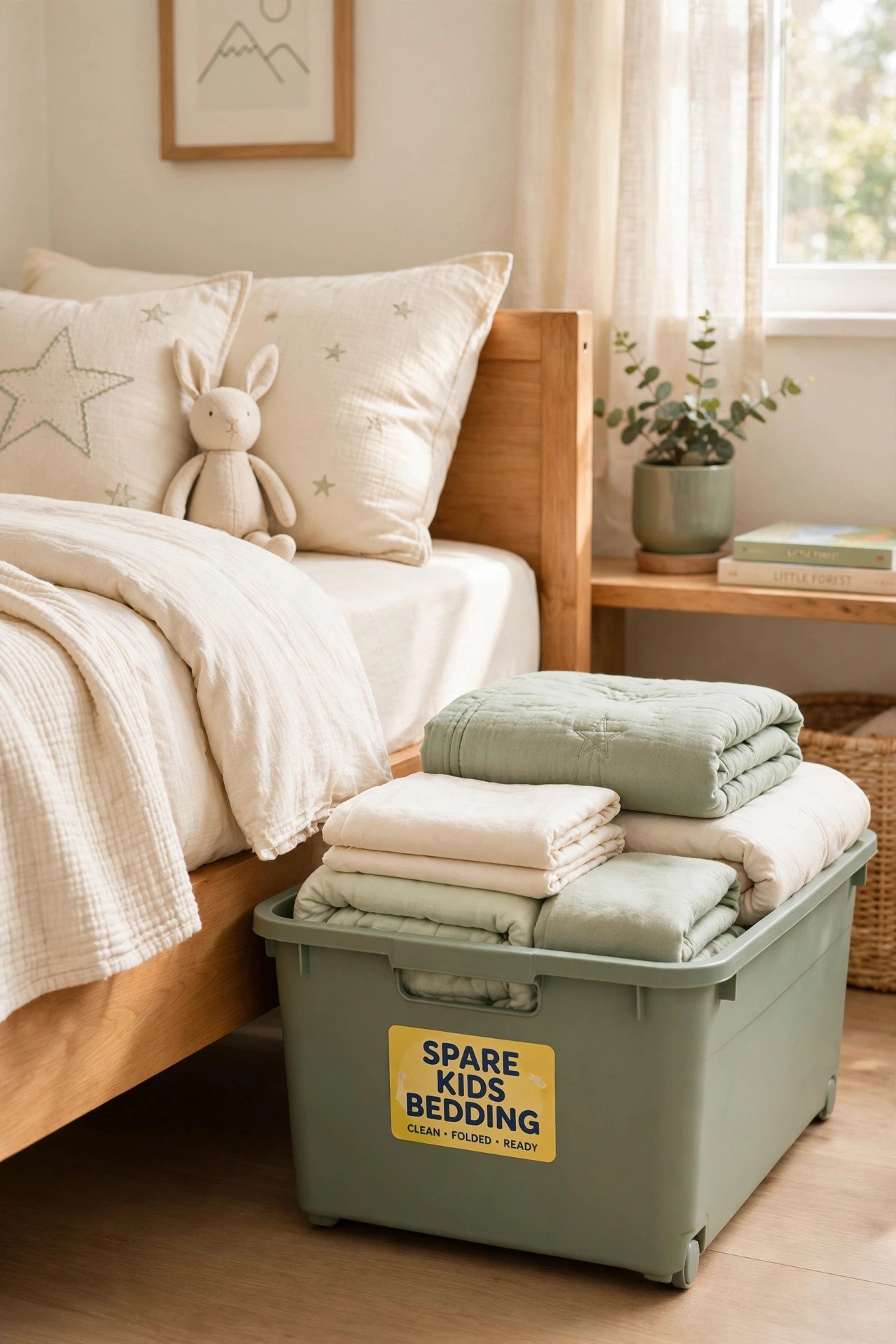
Kids spill, have accidents, and need fresh sheets at midnight. Store their spare bedding in the lowest, most accessible bin on their side of the bed. A half-asleep parent can find it by touch.
Use a bright label even the kids can read, so older children can help themselves. Keep a waterproof mattress protector in the same bin. Midnight sheet changes go twice as fast with a dedicated kid bin.
12. Reserve the Space for Bedding Only
Under-bed space invites random clutter: old magazines, gift wrap, things with no home. Draw a firm line and reserve it for bedding and linens only. A single-purpose zone stays organized far longer.
If your home needs more hidden storage, these small space boho solutions show smarter spots for the overflow. Protect the under-bed zone and it will serve your bedding perfectly for years.
13. Raise the Bed Slightly for Taller Bins
If your clearance is painfully low, bed risers add precious inches. Sturdy risers lift the frame evenly and safely, turning a four-inch gap into a seven-inch storage zone. Taller bins hold folded comforters with ease.
Choose risers rated well above your bed’s total weight, including sleepers. This renter-friendly trick needs no tools and leaves no marks. A few extra inches double what the space can hold.

14. Keep a Small Inventory List Taped Inside
When bins stay sealed for months, you forget what is inside. Tape a small inventory card to the inside of each lid listing the contents. Update it with a pen whenever you swap items.
The list saves you from opening three bins to find one blanket. Keep the handwriting large and readable. If your closet holds overflow linens, an inventory list works there too. A tiny card prevents a lot of digging.

15. Store Mattress Protectors Flat on Top
Mattress protectors are bulky and awkward to fold small. Lay them flat across the top of a bin instead of cramming them inside. They stay smooth, unwrinkled, and ready to use.
Place the protector between the bin lid and the bedding so it never gets lost. Smooth protectors go on faster at sheet-change time. Flat storage is the kindest treatment for waterproof layers.
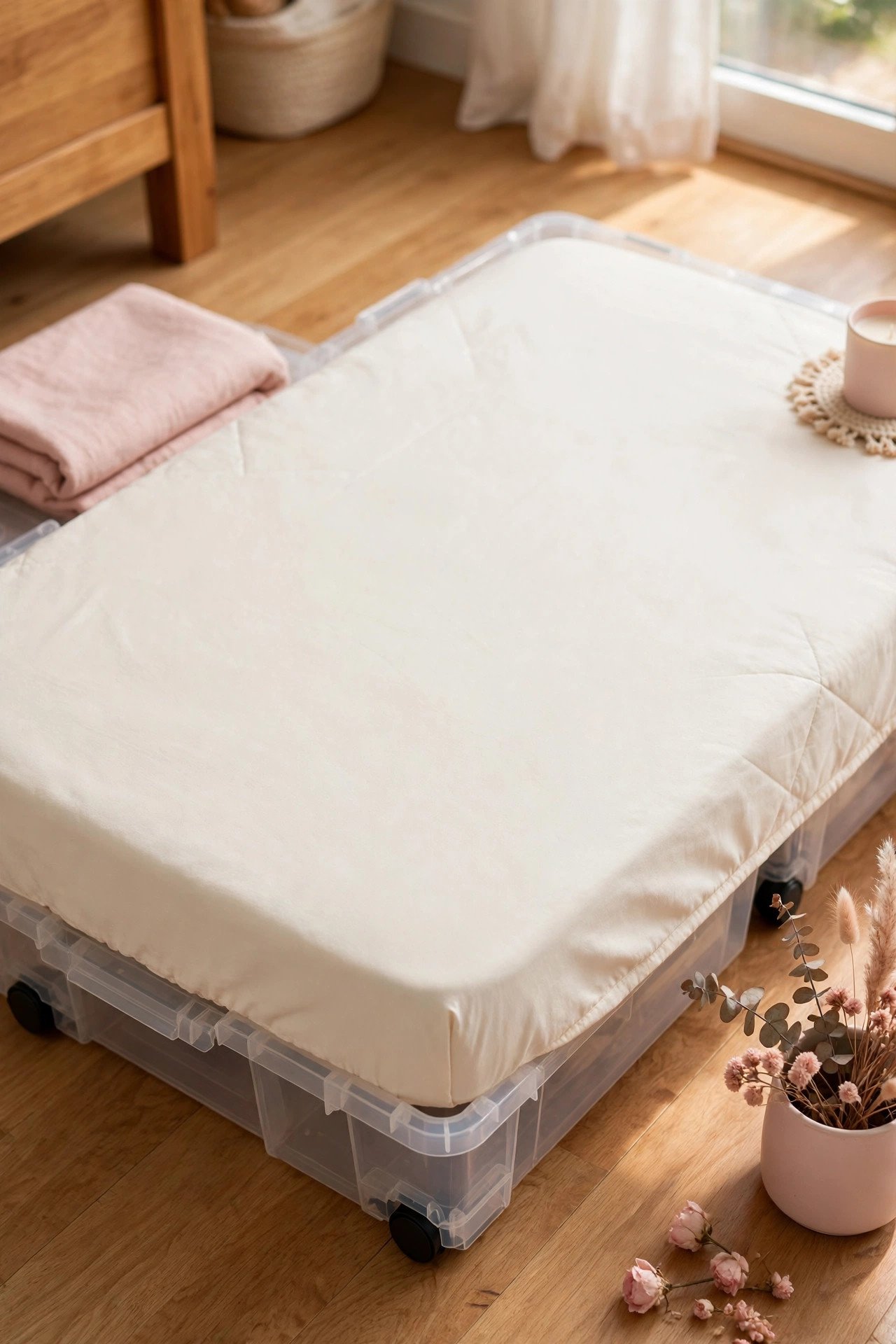
16. Rotate Bedding With the Seasons
Twice a year, swap the bedding bins to match the weather. Heavy comforters move forward in fall, light quilts take over in spring. The rotation keeps the most-used bin in the easiest spot.
Use the swap as a natural moment to wash everything before it goes back into storage. Fresh, clean bedding sealed away feels wonderful months later. If your entryway handles seasonal gear the same way, these mudroom entryway ideas keep that zone just as smooth. Seasonal rotation keeps the system alive.
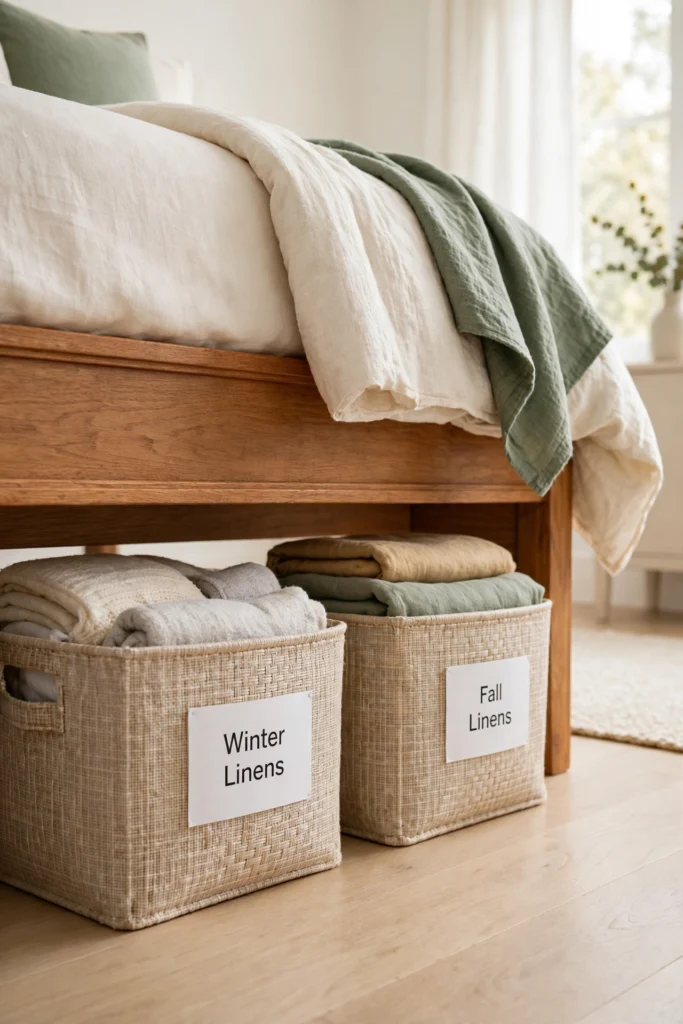
17. Do a Twice-Yearly Under-Bed Audit
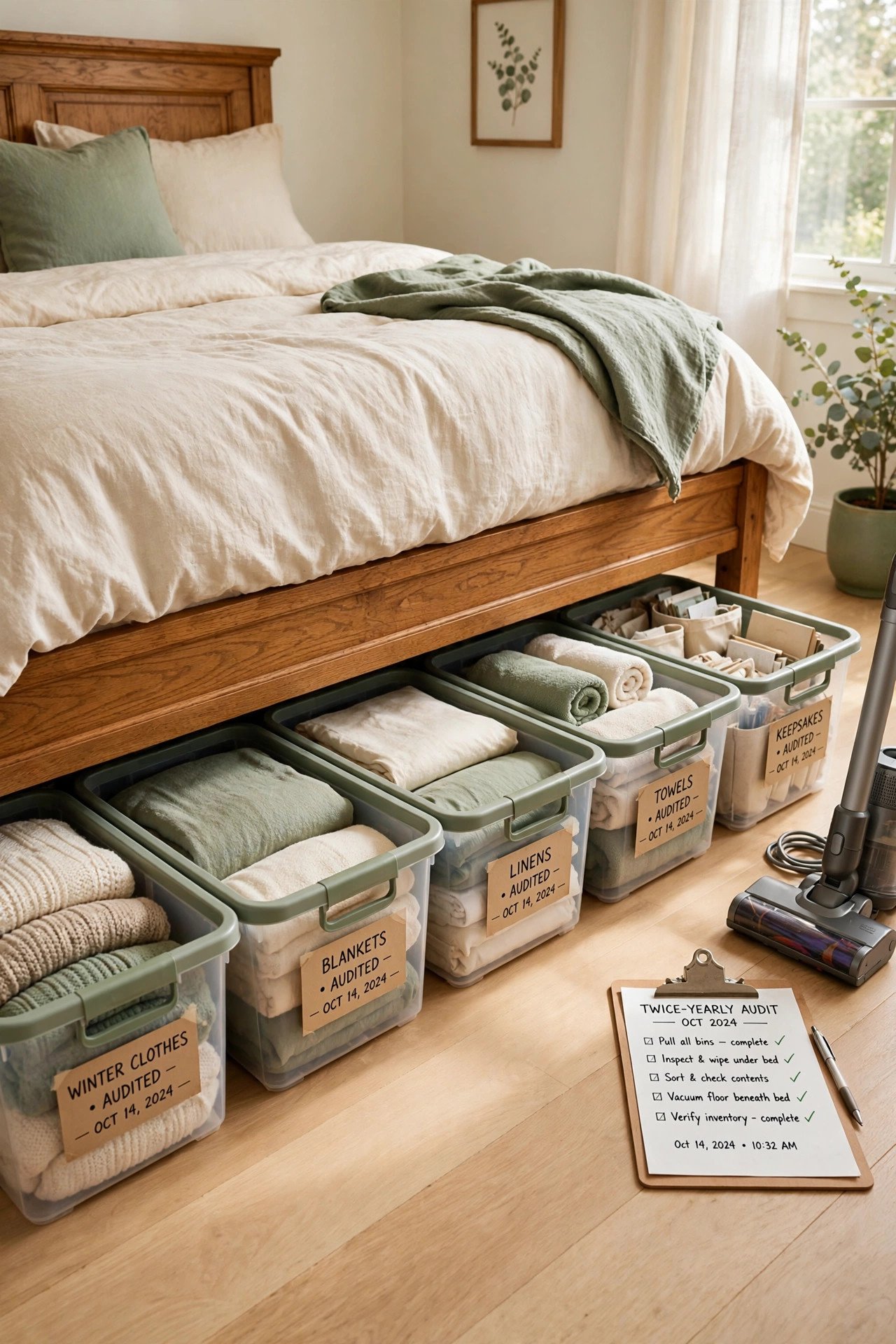
Even good systems collect strays. Twice a year, pull every bin out, wipe the floor underneath, and check what is inside. Donate bedding you no longer use and replace worn-out bags or bins.
The audit takes twenty minutes and keeps the zone honest. A quick vacuum under the bed removes the dust that sneaks past sealed bags. For renters making the most of every inch, these rental-friendly decor hacks pair well with hidden storage wins. Two audits a year keep the space working for a decade.
Conclusion
The space under your bed is too valuable to waste on dust bunnies. With measured bins, sealed bags, clear labels, and a seasonal rhythm, it becomes the hardest-working storage zone in your bedroom. Your extra bedding stays clean, fresh, and exactly where you expect it.
Start with the tape measure this weekend, then buy bins that actually fit. One organized Saturday transforms years of mornings. The best storage is the kind you never have to think about.
Under Bed Storage FAQs
What is the best way to store extra bedding under the bed?
Use flat rolling bins with latching lids. Fold sheet sets inside their pillowcases, vacuum-seal bulky comforters, and label each bin on the long side.
How do I keep under bed bedding from getting dusty?
Use zippered storage bags or lidded bins. Wipe the floor under the bed twice a year and add cedar blocks or lavender sachets to keep linens fresh.
How do I measure under bed space for storage bins?
Measure the height, width, and depth of the space and leave half an inch of wiggle room. Consider bed risers if clearance is low, and never buy bins before measuring.
Can I store a comforter under the bed long term?
Yes. Vacuum-seal synthetic comforters and store down or feather ones in a breathable zippered bag. Add a cedar block and check the bedding seasonally.
How often should I reorganize under bed storage?
Do a full audit twice a year, ideally during your seasonal bedding swap. Labeled bins and inventory cards make upkeep quick.

Hi, I’m Emily! I turn messy corners into cozy, organized spots. DreamNestDecor is where I share simple, practical home ideas — decor, organization, and small-space solutions that work in real life, not just in photos. Every idea here is carefully researched before it’s shared.