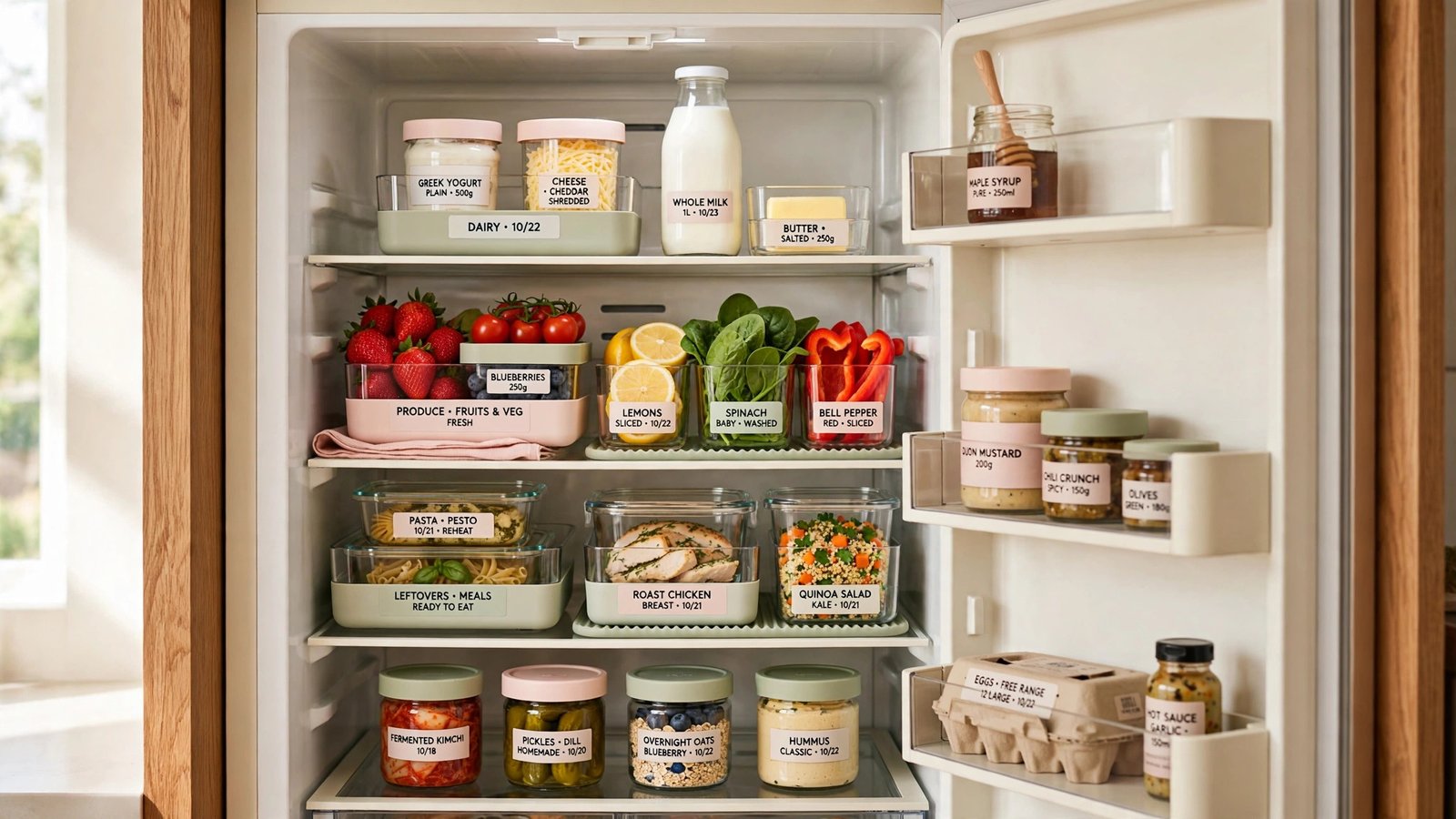
You open the fridge and a jar tips over. Half a cucumber hides behind the milk, and you are not sure if those leftovers are from yesterday or last week. A crowded fridge is not a small problem. It wastes food, wastes money, and makes cooking feel like a chore.
The good news is that neat fridge shelves are not about buying fancy gadgets. They are about giving every item a clear home. With simple zones, the right containers, and a few habits, your shelves can stay calm and easy to use. Here are 32 refrigerator shelf organization ideas to prevent food clutter.
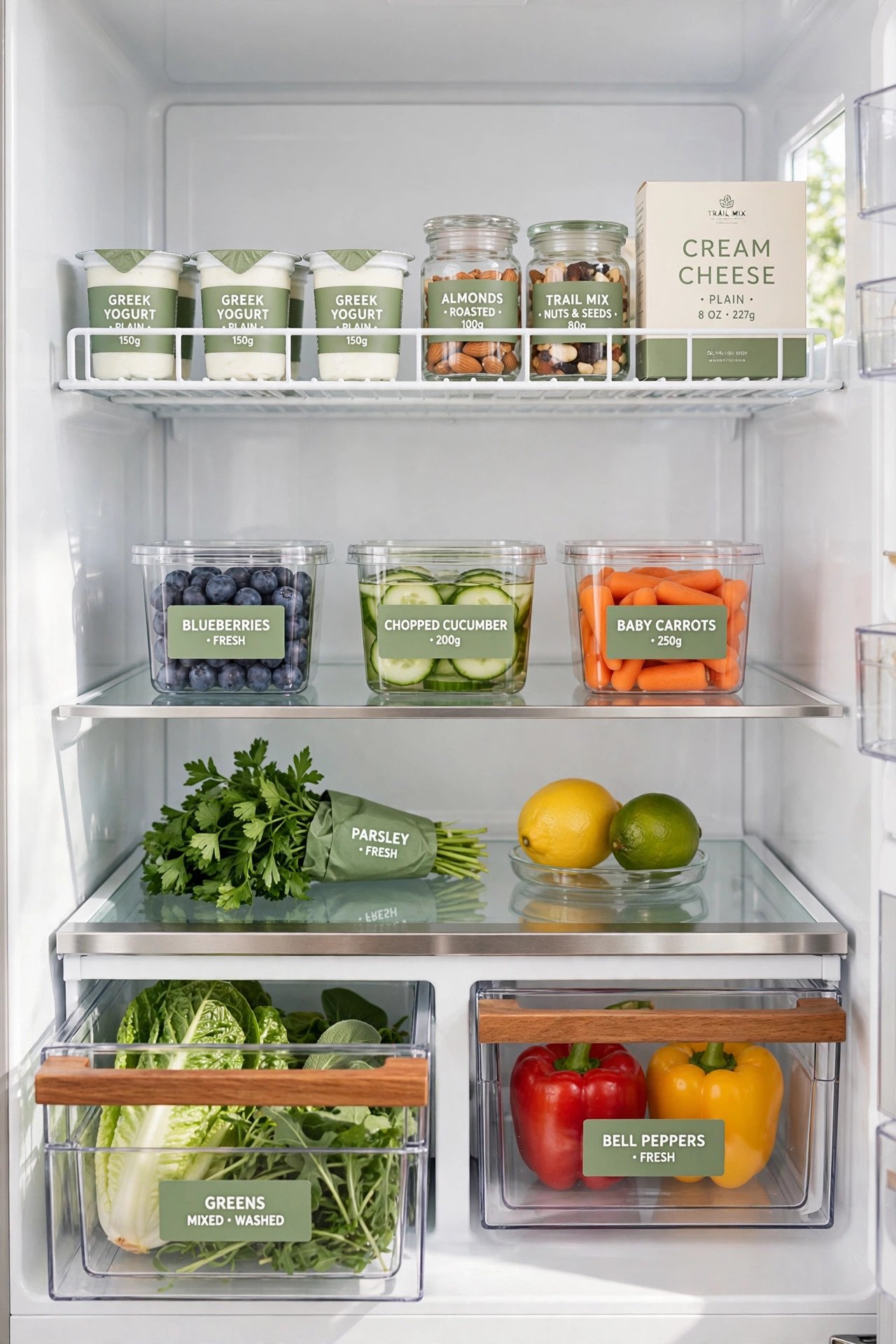
1. Add Extra Room with a Wire Shelf Insert
A wire shelf insert doubles the space inside your fridge without any tools. It slides onto an existing glass shelf and creates a second level. You can place small jars, yogurt cups, or snacks on the new tier while the food below stays easy to reach.
This idea works best for wide shelves that feel half empty on top. You gain storage where you had wasted air. Just check the height of the items below so the door still closes smoothly.
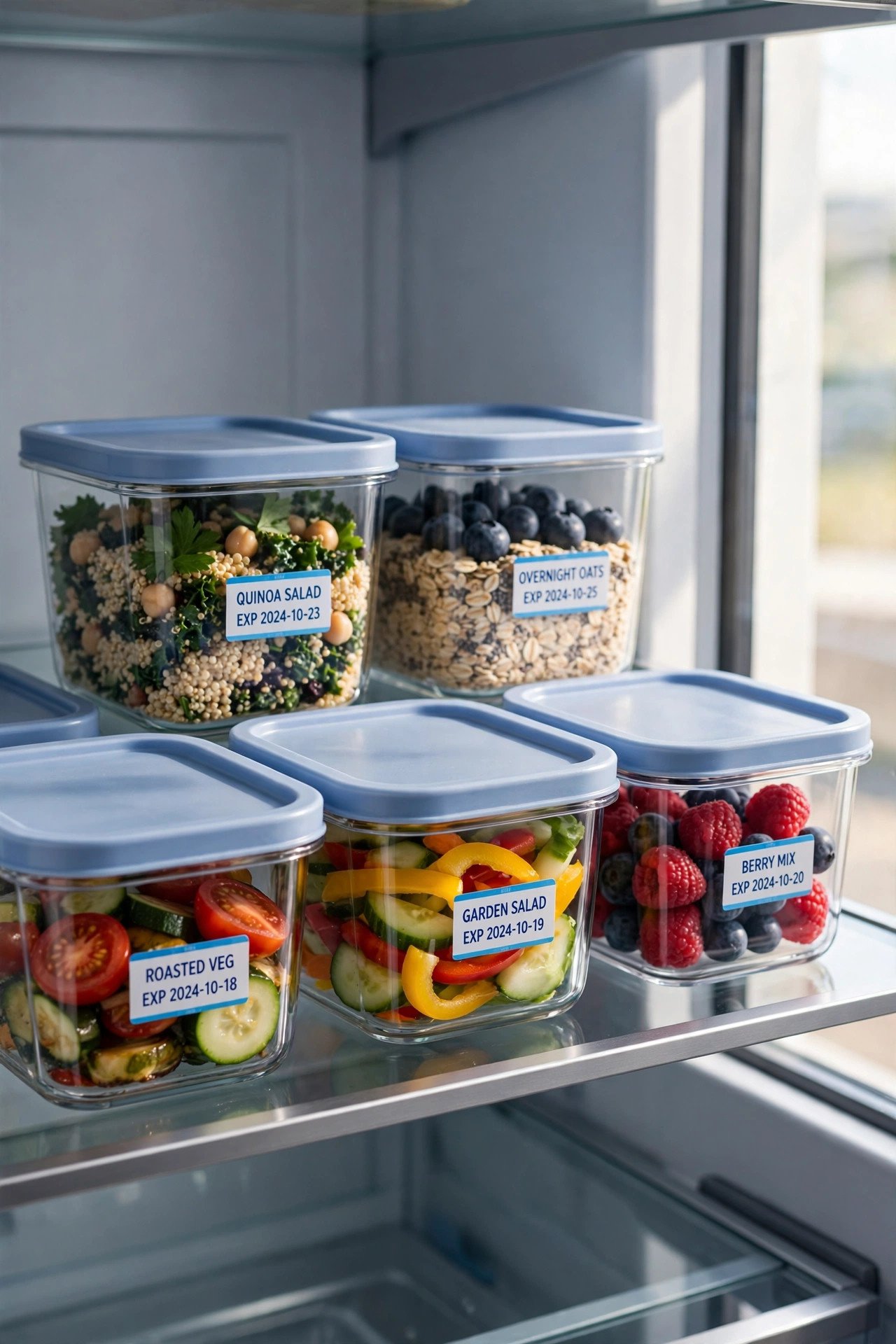
2. Line Up Food by Expiry Date
Place foods that expire soon at the front of each shelf and newer items behind them. This simple lineup shows you what to eat first every time you open the door. You stop finding old food at the back because nothing gets a chance to hide.
Check the dates when you bring groceries home and sort them as you unpack. You will throw away much less food. It also makes your shopping list easier to write, since you see what is running out.
3. Set Up Your Shelves for Easy Meal Planning
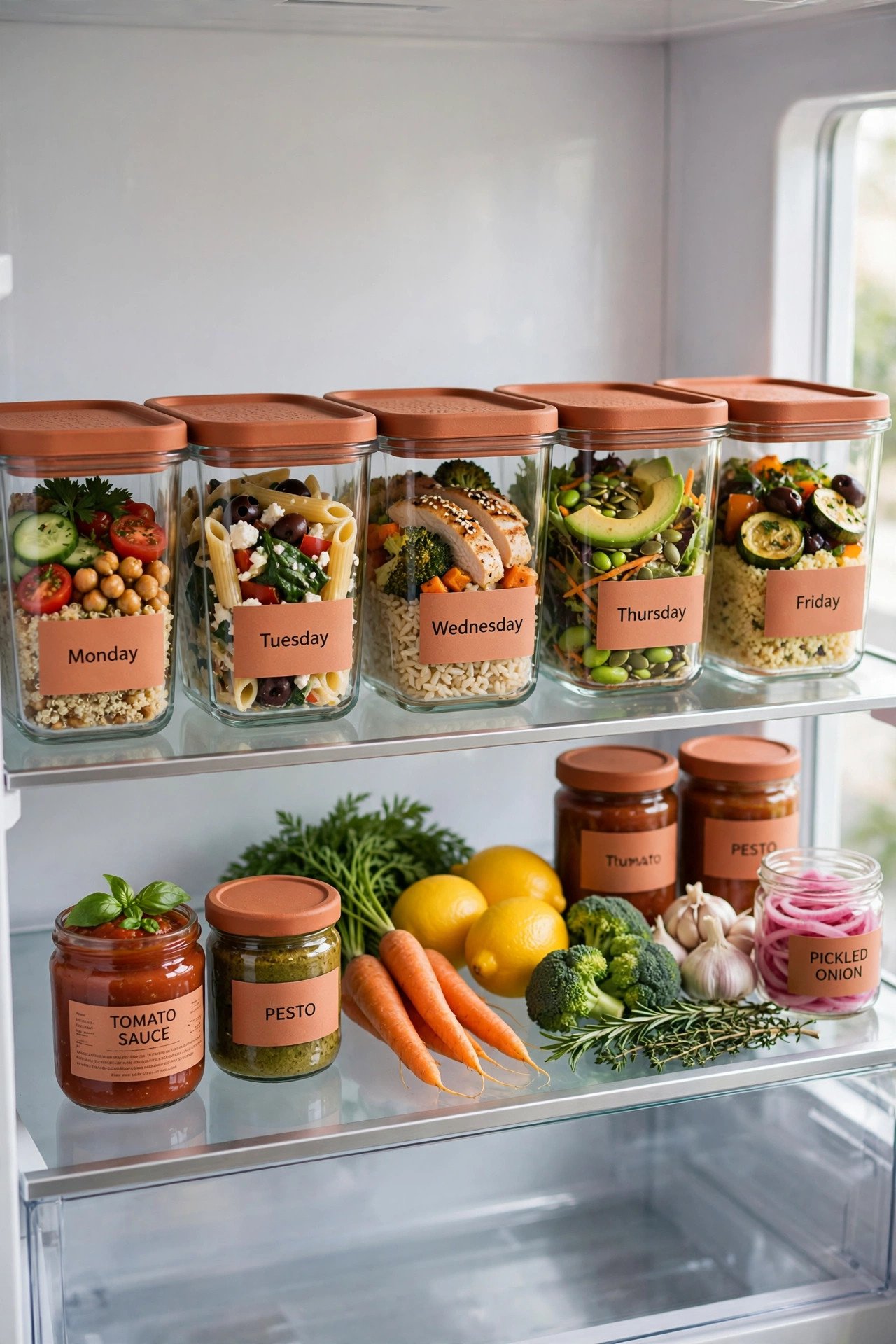
Group the ingredients for each planned meal together on one shelf. If you plan to make pasta on Tuesday, keep the sauce, cheese, and vegetables in one row. You pull out one section and start cooking, with no searching.
This works well with prepped containers for the week. Label each container with the meal or the day. Your future self will thank you on busy evenings when dinner is already half ready.
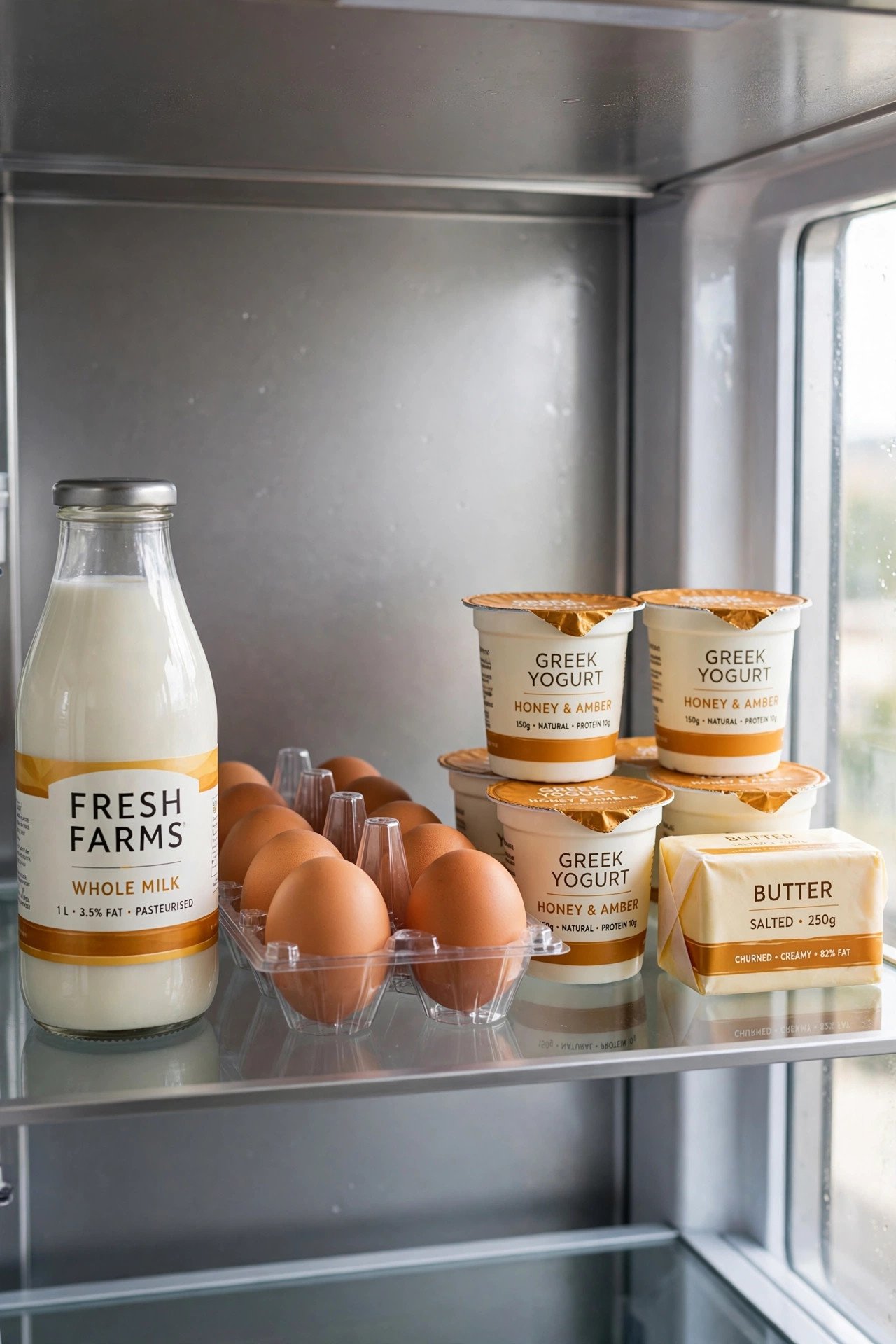
4. Keep Milk and Eggs on the Middle Shelf
The middle shelf holds the steadiest temperature in most fridges. Milk, eggs, and other dairy products stay fresh longer here than in the door. If your door is full of bottles, move the milk to a middle compartment instead.
Keep dairy grouped together so you can check it at a glance. You will notice sooner when the milk is low. Your eggs will also last longer away from the warm air that hits the door.
5. Use Trays, Bins, and Baskets to Store Food Properly
Open shelves let small items slide around and get lost. Trays, bins, and baskets give each group of food a clear border. Pull out a bin like a drawer and you can see and reach everything inside.
Choose shallow bins for items you use daily, like cheese and deli meat. Use deeper baskets for bigger items like fruit and vegetables. The shelf looks tidy even on a busy day because everything sits in its spot.

6. Keep Eggs Safe in an Egg Holder
A dedicated egg holder stops eggs from rolling around on the shelf. Many holders stack, so you can store two dozen eggs in the space of one. The holder also keeps eggs away from strong-smelling foods.
Pick a holder with a lid if your shelf is crowded. The lid protects the eggs from anything placed above them. You will break fewer eggs and your shelf will look much calmer.

7. Store Vegetables Whole
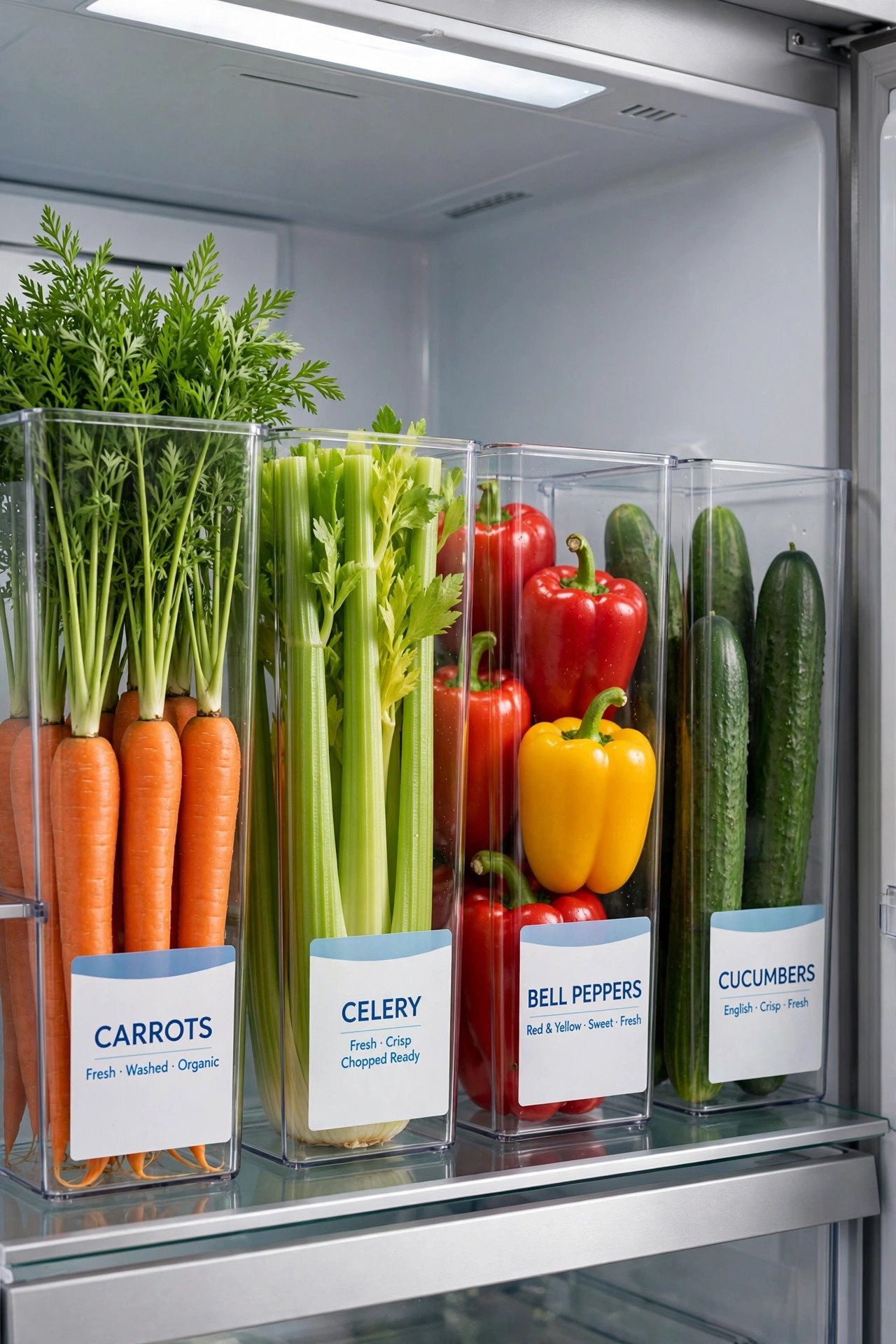
Cut vegetables spoil faster than whole ones. Store carrots, celery, and peppers whole until you are ready to cook. They stay crisp for days longer and your prep is simpler.
Place whole vegetables upright in tall bins so you can see them all. The fridge looks fuller and fresher. You will also waste less, since nothing hides chopped and forgotten in a corner.
8. Follow the First In, First Out Rule
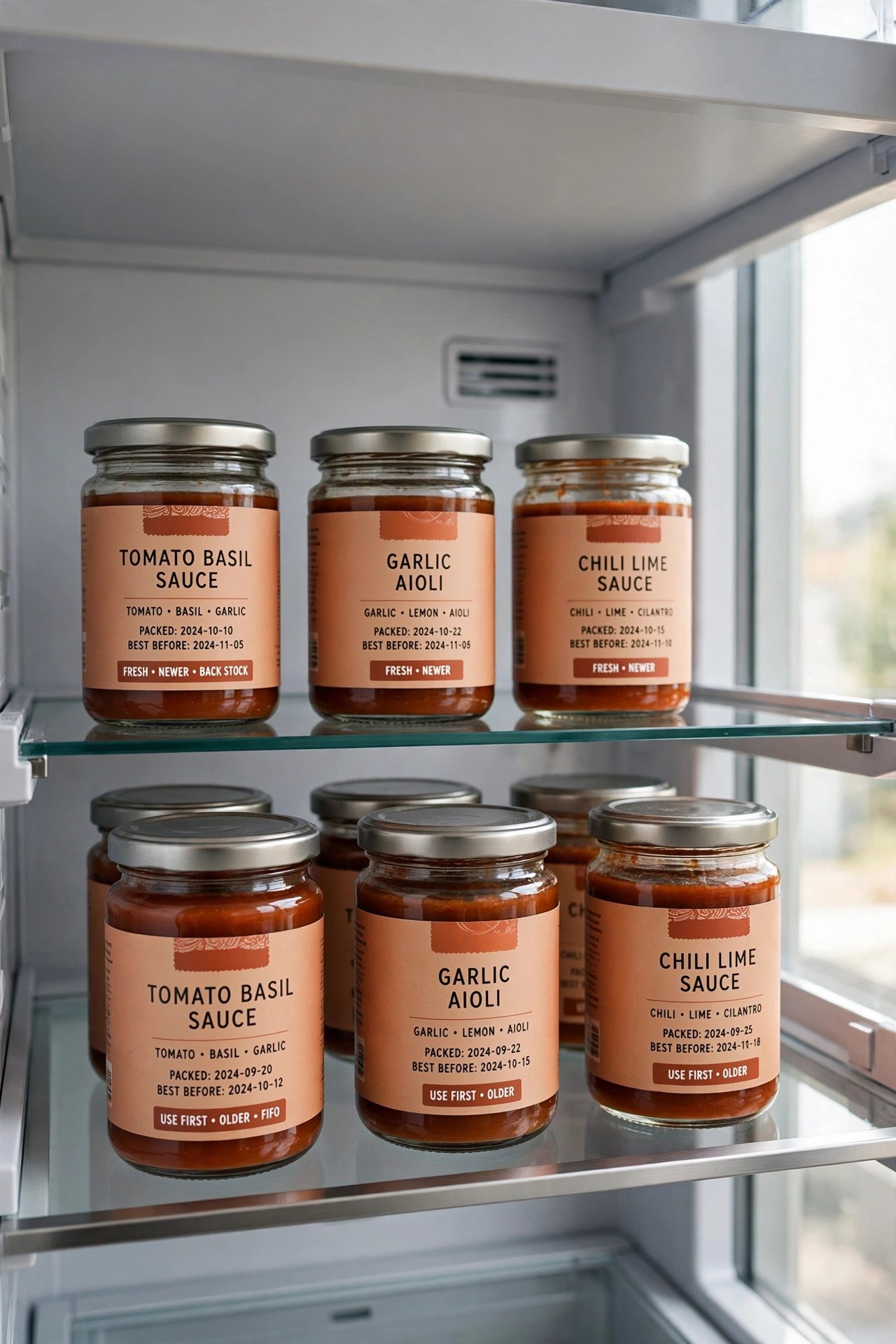
The first in, first out rule means the oldest food gets used first. When you unpack new groceries, move older items to the front of the shelf. Place the new items behind them.
This small habit takes only a minute at the store-bag stage. It stops the common problem of buying a third jar of sauce while two sit open in the back. Your food stays fresher and your shelves stay honest.
9. Try the 3-Step Rule for Shelf Organization
The 3-step rule breaks organizing into three small tasks: take out, group, and place. First take everything off one shelf. Then group items into categories like dairy, produce, and leftovers. Finally place each group back in its own spot.
This method keeps you from feeling overwhelmed. You work shelf by shelf instead of facing the whole fridge at once. The whole job can be done in ten minutes and the result lasts for weeks.

10. Assign a Zone to Every Shelf
Give each shelf one job. The top shelf can hold leftovers and ready-to-eat food. The middle shelf can hold dairy. The bottom shelf can hold raw meat. When every shelf has a zone, you never wonder where something goes.
Teach the zones to everyone in your home. Your family will put things back in the right place without being asked. The fridge starts to stay organized on its own.

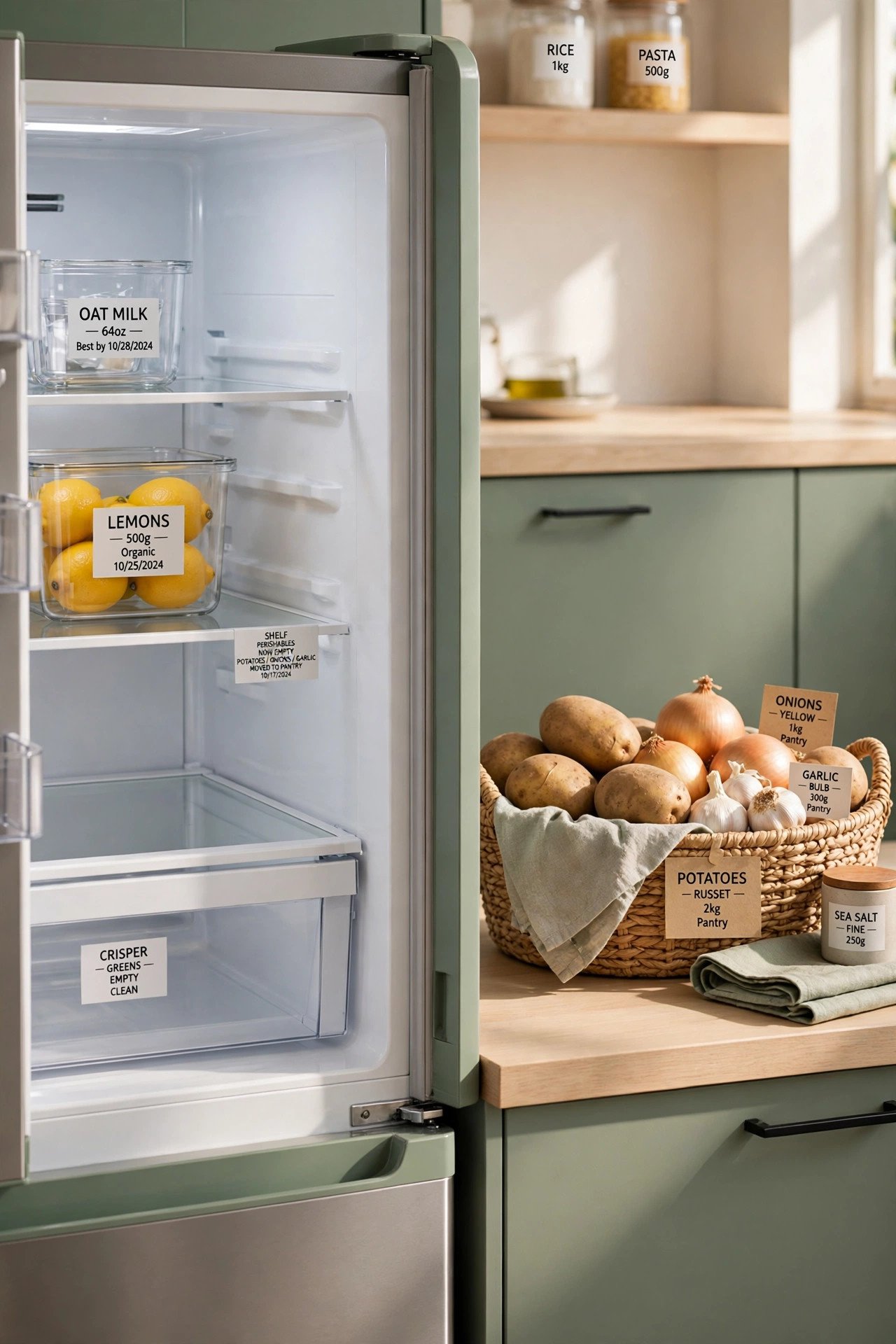
11. Move Non-Perishable Veggies Out of the Fridge
Some vegetables do not need the fridge at all. Potatoes, onions, and garlic last longer in a cool dark pantry. Moving them out frees up a whole bin or shelf for food that truly needs cold air.
Store these vegetables in baskets on a counter or pantry shelf. They keep their flavor and texture better at room temperature. Your fridge gains space and your vegetables gain quality.
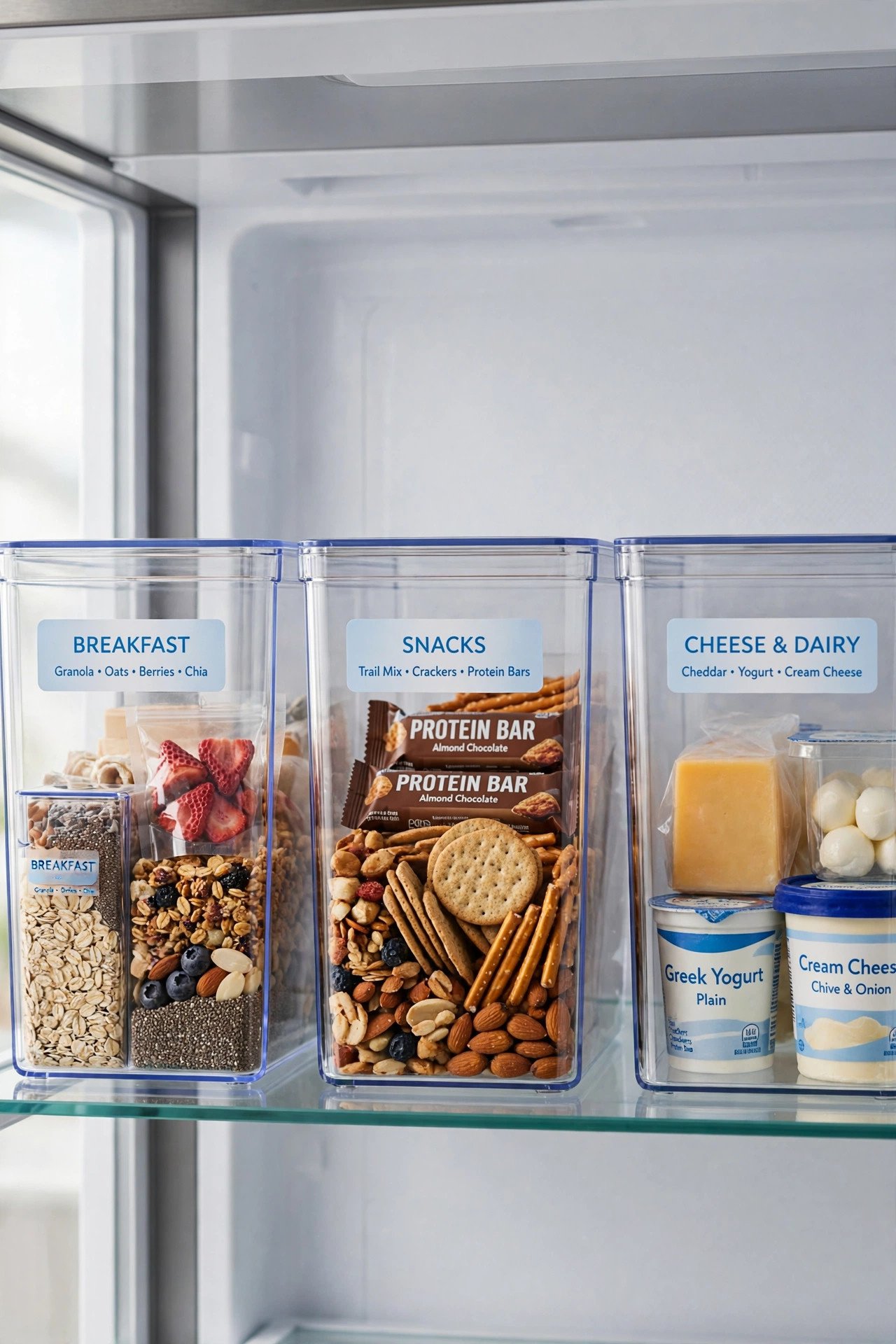
12. Use Clear Bins to See Everything
Clear bins let you see the contents without pulling the bin out. This stops you from opening three bins to find the cheese. Transparent storage is one of the fastest ways to cut food clutter.
Group items by type in each bin, like breakfast items in one and snacks in another. The see-through walls remind you what you already have. You will buy fewer duplicates at the store.
13. Keep Fresh Herbs in Plastic Containers
Fresh herbs wilt fast when left loose on a shelf. Place them upright in small plastic containers with a little water. Cover loosely with the lid and they can stay fresh for a week or more.
Keep all your herbs in one container zone on the shelf. You will reach for them more often in cooking. Your garnish game improves while your waste goes down.

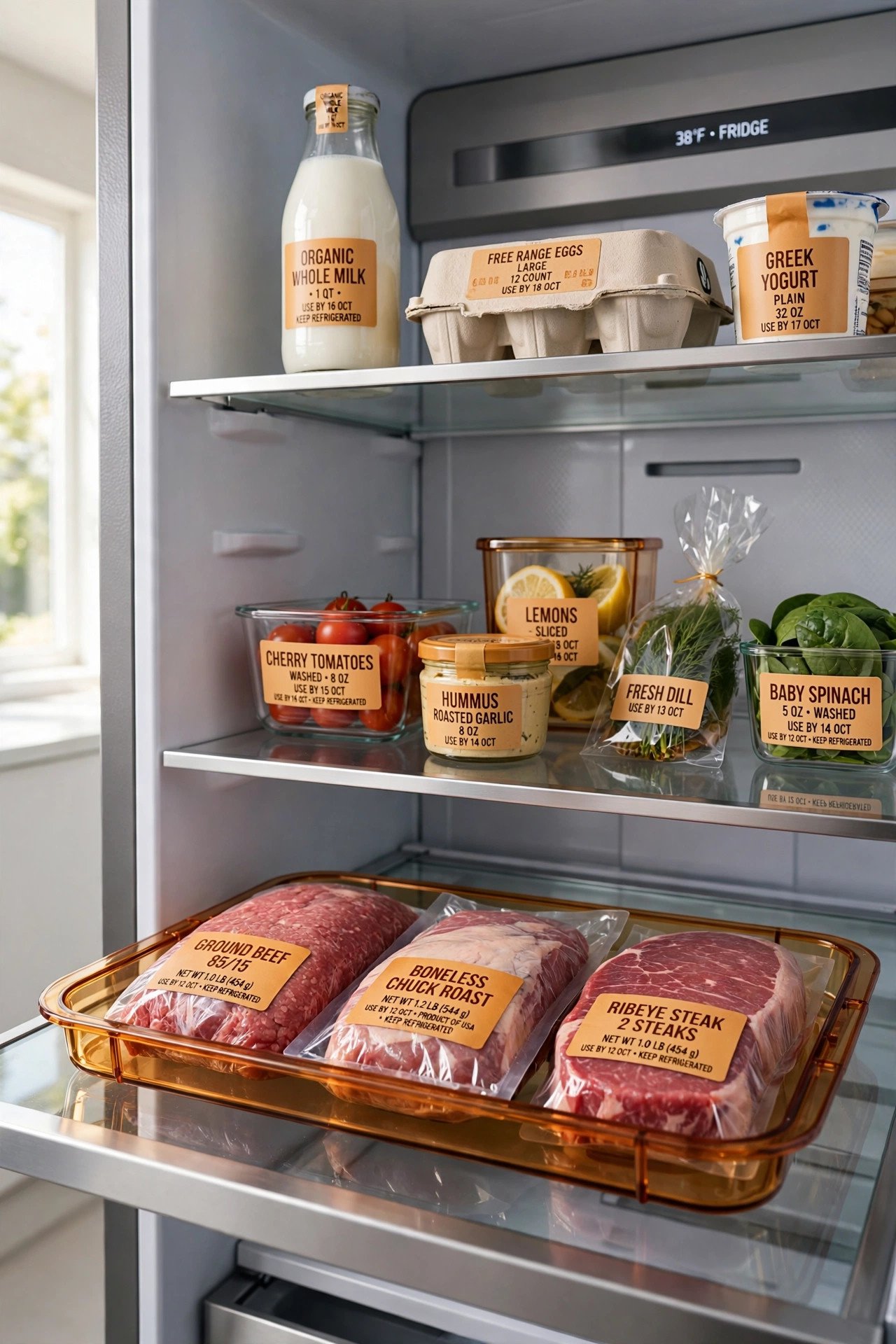
14. Place Meat on the Bottom Shelf
Raw meat belongs on the lowest shelf of the fridge. If it drips, it cannot fall onto the food below. This keeps your other food safe and clean.
Place the meat in a tray or shallow bin to catch any liquid. The tray also keeps the shelf itself clean. You protect your whole fridge with this one habit.
15. Keep Your Fridge Two-Thirds Full
A fridge that is about two-thirds full keeps cold air moving well. A full fridge blocks the vents and an empty fridge wastes cold air. Two-thirds full is the sweet spot for even cooling.
This rule also helps you notice when food is getting out of hand. If you cannot see the back of the shelf, you have too much. Shop with the two-thirds level in mind.
16. Clean Your Fridge on a Regular Schedule
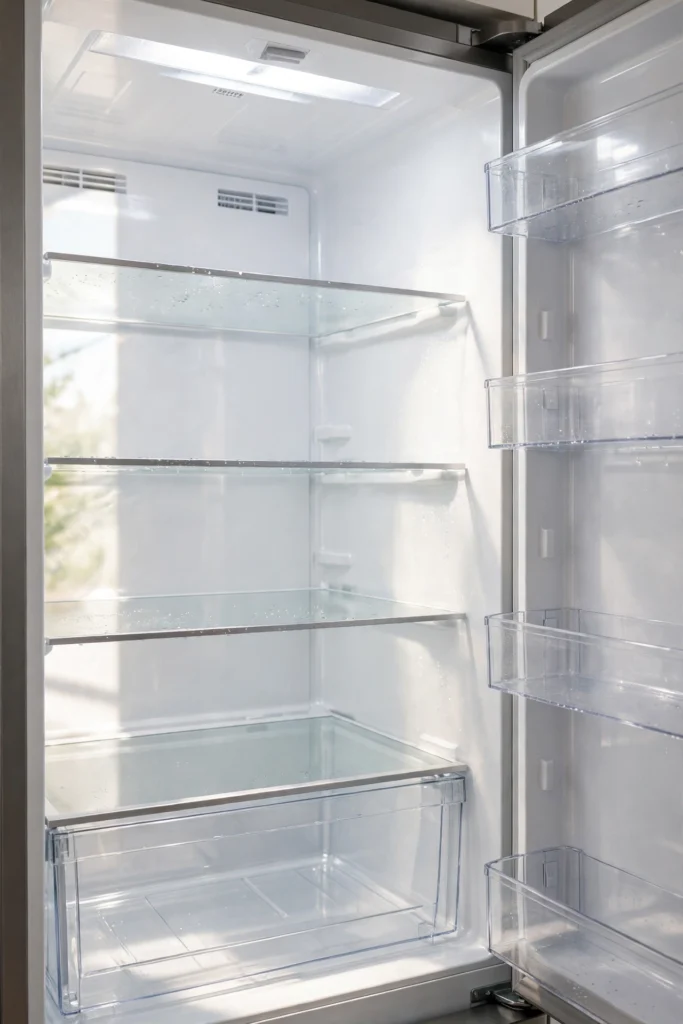
A quick weekly wipe keeps sticky spots and smells from building up. Pull out the bins once a week, toss anything expired, and wipe the shelves with warm soapy water. The job stays small because you never let it grow.
Once a month, do a deeper clean of one or two shelves. You will find expired sauces and dried spills before they become problems. A clean fridge also makes food look more appealing.
17. Make Fridge Containers Personal
Write names or simple symbols on your containers with washable markers. Each family member can have a bin for their own snacks. No more arguments about who ate what.
Personal labels also help with meal portions. You can mark containers for lunch or dinner. The fridge feels friendly and organized because everyone has their own space.

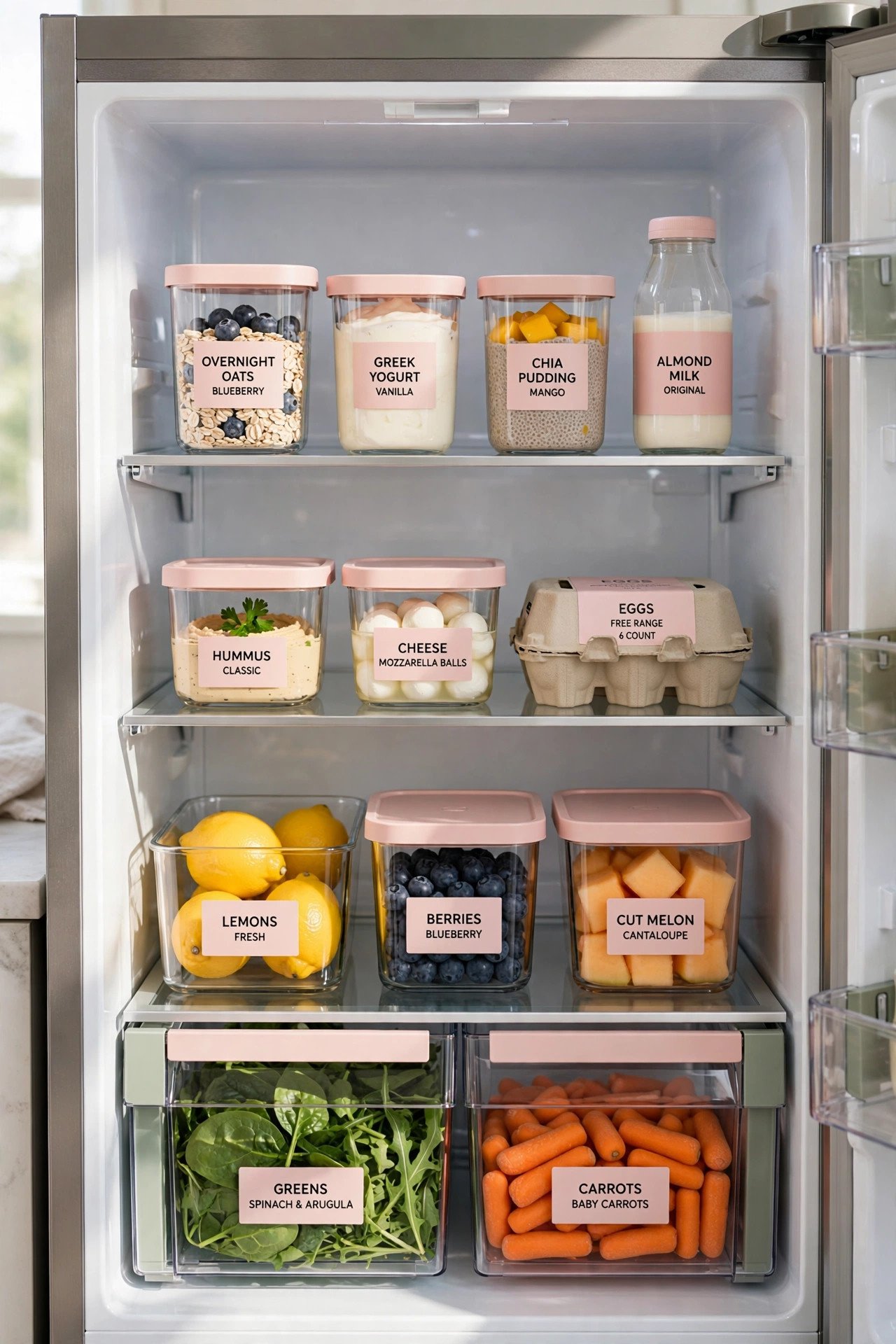
18. Sort Food with Labeled Containers
Labels tell you what is inside each container without opening it. Mark containers with the food name and the date. This ends the mystery of unlabeled leftovers.
Use simple white labels with dark writing so they are easy to read. Place them on the front of each container at eye level. Your shelves will look neat and you will always know what you have.

19. Brighten a Small Fridge with Sliding Drawers
In a small fridge, every inch matters. Colorful sliding drawers stack under a shelf and pull out like trays. They use the empty air under shelves that usually goes to waste.
Give each drawer a job, like one for snacks and one for cheese. The bright colors also make the small space feel cheerful. You gain storage without buying a bigger fridge.

20. Use Peel-Off Plastic Wraps for Quick Cleaning
Line your glass shelves with peel-off plastic wrap before placing food. When a spill happens, you peel the sheet away instead of scrubbing the glass. The shelf looks new in seconds.
Keep a few spare sheets cut to size in a nearby drawer. Replacing a dirty sheet takes less than a minute. This trick is perfect if you share the fridge with kids or roommates.

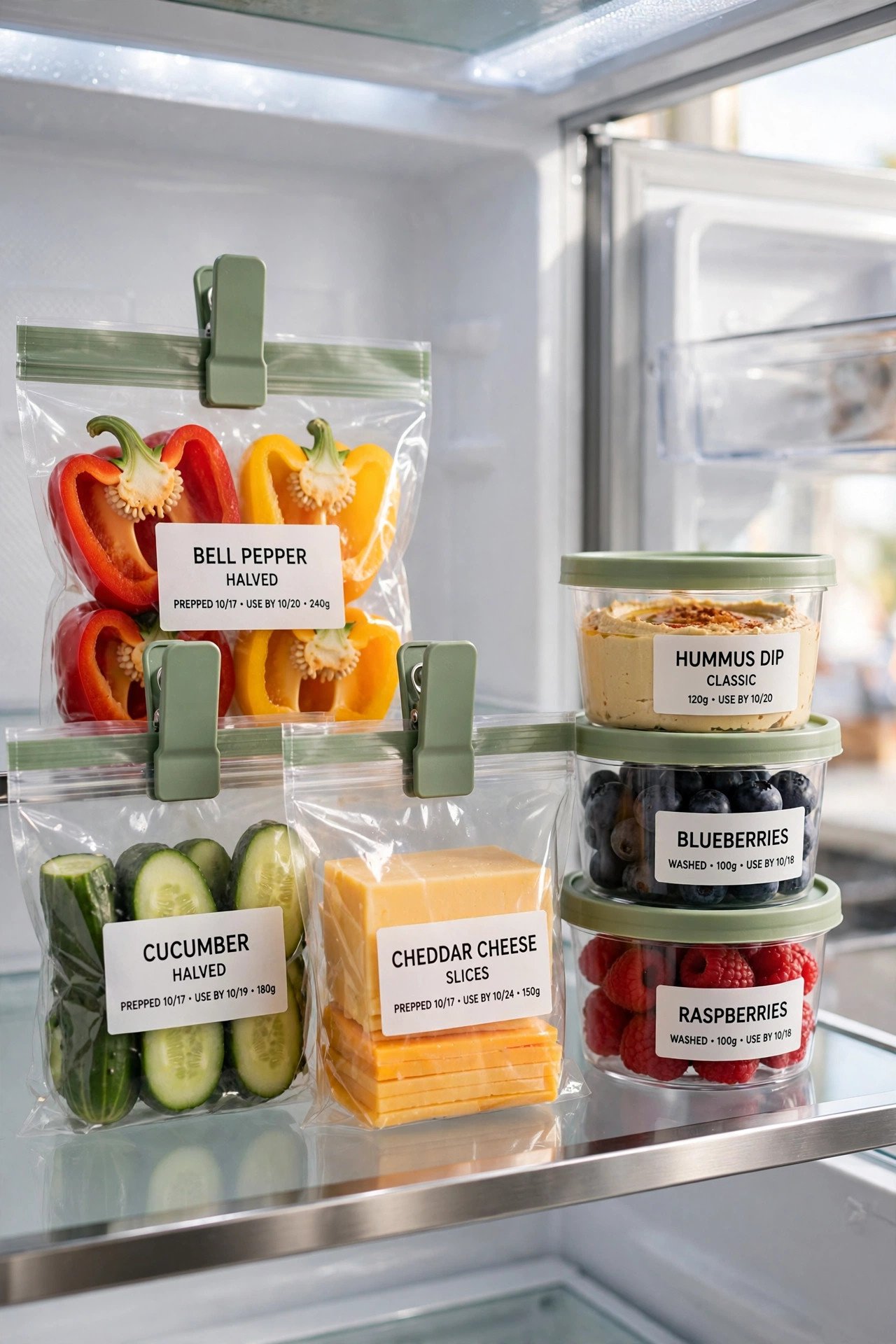
21. Store Food in Plastic Bags and Tubs
Not every food needs a rigid container. Sealable plastic bags work well for half-cut vegetables and cheese slices. Small plastic tubs hold dips, sauces, and berries neatly.
Bags and tubs stack easily, so they use shelf space well. You can see what is inside without opening them. Keep a small supply of each on hand for quick packing after meals.
22. Keep Fruits and Vegetables Where You Can See Them
Produce that you cannot see will not get eaten. Keep fruits and vegetables in open bins at eye level instead of buried in a drawer. When you see the berries, you eat the berries.
Open bins also help produce breathe, which keeps some items fresher. Wash and dry fruit before placing it in the bin. Your shelf turns into a colorful display that invites healthy snacking.

23. Group Similar Foods Together
Place all the jams together, all the sauces together, and all the cheeses together. Grouping similar foods makes one trip to the fridge enough. You grab everything you need from one spot.
This also shows you duplicates right away. You will notice two open jars of the same sauce and finish one first. Your shelves hold less clutter and your food gets used up faster.

24. Add a Sliding Wall Organizer for Extra Space
A sliding wall organizer hangs on the side wall or under a shelf inside the fridge. It holds small items like butter, cream cheese, or snack packs. You use wall space that was sitting empty.
Slide the organizer out to reach the back items easily. It keeps small things from getting lost behind tall bottles. Your main shelf gains room for bigger items.

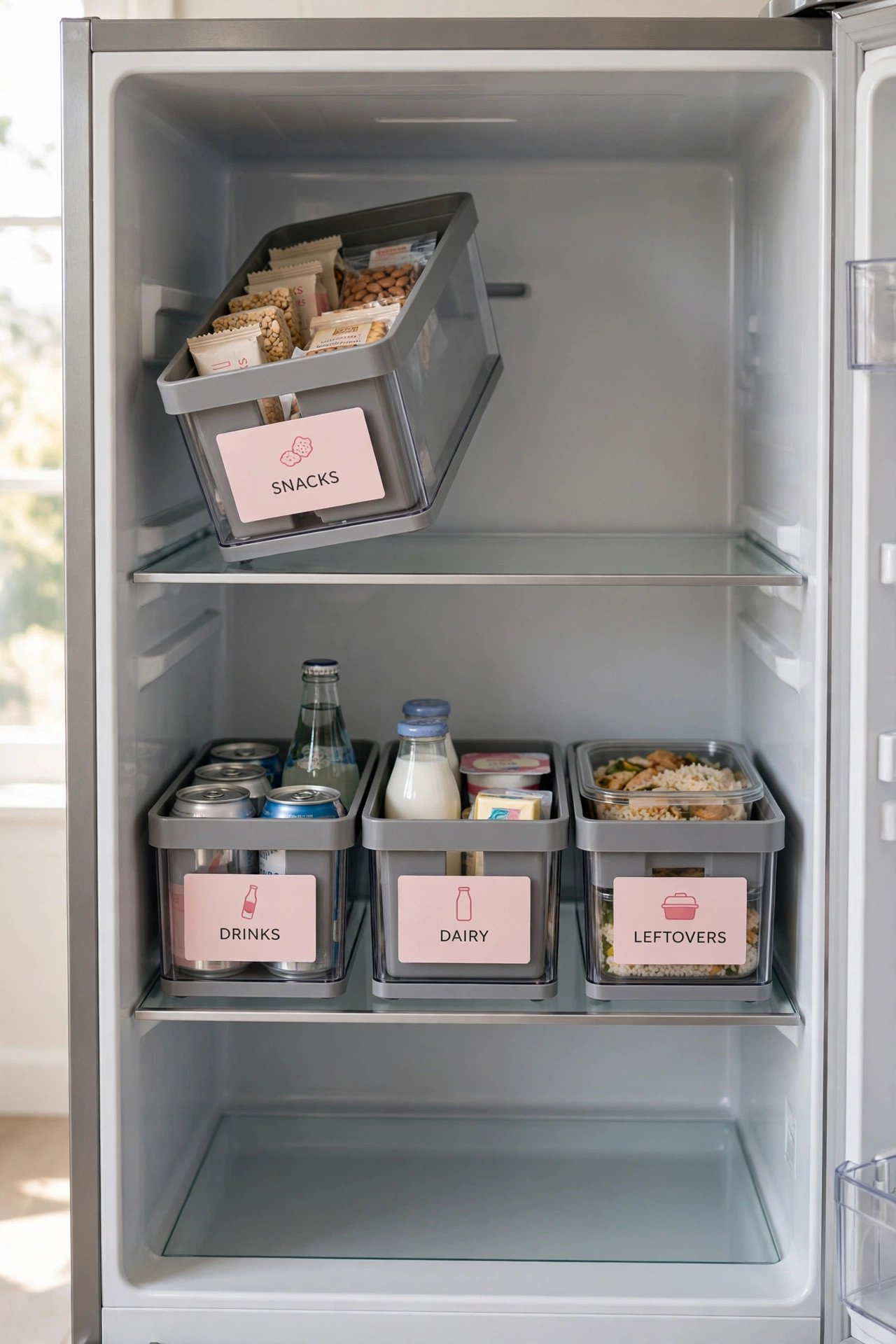
25. Use Storage Boxes in Small Fridges
Storage boxes turn a tiny fridge into a neat grid. Each box holds one category of food, like drinks, dairy, or leftovers. You can lift a whole box out to find something.
Choose boxes that fit your shelf depth exactly so no space is wasted. Measure the shelf before you buy. A small fridge with boxes can hold as much as a bigger fridge without them.
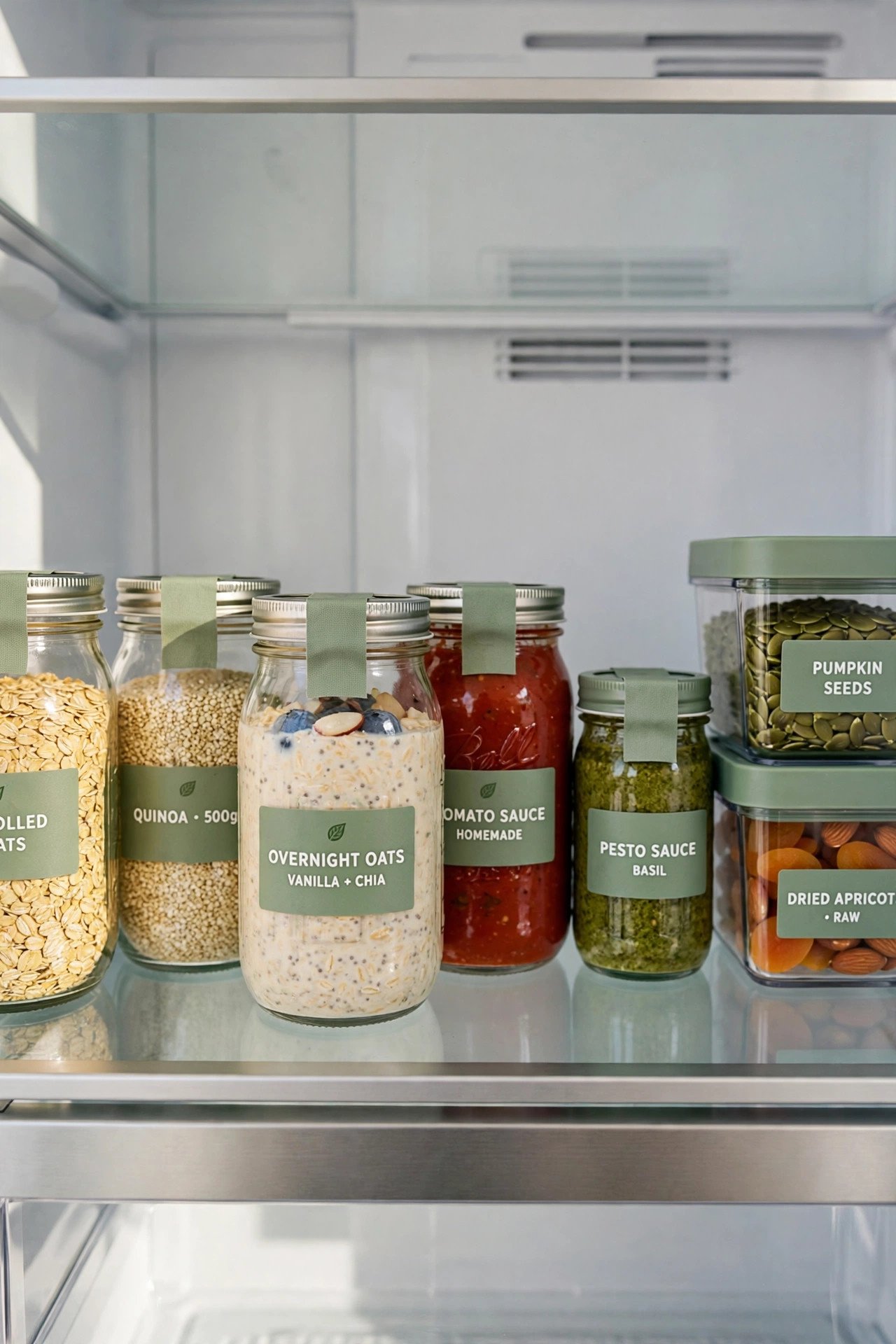
26. Store Food in Mason Jars and Food Containers
Mason jars keep pantry staples and prepped food fresh and visible. Use them for grains, sauces, and overnight oats. The glass does not hold odors like some plastic does.
Mix jars with matching food containers for a tidy look. Square containers fill shelf corners better than round ones. Your fridge looks calm and everything stays easy to find.
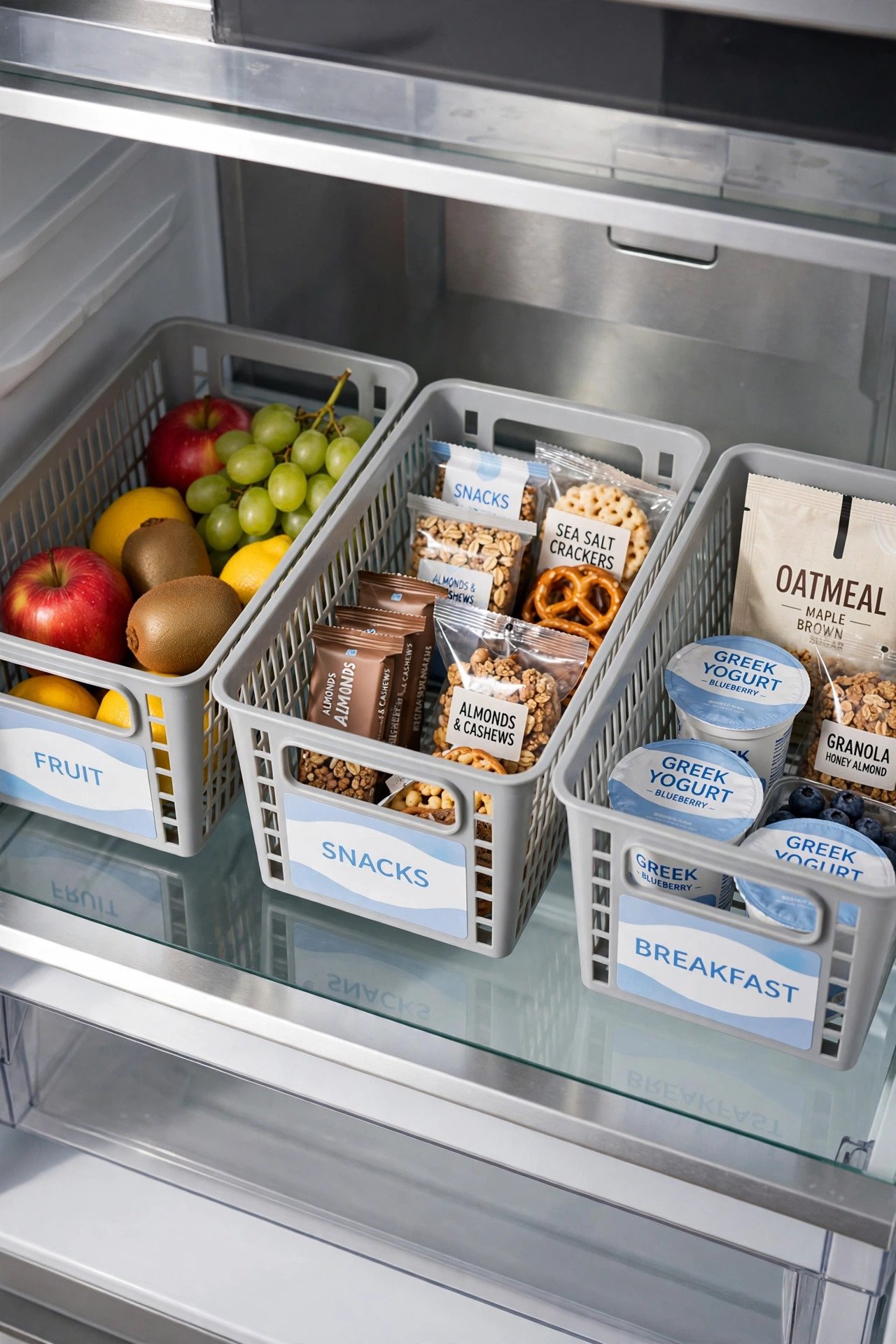
27. Organize with Simple Plastic Baskets
Lightweight plastic baskets are cheap, easy to clean, and come in many sizes. Use one basket for fruit, one for snacks, and one for breakfast items. The handles make them easy to carry to the counter.
Baskets with open sides let cold air reach the food. They are also easy to rinse if something leaks. Your shelves stay tidy with very little effort.
28. Pack Leftovers in Deli Containers
Deli containers are the perfect size for single servings of leftovers. They stack neatly, seal tightly, and let you see the food inside. You will actually eat leftovers when they are packed this way.
Keep a stack of clean deli containers in one spot in the fridge. Pack food while it is still fresh, not when it is already old. Label each one with the date so you know when to eat it.
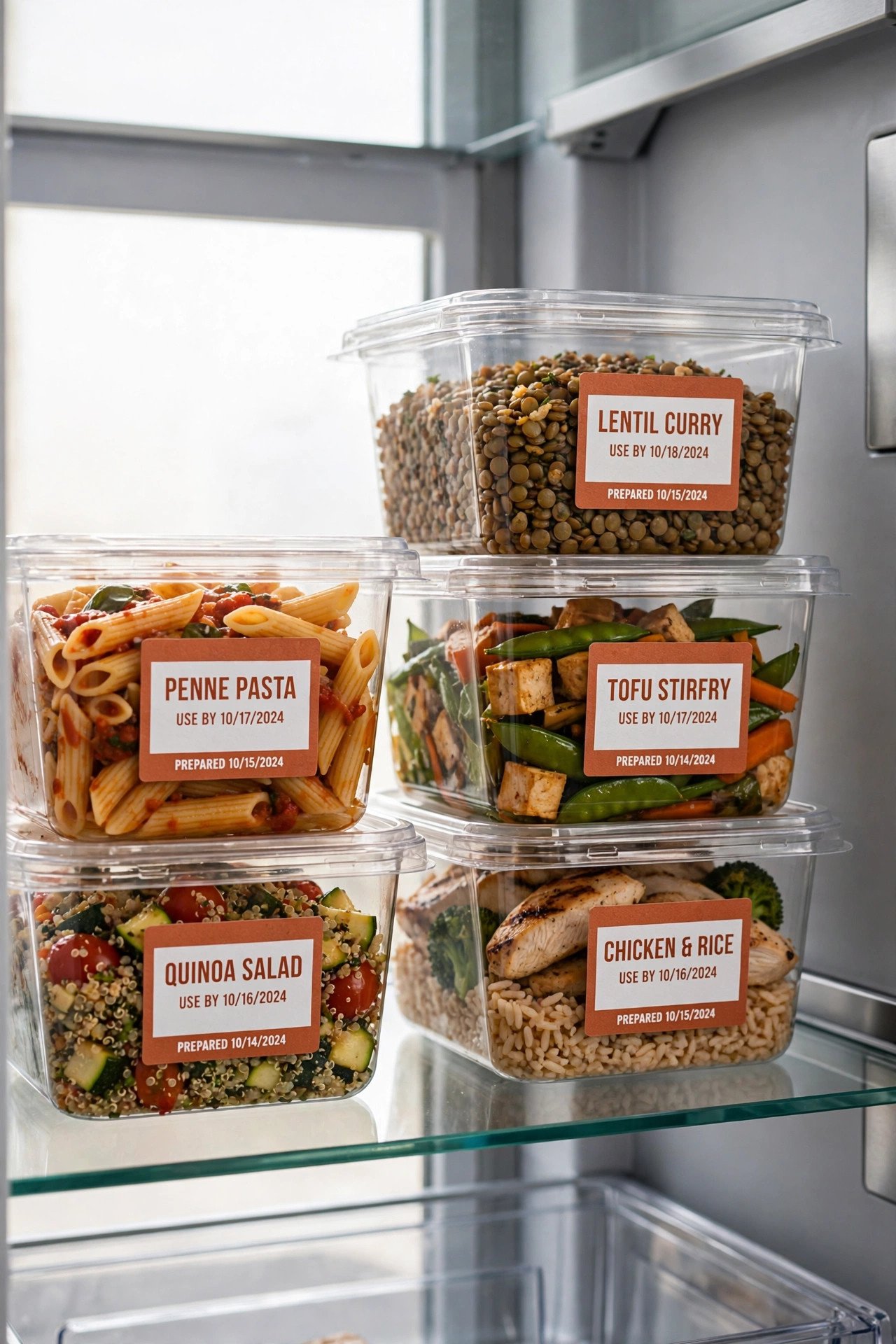
29. Switch Round Containers for Square Ones
Round containers leave wasted gaps between them on square shelves. Square containers fit together like building blocks with no empty corners. You can fit more food on the same shelf.
Replace your mismatched round containers over time with a matching square set. Stack them safely and label the fronts. Your shelves will look neat and hold more.
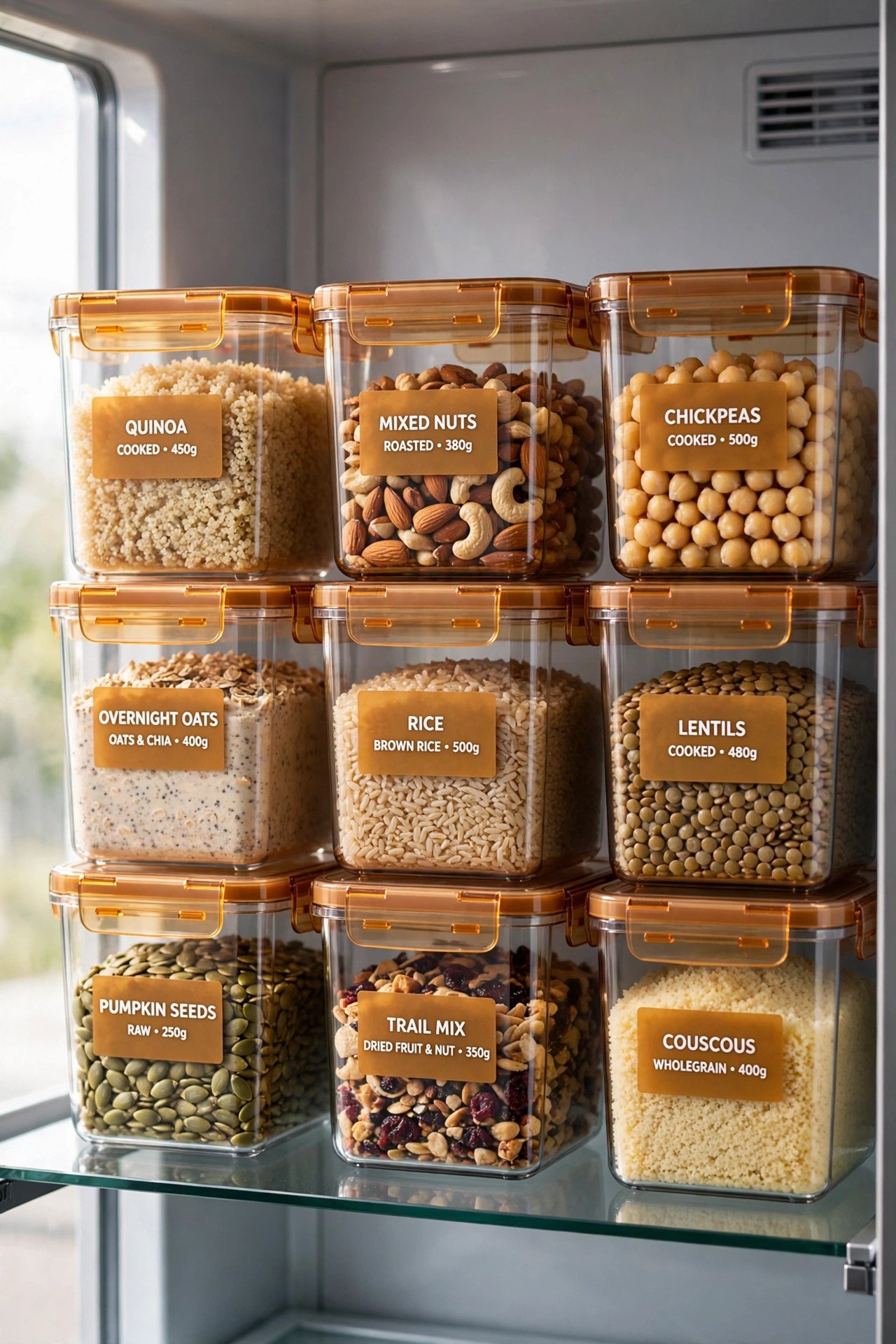
30. Make Shelves Handy with Rotating Trays
A rotating tray turns hard-to-reach corners into easy access. Place sauces, dressings, and small jars on it. One spin brings the back row to the front.
This ends the problem of jars expiring unseen at the back of the shelf. Keep tall items in the center and short ones at the edge so the tray spins freely. Your shelf becomes fun to use.
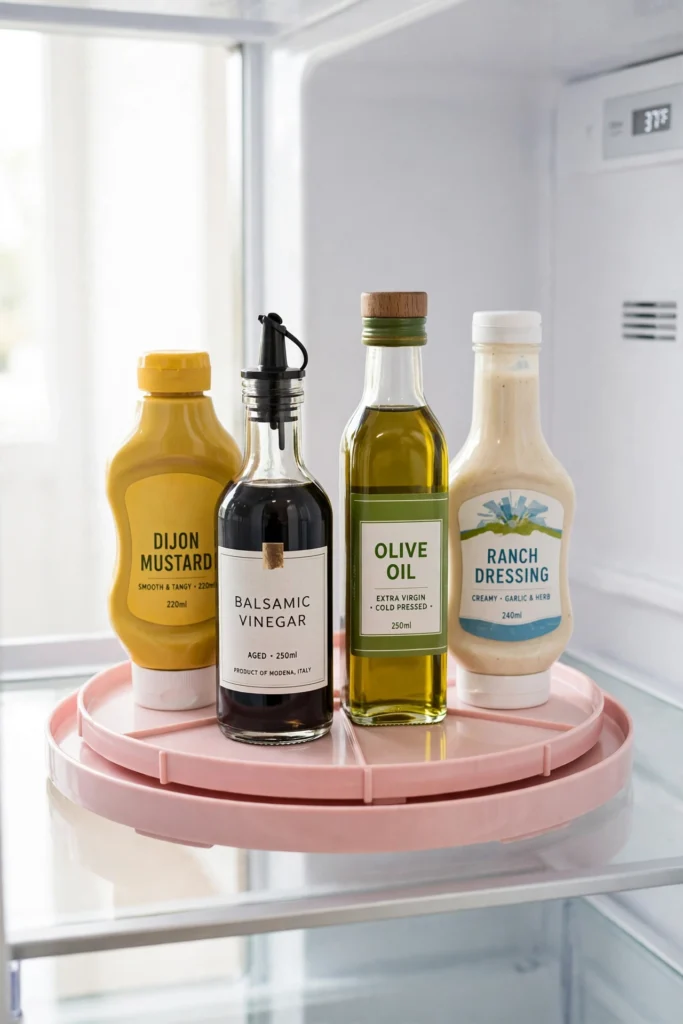
31. Add Color with Fun Shelf Liners
Patterned shelf liners add a pop of color every time you open the fridge. They protect glass shelves from scratches and sticky rings. Cleaning becomes easier because spills sit on the liner.
Choose liners that wipe clean with a damp cloth. Cut them to fit each shelf exactly. Your fridge feels personal and bright, not boring and plain.

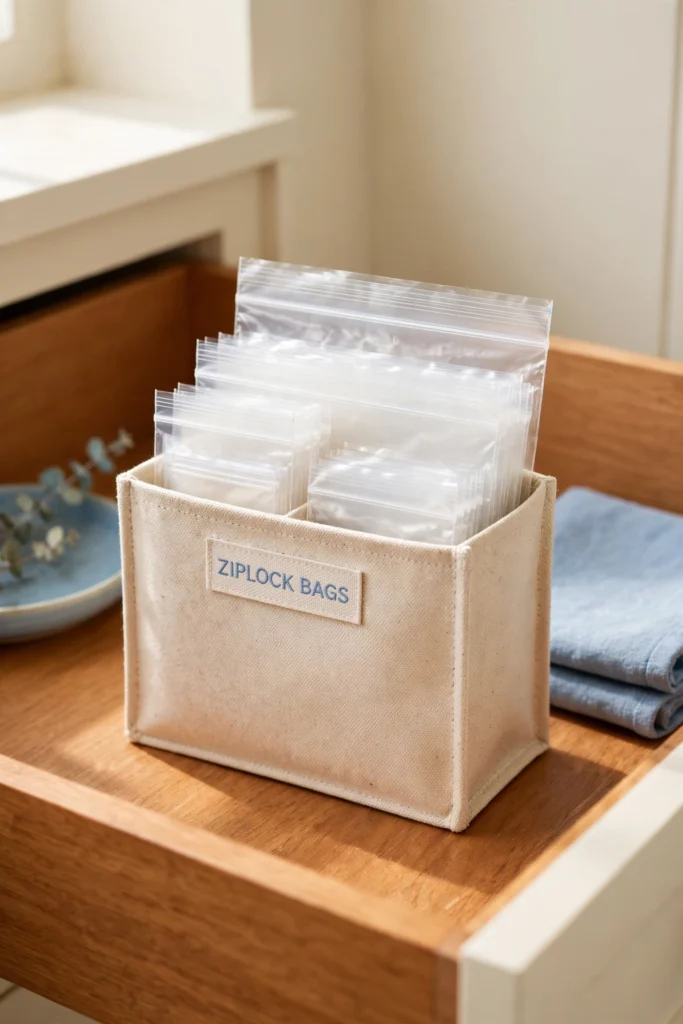
32. Keep Bags Tidy with a Ziplock Bag Organizer
Loose bags pile up fast on a shelf. A small bag organizer holds your ziplock bags in one slim slot. Pull out one bag at a time without making a mess.
Keep the organizer near your leftovers and produce. You will reach for bags more often, which keeps food fresher. One small organizer saves a whole corner of the shelf.
Conclusion
An organized fridge is not about being perfect. It is about making your daily life easier. When every shelf has a zone and every item has a home, cooking becomes calmer and food waste goes down.
Start with just one or two ideas from this list today. Pick the ones that fit your fridge and your family. Small changes add up fast, and your shelves will stay neat for weeks to come.
Frequently Asked Questions
How do I organize my refrigerator shelves to avoid food clutter?
Give each shelf a clear zone, such as dairy on the middle shelf and leftovers on top. Use clear bins and labels so every item has a visible home, and place soonest-expiry foods at the front.
What is the best way to store food on fridge shelves?
Store foods by category in shallow bins or baskets that pull out like drawers. Keep dairy on the middle shelf, raw meat on the bottom shelf, and group similar items together so nothing hides at the back.
Should meat go on the top or bottom shelf of the fridge?
Raw meat should always go on the bottom shelf. This keeps drips from falling onto the food below and keeps your other shelves clean and safe.
How full should my refrigerator be?
About two-thirds full is best. This level lets cold air flow evenly while keeping enough food to hold the temperature steady. If you cannot see the back of a shelf, you have too much.
How often should I clean my refrigerator shelves?
Do a quick wipe and expiry check once a week, and a deeper clean of one or two shelves once a month. Regular small cleanings stop spills and old food from building up.

Hi, I’m Emily! I turn messy corners into cozy, organized spots. DreamNestDecor is where I share simple, practical home ideas — decor, organization, and small-space solutions that work in real life, not just in photos. Every idea here is carefully researched before it’s shared.