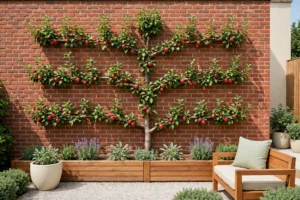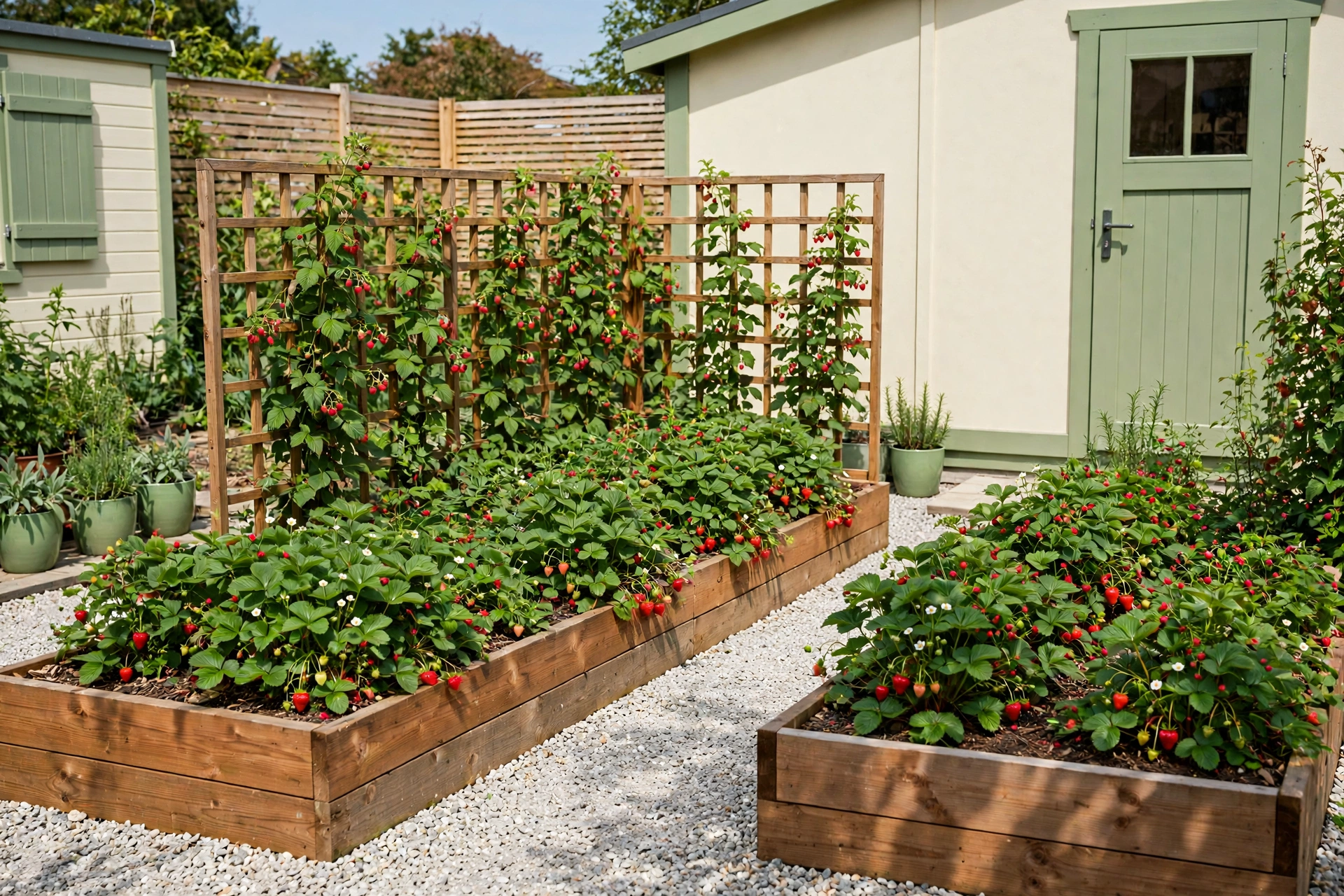
Picture this: you step out your back door on a warm summer morning with a small bowl in your hand, and within a few minutes it is full of warm strawberries, plump blueberries, and sweet raspberries you picked yourself. That little harvest tastes better than anything from a store, and it starts with a garden layout that gives every berry plant the space and sun it needs to thrive.
You do not need a large yard or years of gardening experience to grow your own fruit. All you need is a sunny spot and a plan that fits the space you have. These 13 berry garden layout ideas will help you arrange beds, rows, trellises, and containers so your homegrown fruit is easy to reach, easy to care for, and generous all season long.
1. Arrange Raised Beds in Neat Rows for Easy Picking
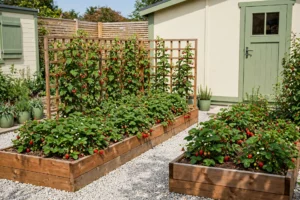
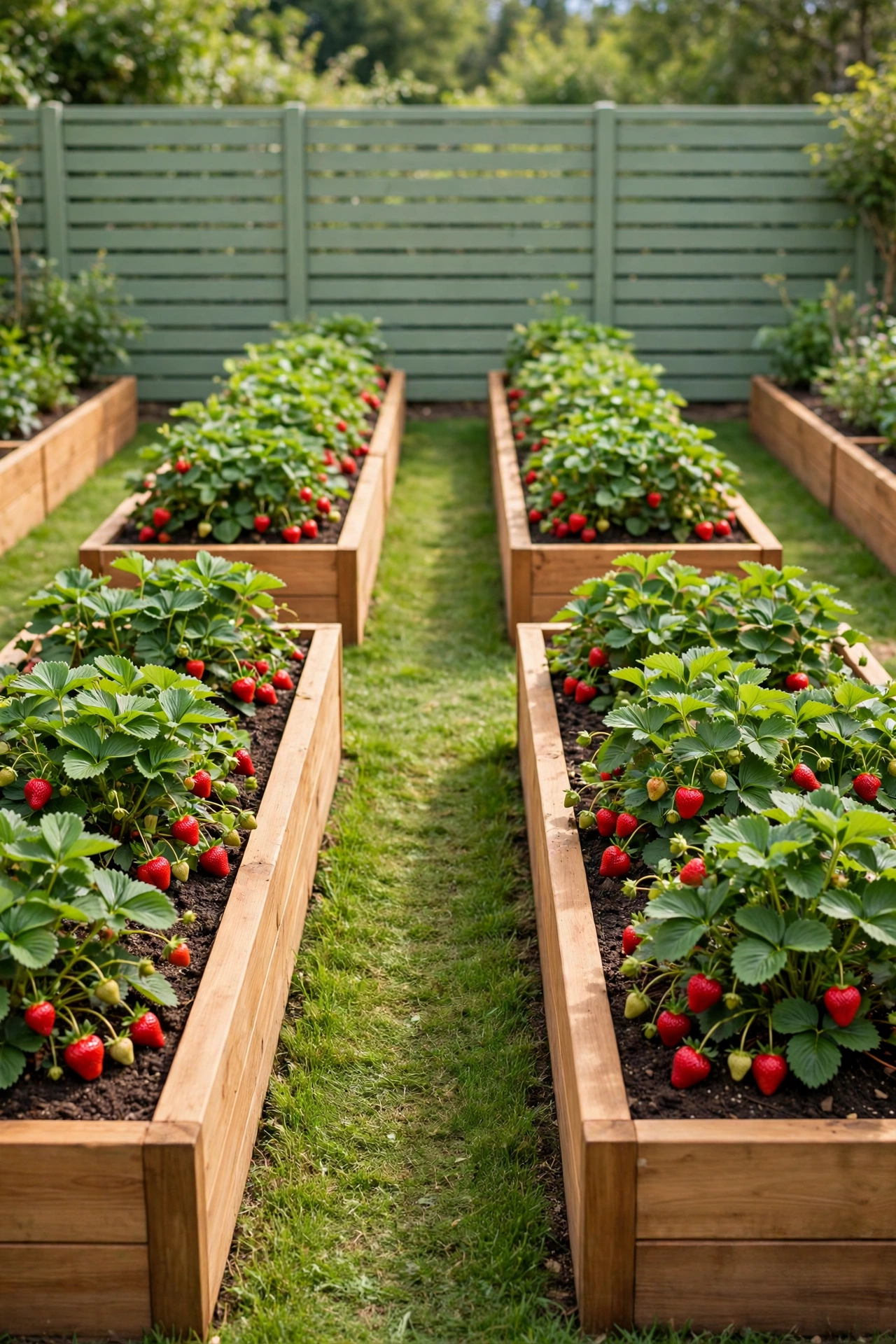
Raised beds set in straight rows are one of the simplest and most practical ways to lay out a berry garden. The beds lift the plants to a comfortable picking height, and the clear paths between them keep your feet dry and your shoes clean while you harvest. Each bed can hold a single berry type, which makes watering, feeding, and pruning much easier to manage.
Space the beds about two feet apart so you can kneel or walk between them without stepping on plants. Fill them with rich, well drained soil mixed with compost, and edge them with warm wood boards for a tidy look. If you are planning the structure of your garden from scratch, these raised garden bed layout ideas will help you size and position each bed before a single plant goes in.
2. Tuck a Berry Patch Into a Sunny Corner
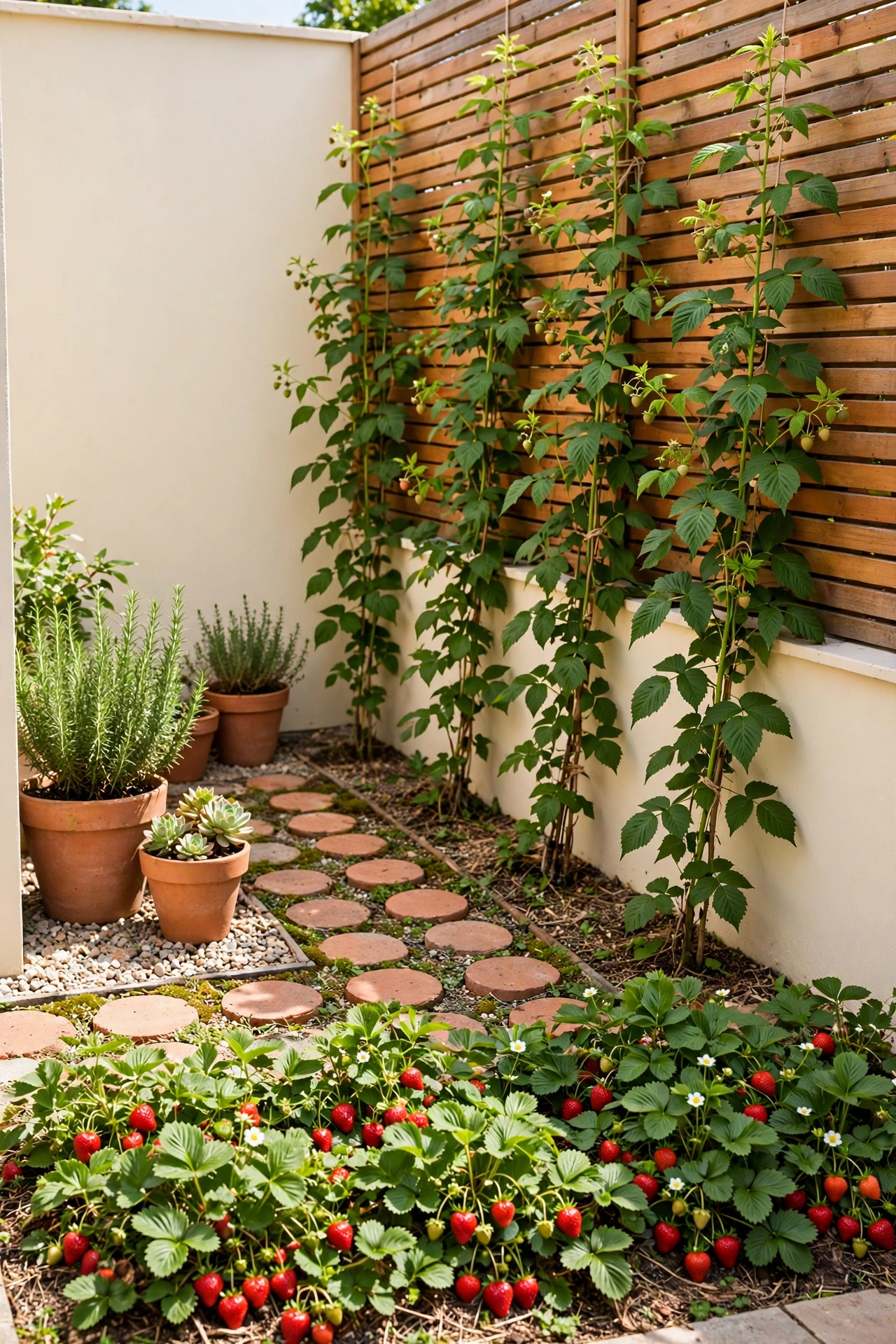
A sunny corner of the yard is often wasted space, but it can become the most productive spot in your garden. Place low strawberry plants along the front edge where they get full sun, and set taller raspberry or blackberry canes behind them against the fence. The corner walls shelter the plants from strong wind, and the layered heights make the patch look lush and intentional.
Keep the front edge low and open so you can step in easily to pick the strawberries. A small stepping stone path through the middle gives you access to the back canes without trampling the front plants. This corner layout works beautifully in small yards because it turns an awkward angle into a compact fruit garden.
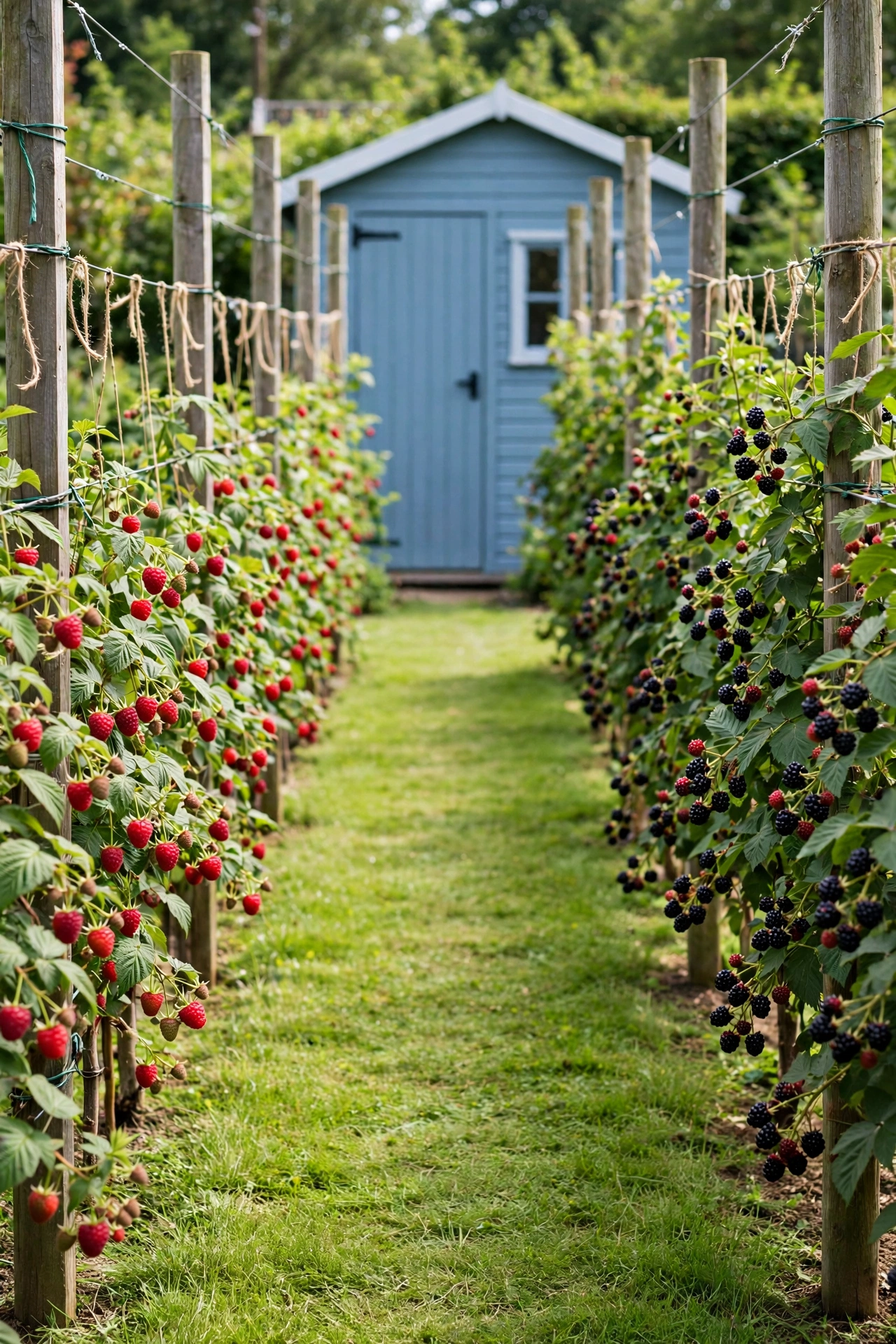
3. Train Raspberries and Blackberries on Trellis Rows
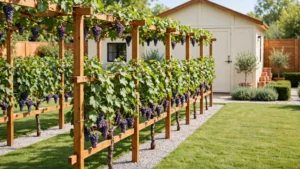
Raspberries and blackberries grow on long canes that flop and tangle without support, so a trellis row layout keeps them upright, tidy, and easy to harvest. Set sturdy wooden posts in a straight line, string two or three wires between them at different heights, and tie the canes loosely to the wires as they grow. The fruit hangs at arm height where you can see and reach every berry.
Leave at least four feet between trellis rows so you can walk down each row with a picking basket and a pair of pruners. Pruning is far simpler when each cane has its own place on the wire, and air flows freely through the row, which keeps the plants healthy. For support styles that suit climbing plants of all kinds, these climbing plant trellis ideas offer designs that look beautiful while they hold heavy canes steady.
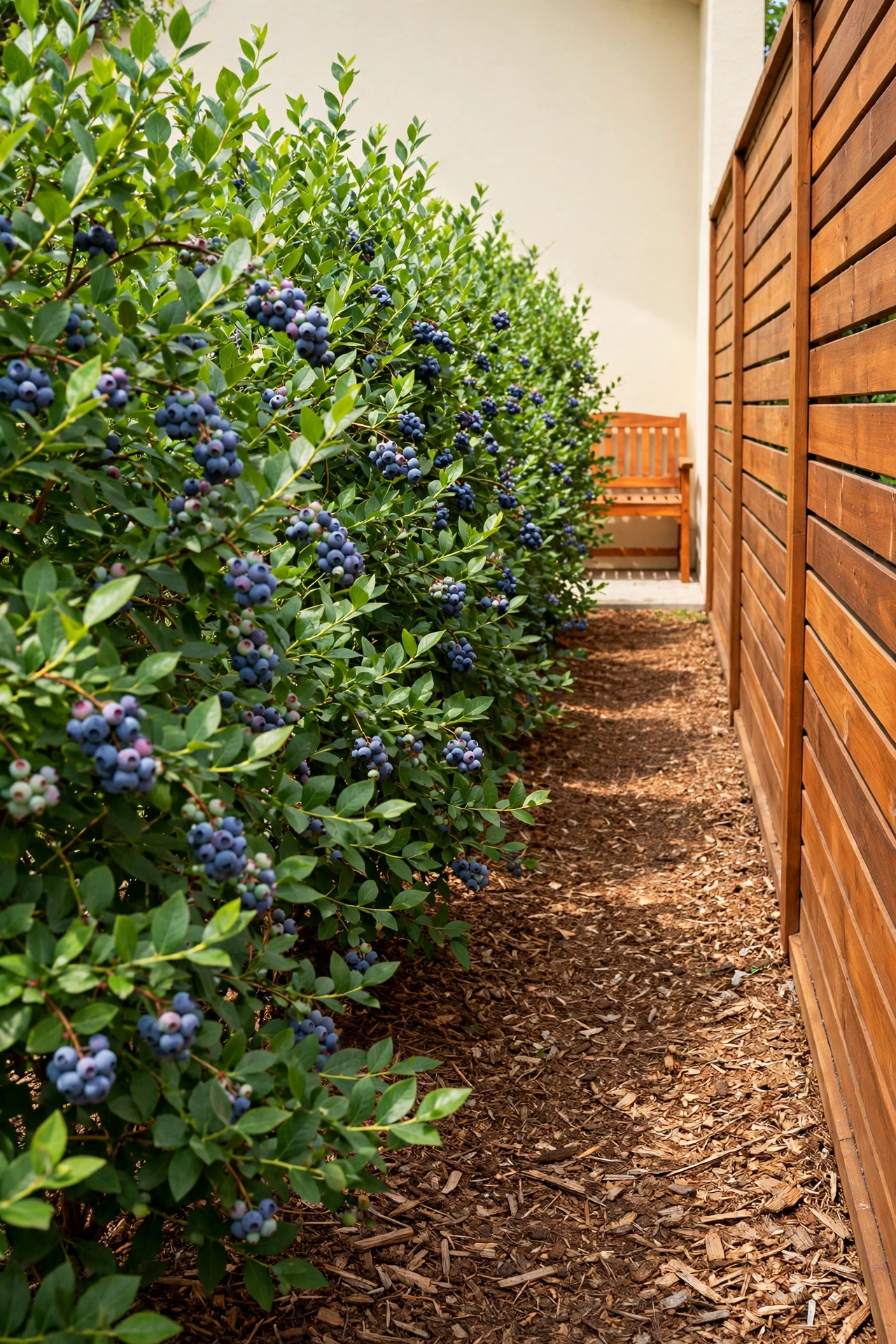
4. Grow a Blueberry Hedge Along the Fence Line
Blueberry bushes make a wonderful living hedge along a fence, with spring blossoms, summer fruit, and fiery autumn leaves all in one row. Plant the bushes three to four feet apart in a straight line a couple of feet out from the fence, and mulch the strip beneath them with pine needles or wood chips. The hedge marks your boundary, feeds your family, and looks lovely in every season.
Blueberries prefer acidic soil, so prepare the planting strip with plenty of compost and a soil test before you plant. Water the row evenly through the first summer, and the bushes will settle in and reward you for decades. A blueberry hedge is a layout that works as hard as it looks good, turning a plain fence line into a fruiting border.
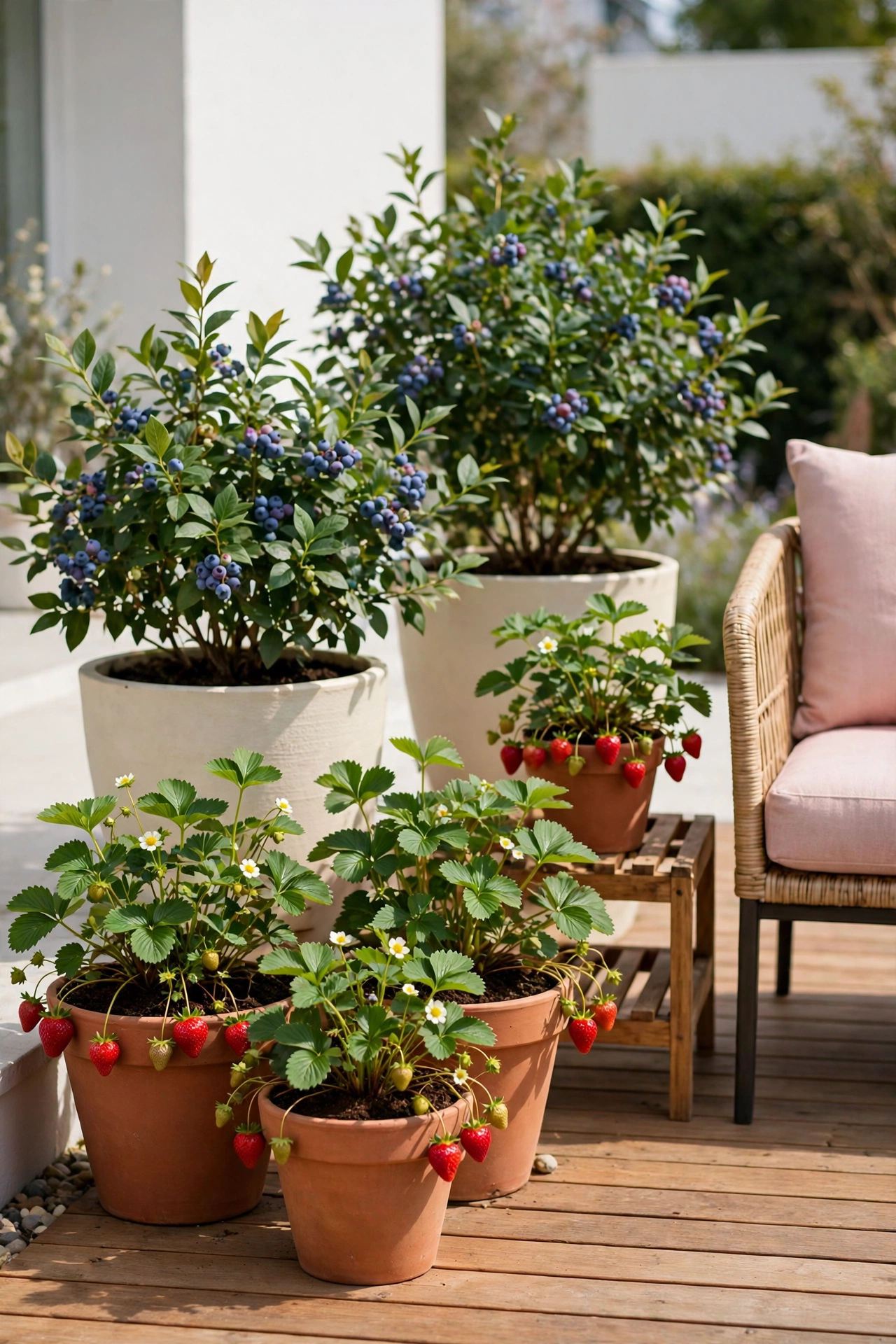
5. Build a Container Berry Garden on the Patio
If you have no garden beds at all, a patio container layout still lets you grow an impressive berry harvest. Strawberries thrive in wide pots and hanging baskets, blueberries do well in large containers of acidic potting mix, and dwarf raspberry varieties can fruit happily in a deep planter. Group the containers by sun needs, with the tallest pots at the back and the lowest at the front.
Choose containers with drainage holes and fill them to the top with fresh potting mix so the roots have room to spread. Water container berries more often than bed-grown plants, since pots dry out faster in summer sun. A patio berry garden brings the harvest right to your door, and you can rearrange the pots whenever you want a fresh look.
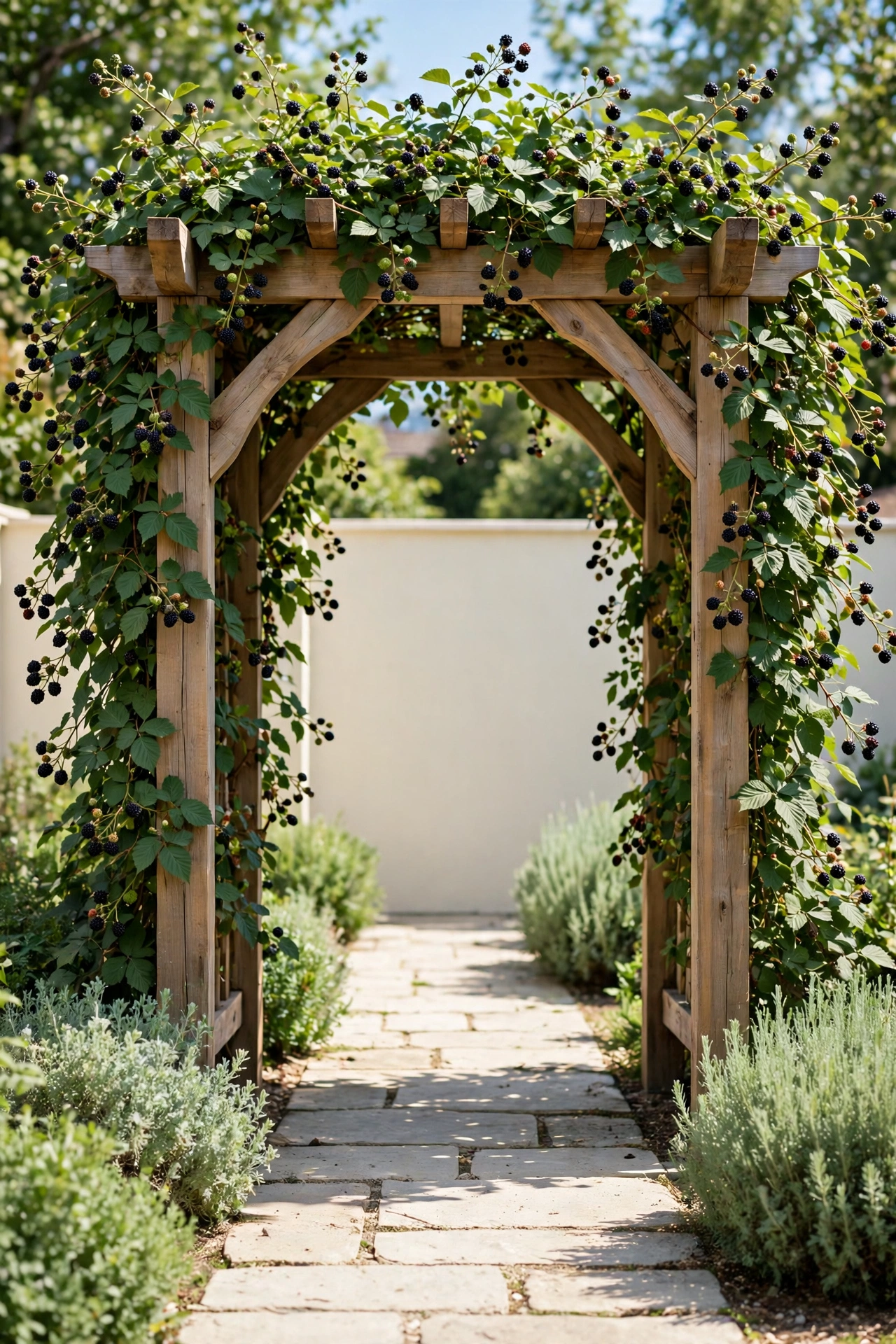
6. Grow Berry Canes Over a Garden Archway
A garden archway covered in berry canes turns a simple path into a magical entrance and a productive growing space at the same time. Set a sturdy wooden or metal arch over the path, plant a thornless blackberry or a vigorous raspberry at each base, and train the canes up and over the top. By midsummer you will walk under a green tunnel hung with fruit.
Keep the path beneath the arch clear and wide enough for a wheelbarrow, and prune the canes each winter so the arch stays strong and shapely. This layout suits the entrance to a vegetable garden or the walk between two garden zones. It is a feature that earns compliments from every visitor and a basket of berries from every crossing.
7. Mix Tall Currants With Strawberries as Ground Cover
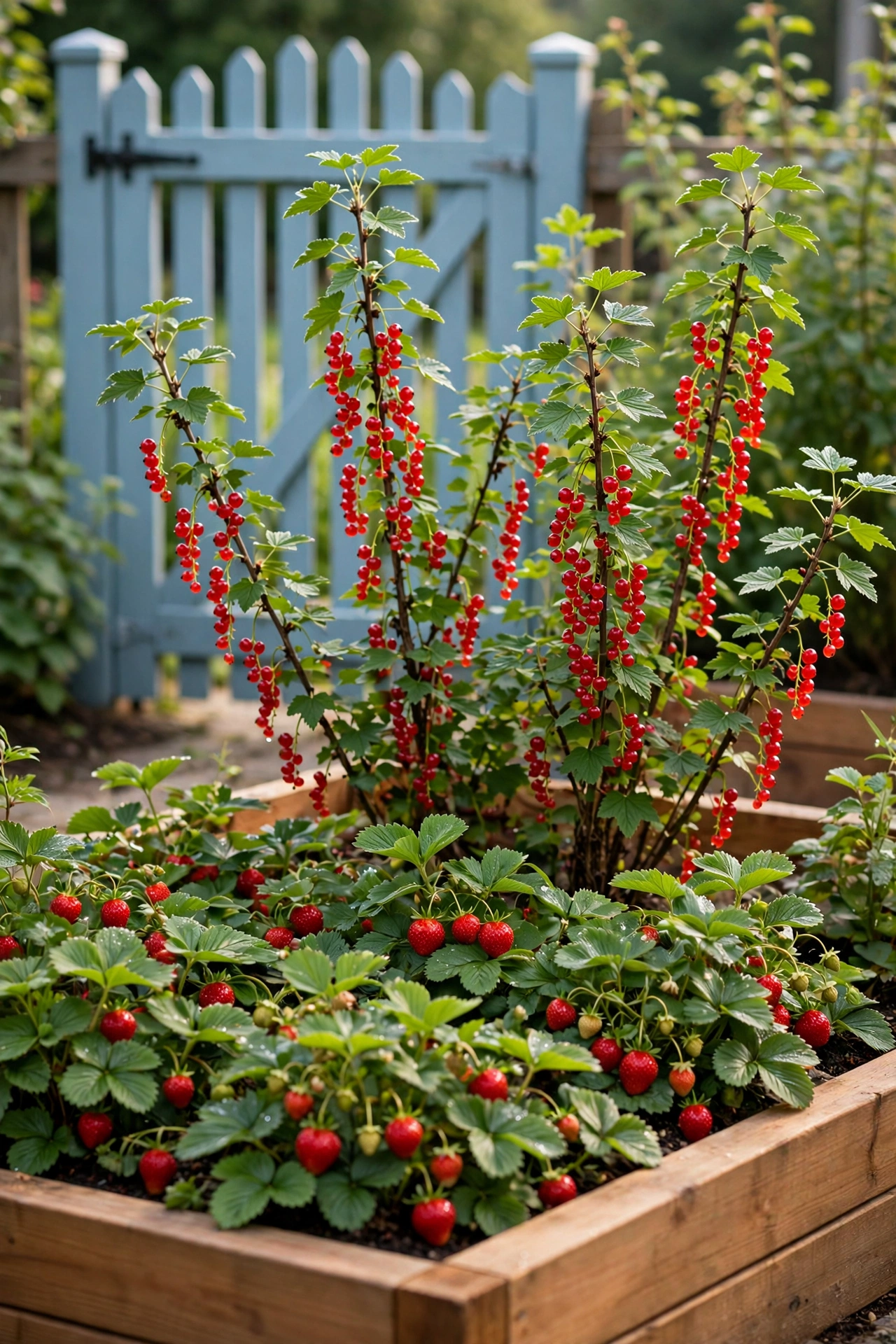
A mixed berry bed layers tall and low plants together so every inch of soil works hard. Plant redcurrant or blackcurrant bushes at the back of the bed, where their upright branches reach three to four feet tall, and fill the ground beneath them with strawberry plants. The strawberries act as a living mulch, shading the soil, holding in moisture, and producing a second harvest from the same bed.
This layered layout mimics how berries grow in nature, with taller shrubs sheltering the low fruiting plants below. Leave a narrow access path along one side so you can reach the currants for picking and pruning. A mixed bed is a smart choice for small gardens because it doubles your fruit without doubling your footprint.
8. Plant Berry Rows Between Orchard Trees
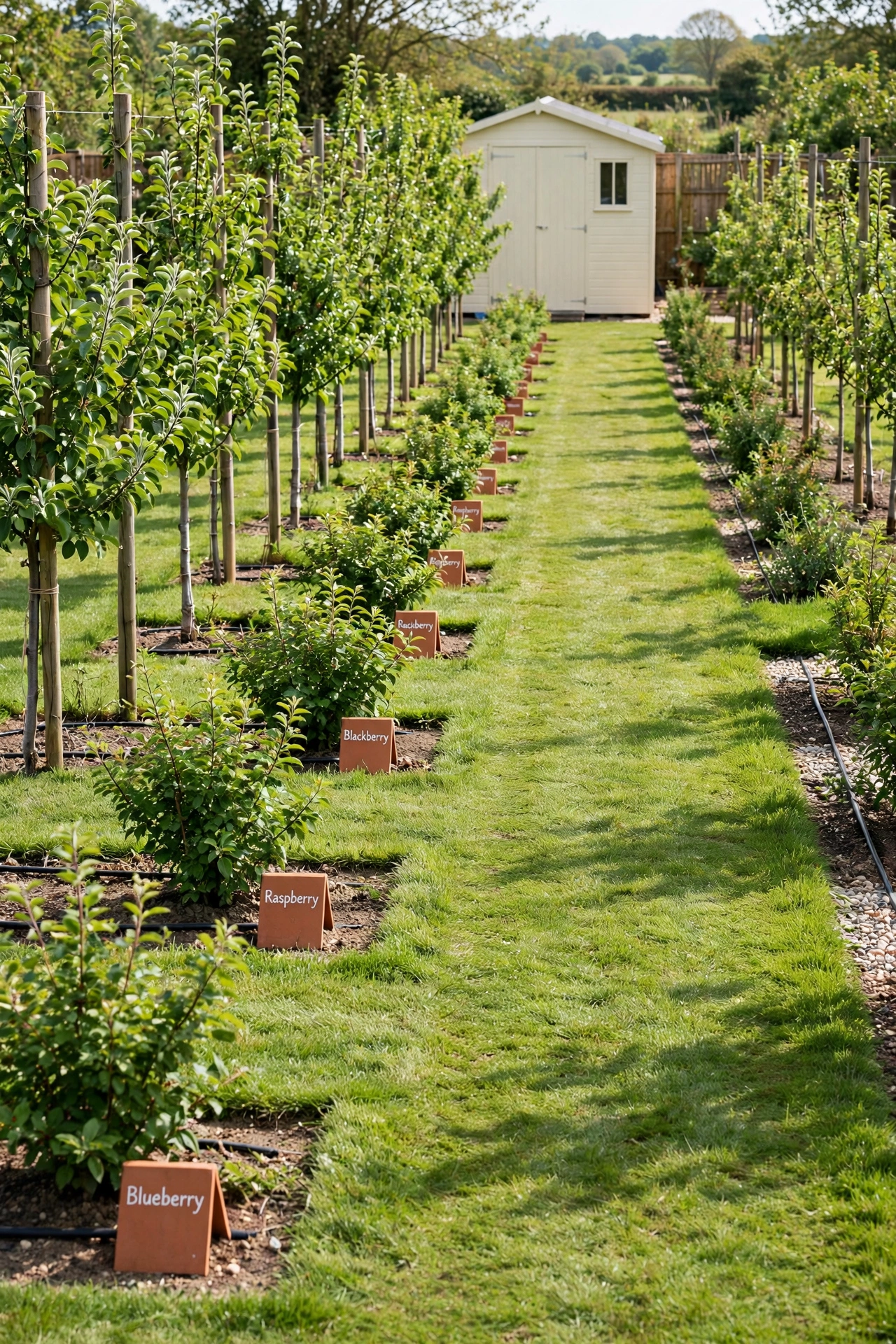
If you already grow fruit trees, the sunny gaps between them are perfect for rows of berry bushes. Strawberries, currants, and gooseberries all tolerate a little shade from young trees, and they fill the space that would otherwise grow weeds. Plant the berry rows at least three feet from each tree trunk so the roots do not compete for water and food.
This interplanted layout turns an orchard into a layered food garden where fruit ripens at different heights through the season. Keep the rows straight and the paths mown so the whole area stays neat and easy to walk through. If you are planning the tree spacing as well, these backyard orchard layout ideas will help you fit trees and berry rows together in one harmonious plan.
9. Shape a Circular Berry Garden Around a Birdbath
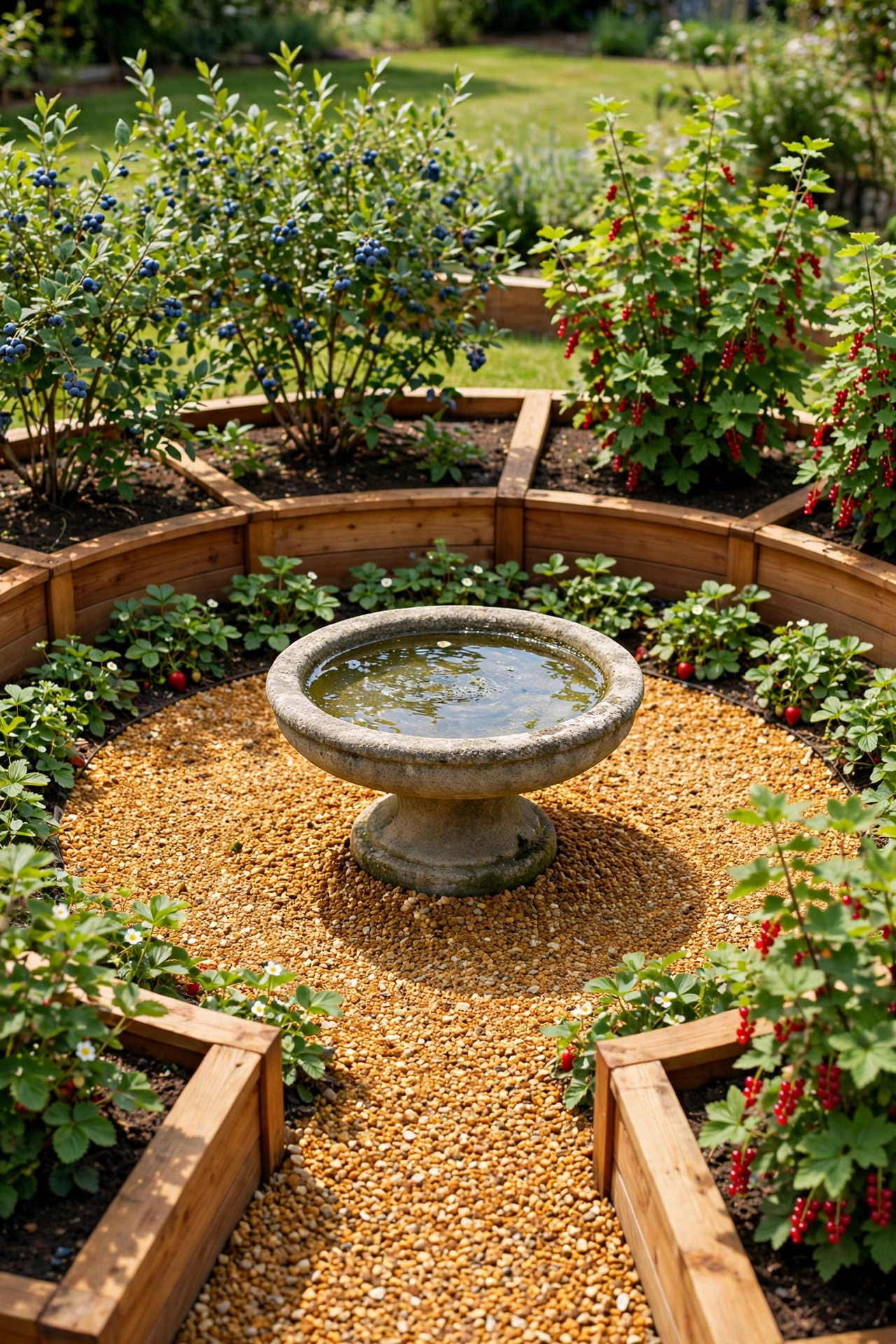
A circular berry garden with a birdbath at its center is a layout that is as pretty as it is productive. Arrange curved beds in a ring around the center, planting blueberries and currants in the outer ring and strawberries along the inner edge. The circle creates a natural gathering spot in the garden, and the birdbath invites birds that help keep insect pests in check.
Build the beds with curved edging or flexible landscape borders, and leave one clear entrance gap in the ring for easy access. A circular layout suits a front yard or a visible corner of the backyard where the garden doubles as a landscape feature. It is proof that a fruit garden can be the prettiest part of your whole yard.
10. Separate Berry Beds With Wide Gravel Paths
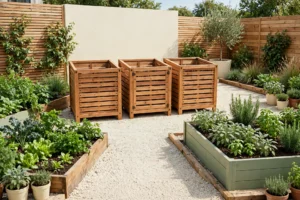
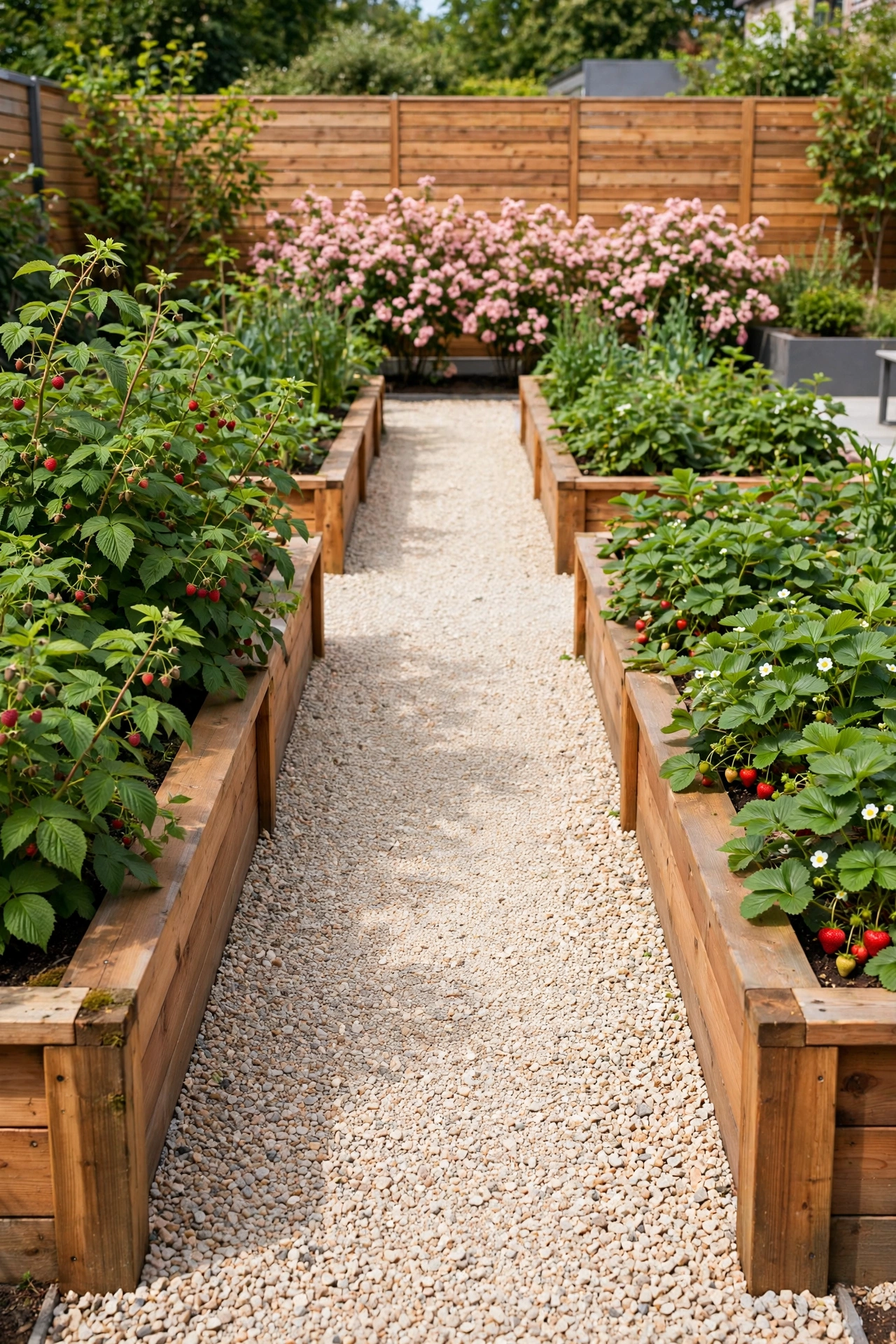
Wide gravel paths between berry beds keep the garden clean, dry, and easy to use in all weather. Lay landscape fabric under a three-inch layer of pea gravel, and edge each path with timber boards or stone to hold the gravel in place. The pale gravel reflects light up into the plants, and the paths stay firm and mud-free after rain.
Make the main paths wide enough for a wheelbarrow and the side paths wide enough to kneel beside a bed. Gravel paths also discourage slugs and snails, which prefer damp soil to dry stone. For path materials and patterns that suit every garden style, these garden pathway ideas will help you choose a surface that looks good and lasts for years.
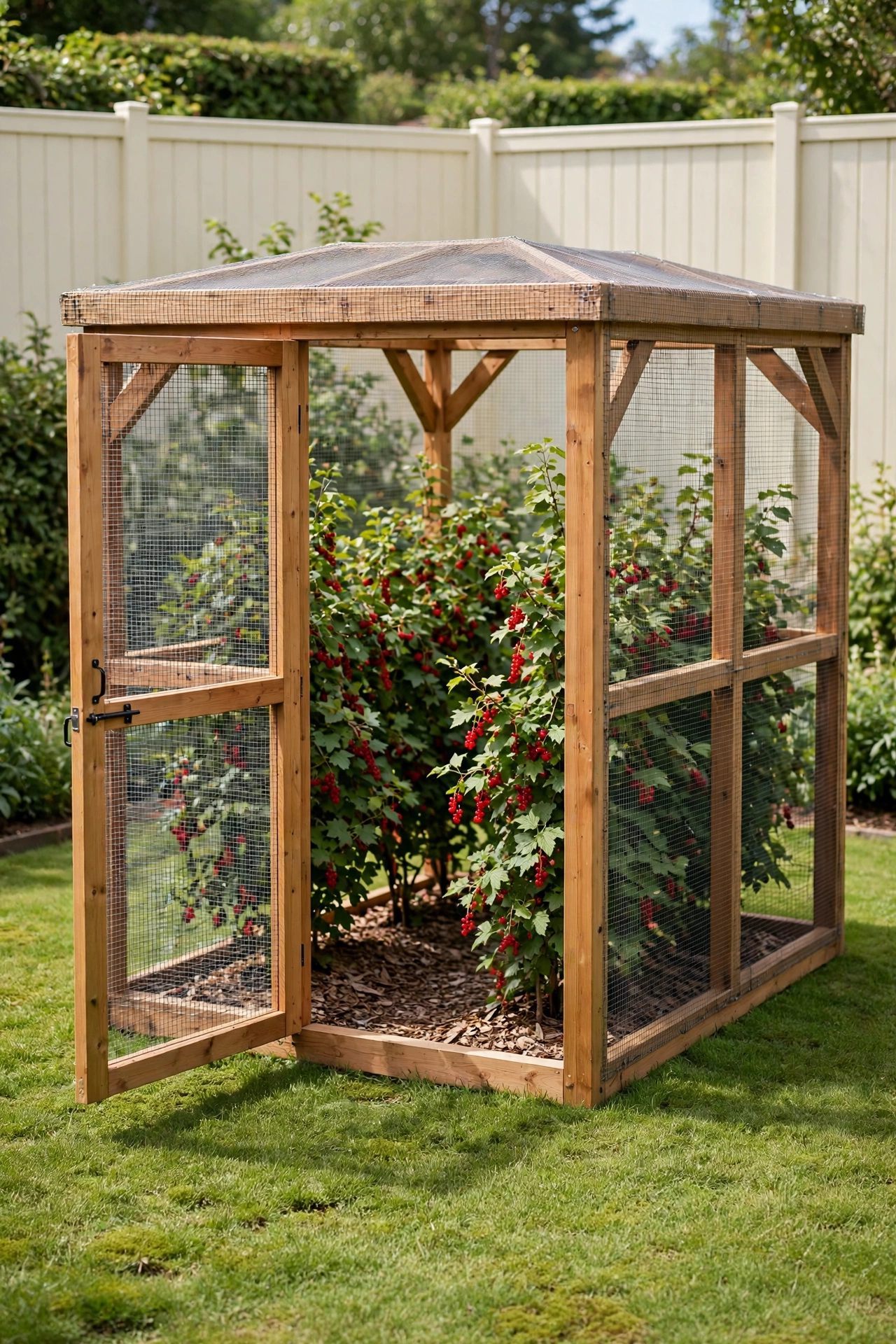
11. Protect the Harvest With a Walk-In Fruit Cage
Birds love ripe berries as much as you do, so a walk-in fruit cage is the layout for gardeners who want to keep the whole harvest. Build a simple timber or metal frame over one or two beds, cover it with fine mesh netting, and add a door tall enough to walk through with a basket. The cage keeps birds out while letting sun, rain, and pollinators in.
Place the cage where it gets full sun all day, and keep the netting taut so birds cannot reach through it to the fruit. A fruit cage also protects the harvest from strong wind and heavy rain, which can knock ripe berries to the ground. It is the most reliable layout for a serious berry harvest, and it pays for itself in fruit saved every single season.
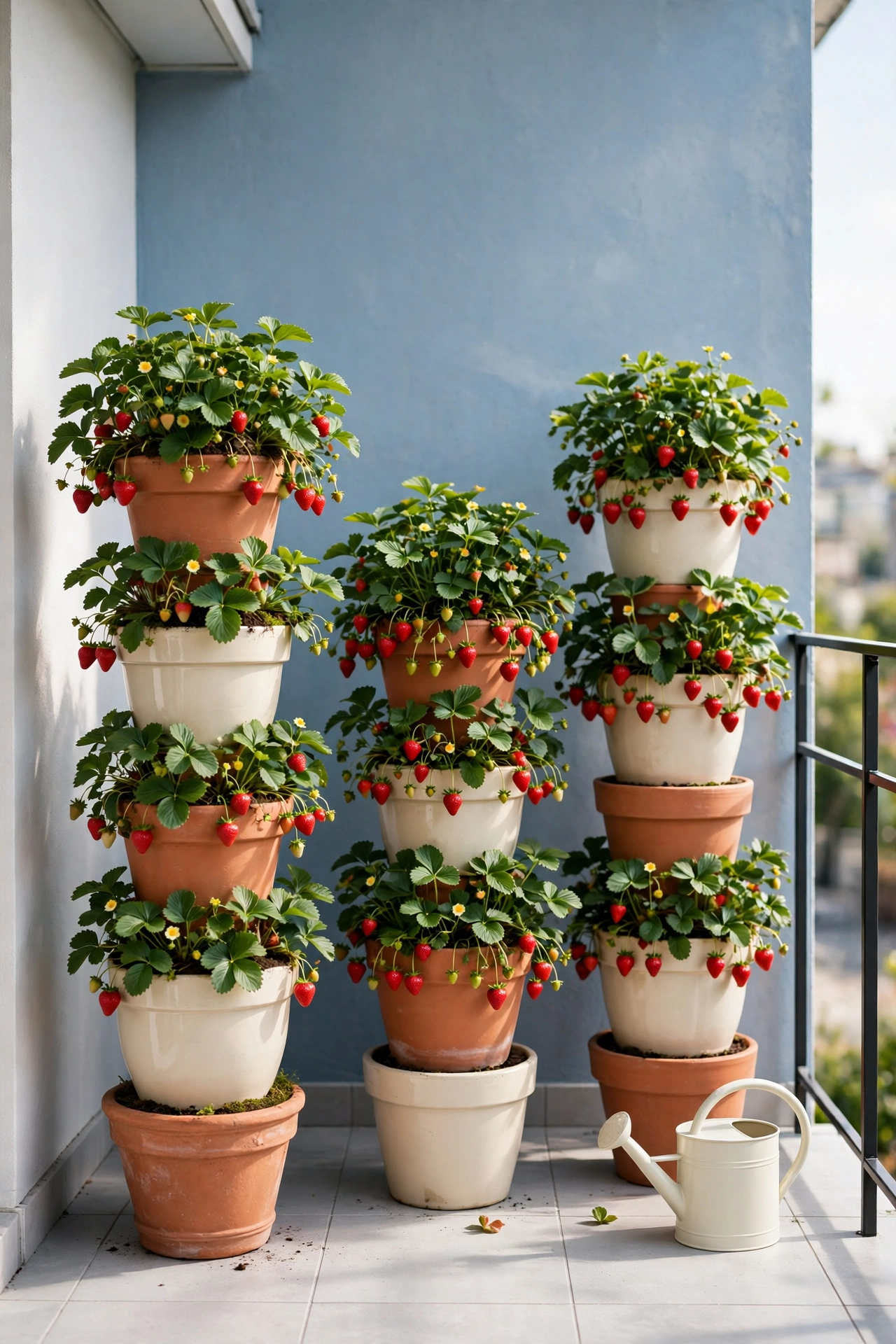
12. Stack Berry Towers for a Tiny Yard
When ground space is scarce, berry towers grow your harvest upward instead of outward. Stacked planters, tiered strawberry towers, and wall-mounted pocket planters can hold dozens of strawberry plants in a single square foot of ground. Place the towers against a sunny wall or fence, with the tallest tiers at the back so no plant shades the one below it.
Water towers from the top so moisture trickles down through every level, and rotate the towers every few weeks so all sides get equal sun. This vertical layout is ideal for balconies, patios, and narrow side yards where a traditional bed will not fit. If vertical growing appeals to you, these vertical garden ideas show more ways to turn a blank wall into a productive green feature.
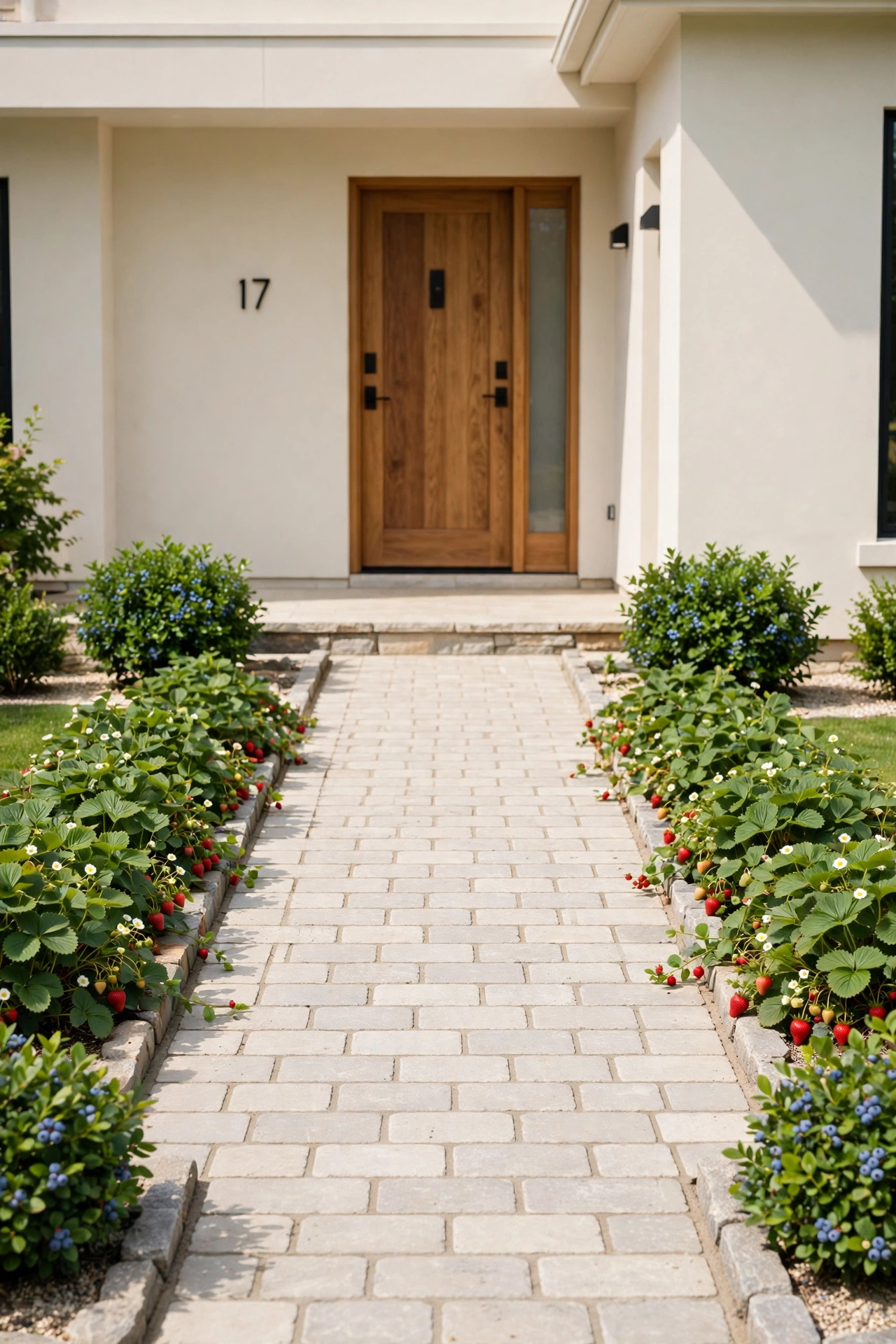
13. Line the Front Walk With a Low Berry Border
A low berry border along the front walk turns an everyday path into a garden feature that feeds you. Plant alpine strawberries or low-growing strawberry varieties along both edges of the path, with small blueberry shrubs at the corners where there is room for a taller plant. The border stays tidy at ankle height, and the berries are right at hand every time you come and go.
Edge the border with low stone or timber so soil and mulch stay off the path, and keep the plants trimmed back from the walkway so the path stays clear. A front walk berry border is a friendly, generous layout that shares the beauty of your garden with the whole street while keeping the harvest steps from your door.
Conclusion
A berry garden does not need to be large to be generous. Whether you arrange raised beds in neat rows, train canes over an archway, or stack towers on a tiny balcony, the right layout turns a sunny patch of ground into seasons of fresh fruit. The best layout is the one that fits your space, your sun, and the berries your family loves most.
Start with the layout that suits the spot you already have, prepare the soil well, and plant one or two berry types this season. Your garden will grow more generous every year, and each summer will bring a bigger harvest than the last. Few garden projects reward you as sweetly, or as reliably, as a berry patch planned with care.
Frequently Asked Questions About Berry Garden Layout Ideas for Homegrown Fruit
How much sun does a berry garden need?
Most berries need at least six hours of direct sun each day to fruit well. Strawberries, raspberries, and blueberries all produce the sweetest fruit in full sun. A little afternoon shade is fine in very hot climates, but deep shade will give you leaves and very few berries.
How far apart should berry plants be spaced?
Strawberries need about twelve inches between plants, blueberries need three to four feet, and raspberry canes need about two feet apart within a row with four feet between rows. Good spacing lets air flow through the plants, which keeps disease away and makes picking far easier.
Can I grow berries in containers on a balcony?
Yes, strawberries, blueberries, and dwarf raspberries all grow well in containers. Use pots at least twelve inches deep with drainage holes, fill them with fresh potting mix, and water often since containers dry out quickly. A sunny balcony can produce a surprising amount of fruit.
How do I keep birds from eating my berries?
Fine mesh netting over the plants is the most reliable protection. Drape it loosely over a frame so birds cannot reach the fruit through the mesh, and secure the edges at ground level. A walk-in fruit cage is the best long-term solution for a serious berry garden.
When is the best time to plant a berry garden?
Early spring is the best time to plant most berries, once the soil can be worked and frost danger has passed. Bare-root canes and bushes establish fastest when planted while they are still dormant. Container-grown plants can go in any time during the growing season if you water them well.

Hi, I’m Emily! I turn messy corners into cozy, organized spots. DreamNestDecor is where I share simple, practical home ideas — decor, organization, and small-space solutions that work in real life, not just in photos. Every idea here is carefully researched before it’s shared.