1. Start With a Classic Horizontal Cordon
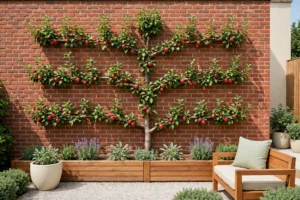
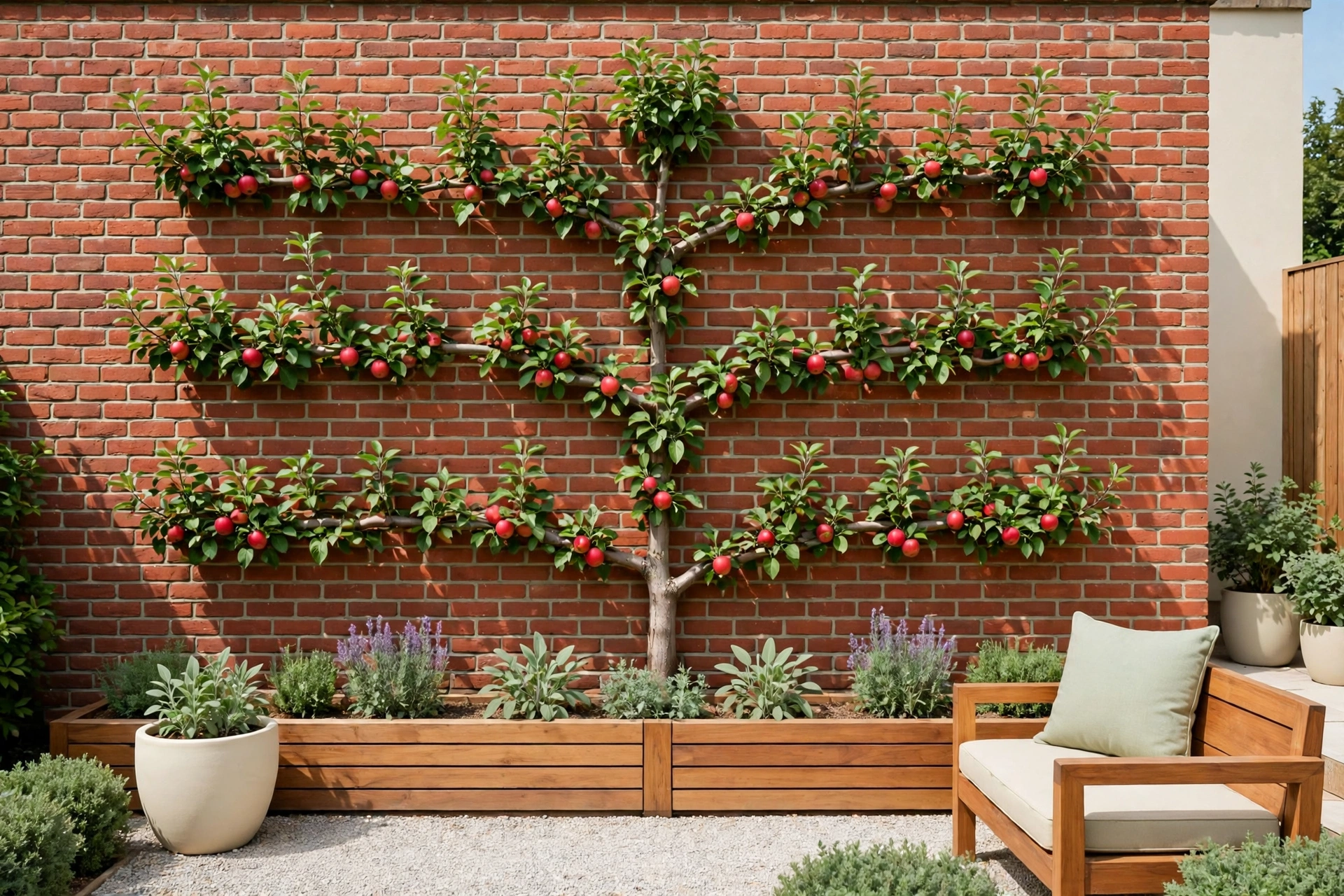
The horizontal cordon is the simplest espalier form and the best place for a beginner to start. One main trunk grows straight up, and two side branches are trained left and right along a horizontal wire. The result looks clean and formal, and it fits neatly on almost any sunny wall.Choose a young one year old tree, called a maiden whip, and plant it about six inches away from the wall. Tie the trunk to a vertical cane and bend the two lowest side shoots along the first wire when they are still soft and flexible. With one careful season of tying and pruning, the basic shape is set for years to come.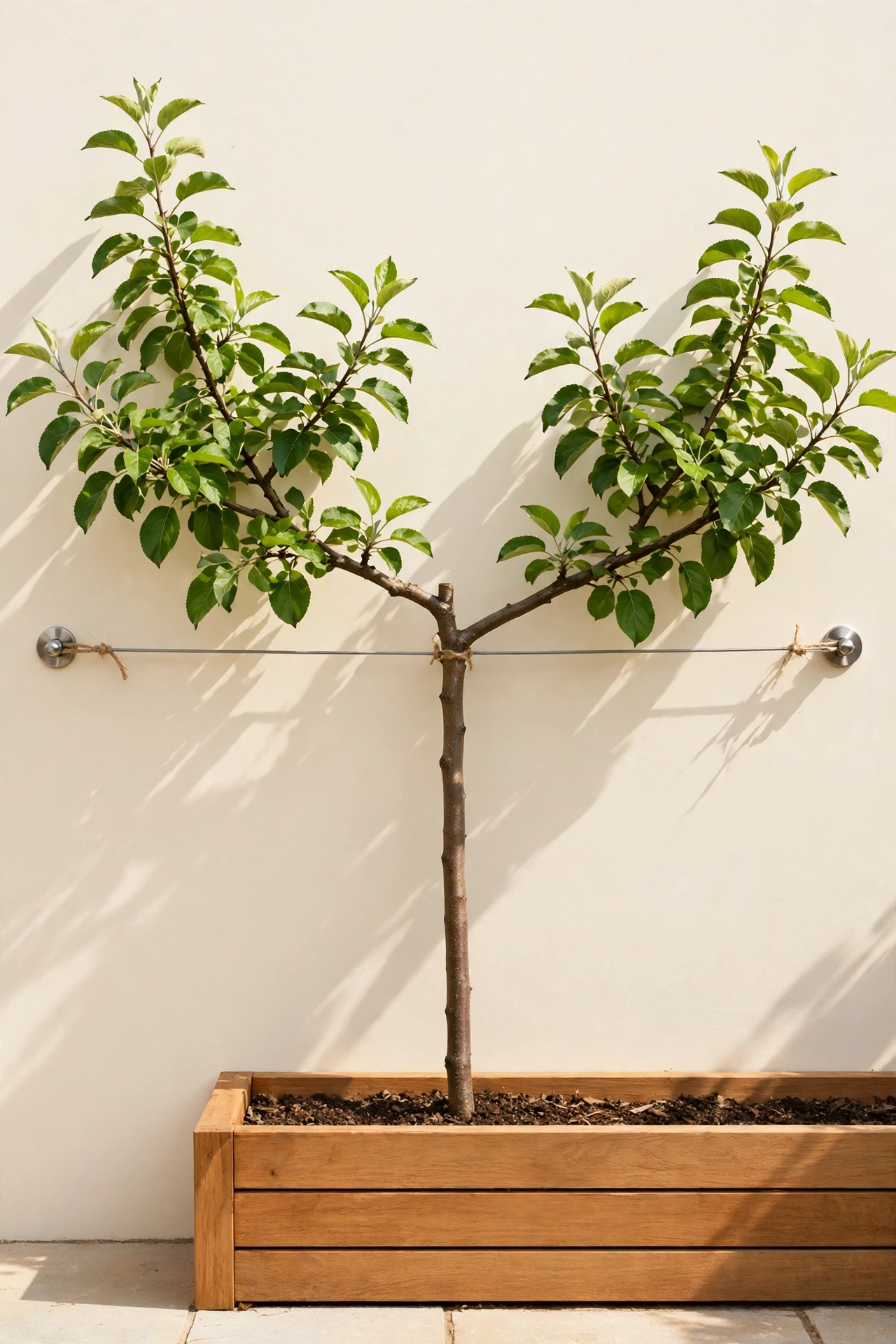
2. Shape a Three-Tier Cordon on a Brick Wall
A three-tier cordon builds on the classic form by adding two more pairs of horizontal branches above the first. The tiers sit about eighteen inches apart, which gives each level its own band of leaves and fruit. Against warm brick, the layered pattern looks striking from across the garden.Let the central leader grow upward and select a new pair of side shoots at each wire level as it reaches them. Remove any shoots that grow straight out from the wall so the shape stays flat. After three or four years, the wall holds a full framework that fruits generously every summer.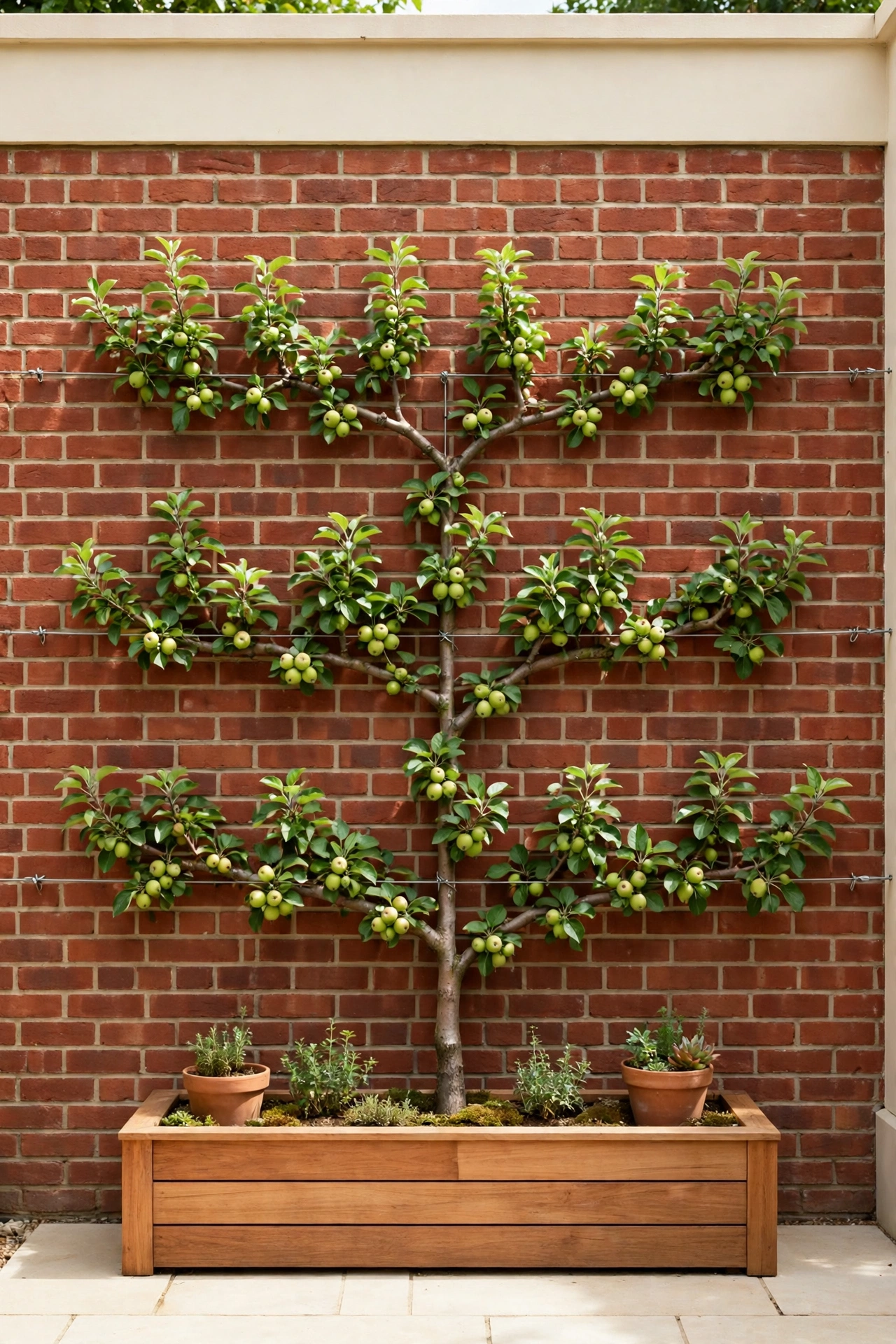
3. Fan Train a Peach Against a Sunny Wall
Fan training suits stone fruit such as peaches and plums, which fruit on young wood and need plenty of light. The branches spread out from a short trunk like the ribs of a fan, covering the wall with an even layer of growth. A sunny south facing wall gives peaches the extra warmth they love.Start with a young tree and select six to eight strong branches that radiate outward at even angles. Tie each branch to the wires as it grows and shorten any branch that races ahead of the rest. The open fan shape lets sunlight reach every peach, so the fruit colors well and ripens evenly.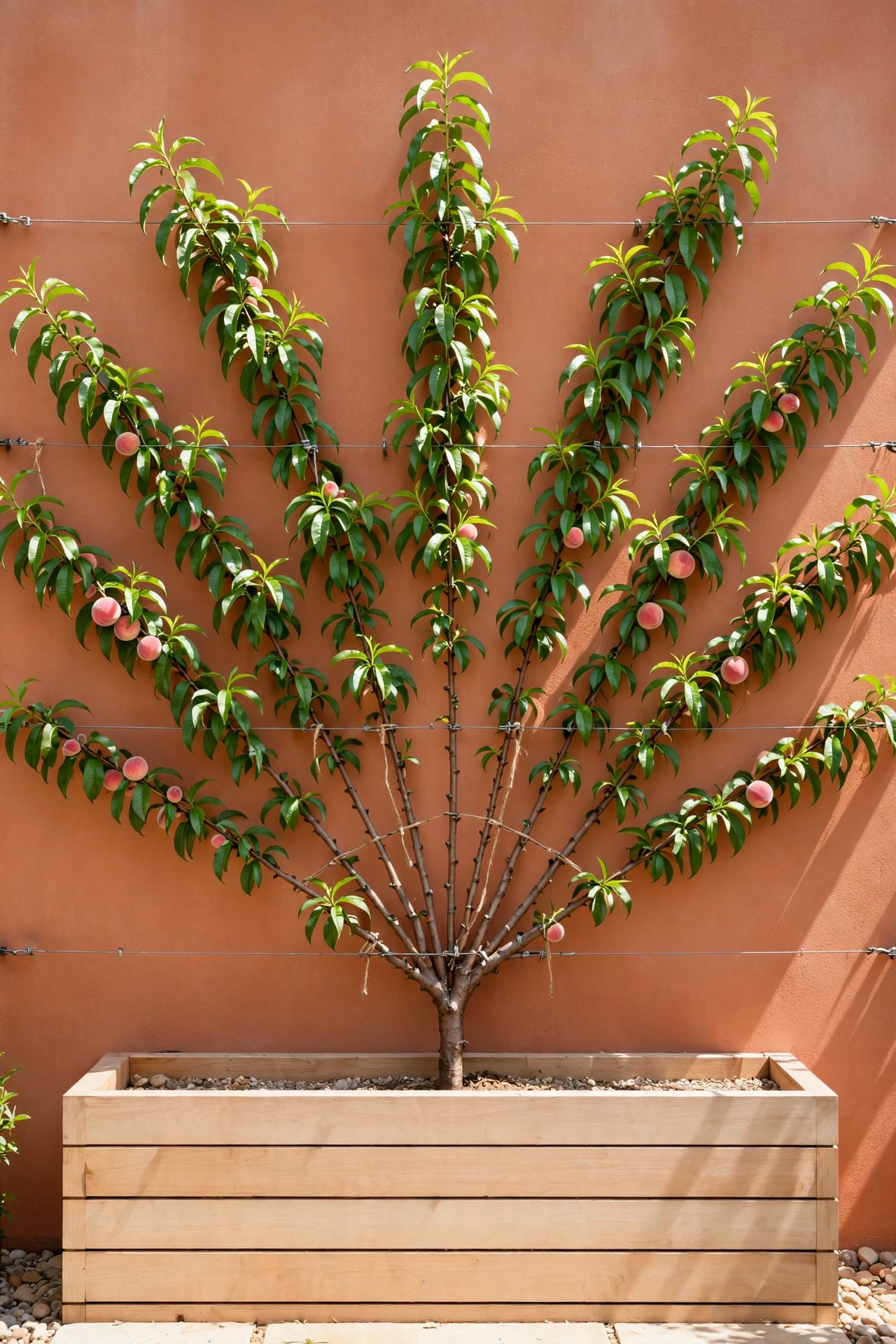
4. Weave a Belgian Fence From Young Apple Whips
A Belgian fence turns a row of young apple trees into a living diamond lattice. Each tree is planted at an angle and trained diagonally, so the trunks cross each other and form a crisscross pattern. Where two trunks meet, they can be tied together and may even grow into one another over time.Plant the whips about two feet apart and lean each one at a forty five degree angle, alternating the direction of lean. Tie the crossing points firmly with soft twine and prune away any side shoots that break the clean diagonal lines. The result is a beautiful woven screen that produces apples along every diagonal stem.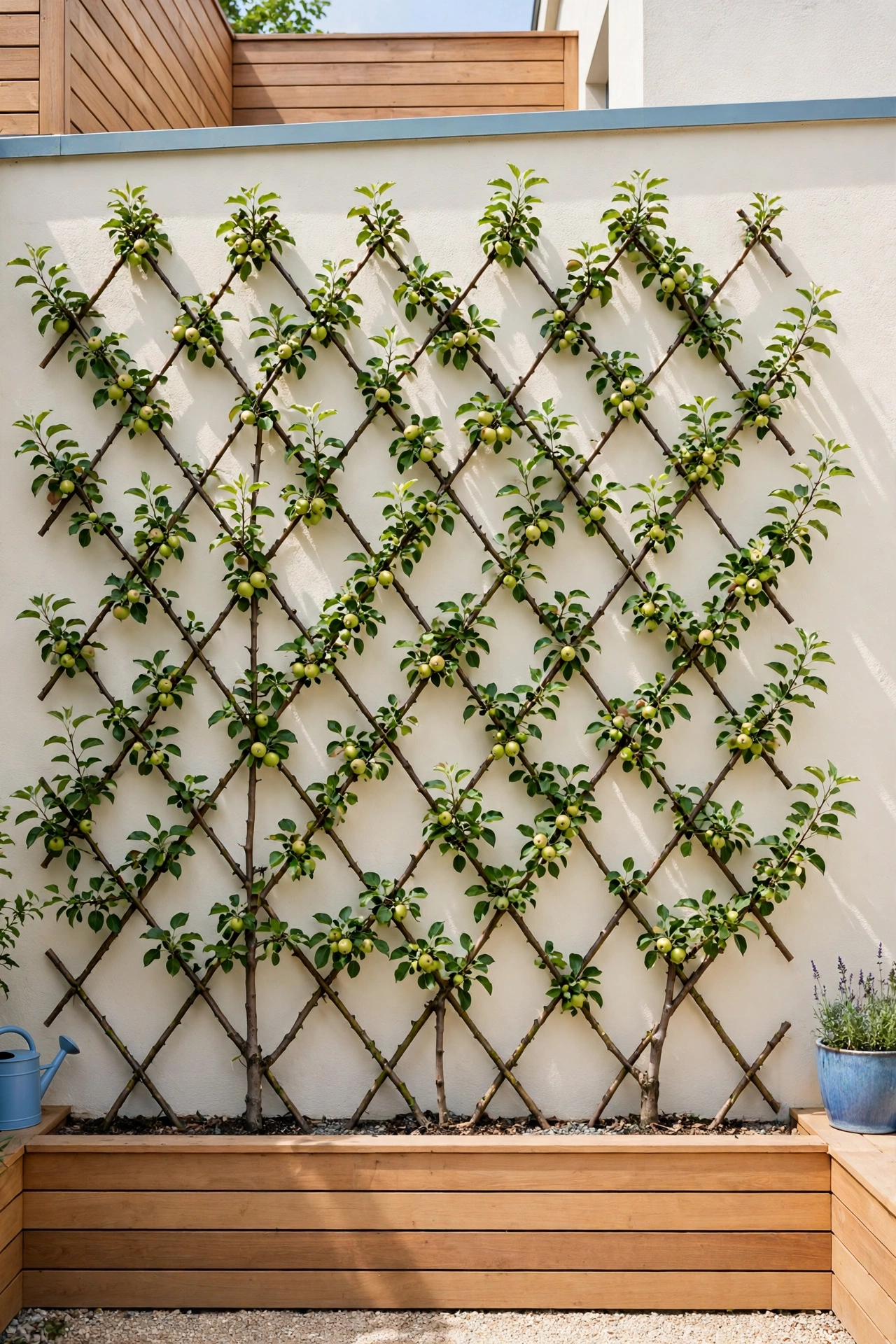
5. Build a Candelabra With Upright Arms
The candelabra form begins like a horizontal cordon, then sends several vertical arms upward from the horizontal branch. The finished shape looks like a candelabra with three or five upright stems, each one fruiting along its length. It is a formal and eye catching pattern for a tall wall.Train the first horizontal tier as usual, then select evenly spaced shoots along it and tie them upright to vertical canes. Keep the arms the same height by pruning the strongest ones a little harder in summer. A candelabra needs a tall wall, so it suits the side of a house or a high garden wall best.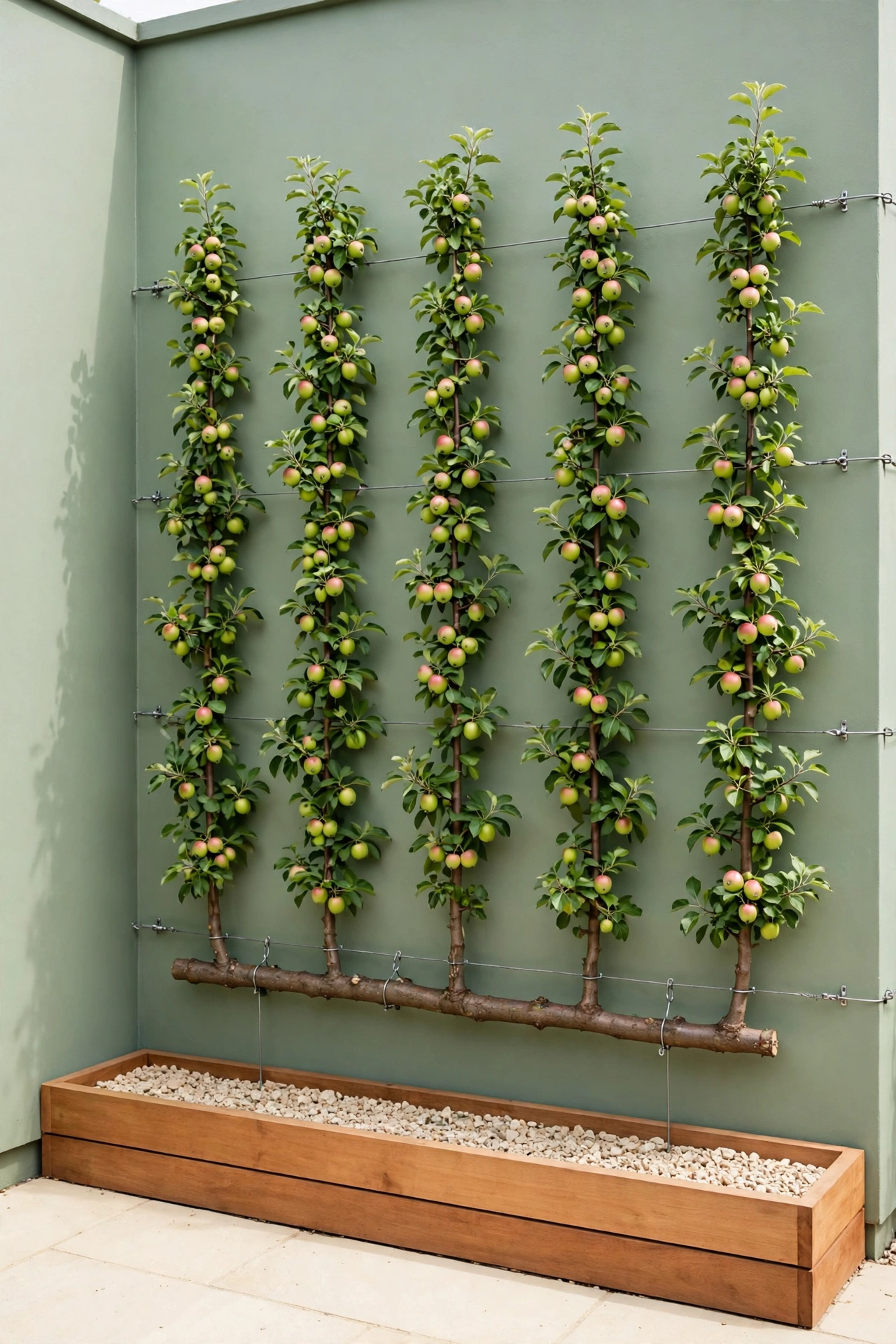
6. Grow a Palmette Verrier on a Garden Wall
The palmette verrier is one of the most elegant espalier forms, with branches that rise at an angle and then turn vertical at the ends. The shape resembles a hand with fingers spread upward, and it has been a favorite in French gardens for centuries. It needs patience, but the result is worth the wait.Build the form tier by tier, guiding each pair of branches outward at about forty five degrees before turning the tips upward. Use canes to hold the angled sections in place until the wood stiffens. A palmette verrier works best with apples and pears on a wall that gets sun for most of the day.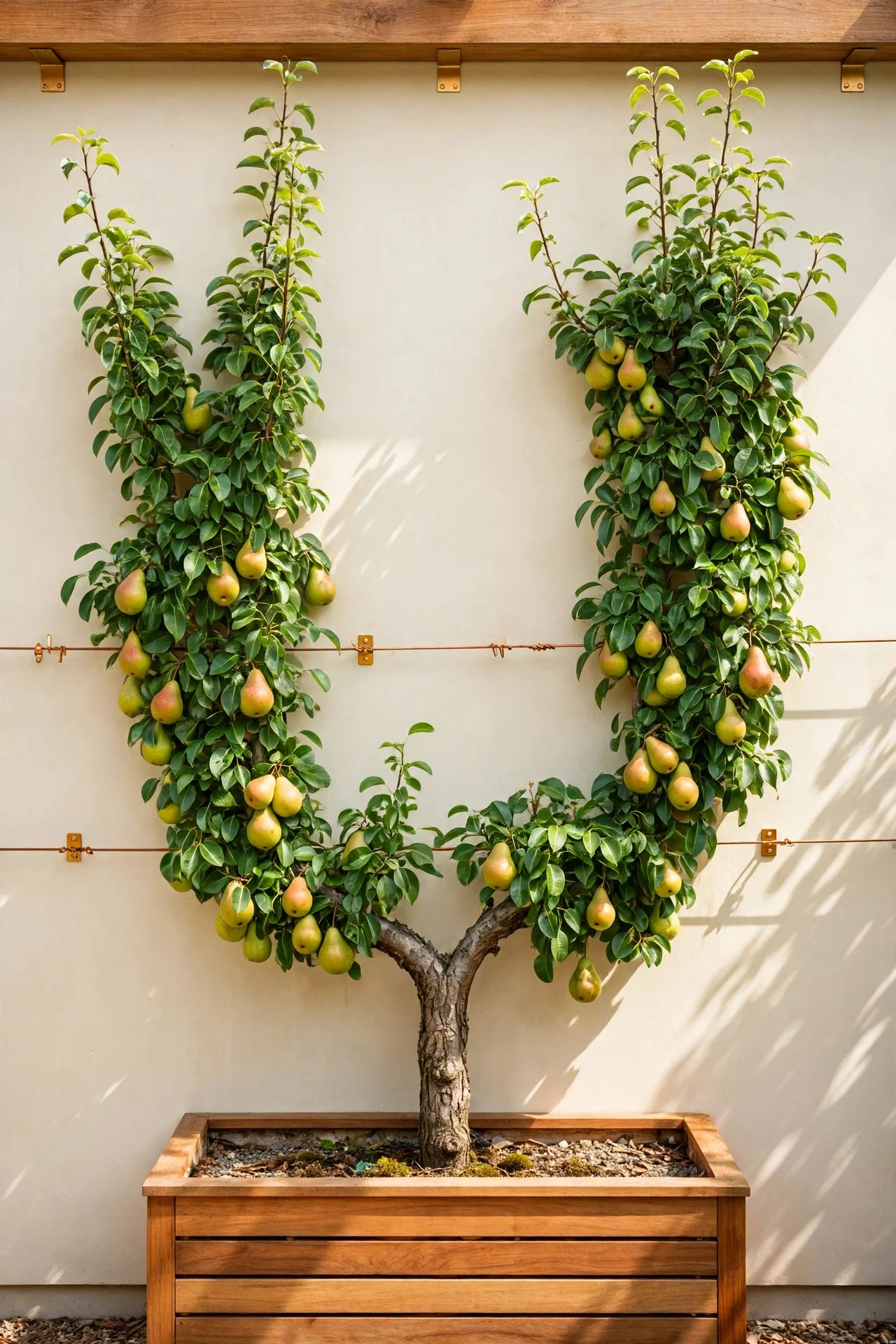
7. Keep Fruit Low With a Stepover Cordon
A stepover cordon is a single horizontal branch trained just above knee height, low enough to step over. It makes a charming living edge along a path, and the low fruit is easy for children to reach and pick. Several stepovers planted in a row form a neat fruiting border.Plant the trees about eight feet apart and train the trunk horizontally along a low wire or a short post and rail frame. Prune the upright shoots back hard each summer so the cordon stays at one low level. Apples on dwarfing rootstocks are the easiest choice for a stepover, since they stay compact by nature.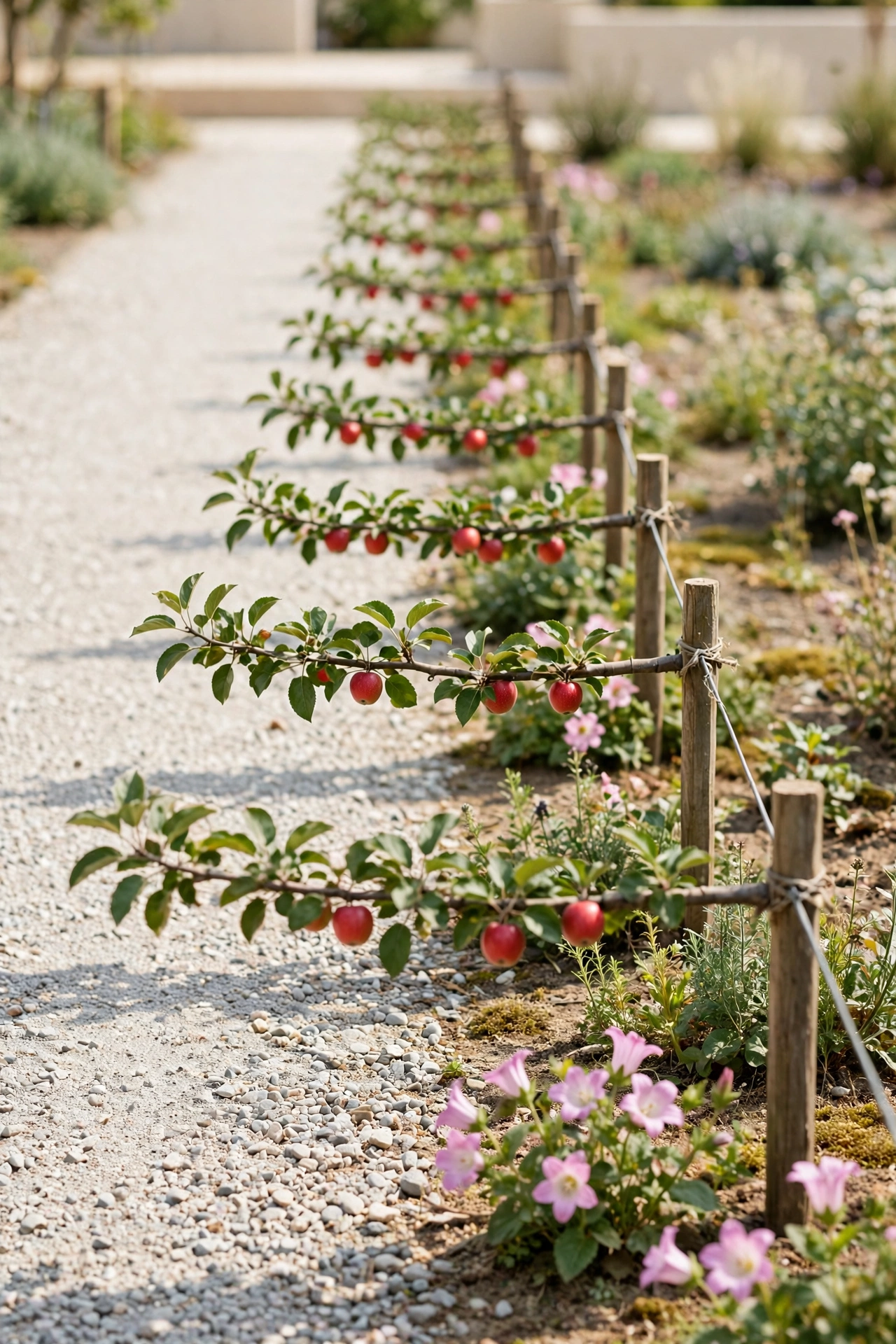
8. Frame a Gateway Arch With Two Trained Trees
Two espalier trees can be trained up and over a gateway to form a living arch. Each tree grows up one side of the opening and the leaders meet and join across the top. Walking under a fruiting arch in late summer, with apples hanging overhead, is a small garden joy.Fix a sturdy wooden or metal arch over the gateway first, then plant one young tree on each side. Tie the leaders to the arch as they grow and select side branches to fill the upright sections. For a frame that suits the arch shape, these garden arbor ideas show sturdy structures that can carry the weight of a trained tree. Keep the top growth pruned so the arch stays balanced and does not shade itself out.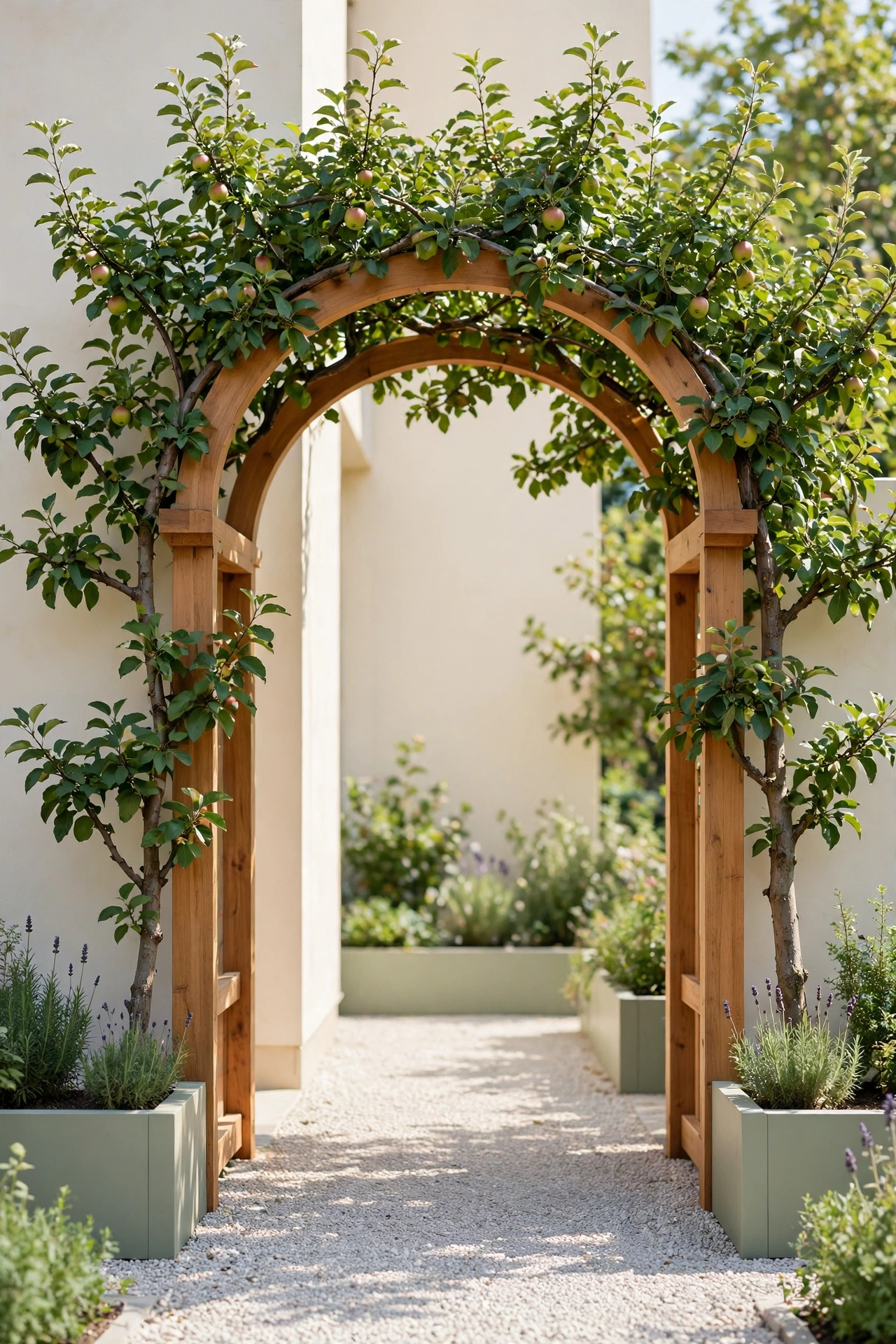
9. Train an Espalier Screen Along a Fence Line
A row of espalier trees trained flat against a fence creates a living screen that is far more interesting than bare boards. The trained branches cover the fence with leaves in spring and summer, and the fruit adds color as the season goes on. It is a smart way to make a boundary fence work harder.Fix horizontal wires to the fence at eighteen inch intervals and plant one tree every eight to ten feet. Train each tree as a cordon or a fan, depending on the variety, and keep the growth tied flat so the screen stays slim. A well built fence makes the whole project easier, and these backyard privacy fence ideas show fence styles that give trained trees a strong and attractive backing.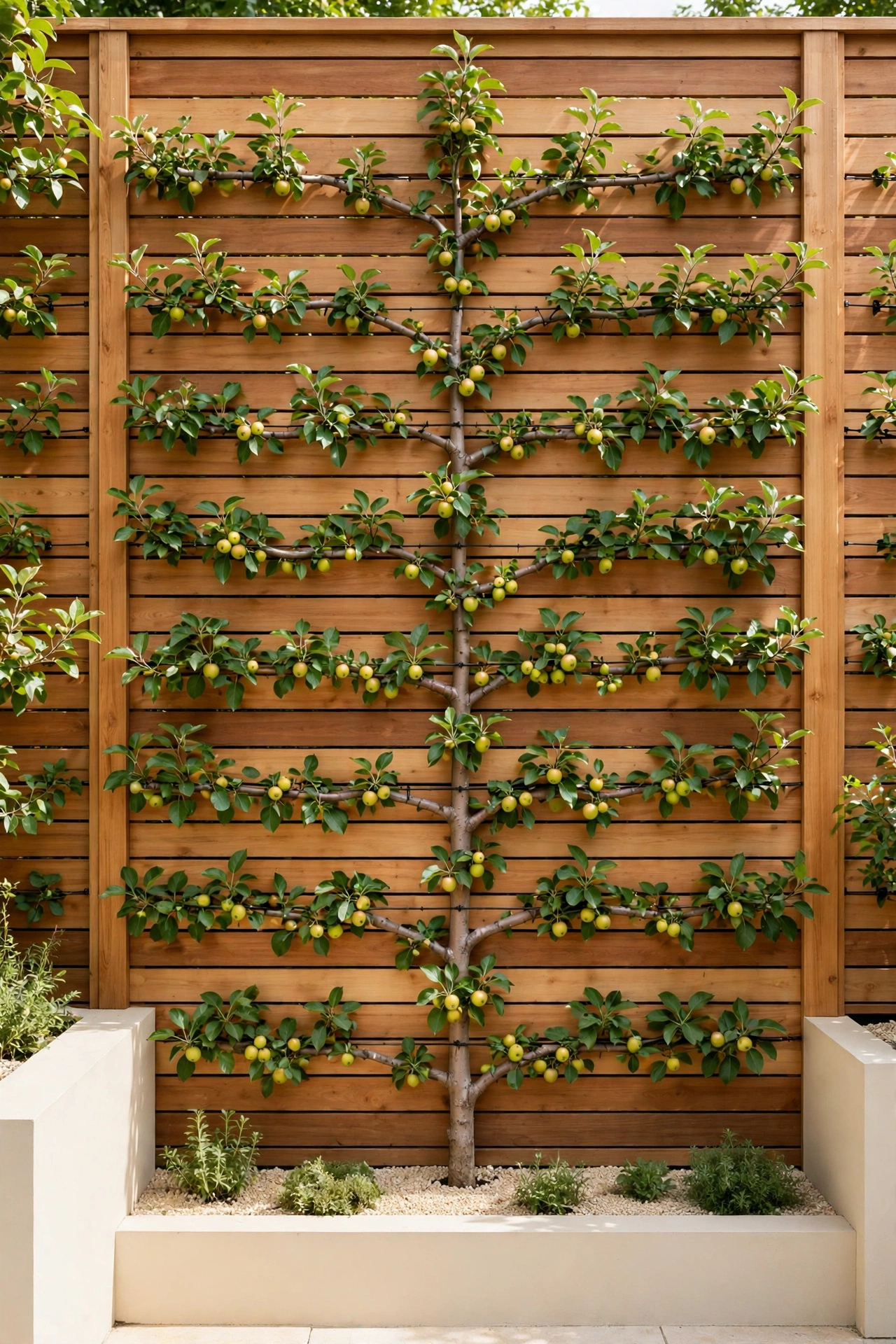
10. Use a Freestanding Wire Frame in Open Ground
When no wall is available, a freestanding frame of posts and wires gives you a place to train espalier trees in open ground. The frame stands on its own, so you can place it in the sunniest part of the garden and walk around both sides for pruning and picking. It also works well as a divider between two garden areas.Set two sturdy end posts in concrete and string three or four wires between them at even heights. Plant the trees along the wire line and train them as cordons or fans, just as you would on a wall. Growing upward on a frame is a form of vertical gardening, and these vertical garden ideas show how upward growing plants can transform even the smallest outdoor space.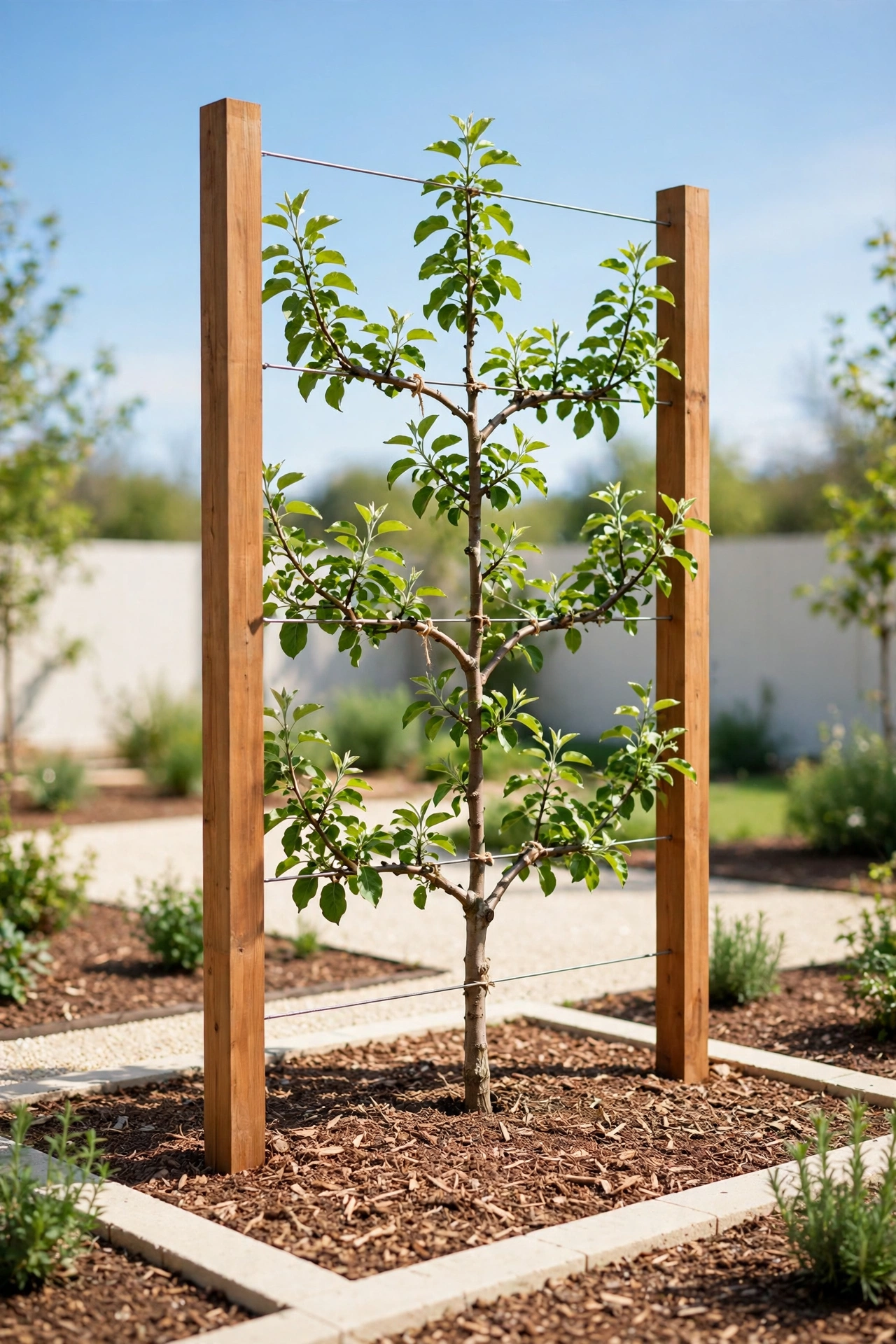
11. Choose Spur-Bearing Apple Varieties for Walls
Spur-bearing apples are the natural choice for espalier because they fruit on short spurs along older wood. Once the trained framework is in place, the spurs form along every horizontal branch and produce fruit year after year. Tip-bearing varieties fruit at the ends of young shoots and are much harder to keep in a flat shape.Ask your nursery for spur-bearing varieties that suit your climate and taste, and choose a dwarfing or semi-dwarfing rootstock so the tree stays in scale with the wall. Good pruning keeps the spurs productive, and a wall-trained spur bearer can fruit heavily for twenty years or more. The variety choice you make at planting time shapes every season that follows.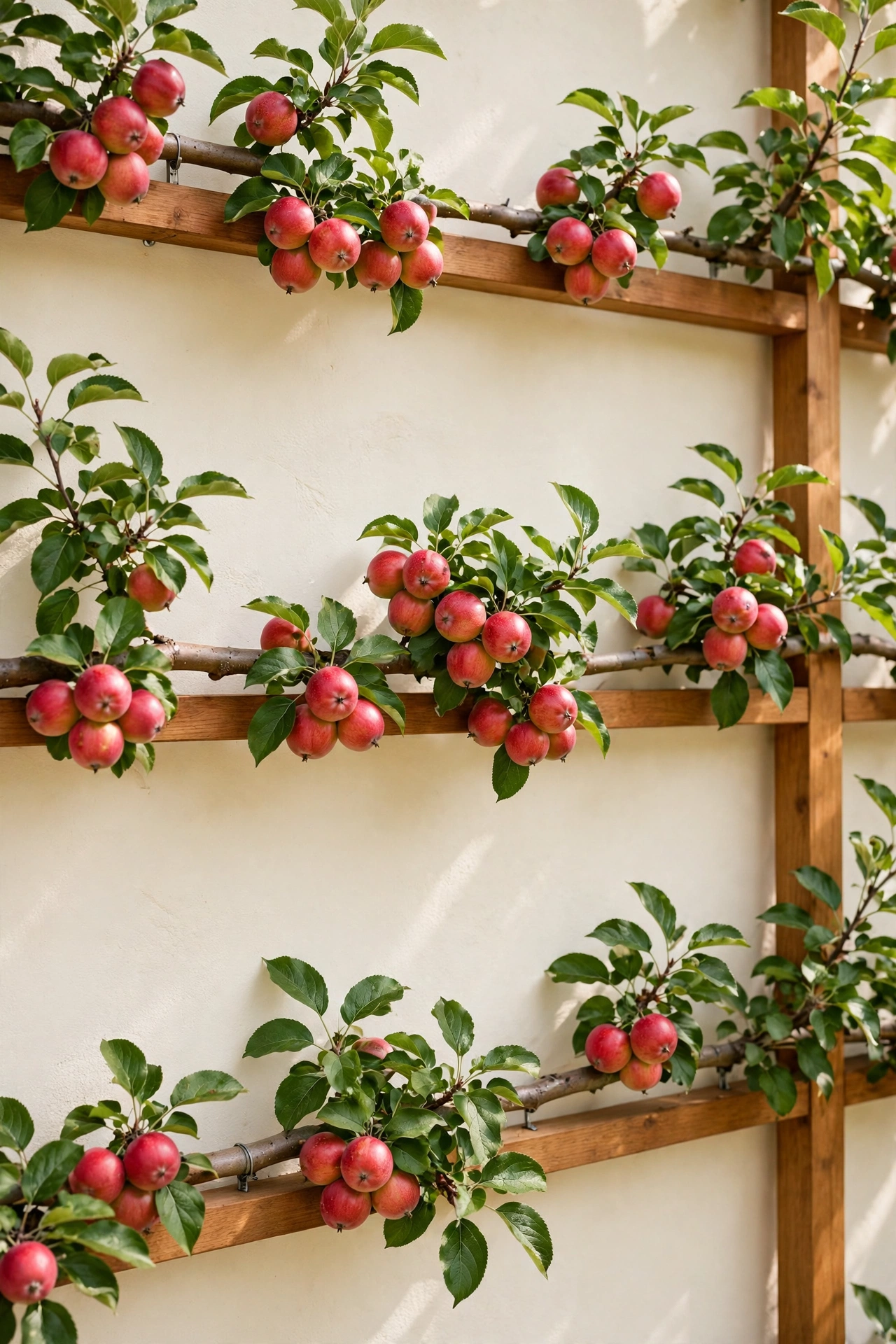
12. Pick Self-Fertile Cherries for Small Spaces
Self-fertile cherry varieties set fruit without a second tree nearby, which makes them ideal when you have room for only one espalier. A single fan-trained cherry on a sunny wall can give you a generous harvest of fresh fruit. Cherries also flower beautifully in spring, so the wall looks lovely before a single fruit appears.Fan training suits cherries best, since they fruit on young wood and need an open shape for light and air. Tie the branches to wires and prune after harvest rather than in winter, which keeps the tree healthy. Bees do the pollination work, so a few flowers nearby help the harvest, and these pollinator garden layout ideas show how to welcome the insects that turn blossom into fruit.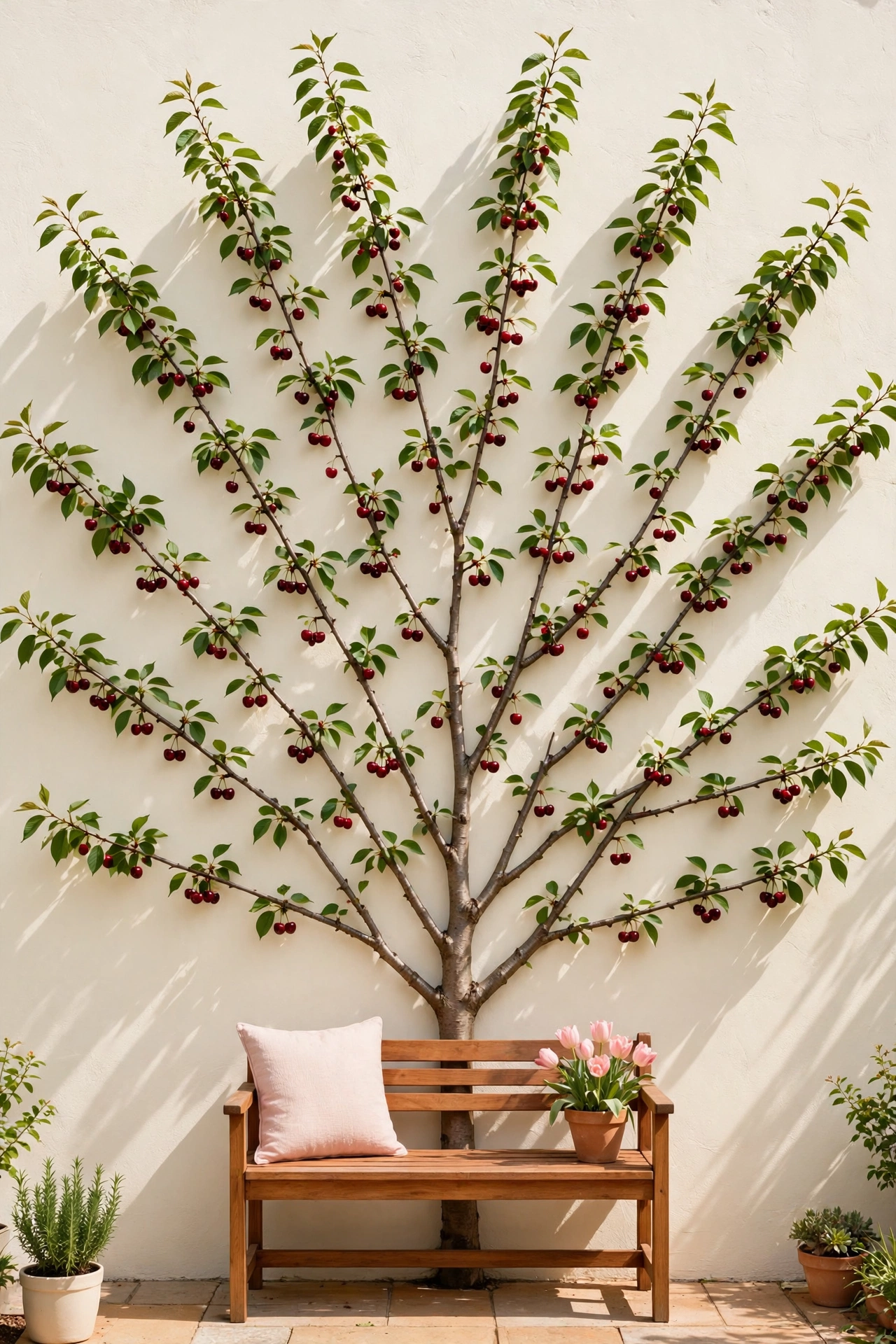
13. Train Figs Flat Against a Warm South Wall
Figs love warmth, and a south facing wall stores heat during the day and releases it at night. Training a fig flat against such a wall gives the fruit the best chance to ripen in cooler climates. The large leaves also look dramatic, so a fig espalier is as much a decoration as a food plant.Figs grow fast, so they need firm tying and regular summer pruning to stay flat. Restrict the roots a little by planting in a large buried container or a lined pit, which keeps the growth in check and pushes the tree toward fruiting instead of leafy growth. In cold winters, a layer of fleece over the wall frame protects the young shoots.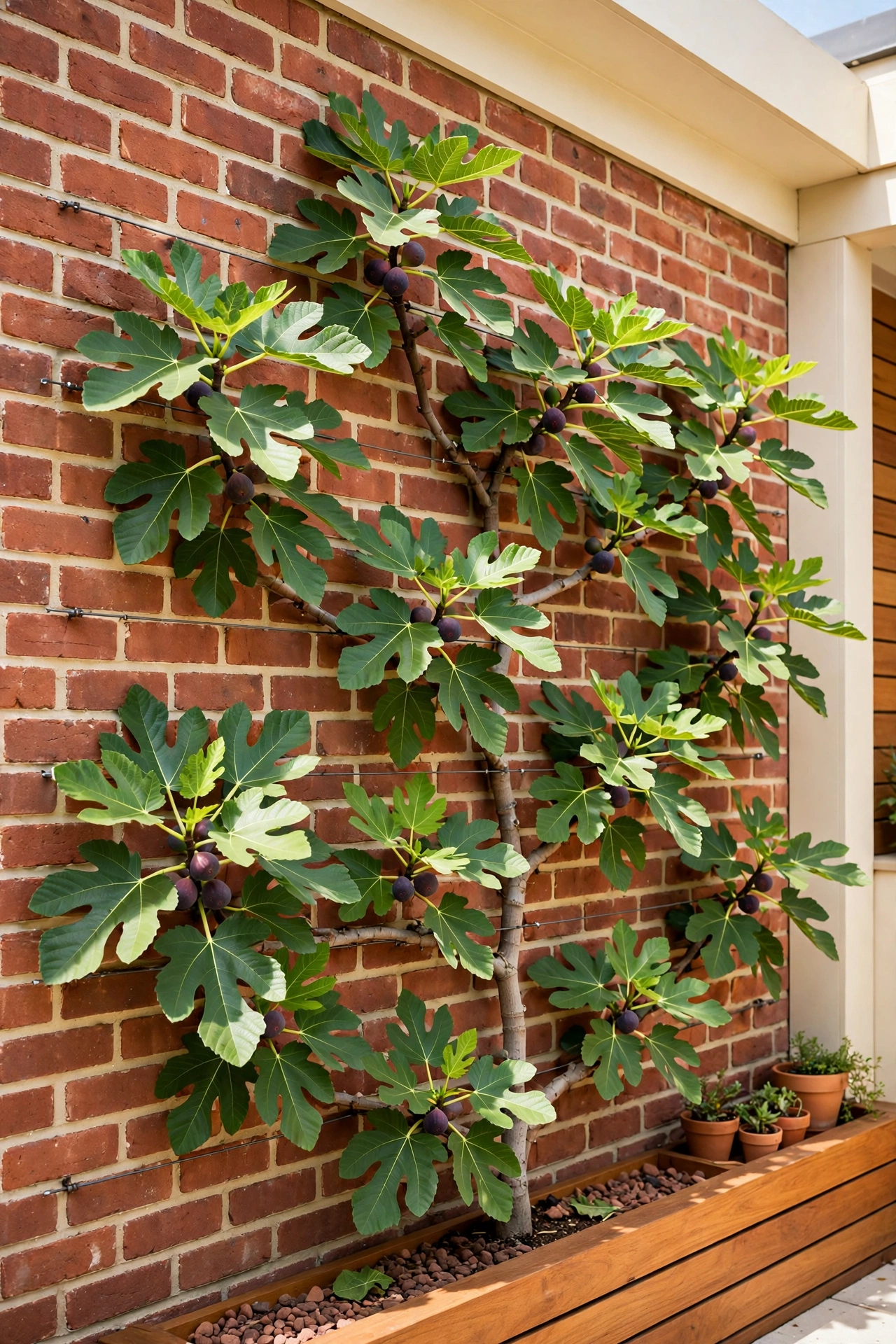
14. Espalier Pears in a Double U Shape
The double U form splits the trunk into two U shapes side by side, giving four upright arms in total. It is a compact and symmetrical pattern that suits pears well, since pears naturally grow upright and take well to this shape. The four arms fruit evenly and the form fits a medium height wall.Start with a young tree and cut the leader low to force two side branches, then cut each of those again to make two more. Tie the four uprights to vertical canes and keep them evenly spaced. Summer pruning keeps the arms from growing too thick at the top, which would shade the lower fruit.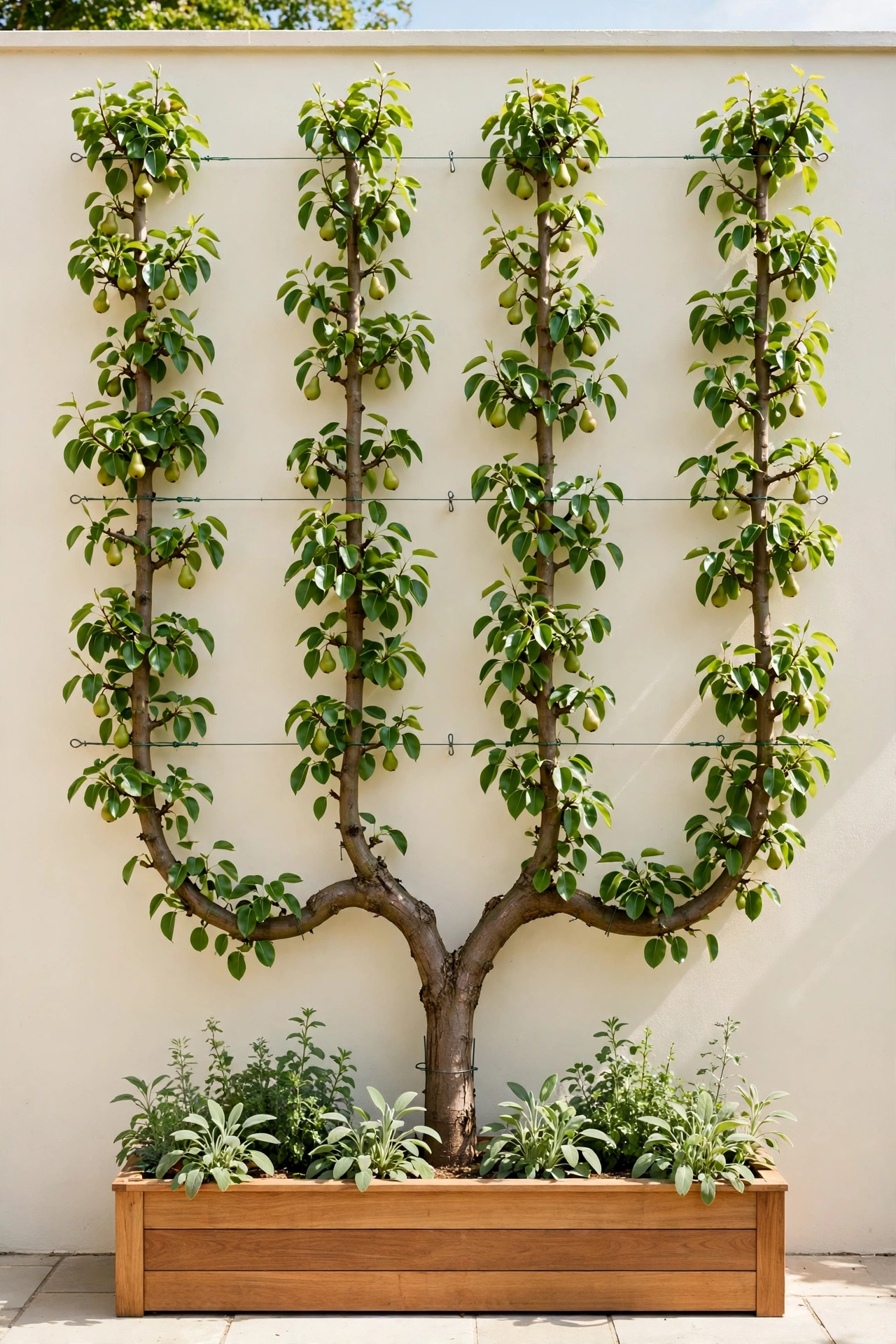
15. Set Horizontal Wires With Vine Eyes and Turnbuckles
A good espalier starts with a good support system, and horizontal wires are the backbone of most trained forms. Vine eyes screwed into the wall hold the wires a few inches away from the surface, which lets air flow behind the branches and keeps the wood dry. Turnbuckles at one end let you tighten the wire as the tree grows heavier.Space the wires about eighteen inches apart, starting twelve inches above the soil, and run them the full width of the planned framework. Use galvanized wire that will not rust and stain the wall. A taut, level wire system makes tying easy and keeps the whole espalier looking crisp for years.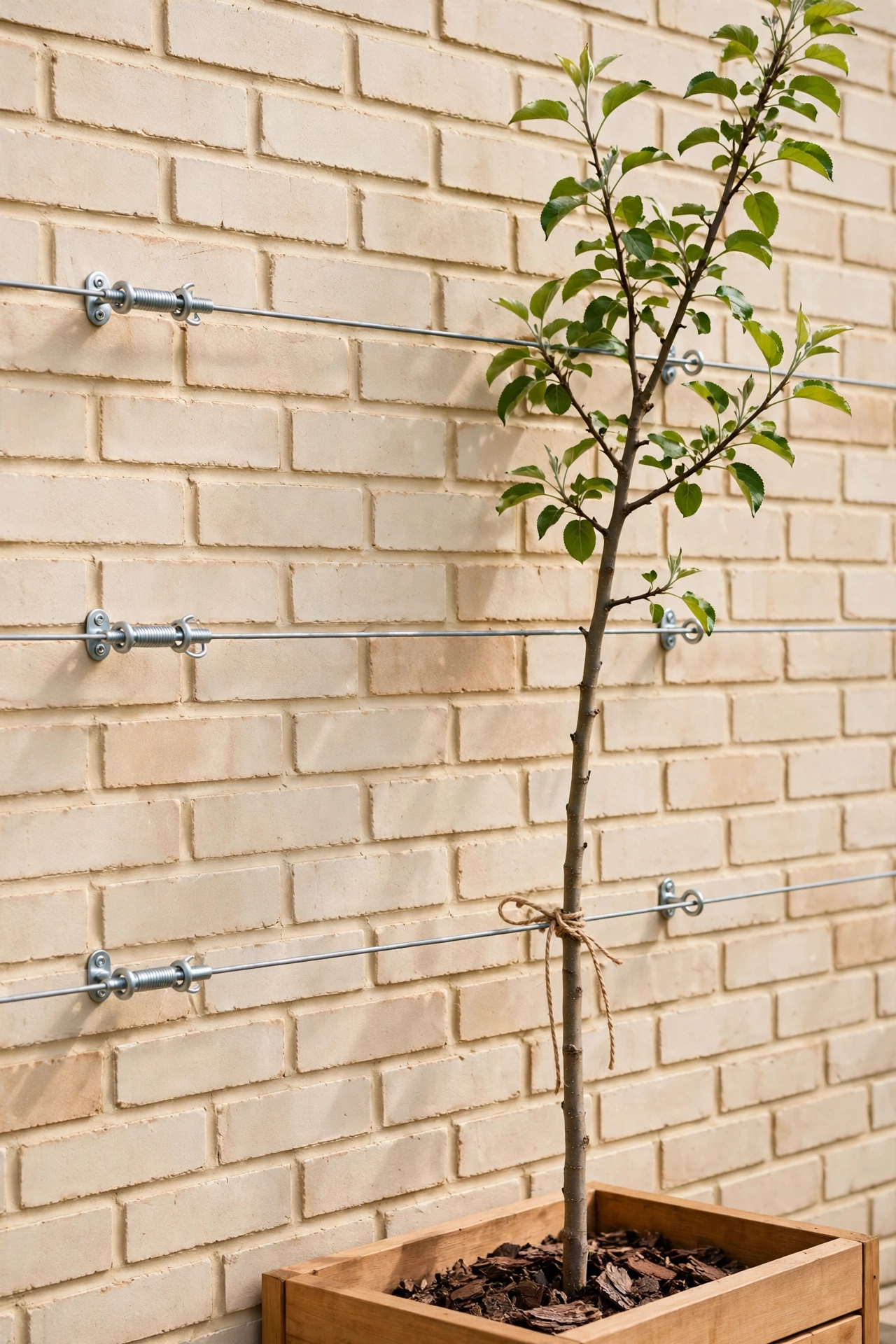
16. Anchor a Timber Trellis Frame to Masonry
A timber trellis frame fixed to a masonry wall gives young espalier trees plenty of tying points while they grow into shape. The wooden slats also look attractive on their own, so the wall stays handsome even in winter when the tree is bare. Timber suits brick, stone, and rendered walls equally well.Build the frame from treated wood battens and fix it to the wall with masonry bolts, leaving a small gap behind it for airflow. Space the battens to match the form you plan to train, with horizontals for cordons and a grid for fans. A solid trellis also suits climbing plants, and these climbing plant trellis ideas show frame styles that combine strength with good looks.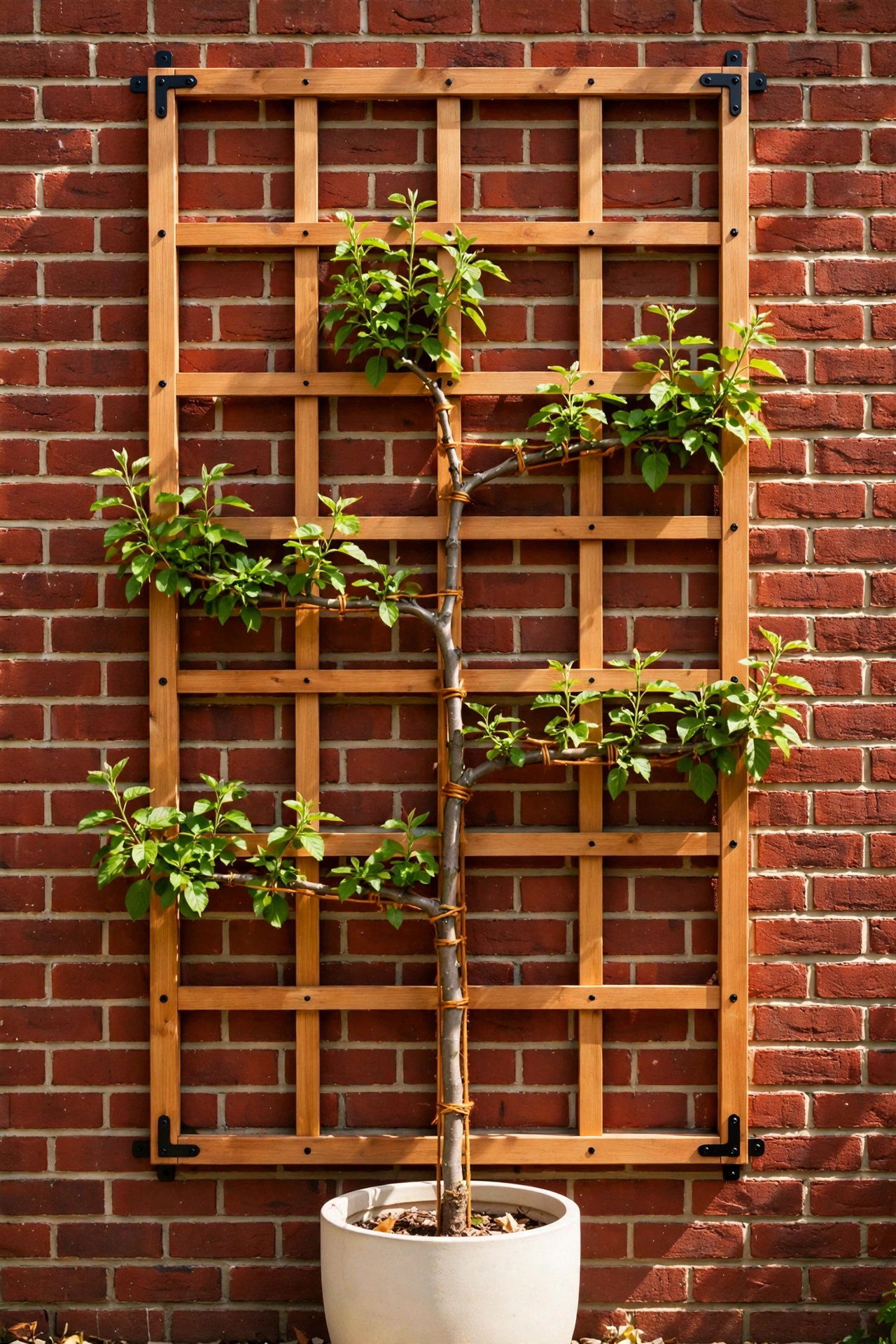
17. Tie Branches With Soft Garden Twine
Soft garden twine is the kindest way to hold young branches to wires and canes. It grips firmly without cutting into soft bark, and it is easy to cut and retie as the branch thickens. Hard wire ties and plastic straps can damage bark and should be avoided on young wood.Tie in a figure of eight, with one loop around the branch and one around the wire, so the branch has a little room to move and grow. Check every tie in spring and autumn, and replace any that have become tight. A few minutes of tying each month keeps the framework neat and the bark healthy.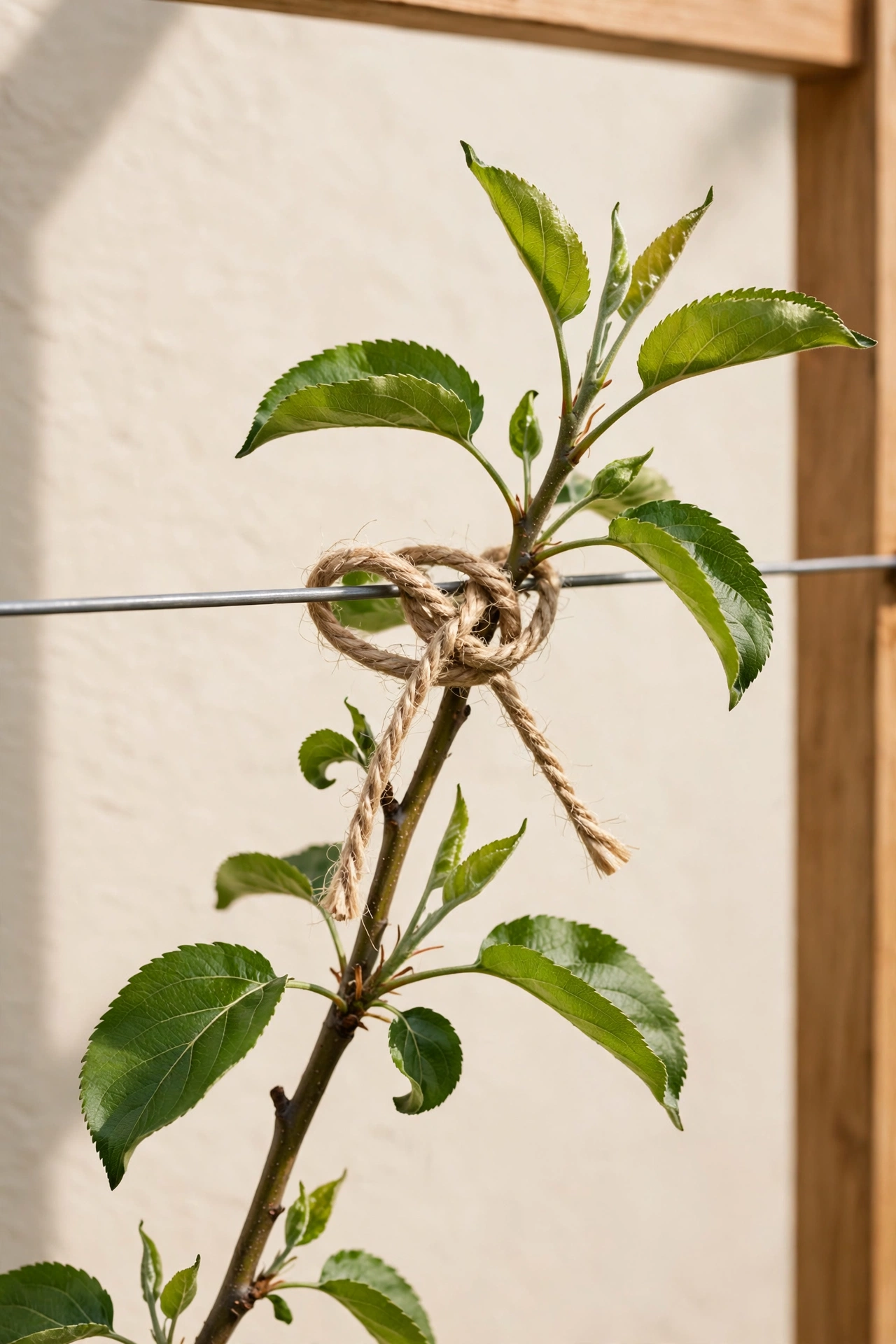
18. Prune in Summer to Keep the Shape Tight
Summer pruning is what keeps an espalier flat and tidy. From late spring through summer, new shoots grow fast and can quickly spoil the clean lines of the trained form. Shortening these shoots back to three or four leaves channels the tree’s energy into fruit instead of leafy growth.Walk along the wall every two or three weeks in summer with a pair of sharp secateurs and shorten any shoot that grows outward from the wall or races ahead of its neighbors. The work takes only a few minutes per tree once the habit is formed. Regular light pruning is far easier than one heavy session at the end of the season.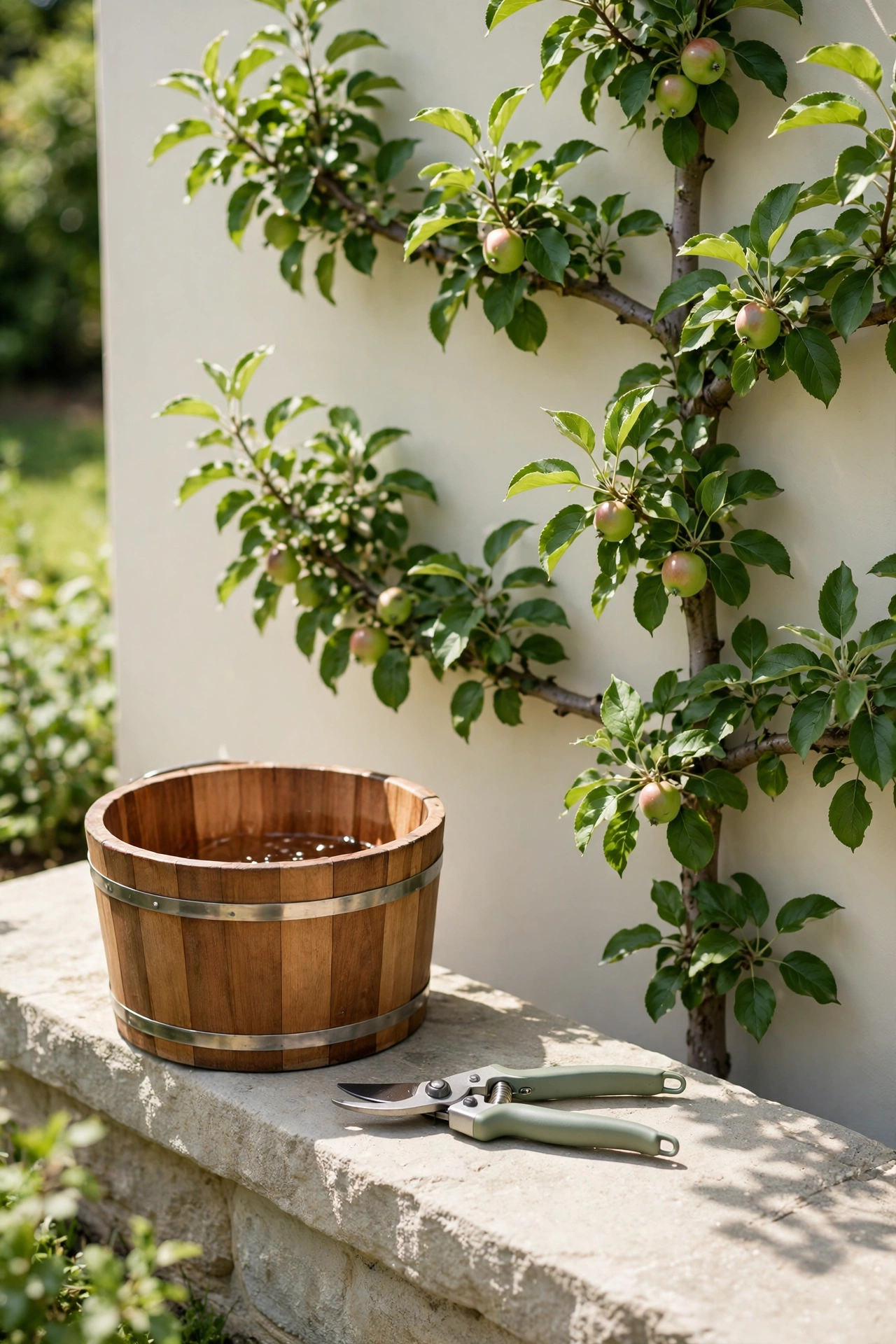
19. Do Structural Pruning in Late Winter
Late winter is the time for structural pruning, when the tree is bare and you can see the full framework clearly. This is when you remove crossing branches, shorten leaders to the next wire level, and cut out any wood that grows in the wrong direction. The tree is dormant, so it barely notices the work.Stand back and look at the whole shape before you cut, and aim to keep the framework open and balanced. Remove no more than a quarter of the old wood in any one year, so the tree stays vigorous. A clean winter framework makes summer pruning simple, because only new growth needs attention.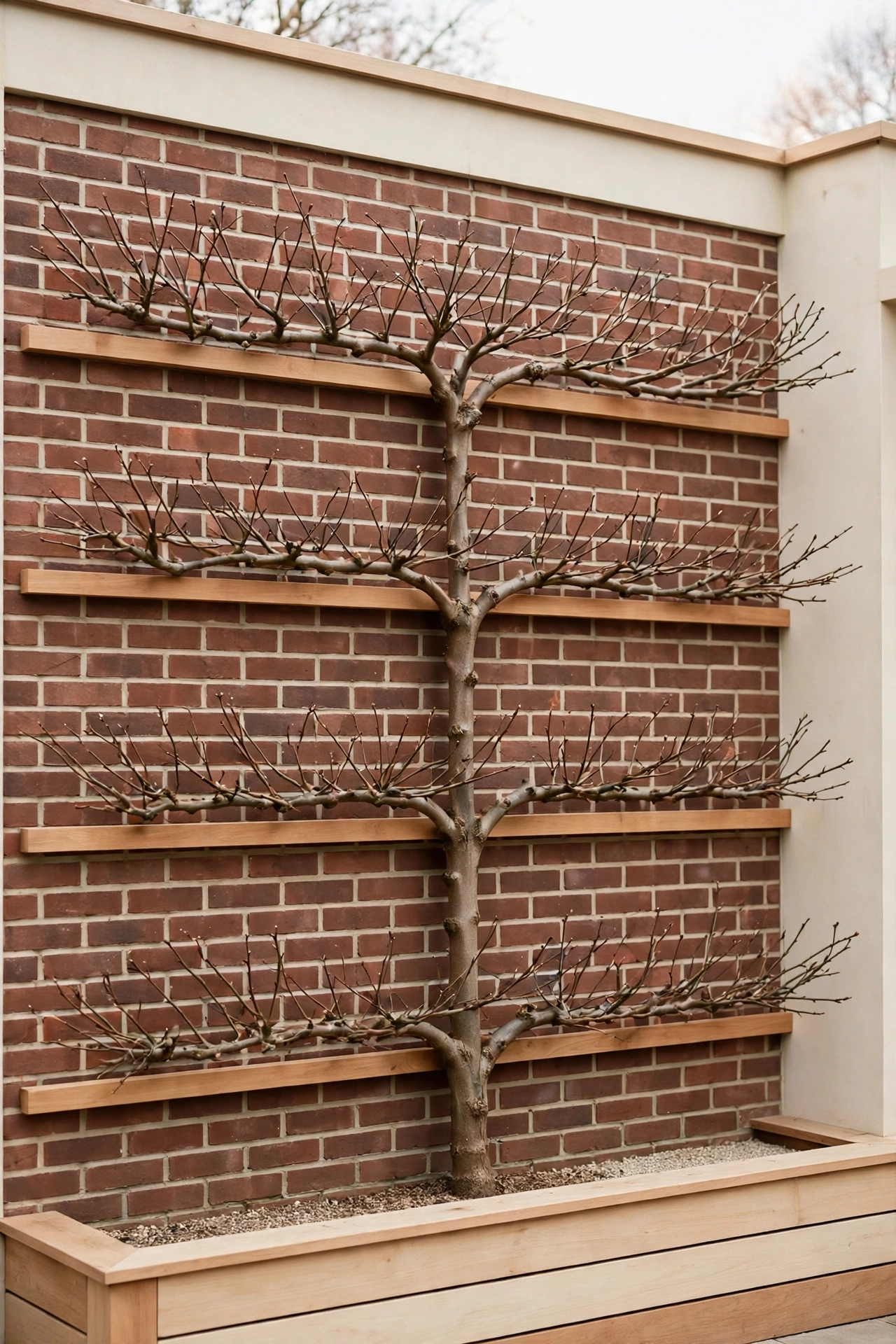
20. Thin Fruit Early for Larger Harvests
Thinning means removing some of the young fruit so the rest can grow larger and sweeter. Wall-trained trees often set far more fruit than they can ripen well, and a crowded branch gives small, pale apples. Early thinning, done when the fruitlets are the size of a marble, makes a visible difference by harvest time.Leave one fruitlet every four to six inches along the branch and remove the smallest, damaged, or clustered ones first. The remaining fruit gets more light, more water, and more of the tree’s energy, so it grows bigger and tastes better. Thinning also stops the tree from fruiting heavily one year and resting the next.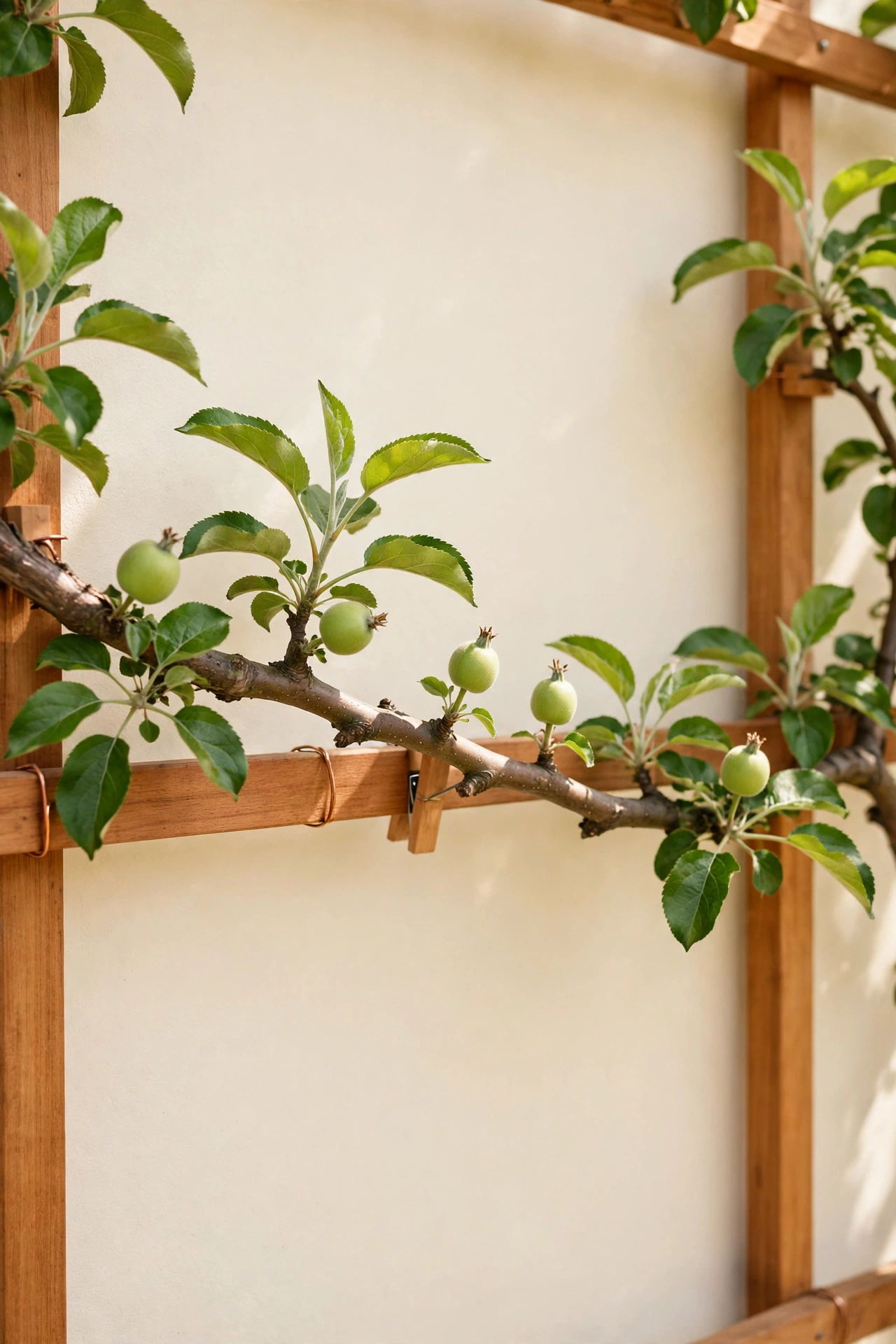
21. Mulch the Base and Feed in Spring
The soil at the base of a wall is often dry and poor, because the wall shelters it from rain and the foundations take up space. A thick mulch ring around the trunk keeps the soil moist, cool, and full of life. Feeding in spring gives the tree the nutrients it needs for a season of growth and fruiting.Spread a three inch layer of well rotted compost or bark mulch in a wide circle around the base, keeping it a few inches away from the trunk itself. Add a balanced fertilizer in early spring and water it in well. A well fed wall tree grows steadily and holds its fruit through dry spells that would stress a hungry tree.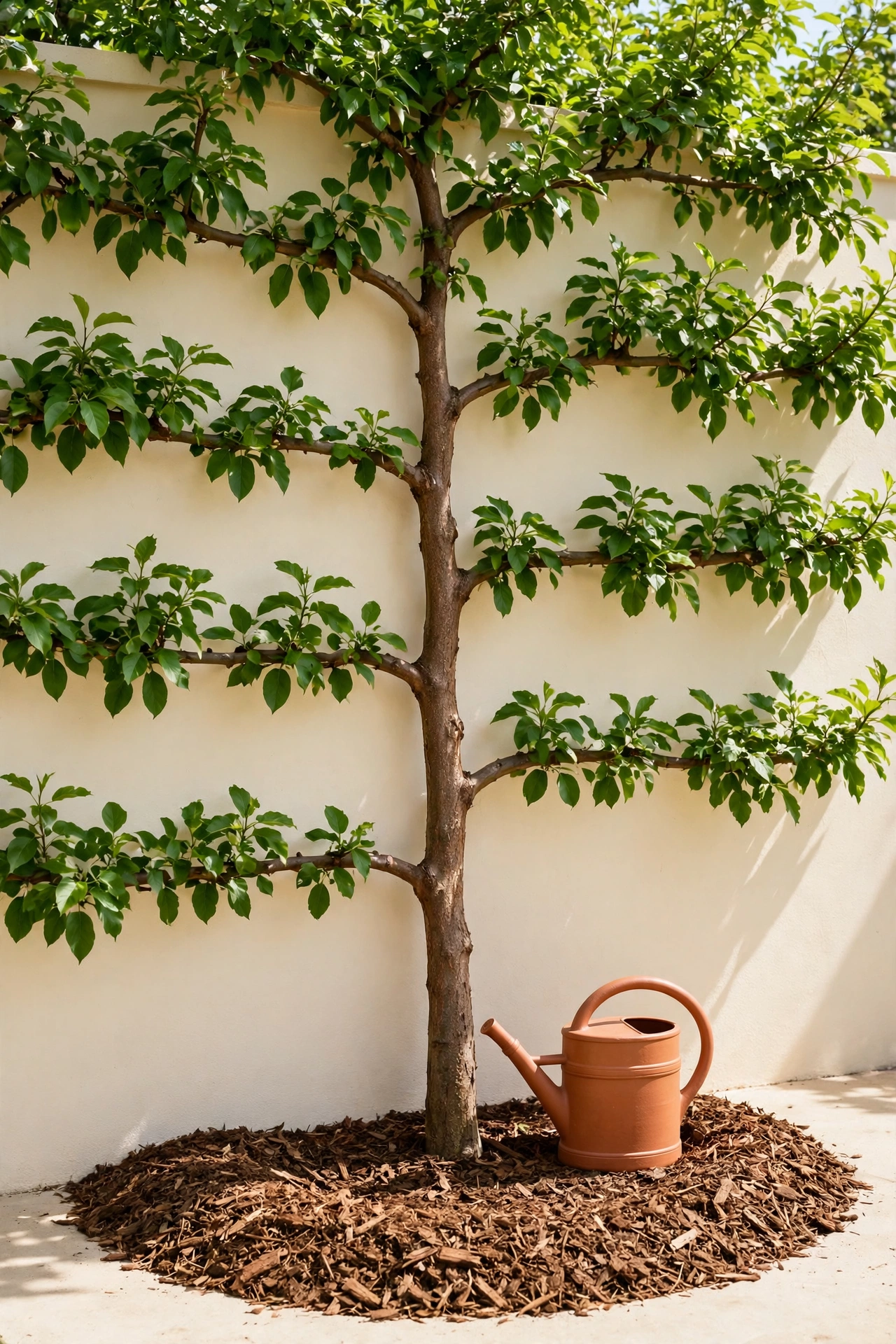
22. Water Deep at the Root Zone
Wall-trained trees need regular watering because the wall blocks rain from one side and the soil dries out faster than open ground. Shallow watering only wets the surface and encourages weak surface roots. Deep watering reaches the root zone and builds a strong, drought-tolerant tree.Lay a soaker hose along the base of the wall and run it slowly for an hour or two, so water soaks deep into the soil without running off. Water early in the morning so the leaves dry quickly and the tree takes up water before the heat of the day. In hot, dry spells, water twice a week rather than a little every day.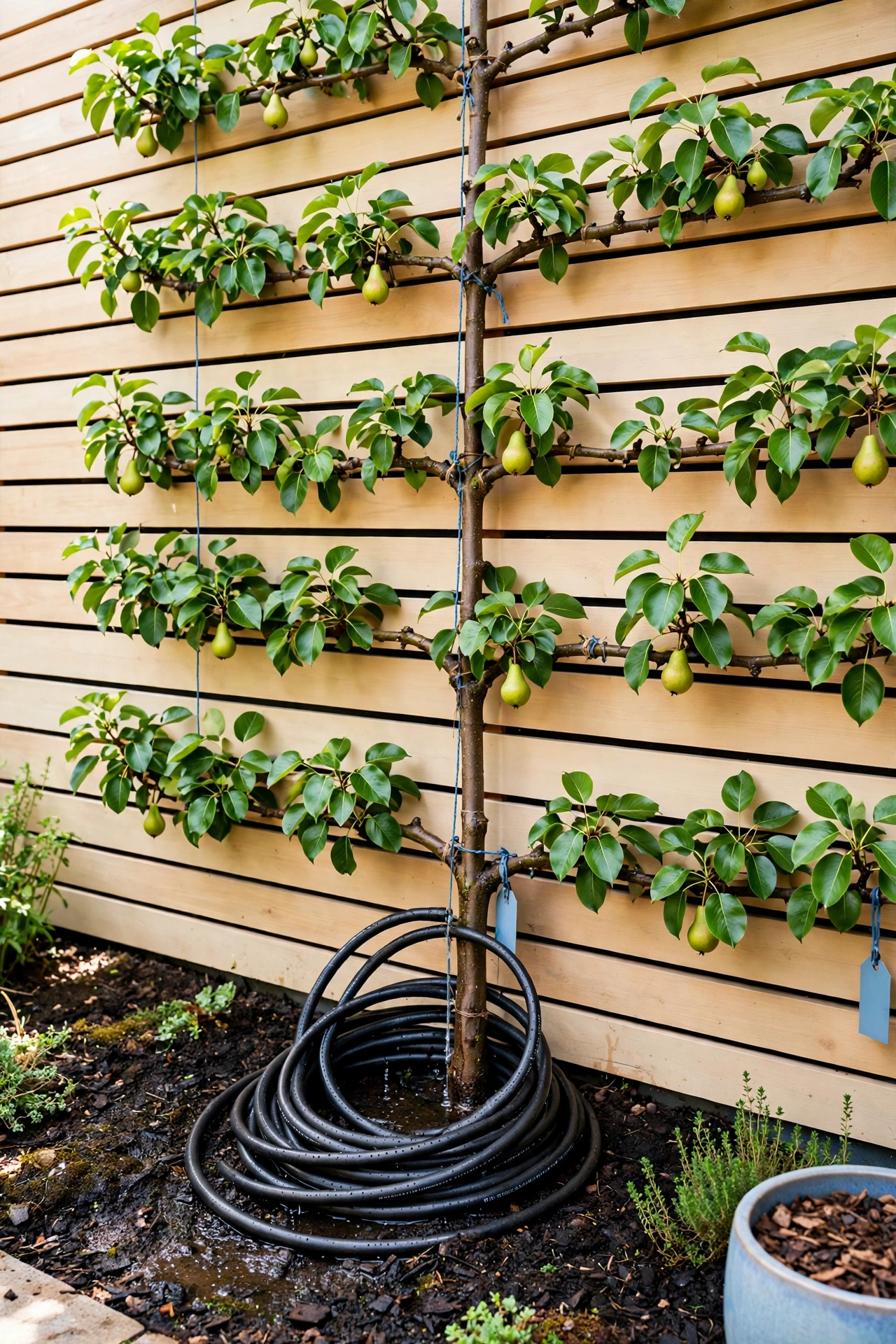
23. Protect Spring Blossom From Late Frost
Spring blossom is the most delicate stage of the fruit year, and one late frost can wipe out the whole harvest. Wall-trained trees are at extra risk because walls encourage early flowering, and the blossom opens before the last frosts have passed. A little protection on cold nights saves the crop.Keep a roll of horticultural fleece near the wall and drape it over the framework on evenings when frost is forecast. The fleece traps a little warmth and keeps frost off the open flowers. Remove it in the morning so bees can reach the blossom, since no pollination means no fruit even if the flowers survive.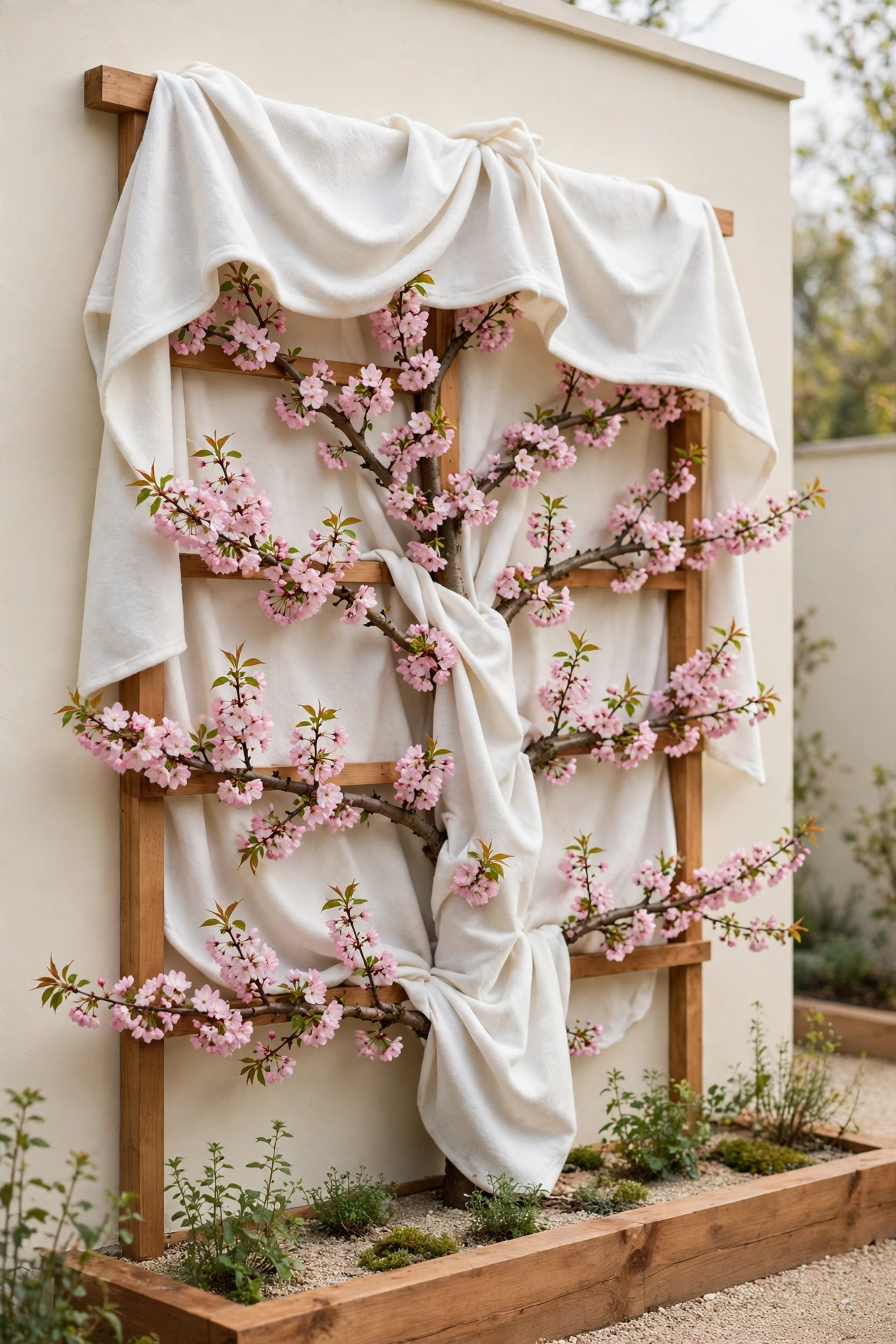
24. Net the Wall Before Birds Find the Fruit
Birds watch ripening fruit closely, and they often take the first ripe apple before you do. Netting the whole wall frame before the fruit colors keeps birds out without harming them. The net also protects the fruit from light hail and keeps falling fruit from bruising on hard ground.Drape fine mesh netting over the wire framework and fasten it at the sides and bottom so birds cannot slip underneath. Check the net daily and free any insect or small bird that finds its way in. Remove the net right after harvest so the tree gets full light and air for the rest of the season.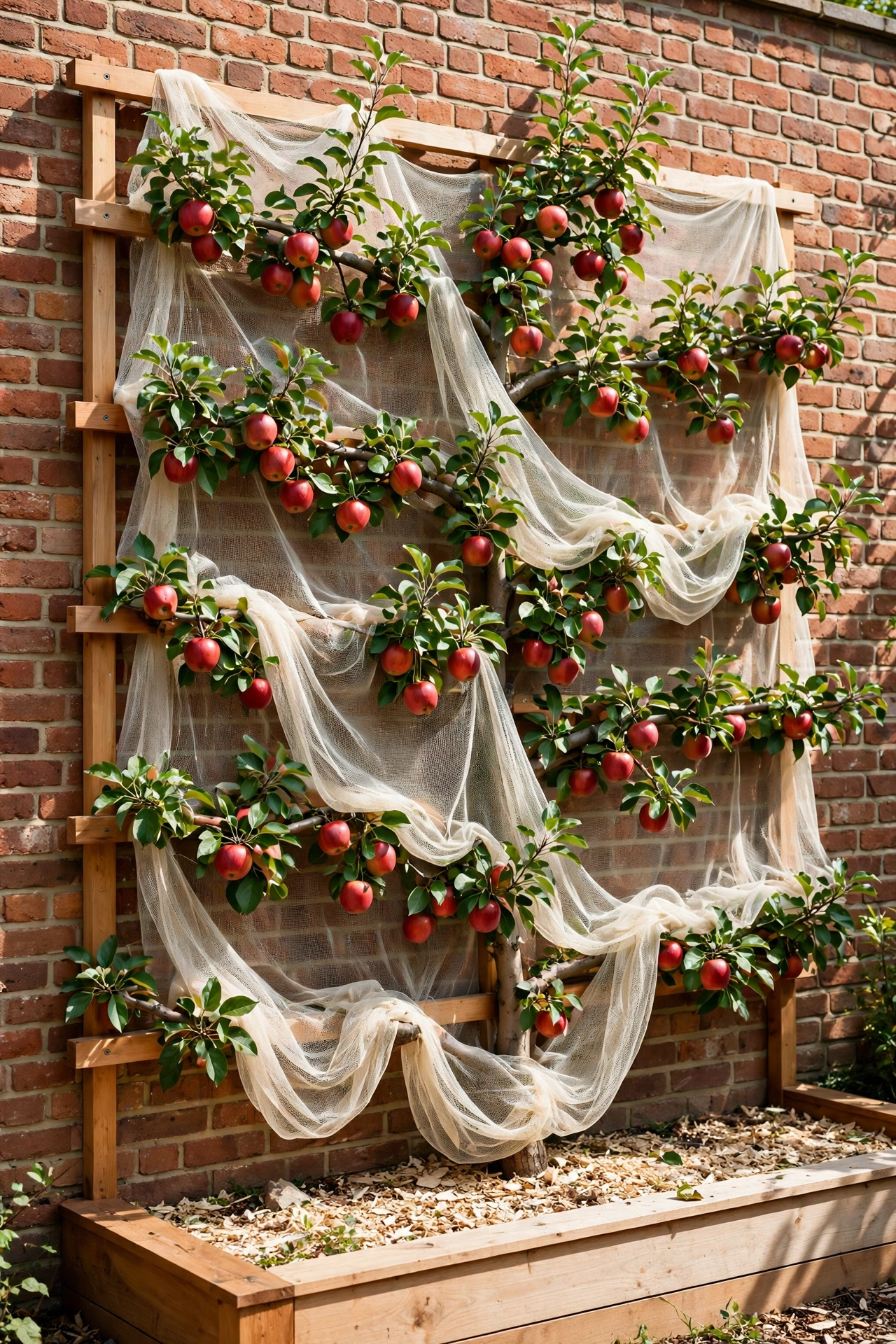
25. Train a Diagonal Cordon in a Narrow Side Yard
A diagonal cordon grows at an angle of about forty five degrees, which makes it perfect for a narrow side yard where a full horizontal form would not fit. Several diagonal cordons planted in a row fill a slim wall with fruiting wood while leaving the path below clear. The angled stems also fruit well, because the slope slows the flow of sap and encourages fruit buds.Plant the trees about three feet apart and tie each leader to a cane fixed at an angle to the wall wires. Prune the side shoots short each summer so the diagonal line stays clean. A narrow side yard that once held nothing but bins can become a productive fruit wall in just two seasons.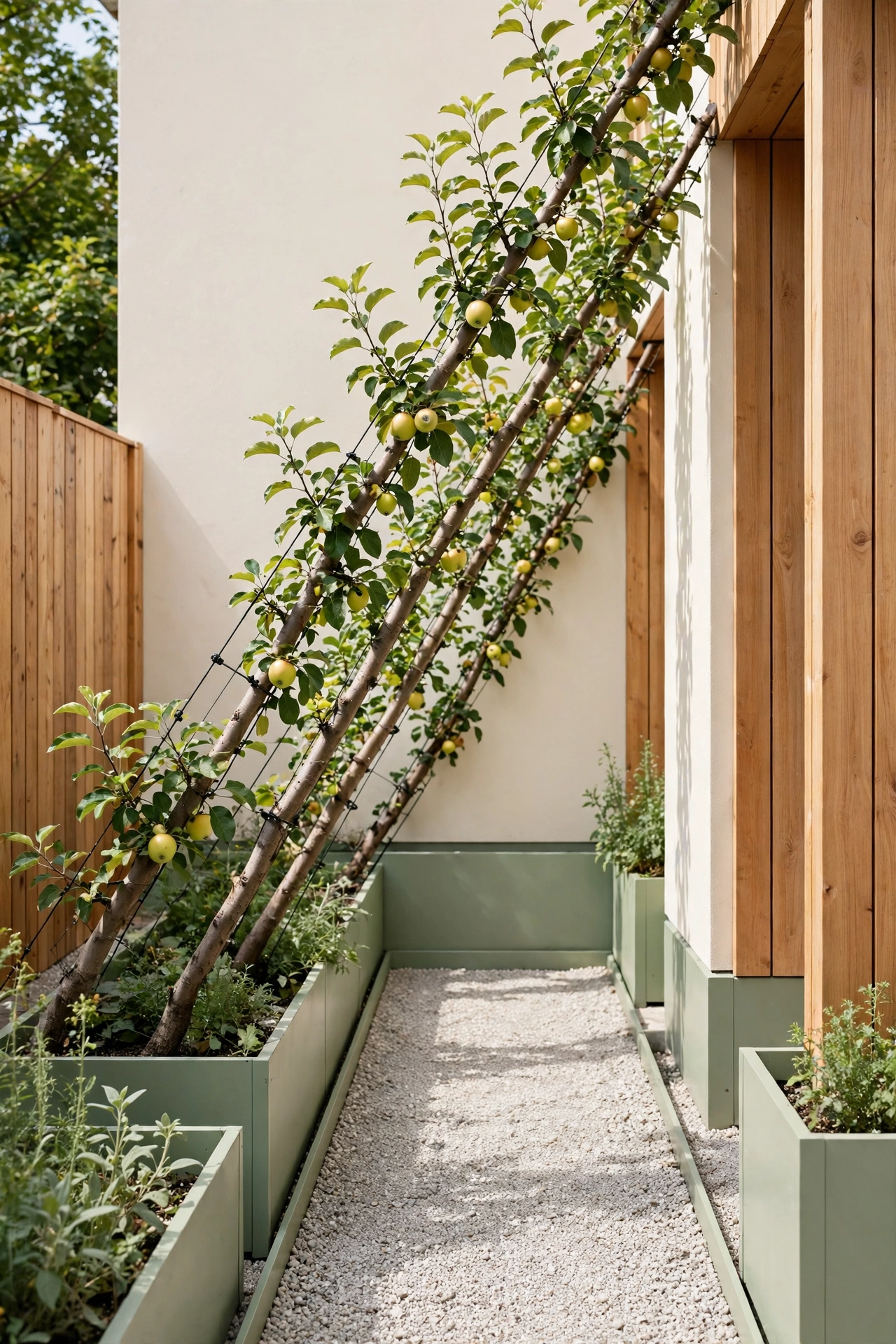
26. Grow an Espalier Hedge as a Living Boundary
An espalier hedge is a row of trained trees whose branches meet and join into one continuous fruiting wall. It marks a boundary with greenery and fruit instead of a fence, and it stays slim enough to fit a narrow strip of ground. In spring the hedge flowers, in summer it fruits, and in winter the trained framework still looks smart.Plant the trees close together, about six feet apart, and train the side branches toward each other until they meet. Tie the meeting branches to the same wire and let them grow side by side. Keep the top level so the hedge reads as one long, even line from end to end.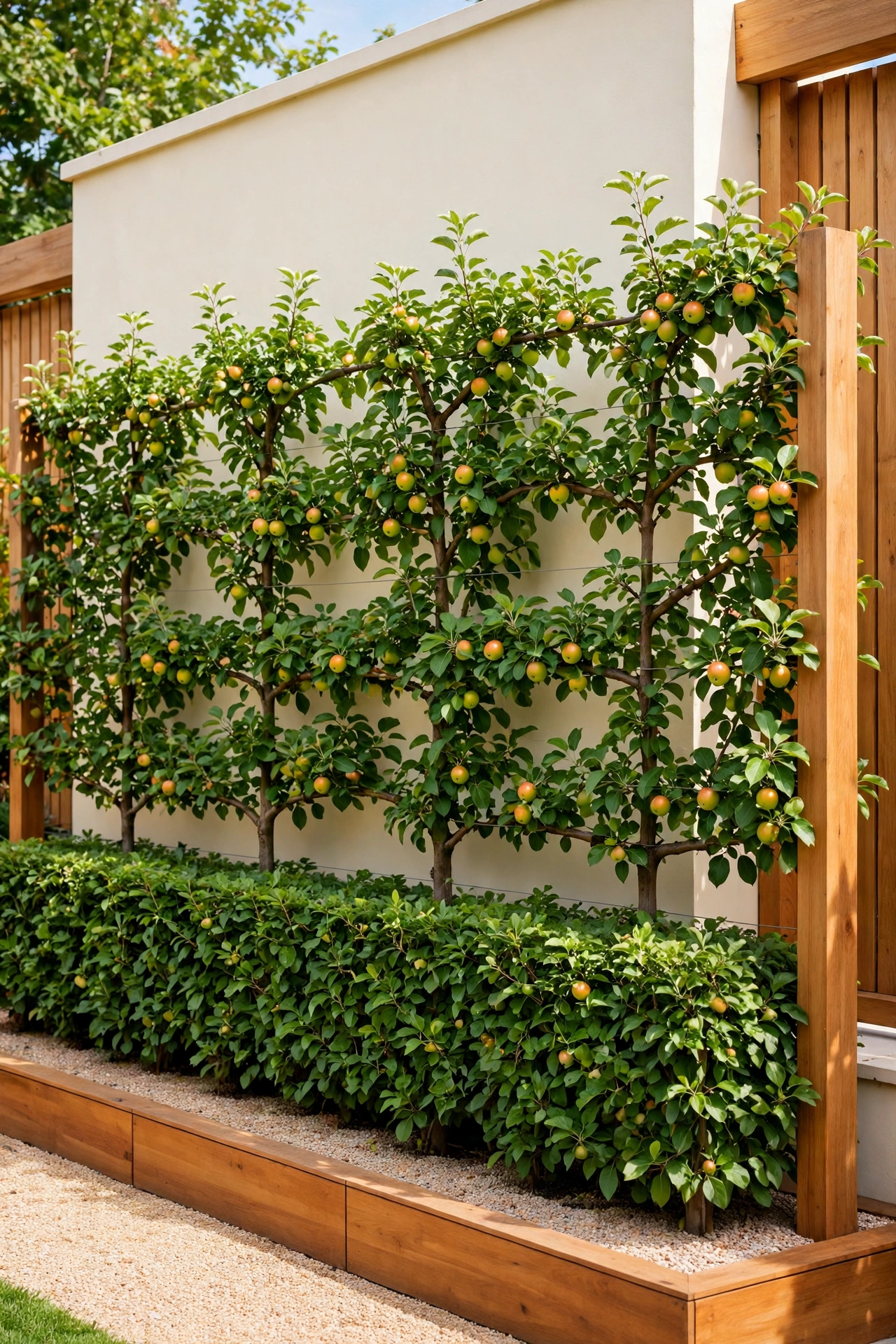
27. Combine Two Varieties on One Frame
Two varieties can share one espalier frame when they are grafted onto the same rootstock or planted side by side and trained together. A multi-variety tree gives you two kinds of apple from one wall space, and the two varieties can pollinate each other. It is a clever answer for a small garden with room for only one tree.Choose varieties that flower at the same time and grow at a similar speed, so one does not take over the frame. Label each branch clearly at planting time, since the two varieties can look alike when they are young. Prune the stronger variety a little harder to keep the balance fair year after year.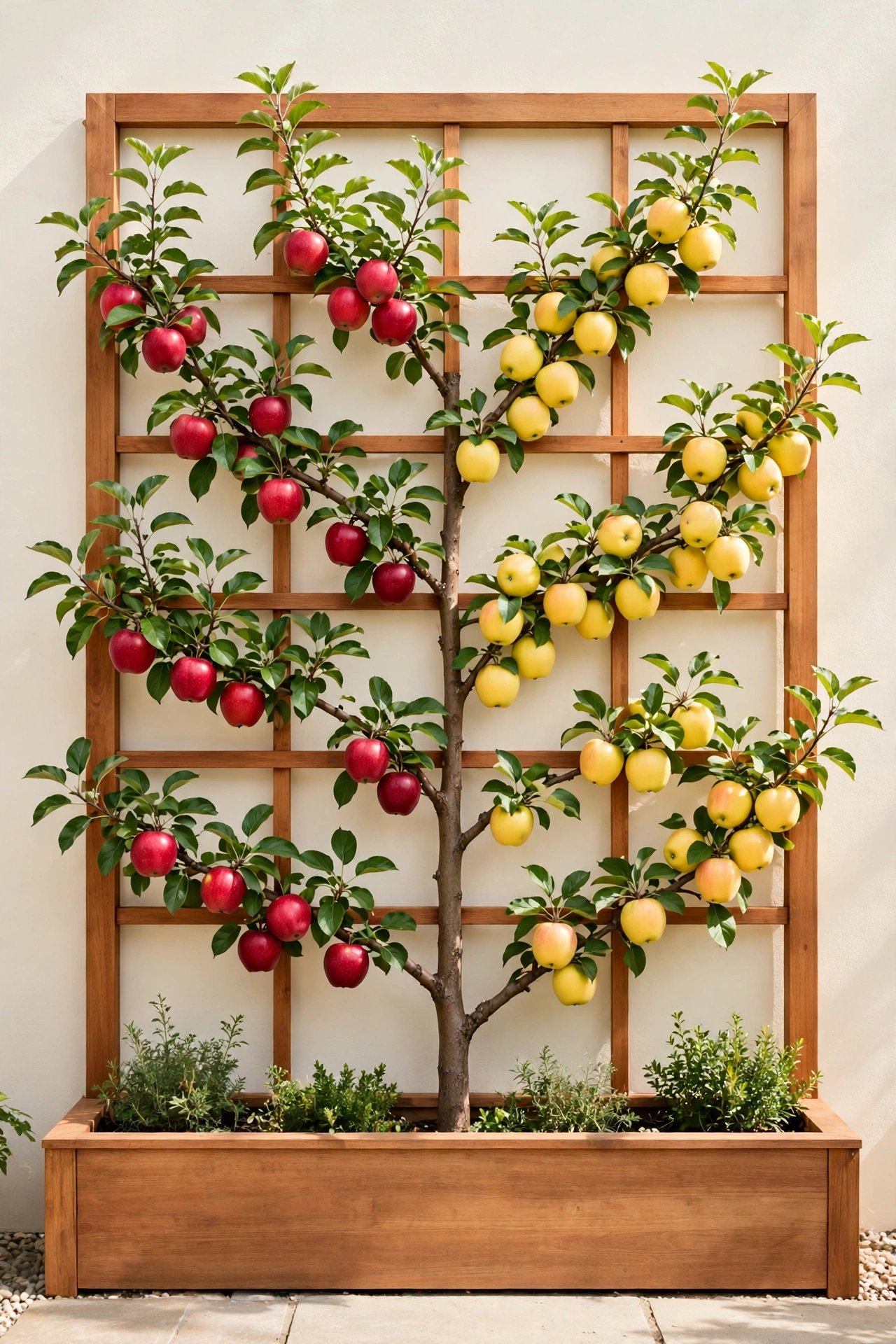
28. Revive an Old Neglected Espalier
An old espalier that has been left alone for years often looks like a tangled mess, but the trained framework is usually still there under the mess. Careful renovation over two or three seasons can bring it back to full production. Old trees have deep roots and strong frameworks, so they respond well to patient work.Start in winter by cutting out dead, damaged, and crossing wood, and remove no more than a third of the old growth in one year. Retie the remaining branches to the wires and replace any rotted ties. By the second summer, new fruiting spurs form on the old wood, and the wall begins to look like an espalier again.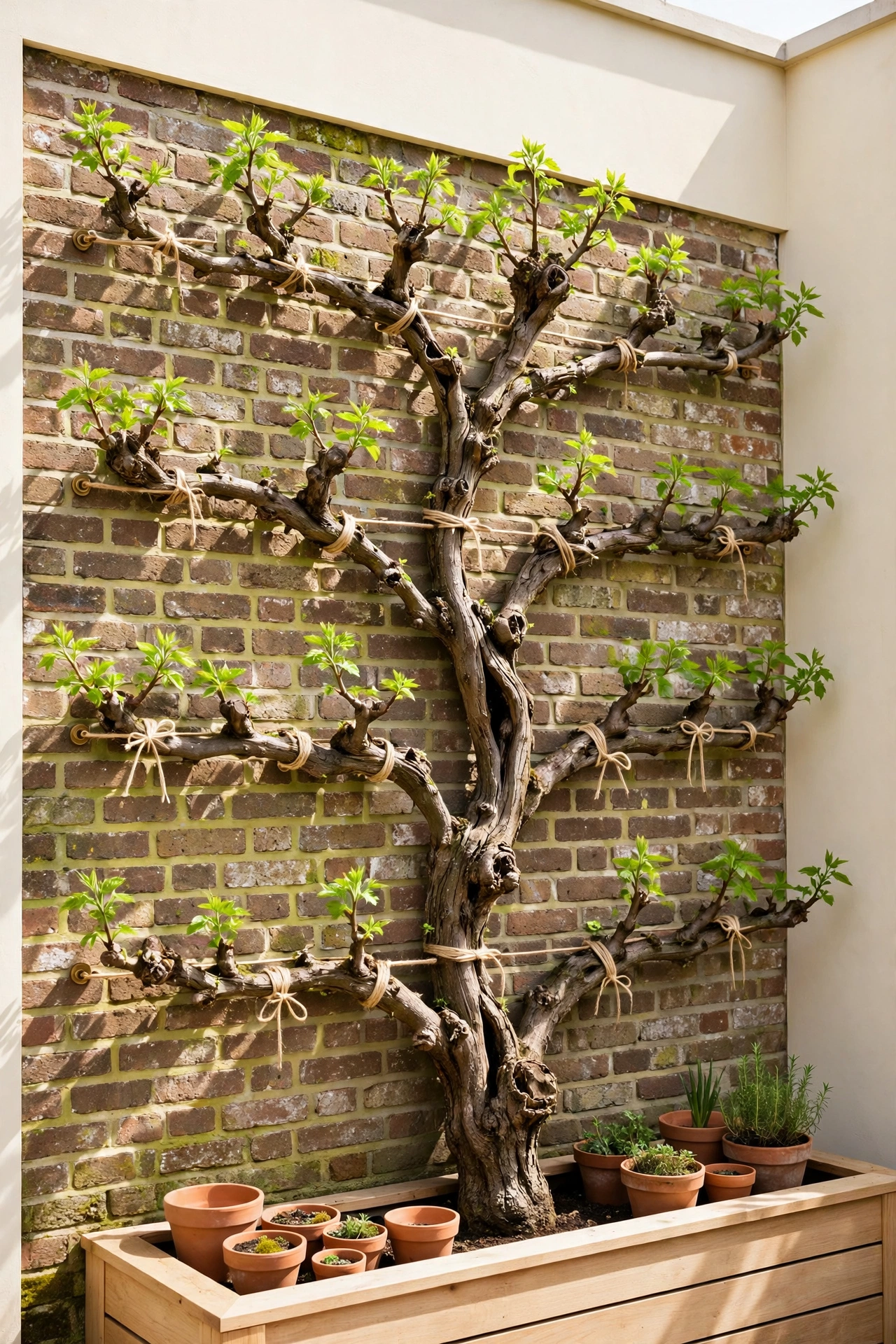
29. Plan a Four-Year Training Calendar
Espalier is a long game, and a simple four-year calendar keeps the project on track. Year one is for planting and setting the first tier, year two adds the second tier, year three completes the framework, and year four brings the first real harvest. Writing the plan down stops you from rushing or skipping a stage.Note the key dates for your climate: winter pruning, spring feeding, summer shortening, and autumn harvest. Keep a small notebook or a set of labeled markers by the wall so each task is easy to remember. A tree trained slowly and steadily will outlive a tree that was forced into shape in one season, and it will fruit better for decades.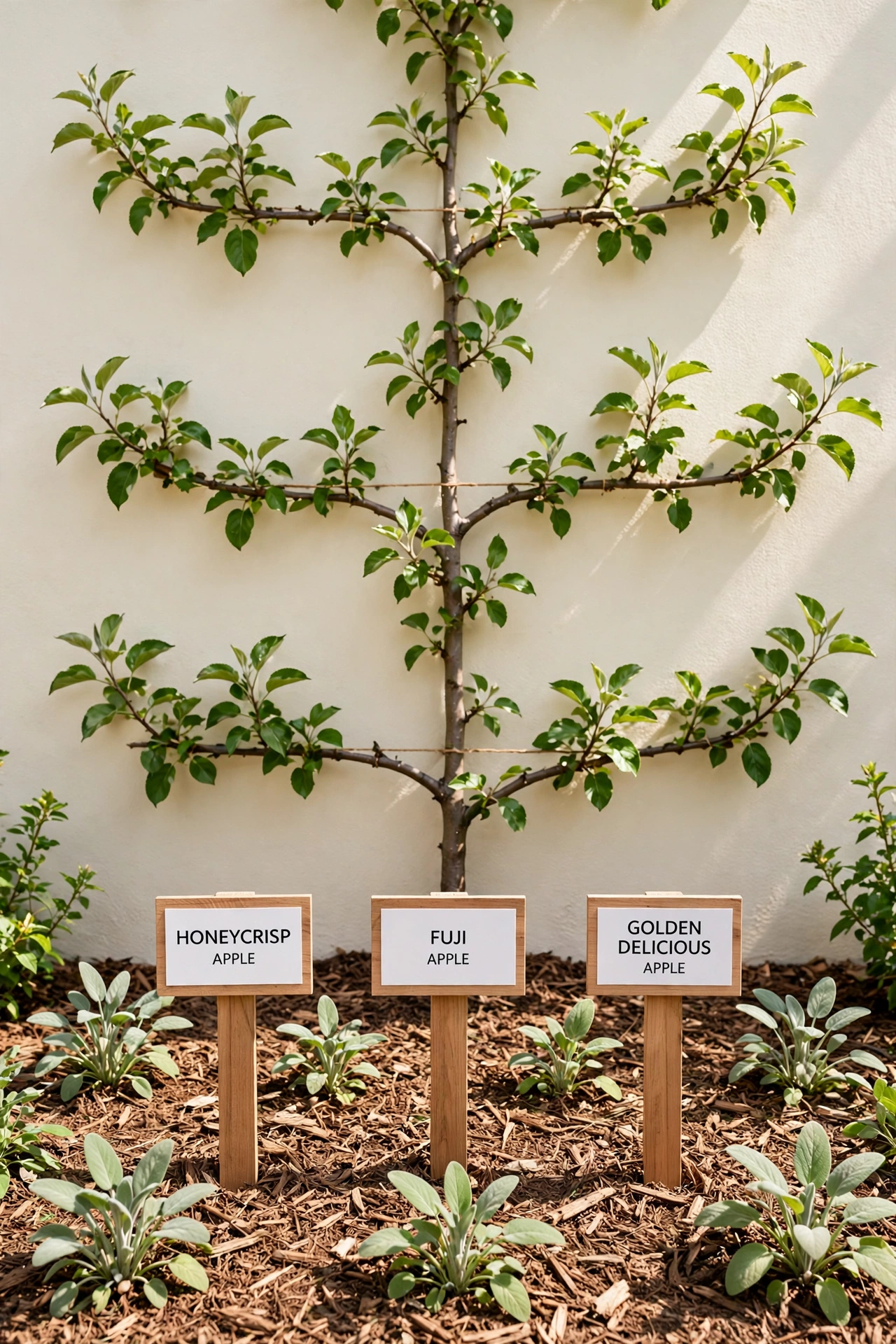
Conclusion
Espalier turns a plain garden wall into a living work of art that also puts fresh fruit on your table. From the simple horizontal cordon to the woven Belgian fence, every form in this list starts with the same basics: a sunny wall, a young tree, firm wires, and a little patience each season.Pick the form that fits your wall and start with one tree this planting season. Tie a little, prune a little, and let the tree teach you its pace. In a few years, your decorative garden wall will be the feature visitors ask about first, and the fruit will taste all the sweeter for the care you put into the training.Frequently Asked Questions About Espalier Fruit Tree Ideas for Decorative Garden Walls
What is the easiest fruit tree to espalier for a beginner?
Apples are the easiest fruit trees to espalier, especially spur-bearing varieties on dwarfing rootstocks. They are forgiving of pruning mistakes, they fruit reliably on trained branches, and they suit almost every climate. Start with a one year old maiden whip and a simple horizontal cordon form.
How far from the wall should I plant an espalier fruit tree?
Plant the tree about six to eight inches away from the wall so the trunk has room to thicken and air can flow behind the branches. The wall foundations often make the soil poor right at the base, so dig a generous planting hole and fill it with good compost. Angle the young tree slightly toward the wall so the trunk grows into the wire line.
How long does it take to train an espalier fruit tree?
A basic cordon framework takes three to four years to complete, with one new tier added each year. The tree may produce a few fruits in year two, but a full harvest usually starts in year four or five. Patience pays off, because a well trained framework can fruit productively for twenty years or more.
Can espalier fruit trees grow in containers?
Yes, espalier trees can grow in large containers of at least twenty gallons, which suits patios and rented homes. Choose a dwarfing rootstock and a sturdy frame fixed to the container or the wall behind it. Container trees need more frequent watering and feeding than trees planted in open ground, especially in hot weather.
Do espalier fruit trees need a south facing wall?
A south facing wall is ideal for heat loving fruit such as peaches, figs, and apricots, but apples and pears fruit well on east and west facing walls too. Avoid a fully shaded north wall, where fruit will struggle to ripen. Even a few hours of direct sun each day is enough for most apple varieties to crop well.

Hi, I’m Emily! I turn messy corners into cozy, organized spots. DreamNestDecor is where I share simple, practical home ideas — decor, organization, and small-space solutions that work in real life, not just in photos. Every idea here is carefully researched before it’s shared.