Picture this: you step into your backyard on a warm late summer afternoon, reach up, and pick a cluster of sun-warmed grapes straight from the vine. The leaves rustle overhead, the air smells sweet, and the fruit in your hand tastes better than anything from a store. That small moment is exactly what a backyard vineyard gives you, season after season.
You do not need acres of land or professional equipment to grow grapevines at home. A sunny fence, a sturdy trellis, and a little patience are enough to start. These 21 backyard vineyard ideas will help you plan rows, trellises, arbors, and containers that fit your yard and your love of fresh grapes.
1. Start With a Classic Two-Wire Trellis Row
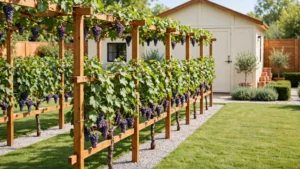
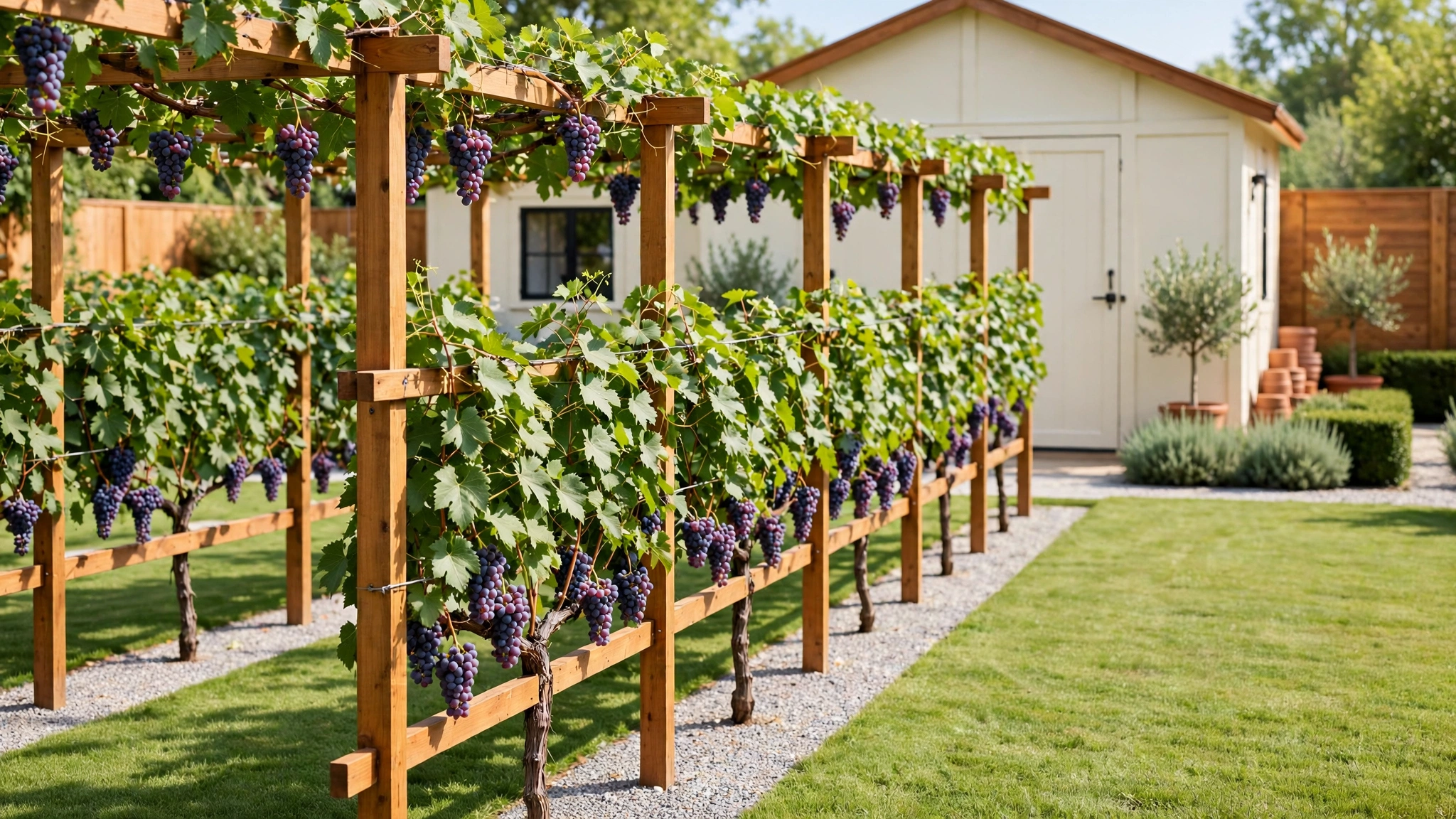
A two-wire trellis is the simplest support system for backyard grapevines and it has worked for growers for generations. Two strong wires run between sturdy wooden posts at two heights, and the vine arms are tied along the wires as they grow. The open structure lets sunlight reach every leaf and every cluster.
This system suits a straight run along the edge of a yard or down the middle of a garden bed. Space the posts about eight feet apart and keep the wires tight so heavy clusters never sag. If you already grow climbing plants, these climbing plant trellis ideas will help you match the trellis style to the rest of your garden.
2. Grow Vines Along a Sunny Boundary Fence
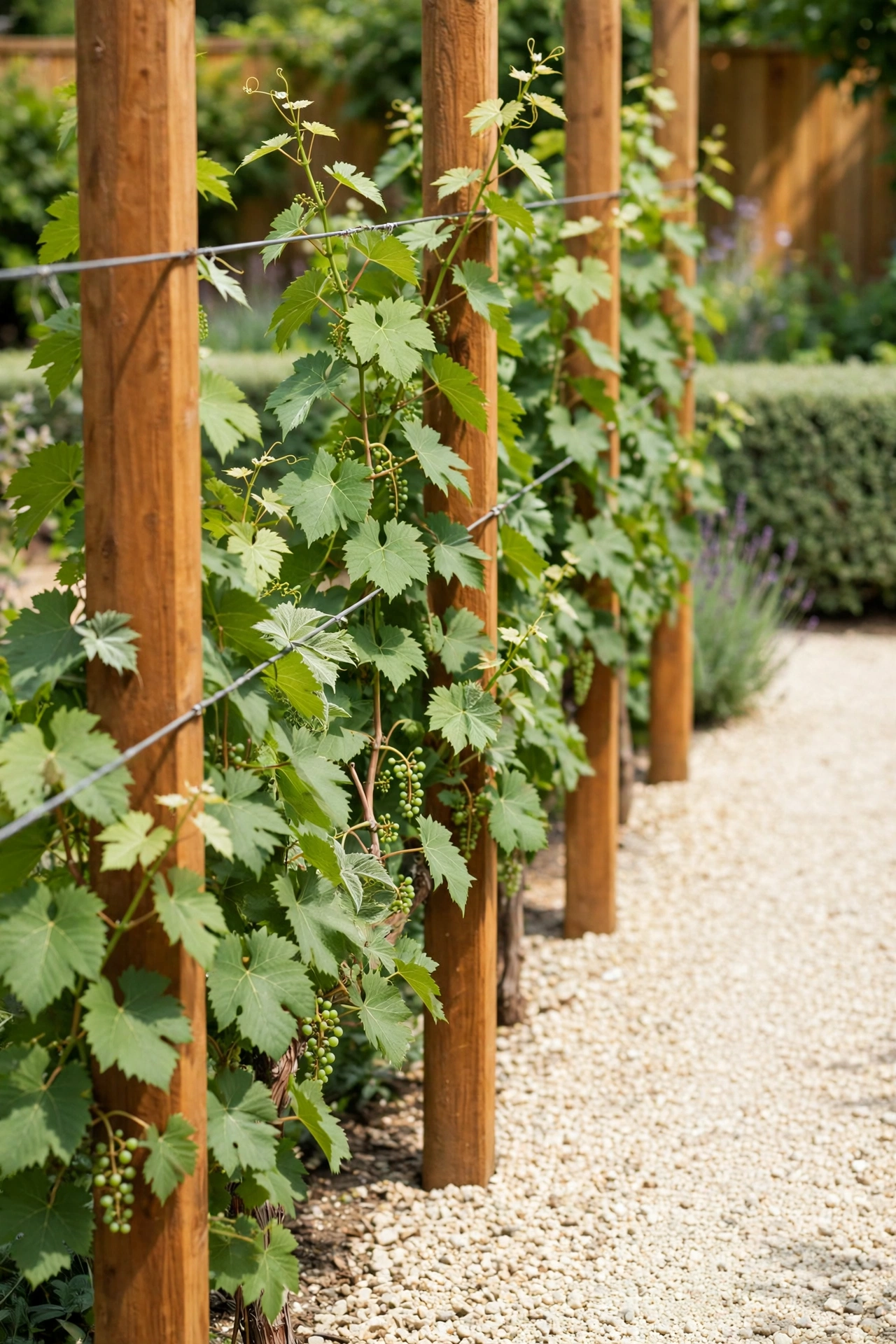
A boundary fence that faces the sun is one of the best places to grow grapevines in a small yard. The fence already gives the vines a vertical surface to climb, and the reflected warmth from the boards helps the fruit ripen. You gain a productive vine row without giving up a single square foot of lawn.
Attach horizontal wires to the fence at two or three heights and train one vine every six to eight feet. Keep the fence line clear of weeds so air flows freely around the leaves. A vine-covered fence also looks beautiful from the street and gives your yard a lush, established feel. For fence styles that suit a planted boundary, these backyard privacy fence ideas offer sturdy options that pair well with climbing vines.
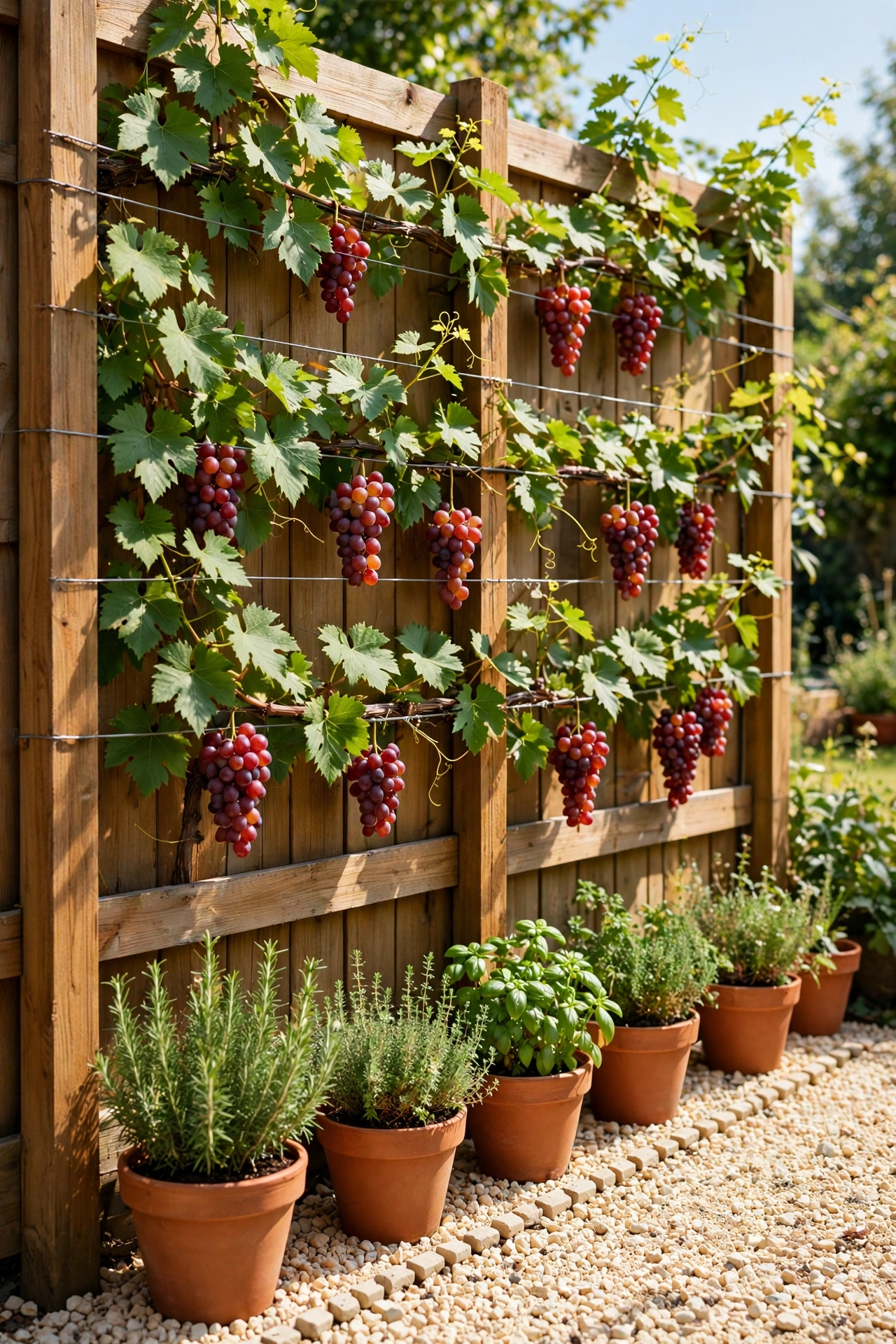
3. Build a Shaded Grape Arbor Over a Patio
A grape arbor turns a sunny patio into a cool, leafy retreat while it grows fruit overhead. The vines climb sturdy posts and spread across the top beams, forming a living roof that filters the summer sun. Underneath, you get dappled shade, gentle breezes, and grapes hanging within easy reach.
Build the arbor from thick timber beams that can carry the weight of mature vines and a full crop. Leave the top open enough for light to reach the leaves, and prune each winter to keep the canopy from growing too dense. An arbor like this becomes the favorite gathering spot in the yard all summer long. For more ways to shape a garden structure, these garden arbor ideas show forms that work beautifully with climbing plants.
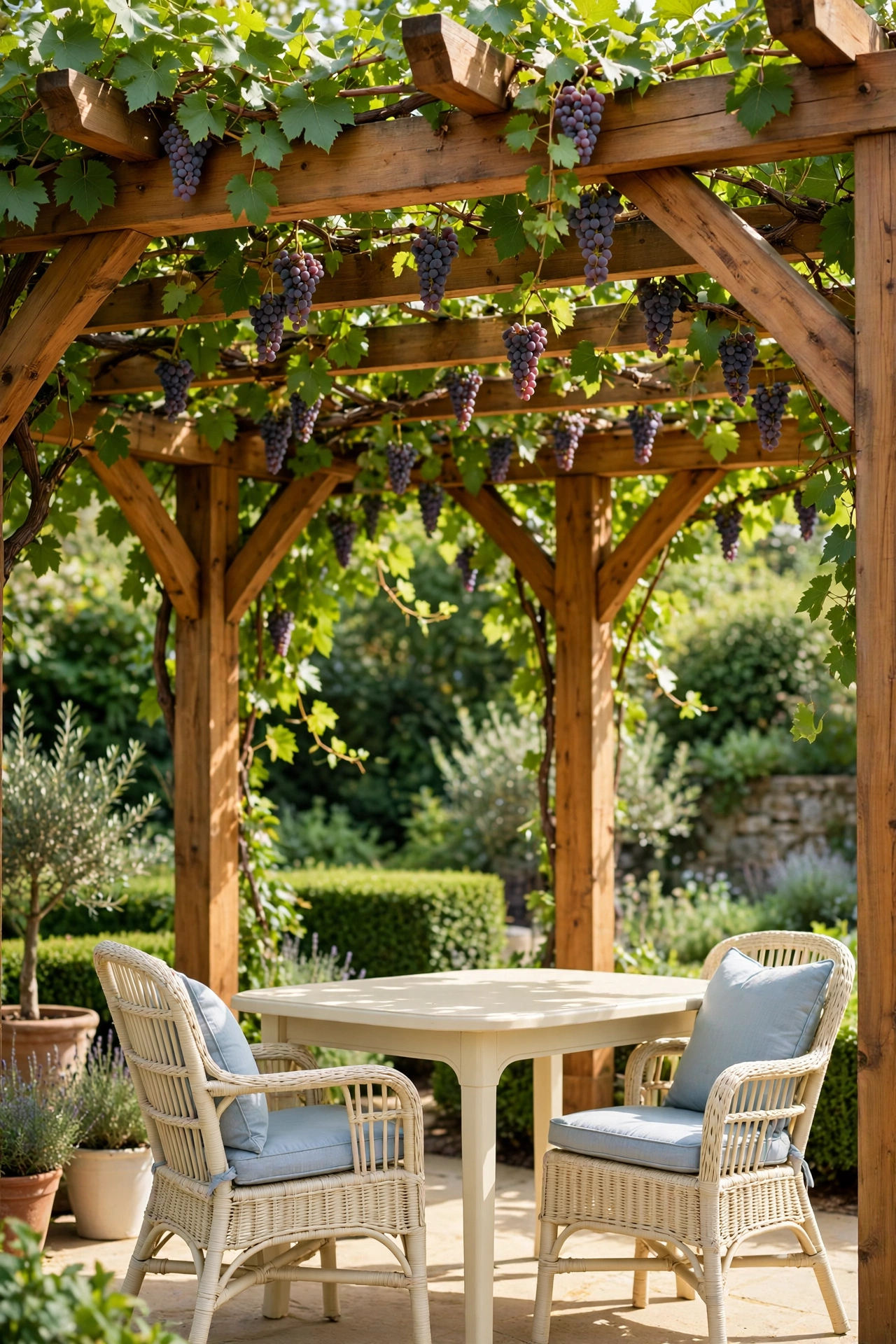
4. Train Vines on a Four-Arm Kniffin System
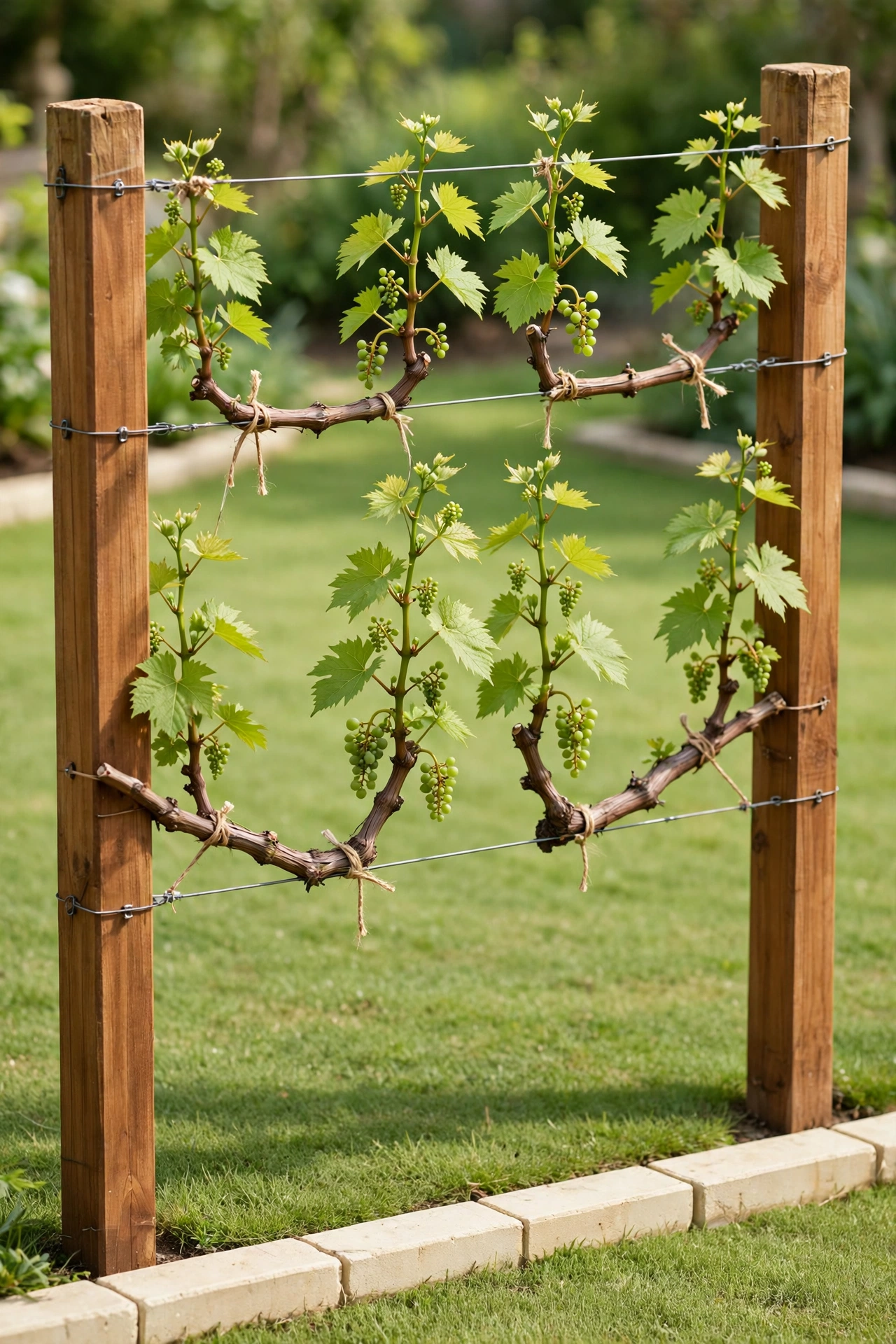
The four-arm Kniffin system is a classic training method that gives each vine four permanent arms, two on an upper wire and two on a lower wire. This shape spreads the fruiting wood evenly and makes winter pruning simple, because you always know which canes to keep and which to cut away.
This system works well for vigorous table grape varieties that produce a lot of growth each year. Give each vine about eight feet of wire space so the arms never crowd each other. With steady pruning, a Kniffin vine stays productive and tidy for decades.
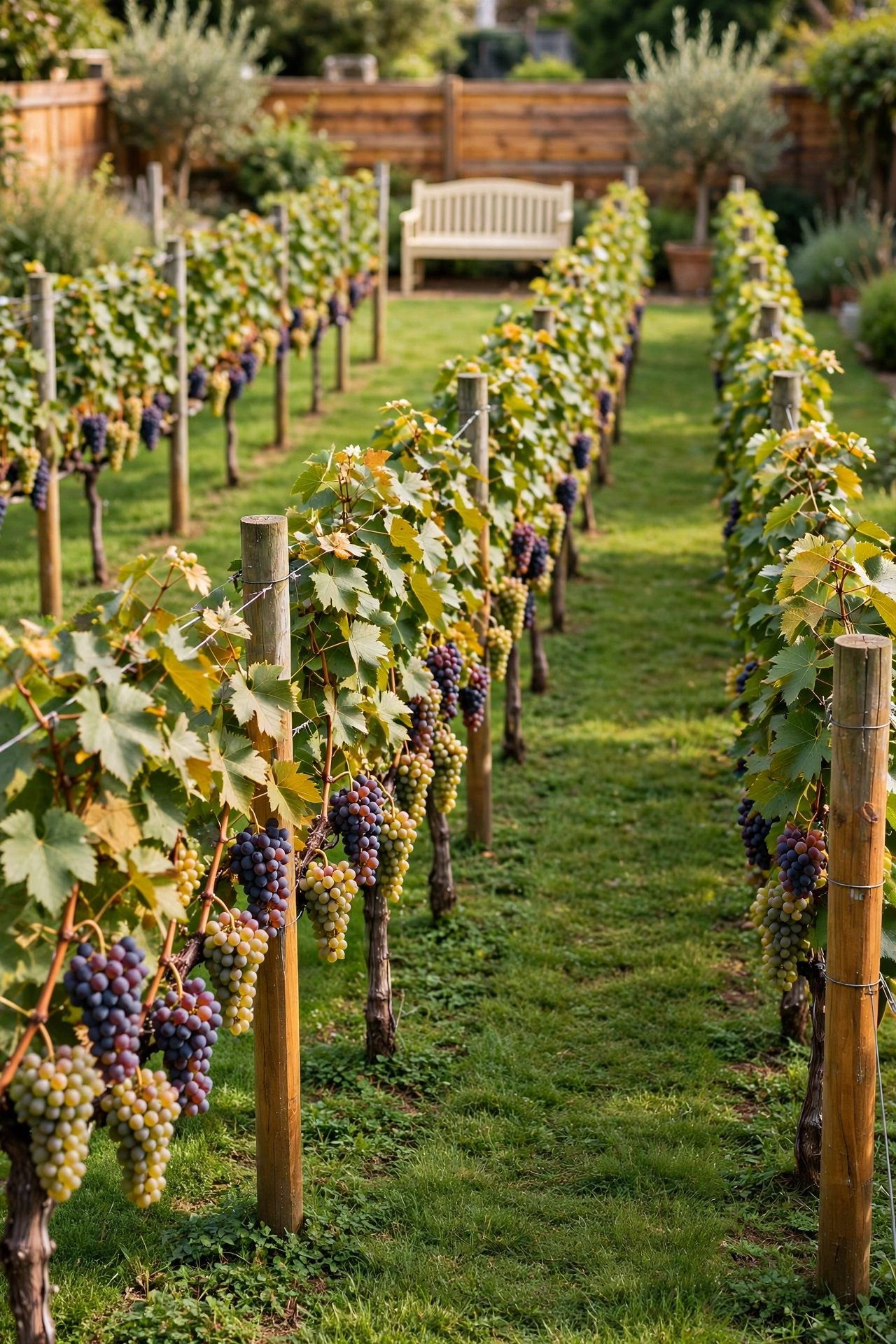
5. Plant a Small Vineyard in Straight Rows
A small block of straight rows gives your backyard the look and feel of a real vineyard, even in a modest space. Rows running north to south catch morning and afternoon sun on both sides of the canopy, which helps the grapes ripen evenly. The clean lines also make mowing, watering, and harvesting simple.
Space the rows eight to ten feet apart so you can walk between them with a basket or a wheelbarrow. Keep a grass or gravel path down the center of each row gap for comfortable access. Even four short rows can produce enough grapes for fresh eating, juice, and sharing with neighbors.
6. Use a Pergola as a Living Grape Canopy
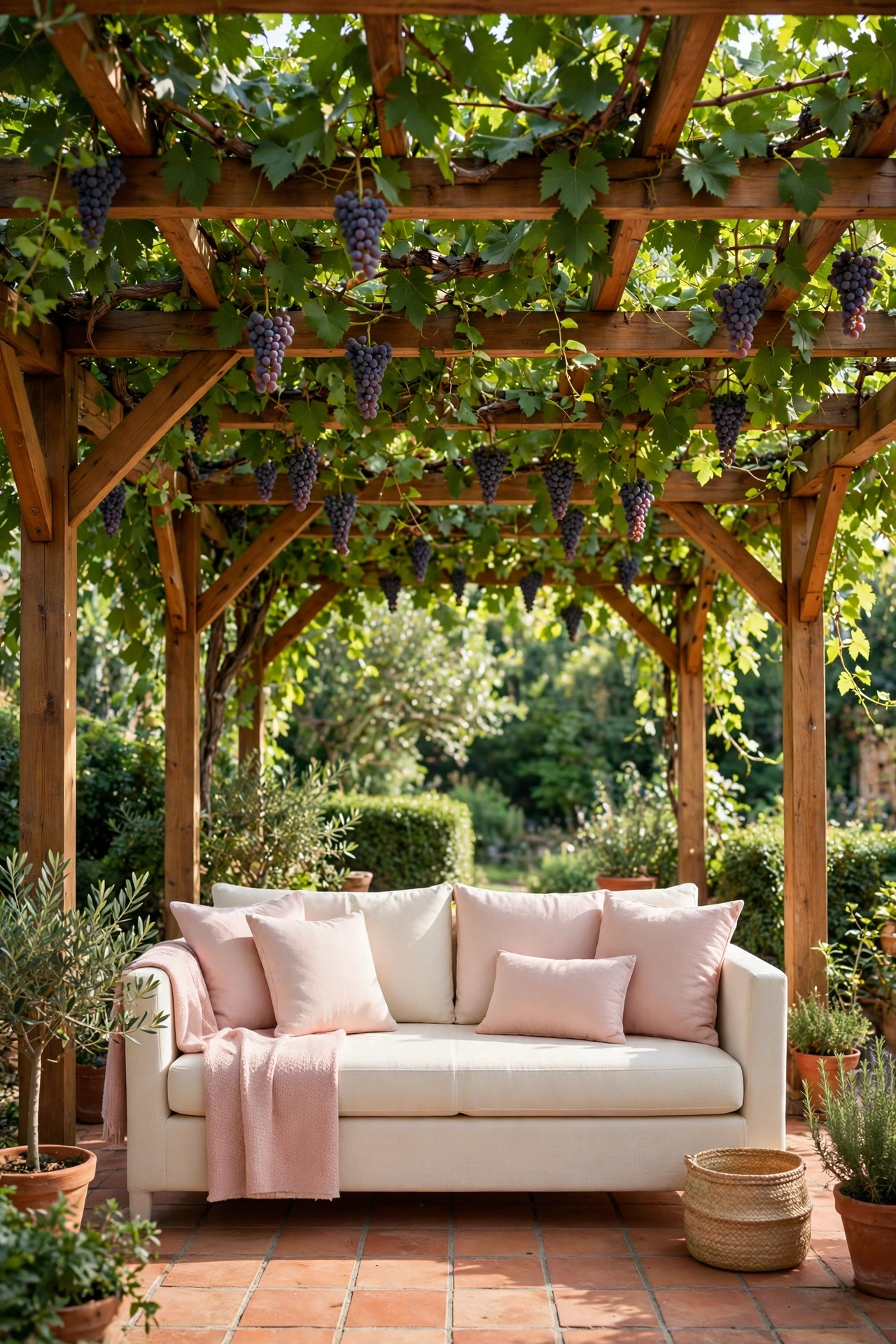
A pergola covered in grapevines gives you shade, beauty, and fruit from a single structure. The vines climb the posts and weave across the rafters, creating a green ceiling that cools the space below. In autumn, the leaves turn gold and red before they fall, which adds a whole second season of color.
Choose a pergola with strong, well anchored posts, because a mature vine canopy is heavy when it is wet after rain. Train one vine up each post and let the arms meet in the middle of the roof. A grape pergola over a seating area becomes the heart of the garden from spring through harvest.
7. Grow Table Grapes in Large Containers
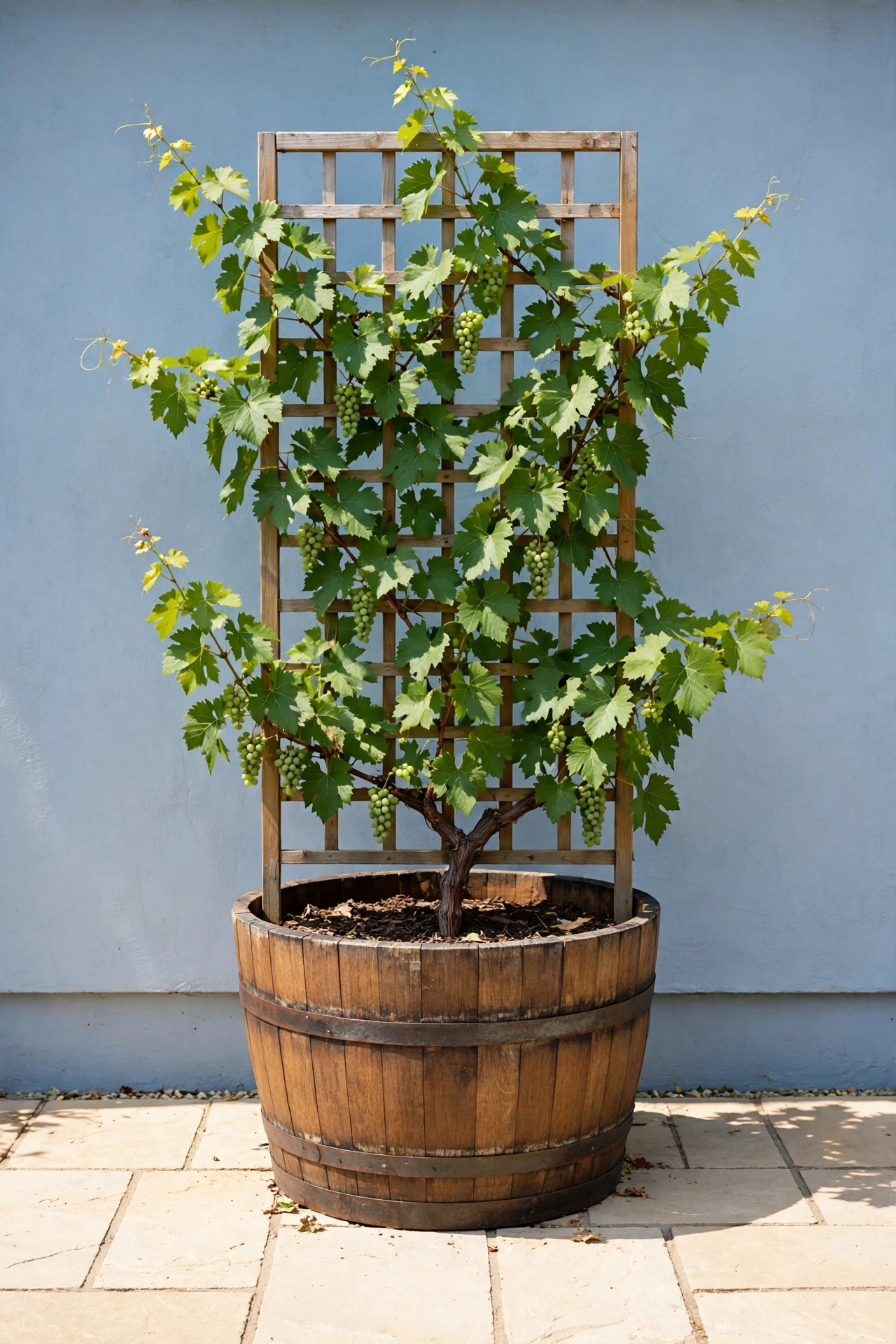
Large containers let you grow grapevines on a patio, a balcony, or a yard with poor soil. A half barrel or a large planter gives the roots room to grow, and a simple stake or small trellis supports the vine as it climbs. Container vines stay smaller and easier to manage than vines planted in open ground.
Use a rich, well draining potting mix and water the container deeply whenever the top few inches of soil feel dry. Feed the vine in spring with a balanced fertilizer and prune it each winter to keep the size in check. Container vines are also easy to move, so you can chase the best sun through the seasons.
8. Mix Grape Varieties for a Long Harvest
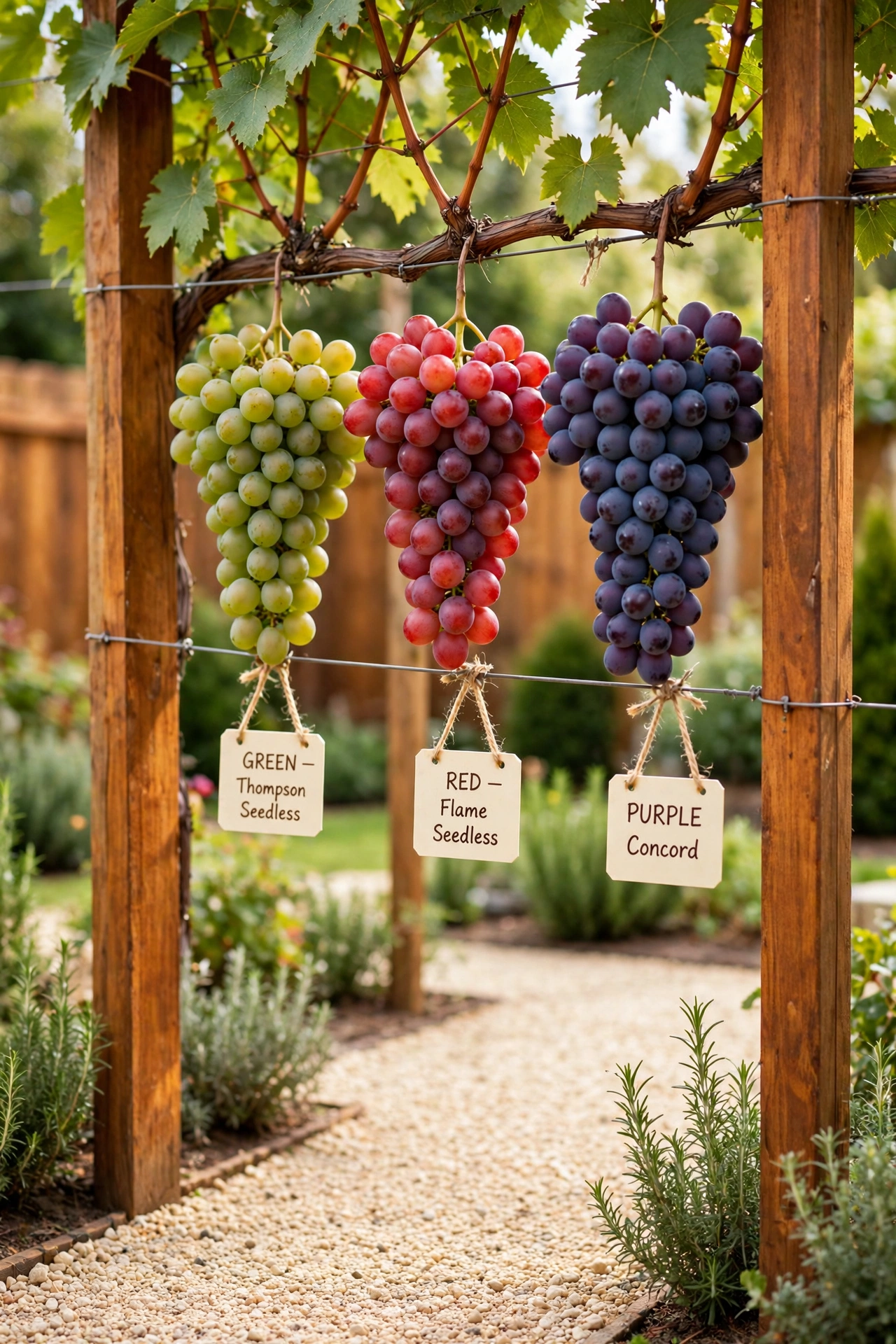
Planting several grape varieties stretches your harvest from early summer into autumn. Early varieties ripen first, mid-season varieties follow, and late varieties finish the year. You get fresh grapes for months instead of a single busy week.
Choose varieties that suit your climate and label each vine clearly with a weatherproof tag. Mix seedless table grapes for snacking with a seeded variety for juice or jelly if you enjoy preserving. A mixed planting also looks beautiful, with clusters in shades of green, red, and deep purple ripening side by side.
9. Train Vines Up a Garden Archway
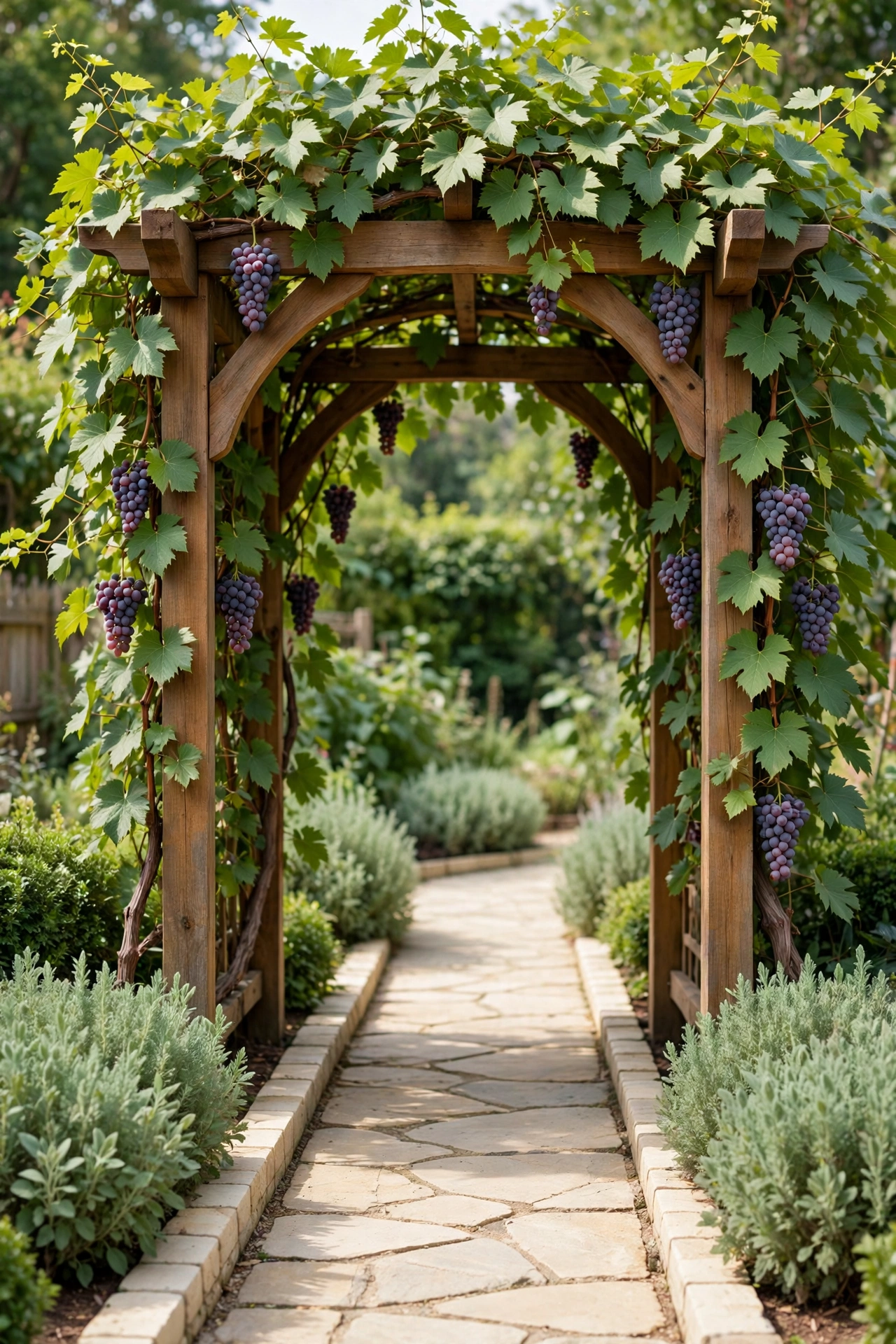
A garden archway wrapped in grapevines makes a charming entrance to a garden path or a seating area. Two vines, one on each side, climb the arch and meet at the top, where their leaves form a green tunnel. Walking under the arch in late summer means walking under hanging clusters of fruit.
Use a sturdy metal or timber arch that can hold the weight of two mature vines. Prune the vines each winter to keep the archway open and the path clear. A grape arch is a small project with a big reward, and it turns an ordinary garden entrance into a destination.
10. Create a Vineyard Hedge Along a Path
A low vineyard hedge turns a plain garden path into a beautiful walk between rows of fruiting vines. The vines grow on a short wire fence about four feet tall, which keeps the clusters at an easy picking height. The hedge defines the path while it produces fruit.
Keep the hedge trimmed to a neat, even shape with summer pruning so the path stays open and the leaves stay healthy. A gravel path beside the hedge drains well and keeps mud off your shoes at harvest time. This layout suits long, narrow yards where a full vineyard block would not fit.
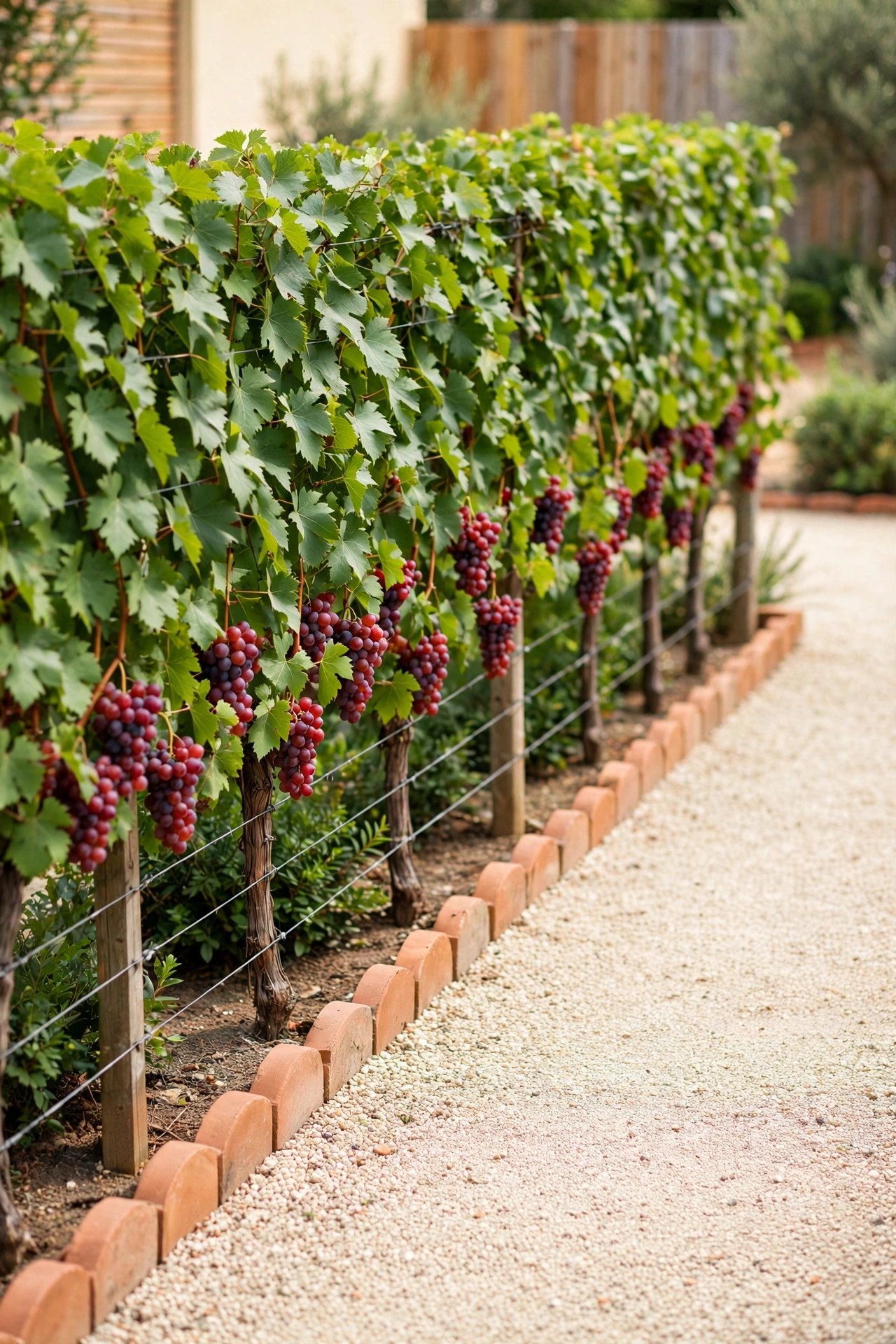
11. Use a Single-Wire Trellis for Tight Spaces
A single-wire trellis is the most compact support system for grapevines and it fits into the narrowest side yard or garden strip. One wire runs between two posts at about five feet high, and each vine grows up to the wire and spreads along it. The whole system takes up almost no ground space at all.
This simple setup works well for a first vine or for a row of vines along a wall. Keep the wire taut and tie new growth loosely so stems never rub or break. Even a single wire of grapes can fill a basket at harvest time.
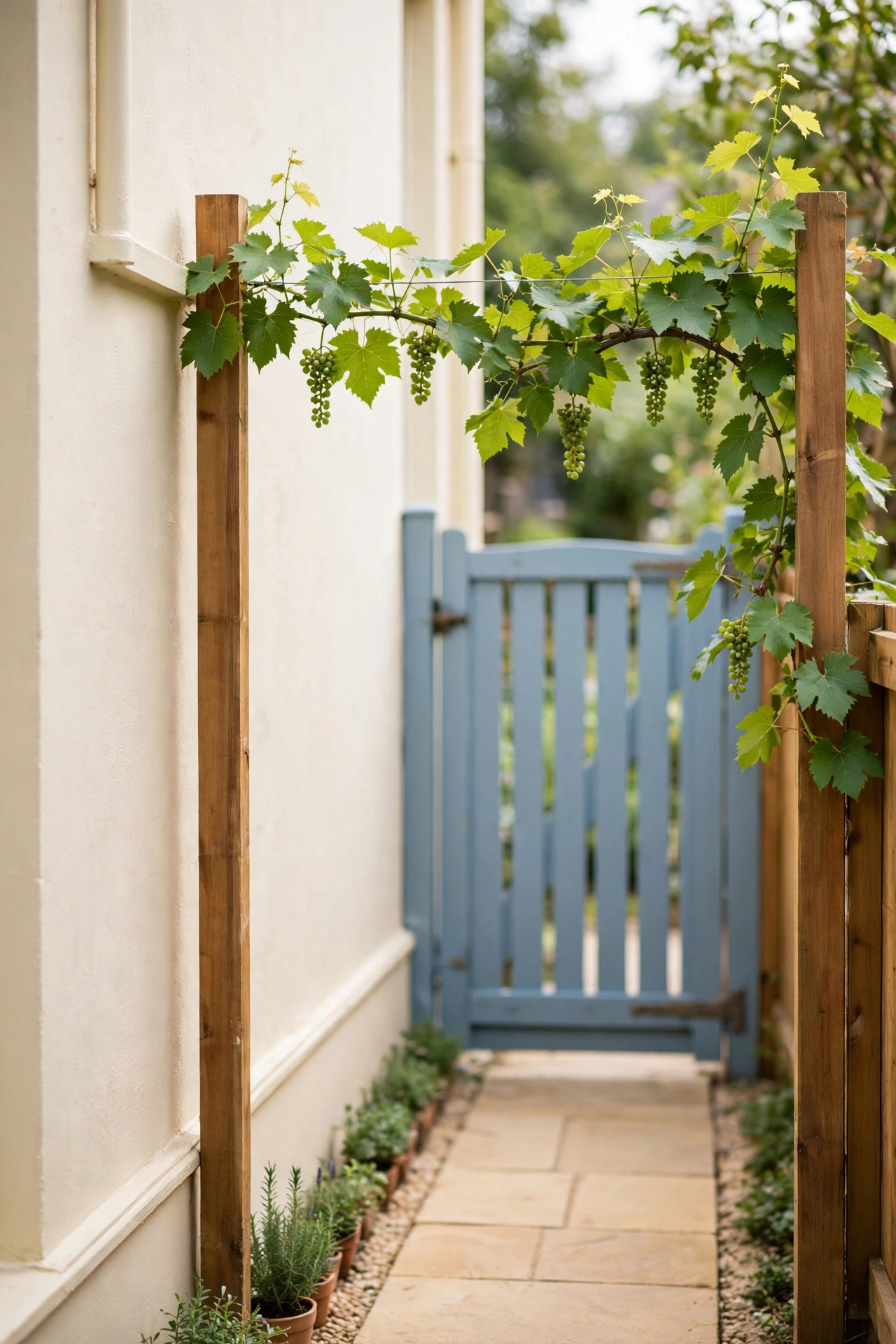
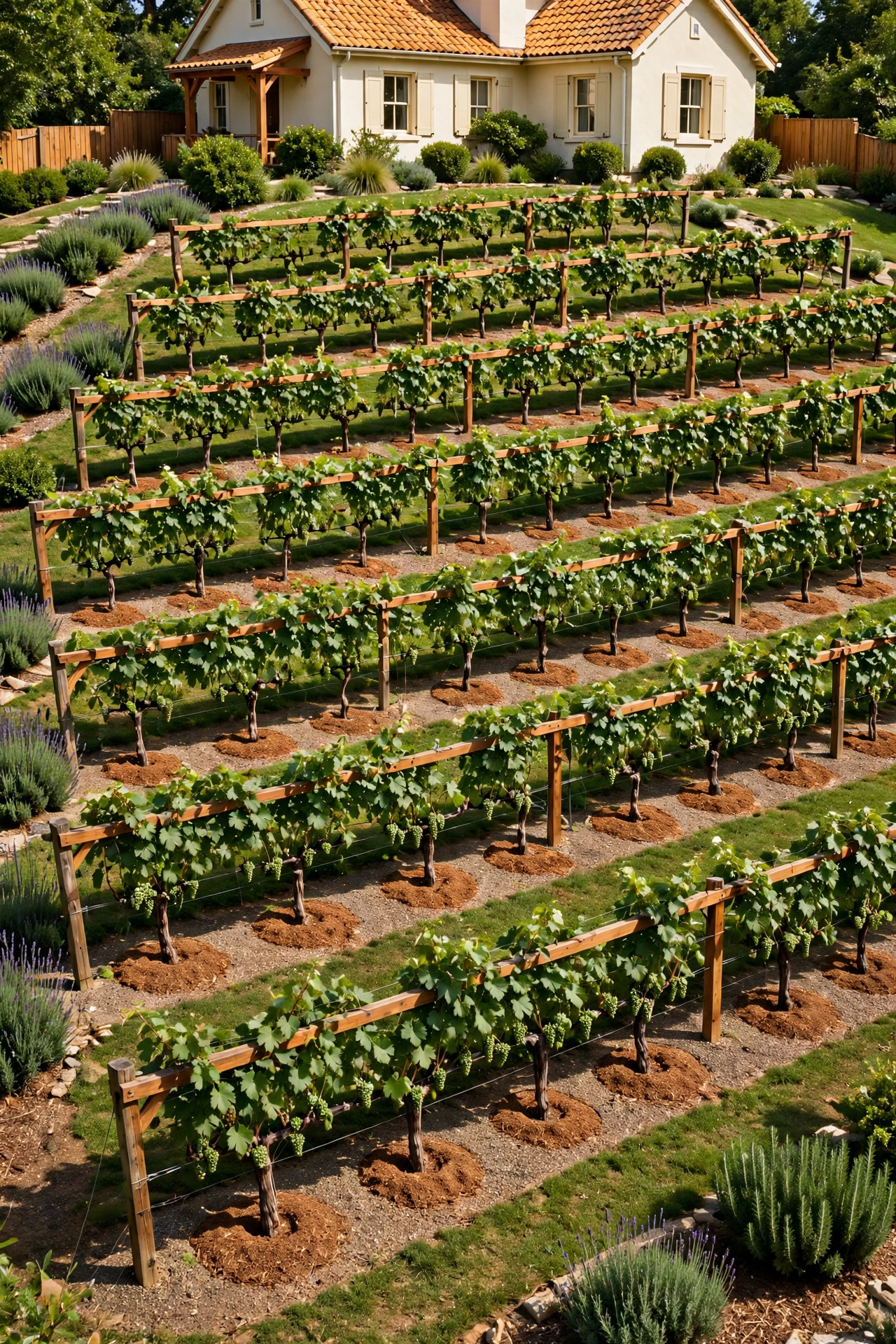
12. Plant Vines on a Sunny South-Facing Slope
A south-facing slope is a gift for grape growing, because it catches the most sun and drains cold air downhill. Vines on a slope ripen earlier and more evenly than vines on flat ground, and the slope keeps water from pooling around the roots. Even a gentle rise makes a real difference.
Plant the rows across the slope rather than up and down it, so rainwater soaks in instead of running off. Add mulch around each vine to hold moisture and keep the soil cool in hot weather. A sloped vineyard also looks wonderful from the house, with the rows stepping down the hill.
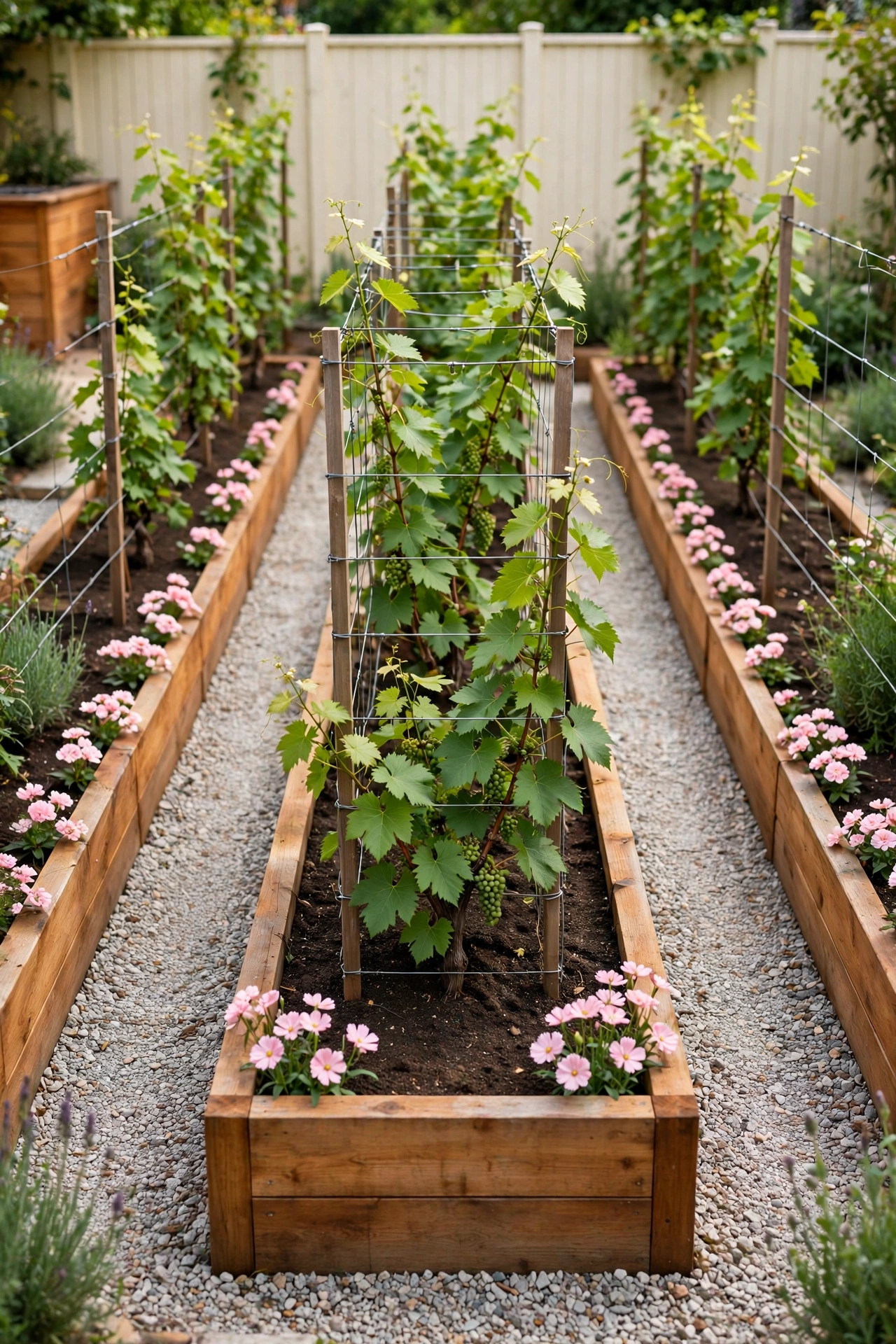
13. Build a Raised Bed Vineyard for Wet Soil
Raised beds solve the biggest problem for grapevines in heavy or wet soil, because the roots sit above the waterline and drain freely. A bed about eighteen inches high filled with a sandy, well draining mix gives vines the dry feet they need to thrive. The beds also warm up faster in spring, which helps growth start early.
Build the beds from rot-resistant timber or stone and run a wire trellis along the center of each bed. Space the beds wide enough for a wheelbarrow to pass between them. If your yard holds water after rain, these raised garden bed layout ideas will help you plan beds that drain well and look tidy.
14. Train an Overhead Canopy for a Dining Area
An overhead grape canopy over an outdoor dining table creates a magical setting for summer meals. The vines grow across wires or a light frame above the table, and the leaves filter the sun into soft, moving shade. Diners can reach up and pick a grape between courses.
Keep the canopy high enough that guests can stand comfortably beneath it, about seven feet above the ground. Prune the canopy each winter and thin the leaves in summer so light still reaches the table. A dining canopy turns every outdoor meal into a small celebration.
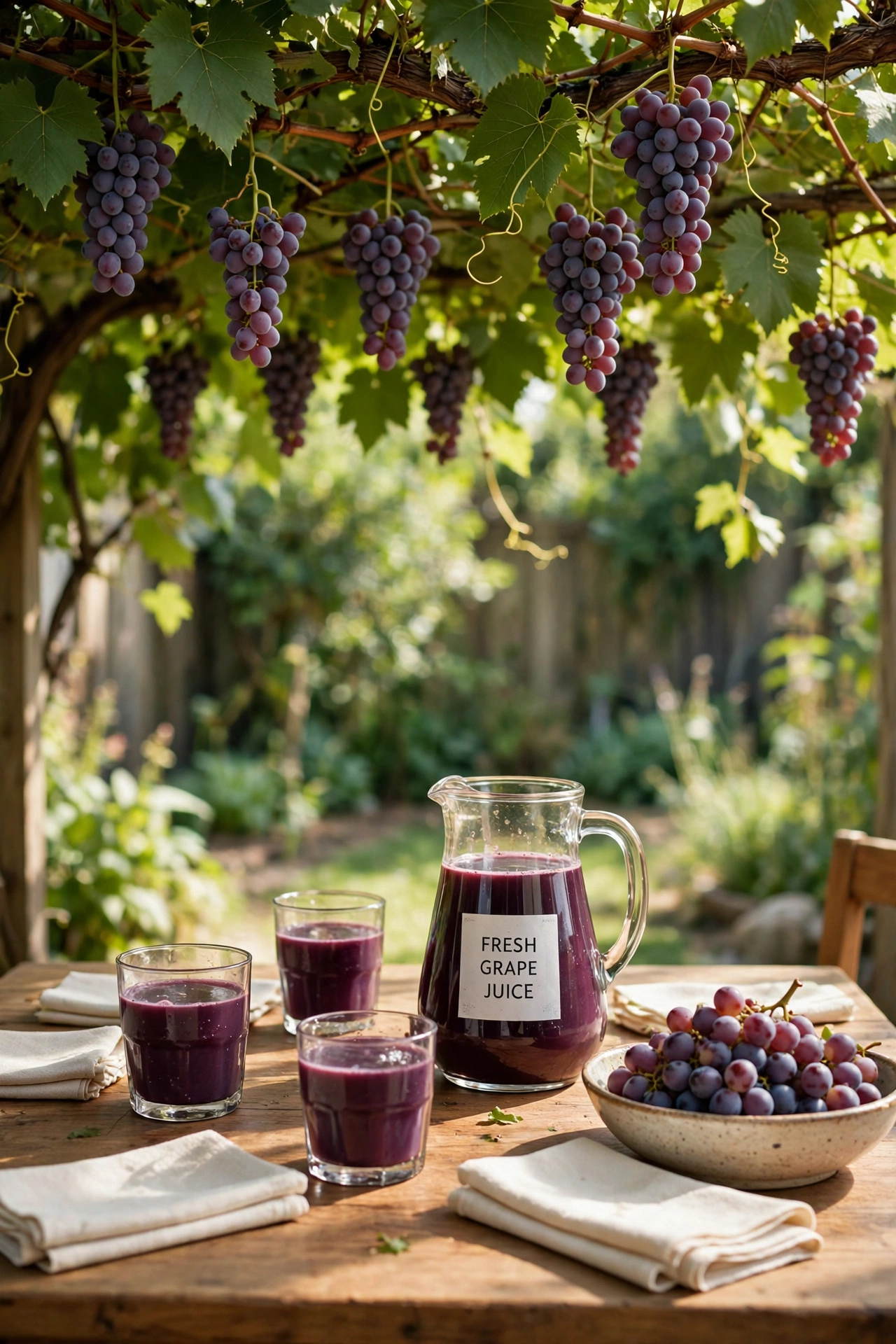
15. Grow Grapes on a Wire Fence Between Beds
A wire fence between two garden beds can carry grapevines while it separates the growing areas. The vines use the fence as their trellis, and the beds on either side stay open for vegetables, herbs, or flowers. One structure does two jobs at once.
Run two or three wires between sturdy posts and train the vines along them in a simple cordon shape. Keep the fence line weeded so the vines never compete for water or nutrients. This layout is perfect for a working garden where every structure must earn its place.
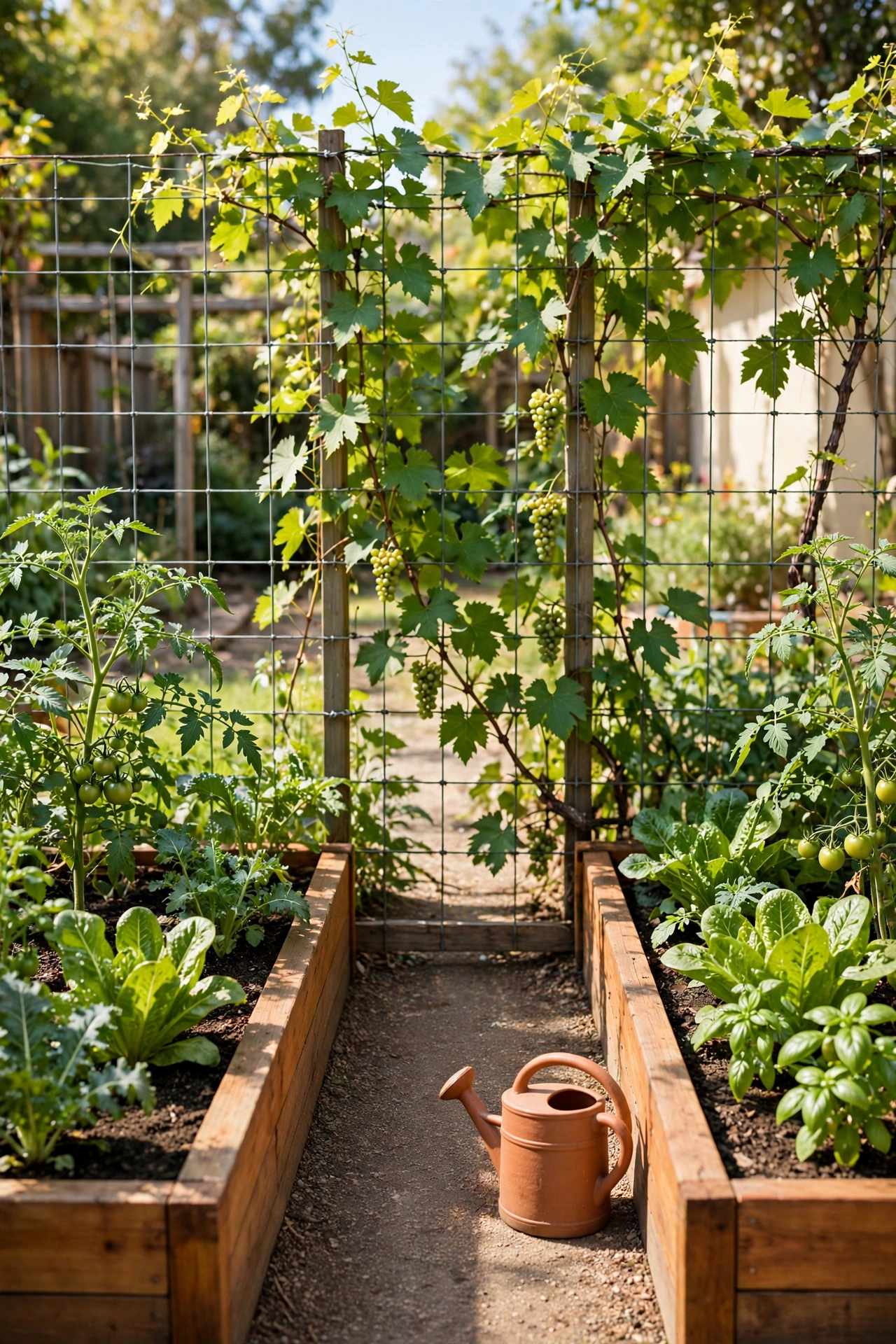
16. Add a Drip Irrigation Line to Every Row
Drip irrigation gives grapevines steady, deep water right at the roots without wetting the leaves. Dry leaves stay healthier, and the vines use water far more efficiently than with overhead sprinklers. A simple drip line along each row is one of the smartest upgrades for a backyard vineyard.
Run the main line along the end of the rows and add a drip emitter at the base of each vine. Water deeply but infrequently so the roots grow down instead of staying near the surface. Once the vines are established, they need less water than most garden plants.
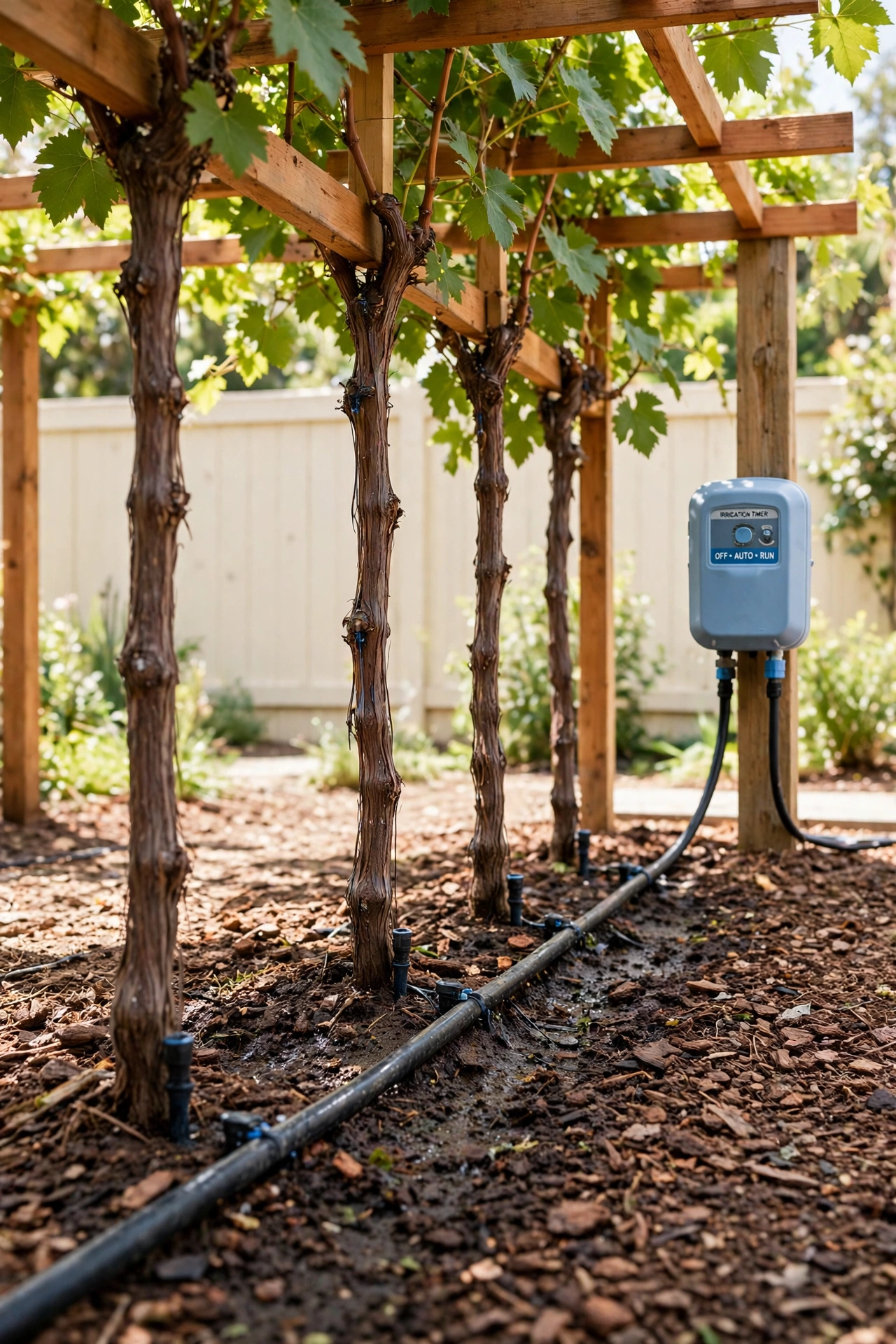
17. Prune to a Cordon for Easy Care
Cordon pruning trains each vine into a permanent horizontal arm along a wire, with short fruiting spurs spaced along the arm. This shape is easy to understand, easy to prune, and easy to keep tidy year after year. You always know where the fruit will grow.
Establish the cordon in the first two years by choosing one strong cane and tying it along the wire. Each winter, cut the side shoots back to short spurs with two or three buds. A cordon vine looks neat, fruits reliably, and suits gardeners who want a simple routine.
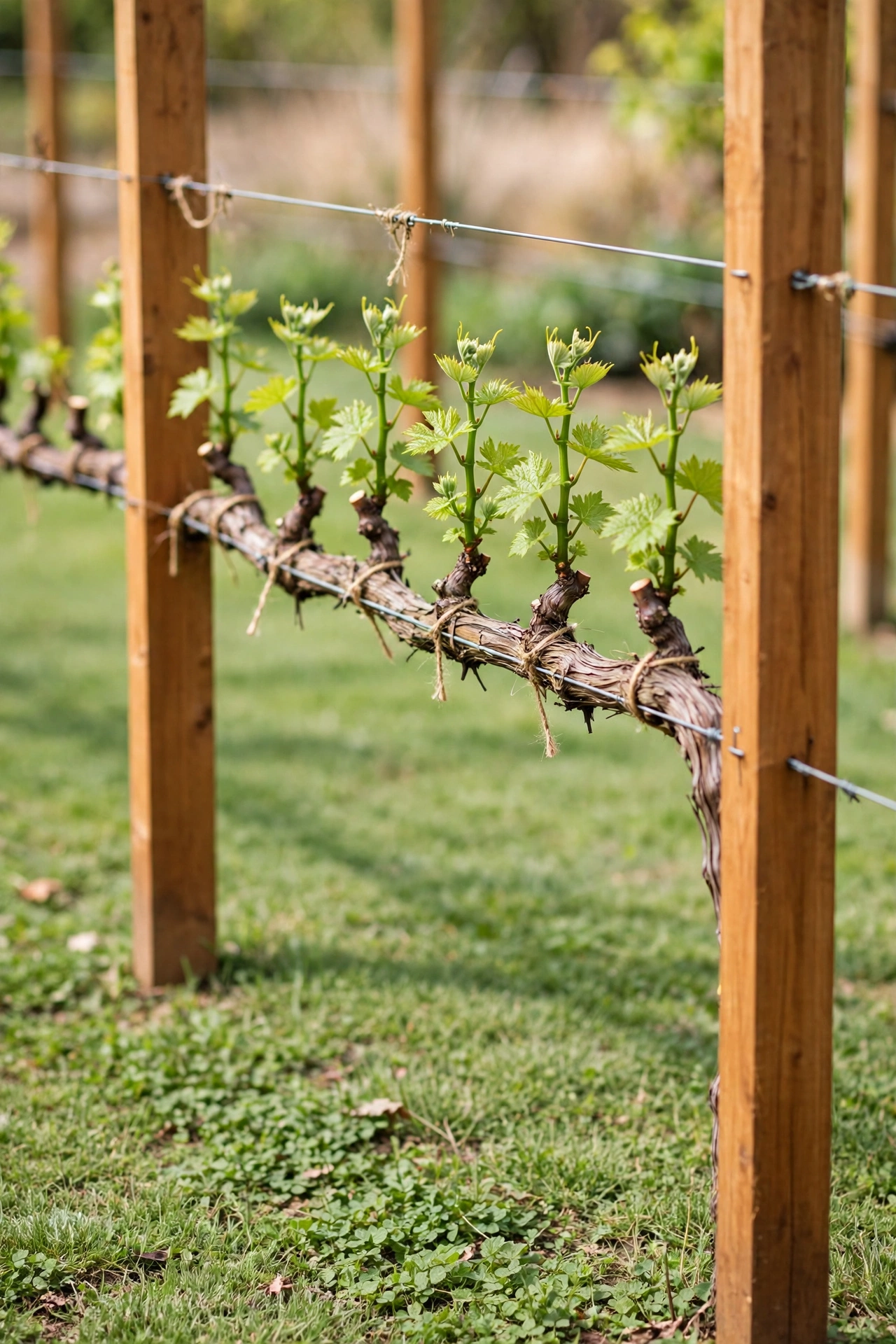
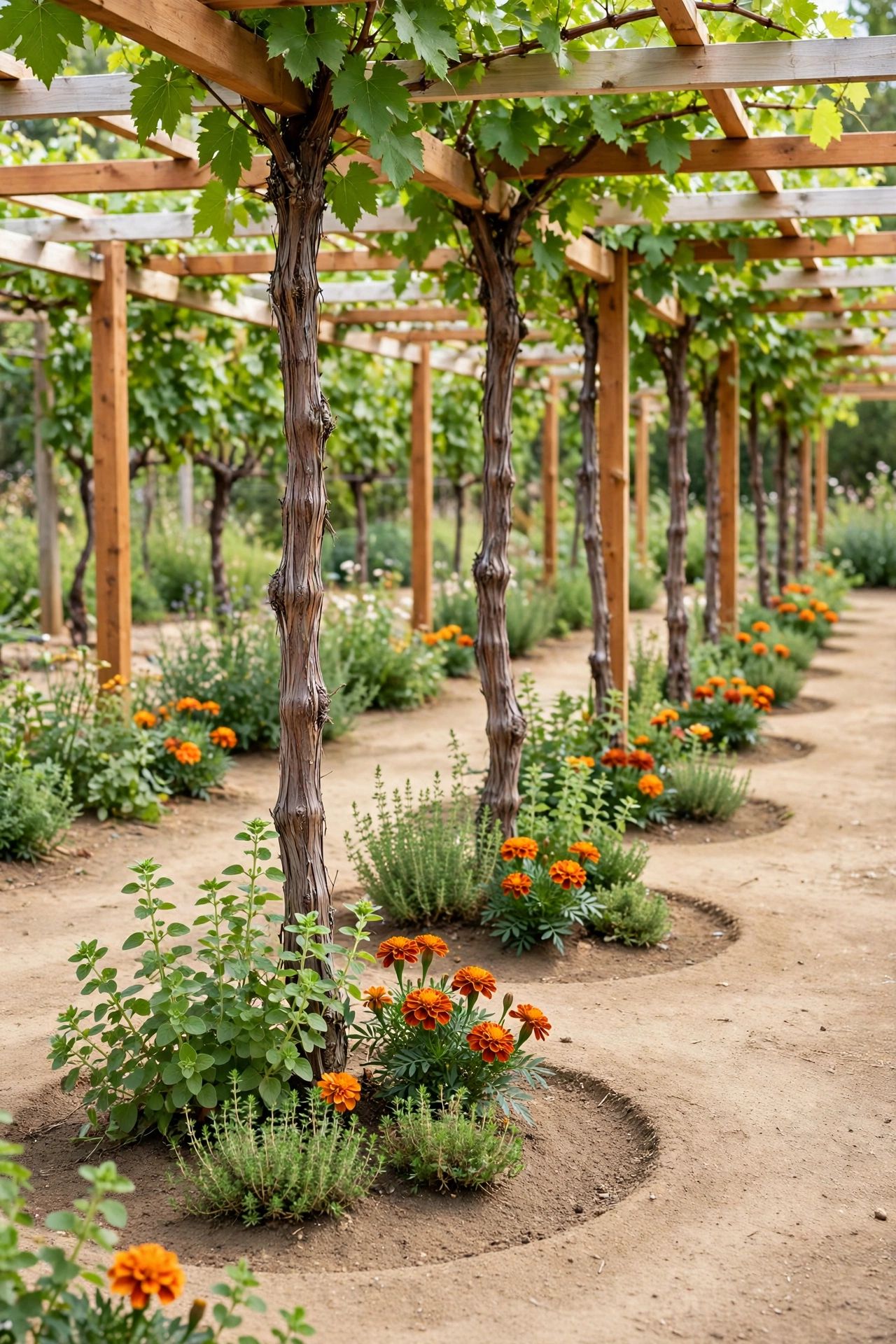
18. Underplant Vines With Herbs and Flowers
Underplanting the vine row with herbs and flowers makes the vineyard more beautiful and more useful at the same time. Low herbs like thyme and oregano cover the soil, suppress weeds, and release a lovely scent when brushed. Flowers like marigolds and nasturtiums attract helpful insects to the garden.
Keep the plants low and leave a clear circle of bare soil right around each vine trunk so the base stays dry and easy to inspect. Avoid tall plants that would shade the lower leaves or tangle with the canes. A well planted vine row looks like a cottage garden and works like a small farm.
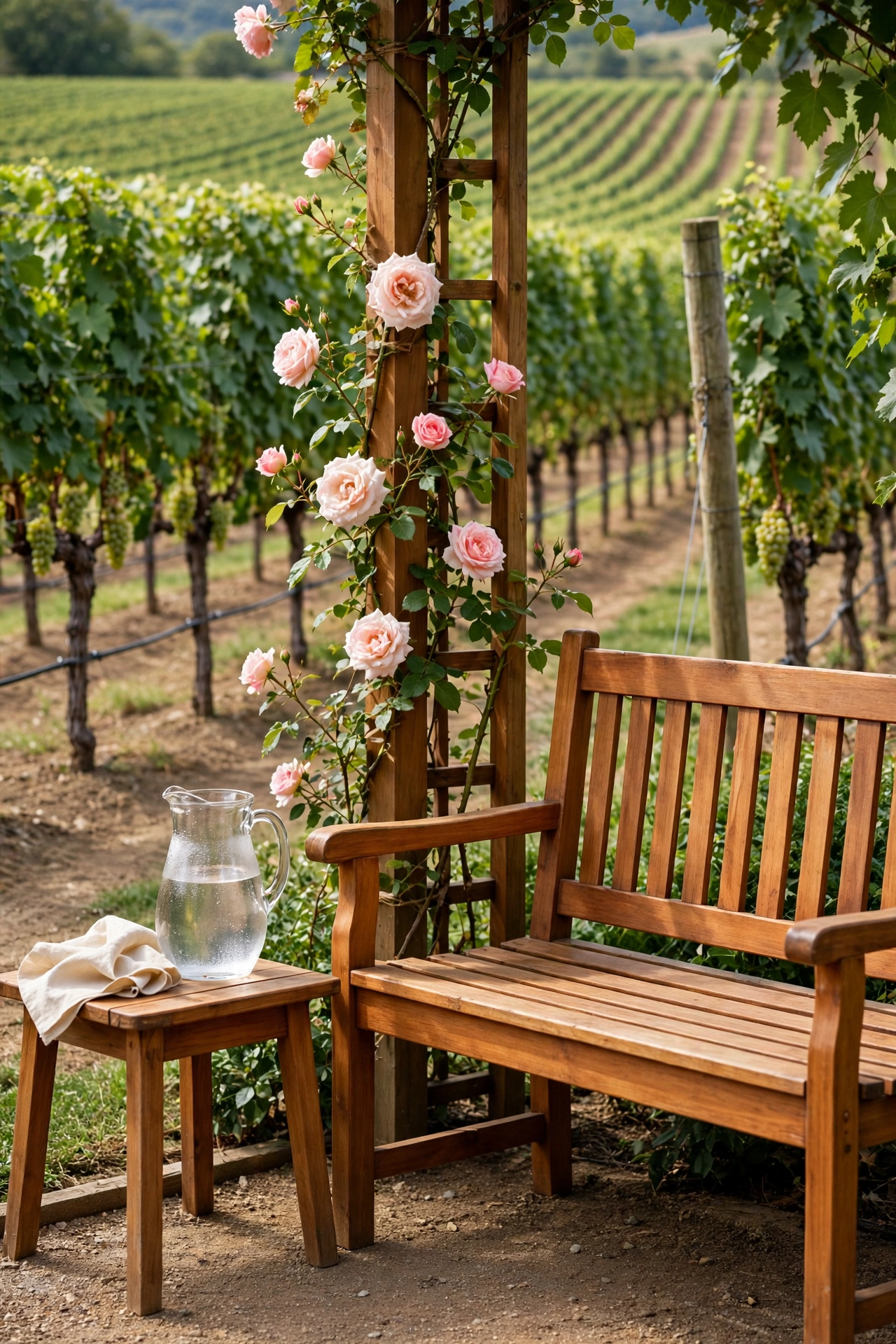
19. Create a Vineyard Corner With a Bench
A quiet bench tucked into a vineyard corner gives you a place to sit, watch the vines grow, and enjoy the garden. The bench turns a working vineyard into a retreat, and it gives you a comfortable spot to rest during pruning and harvest days. A corner is ideal because it uses space that rows would waste.
Place the bench where it catches morning light and faces the best view of the vine rows. Add a small side table for a drink and a basket for tools. A vineyard bench is a small luxury that makes the whole garden feel more welcoming.
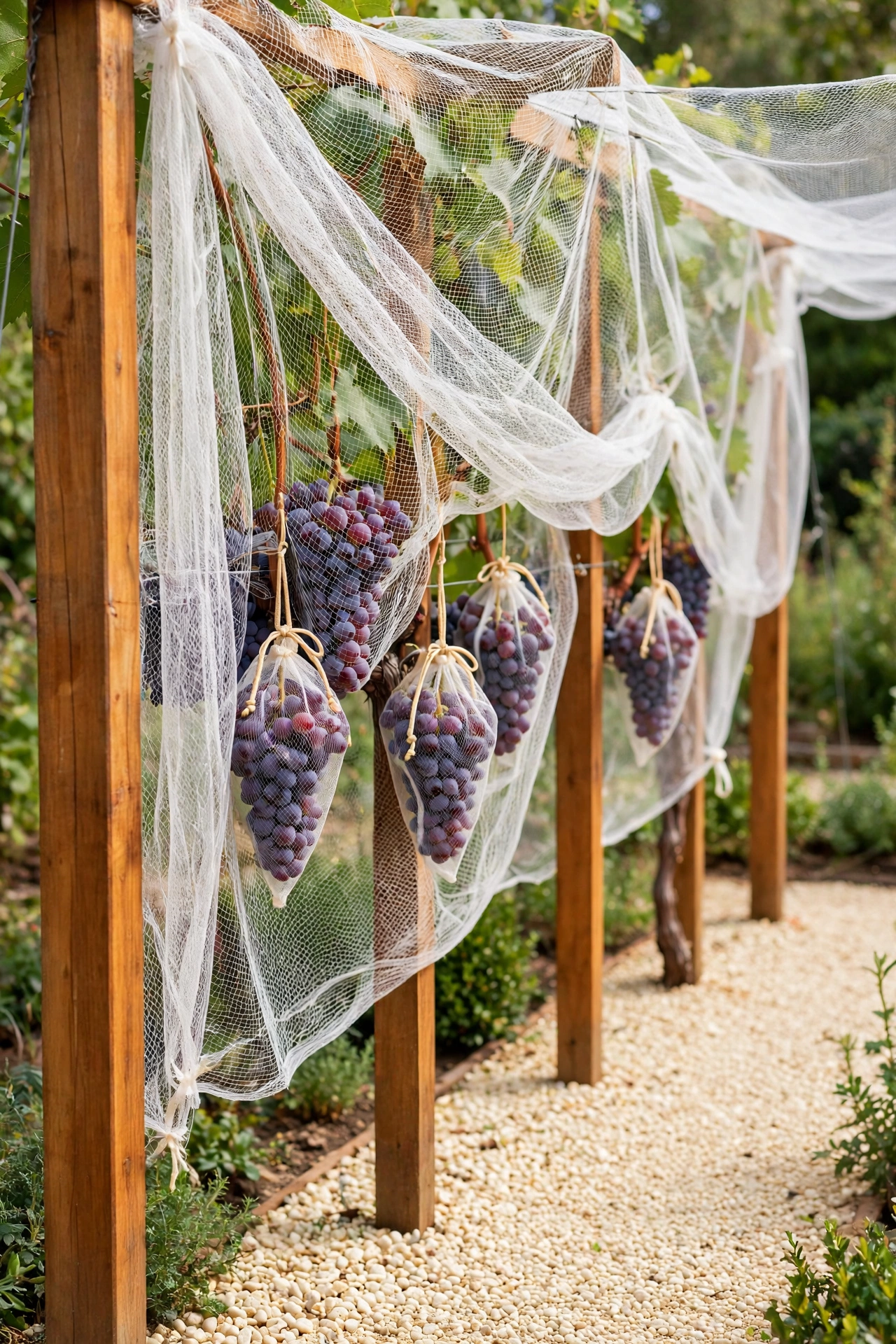
20. Protect Clusters With Netting and Bags
Birds love ripe grapes as much as you do, so protection is part of every successful backyard vineyard. Lightweight bird netting draped over the row keeps birds away without harming them, and individual mesh bags protect prized clusters. Both methods let light and air reach the fruit.
Put the netting on as soon as the grapes start to color, before the birds discover them. Secure the edges so birds cannot slip underneath, and check the netting regularly. A little protection at the right moment saves the whole harvest.
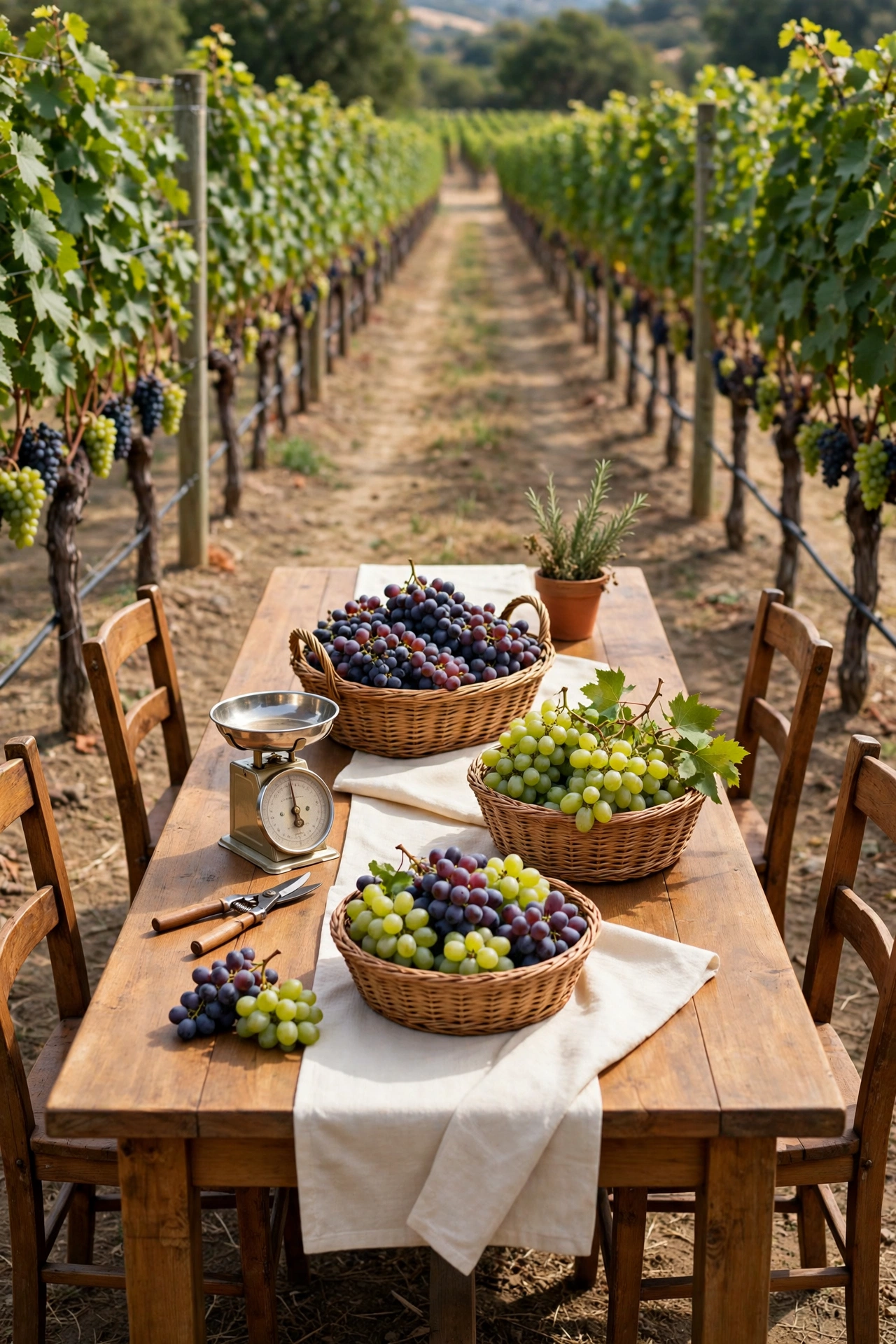
21. End the Season With a Harvest Table Setup
A harvest table set up among the vines turns picking day into a celebration. A long wooden table, baskets for the grapes, and a few chairs invite family and friends to help with the harvest and share the first taste. The table stays in place through the picking season as a gathering spot.
Keep baskets, pruning shears, and a scale on the table so the harvest runs smoothly. After picking, the same table works for sorting, tasting, and packing grapes for sharing. A harvest table makes the end of the season feel like the reward it truly is.
Conclusion
A backyard vineyard is one of the most rewarding projects a home gardener can start. From a single wire along a fence to a full block of rows, every idea here fits a real yard and a real life. The vines ask for sun, good drainage, and a little winter pruning, and they repay you with fruit, shade, and beauty for decades.
Pick the idea that fits your space and plant your first vine this season. Start small, learn as you grow, and let the vineyard expand one row at a time. If you love growing your own fruit, these backyard orchard layout ideas will help you add fruit trees alongside your vines for a complete home orchard.
Frequently Asked Questions About Backyard Vineyard Ideas for Growing Grapevines
How much sun do grapevines need in a backyard?
Grapevines need at least six to eight hours of direct sun each day to ripen fruit well. A south-facing fence, wall, or slope gives the most light in most yards. Vines in too much shade produce fewer grapes and the fruit stays sour.
How long does it take for a backyard grapevine to produce fruit?
Most grapevines produce a small crop in their second year and a full crop by the third or fourth year. Let the vine establish strong roots in the first year and remove any small clusters that form. Patience in the early years leads to decades of heavy harvests.
What is the best soil for growing grapevines?
Grapevines prefer well draining soil that is not too rich, because overly fertile soil produces leafy growth with little fruit. Sandy loam is ideal, and raised beds help in heavy clay. Good drainage matters more than fertility, so never plant vines where water pools after rain.
How far apart should backyard grapevines be planted?
Space vines six to eight feet apart along the row, with rows eight to ten feet apart for walking access. Vigorous varieties need the wider spacing, while smaller varieties can sit a little closer. Good spacing keeps air moving around the leaves and makes pruning and picking easier.
Do grapevines need to be pruned every year?
Yes, grapevines must be pruned every winter while they are dormant, because fruit only grows on new shoots from last year wood. Without pruning, the vine becomes a tangled mass with small, poor quality clusters. A simple cordon or cane system makes yearly pruning quick once you learn the pattern.

Hi, I’m Emily! I turn messy corners into cozy, organized spots. DreamNestDecor is where I share simple, practical home ideas — decor, organization, and small-space solutions that work in real life, not just in photos. Every idea here is carefully researched before it’s shared.