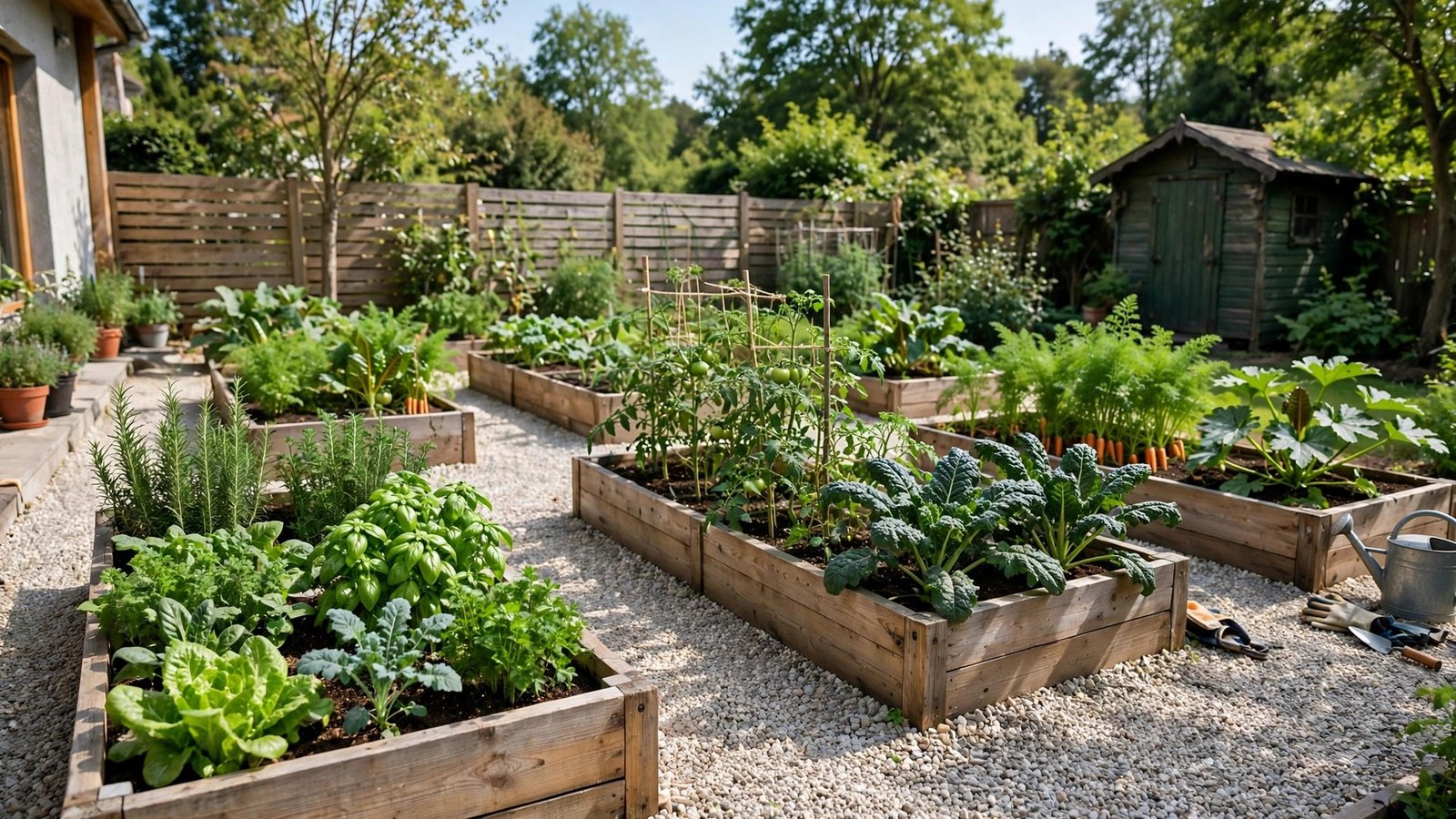
Close your eyes and picture your dream vegetable garden. You walk between neat raised beds overflowing with tomatoes, herbs, and bright flowers, and every bed is exactly where it should be. That kind of garden does not happen by accident; it starts with a smart layout.
These 27 raised garden bed layout ideas for productive gardens will help you plan beds that grow more food in less space. You will find classic wood designs, modern metal styles, beautiful stone options, and clever layouts that make watering and harvesting easy.
1. Classic Wooden Beds Lined In A Row
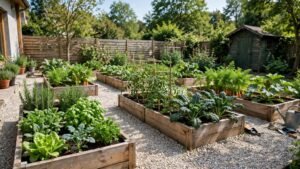
Four simple wooden beds in a straight row never go out of style. Build them from cedar or pine boards, line them up on a gravel surface, and leave wide paths between for your wheelbarrow. This tidy arrangement makes watering, weeding, and harvesting feel effortless.
Plant taller crops like citrus trees or corn at the north end so they never shade the smaller plants. A row layout also makes it easy to rotate crops each season without redrawing your whole plan.

2. Simple Square Bed With A Small Tree
One square bed with a small fruit tree in the center brings a relaxed kitchen garden feel to any backyard. Underplant the tree with herbs and shallow-rooted greens that enjoy the light shade. A single stake keeps the young tree straight while it establishes.
Keep the bed at least four feet square so the tree roots have room without crowding the herbs. This is a lovely starter project if you are new to raised bed gardening.

3. Wooden Beds With Corner Caps And Trellises
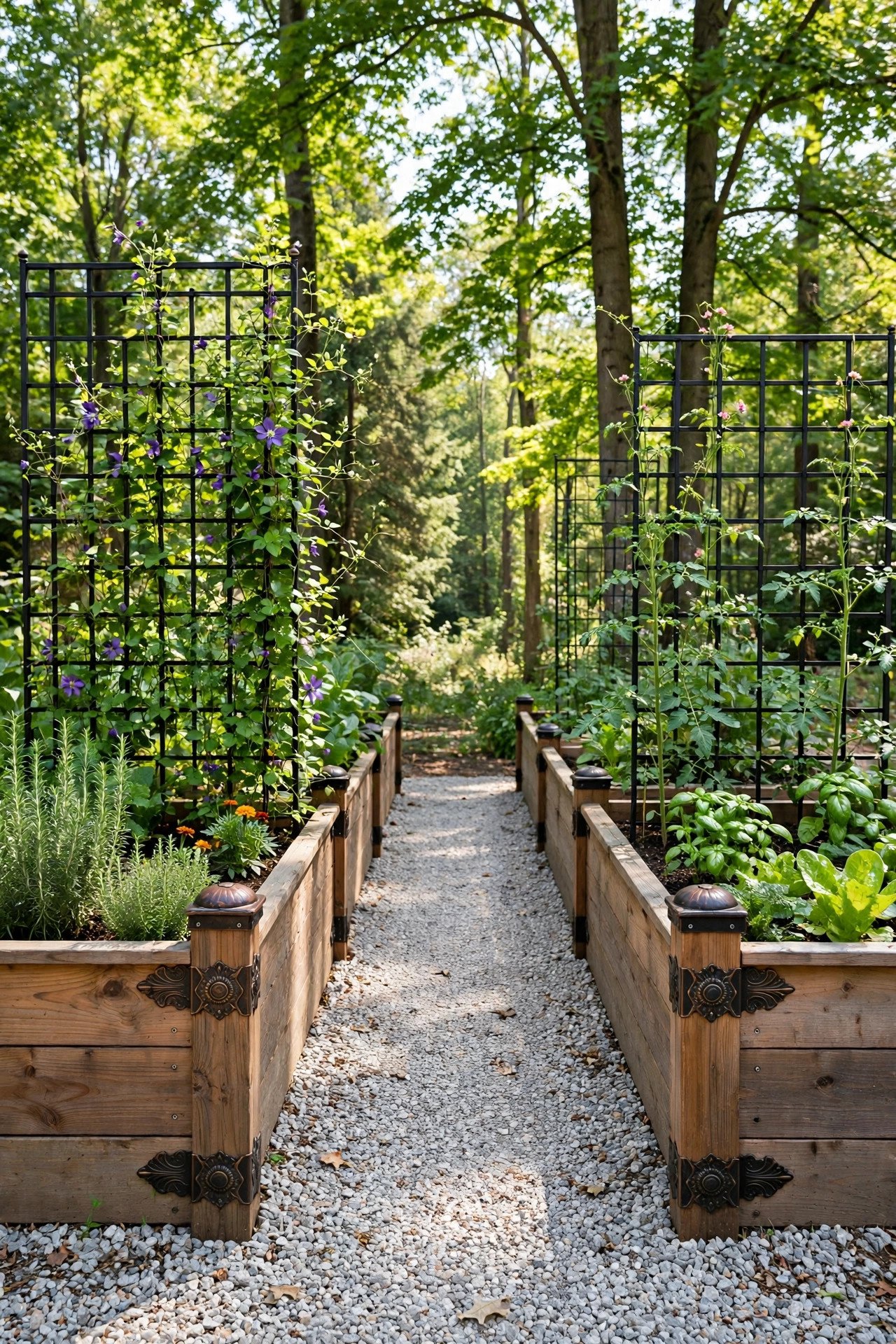
Corner boards with a flat top cap give wooden beds a finished, furniture-like look while making the structure sturdier. Add a metal trellis at one end for climbing beans or cucumbers, and you double your growing space without using more ground. Gravel paths between the beds keep weeds down and feet clean.
Choose a cap wide enough to sit on while you work; your back will thank you. This polished look suits front-yard vegetable gardens where appearance matters.
4. Modern Gray Bed Bursting With Tomatoes
A sleek gray raised bed brings a modern edge to the vegetable patch. Fill it with rich compost and plant tomatoes deeply, burying two-thirds of each stem so extra roots form along it. The neutral gray makes green foliage and red fruit look incredibly vivid.
Give each tomato plant at least two feet of space and a sturdy cage from day one. Gray beds pair well with gravel ground cover for a clean, low-maintenance zone.

5. Minimalist Gray Planter For Fresh Herbs
A tidy gray planter near the kitchen door keeps fresh herbs within arm’s reach. Plant basil, parsley, chives, and thyme together, since they share similar water needs. A minimalist planter like this fits even the smallest patio or balcony corner.
Snip herbs regularly to keep them bushy and productive. If you are gardening in truly tight quarters, these small balcony urban oasis ideas show how to grow a lot in very little space.

6. Stacked Plank Beds With Protective Netting
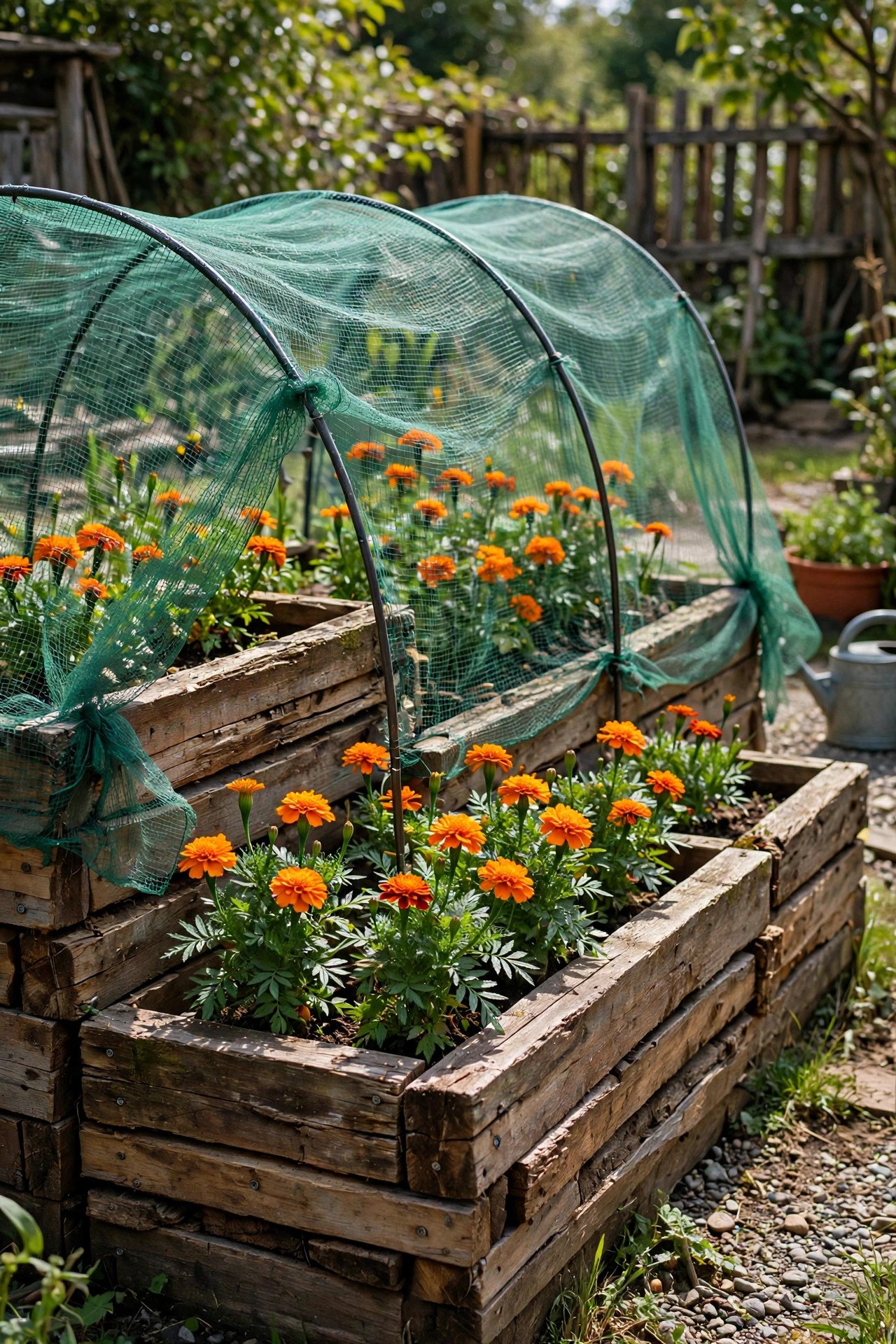
Stacked wooden planks with square joints create a rustic, organized look for the vegetable garden. Drape lightweight netting over hoops to protect young plants from birds and pests while letting rain and sun through. Bright flowers at the bed ends attract pollinators to your vegetables.
Secure the netting firmly so it does not blow away or tangle around plants. This setup is ideal for gardeners who lose seedlings to hungry wildlife every spring.
7. Round Concrete Planters For Easy Reach
Round concrete planters put every plant within easy reach, since you can work the whole bed from one spot. Their curved shape softens the garden and suits contemporary landscapes. Fill them with a mix of leafy greens and one small ornamental tree for height.
Concrete holds moisture well, which helps in hot climates. Choose planters with drainage holes so heavy rains never waterlog the roots.

8. Rectangular Precast Concrete Beds
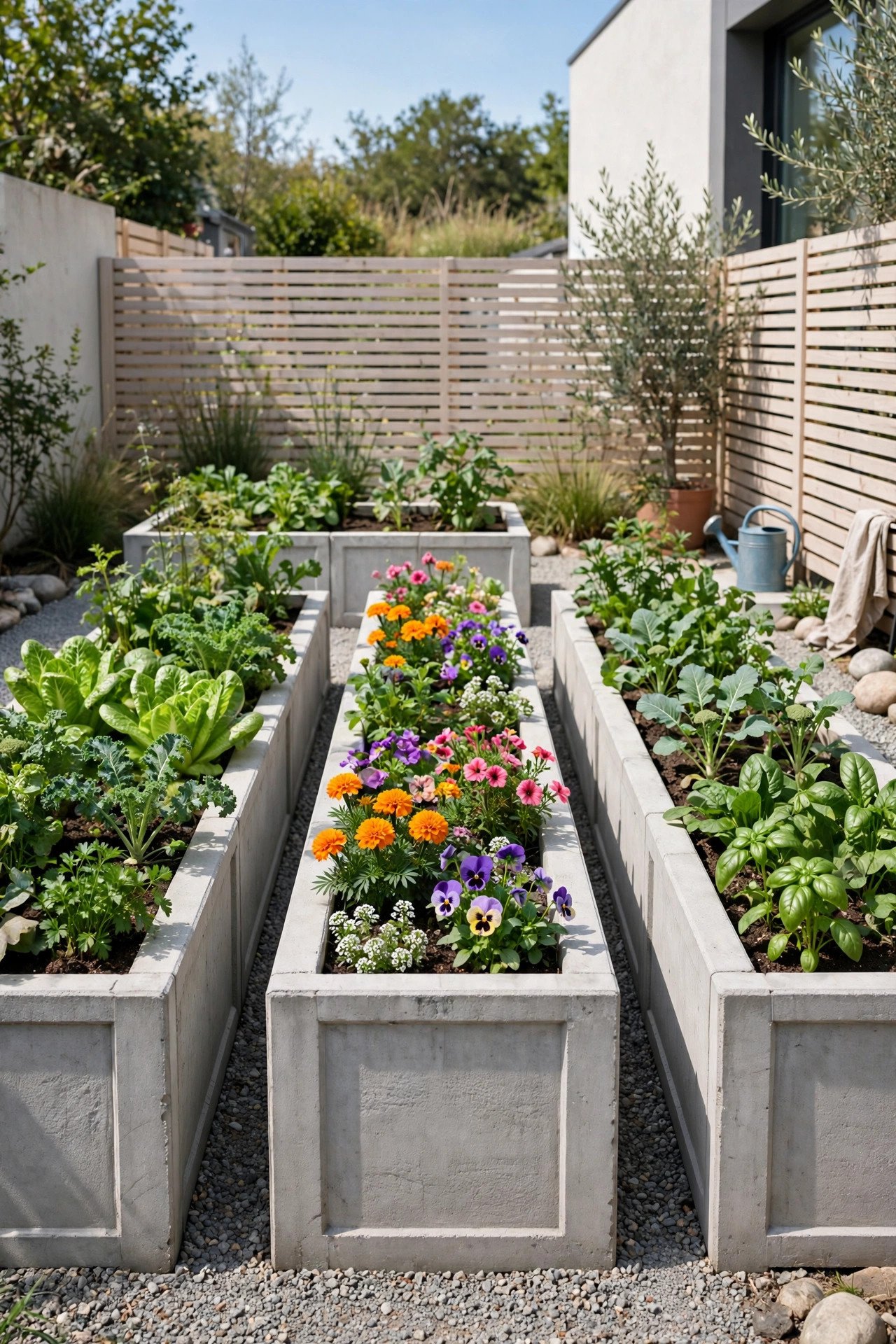
Rectangular precast concrete beds offer clean lines and serious durability. Their solid edges keep soil contained season after season, and the pale concrete complements both flowers and vegetables. Set them on level ground with a gravel base for perfect drainage.
These beds are heavy, so position them carefully before filling with soil. Once placed, they will outlast every wooden bed in the garden.
9. Corrugated Metal Beds With Warm Wood Frames
Corrugated metal panels framed in warm wood give you a charming farmhouse look with modern durability. The metal warms the soil early in spring, which gives heat-loving peppers a head start. Vibrant plants thrive in the deep, rich soil these tall beds hold.
Line the inside with landscape fabric to protect the wood frame from constant moisture. This combination looks wonderful against a red barn or a white farmhouse.

10. Sleek Anthracite Gray Metal Beds
Anthracite gray metal beds create a sharp, modern boundary for herbs and shrubs. Their dark tone makes green plants look electric by contrast. Position them along a gravel path with a bench nearby, and the vegetable garden becomes a place to linger.
Metal beds warm up fast in spring and cool down fast in fall, so mulch well to steady the soil temperature. Choose a powder-coated finish to prevent rust for many seasons.

11. Stacked Planks With Metal Corner Braces
Stacked wooden planks reinforced with metal corner braces give you rustic charm with extra strength. The braces stop tall beds from bowing outward under the weight of wet soil. A gravel path between the beds keeps everything accessible and tidy.
Stain the planks with exterior wood oil to extend their life. This sturdy style is perfect for deep beds that hold root vegetables like carrots and potatoes.
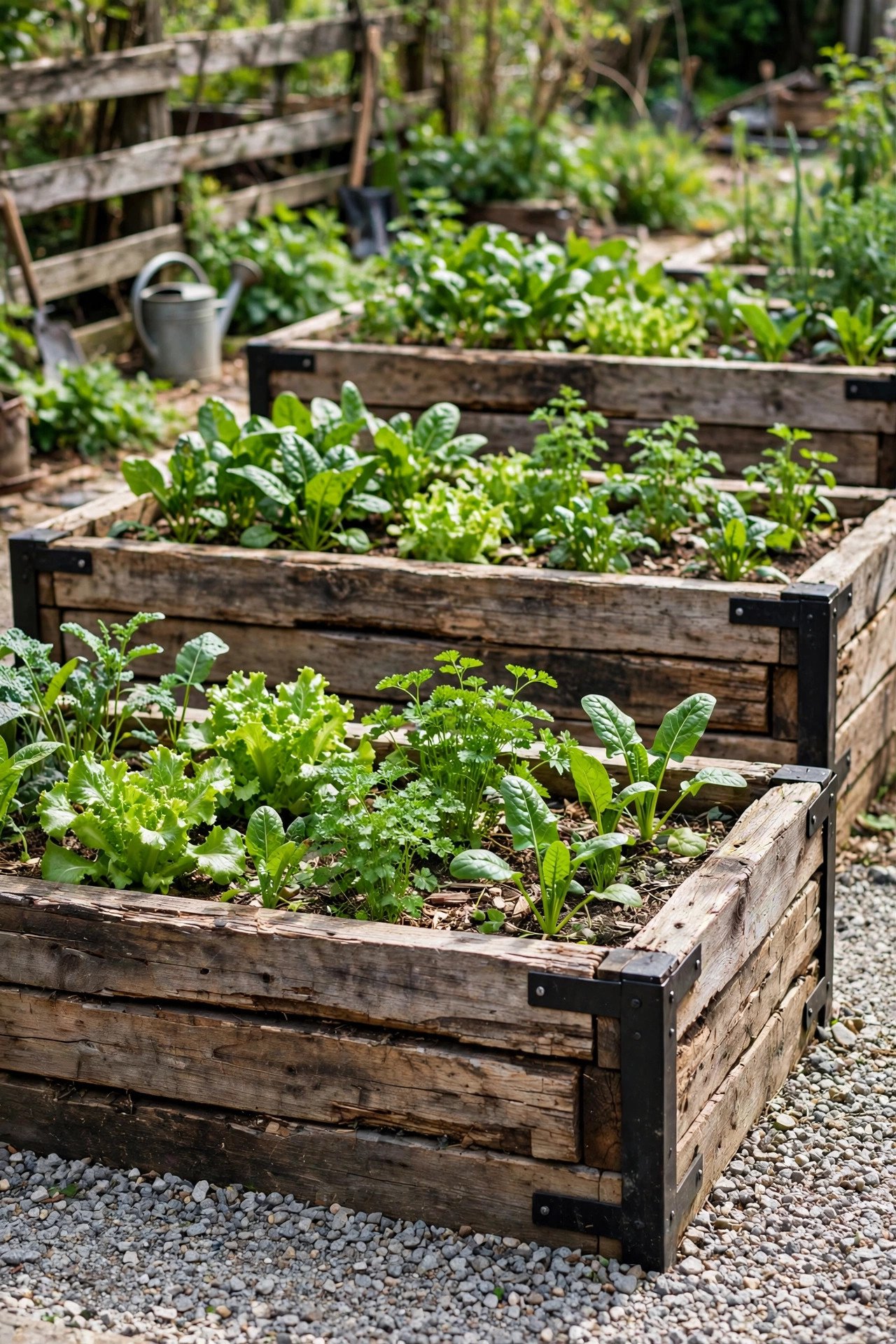
12. Timeless Raised Brick Beds
Raised brick beds bring a classic, permanent feeling to the garden. The rich texture of brickwork contrasts beautifully with lush herbs and leafy greens. A tidy brick path alongside completes the old-world look.
Brick absorbs heat during the day and releases it at night, which seedlings love in spring. For more classic garden character around brick beds, these European garden antique accents add timeless charm.
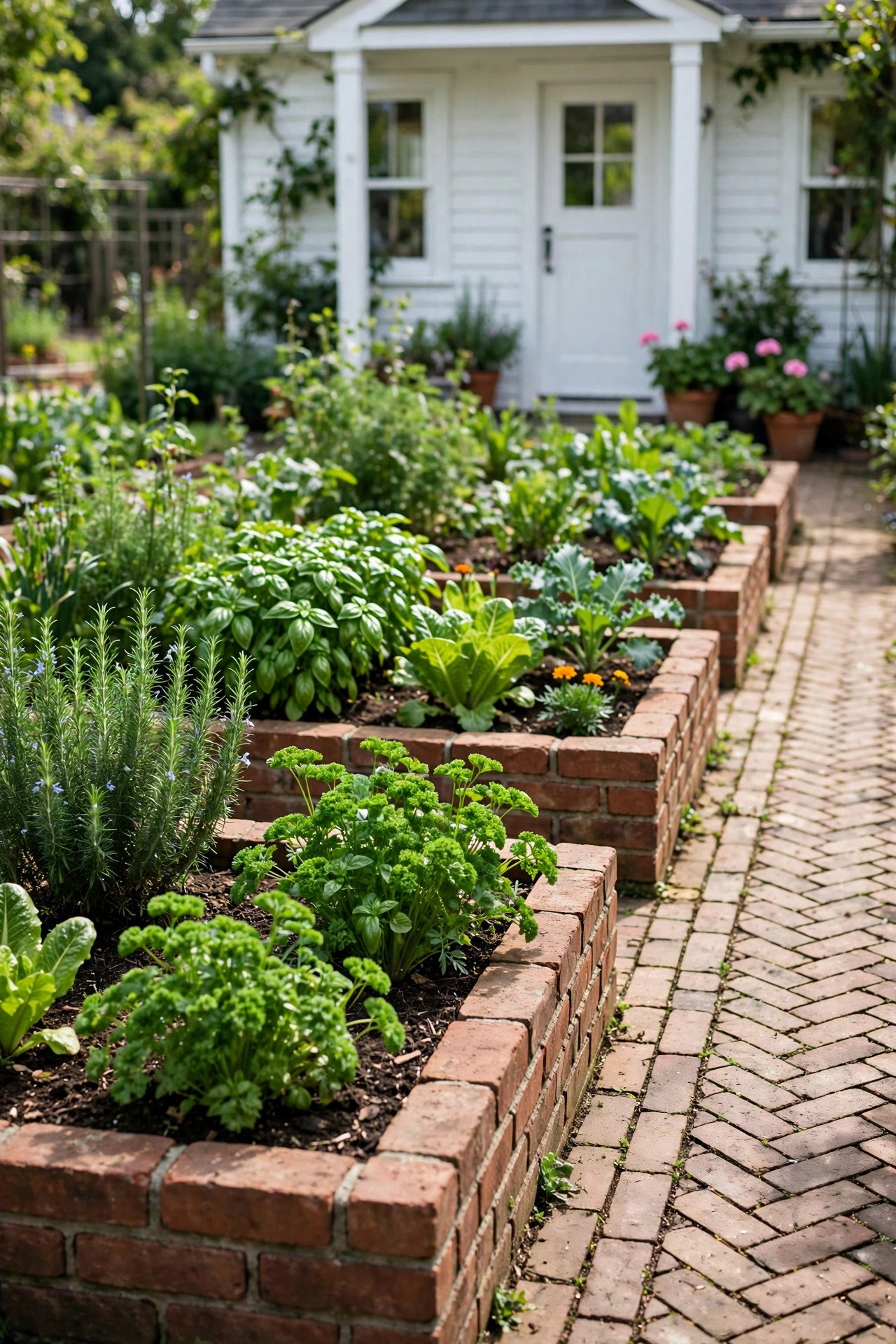
13. Hexagonal Redwood Planters
Hexagonal redwood planters turn the vegetable garden into a geometric showpiece. Their six-sided shape fits together in honeycomb patterns or stands alone as a sculptural focal point. The rich redwood tones glow against green plants.
Fill the center with a small ornamental grass for height and ring it with colorful flowers or herbs. Redwood resists rot naturally, so these planters age gracefully.
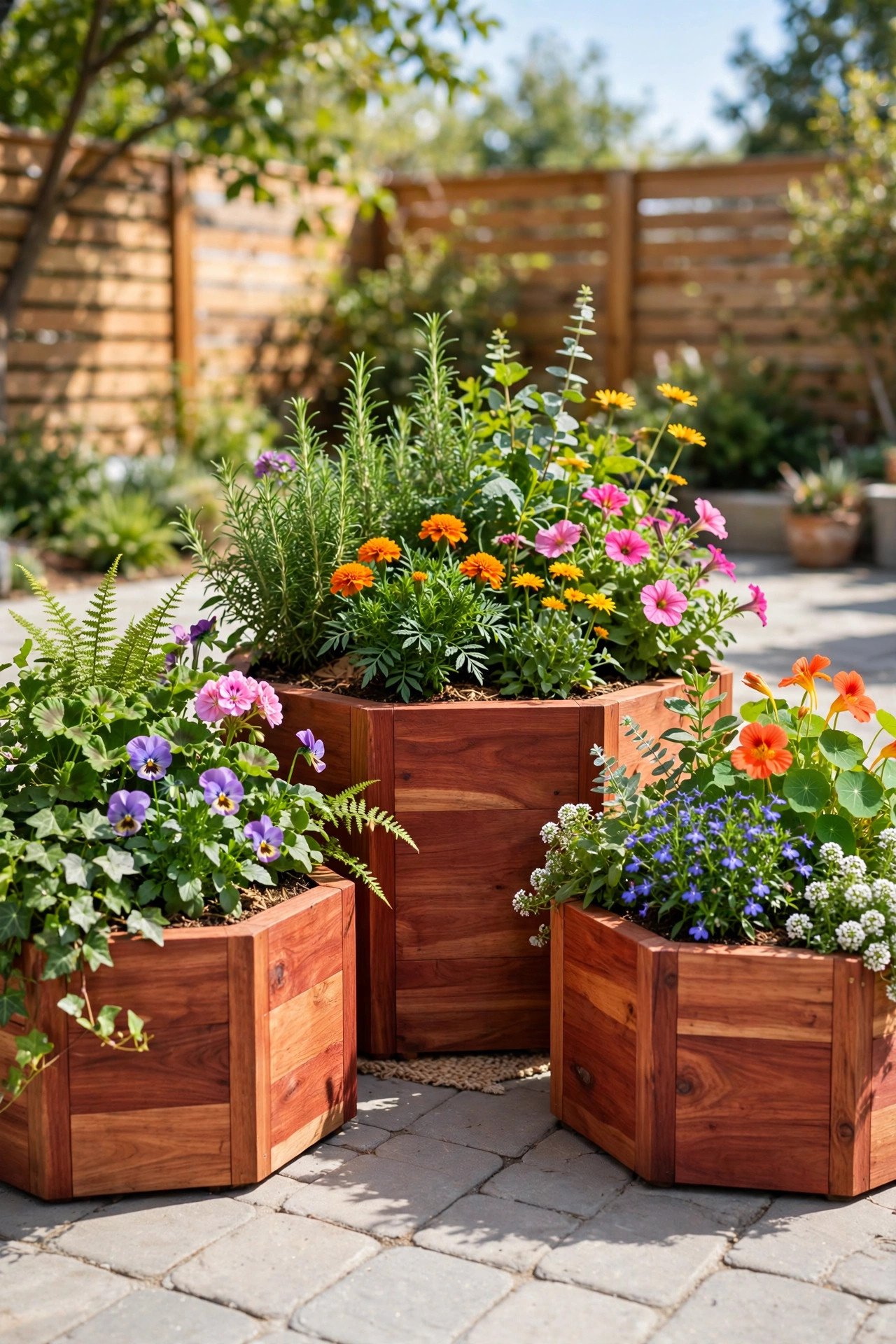
14. Stacked Timber Beds Beneath A Pergola
Stacked timber beds under a wooden pergola create a garden room with shade and structure. Train vines over the pergola for cooling shade in summer, and place a bench among the beds for rest breaks. Lavender and flowering plants around the timbers keep the space sweet-smelling.
Make sure the pergola posts sit outside the beds so they do not steal growing space. This is the layout for gardeners who want their vegetable patch to feel like a retreat.
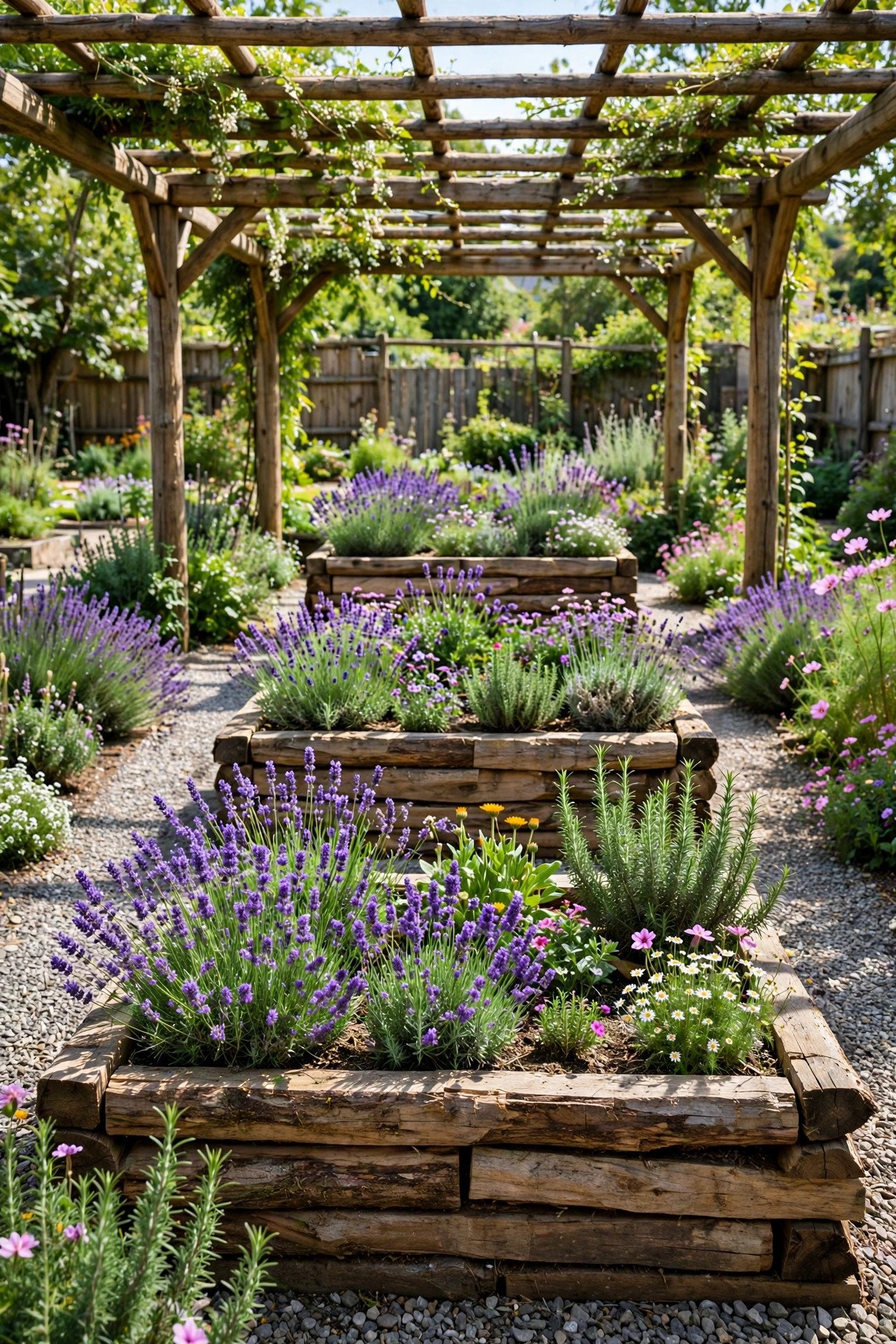
15. Interlocking Timber Beds By The Greenhouse
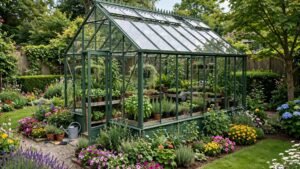
Interlocking landscape timbers give you crisp, clean bed edges that sit beautifully beside a glass greenhouse. Start seedlings inside the greenhouse, then move them straight into the neighboring beds when the weather warms. A stone path between them keeps the workflow smooth.
This pairing shortens your growing season worries and lengthens your harvest. It is the most productive small-footprint setup a home gardener can build.

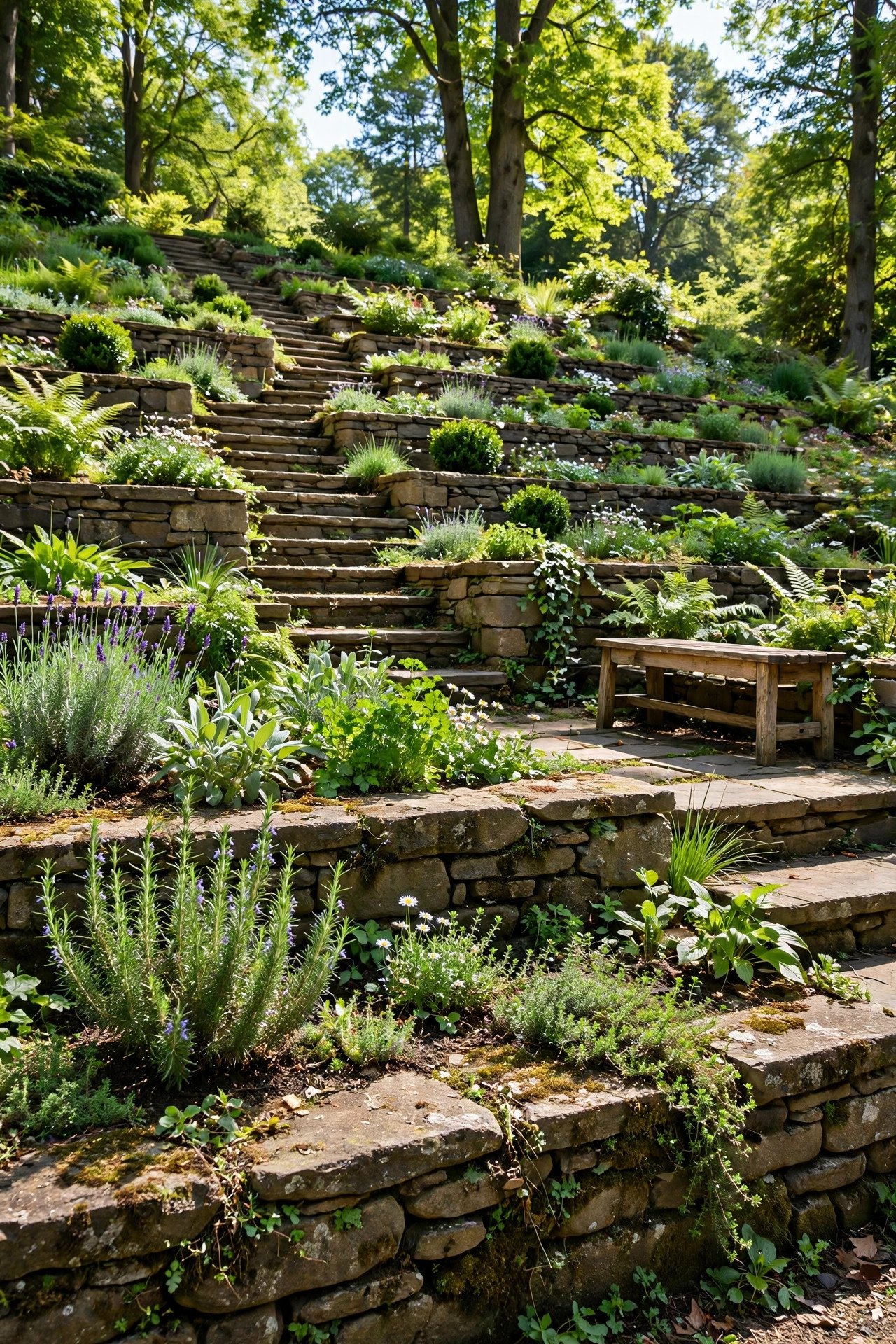
16. Staggered Stone Planting Platforms
Staggered stone platforms step gently up a slope, turning an awkward hill into terraced growing space. Each level becomes its own micro-garden with different sun and drainage. A simple wooden bench on one tier invites you to rest and admire your work.
Build the lowest tier first and work upward, checking each level with a spirit level. Stone tiers last for decades and look more beautiful every year.
17. Dry Stacked Stone Beds
Dry stacked stone beds curve through the garden with rustic, timeless charm. The stones lock together without mortar, which lets water drain naturally and allows the wall to shift slightly without cracking. Tuck herbs into the crevices for a lived-in look.
Choose flat stones and stack them like bricks, with each layer bridging the joints below. This ancient technique suits cottage and Mediterranean gardens perfectly.

18. Stone Beds Edged With Gray Pavers
Gray pavers create a neat, tailored border around stone raised beds. The crisp edge keeps mulch and soil inside while giving the mower a clean line to follow. A white picket fence behind completes the storybook vegetable garden look.
Lay the pavers on packed sand so they stay level through freeze and thaw. This tidy style is wonderful for front-yard gardens where neighbors admire your work.

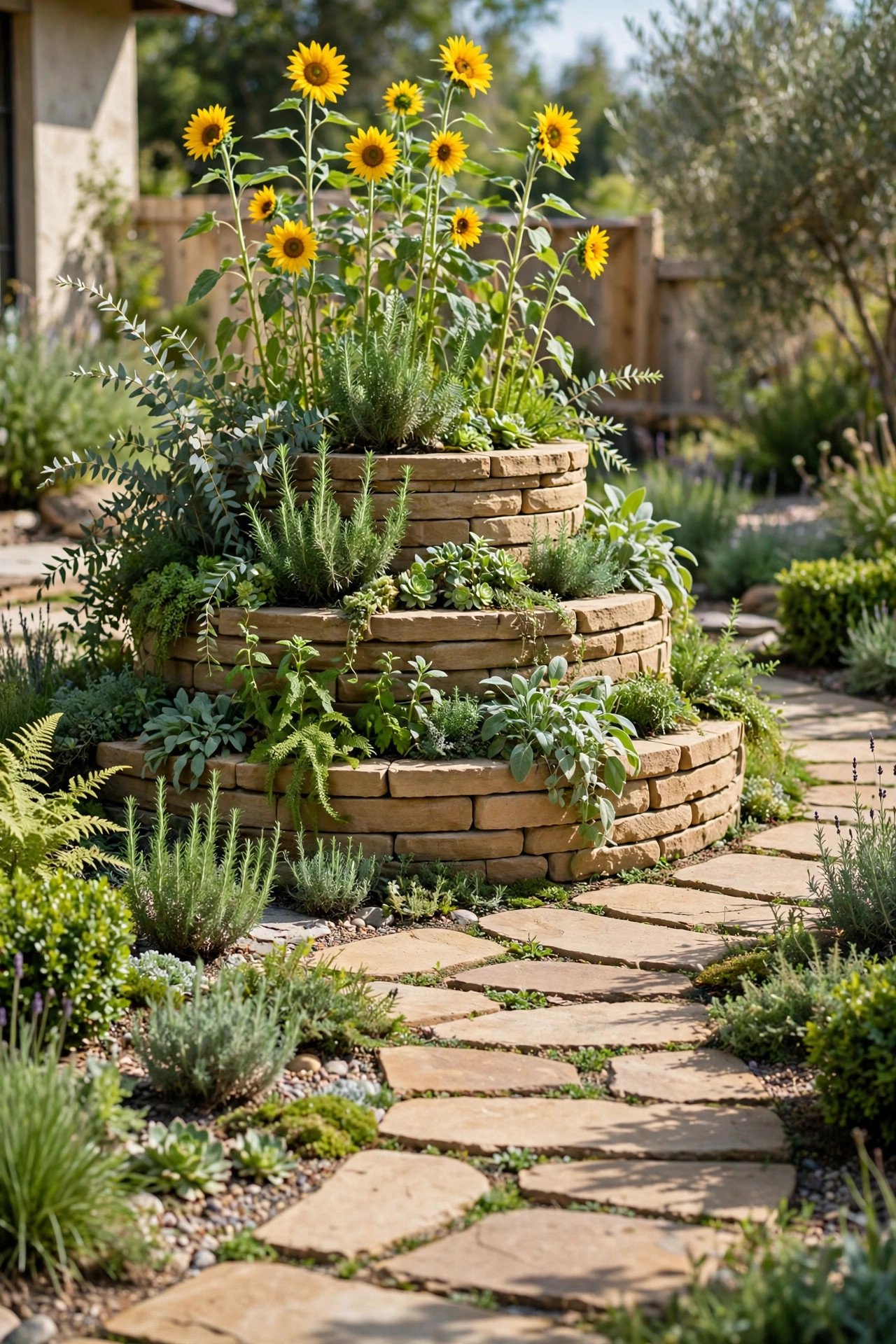
19. Circular Stacked Sandstone Planters
Circular stacked sandstone planters bring a sculptural touch to the garden. Their warm tones glow in afternoon sun, and the round shape softens rows of rectangular beds nearby. Plant sunflowers and mixed greens inside for a cheerful, abundant look.
A winding stone path leading to the circle makes it a destination. Round beds are also easier to reach into from all sides than long rectangles.
20. Reclaimed Granite Bed Frames
Reclaimed granite stones frame raised beds in a clean geometric arrangement with real history. The heavy stone never rots or shifts, and its cool gray tones suit both modern and traditional gardens. Gravel pathways between the beds complete the crisp look.
Salvaged stone is also a sustainable choice that keeps good material out of landfills. For more earth-friendly garden ideas, these sustainable home decor ideas will inspire you.

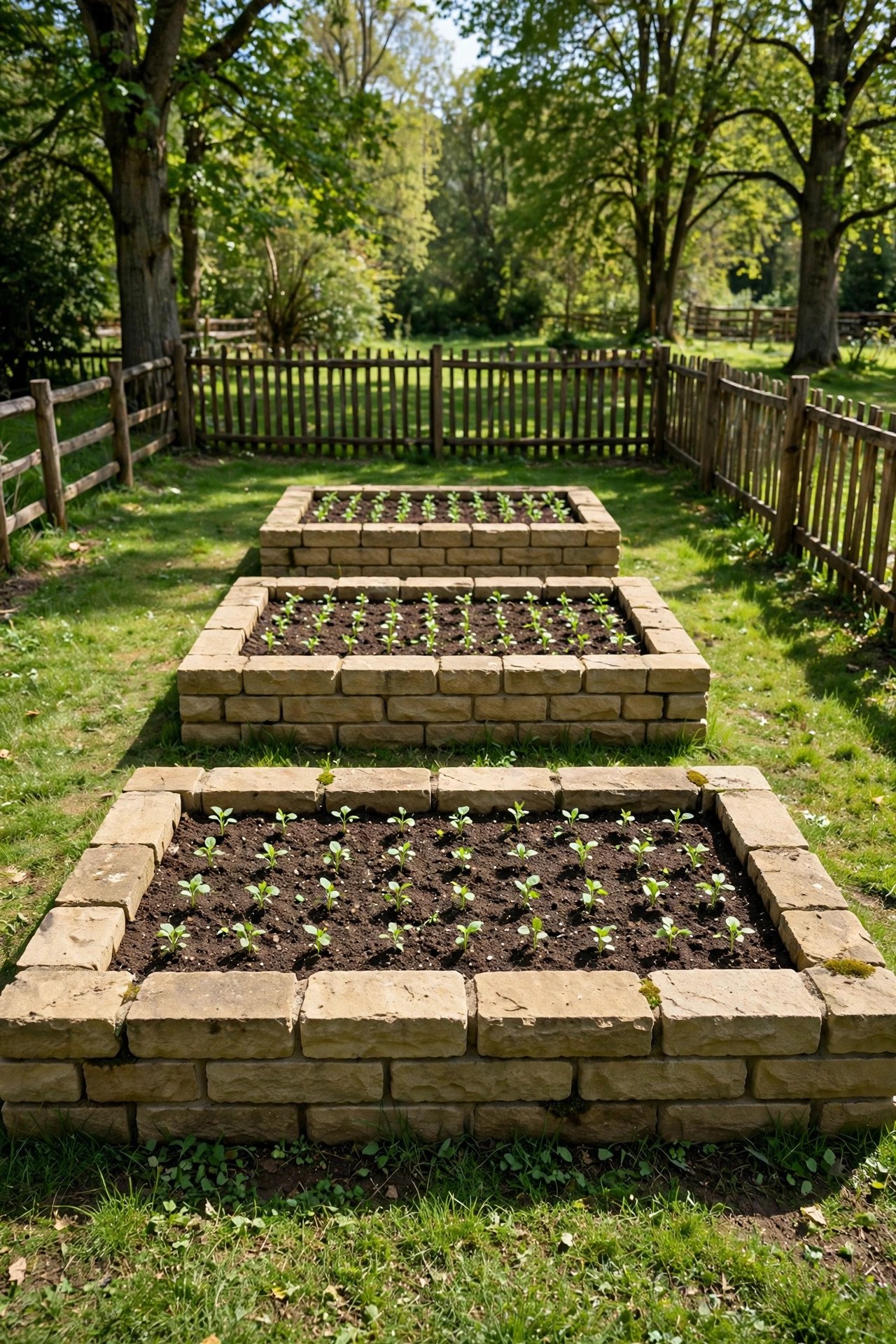
21. Simple Sandstone Block Beds
Simple sandstone block beds are easy to build and beautiful to look at. The light, warm stone brightens the garden and blends with natural surroundings. Stack the blocks two or three high on level ground, no mortar needed for low beds.
These modest beds are perfect for a first vegetable garden. Fill them with compost-rich soil and plant salad greens for the fastest reward.
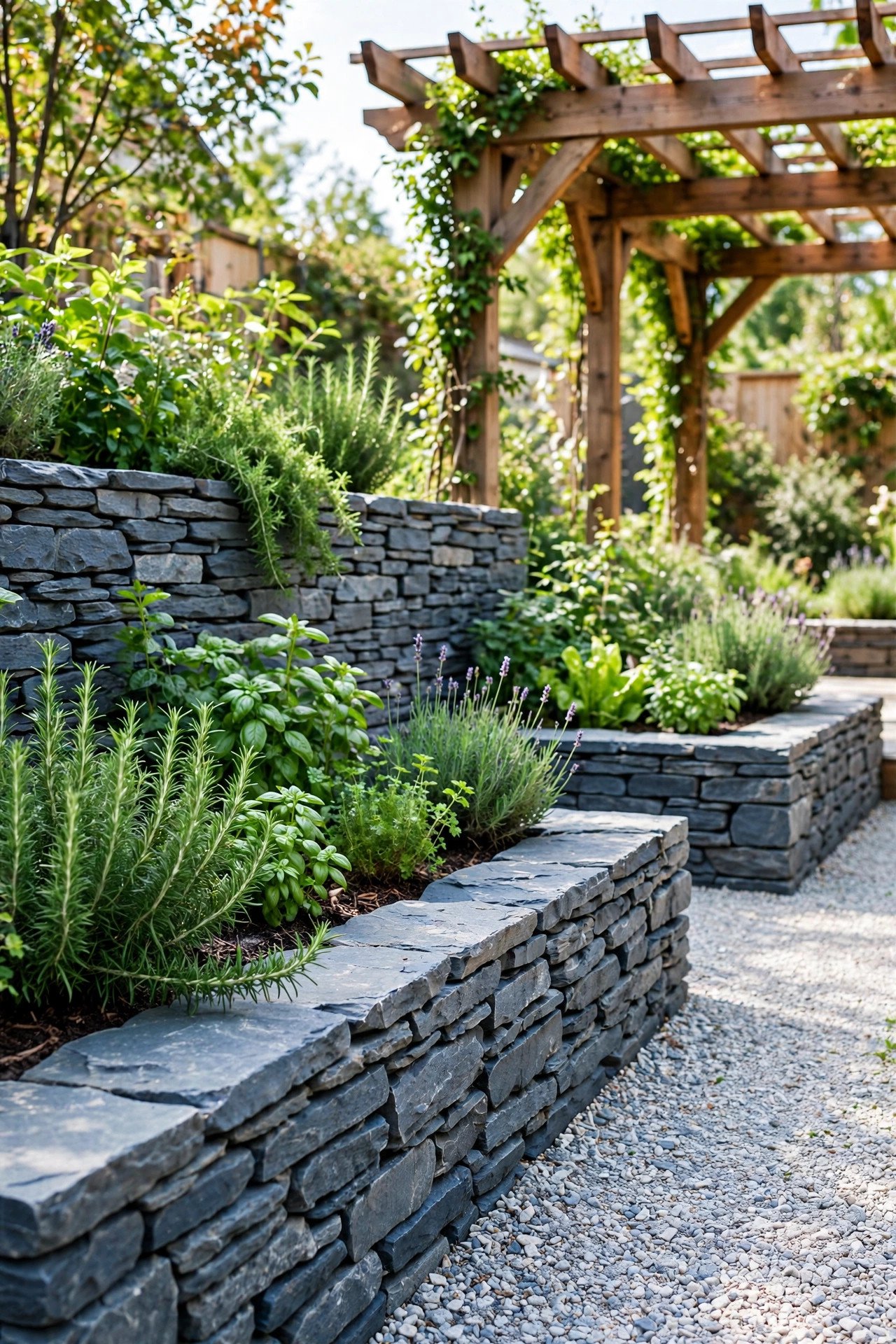
22. Dry Stacked Bluestone Walls
Dry stacked bluestone walls create sturdy raised beds with a refined, craftsman feel. The blue-gray stone looks striking against green foliage and pairs well with a wooden pergola overhead. Gravel paths keep the area clean and walkable.
Bluestone is dense and long-lasting, so these beds are a true investment. Cap the top course with flat stones for a comfortable working edge.
23. Corten Steel Beds With Rustic Patina
Corten steel beds develop a rich rust-colored patina that looks stunning against green plants. The industrial edge suits modern landscapes, and the steel never needs painting or sealing. In autumn, the orange tones blend beautifully with fall foliage.
Line the beds well and mulch deeply, since metal sides can heat the soil on hot days. Style the surrounding garden for the season with these pumpkin decorating ideas when autumn arrives.

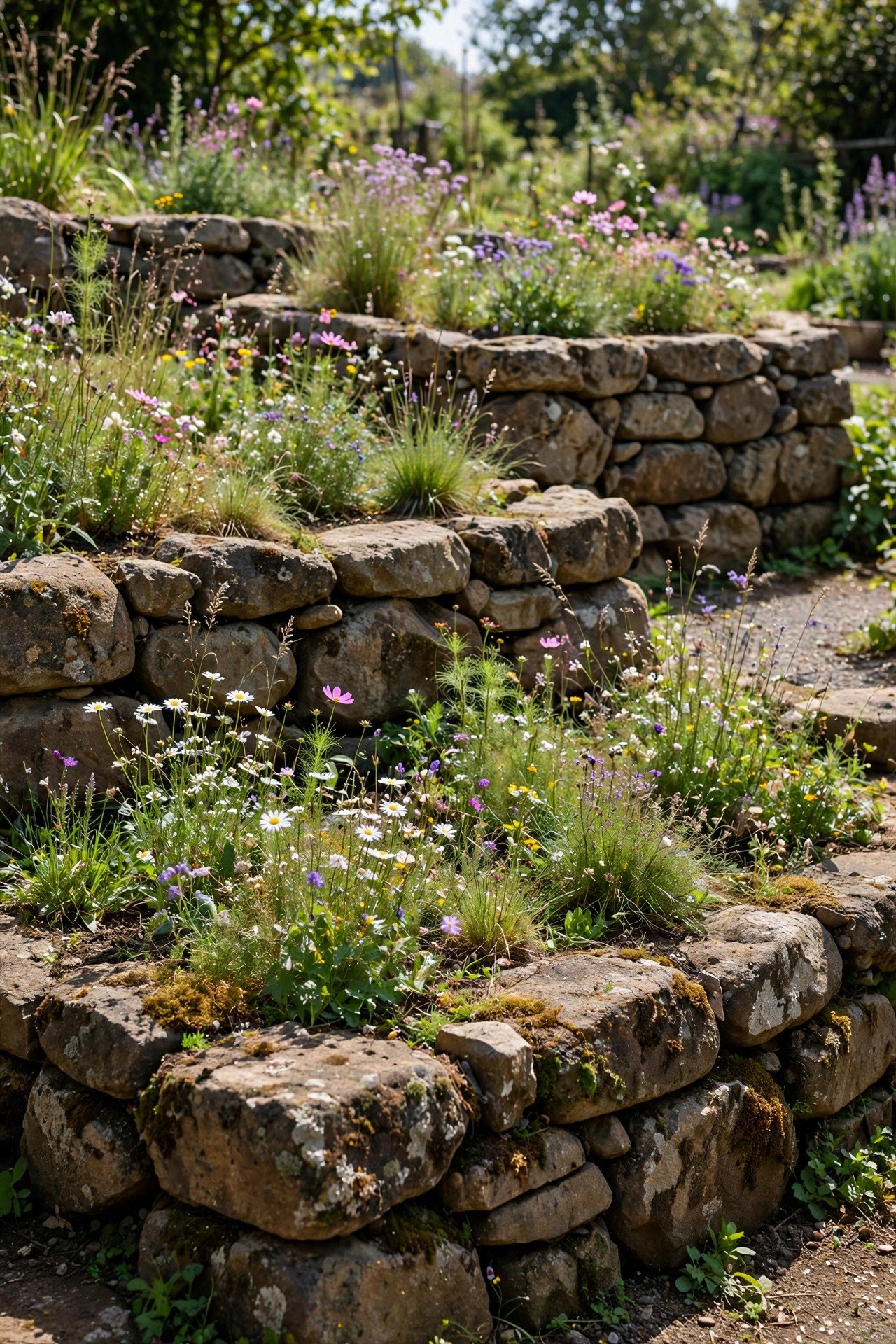
24. Rugged Dry Stacked Boulder Walls
Dry stacked boulders form a bold, natural planter wall with real presence. The massive stones hold back soil on slopes while creating deep planting pockets. This handcrafted look suits large properties and wildflower-style plantings.
Place the largest boulders at the base and work upward with smaller stones. Tuck trailing plants into the gaps to soften the rugged faces over time.
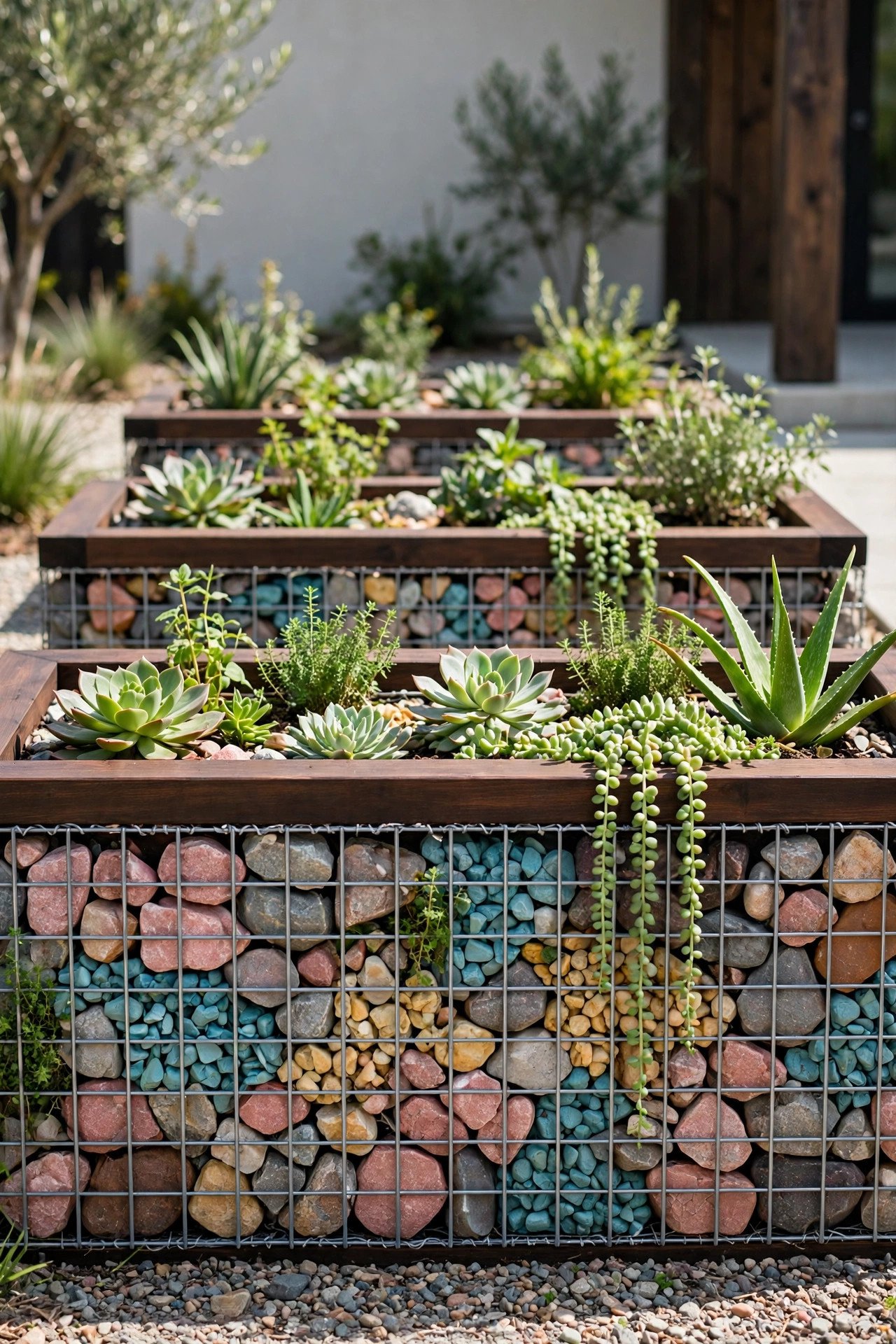
25. Gabion Stone Cage Beds
Gabion beds combine wire cages filled with stones and a wooden top frame for a striking modern look. The mix of textures adds visual interest while the deep soil inside grows healthy plants. Fill the cages with colorful local stone for extra personality.
Gabions drain exceptionally well, which root vegetables appreciate. This is a conversation-piece bed for gardeners who love bold design.
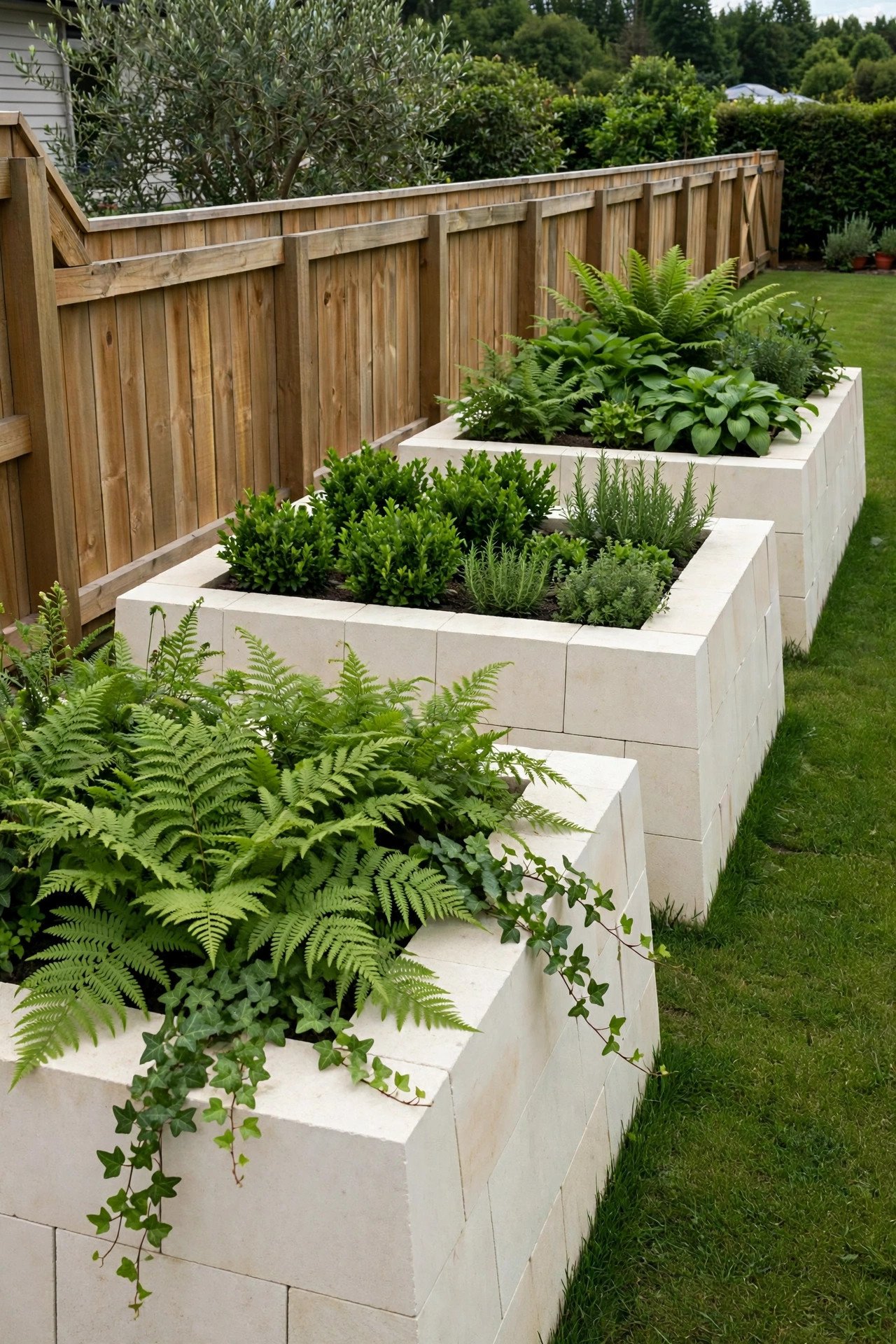
26. Pale Oamaru Stone Planters
Pale Oamaru stone planters offer a soft, creamy tone that makes green plants glow. Their smooth, blocky design gives the garden a calm, architectural feeling. These elegant beds suit both vegetables and ornamental plantings.
Keep the planting simple and let the stone be the star. A row of pale planters along a fence creates a serene backdrop for the whole yard.
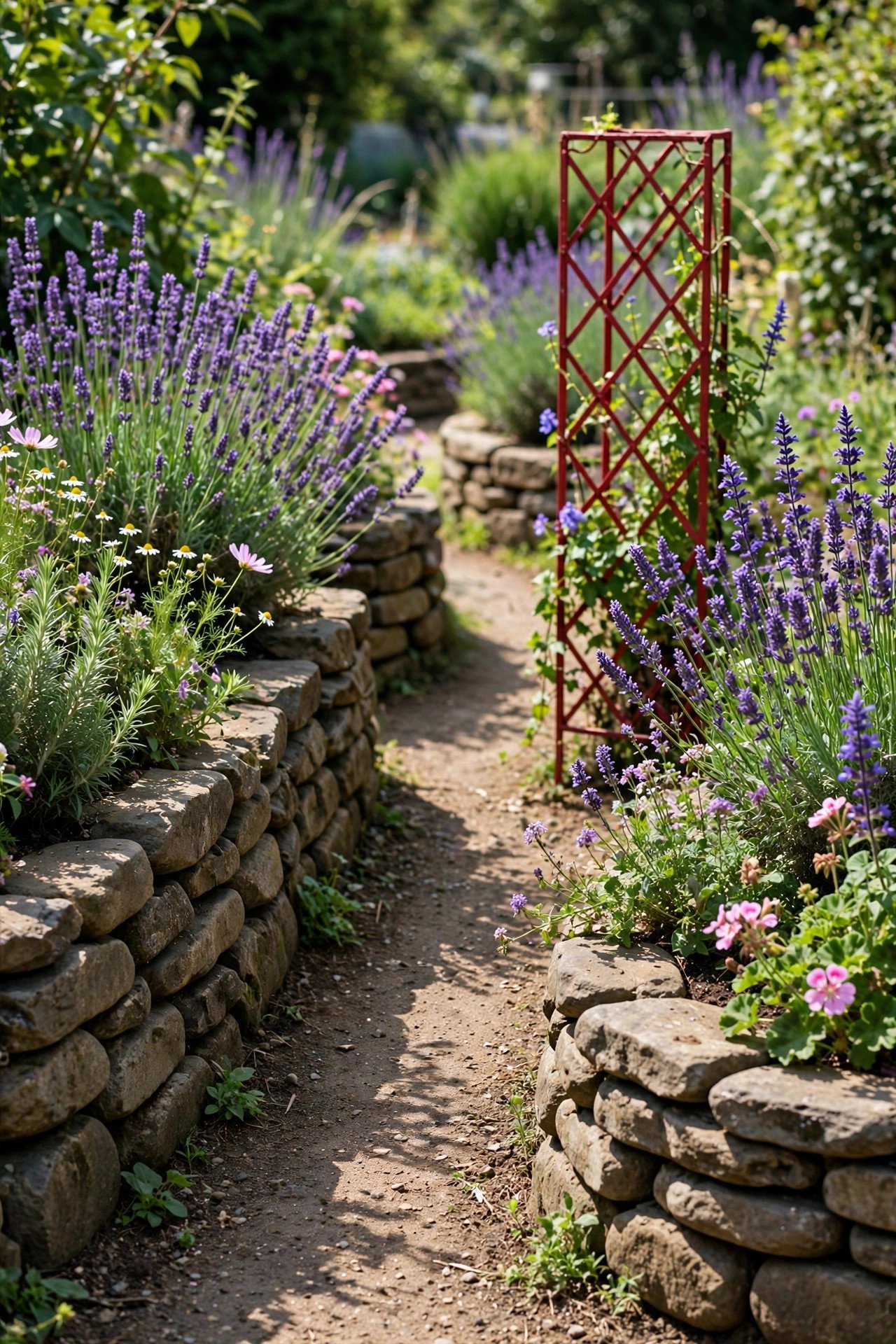
27. Dry Stacked Fieldstone Borders
Dry stacked fieldstone borders edge the garden path with warm, rustic character. The irregular stones feel gathered rather than built, which suits informal cottage gardens. Lavender and purple flowers spilling over the stones complete the picture.
Fieldstone is often the most affordable stone if you source it locally. Low fieldstone borders are also the easiest stone project for a beginner to try.
Conclusion
The right raised bed layout turns gardening from hard work into pure pleasure. Wide paths, reachable bed widths, and materials that suit your style mean you will spend your time harvesting instead of struggling.
Sketch your space before you build, start with the beds you will use most, and add more as your confidence grows. A productive garden is built one well-planned bed at a time.
Frequently Asked Questions About Raised Garden Bed Layout Ideas for Productive Gardens
How wide should a raised garden bed be?
Keep beds no wider than four feet so you can reach the center from either side without stepping on the soil. If the bed sits against a wall or fence, limit it to two or three feet deep.
How deep should a raised bed be for vegetables?
Twelve inches of soil suits most vegetables, while root crops like carrots do better with eighteen to twenty-four inches. Taller beds also save your back during planting and weeding.
What is the cheapest material for raised garden beds?
Untreated pine boards are usually the cheapest option, though they last only three to five years. Concrete blocks and corrugated metal cost more upfront but last far longer.
Should I put landscape fabric under my raised beds?
Skip the fabric if your beds sit on soil, since it blocks helpful worms and drainage. Use hardware cloth instead if burrowing pests are a problem in your area.
How much space should I leave between raised beds?
Leave at least two feet between beds for comfortable walking, and three to four feet on the main paths where you push a wheelbarrow. Wide paths make the whole garden easier to work in.

Hi, I’m Emily! I turn messy corners into cozy, organized spots. DreamNestDecor is where I share simple, practical home ideas — decor, organization, and small-space solutions that work in real life, not just in photos. Every idea here is carefully researched before it’s shared.