Your bedroom walls are the biggest blank canvas in your home, yet painting them feels like a big commitment. What if one wall and a single quart of paint could completely change how your room feels? A simple painted shape behind your bed adds personality for less than the cost of a takeout dinner.
These sixteen cheap bedroom wall makeover ideas use basic paint techniques like arches, stripes, and color blocking. Most need nothing more than painter’s tape, a steady hand, and a free weekend. Pick the design that makes you smile and give your bedroom the refresh it deserves.
1. Painted Arch Wall
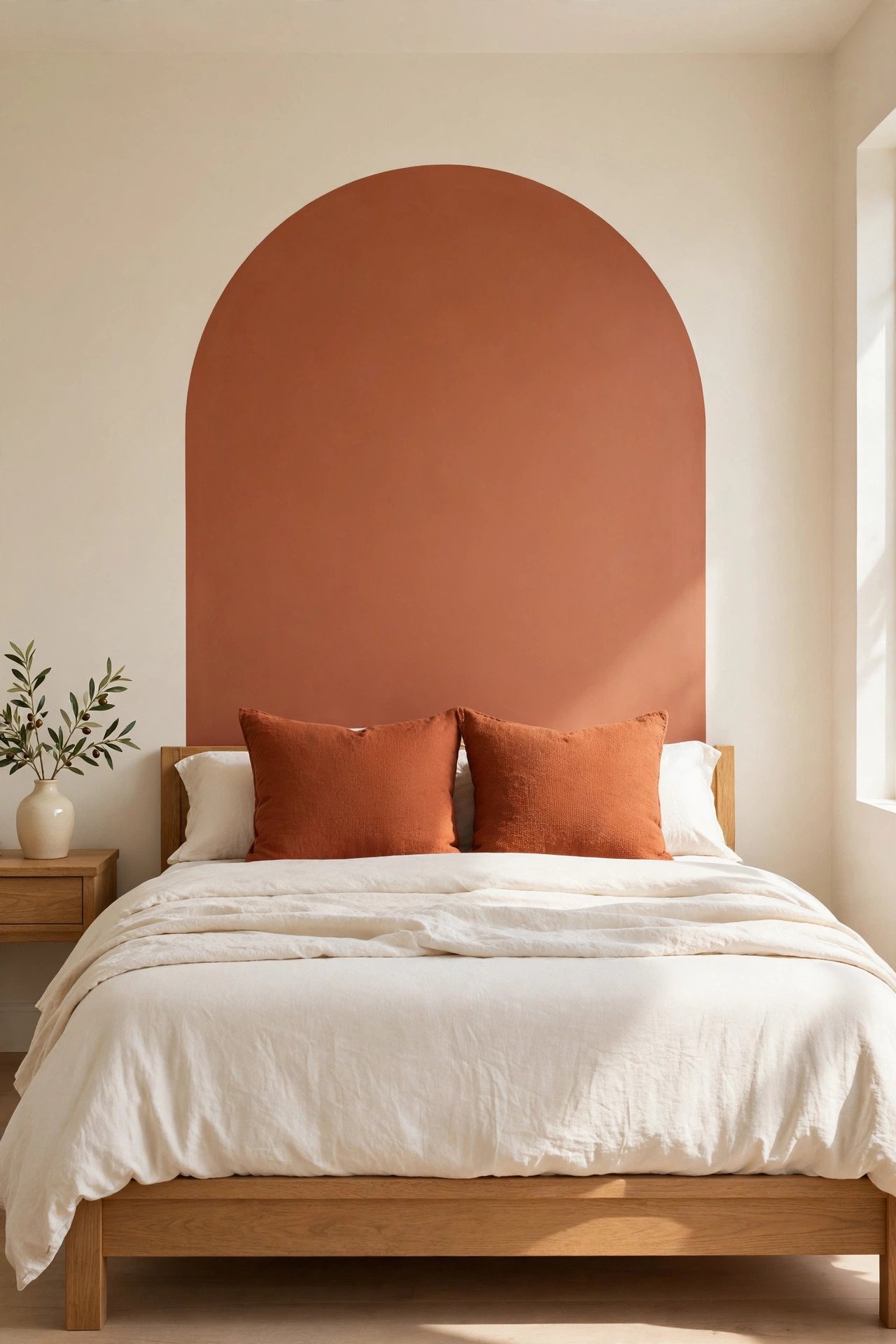
A large painted arch creates a clear focal point without covering the entire wall. Center a warm terracotta arch behind your bed, making it slightly wider than the headboard and tall enough to frame the pillows. Keep the remaining walls soft cream so the room stays open and restful.
Use a pencil, string, and painter’s tape to draw the outline before filling it with two smooth coats. Layer your bed with ivory linen and a rust-colored throw to connect with the earthy paint. This single shape delivers designer style for the price of one paint sample quart.
2. Half Painted Wall
A two-tone wall gives your bedroom structure while keeping the painting simple. Cover the lower half in dusty blue and leave the upper half warm white, placing the dividing line slightly above the headboard. This proportion anchors the furniture while letting the ceiling feel taller.
Use a level and quality painter’s tape to keep the dividing line perfectly crisp. Continue the blue around the whole room for a cozy wrapped effect. For more two-color inspiration, explore two-tone wall paint ideas that work in every room.

3. Vertical Stripe Wall
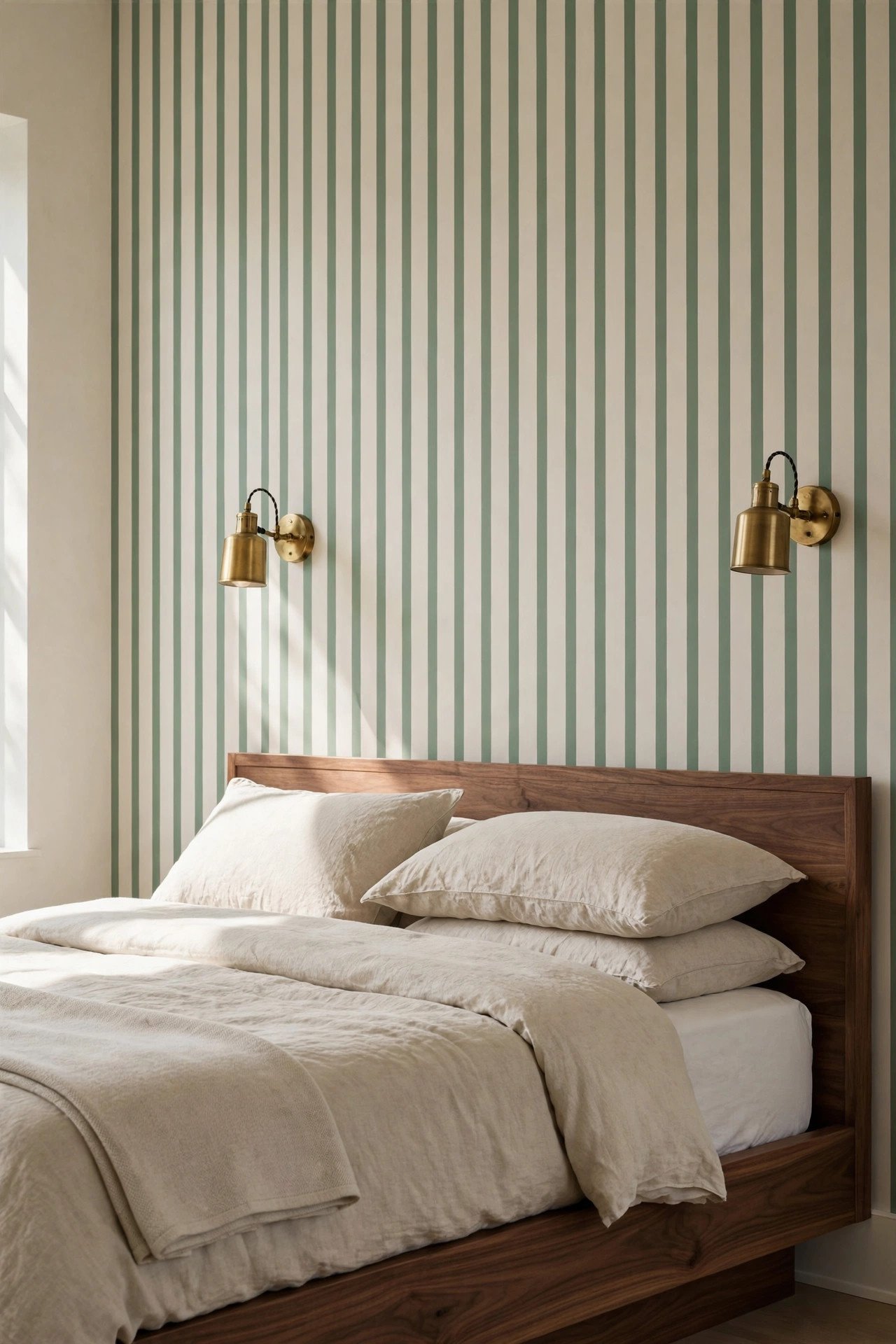
Slim vertical stripes visually lift a low ceiling and bring orderly rhythm to your bedroom. Start with a soft beige base, then add evenly spaced sage green stripes behind the bed. Keep the stripes narrow and consistent so the wall looks refined rather than busy.
Measure from one corner and mark each stripe carefully, sealing the tape edges before painting to prevent bleed. A walnut bed and oatmeal bedding give the pale palette enough depth. This classic pattern never goes out of style.
4. Geometric Shapes Wall
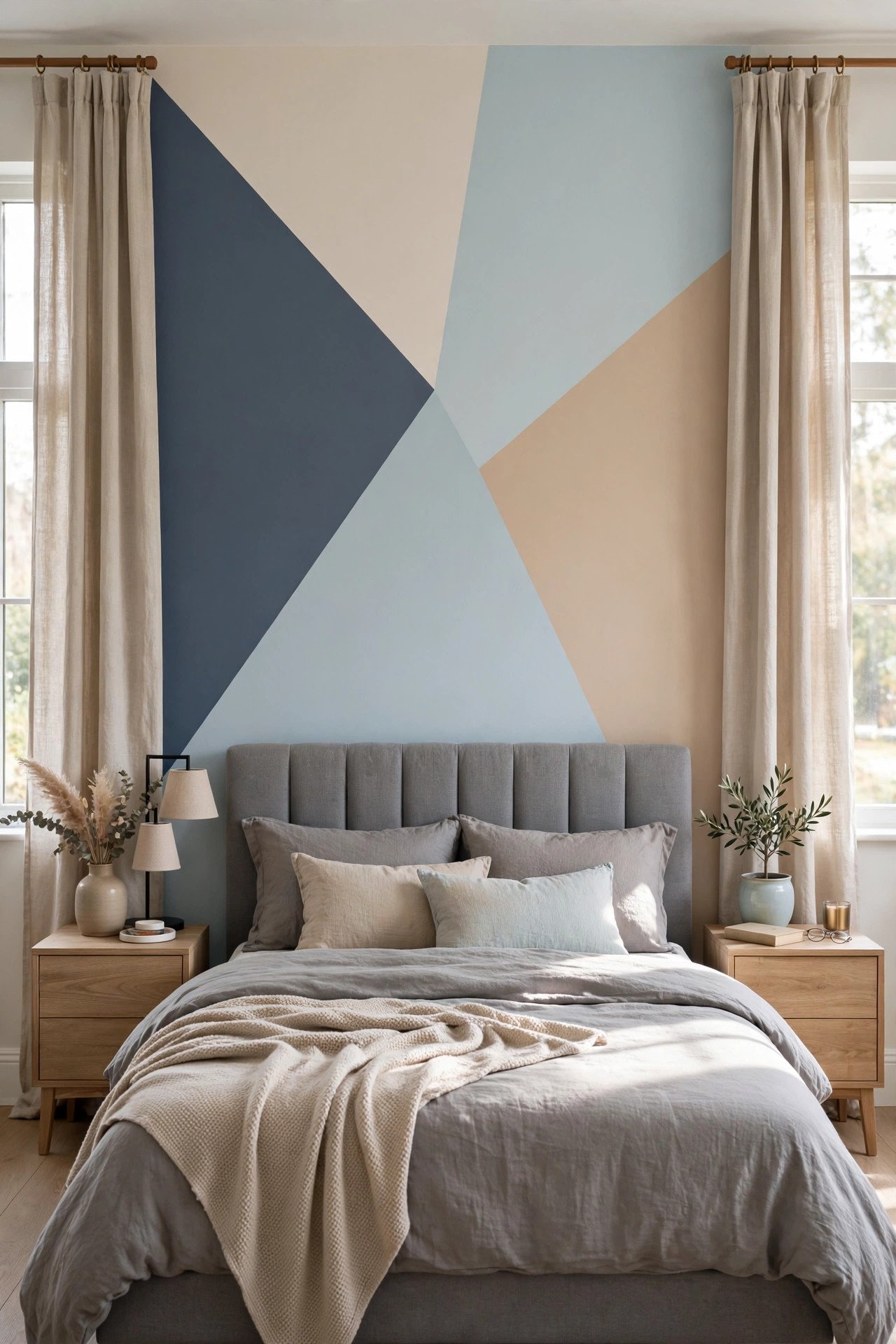
Painter’s tape turns one bedroom wall into a clean geometric feature with just a few paint colors. Create large overlapping shapes in muted navy, warm beige, and pale blue behind your bed, leaving some white background visible between shapes. The negative space keeps the pattern from overwhelming the room.
Sketch the full pattern on paper before you start taping, and paint the lightest sections first. Bring navy into your bedding with a folded quilt to tie it together. If you love bold pattern play, you will enjoy mix bold patterns bedroom ideas for the rest of the room.
5. Ombre Blend Wall
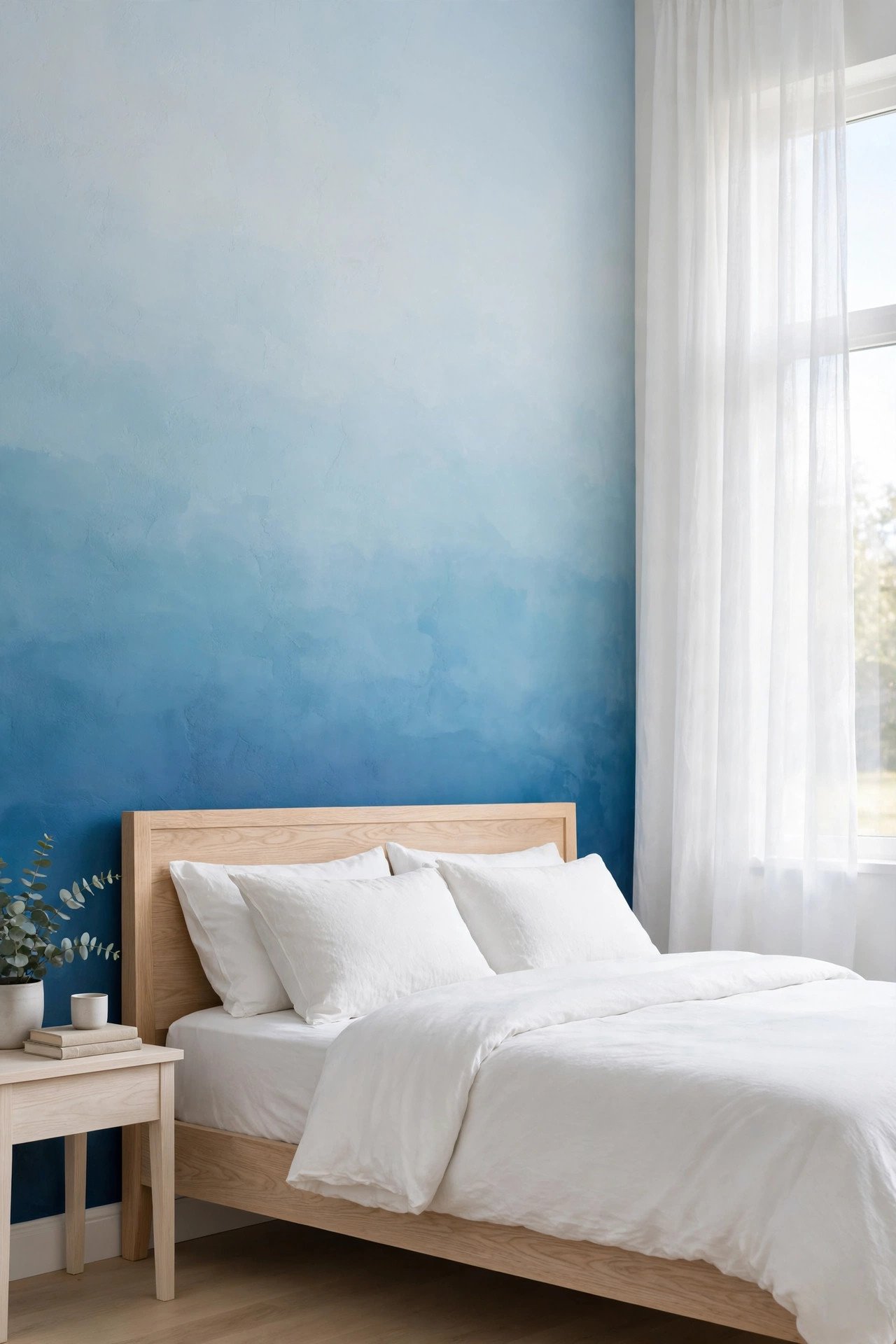
A soft ombre wall creates gentle movement with no hard lines at all. Begin with deep blue near the floor, blend into medium blue behind the headboard, and finish with pale sky blue toward the ceiling. Keeping the darkest shade low grounds the bed while the lighter top opens the room.
Work in horizontal sections while the paint stays wet, using a broad dry brush to blend the transitions. Slight irregularities are welcome, since they give a natural atmospheric finish. Pair with crisp white bedding to let the gradient shine.
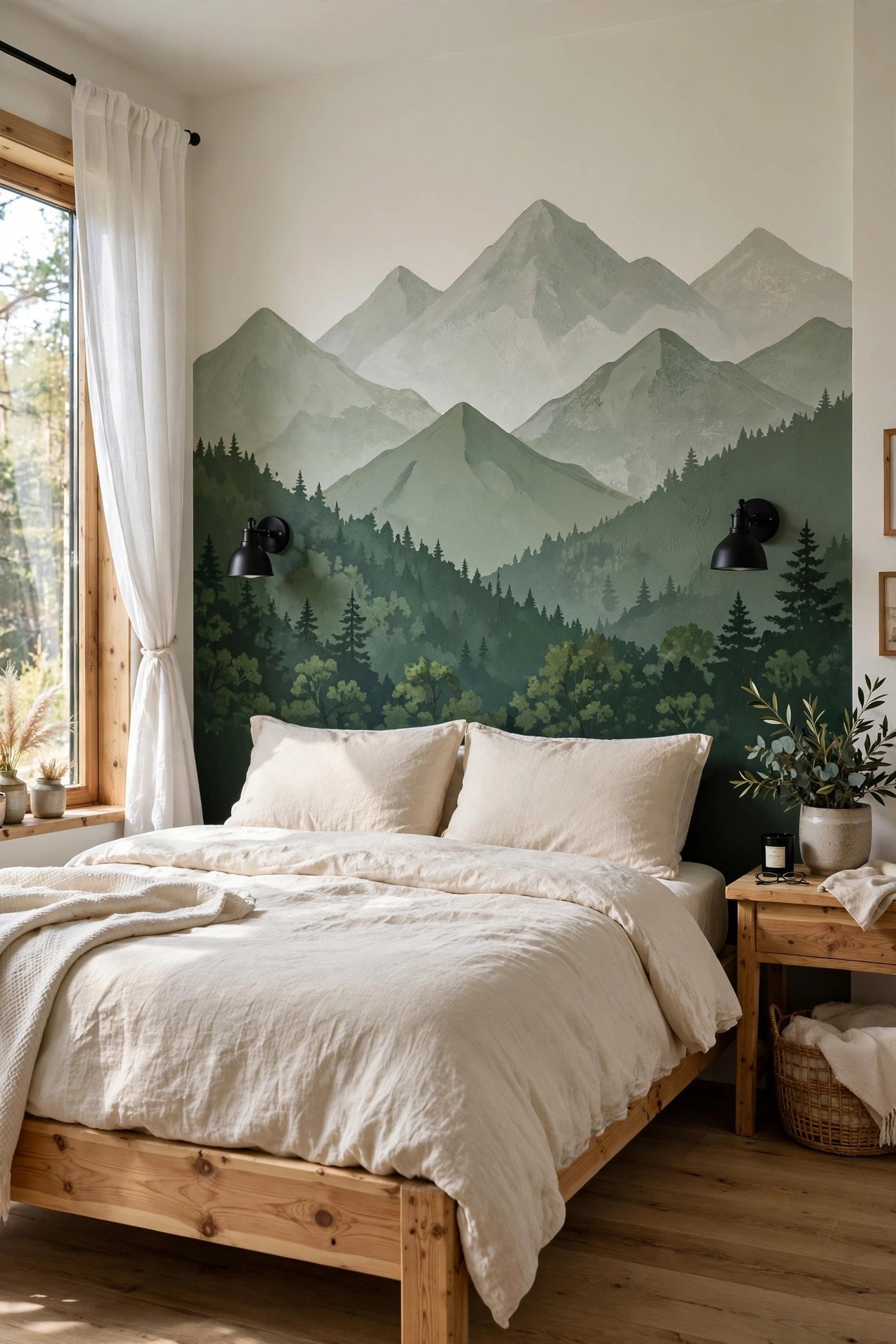
6. Mountain Mural Wall
A simple mountain mural brings outdoor character into your bedroom without any artistic training. Paint overlapping triangular peaks across the lower two-thirds of the bed wall, using forest green in front, muted sage in the middle, and pale gray-green behind. Leave the upper wall warm white to suggest open sky.
Use painter’s tape for sharp peaks or freehand the edges for a softer landscape. A pine bed and cream bedding create a cozy cabin foundation beneath your mountains. Keep accessories minimal so the mural remains the star.
7. Scalloped Border Wall
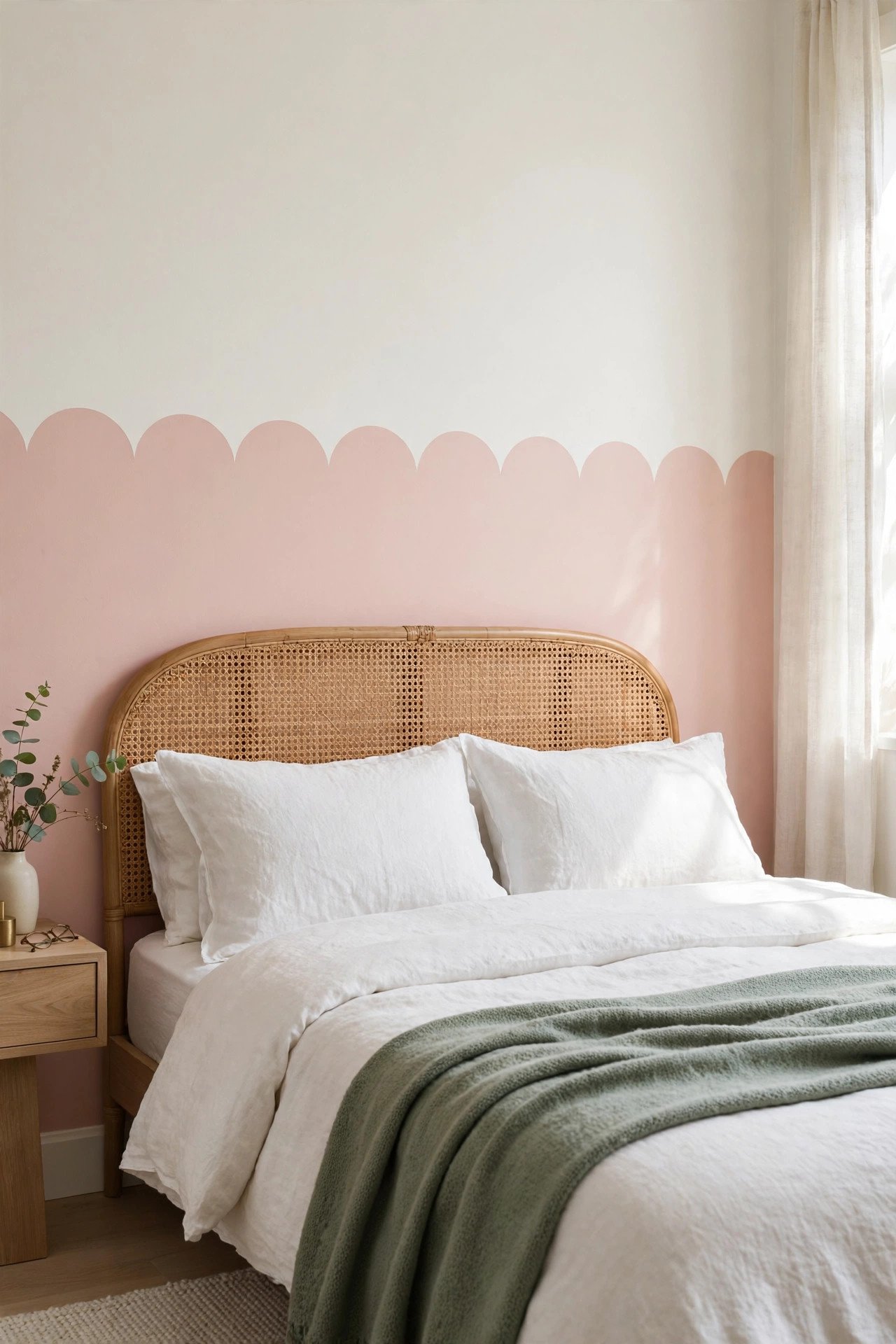
A scalloped paint border adds playful curves that still look polished in an adult bedroom. Paint the lower portion in soft blush pink, ending it with a row of large even scallops about two-thirds up the wall. Keep the upper area creamy white for brightness.
Trace each curve with a round template like a plate before painting, checking that the highest points stay level. A cane headboard and white linen balance the sweetness beautifully. This cheerful design costs almost nothing beyond one quart of paint.
8. Painted Circle Wall
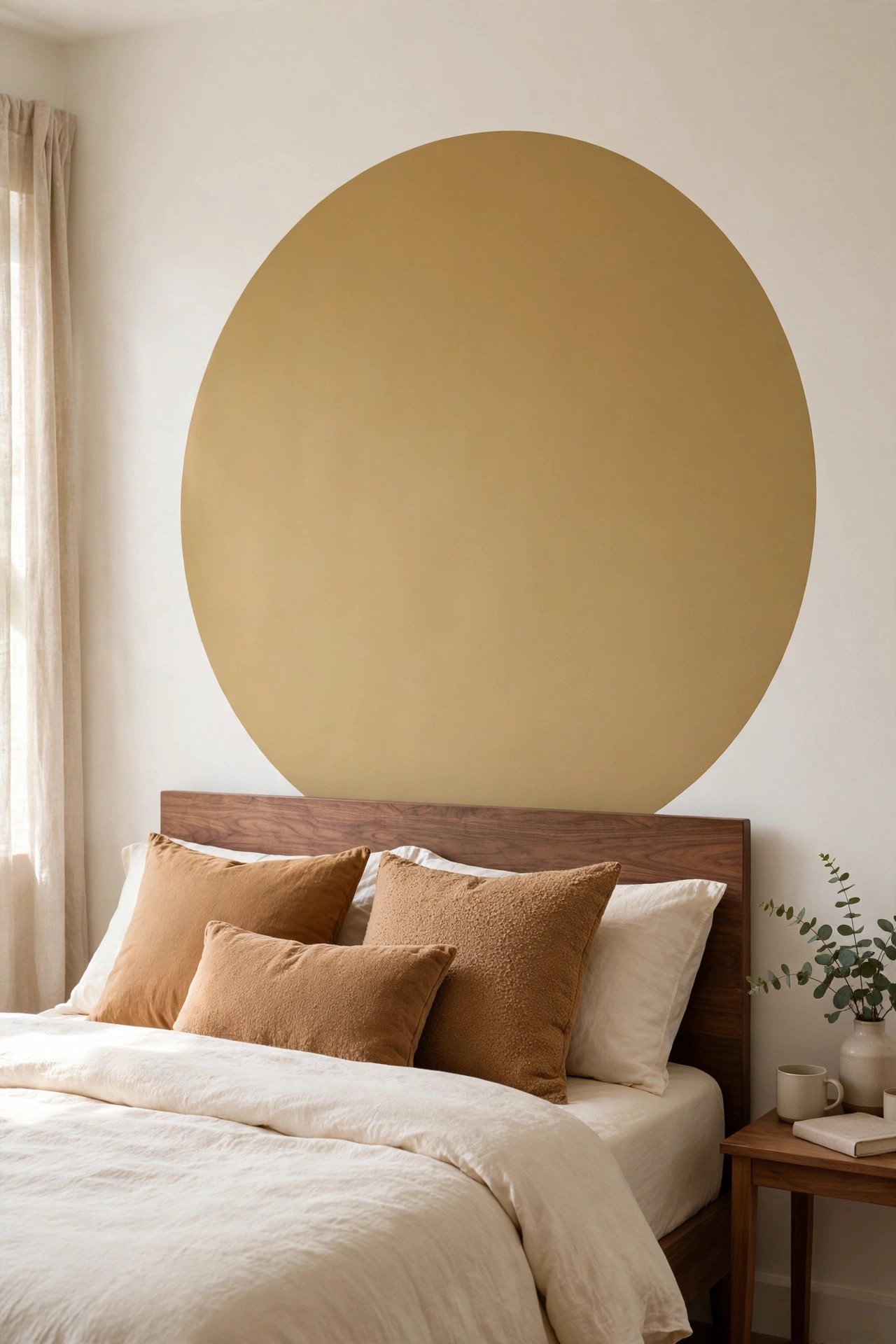
One oversized circle works like artwork and frames your bed at the same time. Paint a muted mustard circle behind a compact headboard, letting the lower portion disappear naturally behind the furniture. Surround it with warm white walls so the shape stays the clear focal point.
Draw the circle with a pencil tied to a string, then outline it with a small angled brush before rolling the center. Cream bedding and caramel cushions build a grounded palette around the yellow. The result is bold, affordable, and easy to repaint later.
9. Diagonal Split Wall
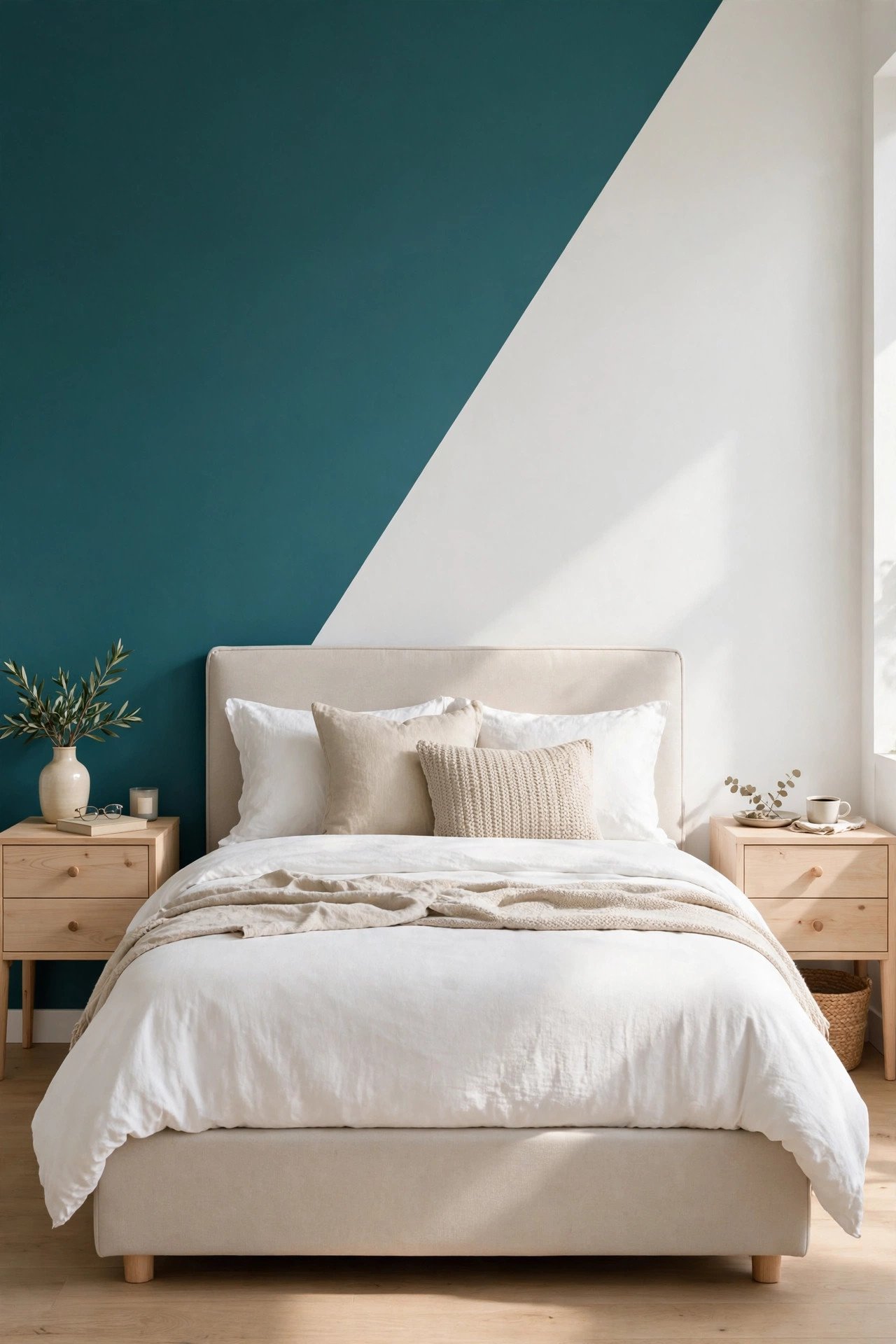
A diagonal color split brings energy using only two paint colors. Run the dividing line from a lower corner behind one nightstand to the opposite upper corner, painting the bottom deep teal and the top soft white. Position your bed in the center so it crosses both areas.
Mark the line with a taut chalk string and press the tape firmly for a clean edge. White bedding and pale wood nightstands brighten the darker section. This modern look feels surprisingly easy once the line is taped.
10. Painted Headboard Wall
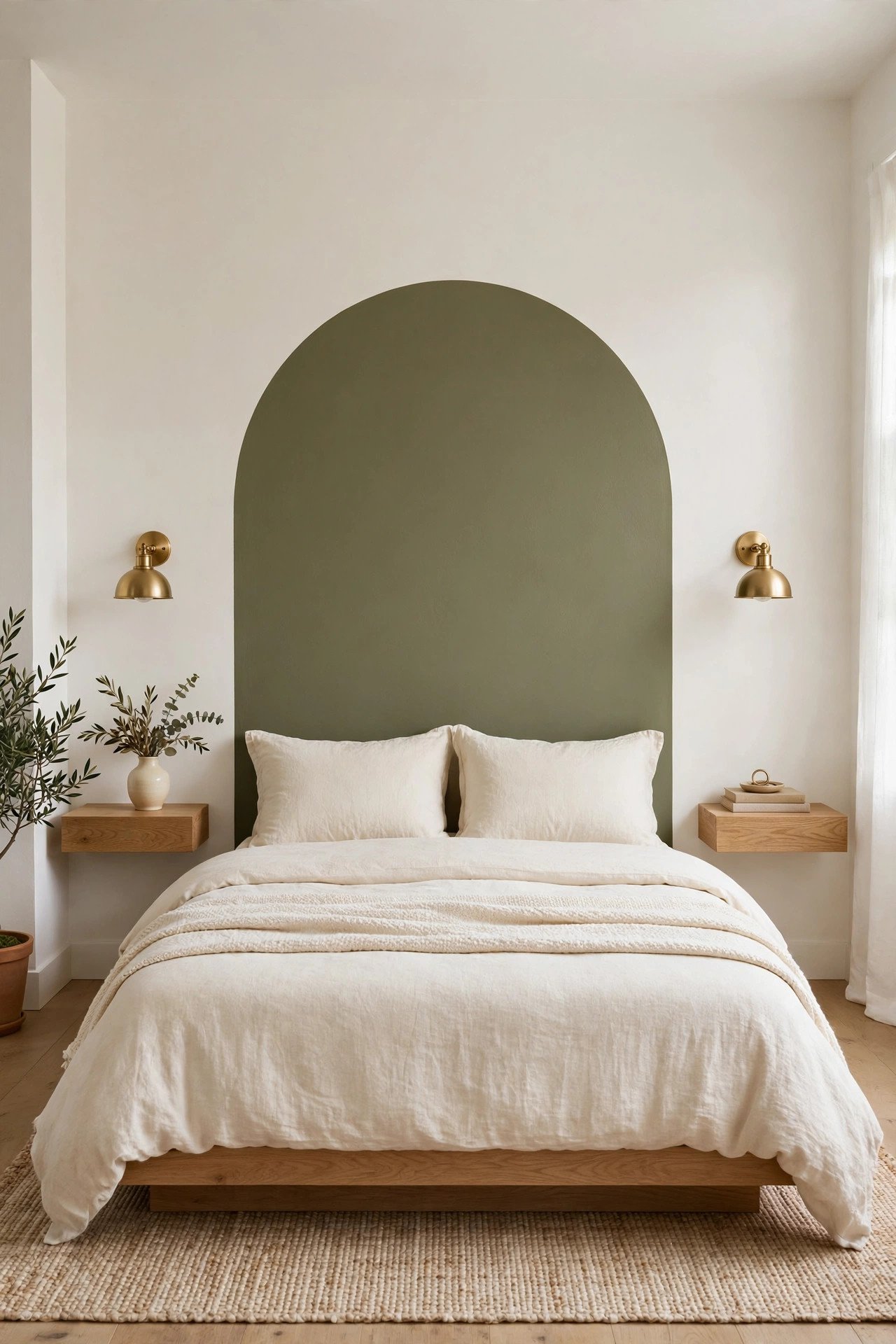
A painted headboard is the perfect solution when you have no traditional bed frame. Create a wide rounded rectangle in warm olive green, starting just below mattress height and extending about three feet above the pillows. Make it wider than the mattress so it visually supports the whole bed.
Add floating shelves as bedside tables and compact sconces inside the painted area for a complete look. This trick saves floor space and money at once. For more painted furniture inspiration, see vintage bedroom painted accents that pair beautifully with this technique.
11. Grid Pattern Wall
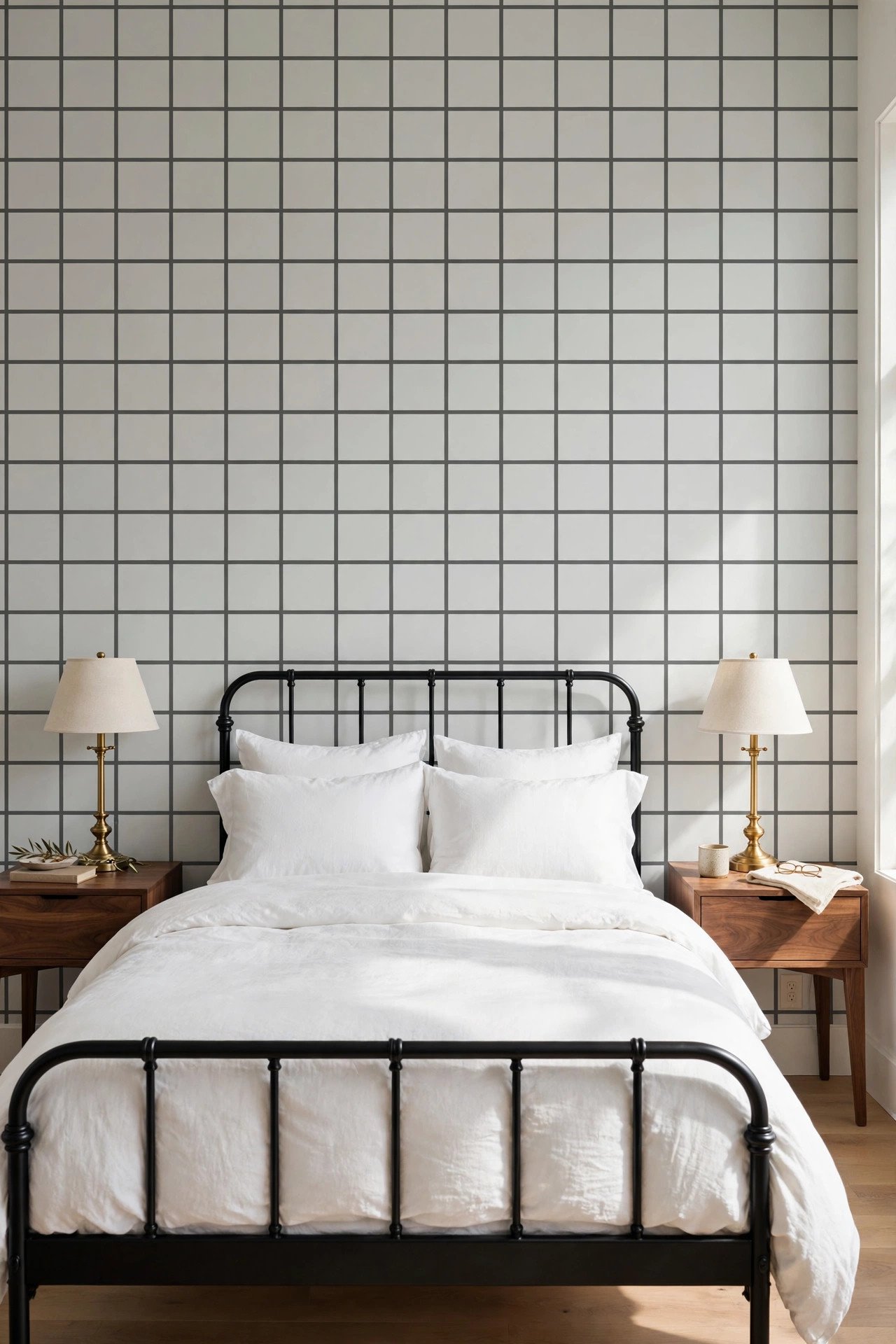
A thin painted grid gives your bedroom architectural order without the cost of wall molding. Start with a pale gray base and add narrow charcoal lines to form large equal rectangles across the wall behind the bed. Keep every section the same size for a crisp result.
Measure carefully and use a level for every line, since uneven lines show quickly in a grid. A black metal bed echoes the pattern while white bedding keeps it restful. This modern industrial look suits minimalist bedrooms perfectly.
12. Polka Dot Wall
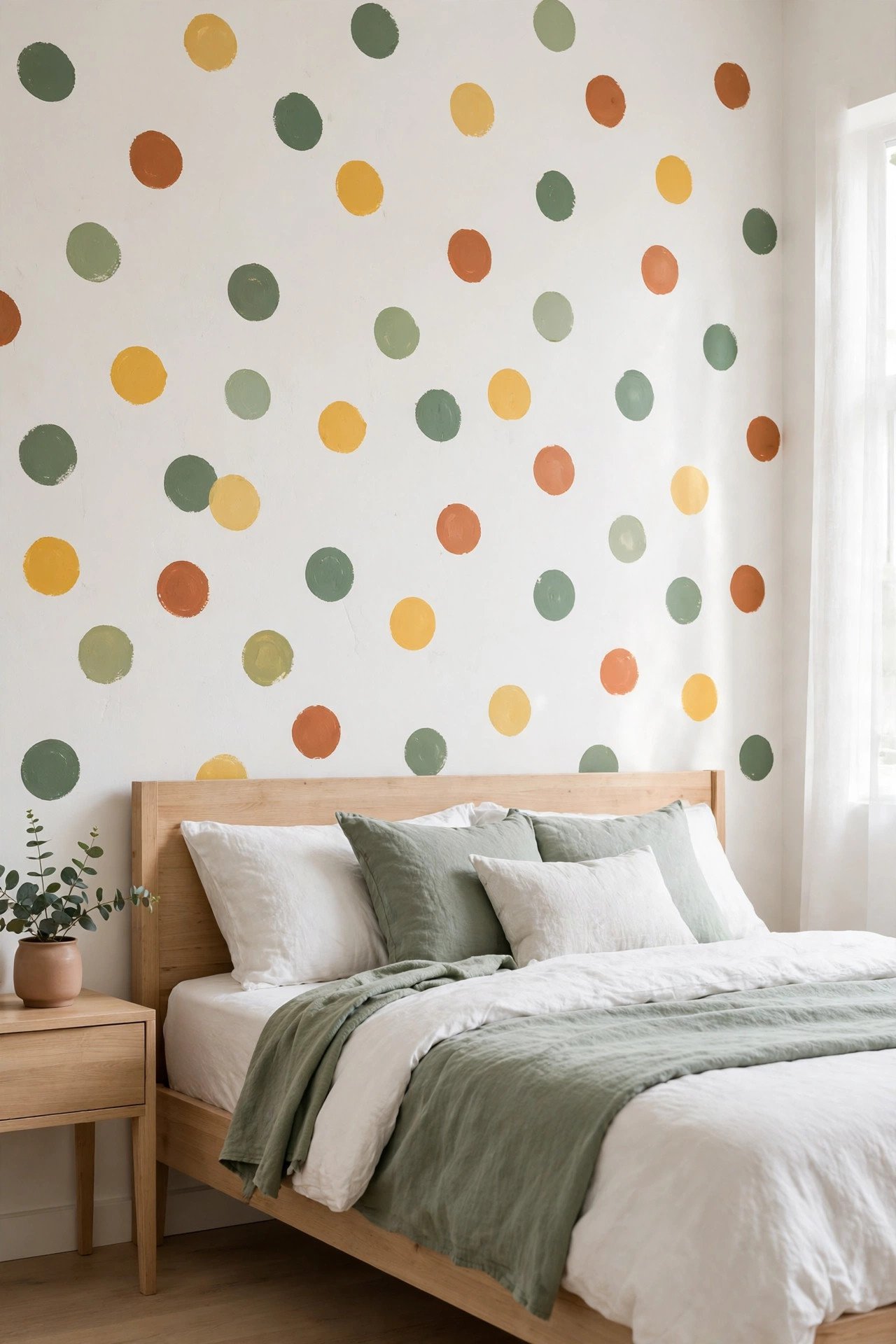
Scattered painted dots add cheerful pattern while leaving plenty of open wall space. Start with a warm white background, then apply medium dots in muted sage, dusty yellow, and pale terracotta, spacing them loosely across the headboard wall. Generous spacing keeps the pattern easy on the eyes.
Use a round sponge or reusable stencil to keep dots consistent. A light wood bed with white and sage bedding supports the playful palette. This design suits kids rooms and colorful guest rooms equally well.
13. Corner Wrap Wall
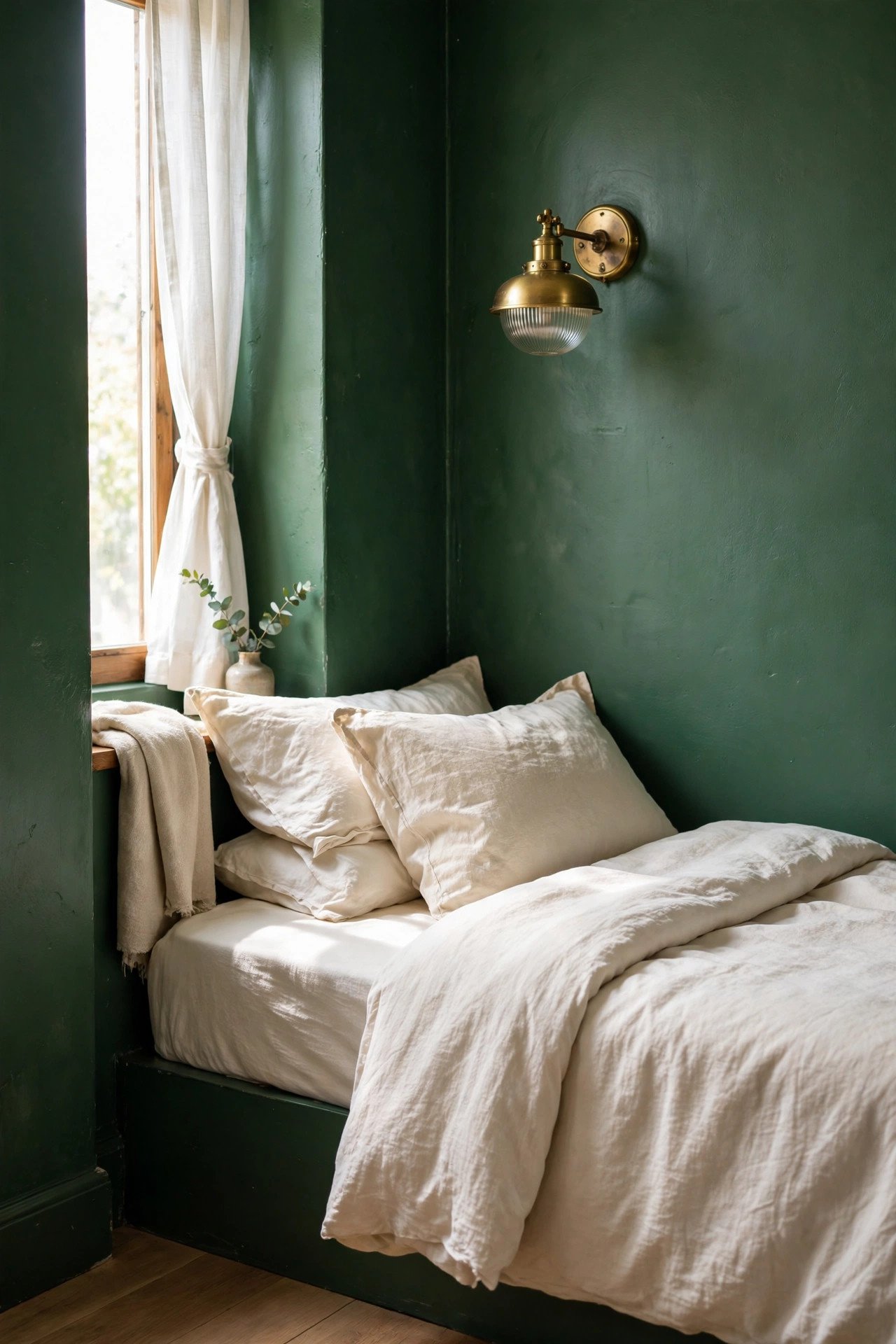
Wrap your paint color around the corner onto the next wall for a designer cocoon effect. Choose one rich color like deep green or warm clay and paint the bed wall plus a few feet of the adjoining wall. The wrapped corner makes the bed area feel like a cozy nook.
This technique works wonders in small bedrooms, defining the sleeping zone without any furniture. Keep bedding simple in cream or white so the wrapped color takes center stage. It uses barely more paint than a single accent wall.
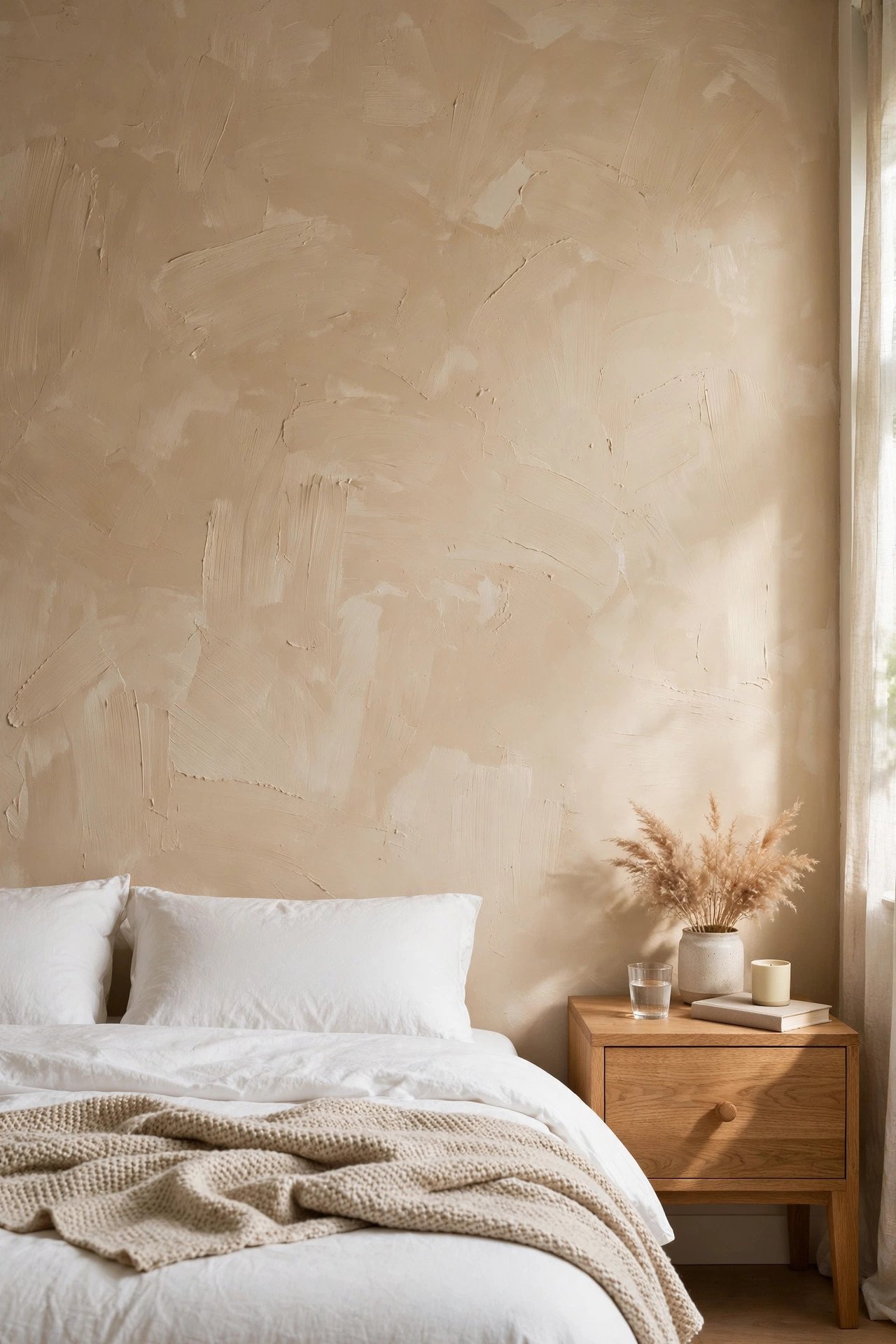
14. Brushstroke Texture Wall
Visible brushstrokes add artistic texture that flat paint cannot match. Load a wide brush with paint and apply it in long vertical strokes, slightly overlapping each pass. The subtle ridges catch light differently throughout the day, giving the wall living dimension.
Choose a limewash-style paint or simply use matte paint with a dry-brush technique for this effect. For an even softer mineral look, explore limewash wall paint ideas that create similar cloudy texture. Keep the color calm so the texture stays soothing.
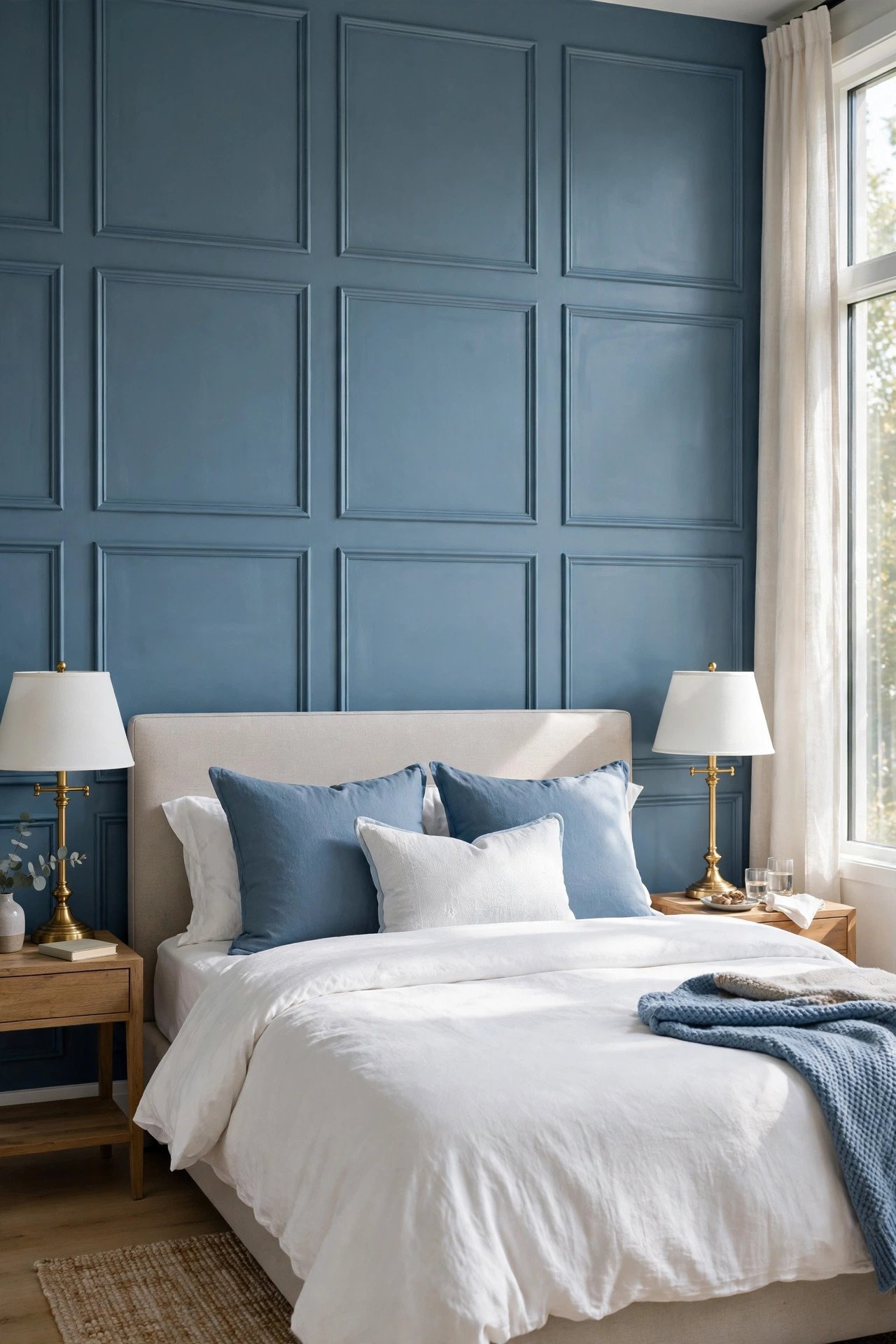
15. Faux Panel Wall
Painted rectangles mimic the look of expensive wall paneling for the cost of tape and paint. Map out evenly spaced rectangles on your bed wall with painter’s tape, then paint inside each one a shade deeper than the base wall. Remove the tape to reveal crisp panel lines.
This classic look suits traditional and transitional bedrooms beautifully. A soft greige or dusty blue keeps it elegant rather than stark. You get the architecture of molding with none of the carpentry, and it pairs well as an alternative to wallpaper accent wall ideas.
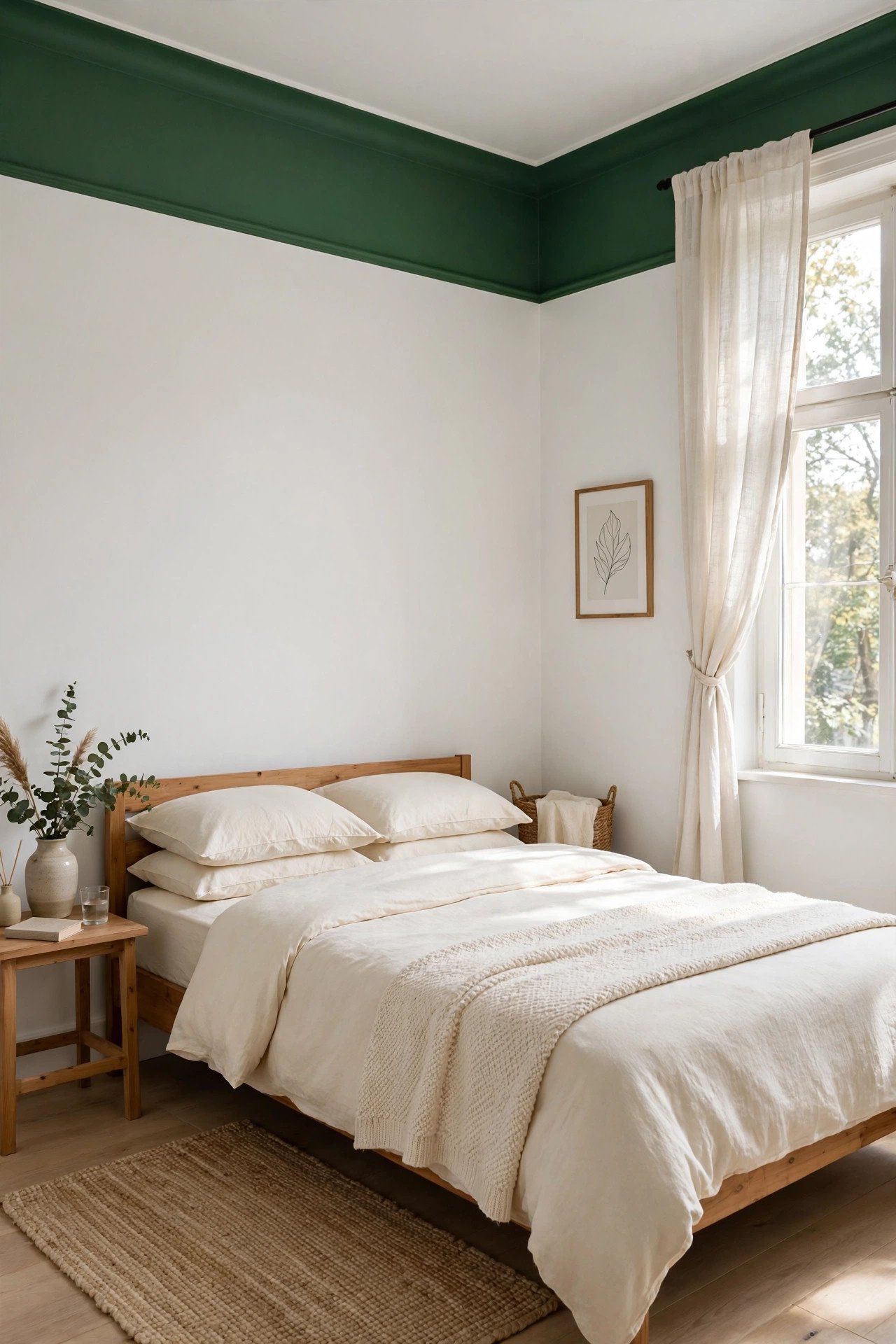
16. Painted Wall Border
A painted border near the ceiling adds a finished detail that frames the whole room. Paint a wide band in a contrasting color a few inches below the ceiling line, running it around all four walls. The border draws the eye up and makes ceilings feel higher.
Use a level and long strips of tape to keep the band perfectly straight. A deep border color with white walls below creates striking contrast for very little paint. This old-house detail brings instant character to plain modern rooms.
Conclusion
Paint remains the cheapest and most powerful decorating tool you own, and your bedroom walls are waiting for it. Whether you choose a bold arch, a soft ombre, or a simple half-painted wall, one weekend of work transforms how your room feels. The techniques on this list prove you do not need artistic talent, just tape and patience.
Pick the design that fits your style and your skill level, then buy a single quart to start. Test your color on a poster board first and live with it for a day. Your dream bedroom is literally one coat of paint away.
Frequently Asked Questions About Cheap Bedroom Wall Makeover
How much paint do I need for one bedroom accent wall?
One quart of paint usually covers a single accent wall with two coats. Larger walls or very dark colors may need a second quart. Buying a quart first lets you test the color before committing to gallons.
What is the easiest painted wall design for beginners?
The half-painted wall is the easiest, since it needs only one straight horizontal tape line. A painted circle using the string-and-pencil method is also very forgiving. Start with simple shapes before trying geometric patterns.
How do I get crisp lines with painter’s tape?
Press the tape edges down firmly with a credit card, then paint a thin coat of your base color over the tape edge first. This seals the edge so the new color cannot bleed underneath. Remove the tape while the final coat is still slightly tacky.
Can I paint over my design later if I do not like it?
Yes, painted wall designs are easy to change by priming over them and repainting. Light colors may need two primer coats to fully hide a bold design. This reversibility makes paint the safest way to experiment with bedroom style.
What paint finish works best for bedroom accent walls?
Eggshell or satin finishes work best, since they resist scuffs and wipe clean easily. Matte finish hides wall imperfections but marks more easily. Avoid high-gloss on large areas, as it highlights every bump in the wall.

Hi, I’m Emily! I turn messy corners into cozy, organized spots. DreamNestDecor is where I share simple, practical home ideas — decor, organization, and small-space solutions that work in real life, not just in photos. Every idea here is carefully researched before it’s shared.