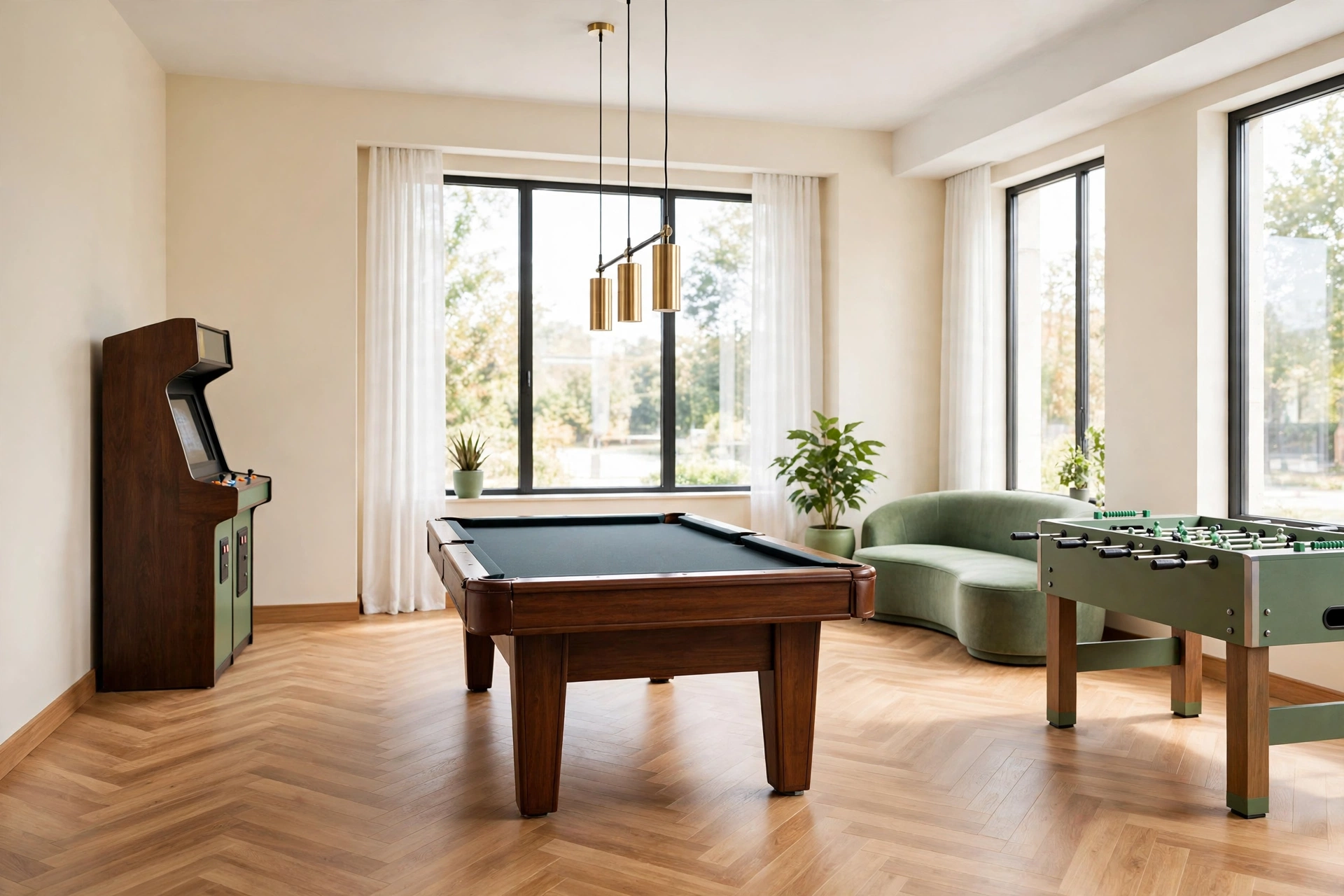
Picture this: it is Friday evening, the whole family walks into one small room, and everyone finds a game to love. One person lines up a shot at the pool table, another shuffles cards at the round table, and the rest cheer from the sofa. That happy noise is exactly what a well planned game room gives your home.
You do not need a basement the size of a hall or a big budget to build one. All you need is a smart layout that fits your favorite games into the space you already have. These 24 small game room layout ideas will help you arrange tables, seating, and game zones so every family night feels easy and fun.
1. Center the Room Around a Pool Table
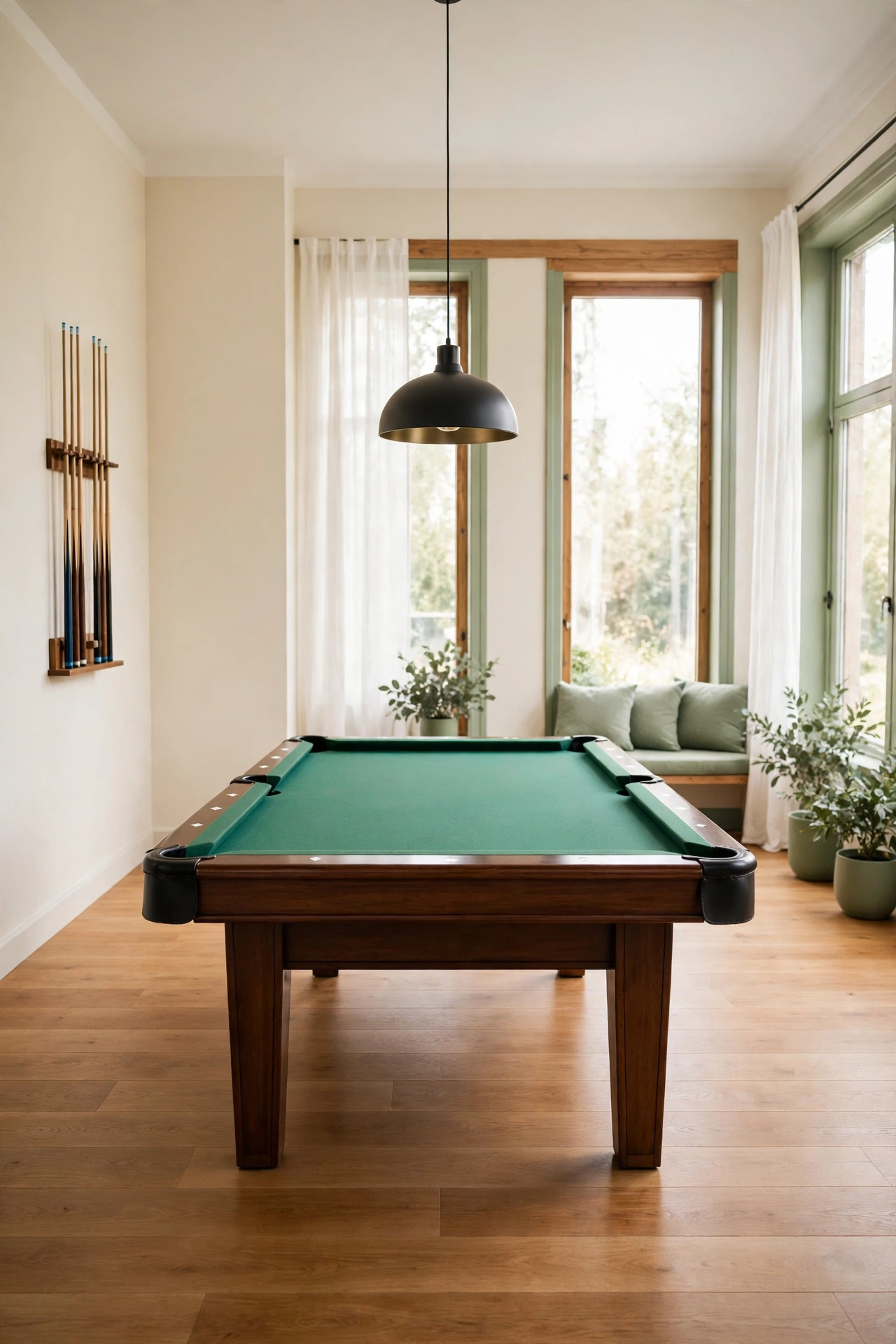
A pool table is the classic anchor for a game room, and it works even in a small space if you plan the clearance around it. Place the table in the center of the room with at least four feet of open floor on every side so players can line up shots without bumping into walls. The table itself becomes the heart of the room, and every other zone can sit along the walls around it.
Keep the walls near the table clear of low furniture so cue sticks have room to move. A hanging pendant light above the table gives even light across the playing surface, and a small wall rack holds cues neatly when the game ends. When the pool table has its space, the whole room feels purposeful from the moment you walk in.
2. Choose a Fold-Up Ping Pong Table for Flexible Space
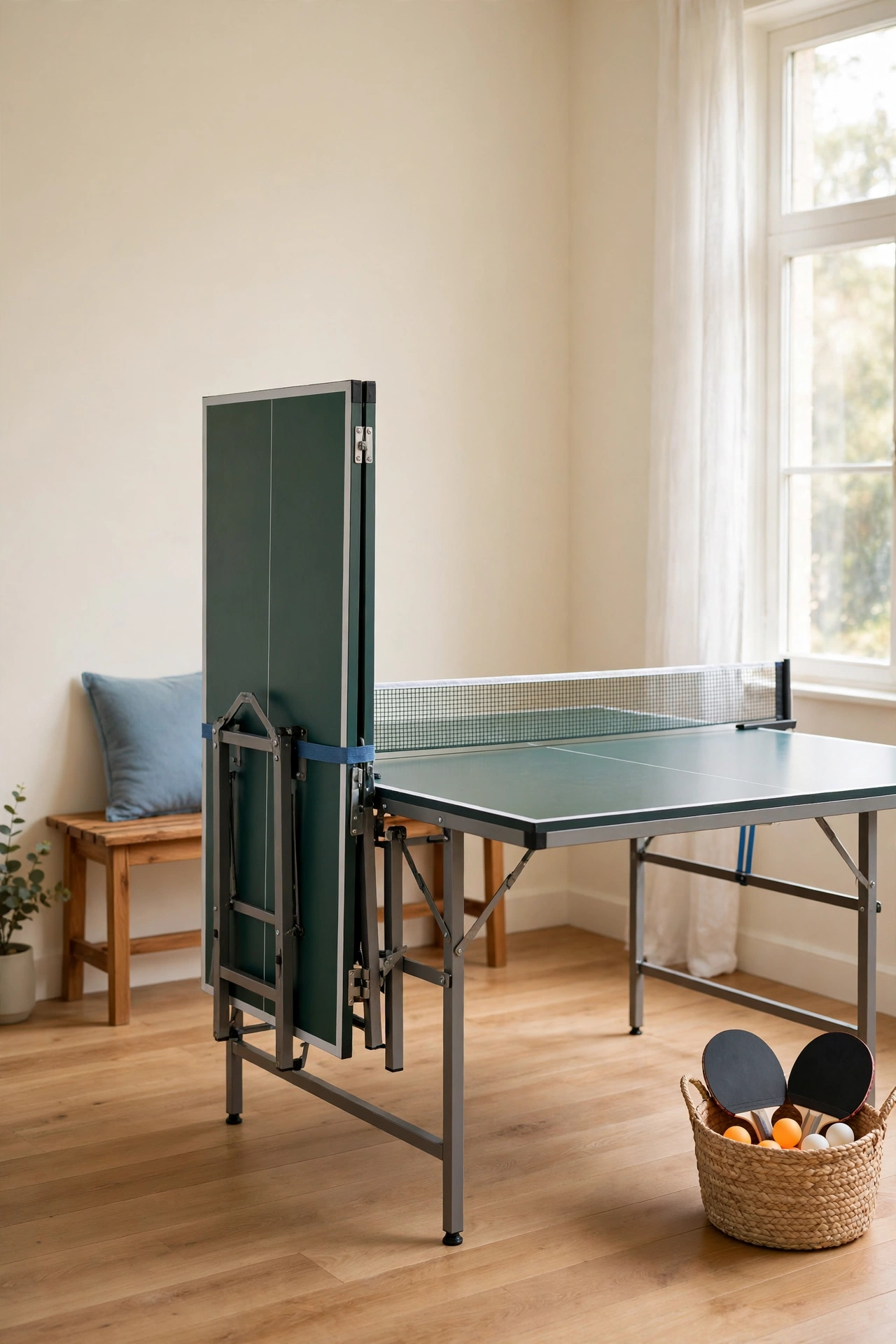
A fold-up ping pong table gives you a full-size game with half the footprint when it is not in use. Open it flat for a match, then fold one or both halves up against the wall when you need the floor back. This flexibility makes ping pong one of the best choices for a small game room that must serve more than one purpose.
Place the table where the folded halves will not block a door or a walkway. A slim basket beside the table holds paddles and balls, and a small bench along the wall gives waiting players a seat. Fold-up tables also let you try different room arrangements until you find the layout that feels right.
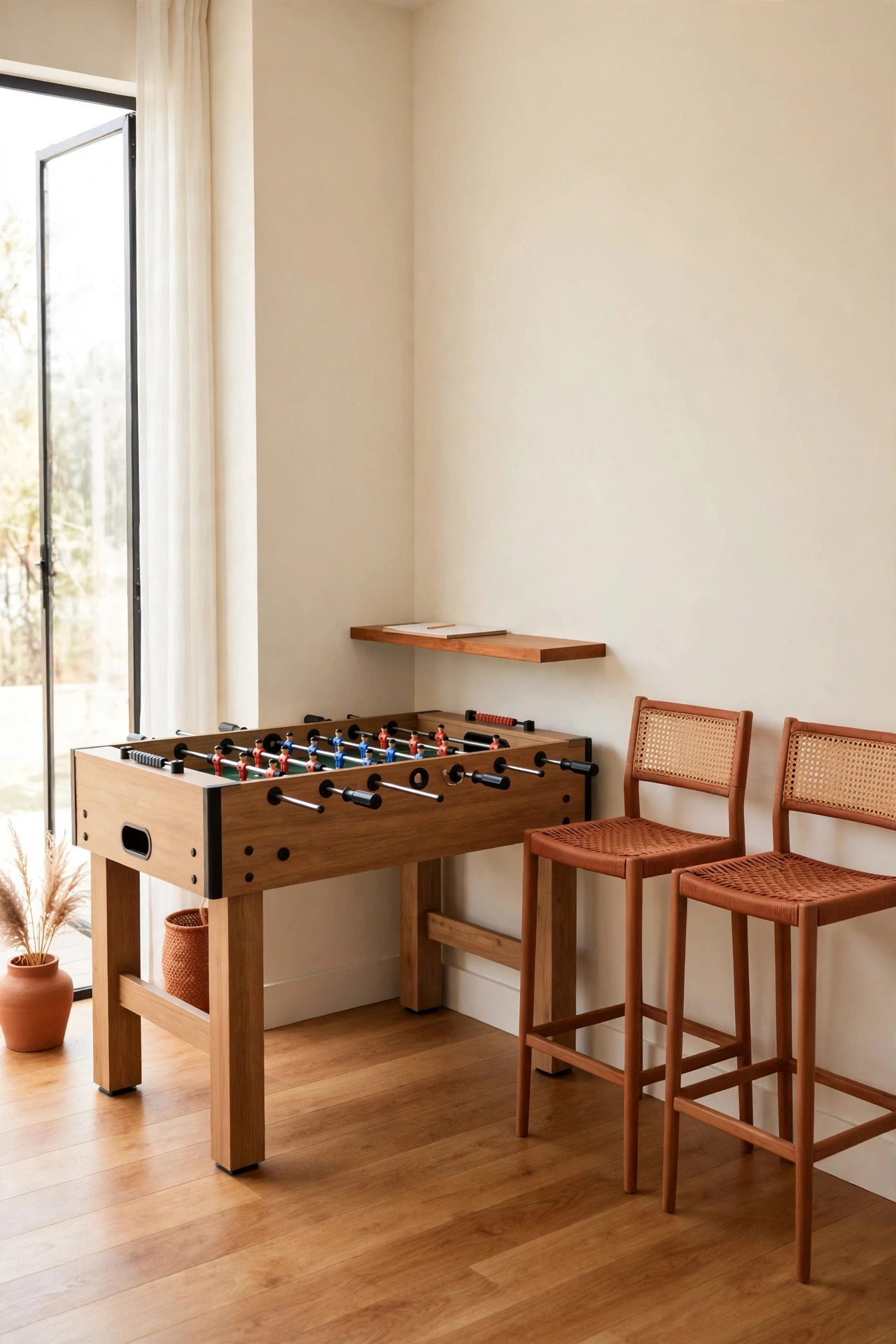
3. Build a Foosball Corner With High Stools
A foosball table fits neatly into a corner and brings fast, noisy fun that players of all ages enjoy. Push the table into the corner with open space on both long sides so two players can stand and spin the rods freely. High stools tucked against the wall give spectators a perch without crowding the players.
Choose stools that slide fully under a wall ledge or stack in the corner when the game ends. A small shelf above the table holds a score pad and spare balls, and bright overhead light keeps the little players easy to see. A foosball corner turns dead corner space into one of the busiest spots in the room.
4. Place a Large Board Game Table in the Middle of the Room
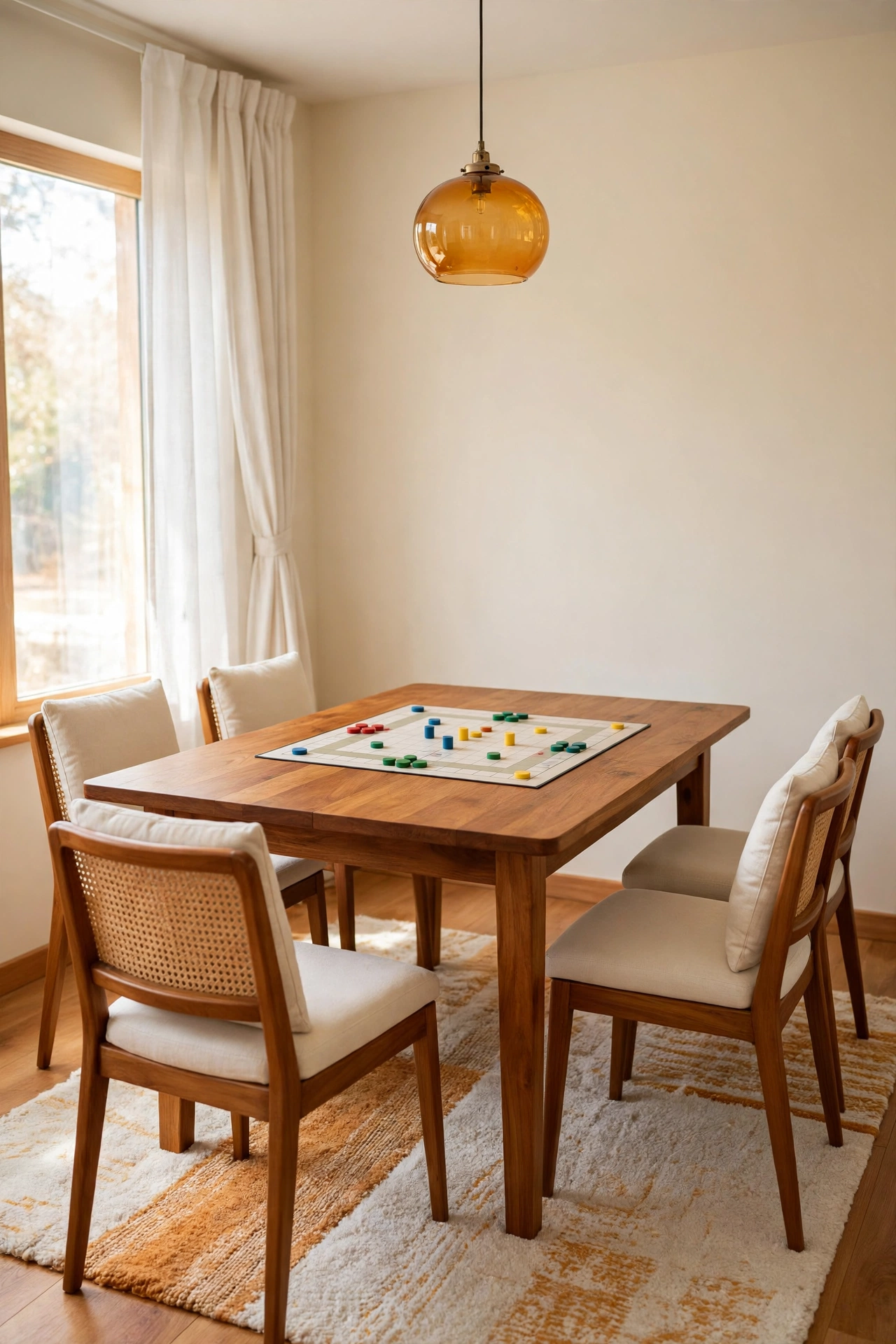
A large board game table in the middle of the room invites long, relaxed evenings of play. Choose a sturdy table with room for a game board, cards, snacks, and elbows, and surround it with comfortable chairs that slide in easily. The table becomes the gathering point where the whole family sits down together.
Leave enough space behind each chair so players can stand up without bumping into the wall or another game zone. A warm wood table with a smooth top suits almost any style, and a soft rug underneath softens sound and marks the zone. When the table is the centerpiece, game night starts the moment everyone sits down.
5. Create an Arcade Corner With Retro Game Machines
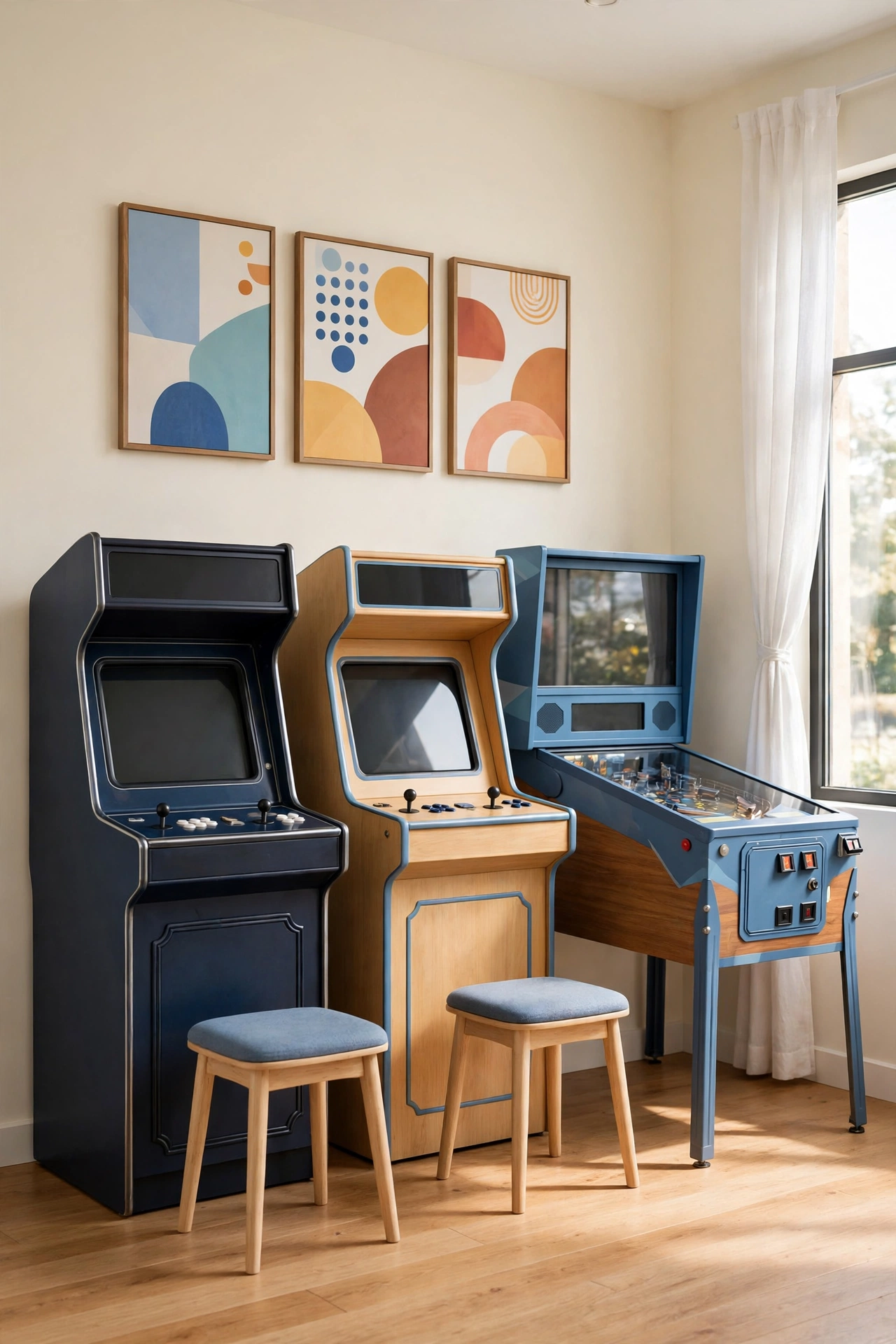
An arcade corner brings the excitement of a games hall into your own home. Line two or three retro game machines along one wall, with enough space in front of each for a player to stand comfortably. Upright cabinets, a pinball machine, or a small driving game all work well in this zone.
Keep the machines on a single wall and add a small stool or two for players who like to sit. Colorful wall art above the machines adds to the arcade feeling without taking up floor space. An arcade corner gives older kids and adults a reason to linger long after dinner ends.
6. Add a Dartboard Wall With a Scorekeeping Rail
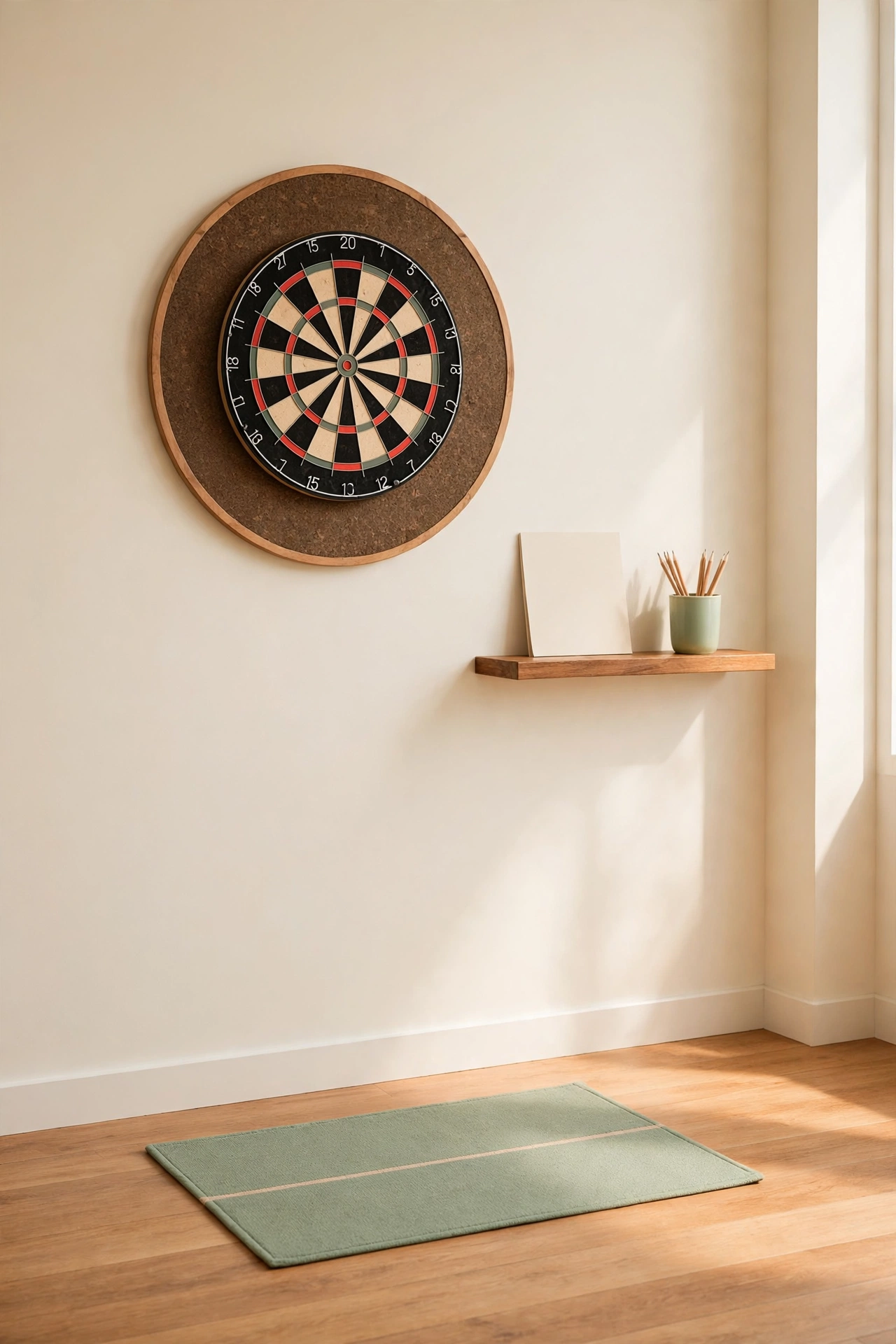
A dartboard wall uses almost no floor space and adds a classic pub game to your room. Mount the board on a short wall, with a clear throwing line marked on the floor about seven feet away. A protective backboard around the dartboard guards the wall from stray darts.
Add a narrow scorekeeping rail beside the board with a small notepad and a pencil cup, so scores stay visible through the whole match. A small mat under the throwing line protects the floor and marks the spot. Darts are quiet, quick to set up, and easy to play in short rounds between other games.
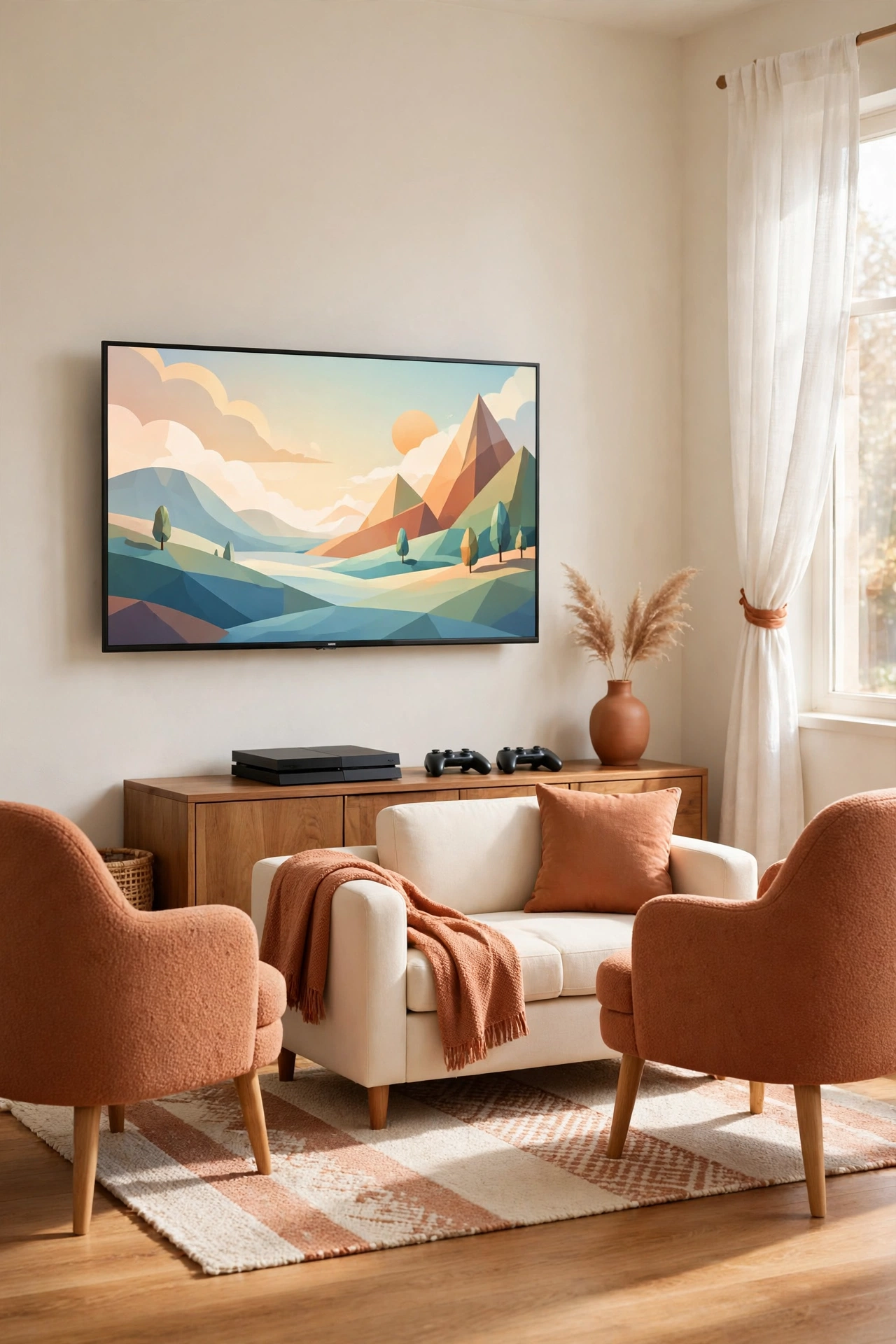
7. Arrange a Video Game Corner With a Wall-Mounted Screen
A video game corner needs a screen, seating, and a clear view, and a wall-mounted screen saves precious floor space. Mount the television or monitor on the wall at seated eye level, with a low media console beneath it for the game console and controllers. Two or three seats arranged in a gentle arc give every player a good view.
Keep cables tucked behind the console or inside a cord cover so the floor stays clear and safe. A soft rug under the seating area marks the zone and absorbs sound. With the screen on the wall, the corner stays open and the rest of the room keeps its own game zones.
8. Design a Round Card Table Nook for Evening Games
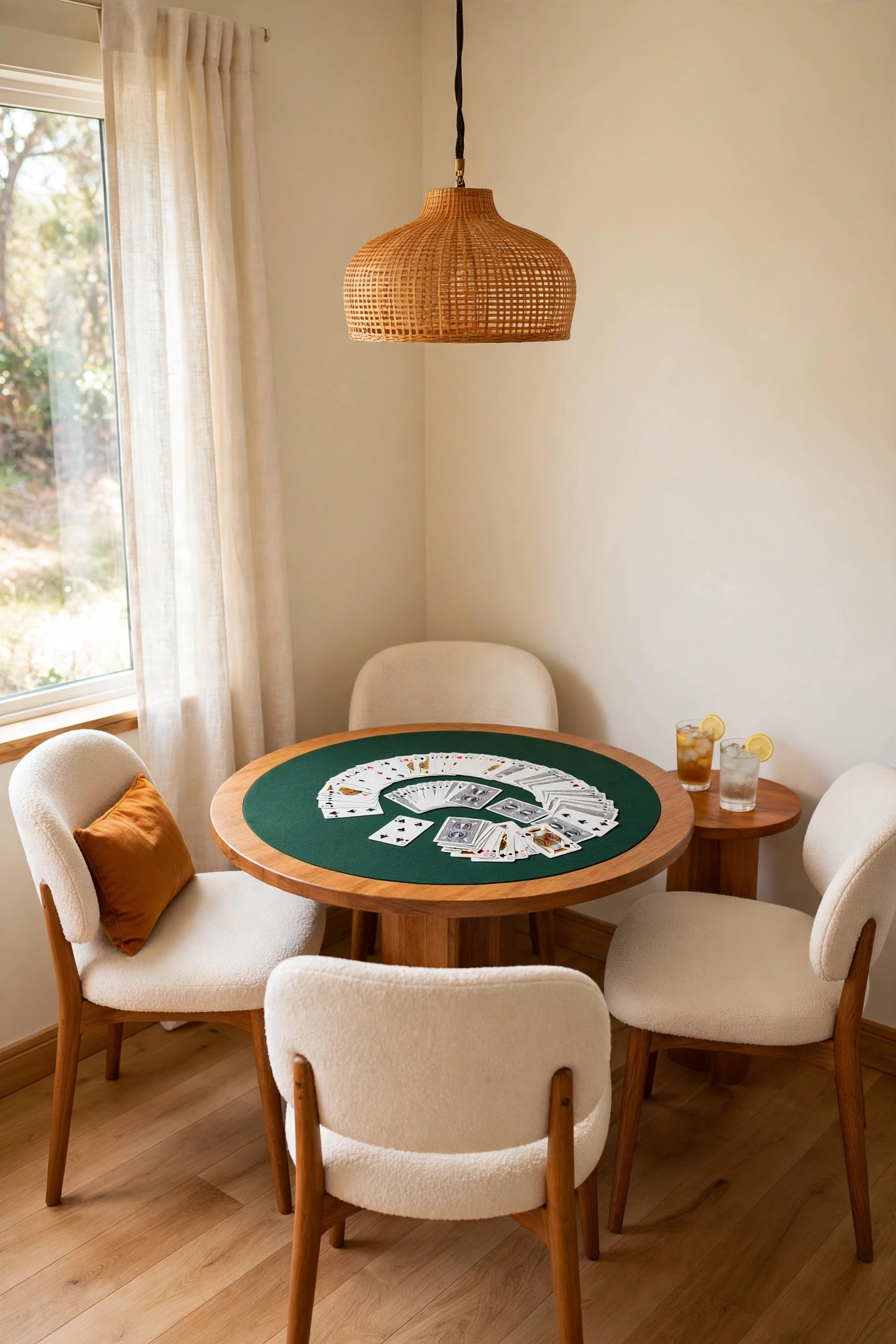
A round card table tucked into a nook makes evening card games feel special. Round tables let every player see each other and reach the center easily, which keeps the game moving. Four chairs fit comfortably around a small round table without crowding the room.
Add a pendant light above the table so cards are easy to read, and a small side table for drinks and snacks. A felt or padded table top keeps cards from sliding and softens the sound of play. A card table nook becomes the quiet corner where adults gather after the louder games wind down.
9. Run a Shuffleboard Table Along the Longest Wall
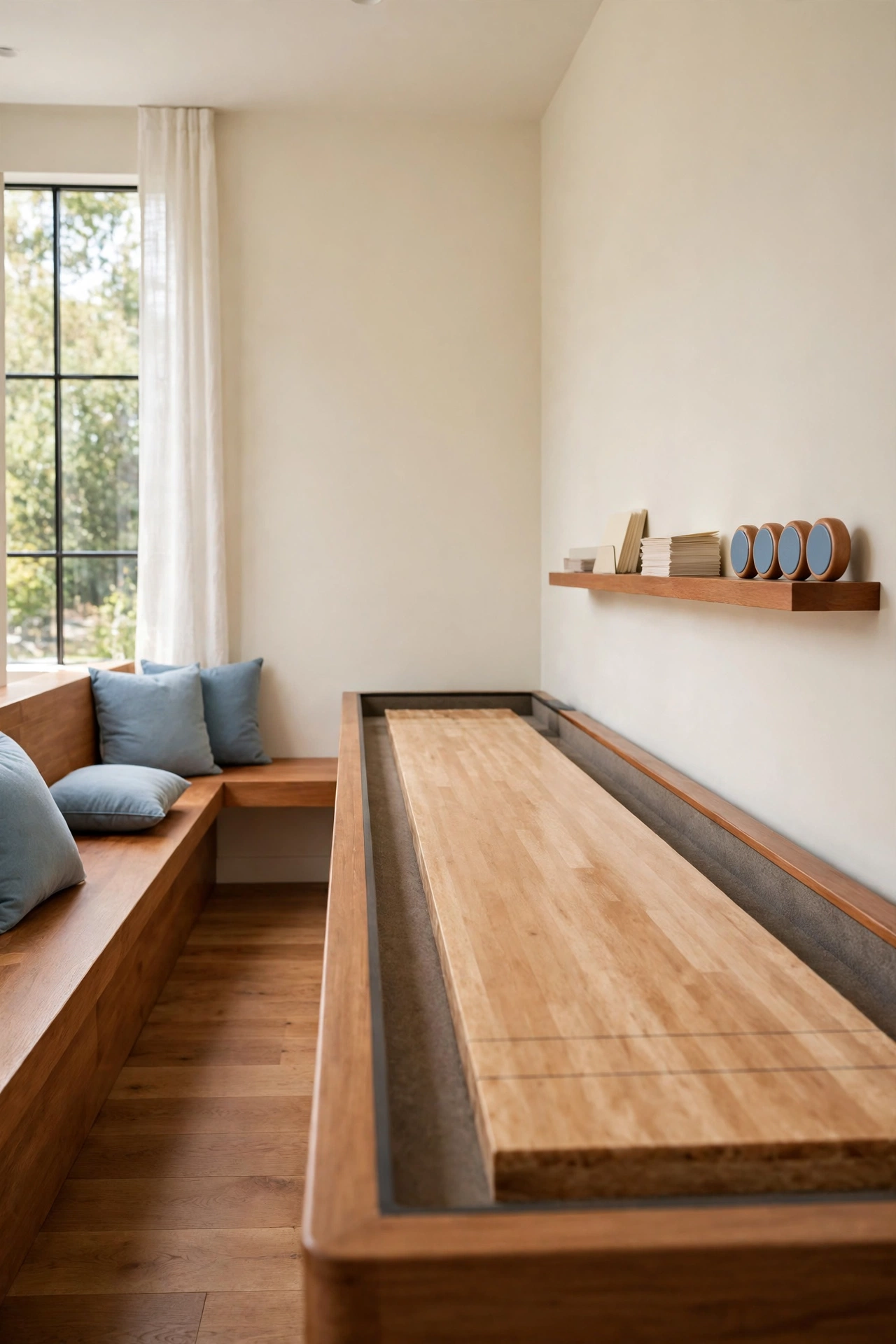
A shuffleboard table is long and narrow, which makes it a perfect fit along the longest wall of a small game room. Slide the table against the wall with walking space on one side, and players can take turns from the same side. The long, smooth surface invites relaxed, friendly competition.
A wall shelf above the table holds scorecards and pucks, and a bench on the opposite wall gives waiting players a seat. Because the table hugs the wall, the center of the room stays open for other games. Shuffleboard is gentle, easy to learn, and loved by grandparents and grandchildren alike.
10. Add an Air Hockey Table for Fast Family Matches
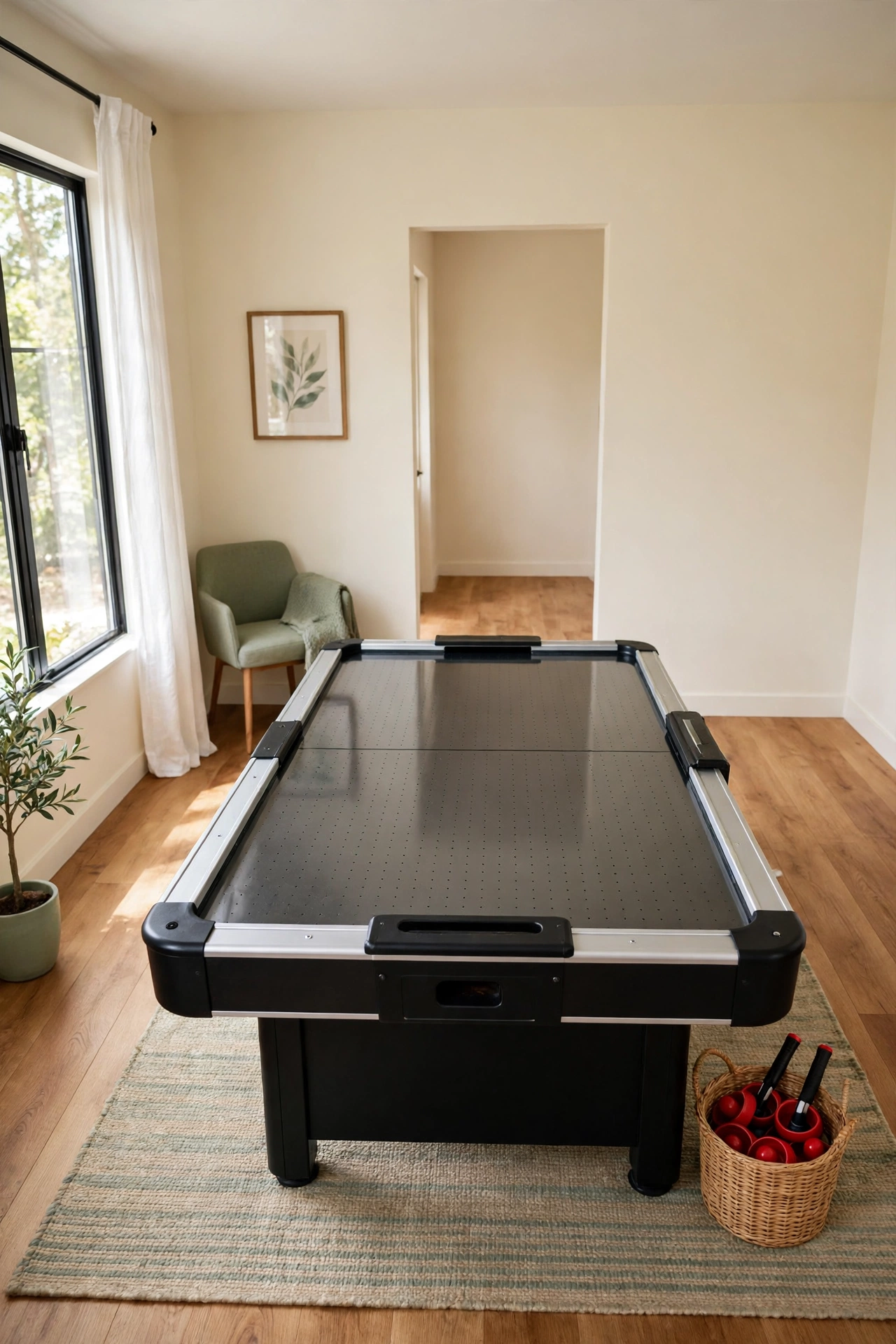
An air hockey table brings fast, loud fun that fills a room with laughter in seconds. Place the table with open space at both short ends so players can move freely, and leave the long sides clear for spectators. The smooth, floating puck makes every match feel quick and exciting.
Air hockey tables need a power outlet nearby, so plan the position around the wall sockets. A small bin beside the table holds spare pucks and mallets, and a rug underneath softens the sound. Short matches mean everyone gets a turn, which keeps the energy high all evening.
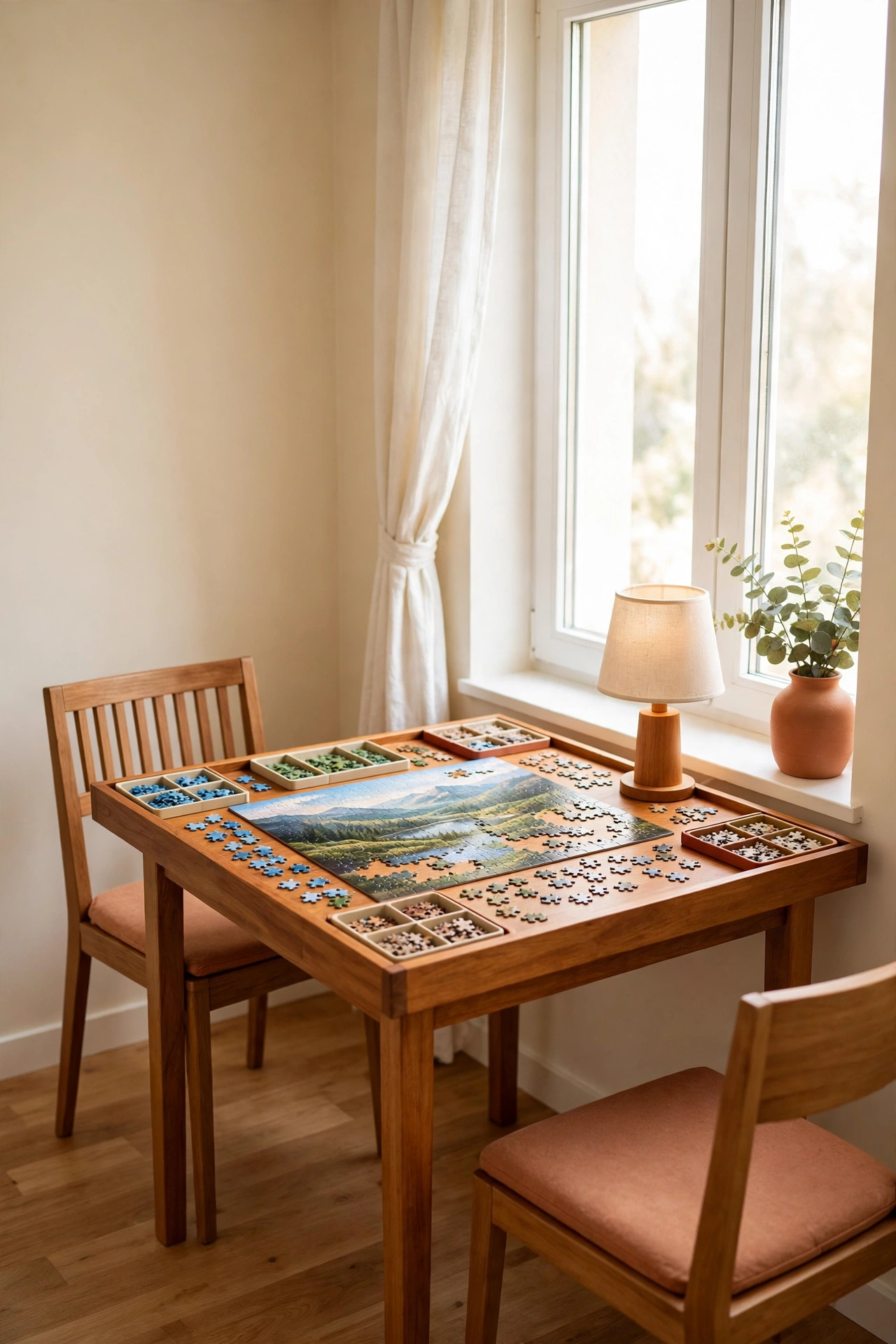
11. Set Up a Jigsaw Puzzle Table by the Window
A jigsaw puzzle table by the window gives patient players a calm corner of their own. Natural daylight makes it easier to see small pieces and true colors, and the view gives eyes a rest between searches. Choose a table large enough to hold the puzzle plus sorted piece trays around the edges.
A table with a raised edge keeps pieces from sliding off, and a cover board lets you pause the puzzle without clearing it away. Two chairs are enough for quiet puzzling, and a small lamp helps on cloudy evenings. A puzzle corner balances the louder games and gives the room a peaceful side.
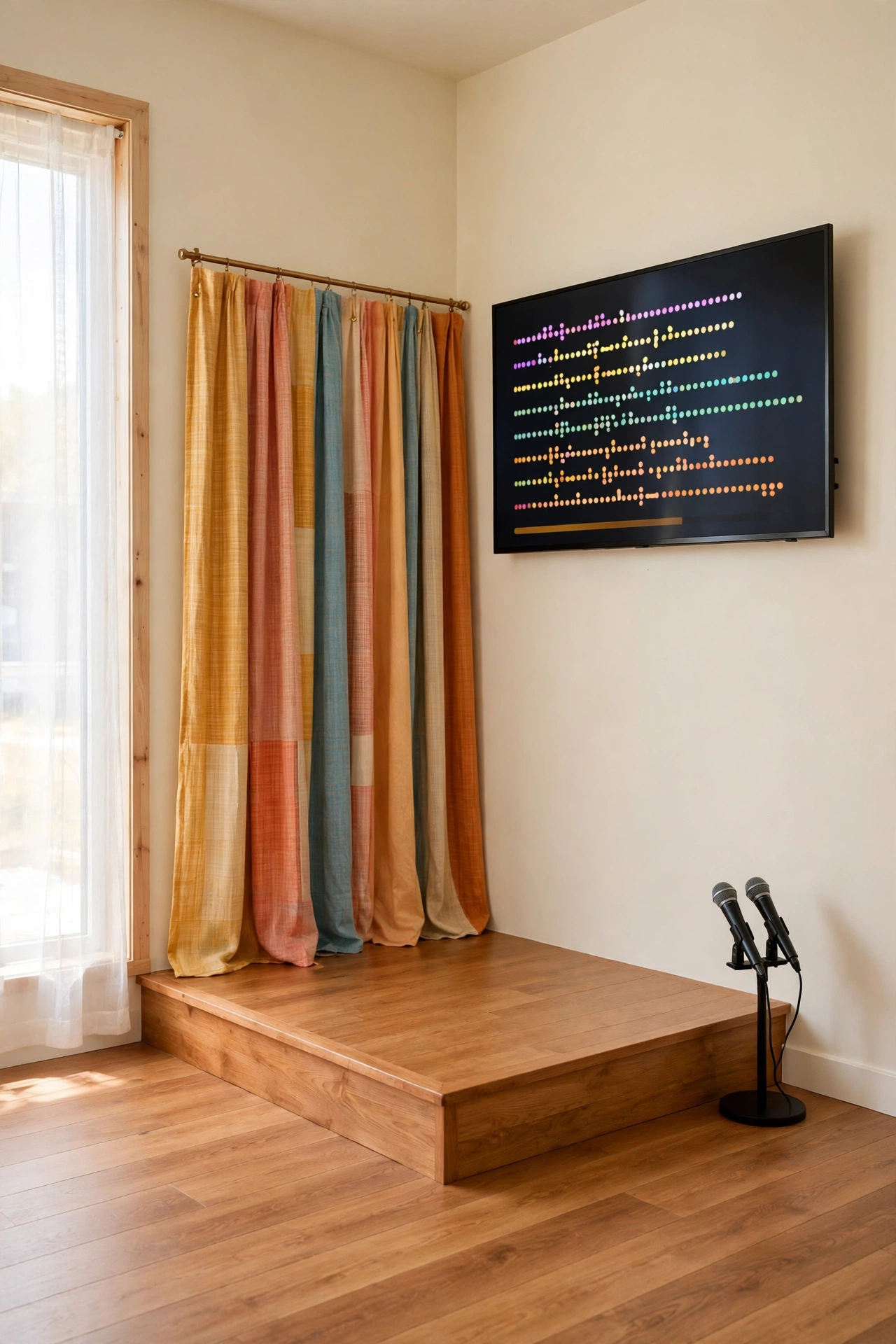
12. Create a Karaoke Corner With a Low Stage Platform
A karaoke corner with a low stage platform turns singing into a small performance the whole family enjoys. Build or place a low platform in one corner, add a screen for lyrics, and keep microphones on a small stand beside it. The platform marks the stage clearly, even in a small room.
Keep the stage low and the edges visible so no one trips in dim light. A curtain or a colorful backdrop behind the platform adds theater feeling without permanent changes. If anyone in the family also plays an instrument between songs, these music practice room layout ideas will help you plan a corner where instruments stay ready to play.
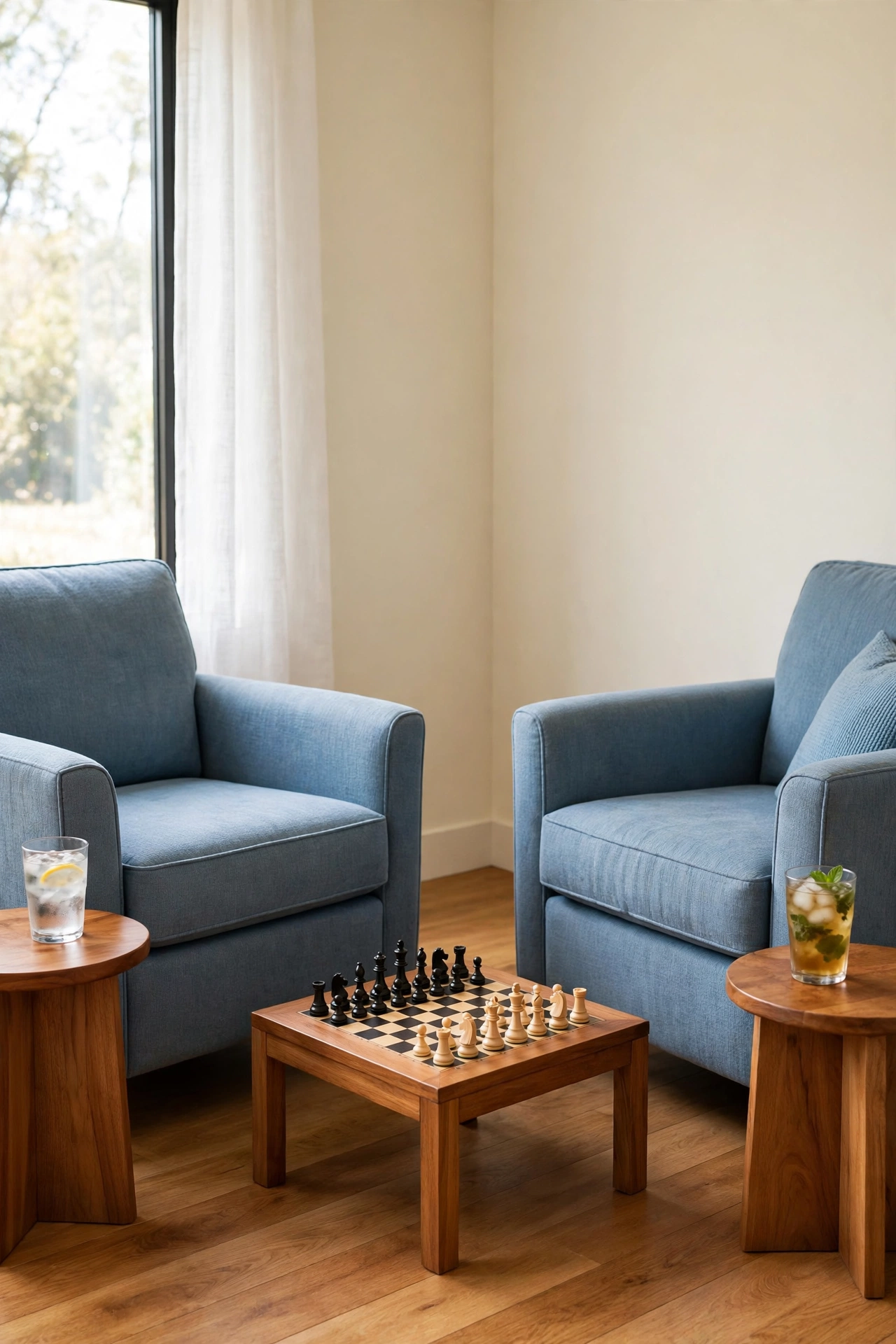
13. Add a Chess Table With Two Comfortable Armchairs
A chess table with two comfortable armchairs creates a quiet contest corner in the game room. Place the small square table where light falls evenly across the board, and choose armchairs with good back support for long games. The setup invites slow, thoughtful play away from the busier zones.
A small side table beside each chair holds a drink and a captured-pieces dish, so the board stays clear. Warm wood and soft upholstery make the corner feel like a private club. A chess corner also pairs beautifully with reading, and these home library layout ideas will help you plan a quiet shelf nearby for books and game guides.
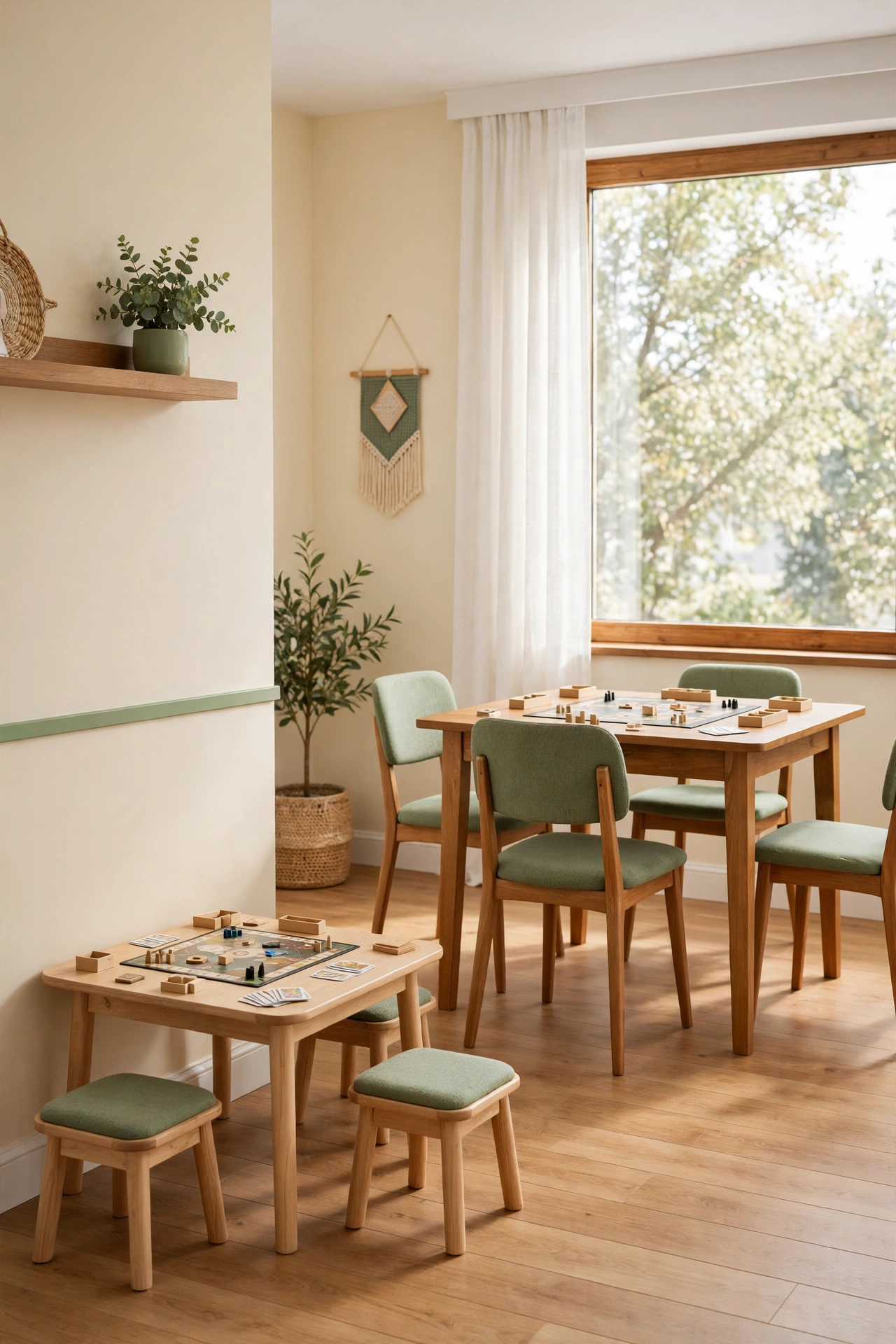
14. Plan Two Table Heights for Players of All Ages
Players of all ages enjoy game night more when the furniture fits them. Plan one standard-height table for adults and older kids, and one lower table where younger children can reach the board comfortably. Both tables sit in the same room, so the whole family plays together while each group sits at the right height.
Use chairs and stools that match each table height, and keep the lower table near the wall so small players have a safe, defined spot. Board games, card games, and building games all work at the low table. Two heights mean no one kneels on the floor and no one stretches to reach the board.
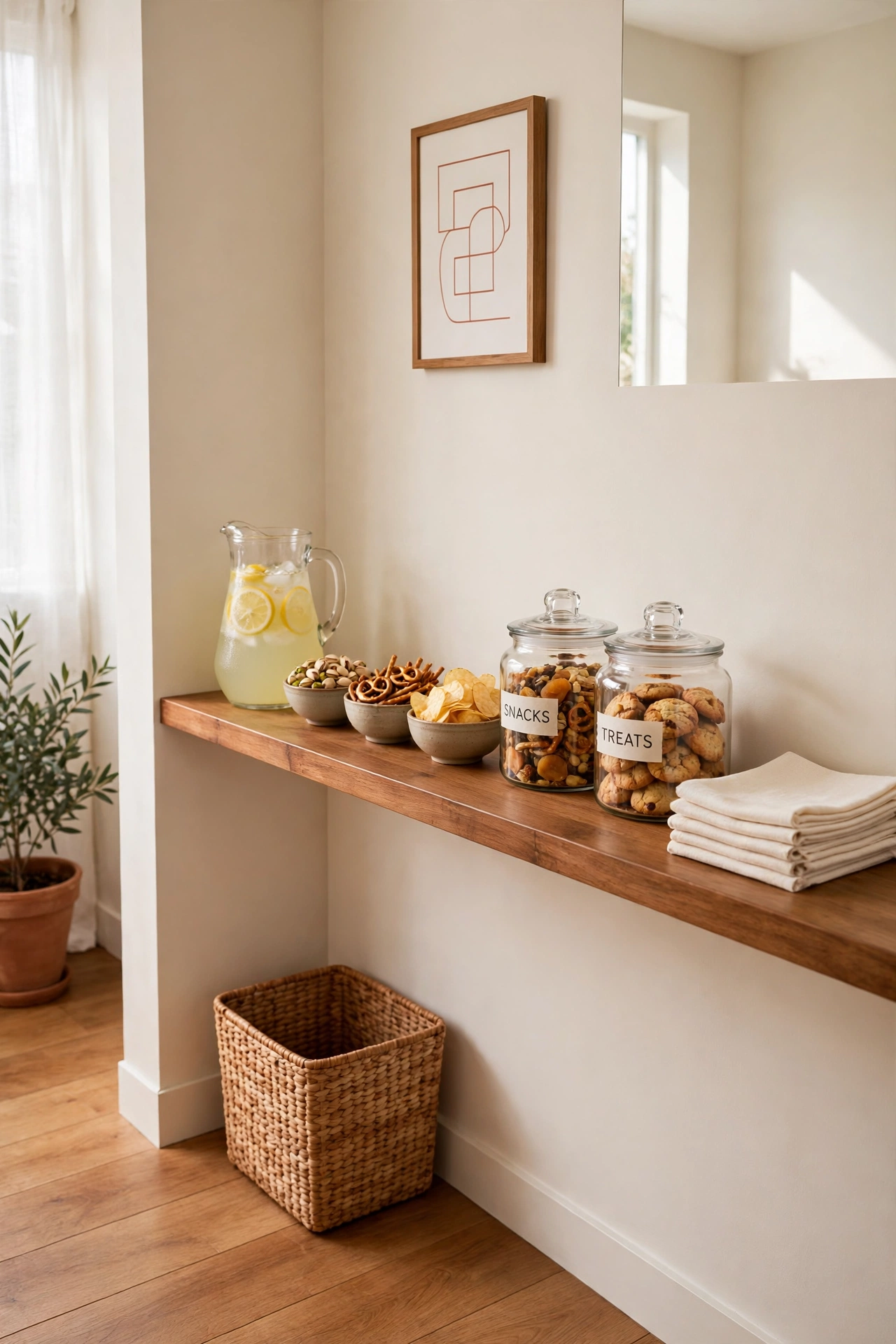
15. Put a Snack Counter Along One Wall
A snack counter along one wall keeps food and drinks away from game tables and playing surfaces. A narrow counter or a long console table holds bowls of snacks, a drink pitcher, and napkins, so players can help themselves between turns. The counter also acts as a natural boundary between game zones.
Choose a counter height that works for standing snacks and quick bites, and add a small bin underneath for wrappers and cups. A washable countertop makes spills easy to wipe clean. With snacks in one place, game boards stay clean and the room stays tidy through the whole evening.
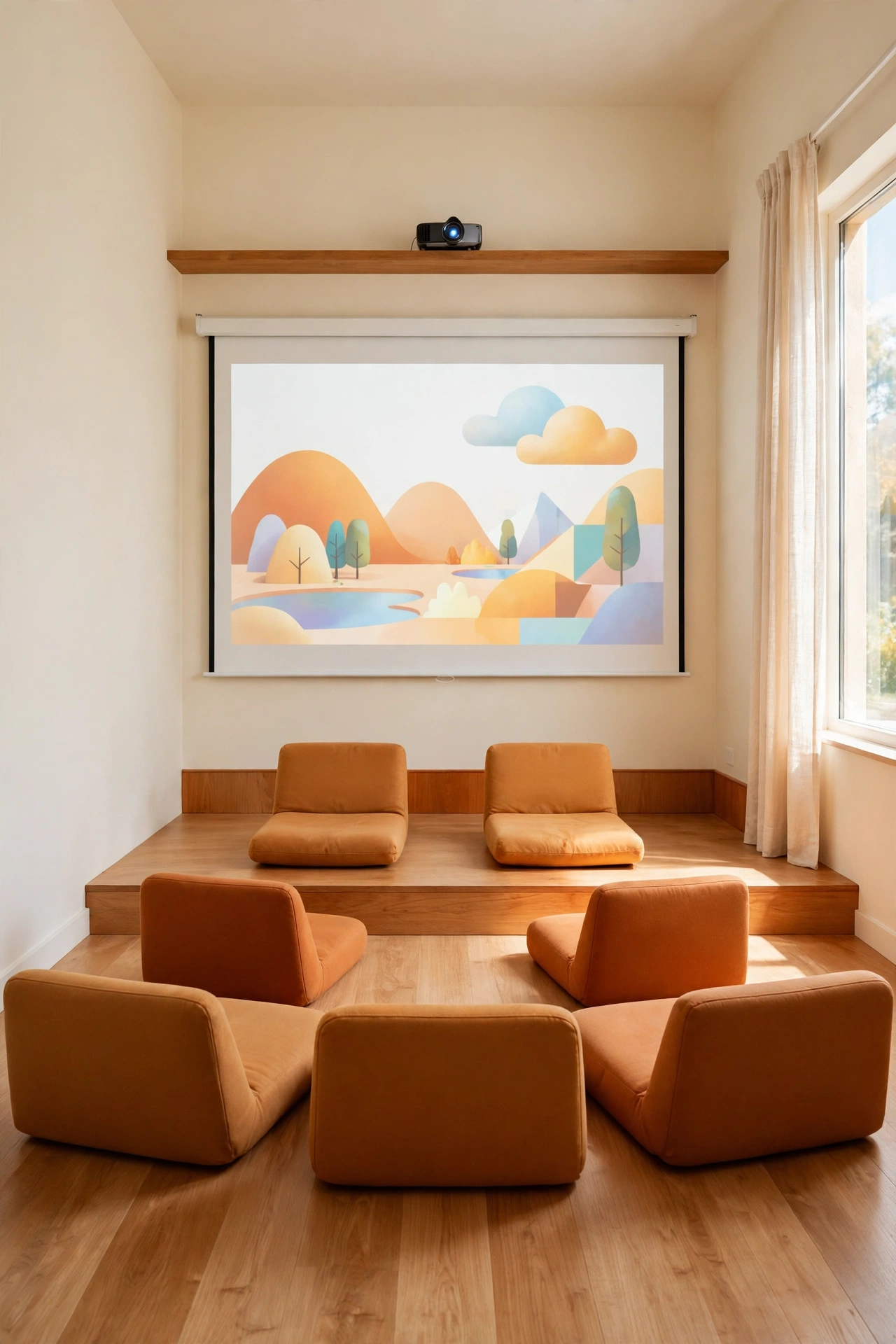
16. Mount a Projector Screen for Big Screen Game Nights
A projector screen on the wall turns game night into a big-screen event. Mount a pull-down or fixed screen on the longest blank wall, and place the projector on a high shelf or a ceiling mount at the back of the room. Video games, trivia, and party games all feel grander on a large screen.
Arrange seating in a shallow arc facing the screen, with the front row low and the back row raised on a small platform if space allows. Dimmer lights or blackout curtains help the picture stay bright. For a full media-room approach, these home theater layout ideas with two rows of seats show how to arrange tiered seating in a small space.
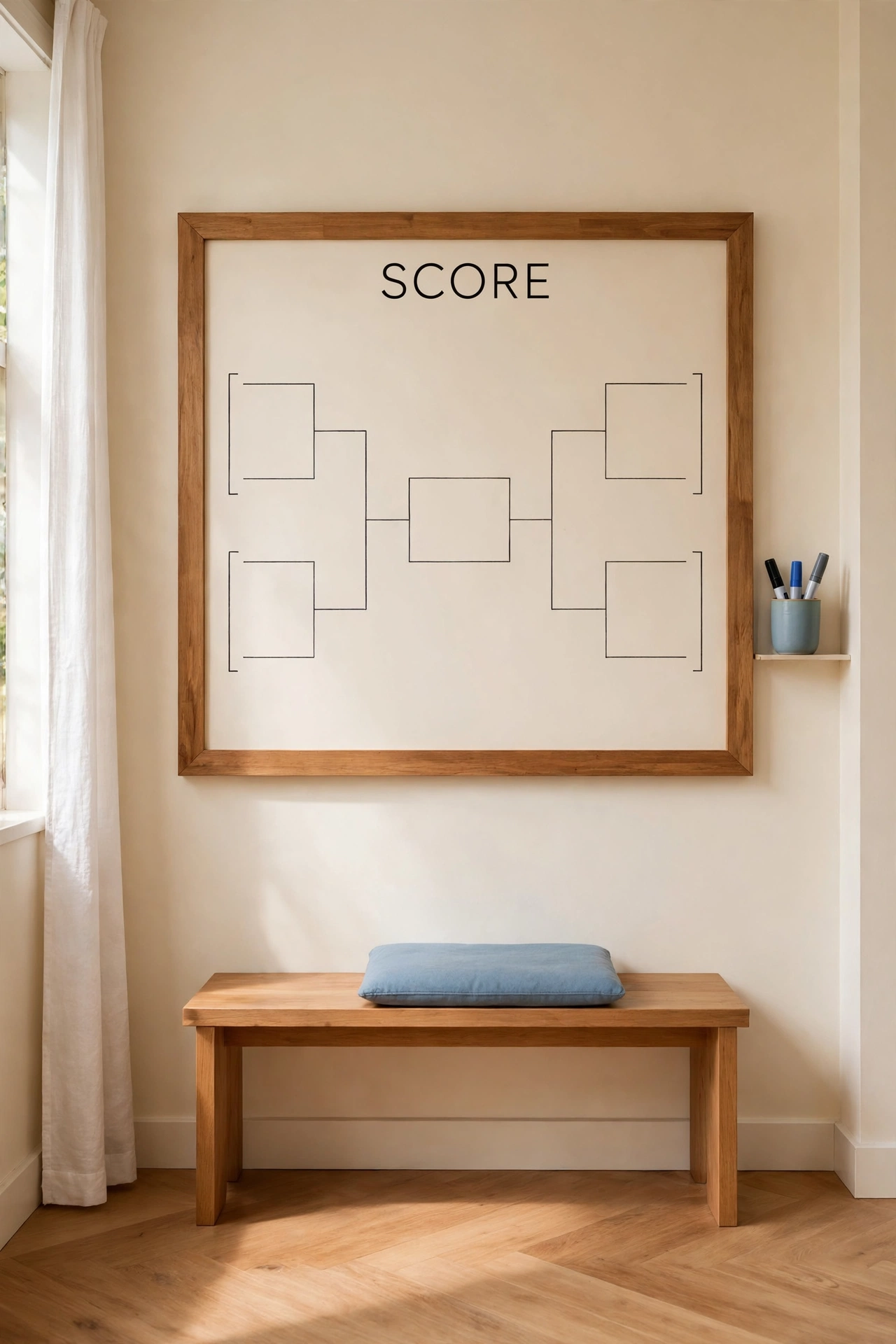
17. Track Family Tournaments on a Wall Scoreboard
A wall scoreboard turns casual games into a family tournament everyone wants to win. Mount a framed scoreboard or a large printed bracket chart on a central wall where every player can see it. Record names, scores, and match results after each round, and the competition builds all evening.
Keep markers or printed name cards in a small cup beside the board so updating scores takes seconds. A season-long bracket that runs for a month gives the family a reason to return to the game room again and again. A scoreboard also celebrates winners without needing a single trophy.
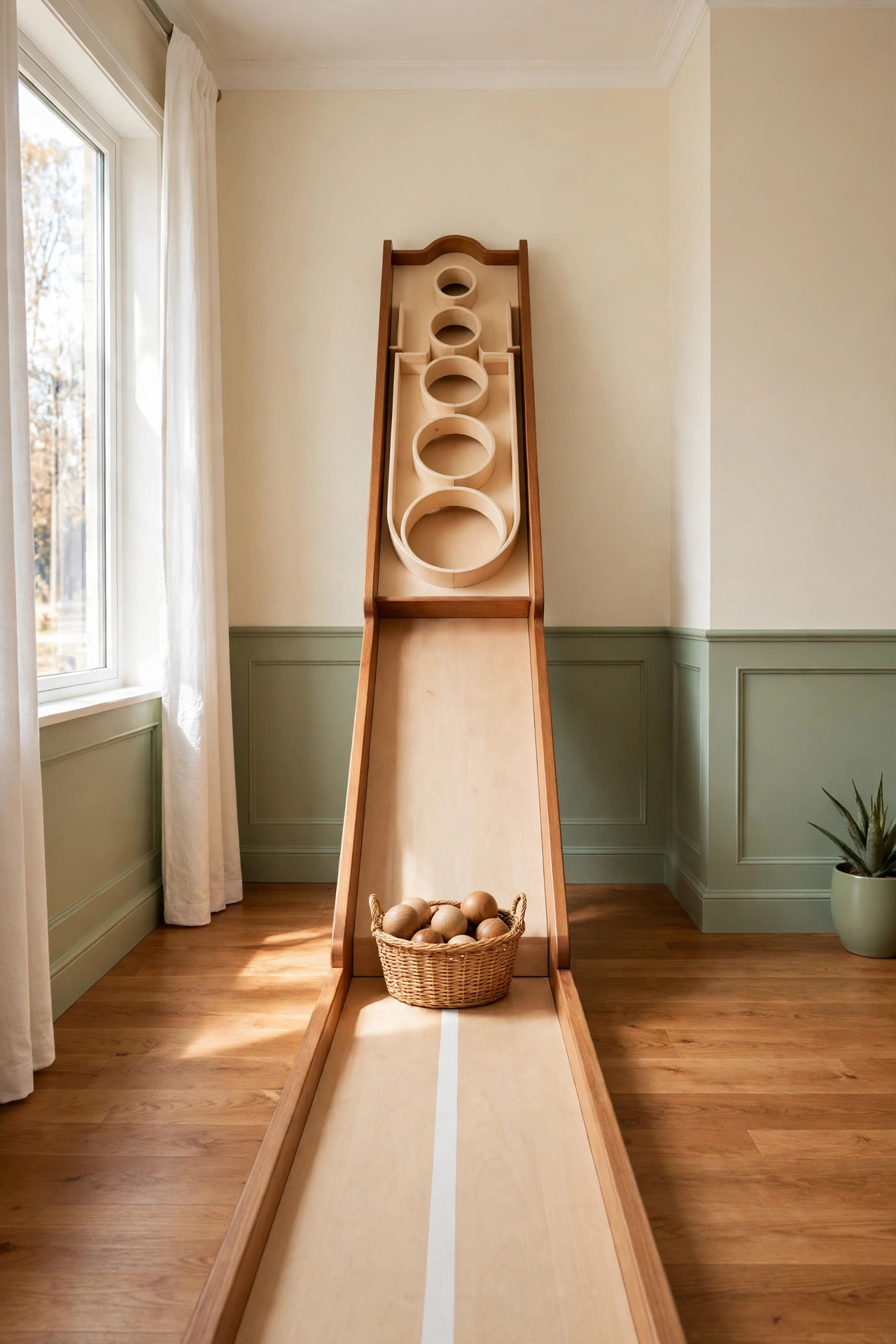
18. Add a Skee-Ball Ramp Along the Back Wall
A skee-ball ramp along the back wall brings arcade fun home in a slim footprint. The ramp leans against the wall with the scoring rings at the top, and players roll balls up the slope from a marked line on the floor. The game is simple, quick, and satisfying for every age.
Leave a clear run-up lane in front of the ramp so players can step forward to roll. A small basket at the base collects the balls between turns. Skee-ball adds movement and laughter to the room, and the ramp folds or rolls away when you need the wall back.
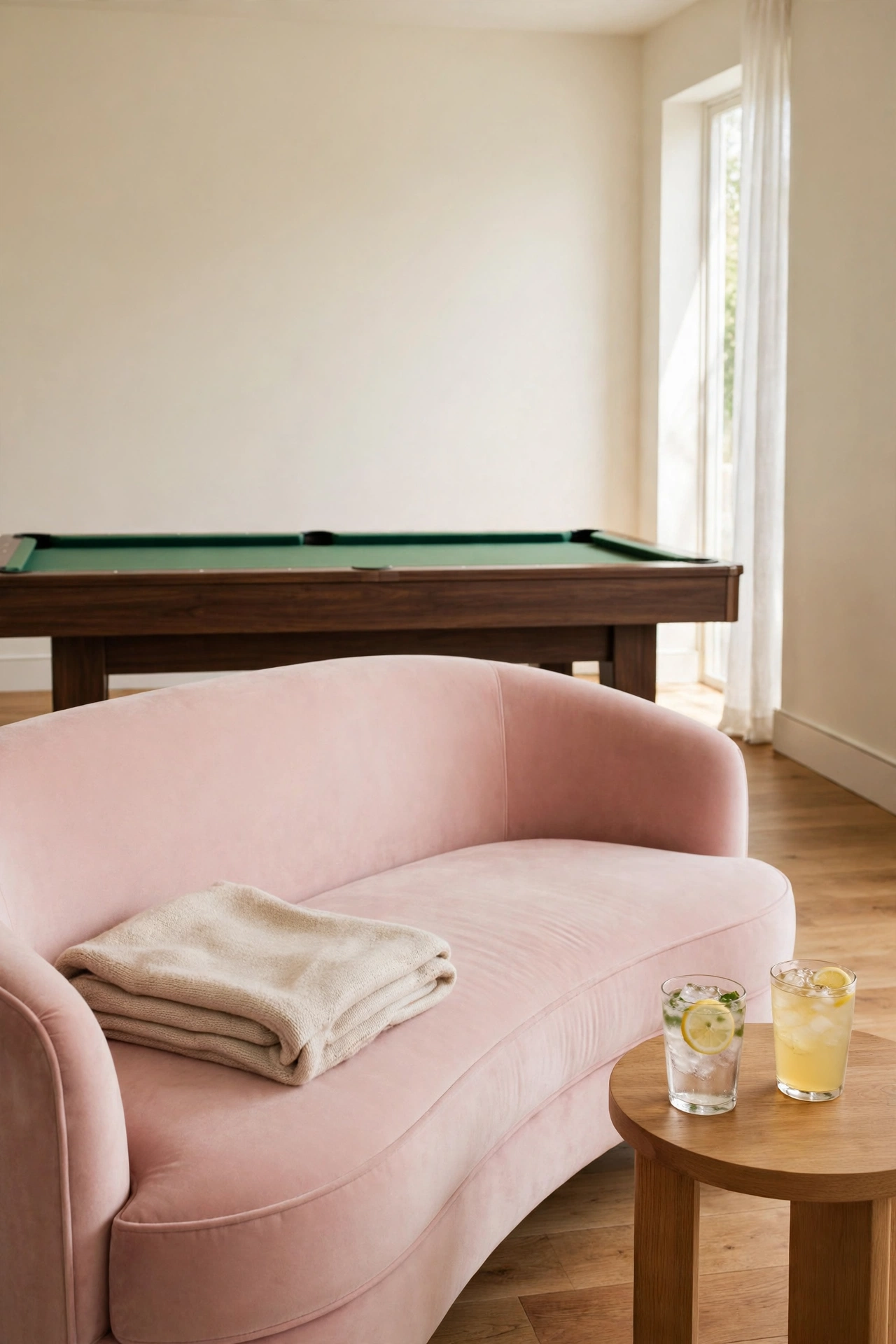
19. Create a Spectator Corner With a Curved Sofa
Not everyone wants to play every round, and a spectator corner gives watchers a comfortable home. A curved sofa facing the main game tables lets family members chat, cheer, and wait for their turn without standing in the way. The curve naturally faces the action and keeps the corner social.
Add a small side table for drinks and a soft throw for cooler evenings. Place the sofa where watchers can see the pool table or the main game zone clearly. For more ways to seat a crowd in a small space, these family room layout ideas with multiple seating areas will help you plan seating that fits everyone.
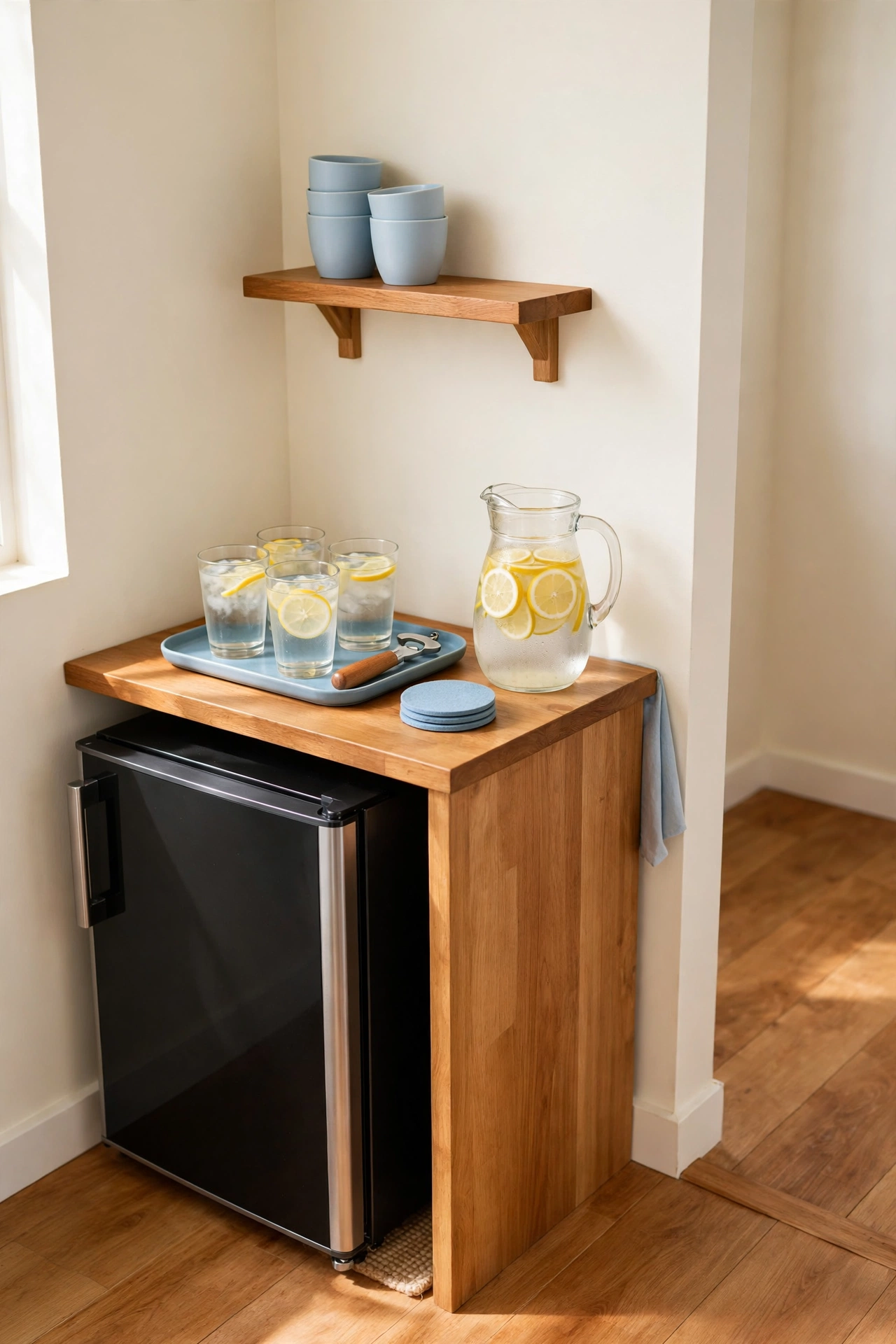
20. Add a Drink Station With a Mini Fridge
A drink station with a mini fridge keeps cold drinks close and the kitchen trips short. Tuck the small fridge under a counter or into a corner cabinet, with a tray on top for glasses, a bottle opener, and coasters. Chilled drinks stay within reach through the whole evening.
Choose a quiet fridge model so the hum does not disturb conversation or concentration. A small shelf above the station holds cups and a pitcher of water. A drink station makes the game room feel self-contained, like a real clubhouse for the family.
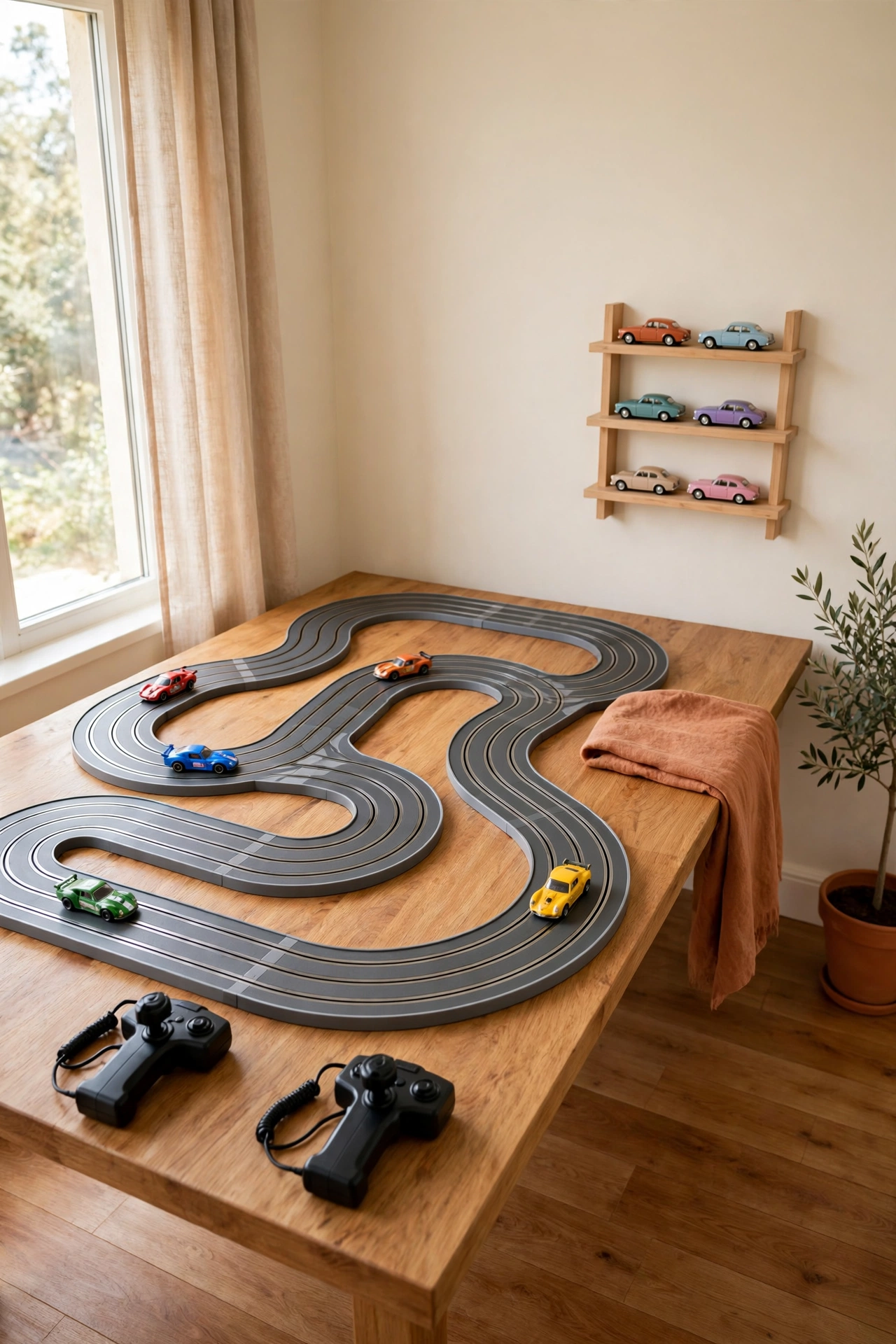
21. Set Up a Slot Car Racing Table
A slot car racing table adds speed and friendly rivalry to the game room. Set the track table against a wall or in a corner with standing room on two sides, so racers can lean in to watch the cars fly around the bends. The track itself becomes a display piece when it is not racing.
Keep the track covered with a light cloth between race nights to keep dust off the slots. A small shelf nearby holds spare cars and controllers, each in its own labeled spot. Slot car racing is easy to learn, quick to set up, and endlessly exciting for racers of every age.
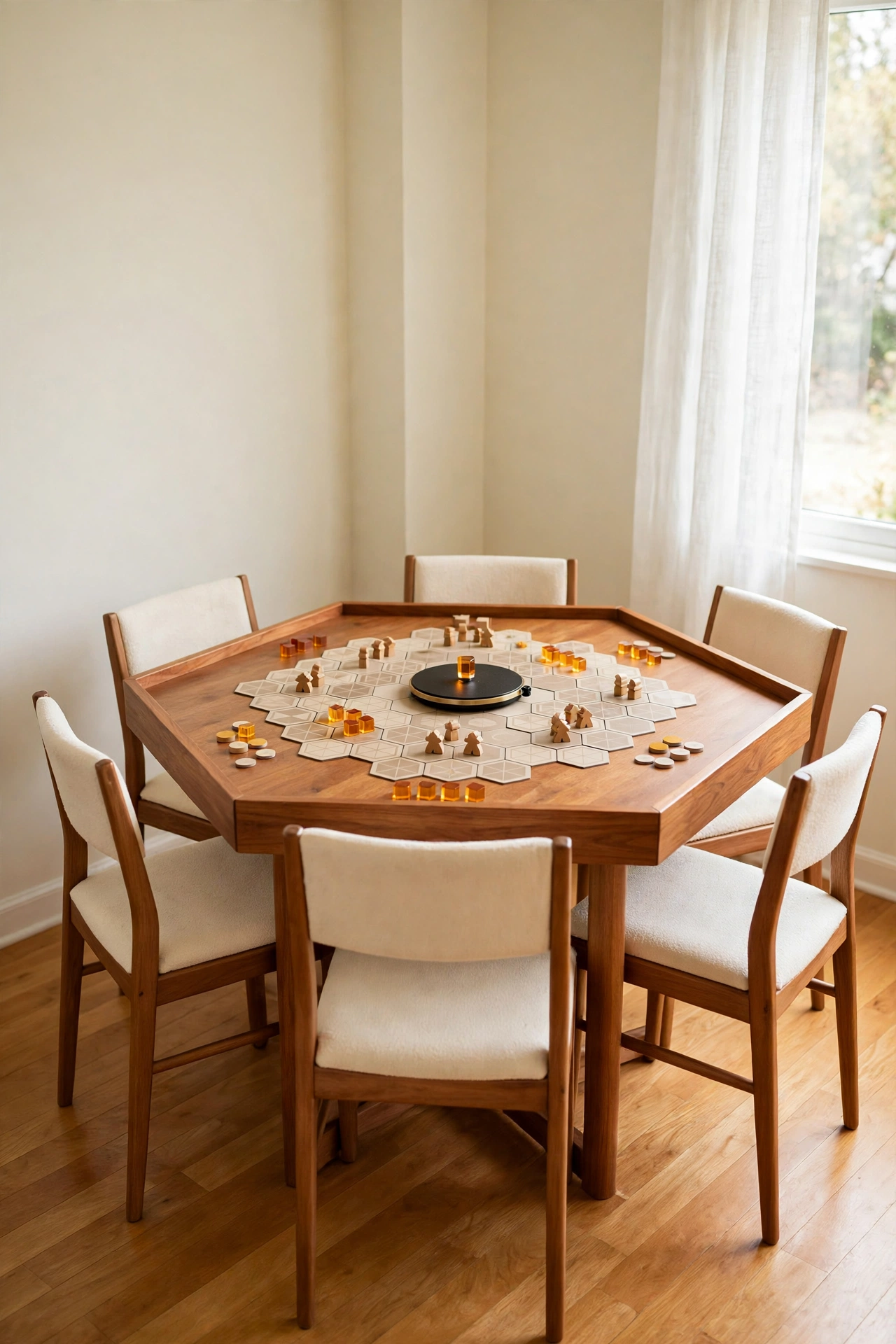
22. Add a Hexagonal Table for Strategy and Tile Games
A hexagonal table is made for strategy and tile games, where every player needs equal reach to the center. Six sides seat six players comfortably, and the shape keeps the board close to everyone at once. Place the table in a quiet corner where long games can run without interruption.
Choose chairs that tuck fully under each side so the walkway around the table stays clear. A turntable in the center helps players reach shared tiles and cards. A hexagonal table gives deep strategy games a home of their own in the room.
23. Hang a Mini Basketball Game on the Back Wall
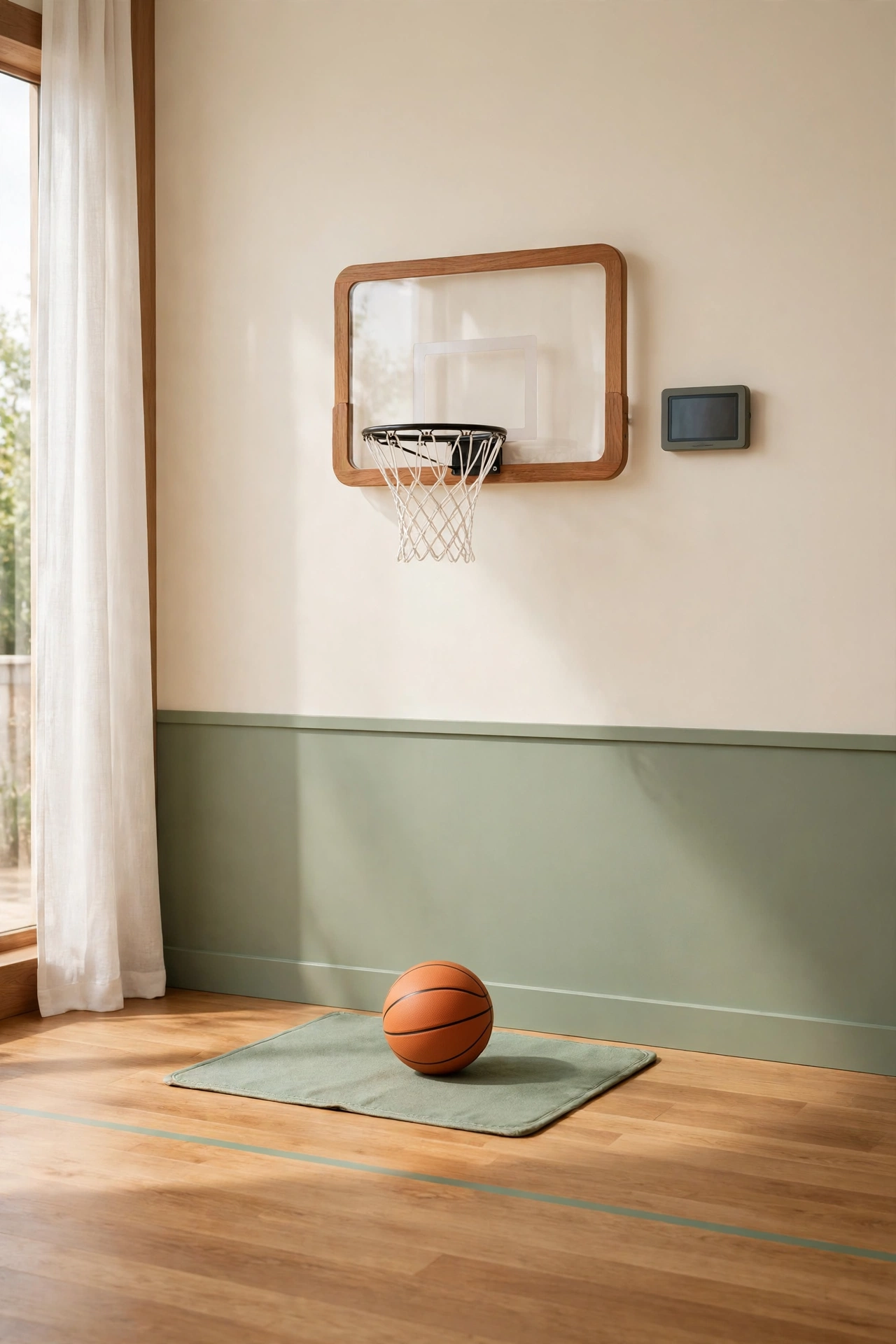
A mini basketball game on the back wall turns an empty wall into a quick-shot challenge. Mount the small hoop and backboard at a height that suits both kids and adults, with a soft ball that will not dent walls or furniture. Players take turns shooting from a marked line on the floor.
Place a small mat under the hoop to catch bouncing balls and protect the floor. A tiny scoreboard beside the hoop tracks the best streaks of the evening. Mini basketball adds active play to the room without needing a single square foot of floor space.
24. Finish With a Prize Shelf and Trophy Display
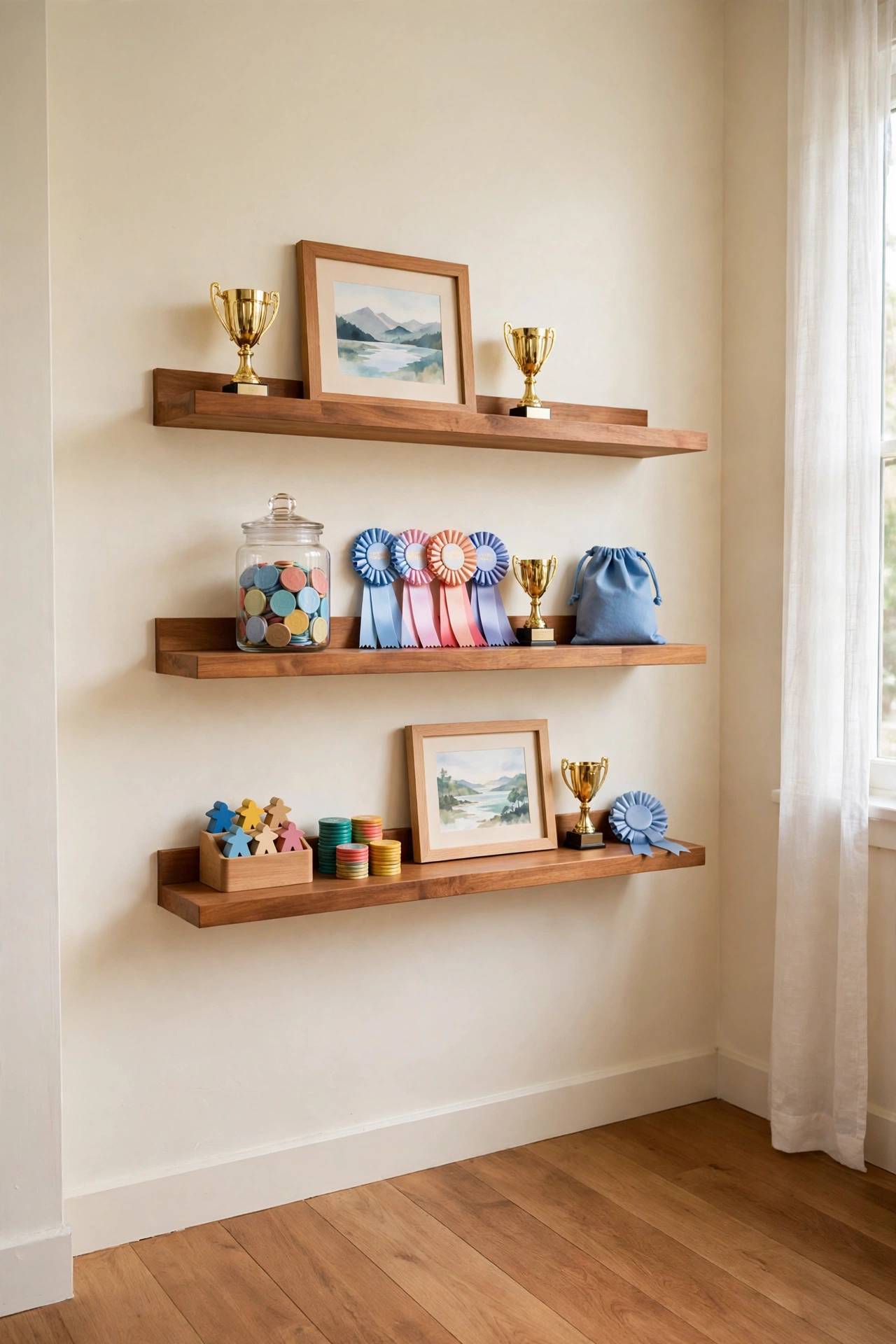
A prize shelf and trophy display gives family victories a place to shine. Mount a few wooden shelves on one wall and fill them with small trophies, ribbons, and fun prizes won during game nights. The display celebrates past wins and motivates everyone to play for the next one.
Keep the shelves tidy with a few framed photos of memorable game nights mixed in among the prizes. A small jar of tokens or tickets adds to the arcade feeling. A trophy wall turns the game room into a record of family memories, not just a place to play.
Conclusion
A small game room does not need a long list of expensive machines to feel complete. It needs a layout that fits the games your family loves, seating that welcomes players and watchers alike, and clear zones that keep every game from crowding the next. Start with one anchor table, add zones around it, and let the room grow with your family.
Pick the ideas that match your space and your favorite games, then arrange, play, and adjust until the layout feels right. The best game room is the one your family walks into again and again. And when game night turns into a dance party, these dance studio layout ideas will help you clear a corner where everyone can move to the music.
Frequently Asked Questions About Small Game Room Layout Ideas for Family Entertainment
How much space do you need for a small game room?
A room of about 10 by 12 feet can hold a game table, seating, and one or two smaller game zones comfortably. The key is clearance space around tables, not the size of the room itself. Measure your largest game table first, add walking space around it, and plan the rest of the zones to fit what remains.
What is the best game table for a small room?
A fold-up ping pong table or a round card table is often the best fit for a small room, because both give big fun in a modest footprint. Fold-up tables can shrink against the wall when you need floor space. Choose the table your family will use most often, and build the rest of the layout around it.
How do you keep a game room tidy with players of different ages?
Give every game a clear home, such as a shelf, a basket, or a labeled bin, and make cleanup part of the end of game night. Low tables and low shelves let younger players put games away themselves. A quick five-minute tidy after each session keeps the room ready for the next game.
How do you light a small game room well?
Use a mix of bright overhead light for game tables and softer lamps for seating corners. A pendant light above the main table gives even light where it matters most. Avoid placing lights where they shine directly onto screens, and add dimmers so you can adjust the mood for movie-style games.
How do you reduce noise from a game room?
Soft furnishings absorb sound, so add a thick rug, upholstered seating, and fabric wall panels if the room echoes. A solid door and draft seals help keep cheers inside the room. Keep the loudest games, like air hockey and arcade machines, on the wall farthest from bedrooms.

Hi, I’m Emily! I turn messy corners into cozy, organized spots. DreamNestDecor is where I share simple, practical home ideas — decor, organization, and small-space solutions that work in real life, not just in photos. Every idea here is carefully researched before it’s shared.