Picture this: you come home after a long day, pick up your instrument, and settle into a corner that is ready and waiting for you. No hunting for your music stand, no clearing the dining table, no apologizing to the neighbors. That small moment of calm is exactly what a well planned practice space gives you every single day.
You do not need a spare bedroom or a big budget to get there. All you need is a smart layout that fits your instrument, your storage, and your sound in the space you already have. These 27 small music practice room layout ideas will help you build a practice spot in any apartment, from a quiet corner nook to a full wall of instruments.
1. Carve Out a Corner Practice Nook With a Music Stand
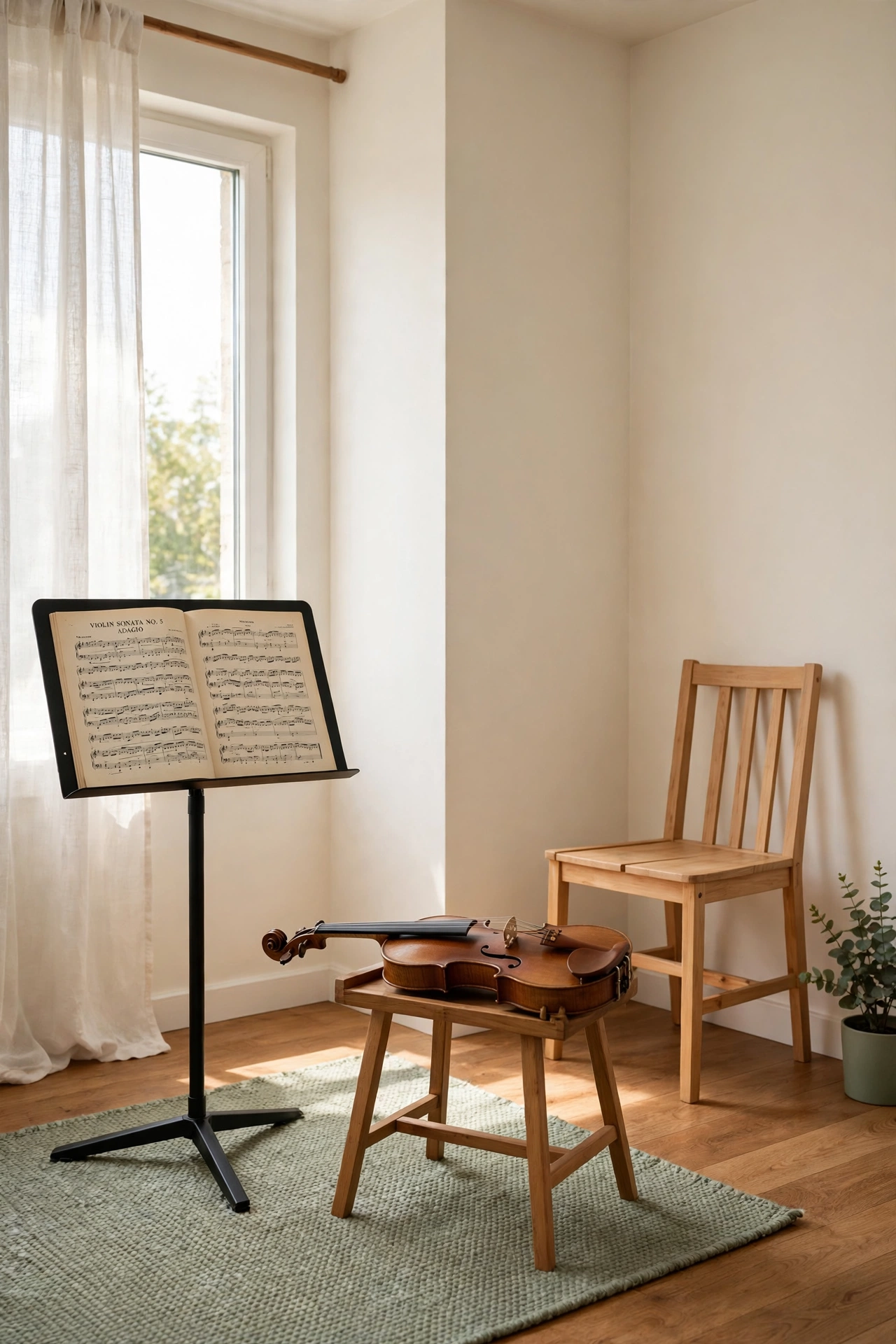
A single corner is all you need to start a practice routine at home. Place your music stand in the corner, add a comfortable chair, and keep your instrument on a stand right beside it. The corner walls bounce sound back toward you, which helps you hear yourself clearly without turning up the volume.
Keep the nook free of clutter so sitting down to practice feels inviting instead of stressful. A small rug under the chair marks the spot as your own and softens the sound of foot taps and chair legs. When the corner always stays set up, you will practice more often because starting takes no effort at all.
2. Mount Acoustic Panels Behind the Instrument
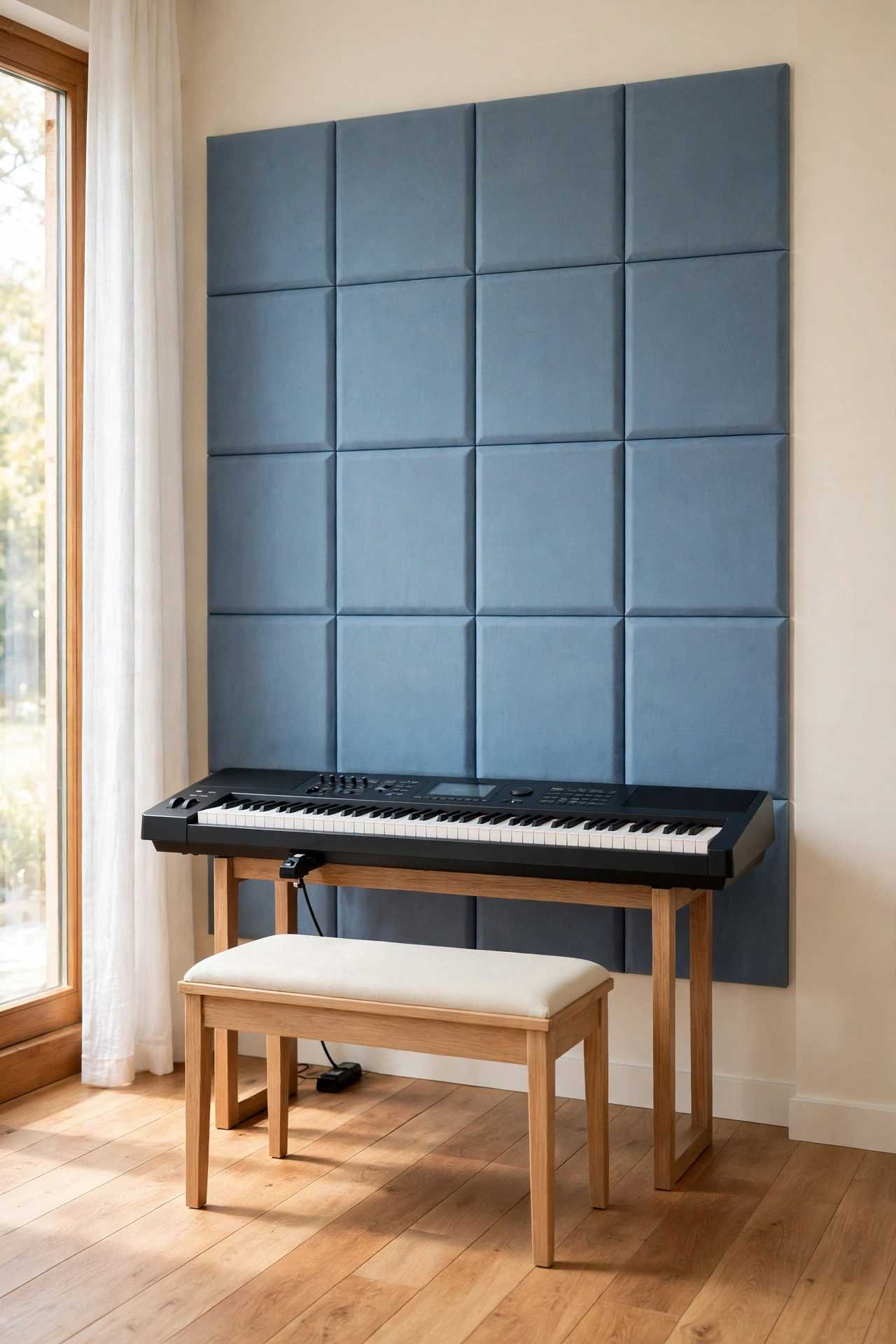
Acoustic panels on the wall behind your instrument make a real difference in an apartment. The soft panels absorb sound instead of letting it bounce around the room and through the walls. You will hear a warmer, clearer tone, and your neighbors will hear far less of your practice sessions.
Choose fabric panels in colors that match your room so the wall looks styled instead of industrial. Arrange them in a neat grid or a playful pattern above and behind your playing position. The panels also double as decor, which makes this one of the easiest upgrades for any practice space.
3. Install a Fold-Down Wall Desk for Sheet Music
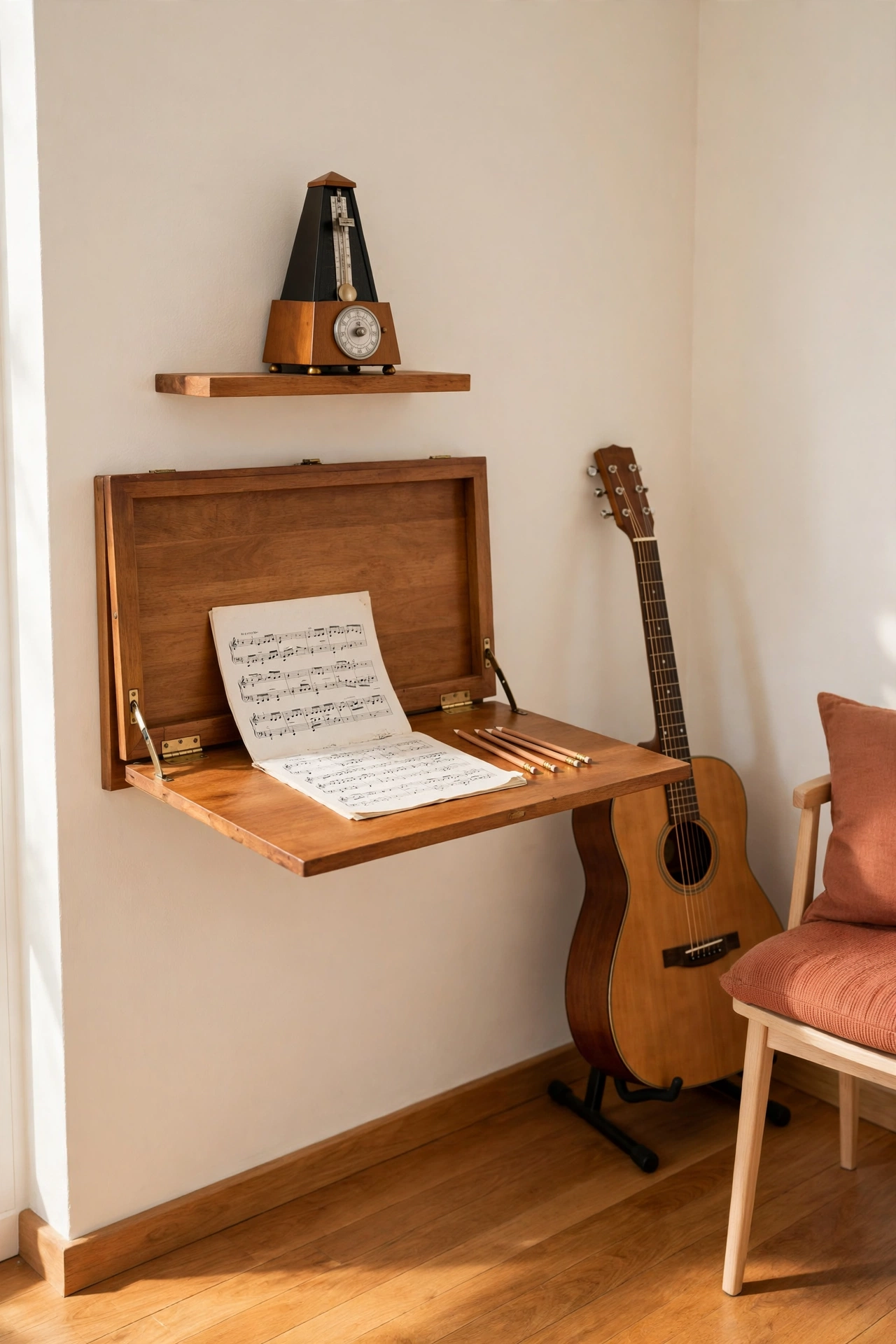
A fold-down wall desk gives you a writing and sorting surface that disappears when practice ends. Mount it at standing height near your playing spot and use it to sort sheet music, mark up scores, and plan your practice sessions. When you fold it flat, the room goes back to normal in seconds.
This idea works especially well in small apartments where a full desk would eat up precious floor space. Add a small wall shelf above the desk for pencils, highlighters, and a metronome. Everything stays in one place, and your practice corner stays tidy between sessions.
4. Hang Guitars on Wall Mounts to Free the Floor
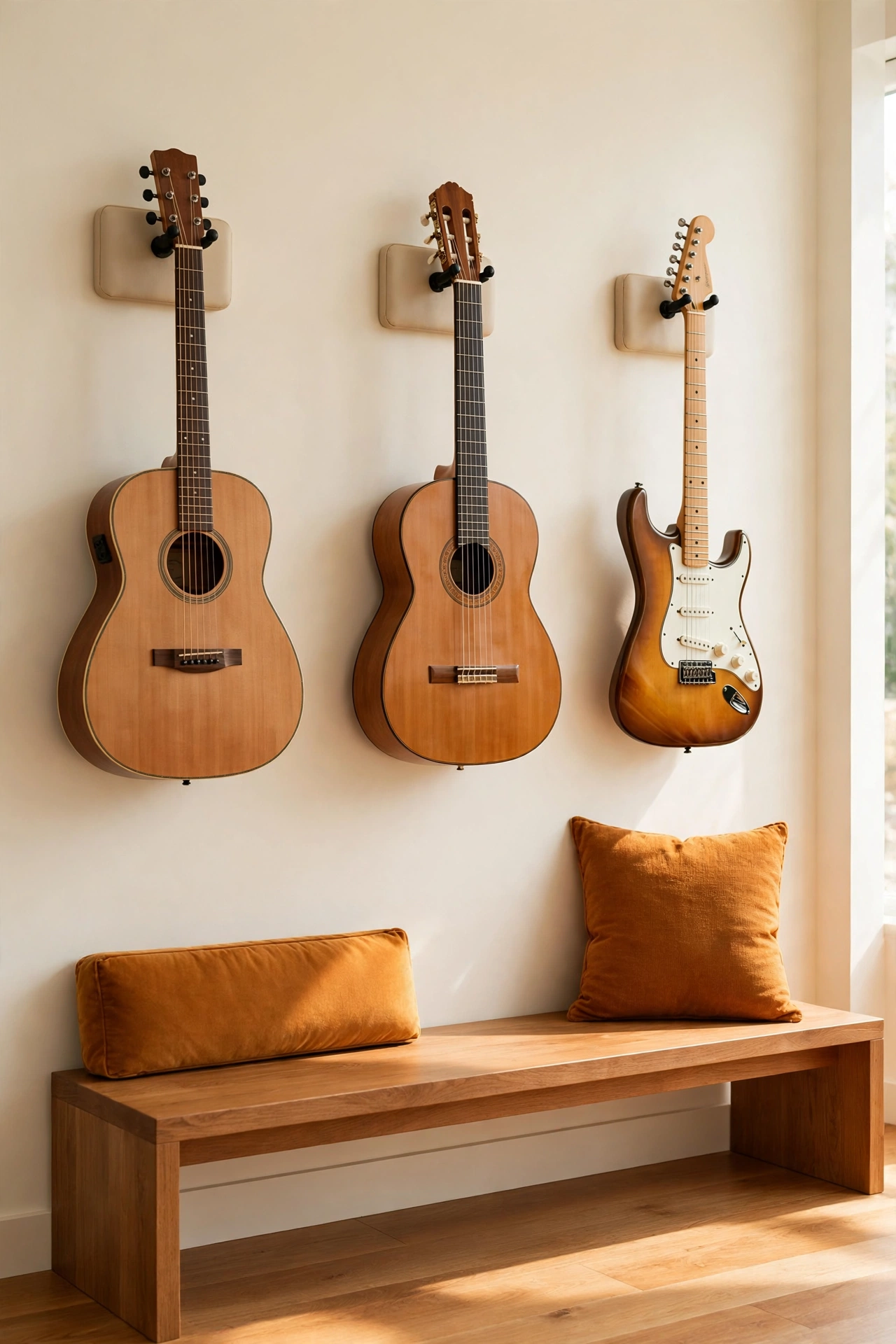
Wall mounts turn your guitars into wall art while keeping the floor completely clear. Each guitar hangs safely on a padded hook, ready to grab the moment inspiration strikes. A row of two or three guitars on the wall looks beautiful and saves the space that floor stands would take.
Mount the hooks into wall studs so the guitars stay secure, and leave enough space between them that the bodies never touch. Place the mounts away from radiators and direct sunlight to protect the wood and finish. Your guitars stay safe, visible, and always within easy reach.
5. Place the Keyboard Against the Longest Wall
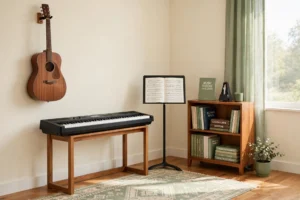
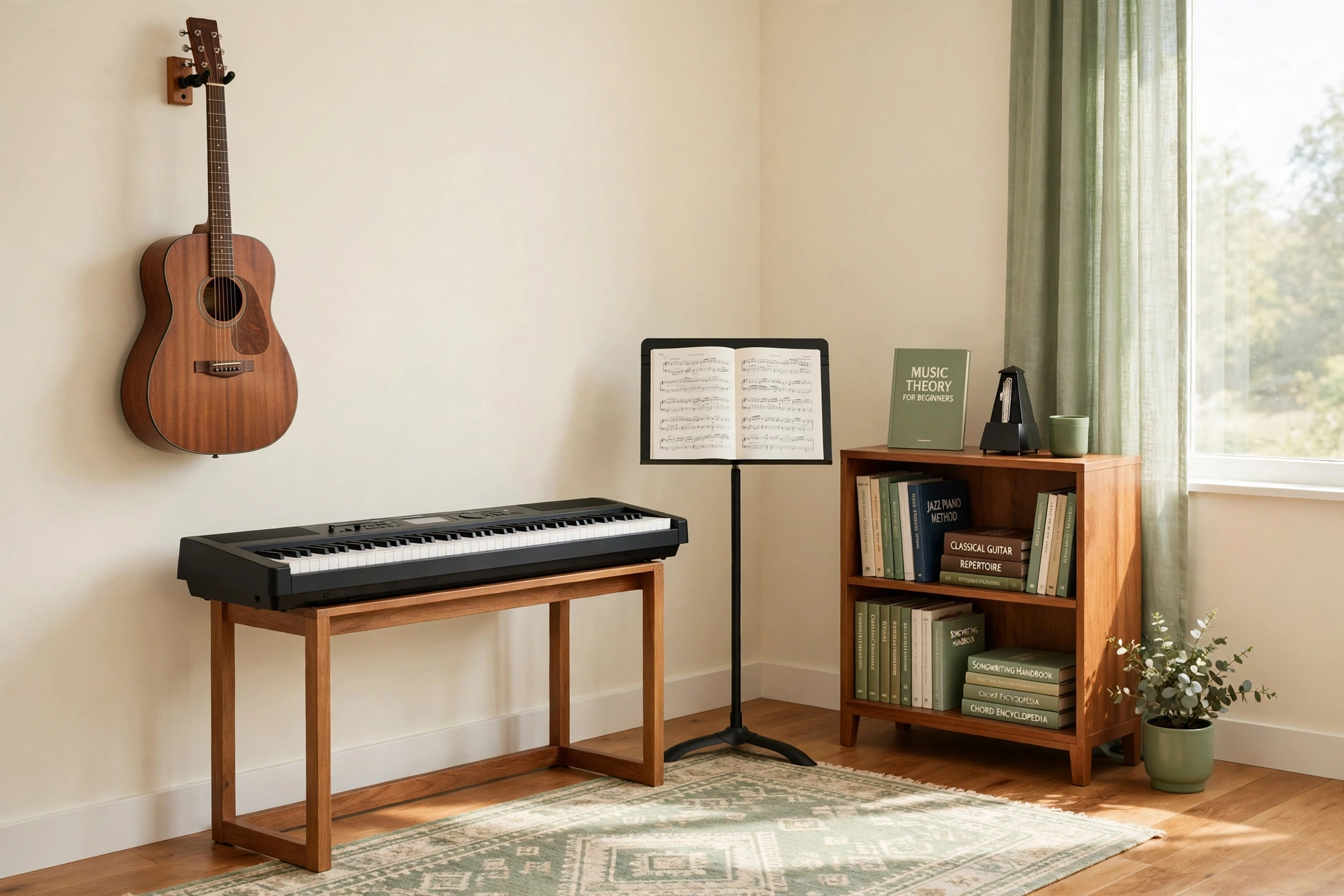
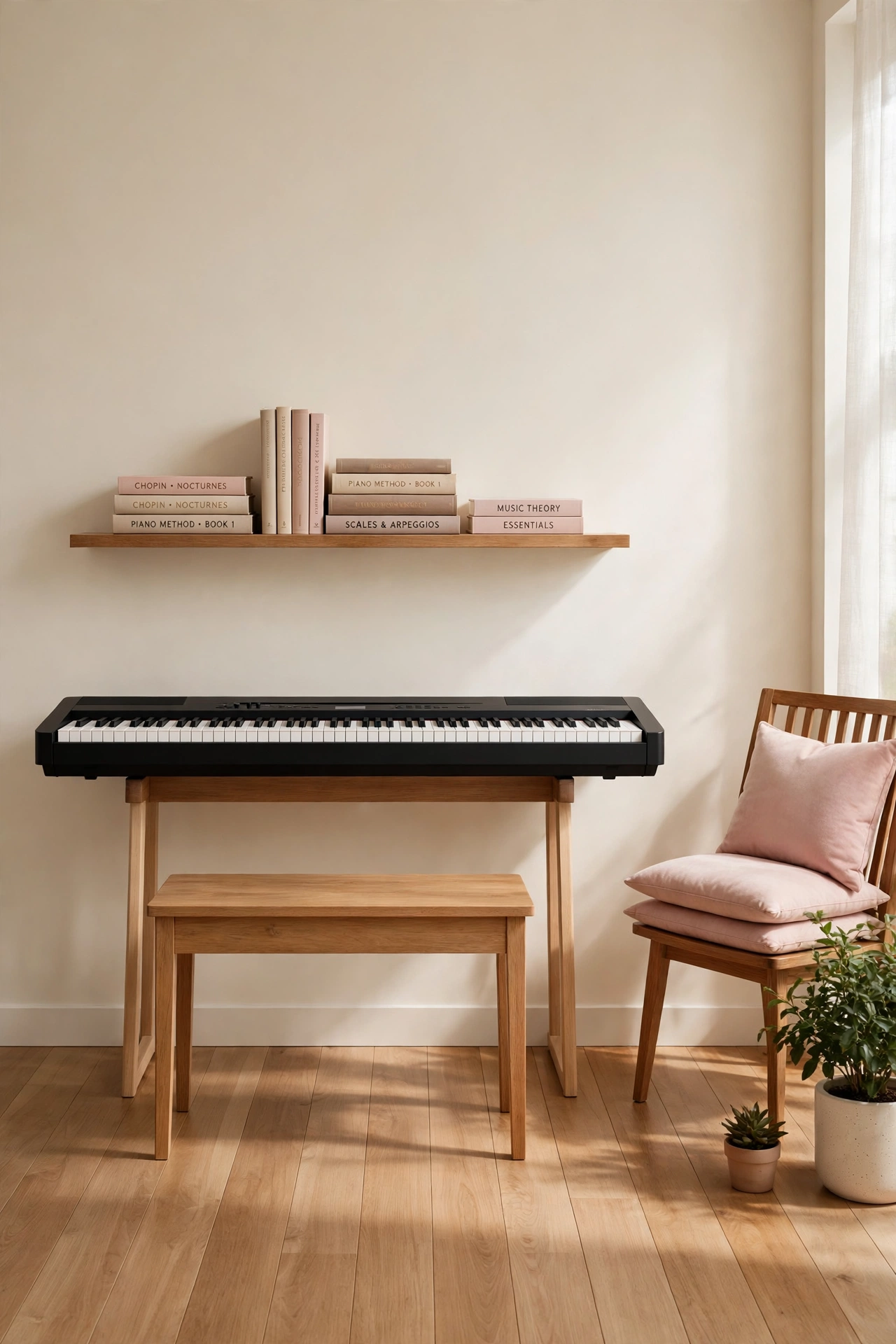
A keyboard needs a long, clear stretch of wall, so the longest wall in the room is the natural home for it. Set the keyboard on a sturdy stand with the bench centered in front of it, and leave room on each side for a small shelf or a plant. The layout feels balanced and gives your hands plenty of elbow room.
Keep the area in front of the keyboard open so the bench can slide back freely. A slim shelf above the keyboard holds sheet music books and keeps them off the keys. This simple arrangement turns any long wall into a proper practice station without crowding the room.
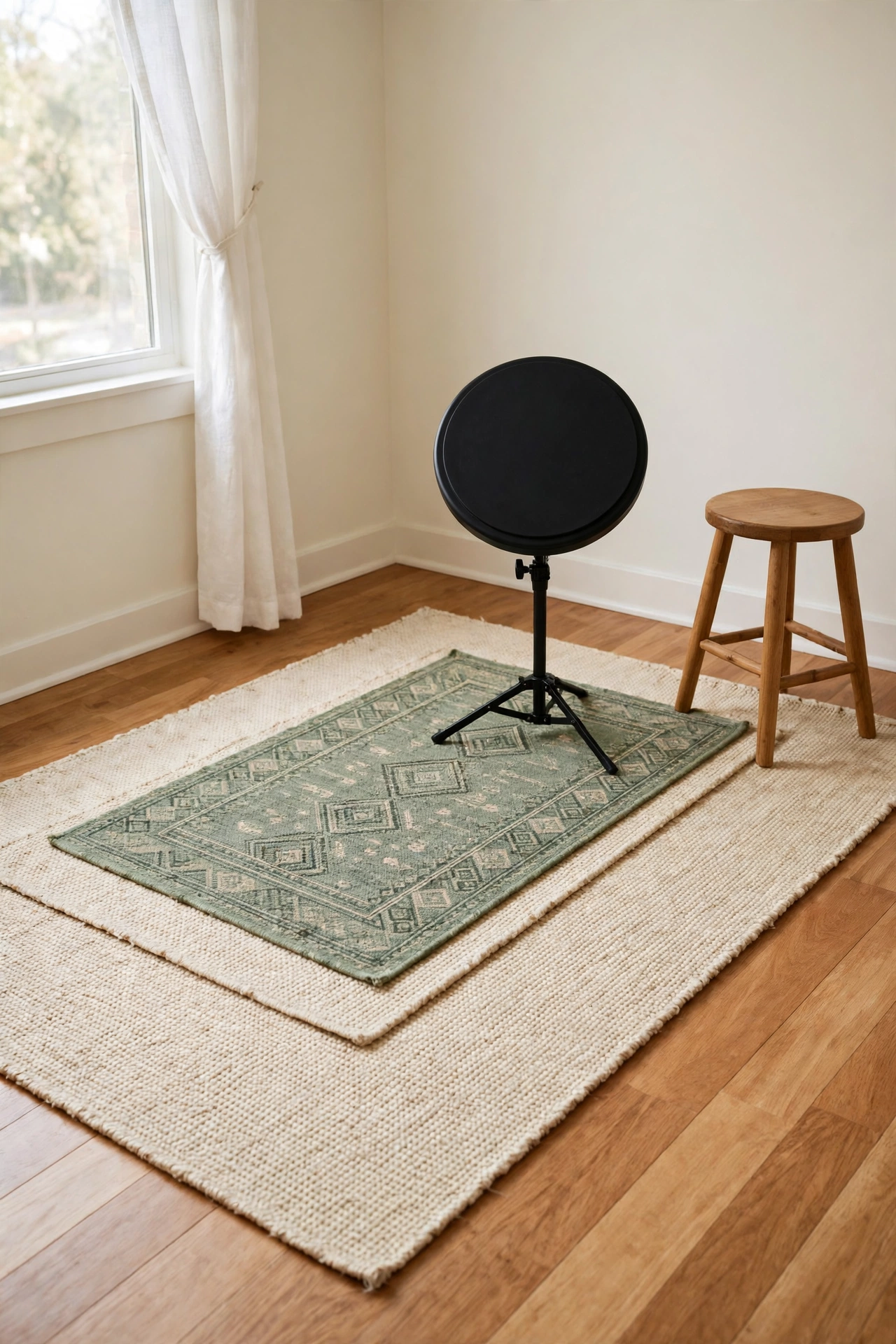
6. Layer Rugs to Soften Sound Underfoot
Hard apartment floors bounce sound around and carry it to the rooms below. Layering two rugs under your practice area absorbs foot noise, chair scrapes, and low vibrations from instruments. A thick rug pad underneath adds even more sound control without changing the look of the room.
Choose a large flat weave rug as the base and add a smaller patterned rug on top where you sit or stand to play. The layers add warmth and color to the corner while doing quiet work for your neighbors. This is one of the cheapest sound upgrades you can make in a rental apartment.
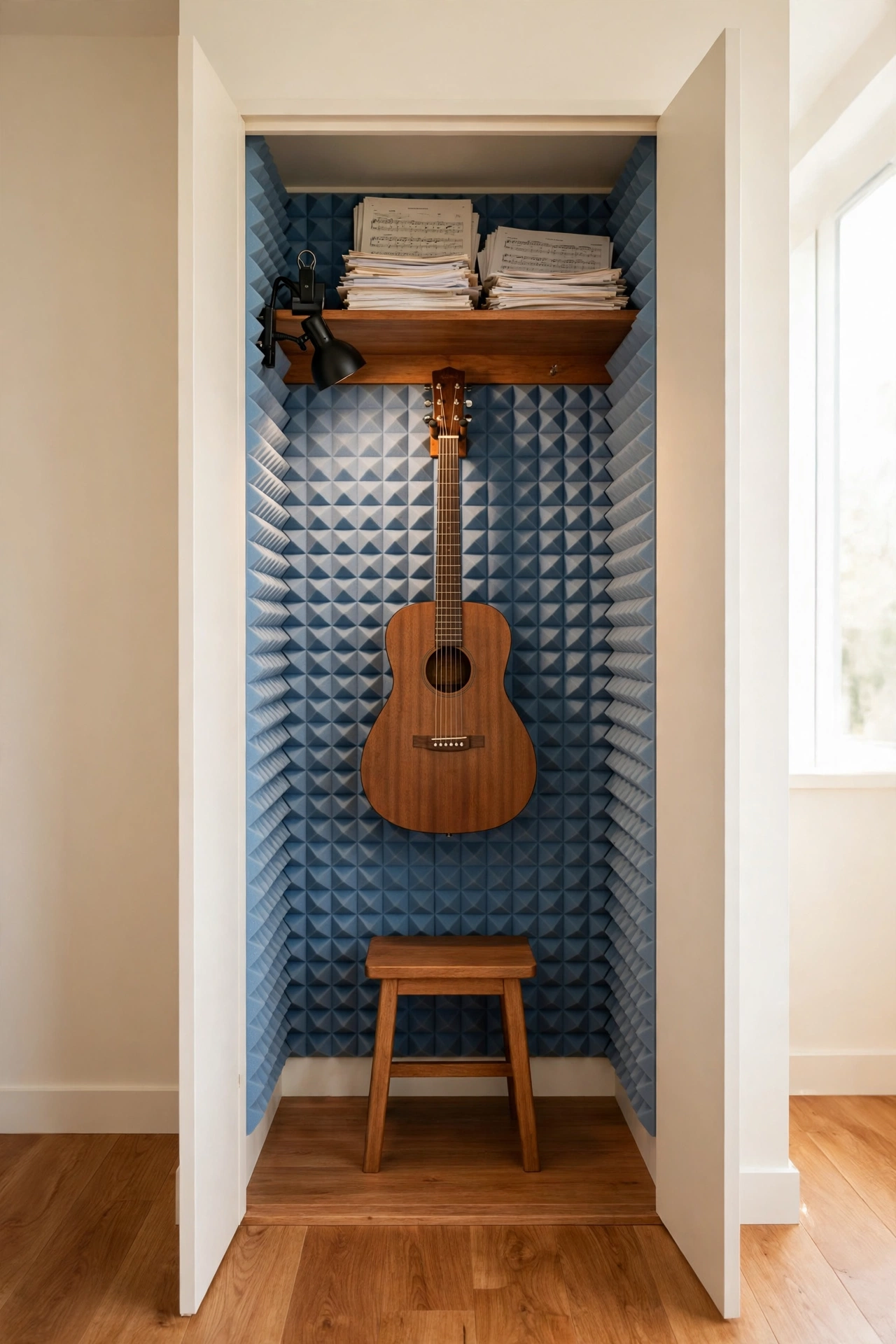
7. Turn a Spare Closet Into a Practice Booth
A spare closet can become a surprisingly good practice booth for quiet instruments. Remove the doors, add a small stool and a clip-on light, and line the walls with thick blankets or acoustic foam. The enclosed space contains sound naturally and gives you a private spot to focus.
This layout suits apartment living because it hides your practice gear completely when guests visit. Hang your instrument on the closet wall and keep sheet music on the shelf above. Even a small closet gives you a dedicated space that feels separate from the rest of your home.
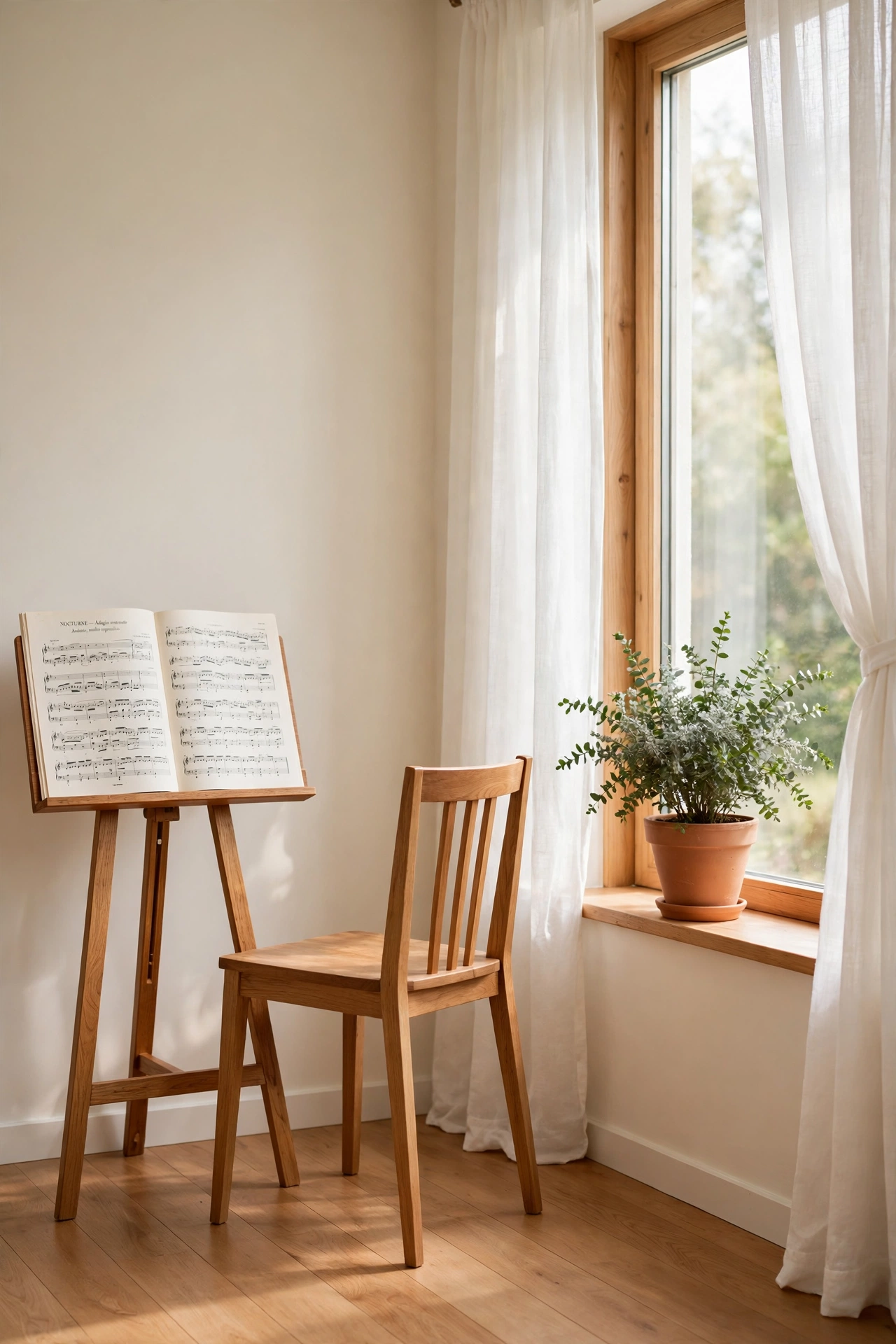
8. Set Up a Window-Side Practice Spot With Natural Light
Natural light makes reading sheet music easier and practice sessions more pleasant. Place your chair and music stand near a window so daylight falls across your music instead of glaring into your eyes. A window-side spot also gives you a view to rest your eyes on during breaks.
Keep instruments out of direct sunbeams, which can dry out wood and damage finishes over time. Sheer curtains soften the light while still letting the room feel bright and open. Morning practice by the window can become the best part of your daily routine.
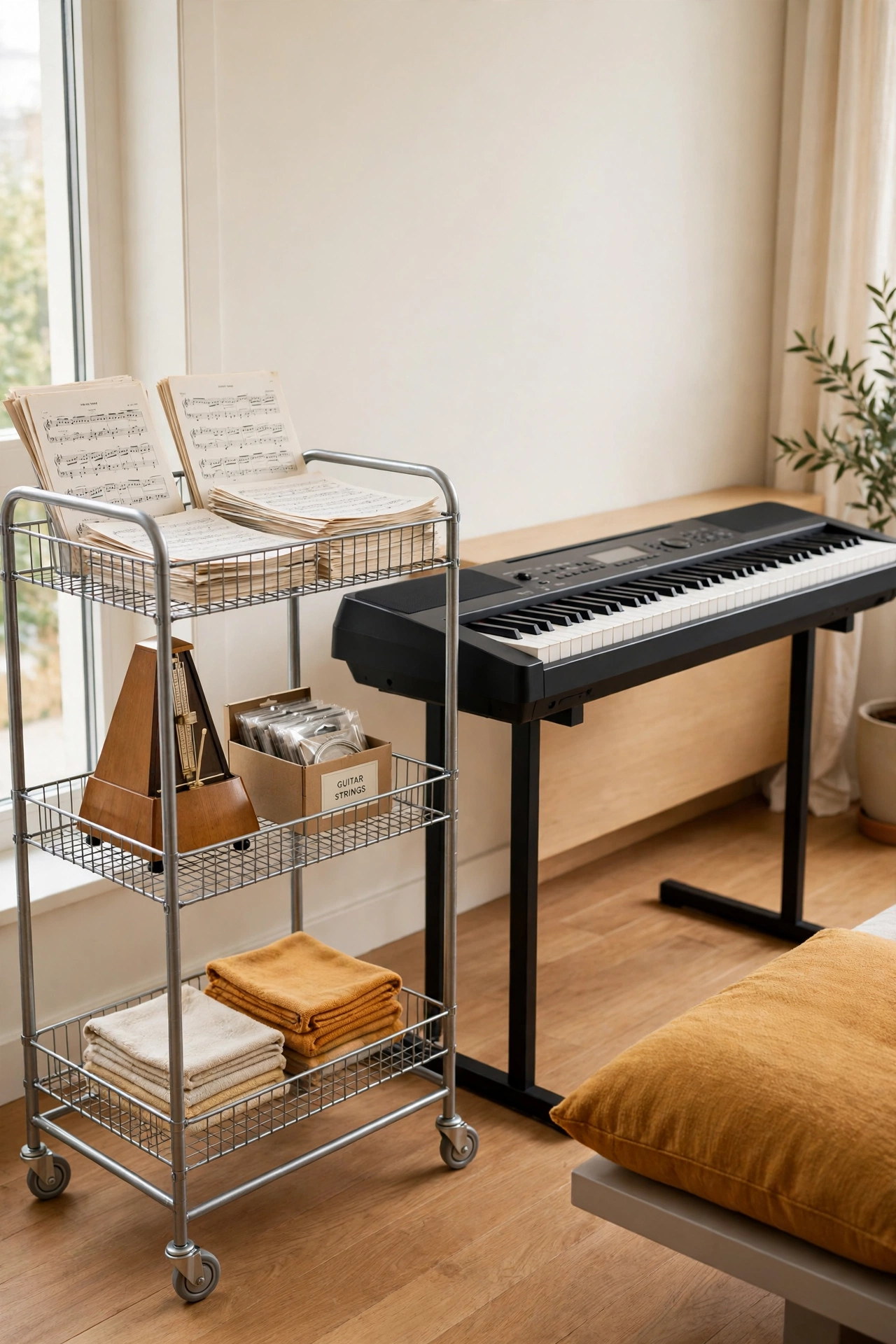
9. Roll a Cart for Accessories and Sheet Music
A rolling cart keeps every practice accessory in one mobile spot. Load the top tier with your metronome, tuner, and pencils, and use the lower tiers for sheet music, spare strings, and cleaning cloths. Roll the cart to your playing position when practice starts and tuck it away when you finish.
Carts with three tiers work best because they hold a lot without taking much floor space. Label each tier so you always know where things belong, and the cart stays organized week after week. This small piece of furniture removes the daily hunt for the little items that practice requires.
10. Divide the Zone With a Bookshelf
A low bookshelf makes an excellent room divider for a practice zone in an open apartment. Place it with its back to your playing area to create a visual boundary that separates practice from living space. Fill the shelves with music books, scores, and a few decorative items that inspire you.
The bookshelf also absorbs sound, which helps keep practice noise inside your zone. Choose a shelf that is tall enough to feel like a wall but low enough to let light pass over the top. For more ways to split a room without building walls, these decorative room divider ideas show screens and shelves that suit small apartments beautifully.
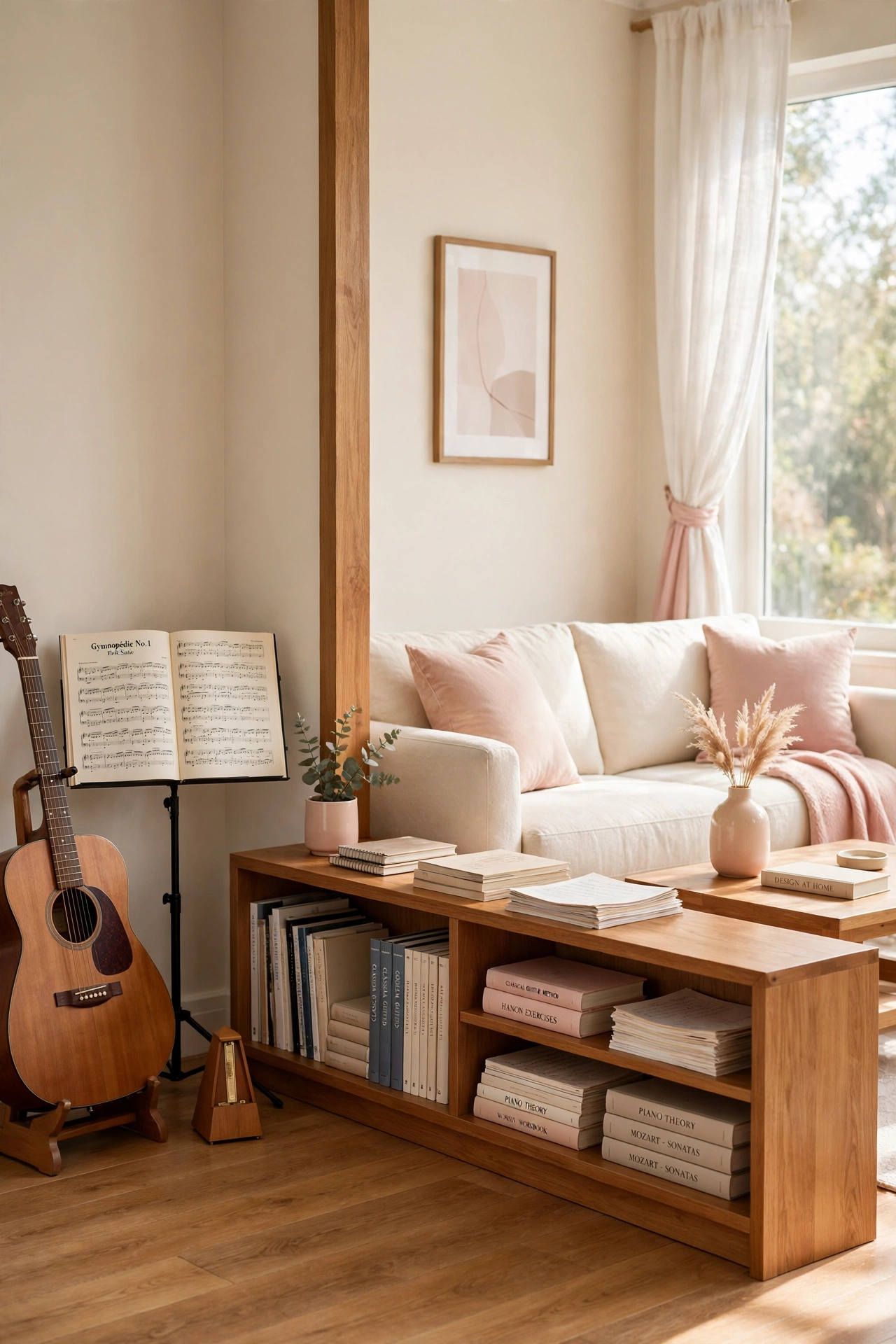
11. Fit an Upright Piano Into the Living Room Corner
An upright piano fits neatly into a living room corner and becomes a beautiful focal point for the whole room. Place the back of the piano flat against the wall and angle the bench so you face into the room. The corner placement keeps walkways clear while giving the piano the stable wall support it needs.
Leave a small gap between the piano and the wall for air circulation, and keep it away from heating vents and exterior doors. A rug under the piano and bench softens the sound and protects the floor. Even in a small apartment, a piano in the corner feels like it was always meant to be there.
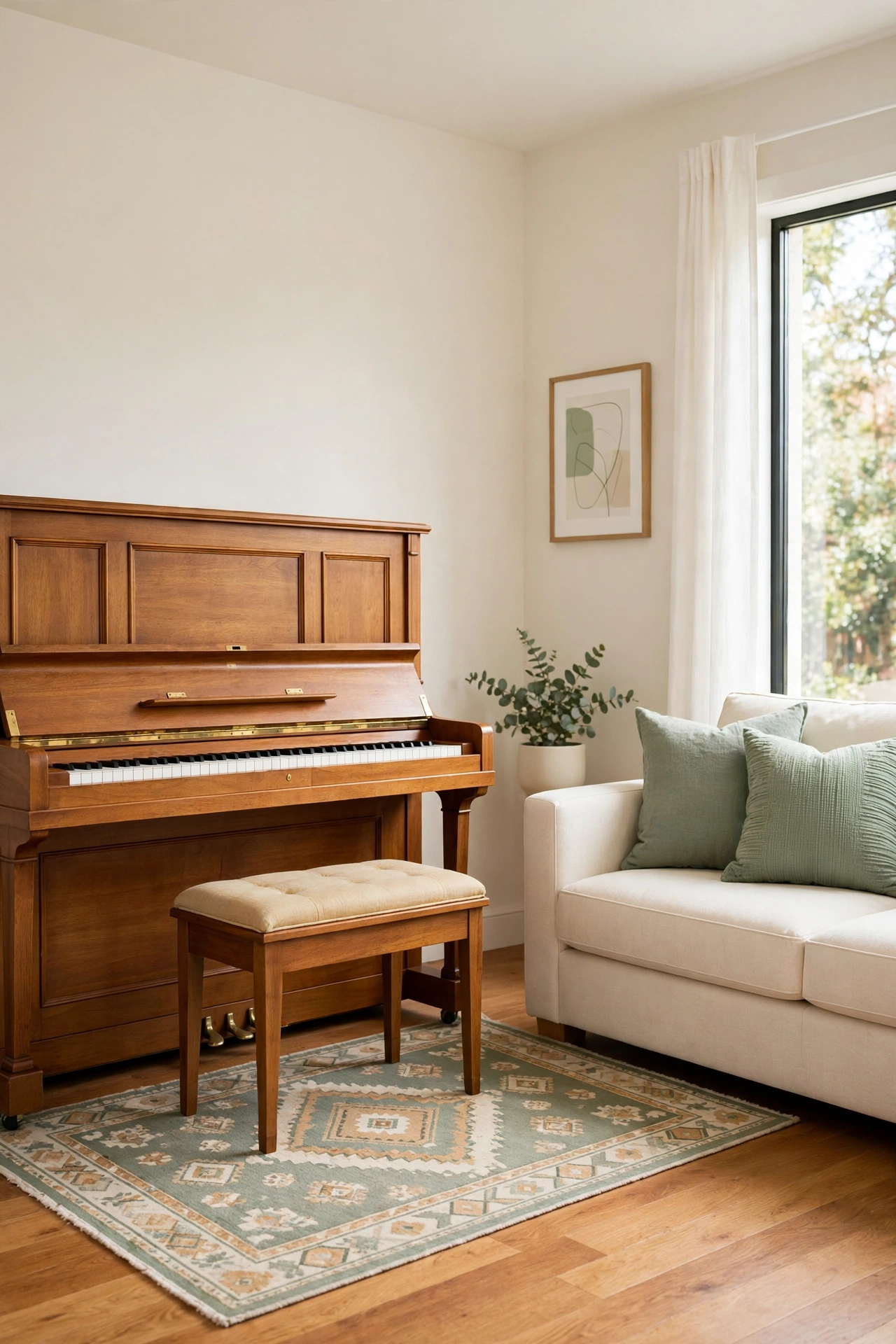
12. Build a Headphone Practice Station With a Small Desk
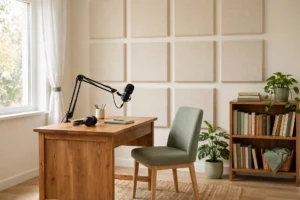
A headphone station lets you practice at any hour without bothering anyone. Set a small desk against the wall with your audio interface, headphone hook, and a laptop or tablet for lessons and backing tracks. Everything stays plugged in and ready, so practice starts the moment you sit down.
Keep the desk surface clear except for the gear you use every day, and store cables in a tray underneath. A comfortable chair and good task lighting make long sessions easy on your body. This compact setup borrows the best ideas from small home office layout ideas, where a tiny desk can still hold a complete workstation.
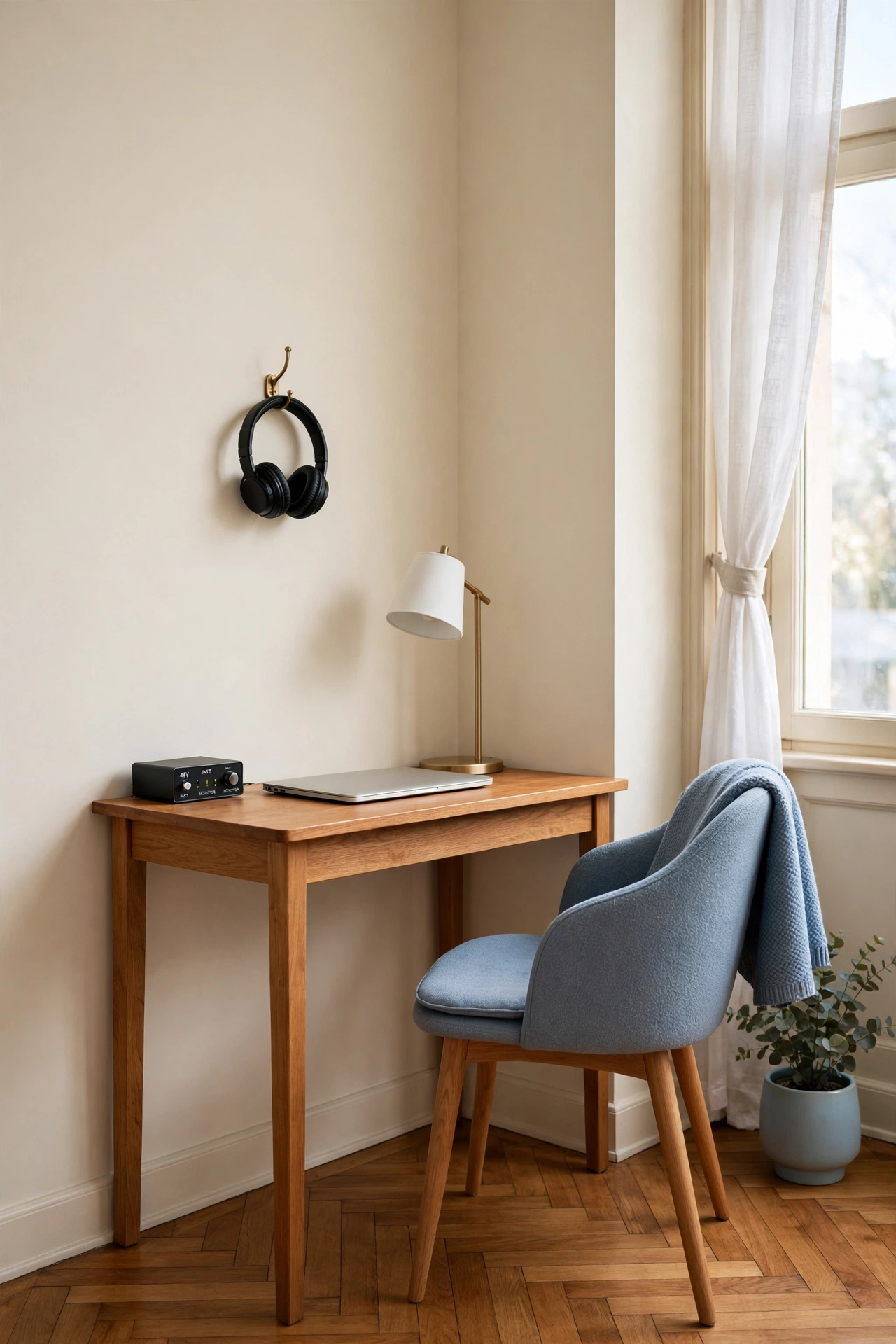
13. Store Sheet Music Vertically on a Narrow Shelf
Sheet music and method books pile up fast, and horizontal stacks become messy within days. Store them vertically on a narrow shelf with bookends, like books in a library, so you can flip through titles and pull out exactly what you need. A tall, slim shelf fits into gaps as narrow as a foot wide.
Sort the music by instrument or by difficulty level, and label the shelf sections so the system stays simple. Keep current pieces at eye level and archive older books on the lower shelves. Vertical storage turns a growing music library into a tidy display instead of a clutter problem.
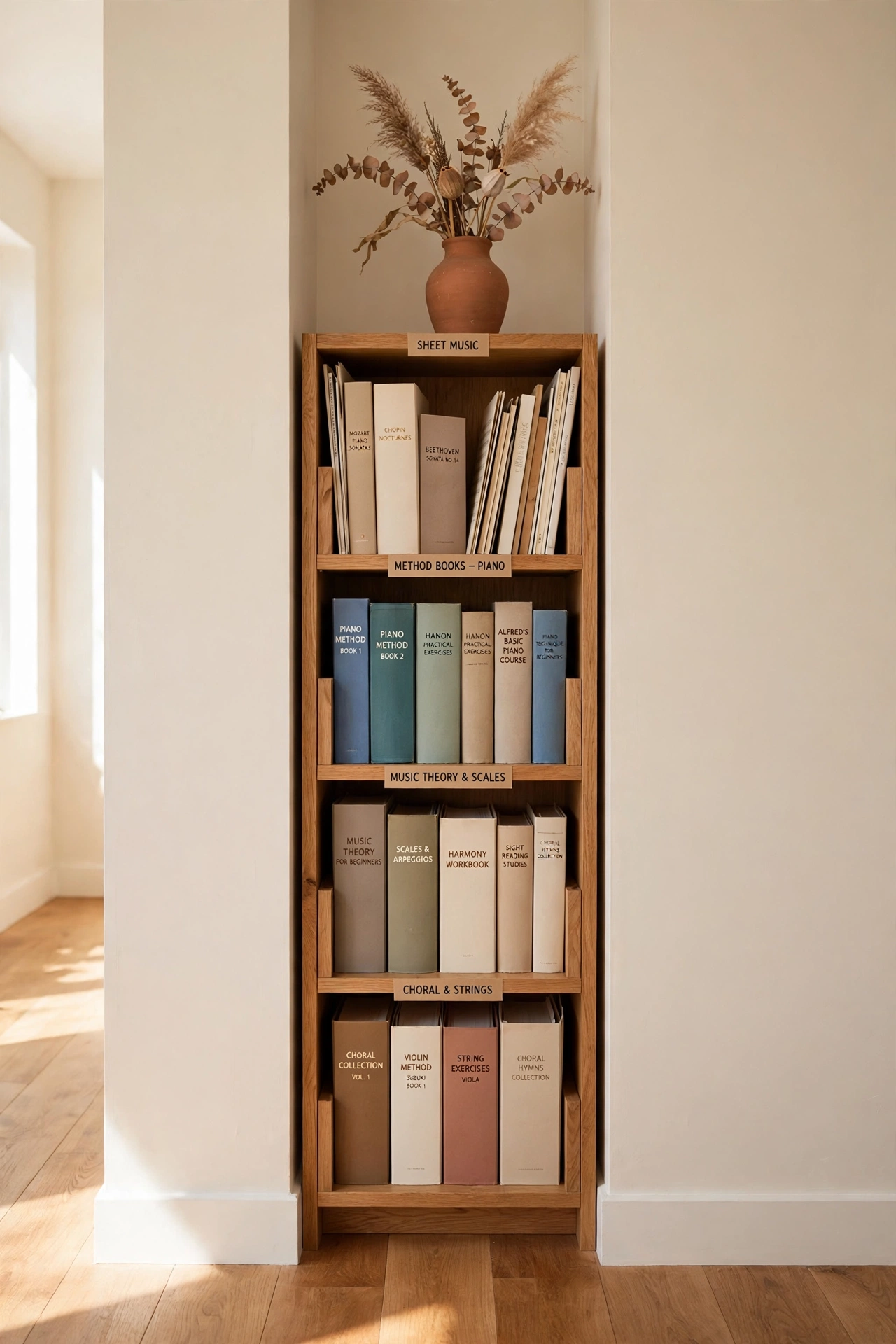
14. Hang Sound-Absorbing Curtains on the Shared Wall
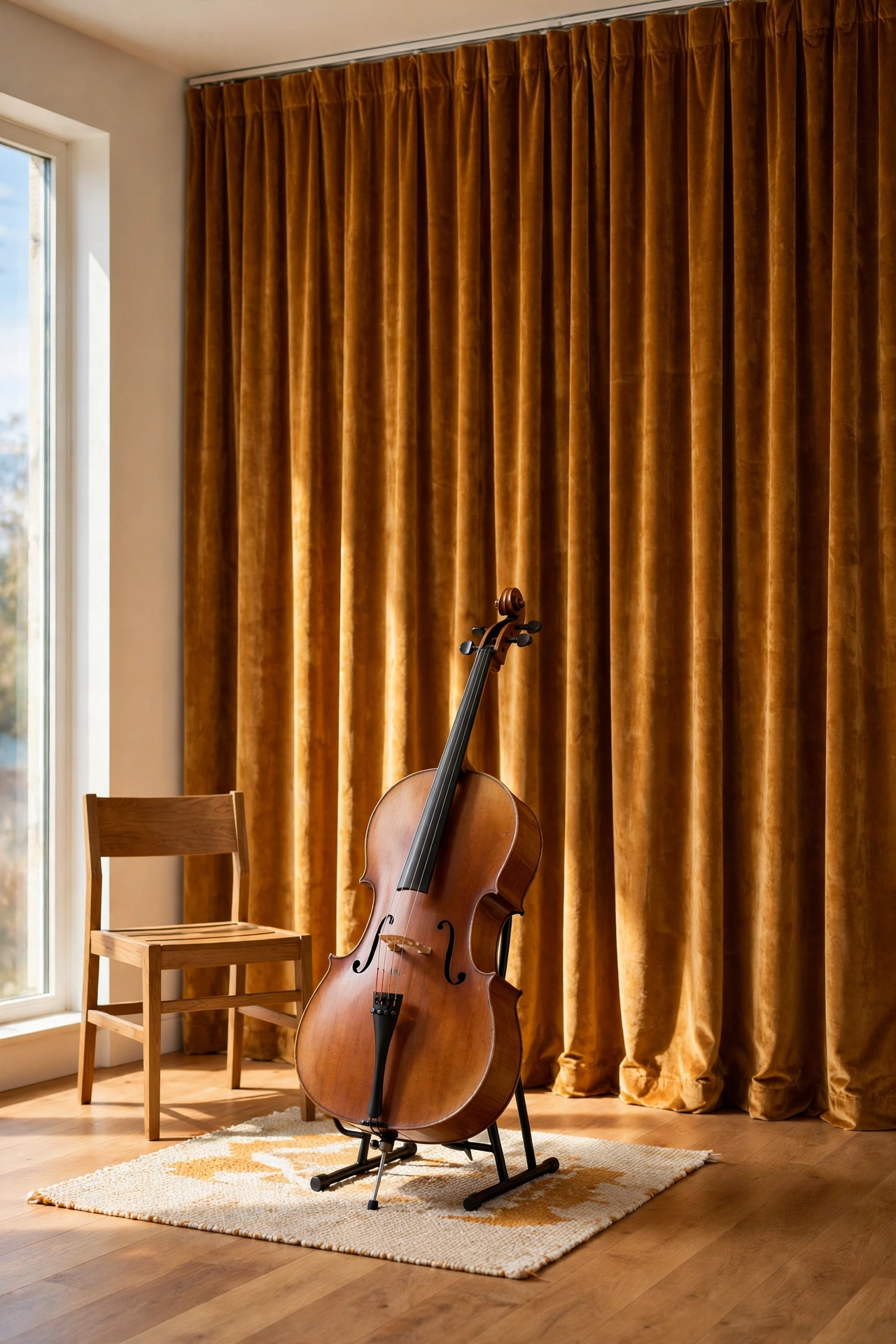
Heavy curtains on the wall you share with a neighbor absorb sound and add softness to the room. Hang floor-to-ceiling curtains from a ceiling track or a sturdy rod, choosing thick velvet or layered thermal fabric for the best effect. The curtains also block drafts and make the room feel warmer and quieter.
Pick a color that matches your decor so the curtain wall looks intentional rather than improvised. You can open the curtains during the day to let the wall breathe and close them for practice sessions. This renter-friendly solution needs no drilling into shared walls beyond a simple curtain rod.
15. Create a Multi-Instrument Wall With Hooks and Shelves
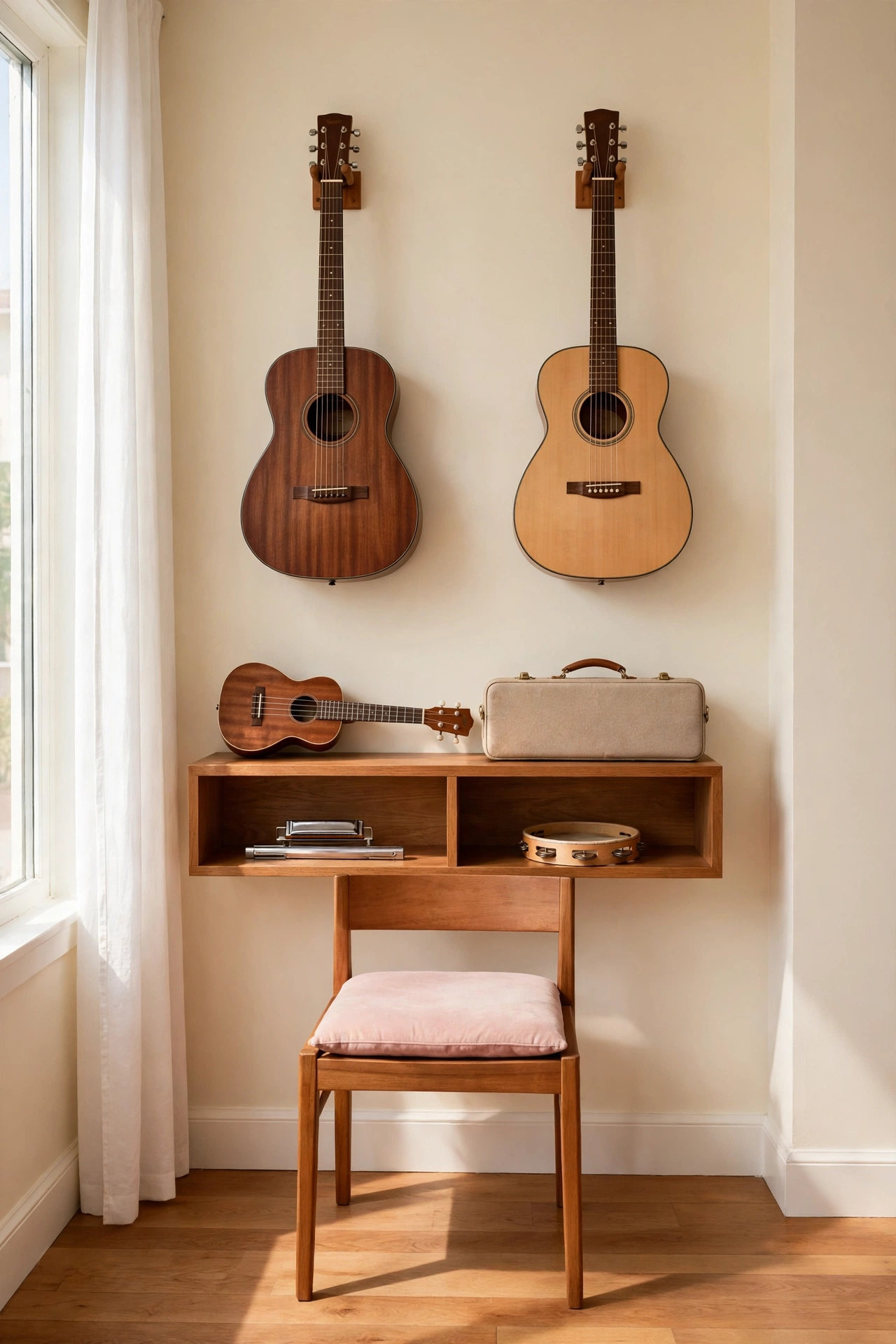
If you play more than one instrument, dedicate a full wall to storing them all in one organized display. Combine wall hooks for guitars, a shelf for a ukulele and a flute case, and small cubbies for harmonicas and percussion. Every instrument gets a visible home, and the wall becomes a personal gallery of your musical life.
Plan the layout on paper first, placing heavier instruments lower and lighter ones higher. Leave breathing room around each piece so nothing bumps or scratches when you lift an instrument down. Creative wall storage ideas from small craft room layout ideas can inspire the hooks, cubbies, and labeled bins that keep a busy instrument wall tidy.
16. Raise a Low Platform for a Drum Practice Pad
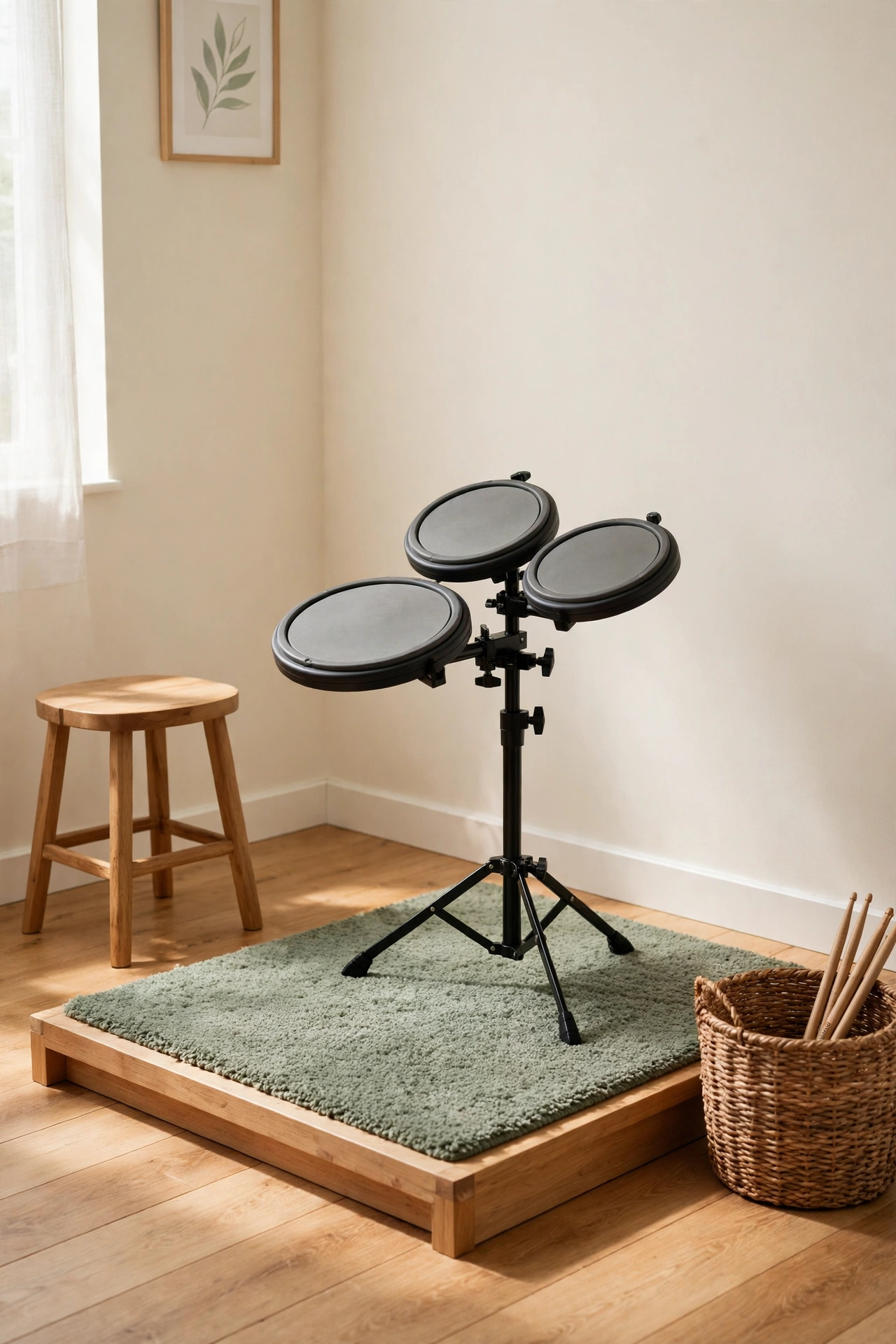
A low wooden platform defines the drum area and protects the floor beneath it. Build or buy a platform just a few inches high, top it with a dense rug, and place your practice pad kit on top. The raised edge marks the boundary of the drum zone and keeps pedals and stands from sliding across the floor.
The platform also lifts your kit to a comfortable playing height and makes the setup feel like a real stage. Store spare sticks and a towel in a basket tucked under the platform edge. Even a compact pad kit feels professional when it has its own raised home.
17. Add a Reading Chair Corner for Listening and Study
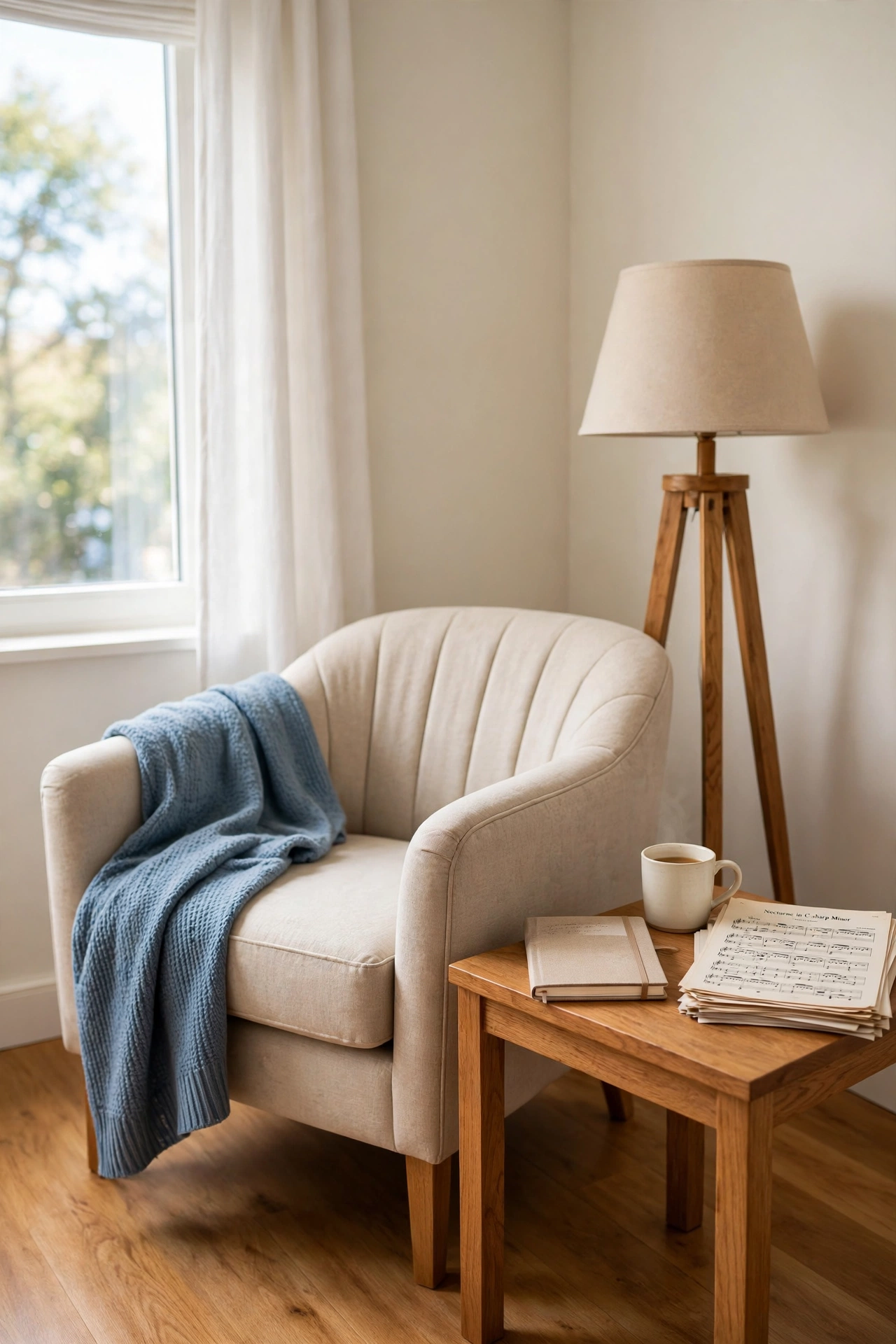
Practice is not only playing. A comfortable reading chair in the corner gives you a place to study scores, listen to recordings, and plan your next session. Add a small side table for a notebook and a cup of tea, plus a floor lamp with warm light for evening study.
Place the chair at an angle so it faces the room rather than the wall, which keeps the corner feeling open. A soft throw over the chair arm invites you to sit and stay a while. This quiet corner works much like the calm spots in small reading nook layout ideas, where a single chair can turn an unused corner into a favorite retreat.
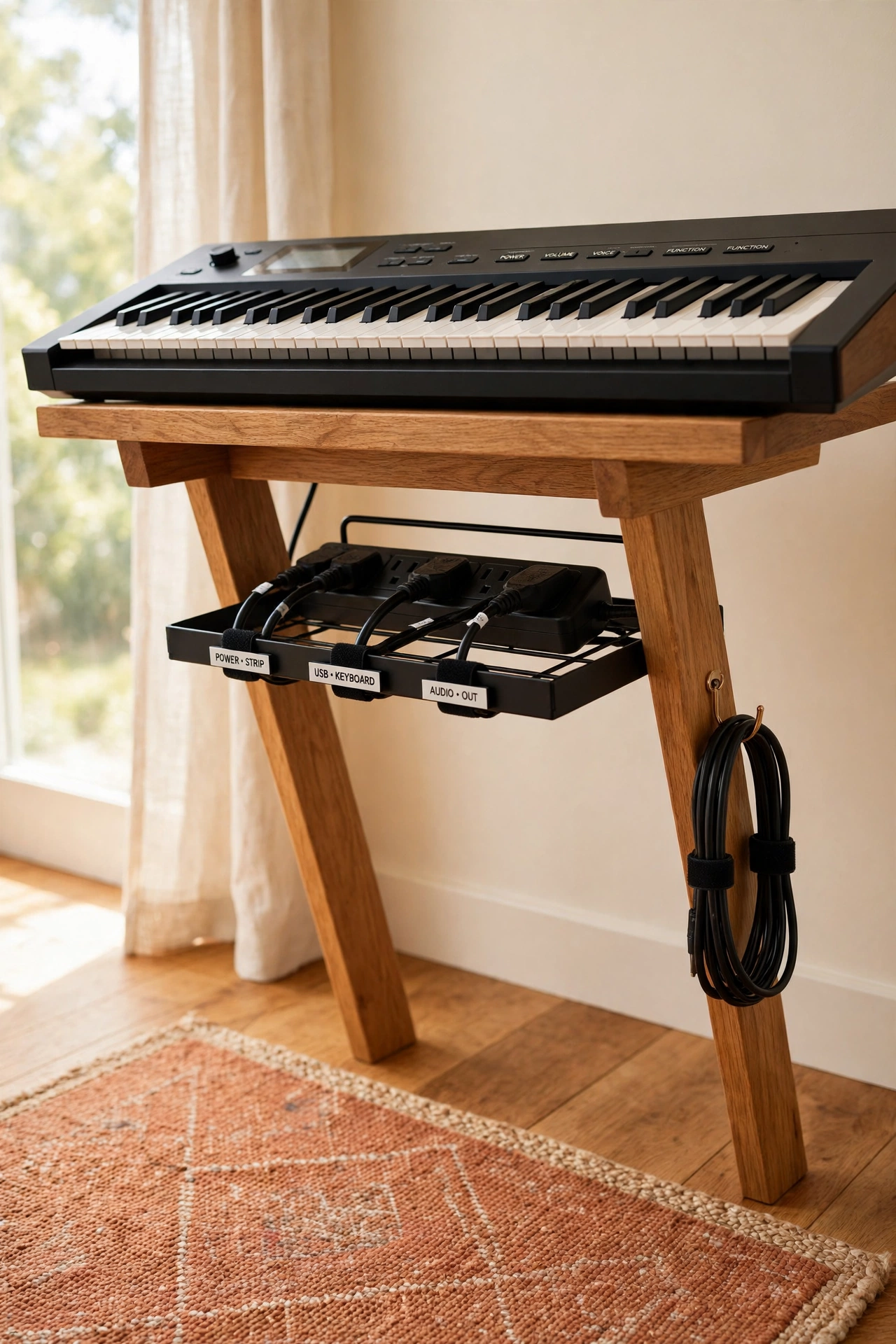
18. Tidy Cables With a Tray Under the Keyboard Stand
Cables under a keyboard stand tangle fast and look messy from across the room. Mount a shallow cable tray under the stand to hold the power strip, pedal cables, and audio leads in one neat channel. The floor stays clear, the cables stay safe from chair wheels, and cleaning underneath takes seconds.
Label each cable with a small tag so you can unplug the right one without tracing it back. Keep a spare cable coiled and hung on a hook at the side of the stand. A tidy cable tray is a small detail that makes the whole practice station look polished and professional.
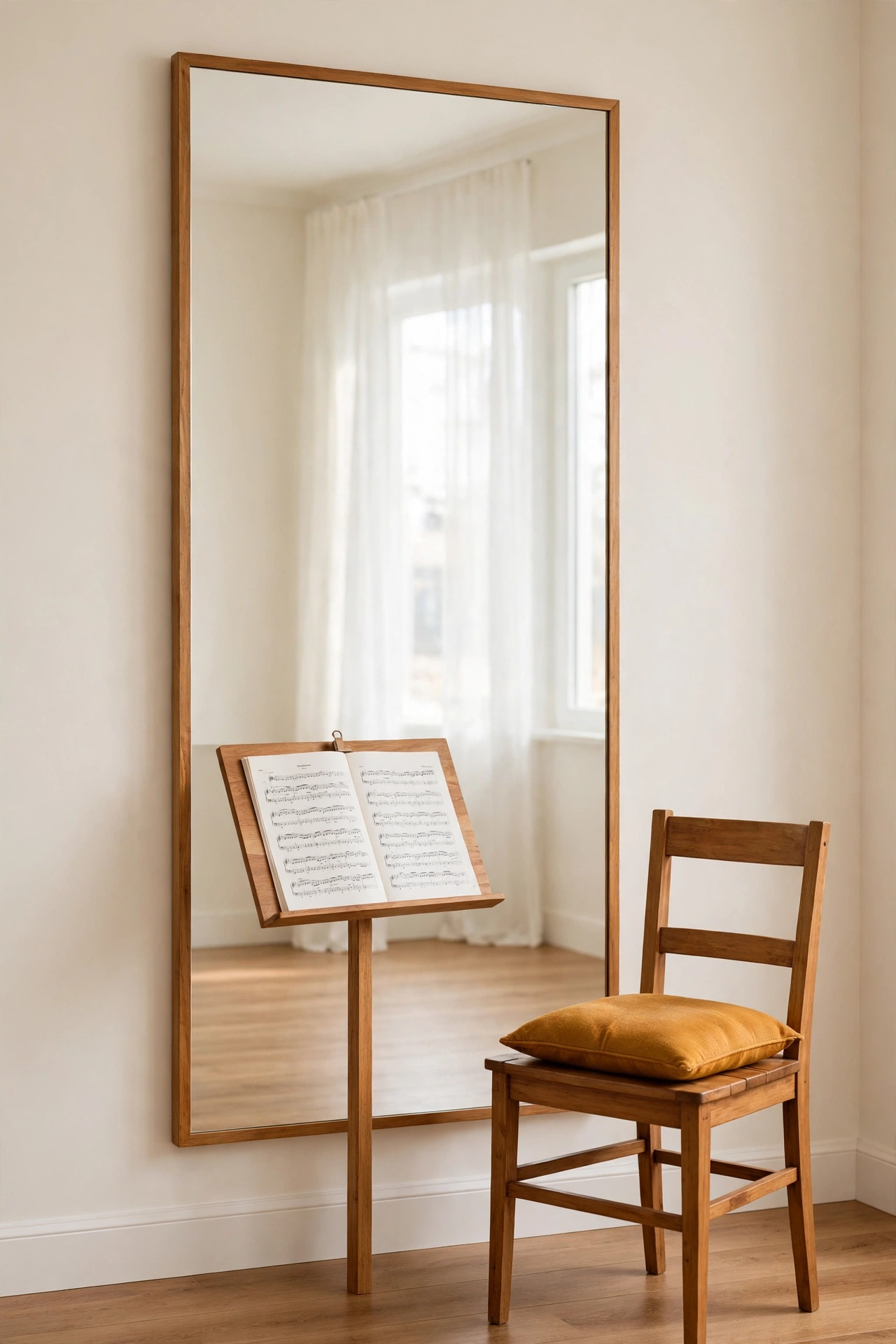
19. Check Posture With a Mirror Wall
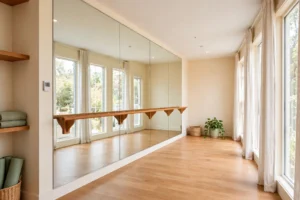
A mirror on the wall in front of your playing position helps you watch your posture, hand position, and bow hold while you play. Seeing yourself clearly lets you catch bad habits early, before they become hard to fix. A full-length mirror also makes a small room feel larger and brighter.
Mount the mirror securely at a height that shows your full upper body while seated or standing. Lean a large mirror against the wall if you prefer a renter-friendly option with no drilling. Regular mirror checks during practice build good habits that stay with you for years.
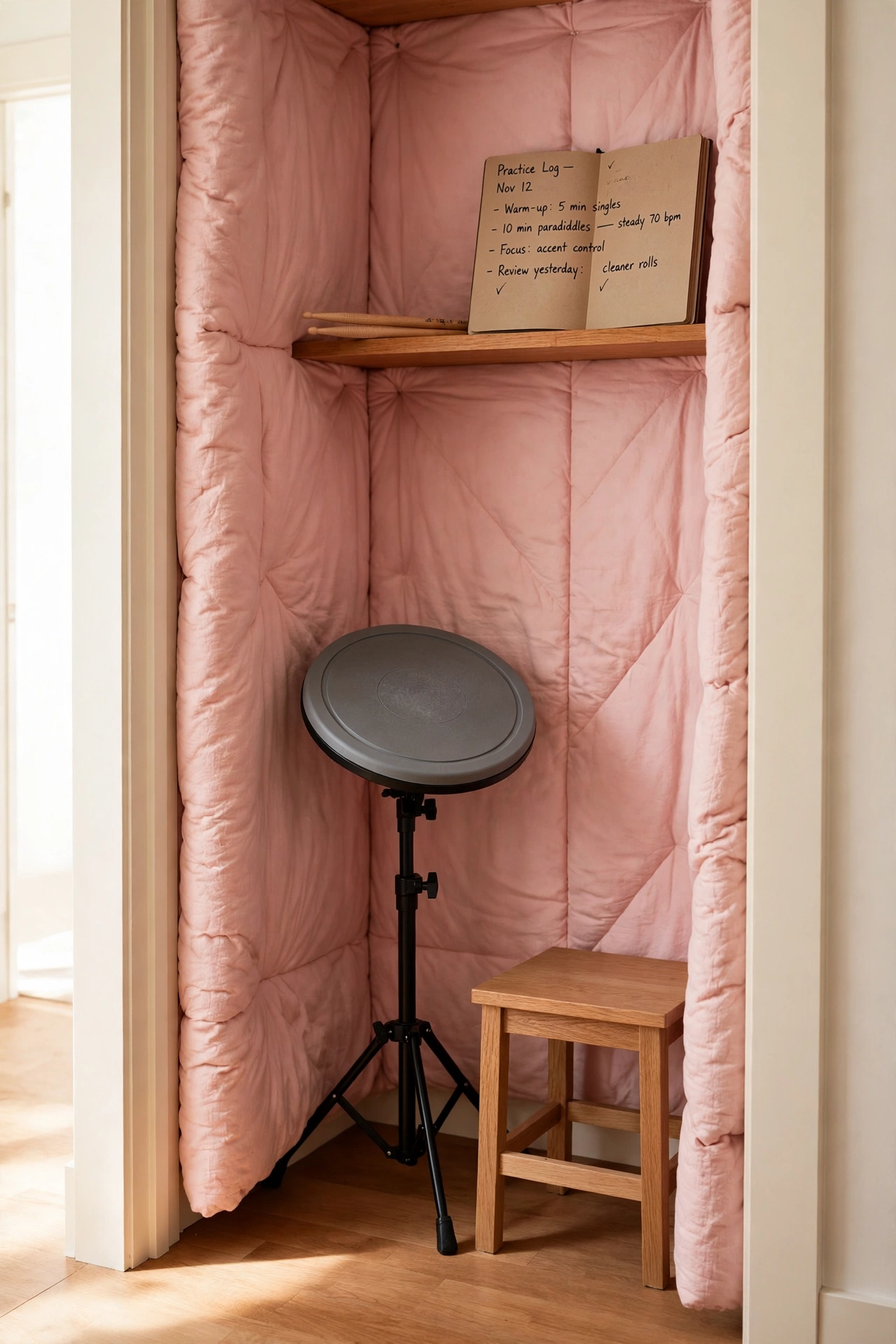
20. Tuck a Drum Practice Pad Into a Closet Corner
A practice pad kit fits into the corner of a closet or a deep wardrobe nook with room to spare. Set the pad on a snare stand, add a small stool, and use the closet shelf above for sticks and a practice journal. Closing the closet door hides the whole kit when practice ends.
Line the closet walls with thick fabric or moving blankets to absorb the sharp tap of the sticks. This setup is ideal for apartment drummers who need to keep volume low at all hours. A closet kit lets you practice rudiments daily without taking over a single inch of living space.
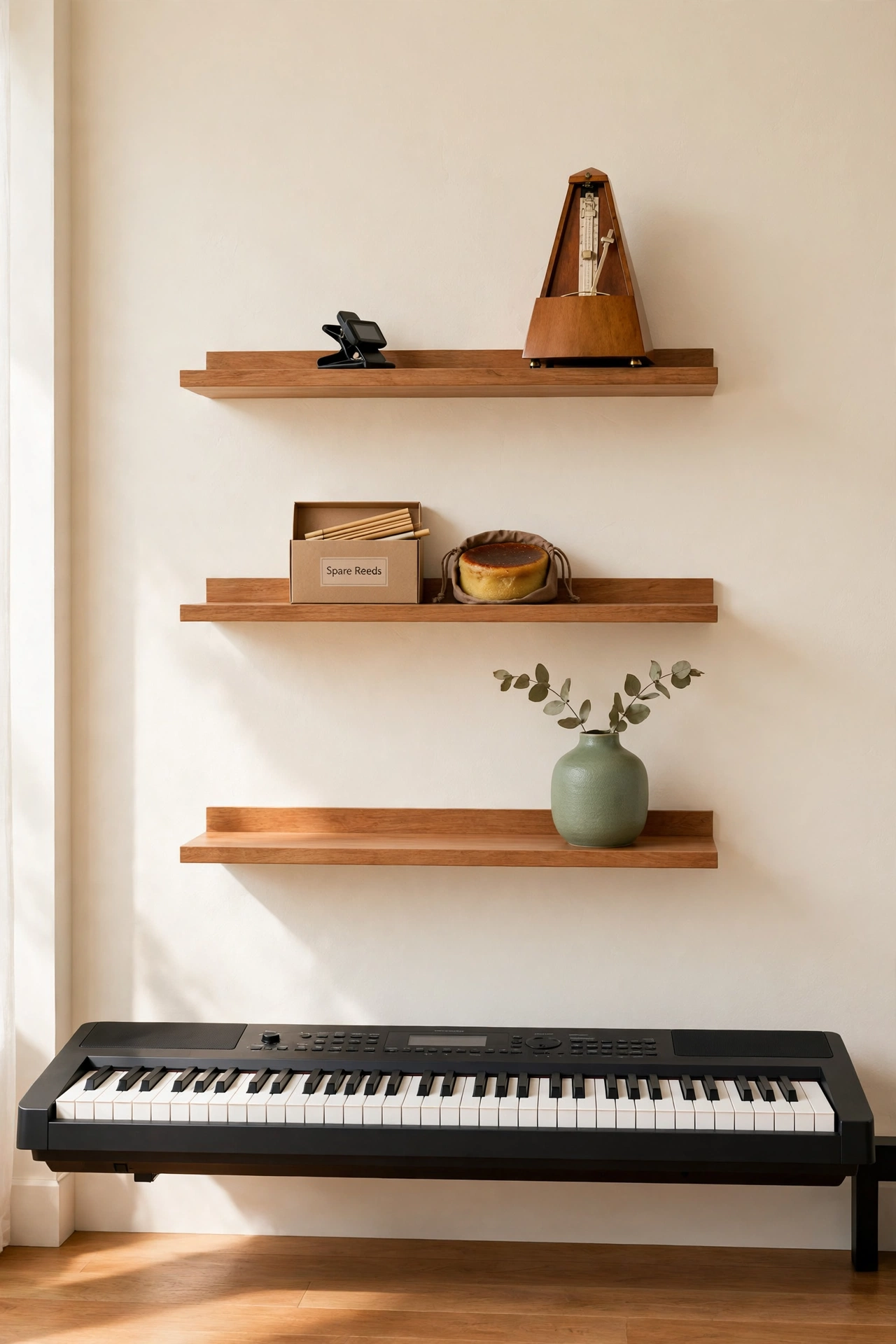
21. Float Shelves for Metronomes, Tuners, and Small Gear
Floating shelves keep small practice gear visible and off the floor. Mount two or three slim shelves near your playing position and arrange your metronome, tuner, spare reeds, and rosin in a neat row. Everything stays within easy reach, and nothing gets lost in a drawer.
Choose shelves with a small raised lip so round items cannot roll off. Group items by use, with daily tools on the lowest shelf and spares higher up. Floating shelves add storage without bulk, which is exactly what a small practice room needs.
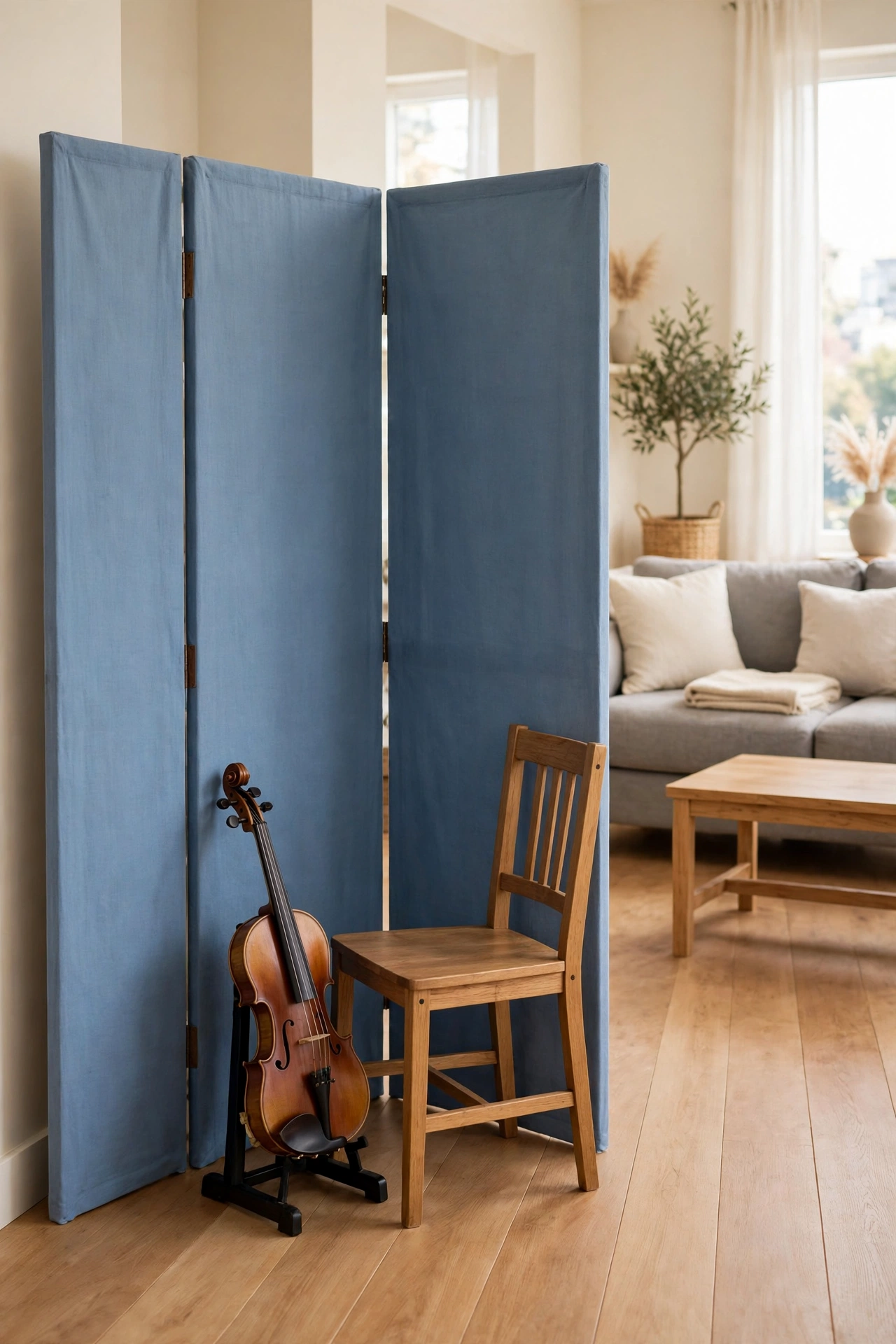
22. Screen Off the Zone in a Shared Apartment
A folding screen gives you privacy and a sense of enclosure in a shared apartment. Unfold it around your practice corner when you play, and fold it flat against the wall when you finish. The screen signals to housemates that practice time is in progress without anyone needing to close a door.
Choose a screen with fabric panels, which absorb a little sound while they divide the space. A three-panel screen is enough to wrap a chair and a music stand comfortably. This flexible boundary works in any room and moves with you if you rearrange the furniture.
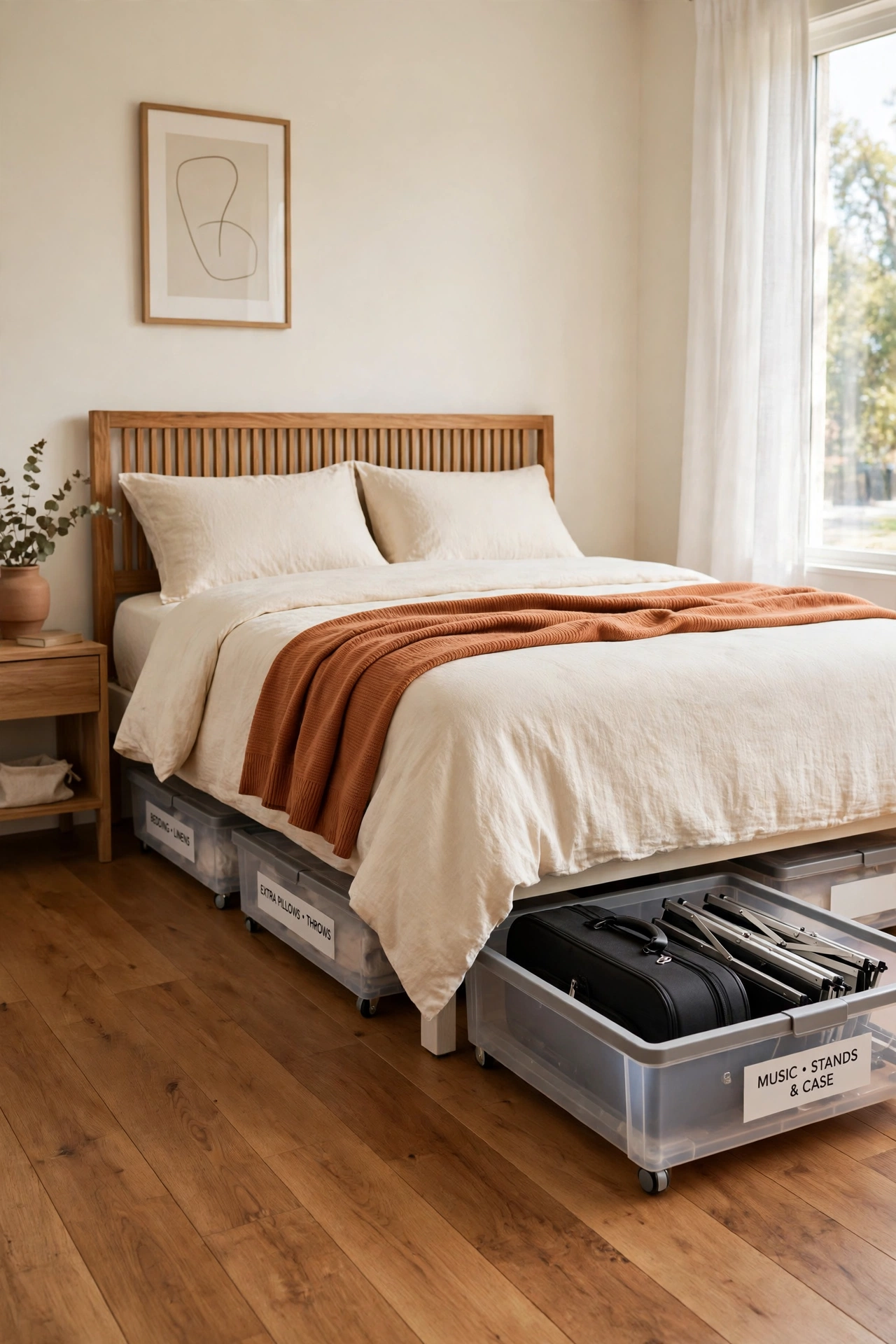
23. Slide Cases and Stands Into Under-Bed Storage
Instrument cases and folding stands slide neatly into shallow storage boxes under the bed. Use low, wheeled boxes with lids to keep dust off your cases, and label each box so you can find the right case without pulling them all out. The bedroom floor stays clear while your gear stays close.
Measure the clearance under your bed before buying boxes, and choose boxes that roll smoothly on your floor type. Keep the case you use daily in the most accessible spot at the front. Under-bed storage turns dead space into a hidden gear closet.
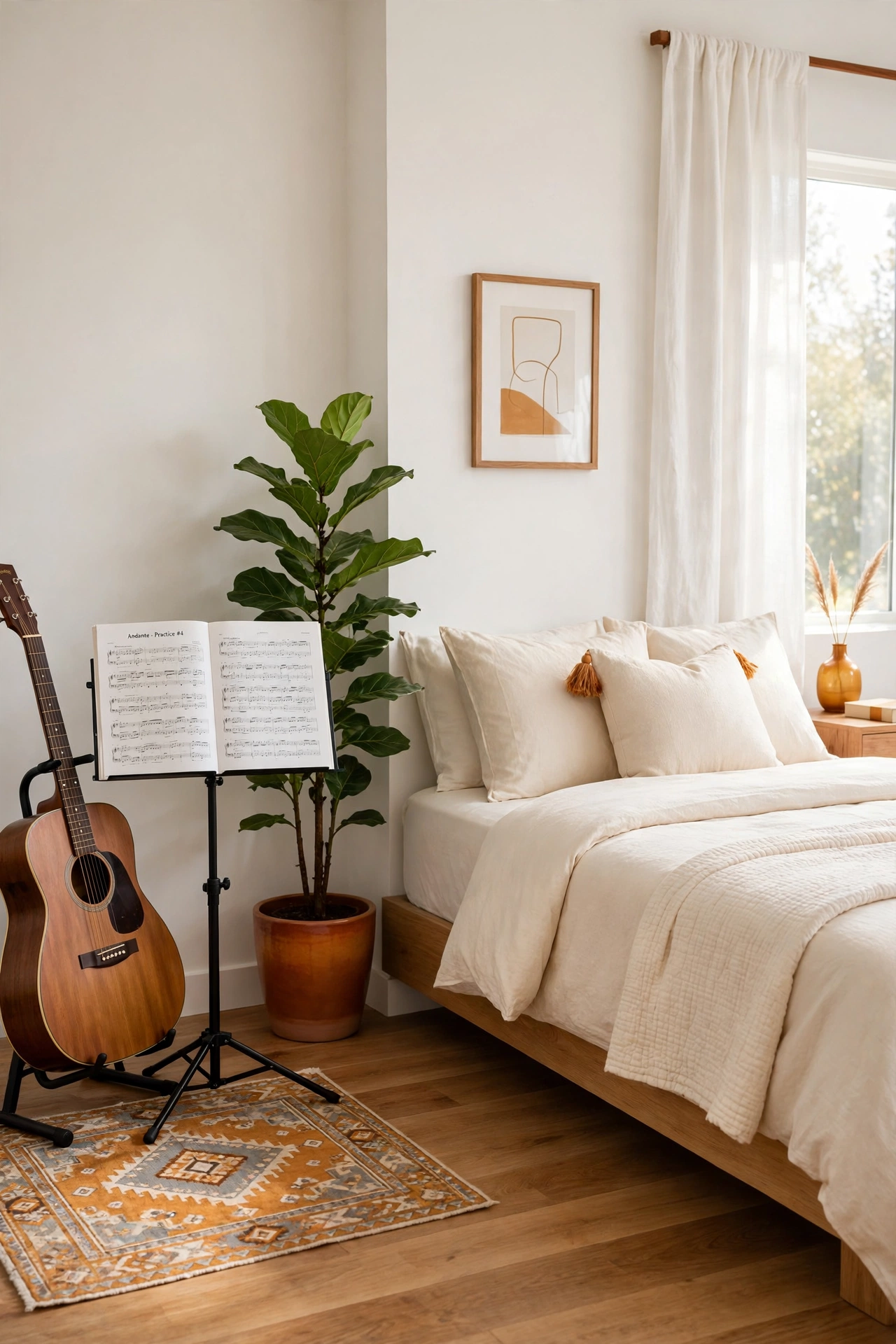
24. Dedicate a Practice Corner in the Bedroom
If no other room is free, a bedroom corner can host a complete practice setup. Place your instrument stand and music stand in the corner farthest from the bed, and add a small rug to mark the zone. A folding screen or a tall plant can separate the practice corner from the sleeping area visually.
Keep practice gear off the bed and the nightstand so the bedroom still feels restful at night. A wall-mounted hook holds your instrument safely, and a small basket keeps sheet music tidy. With a clear boundary, the bedroom serves two purposes without either one feeling cramped.
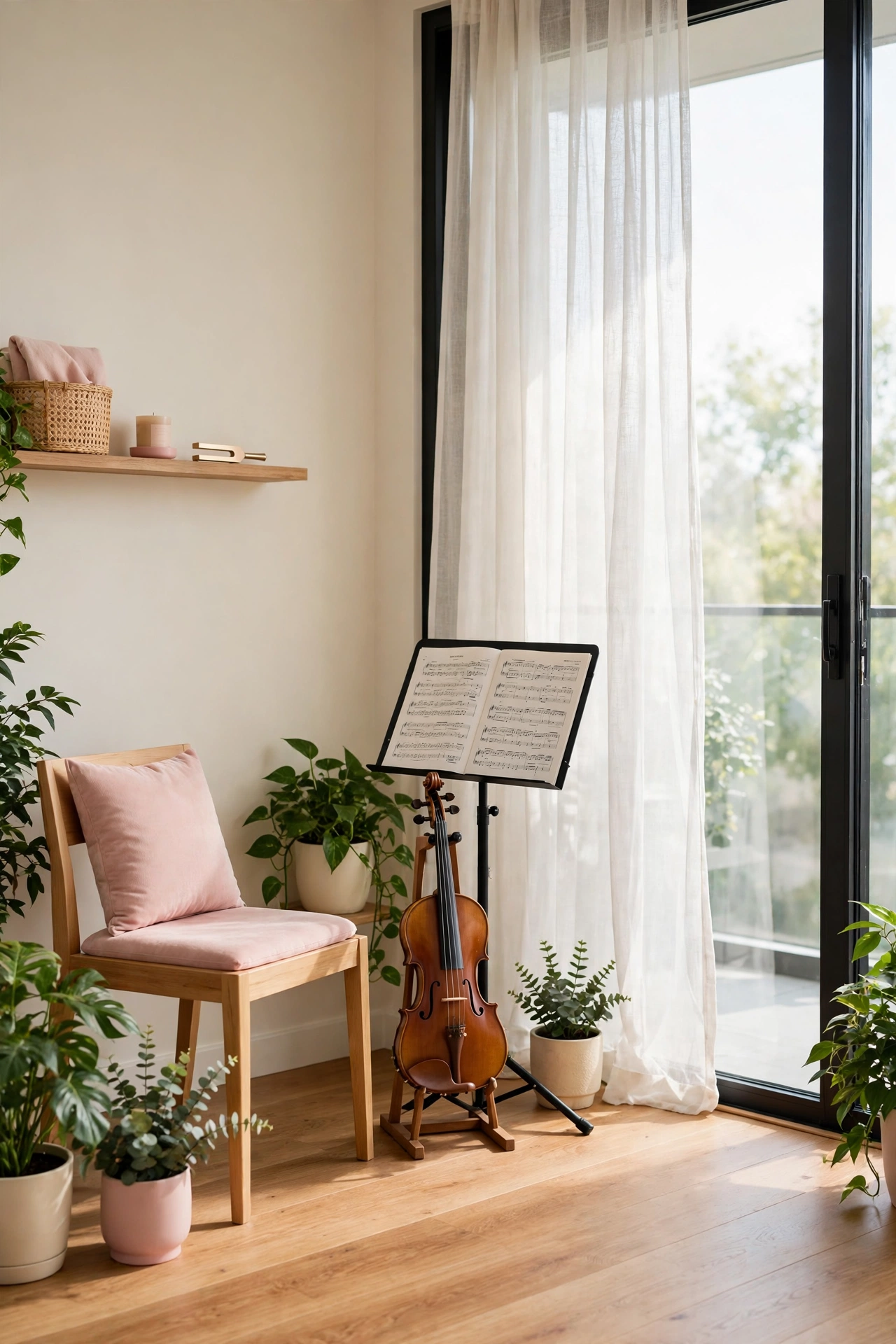
25. Open a Balcony-Adjacent Zone With Plants
A practice spot beside the balcony door gets fresh air and bright light, which makes long sessions feel easier. Place your chair and stand near the door, and line the edges of the zone with potted plants that soften sound and freshen the air. The plants also create a gentle natural boundary around the space.
Keep instruments away from the direct draft of the open door, and bring delicate wooden instruments inside during humid or rainy weather. A sheer curtain on the door filters harsh light while keeping the connection to the outdoors. This airy setup suits string players and vocalists who love natural light.
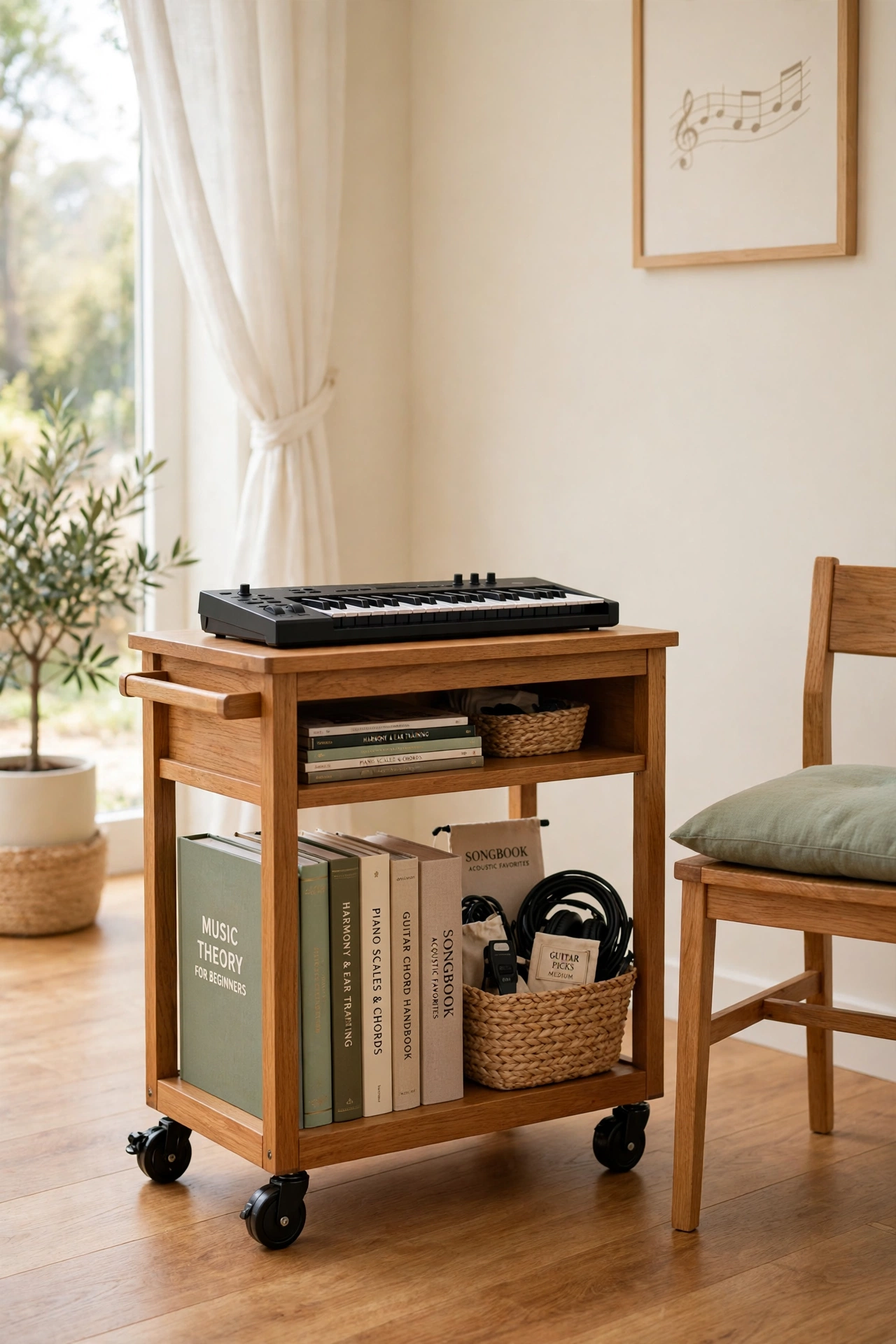
26. Build a Mobile Practice Station on Casters
A mobile station on casters lets you roll your entire practice setup to the best spot in the apartment. Mount a small keyboard or a music stand, a shelf for books, and a basket for accessories onto a sturdy rolling cart or a low rolling table. Lock the wheels when you play and roll the station to a closet when you finish.
This layout is perfect for apartments where the practice spot changes with the time of day. Roll near the window for morning light, or into the quietest room for evening sessions. A mobile station means you never have to choose one permanent corner for your music.
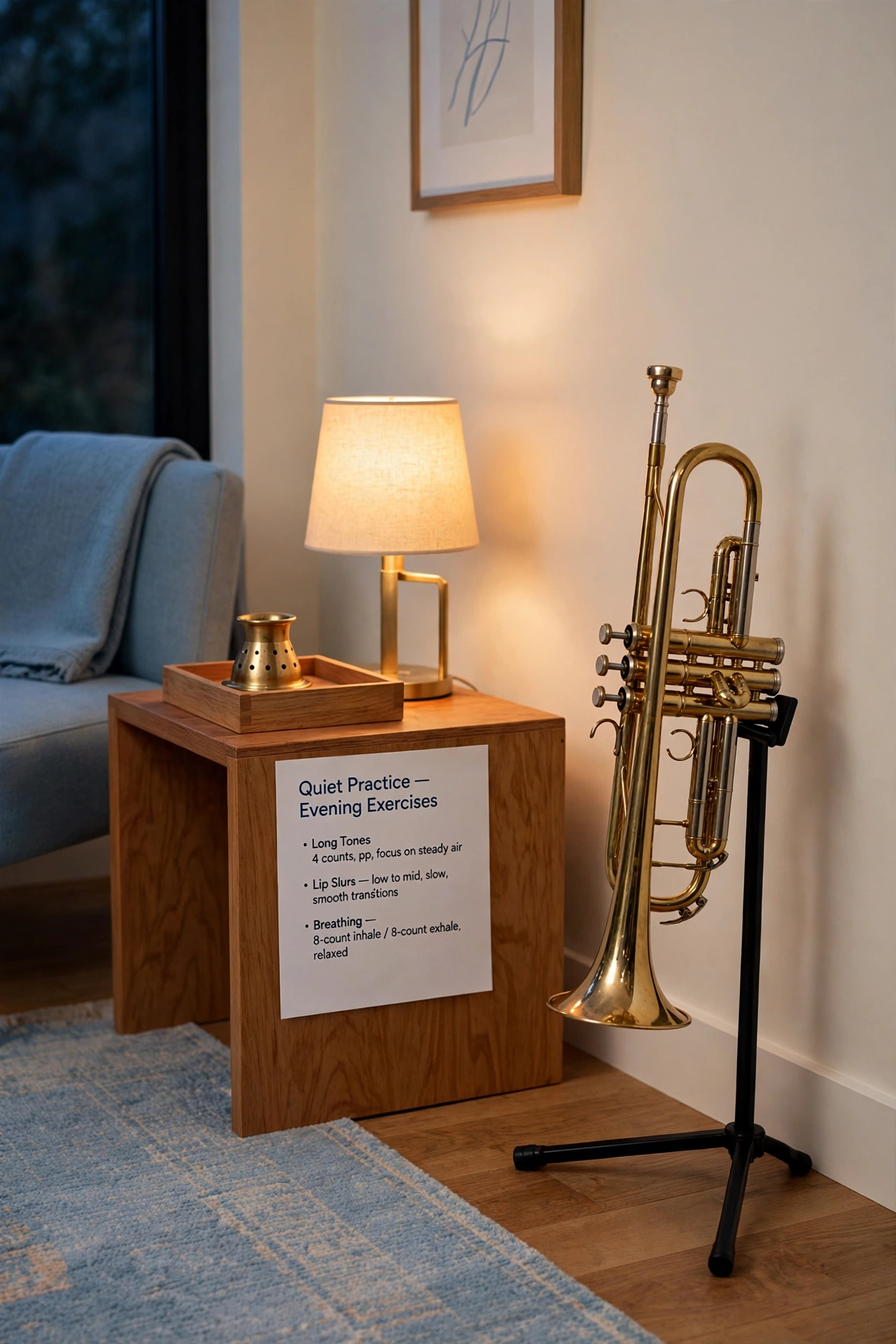
27. Set Up a Quiet Hours Station With a Practice Mute
A quiet hours station lets you keep practicing after the building goes quiet. Keep your practice mute, silent brass mute, or headphone amp in a dedicated tray on a small side table, ready to grab for late sessions. Add a soft rug and a low lamp so the corner feels calm and focused.
Store a short list of quiet exercises on the table, such as finger drills, sight reading, and rhythm tapping, so late practice still feels productive. Respecting quiet hours keeps the peace with neighbors while your skills keep growing. A little planning turns late-night practice into a habit you can keep for years.
Conclusion
A music practice room does not need to be large to work well. It needs a clear spot for your instrument, smart storage for your music and gear, and a few sound-friendly touches that keep the peace in an apartment building. Any of these layouts can fit into a corner, a closet, or a shared room without taking over your home.
Pick the layout that matches your instrument and your daily routine, then set it up this week so practice becomes easy to start. A dedicated zone, like the focused spaces in small home gym layout ideas, turns a good intention into a daily habit. Your future self will thank you every time you sit down to play.
Frequently Asked Questions About Small Music Practice Room Layout Ideas for Apartments
How can I practice music in an apartment without bothering neighbors?
Use soft furnishings to absorb sound, such as rugs, heavy curtains, and acoustic panels on shared walls. Practice with mutes or headphones during quiet hours, and keep your loudest sessions to daytime. A quick chat with your neighbors about your practice schedule also goes a long way.
What is the smallest space that works for a music practice room?
A corner of about four feet by four feet is enough for most instruments with a music stand and a chair. Keyboard players need a longer wall, while guitarists and wind players can work in a compact nook. The key is keeping the setup permanent so practice starts with no setup time.
How do I store instruments safely in a small apartment?
Wall mounts and sturdy floor stands keep instruments visible, accessible, and off the floor. Store cases under the bed and keep spare parts in labeled boxes on shelves. Keep every instrument away from radiators, exterior doors, and direct sunlight to protect wood and finishes.
Do acoustic panels really help in a rented apartment?
Yes, acoustic panels absorb echoes and reduce the sound that travels through walls, and many panels mount with removable strips that leave no damage. Fabric panels and heavy curtains offer similar benefits with a softer look. Even a few panels behind your playing position make a noticeable difference.
Can I set up a practice space in a shared apartment?
Yes, a folding screen or a bookshelf divider can carve a private practice zone out of a shared room. Agree on practice hours with your housemates, use headphones or mutes when others are home, and keep your gear in one tidy zone so shared spaces stay comfortable for everyone.

Hi, I’m Emily! I turn messy corners into cozy, organized spots. DreamNestDecor is where I share simple, practical home ideas — decor, organization, and small-space solutions that work in real life, not just in photos. Every idea here is carefully researched before it’s shared.