Picture this: you push the furniture to one side, press play on your favorite music, and step into a little studio that is all yours. The mirror catches your movement, the barre is steady under your hand, and the floor feels just right under your feet. That small moment of freedom is exactly what a home dance studio gives you, even when your home is short on space.
You do not need a big empty room or a professional budget to practice at home. A clear corner, a mirror, and the right floor can turn almost any spare spot into a studio you will love. These 18 small dance studio layout ideas will help you plan a practice space that fits your home, your style of dance, and your budget.
1. Run a Full Mirror Wall With a Wooden Barre
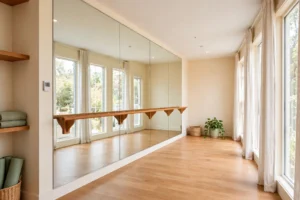
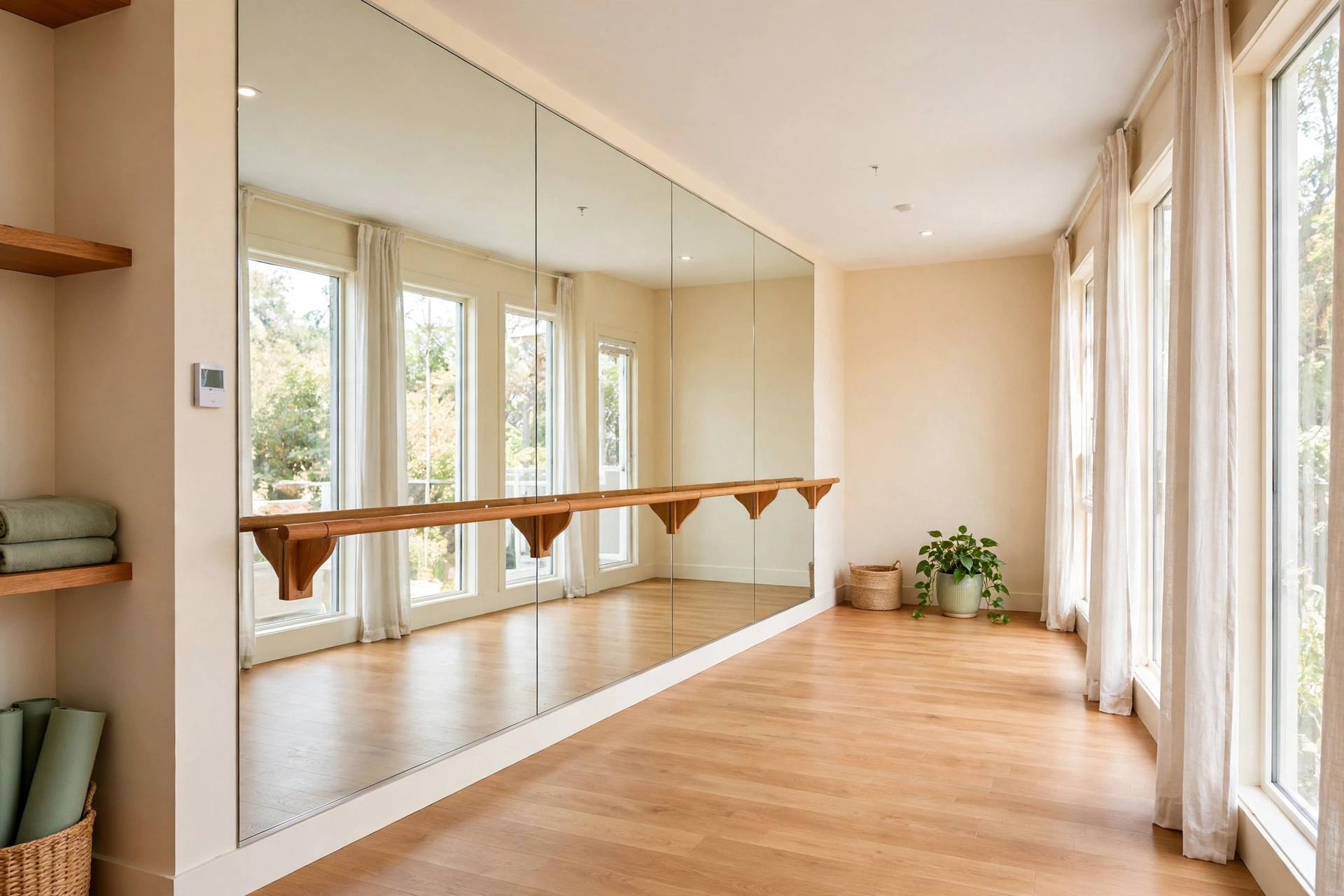
A full mirror wall is the classic dance studio feature, and it works just as well in a small spare room as it does in a large hall. Mount large mirror panels along the longest wall, floor to ceiling if you can, and fix a smooth wooden barre at hip height in front of them. The mirrors make the room look twice as large, and they let you check your lines and posture as you practice.
Choose a warm wood barre with sturdy wall brackets, and leave at least a full arm span of clear floor in front of it. If you like the look of a framed mirror, these diy decorative mirror frame ideas show how to dress up plain mirror panels with simple trim. Keep the wall behind the mirrors a soft cream color so the room stays bright and calm.
2. Lay a Sprung Marley Floor Over a Plywood Subfloor
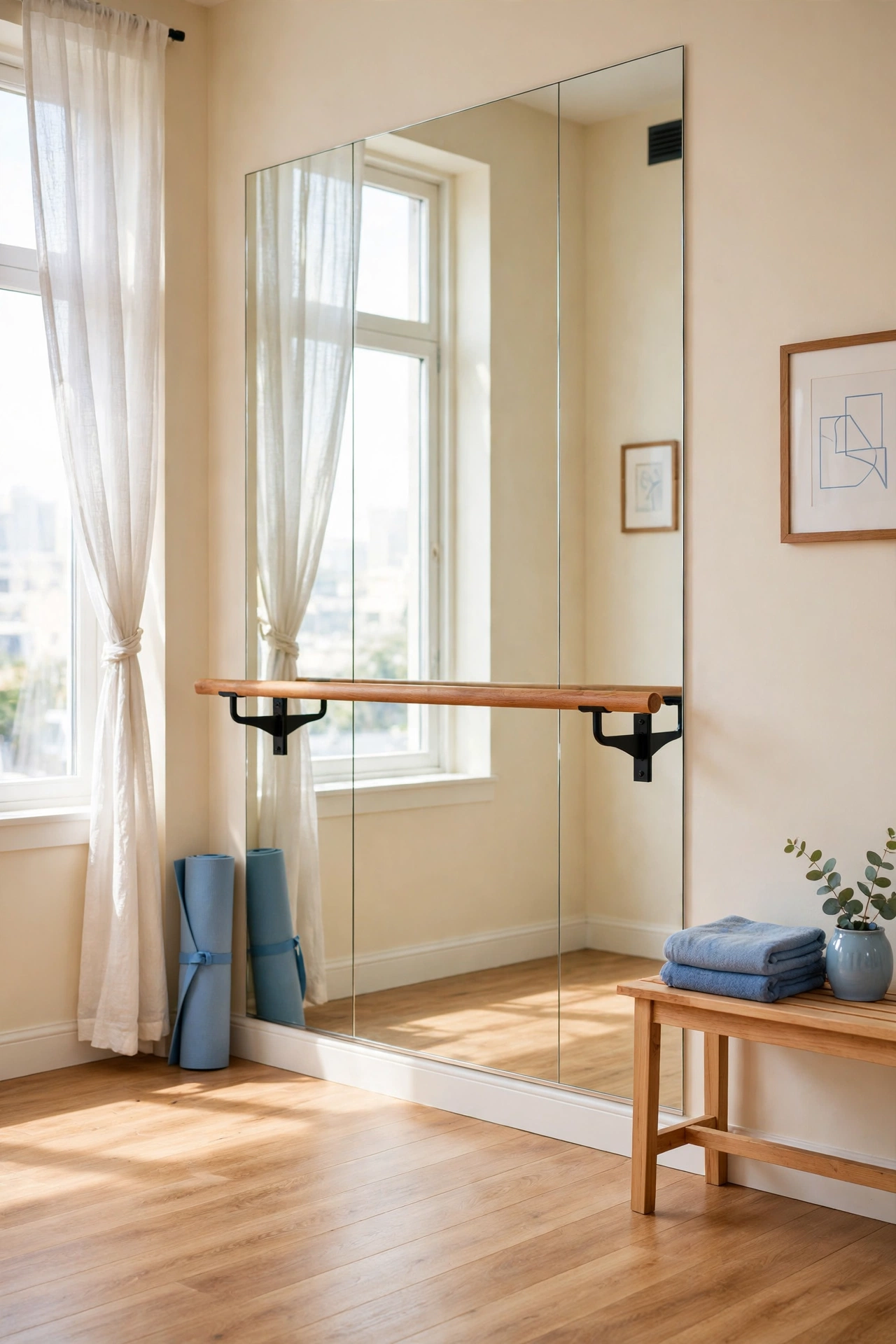
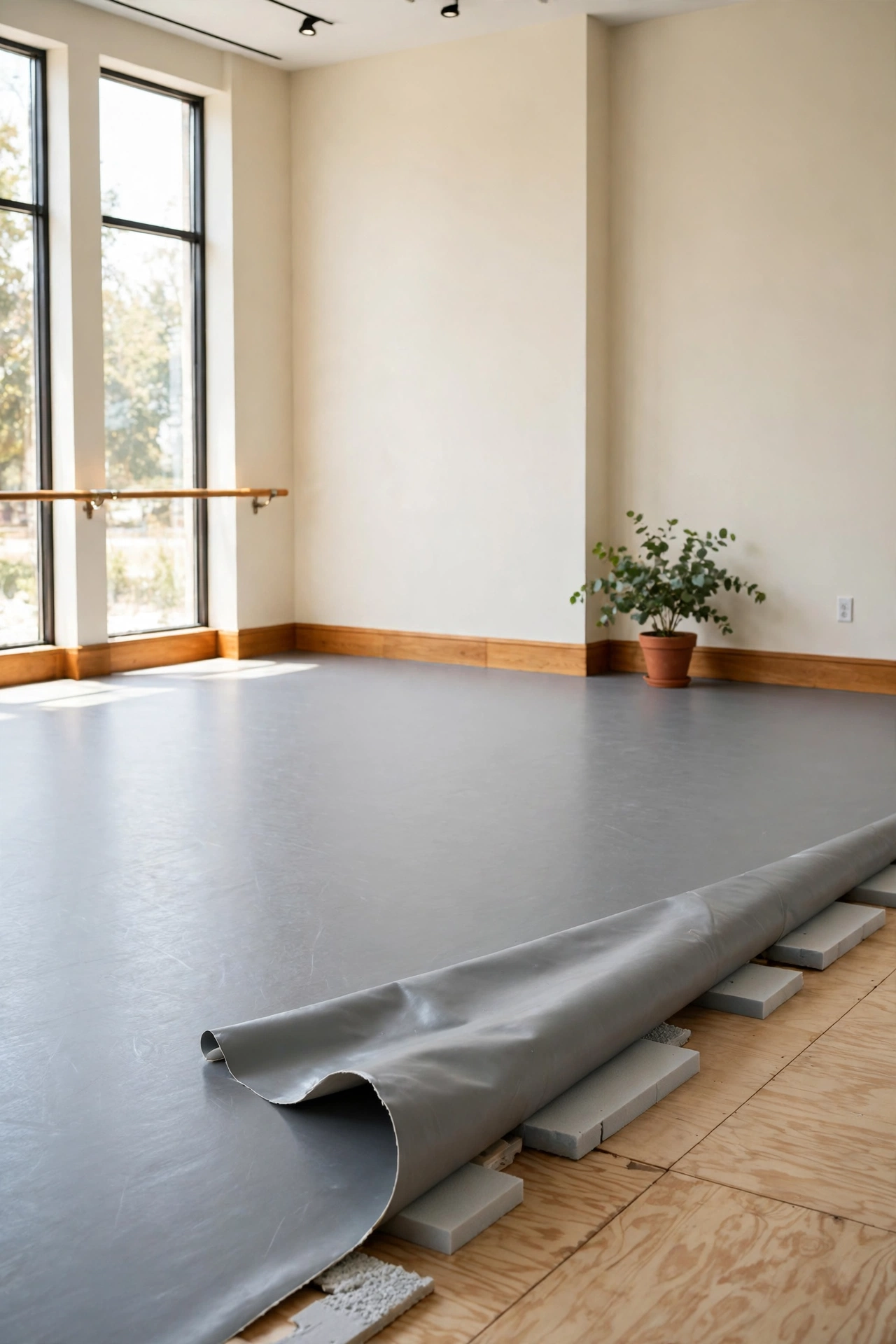
Your floor matters more than any other part of a dance studio, because it protects your knees, ankles, and feet. A sprung floor built from plywood panels over foam blocks gives you gentle bounce, and a roll of marley vinyl on top gives you the smooth, grippy surface dancers expect. This layered floor can be built in a spare bedroom or a finished basement without permanent changes to the house.
Plan the floor to cover the whole practice area, not just a small mat, so you can travel across the room safely. A sprung floor also works beautifully for other kinds of movement, and these small home gym layout ideas show how the same resilient flooring supports workouts in tight rooms. Keep the vinyl clean with a damp mop, and never wear outdoor shoes on it.
3. Tuck a Portable Barre Into a Living Room Corner
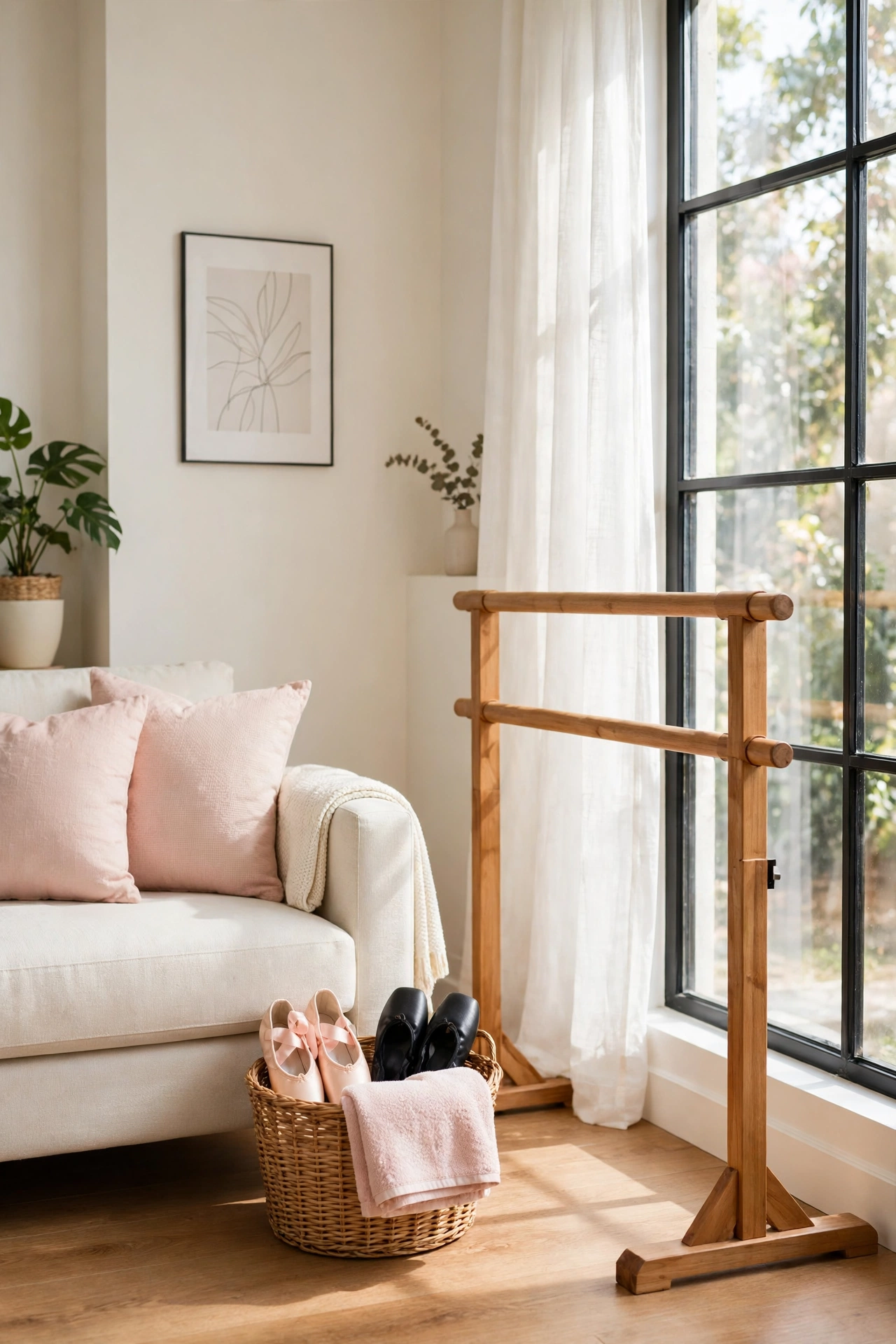
If you do not have a spare room, a portable barre turns a living room corner into a practice spot in minutes. Freestanding barres have their own feet, so they stand steady without wall brackets, and you can slide one against the wall when practice is over. Place it near a window for natural light, and keep a small rug or mat under it to protect the floor.
Choose a barre with adjustable height so it suits every dancer in the house. A basket beside the barre can hold your dance shoes, a water bottle, and a small towel, so everything you need stays in one tidy spot. When guests arrive, the barre reads as a slim piece of furniture rather than gym equipment.
4. Fit a Fold-Down Barre in a Tiny Spare Room
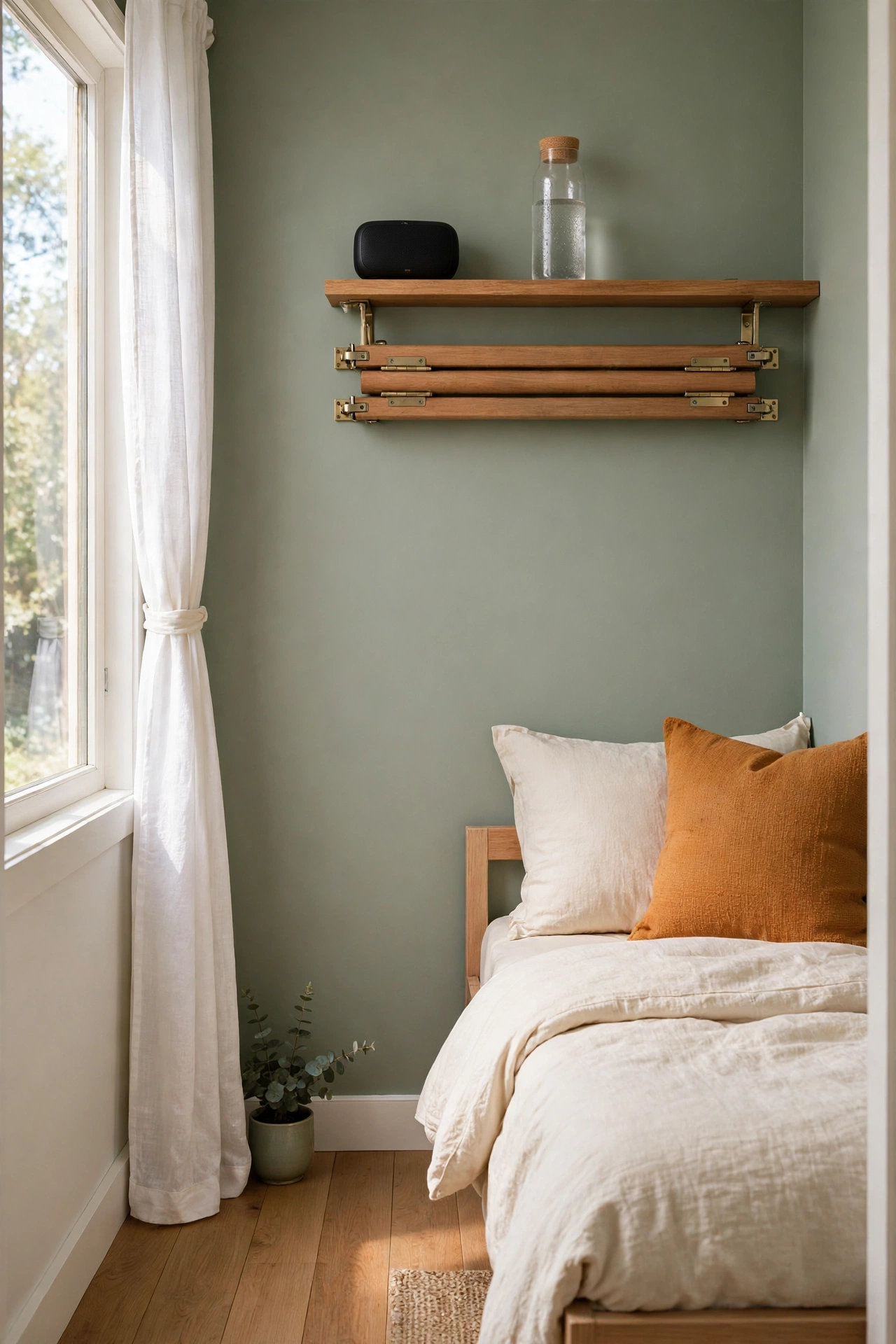
A fold-down barre is a smart answer for a room that must do two jobs, like a guest room that doubles as a studio. The barre hinges flat against the wall when it is not in use, so the room keeps its full floor space for a bed or a desk. When practice time comes, you simply lift the barre and lock it into place.
Mount the hinges into wall studs so the barre holds your full weight safely. Paint the barre and brackets the same soft sage color as the wall trim, and the folded barre will blend into the room like a picture rail. A narrow shelf above the barre can hold a small speaker and a water bottle without taking up floor space.
5. Use a Corner Mirror Pair in a Narrow Room
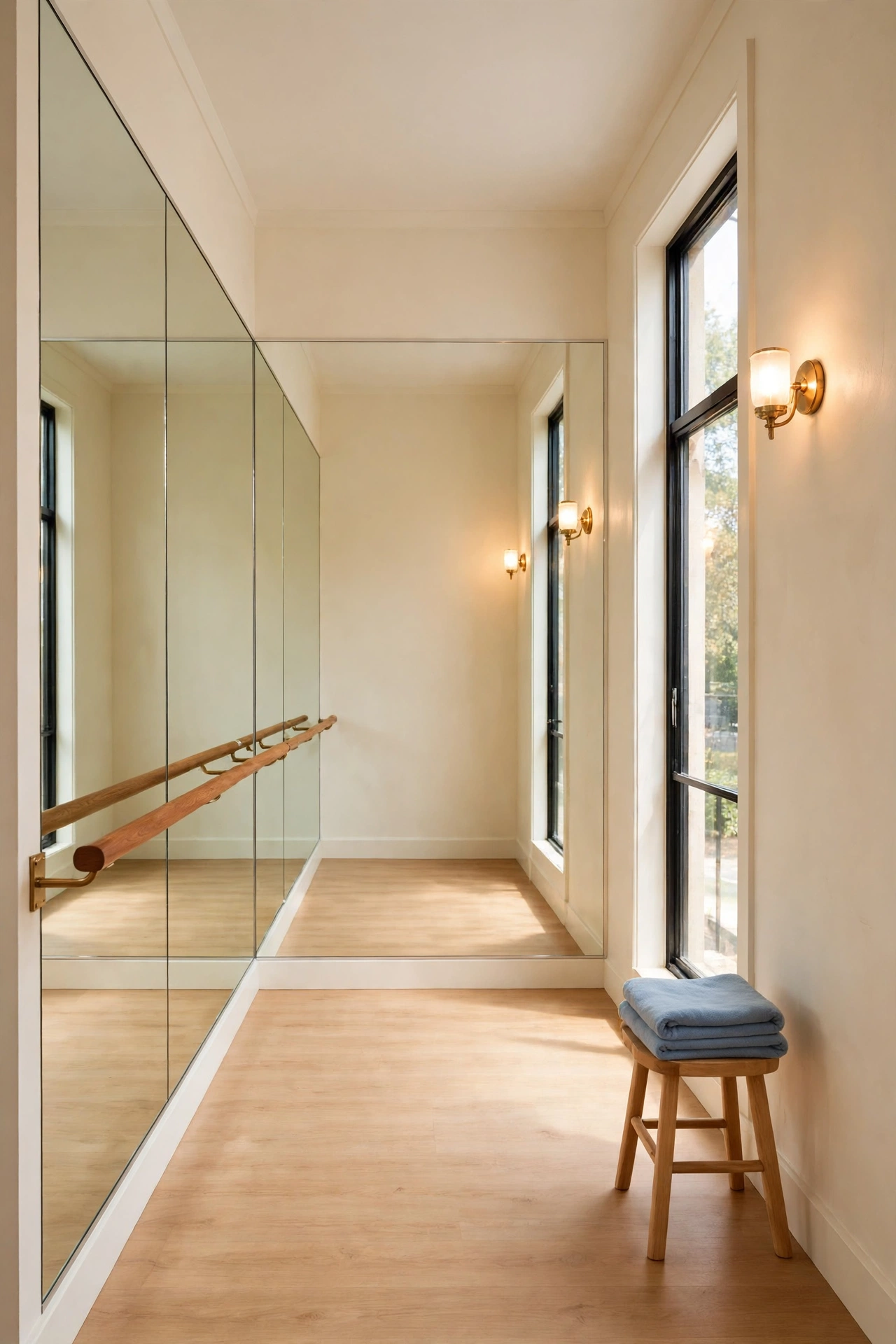
A narrow room can still give you a great view of your movement if you place mirrors on two walls that meet in a corner. Two mirror panels set at a right angle let you see yourself from the front and the side at the same time, which is a real help for checking turns and alignment. This corner setup needs far less wall space than a full mirror wall.
Angle a short barre along one of the mirrored walls, and keep the center of the room completely clear. Light the corner well with a pair of simple wall lights so no shadows fall across the mirrors. A corner mirror pair also makes a narrow room feel wider and more open, even on days when you are not dancing.
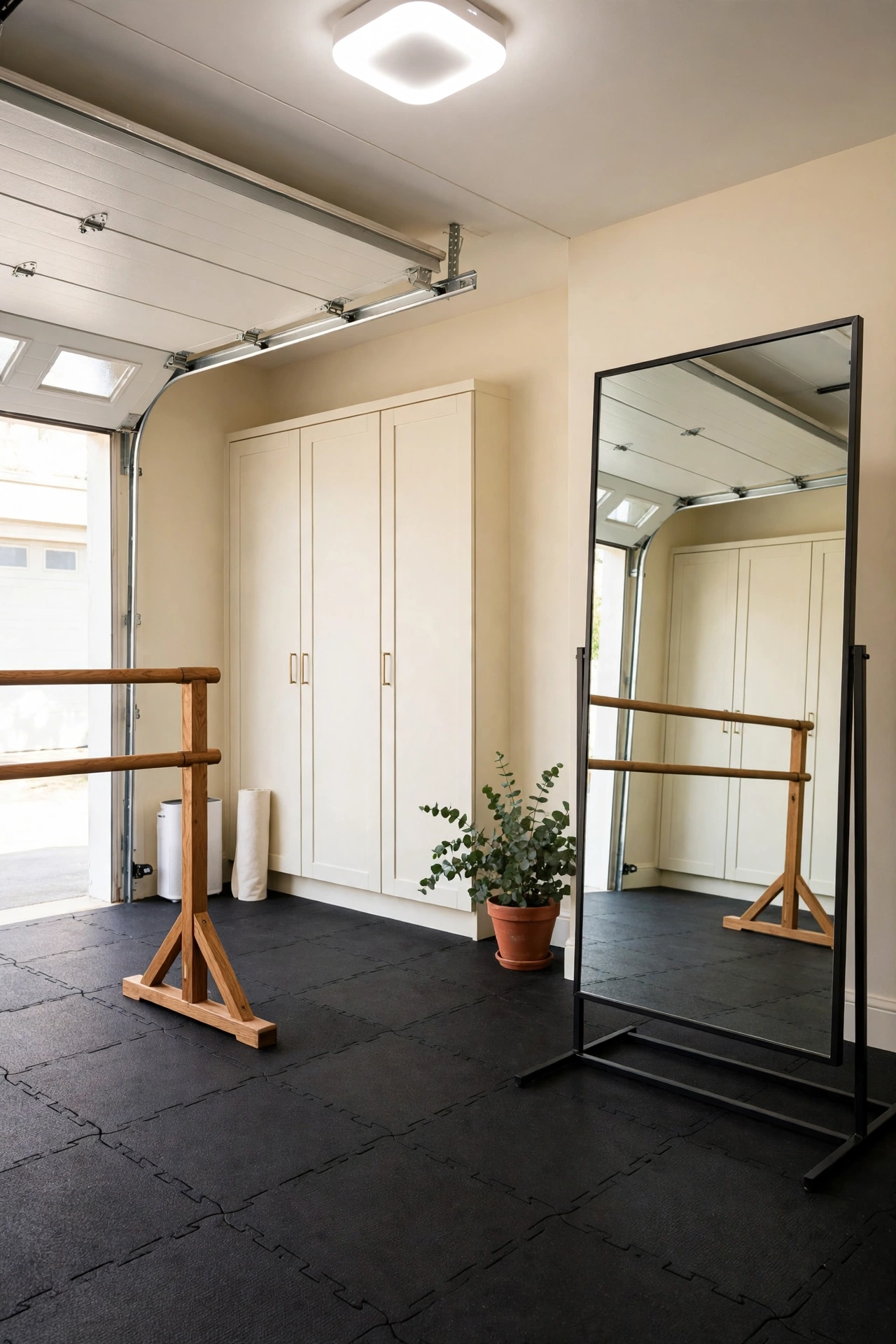
6. Build a Garage Corner Studio With Rubber Floor Tiles
A garage corner can become a sturdy practice studio with a few simple changes. Interlocking rubber floor tiles give you a forgiving surface over cold concrete, and they lift up easily if you ever need the garage space back. Add a freestanding mirror panel and a portable barre, and the corner is ready for class.
Keep the rest of the garage tidy with closed storage cabinets so the studio corner feels clean and separate. A bright ceiling light and a small fan will make the space comfortable in every season. Paint the wall behind the mirror a warm cream color, and the garage corner will feel like a real studio instead of a storage space.
7. Open a Sunroom Studio Full of Natural Light
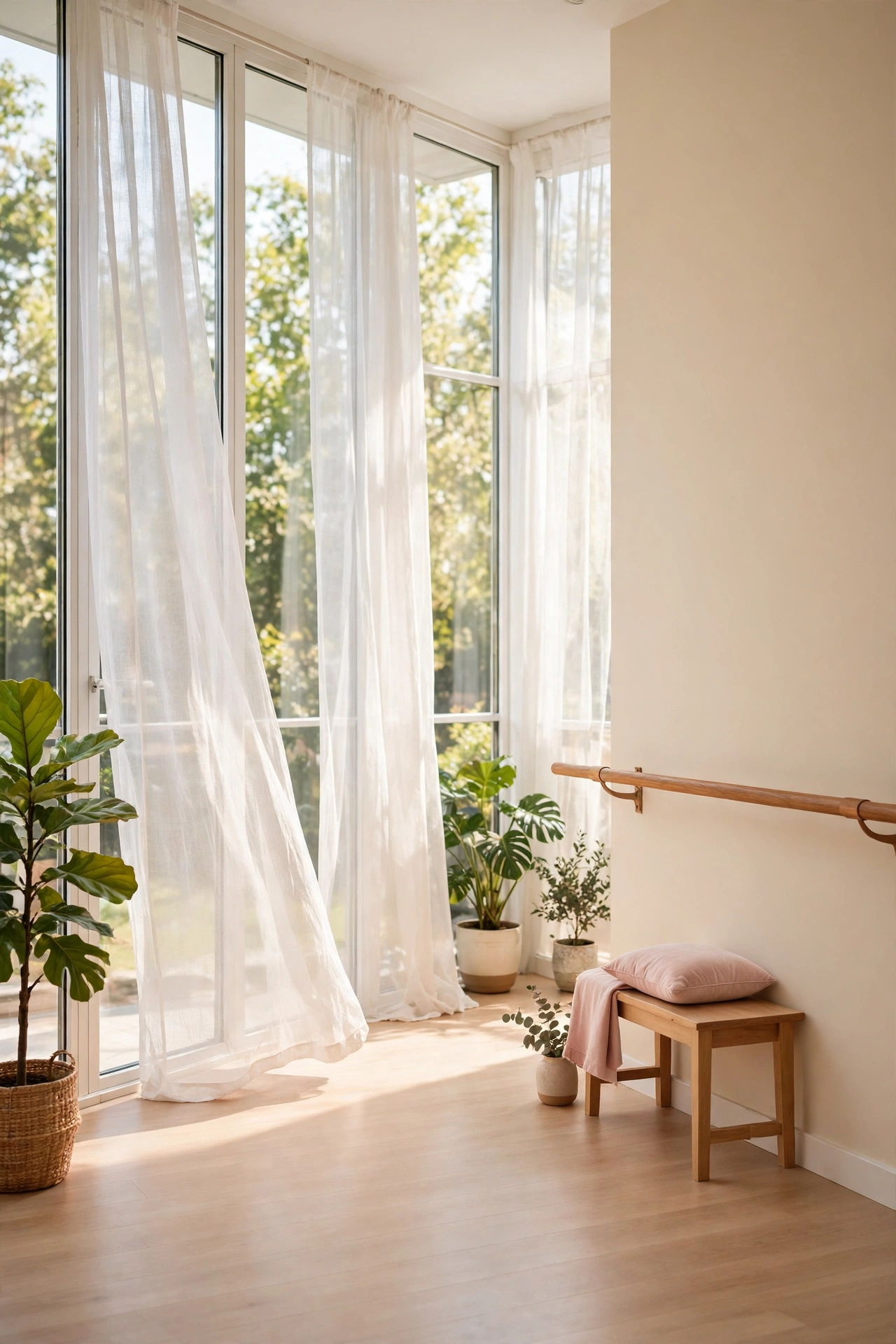
A sunroom is a dream spot for a dance studio, because the walls of glass fill the space with daylight and views of the garden. The bright light lifts your mood as you practice, and the smooth floor is easy to cover with a portable dance mat. Keep the layout simple so nothing blocks the light or the view.
Place a low wooden barre along the one solid wall, and use sheer curtains to soften harsh midday sun. A few potted plants in the corners add a fresh, calm feeling without crowding the floor. In the evening, a pair of warm floor lamps will keep the room glowing for late practice sessions.
8. Shape an Attic Studio Under a Sloped Ceiling
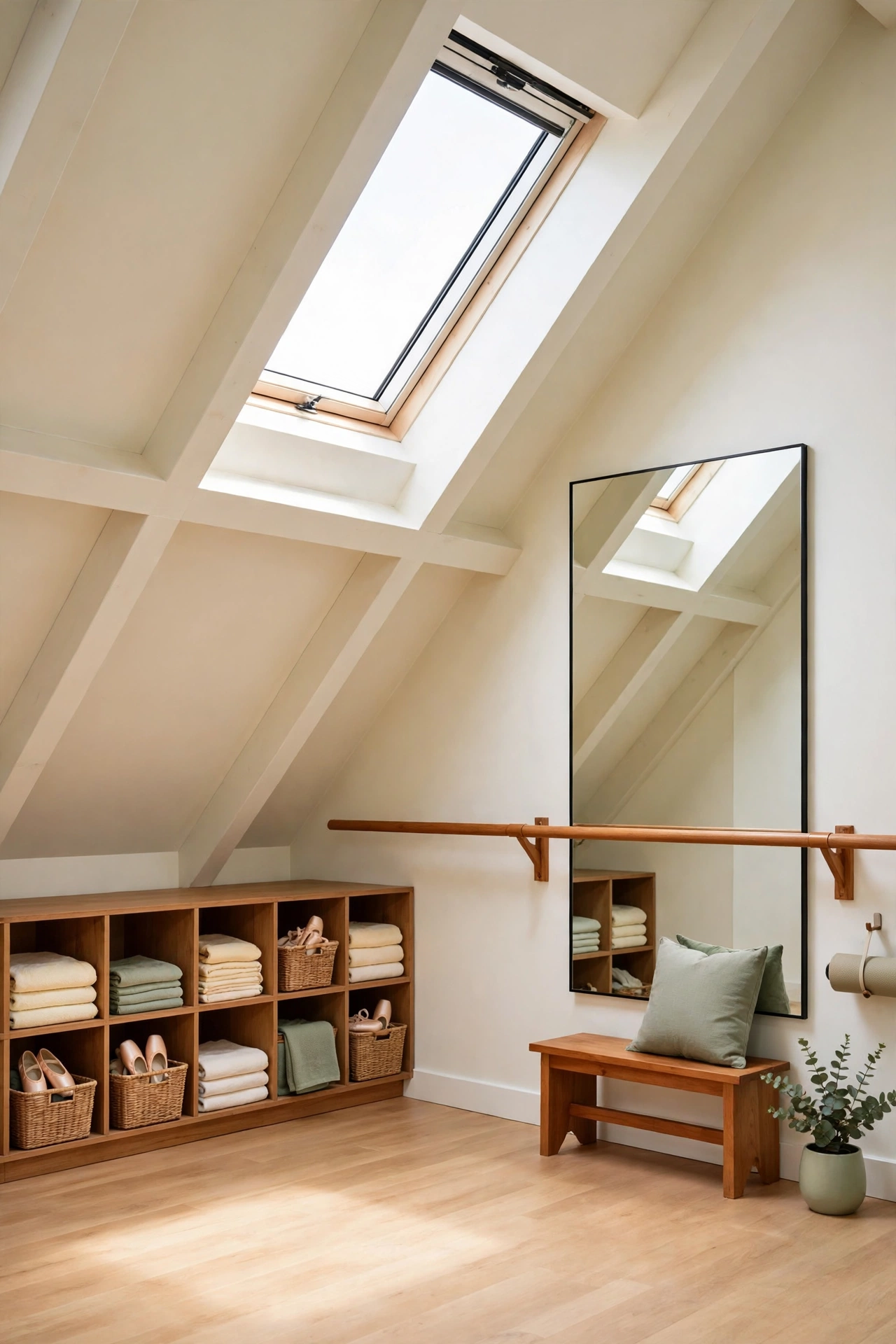
An attic with a sloped ceiling can still hold a lovely studio if you plan the layout around the roofline. Put the barre and the mirror along the tallest wall, where you can stand upright with ease, and use the low space under the eaves for storage cubbies and shoe baskets. The sloped ceiling gives the room a cozy, tucked away feeling.
Add a smooth dance floor panel over the attic boards, and paint the ceiling a pale cream color to bounce light around the room. A skylight, if you have one, will pour daylight onto the practice floor. Keep the decor simple and the floor clear, and the attic becomes a private studio far from the noise of the house.
9. Share a Multi-Purpose Room With a Dance Zone
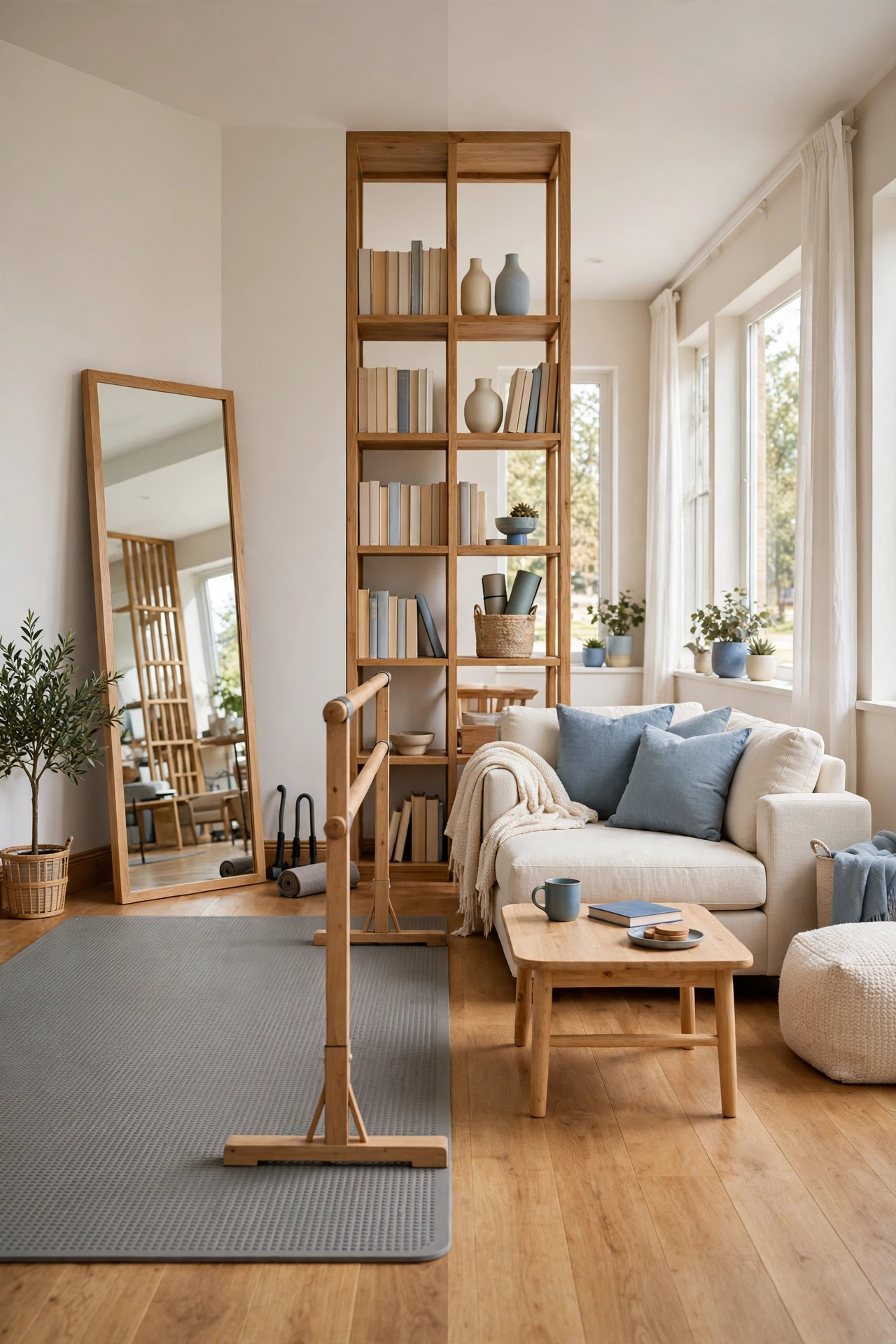
When one room must serve the whole family, a defined dance zone lets you practice without taking over the space. Mark the zone with a large dance mat or a change in flooring, and keep a portable barre and a leaning mirror at one end. The rest of the room can hold a sofa, a reading chair, or a play area, and the dance zone still feels like its own place.
Use a folding screen or an open bookshelf as a gentle divider between the dance zone and the rest of the room. These small multi-purpose room layout ideas show how one room can hold several activities without feeling crowded. At the end of practice, fold the barre away and the room returns to family use in minutes.
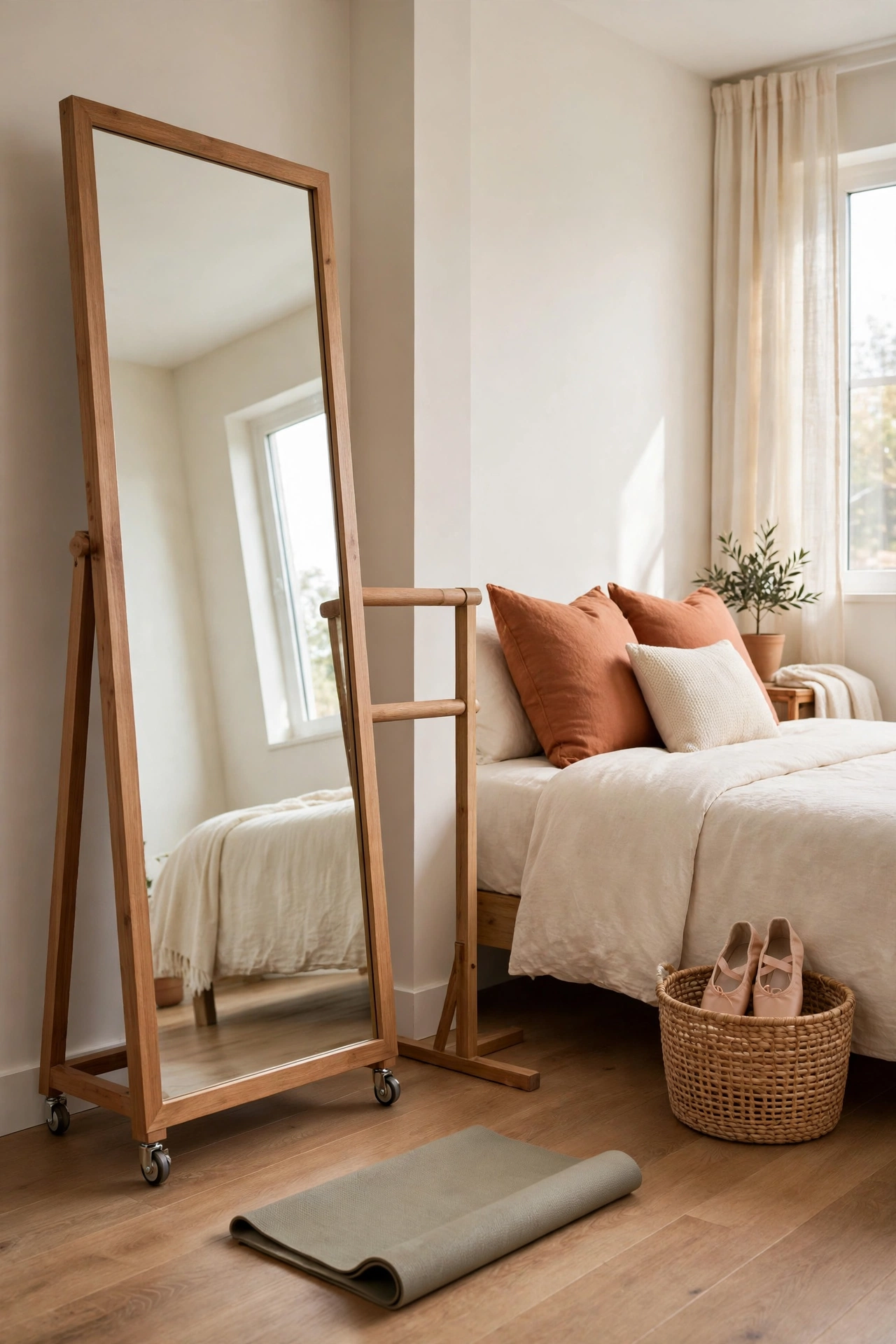
10. Place a Rolling Mirror in a Bedroom Corner Studio
A bedroom corner studio is perfect for dancers who practice early in the morning or late at night. A rolling mirror on wheels lets you angle your reflection exactly where you need it, and you can wheel it into a closet when the room needs to be a bedroom again. A slim portable barre beside the mirror completes the setup.
Keep a small mat on the floor to mark your practice spot and protect the carpet or wood below. A bedside basket can hold your dance shoes and a hairbrush, so your morning routine stays tidy. The rolling mirror is also easy to share between siblings, since it moves from room to room without any tools.
11. Cover a Basement Floor With Vinyl Dance Flooring
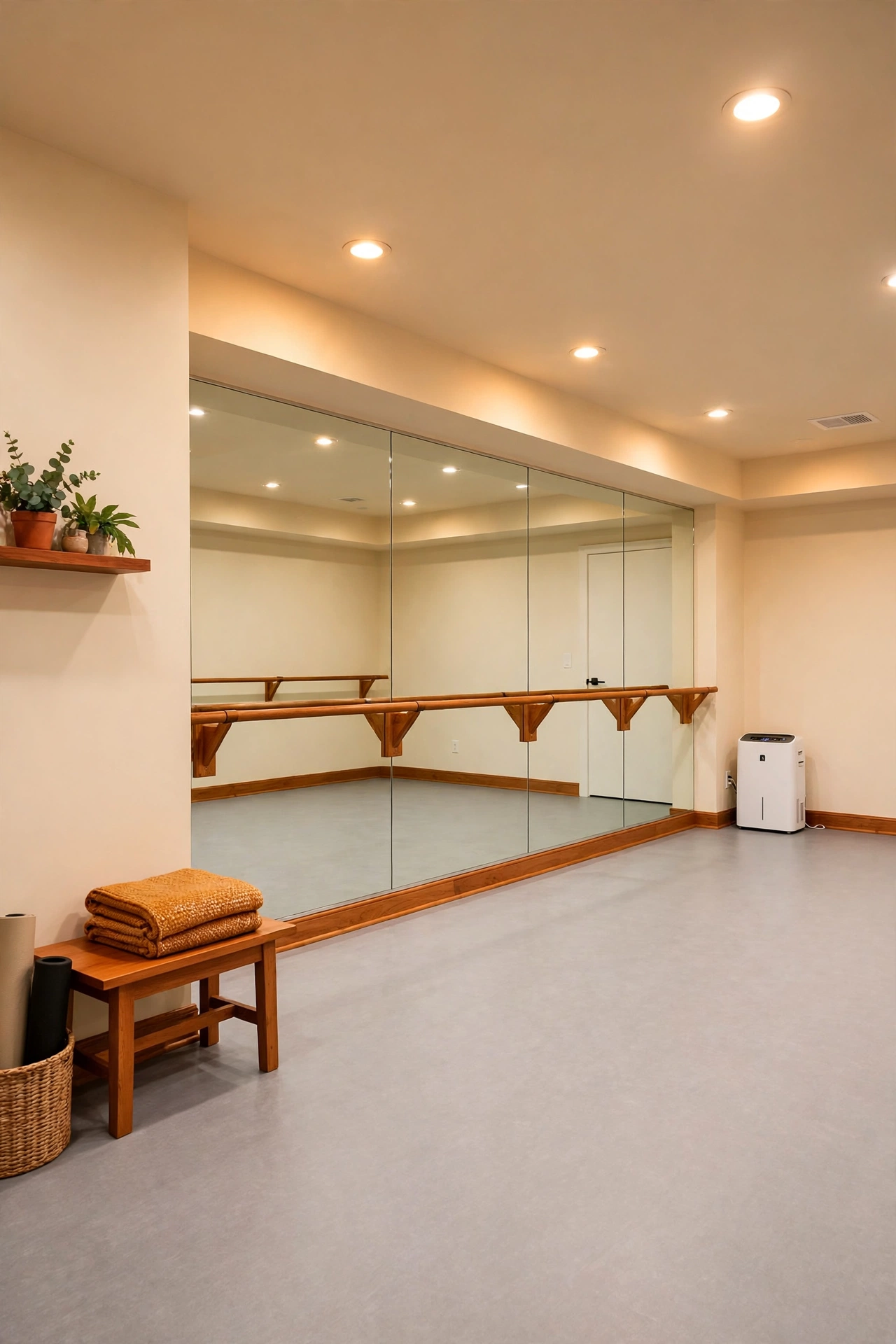
A basement gives you the largest open floor in many homes, which makes it ideal for traveling steps and big combinations. Roll out vinyl dance flooring over the concrete, tape the seams flat, and you have a smooth practice surface that is kind to your joints. The cool basement air also keeps you comfortable during long sessions.
Brighten the space with warm overhead lights and a mirror wall on the longest side. If your basement floor needs a refresh before you lay the vinyl, these cheap flooring makeover ideas offer budget friendly ways to prepare the surface. Add a dehumidifier to keep the air dry, and your basement studio will stay fresh all year.
12. Add a Storage Wall for Shoes, Costumes, and Props
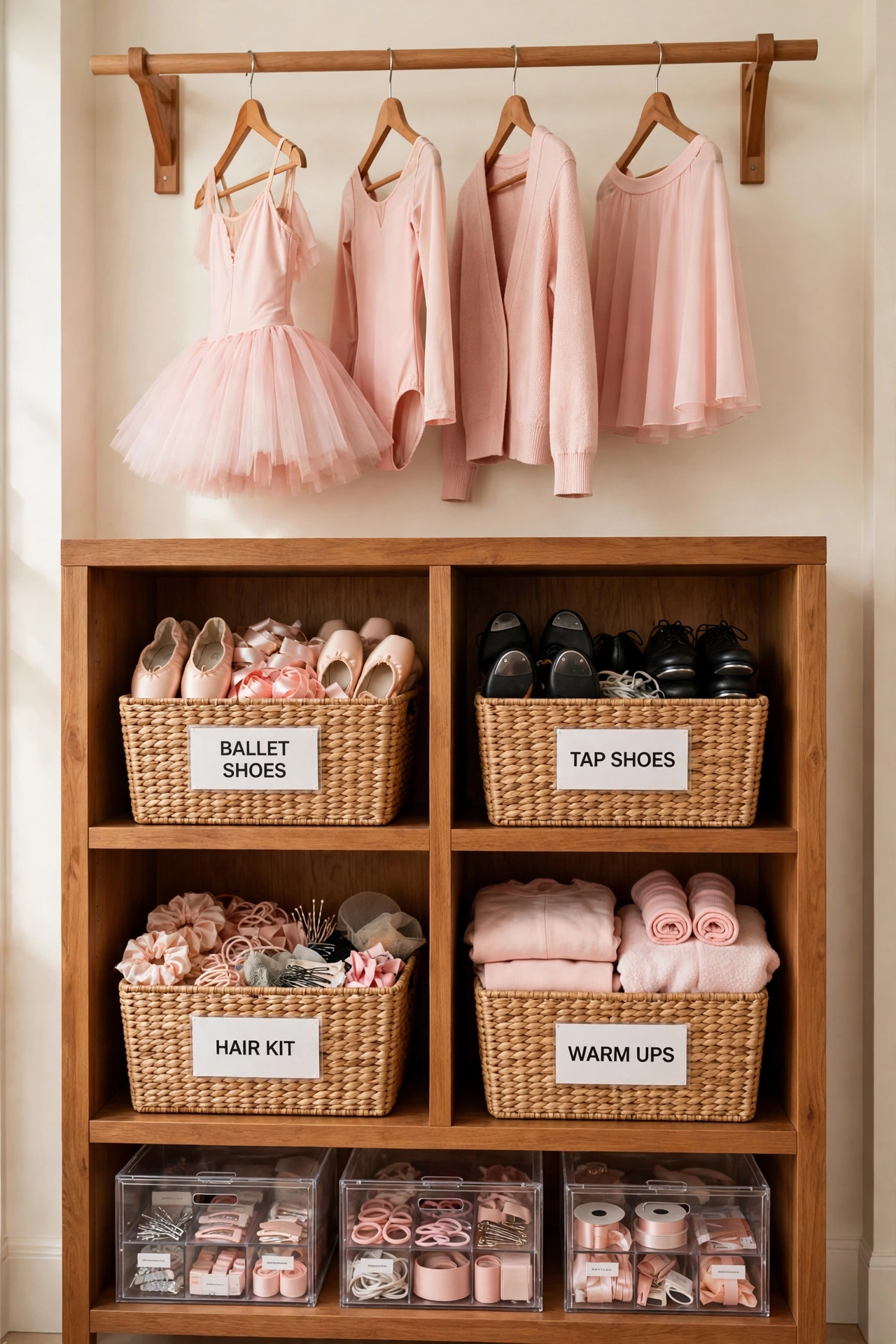
Every dancer gathers shoes, costumes, warm-up gear, and props, and a tidy storage wall keeps them all in their place. Use a tall bookcase or a set of cubbies along one wall, with labeled baskets for each type of shoe and clear boxes for small accessories. A hanging rail above the cubbies holds costumes without wrinkling them.
Label every basket with a readable printed label, so you can grab the right shoes in seconds before class. These small craft room layout ideas show smart ways to organize small supplies in cubbies and bins, and the same tricks work beautifully for dance gear. Keep the storage wall away from the practice floor so nothing spills into your dancing space.
13. Mount a Double Barre at Two Heights
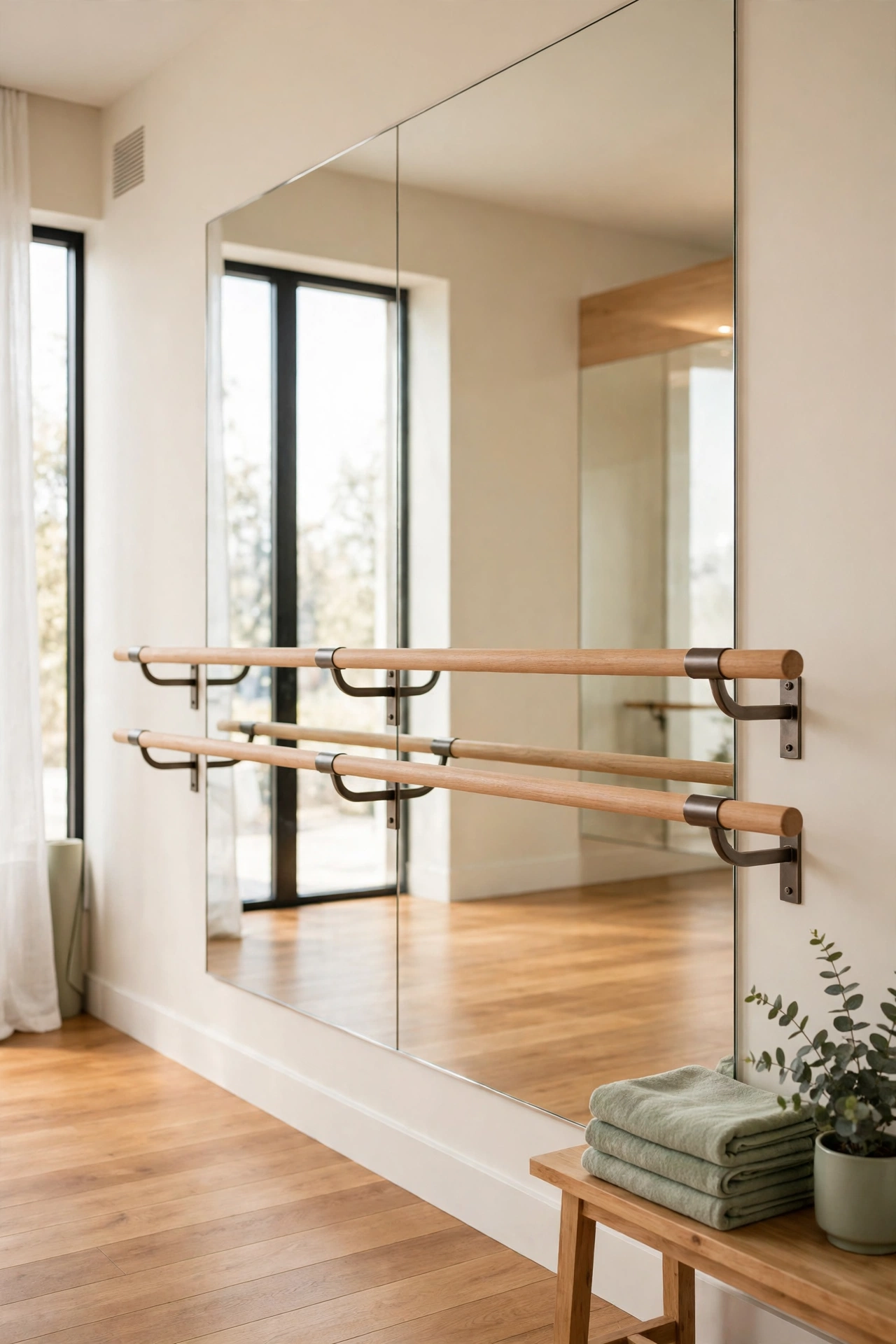
A double barre, with one rail at adult height and one lower rail for children, lets the whole family share one studio. The two rails mount on the same brackets, so they take up no more wall space than a single barre. Young dancers can practice safely at their own height while adults use the upper rail.
Space the rails about one foot apart, and choose smooth sanded wood that feels warm under your hands. A mirror behind the double barre serves both heights at once. This setup is a wonderful choice for a family studio, because it grows with your children and welcomes dancers of every size.
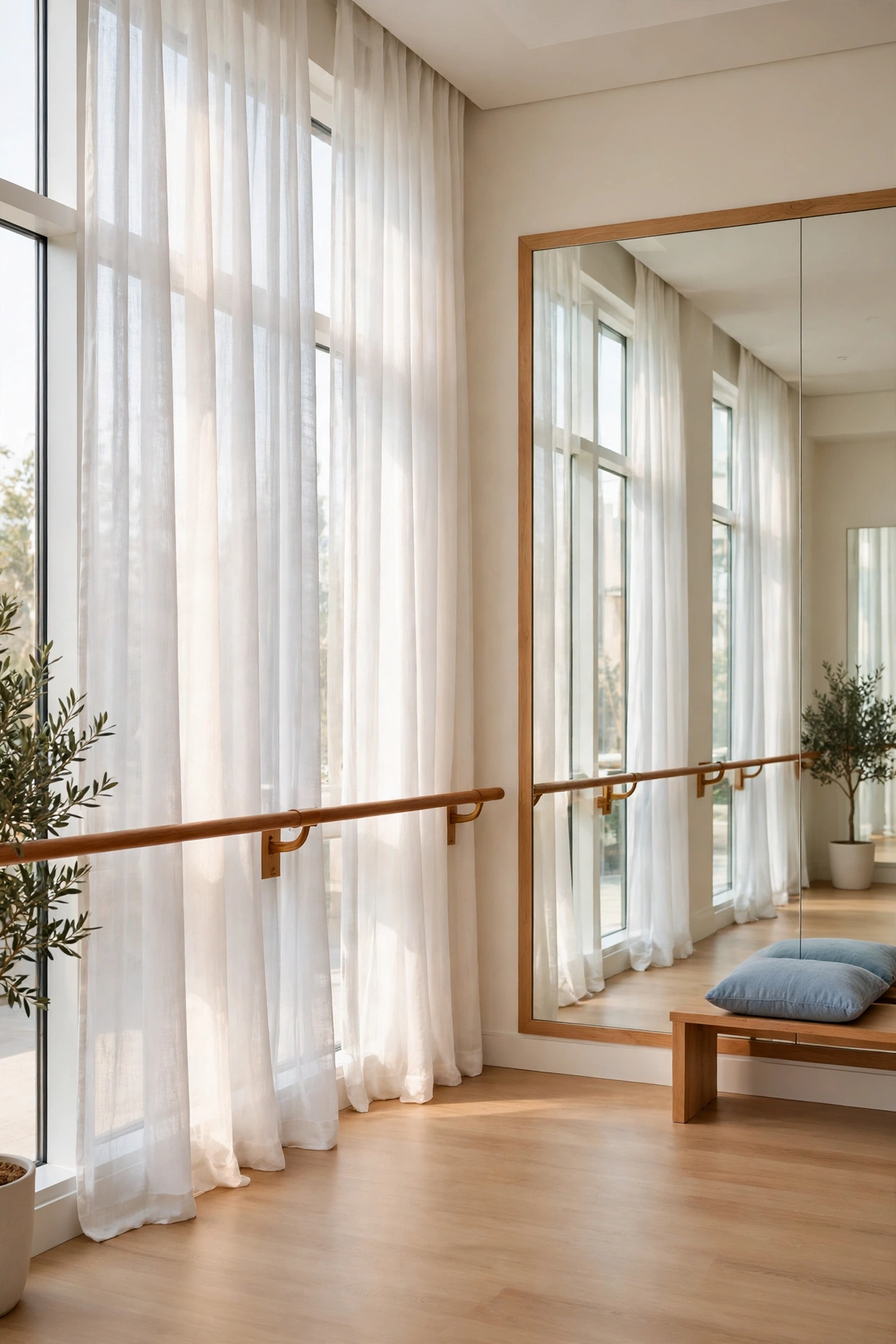
14. Face a Window Wall With Sheer Curtains
A wall of windows can be the backdrop for a beautiful studio if you soften the glass with sheer curtains. The curtains filter bright sunlight so you are not blinded during turns, and they give you privacy from neighbors without darkening the room. Place the barre along the window wall and face the mirror on the opposite side.
Choose floor length curtains in soft white or pale blush, and hang them from a simple rod that spans the whole wall. The gentle light through the sheers flatters every movement and makes the room feel airy. On warm days, open a window for fresh air, and your practice will feel as free as dancing outdoors.
15. Stand Freestanding Mirror Panels for a Renter Studio
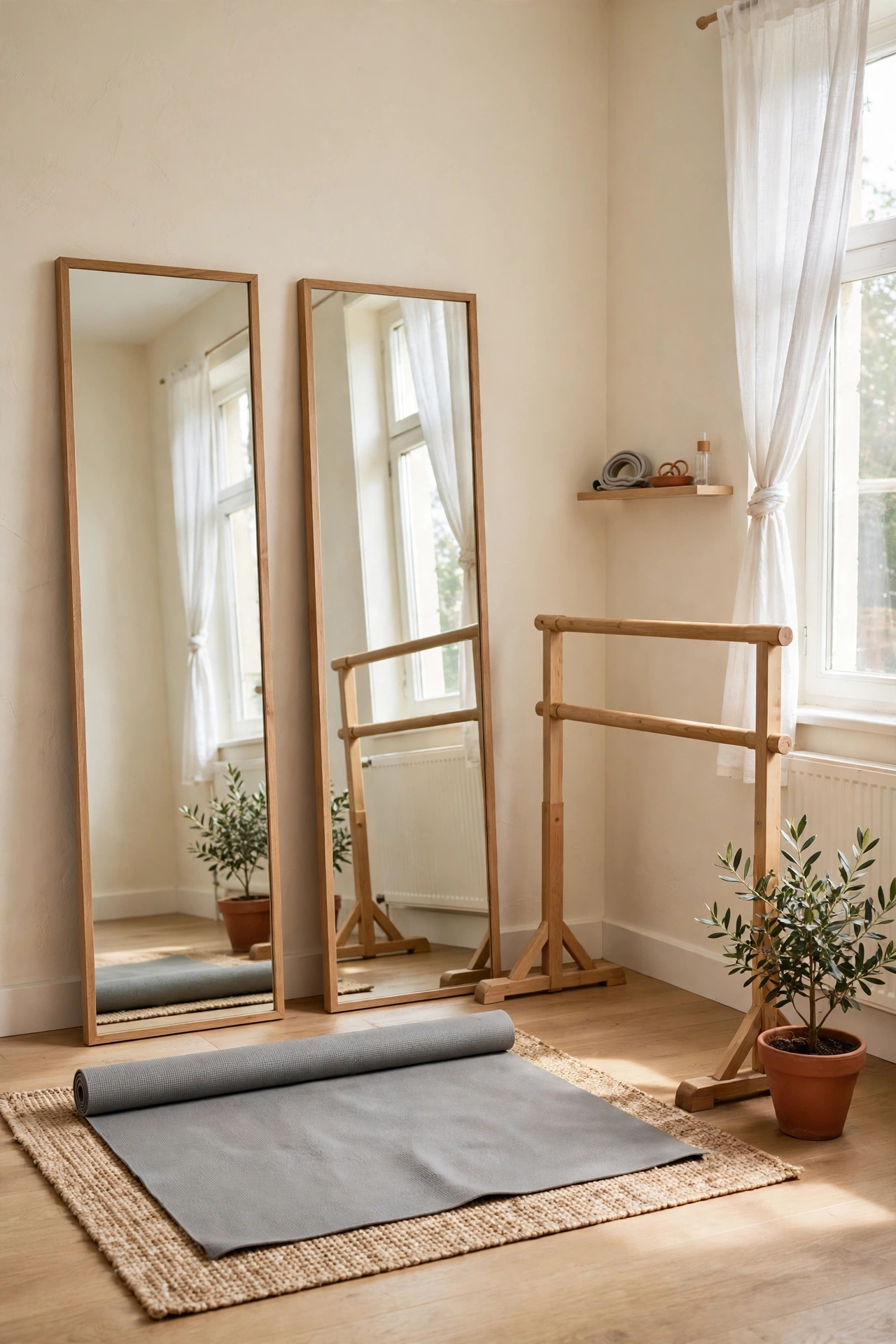
Renters can build a real studio without drilling a single hole. Freestanding mirror panels on sturdy bases lean safely against the wall, and a portable barre needs no brackets at all. Add a roll-out dance mat, and the whole studio can be packed up and moved to your next home.
Choose mirror panels with a slim wooden frame that matches your barre, so the setup looks intentional rather than temporary. A small rug under the mat will protect the rental floor and keep the mat from sliding. This layout is proof that a rented room can hold a serious practice space with zero damage to the walls.
16. Set Up a Sound Corner With Speakers and Shelves
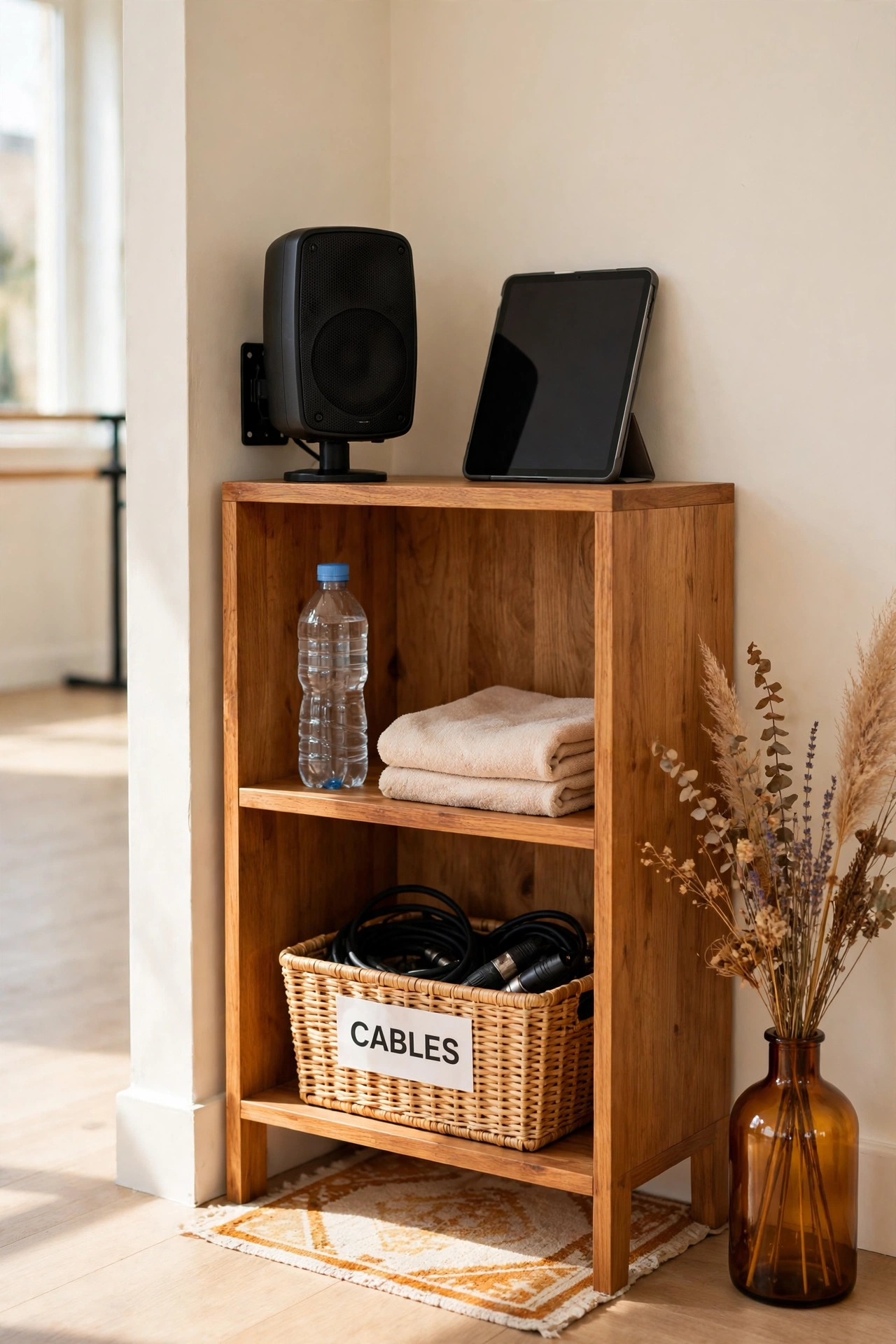
Music is the heartbeat of every practice session, so give your sound system a proper corner of its own. A small shelf unit holds a speaker, a tablet, and a charger, while a second shelf keeps your water bottle, towel, and practice notebook. Keep the sound corner near a power outlet and away from the mirror wall so cables never cross the floor.
Mount the speaker at ear height for the clearest sound, and add a small rug under the shelf unit to soften echoes. A labeled basket on the lowest shelf holds spare charging cables and headphones. With music ready at the touch of a button, you will practice more often and with more joy.
17. Run a Barre Along a Hallway for Narrow Homes
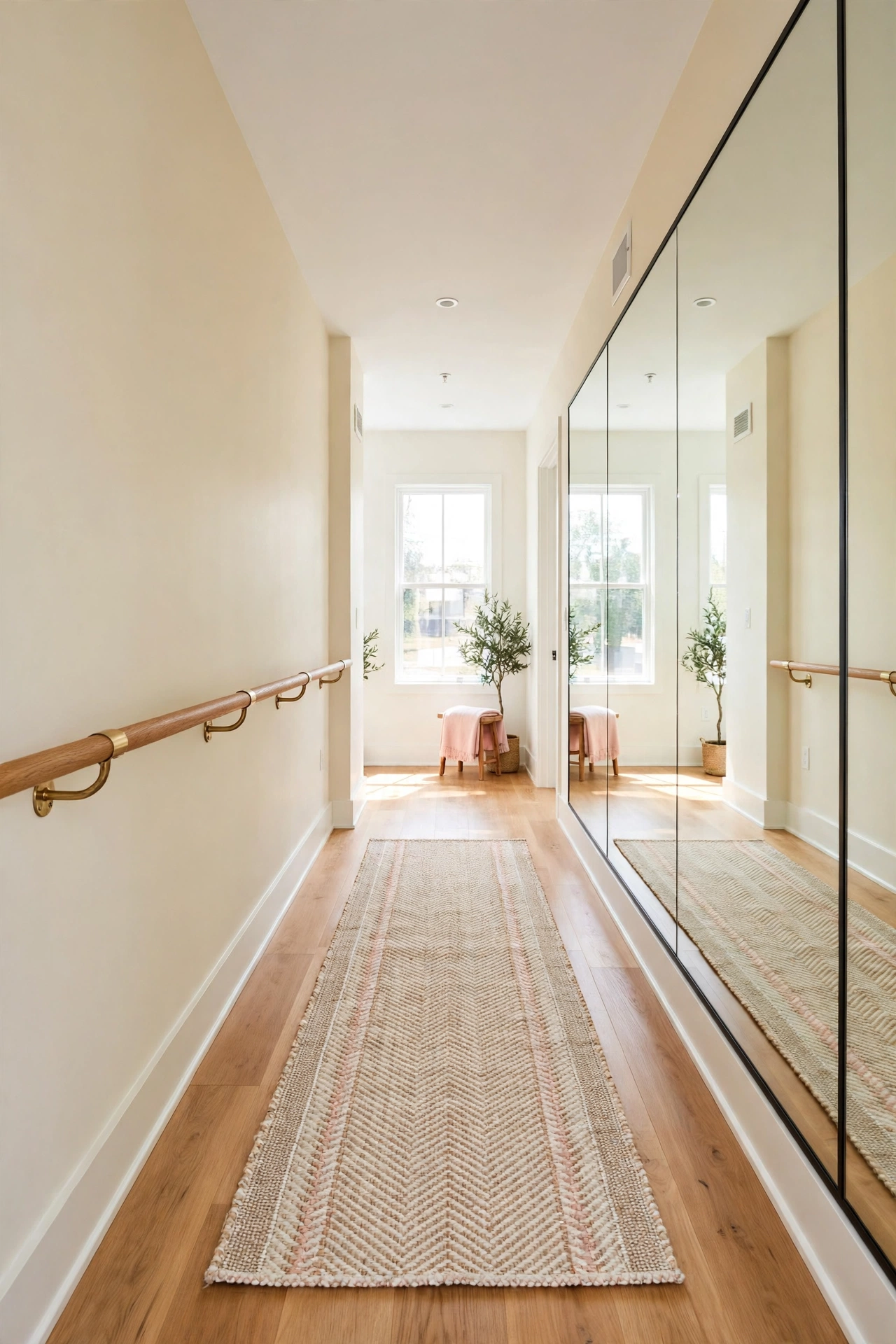
A wide hallway can become a surprising practice studio when you mount a barre along one wall. Hallways are often the longest straight stretch of floor in a small home, which makes them perfect for traveling steps and barre work. A row of mirror tiles or one long mirror panel on the opposite wall completes the studio.
Keep the hallway clear of shoes, bags, and furniture so the full length stays open for movement. A runner rug with a non-slip backing protects the floor and marks the practice lane. This clever layout turns a forgotten passage into a daily studio, and it costs very little to set up.
18. Create a Warm-Up Zone Beside the Barre
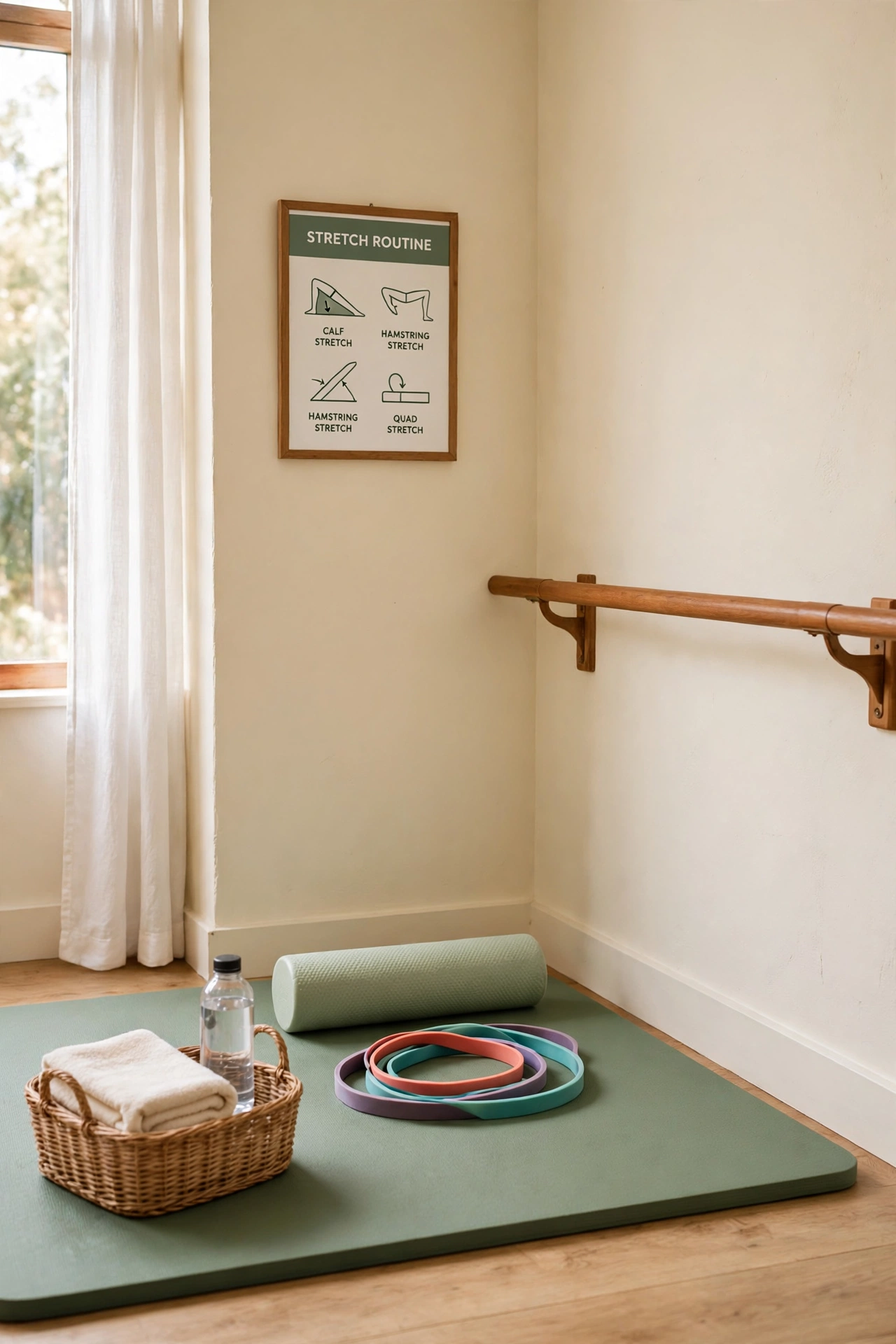
A dedicated warm-up zone next to the barre helps you start every session safely and end it well. Place a thick mat, a foam roller, and a set of resistance bands in a quiet corner, with a small basket for a towel and a water bottle. The zone gives you a clear spot to stretch, roll out sore muscles, and cool down after class.
Keep the warm-up zone on the same flooring as the rest of the studio so you can move between the mat and the barre without changing shoes. A small wall chart with your favorite stretches, printed in clear readable type, can guide your routine. This thoughtful corner turns a simple room into a complete studio that cares for your whole body.
Conclusion
A home dance studio does not need to be large to be wonderful. From a full mirror wall in a spare room to a portable barre in a living room corner, every layout in this list proves that a small space can hold a serious practice. The best studio is the one you will use every day, with a floor that protects you, a mirror that guides you, and a barre that supports you.
Pick the layout that fits your home and start with the basics: a clear floor, a mirror, and a barre. Add storage, sound, and a warm-up zone as your practice grows. Your studio is waiting, and your next session is only a few steps away.
Frequently Asked Questions About Small Dance Studio Layout Ideas for Home Practice
How much space do I need for a home dance studio?
A clear area of about eight feet by eight feet is enough for barre work and center practice in most styles. Traveling steps and leaps need more room, so a basement, garage, or long hallway works better for those. Even a small corner with a portable barre and a mirror can serve you well for daily practice.
What is the best flooring for a home dance studio?
A sprung wood floor with a marley vinyl top layer is the gold standard, because it absorbs impact and gives the right amount of grip. If you rent or need a temporary surface, a roll-out marley mat over a smooth floor is a strong budget choice. Avoid dancing on bare concrete, thick carpet, or slippery tile, since all three raise the risk of injury.
Can I build a dance studio in a rented home?
Yes, a renter friendly studio uses freestanding mirror panels, a portable barre, and a roll-out dance mat, with no drilling and no permanent changes. A rug under the mat protects the existing floor. When you move, the whole studio packs into a few boxes and sets up again in your new home.
Do I need a mirror wall to practice dance at home?
A mirror helps you check your alignment, lines, and posture, but you can start without one if space or budget is tight. A single leaning mirror or a rolling mirror gives you most of the benefit at a lower cost. Many dancers begin with a small mirror and add larger panels as their studio grows.
How do I keep a small dance studio tidy?
Give every item a labeled home, with baskets for shoes, a rail for costumes, and a shelf for music gear and water bottles. Clear the floor completely after each session so the room stays ready for your next practice. A five minute tidy at the end of every session keeps a small studio feeling calm and spacious.

Hi, I’m Emily! I turn messy corners into cozy, organized spots. DreamNestDecor is where I share simple, practical home ideas — decor, organization, and small-space solutions that work in real life, not just in photos. Every idea here is carefully researched before it’s shared.