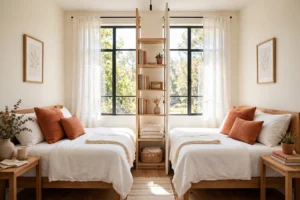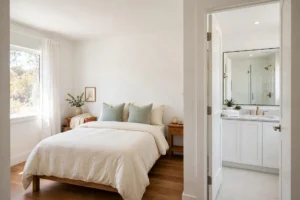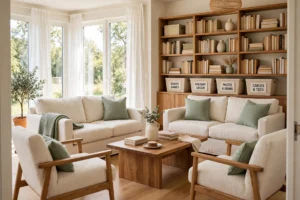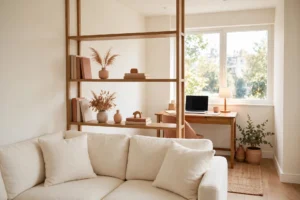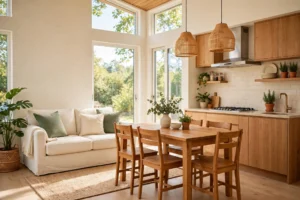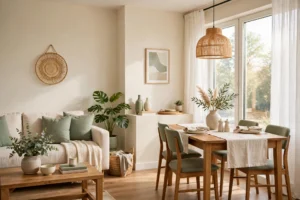
Picture this: you walk into a studio apartment where a neat desk sits by the window, a soft rug marks the living area, and a cozy bed waits behind a tall shelf. Every corner has a clear job, yet the whole room feels open and calm. That balance is exactly what a good studio layout gives you when one room must hold your whole life.
You do not need a bigger apartment or a large budget to get there. All you need is a smart plan for the desk, the bed, and the space in between. These 29 studio apartment layout ideas with a home office will help you turn one small room into a place where you can live, work, and rest without feeling crowded.
1. Place a Desk Against the Longest Wall
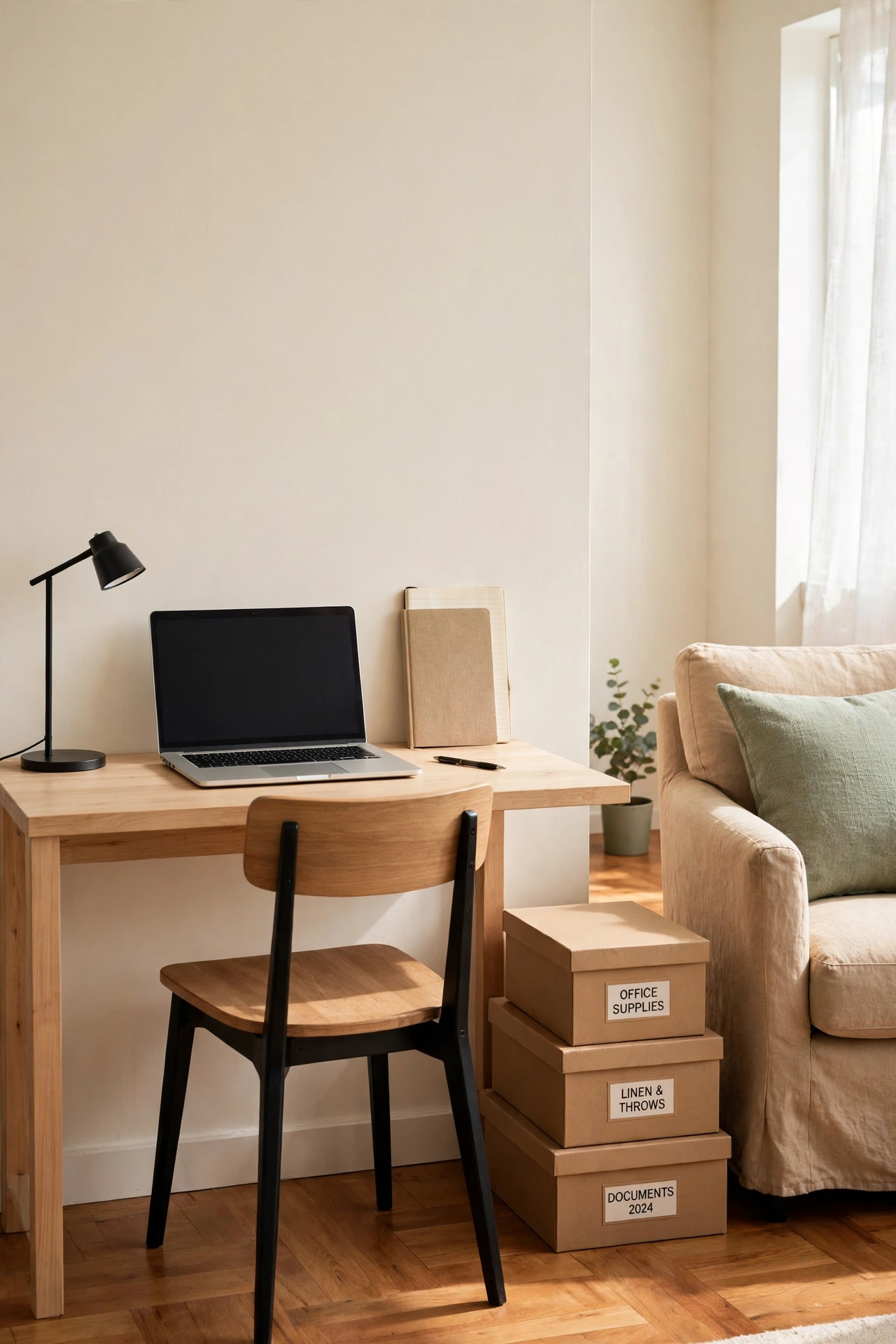
The longest wall in a studio is often the best home for a desk. A desk along that wall gives you a wide work surface without blocking the walkway through the room. You can sit with your back to the room or face into it, depending on how you like to work.
Keep the wall above the desk free for a shelf or a small pinboard so papers and tools stay off the desktop. A chair that slides fully under the desk keeps the floor clear when the workday ends. This simple placement is the easiest way to give work a fixed address in a small home.
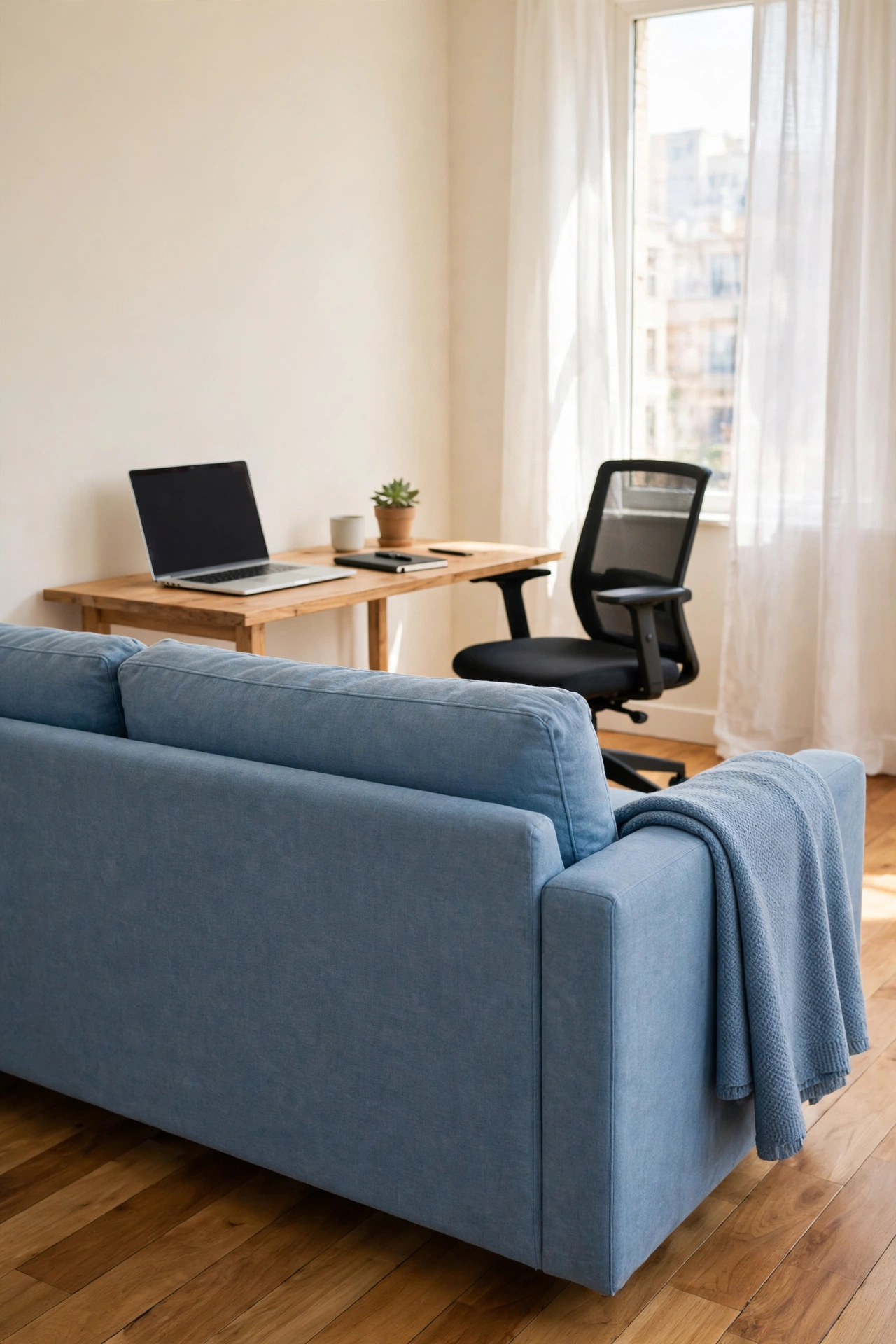
2. Float a Desk Behind the Sofa
A desk placed behind the sofa creates a natural border between the living area and the work area. The back of the sofa hides the desk from the rest of the room, so the space still feels like a living room when you sit down to relax. You can work with your back to the sofa and face the wall or the window.
Choose a desk that is the same height as the sofa back or a little lower so the line stays clean. A slim desk fits this spot best because it leaves room to walk past on both sides. This layout works well in studios where the sofa sits in the middle of the room.
3. Use a Room Divider Shelf as a Work Wall
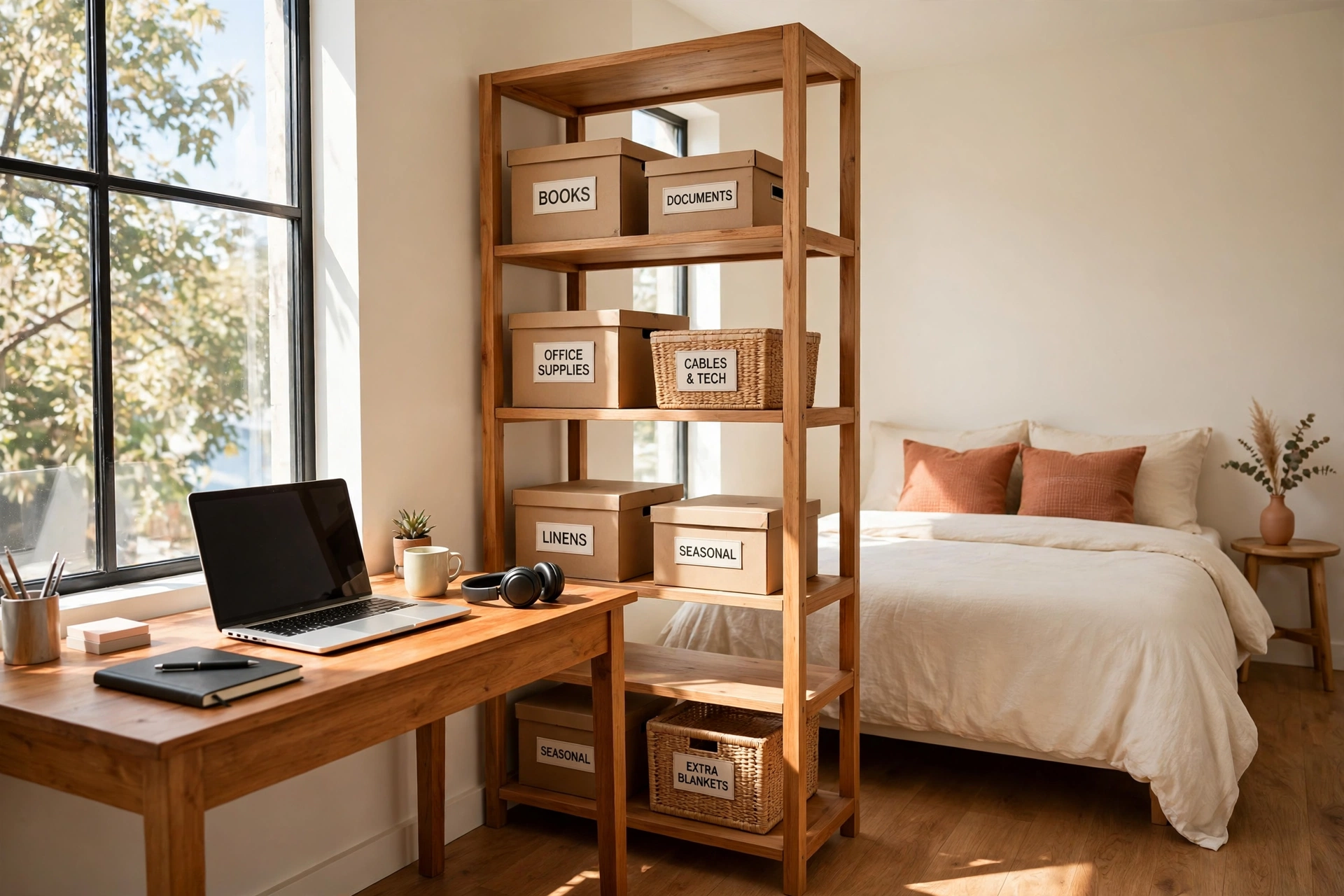
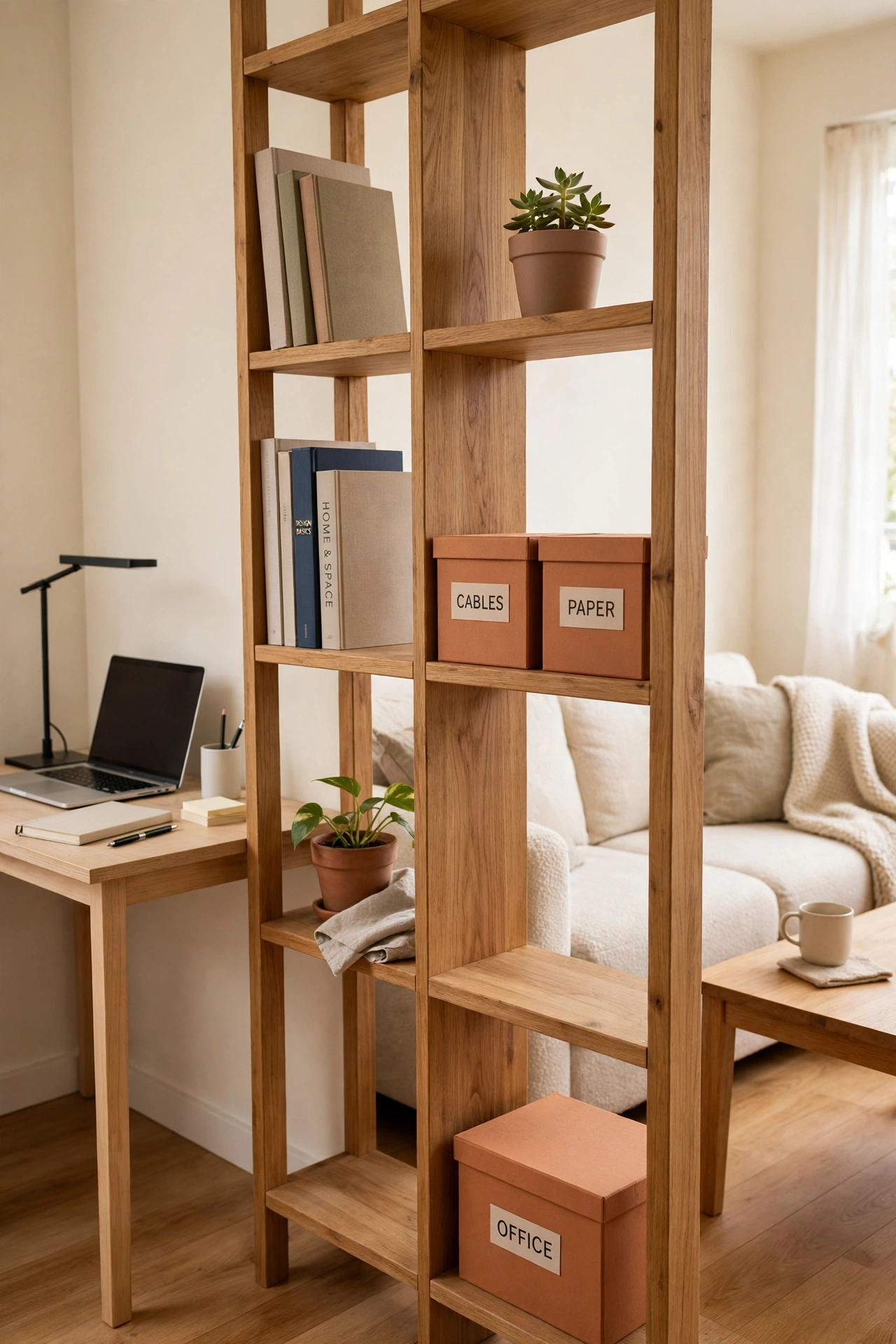
An open shelf unit makes a gentle wall between the desk and the rest of the studio. The shelves hold books, plants, and office supplies on the work side, while the living side sees a tidy display. Light still passes through the open shelves, so the room never feels closed in.
Place the shelf at a right angle to the desk so it forms a small corner office. Keep the top shelf low enough that you can see over it when you stand. This divider gives you privacy for video calls without building a real wall.
4. Tuck a Desk into a Window Nook
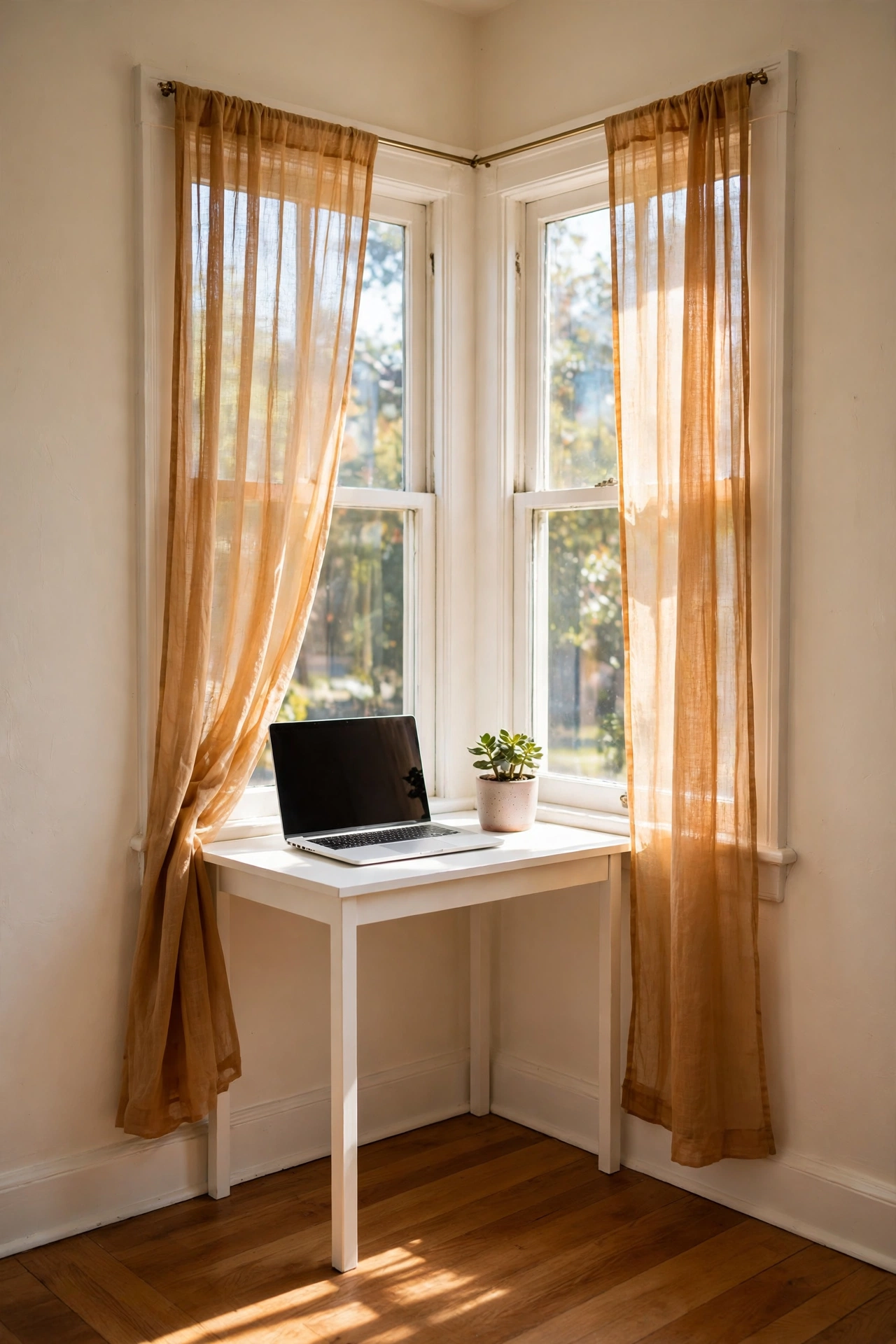
A window nook is a gift in a studio apartment, and a small desk fits it perfectly. Natural light falls on your work all day, and a view outside makes long work hours feel easier. A desk in the nook also stays out of the main walkway, so the rest of the room stays open.
Measure the nook before you buy a desk so the fit is snug without blocking the window. Add a sheer curtain if the sun gets strong in the afternoon. For more ideas on fitting work into a small home, see these small home office layout ideas. A window desk turns a dead corner into the best seat in the house.
5. Choose a Wall Mounted Fold Down Desk
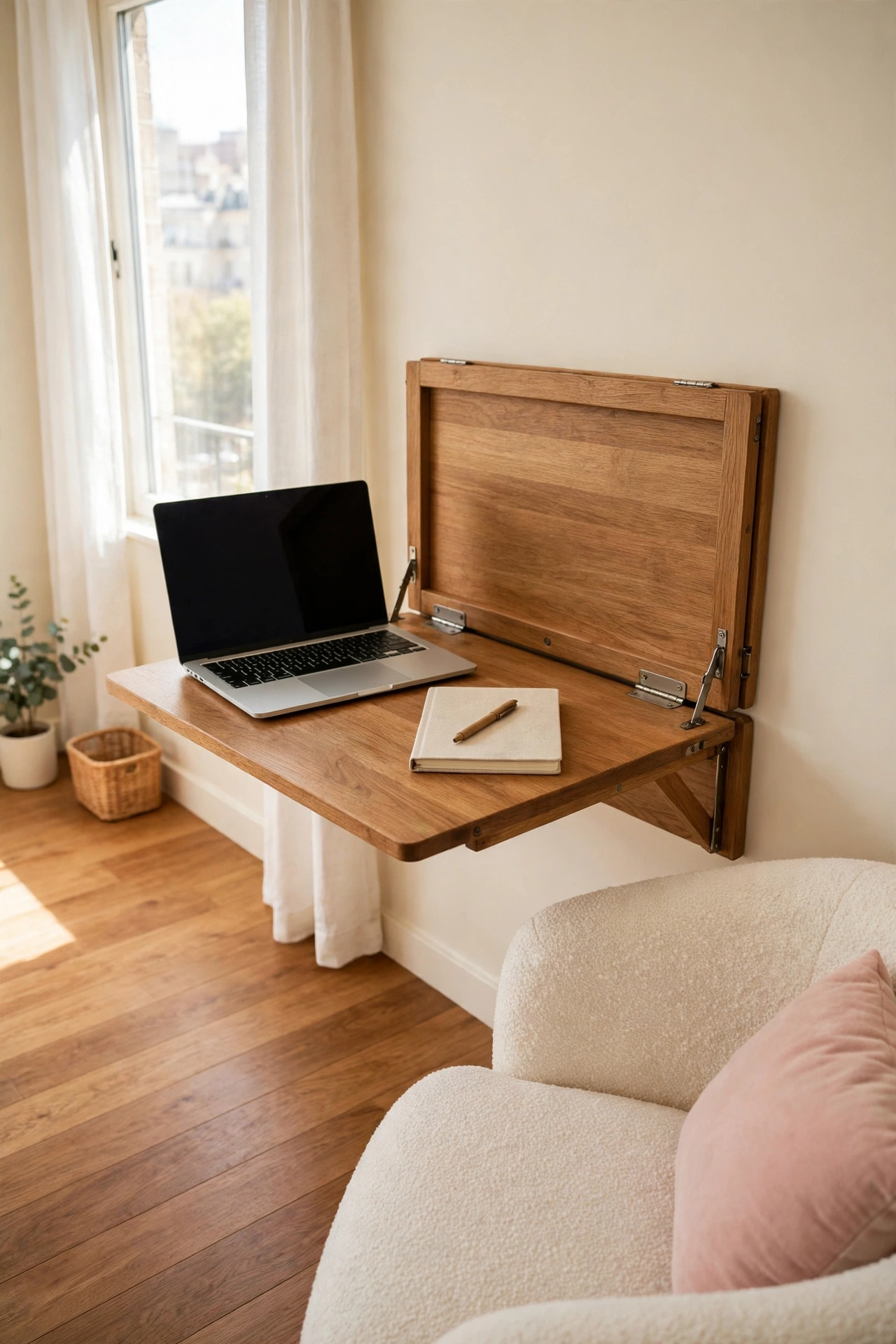
A fold down desk mounts on the wall and folds flat when you are done working. During the day it gives you a full work surface, and in the evening it disappears so the room feels like a living room again. This is one of the best choices for very small studios.
Mount the desk at a comfortable height and add a small shelf above it for a lamp and a notebook. When the desk folds up, the wall looks clean and the floor stays clear. A fold down desk is proof that a home office does not need a permanent footprint.
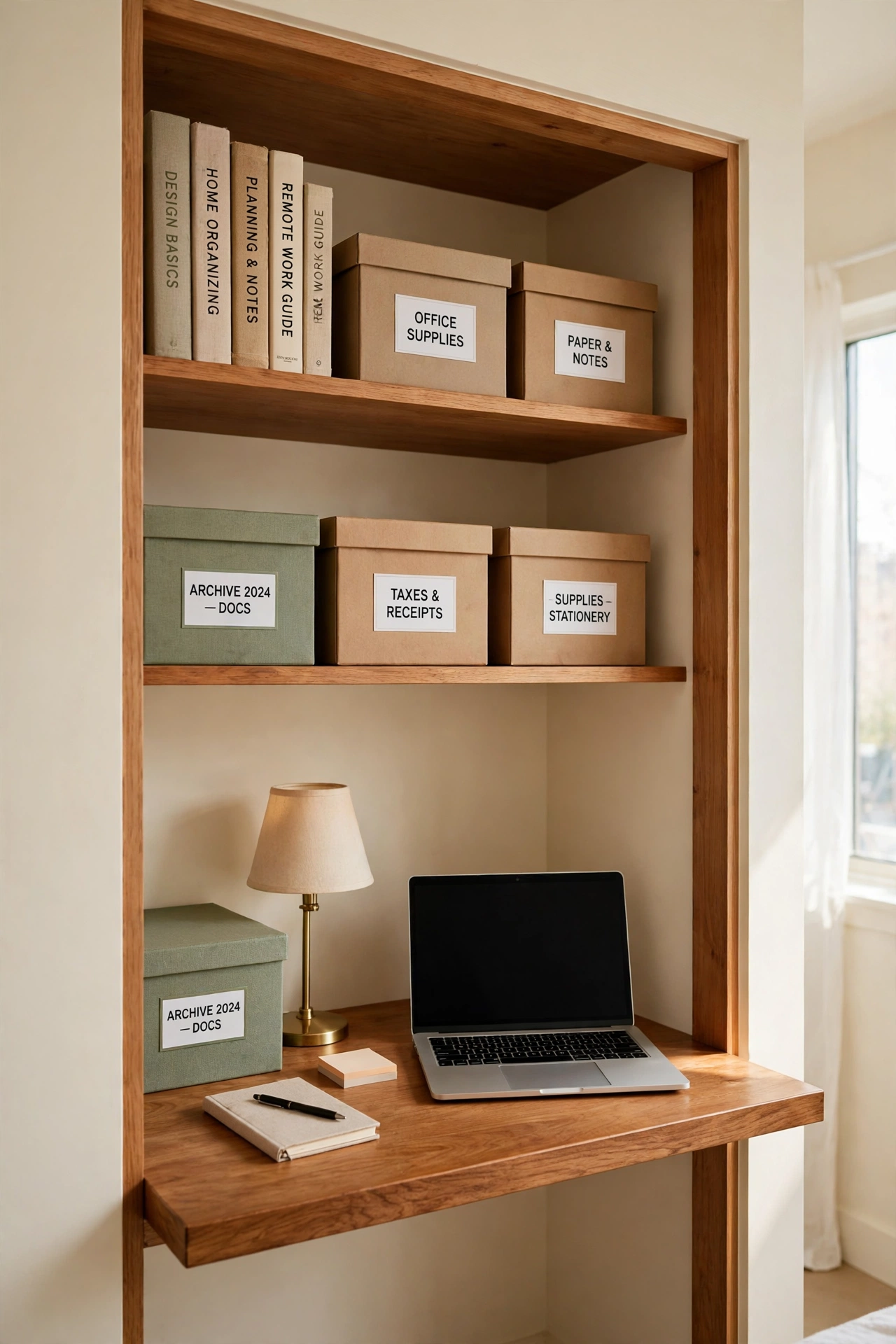
6. Turn a Closet into a Mini Office
An unused closet can become a small office with a desk board and a few shelves. Remove the closet door, add a work surface at desk height, and mount shelves above it for supplies. When you close the workday, you can pull a curtain across the opening and hide the office completely.
Good lighting matters here, so add a small lamp or a stick-on light under the top shelf. Keep the closet office for a laptop, a notebook, and a few essentials so it never overflows. This hidden office is perfect for studios where every visible surface counts.
7. Place the Bed in a Raised Loft
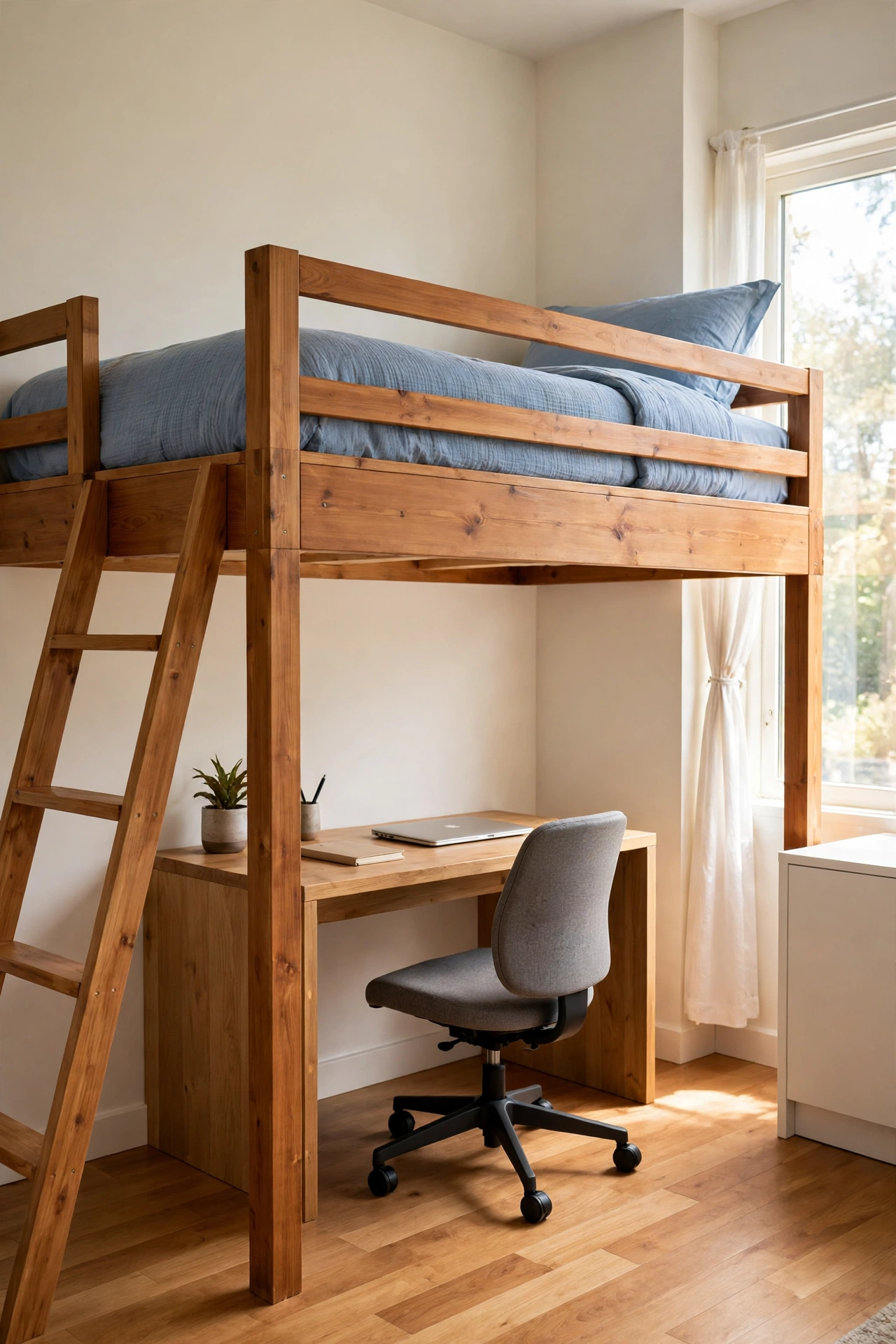
A raised loft bed lifts the sleeping area up and frees the floor below for a desk. The space under the loft becomes a full office zone with room for a desk, a chair, and storage. The bed stays out of sight during work hours, which helps your mind switch between rest and work.
Make sure the loft is sturdy and the ladder is easy to climb every night. Add a small shelf by the bed for a book and a glass of water. A loft bed is a bold change, but it doubles the usable floor in a studio.
8. Use a Curtain to Hide the Sleeping Area
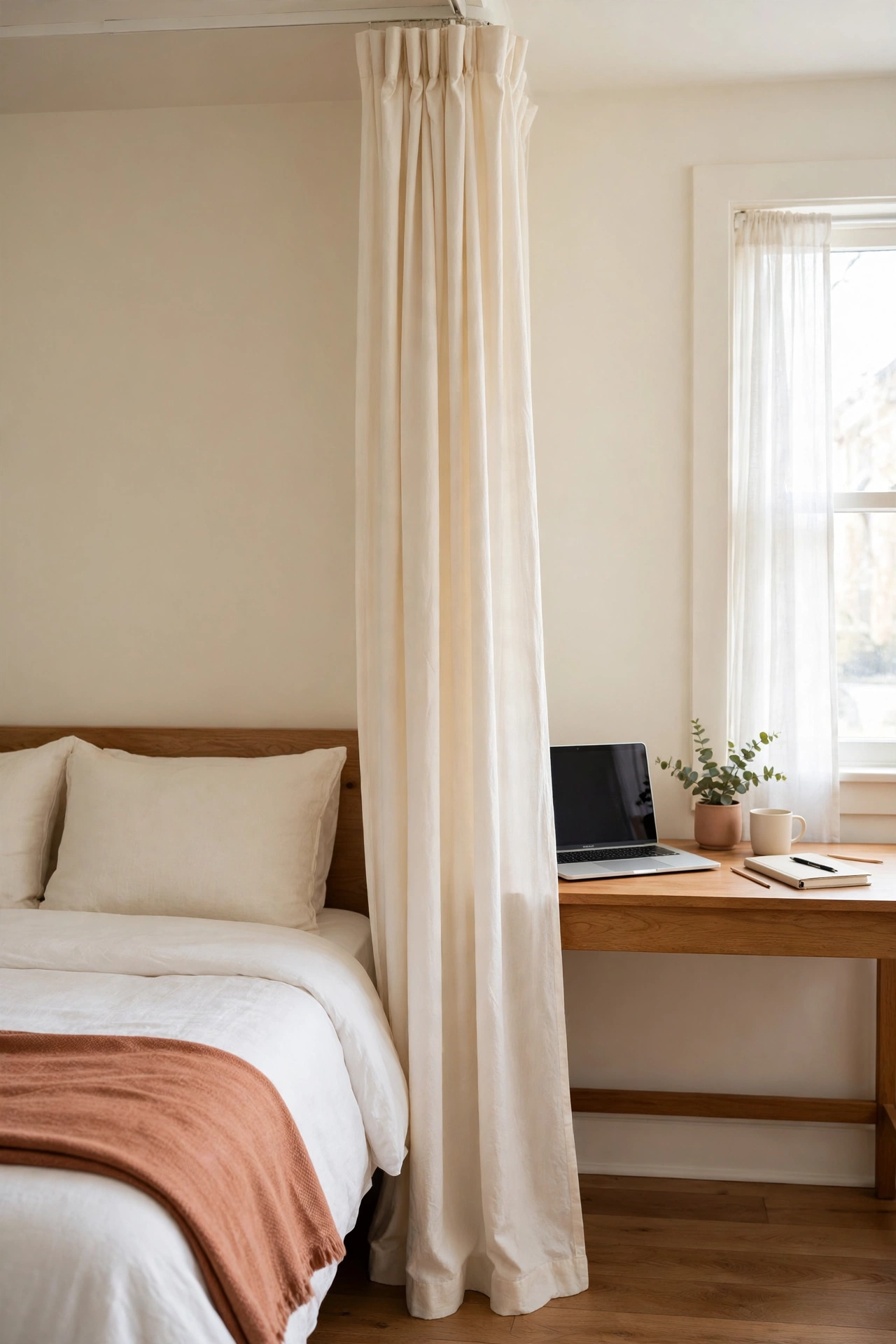
A ceiling curtain is a soft and cheap way to separate the bed from the desk. Pull the curtain closed at night for privacy, and open it during the day so the room feels wide and bright. The curtain also softens the look of the room and adds a touch of color.
Hang the curtain from a ceiling track so it slides smoothly and stays straight. Choose a fabric in a calm tone that matches the bedding. This simple divider is ideal for renters because it needs no drilling into walls.
9. Zone the Room with a Large Rug
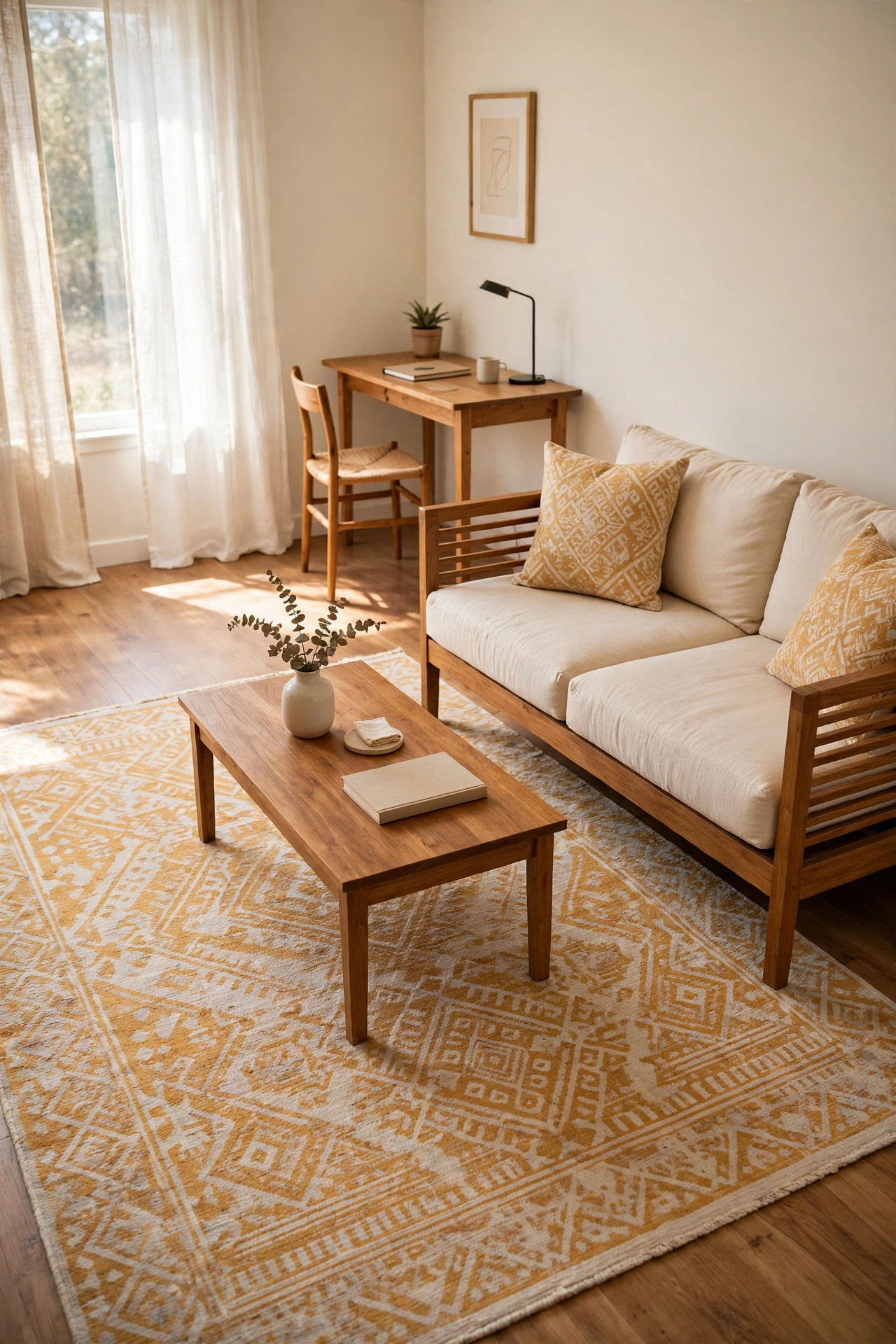
A large rug marks the living zone and tells your eyes where one area ends and another begins. Place the rug under the sofa and coffee table, and leave the desk area on bare floor. The change underfoot makes the room feel organized even without walls.
Choose a rug in a calm pattern that ties the sofa, the chair, and the cushions together. Keep the rug large enough that the front legs of the sofa sit on it. In a small loft apartment, the same trick separates the lounge from the work corner without any furniture in the way.
10. Put the Desk Facing the Window for Daylight
A desk facing the window puts daylight on your work and gives your eyes a restful view. You can glance outside between tasks, which helps you stay fresh through a long workday. The window light also means you need less lamp light during the day.
Keep the desk a short distance from the glass so you can open the window for fresh air. A plant on the windowsill adds life to the work zone. Facing the window is a small choice that changes how the whole workday feels.
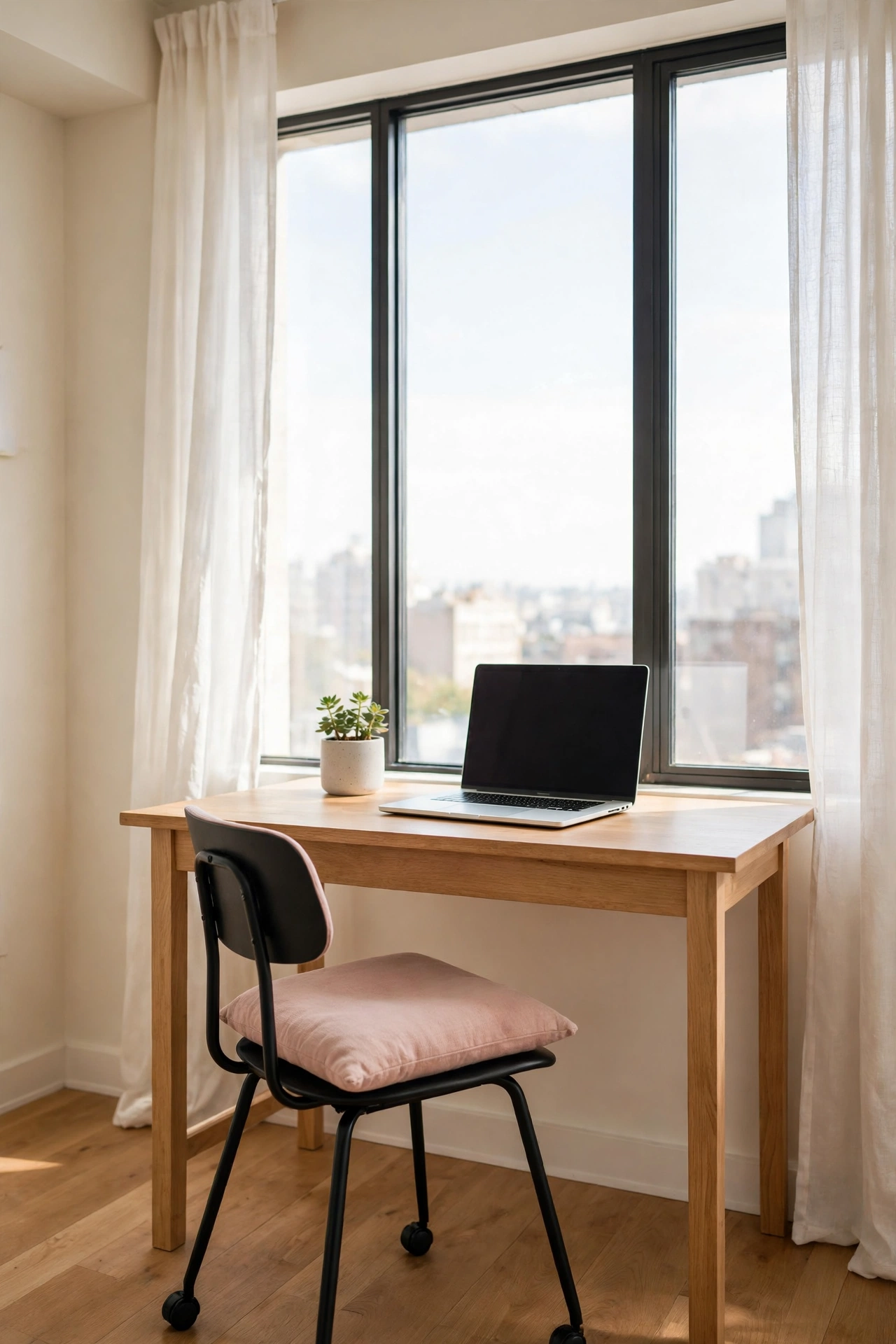
11. Pick a Compact L Shaped Desk for a Corner
A compact L shaped desk fits into a corner and gives you two work surfaces in the space of one. One side holds the laptop and the other holds papers, a notebook, or a second screen. The corner placement keeps the desk out of the main walkway.
Choose a desk with clean lines and a light color so the corner does not feel heavy. A small rolling chair tucks into the corner when you finish work. An L shaped desk is a smart way to get a large workspace from a small piece of furniture.
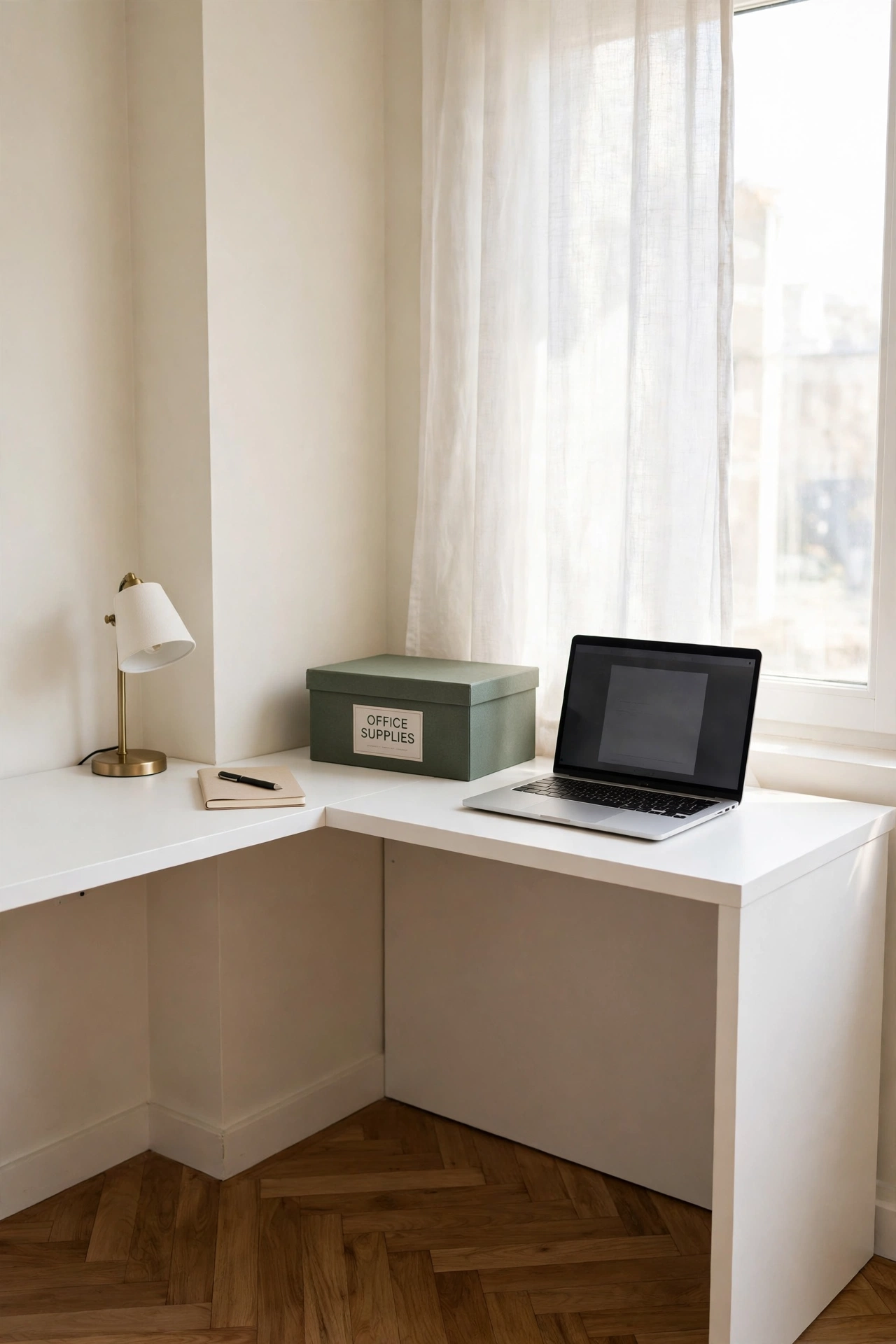
12. Use a Rolling Desk Cart for Flexible Work
A rolling desk cart lets you work anywhere in the studio and roll it away when you are done. The cart holds a laptop, a notebook, and a cup of tea, and it moves from the window to the sofa to the balcony door. Flexibility matters in a small home where one spot rarely fits every mood.
Pick a cart with lockable wheels so it stays still while you type. Keep the top tidy with a small tray for pens and cables. A rolling cart is the lightest way to add a desk without committing to a fixed layout.
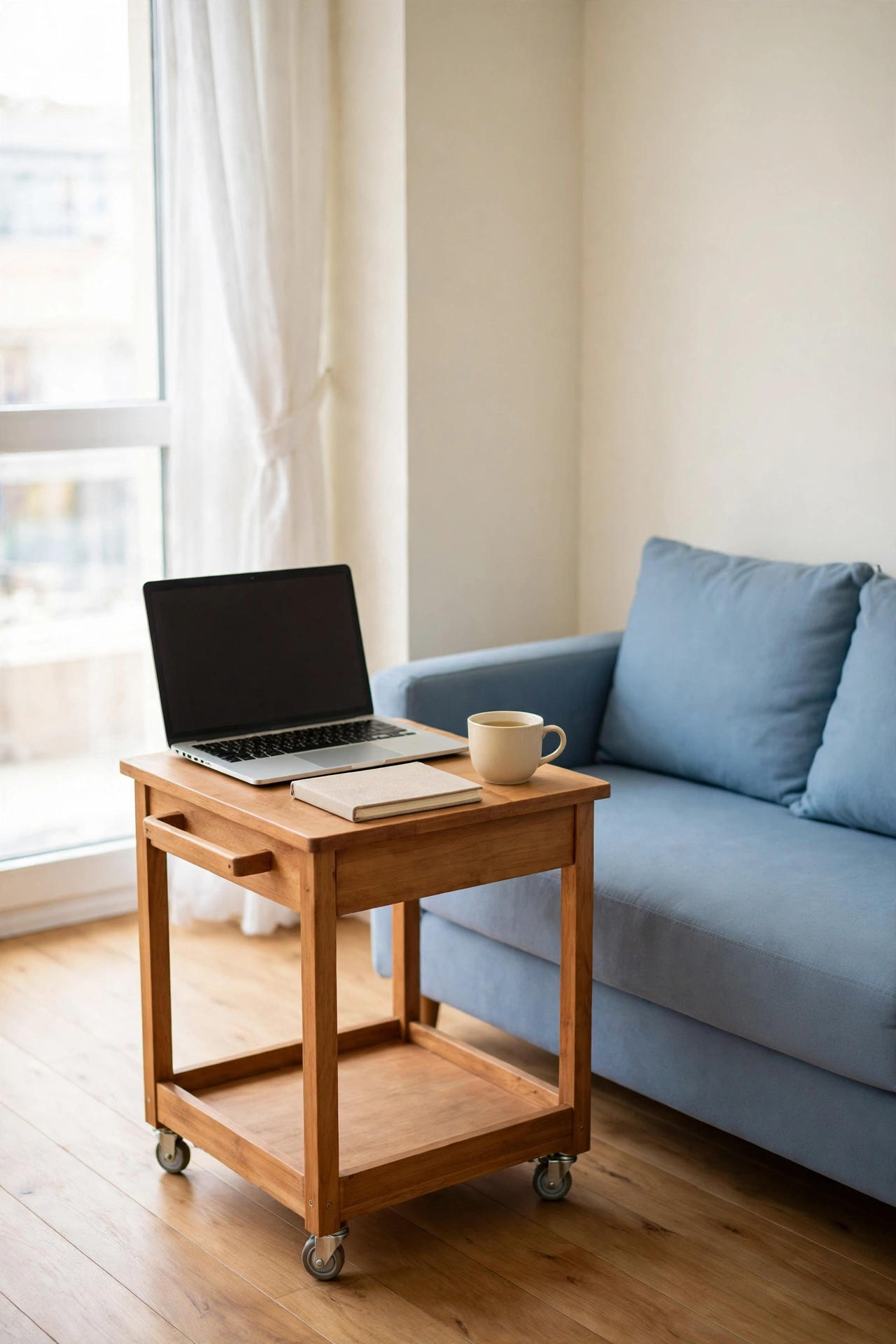
13. Store Office Supplies in a Slim Cabinet
A slim cabinet keeps papers, chargers, and office supplies out of sight in a narrow gap. Place it beside the desk or against a wall where a normal cabinet would never fit. Closed doors keep the supplies hidden, so the room looks calm even when the work is busy.
Label the inside shelves so you can find a cable or a notebook in seconds. Choose a cabinet in the same wood tone as the desk for a matched look. Slim storage is the secret to a tidy studio office.
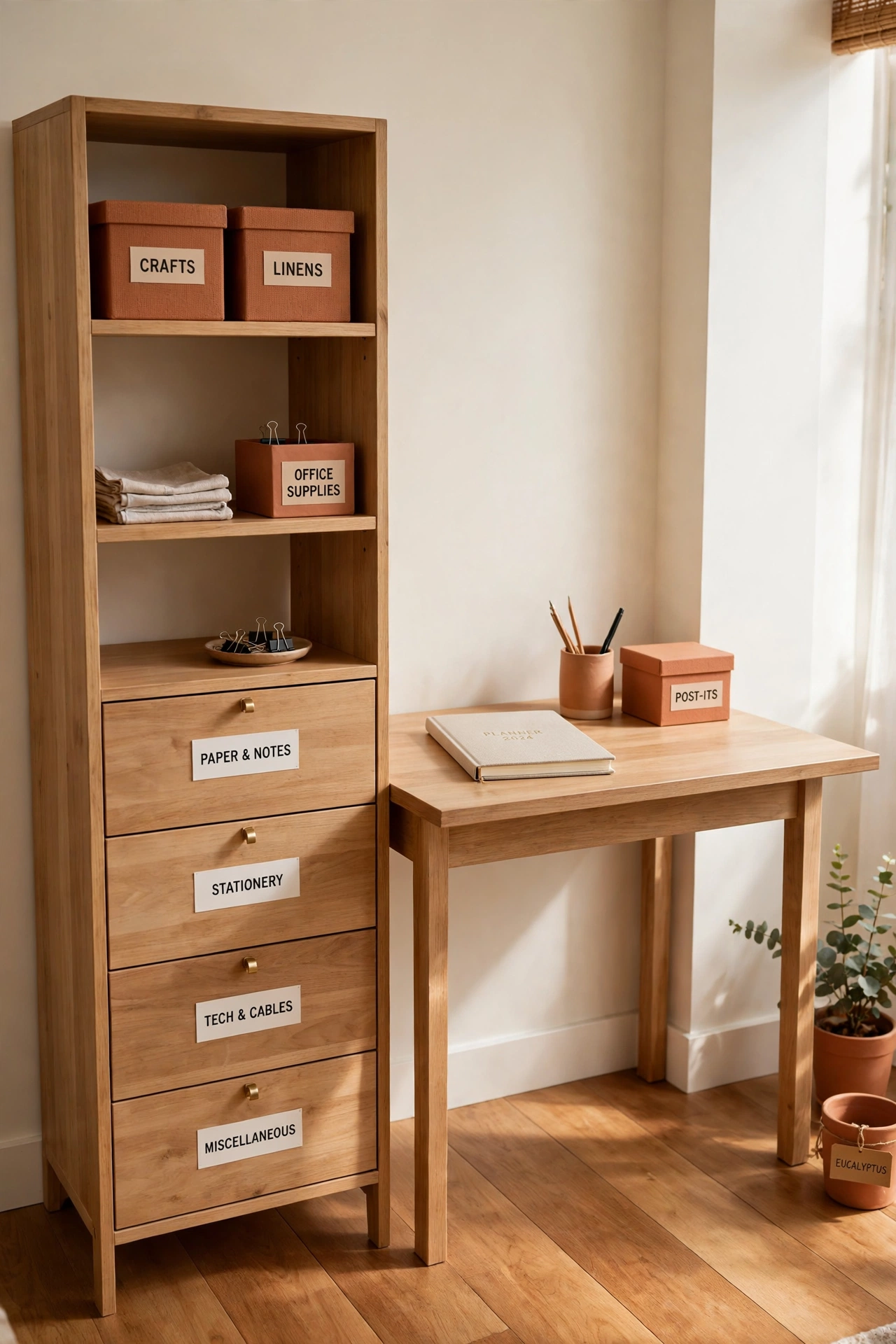
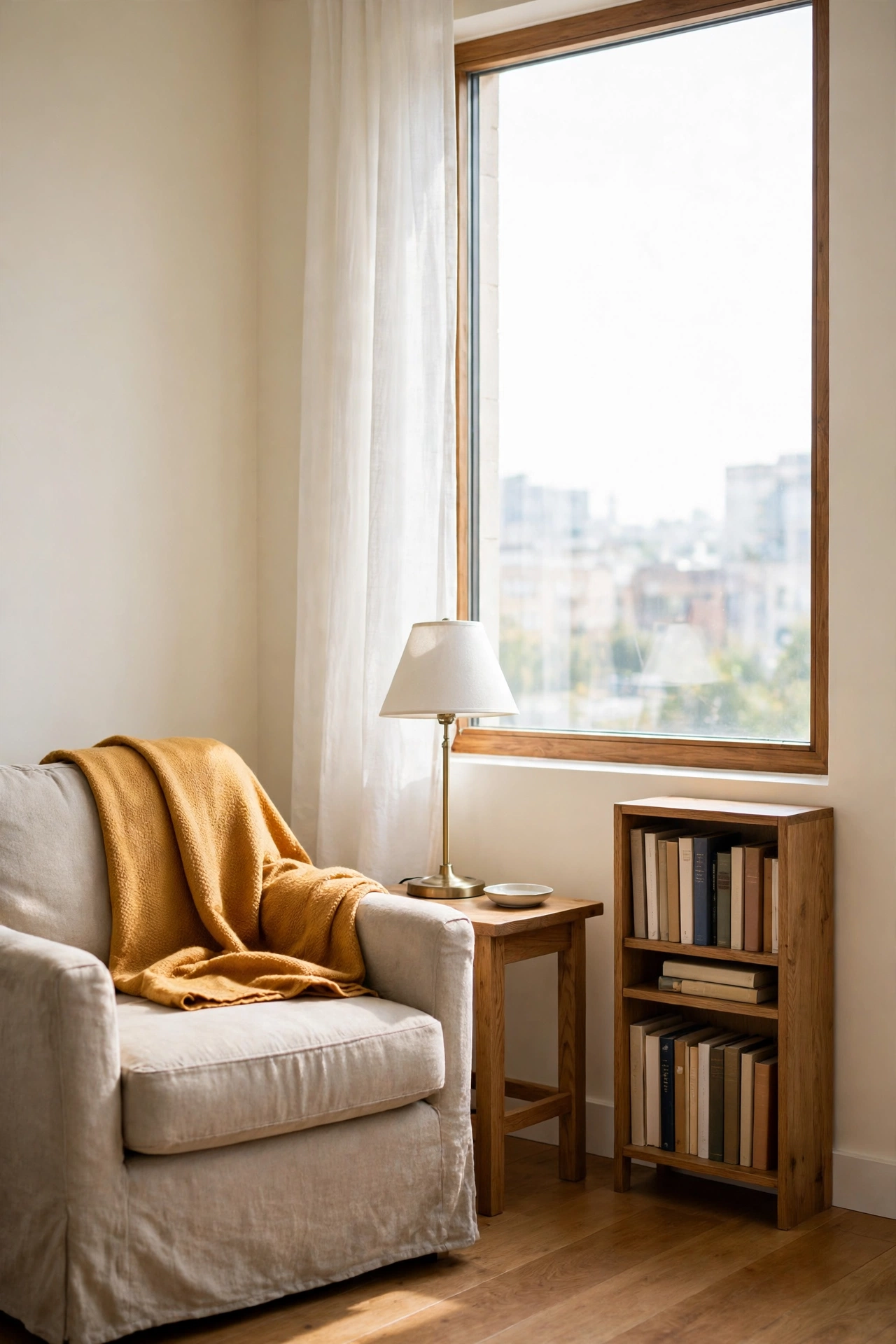
14. Create a Reading Corner That Doubles as a Break Zone
A small reading corner gives you a place to rest your eyes away from the screen. One comfortable chair, a small lamp, and a shelf of books turn a quiet corner into a break zone. Short breaks in this corner help you return to the desk with fresh focus.
Place the chair near the window if you can, so the light is good for reading. Keep a soft throw on the chair for cool evenings. For more ideas on carving out small rest spots, see these small reading nook layout ideas. A break corner makes the studio feel like a home, not just an office.
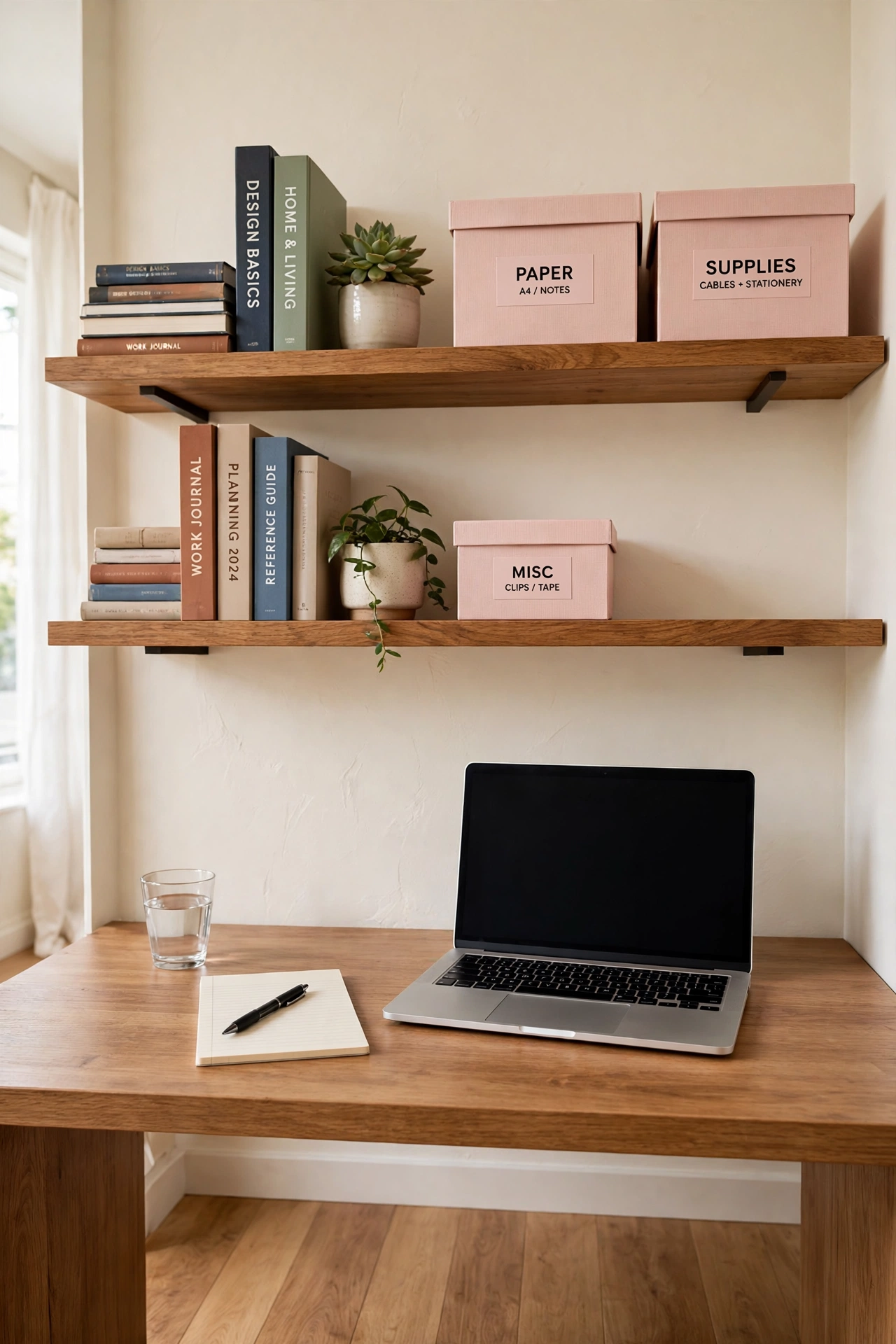
15. Hang Shelves Above the Desk to Save Floor Space
Shelves above the desk use wall space that would otherwise sit empty. They hold books, files, and small plants within easy reach while the floor stays clear. Two or three shelves are enough for most home offices.
Mount the lowest shelf high enough that it does not bump your head when you sit down. Keep the shelves neat with matching boxes or baskets. Wall shelves are the easiest way to add storage without buying more furniture.
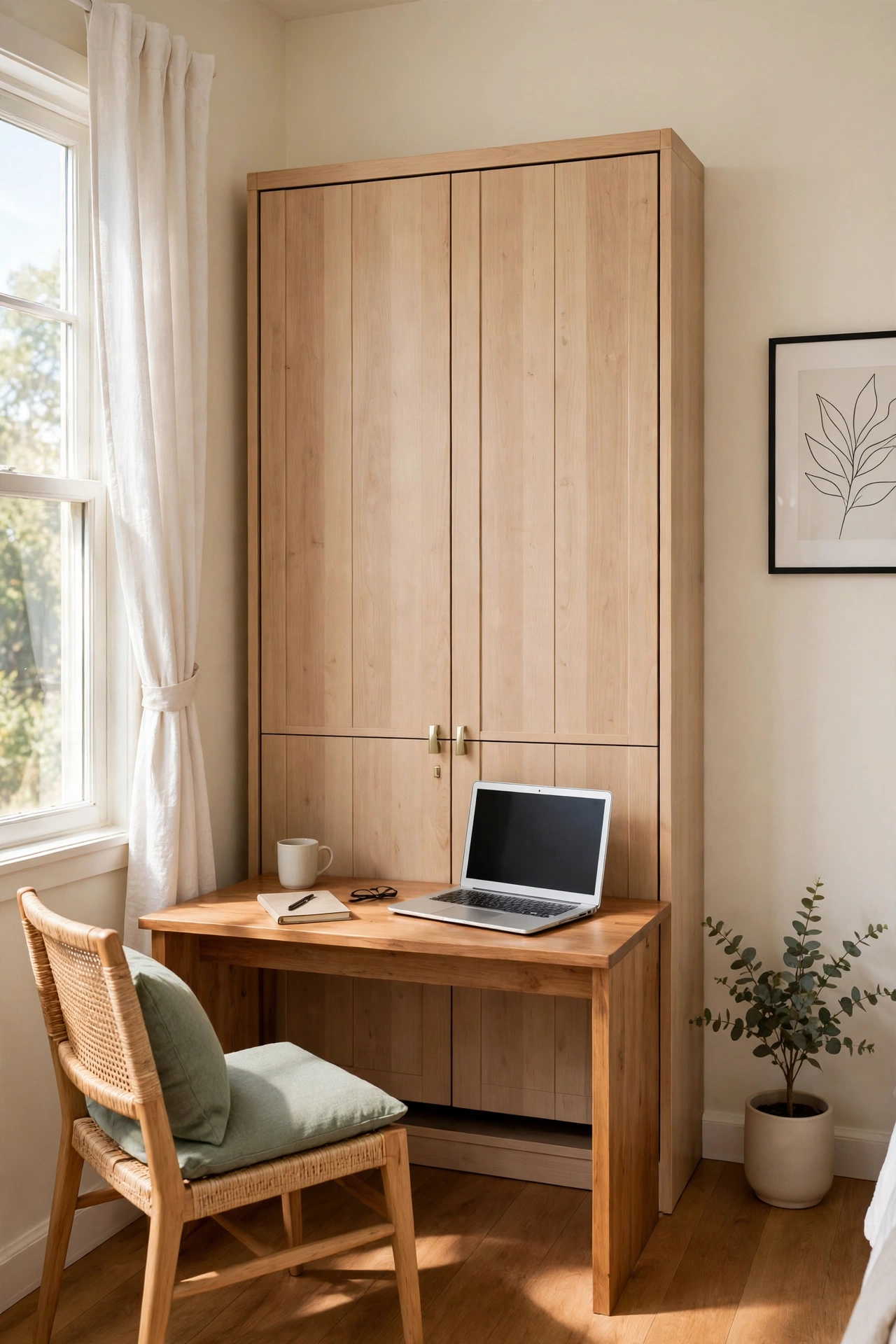
16. Use a Murphy Bed to Free the Daytime Floor
A Murphy bed folds up into the wall during the day and leaves the whole floor free for living and working. At night it folds down into a real bed with a proper mattress. This is the most complete way to give a studio two rooms in one.
Choose a Murphy bed with a small desk or shelf built into the front panel so the daytime wall stays useful. Make sure the mechanism is smooth and safe to use every day. A Murphy bed costs more than a curtain, but it changes how the studio lives.
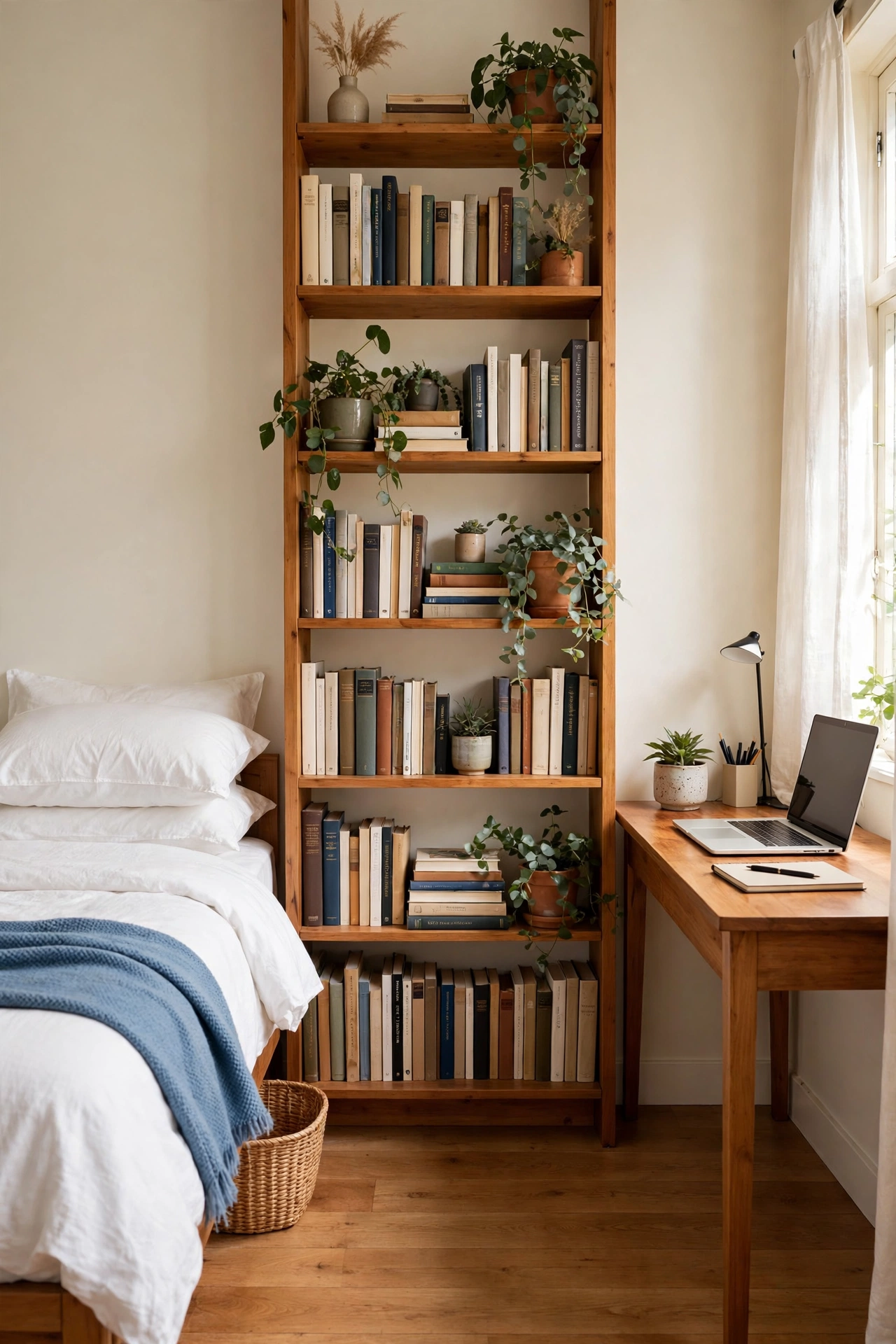
17. Add a Tall Bookshelf as a Room Divider
A tall bookshelf stands between the bed and the desk like a quiet wall. The shelves face the living area with books and decor, while the back of the shelf faces the work zone. Both sides stay useful, and the room gains a clear split.
Anchor the bookshelf to the wall so it stays safe and steady. Keep the top of the shelf within reach so it does not collect dust. A bookshelf divider is a classic studio trick because it stores and divides at the same time.
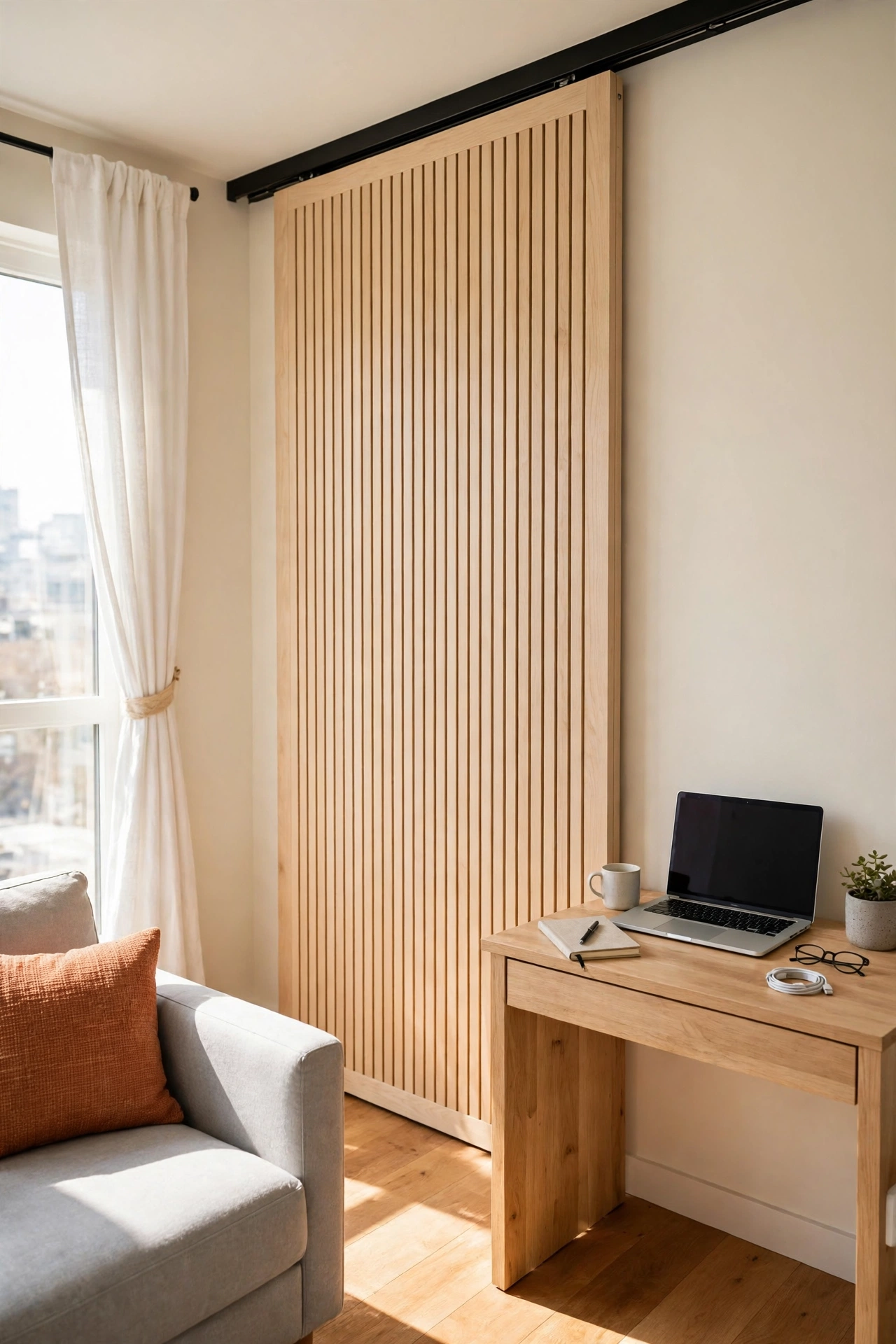
18. Keep the Bed Behind a Sliding Panel
A sliding panel on a ceiling track hides the bed with one smooth push. Unlike a curtain, the panel stays flat and looks like part of the wall. You can slide it open in the morning and closed at night in seconds.
Choose a panel in a light wood or a soft fabric tone that matches the room. The track needs a solid ceiling mount, so check the ceiling type before you install it. A sliding panel gives the studio a clean, modern divide.
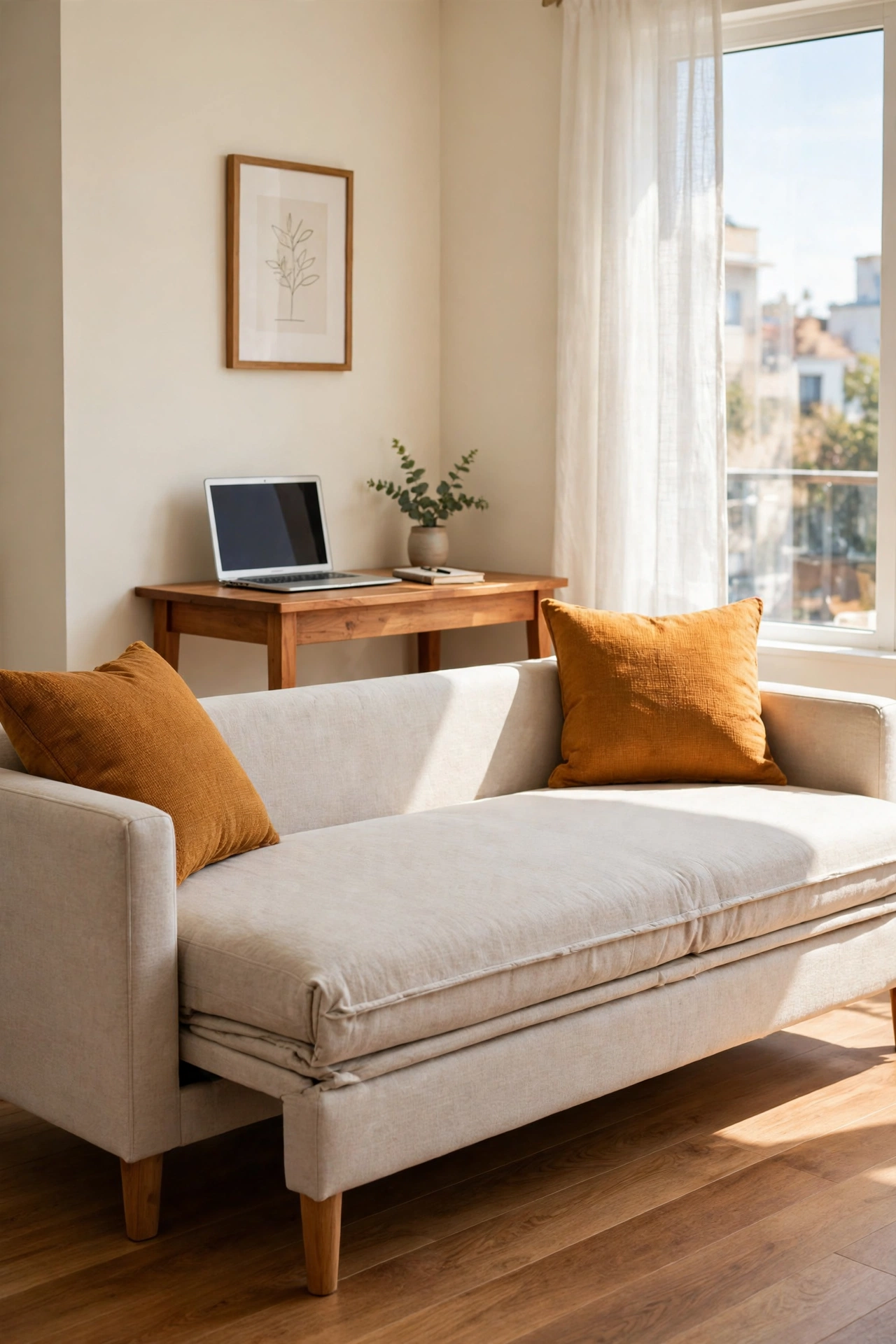
19. Use a Sofa Bed for Guests and Work Days
A sofa bed serves as your living room sofa by day and a guest bed at night. During work hours the sofa stays a sofa, so the room never looks like a bedroom. When guests stay over, the bed pulls out in minutes.
Pick a sofa bed with a comfortable mattress so guests actually sleep well. Keep fresh sheets in the slim cabinet near the desk so the changeover is quick. A sofa bed is a practical choice for studios that host visitors often.
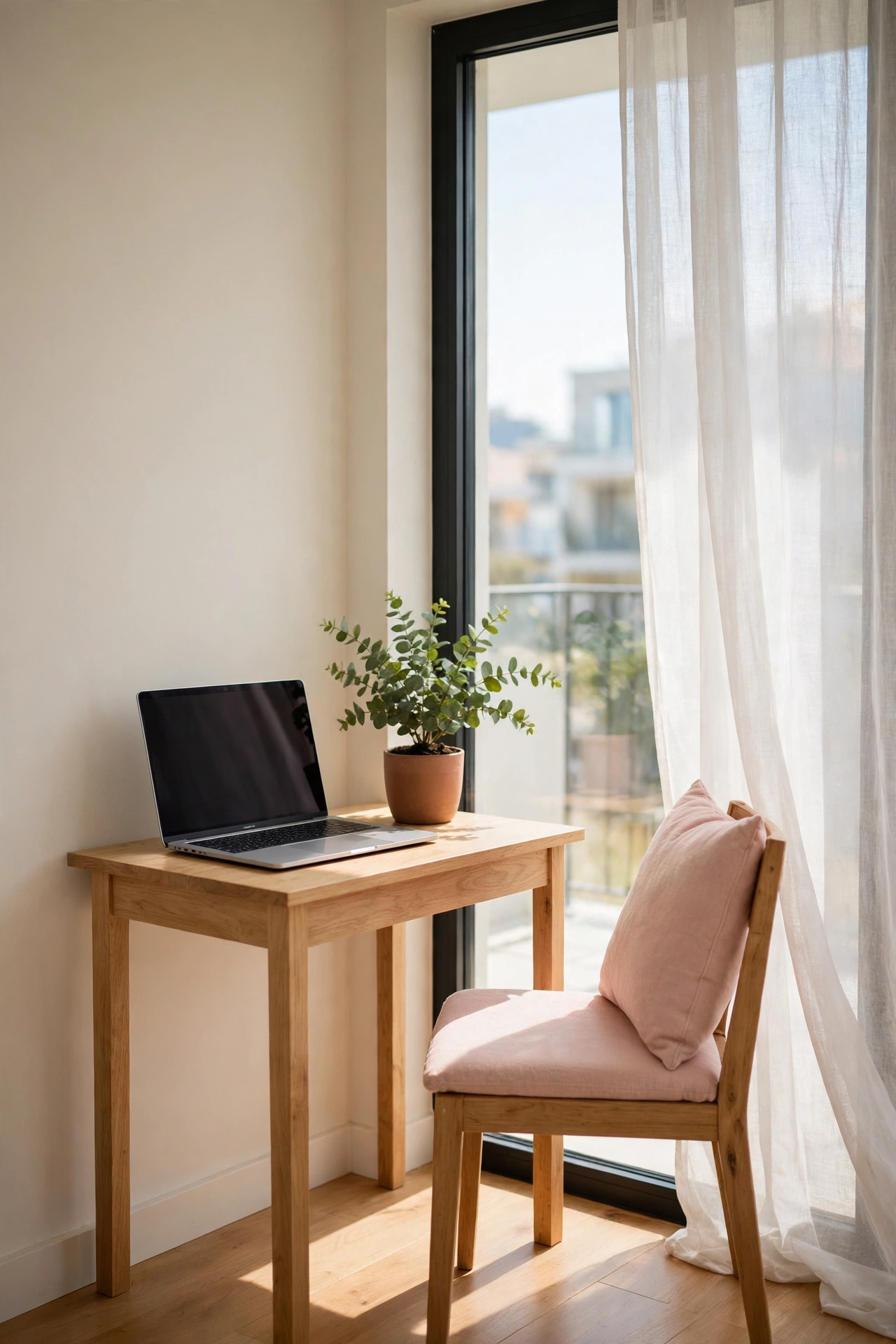
20. Set Up a Sunroom Style Work Spot by the Balcony Door
The area by the balcony door gets the best light in the whole apartment, and a small desk there feels like a sunroom office. A chair by the glass, a plant on the floor, and a laptop on the desk make a bright work spot. The view outside keeps the workday pleasant.
Keep the path to the balcony clear so you can step out for fresh air. A sheer curtain softens the glare on sunny afternoons. For more bright work corners, see these small sunroom layout ideas. A balcony door desk is a small luxury in a small home.
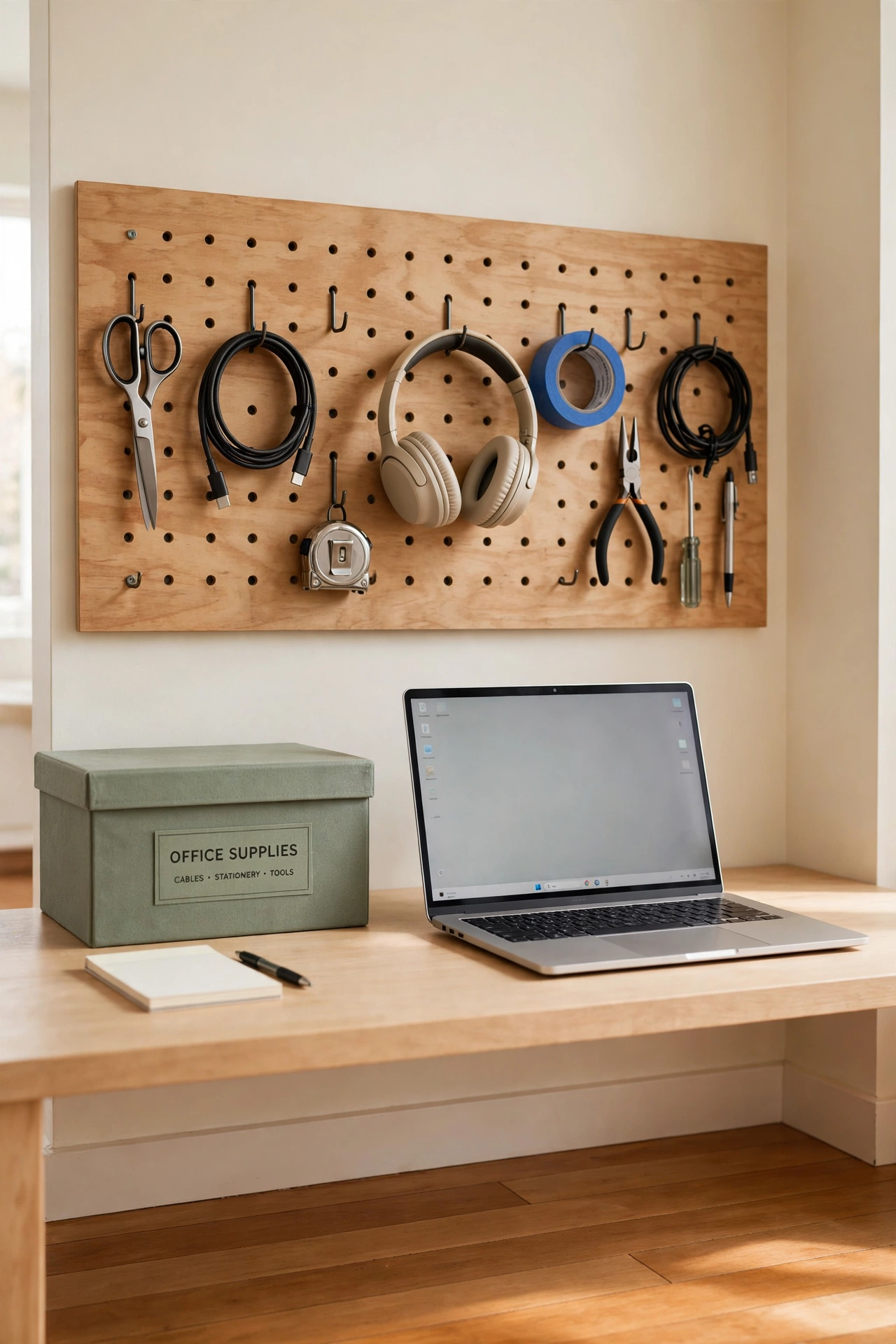
21. Use a Pegboard Wall for Office Tools
A pegboard on the wall above the desk holds scissors, cables, headphones, and small tools on hooks. Everything stays visible and within reach, yet the desktop stays clear for work. The pegboard also adds a tidy, workshop feel to the office corner.
Paint the pegboard in a soft color that matches the wall so it blends in. Rearrange the hooks whenever your tools change. A pegboard is a cheap and flexible way to organize a small desk area.
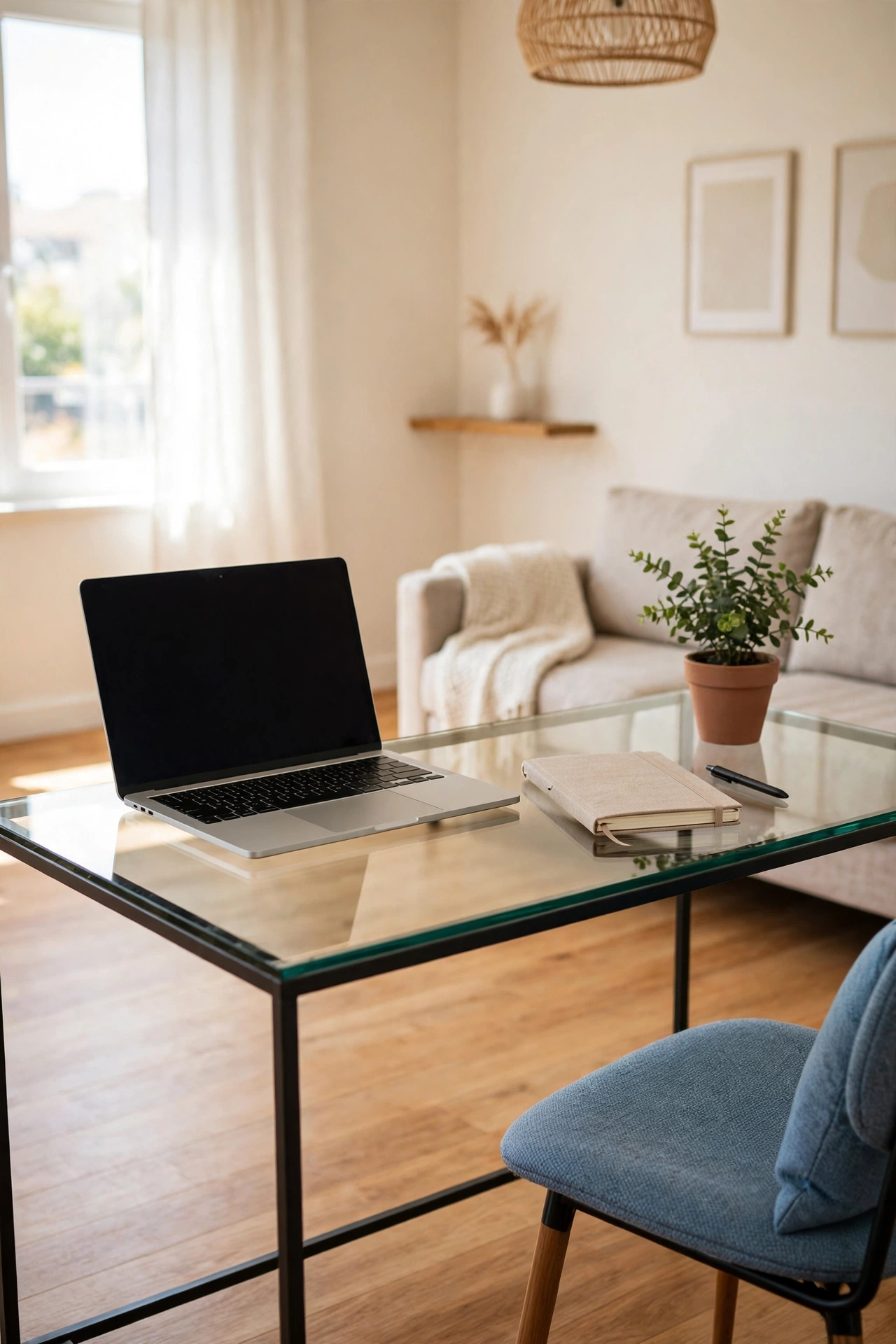
22. Choose a Glass Desk to Keep the Room Feeling Open
A glass desk lets light pass through and keeps the room feeling open. The desk takes up the same floor space as a wooden desk, but your eyes see through it, so the corner feels lighter. A glass top also pairs well with any chair or rug.
Keep the desk tidy because everything shows through the glass. A small tray under the top holds cables out of sight. A glass desk is a good choice when a studio already feels full and you want the work zone to look light.
23. Place a Small Desk in the Entryway
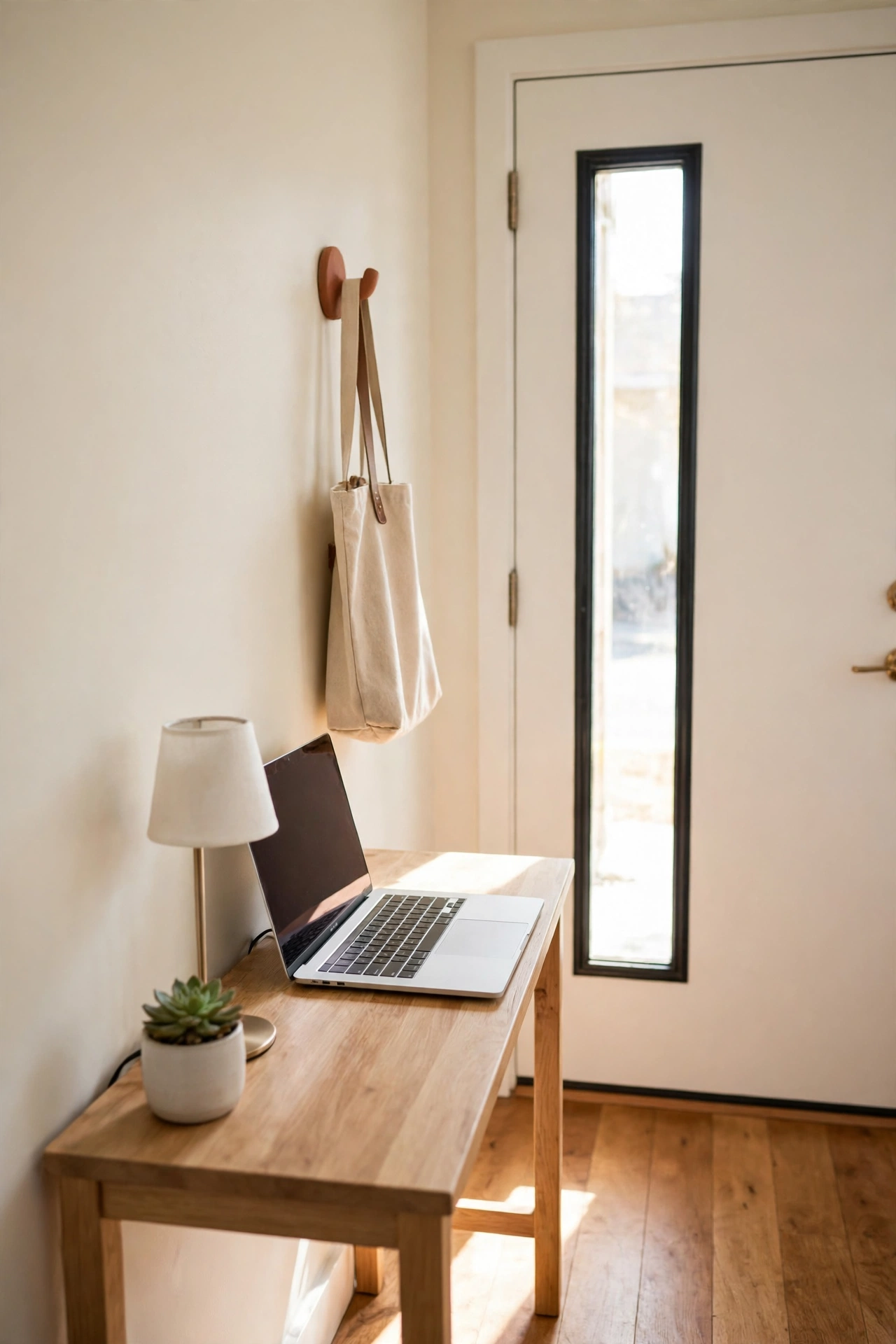
The entryway often has a few spare feet that a small desk can use. A narrow desk by the front door becomes a work spot with a clear boundary, because you enter the home, pass the desk, and then reach the living area. The separation helps you leave work behind when you step inside.
Add a small lamp and a hook for your bag so the entryway stays organized. Keep the desk narrow so the path to the door stays wide. An entryway desk is a creative fix when no other wall is free.
24. Use a Kitchen Counter as a Standing Desk
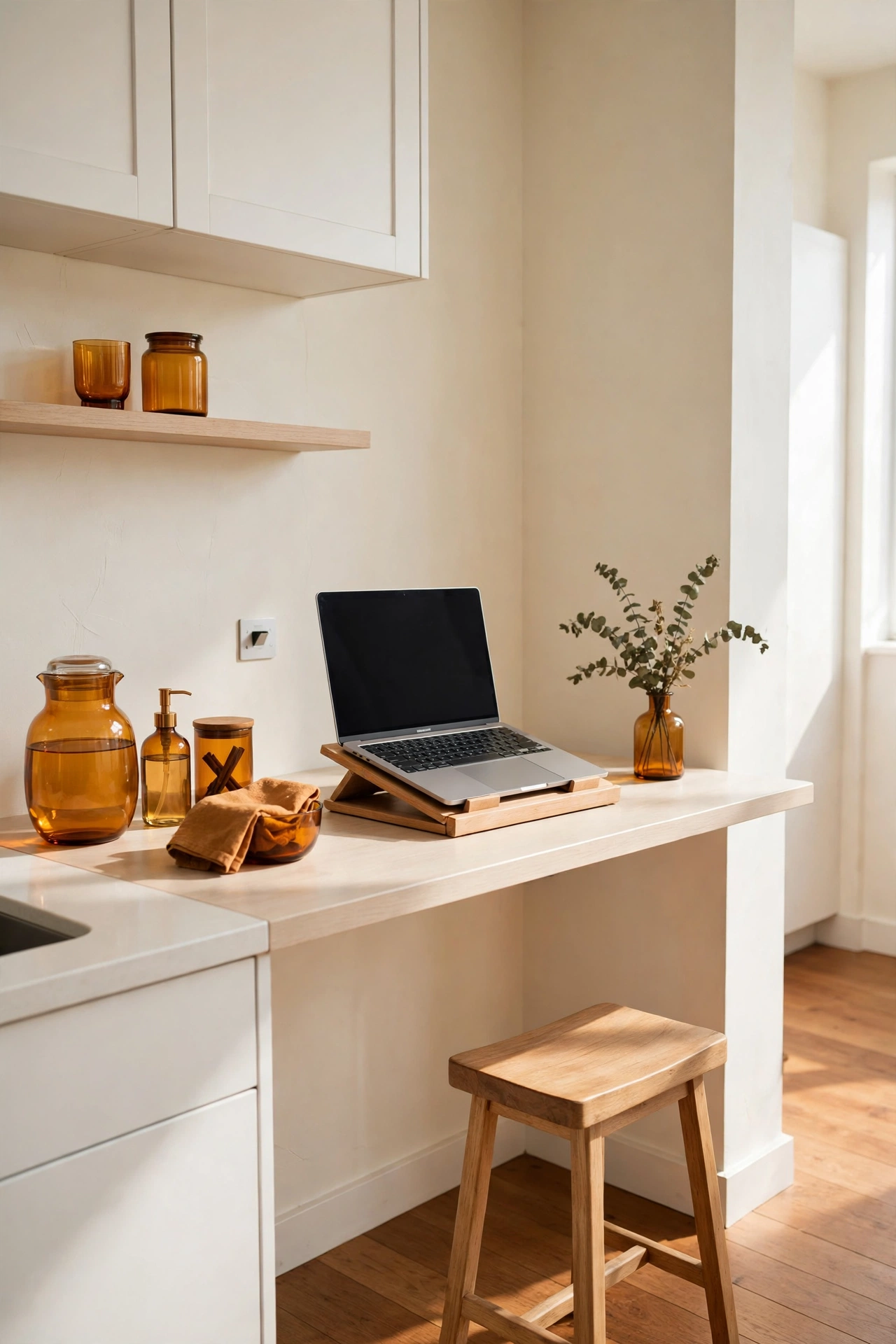
A kitchen counter at standing height works as a part time standing desk. You can stand there for emails and calls, then sit at the main desk for deep work. Standing for part of the day is good for your back and breaks up long hours of sitting.
Keep a small stool nearby so you can rest when your legs tire. A laptop stand lifts the screen to eye level on the counter. A kitchen counter desk costs nothing extra and adds a healthy habit to the workday.
25. Hide Cables and Chargers in a Cable Box
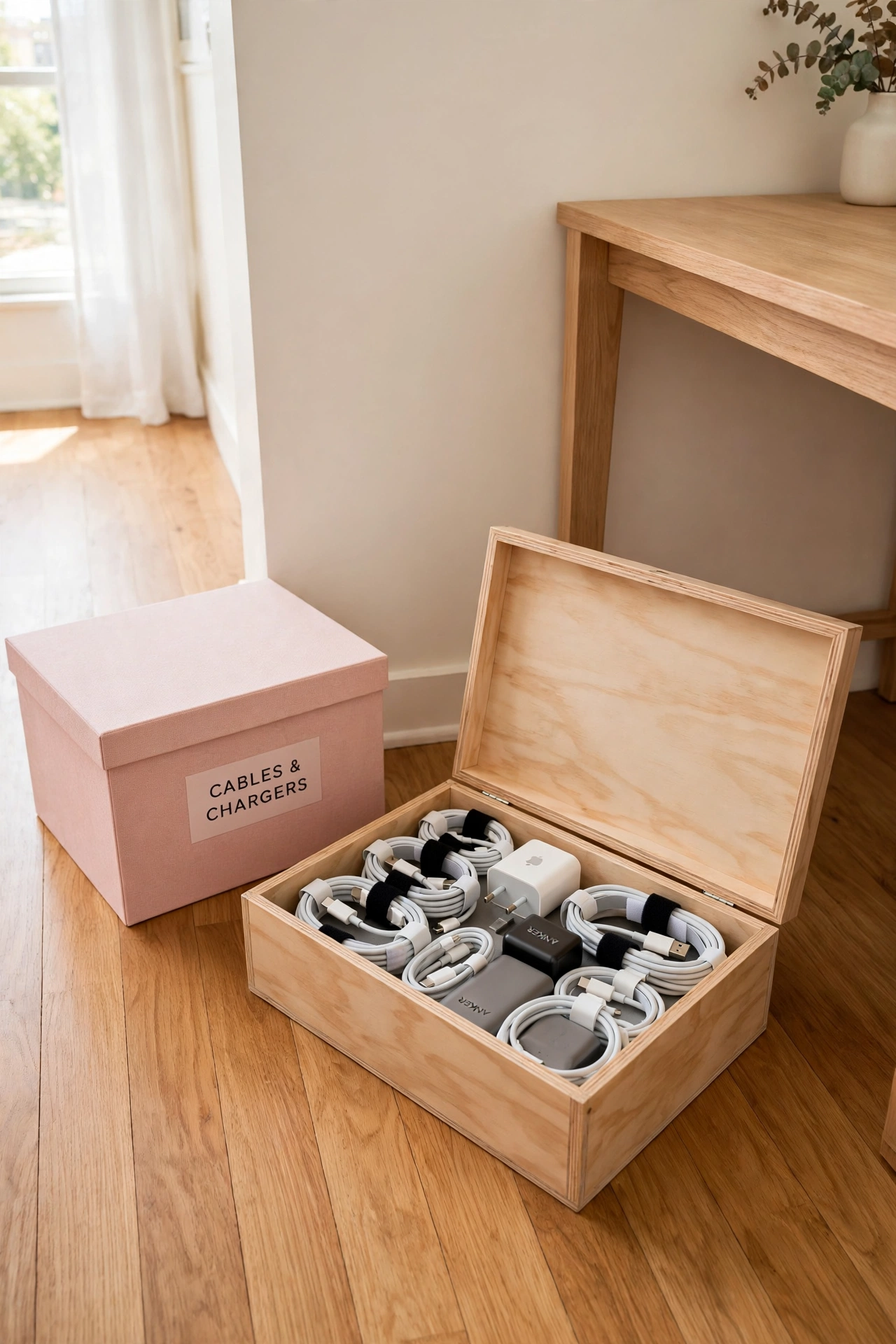
Cables are the fastest way to make a small desk look messy. A cable box on the floor or on the desk hides the power strip and the extra cords. Only the cables you need come out, and the rest stay tucked away.
Label each charger so you grab the right one without pulling the whole box apart. A wooden box matches the desk better than a plastic one. Tidy cables make the whole studio feel calmer and safer.
26. Add a Second Chair for Meetings and Calls
A second chair by the desk turns a solo office into a place for meetings and calls. A colleague, a friend, or a family member can sit beside you to talk through a project. The chair also works as a reading seat when the workday ends.
Choose a chair that folds or stacks so it can hide in a corner when it is not needed. Keep the second chair light enough to move with one hand. A spare chair makes a small office feel open to other people.
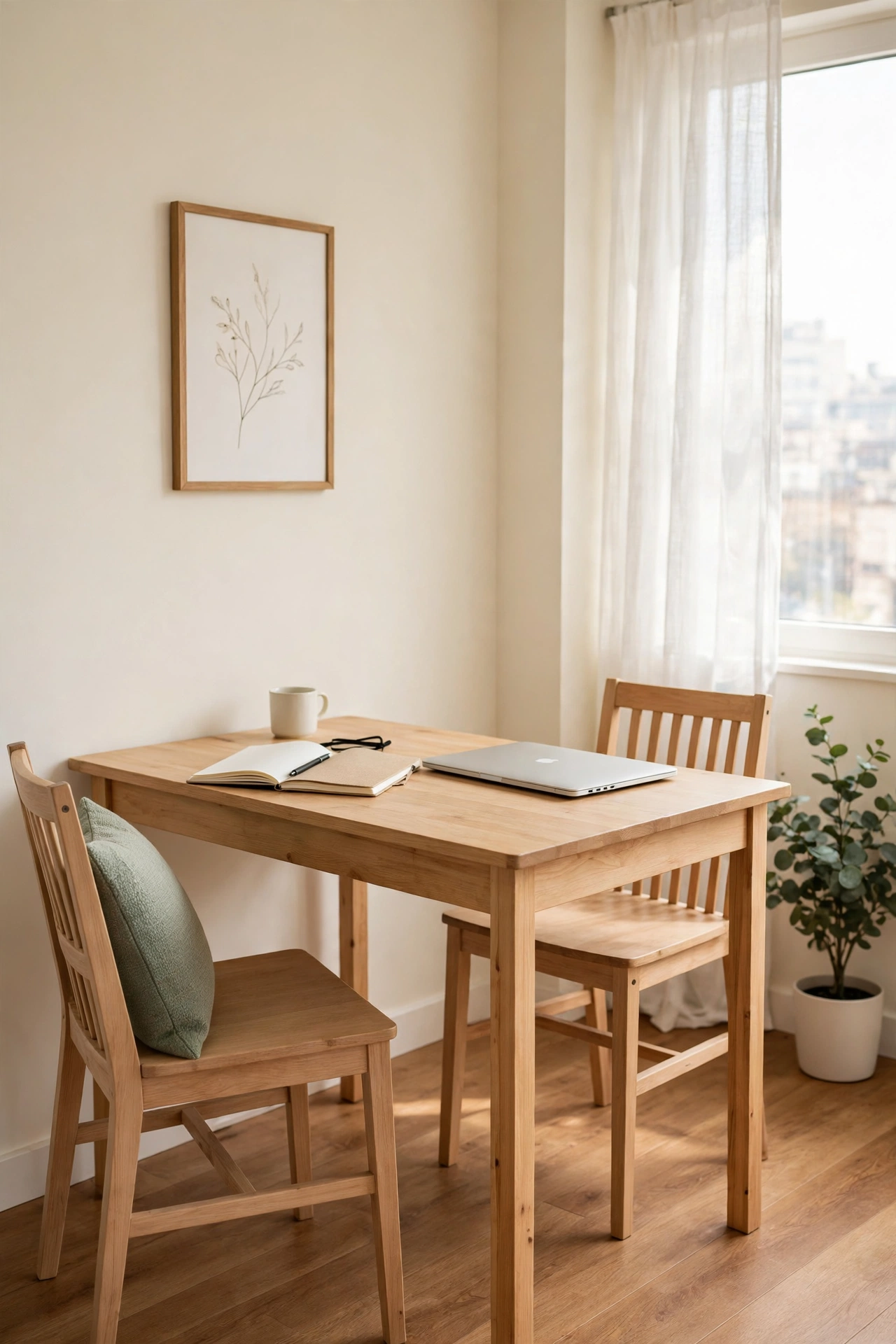
27. Use a Daybed as a Sofa by Day and Bed by Night
A daybed looks like a sofa during the day and becomes a bed at night with a simple change of pillows. The backrest and arms make it comfortable for sitting, reading, and working with a laptop. At night, the same piece gives you a full place to sleep.
Dress the daybed with a neat throw and firm cushions so it reads as a sofa. Keep the bedding in a nearby basket for a quick change at night. A daybed is one of the smartest pieces of furniture for a studio apartment.
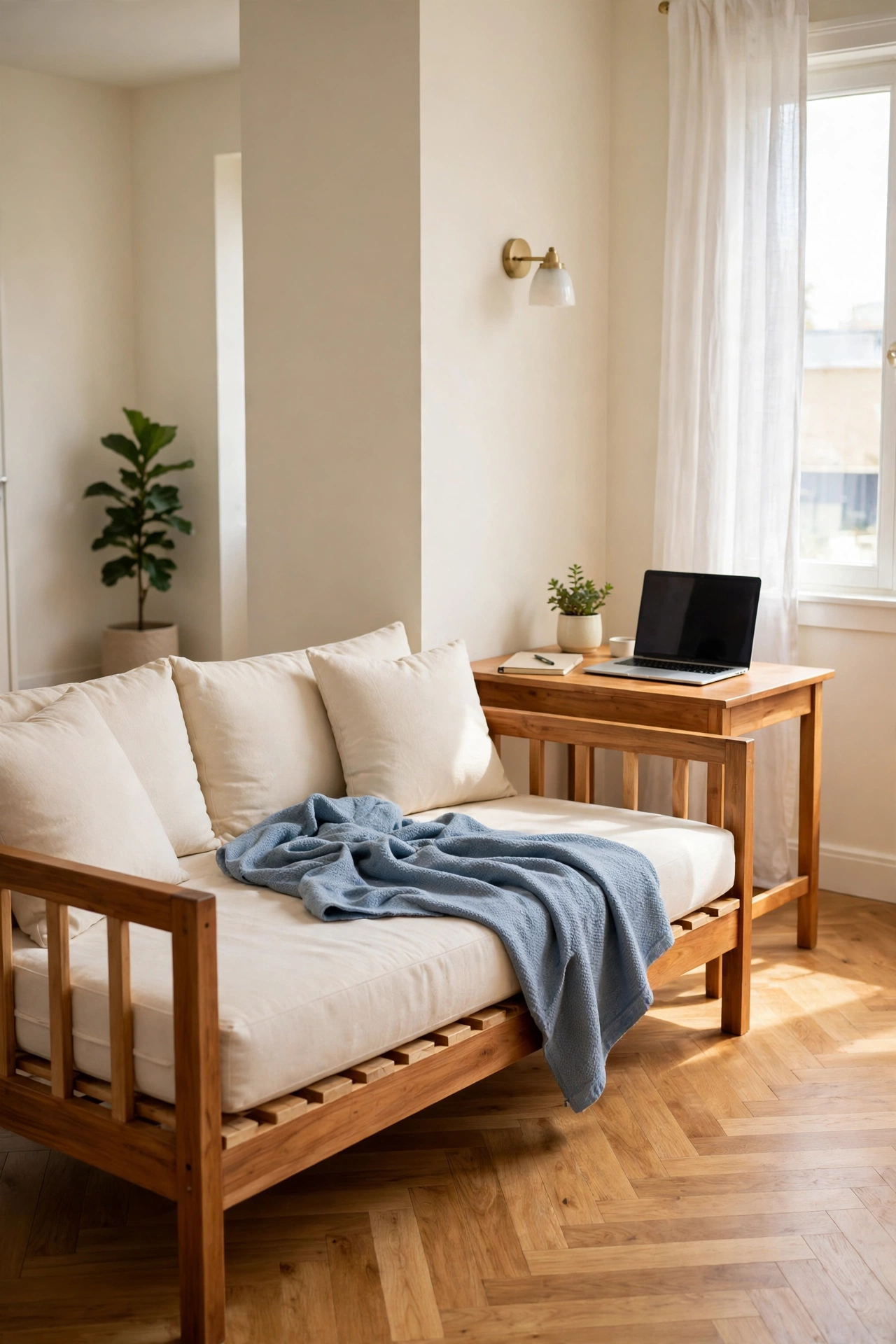
28. Create a Work Zone with a Different Paint Color
A different paint color on the desk wall marks the work zone without any furniture at all. Paint one wall or one section in a calm sage or soft blue, and the eye reads it as a separate room. The rest of the studio stays in a pale cream so the accent wall stands out.
Keep the accent color calm so it helps focus instead of distracting you. A painted zone costs very little and takes one afternoon. Color is the lightest divider a studio can have.
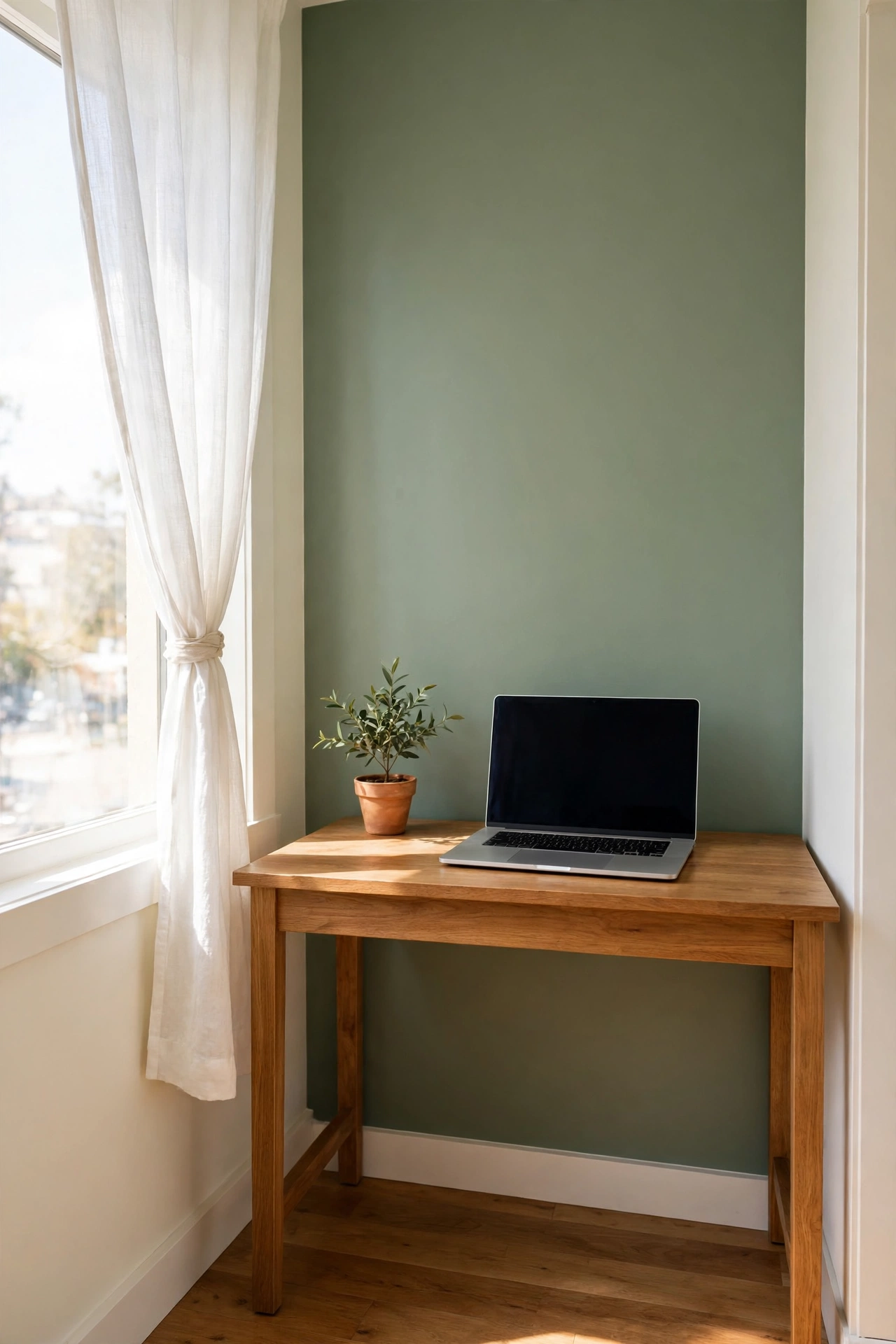
29. Keep a Foldable Chair and Laptop Stand for Anywhere Work
A foldable chair and a laptop stand let you work from any spot in the studio. Set them up at the kitchen counter, by the window, or on the balcony, and fold them away when you are done. This setup is perfect for days when the main desk feels too fixed.
Choose a chair that folds flat and a stand that fits in a drawer. The pair weighs little and stores in seconds. Anywhere work keeps a small home flexible and your workday fresh.
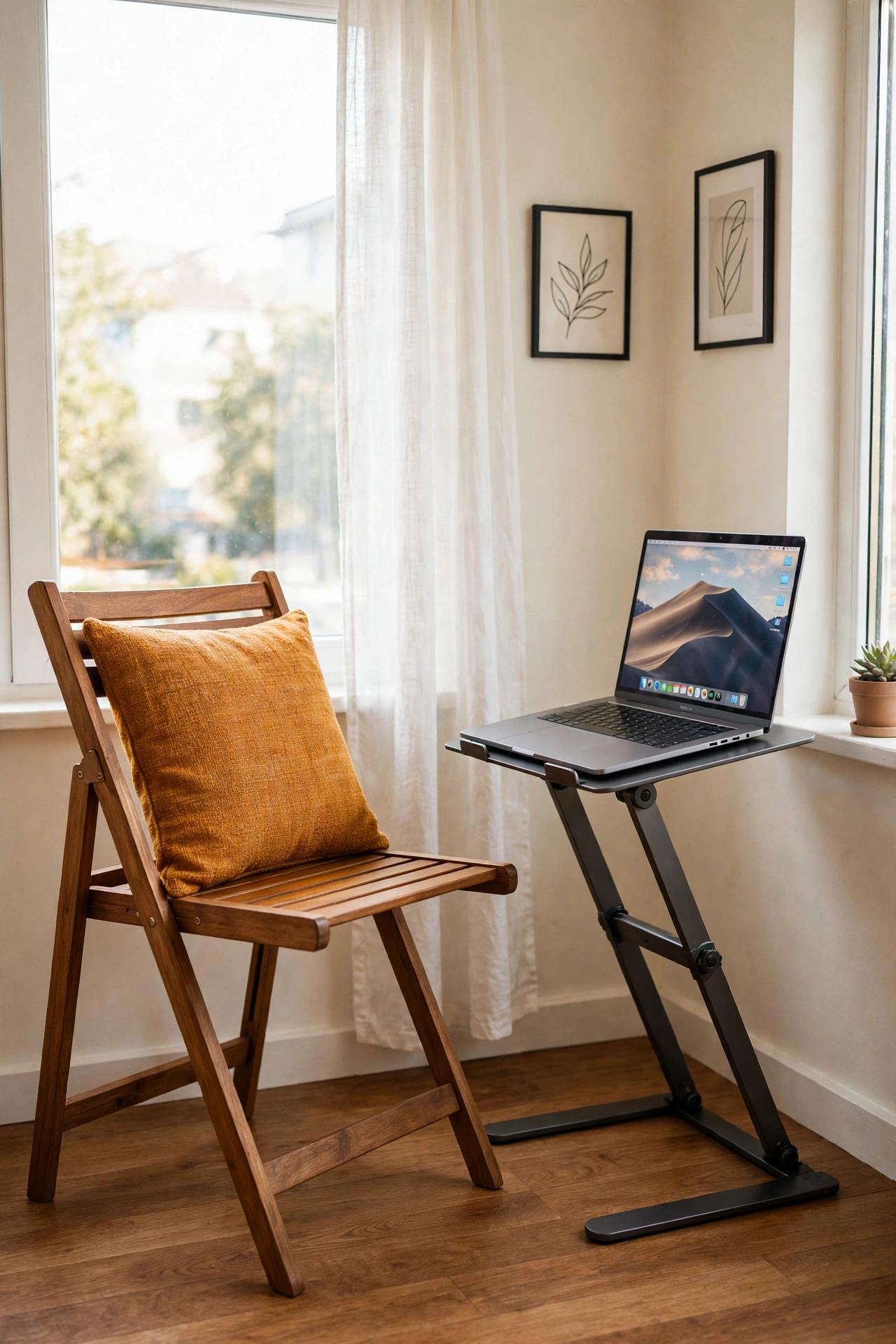
Conclusion
A studio apartment with a home office does not need more space, it needs a clearer plan. From a desk by the window to a bed behind a curtain, each idea here gives every activity a place of its own. The room stays open because the zones are clear, not because the furniture is small.
Pick one or two ideas that fit your home and start today. Move the desk, hang a shelf, or paint one wall, and the whole room will feel different by evening. For a calm home beyond the workday, these nightly reset routine ideas will help you keep every room organized with just a few minutes each evening.
Frequently Asked Questions About Studio Apartment Layout Ideas with a Home Office
Where is the best place for a desk in a studio apartment?
The best place is usually by a window or against the longest wall, where the desk stays out of the main walkway. A window desk gives you daylight all day, while a long wall desk gives you room to spread out. Avoid placing the desk in the center of the room, where it blocks movement.
How do I separate the bed from the office in a studio?
A curtain, a sliding panel, a tall bookshelf, or a room divider shelf all separate the bed from the desk without building a wall. A rug also marks the zones clearly. Choose the divider that fits your budget and your rental rules.
Can a studio apartment fit a full size desk?
Yes, if you choose a slim or compact desk and place it against a wall or in a corner. A desk that is 100 to 120 centimeters wide fits most studios. Fold down desks and rolling carts work well when even that width feels tight.
How do I keep work and rest separate in one room?
Give work a fixed spot and a clear end of day habit, like folding the desk away or closing a curtain over the office. A short evening routine that tidies the desk helps your mind switch to rest. A separate chair for reading also gives you a place that is never for work.
What is the cheapest way to add a home office to a studio?
A fold down wall desk, a rolling cart, or a small desk in an unused corner costs very little. Add a secondhand chair and a shelf above the desk, and the office is ready. Paint one wall a calm color to mark the zone for the price of one can of paint.

Hi, I’m Emily! I turn messy corners into cozy, organized spots. DreamNestDecor is where I share simple, practical home ideas — decor, organization, and small-space solutions that work in real life, not just in photos. Every idea here is carefully researched before it’s shared.