Picture this: two adult siblings share one small bedroom, and instead of constant friction, the room feels calm and fair. Each sibling has a bed, a desk spot, and a stretch of storage that belongs to them alone, while the shared parts of the room stay tidy and simple. The secret is not a bigger room, it is a layout that gives both people equal space and clear boundaries.
You do not need a renovation or expensive furniture to make it work. All you need is a smart plan for the beds, the storage, and the shared zones in between. These 14 small shared bedroom layout ideas for adult siblings will help two grown-ups share one small room with comfort, privacy, and peace.
1. Split the Room with a Slim Room Divider
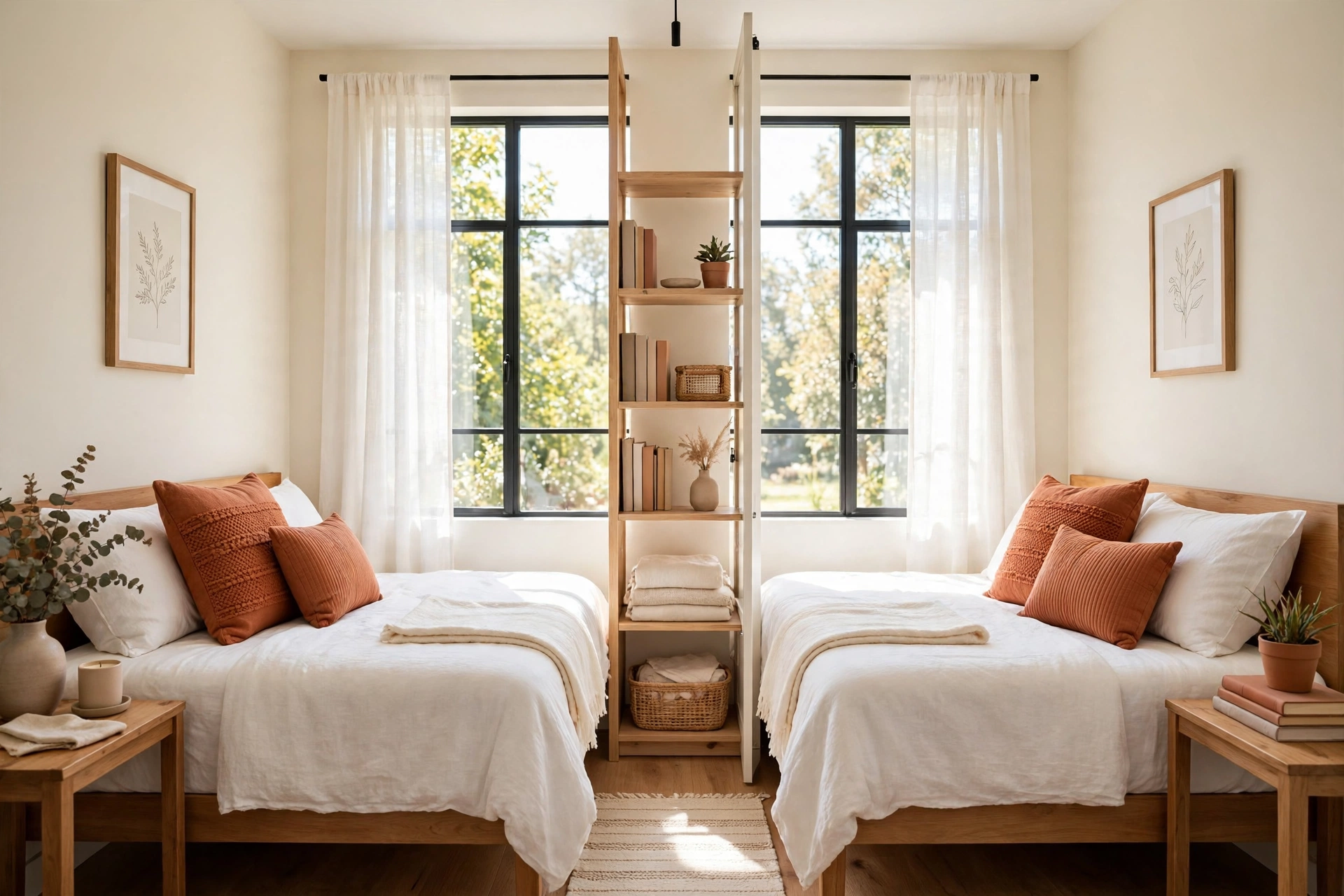
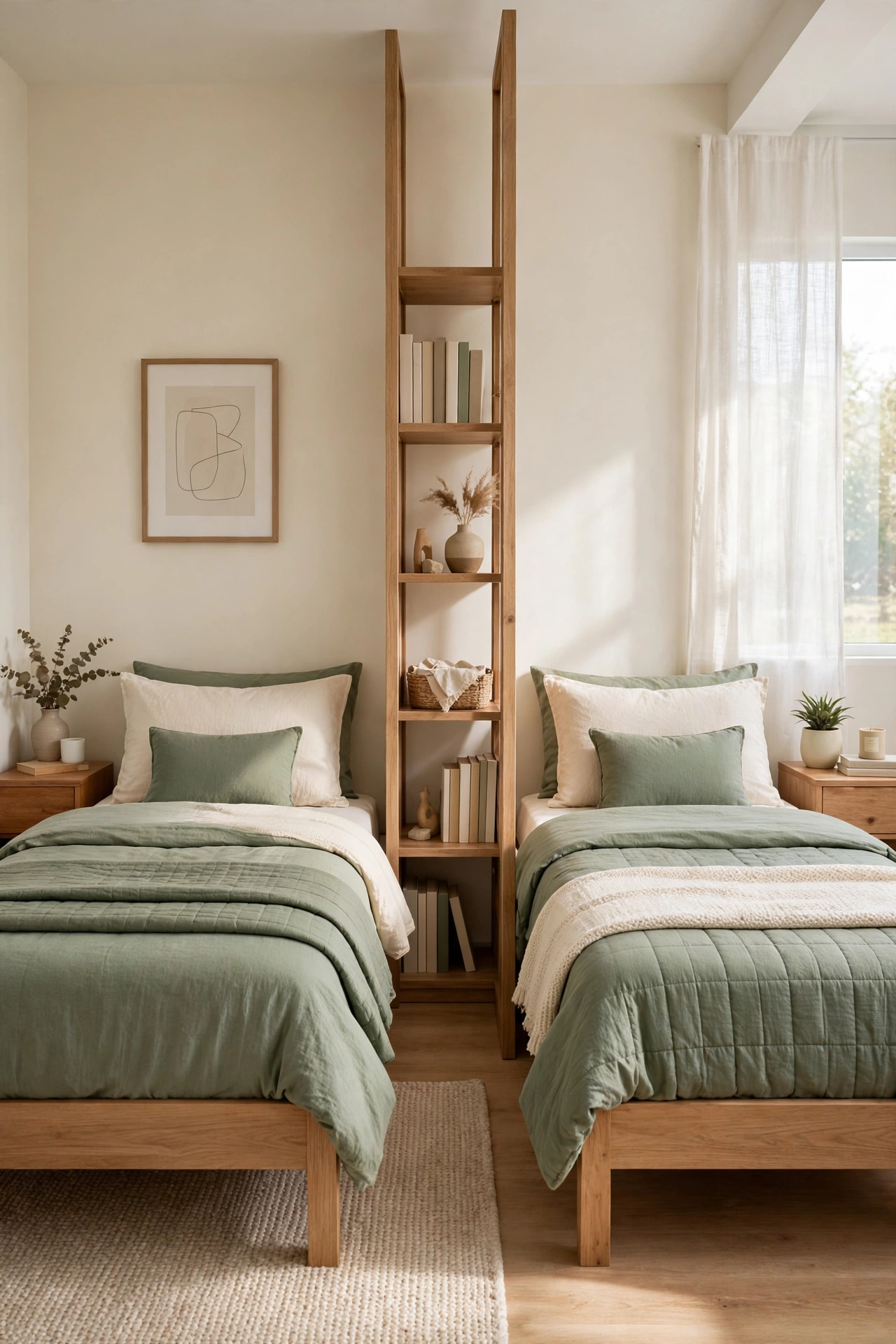
A slim room divider is the simplest way to give two adult siblings a sense of their own space in one small bedroom. A tall open shelf, a folding screen, or a curtain panel down the middle of the room creates a soft boundary without blocking light or air. Each side of the divider becomes a private zone that feels like a room of its own.
Choose a divider that lets light through, such as an open bookshelf or a sheer curtain, so the room never feels cramped or dark. Place the divider between the two beds and keep the shared path to the door clear on both sides. This one change can end most arguments about personal space before they start.
2. Give Each Sibling a Matching Twin Bed with Storage
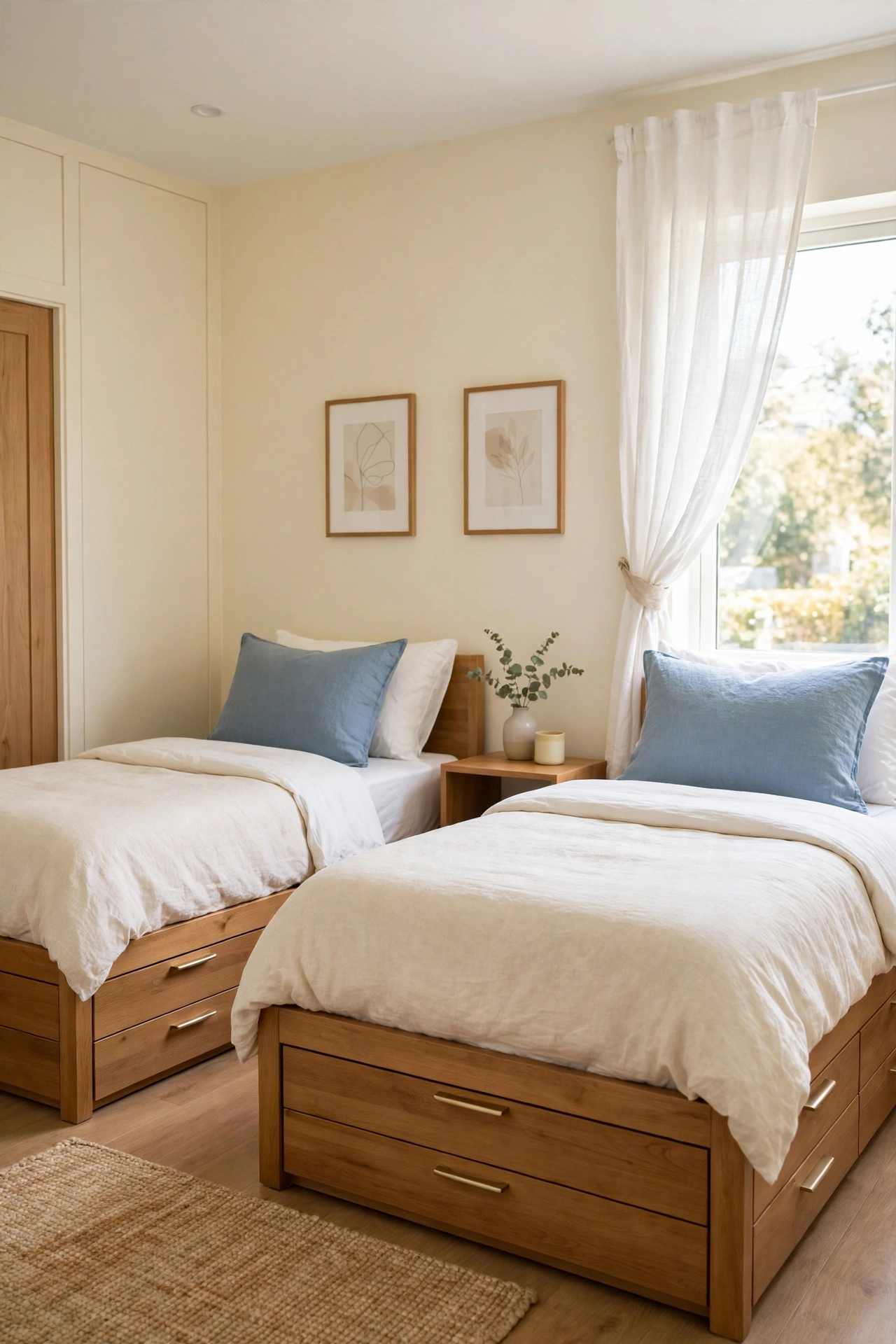
Matching twin beds are the fairest starting point for a shared bedroom. When both beds are the same size and style, neither sibling feels like they got the worse deal. Beds with drawers or a lift-up base underneath add storage without taking any extra floor space in the room.
Place the beds along opposite walls or side by side with a small gap between them, and leave enough room to walk around each bed with ease. Matching bedding in the same base color keeps the room calm, while a different accent pillow for each bed marks whose side is whose. This balanced setup makes the room feel like it belongs to both siblings equally.
3. Use a Shared Wardrobe with Divided Halves
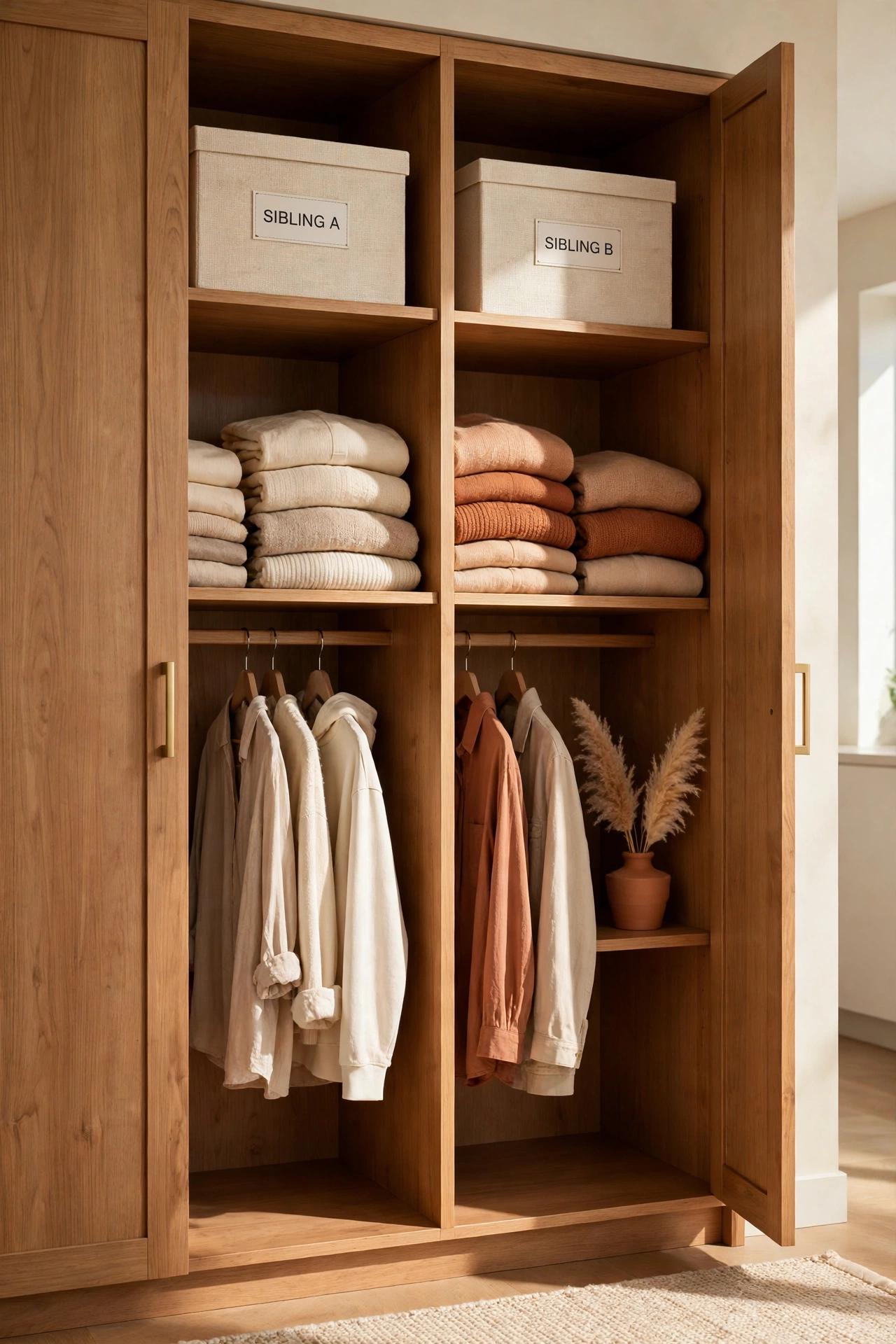
A shared wardrobe works well when each sibling owns one half of it. A simple vertical divider inside the wardrobe, plus a shelf and a hanging rail on each side, keeps clothes separate and easy to find. Labeled storage boxes on the top shelf, marked with each sibling’s name, finish the split in a clear and fair way.
Keep the wardrobe doors the same on both sides so the room looks tidy from the outside. Inside, each sibling can arrange their half in their own way without affecting the other. A divided wardrobe removes the most common source of shared bedroom tension, which is clothes that wander into the wrong pile.
4. Place Two Desks Back to Back in the Center
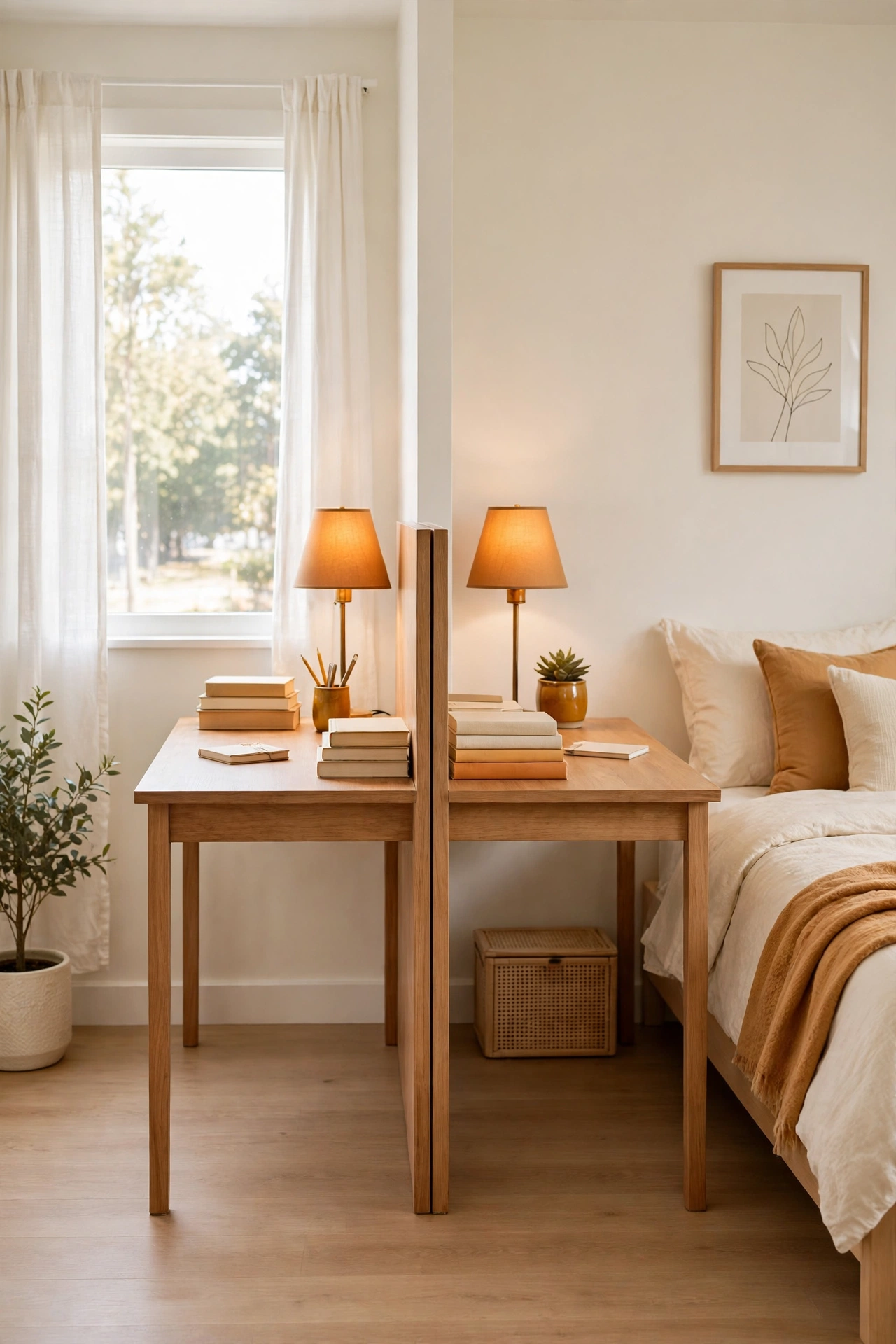
Two desks placed back to back in the center of the room give each sibling a real workspace without taking over the whole bedroom. A slim desk on each side of a central divider lets both people work at the same time while facing away from each other, which helps focus and reduces distraction.
Keep each desk the same size and give each one a small shelf and a desk lamp so neither side feels like an afterthought. For more ideas on fitting a workspace into a tight room, see these small home office layout ideas. A back to back desk pair turns the middle of the room into useful space instead of an empty walkway.
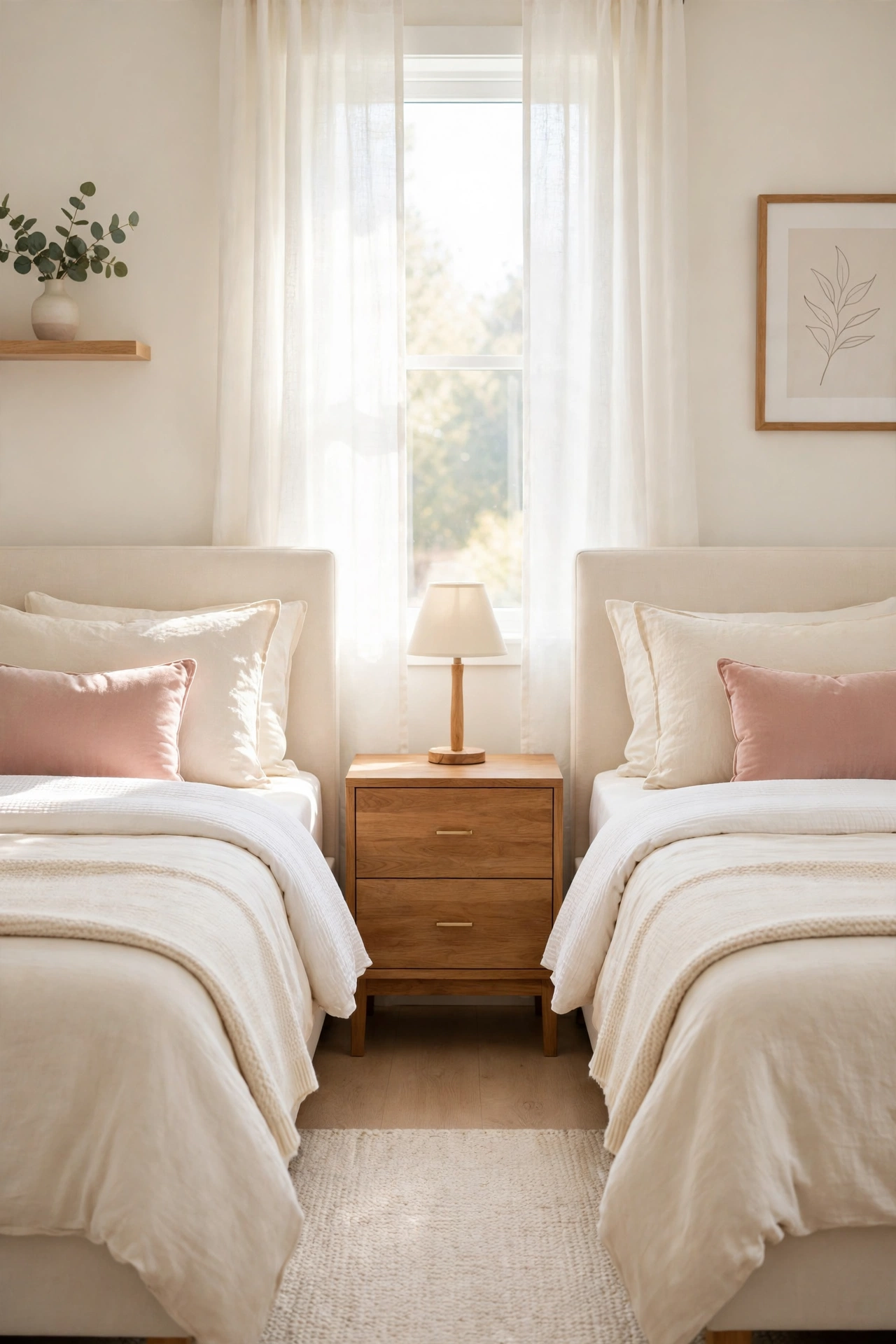
5. Add a Shared Nightstand with Two Drawers
A shared nightstand between the two beds is a small piece of furniture that does a lot of work in a shared bedroom. One drawer belongs to each sibling, so phones, books, chargers, and glasses each have a clear home. A single lamp on top serves both beds and keeps the surface tidy.
Choose a nightstand with deep drawers so each sibling can fit a book, a charger, and a few personal items inside. Label the drawers with small tags if the mix-ups keep happening. A shared nightstand saves floor space and keeps the area between the beds neat instead of cluttered with two separate tables.
6. Use Matching Bedding in Different Accent Colors
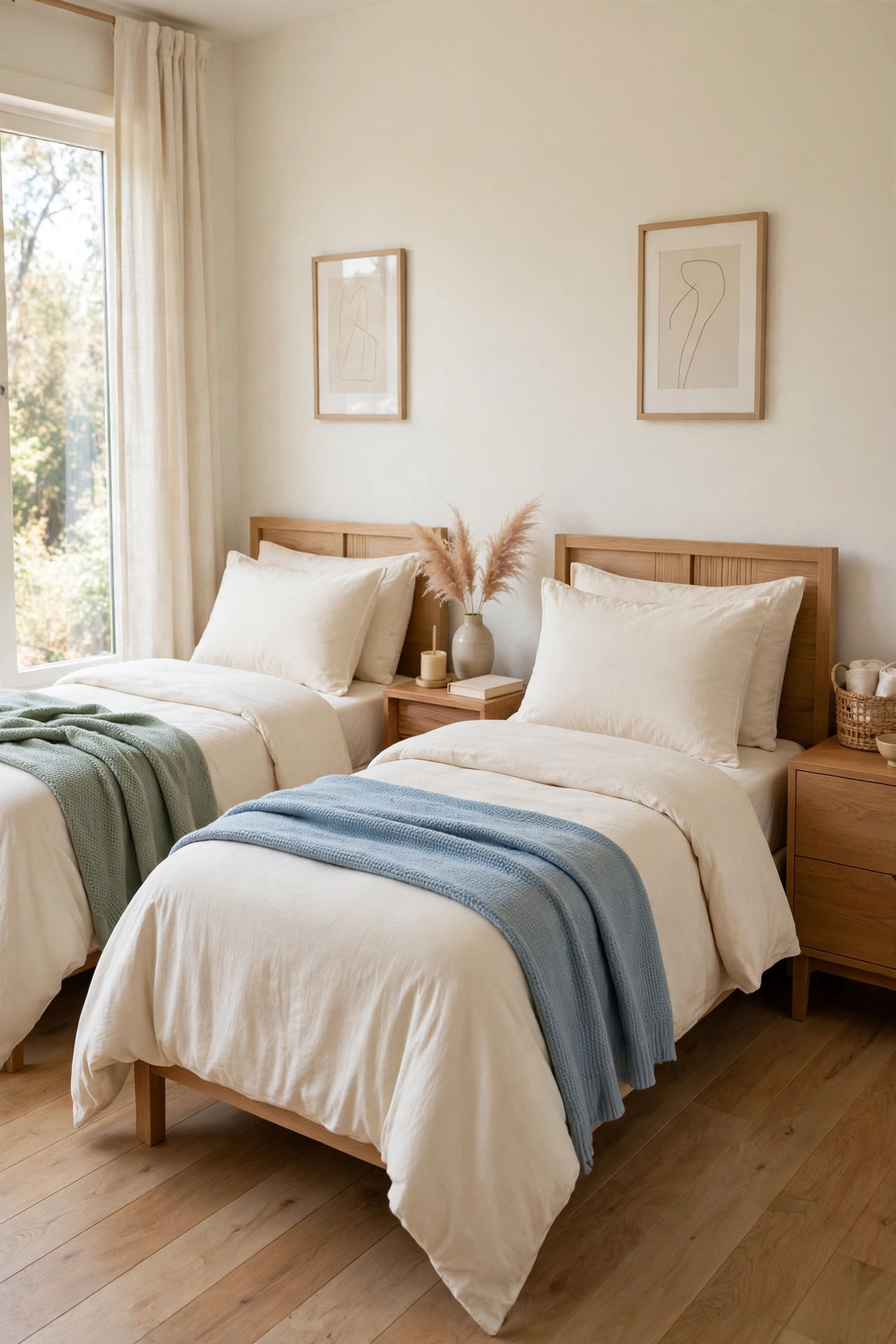
Matching bedding in different accent colors gives each sibling a clear identity in the room while keeping the whole space calm. Use the same cream sheets and the same style of duvet on both beds, then add a sage green throw on one bed and a soft blue throw on the other. The room stays coordinated, and each bed feels personal.
This trick also makes laundry simpler, since the base bedding is the same for both beds. Keep the accent colors soft and close in tone so the room never looks busy or loud. A small color difference is enough to mark each side without breaking the calm feeling of the room.
7. Hang Two Wall Shelves at Equal Heights
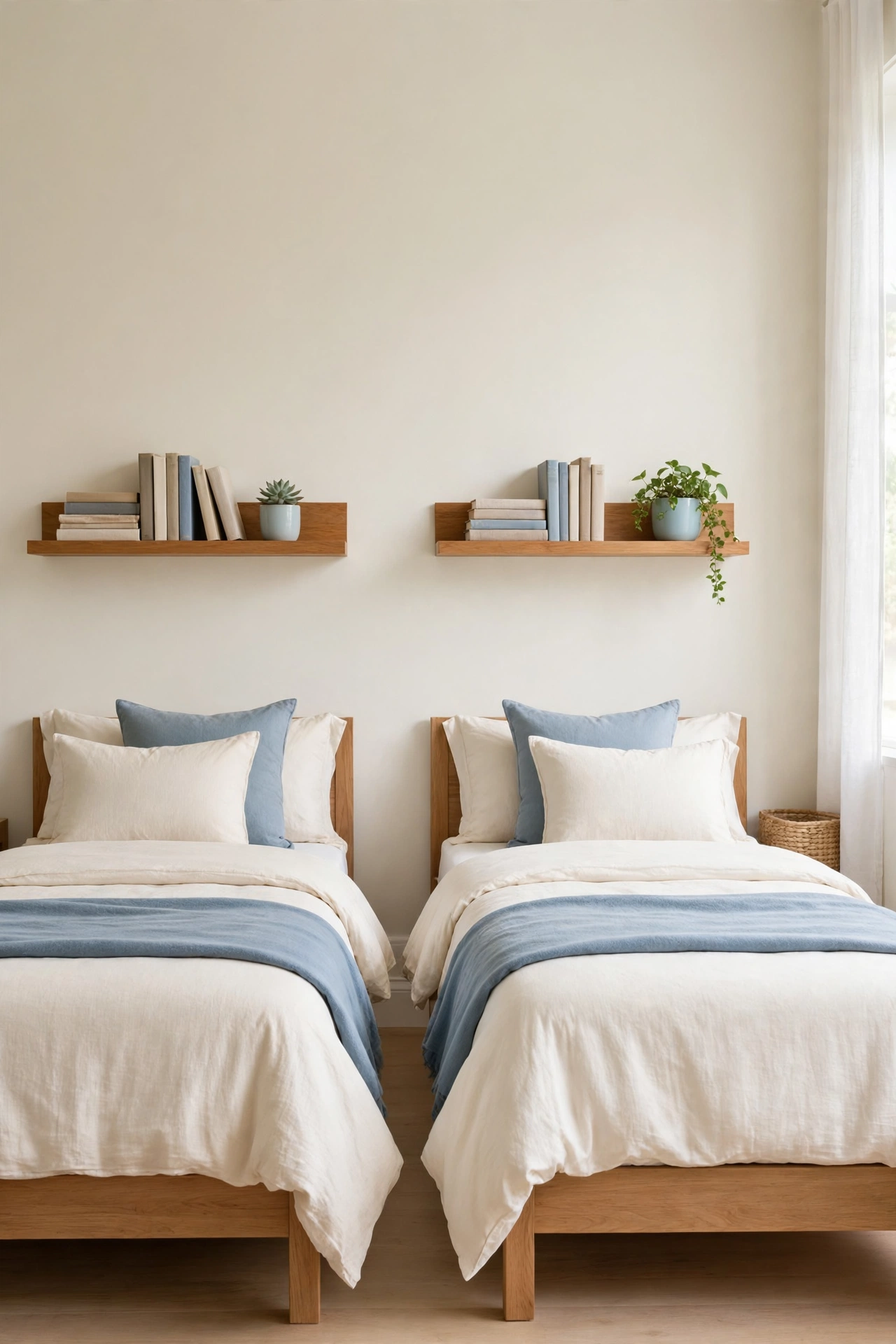
Two wall shelves hung at the same height, one above each bed, give each sibling equal display and storage space. Each shelf holds books, a small plant, and a few personal items, so both sides of the room feel equally valued. Equal heights matter, because a shelf that sits higher or lower than the other can feel unfair even when nobody means it to.
Use the same shelf size and the same brackets on both sides for a balanced look. Keep the shelves shallow so they never feel heavy over a bed. Wall shelves use vertical space that would otherwise go to waste, which is precious in a small shared bedroom.
8. Create a Shared Study Corner with a Long Desk
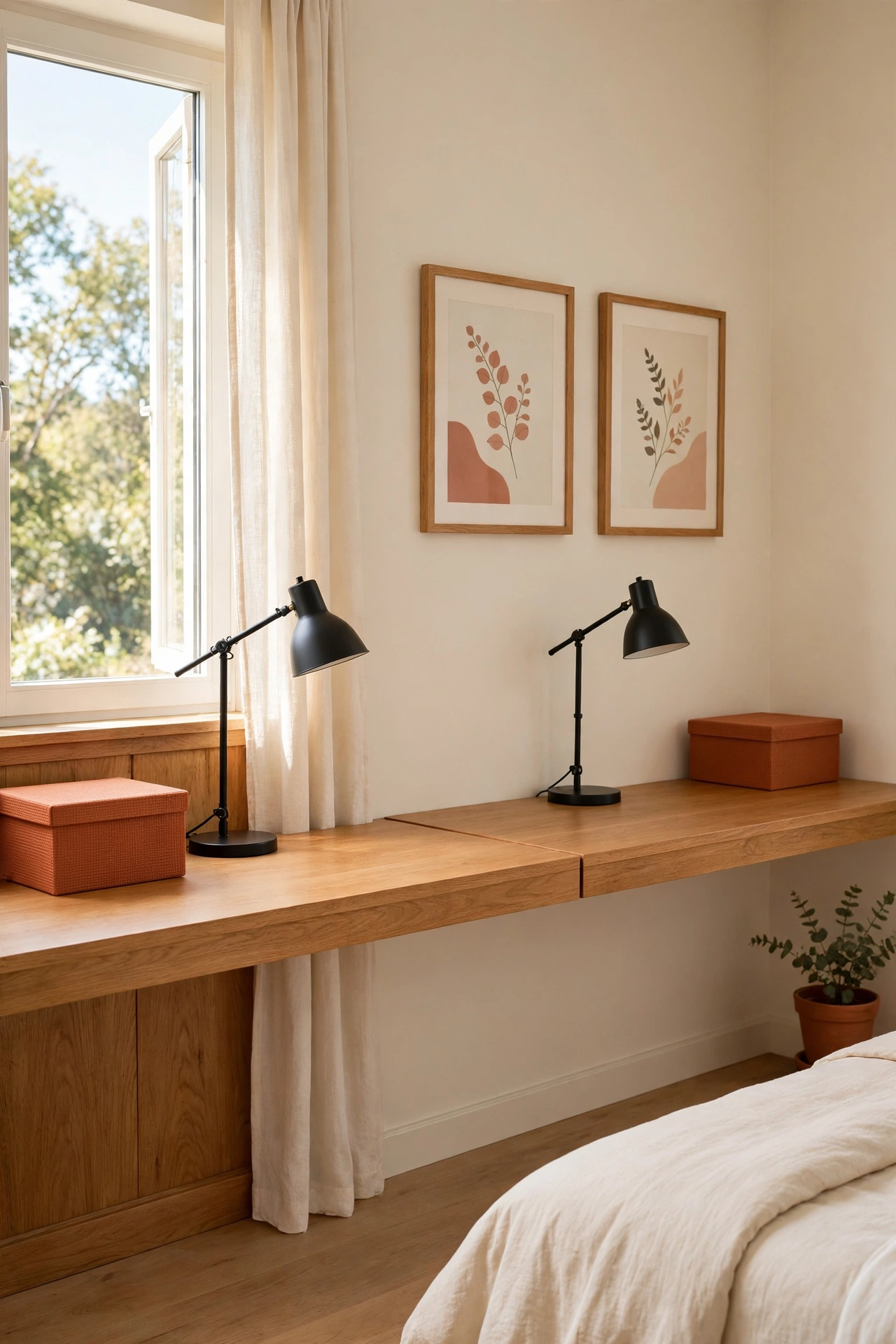
A shared study corner with one long desk along the wall is a good option when the room has no space for two separate desks. A desk that runs the full width of one wall gives each sibling a clear half, with a small shelf divider or a desk organizer in the middle to mark the boundary.
Give each half its own desk lamp and its own set of storage boxes so the desk never becomes a battleground over space. For more teen and young adult bedroom ideas that suit a shared study zone, see these small teen bedroom layout ideas. A long shared desk works best when both siblings keep their half tidy, which is easier when the boundary is clear.
9. Use Under-Bed Storage Bins for Each Sibling
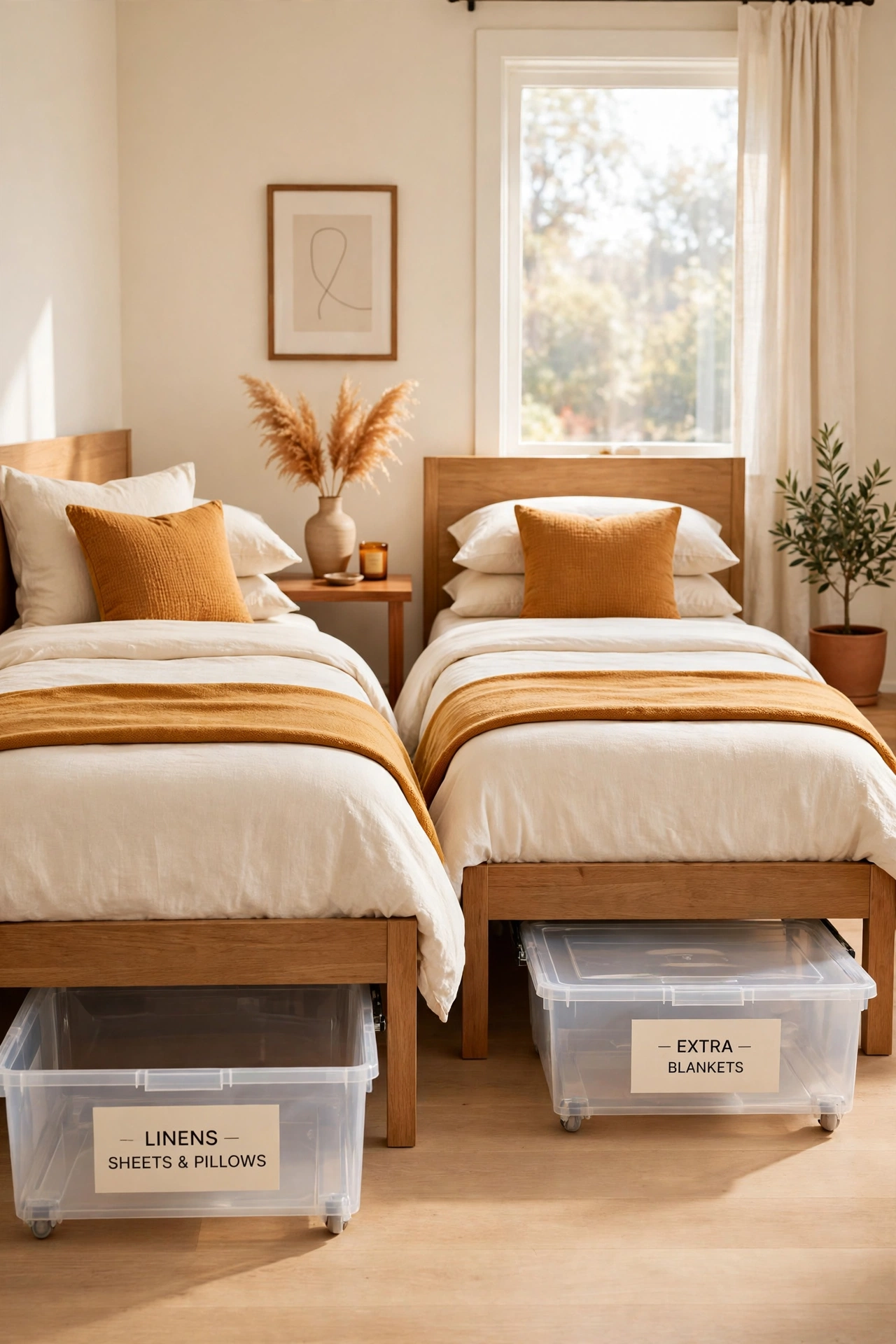
Under-bed storage bins are the easiest way to add a lot of storage to a small shared bedroom without adding any furniture. One set of labeled bins slides under each bed, so each sibling has a private spot for off-season clothes, extra bedding, and personal items that do not need to sit out in the room.
Choose bins with lids and wheels so they slide out smoothly and keep dust away from the contents. Label each bin clearly so nothing gets mixed up. For more ideas on making the most of this hidden space, see these under bed storage organization ideas. Under-bed bins keep the floor clear and the room feeling open.
10. Add a Privacy Curtain on a Ceiling Track
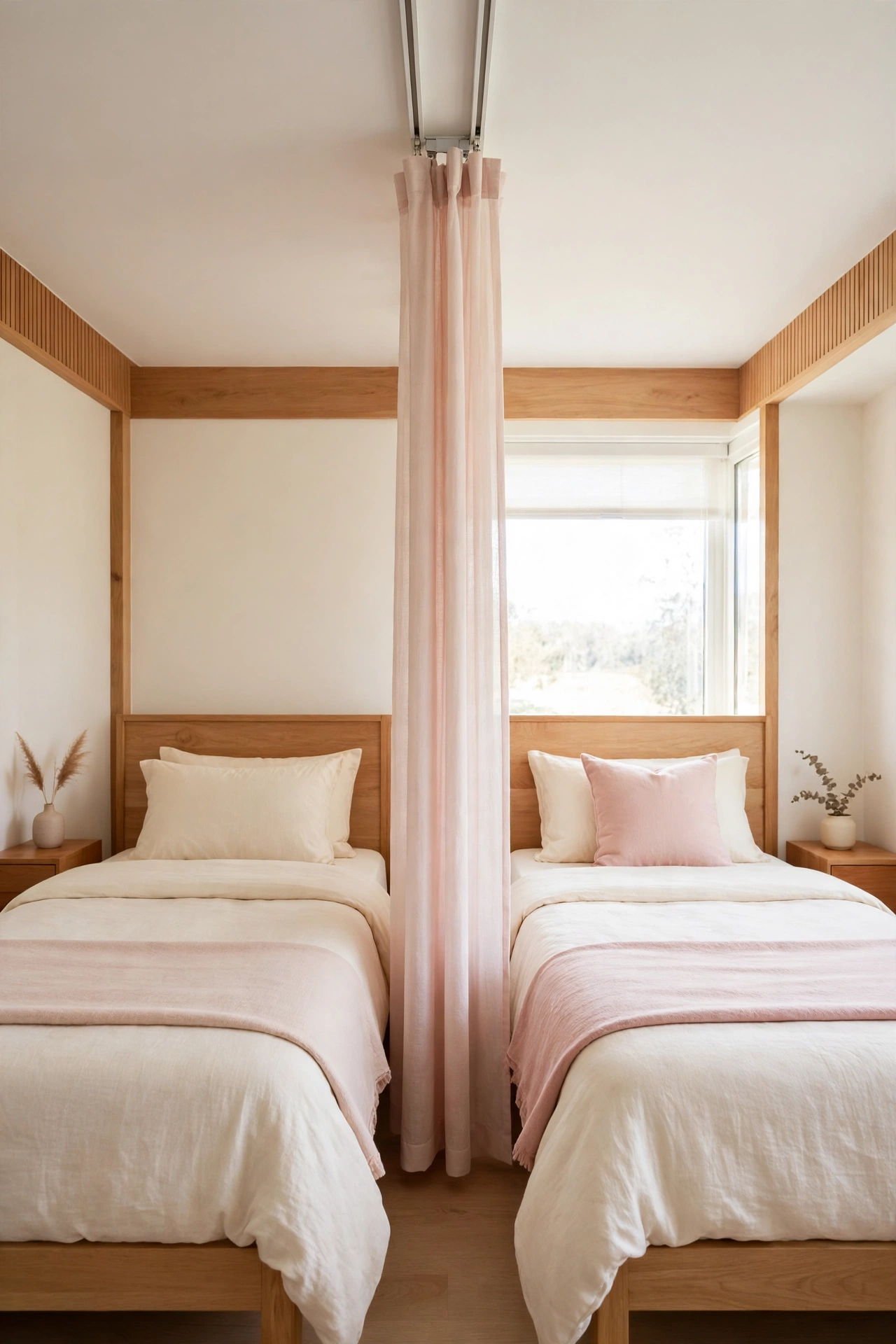
A privacy curtain on a ceiling track is a gentle way to give each sibling a private moment without building a wall. A simple curtain that slides along a track between the beds can close for sleep, for a phone call, or for changing clothes, then slide open again when both siblings want the room to feel open.
Choose a light fabric in a soft neutral color so the curtain never makes the room feel dark or closed in. Mount the track on the ceiling rather than the wall so the curtain hangs straight and slides smoothly. A privacy curtain is one of the kindest features you can add to a shared bedroom, because it gives both people control over their own space.
11. Mount Two Reading Lights Above Each Bed
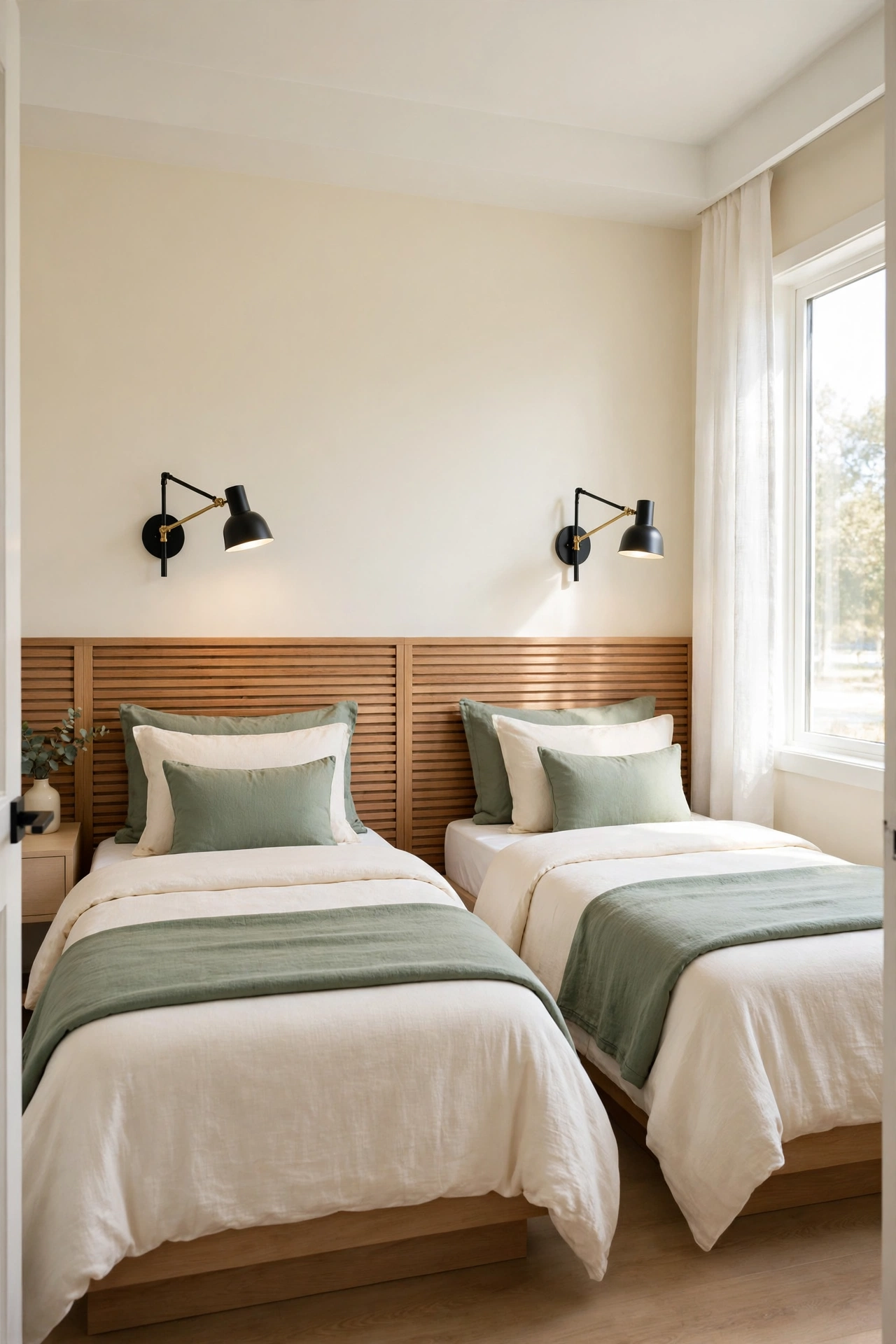
Two reading lights mounted above each bed let one sibling read late while the other sleeps in peace. A small wall light with a focused beam lights only one bed, unlike a ceiling light that fills the whole room. Each sibling can switch their own light on or off without disturbing the other.
Choose matching lights in the same finish so the wall looks balanced, and pick a warm bulb that feels gentle at night. A reading light above the bed also frees up nightstand space for other things. This small upgrade solves one of the biggest nightly frictions in a shared bedroom.
12. Use a Shared Dresser with Labeled Drawers
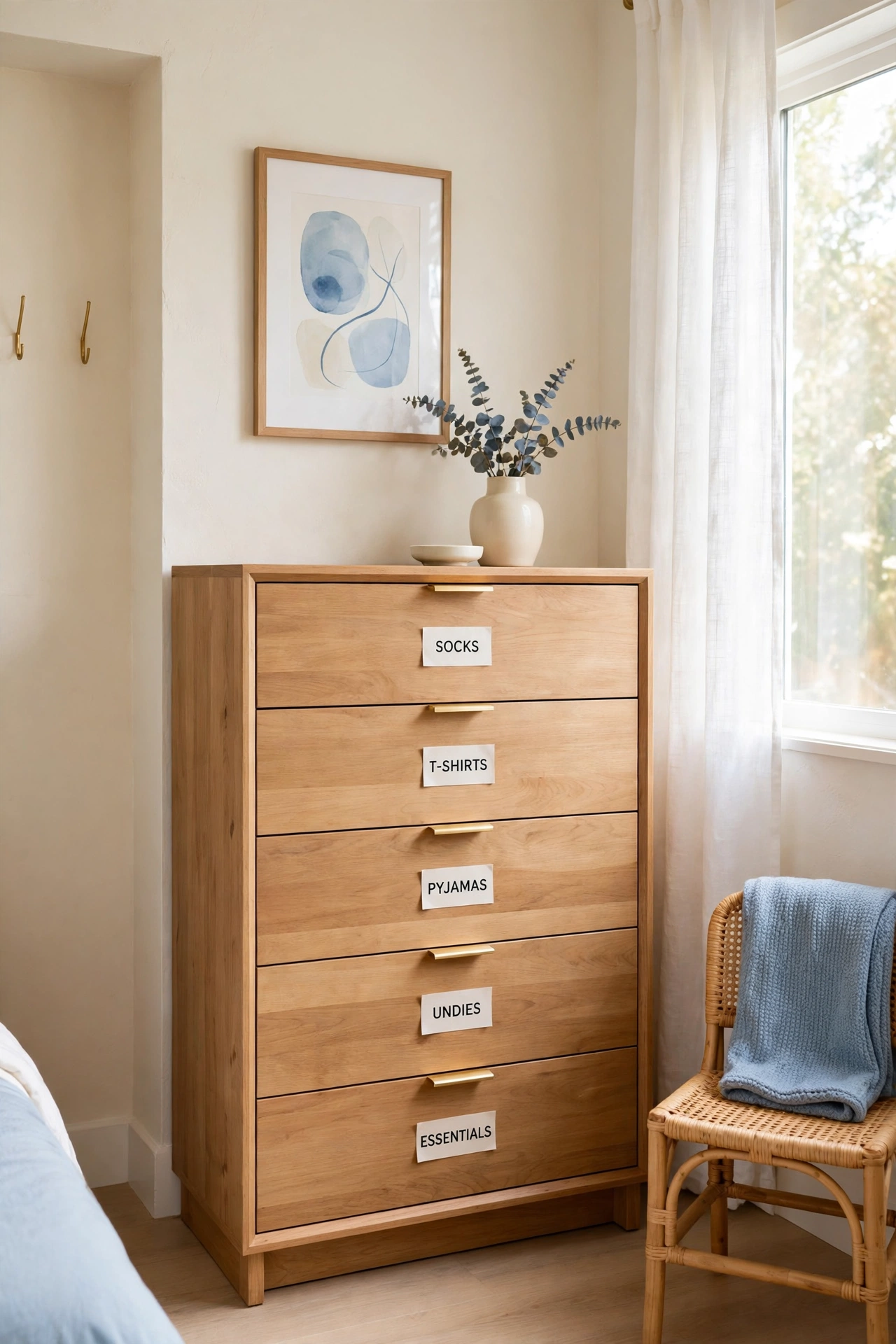
A shared dresser with labeled drawers keeps clothes organized when two adult siblings use the same piece of furniture. Split the drawers evenly, with the top drawers for one sibling and the bottom drawers for the other, or split them left and right. Small printed labels on each drawer front make the split obvious to both people.
Keep the dresser in a shared spot, such as against the wall opposite the beds, so neither sibling has to cross the other side to reach it. A dresser with deep drawers holds more than a wardrobe rail, which matters in a small room. Labeled drawers end the daily search for missing socks and shirts.
13. Create Separate Zones with a Rug and a Bookshelf
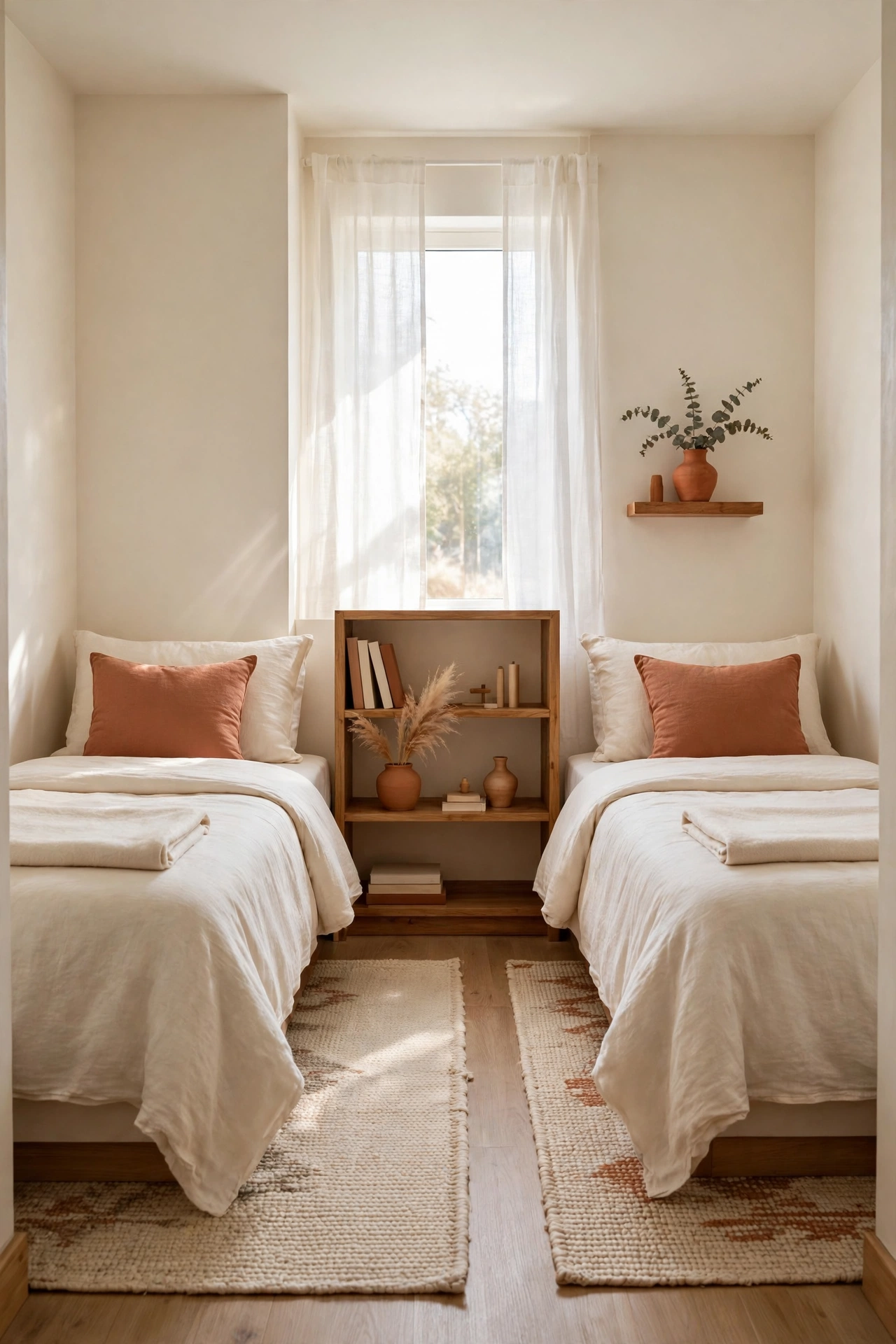
A rug and a low bookshelf can create two clear zones in one small bedroom without any building work. Place a rug under each bed to mark each sibling’s sleeping zone, then set a low bookshelf between the beds as a soft divider that also holds books and storage boxes.
Use the same size rug on each side so the room stays balanced, and choose a low bookshelf that never blocks light from the window. For more ideas on carving out a quiet corner in a small room, see these small reading nook layout ideas. Zones made from furniture and rugs are easy to change later, which suits siblings whose needs shift over time.
14. Add a Shared Charging Station and Nightstand Caddy
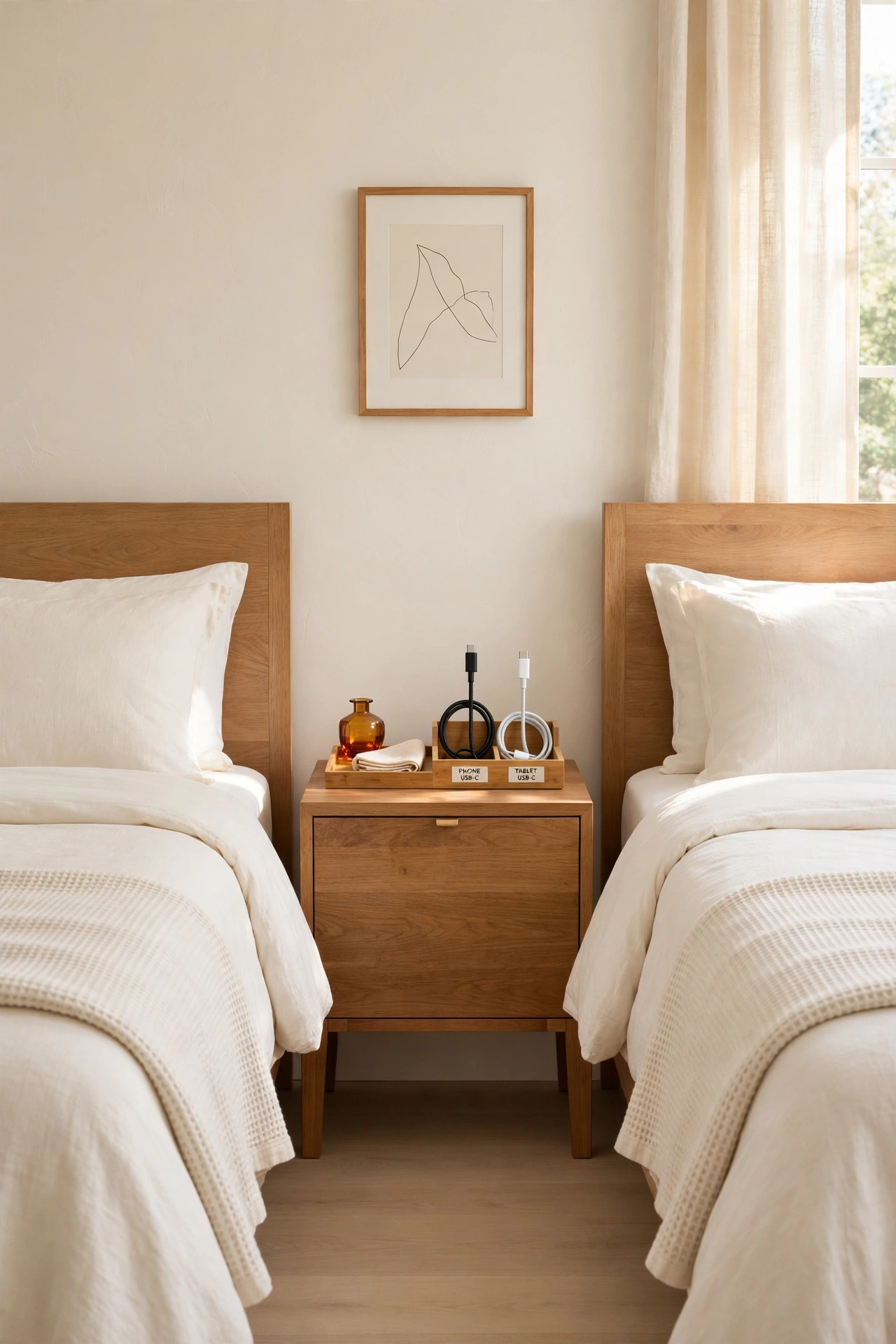
A shared charging station keeps phones, tablets, and earbuds in one tidy spot instead of scattered across both beds. A small tray on the shared nightstand holds two chargers and two cables, with a label or a colored band on each cable so each sibling knows which one is theirs. A nightstand caddy on each bed holds a book, glasses, and a phone within easy reach.
Keep the charging station away from the beds at night so the glow of screens never disturbs sleep. A single power strip with a switch turns everything off at once. This small station ends the nightly hunt for a free outlet and keeps cords from tangling across the floor.
Conclusion
Sharing a small bedroom as adult siblings works best when the room treats both people as equals. Matching beds, divided storage, and clear zones give each sibling a space that feels like their own, while shared pieces like the nightstand and the charging station keep the room simple and tidy.
Pick one or two ideas that fit your room and start today. A slim divider or a set of labeled bins can change the whole feeling of the space in a single afternoon. For a calm home beyond the bedroom, these nightly reset routine ideas will help you keep every room organized with just a few minutes each evening.
Frequently Asked Questions About Small Shared Bedroom Layout Ideas for Adult Siblings
How do two adult siblings share one small bedroom fairly?
Split the room into two equal halves with matching beds, equal storage, and a clear boundary such as a divider or a bookshelf. Give each sibling the same amount of wardrobe space, drawer space, and desk space so neither person feels shortchanged. A fair layout prevents most arguments before they begin.
What is the best bed setup for adult siblings sharing a room?
Two matching twin beds with storage underneath work best for most small bedrooms. Twin beds leave enough floor space for desks and storage, and matching beds keep the room feeling fair. Loft beds are another option when the ceiling is high enough, since they free the floor underneath for desks.
How can siblings get privacy in a shared bedroom?
A slim room divider, a privacy curtain on a ceiling track, or a tall bookshelf between the beds all create privacy without blocking light. Separate reading lights and headphones also help each sibling enjoy quiet time while the other sleeps or works. Privacy comes from clear boundaries, not from large rooms.
How do siblings keep clothes separate in a shared wardrobe?
Divide the wardrobe in half with a vertical divider and give each sibling one rail and one set of shelves. Label storage boxes with each sibling’s name and keep a small laundry basket on each side of the room. Labeled drawers in a shared dresser work the same way and keep daily clothes easy to find.
Can a small shared bedroom fit two desks?
Yes, two slim desks placed back to back in the center of the room, or one long desk split down the middle along a wall, both fit in a small bedroom. Wall shelves above each desk add storage without using floor space. Keep each desk the same size so the setup stays fair for both siblings.

Hi, I’m Emily! I turn messy corners into cozy, organized spots. DreamNestDecor is where I share simple, practical home ideas — decor, organization, and small-space solutions that work in real life, not just in photos. Every idea here is carefully researched before it’s shared.