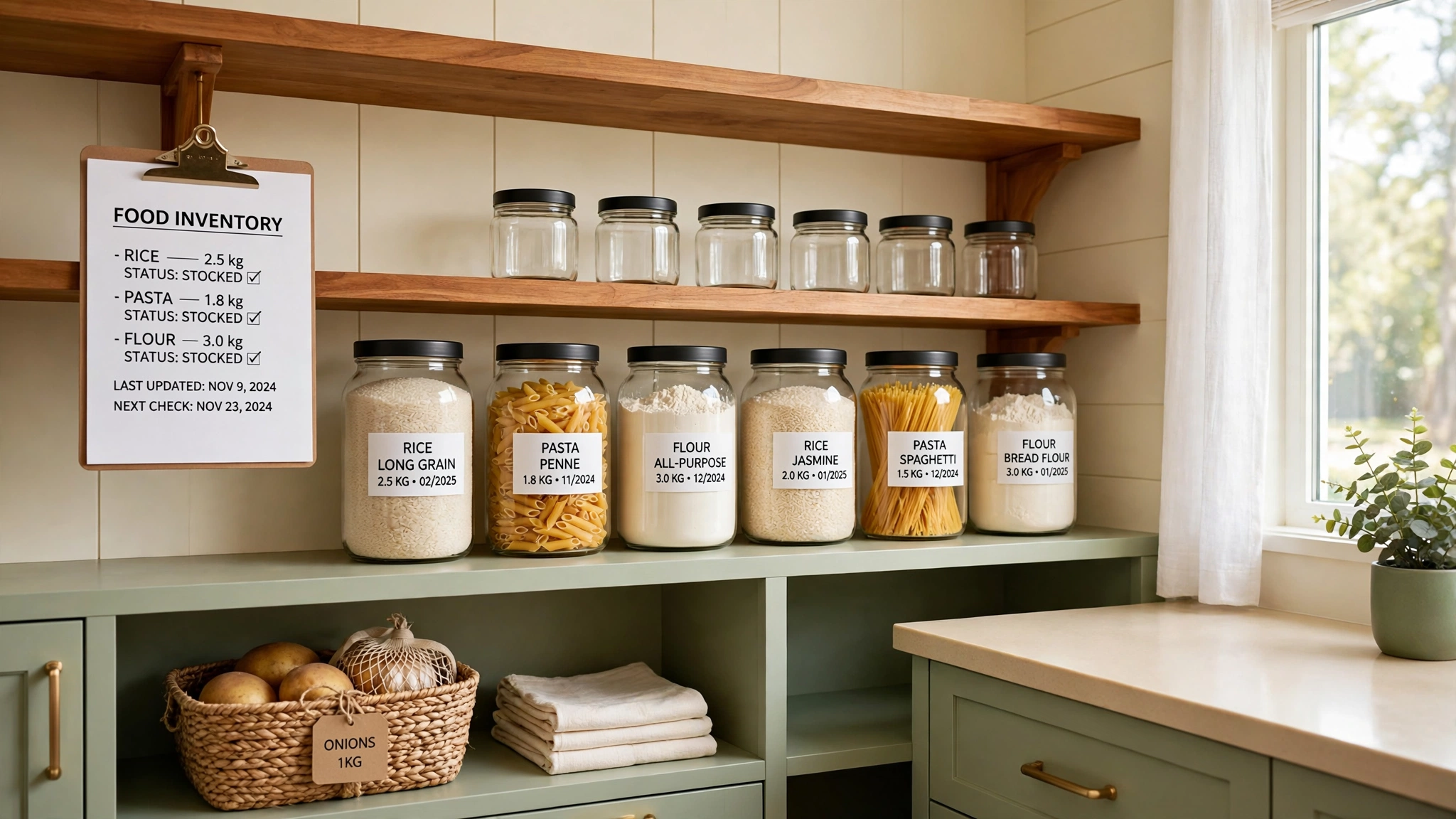
Picture this: you open the pantry door and every item has a clear place, a clear label, and a clear spot on your list. You reach for the pasta and you know at once that two boxes are left. You grab the rice and you see the date it was bought. That calm feeling is exactly what a good food inventory gives you every single day.
You do not need a fancy app or a complicated system to get there. All you need is a simple list, a few labels, and a short weekly habit. These 12 food inventory organization ideas to track pantry items will help you stop buying doubles, waste less food, and always know what is on your shelves.
1. Keep a Running Pantry List on the Fridge Door
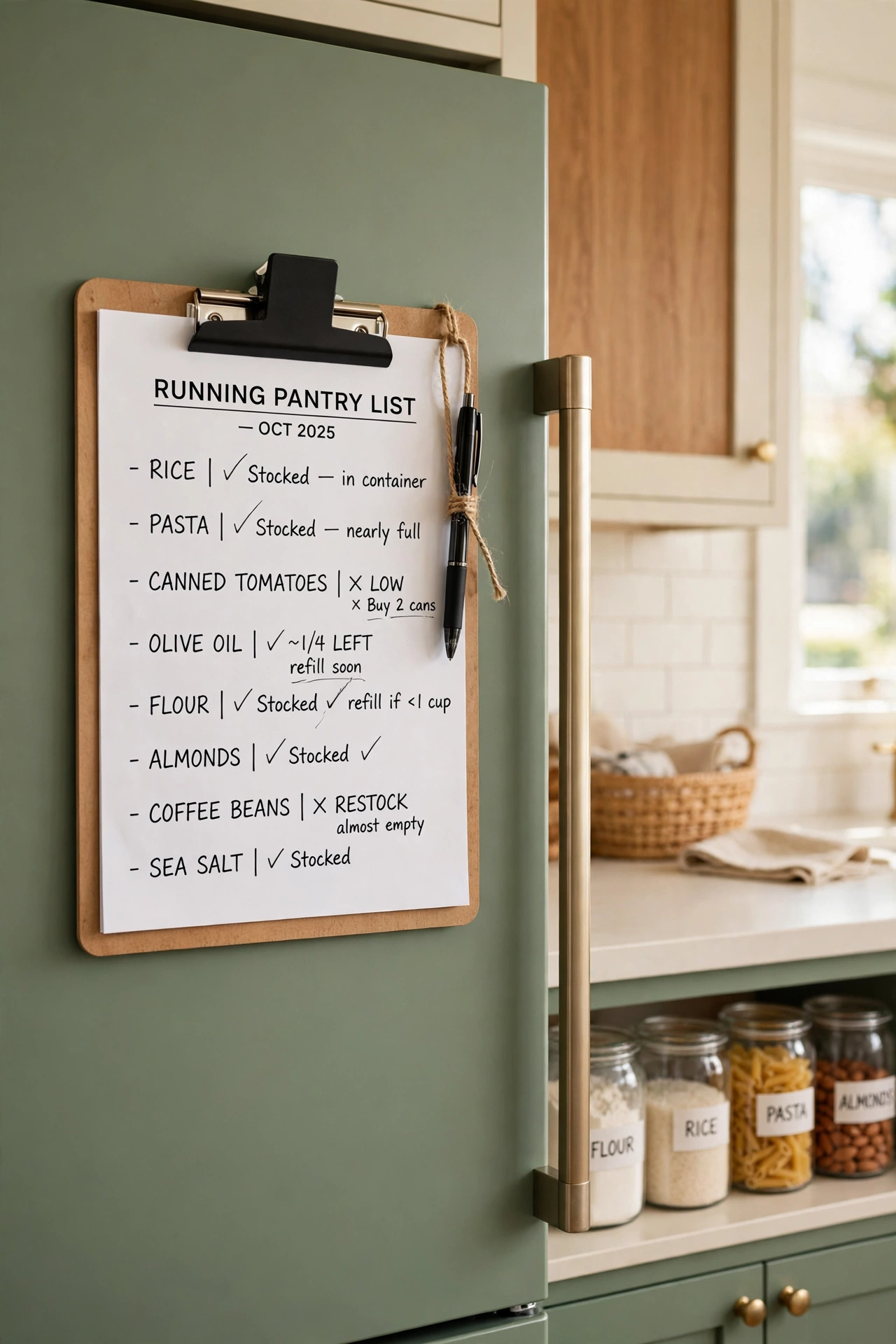
A running pantry list on the fridge door is the simplest way to track what you own. Write every pantry staple on the list when you bring it home, and cross it off when the last one is used. The list lives where the whole family can see it, so anyone can add an item the moment it runs out.
Use a magnetic notepad or a printed sheet held by a magnet, and keep a pen tied beside it so the list is always easy to update. Review the list before every shopping trip so you buy only what is missing. A list on the fridge door turns guesswork into a clear plan.
2. Label Every Jar with the Purchase Date
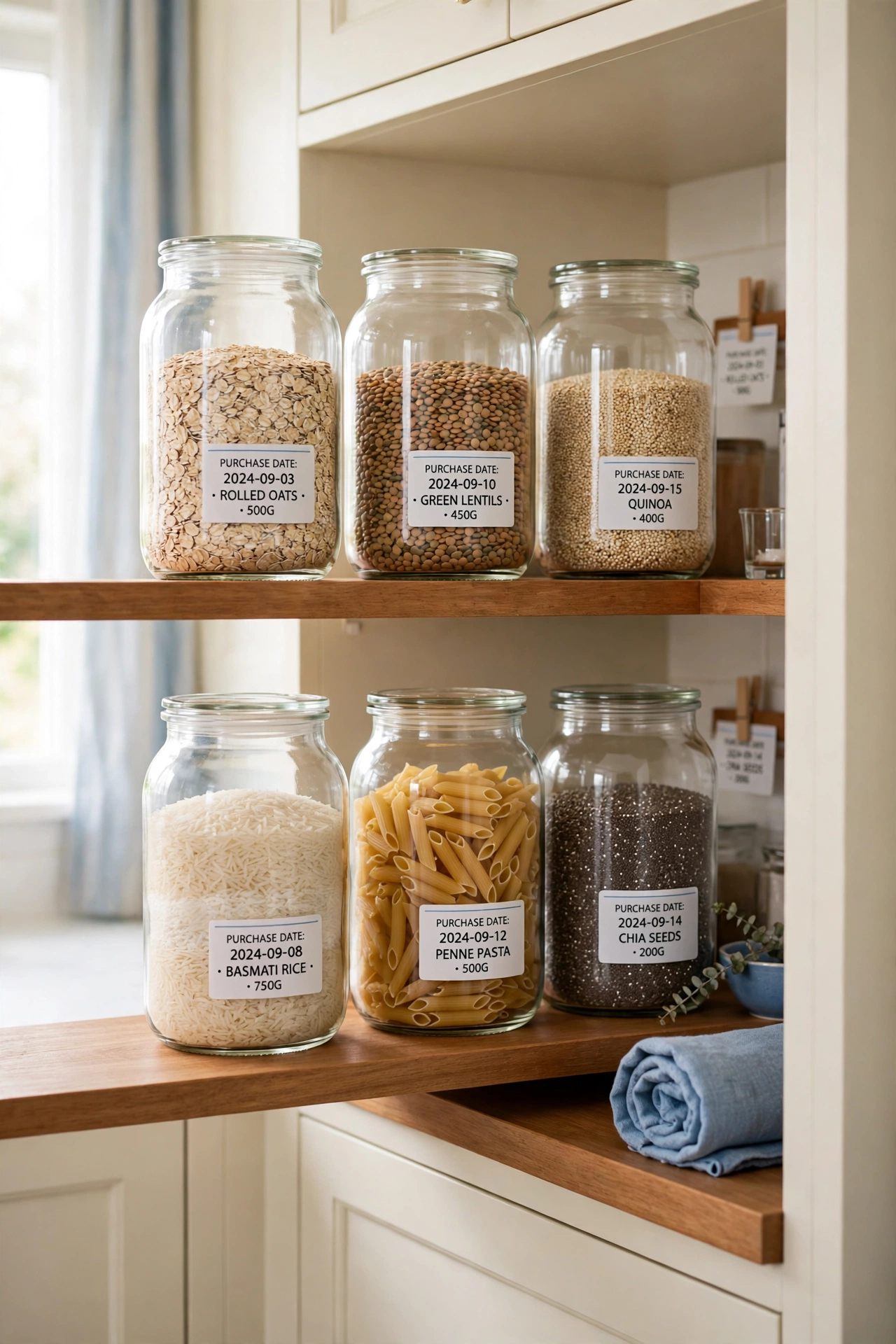
A small date label on every jar tells you at a glance how long an item has sat on the shelf. Write the purchase date on a plain sticker and place it on the front of the jar where it is easy to read. When two jars hold the same food, the older date tells you which one to open first.
Date labels also make deep cleaning simple, because any jar with a very old date stands out right away. Keep a roll of blank labels and a marker inside a kitchen drawer so labeling takes only a few seconds. For more ideas on keeping canned goods neat and easy to find, see these pantry can organization ideas. A dated jar is a jar you will never forget about.
3. Sort Pantry Items by Category Zones
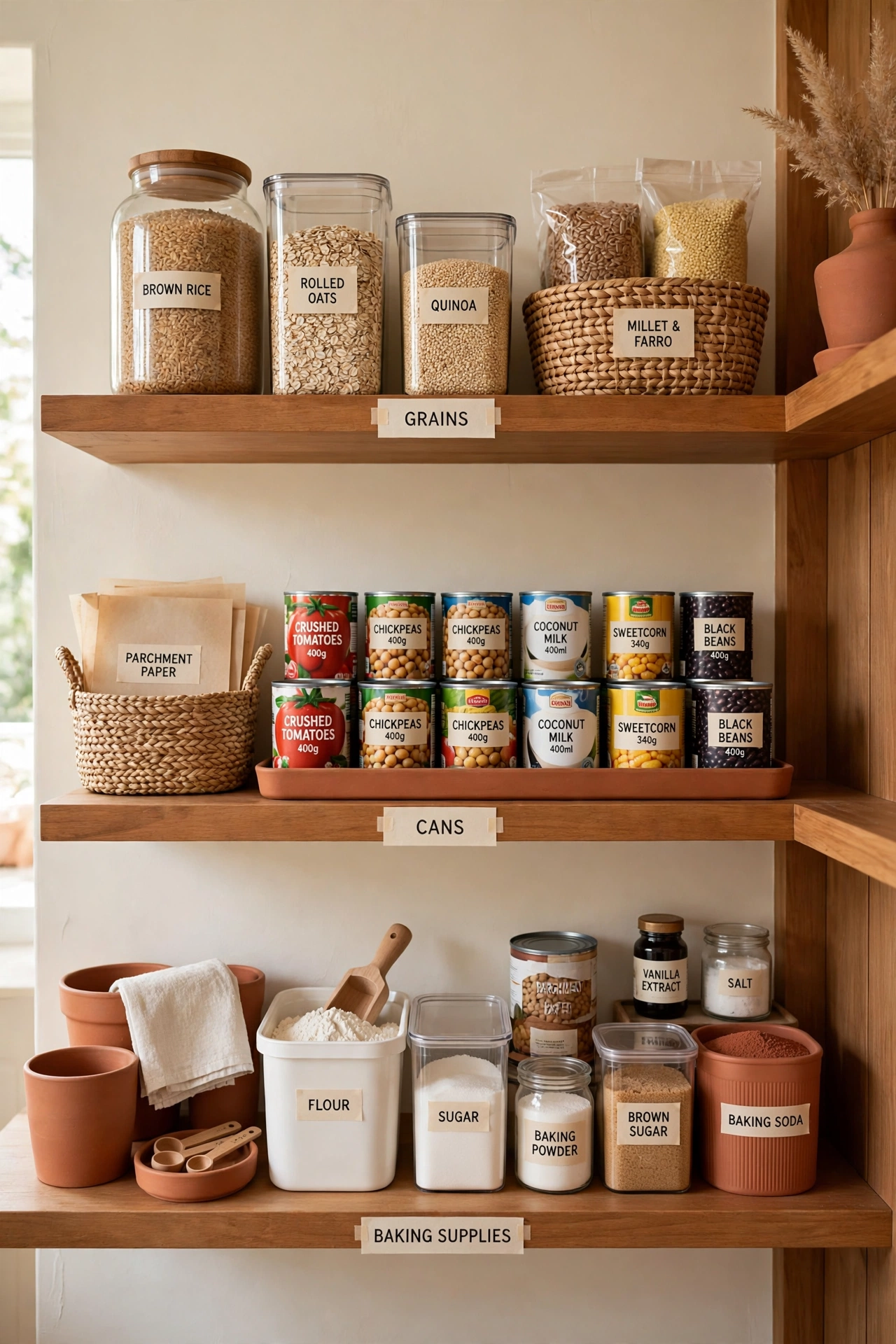
Category zones turn a crowded pantry into a map you can read in seconds. Give each group its own shelf or bin, such as grains on one shelf, canned goods on the next, and baking supplies together on a third. When every item has a zone, you can count what is left without pulling everything out.
Label each zone with a simple printed sign so the system stays clear for everyone in the home. Keep the zones in the same order every week so checking stock becomes a fast habit. A zoned pantry makes inventory checks quick and keeps shopping lists accurate.
4. Use Clear Containers So You See What Is Left
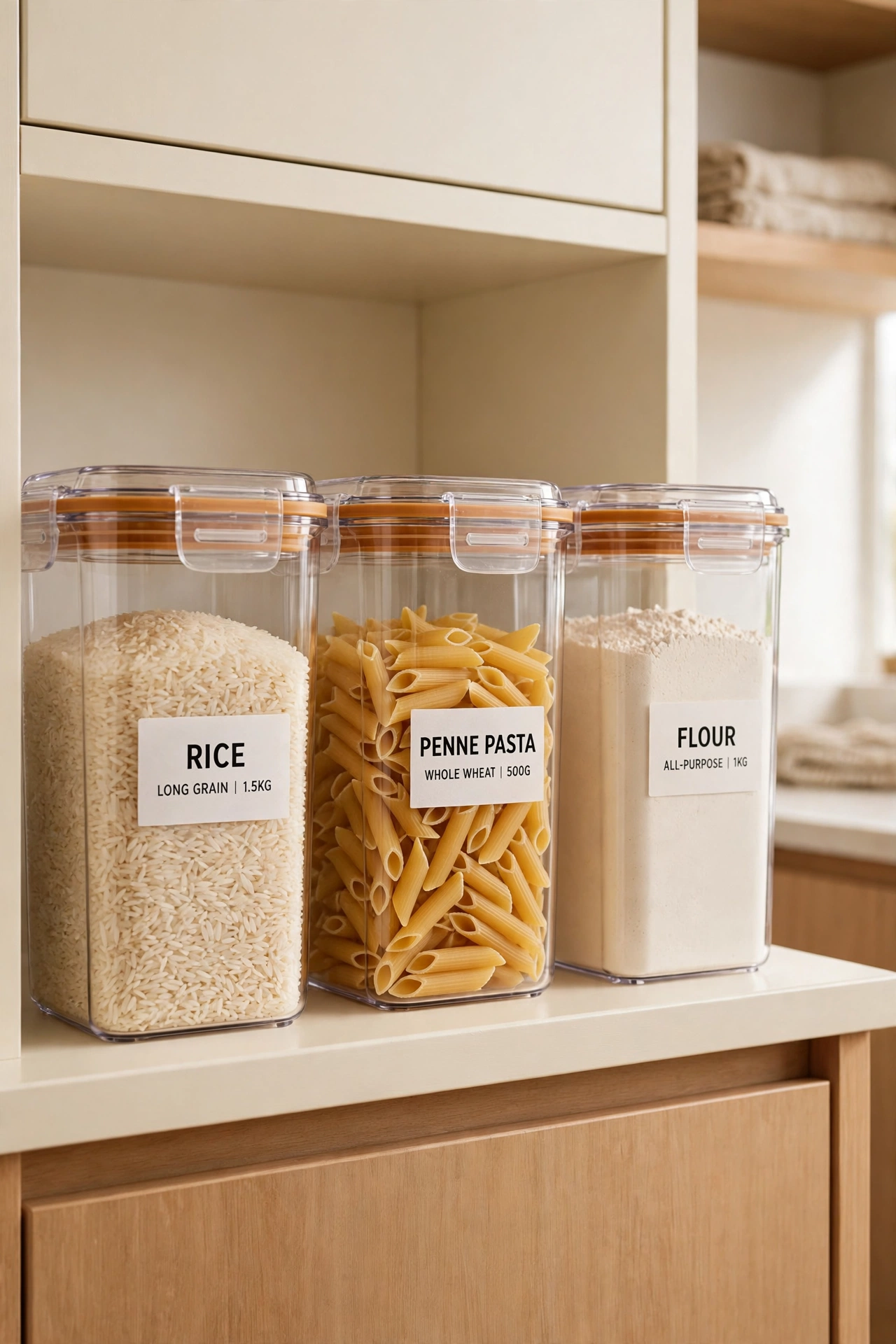
Clear containers let you see the exact level of food inside without opening a single lid. When the rice is low, you see it the moment you open the pantry door. That visual check is faster than any list and it stops you from buying a third bag of something you already own.
Choose airtight containers with wide openings so they are easy to fill and scoop from. Pour each new bag into the matching container right after shopping, and keep the containers at eye level on the most used shelf. A clear container turns a quick glance into a full inventory check.
5. Try the First In First Out Rule
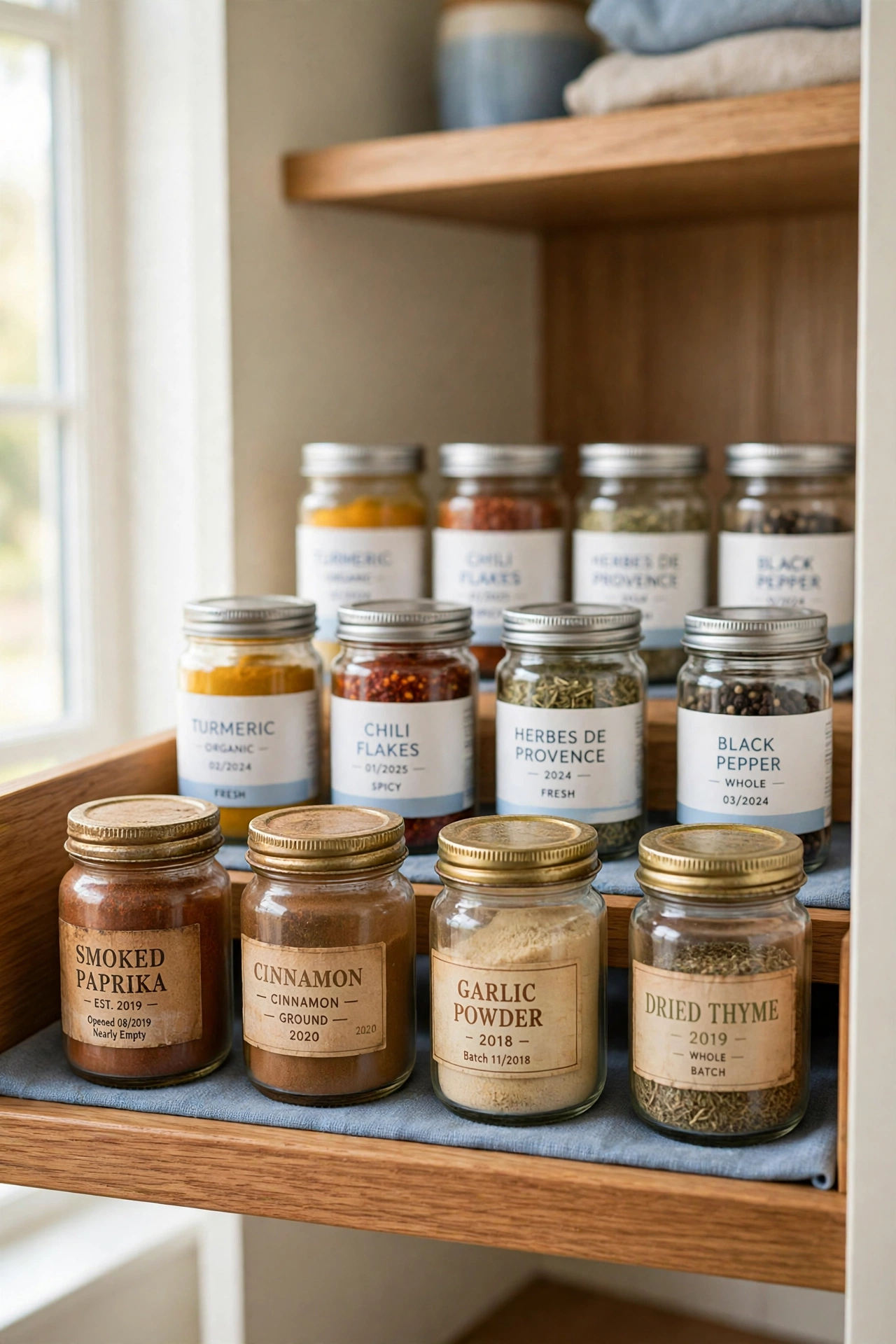
The first in first out rule is a simple habit that keeps older food moving to the front of the shelf. When you buy a new jar, place it behind the one that is already open. The older item gets used first, and nothing sits at the back long enough to expire.
This rule works best when the front row is easy to reach and the back row is easy to see. Slide older items forward each time you put shopping away, and the rotation happens on its own. Spices benefit from the same habit, and these kitchen spice organization ideas show how to keep small jars in clear order. First in first out is a small move that saves real money.
6. Create a Weekly Pantry Check Routine
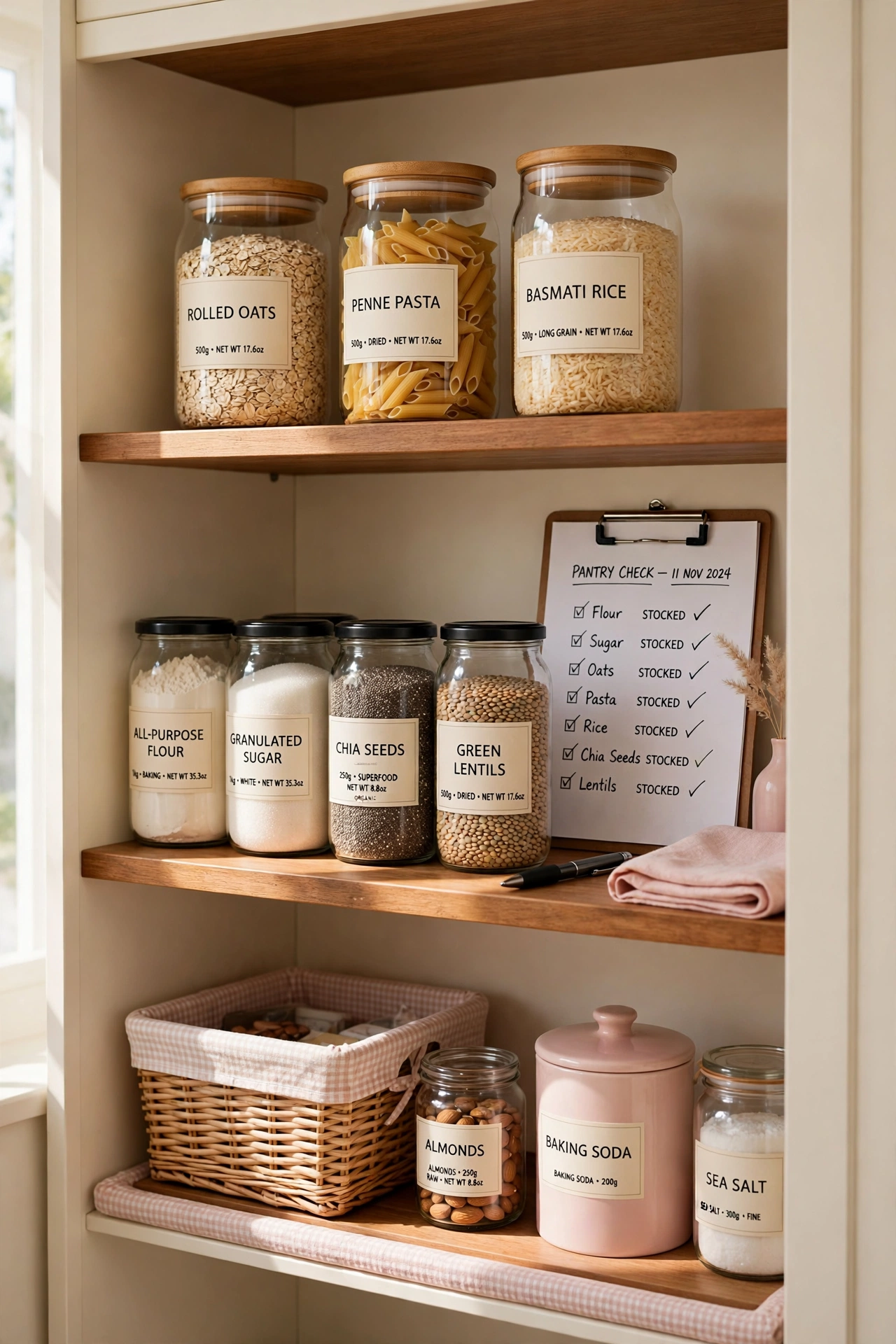
A weekly pantry check routine takes only ten minutes and keeps your inventory honest. Pick one calm moment each week, open the pantry, and scan every shelf from top to bottom. Note what is low, what is out, and what is close to its expiry date.
Write the findings straight onto your shopping list while you stand in front of the shelves. That one habit stops the two most common pantry problems: buying food you already own and running out of food you need. A weekly check is the heartbeat of a good inventory system.
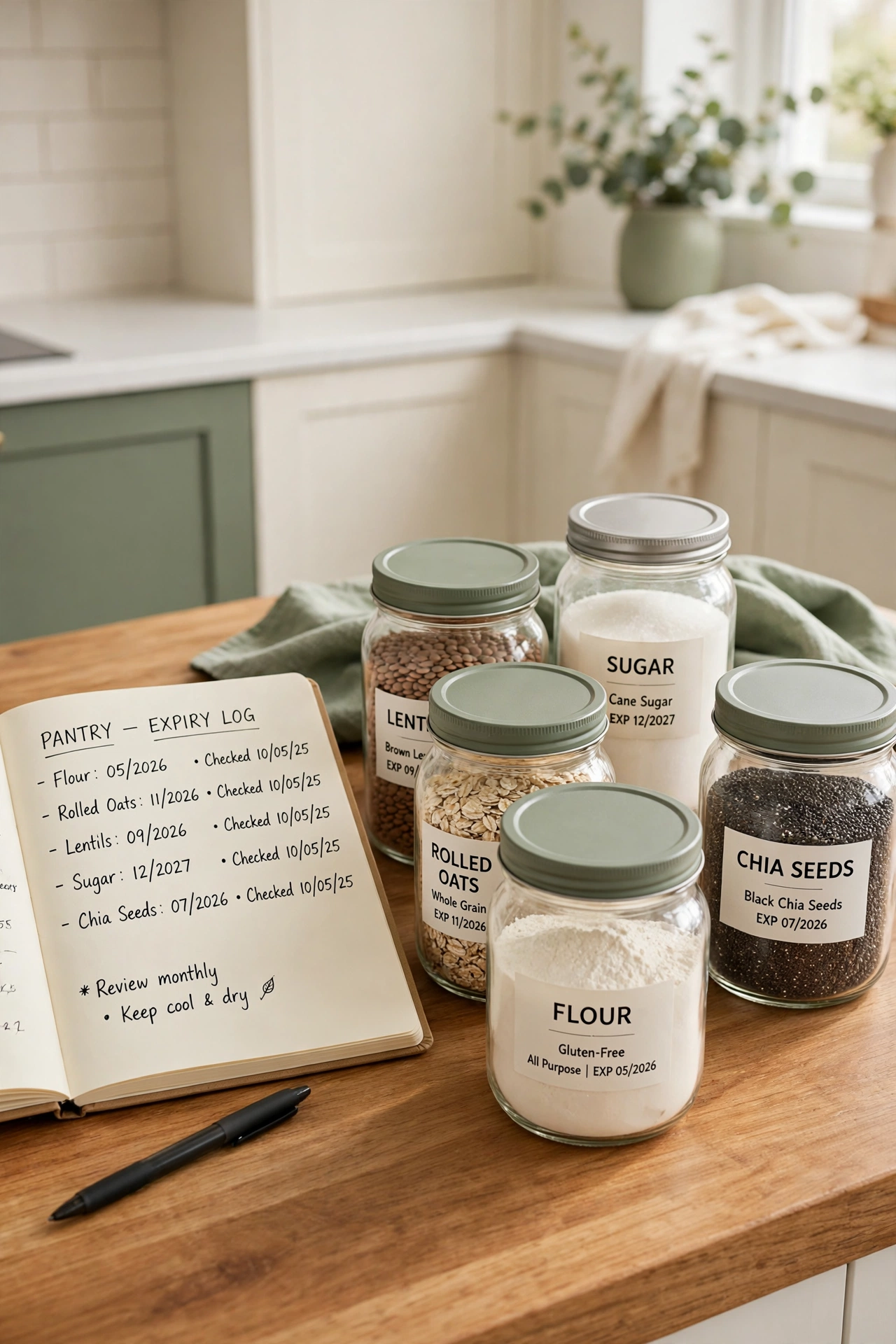
7. Track Expiry Dates in a Simple Notebook
A simple notebook holds expiry dates in one place where they are easy to review. Write the item name and its expiry date on one line, and keep the notebook on a shelf beside the pantry. A quick flip through the pages shows which foods need to be used in the next few weeks.
Update the notebook when new food arrives and cross out items as they are used. Keep the entries in date order so the soonest dates sit at the top of the page. A notebook costs almost nothing, yet it catches expired food before it wastes money.
8. Keep a Small Whiteboard for Low Stock Alerts
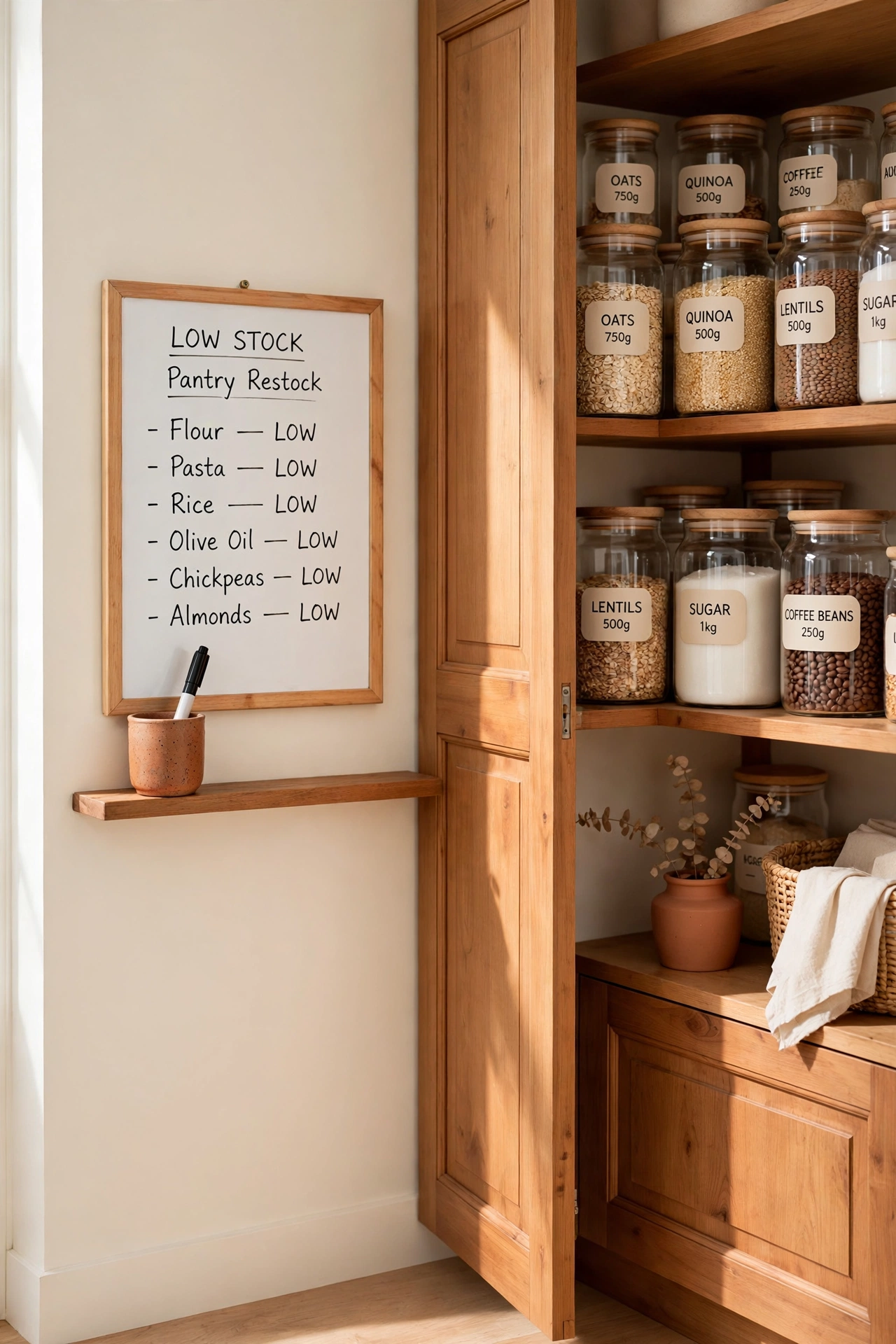
A small whiteboard near the pantry turns low stock into a message everyone can read. When a family member finishes the last of something, the item name goes on the board at once. The board becomes a live alert list that feeds straight into the next shopping trip.
Mount the whiteboard at eye level beside the pantry door and keep a marker in a small cup beside it. Wipe each item off the board the moment it is bought, so the board never fills with old notes. A whiteboard makes low stock visible to the whole household.
9. Store Backups Behind Front Items
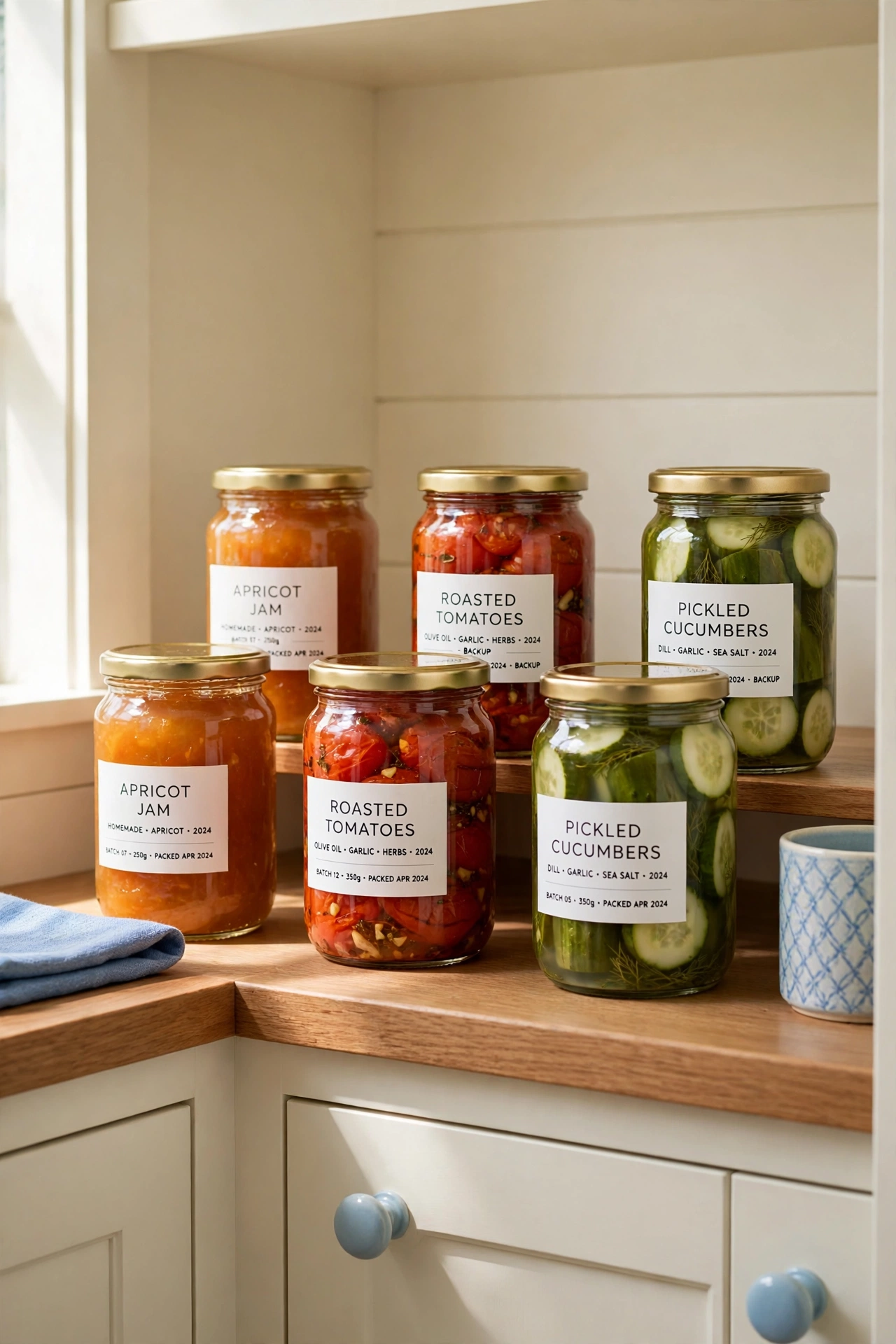
Backups belong directly behind the item they replace, not in a separate pile at the back of the pantry. When the front jar is empty, the backup is already in place and ready to move forward. This small habit keeps your count accurate, because every backup is tied to the item in front of it.
Leave a little space between the front row and the back row so the backup is easy to pull forward. Count front and back together when you check stock, and the number on your list will match the number on the shelf. A backup behind its twin is a backup you will never lose track of.
10. Count Items Before the Weekly Shop
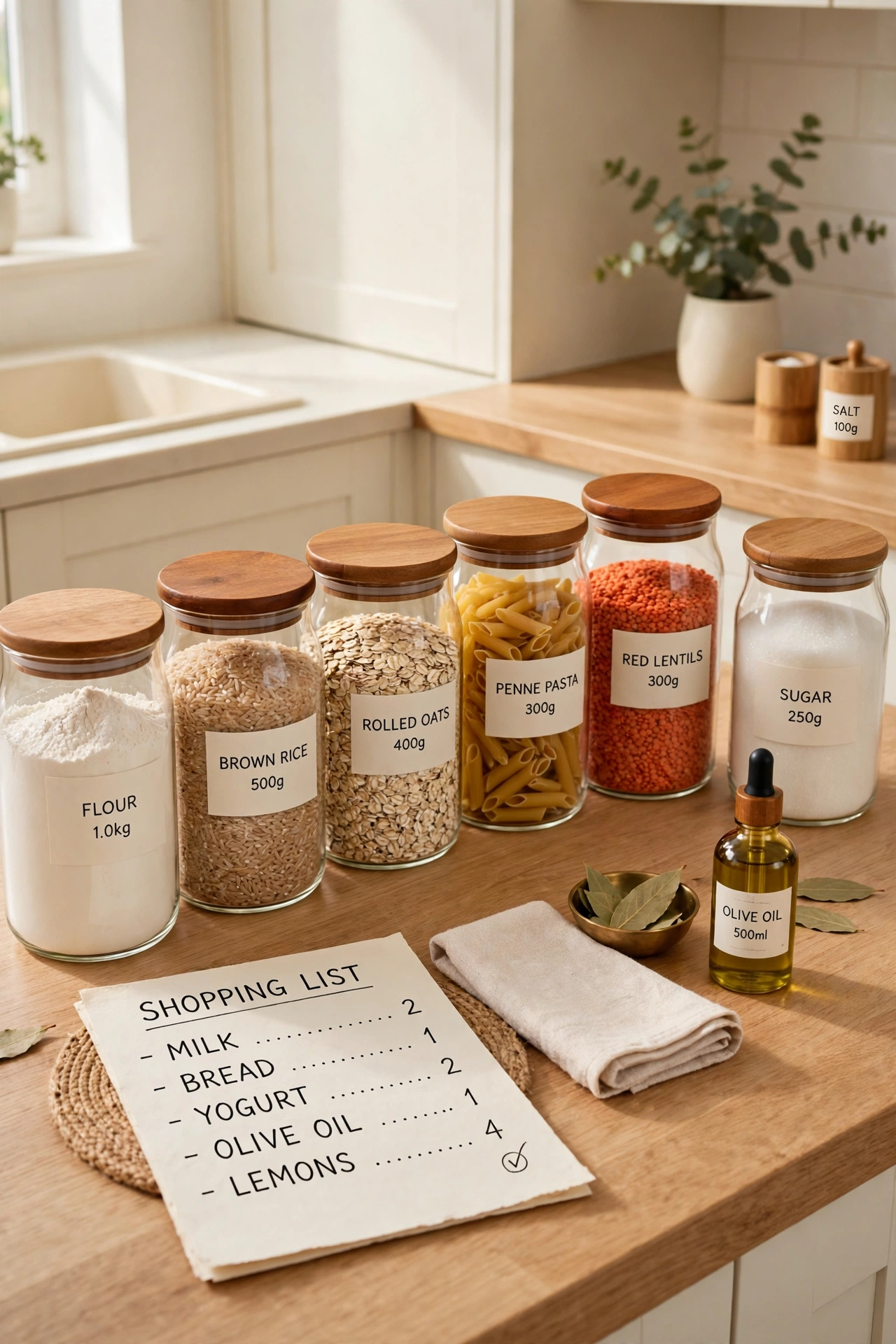
A quick count before the weekly shop is the most useful inventory habit of all. Stand in front of each shelf and count the key staples, then write the numbers on your list. The count takes five minutes and it stops duplicate buying better than any memory trick.
Count only the items you buy every week, such as rice, pasta, oil, and canned tomatoes. Skip the rare items until the monthly review. A counted list makes shopping fast, and it keeps the pantry from filling with extras. A clear count also helps with weekly cooking plans, and these meal prep container organization ideas show how to plan portions around what is already on hand. Count first, shop second, and the pantry stays in balance.
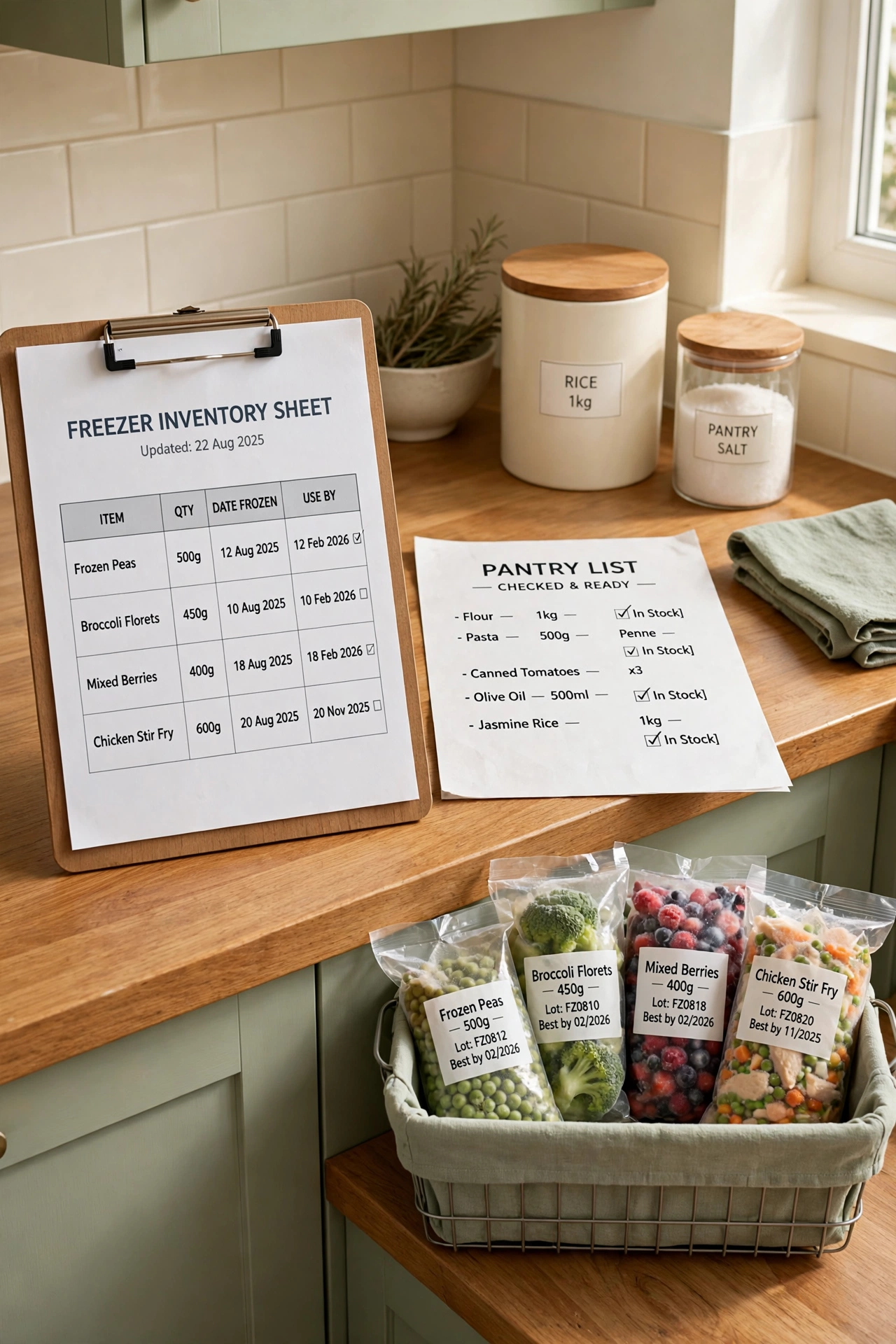
11. Use a Freezer Inventory Sheet Beside the Pantry List
A freezer inventory sheet beside the pantry list keeps frozen food in the same system as dry food. List each frozen item with its date and its spot in the freezer, and update the sheet when food goes in or comes out. The pantry list and the freezer sheet together give you one complete picture of the food in the house.
Keep both sheets on the same clipboard so they are always checked together. When the freezer sheet shows two bags of peas, the shopping list stays free of peas. For more ideas on keeping frozen food easy to find, see these freezer organization ideas. One clipboard for dry food and frozen food means nothing gets missed.
12. Review the Inventory at the Start of Each Month
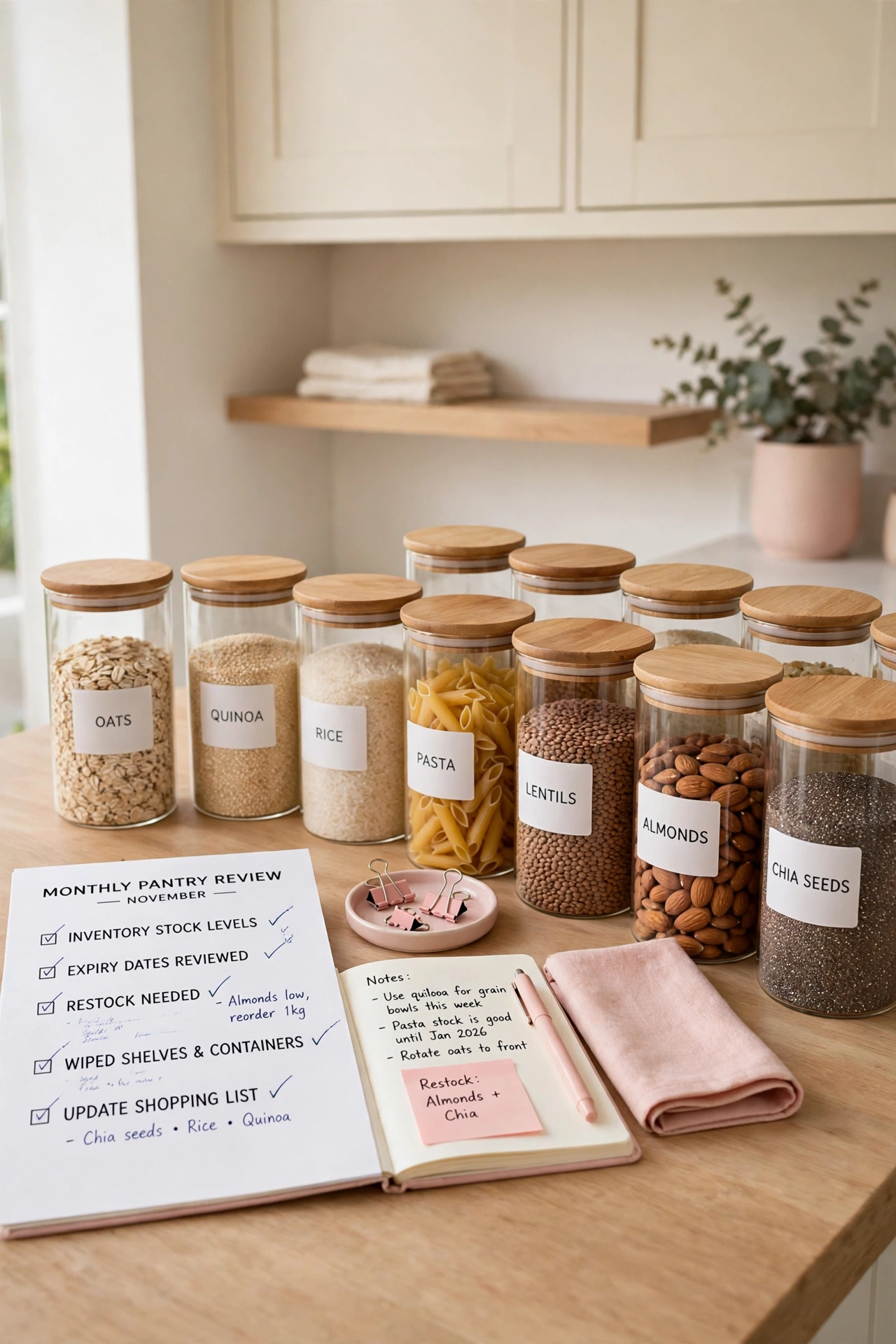
A monthly review is the big picture check that keeps the whole system honest. At the start of each month, walk through the pantry with your list and your notebook, and compare what is written down with what is actually on the shelves. Fix any counts that drifted during busy weeks.
Use the review to plan the month ahead, such as which staples need a bulk buy and which items should be used up first. Clear out anything that expired and move slow items to the front so they get used. A monthly review turns twelve small checks into a pantry that runs itself.
Conclusion
A food inventory does not need to be complicated to work well. From a list on the fridge door to a monthly review, each idea here adds one small layer of order to the pantry. The best system is the one you will actually keep up with week after week.
Pick one or two ideas that fit your kitchen and start today. Write the list, label the jars, and count before you shop. For a calm home beyond the pantry, these nightly reset routine ideas will help you keep every room organized with just a few minutes each evening.
Frequently Asked Questions About Food Inventory Organization Ideas to Track Pantry Items
What is the easiest way to start a food inventory?
Start with a simple list on the fridge door. Write down the pantry staples you use every week, then update the list as items run out. A single sheet of paper is enough to begin, and you can add labels and zones later once the habit feels natural.
How often should I update my pantry inventory?
Update the list the moment an item runs out, and do a full check once a week before shopping. A monthly review catches any counts that drifted during busy weeks. Small updates each day beat one big count at the end of the month.
Do I need an app to track pantry items?
No, an app is not needed. A paper list, a notebook, and a whiteboard handle most homes very well. Apps help only if you enjoy using them every day, so paper is the safer start for most families.
How do I stop buying food I already own?
Count key staples before every shopping trip and write the numbers on your list. Clear containers also help, because you can see the level of food at a glance. A counted list is the strongest defense against duplicate buying.
What should I do with food that is close to expiring?
Move it to the front of the shelf and plan a meal around it in the next few days. Write the date on a label so everyone in the home can see it. Using food before it expires saves money and keeps the pantry fresh.

Hi, I’m Emily! I turn messy corners into cozy, organized spots. DreamNestDecor is where I share simple, practical home ideas — decor, organization, and small-space solutions that work in real life, not just in photos. Every idea here is carefully researched before it’s shared.