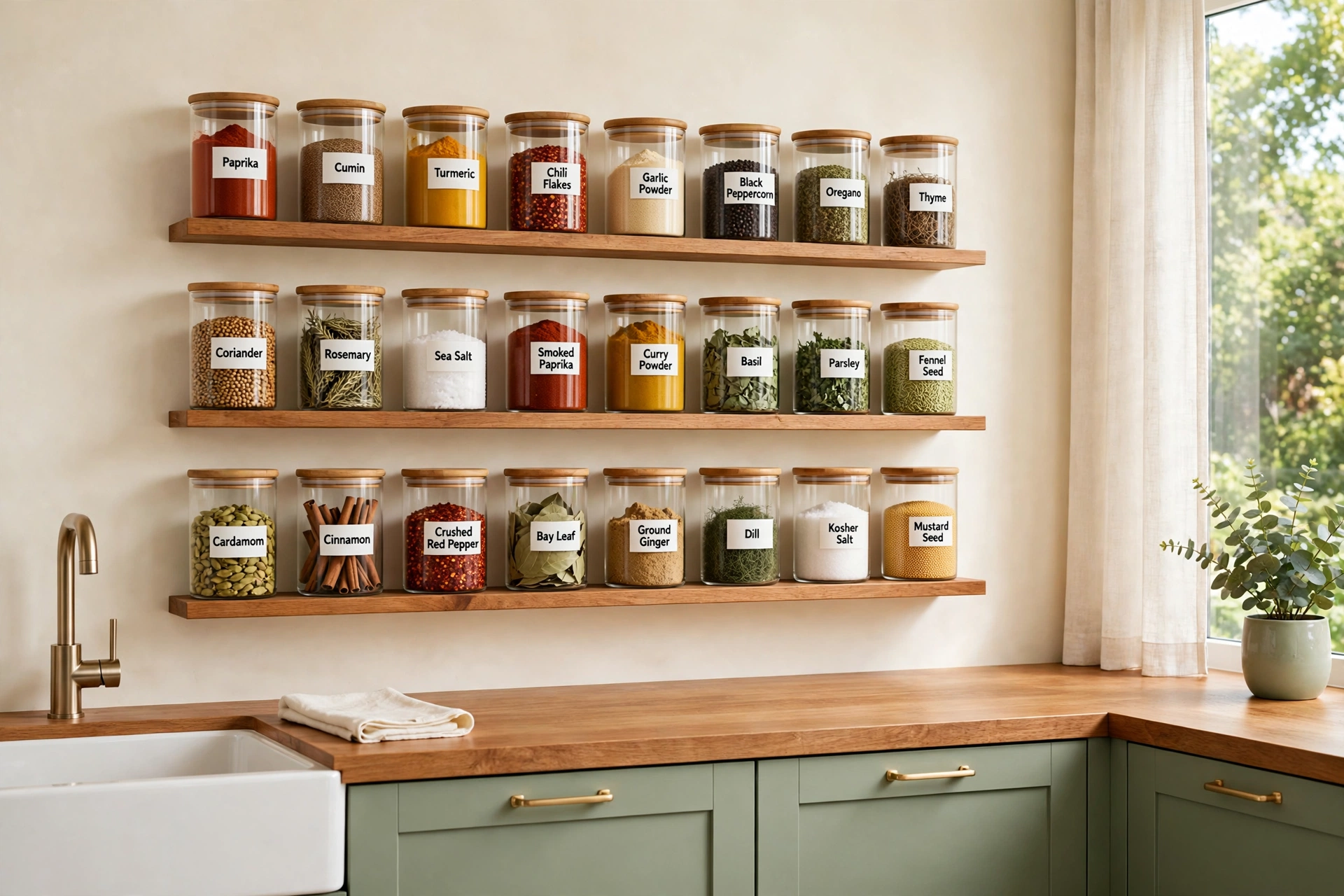
Picture this: you reach for the paprika and it is right there in front of you, clearly labeled and easy to grab. No more digging through a crowded cabinet, no more buying a third jar of cumin because the first two were lost at the back. That small moment of calm is exactly what smart spice organization gives you every single day.
You do not need a bigger kitchen or expensive built-ins to get there. All you need is the right spot for each jar and a simple system that keeps bulk spices under control. These 32 kitchen spice organization ideas will help you keep every spice tidy, visible, and ready to use in a kitchen full of flavor.
1. Start with a Full Spice Audit
Before you buy a single jar or rack, take every spice out of the cabinet and spread it on the counter. Check the date on each container and smell the contents. Spices lose strength over time, and a jar that smells like nothing will add nothing to your food. Throw away anything stale, empty, or past its best date.
Group what is left into keep, refill, and replace piles. This quick audit shows you exactly how many spices you own and which ones you use most. A clear picture of your collection makes every other idea in this list work better.
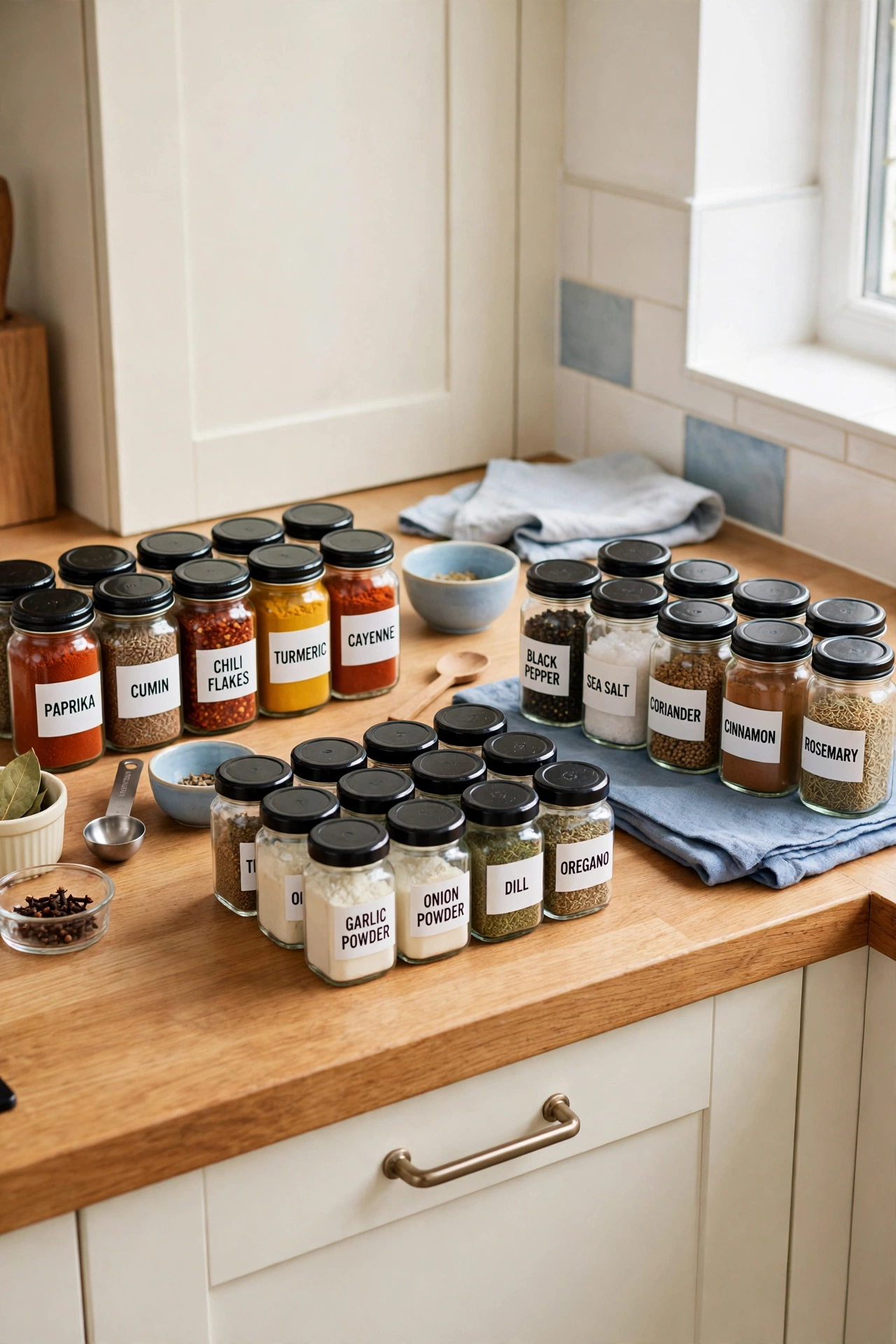
2. Decant Bulk Spices into Matching Glass Jars
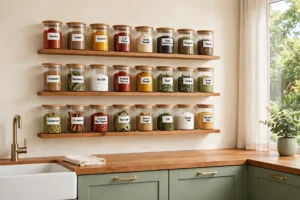
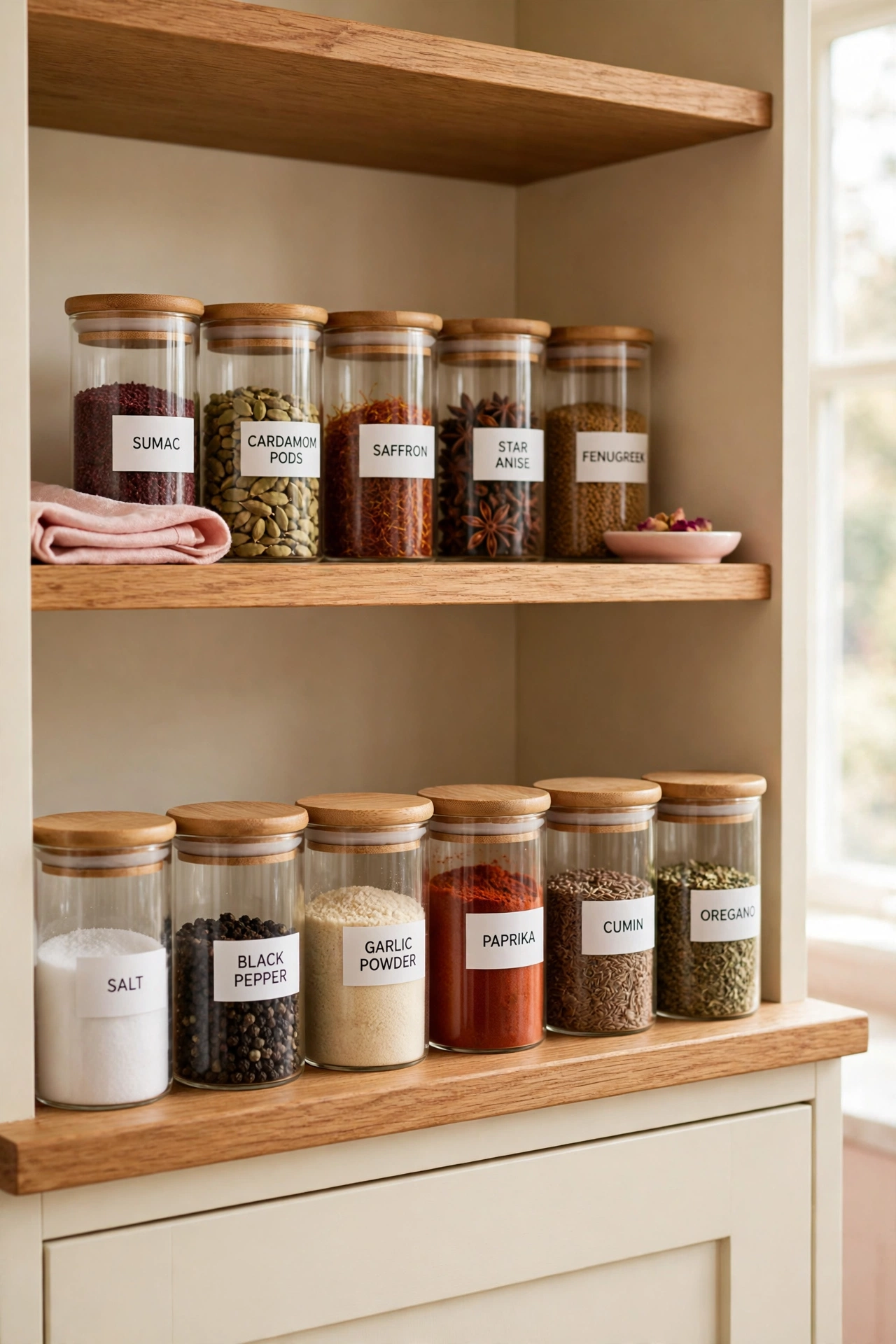
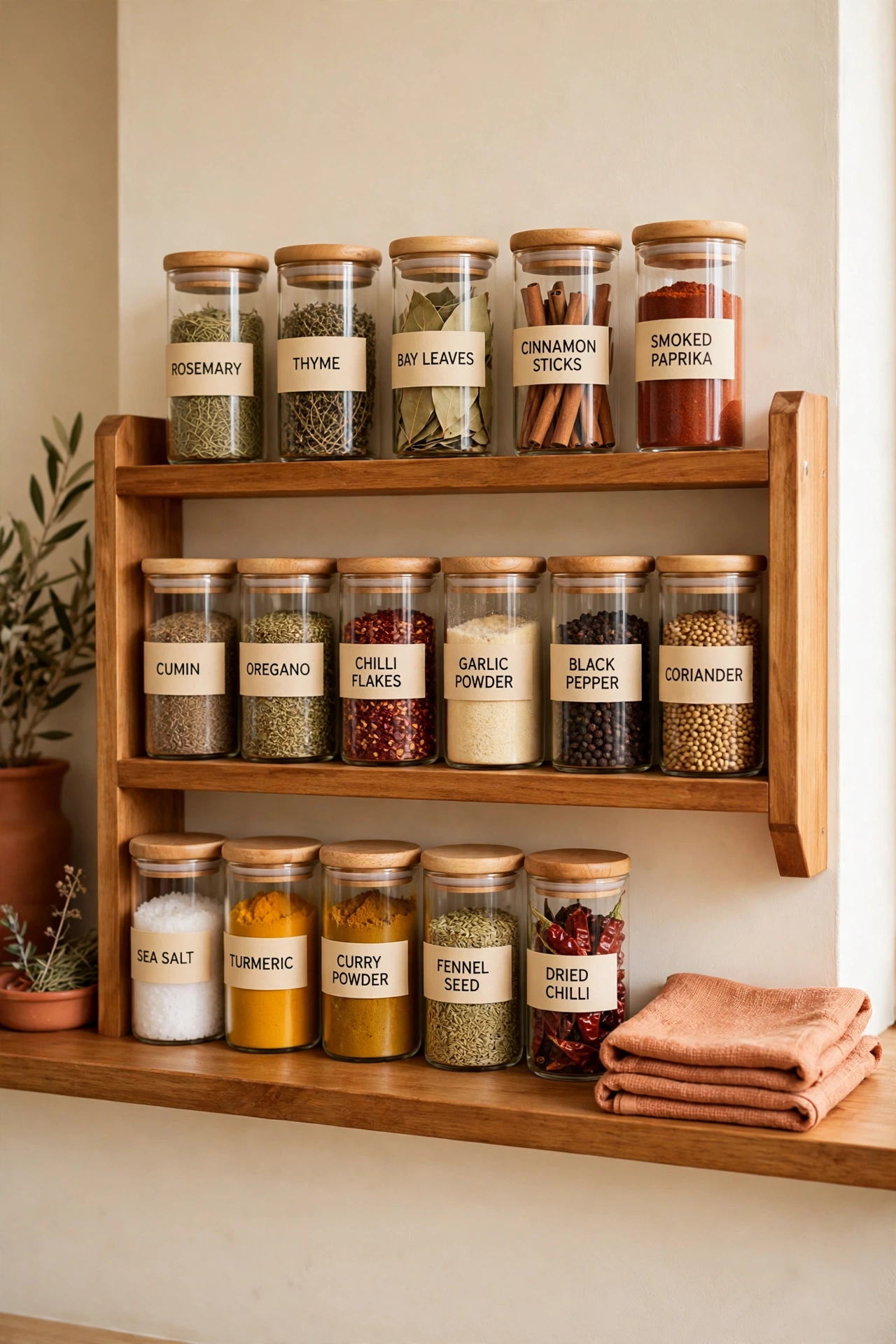
Bulk spice bags are hard to store and even harder to pour from. Move each spice into a matching glass jar with a tight lid and the whole shelf starts to look calm and planned. Glass jars keep air and moisture out, so your spices stay fresh for much longer.
Choose jars in one or two sizes only, so they line up neatly on the shelf. Small jars suit ground spices you use a little at a time, while larger jars hold whole spices and blends you buy in bulk. Matching jars turn a jumbled cabinet into a display you enjoy opening.
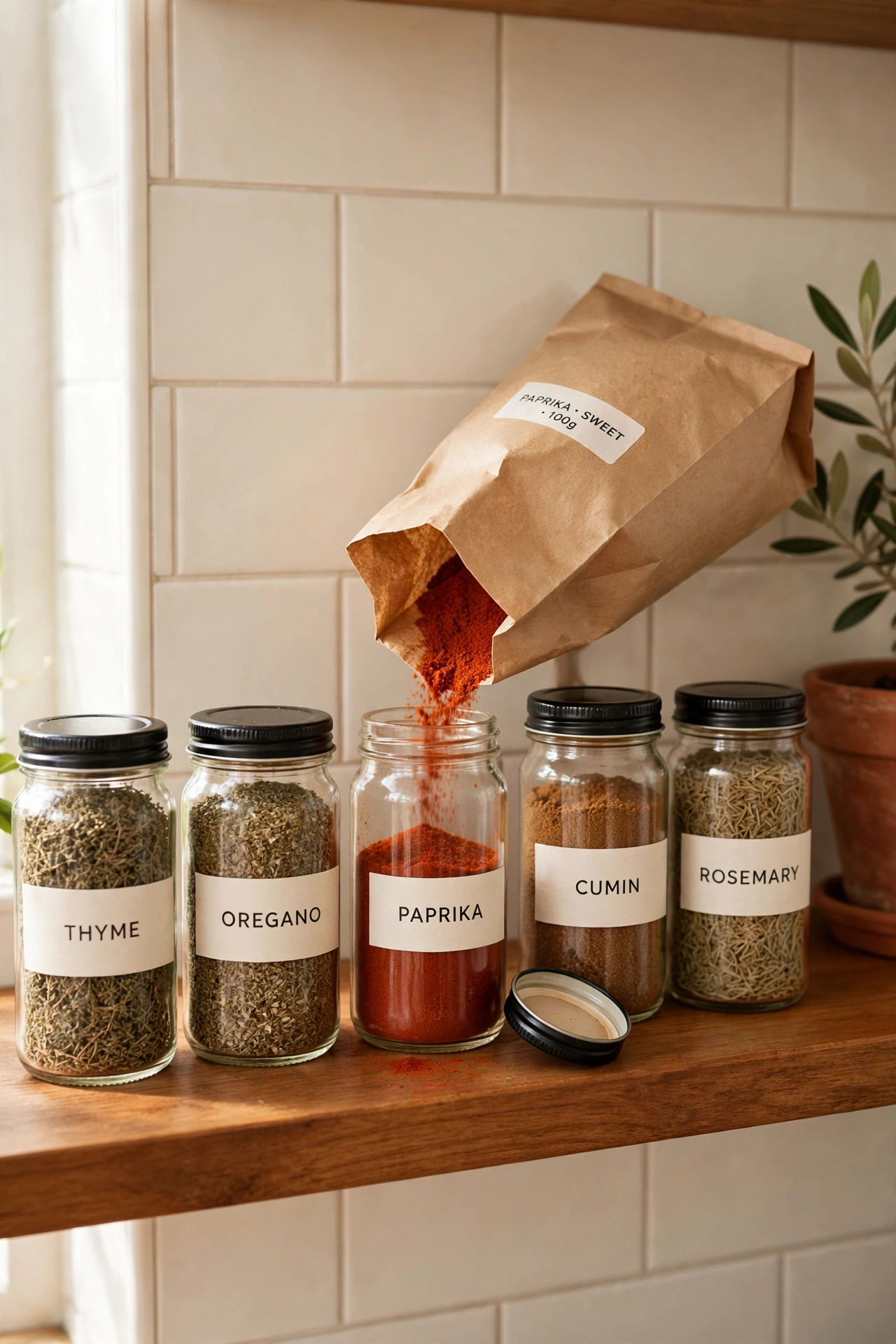
3. Label Every Jar on the Front and the Lid
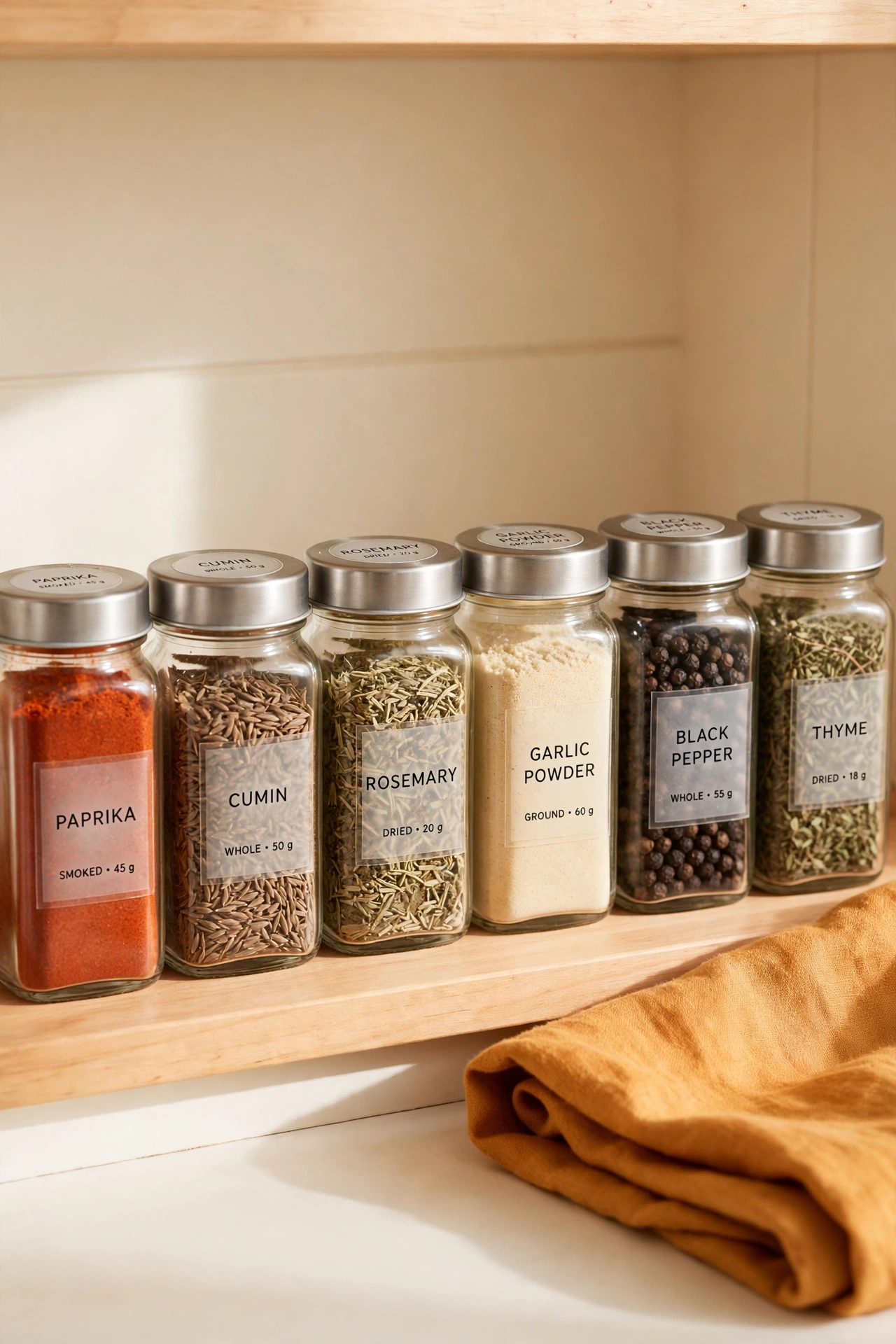
A label on the front of the jar tells you what is inside at a glance, and a label on the lid helps when jars sit on a high shelf and you look down on them. Use clear printed labels with large readable text, so no one in the family has to guess between coriander and cumin.
Print labels in the same style for every jar, with the spice name and the date you filled it. Consistent labels make the shelf look tidy and make cooking faster. When a jar runs low, the label also tells you exactly which spice to buy again.
4. Sort Spices by How Often You Cook with Them
Not every spice deserves the same spot. The salt, black pepper, and chili powder you reach for daily belong at the front of the shelf or in the top drawer. Rare spices for special recipes can live further back or on a higher shelf.
This simple split saves time on busy cooking days, since your hands go straight to the jars you need. When you cook a special dish, you know exactly where the less used spices live. Frequency is the easiest way to decide what goes where.
5. Keep Daily Spices in a Shallow Drawer
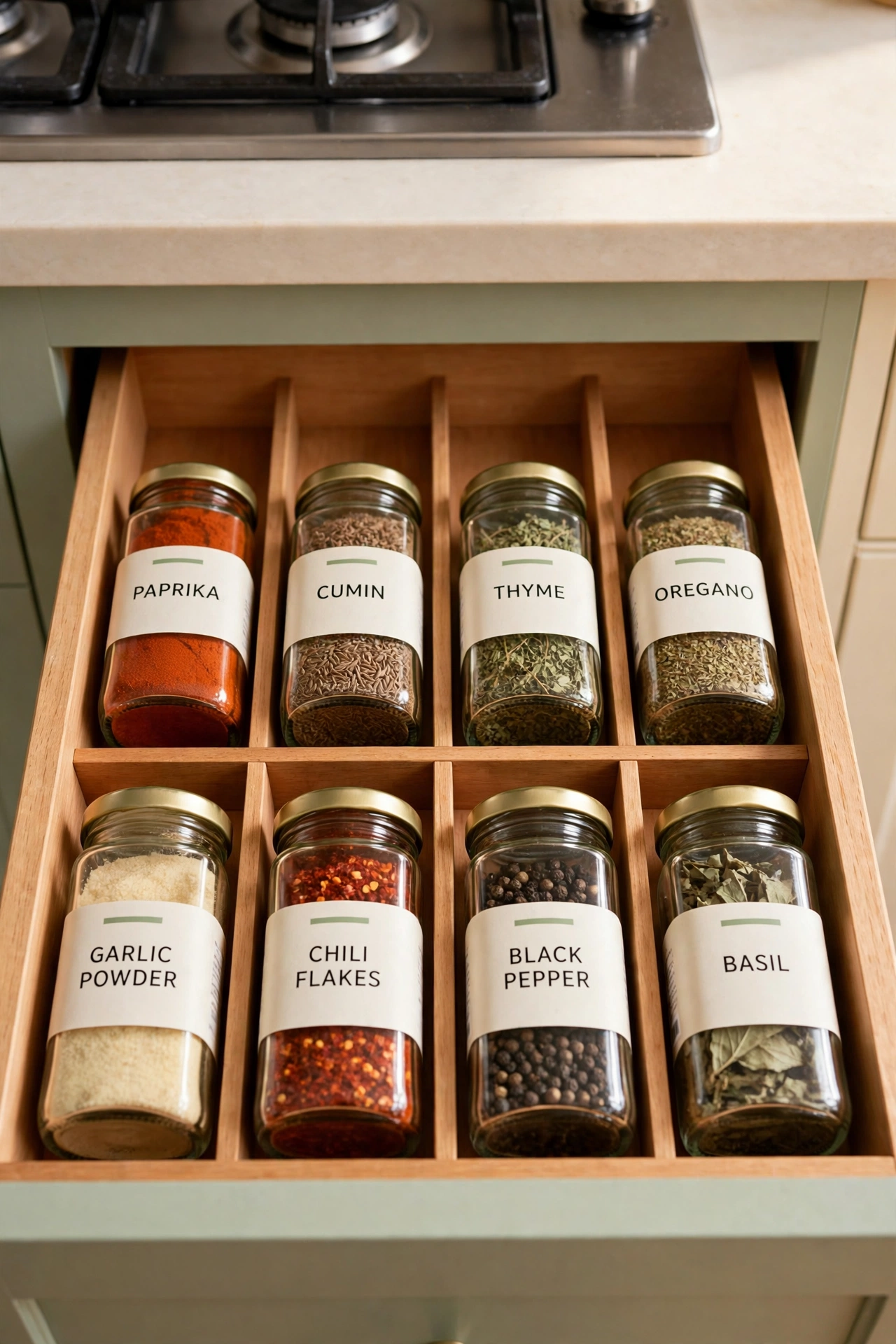
A shallow drawer near the stove keeps your daily spices flat, visible, and within easy reach. Lay the jars on their sides with the labels facing up, or use a small tiered insert so each row sits slightly higher than the one before it. You can see every jar without moving a single one.
This setup works well in small kitchens where cabinet shelves are already full. For more ways to use drawers well, see these spice drawer organization ideas. A drawer keeps spices away from heat and light, which helps them stay fresh longer.
6. Add a Tiered Shelf Riser Inside the Cabinet
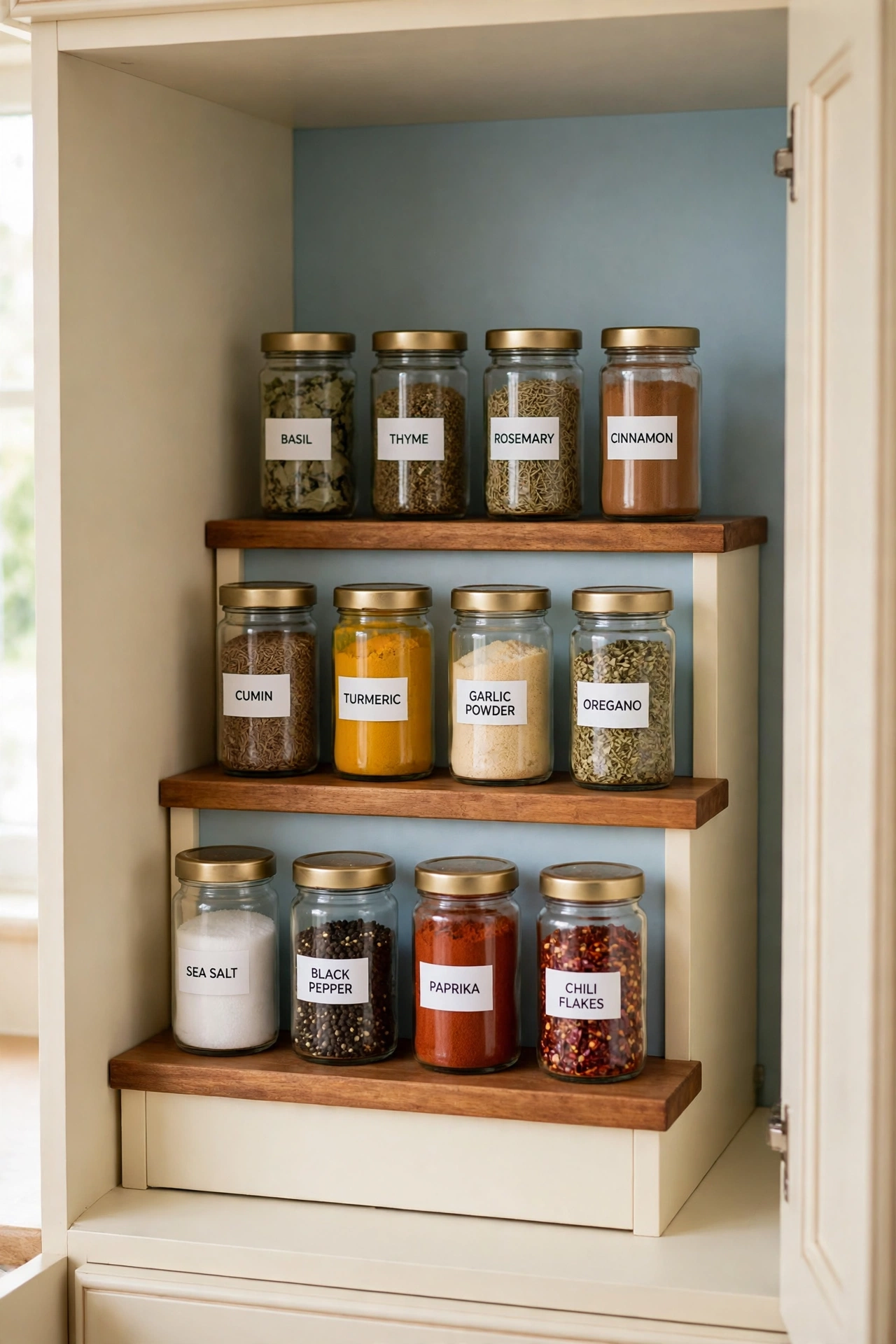
A tiered shelf riser turns one flat cabinet shelf into three stepped rows, so the jars at the back sit higher than the jars at the front. You can see every label without pulling jars out to find the one you need. This is one of the cheapest upgrades you can make to a spice cabinet.
Measure the inside of your cabinet before you buy, so the riser fits with room to spare. Wooden risers suit warm kitchens, while metal ones suit a modern look. A riser doubles the usable space on a single shelf without any tools or drilling.
7. Build a Pull-Out Spice Rack Beside the Stove
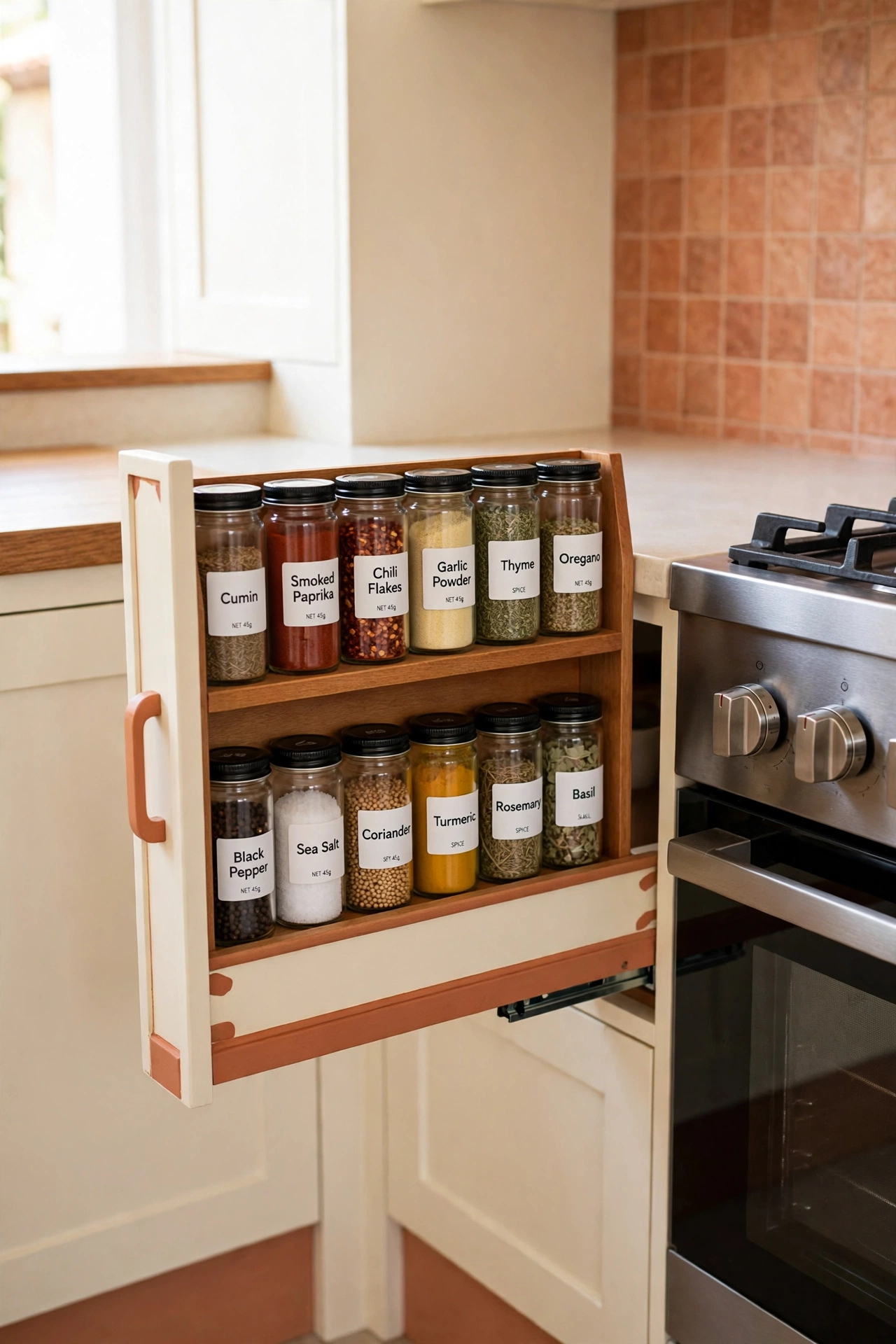
A narrow pull-out rack that slides out from beside the stove puts every spice within arm’s reach while you cook. The rack holds jars in two or three rows, and it slides back into the cabinet when you are done. Nothing sits on the counter, and nothing gets lost at the back of a deep shelf.
This idea suits kitchens with a slim gap between the stove and the counter. If you have a filler space that is too narrow for a drawer, a pull-out spice rack turns it into useful storage. Keep the jars you use for cooking in this rack and the rest in the pantry.
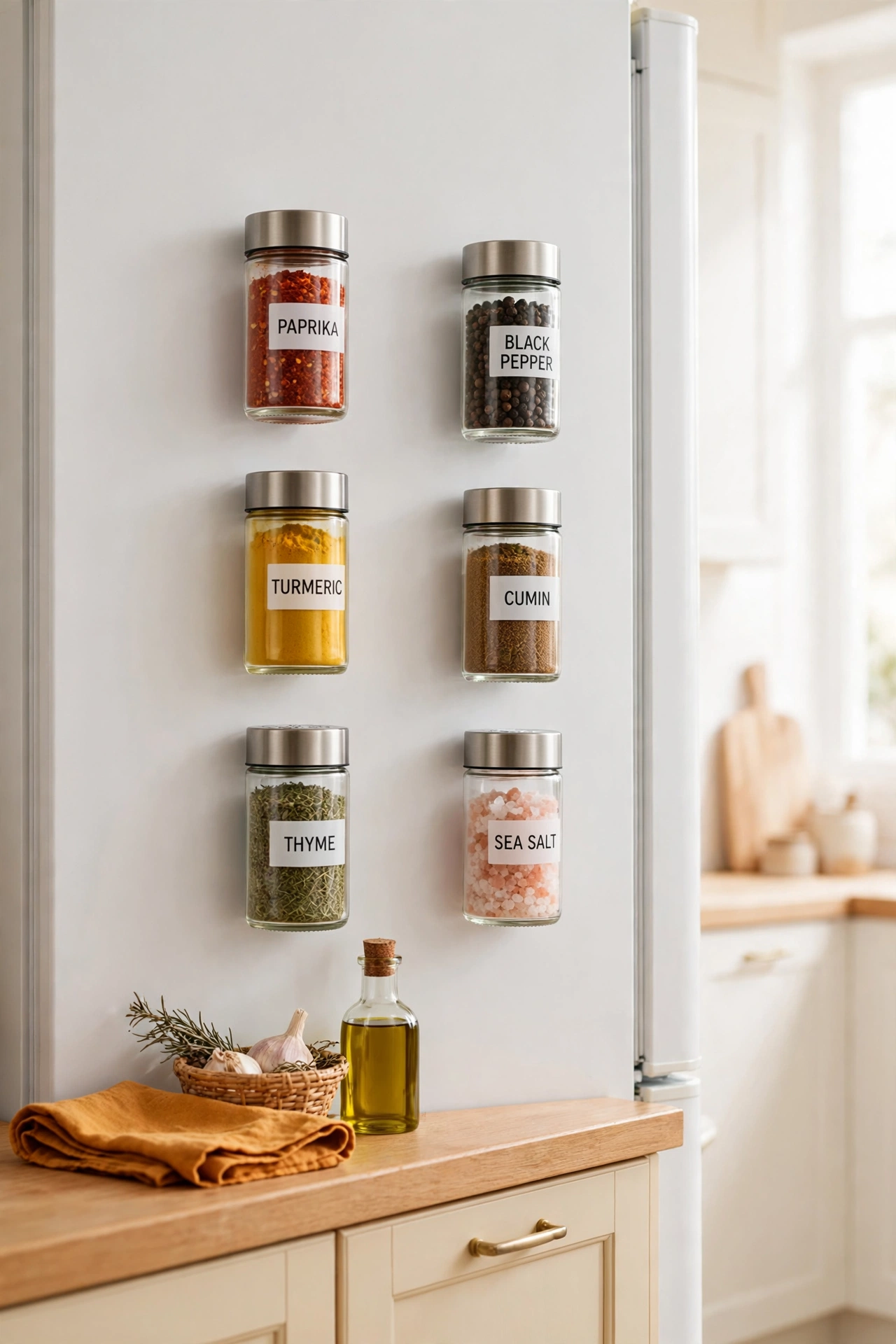
8. Hang a Magnetic Spice Rack on the Fridge
Small magnetic jars stick to the side of the fridge and turn an empty surface into spice storage. Each jar holds a spice you use often, and the clear glass shows you how much is left. The fridge door stays free, and the counter stays clear.
Choose strong magnets so the jars stay put when the fridge door opens and closes. This idea works best for ground spices in small amounts, since magnetic jars are usually compact. It is a smart choice for renters, because it needs no drilling and leaves no marks.
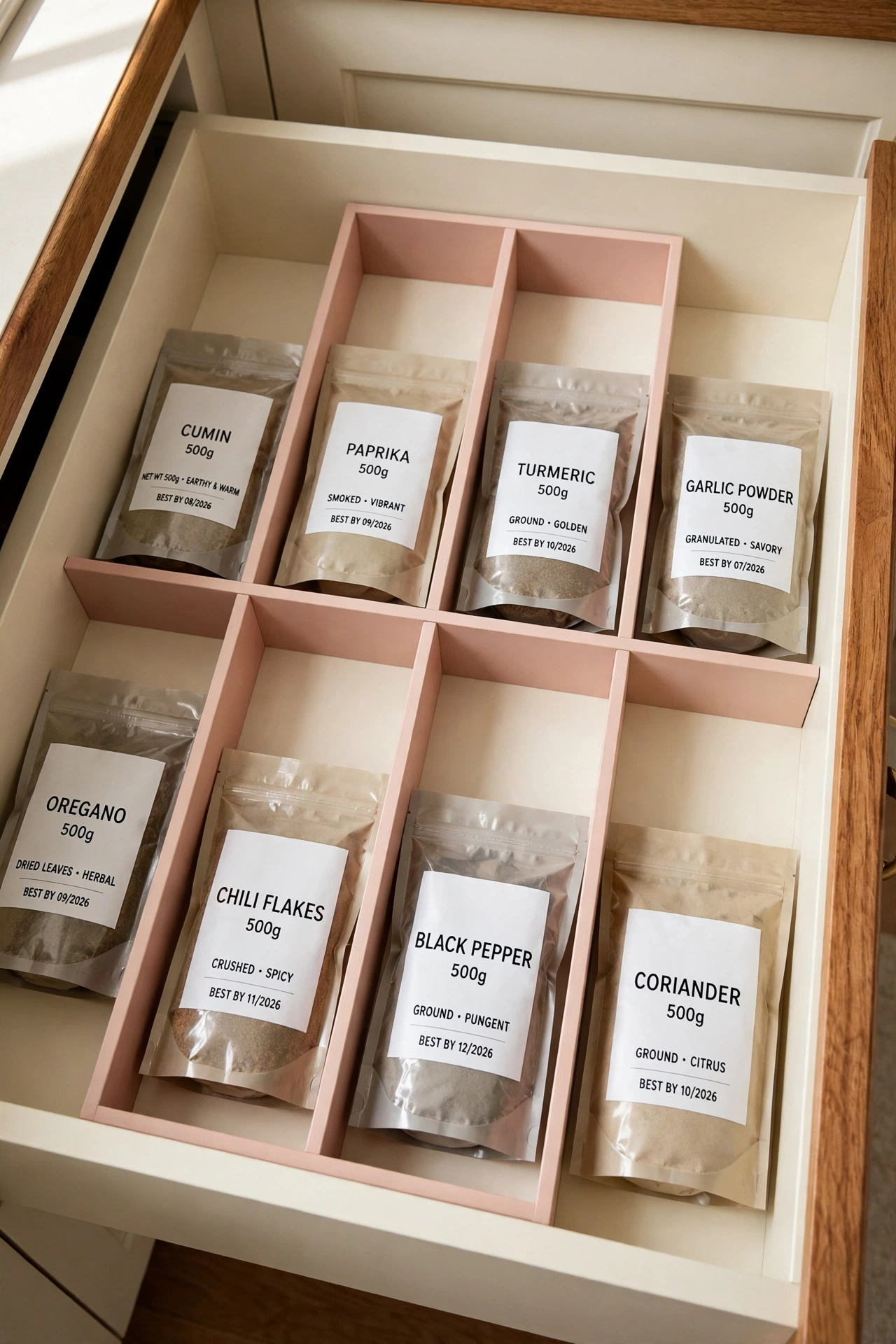
9. Keep Bulk Bags in a Deep Drawer
Bulk spice bags are too big for a standard shelf, but a deep drawer holds them flat and tidy. Lay each bag in its own slot with the label facing up, and use a small divider to stop the bags from sliding around. The drawer keeps the bags away from light and heat.
This is the right home for the large bags you refill your small jars from. For more deep drawer ideas, see these deep kitchen drawer organization ideas. When a jar runs low, open the drawer, refill it in seconds, and close the drawer again.
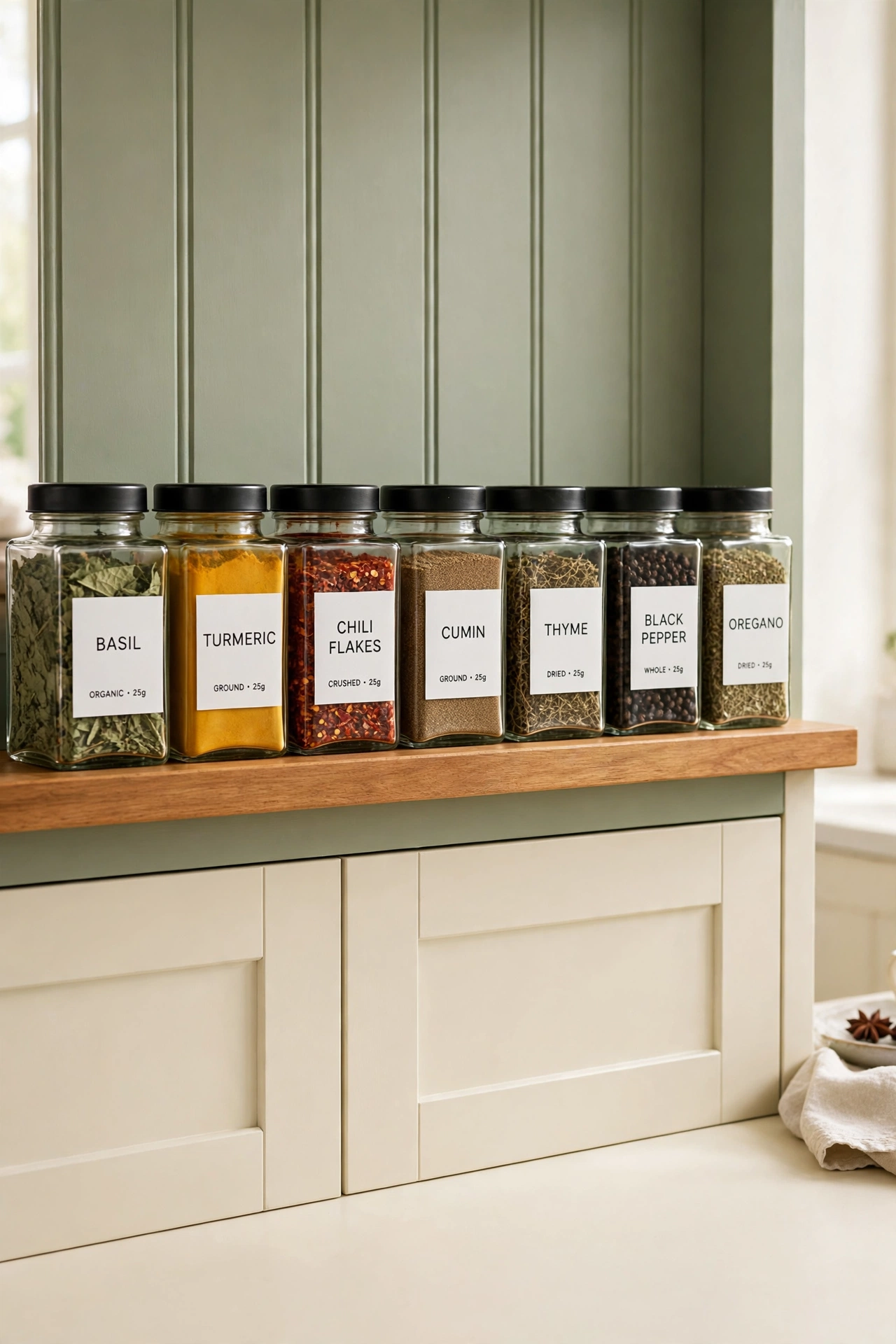
10. Use Uniform Jars So Shelves Stay Level
Jars in many different shapes and sizes make a shelf look messy and waste space. Uniform jars stack and line up neatly, with lids at the same height and labels in the same place. The shelf looks calm, and you can fit more jars in the same space.
Pick one jar style for the whole collection and buy enough for every spice you own. Square jars save more space than round ones, since they sit flush against each other. A uniform set is a small investment that makes the whole kitchen look more organized.
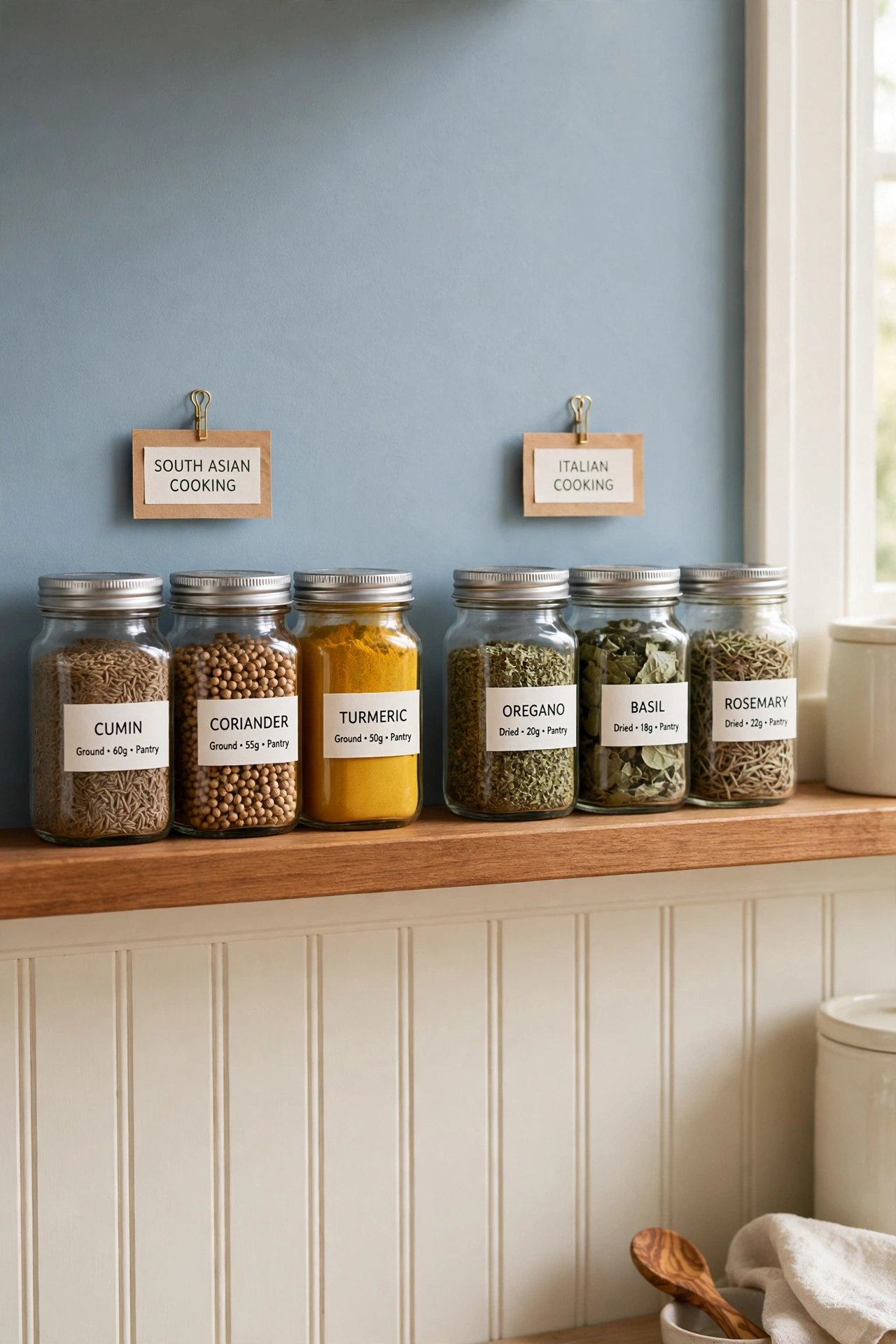
11. Group Spices by Cuisine
Grouping spices by cuisine makes cooking faster, since everything for one type of food sits together. Keep cumin, coriander, turmeric, and garam masala in one group for South Asian cooking. Keep oregano, basil, and rosemary together for Italian dishes.
Label each group with a small shelf tag so everyone in the family can find the right section. When you plan a meal, you pull from one group instead of searching the whole shelf. Cuisine groups also show you which spices you use together and which ones you can skip buying.
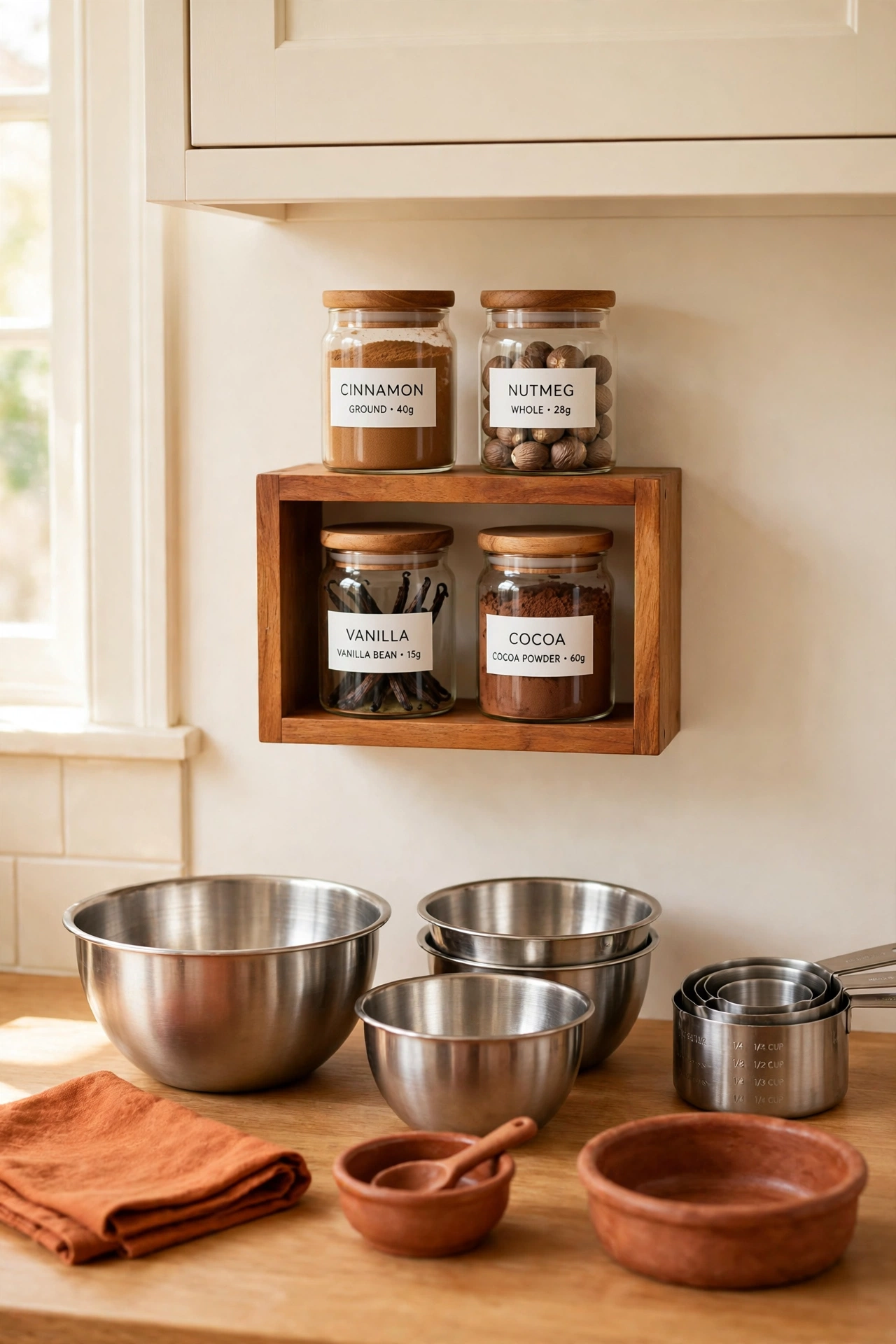
12. Create a Small Baking Spice Shelf
Baking spices like cinnamon, nutmeg, vanilla, and cocoa deserve their own shelf, away from the savory spices you use for daily cooking. A small dedicated shelf keeps them together and stops sweet flavors from mixing with strong ones in a crowded cabinet.
Place the baking shelf near the mixing bowls and measuring cups, so everything for baking sits in one zone. Add a small jar of baking powder and baking soda to the same shelf. When the baking mood strikes, you have every spice ready in one place.
13. Keep Hot Spices Together in One Zone
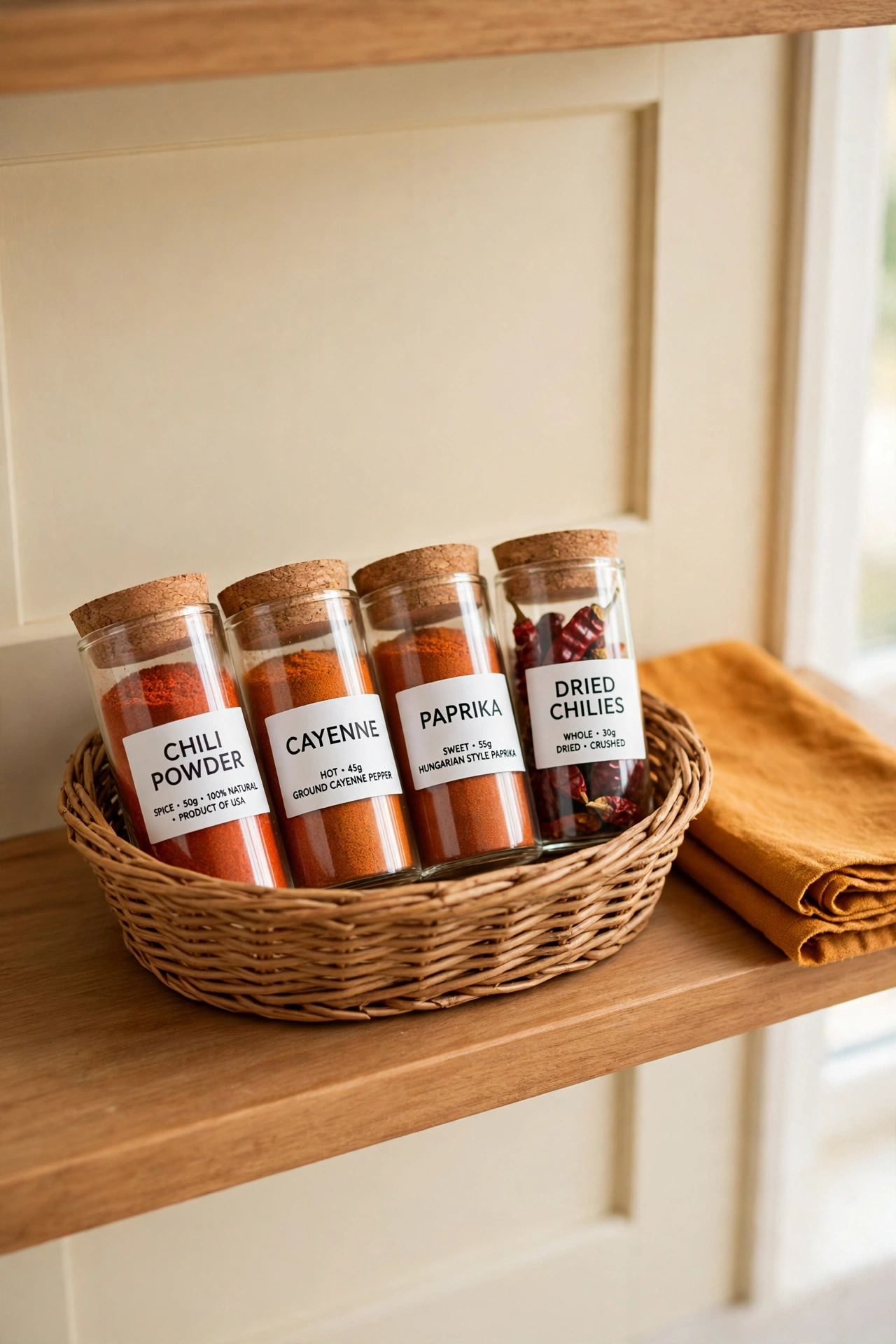
Hot spices like chili powder, cayenne, paprika, and dried chilies work as a family, so store them in one zone. A single row or a small basket keeps them together and stops a hot spice from hiding among the mild ones. You can see the heat level of every jar at a glance.
This zone also helps when guests cook in your kitchen, since the hot spices are easy to find and easy to avoid. Label the basket clearly so no one mistakes chili flakes for oregano. A hot spice zone is a small change that prevents big cooking mistakes.
14. Store Pantry Staples Beside the Spices
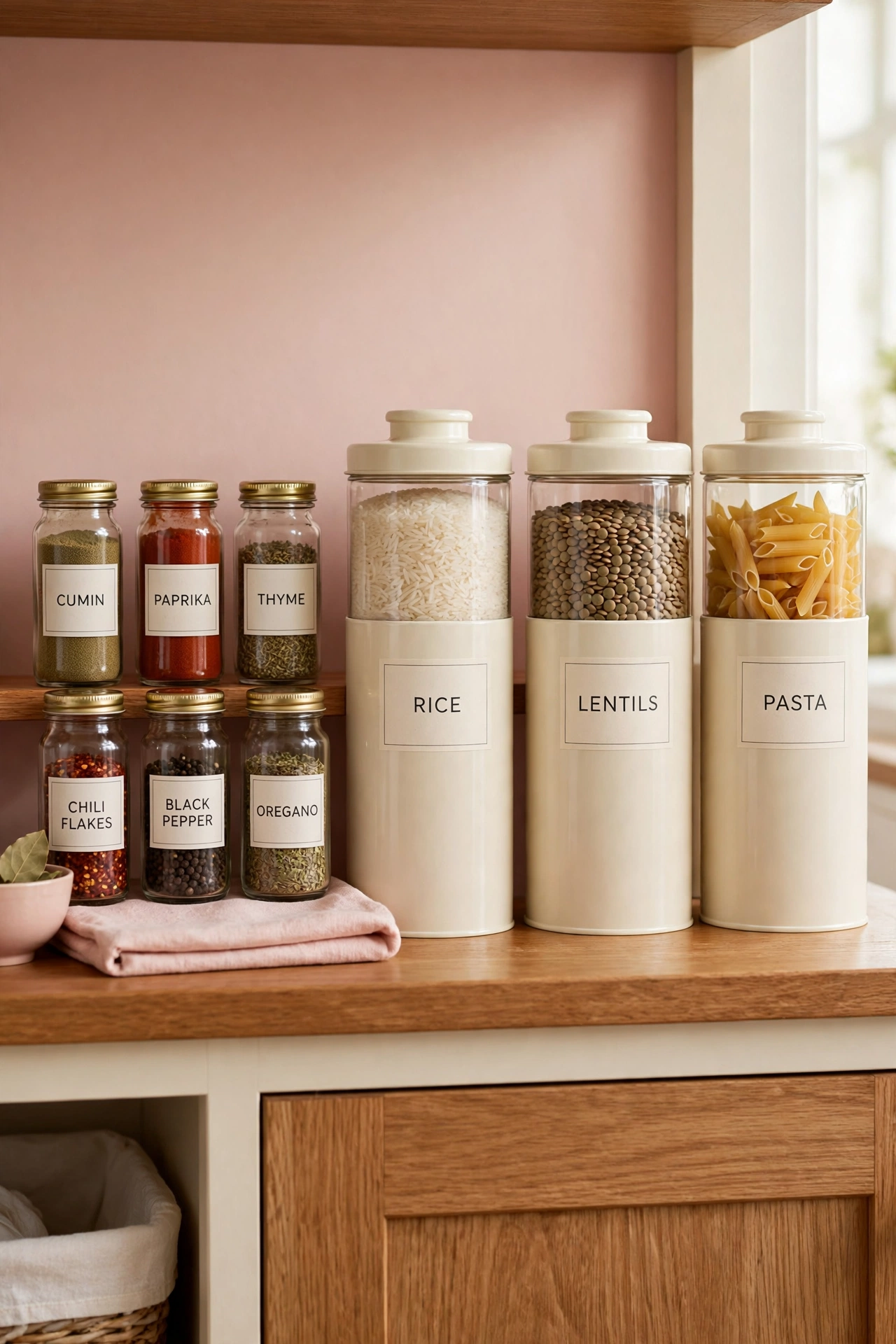
Spices work best when the pantry staples you cook with sit nearby. Keep rice, lentils, pasta, and canned goods on the shelf beside your spice jars, so a full meal comes together from one small area. This saves steps while you cook and keeps the kitchen calm.
Use matching canisters for the staples so the whole shelf looks planned. For more pantry ideas, see these pantry can organization ideas. When the staples and the spices share one zone, meal planning becomes much easier.
15. Add a Spice Shelf Inside the Cabinet Door
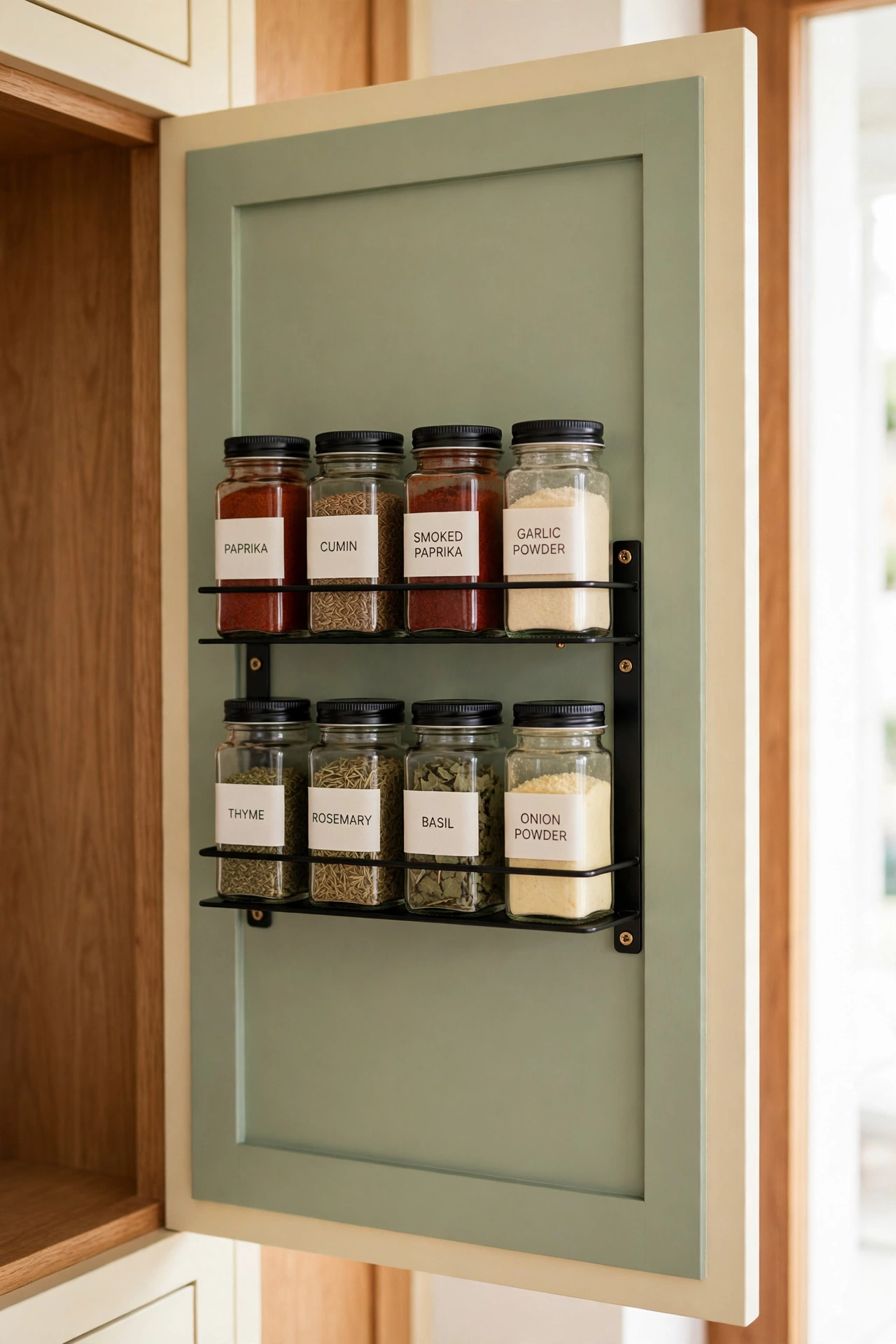
The inside of a cabinet door is wasted space in most kitchens, yet it can hold a slim spice shelf with ease. A narrow rack mounted on the door holds small jars in two or three rows, and it swings out of the way when you close the door.
This idea works best for the spices you use most, since they are the first thing you see when you open the cabinet. Make sure the jars are slim enough that the door still closes fully. A door shelf adds storage without taking a single inch from your shelves.
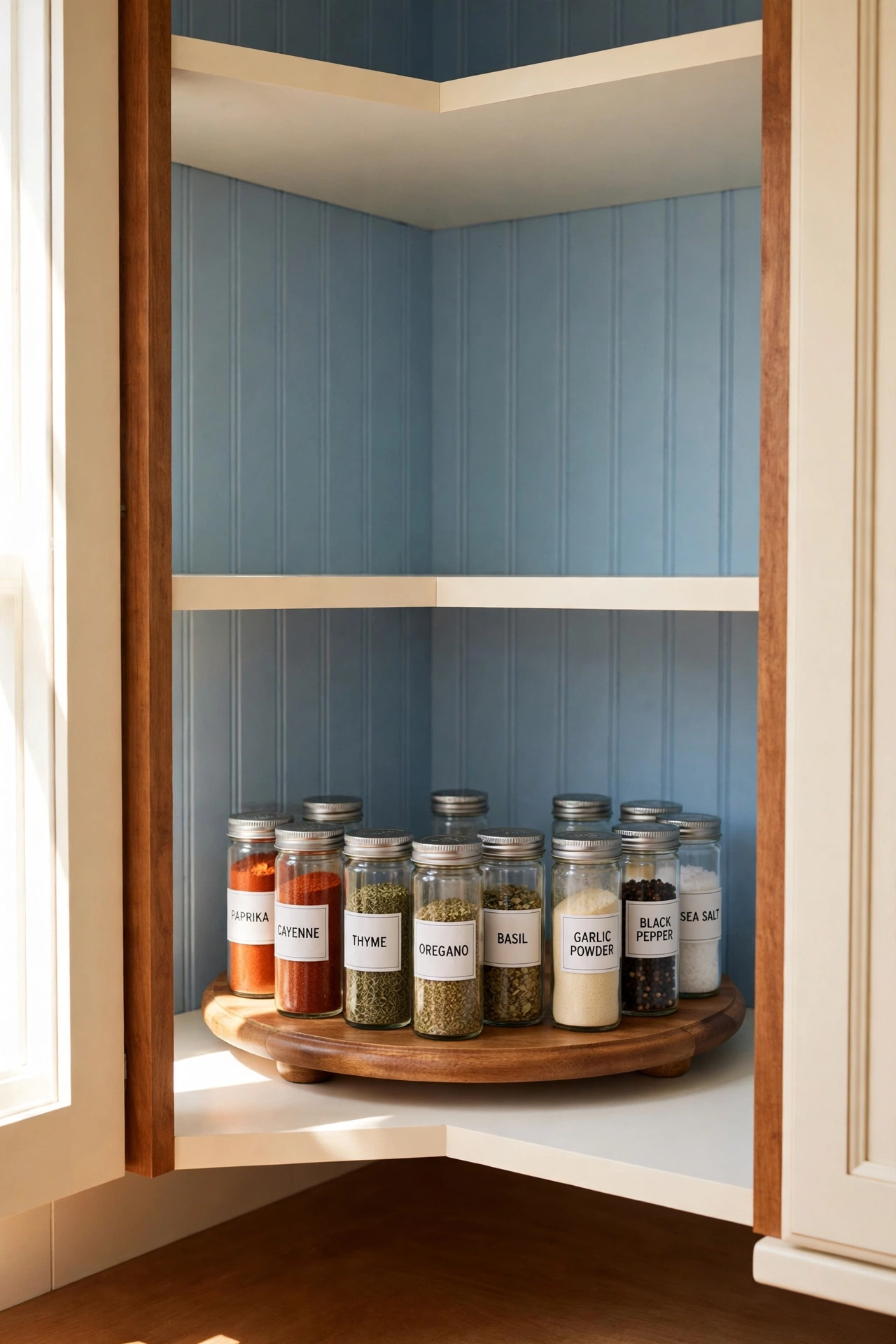
16. Use a Lazy Susan for Corner Cabinets
Corner cabinets are famous for swallowing spice jars, but a lazy Susan solves the problem. A turntable on the shelf spins with a light touch, so the jar at the back comes to the front in seconds. No more reaching into dark corners or knocking jars over.
Choose a turntable with a low rim so jars stay in place while it spins. Two tiered turntables work even better in tall corner cabinets. A lazy Susan turns the most awkward cabinet in the kitchen into one of the most useful.
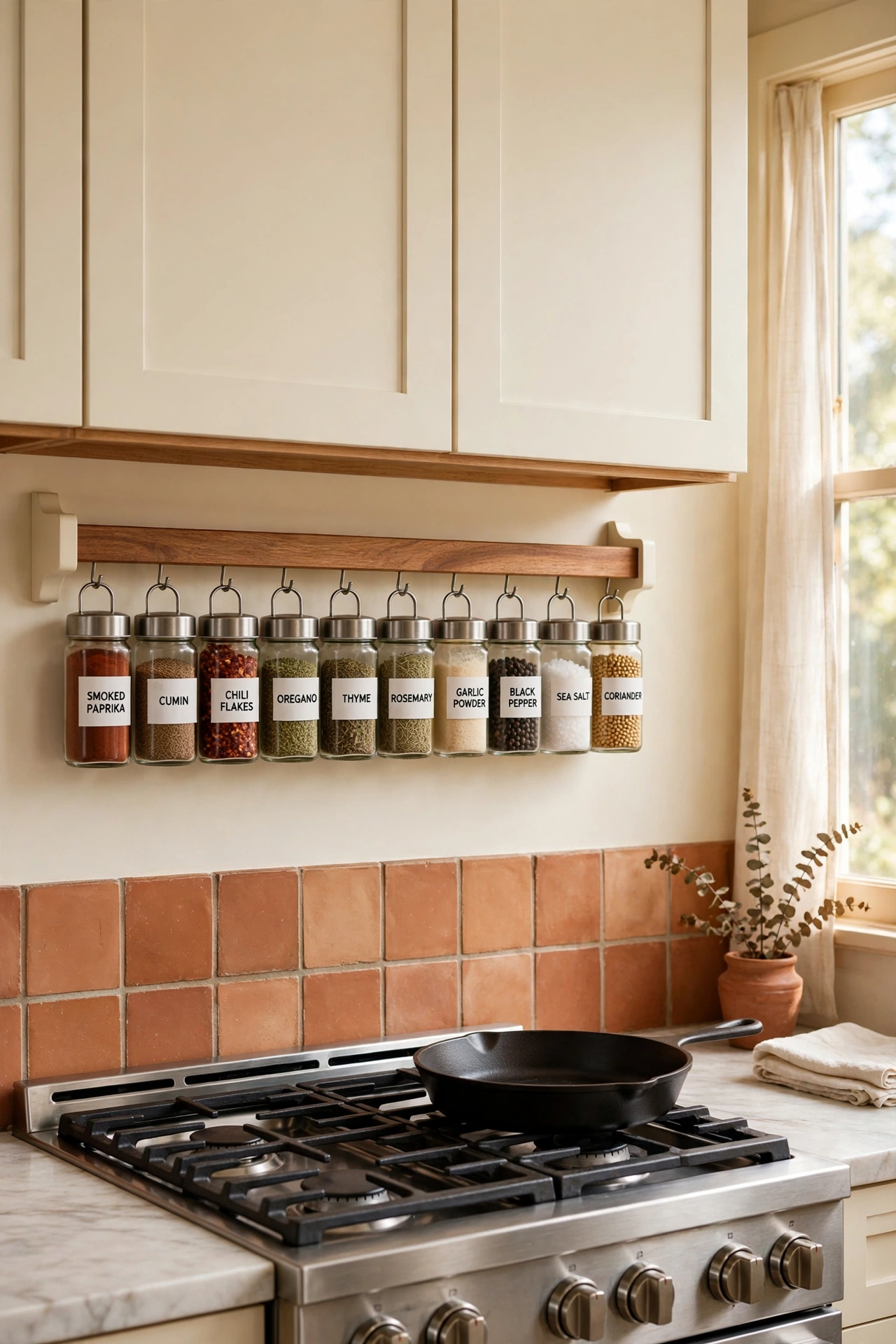
17. Try a Wall-Mounted Spice Rail
A wall-mounted spice rail turns a blank stretch of kitchen wall into open spice storage. Small jars hang from the rail on hooks or sit on a narrow ledge, with every label facing out. You can see the whole collection at a glance while you cook.
This idea suits kitchens with little cabinet space and plenty of wall space near the stove. Keep the rail away from direct steam so the spices stay dry. A spice rail also adds a warm, professional look to the kitchen, like a small shop display.
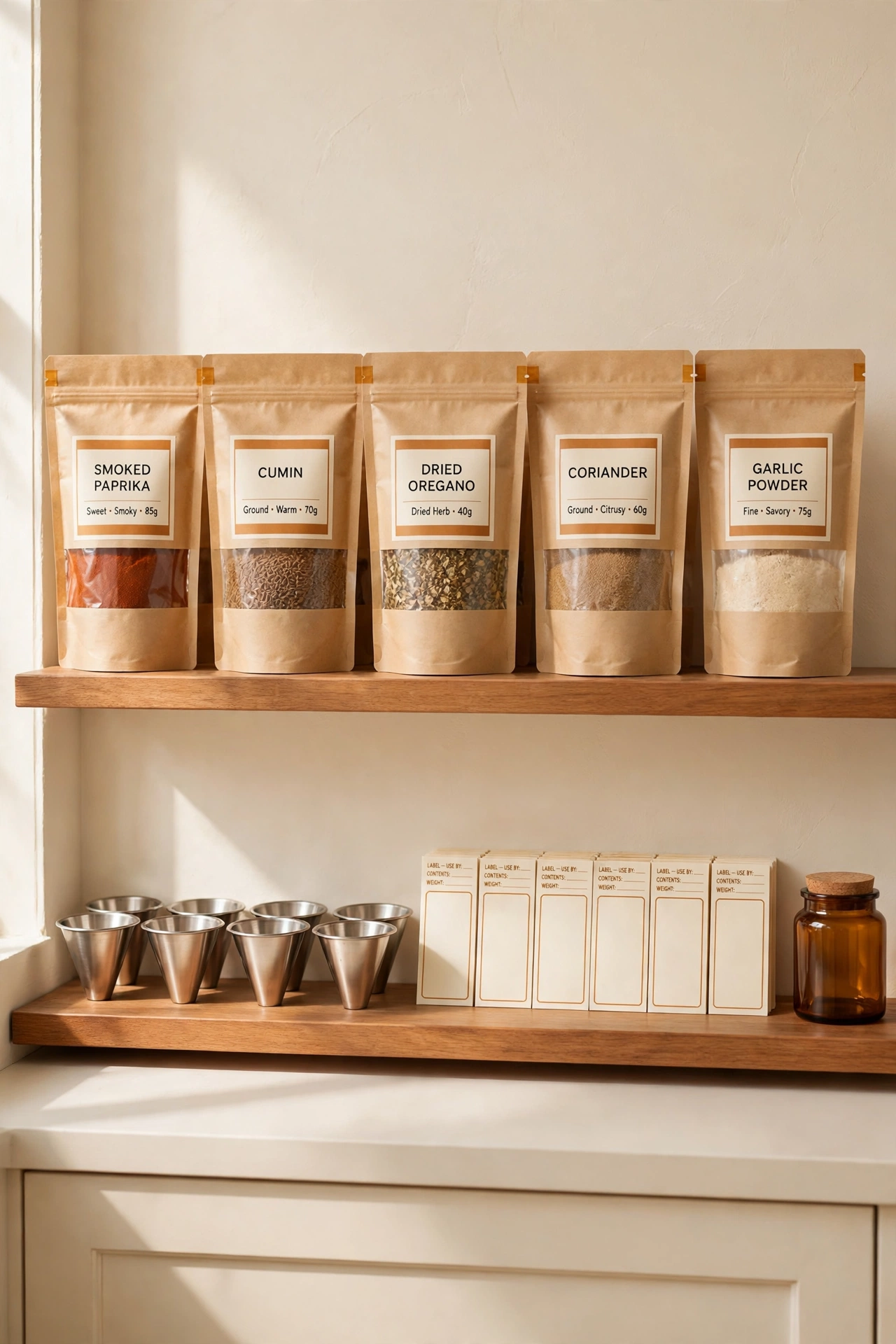
18. Keep a Refill Station on One Shelf
A refill station is one shelf where bulk bags, funnels, and spare labels live together. When a jar runs low, you go to this one spot, refill the jar, and put everything back. No more hunting through the pantry for the bag of turmeric.
Use a shallow tray to catch any spills while you pour. Keep a small scoop inside each bulk bag so refills stay quick and clean. A refill station turns a chore into a two minute job and keeps the rest of the kitchen tidy.
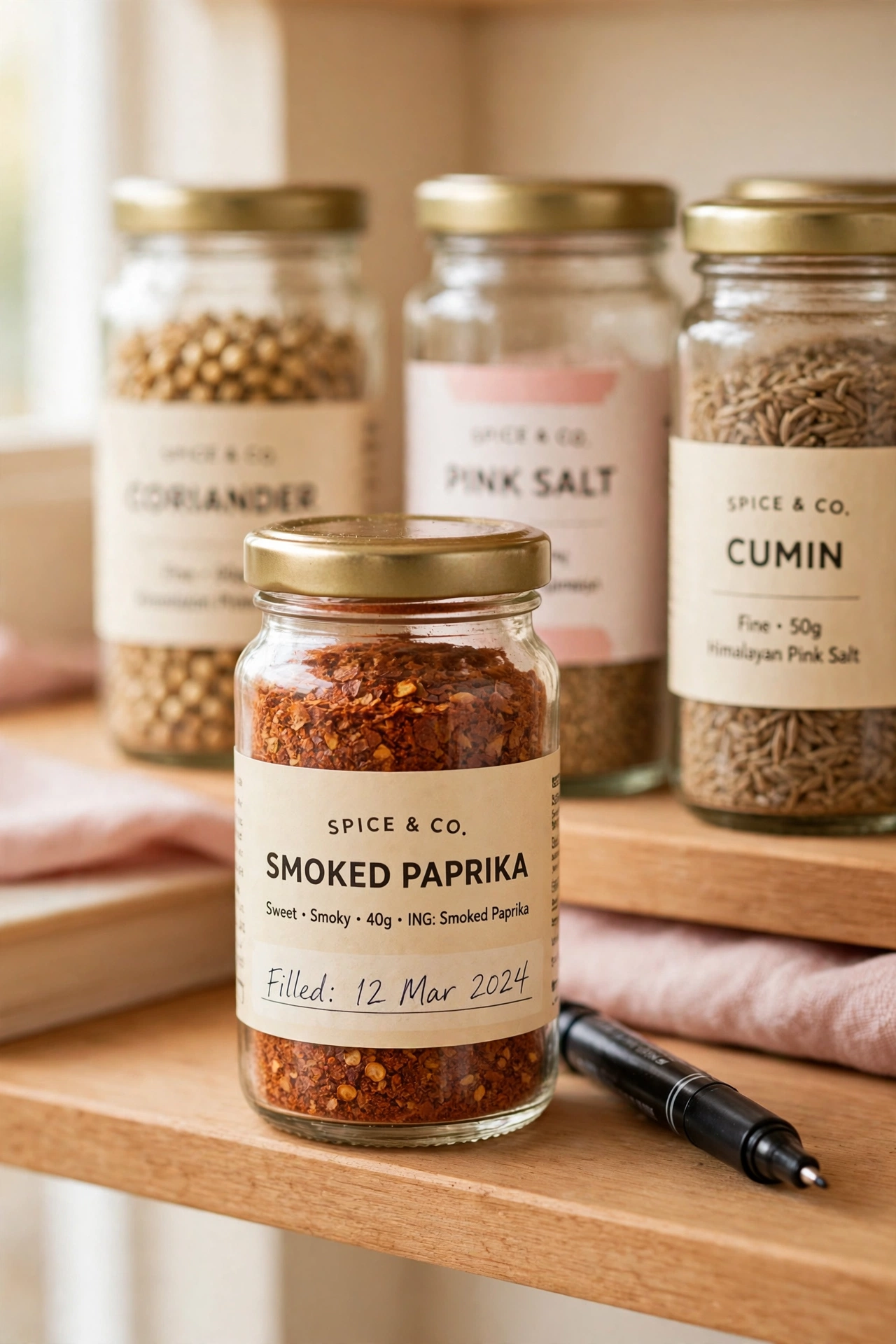
19. Date Every Jar When You Fill It
A small date on each label tells you exactly when a spice was filled, so you know when it is time to replace it. Ground spices stay strong for about six months, while whole spices last a year or more. A date stops you from cooking with a spice that lost its flavor long ago.
Use a small sticker or write the month and year on the label with a fine marker. Check the dates during your seasonal reset and replace anything that is past its best. Dating jars is a tiny habit that keeps your cooking full of flavor.
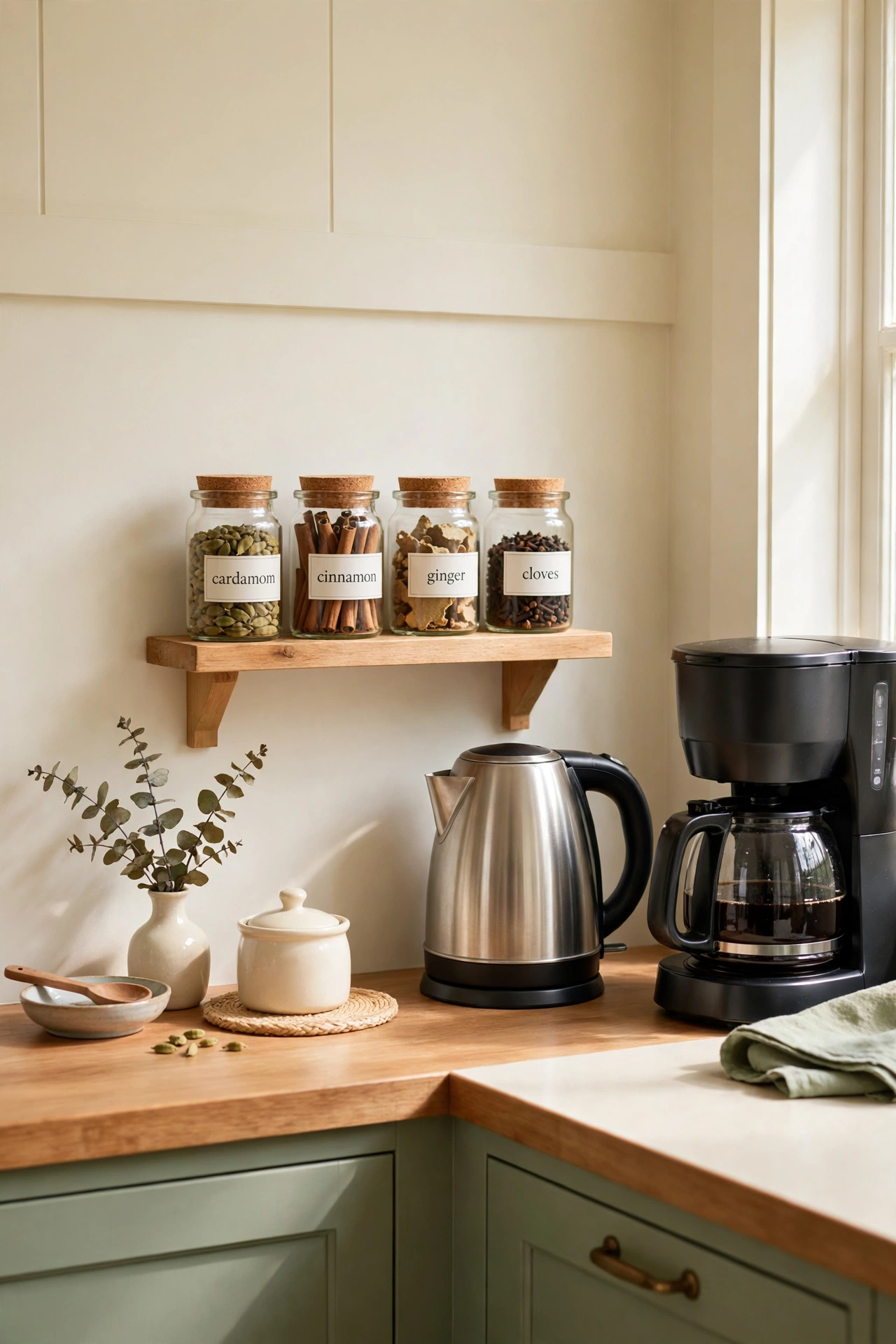
20. Set Up a Tea and Coffee Spice Corner
Cardamom, cinnamon, ginger, and cloves belong near the tea and coffee station, not buried in the main spice cabinet. A small corner shelf or a tray on the counter keeps these warm spices beside the kettle and the coffee maker, ready for a morning cup.
This corner also suits chai masala and other drink blends you mix yourself. For more station ideas, see these coffee station organization ideas. A tea and coffee spice corner makes every morning feel a little more special.
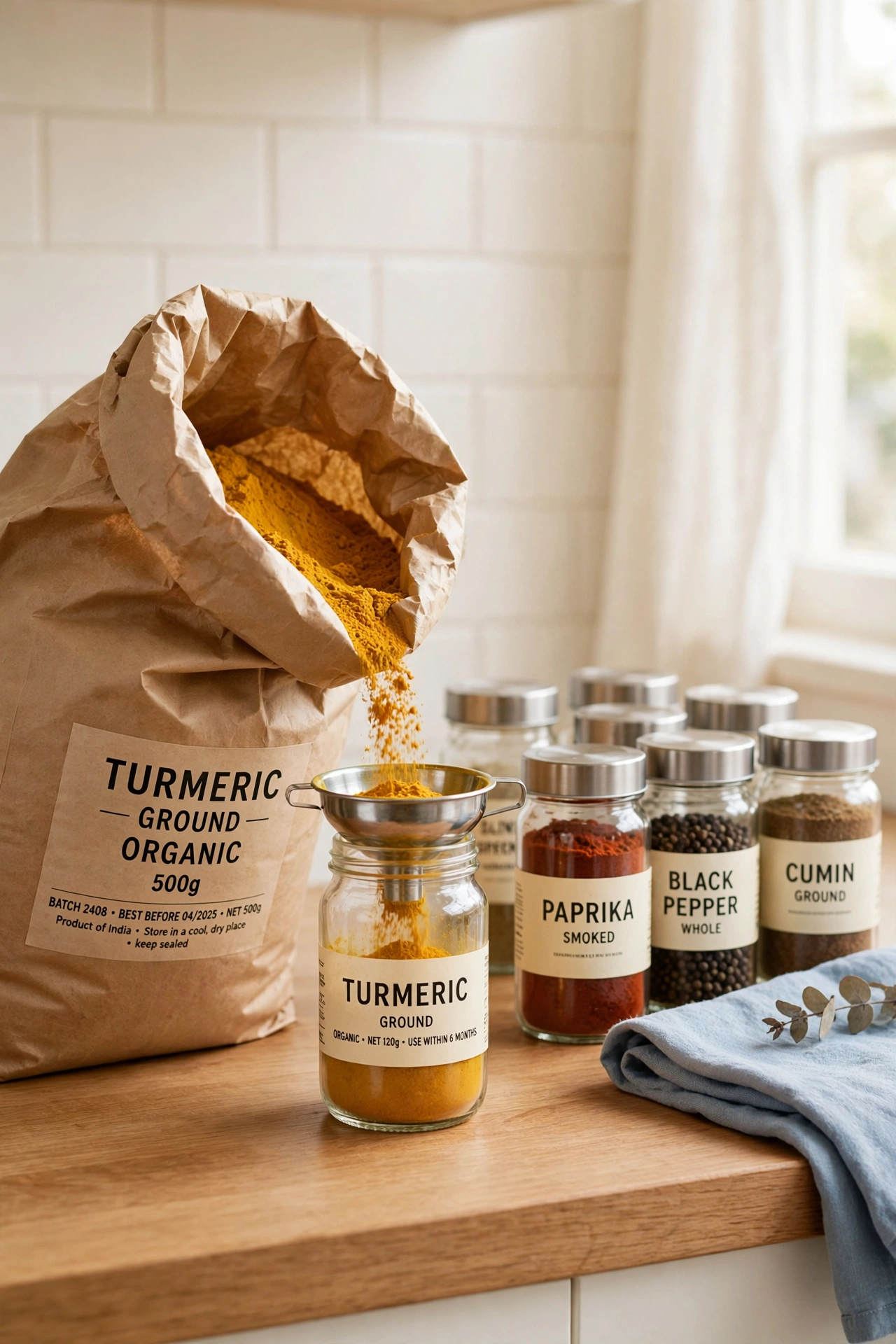
21. Use Small Funnels for Mess-Free Refills
A small funnel is the simplest tool for refilling spice jars without a mess. Place the funnel in the mouth of the jar, pour slowly from the bulk bag, and every grain lands inside the jar. No spice dust on the counter, and no waste.
Keep two or three funnels in different sizes at your refill station, since jar mouths vary. Wash and dry the funnels after each use so flavors do not mix. A funnel costs almost nothing and saves a lot of cleaning time.
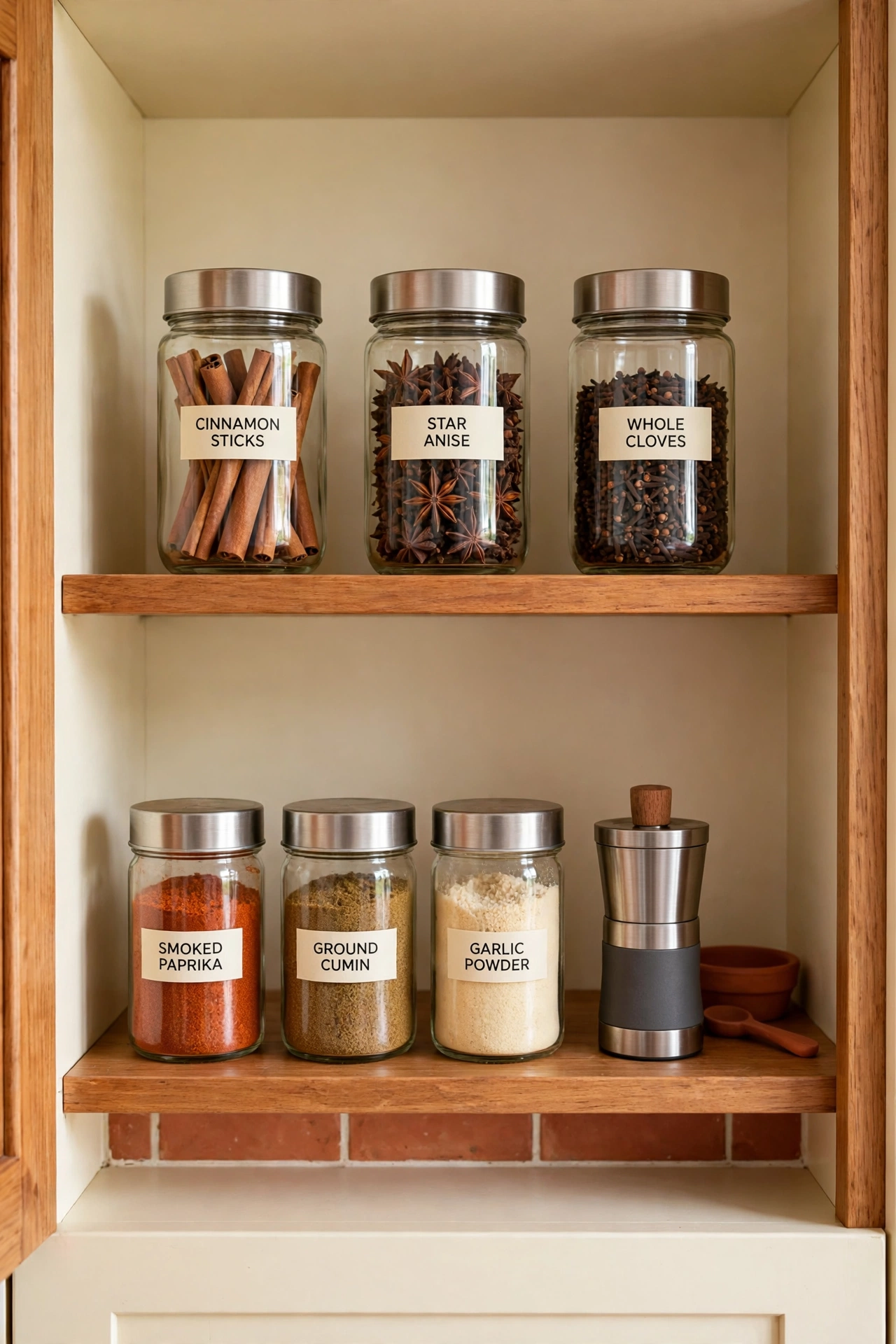
22. Store Whole Spices Apart from Ground Spices
Whole spices like cinnamon sticks, star anise, and whole cloves need different storage from ground spices. They stay fresh longer and take up more space, so give them their own shelf or a separate section of the drawer. Ground spices can stay in smaller jars in the main rows.
This split also helps while you cook, since you reach for ground spices far more often than whole ones. Keep a small spice grinder near the whole spice section for fresh grinding. Separating the two kinds keeps both fresher for longer.
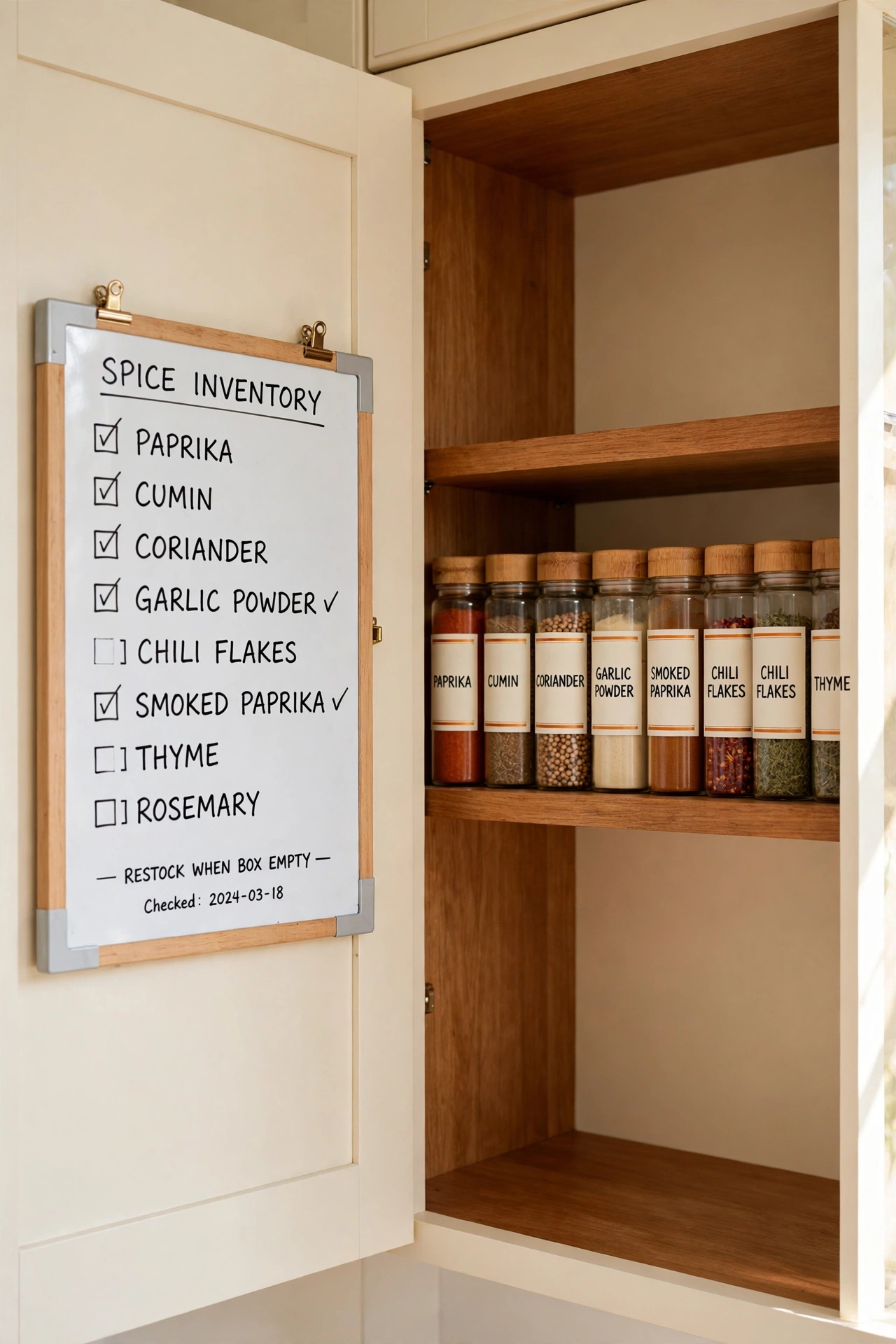
23. Keep a Spice Inventory List on the Cabinet Door
A spice inventory list on the inside of the cabinet door shows every spice you own and how much is left. Use a small whiteboard or a printed list with checkboxes, and update it when you refill or finish a jar. The list stops duplicate buying and helps with grocery planning.
Check the list before every shopping trip and add only what is running low. This one habit saves money and keeps the collection from growing out of control. A list on the door is always visible, so it is easy to keep it current.
24. Use Clear Jars So Levels Stay Visible
Clear glass jars show you exactly how much spice is left without opening the lid. You can see at a glance which jars need a refill and which ones are full. This beats opaque containers that hide the contents until you run out mid-recipe.
Store clear jars away from direct sunlight, since light fades spice color and flavor over time. A cabinet shelf or a drawer is the right home for clear jars. Visibility plus protection is the best combination for a spice collection.
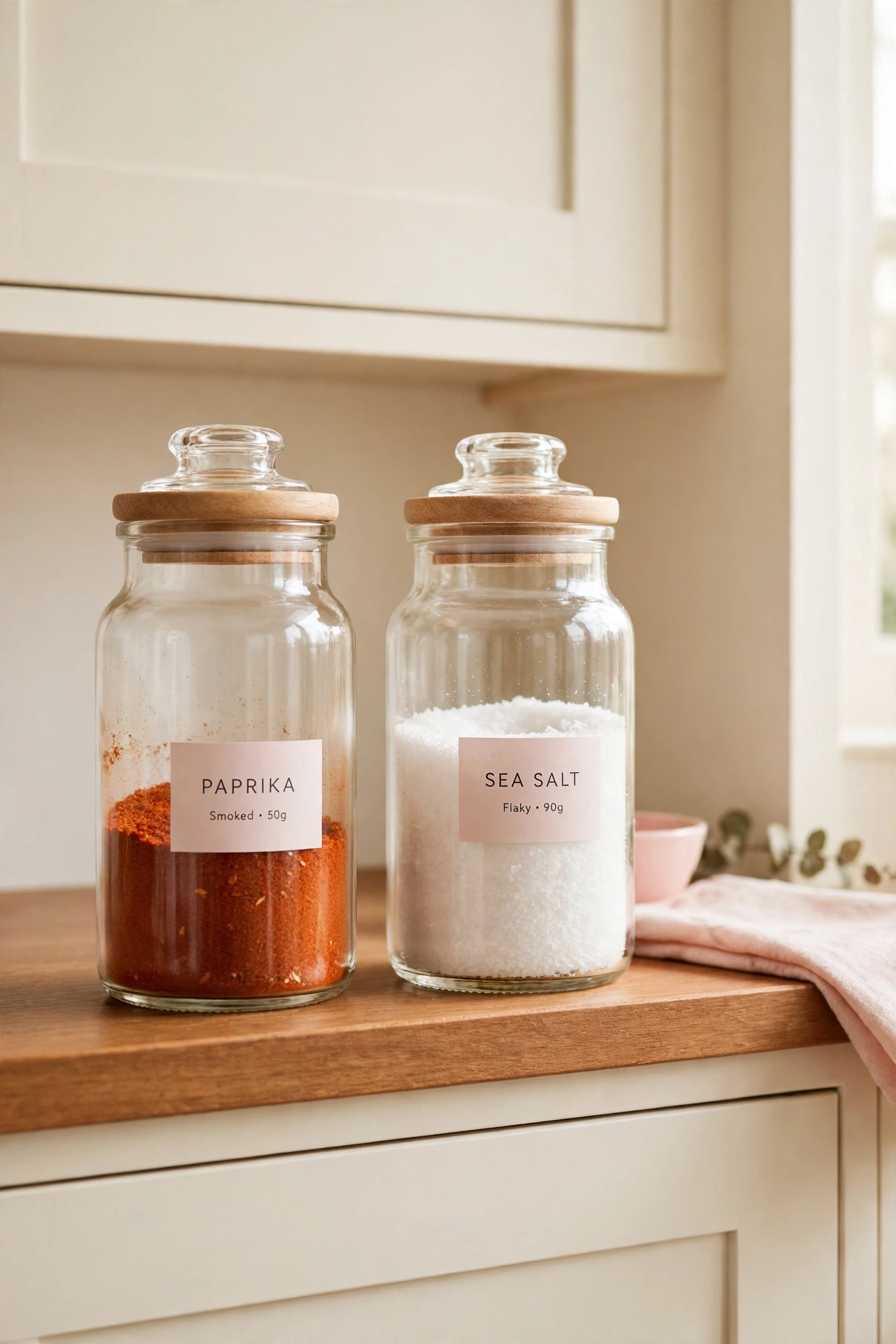
25. Add a Chalkboard Label to Each Bulk Bin
Bulk bins hold large amounts of one spice, and a chalkboard label makes each bin easy to identify and easy to update. Write the spice name in large letters and add the date you filled the bin. When the bin holds a new spice, wipe the label clean and write the new name.
Chalkboard labels suit rustic and farmhouse kitchens especially well, and they look neat beside matching bins. Use a chalk marker for crisp text that does not smudge. A labeled bin never causes a cooking mix-up, even when two spices look alike.
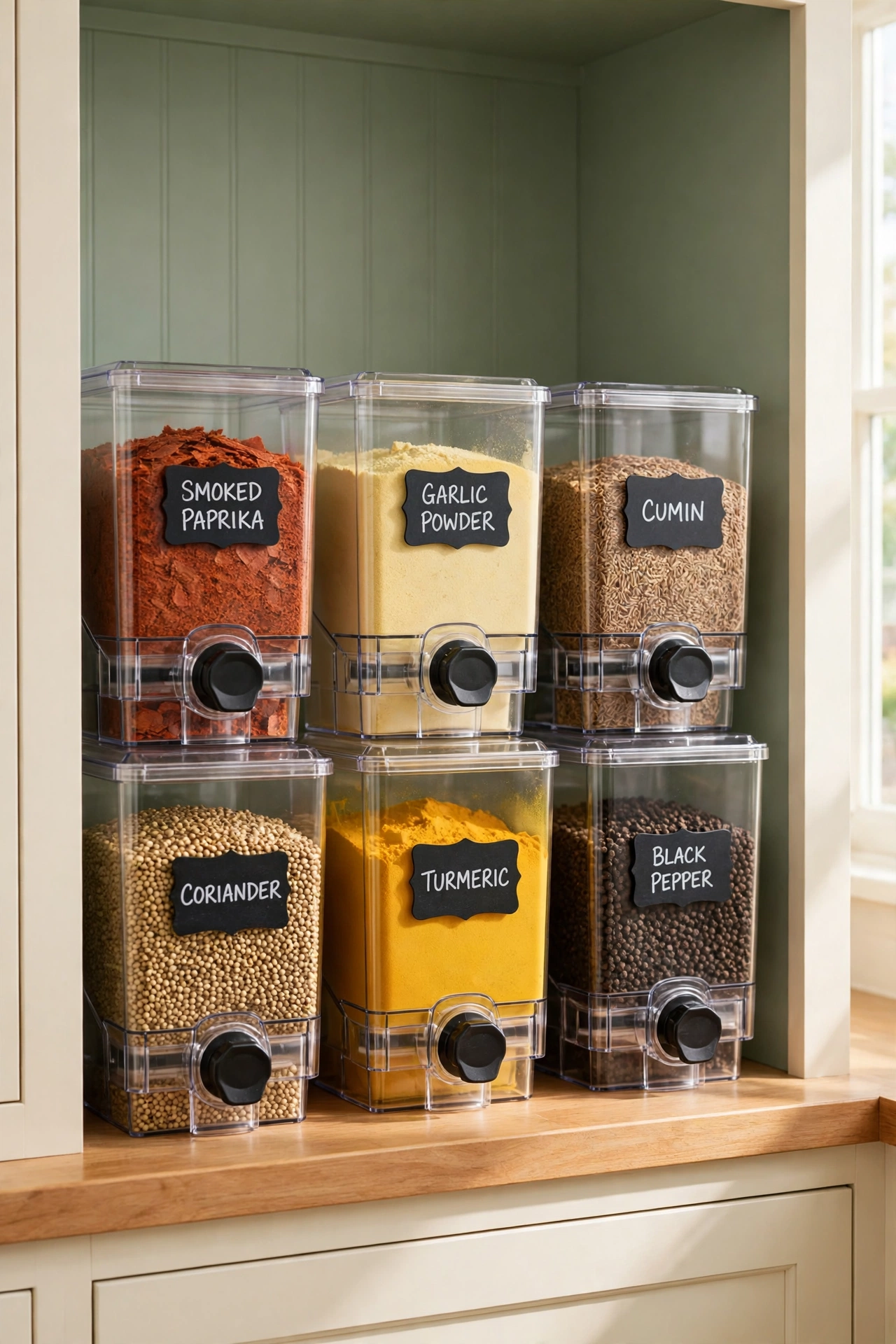
26. Store Rare Spices in a Separate Box
Rare spices like saffron, sumac, and smoked paprika deserve their own small box, away from the daily jars. A small labeled box keeps them safe from spills and stops them from getting lost among the everyday spices. It also reminds you to use them before they lose strength.
Keep the box on a high shelf or in a cool drawer, since rare spices often cost more and come in small amounts. Open the box when you plan a special dish and pick exactly what you need. A separate box turns rare spices into a small treasure chest.
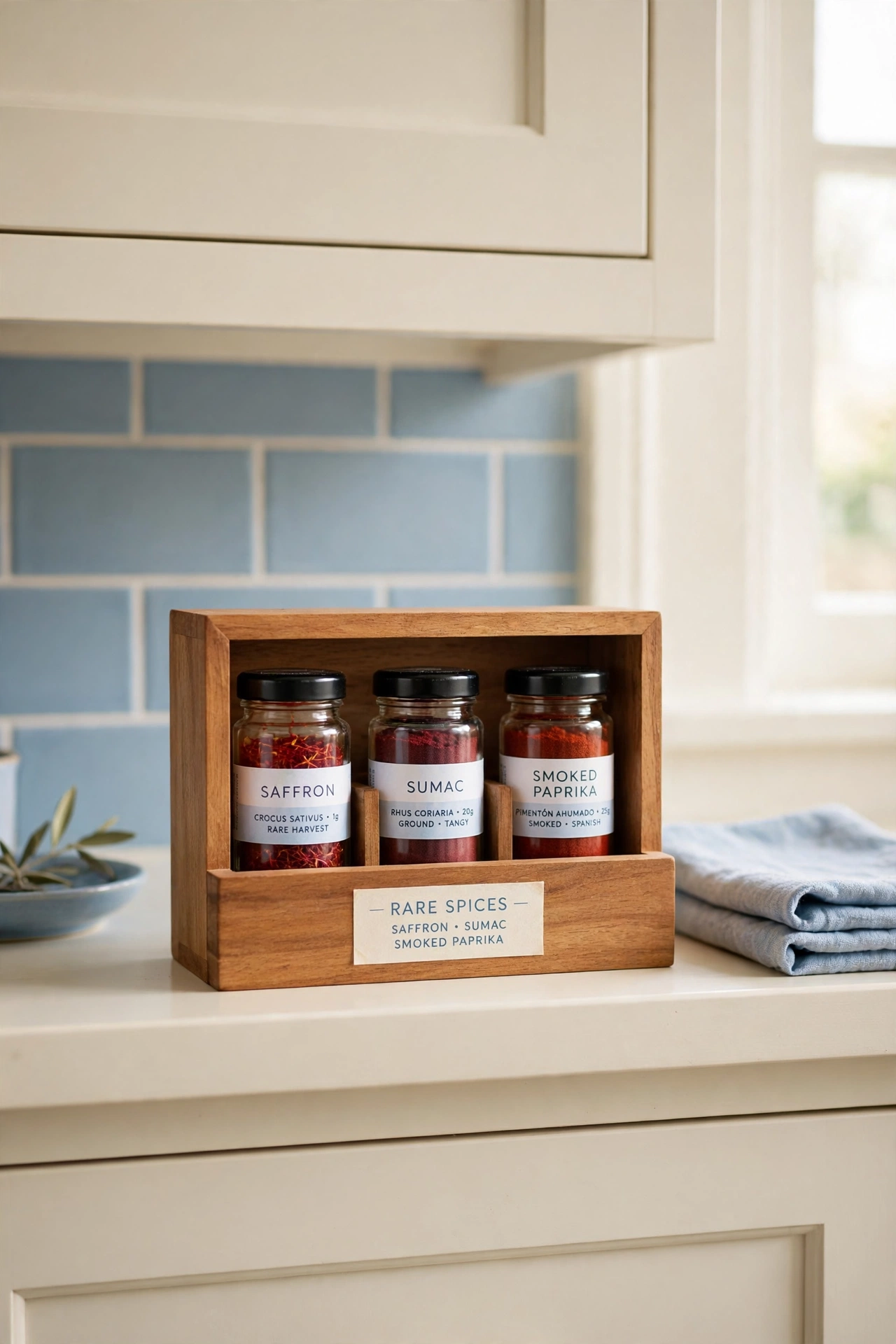
27. Keep Measuring Spoons with the Spices
Measuring spoons belong with the spices, not in a drawer across the kitchen. Hang a small set on a hook inside the spice cabinet or keep them in a cup beside the jars. When you reach for a spice, the spoon is already there.
Use a dedicated set for spices only, so the spoons never carry flavors from one jar to another. A small magnetic strip inside the cabinet door holds metal spoons neatly. This tiny change saves steps on every single recipe.
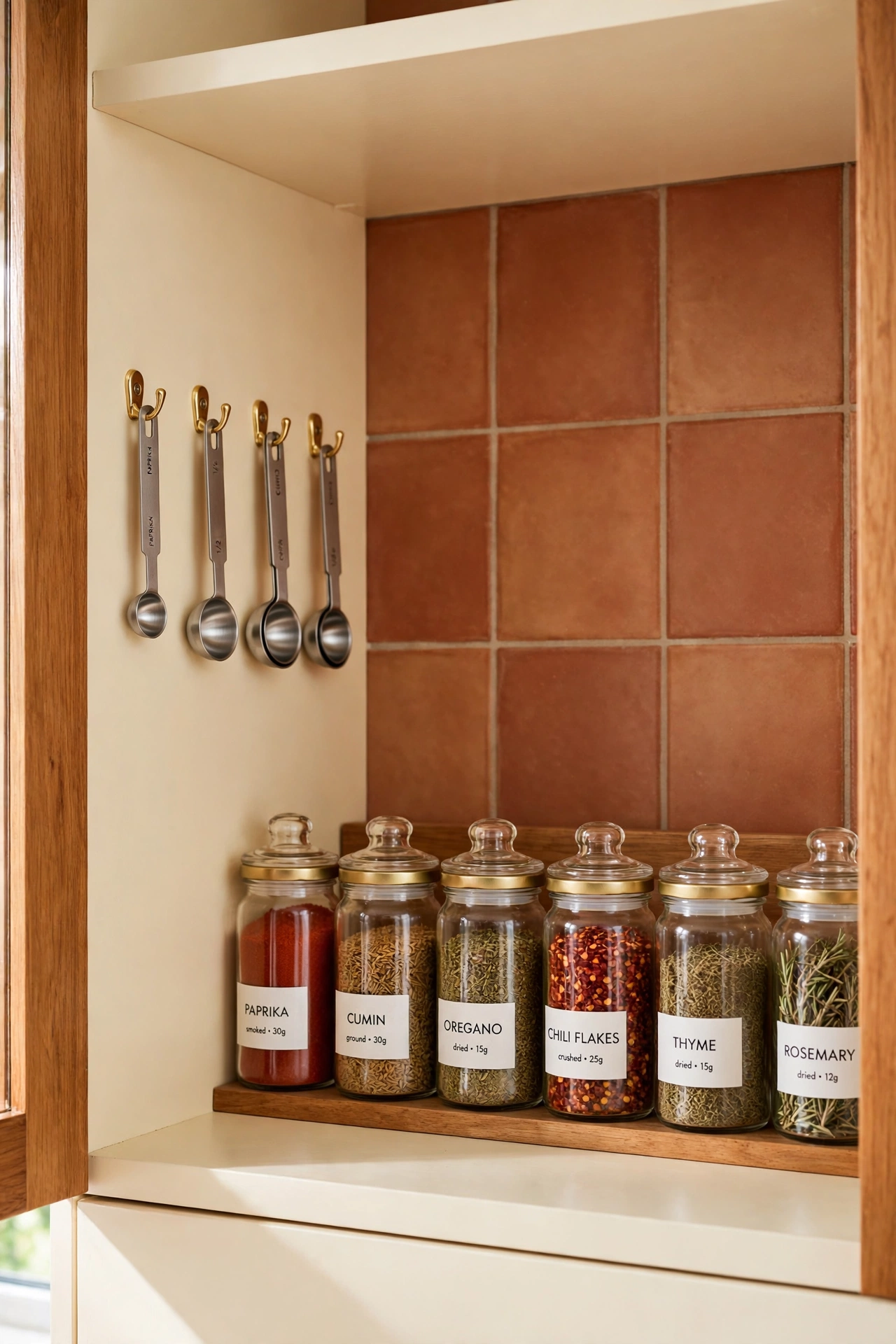
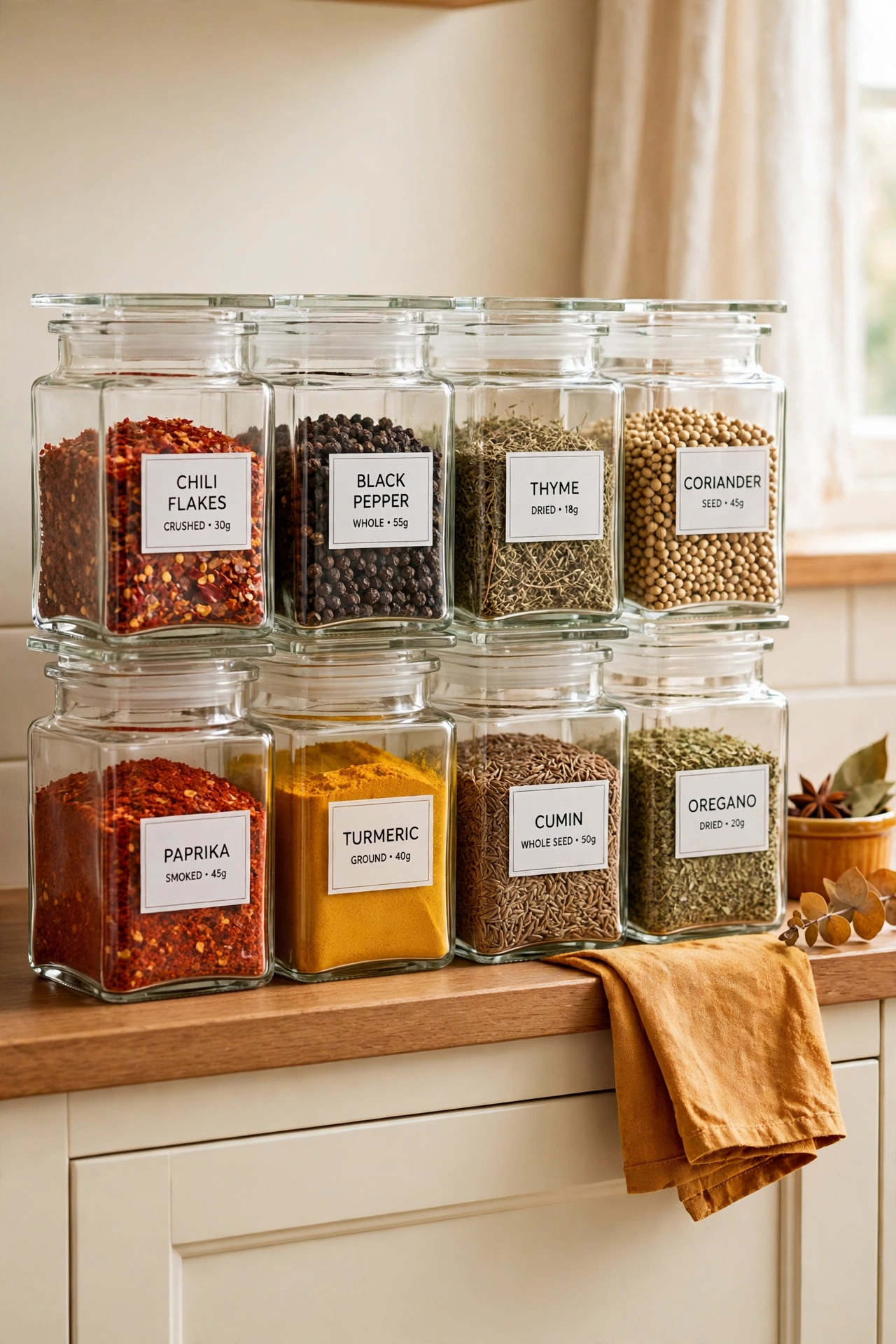
28. Use Stackable Square Jars to Save Space
Square jars stack neatly and use every inch of shelf space, unlike round jars that leave gaps between them. Stackable jars with flat lids let you build two layers on one shelf, which doubles the storage in a small cabinet. The jars stay stable and easy to pull out.
Label the front of each jar so the stack stays readable from the front. Keep heavier jars on the bottom layer and lighter ones on top. Square jars are the smartest shape for a large bulk spice collection in a small kitchen.
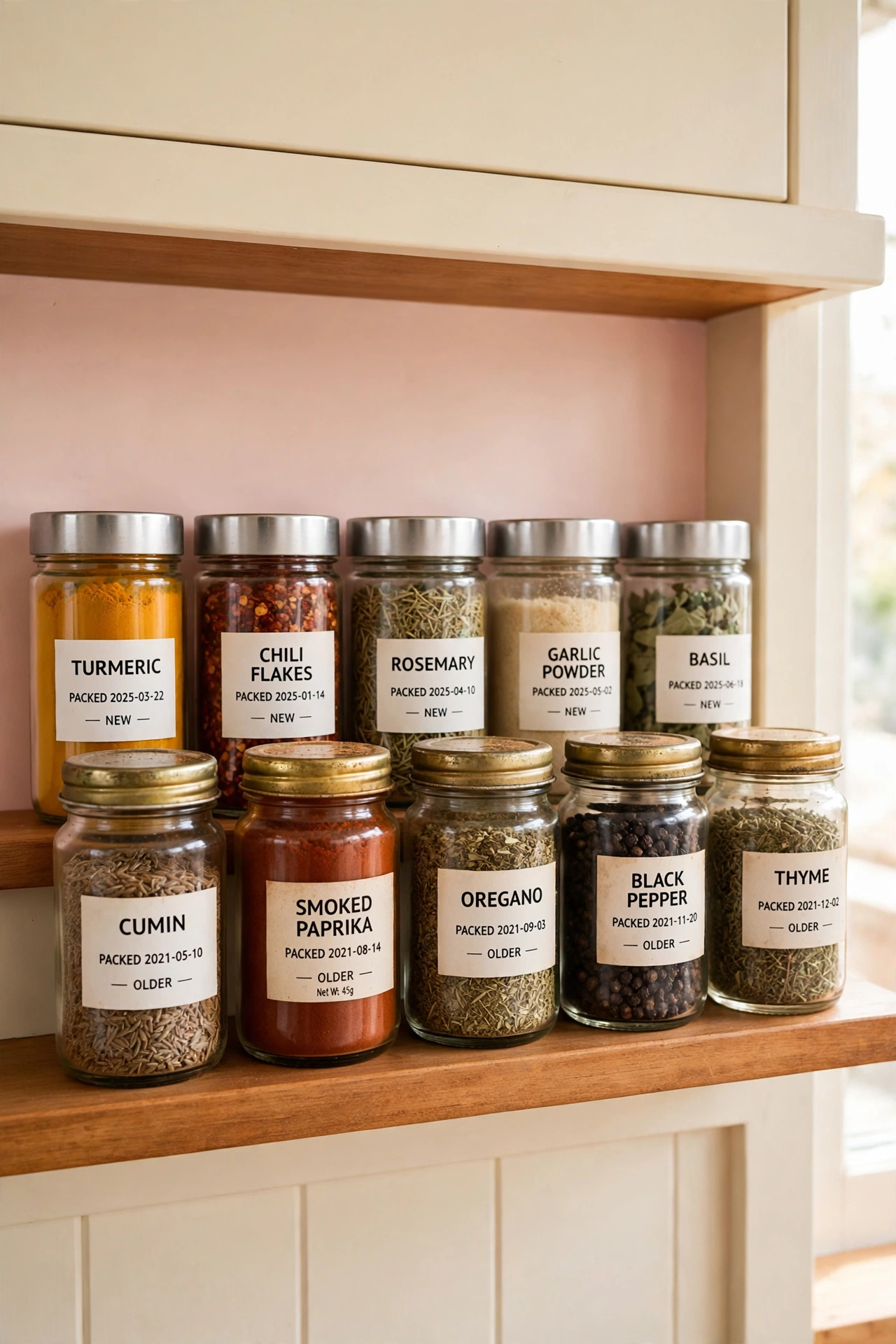
29. Rotate Stock with the Oldest Jar in Front
Put the oldest jar of each spice at the front of the shelf and the newest jar behind it. This simple rotation makes sure you finish the older spice first, while the fresh jar waits its turn. Nothing sits at the back long enough to go stale.
Check the rotation during your seasonal reset and move jars as needed. This habit works for every spice you buy in bulk, since bulk bags often fill two jars at once. First in, first out is the golden rule of a fresh spice collection.
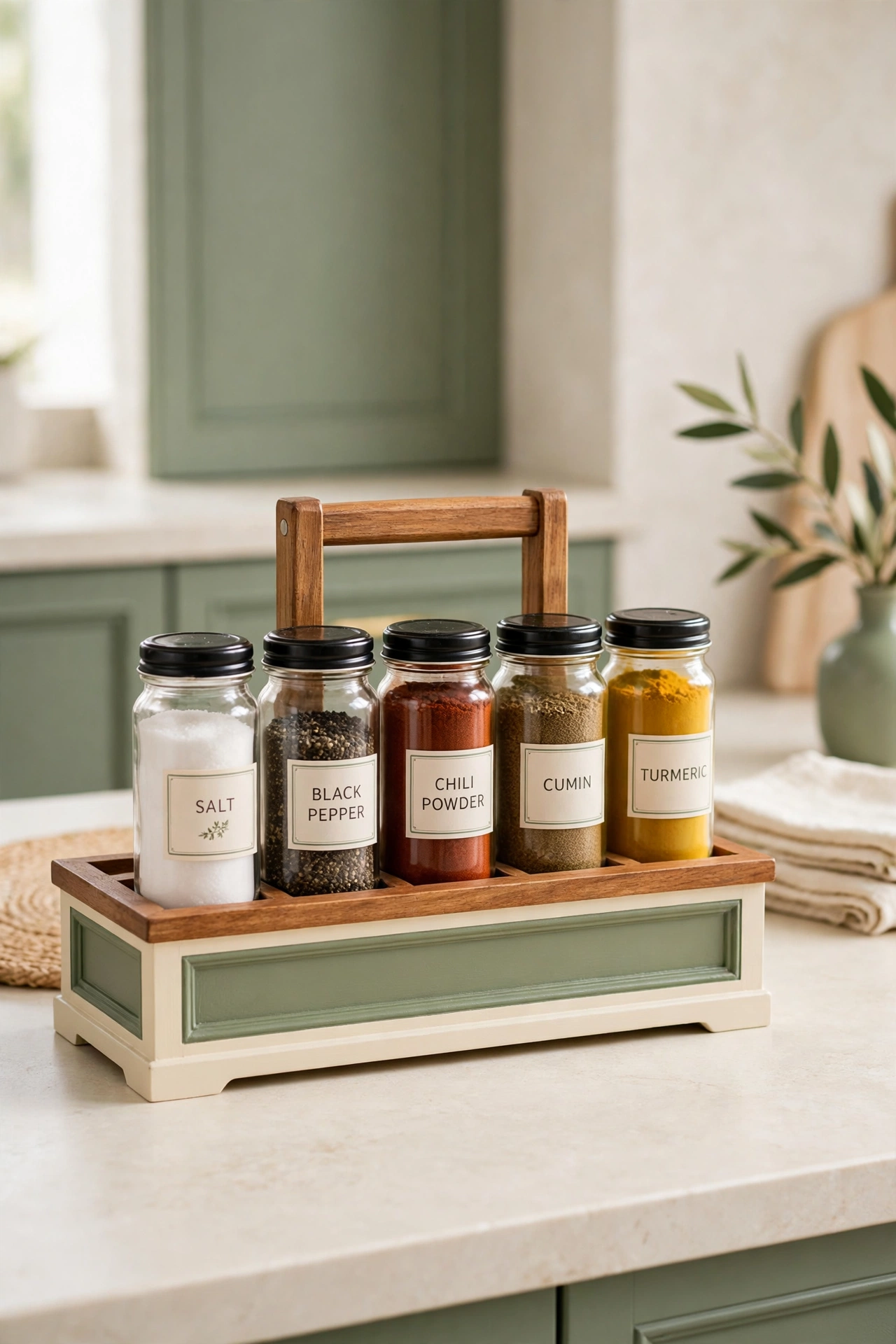
30. Keep a Small Spice Caddy on the Counter
A small spice caddy on the counter holds the five or six spices you use every single day. Salt, black pepper, chili powder, cumin, and turmeric sit together in one neat carrier that you can move from the counter to the stove and back. The rest of the collection stays in the cabinet.
Choose a caddy with a handle so it lifts easily, and wipe it clean once a week. A counter caddy keeps daily cooking fast and keeps the cabinet from being opened a dozen times per meal. It is the final touch that makes a spice system feel effortless.
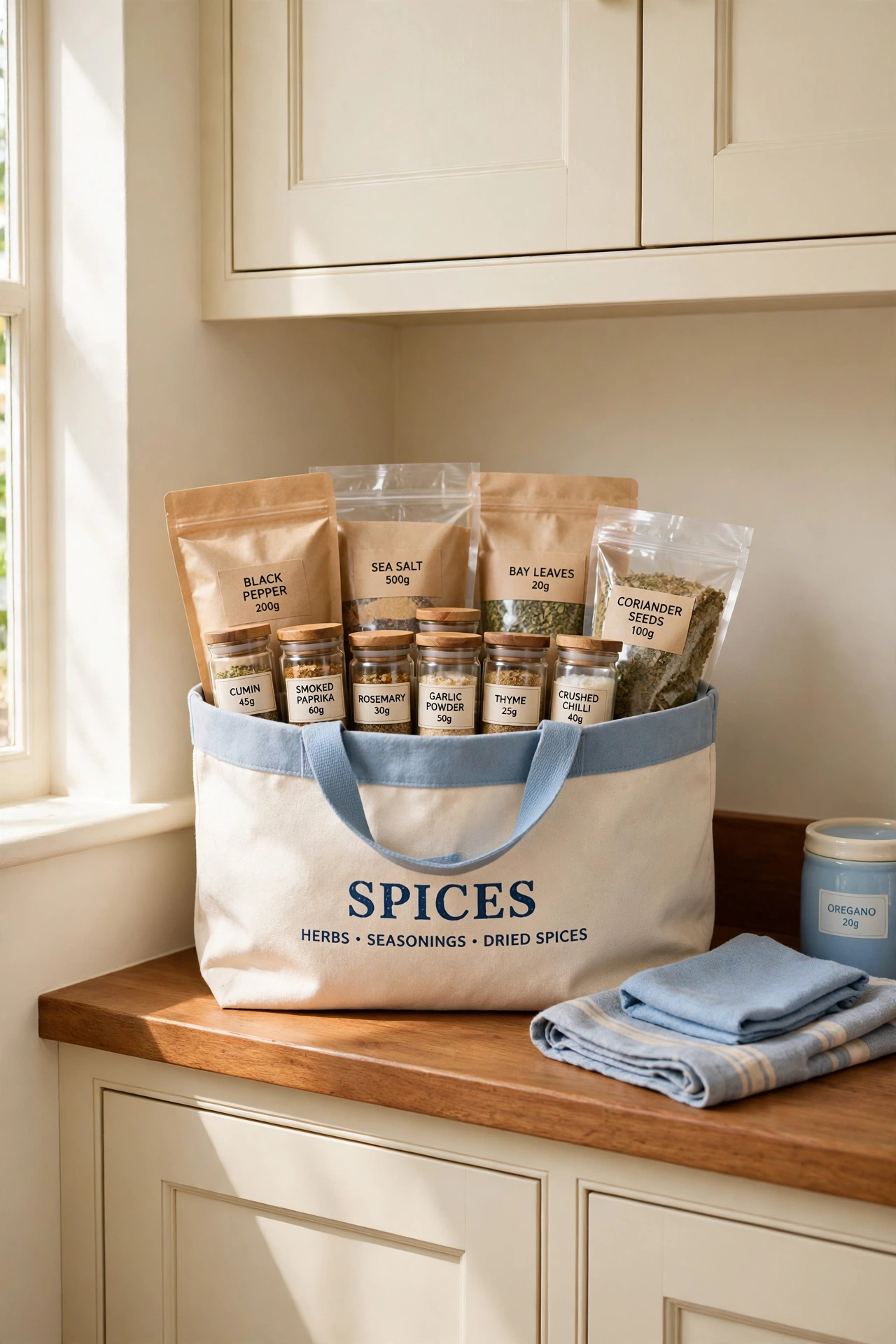
31. Store Extra Jars in a Labeled Tote
Extra jars and spare bulk bags need a home too, and a labeled tote in the pantry works well. Keep the tote on a low shelf where it is easy to reach, with a clear label on the front that says spices. When a jar runs out, the refill is right there in the tote.
Use one tote for refills and another for empty spare jars, so the two never mix. Check the tote once a month and restock it when it runs low. A labeled tote keeps the overflow organized instead of scattered across the pantry.
32. Do a Quick Spice Reset Every Season
Once a season, take fifteen minutes to reset the whole spice system. Smell each jar, check the dates, wipe the shelves, and replace anything stale. Move the jars you use most to the front and put the seasonal spices in easy reach.
This small routine stops the collection from drifting back into chaos. A seasonal reset also reminds you which spices you never use, so you can stop buying them. Four short resets a year keep your spices fresh and your kitchen calm all year long.
Conclusion
Kitchen spice organization does not have to be complicated or expensive. From matching jars and clear labels to pull-out racks and seasonal resets, there is an idea here for every kitchen and every bulk spice collection. The best system is the one you will actually use every time you cook.
Pick one or two ideas that fit your kitchen and start today. Audit your spices, give each jar a home, and enjoy cooking with flavors that are always fresh and easy to find. For a calm home beyond the kitchen, these nightly reset routine ideas will help you keep every room organized with just a few minutes each evening.
Frequently Asked Questions About Kitchen Spice Organization Ideas for Bulk Spice Collections
How long do bulk spices stay fresh?
Ground spices stay strong for about six months, while whole spices last a year or more when stored in airtight jars away from heat and light. Date each jar when you fill it and replace anything that smells weak. Fresh spices make a clear difference in the flavor of your food.
What is the best container for bulk spices?
Glass jars with tight fitting lids are the best choice for bulk spices. Glass does not absorb odors, it keeps moisture out, and it lets you see how much is left. Use uniform jars in one or two sizes so the shelves stay neat and level.
Where should I store spices in a small kitchen?
A shallow drawer, a tiered shelf riser, or a wall-mounted rail all store spices without using much space. Magnetic jars on the fridge and a pull-out rack beside the stove also work well. Choose the spot closest to where you cook, since easy access matters most.
How do I stop spices from clumping in the jar?
Keep spices in airtight jars away from steam and moisture, and never shake spice directly over a steaming pot. Use a dry measuring spoon to take spice from the jar. A few grains of uncooked rice in the salt jar also helps absorb moisture in humid kitchens.
Should I keep spices near the stove?
Spices are handy near the stove, but heat and steam fade their flavor fast. Keep daily spices in a drawer or a rack beside the stove rather than directly above it. Bulk refills belong in a cool cabinet or pantry shelf, away from heat and light.

Hi, I’m Emily! I turn messy corners into cozy, organized spots. DreamNestDecor is where I share simple, practical home ideas — decor, organization, and small-space solutions that work in real life, not just in photos. Every idea here is carefully researched before it’s shared.