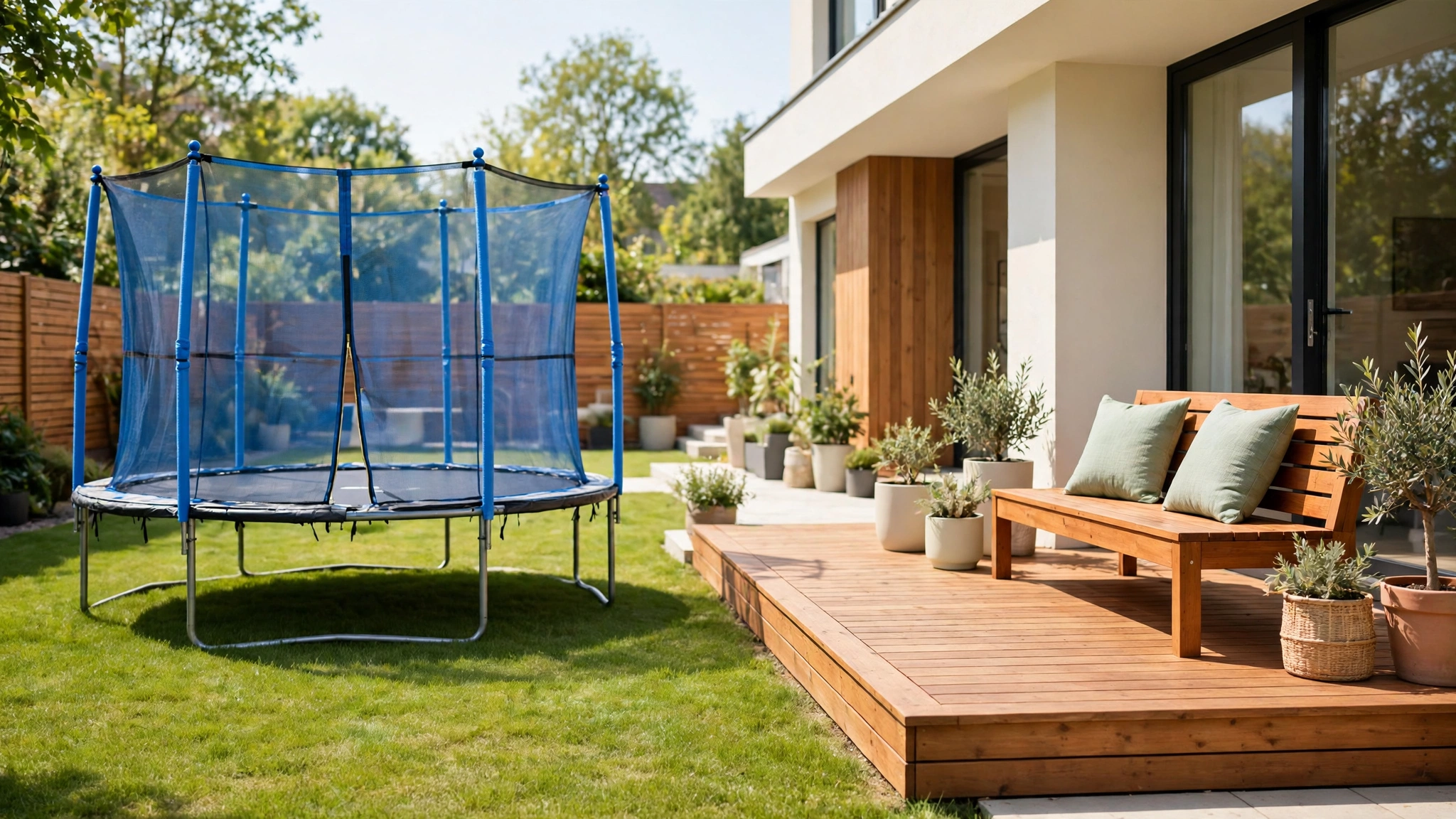
Picture this: a round trampoline sits in the middle of a tidy backyard, its safety net glowing in the afternoon sun, while a wooden deck, a shady seat and a neat garden bed frame the scene. Kids bounce with joy, parents relax nearby, and the whole yard feels like a small family park. That cheerful picture is exactly what a well-planned trampoline area gives to a home.
You do not need a huge garden or a big budget to build it. All you need is a safe spot, a level surface and a few thoughtful touches for comfort and play. These 25 outdoor trampoline area ideas for family fun will help you turn a simple trampoline into a backyard destination that the whole family loves.
1. Install a Safety Enclosure Net Around the Trampoline
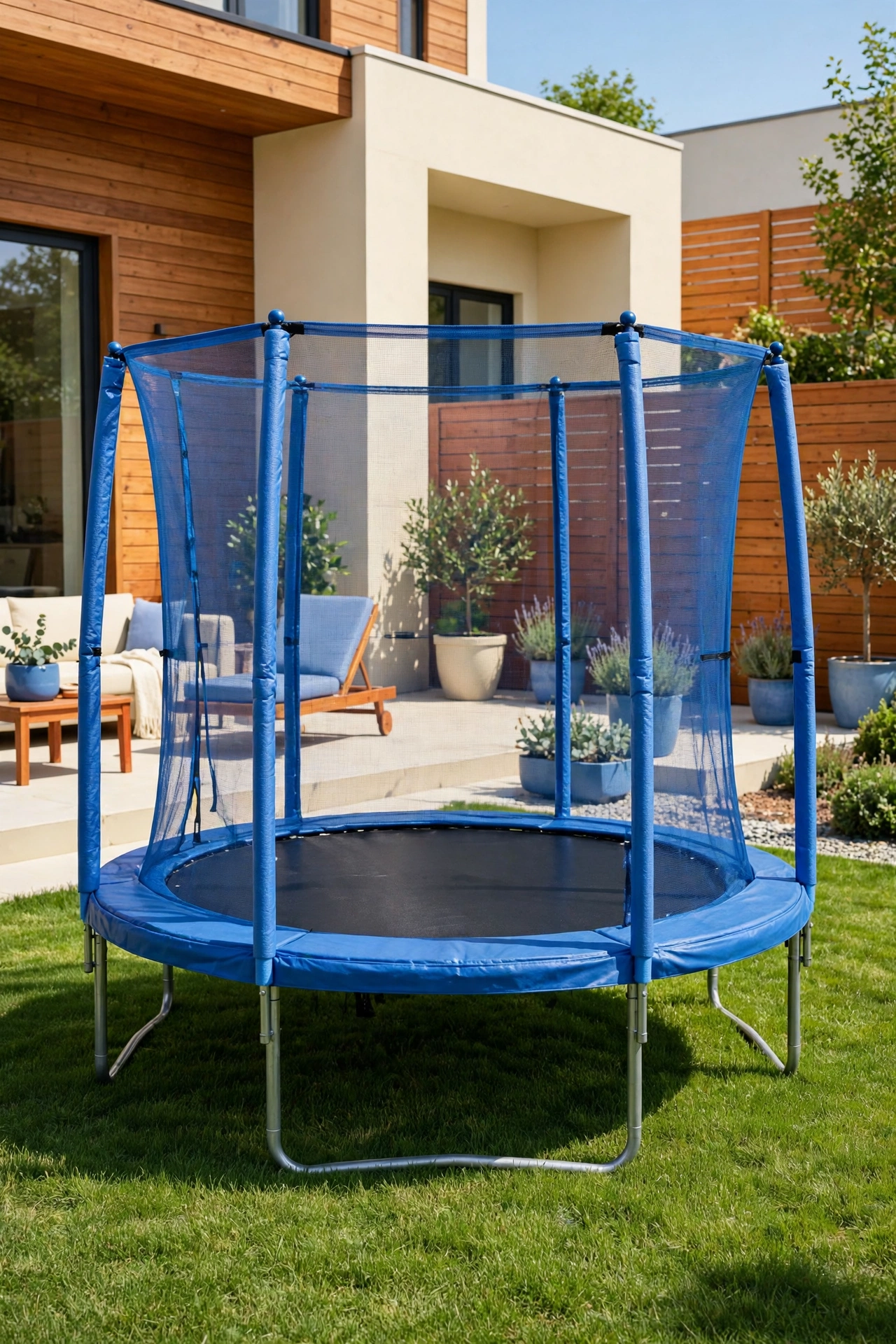
A safety enclosure net is the first and most important addition to any trampoline area. The tall mesh net wraps around the jumping mat and stops jumpers from falling off the edge, which makes every bounce much safer. Modern nets attach to padded poles and leave a zippered opening for easy entry.
Choose a net with fine mesh that is tall enough to contain even high bounces, and check the stitching and zippers every month. A good net also keeps balls and small toys from flying out of the jumping area. Safety comes first, and a strong enclosure net lets the whole family relax while kids play.
2. Place the Trampoline on Level Grass
A level patch of grass is the best home for a trampoline. Flat ground keeps the frame steady, the legs even and the jumping surface true, so every bounce feels smooth and safe. Grass also softens the area around the trampoline if someone steps off the edge.
Walk the yard and test the ground with a long level before you set the trampoline down. Fill small dips with soil and trim the grass short so the legs sit firmly. A flat grassy spot also drains well after rain and keeps the trampoline area green and inviting all season.
3. Add a Soft Landing Zone with Rubber Mulch
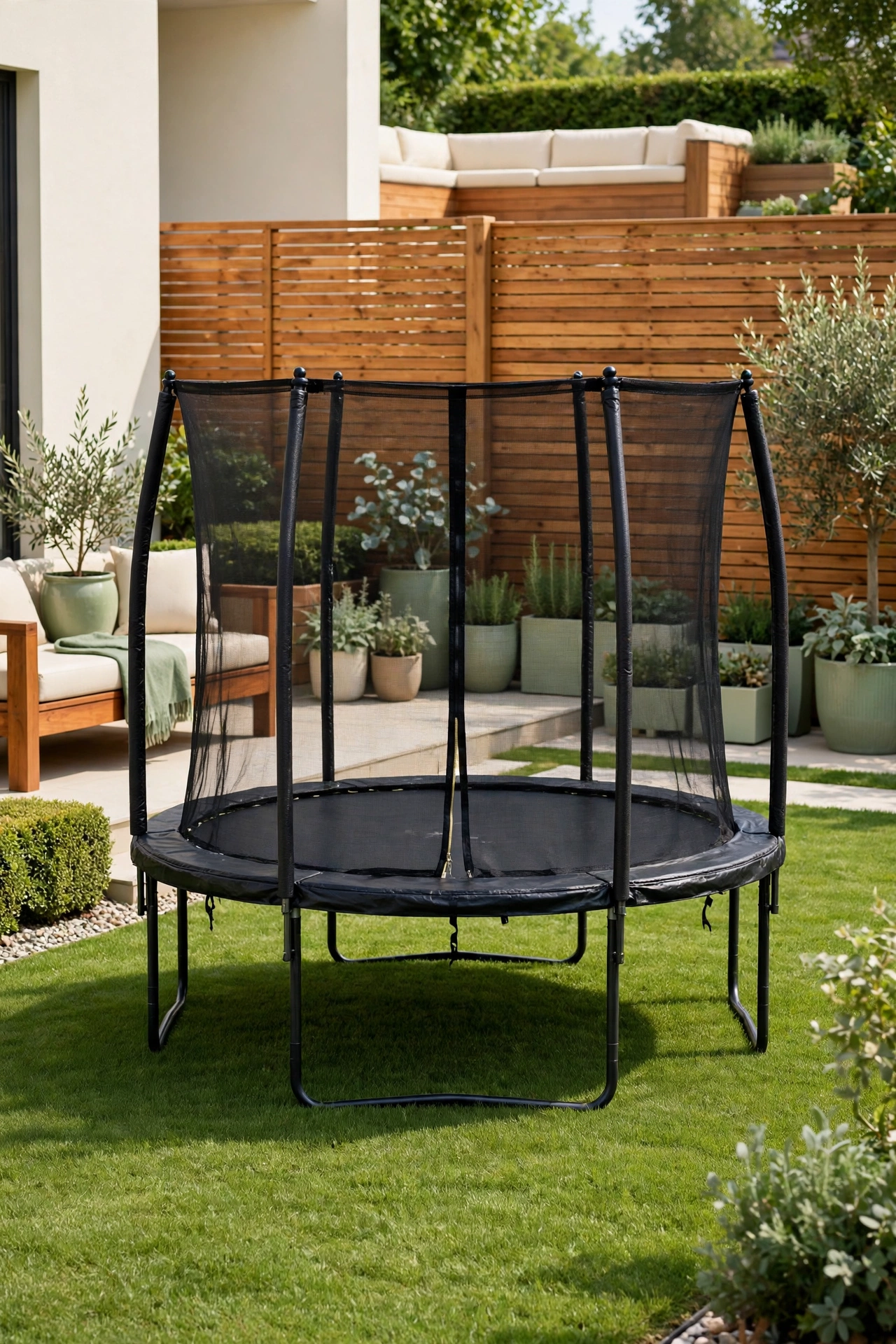
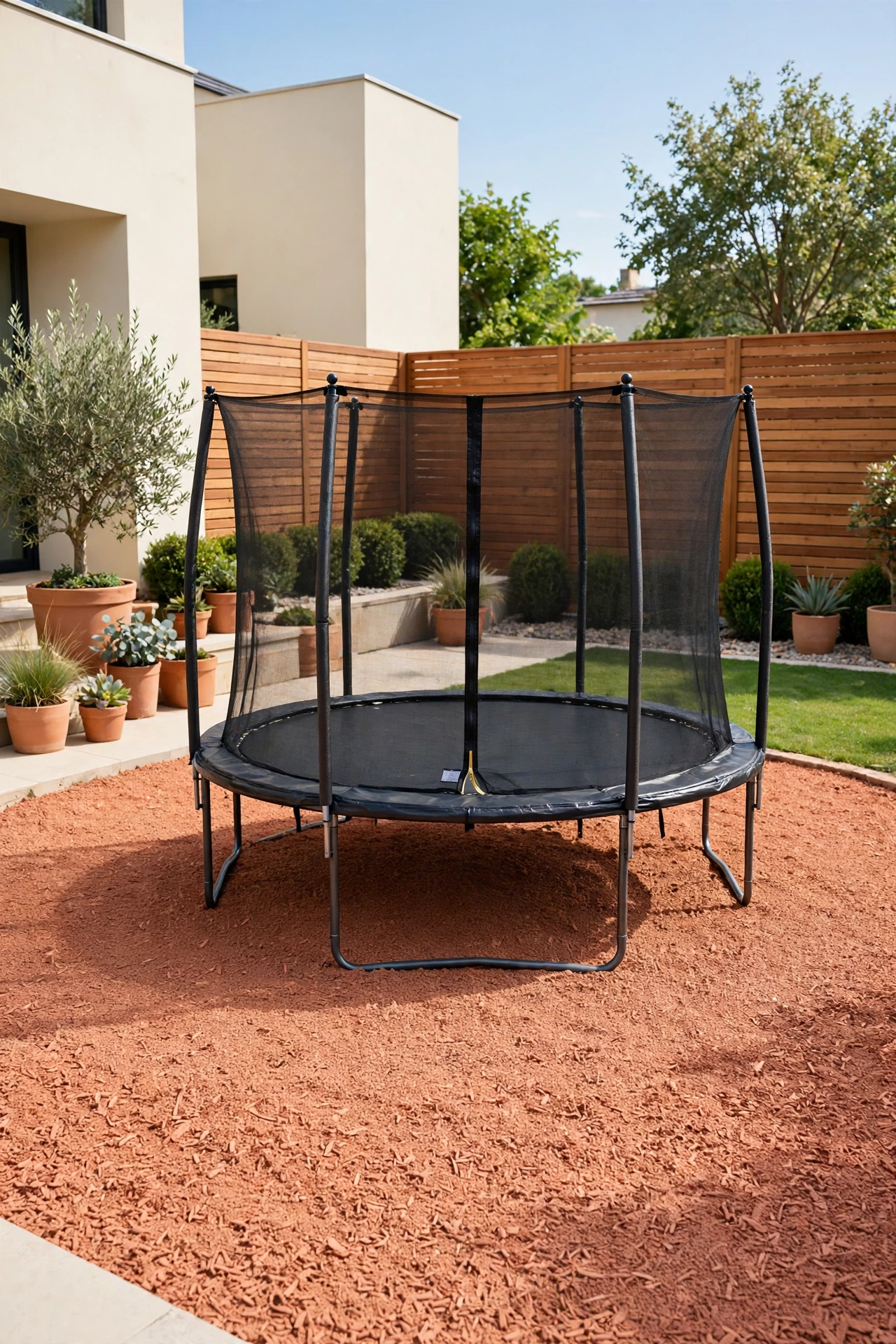
Rubber mulch around the base of the trampoline creates a soft landing zone that cushions every step on and off the mat. The springy pieces spread evenly, stay in place in wind and rain, and never rot like wood mulch. A wide ring of rubber mulch also keeps mud away from the jumping area.
Spread the mulch at least two feet wide around the whole trampoline and about three inches deep for real cushioning. Choose a warm terracotta color so the ring looks like a designed border rather than a safety mat. This simple layer makes the trampoline area safer and tidier at the same time.
4. Build a Wooden Deck Around the Trampoline
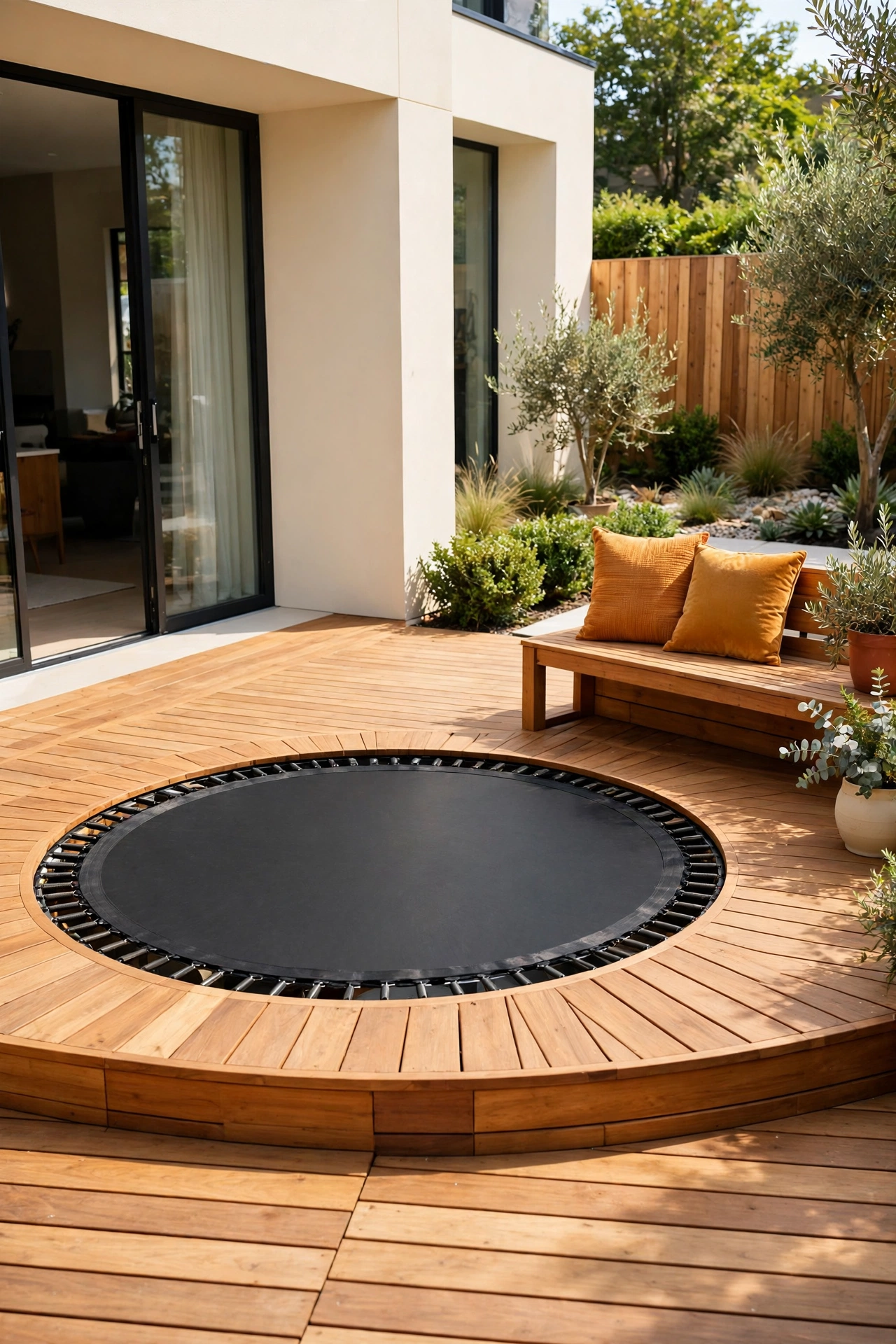
A low wooden deck around the trampoline gives jumpers a clean, dry place to step on and off the mat. The deck removes the need for a wobbly ladder and makes the trampoline feel like a built-in part of the yard. Warm wood boards also add a polished look that plain grass cannot match.
Build the deck at the same height as the trampoline frame and leave a small gap between the boards and the frame for airflow. Add a wide step on one side for easy climbing. A wooden deck turns the trampoline from a piece of equipment into a real backyard feature.
5. Sink the Trampoline into the Ground
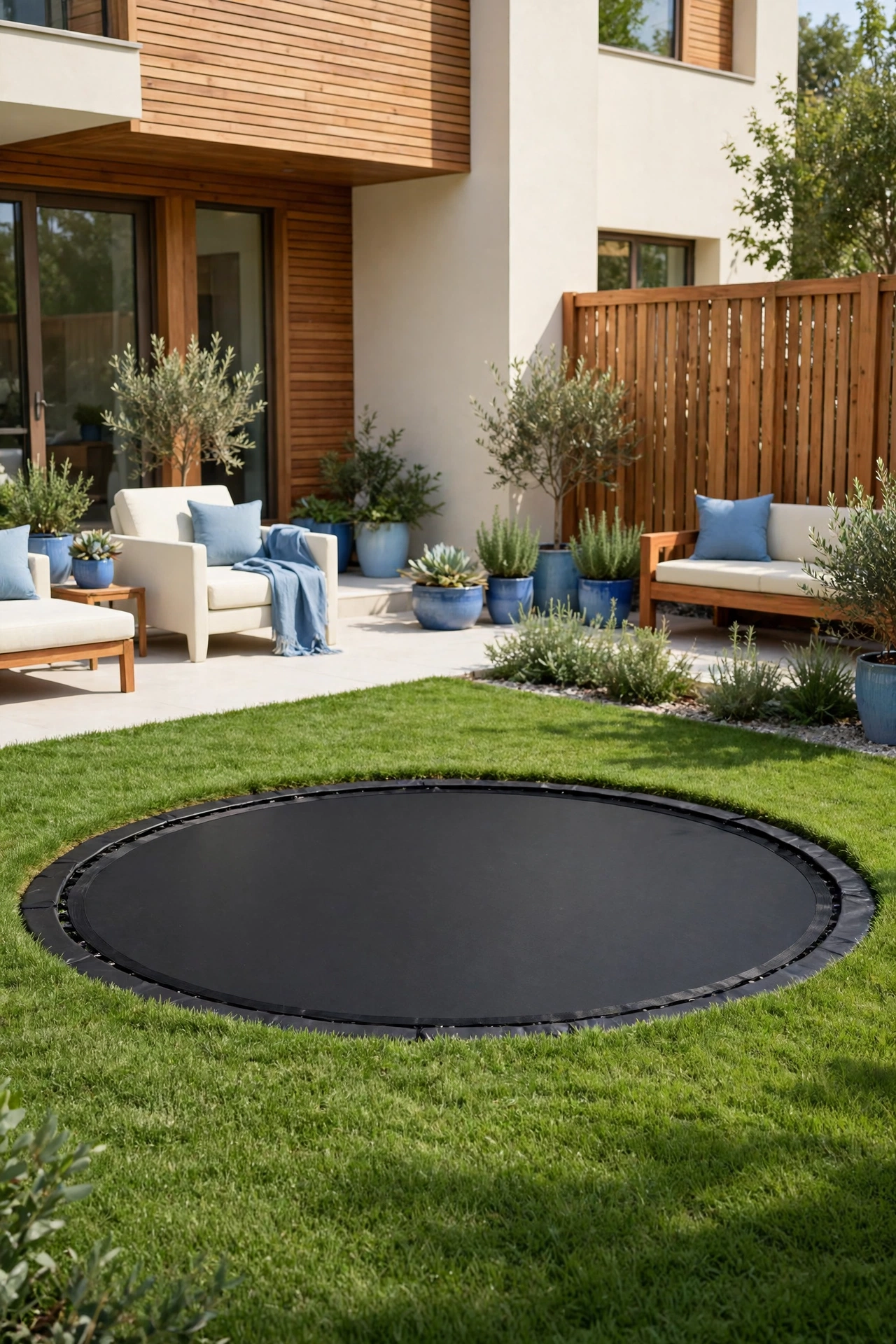
An in-ground trampoline sits flush with the lawn, so the jumping mat is at ground level and there is no frame to climb. This design looks sleek, removes the risk of falling from a height, and lets even small children step on and off with ease. The yard also keeps its open, unbroken view.
Digging a pit takes work, so plan for good drainage with a gravel base and a small drain at the bottom. Line the pit walls to keep soil from falling in and leave room for airflow under the mat. A sunken trampoline blends into the garden so well that guests may not notice it until someone starts bouncing.
6. Add a Shade Sail Above the Trampoline
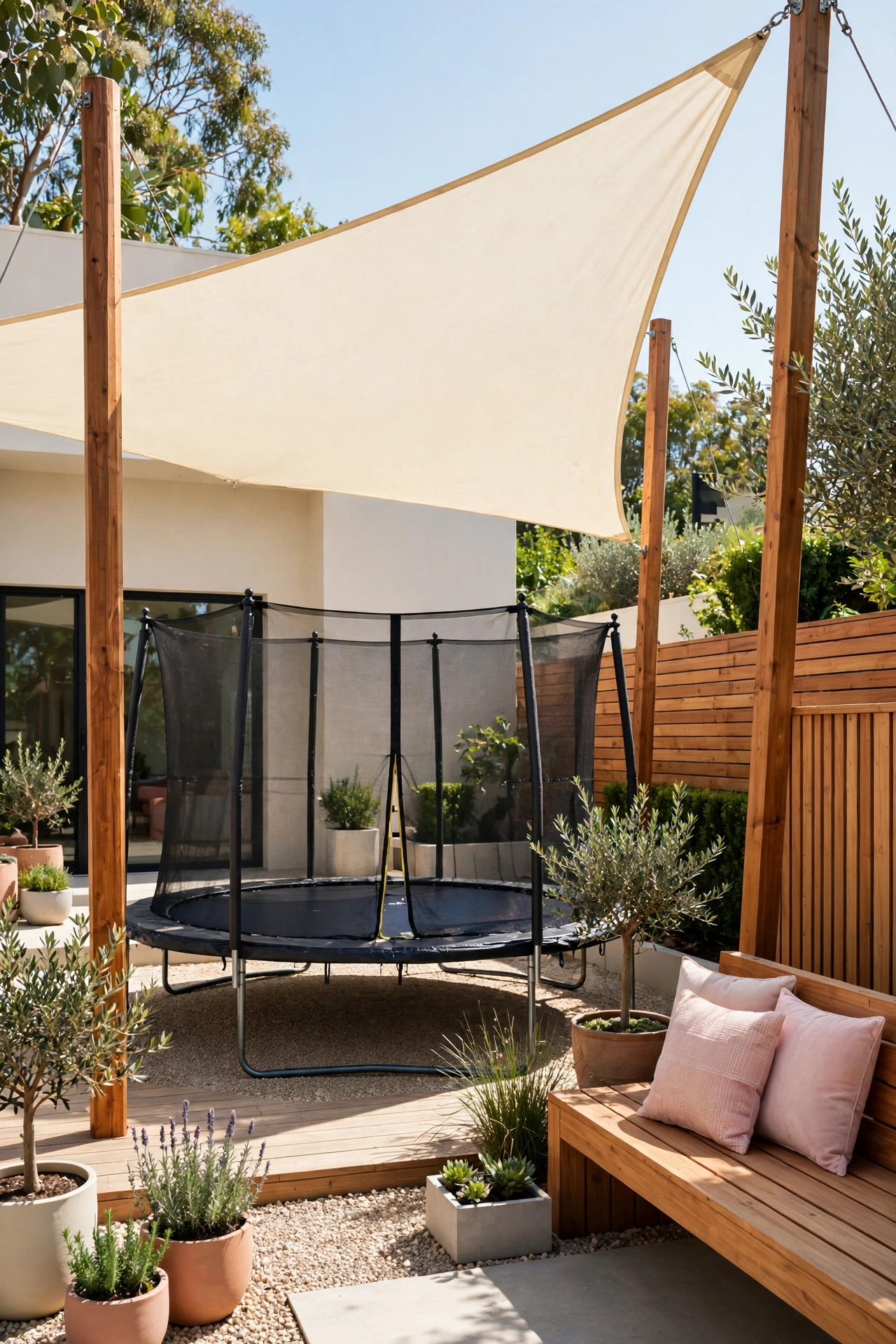
A shade sail above the trampoline keeps the jumping mat cool on hot summer days and protects jumpers from harsh sun. The triangular fabric stretches between tall poles and casts a soft shadow over the whole trampoline. Kids can bounce longer without overheating, and the mat stays cool under bare feet.
Mount the sail high enough that even tall jumpers never touch the fabric, and angle it so rain runs off to one side. A cream colored sail matches most gardens and lets dappled light through. Shade makes the trampoline usable through the hottest part of the day.
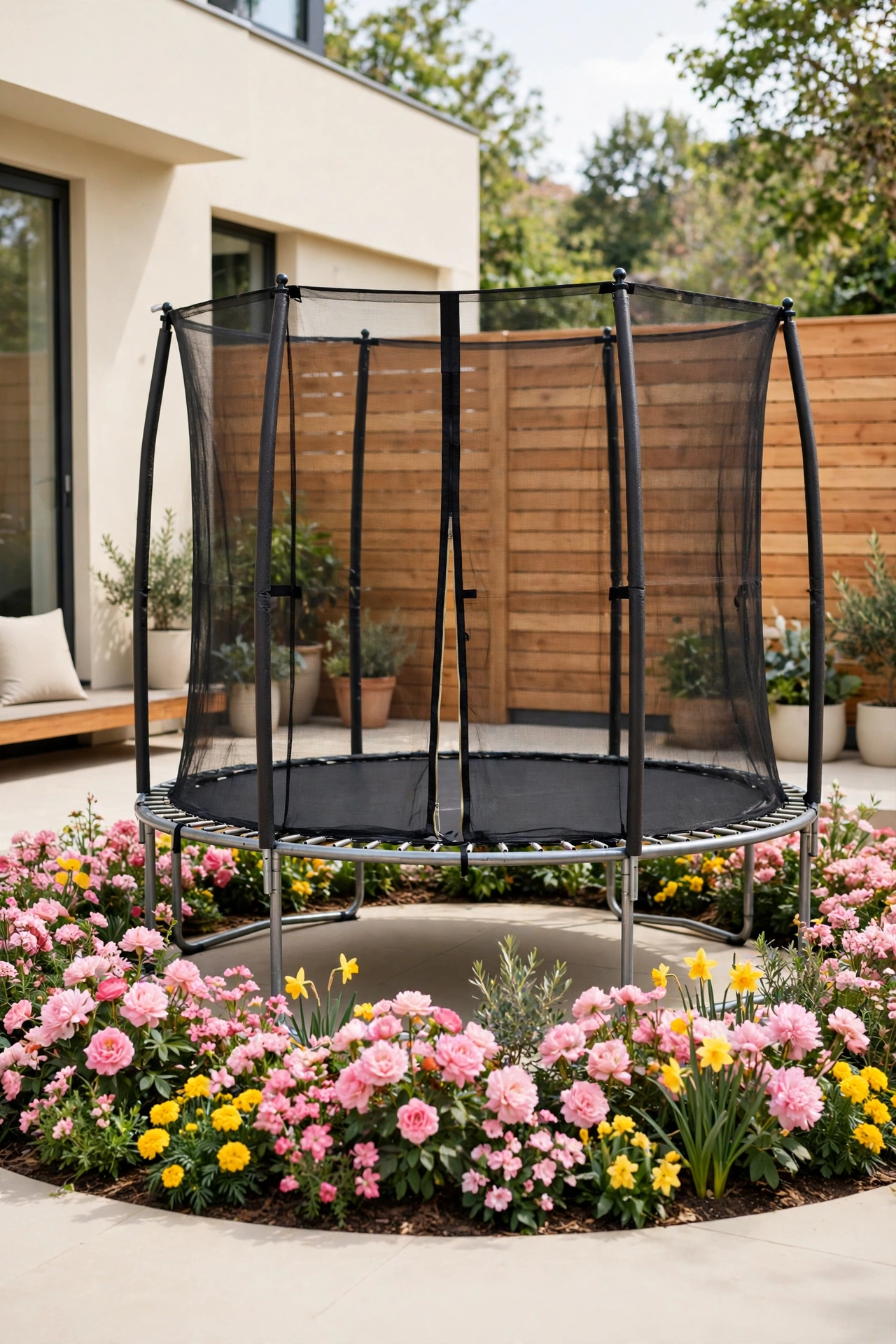
7. Create a Flower Bed Border Around the Trampoline
A flower bed border around the trampoline turns the play area into a garden feature. Low blooms in soft colors ring the trampoline and soften the look of the frame and net. The flowers also mark a clear edge that tells kids where the play zone begins.
Choose sturdy, low-growing flowers that can handle the odd stray ball, and keep the bed wide enough that plants stay clear of bouncing feet. A border of marigolds, petunias or lavender adds color and a gentle scent. For more ways to water a garden bed like this, see these DIY rain barrel ideas for sustainable garden watering. A flower border makes the trampoline area feel loved rather than left over.
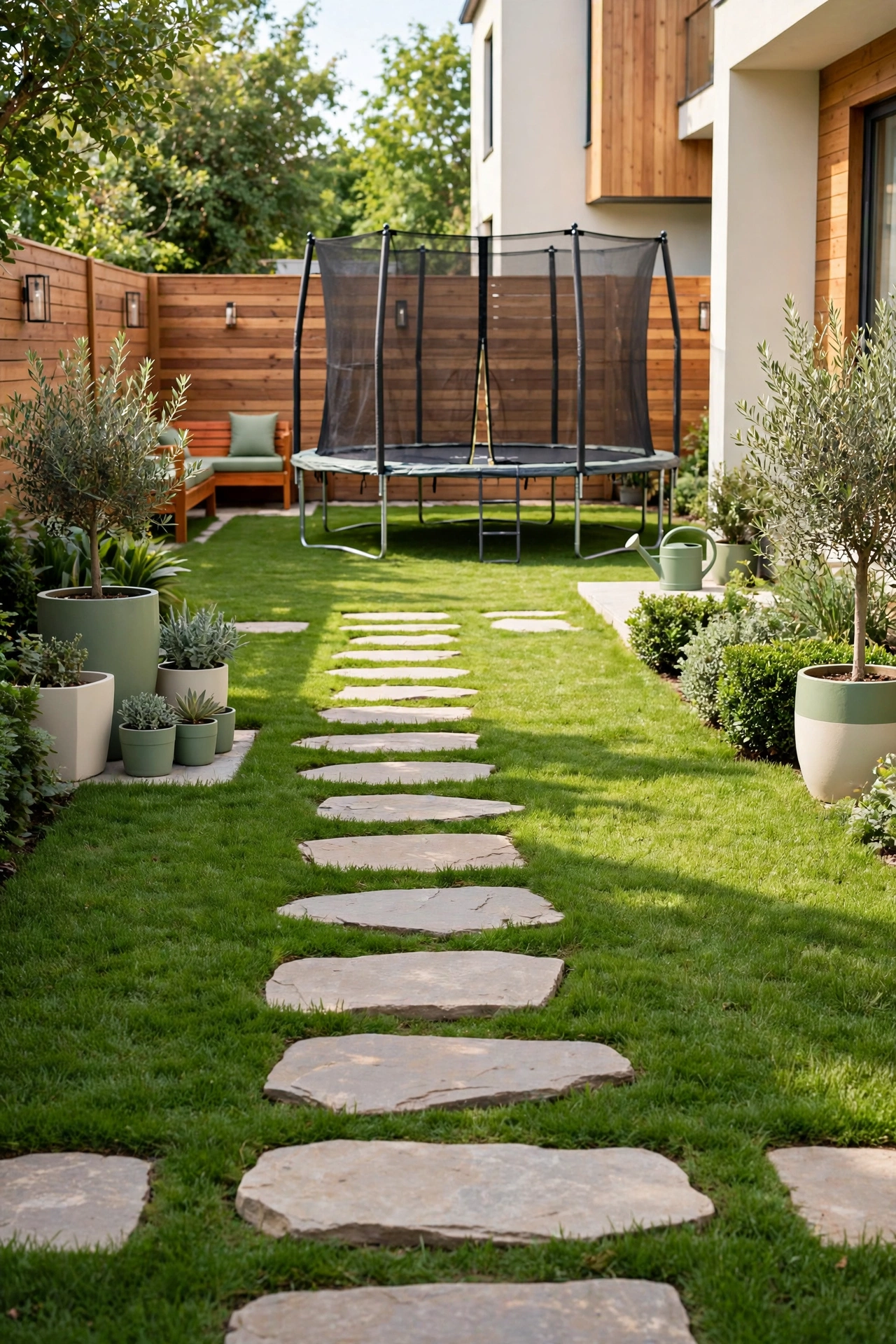
8. Lay a Stone Path to the Trampoline
A stone path from the back door to the trampoline keeps feet clean and marks a clear route across the lawn. Flat stepping stones set in gravel or grass guide kids straight to the play area and stop the grass from wearing into a muddy track. The path also helps guests find the trampoline after dark.
Space the stones at a comfortable walking stride and set each one level so nobody trips. Warm sandstone or grey slate both look natural beside a green lawn. For more ideas on shaping garden paths, see these garden steps for sloped backyards. A simple path makes the whole yard feel planned and easy to use.
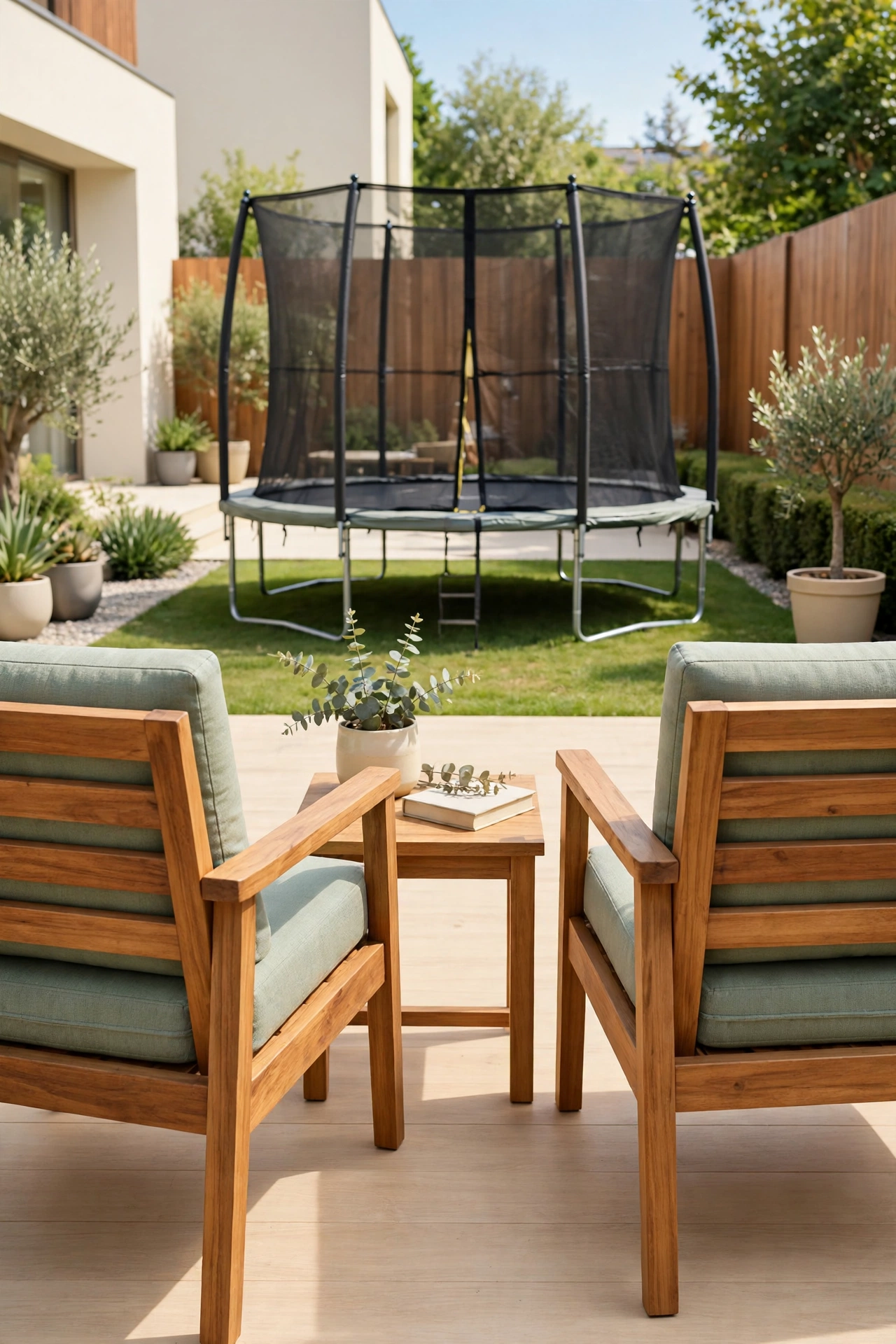
9. Add Outdoor Seating for Watching Parents
A pair of comfortable chairs beside the trampoline gives parents a proper place to sit and watch. A simple bench or two wooden chairs with soft cushions turns supervision into a pleasant break instead of standing duty. Seating also invites the whole family to gather around the play area.
Place the chairs just outside the safety zone, facing the trampoline, with a small side table for drinks and books. Choose weatherproof cushions in a calm sage green so the seats look good all season. When parents have a comfortable seat, the trampoline area becomes a family hangout, not just a kids zone.
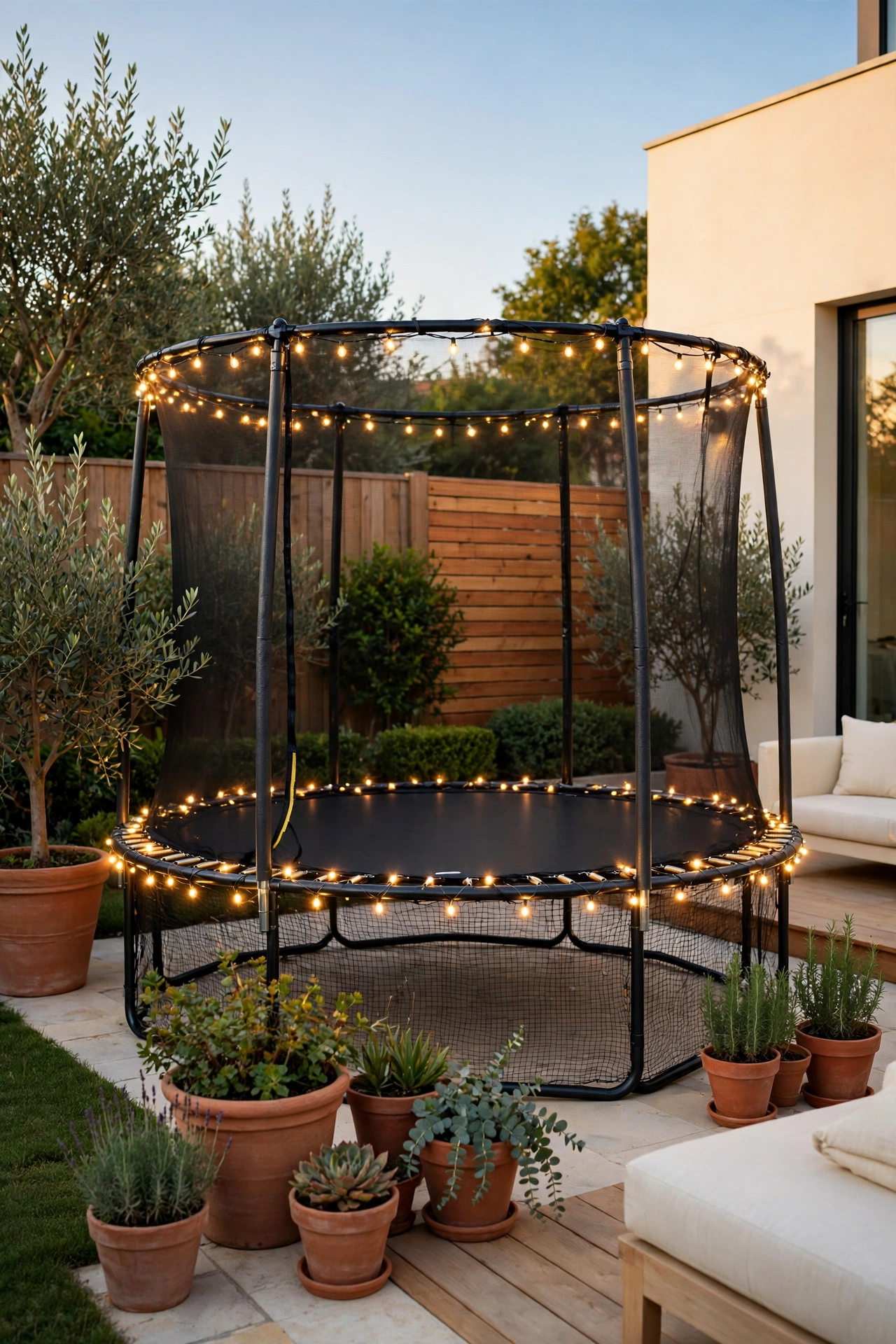
10. Hang Solar String Lights Around the Frame
Solar string lights around the trampoline frame turn evening bounces into a magical event. The warm bulbs charge all day in the sun and glow softly as dusk falls, outlining the trampoline in light. Kids love bouncing under the glow, and parents can watch easily from the patio.
Wrap the lights loosely around the outer poles and the top ring of the enclosure net, keeping them clear of the jumping mat. Choose warm white bulbs for a cozy glow that suits any garden. Solar lights need no wiring and no power bill, which makes them an easy upgrade for any trampoline area.
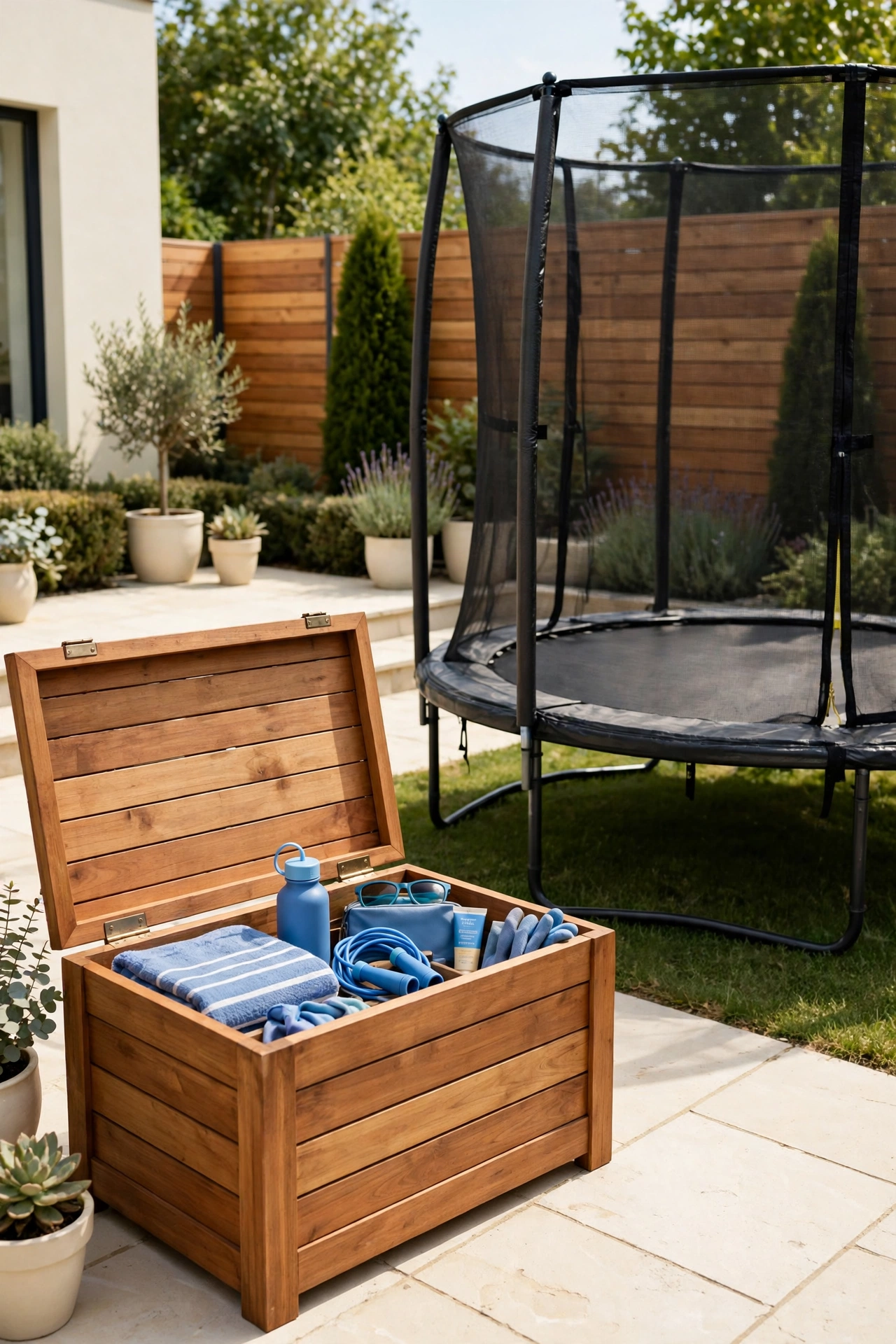
11. Build a Storage Box for Trampoline Accessories
A weatherproof storage box beside the trampoline keeps accessories tidy and within reach. The box holds the safety cover, the ladder, spare springs, a pump and jump ropes in one dry place. When everything has a home, the trampoline area stays clean and setup takes minutes.
Choose a box with a tight lid and a size that fits the largest accessory you own. A wooden box with a hinged lid doubles as a bench when closed. Label the inside with simple printed tags so every family member knows where each item belongs.
12. Set Up a Water Station Nearby
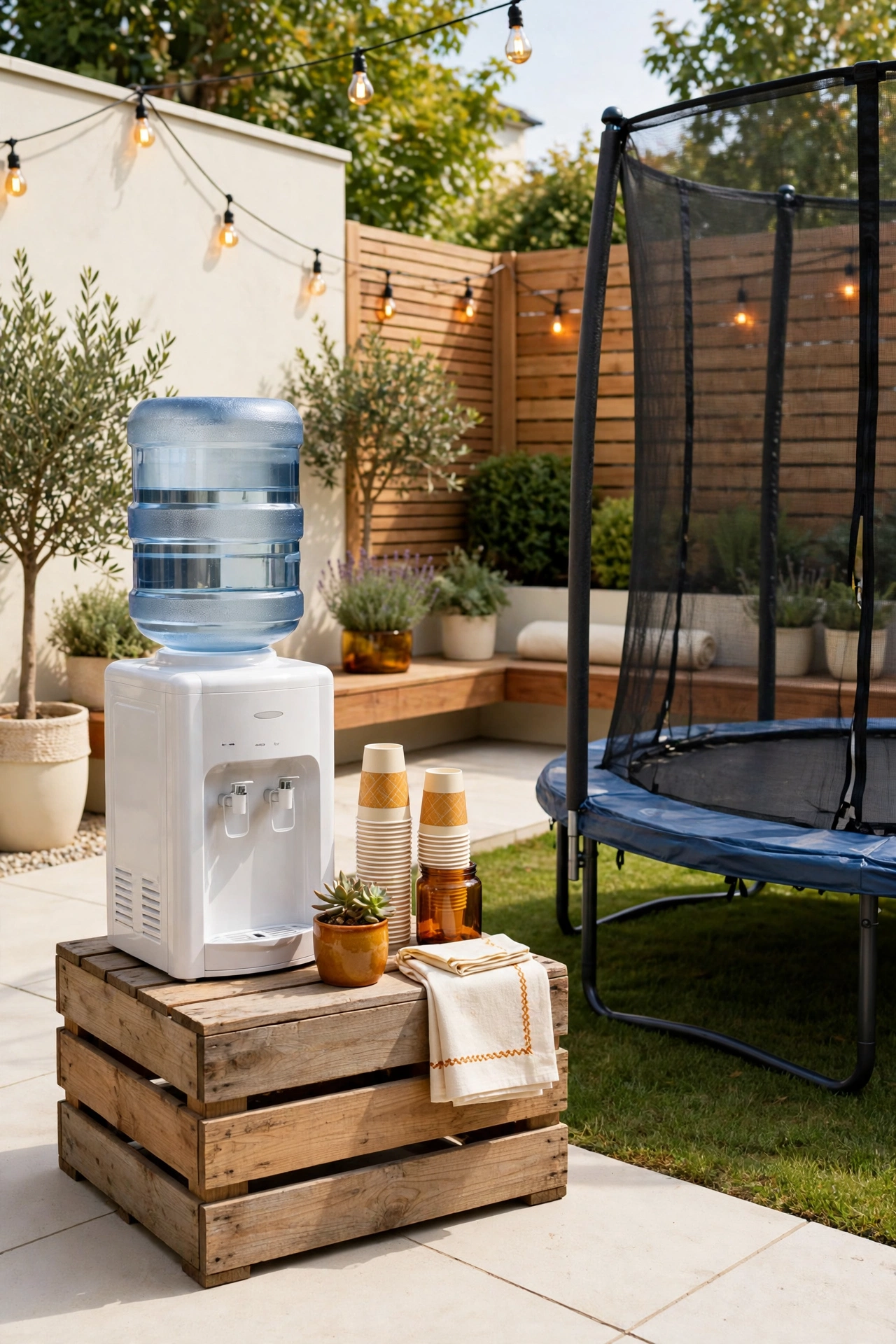
A small water station beside the trampoline keeps jumpers hydrated without a trip back to the kitchen. A cooler filled with bottled water, a few cups and a small towel basket covers every thirsty break. The station also stops wet cups and bottles from scattering across the lawn.
Place the station on a small table or a wooden crate in the shade, close enough to reach but far enough that water never splashes onto the mat. Refill the cooler each morning during the summer season. A water station is a small touch that makes long play sessions comfortable and safe.
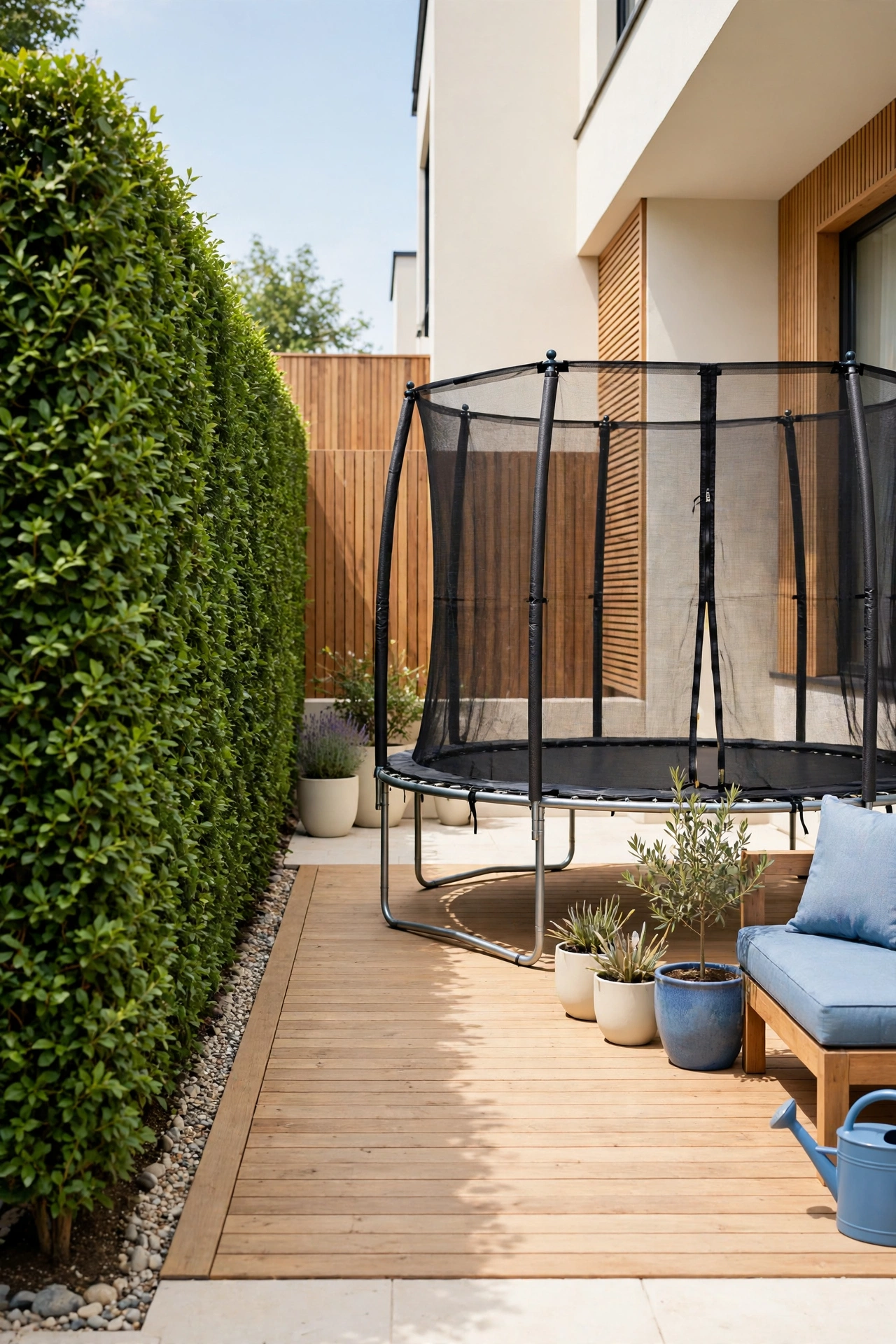
13. Plant a Hedge as a Natural Windbreak
A low hedge planted on the windy side of the trampoline softens gusts and makes bouncing steadier. The green wall blocks wind without blocking the view, and it gives the play area a sheltered, private feeling. A hedge also muffles sound, which neighbors will appreciate.
Choose a hardy evergreen hedge that grows to about waist height and trim it twice a year to keep it neat. Leave a gap at one end so the hedge never blocks the path to the trampoline. A living windbreak is a long-term gift to the whole yard, not just the trampoline area.
14. Add a Chalk Hopscotch Court Beside the Trampoline
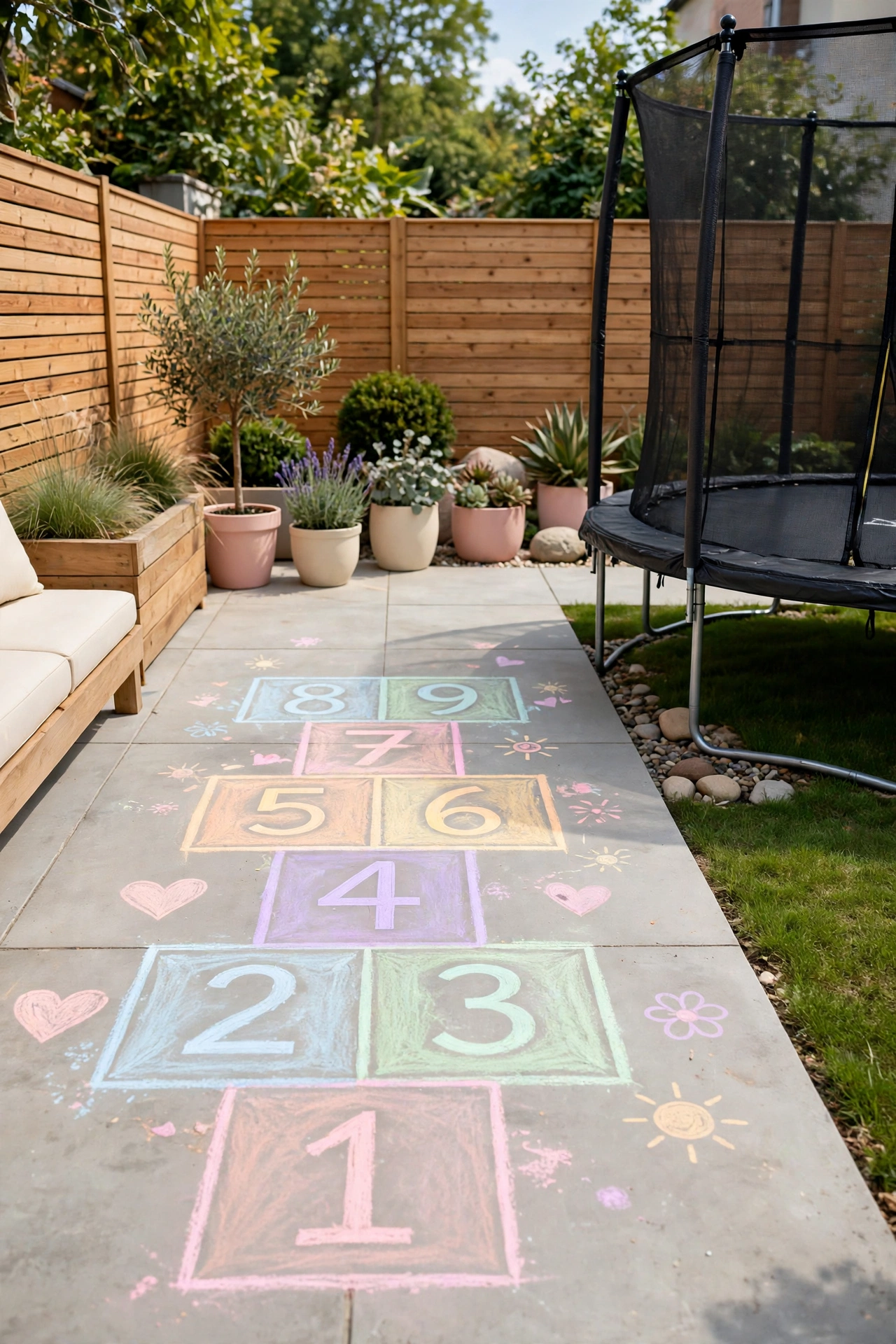
A chalk hopscotch court painted or drawn beside the trampoline gives kids a second game to play between bounces. A flat patio slab or a smooth concrete pad makes the perfect canvas for numbered squares in bright colors. The court keeps little ones busy while older kids take their turn on the mat.
Use washable chalk for a court that changes with the seasons, or paint the squares permanently on a concrete pad for a lasting feature. Keep the court a few steps from the trampoline frame so games never collide. A hopscotch court turns the trampoline area into a small playground with more than one game.
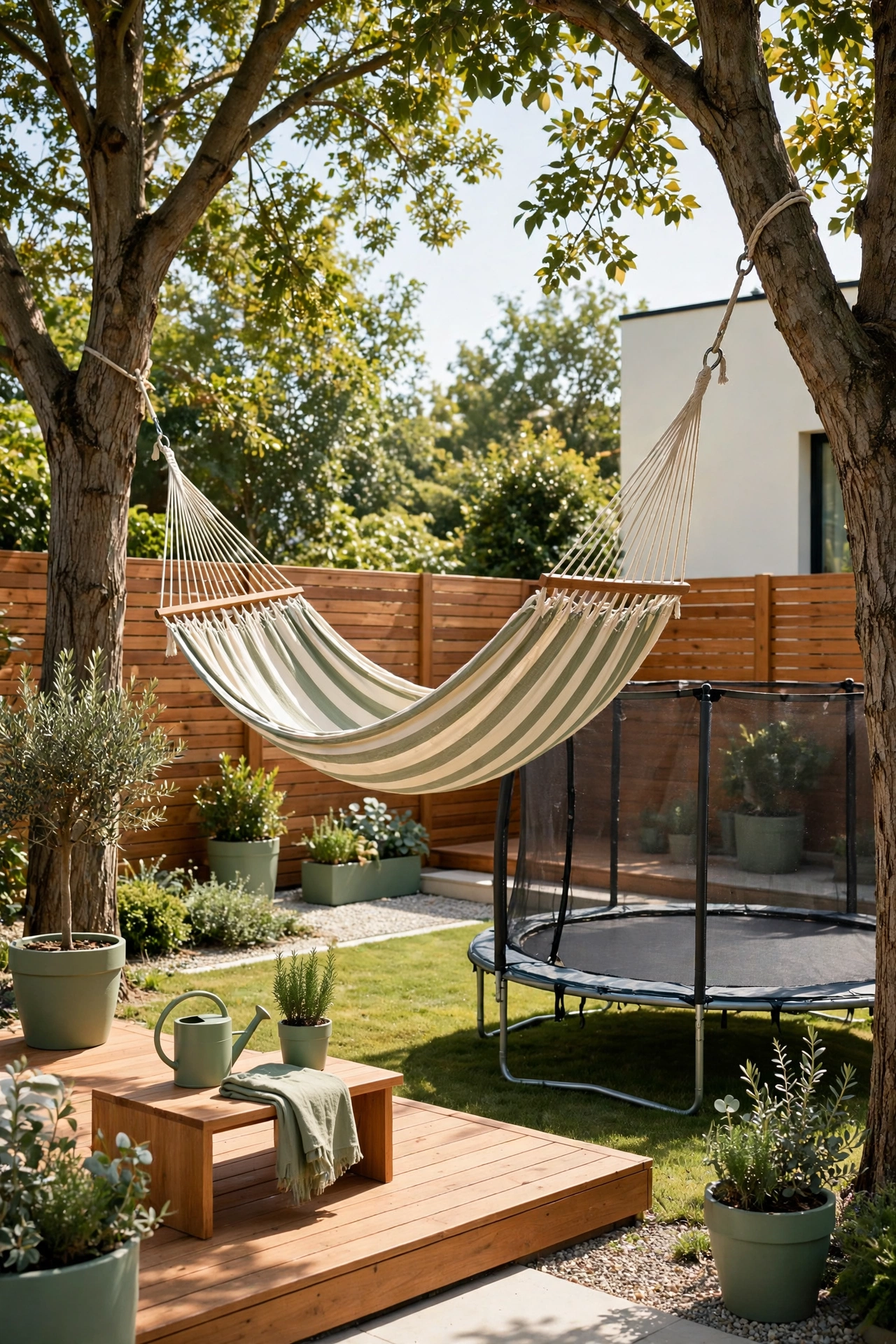
15. Hang a Hammock Nearby for Rest Breaks
A hammock strung between two trees near the trampoline gives tired jumpers a perfect rest spot. The gentle sway cools kids down after a long bounce session, and parents can relax there while keeping an eye on the play area. A hammock also adds a laid-back, holiday feeling to the yard.
Hang the hammock low enough for kids to climb in safely, and choose a sturdy fabric in a soft blue or cream stripe. Place it in dappled shade so it stays cool through the afternoon. A rest spot beside the action means the trampoline area works for quiet moments as well as wild ones.
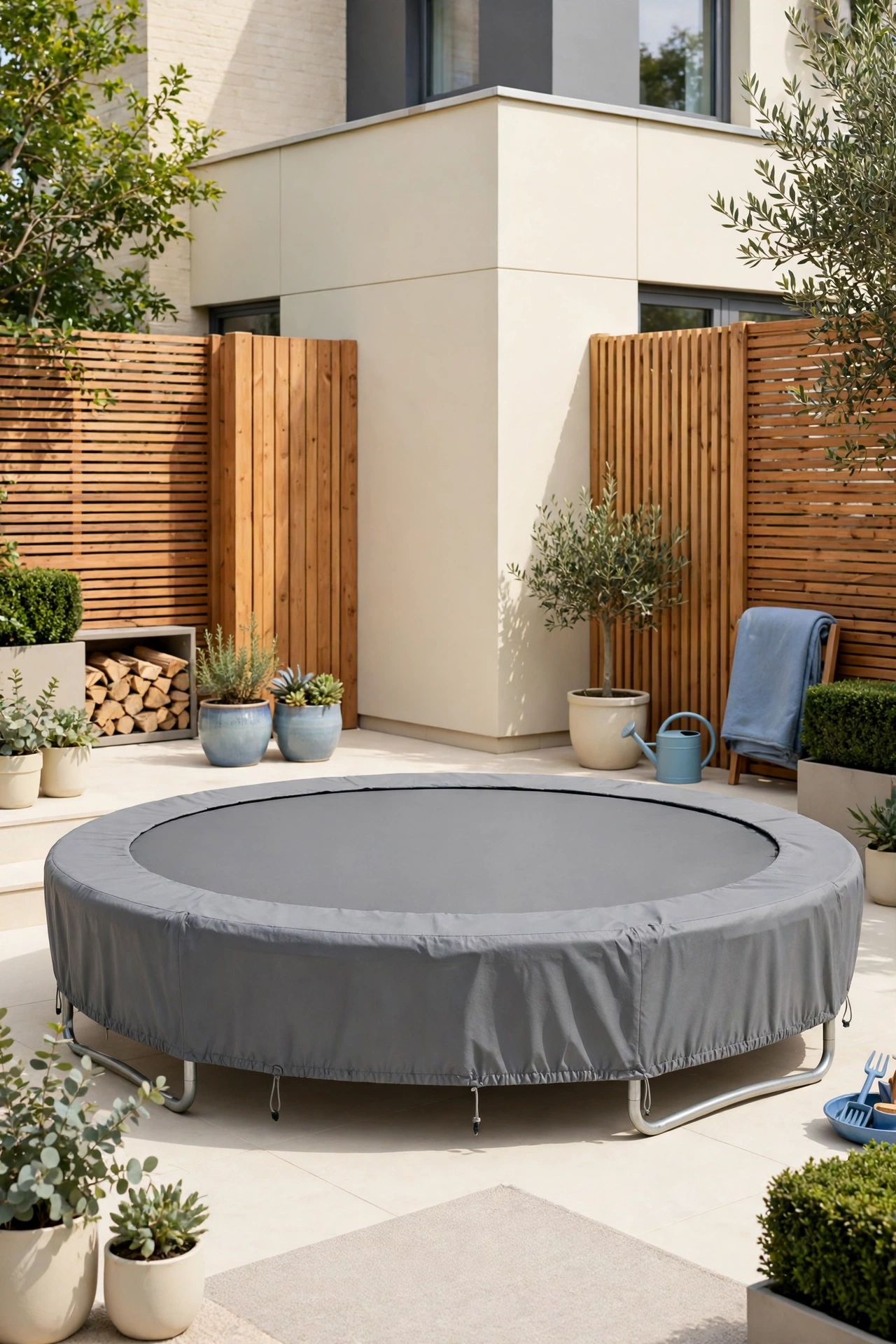
16. Cover the Trampoline with a Weatherproof Cover
A weatherproof cover protects the jumping mat and springs from rain, leaves and harsh sun when the trampoline is not in use. The cover keeps the mat dry and clean, so play can start right away after a storm. It also slows wear on the springs and the frame, which extends the life of the whole trampoline.
Choose a cover that fits the exact size of your trampoline and fastens with straps or elastic so wind cannot lift it. Store the cover in the storage box when the trampoline is in use. A good cover is the cheapest way to protect a trampoline through every season.
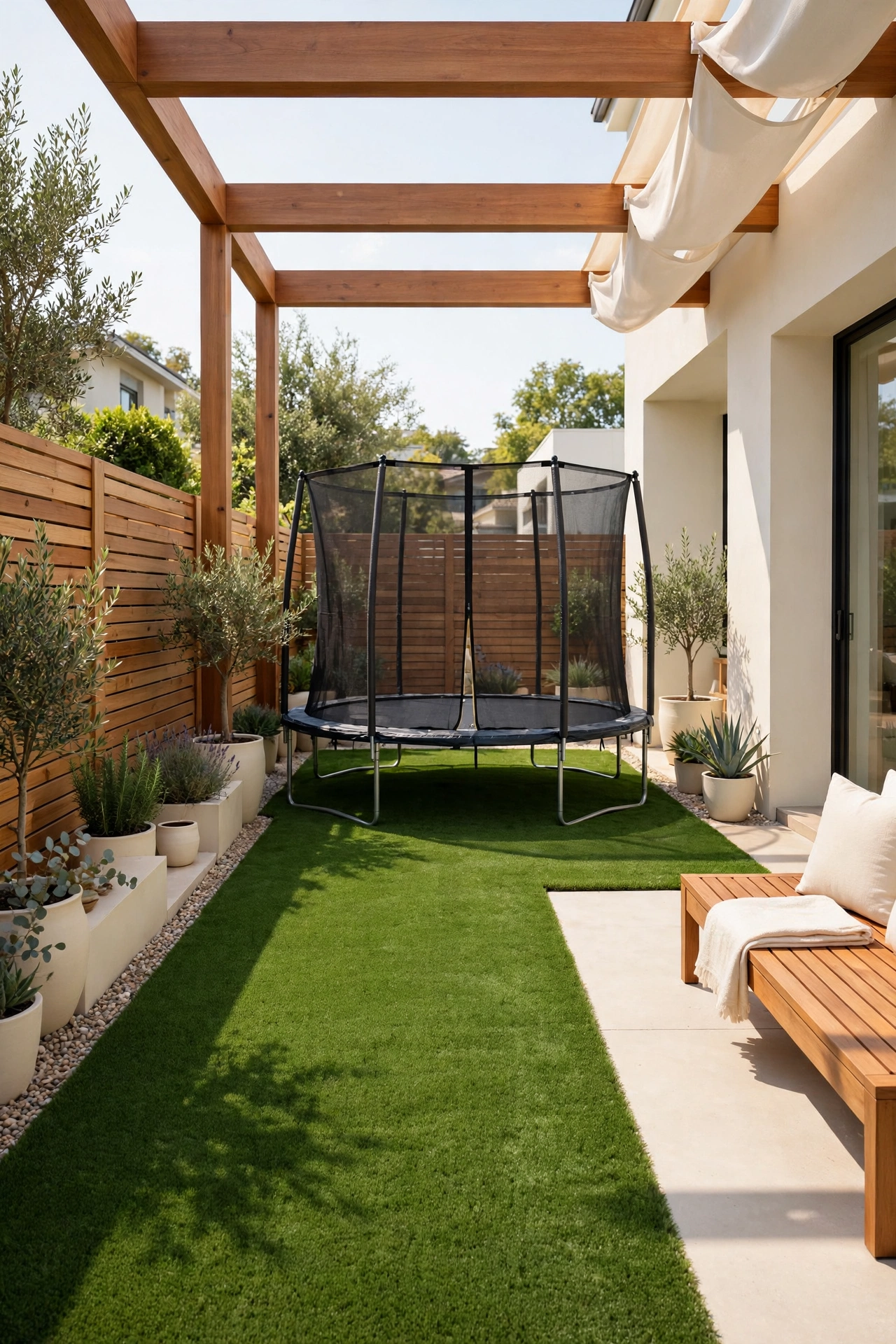
17. Lay Artificial Turf Around the Trampoline
Artificial turf around the trampoline creates a clean, mud-free surface that stays green all year. The soft turf cushions landings, drains quickly after rain, and never needs mowing or watering. Kids can run barefoot around the trampoline without tracking mud into the house.
Lay the turf on a level base of compacted sand and secure the edges so the surface stays flat. Choose a natural green shade that blends with the rest of the lawn. Artificial turf makes the trampoline area usable in every season, even after heavy rain.
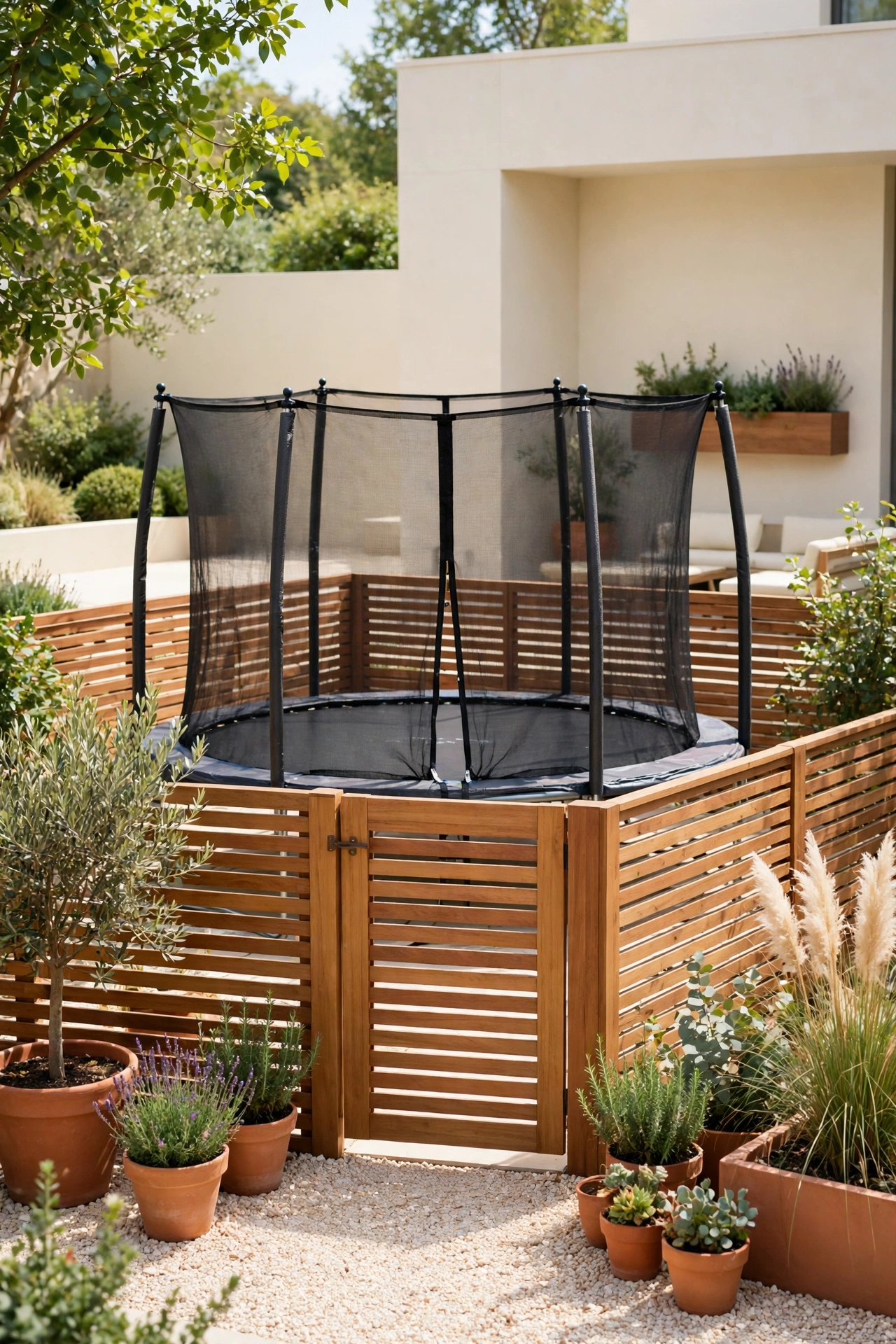
18. Build a Low Wooden Fence Around the Play Zone
A low wooden fence around the trampoline area marks a clear play zone and keeps younger children from wandering off. The fence defines the space without blocking the view, and it gives the trampoline area a finished, intentional look. A small gate in the fence makes entry feel like arriving at a special place.
Build the fence no higher than waist height so adults can see over it easily, and leave wide gaps between the slats for airflow and light. Warm wood with a natural finish matches most gardens. A low fence turns an open lawn into a proper play zone with a clear edge.
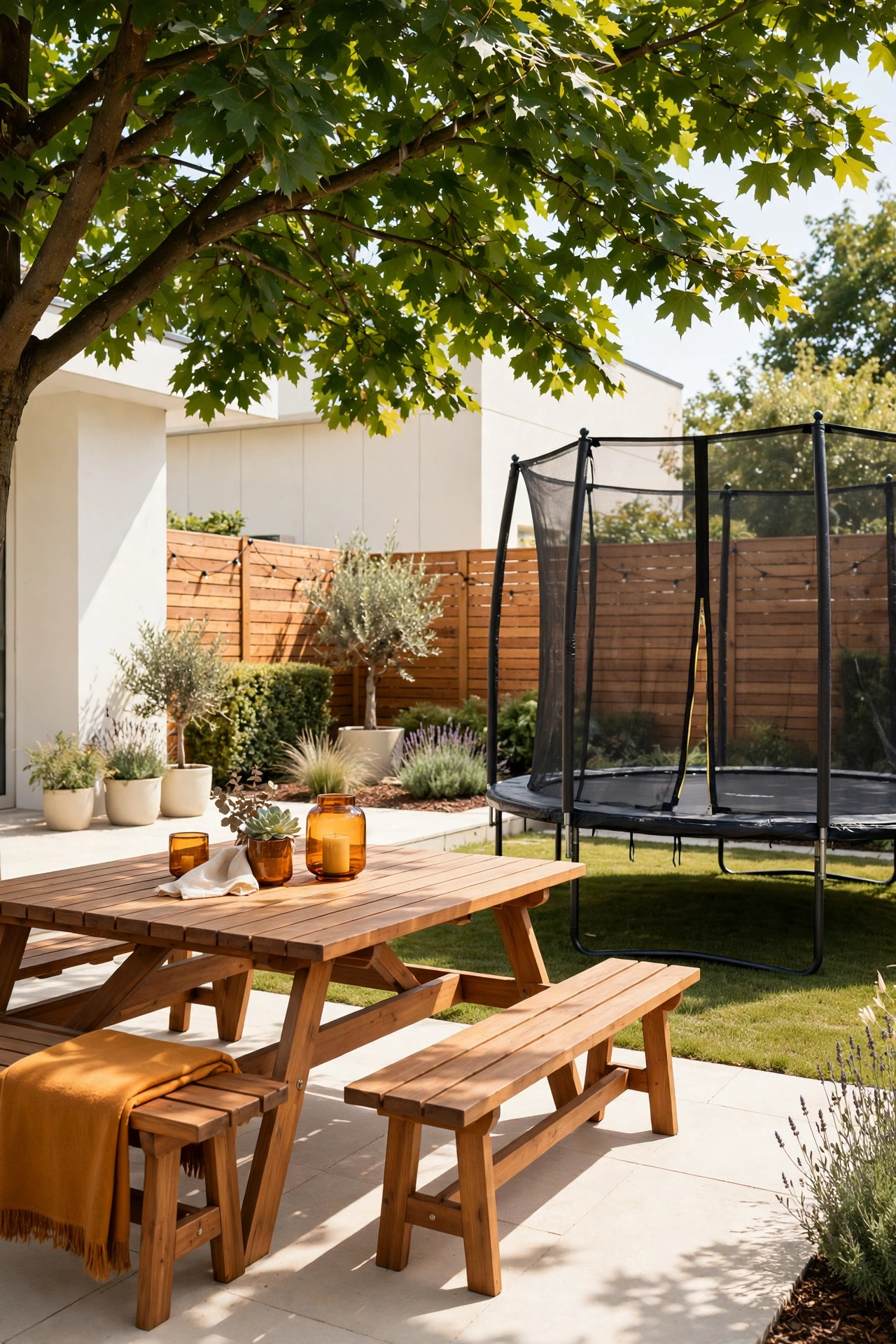
19. Place a Picnic Table Beside the Trampoline
A picnic table beside the trampoline gives the family a place to eat, play board games and rest between bounces. The table turns the trampoline area into a full outdoor living space where meals and play happen side by side. A sturdy wooden table with benches seats the whole family with ease.
Place the table in the shade of a tree or a sail, a few steps from the trampoline frame, and keep the surface clear for food and games. A picnic table also works as a craft station on rainy days. For more ideas on gathering the family outdoors, see these outdoor fireplace ideas for beautiful backyard features. One table makes the trampoline area a place to linger, not just to jump.
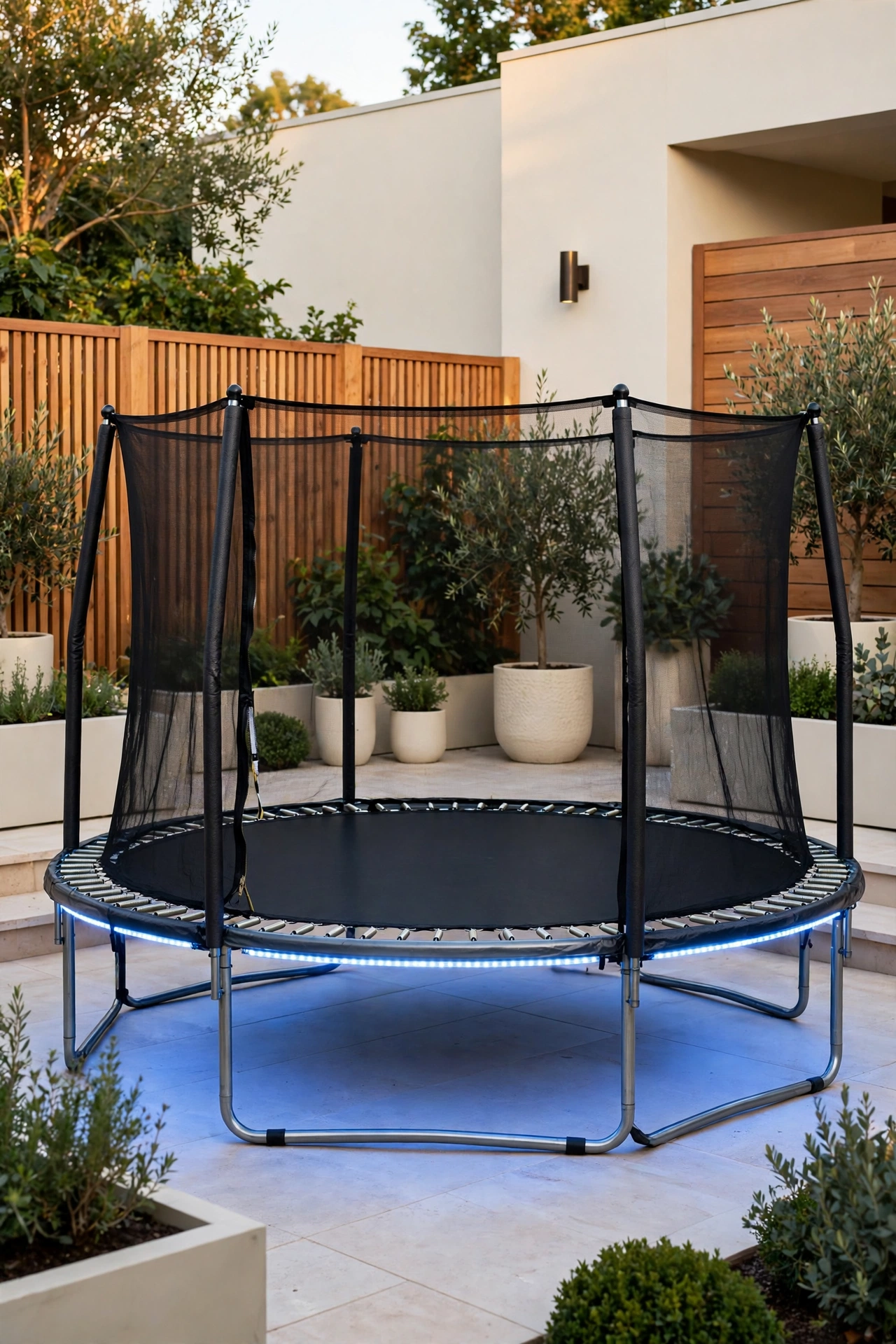
20. Add LED Strip Lights for Evening Bounces
LED strip lights under the trampoline frame light up the whole area for safe evening play. The slim strips stick to the inside of the frame legs and cast a soft glow across the ground, so jumpers can see the mat clearly after sunset. The lights also make the trampoline look like a glowing stage in the dark.
Choose waterproof strips in a warm white or a gentle color and run them from a small solar battery pack. Keep all wiring tucked behind the frame so nothing dangles near the mat. LED strips extend play into the evening and make the trampoline the brightest spot in the yard.
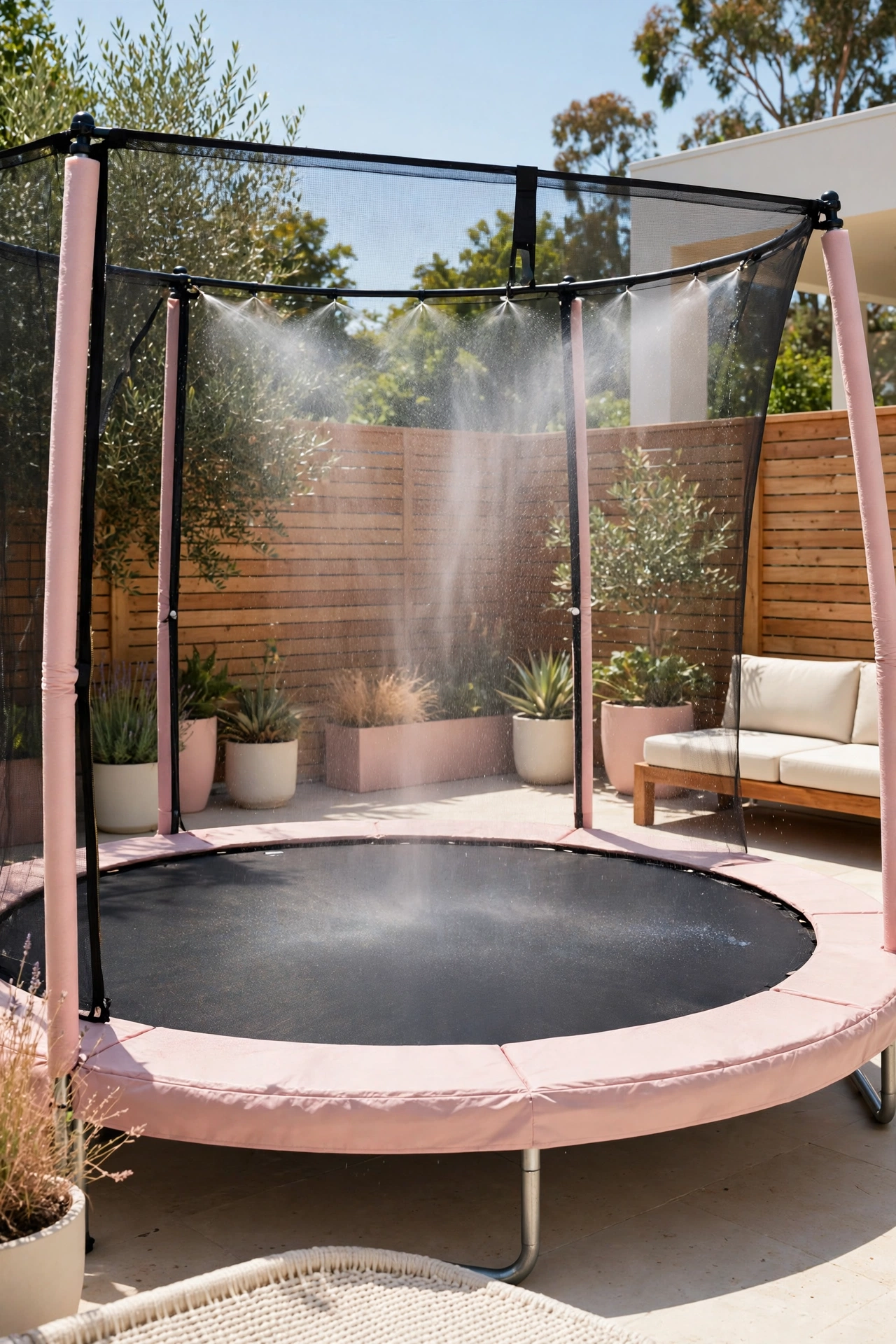
21. Attach a Trampoline Sprinkler for Summer Play
A trampoline sprinkler attaches to the enclosure poles and sprays a fine mist over the jumping mat on hot days. The cool water turns an ordinary bounce session into a summer water party, and kids stay cool through the hottest hours. The sprinkler uses a standard garden hose and sets up in minutes.
Place the sprinkler heads so the spray falls evenly across the mat and never soaks the surrounding lawn into mud. Use the sprinkler only on warm days and let the mat dry fully before covering it. A water feature makes the trampoline the most popular spot in the yard all summer long.
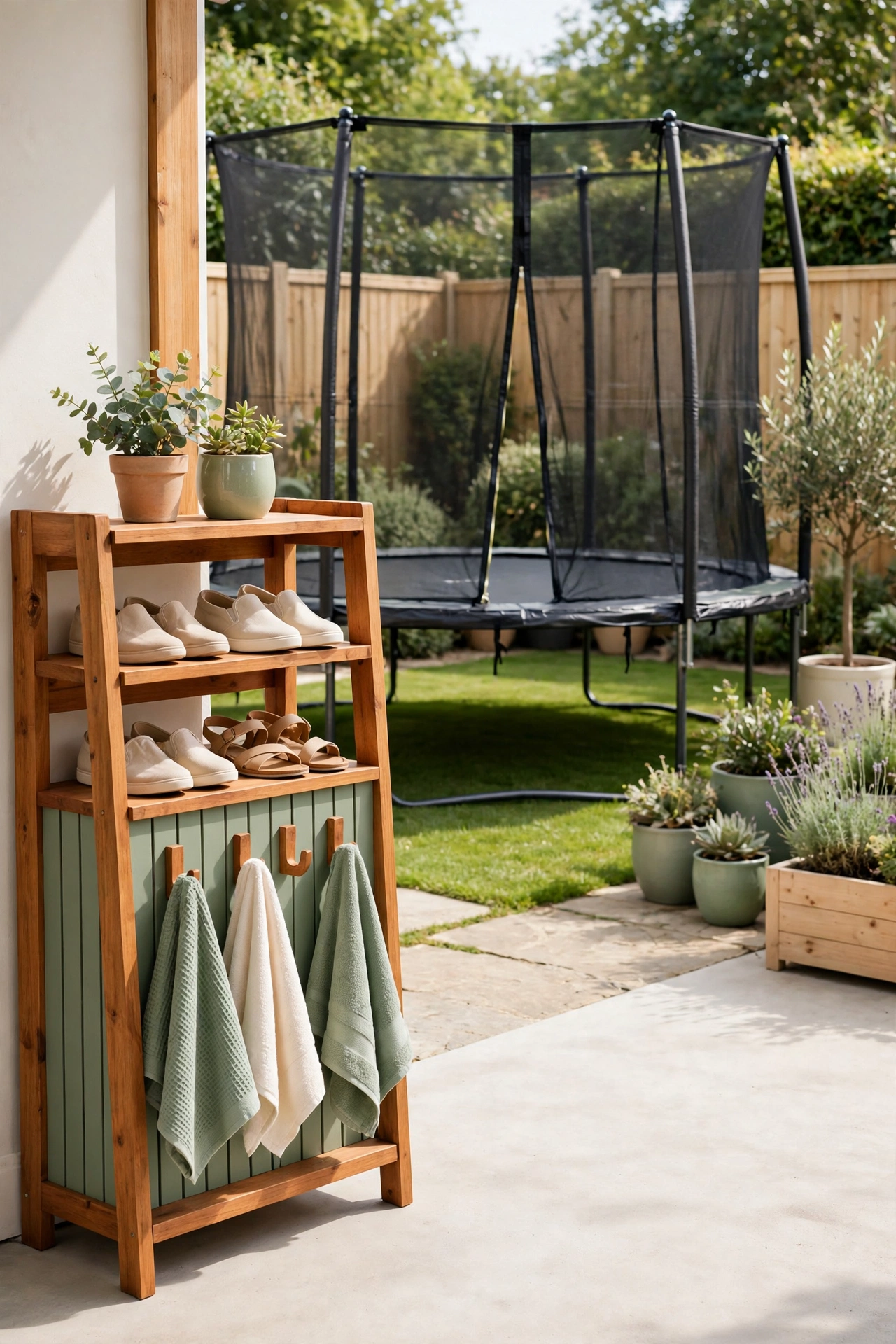
22. Add a Shoe Rack and Towel Hooks at the Entrance
A small shoe rack and a row of towel hooks at the entrance to the trampoline area keep the play zone tidy. Shoes stay off the mat, towels hang ready for sweaty breaks, and the area never fills with scattered sandals and socks. The setup also teaches kids a simple tidy habit before every bounce.
Build the rack from warm wood with two low shelves and mount three or four hooks on a board above it. Place it beside the gate or the stone path where everyone passes. A tidy entrance makes the trampoline area feel cared for and keeps dirt off the jumping mat.
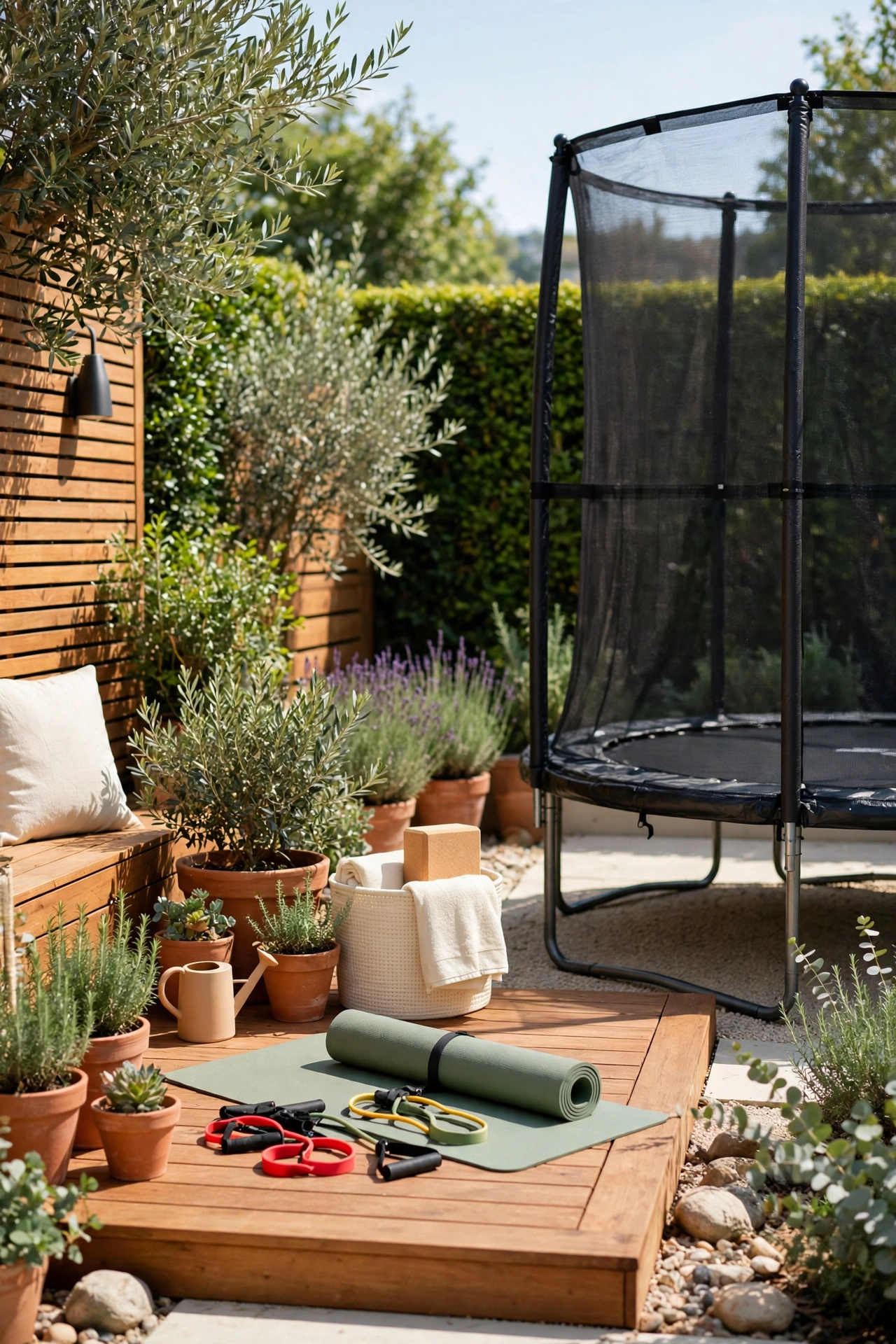
23. Create a Family Fitness Corner Around the Trampoline
A family fitness corner around the trampoline turns bouncing into a real workout space. A few simple additions, like resistance bands hung on a post, a yoga mat rolled beside the frame and a small step platform, give adults a reason to use the trampoline too. The whole family can exercise together in the fresh air.
Keep the fitness gear in the storage box and set it out only during workout time, so the play area stays clear for kids. A printed workout chart on a small sign board adds structure to each session. A fitness corner makes the trampoline an investment in health, not just a toy.
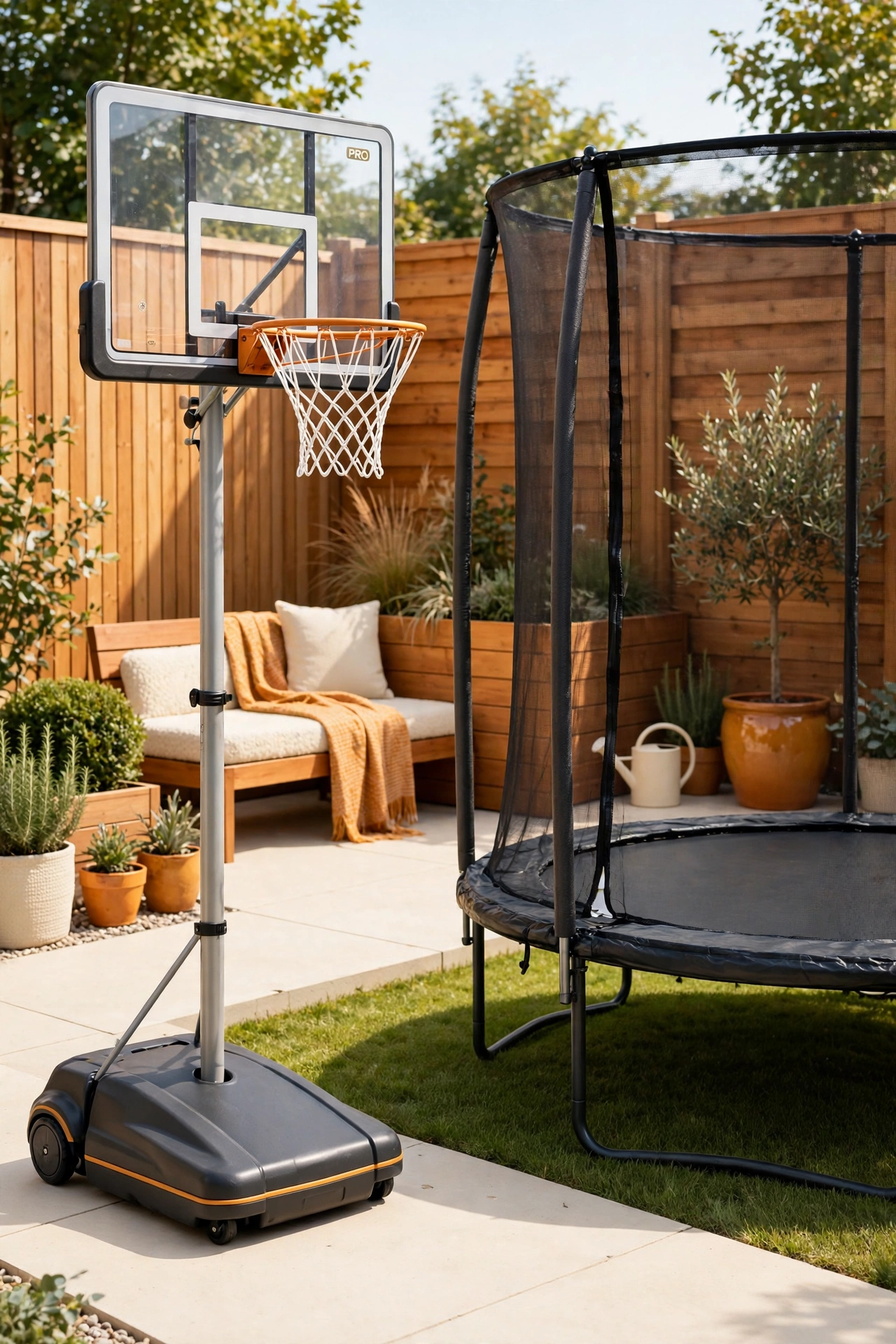
24. Add a Small Basketball Hoop Beside the Trampoline
A small basketball hoop beside the trampoline gives kids a second sport to enjoy in the same play zone. A portable hoop on a sturdy base lets kids shoot hoops between bounce sessions, and the ball stays within the fenced play area. The hoop adds variety without needing a second court.
Choose a hoop with an adjustable height so younger and older kids can both play, and place it a few steps from the trampoline frame so games never collide. For more backyard court ideas, see these backyard basketball court ideas. A hoop and a trampoline together turn the yard into a mini sports ground.
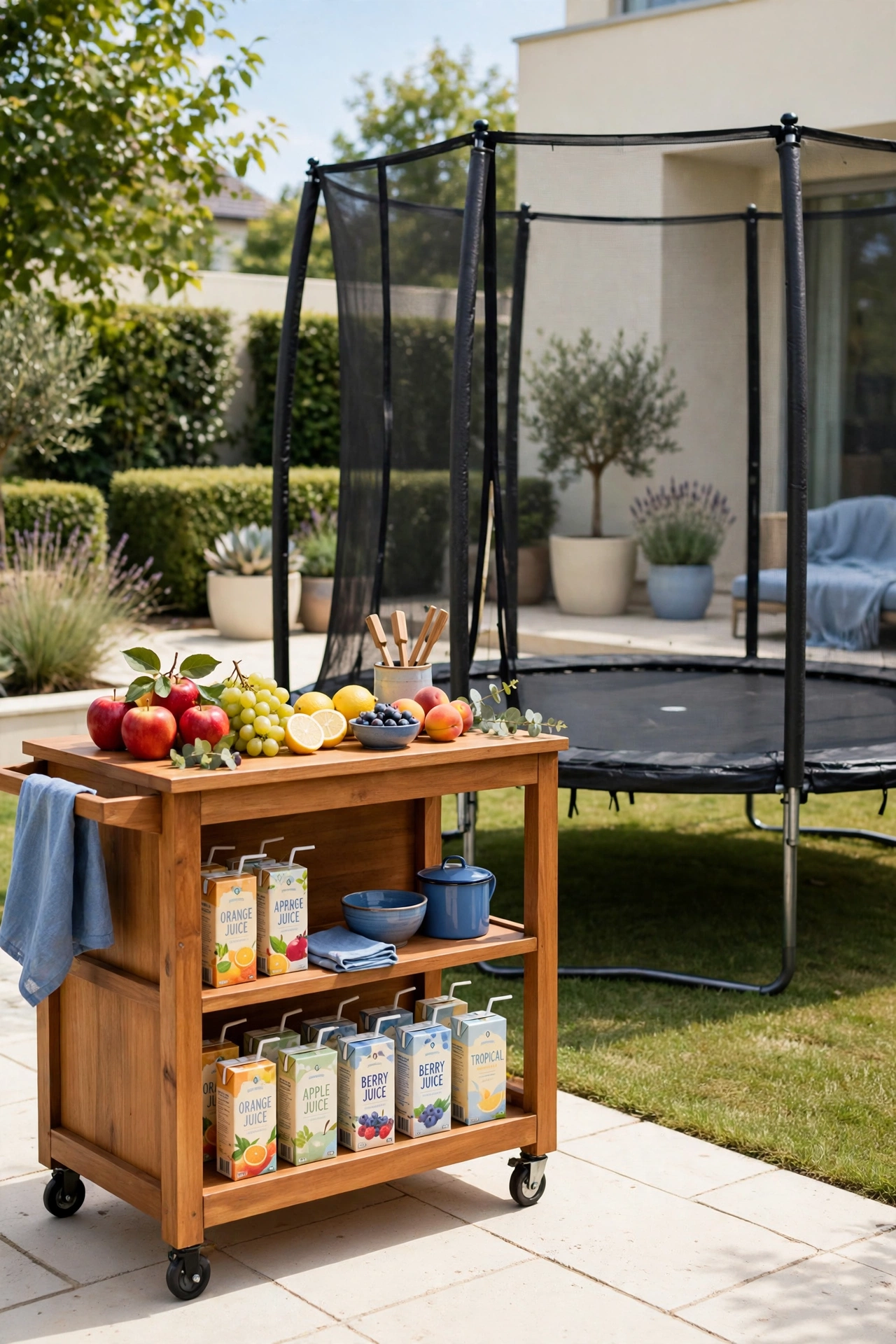
25. Set Up a Snack Station for After-Bounce Treats
A snack station beside the trampoline gives hungry jumpers a place to refuel after play. A small wooden cart with a tray of fruit, crackers and juice boxes keeps snacks handy and stops kids from running into the house with muddy feet. The cart also makes the trampoline area feel like a real family hangout.
Stock the cart with healthy snacks in labeled containers and keep a small bin beside it for wrappers and peels. Roll the cart back to the patio when play ends so food never attracts insects overnight. A snack station is the finishing touch that makes the trampoline area complete.
Conclusion
A trampoline area is more than a jumping mat in the middle of a lawn. With a safety net, a level spot, soft landing zones and a few thoughtful touches like seating, shade and lights, the area becomes a place where the whole family gathers, plays and relaxes. Each idea here solves one small need, and together they turn a simple trampoline into a backyard destination.
Pick one or two ideas that fit your yard and start today. Add a net, lay a path, or set up a water station, and watch the trampoline area come alive. For a calm home beyond the garden, these nightly reset routine ideas will help you keep every room organized with just a few minutes each evening.
Frequently Asked Questions About Outdoor Trampoline Area Ideas for Family Fun
Where is the best place for a trampoline in a backyard?
Choose a flat, level patch of grass away from trees, fences and hard surfaces, with at least six feet of clear space on every side. The spot should drain well after rain and get a mix of sun and shade through the day. A level spot keeps the frame steady and every bounce safe.
What surface is safest under a trampoline?
Soft surfaces like grass, rubber mulch or artificial turf are the safest choices under and around a trampoline. These materials cushion falls and stay soft in all weather. Avoid concrete, stone or bare dirt, which offer no protection if someone steps off the mat.
How do I keep a trampoline safe for young children?
Install a full safety enclosure net, keep the trampoline at ground level or add a sturdy ladder, and set a rule of one jumper at a time. Check the springs, net and frame every month for wear. Adult supervision is the most important safety step of all.
Can a trampoline stay outside all year?
Yes, a trampoline can stay outside all year if you cover it with a weatherproof cover during storms and winter. Remove the cover and check the mat, springs and net before the first bounce of the season. For more ideas on enjoying the yard through the seasons, see these outdoor fireplace ideas for beautiful backyard features. In areas with heavy snow, take the mat down for winter to protect the springs.
How do I make a trampoline area look nice in the garden?
Frame the trampoline with a flower bed border, a low wooden fence or a deck, and add seating, lights and a stone path. Choose colors that match the garden and keep the area tidy with a storage box for accessories. A trampoline area that looks designed will feel like a feature, not an eyesore.

Hi, I’m Emily! I turn messy corners into cozy, organized spots. DreamNestDecor is where I share simple, practical home ideas — decor, organization, and small-space solutions that work in real life, not just in photos. Every idea here is carefully researched before it’s shared.