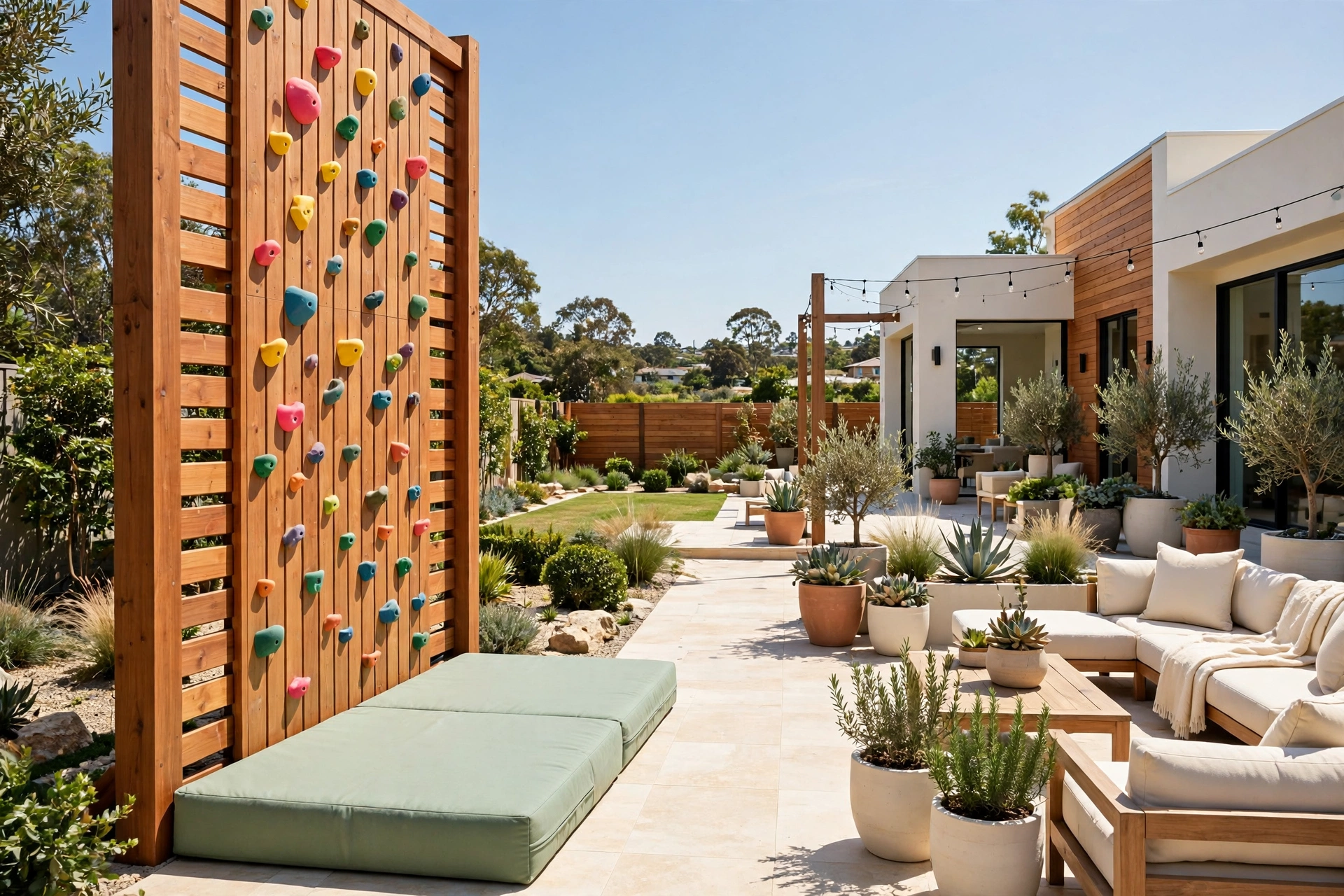
Picture this: you step into the backyard and the first thing you see is a tall climbing wall with bright holds, a thick safety mat below, and a rope hanging ready for the next climb. The family gathers around it every evening, taking turns on the wall and cheering each other on. That mix of fresh air, movement, and fun is exactly what an outdoor climbing wall brings to a home.
You do not need a huge yard or a professional setup to build one. All you need is a sturdy frame, safe holds, and a clear plan for the space around the wall. These 32 outdoor climbing wall ideas for active families will help you design a backyard climb that is safe, fun, and built to last.
1. Build a Simple Flat Climbing Wall on the Fence
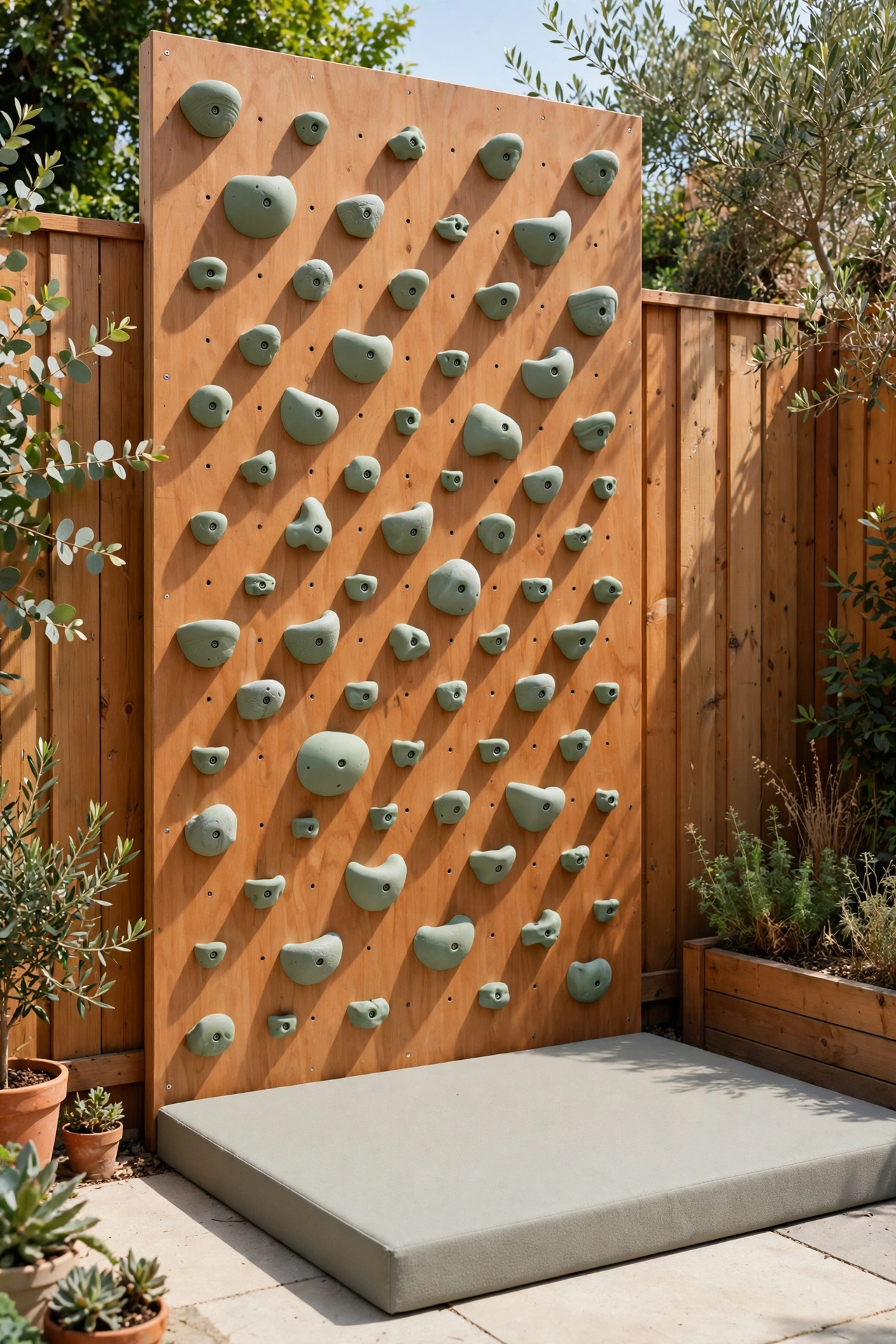
A flat climbing wall on a strong backyard fence is the easiest way to start. The fence already gives you a tall, solid surface, so you only need to add plywood panels, climbing holds, and a safety mat at the base. The wall blends into the yard and uses space that would otherwise stay empty.
Choose holds in different shapes and sizes so every climb feels a little different. Space the holds close together near the bottom for easy starts and wider apart near the top for a real challenge. A fence wall is a smart first project that the whole family can enjoy from day one.
2. Add a Freestanding A-Frame Climbing Wall
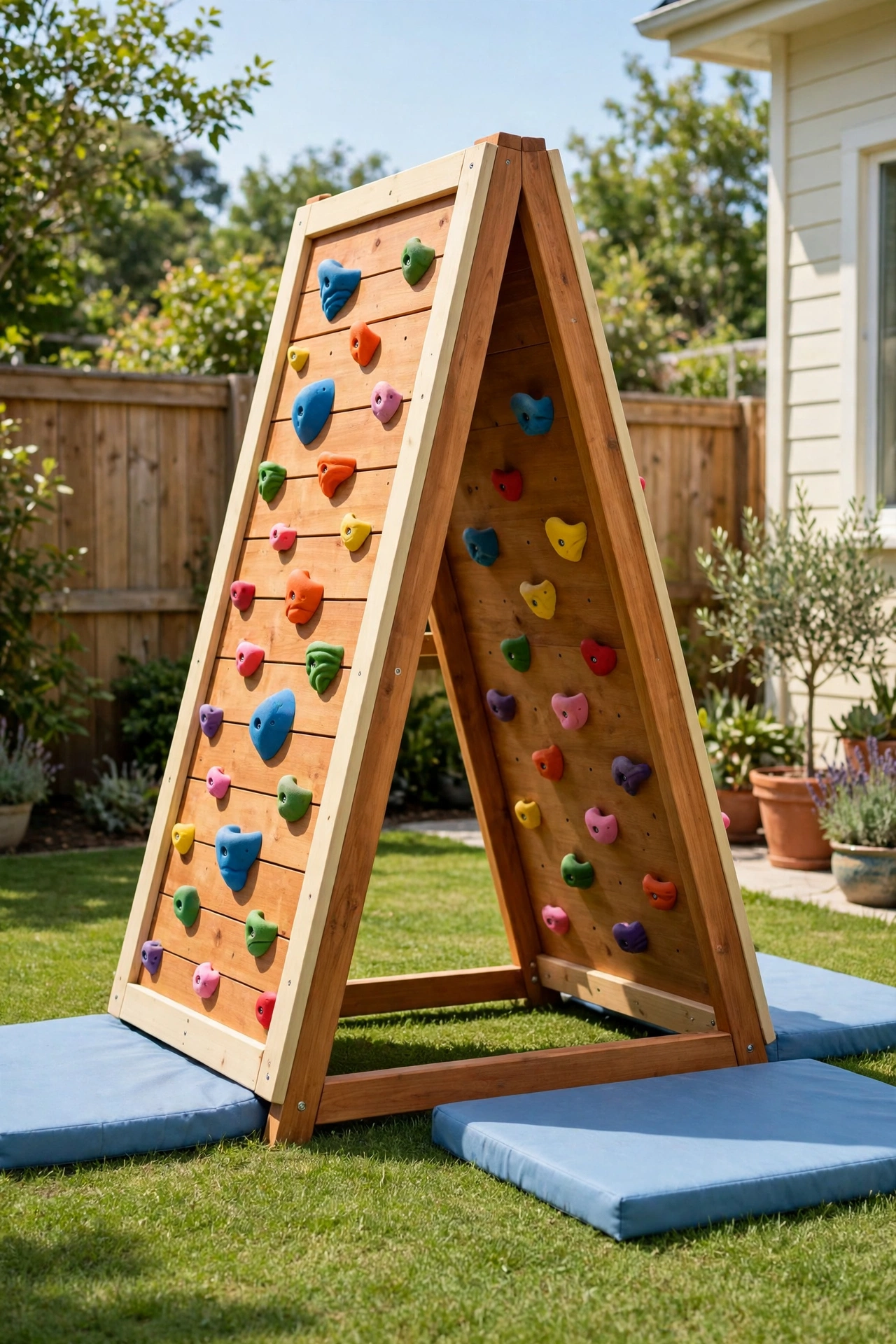
A freestanding A-frame climbing wall stands on its own in the middle of the yard, with climbing faces on both sides. The A shape gives the wall natural strength, so it needs no fence or house wall to lean on. Two climbers can use opposite faces at the same time, which makes it perfect for siblings and friends.
Build the frame from thick wooden beams and anchor the feet firmly into the ground with concrete footings. Add a thick mat on each side so every fall lands softly. An A-frame wall turns an open patch of lawn into the busiest corner of the backyard.
3. Create a Bouldering Wall with a Thick Crash Mat
A bouldering wall is a shorter climbing wall, usually no higher than three meters, that needs no rope or harness. Climbers move sideways and upward close to the ground, which makes it safer and simpler than a tall wall. A thick crash mat underneath catches every fall and gives the family confidence to try harder moves.
Cover the base with interlocking foam mats or a purpose made crash pad at least fifteen centimeters thick. Place the wall near a flat part of the yard so the mat sits level. For more ways to keep active play safe in the yard, see these backyard basketball court ideas. A bouldering wall is a low cost, high fun addition that suits climbers of every age.
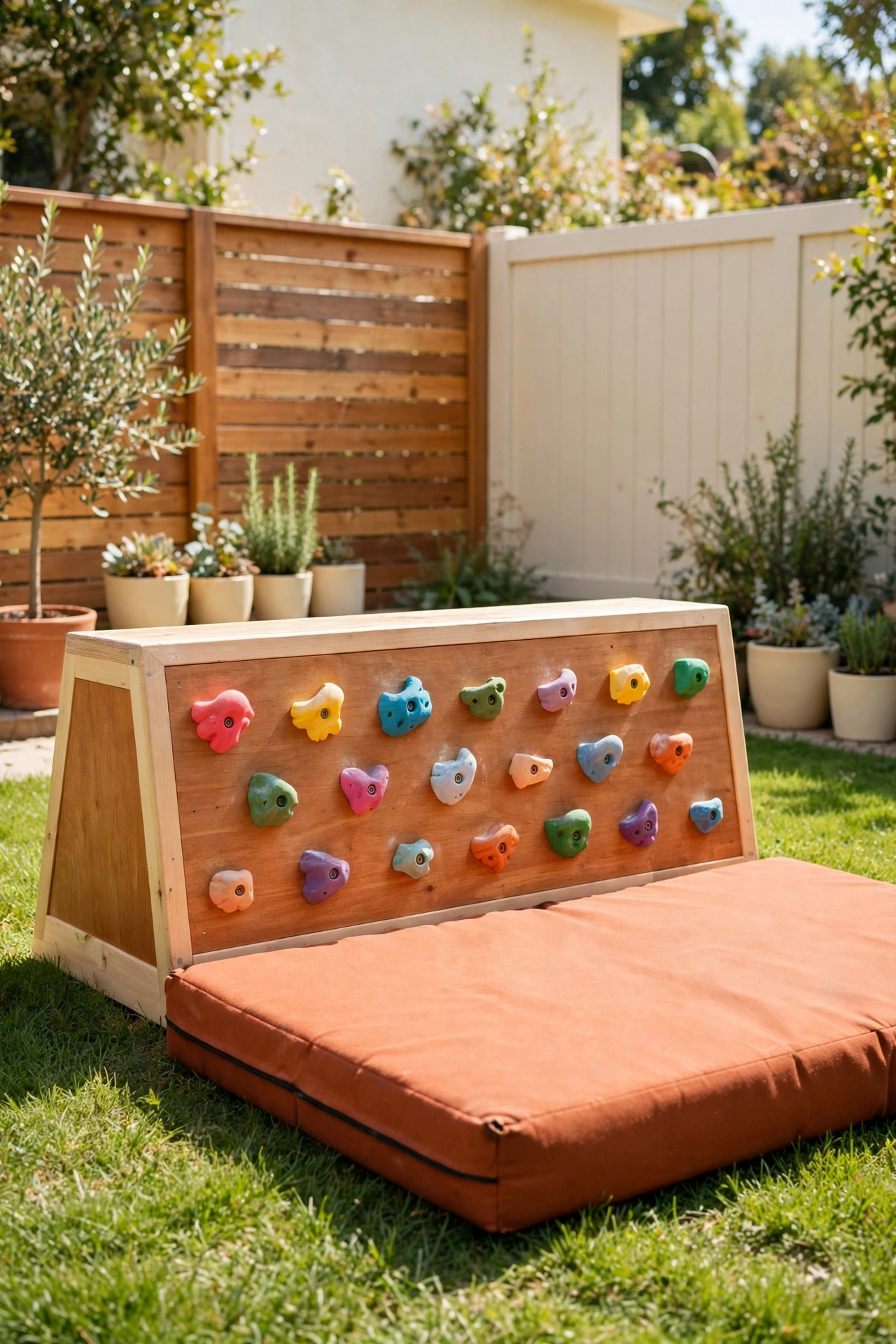
4. Paint the Wall in Bright Rainbow Colors
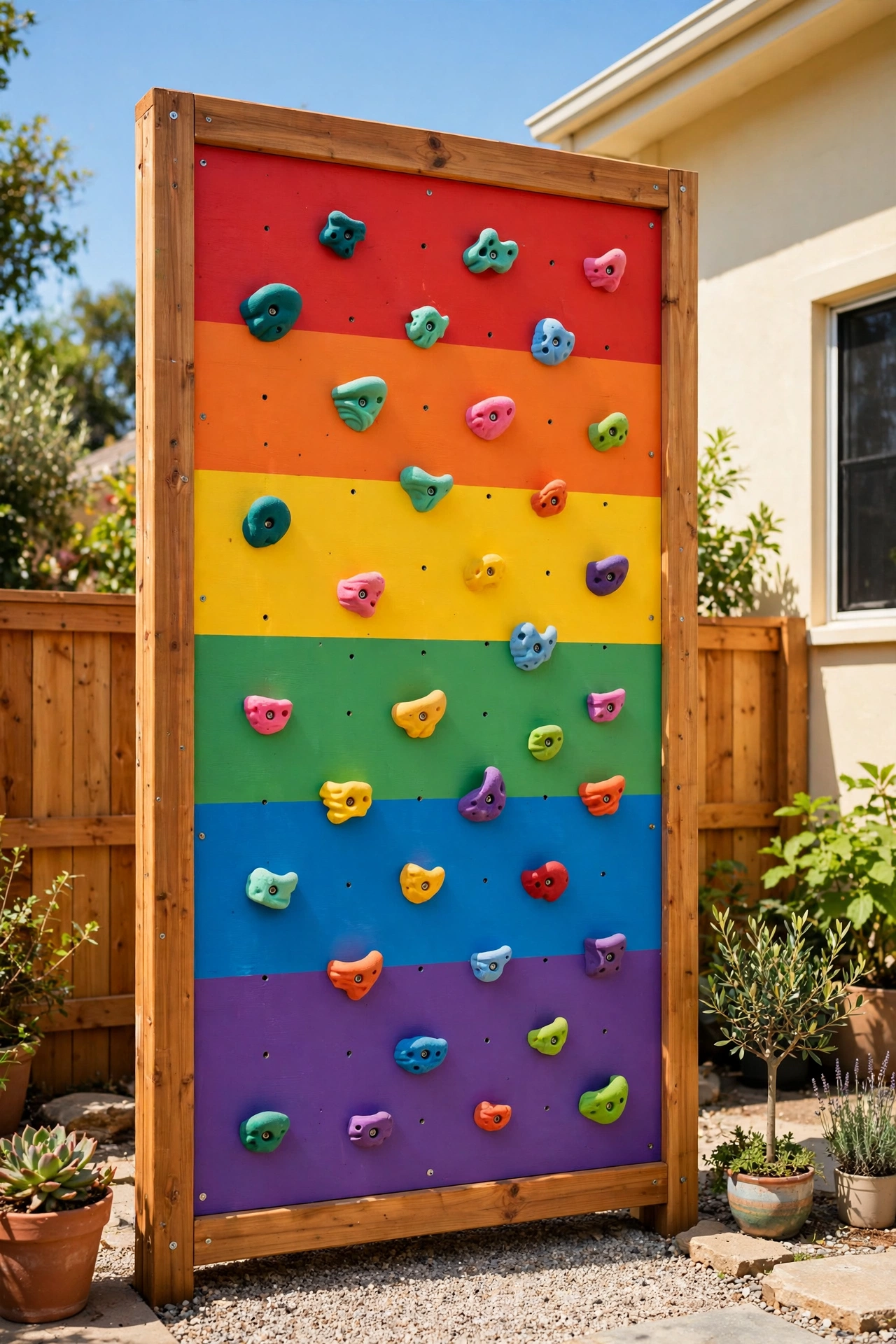
A climbing wall painted in bright rainbow colors becomes a joyful feature in the backyard instead of a plain wooden board. Paint wide stripes or large color blocks across the panels before you bolt on the holds. The colors also help younger climbers follow a route, since each color can mark a different path up the wall.
Use outdoor paint that resists sun and rain so the colors stay bright through every season. Seal the paint with a clear weatherproof coat for extra protection. A rainbow wall looks cheerful from the house and makes the climbing area feel like a real playground.
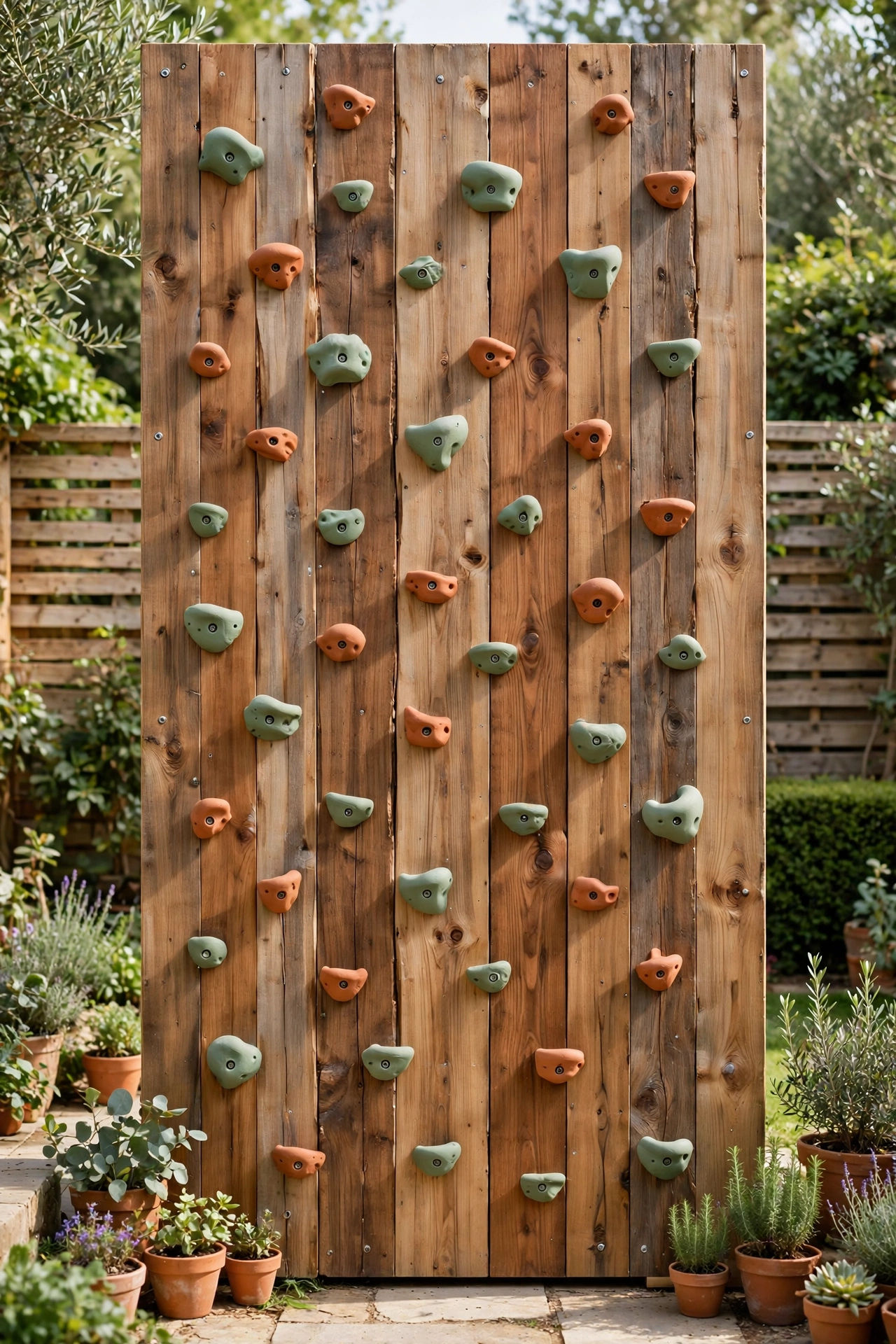
5. Use Natural Wood Panels for a Rustic Climbing Wall
Natural wood panels give a climbing wall a warm, rustic look that fits beautifully into a garden. Leave the wood grain visible and finish it with a clear outdoor oil so the texture shows through. The wall feels like part of the landscape instead of a piece of sports equipment.
Pair the wood with holds in earthy tones like sage green, terracotta, and warm amber for a calm, natural palette. Add a wooden border frame around the panels for a finished look. A rustic wood wall suits families who love a garden that feels peaceful and natural.
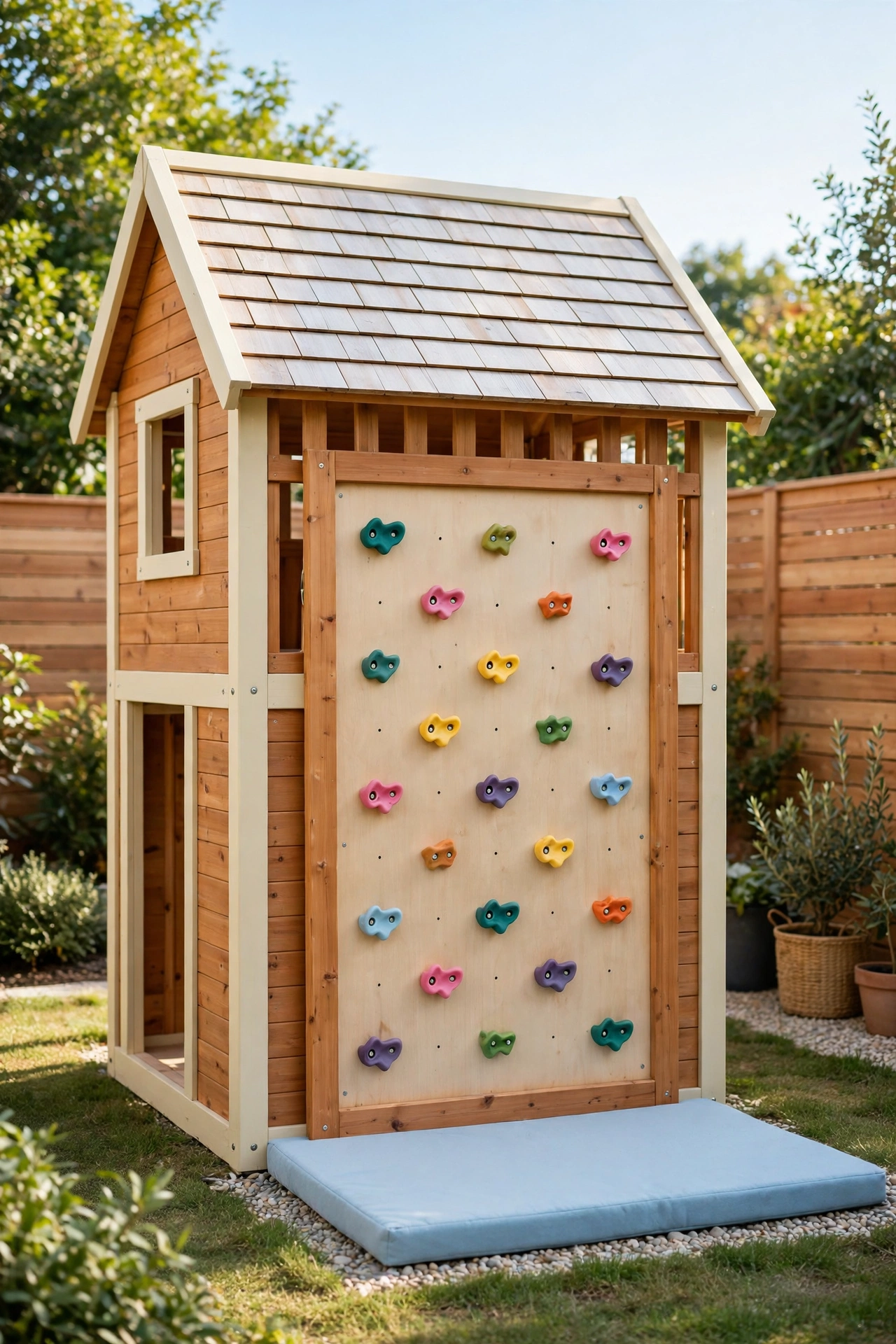
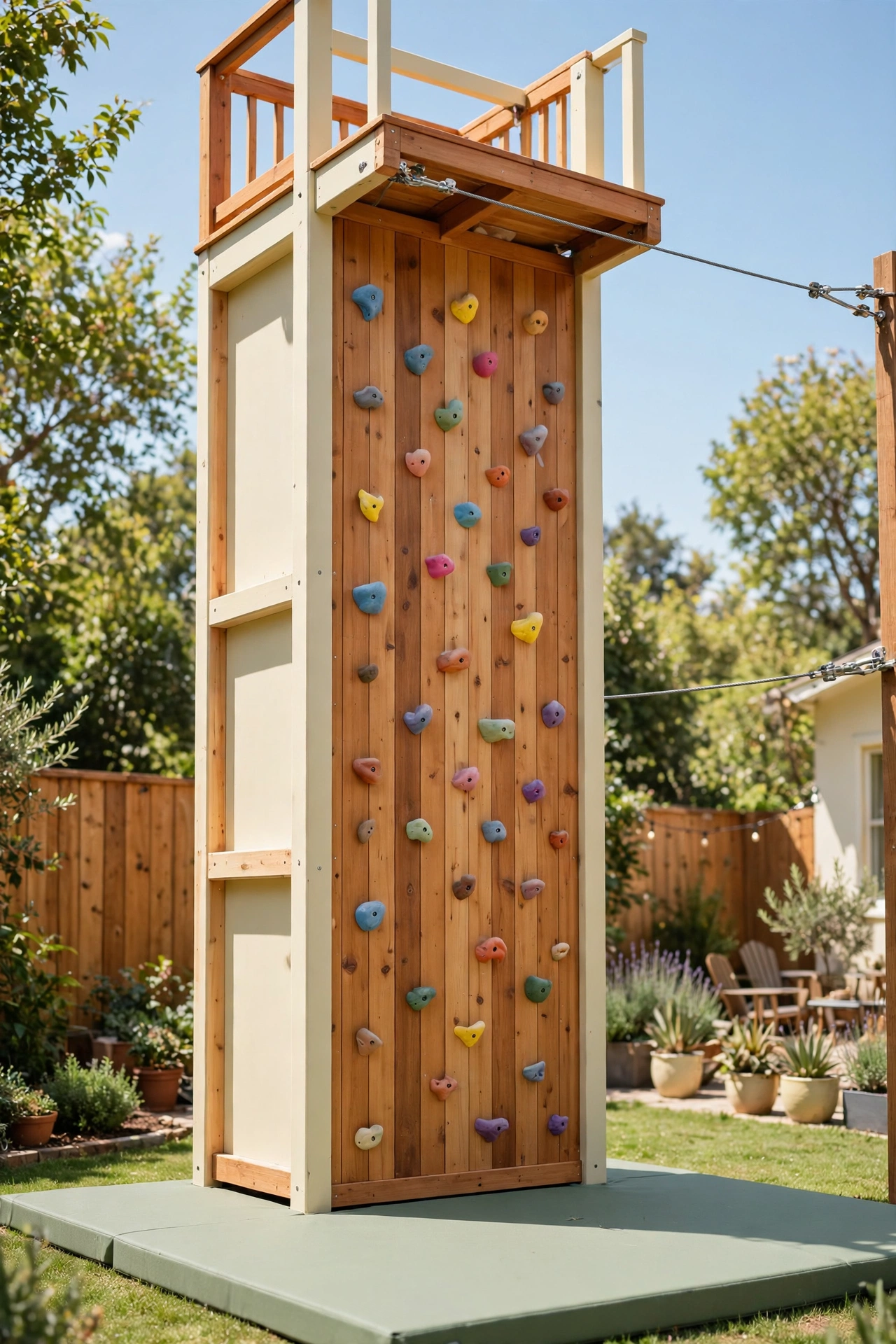
6. Add a Climbing Wall to the Back of the Playhouse
The back wall of a playhouse is a perfect spot for a climbing wall, since the structure is already strong and tall. Bolt plywood panels and holds onto the rear face so children climb up to a small platform or window at the top. The playhouse gains a second way to enter, which makes playtime far more exciting.
Keep the holds close together on the lower section so small climbers can reach them easily. Add a sturdy handrail at the top platform and a soft mat at the base. A playhouse climbing wall turns one structure into two adventures in the same small footprint.
7. Build a Climbing Wall on the Garage Side
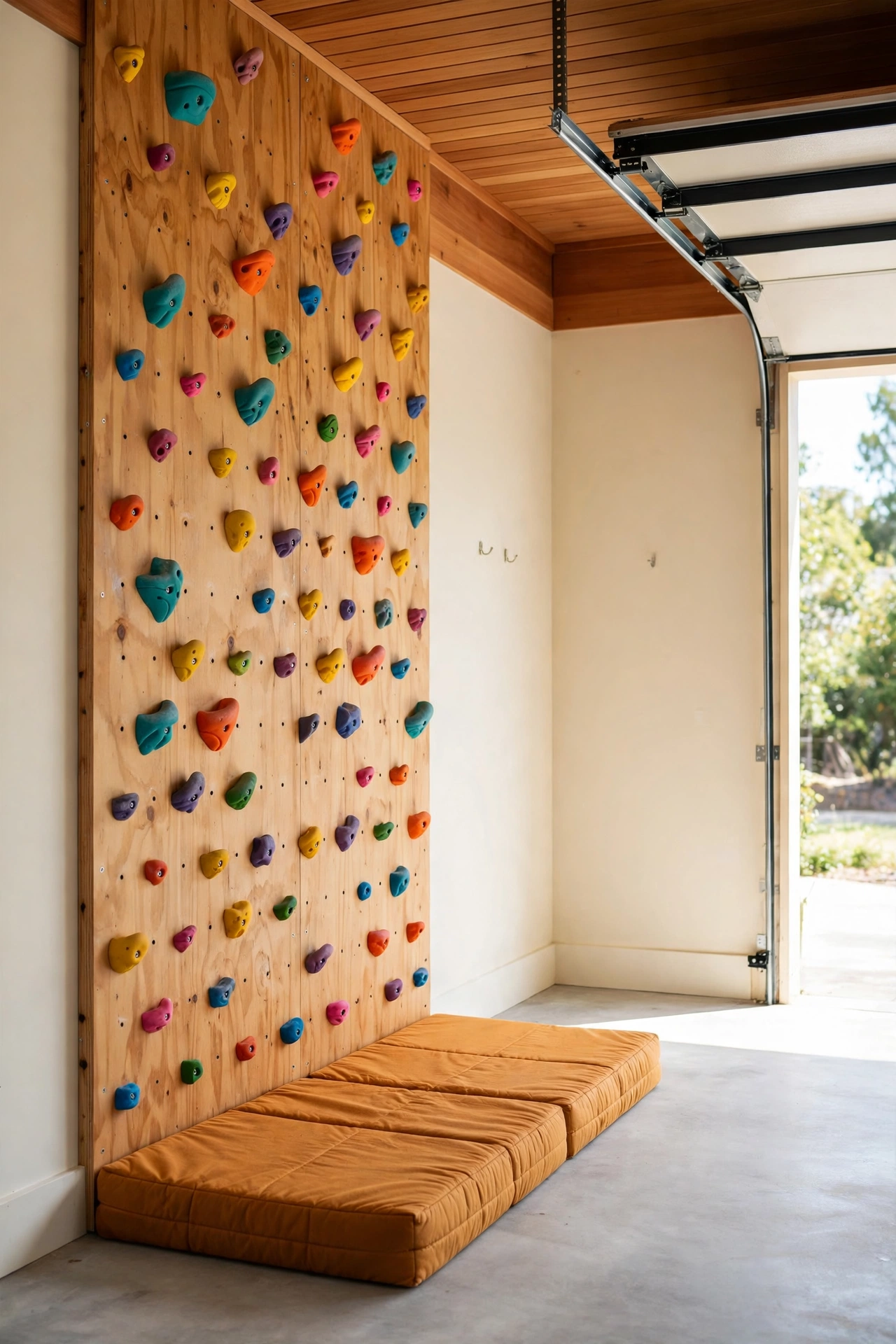
The blank side wall of a garage is often the tallest flat surface in a backyard, which makes it ideal for a climbing wall. Mount plywood panels on the wall with strong anchors, then bolt on holds in a pattern that suits your family. The garage gives you a tall climb without building a freestanding frame.
Check that the garage wall is solid brick or block before you start, and use heavy duty anchors rated for climbing. Lay a crash mat along the full length of the wall. A garage side wall turns a boring blank surface into the most used wall in the whole yard.
8. Create an Angled Overhang Climbing Wall
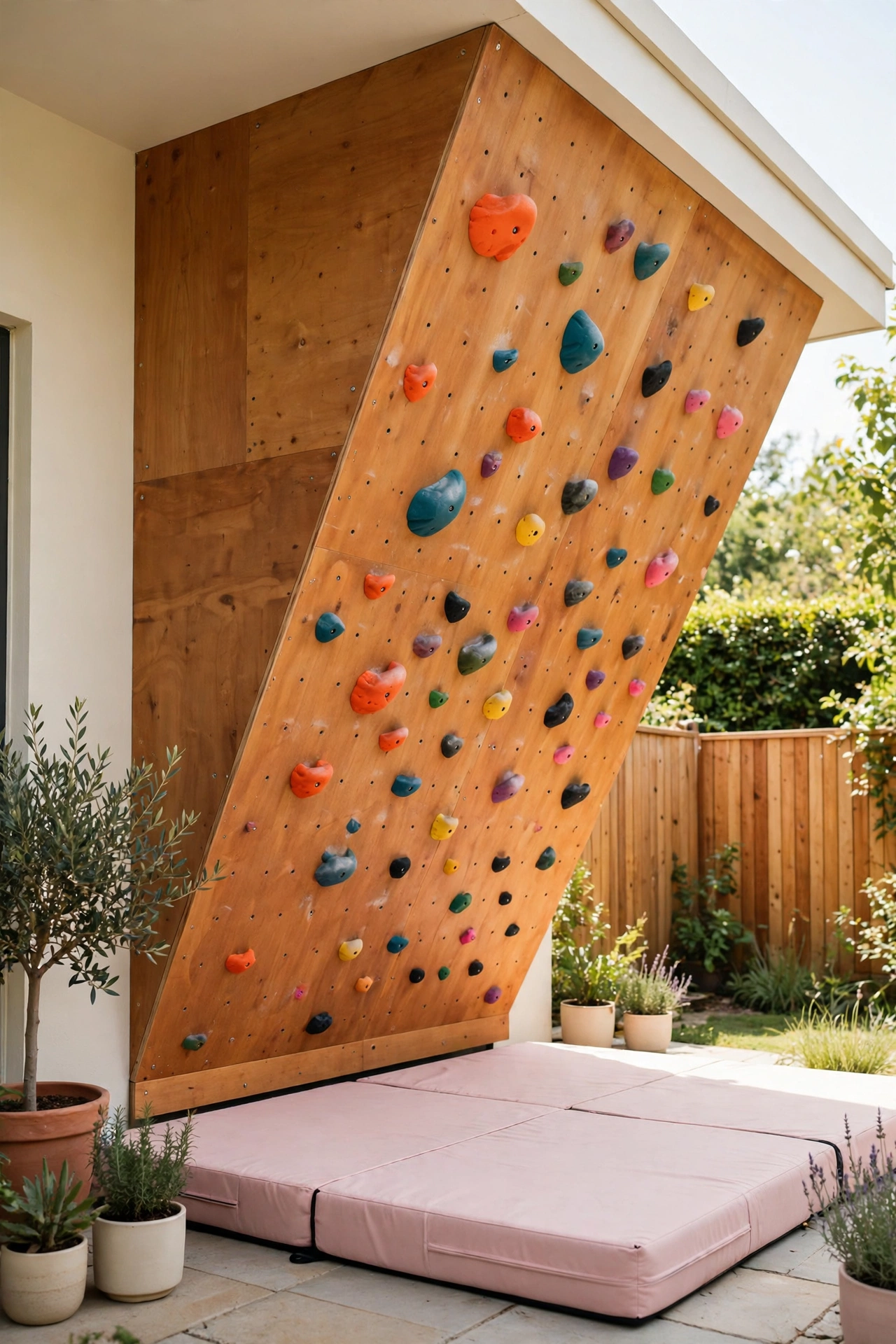
An angled overhang wall leans outward as it rises, which makes climbing much harder and more exciting. The overhang forces climbers to use their arms and core, so it suits older kids and adults who want a real workout. Even a slight angle of ten degrees changes the whole feeling of the climb.
Build the frame with strong diagonal braces so the overhang stays solid under weight. Start the angle gently and increase it only when the family is ready for more challenge. An overhang wall is the best choice when a flat wall starts to feel too easy.
9. Add a Traverse Wall Along the Garden Fence
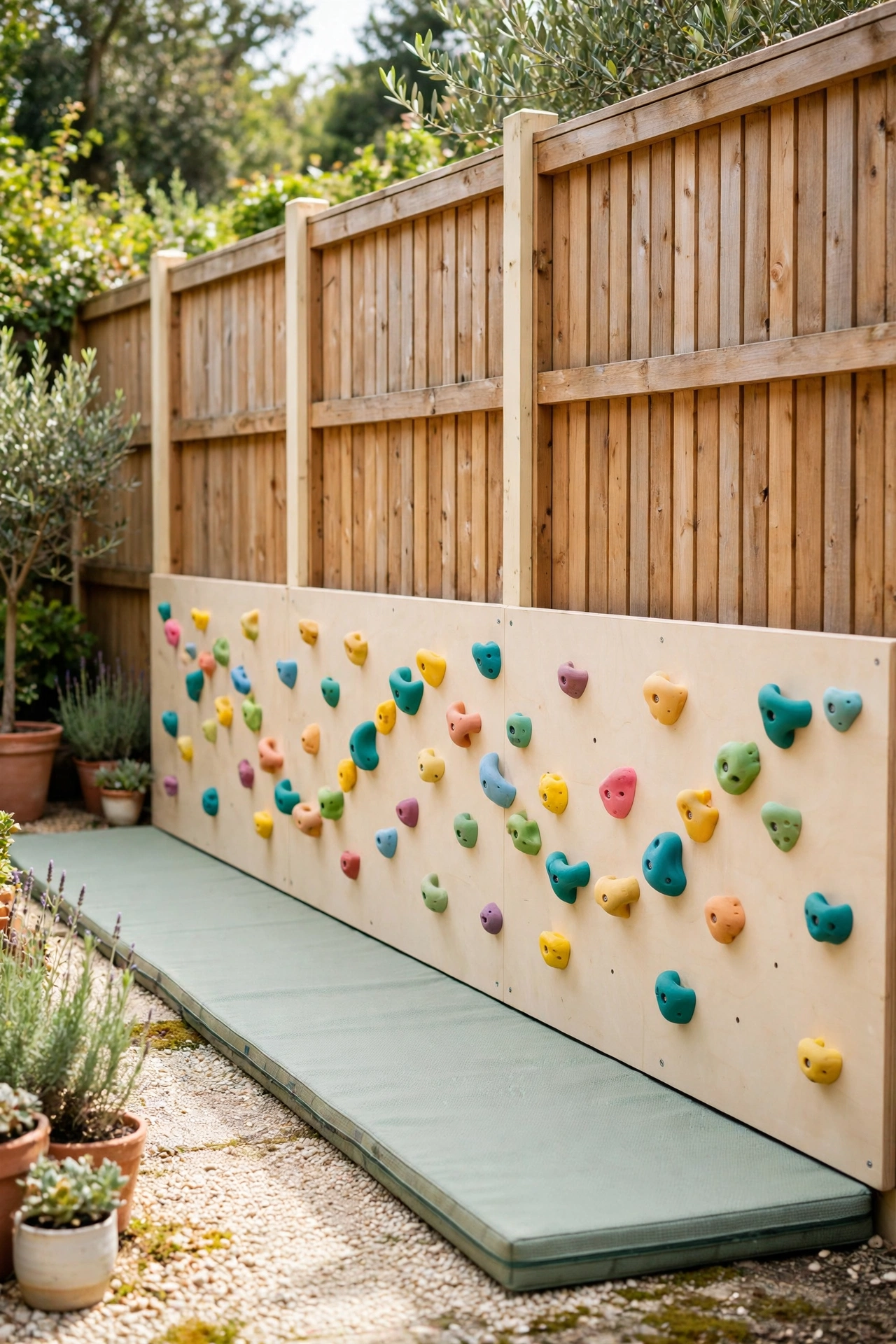
A traverse wall is a long, low climbing wall where climbers move sideways instead of upward. It runs along the garden fence at a height that keeps everyone close to the ground, which makes it one of the safest climbing styles for young families. A traverse wall fits long, narrow yards that have no room for a tall tower.
Install holds in a winding path along the full length of the fence, with colored tape marking different routes. Place a long, thin mat underneath the whole run. A traverse wall gives the family a climbing challenge that works even in a small or narrow backyard.
10. Build a Climbing Wall with a Rope Ladder
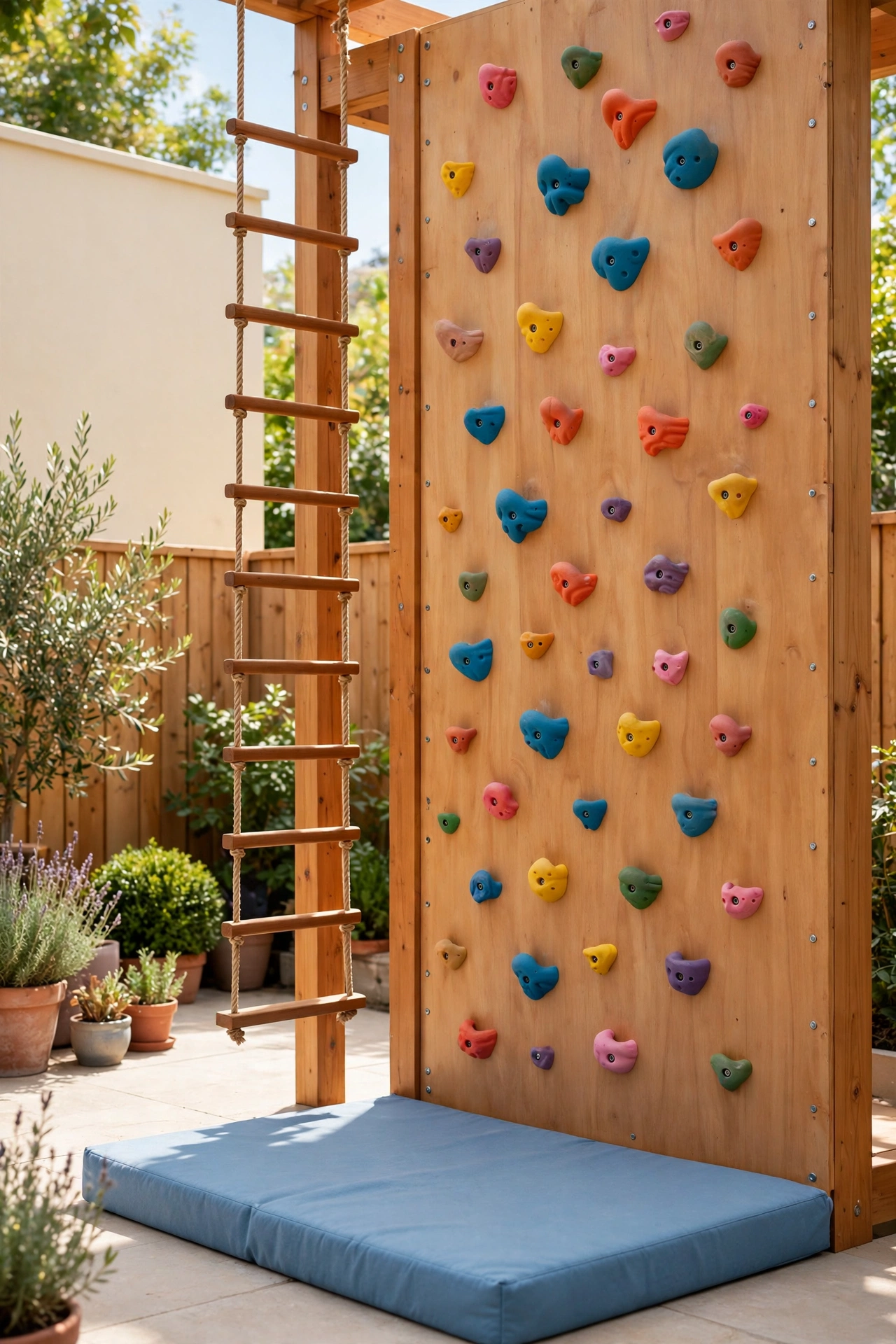
A rope ladder beside a climbing wall gives climbers a second way up and a fun way to build arm strength. Hang the ladder from a strong beam at the top of the wall, with wooden rungs spaced evenly apart. Climbers can switch between the holds and the ladder on the same trip up.
Use thick rope and solid wooden rungs that can hold an adult weight with ease. Tie the bottom of the ladder to a small ground anchor so it stays steady while climbing. A rope ladder adds variety to the wall and turns every climb into a small adventure.
11. Use Colorful Holds Sorted by Difficulty
Colorful holds sorted by difficulty make a climbing wall easy for the whole family to use. Give beginners large, easy to grip holds in one color, and give advanced climbers small, tricky holds in another color. Everyone can see at a glance which route matches their skill level.
Mark each route with a small painted sign at the base showing the color and the difficulty name. Rearrange the holds every few months so the routes feel fresh again. Sorted holds turn one wall into many different climbs for many different climbers.
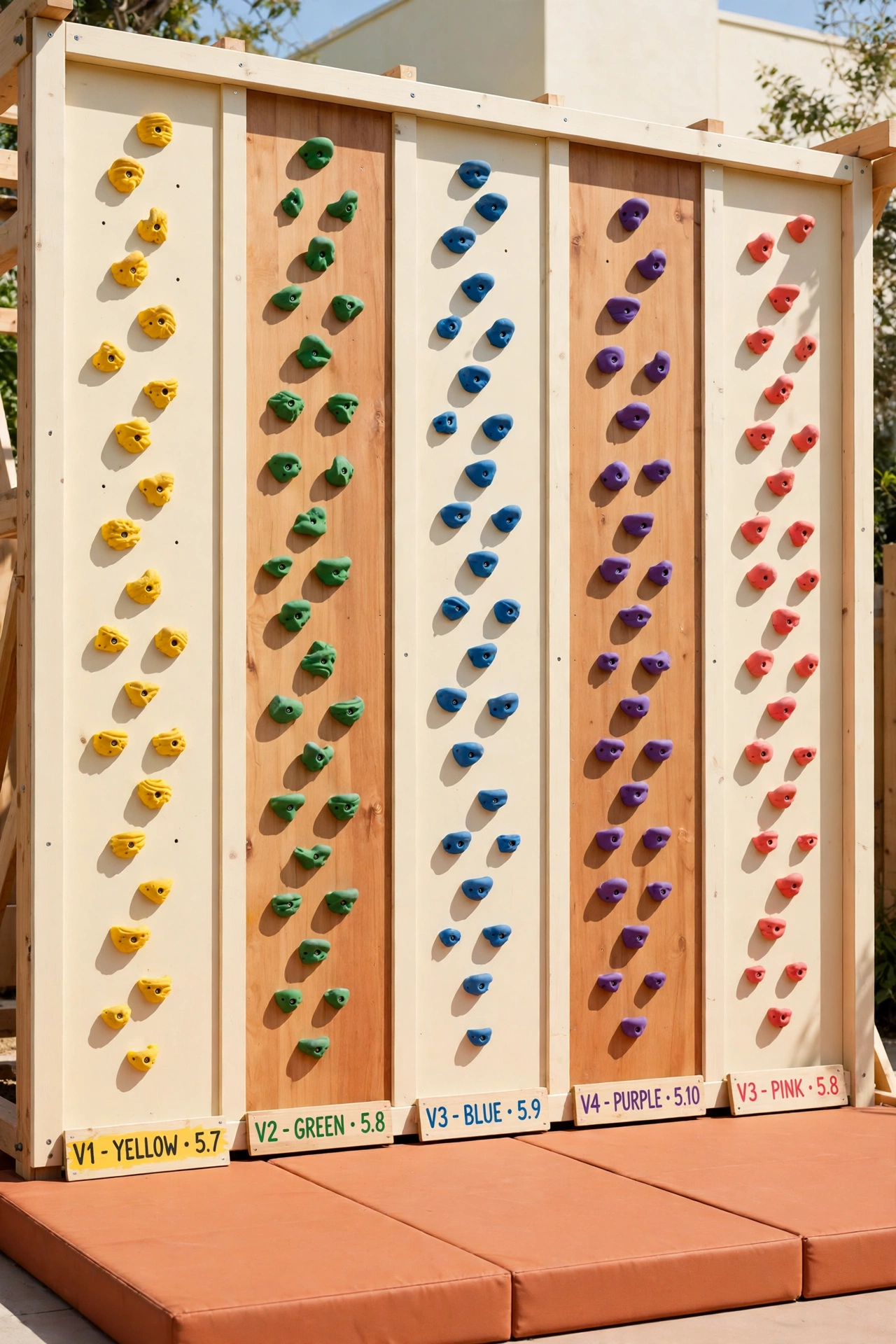
12. Add a Small Climbing Wall for Younger Kids
A small climbing wall built just for younger kids keeps little climbers safe while they learn. Keep the wall low, around one and a half meters tall, with large, chunky holds that small hands can grip with ease. The low height means a fall is short, and a thick mat makes it soft.
Place the small wall beside the main wall so younger kids feel part of the same climbing area as the older family members. Add a few fun holds shaped like stars or animals to make the wall feel playful. A kid sized wall lets the youngest family members join the fun from the very start.
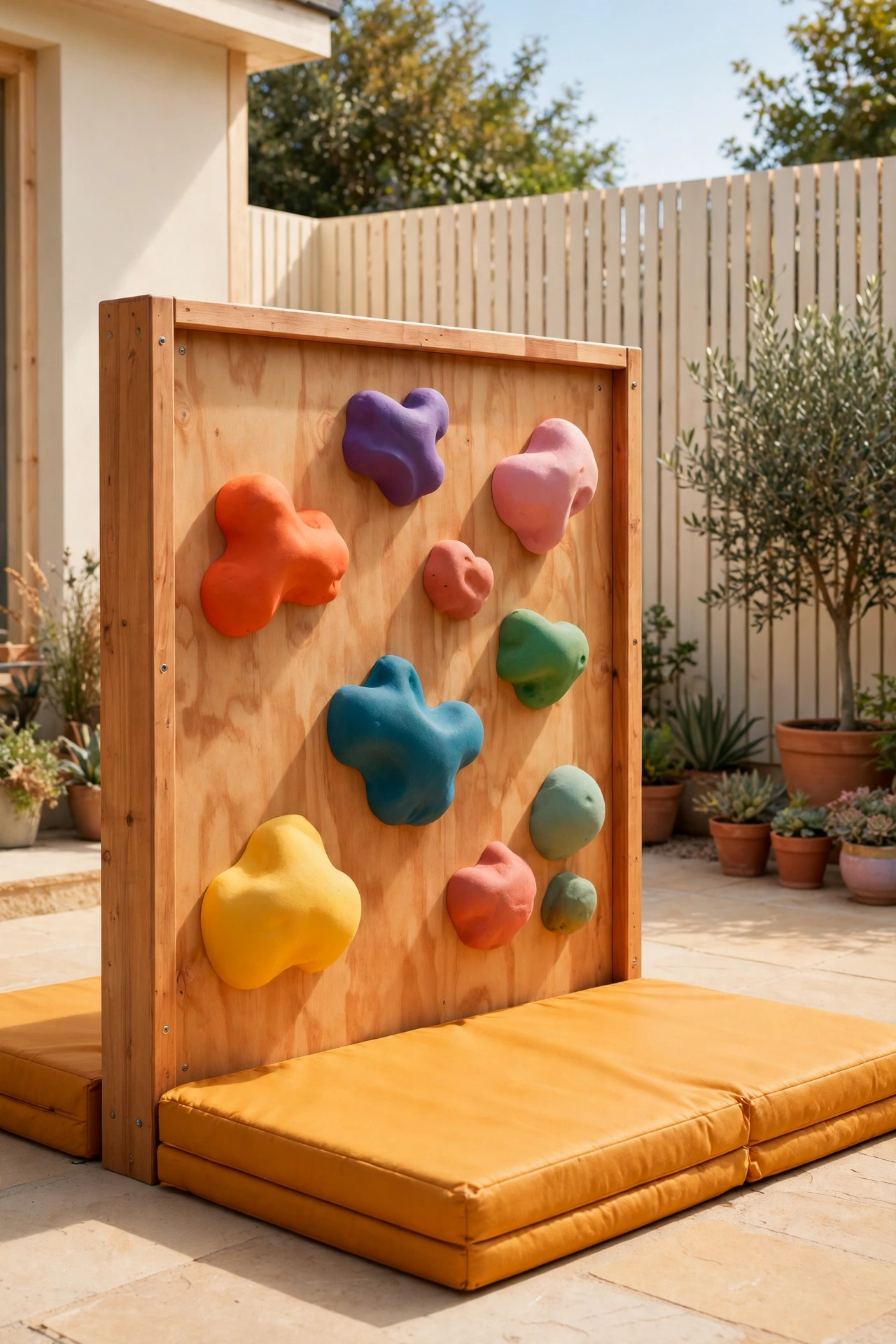
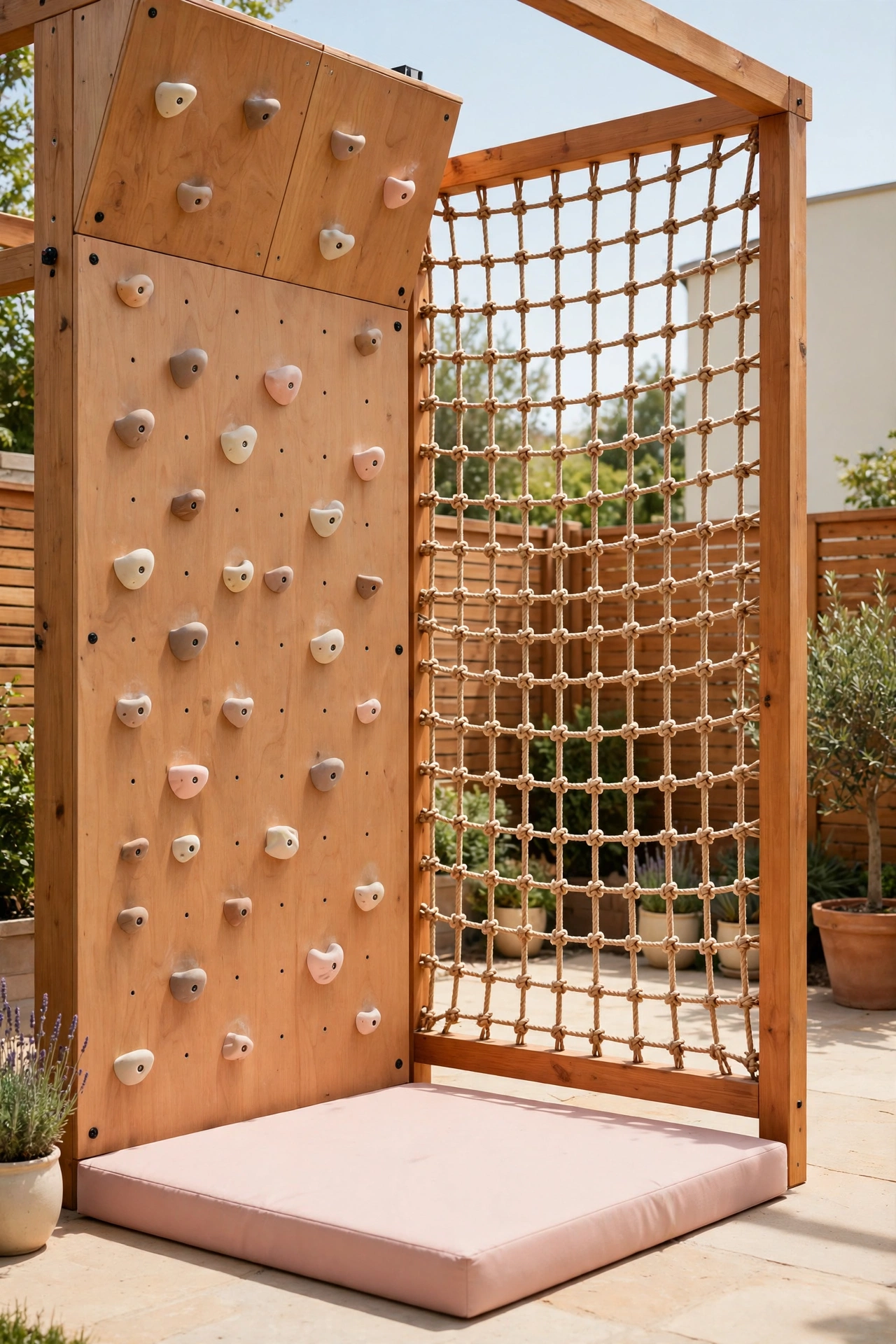
13. Build a Climbing Wall with a Cargo Net
A cargo net beside a climbing wall gives climbers a different kind of challenge that builds balance and coordination. Stretch a strong rope net across a frame next to the wall, with knots tied at every crossing so hands and feet find grip easily. Climbers can cross the net sideways or climb straight up it.
Use thick marine rope and a sturdy wooden frame that can hold several climbers at once. Check the knots and the frame every month, since rope can loosen over time. A cargo net adds a fun, bouncy challenge that feels completely different from solid holds.
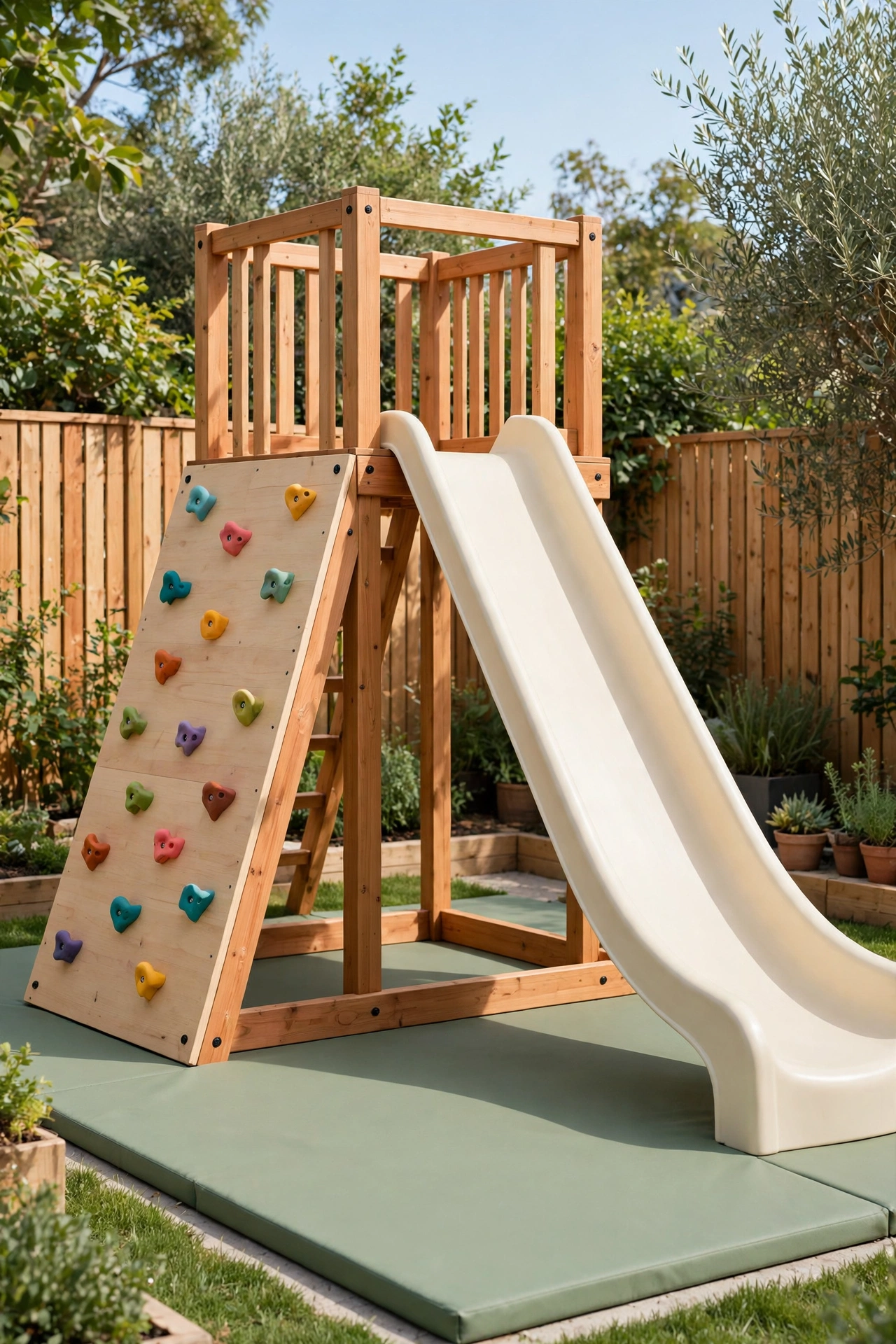
14. Create a Climbing Wall with a Slide Down
A climbing wall with a slide on the other side gives climbers a fast, fun way back down after reaching the top. Climb up the holds on the front face, cross a small platform at the top, then slide down the back. The slide turns every climb into a loop that kids want to repeat again and again.
Choose a wide, smooth slide with high sides so the descent stays safe. Place a soft mat at the bottom of the slide as well as under the wall. For a calm corner to rest between turns, see these backyard hammock ideas. A wall with a slide is the most loved setup in any family backyard.
15. Add a Climbing Wall to a Treehouse Platform
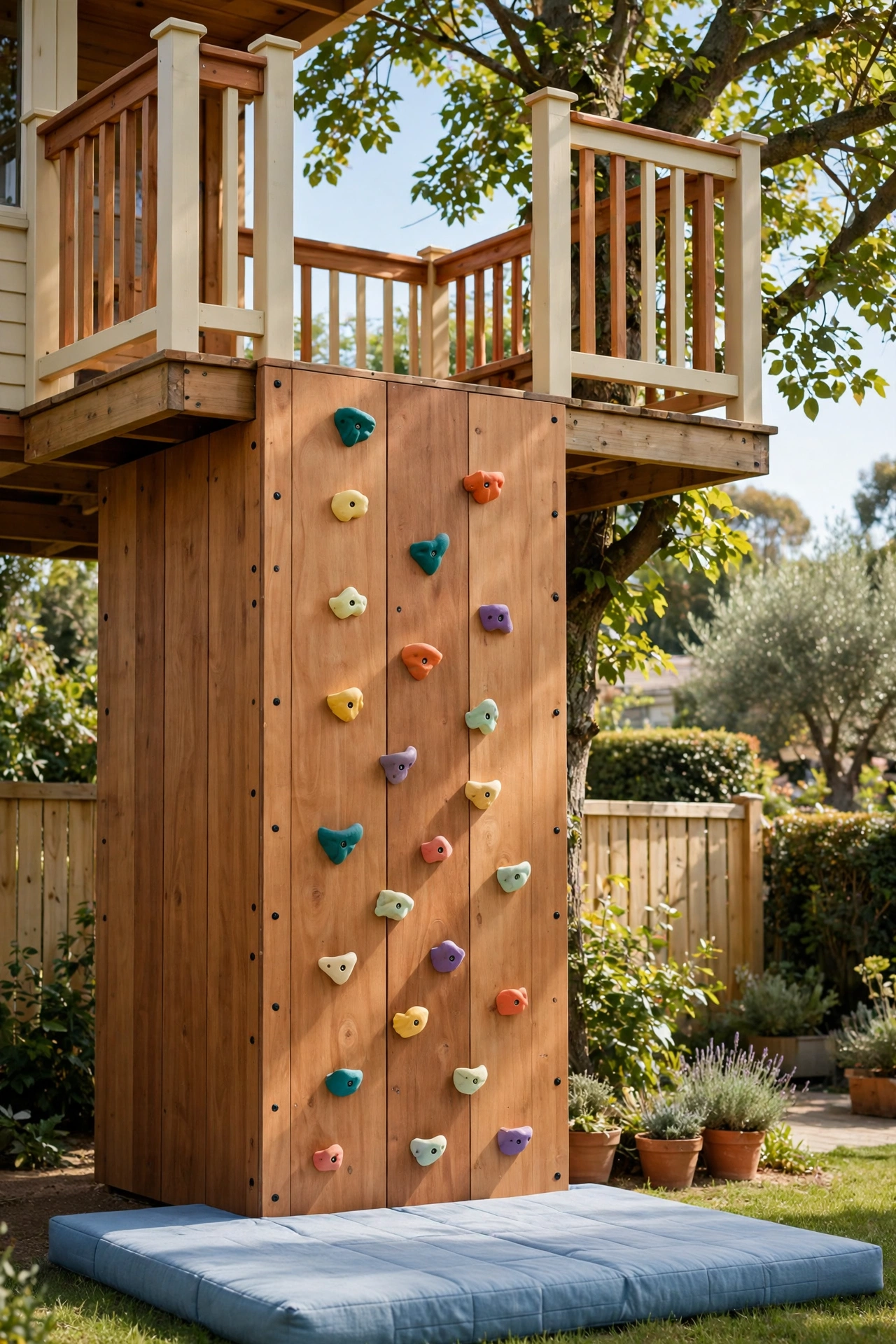
A climbing wall that leads up to a treehouse platform replaces the usual ladder with a far more exciting entrance. Bolt holds onto the support wall below the platform so climbers scale the wall to reach the treehouse door. The climb becomes part of the treehouse adventure itself.
Make sure the treehouse platform has a strong railing on every open side before you add the wall. Keep the holds large and close together near the top so the final step onto the platform feels safe. A treehouse climbing wall makes the whole structure feel like a real hideaway.
16. Build a Climbing Wall with Numbered Routes
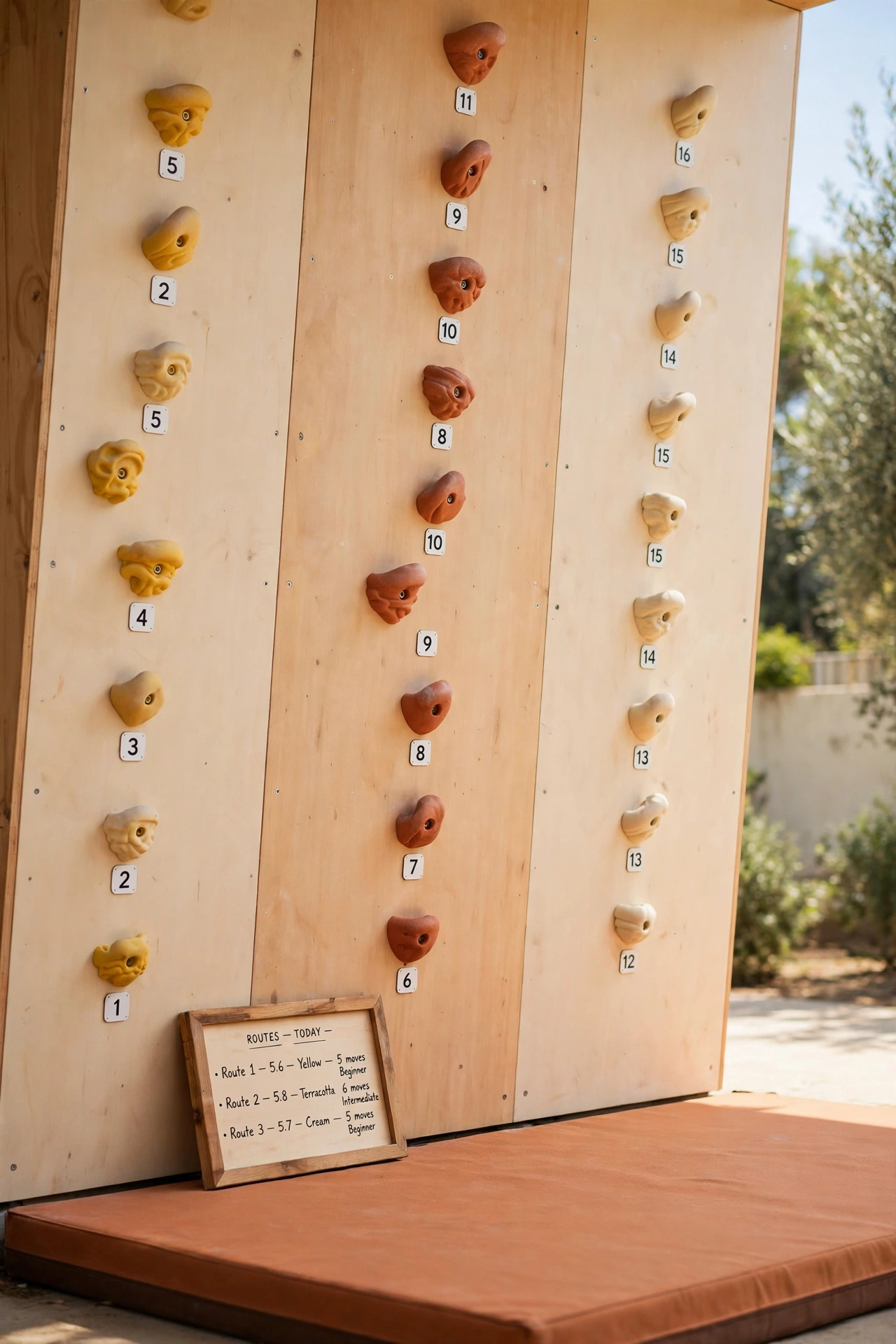
Numbered routes turn a climbing wall into a game that the family can play together. Paint small numbers beside each hold to mark the order of a route, so climbers follow the numbers from bottom to top. Different routes can share the same wall, which keeps the challenge fresh.
Use weatherproof number plates or paint the numbers directly onto the wall panels. Write each route on a small board at the base with its name and difficulty. Numbered routes add a puzzle element that keeps climbers thinking as well as climbing.
17. Use Recycled Pallets for a Budget Climbing Wall
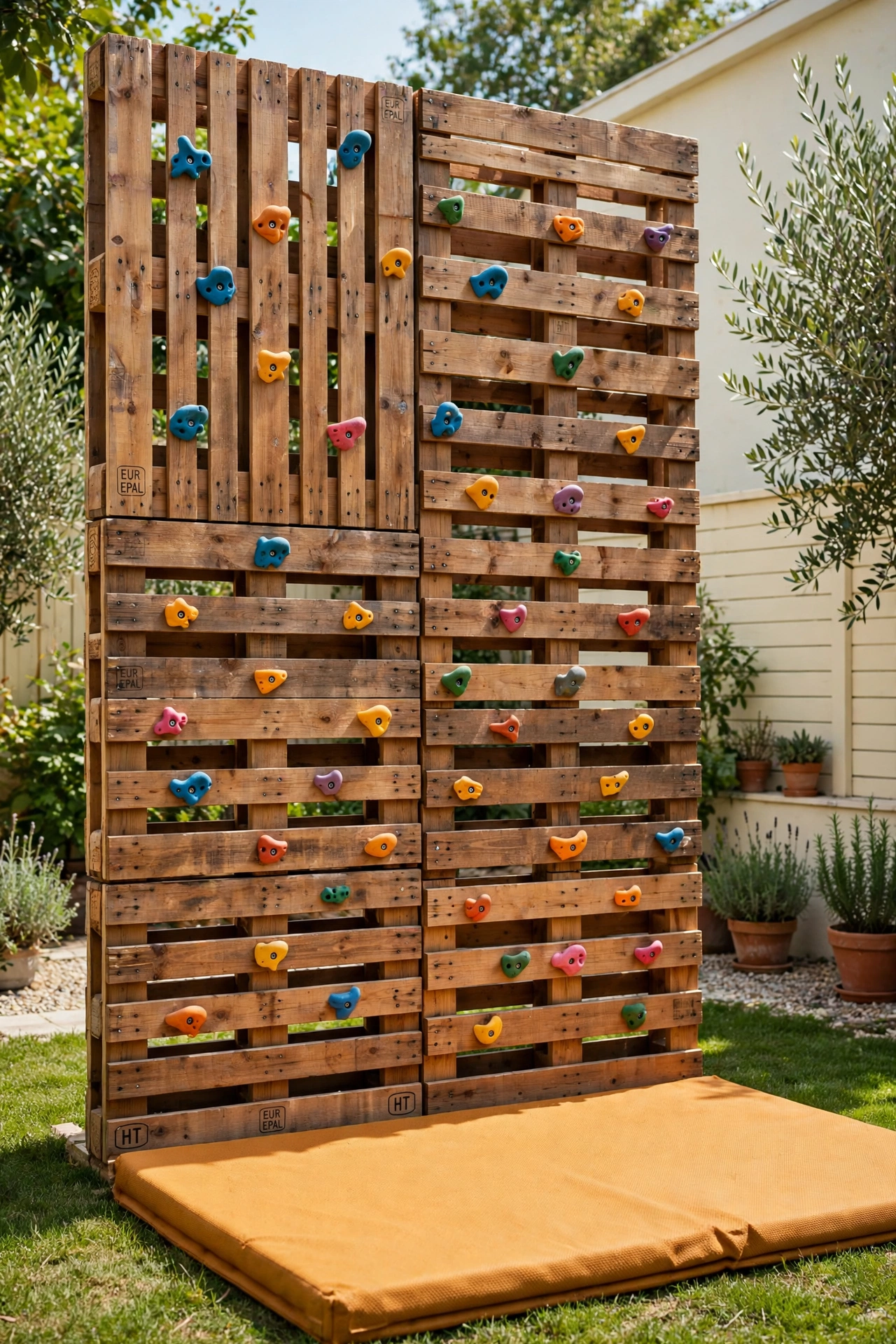
Recycled wooden pallets make a strong, low cost climbing wall for families on a budget. Take apart clean, sturdy pallets and use the slats to build a solid panel, then bolt on holds in a simple pattern. The rough wood gives the wall a charming, handmade look.
Check every pallet carefully and use only ones marked as safe for reuse, with no cracks or chemical stains. Sand the wood smooth so no splinters catch hands during a climb. A pallet wall proves that a great climbing wall does not need a big budget, only a little care and effort.
18. Add a Climbing Wall Beside the Swing Set
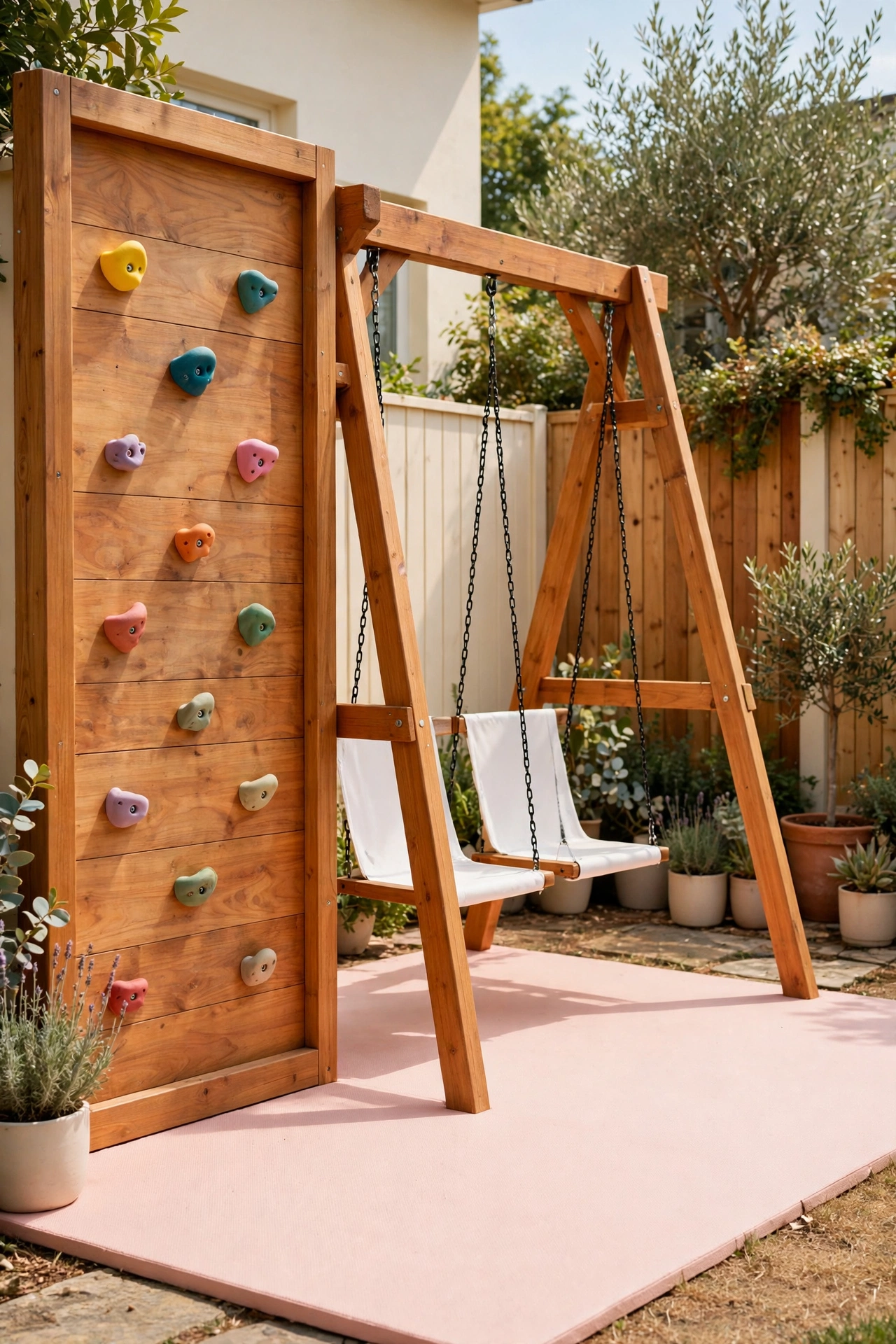
A climbing wall beside the swing set turns a plain play area into a full activity zone. The wall gives kids a climbing challenge right next to the swings, so they can move from one activity to the other without crossing the yard. The two structures share the same safety mat area, which saves space.
Leave a clear gap of at least one meter between the wall and the swings so climbers and swingers never collide. Use the same wood finish on both structures so the play area looks planned. A wall beside the swings makes the backyard feel like a small park.
19. Create a Climbing Wall with a Zip Line Finish
A climbing wall with a zip line at the top gives climbers a thrilling ride after a hard climb. Reach the top platform, clip onto the zip line, and glide across the yard to a soft landing. The combination of climbing and flying makes this the most exciting setup in any backyard.
Install the zip line with a professional grade cable, a proper harness, and a braking system at the landing end. Keep the zip line height low enough that a fall from the seat lands on soft ground. A zip line finish turns a climbing wall into the highlight of every backyard visit.
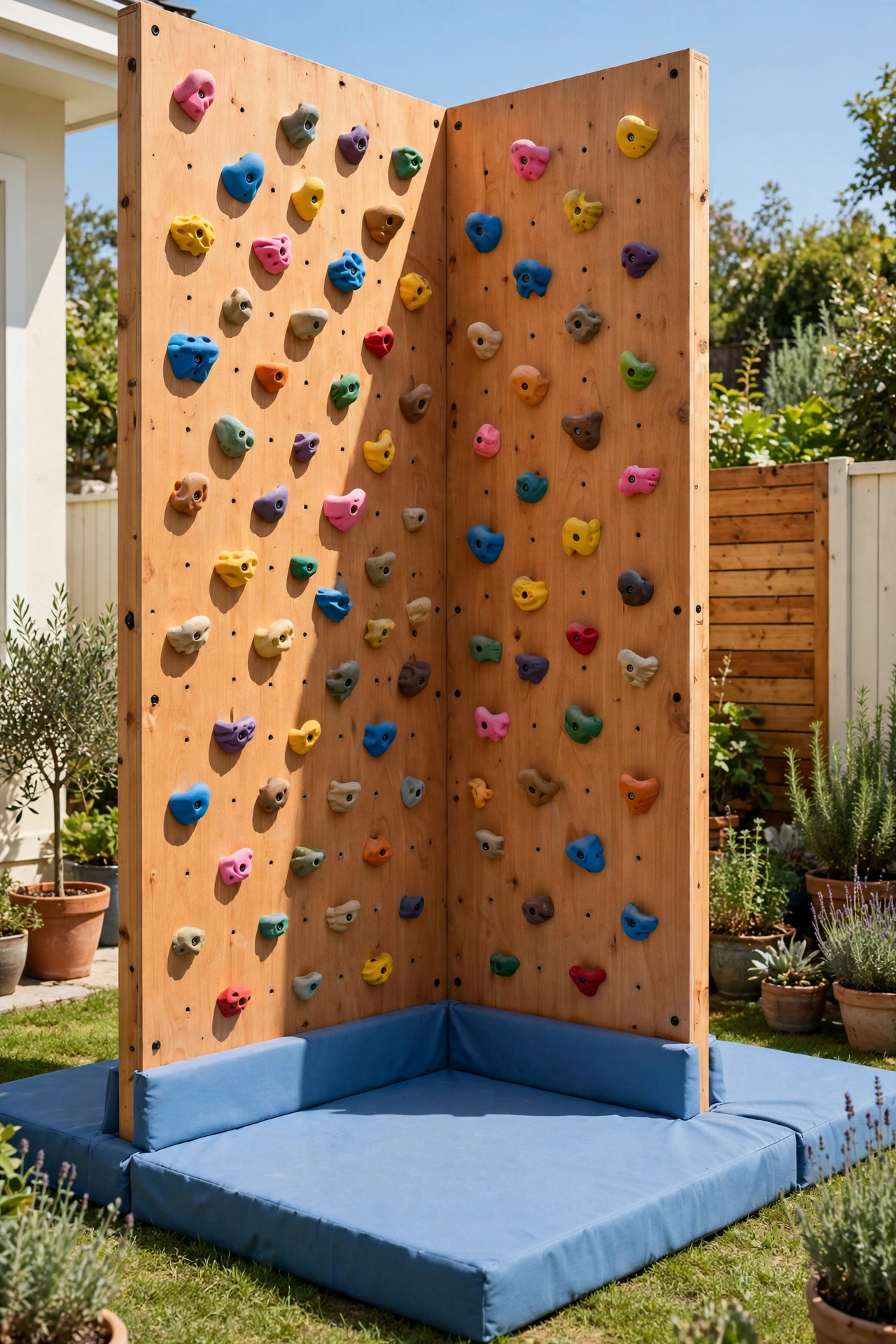
20. Build a Corner Climbing Wall with Two Faces
A corner climbing wall uses two walls that meet at a right angle, which gives climbers two faces to work with at once. The corner itself becomes a fun challenge, since climbers must reach around it to switch from one face to the other. The L shape also fits neatly into a corner of the yard that would otherwise stay empty.
Build the two faces at slightly different angles so each one feels different to climb. Add a thick mat that wraps around the corner base. A corner wall uses wasted space and gives the family twice the climbing surface in one structure.
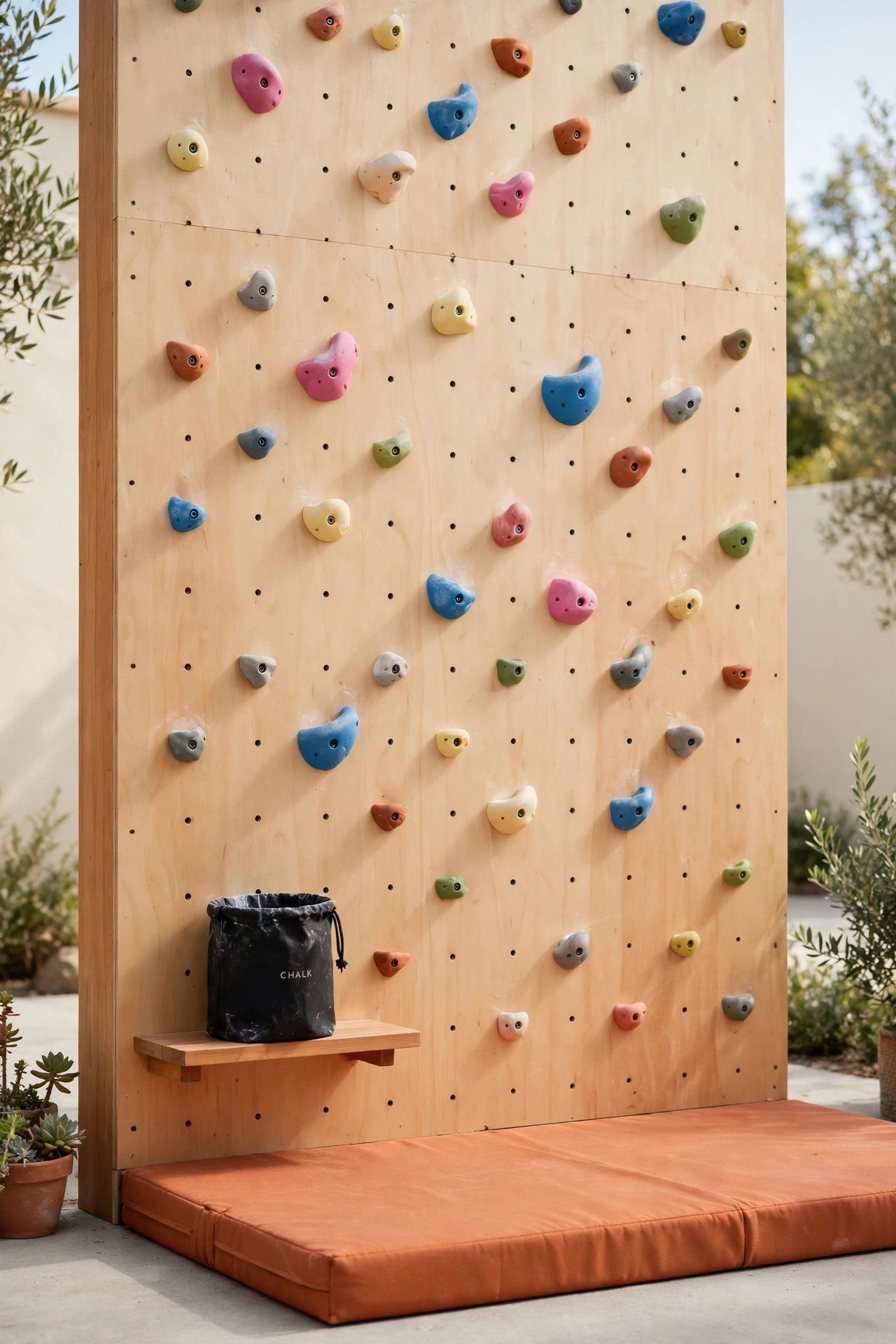
21. Add a Climbing Wall with a Chalk Bucket Station
A chalk bucket station beside the wall helps climbers keep their hands dry and grippy during a climb. Mount a small wooden shelf at waist height near the base of the wall and place a chalk bucket or chalk bag on it. Climbers dip their hands before each attempt, just like at a real climbing gym.
Keep the chalk in a lidded bucket so rain never turns it into paste. Add a small brush on a string for cleaning holds after a session. A chalk station adds a professional touch that makes every climber feel like a real athlete.
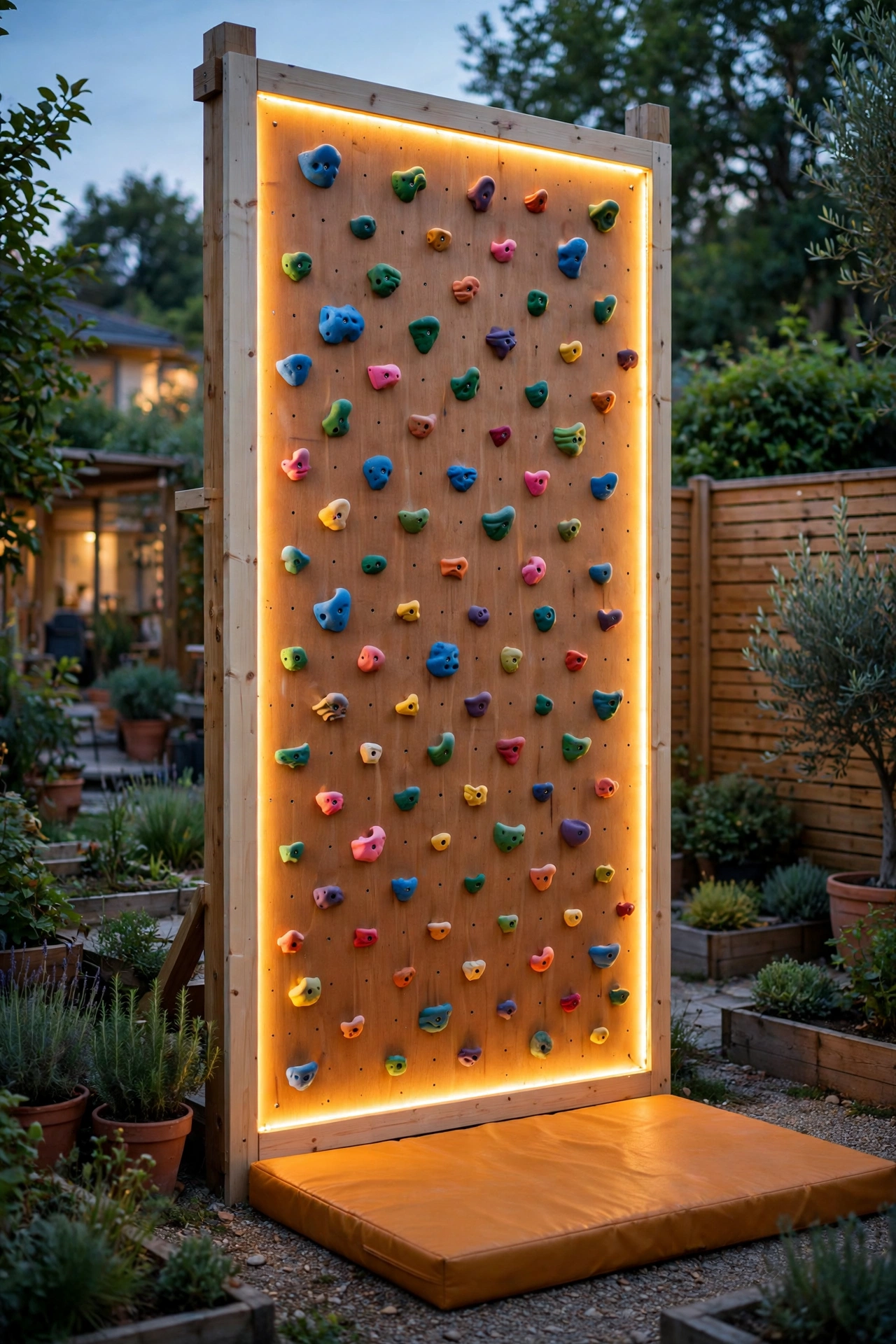
22. Create a Climbing Wall with LED Strip Lighting
LED strip lighting along the edges of a climbing wall lets the family climb safely after sunset. Mount waterproof LED strips along the sides and the top of the wall, and add a few small lights under the top platform. The glow marks every hold clearly and turns the wall into a beautiful feature at night.
Choose warm white lights for a soft glow, or color changing strips for a playful evening mood. Run the wiring through a weatherproof channel so rain never reaches it. An LED lit wall extends climbing time into cool summer evenings.
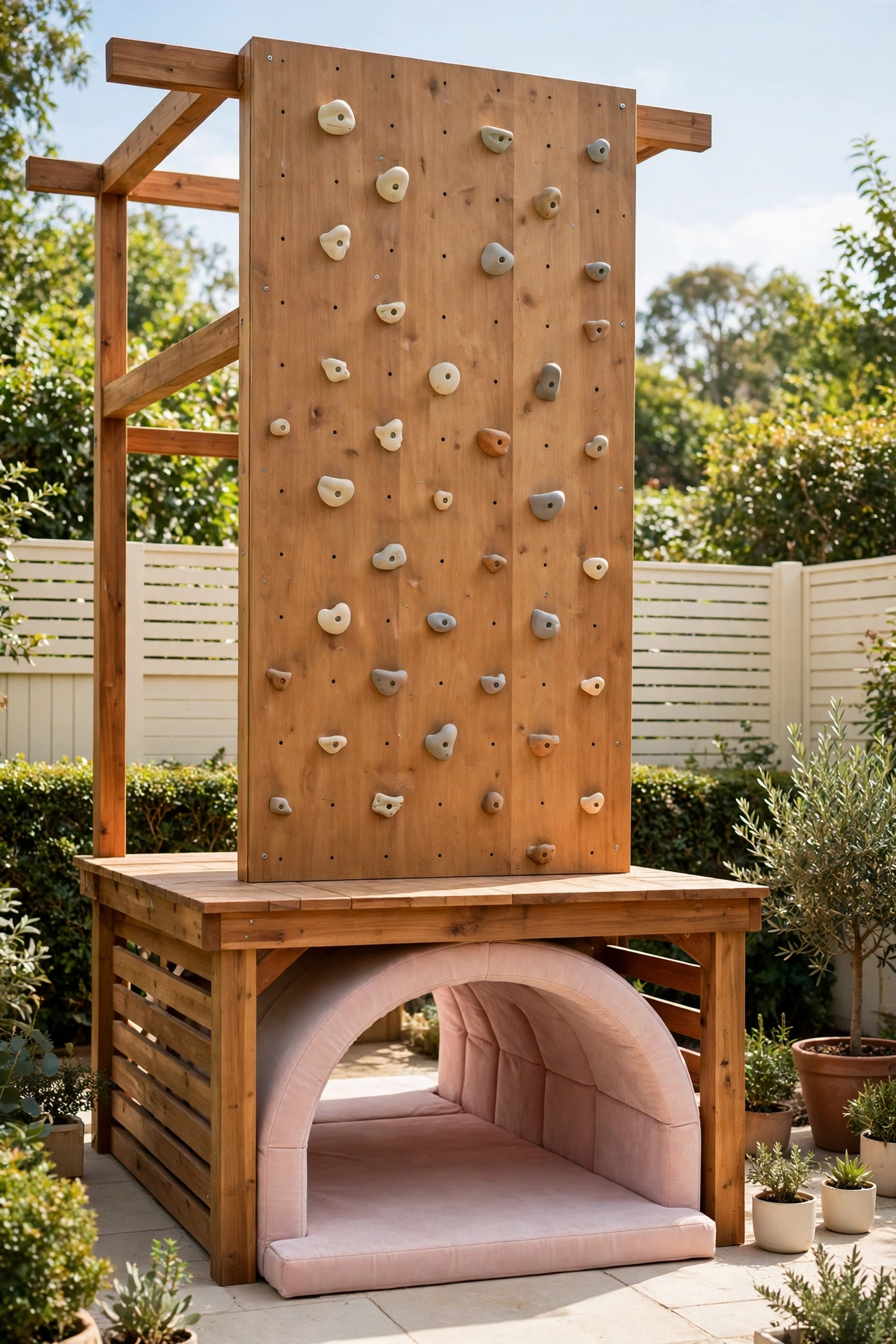
23. Build a Climbing Wall with a Small Cave Tunnel
A small cave tunnel under a climbing wall gives younger kids a hiding spot and a second way through the structure. Build the wall on a raised frame and leave a low, wide opening underneath, lined with smooth wood and soft mats. Kids can crawl through the tunnel and pop out the other side, which makes the wall feel like a secret fort.
Keep the tunnel opening wide and the ceiling high enough that no one bumps their head inside. Add a few small windows cut into the sides so light reaches the tunnel. A cave tunnel turns a simple wall into a place for imagination as well as climbing.
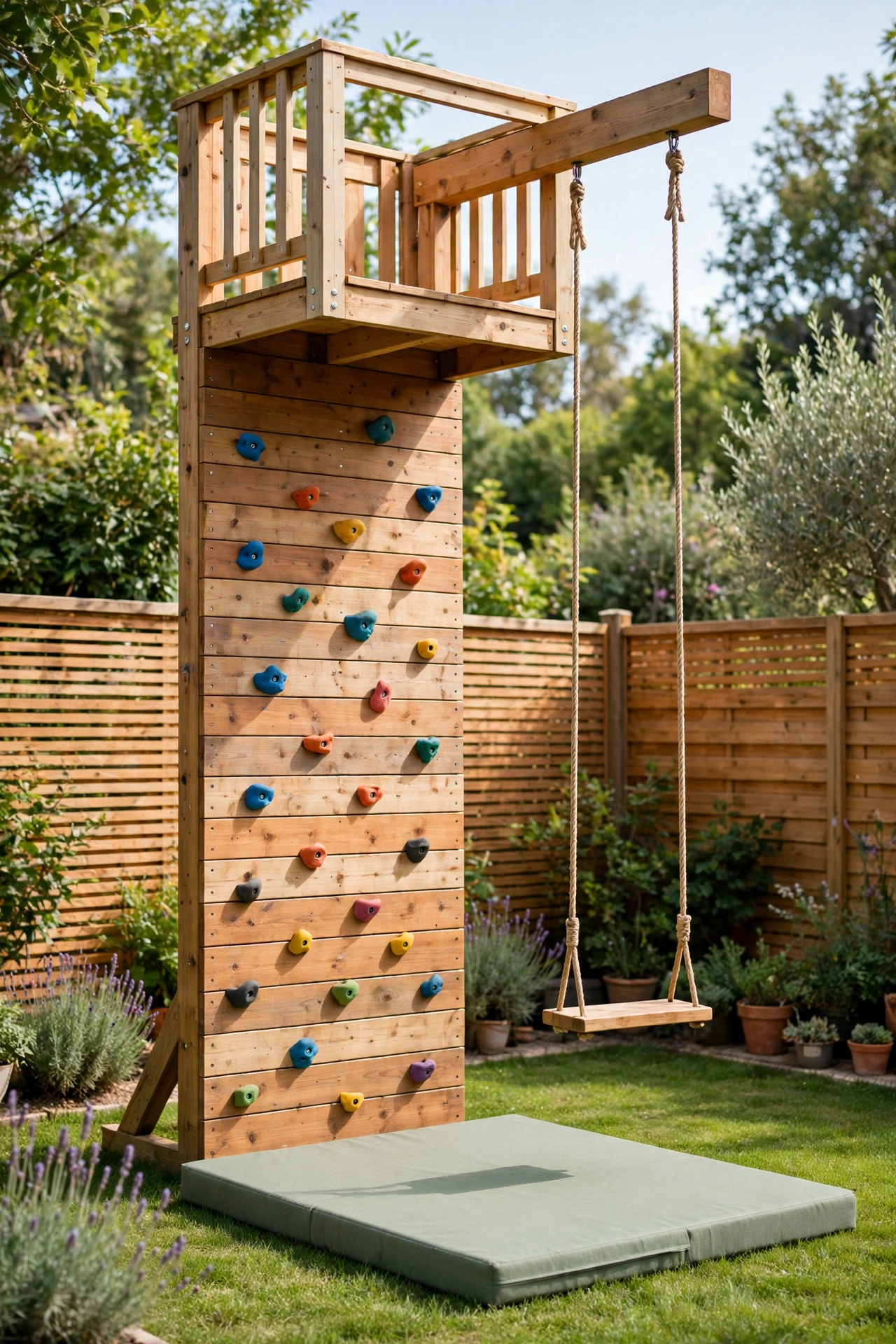
24. Add a Climbing Wall with a Rope Swing Exit
A rope swing at the top of a climbing wall gives climbers a fun way to swing down to the ground after reaching the top. Hang a thick rope with a wooden seat from a strong beam above the platform, and let climbers grab it at the top and swing out over the safety mat. The swing adds a joyful ending to every climb.
Make sure the swing path is clear of the wall and the mat extends under the full swing arc. Check the rope and the beam every month for wear. A rope swing exit makes the wall feel like a fairground ride as well as a climbing challenge.
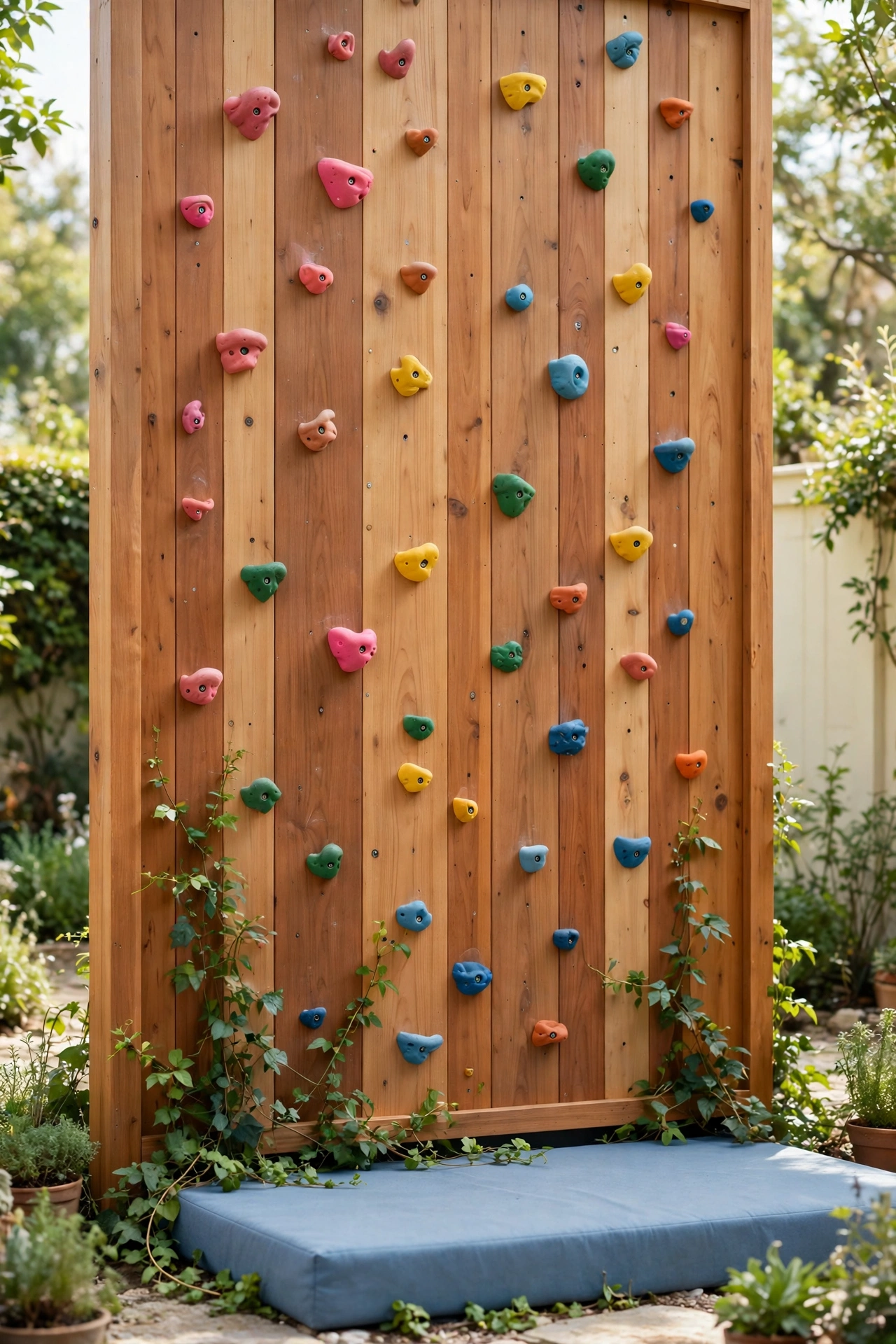
25. Use a Climbing Wall as a Garden Privacy Screen
A tall climbing wall can double as a privacy screen that blocks the view from a neighbor yard. Build the wall along the boundary where you need privacy most, and plant climbing vines at its base so greenery softens the wood over time. The wall gives you privacy and a climbing challenge in one structure.
Choose vines that grow fast but stay light, so they never pull holds loose from the wall. Trim the vines twice a year to keep the holds clear. A privacy screen wall solves two backyard problems at once and looks better every year as the plants grow.
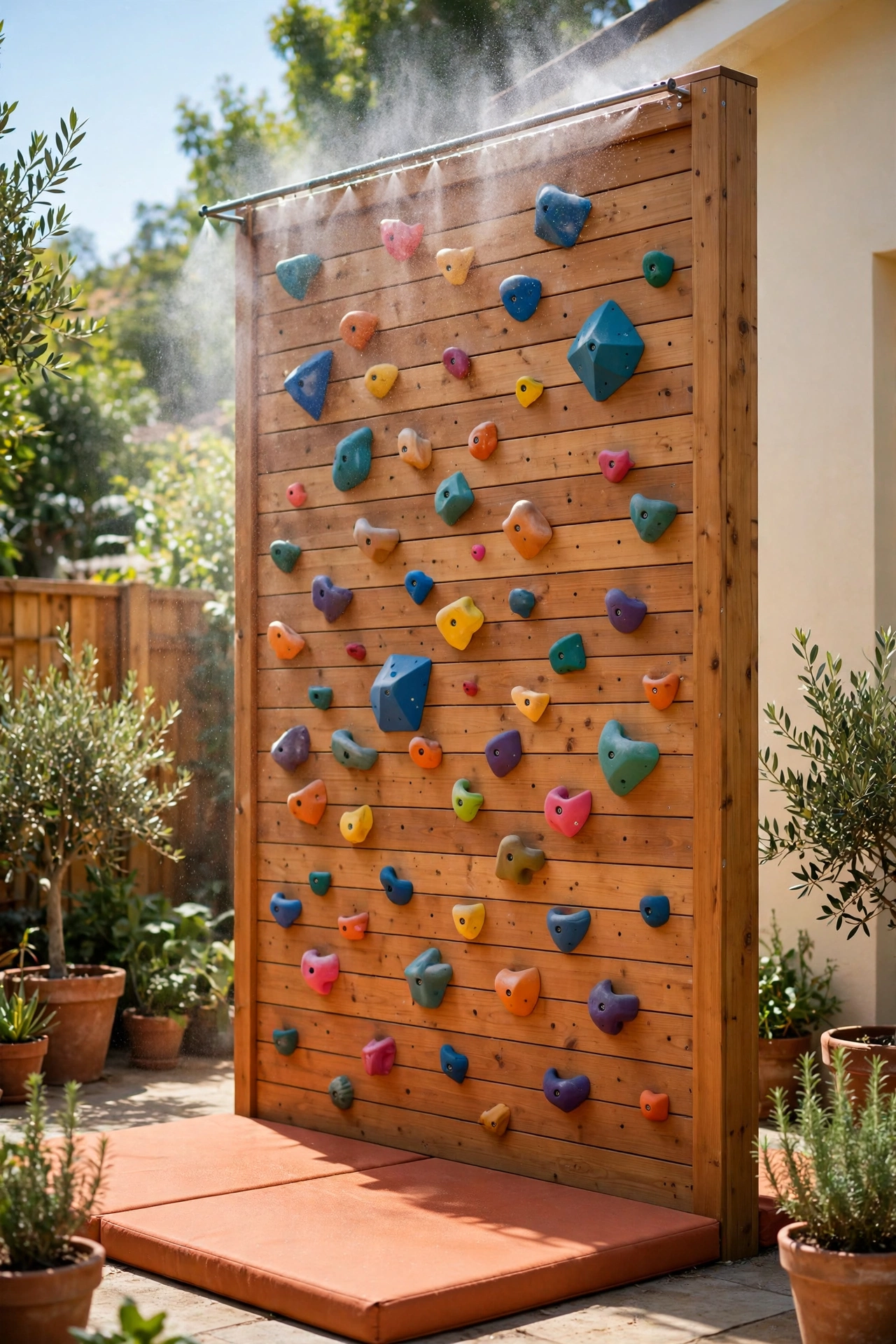
26. Build a Climbing Wall with a Water Spray Feature
A water spray feature on a climbing wall turns hot summer climbs into a cool, refreshing game. Mount a row of small mist sprayers along the top edge of the wall, connected to a garden hose with a simple valve. Turn the spray on for a few minutes and the wall becomes a splash zone as well as a climb.
Use holds with a rough texture so wet hands still find grip, and keep the safety mat in a quick dry material. Turn the spray off for serious practice sessions and on for fun family time. For another way to cool off in the yard, see these outdoor shower ideas. A spray wall is the best way to beat summer heat while staying active.
27. Add a Climbing Wall with a Scoreboard
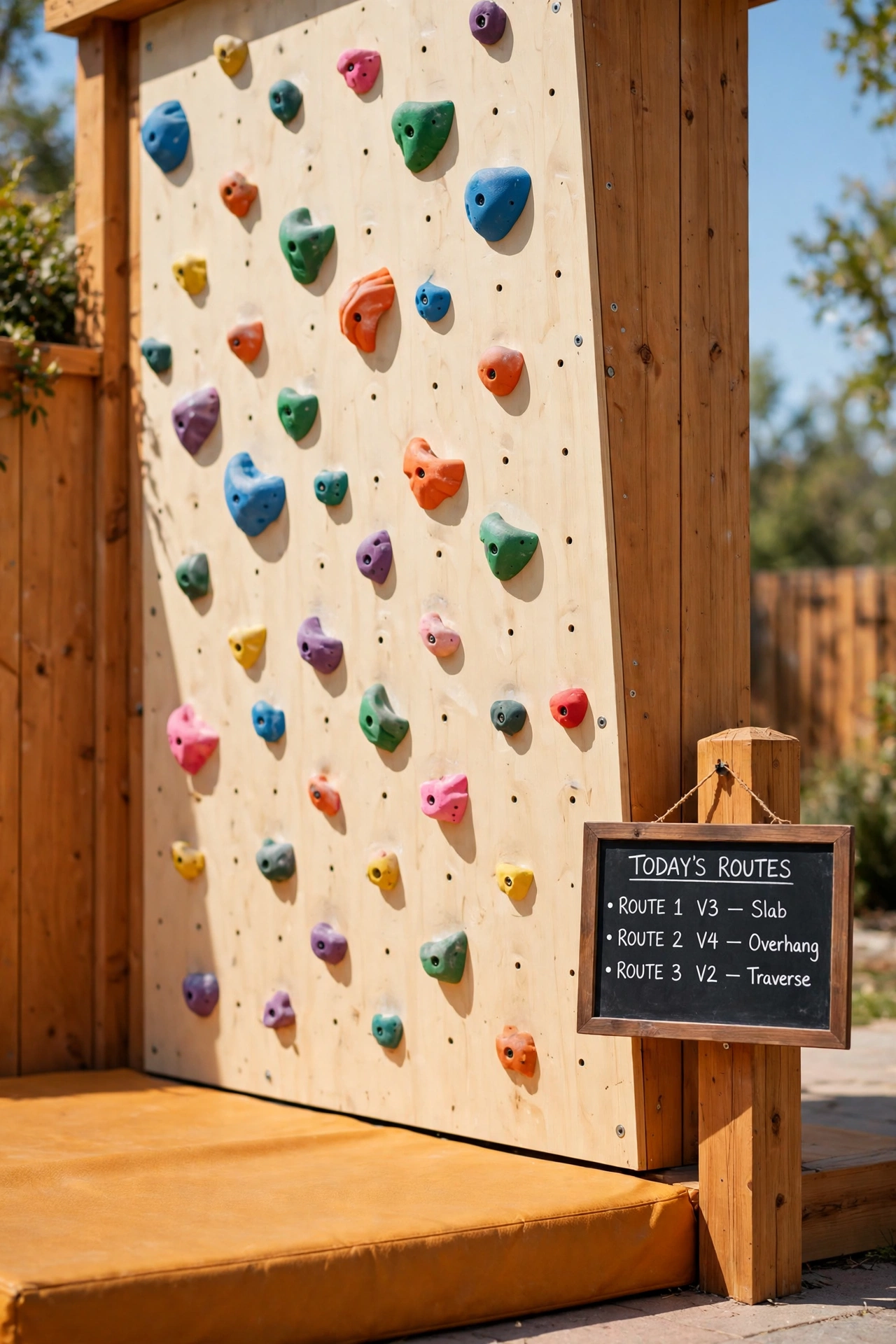
A scoreboard beside the wall turns climbing into a friendly family competition. Mount a small chalkboard or whiteboard near the base and write each climber name, their best route, and their fastest time. The family can challenge each other every weekend and watch skills grow over the summer.
Keep the scoring simple, with one point for each route completed and a star for the fastest climb of the day. Update the board together after every session so everyone feels part of the game. A scoreboard adds motivation that keeps the wall in use all season long.
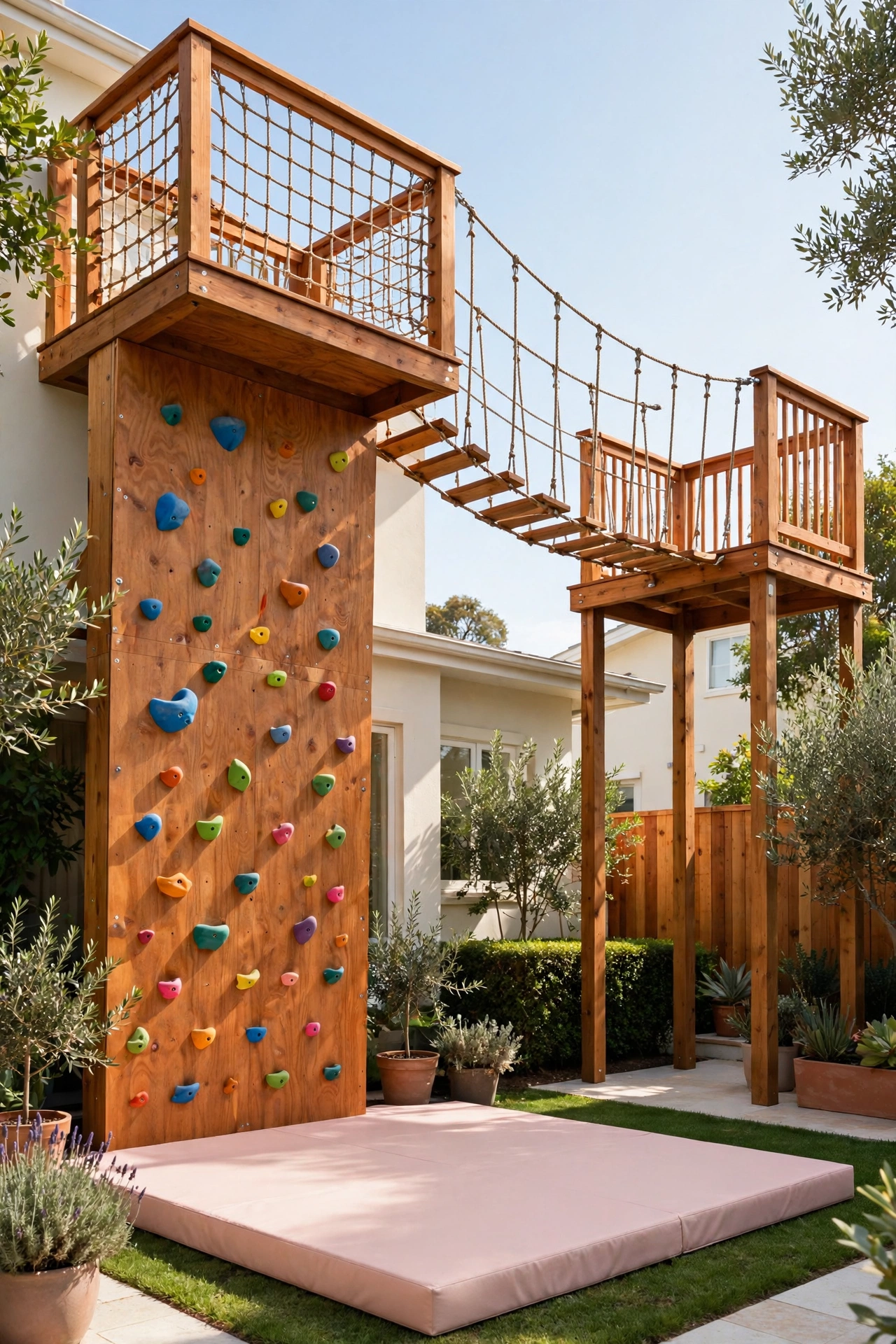
28. Create a Climbing Wall with a Rope Bridge
A rope bridge from the top of a climbing wall to a second platform turns one wall into a small adventure course. Stretch a rope bridge with wooden planks between the wall platform and a nearby treehouse or tower, with safety ropes on both sides. Climbers cross the wobbly bridge after reaching the top, which tests balance and courage.
Build the bridge with thick ropes and solid planks, and test it with adult weight before any child crosses. Keep the bridge low, no higher than two meters, so a fall lands on soft ground. A rope bridge makes the climbing wall feel like a real expedition.
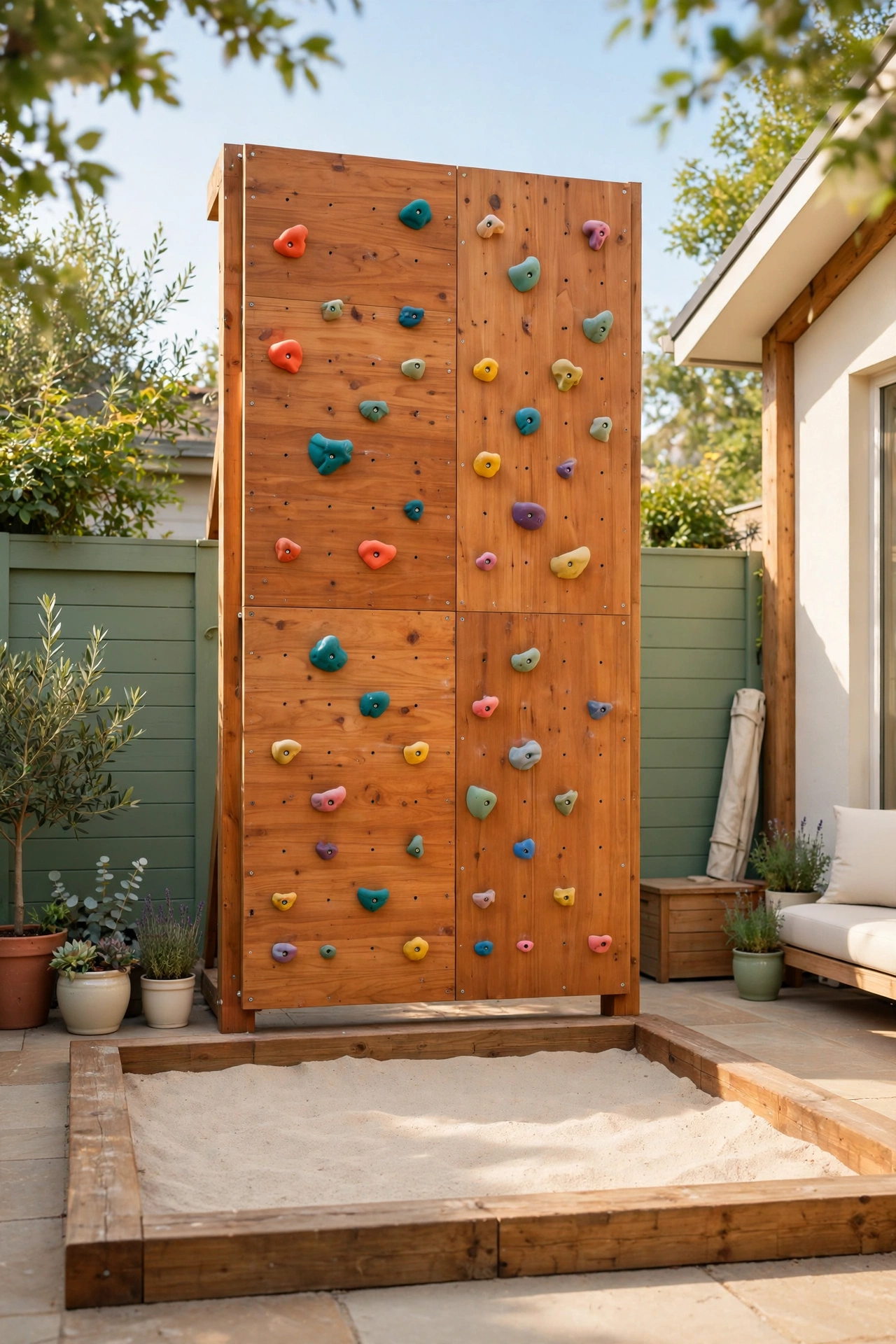
29. Build a Climbing Wall with a Sand Pit Landing
A sand pit under a climbing wall gives climbers the softest possible landing zone. Dig a shallow pit at the base of the wall, line it with landscape fabric, and fill it with clean play sand at least thirty centimeters deep. The sand absorbs every fall gently and doubles as a play area when no one is climbing.
Rake the sand smooth after each session and cover the pit with a tarp when it rains, so the sand stays clean and dry. Edge the pit with wooden beams to keep the sand in place. For a warm gathering spot near the climbing area, see these backyard fire pit ideas. A sand pit landing is soft, safe, and fun for the whole family.
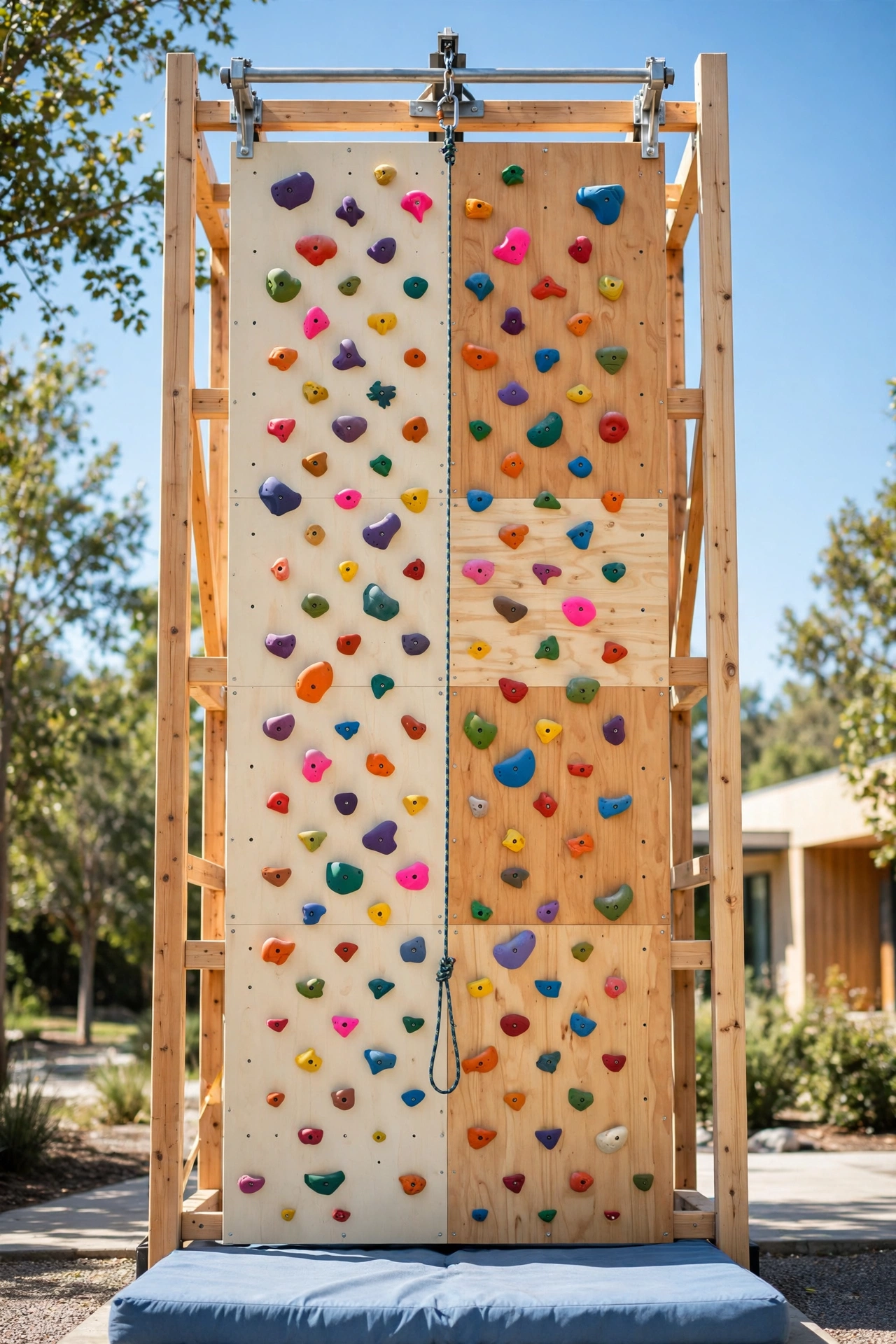
30. Add a Climbing Wall with a Climbing Rope and Harness Anchor
A climbing rope and harness anchor at the top of a tall wall lets the family practice real roped climbing safely. Install a strong steel anchor bar at the top of the wall and run a proper climbing rope through it, with a belayer on the ground holding the other end. The system works just like a climbing gym, which teaches real climbing skills.
Use only certified climbing rope, harness, and carabiners, and learn proper belaying from a trained instructor before the first climb. Inspect the anchor and the rope before every session. A roped wall is the safest way to climb high and the best way to build true climbing confidence.
31. Create a Climbing Wall with a Mural Backdrop
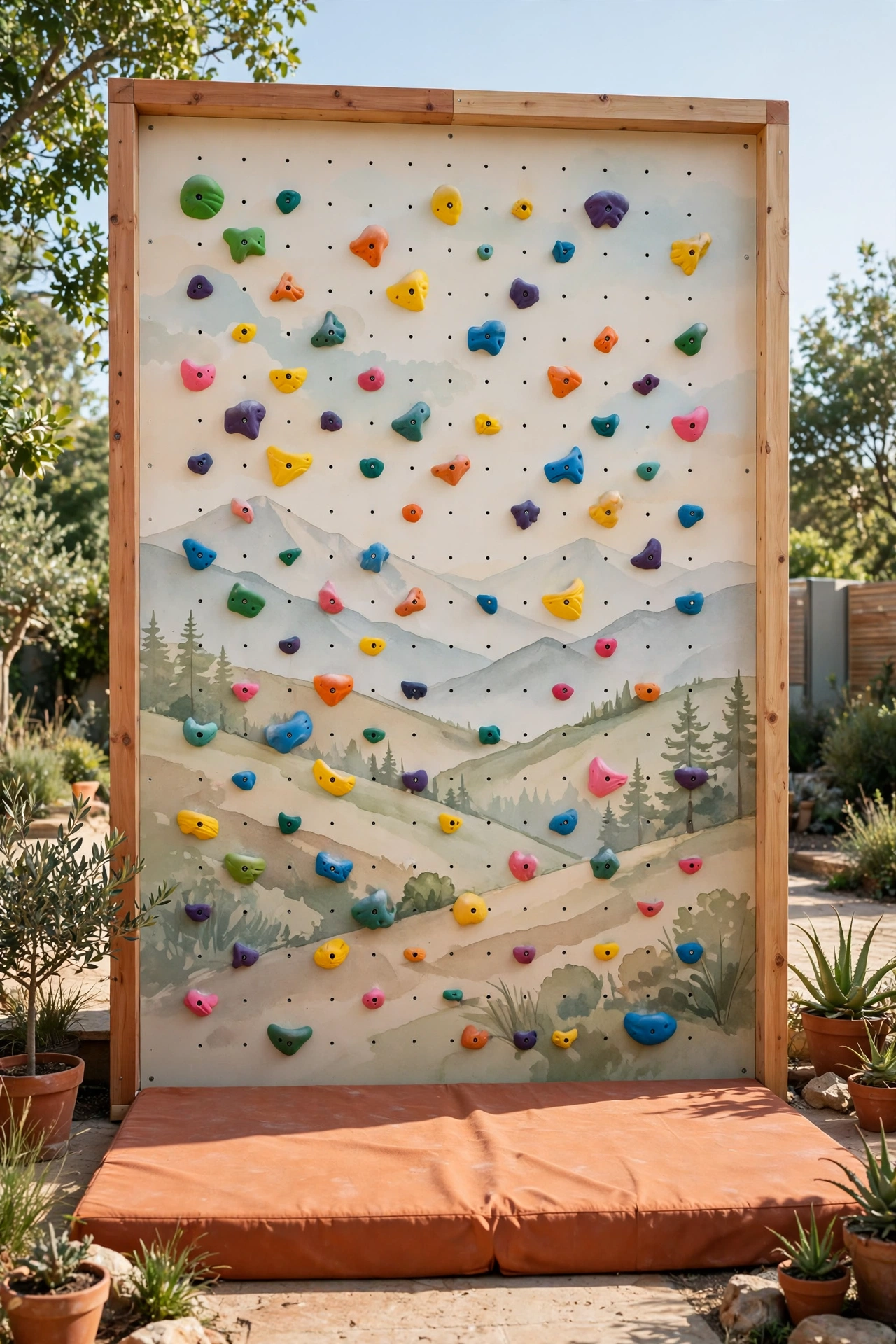
A mural painted on the wall behind the holds turns a climbing wall into a piece of outdoor art. Paint mountains, clouds, or a forest scene across the panels before bolting on the holds, so climbers feel like they are scaling a real mountain. The mural makes the wall a beautiful feature even when no one is climbing.
Use outdoor mural paint and seal it with a clear weatherproof coat so the art lasts through sun and rain. Keep the holds in bright colors that stand out against the painted background. A mural wall is the prettiest climbing wall a backyard can have.
32. Build a Seasonal Climbing Wall with a Shade Sail
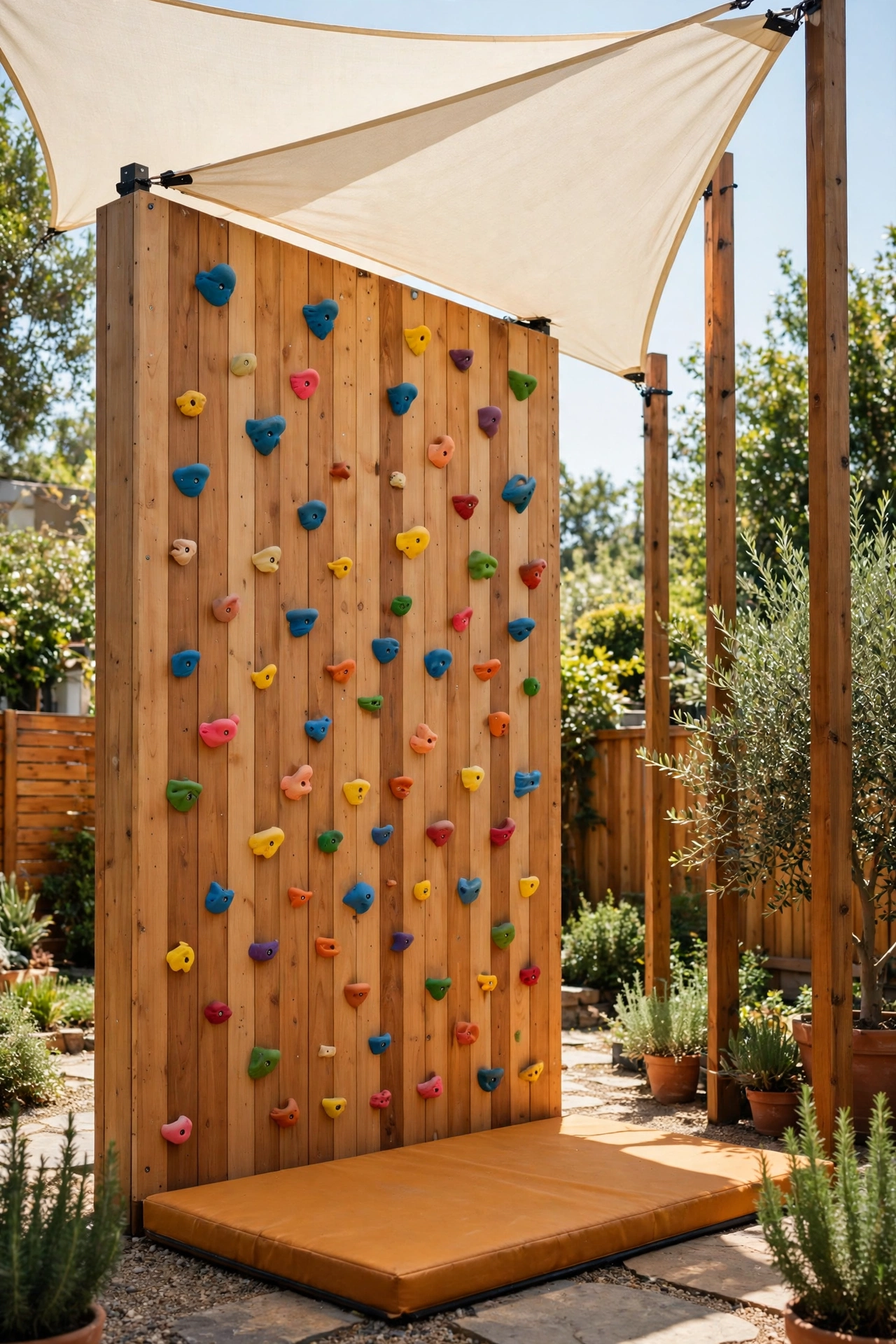
A shade sail above a climbing wall protects climbers from harsh sun and lets the family use the wall through the hottest part of the day. Stretch a triangular shade sail from the top of the wall to two tall posts, so it covers the climbing face and the safety mat below. The sail also keeps the holds cool to the touch on summer afternoons.
Choose a UV resistant sail fabric in a soft cream or sage color that matches the garden. Take the sail down in winter storms so wind never damages it. A shade sail makes the climbing wall comfortable in every season and extends its use through the whole year.
Conclusion
An outdoor climbing wall turns a plain backyard into a place where the whole family moves, plays, and grows stronger together. From a simple fence wall to a roped tower with a zip line, there is an idea here for every yard size, every budget, and every skill level. The best wall is the one your family will actually use every week.
Pick one or two ideas that fit your yard and start today. Bolt on the first holds, lay down a safety mat, and watch the backyard come alive. For a calm home beyond the garden, these nightly reset routine ideas will help you keep every room organized with just a few minutes each evening.
Frequently Asked Questions About Outdoor Climbing Wall Ideas for Active Families
How tall should a backyard climbing wall be?
A bouldering wall of two to three meters works well for most families, since it needs no rope or harness. A taller wall of four to five meters needs a proper rope, harness, and anchor system for safety. Start low and build taller only when the family is ready for roped climbing.
What is the safest surface under a climbing wall?
A thick crash mat at least fifteen centimeters deep is the safest surface for most backyard walls. Interlocking foam mats, a sand pit, or a purpose made crash pad all work well. Avoid concrete, stone, or bare earth under any climbing wall.
How much does it cost to build a backyard climbing wall?
A simple plywood wall with basic holds costs very little, especially when built from recycled pallets or spare timber. A taller roped wall with certified gear costs more, since safety equipment is never a place to save money. Most families can build a fun, safe wall with a modest budget and a free weekend.
Can a climbing wall be built on a fence?
Yes, a climbing wall can be built on a strong fence, as long as the fence posts are solid and the panels are reinforced with plywood. Check the fence for rot or loose posts before you start, and add extra bracing if needed. A fence wall is one of the easiest and cheapest ways to add climbing to a backyard.
How do I keep a climbing wall safe for kids?
Keep the wall low for young climbers, use large easy holds, and always place a thick mat underneath. Check the holds, bolts, and frame every month for loose parts. Teach kids to climb down slowly instead of jumping, and always watch younger climbers while they are on the wall.

Hi, I’m Emily! I turn messy corners into cozy, organized spots. DreamNestDecor is where I share simple, practical home ideas — decor, organization, and small-space solutions that work in real life, not just in photos. Every idea here is carefully researched before it’s shared.