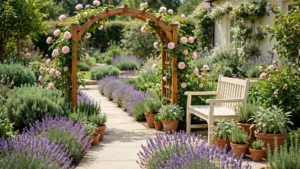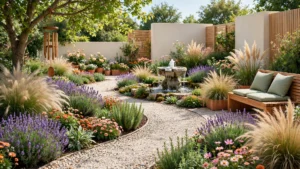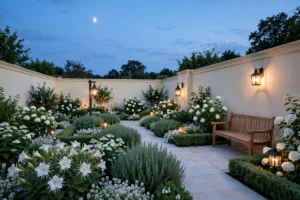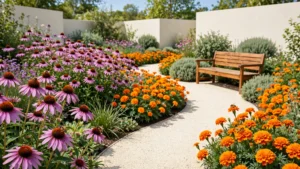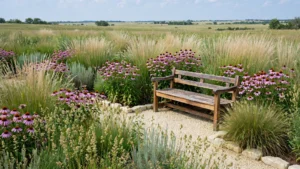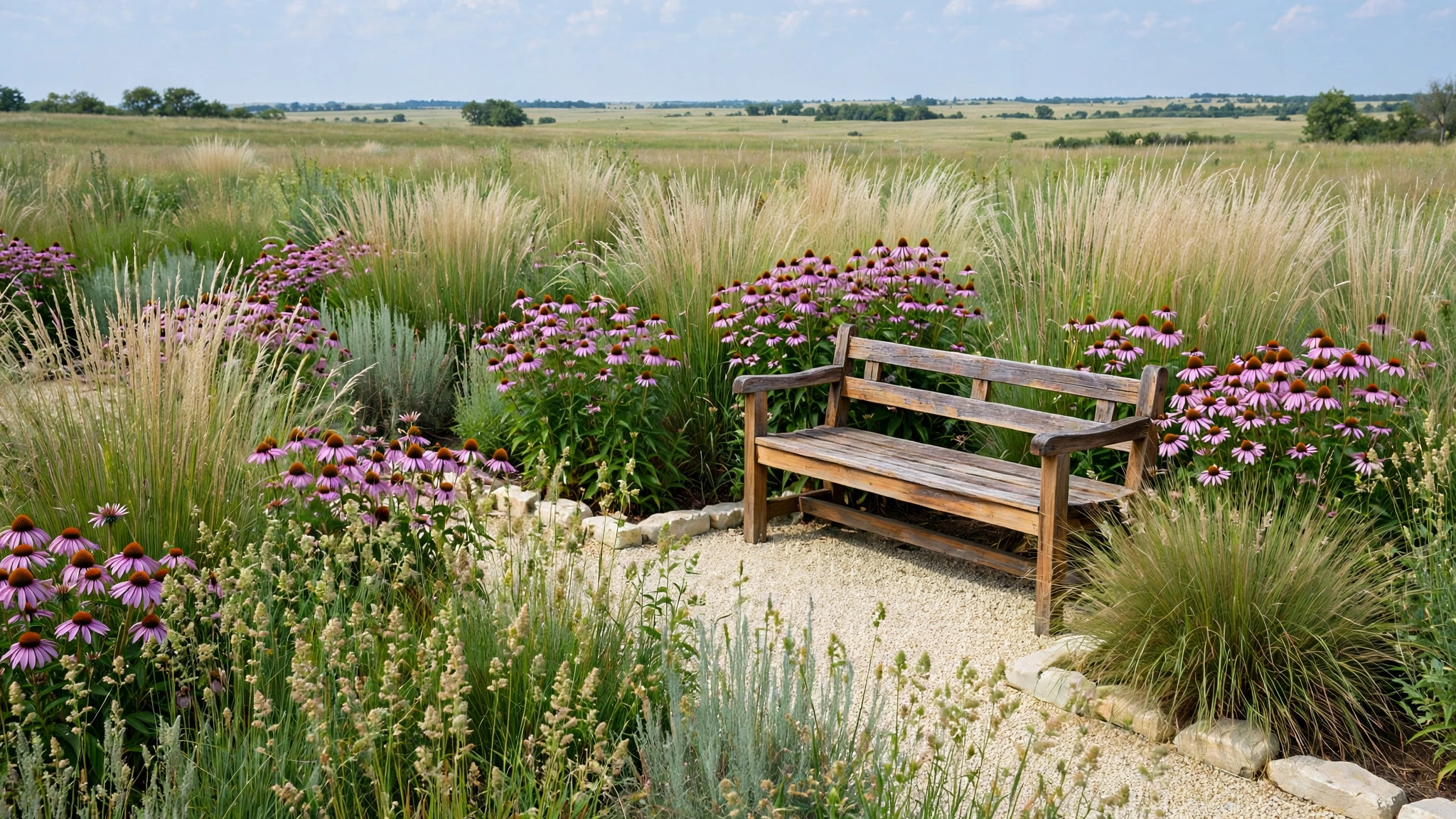
Picture this: you step into your backyard on a warm summer morning and tall native grasses sway gently in the breeze, their seed heads catching the sunlight while butterflies drift between purple coneflowers. The garden hums with life, yet it asks for almost nothing from you. That easy, natural beauty is exactly what a prairie garden gives you season after season.
You do not need acres of land or expert gardening skills to create this look. Native grasses are tough, drought tolerant, and perfectly suited to the soil they grow in. These 22 prairie garden design ideas with native grasses will show you how to shape drifts, paths, borders, and seating areas so your yard feels like a wild meadow that still looks cared for.
1. Start With a Sweeping Drift of Little Bluestem
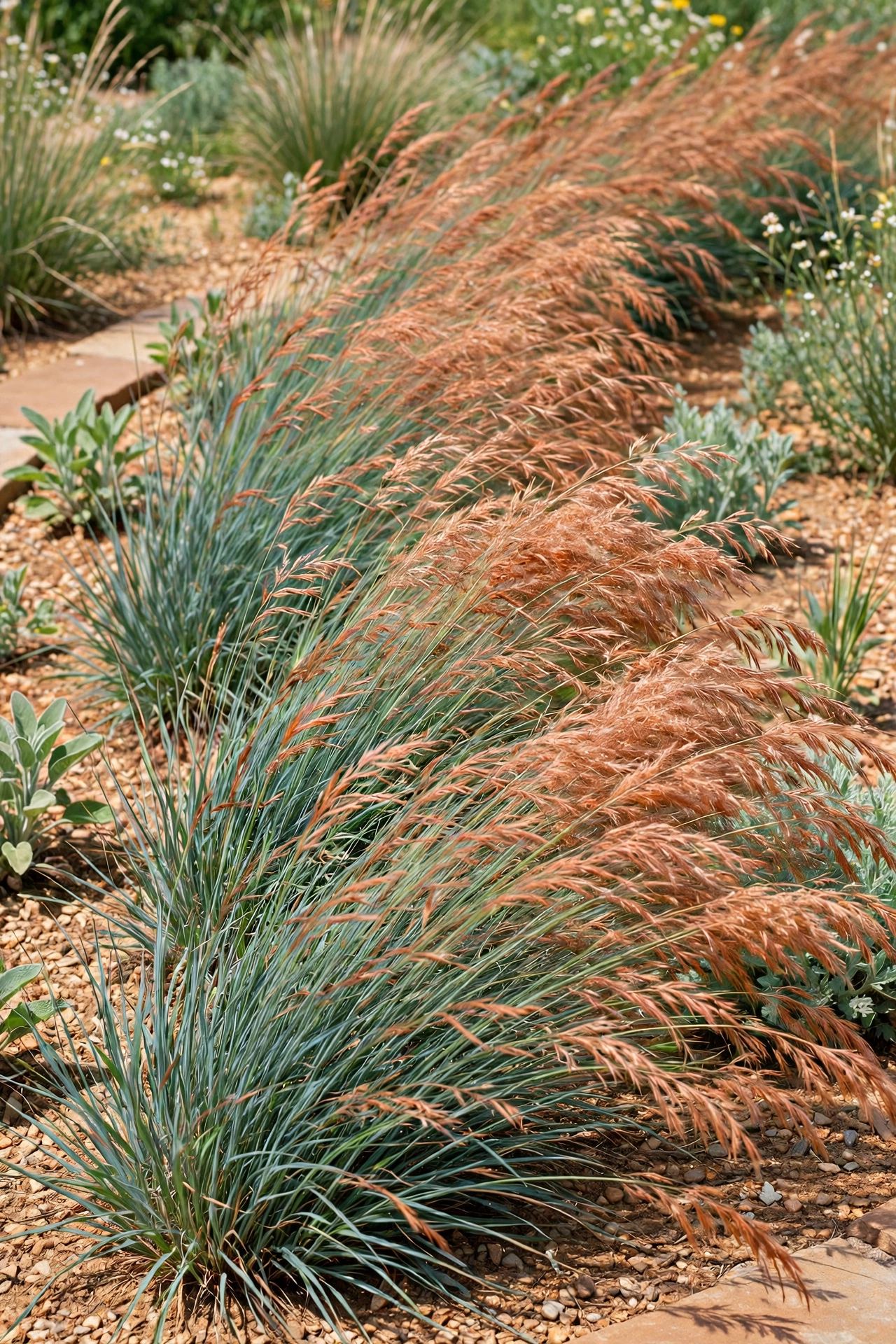
Little bluestem is the backbone of many prairie gardens because it grows in graceful upright clumps with blue green stems that turn copper red in autumn. Plant it in a wide sweeping drift rather than in single spots, and the garden will read as one flowing landscape instead of a collection of separate plants. A drift of fifteen or more plants gives the strongest effect.
Give each plant enough space to reach its full width, and resist the urge to crowd the bed with too many extras in the first year. Little bluestem is patient and fills in steadily over two or three seasons. Once established, it needs no fertilizer and very little water, which makes it one of the lowest care plants you can grow.
2. Frame the Garden With Tall Big Bluestem
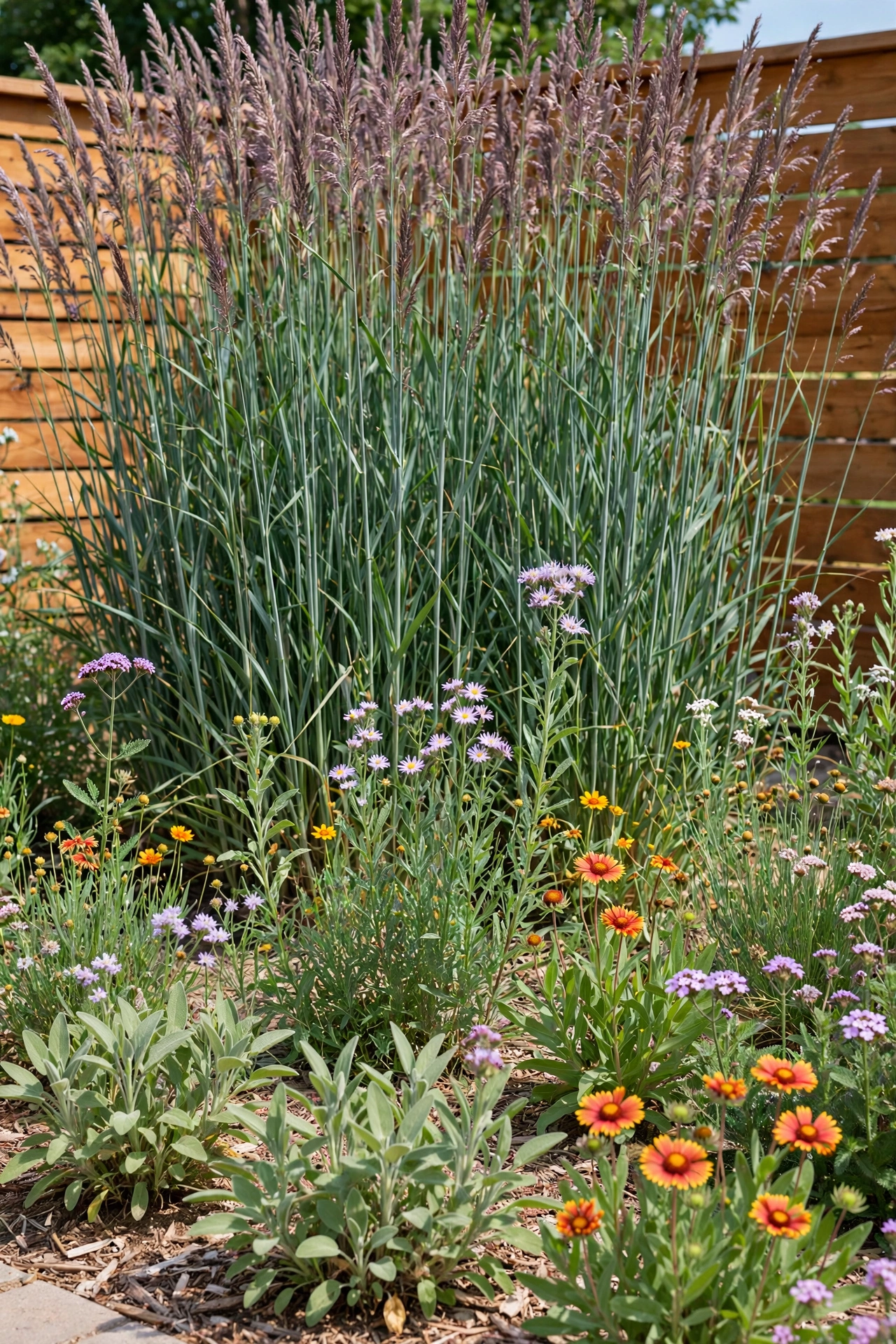
Big bluestem grows taller than most garden grasses, often reaching six feet or more by late summer, so it makes a natural backdrop for the rest of the planting. Place it along the rear edge of the bed or against a fence, and the shorter grasses and flowers in front will show up beautifully against its tall stems. The effect is like a living wall that moves with the wind.
In autumn the tall stems turn deep burgundy and rust, which gives the garden a rich seasonal finale. Leave the stems standing through winter for structure and shelter for birds, then cut them back in early spring before new growth begins. One row of big bluestem can transform a flat yard into a garden with real height and drama.
3. Mix Native Grasses With Purple Coneflower
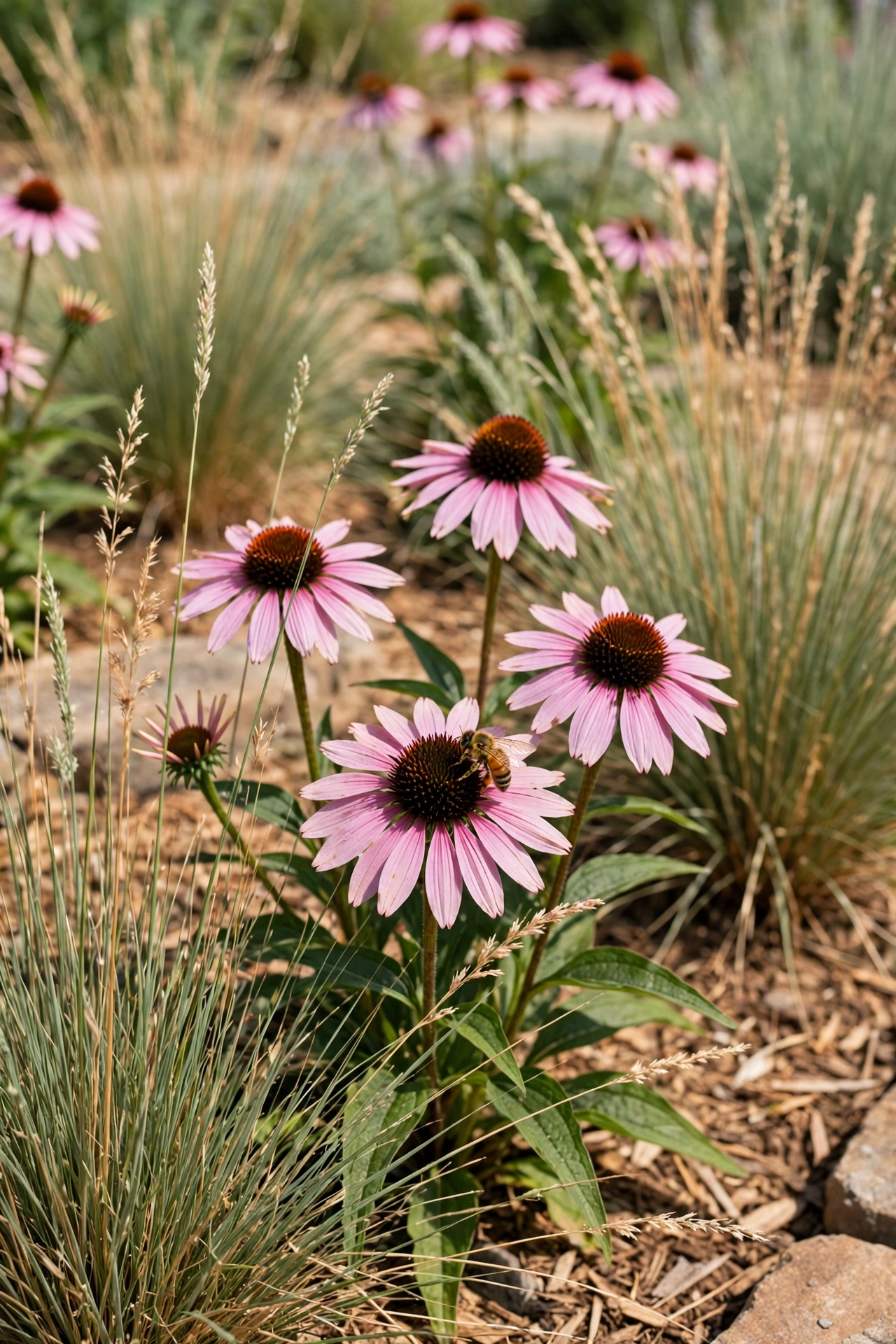
Purple coneflower is the classic companion for native grasses because its bold pink petals and dark centers hold their own among tall stems. Scatter coneflowers through the grass drift in groups of three or five, and the garden will glow with color from midsummer into autumn. Bees and butterflies visit the blooms all season long.
Choose a spot with full sun and well drained soil, and the coneflowers will return year after year with almost no help. For more planting combinations that thrive with little care, these native plant garden ideas show how local plants work together in a natural looking bed. The pairing of coneflower and grass is one of the easiest wins in any prairie garden.
4. Add Switchgrass for Four Season Structure
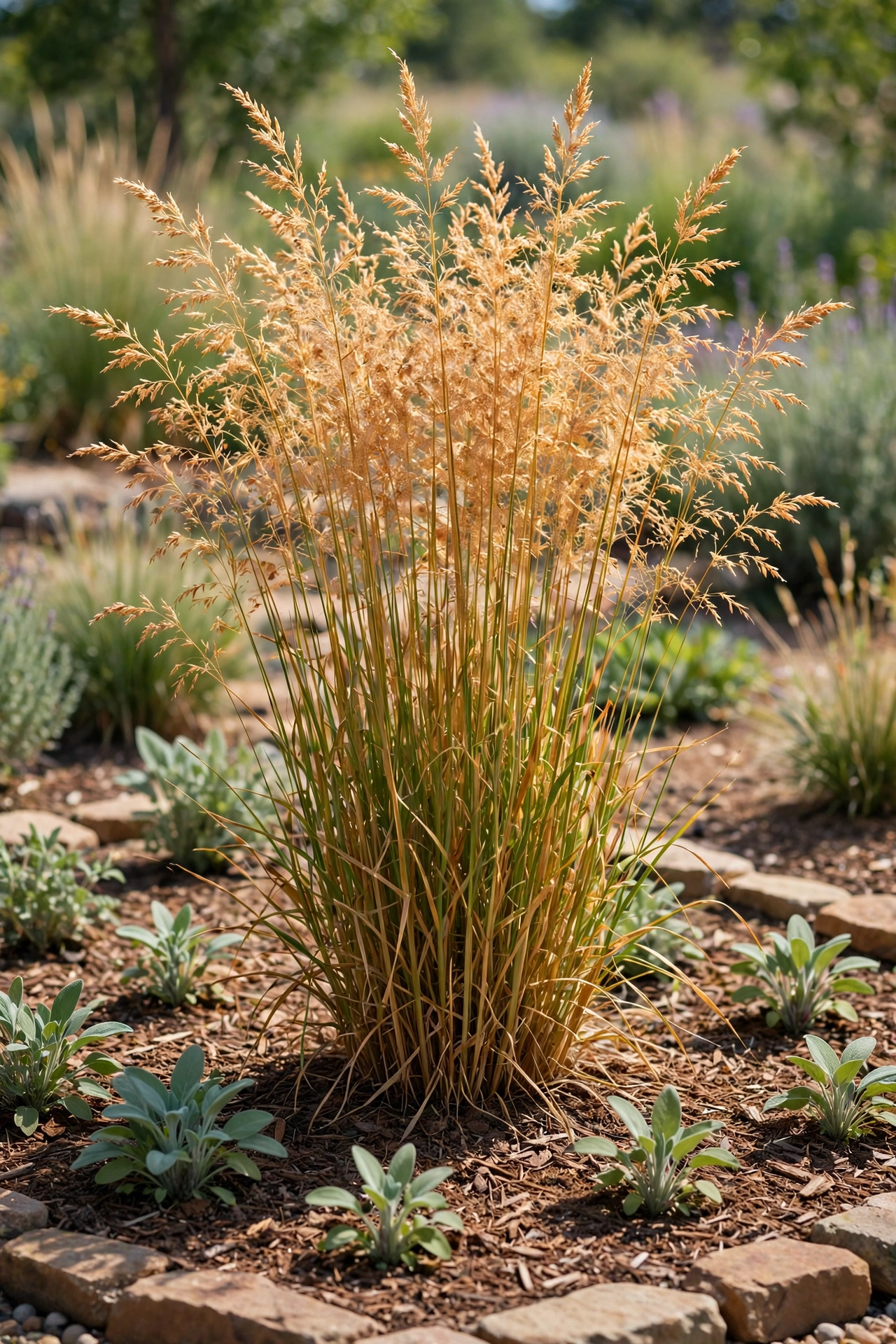
Switchgrass forms a sturdy upright clump with airy flower panicles in late summer, and it holds its shape through autumn and winter better than most grasses. Plant it where you will see it from a window, because its golden winter silhouette looks beautiful against snow or a clear winter sky. It also makes a fine screen between garden rooms.
Switchgrass tolerates clay soil, wet spots, and dry spells, which makes it a reliable choice for difficult corners of the yard. Cut the clump back to a few inches tall in early spring, and fresh green shoots will appear within weeks. A few well placed clumps give the prairie garden a sense of order all year round.
5. Weave a Mown Path Through the Meadow
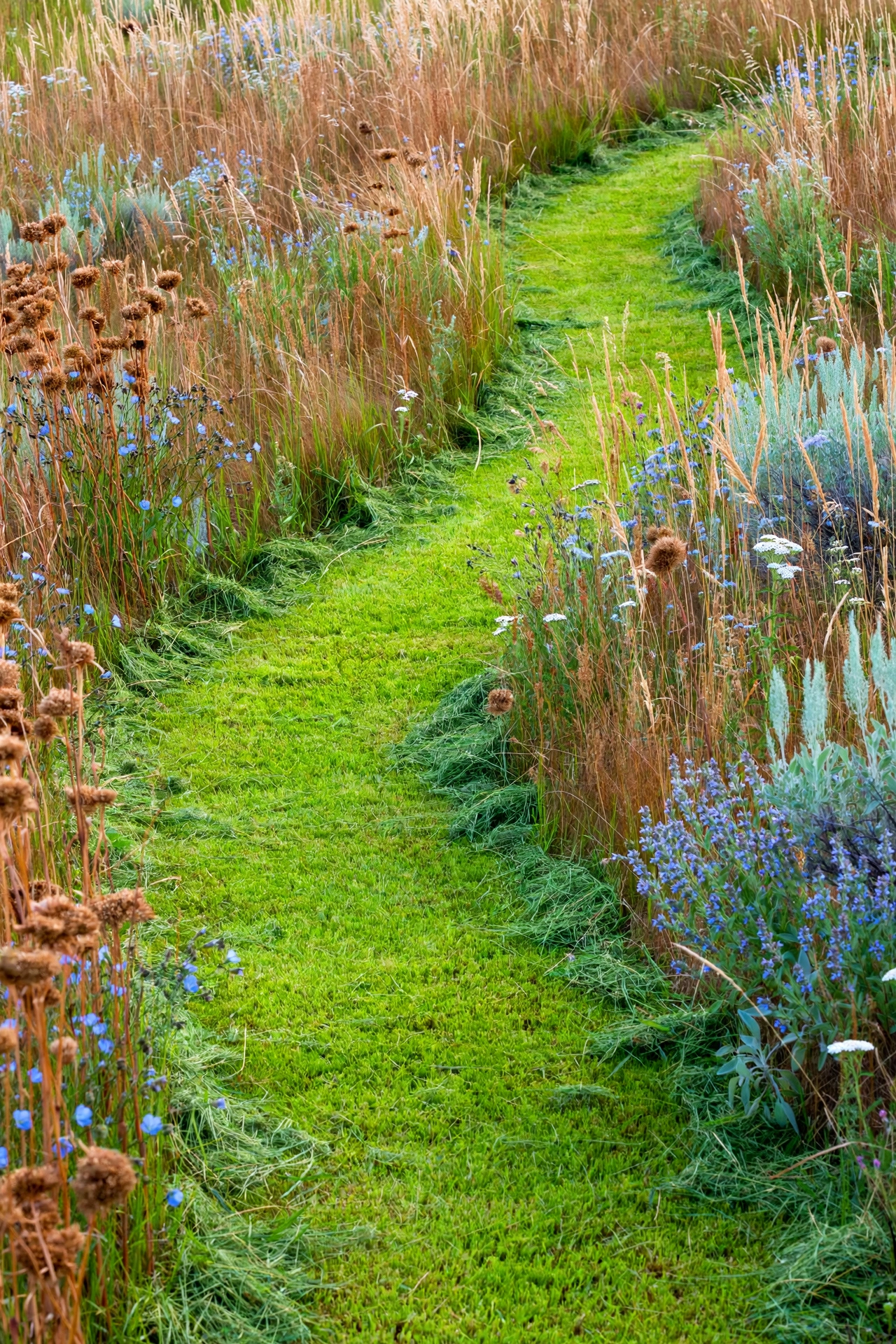
A mown path is the simplest way to make a prairie planting feel welcoming instead of wild and untouchable. Mow a curving strip through the grasses at lawn height, and visitors can walk into the middle of the meadow without trampling the plants. The contrast between the short green path and the tall grasses looks intentional and tidy.
Keep the path at least three feet wide so two people can walk side by side, and mow it every week or two through the growing season. A curve that disappears around a tall drift adds a sense of mystery and invites exploration. The path also gives you easy access for weeding and for enjoying the garden up close.
6. Plant a Prairie Border Along the Fence
A fence line is often the most boring part of a yard, and a prairie border turns it into the most interesting. Plant tall grasses at the back, medium grasses and flowers in the middle, and low growers at the front edge. The layered border softens the hard line of the fence and gives birds a corridor of shelter along the boundary.
Leave a narrow gap between the fence and the back row so air can circulate and you can reach the fence for repairs. The border will look sparse in its first season, so be patient and let the plants knit together over time. By the third summer the fence will be hidden behind a wall of swaying stems and blooms.
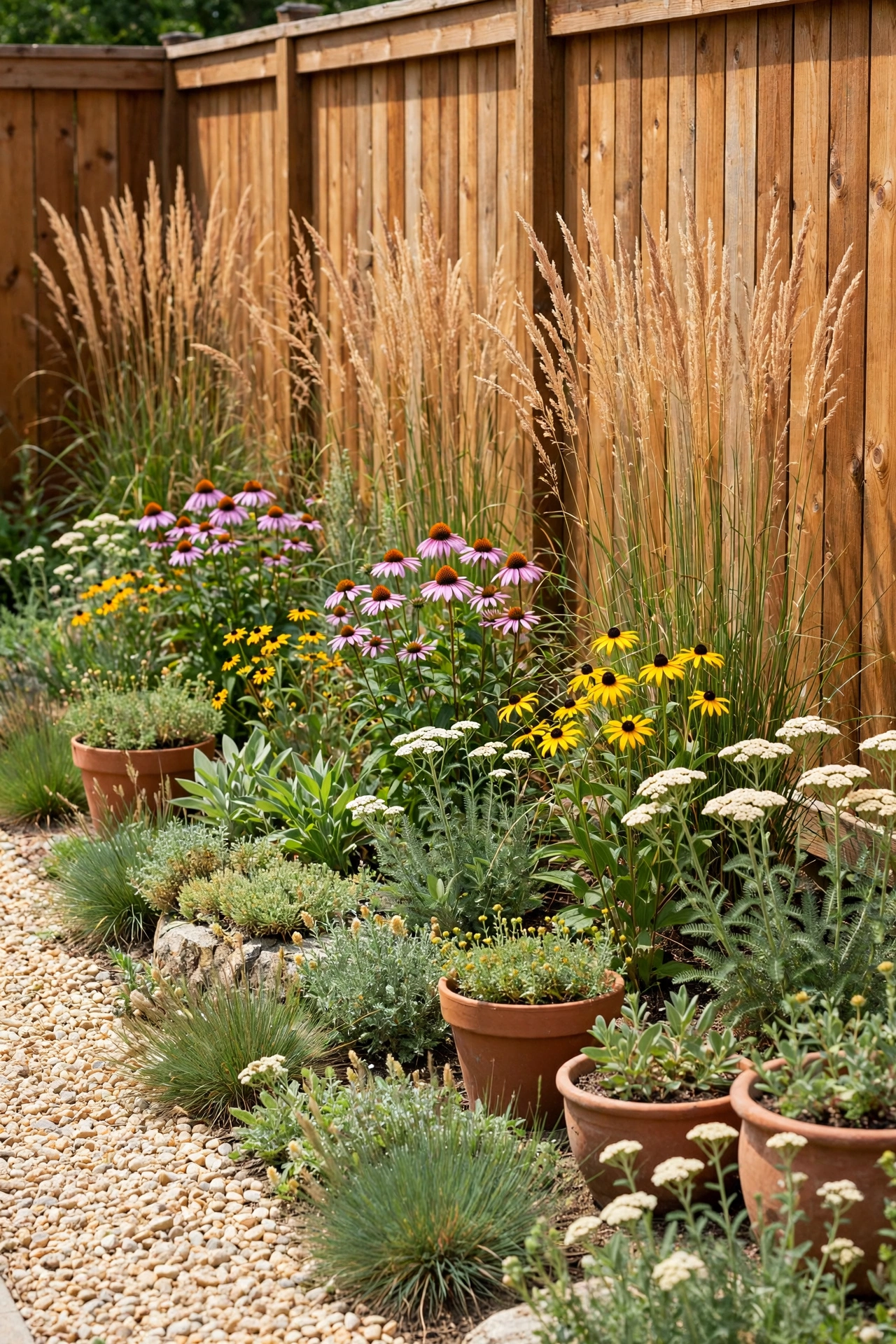
7. Let Wildflowers Bloom Between the Grasses
Grasses alone can look plain in early summer before their seed heads appear, and wildflowers fill that gap with color. Black eyed Susans, wild bergamot, blazing star, and coreopsis all bloom at different times, so the garden changes from week to week. Sow or plant them in generous patches so each color reads clearly from a distance.
Wildflowers and grasses share the same love of sun and lean soil, so they thrive together without extra feeding. For a full meadow look that starts from seed, these backyard wildflower meadow ideas show how to prepare the ground and time your sowing. A prairie garden with wildflowers woven through it never has a dull month.
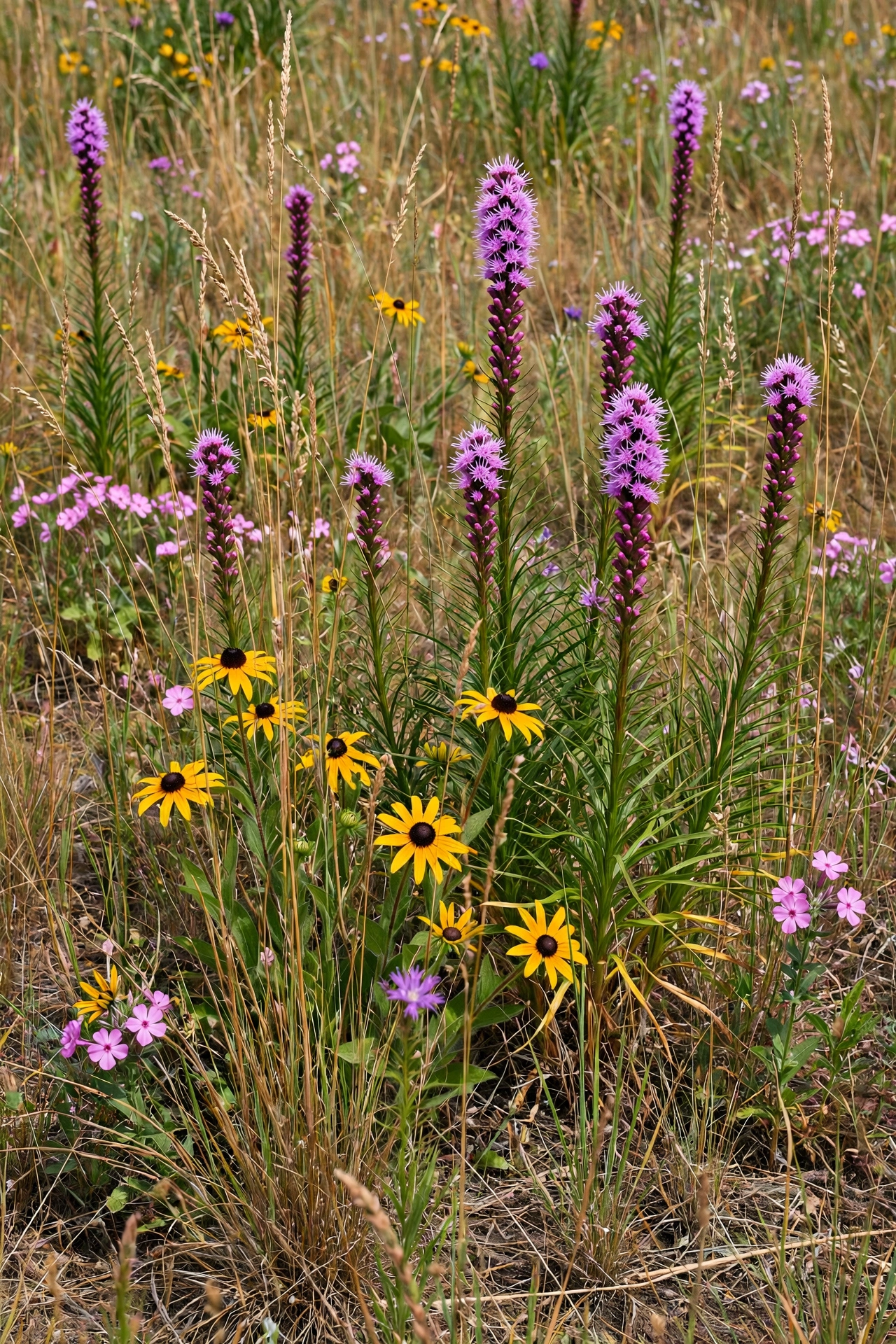
8. Create a Rain Catching Hollow With Prairie Dropseed
Prairie dropseed is a fine textured grass that forms neat fountain shaped mounds, and it is perfect for the edges of a shallow hollow where rainwater gathers after a storm. The hollow slows the water down and lets it soak into the soil instead of running off into the street. Plant dropseed around the rim where the soil stays moist but not waterlogged.
In late summer the grass releases a light fragrance like fresh popcorn or coriander, which is a delightful surprise on a warm evening. The mounds turn golden orange in autumn and hold their fountain shape through winter. A rain catching hollow is both practical and beautiful, and dropseed makes it look finished.
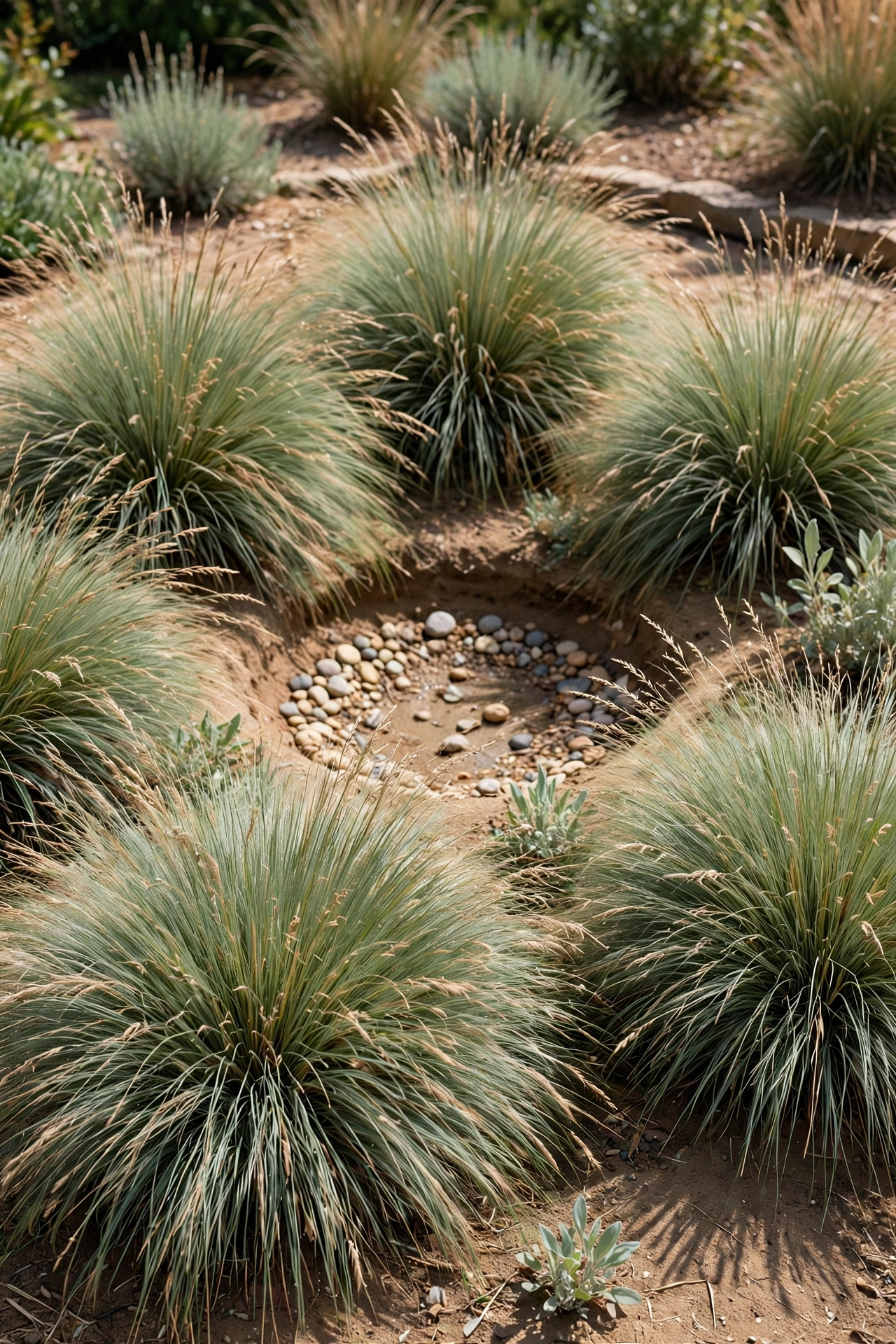
9. Use Indian Grass for Golden Autumn Color
Indian grass earns its place in the prairie garden with tall golden plumes that catch the low autumn sun like a field of wheat. The plumes rise well above the foliage in late summer and turn a rich amber gold that glows against a blue sky. Plant it in groups where the afternoon light will shine through the seed heads.
Indian grass grows best in full sun with room to spread, and it pairs beautifully with purple asters and goldenrod for a classic autumn display. It also provides seed for birds through the cold months. One generous group of Indian grass can carry the whole garden through the autumn season.
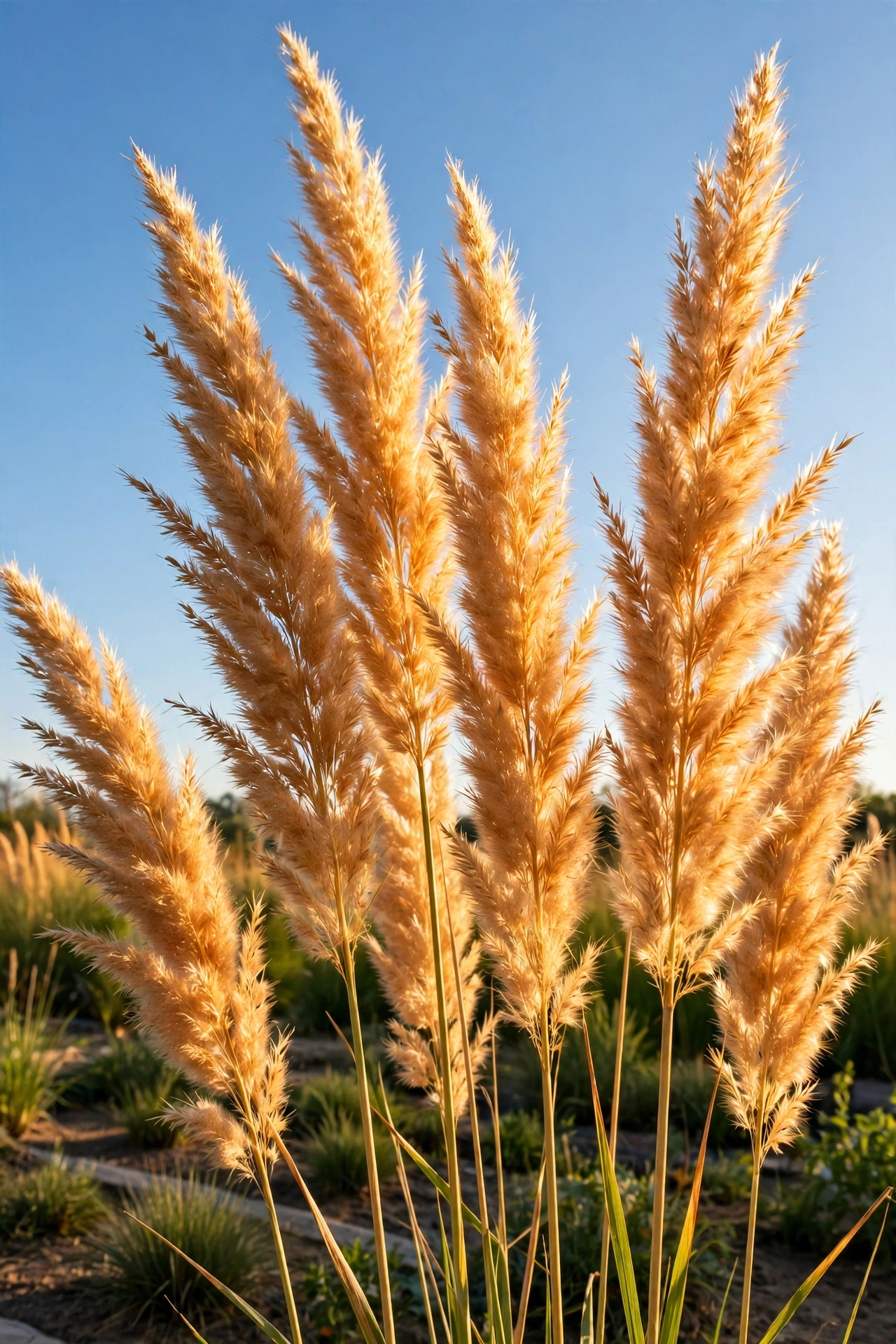
10. Edge the Patio With Low Growing Blue Grama
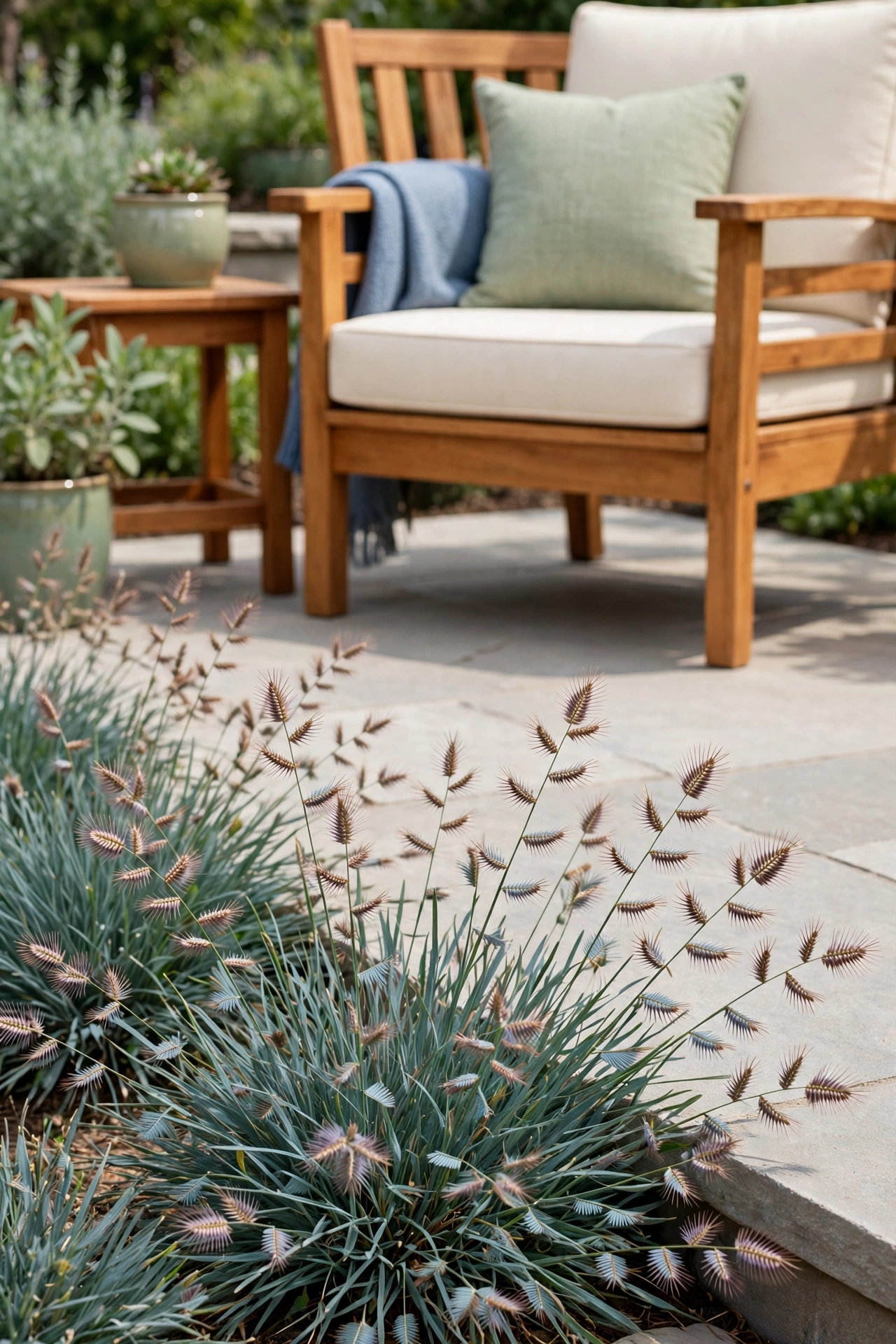
Blue grama is a short native grass with charming eyelash shaped seed heads that dance above low green tufts. It stays under two feet tall, which makes it ideal for edging a patio, a path, or a seating area where tall grasses would block the view. The fine texture softens the hard edge of paving without spilling onto it.
Plant blue grama in a neat band along the patio edge, and let it mix with low creeping thyme or small stones for a natural finish. It tolerates foot traffic at the edges and needs very little water once established. The eyelash seed heads are a small detail that guests always notice and ask about.
11. Welcome Butterflies With Milkweed and Sideoats Grama
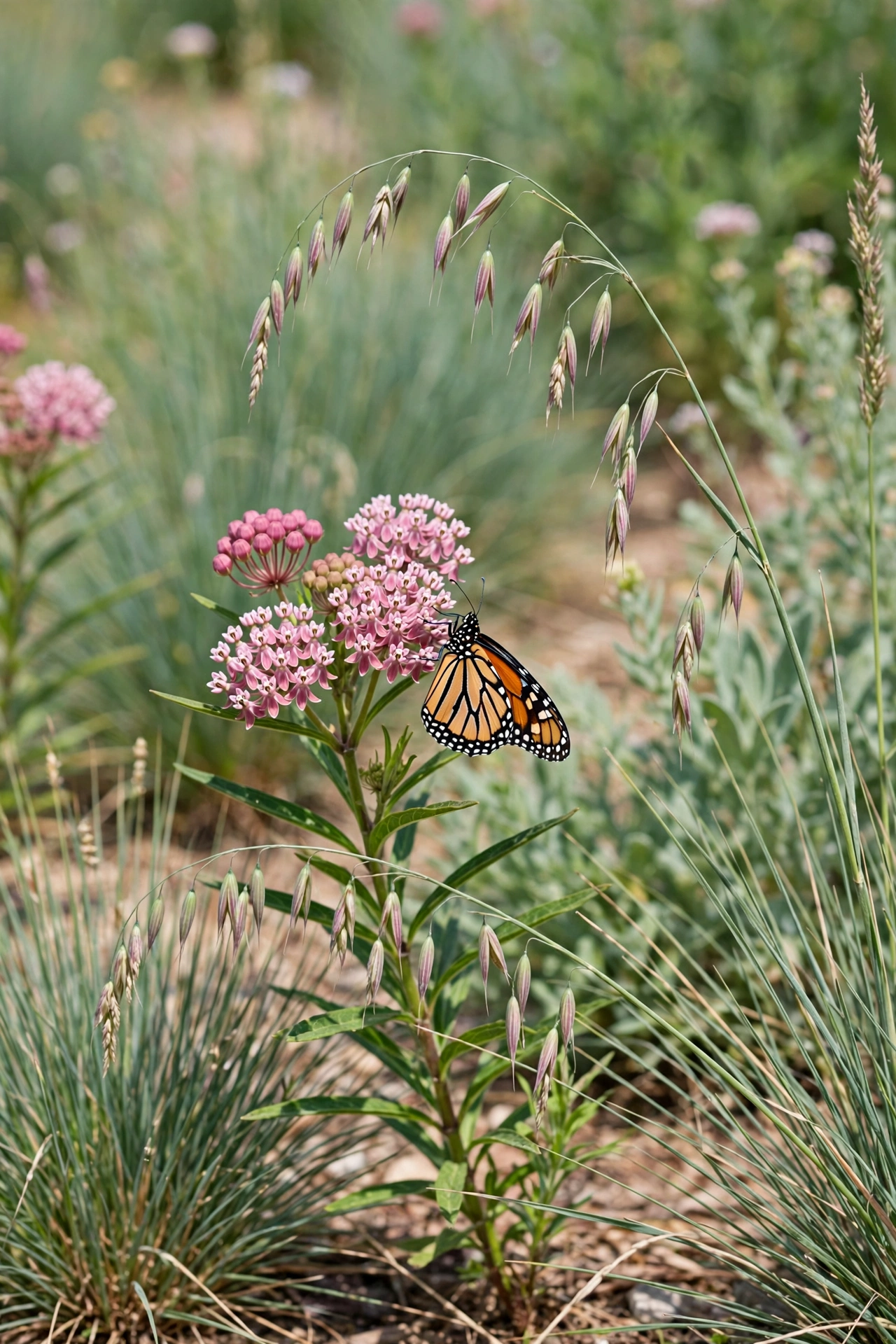
Milkweed is the only plant monarch caterpillars can eat, so adding it to the prairie garden turns your yard into a nursery for butterflies. Pair it with sideoats grama, a graceful grass whose seed heads hang like small flags along one side of each stem. The combination looks delicate and wild at the same time.
Plant milkweed in sunny spots where it can spread a little, and resist the urge to tidy away the seed pods, which are food and shelter for wildlife. To plan a garden that feeds butterflies from spring to autumn, these butterfly garden ideas show which nectar plants bloom in each season. Watching monarchs visit the milkweed is one of the greatest rewards of a prairie garden.
12. Build a Prairie Pocket in a Small Front Yard
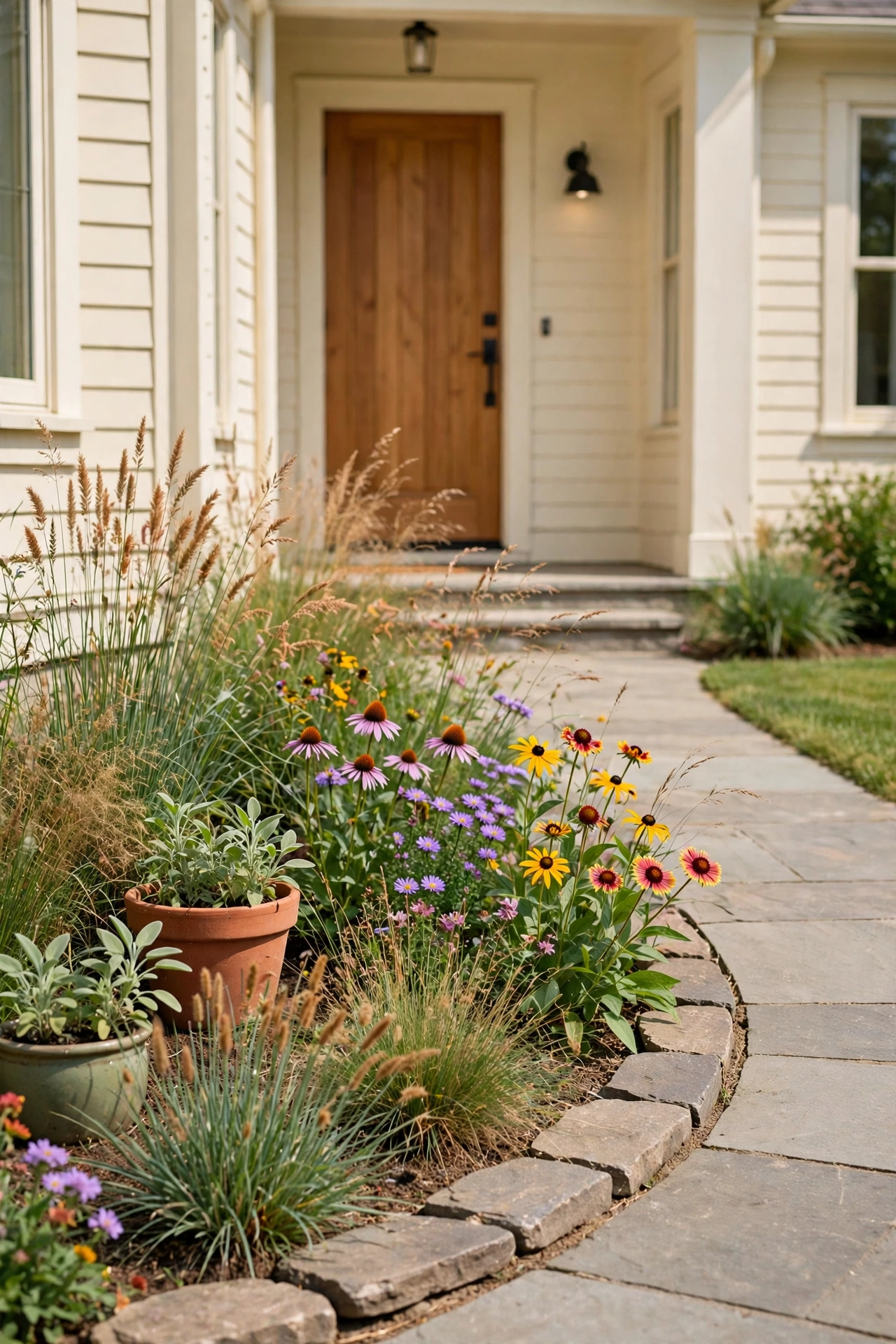
You do not need a big backyard to enjoy a prairie garden. A small front yard pocket of six to ten plants can replace a patch of lawn and still make a strong impression from the street. Choose one tall grass for the back, two medium grasses for the middle, and a few flowers for color at the front.
Keep the pocket neatly edged with a mown strip or a row of flat stones so it looks deliberate and cared for. Neighbors appreciate a tidy edge, and the pocket still gives pollinators a valuable stop on their route. A small prairie pocket is also a gentle way to test the style before you convert a larger area.
13. Layer Short, Medium, and Tall Grasses for Depth
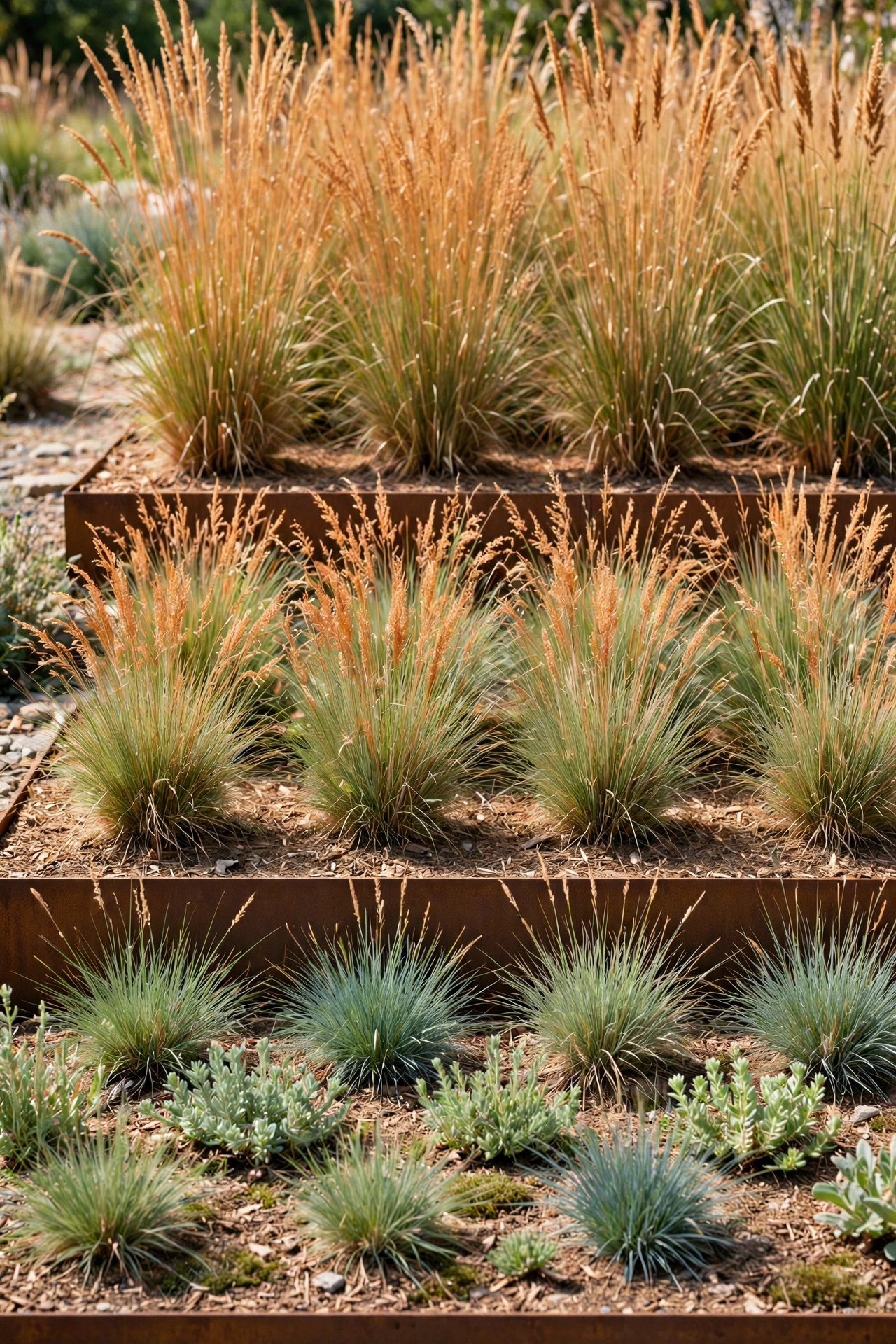
Layering grasses by height is the secret to a prairie garden that looks designed rather than accidental. Place short grasses like blue grama at the front, medium grasses like little bluestem in the middle, and tall grasses like big bluestem at the back. The stepped heights let you see every layer from one viewpoint.
Repeat each layer in more than one spot so the eye travels across the garden instead of stopping at one clump. The layers also create shelter at different heights for birds and beneficial insects. When the wind moves through the layers, the garden feels deep and alive.
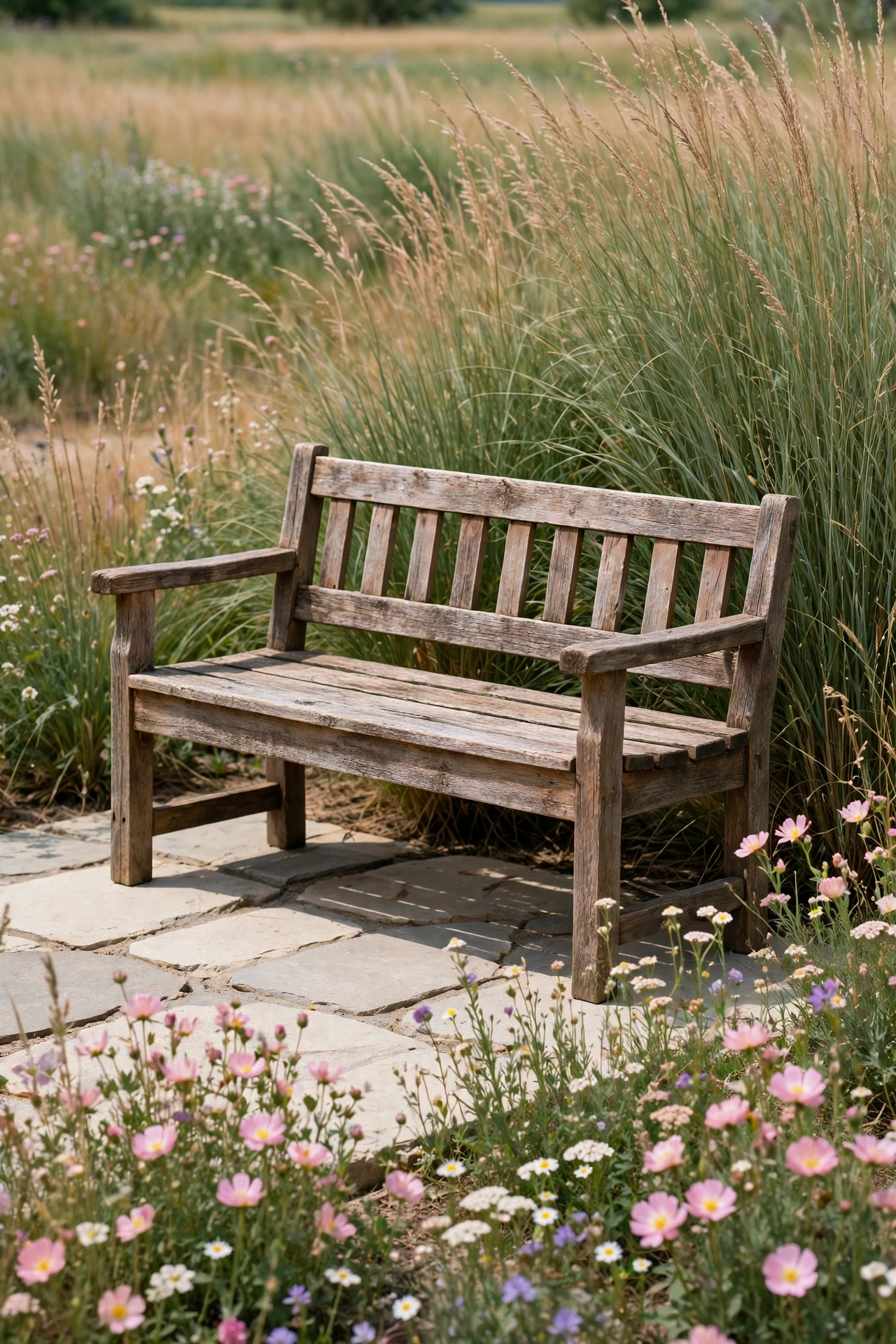
14. Add a Rustic Bench Beside the Tall Grasses
A simple wooden bench placed beside a tall drift of grass gives you a place to sit and watch the garden move. Position the bench where it faces the best view, with tall grasses behind it for shelter and lower flowers in front. A bench turns a planting bed into a destination.
Choose weathered wood or cedar that will silver gracefully outdoors, and set the bench on flat stones so it stays level. Morning coffee tastes better with grasses swaying nearby and birds visiting the seed heads. The bench also signals to visitors that the garden is meant to be enjoyed, not just looked at.
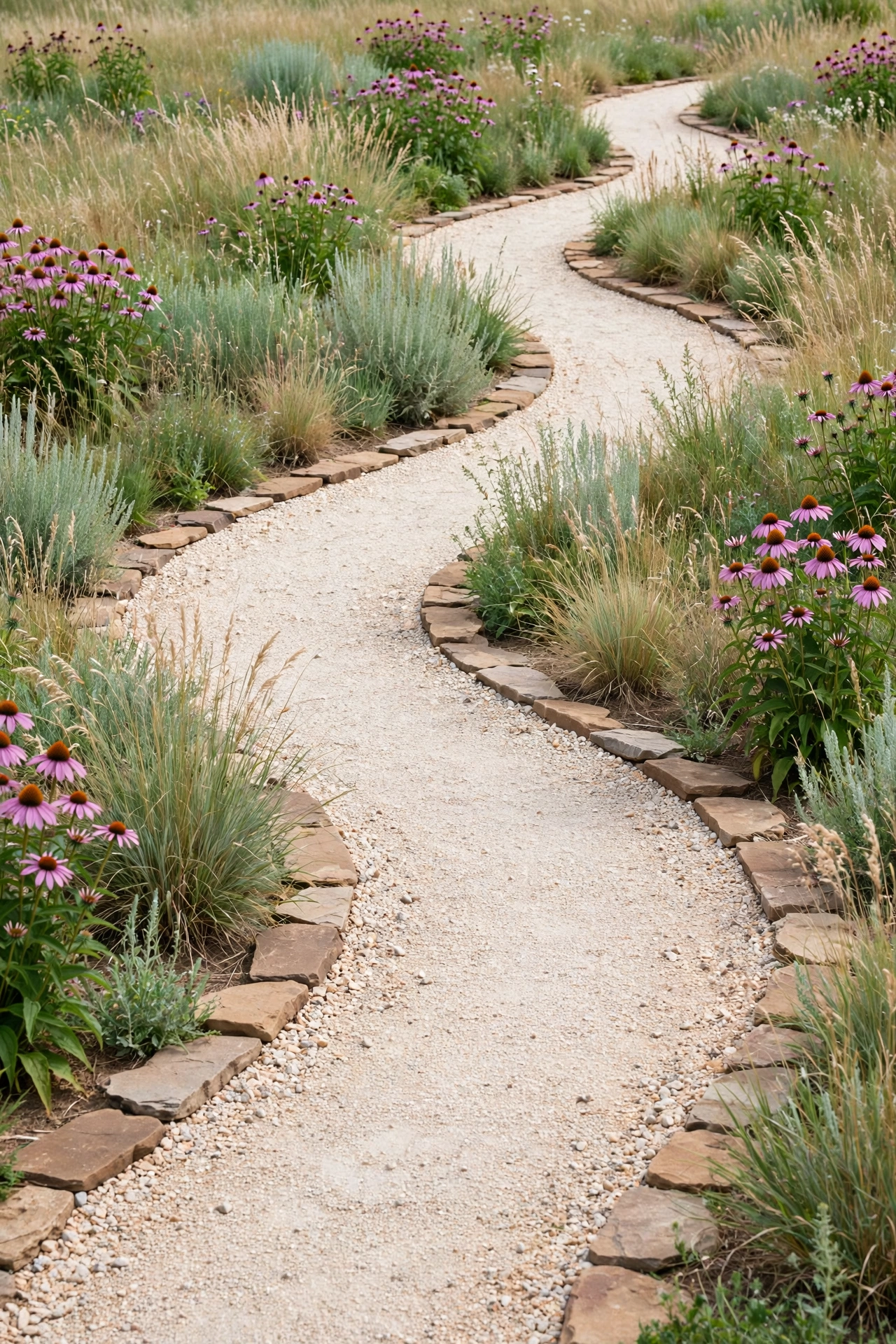
15. Shape a Curved Gravel Path Through the Planting
A curved gravel path gives the prairie garden structure that lasts in every season, even when the grasses are cut back in spring. Use pale gravel or crushed stone, and edge the path with flat rocks or low steel edging to keep the stones in place. The curve should feel natural, as if it follows the land.
Keep the path wide enough for a wheelbarrow so you can reach every part of the bed for seasonal care. For more ways to shape paths that suit a natural garden, these garden pathway ideas show materials and curves that work with wild style plantings. A gravel path also drains well and stays usable after rain.
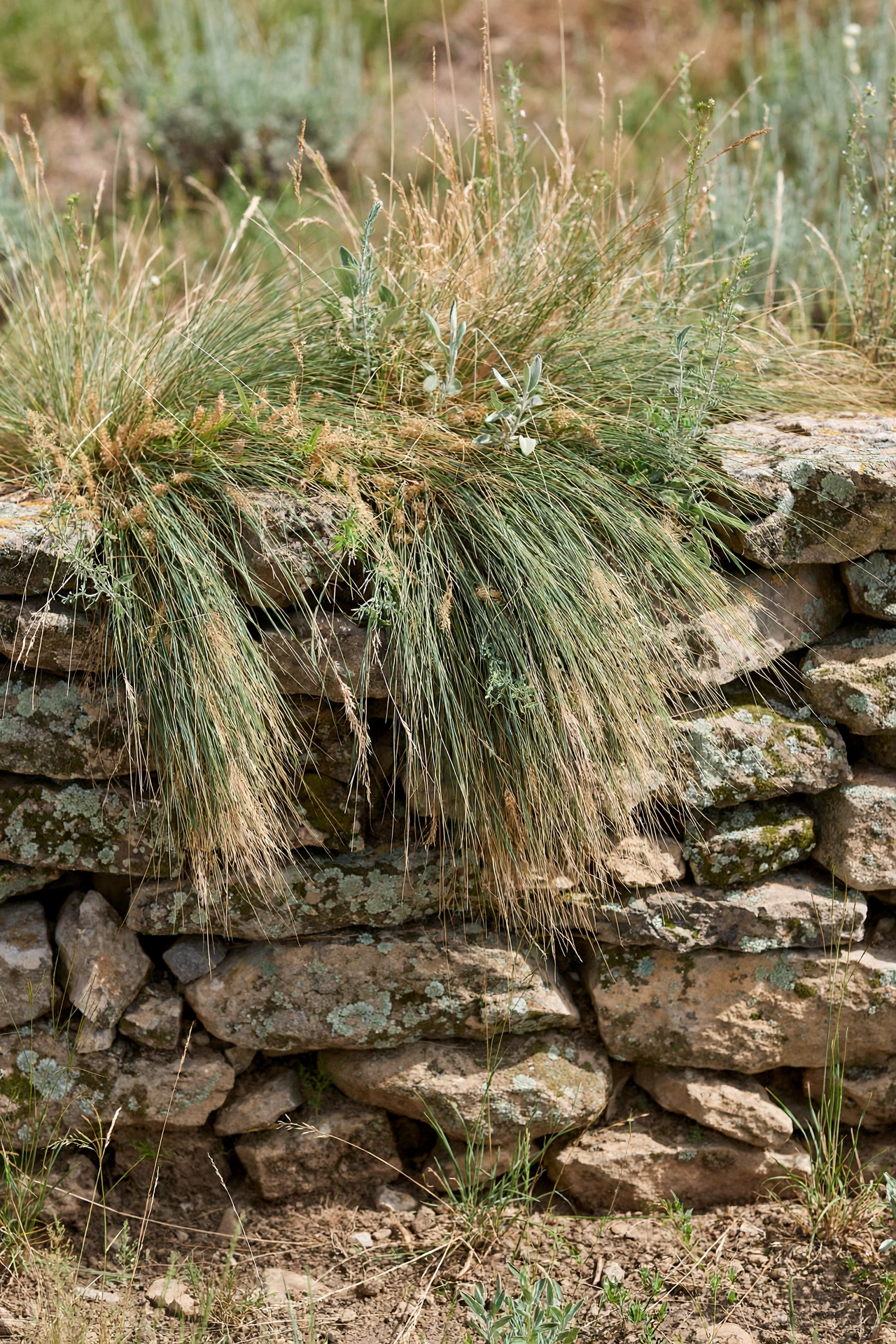
16. Pair Prairie Grasses With a Weathered Stone Wall
A low weathered stone wall gives the prairie garden a sense of age and permanence that soft planting alone cannot provide. Build the wall along one side of the bed, and let the grasses spill over its top edge in places. The contrast between rough stone and fine grass texture is one of the most pleasing combinations in garden design.
Use local stone if you can, because its color will sit naturally in the landscape. The wall also creates a warm microclimate on its sunny side, where heat loving flowers can thrive. A stone wall and a grass drift together make the garden feel as if it has always been there.
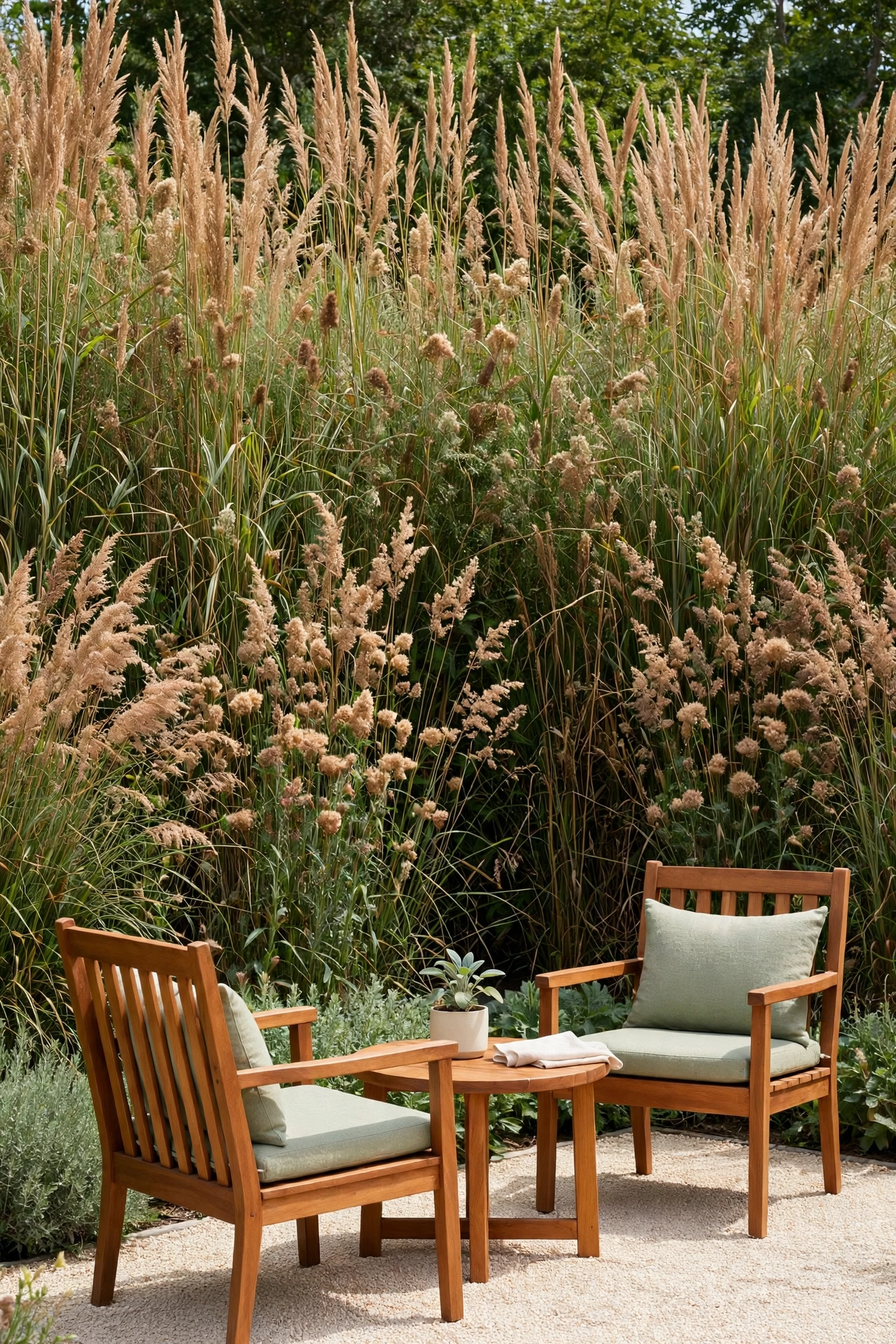
17. Grow a Prairie Hedge for Natural Privacy
A hedge of tall native grasses gives you privacy in summer without the solid block of a fence or a shrub wall. Plant big bluestem and switchgrass in a double row, and by midsummer the stems will stand tall enough to screen a seating area from neighbors. The hedge moves and rustles in the wind, which feels softer than a hard barrier.
Cut the hedge back in early spring before new growth starts, and it will regrow to full height by midsummer each year. The seasonal rhythm means you enjoy an open view in winter and a green screen in summer. A grass hedge also costs far less than a fence and needs no painting or repair.
18. Light the Grasses With Soft Evening Lanterns
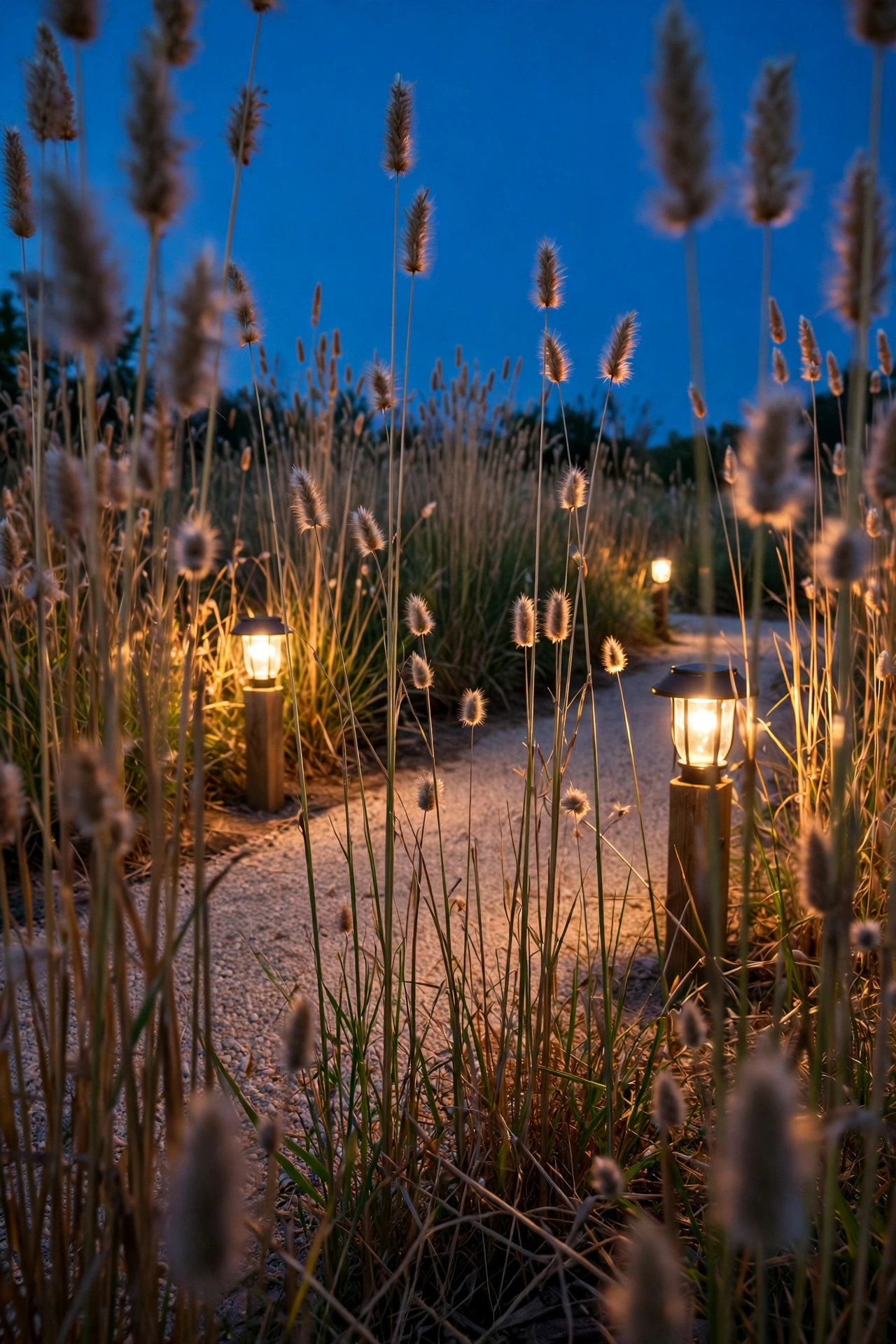
Prairie grasses look magical in the evening when low light shines through their stems and seed heads. Place a few solar lanterns or low garden lights along the path or at the base of the tallest clumps, and the garden will glow softly after sunset. Warm light suits the golden tones of the grasses best.
Keep the lighting subtle, with just enough glow to outline the shapes of the grasses without flooding the garden. Lanterns on short posts or stones look better than bright floodlights in a natural style garden. An evening stroll through softly lit grasses is a peaceful way to end the day.
19. Turn a Wet Corner Into a Rain Garden Meadow
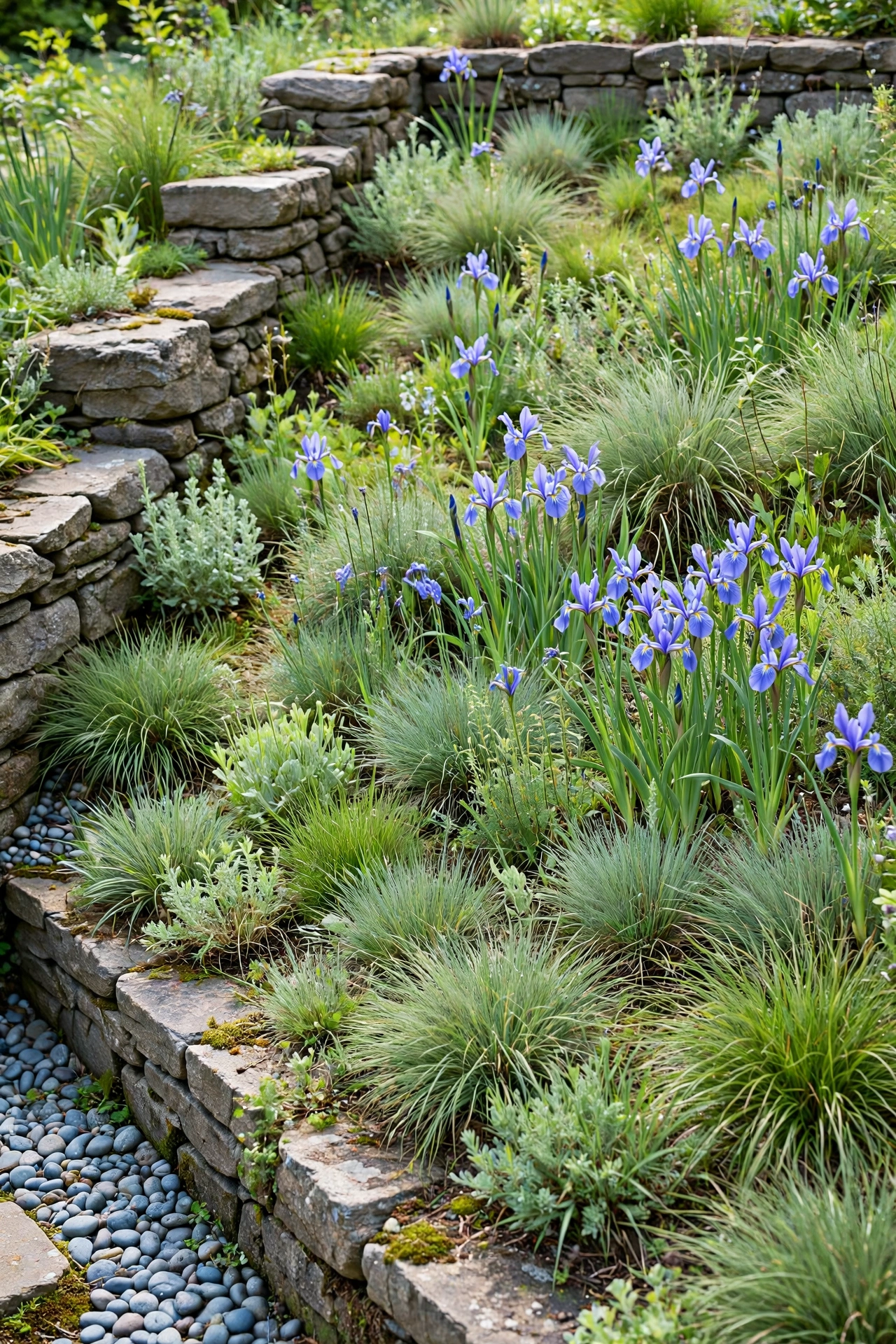
Every yard has a low corner where water collects after heavy rain, and that wet spot is perfect for a rain garden meadow. Plant moisture loving native grasses like prairie cordgrass and blue flag iris in the lowest area, with switchgrass and coneflowers on the drier rim. The plants drink up the extra water and turn a problem into a feature.
Shape the hollow with gentle slopes so water spreads out and soaks in slowly rather than pooling in one deep puddle. To plan the shape and planting for a wet area, these rain garden ideas show how to handle drainage with beautiful plants. A rain garden meadow also filters runoff before it reaches storm drains.
20. Let Seed Heads Stand for Winter Interest
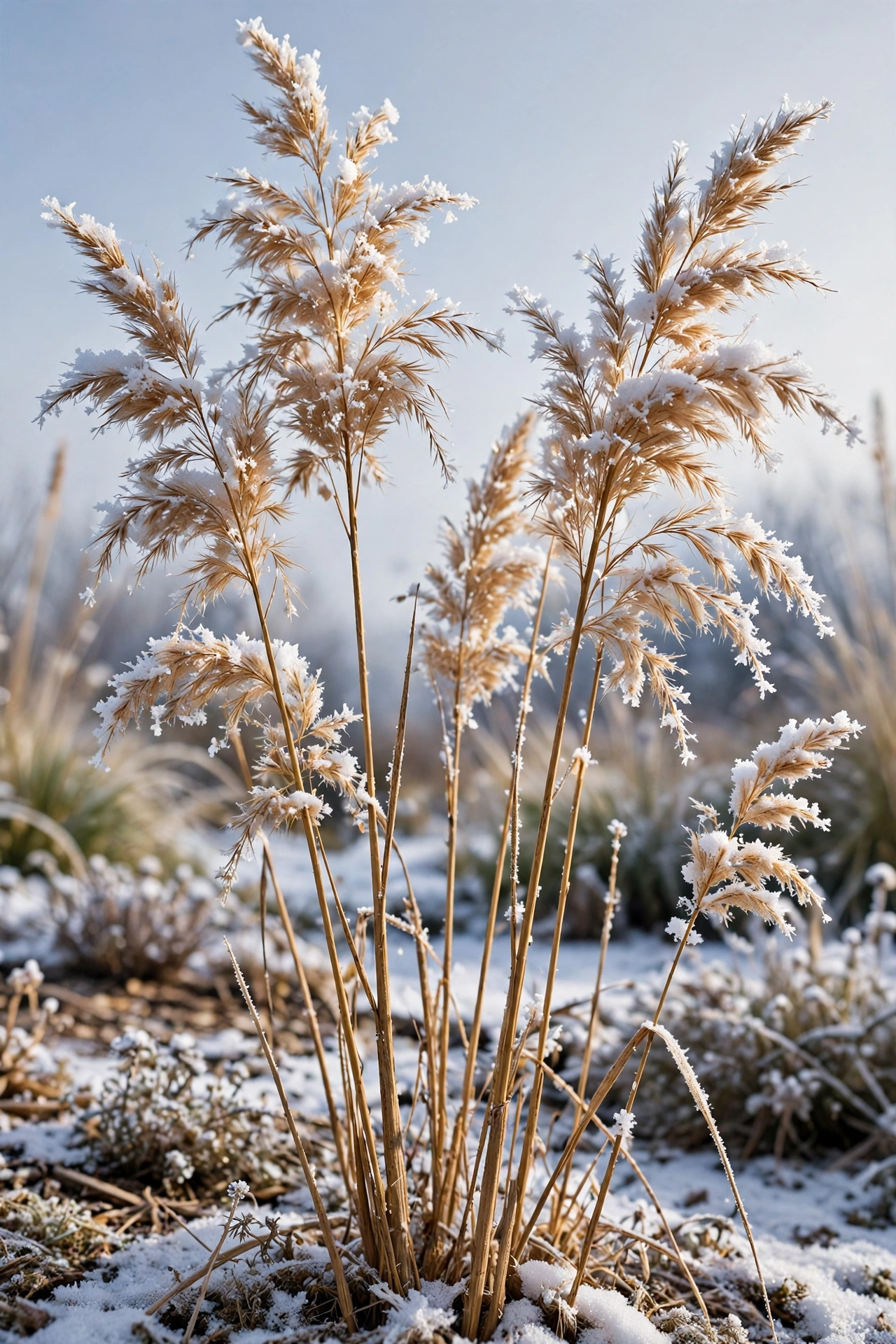
When autumn ends, resist the urge to cut the prairie garden down to the ground. Standing seed heads catch frost, snow, and low winter light in ways that look beautiful from indoors, and they provide food and shelter for birds through the cold months. The winter garden has a quiet beauty all its own.
Wait until early spring to cut the old stems back, just before new shoots appear at the base. The old stems also protect the crown of each plant from hard frosts. A prairie garden that stands through winter is a garden that works for wildlife in every season.
21. Plant a Prairie Strip Along the Driveway
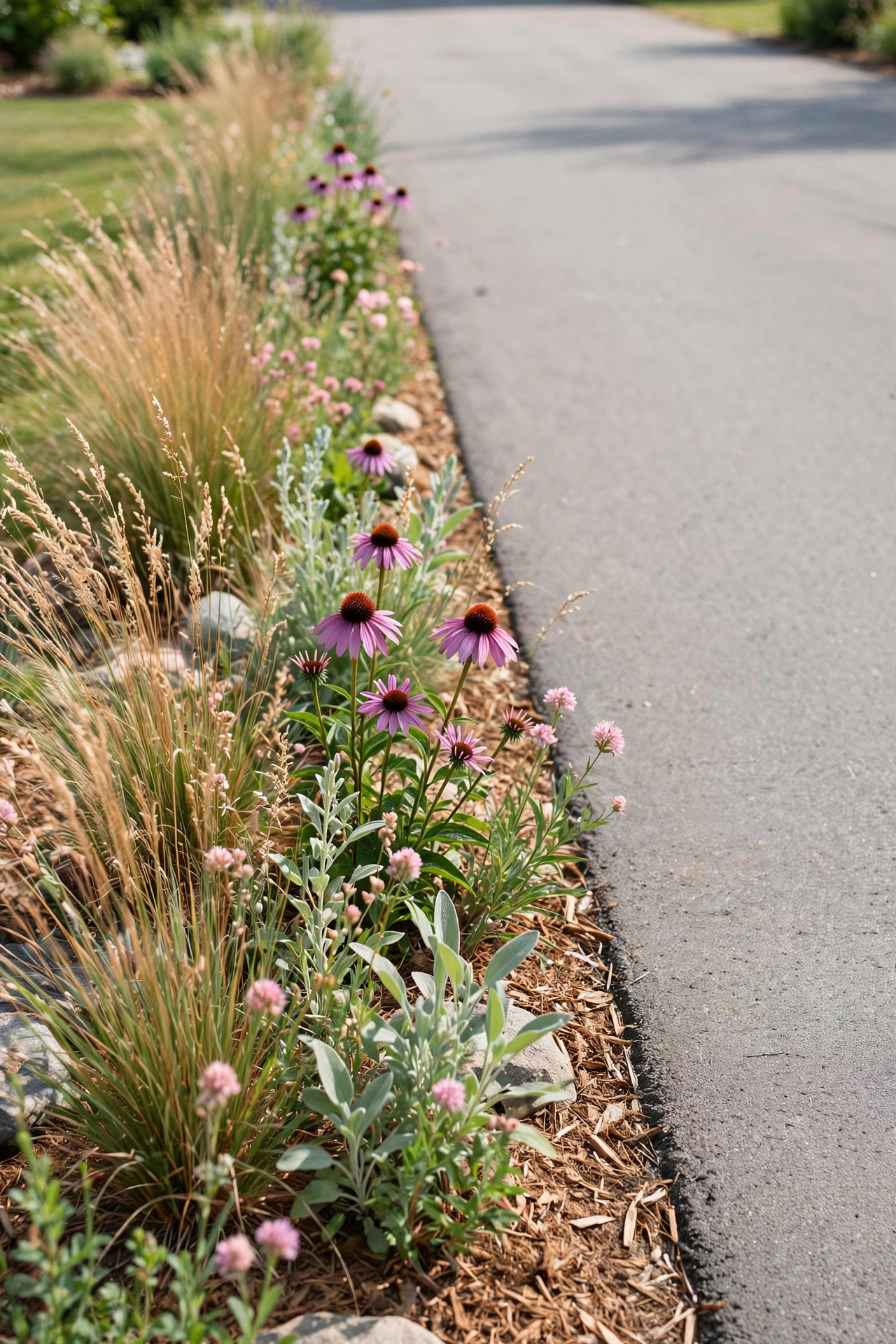
The strip of lawn beside a driveway is often thin, dry, and hard to mow, which makes it an ideal spot for tough native grasses. Plant a narrow band of little bluestem and prairie dropseed along the driveway edge, with a few coneflowers for color. The strip will thrive in the reflected heat from the paving.
Keep the planting low near the driveway entrance so drivers can see clearly, and let the grasses grow taller further along the strip. A prairie strip also softens the hard line of the driveway and welcomes you home with movement and color. It needs no mowing, which is a welcome bonus.
22. Keep a Neat Mown Edge for a Tidy Look
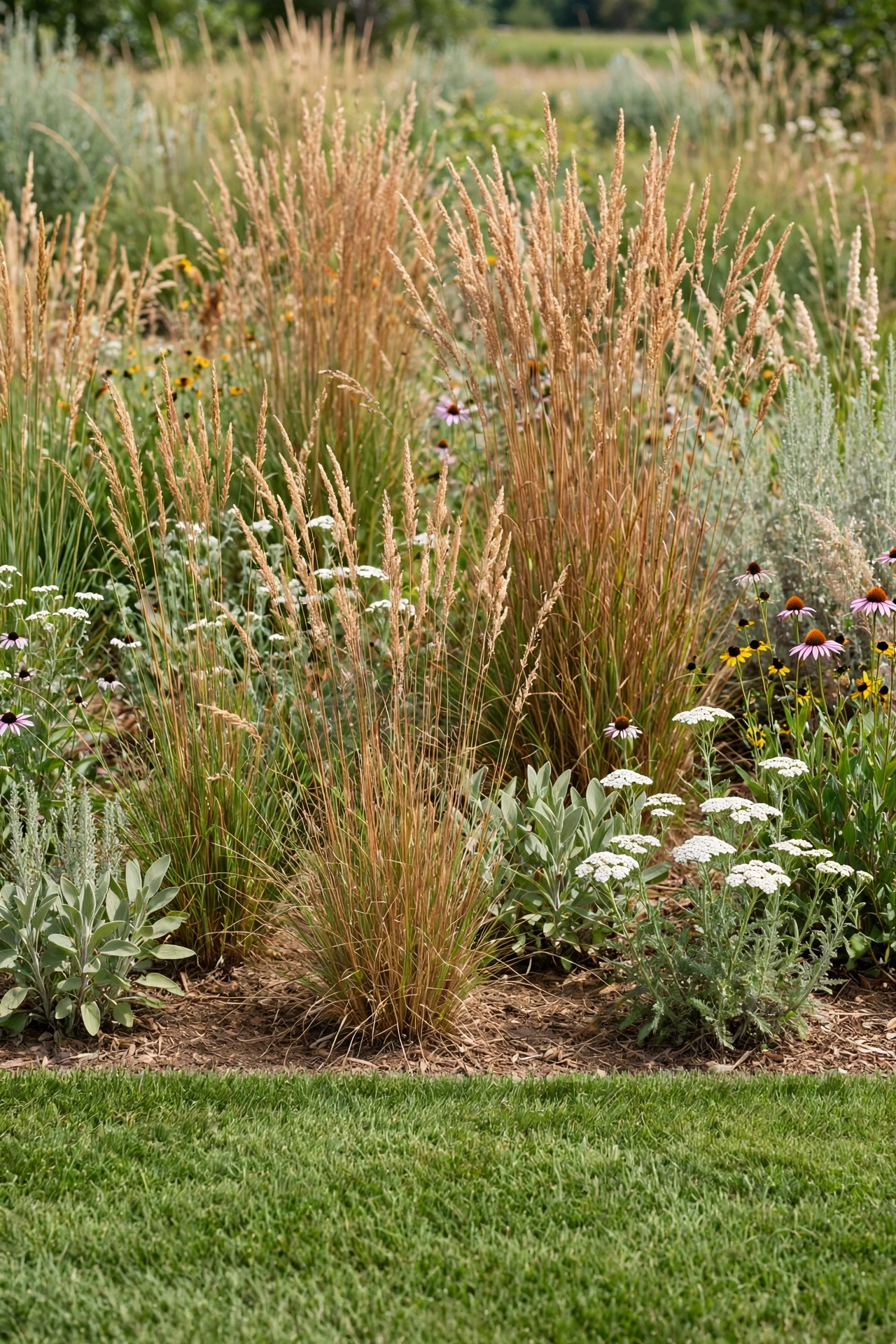
The difference between a prairie garden and a neglected patch of weeds is often just the edge. A neatly mown strip of lawn around the planting tells everyone that the wild look inside is intentional. Mow the edge strip weekly through the growing season and keep it at least two feet wide.
A crisp edge also stops the grasses from spreading into the lawn and gives you a clean line to follow when you weed. Some gardeners add a narrow band of mulch or stone between the lawn and the bed for an even tidier finish. With a neat edge, the wildest prairie planting looks like a deliberate design.
Conclusion
A prairie garden with native grasses is one of the most rewarding gardens you can grow, because it gives you beauty, wildlife, and four seasons of interest for very little work in return. From a sweeping drift of little bluestem to a quiet bench beside the tall stems, every idea here works with nature instead of against it.
Start small, choose grasses suited to your soil and sunlight, and give the planting time to settle in. By the second or third summer your prairie garden will sway in the breeze, hum with pollinators, and glow through autumn and winter. That is the quiet magic of planting what belongs.
Frequently Asked Questions About Prairie Garden Design Ideas With Native Grasses
How long does a prairie garden take to establish?
Most prairie gardens need two to three growing seasons to fill in fully. The first year the plants focus on roots and look sparse above ground, the second year they grow taller and fuller, and by the third year the planting usually looks lush and complete. Patience in the first season pays off with a garden that needs very little care later.
Do native grasses need fertilizer?
Native grasses generally need no fertilizer and often grow weaker and floppier in rich soil. They evolved in lean prairie soils and thrive with little feeding. If the soil is very poor, a thin layer of compost at planting time is enough to get them started.
When should I cut back native prairie grasses?
Cut prairie grasses back in late winter or early spring, just before new growth begins. Leave the stems standing through autumn and winter for structure, wildlife shelter, and food for birds. Cut the clumps back to about four inches above the ground and remove the old stems.
Can I grow a prairie garden in a small yard?
Yes, a prairie garden works beautifully in a small yard when you choose compact grasses and keep the bed neatly edged. A pocket of six to ten plants can replace a patch of lawn and still attract pollinators. Choose shorter grasses like blue grama and prairie dropseed for tight spaces.
Do prairie gardens attract unwanted pests?
Prairie gardens attract beneficial insects, birds, and pollinators rather than pests. Native grasses and flowers support a balanced ecosystem where predators keep problem insects in check. Avoid pesticides, which harm the helpful insects that make the garden work.

Hi, I’m Emily! I turn messy corners into cozy, organized spots. DreamNestDecor is where I share simple, practical home ideas — decor, organization, and small-space solutions that work in real life, not just in photos. Every idea here is carefully researched before it’s shared.