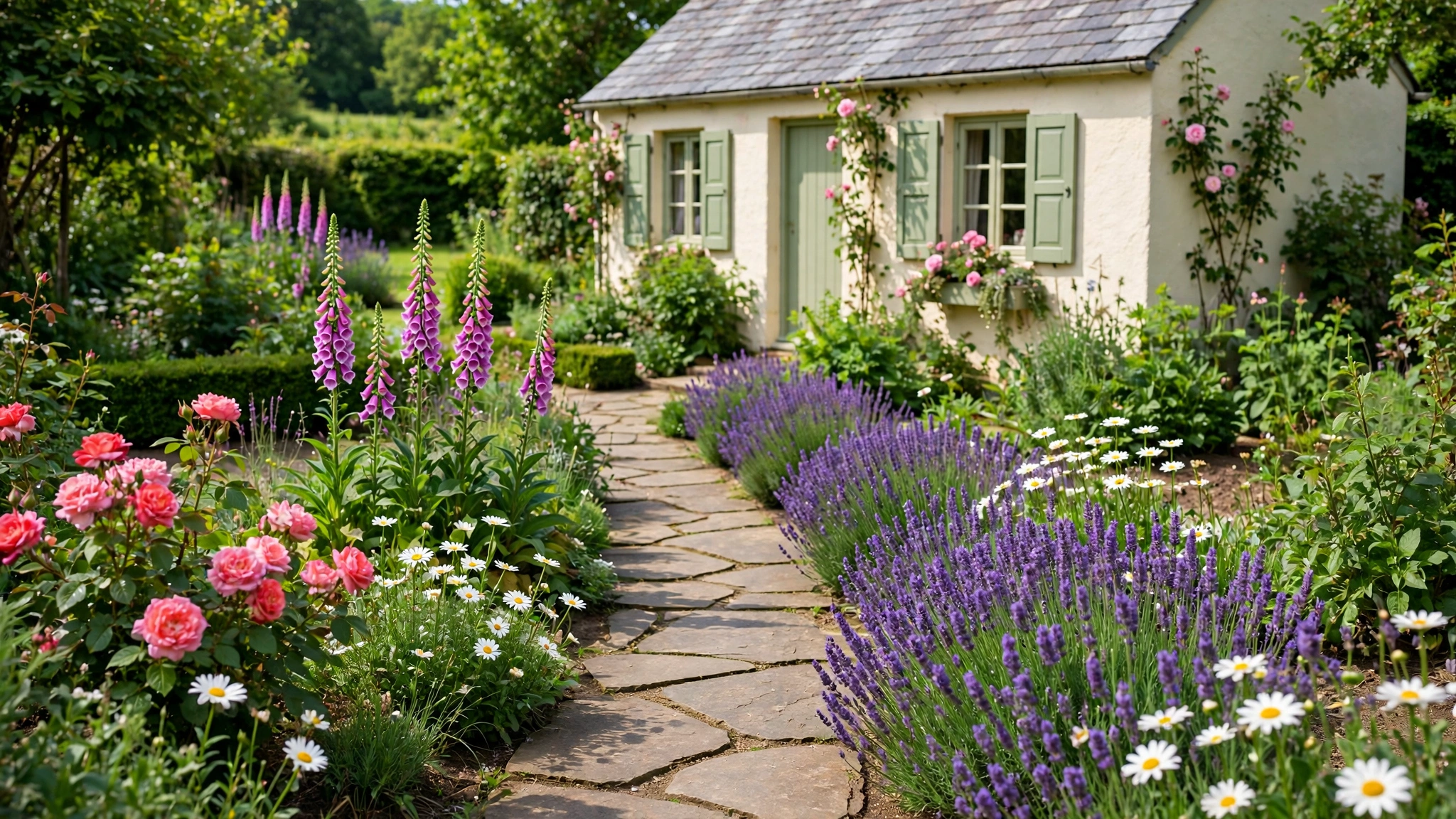
Picture this: you open the front gate on a summer morning and a wave of color meets you at every step. Roses spill over the fence, foxgloves lean gently over a stone path, and the scent of lavender drifts through the warm air. That joyful, abundant feeling is exactly what a cottage garden layout gives you, and it never feels stiff or formal.
You do not need a large plot or years of experience to create this look. All you need is a simple layout that lets flowers, herbs, and paths grow together in happy layers. These 12 cottage garden layout ideas will help you shape colorful beds, winding paths, and cozy corners that turn any landscape into a garden worth lingering in.
1. Frame the Front Path With Billowing Flower Borders
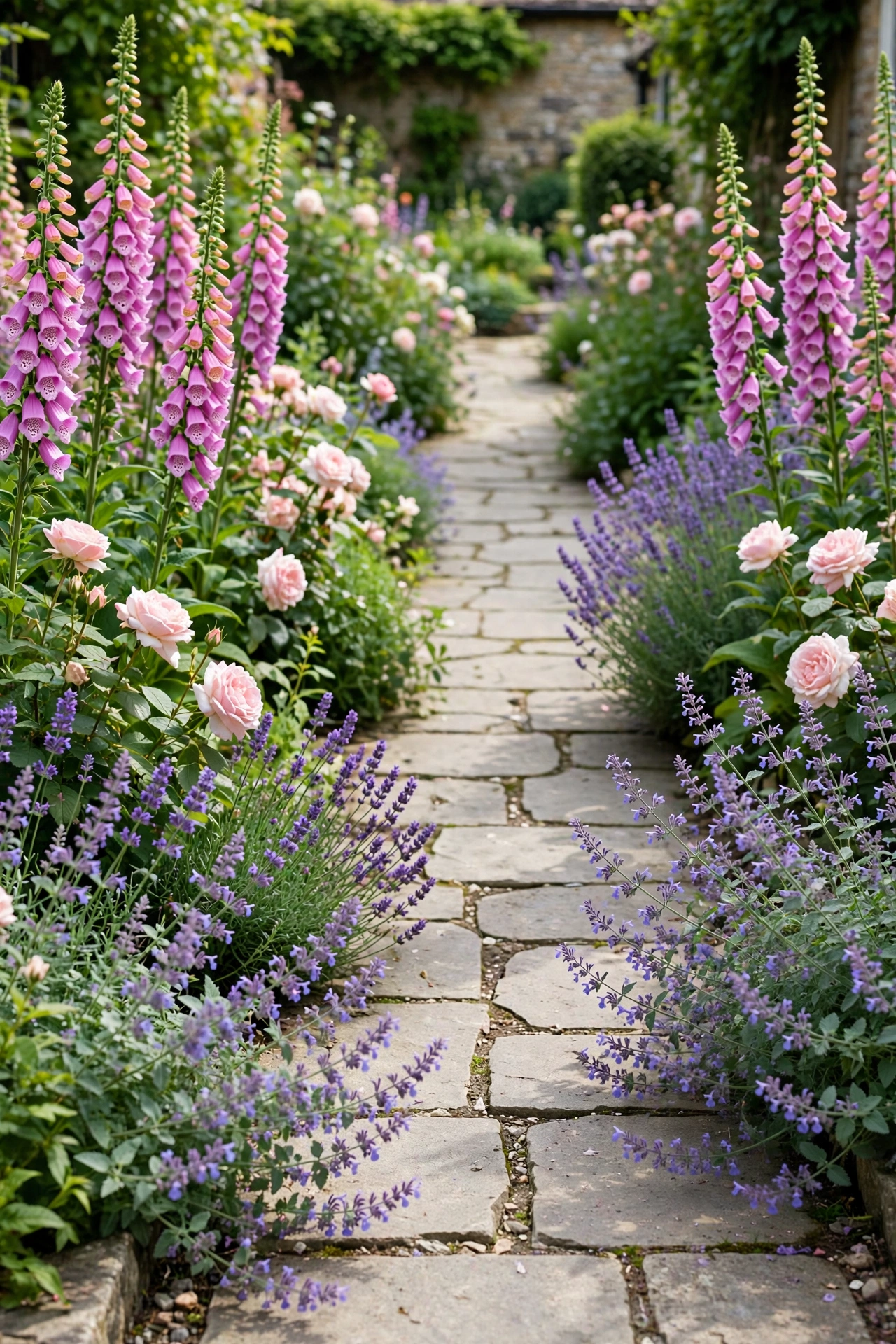
A front path lined with deep flower borders is the heart of the cottage garden look. Plant tall foxgloves and hollyhocks at the back of each border, fill the middle with roses and salvias, and edge the path with low lavender and catmint. The flowers will soften the hard line of the path and make every arrival feel like a welcome.
Keep the borders generous, at least three feet deep on each side, so the plants can spill and lean without crowding the walkway. Choose a mix of early, midseason, and late flowers so the color lasts from spring through fall. A stone or brick path adds warmth underfoot and looks more relaxed than smooth concrete.
2. Plant a Classic Four-Square Kitchen Garden
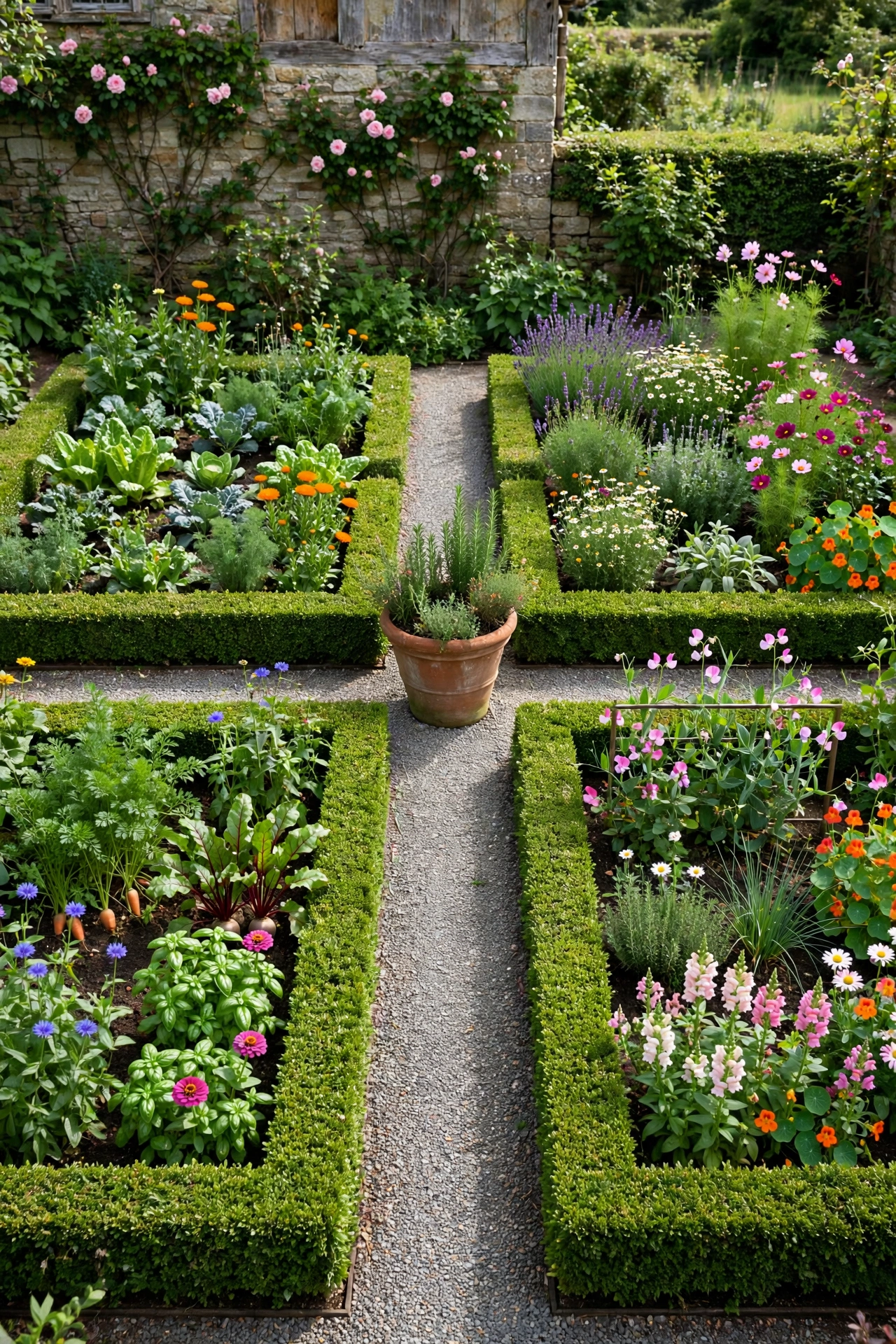
A four-square layout divides a sunny patch into four equal beds with crossing paths and a small feature at the center. This simple grid gives a cottage garden structure while still leaving room for loose, colorful planting inside each square. One bed can hold vegetables, one can hold herbs, and two can hold cutting flowers for the house.
Edge each square with low boxwood or a neat row of bricks to keep the lines clean and easy to mow around. Place a terracotta pot, a small sundial, or a birdbath where the paths cross to anchor the whole design. The four-square plan works well in small yards because every bed stays within easy reach from a path.
3. Weave a Curved Gravel Path Through Mixed Beds
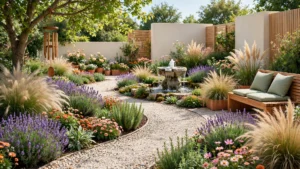
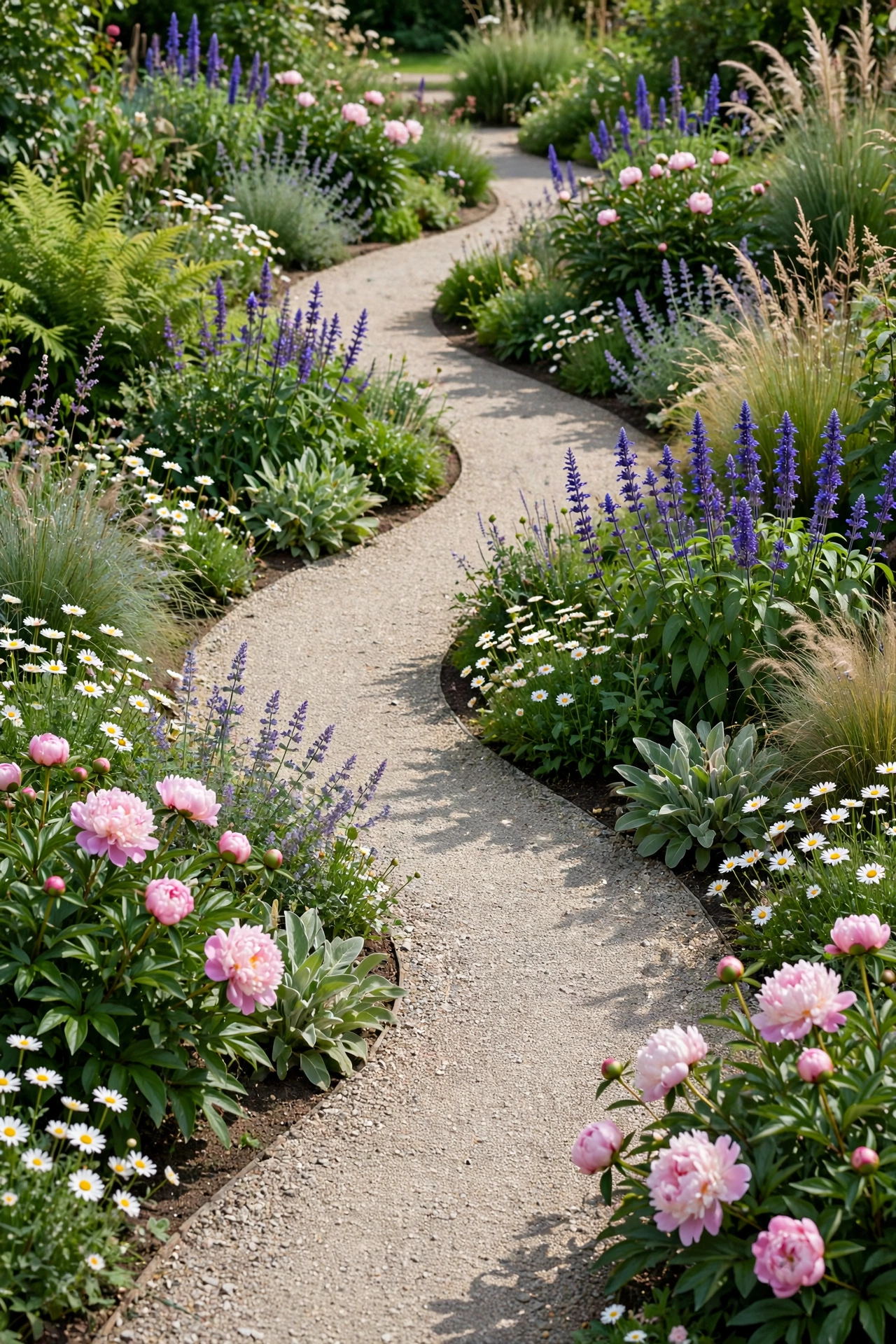
A curved path invites you to walk slowly and discover one view at a time, which suits a cottage garden perfectly. Lay the gravel in a gentle S shape through the middle of the garden and let mixed beds fill both sides with roses, peonies, daisies, and ornamental grasses. The curve hides the far end of the garden and makes a small yard feel larger.
Keep the path wide enough for two people to walk side by side, and edge it with low stones or creeping thyme to stop the gravel from spreading into the beds. For more ideas on shaping paths that suit a relaxed garden, see these garden pathway ideas that pair beautifully with loose cottage planting.
4. Build Raised Beds With a Cottage Feel
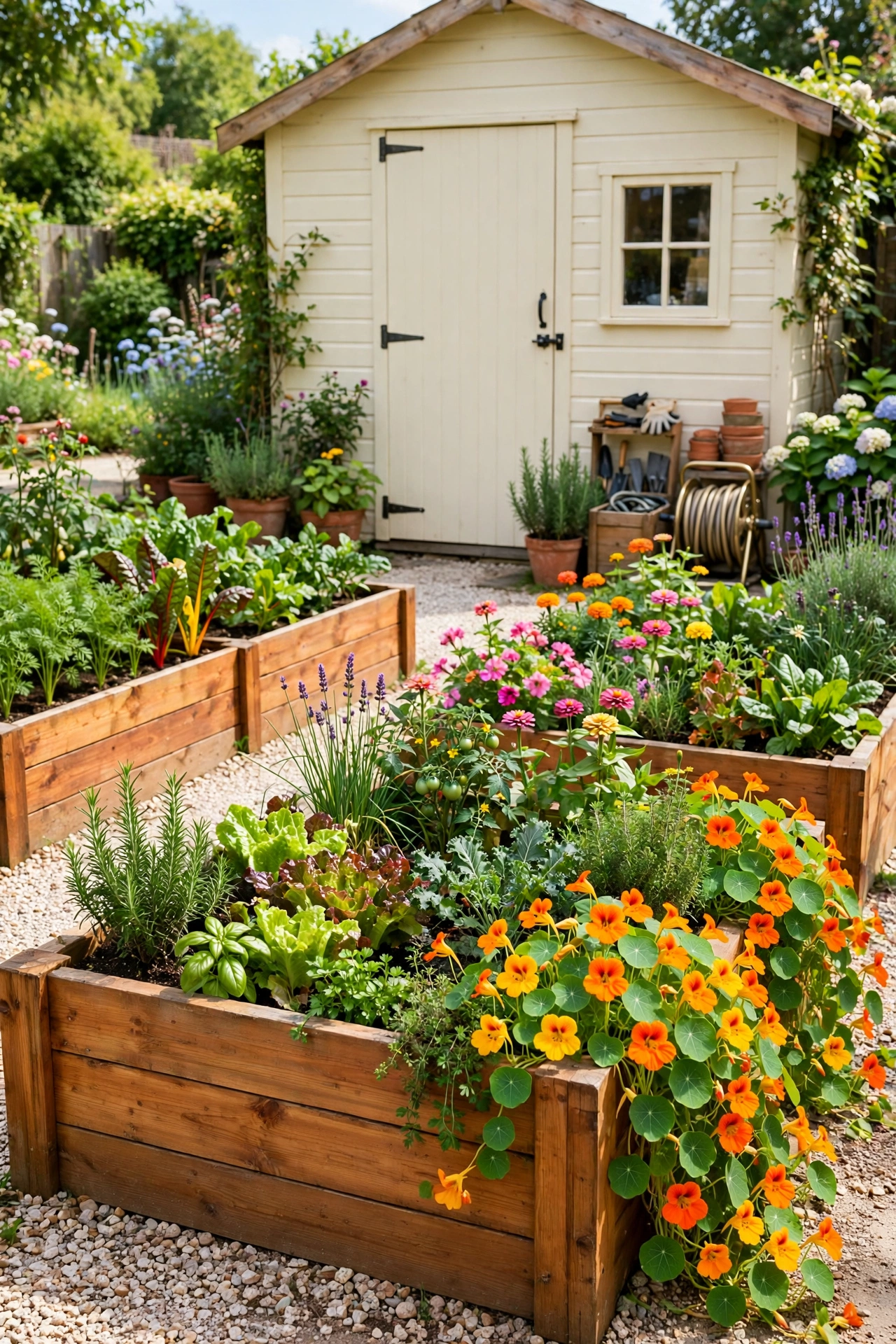
Raised beds bring order to a cottage garden without losing its charm, especially when you build them from warm wood or aged brick. Set two or three beds in a row along a sunny fence, fill them with rich soil, and plant a joyful mix of vegetables, herbs, and flowers in each one. The raised edges make planting and weeding easier on your back.
Let nasturtiums and trailing lobelia tumble over the bed edges to soften the straight lines and add extra color. For layouts that make the most of raised beds in any yard, these raised garden bed layout ideas show how to arrange beds for sun, access, and year-round interest.
5. Add a Rose Covered Arbor at the Garden Entrance
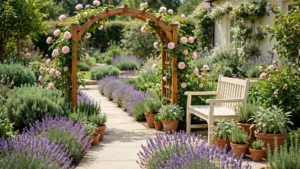
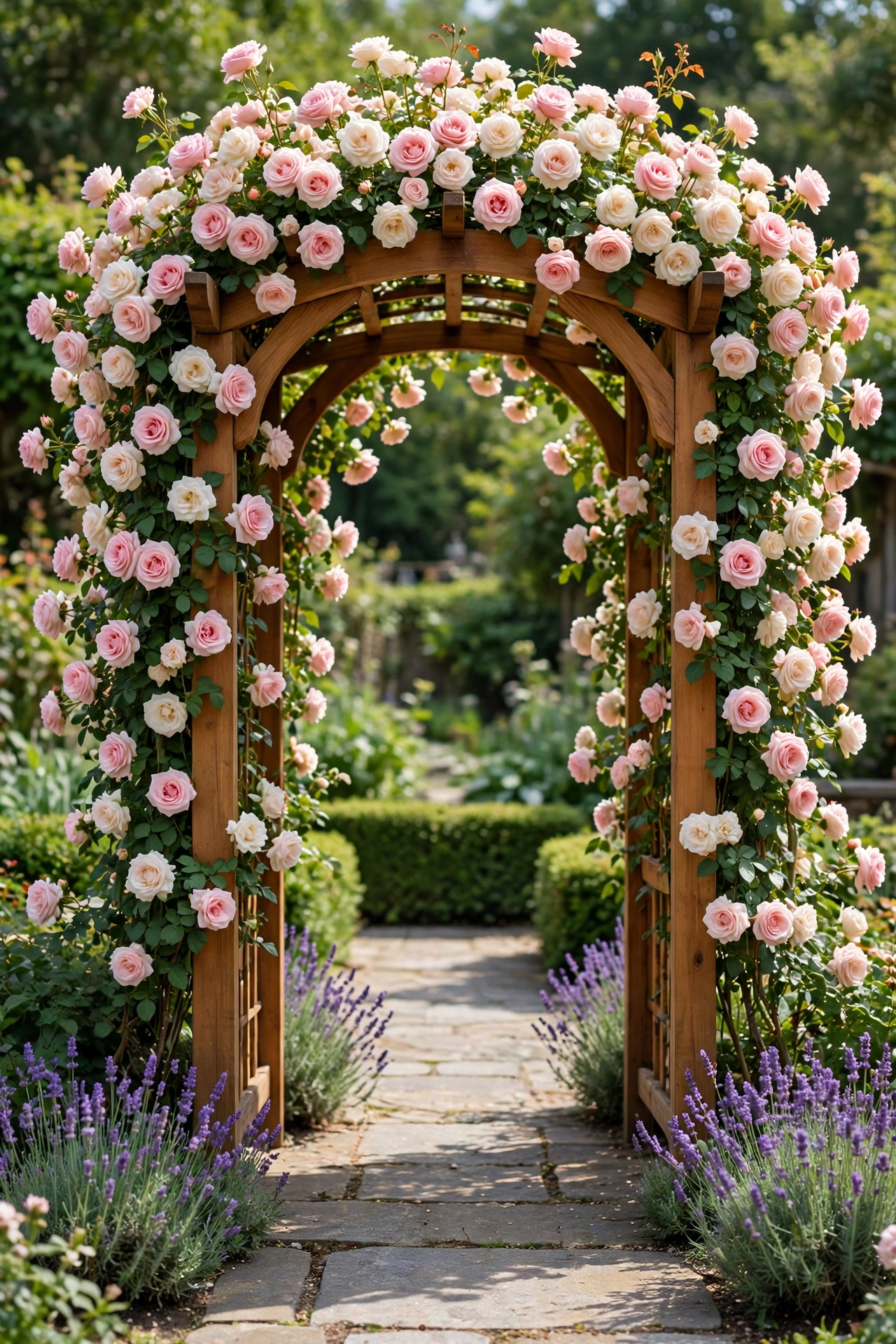
A wooden arbor draped in climbing roses turns a plain garden entrance into a moment of pure romance. Set the arbor over the front gate or over a path between two garden rooms, and train two or three rose varieties up each side. Blush pink, cream, and soft red roses together give the richest cottage feel.
Choose a sturdy arbor made from warm wood so it can hold the weight of mature roses in full bloom. Plant lavender and catmint at the base to hide the bare lower stems and to add fragrance at nose height. For more ways to plan rose beds around a garden entrance, see these rose garden layout ideas that help roses thrive in a mixed border.
6. Layer Tall, Medium, and Low Plants for Depth
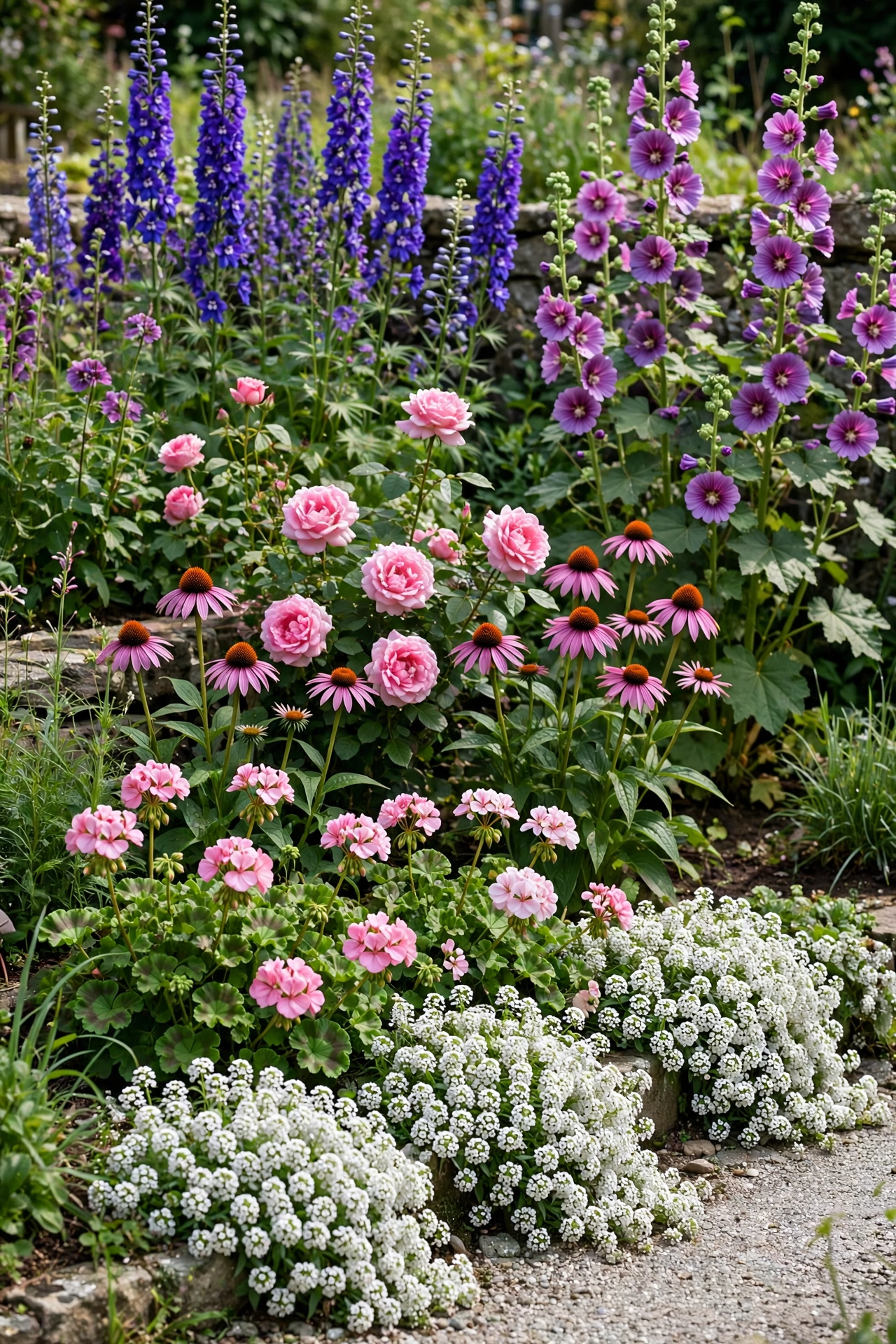
Layering is the secret behind the full, abundant look of a cottage garden. Place the tallest plants, such as hollyhocks, delphiniums, and sunflowers, at the back of each bed, then fill the middle with roses, echinacea, and phlox. Finish the front edge with low growers like alyssum, geraniums, and creeping thyme that spill onto the path.
This three-layer structure gives every plant its share of sunlight while hiding bare stems behind fuller neighbors. Repeat the same layers in each bed so the garden feels unified even when dozens of different plants grow side by side. Step back often as you plant and check that no gap of bare soil shows through.
7. Tuck a Reading Bench Into a Flower-Filled Corner
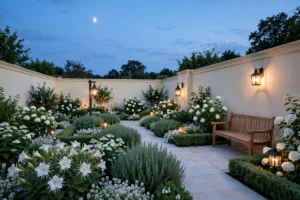
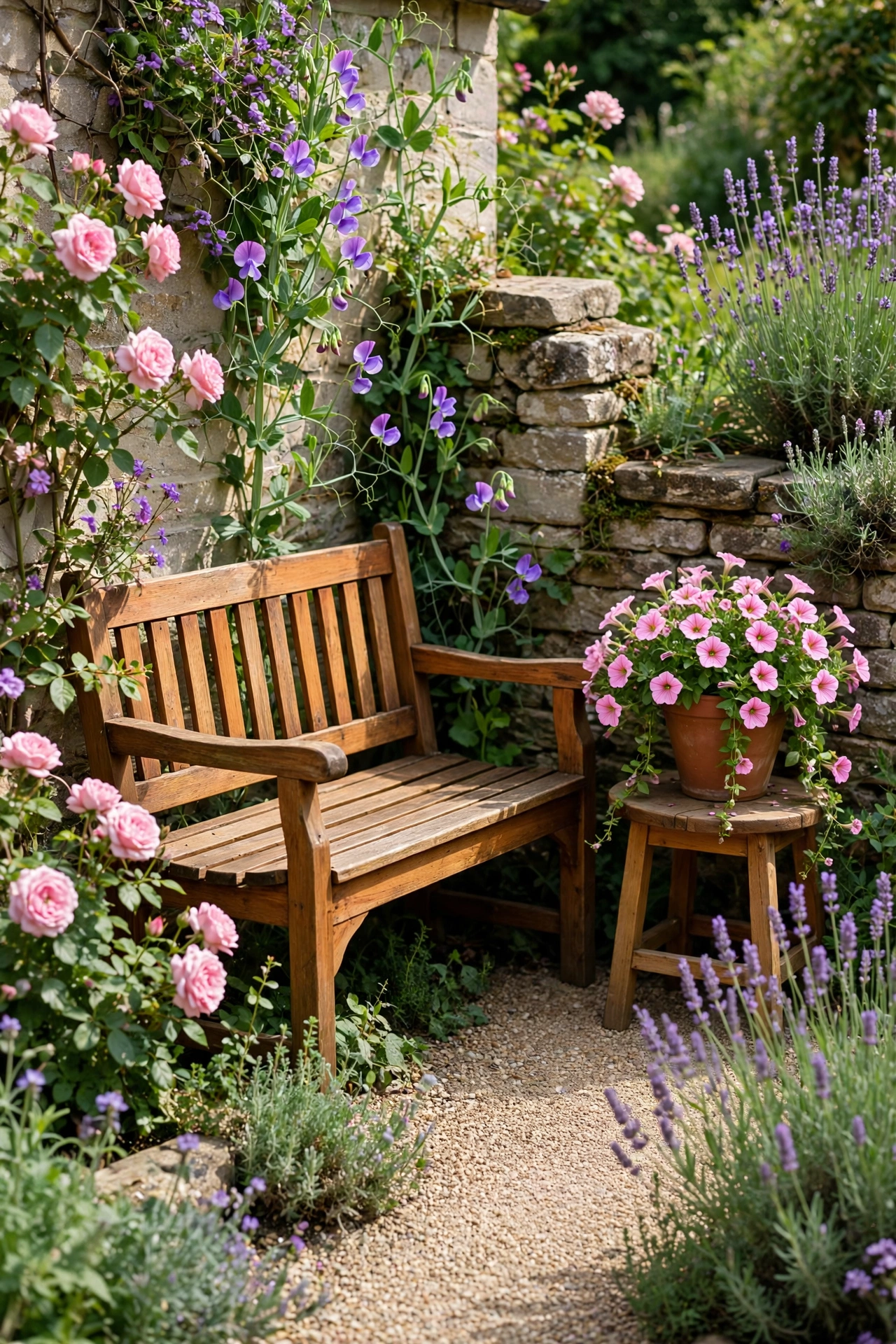
A quiet corner with a wooden bench and a canopy of flowers gives a cottage garden a place to rest and enjoy the view. Choose a spot with afternoon shade, set the bench against a fence or hedge, and surround it with fragrant roses, sweet peas, and lavender. The bench becomes a destination that draws you out into the garden every day.
Add a small side table for a cup of tea and a book, plus a terracotta pot filled with trailing petunias beside the bench legs. Keep the planting around the bench soft and low enough that it frames the seat without blocking the breeze. A bench in bloom is the simplest way to make a garden feel lived in and loved.
8. Mix Herbs and Flowers in One Sunny Bed
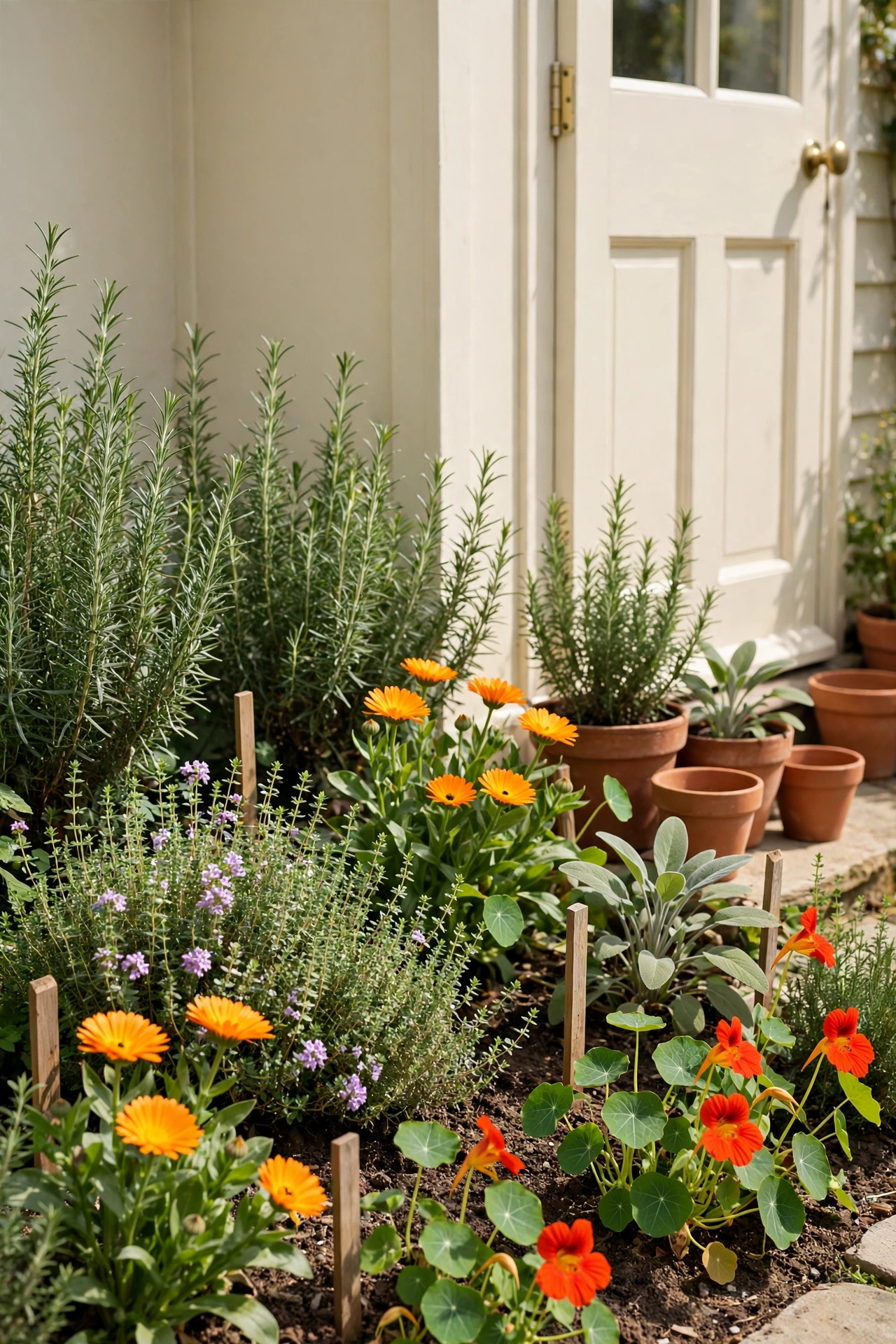
Cottage gardens have always mixed useful plants with beautiful ones, and a sunny bed of herbs and flowers honors that tradition. Plant rosemary, thyme, and sage among roses, calendulas, and nasturtiums so the bed smells wonderful and feeds both the kitchen and the eye. The herbs also help protect nearby flowers from pests.
Give the bed a sunny spot near the kitchen door so snipping herbs for dinner takes only a few steps. Label each herb with a small wooden marker so guests can find their favorites, and trim the herbs often to keep them bushy. A mixed bed like this proves that a working garden can be just as colorful as a purely decorative one.
9. Create a Wildflower Meadow Edge
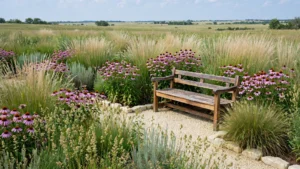
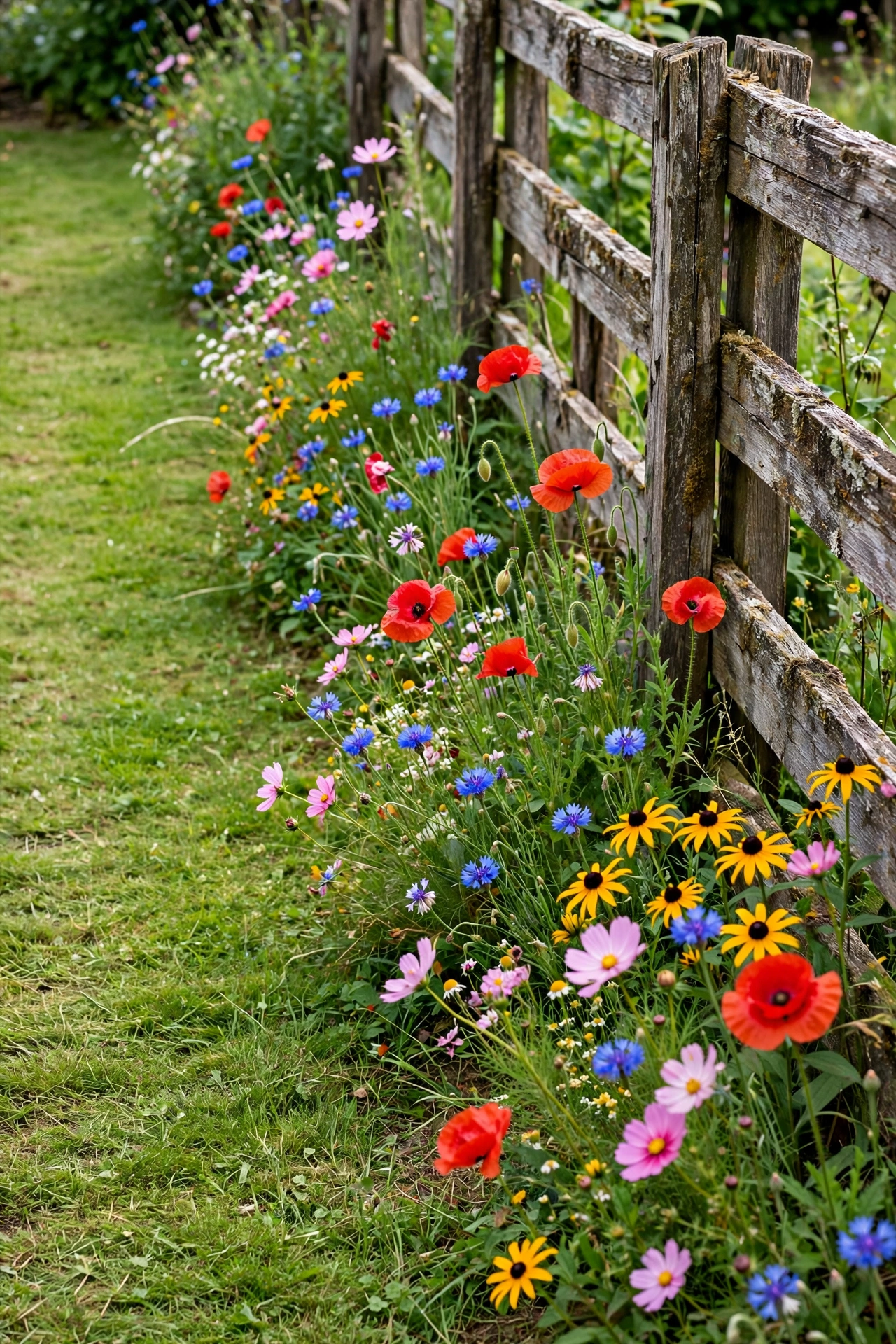
A wildflower meadow edge softens the boundary of a cottage garden and fills it with movement and life. Sow a wide strip of native wildflowers along a fence, a hedge, or the back of the garden, and let the flowers grow in loose drifts rather than neat rows. Poppies, cornflowers, cosmos, and black-eyed Susans give months of color with very little care.
Mow a neat path through or beside the meadow strip so the wild look still feels intentional and cared for. The flowers will draw bees and butterflies all season long, and the seed heads left standing in fall will feed birds through winter. For planting ideas that welcome even more winged visitors, these butterfly garden ideas pair well with a meadow edge.
10. Dress a Fence With Climbing Roses and Clematis
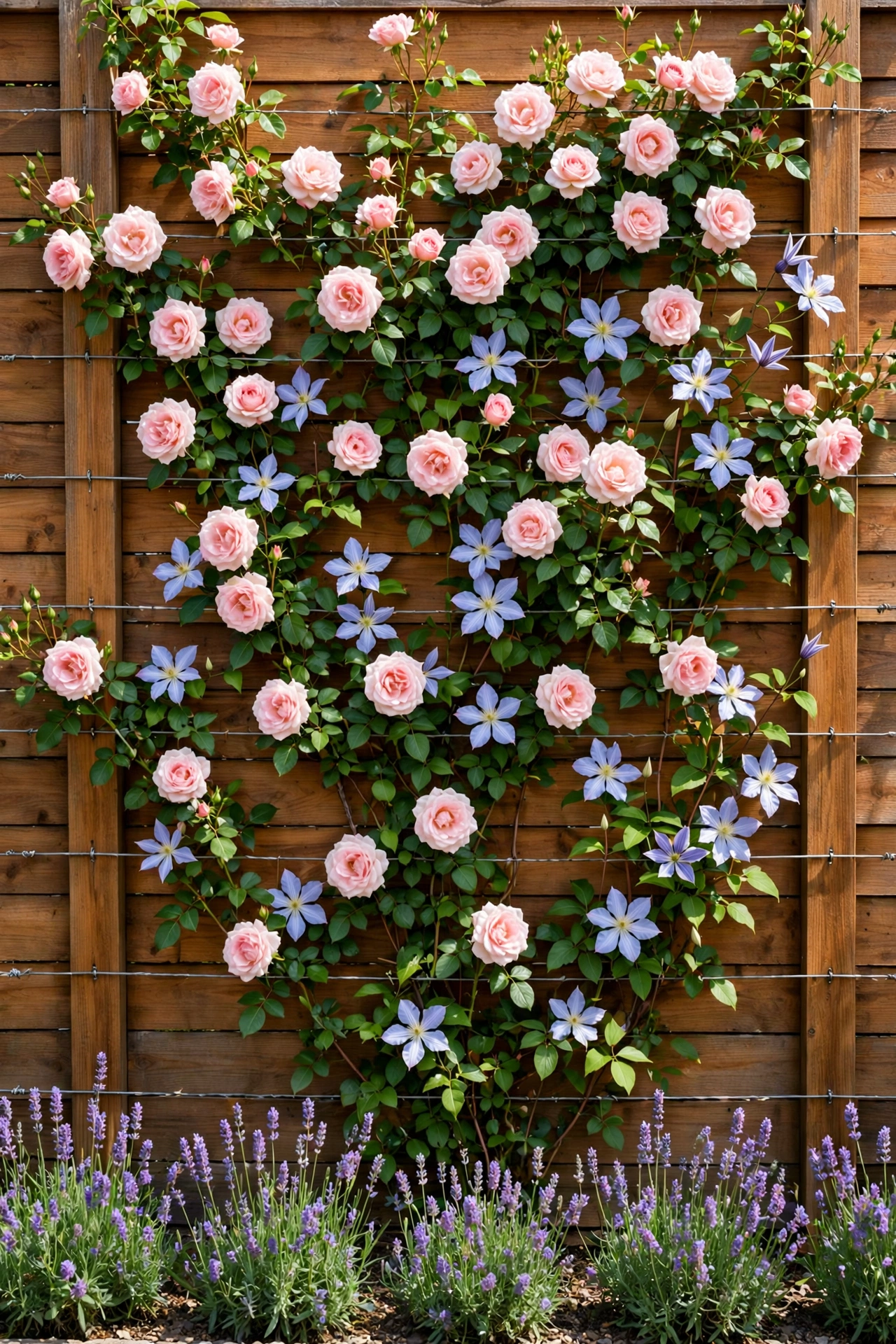
A plain fence becomes a living wall when climbing roses and clematis share the same support. Plant a rose at the base of the fence and a clematis a foot or two beside it, then guide both upward so their flowers weave together through the season. Soft blue clematis with blush pink roses is a classic cottage combination.
Fix horizontal wires or a wooden trellis to the fence before planting so the climbers have something sturdy to grip. Prune lightly in late winter and feed the soil each spring to keep both plants vigorous. For support ideas that suit heavy climbers, see these climbing plant trellis ideas that keep roses and clematis tidy and well supported.
11. Place a Birdbath as a Colorful Focal Point
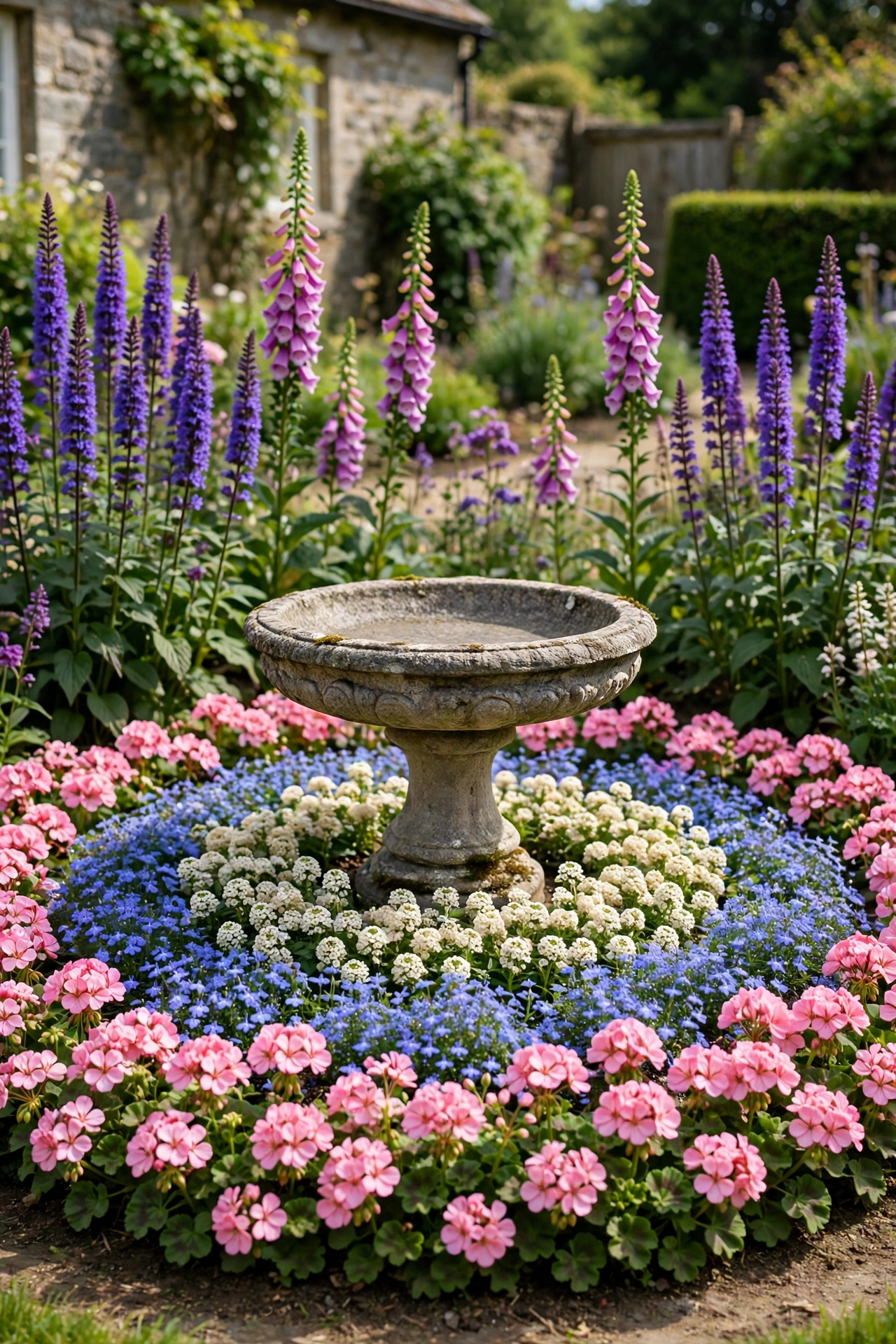
A birdbath placed at the center of a circular bed gives a cottage garden a clear focal point that changes with the seasons. Ring the birdbath with low flowers in a repeating color pattern, such as blush pink geraniums, soft blue lobelia, and cream alyssum. The water draws birds that add movement and song to the garden all day.
Set the birdbath on a level stone base and keep the water clean and shallow so small birds can bathe safely. Plant taller flowers behind the circle, such as salvias and foxgloves, to frame the view from the house window. A focal point like this ties several beds together and gives the eye a place to rest among all the color.
12. Design a Shady Woodland Corner With Soft Color
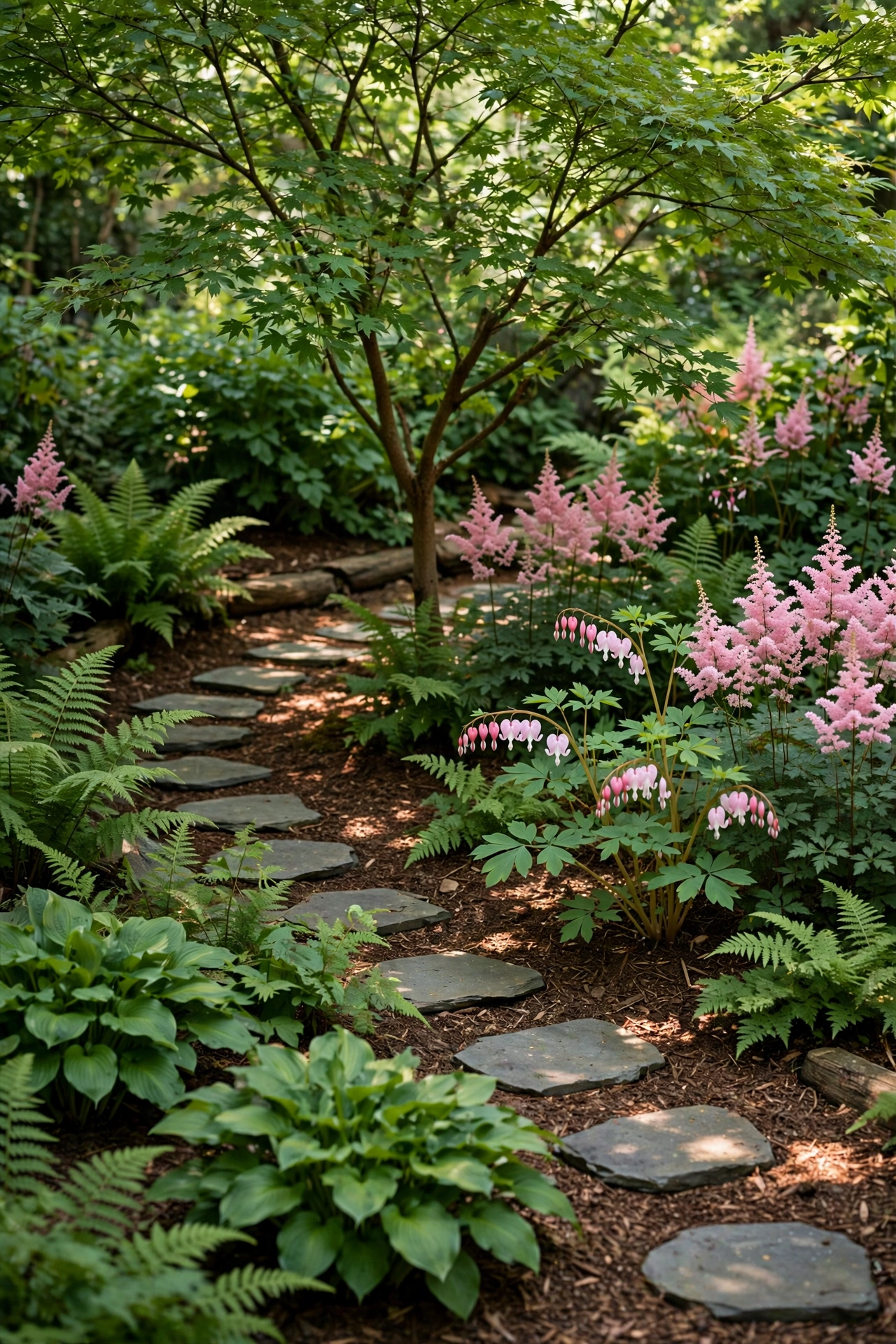
Not every corner of a cottage garden gets full sun, and a shady woodland corner turns that challenge into a quiet retreat. Plant hostas, ferns, astilbes, and foxgloves under a small tree, and add soft color with pale pink bleeding hearts and white impatiens. The cool green layers feel calm and restful on a hot afternoon.
Cover the ground with a thick layer of mulch and a winding path of flat stepping stones so the corner stays tidy and easy to walk through. A small wooden stool or a stone seat invites you to sit and enjoy the shade. Even the darkest corner of a yard can become one of the prettiest spots in a cottage garden with the right shade-loving plants.
Conclusion
A cottage garden layout is less about perfect geometry and more about generous planting, gentle curves, and places to pause. From a rose covered arbor to a wildflower meadow edge, every idea here adds color and character without demanding a large budget or a formal design. The garden grows more beautiful each year as the plants settle in and weave together.
Start with one bed, one path, or one corner, and let the garden expand from there. Plant in layers, repeat your favorite colors, and leave room for happy surprises as self sown seedlings appear. With a little patience and a lot of color, your landscape will become the kind of garden that makes every visitor slow down and smile.
Frequently Asked Questions About Cottage Garden Layout Ideas for Colorful Landscapes
How do I start a cottage garden layout in a small yard?
Begin with one deep border along a fence or path and one small focal point, such as a birdbath or a bench. Plant in three layers with tall flowers at the back and low flowers at the front. A small yard fills quickly, so choose plants that repeat well and leave narrow paths for access.
What flowers work best in a cottage garden?
Roses, foxgloves, hollyhocks, peonies, lavender, catmint, salvias, and daisies are classic cottage garden flowers. Mix early, midseason, and late bloomers so color lasts from spring through fall. Choose plants suited to your climate and sunlight so they thrive with little fuss.
How wide should cottage garden beds be?
Make beds at least three to four feet deep so you can fit tall, medium, and low layers in each one. Wider beds look more generous and let plants spill naturally. Keep a path or lawn edge beside every bed so you can reach the middle for weeding and deadheading.
Do cottage gardens need a lot of maintenance?
Cottage gardens need regular deadheading, watering, and seasonal trimming, but dense planting shades the soil and keeps weeds down. Choose hardy perennials and self sowing annuals to reduce replanting each year. A few minutes of care each week keeps the garden full and colorful.
Can I mix vegetables into a cottage garden layout?
Yes, cottage gardens traditionally mix vegetables, herbs, and flowers in the same beds. Plant lettuce, beans, and tomatoes among flowers, and use herbs as edging. The mix looks beautiful, attracts helpful insects, and gives you fresh food steps from the kitchen door.

Hi, I’m Emily! I turn messy corners into cozy, organized spots. DreamNestDecor is where I share simple, practical home ideas — decor, organization, and small-space solutions that work in real life, not just in photos. Every idea here is carefully researched before it’s shared.