Picture this: you have just received the keys to your very first home, and the kitchen counter is already covered with a mountain of paper. Closing documents, loan statements, inspection reports, utility letters, and warranty cards are stacked in wobbly piles, and you have no idea which envelope holds what. That first week in a new home brings more paperwork than most people expect, and it arrives faster than you can sort it.
The good news is that a simple system set up on day one will save you hours of searching later. You do not need fancy software or an expensive filing cabinet to stay on top of it all. These 19 new home paperwork organization ideas will help you sort, file, and find every important document from closing day onward, so your first home starts tidy and stays that way.
1. Start a Closing Day Binder for Settlement Documents
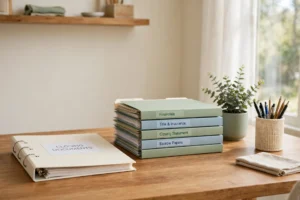
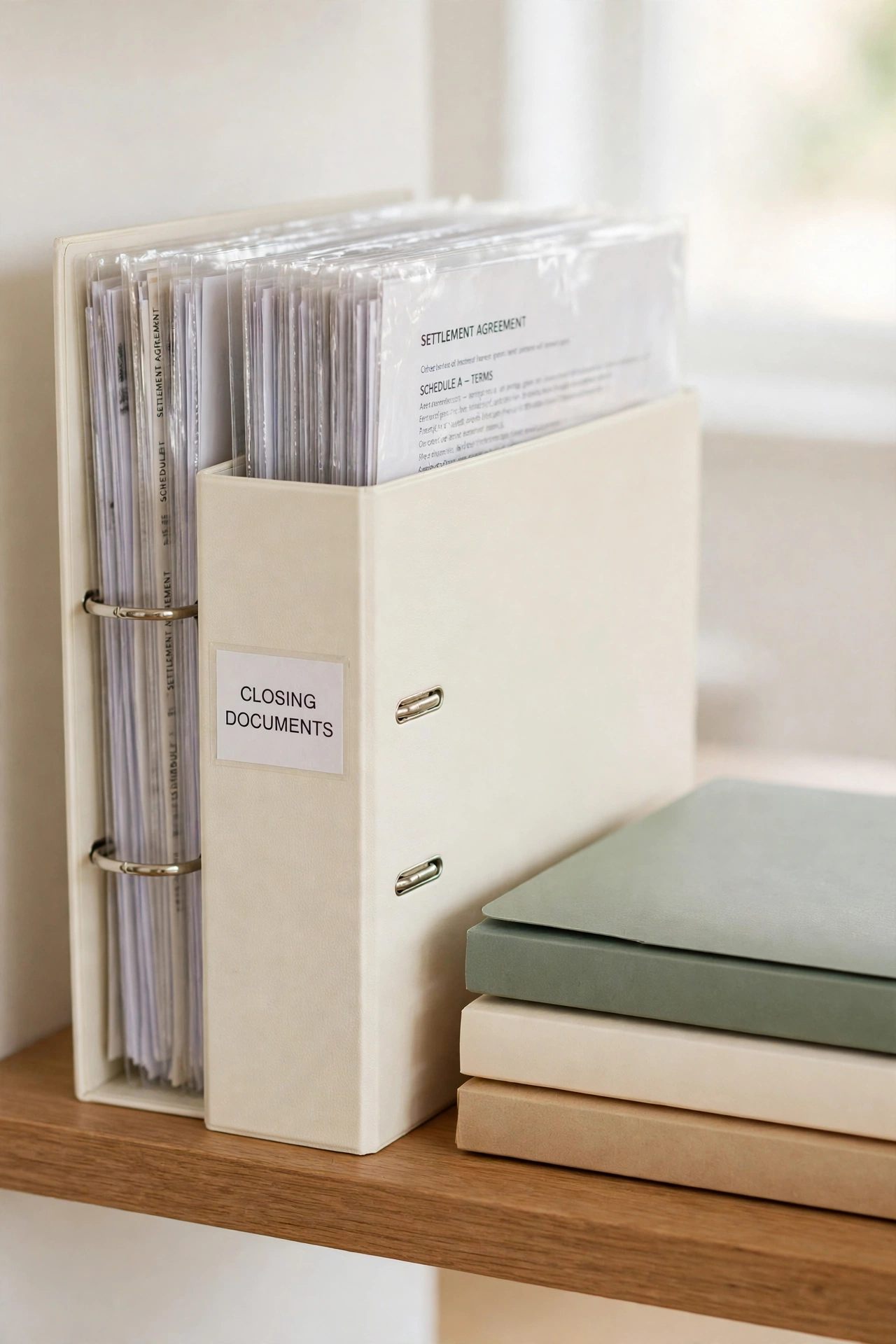
The closing binder is the single most important paperwork home a first time homeowner can create. On closing day you will receive a thick stack of settlement papers, including the deed, the settlement statement, and the loan agreement. A sturdy three ring binder with clear sleeves keeps every page clean, flat, and in the order you received it.
Label the spine of the binder with the words CLOSING DOCUMENTS and add a table of contents page at the front listing each document inside. Store the binder on a shelf where you can reach it easily, not buried in a moving box. When a question about your purchase comes up months later, you will know exactly where to look.
2. Create a Mortgage and Loan Records Folder
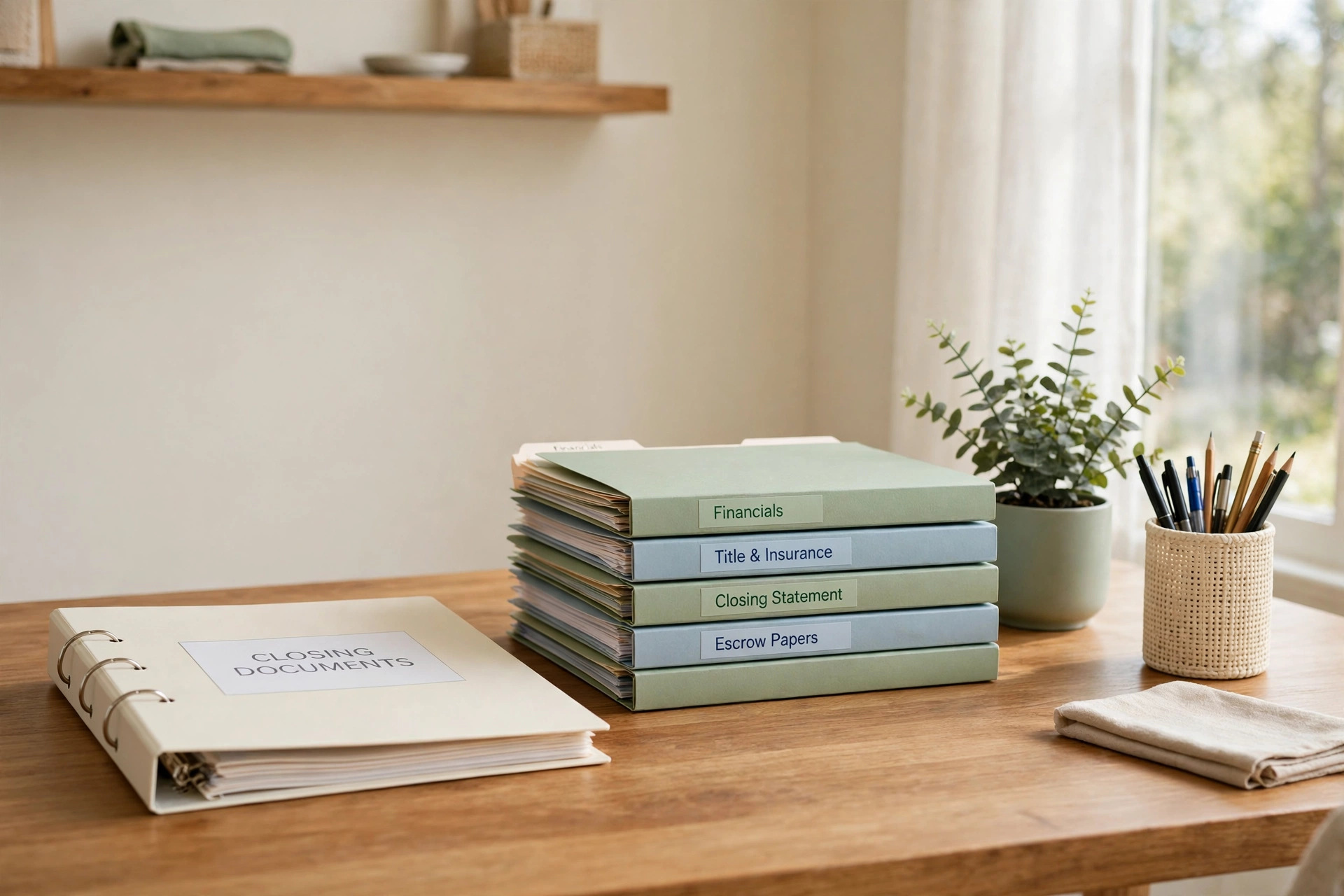
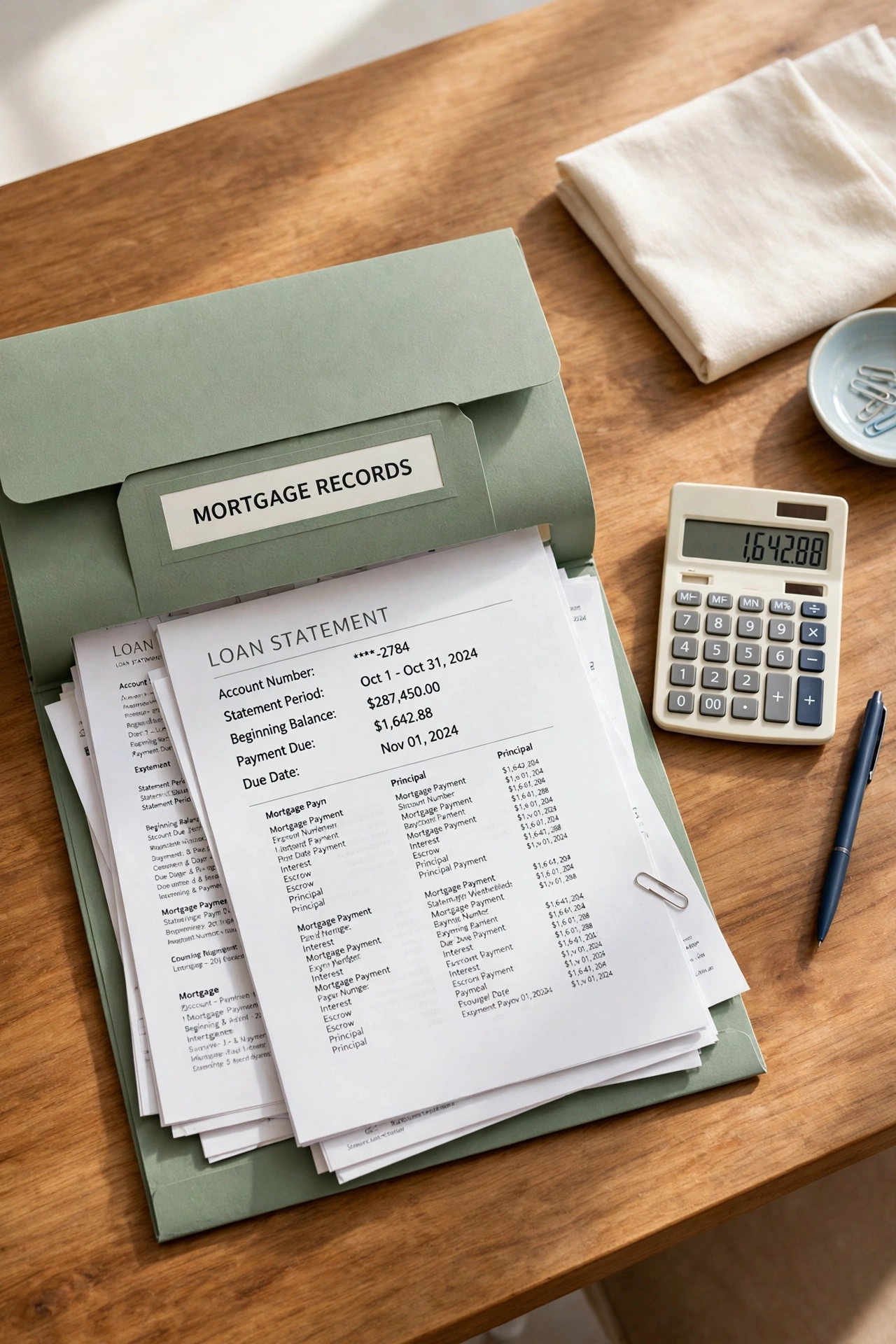
Your mortgage is likely the largest financial commitment of your life, so its paperwork deserves its own dedicated folder. Keep the loan agreement, the monthly payment schedule, and every statement from your lender together in one labeled folder. A separate folder means you will never mix loan papers in with everyday mail.
Choose a folder in a distinct color, such as deep sage green, so you can spot it at a glance among other files. Each time a new statement arrives, slide it into the front of the folder so the newest paper is always on top. This simple habit makes tax time and refinancing conversations far less stressful.
3. File the Home Inspection Report With Repair Notes
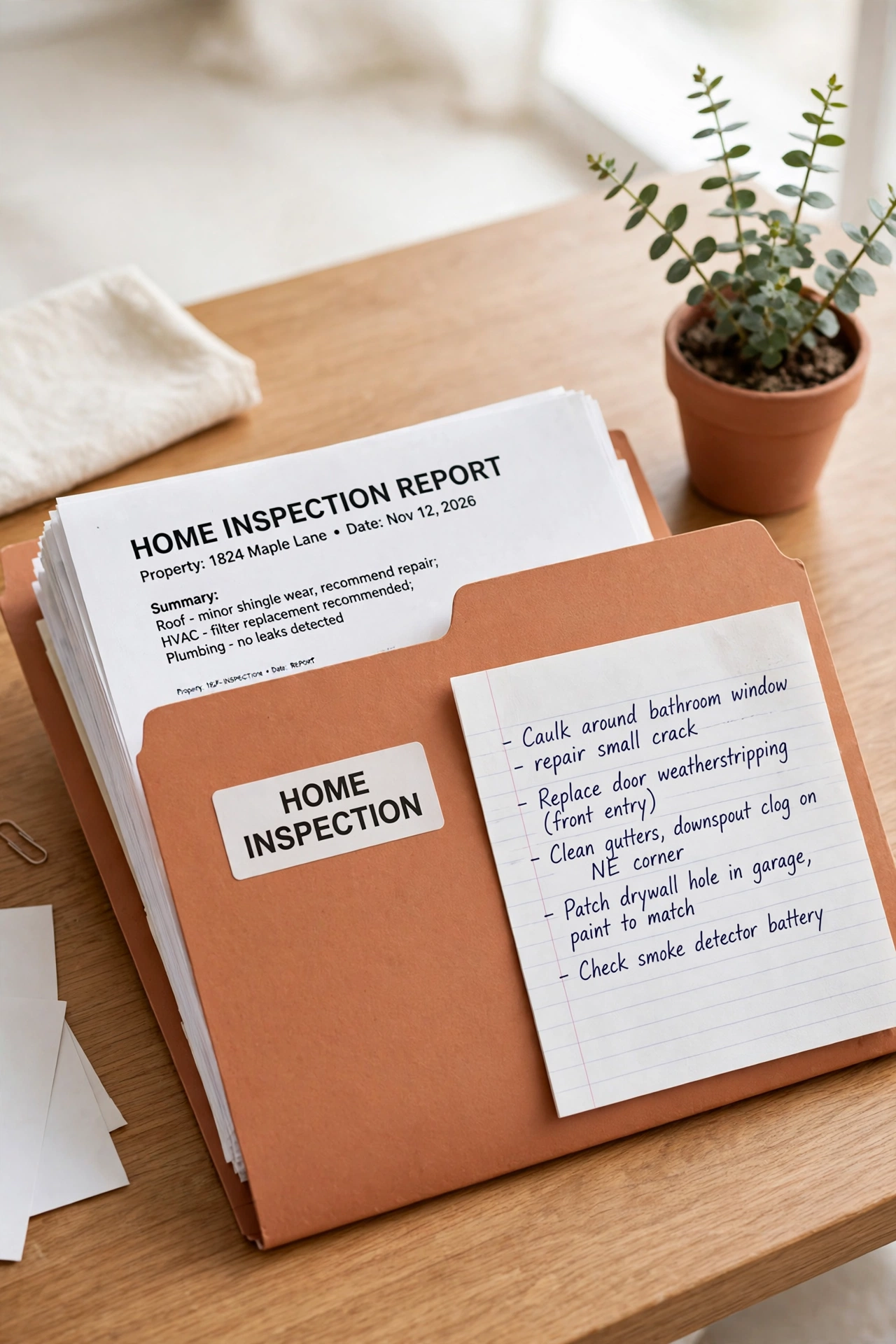
The home inspection report is a detailed map of your house, and it is easy to lose track of it once the boxes are unpacked. File the full report in its own folder and attach your own notes about which repairs you plan to handle first. The report will guide your maintenance decisions for years.
Add a simple one page summary at the front of the folder listing the age of the roof, the water heater, and the heating system. When a contractor asks how old your furnace is, you will have the answer in seconds. Keep this folder near your closing binder so all purchase records stay together.
4. Keep a Utility Setup Folder for Every Account
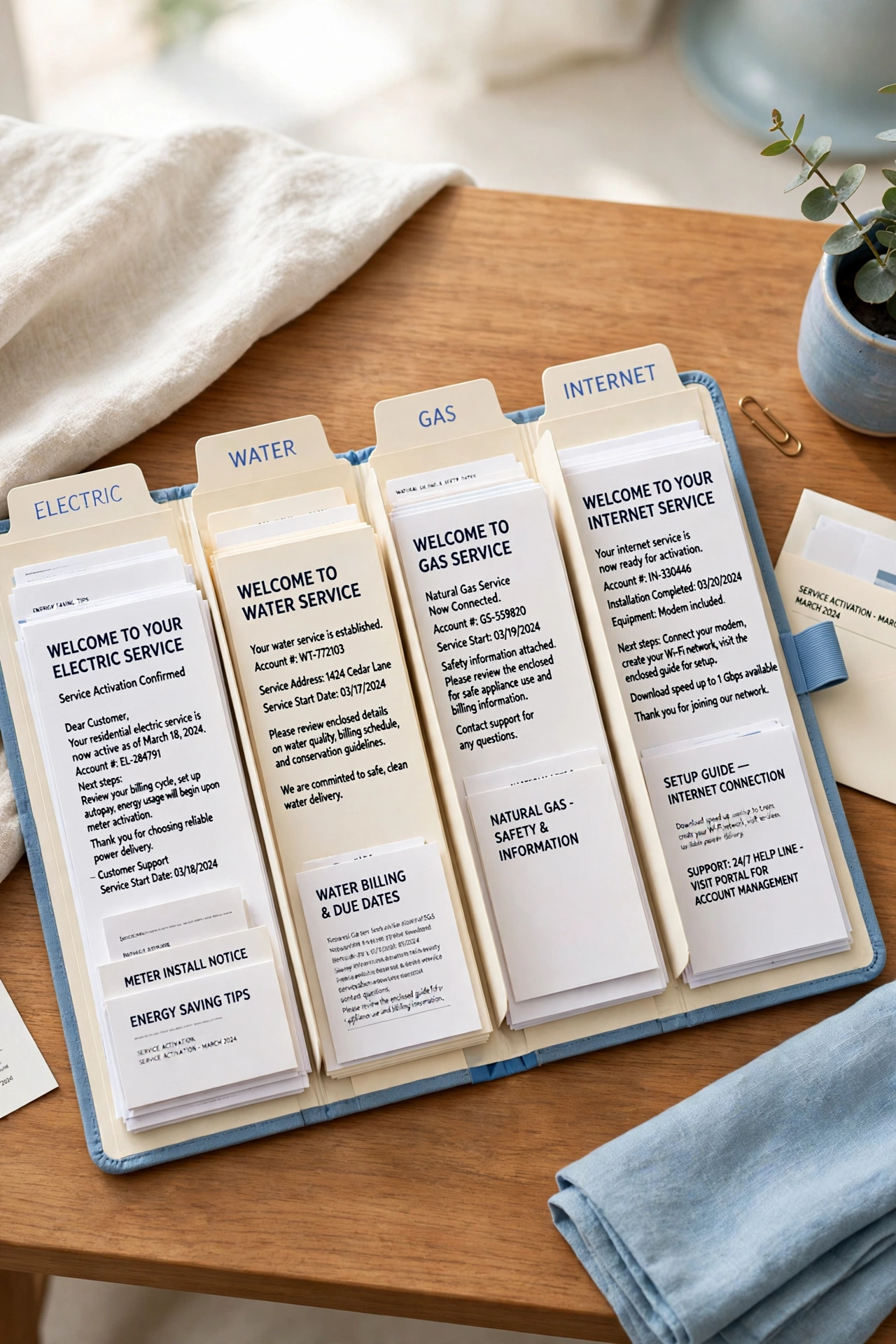
Moving into a first home means opening accounts for electricity, water, gas, internet, and trash service, and each one sends its own welcome letter and account number. A utility setup folder with a labeled divider for each service keeps those first letters from scattering across the house.
Write the account number, the customer service phone number, and the setup date on the front of each divider. When a service stops working or a bill looks wrong, you will not need to dig through old emails to find the right number. For more ideas on keeping household papers from piling up, see these paper clutter organization ideas that work well alongside a dedicated utility folder.
5. Track Change of Address Confirmations in One Envelope
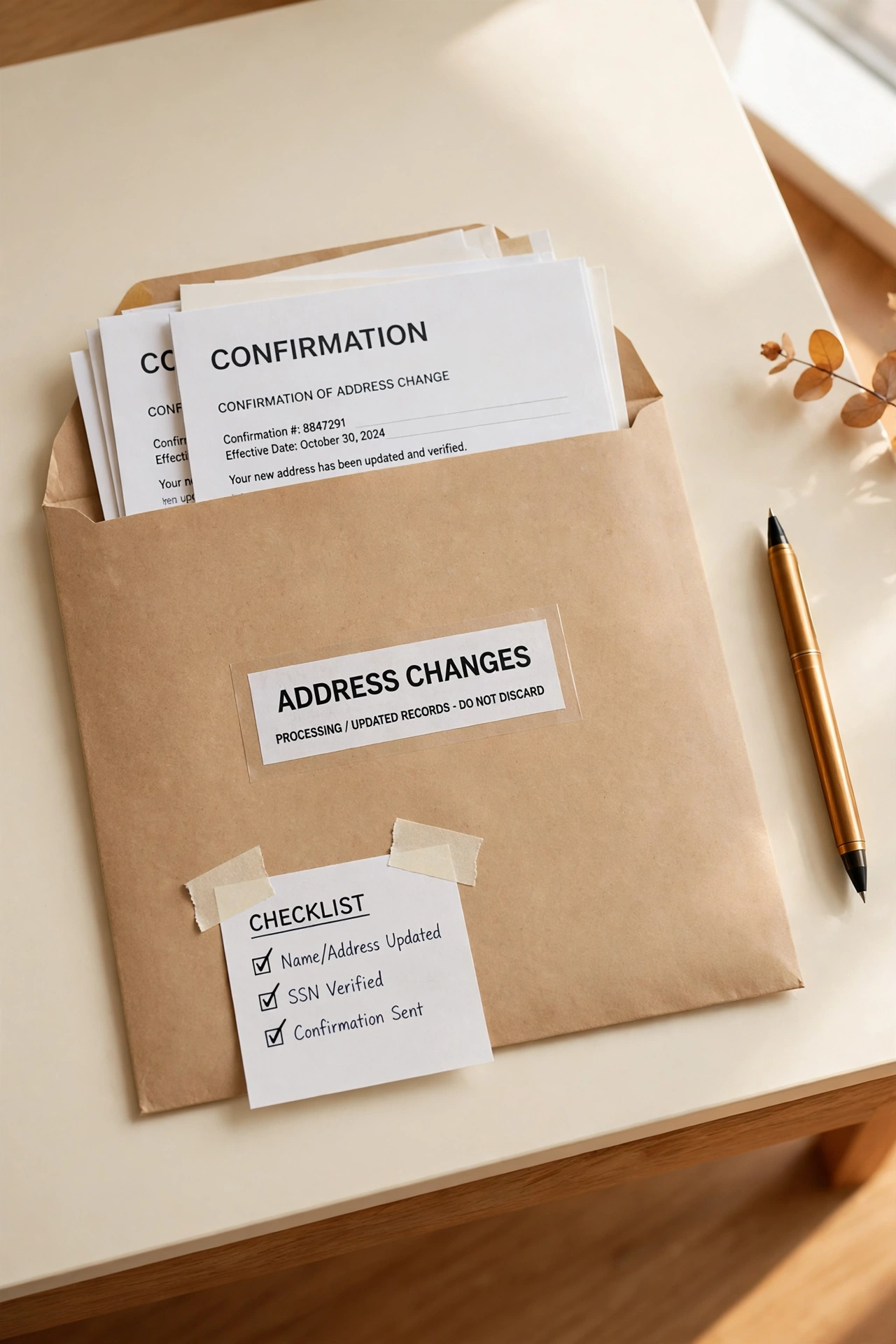
When you move, you must update your address with the post office, your bank, your employer, and many more places, and each one sends a confirmation. A single large envelope labeled ADDRESS CHANGES holds every confirmation letter and card in one place. You can check the envelope at a glance to see which updates are done.
Tape a checklist to the front of the envelope listing every place you notified, and check each one off as its confirmation arrives. If mail still goes to your old address after a few weeks, the checklist will show you exactly which update is missing. This small step prevents lost bills and missed letters during the move.
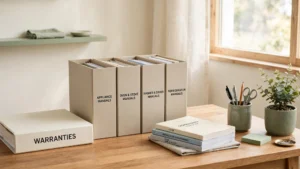
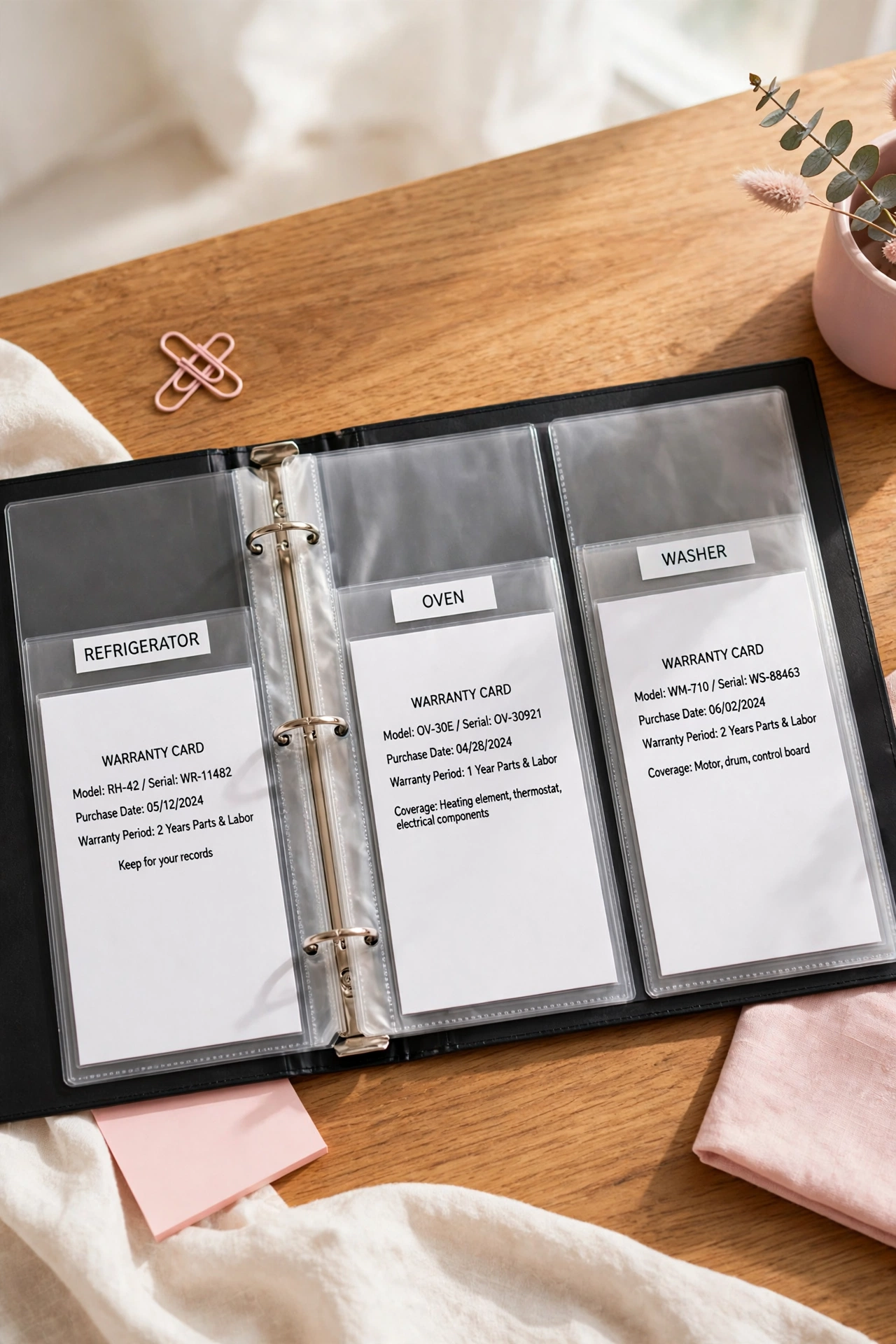
6. Build a Warranty Registration Binder for Appliances
Your new home likely came with a refrigerator, an oven, a dishwasher, and a washer and dryer, and each appliance has its own warranty card and registration deadline. A warranty binder with one sleeve per appliance keeps every card, receipt, and registration confirmation together in a single place.
Label each sleeve with the appliance name, the brand, and the purchase or install date, and note the date you mailed or submitted the registration. If an appliance breaks down in the first year, you will have the warranty proof ready in moments. Registering every warranty in the first week protects you from paying for repairs that should be free.
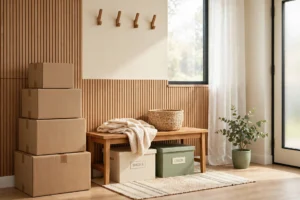
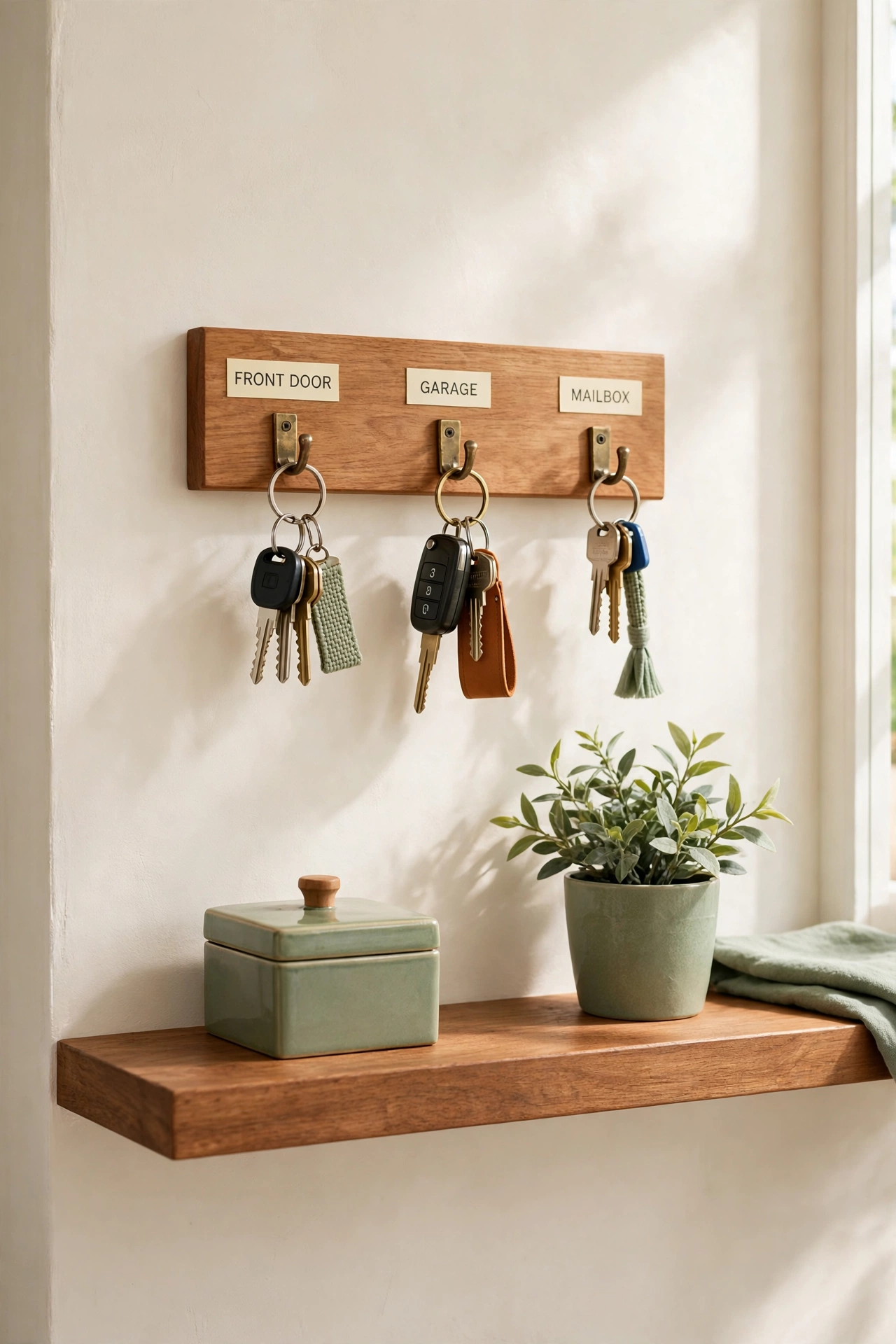
7. Set Up a Keys and Codes Station by the Door
A new home comes with more keys and codes than you expect: front door keys, garage remotes, mailbox keys, gate codes, and alarm codes. A small station by the entry door with labeled hooks for keys and a sealed card for codes keeps all of them in one reliable spot from the very first day.
Use a wooden key holder with clear labels under each hook, such as FRONT DOOR, GARAGE, and MAILBOX, and keep the code card inside a small lidded box on the same shelf. Everyone in the household will know where to find and return the keys. For more ways to keep your entry area tidy, these entryway organization ideas will help you design a drop zone that works for your whole home.
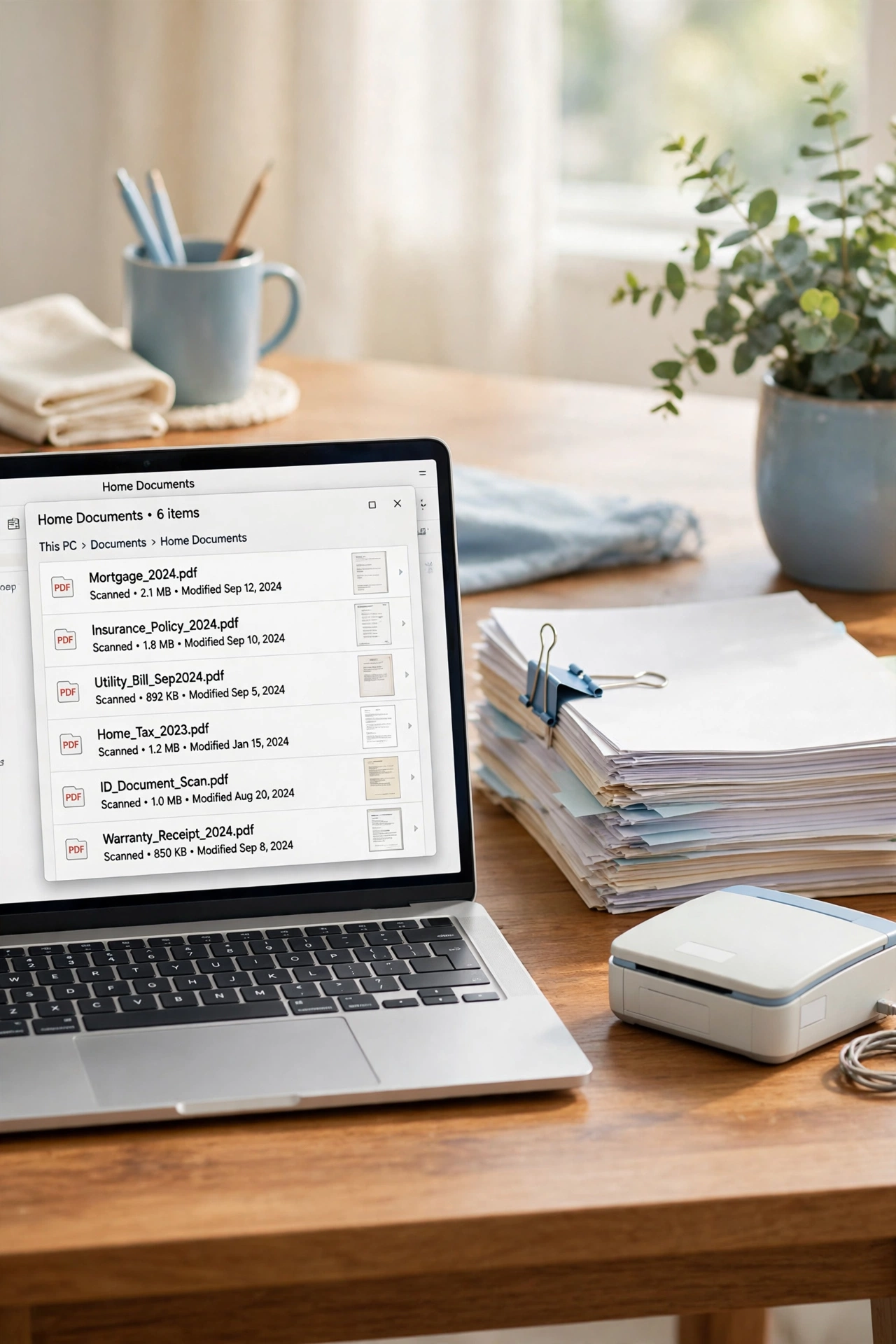
8. Scan Every Closing Document Into a Digital Folder
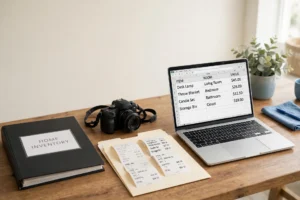
Paper copies can be damaged by water, fire, or a simple spill, so a digital backup of your closing documents is essential protection. Use a scanner or a phone scanning app to create clear copies of every settlement page, then save them in a folder on your computer and in a cloud backup.
Name each file clearly, such as Deed, Settlement Statement, and Loan Agreement, and keep them in a folder named New Home Documents. Share the folder location with a trusted family member so someone else can reach the copies in an emergency. A digital backup takes less than an hour to create and protects the most important papers you own.
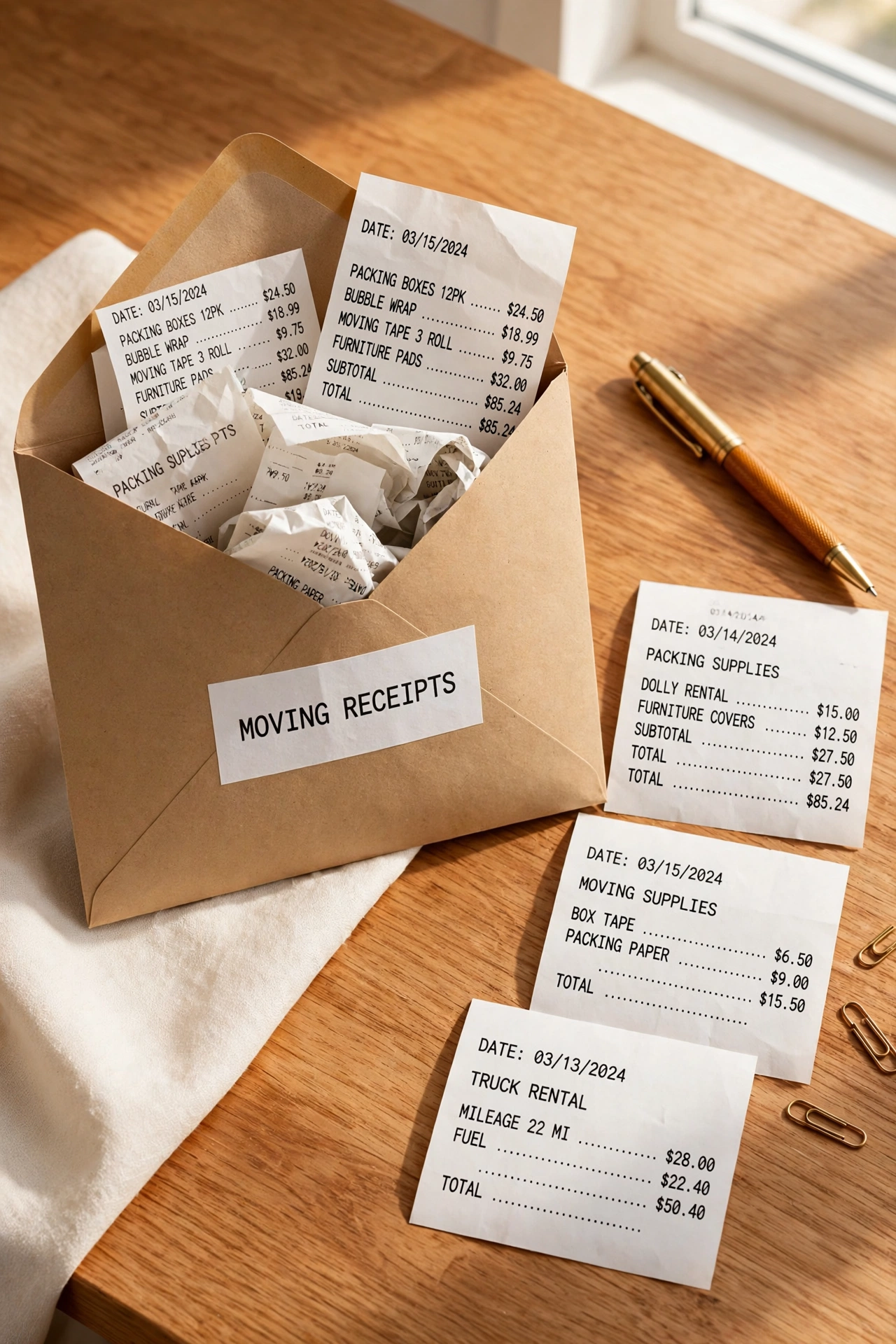
9. Keep a Moving Receipts Envelope for Tax Time
Moving costs add up quickly, and some of them may matter at tax time or for reimbursement from an employer. A single envelope labeled MOVING RECEIPTS holds every receipt from the truck rental, packing supplies, fuel, and cleaning services in one place. You will not need to search through bags and boxes when the time comes to add them up.
Write the date and the amount on the outside of the envelope each time you add a receipt, so you always know the running total. For a simple system that keeps every kind of receipt tidy, see these receipt organization ideas that pair perfectly with a dedicated moving envelope. Keep the envelope with your closing binder until tax season is over.
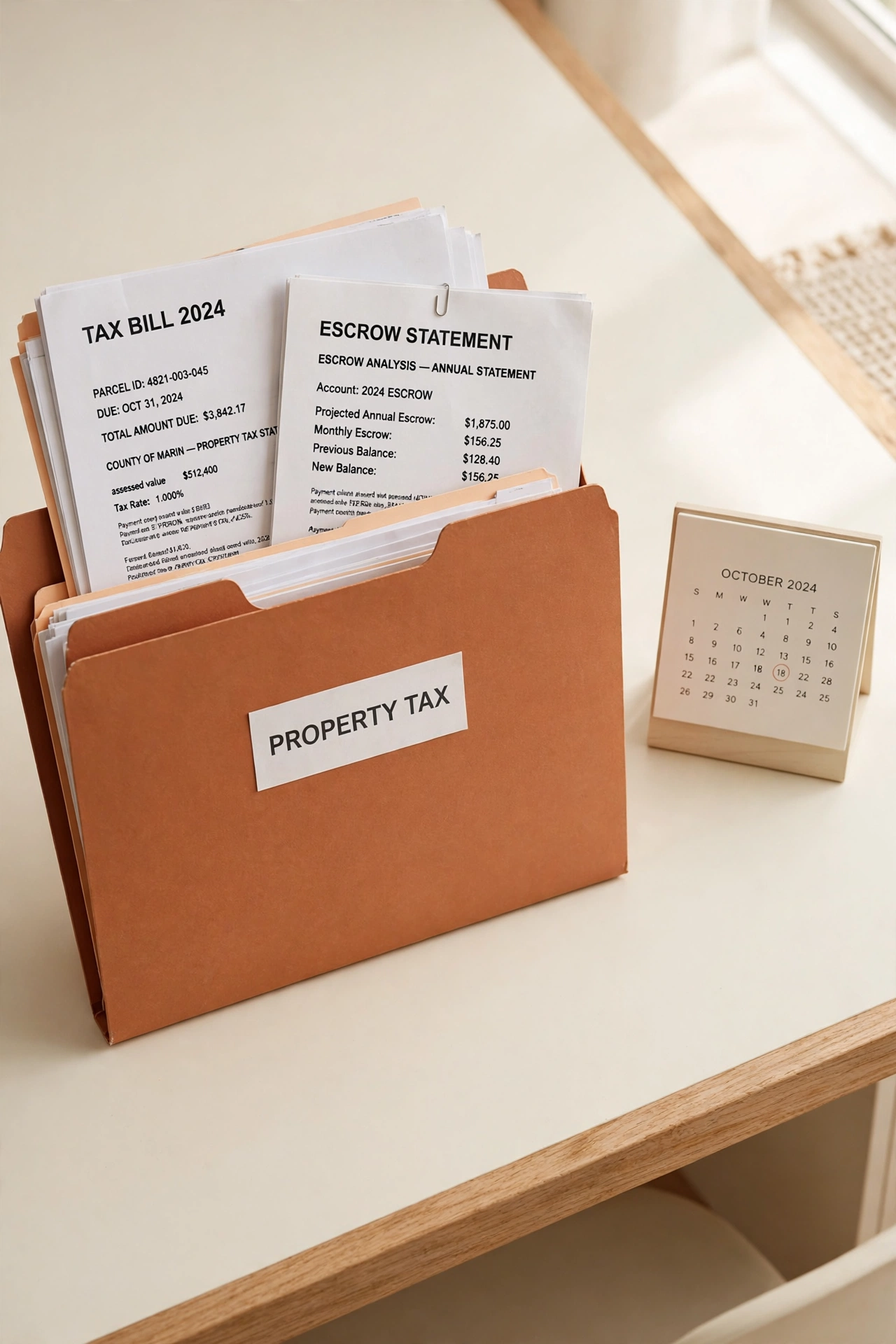
10. Label a Folder for Property Tax and Escrow Statements
Property tax bills and escrow statements arrive a few times a year, and they are easy to misplace between arrivals. A folder labeled PROPERTY TAX holds every bill, assessment notice, and escrow statement in order, with the newest paper at the front. You will always know what you owe and what you have already paid.
Add a small note inside the folder showing the due dates for the year, so a bill never slips past you. If your lender pays taxes from escrow, compare each statement with your mortgage statement to catch errors early. This folder also makes tax preparation simple, because every deduction document is already gathered.
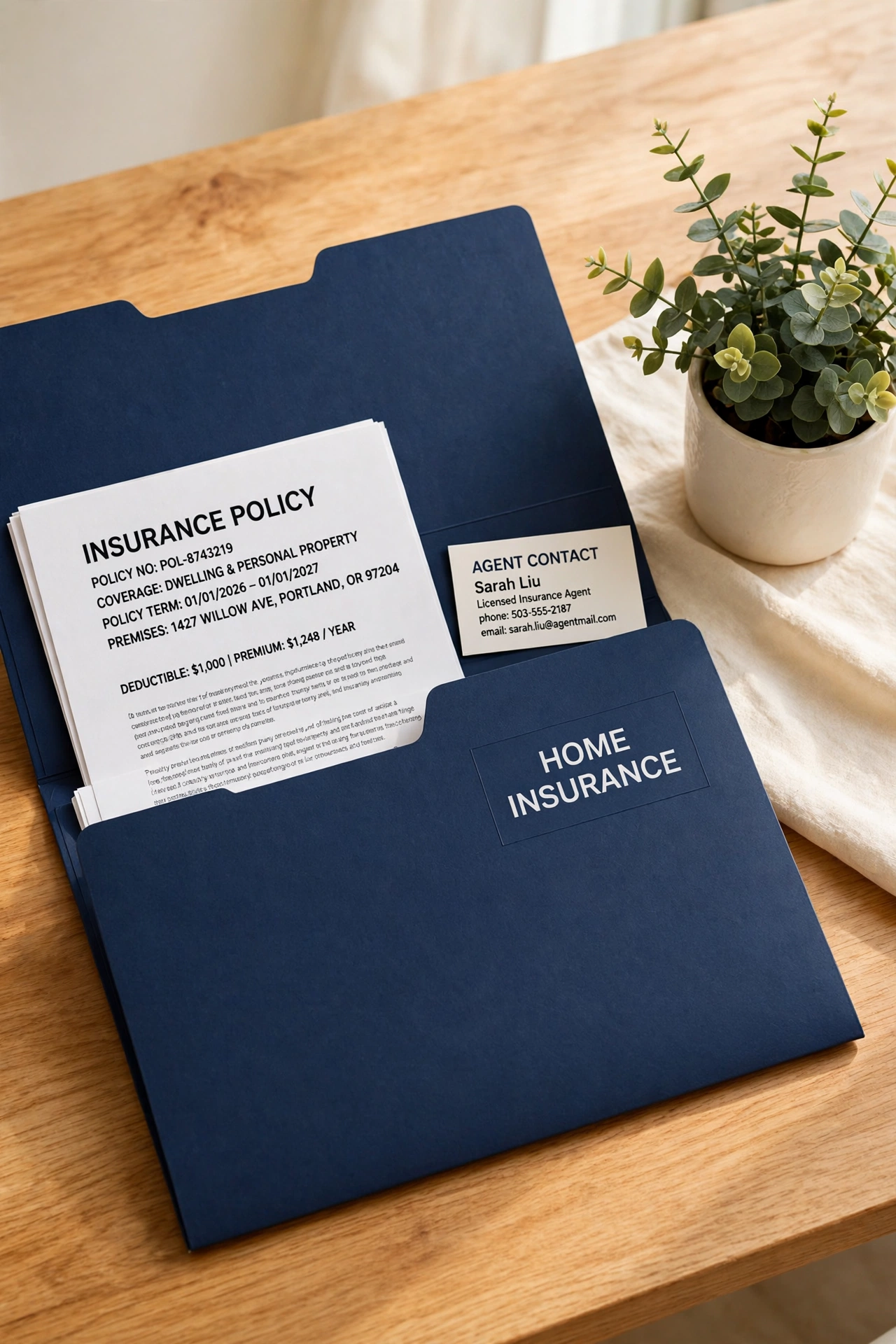
11. Store Home Insurance Papers With Policy Contacts
Your homeowner insurance policy is the paper you will need most urgently if something goes wrong, so it must be easy to find in a hurry. Store the full policy, the declarations page, and the agent contact card together in one folder, and write the claims phone number on the front in large print.
Place the insurance folder in the same spot as your closing binder, and tell every adult in the home where it lives. Review the policy once a year and replace old pages with new ones as renewals arrive. For more ways to protect vital records, these important document storage ideas will help you build a complete system for papers that truly matter.
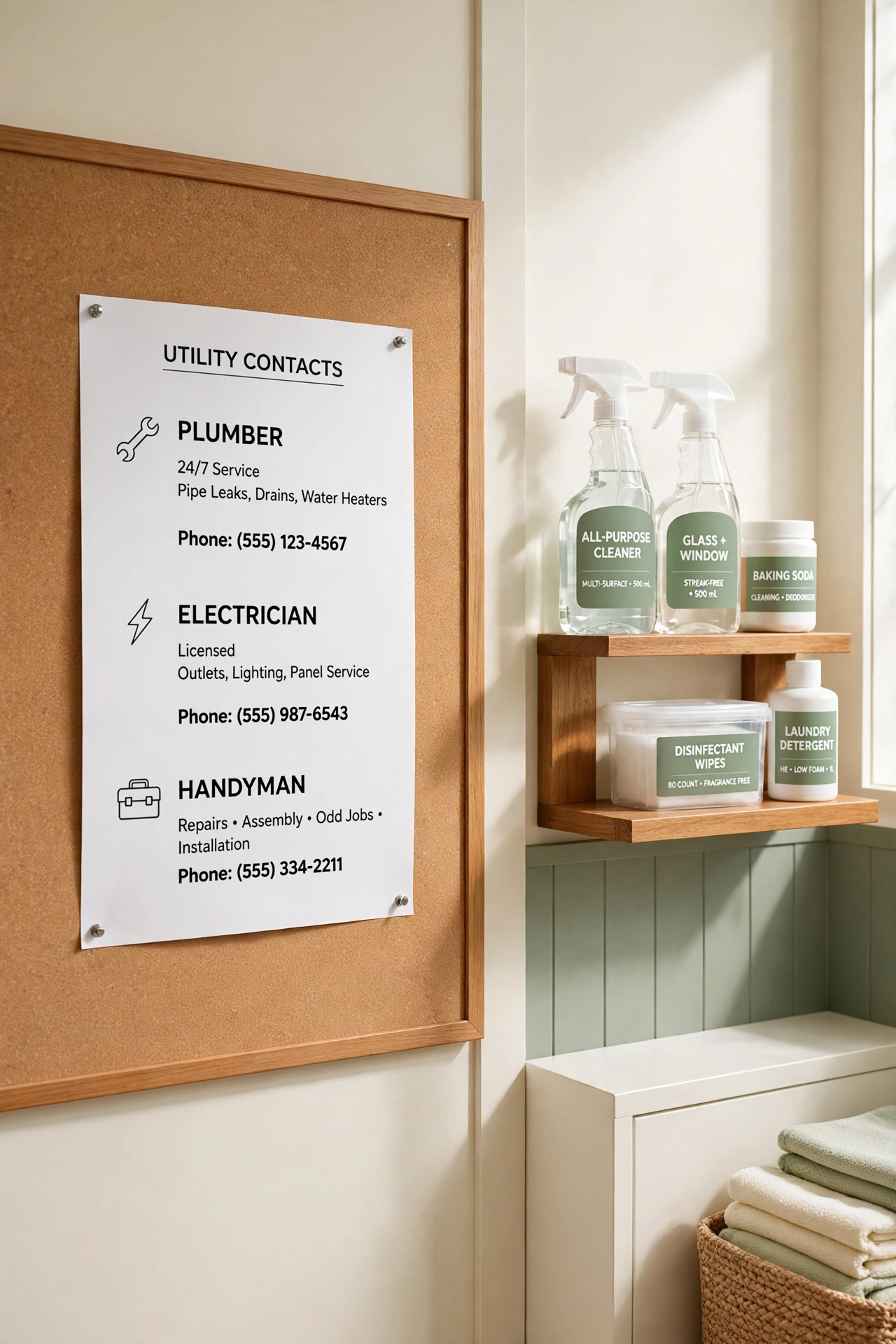
12. Make a Contractor and Repair Contact Sheet
First time homeowners quickly learn that they need a plumber, an electrician, and a handyman sooner than expected. A single contact sheet listing every contractor who worked on your home before the sale, plus the numbers your inspector and agent recommended, saves frantic searching when a pipe leaks at night.
Print the sheet, slip it into a clear sleeve, and tape it inside a kitchen cabinet door or pin it to a corkboard in the utility room. Update the sheet each time you hire someone new, and note the date and the work they did. A trusted list of contacts is one of the most practical papers a new homeowner can keep.
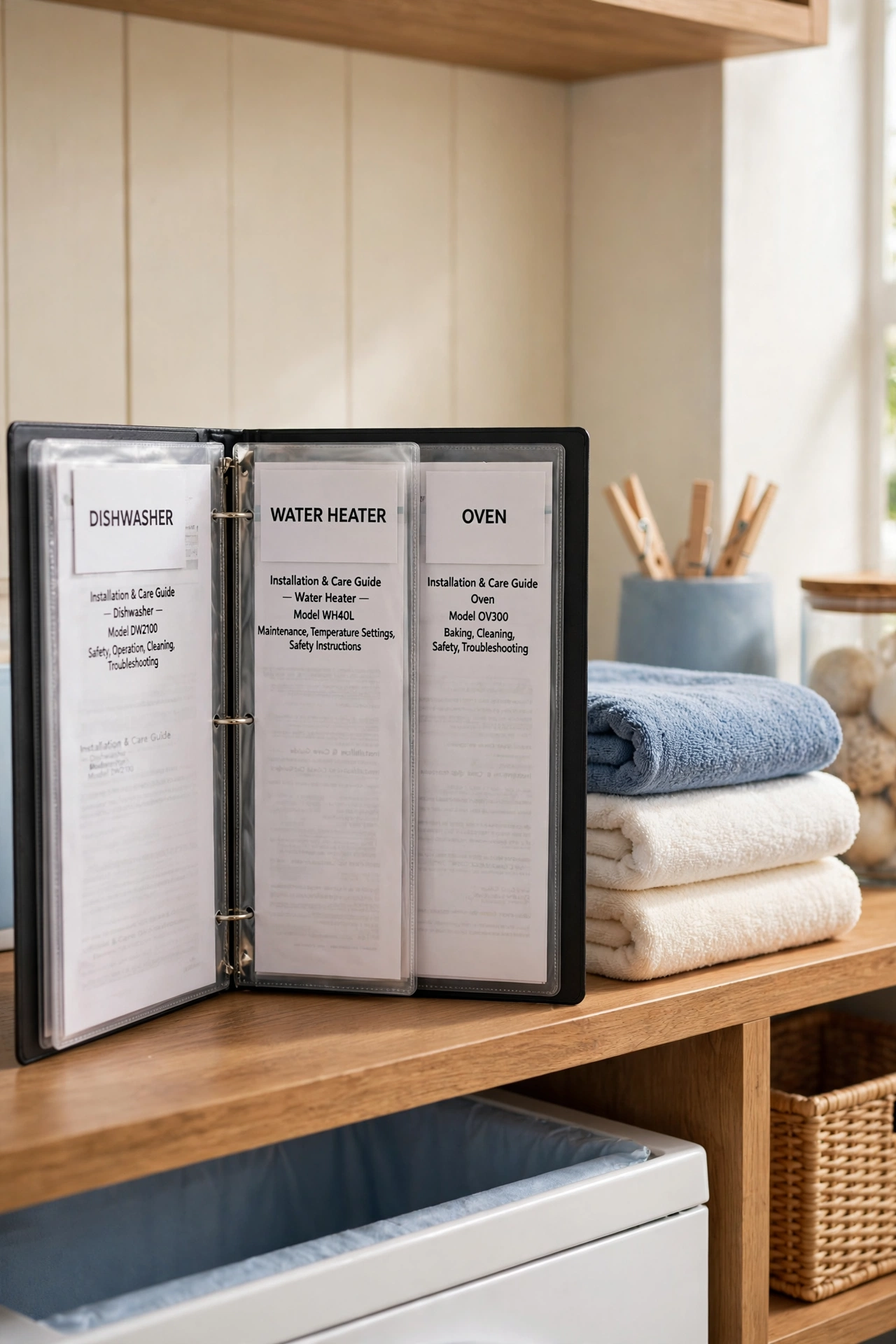
13. Keep Appliance Manuals in Labeled Sleeves
Every appliance in your new home came with a manual, and those booklets tend to vanish into drawers just when you need them. A slim binder with labeled clear sleeves, one per appliance, keeps every manual clean and easy to find. You can flip straight to the right sleeve when a warning light appears.
Label each sleeve with the appliance name and the room it lives in, such as DISHWASHER KITCHEN or WATER HEATER GARAGE. If a manual is missing, print the digital version from the maker website and slide it into the sleeve. A complete manual collection also helps future buyers, because it shows the home was well cared for.
14. Create a Move-In Checklist Binder Divider
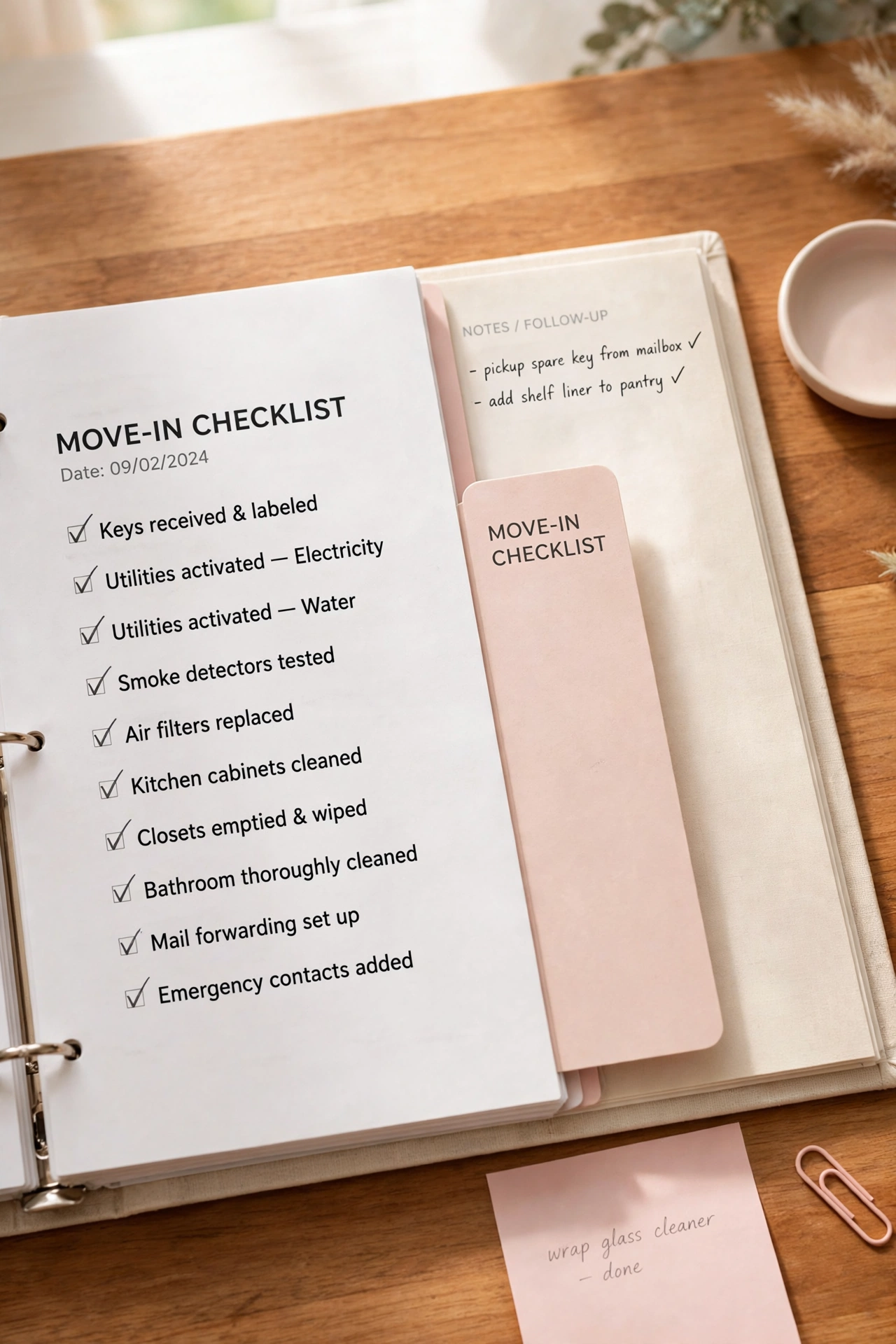
A move-in checklist turns a chaotic first week into a calm series of small tasks. Create a binder divider labeled MOVE-IN CHECKLIST and slip in a printed list of every task, from setting up utilities and changing the locks to registering warranties and updating your address. Checking off each task gives you a clear sense of progress.
Keep the checklist divider at the very front of your main home binder so you see it every time you open the binder. When every item is checked, move the completed list to the back of the binder as a record of your first week. Future moves will be easier because you already have a proven list to follow.
15. File HOA Documents and Community Rules Together
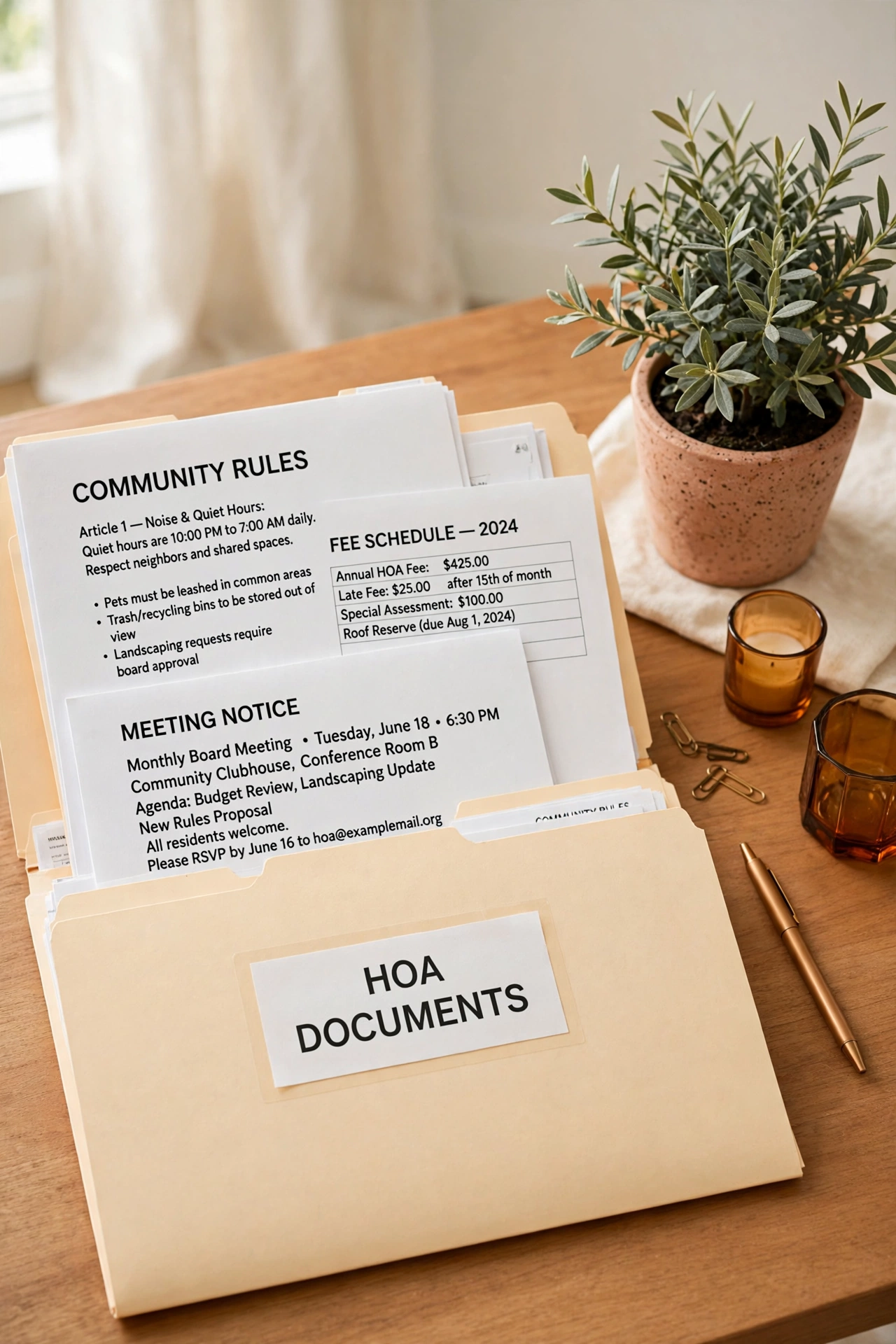
If your new home belongs to a homeowners association, you will receive a thick packet of rules, fee schedules, and meeting notices. Filing the entire packet in one folder labeled HOA keeps the rules easy to consult before you paint a fence, plant a tree, or park a trailer. Guessing at the rules can lead to fines you could have avoided.
Add the payment schedule and the contact details for the management office to the front of the folder. Each time a new notice arrives, file it behind the original packet so you can track how rules and fees change over time. Knowing the rules from the start helps you settle into the community without surprises.
16. Track Mail Forwarding and Subscription Changes
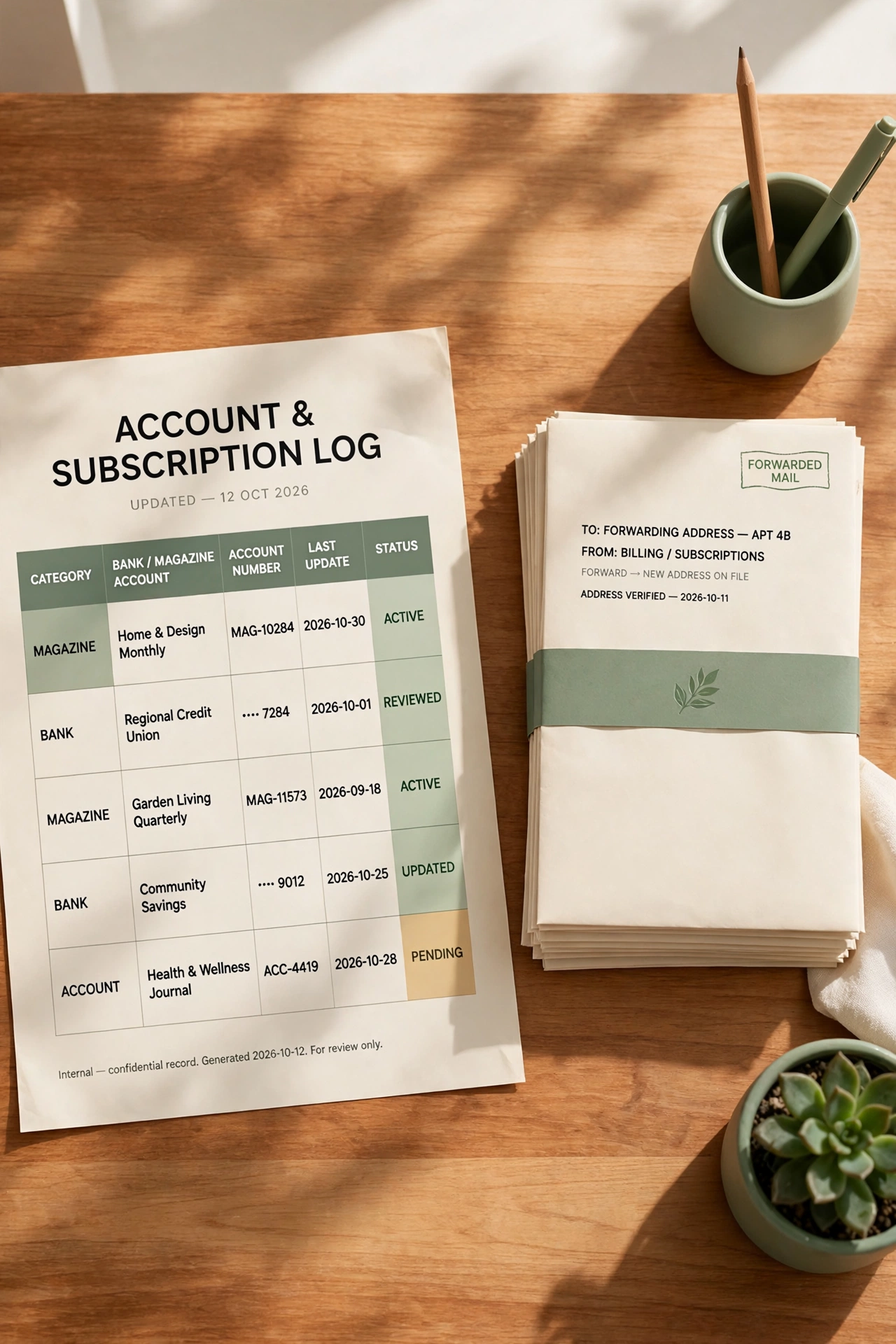
Mail forwarding from your old address usually lasts only a few months, so you need a record of which senders have your new address and which still use the old one. A simple log sheet listing every magazine, bank, and online account, with a column for the date you updated each one, keeps the transition tidy.
Keep the log sheet in your address change envelope and review it once a month until every sender is updated. When a forwarded letter arrives, check the sender against your log and update the address that same day. This habit prevents important mail from disappearing when forwarding expires.
17. Keep a Paint and Finish Record for Every Room
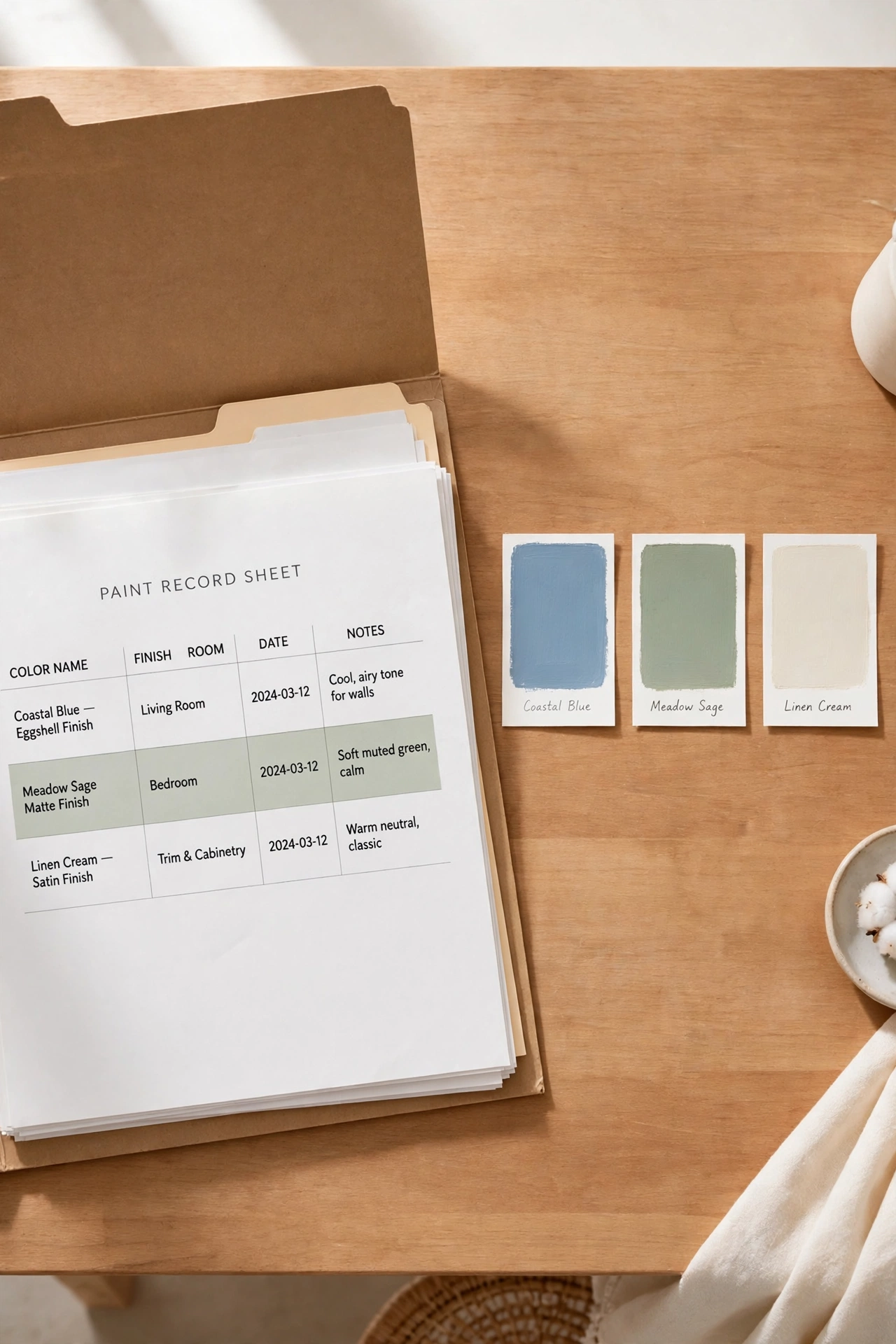
Every first time homeowner eventually needs to touch up a wall, and matching the original paint color from memory is nearly impossible. A paint record sheet for each room, listing the paint color name, the finish, and the brand, saves you from repainting a whole wall just to fix a scuff.
Ask the previous owner or the builder for the paint details before you close, and write them on the record sheet while the information is fresh. Store the sheets in a folder with a small painted sample card for each color. When you need a touch up, you can walk into the store with the exact details in hand.
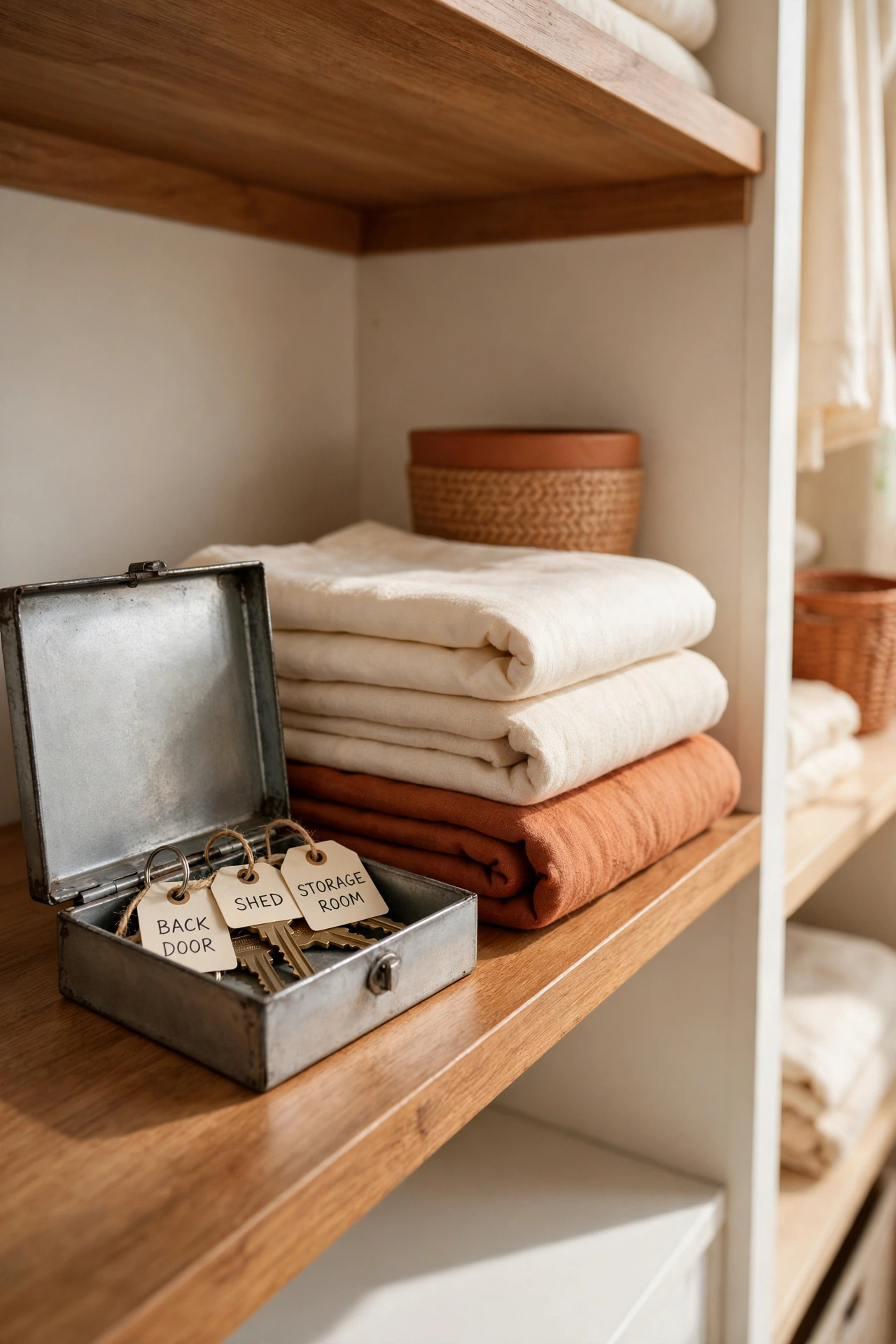
18. Store Spare Keys With Labeled Tags in a Lockbox
Spare keys for a new home should never sit loose in a drawer where they can be mixed up or lost. A small lockbox with labeled tags for each key keeps spares secure and clearly identified. Label each tag with the door or lock it opens, such as BACK DOOR, SHED, or STORAGE ROOM.
Mount the lockbox in a discreet spot, such as inside a closet or a utility room, and share the code only with people you trust. Keep one spare house key with a trusted neighbor or family member as well, in case you are ever locked out. A labeled lockbox turns a jumble of mystery keys into a system you can rely on.
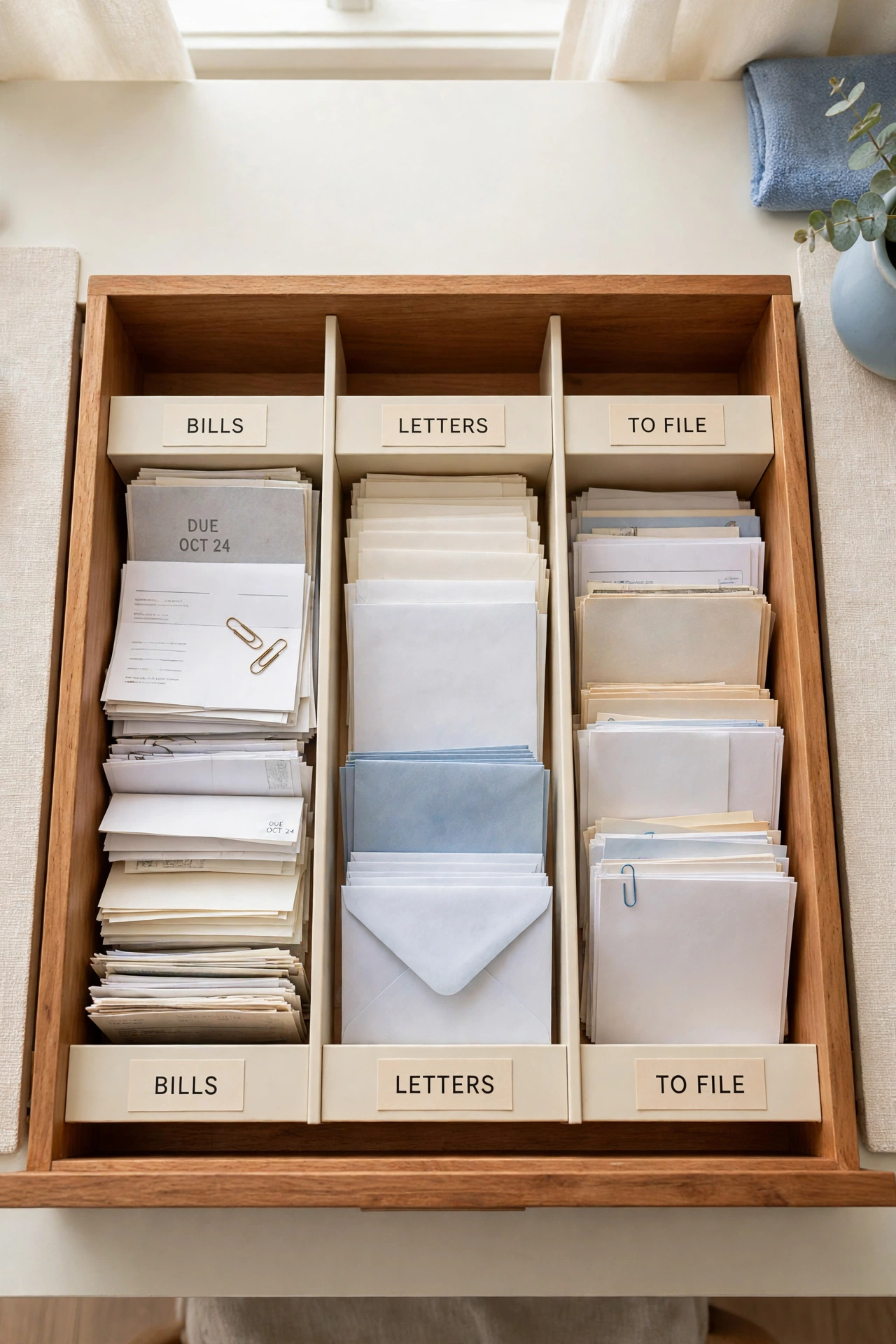
19. Reserve One Desk Drawer for New Home Paperwork
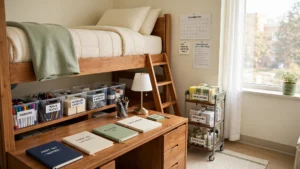
Even with binders and folders in place, new papers will keep arriving during your first year, and they need a landing spot. Reserve one desk drawer just for new home paperwork, fitted with small labeled dividers for bills, letters, and papers to file. An empty drawer that fills slowly is far better than a counter that fills fast.
Empty the drawer once a week, filing each paper into its proper binder or folder and recycling what you do not need. For drawer layouts and divider ideas that keep a workspace tidy, see these desk drawer organization ideas that will help you set up a drawer that truly works. A dedicated drawer keeps the whole system running long after move-in week ends.
Conclusion
Your first home comes with a stack of paper, but it does not have to come with a stack of stress. A closing binder, a warranty folder, a keys station, and a digital backup cover the papers that matter most, and the rest of the system grows naturally from those four habits. The sooner you set it up, the less time you will spend hunting for documents later.
Start with the binder and the folder for utilities this weekend, then add one idea at a time as new papers arrive. Within a month you will have a complete paperwork home for your new house, and you will know exactly where every important document lives. That peace of mind is one of the best housewarming gifts you can give yourself.
Frequently Asked Questions About New Home Paperwork Organization Ideas for First Time Homeowners
What paperwork should I organize first after buying my first home?
Start with the closing binder, because it holds the deed, the settlement statement, and the loan agreement. Next, set up the mortgage folder and the utility folder, since bills and statements arrive within days of closing. Once those three are in place, add the warranty binder and the keys station.
How long should I keep closing documents and mortgage statements?
Keep closing documents for as long as you own the home, and for several years after you sell it. Mortgage statements should be kept for at least three years, and many homeowners keep them for the life of the loan. When in doubt, keep the paper, because a missing document is far harder to replace than a full folder is to store.
Should I keep paper copies or scan everything?
Keep both. Paper originals matter for legal documents such as the deed, while scanned copies protect you if the originals are damaged or lost. Scan every important document in the first week, store the digital copies in two places, and keep the paper originals in labeled binders and folders.
Where is the best place to store home paperwork?
Store paperwork in one consistent spot, such as a shelf in a home office, a closet shelf, or a dedicated drawer. The spot should be dry, easy to reach, and away from direct sunlight. Avoid attics and damp basements, because heat and moisture damage paper quickly.
What should I do with paperwork from the previous owner?
Keep any manuals, warranties, and paint records the previous owner left behind, because they describe your home and its systems. File them with your own records and label them clearly. Shred any papers that contain the previous owner’s personal details, such as old bills or bank letters, rather than keeping them.

Hi, I’m Emily! I turn messy corners into cozy, organized spots. DreamNestDecor is where I share simple, practical home ideas — decor, organization, and small-space solutions that work in real life, not just in photos. Every idea here is carefully researched before it’s shared.