Picture this: you open a kitchen cabinet and a stack of pot lids slides toward you, spice jars hide behind each other, and the mugs you use every morning sit buried at the back of a crowded shelf. Meanwhile, the walls around you stand completely empty, doing nothing at all. That blank space is the most underused storage in the whole kitchen.
You do not need a bigger kitchen or a costly remodel to fix the clutter. A few well-chosen wall solutions can move daily essentials out of packed cabinets and onto open, reachable surfaces. These 22 kitchen wall storage ideas will help you turn bare walls into hardworking storage, from floating shelves and pegboards to lid racks, spice racks, and mug bars that keep everything visible and close at hand.
1. Mount a Slim Lid Rack Beside the Stove
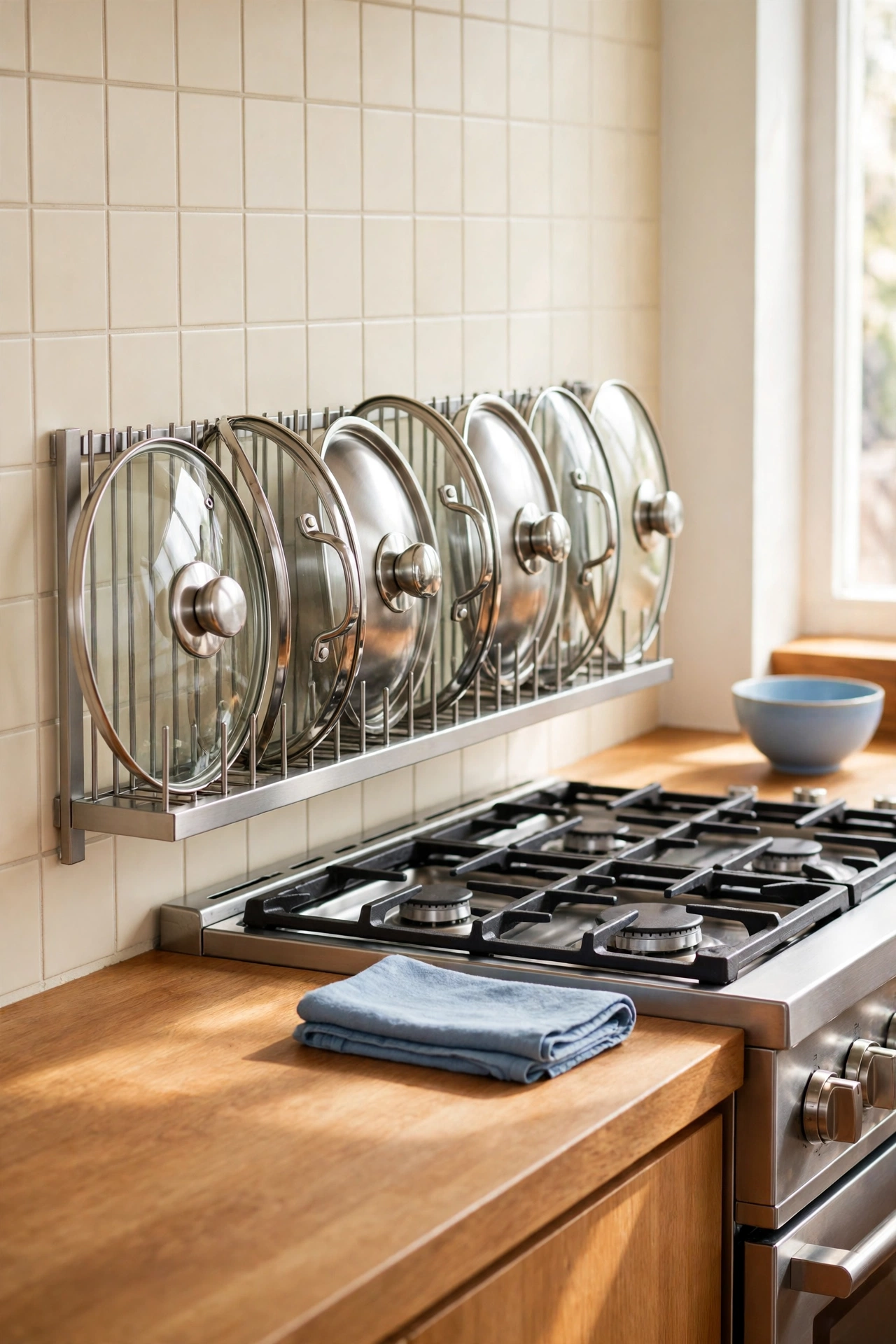
Pot lids are some of the most awkward items to store in a kitchen, because they slide around in cabinets and bury themselves under stacks of pans. A slim wall-mounted lid rack solves the problem by giving every lid its own upright slot near the cooking area. You can see each size at a glance and pull out exactly the one you need without digging through a pile.
Place the rack on a small stretch of wall beside the stove or next to a cabinet, so lids stay within reach while you cook. Choose a rack with dividers spaced wide enough for your largest lid, and anchor it firmly into wall studs or with strong wall anchors. If drilling is not an option, a heavy-duty adhesive rack on a clean, smooth wall can hold lighter lids just as well.
2. Layer Metal Rail Shelves Above the Sink
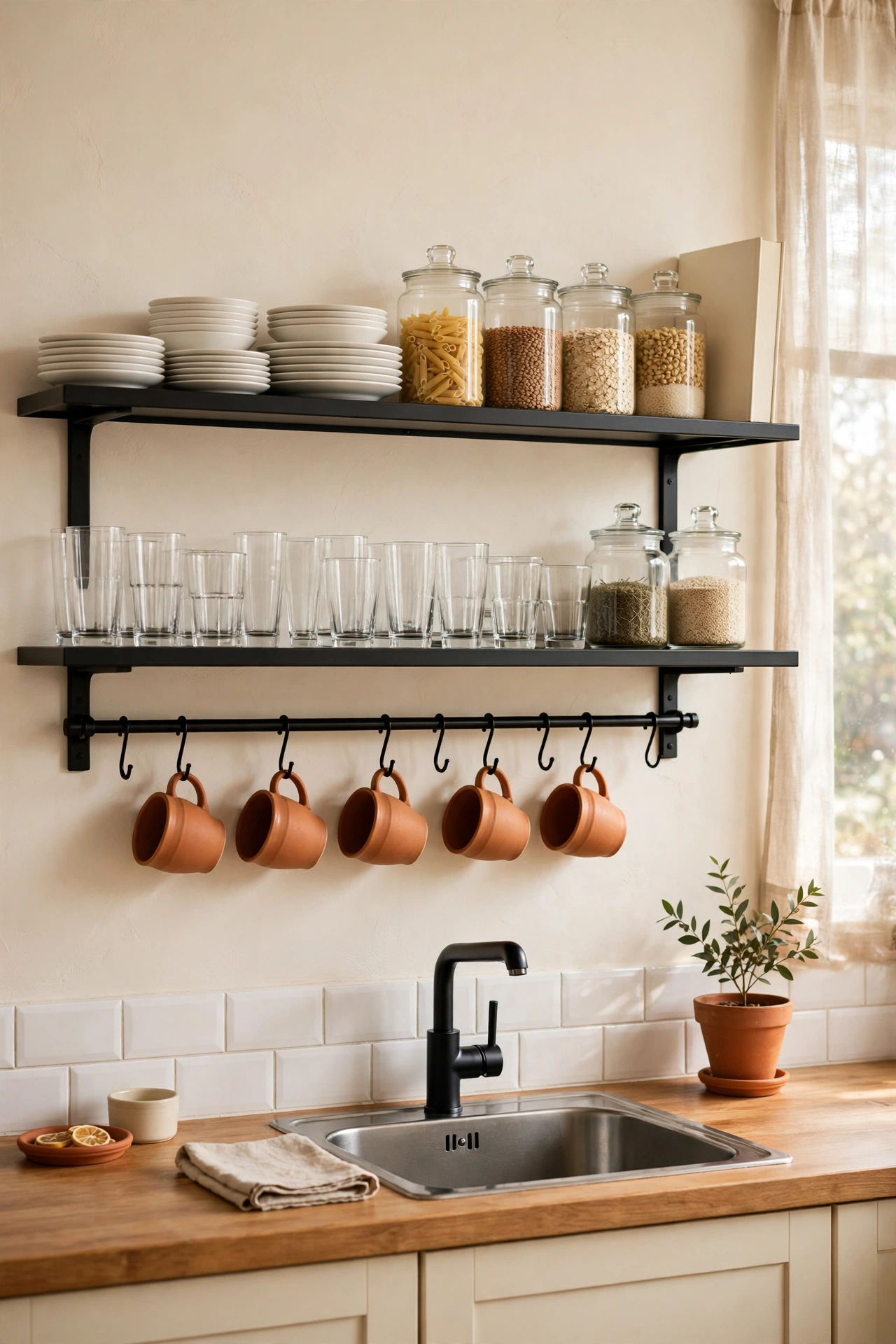
The blank wall above a kitchen sink can carry far more than a small window or a strip of tile. Long metal rail shelves turn that space into a full storage system, with open tiers for plates, jars, glasses, and even cookbooks. Everything stays visible and easy to reach, which saves time during cooking and cleanup.
Install the shelves in layers with generous space between each tier, so tall glasses and stacked plates never feel crammed. Add a bottom rail with hooks for cups or small tools, and the wall works even harder without adding bulky cabinets. This open, upright arrangement makes a small kitchen feel lighter while giving cabinets room to breathe.
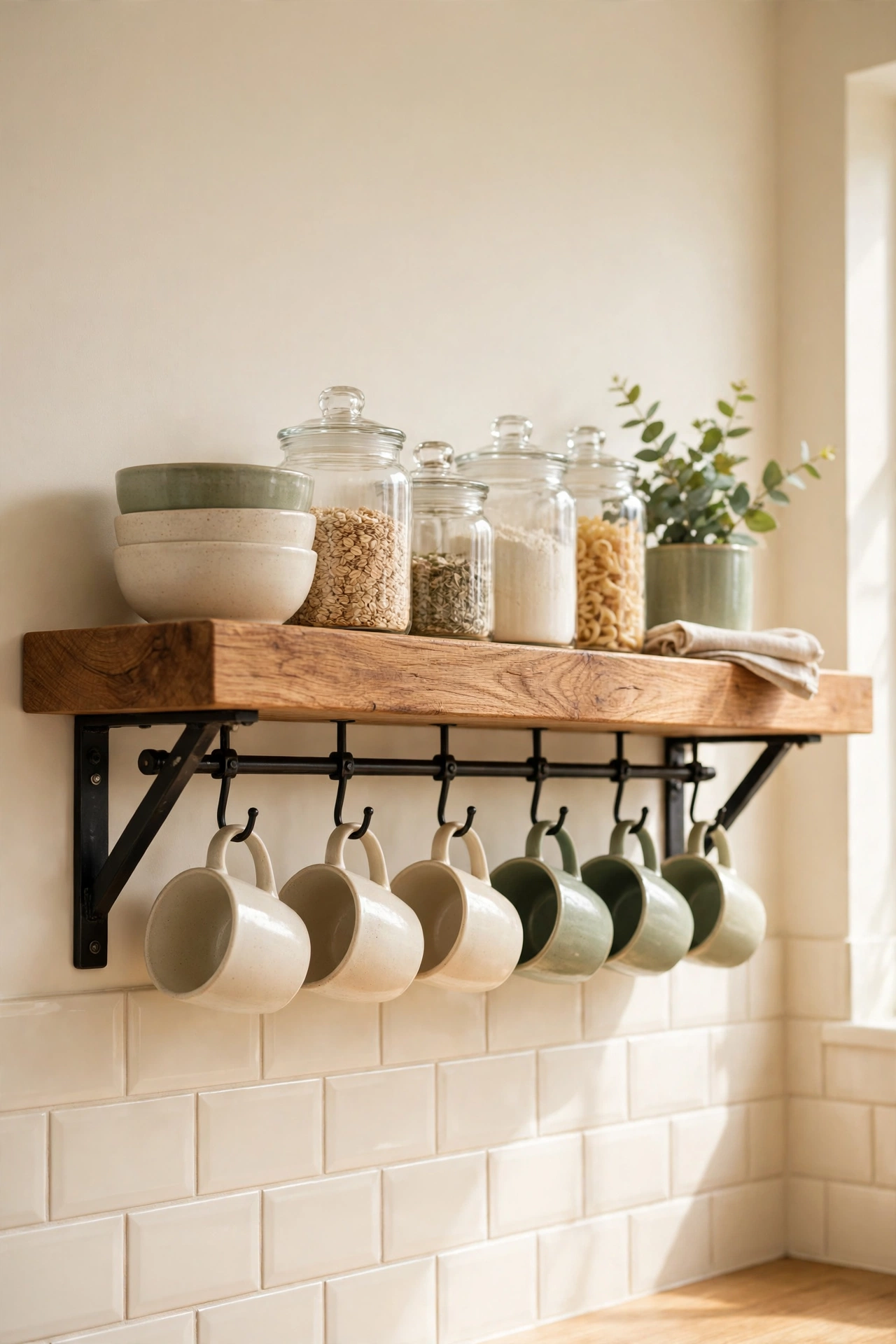
3. Hang Mugs From Hooks Under a Wooden Shelf
Mugs take over cabinet shelves quickly, especially when the whole family has a favorite cup for morning coffee or tea. A simple row of hooks under a wooden shelf moves the mugs onto the wall, where they hang within easy reach and free up an entire shelf inside the cabinet. The space below the shelf stops going to waste.
Use the shelf above for bowls, jars, and a few decorative pieces, and let the hanging mugs fill the area underneath. Choose a sturdy shelf with strong metal brackets if you plan to stack heavier bowls on top. Placed above a backsplash or near a coffee corner, one small wall becomes a complete and charming storage spot.
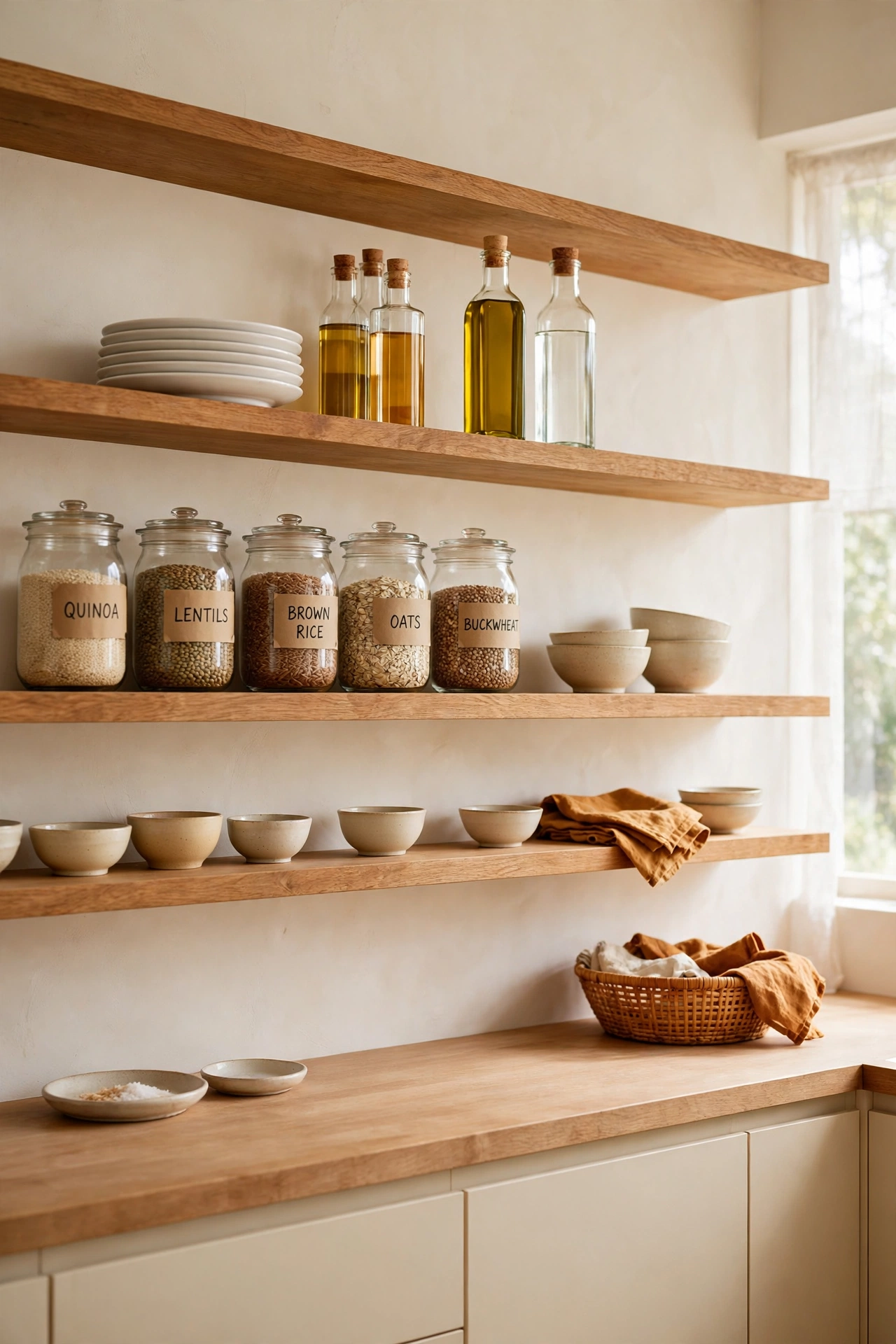
4. Run Long Open Shelves Along a Whole Wall
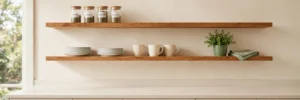
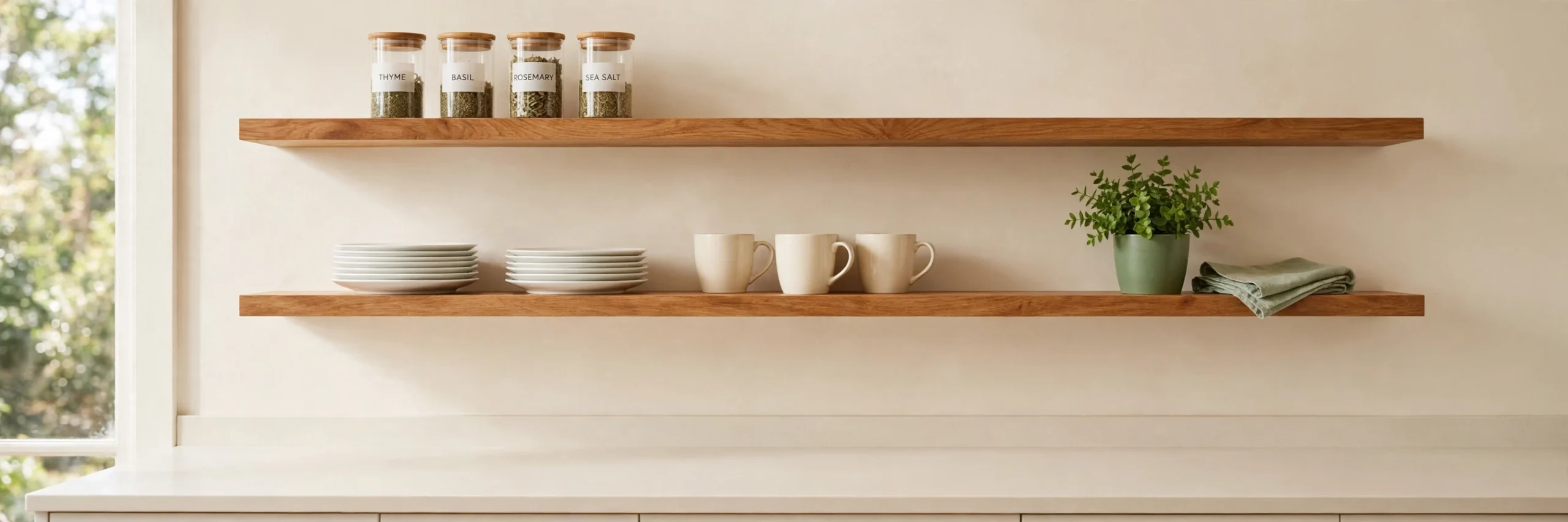
Empty wall space above a countertop can hold far more than framed prints and small plants. Long wooden open shelves give you room for plates, jars, and everyday kitchen items that would otherwise hide behind cabinet doors. Because everything stays visible, you never waste time hunting for the bowl or jar you need.
Spacing matters more than the number of shelves. Leave enough height between tiers for tall bottles and stacked plates so the layout never feels tight. Mix in a few decorative touches among the useful items to keep the shelves from looking cluttered. Along a full wall, open shelving works especially well in kitchens with few upper cabinets, as long as strong brackets support the weight of dishes.
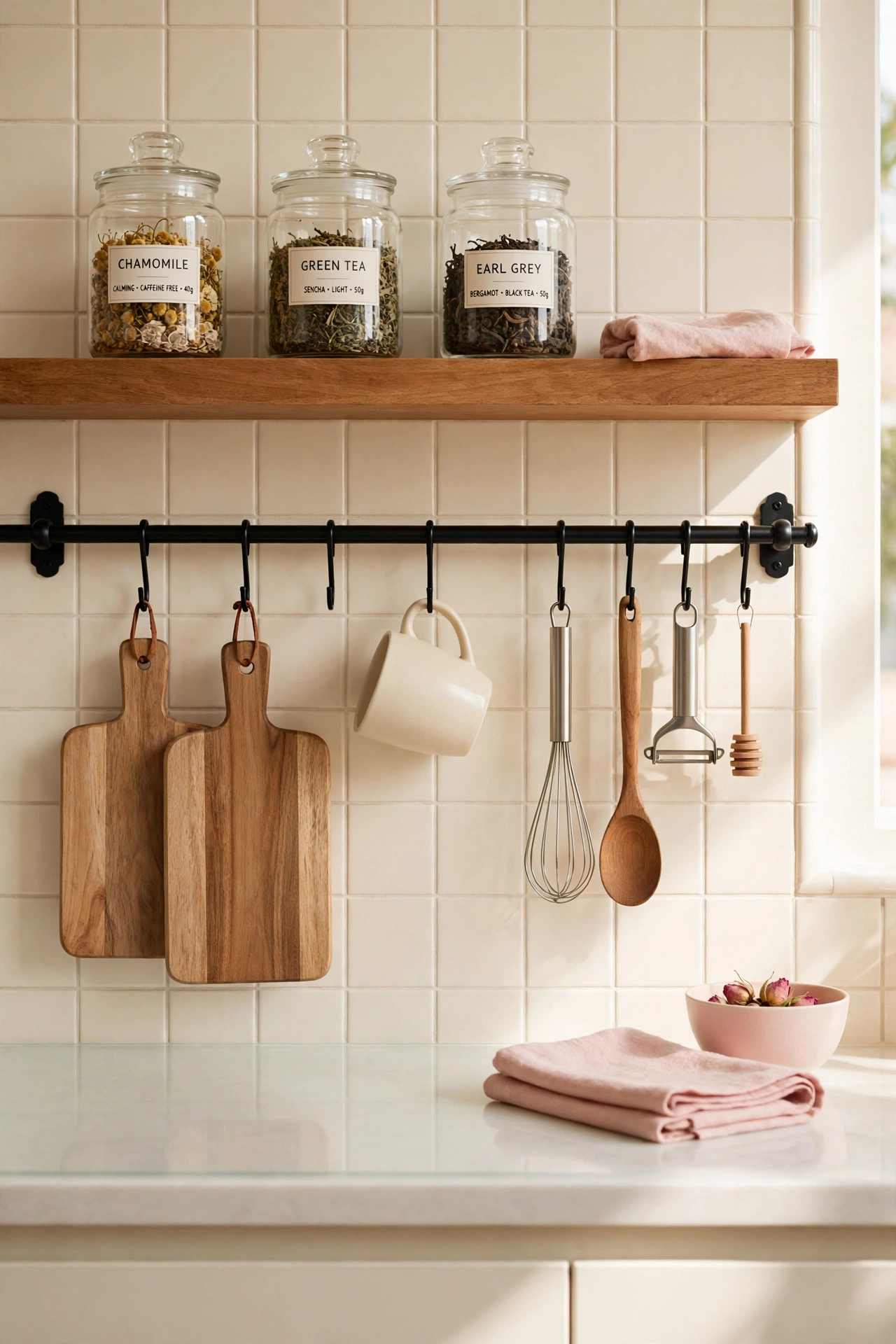
5. Fix a Hook Rail Near the Prep Area
Morning routines run smoother when everyday items stay within reach instead of hiding inside cabinets. A simple wall rail with hooks holds cups, cutting boards, and small tools right where you use them, and the counter below stays clear. The kitchen feels bigger the moment flat wall space starts working for storage.
Pair the rail with a floating shelf above it for a complete setup. The shelf holds jars, tea containers, or decorative pieces, while the hooks below carry the items you grab most often. A short stretch of wall near the prep area or coffee station is the ideal spot, because it turns an overlooked corner into genuinely useful storage.
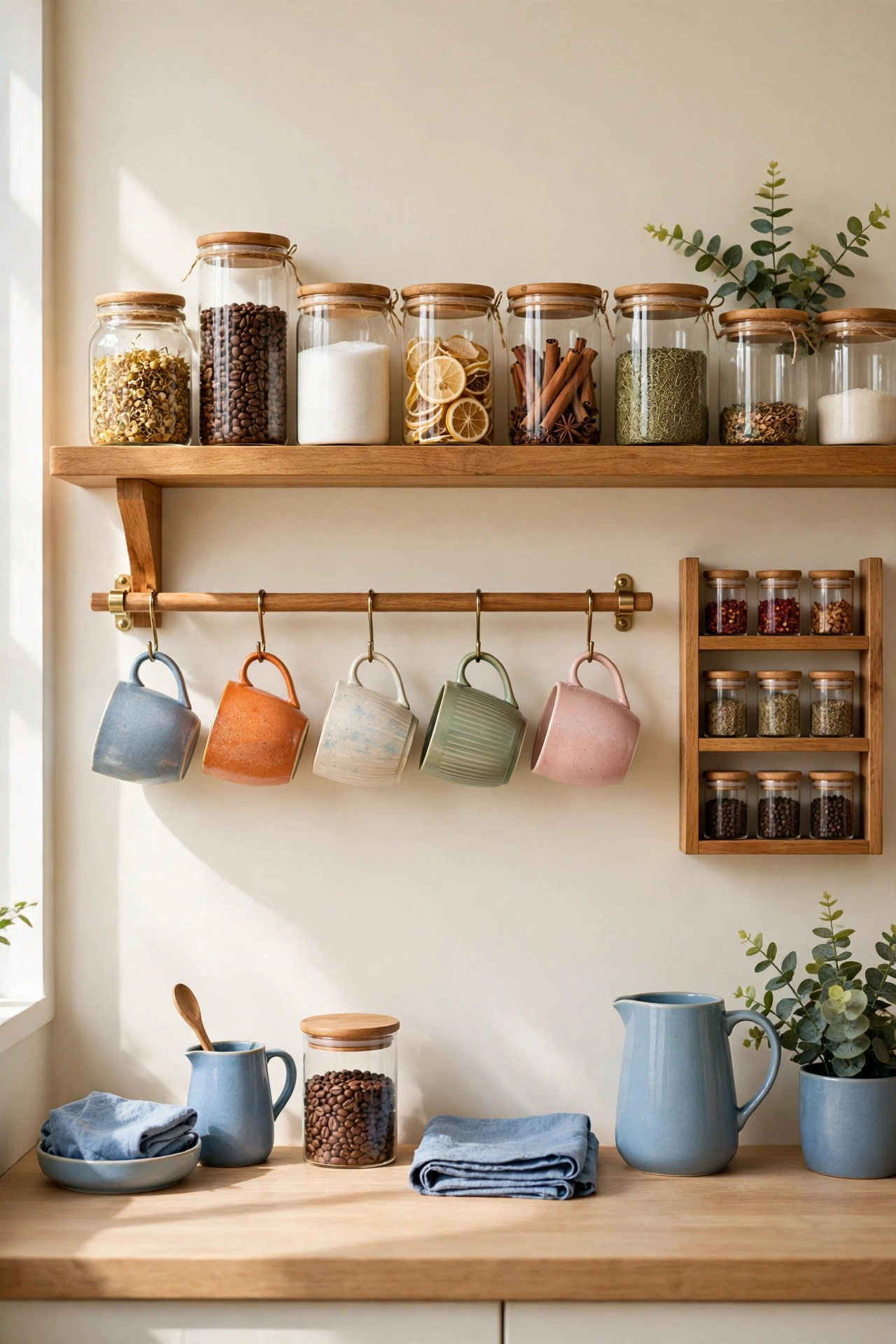
6. Create a Mug Bar With a Rod Under a Shelf
Cabinet space disappears fast once mugs start piling up, and a dedicated mug bar gives them a home of their own. A simple rod mounted under a shelf holds every mug where you can see it and grab it, which matters most on busy mornings. One small wall becomes a coffee or tea station without any new furniture.
Use the shelf above for larger items like jars, books, or decorative pieces, and keep the hanging section below for the cups you use daily. A slim wall-mounted spice rack beside the bar keeps flavorings close without stealing counter space. Mount the rod low enough that mugs hang freely and never touch the surface below.
7. Add a Compact Shelf With a Towel Bar Below
Small wall sections can do more than hold decor when you choose a unit that combines storage and function. A compact wooden shelf with tiers for oils, spices, and cutlery, plus a bar underneath for a kitchen towel, packs a surprising amount of usefulness into one small footprint. The towel stays off the counter and the cooking essentials stay at eye level.
Keeping frequently used items at eye level makes cooking faster and easier, and small baskets on the tiers keep jars and containers tidy. Place the unit in the prep area or beside the sink, where both the towel and the storage stay close at hand. One simple wall unit can replace several scattered items and make the whole kitchen feel more organized.
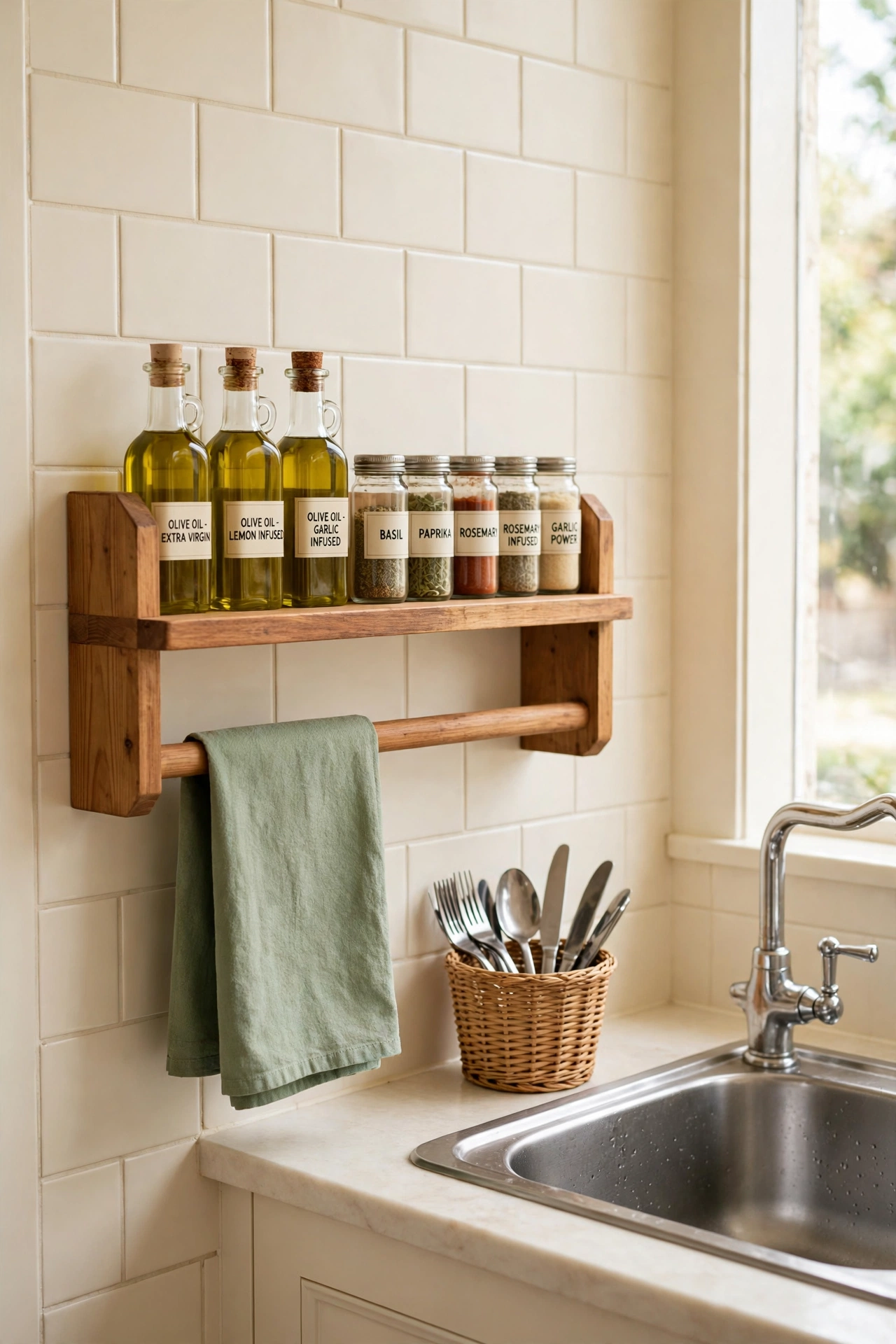
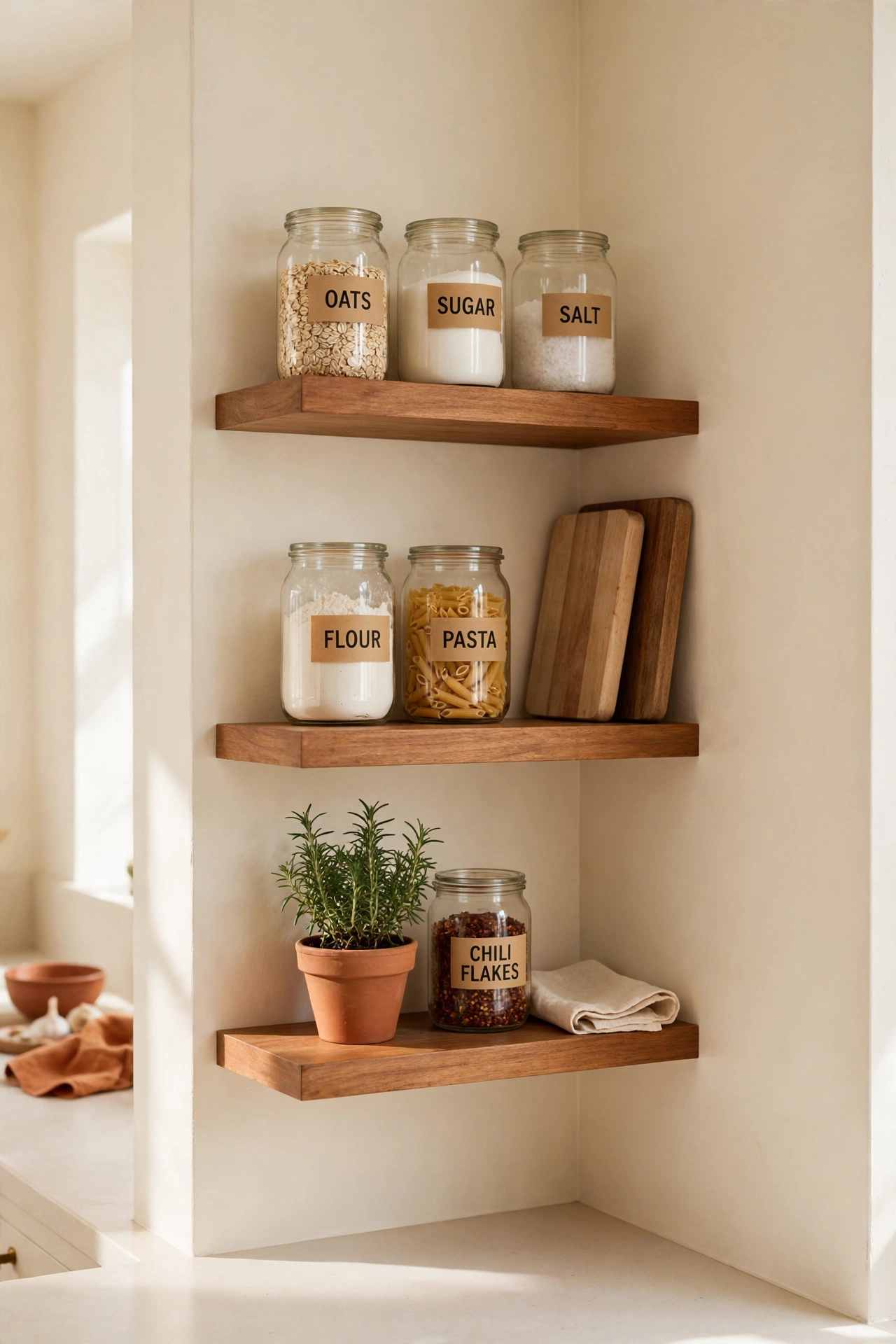
8. Float Shelves Into an Awkward Corner
Corner walls often sit empty even though they stand right where storage is needed most. A few floating shelves fitted into the corner turn that awkward space into a useful home for jars, cutting boards, and small plants. Items stay close without blocking the main work area, and stacking upward uses height instead of precious wall width.
Use the lower shelf for cutting boards or trays and the upper shelves for lighter containers and decorative pieces. Placed near the sink or prep area, a corner setup becomes even more practical because everything is reachable while you work. If your corner includes cabinet space too, these corner kitchen cabinet organization ideas will help you make the inside of the cabinet work just as hard as the wall above it.
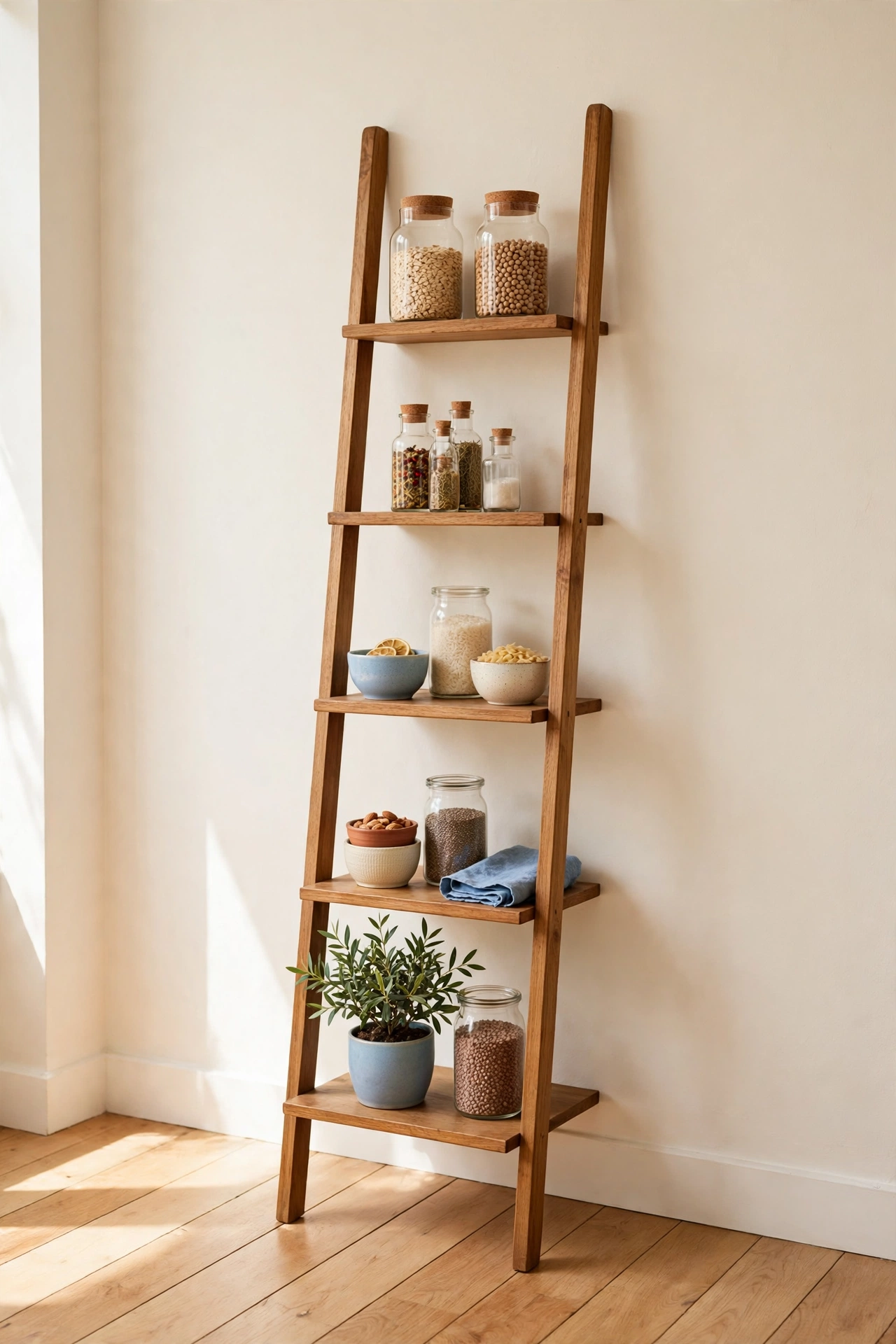
9. Lean a Tall Ladder Shelf Against a Blank Wall
Tall empty walls can hold more storage than you might expect when you use vertical shelving that climbs upward instead of spreading outward. A slim ladder shelf leaning against the wall stacks jars, bottles, and small kitchen items on tiered levels, with a different purpose for each row. The slim side frames keep the design light, so the kitchen still feels open.
Place everyday items on the lower shelves and lesser-used or decorative pieces higher up, and leave breathing room between items so nothing looks crowded. Set the ladder shelf near a prep area or on a blank wall where it never blocks movement. It is an easy way to add a large amount of storage without making the room feel full.
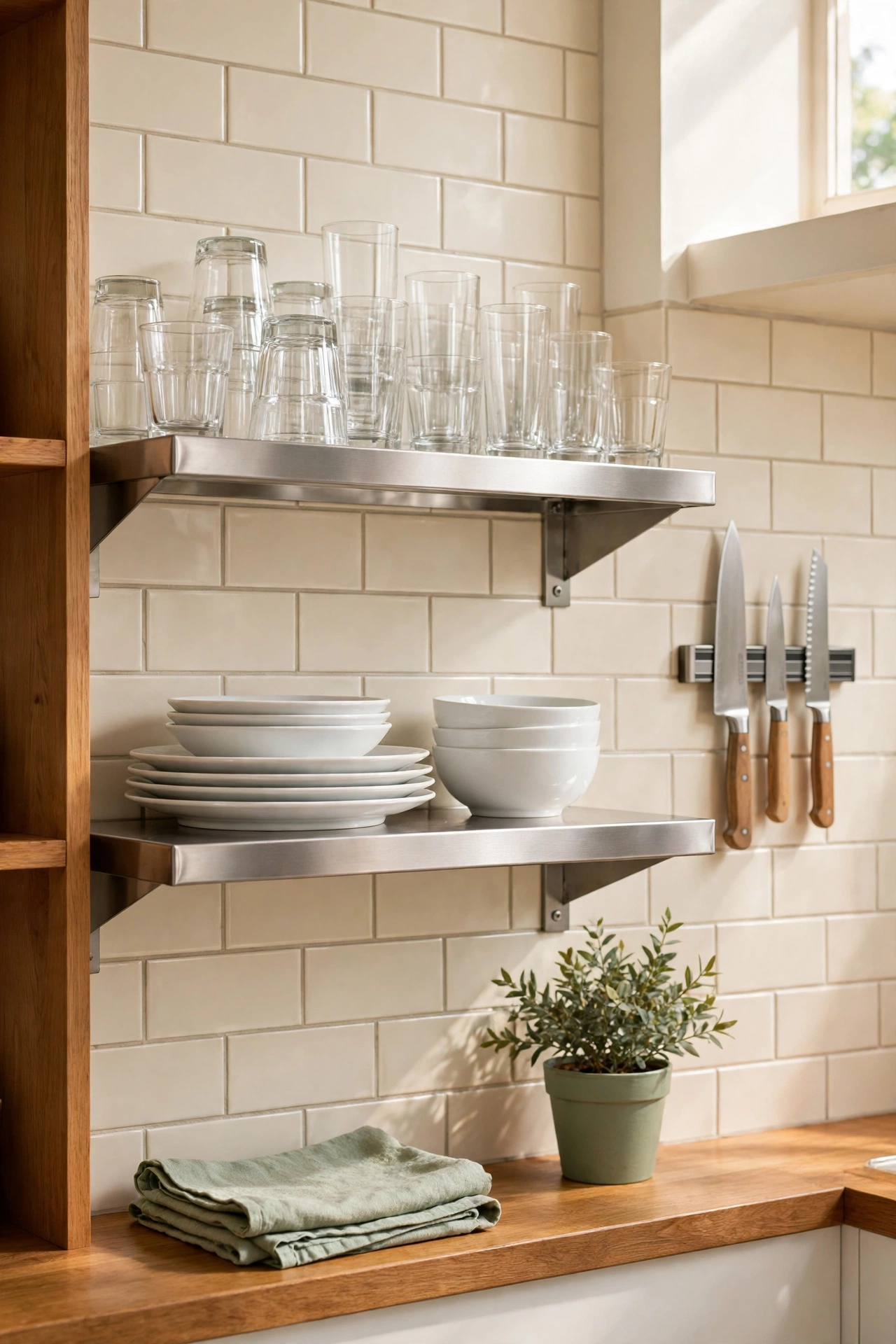
10. Mount Stainless Steel Shelves for Open Dish Storage
Wall-mounted steel shelves keep dishes, glasses, and bowls out in the open, where you can see and grab them in seconds. The open design suits small kitchens because it never makes the room look heavy or closed off, and the metal finish adds a clean, professional feel to the wall. Everyday plates live where you use them instead of hiding in cabinets.
Space the shelves to fit different items without stacking everything on top of each other, with glassware on the top tier and everyday dishes below. A small magnetic strip mounted nearby for knives or tools finishes the setup without taking extra space. Steel shelves wipe clean easily, which makes them a practical choice above busy prep zones.
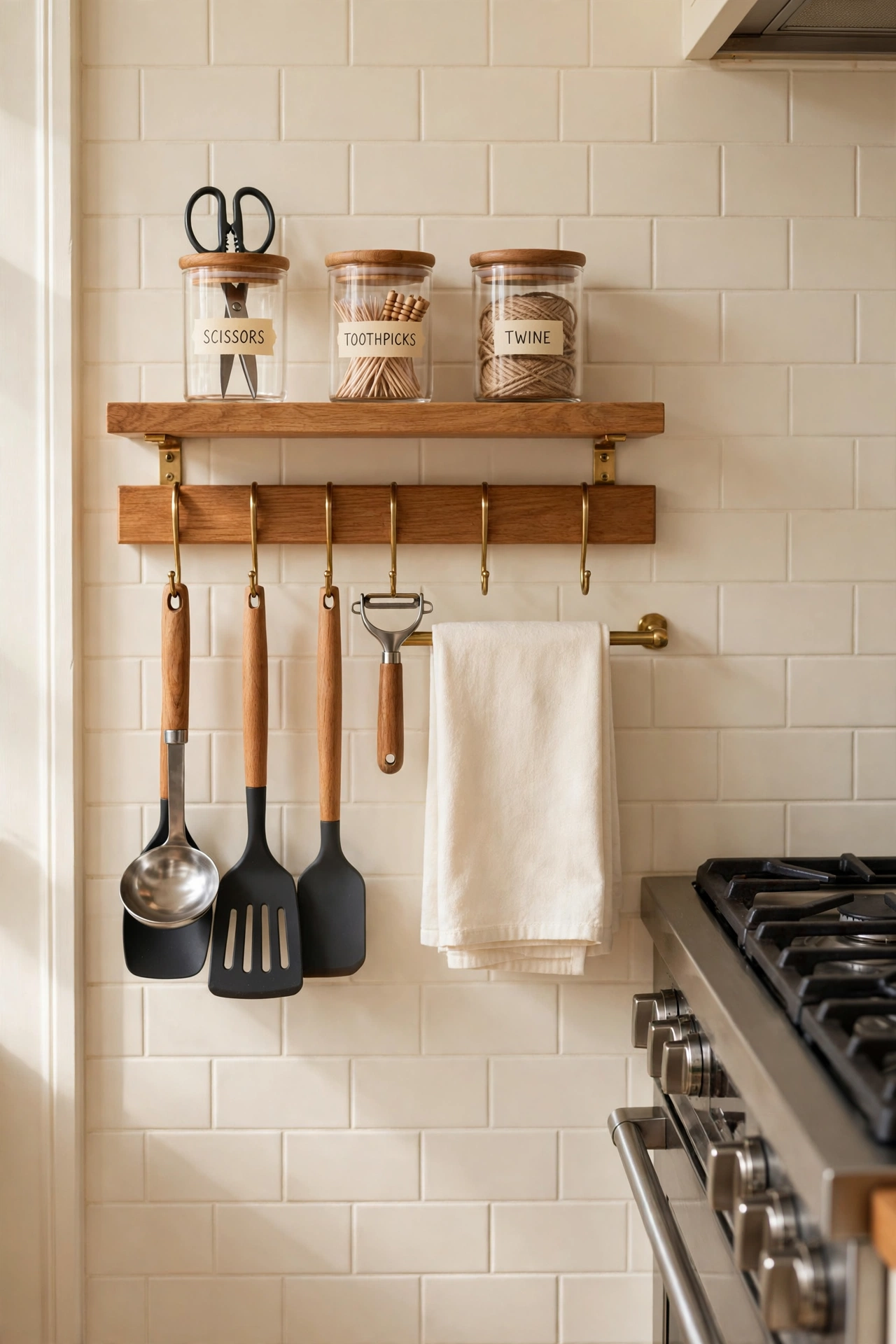
11. Build a Wall-Mounted Utensil Station
Cooking gets messy fast when utensils scatter across drawers and countertops. A wall-mounted tool station gathers everything into one place beside the stove, with hooks for ladles, spatulas, and peelers, and an upper section that keeps knives, scissors, and small tools safe and organized. Built-in holders for spoons or chopsticks make the station even more useful.
Mount a towel bar underneath for drying hands without leaving the cooking zone, and keep the whole station within arm’s reach of the stove or prep area. Open storage like this saves time because you can see every tool at a glance. For the utensils that stay in drawers, these kitchen utensil drawer organization ideas will help you sort the rest of the collection just as neatly.
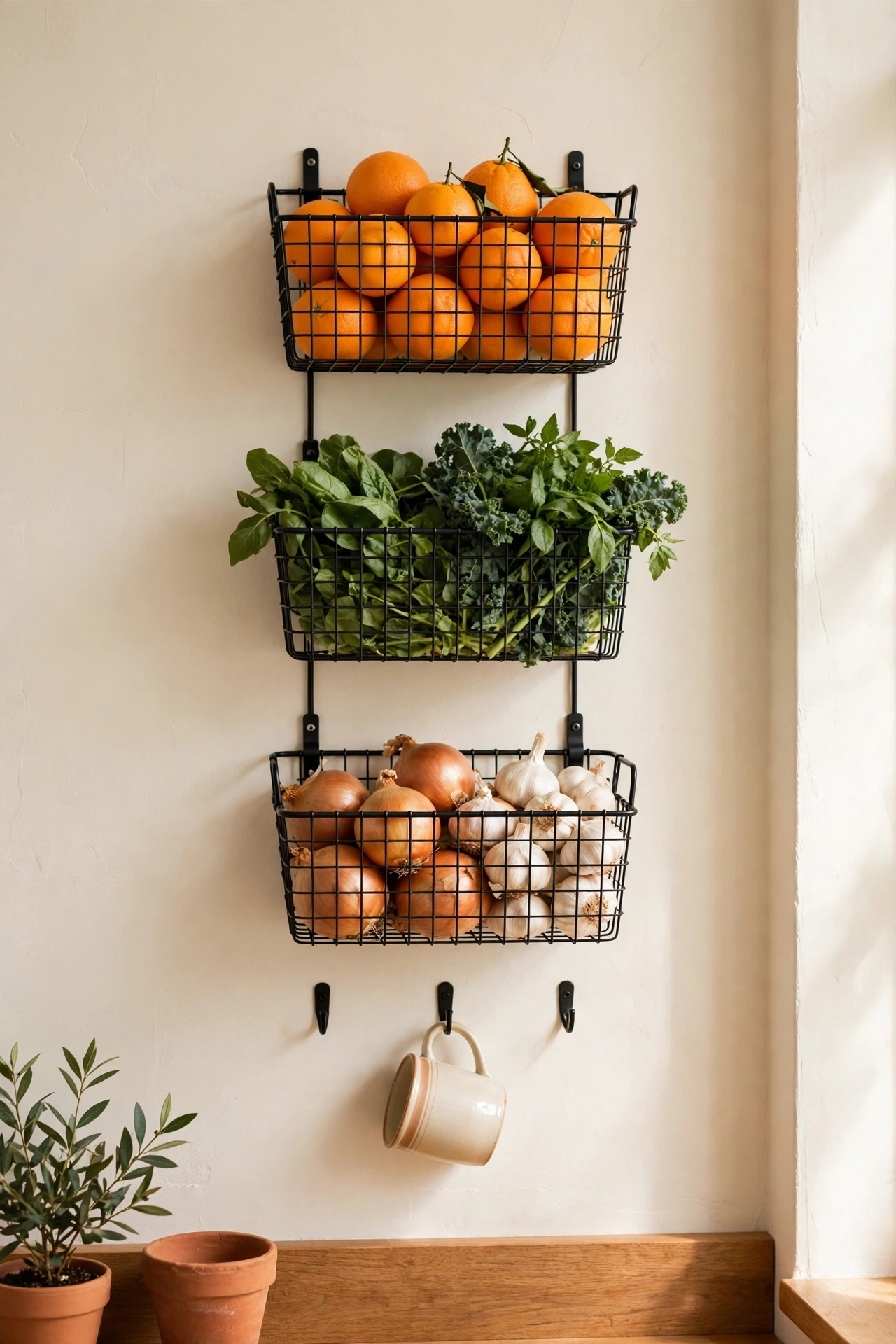
12. Hang Wire Baskets for Produce on the Wall
Fresh fruit and vegetables often end up scattered across the counter or forgotten inside drawers. Wire baskets mounted on the wall keep produce visible and easy to reach, which also helps cut down on waste because you can see exactly what you have before it spoils. Vertical baskets use height instead of surface space, which suits small kitchens well.
Give each level a different job, such as fruit on top, vegetables in the middle, and snacks below, and add hooks at the bottom for mugs or small kitchen items. Place the baskets near the prep area or sink so ingredients stay close while you cook. Open wire lets air circulate around produce, which helps it stay fresh longer.
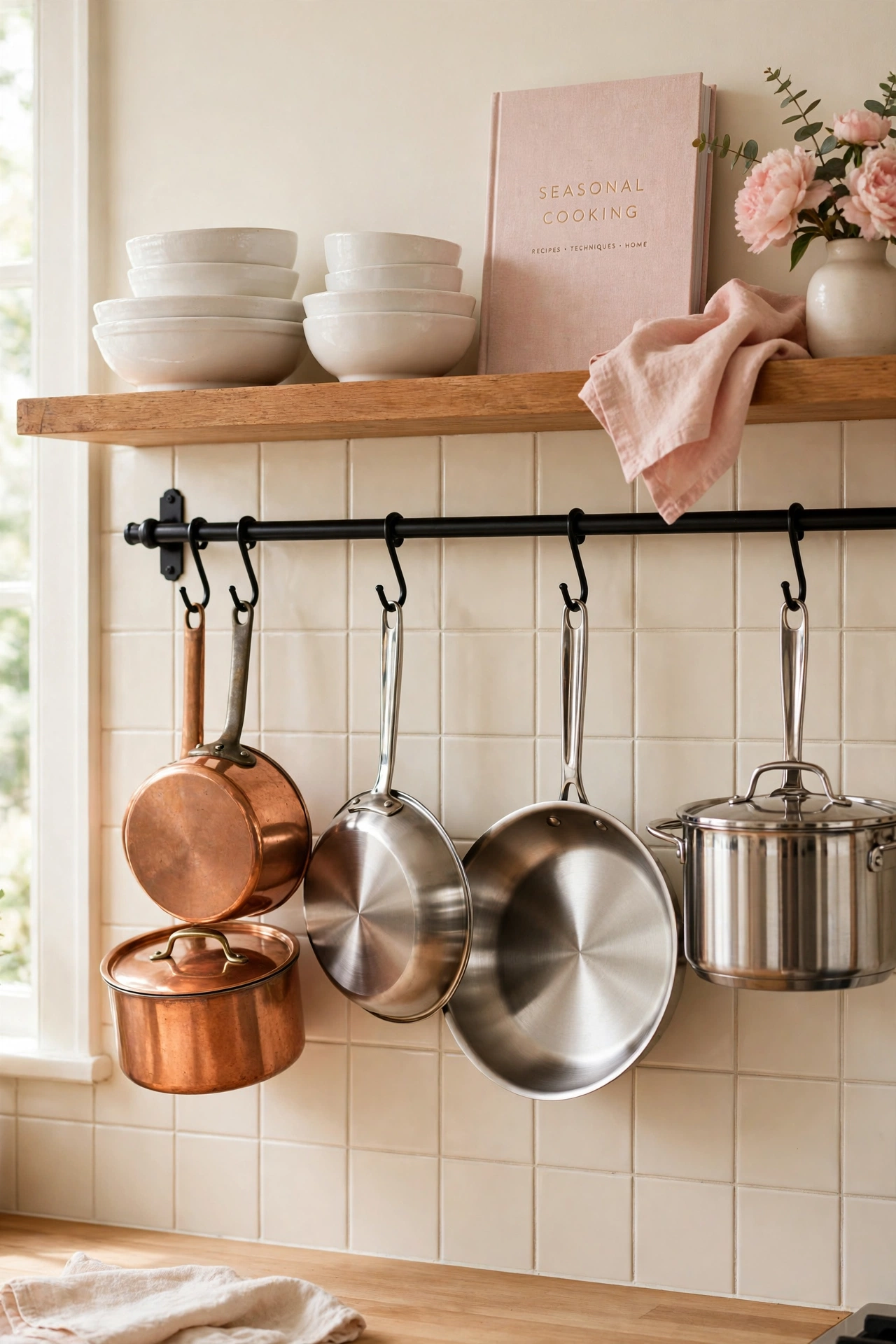
13. Hang Pots and Pans From a Sturdy Wall Rail
Heavy cookware eats up most cabinet space and leaves little room for anything else. Hanging pots and pans from a wall rail frees that space immediately and turns the cookware into part of the kitchen display. Copper and stainless steel pieces look especially good shown off this way, and the most-used pans stay within easy reach.
Place shelves above the rail for bowls, books, or serving dishes, and keep heavier pots on the lower rail so the weight stays balanced. Make sure the rail is fastened securely into wall studs so it can support the full load without any trouble. A pot rail also protects nonstick surfaces, because pans never stack and scratch against each other.
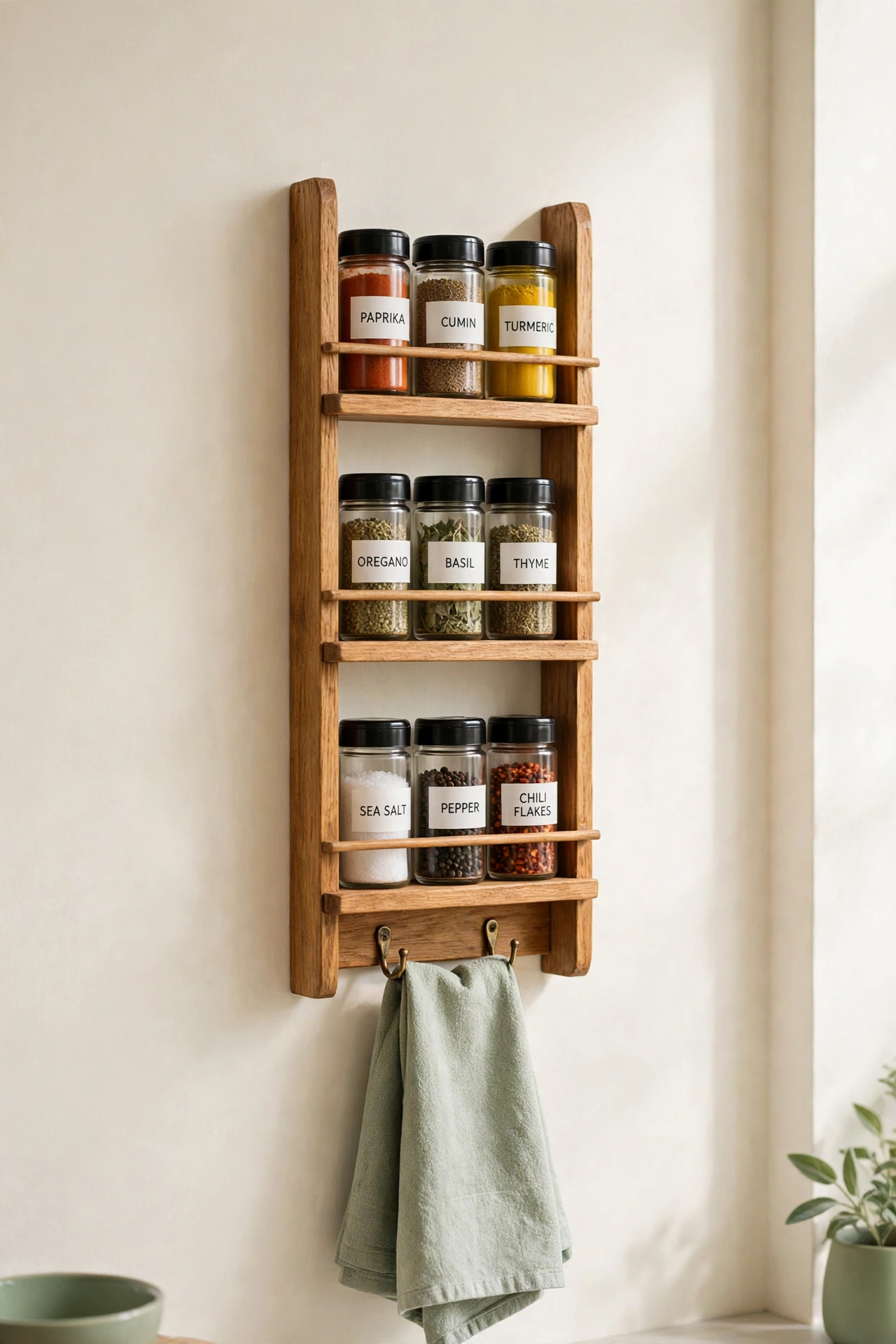
14. Line Up Spice Jars on a Narrow Wall Rack
Spice jars tend to disappear into cabinets, where you forget what you own and buy duplicates by mistake. A narrow vertical wall rack lines every jar up with its label facing out, so you can find the right spice without searching through a crowded shelf. Cooking speeds up when every seasoning sits in plain sight.
Matching containers keep the arrangement neat and make the most of a slim rack, while front rails stop jars from slipping while still letting you pull them out easily. Mount the rack near the cooking area so spices stay within reach as you season a dish. For the rest of your spice collection, these kitchen spice organization ideas cover drawers, cabinets, and other spots beyond the wall.
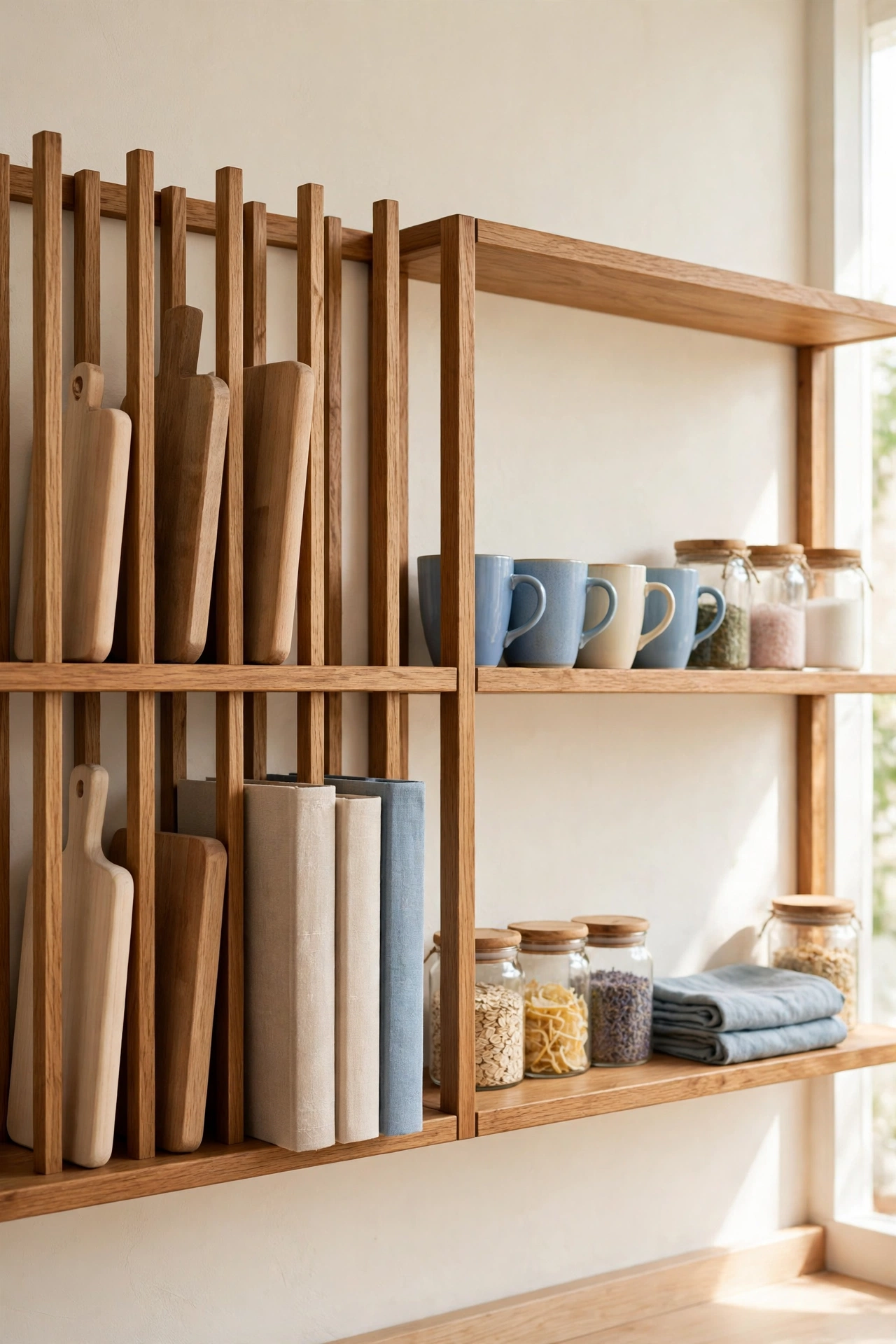
15. Use Divided Slot Shelves for Boards and Books
Loose items like mugs, books, and small jars often stack awkwardly on regular shelves, where things fall over or hide behind each other. Divided wall shelves give each item its own slot, so vertical sections hold cookbooks, cutting boards, or plates upright, and wider sections store mugs or small containers. Everything stays separated without extra organizers.
Place a slot shelf above the prep area or coffee nook, where you can grab what you need without moving anything else around. The clear, ordered pattern also makes the wall look neat even when it holds a lot. If cookbooks are part of the collection, these kitchen recipe organization ideas will help you sort recipes and cards to match the tidy wall display.
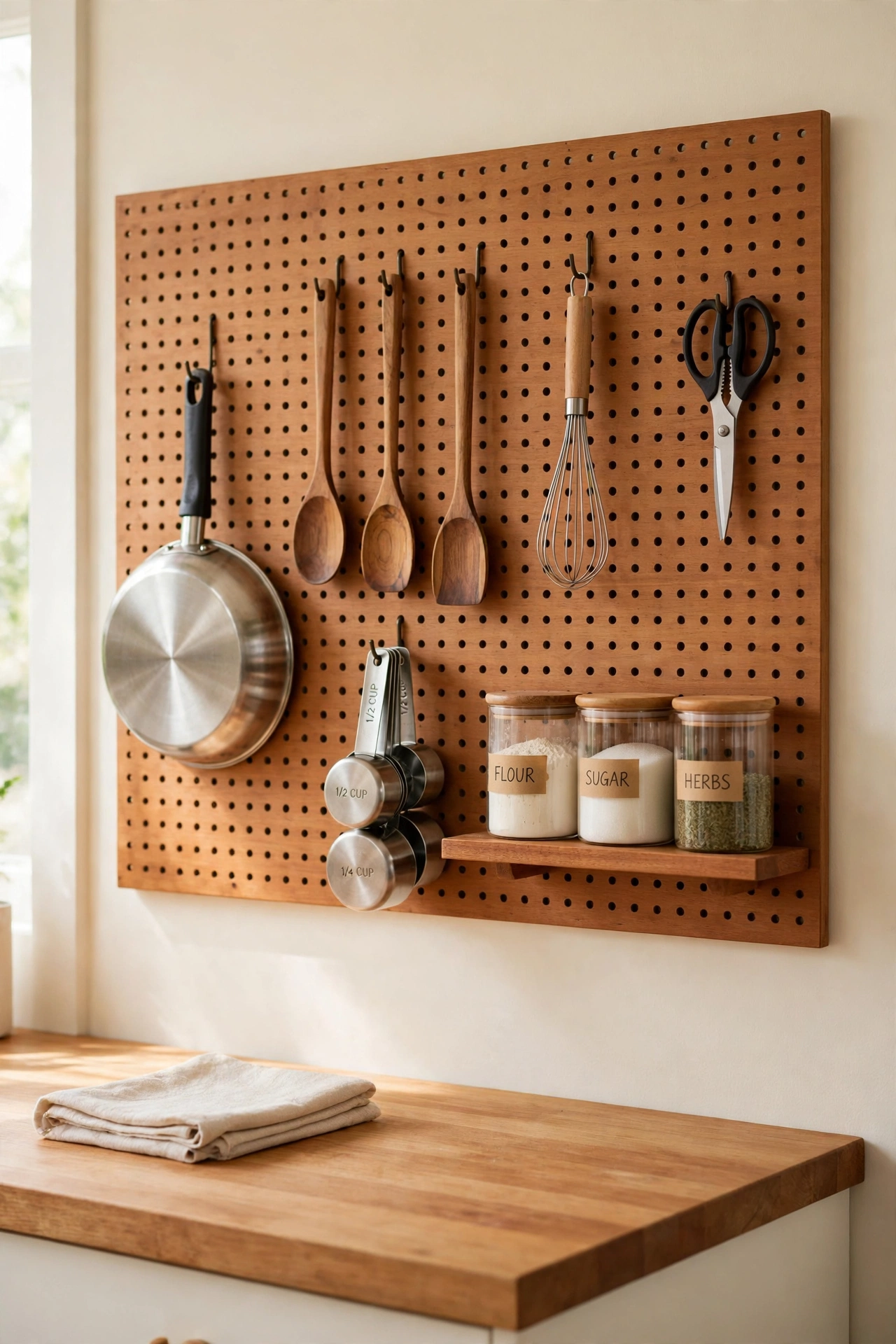
16. Cover a Wall With a Flexible Pegboard
Tools pile up fast when they stay hidden in drawers, especially the ones you reach for every day. A pegboard wall keeps pots, utensils, knives, and small tools in plain sight, each with its own place, so you can grab what you need without searching. The real strength of pegboard is flexibility, because hooks, racks, and holders move in seconds as your needs change.
Keep heavier items like pans on stronger hooks and let lighter tools go anywhere on the board. Mount the pegboard above a prep station so everything stays easy to reach while you cook. A painted pegboard in a soft accent color can also become a feature wall, adding personality while it works hard for storage.
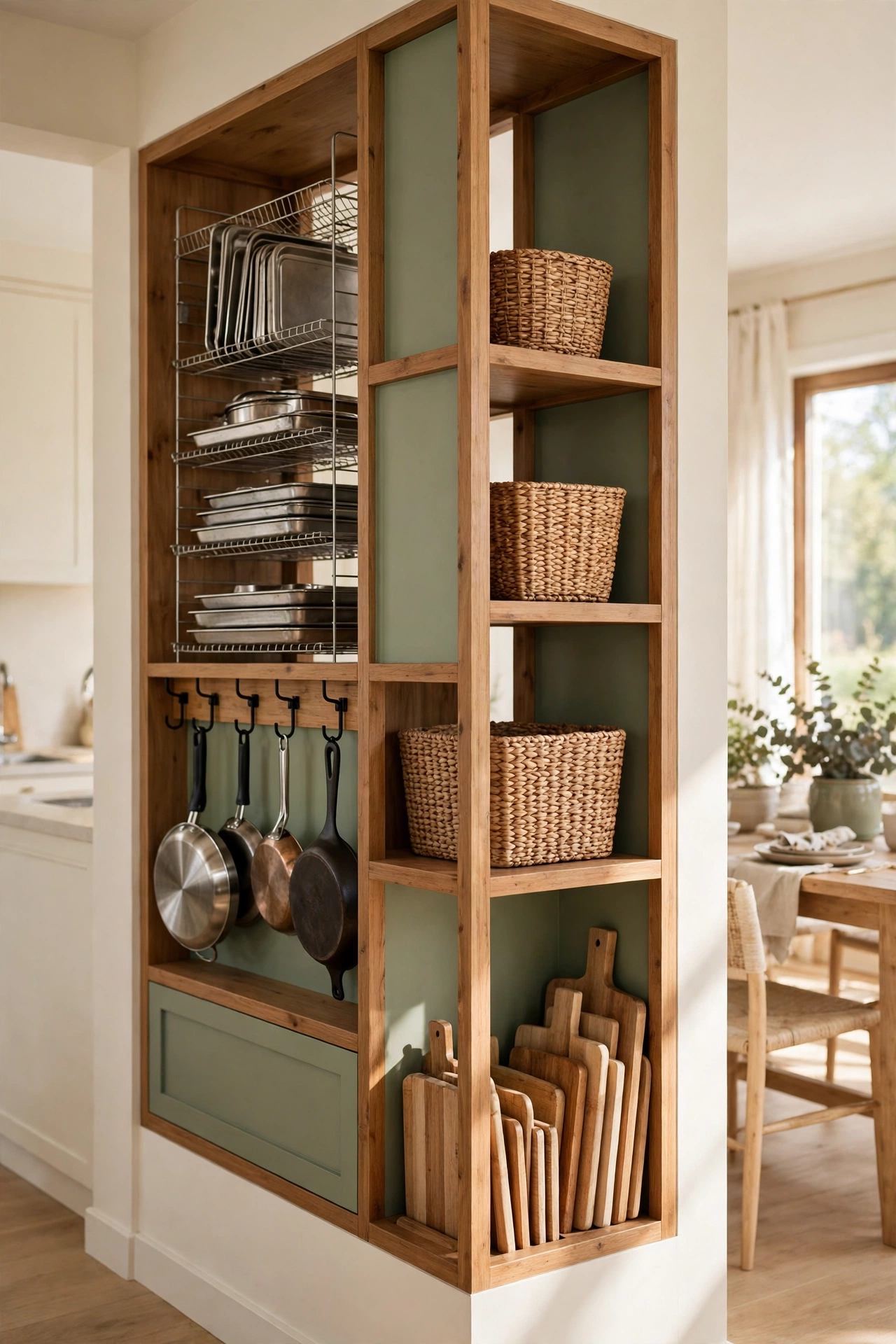
17. Turn a Divider Wall Into Vertical Storage
Large kitchens often have divider walls that do nothing except separate spaces. Turning one into vertical storage gives you room for pans, trays, baskets, and cutting boards without adding a single cabinet. Each section acts like a separate storage zone, so items never pile on top of each other and everything stays easy to view and reach.
Wire racks and hooks handle a variety of shapes, from flat trays to deep bowls, and open sections keep the arrangement from blocking light or making the kitchen feel cramped. This idea works especially well on the wall between the kitchen and the eating area, where storage stays useful without closing off the space.
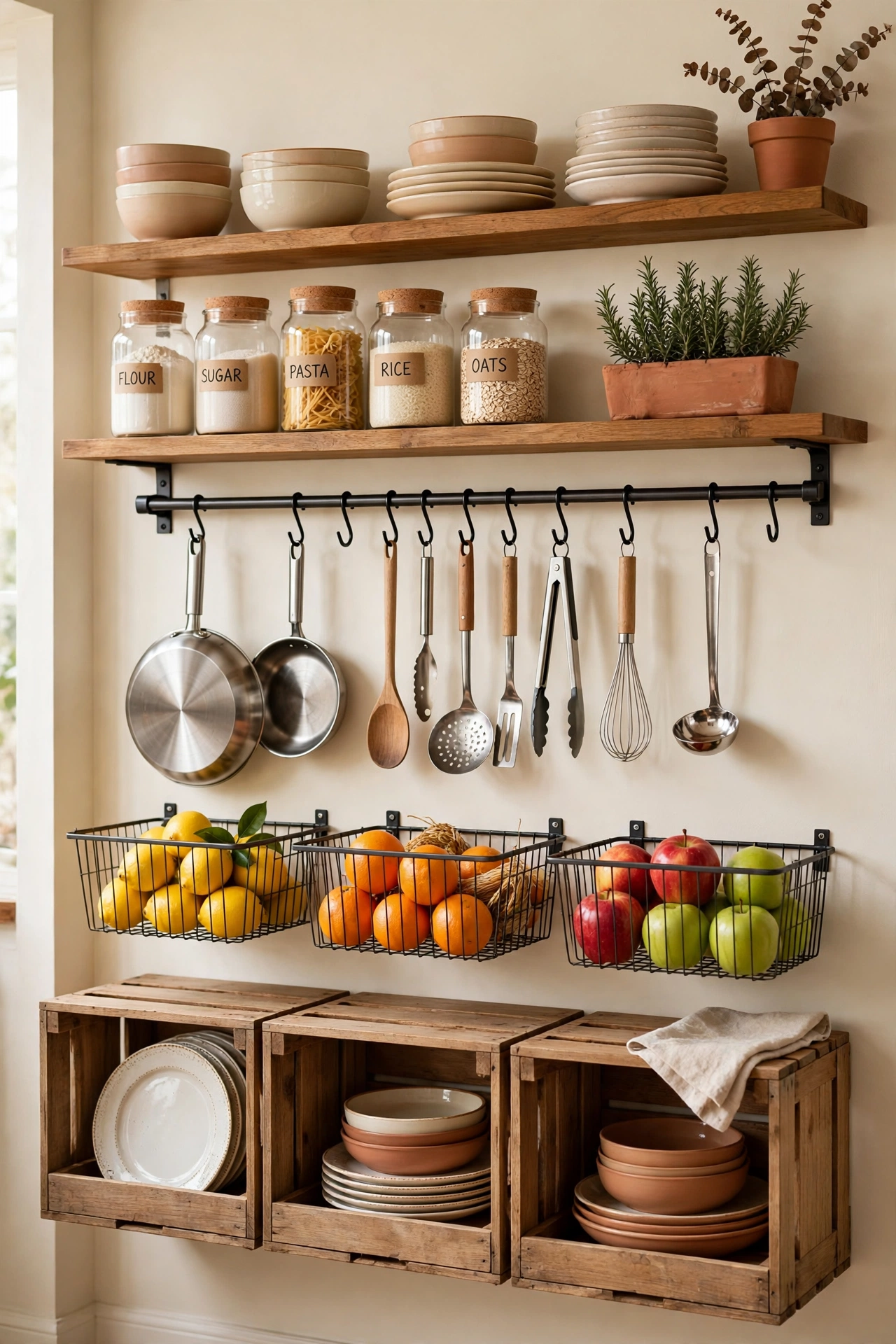
18. Combine Shelves, Rails, and Baskets Into One Wall System
One wall can handle almost your entire kitchen storage when you build it as a complete system. Combining shelves, rails, hooks, and baskets creates a setup where everything has a place: plates, jars, and containers stay on shelves, while utensils and pans hang below for quick access. Stacking several kinds of storage on one wall multiplies capacity without buying cabinets.
Put large items on the top shelves, daily tools at middle height, and heavy items like crates or dishes on the lower levels. Open boxes can hold fruit and vegetables where you can see them easily. Along a long vacant wall, a full system keeps the kitchen open while giving every item you use daily a proper home.
19. Fix a Narrow Ledge Shelf Above the Backsplash
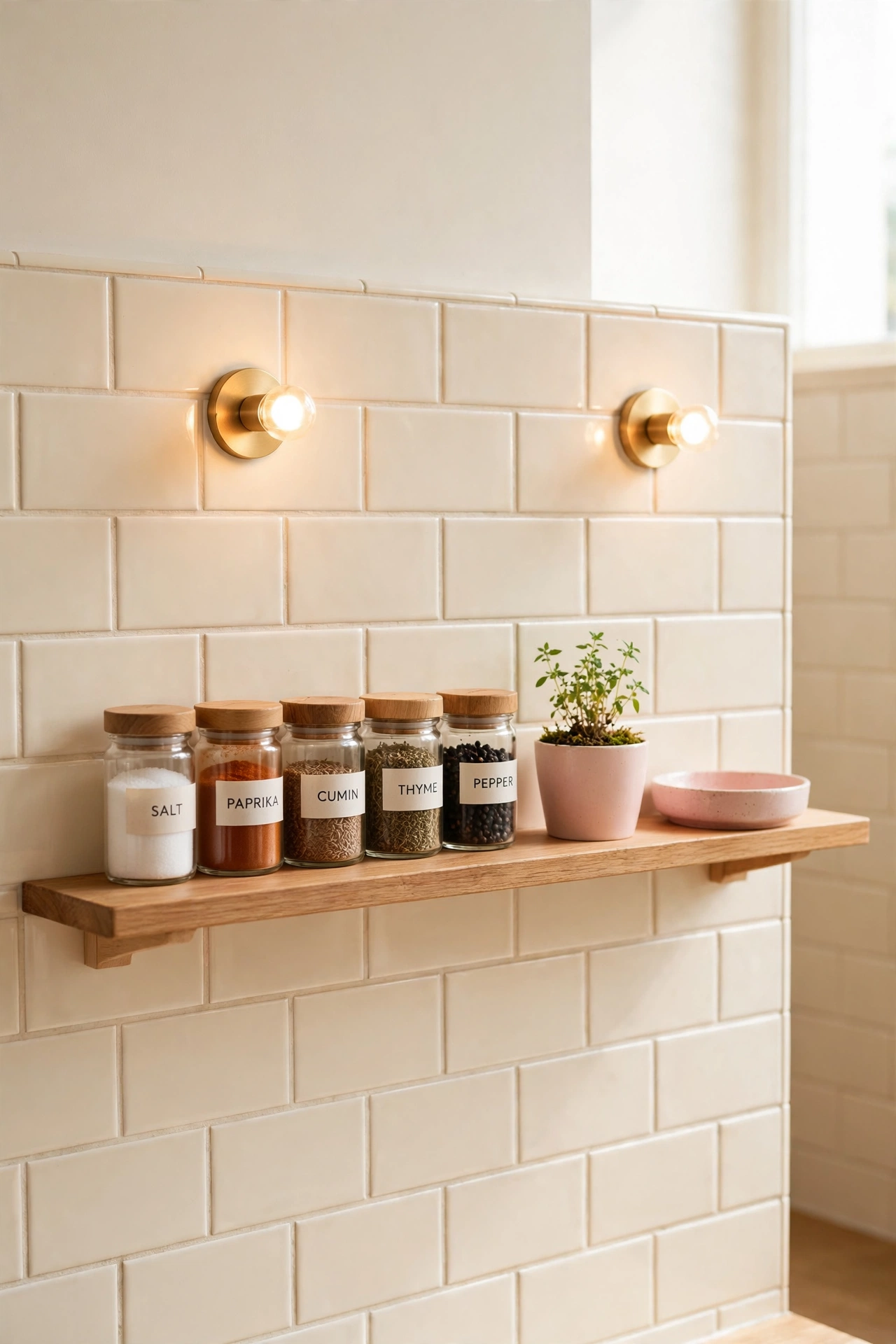
Walls above a backsplash do not always need deep, bulky shelves to be useful. A simple narrow ledge keeps small items lined up in a single row, so spice jars, decor, and everyday essentials stay accessible without taking over the space. The kitchen still looks clean and open, because the shallow depth means nothing hides behind anything else.
Mount the ledge just above the counter so items stay easy to reach without getting in the way of your work. It suits modern kitchens where less is more, and small wall lights above the ledge make the wall more useful and stylish after dark. A ledge is also a gentle first step if you are not ready to commit to full open shelving.
20. Layer Rustic Wooden Shelves With a Knife Strip
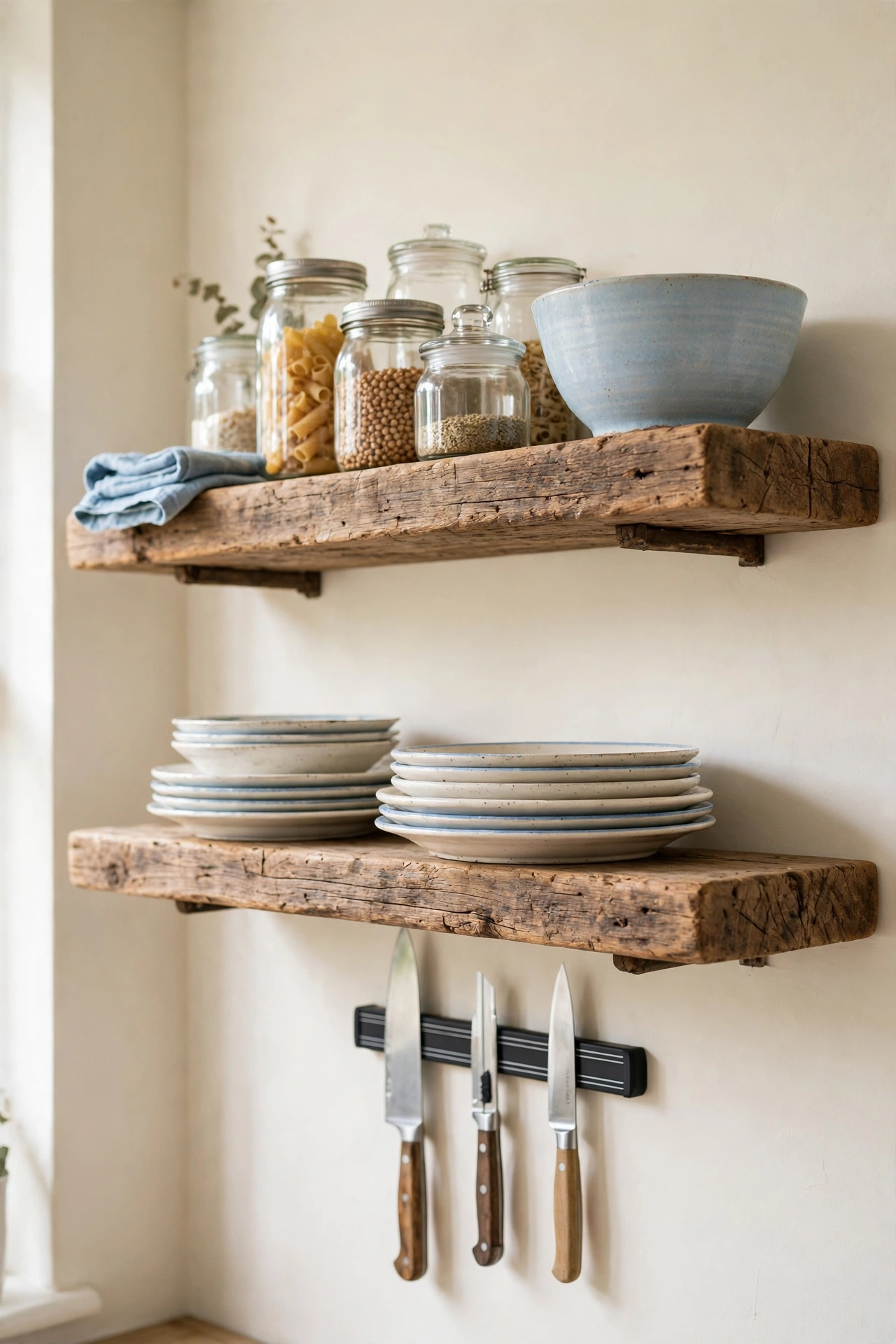
Simple wooden shelves carry far more than decor when you use them with purpose. Layering two rustic shelves gives you space for plates, jars, and cookware while keeping everything in clear view, so daily cooking gets easier because nothing hides inside a cabinet. Natural wood warms the wall and keeps the display from looking heavy or cluttered.
Mix storage methods across the two levels: stack plates on the lower shelf and keep lesser-used or larger items above. A magnetic strip fixed under the bottom shelf keeps knives close at hand without taking any counter room. Placed near the main prep zone, rustic shelves combine charm and function in one easy installation.
21. Mount a Magnetic Strip for Knives and Metal Tools
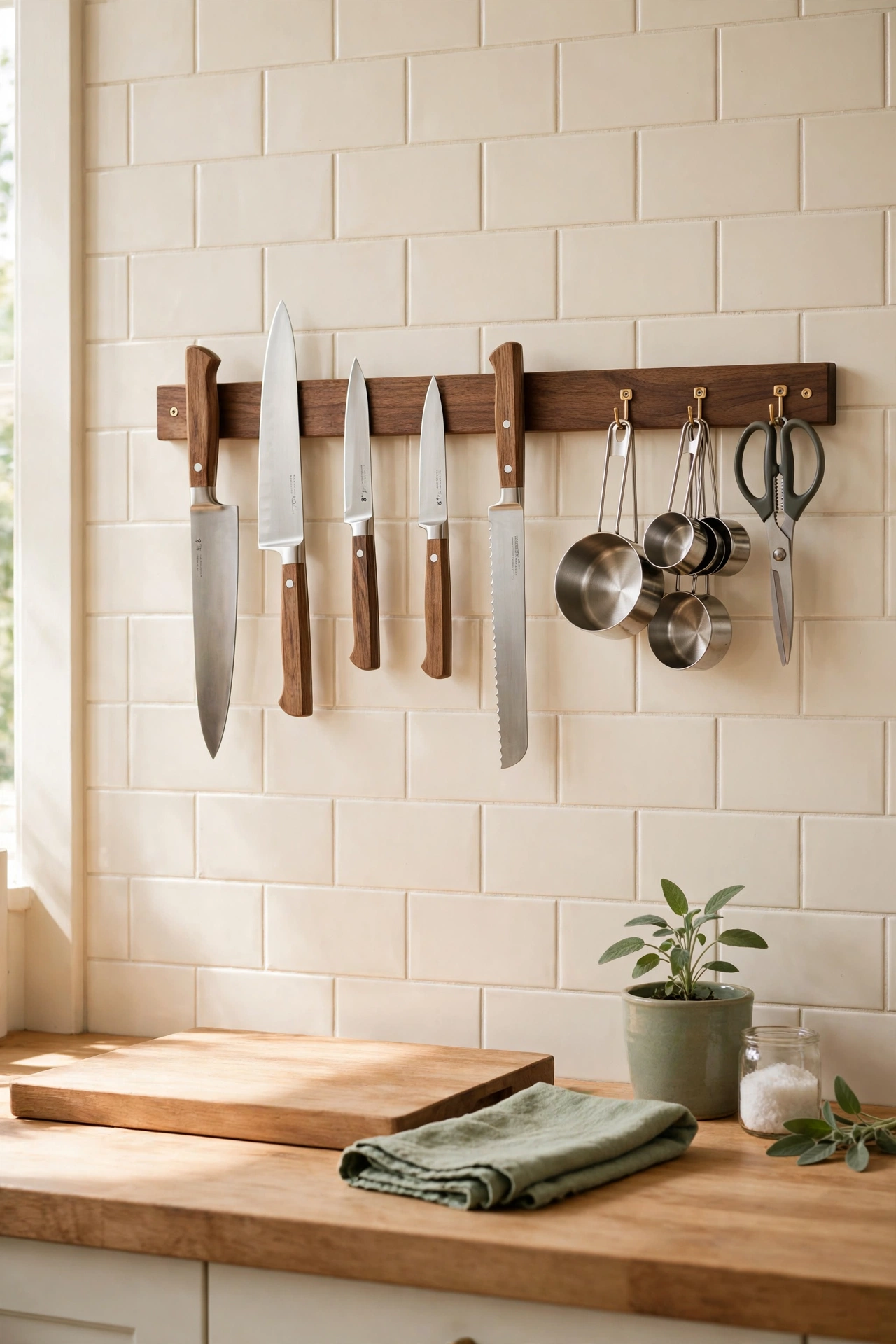
Knife blocks take up valuable counter space and hide blades inside slots where moisture can linger. A magnetic strip mounted on the wall holds knives safely in the open, with every blade visible and easy to choose. The strip also works for metal measuring cups, scissors, and small tools that otherwise clutter a drawer.
Install the strip at a height that keeps sharp edges away from small hands but still within comfortable reach for the cook. Choose a strip rated for the weight of your heaviest knife, and mount it into studs or solid anchors so it never shifts. Wipe blades dry before hanging them, and the strip will keep your sharpest tools organized for years.
22. Grow Fresh Herbs in Wall-Mounted Planters
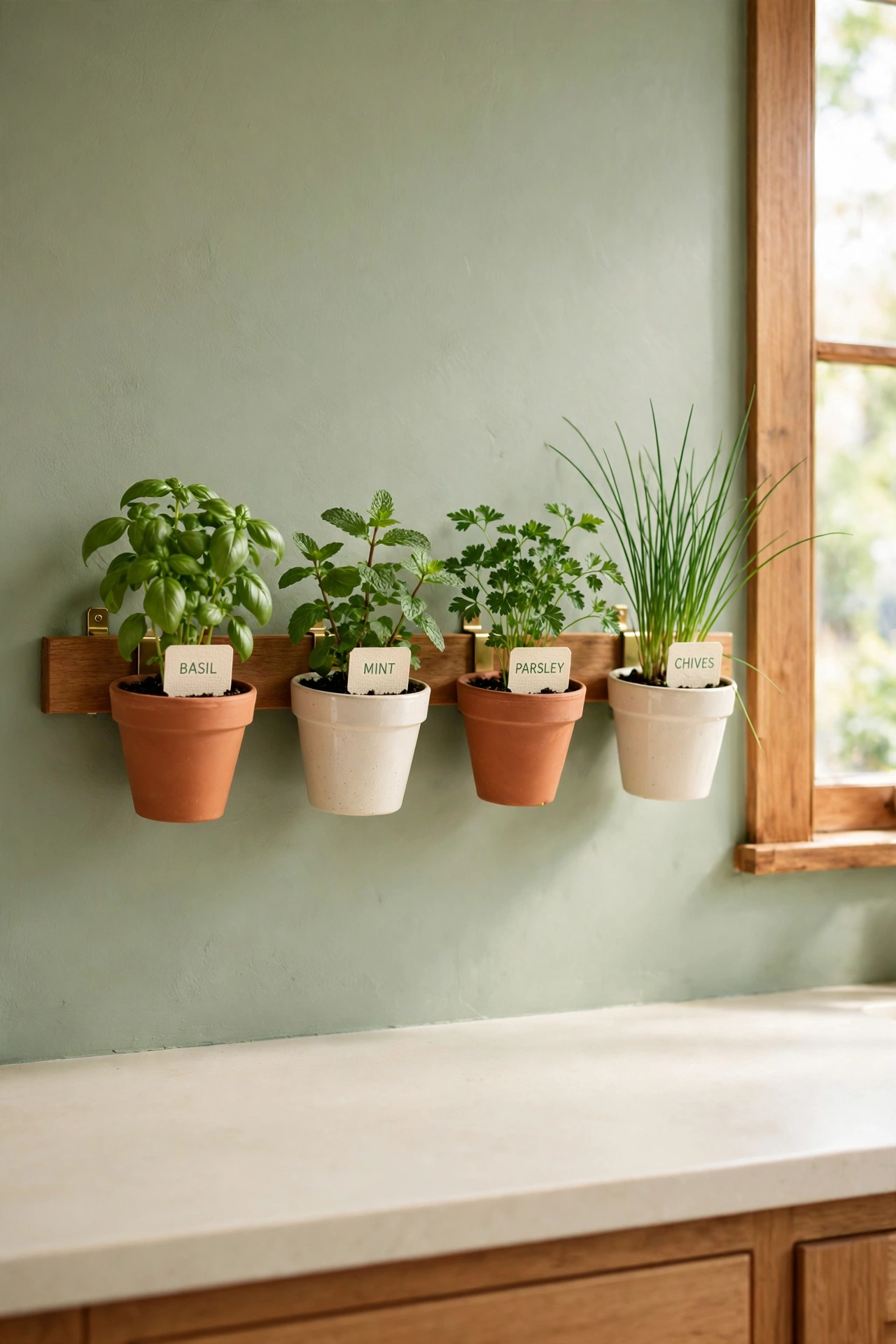
Fresh herbs deserve a spot in the kitchen, and wall-mounted planters give them one without stealing counter space. Small pots fixed to a rail or board hold basil, mint, parsley, and chives right where you cook, so snipping a handful for dinner takes seconds. The green leaves also soften the wall and make the kitchen feel alive.
Choose planters with drainage trays or waterproof liners so watering never damages the wall, and place the display where it gets the best natural light in the room. Label each pot clearly so every herb is easy to identify at a glance. A herb wall combines storage, decor, and fresh flavor in a single vertical garden.
Conclusion
Kitchen wall storage is not about filling every blank surface. It is about moving the items you use most onto walls where you can see them, reach them, and enjoy using them. Whether you start with one floating shelf, a simple hook rail, or a full pegboard wall, the change in how your kitchen feels will be immediate.
Pick the idea that solves your biggest frustration first, and build from there one wall at a time. A tidier wall leads to clearer counters and calmer cooking. For the appliances and tools that stay off the walls, these kitchen appliance organization ideas will help you finish the job and keep every part of your kitchen organized.
Frequently Asked Questions About Kitchen Wall Storage Ideas
How high should floating shelves be in a kitchen?
For most kitchens, the best height is 18 to 24 inches above the counter surface. Leave extra room between shelves if you plan to store tall items like jars or small appliances. Always think about what you will store first, then set the height to fit those items comfortably.
What should you avoid putting on kitchen wall shelves?
Avoid heavy items like large pots on shelves that are not securely fastened into studs, since the weight can be dangerous. Items you rarely use only collect dust and make open shelves look messy. Everyday mugs, jars, and small containers are the best choices for open wall storage.
How do I keep open kitchen shelves from looking cluttered?
Leave breathing room between items and group similar things together, such as all the mugs on one shelf and all the jars on another. Matching containers help a great deal, and a few empty spaces keep the display calm. Edit the shelves regularly and move anything you rarely use back into a cabinet.
Can renters use kitchen wall storage without drilling?
Yes, many wall storage options work without drilling. Heavy-duty adhesive hooks and rails hold mugs, towels, and light tools on smooth, clean walls. Leaning ladder shelves and over-the-door racks add storage with no holes at all. Always check the weight rating before loading adhesive products.
How do I keep wall-mounted items clean in a kitchen?
Wipe shelves and rails weekly with a damp cloth to stop grease and dust from building up. Keep items you use daily on the wall, since frequent use keeps them cleaner than pieces that sit untouched. Wash jars and containers before refilling them, and give the whole wall a deeper clean once a month.

Hi, I’m Emily! I turn messy corners into cozy, organized spots. DreamNestDecor is where I share simple, practical home ideas — decor, organization, and small-space solutions that work in real life, not just in photos. Every idea here is carefully researched before it’s shared.