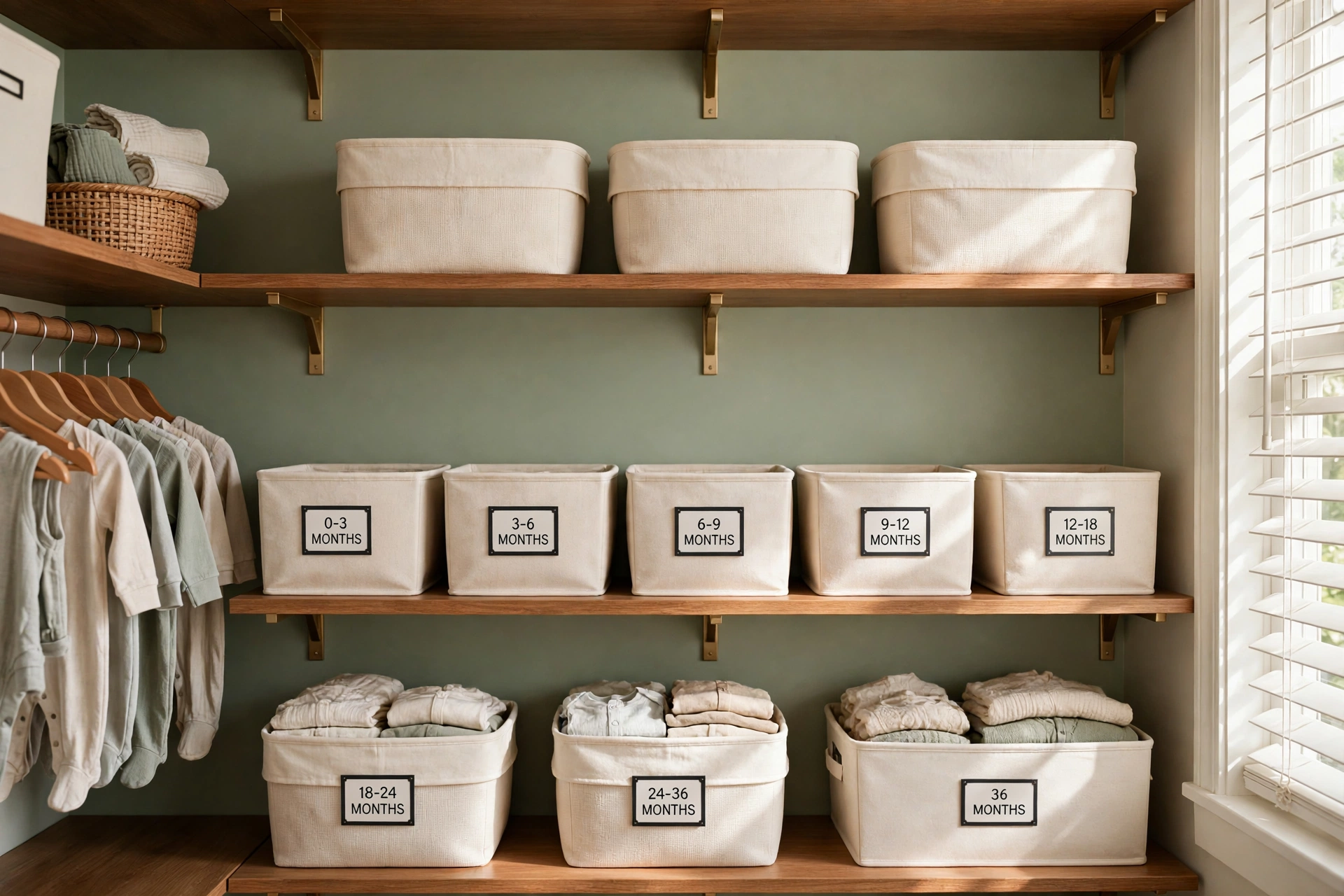
Picture this: you open the nursery closet in the morning, and every tiny outfit is exactly where it should be. The current size hangs in a neat row, the next size waits in a labeled bin, and nothing that no longer fits is taking up space. Getting your baby dressed takes two calm minutes instead of a frantic search through piles of outgrown clothes.
That calm morning routine is possible at every stage, even when your infant seems to outgrow something new every single week. A simple rotation system moves clothes in and out as your baby grows, so the closet always matches the child wearing the clothes. These 22 baby clothing rotation organization ideas will help you sort by size, swap with the seasons, and keep every drawer tidy from newborn days through the first birthday and beyond.
1. Sort Every Outfit Into Labeled Size Bins
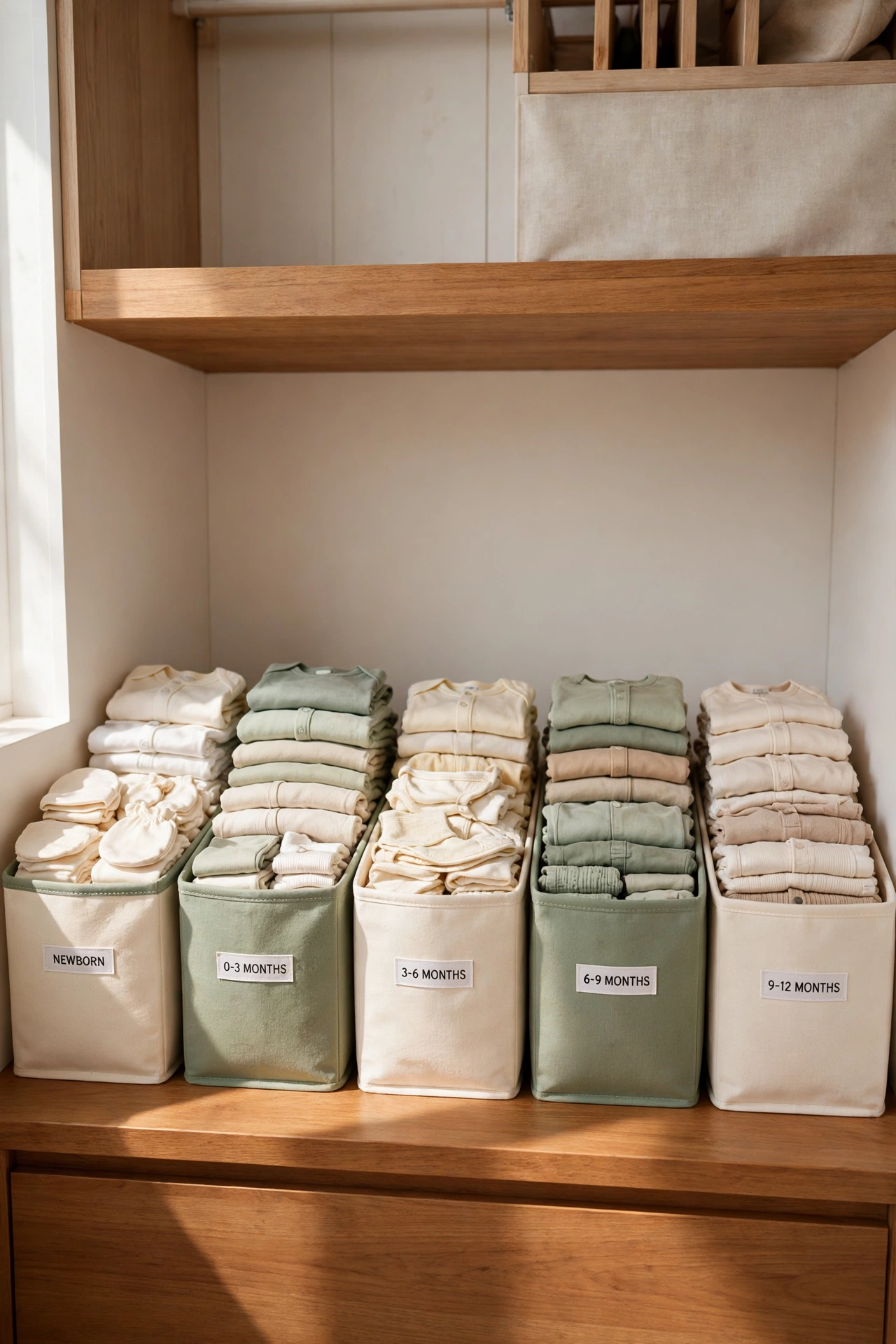
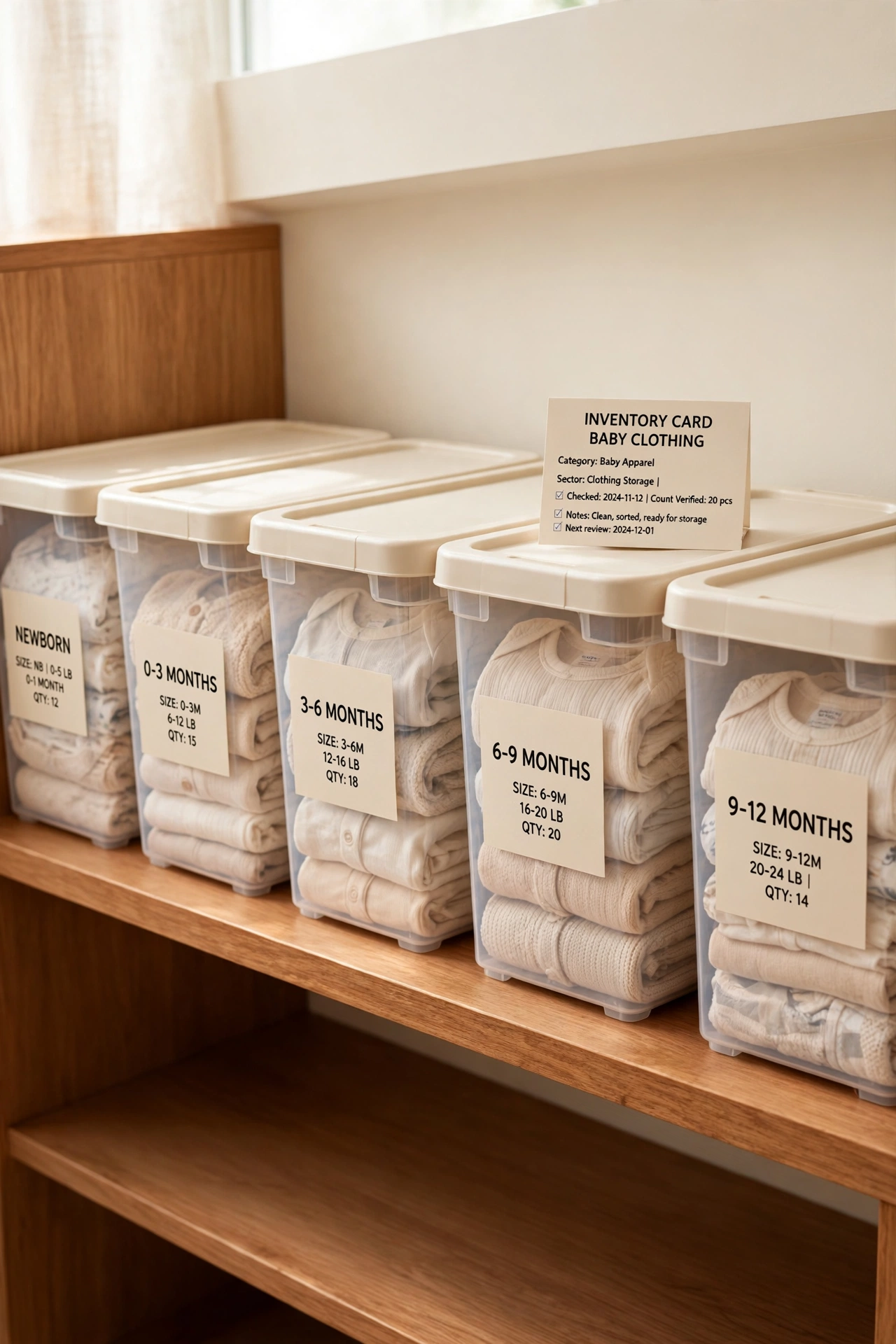
Start your rotation system with one bin for each size your baby will wear in the first year. Use clear bins or fabric cubes with large printed labels that read Newborn, 0-3 Months, 3-6 Months, 6-9 Months, and 9-12 Months. When a gift or a hand-me-down arrives, it goes straight into the bin for its size instead of landing in a mixed pile.
Keep the bins on a closet shelf or in a wardrobe where you can see every label at a glance. As your baby grows, you simply move the next bin to the front and retire the finished one. If your nursery is short on space, these small nursery layout ideas with a convertible crib show how to fit storage like this into a compact room without losing floor space.
2. Keep a Too Small Basket in the Nursery
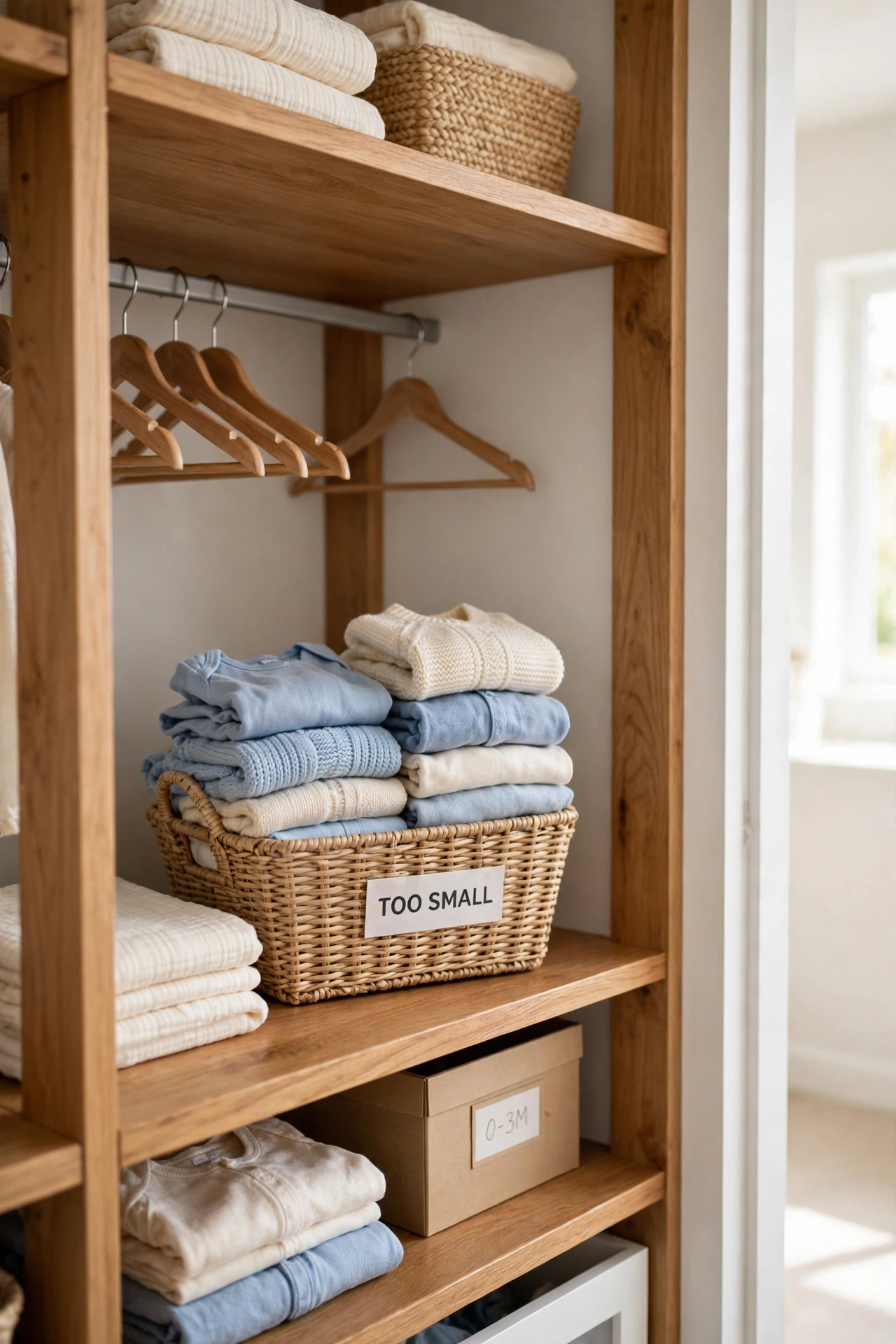
A too small basket is the heart of a working rotation system. Place a small basket or bin right inside the nursery closet, and the moment you notice a onesie pulling tight or pants that no longer cover tiny ankles, drop the item in the basket. This one habit stops outgrown clothes from creeping back into the daily drawers.
Empty the basket once a week into your storage bin, donation bag, or hand-me-down box. Because the basket lives in the nursery, the decision happens in seconds while you are already dressing your baby. Over a month, that small habit keeps the whole closet honest about what still fits.
3. Run a Monthly Size Check on the First of the Month
Babies grow in sudden spurts, so a monthly size check keeps your rotation ahead of the growth curve. On the first day of each month, pull every item from the current drawer and hold it up against the size your baby wears now. Anything snug moves to the too small basket, and anything roomy stays for a few more weeks.
Use the same moment to pull the next size up from storage and check that you have enough everyday outfits ready. A calendar reminder on your phone makes this check automatic. Ten minutes once a month prevents the morning when nothing in the drawer fits anymore.
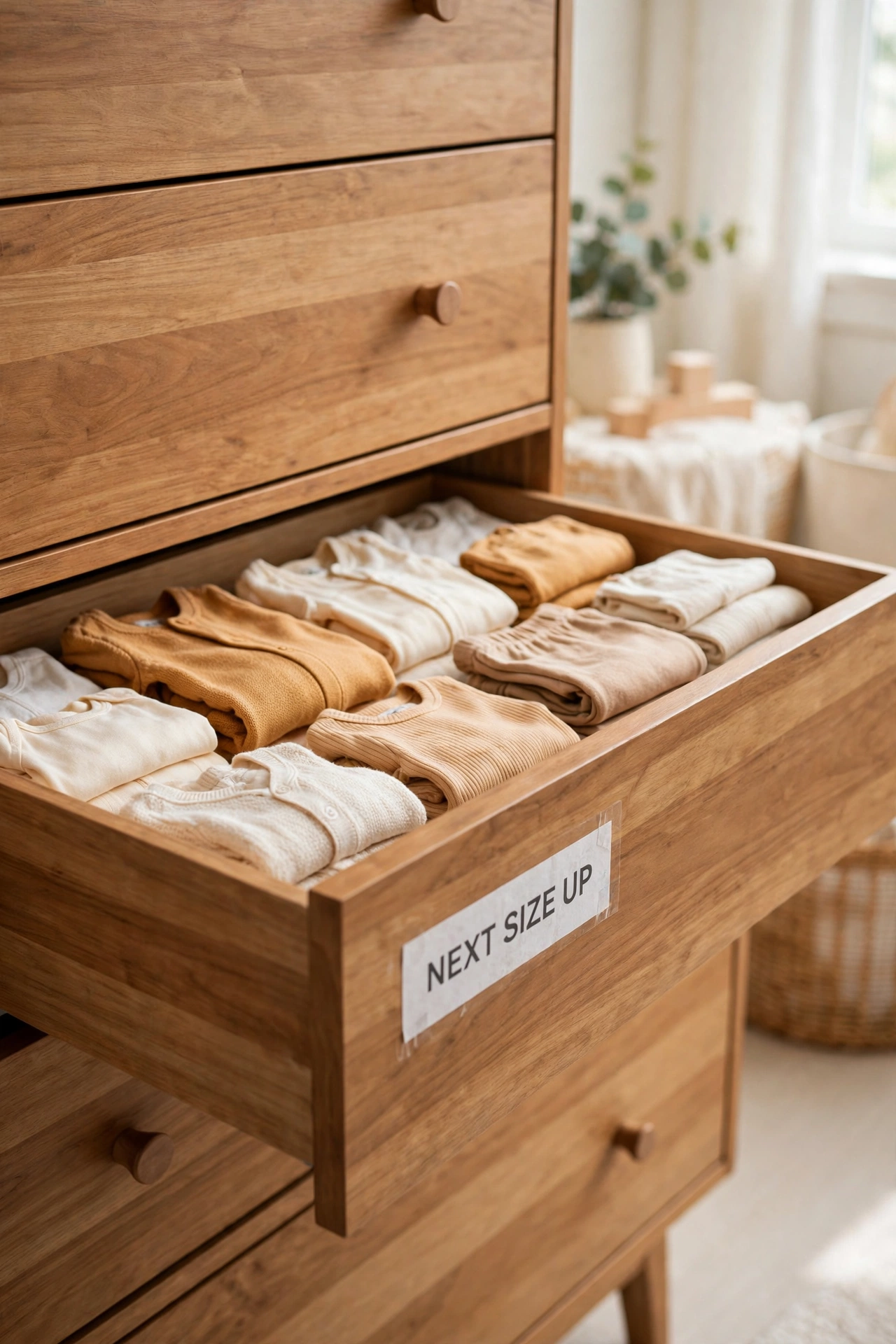
4. Keep a Next Size Up Drawer Always Ready
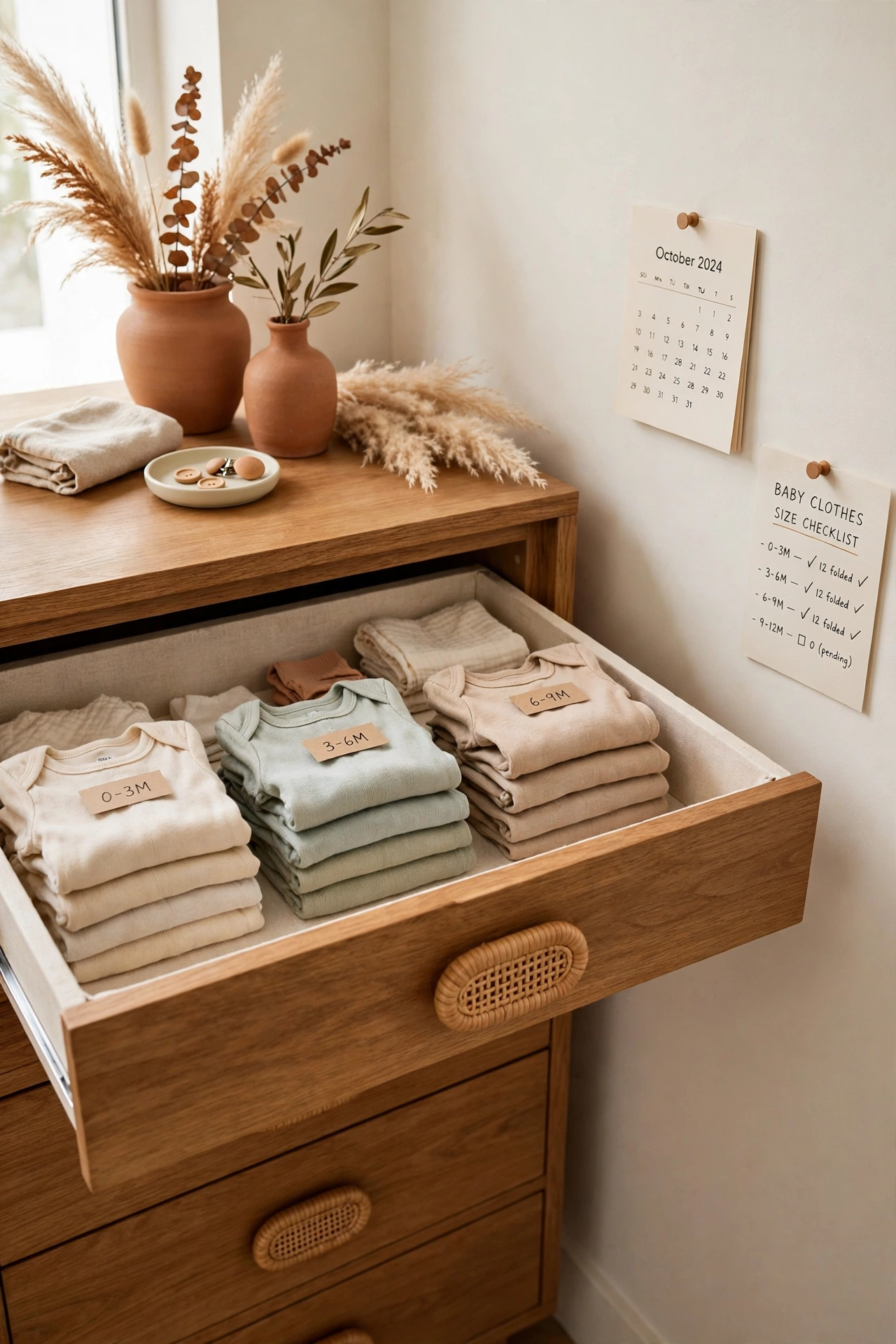
A next size up drawer is your buffer against sudden growth spurts. Fill one drawer with the size your baby will wear next, washed and folded and ready to wear. When the current size starts to feel tight, you open that drawer and the swap takes minutes instead of a full closet overhaul.
Label the drawer front so anyone helping with laundry or dressing knows exactly what lives inside. Restock the drawer each time you rotate, pulling fresh items from your size bins. For drawer setups that keep tiny clothes neat and visible, these dresser drawer organization ideas will help you divide each drawer so every category has its own place.
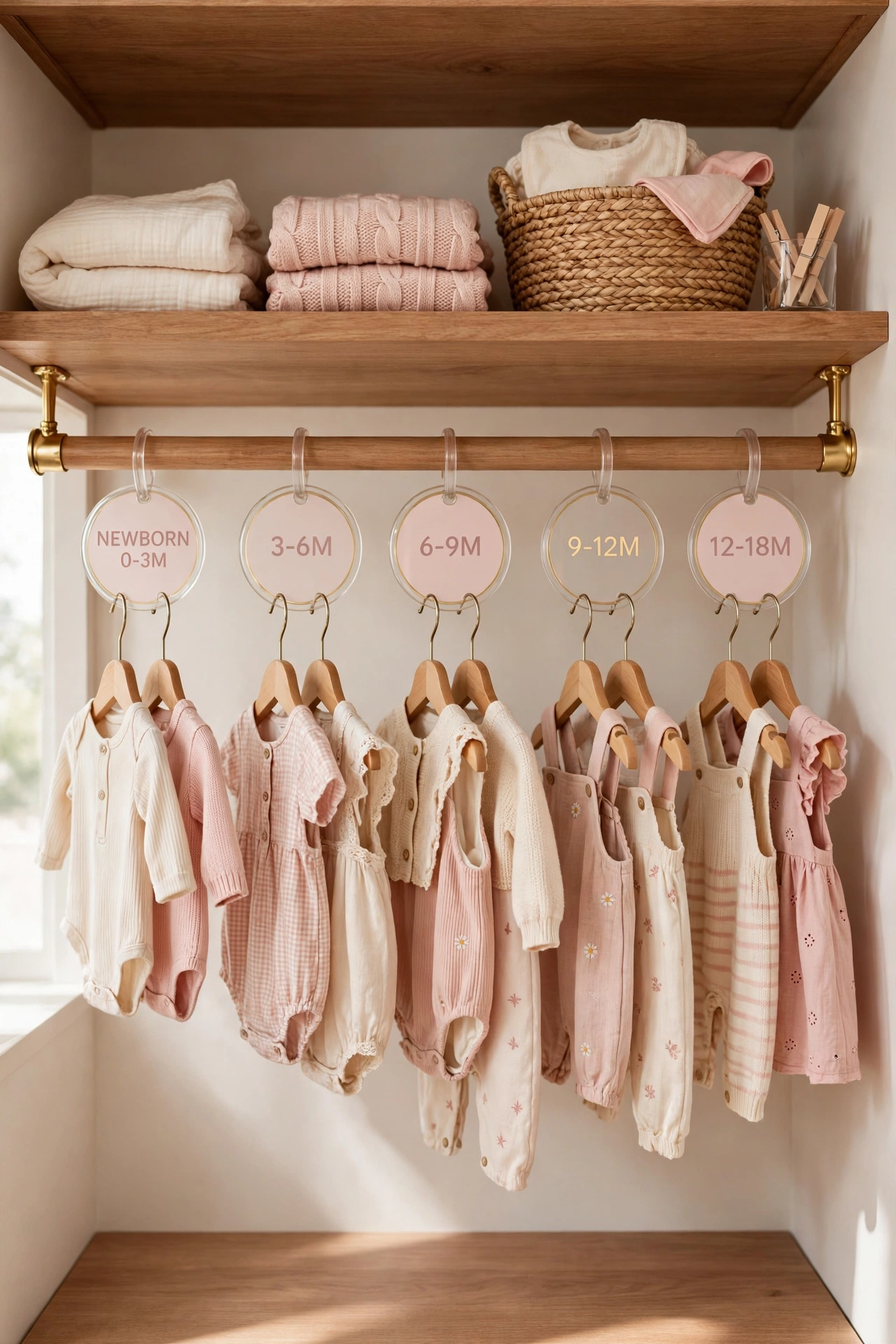
5. Hang Closet Dividers Marked With Size Ranges
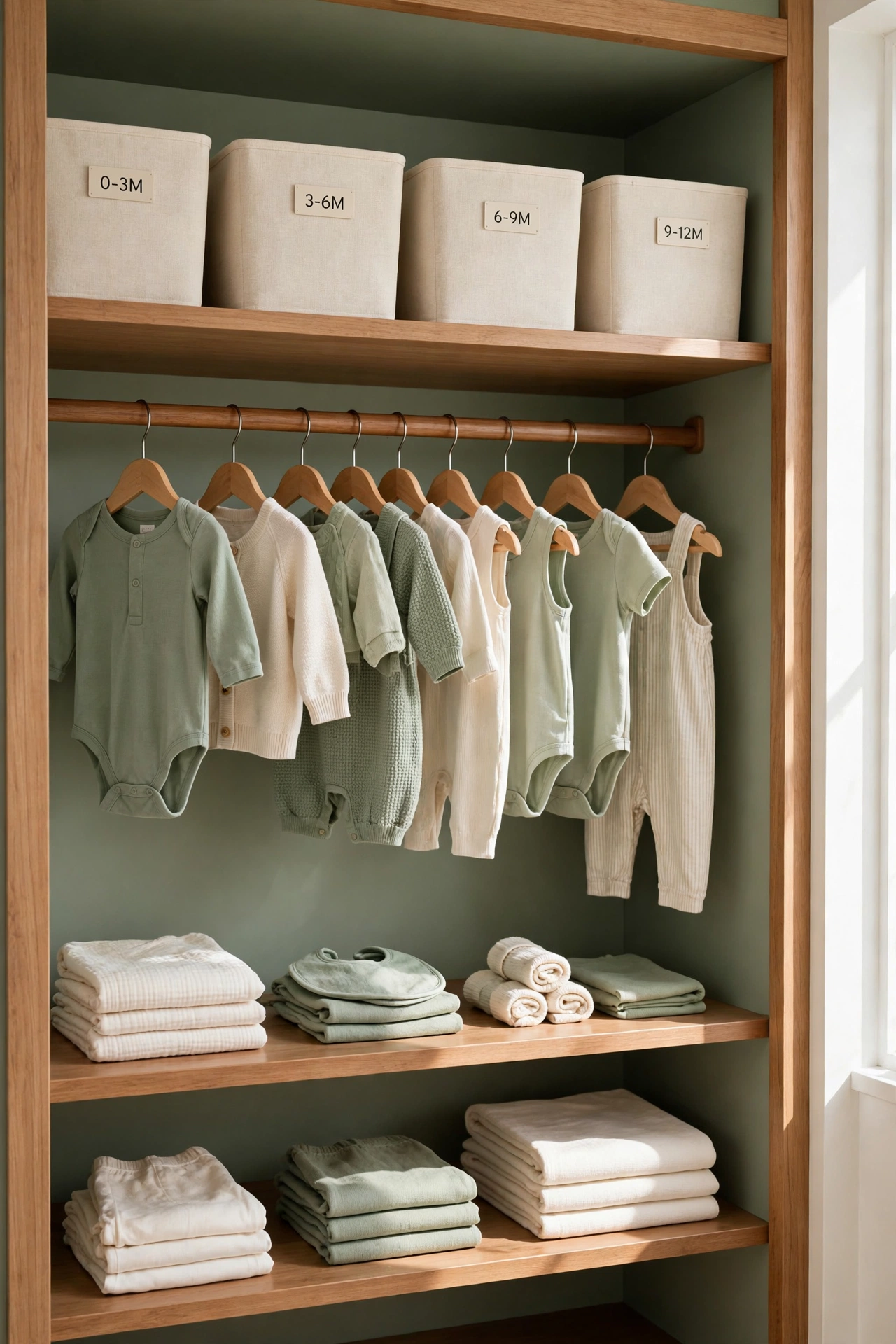
Closet dividers turn a single hanging rod into a clear size map. Slip sturdy dividers over the rod between groups of outfits, each one marked with a size range in large print. Even in a dim nursery at night, you can find the right section without guessing.
Move the dividers as your baby grows, so the current size always sits at the front of the rod. Hang everyday outfits together and special occasion clothes at the far end. This simple visual system makes the closet easy for grandparents, babysitters, and partners to use without asking where things go.
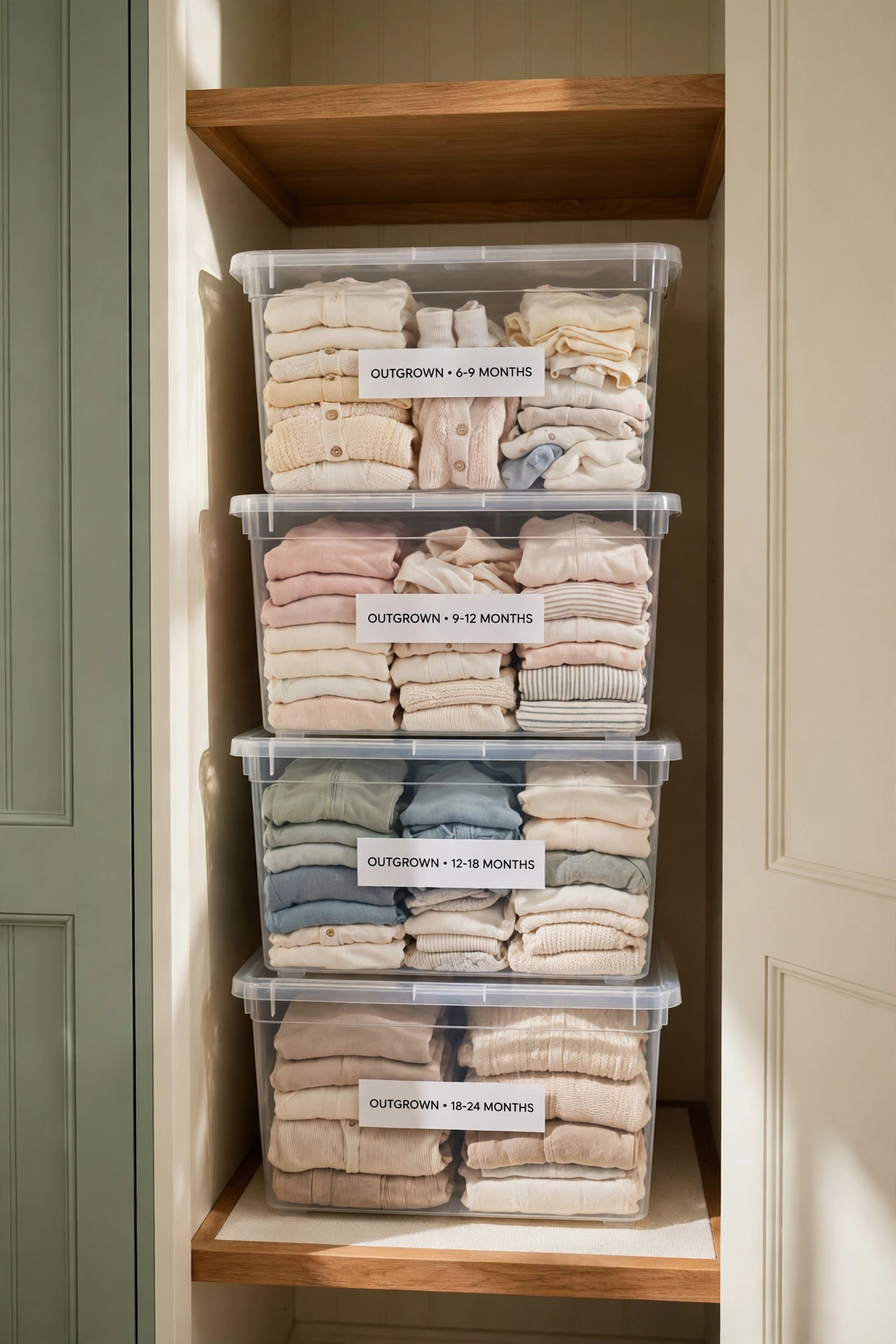
6. Store Outgrown Clothes in Clear Stackable Bins
Clear stackable bins are the best home for clothes your baby has outgrown but you want to keep. You can see the contents without opening the lid, and the bins stack neatly in a closet, on a high shelf, or in a garage. Add a printed label with the size range and the season on the front of each bin.
Wash and fully dry every item before it goes into long-term storage, and add a lavender sachet to keep the clothes smelling fresh. If closet space is tight, slide the bins under the crib or a bed. These under bed storage organization ideas show how that hidden space can hold a whole season of outgrown clothes without cluttering the nursery.
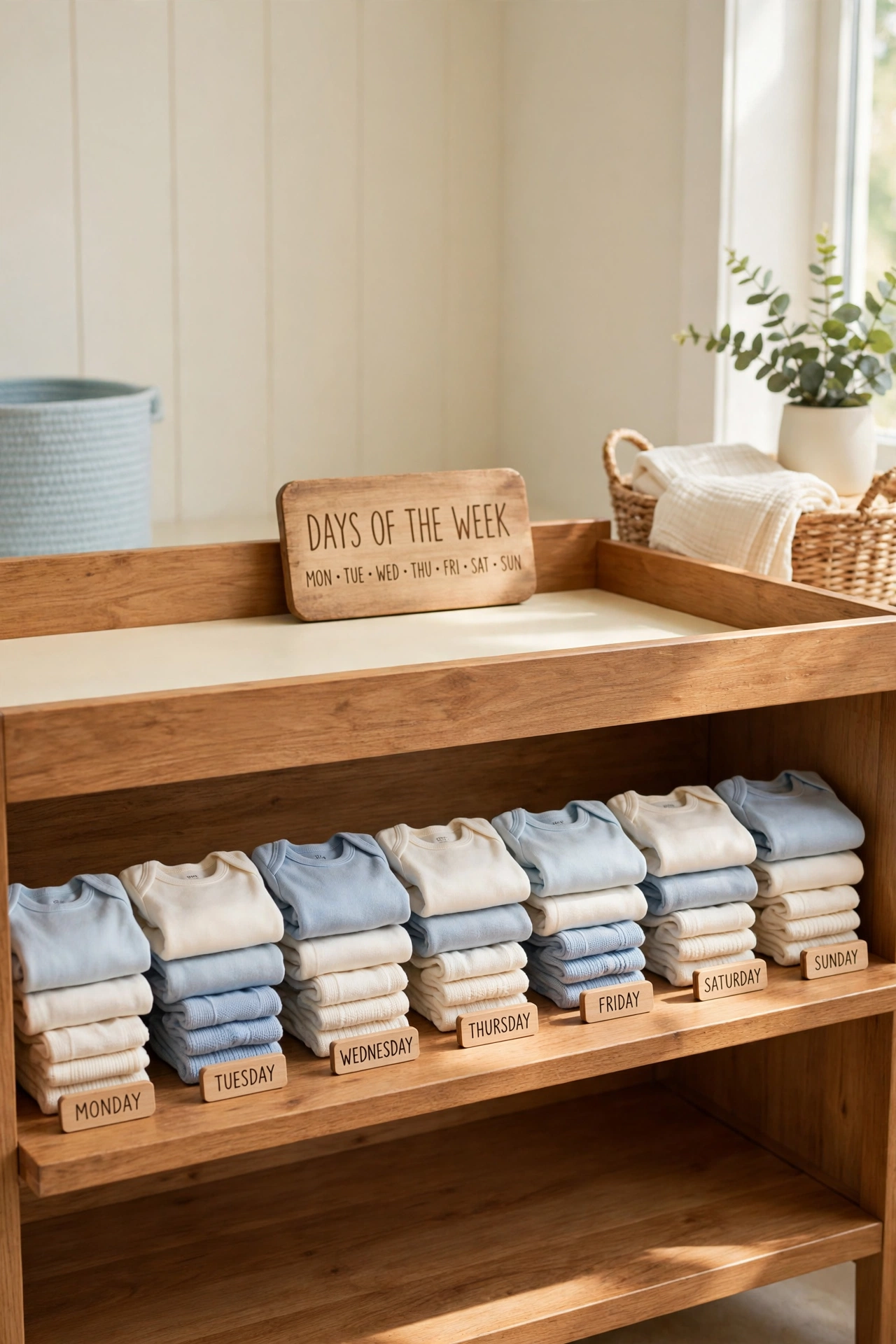
7. Build a Weekly Outfit Station on the Changing Table
A weekly outfit station takes the guesswork out of mornings. On Sunday evening, choose seven outfits for the week ahead and fold each one into its own cubby or stack them in day order on a shelf near the changing table. Each stack holds a onesie, pants, socks, and a top, ready to grab in one motion.
This station also shows you at a glance when the current size is running low. If you cannot fill seven stacks, it is time to pull from the next size up drawer. Parents who dress a baby before daycare will love how much time this simple weekly habit saves.
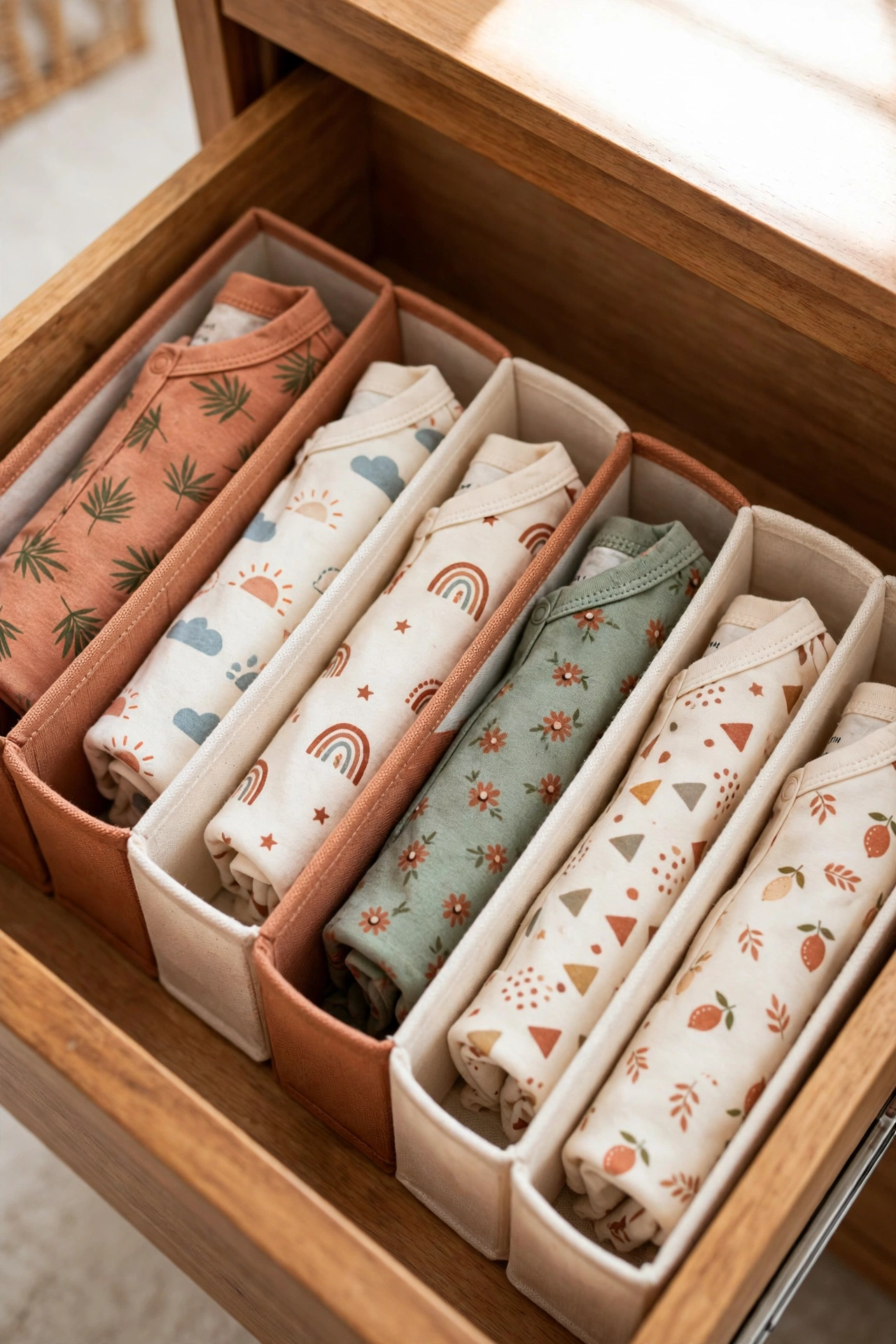
8. File Fold Onesies So Every Print Is Visible
File folding stands onesies upright in a drawer like files in a cabinet, so you can see every print and color the moment you open the drawer. Fold each onesie into a neat rectangle, then stand the rectangles in a row from front to back. No more digging through stacks and unfolding half the drawer to find one outfit.
Use drawer dividers or small fabric boxes to keep the rows standing tall. Sort the rows by type, with short sleeve onesies in one row and long sleeve onesies in another. This method works just as well for pants, sleepers, and leggings, and it keeps even a shallow nursery drawer surprisingly roomy.
9. Park a Donation Bag Beside the Closet Door
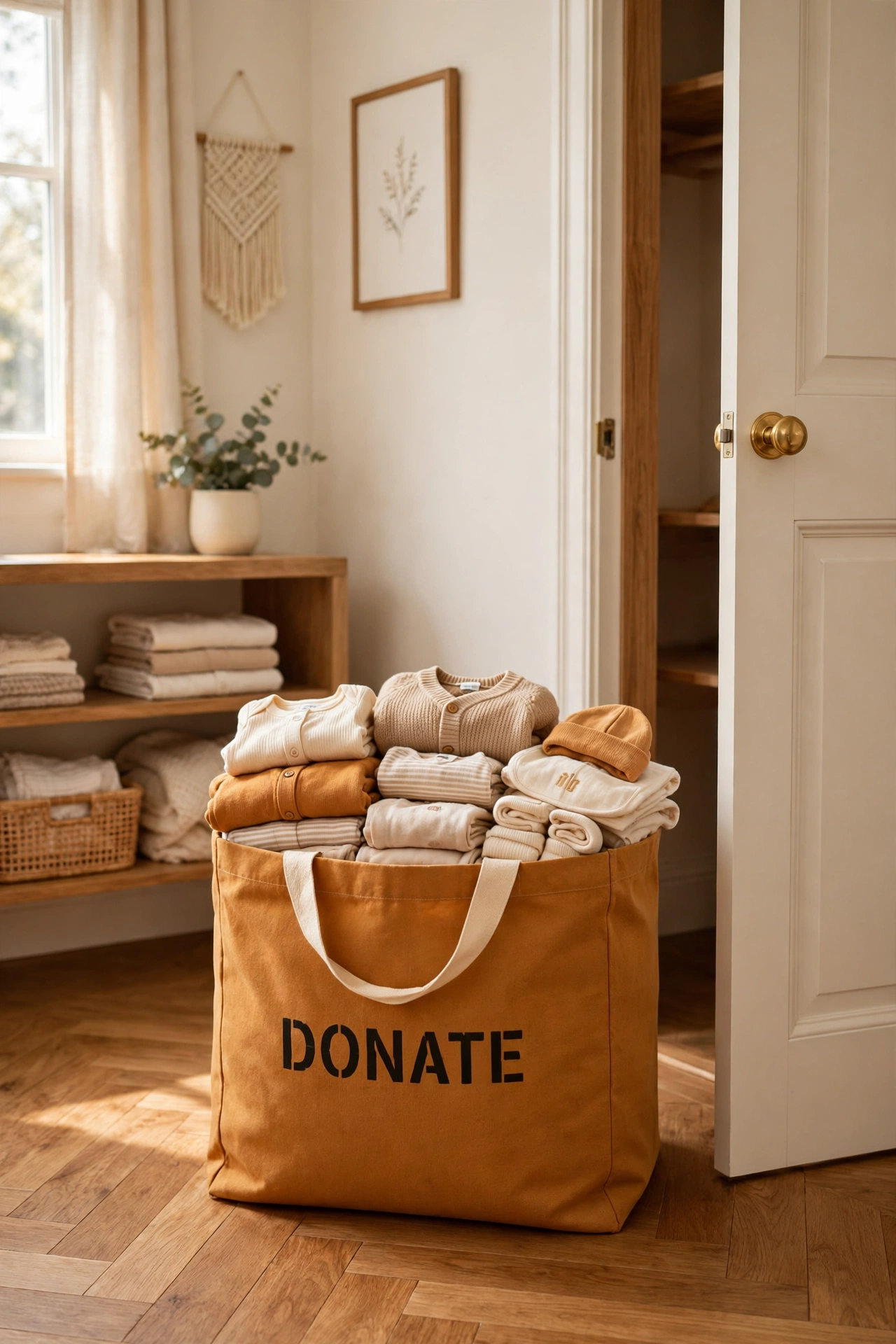
A donation bag parked beside the closet door gives outgrown clothes an easy exit. Use a sturdy reusable bag with a clear label, and drop items in as soon as you know your baby has finished with them. When the bag is full, tie it closed and take it to your donation spot the same week.
This habit keeps the rotation moving in one direction, out of the nursery and on to another family. It also stops the storage bins from filling with clothes you never plan to keep. A bag that lives in plain sight is far more likely to get used than one hidden in a garage.
10. Pack Off Season Clothes in Vacuum Storage Bags
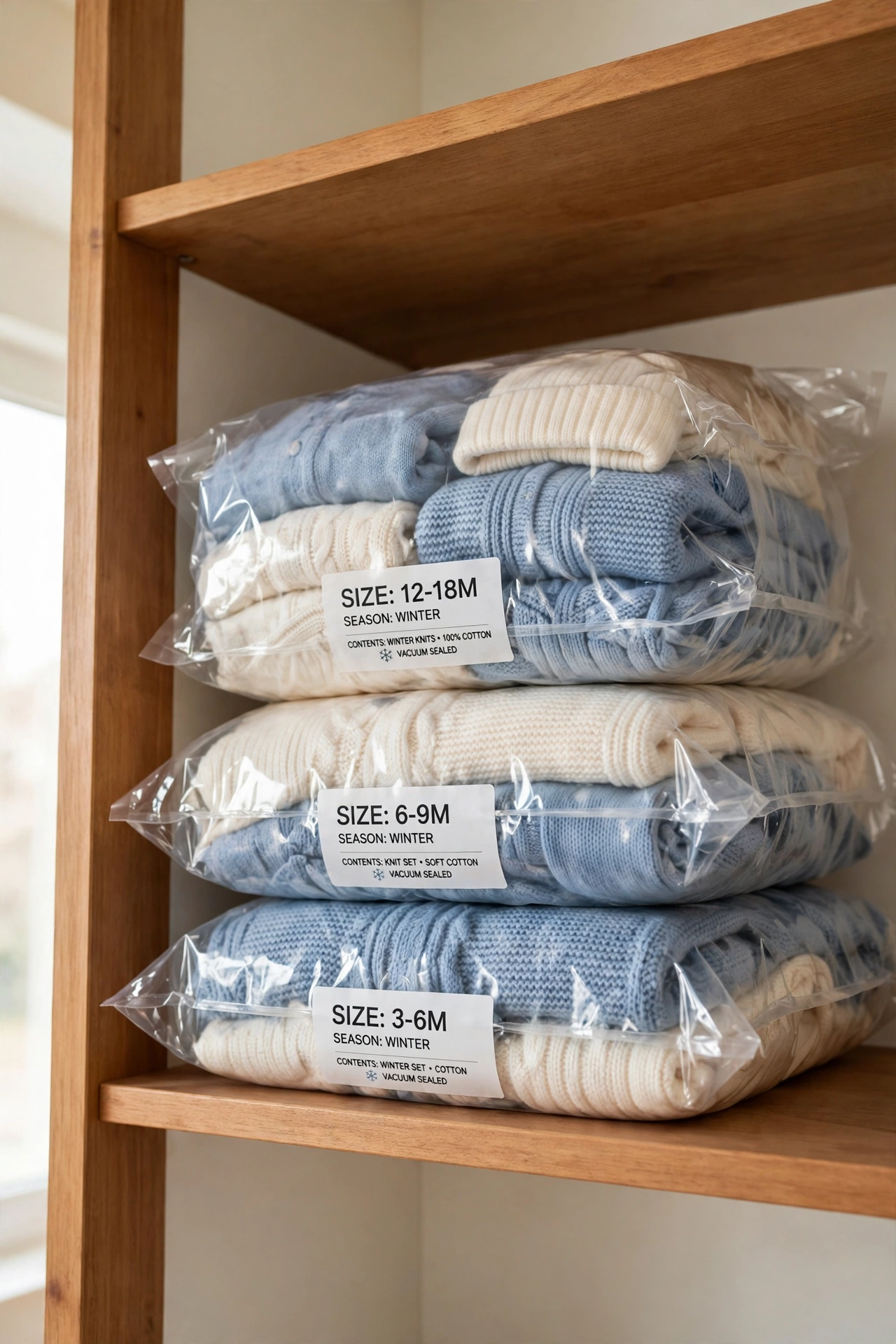
Vacuum storage bags shrink bulky off season clothes to a fraction of their size. Winter snowsuits and thick fleece sleepers take up far less room once the air is pressed out, and the sealed bags protect against dust, moisture, and moths. Label each bag with the size and season before you stack it away.
Store the flattened bags on a high closet shelf or in a tote with the rest of your rotation supplies. When the season turns, open the bag, wash the clothes, and move them into the active drawers. This is the easiest way to hold clothes for a baby who will need a winter size that is months away.
11. Hang a Clear Organizer for Socks, Hats, and Bibs
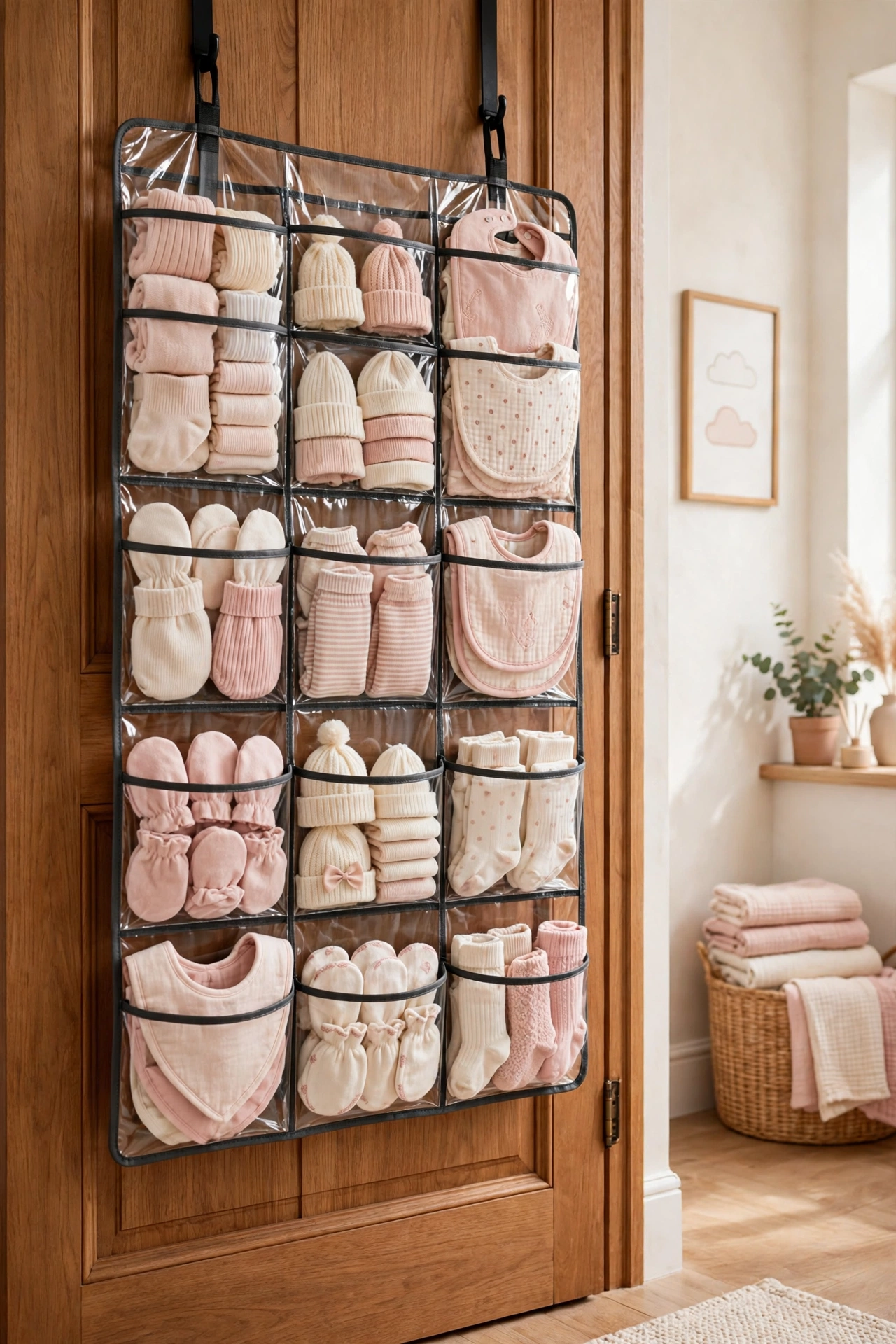
Small accessories are the first things to vanish in a nursery, so give them a home you can see through. A clear over-the-door organizer with roomy pockets holds socks in one pocket, hats in another, bibs in a third, and mittens in a fourth. Every tiny item stays visible and sorted by type.
Hang the organizer on the inside of the closet door so it stays out of the way but within arm’s reach of the changing table. Sort the pockets by size as well as by type, so outgrown socks move to a storage pocket at the bottom. This one organizer can replace a whole drawer of jumbled small items.
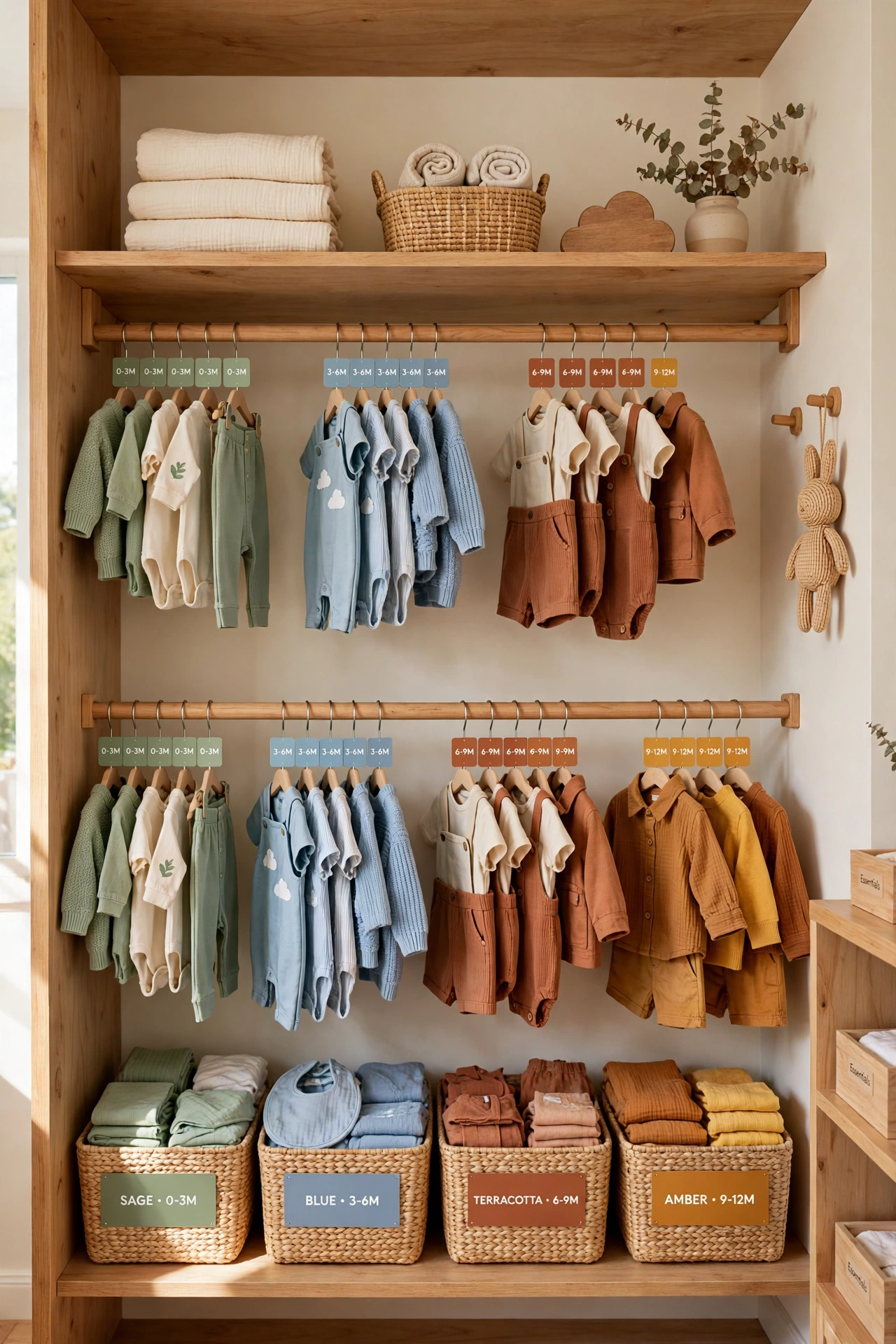
12. Color Code Sizes With Tags and Labels
Color coding gives every size its own visual signal. Assign one color to each size range, such as sage green for 0-3 months, soft blue for 3-6 months, terracotta for 6-9 months, and amber for 9-12 months. Use matching colored tags on hangers, matching labels on bins, and matching dots on drawer fronts.
This system works beautifully for anyone helping with laundry, because the color tells the story faster than reading a tiny size tag. Keep a small color key card taped inside the closet door so the code stays consistent. When you rotate, the new color takes over the front of the closet and the old color moves to storage.
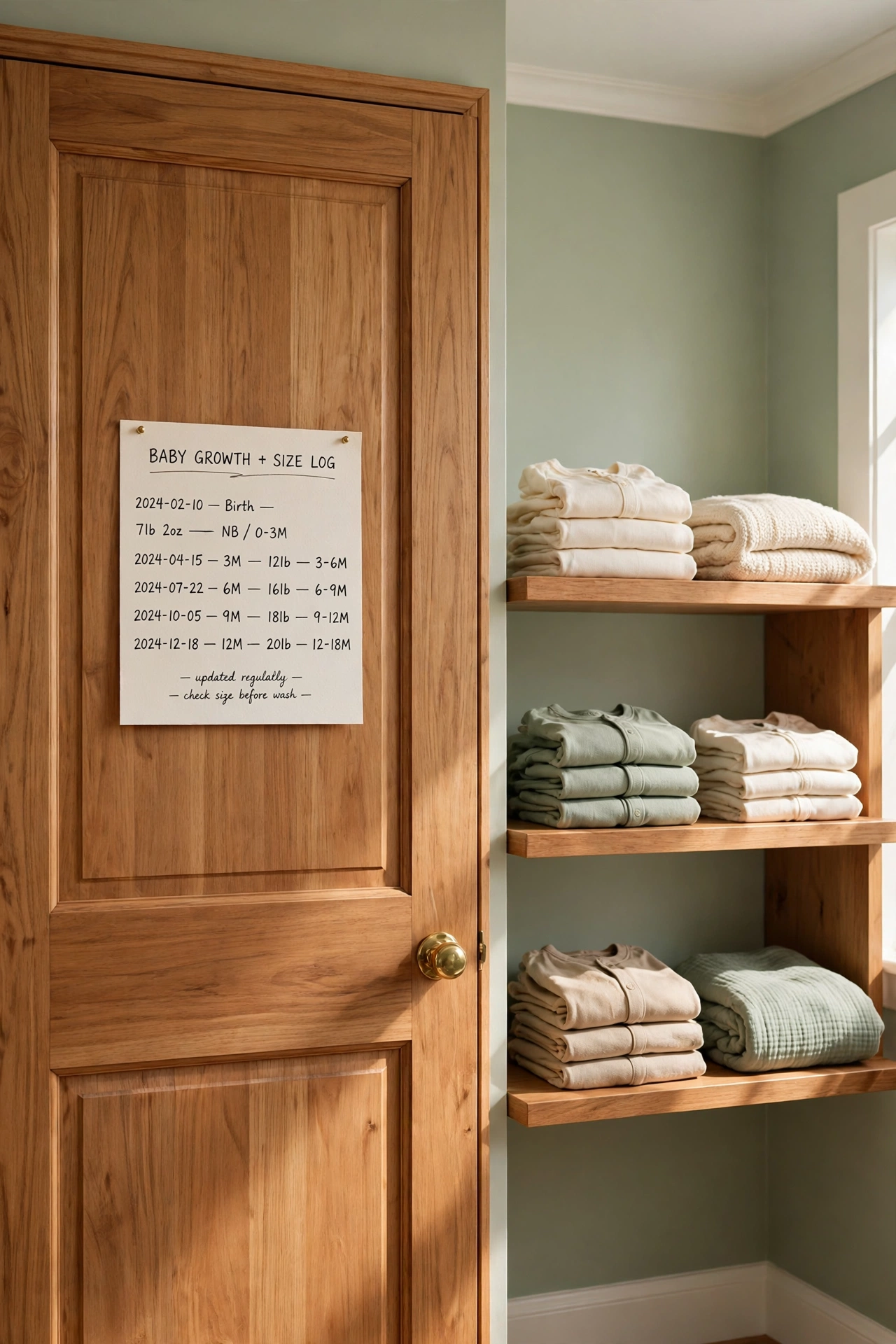
13. Track Growth With a Size Log on the Closet Door
A size log taped inside the closet door turns guessing into knowing. Each time your baby moves into a new size, write the date and the size on the log. Over a few months you will see a clear pattern of how fast your baby grows, which makes it easy to plan when to buy or pull the next size.
Note the season beside each entry too, so you can see whether the next size will be needed for warm weather or cold weather. This little record also helps you shop sales with confidence, because you can predict which size your baby will wear three months from now. A simple card and a pen are all you need.
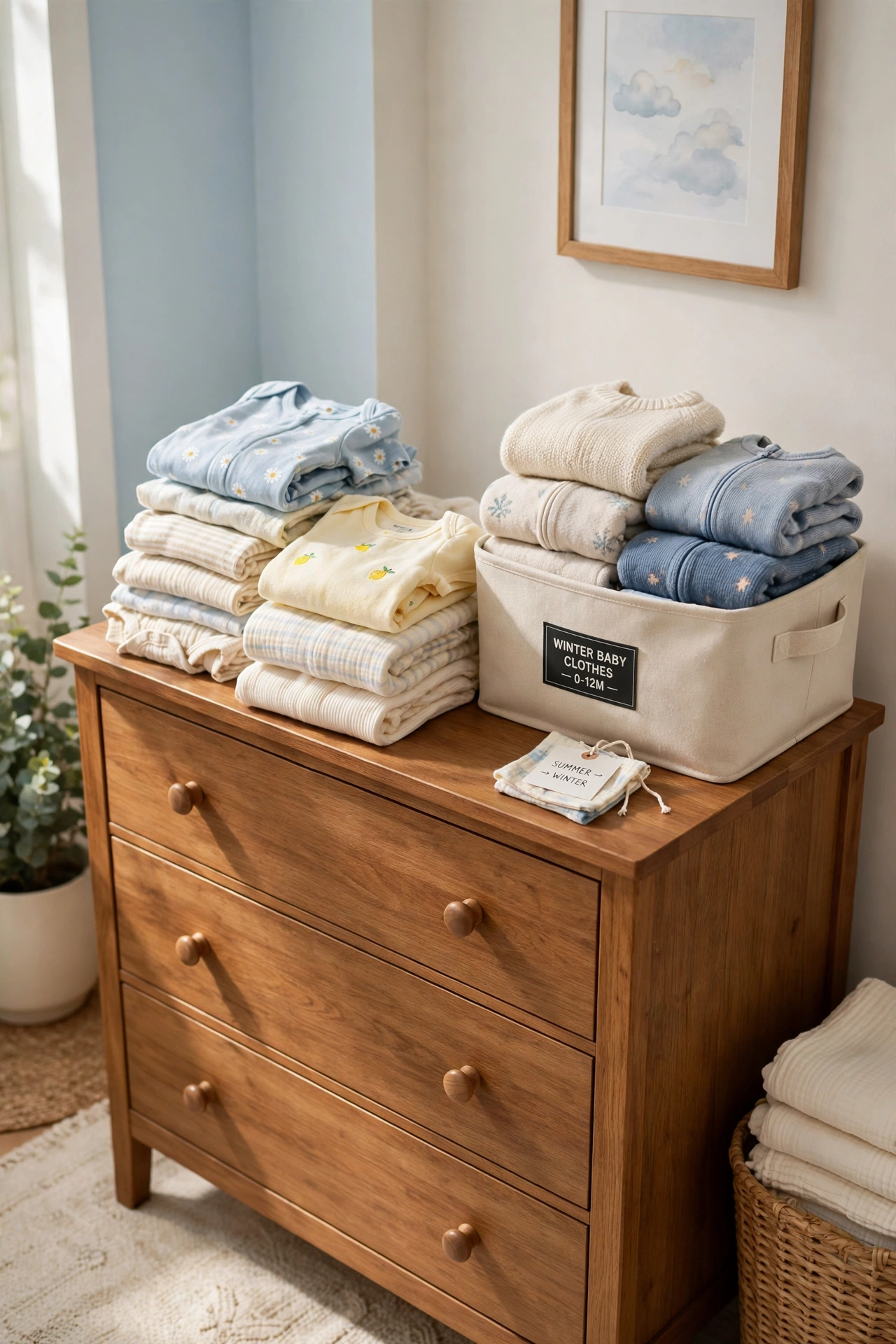
14. Swap the Wardrobe With Each New Season
A seasonal swap is the natural rhythm for a baby clothing rotation. At the start of spring and fall, pull every item from the active drawers and sort it into three groups: fits now, too small, and wrong season. The fits now group goes back, the too small group goes to storage or donation, and the wrong season group goes into labeled bags.
Then pull the right season clothes in the current size from your bins and fill the drawers fresh. This twice a year reset keeps the nursery matched to the weather and to your baby’s size at the same time. It also catches the items that quietly stopped fitting between your monthly checks.
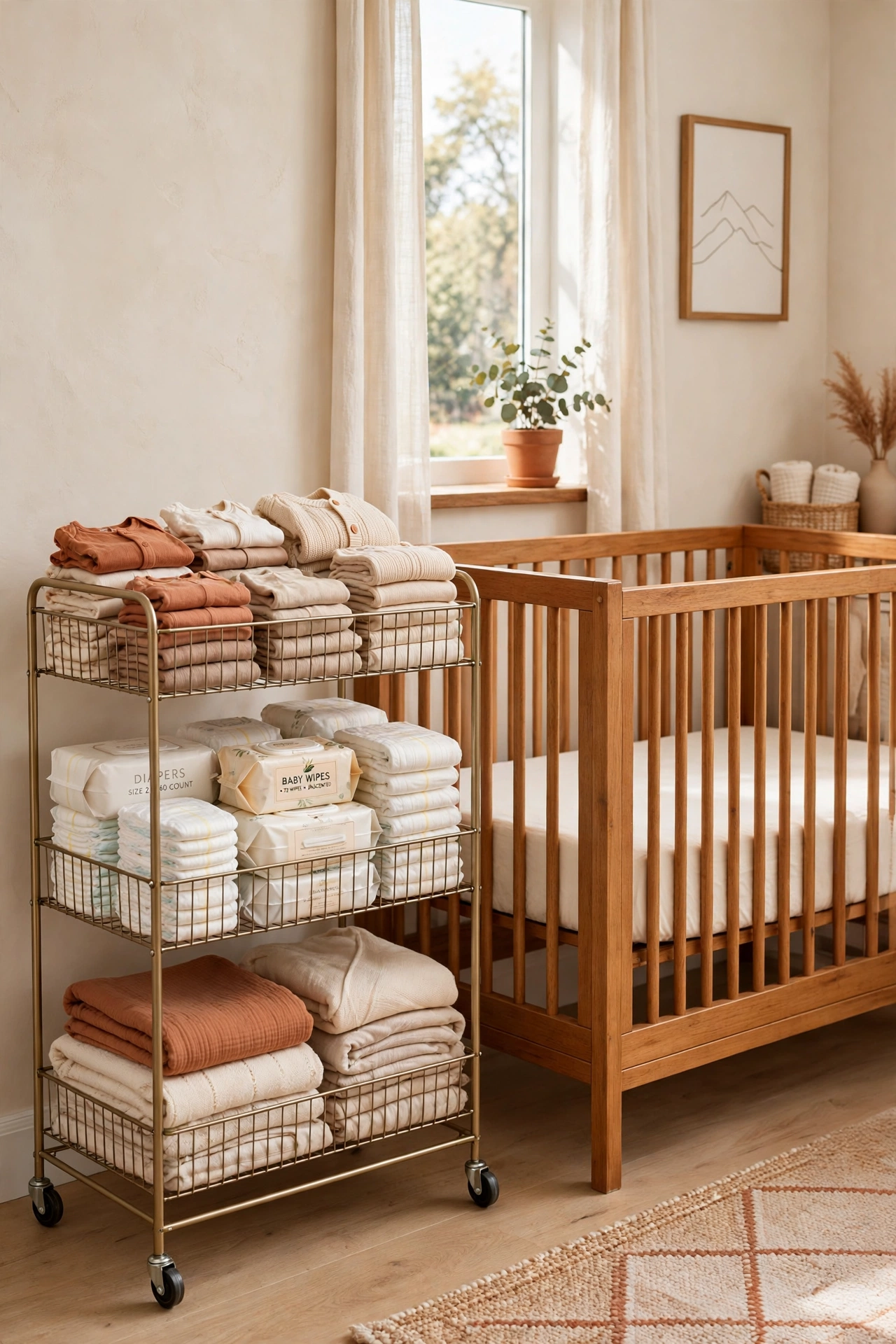
15. Roll a Cart of Daily Essentials Beside the Crib
A small rolling cart beside the crib holds everything you need for quick changes without a trip to the closet. Stock the top tier with the current size onesies and sleepers, the middle tier with diapers and wipes, and the bottom tier with spare blankets and burp cloths. The cart rolls wherever you need it, even to another room.
Restock the cart during your weekly outfit prep so it always reflects the current size. When your baby outgrows a size, the cart is the first place you swap, because it holds the clothes you reach for most. Keep dirty clothes moving straight to the wash with a small hamper nearby, and these laundry hamper organization ideas will help you choose a hamper that fits a nursery corner without crowding the room.
16. Build a Grow With Me Capsule Wardrobe
A capsule wardrobe for a growing infant means fewer clothes, chosen with care, that all mix and match. Pick a small set of everyday pieces in the current size in soft neutral colors with one or two accent shades. Every top works with every bottom, so any combination looks put together.
When your baby grows, replace the capsule as a set instead of adding random pieces. Keep the capsule to about ten outfits plus sleepwear, and store everything else out of the daily drawers. This approach saves money, saves laundry time, and makes the rotation beautifully simple because there is less to sort.
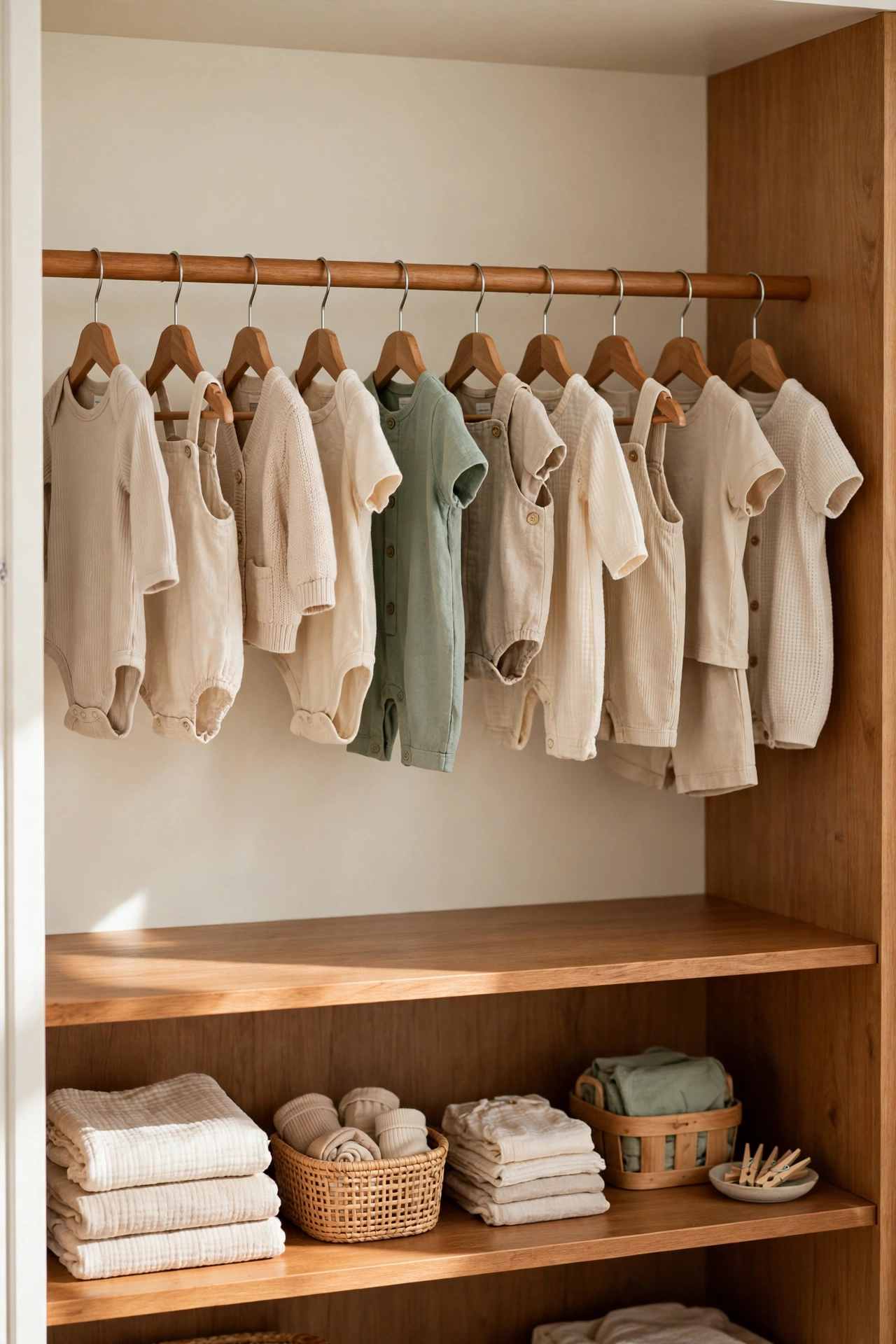
17. Wash and Prep Next Size Clothes Before the Swap
Prepping the next size before you need it makes the actual swap feel effortless. When your monthly check shows the current size getting snug, wash the whole next size bin, fold everything, and stack it in the next size up drawer. Then the swap is a simple drawer exchange instead of a laundry marathon.
Check each item as you prep it, and set aside anything stained, stretched, or missing a snap. This step also lets you spot gaps in the next size, such as missing sleepers or too few warm layers, while you still have time to fill them. A prepared drawer turns a growth spurt from a scramble into a smooth transition.
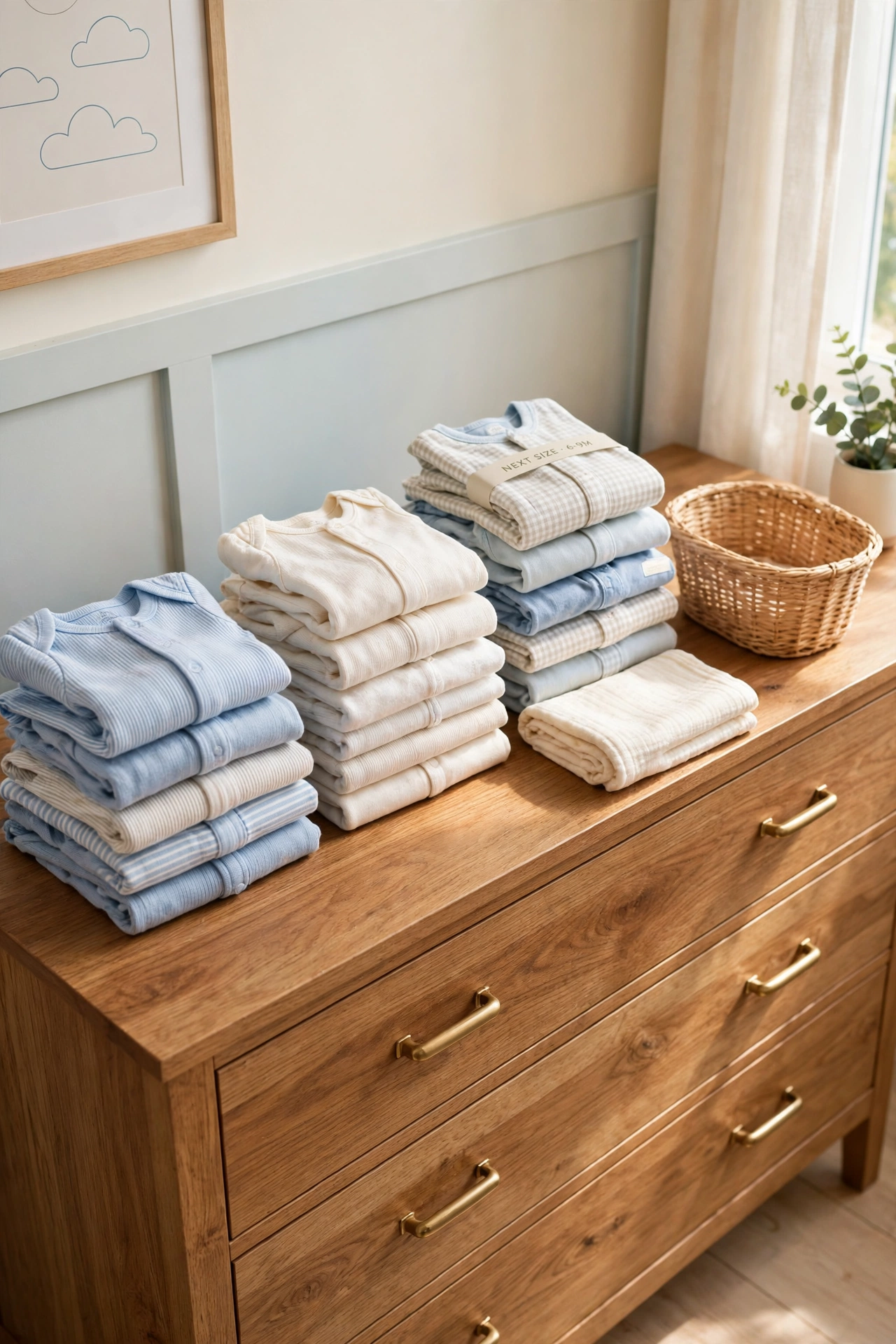
18. Keep Keepsake Outfits in Their Own Memory Box
Some outfits deserve a home of their own, separate from the rotation entirely. The coming home outfit, a christening gown, and the first holiday sweater belong in a single keepsake box with acid free tissue paper, not mixed into storage bins you open every month. Label the box clearly so it never gets donated by mistake.
Limit the keepsake box to a handful of truly special pieces, and add a small card noting when and where each outfit was worn. This protects the memories while keeping the working rotation lean. One tidy box on a high shelf holds the sentiment without letting it take over the nursery.
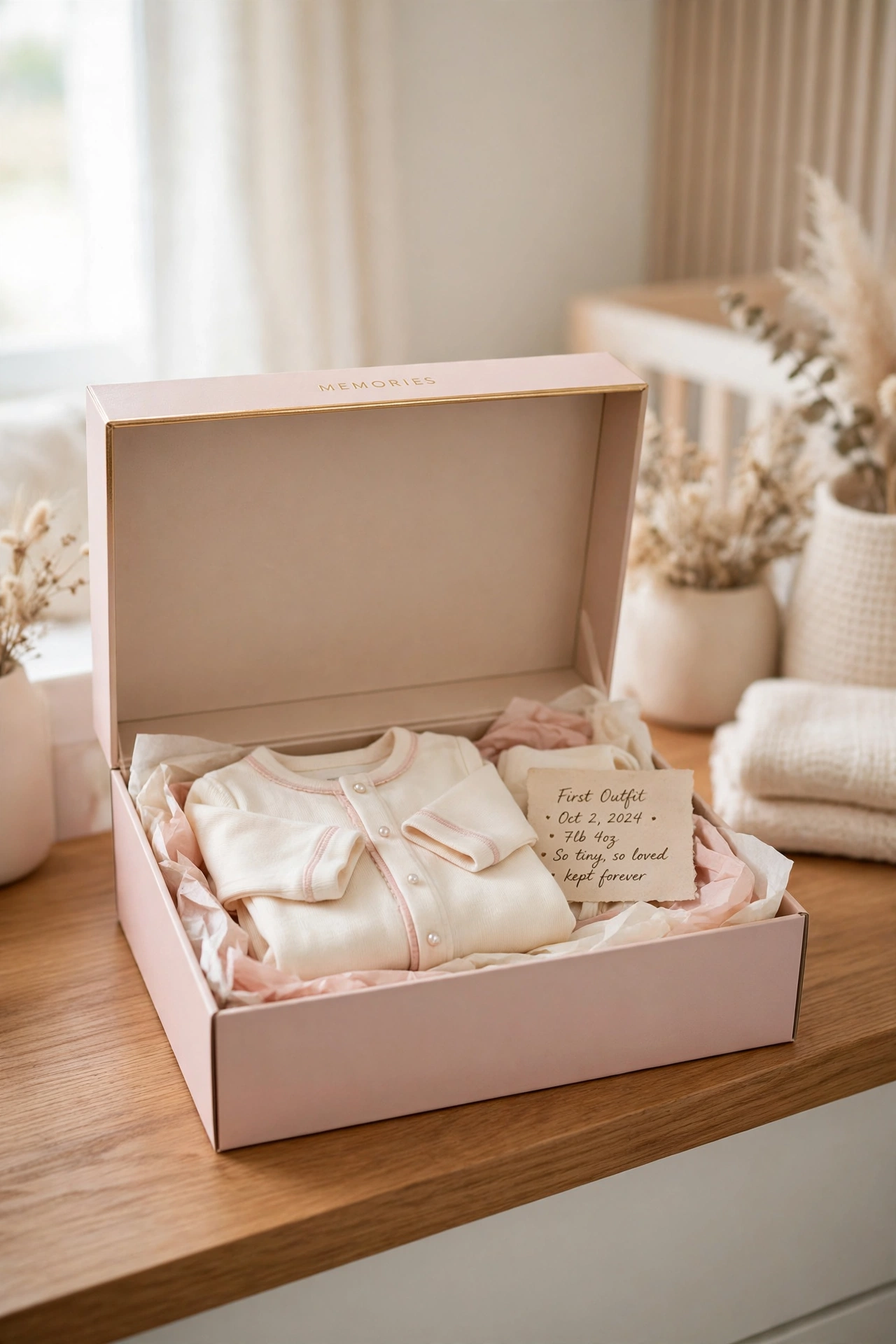
19. Use Under Crib Storage for the Next Size Up
The space under the crib is perfectly placed for the next size up. Slide a low, flat bin under the crib with the upcoming size washed and folded inside, and it stays close at hand but completely out of sight. Choose a bin with a lid to keep dust out and a label on the end you can read from the doorway.
Check that the bin fits without blocking airflow under the crib and that it slides out easily for your monthly swap. This spot is ideal for parents who are short on closet space, because it turns unused floor area into a working part of the rotation system.
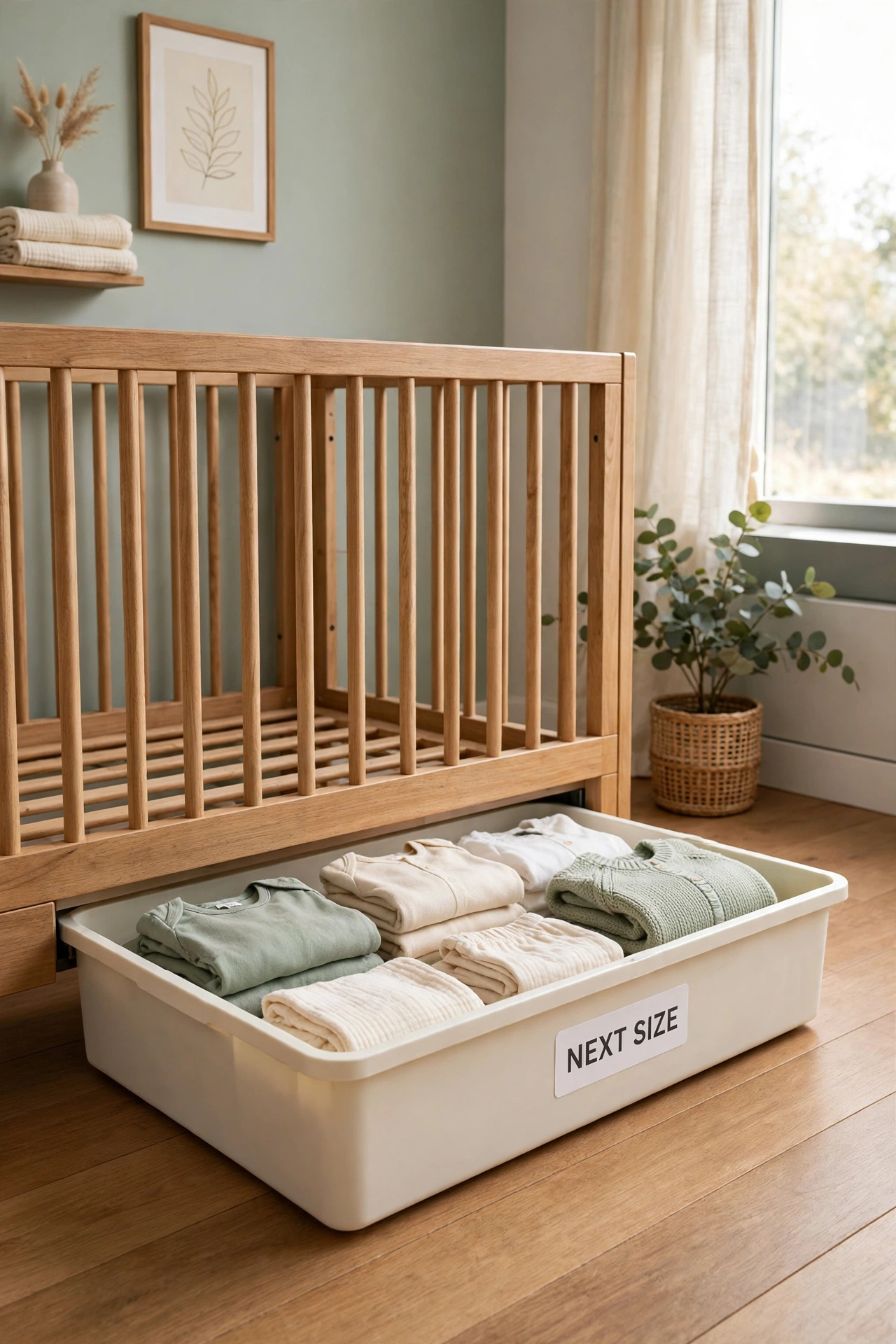
20. Create a Hand Me Down Station for the Next Child
If you plan to pass clothes to a younger sibling or a friend’s baby, a hand me down station keeps those clothes organized from the start. Use one large labeled tote per size, and move outgrown clothes straight from the too small basket into the right tote. Add a simple inventory card on top listing what is inside.
When the next baby arrives, you open the totes in size order and the wardrobe is ready. This station also makes it easy to share with friends, because you can hand over a complete size at once instead of a random bag. Keep the totes in a dry closet or on a garage shelf, out of the daily nursery traffic.
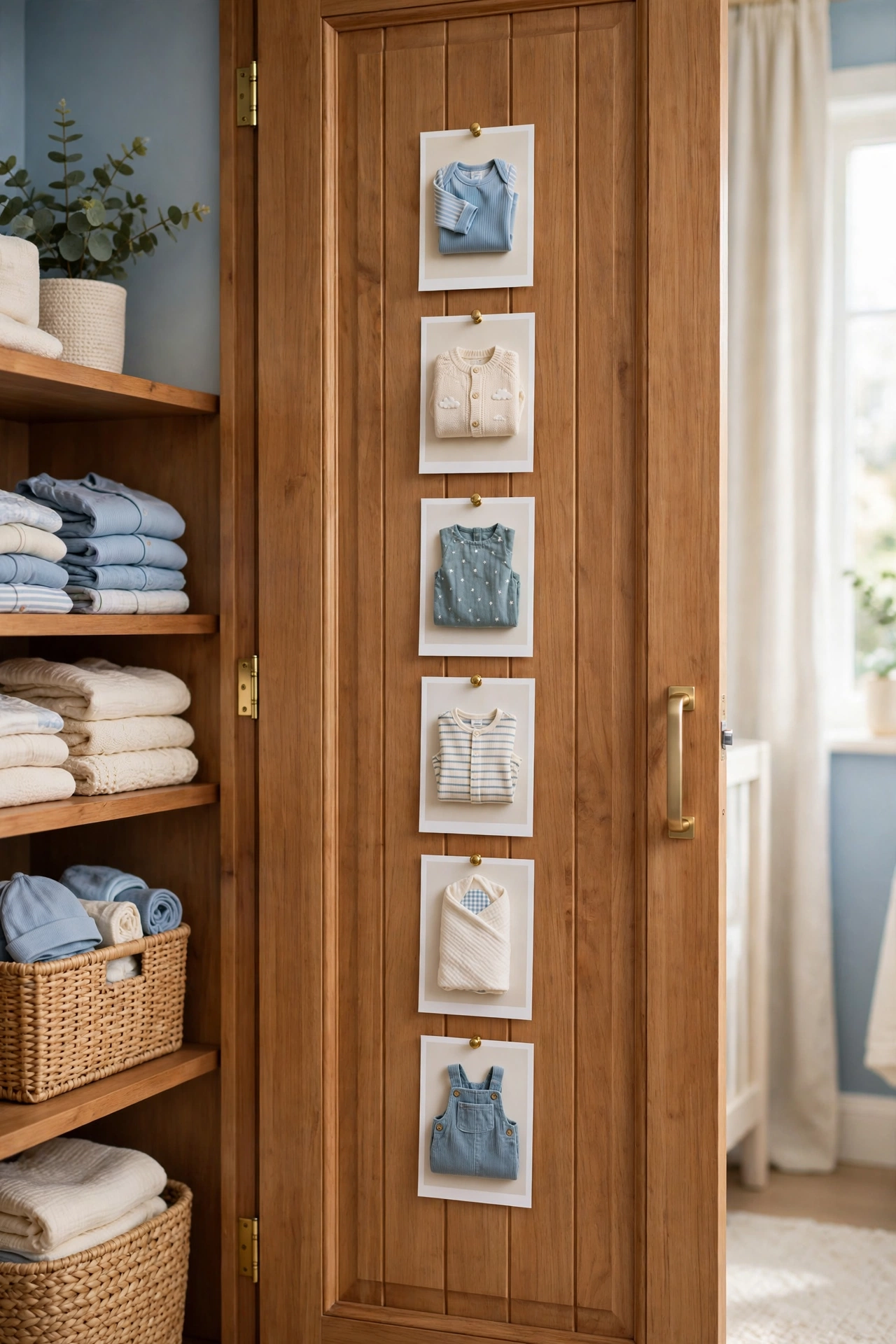
21. Photograph Go To Outfits for Quick Mornings
A photo board of go to outfits removes all morning decision making. Take a quick photo of each favorite outfit laid flat, print the photos small, and pin them inside the closet door. On busy mornings, point to a photo and pull that exact combination from the drawer.
Update the board each time you rotate sizes, swapping in photos of the new outfits. This trick is wonderful for partners, grandparents, and caregivers who dress the baby, because the photo shows exactly which pieces go together. It also helps you notice which outfits never get worn, so you can move them out of the rotation.
22. Do a Quarterly Closet Reset From Top to Bottom
A quarterly closet reset is the deep clean that keeps your whole rotation system honest. Four times a year, empty the closet and every drawer, wipe the shelves, and sort every single item by size and season. Anything that no longer fits leaves the nursery that same day, either to storage, donation, or the hand me down station.
Rebuild the closet with only the current size in the daily zones and the next size waiting in its drawer. This rhythm mirrors the way a toy rotation keeps play fresh, and these toy rotation ideas use the same simple principle of keeping only what is right for today within easy reach. A fresh closet every three months means the system never drifts back into clutter.
Conclusion
Baby clothing rotation is not about owning more clothes. It is about keeping the right clothes in the right place at the right time, so the closet always matches the baby wearing them. A few labeled bins, a too small basket, and a monthly check are enough to run the whole system.
Start with one idea from this list, such as the size bins or the next size up drawer, and add more pieces as the habit takes hold. Within a few weeks, dressing your baby will feel calmer, laundry will feel lighter, and the nursery will stay tidy through every growth spurt that comes your way.
Frequently Asked Questions About Baby Clothing Rotation Organization Ideas for Growing Infants
How often should I rotate baby clothes?
Check sizes once a month and do a full rotation whenever your baby moves into a new size, which can happen every two to three months in the first year. A quick weekly tidy of the too small basket keeps the system running between checks. Seasonal swaps in spring and fall catch anything the monthly checks miss.
How many clothes does a baby need in each size?
Seven to ten everyday outfits per size are plenty for most babies, plus five to seven sleepers and a few extra onesies for messy days. Babies outgrow sizes quickly, so a smaller wardrobe that fits well beats a large one full of clothes that never get worn. Keep spares in the next size up drawer rather than buying far ahead.
What is the best way to store outgrown baby clothes?
Wash and fully dry clothes before storage, then fold them into clear labeled bins with the size range on the front. Add a lavender sachet to keep them fresh, and store the bins in a dry place away from direct sunlight. Vacuum bags work well for bulky seasonal items that need to wait months before the next baby wears them.
When should I move my baby up to the next clothing size?
Move up when onesies pull at the snaps, sleeves end above the wrist, or pants no longer cover the ankles. If dressing your baby feels like a struggle, the size is too small even if the label says otherwise. Keep the next size washed and ready so the change takes minutes, not a full laundry day.
How do I organize baby clothes in a small nursery?
Use vertical space with hanging organizers and closet dividers, file fold clothes in drawers, and store the next size under the crib. Keep only the current size in the daily zones and move everything else to bins elsewhere. A rolling cart can hold daily essentials without taking up permanent floor space.

Hi, I’m Emily! I turn messy corners into cozy, organized spots. DreamNestDecor is where I share simple, practical home ideas — decor, organization, and small-space solutions that work in real life, not just in photos. Every idea here is carefully researched before it’s shared.