Your dresser decides how your mornings feel. When every drawer opens smoothly and holds only what you actually wear, getting dressed takes minutes. When drawers stick, overflow, and hide things, the whole day starts with a sigh.
Most dresser problems come from drawers that were never set up to match real life. Clothes get tossed into big empty spaces with no dividers, no zones, and no plan. A few smart changes inside each drawer fix this faster than buying new furniture.
These 31 dresser drawer organization ideas show you how to divide, sort, and arrange every drawer for folded clothing and daily essentials. Work through them one drawer at a time and feel your bedroom calm down.
1. Slide Baskets Under the Dresser for Everyday Grab Items
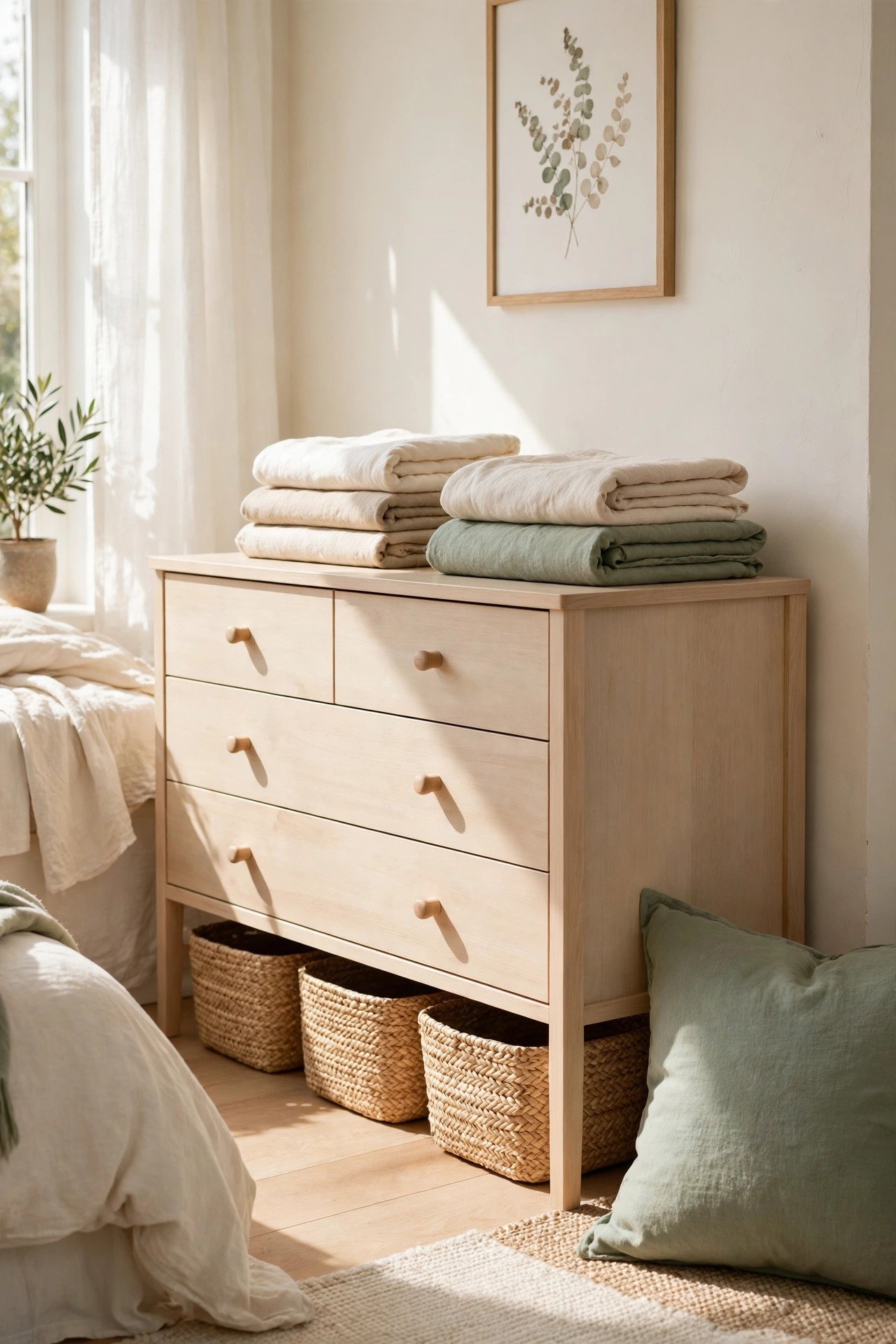
A dresser with an open lower section gives you bonus storage most people ignore. Slide woven baskets underneath to hold the things you grab daily. The top drawers stay free for folded clothes while everyday items live within easy reach.
This setup suits bedrooms where you want fast access without digging. Baskets slide in and out smoothly and keep the look light. Reserve them for items that do not need to stay hidden.
2. Pair Closed Drawers With an Open Cubby Shelf
Many modern dressers include a shallow open section above the drawers. This small design change lets you see and reach folded or rolled clothes without opening anything. Daily items stay visible while the rest stays tucked away.
Keep the open shelf tidy with neat rolls or small stacks, because an open shelf becomes a catch-all fast. This layout works well in smaller bedrooms where every inch counts. One open section changes how the whole dresser functions.
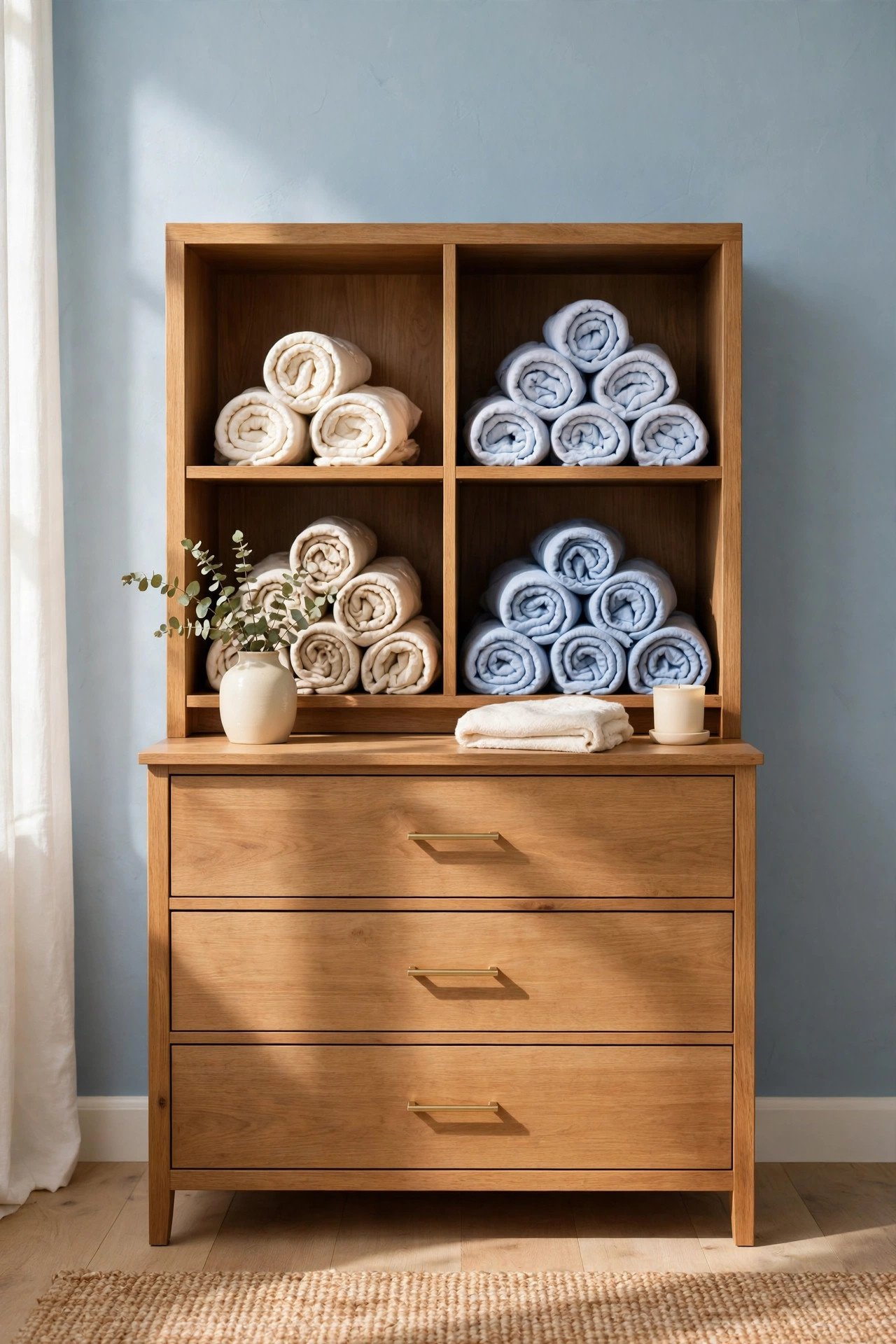
3. Sort Folded Clothes With Soft Fabric Bins
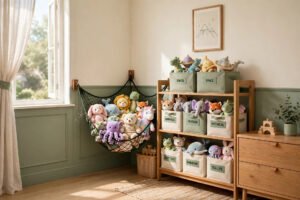
Dressers turn messy when small items shift and slide into the back. Soft fabric bins create clear sections that hold folded clothes in place. You can see what is inside each bin without pulling everything out.
Place a few bins across open shelves and use the drawer below for overflow pieces. This approach suits nurseries and small bedrooms where quick access matters. Bins keep categories separate with almost no effort.
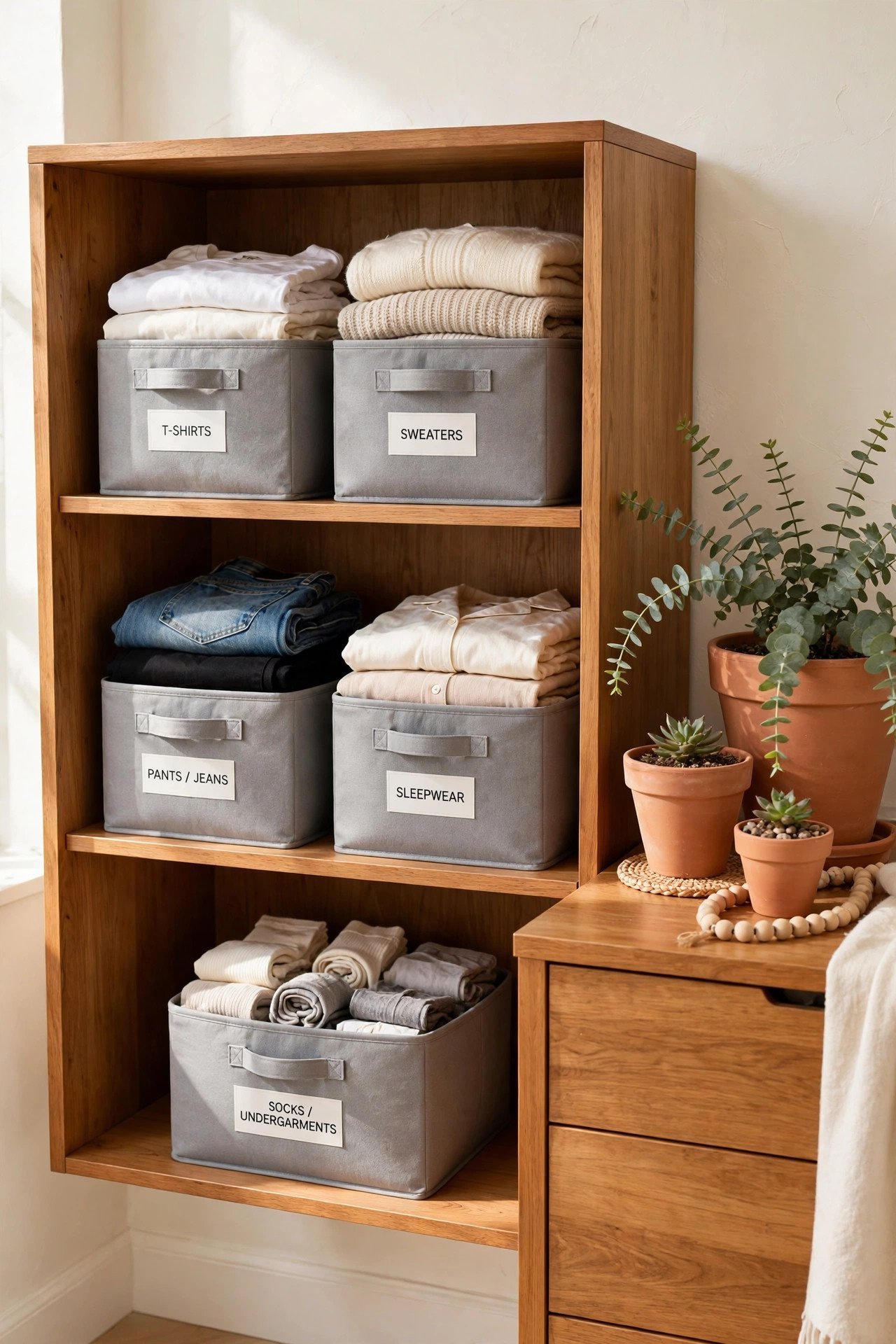
4. Keep Daily Accessories in an Open Cubby
A small open section along the top of a dresser makes a perfect home for jewelry, watches, and the items you grab every morning. Keeping them in plain view saves you from digging through drawers before coffee.
Drop a shallow organizer into the cubby to stop small pieces from scattering. Reserve the closed drawers for folded clothes and linens. Quick-access storage belongs where your hands naturally go first.
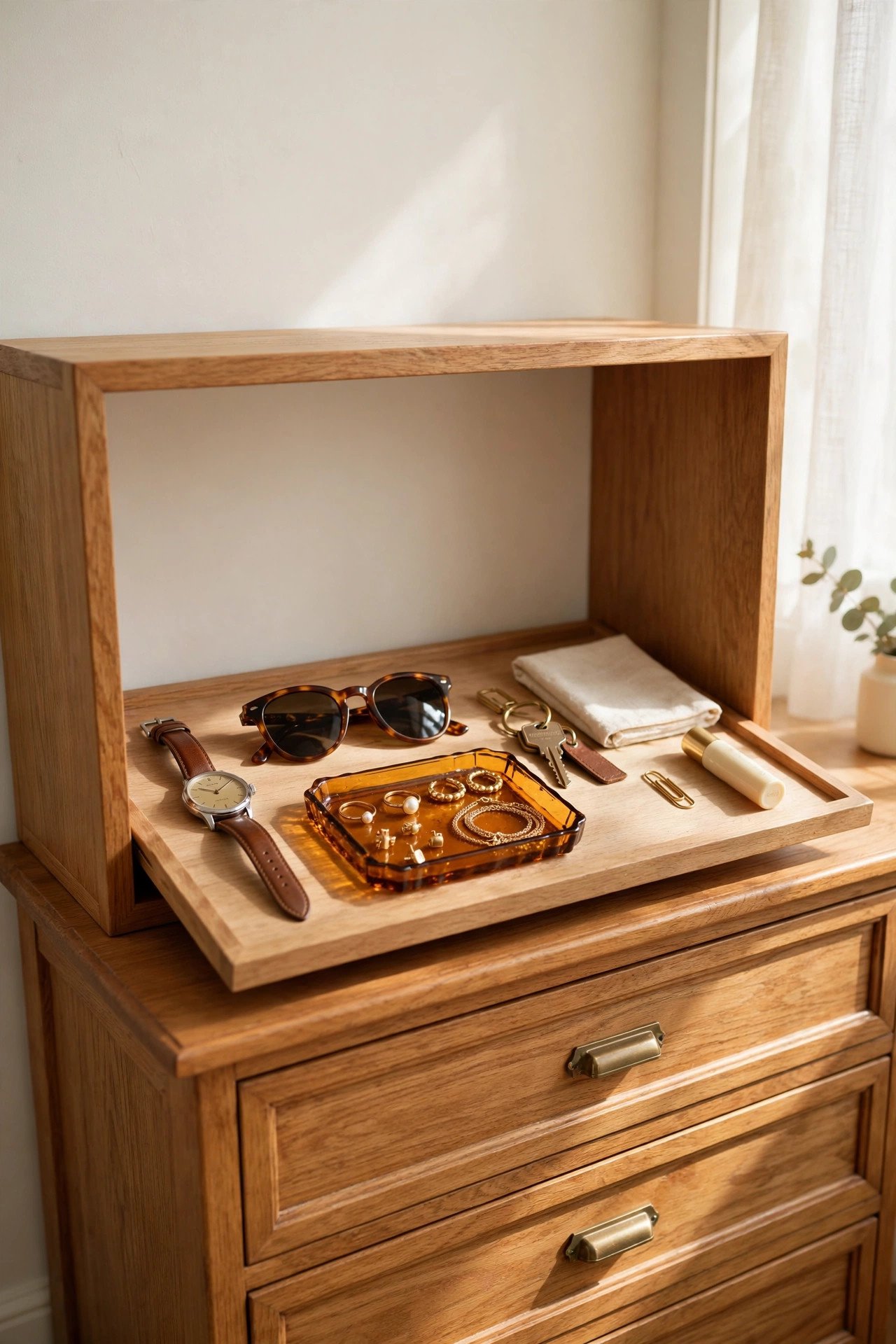
5. Roll Linens Into the Open Cubbies
Rolled towels, spare sheets, and table linens fit beautifully in open cubby sections. Rolling keeps them compact and lets you pull one out without disturbing the rest. Everyday storage starts to feel effortless.
This works best in bedrooms or guest spaces where you reach for linens often. Roll each piece tightly so the cubby looks neat, not stuffed. The closed drawers below stay free for your folded clothing.
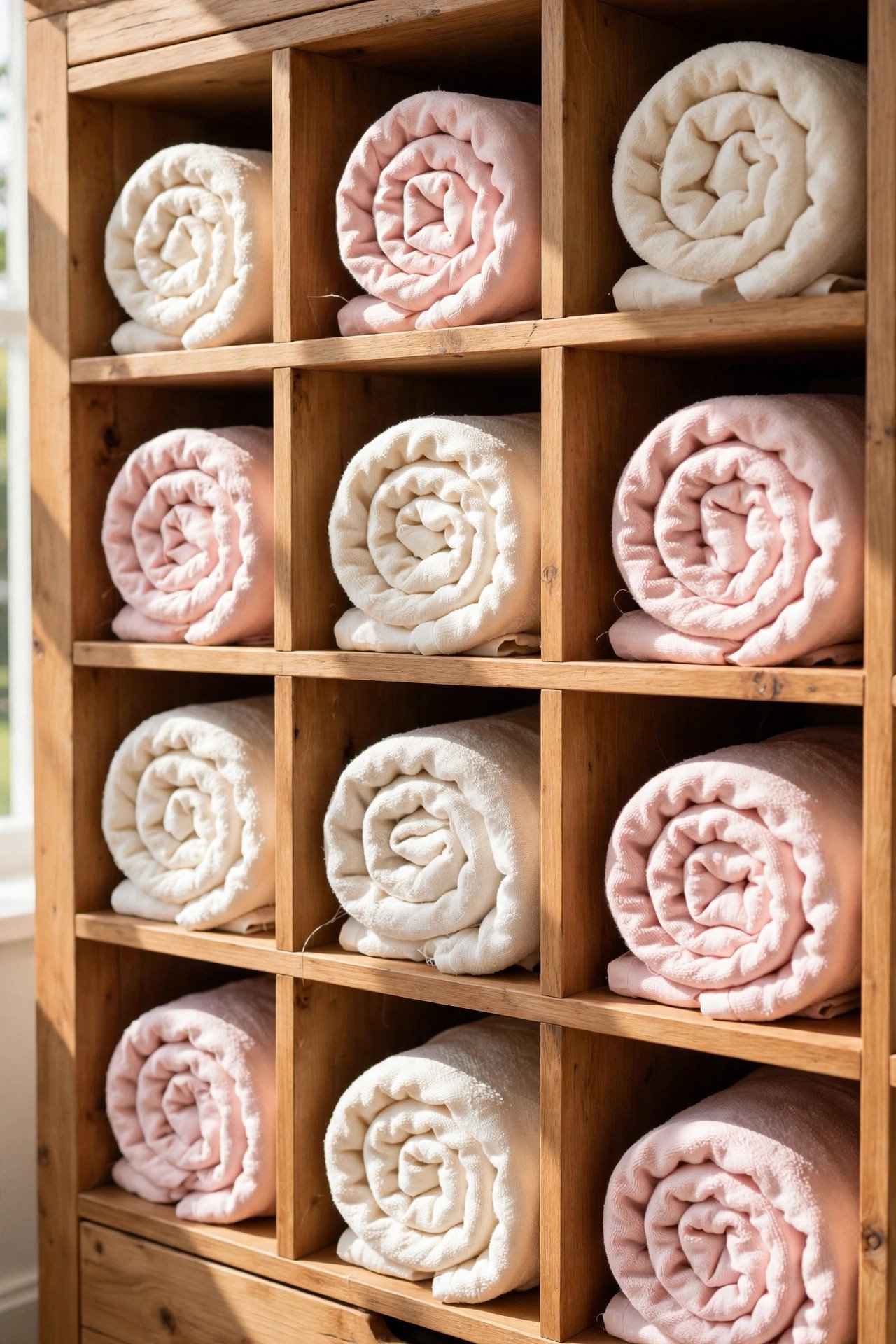
6. Mix Shallow and Deep Drawers on Purpose
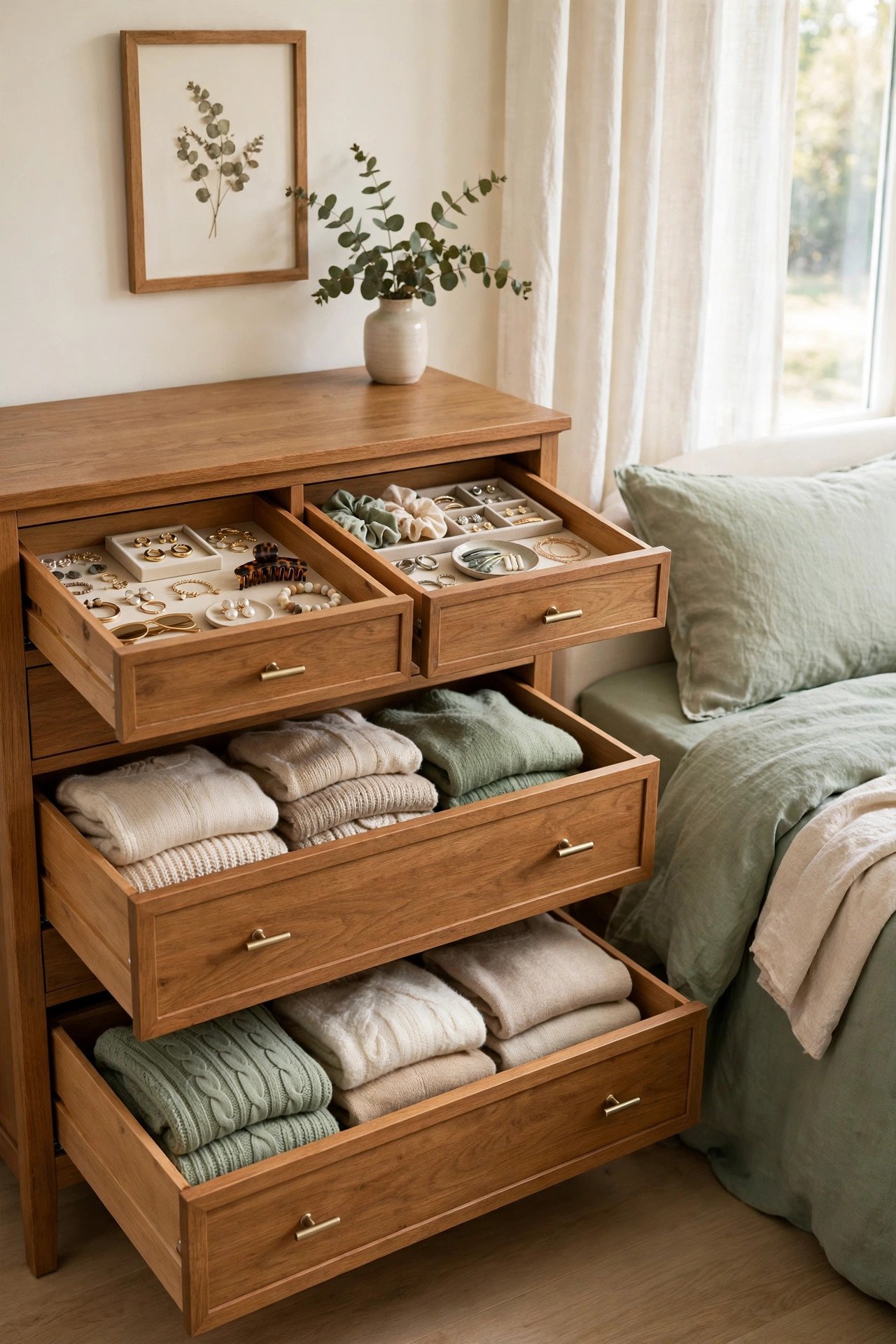
A dresser with shallow top drawers and deep lower ones sorts your clothes almost automatically. Small drawers keep accessories and folded pieces from getting lost, while deep ones handle bulky sweaters and jeans.
This layout matches how people actually store things day to day. Place the dresser where you can open the lower drawers fully. Avoid overloading deep drawers so they still glide shut without a fight.
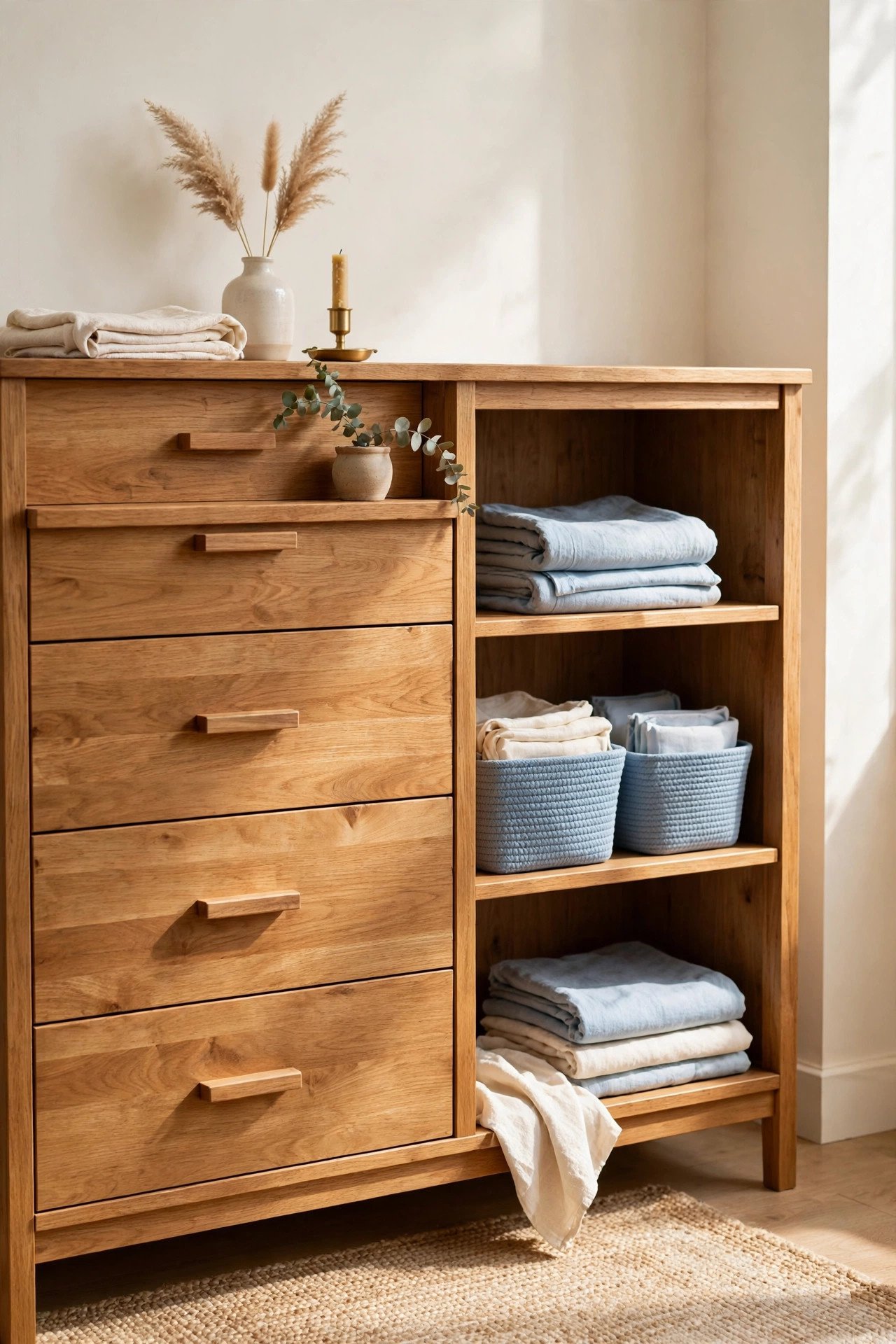
7. Choose a Dresser That Blends Drawers and Shelves
A dresser that mixes closed drawers with open shelving gives you more storage options without extra furniture. Open sections hold towels, baskets, and daily items, while drawers keep everything else out of sight.
This style shines in smaller bedrooms where floor space is tight. Drop a couple of baskets into the open sections to hold loose items neatly. One piece of furniture does the work of two.
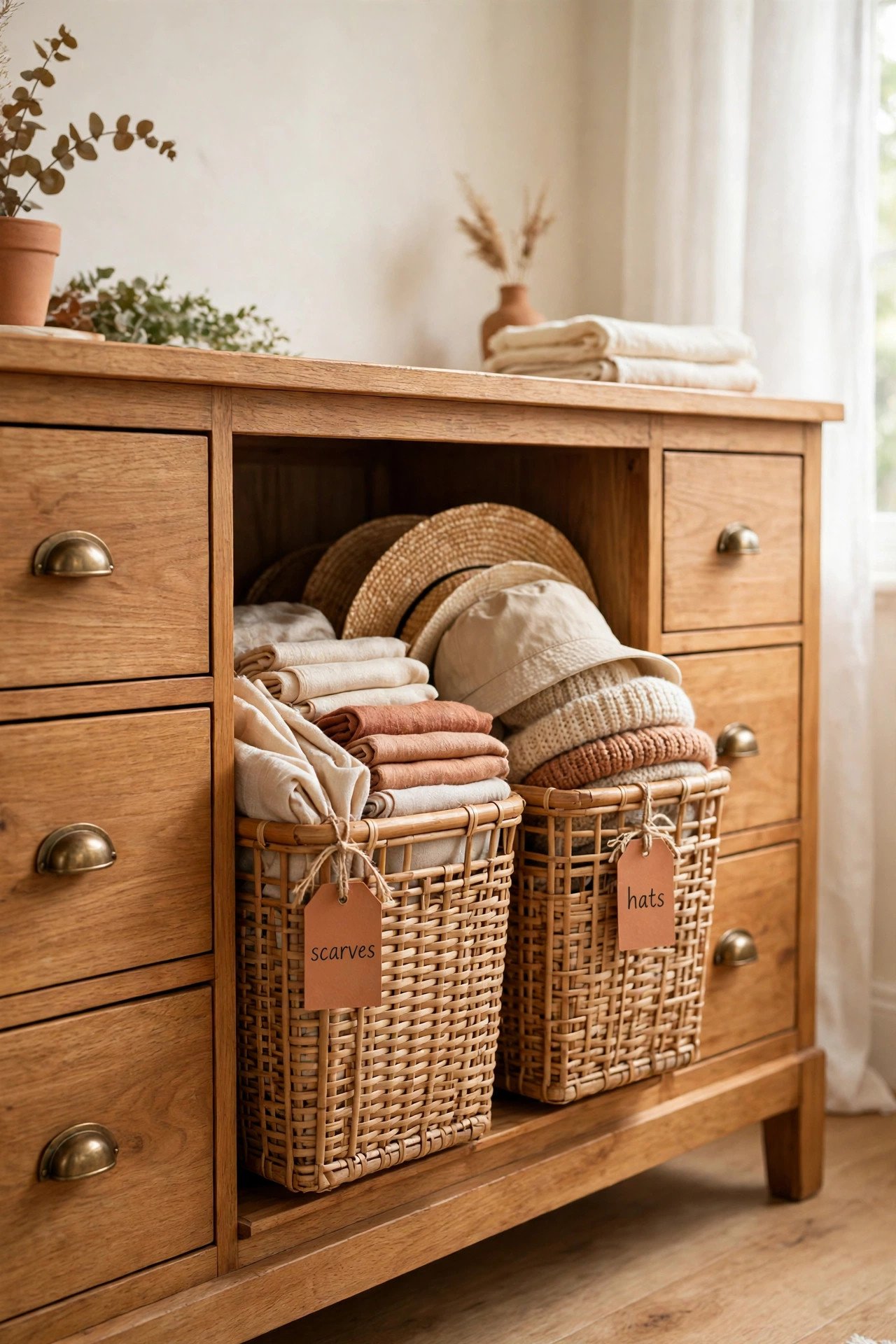
8. Fill Open Dresser Sections With Woven Baskets
Many dressers have a middle section left open on purpose. Baskets turn that empty space into real storage without adding doors or drawers. They slide out easily and bring warmth to the wood.
Assign each basket a job: one for scarves, one for hats, one for workout gear. Pull them out only when you need them. Labeled baskets in open sections look intentional instead of improvised.
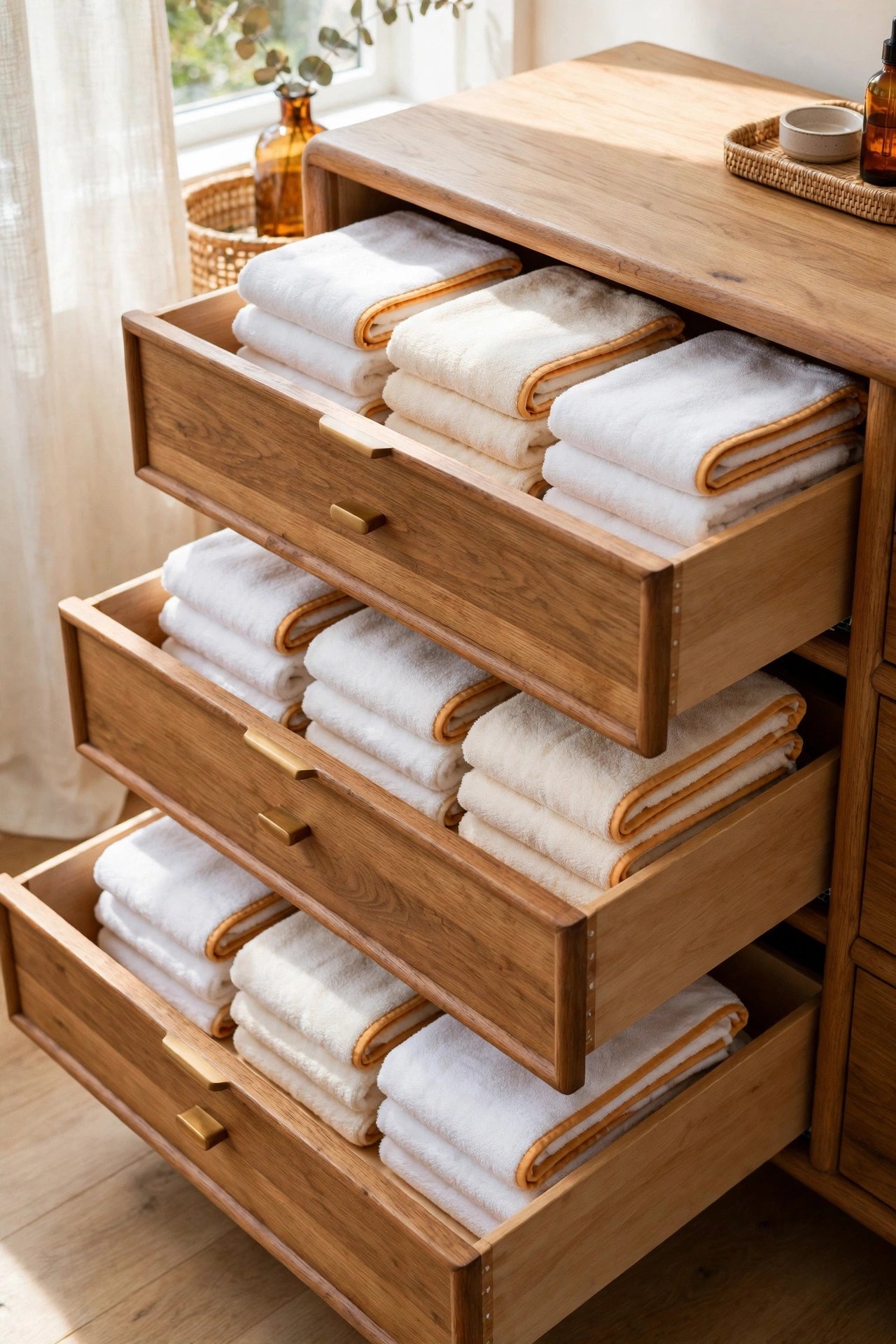
9. Stack Towels Neatly in the Deepest Drawers
Deep drawers make excellent homes for folded towels and spare linens. You can open a drawer and see every stack at once instead of digging through a cabinet. The setup keeps bathroom clutter out of sight.
This works best where you want towel storage without extra furniture. Fold each towel to the same size so the stacks sit evenly. Neat folds let the drawer close smoothly every time.
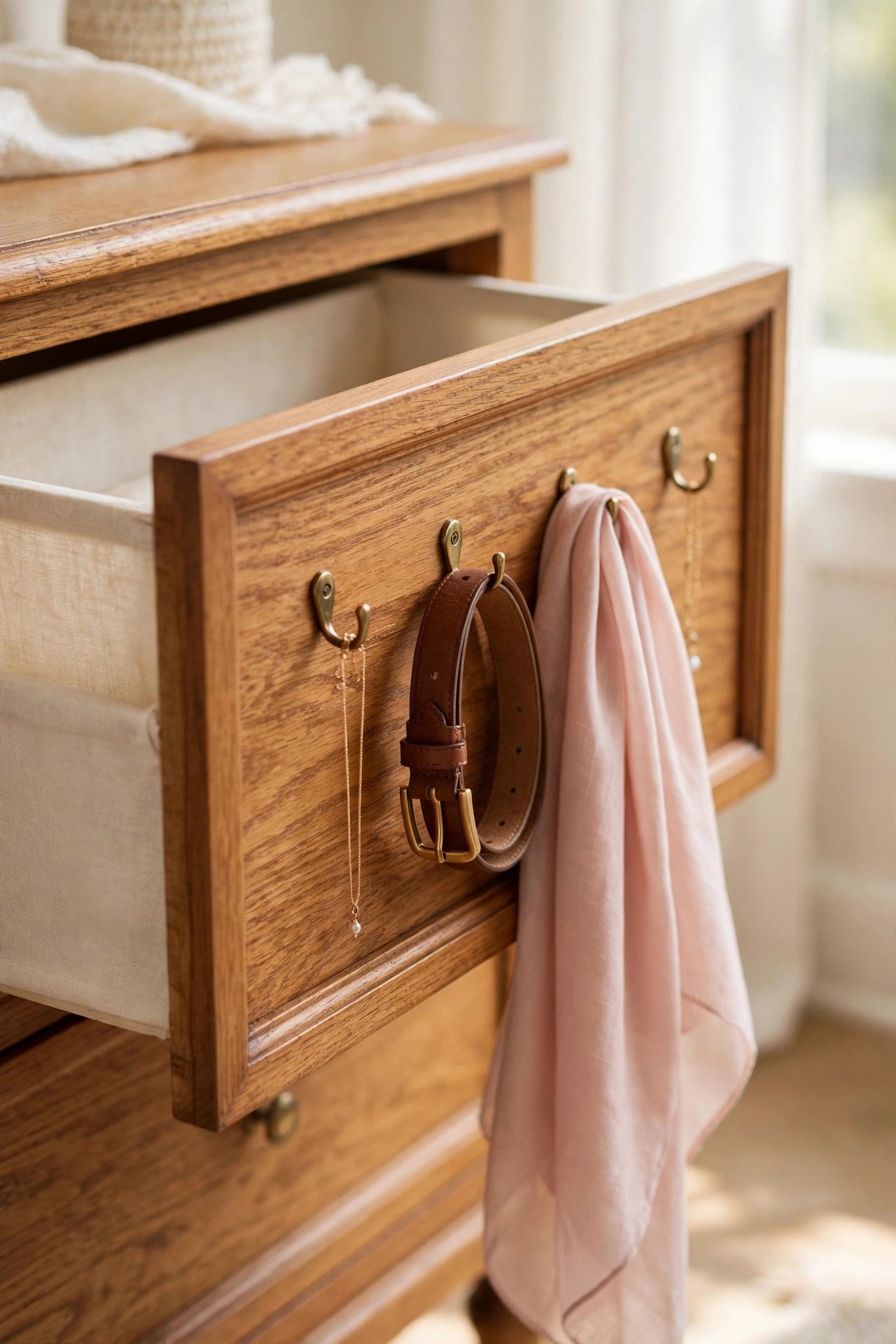
10. Add Small Hooks to the Drawer Fronts
The outside of a drawer can work as hard as the inside. A few small hooks on the drawer front hold scarves, belts, and necklaces you reach for often. They stay visible and easy to grab without opening anything.
This trick suits tall dressers where you can pull a drawer out partway. Keep the hooks low enough that they clear the frame above when the drawer closes. In small rooms, every storage surface counts.
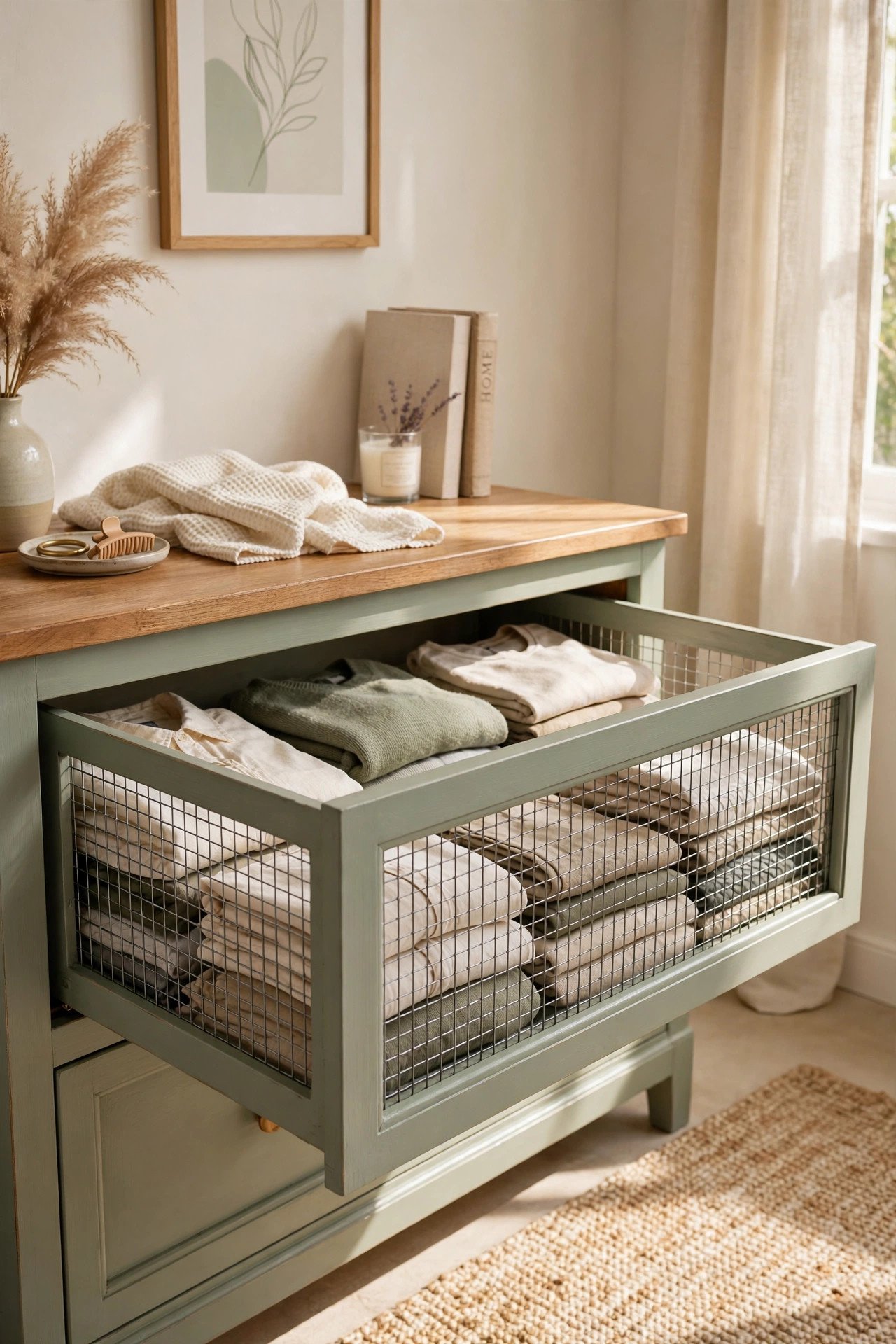
11. Try a Mesh-Front Drawer for Grab-and-Go Items
A drawer with a wire mesh front lets you see the contents at a glance. You spend less time hunting for the folded clothes and towels you use most. Visibility turns a drawer into a display that stays practical.
Pair mesh drawers with solid ones for smaller, private items. Check that the mesh feels sturdy before loading it up. This detail works especially well in bathrooms and utility spaces.
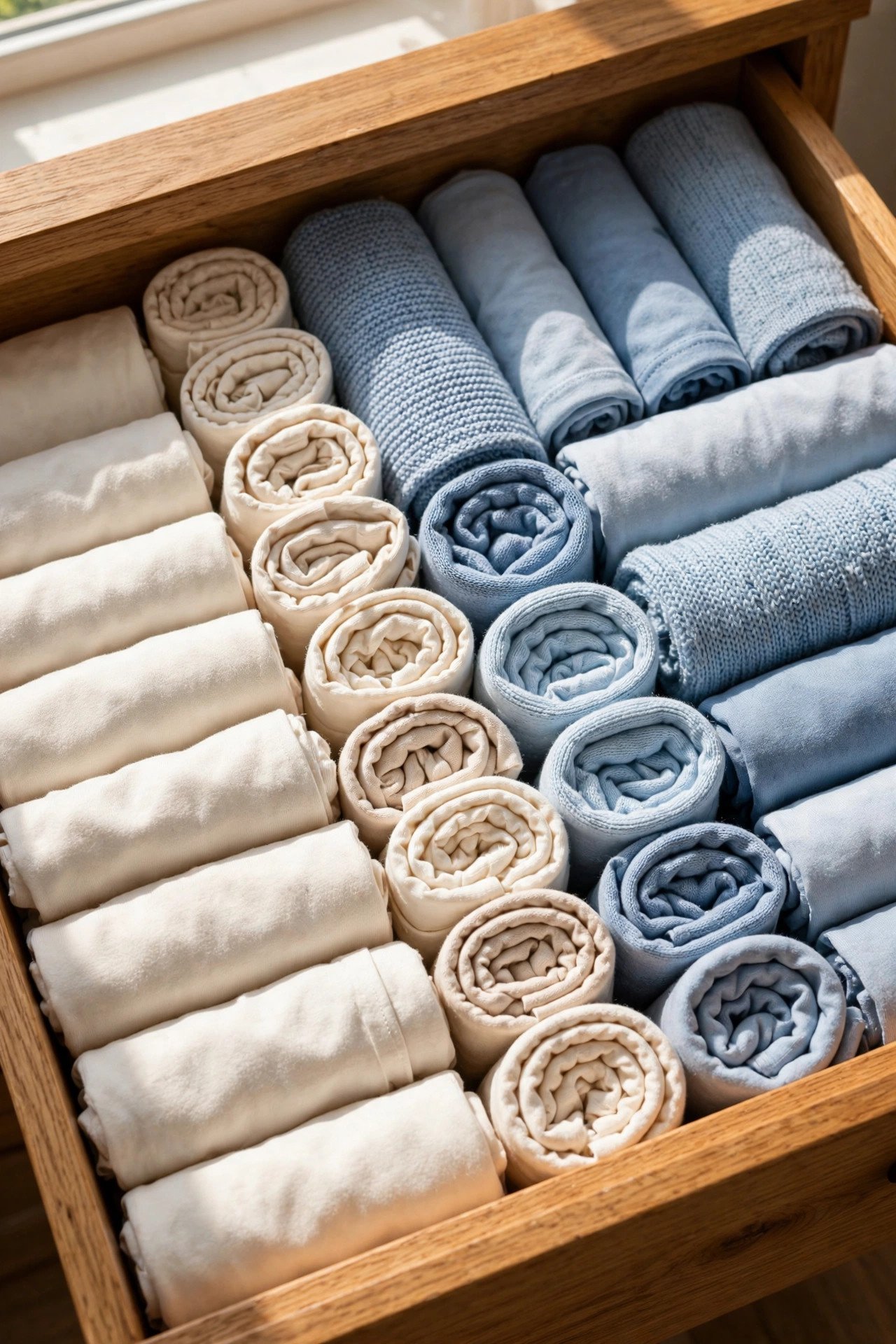
12. Roll Soft Items to Fit More in Each Drawer
Rolling soft clothes and accessories prevents wrinkles and fits more into every drawer. Rolled pieces also stay visible when you open the drawer, so you stop forgetting what you own.
This approach suits drawers holding a mix of clothing, scarves, and spare linens. Leave a little breathing room so the drawer still slides shut. Rolling is the fastest way to gain space without buying anything.
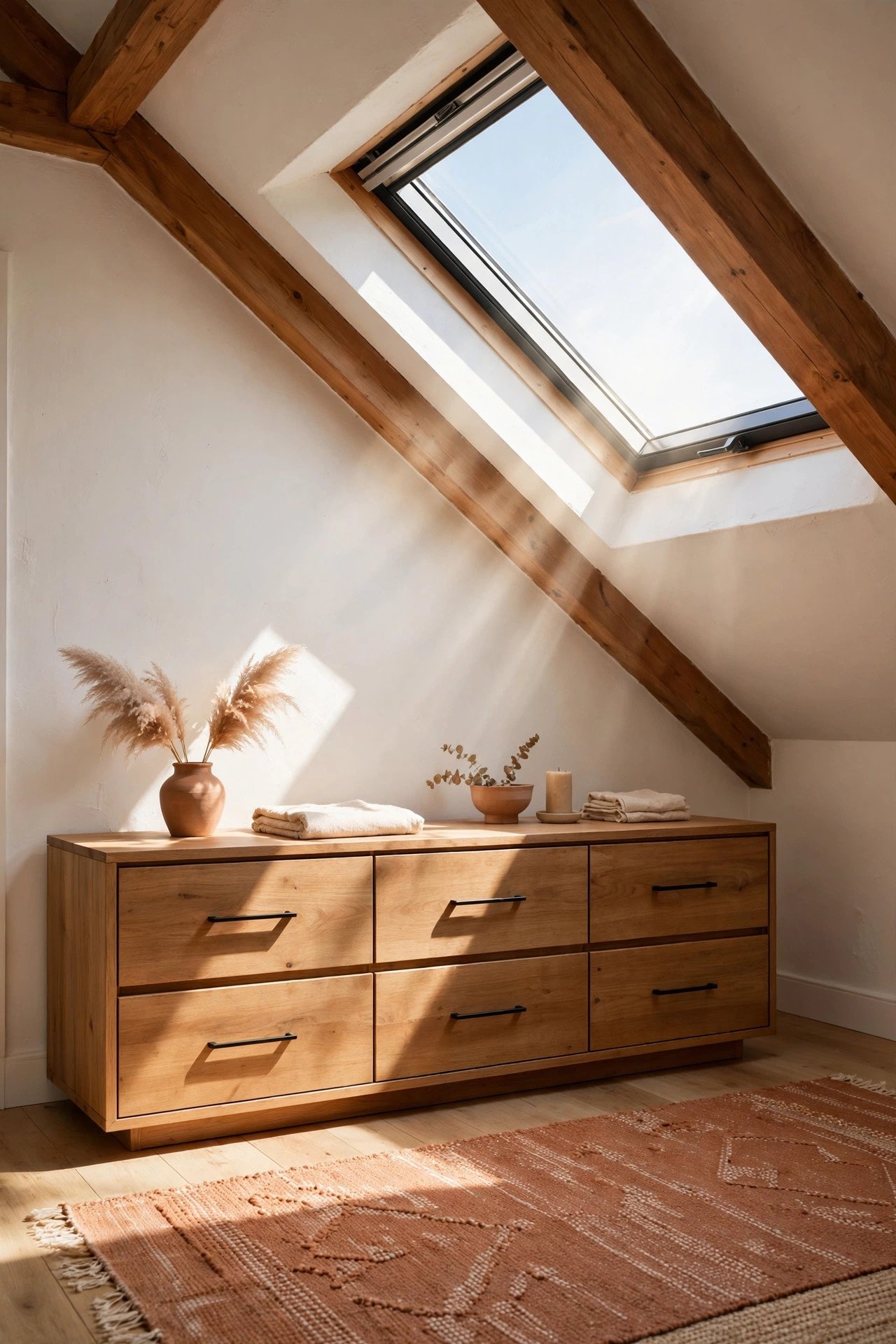
13. Choose a Low Dresser for Slanted Ceilings
A low, wide dresser gives you generous drawer space without fighting a sloped ceiling. The piece feels right in attic bedrooms and loft spaces, and it leaves room for light from above.
Set it along the short wall or under a window where taller furniture cannot go. Look for simple legs that lift it slightly off the floor. Six or more drawers give you room to sort clothes, linens, and seasonal pieces.
14. Line Drawers With Soft Fabric for Delicate Pieces
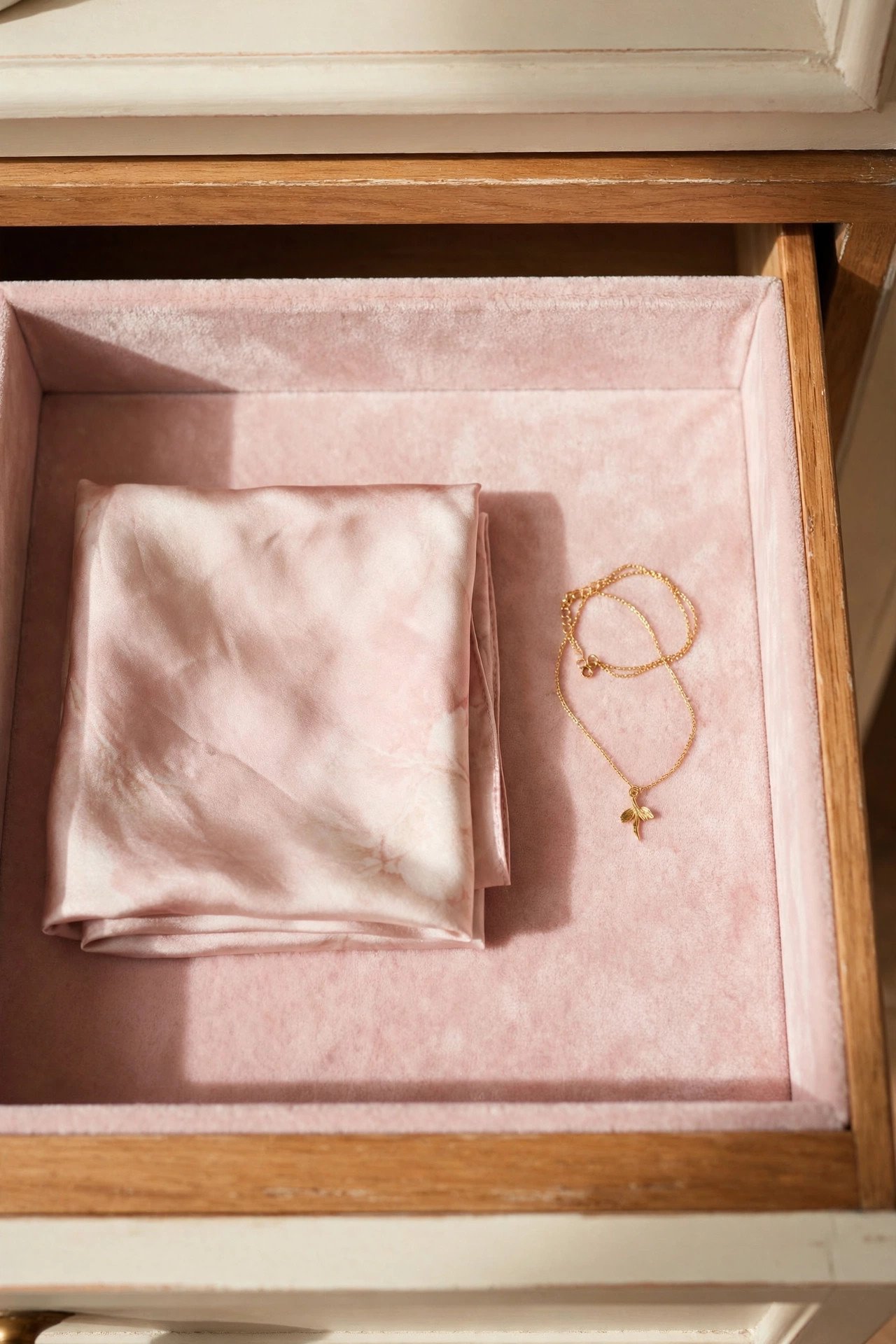
A soft liner protects delicate items from rough wood and stops them sliding around. Velvet or felt gives necklaces, silk scarves, and fine knits a safer place to rest. It also quiets the drawer beautifully.
Cut the fabric to fit each drawer and secure it with a little double-sided tape. This works best in bedroom dressers holding pieces you wear often. A lined drawer feels like a jewelry box for your clothes.
15. Drop Woven Baskets Into the Lower Drawers
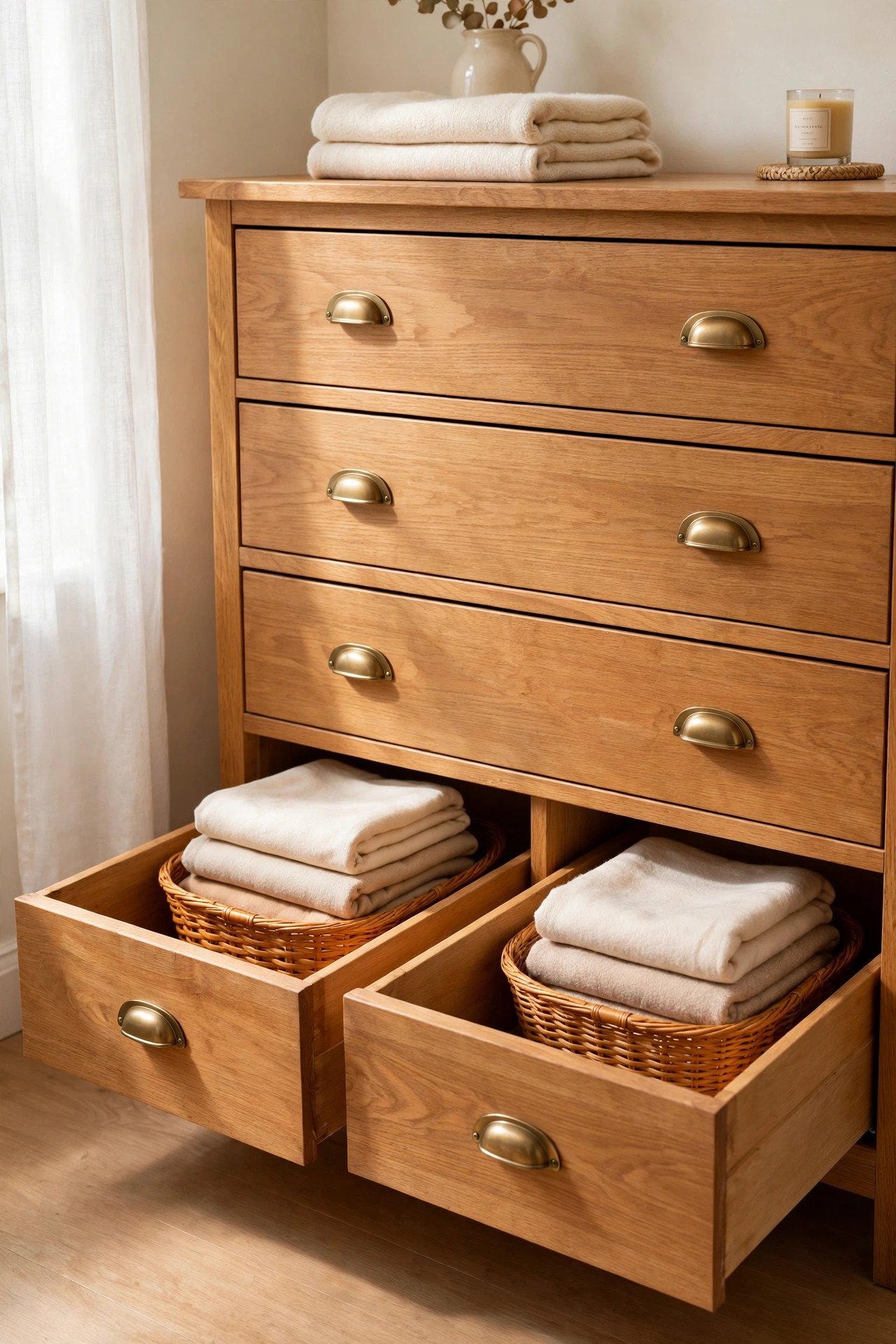
Woven baskets turn the bottom drawers into quick-grab storage. Pull out a basket of blankets or folded clothes without opening a heavy drawer every time. The texture softens all that wood beautifully.
Keep the baskets slightly loose so they slide out easily. Avoid stuffing them so full that they catch on the frame. Lower drawers become the most convenient spot in the dresser.
16. Divide Wide Drawers Into Smaller Zones
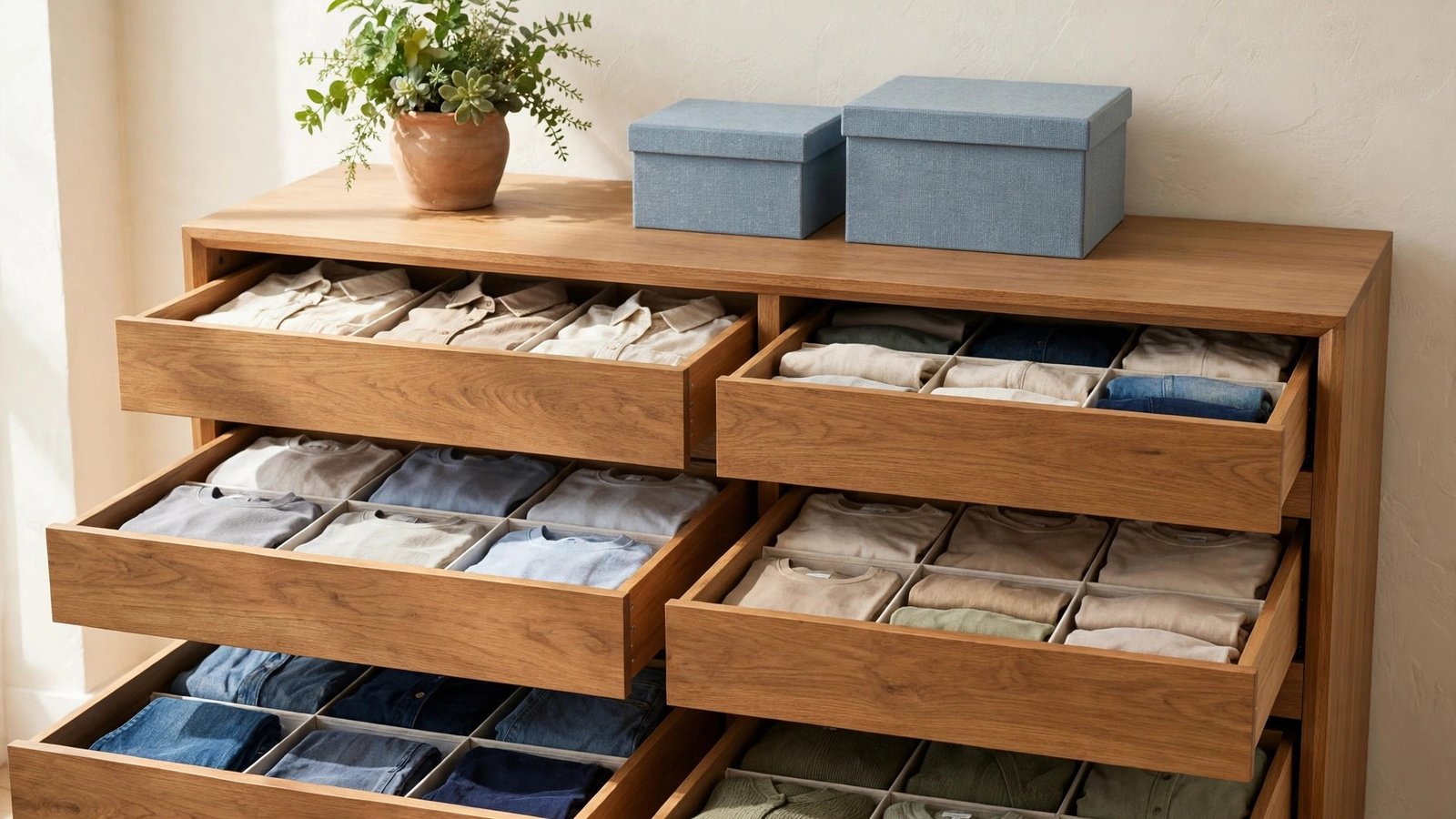
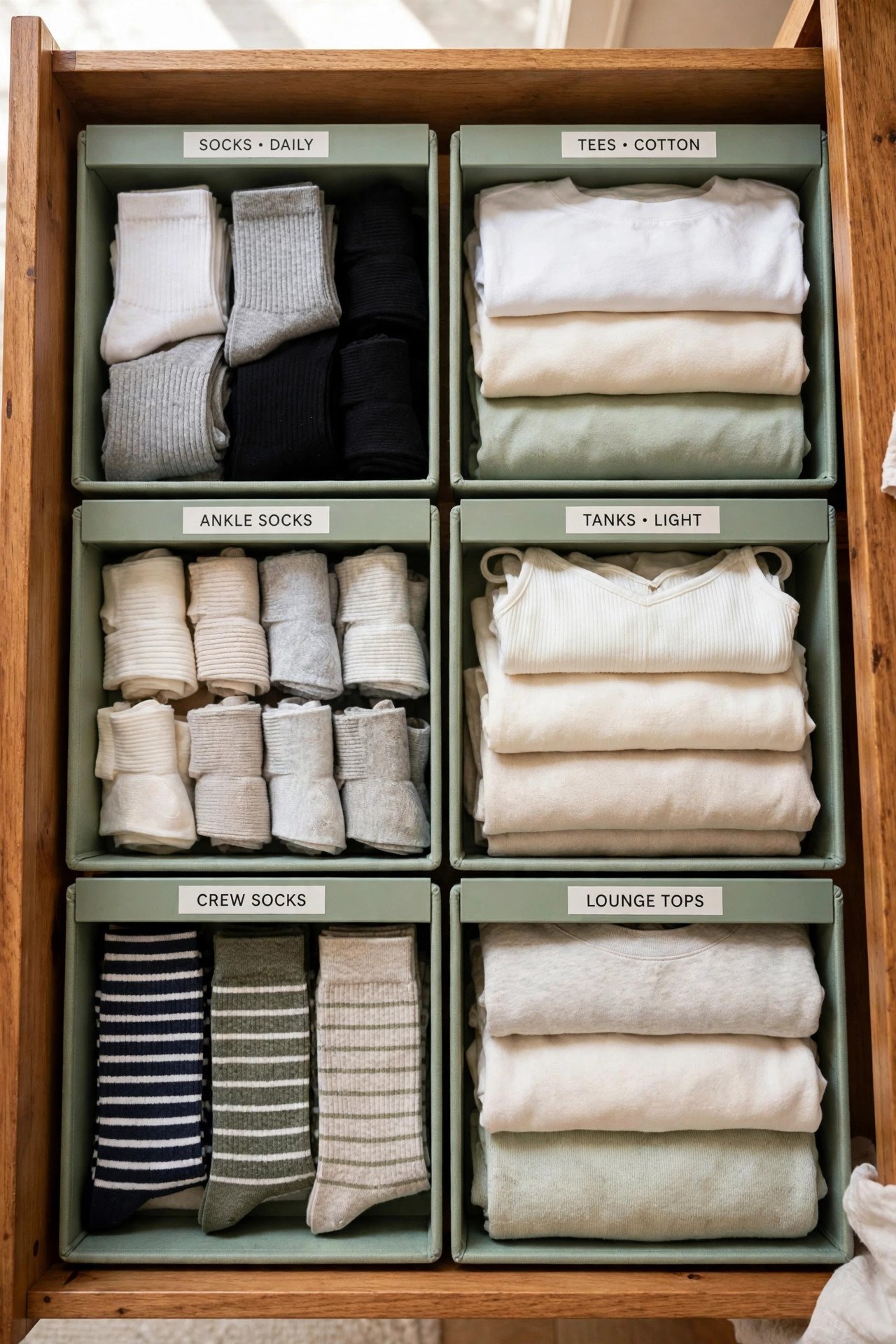
One big empty drawer becomes a mess within a week. Adjustable dividers split it into zones so every item has a clear spot. You find things faster and refold far less often.
This setup works especially well for smaller pieces like socks, underwear, and folded tops. The same zone logic that organizes a spice drawer keeps a wide clothing drawer tidy. Choose dividers you can move as your needs change.
17. Keep Folded Pieces in Open Top Compartments
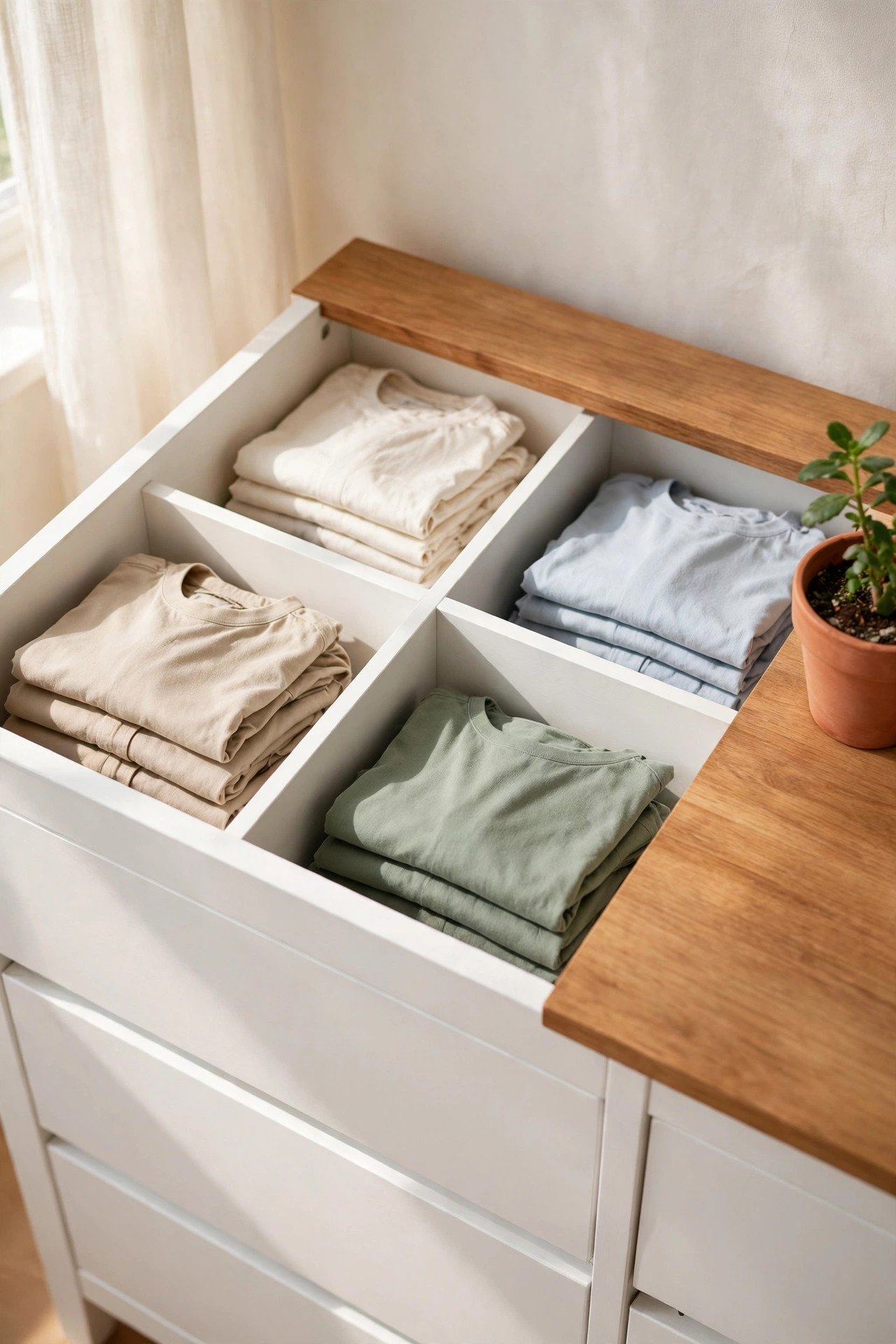
Some dressers include divided sections right on top. These open spots let you stack folded shirts or linens in plain view. You grab what you need without opening a single drawer.
Keep the stacks low and tidy so the surface still looks calm. Add one small plant or tray to finish the look. Open compartments work best in guest rooms where visitors need to find things fast.
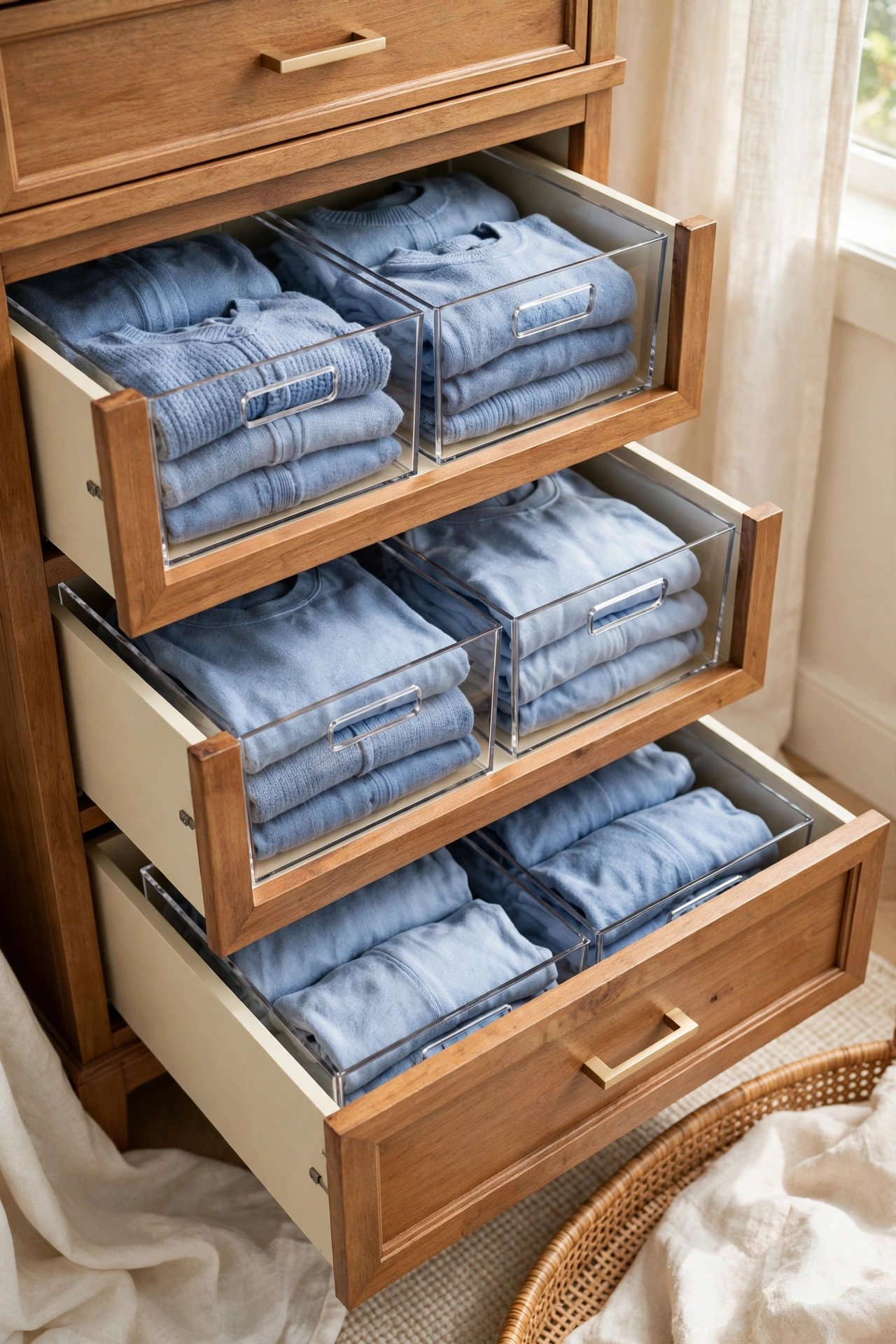
18. Use Clear Bins So You Can See Everything
Clear bins let you see exactly what is inside each section without pulling anything out. They stop folded clothes from sliding around and make the whole dresser feel more useful day to day.
Measure your drawers before buying so the bins sit flat and the drawer still closes. Clear bins work best in deeper drawers where items stack. Visibility is the simplest organizer there is.
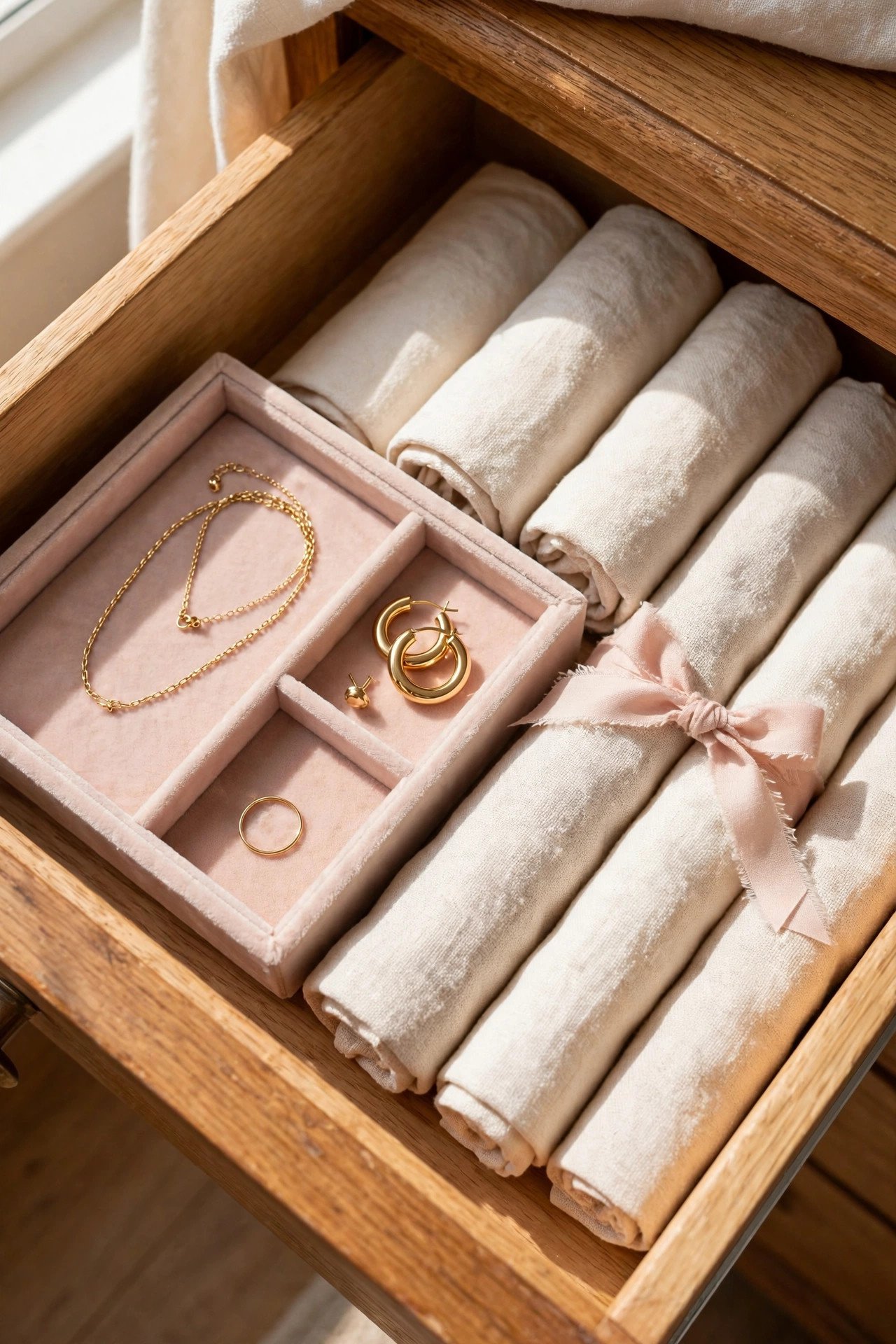
19. Set a Tray Inside the Drawer for Jewelry
A tray inside a dresser drawer turns a jumbled space into something calm and easy to use. Small pieces stop sliding around, and you can see your whole collection without digging. For pieces you wear daily, these jewelry organization ideas offer even more inspiration.
Pick a tray that fits the drawer depth so rolled items still tuck beside it. Velvet-lined trays protect delicate metals best. One tray brings boutique order to an ordinary drawer.
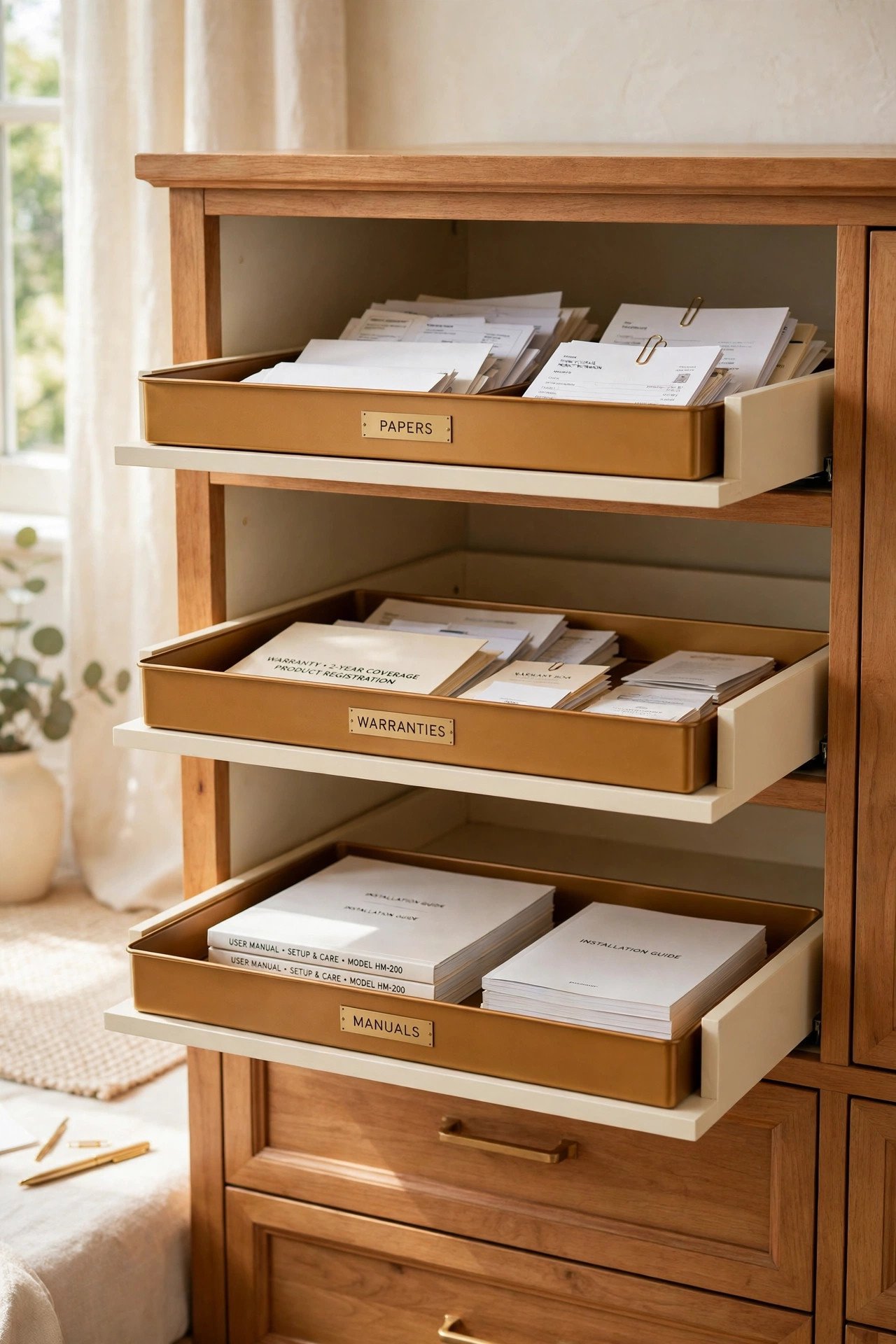
20. Sort Papers and Documents in Open Compartments
A dresser with open compartments handles more than clothes. Sort papers, warranties, and manuals by type in metal trays or slim organizers. You see everything at a glance with no extra boxes needed.
This works well in a home office corner or guest room where papers pile up fast. Keep the categories simple so filing takes seconds. Simple systems survive; complicated ones collapse.
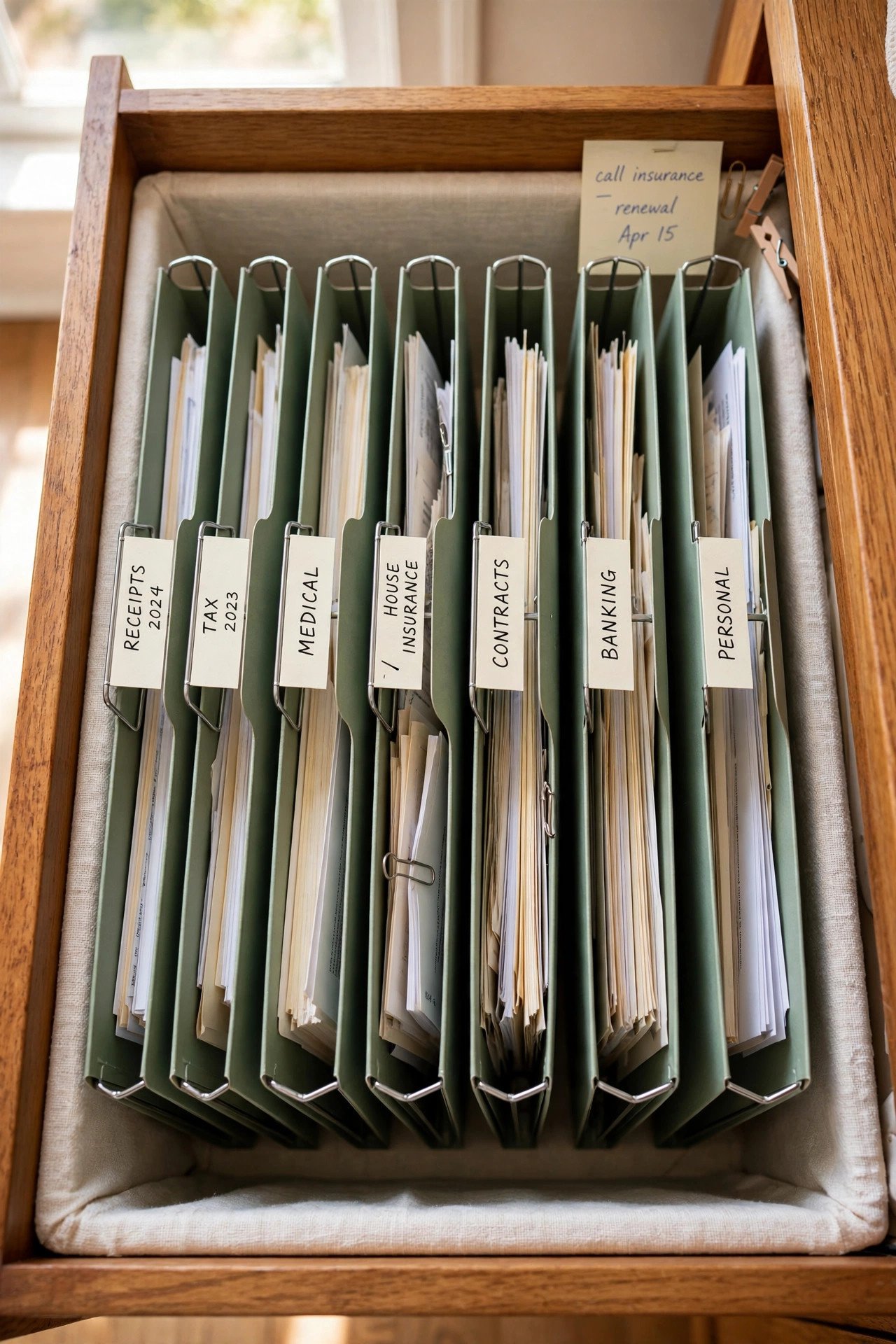
21. File Papers Upright Inside a Deep Drawer
A standard dresser drawer handles documents beautifully with a few simple dividers. Folders stand upright and easy to flip through, which beats the usual mess of loose stacks on top of the furniture.
Measure the drawer depth first and choose slim hanging folders so it still closes smoothly. This setup suits guest rooms that double as workspaces. A dresser drawer can be a filing cabinet in disguise.
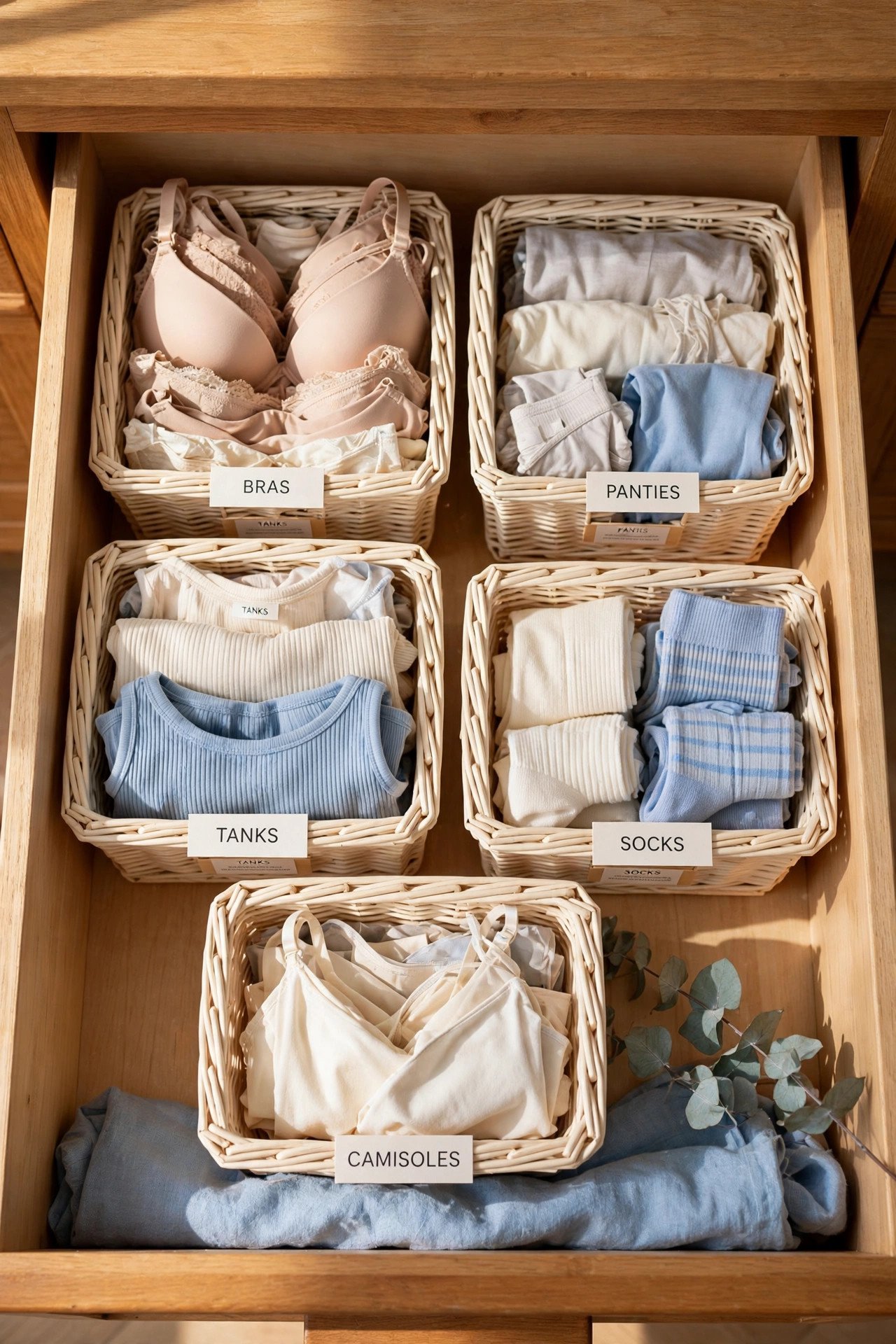
22. Corral Small Items With Simple Baskets
Small baskets inside dresser drawers keep clothing sorted with almost no effort. They turn one big drawer into a set of little homes where you can see everything and pull out only what you need.
Choose baskets that fit the drawer depth so they slide smoothly. This setup suits drawers holding undergarments, folded tops, and accessories. Baskets make the drawer feel custom-built for your life.
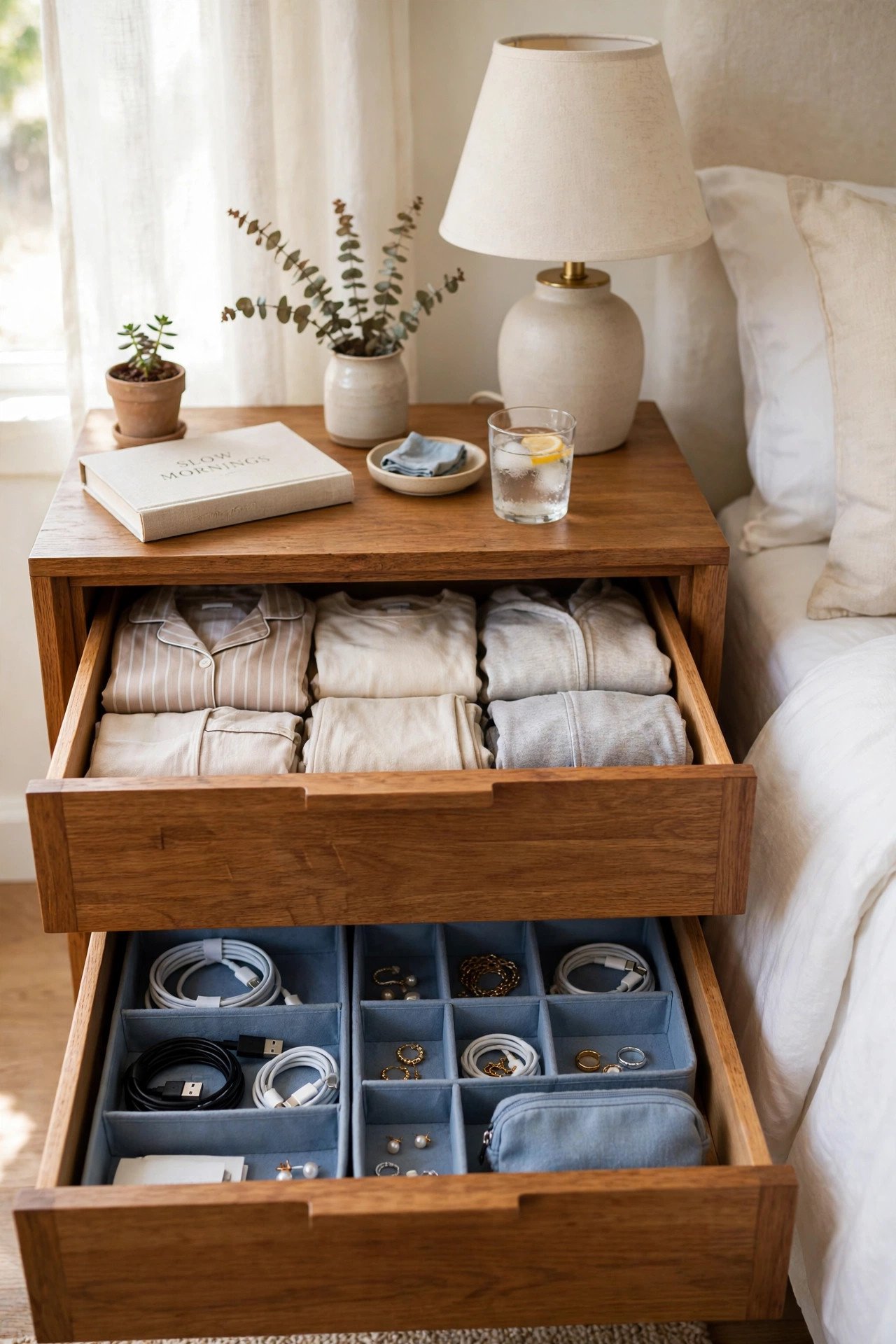
23. Sort Nightstand Drawers by Item Type
Bedside drawers turn into catch-alls without categories. Sort them by type: one drawer for folded sleepwear, another for smaller items like jewelry and charging cables. The top surface stays clear and mornings get easier.
This approach suits smaller bedrooms where every bit of storage counts. Avoid stuffing the drawers so they still open without a struggle. If your closet reset freed up space, your nightstand deserves the same treatment.
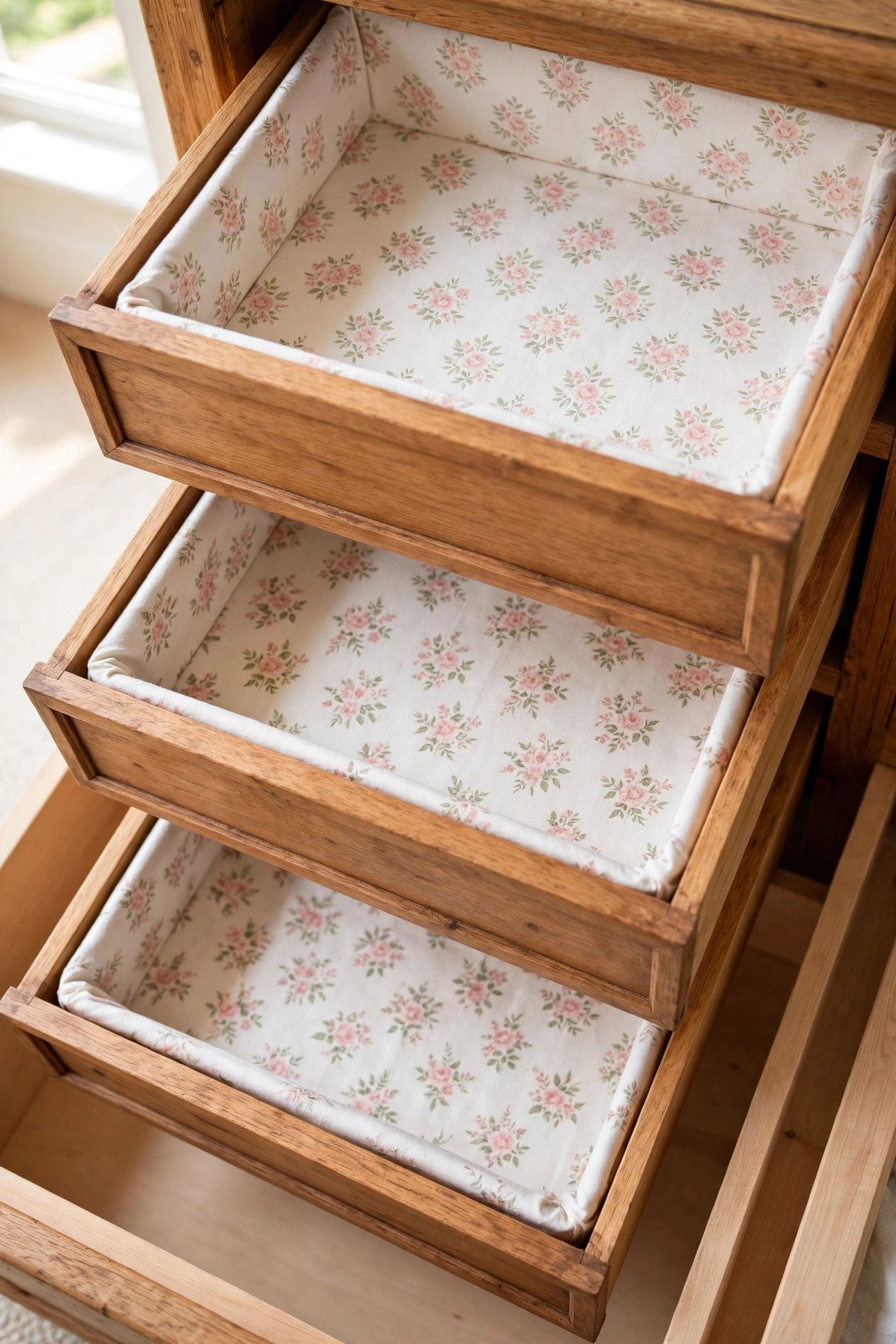
24. Add Washable Fabric Liners to Every Drawer
Fabric liners protect folded clothes from rough wood and keep everything from sliding when drawers open and close. Lightweight cotton cut to fit each drawer does the job beautifully.
Choose washable fabric so you can freshen the liners twice a year. This detail matters most in older wooden dressers where the surface might snag delicates. Liners are cheap, quick, and surprisingly satisfying.
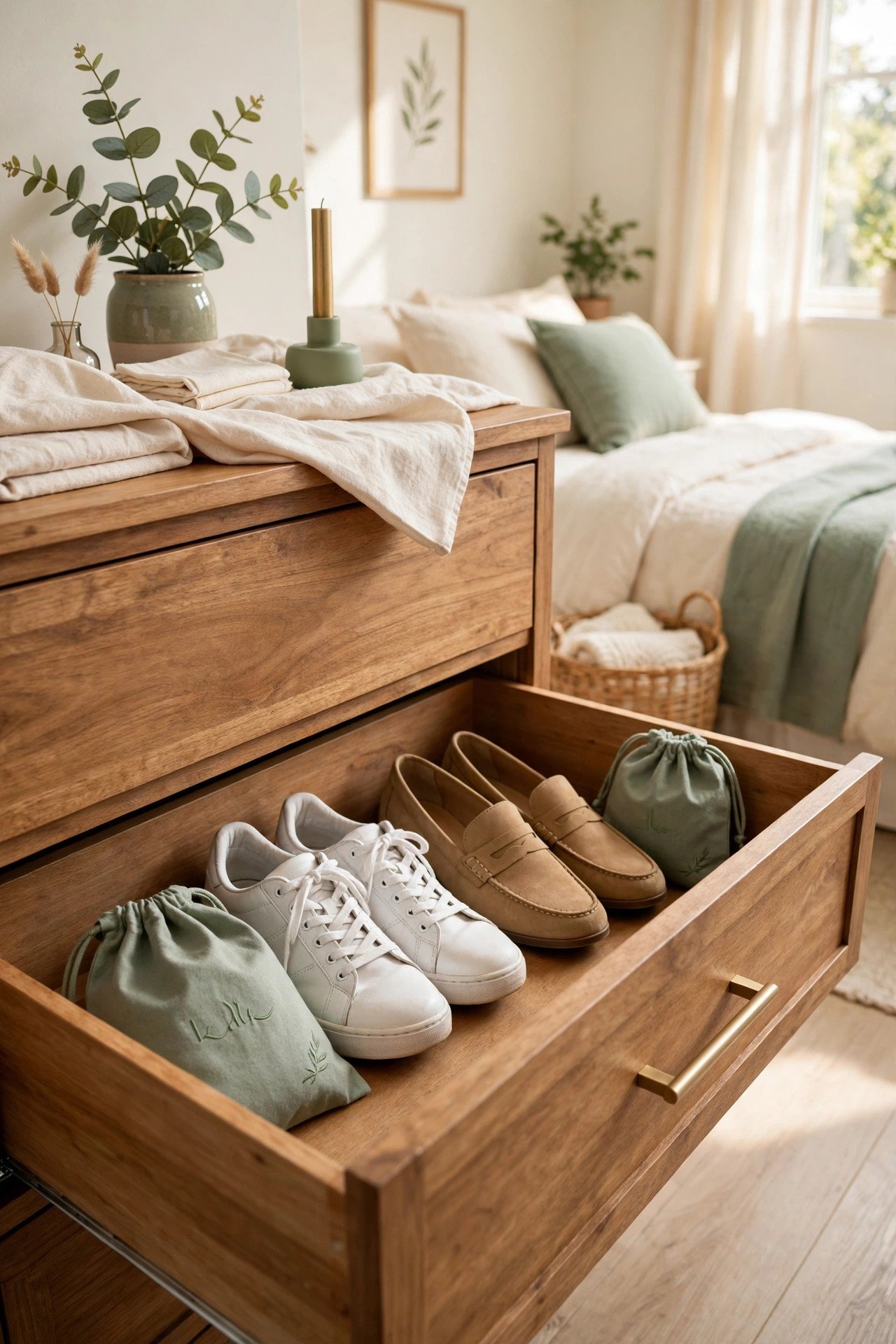
25. Keep Everyday Shoes in the Bottom Drawer
The bottom drawer often gets ignored, but it makes an excellent shoe spot. Slide in the pairs you wear most without them taking over the closet floor. They stay clean, paired, and easy to grab in the morning.
Keep only your most-worn pairs there and rotate the rest into storage. Avoid overstuffing so the drawer sides do not catch. In small bedrooms, the bottom drawer earns its keep as a shoe drawer.
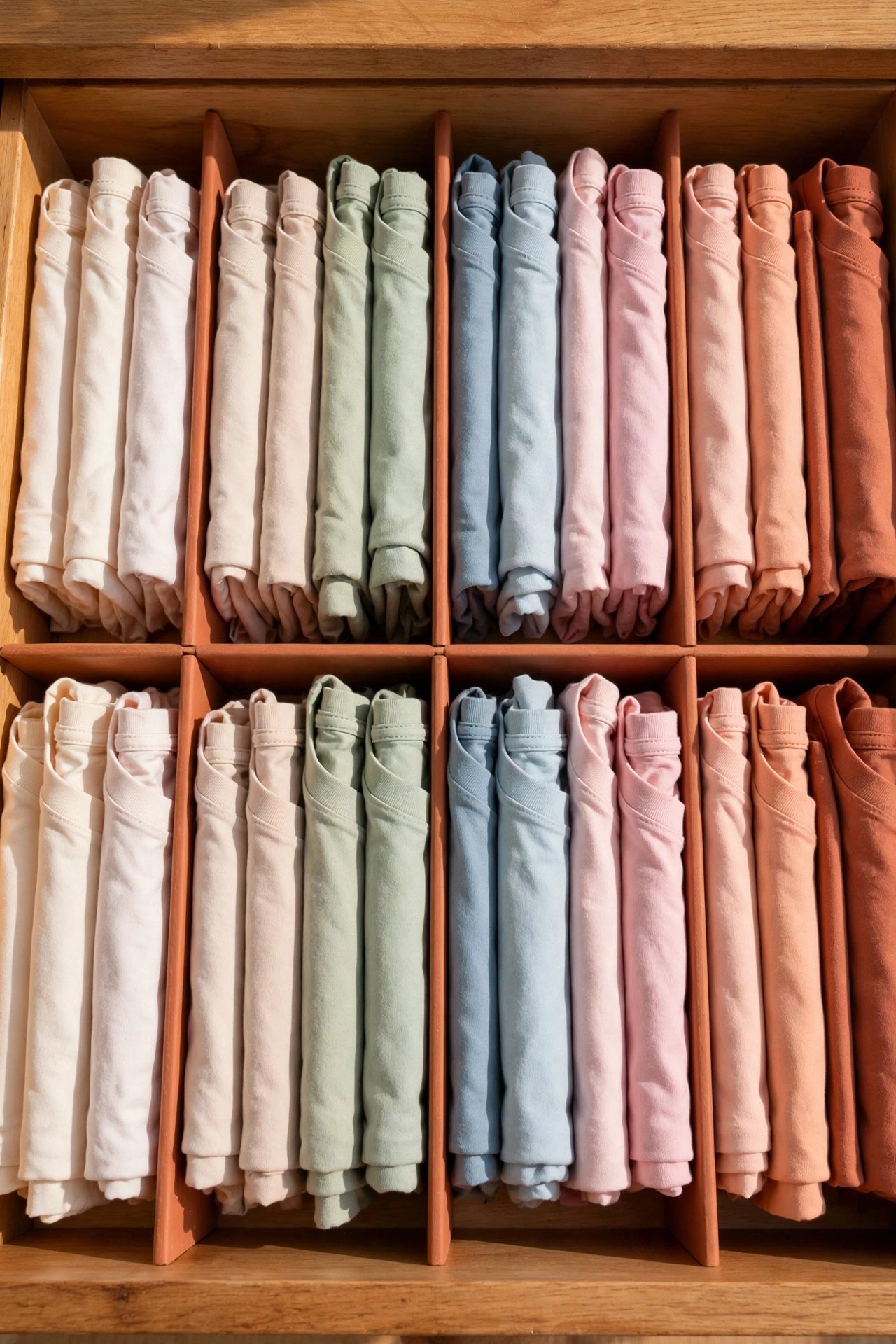
26. File Fold T-Shirts So You See Every One
Folded t-shirts stacked flat hide everything below the top shirt. File fold them into upright rectangles instead, and you see every single one. Choosing a shirt takes seconds instead of a dig through the pile.
Stand the folded shirts spine-up in rows, packed snugly so they support each other. Add a divider every few inches to hold short rows upright. Your t-shirt drawer becomes the tidiest drawer you own.
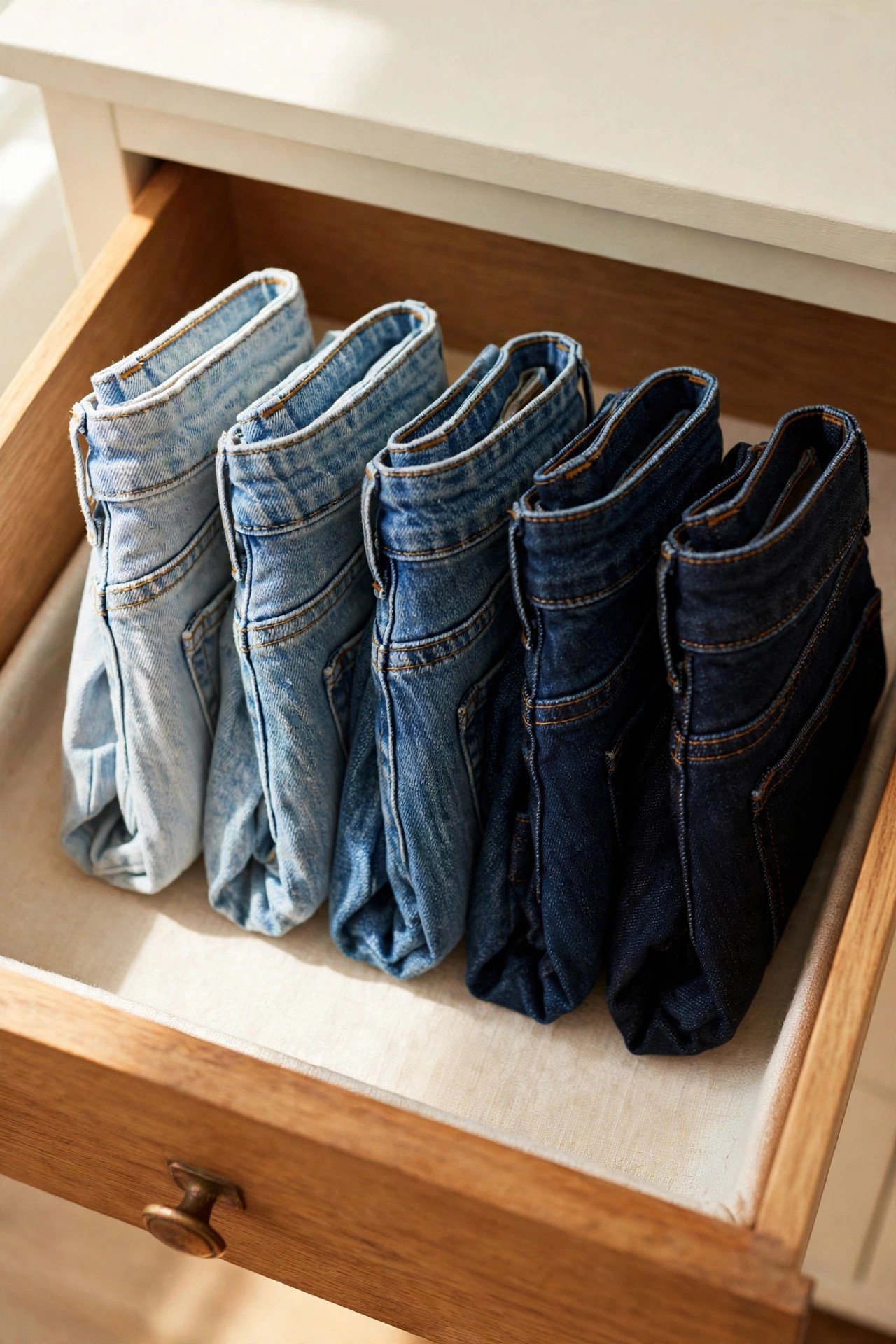
27. Store Jeans Upright in a Single Row
Jeans folded into thick rectangles stand beautifully on their own. Line them up in a single row like books on a shelf, with the folded edge facing up. You can read the wash of each pair without moving anything.
Sort the row from light wash to dark wash for a clean look. Keep only the pairs you wear regularly in the drawer and store the rest. A single neat row of jeans is deeply satisfying to open.
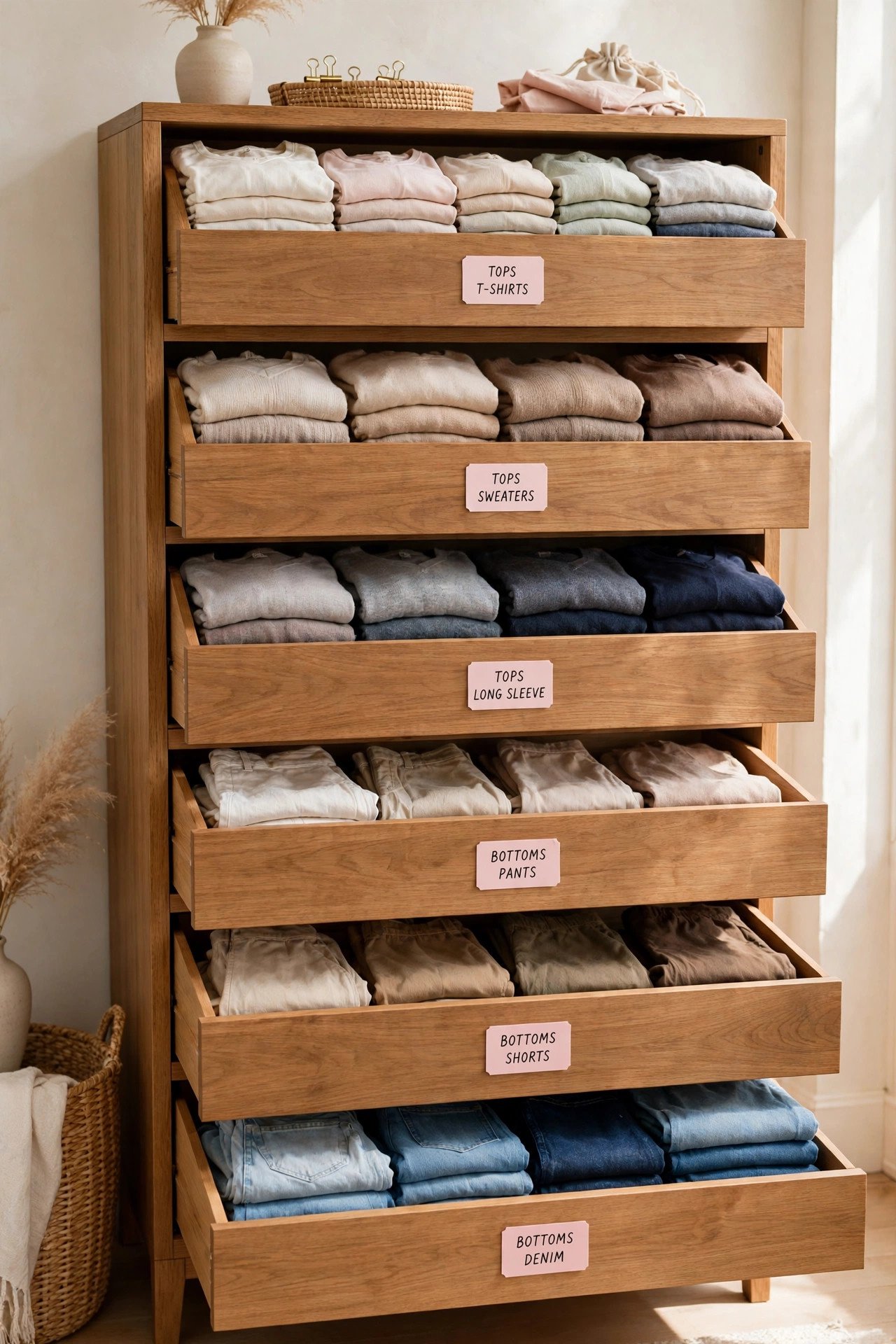
28. Color-Code Each Drawer by Clothing Type
Give every drawer a job and a color story. Tops in the top drawer, bottoms below, sleepwear at the bottom. Within each drawer, arrange pieces from light to dark. The system is visual, so it needs no labels.
Color coding speeds up both dressing and laundry put-away. When a shirt lands in the wrong drawer, the color break makes the mistake obvious. Simple visual rules are the easiest ones to keep.
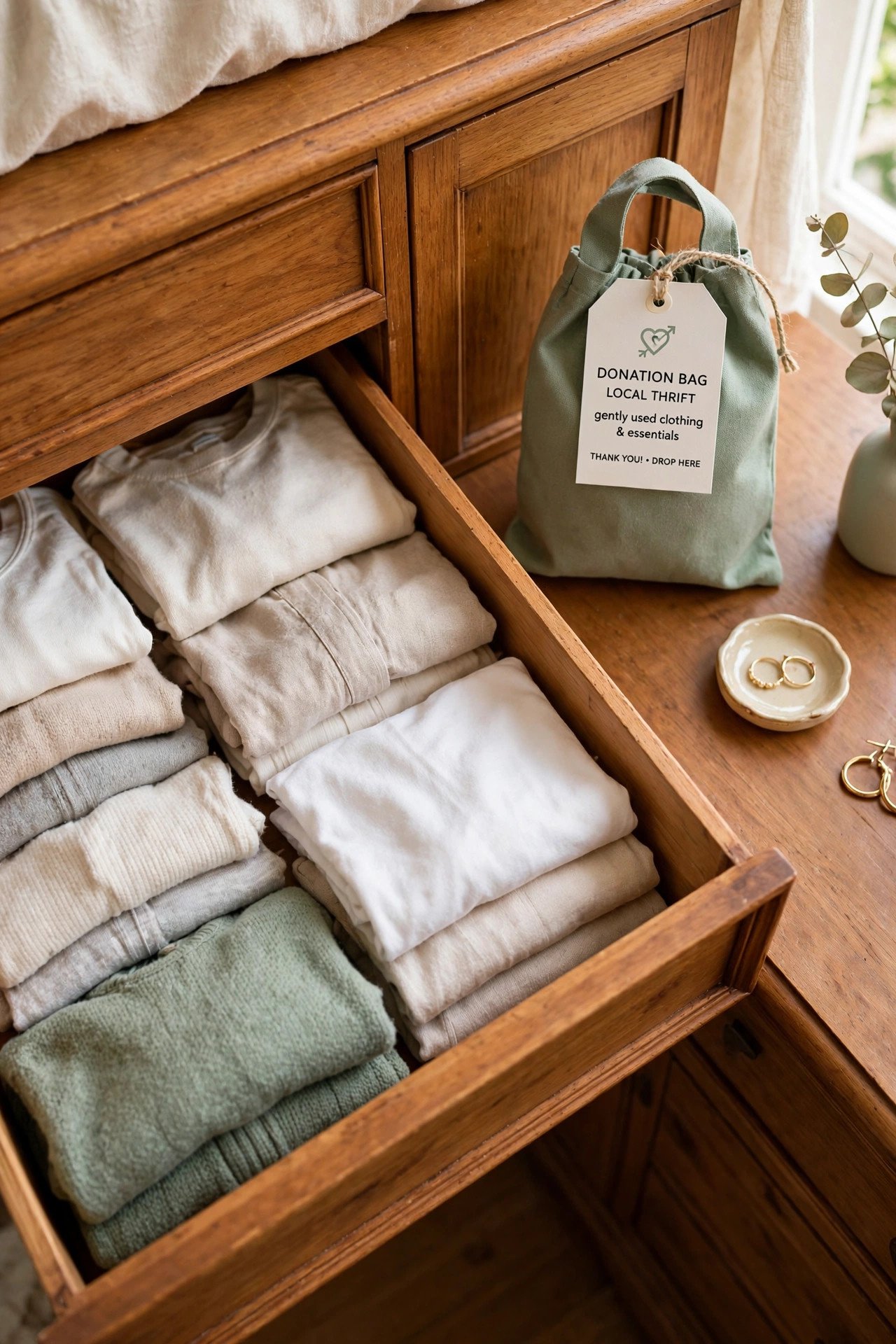
29. Keep a One-In-One-Out Rule for the Top Drawer
The top drawer fills fastest because it is the easiest to reach. Adopt a simple rule: every new item that enters means one old item leaves. The drawer can never overflow because the math never changes.
Keep a small donation bag in the wardrobe or laundry area for the outgoing pieces. When the bag fills, drop it off the same week. One-in-one-out is the quiet engine of a tidy dresser.
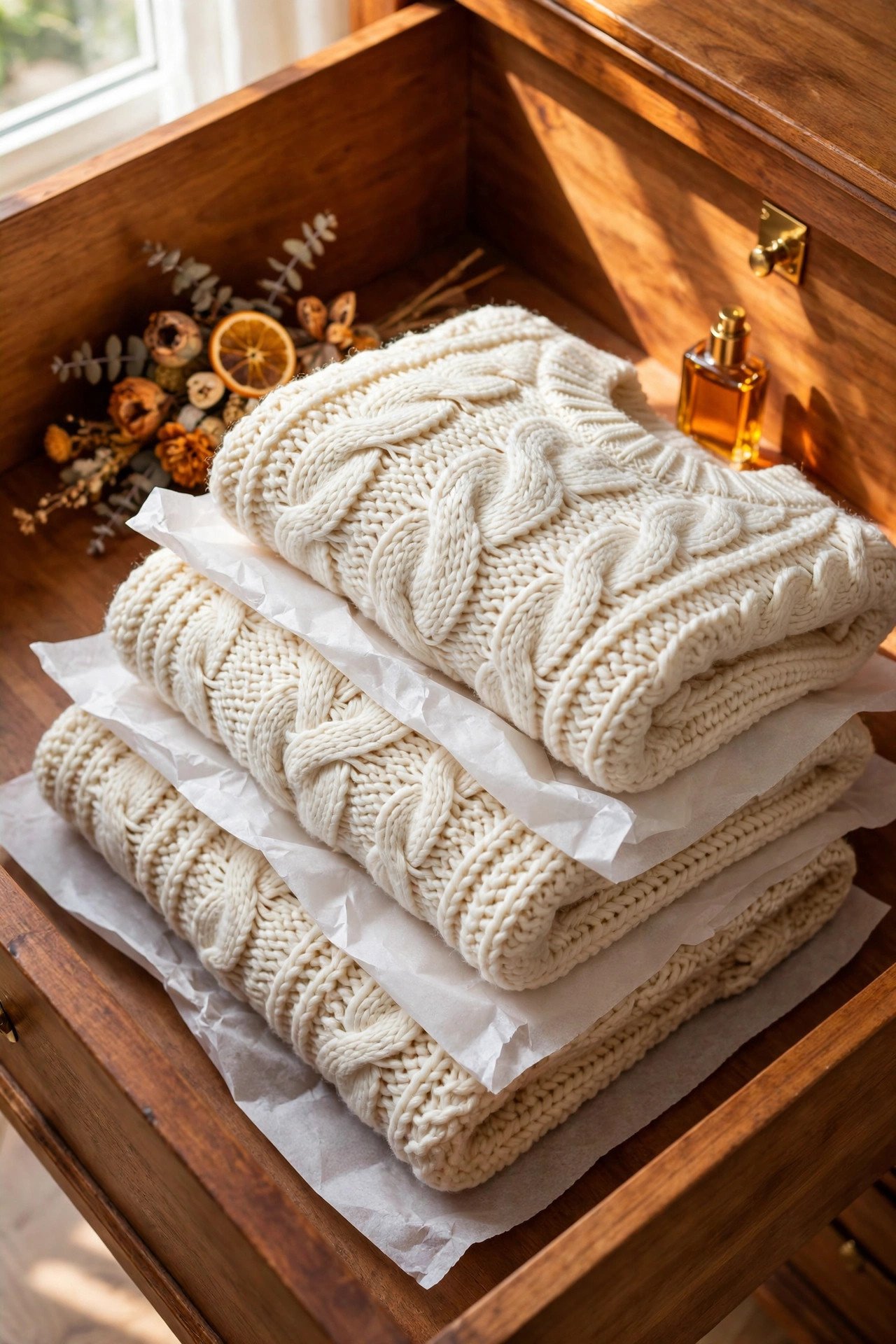
30. Fold Sweaters With Tissue to Prevent Creases
Chunky knits crease and stretch when folded tightly against each other. Slip a sheet of acid-free tissue paper between the folds of each sweater. The tissue cushions the fibers and keeps the shape crisp.
Store folded sweaters in the deepest drawer, no more than three high, so the bottom ones do not compress. Refold them once a season to refresh the creases. Your knits will look newer for years.
31. Photograph Each Drawer After a Full Reset
When every drawer finally looks perfect, photograph each one with your phone. The photos become your reset reference for the months ahead. When a drawer drifts, the picture shows exactly where everything belongs.
Keep the photos in a home organization album so the whole household can use them. A visual reference beats written instructions every time. If your laundry room shelves need the same treatment, photograph those too. One round of photos protects all your hard work.
Conclusion
A dresser is not just a box with drawers. It is the backstage of your mornings, and a well-organized one makes the whole day run smoother. Dividers, bins, liners, and honest sorting turn every drawer into a space that works as hard as you do.
Start with a single drawer this weekend: empty it, line it, divide it, and fill it with intention. Then photograph it, admire it, and move on to the next one. Thirty-one ideas are plenty, but even three will change your mornings.
Dresser Drawer FAQs
How do I organize deep dresser drawers?
Divide deep drawers with adjustable dividers, clear bins, or open-top baskets so items stay in zones instead of sliding around. Store bulky pieces like jeans and sweaters upright in rows. Keep the drawer no more than comfortably full so it still glides shut.
What is the best way to fold clothes for dresser drawers?
File folding works best for t-shirts and thin pieces: fold each item into a firm rectangle and stand it upright like a file. Roll soft items like scarves and workout clothes to fit more in. Fold sweaters loosely with tissue paper between folds to prevent creases.
How do I keep dresser drawers from getting messy again?
Give every drawer a clear job, divide wide drawers into zones, and adopt a one-in-one-out rule for the top drawer. Do a five-minute monthly reset to straighten rows and return strays. Photograph each drawer after a full reset so you have a visual reference.
Should I use dividers or bins in dresser drawers?
Use dividers for folded clothing rows that need to stand upright, and bins for small items like socks, underwear, and accessories. Clear bins work well in deep drawers where you need visibility. In shallow drawers, slim adjustable dividers usually fit better than bins.
How do I organize a dresser with no closet space?
Treat the dresser as your full wardrobe: dedicate the top drawer to daily tops, middle drawers to bottoms and sleepwear, and the bottom drawer to shoes or off-season pieces. Add hooks to drawer fronts for accessories and use the space under the dresser for baskets. Keep only what you wear regularly and store the rest elsewhere.

Hi, I’m Emily! I turn messy corners into cozy, organized spots. DreamNestDecor is where I share simple, practical home ideas — decor, organization, and small-space solutions that work in real life, not just in photos. Every idea here is carefully researched before it’s shared.