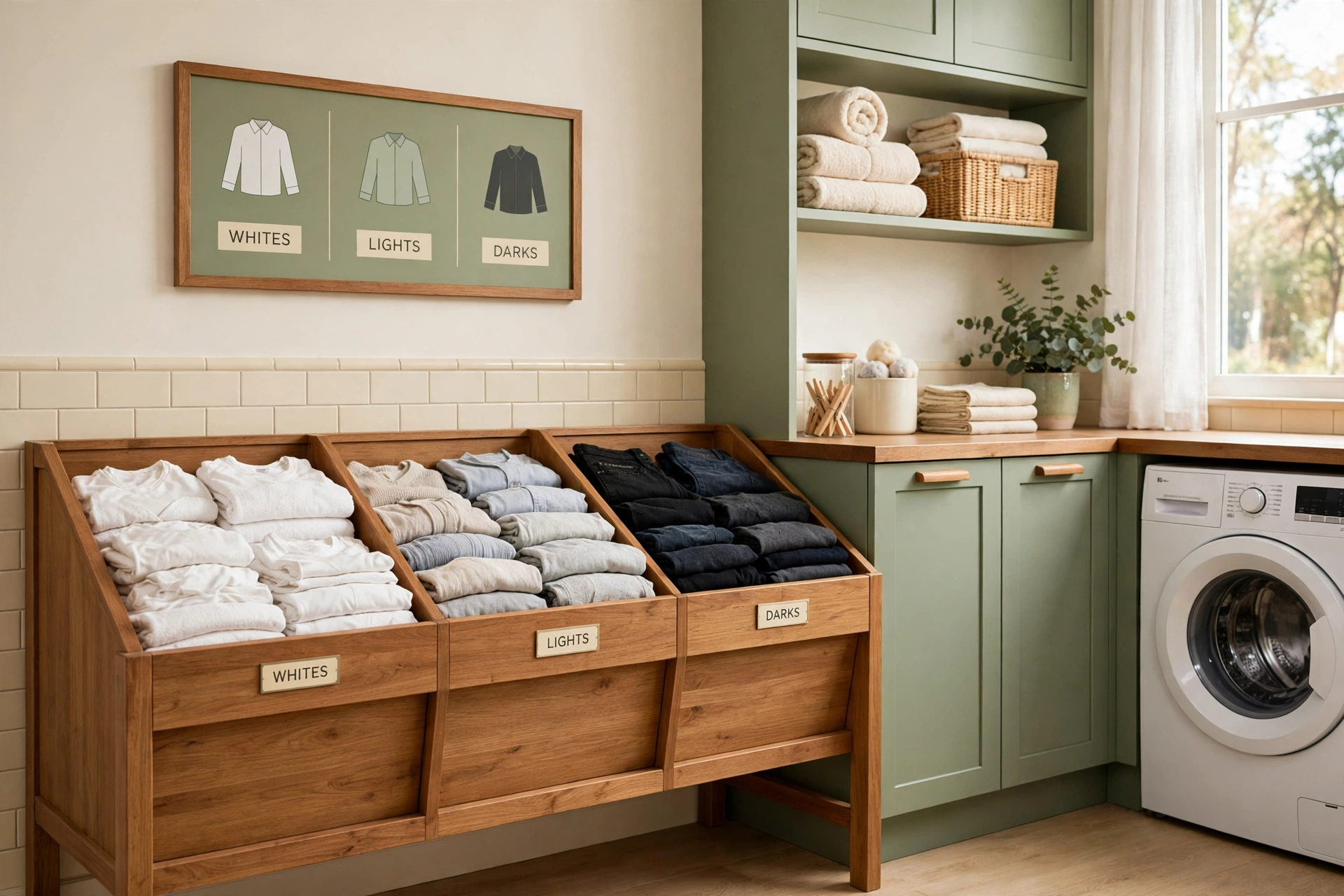
Picture this: it is wash day, and instead of one giant pile of mixed clothes on the floor, you see neat sorted groups ready to go into the washer. Whites wait in one spot, darks in another, and towels sit in their own group. No digging, no guessing, and no pink socks in the white load. That calm start is exactly what a good sorting system gives a busy family.
You do not need a bigger laundry room or expensive equipment to get there. All you need is a clear set of rules that every family member can follow, plus a simple routine that runs the same way each week. These 29 family laundry sorting system ideas will help you sort faster, wash smarter, and handle multiple loads without the stress.
1. Sort by Color Into Three Main Loads
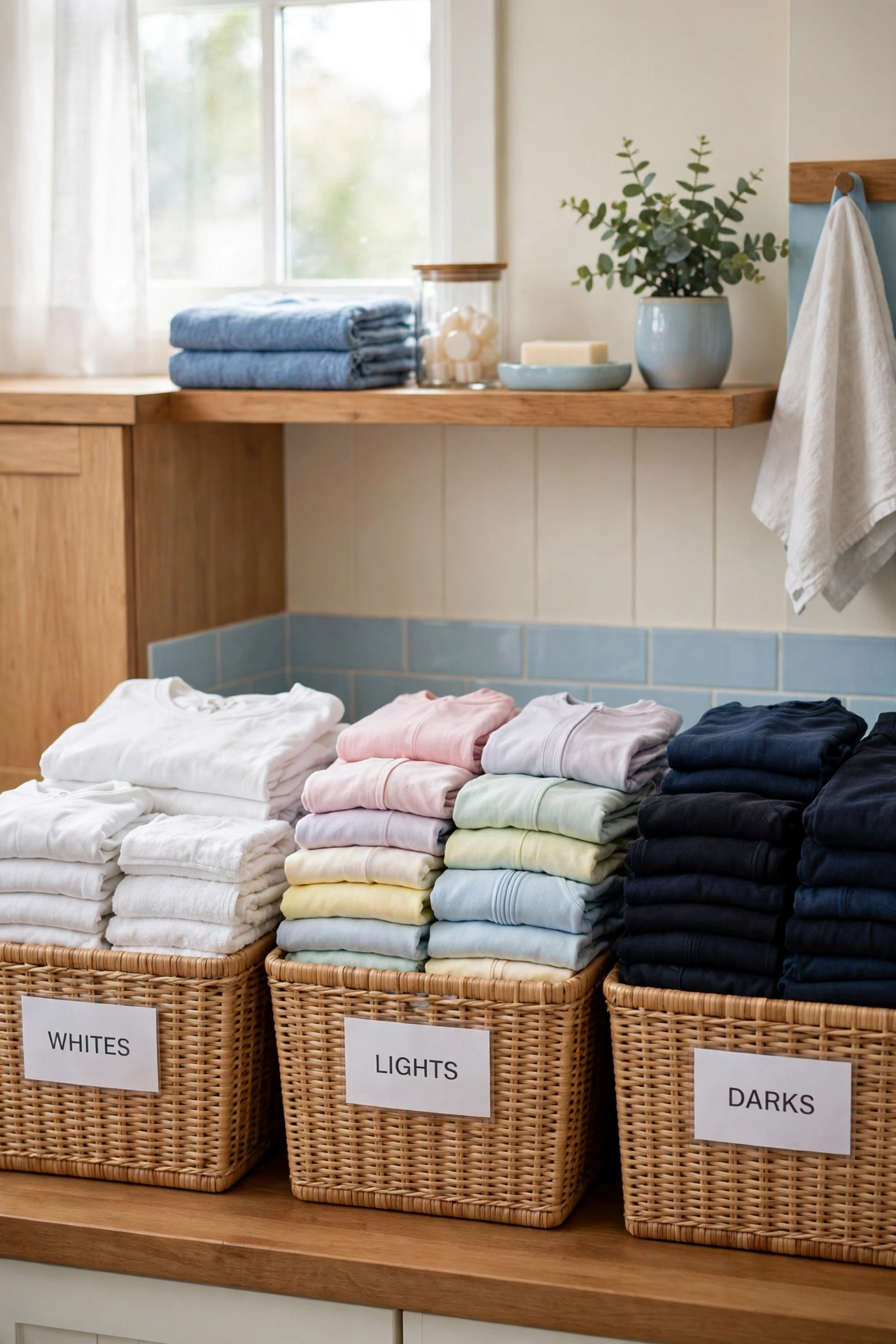
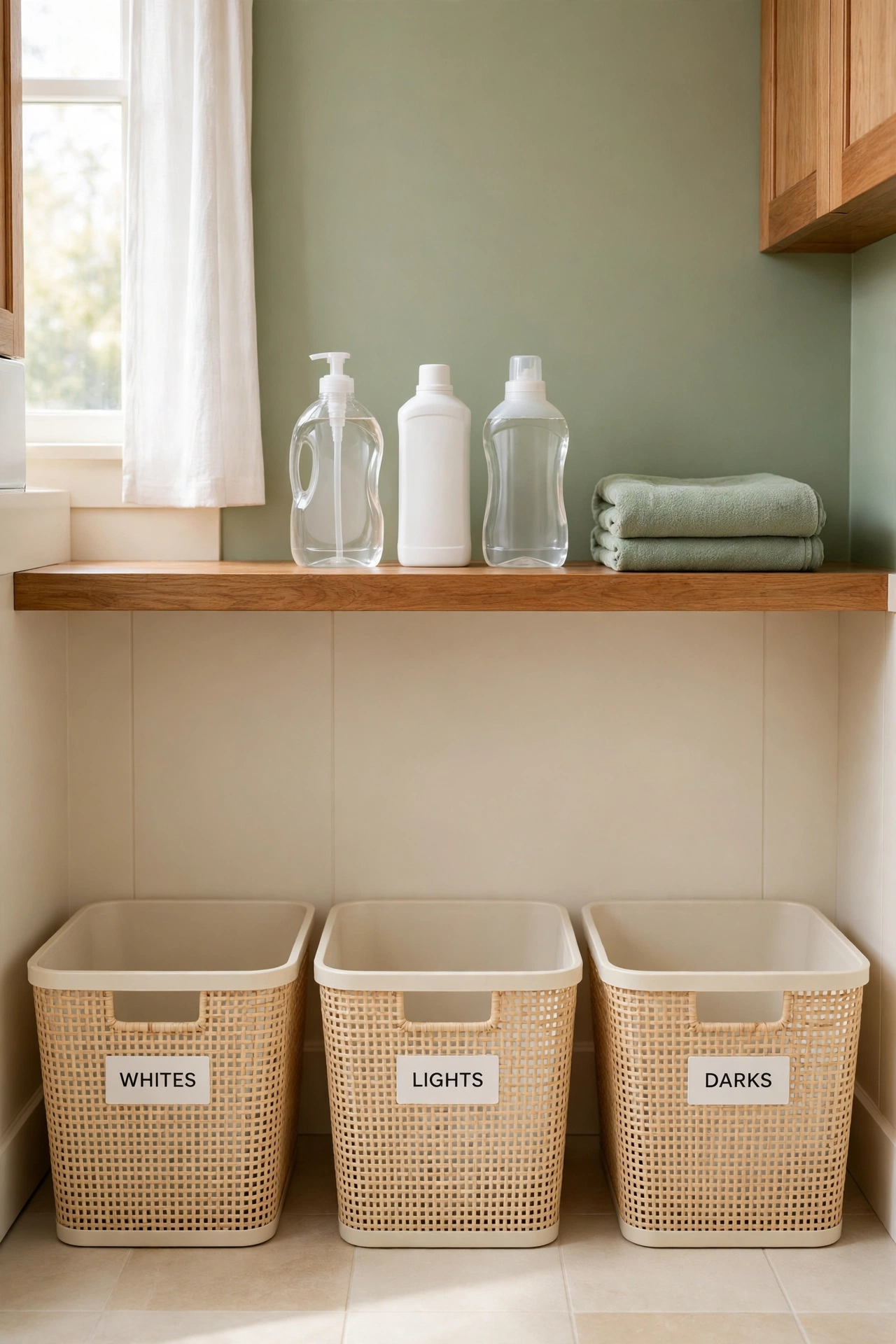
The simplest sorting system starts with three color groups: whites, lights, and darks. Whites include white shirts, socks, and underwear. Lights cover pastels, beige, and light gray. Darks hold navy, black, brown, and deep red. When every item has a clear group, sorting takes seconds instead of minutes.
Teach the whole family to check the color of each item before it goes into the pile. A quick glance is usually enough, and children learn the three groups fast. This single rule prevents the most common laundry disaster, which is a red shirt turning a whole load of whites pink.
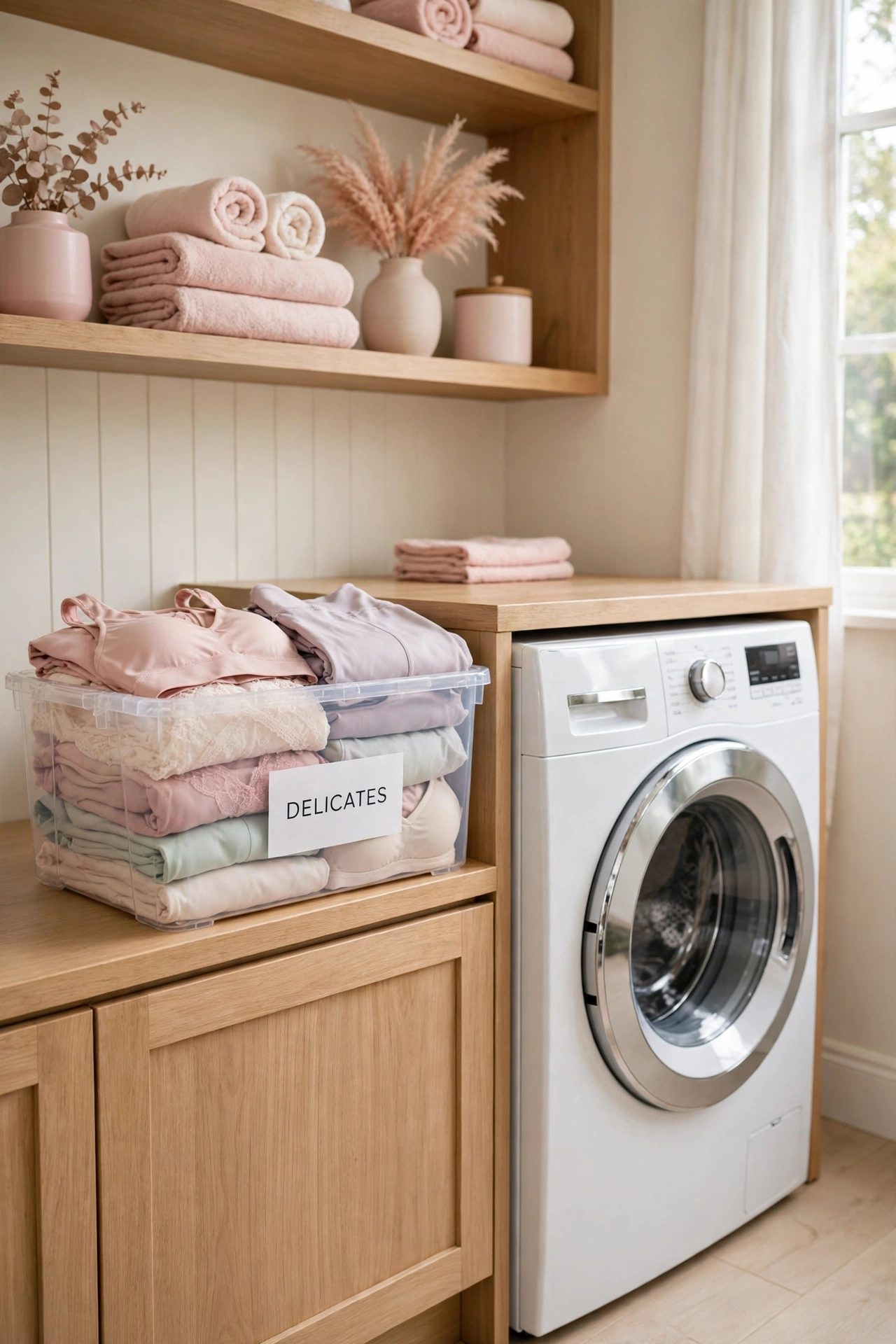
2. Add a Fourth Load for Delicates and Activewear
Once the three color groups are in place, add a fourth group for delicates and activewear. Lace tops, silky blouses, bras, and workout clothes need gentler washing than everyday cotton. Washing them separately protects the fabric and keeps stretchy materials in good shape for longer.
Place the delicates group in its own spot so it never gets mixed into a regular load by accident. A small labeled container or a mesh bag works well for this group. When the group fills up, run it on a gentle or cold cycle and skip the high heat dryer setting.
3. Sort by Fabric Weight as Well as Color
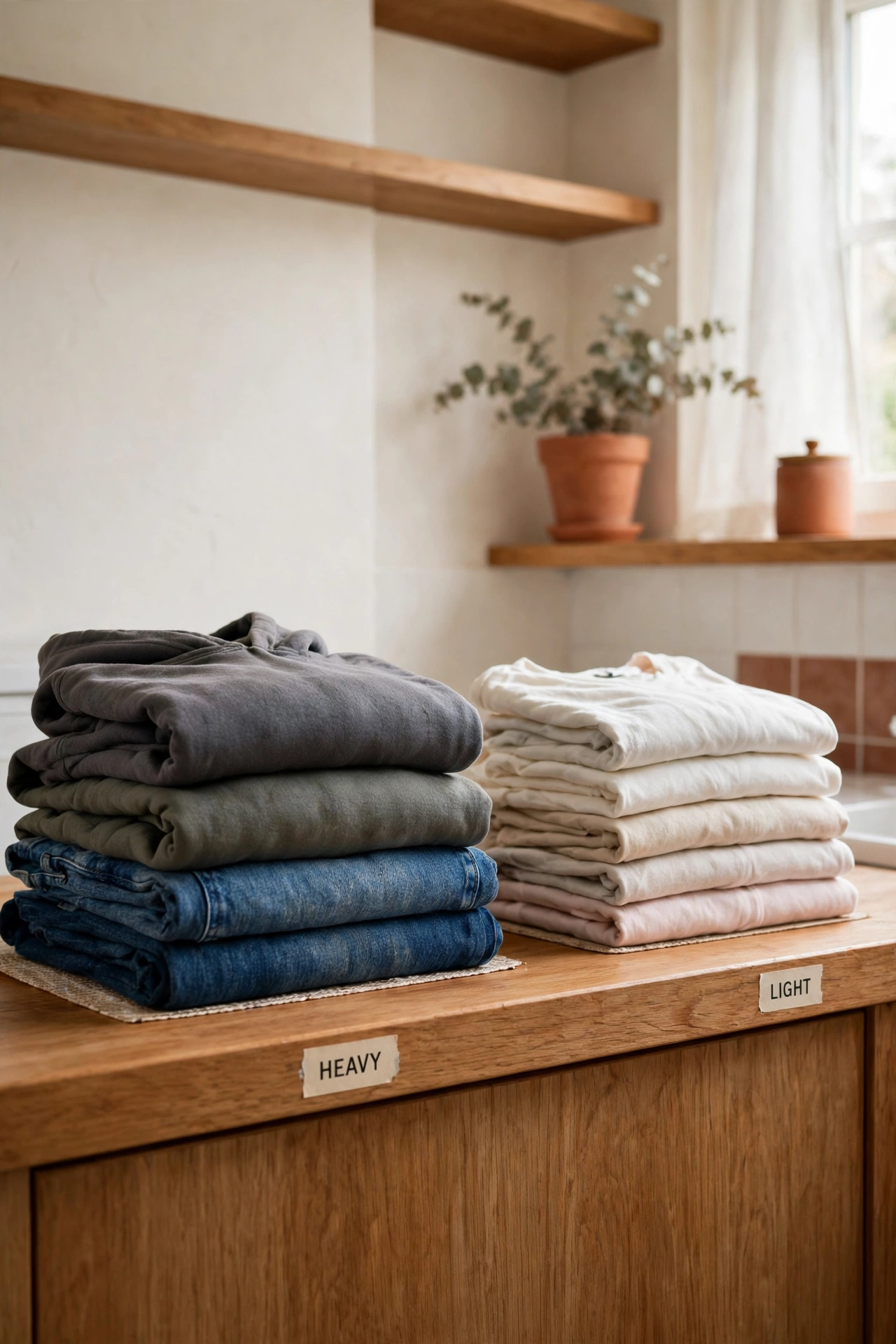
Color is the first sorting rule, but fabric weight is the second one that makes a real difference. Heavy items like jeans and hoodies need longer wash and dry times than light t-shirts and thin pajamas. Washing heavy and light fabrics together means the light items get beaten up while the heavy ones stay damp.
Inside each color group, pull out the heavy pieces and wash them as their own load when you have enough. Towels and jeans make a natural heavy load. Light knits and thin cottons dry faster and come out softer when they wash with items of similar weight.
4. Follow a One Load a Day Rule
A one load a day rule turns laundry from a weekend mountain into a small daily habit. Each morning or evening, one person starts a single load, moves it to the dryer, and folds it the same day. The total weekly work stays the same, but it never piles up into an overwhelming session.
Choose a load type for each day so the system runs itself. Monday can be darks, Tuesday whites, Wednesday towels, and so on. When everyone knows the daily load, clothes move through the washer steadily and the sorting piles stay small and manageable.
5. Set a Weekly Wash-Day Schedule for the Family
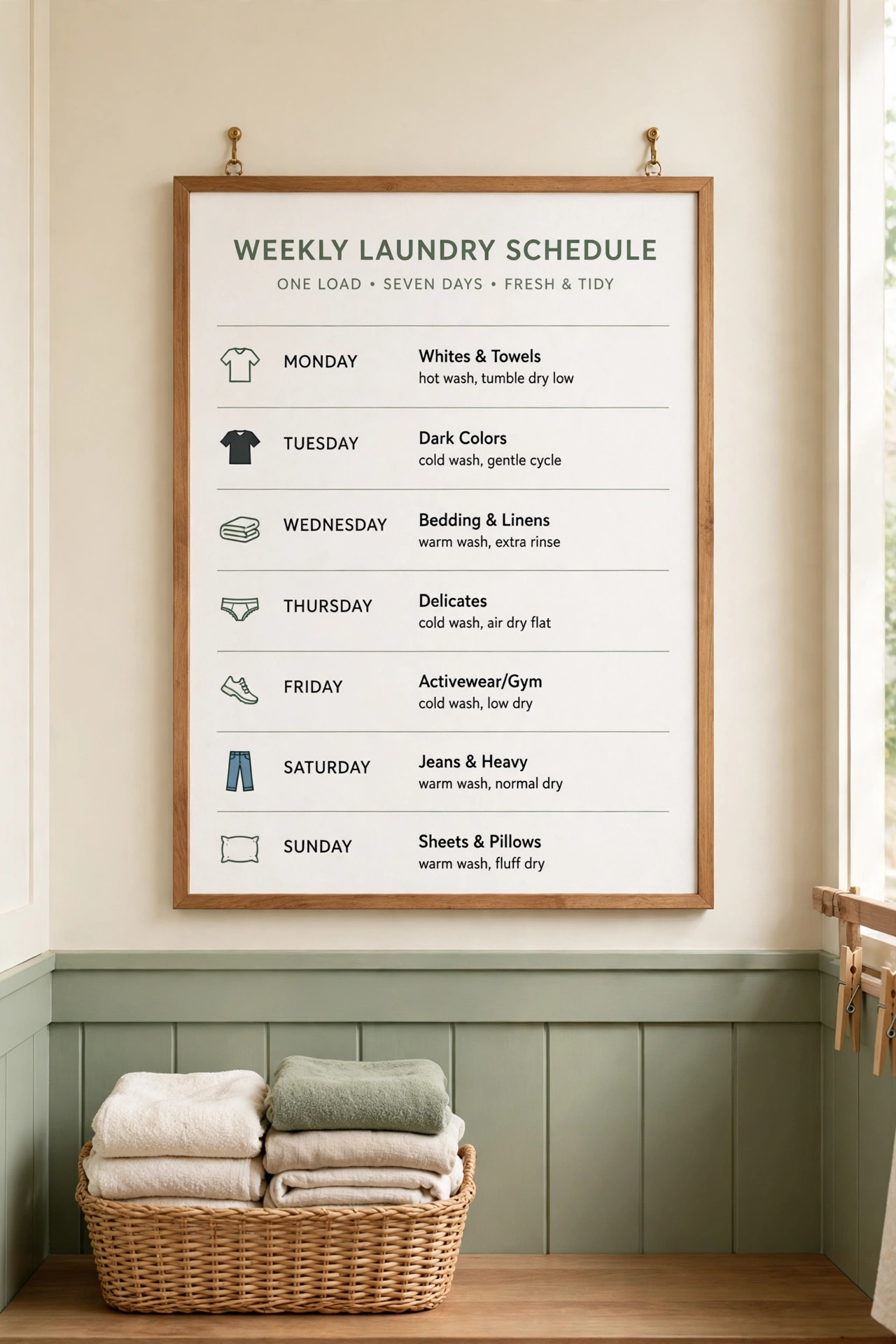
If daily loads do not fit your life, a weekly wash-day schedule is the next best system. Pick two or three wash days per week and assign load types to each one. For example, Saturday handles clothes, Sunday handles towels and bedding, and Wednesday catches the midweek overflow.
Post the schedule where everyone can see it, such as on the laundry room wall or the fridge. A written schedule removes arguments about whose turn it is and keeps the week predictable. For a full plan that ties laundry into the rest of the house, these household cleaning schedule ideas show how to build a weekly rhythm that covers every chore.
6. Batch Similar Loads on the Same Wash Day
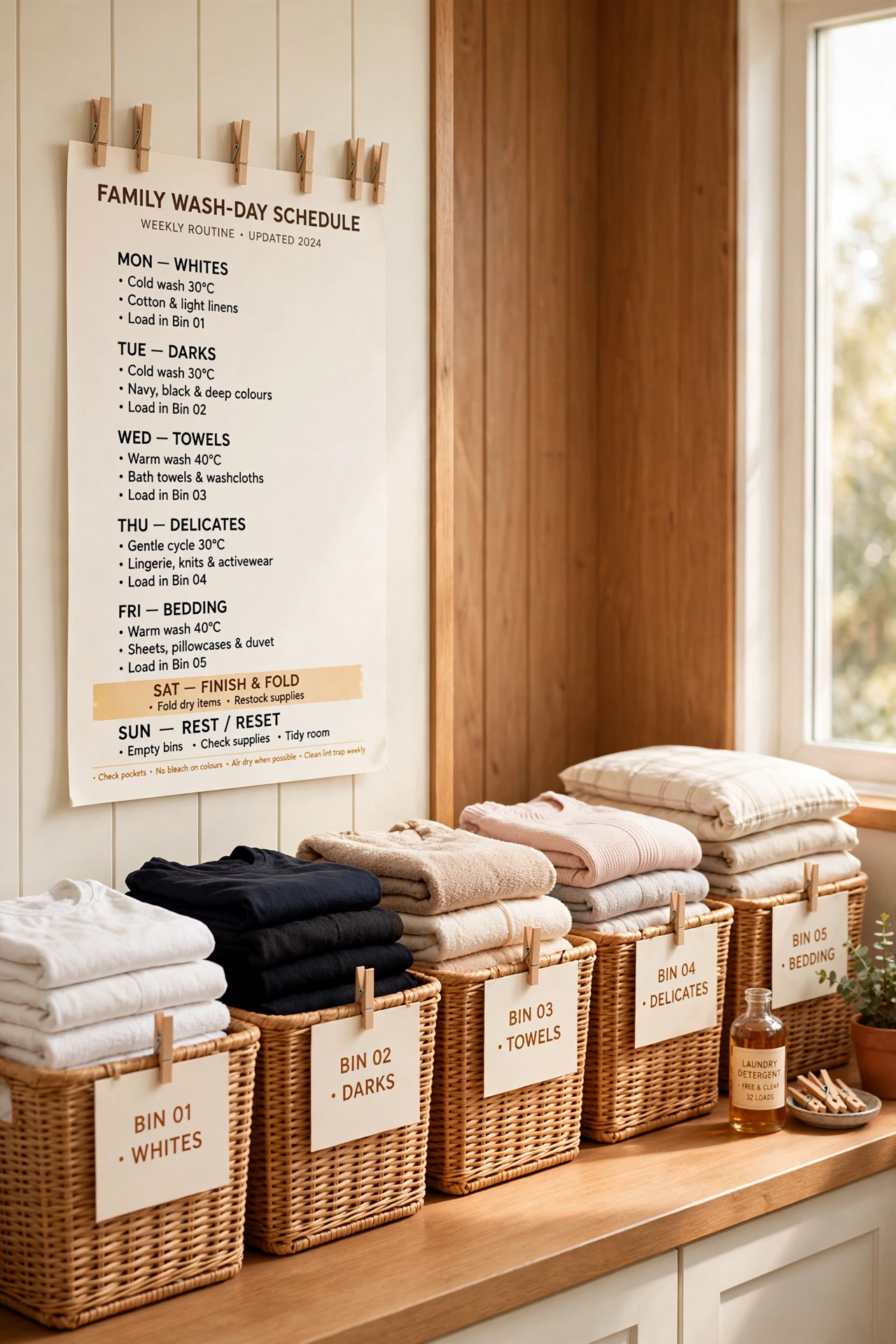
Batching means running loads that share the same settings back to back, which saves time and energy. Wash all the cold-water loads in a row, then switch to warm loads, so you are not adjusting the machine between every cycle. The washer stays warm, and you stay in a steady rhythm.
Plan your batches the night before wash day by checking which sorted groups are full. Two full groups of darks can run one after another while you fold the first load. Batching turns three separate laundry sessions into one focused block of work with clear start and finish times.
7. Build a Pre-Treat Check Into Every Load
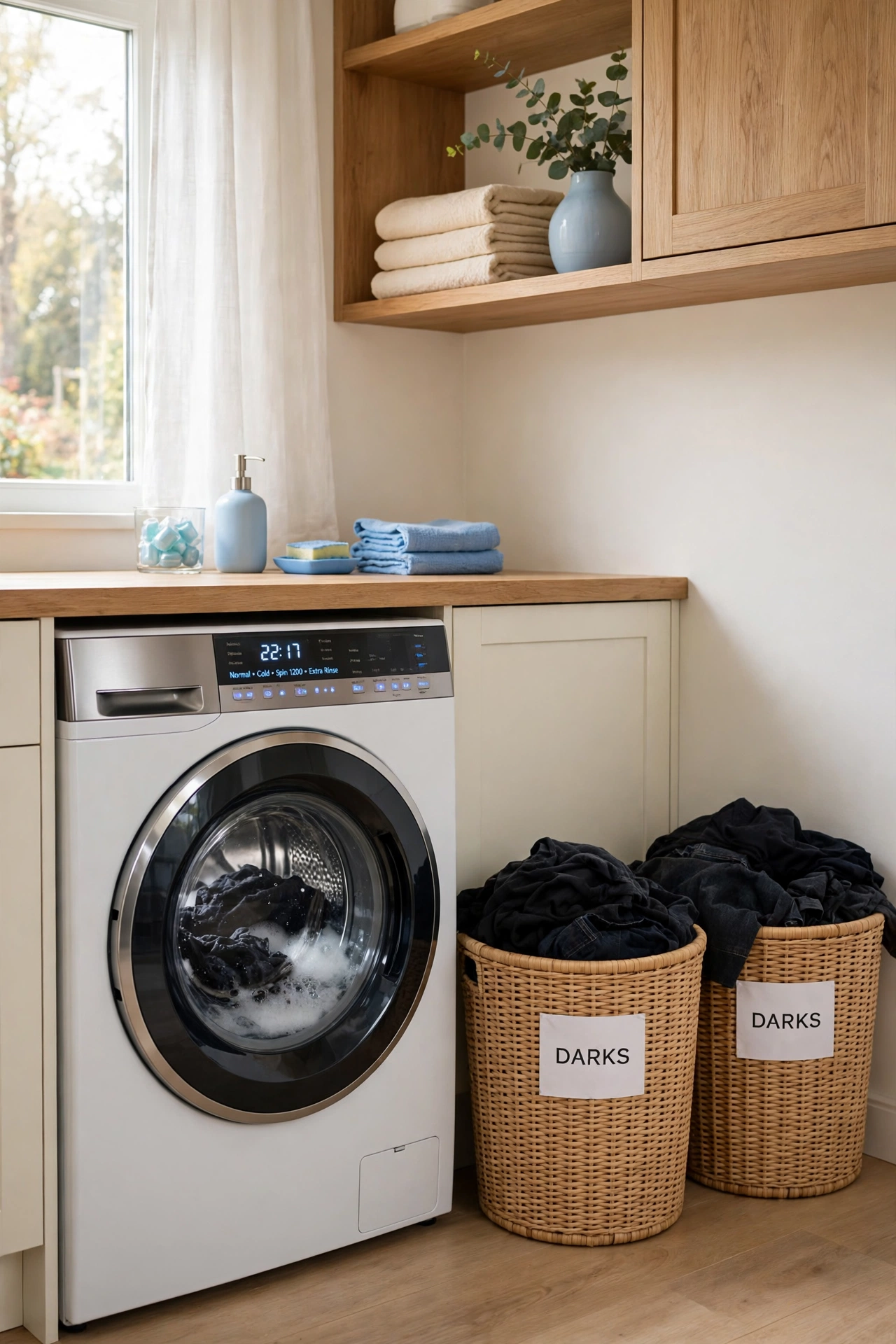
A pre-treat check is a quick habit that happens before clothes go into the washer. As you move each sorted group to the machine, scan every item for stains and dab stain remover on the spots you find. The whole check takes two minutes and saves clothes that would otherwise come out with set-in marks.
Keep stain remover, a small brush, and a clean cloth right beside the washer so the check is easy to do. Make it a rule that no load starts until the pre-treat check is done. For keeping those supplies tidy and within reach, these laundry detergent storage ideas will help you set up a neat station for everything wash day needs.
8. Hang a Stain Guide Beside the Washer
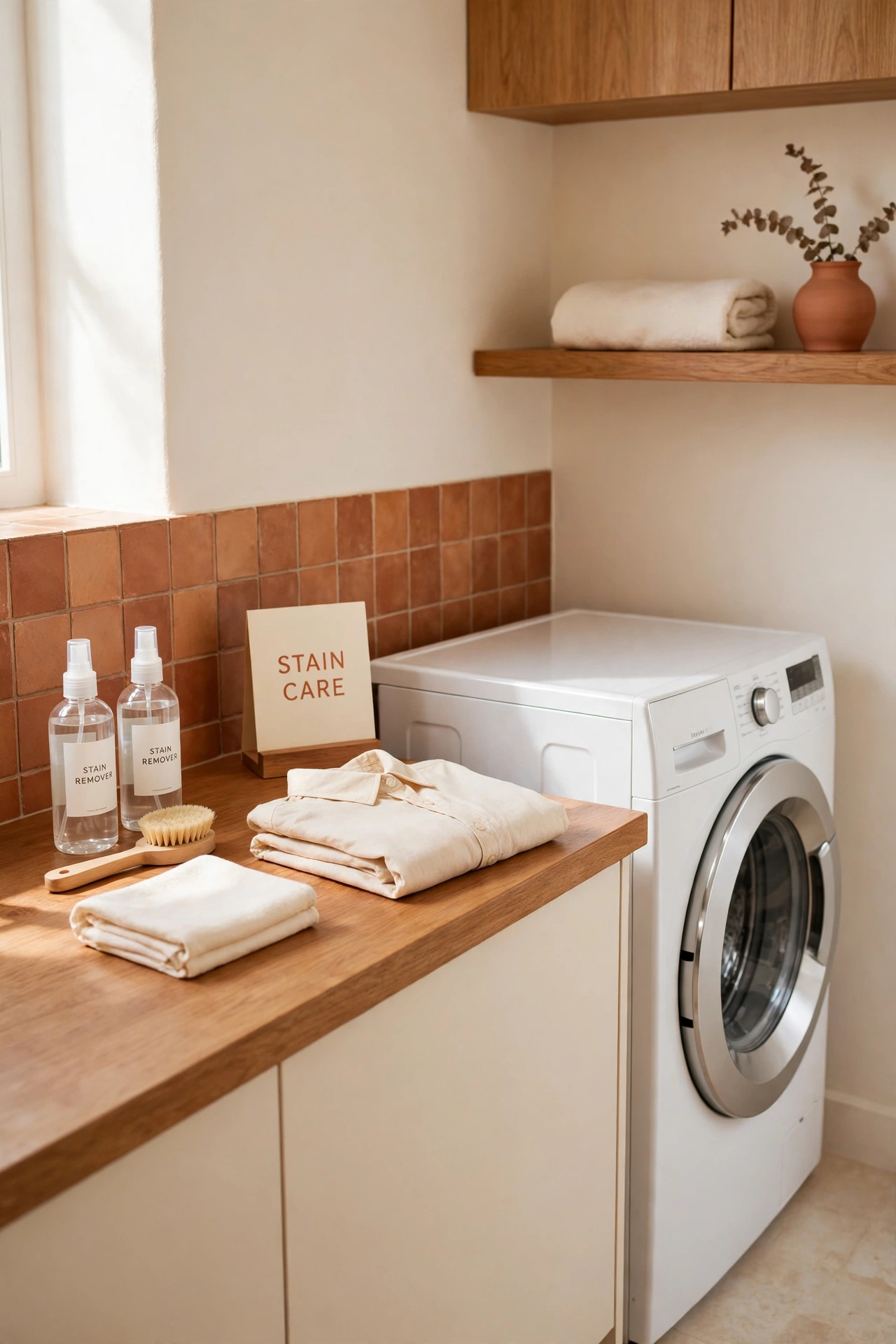
A stain guide is a simple chart that tells you how to treat common stains before washing. It lists stains like grass, grease, chocolate, and ink, with the right water temperature and treatment for each one. When the guide hangs beside the washer, nobody has to guess or search online mid-load.
Print or write the guide on a card and slip it into a clear sleeve so it stays clean in the laundry room. Update it when you discover a method that works well for your family. Children can use the guide too, which teaches them to handle their own stained clothes with confidence.
9. Give Each Family Member a Sorting Color
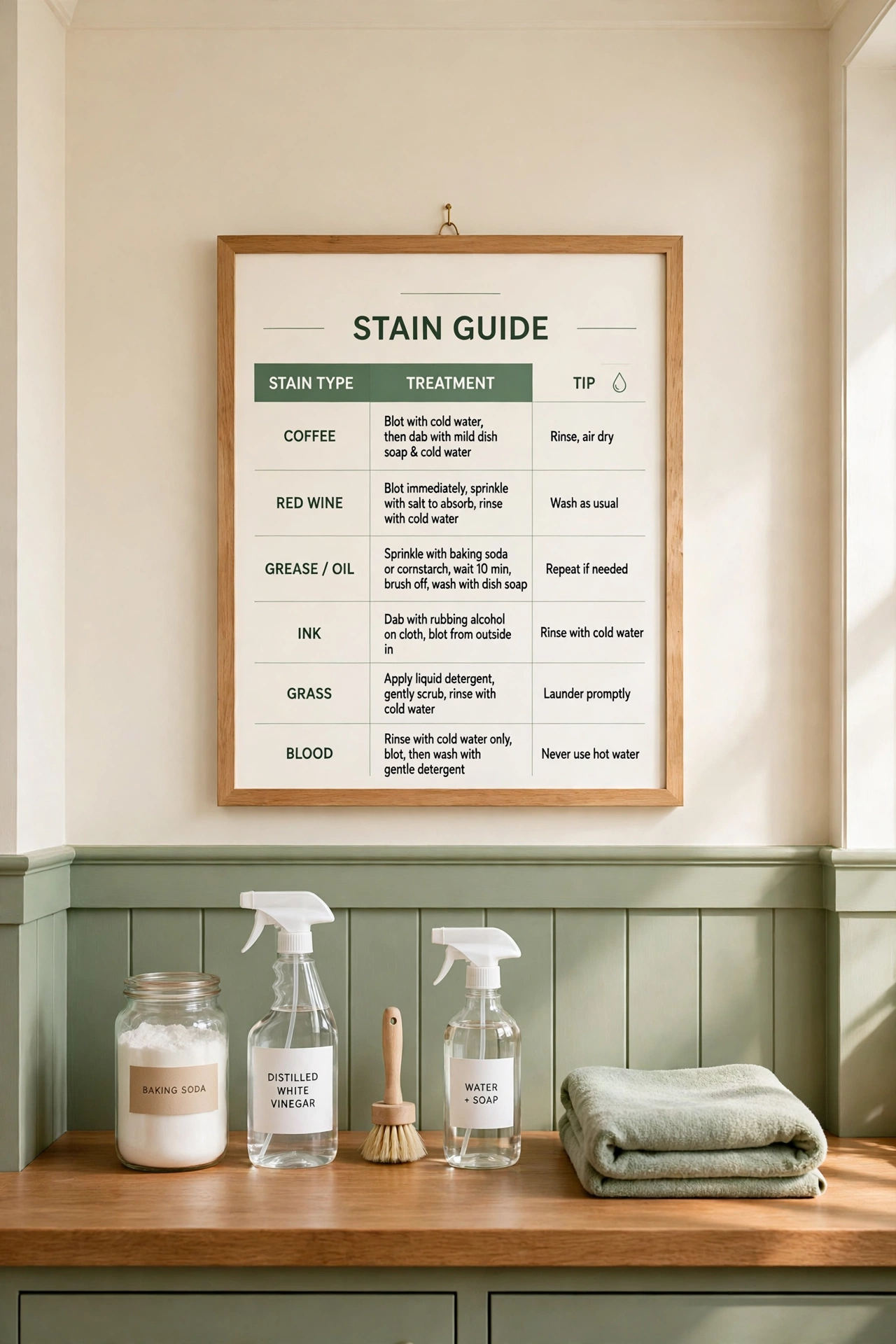
Assigning a color to each family member makes sorting and returning clothes much faster. Mom gets blue, Dad gets green, and each child gets a different color. Use colored clips, labels, or tags on each person’s sorted groups so anyone can tell at a glance whose clothes are whose.
The color system shines at folding time, because each folded stack goes straight to the right bedroom without sorting through a mixed pile. It also helps children take ownership of their own laundry. When a child sees their color, they know exactly which group is theirs to handle.
10. Teach Kids a Two-Step Sorting Habit
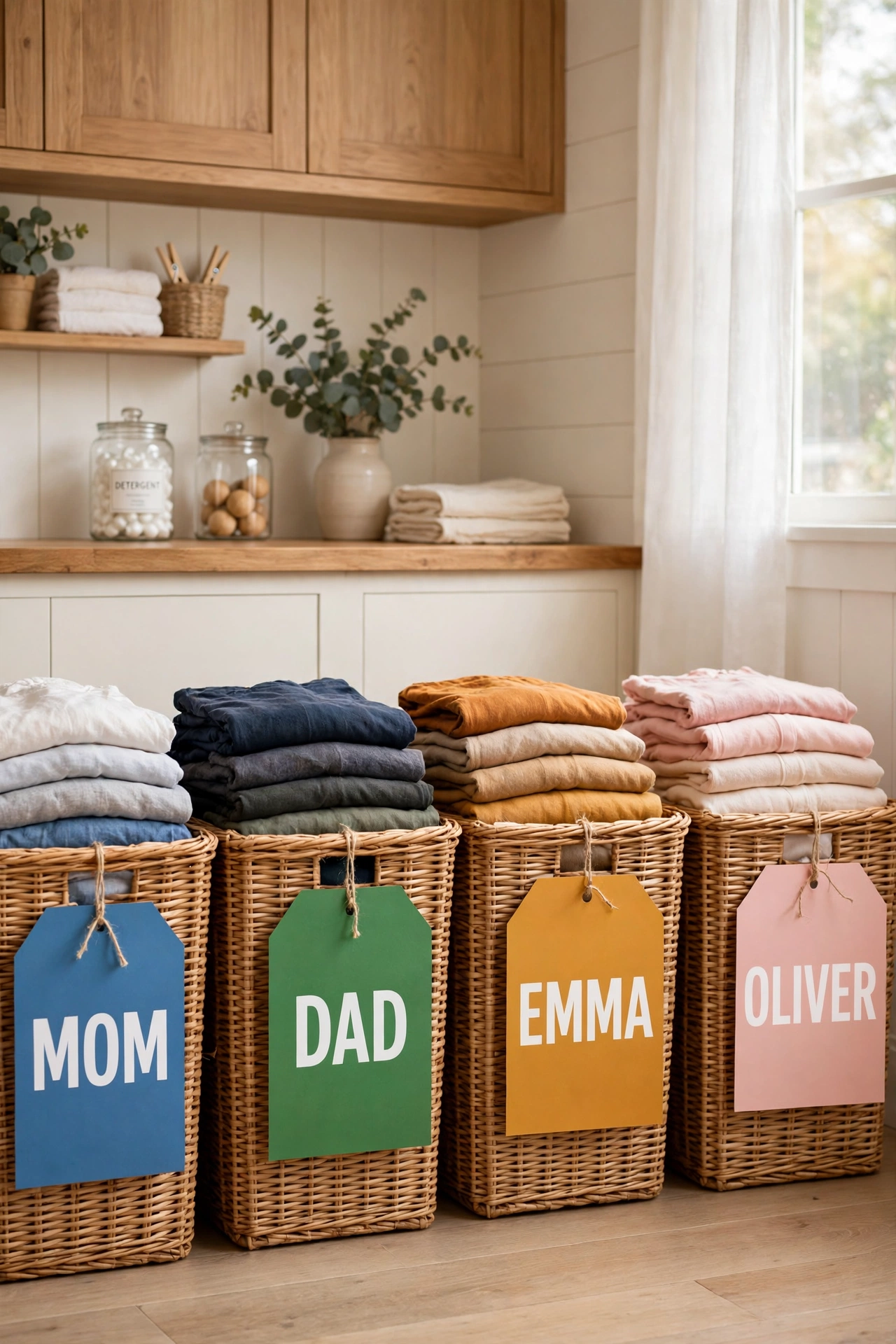
Children sort best when the rule has only two steps. Step one is to check the color: light or dark. Step two is to check the item: regular clothes or special care. If the item is light and regular, it goes in the light group. If it is dark or special care, it goes in the matching group.
Practice the two steps together for the first few weeks until the habit sticks. Praise children when they sort correctly, and gently correct mistakes without turning it into a lecture. A simple habit learned young becomes a lifelong skill that keeps the whole family laundry system running smoothly.
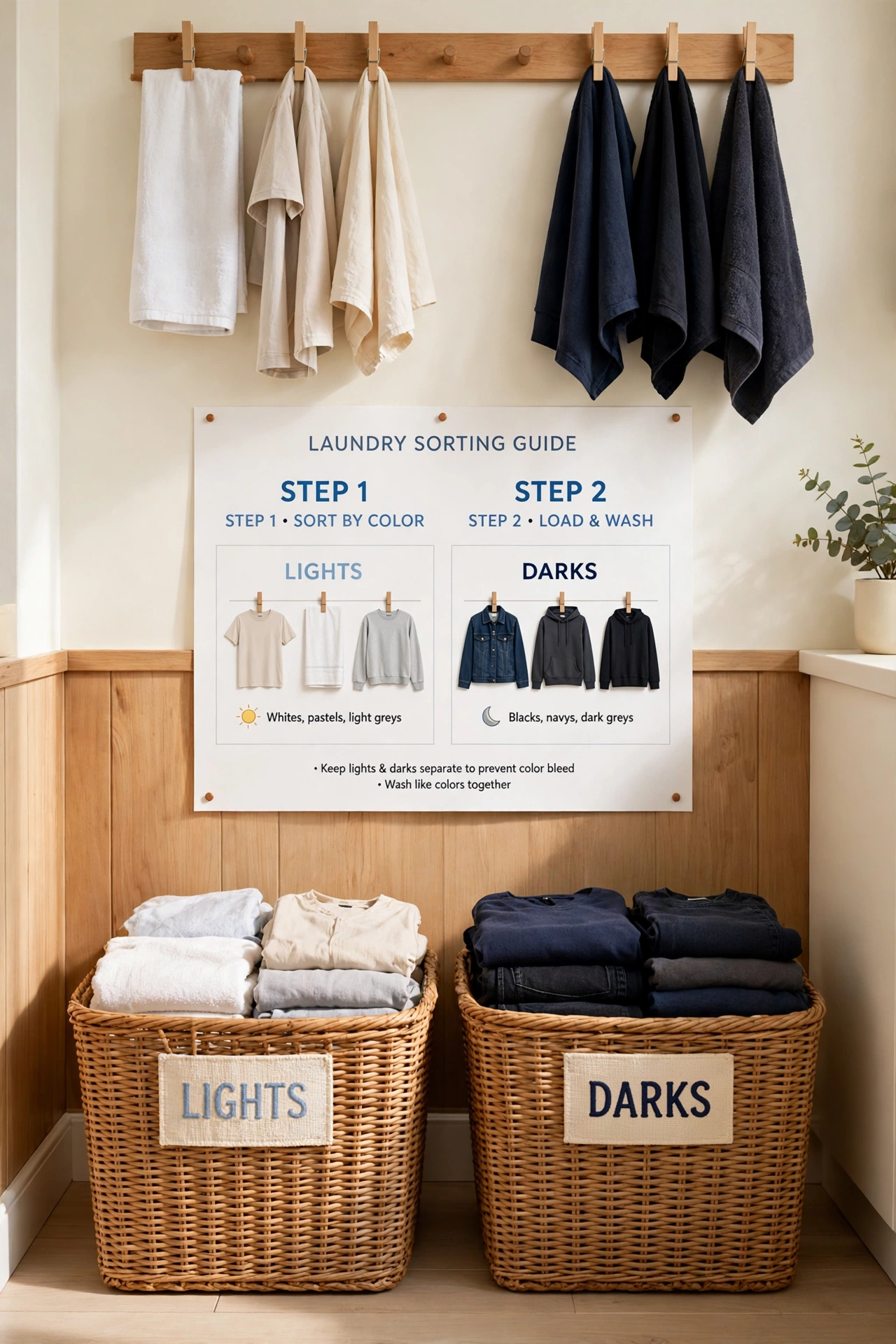
11. Set Up a Sorting Station Beside the Washer
A sorting station is a dedicated spot right beside the washer where sorted groups wait their turn. It holds labeled containers for each load type, plus a small counter for folding and pre-treating. Everything stays in one place, so wash day never spreads across the whole house.
Build the station with whatever fits your space, from a row of labeled bins on a shelf to a folding table with containers underneath. The key is that each load type has its own clearly marked home. For shelf layouts and station setups that fit any laundry room, these laundry room organization ideas offer layouts for small and large spaces alike.
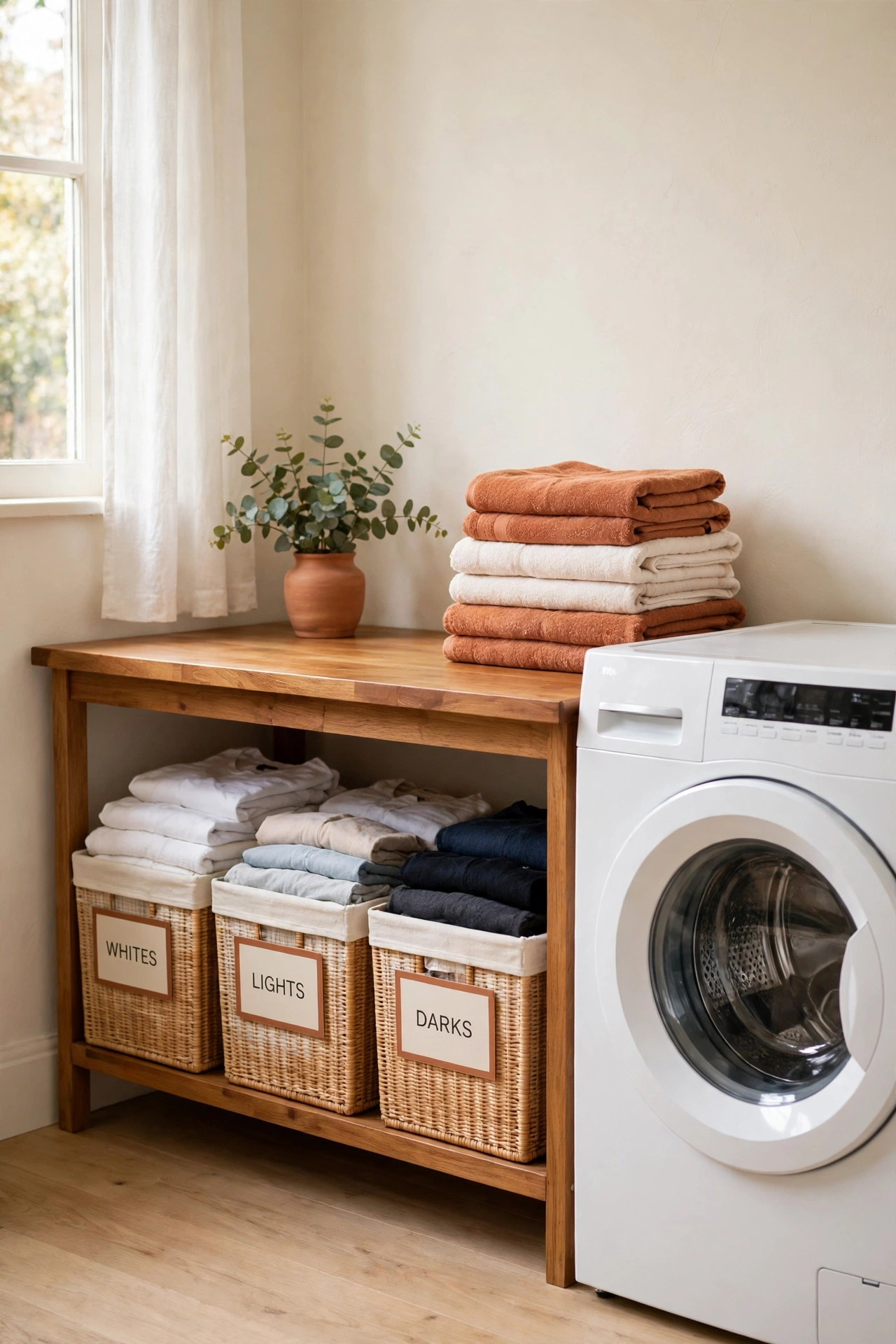
12. Sort Clothes the Moment They Come Off
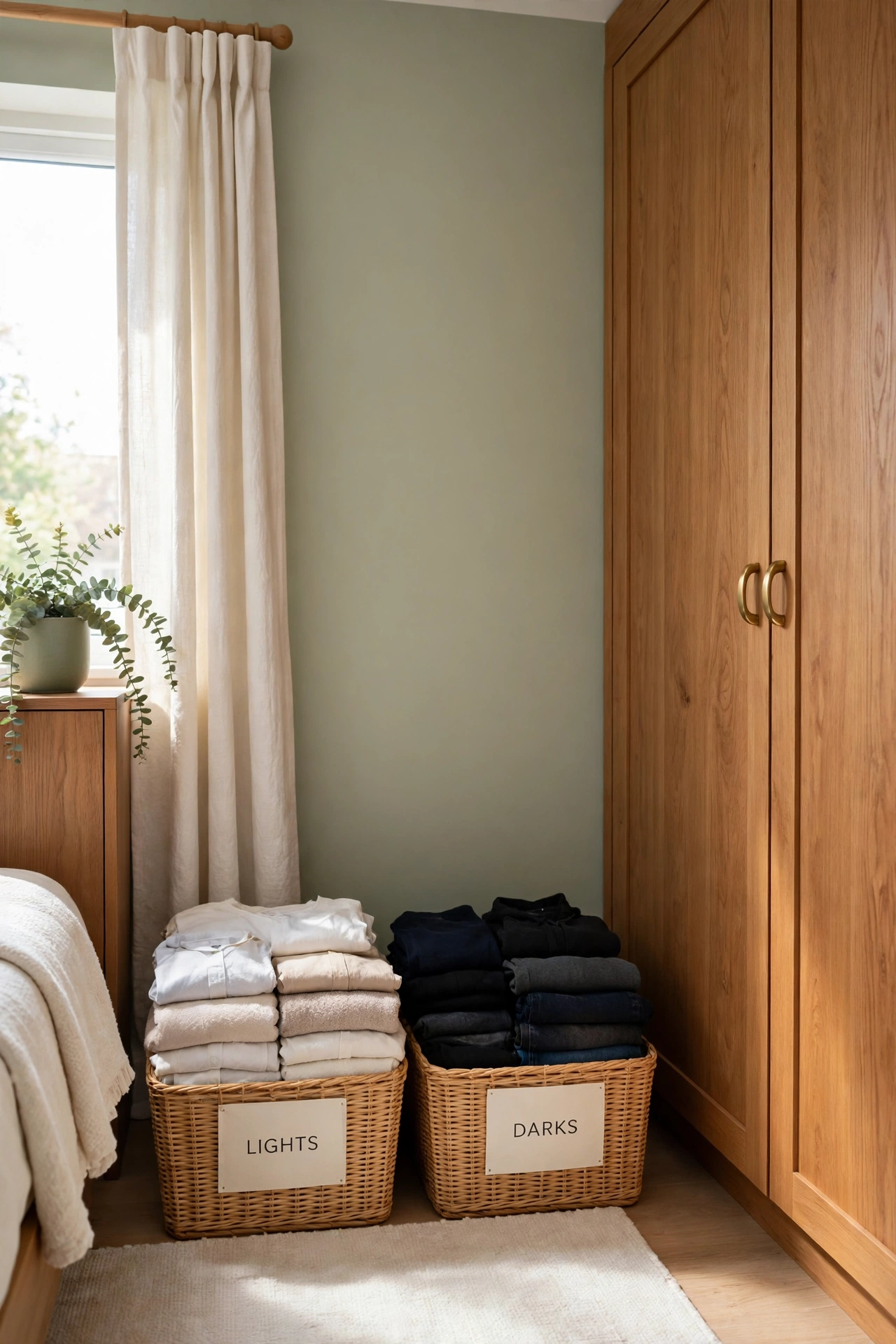
The fastest sorting system is the one that happens before clothes ever reach a pile. Teach everyone to sort each item the moment they take it off: whites go in one direction, darks in another, and delicates in their own spot. Sorting takes five seconds per item and removes the big sort session entirely.
This habit works best when each bedroom has a clear sorting spot with labels that match the laundry room groups. When the groups fill up, they move to the washer already sorted. The laundry room stays calm because the sorting work is spread across the whole week in tiny moments.
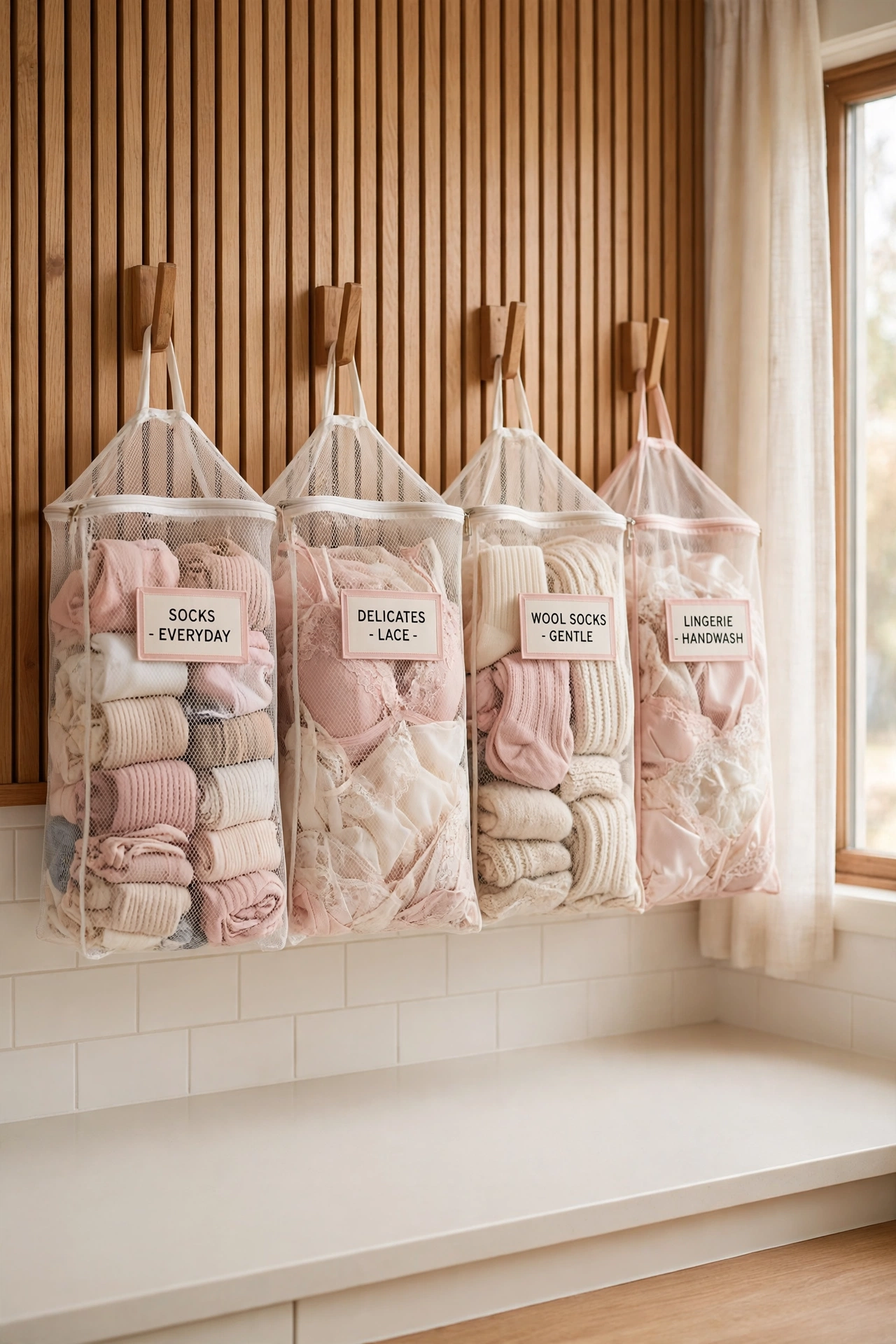
13. Use Mesh Bags for Small Items and Delicates
Mesh bags solve two sorting problems at once: lost socks and damaged delicates. Give each family member a mesh bag for socks and small items, and keep a second bag for delicate garments. The bags go straight into the washer, so small items never disappear and delicates stay protected.
Label each bag with a name or color so the bags return to the right person after drying. Zip the bags closed before washing to keep everything inside. When the load finishes, the bag contents are already grouped, which makes folding and putting away much faster.
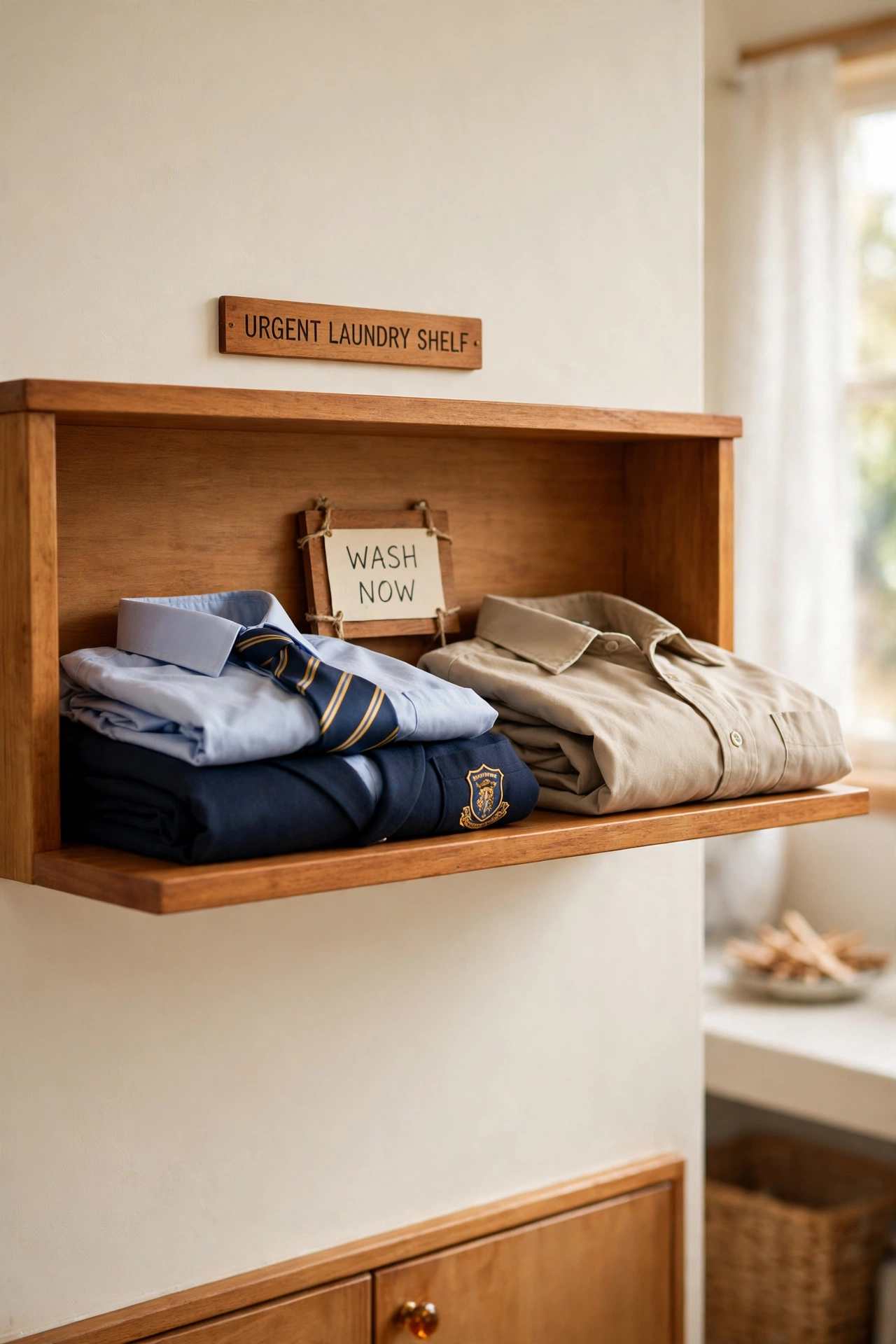
14. Keep a Wash Now Rule for Urgent Items
Every family has urgent items that cannot wait for the next scheduled load: a school uniform needed tomorrow, a favorite shirt for an event, or a work outfit for Monday morning. A wash now rule gives these items a clear path instead of letting them sit in a pile until it is too late.
Set one small spot, such as a labeled shelf or a hook, where urgent items go the moment they are noticed. Whoever starts the next load checks the urgent spot first and adds those items to a matching load. The rule removes last-minute panic and keeps important clothes ready when they are needed.
15. Run a Morning Wash and Evening Fold Routine
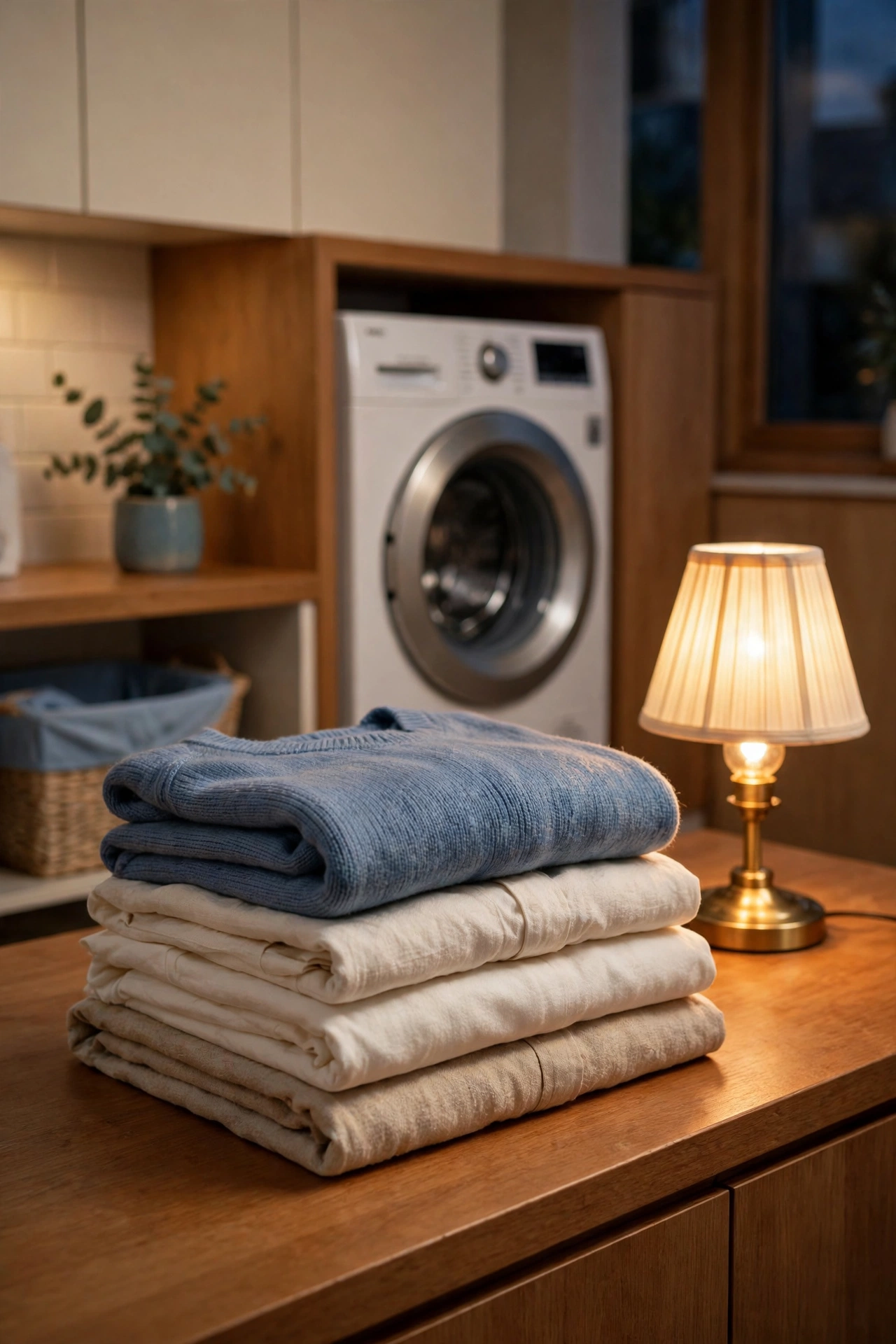
A morning wash and evening fold routine splits laundry across the day in two short sessions. Start a load in the morning before the day begins, move it to the dryer at midday, and fold it in the evening while the family relaxes. No single session takes more than fifteen minutes.
The routine works because it pairs laundry with moments that already exist in your day. Morning coffee time covers the washer, and evening television time covers the folding. Over a week, the routine handles seven loads without ever feeling like a major chore.
16. Track Loads on a Wall Chart
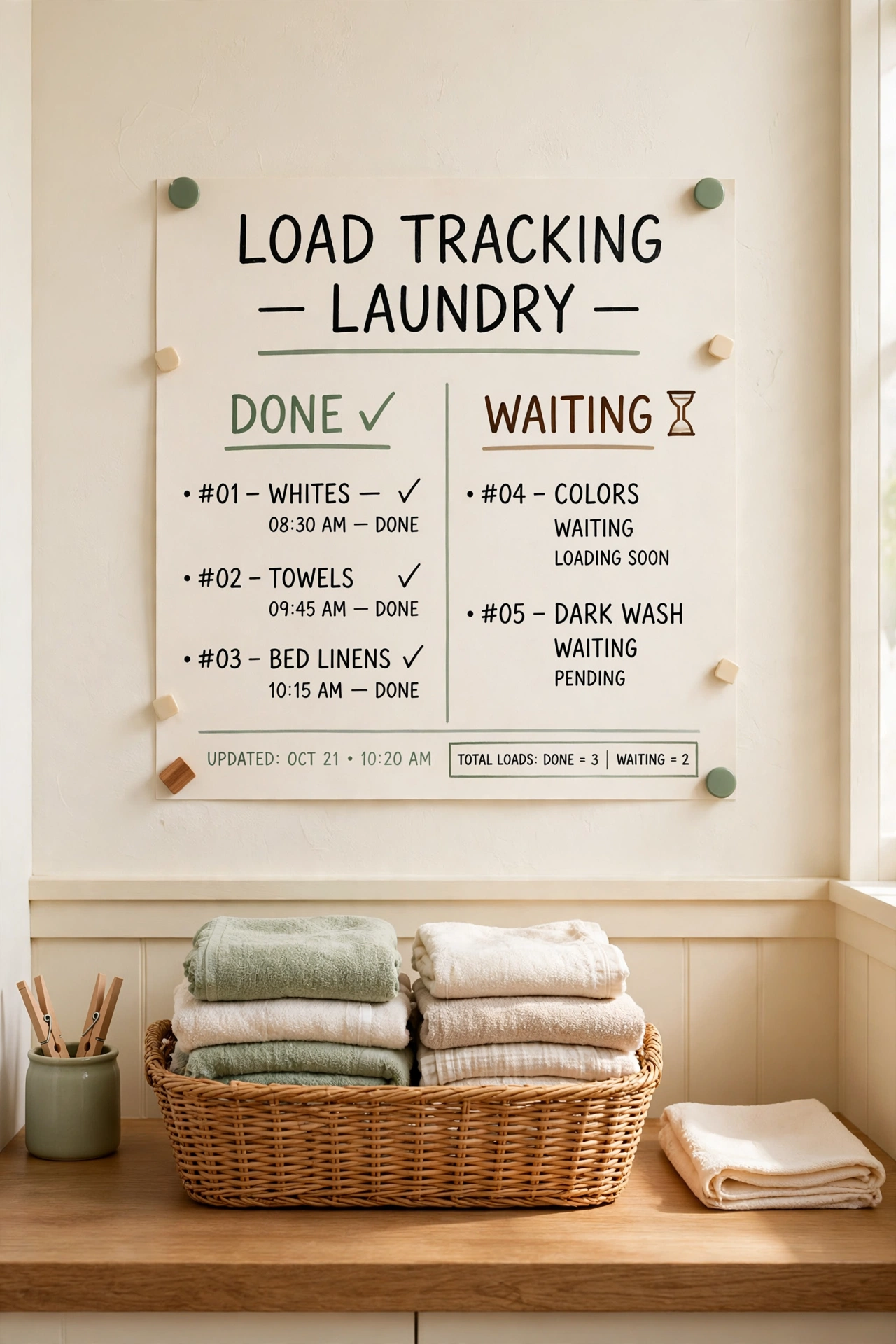
A load-tracking chart is a simple board that shows which loads are done, which are in progress, and which are still waiting. Use magnets, clips, or checkmarks to move each load type across the chart as the week goes on. Everyone can see the status at a glance without asking.
Place the chart on the laundry room wall at eye level and update it each time a load starts or finishes. The chart prevents double washing and forgotten loads, which are common problems in families where several people share the washer. It also gives children a satisfying way to mark their own progress.
17. Give Towels and Sheets Their Own Weekly Loads
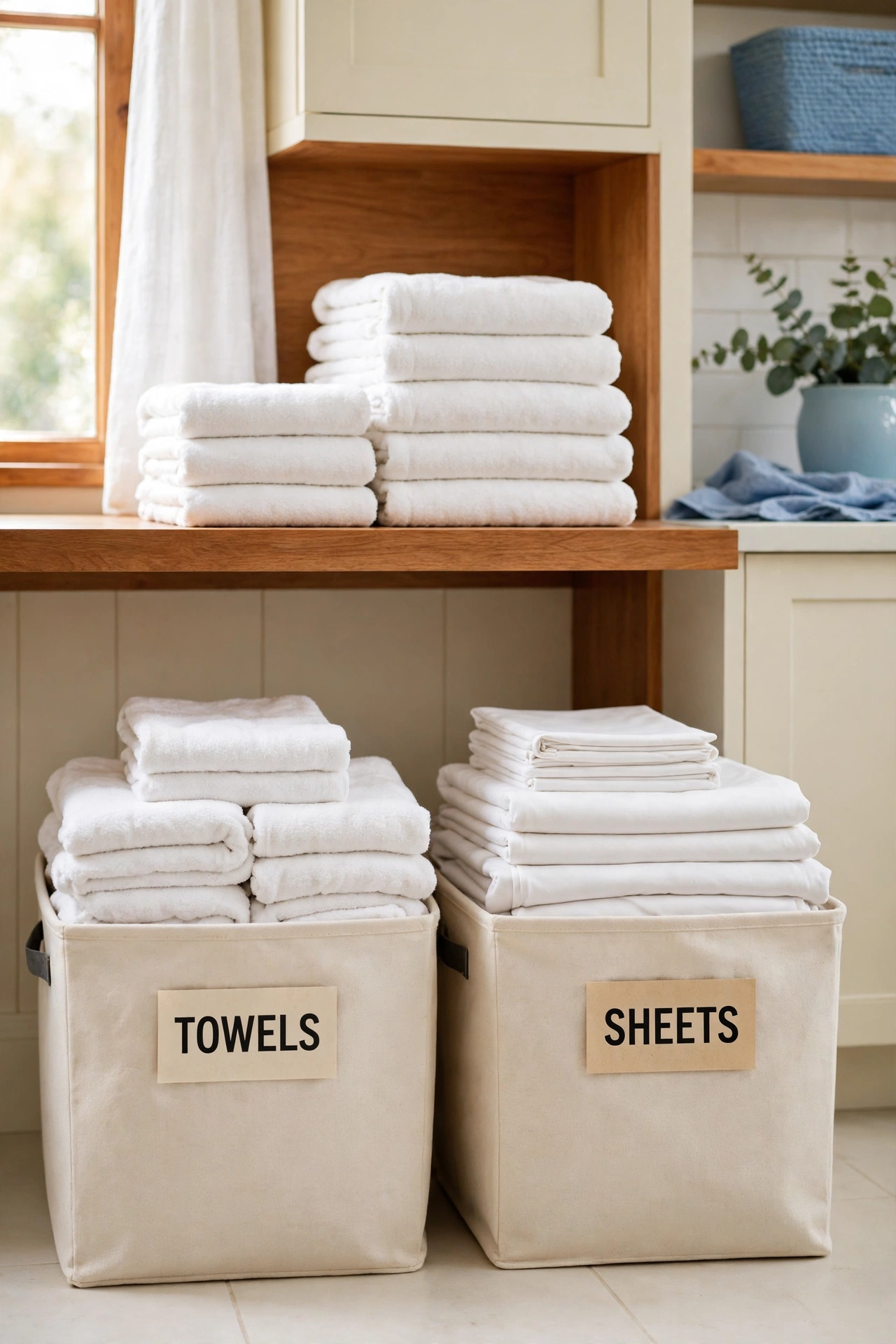
Towels and sheets deserve their own loads because they are bulky, heavy, and need hotter water than most clothing. Mixing them with clothes slows drying and leaves lighter items tangled in heavy fabric. A dedicated towel load and a dedicated sheet load each week keeps everything cleaner and easier to fold.
Pick fixed days for these loads, such as towels on Wednesday and sheets on Sunday, and stick to the schedule. When the loads are predictable, everyone knows when to bring towels and bedding to the laundry room. For keeping the clean results tidy after folding, these linen closet organization ideas show how to store towels and sheets so they stay fresh and easy to find.
18. Wash Sports Gear on the Same Day It Is Used
Sports gear that sits in a bag overnight develops odors that are hard to remove later. A same-day wash rule means practice clothes, gym outfits, and sports uniforms go straight into the wash on the day they are worn. The rule protects the fabric and keeps the sports bag fresh for the next use.
Set a landing spot near the door where sports gear goes the moment the family arrives home. Whoever starts the evening load adds the sports gear to a matching cold-water cycle. The habit takes one minute and prevents the smell that builds up in forgotten gym bags.
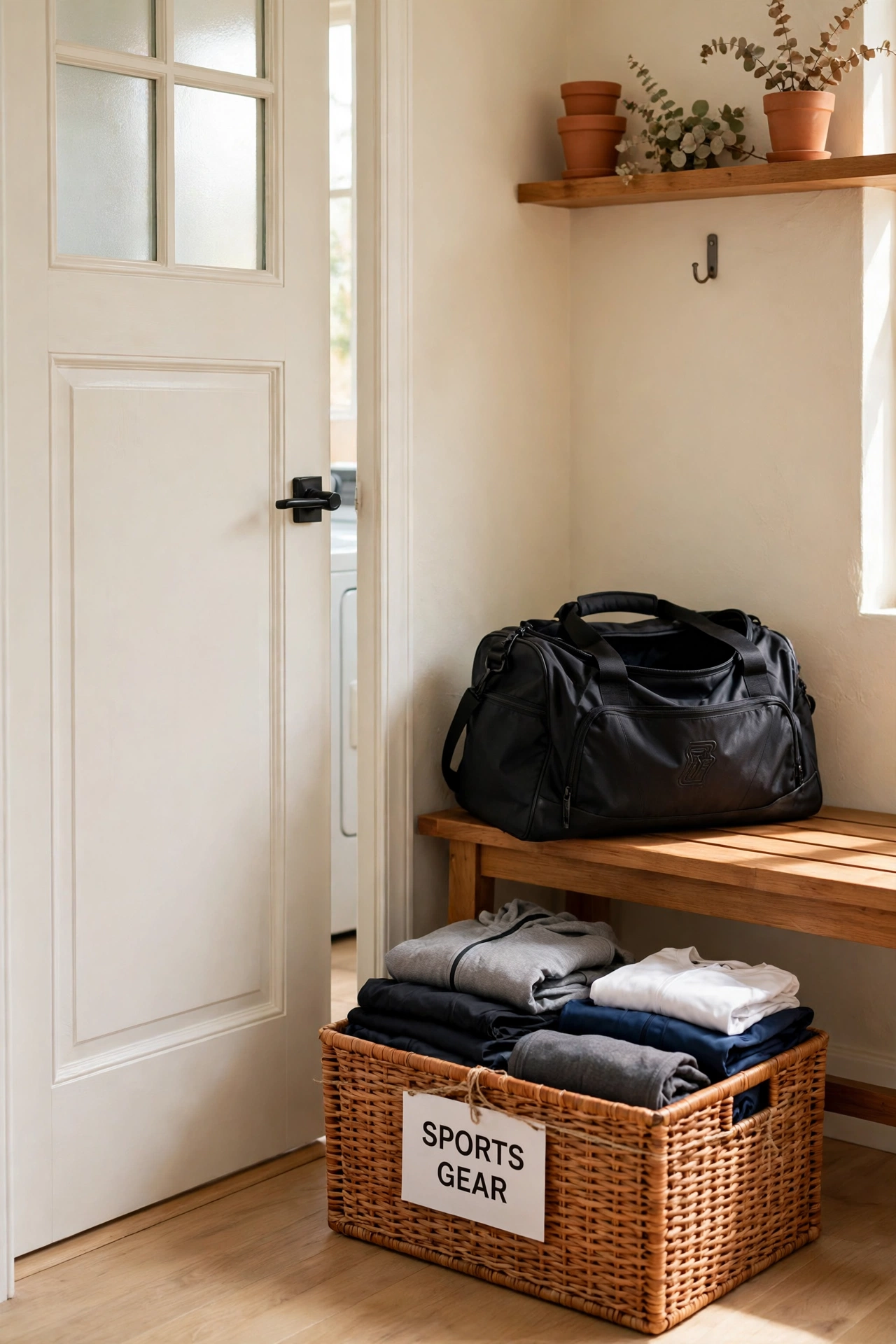
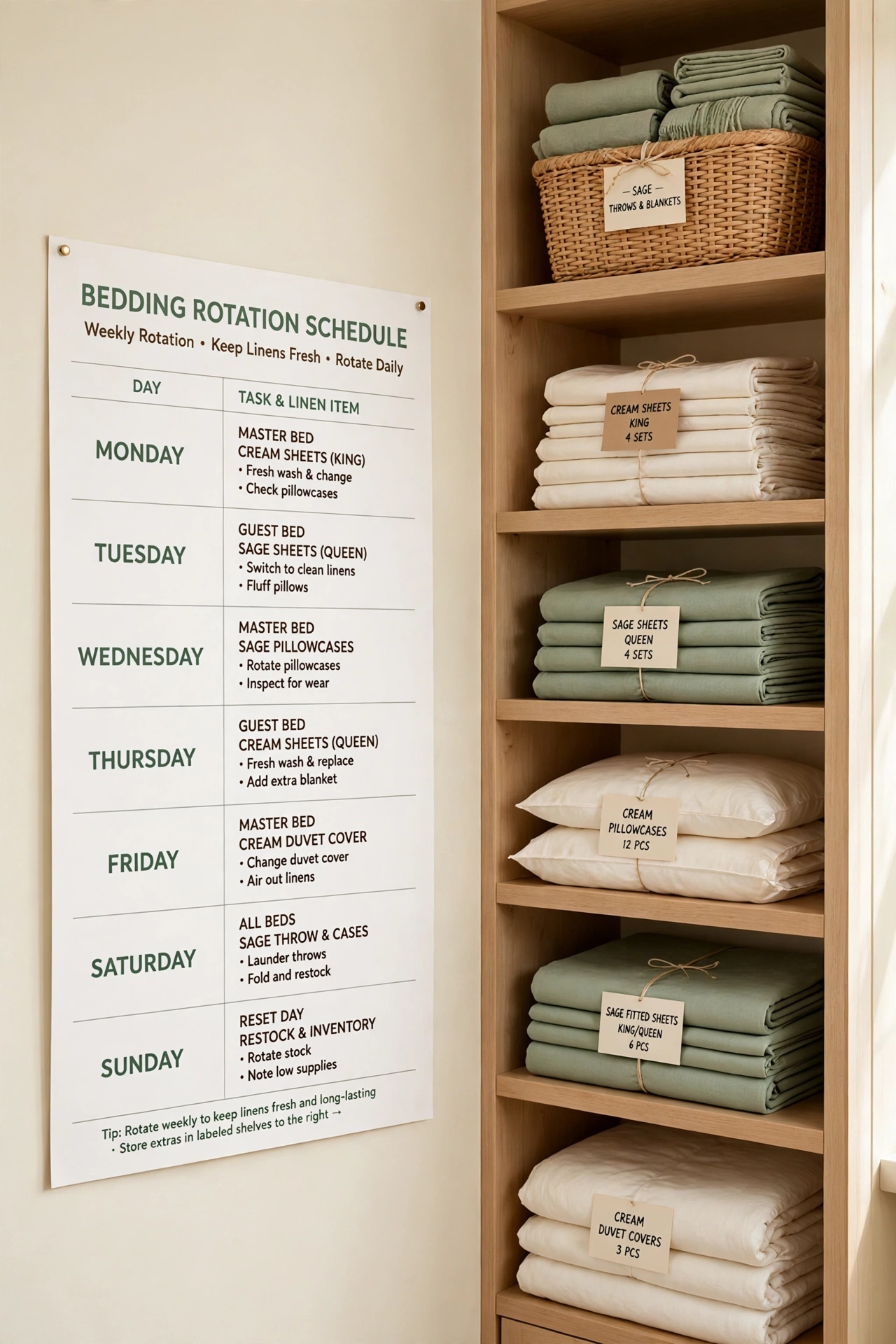
19. Rotate Bedding on a Fixed Weekly Schedule
A bedding rotation schedule assigns each bed a wash day so sheets never pile up at once. For example, the parents bed washes on Sunday, the kids beds wash on Monday, and guest bedding washes on the first Saturday of the month. Each bed gets fresh sheets every week without a single overwhelming laundry day.
Strip the bed in the morning and remake it with a clean set from the closet while the dirty set washes. The routine takes ten minutes per bed and keeps every bedroom fresh. Write the rotation on the family calendar so everyone knows their bed day in advance.
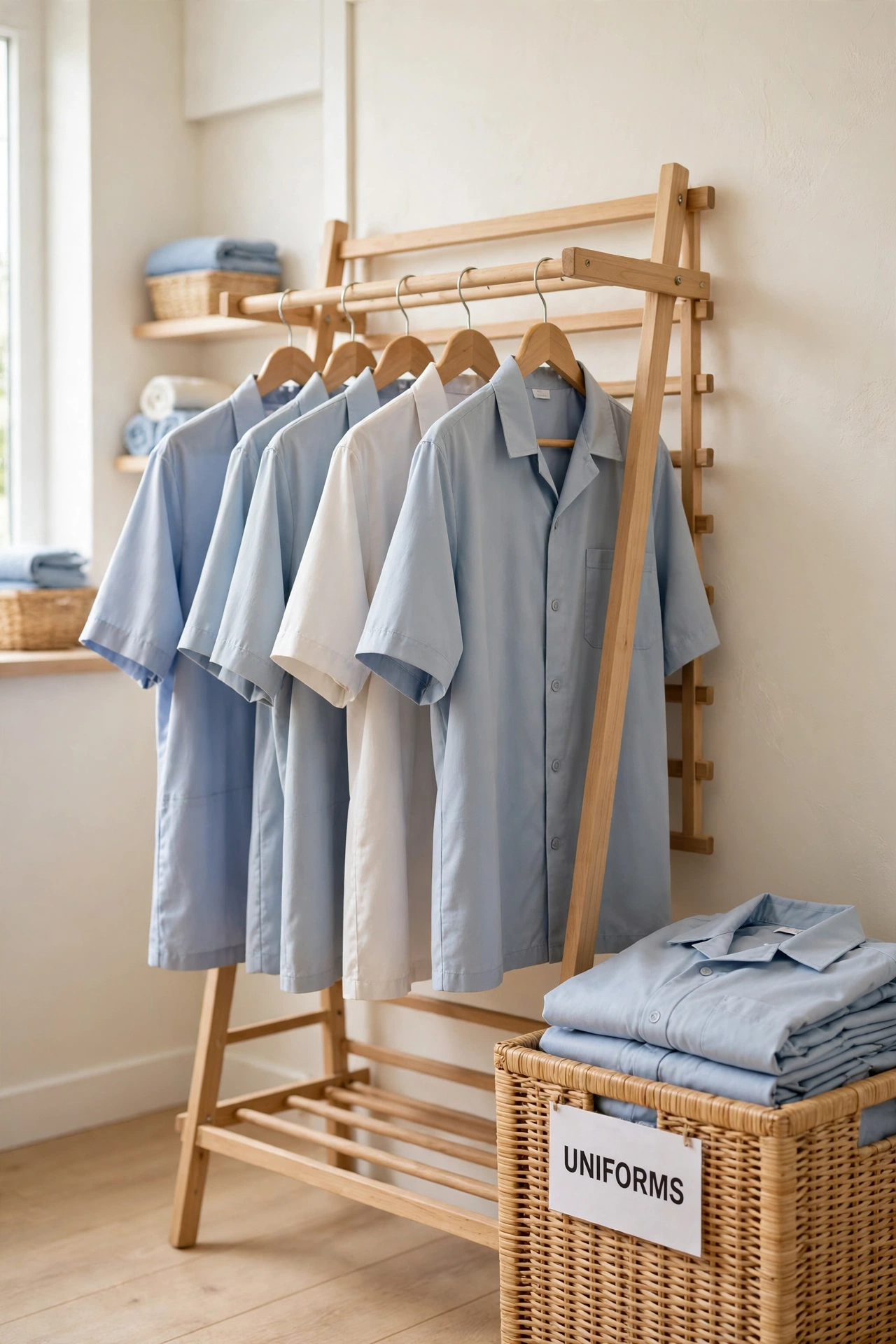
20. Give Work Uniforms a Dedicated Weekly Load
Work uniforms need special attention because they must be clean, neat, and ready on schedule. A dedicated weekly uniform load keeps them separate from casual clothes, which means they get the right water temperature and the right drying care. Uniforms also stay free of lint from towels and fleece.
Choose a wash day two days before the work week starts, so uniforms have time to dry and be pressed if needed. Hang uniforms straight from the dryer to prevent wrinkles. The dedicated load removes the Monday morning scramble for a clean uniform.
21. Sort by Person First, Then by Color
In a large family, sorting by person first can be faster than sorting by color first. Each person brings their clothes to the laundry room in their own bundle, then each bundle is split into color groups at the sorting station. The person-first step keeps clothes from getting mixed up between family members.
This method works especially well when children do their own laundry, because each child handles only their own bundle from start to finish. It also makes lost items easy to trace, since every bundle stays separate until the color split. Try person-first sorting for two weeks and compare it with your current method.
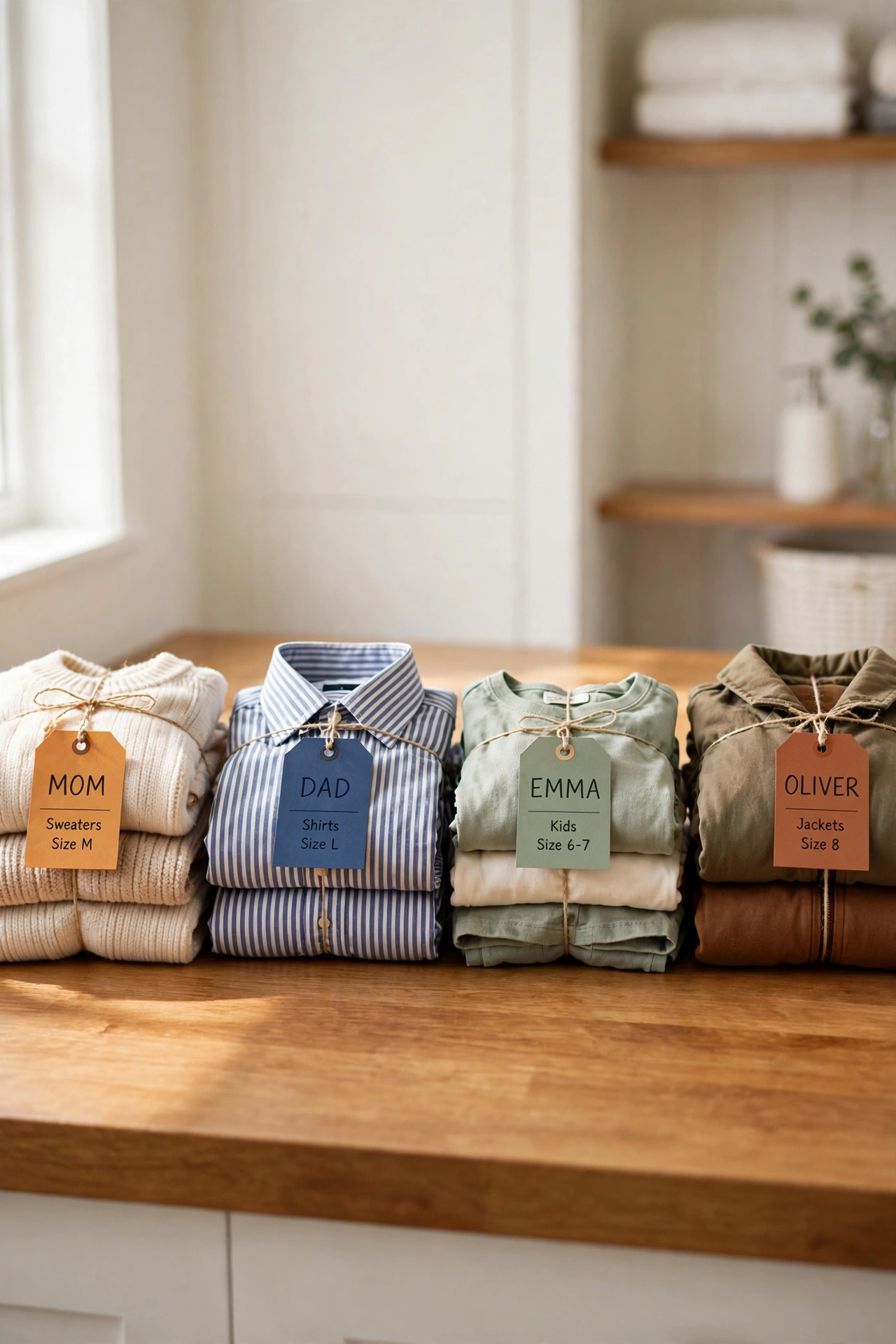
22. Use Color-Coded Tags for Shared Clothing
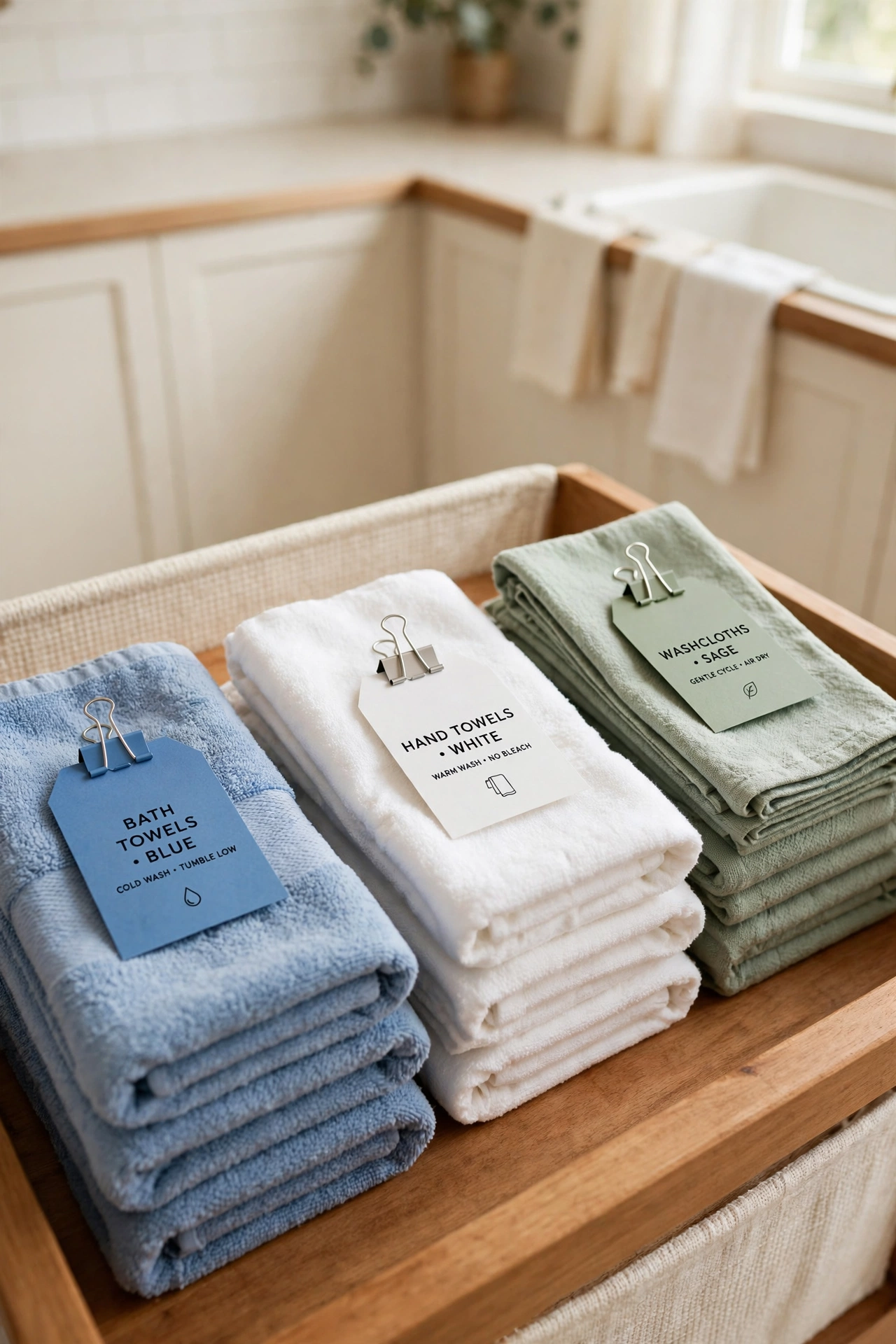
Shared clothing like towels, napkins, and cleaning rags can confuse a sorting system because nobody owns them. Color-coded tags solve the problem by marking each shared item with the group it belongs to. A blue tag means the item washes with towels, while a white tag means it washes with whites.
Use small clip-on tags or colored safety pins that survive the wash. Teach the family to check the tag when sorting, just like checking the color of a shirt. The tag system keeps shared items in the right loads and stops towels from ending up in the delicates cycle.
23. Make Cold Water the Default for Mixed Loads
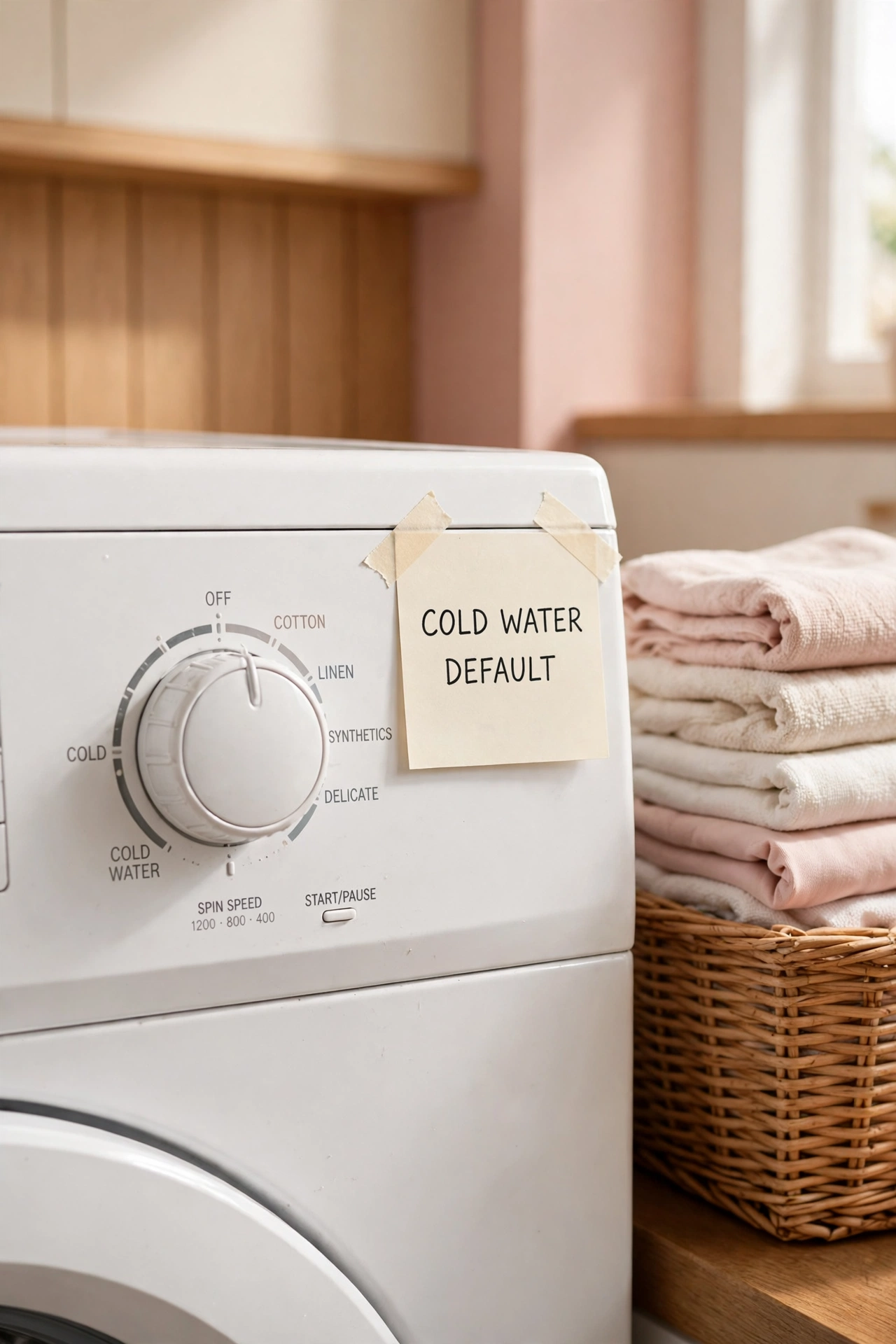
When a load mixes colors or fabrics because it is small, cold water is the safest default setting. Cold water prevents dye transfer, protects delicate fibers, and saves energy. Most modern detergents clean well in cold water, so clothes come out just as clean as they would in warm water.
Set the washer dial to cold as the standard setting and change it only when a specific load needs warm or hot water. The default rule removes decision fatigue and protects clothes from heat damage. Reserve hot water for towels, bedding, and heavily soiled items that truly need it.
24. Do a Five-Minute Nightly Sort
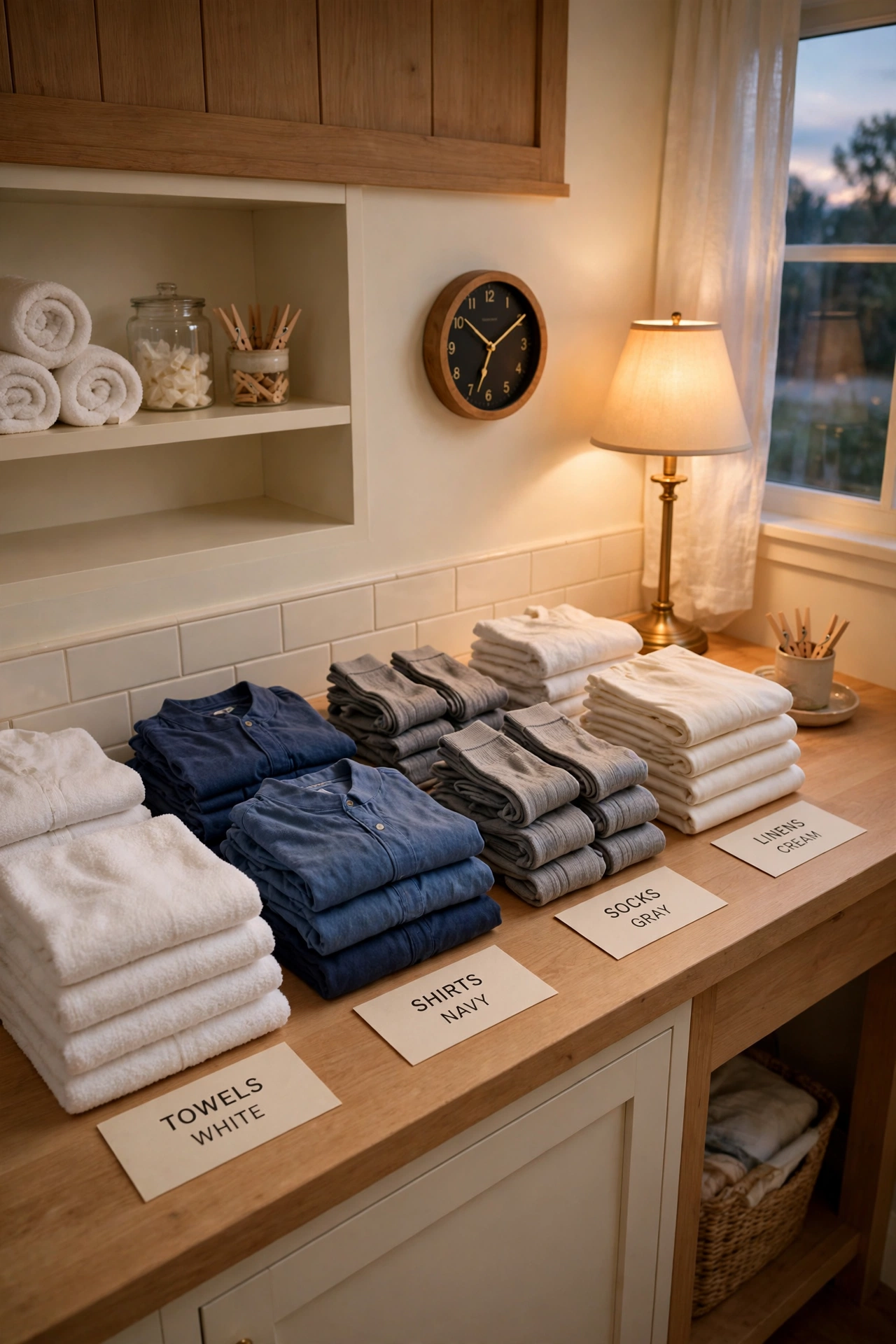
A five-minute nightly sort is a quick routine done before bed. Walk through the bedrooms and bathroom, gather the dirty clothes of the day, and sort them into their groups at the sorting station. The nightly pass keeps piles from forming and makes the morning load ready to start.
Pair the sort with another nightly habit, like locking the doors or setting out breakfast items, so it becomes automatic. Children can join the nightly sort by bringing their own clothes to the station. For a full evening routine that covers the whole home, these daily cleaning checklist ideas include simple nightly tasks that keep every room tidy.
25. Follow a Laundry Day Checklist for Multiple Loads
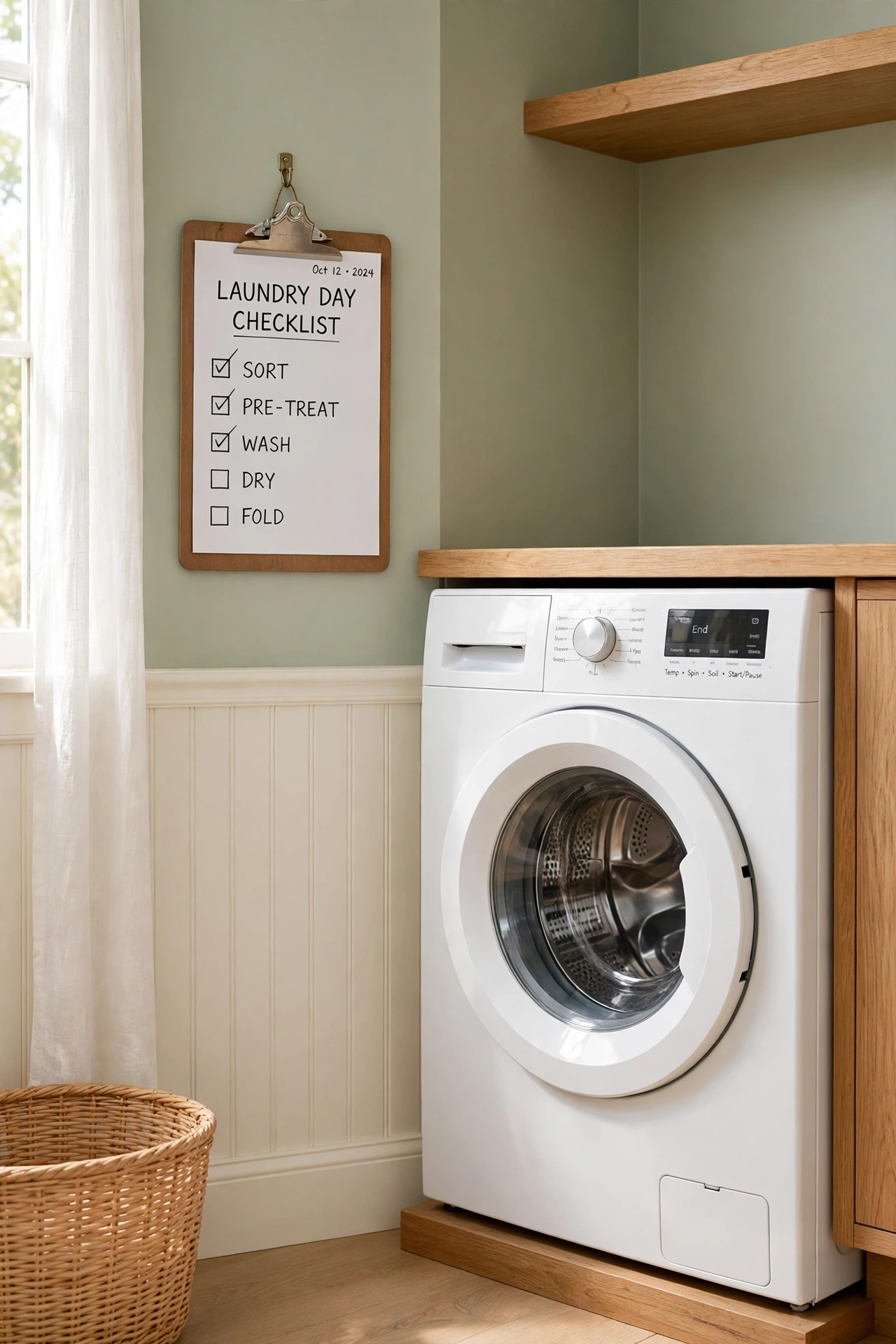
A laundry day checklist keeps multiple loads on track when wash day arrives. The checklist lists each step in order: sort, pre-treat, load, wash, dry, fold, and put away. Checking off each step prevents the common problem of clean clothes sitting in the dryer for hours.
Laminate the checklist and hang it beside the washer with a dry-erase marker. Each family member initials the steps they complete, so everyone can see where the day stands. The checklist turns a chaotic wash day into a clear sequence that even a child can follow.
26. Order Loads by Priority, Not by Pile Size
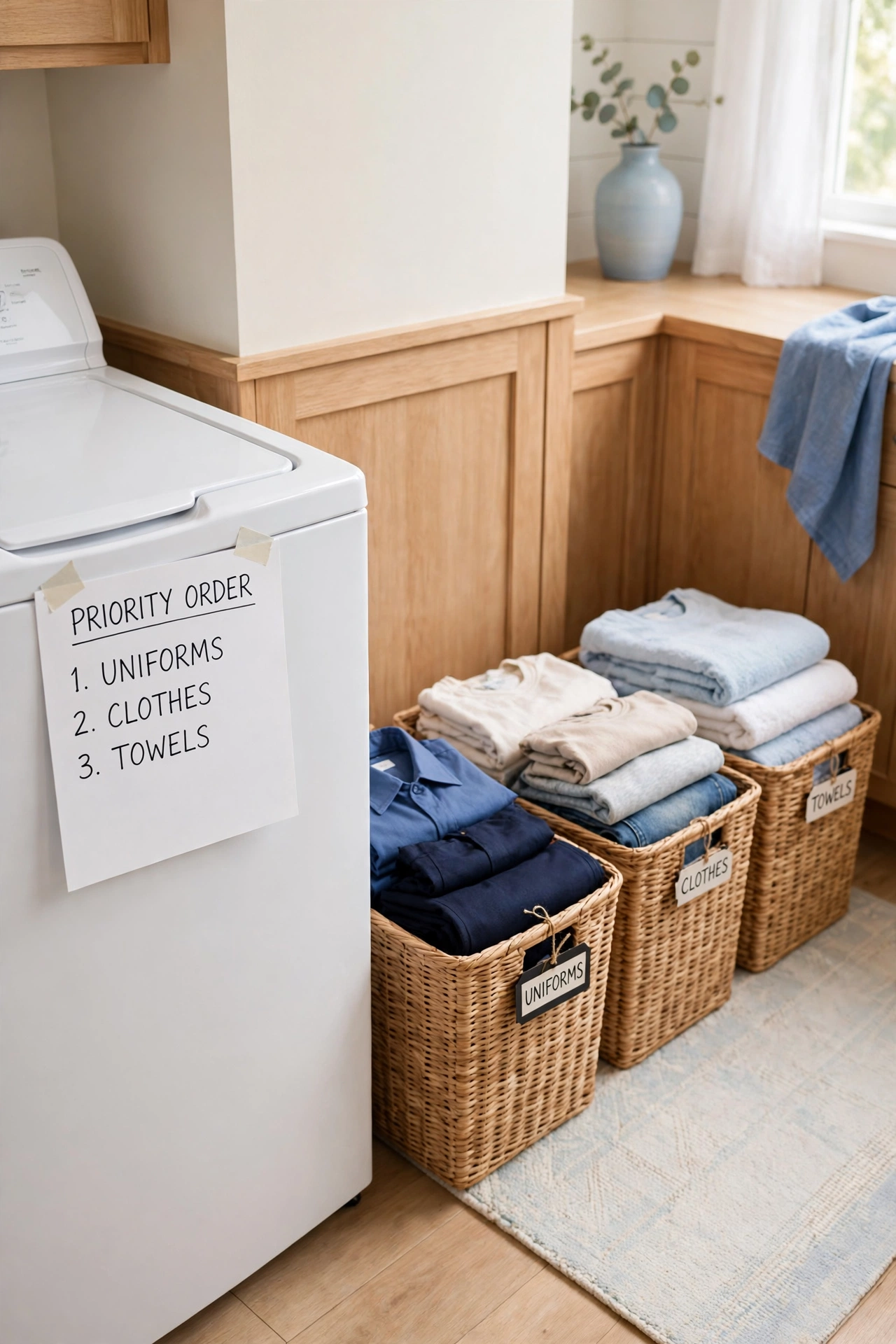
When several sorted groups wait at once, wash them in priority order instead of starting with the biggest pile. School uniforms and work clothes come first, everyday clothes come second, and towels and bedding come last. The priority order guarantees that the most needed items are ready first.
Write the priority order on a small card and tape it to the washer lid. When anyone starts a load, they check the card and pick the highest-priority group that is waiting. The rule keeps the family running on time even on weeks when laundry piles up.
27. Adjust Sorting Rules for Each Season
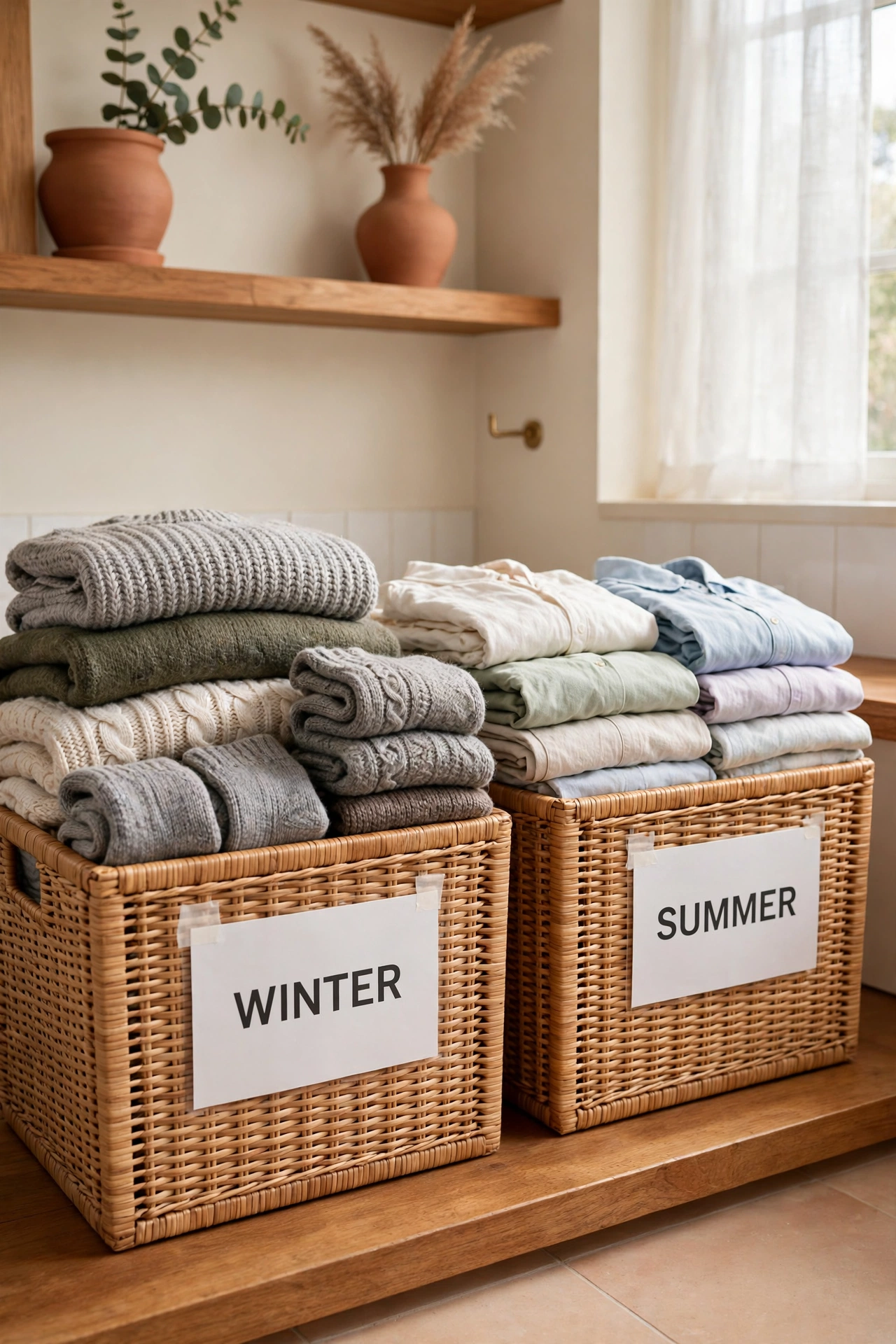
Sorting rules should change with the seasons because the clothes change too. Winter brings heavy sweaters, thick socks, and fleece layers that need their own heavy load. Summer brings swimwear, light cottons, and sand-dusted play clothes that need a quick rinse cycle of their own.
Review the sorting system at the start of each season and adjust the groups to match the clothes your family actually wears. Add a swimwear group in summer and a heavy-knit group in winter. A seasonal review takes ten minutes and keeps the system matched to real life all year long.
28. Set Up a Lost Sock Station and Pairing Routine
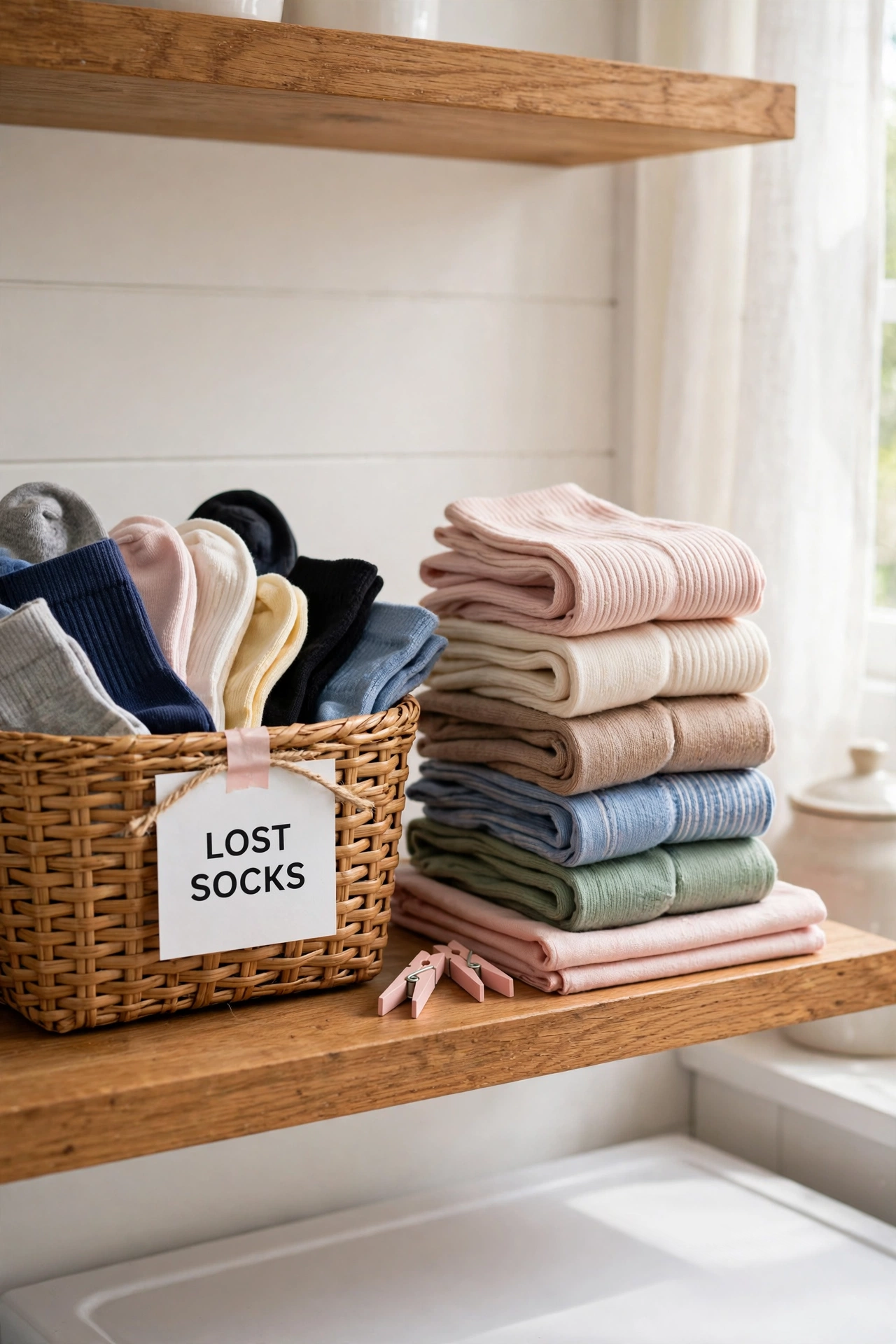
A lost sock station is a small labeled spot where single socks wait for their partners. Instead of tossing odd socks into a drawer, place them in the station after every load. Once a week, pair up the socks in the station and return the matches to their owners.
Combine the station with a pairing routine at folding time: fold socks in pairs the moment they leave the dryer, and never let a single sock leave the laundry room unpaired. The routine ends the mystery of missing socks and keeps every drawer stocked with complete pairs.
29. Reset the Sorting System Once a Week
A weekly reset keeps the sorting system itself clean and working well. Empty every sorting container, wipe down the station, restock detergent and stain remover, and check that labels are still readable. The reset takes fifteen minutes and prevents the slow buildup of clutter that breaks good systems.
Do the reset on the same day each week, right after the last load finishes. During the reset, note anything that is not working, such as a label that keeps falling off or a group that always overflows. Small weekly fixes keep the system strong for years instead of letting it fade after a month.
Conclusion
A family laundry sorting system does not need to be complicated to work well. Clear color rules, a steady weekly rhythm, and a sorting station beside the washer turn multiple loads from a weekend burden into a smooth daily habit. The best system is the one your whole family can follow without thinking twice.
Start with three simple steps this week: sort by color, post a wash-day schedule, and set up a sorting station. Add the other ideas one at a time as the habits take hold. Within a month, your laundry room will run on a system that saves time, protects clothes, and keeps every load moving in the right direction.
Frequently Asked Questions About Family Laundry Sorting System Ideas for Multiple Loads
How many sorting groups does a family need?
Most families do well with four groups: whites, lights, darks, and delicates or activewear. Add a fifth group for towels and bedding if you wash those separately. Start with four groups and add more only when a group regularly overflows or needs different wash settings.
How do I get my kids to sort their laundry?
Keep the rules simple with two steps: check the color, then check the item type. Use pictures on the labels for younger children and praise correct sorting. Sorting becomes a habit after two or three weeks of gentle practice together.
Should I sort laundry by color or by fabric type?
Sort by color first, then split each color group by fabric weight when you have enough items. Color sorting prevents dye transfer, which is the biggest risk. Fabric weight sorting protects light items and improves drying, so it is worth the extra step on large wash days.
How often should a family do laundry?
A one load a day routine suits most families and keeps piles small. If daily loads do not fit your schedule, two or three wash days per week work well with a posted schedule. The right frequency is the one that keeps sorted groups from overflowing between wash days.
What is the best way to handle multiple loads on wash day?
Order loads by priority, batch loads with the same settings back to back, and follow a written checklist from sort to put away. Start the highest-priority load first and fold each load while the next one washes. A clear sequence keeps multiple loads moving without bottlenecks.

Hi, I’m Emily! I turn messy corners into cozy, organized spots. DreamNestDecor is where I share simple, practical home ideas — decor, organization, and small-space solutions that work in real life, not just in photos. Every idea here is carefully researched before it’s shared.