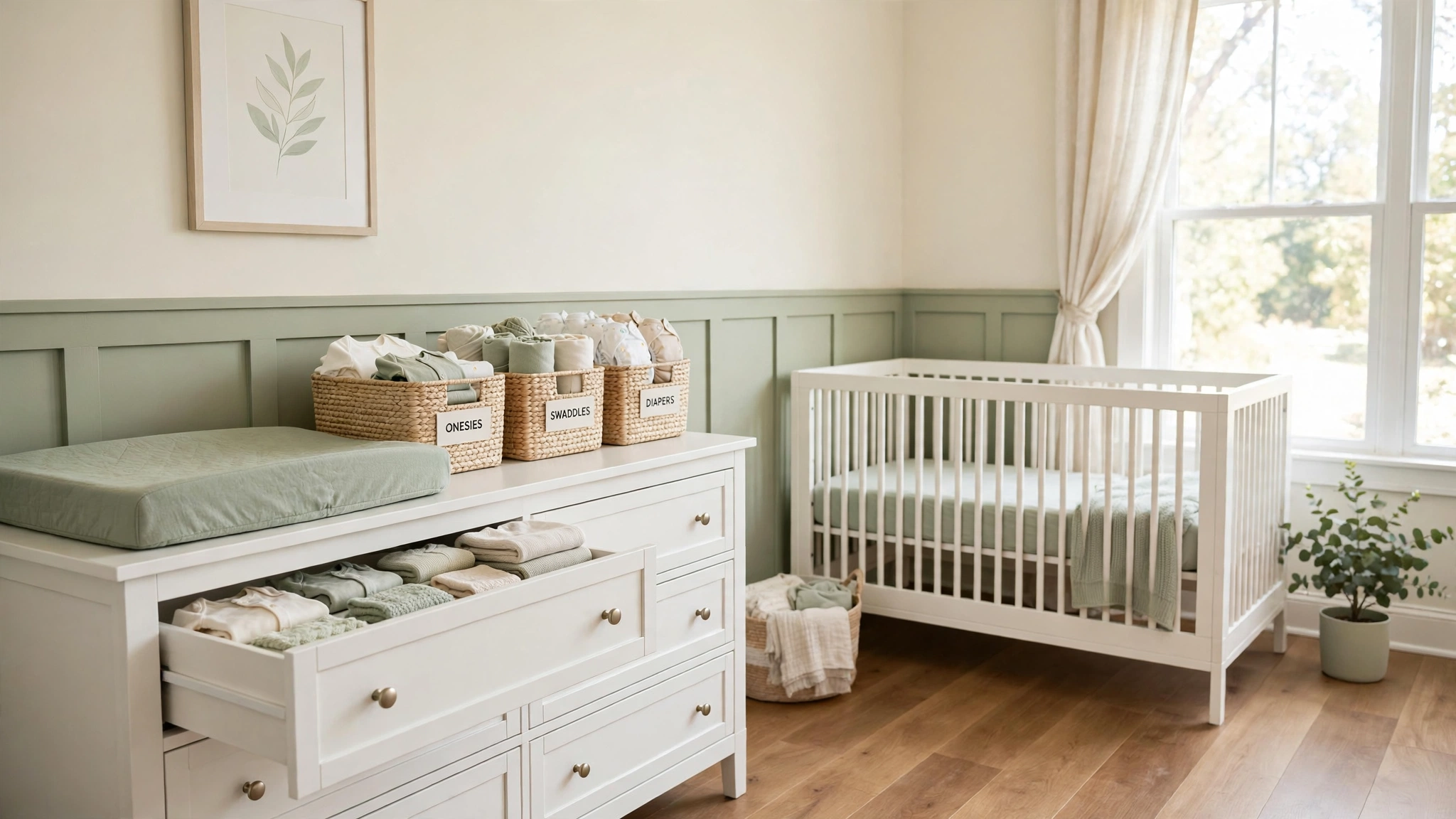
Picture this: it is three in the morning, the baby needs a fresh onesie, and you open the dresser to find every drawer neat, labeled, and easy to search in the dark. No digging, no tangled piles, no guessing. That calm feeling is exactly what a well organized nursery dresser gives you on the hardest nights and the busiest mornings.
You do not need a bigger nursery or expensive furniture to get there. All you need is a simple system that gives every tiny sock, swaddle, and diaper a clear home. These 24 nursery dresser organization ideas will help you turn a crowded dresser into a smooth, stress free station that works for your whole family.
1. Label Each Drawer by Category
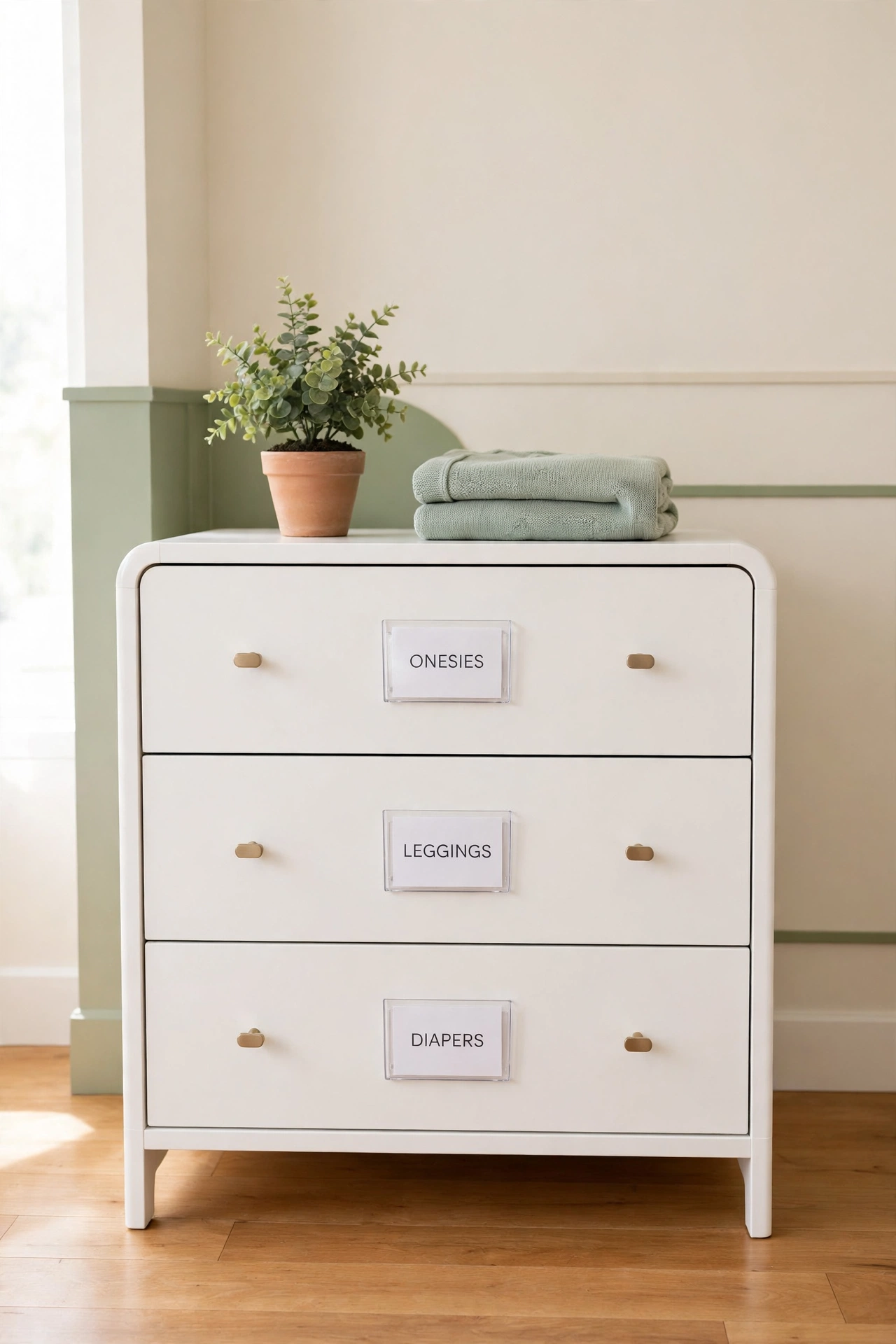
A dresser with labeled drawers takes the guesswork out of every outfit change. Give each drawer one clear job, such as onesies in the top drawer, leggings in the middle, and diaper supplies in the bottom drawer. When every drawer has a label, anyone helping with the baby can find the right item in seconds.
Use simple printed labels with large, readable words so the labels are easy to read at a glance. You can slide the labels into card holders on the drawer fronts or attach them with removable adhesive. For a system that grows with your child, these baby clothing rotation organization ideas show how to sort clothes by size as your baby grows.
2. Fill the Closet With Labeled Baskets
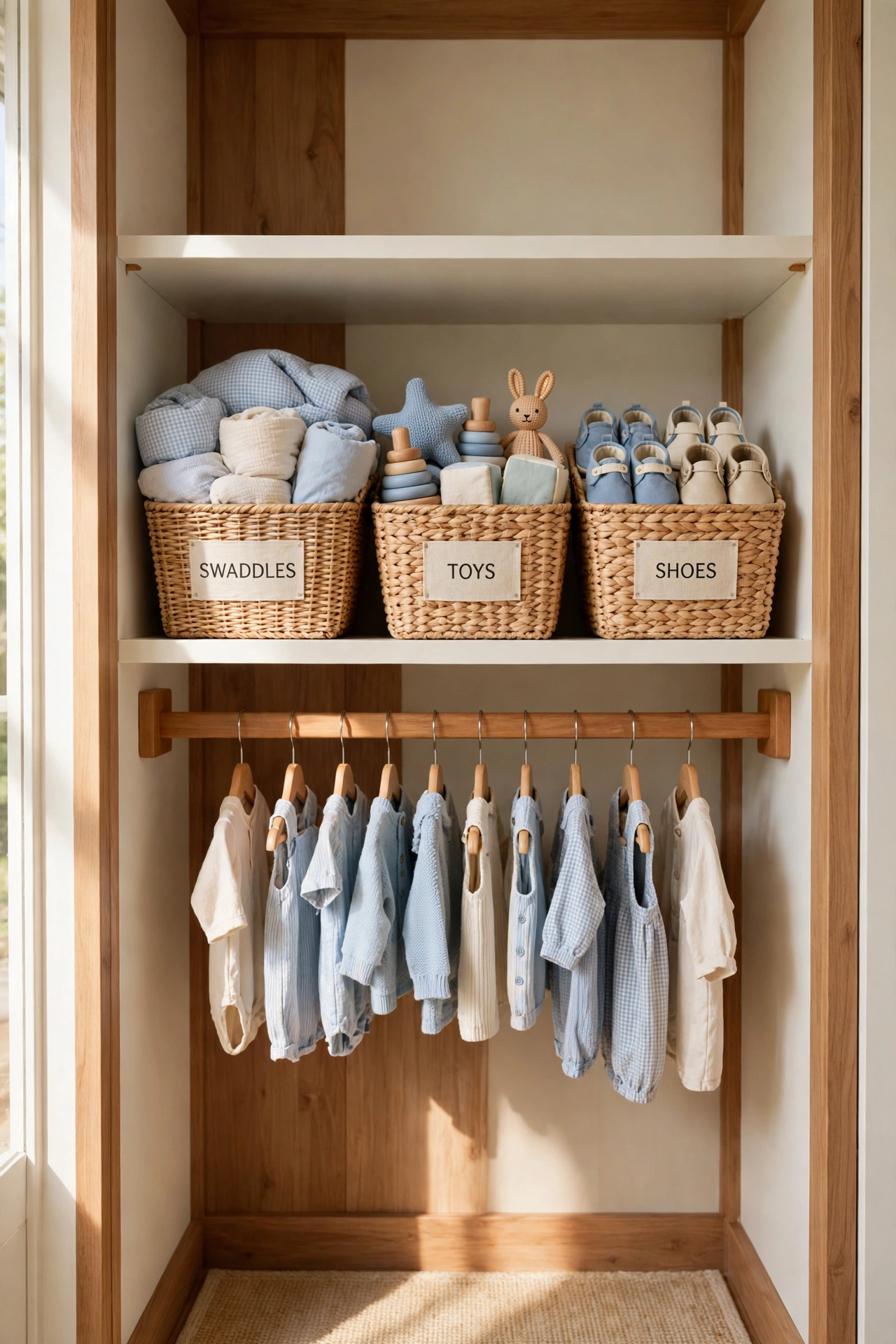
When the dresser runs out of room, the closet next to it can take over the overflow. Place neutral storage baskets on the closet shelves and label each one for swaddles, toys, or shoes. The baskets hide the clutter while keeping everything within easy reach.
Arrange hanging clothes by size and style on the closet rail so outfits are easy to spot. Keep a bottom rail free for spare hangers and outgrown clothes waiting to be stored away. This pairing of dresser and closet gives you twice the storage without adding new furniture.
3. Choose a Minimal Scandinavian Dresser
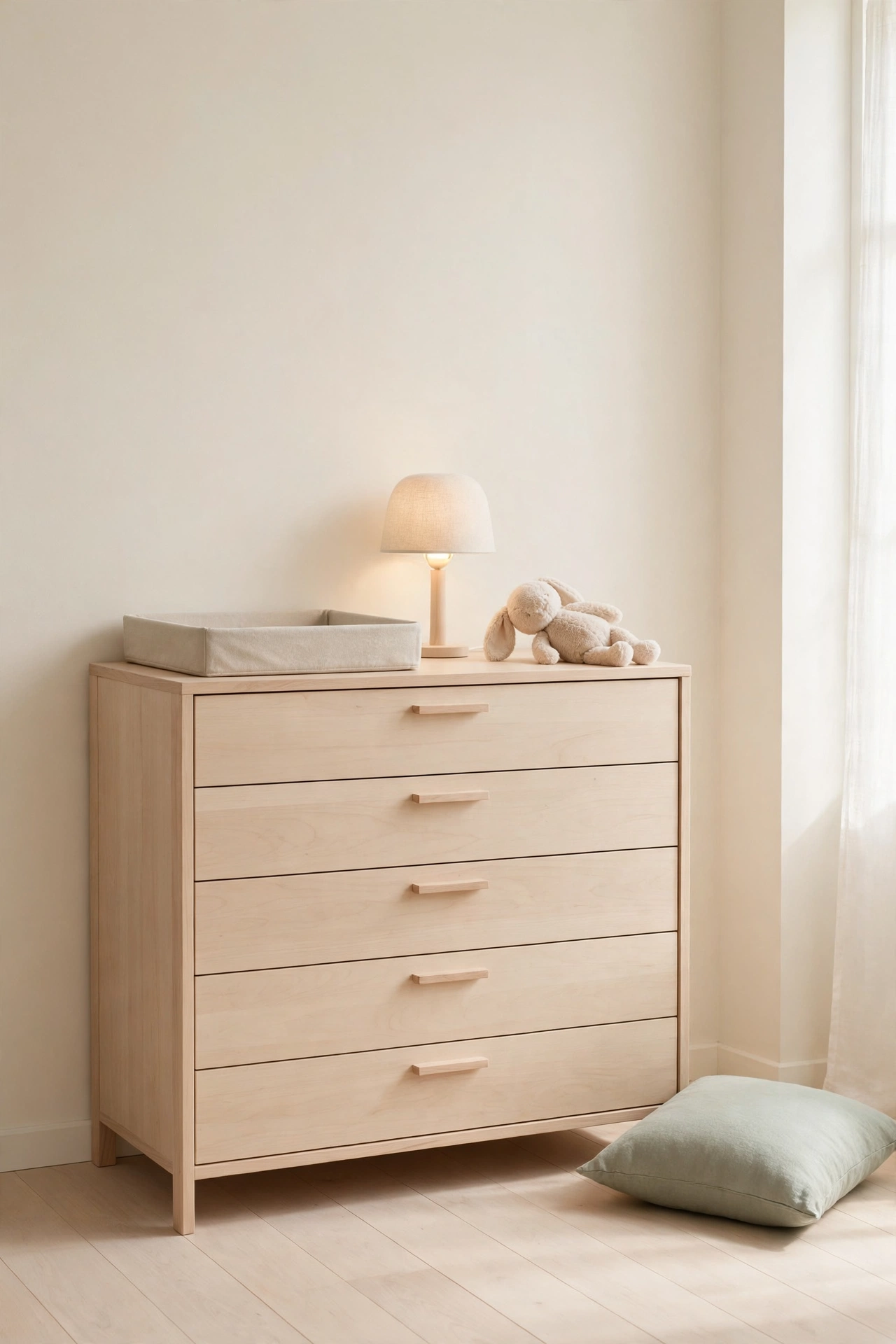
A Scandinavian style dresser brings calm to a busy nursery with clean lines and a light wood finish. The simple shape keeps the room feeling airy, and closed drawers hide all the small essentials that would otherwise clutter the surfaces. Less visual noise means a more peaceful room for naps and night feeds.
Keep the top surface simple with only the true essentials, such as a diaper tray, a soft glow lamp, and one or two plush toys. Everything else stays tucked inside the drawers. For planning the whole room around a simple dresser, these small nursery layout ideas with a convertible crib show how minimal furniture keeps a small nursery feeling open.
4. Arrange a Rainbow Diaper Drawer
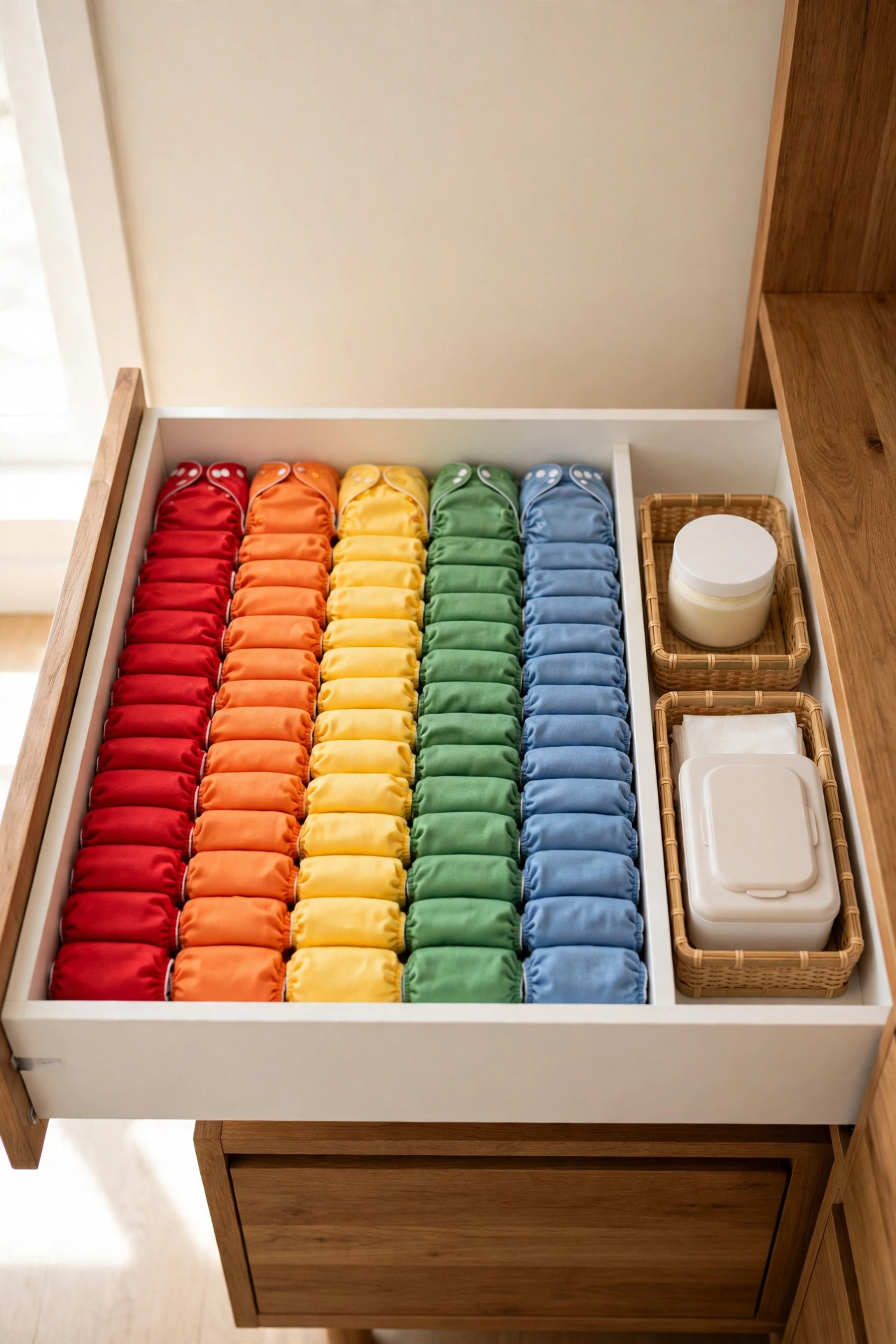
A diaper drawer arranged by color turns a plain drawer into a cheerful and efficient display. Fold cloth diapers neatly and group them in rainbow order, from soft reds and oranges through yellows, greens, and blues. The color order looks delightful and makes it easy to see when one color group runs low.
Add drawer organizers beside the diapers to hold creams, wipes, and small accessories in their own spots. The whole drawer becomes a grab and go station for changes. For more ways to set up the changing area, these diaper station organization ideas cover every supply you need within arm’s reach.
5. Set Soft Fabric Bins on the Dresser Top
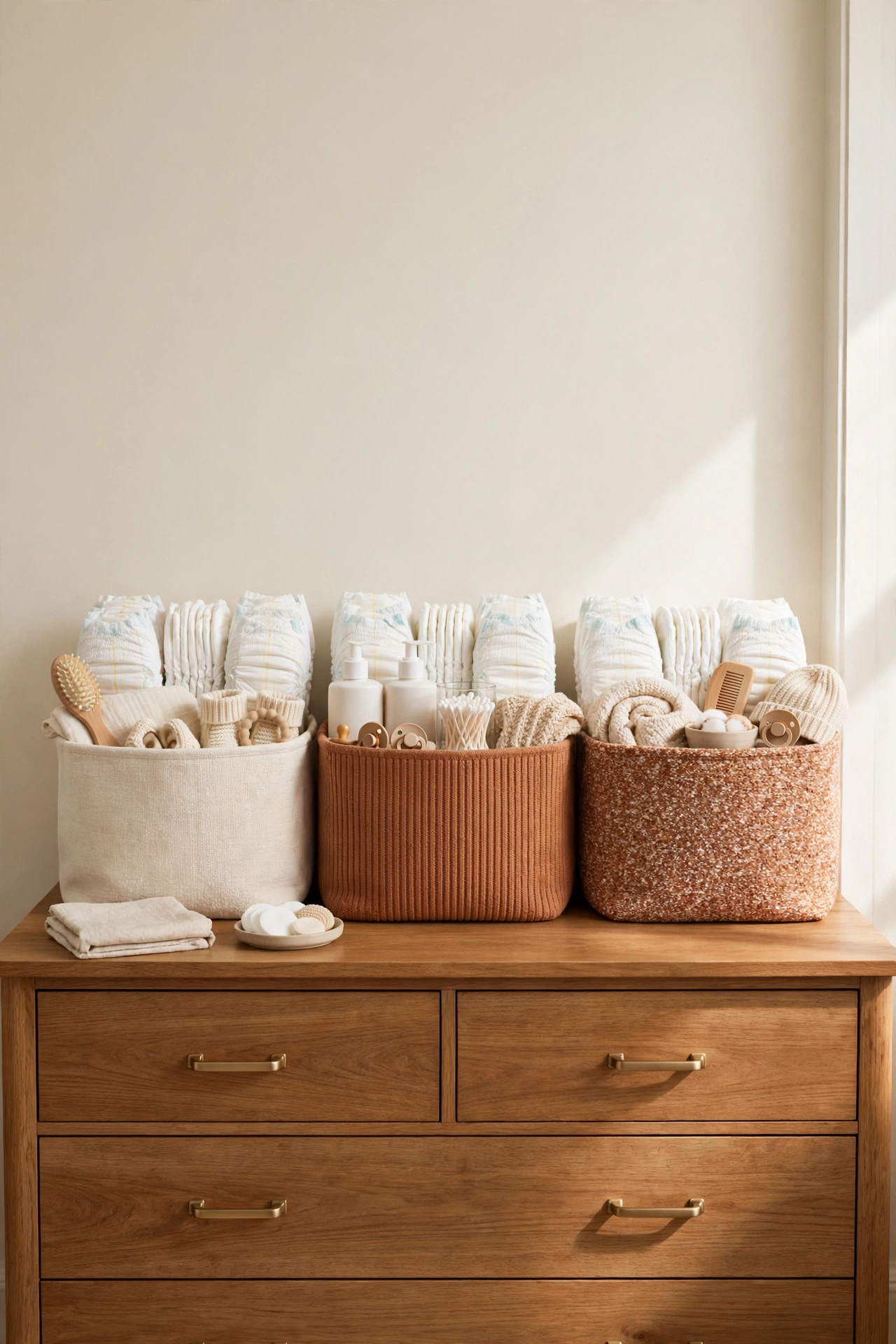
Plush fabric bins placed on top of the dresser add soft storage exactly where you need it. Use the bins for diapers, lotions, and tiny accessories that you reach for many times a day. The soft sides are safe around a wiggly baby, and the bins lift off easily when you need the surface clear.
Mix textures and neutral tones so the bins feel like decor rather than clutter. A linen bin beside a knit basket adds warmth to the dresser top while keeping supplies sorted. Choose bins deep enough to stand diapers upright so you can pull one out with one hand.
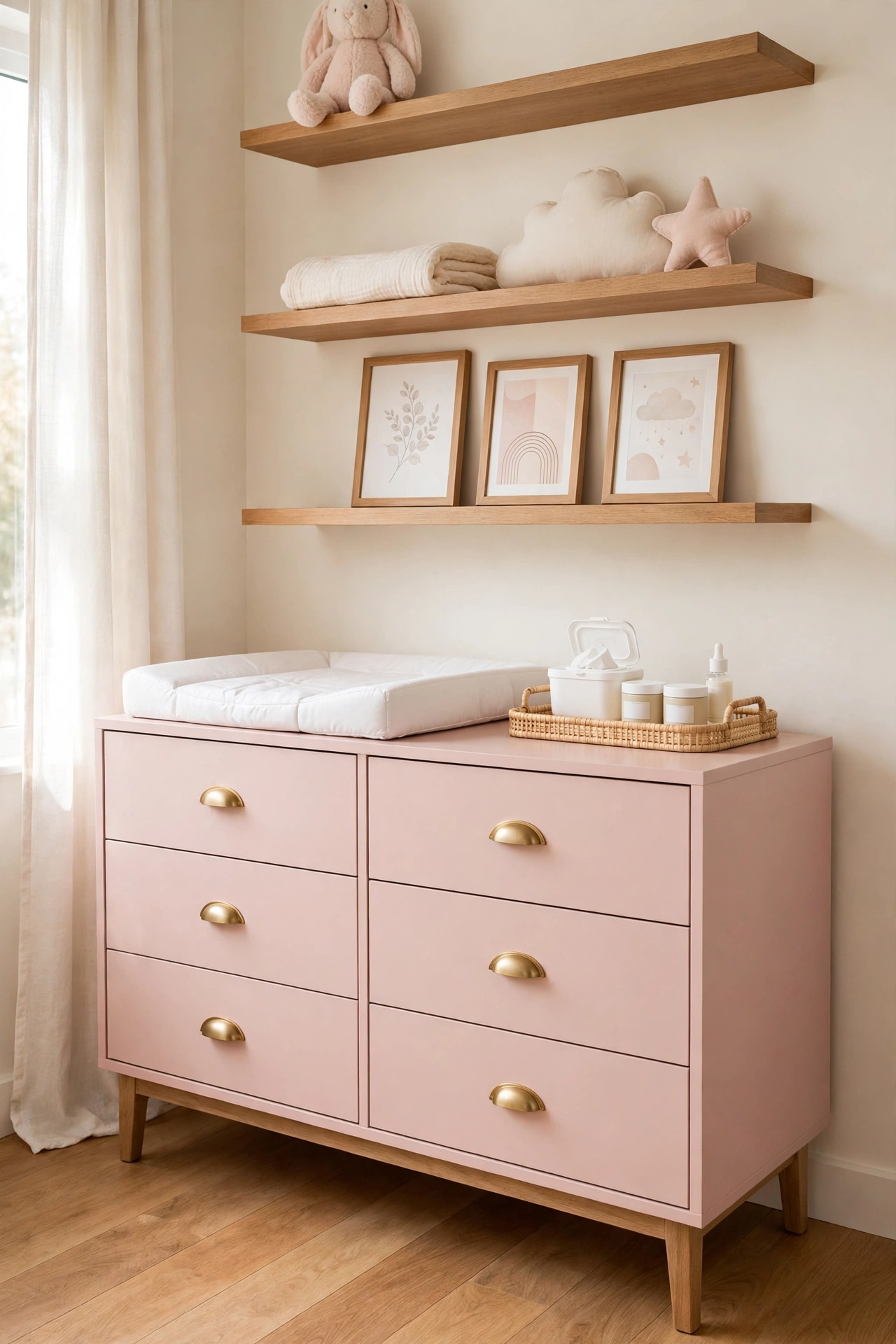
6. Build a Soft Pink Changing Station
A soft pink dresser setup turns diaper changes into a calm ritual. Place a padded changing mat on top of the dresser, with wipes and creams arranged neatly beside it in a small tray. The low height of a dresser keeps everything at a comfortable level for you.
Mount open shelves on the wall above the dresser to display plush toys and framed prints without crowding the changing surface. The pink accents tie the shelves and the dresser together into one coordinated look. Keep the shelves high enough that little hands cannot reach the decor.
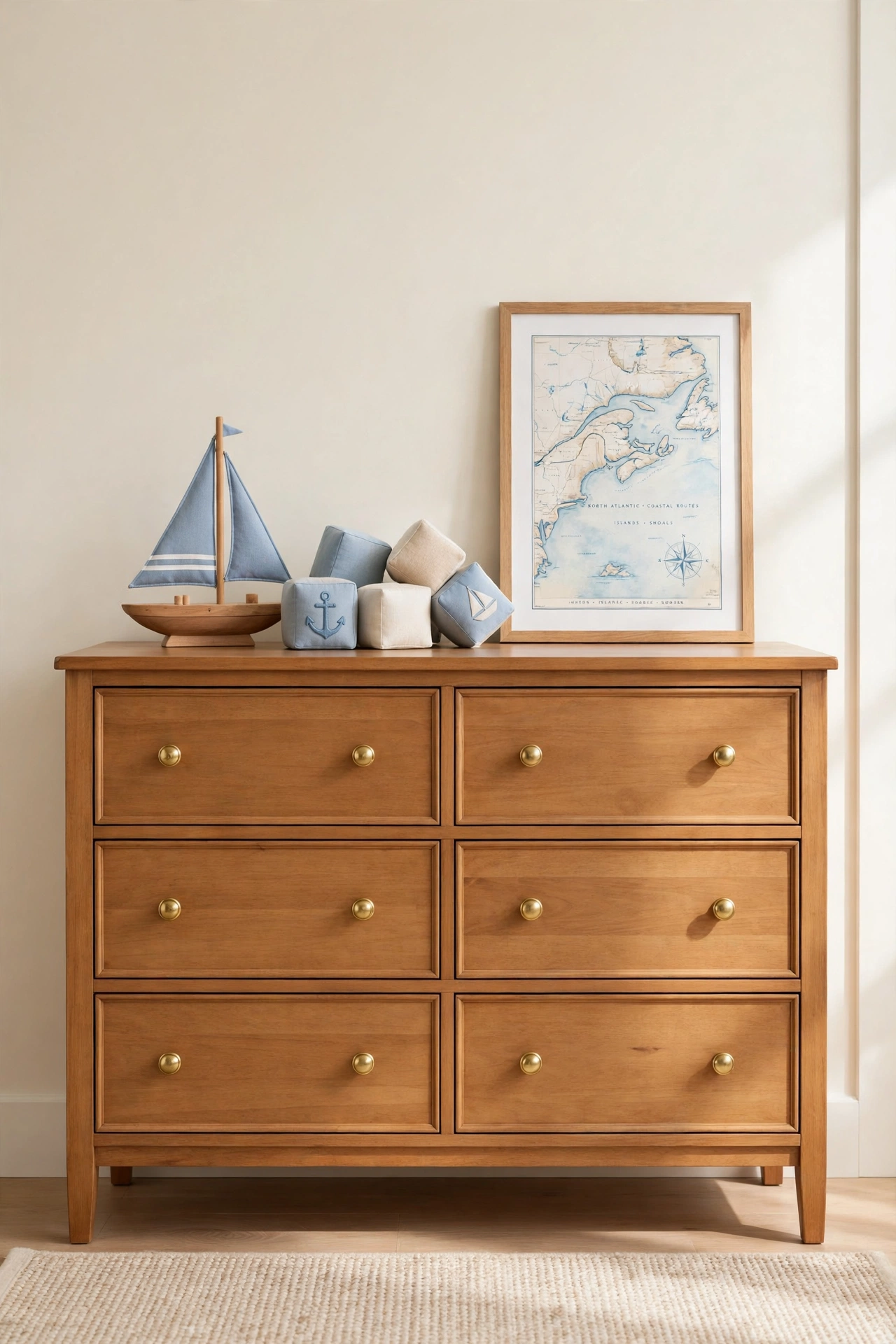
7. Style an Adventure-Themed Wooden Chest
A classic wooden dresser with nautical touches brings storybook charm to the nursery. Soft blocks, a small wooden sailboat, and a map print on top create an adventurous theme that sparks imagination. The symmetrical drawer layout keeps the look balanced while hiding all the storage inside.
Choose sturdy wood that can handle years of daily use and growing children. Keep the themed decor to the top surface so the drawers stay fully functional. This setup works beautifully in a nursery that will later become a big kid room with only small changes.
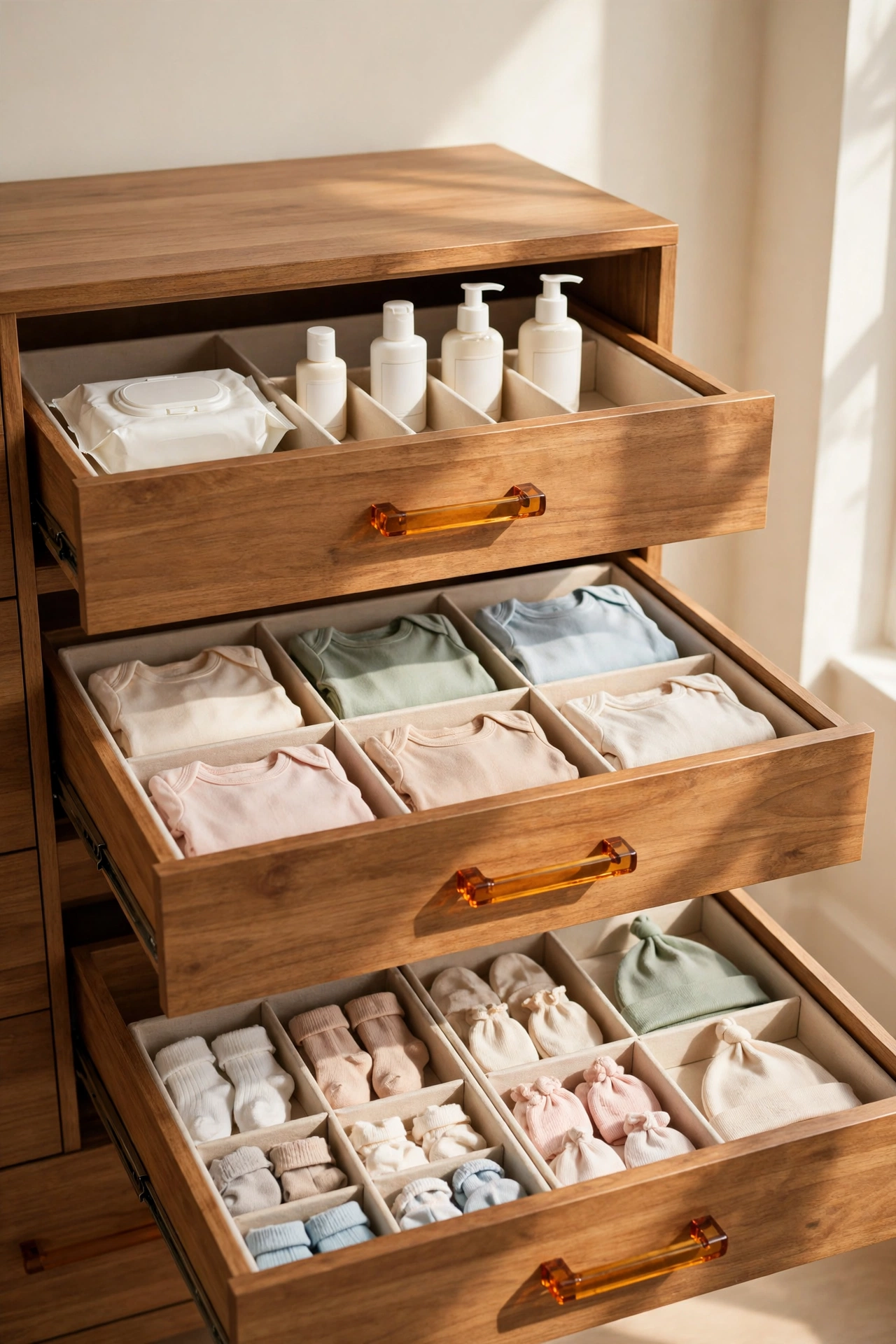
8. Install a Full Drawer Divider System
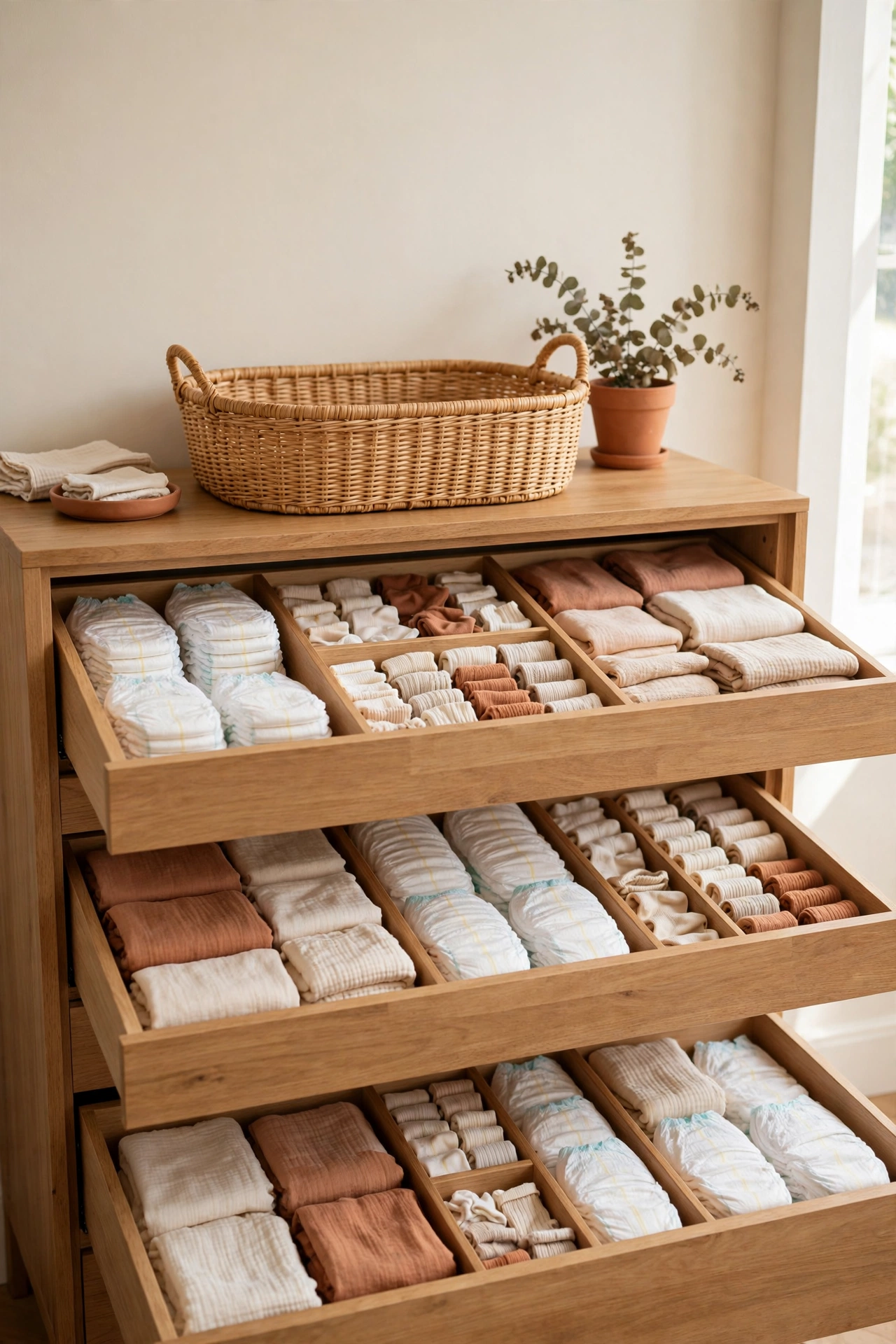
A dresser with clearly divided drawers gives every small item its own compartment. Mittens, socks, hats, and onesies each get a section, so dressing routines run smoothly and clutter never builds up. Dividers stop small items from sliding into a mixed pile at the back of the drawer.
Use the top drawer as a changing station drawer, with wipes and lotions laid out in an orderly row. Warm wood tones and soft wall colors make the system feel like part of the room design. For divider layouts that work in any dresser, these dresser drawer organization ideas show how to divide each drawer by category.
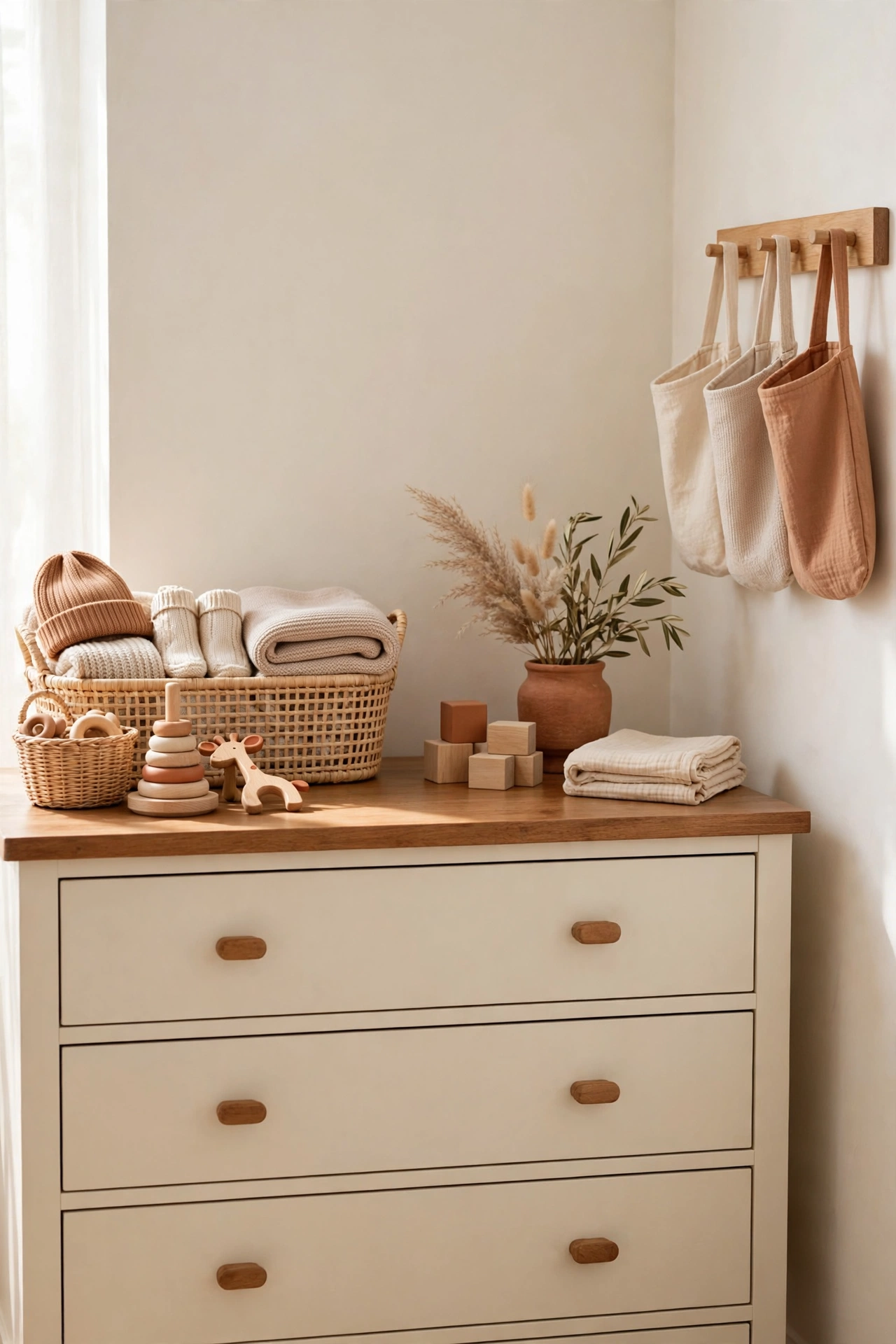
9. Keep a Calm Neutral Display on Top
A dresser top styled with woven baskets, wooden toys, and knitted accessories creates a serene focal point in the nursery. The earthy textures feel cozy and calm, while the closed drawers below keep all the real storage hidden. The dresser becomes decor and storage in one piece.
Add a wall rack beside the dresser with soft pouches for small items and hanging toys for visual interest. The vertical storage frees up surface space while adding another layer of organization. Keep the display to a few well chosen pieces so the top never feels crowded.
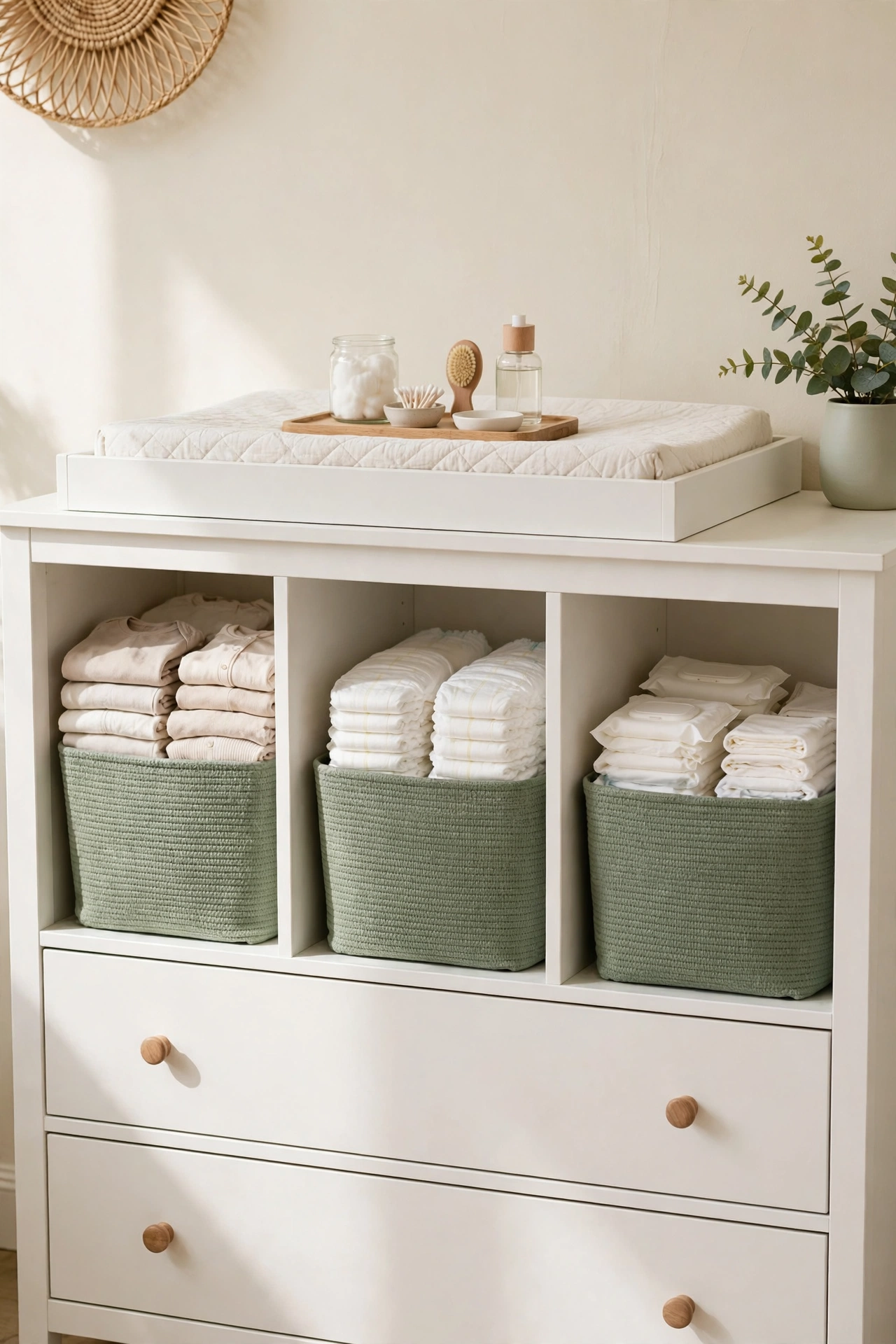
10. Combine Open Cubbies With a Changing Pad
A white dresser with open cubbies and drawers combines the best of visible and hidden storage. Fabric baskets in the cubbies hold diapers, wipes, and folded clothes where you can see them at a glance. The closed drawers below take care of everything else.
Place a changing pad on top with the daily essentials arranged beside it. The cubbies sit at a height that keeps supplies within arm’s reach during changes. This layout keeps the routine streamlined because nothing is ever buried behind a closed door.
11. Roll a Three-Tier Diaper Cart Beside the Dresser
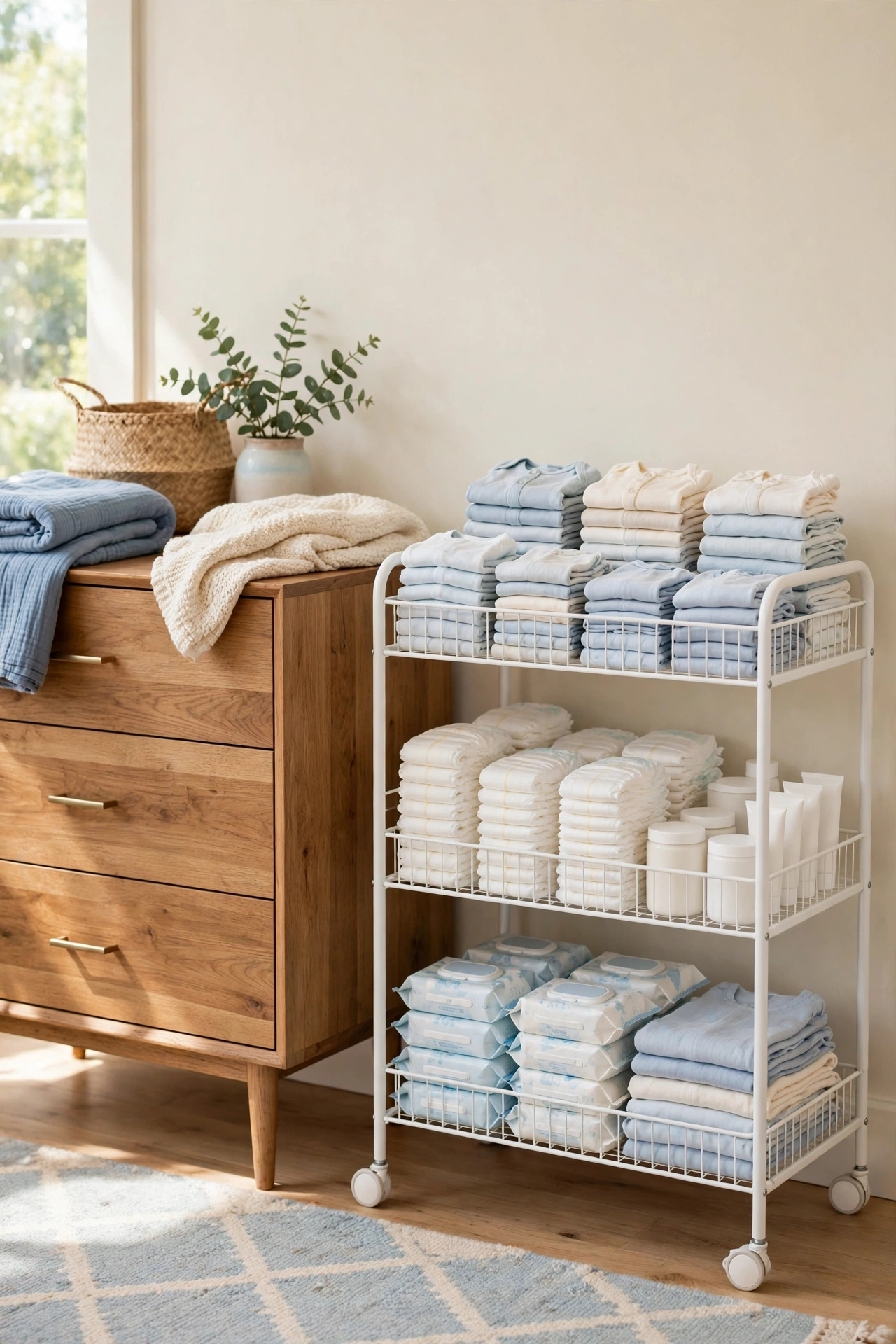
A three-tier rolling cart parked beside the dresser works as a portable diaper station. Stock it with diapers, wipes, creams, and a change of clothes, then roll it to any room where a change is needed. The cart is a smart answer for families who handle changes in more than one room.
Keep the top tier for the items you grab first, the middle tier for spare clothes, and the bottom tier for backup supplies. The compact footprint fits beside almost any dresser. When the cart is fully stocked, the dresser drawers stay reserved for clothes and blankets.
12. Add Hanging Hooks and a Mini Clothing Rail
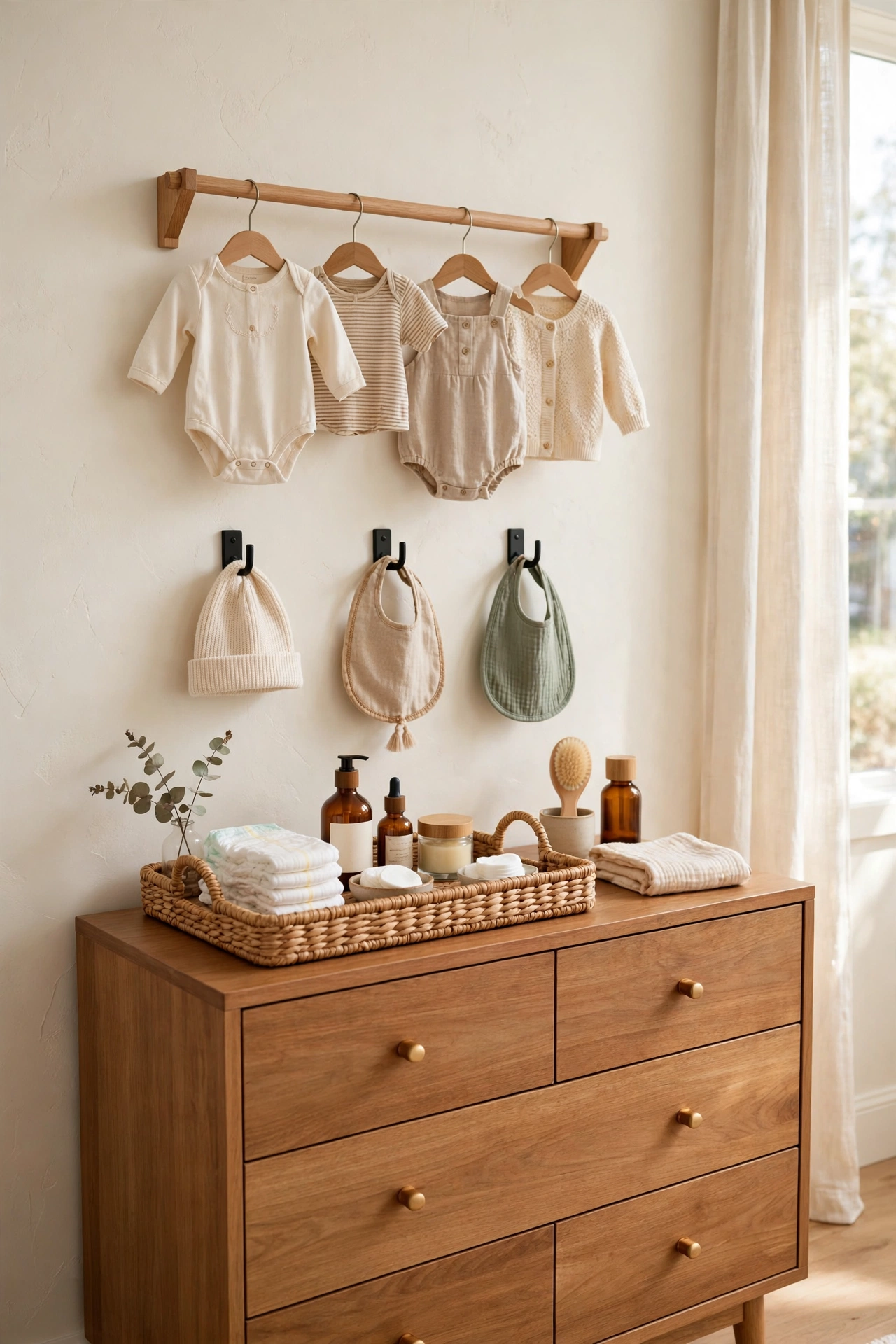
A dresser paired with hanging hooks and a mini rail gives tiny outfits a place to shine. Hang the next few outfits on the rail for quick access, and use open-top baskets on the dresser for folded essentials and changing supplies. The combination suits compact nurseries that need every inch to work.
Finish the top with a woven tray that corrals diapers and lotions into one tidy zone. The tray keeps small bottles from wandering across the surface. Hooks on the wall hold hats, bibs, and the diaper bag, so the dresser top stays clear for changes.
13. Choose an Elegant Blush Pink Dresser
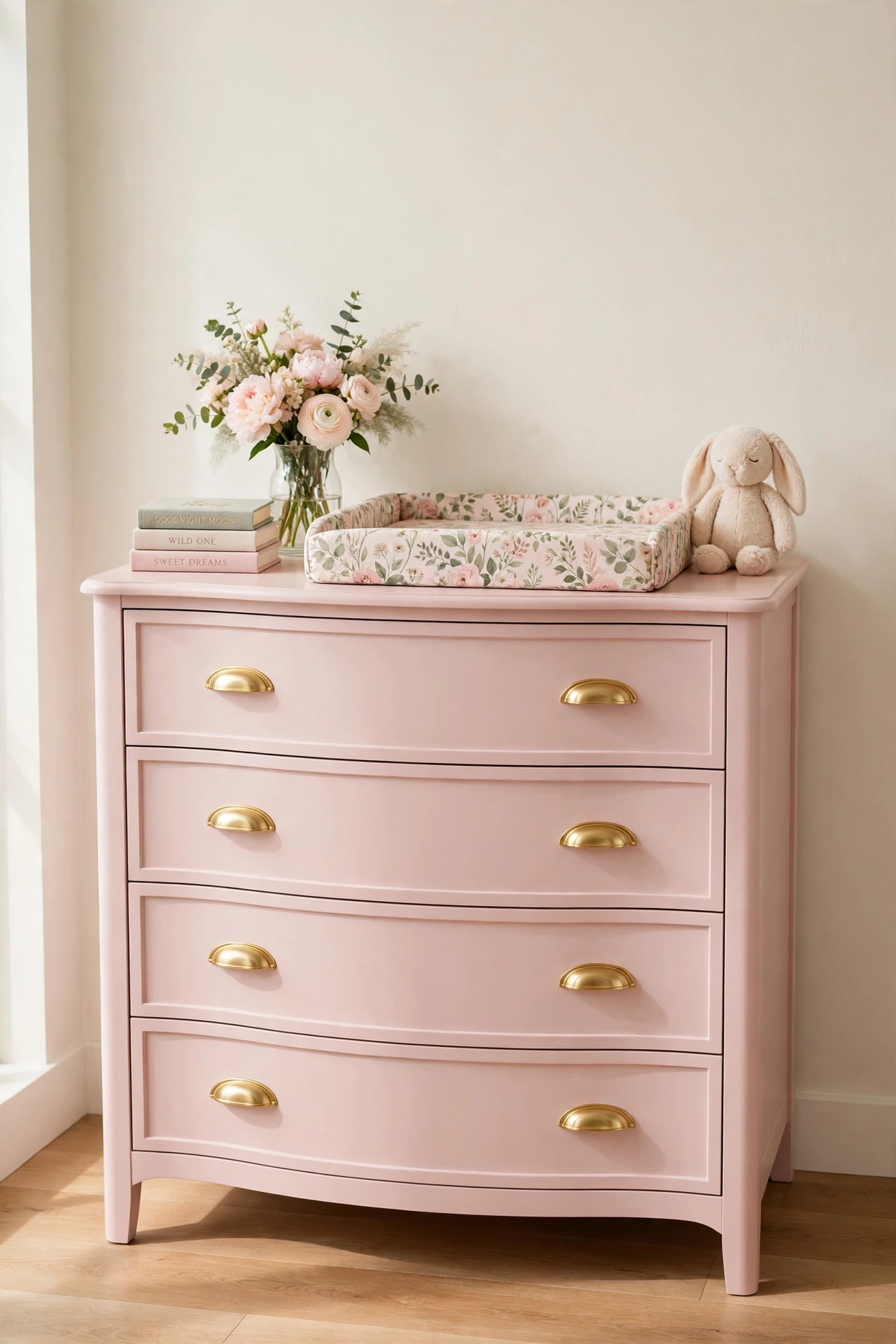
A pastel pink dresser with curved drawers and gold handles makes a statement while holding a surprising amount of storage. The wide design gives you room for clothes, blankets, and supplies in one piece. A floral changing pad tray on top adds function without breaking the elegant look.
Complete the top with a small stack of books, a vase of fresh flowers, and one plush bunny. The mix of vintage charm and modern practicality suits parents who want nursery storage to feel stylish. Keep the decor to one end of the dresser so the changing area stays clear and safe.
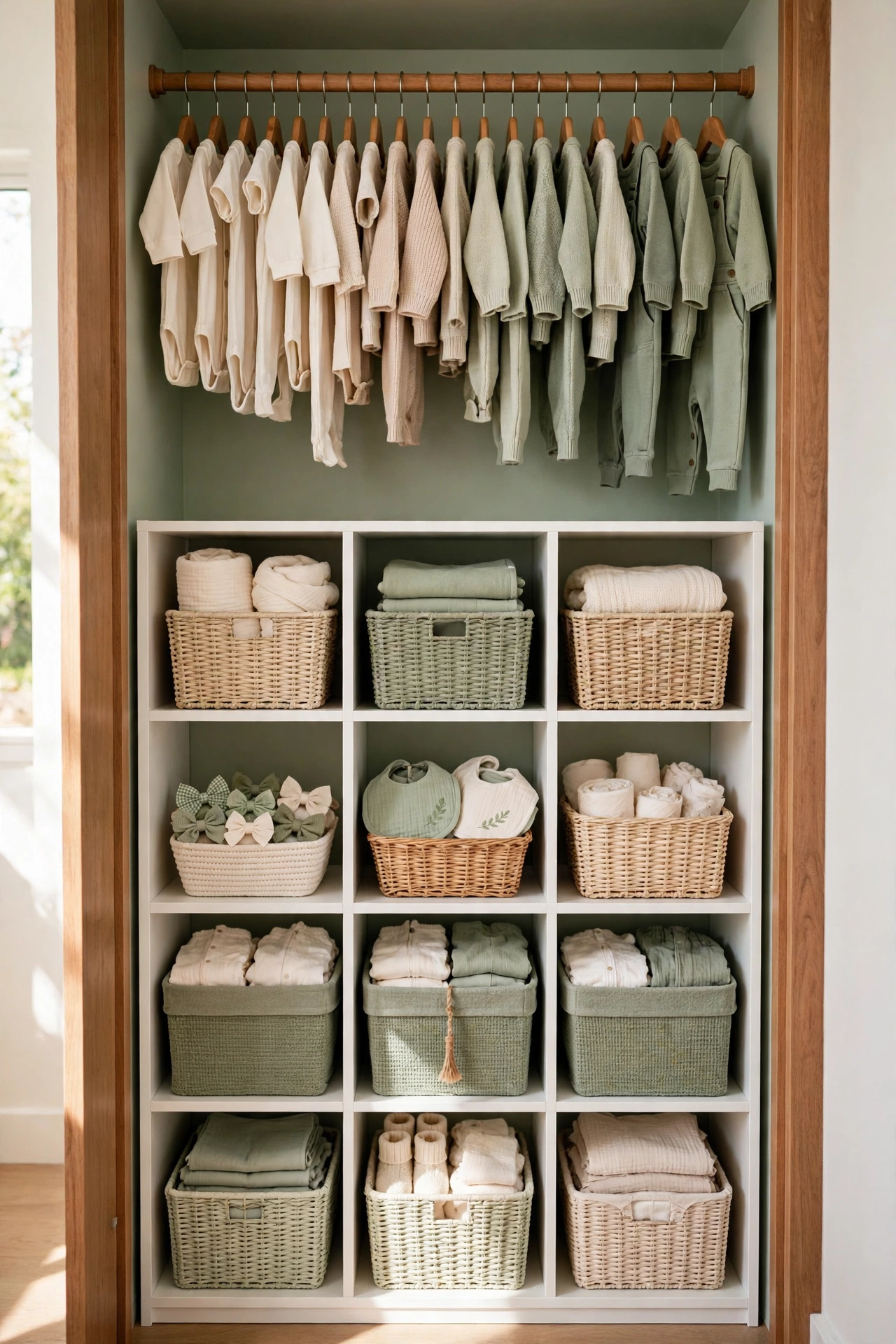
14. Build a Cube System With Woven Bins
A cube shelf system paired with woven bins turns a closet wall into flexible nursery storage. Baby clothes hang neatly above the cubes, arranged by size and color, while the bins below hide bows, bibs, and spare supplies. The mix of open cubes and hidden bins adapts as storage needs change.
Use the back of the closet door for extra pockets holding small accessories. The cubes sit at a height that keeps daily items easy to reach while seasonal clothes wait on higher shelves. This system grows with your child because the bins can be relabeled for new categories at any time.
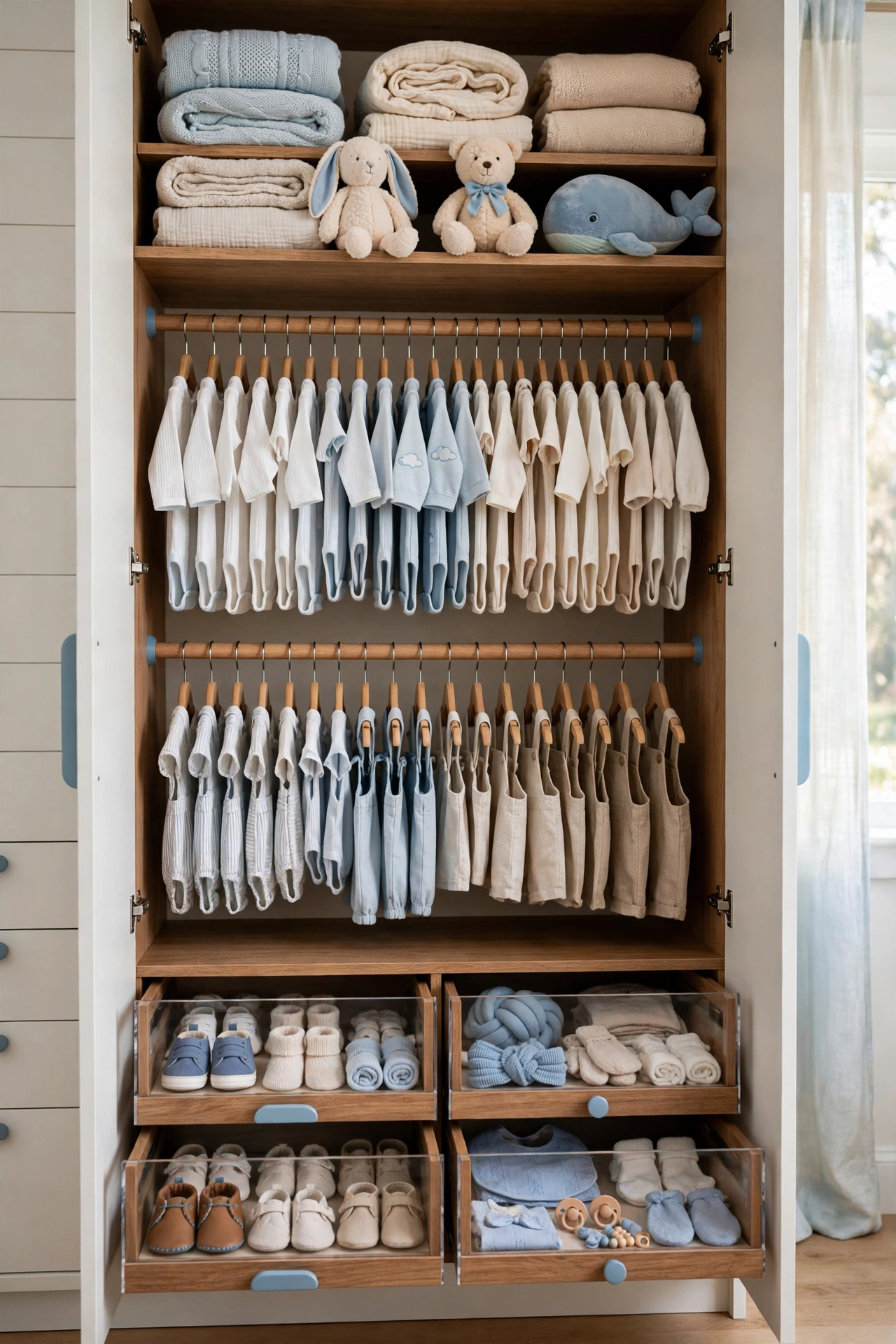
15. Try an Open Wardrobe Layout
An open wardrobe system with clear drawer fronts and double hanging rods keeps everything visible at a glance. Sort clothes by type and season on the rods, and use shallow drawers for shoes and accessories. The open design means you never have to open a door to find what you need.
Place plush toys and folded blankets on the top shelves to add a cozy touch to the open layout. The clean, modern look works well in nurseries where the wardrobe doubles as a display. Keep the rods at a height that lets you reach every outfit without a step stool.
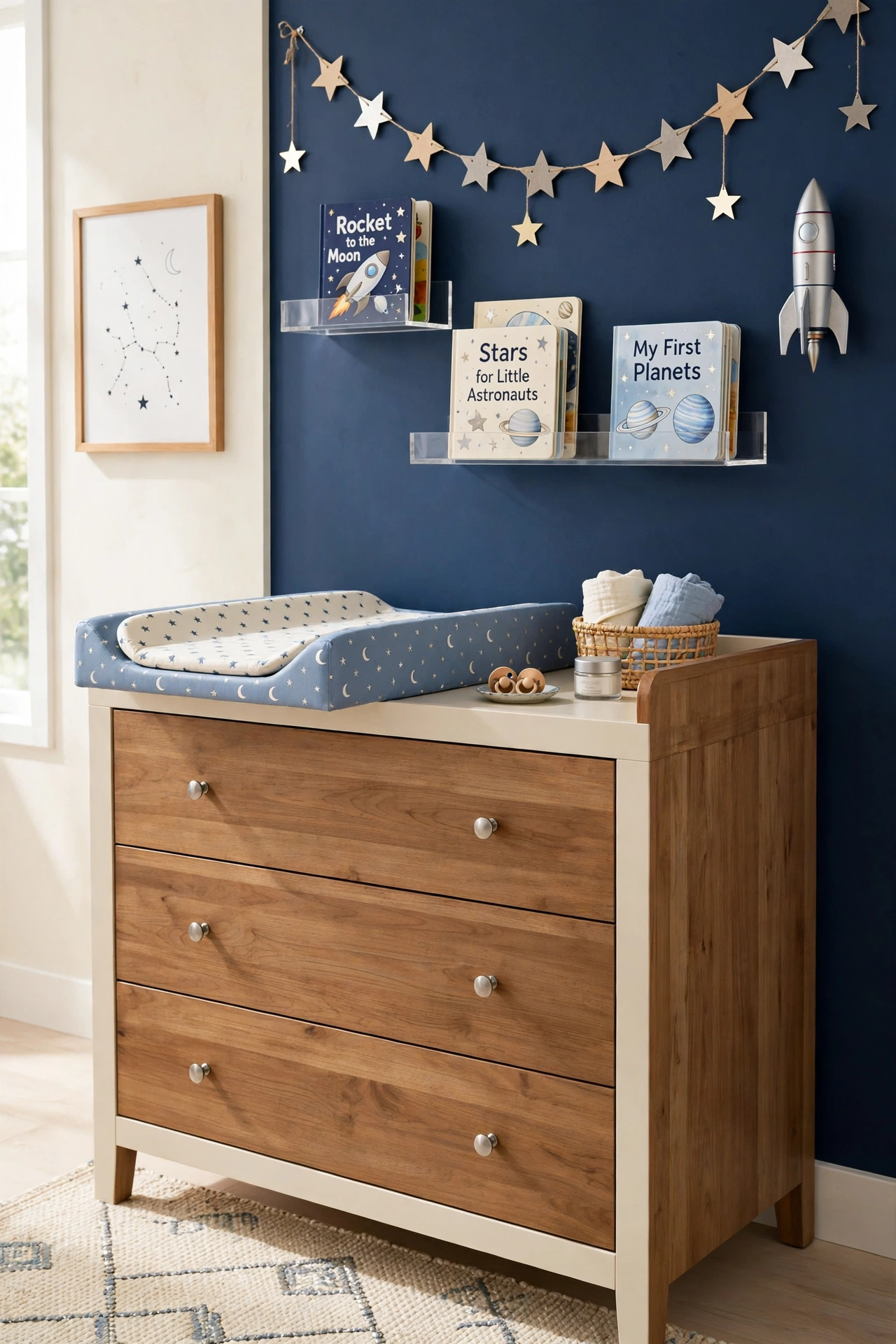
16. Design a Space-Themed Changing Station
A galaxy inspired dresser setup adds playful color to the nursery while keeping storage front and center. Place a changing pad on top, framed by space themed decor such as star garlands and a small rocket model. The drawers below hold clothes, diapers, and essentials in neat order.
Mount floating acrylic shelves on the wall beside the dresser to hold books within quick reach. The clear shelves keep the display light and airy. Deep blue and silver accents tie the theme together without overwhelming the calm feeling a nursery needs.
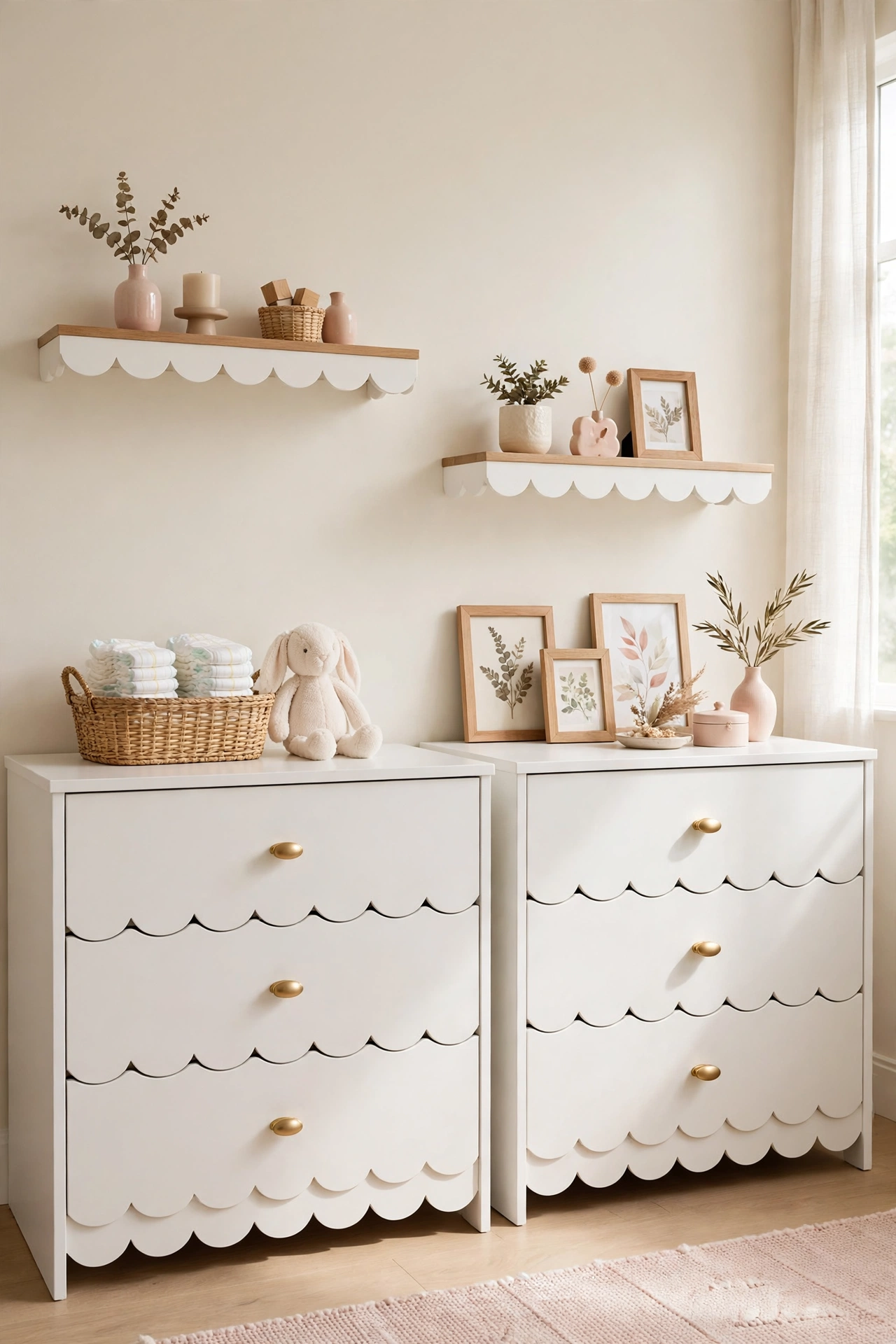
17. Place Two Matching Dressers Side by Side
Two matching dressers placed side by side double your storage and surface space in one move. Use one dresser as the changing station with a woven basket of supplies on top, and keep the other for clothes, blankets, and keepsakes. The matching pair creates a balanced, intentional wall.
Mount floating shelves above the pair to display cherished items and framed prints. Scalloped shelf edges echo the dresser details for a cohesive design. This arrangement suits shared nurseries and multi-purpose rooms where one dresser is never quite enough.
18. Sort Deep Drawers With Wooden Dividers
Deep drawers swallow small baby items unless dividers step in to help. Fit each deep drawer with wooden dividers that separate diapers, socks, and swaddles into clear categories. The dividers keep stacks upright so you can see every item the moment you open the drawer.
Place a matching changing basket on top of the dresser to complete the soft, modern look. The wood tones tie the dividers and the basket together. Deep drawers with dividers hold more than shallow drawers, so this setup is ideal for parents who like to stock up.
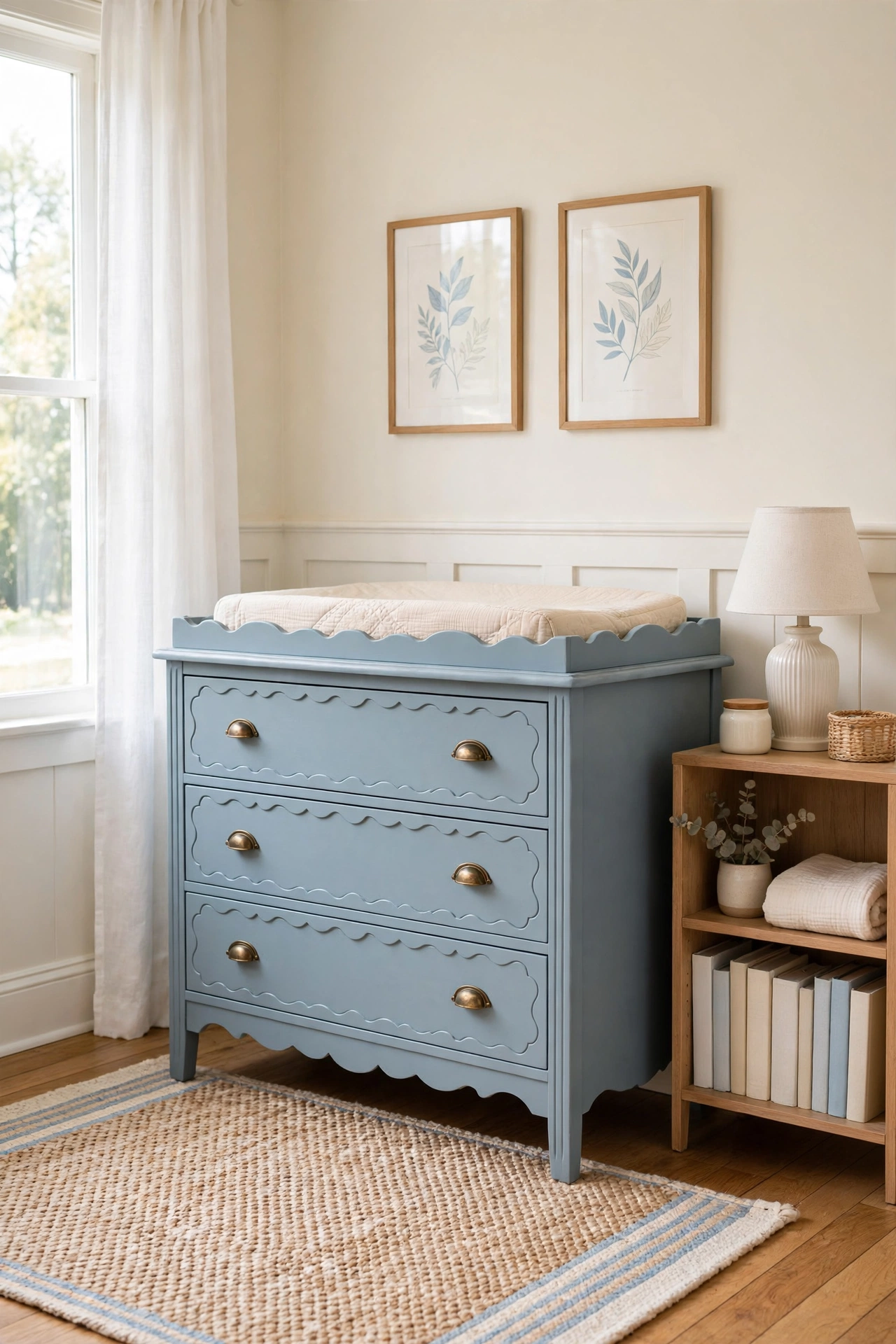
19. Add Charm With a Blue Scalloped Dresser
A vintage style blue dresser with scalloped edges adds instant character to the nursery. The top works as a changing station while the spacious drawers handle all the baby essentials. Nearby racks, a small bookshelf, and a cozy lamp turn the corner into a functional mini wardrobe nook.
Layer textures around the dresser with a woven rug, a knit throw, and soft cotton baskets. The whimsical color and layered textures give the space a warm, playful feeling full of personality. Keep the blue soft and muted so the room stays soothing at nap time.
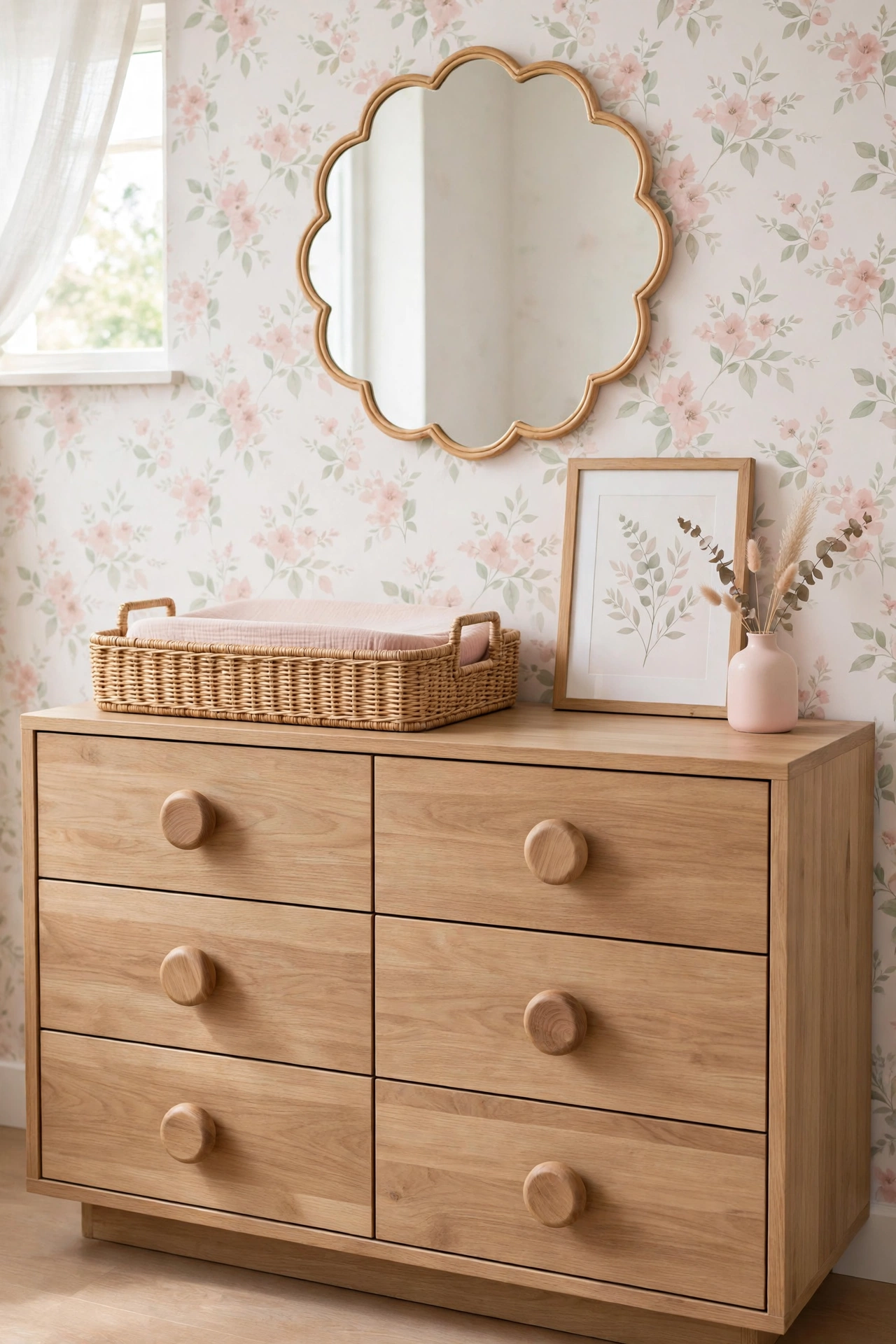
20. Pick a Dresser in a Natural Wood Finish
A dresser in natural wood grain with oversized round knobs brings timeless elegance to the nursery. The warm wood works as both a changing station and a stylish storage solution, and it suits almost any nursery color scheme. Natural wood ages gracefully as the room changes over the years.
Style the top with a textured changing basket and a framed print, and hang a scalloped mirror above for a touch of vintage charm. Soft floral wallpaper behind the dresser adds sweetness without overwhelming the wood. The overall look blends modern simplicity with classic warmth.
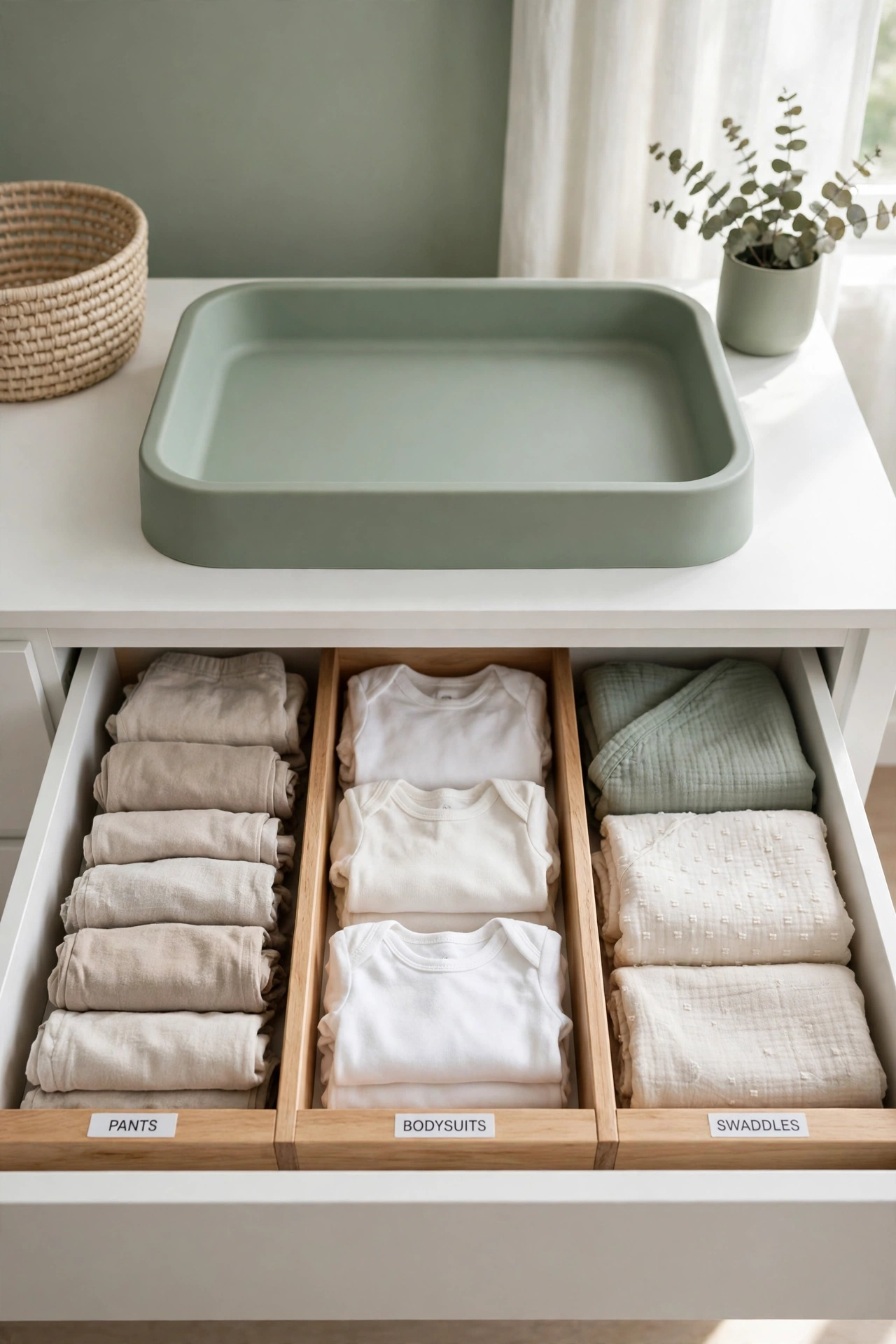
21. Label the Compartments Inside Each Drawer
Labels on the outside help, but labels inside the drawer take organization one step further. Mark each compartment for pants, bodysuits, or swaddles, and keep the sections tidy with wooden dividers. When every compartment has a name, putting laundry away becomes fast and foolproof.
Add a molded changing tray on top of the dresser to create a built-in station with a minimal look. The tray keeps the changing pad in place and corrals small items at the edges. This compact setup suits small nurseries where the dresser must do double duty.
22. Make a Velvet Dresser the Showpiece
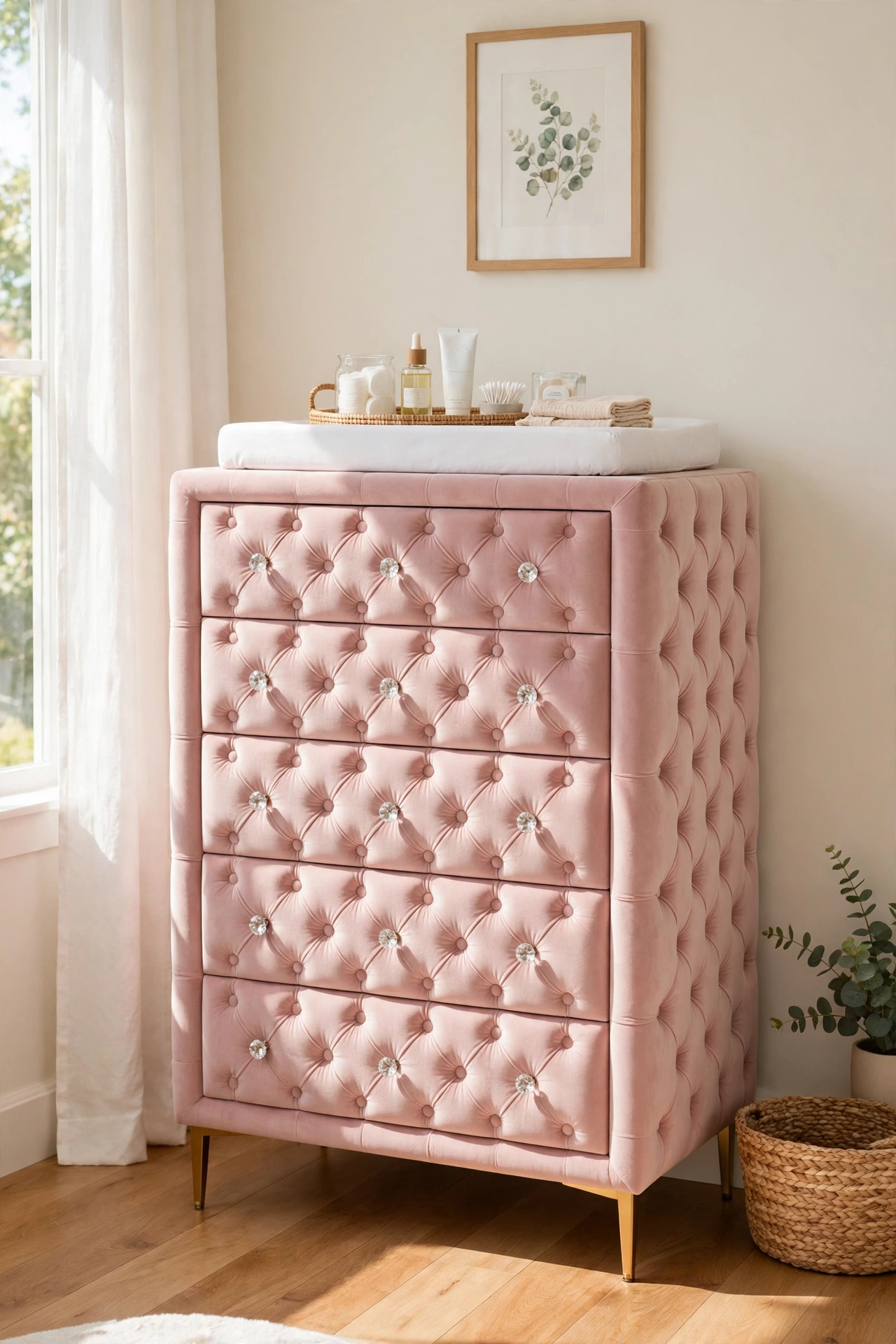
A dresser wrapped in tufted blush velvet panels turns nursery storage into a showpiece. The soft texture covers the whole piece and adds elegance and comfort to the room. Crystal knobs catch the light and give the dresser a glamorous finishing touch.
Keep the top styling simple so the velvet stays the star, with just a changing pad and a small tray of essentials. The drawers inside hold the same everyday supplies as any dresser, but the outside feels luxurious. This piece suits parents who want style and function in equal measure.
23. Create a Neutral Cozy Corner
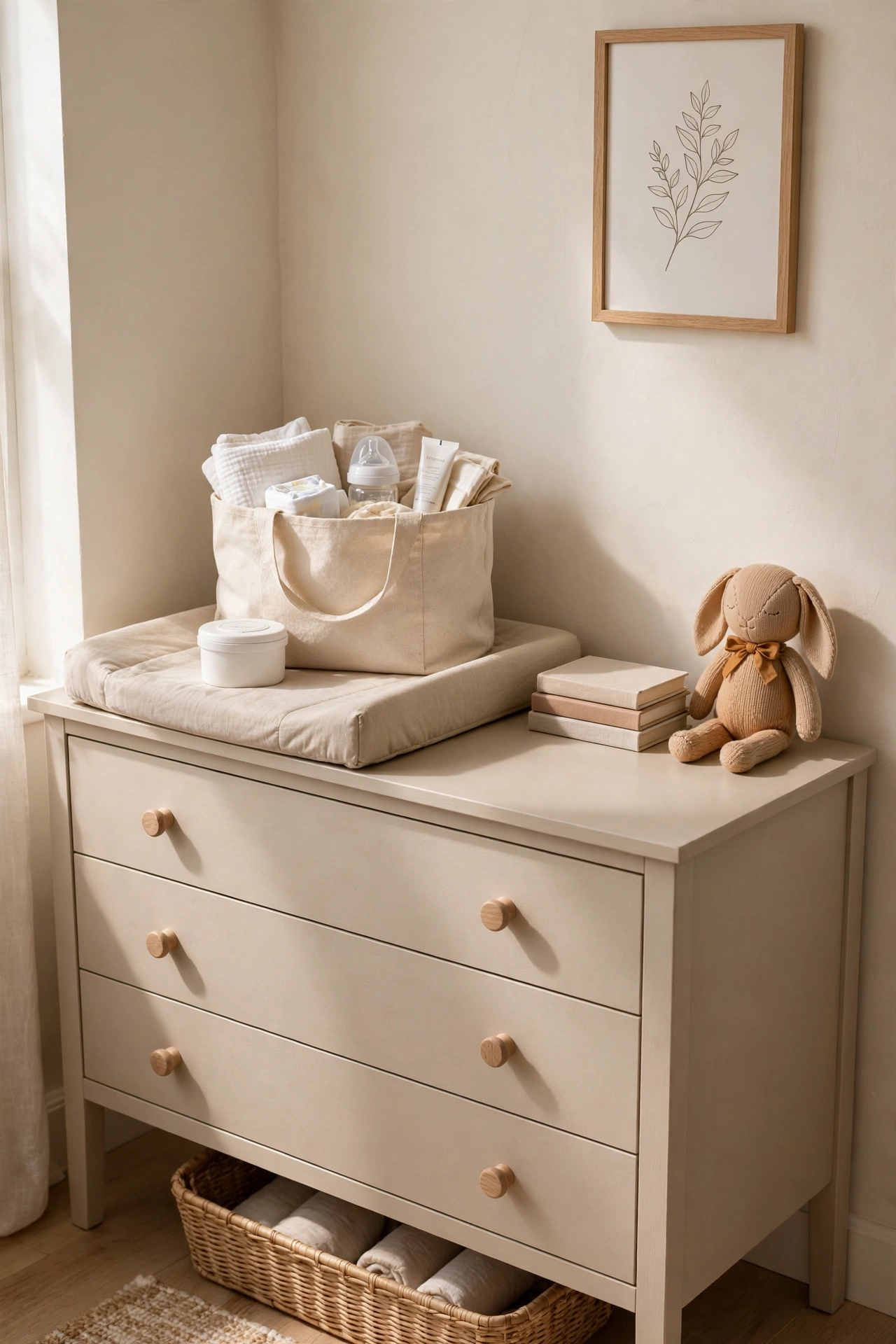
A dresser in soft beige tones with natural wood knobs anchors a warm, cozy nursery corner. Place a changing mat and a fabric tote of supplies on top, balancing utility and style in one tidy surface. The earthy palette creates a calming Scandi boho feeling that suits long evenings in the nursery.
Keep a small stack of books and a plush toy nearby so the corner feels lived in and nurturing. The neutral colors make it easy to add new accents as your child grows. A cozy corner like this becomes the spot you return to again and again.
24. Layer Neutral Textures on the Dresser Top
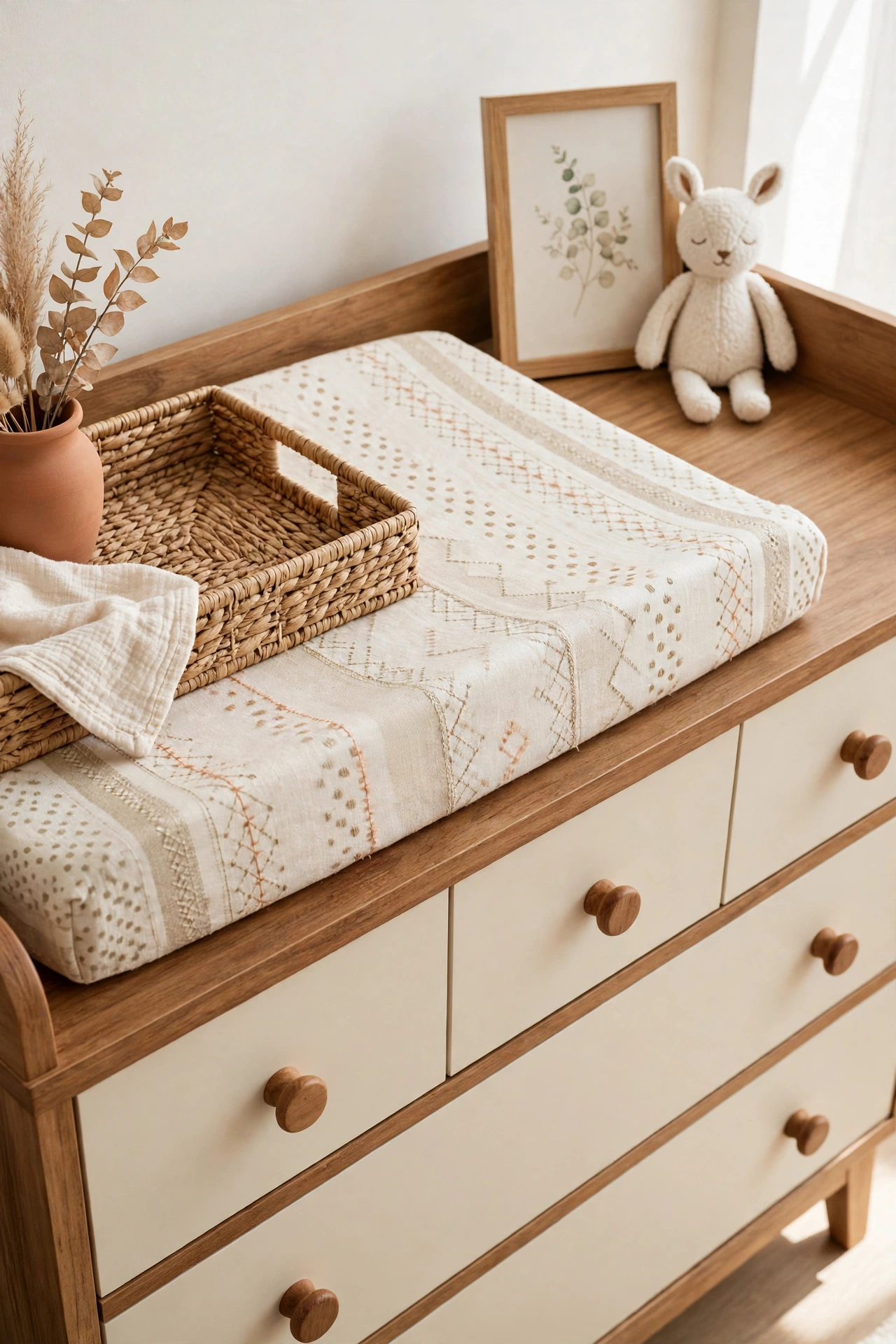
A dresser top layered with neutral textures creates depth and warmth without adding clutter. Combine wooden knobs, woven accents, and a soft patterned changing mat for a cohesive look that feels intentional. Minimal decor, such as a framed photo or one plush animal, adds a personal touch.
Keep the surface mostly clear so the changing area stays safe and easy to wipe down. The layered textures do the decorating work, so you need very few objects on top. This practical simplicity suits parents who want a clean yet inviting nursery.
Conclusion
A nursery dresser does far more than hold tiny clothes. It is the changing station, the supply hub, and often the visual anchor of the whole room. With labeled drawers, smart dividers, and a calm top surface, the dresser can make daily routines smoother from the very first night home.
Pick two or three ideas from this list that fit your space and start with those. Sort one drawer, label one shelf, and build the system over time. For organization that carries through the rest of the house, these bedroom organization ideas will help you keep every room as calm as the nursery.
Frequently Asked Questions About Nursery Dresser Organization Ideas
What should go in the top drawer of a nursery dresser?
The top drawer should hold the items you reach for most often, such as onesies, sleepers, and diaper changing supplies. Keep the drawer shallow and divided so small items stay visible. Store backup supplies and out of season clothes in the lower drawers.
How do I keep tiny baby clothes from getting lost in deep drawers?
Use drawer dividers or small bins to split deep drawers into sections, and file fold clothes upright so every item is visible. Roll socks and mittens into pairs before placing them in their section. A divider system stops small items from sliding to the back of the drawer.
Is it safe to use a dresser as a changing station?
Yes, as long as the dresser is sturdy, the changing pad is secured, and the dresser is anchored to the wall to prevent tipping. Keep one hand on the baby at all times and store supplies within reach so you never have to step away. Choose a dresser height that lets you change diapers without bending or stretching.
How often should I reorganize the nursery dresser?
Reorganize the dresser every time your baby outgrows a size, which is often every two to three months in the first year. Move outgrown clothes to labeled storage bins and bring the next size forward. A quick monthly tidy keeps the system working between bigger reorganizations.
What is the best way to label nursery dresser drawers?
Use printed labels with large, clear words in card holders or removable adhesive frames. Picture labels work well for older siblings who help with laundry. Keep labels simple with one category per drawer, such as sleepers, pants, or diapers, so the system stays easy for the whole family.

Hi, I’m Emily! I turn messy corners into cozy, organized spots. DreamNestDecor is where I share simple, practical home ideas — decor, organization, and small-space solutions that work in real life, not just in photos. Every idea here is carefully researched before it’s shared.