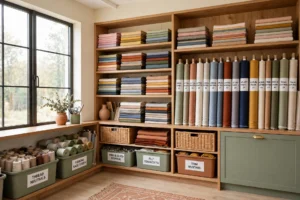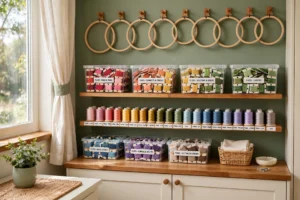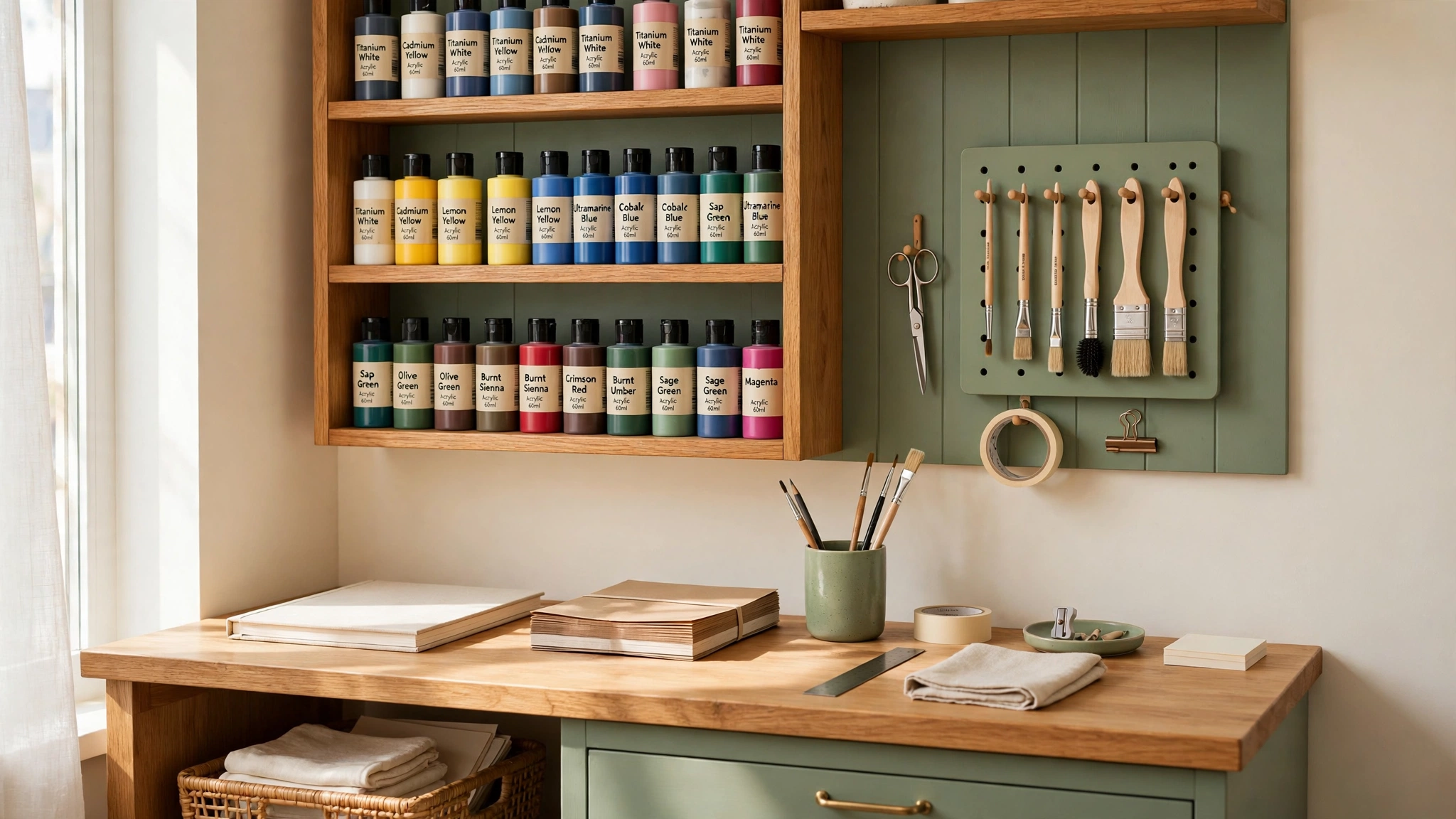
Picture this: you sit down to paint, reach for the exact shade of teal you have in mind, and find it in seconds because every bottle is visible, sorted, and within arm’s reach. No digging through a crowded drawer, no shaking bottles to guess the color, and no buying a shade you already own. That is the quiet joy of a paint collection with a proper home.
You do not need an expensive craft room makeover to get there. With a few simple materials and an afternoon of work, you can build storage that keeps every color in view and every bottle easy to grab. These 12 diy acrylic paint storage ideas will help you turn a messy pile of bottles into a tidy, inspiring corner you love to sit down at.
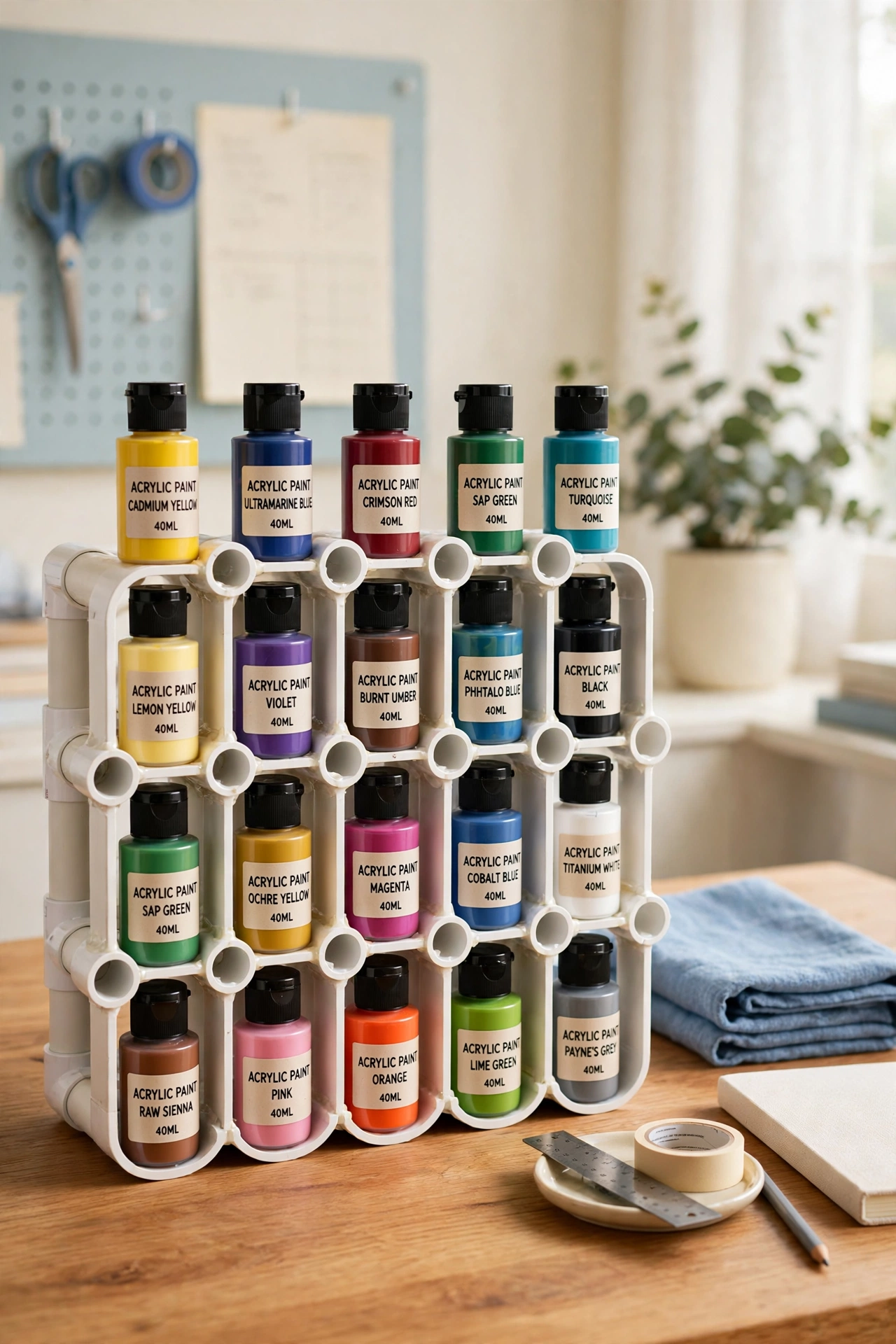
1. Build a Honeycomb Hive From PVC Pipe
Short sections of PVC pipe make perfect individual cubbies for paint bottles. Cut the pipes to the same length, smooth the rough edges, and glue them together in a honeycomb shape. The finished hive can sit on a desk or be secured to the wall if it feels heavy.
This idea works best when your bottles are similar in size, because each color gets its own snug space. The whole collection stays visible without covering your work surface. Paint the outside of the pipes a soft color to match your room, and the hive becomes a cheerful piece of decor as well as storage.
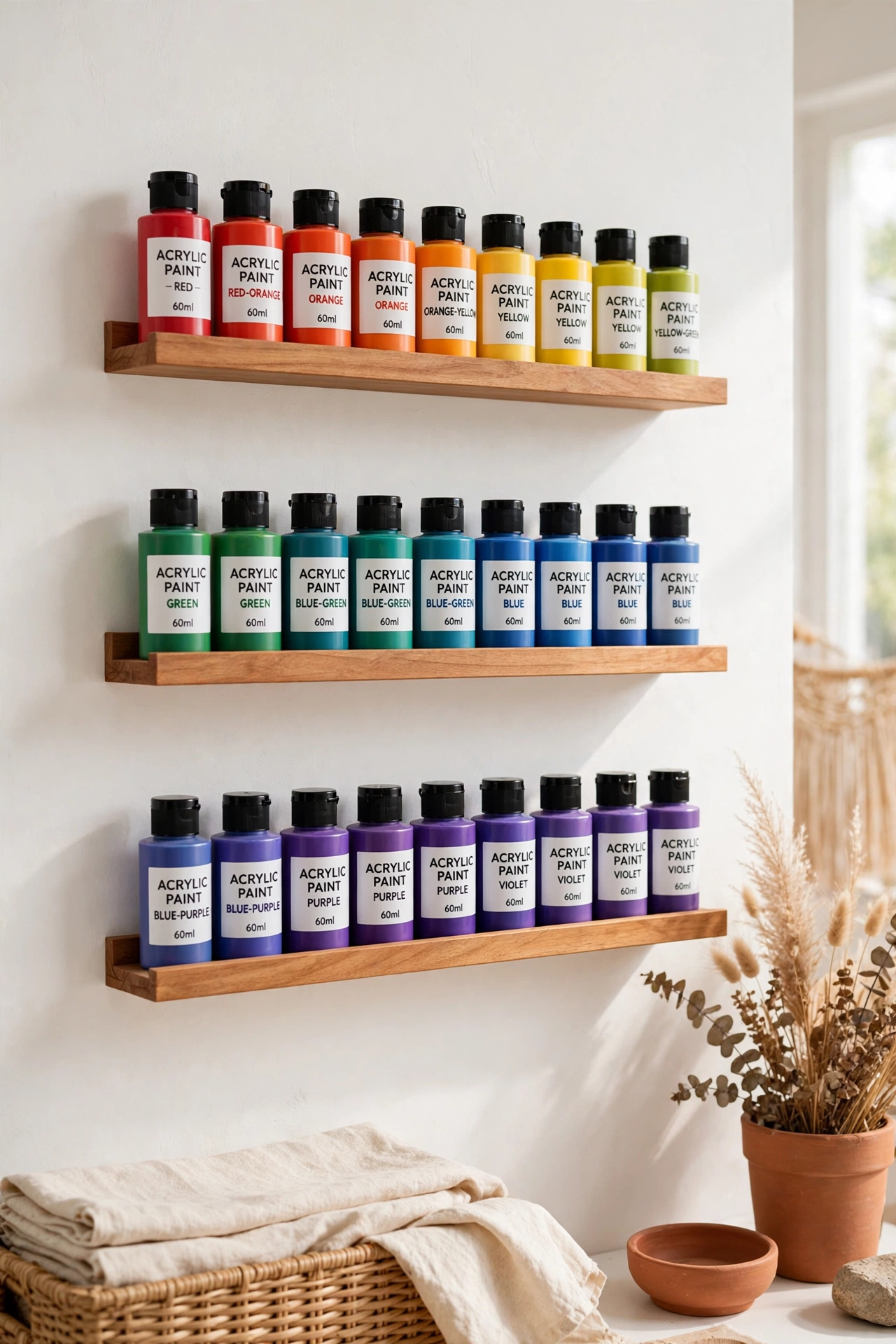
2. Mount Floating Shelves for Paint Bottles
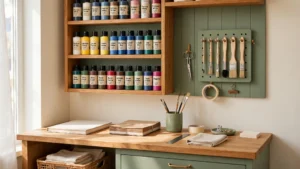
A few narrow picture ledges can hold a surprising number of paint bottles without using any desk space at all. Install them on an empty wall beside your painting area and arrange the bottles by color, type, or how often you reach for them. A small raised edge on each shelf stops the bottles from slipping forward.
This option suits smaller craft rooms because it uses wall space that would otherwise stay empty. It also helps you see the colors you already own before buying another nearly identical shade. For more ways to plan a compact creative corner, these small craft room layout ideas show how to fit a full work area into very little space.
3. Build a Wooden Grid Rack With a Cubby for Every Bottle
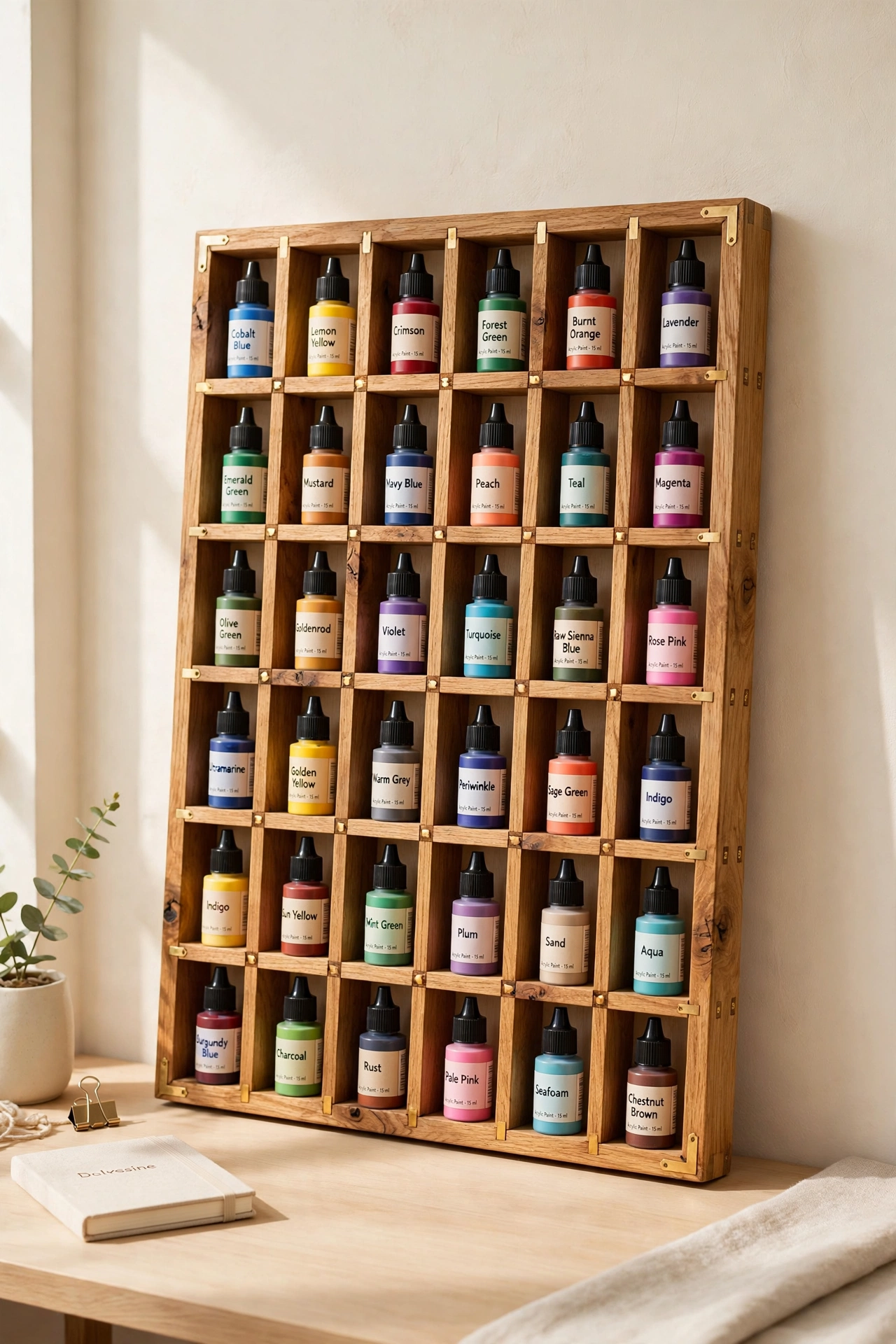
A wooden grid rack gives every paint bottle its own little compartment. You can build one from thin plywood strips or use pre-cut craft-board dividers inside a shallow box. Measure your paint bottles first so the openings are wide enough without wasting space.
Arrange the colors in whatever order feels natural to you. A rainbow order looks lovely on the wall, but grouping warm colors, cool colors, neutrals, and metallics may be more useful while you are painting. Either way, every bottle stays upright, visible, and easy to pull out.
4. Angle Wire Racks So Paint Caps Face Forward
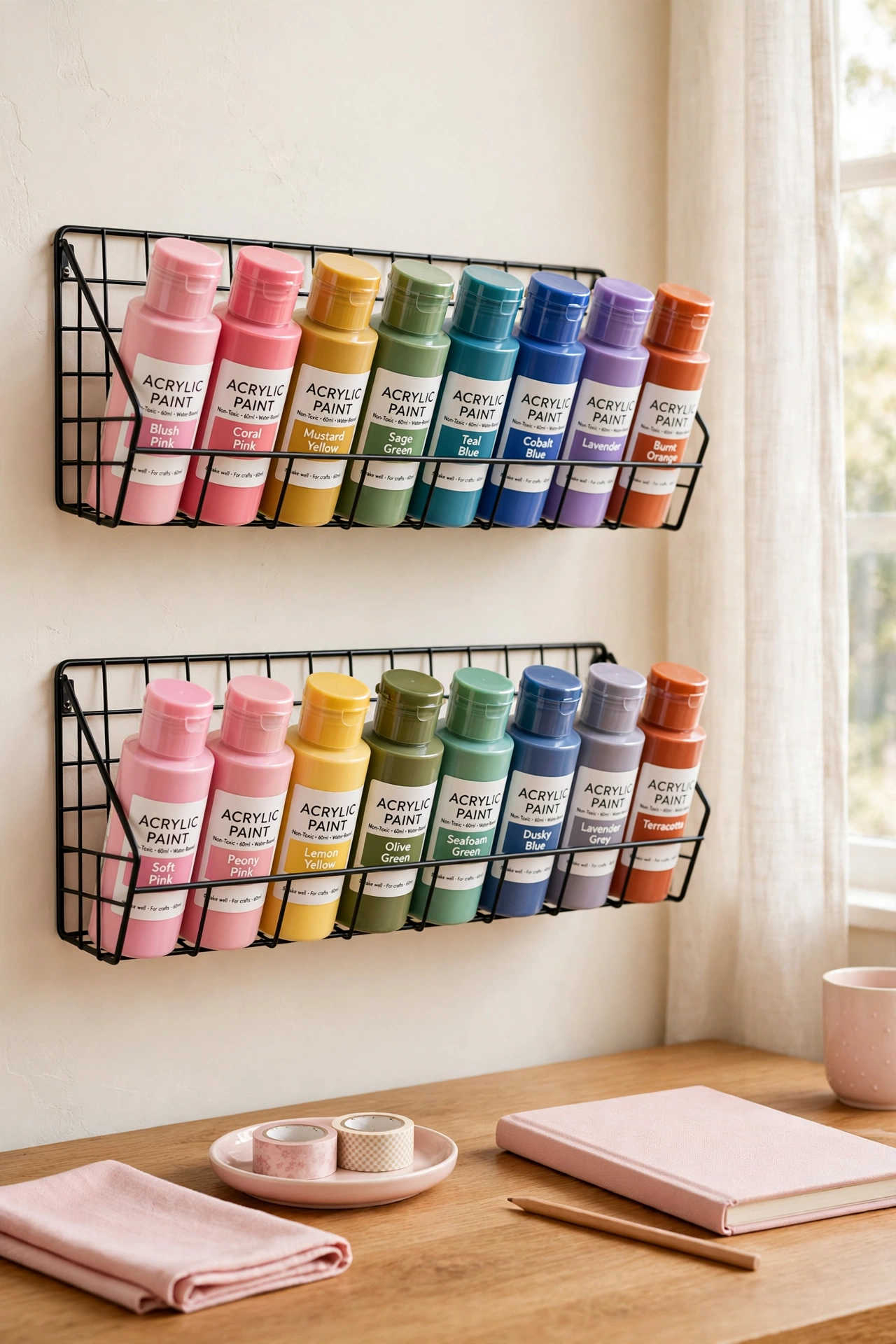
Tilted wire shelves let the paint caps face forward, which makes colors much easier to find at a glance. Mount the shelves above a desk or along a narrow section of wall. Before filling them, check that the openings are small enough to support the bottles and that the rack is firmly attached.
This setup is practical if you reach for many colors during one project. You can scan the caps quickly instead of lifting every bottle to read its label. Keep the most-used colors at eye level and the specialty shades on the higher or lower rows.
5. Style a Rustic Wooden Cubby Shelf
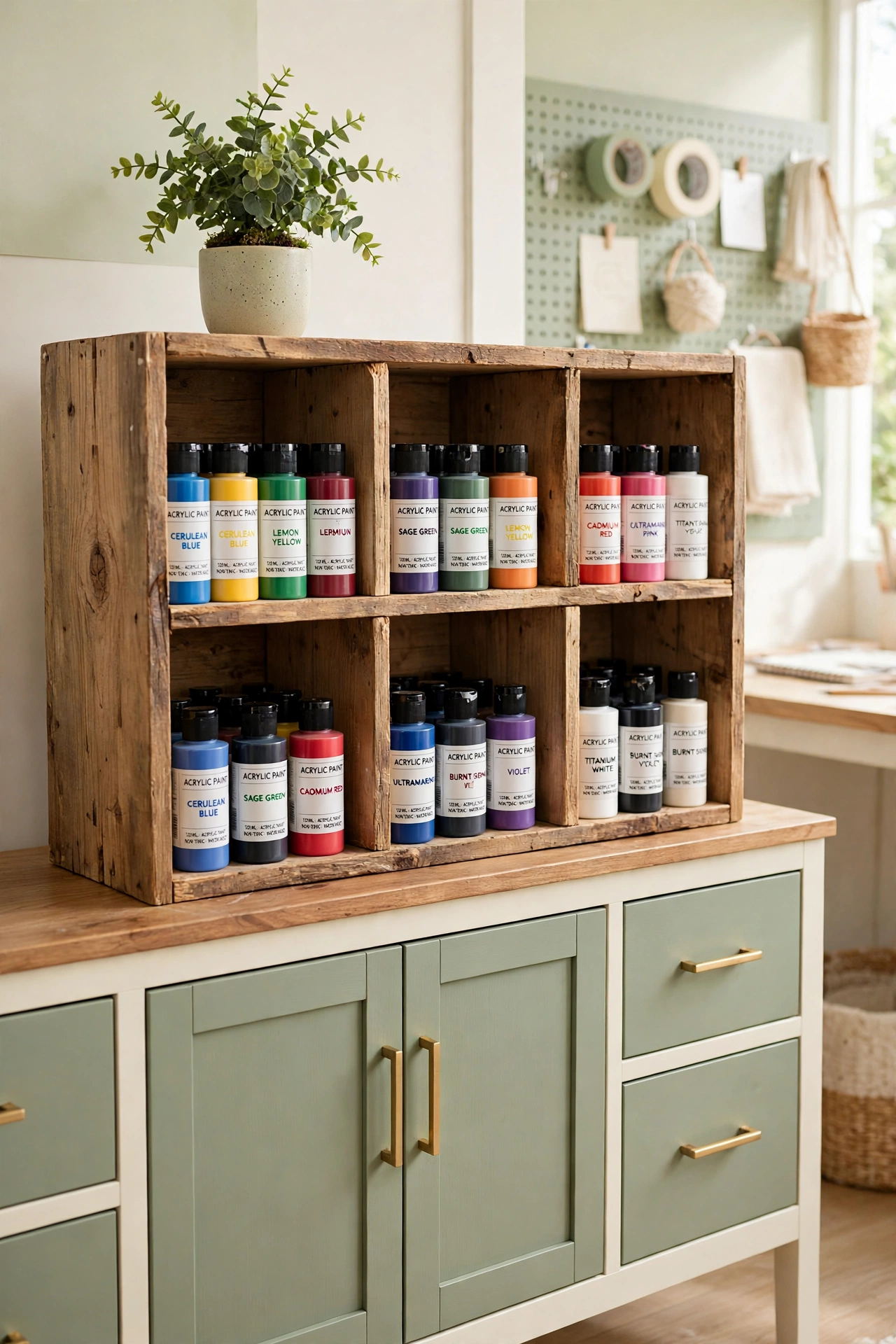
A simple wooden cubby can make paint storage feel like part of the room instead of something you need to hide. Build a shallow box with several compartments, then sand and stain the wood or leave it unfinished for a softer handmade look. The natural wood grain adds warmth to any craft corner.
Place the colors you use most often in the easiest compartments to reach. Less-used specialty paints can sit higher up or farther to the side. This is a good choice for a desk, sideboard, or shelf where you want the bottles nearby but still neatly contained.
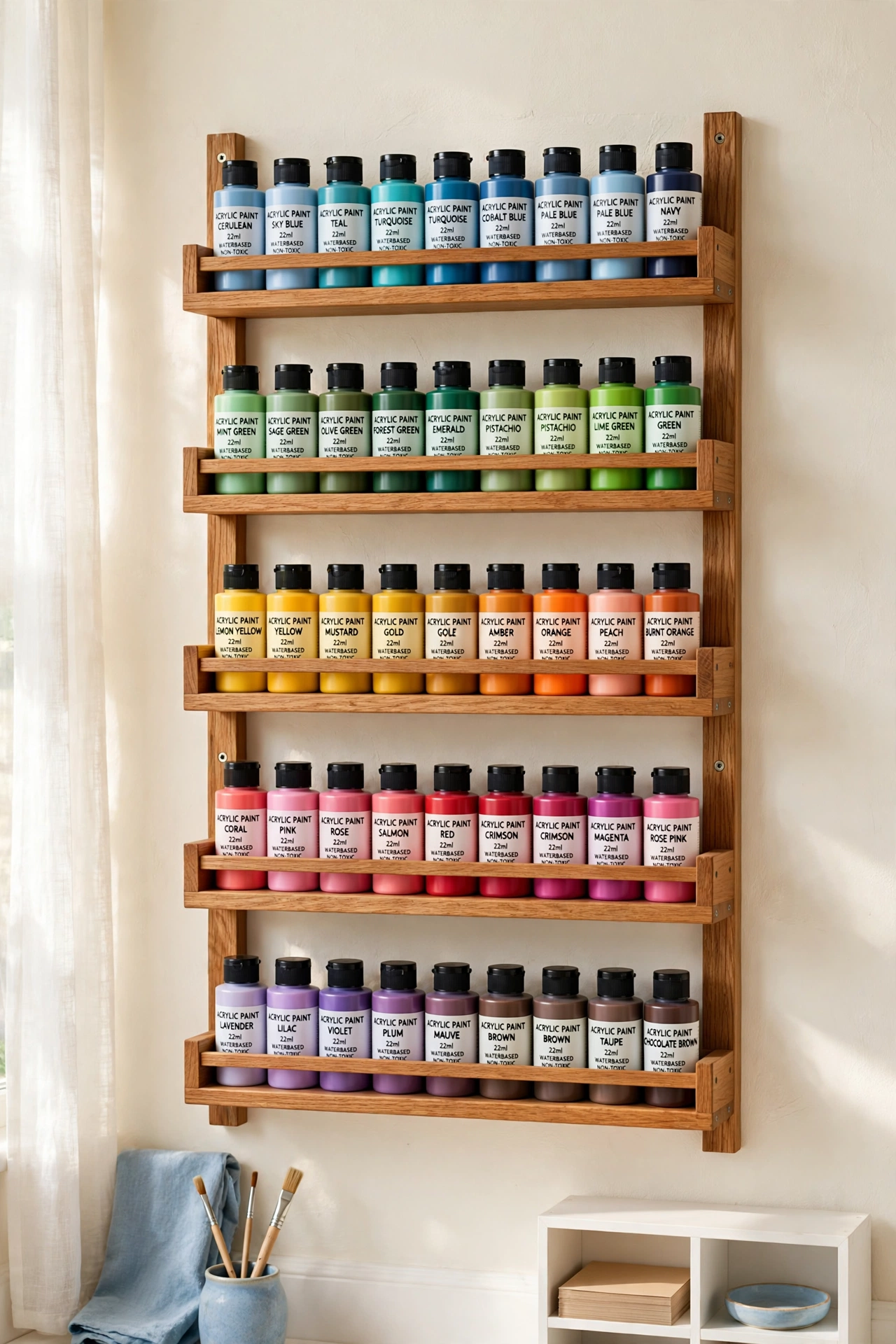
6. Hang a Tiered Wall Rack for a Growing Collection
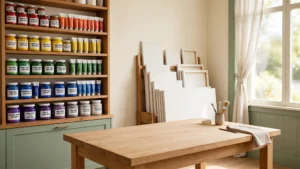
When your paint collection grows beyond one or two shelves, a tiered wall rack gives you more capacity without using the floor or the desk. Keep each shelf shallow enough that bottles do not disappear behind one another. A small front rail prevents bottles from falling while still leaving the labels visible.
You could dedicate each row to a color family or a paint type. That small bit of sorting saves time later, especially when several bottles have very similar labels. A tiered rack also grows with you, because you can add another row whenever the collection expands.
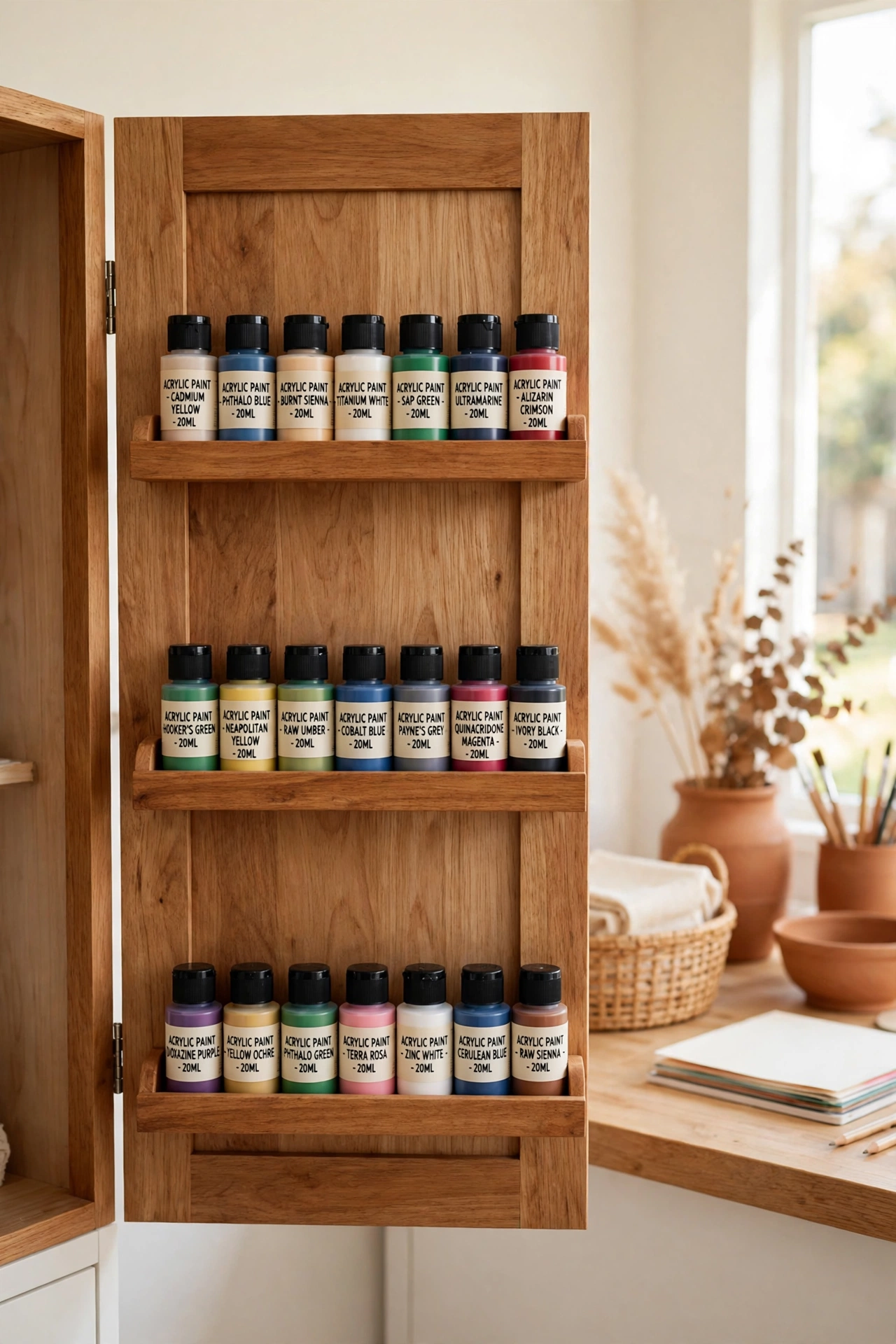
7. Add Narrow Shelves Inside a Cabinet Door
The inside of a cabinet door is easy to overlook, but it can be a useful home for smaller paint bottles. Attach narrow shelves or wooden strips with a raised front edge, leaving enough clearance for the door to close. Test the placement with one bottle before installing every shelf.
This idea keeps the room looking calm because the paint disappears when the cabinet is closed. It is especially helpful when you do not have a spare wall for open storage. For more hidden storage ideas on doors, these closet door organization ideas show how much space a door can really hold.
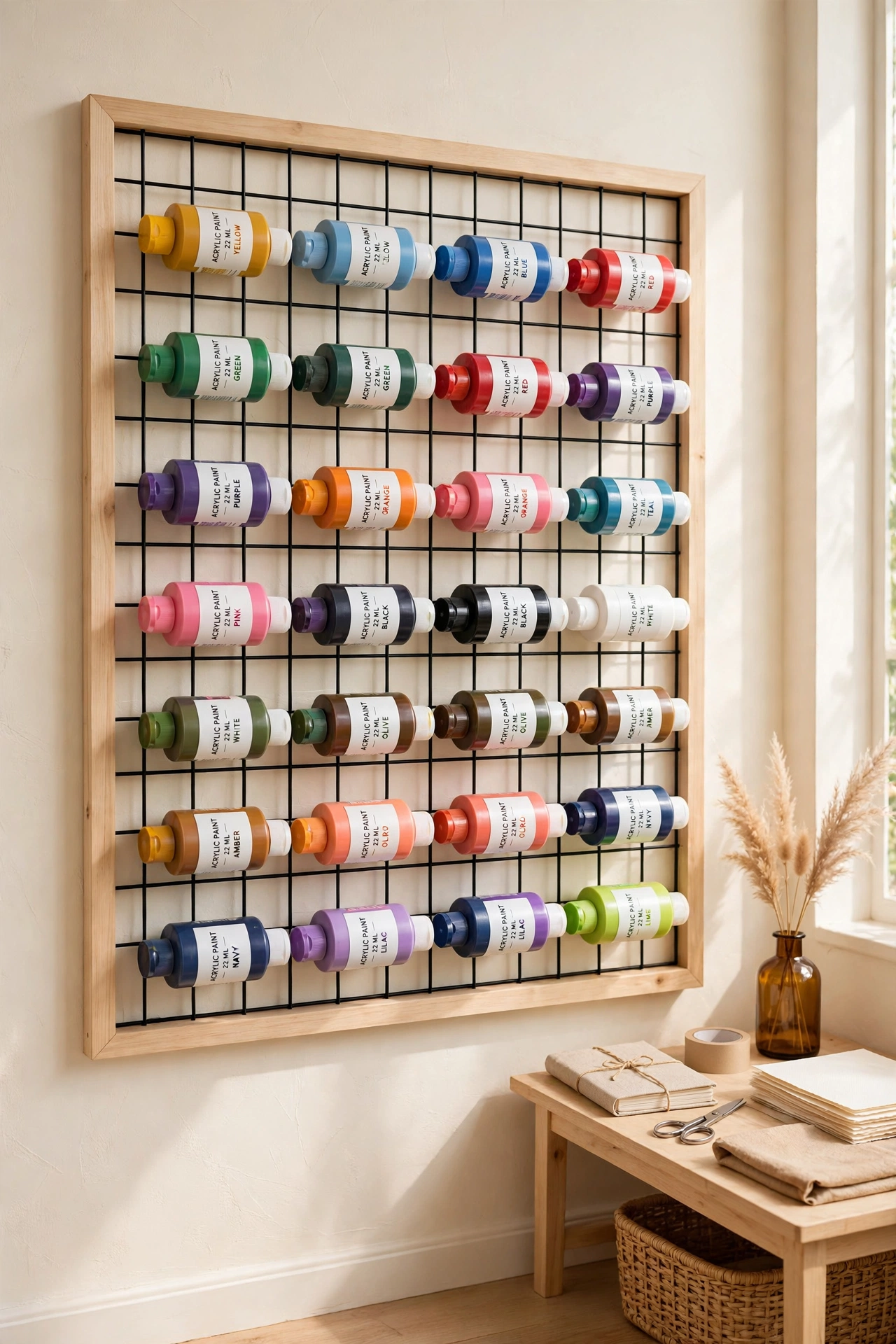
8. Frame a Wire Grid Holder for Paint Bottles
A framed wire grid can hold paint bottles with their caps facing outward. Choose a grid with openings that fit the neck or body of your bottles, then mount it securely inside a simple wooden frame. Test the fit with a few bottles before filling the entire holder.
This arrangement works best with lightweight bottles of a similar shape. It keeps every color visible and makes good use of a narrow wall beside a desk. The black grid against a pale wall also looks smart and modern, so the storage doubles as wall decor.
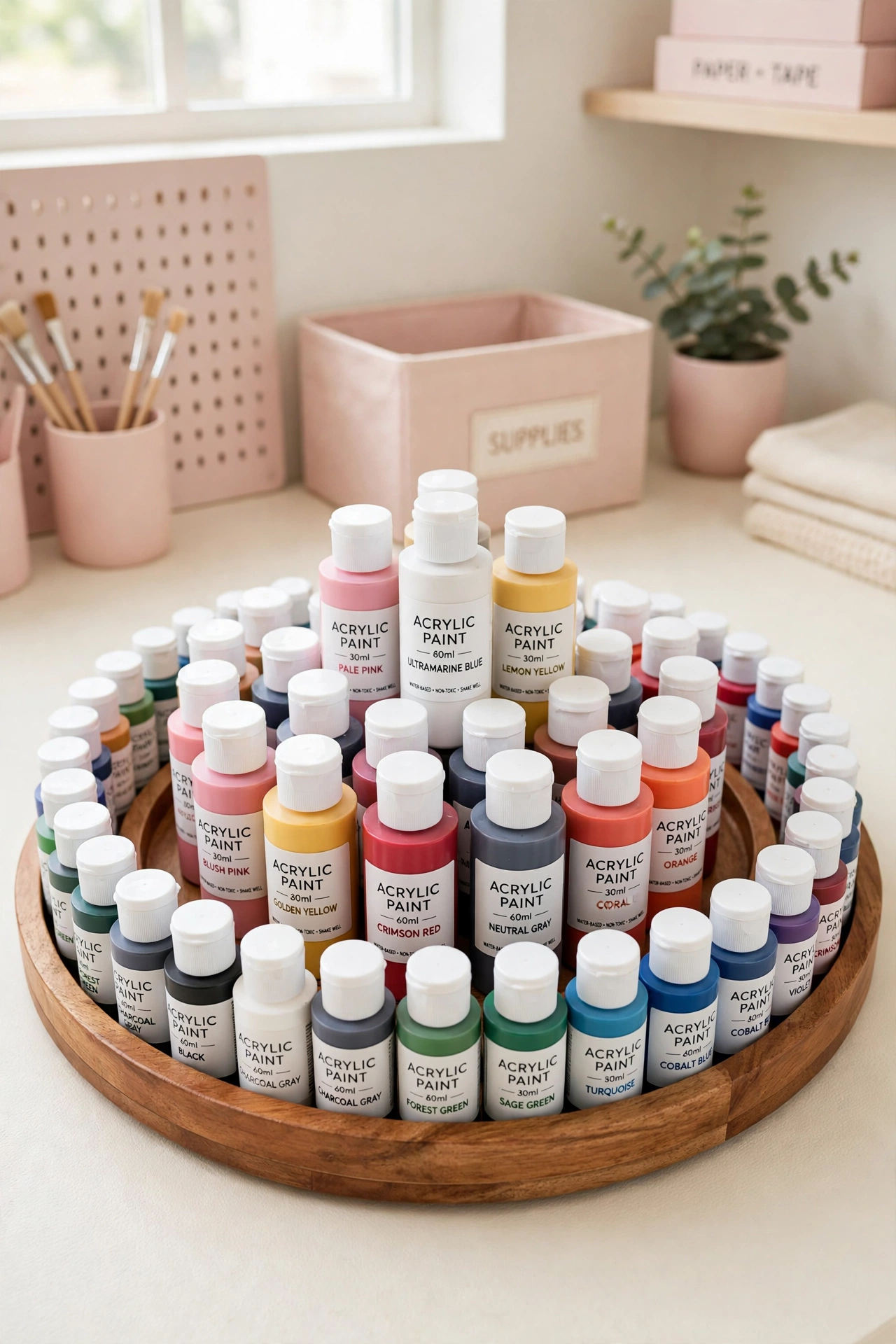
9. Spin a Rotating Tray on Your Desk
A rotating tray is one of the easiest options when you rent, do not want to drill into the wall, or prefer to keep your paint right on the desk. Choose a tray with a raised edge, then arrange your most-used bottles around the outside. Taller bottles and less-used supplies can sit closer to the center.
Instead of digging through a box, you turn the tray until the color you need comes around. It is simple, movable, and easy to reorganize whenever your collection changes. For more ways to keep a work surface tidy, these computer desk organization ideas work just as well for a painting desk.
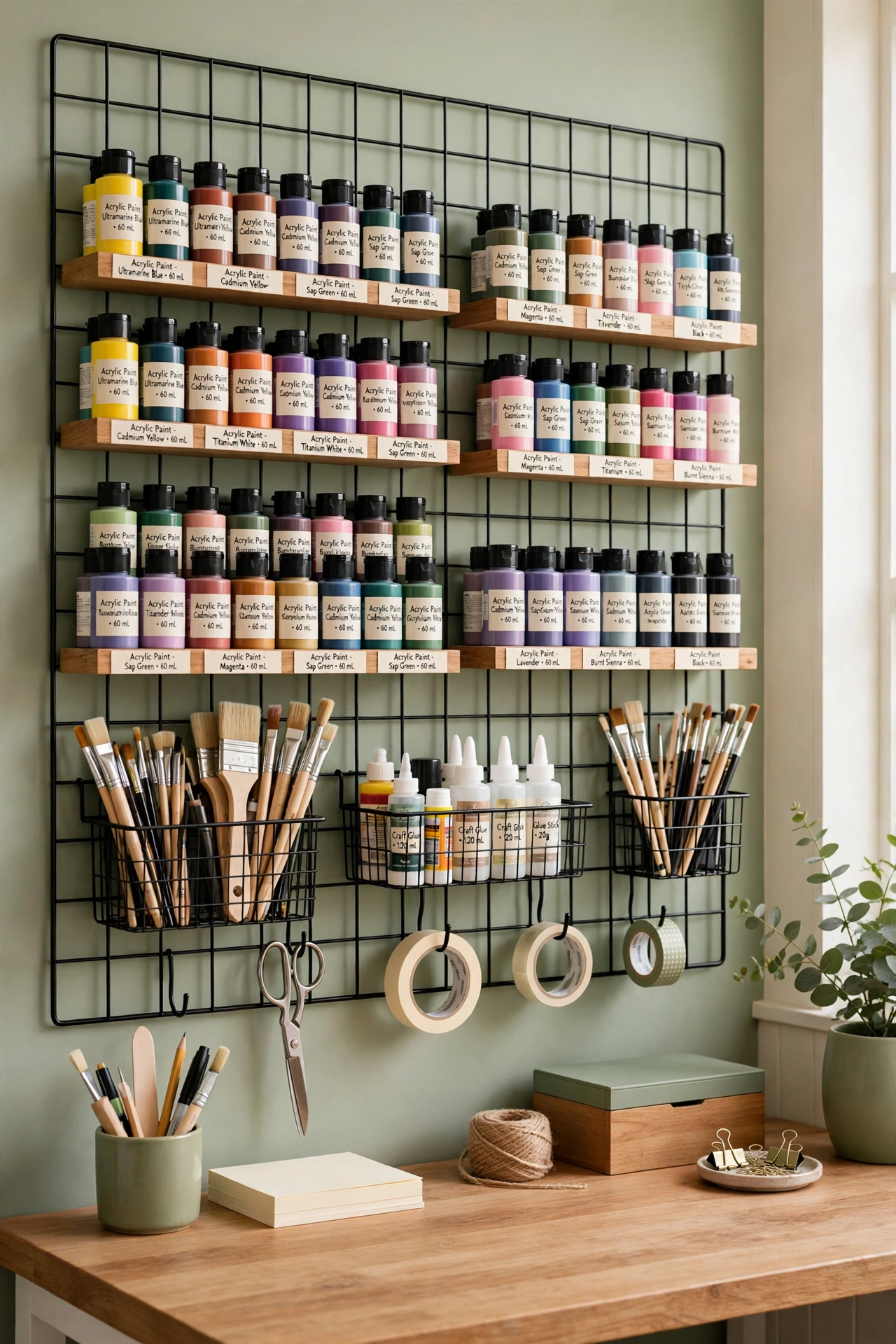
10. Set Up a Full Wall Grid System
A larger wire grid system gives you space for paint, brushes, glue, and other small supplies in one area. Attach the grid securely above your workstation, then add shelves, baskets, and hooks where they are most useful. Paint bottles can sit on narrow shelves or fit directly into the grid if the openings are suitable.
The nice thing about this system is that it can change with you. If one basket stops being useful, move it instead of rebuilding the entire organizer. Over time the grid becomes a complete creative station that holds everything you need for a painting session.
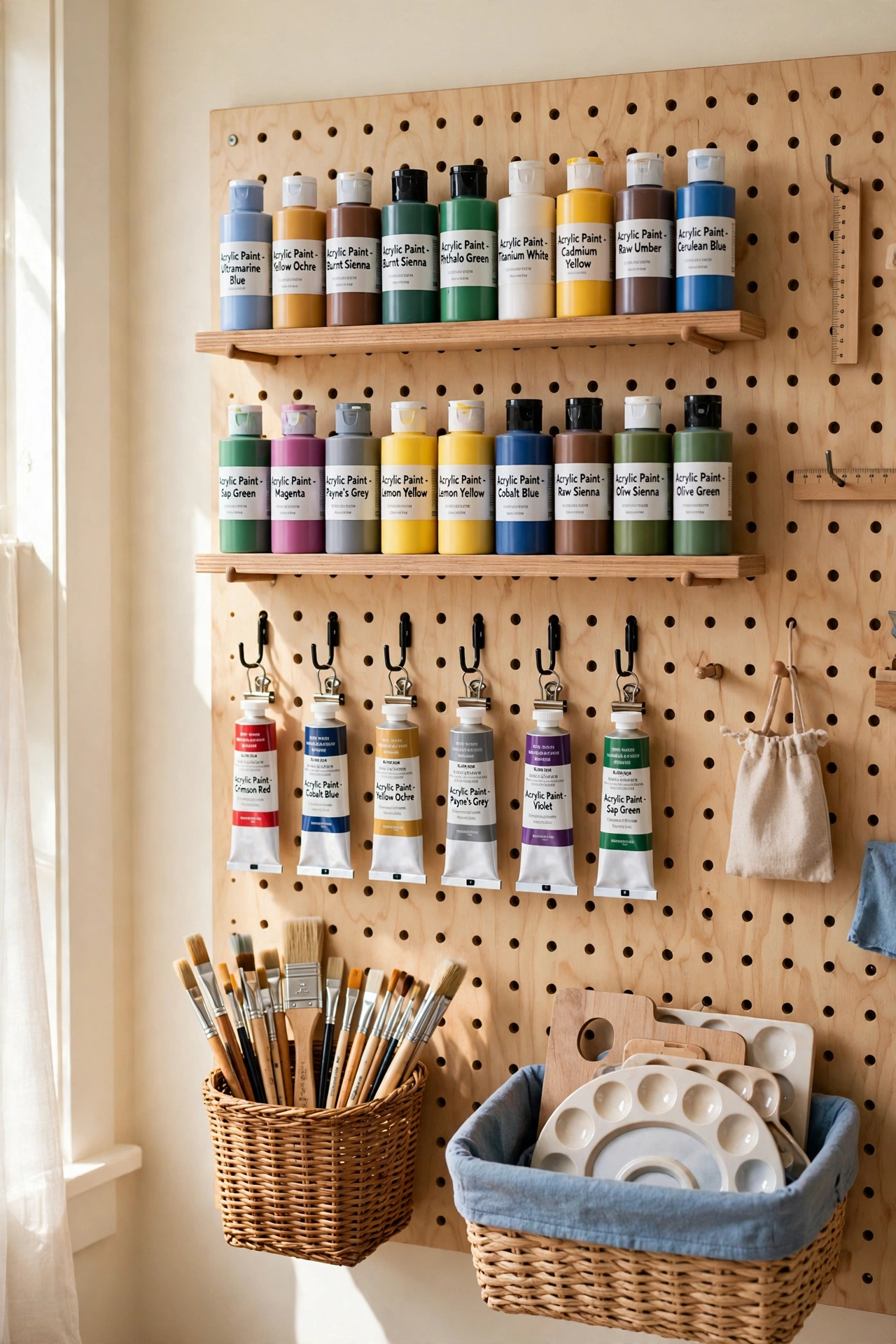
11. Create a Flexible Pegboard Paint Wall
Pegboard is a flexible choice when your collection includes both paint bottles and tubes. Use small shelves for bottles, hooks or clips for tubes, and baskets for brushes, palettes, and painting mediums. Keep the supplies you reach for most often around eye level.
You can rearrange the accessories as your collection grows, which makes pegboard more practical than storage built for only one bottle size. It is also a natural place to create a small reset zone where everything returns after a painting session. For a full creative space plan, these small art studio layout ideas show how a pegboard wall can anchor the whole room.
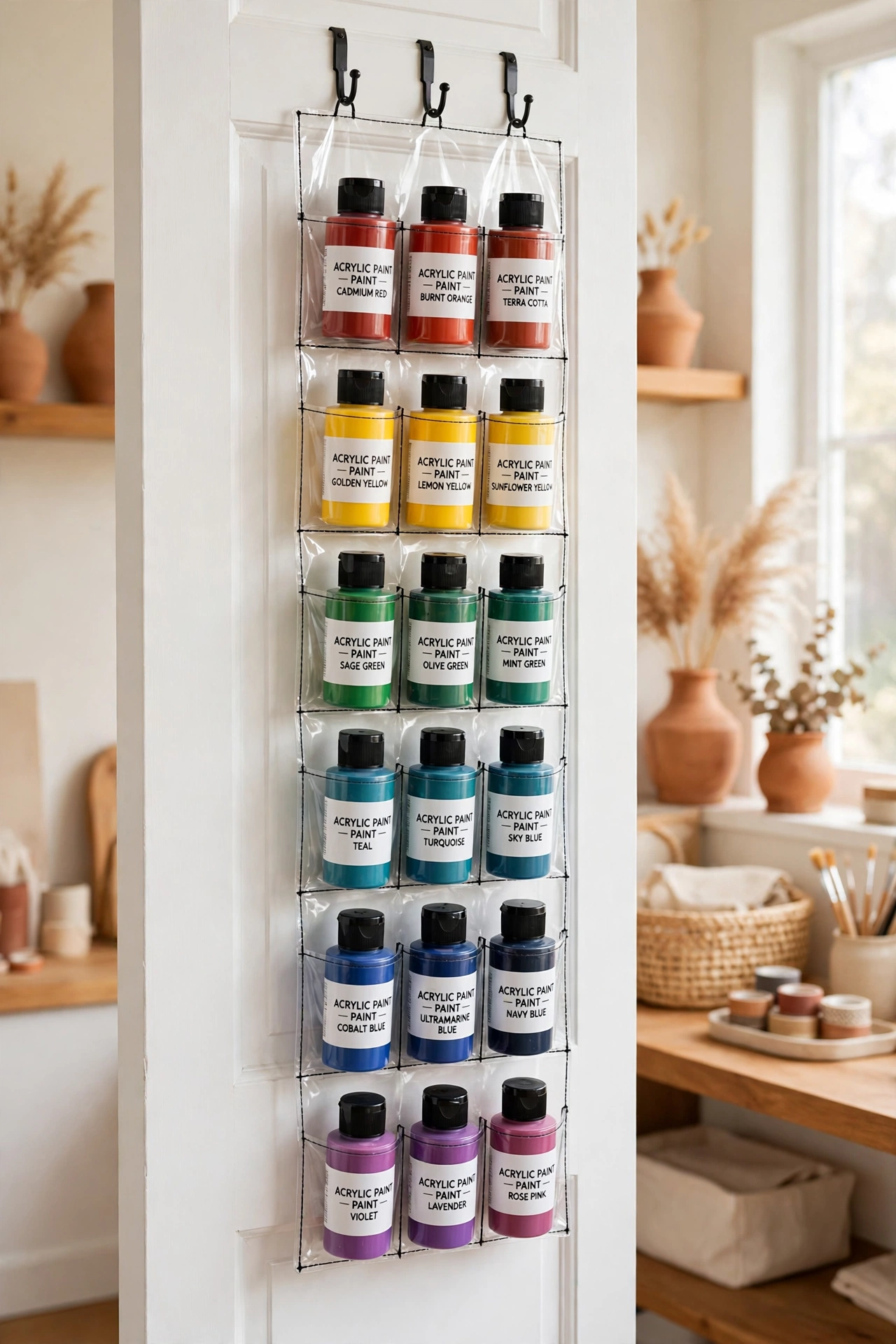
12. Hang a Clear Pocket Organizer Behind a Door
A clear hanging pocket organizer can turn the back of a door into useful paint storage. Place only a few bottles in each pocket so the organizer does not become too heavy. Sort the paints by color or type and keep the labels facing outward so every shade is easy to spot.
This is a helpful option for a closet, a shared room, or a temporary craft space because it does not require a permanent shelving system. Clear pockets also make it easy to see what you have without opening boxes or drawers. When you move, the whole organizer lifts off the door and travels with you.
Conclusion
Good paint storage is not about buying the most expensive organizer. It is about giving every bottle a visible, reachable home so painting feels easy instead of frustrating. Whether you build a PVC hive, hang a pegboard wall, or spin a simple tray on your desk, the best idea is the one that fits your space and your collection.
Start with the idea that solves your biggest frustration today, then add more storage as your collection grows. Once every color has a home, cleanup takes minutes and your next project starts the moment you sit down. For inspiration on what to paint first, these DIY abstract painting ideas are a wonderful way to put your newly organized paints to work.
Frequently Asked Questions About DIY Acrylic Paint Storage Ideas
Should acrylic paint bottles be stored upright or upside down?
Upright storage is the safest choice because it keeps paint away from the lid and reduces the risk of leaks. Storing bottles upside down can make the color easier to see, but it can also cause leaks if a lid is damaged or not fully closed. An angled rack gives you the same quick view of the caps without placing all the paint against the lid.
Where is the best place to store acrylic paint at home?
Acrylic paint lasts longest in a stable indoor room away from direct sunlight, heat, and damp. A craft room, cupboard, or indoor closet is ideal. Avoid uninsulated garages, sheds, and attics, where extreme temperatures can thicken or spoil the paint.
How do I keep acrylic paint from drying out in the bottle?
Wipe dried paint from the rim before closing the lid so it seals tightly. Always close lids fully after every painting session and store bottles where you can check them easily. If a lid is cracked or will not seal, move the paint to a small airtight container.
How can I tell whether old acrylic paint is still usable?
Open the bottle and check the texture and smell. Paint that has separated may still be usable after a thorough stir. If it has hardened, developed a strong unpleasant smell, or stays badly lumpy after mixing, it is time to replace it.
How should I organize paint colors so I can find them quickly?
There is no single correct system. You can organize by color family, finish, or how often you use each bottle. Choose the method that helps you find paint quickly while you work. A beautiful rainbow arrangement is only helpful if it also makes sense during a painting session.

Hi, I’m Emily! I turn messy corners into cozy, organized spots. DreamNestDecor is where I share simple, practical home ideas — decor, organization, and small-space solutions that work in real life, not just in photos. Every idea here is carefully researched before it’s shared.