Picture this: you walk into your bedroom after a long day, and instead of clothes on the chair and clutter on the nightstand, you find a calm room where everything has a place. The bed is clear, the dresser top is tidy, and you can breathe the moment you step inside. That feeling is what good bedroom organization gives you every single day.
You do not need a bigger bedroom or a full renovation to get there. Small systems in the right spots do the work for you, from the space under the bed to the back of the door. These 28 bedroom organization ideas will help you sort clothes, accessories, books, and daily essentials so your bedroom stays peaceful and easy to live in.
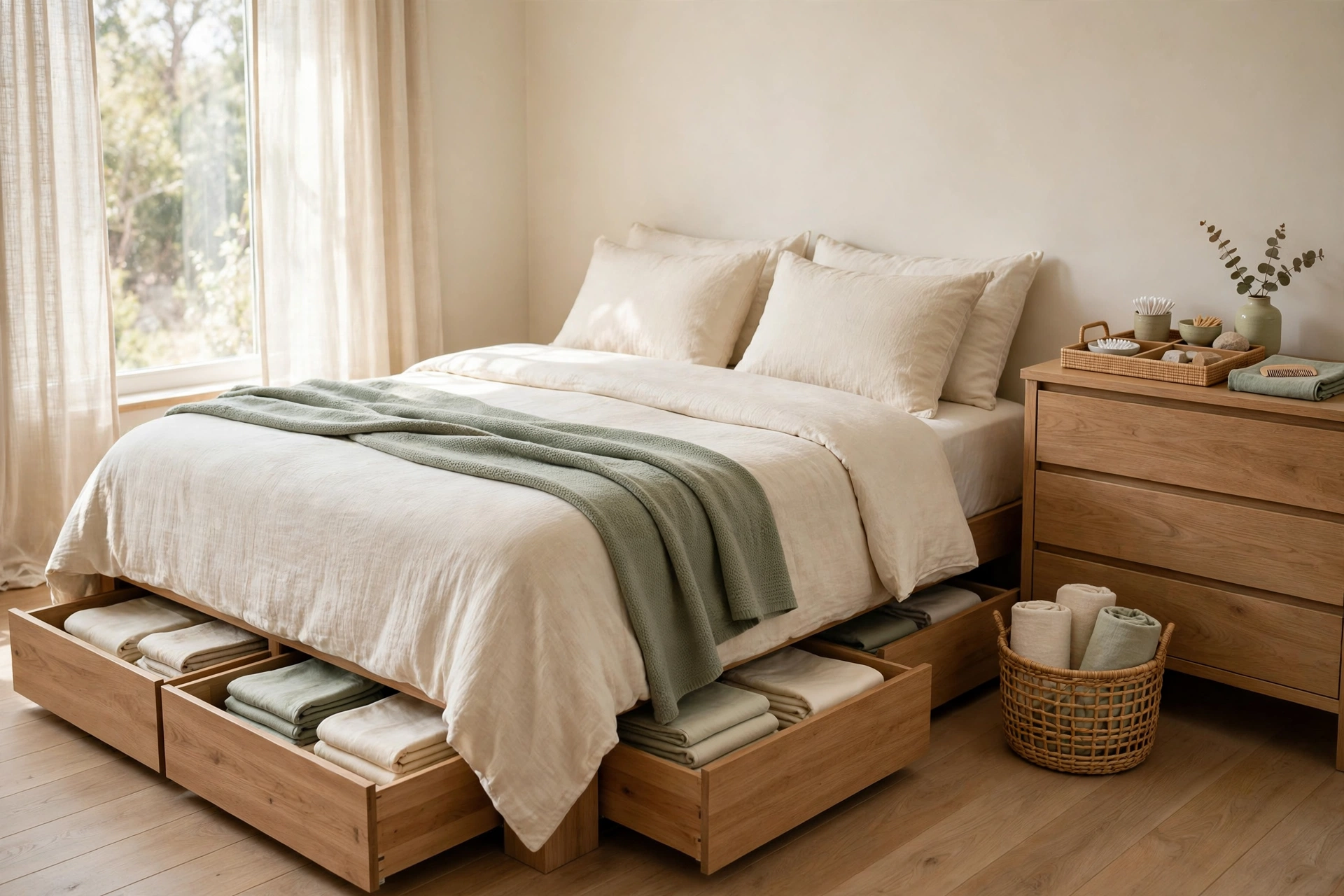
1. Store Seasonal Linens in Under-Bed Drawers
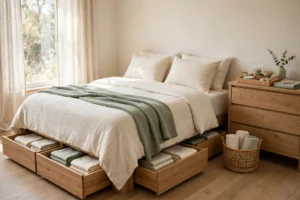
A bed with built-in drawers turns the empty space beneath the mattress into some of the most useful storage in the room. The deep pull-out drawers hold seasonal linens, bulky blankets, and out-of-season clothes without taking up a single inch of floor space. Everything stays hidden behind the bed frame, so the room looks sleek and uncluttered.
Label each drawer by season or category so you can find what you need without opening every drawer. Keep the items you reach for most often in the drawer closest to the door side of the bed. For more ways to use this hidden space, see these under bed storage organization ideas that make the most of every inch beneath the mattress.
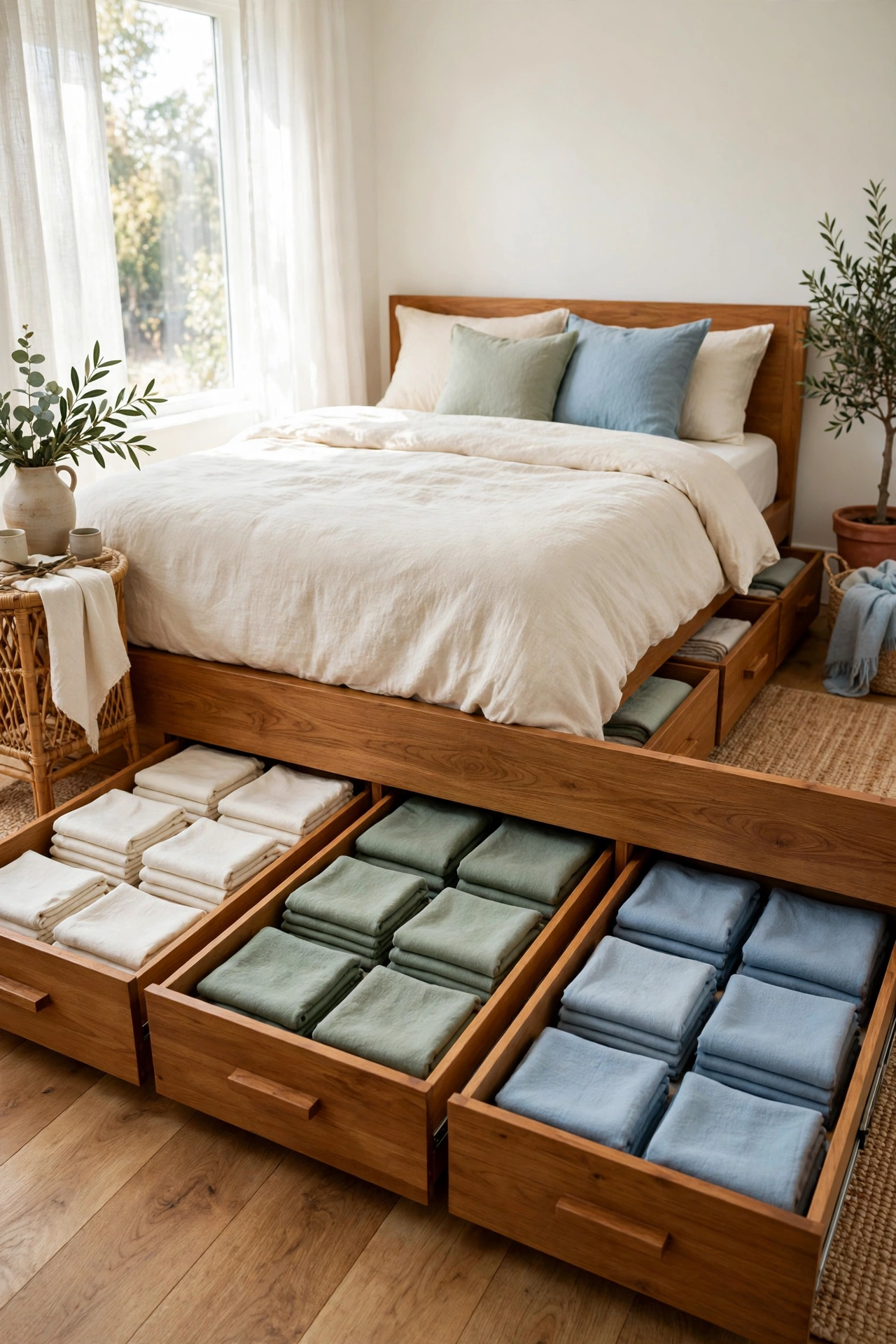
2. Sit and Store Shoes on a Bench at the Foot of the Bed
A flip-open shoe bench at the foot of the bed gives you seating and storage in one tidy piece of furniture. Tiered shelves inside keep shoes lined up in pairs and easy to grab, while the soft top gives you a comfortable seat for getting dressed. The bench fills the often empty space at the foot of the bed with a purpose.
Sort shoes by how often you wear them, with daily pairs on the top tier and special occasion shoes below. Wipe the shelves clean once a month so dust never builds up around the shoes. A bench like this keeps footwear out of the closet and out of the doorway, where shoes tend to pile up.
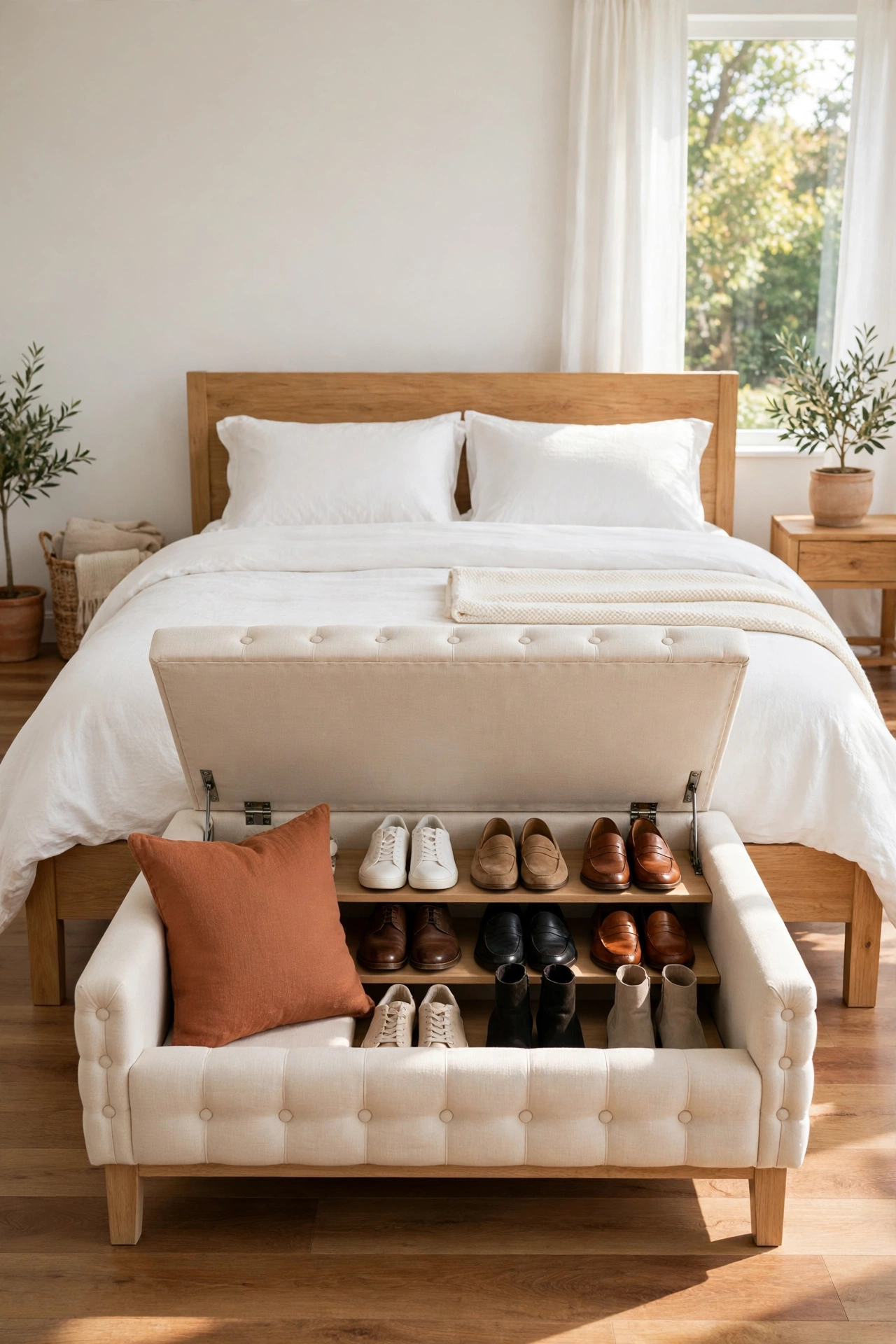
3. Hang a Bedside Caddy for Nighttime Essentials
A hanging bedside caddy slips over the side of the mattress and holds everything you reach for at night. Mesh and slip pockets keep a tablet, a phone, a remote, and a magazine organized without crowding the nightstand. A slot for a power strip keeps charging cables tucked away and tangle free.
This is a smart fix for small bedrooms where the nightstand is tiny or missing altogether. Empty the caddy once a week and return anything that has wandered in from other rooms. With the nightstand clear, the whole bedside area feels calmer the moment you wake up.
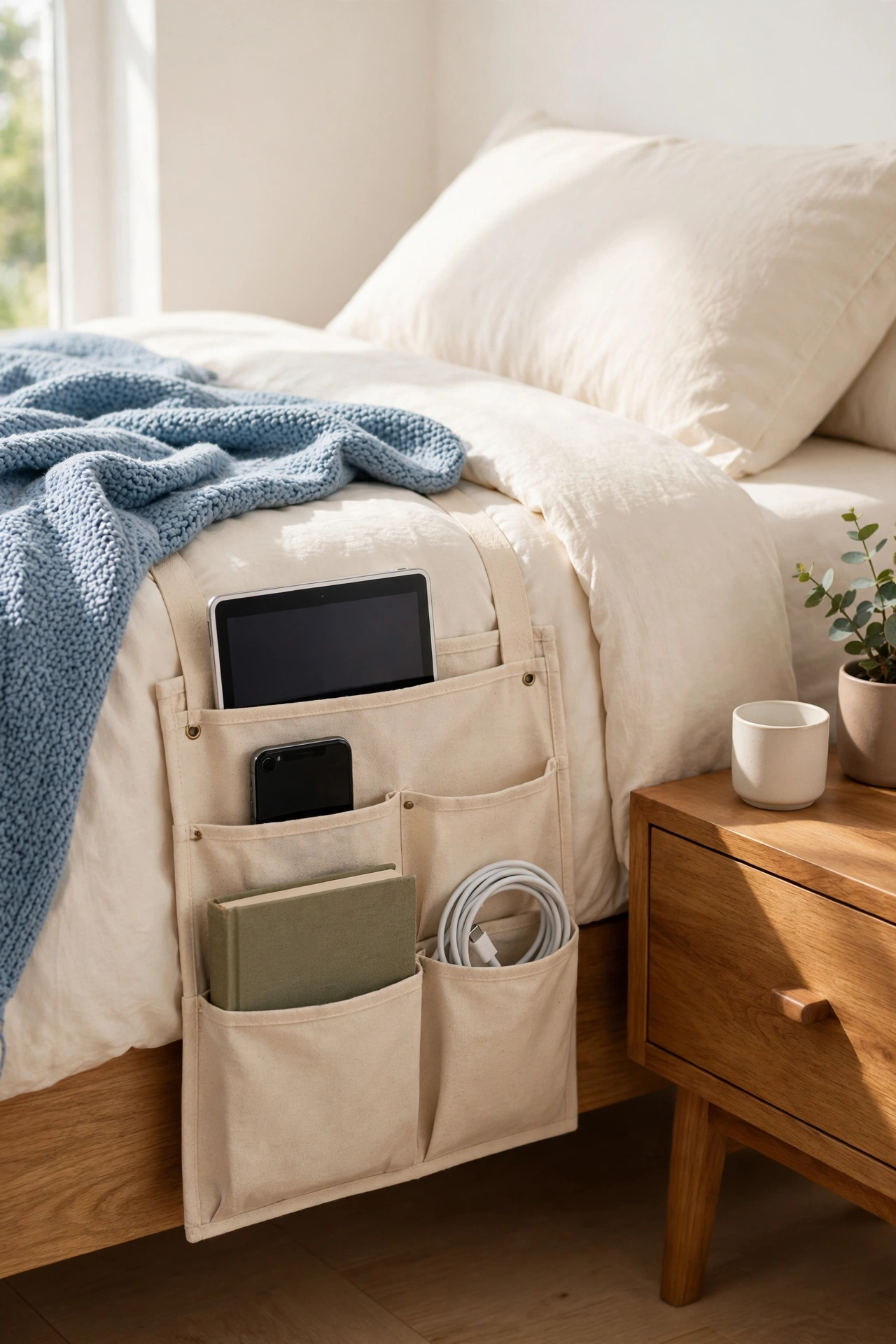
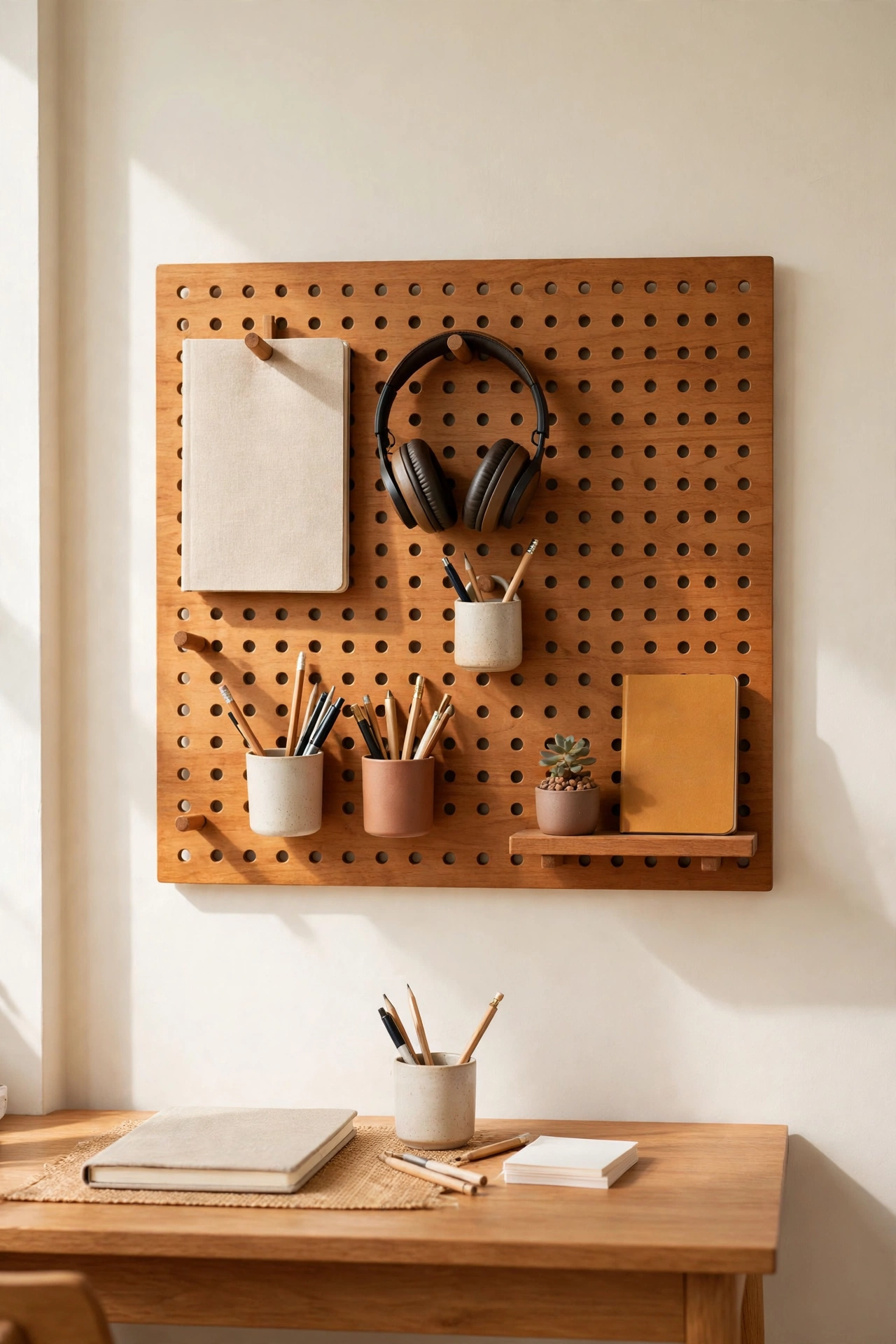
4. Mount a Pegboard Above the Bedroom Desk
A wall-mounted pegboard above the desk turns a blank wall into flexible storage that you can rearrange any time. Adjustable hooks, cups, and small shelves hold stationery, headphones, notebooks, and small gadgets exactly where you want them. The desktop stays clear because everything has a home on the wall.
Group items by task, with writing supplies on one side and tech accessories on the other, so you can find things without thinking. Leave some hooks empty for new items instead of filling every inch at once. A pegboard works especially well in a bedroom corner that doubles as a study or work space.
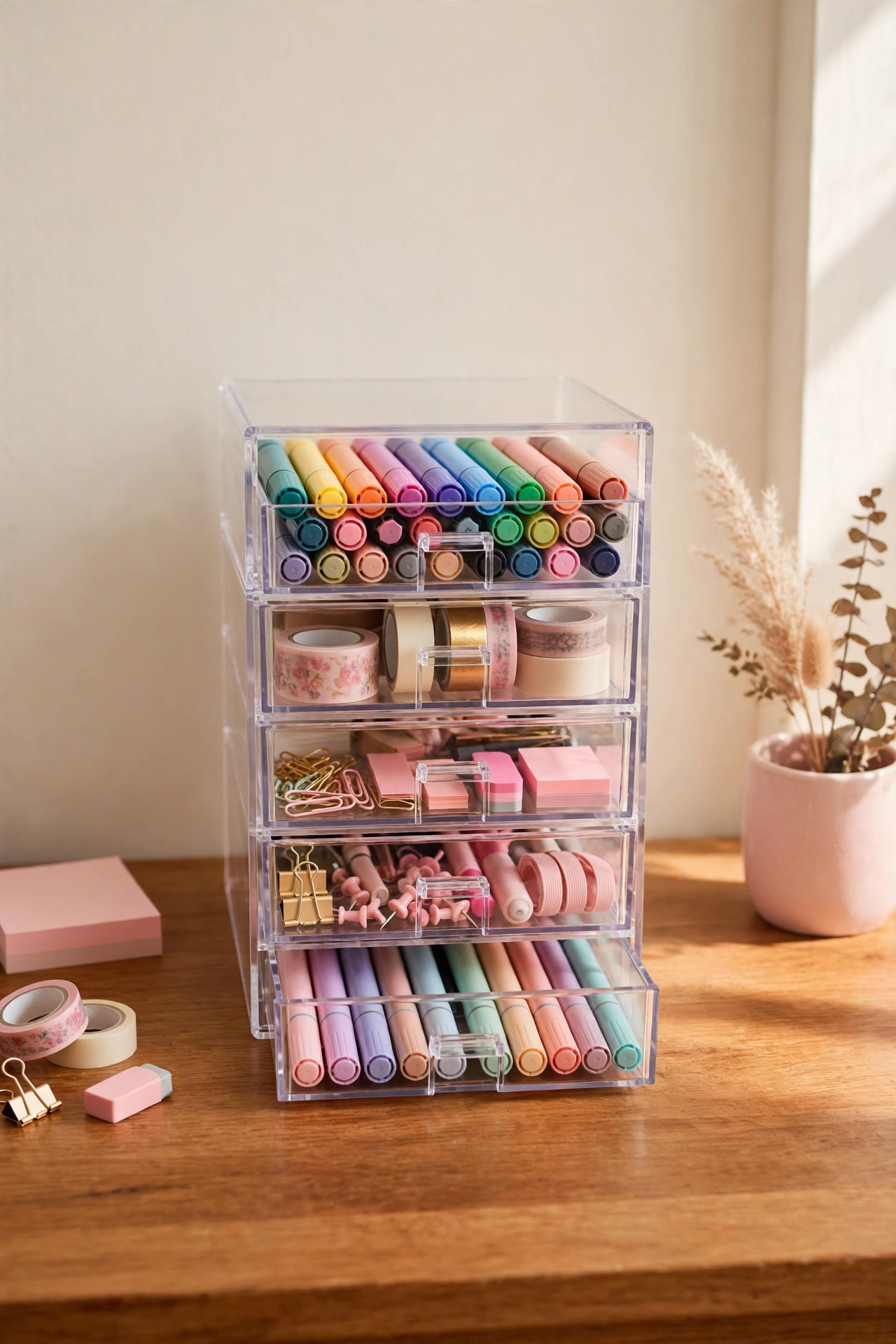
5. Sort Small Supplies in Mini Drawer Units
Compact mini drawer units bring order to the smallest items in the bedroom, from markers and tapes to cosmetics and jewelry pieces. Clear fronts let you see what is inside each drawer at a glance, so nothing gets forgotten at the back. The small footprint fits neatly on a desk, a dresser, or a vanity top.
Give each drawer one category only, and label the front if the contents are hard to tell apart. Resist the urge to mix categories, because a mixed drawer becomes a junk drawer very fast. These little units prove that small storage can solve big clutter problems.
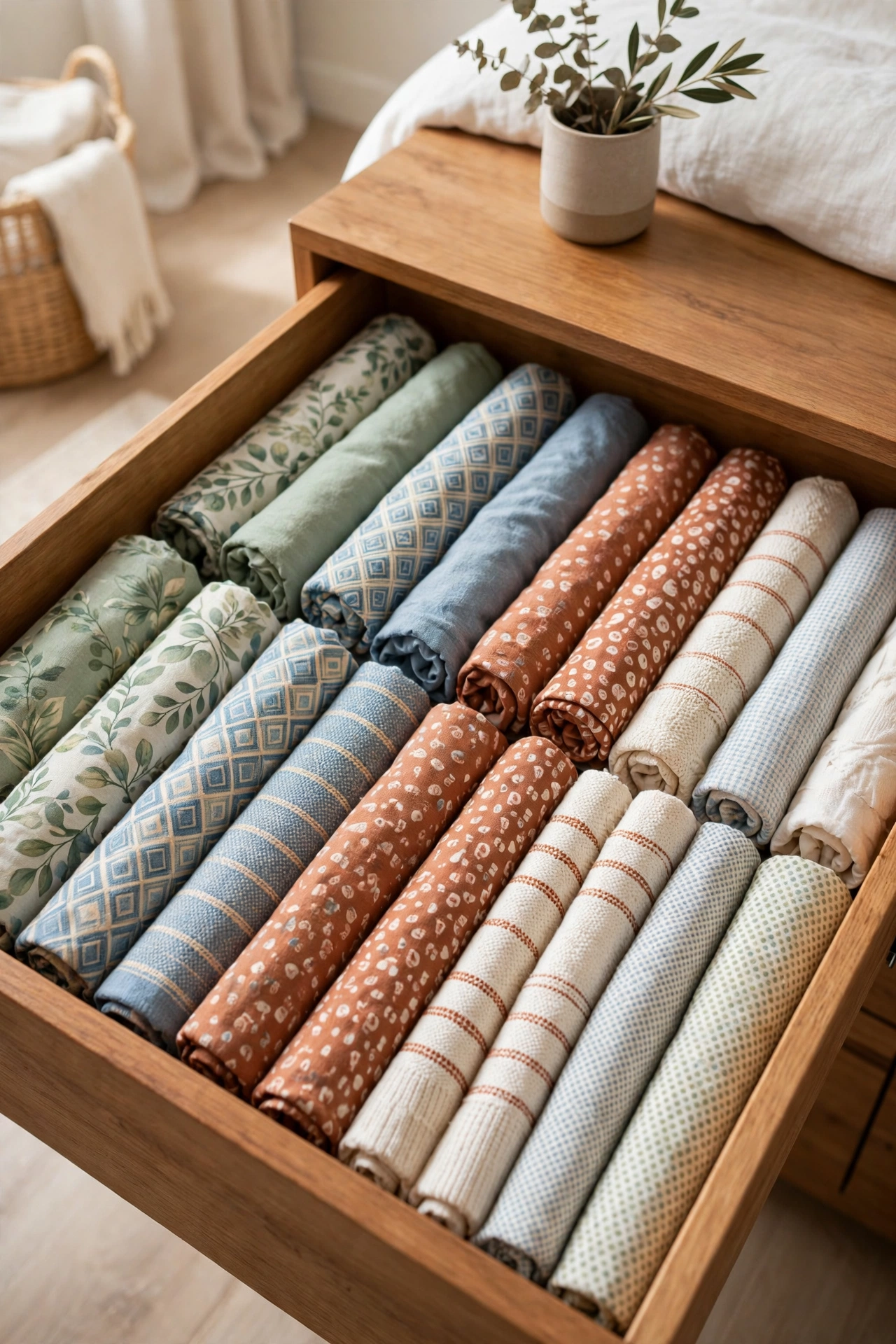
6. Roll Clothes in Drawers So Every Item Stays Visible
Rolling clothes instead of stacking them turns a drawer into a colorful display where every item is visible at once. Each rolled piece stands upright in a neat row, so you can see patterns and colors without lifting a pile. The method works beautifully for T-shirts, sleepwear, and children’s clothes.
Roll each item tightly and place the rolls side by side like files in a drawer. When a drawer starts to look full, it is a clear signal to edit the contents rather than force more in. Rolled clothes also wrinkle less than folded stacks that get dug through every morning.
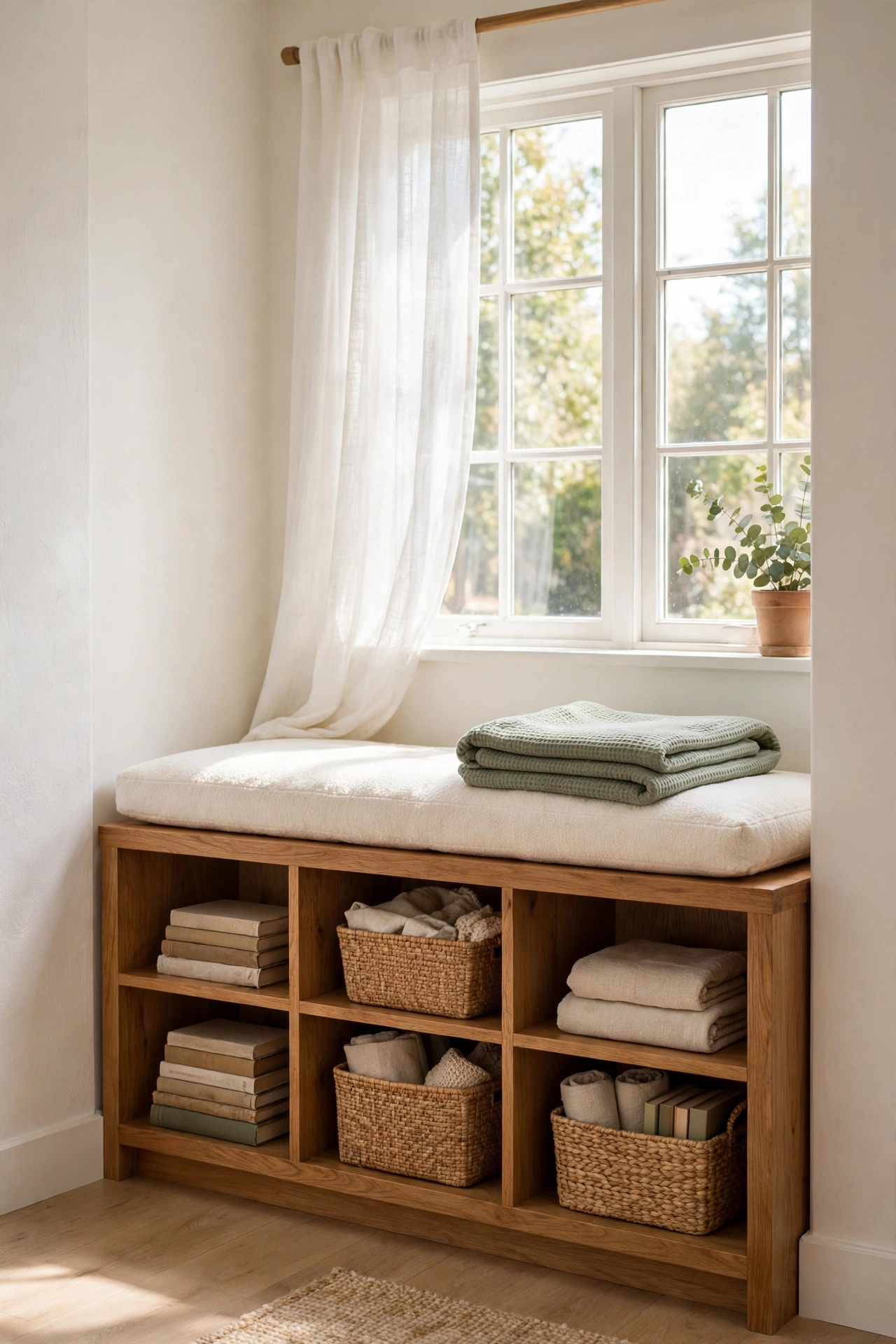
7. Place a Cubby Bench in a Bedroom Corner
A multi-cubby bench combines a seat with open storage cubbies underneath, and it fits beautifully in a bedroom corner or under a window. The wooden top offers a spot to sit while getting dressed, while the cubbies below hold books, baskets, or folded clothes. One piece of furniture does the work of a chair and a shelf at the same time.
Use one cubby per category, such as books in one, a basket of accessories in another, and spare bedding in a third. A bench in the corner also stops the corner from becoming a dumping ground for clothes and bags. If you like this seat-plus-storage idea, these entryway organization ideas show how the same bench concept keeps busy drop zones tidy.
8. Roll a Cube Shelf Wherever You Need It
A mobile cube shelf on wheels is one of the most flexible storage pieces a bedroom can hold. Books and decor sit on the open shelves, while hidden drawers below tuck away clutter that you want out of sight. When you rearrange the room or need floor space, the whole unit rolls to a new spot in seconds.
Keep the heaviest items on the lowest shelf so the unit stays stable when it moves. Lock the wheels once the shelf is in place so it never drifts while you reach for something. A rolling shelf is a great fit for shared rooms and children’s bedrooms, where storage needs change often.
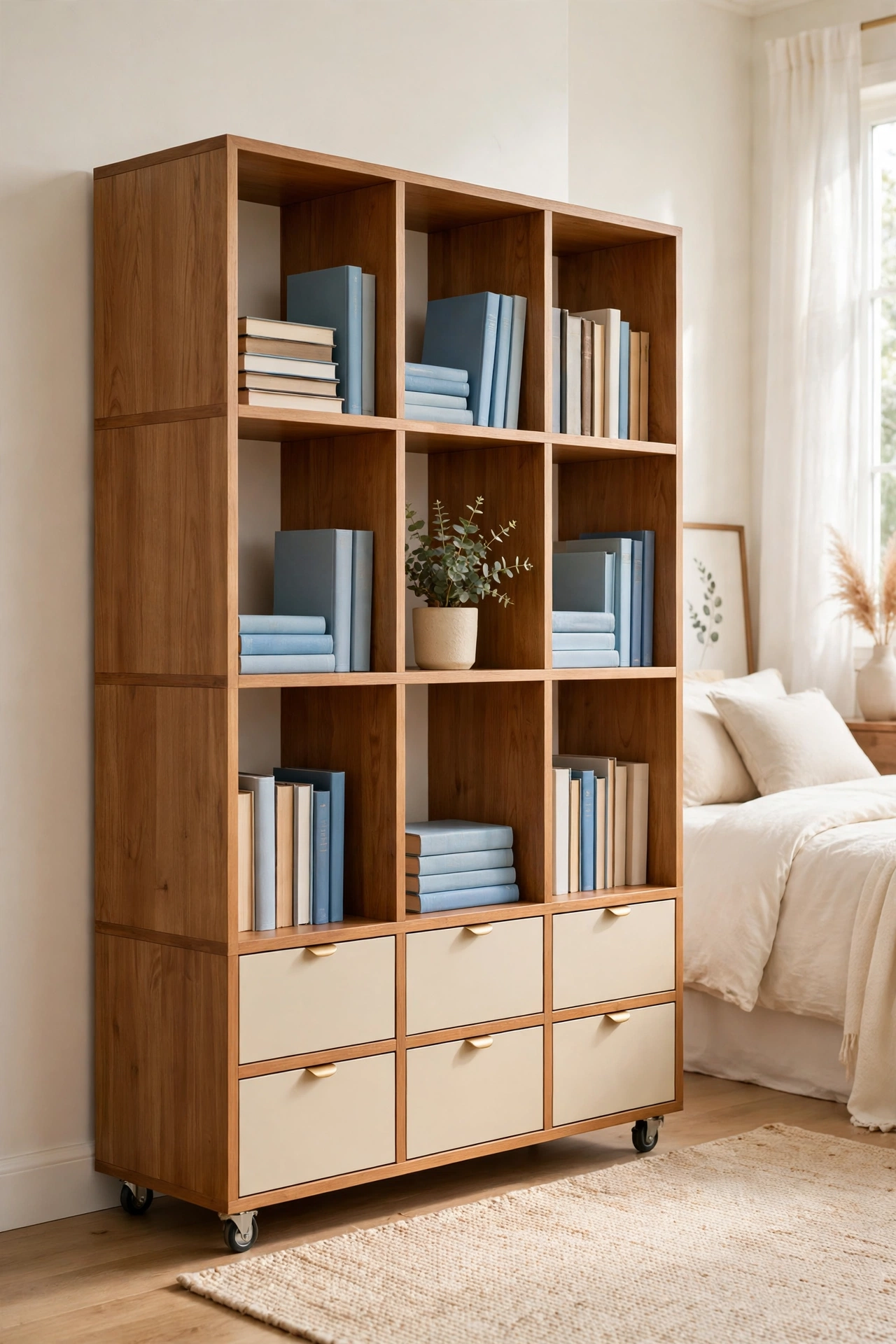
9. Use a Tall Bookcase for Vertical Bedroom Storage
A tall grid-style bookcase makes the most of vertical space that usually goes unused above low furniture. Segmented cubbies hold books, files, and baskets upright and within easy reach, while the slim footprint leaves floor space free. The structured look suits minimalist and modern bedrooms especially well.
Place the heaviest books on the lowest shelves and lighter items higher up for safety. Mix closed baskets with open shelves so the bookcase holds both display items and hidden clutter. Anchor the bookcase to the wall so it stays steady, especially in a room used by children.
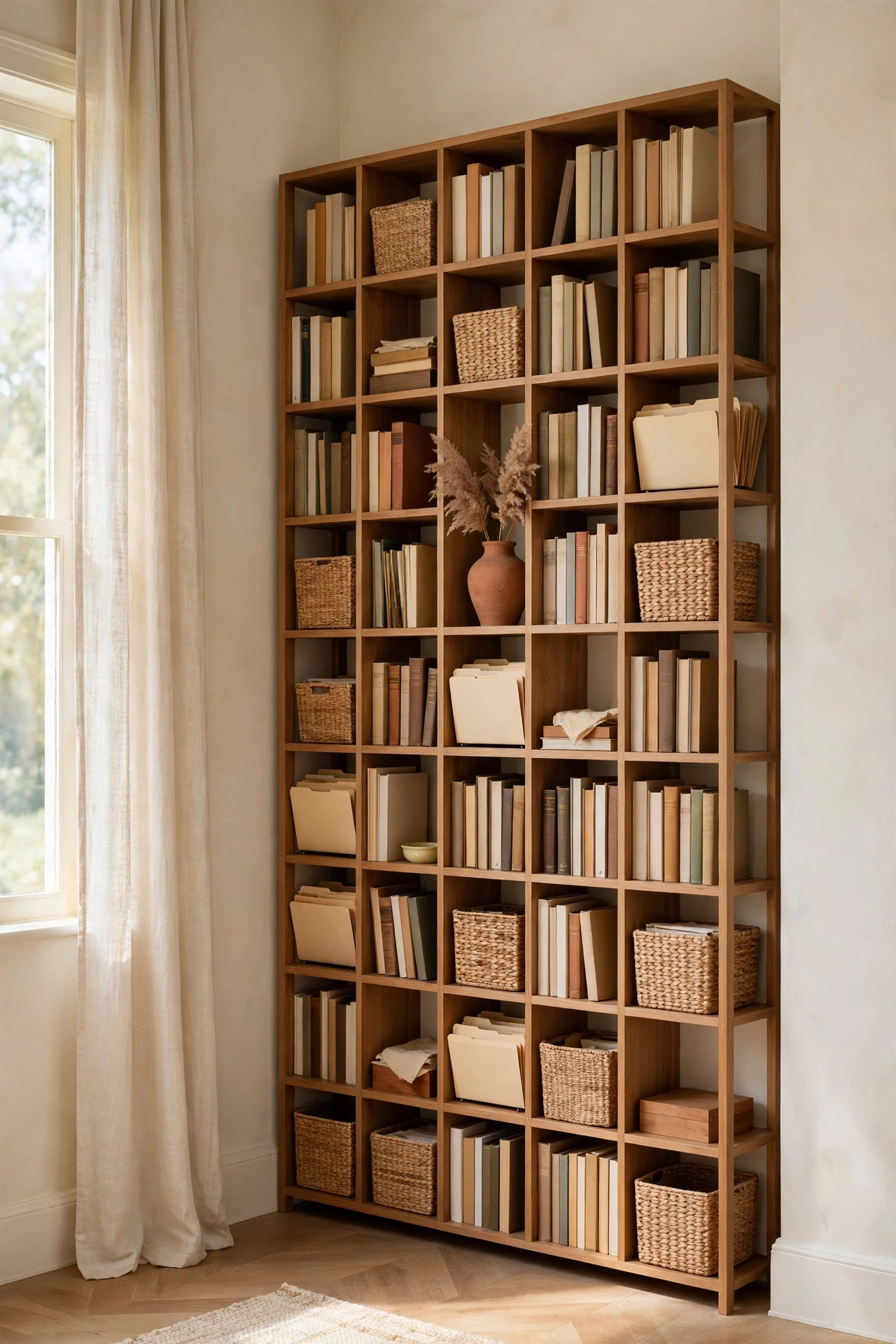
10. Hide Clutter in a Basket Cubby System
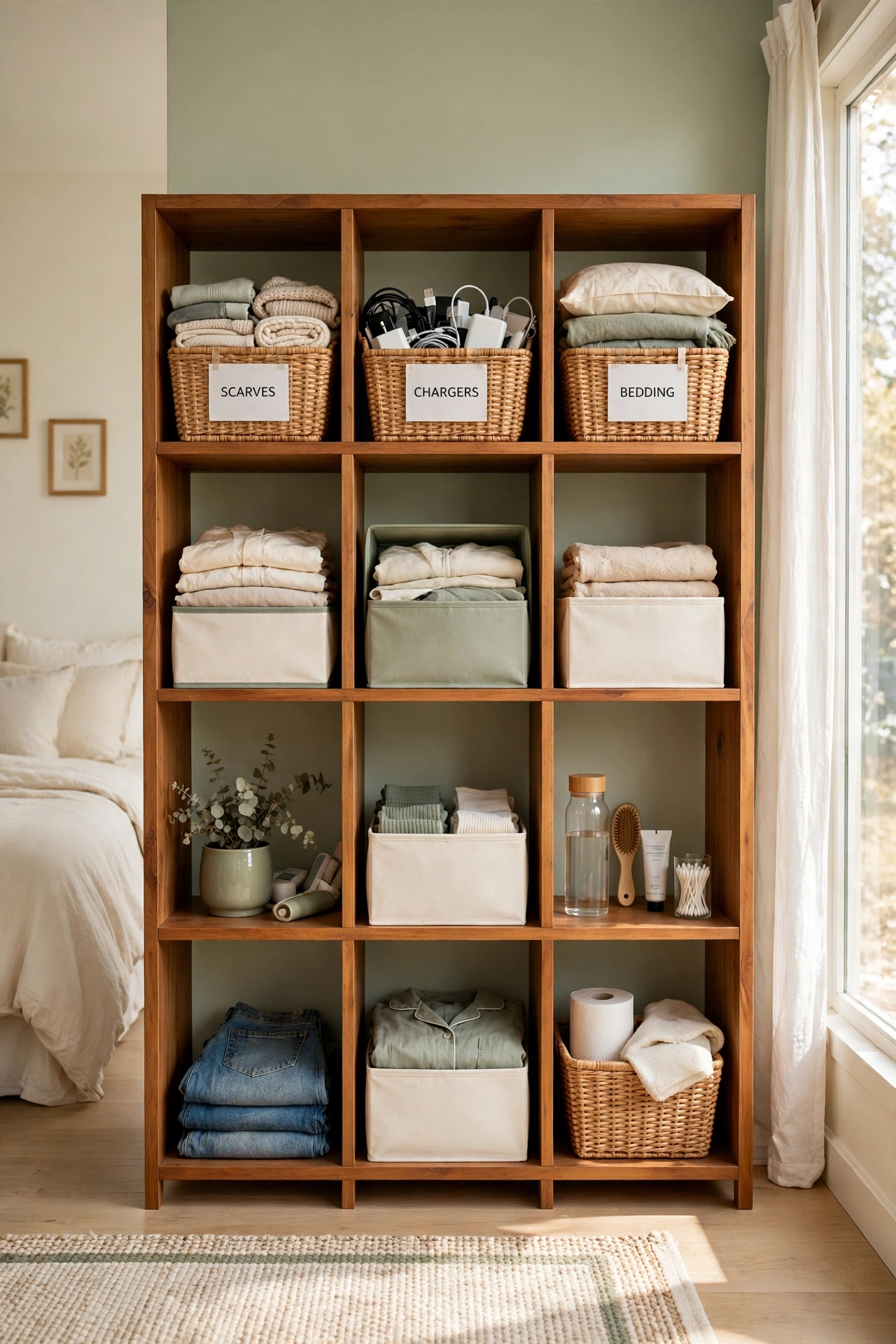
A grid cubby system filled with baskets gives every category in the bedroom its own tidy container. Open woven baskets suit daily essentials that you grab often, while box-style baskets hold larger items that you want fully hidden. The result looks polished even when the baskets are full.
Label each basket with its contents, such as scarves, chargers, or spare bedding, so everyone in the household can find things and put them back. Keep one basket empty as a buffer for items that arrive during the week. A cubby system works well in shared bedrooms because each person can claim their own row.
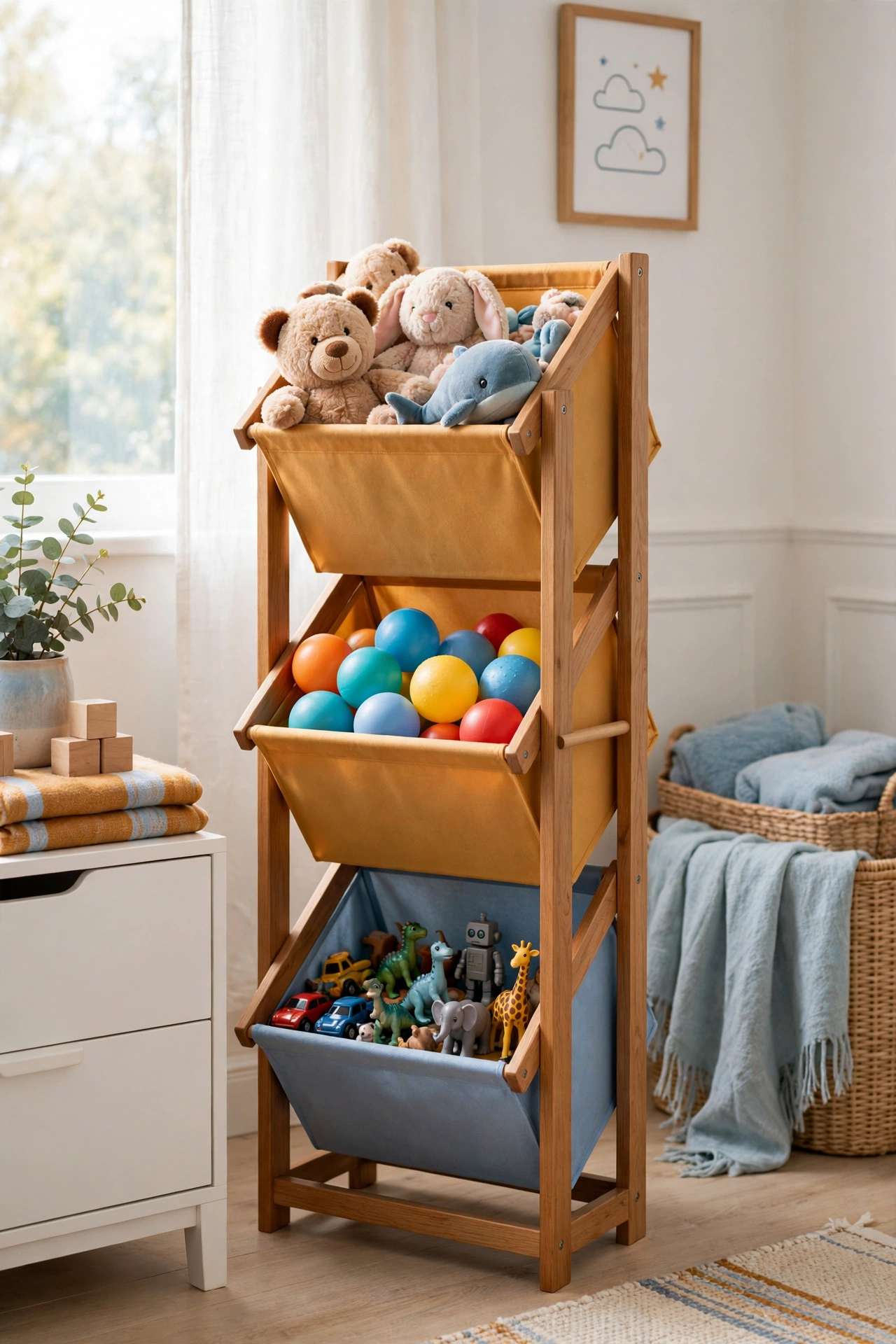
11. Give Kids a Toy Bin Tower for Easy Cleanup
A tiered toy bin tower turns cleanup into a game that children can manage on their own. Angled bins showcase stuffed animals, balls, and figures at the perfect height for small hands to reach. The open compartments make it obvious where each toy belongs, so tidying up feels less like a chore.
Sort toys by type, with one bin for soft toys, one for building pieces, and one for figures and vehicles. Add a picture label to each bin so children who cannot read yet still know where things go. A sturdy tower keeps the bedroom floor clear for play and makes the morning routine faster.
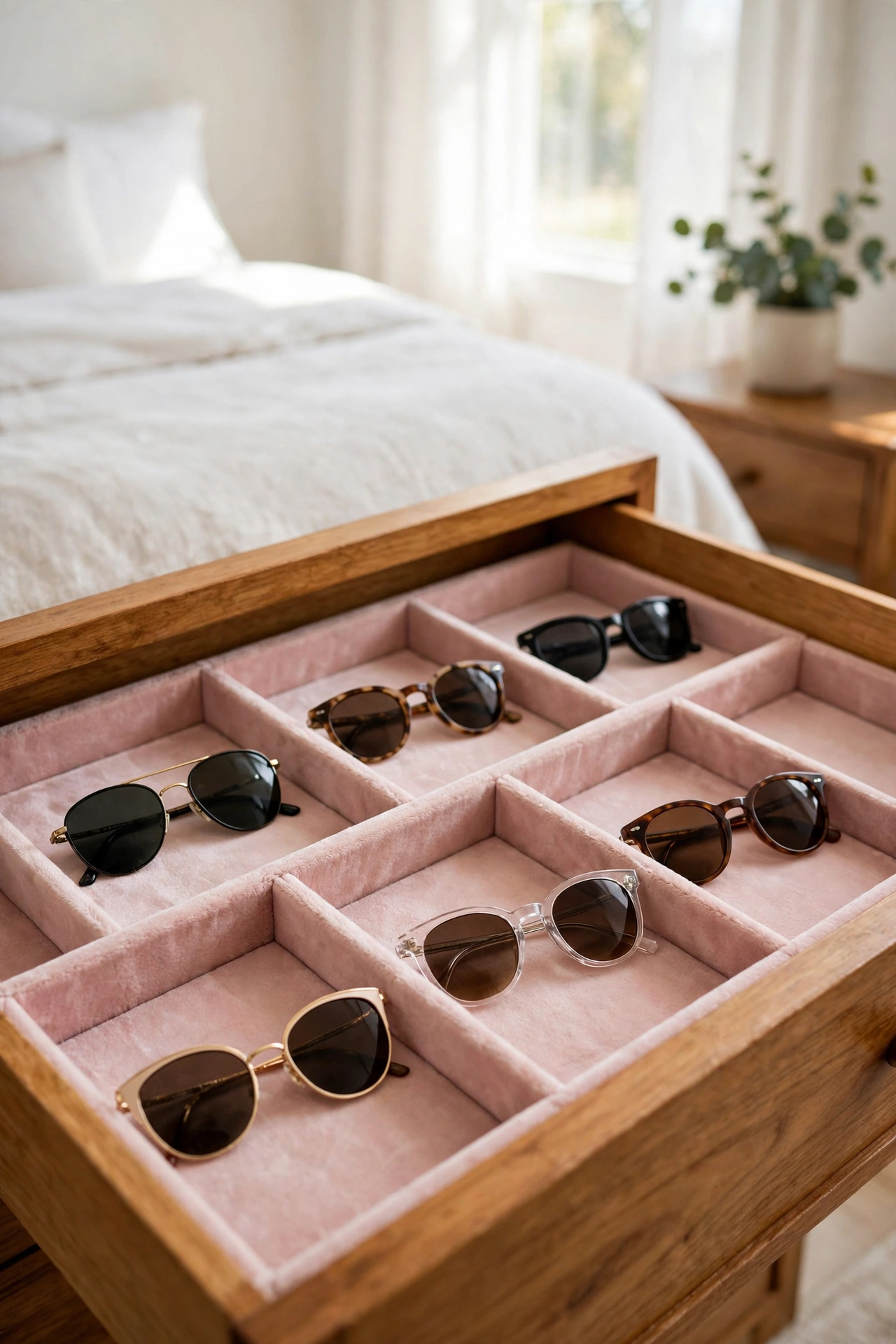
12. Protect Sunglasses in a Divided Drawer
A divided drawer with velvet-lined compartments keeps every pair of sunglasses safe from scratches and tangles. Each pair gets its own slot, so you can see all your styles at a glance and choose one without digging. The structured layout protects delicate frames far better than a pile in a drawer.
Sort the compartments by style, with everyday pairs at the front and special occasion pairs at the back. Wipe the velvet lining with a dry cloth now and then to keep dust from settling on the lenses. A dedicated sunglasses drawer also frees the dresser top from scattered cases and frames.
13. Tuck a Low Cubby Unit Beneath the Bed Frame
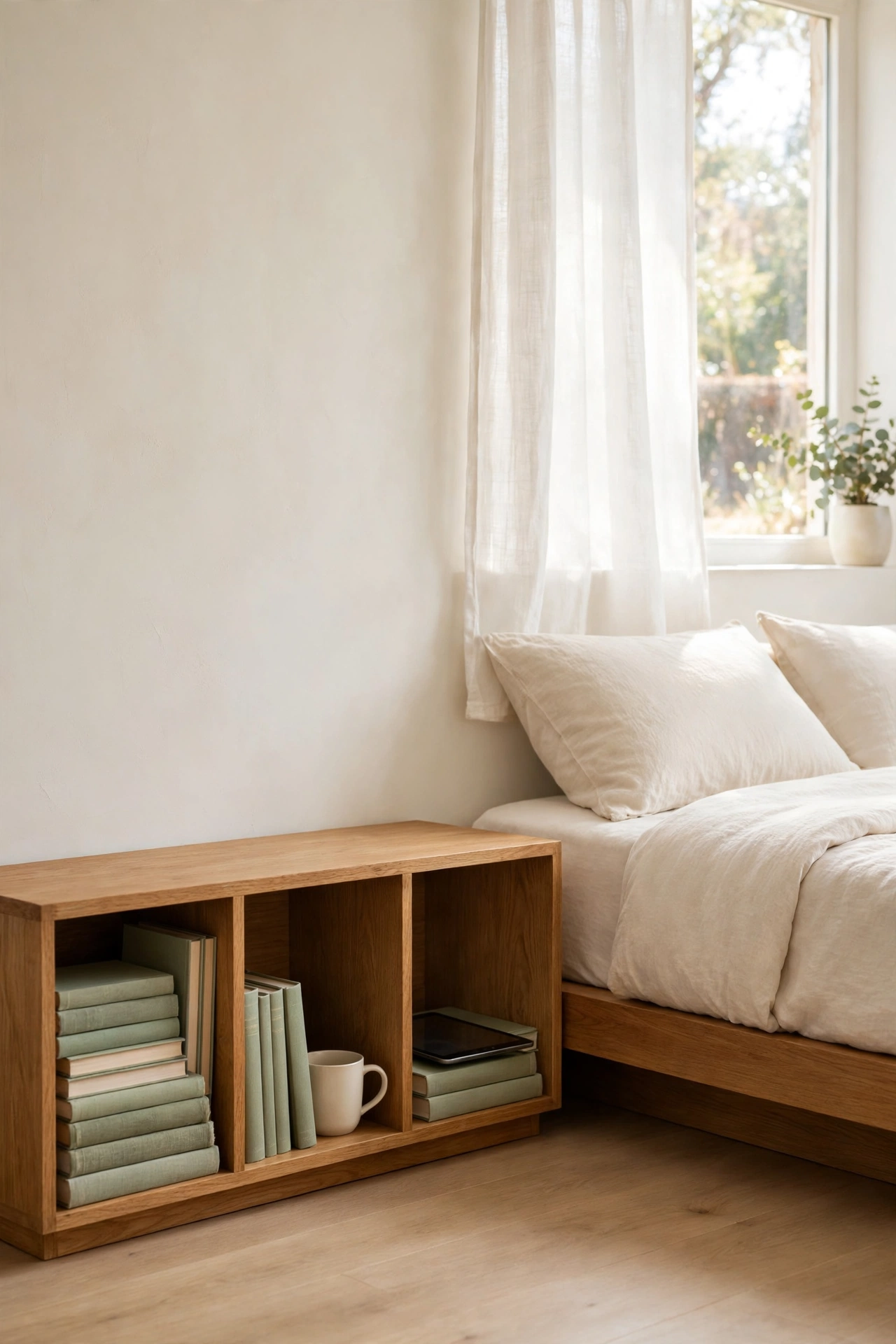
A low-profile cubby base slides partly under the bed and holds books, gadgets, and a morning mug within arm’s reach. The open compartments replace a bulky nightstand in tight rooms, and the minimalist shape keeps the bedside area feeling open. It is a clever way to add storage without adding furniture that crowds the room.
Keep only true bedside essentials in the cubbies, such as a book, a charger, and a glass of water. If the cubbies start collecting random items from other rooms, clear them out during the weekly tidy. A low cubby unit works best beside a bed that sits close to the floor.
14. Organize Beauty Essentials on a Vanity Pegboard
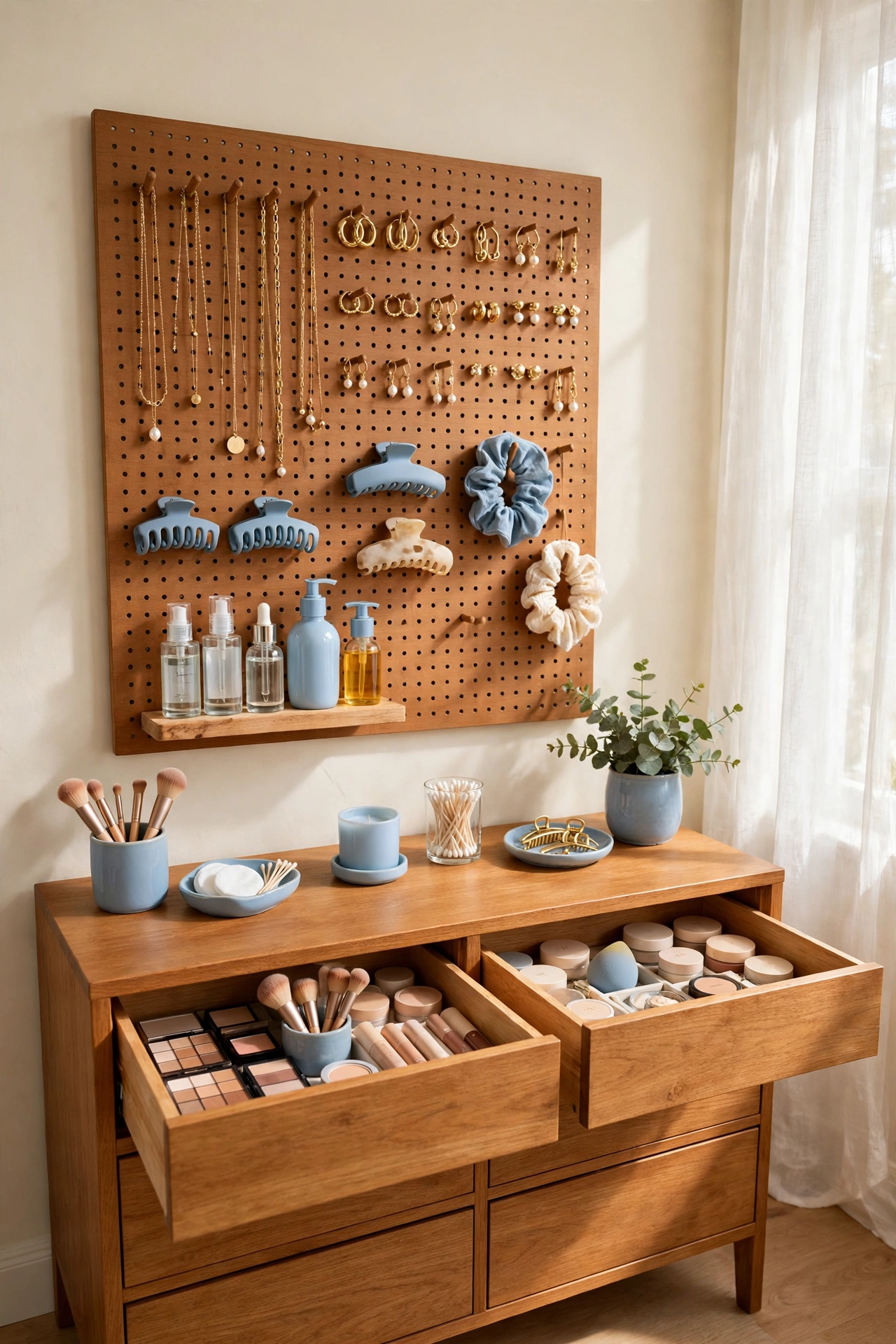
A customizable pegboard above the vanity turns the wall into a beauty station where everything stays visible and organized. Hooks hold jewelry and hair ties, small shelves hold skincare bottles, and a shelf unit below keeps makeup in neat drawers. The vertical setup frees the vanity surface for the items you use while getting ready.
Arrange the pegboard by routine order, with daily skincare at eye level and occasional items higher up. Wipe down the board and shelves weekly, since makeup dust and hair products build up fast. A vanity pegboard brings the same flexible logic as a desk pegboard to the getting-ready corner of the bedroom.
15. Add a Slim Fabric Drawer Tower for Extra Storage
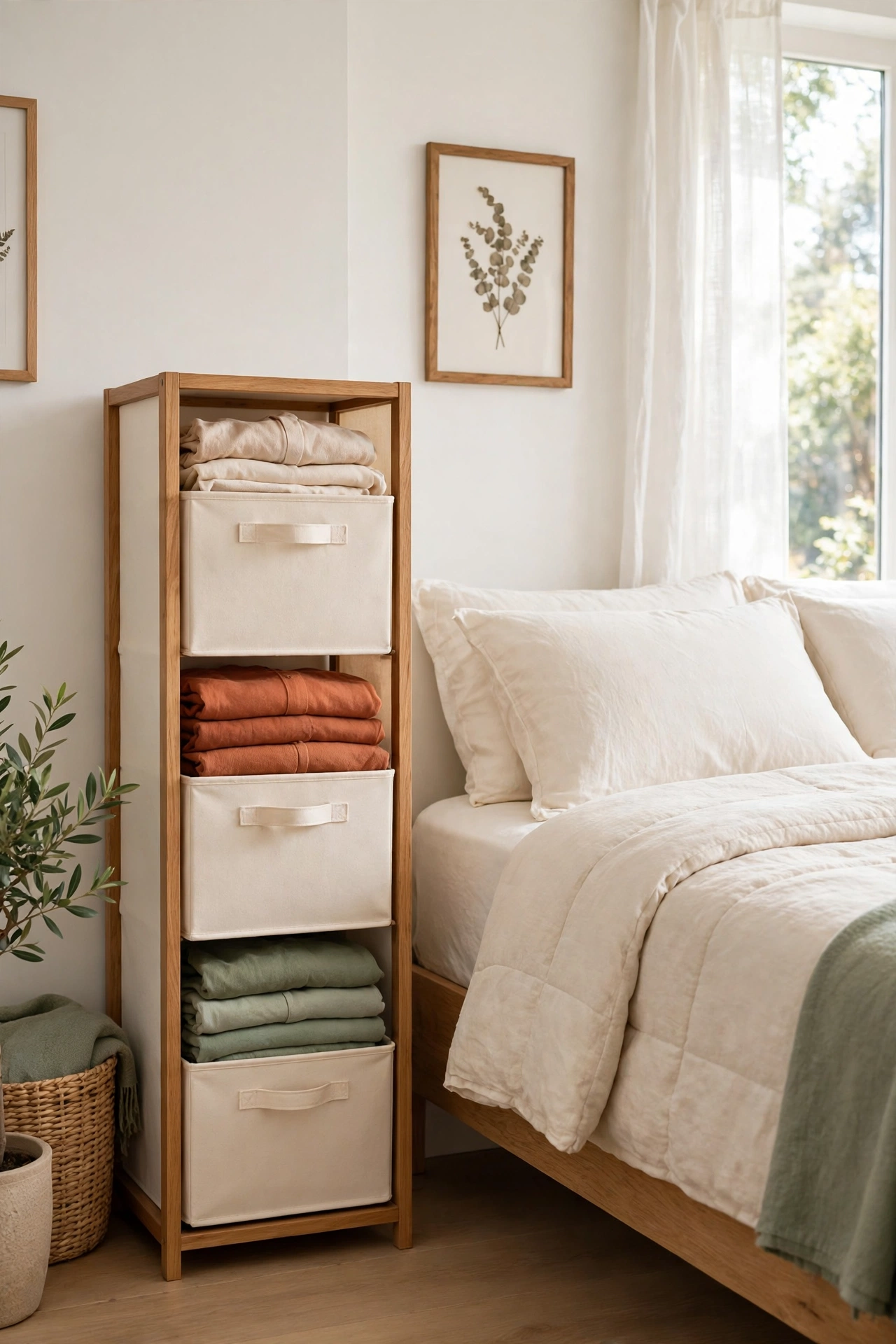
A slim fabric drawer unit adds hidden storage to narrow gaps where a full dresser will not fit. Soft-textured bins slide in and out easily, holding clothes, accessories, or stationery, while the wooden frame adds warmth to the room. The lightweight build makes it easy to move when you rearrange the bedroom.
Assign one bin per category and keep the bins fully filled so they hold their shape on the frame. Place the tower near the spot where its contents get used, such as beside the bed for sleepwear or near the desk for supplies. A hamper placed close by keeps dirty clothes out of the clean storage, and these laundry hamper organization ideas show how to sort clothes before wash day.
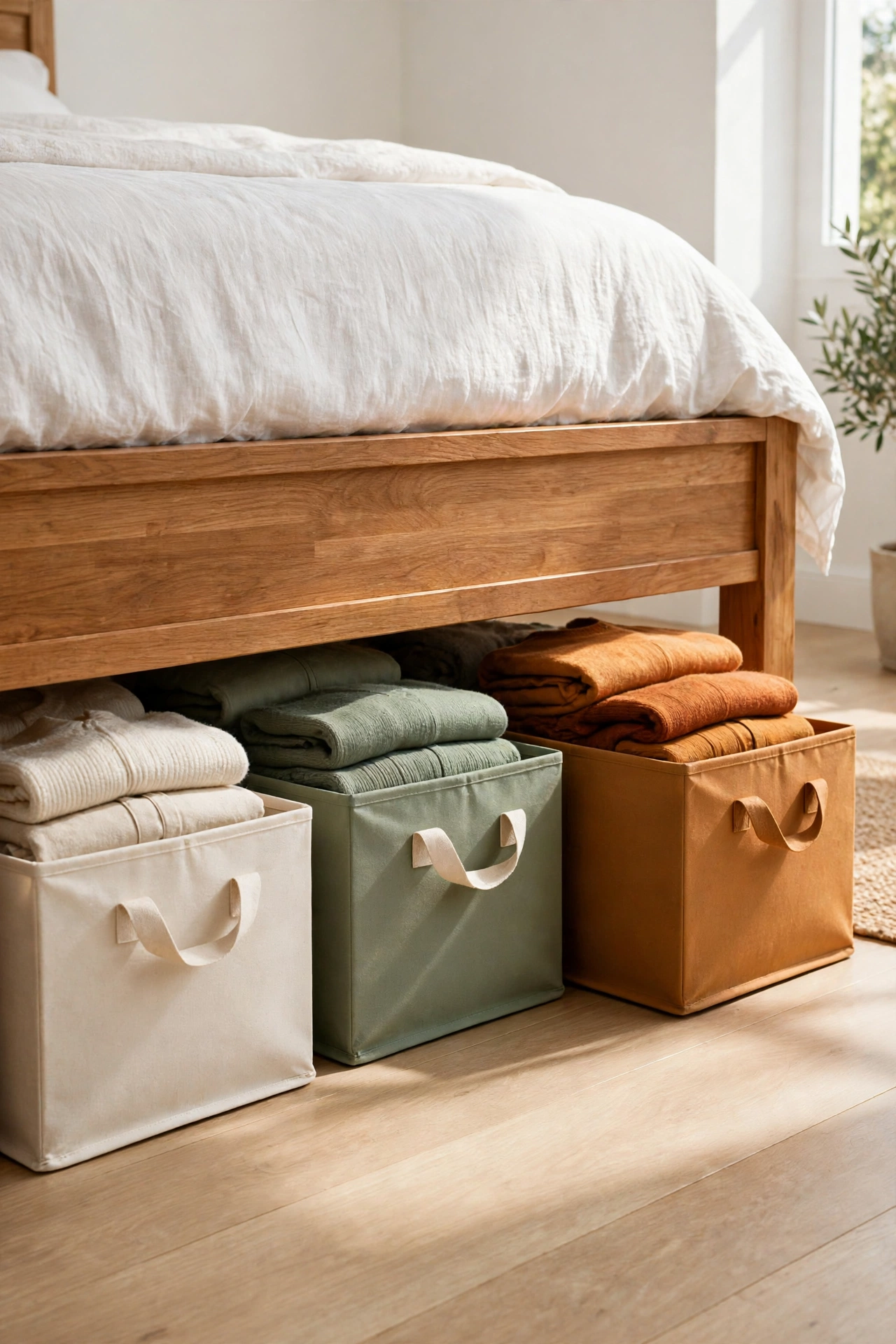
16. Slide Foldable Cubes Under the Bed
Foldable storage cubes slide neatly under the bed and hold seasonal clothes or spare bedding in soft-sided containers with sturdy handles. The cubes fold flat when not in use, so you can store them away during the seasons you need them least. Their upright shape makes the most of the low clearance under most beds.
Fill each cube with one category, such as winter sweaters or guest bedding, and label the handle end so you can read it while the cube is still under the bed. Pull the cubes out twice a year to air the contents and check for anything you no longer need. Under-bed cubes are a budget-friendly alternative to built-in drawers.
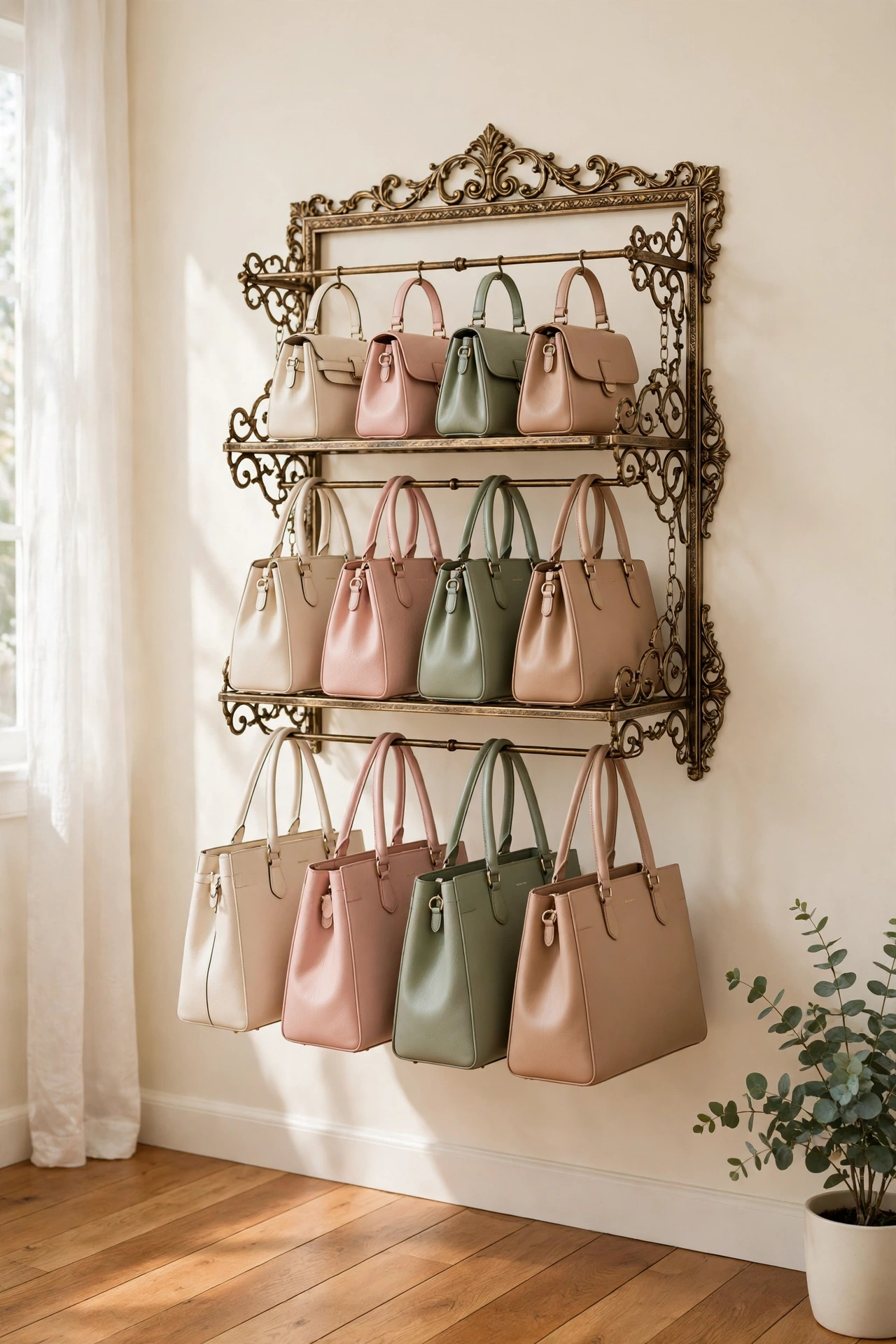
17. Display Handbags on a Hanging Purse Rack
A multi-tier hanging rack keeps a handbag collection upright, visible, and easy to browse. Bags sorted by size or color become a curated display on the bedroom wall, and the open shelving saves the closet for clothes. Ornate metal sides turn practical storage into a feature that suits the room.
Hang the bags you use most often at eye level and store rarely used bags on the highest tier. Stuff each bag with tissue paper so it keeps its shape between uses. A purse rack also stops bags from being stacked on the floor, where straps tangle and leather gets scuffed.
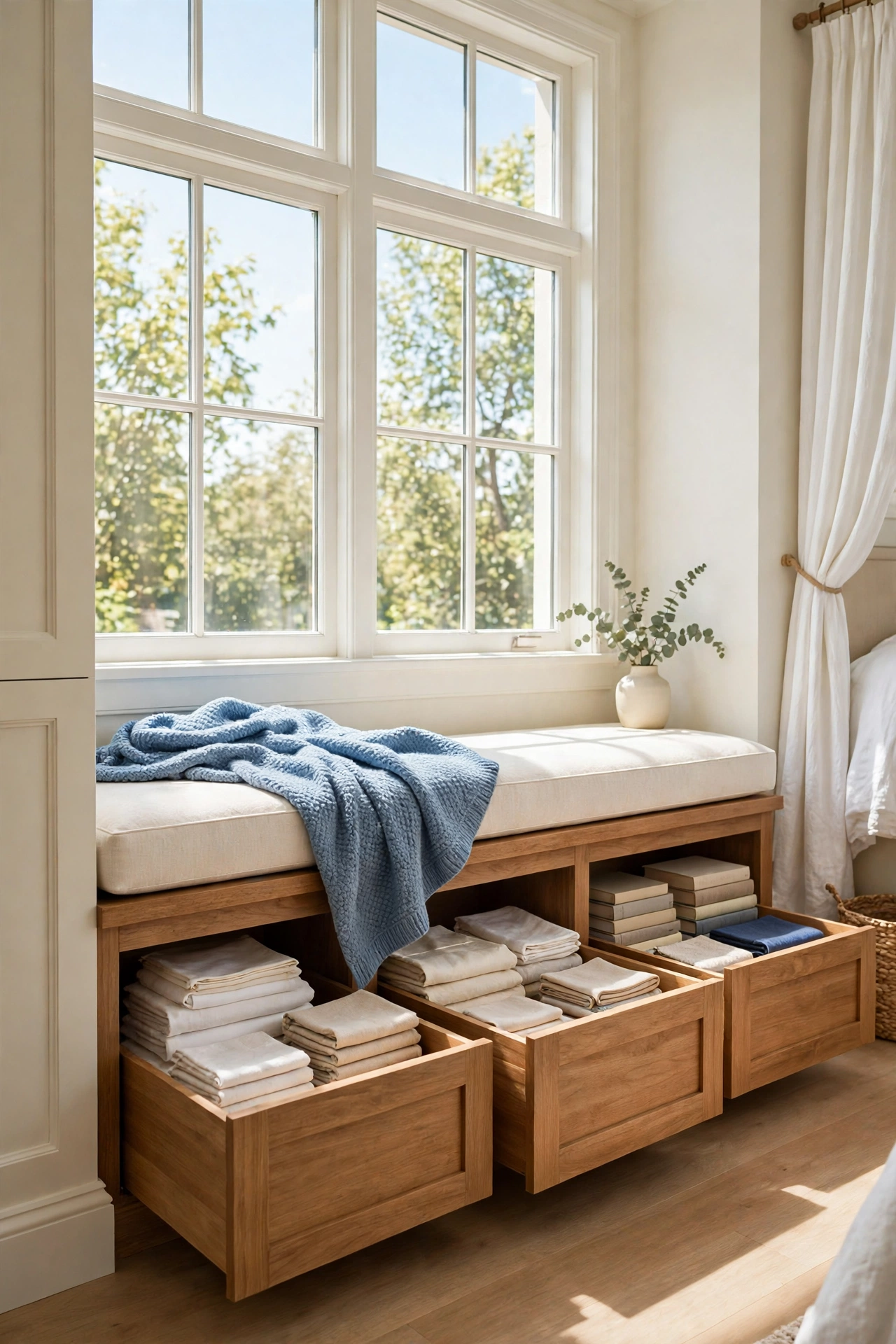
18. Build Storage Into a Window Bench
A built-in storage bench under the window pairs a comfortable reading seat with deep drawers underneath. The drawers hold linens, books, or spare blankets, while shelves around the bench complete a polished, built-in look. The window nook becomes both a retreat and a storage workhorse.
Keep a cushion and a folded throw on the seat so the bench invites you to sit, and keep the drawers for items that belong in the bedroom rather than overflow from other rooms. If the bench has no drawers, slide labeled bins underneath for the same effect. Window bench storage is a lasting upgrade that adds value to the whole room.
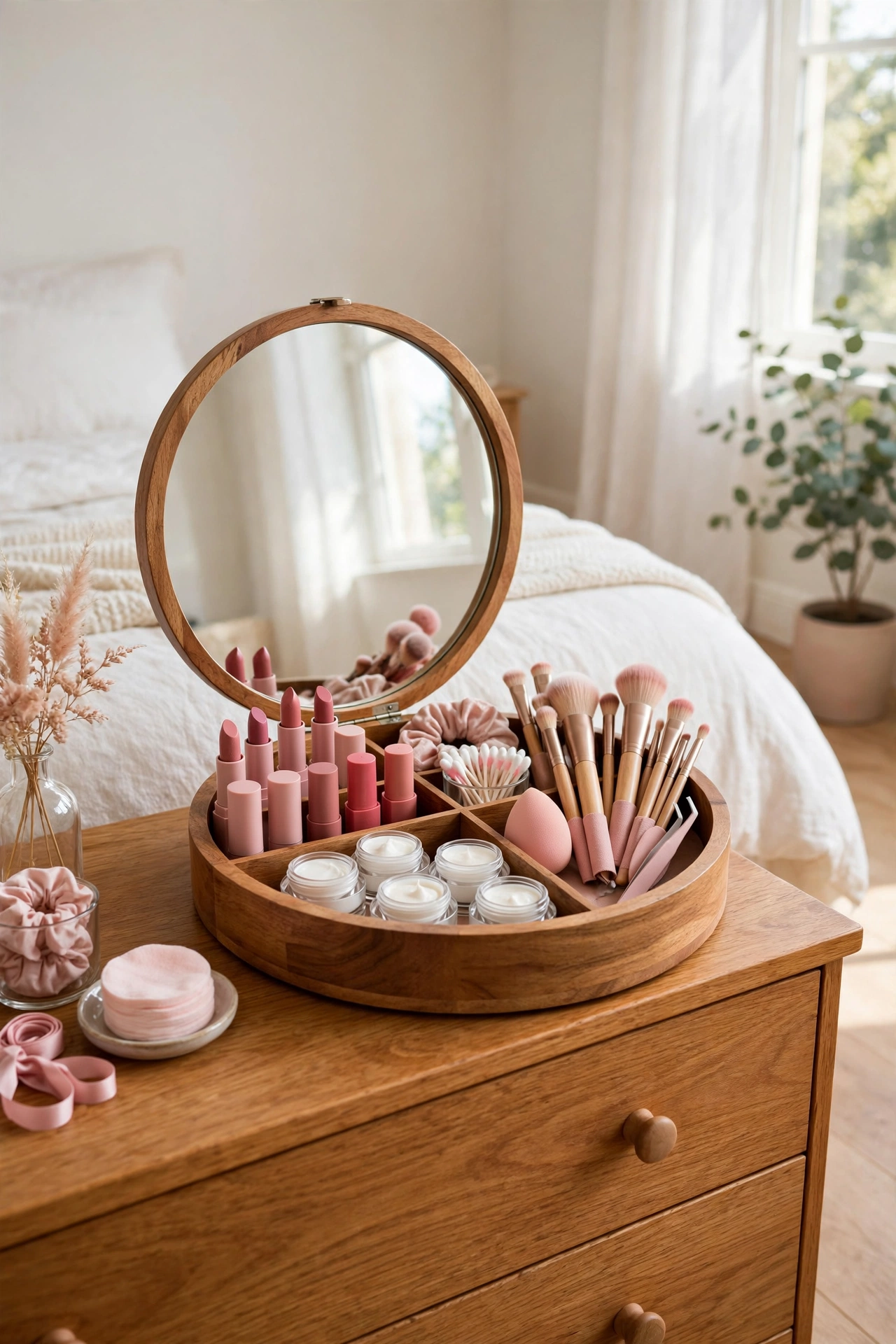
19. Keep Vanity Essentials in a Mirror Organizer
A round vanity organizer with a mirror lid keeps lipsticks, brushes, and creams in segmented sections inside one compact, portable unit. The attached lid flips up into a standing mirror, so you can do your routine anywhere in the bedroom without clearing the whole vanity. Small spaces benefit most from a tool that does two jobs at once.
Sort the sections by step, with brushes in one, lip products in another, and creams in a third, so your routine flows in order. Clean the mirror and the sections weekly to keep makeup residue from building up. When guests visit, the whole organizer closes and tucks into a drawer in seconds.
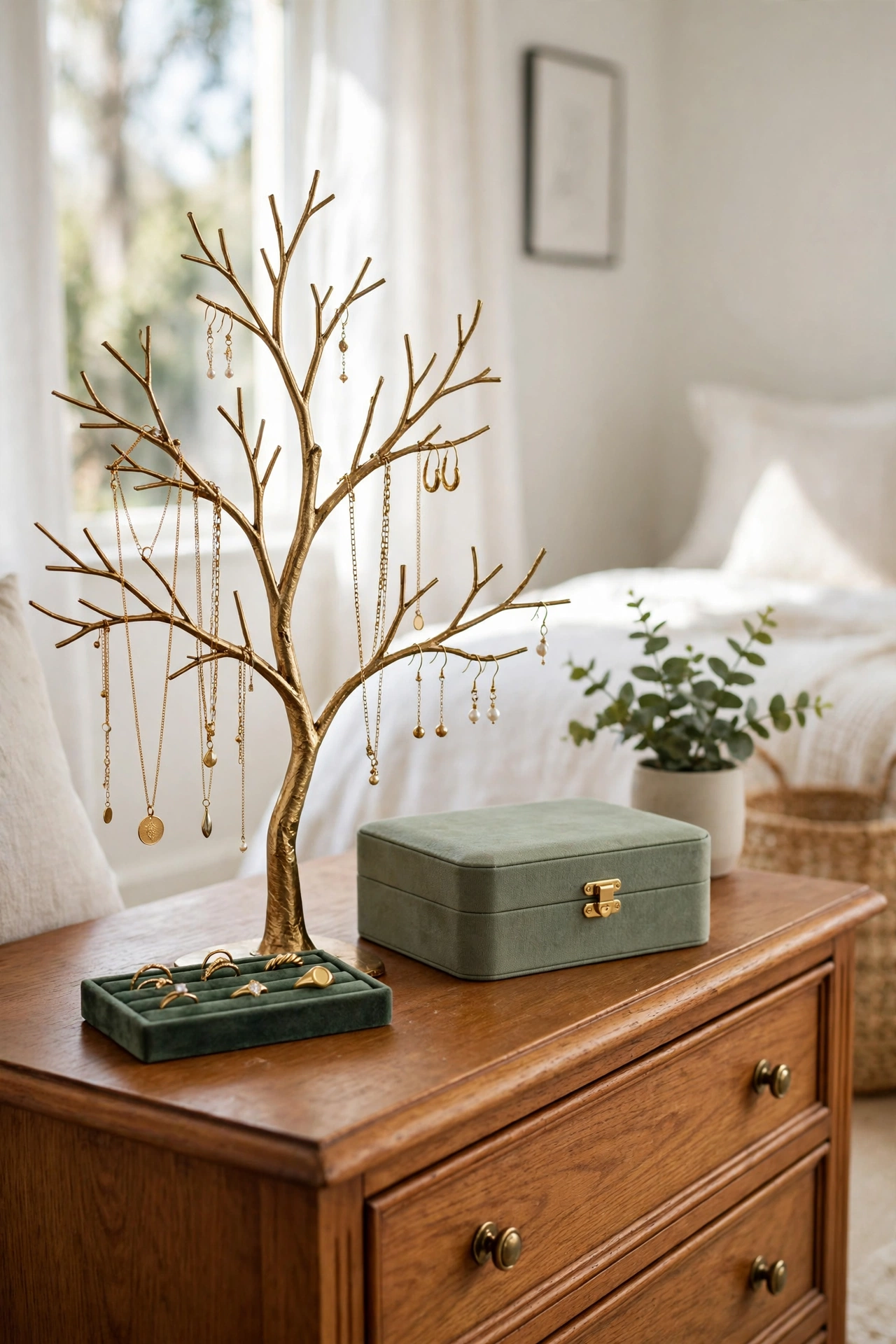
20. Hang Jewelry on Branch-Style Jewelry Trees
Branch-style jewelry trees turn necklaces, earrings, and rings into a display that keeps every piece tangle free and visible. Each branch serves as a hook, while trays at the base hold extra pieces and watches. The tree shape adds a whimsical touch to the dresser or vanity while doing serious organizational work.
Hang longer necklaces on the lowest branches so they never tangle with shorter pieces above. Keep the tree away from direct sunlight, which can fade stones and tarnish metal over time. For a fuller system that covers every type of accessory, see these jewelry organization ideas for drawers, walls, and travel storage.
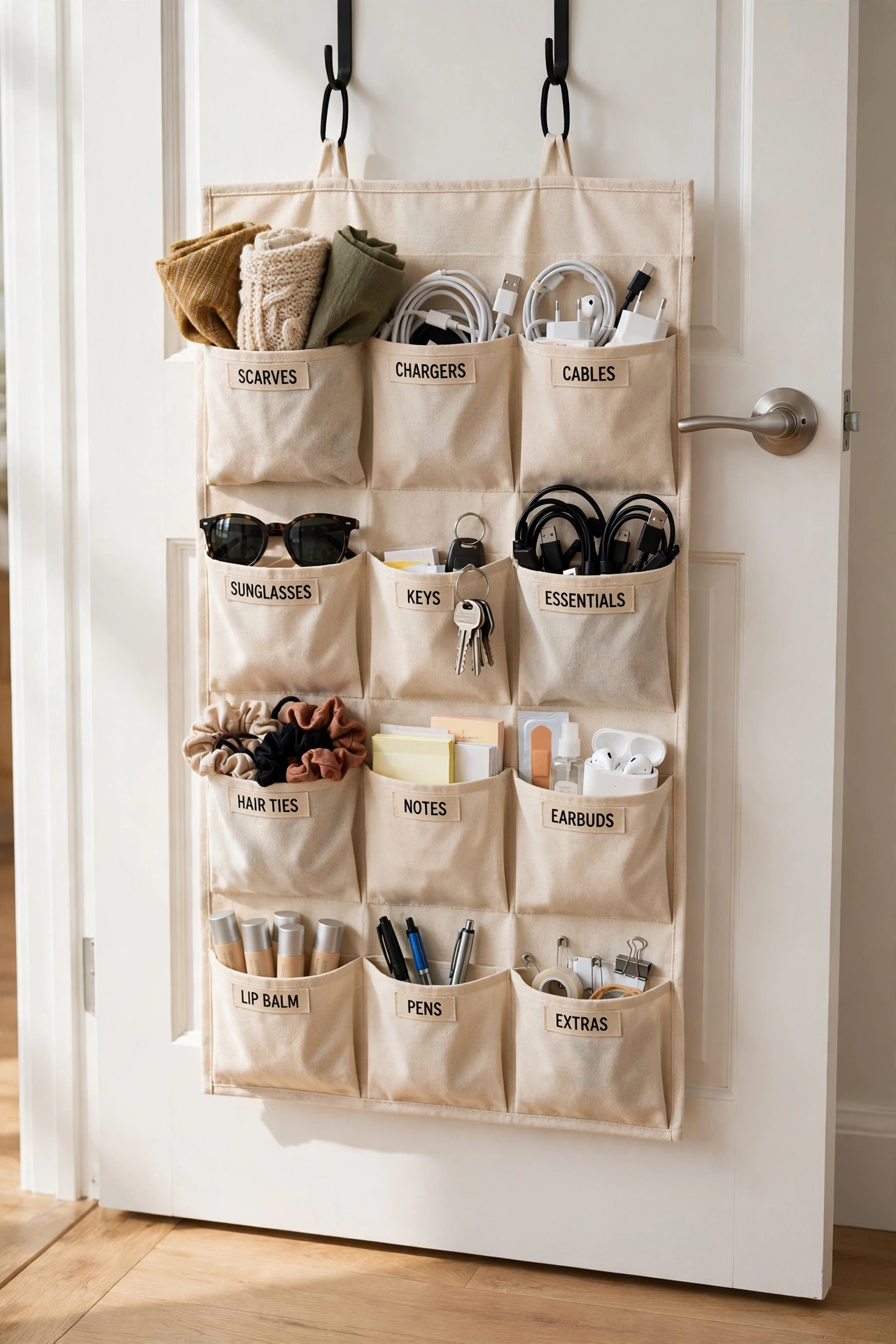
21. Use the Back of the Door for Pocket Storage
A hanging fabric organizer on the back of the bedroom door turns hidden space into storage for small essentials. Labeled pockets hold scarves, small tools, spare chargers, and other items that usually scatter across surfaces. The organizer is lightweight, needs no tools, and works on almost any door.
Label each pocket so everyone knows where things belong, and check the pockets monthly for items that have outlived their use. Keep heavy items out of the pockets, since weight can strain the door hinges over time. Door pocket storage is a fast win for shared and compact bedrooms alike.
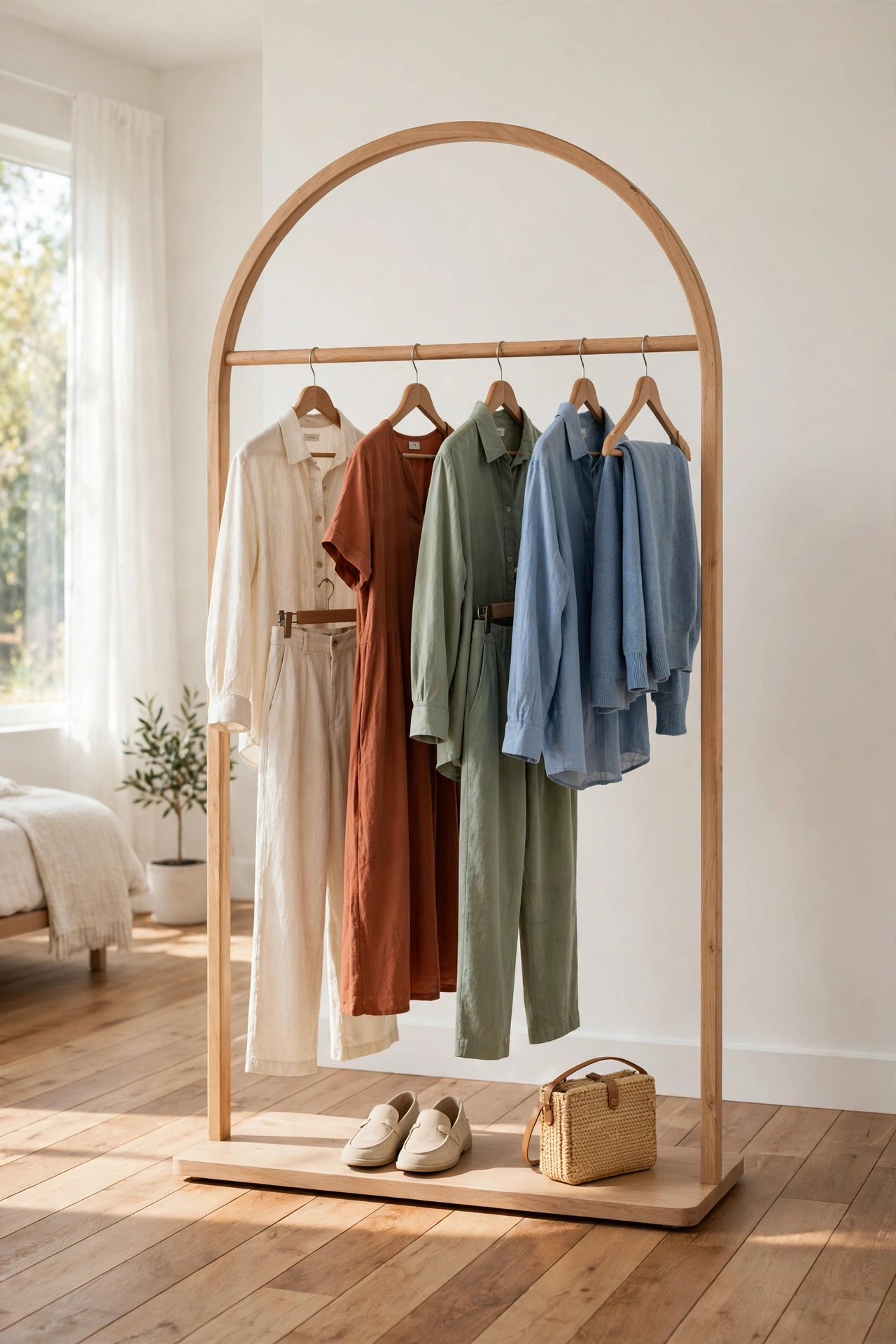
22. Keep Go-To Outfits on a Minimalist Clothing Stand
A minimalist garment rack with a slim arched frame keeps your go-to outfits neat, visible, and wrinkle free. The open display makes choosing tomorrow’s outfit easy, and a base platform below holds bags or shoes. The rack suits bedrooms where the closet is small or shared.
Limit the rack to five or six outfits at a time so it stays a curated display rather than a second closet. Rotate the outfits weekly to match the weather and your plans. A clothing stand also gives you a landing spot for the outfit you plan to wear the next day.
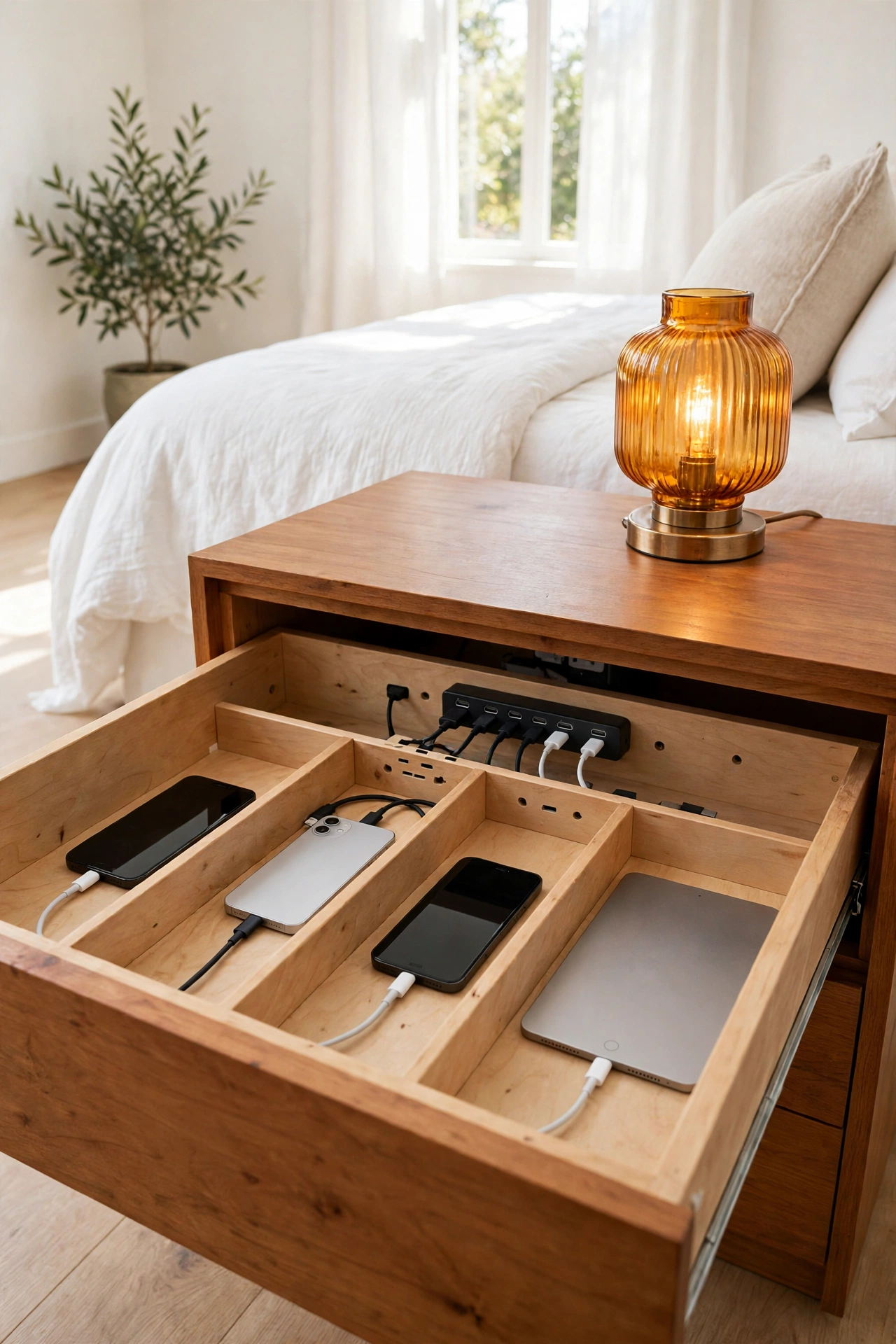
23. Hide Cords and Devices in a Charging Drawer
A built-in charging drawer hides phones, tablets, and cords inside a nightstand or dresser drawer while everything stays fully powered. Integrated cable ports keep cords organized and out of sight, so the surfaces stay clear and the room looks tidy even while devices charge. Tech-heavy bedrooms benefit the most from this clean solution.
Give each device its own charging cable and its own spot in the drawer so cords never tangle. Charge devices overnight with the drawer slightly open if the manufacturer advises airflow. A charging drawer ends the nightly sprawl of cables across the nightstand for good.
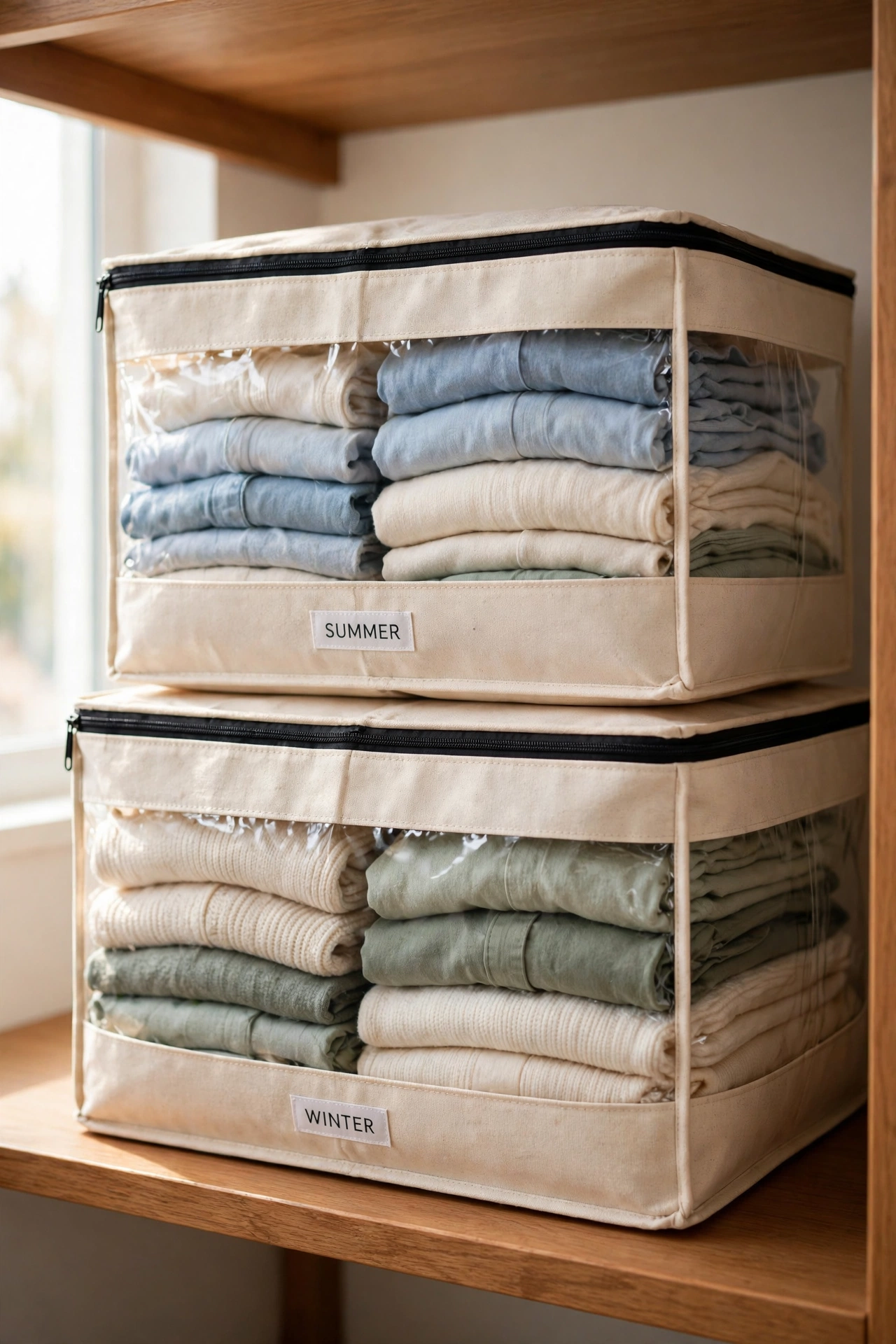
24. Pack Off-Season Clothes in Fabric Storage Bags
Stackable fabric storage bags with clear windows keep off-season clothes and linens dust free and neatly compressed. The zippered closure protects contents from dust, while the clear window lets you identify what is inside without opening the bag. The bags fit under beds, on closet shelves, and inside wardrobes.
Wash and fully dry every item before packing it away, since trapped moisture causes musty smells. Label each bag with the season and the category, such as winter sweaters or summer bedding. Rotate the bags twice a year, and use the swap as a chance to donate anything you did not wear.
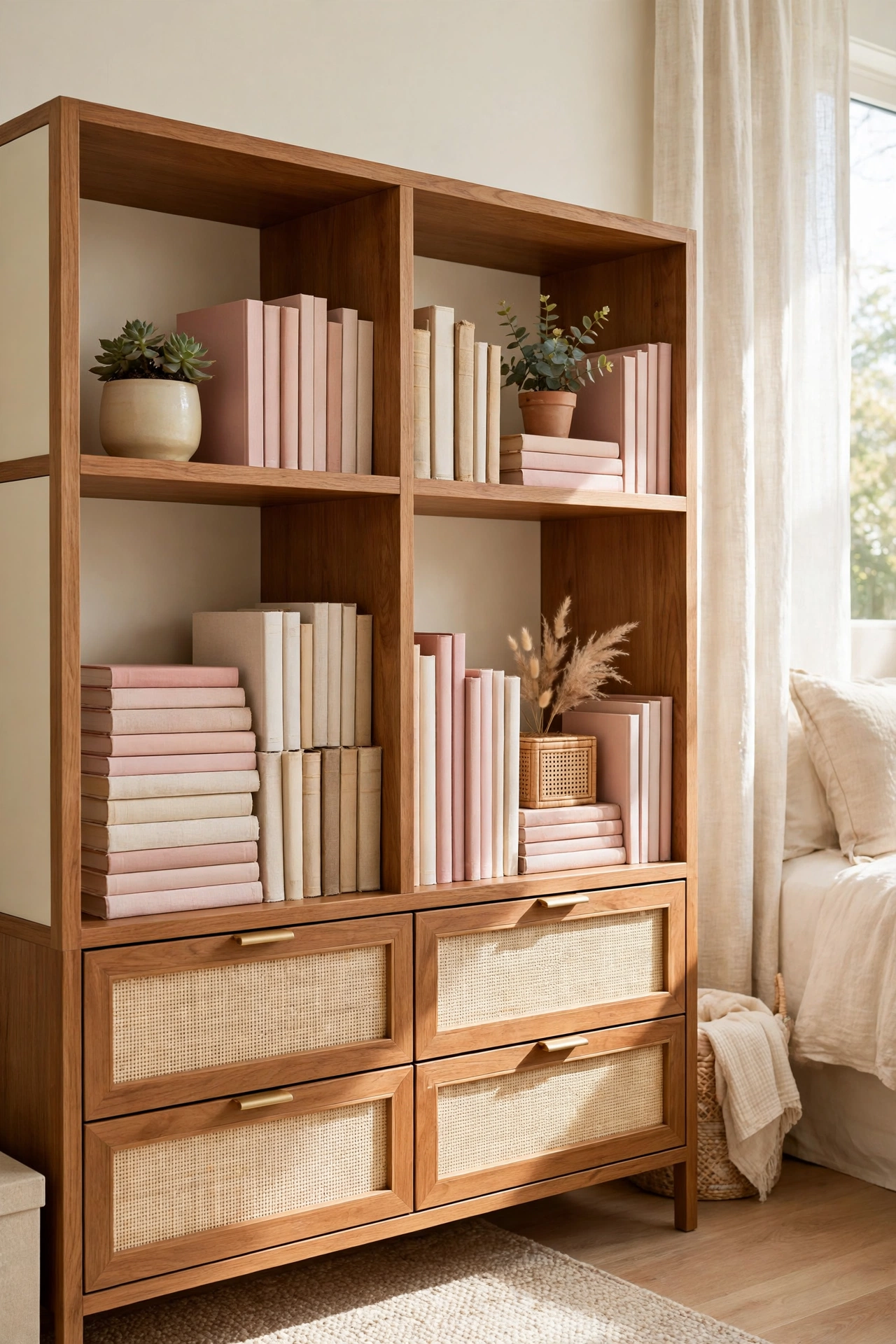
25. Mix Open and Closed Storage in a Modular Cube Unit
A multi-cube shelving unit with a mix of open cubbies and enclosed drawers balances display and concealment in one piece. Open cubbies show off books and favorite items, while closed drawers hide clutter that you want out of view. The structured grid brings a polished feel to any bedroom wall.
Place the items you use daily in the open cubbies at arm height, and reserve the drawers for spare supplies and seasonal items. Keep the top surface mostly clear, with one or two decorative pieces at most. A modular unit grows with your needs, since you can rearrange the cubes as the room changes.
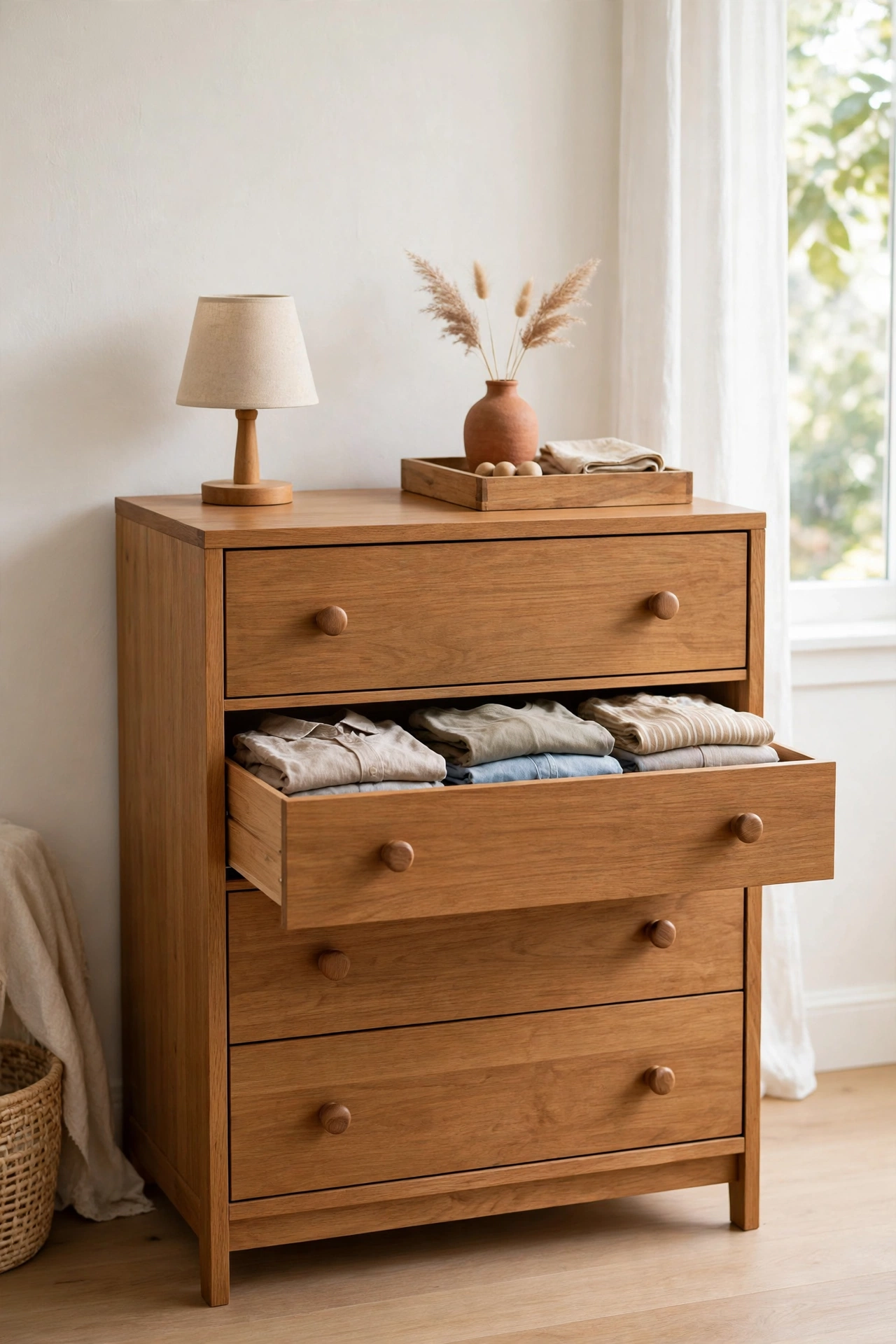
26. Choose a Simple Four-Drawer Dresser
A simple four-drawer dresser with clean lines and wooden knobs is a timeless bedroom workhorse. The spacious drawers hold clothes, linens, or accessories in generous compartments, while the top surface stays free for a lamp, a tray, or a framed photo. Understated design means the dresser suits almost any bedroom style.
Dedicate one drawer per category, such as tops, bottoms, sleepwear, and accessories, so getting dressed follows the same order every day. Use drawer dividers inside the widest drawer to stop categories from mixing. A well-organized dresser makes the whole bedroom feel intentional.
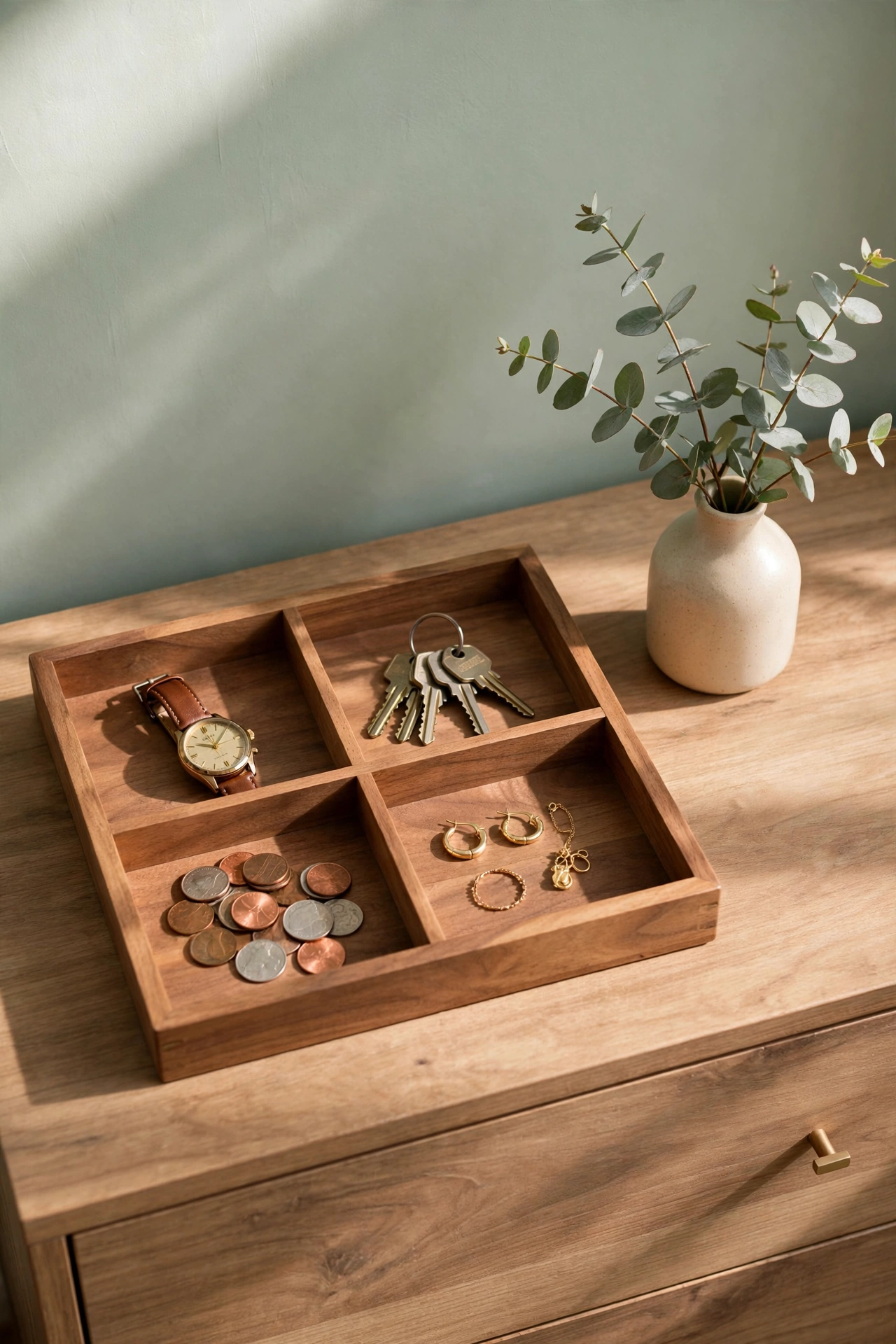
27. Corral Dresser-Top Clutter With a Landing Tray
A landing tray on the dresser top gives loose items a defined home the moment you walk into the bedroom. Keys, coins, a watch, and daily jewelry land in the tray instead of spreading across the whole surface. The tray edge acts as a natural boundary that keeps clutter contained.
Choose a tray large enough for daily items but small enough that it cannot become a dumping ground. Empty the tray every Sunday and return anything that belongs in another room. A tidy dresser top changes how the whole bedroom feels, because it is one of the first surfaces you see each morning.
28. Run a Ten-Minute Weekly Bedroom Reset
A ten-minute weekly reset keeps every system in this article working without a big overhaul. Set a timer, return stray items to their homes, fold anything left on the chair, clear the nightstand and dresser top, and straighten one drawer. The short time limit makes the habit easy to keep, even on busy weeks.
Pick the same day each week so the reset becomes automatic, and play music while you work to make it pleasant. If ten minutes feels too short, start with the surfaces only and add one drawer each week. Small weekly habits protect the bedroom from the slow creep of clutter better than any single storage purchase.
Conclusion
Bedroom organization is not about buying more furniture or chasing perfection. It is about giving every item a clear home, from the space under the bed to the back of the door, and keeping the systems simple enough to use every day. When the bedroom stays tidy, mornings run smoother and evenings feel calmer.
Start with the two or three ideas that solve your biggest clutter problems, and add more systems only when the first ones feel easy. A calm bedroom is built one habit at a time. For a nightly habit that keeps the whole home in order, these nightly reset routines will help you close each day with a tidy bedroom and a clear mind.
Frequently Asked Questions About Bedroom Organization Ideas
How do I start organizing a messy bedroom?
Start with the surfaces, because clearing the nightstand, dresser top, and floor gives you visible progress fast. Next, sort clothes into keep, donate, and discard piles before putting anything back. Then add one storage system at a time, beginning with the area that causes the most daily frustration.
What is the best way to organize a small bedroom?
Use vertical space and hidden space first, such as wall pegboards, tall bookcases, under-bed storage, and the back of the door. Choose furniture that does two jobs, like a storage bench or a cubby base. Keep only what you use weekly in the room, and move the rest to another storage spot.
How do I keep my bedroom organized every day?
Make the bed each morning, return items to their homes each evening, and run a ten-minute reset once a week. A landing tray on the dresser and a bedside caddy stop daily items from scattering. Habits matter more than containers, because even the best storage fails without a daily routine.
How often should I declutter bedroom drawers and closets?
Review drawers every three months and do a deeper edit twice a year when you rotate seasonal clothes. If a drawer is hard to close, it is holding too much. Remove anything you have not used in a full year, unless it is a true keepsake with a dedicated storage spot.
Where should I store off-season clothes in a bedroom?
Under-bed drawers, foldable cubes, and zippered fabric bags all keep off-season clothes clean and out of the way. Wash and dry items fully before packing, and label each container with the season and contents. Store the containers where you can reach them easily during the twice-yearly swap.

Hi, I’m Emily! I turn messy corners into cozy, organized spots. DreamNestDecor is where I share simple, practical home ideas — decor, organization, and small-space solutions that work in real life, not just in photos. Every idea here is carefully researched before it’s shared.