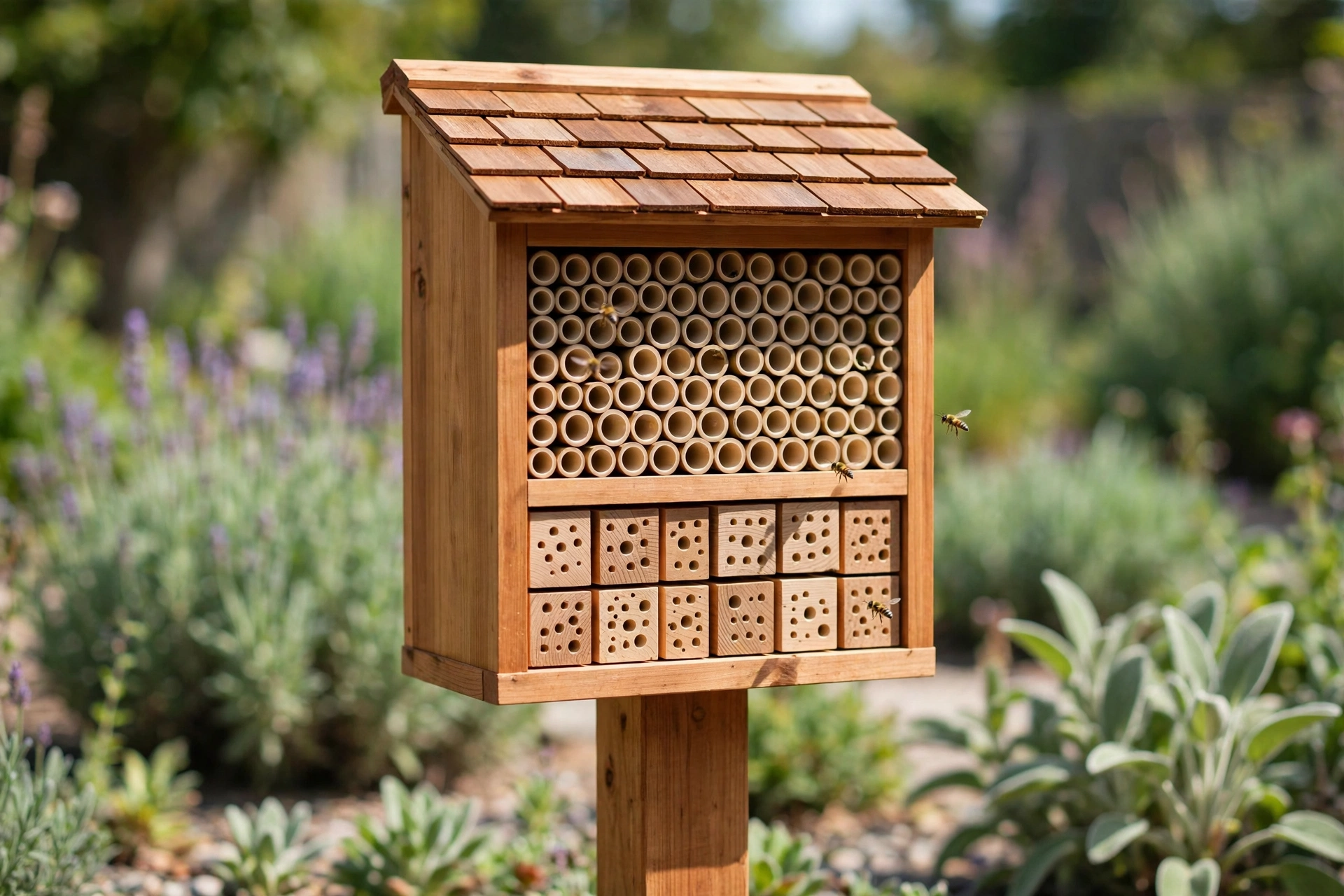
Picture this: it is a warm spring morning, and you step into your backyard to find small native bees slipping in and out of tiny round holes in a wooden frame on your fence. Each bee carries a bit of leaf or mud, seals a tube, and flies off to start the next one. That quiet work is the sign of a bee hotel doing exactly what it was built to do.
You do not need a large yard or advanced woodworking skills to welcome these gentle pollinators. A well built hotel gives solitary bees a safe place to nest, and it gives you a front row view of nature at work. These 28 backyard bee hotel ideas will help you choose the right design, material, and mounting style for your space, from a simple bamboo frame to a full multi-frame bee wall.
1. Start With a Classic Bamboo Tube Hotel in a Wooden Frame
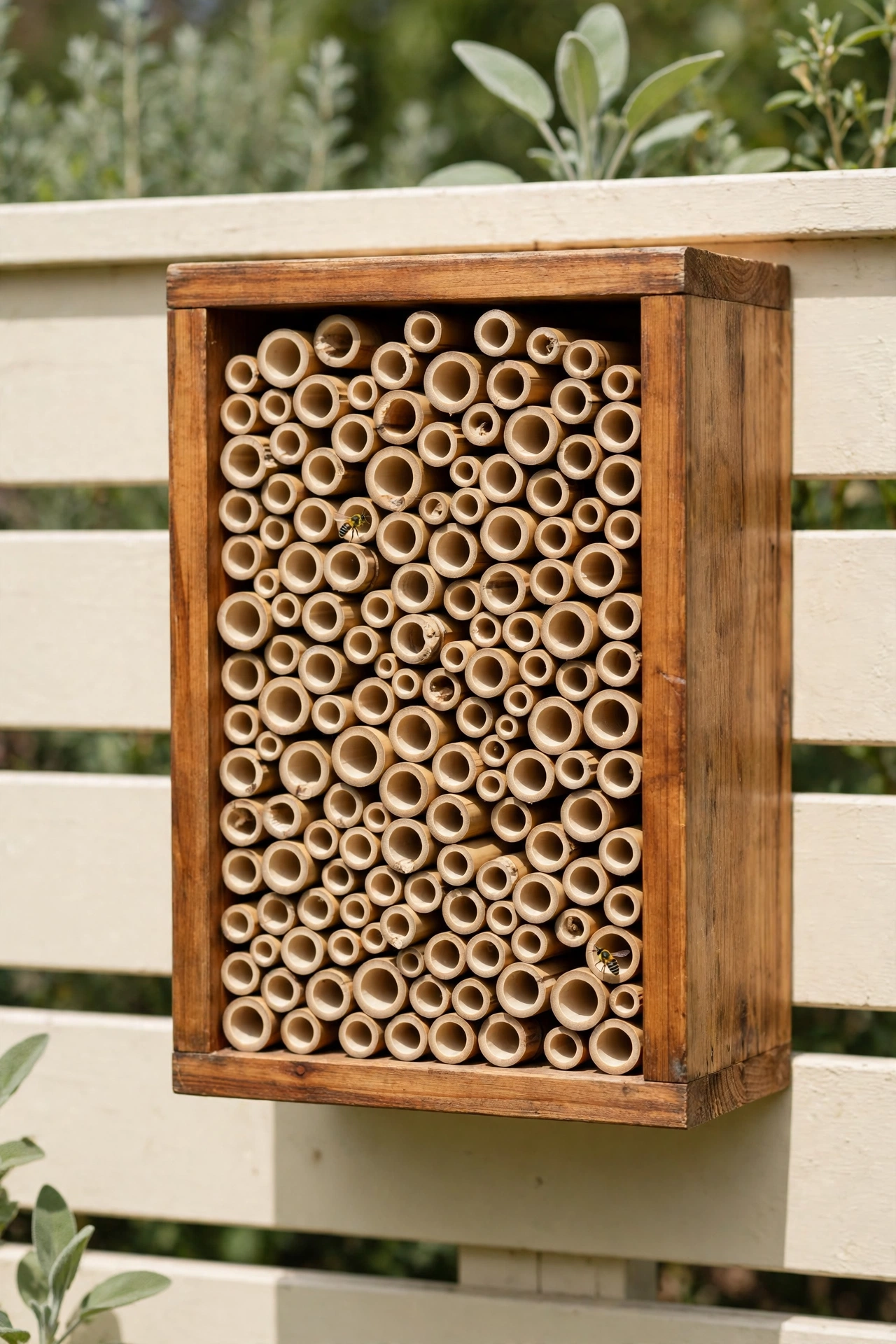
A bamboo tube hotel is the classic design for a reason. Short lengths of hollow bamboo cane are cut to the same length, packed tightly into a simple wooden box frame, and mounted with the open ends facing out. The natural tubes give each female bee her own nesting chamber, and the frame keeps the bundle dry and stable through wind and rain.
Choose bamboo canes with a mix of hole diameters, from narrow to wide, so different sizes of solitary bees can all find a tube that fits. Cut the back ends closed at a node so each tube has a sealed rear wall, and sand the front edges smooth so delicate wings do not catch on rough fibers. A bamboo hotel looks warm and natural against any fence or wall.
2. Drill a Hardwood Block Hotel for Long Lasting Nests
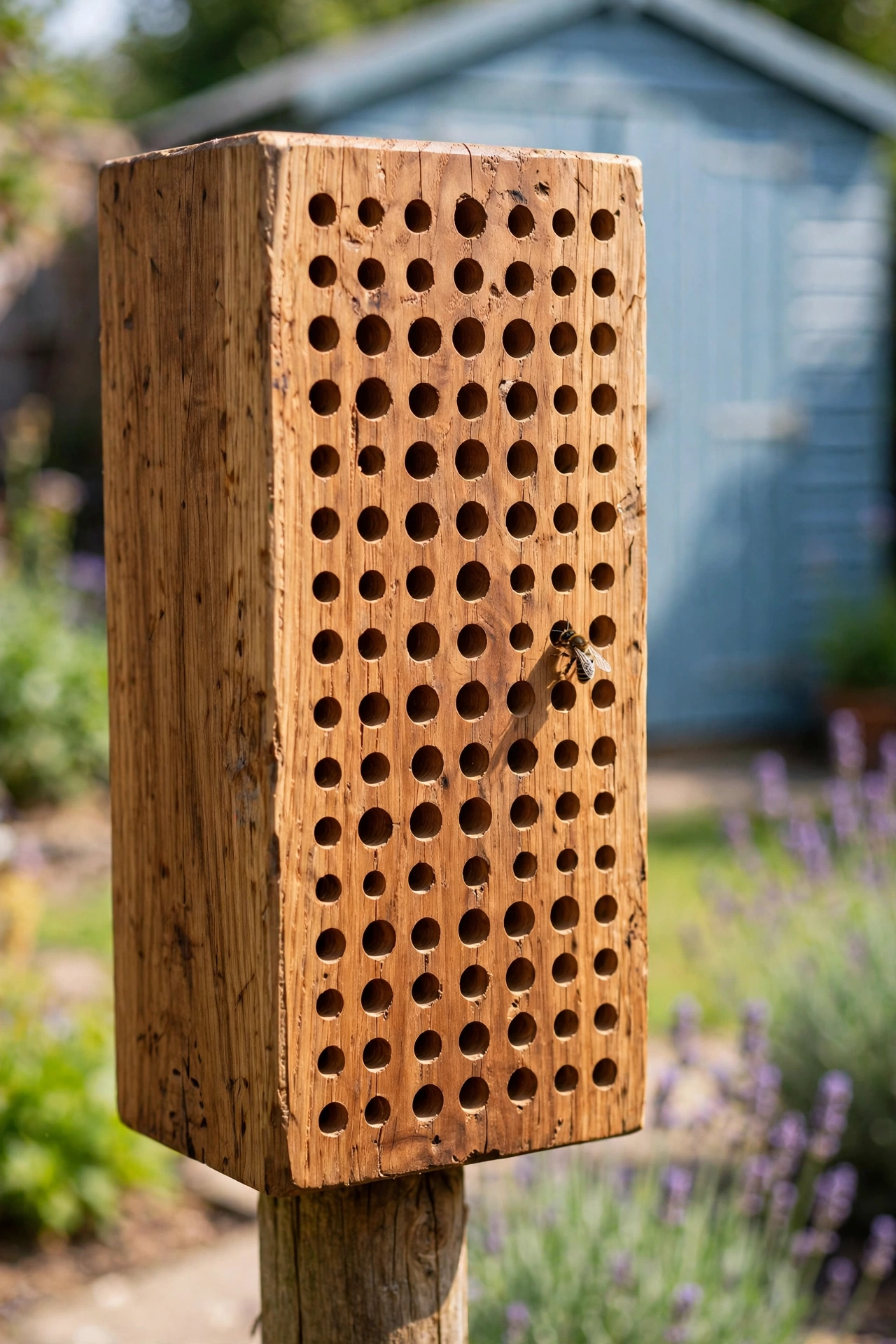
A drilled hardwood block hotel is one of the sturdiest designs you can build. A solid block of untreated hardwood is drilled with rows of smooth holes of different diameters, each one deep enough for a full nesting tunnel. The dense wood holds its shape for years, resists warping, and needs no frame or backing to stay in one piece.
Drill each hole straight and smooth, with no splinters left inside, and keep the holes closed at the back so rain cannot pass through. Hardwood blocks work well mounted on a post, a wall, or a fence, and they look neat and tidy in a modern yard. Replace or re-drill the block every few seasons to keep the tunnels clean and safe for new bees.
3. Mix Materials in a Multi-Chamber Hotel
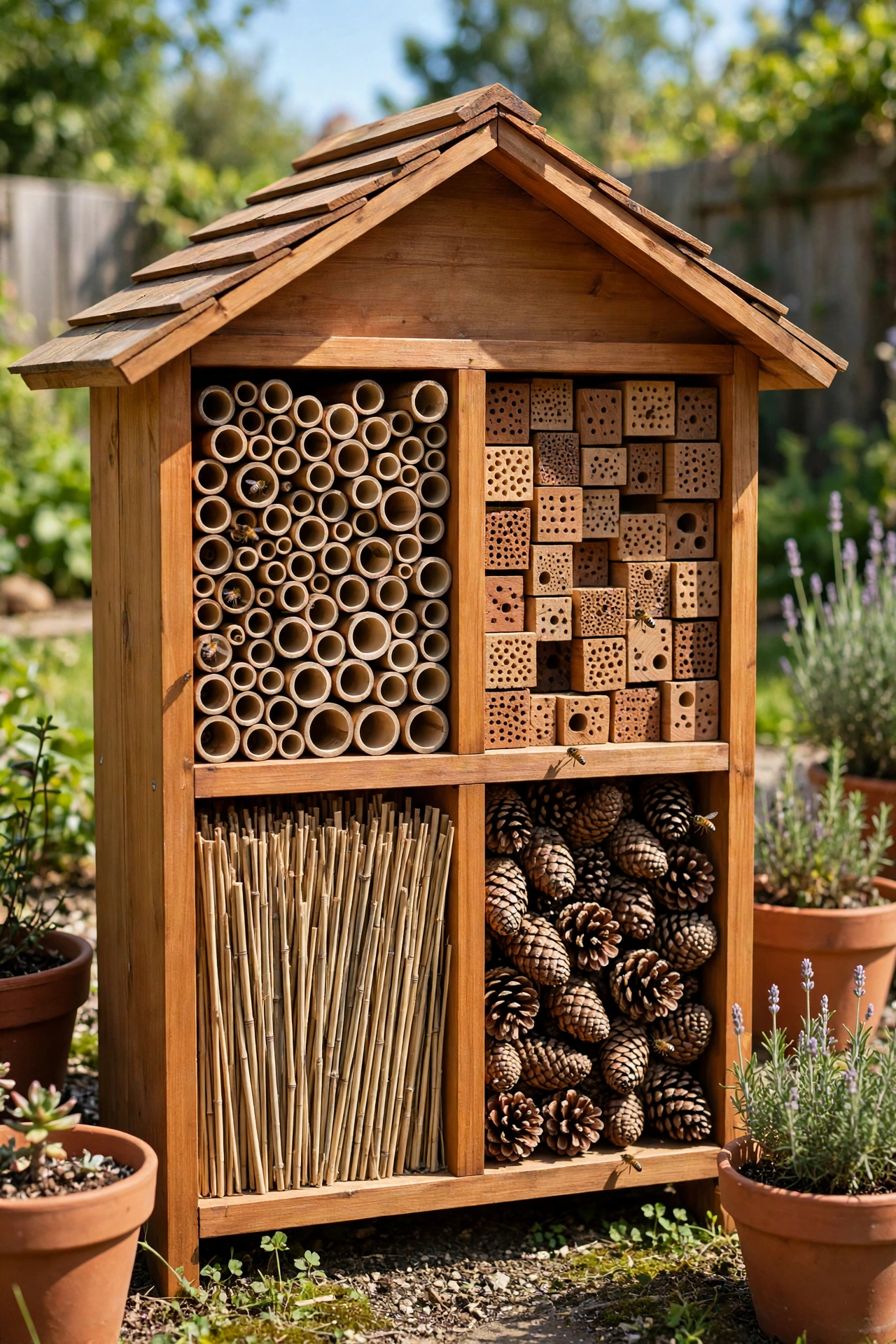
A multi-chamber hotel divides one large frame into separate sections, and each section holds a different nesting material. One chamber holds bamboo tubes, another holds drilled wood blocks, a third holds hollow reeds, and a fourth holds pinecones or bark pieces for shelter. The variety invites more than one kind of solitary bee, and the patchwork face looks beautiful from across the yard.
Build the frame with sturdy dividers so each chamber stays separate, and give the whole hotel a sloped roof that sheds rain away from every opening. A mixed material hotel is a strong choice if you want one structure that serves many species at once. If you are planning the wider yard around it, these pollinator garden layout ideas will help you place the hotel where bees can find it easily.
4. Raise a Tall Tower Hotel on a Sturdy Post
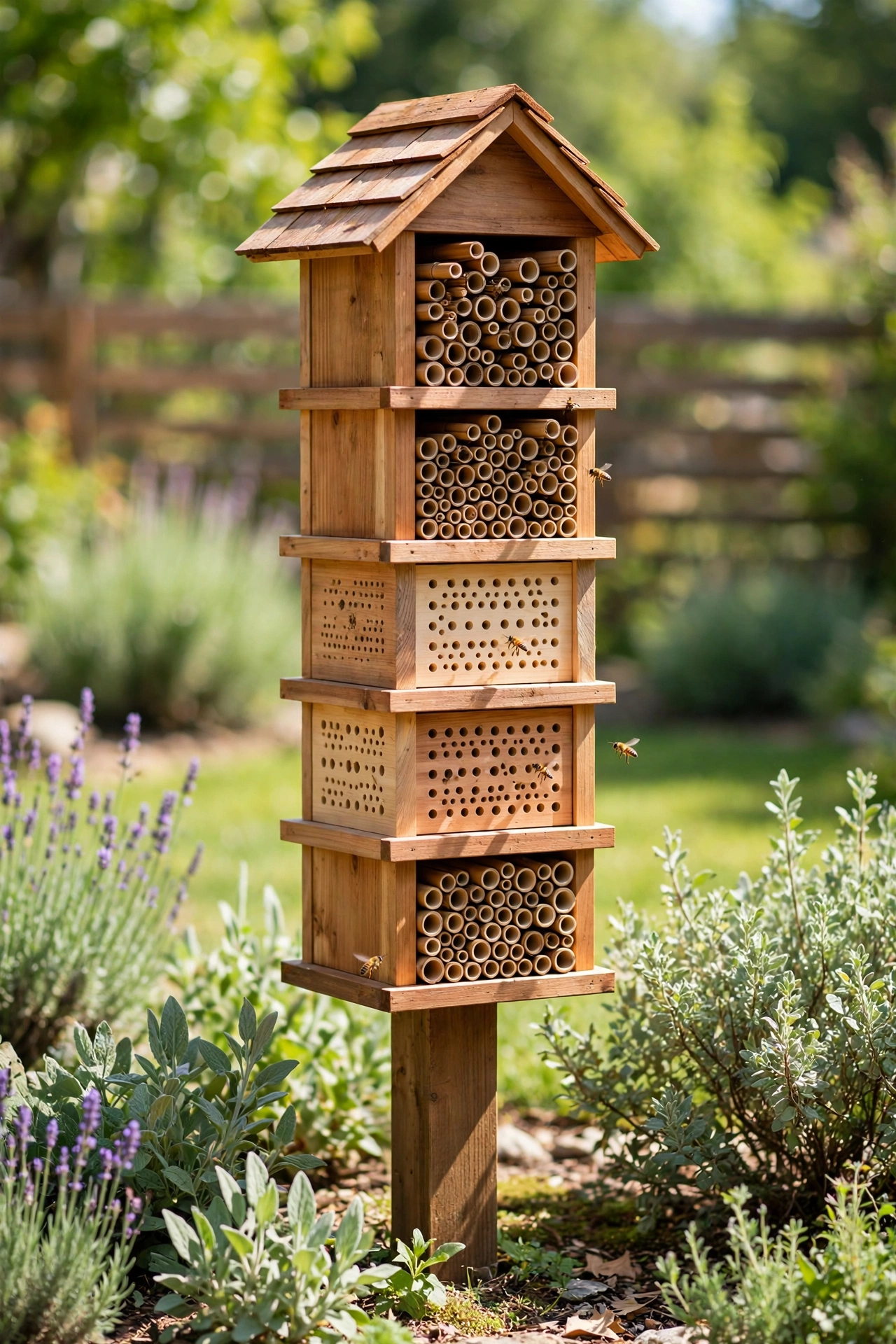
A tower hotel stacks nesting chambers vertically on a single tall post, so the structure rises above nearby plants and catches morning sun. The height keeps the tubes clear of damp ground and makes the hotel easy to spot from the house. Each level of the tower can hold a different tube material, which turns the post into a full nesting station.
Set the post firmly in the ground or in a heavy base so the tower never sways in strong wind. Bees return to the same tunnel again and again, so a steady tower helps them find their way home. A tower hotel suits a yard with limited fence or wall space, because it needs only one small footprint to stand tall.
5. Build an A-Frame Hotel Shaped Like a Tiny House
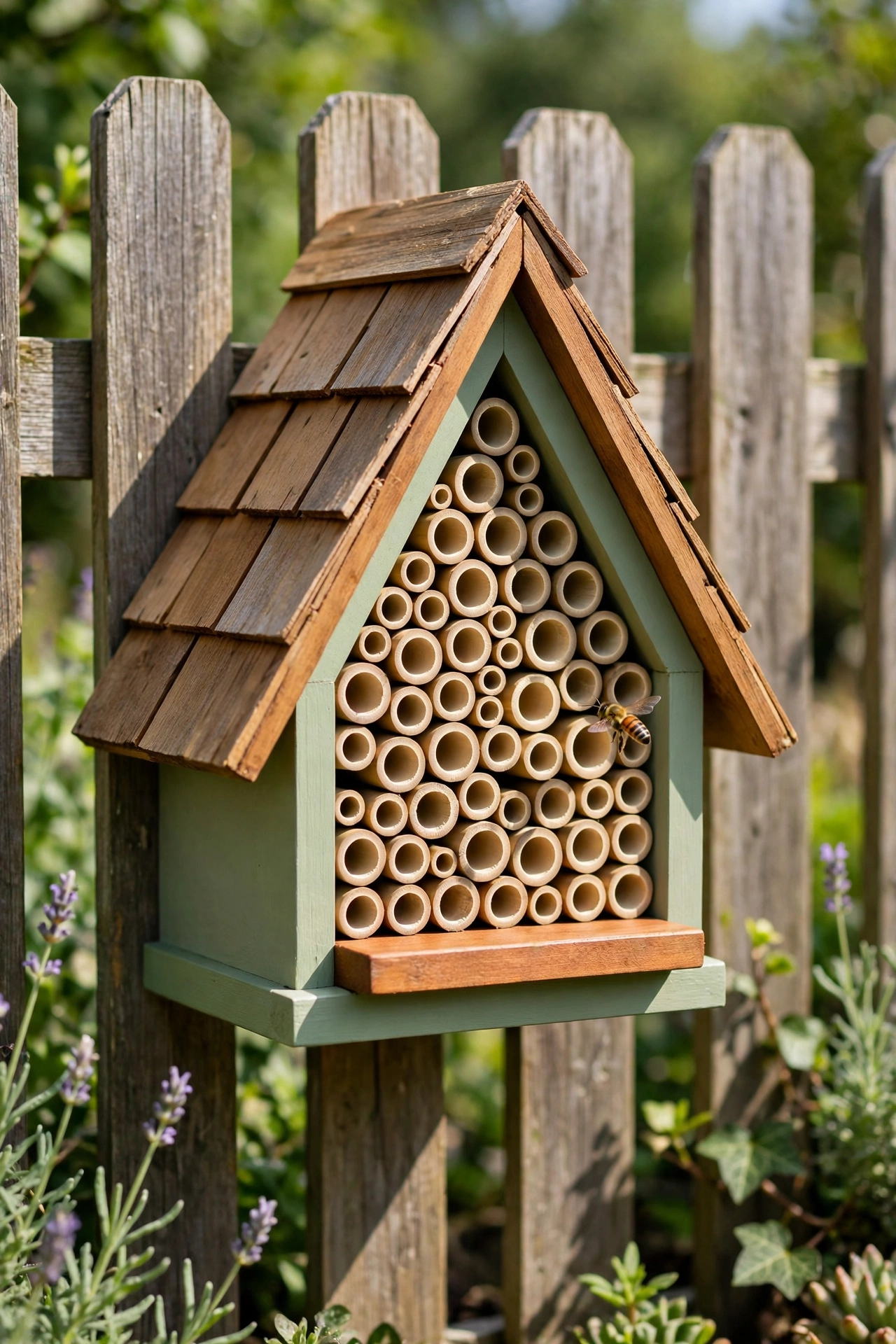
An A-frame hotel uses a steep triangular roof over a box of nesting tubes, so the whole structure looks like a tiny house. The steep roof sheds rain fast, and the overhang keeps the tube openings dry even in a heavy downpour. The house shape also makes the hotel a charming garden feature that visitors notice right away.
Fill the box with bamboo tubes or drilled blocks, and leave a small landing ledge under the openings so bees can rest before entering. Paint the frame in a soft sage or cream color to match your garden style, but leave the tube area natural and unpainted. An A-frame hotel works mounted on a wall, a fence, or a freestanding post.
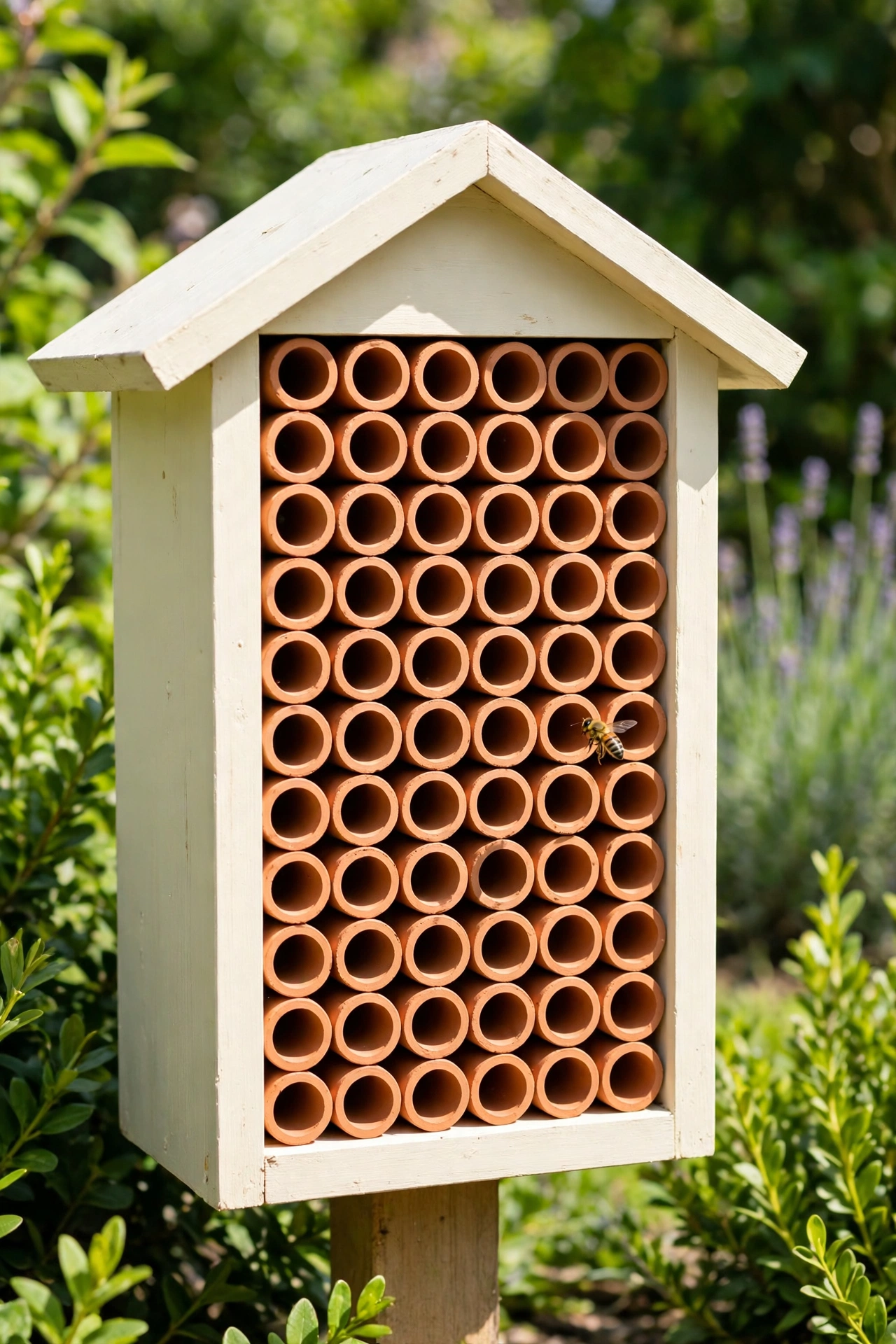
6. Fill a Frame With Terracotta Clay Tubes
Terracotta clay tubes bring warm color and lasting strength to a bee hotel. Short clay tubes are packed into a wooden or metal frame, and their smooth interiors give bees a clean tunnel that stays cool on hot days. The terracotta color looks lovely against green foliage and warm wood fencing.
Choose tubes with sealed back ends or set the frame against a solid backing board so each tunnel has a closed rear. Clay tubes resist rot and do not splinter, which makes them a low maintenance choice for wet climates. Pair the terracotta frame with cream or sage painted wood for a hotel that looks as good as it works.
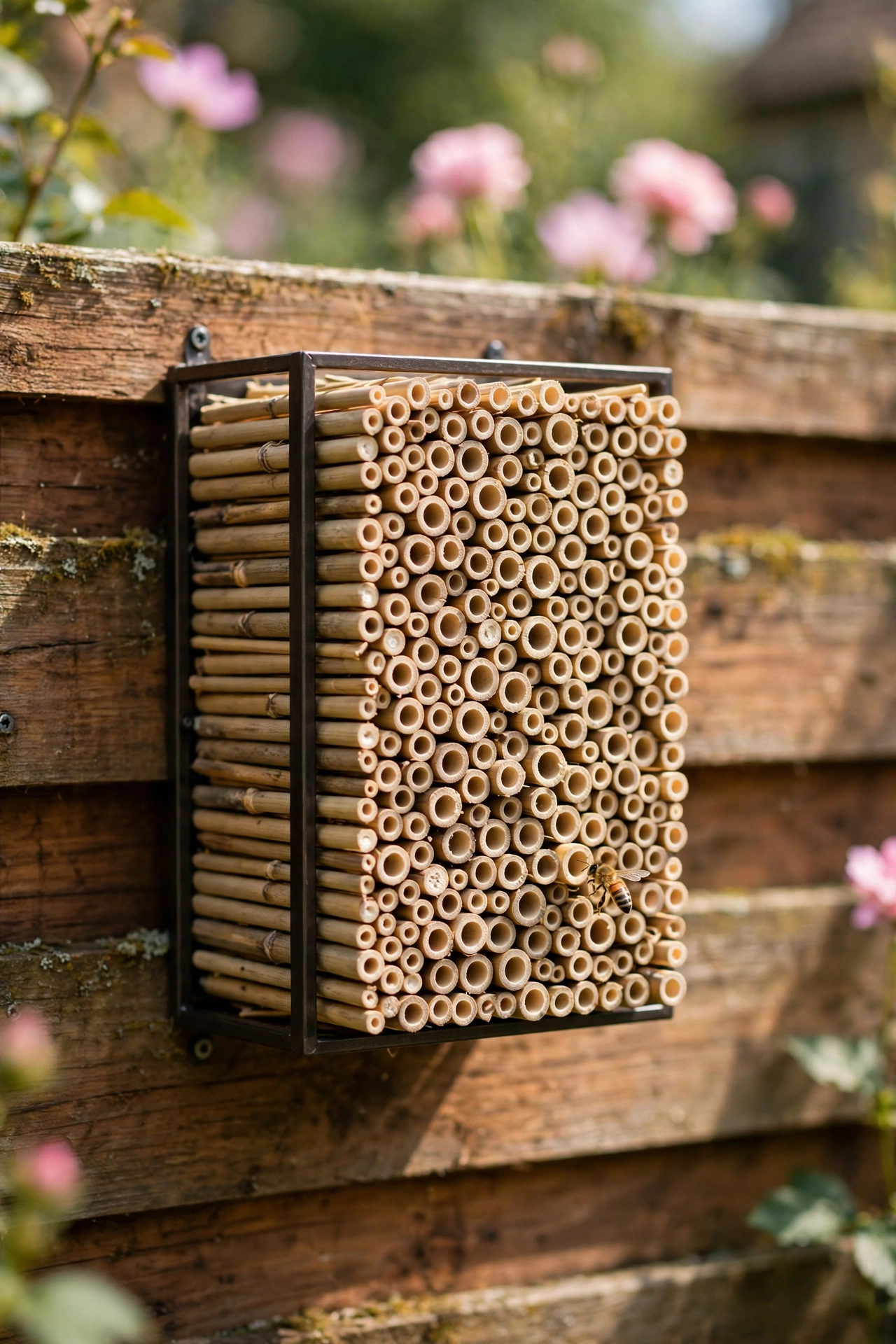
7. Bundle Reeds Inside a Slim Metal Frame
Reed bundles give a bee hotel a soft, natural texture that blends into a cottage garden. Hollow reeds are cut to equal lengths, tied or packed tightly, and set inside a slim metal or wooden frame that holds the bundle firm. The reeds are light, easy to replace each season, and loved by small solitary bees.
Cut the reed ends cleanly so no crushed fibers block the openings, and pack the bundle tight enough that no single reed can slide out. A slim metal frame keeps the design neat and modern while the reeds add warmth. Mount the frame where it gets morning sun and shelter from the strongest afternoon heat.
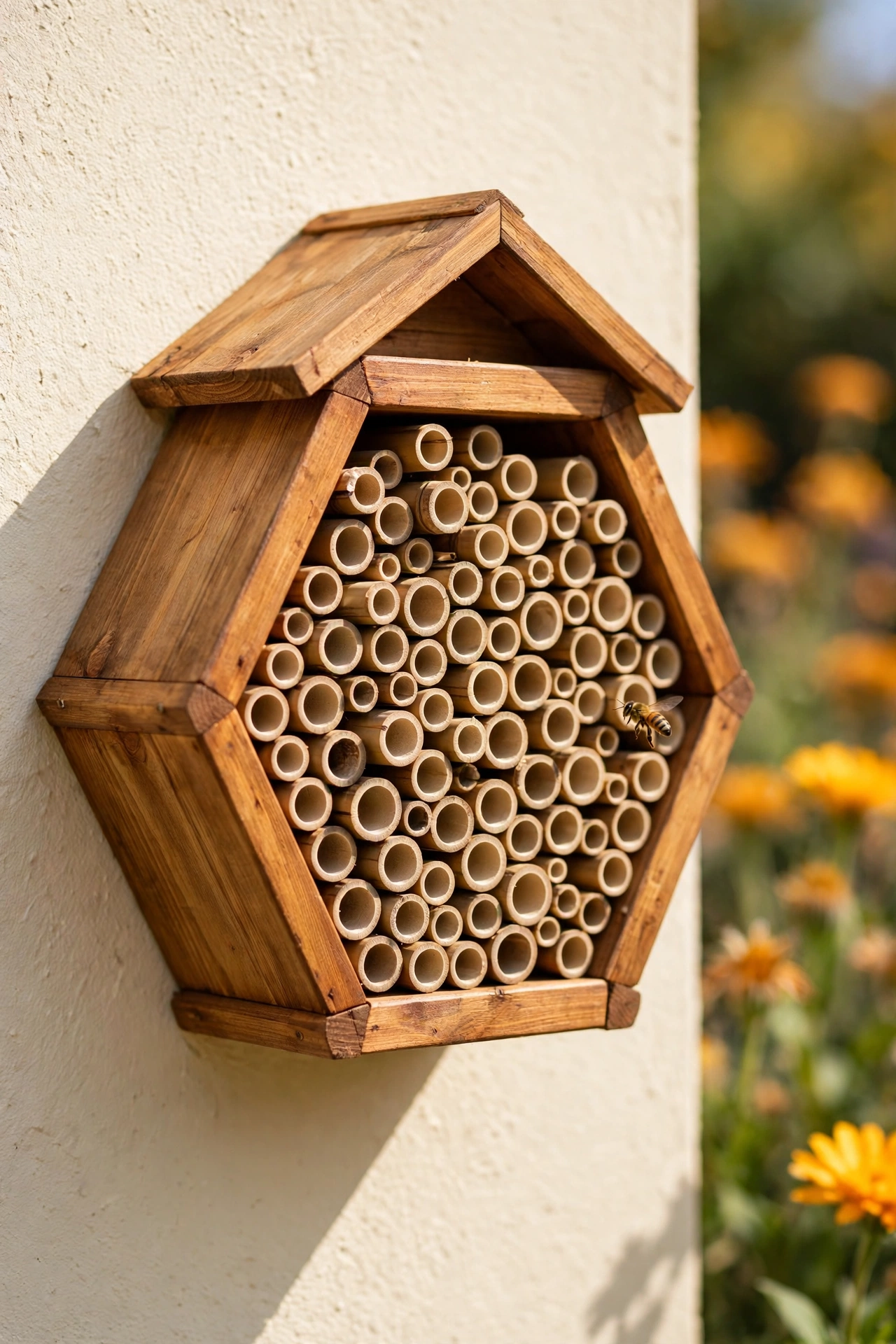
8. Shape a Honeycomb Hotel From Hexagonal Cells
A honeycomb hotel arranges nesting tubes inside a hexagonal frame, so the whole structure echoes the shape of a beehive. The six sided outline stands out in a garden and makes the hotel easy to spot, which helps you check on it through the season. Inside the frame, bamboo tubes or drilled blocks fill the space in neat rows.
Build the hexagon from six equal boards joined at neat angles, and add a small peaked roof cap to keep rain off the top edge. The honeycomb shape suits a playful garden style and pairs well with other bee themed decor. For a garden that welcomes butterflies as well as bees, these butterfly garden ideas will help you round out a wildlife friendly yard.
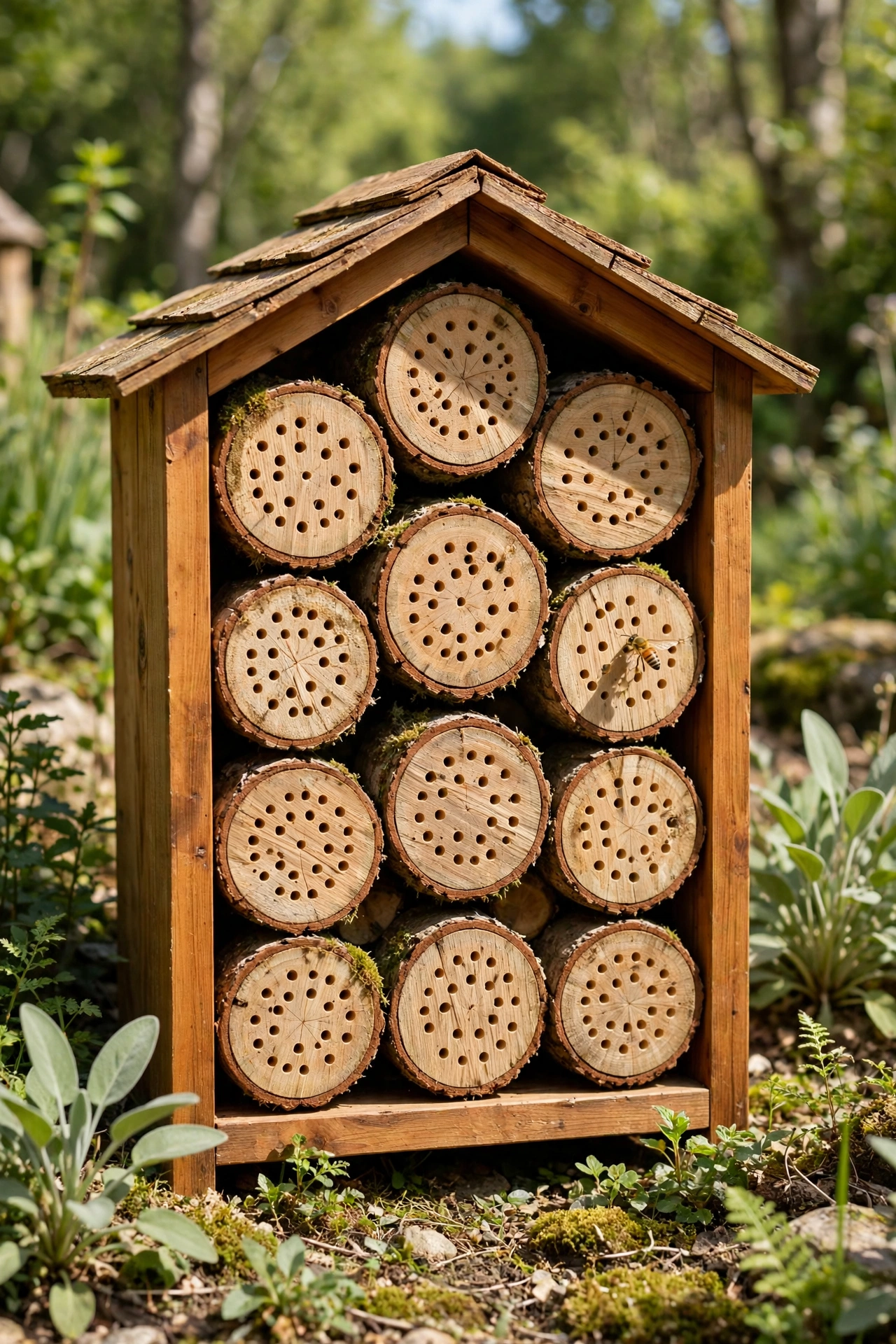
9. Stack Drilled Log Rounds Inside a Wooden Frame
Drilled log rounds turn cross sections of a tree trunk into a rustic bee hotel with real character. Each round is cut thick, drilled with smooth nesting holes, and stacked upright inside a sturdy wooden frame that holds the rounds in neat rows. The bark edges and wood grain make every hotel one of a kind.
Use rounds from untreated hardwood, and drill holes of several diameters so different bee species can nest side by side. The frame keeps the rounds from shifting and gives the hotel a finished look that a loose stack of wood never achieves. A log round hotel looks at home in a woodland style yard or beside a rustic fence.
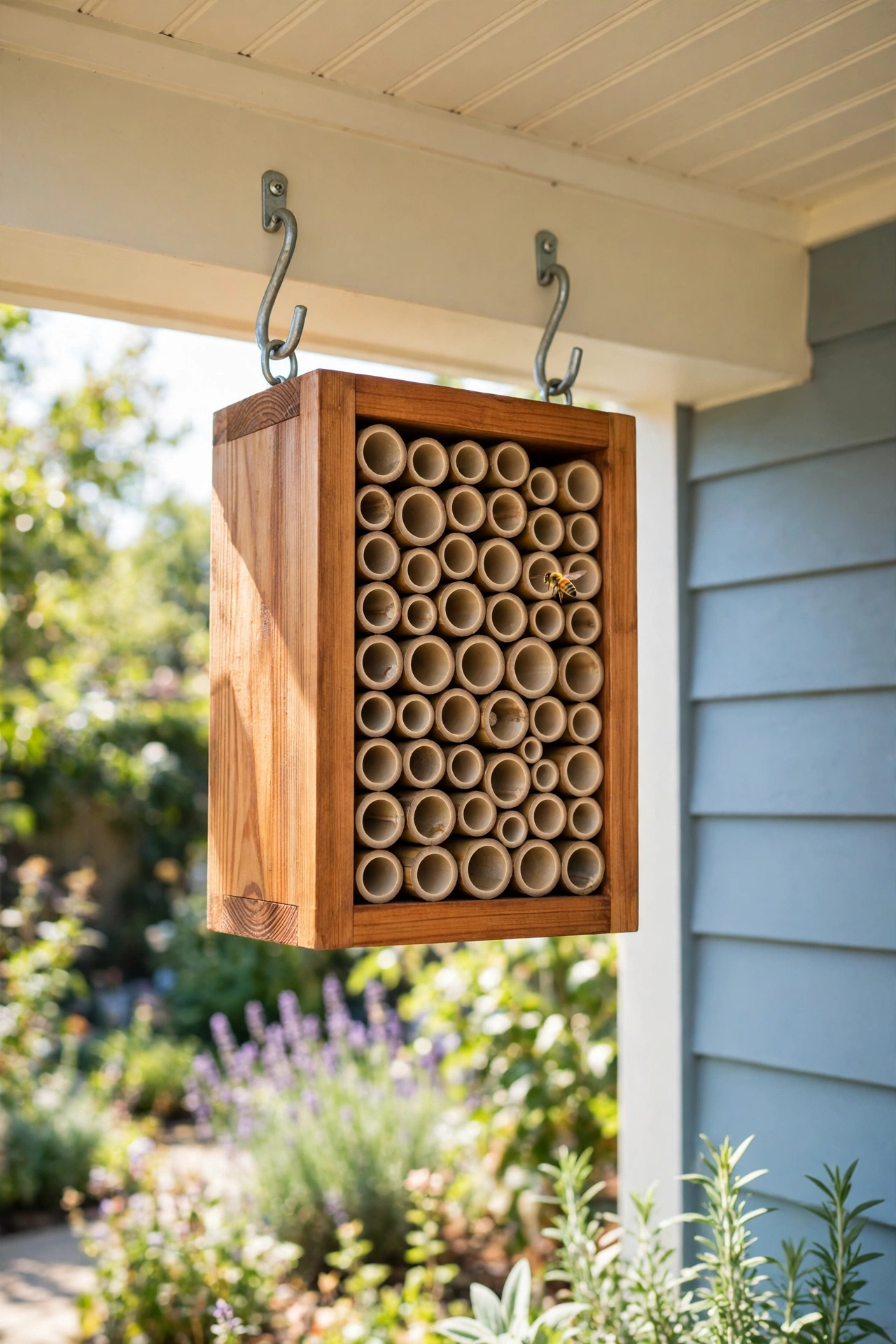
10. Hang a Hotel Under a Porch Eave
A hotel hung under a porch eave stays dry and sheltered all year, which makes the eave one of the best spots for a nesting structure. The roof above blocks rain, the wall behind blocks wind, and the open front faces the garden where bees forage. A hanging hotel also keeps the tubes well above ground moisture and curious pets.
Hang the hotel from two sturdy hooks or brackets so it hangs level and still, and face the openings toward morning sun. Choose a compact frame that fits the eave space without crowding the porch. An eave hung hotel is easy to check and clean, because you can reach it without a ladder in most homes.
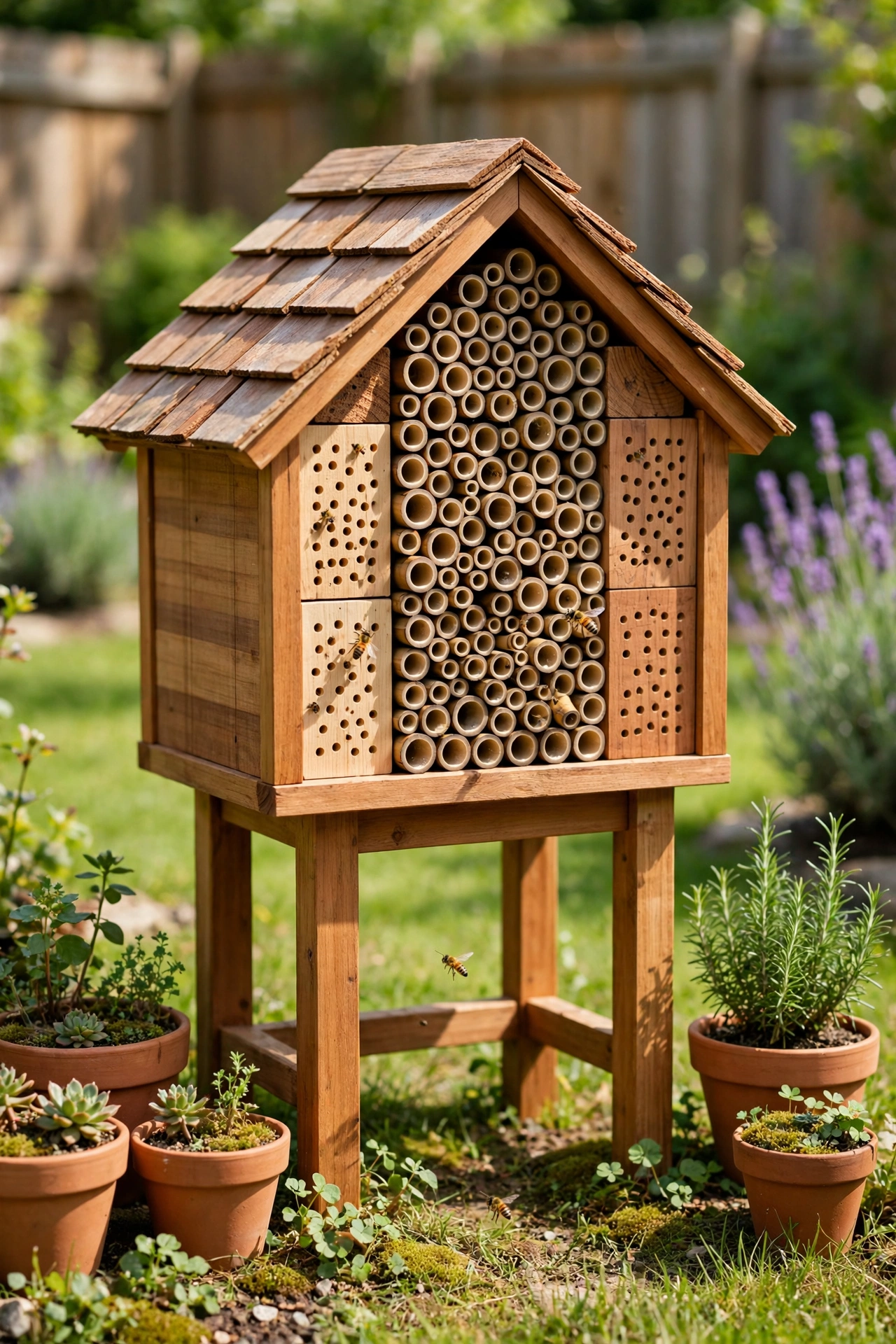
11. Set a Freestanding Hotel on Legs With a Shingled Roof
A freestanding hotel on legs stands anywhere in the yard, with no wall or fence needed for support. Four sturdy legs lift the nesting box clear of damp soil, and a shingled roof gives the structure a finished, cottage-like look. The hotel becomes a garden feature in its own right, placed where the sun hits it best.
Make the legs tall enough to keep the tubes at least a foot above the ground, and brace them so the hotel never wobbles. Cedar shingles or wood shakes on the roof age to a soft silver gray that suits a natural garden. A freestanding hotel is easy to move if you redesign the yard, since it needs no screws or brackets.
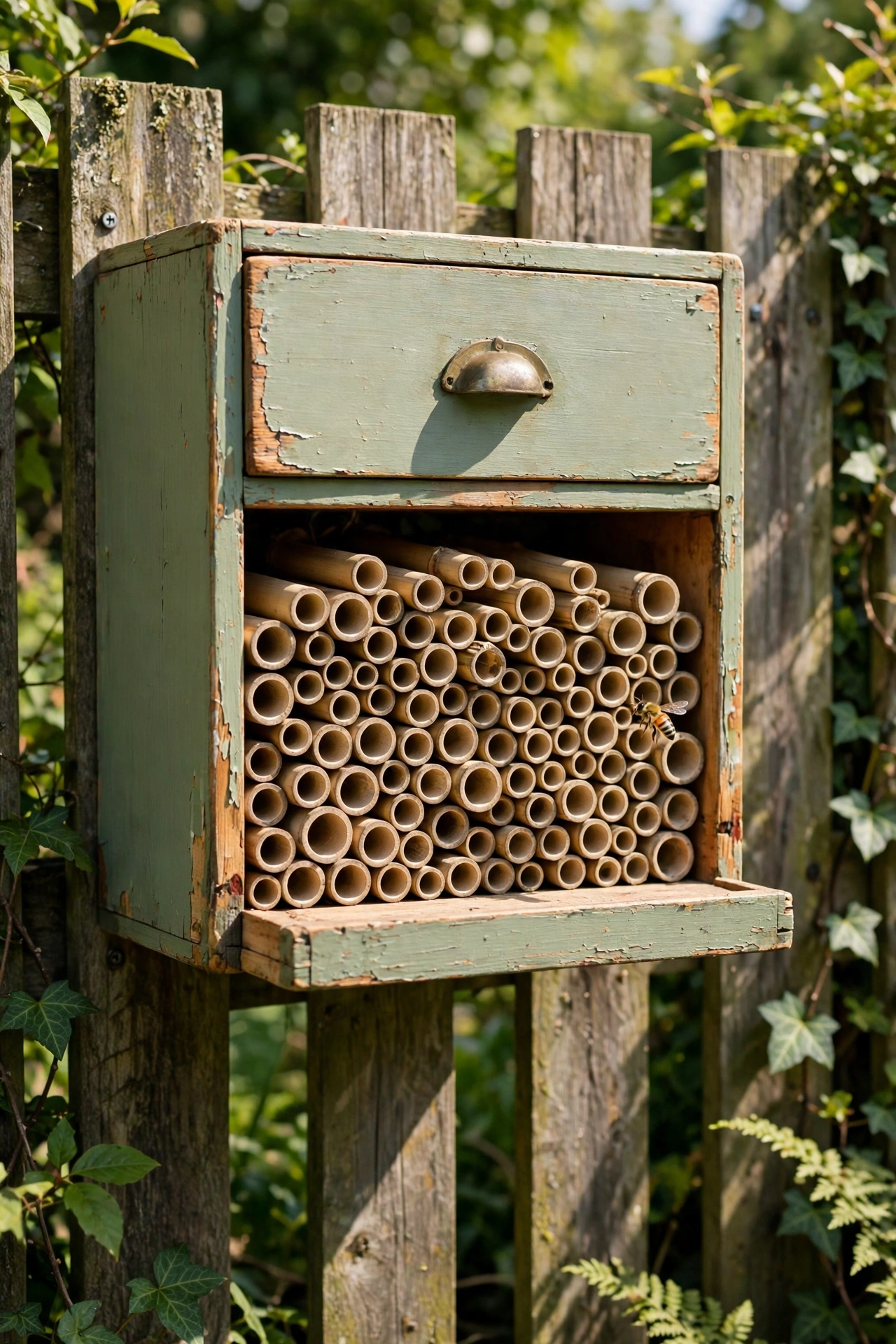
12. Turn a Recycled Drawer Into a Shadow Box Hotel
An old wooden drawer makes a ready made shadow box for a bee hotel, with sides, a back, and a depth that suits nesting tubes perfectly. The drawer is cleaned, lined with bamboo tubes or drilled blocks, and mounted with the open side facing out. Upcycling a drawer keeps a sturdy piece of wood out of the waste stream and gives the hotel instant charm.
Choose a drawer with solid joints and no peeling paint inside, and drill a few small drainage holes in the bottom so any rain that blows in can escape. A drawer hotel looks lovely with its original hardware left in place, like a small pull handle or a painted label plate. This is a budget friendly project that needs little more than tubes and a mounting bracket.
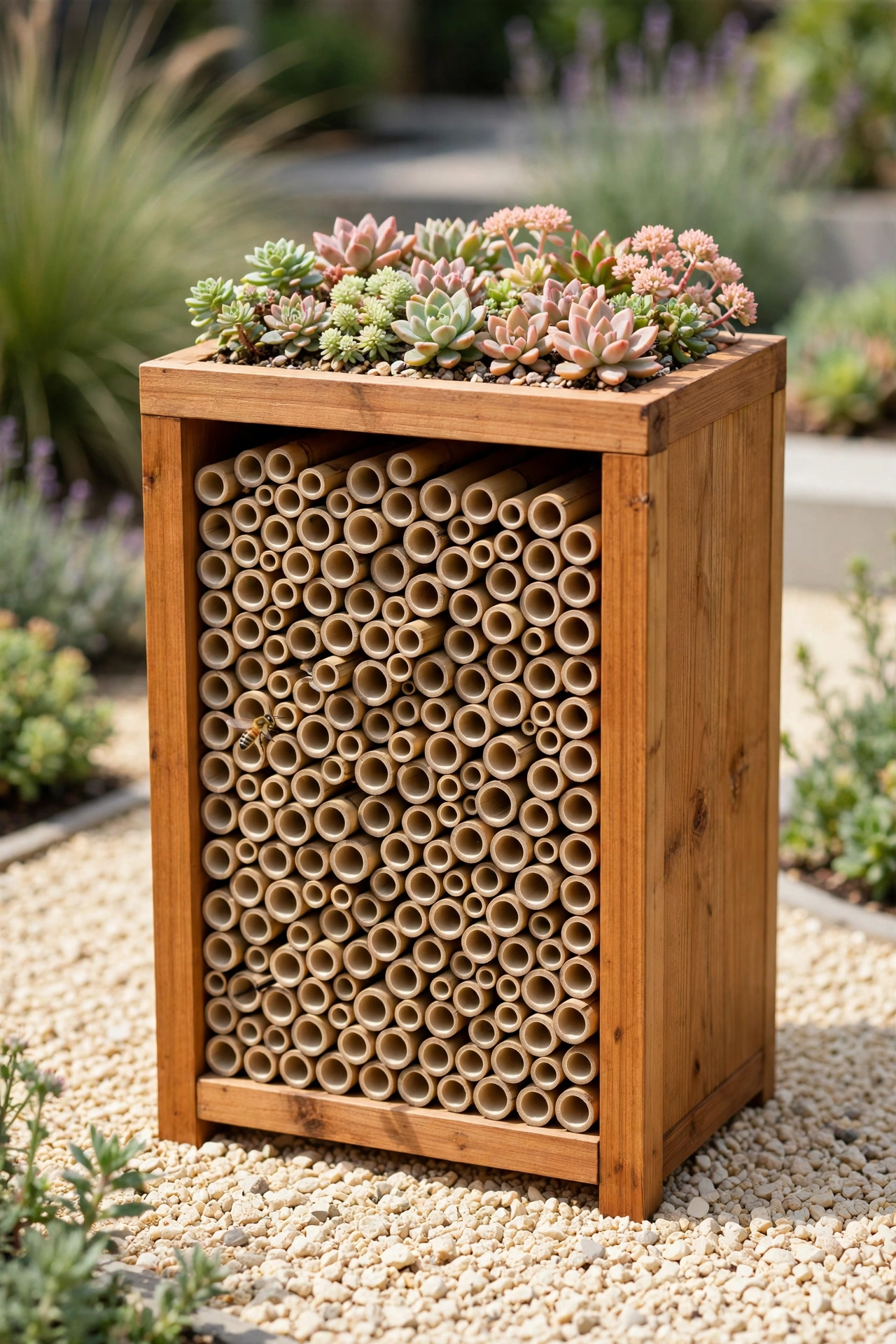
13. Top a Hotel With a Living Sedum Roof
A living sedum roof turns the top of a bee hotel into a small green roof that insulates the nesting chambers below. A shallow tray on top of the frame holds soil and low growing sedum plants, which need almost no watering and change color through the seasons. The green roof keeps the hotel cooler in summer and adds a soft, planted crown to the structure.
Build the roof tray with drainage holes and a waterproof liner so soil moisture never reaches the tubes. Sedum cuttings root easily, so a handful of starts will cover the tray within one growing season. A living roof hotel is a strong choice for a modern garden where the hotel itself should look like part of the landscape.
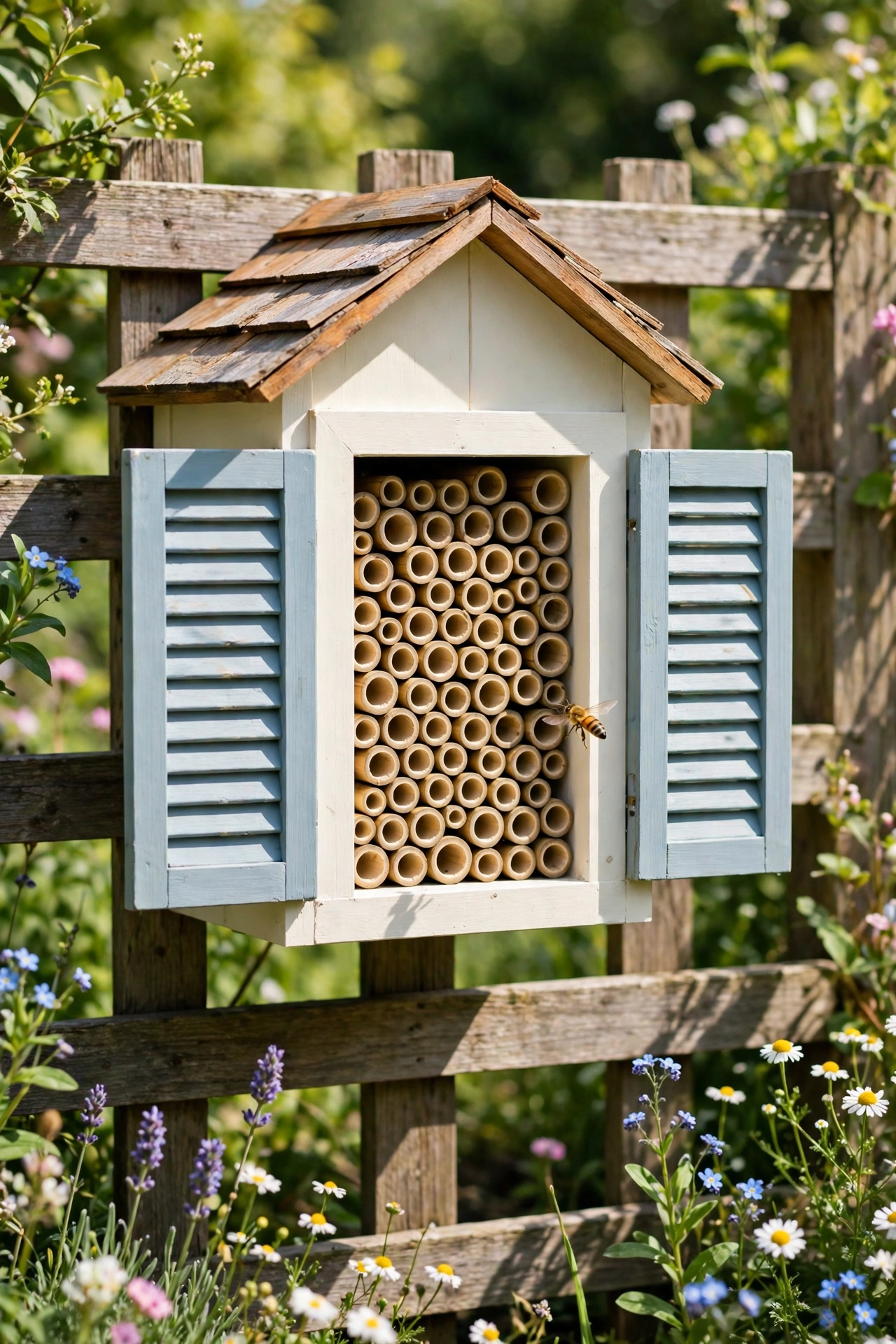
14. Paint a Cottage Hotel With Shutters and Trim
A cottage hotel dresses the nesting frame in painted shutters, trim, and a tiny pitched roof, so it looks like a miniature house for bees. The shutters sit on either side of the tube face, purely decorative, while the trim frames the openings in a contrasting color. The cottage style suits a flower filled yard and makes the hotel a talking point for visitors.
Use exterior paint on the frame and shutters only, and keep all paint away from the tube openings so bees never contact wet or flaking paint. Soft blue shutters with cream trim, or sage trim with warm wood, both look fresh against garden green. A cottage hotel proves that a wildlife structure can be both useful and beautiful.
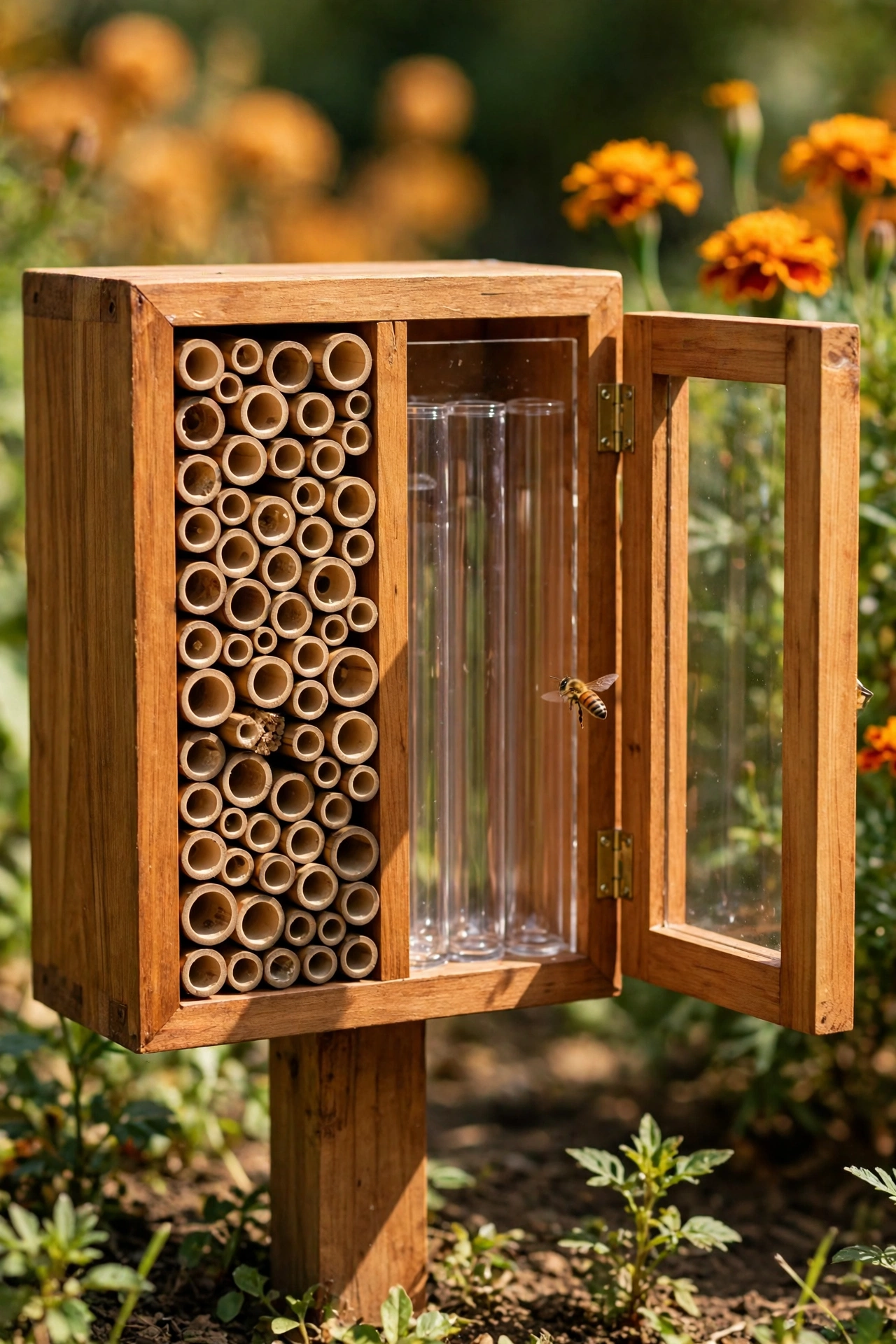
15. Add an Observation Window to Watch Nesting Bees
An observation window lets you watch bees at work without disturbing them. One side of the hotel holds a clear acrylic panel over a few glass or clear tubes, so you can see a bee build walls, lay eggs, and seal a chamber. The window turns the hotel into a learning tool for children and a delight for any gardener.
Fit the window with a hinged wooden cover that stays closed most of the time, since nesting bees prefer darkness inside their tunnels. Open the cover for short viewing sessions, then close it again to keep the chamber dark and calm. An observation hotel needs a sheltered spot, because the clear panel should never face harsh direct sun for long hours.
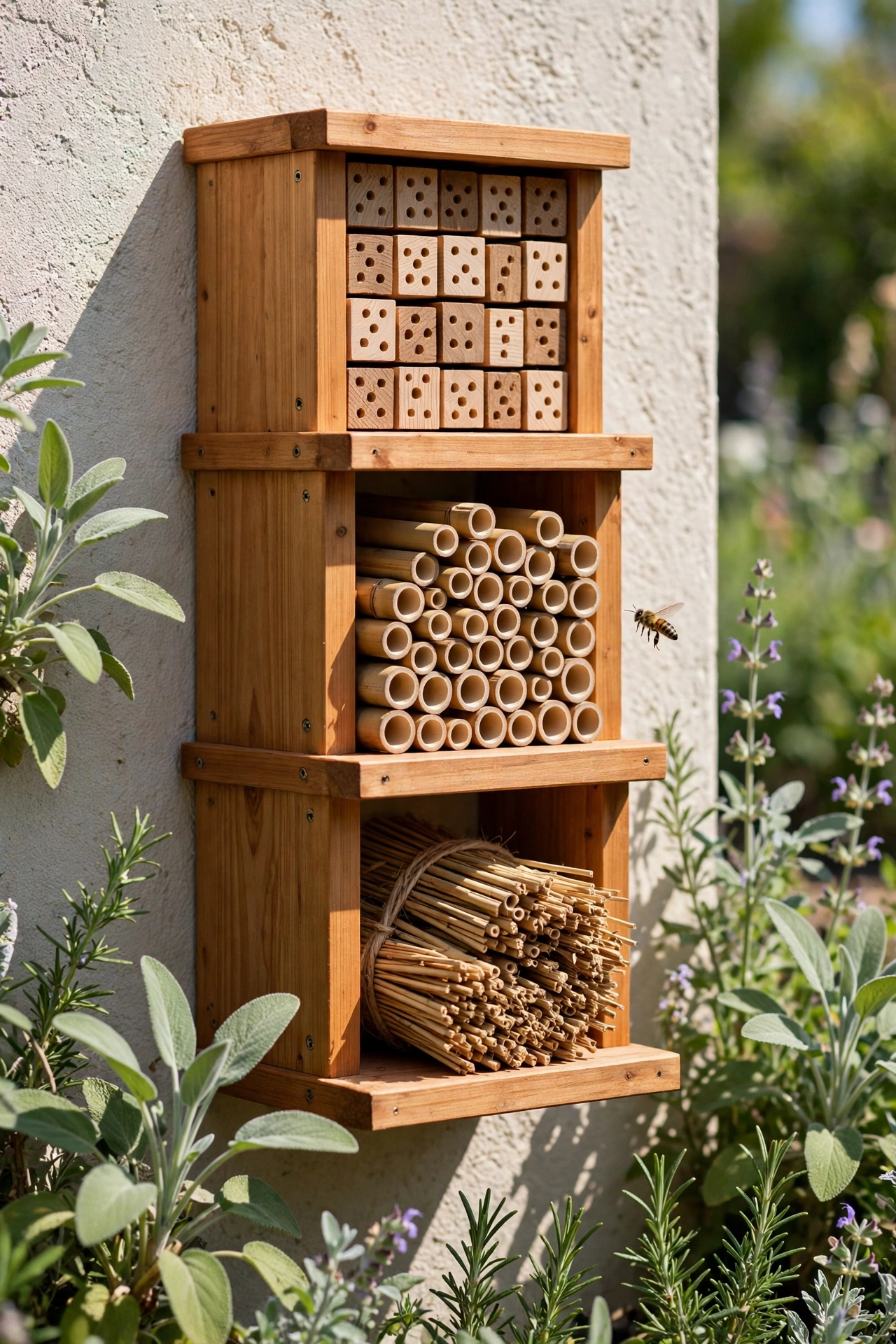
16. Stack Three Levels in a Tiered Hotel
A tiered hotel stacks three nesting levels in one tall frame, with each level set slightly back from the one below it. The stepped profile sheds rain from level to level, and the setback gives each row of tubes its own small landing ledge. The tiered shape looks architectural and gives you room for many tubes in a narrow footprint.
Give each level a different tube material so the hotel serves several species in one structure. The top level can hold drilled blocks, the middle level bamboo, and the bottom level reeds. A tiered hotel mounts well on a wide fence section or a garden wall, and it pairs nicely with other vertical garden features like these raised garden bed layout ideas that shape the space around it.
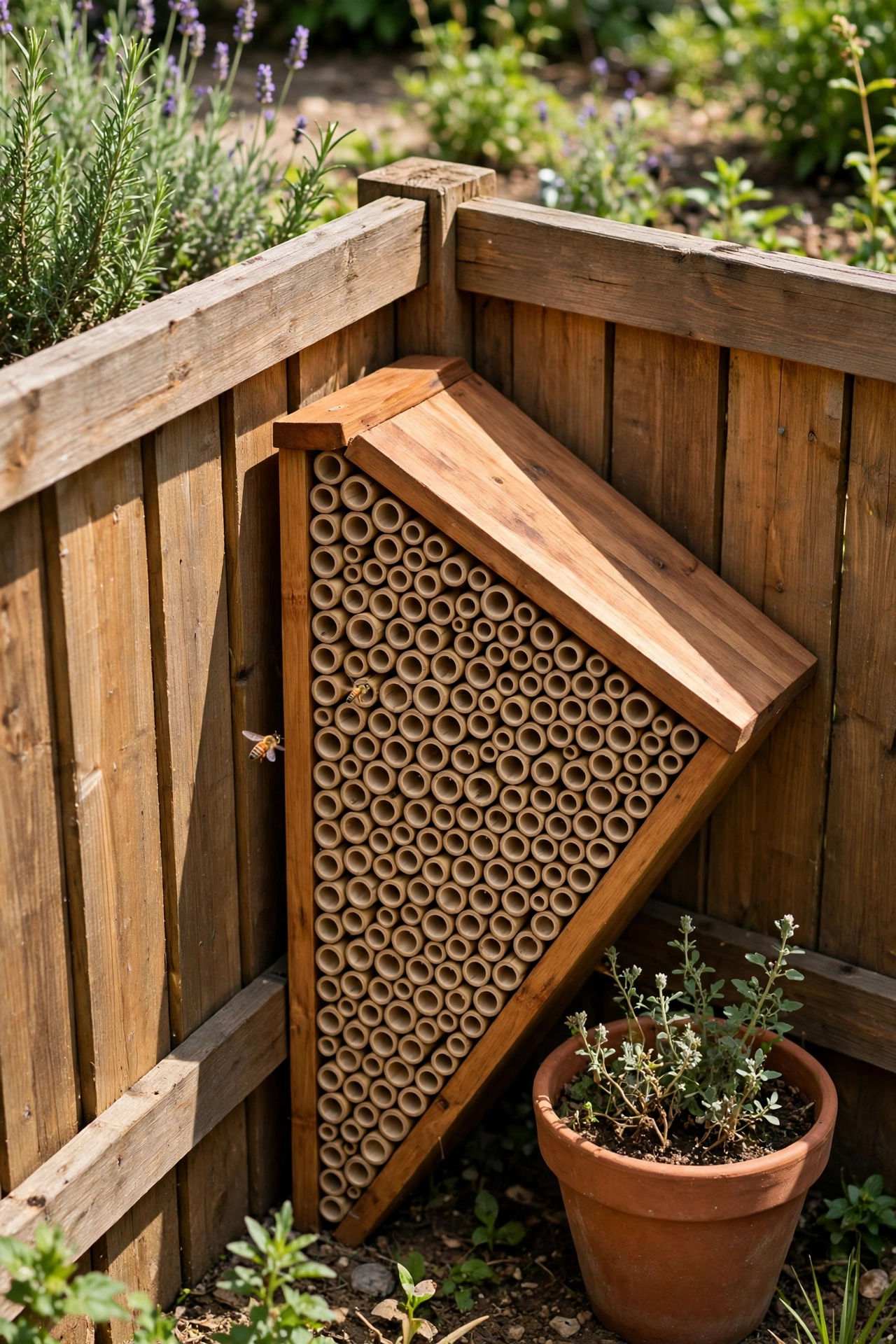
17. Tuck a Hotel Into a Fence Corner
A fence corner hotel is shaped to fit snugly where two fence lines meet, using a corner that would otherwise sit empty. The frame is built with an angled back that hugs the corner, and the tube face points out into the yard at a diagonal. The corner position shelters the hotel from wind on two sides at once.
Mount the hotel firmly to both fence rails so it cannot shift, and face the openings toward the sunniest diagonal of the yard. A corner hotel is a smart use of space in a small yard, because it turns a dead corner into a working habitat. The diagonal face also makes the hotel visible from more angles across the garden.
18. Mount a Hotel Flat Against a Fence Panel
A flat fence panel hotel is built as a wide, shallow frame that bolts directly onto fence boards, so it sits flush and tidy against the fence line. The shallow depth keeps the hotel from jutting into the yard, and the wide face holds many tubes in a single neat grid. The flush mount looks intentional, like part of the fence itself.
Use long screws through the frame into the fence rails, not just the boards, so the hotel stays solid for years. A flat hotel suits a long fence run where you want nesting space without a bulky box. Space several flat hotels along the fence to serve different parts of the yard, each one facing the sun at a different time of day.
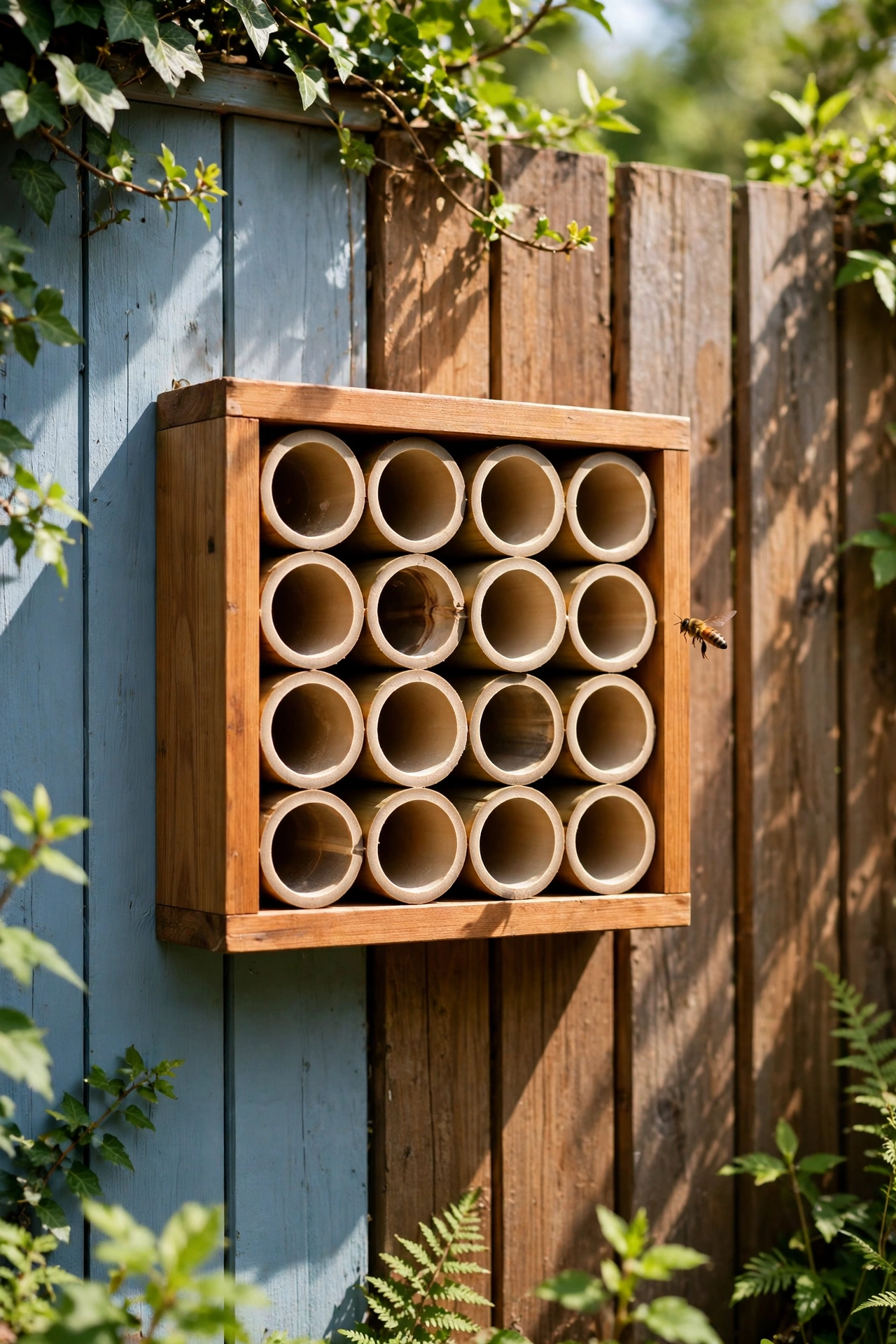
19. Use Replaceable Paper Tubes for Easy Cleaning
Replaceable paper tubes make hotel maintenance simple, because the whole tube lifts out and a fresh one slides in each season. The paper tubes sit inside a sturdy frame or inside slightly larger cardboard sleeves, and each one serves a single nesting season. At the end of the season you remove the used tubes, which keeps parasites and mold from building up inside the hotel.
Choose tubes made from unbleached paper with no inks or coatings, and cut them to a depth that suits the bees in your area. A frame of paper tubes is light, affordable, and easy to refresh, which makes it a good first hotel for a new gardener. Store spare tubes in a dry box so replacements are ready when cleaning day arrives.
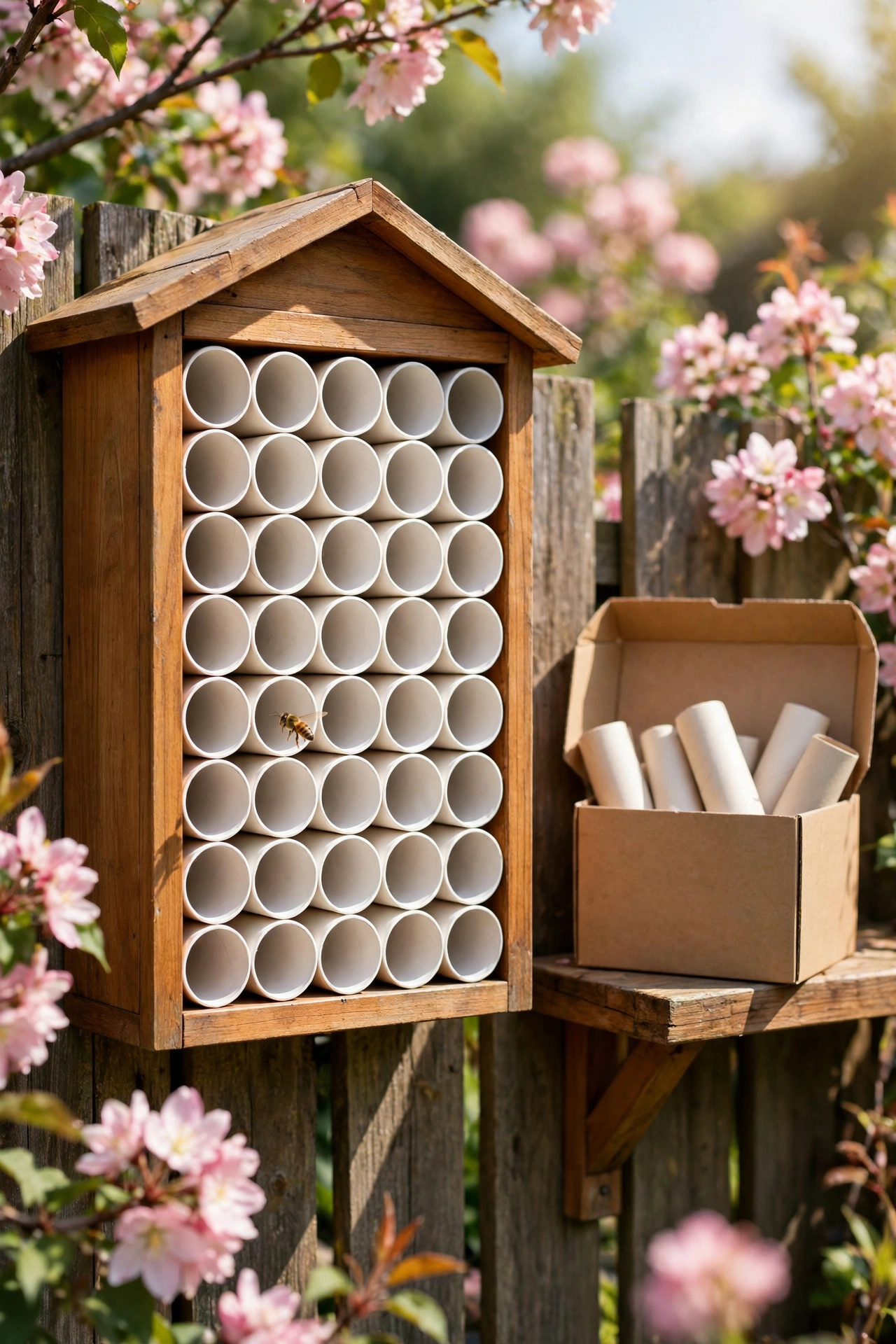
20. Fit a Hinged Front for Seasonal Tube Changes
A hinged front turns the face of a bee hotel into a door that swings open for cleaning and tube changes. The tubes sit in a removable tray behind the door, so you can slide the whole tray out, replace old tubes, and slide it back without dismantling the frame. The hinged design makes yearly maintenance a ten minute job instead of a rebuild.
Fit the door with a simple latch that holds it tight against the frame, and add a small mesh panel if you want airflow without letting the tray shift. A hinged front hotel is the practical choice for gardeners who plan to maintain their hotel properly year after year. Keep a small brush and a bag of fresh tubes nearby so the seasonal refresh stays easy.
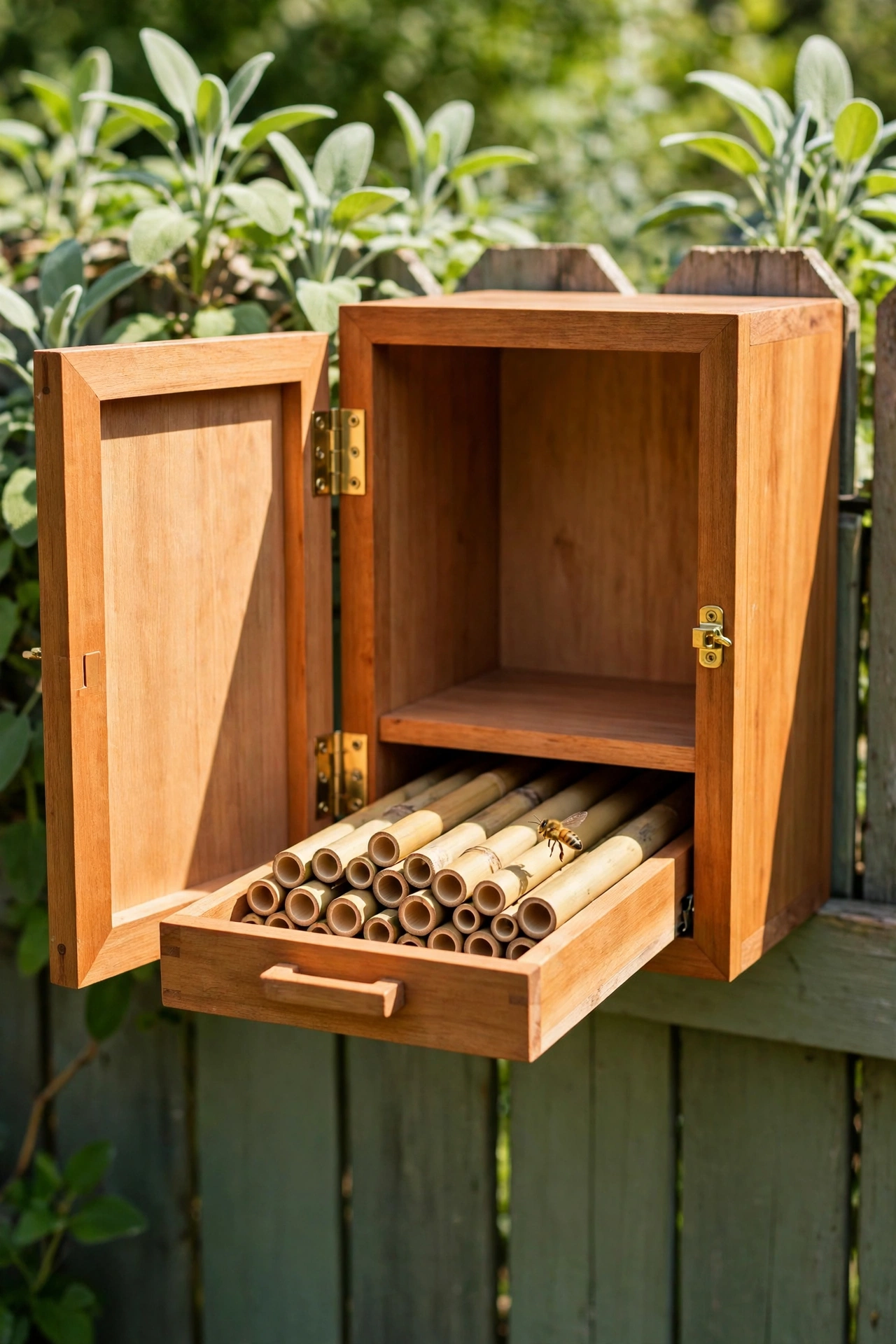
21. Cover a Hotel in Natural Bark for a Rustic Look
A bark covered hotel wraps the outer frame in sheets of natural tree bark, so the structure blends into a wooded corner of the yard. The bark adds insulation, sheds rain, and gives the hotel a woodland character that painted wood never matches. Inside the bark shell, the tubes stay dry and protected in a standard frame.
Attach bark sheets with weatherproof glue and a few small nails, and leave the tube face clear and smooth so bees can land and enter without snagging. Bark hotels suit a naturalistic garden or a yard with mature trees, where the structure should disappear into the setting. Check the bark each spring and replace any pieces that have loosened over winter.
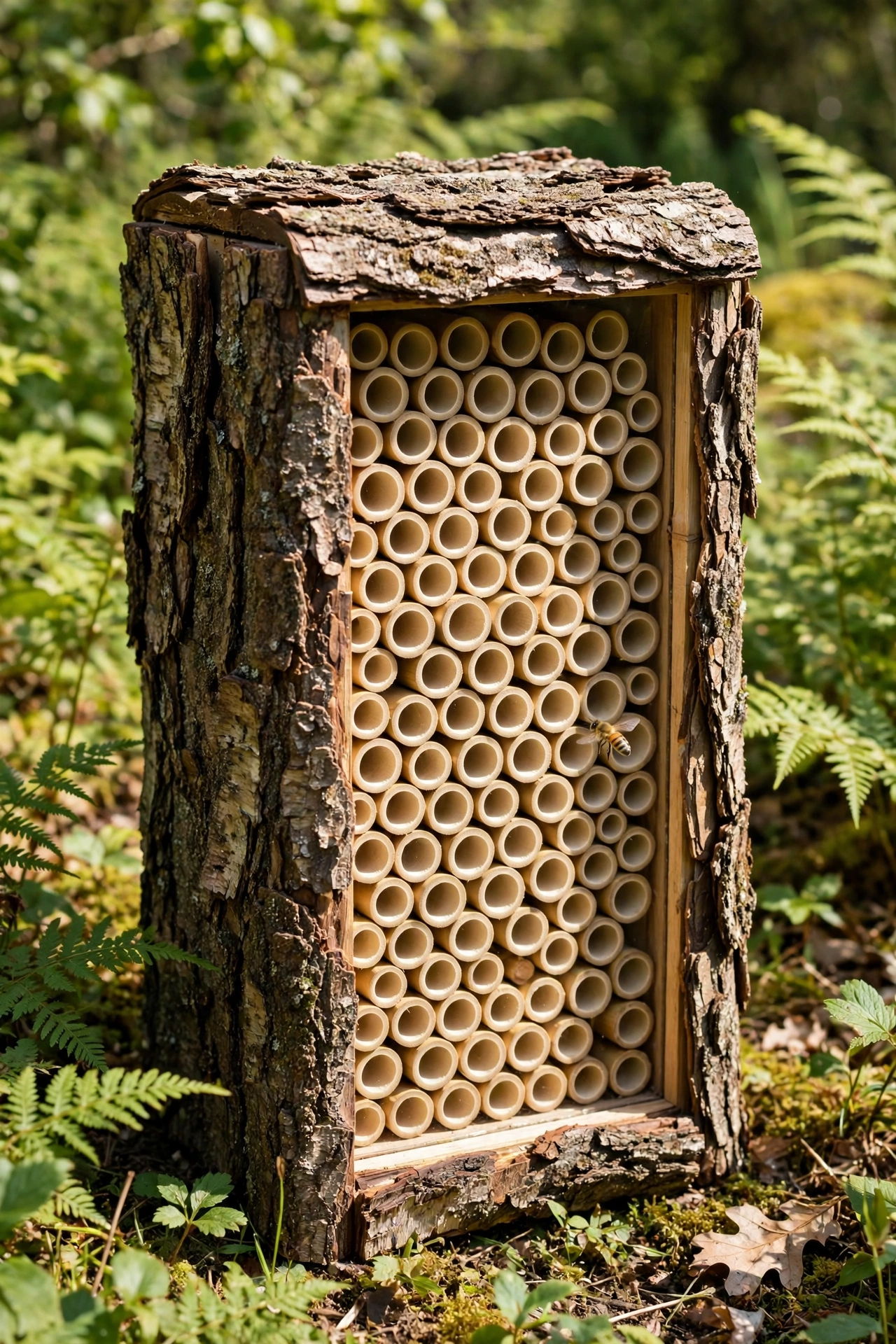
22. Keep Lines Clean With a Modern Minimalist Hotel
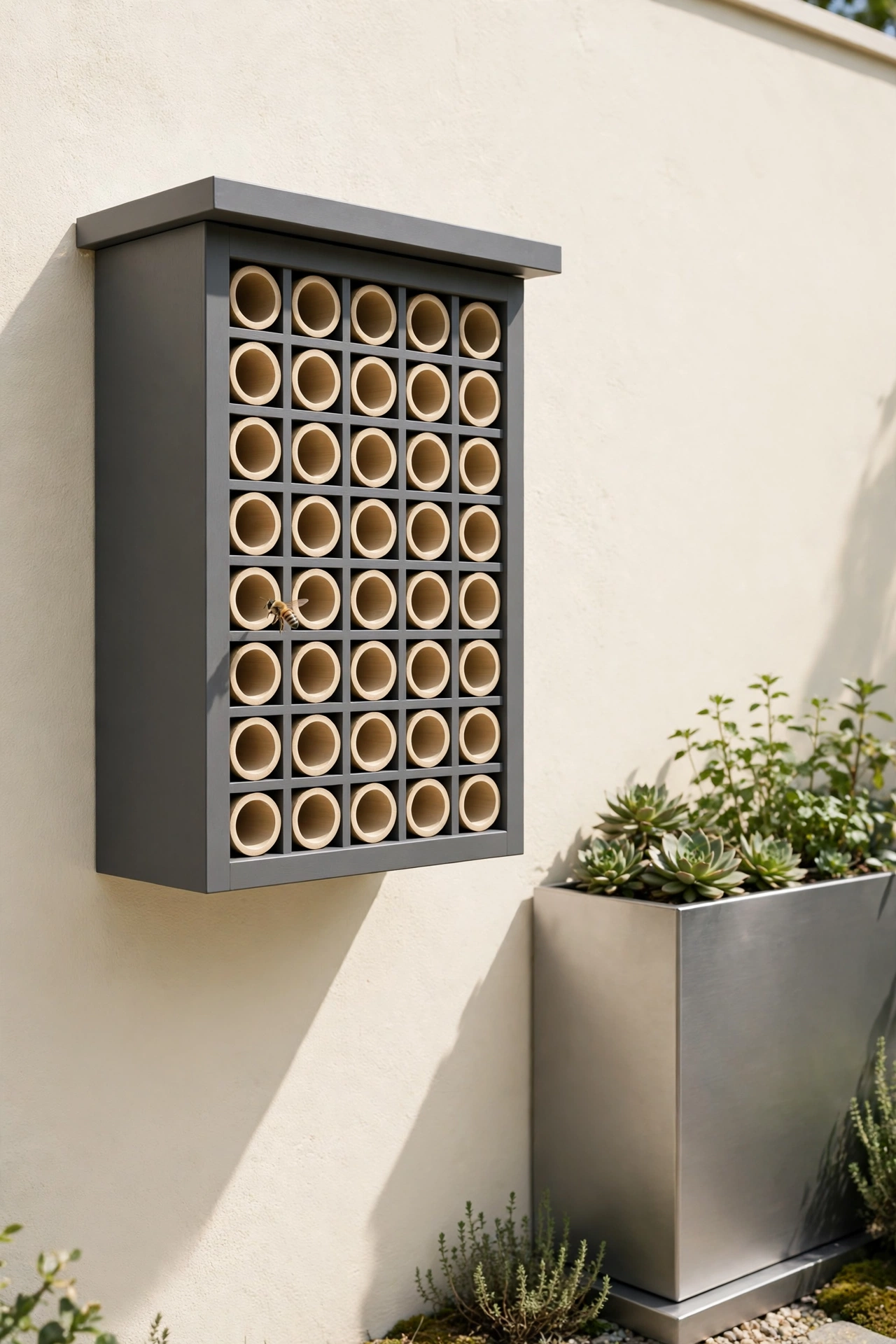
A modern minimalist hotel strips the design down to a simple geometric frame with a flat roof and a precise grid of tubes. No shutters, no trim, no decoration, just clean lines and honest materials. The restrained look suits a contemporary yard with smooth render walls, steel planters, and structured planting.
Build the frame from smooth hardwood or powder coated metal in a single muted color, like charcoal, warm gray, or natural cedar. Keep the tube grid perfectly even, with equal spacing and matching tube ends, because precision is the whole point of the design. A minimalist hotel looks sharp mounted on a plain wall where its geometry can stand out.
23. Crown a Hotel With a Copper Roof
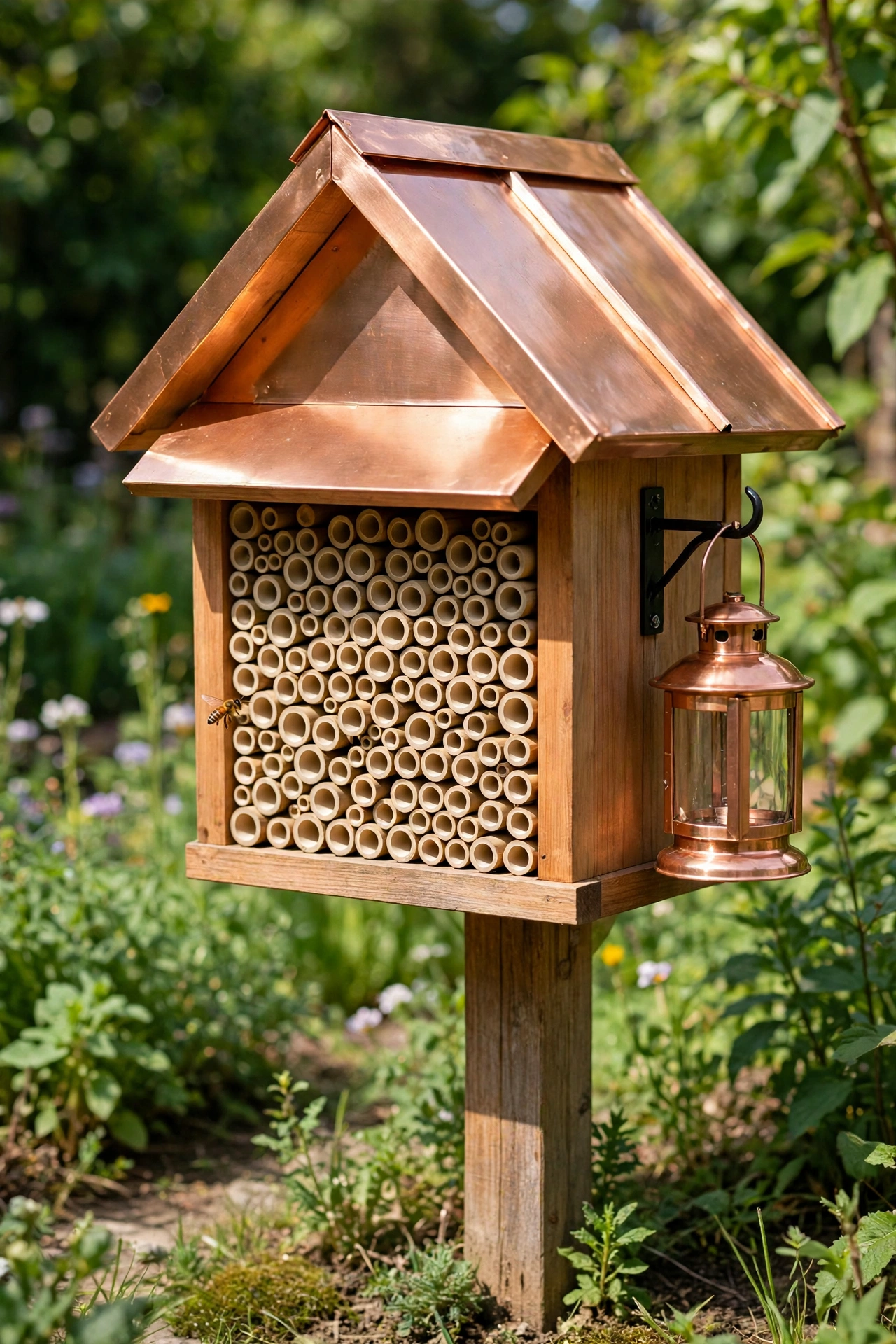
A copper roof gives a bee hotel a jewel-like crown that ages beautifully over time. The copper starts bright and warm, then slowly develops a soft green patina that looks lovely against wood and garden green. The metal roof sheds rain completely and lasts for decades without any maintenance.
Shape the copper into a simple pitched or curved cap that overhangs the tube face by a few inches. The overhang is the working part of the design, since it keeps driving rain off the openings. A copper roof hotel suits a yard with other metal accents, like copper planters or lanterns, and it turns a small structure into a garden treasure.
24. Build a Large Multi-Frame Bee Hotel Wall
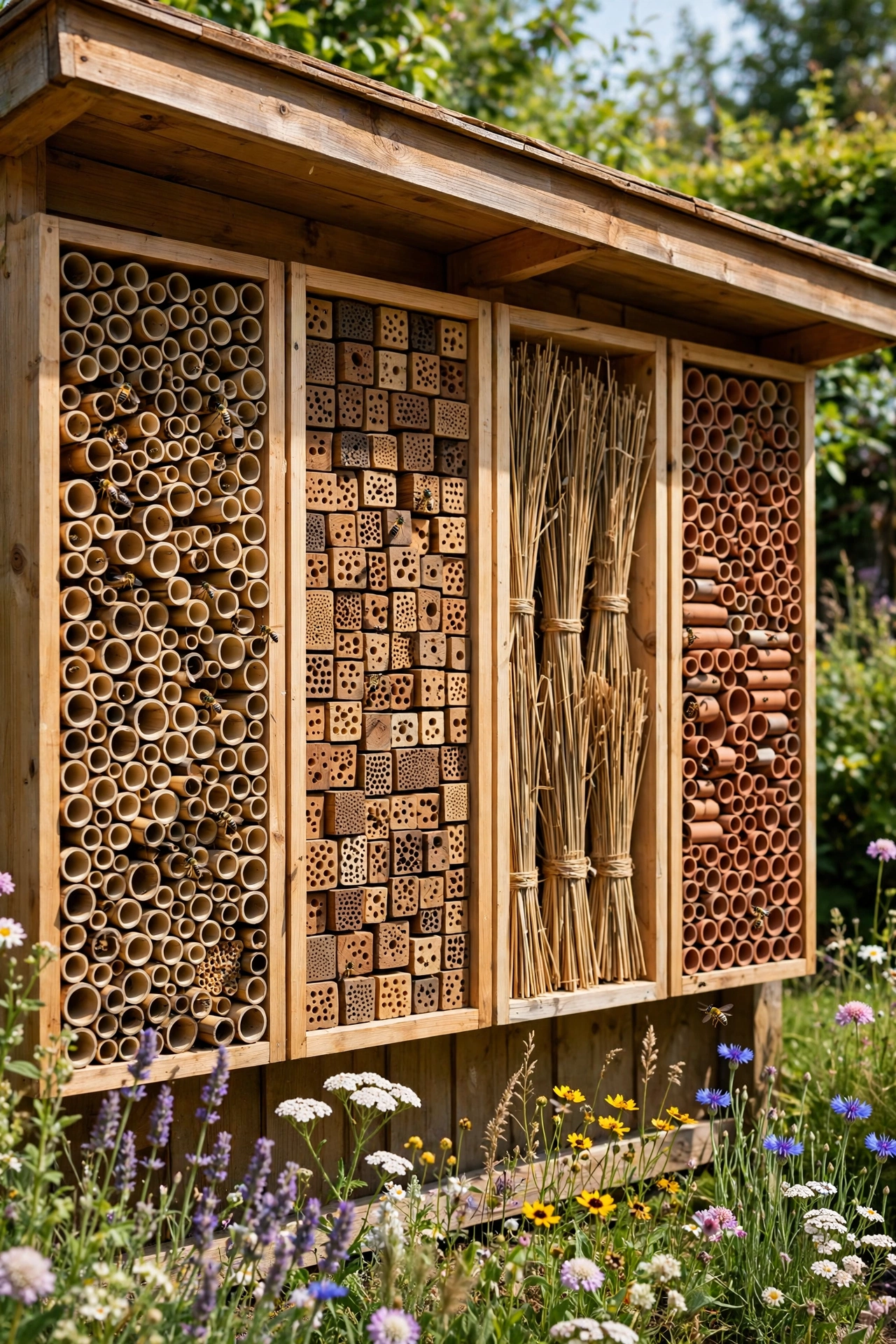
A bee hotel wall joins several large frames into one impressive installation, covering a whole fence section or garden wall with nesting space. Each frame holds a different material, so the wall becomes a full habitat station for many solitary bee species. The scale makes the wall a landmark in the yard, and the sheer number of tubes means the hotel can host a large bee population.
Plan the wall with a shared roofline that protects every frame at once, and leave small gaps between frames for air circulation. A hotel wall is a bigger project, but it rewards the effort with a structure that anchors an entire wildlife corner. Surround it with plants that feed the bees it houses, and these native plant garden ideas will help you choose flowers that bloom across the whole season.
25. Choose a Compact Hotel for a Balcony or Small Yard
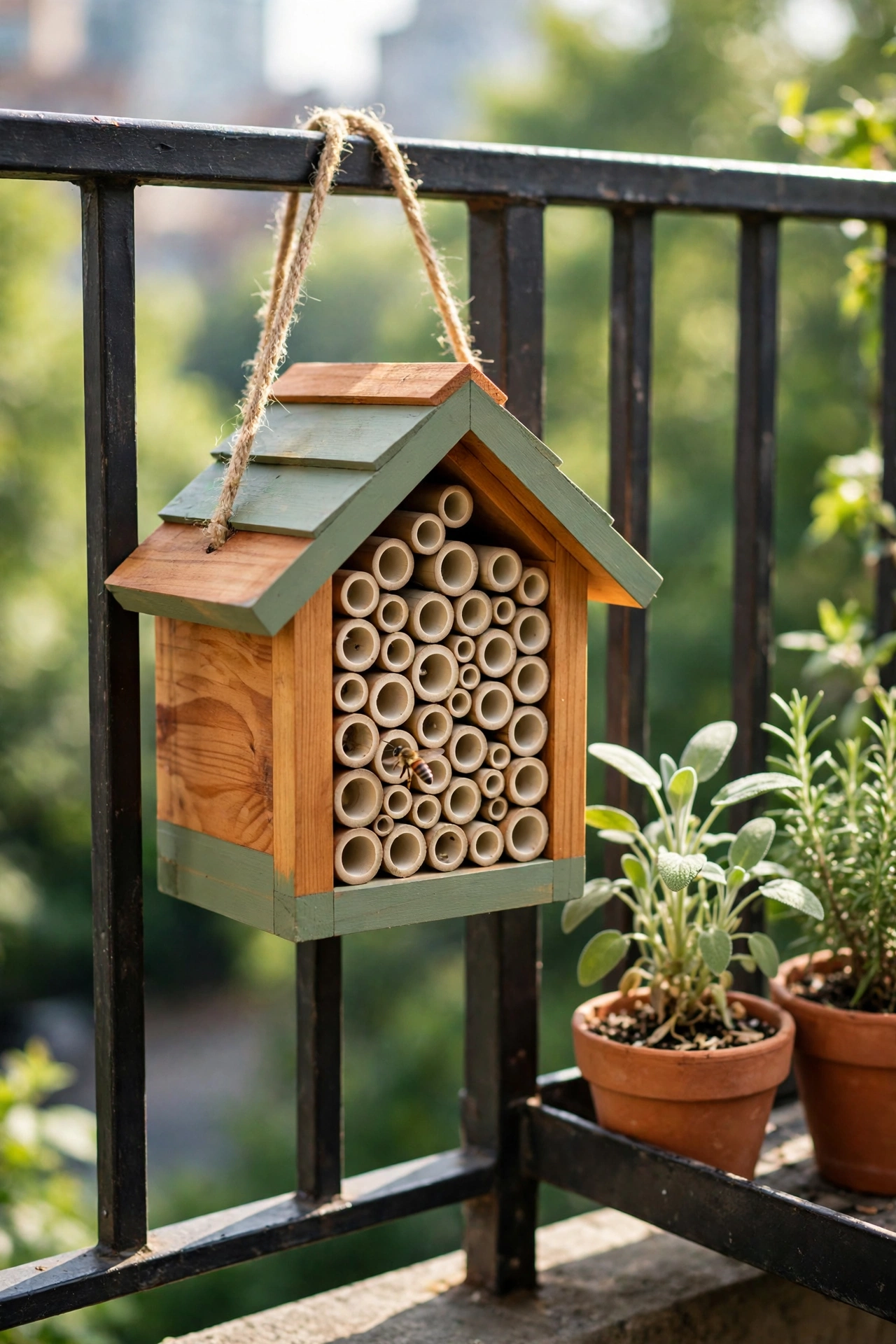
A compact hotel proves that even a balcony or a tiny courtyard can host nesting bees. The frame is small enough to hang from a railing or sit on a shelf, yet it still holds enough tubes for several nesting females. The small size also makes the hotel easy to move, clean, and store over winter.
Choose a compact hotel with a solid back and a small roof, and place it where it gets direct morning sun and shelter from wind. A balcony hotel needs no ground space at all, which makes it perfect for renters and apartment gardeners. Even one small hotel can support a surprising number of bees through a single season.
26. Shield Tubes With a Deep Overhang Roof
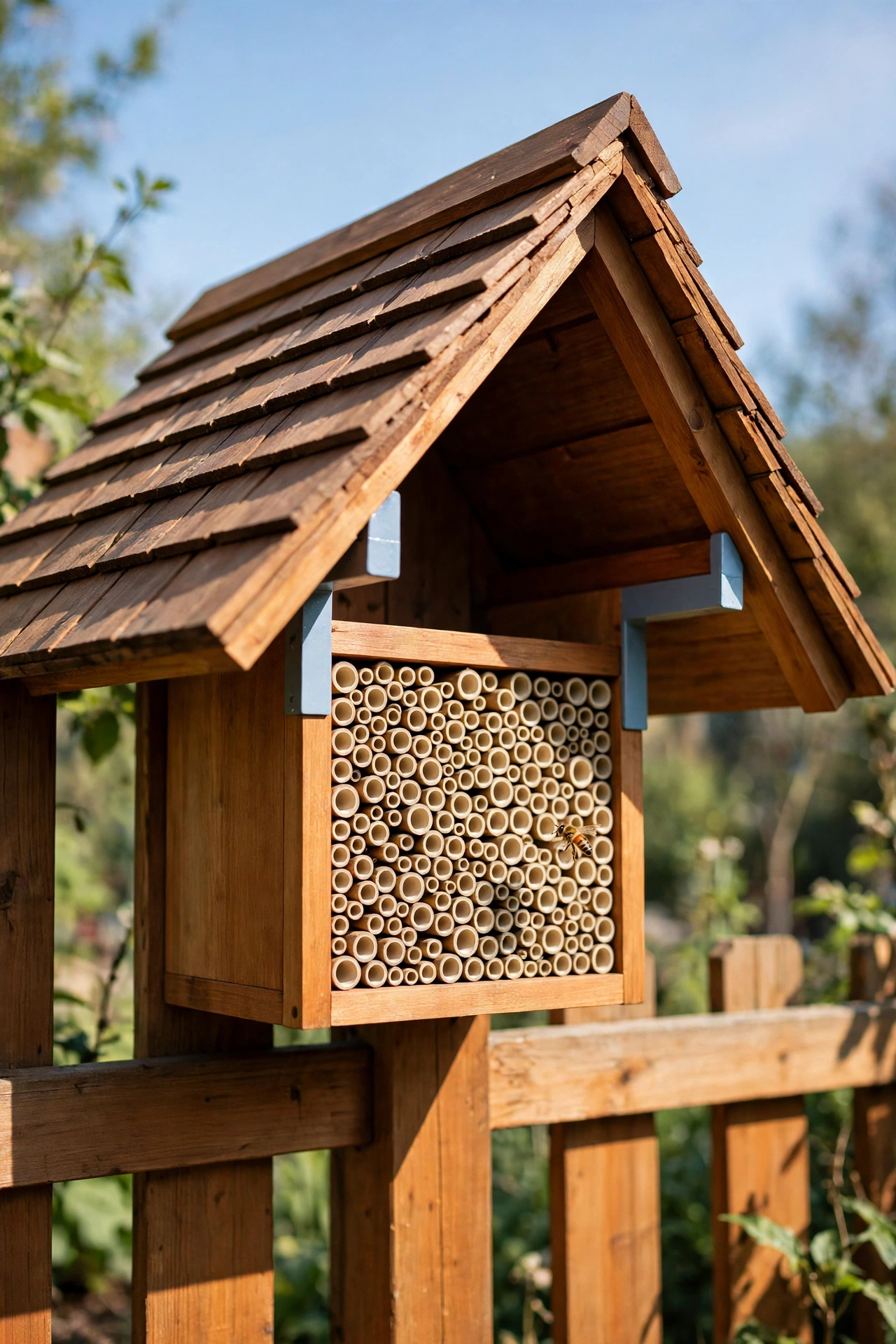
A deep overhang roof extends well beyond the tube face, so rain never reaches the openings even in a storm. The long roofline is the defining feature of this design, and it matters most in wet climates where damp tubes can mold and fail. The generous overhang also shades the tubes from harsh midday sun.
Extend the roof at least four inches past the face, and pitch it steeply so water runs off fast. Support the overhang with small brackets or side cheeks so it stays rigid in wind. A deep overhang hotel is a practical, hardworking design that puts bee health first, and it looks sturdy and purposeful in any yard.
27. Put a Hotel on a Wheeled Stand for Easy Moving
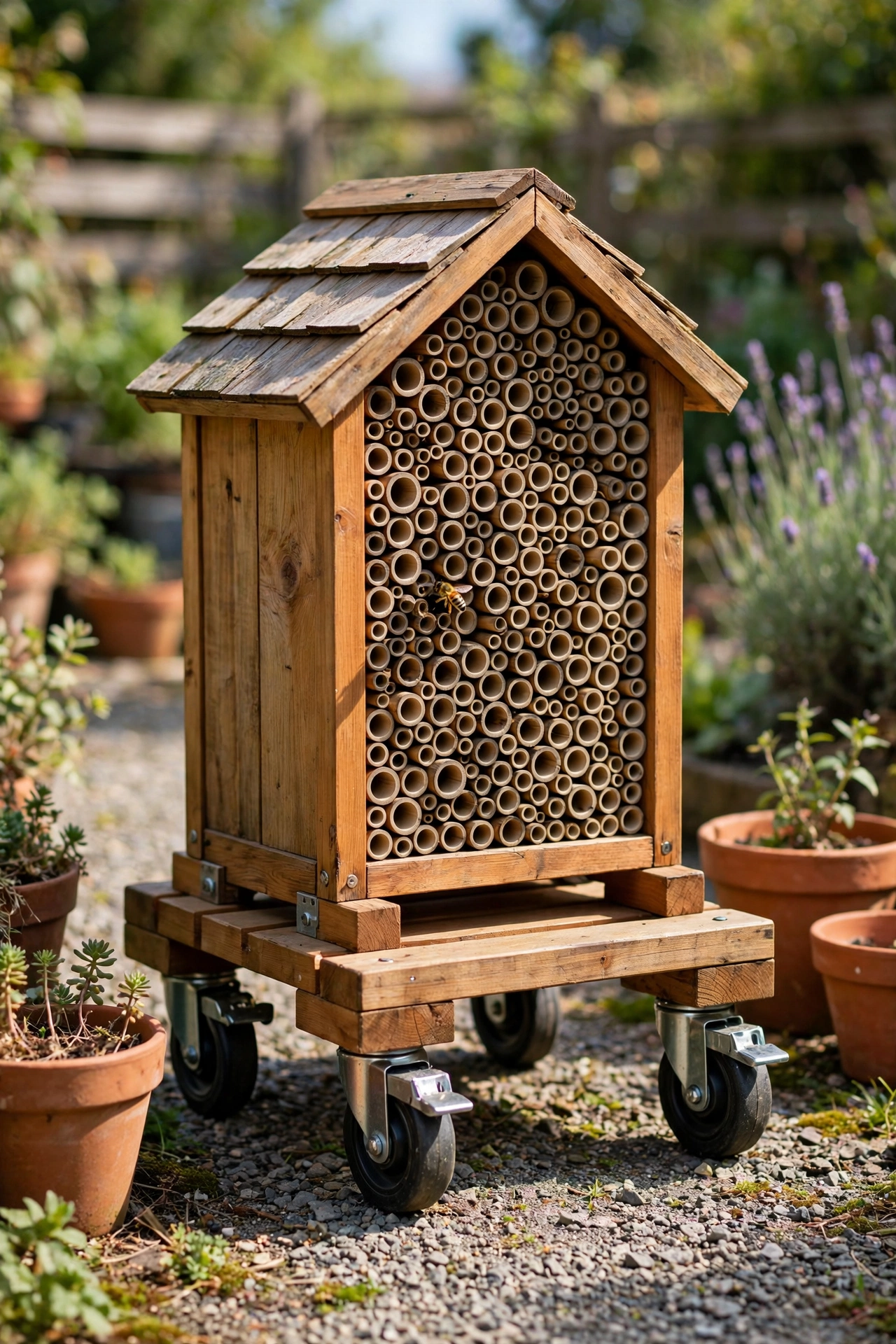
A wheeled stand lets you move a bee hotel around the yard to follow the sun, dodge a storm, or make room for a garden project. The hotel frame bolts onto a sturdy cart with locking casters, so it rolls smoothly and then locks solidly in place. The mobility is useful in a small yard where the best sunny spot changes with the seasons.
Lock the casters once the hotel is in place, because a hotel that rocks in the wind confuses returning bees. Choose large wheels that roll over grass and gravel without sinking. A wheeled hotel is also easy to roll under cover for winter cleaning, which makes yearly maintenance far simpler.
28. Drill Tubes on Both Faces of a Double-Sided Hotel
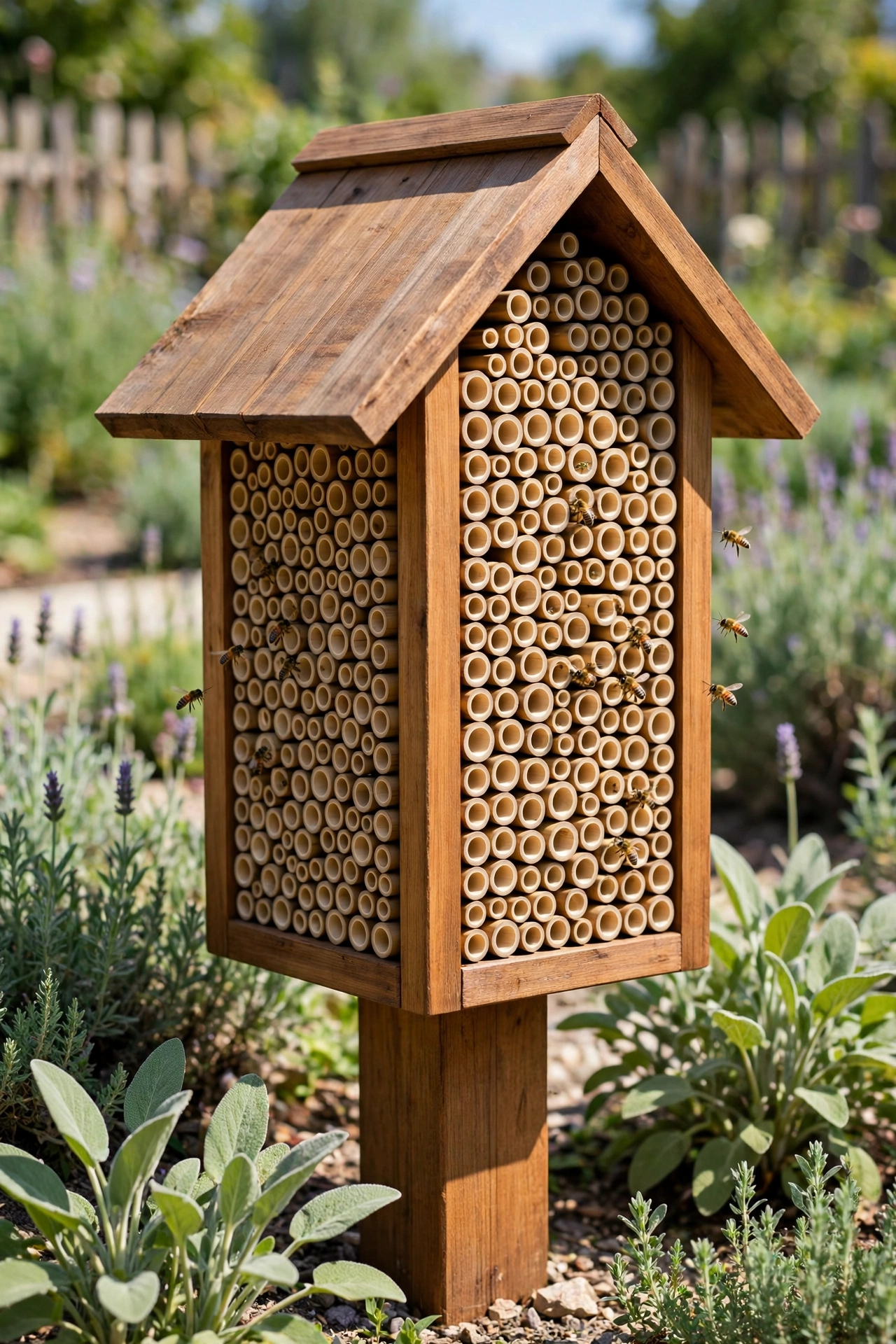
A double-sided hotel holds nesting tubes on two opposite faces, so it serves twice as many bees from a single structure. One face catches morning sun and the other catches afternoon sun, which spreads nesting activity across the whole day. The double face also makes the hotel look good from every angle in the yard.
Build the hotel as a freestanding post or a hanging frame with tubes on both sides and a shared roof above. Keep each face slightly angled downward so rain runs off the tube ends instead of pooling inside. A double-sided hotel is a clever use of space in a yard where one structure must do the work of two.
Conclusion
A bee hotel is a small structure with an outsized reward. It gives solitary bees a safe place to raise the next generation, and it gives your yard a living feature that changes with the seasons. From a simple bamboo frame to a full multi-frame wall, there is a design here for every space and every skill level.
Start with one hotel, mount it where the morning sun reaches it, and keep the tubes clean and dry. The bees will find it on their own, and once they do, they will return year after year. For a yard that feeds the bees your hotel will house, these herb spiral garden ideas will help you grow a compact patch of flowers and herbs that pollinators love.
Frequently Asked Questions About Backyard Bee Hotel Ideas for Pollinator Friendly Spaces
Where is the best place to put a bee hotel?
Place a bee hotel where it gets direct morning sun, shelter from strong wind, and protection from heavy rain. A south or southeast facing wall, fence, or post is ideal in most climates. Keep the hotel at least three feet above the ground and make sure it stays fixed and still, because bees return to the same tunnel and a moving hotel confuses them.
What size holes should a bee hotel have?
Most solitary bees need holes between four and ten millimeters wide, with depths of at least four to six inches. Offer a mix of diameters in one hotel so different species can all find a tunnel that fits. Keep every hole smooth inside, closed at the back, and free of splinters that could damage delicate wings.
How do I clean a bee hotel?
Replace paper and reed tubes each year, and brush out drilled blocks or replace them every two to three seasons. Clean the hotel in late winter before new bees emerge, and remove any tubes that show mold or parasites. A hotel with a hinged front or removable tray makes this yearly refresh much easier.
Will a bee hotel attract stinging bees to my yard?
Bee hotels attract solitary bees, which are gentle and very rarely sting because they have no hive to defend. Solitary bees focus on nesting and foraging, and they will leave you alone if you leave them alone. A bee hotel does not attract honeybee swarms or wasp colonies, which need very different nesting sites.
How long does a bee hotel last?
A well built wooden or clay hotel lasts many years, while the tubes inside need replacing every one to three seasons depending on the material. Bamboo and reed tubes last one or two seasons, drilled hardwood blocks last several years, and terracotta tubes last the longest of all. Check the hotel each spring and replace any damaged or moldy parts before nesting season begins.

Hi, I’m Emily! I turn messy corners into cozy, organized spots. DreamNestDecor is where I share simple, practical home ideas — decor, organization, and small-space solutions that work in real life, not just in photos. Every idea here is carefully researched before it’s shared.