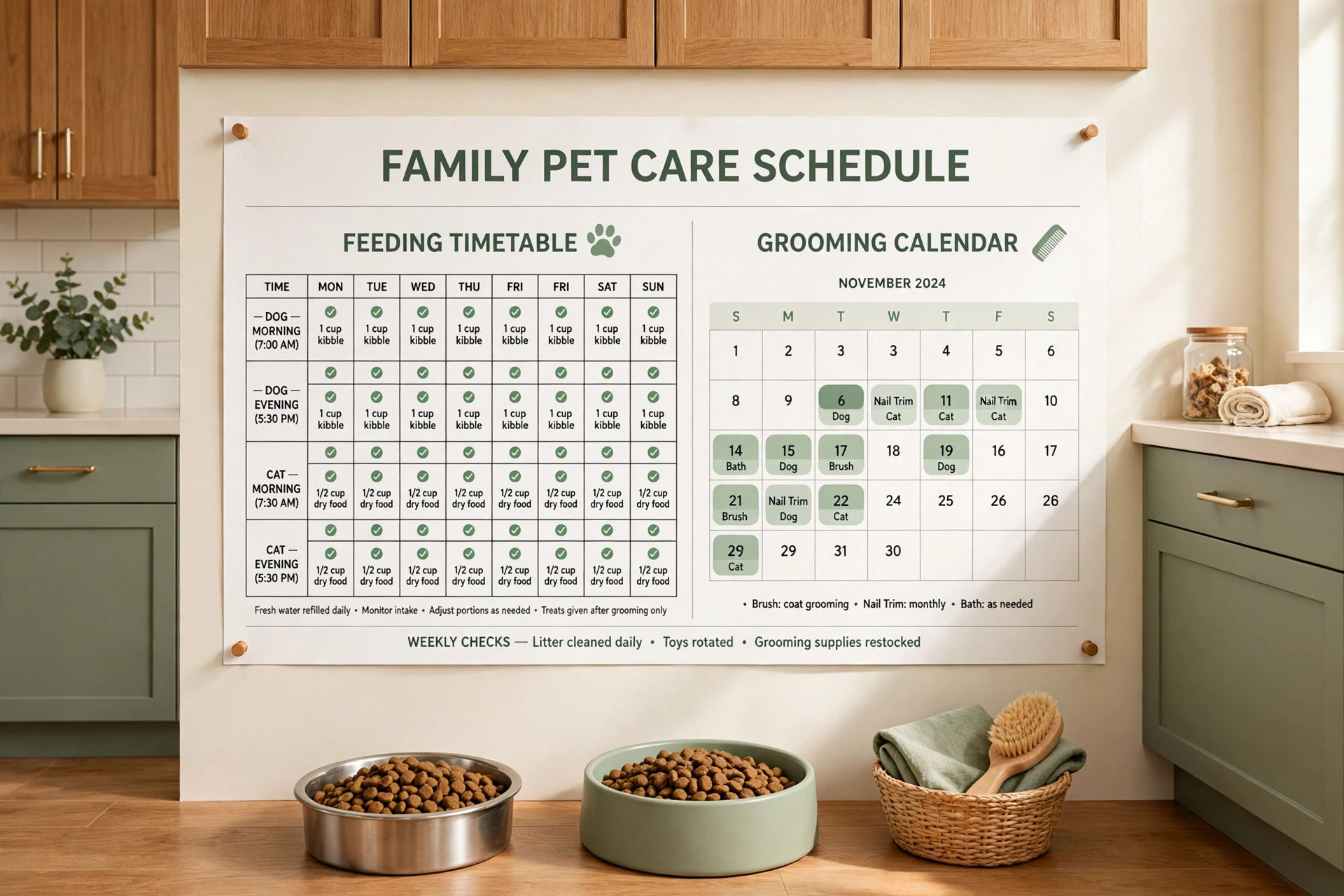
Picture this: it is seven in the morning, the dog is circling the kitchen, the cat is sitting beside an empty bowl, and two family members both believe the other one already fed the pets. By evening the same confusion returns, and nobody can remember when the dog last had a bath or whose turn it is to brush the cat. That daily guesswork is stressful for the whole family and unfair to the animals who depend on you.
A written schedule ends the guessing for good. When every feeding, brushing, bath, and vet visit has a set day, a set time, and a named person, pet care runs itself and nothing gets missed. These 28 family pet care schedule ideas will help you build feeding timetables, grooming calendars, chore rotations, and trackers that keep every pet in your home fed, clean, and cared for on time, every single day.
1. Post a Morning Feeding Timetable on the Fridge
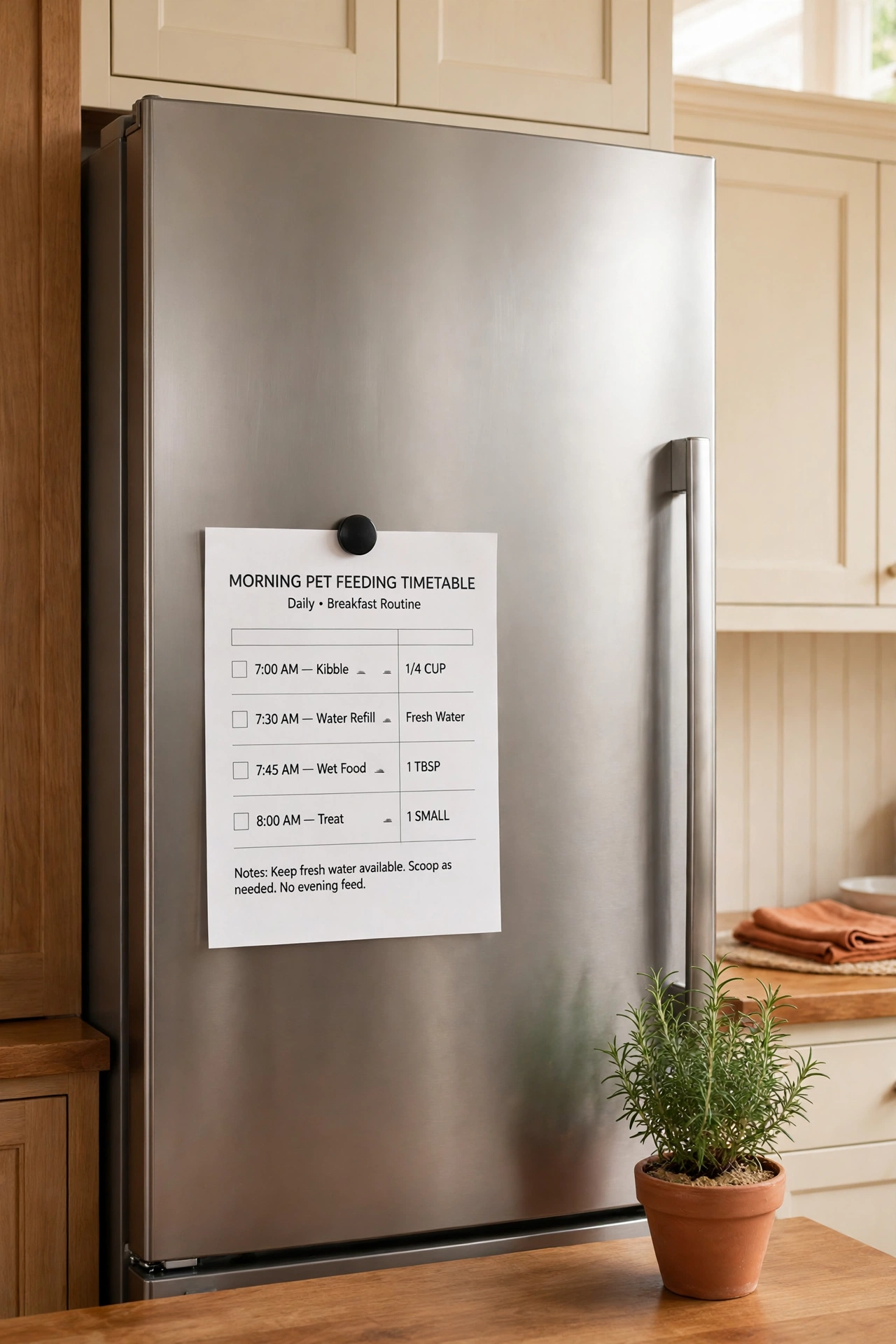
A morning feeding timetable on the fridge gives every family member the same clear answer to the question of who feeds the pets and when. Write the pet name, the exact meal time, and the portion size on a simple printed sheet, and fix it to the fridge with a magnet where everyone sees it before breakfast. The timetable removes all doubt, so the pets never get fed twice or left waiting because each person assumed someone else had done it.
Keep the timetable to the morning routine only, so it stays short and easy to follow even on rushed school days. Add a small tick box beside each meal so the person who feeds the pet can mark it done at once. When the box is ticked, the whole family knows the job is finished, and the pets get one proper breakfast at the same time every day.
2. Plan Weekly Meal Portions With a Portion Chart
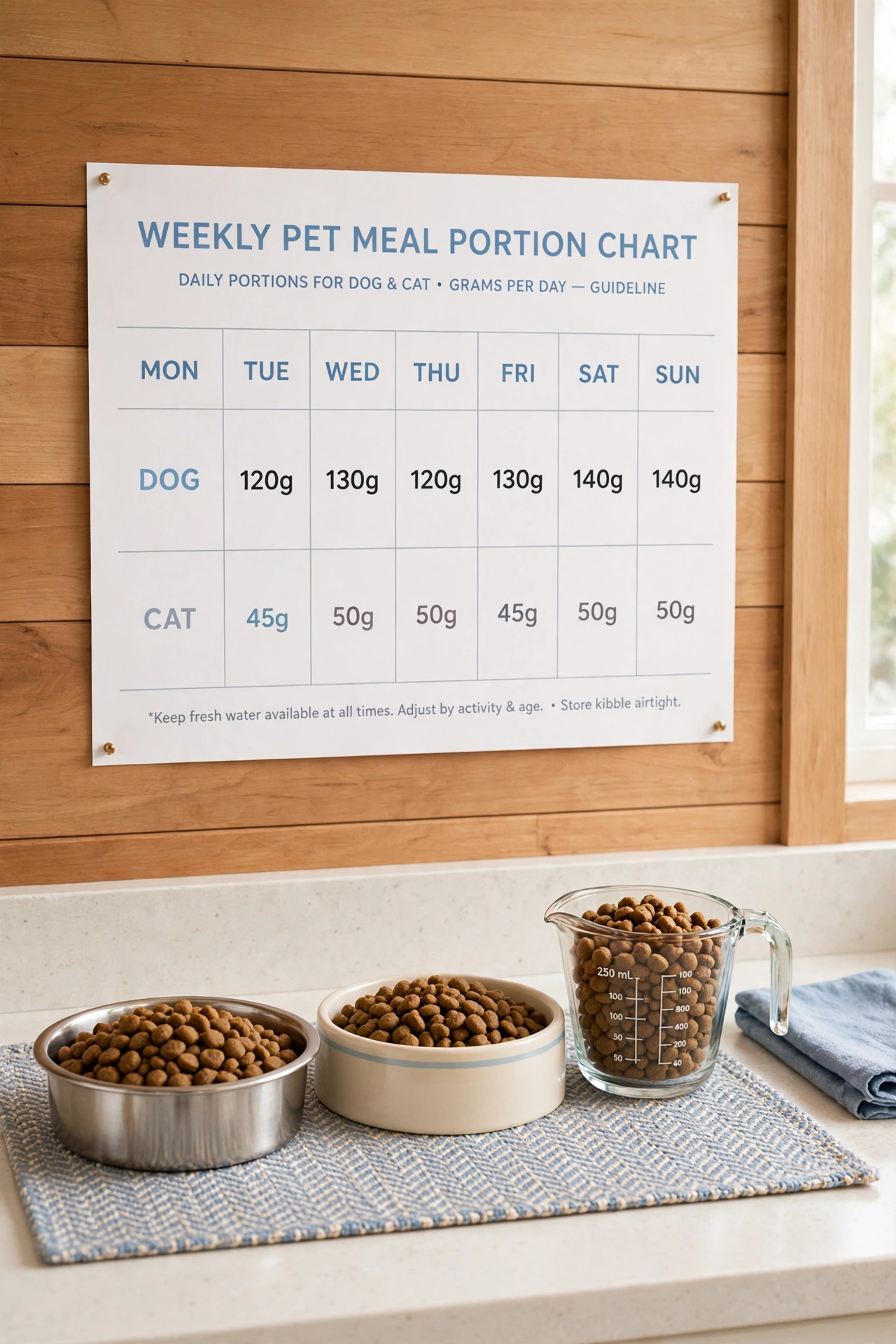
A weekly portion chart takes the guesswork out of how much food each pet gets at every meal. List the seven days across the top and each pet down the side, then write the exact portion for breakfast and dinner in every box. When portions are written down, nobody overfills the bowl out of kindness, and the pets keep a healthy weight week after week.
Review the chart every Sunday and adjust it if your vet has changed a portion or if a pet has gained or lost weight. Keep the chart near the feeding station so the person serving the meal can check it in seconds. A portion chart also helps guests and relatives feed the pets correctly, because the right amount is printed in plain sight instead of living in one person’s memory.
3. Rotate Feeding Duties With a Chore Wheel
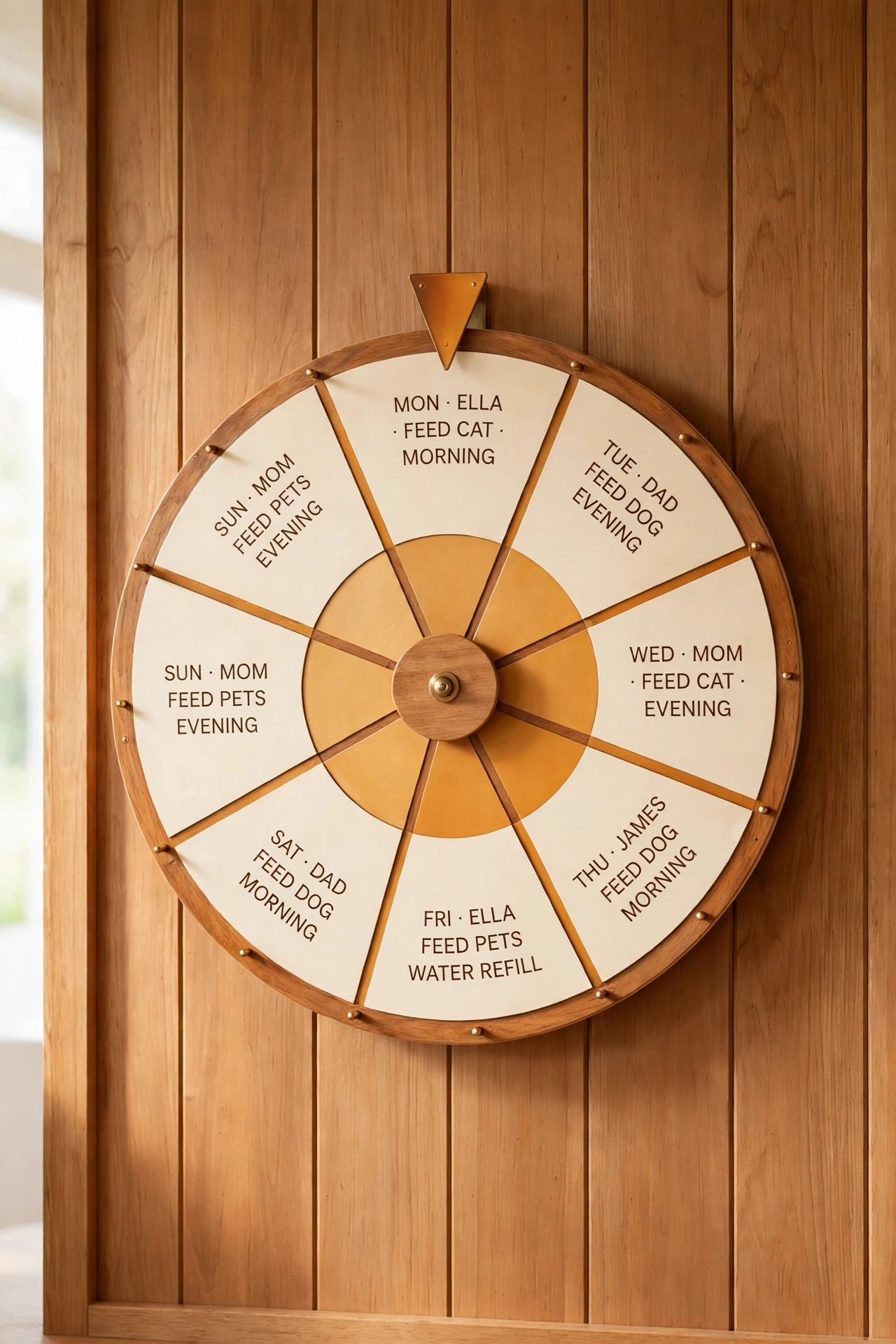
A chore wheel divides pet feeding duties fairly among the whole family and stops the same person from doing every meal. Write each family member’s name on one section of a round chart and each feeding job on the matching ring, then rotate the wheel one step every week. Everyone takes a turn at breakfast duty, dinner duty, and fresh water duty, and the rotation feels fair because it is visible to all.
Mount the wheel where the family gathers, such as the kitchen wall or the hallway noticeboard, and turn it together every Sunday evening. Children enjoy spinning the wheel and seeing whose week it is, which makes the chore feel like a game instead of a burden. If your family already uses a chart for household tasks, these family chore chart ideas will help you fit pet feeding duties into the same fair rotation system.
4. Share Vet Visits on a Family Digital Calendar
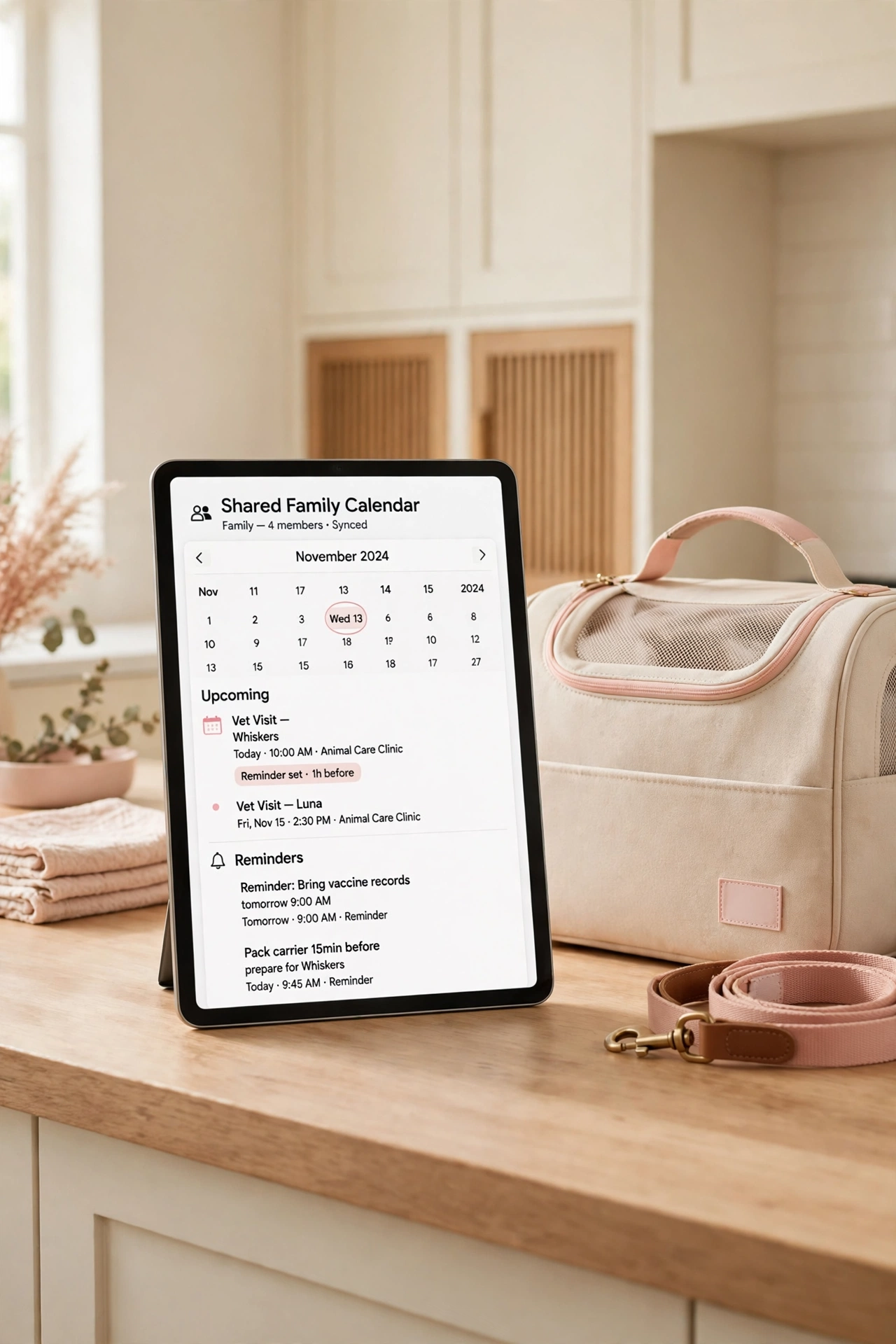
A shared digital calendar keeps vet visits, vaccination dates, and checkup reminders where every adult in the family can see them. Create a calendar just for pet care, add each appointment with the clinic name and the pet name, and invite every family member to follow it. A reminder two days before the visit gives everyone time to arrange transport and prepare the carrier.
Color-code the pet calendar so appointments stand out from school runs and work meetings at a glance. Add the vet phone number and the appointment reference in the event notes, so the person taking the pet has everything in one place. A shared calendar also prevents double bookings, because the visit is visible to the whole family the moment it is scheduled.
5. Mark Bath Days on a Monthly Grooming Calendar
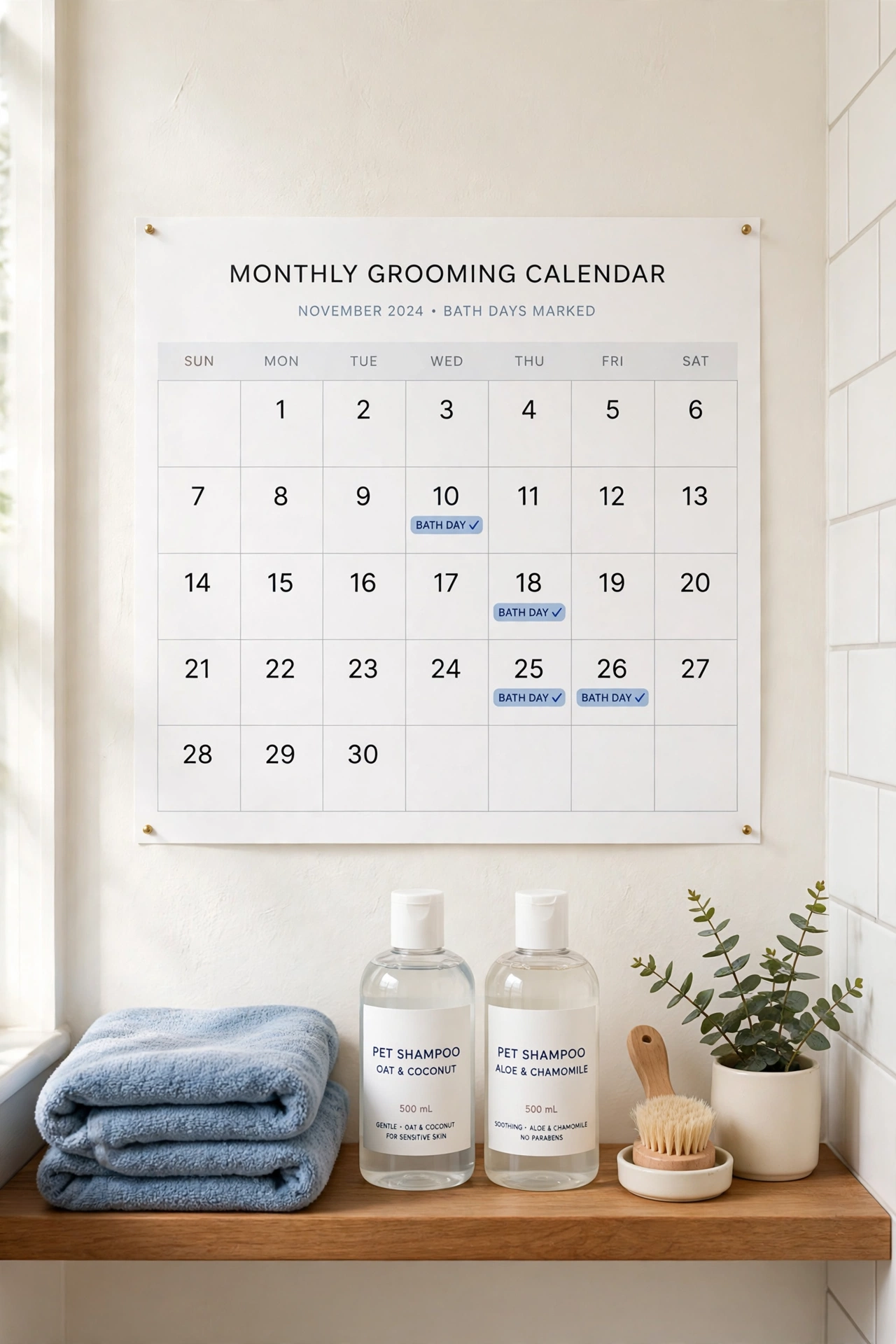
A monthly grooming calendar gives every bath, brush, and trim a fixed date, so grooming never slips for weeks because nobody remembered it was due. Print a blank month view, write each pet’s name on the bath day, and hang the calendar in the laundry room or bathroom where grooming supplies live. When the date arrives, the calendar tells the family it is bath day without anyone having to ask.
Choose bath dates that suit your pet’s coat and lifestyle, such as once a month for most dogs and less often for indoor cats. Add a note for the person in charge of each session, and tick the box when the bath is done. A grooming calendar keeps coats clean and skin healthy, and it spreads the work evenly across the month instead of cramming it into one frantic weekend.
6. Keep a Feeding Log Notebook Beside the Bowls
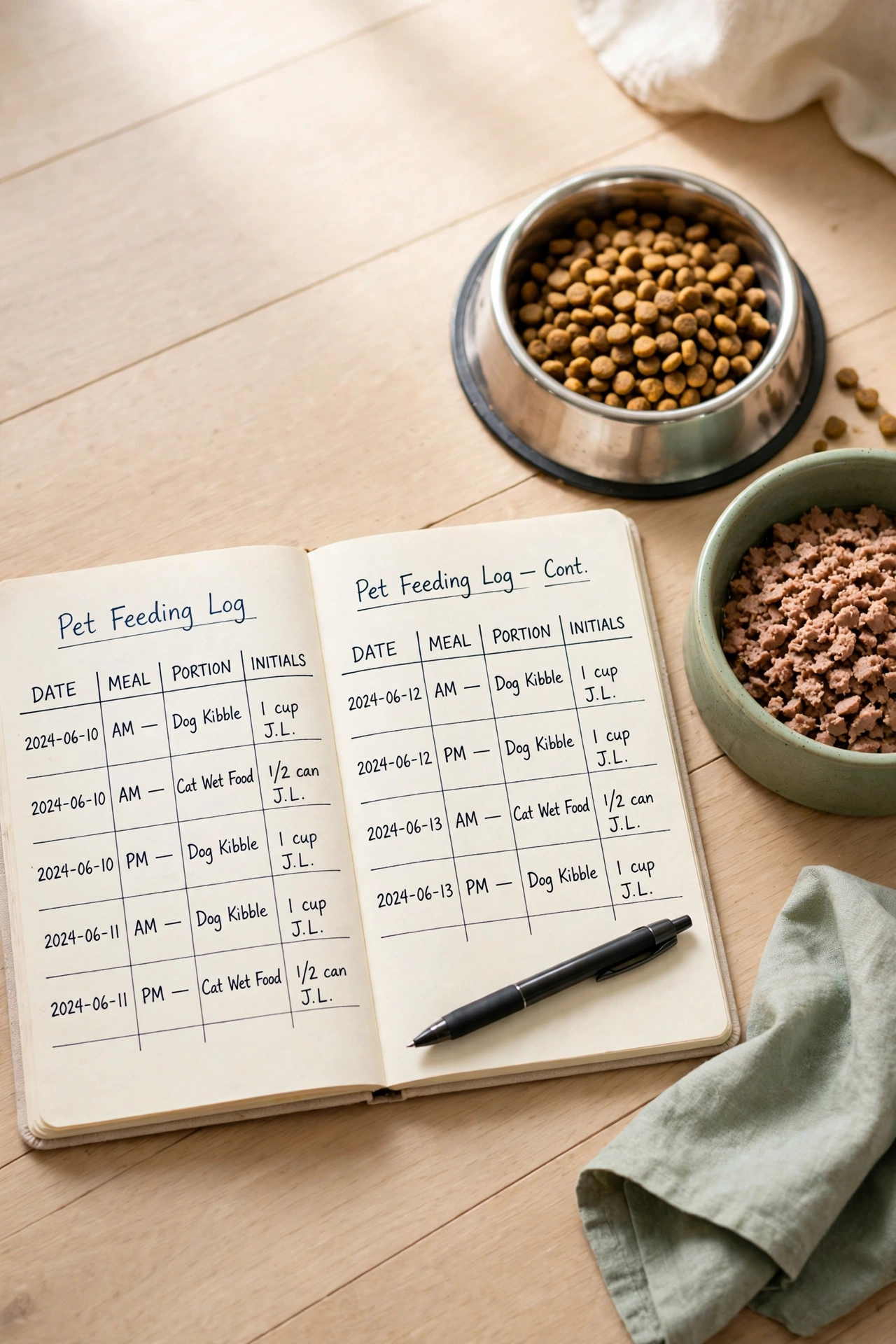
A feeding log notebook beside the bowls is the simplest tracker of all, and it works even when phones are charging and calendars are closed. Rule a notebook with columns for the date, the meal, the portion, and the initials of the person who served it. Each time a pet is fed, the server writes one quick line, and the log becomes a clear record the whole family can trust.
The log is especially useful in homes with several pets on different diets, because it shows at a glance which animal ate what and when. If a pet seems unwell, the log gives the vet an accurate feeding history instead of a guess. Keep a pen attached to the notebook with a ribbon, so the log is always ready and never ends up blank because the pen went missing.
7. Give Kids a Color-Coded Pet Chore Chart
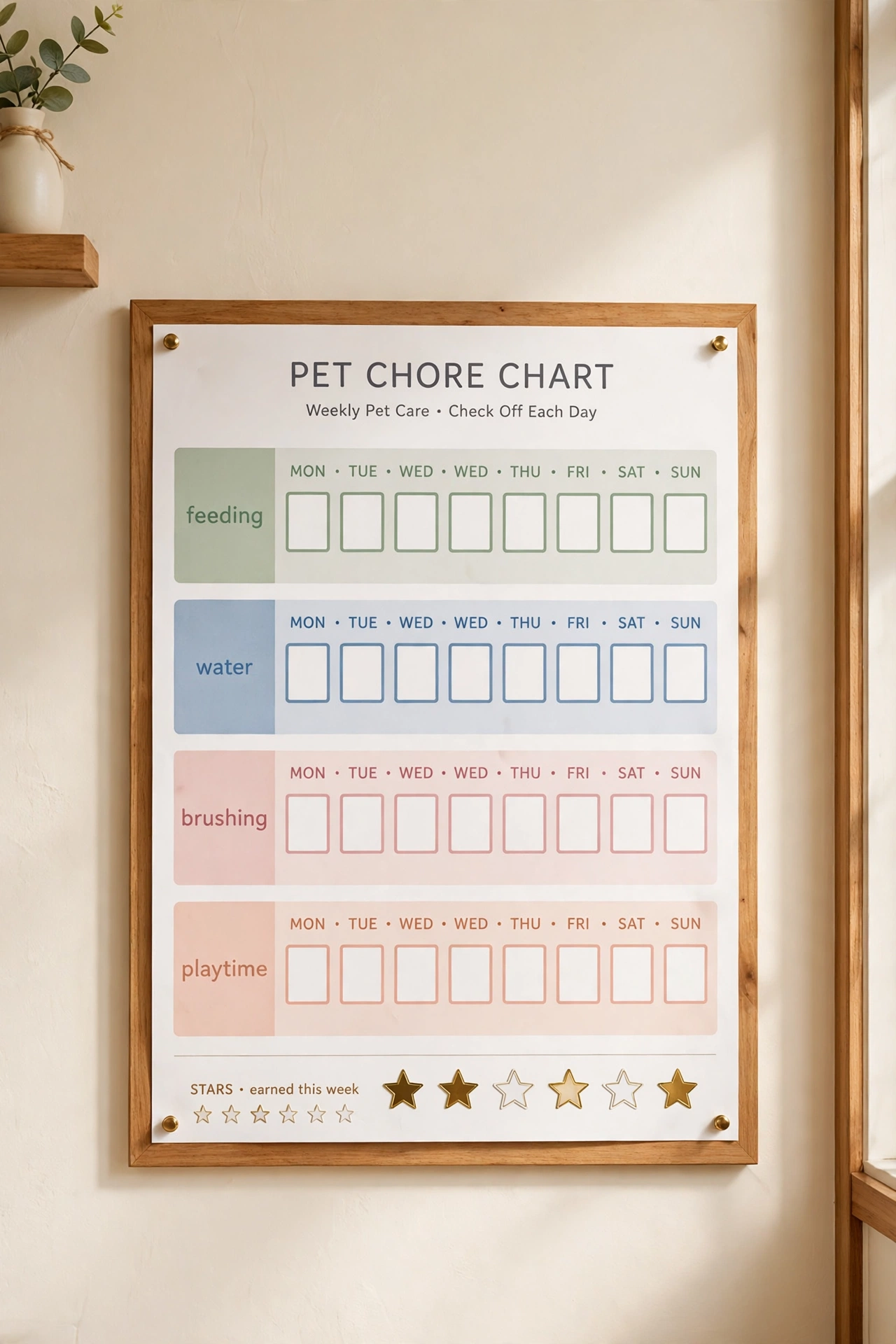
A color-coded pet chore chart gives each child their own color and their own row of daily pet jobs, so responsibilities are clear without any arguing. Assign one color per child, write the jobs for the week in matching colors, and let each child tick off feeding, water, brushing, and playtime as they finish them. The colors make the chart easy to read even for younger children who are still learning to follow a schedule.
Keep the jobs age appropriate, with simple tasks like filling the water bowl for little ones and full feeding duty for older children. Praise the finished rows at dinner time, and let the chart run for a full week before changing the jobs around. A color-coded chart teaches responsibility gently, and it gives children real pride in caring for the family pet.
8. Follow a Weekend Grooming Routine Checklist
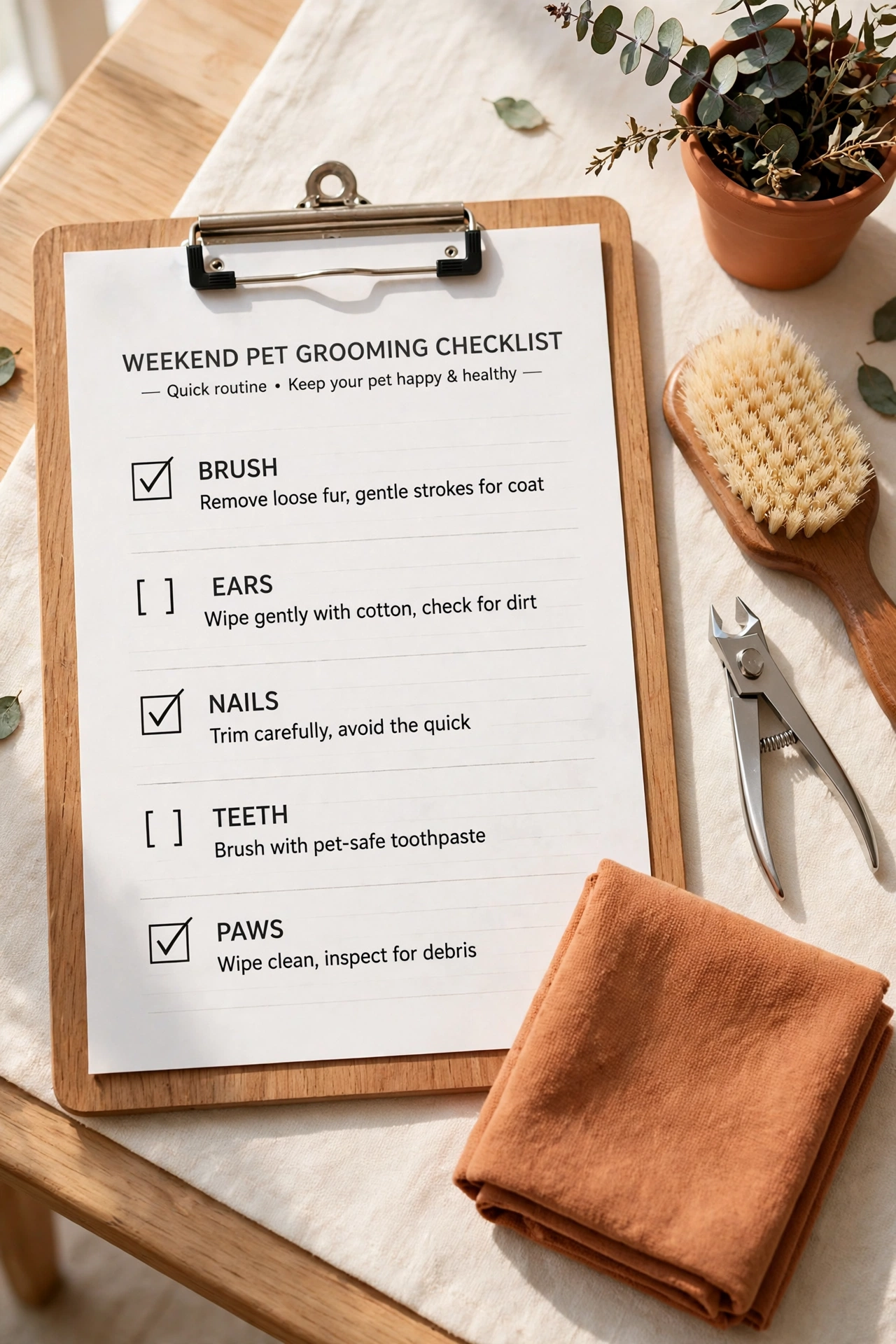
A weekend grooming routine checklist turns a long list of grooming jobs into one calm Saturday session. Write the steps in order: brush, check ears, trim nails, check teeth, and wipe paws, with a tick box beside each step and the pet name at the top. The family works through the list together, and the checklist makes sure no step is skipped in the rush to finish.
Keep the checklist on a clipboard in the grooming spot so it is ready every weekend, and print a fresh copy at the start of each month. A fixed routine also calms nervous pets, because they learn what comes next and the session feels predictable. If your home already runs on a written daily rhythm, a daily cleaning checklist pairs well with this grooming list, since both turn big jobs into small steps that are easy to finish.
9. Set a Daily Treat Allowance Schedule
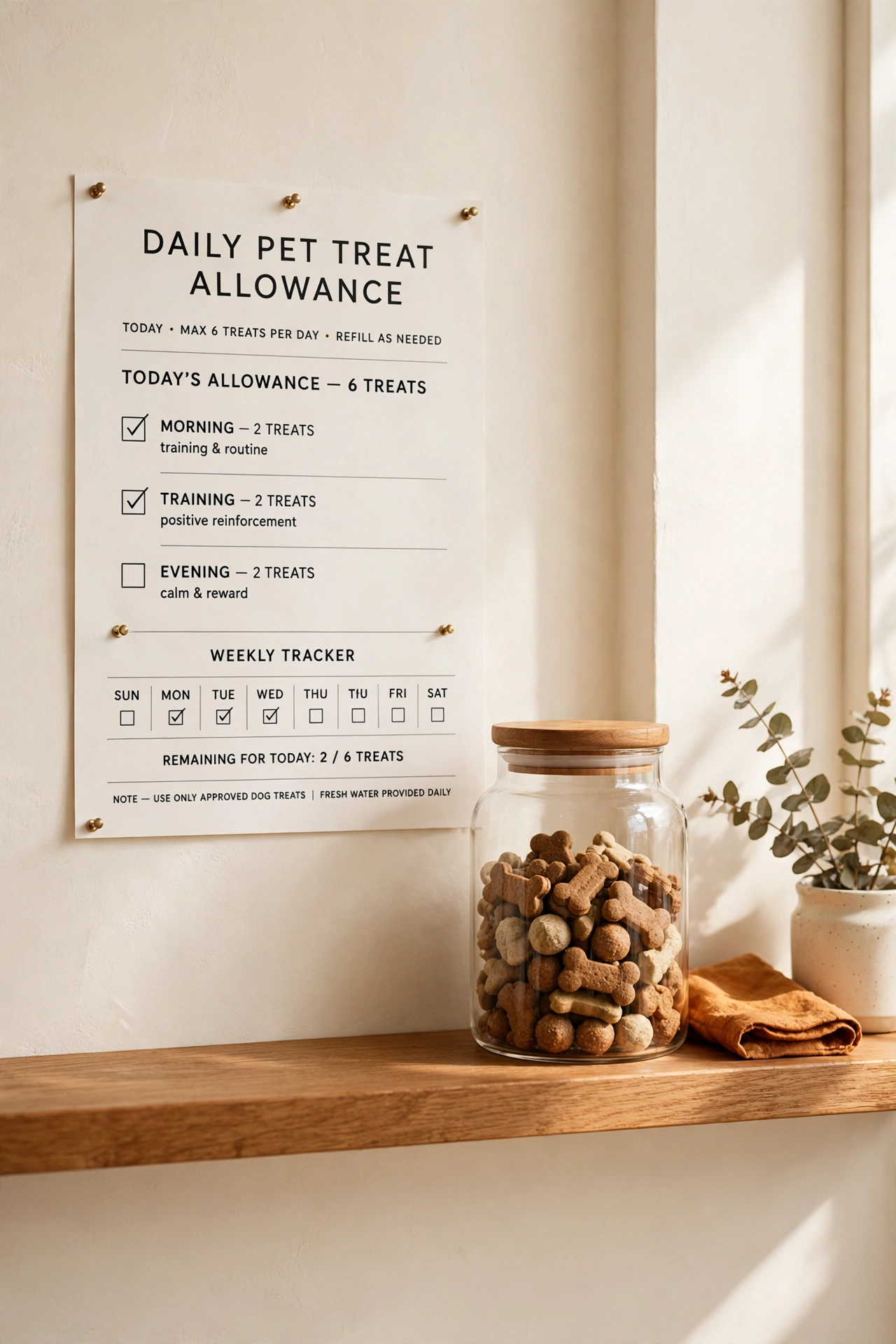
A daily treat allowance schedule stops the common problem of every family member giving the pet a treat without knowing the others already did. Decide the total number of treats per day, write it on a small chart near the treat jar, and let each person tick off a treat as they give it. When the day’s boxes are full, the treats stop, and the pet stays within a healthy limit.
Split the allowance across the day so treats can still reward good behavior at training time, after walks, and at bedtime. Write the treat type on the chart too, so the family rotates between healthy options instead of giving the same rich snack every time. A treat schedule keeps the pet happy and the waistline in check, and it teaches children that loving a pet means feeding it wisely.
10. Track Medication With a Dose Calendar
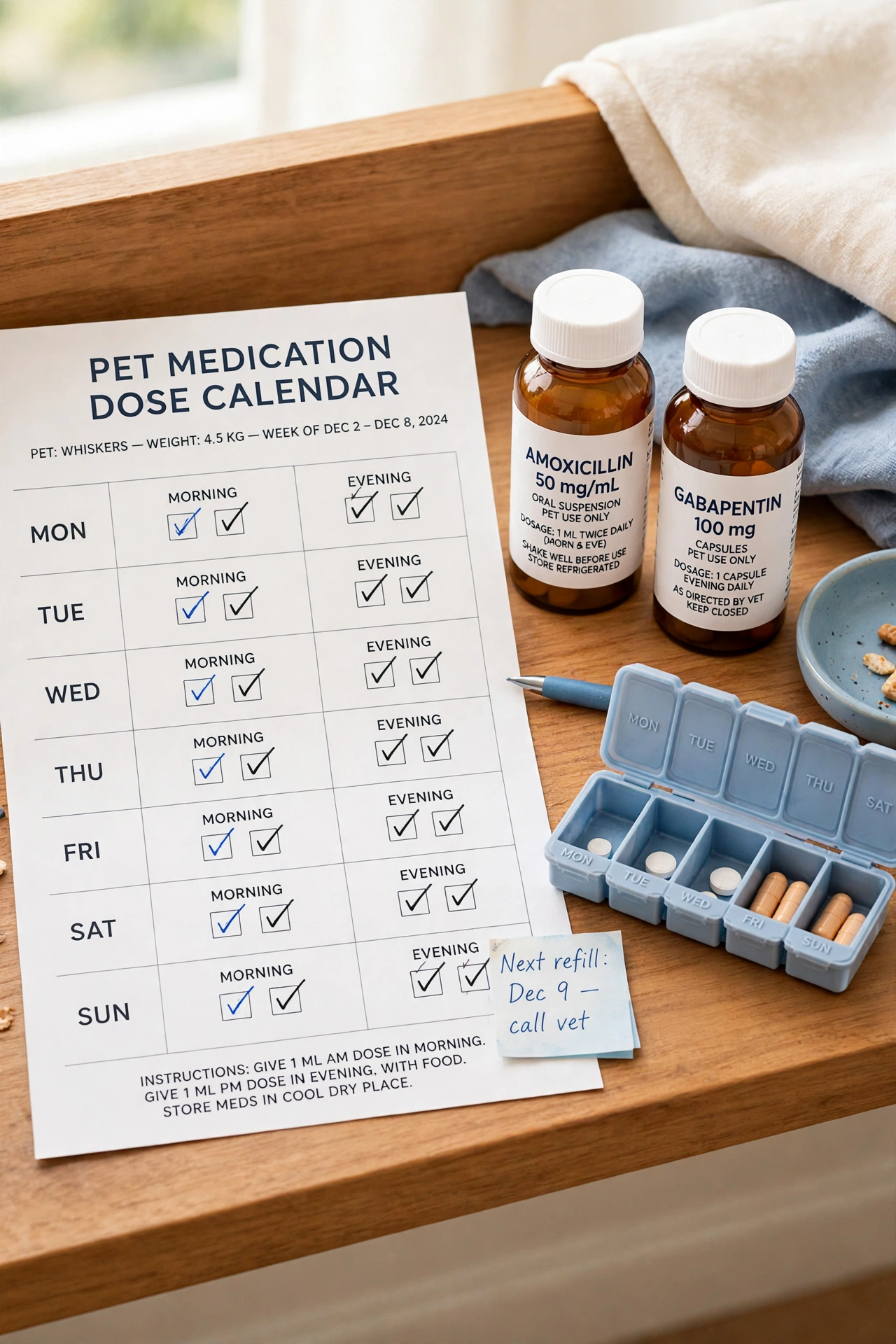
A dose calendar is essential when a pet takes daily medicine, because a missed or doubled dose can cause real harm. Write each dose time on a calendar kept with the medicine, and tick the box the moment the medicine is given. The tick is the proof, and it protects the pet when two people share the job and each one needs to know whether the dose was already given.
Use a different colored pen for morning and evening doses so the record is clear at a glance, and note any side effects or missed doses in the margin for the next vet visit. Set a phone alarm for each dose time as a backup, and keep the calendar in the same spot as the medicine so the two are never separated. A dose calendar turns a worrying responsibility into a calm, reliable routine.
11. Plan a Seasonal Shedding Grooming Schedule
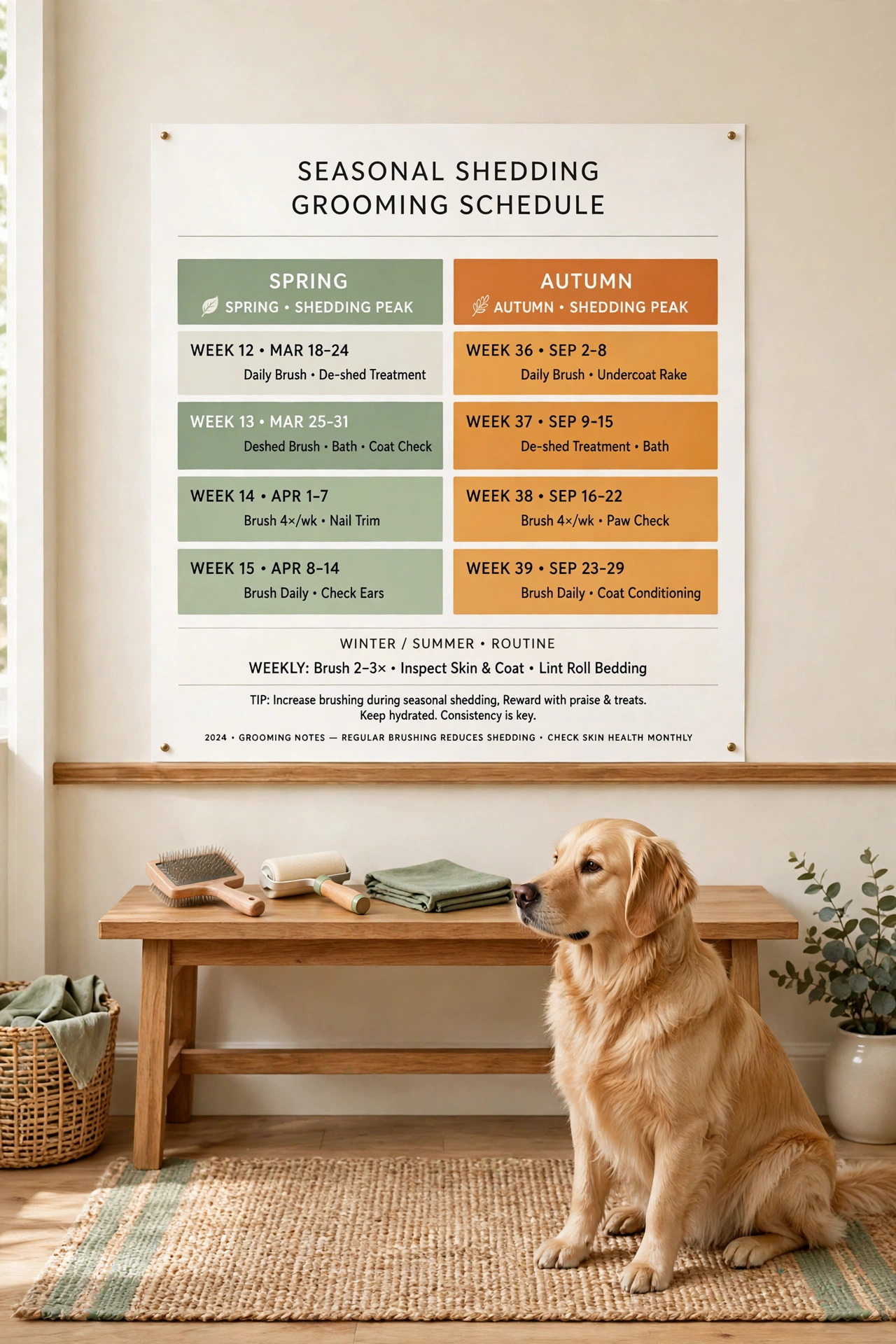
A seasonal shedding schedule matches grooming frequency to the times of year when your pet sheds the most. Mark the heavy shedding months on the calendar, such as spring and autumn for many dogs, and increase brushing sessions to three or four times a week during those periods. In lighter months, drop back to one weekly brush, and the schedule stays realistic all year round.
Write the seasonal plan on the same grooming calendar the family already uses, with a different color for shedding season weeks. Extra brushing during shedding season keeps loose hair off furniture and out of the air, and it keeps the coat healthy as the old fur gives way to new growth. Planning by season means the family is ready before the shedding starts, instead of reacting to hair everywhere after it begins.
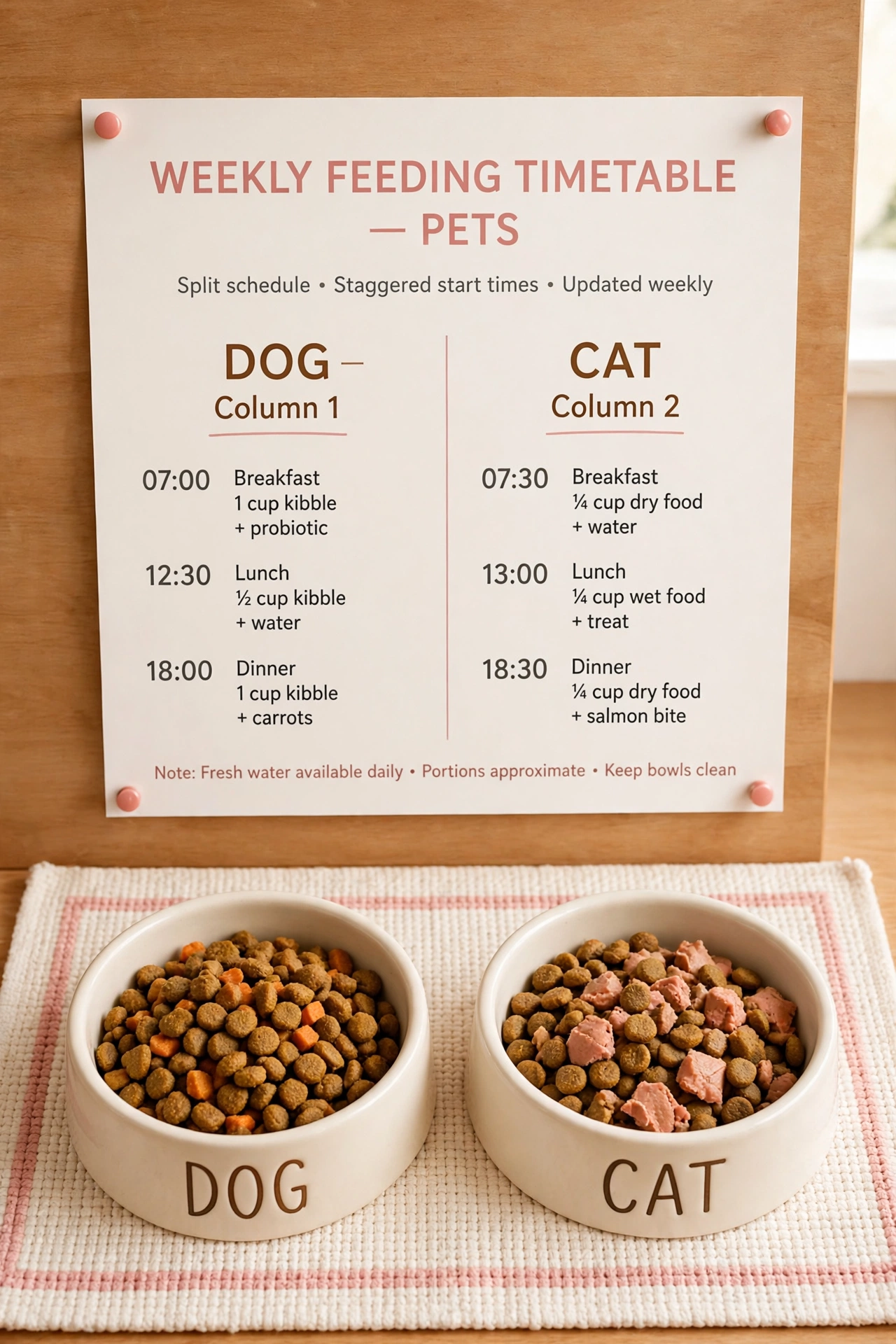
12. Stagger Mealtimes for Two Pets With a Split Timetable
A split timetable solves the problem of two pets who eat at different speeds or need different food. Write two columns, one for each pet, with staggered start times ten or fifteen minutes apart, so the fast eater finishes before the slow eater begins. The timetable keeps meals peaceful, stops food stealing, and makes sure the pet on a special diet eats only its own food.
Post the split timetable above the feeding area and follow the same order every day, so both pets learn the routine and wait calmly for their turn. Add a note for which bowl belongs to which pet, and keep the bowls in the same spots at every meal. A staggered schedule brings order to a multi-pet household and removes the mealtime tension that leads to guarding and squabbles.
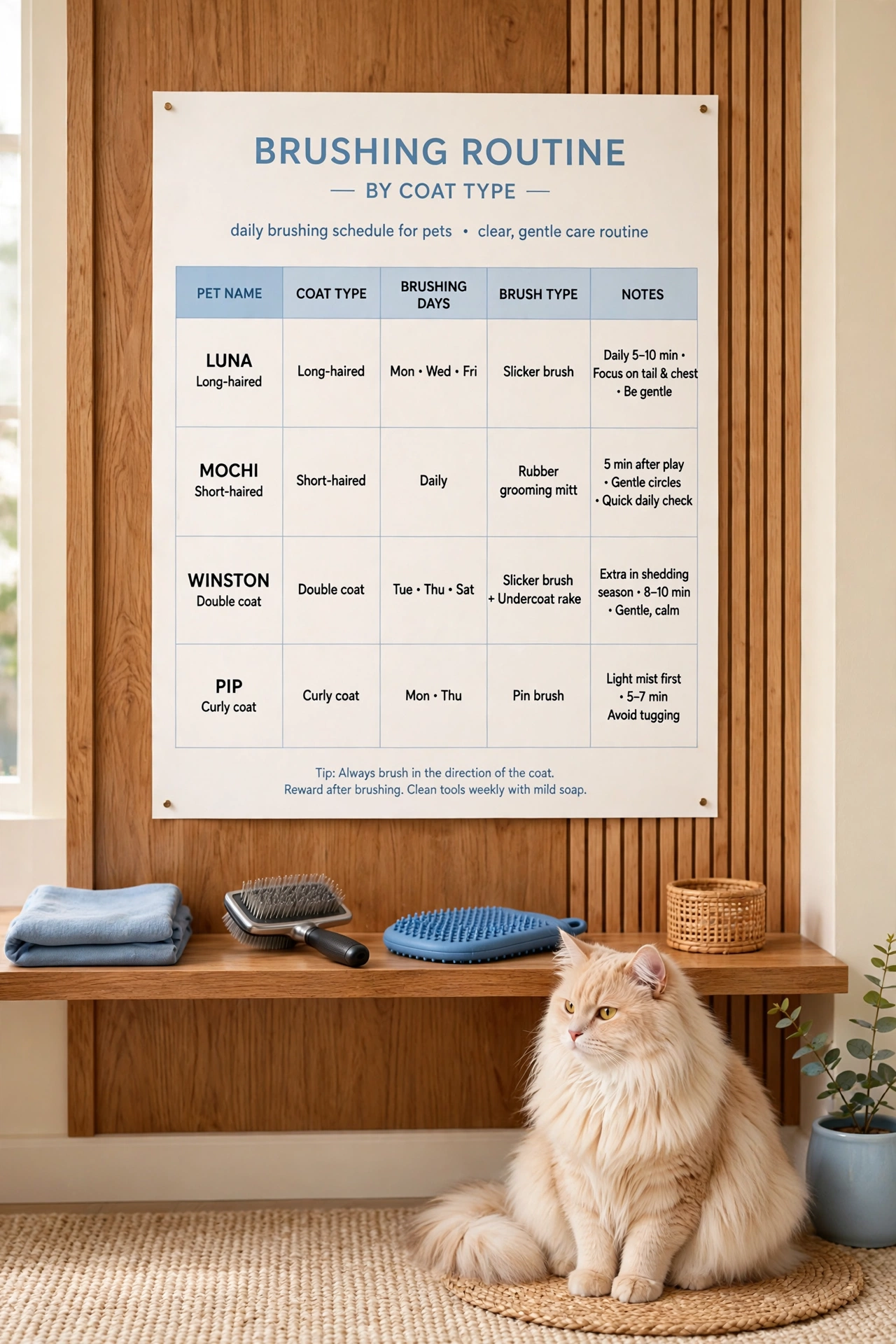
13. Brush by Coat Type With a Brushing Routine Chart
A brushing routine chart sets a different brushing frequency for each pet based on coat type, so long-haired pets get the daily attention they need while short-haired pets follow a lighter schedule. Write each pet’s name, coat type, and brushing days on the chart, and hang it near the grooming tools. The chart stops the family from over-brushing one pet and neglecting another.
Note the brush type beside each pet’s name as a reminder, since a slicker brush suits long coats and a rubber mitt suits short coats. Tick each session as it is done, and review the chart when seasons change, because coat needs shift through the year. A coat-based chart keeps every pet’s fur smooth and tangle-free with the least wasted effort.
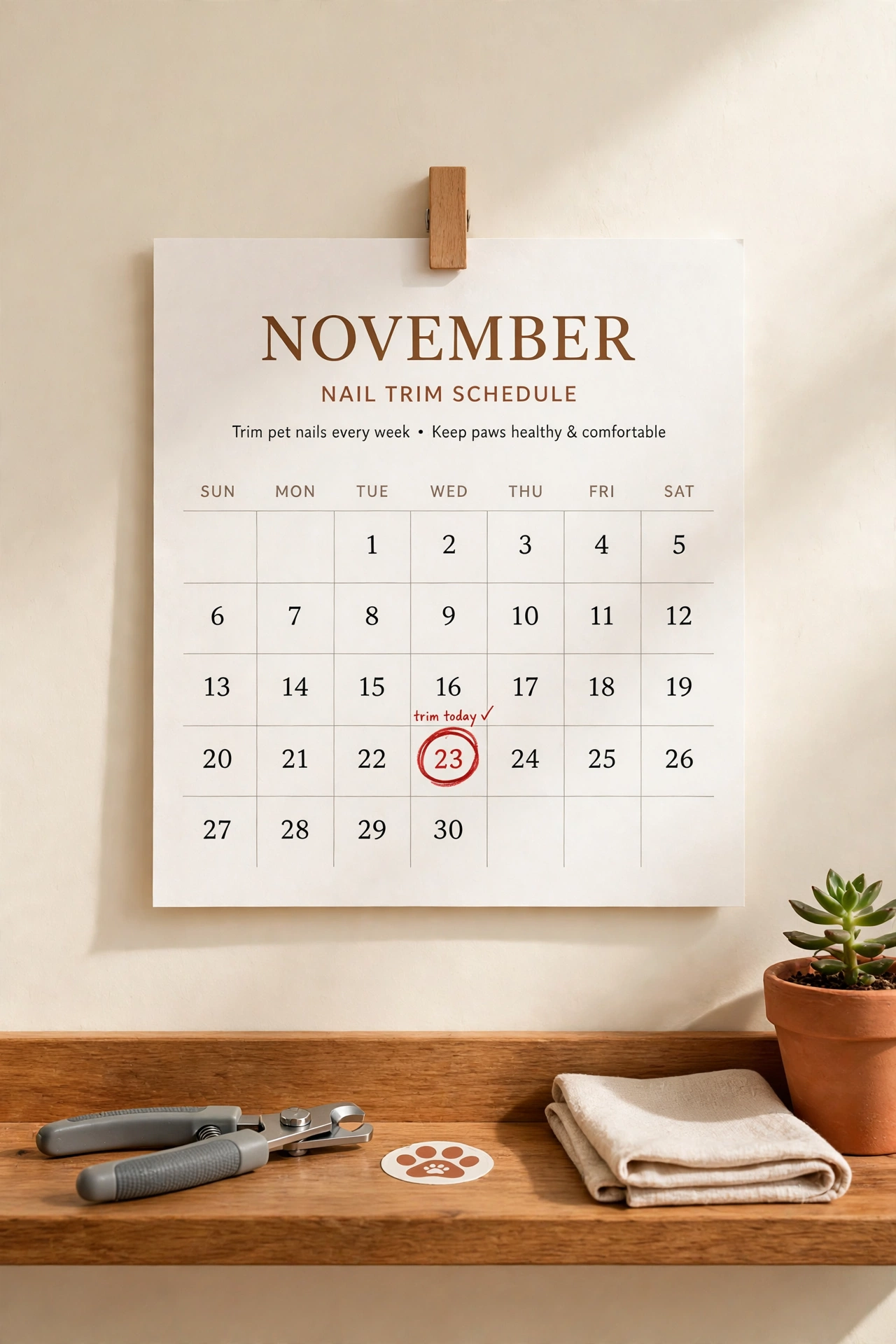
14. Schedule Nail Trims on the Wall Calendar
Nail trims are easy to forget until the clicking on hard floors gives them away, so put them on the wall calendar as a fixed recurring event. Mark one date every three or four weeks for each pet, write the pet name and the person in charge, and treat the date like any other appointment. A scheduled trim keeps nails short, floors scratch-free, and paws comfortable.
Pair the trim with a small reward on the schedule, such as a favorite treat or a short play session right after, so the pet learns to accept the routine. If a trim is missed, move it to the next free evening instead of waiting for the next month, and write the new date on the calendar at once. A fixed nail schedule protects both the pet’s paws and the family furniture.
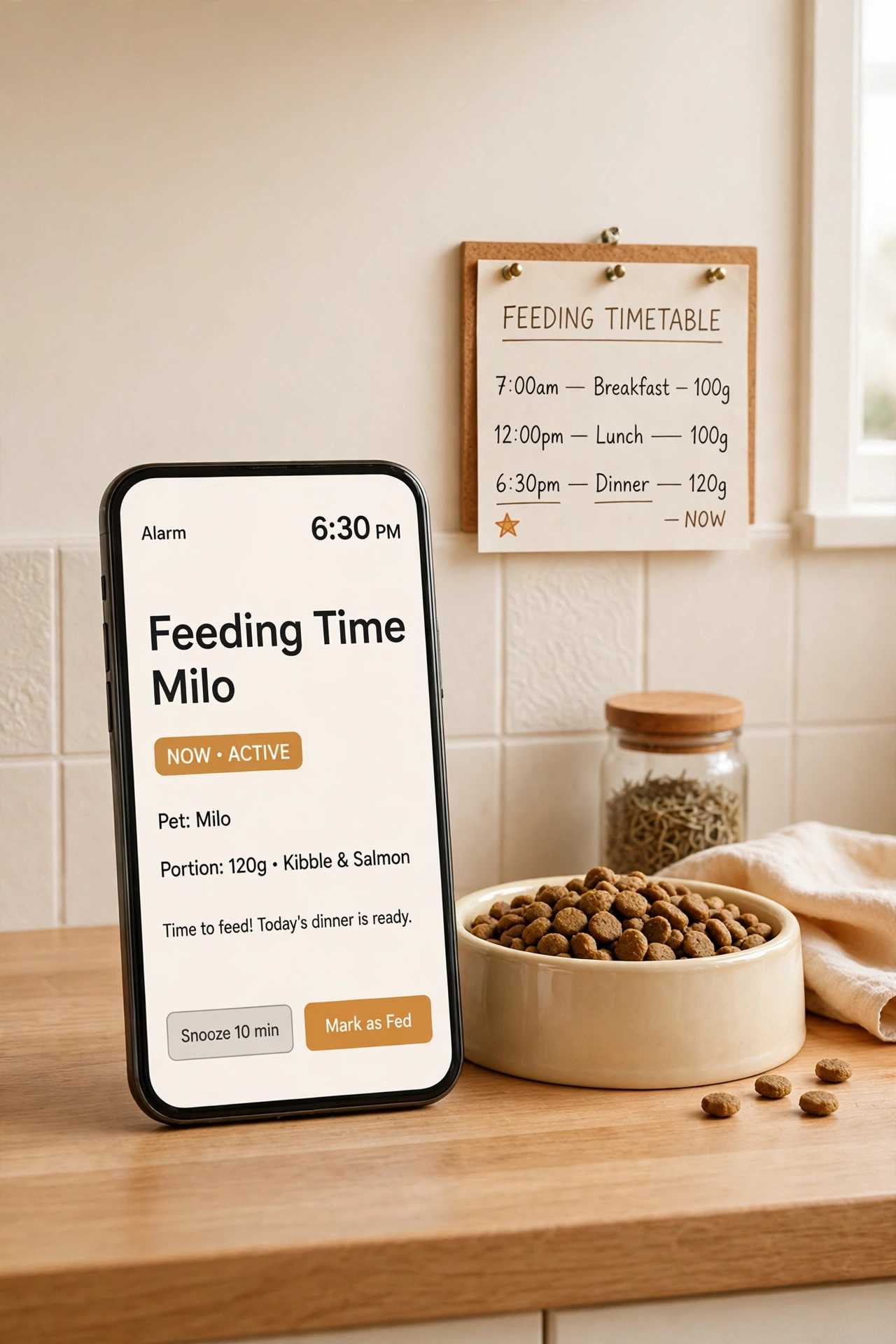
15. Use Feeding Time Alarms to Keep Meals on Time
Feeding time alarms keep pet meals on a steady clock even when the family day gets busy. Set a daily phone alarm for each meal time, label it with the pet name and the portion, and let the alarm be the signal that starts the feeding routine. Pets thrive on predictable timing, and regular meals support healthy digestion and calmer behavior through the day.
Let the alarm sound in a shared space so whoever is nearest can act on it, and pair it with the written timetable so the alarm and the chart always agree. If the family is out, the alarm reminds the person at home to feed on time rather than hours late. A simple alarm turns a good intention into a reliable habit that the pets can count on.
16. Leave a Pet Sitter Care Schedule Card
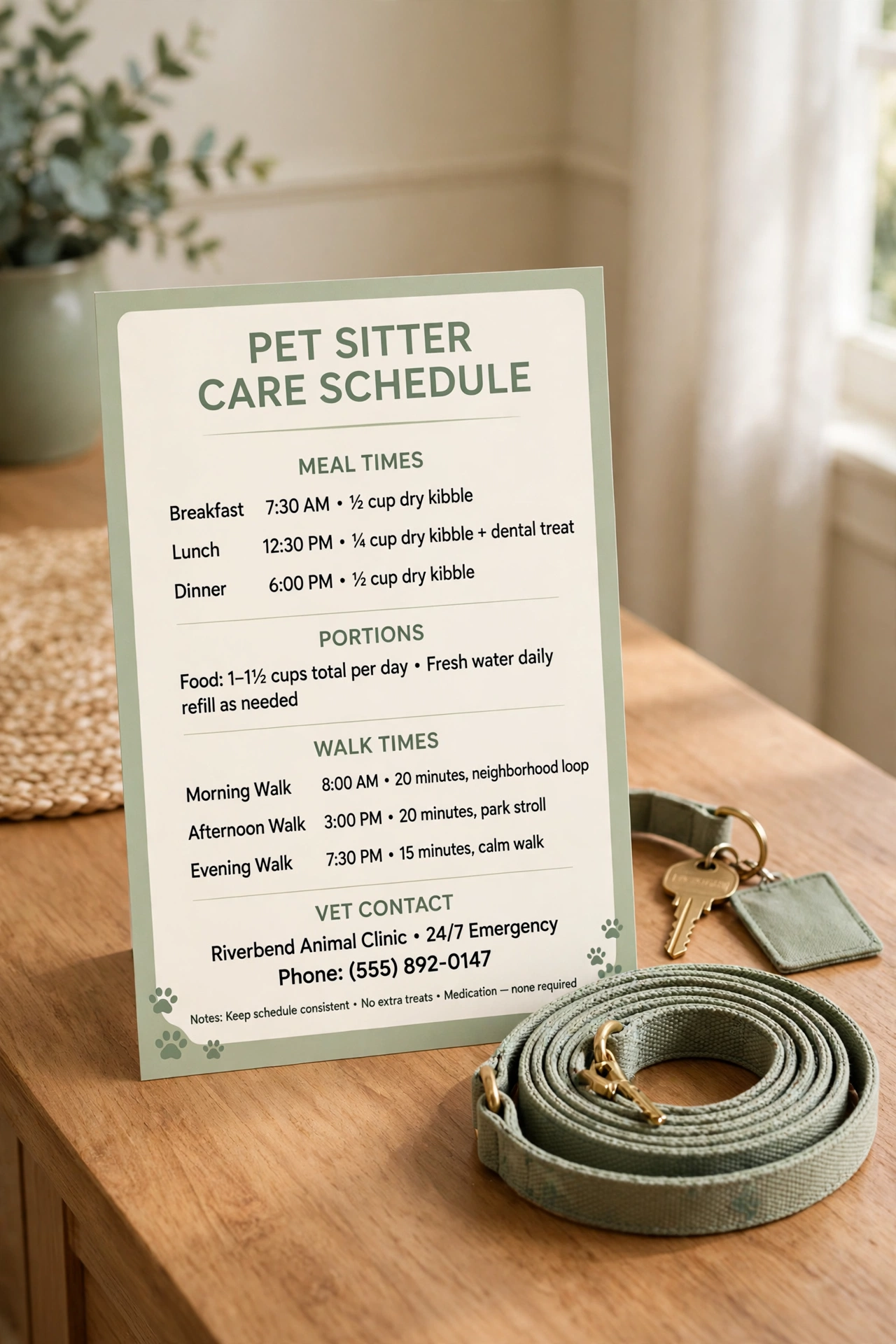
A pet sitter care schedule card gives a sitter everything needed to follow the family routine while you are away. Write the card with meal times, portions, walk times, grooming tasks, and the vet phone number, in the order the day runs. The sitter follows one clear card instead of piecing together instructions from texts and memory, and the pets keep their familiar routine.
Prepare the card a few days before the trip, and walk the sitter through it once in person so questions can be answered face to face. Leave a second copy on the fridge and the original with the sitter, so the schedule is always at hand. A care schedule card brings peace of mind on every trip, because the pets are cared for exactly the way the family cares for them at home.
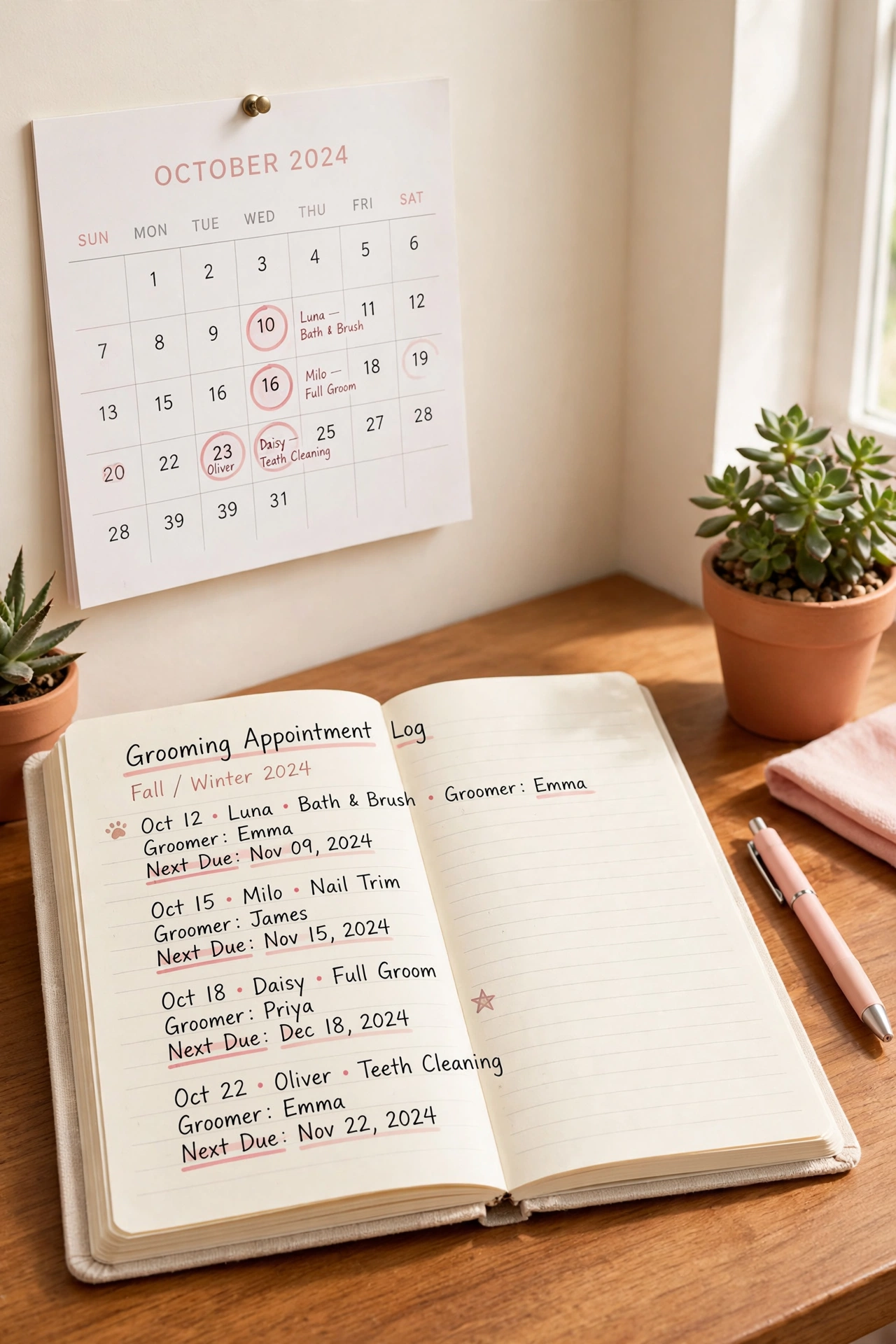
17. Track Grooming Appointments With an Appointment Log
A grooming appointment log records every professional grooming visit, including the date, the groomer, the services done, and the next due date. Keep the log in a notebook or on a printed sheet near the family calendar, and add a line after every appointment. The log shows how often each pet is groomed, what was done last time, and when the next visit should be booked.
Note any comments from the groomer in the log, such as skin concerns or coat changes, so the information is ready for the next vet visit. Book the next appointment before leaving the salon, and write the date in the log at once so the gap between visits never stretches too long. An appointment log keeps professional grooming on a steady rhythm instead of an occasional afterthought.
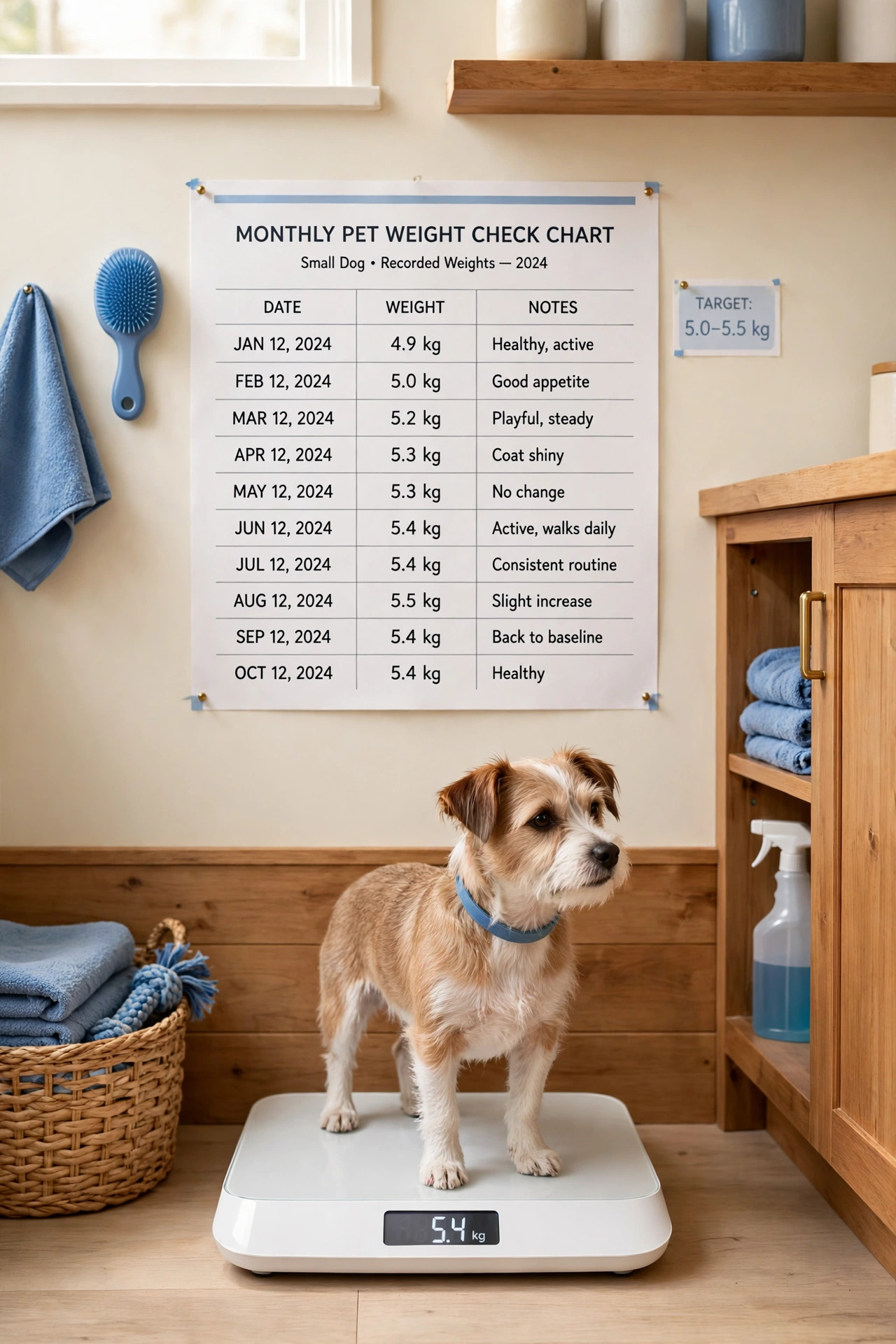
18. Review Weight and Portions on a Monthly Check-In Schedule
A monthly check-in schedule puts weight and portion review on the calendar once a month, so small weight changes are caught before they become health problems. Weigh each pet on the same day every month, write the weight on a simple chart, and compare it with the previous month. If the weight has moved, adjust the portion chart and note the change for the vet.
Keep the check-in on the same day as another monthly habit, such as the first Saturday of the month, so it becomes part of the family rhythm. Record the weight, the current portion, and any change in appetite or energy in a few short lines. A monthly check-in takes five minutes and gives the family a clear picture of each pet’s health through the year.
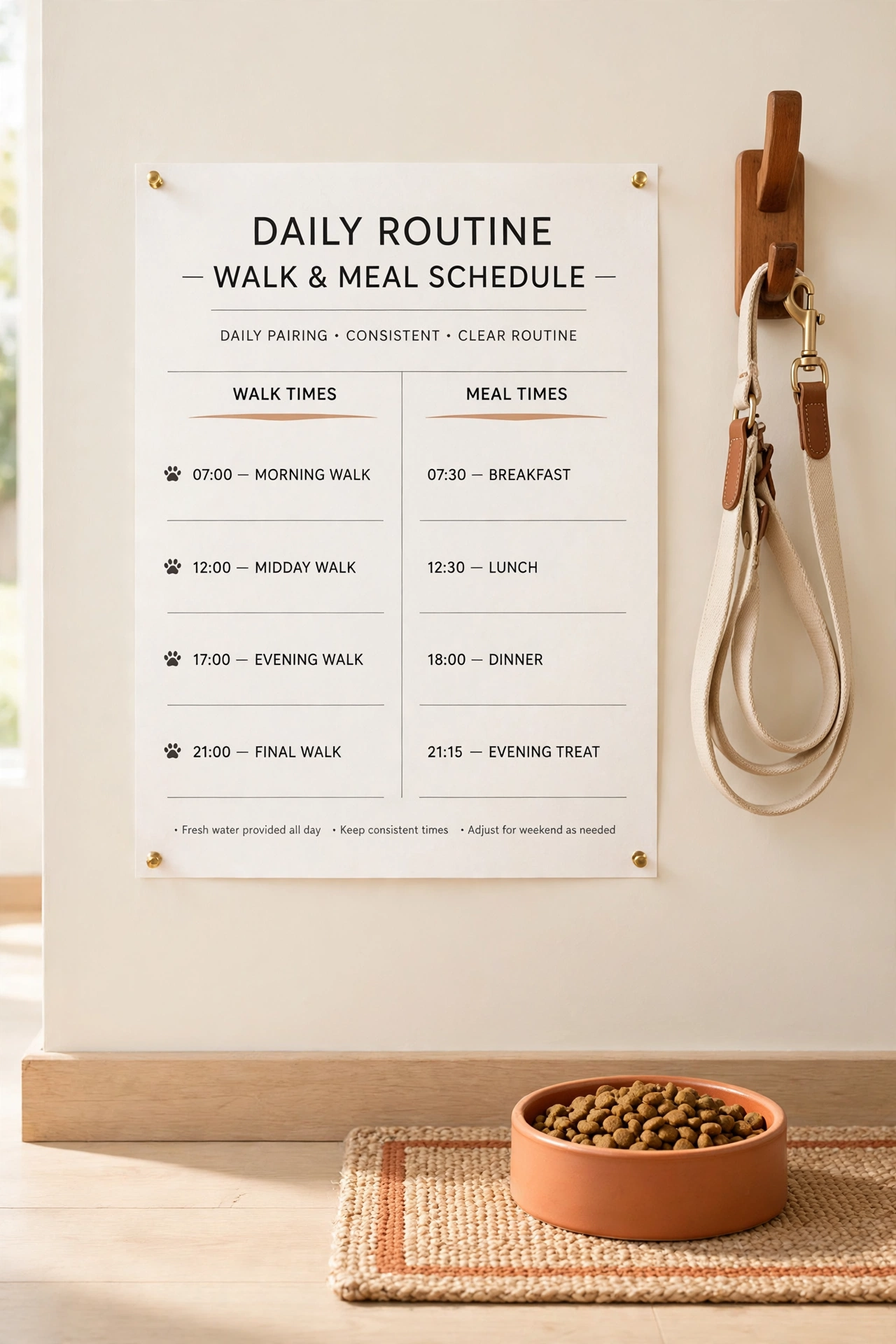
19. Pair Walks and Meals on a Daily Routine Chart
A daily routine chart that pairs walks and meals gives the pet a predictable rhythm from morning to night. Write the day in order: morning walk, breakfast, midday play, afternoon walk, dinner, and evening wind-down, with times beside each step. The chart helps the family share the routine, because anyone can see what comes next and step in without asking.
Keep the chart consistent for at least a few weeks so the pet learns the pattern and settles into it. Dogs in particular relax when they know a walk always follows a meal or a meal always follows a walk, and the routine reduces begging and restlessness. A combined chart turns separate chores into one smooth daily flow that works for pets and people alike.
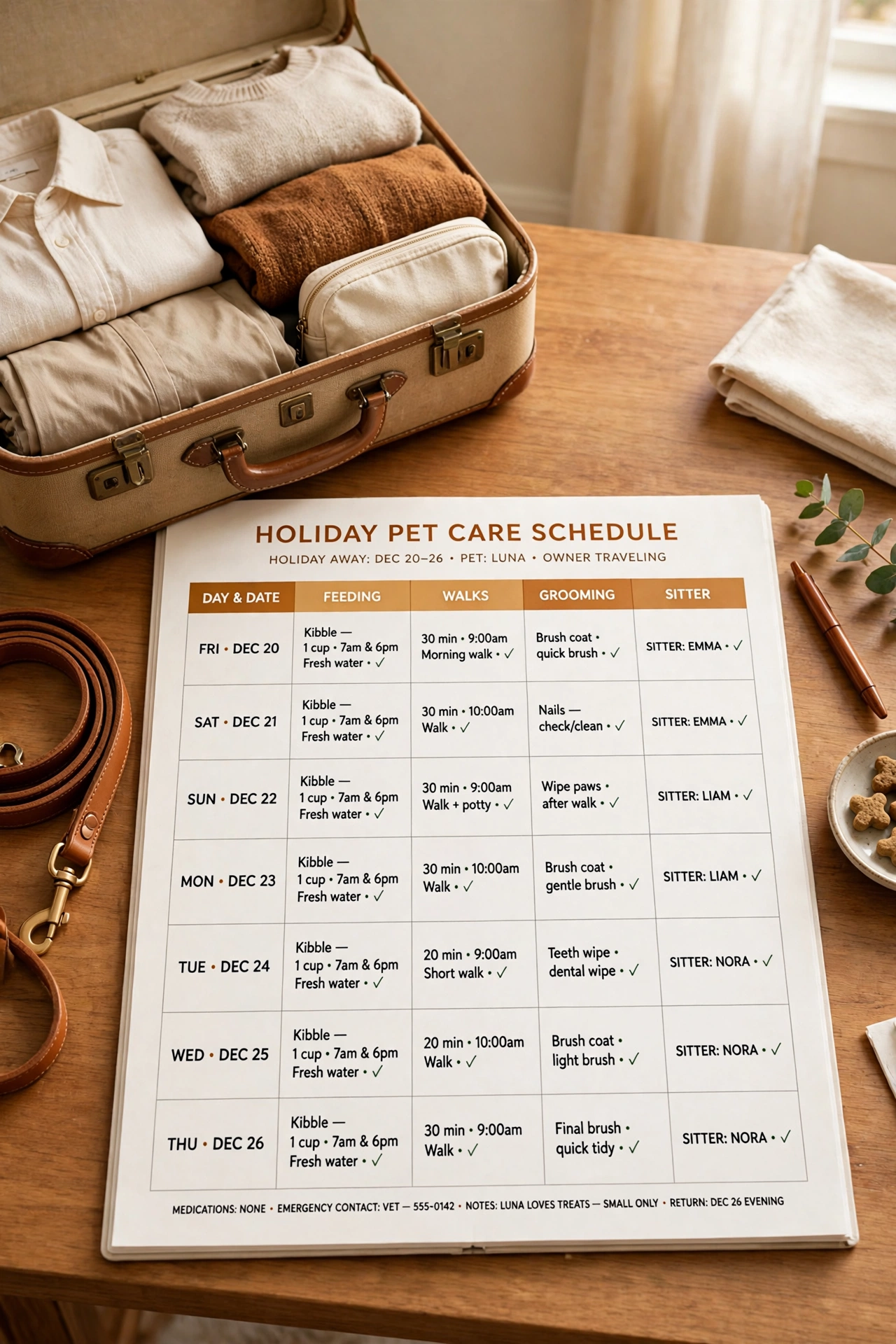
20. Plan Holiday and Travel Pet Care With a Schedule Planner
A holiday and travel planner maps out pet care for every day you are away, so nothing depends on last-minute messages. Create a planner with one row per day and columns for feeding, walks, grooming, and the name of the person in charge. Fill it in before the trip, share it with the sitter or boarding kennel, and the pets keep their routine even when the family is far from home.
Include holiday grooming in the planner, such as a bath before boarding or a brush the day you return, so the pet comes home clean and comfortable. Add the vet number, the feeding chart, and any medication times to the same planner, and keep a copy on the fridge. Planning pet care before the holiday removes a major source of travel stress for the whole family.
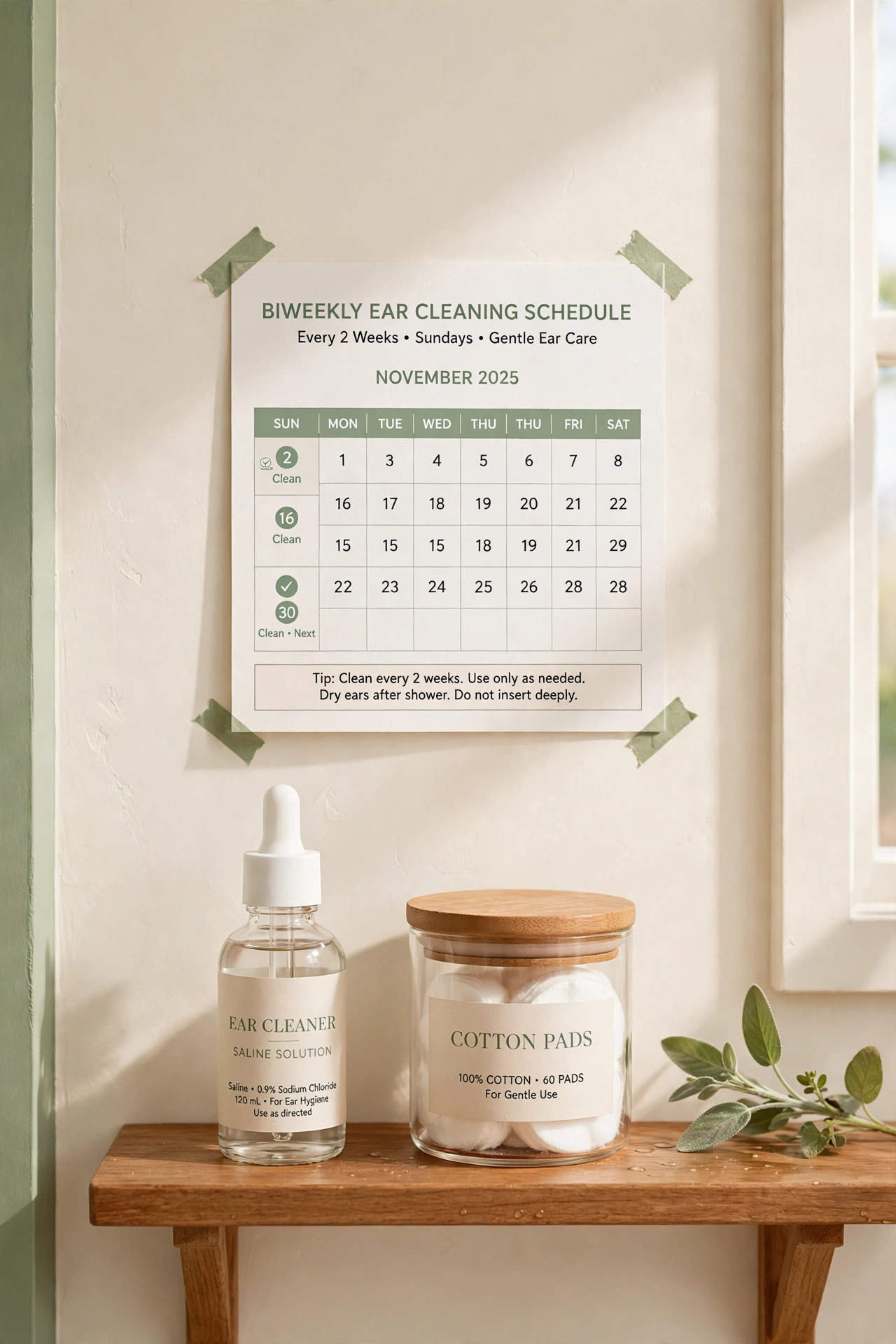
21. Rotate Ear Cleaning on a Biweekly Schedule
An ear cleaning rotation puts this small but important job on a fixed two-week cycle, so ears are checked regularly instead of only when a problem appears. Mark every second Sunday on the grooming calendar, write the pet name, and keep the ear cleaner and cotton pads ready in the grooming spot. A gentle clean every two weeks prevents wax buildup and lets the family spot redness or odor early.
Rotate the job between adults in the family so more than one person knows how to do it calmly and safely. Note the result of each check on the calendar with a simple tick or a short word, such as clean or red, so a pattern is visible over time. A biweekly ear schedule protects hearing health and catches infections while they are still easy to treat.
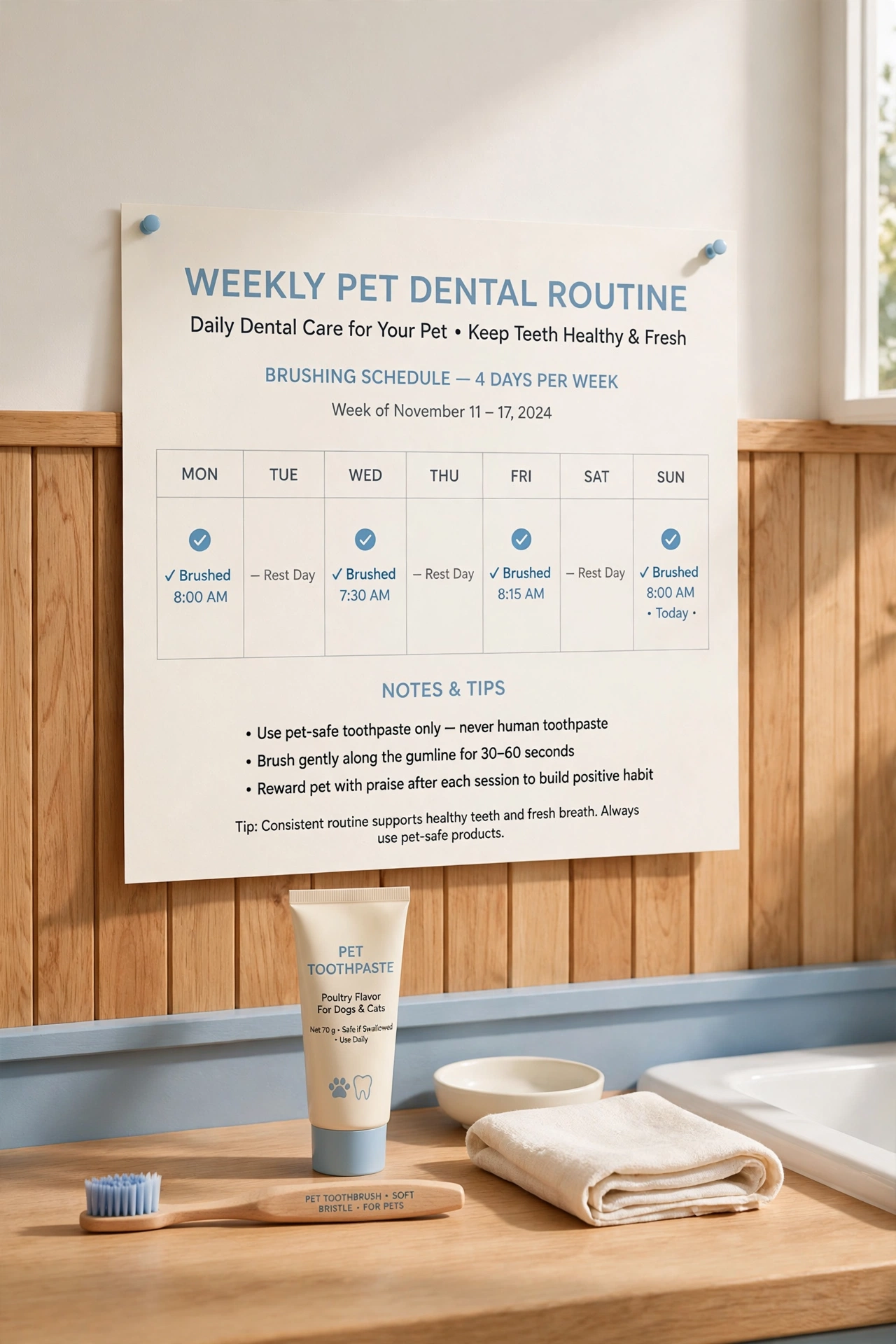
22. Brush Teeth on a Weekly Dental Routine Chart
A weekly dental routine chart makes tooth brushing a fixed part of pet care instead of a job nobody remembers. Write three brushing days per week on the chart, add the pet name and the person in charge, and tick each session as it is done. Regular brushing prevents plaque, protects gums, and keeps vet dental bills far lower over the life of the pet.
Keep the chart on the bathroom mirror or the grooming calendar so it is seen every day, and pair brushing with a reward the pet enjoys, such as a dental chew after the session. Start with short sessions for pets new to tooth brushing, and build up slowly over a few weeks. A dental chart turns a neglected chore into a healthy habit the whole family can follow.
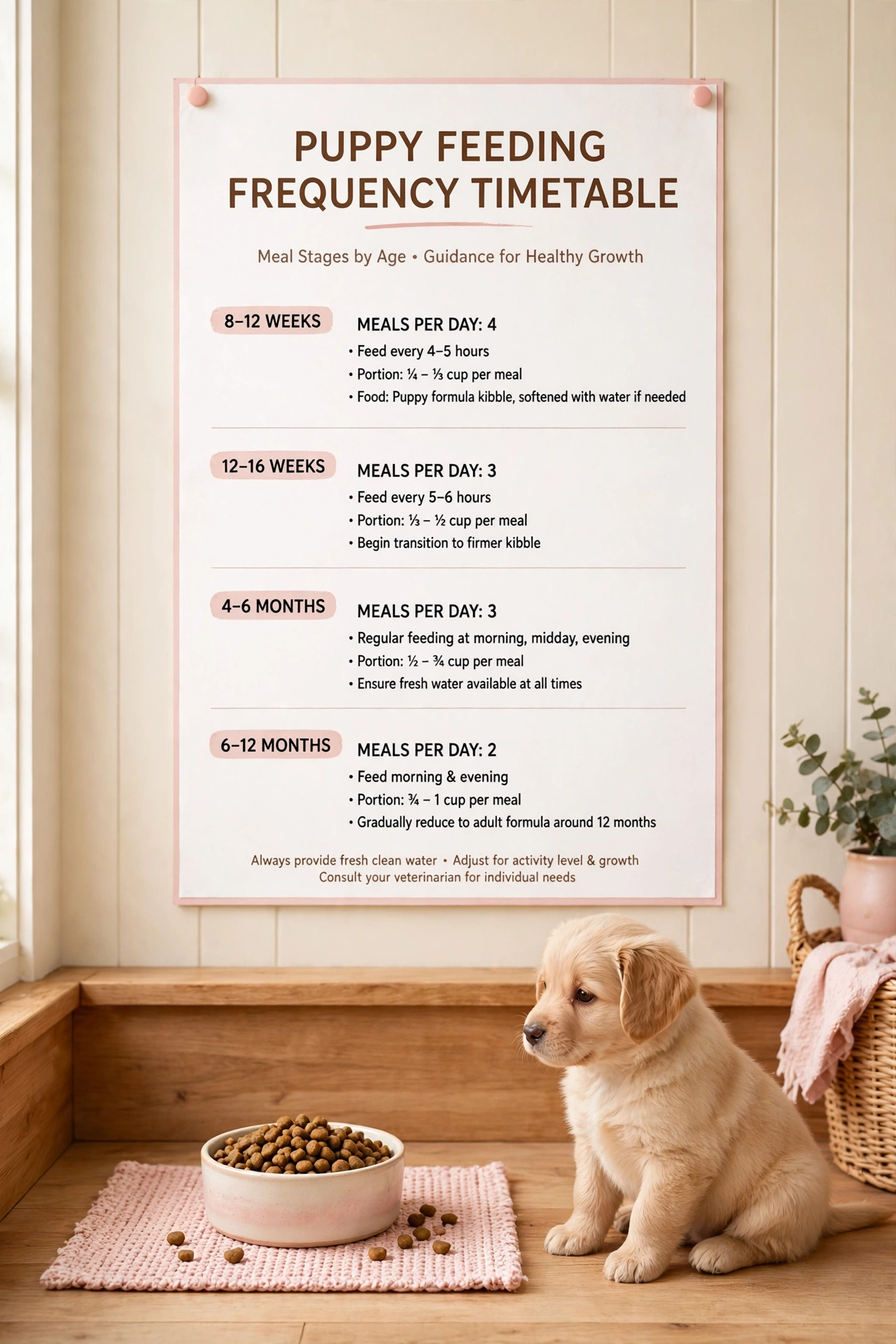
23. Follow an Age-Based Feeding Frequency Timetable for Puppies and Kittens
An age-based feeding timetable adjusts meal frequency as a young pet grows, so puppies and kittens get the small, frequent meals they need in the early months. Write the timetable in stages: four meals a day for the youngest, three meals as they grow, and two meals for young adults, with the age range beside each stage. The timetable removes the guesswork from a confusing first year.
Update the timetable at each vet visit, since the vet can confirm when the pet is ready to move to the next stage. Keep the current stage posted on the fridge and move the old stages to a notebook for reference. An age-based timetable gives young pets steady nutrition during their fastest growth, and it prepares the family for each change before it arrives.
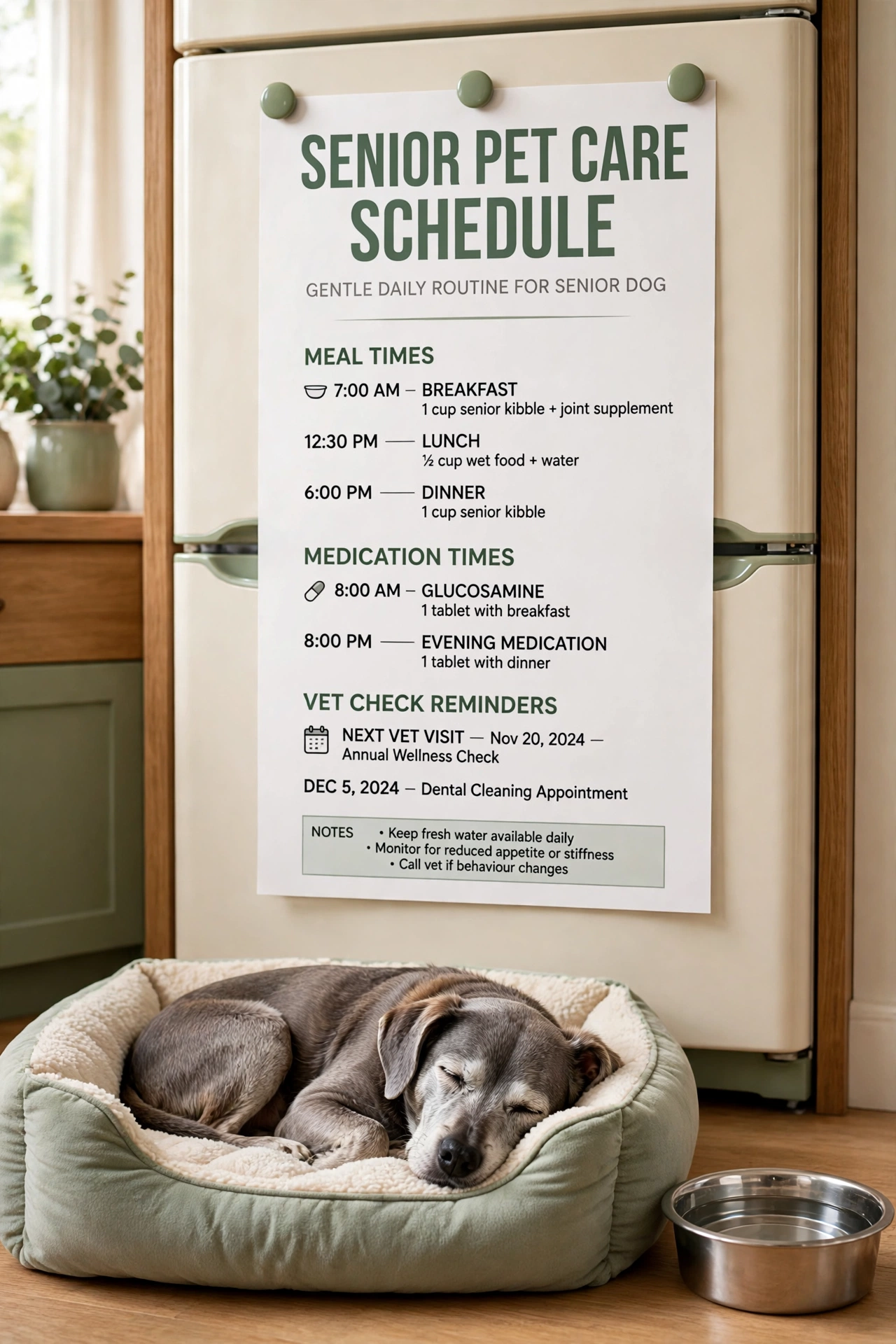
24. Build a Gentle Care Schedule for a Senior Pet
A senior pet care schedule slows the routine down and adds the extra checks an older animal needs. Write a daily plan with smaller, more frequent meals, gentle grooming sessions, joint-friendly walk times, and a monthly vet check reminder. The schedule honors the pet’s changing needs and helps the family notice small changes in appetite, mobility, or comfort early.
Keep the senior schedule in large, clear print on the fridge, and add notes for medication times and any special diet rules the vet has set. Share the schedule with everyone in the home so the older pet gets the same gentle care from every family member. A thoughtful senior schedule gives an old friend comfort and dignity in the years when care matters most.
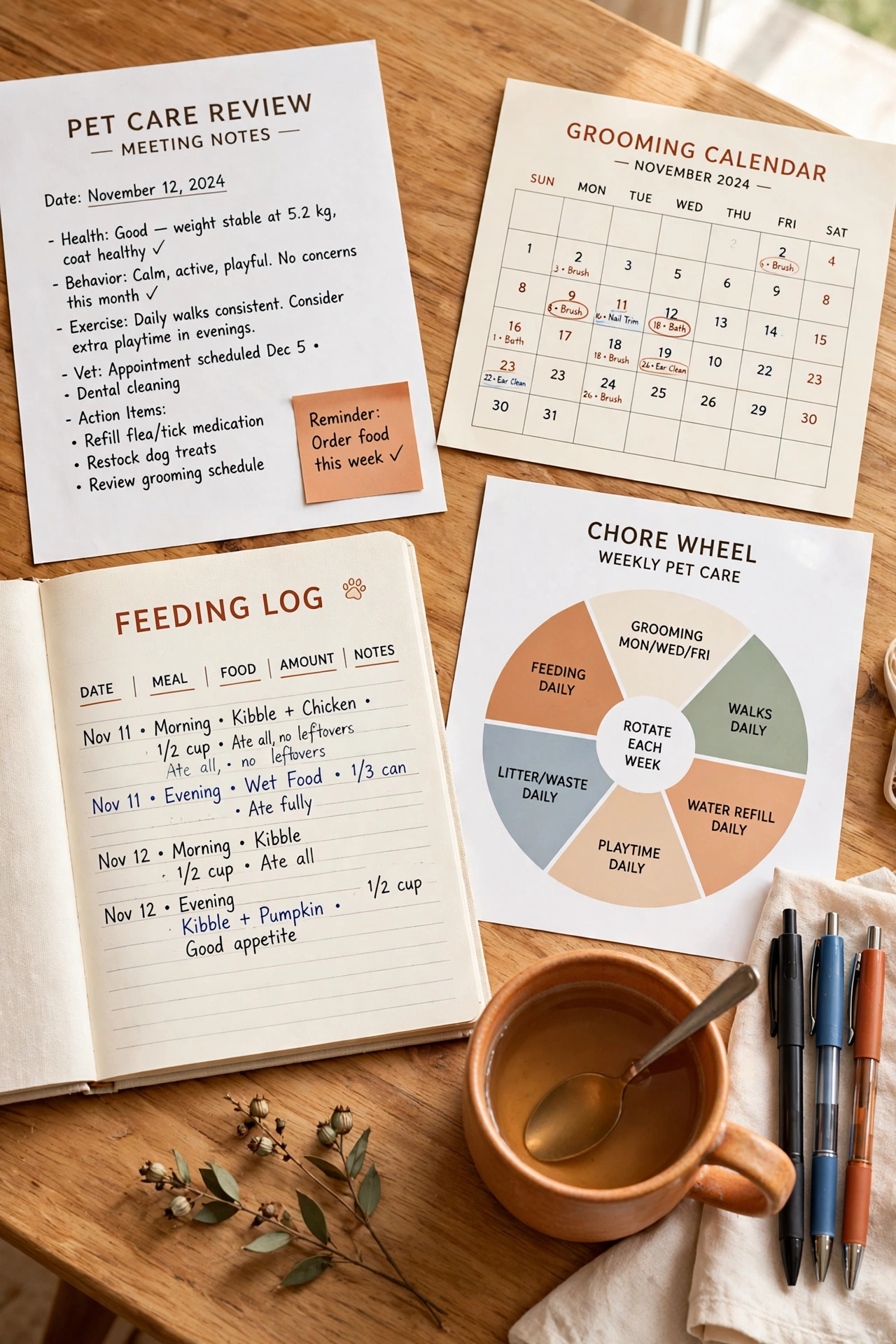
25. Hold a Weekly Family Pet Care Review
A weekly family pet care review is a five-minute meeting where the family checks the charts, swaps jobs, and plans the week ahead. Gather on Sunday evening, look at the feeding log, the grooming calendar, and the chore wheel, and agree who does what in the coming week. The review catches missed tasks, balances the workload, and keeps the whole system running smoothly.
Keep the review short and positive, celebrating finished charts and thanking whoever handled the hard jobs. Write any changes on the charts during the meeting, so the plans are updated before the week begins. A weekly review fits naturally into a home that already values routine, and these weekly home reset routine ideas show how a short Sunday reset keeps every part of the household, pets included, on track.
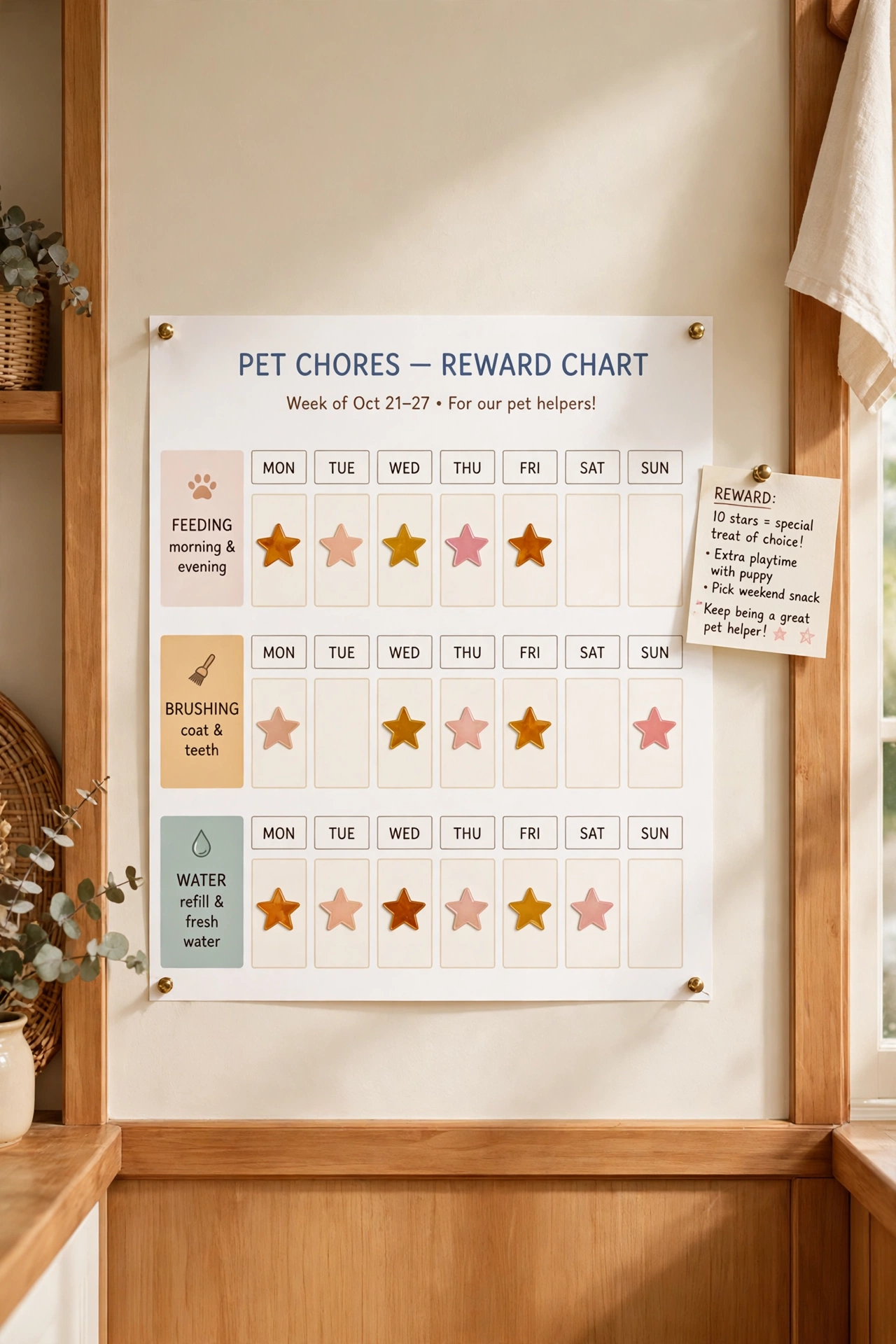
26. Motivate Kids With a Sticker Reward Chart for Pet Chores
A sticker reward chart turns daily pet chores into a visible achievement children can be proud of. Give each child a row on the chart, and let them place a sticker in the box each time they finish a feeding, brushing, or water chore. A full row at the end of the week earns a small reward, such as choosing a family movie or a special play session with the pet.
Keep the rewards simple and consistent, and let the chart run for a full month before changing the jobs or the goal. Children who earn stickers for pet care learn that responsibility brings recognition, and the pet benefits from reliable daily attention. A sticker chart is a gentle, positive way to build habits that last long after the stickers stop.
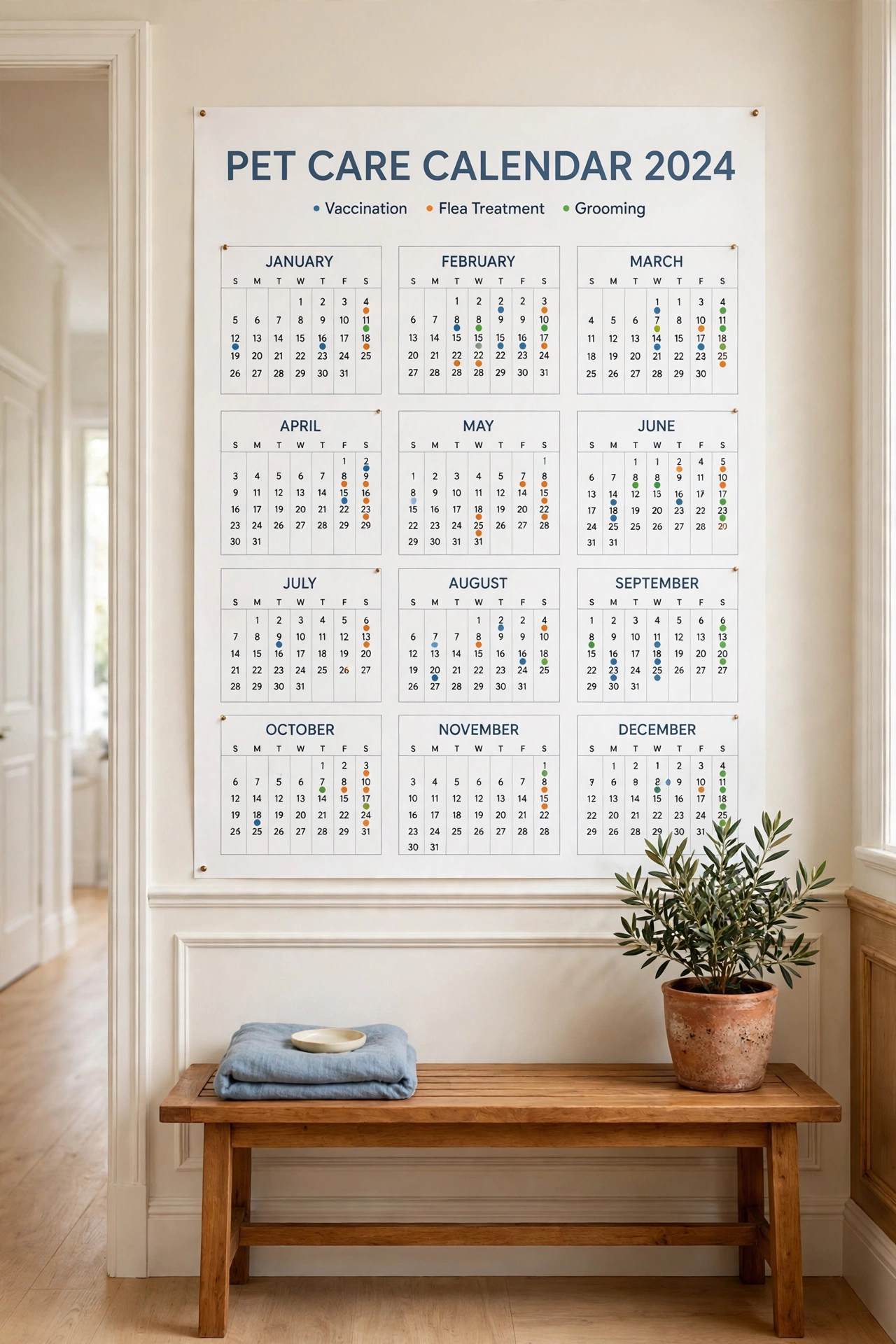
27. Map the Whole Year on an Annual Pet Care Calendar
An annual pet care calendar shows the whole year at a glance, with vaccinations, flea treatments, grooming appointments, and seasonal care marked in different colors. Hang the year view in the hallway or home office, and the family can see every major pet care event months ahead. Long-range planning prevents expired vaccinations and missed treatments that a month view might hide.
Update the annual calendar at the start of each year and again after every vet visit, adding new dates as they are booked. Pair it with the monthly grooming calendar for daily detail, and let the annual view handle the big picture. A year-at-a-glance calendar fits well beside other household planning tools, and a monthly home maintenance checklist works the same way, keeping big jobs visible long before they fall due.
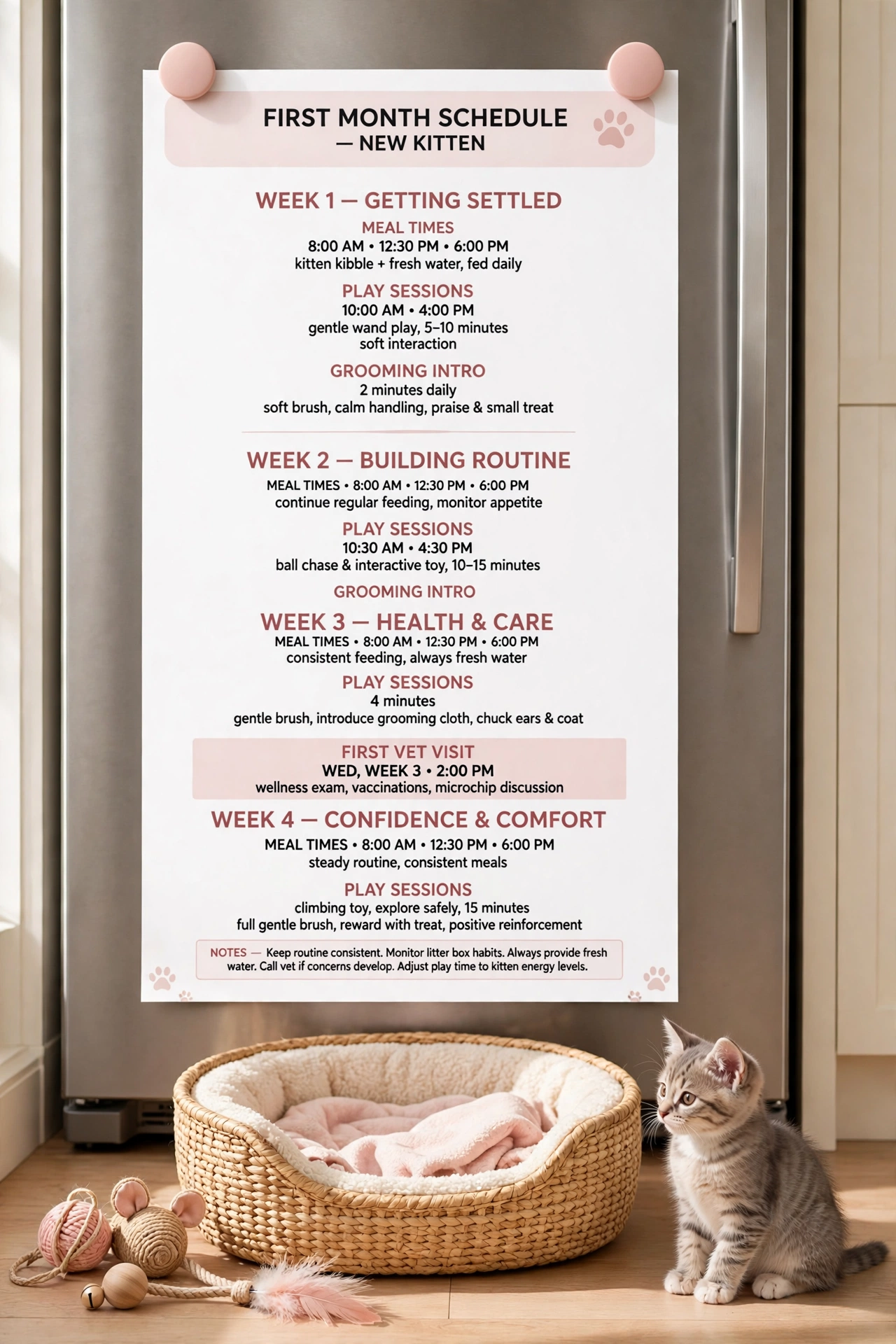
28. Settle a New Pet With a First Month Schedule
A first month schedule gives a new pet a structured, reassuring start in a new home. Write a week-by-week plan for the first four weeks, with set meal times, daily play sessions, short grooming introductions, and the first vet visit booked in week one. The schedule helps the pet learn the household rhythm quickly, and it helps the family bond with the new arrival through consistent daily care.
Keep the first month schedule on the fridge where everyone can follow it, and adjust it at the end of each week as the pet settles in. Note milestones on the schedule, such as the first successful bath or the first full night without accidents, so the family can celebrate progress together. A planned first month turns a nervous new pet into a confident member of the family.
Conclusion
A pet care schedule is one of the kindest gifts a family can give its animals. When feeding times are fixed, grooming days are marked, and every job has a name beside it, pets live calmer, healthier lives and the family spends less time arguing about whose turn it is. The charts, calendars, and logs in this list work because they are simple, visible, and shared by everyone in the home.
Start with one schedule this week, perhaps the morning feeding timetable or the monthly grooming calendar, and add the rest one at a time as the habit takes hold. Small, steady routines build a home where pets are cared for beautifully every day. For a calm end to each day, these nightly reset routines will help the whole household, pets included, wind down in an orderly and peaceful way.
Frequently Asked Questions About Family Pet Care Schedule Ideas for Feeding and Grooming
How often should I feed my dog or cat each day?
Most adult dogs and cats do well on two meals a day, served at the same times each morning and evening. Puppies and kittens need three or four smaller meals a day until they reach adulthood. Your vet can confirm the right frequency and portion for your pet’s age, size, and health.
How often should I groom my pet at home?
Brushing once a week suits most short-haired pets, while long-haired pets often need brushing every day or two. Baths are usually needed once a month for dogs and less often for indoor cats. Nails should be trimmed every three to four weeks, and ears checked every two weeks.
How do I split pet care fairly among family members?
Write every job on a shared chart and rotate the duties weekly so no one person carries the whole load. Match jobs to age and ability, with simple tasks for young children and full feeding or grooming duty for older family members. A short weekly review keeps the rotation fair and lets the family adjust jobs as needed.
What should a pet care schedule include for a pet sitter?
A sitter schedule should list meal times, exact portions, walk times, medication doses, and the vet phone number, in the order the day runs. Include grooming tasks that fall during the trip and any house rules, such as rooms the pet should not enter. Walk the sitter through the schedule once in person before the trip.
How do I adjust a pet care schedule as my pet ages?
Senior pets often need smaller, more frequent meals, gentler grooming, shorter walks, and more frequent vet checks. Review the schedule with your vet at least twice a year and update meal times, portion sizes, and medication routines as needs change. Keep the written schedule in large, clear print so every family member follows the same gentle plan.

Hi, I’m Emily! I turn messy corners into cozy, organized spots. DreamNestDecor is where I share simple, practical home ideas — decor, organization, and small-space solutions that work in real life, not just in photos. Every idea here is carefully researched before it’s shared.