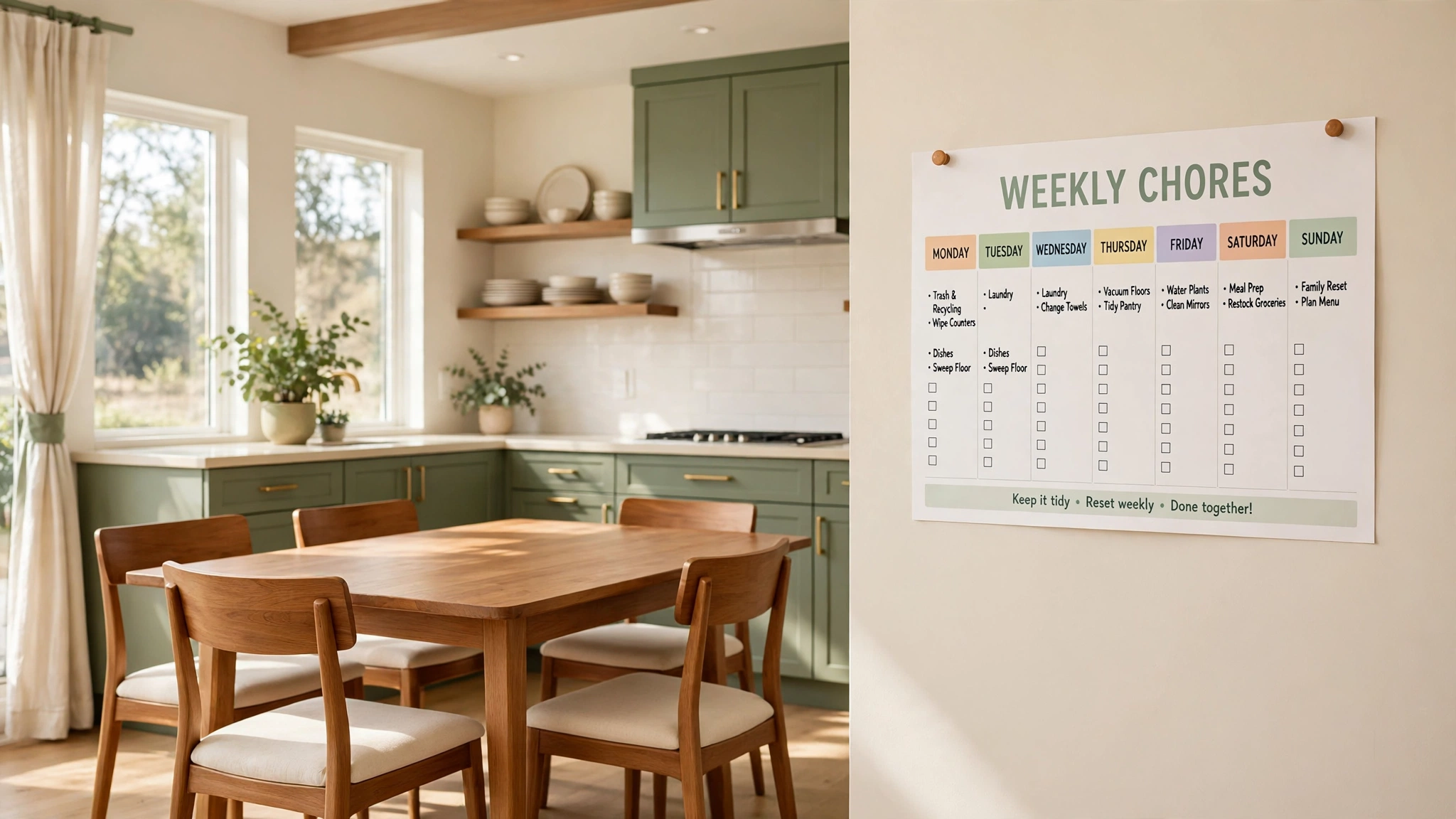
Picture this: it is a busy Monday morning, the dishes are already in the sink, the laundry basket is full, and nobody knows whose turn it is to feed the dog. A simple chore chart ends that confusion in one glance. When every task has a name beside it, the whole house runs with less arguing and more teamwork.
You do not need a complicated system or an expensive planner to make it work. All you need is a chart that fits your family, your home, and your daily rhythm. These 20 family chore chart ideas that everyone can follow will help you share the work fairly, keep the house tidy, and make chores feel like a team effort instead of a daily battle.
1. Start with a Simple Weekly Chart on the Fridge
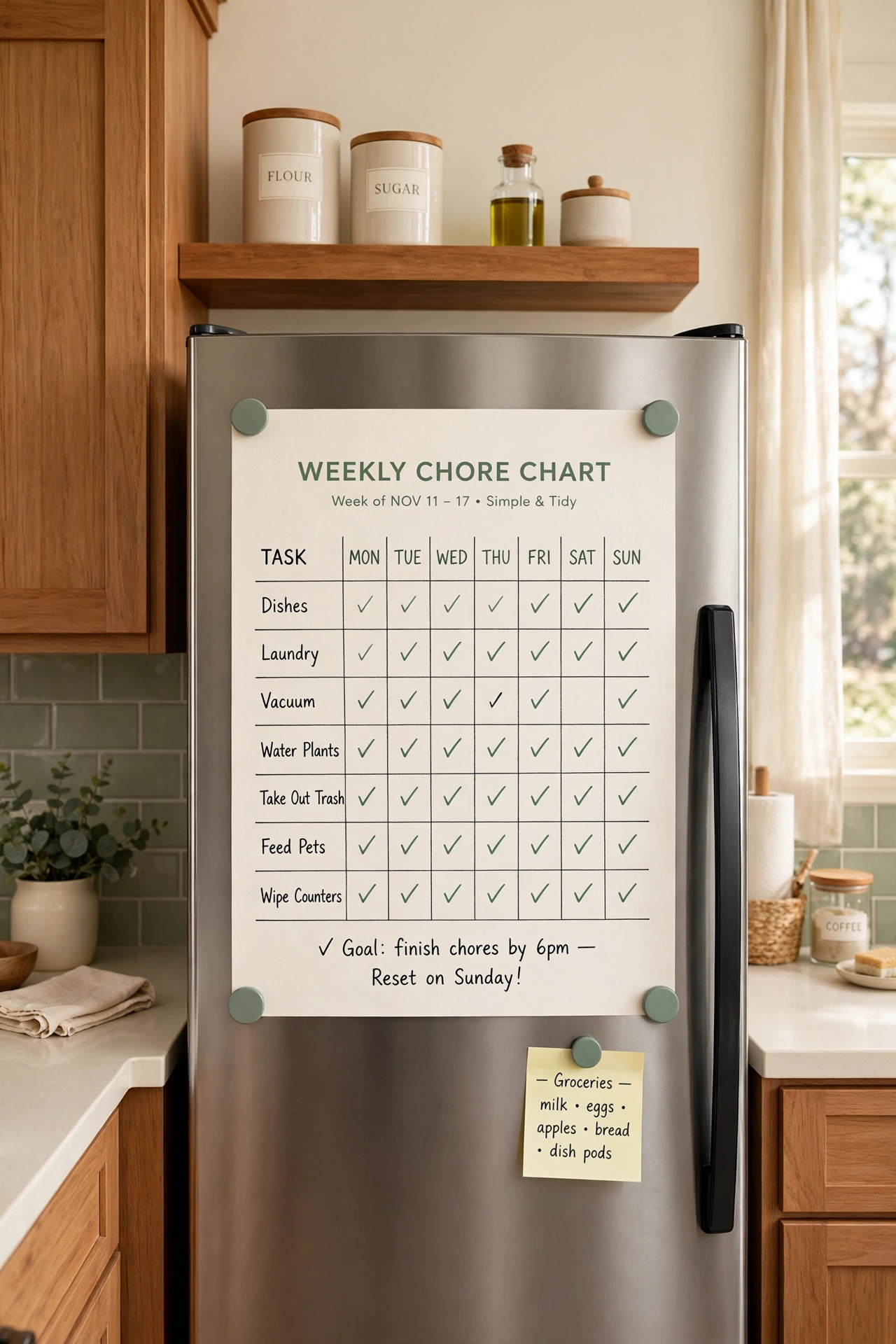
A basic weekly chart on the fridge is the easiest place to begin. Draw a grid with the days of the week across the top and each family member name down the side, then write one or two chores in each box. The fridge is a spot that everyone passes many times a day, so the chart stays visible without any extra effort.
Keep the first version small and simple, with only the chores that matter most each day. Use a marker that wipes off easily so you can change tasks as the week goes on. A fridge chart works well because it is always in sight, and nobody needs to remember to open an app or a notebook to see what to do next.
2. Use a Magnetic Whiteboard Chart
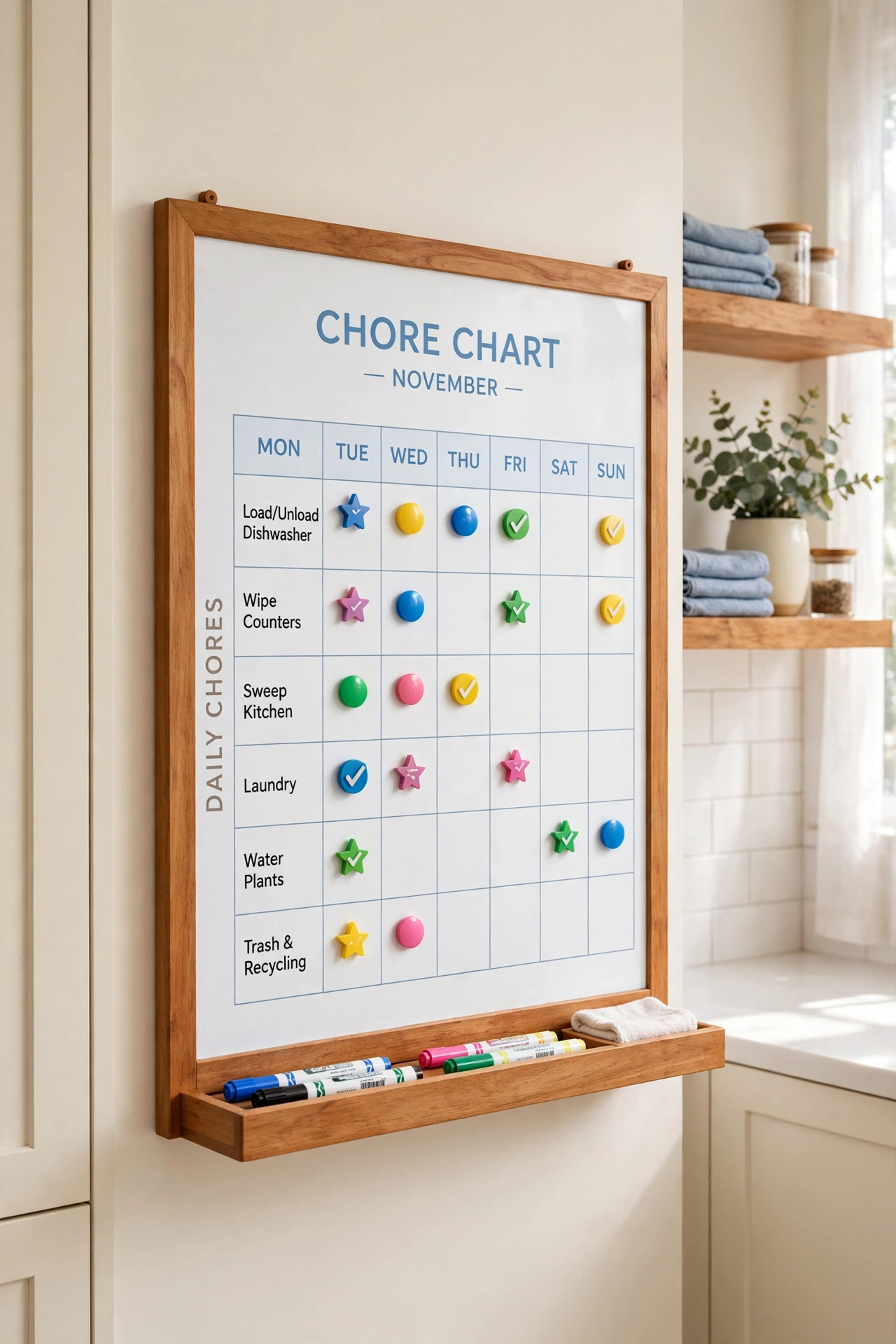
A magnetic whiteboard chart gives you a reusable surface that you can update in seconds. Write the chores with dry erase markers, and move small magnets to mark tasks as done. The board stays neat, and you never waste paper on a new chart every week.
Hang the whiteboard at eye level in a spot the whole family uses, like the kitchen or the hallway near the front door. Add a small tray at the bottom to hold markers and an eraser so everything stays in one place. A whiteboard chart is a smart choice for families who like to change chores often without starting from scratch.
3. Color-Code Chores by Family Member
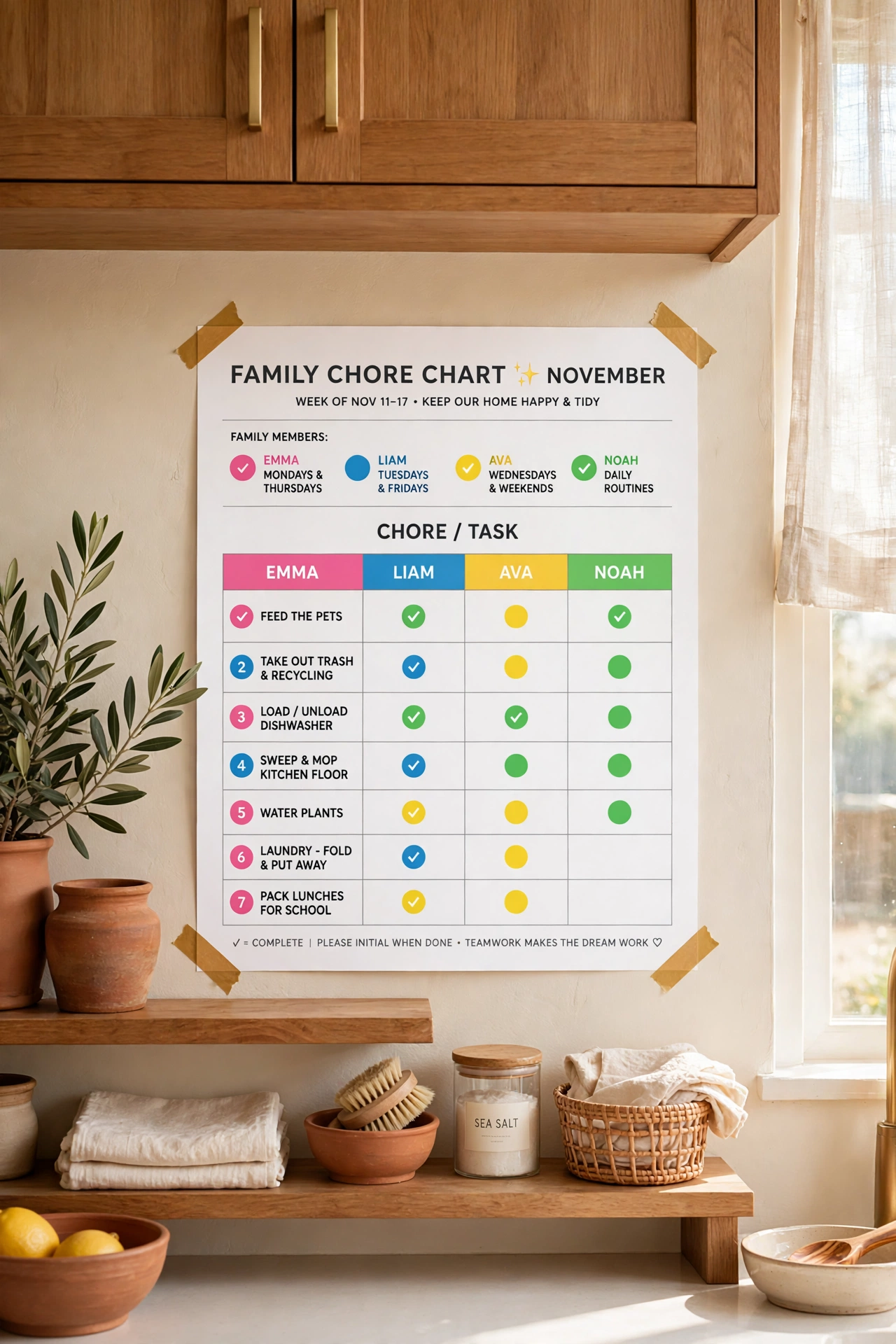
Color coding makes a chore chart easy to read at a glance, even for young children who cannot read long lists yet. Give each family member one color, and write or mark their chores in that color only. A quick look at the chart shows who does what, with no confusion about names.
Use colored pens, stickers, or small cards to keep the system consistent from week to week. Keep the same color for the same person so the code becomes second nature to everyone. Color coding also makes the chart look cheerful and organized, which helps the whole family take it more seriously.
4. Rotate Chores Every Week
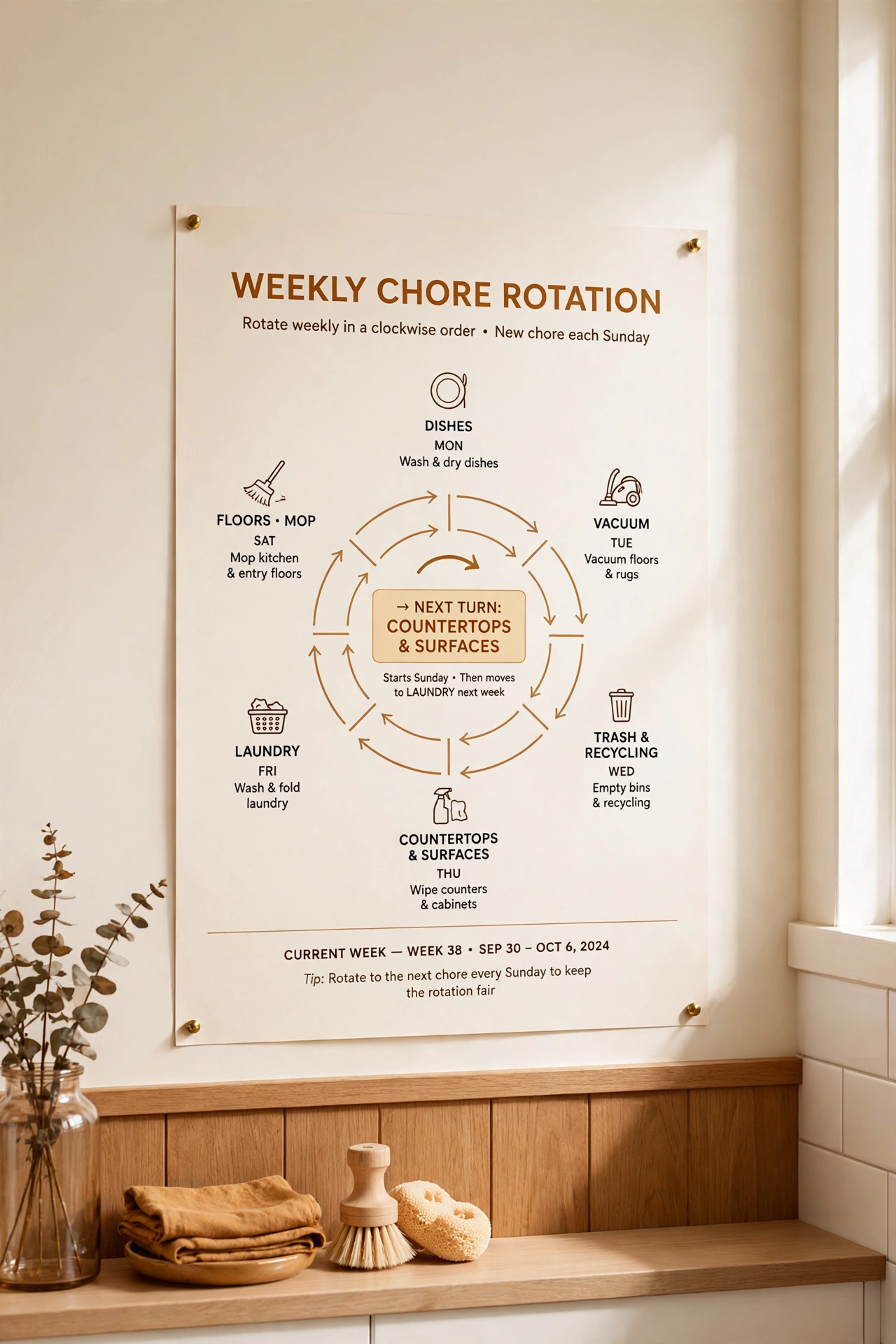
Rotating chores every week keeps the work fair and stops one person from doing the same boring task forever. Write the chore list once, then shift every name one step down the list each Monday. Nobody gets stuck with the least favorite job for long, and everyone learns to do every task in the house.
A rotation system also builds real life skills, because each family member practices a wide range of chores over time. Keep a small note at the bottom of the chart that shows the rotation order, so nobody forgets whose turn comes next. Fair rotation is one of the fastest ways to stop complaints about chores.
5. Add a Reward Jar to the Chart
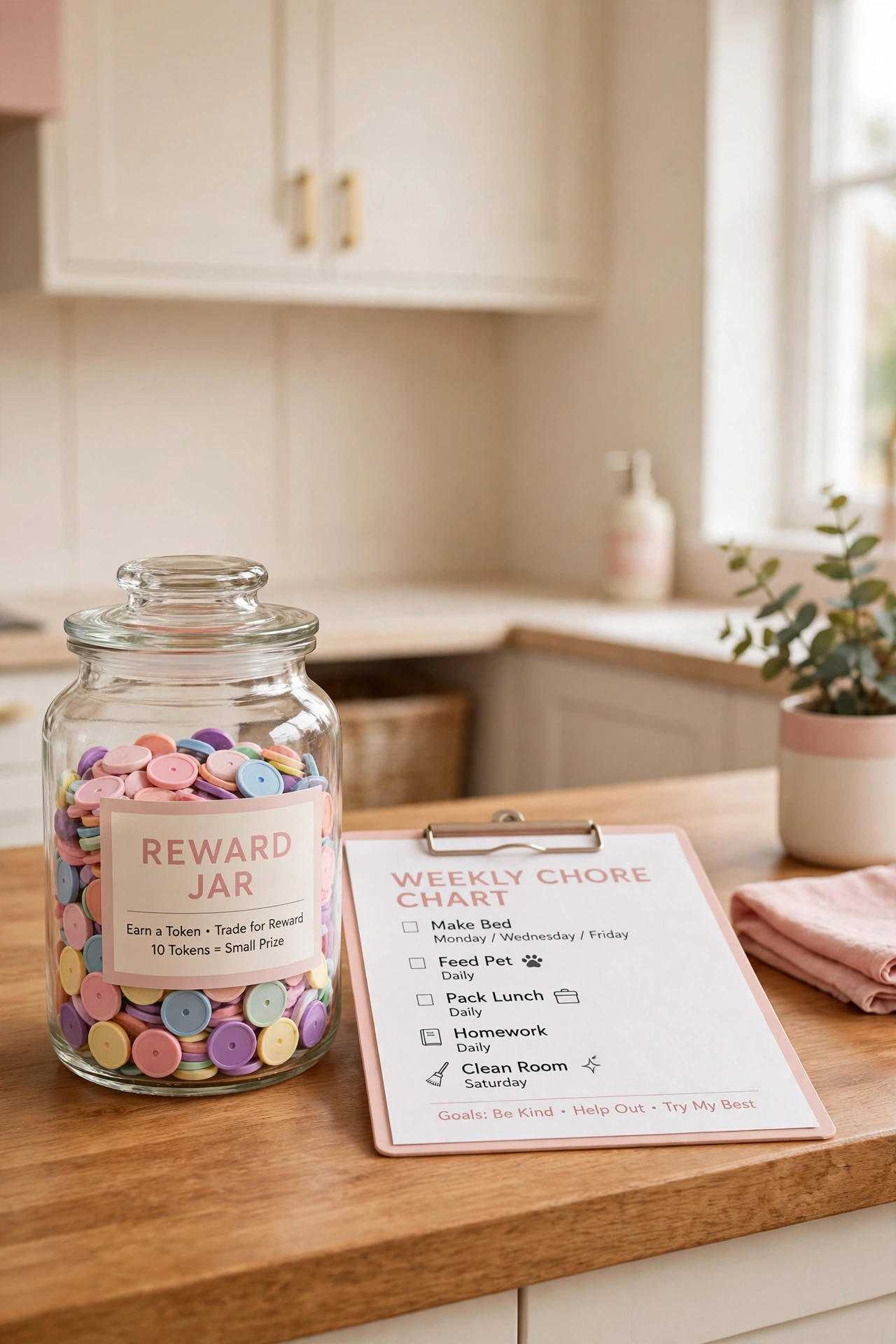
A reward jar turns finished chores into something the whole family can celebrate. Place a clear jar beside the chart, and drop a small token inside every time someone completes a task on time. When the jar fills up, the family earns a shared reward like a movie night or a special dessert.
Keep the rewards simple and focused on time together rather than expensive gifts. A full jar should feel like a team win, not a prize for one person only. The reward jar works well because it gives children a visible sign of progress, and it makes the chart feel fun instead of strict.
6. Use Picture Cards for Younger Kids
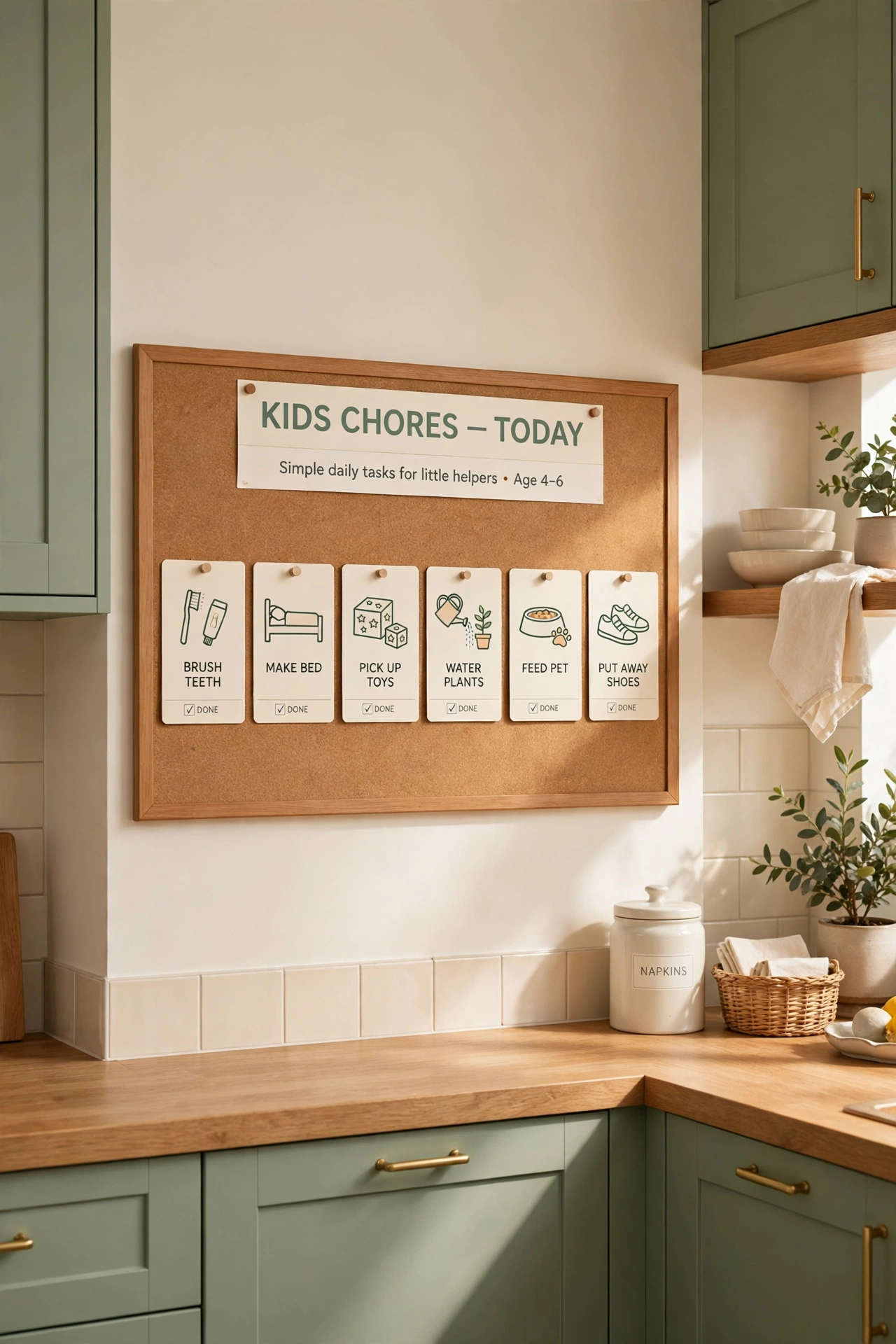
Picture cards make chores clear for children who are still learning to read. Draw or print a small picture for each task, like a toothbrush for brushing teeth or a plate for clearing the table, and pin the cards to the chart in order. Young children can follow the pictures on their own without asking an adult what comes next.
Keep the cards large and simple, with one clear image per chore and very few words. Let younger kids move each card to a finished pocket when the task is done, so they feel proud of every step. Picture cards build independence early, and they make the chart useful for the whole family at every age.
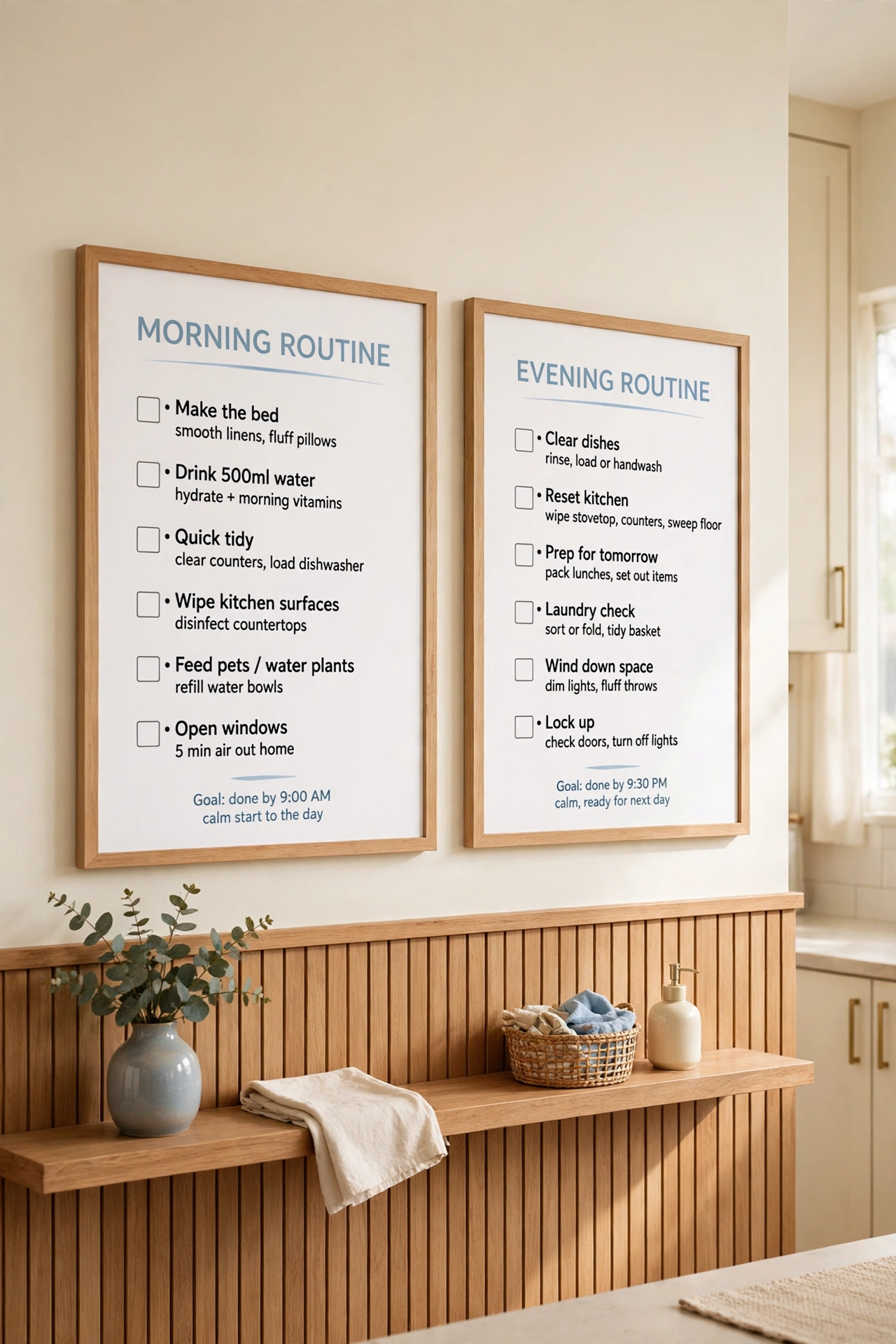
7. Create a Morning and Evening Routine Chart
A morning and evening routine chart splits the day into two short lists that are easy to finish. The morning list can hold tasks like making the bed, packing a school bag, and clearing breakfast dishes. The evening list can hold tasks like laying out clothes, tidying the living room, and preparing lunch boxes for the next day.
Short lists feel less overwhelming than one long list of chores, and they fit naturally into the rhythm of the day. For a calm evening routine that pairs well with this chart, see these nightly reset routine ideas. When the chart matches the natural flow of the day, chores become habits instead of reminders.
8. Keep a Chore Chart in a Family Binder
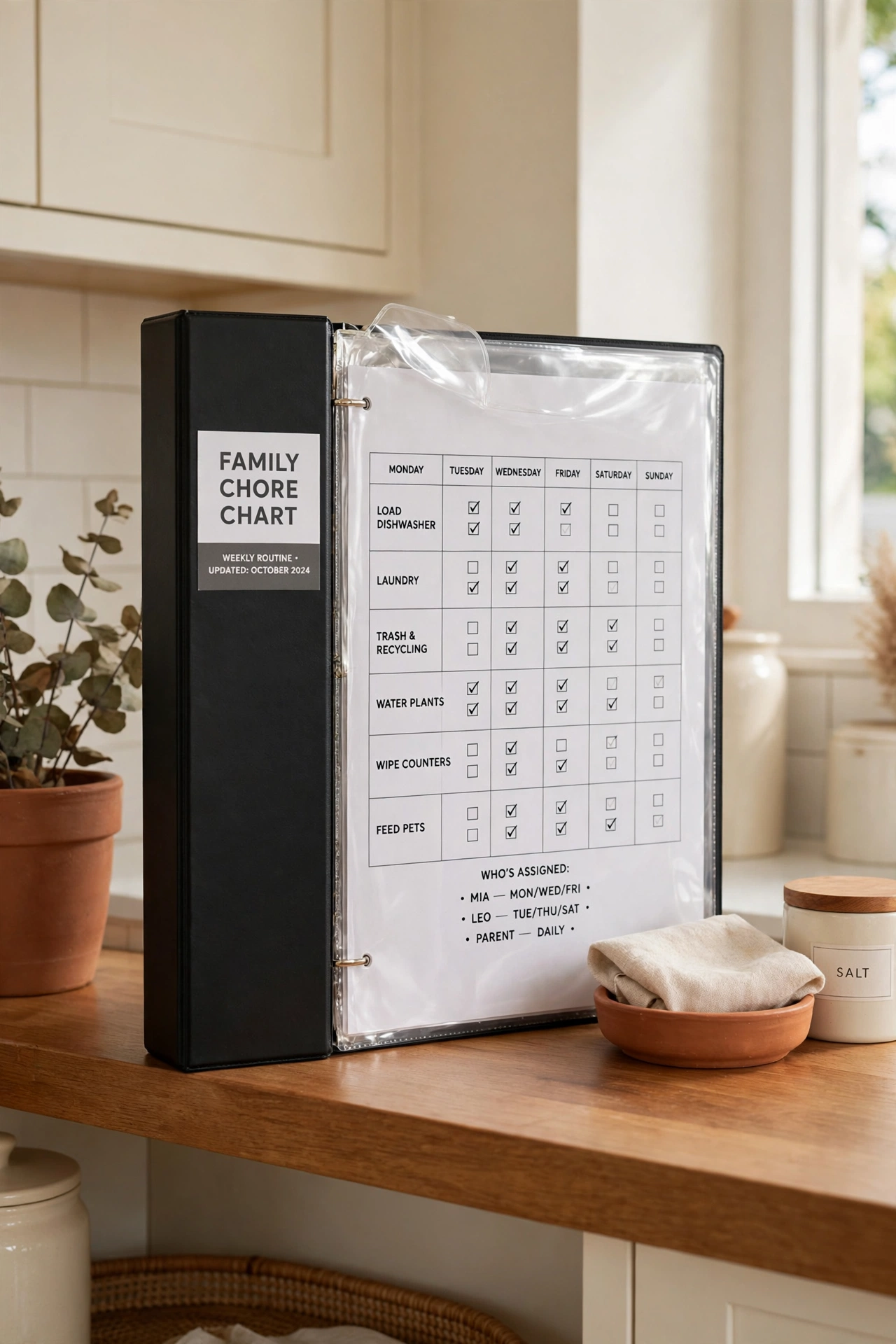
A family binder keeps the chore chart safe, portable, and easy to update. Place the chart in a clear sleeve at the front of the binder, and store extra pages behind it for chore ideas, reward lists, and notes. The binder can live on a shelf or in a drawer, and anyone can pull it out to check the plan.
Use dividers to give each family member a section with their own tasks and a place to tick off finished chores. A binder also works well for families who like to keep paper records of routines in one tidy place. When the chart lives in a binder, it never gets lost, torn, or covered in fridge magnets.
9. Use a Pocket Chart with Name Cards
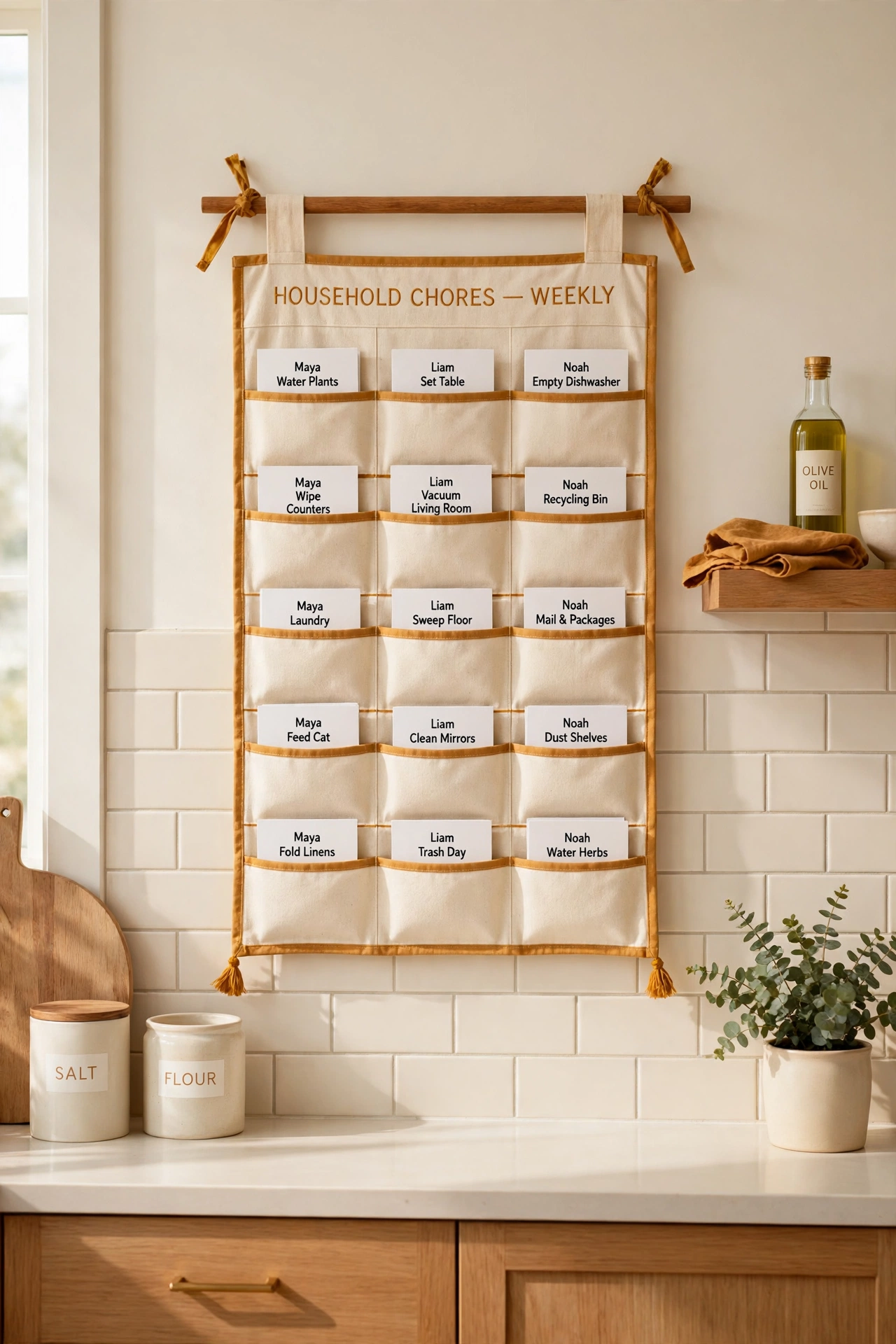
A pocket chart is a fabric or felt board with rows of small pockets, and each pocket holds a chore card. Write each family member name on a card, and slide the cards into the pockets next to the chores for the day. Moving a card from the to do side to the done side gives a satisfying sense of progress.
Pocket charts are easy to change, because you only move cards instead of rewriting the whole chart. Keep a small box of spare chore cards nearby so you can add new tasks or swap cards between family members in seconds. The hands-on nature of a pocket chart makes it a favorite for children who like to touch and move things.
10. Make a Spin-the-Wheel Chore Picker
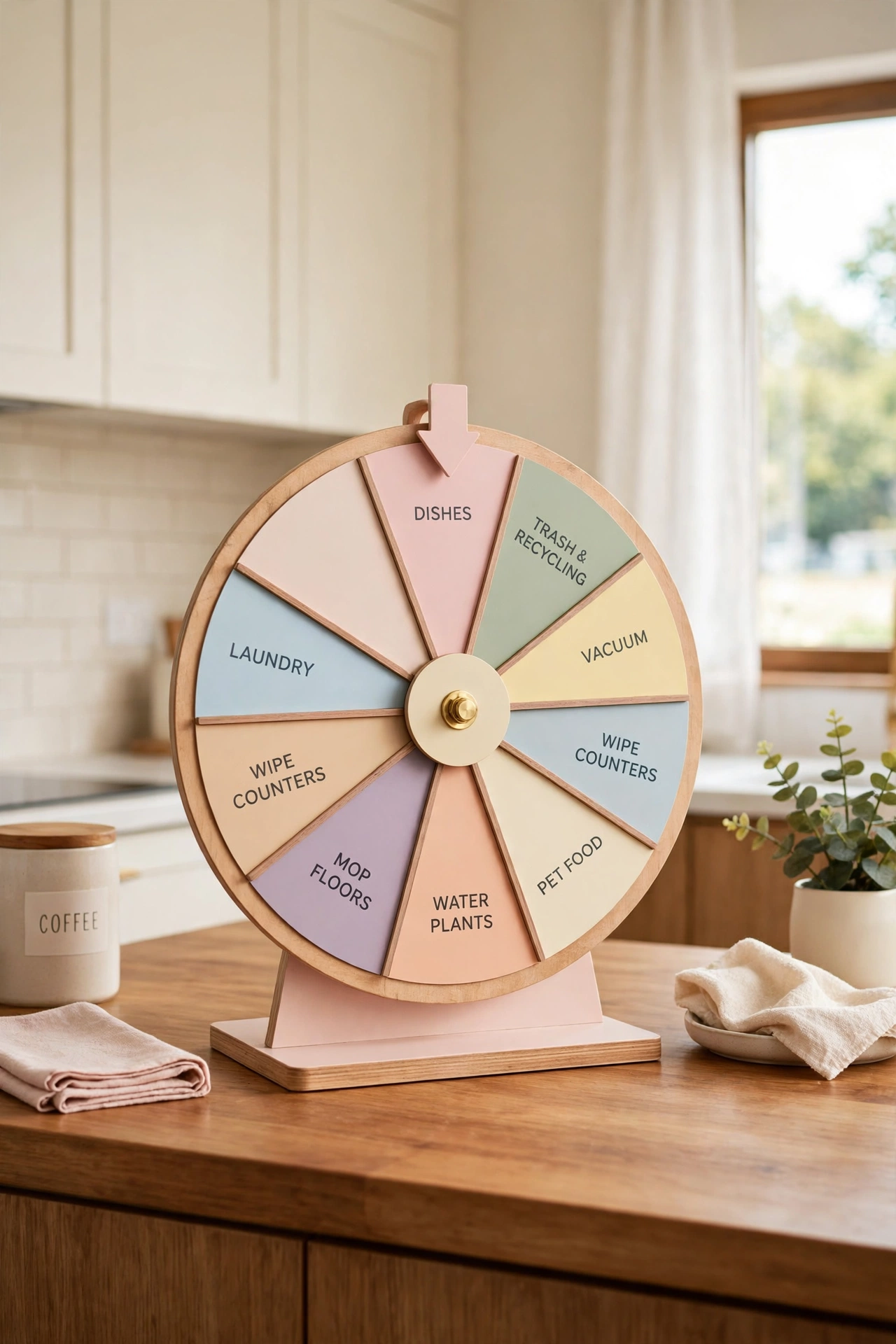
A spin-the-wheel chore picker turns the weekly chore draw into a game. Write each chore on a section of a spinning wheel, and let each family member spin to find out their task for the day. The element of chance makes even boring chores feel a little exciting.
You can buy a small spinner board or make one from cardboard with a simple arrow in the middle. Set a rule that nobody spins twice for the same task, and keep a backup list in case the wheel lands on a chore that is already done. A chore wheel works best as a fun extra beside a regular chart, not as a replacement for the whole system.
11. Set Up a Shared Digital Chore Chart
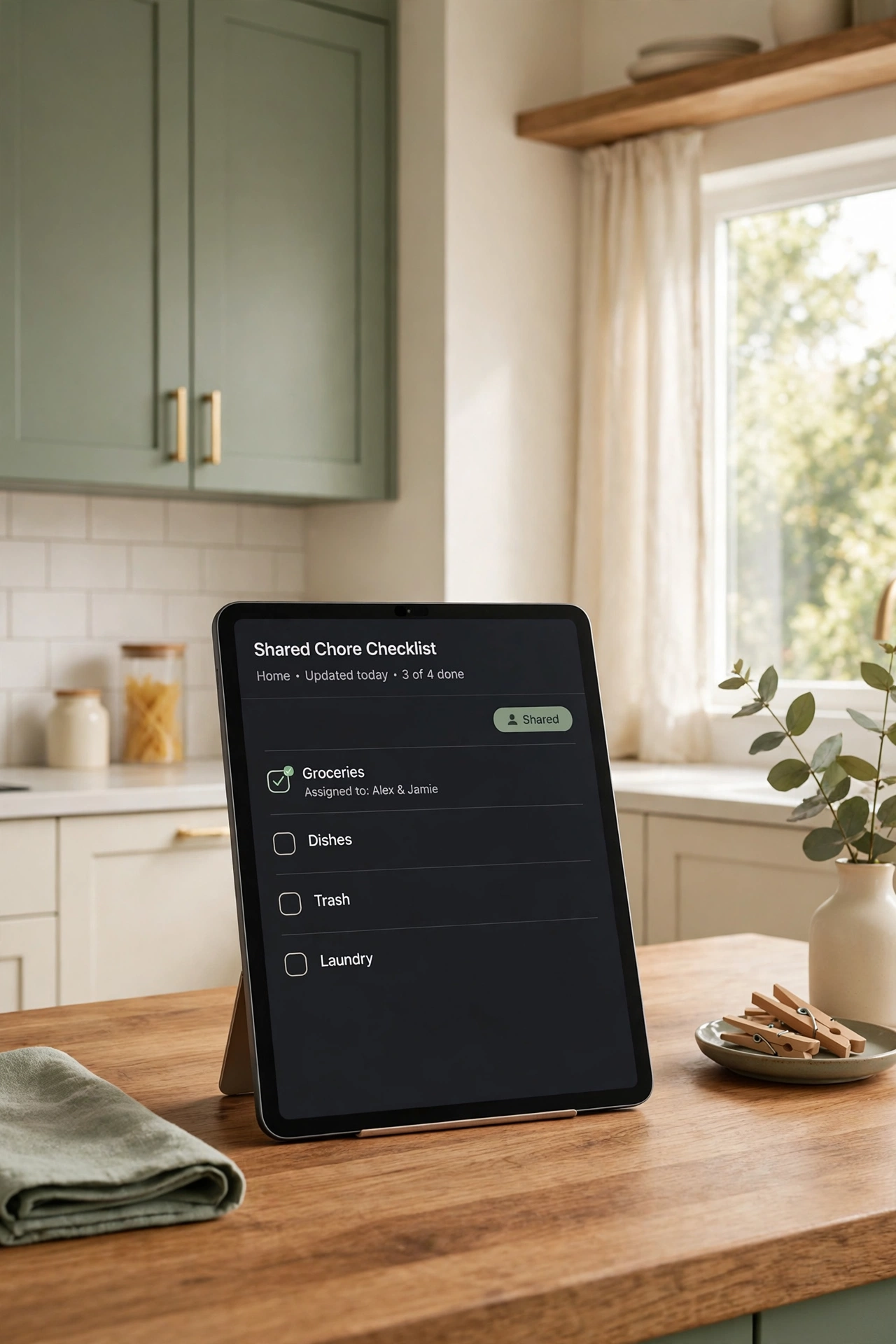
A shared digital chore chart lives on a family tablet or a phone, and everyone can see updates in real time. Create a simple shared list with each task, the name of the person who owns it, and a checkbox to mark it done. When one person finishes a chore, the whole family sees the tick appear at once.
Keep the digital list short and simple, with the same few chores each week so nobody needs to learn a new app. Set a gentle reminder for the evening, so unfinished tasks get a nudge before bedtime. A digital chart suits families who already use shared calendars and lists for the rest of their daily life.
12. Use a Chalkboard Wall Chart
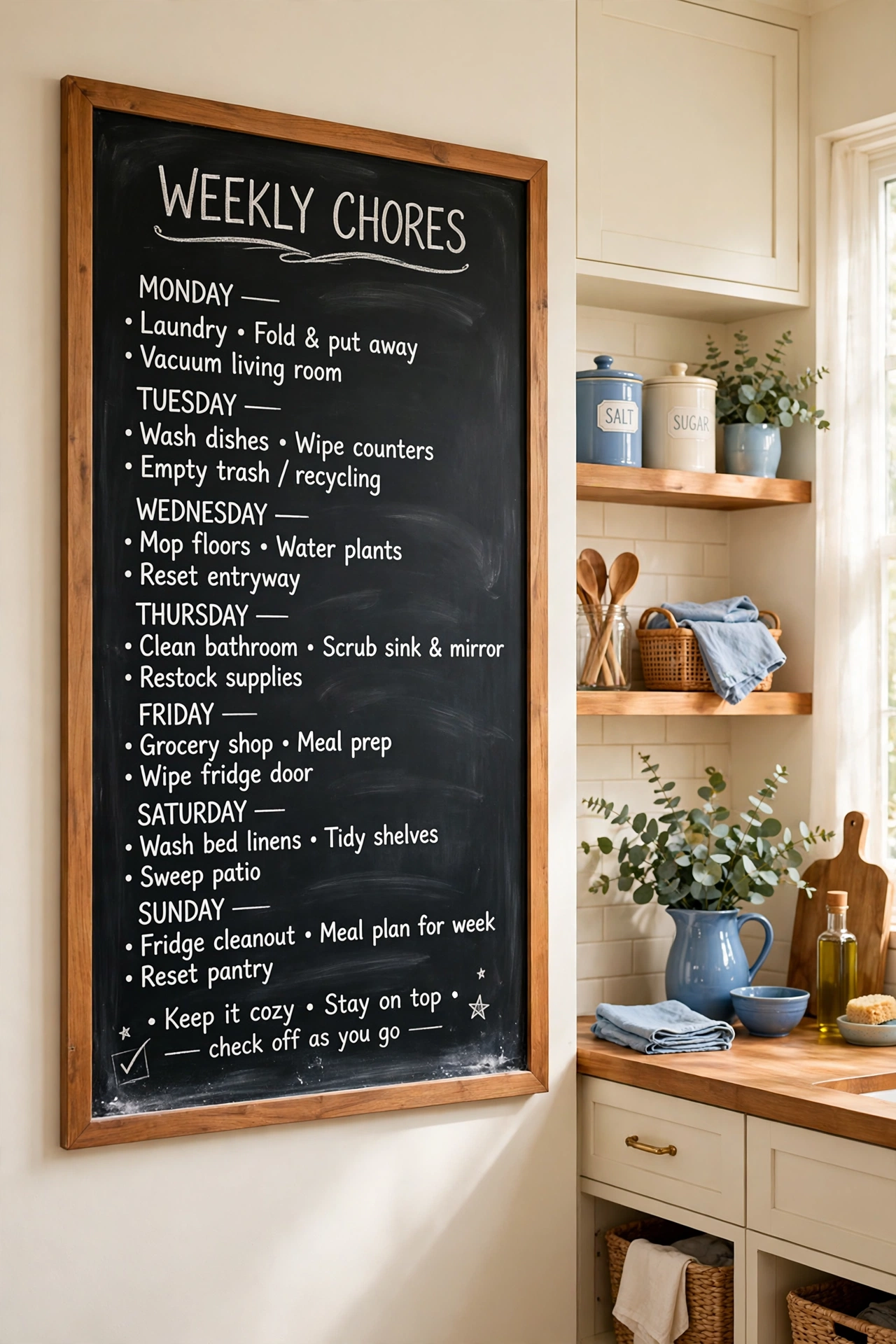
A chalkboard wall chart gives the kitchen a warm, rustic look while keeping chores in plain sight. Write the week plan in chalk, draw small boxes to tick off, and wipe the board clean every Sunday to start fresh. Chalk is easy to change, and the board itself becomes a charming feature on the wall.
Keep a small dish of chalk and a cloth eraser beside the board so updates take only a moment. Use a different chalk color for each family member to keep the chart easy to read. A chalkboard chart suits families who like a handmade feel and a chart that can change as fast as the week does.
13. Add Stickers for Completed Chores
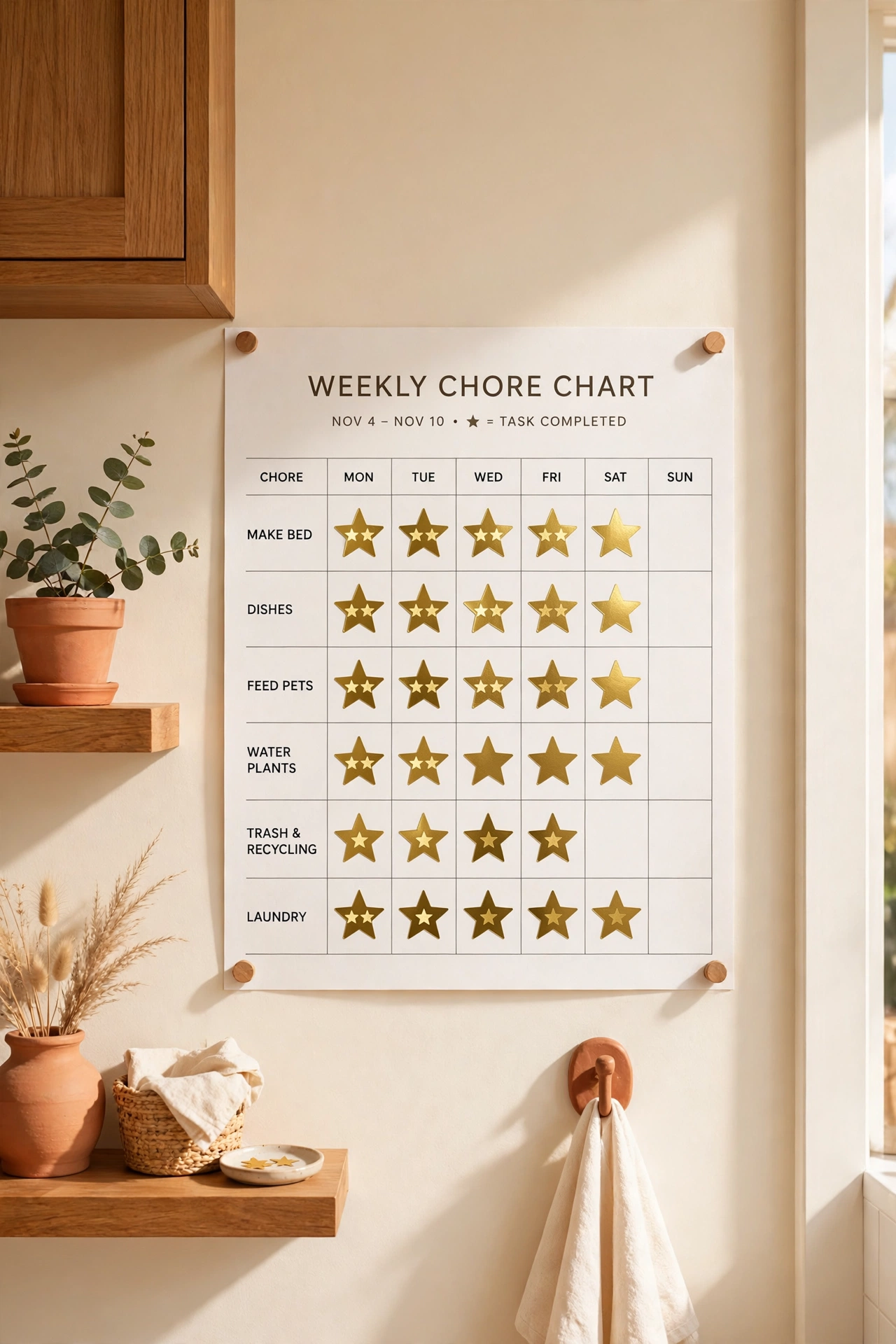
Stickers give children a small, happy reward for every chore they finish. Keep a sheet of star stickers beside the chart, and let each person stick one star next to their name when a task is done. A row of stars at the end of the week shows real progress that everyone can see.
Choose stickers in bright colors and let each family member pick a favorite shape for their own row. When a row fills up, celebrate with a small family treat like a picnic or a board game night. Stickers work well because they turn a routine task into a visible achievement that children want to repeat.
14. Create a Points System with a Prize Menu
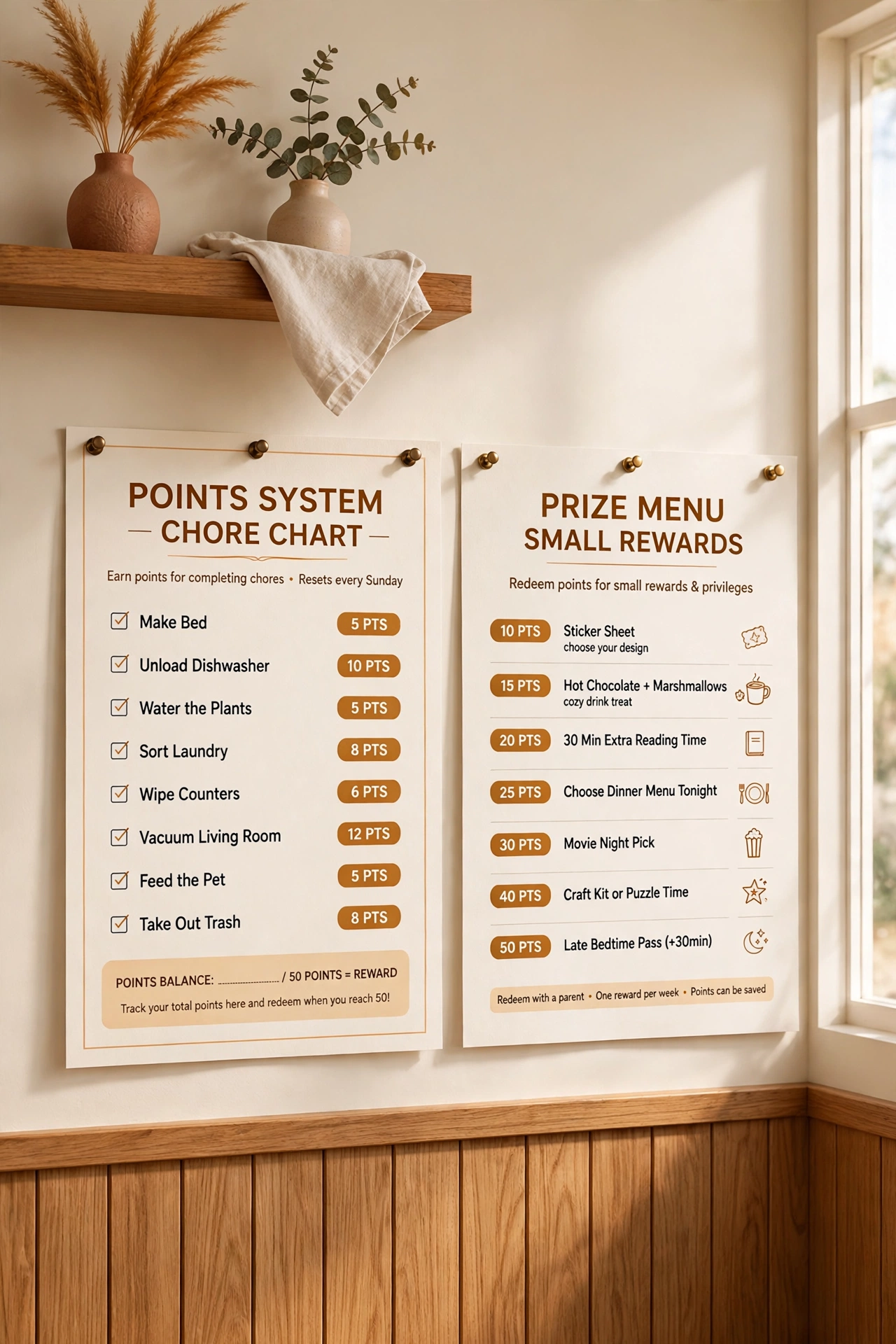
A points system gives every chore a value, and the points add up toward prizes on a menu. Give easy chores one point and harder chores three points, then list small rewards beside the point totals. Children can save points for a bigger prize or spend them on a small treat each week.
Keep the prize menu simple, with rewards like choosing dinner, picking a movie, or an extra half hour of playtime. Update the points every evening so the totals stay accurate and fair. A points system teaches children that effort has value, and it makes the chart feel like a game with real goals.
15. Assign Age-Appropriate Chores Only
Age-appropriate chores make the chart fair and keep children safe. Young children can handle simple tasks like putting toys away, wiping a table, or feeding a pet. Older children can take on cooking help, laundry sorting, and vacuuming a room. When a chore matches the age of the child, it gets done well and without frustration.
Review the chart every few months and move children up to harder tasks as they grow. A task that was hard last year may feel easy now, and a new challenge keeps the chart fresh. Matching chores to age is the secret to a chart that everyone can actually follow.
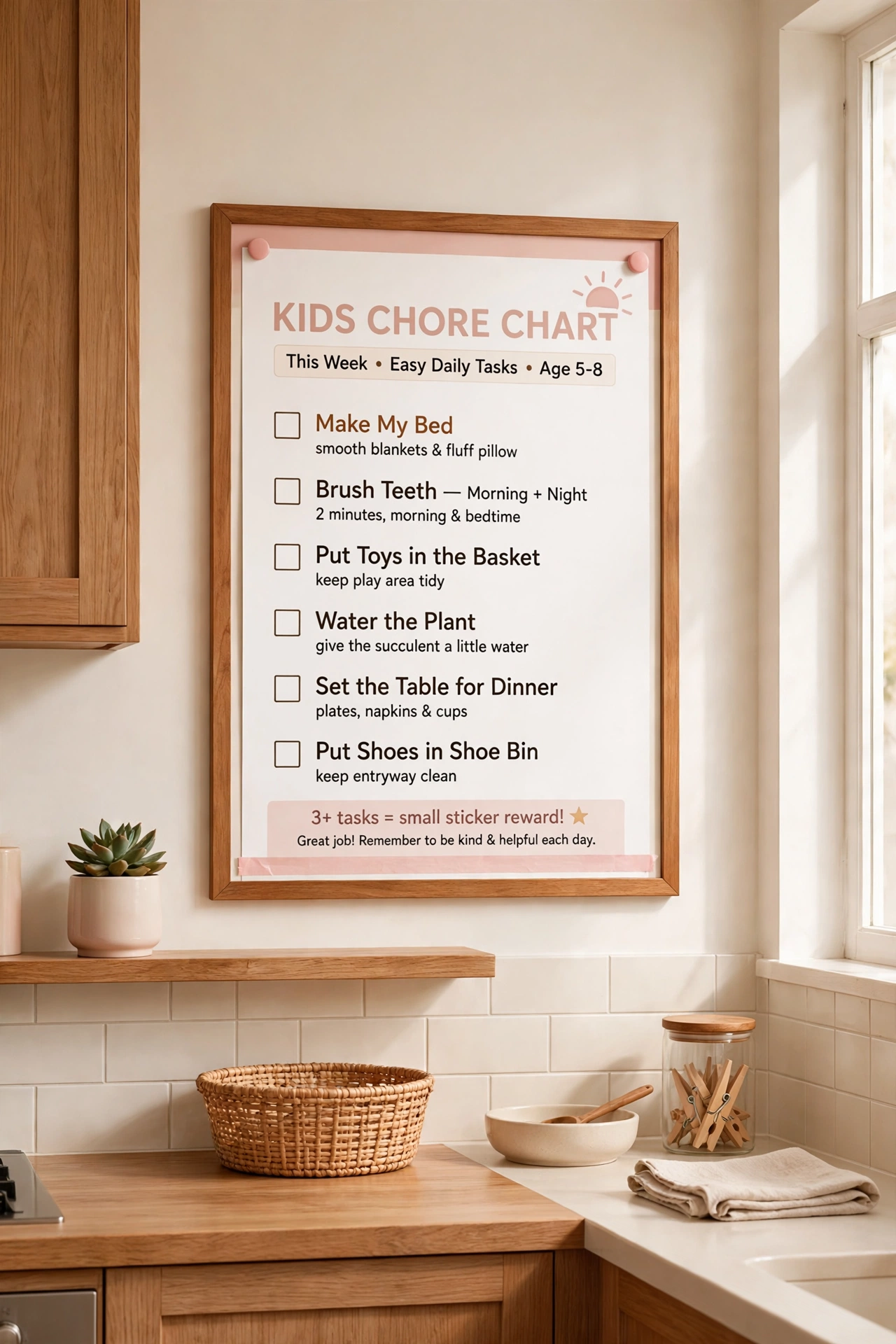
16. Hold a Short Weekly Family Meeting
A short weekly family meeting keeps the chore chart alive and fair. Sit together for ten minutes every Sunday, review what worked during the week, and ask if any chore needs to change hands. Everyone gets a voice, and the chart becomes a shared plan instead of a list of orders.
Keep the meeting light and positive, and end by choosing one small improvement for the next week. Write the changes on the chart right away so the new plan starts on Monday. A weekly meeting also gives children a safe place to say when a chore feels too hard or too boring, which keeps the system honest.
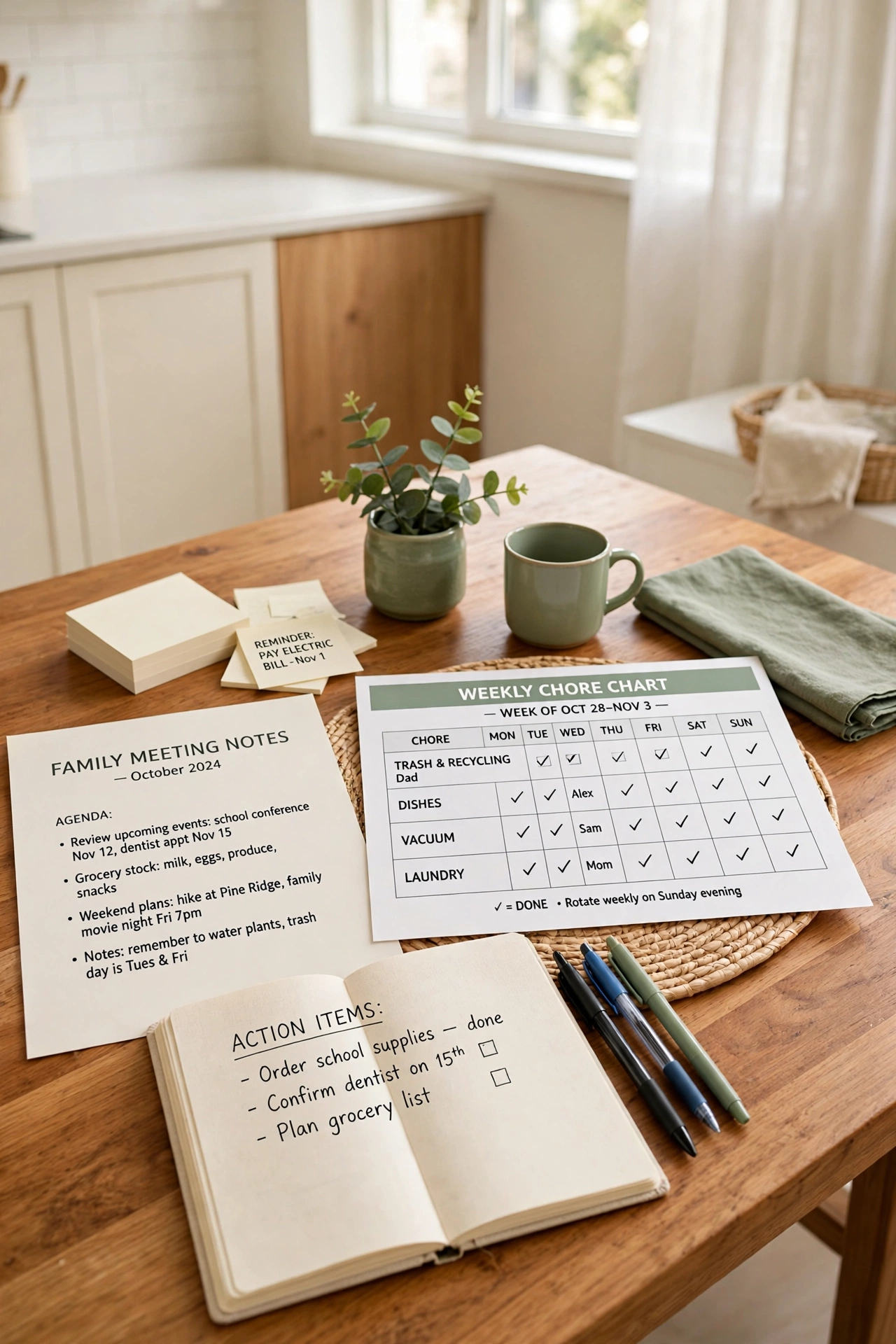
17. Use a Clipboard Chart with Checkboxes
A clipboard chart is a simple paper chart on a clipboard that hangs on a hook by the door. Each chore has a small checkbox beside it, and a pen tied to the clipboard makes ticking off tasks easy. The clipboard can move from room to room, so the chart goes where the work happens.
Print a fresh chart each week or use a laminated sheet with a dry erase marker for reuse. Keep one clipboard per family member if the household is large, or one shared clipboard for a small family. A clipboard chart suits families who want a cheap, simple system that works from the very first day.
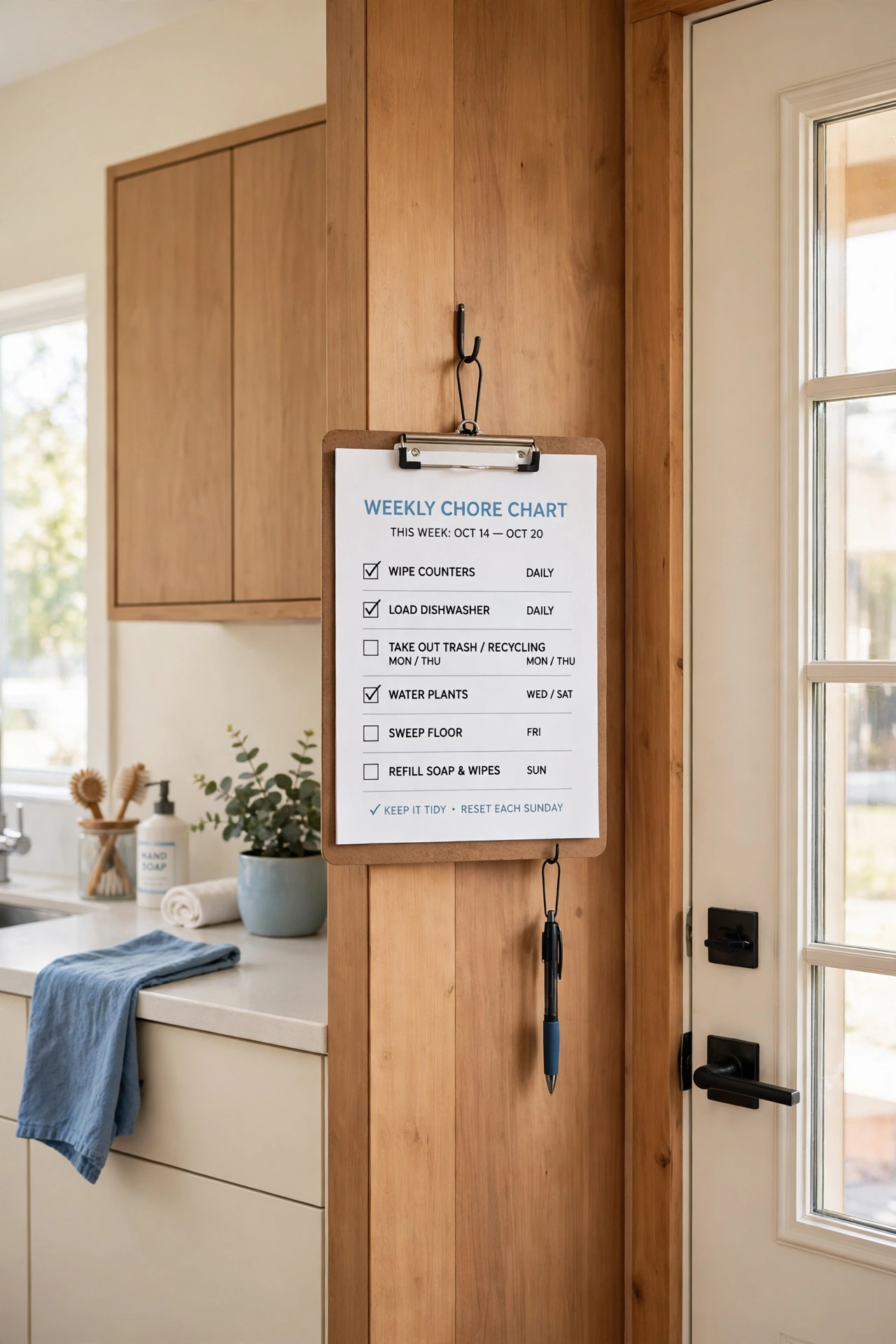
18. Make a Kitchen-Only Chore Chart
A kitchen-only chore chart focuses on the busiest room in the house. List tasks like loading the dishwasher, wiping the counters, taking out the trash, and sweeping the floor, then assign one task per person each day. A small chart for one room feels much easier than a huge chart for the whole house.
Place the chart inside a kitchen cabinet door or on the side of the fridge where cooks can see it while they work. Rotate the kitchen tasks daily so nobody washes dishes every single night. For a full plan that covers the rest of the home, see these daily cleaning checklist ideas. A kitchen chart is a great first step before building a chart for the whole house.
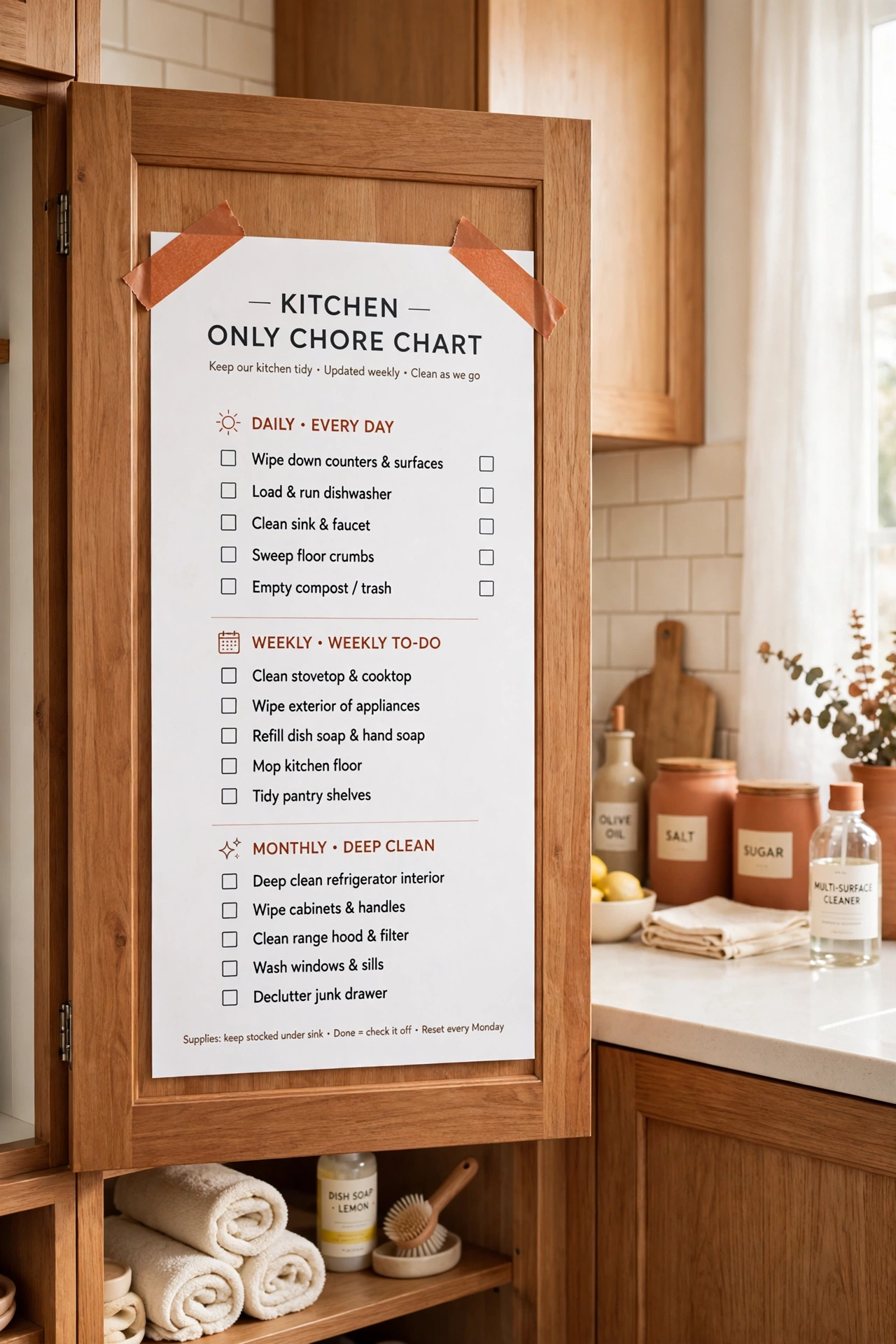
19. Build a Shared Cleaning Schedule into the Chart
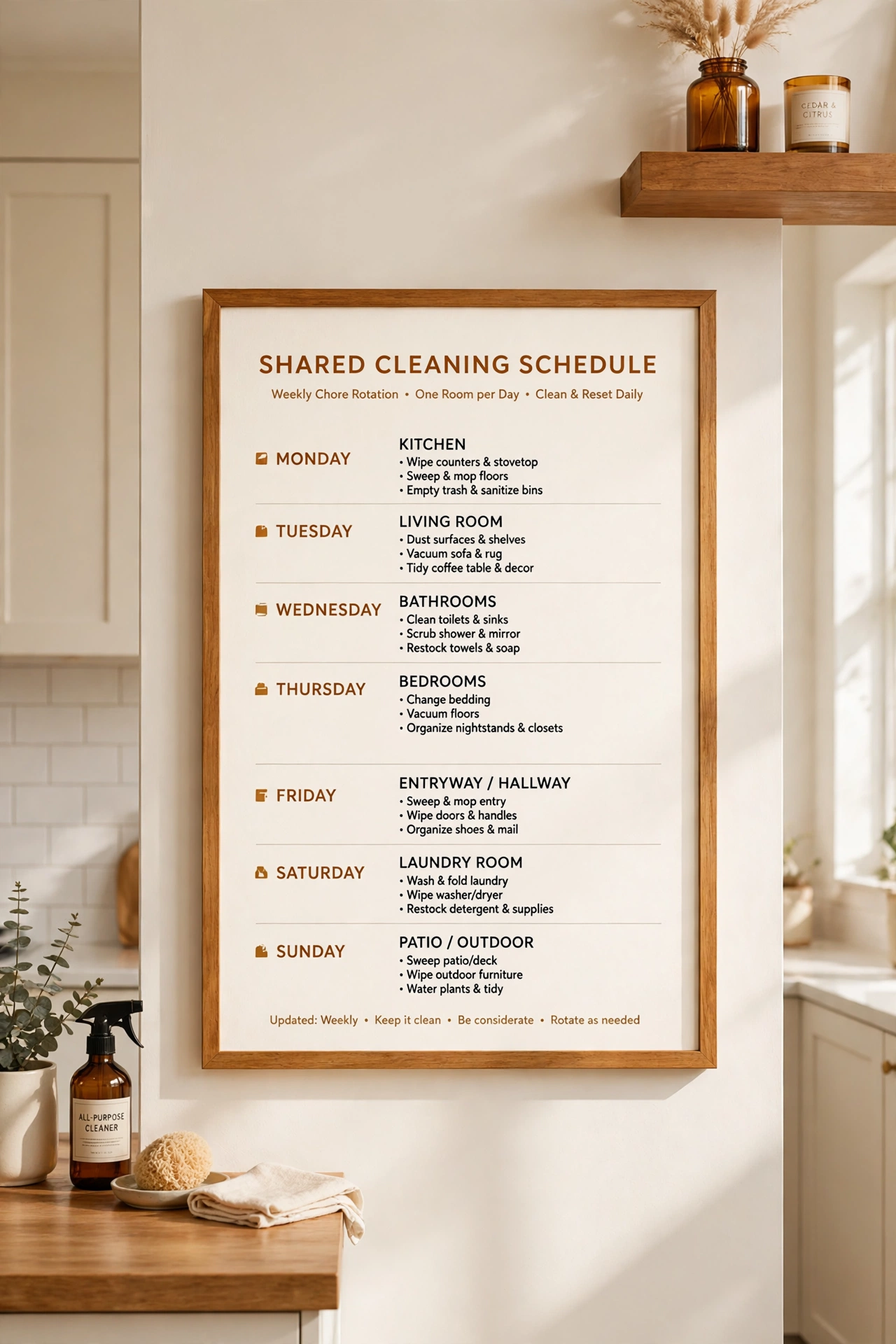
A shared cleaning schedule turns the chore chart into a full weekly plan for the whole home. Assign one room to each day, like the bathroom on Monday and the living room on Wednesday, and list the chores for that room beside it. The chart shows the whole week at a glance, so nobody wonders what comes next.
Keep the daily room tasks short, with only two or three chores per day, so the plan stays realistic for busy families. For a ready-made weekly plan to pair with your chart, see these household cleaning schedule ideas. When the chart and the cleaning schedule work together, the house stays tidy with steady, small efforts instead of one big weekend cleanup.
20. Review and Refresh the Chart Every Month
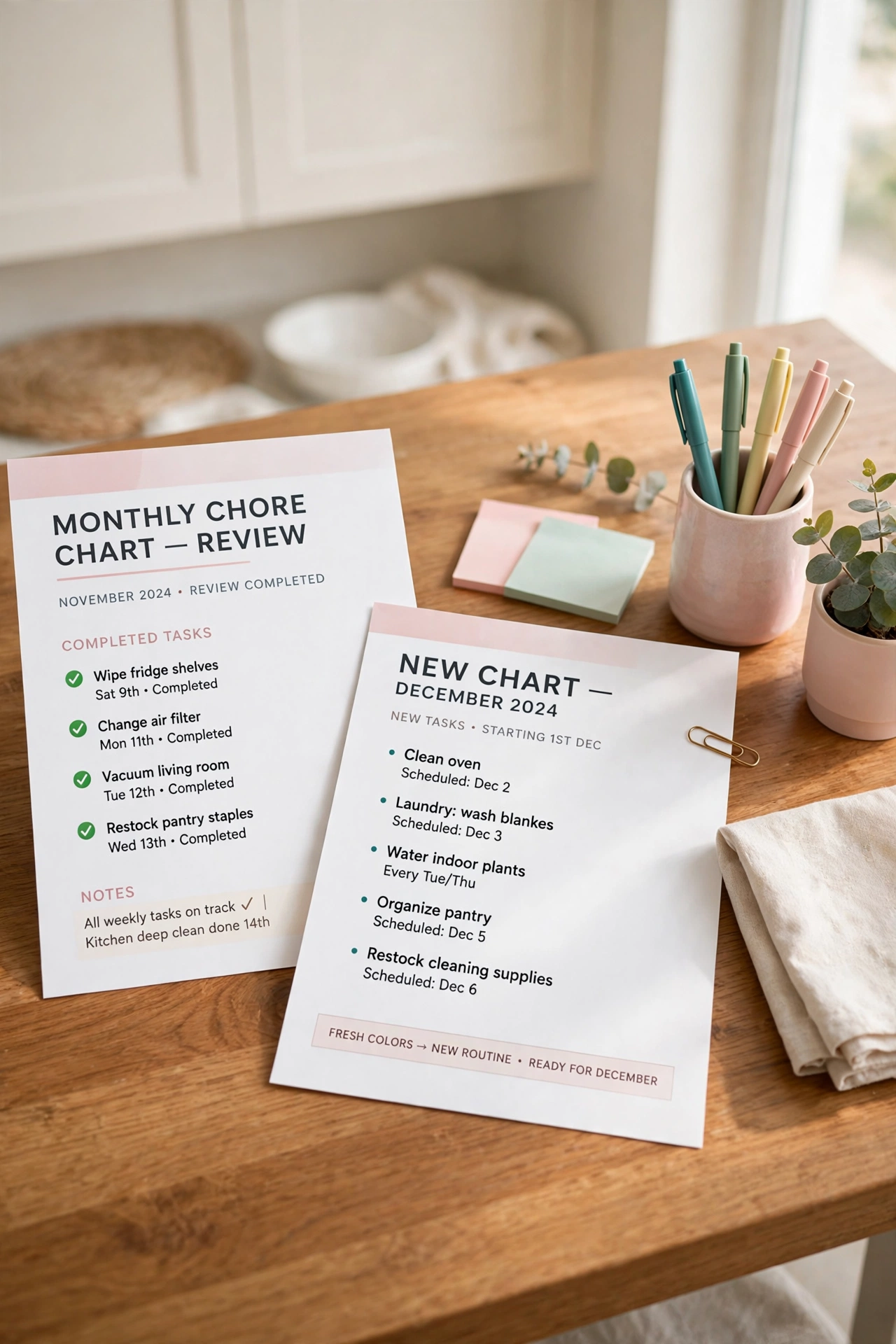
A monthly review keeps the chore chart fresh and fair as the family grows. Once a month, look at the chart together and ask what works, what feels boring, and what new chores the house needs. Remove tasks that no longer matter, and add new ones that fit the season or a new routine.
Change the chart design now and then too, with new colors, a new layout, or a new reward, so it never feels stale. A chart that changes with the family stays useful for years, while a chart that never changes slowly gets ignored. The monthly refresh is what turns a good chore chart into a lasting family habit.
Conclusion
A family chore chart works best when it is simple, visible, and fair. From a fridge grid to a points system with a prize menu, there is an idea here for every family and every home. The best chart is the one your family will actually look at, use, and update together each week.
Pick one or two ideas that fit your home and start today. Hang the chart, assign the first chores, and celebrate the first full week of ticks and stars. For a calm weekly rhythm beyond chores, these weekly home reset routine ideas will help you keep every room organized with just a few minutes each day.
Frequently Asked Questions About Family Chore Chart Ideas That Everyone Can Follow
How many chores should each child have per day?
Two or three chores per day is plenty for most children. Young children do best with one or two simple tasks, while older children can handle three or four. Keep the total small so chores feel doable, and add more only when the current list feels easy.
What age should children start using a chore chart?
Children as young as three can use a picture-based chore chart with simple tasks like putting toys away. Start with one or two easy chores and add more as the child grows. A chart works at any age when the tasks match what the child can do safely.
How do I get teenagers to follow a chore chart?
Give teenagers a voice in choosing their chores and let them pick tasks they dislike least. A points system or a shared reward often works better than strict rules for older kids. Keep the chart short, fair, and consistent, and avoid adding new chores without a family discussion first.
Should chores be tied to pocket money?
Basic household chores like tidying a bedroom or clearing the table work best as shared family duties with no payment. Extra tasks beyond the normal list can earn pocket money as a bonus. For help planning the family week around chores and money, see these family calendar and paperwork organization ideas. Keep the chart focused on teamwork first, and use rewards to celebrate effort rather than to buy cooperation.
What if one family member never follows the chart?
Talk about the problem in a weekly family meeting and ask what makes the chart hard to follow. The chore may be too hard, too boring, or scheduled at a bad time of day. Swap the task for a better fit, and agree on a gentle consequence together, like losing first pick of the next reward.

Hi, I’m Emily! I turn messy corners into cozy, organized spots. DreamNestDecor is where I share simple, practical home ideas — decor, organization, and small-space solutions that work in real life, not just in photos. Every idea here is carefully researched before it’s shared.