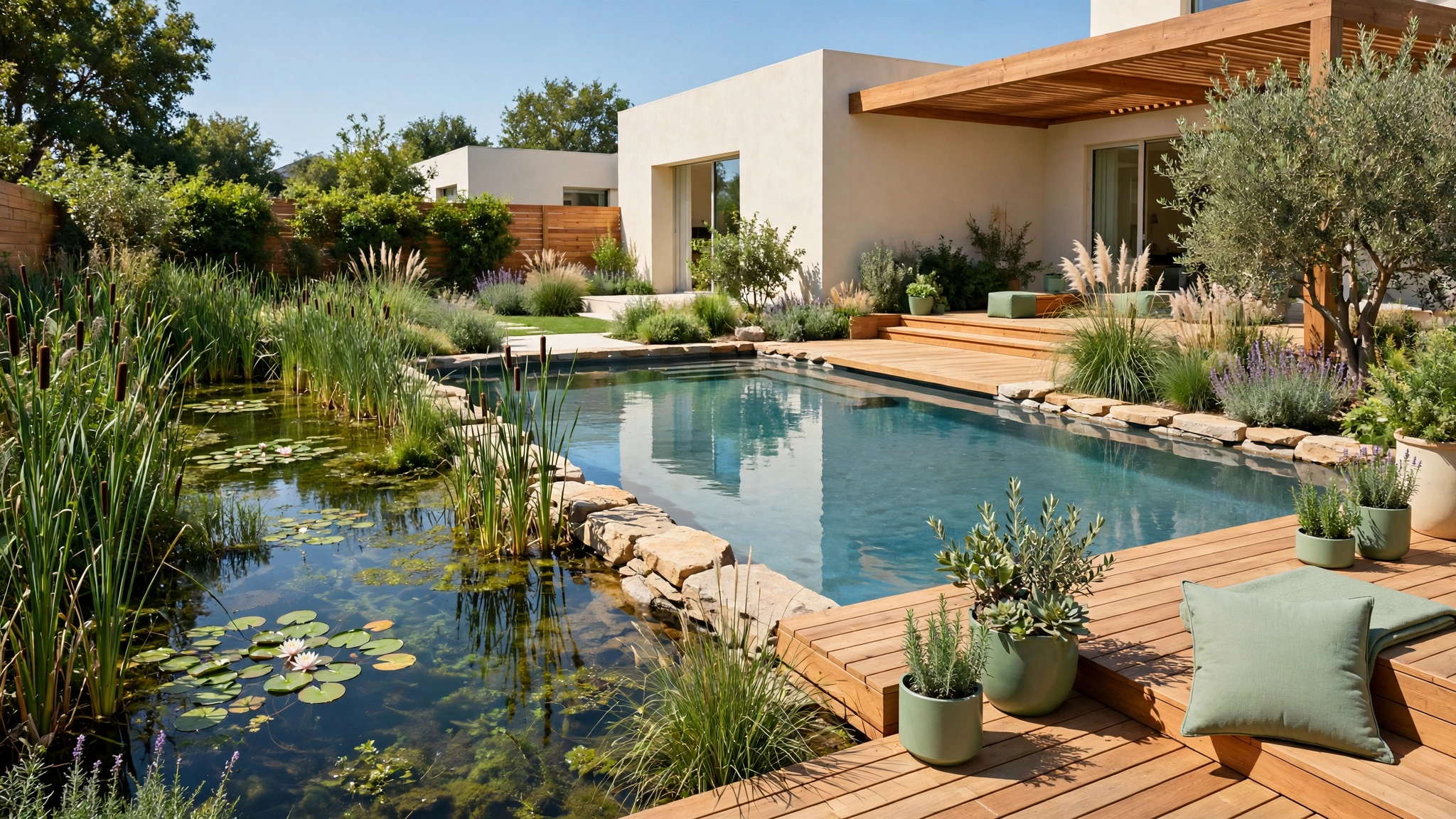
Picture this: you step out of your back door on a warm afternoon and slip into water that is clear, soft, and free of chemicals. Dragonflies skim the surface near the reeds, water lilies open in the shallow end, and the pool looks so much like a natural pond that guests ask whether it was always part of the garden. That is the quiet magic of a natural swimming pool, and it is closer to your reach than you might think.
You do not need a huge yard or a resort budget to build one. A natural pool simply pairs a swimming area with a planted zone that filters the water, and the two work together like a small living ecosystem. These 20 natural swimming pool ideas will help you plan the shape, the planting, the edging, and the daily care, so your backyard gains a pool that is beautiful to look at and gentle to swim in.
1. Divide the Pool Into Swimming and Regeneration Zones
Every natural pool starts with two zones that work as a team. The swimming zone is the open, deep water where you float and play, while the regeneration zone is a shallow planted area that cleans the water through roots, gravel, and helpful microorganisms. A low wall or a submerged divider keeps the two zones separate, yet water flows between them in a slow, steady loop.
Plan the regeneration zone to cover roughly half of the total water surface, because the plants need enough room to do their filtering work. Place the planted zone where it gets full sun so the reeds and lilies grow strong, and keep the swimming zone free of soil and loose gravel. When the balance is right, the water stays clear without a single drop of chlorine.
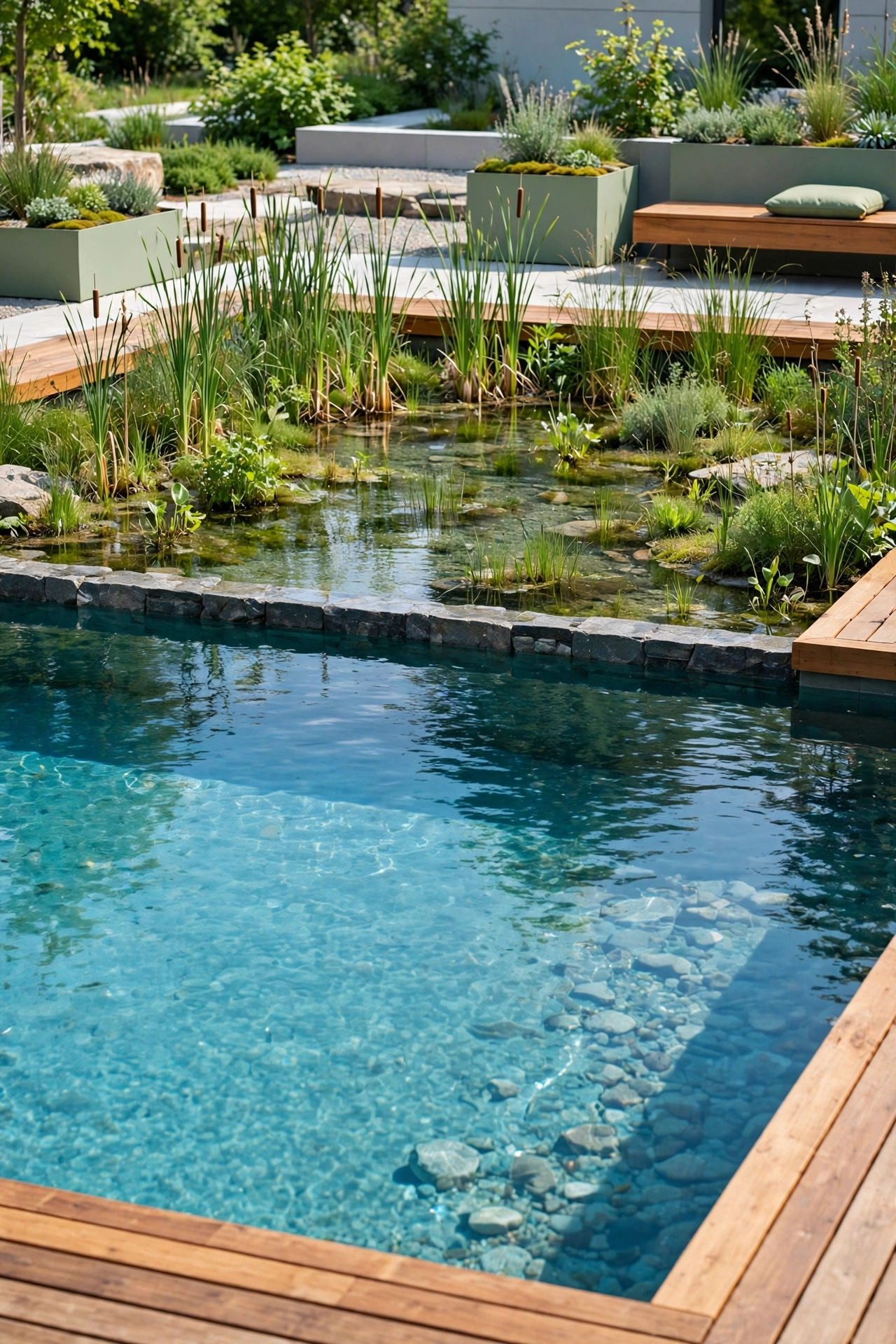
2. Shape a Freeform Pool That Follows the Garden
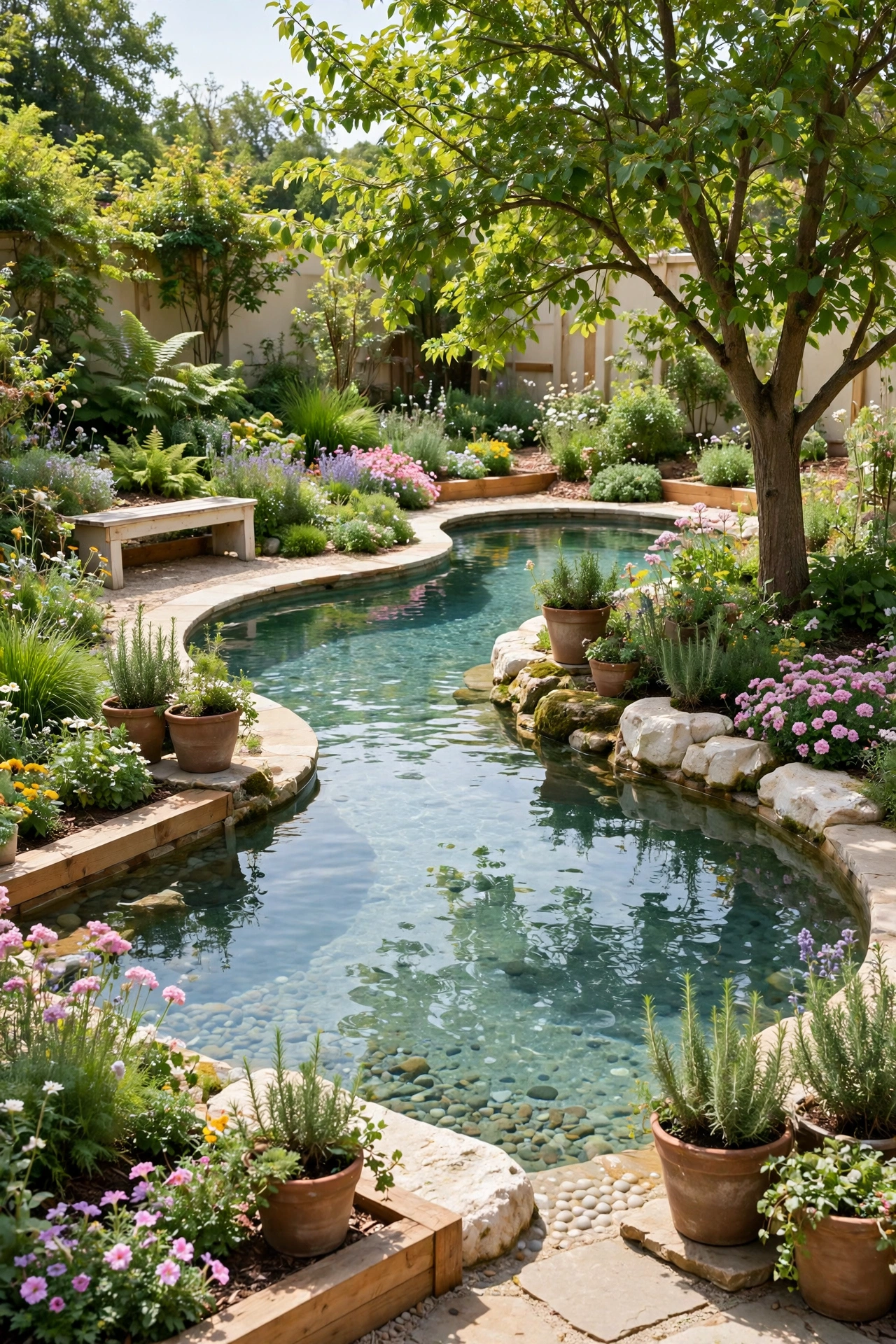
A freeform pool with soft, curving edges blends into a garden far better than a stiff rectangle. The gentle curves can wrap around an existing tree, follow a flower bed, or open toward a sunny lawn, so the pool feels like it grew there naturally. Curved shapes also give you cozy corners for planting and quiet nooks for sitting at the water edge.
Sketch the outline with a garden hose on the lawn before you dig, and walk around it at different times of day to check the sun and the shade. Keep the swimming area wide enough for easy laps and turns, even where the outline narrows. A freeform shape costs no more to line than a straight one, and the result looks like a private lagoon.
3. Build a Rectangular Pool With a Planted Shallow End
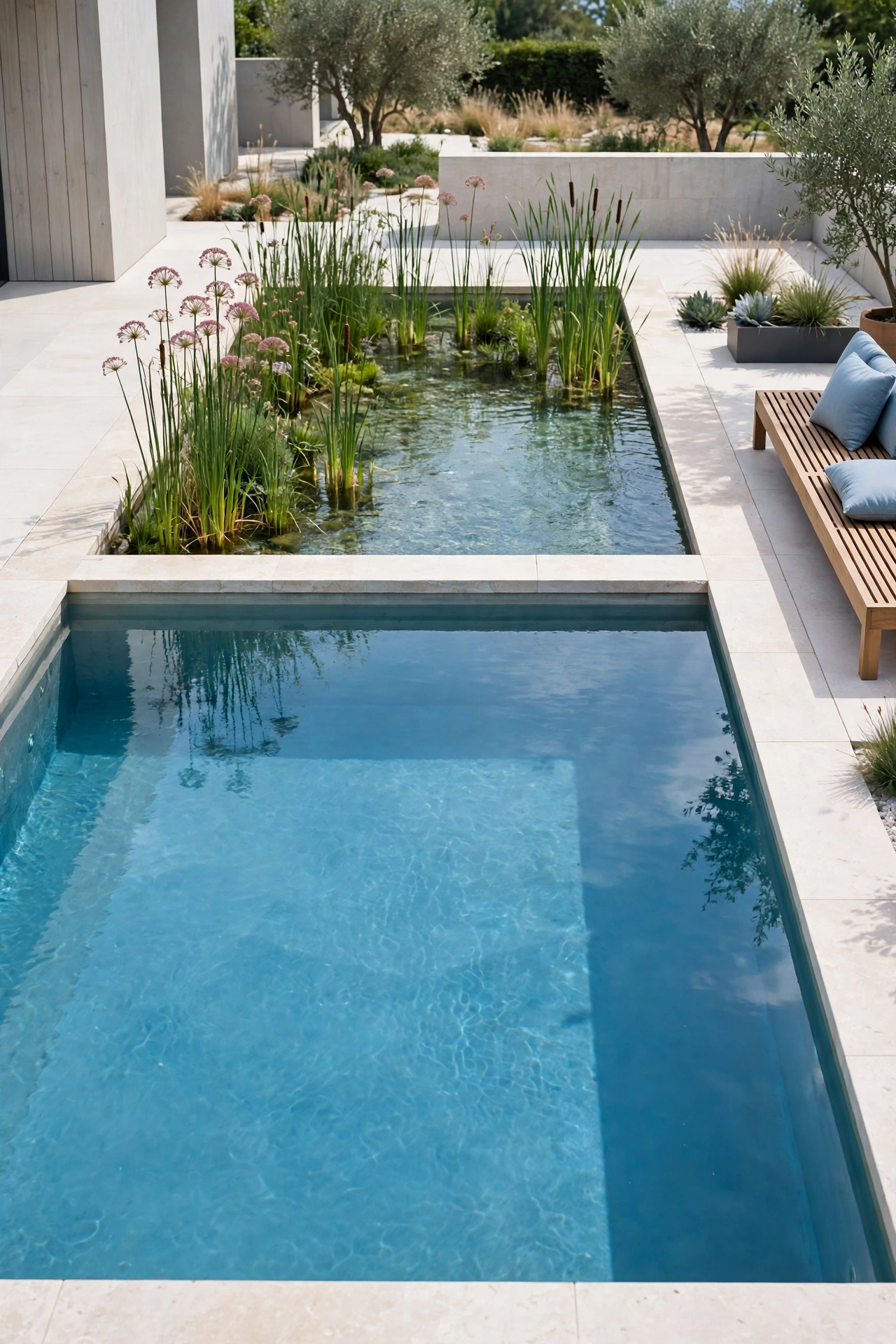
If your backyard is narrow or your style leans modern, a rectangular natural pool is a smart choice. The straight lines suit a fenced yard or a courtyard, and the swimming lane stays long and unobstructed for proper exercise. One short end becomes the planted shallow zone, separated by a clean submerged wall that you barely notice from the surface.
Keep the coping simple and level so the rectangle reads crisp and intentional, and choose one strong accent color for the surrounding furniture or planters. The planted end can hold tall reeds and flowering rushes that soften the straight edges without breaking the modern lines. This layout proves that a natural pool can look just as sharp as a conventional one.
4. Edge the Pool With Natural Stone Coping
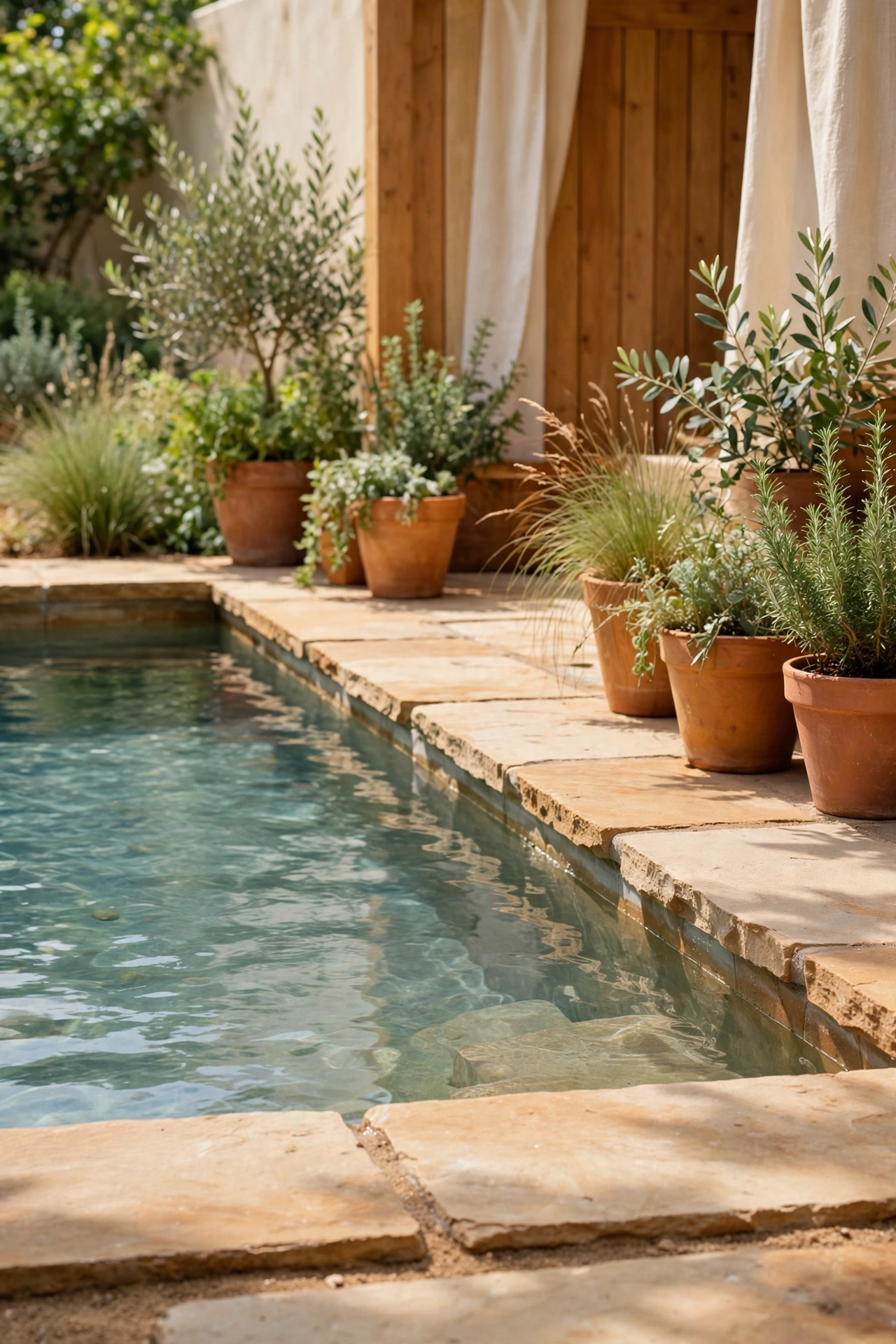
Natural stone coping gives a pool edge that feels timeless and stays cool under bare feet. Flat sandstone, limestone, or granite slabs sit neatly along the rim, and their soft, varied tones bridge the water and the garden beautifully. Stone also hides the liner edge completely, so the pool looks finished from every angle.
Choose slabs with a lightly textured surface for safe footing, and set them with a slight overhang so the shadow line hides the waterline. Match the stone to your garden paths or retaining walls for a unified look across the whole backyard. Stone coping needs almost no care beyond an occasional sweep, and it ages more gracefully every year.
5. Add a Gravel Beach Entry That Slopes Into the Water
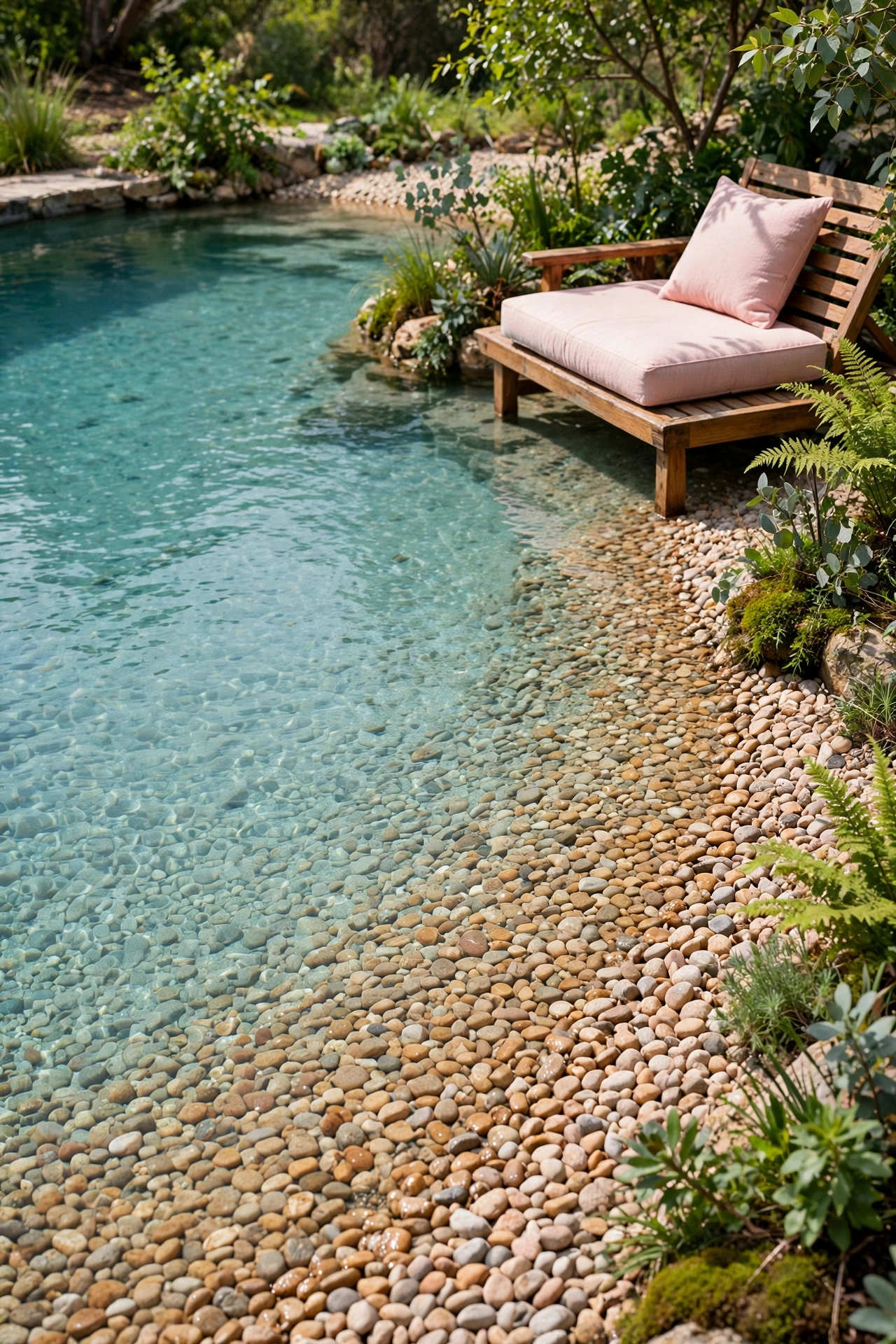
A beach entry replaces the usual ladder with a gentle slope of smooth gravel that eases you into the water step by step. The shallow slope is kind to knees and joints, and it gives children and older swimmers a safe, gradual way in. It also creates a sunny shelf where the water warms first on bright mornings.
Use rounded river gravel in a warm, sandy tone, and keep the slope gentle enough that you can walk down without slipping. The beach area doubles as a play zone for splashing and a perch for birds that visit for a drink. Rake the gravel smooth once a week and the entry will look freshly groomed all season long.
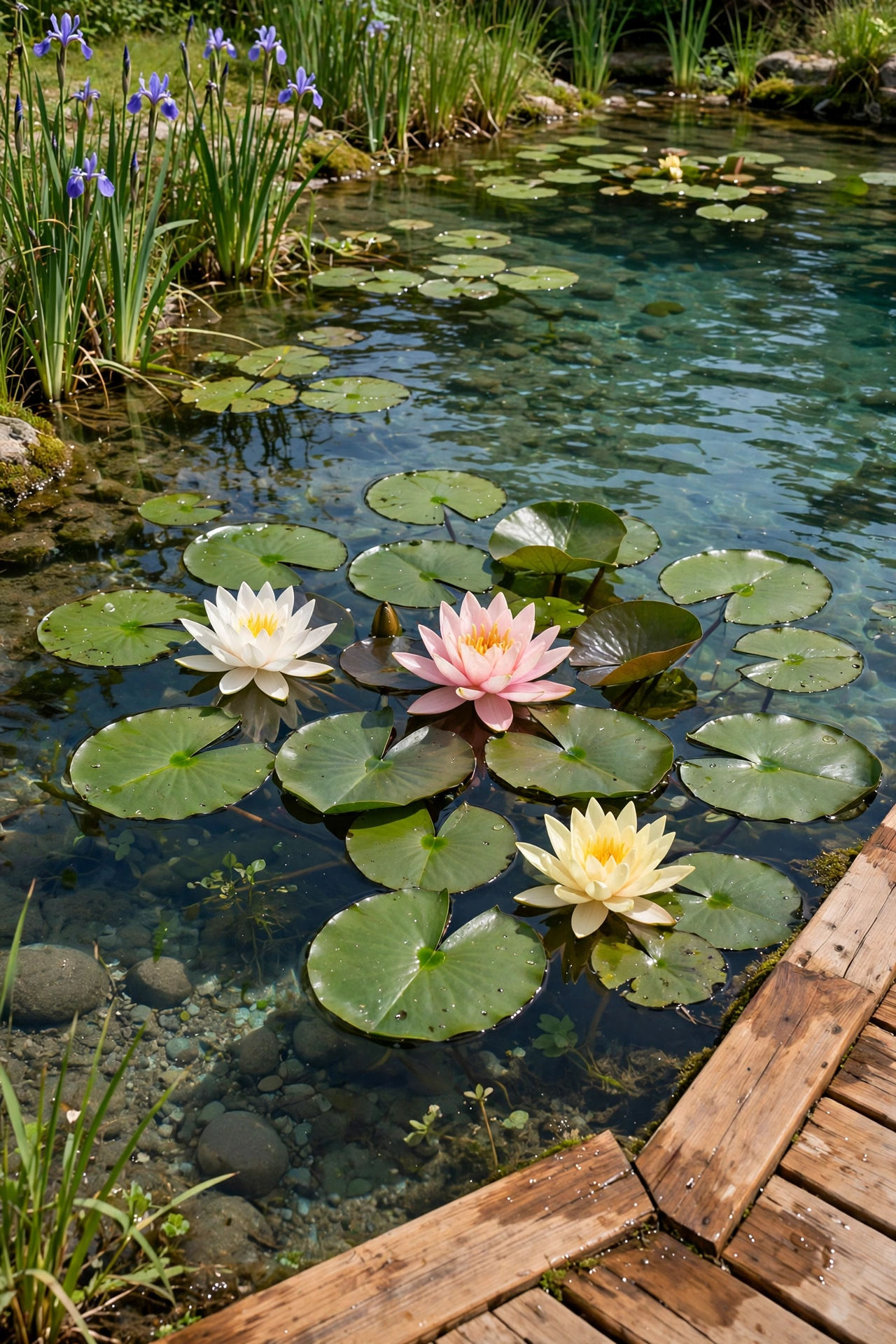
6. Plant a Water Lily Zone for Natural Filtration
Water lilies are the stars of the regeneration zone, and they earn their place with beauty and hard work. Their broad leaves shade the water, which keeps algae in check, while their roots pull nutrients from the water and starve out the green growth you do not want. A drift of lilies in white, blush pink, and soft yellow turns the filter zone into the prettiest corner of the pool.
Plant lilies in baskets of aquatic soil set on the shallow shelf, and give each plant room to spread its leaves across the surface. Mix in a few marginal plants like irises and rushes at the edges for height and texture. For more inspiration on small-scale water planting, these mini container pond ideas show how the same aquatic plants thrive in compact water gardens too.
7. Create a Waterfall That Circulates and Oxygenates the Water
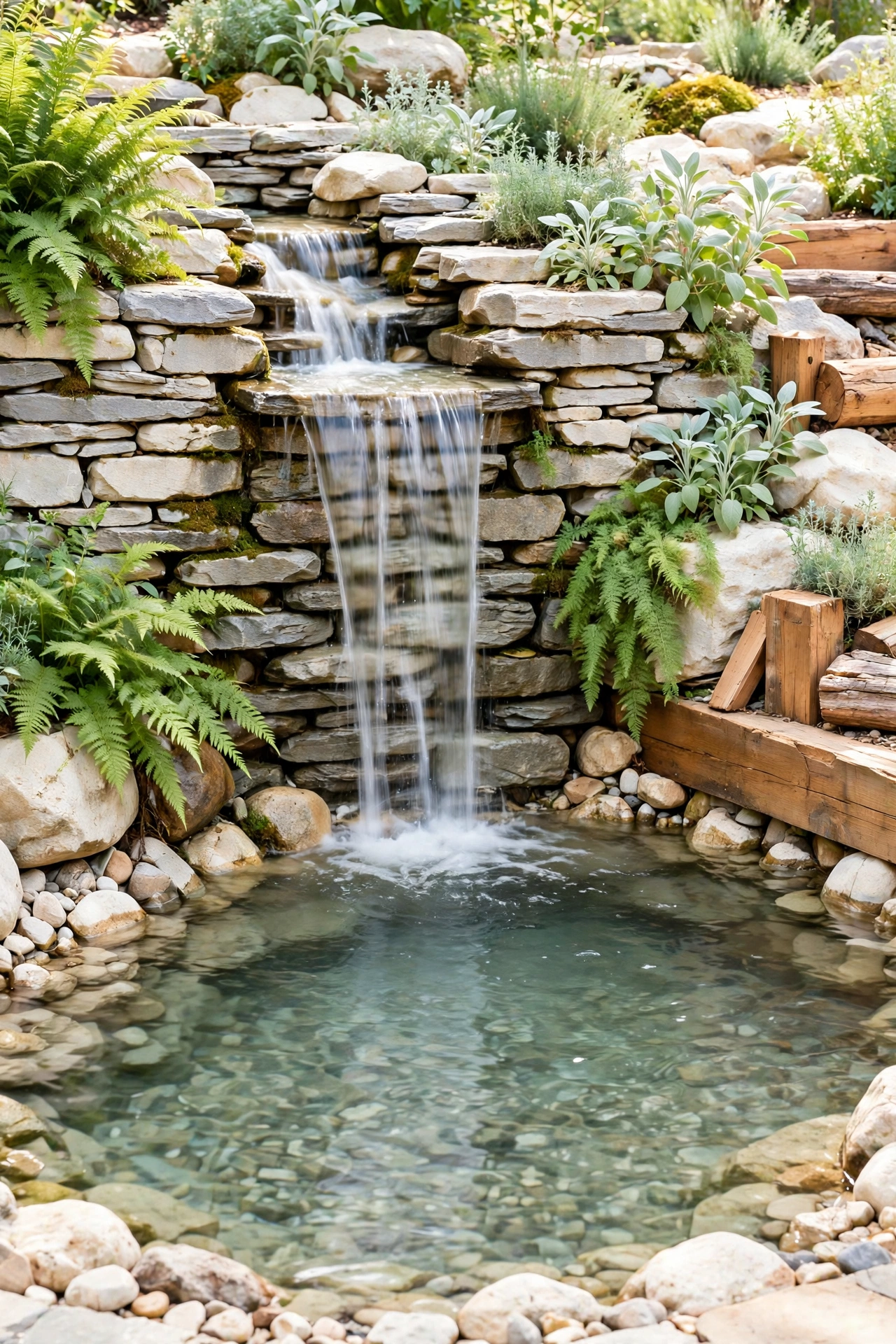
A small waterfall does far more than look pretty in a natural pool. As water tumbles over stone, it picks up oxygen that feeds the helpful bacteria in the regeneration zone, and the gentle current keeps the whole pool circulating without noisy equipment. The sound of falling water also masks street noise and turns the backyard into a calm retreat.
Build the fall from stacked natural stone at one end of the pool, and size the pump so the flow is a soft sheet rather than a rushing torrent. A drop of just one or two feet is enough to oxygenate the water and create that soothing sound. If you want the waterfall to become a real feature, these backyard waterfall ideas offer designs that pair beautifully with a planted pool edge.
8. Add a Wooden Deck Over the Regeneration Zone
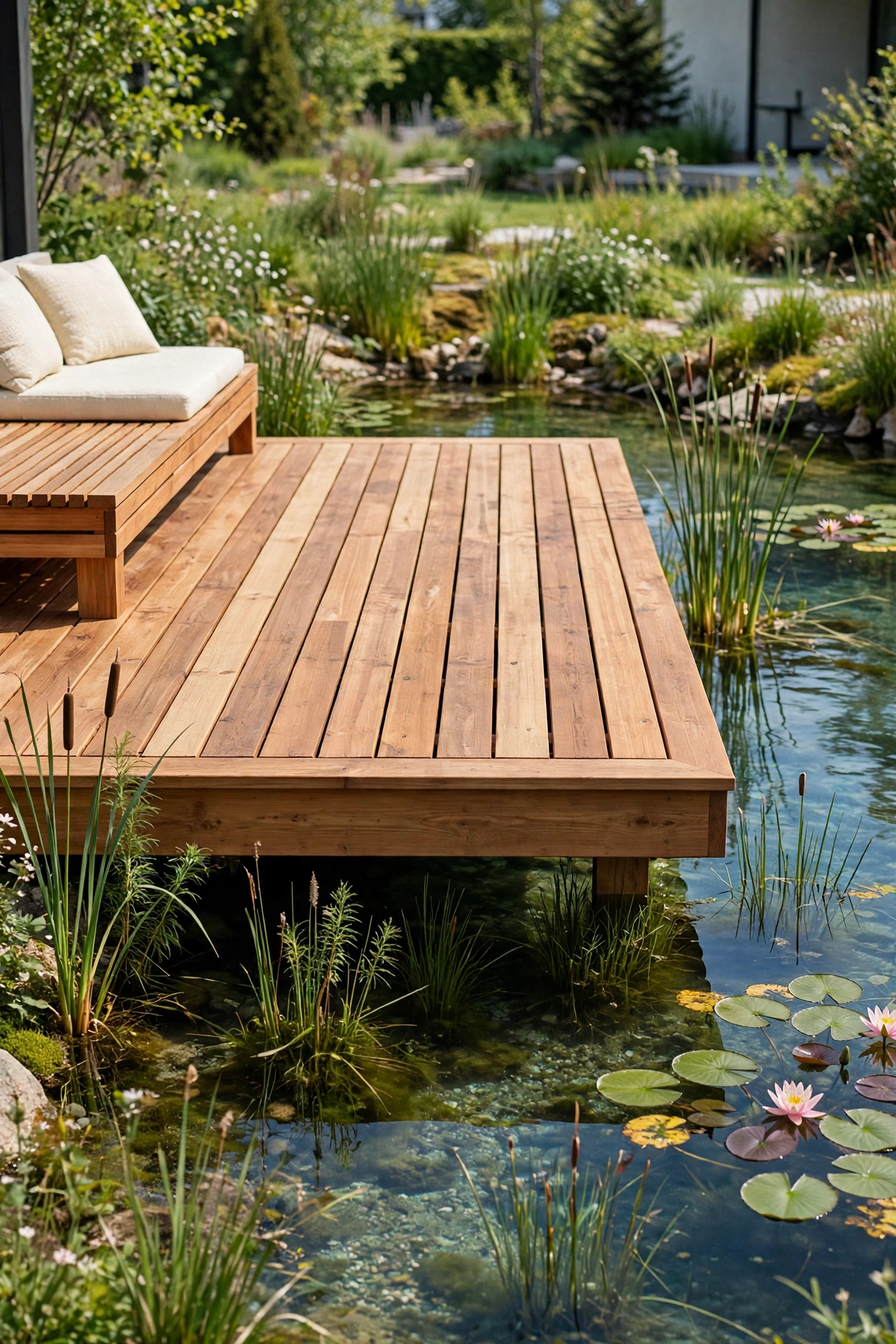
A wooden deck that cantilevers over the regeneration zone lets you walk right out above the lilies and reeds, which feels like standing on a boardwalk over a wild pond. The deck gives you a dry, warm surface for sunbathing and a perfect vantage point for watching dragonflies and frogs among the plants. It also shades part of the filter zone, which helps keep the water cool and clear.
Use warm-toned hardwood or cedar boards with narrow gaps, and leave a small access hatch so you can reach the plants for seasonal trimming. Keep the deck low and level with the pool coping so the whole area reads as one calm, connected space. For deck styles and layouts that suit a waterside setting, these wooden deck ideas will help you choose boards, rails, and finishes that hold up near water.
9. Design a Plunge Pool With a Living Filter Wall
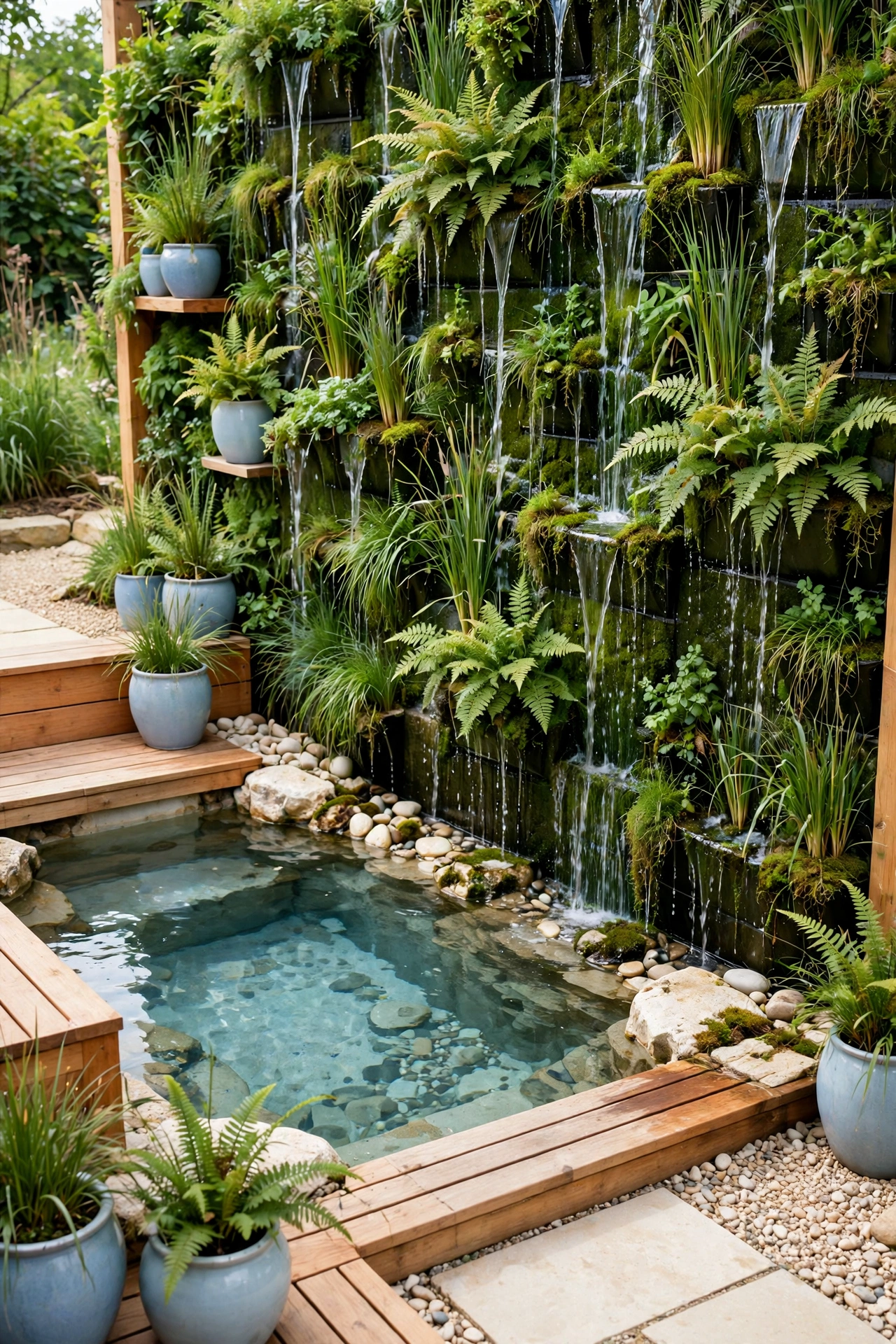
A small yard can still hold a natural pool if you think vertically. A compact plunge pool pairs with a living filter wall, where water trickles down through planted pockets of reeds and grasses before returning to the pool. The wall cleans the water, adds a lush green backdrop, and takes up almost no floor space at all.
Build the wall from sturdy timber or stone, and plant it with hardy marginal species that tolerate constant moisture. The plunge pool itself needs only enough room to cool off and float, which makes this idea ideal for courtyards and narrow side yards. Even a tiny pool feels generous when one whole side is a living green wall.
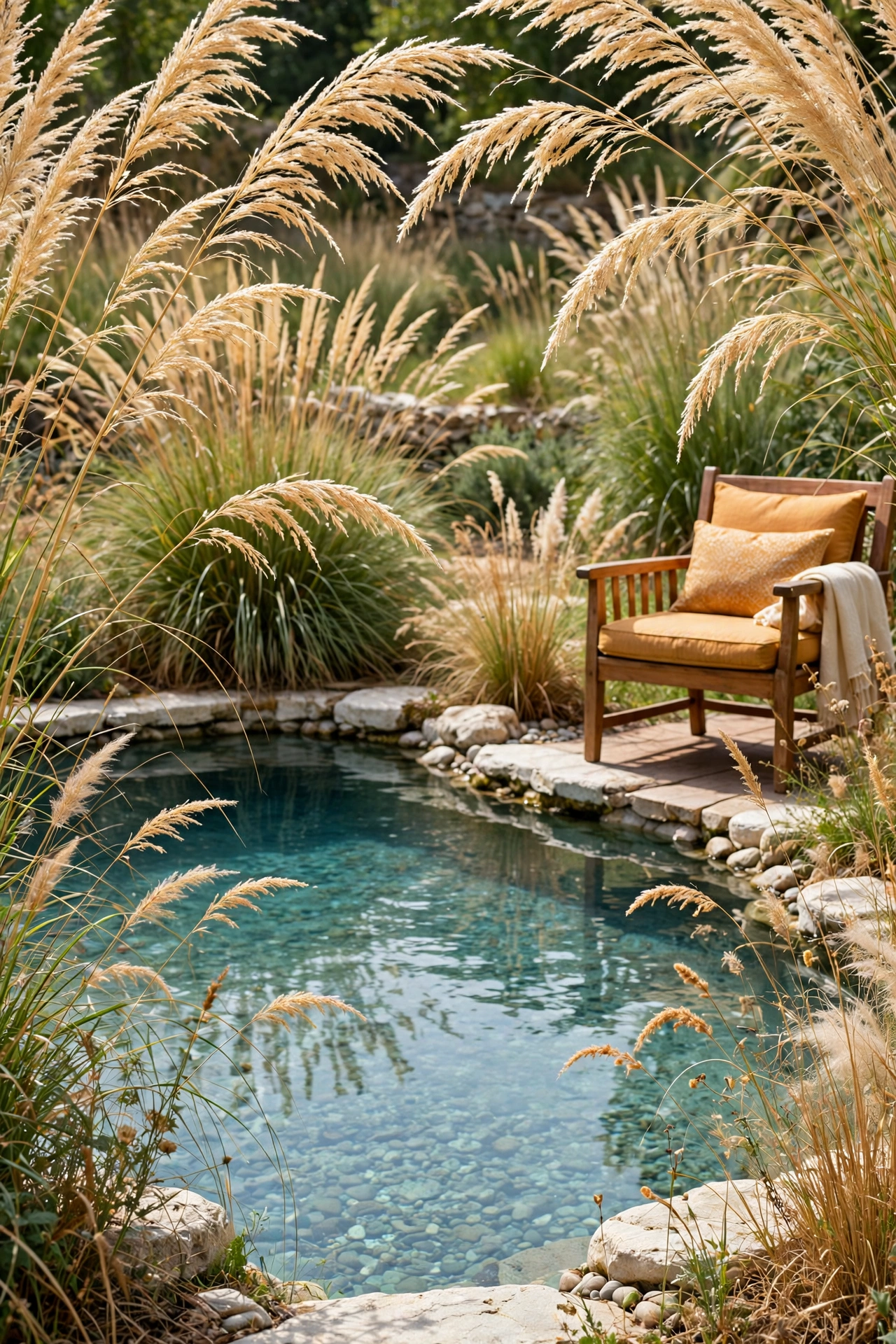
10. Frame the Pool With Ornamental Grasses and Reeds
Ornamental grasses and reeds soften the hard edge of a pool and tie it into the wider garden. Tall miscanthus sways in the breeze, feather reed grass adds vertical lines, and low sedges spill gently over the coping. The movement and sound of grasses in the wind make the pool area feel alive even on still, quiet days.
Plant grasses in generous drifts rather than single specimens, and leave a clear mown or gravel path behind them for maintenance access. Choose clump-forming varieties that stay where you put them, so the planting never creeps into the swimming zone. In autumn, the seed heads catch the low sun and turn the pool garden golden.
11. Install a Gentle Surface Flow System
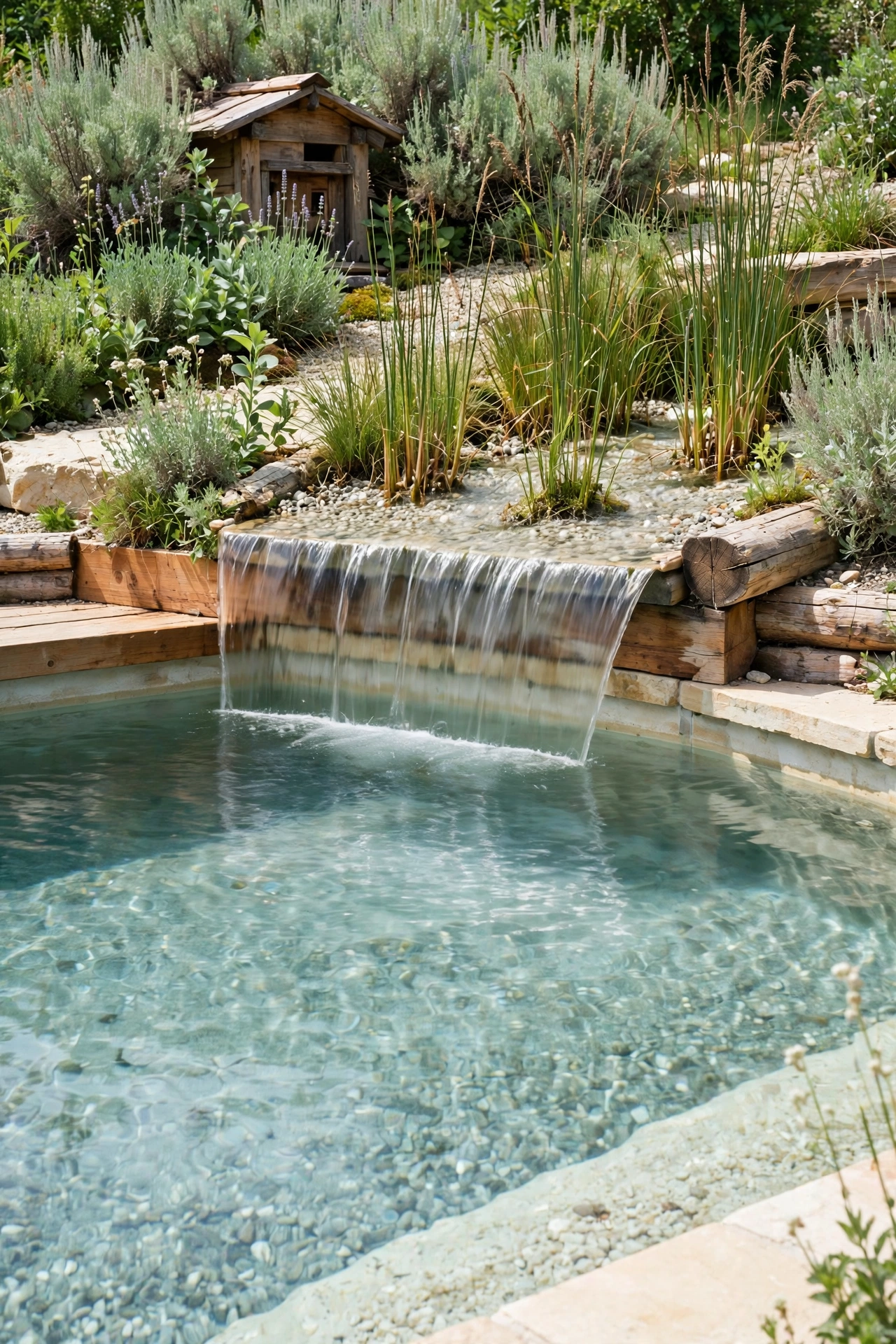
Clear water in a natural pool depends on slow, steady movement, and a gentle surface flow system provides it without harsh jets. A low-energy pump draws water from the swimming zone, passes it through the planted gravel bed, and returns it in a soft, even sheet. The flow is so quiet that you notice the clean water far more than the equipment.
Hide the pump in a small timber housing tucked behind the planting, and run the pipework under the coping so nothing industrial shows. Size the pump for a full turnover of the pool volume once or twice a day, and the plants will handle the rest. A well-planned flow system uses less power than a standard pool pump and needs far less attention.
12. Add an Outdoor Shower Beside the Pool
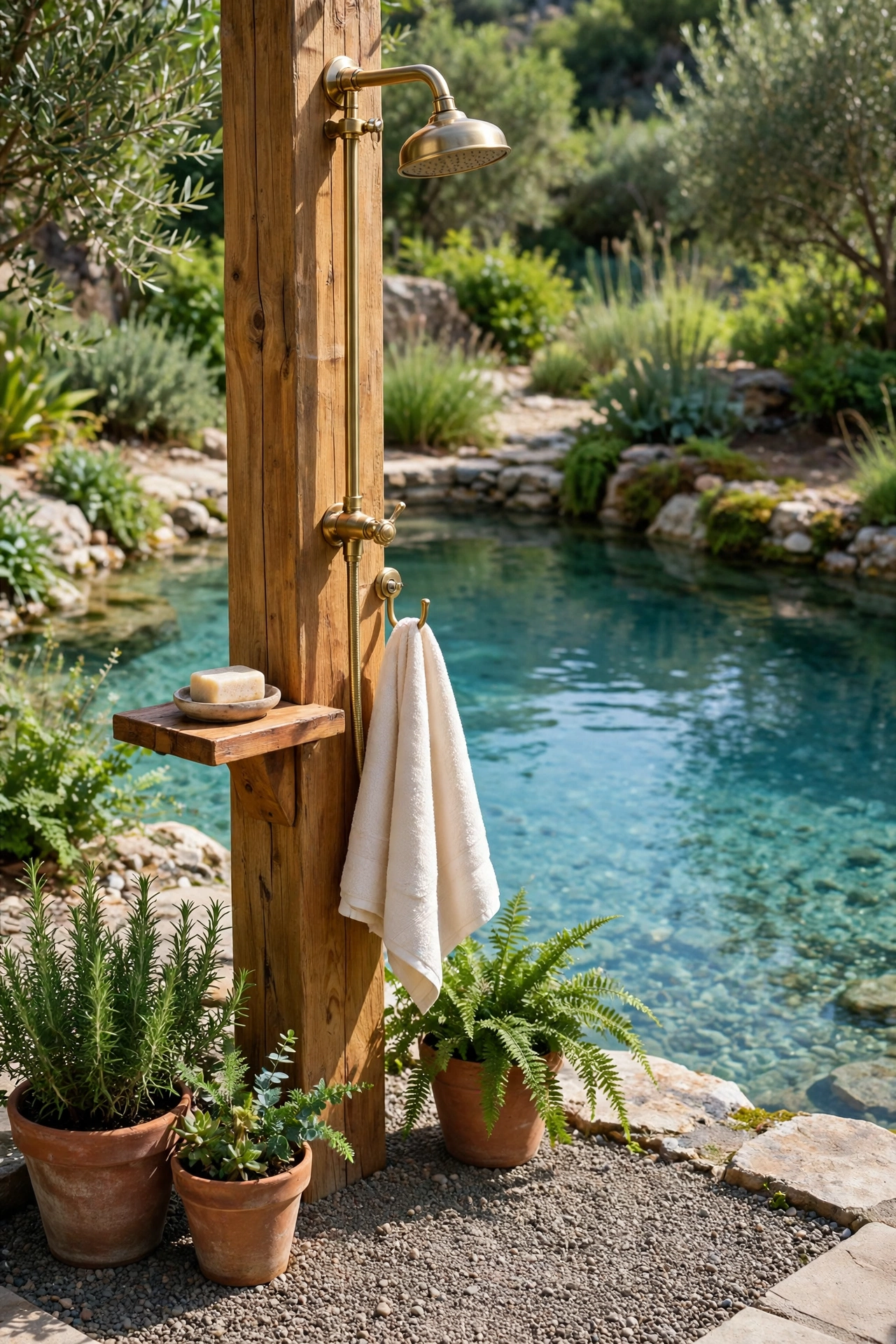
An outdoor shower beside a natural pool is both practical and delightful. A quick rinse before you swim keeps sunscreen, dust, and grass clippings out of the water, which helps the plants and the filter bed stay balanced. A warm rinse after a swim feels wonderful, and the shower itself becomes a handsome garden feature.
Mount the shower on a warm wood post or a simple stone wall, and set it on a gravel or timber platform that drains away from the pool. A small shelf for soap and a hook for a towel are all the extras you need. To find a shower style that matches your pool setting, browse these outdoor shower ideas for posts, screens, and privacy planting that suit a backyard pool.
13. Use a Dark Liner for a Deep Lagoon Look
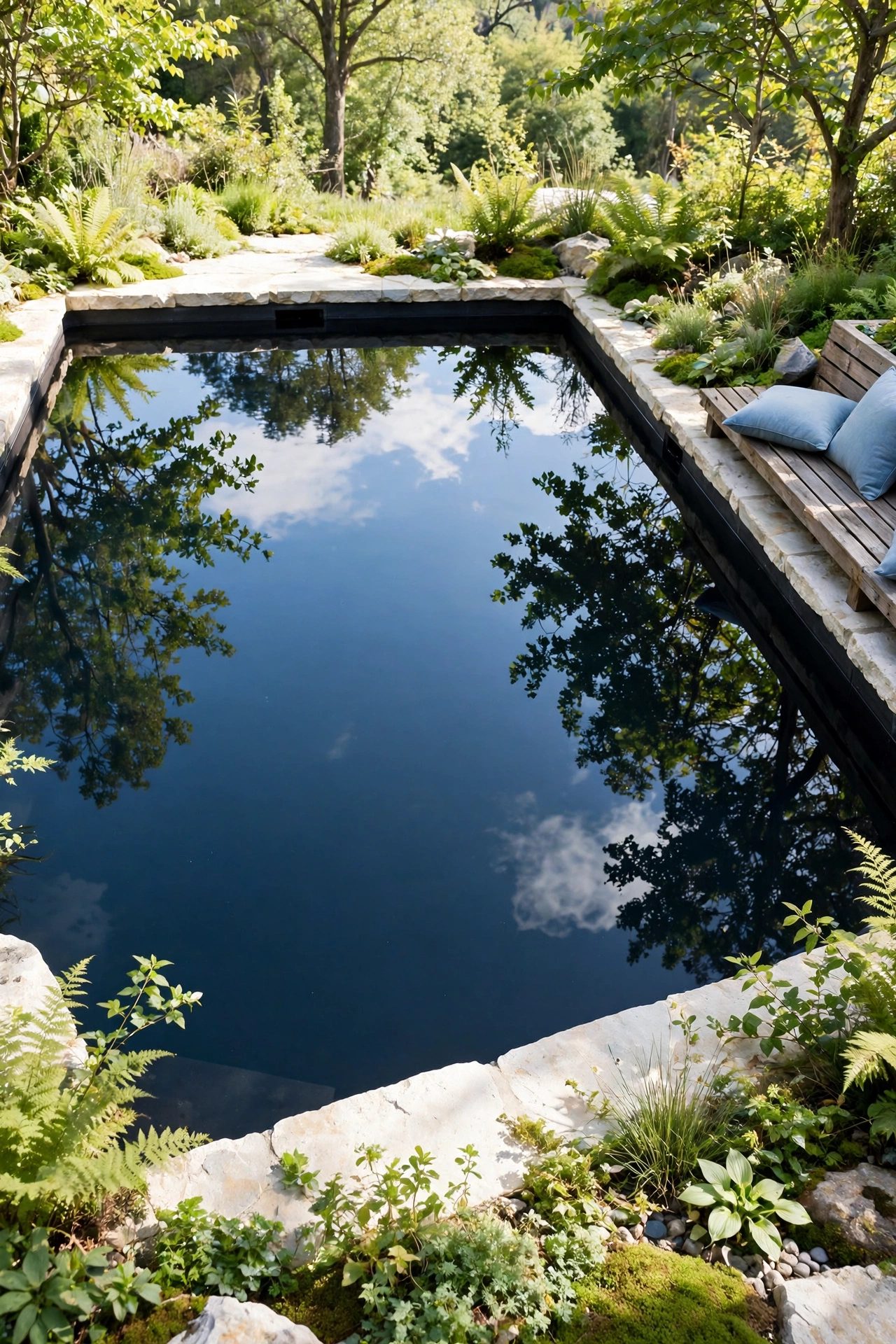
A dark liner changes the whole mood of a natural pool. Deep charcoal or slate tones make the water look richer and more mysterious, and the surface mirrors the sky, the trees, and the clouds like a woodland lake. The dark base also absorbs warmth from the sun, so the water feels a degree or two warmer on cool mornings.
Pair the dark water with pale stone coping and light-colored planting to create a pleasing contrast around the edge. Keep the swimming zone free of pale gravel so the mirror effect stays unbroken across the open water. A dark liner suits modern gardens especially well, where the pool reads as a calm, reflective plane.
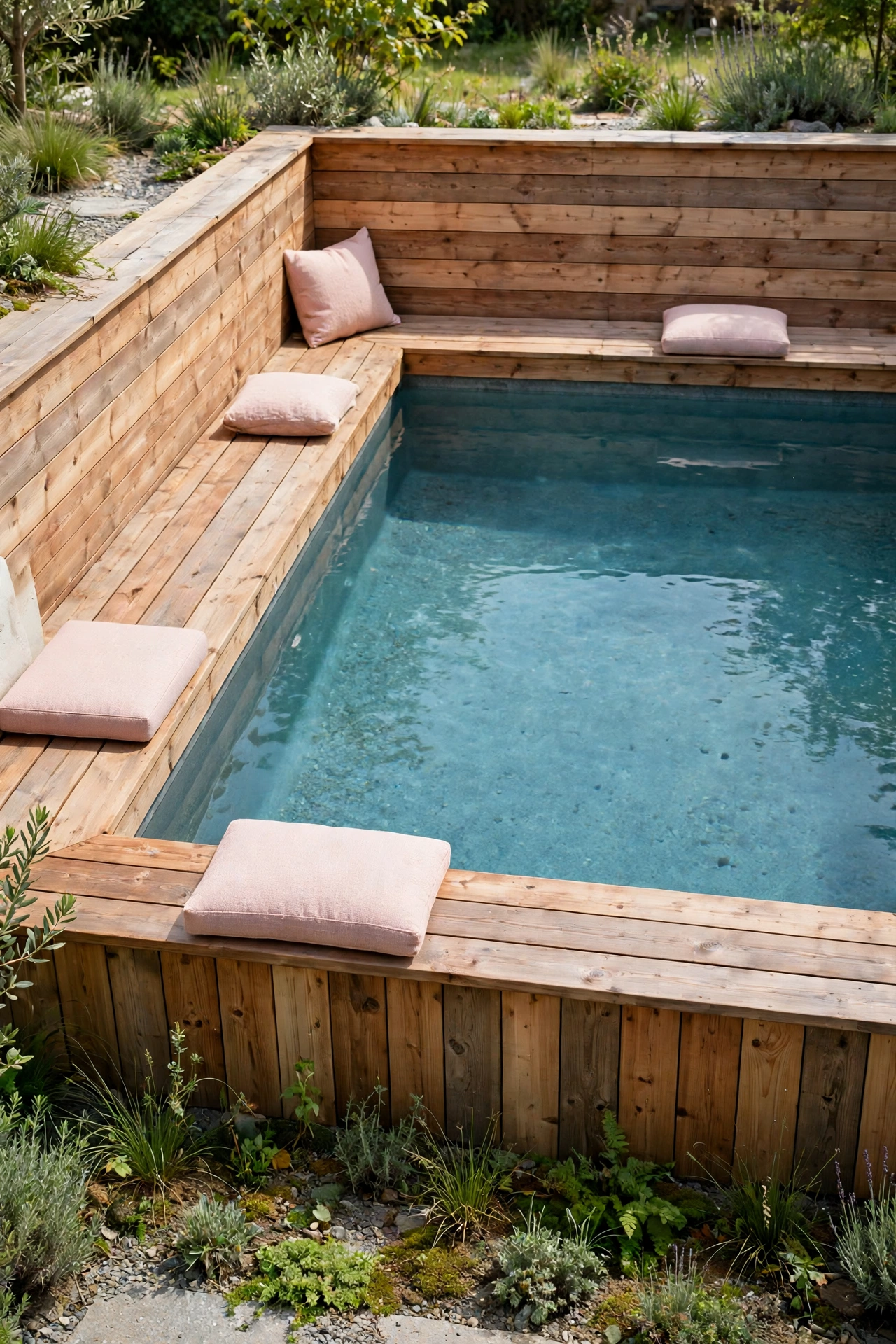
14. Build a Raised Timber Edge With Built-In Seating
A raised timber edge gives you a place to sit, dangle your feet, and watch the water without any extra furniture. The timber wall lifts the pool slightly above the lawn, which makes the whole feature feel intentional and crafted, and the wide cap becomes a bench all the way around. Warm cedar or oak boards weather to a soft silver gray that suits a natural pool perfectly.
Build the edge high enough to sit on comfortably, and add a step or two on the garden side for easy access. Tuck low planting along the base of the timber so the structure settles into the garden rather than standing apart from it. The seating edge is also a safe spot for children to paddle their feet while adults swim.
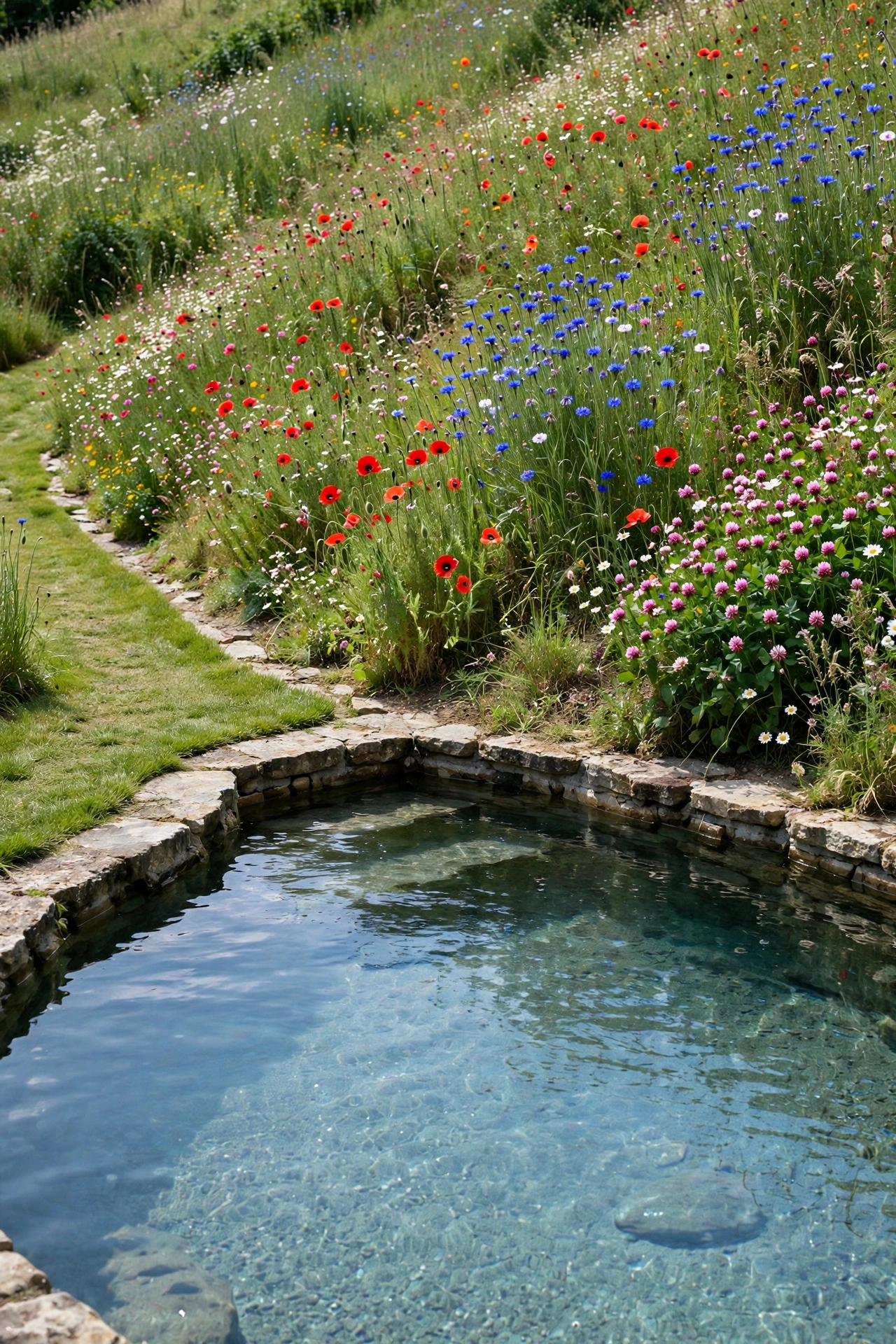
15. Plant a Wildflower Meadow Bank Around the Pool
A wildflower meadow bank turns the ground around a natural pool into a buzzing, colorful habitat. Clover, poppies, cornflowers, and native grasses grow right up to a mown path, and the flowers draw bees and butterflies that make the pool area feel wonderfully alive. The meadow needs far less mowing and watering than a formal lawn, which suits the low-impact spirit of a natural pool.
Sow the meadow on a gentle bank that slopes away from the water, and keep a clear strip of short grass or gravel directly beside the coping. Mow the meadow once or twice a season, after the flowers have set seed, and it will return thicker every year. Swimming beside a meadow in full bloom is one of the great pleasures of a natural pool.
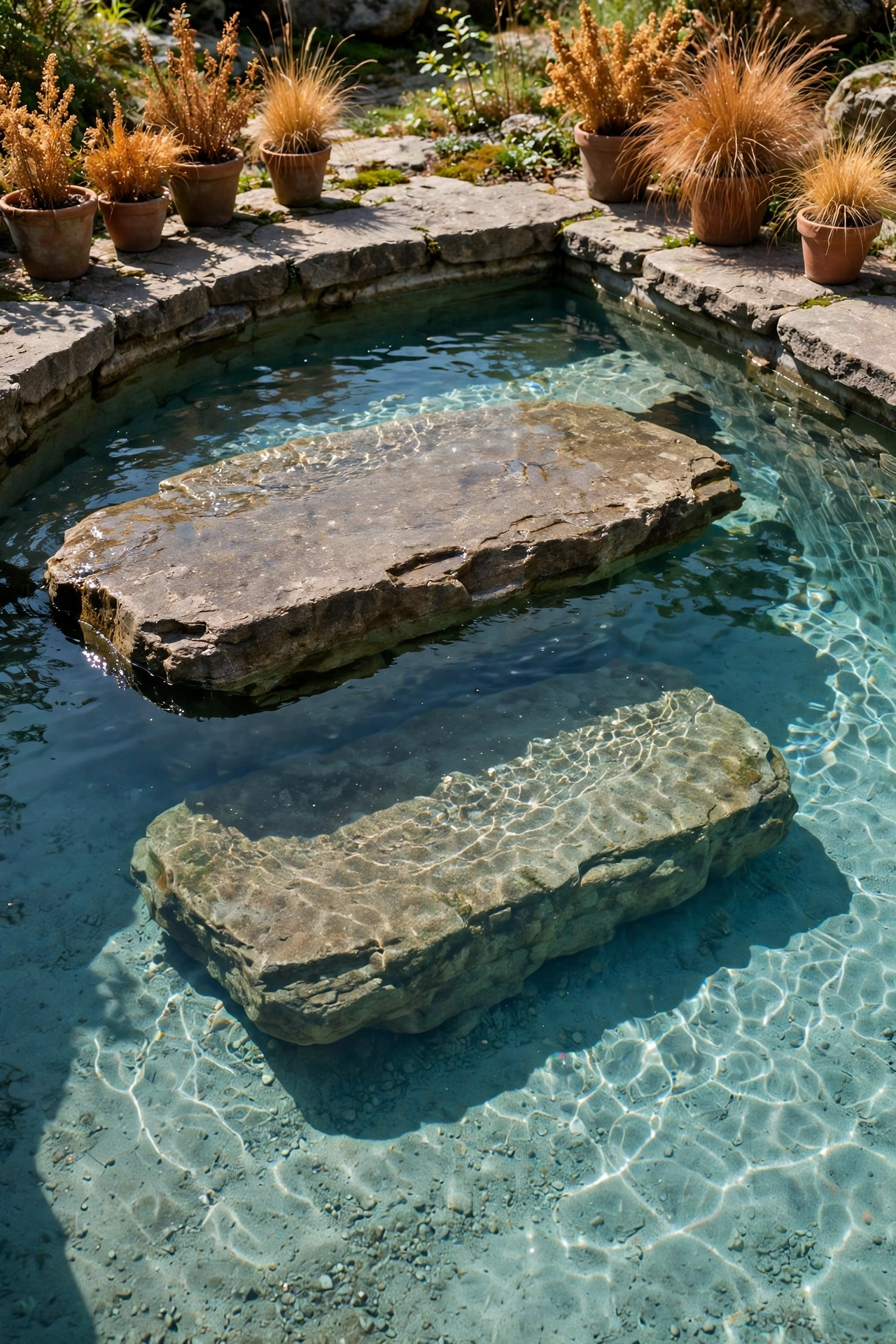
16. Add Underwater Steps of Flat Natural Stone
Underwater steps made from flat natural stone give you a graceful way down into the pool and a sunny shelf to sit on once you are in. The broad, level treads feel solid underfoot, and the stone warms quickly in shallow water. Steps also break up the pool profile, so the swimming zone gains a shallow lounging area without losing its open center.
Set two or three wide stone slabs as a staircase at one corner, and anchor them firmly so they never shift. Choose stone in the same family as your coping for a seamless look from the garden into the water. A step shelf is also a lovely place to set a potted marginal plant in a heavy stone container.
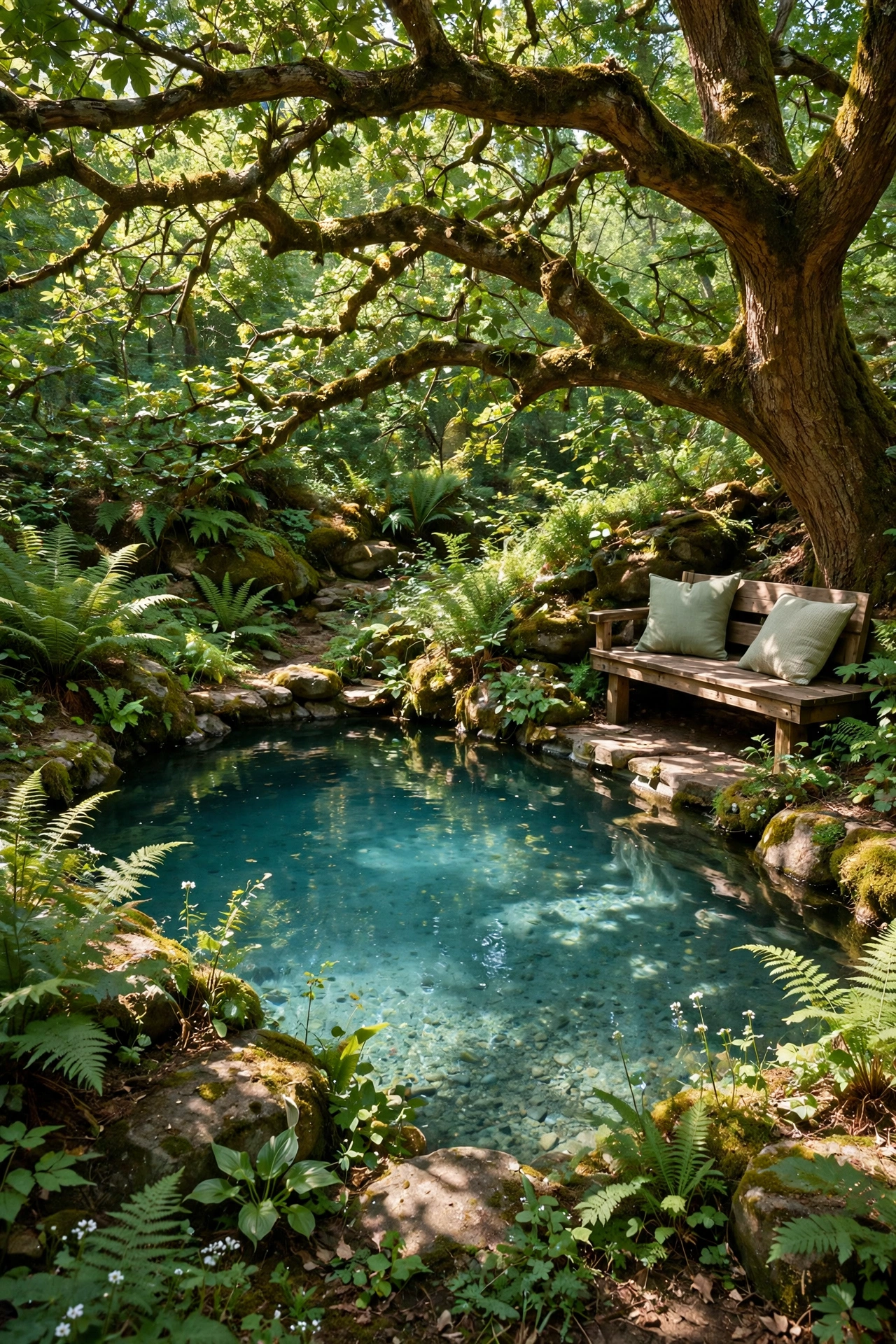
17. Create a Shaded Pool Nook Under Existing Trees
An existing mature tree can be the best feature a natural pool ever has. Dappled shade keeps the water cool on the hottest afternoons, and the tree gives the pool an established, woodland feeling from the very first day. A nook tucked under spreading branches feels private and sheltered, like a swimming hole you discovered rather than built.
Site the pool far enough from the trunk to protect the roots, and use a flexible liner that can adapt to the ground. Skim fallen leaves from the surface regularly, and choose a tree species that drops little in summer so the water stays clean. A simple rope swing or a hanging chair near the nook completes the woodland swimming hole mood.
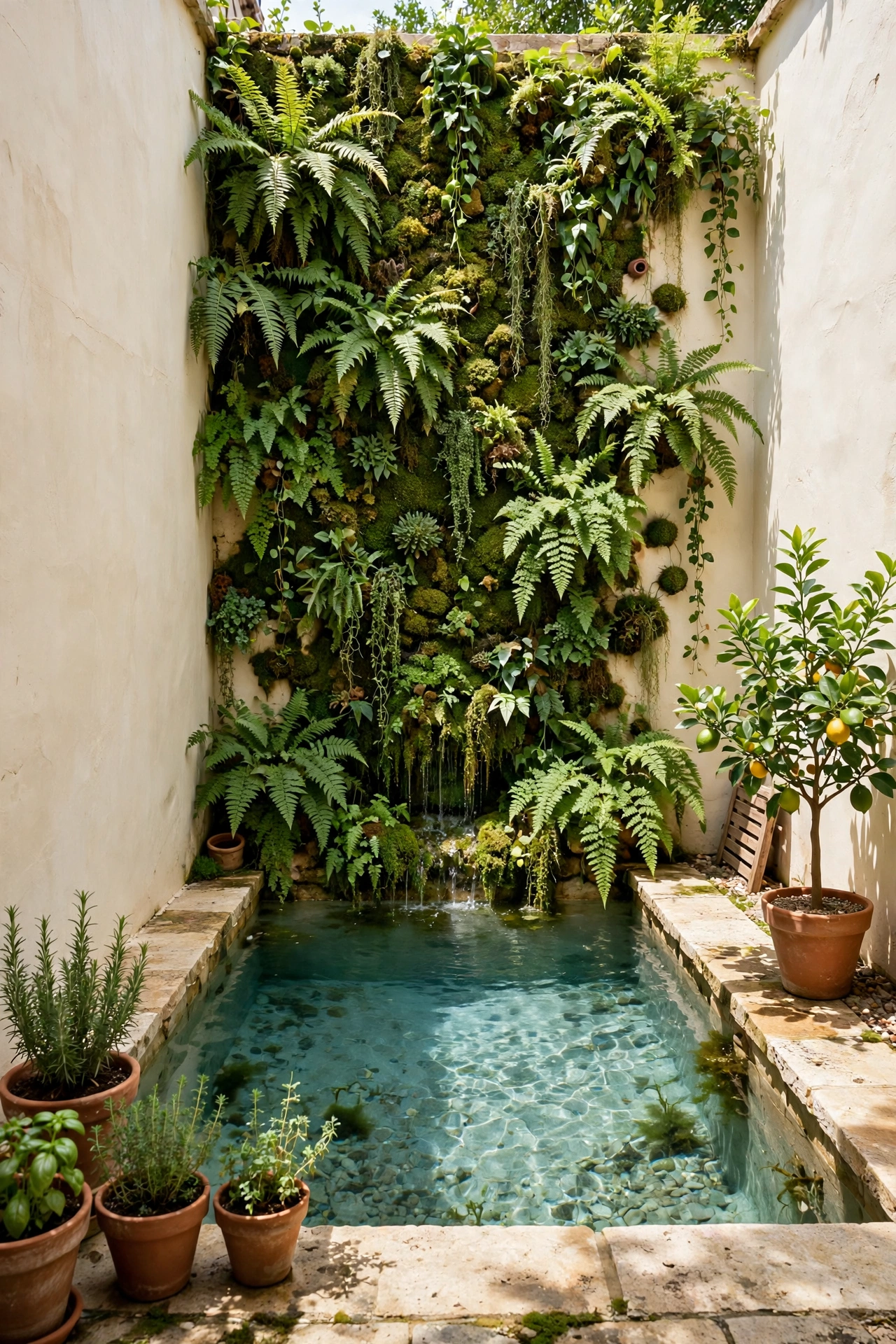
18. Design a Courtyard Pool With a Green Wall Filter
A walled courtyard is a wonderful setting for a natural pool, because the walls shelter the water from wind and create a private, sun-trapped microclimate. One wall becomes a green filter wall, planted with ferns, mosses, and trailing plants that clean the water as it seeps through. The courtyard pool feels like a secret garden with its own living water system.
Keep the pool simple and geometric to suit the architecture, and let the green wall provide all the softness and movement. Terracotta pots of herbs and citrus on the coping add scent and color without cluttering the space. A courtyard pool proves that even the most enclosed backyard can hold a thriving natural ecosystem.
19. Add a Rain Garden Overflow for Storm Water
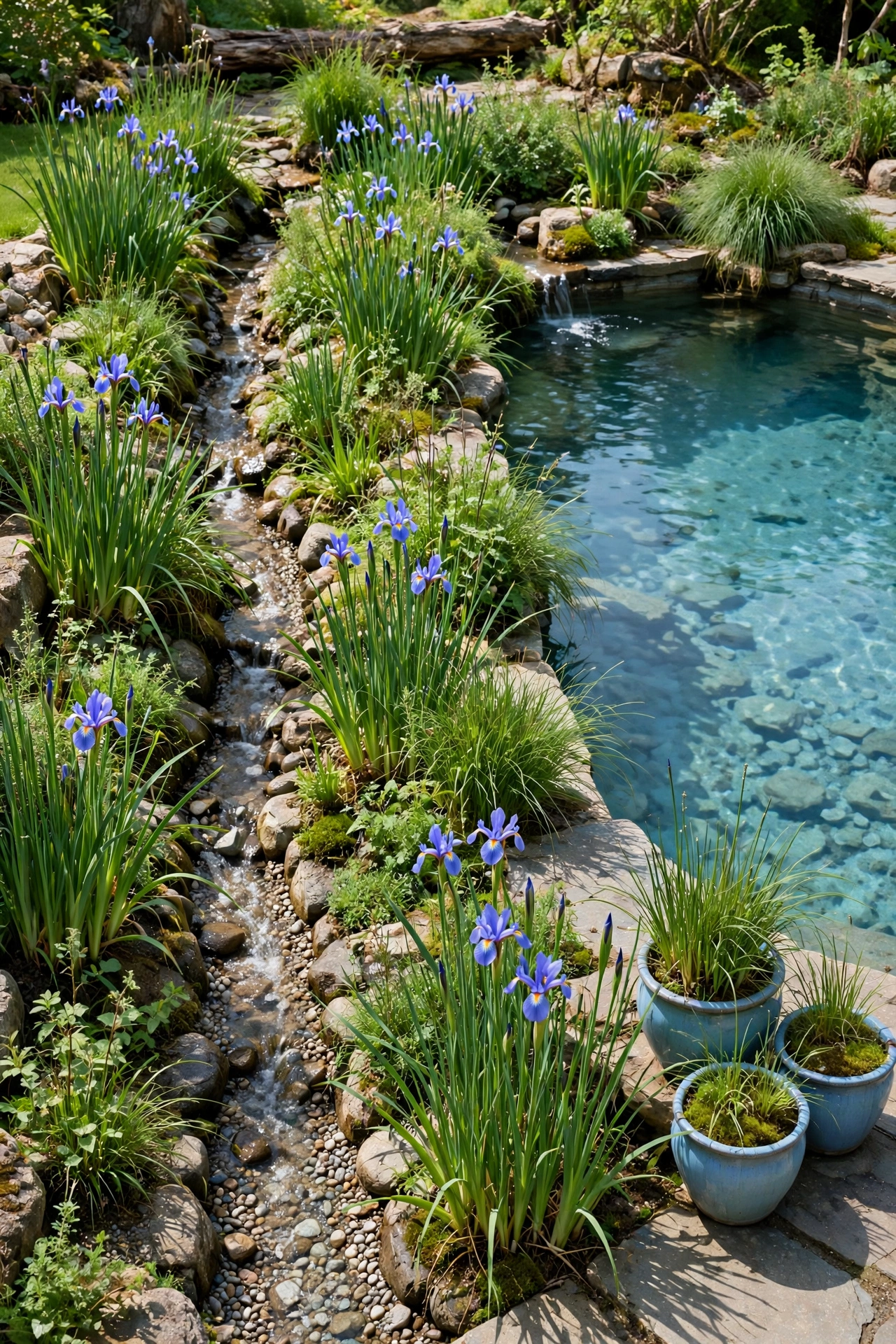
Heavy rain can overwhelm any pool, but a natural pool can turn storm water into a gift. A rain garden overflow channel carries excess water from the pool into a planted swale filled with rushes, irises, and moisture-loving grasses. The plants drink up the overflow, and the swale becomes a lush, seasonal feature that changes with the weather.
Dig the swale on the downhill side of the pool and line it with gravel and river stone so it never turns muddy. Plant it densely so the roots hold the soil and filter every drop that passes through. For planting combinations that handle both wet and dry spells, these rain garden ideas show how a hardworking swale can look like a beautiful garden bed.
20. Keep a Maintenance Dock for Seasonal Plant Care
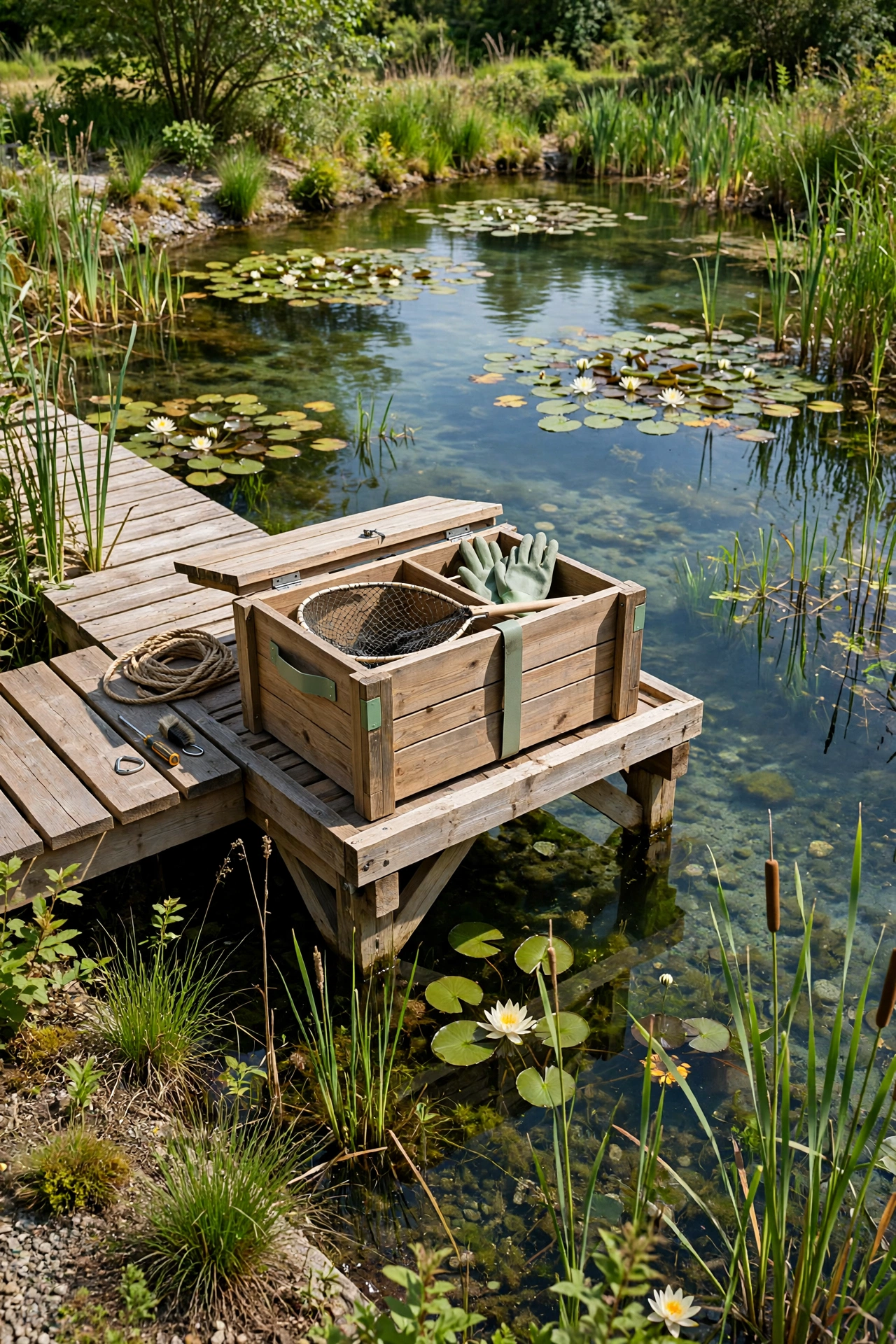
A small maintenance dock makes caring for a natural pool easy and even enjoyable. A short timber platform over the regeneration zone lets you reach the plants to divide lilies, trim reeds, and clear debris without wading through the filter bed. The dock also becomes a quiet spot to sit with a book and watch the water.
Build the dock from the same timber as your deck or pool edge, and add a hinged section or a removable board for reaching the pump and pipework. Keep a lidded storage box nearby for nets, gloves, and pruning shears, so every tool is close at hand. A little regular care keeps the ecosystem balanced and the water sparkling all season.
Conclusion
A natural swimming pool is more than a place to cool off. It is a living part of the garden that cleans its own water, shelters wildlife, and changes beautifully with the seasons. From the planted regeneration zone to the stone coping and the wooden deck, every element works together to create water that is soft, clear, and kind to skin and hair.
Start with the two-zone layout and the planting plan, then add the features that suit your yard and your budget one at a time. A waterfall, a beach entry, or a meadow bank can each wait for a later season, while the pool itself rewards you from the very first swim. Your backyard is ready to hold a little piece of living water.
Frequently Asked Questions About Natural Swimming Pool Ideas for Eco Friendly Backyards
How does a natural swimming pool stay clean without chlorine?
A natural pool cleans itself through a planted regeneration zone. Water circulates slowly through gravel and plant roots, where helpful microorganisms break down waste and the plants absorb nutrients that algae would otherwise feed on. With the right balance of plants and water flow, the pool stays clear all season without chemicals.
How much space does a natural swimming pool need?
A compact natural pool can fit in a yard of about 300 square feet, with roughly half of the water surface given to the regeneration zone. Larger pools are easier to balance because the ecosystem has more room to work, but a well-planned plunge pool with a living filter wall can thrive in a courtyard or a narrow side yard.
Are natural swimming pools safe for children and pets?
Yes, natural pools are safe for swimming, and the chemical-free water is gentle on skin, eyes, and hair. The same safety rules apply as for any pool: supervise children at all times, add a fence or cover where local rules require one, and keep the swimming zone free of slippery algae. A beach entry or wide stone steps make access safer for everyone.
What plants work best in a natural pool regeneration zone?
Water lilies, reeds, rushes, irises, cattails, and ornamental grasses are the most reliable choices. Lilies shade the water and limit algae, while reeds and rushes pull nutrients from the water through their roots. Choose species suited to your climate, and mix tall, medium, and floating plants so the zone works at every depth.
How much maintenance does a natural swimming pool need?
Expect about an hour of care per week in the swimming season: skimming leaves, checking the pump, and trimming plants that grow too vigorously. A bigger seasonal tidy in spring and autumn keeps the regeneration zone healthy. There is no chemical testing or dosing, so the routine is simpler and cheaper than a conventional pool.

Hi, I’m Emily! I turn messy corners into cozy, organized spots. DreamNestDecor is where I share simple, practical home ideas — decor, organization, and small-space solutions that work in real life, not just in photos. Every idea here is carefully researched before it’s shared.