Picture this: it is 5 PM on a busy Tuesday, the kids are hungry, and you already know exactly what is for dinner. No frantic searching through the fridge, no last minute takeout order, no guilt about another rushed meal. That calm feeling is exactly what a good meal plan gives to a busy family.
You do not need to be a professional chef or spend your whole Sunday in the kitchen to get there. All you need is a simple plan that fits your week, your budget, and the foods your family actually enjoys. These 25 family meal planning organization ideas for busy weeks will help you plan once, shop once, and enjoy calm dinners all week long.
1. Put a Weekly Meal Plan on the Fridge
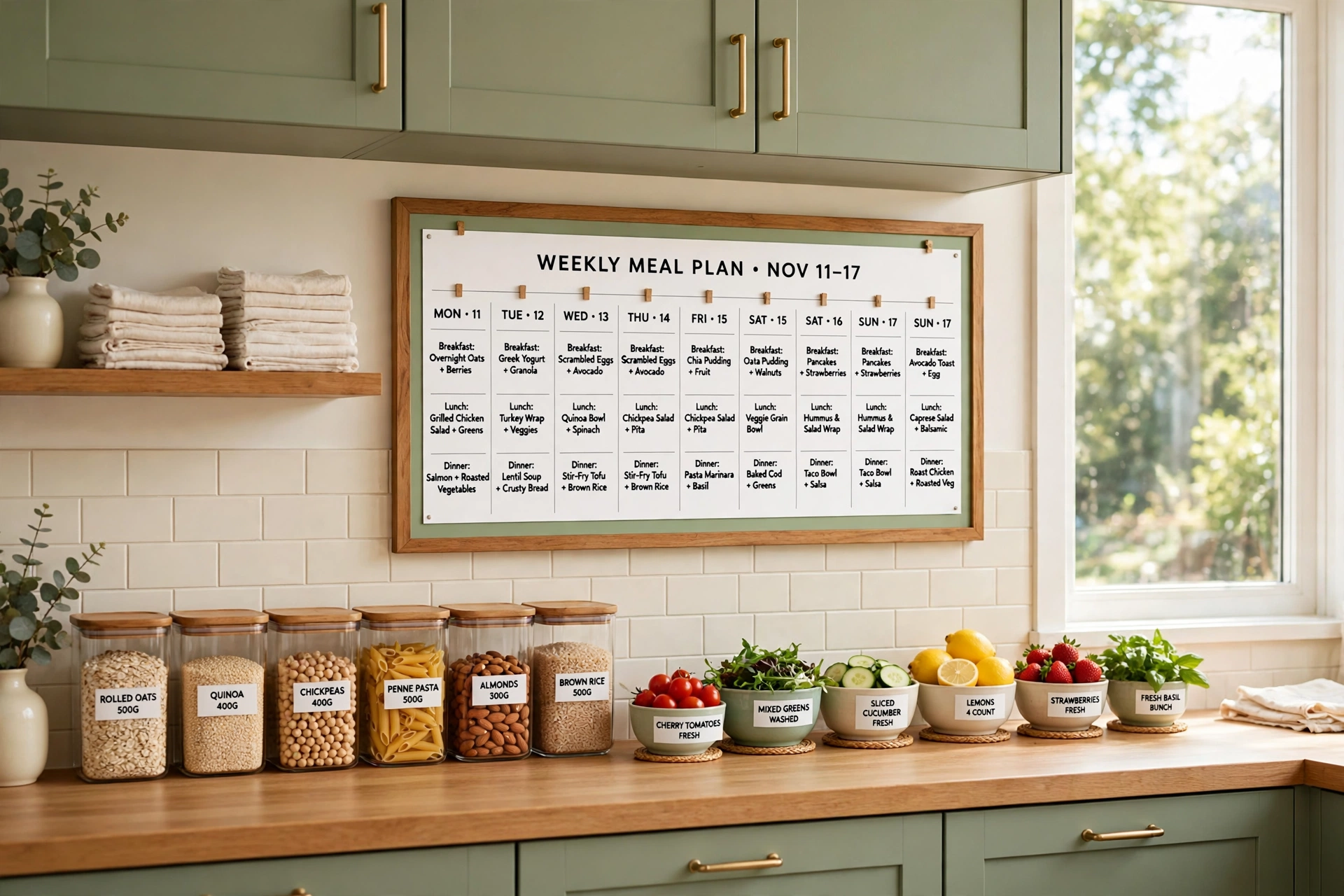
A weekly meal plan on the fridge tells the whole family what is for dinner before anyone asks. Write the seven dinners on a small board or a sheet of paper, and stick it where everyone can see it. When the plan is visible, the daily question of what to cook disappears completely.
Keep the plan simple and flexible, with one or two easy nights built in for busy days. Update it every Sunday or Monday, and let the family suggest one meal each week. A fridge plan works well because it turns dinner from a daily decision into a quiet habit that runs itself.
2. Plan Meals Around the Weekly Sales
Planning meals around the weekly sales saves money without any extra work. Check the store flyer or app before you plan, and build dinners around the proteins and produce that cost less this week. A sale on chicken or fresh vegetables becomes the starting point for three or four meals.
Keep a running list of the sale items your family uses most, and plan the week around them first. The savings add up quickly, and the meals stay fresh because the menu changes with the seasons. Sale-based planning is one of the easiest ways to cut the grocery bill while eating well.
3. Prep Ingredients on Sunday
Sunday prep turns a busy week into a series of quick dinners. Wash and chop vegetables, cook a big batch of rice or grains, and portion proteins into containers for the week ahead. When Monday arrives, dinner starts with ingredients that are already ready to cook.
Keep the prep session short, about one hour, and focus on the ingredients that appear in several meals. For containers that keep prepped food fresh all week, see these meal prep container organization ideas. A little Sunday work saves a lot of weekday stress, and it keeps the kitchen calm every single evening.

4. Give Each Night a Theme
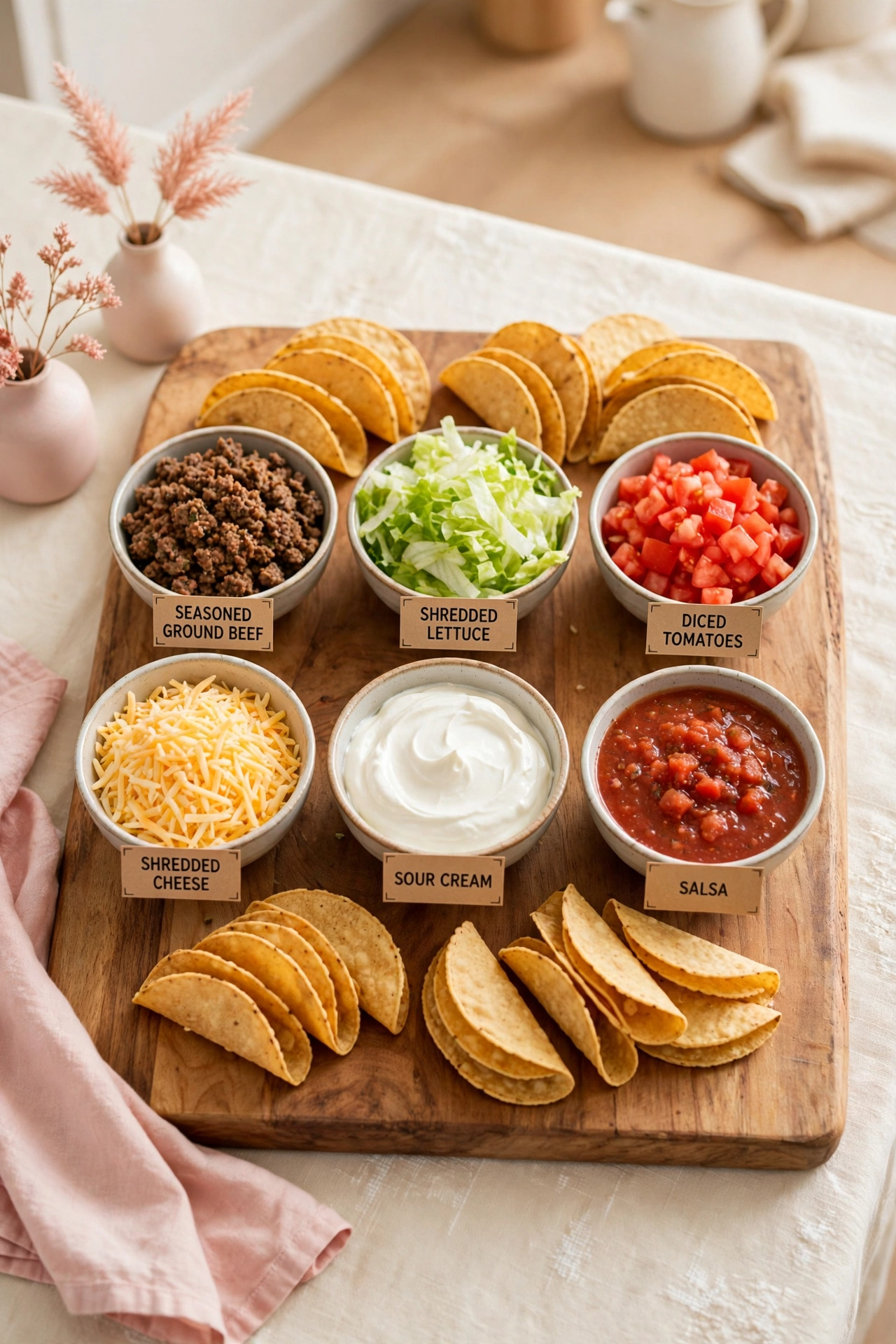
Theme nights make meal planning easy because the category is already decided. Monday can be pasta night, Tuesday can be taco night, Wednesday can be soup night, and so on. When the theme is fixed, you only need to choose one recipe inside it, which takes the hardest part of planning off the table.
Let the family pick the themes together, and keep the same themes for a whole month before changing them. Theme nights also make shopping simpler, because the same kinds of ingredients repeat each week. A themed week feels fun for children and keeps dinner decisions quick for busy parents.
5. Keep a Master List of Family Favorites
A master list of family favorites is a simple sheet with every dinner your family loves, written down in one place. When planning time comes, you pick from the list instead of starting from a blank page. The list grows over time as new favorites join the rotation.
Keep the list on the fridge or inside a kitchen drawer, and update it whenever a new meal gets a thumbs up from everyone. A master list stops the blank page problem that makes planning feel hard. With twenty or thirty proven meals on the list, you never run out of ideas for dinner.

6. Plan Pantry-First Meals
Pantry-first planning starts with what you already own instead of what you need to buy. Open the pantry, note the pasta, rice, beans, and canned goods on the shelves, and build three or four meals around them. The shopping list shrinks, the pantry stays tidy, and nothing expires forgotten on a back shelf.
Do a quick pantry check before every planning session, and write the meals that use the oldest items first. For a pantry that makes this easy, see these kitchen spice organization ideas. Pantry-first planning saves money, cuts waste, and turns forgotten ingredients into real dinners.
7. Cook Once, Eat Twice
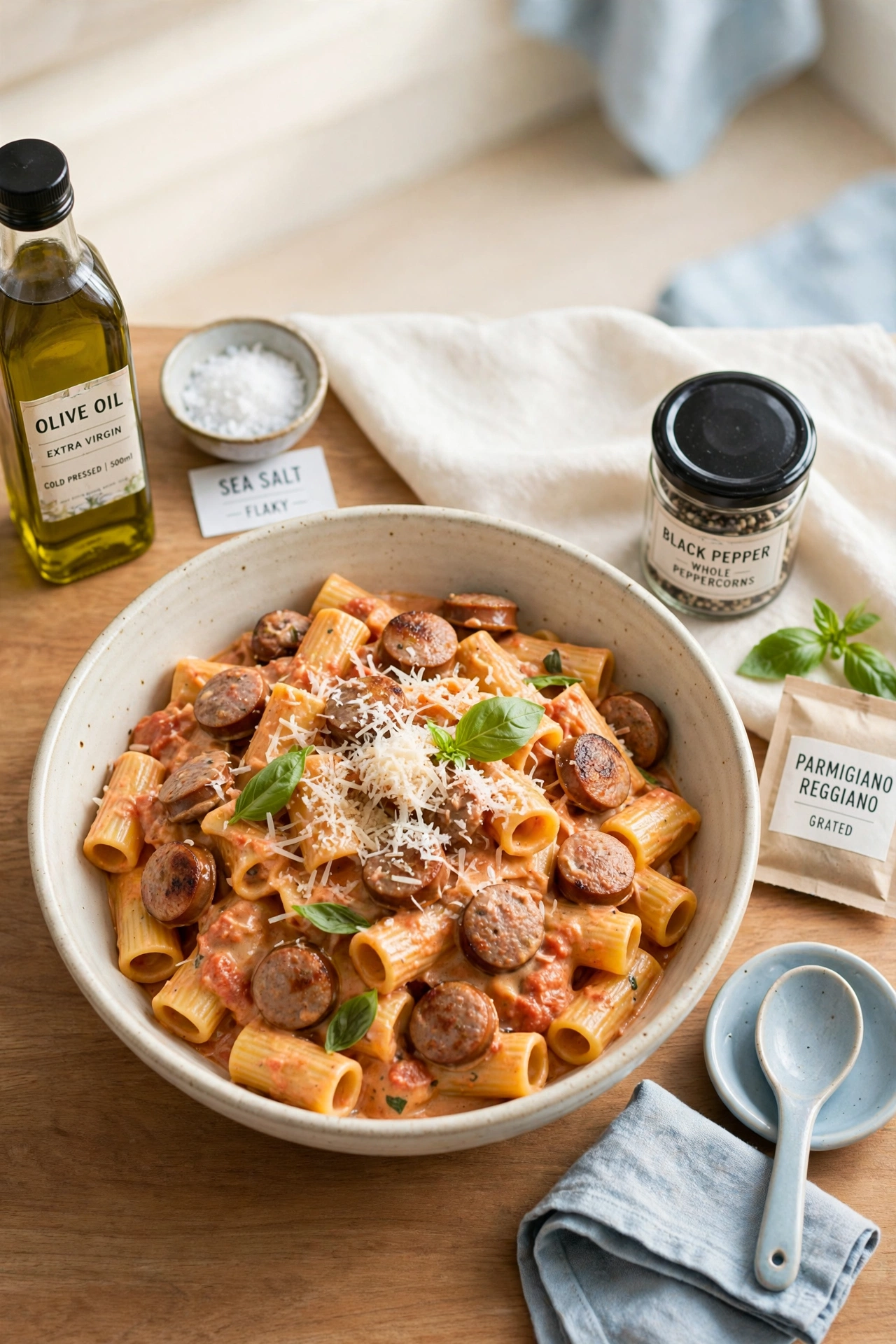
Cook once, eat twice means making a double batch of dinner and saving half for another night. A big pot of soup, a tray of roasted chicken, or a slow cooked stew can feed the family on Tuesday and again on Thursday with almost no extra work. The second meal only needs reheating and a fresh side dish.
Plan the double batch nights at the start of the week so the leftovers have a clear place in the plan. Store the second half in a labeled container right after cooking, so it does not get eaten as a snack. Cooking once for two meals is the simplest way to buy back an evening every week.
8. Rely on Slow Cooker Meals
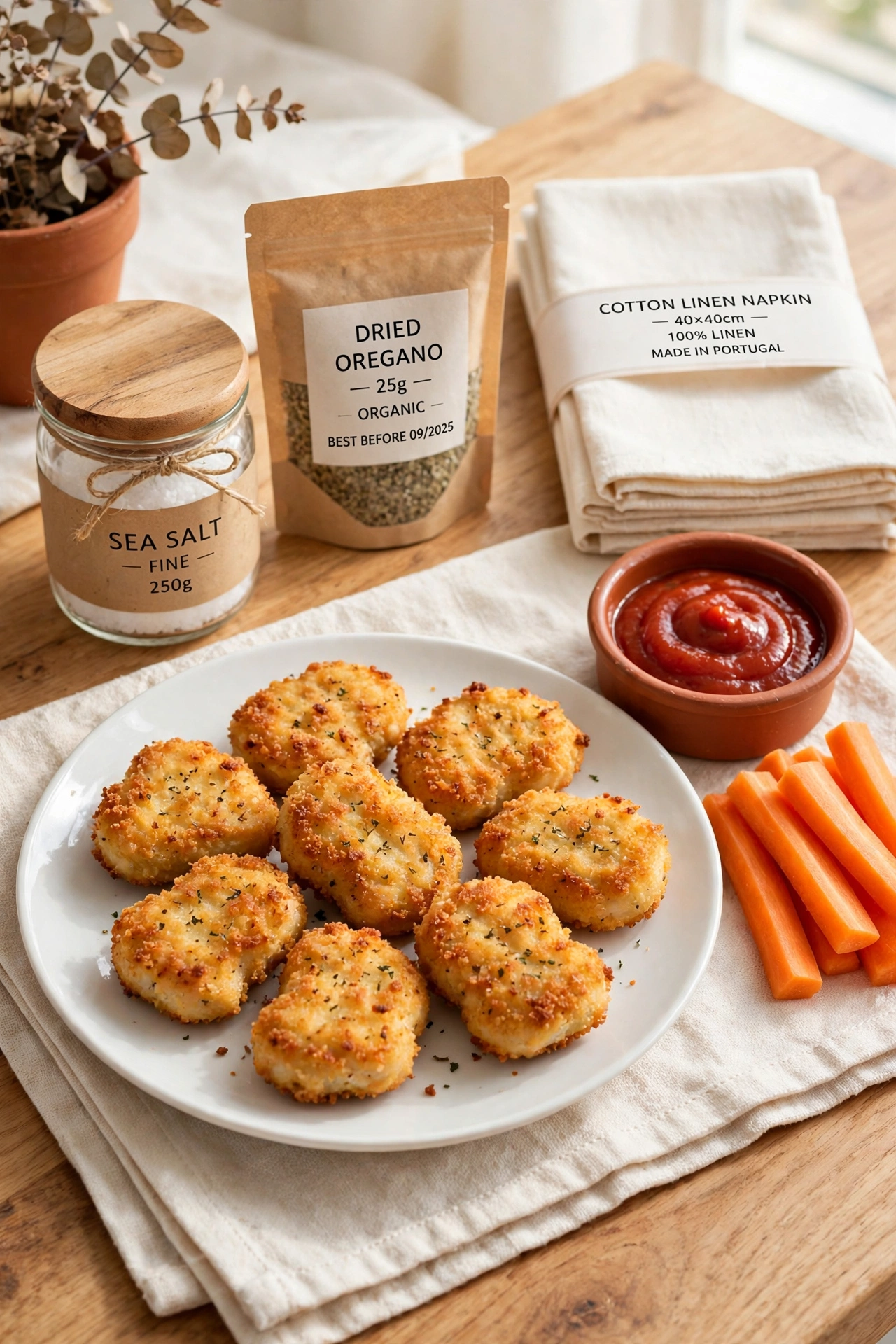
Slow cooker meals cook themselves while you work, run errands, or help with homework. Add the ingredients in the morning, set the timer, and come home to a finished dinner. A slow cooker turns the busiest days into the easiest dinners of the week.
Keep five or six slow cooker recipes in your regular rotation, and prep the ingredients the night before when mornings are rushed. The slow cooker is perfect for stews, pulled meats, and hearty soups that taste better after hours of gentle cooking. One slow cooker night a week makes the whole meal plan feel lighter.
9. Stock Freezer-Friendly Meals
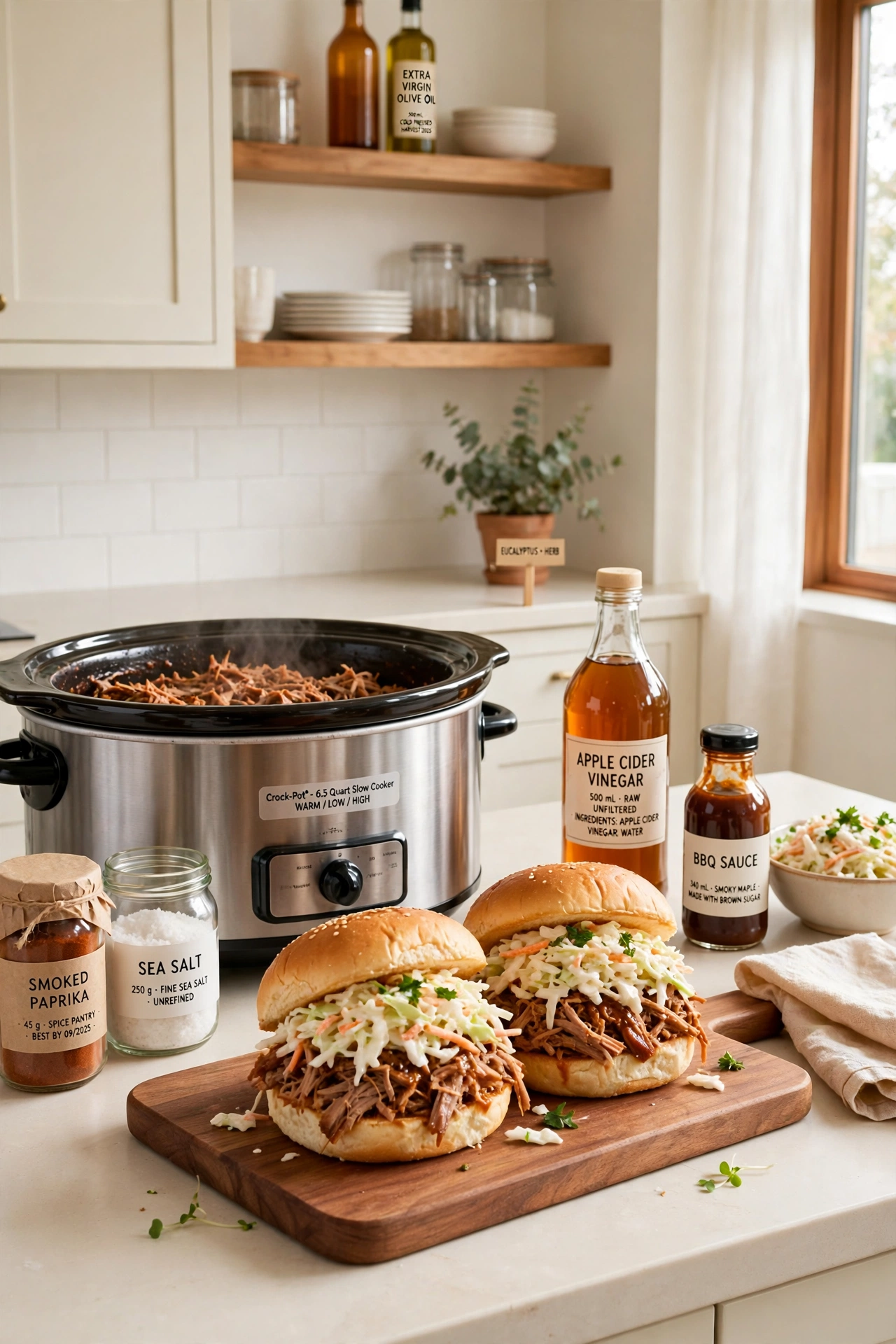
Freezer-friendly meals are dinners you cook in advance and freeze in portions for busy nights. Casseroles, meatballs, soups, and marinated chicken all freeze well and reheat beautifully. A freezer full of ready meals means a hard day never has to end with takeout.
Label every container with the meal name and the date it went into the freezer, and use the oldest meals first. Cook one extra freezer meal each weekend, and the stock grows steadily without a big cooking marathon. A well stocked freezer is the safety net that keeps a meal plan working even on the hardest weeks.
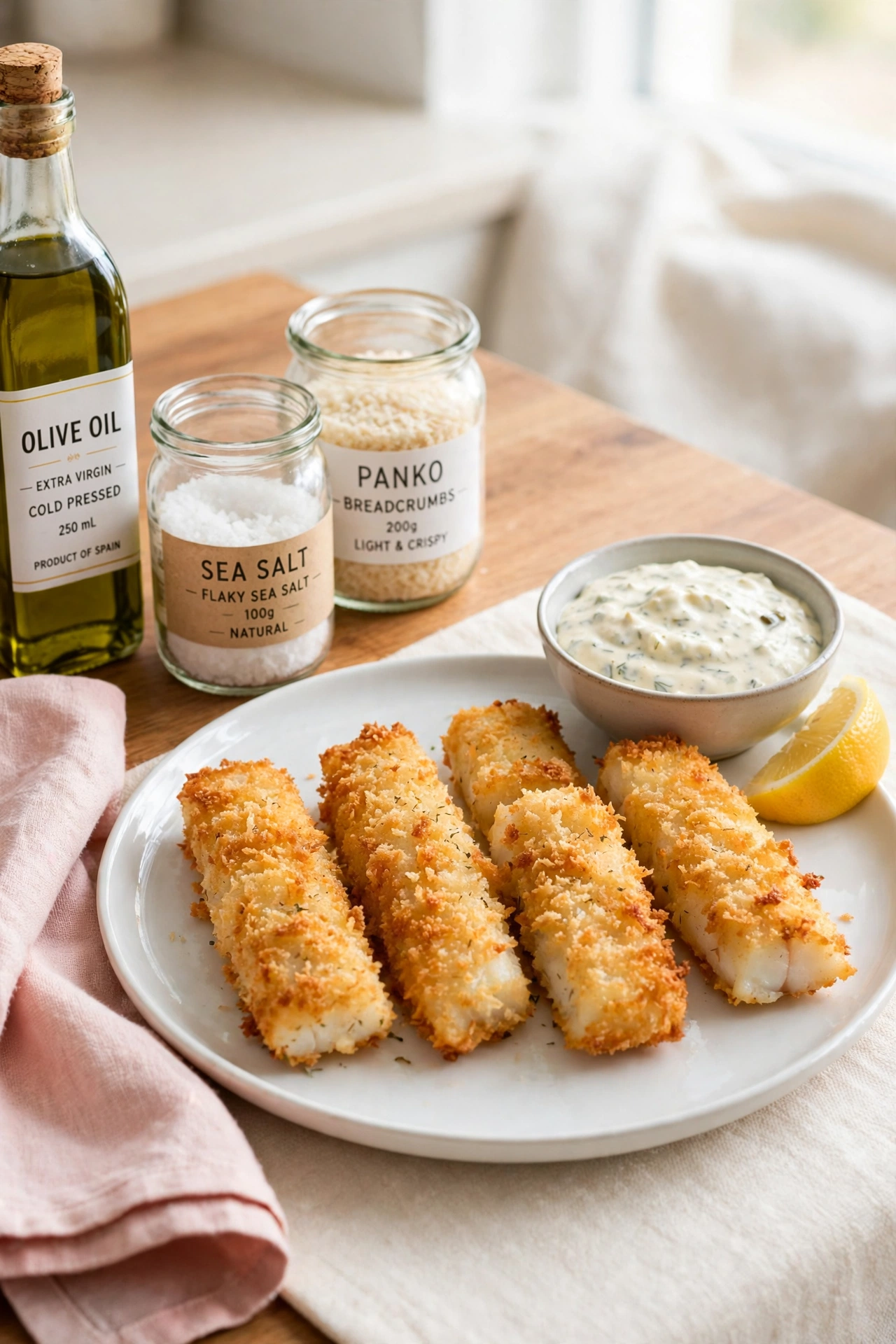
10. Let Kids Choose One Dinner a Week
Letting kids choose one dinner a week makes them excited about the meal plan instead of resistant to it. Give each child a turn to pick a dinner from the family favorites list, and let them help cook it when they are old enough. Children eat with more enthusiasm when the meal was their idea.
Keep the choices within the family favorites so the picked meal still fits the budget and the pantry. Write the chosen dinner on the plan with the child name beside it, so they feel proud of their pick. One kid-chosen dinner a week builds confidence and keeps the whole family involved in the plan.

11. Plan Breakfasts Too
Breakfast planning saves as much morning stress as dinner planning saves in the evening. Decide the breakfasts for the week on Sunday, and set out the ingredients the night before. A planned breakfast means no one stands in front of the pantry wondering what to eat while the school bus waits outside.
Rotate three or four easy breakfasts through the week, like overnight oats, eggs with toast, and yogurt with fruit. Prep what you can the night before, and keep the ingredients for each breakfast together in one spot. Planned breakfasts make school mornings calm and give the whole family a better start to the day.

12. Build a Lunchbox Plan
A lunchbox plan lists five lunches on Sunday, so packing lunch becomes a two minute job each morning. Write the main item, the side, and the snack for each day, and keep the ingredients together in one fridge bin. When the plan is set, the lunchbox packs itself almost without thinking.
Use the same lunchbox formula every day, with one protein, one fruit or vegetable, and one small treat, so the plan stays simple. Prep the sides on Sunday and store them in small containers that go straight into the box. A lunchbox plan saves morning time and stops the daily scramble for something to pack.
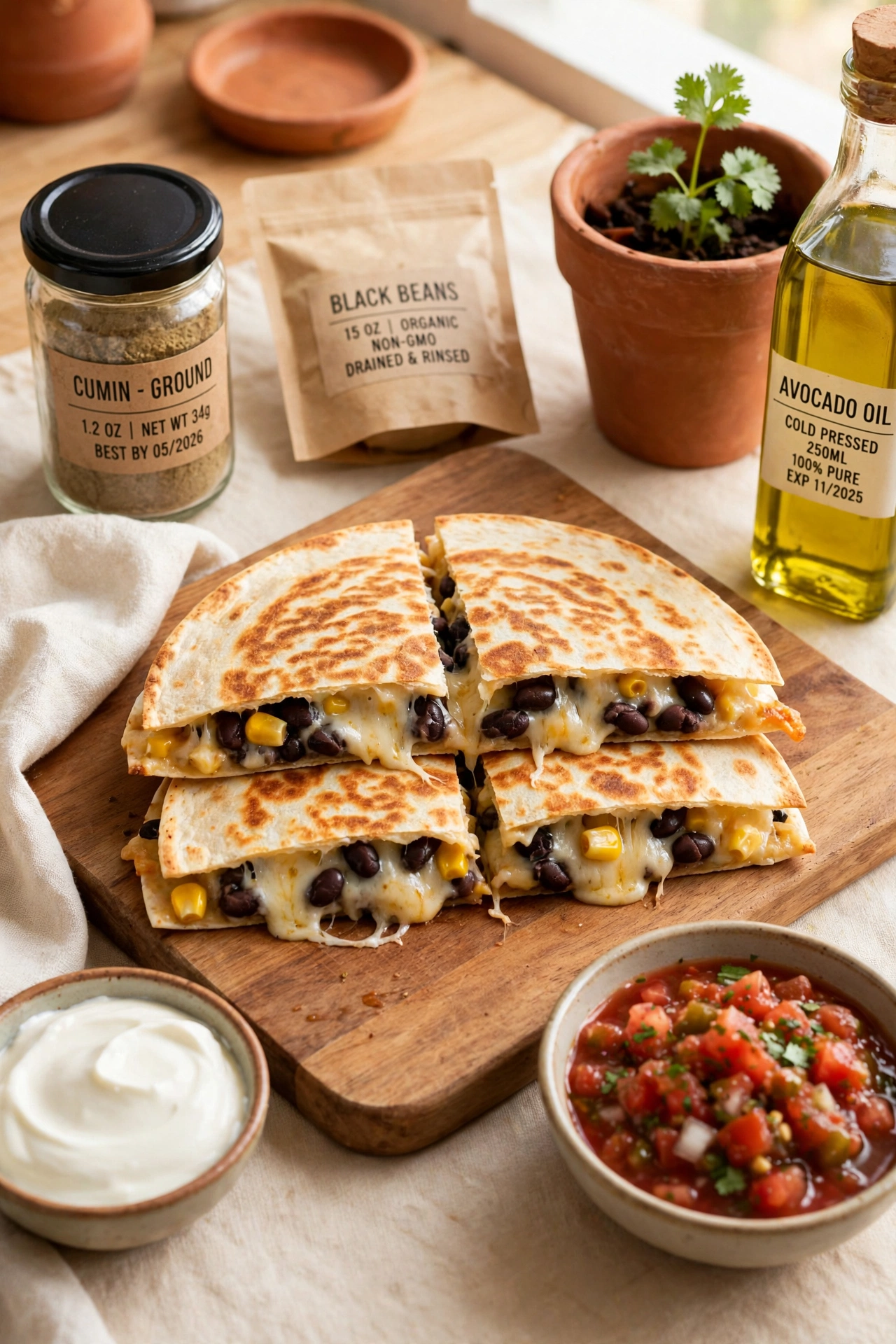
13. Keep One-Pot Meals for Busy Nights
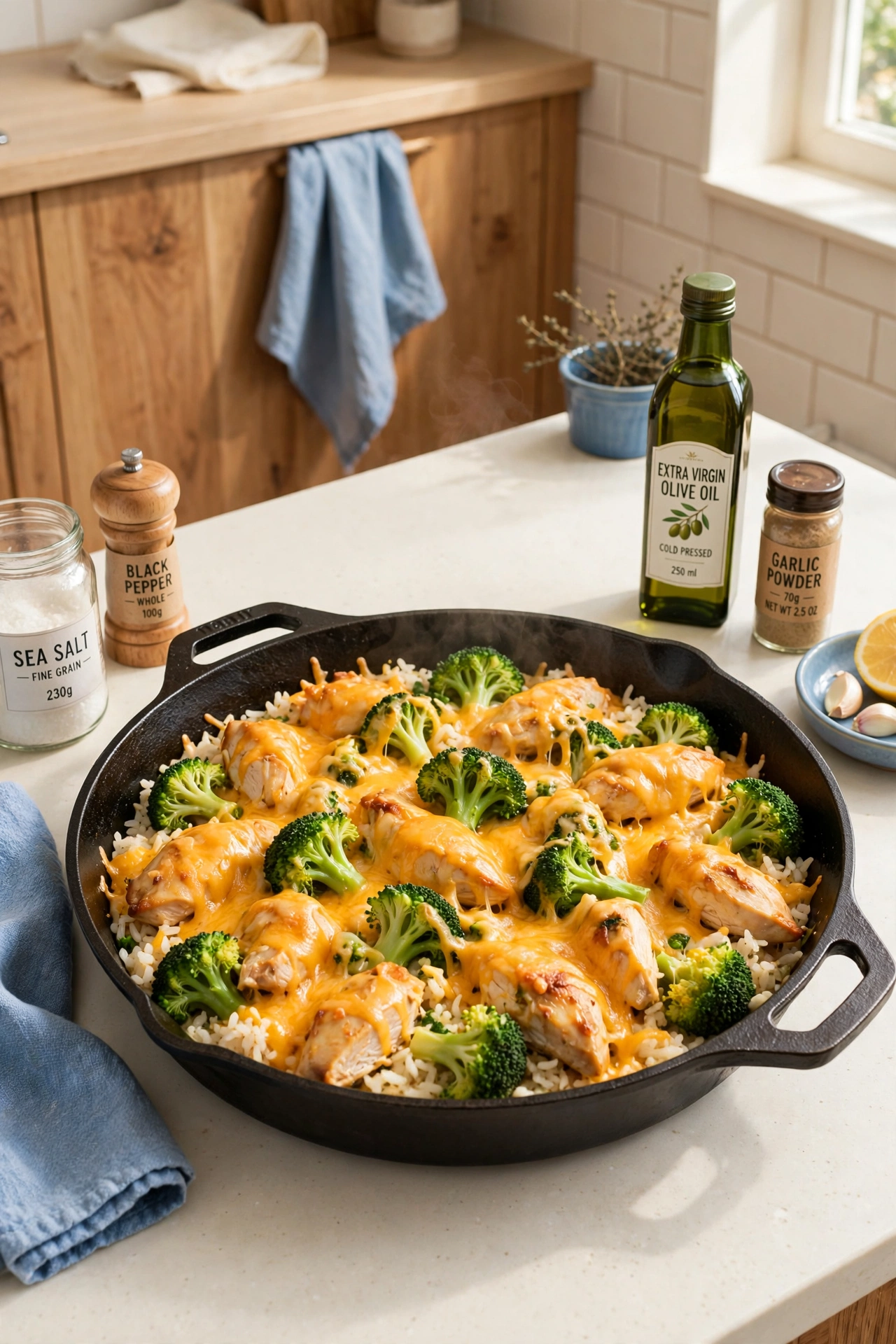
One-pot meals are dinners that cook in a single pot or pan, which means less cooking and almost no washing up. Keep three or four one-pot recipes ready for the busiest nights of the week, like pasta with vegetables, a chicken and rice skillet, or a simple stir fry. The whole meal comes together in thirty minutes or less.
Write the one-pot nights on the plan in advance so they land on the evenings when time is tightest. Stock the pantry with the basics these meals need, like pasta, rice, and canned tomatoes. A one-pot night is the kindest gift a meal plan can give to a tired family.
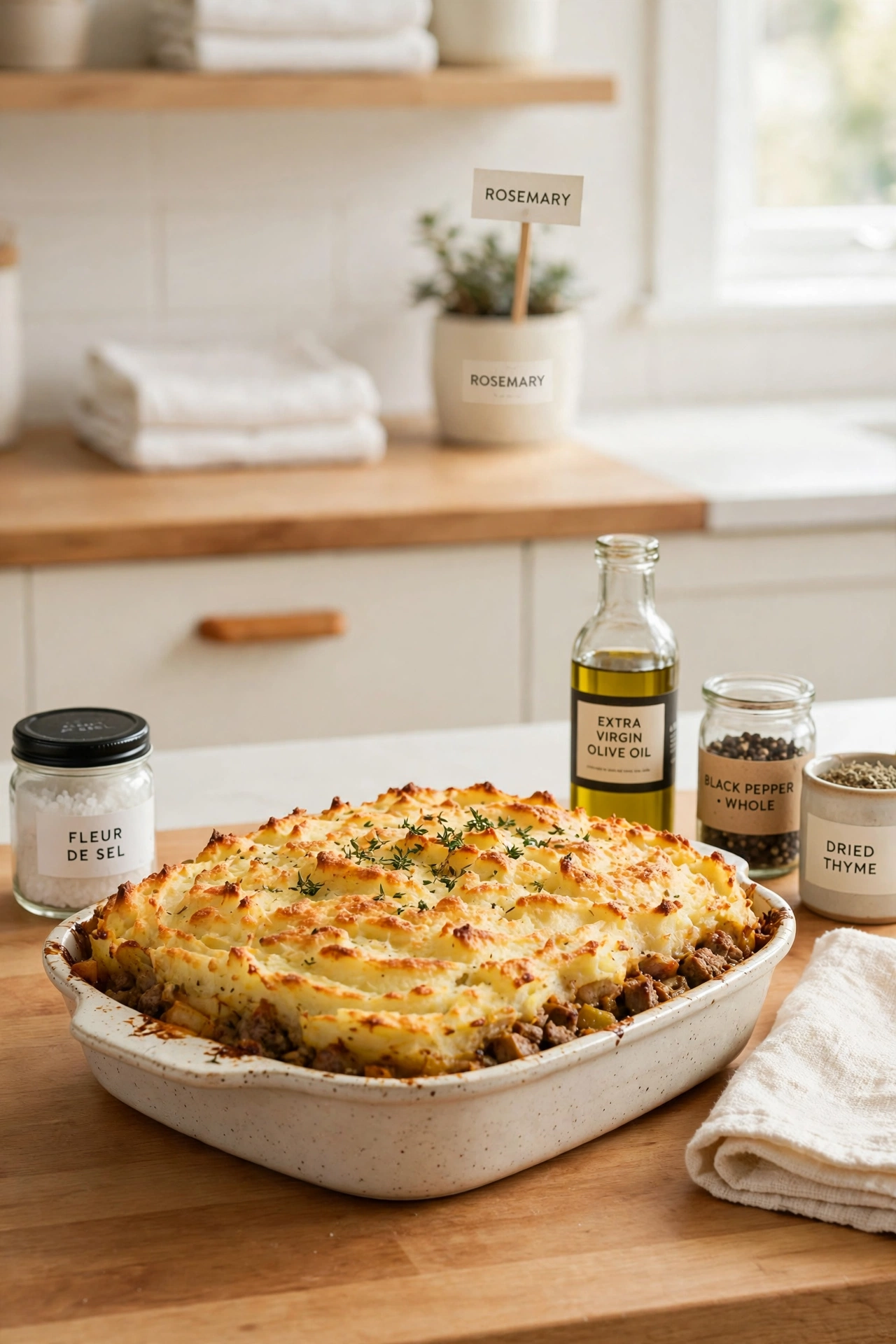
14. Use a Meal Planning Binder
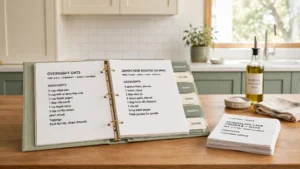
A meal planning binder keeps every recipe, plan, and shopping list in one tidy place. Use dividers for breakfasts, dinners, and favorites, and slip the current week plan into a clear sleeve at the front. When planning time comes, the binder opens to everything you need in one spot.
Print the family favorite recipes and keep them in the binder so you never search online mid-cooking. Add a pocket for torn-out recipes and new ideas to try later. A binder turns meal planning from a scattered chore into a calm weekly ritual that the whole family can follow.

15. Shop with a Meal Plan List
Shopping with a meal plan list means every item in the cart has a dinner waiting for it at home. Write the shopping list directly from the week plan, grouping items by the meals they belong to. The list stays short, the bill stays low, and nothing extra sneaks into the cart.
Check the fridge and pantry before you write the list, and cross off anything you already own. A meal plan list also stops the second trip to the store for the one ingredient you forgot. When the list follows the plan, the shop takes less time and the kitchen stays stocked with exactly what the week needs.
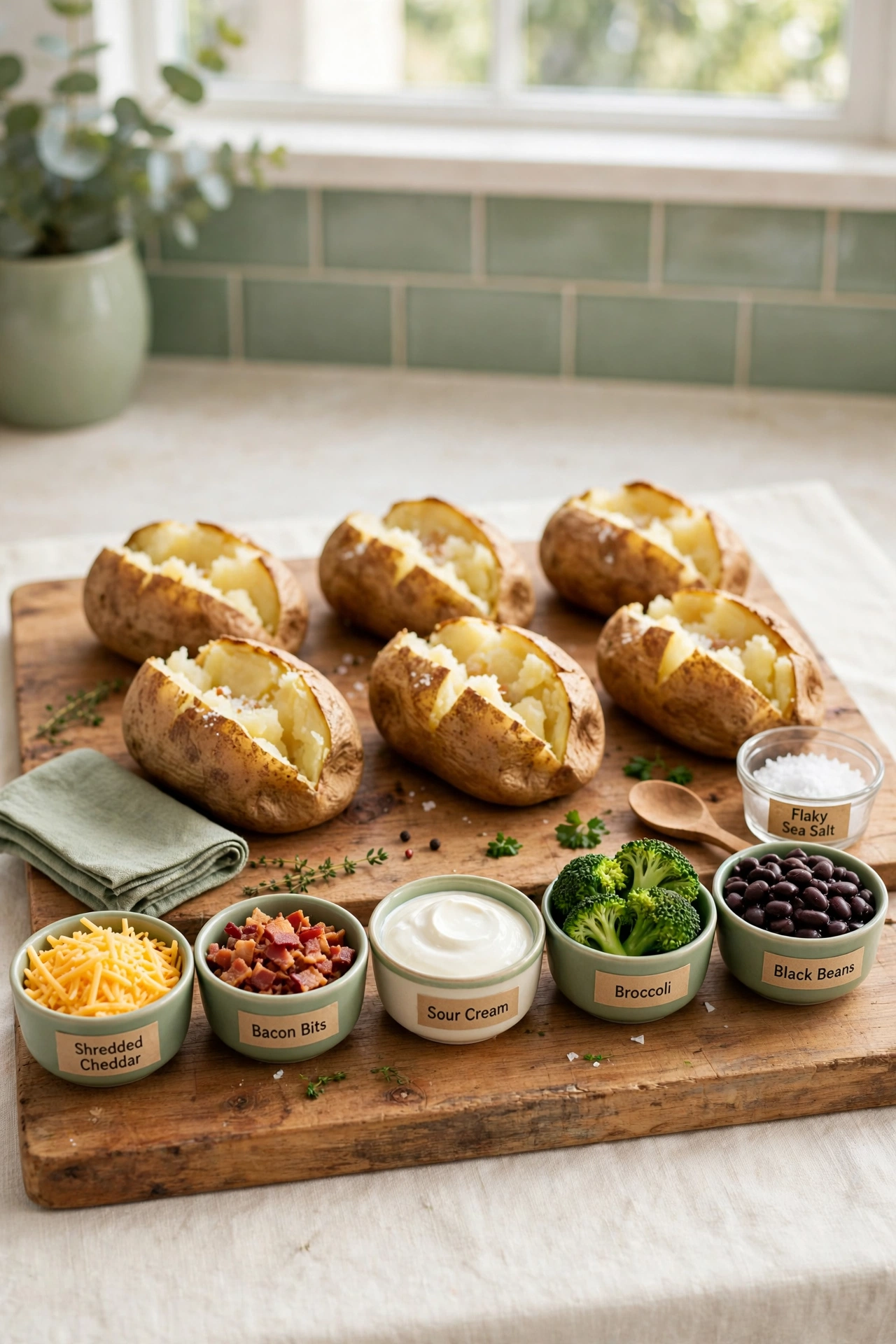
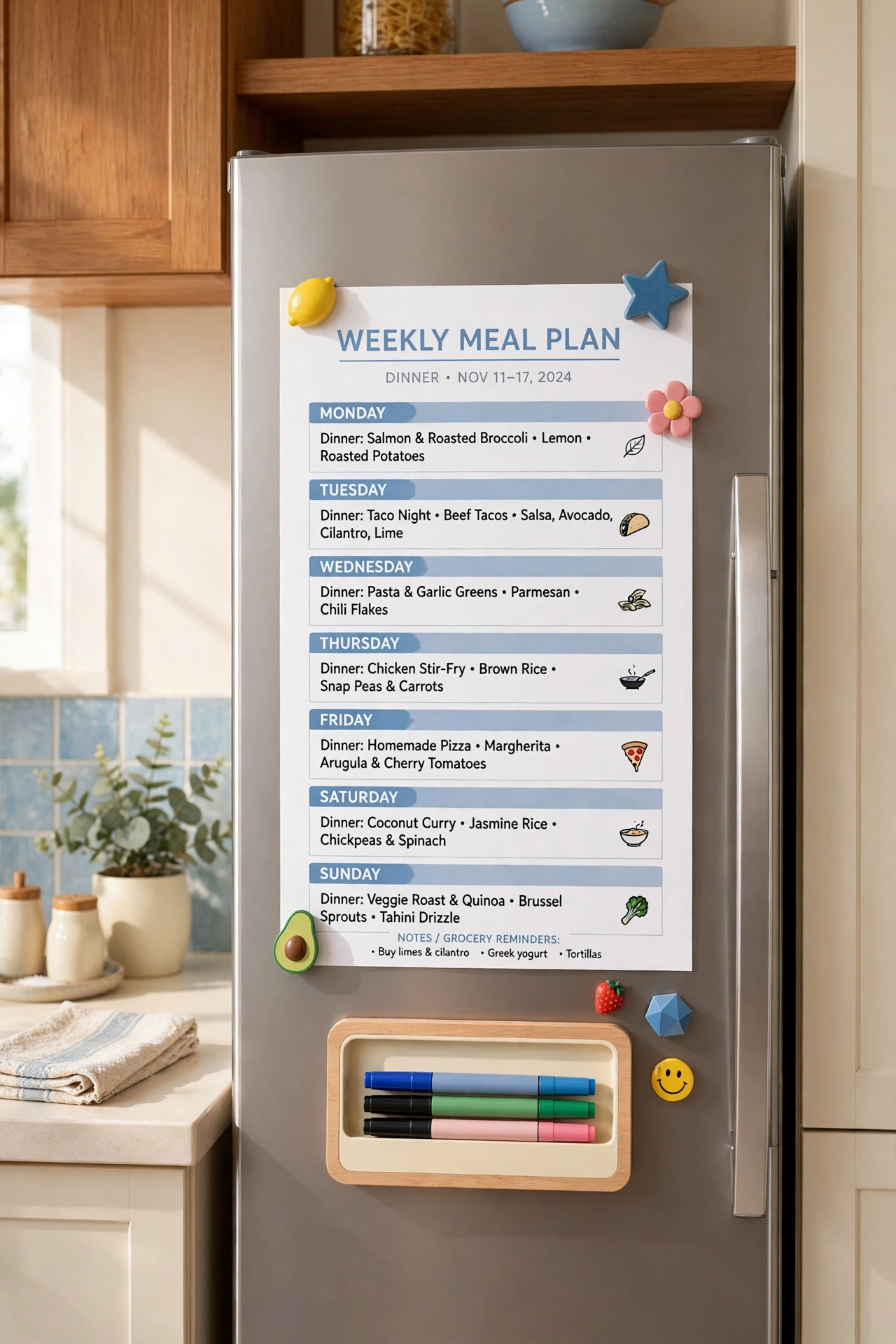
16. Put a Weekly Meal Planning Board on the Fridge
A weekly meal planning board on the fridge shows the whole week of dinners at a glance. Use a small whiteboard or a printed board with seven boxes, one for each day, and write the dinner for each day in its box. The board keeps the plan visible to the whole family, so nobody asks what is for dinner twice.
Update the board every Sunday and let the kids add a sticker or a star beside the meals they like most. A board works better than a paper list because it stays in sight all week and never gets lost in a drawer. When the plan is on the wall, dinner planning feels finished instead of forgotten.
17. Keep a Rotating Menu of Family Favorites
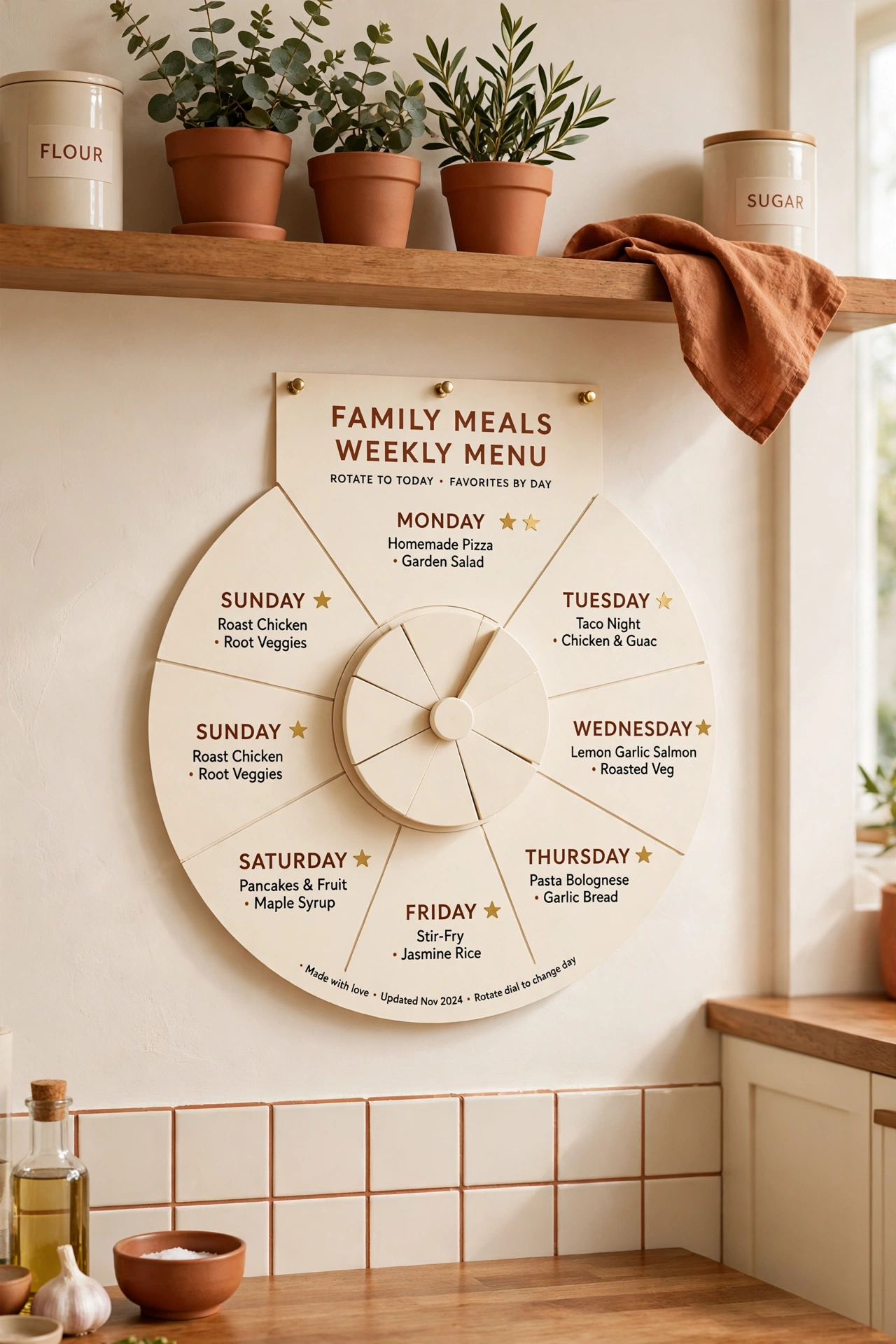
A rotating menu takes the family favorites list and turns it into a repeating cycle. Write down twenty dinners the family loves, then rotate through them in order, week after week. When the cycle ends, it starts again, and nobody has to invent a new plan from scratch.
Swap in a new favorite every month and retire a meal the family has grown tired of. A rotating menu works well because it removes the hardest part of planning, which is choosing what to cook. The family knows what to expect, the shopping stays predictable, and dinner decisions take minutes instead of hours.
18. Hold a Sunday Batch Cooking Session
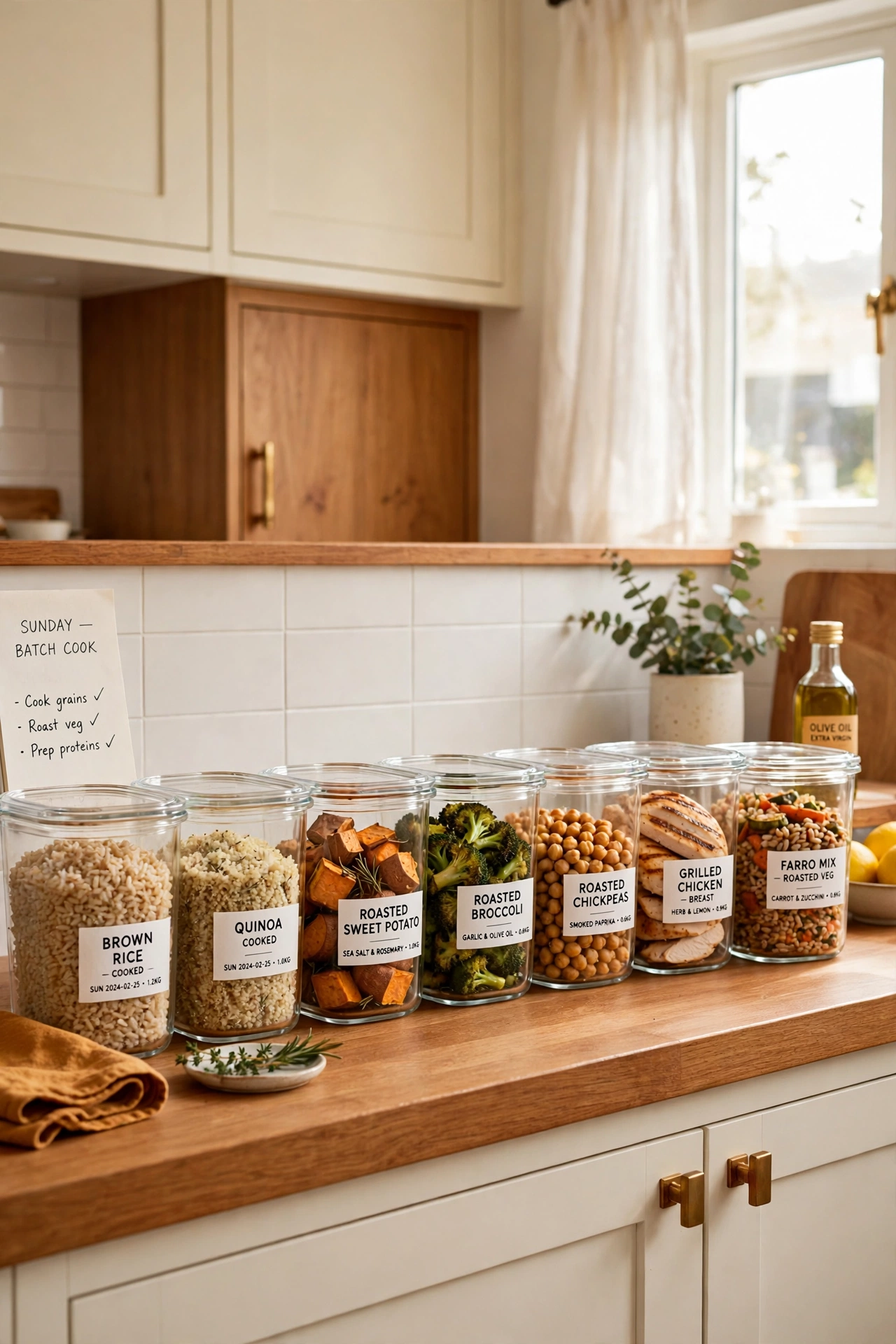
A Sunday batch cooking session is one focused hour where you cook the building blocks for the whole week. Roast a tray of chicken, cook a big pot of grains, chop vegetables, and make one sauce that works in several meals. The rest of the week becomes assembly instead of full cooking.
Store each cooked item in its own labeled container so weekday dinners come together fast. For keeping those prepped ingredients fresh, see these refrigerator leftover organization ideas. A Sunday session is the single habit that makes a busy week of dinners feel easy.
19. Build a Labeled Freezer Meal System
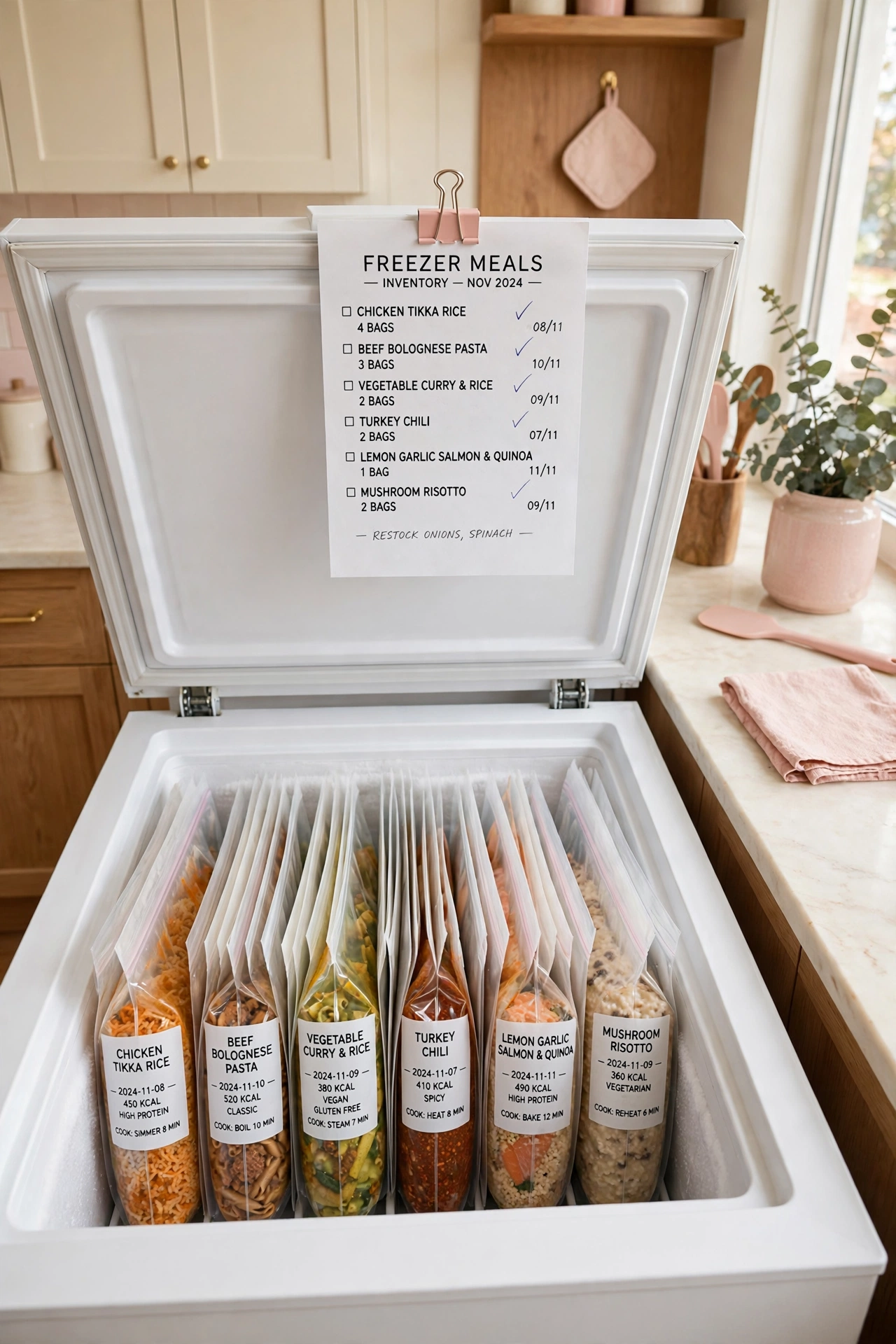
A labeled freezer meal system turns the freezer into a second pantry for finished dinners. Cook double batches on calm weekends, label each container with the meal name and the date, and stack them in neat rows. On a busy night, the freezer gives you a home cooked dinner in the time it takes to reheat.
Keep a simple list on the freezer door showing what is inside and the date each meal went in. Use the oldest meals first and replace them with a fresh batch each month. A labeled freezer system means the family never faces an empty fridge and a hungry evening at the same time.
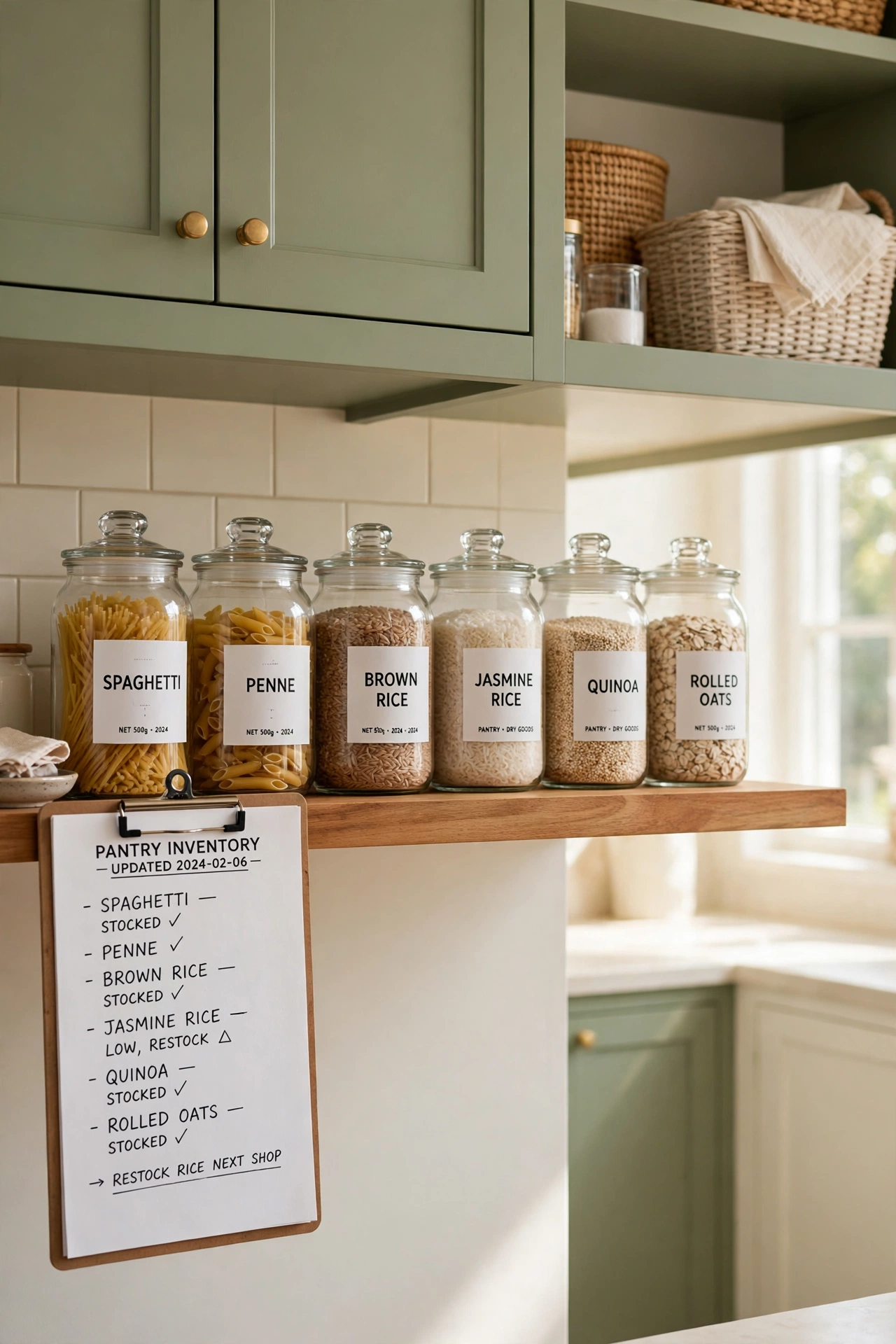
20. Keep a Pantry Inventory List
A pantry inventory list shows exactly what you own before you plan the week. Write down the staples, the canned goods, and the dry goods on the shelves, and update the list after each shop. Planning from the list means you buy only what is missing and cook with what is already there.
Keep the list on the pantry door or inside a kitchen drawer where it is easy to reach. Check the list before you write the meal plan, and plan two or three meals around the items that need using first. A pantry list saves money, cuts waste, and keeps the shelves tidy all year long.
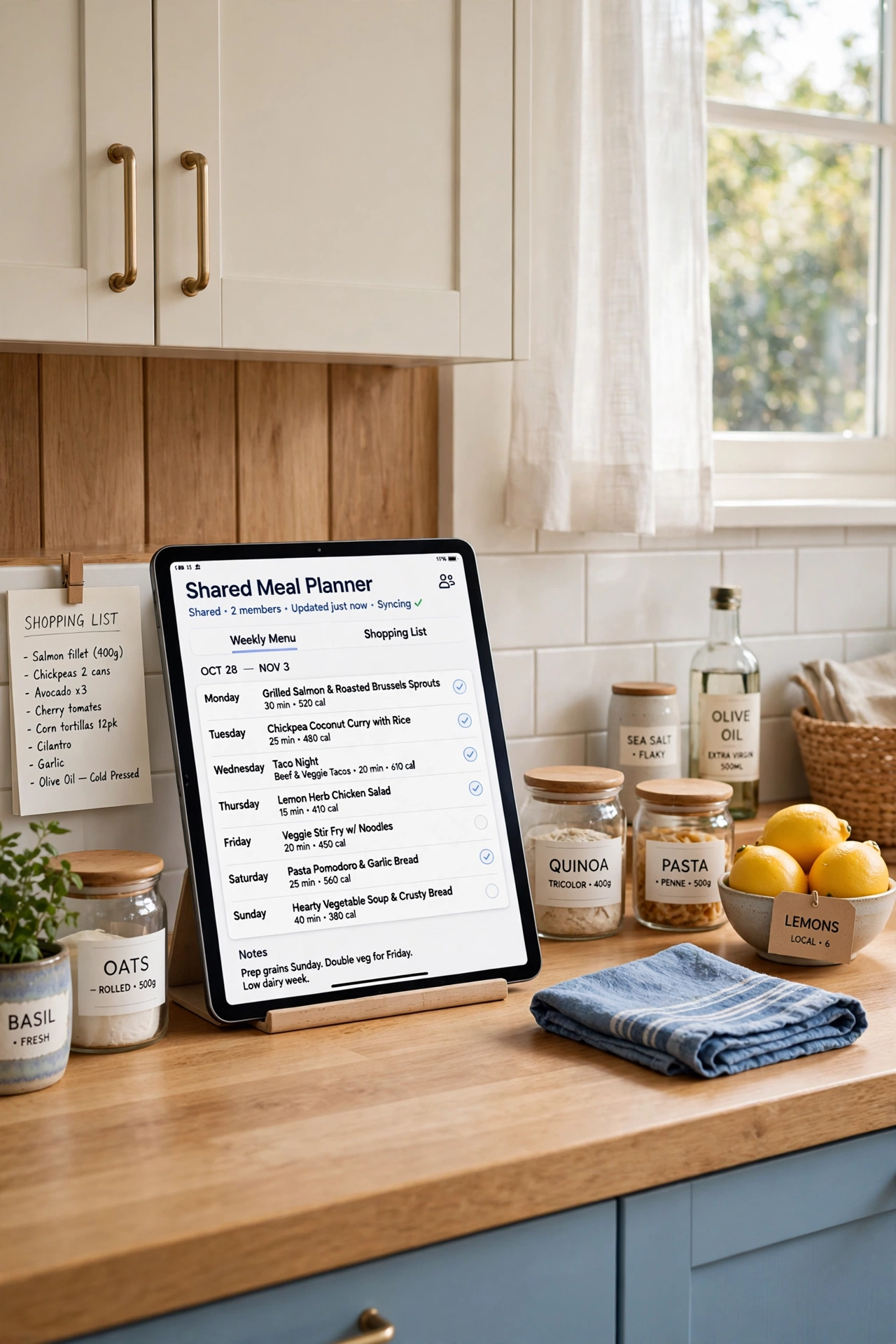
21. Use a Shared Digital Meal Planner
A shared digital meal planner lets the whole family see the week plan on their phones. Choose one simple app and put the dinners, the shopping list, and any notes in the same place. When plans change, one edit updates the plan for everyone at once.
Keep the digital planner simple, with the same seven day layout as a paper board, so the family learns it quickly. Set a weekly reminder to review the plan together on Sunday. A shared planner suits families who already manage their calendars and lists on their phones.
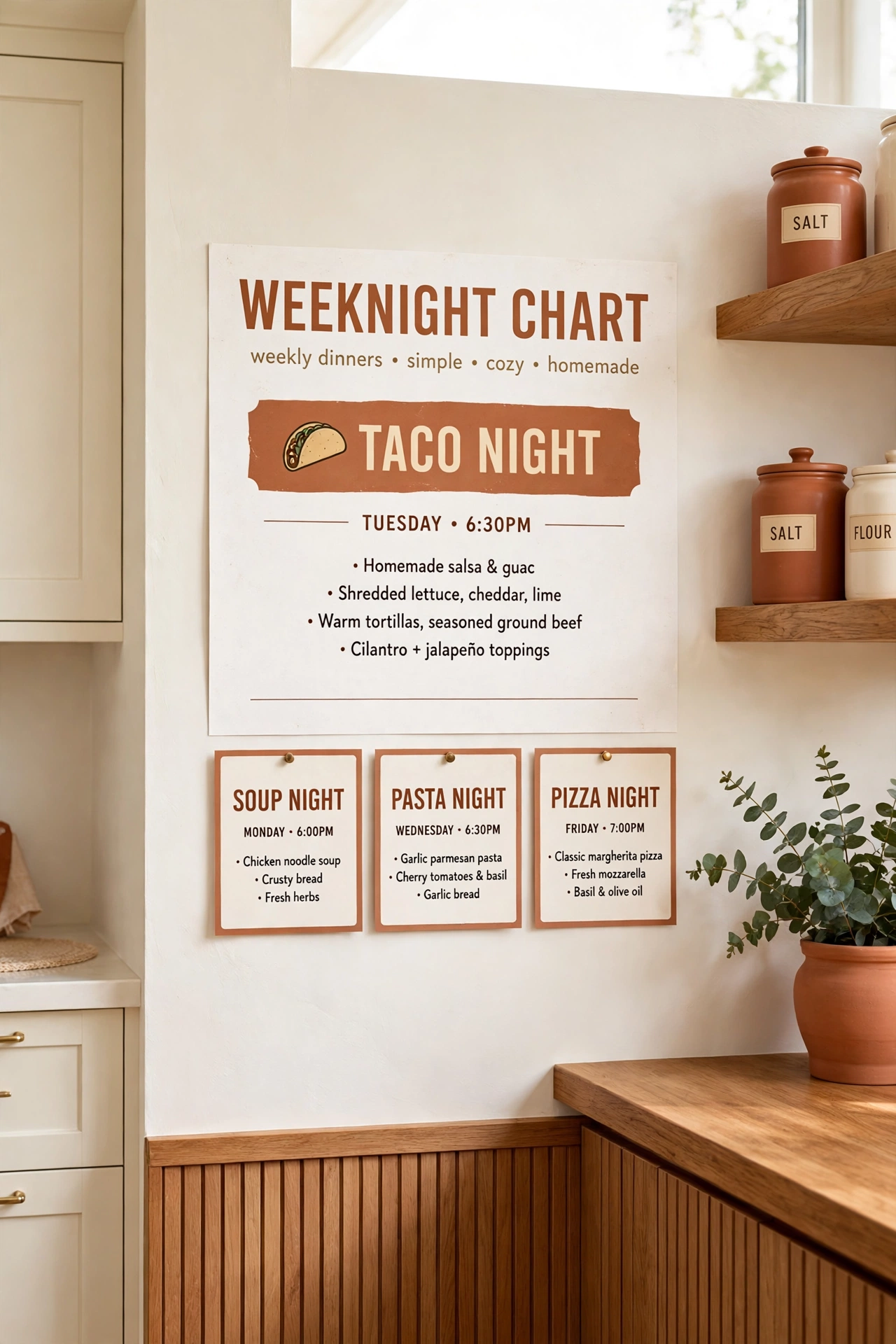
22. Give Weeknights a Theme
Themed weeknights give each evening a clear identity that makes planning automatic. Monday can be meatless, Tuesday can be taco night, Wednesday can be soup night, and the rest of the week follows the same pattern. When the theme is fixed, choosing a recipe takes seconds instead of minutes.
Let the family vote on the themes and keep them for a full month before changing. Themed nights also simplify shopping, because the same kinds of ingredients repeat every week. A themed week feels fun, keeps the menu varied, and makes dinner planning the easiest part of the day.
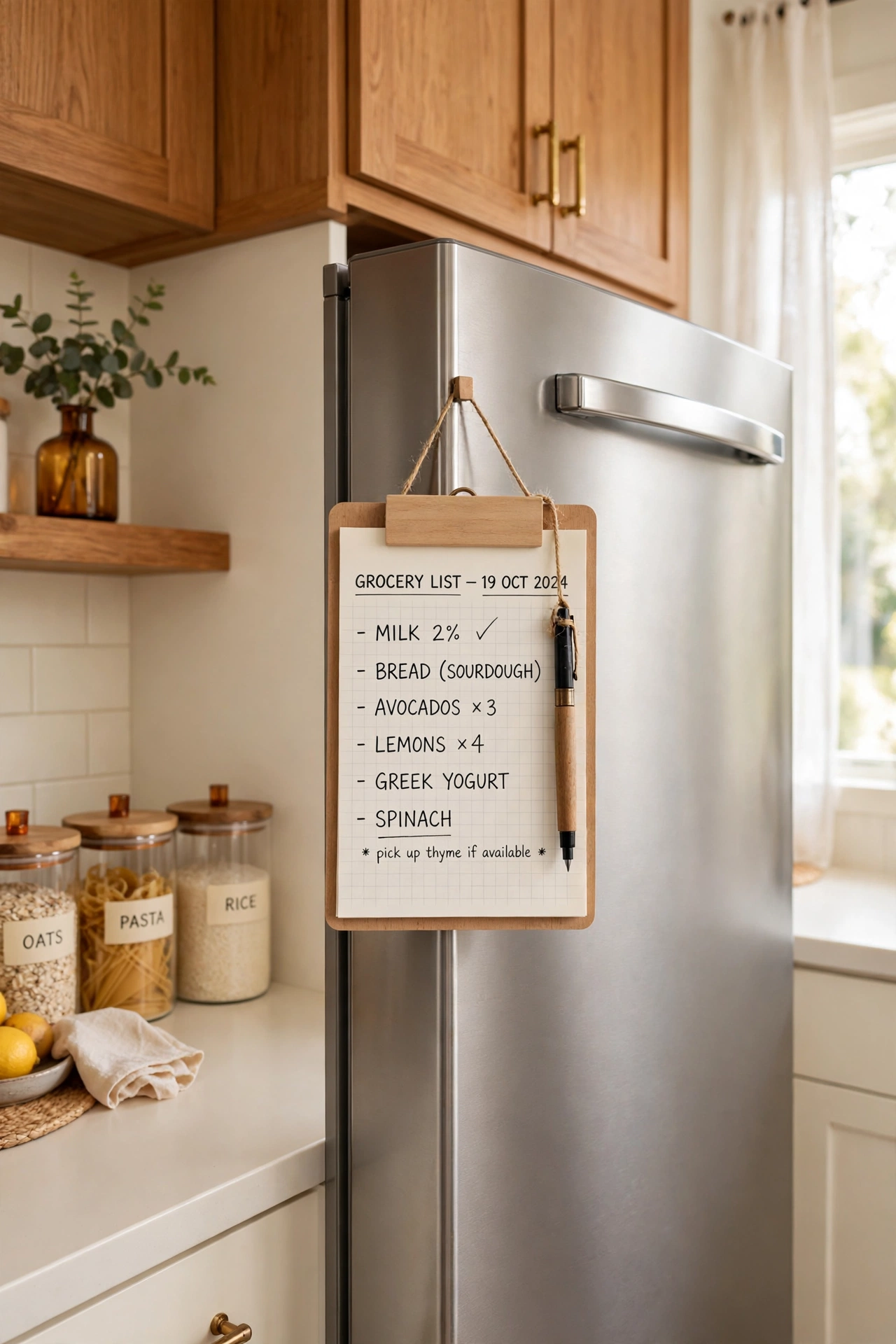
23. Keep a Running Grocery List on the Fridge Door
A running grocery list on the fridge door catches items the moment they run out. Keep a small notepad and a pen on the fridge, and write down anything the family finishes during the week. By shopping day, the list is already complete without a single planning session.
Teach everyone in the family to add to the list, including children who can write or draw what is missing. A running list stops the forgotten item problem and keeps the meal plan working even when the week gets busy. The fridge door is the best place for a list that the whole household helps to build.
24. Organize a Labeled Recipe Binder by Weeknight
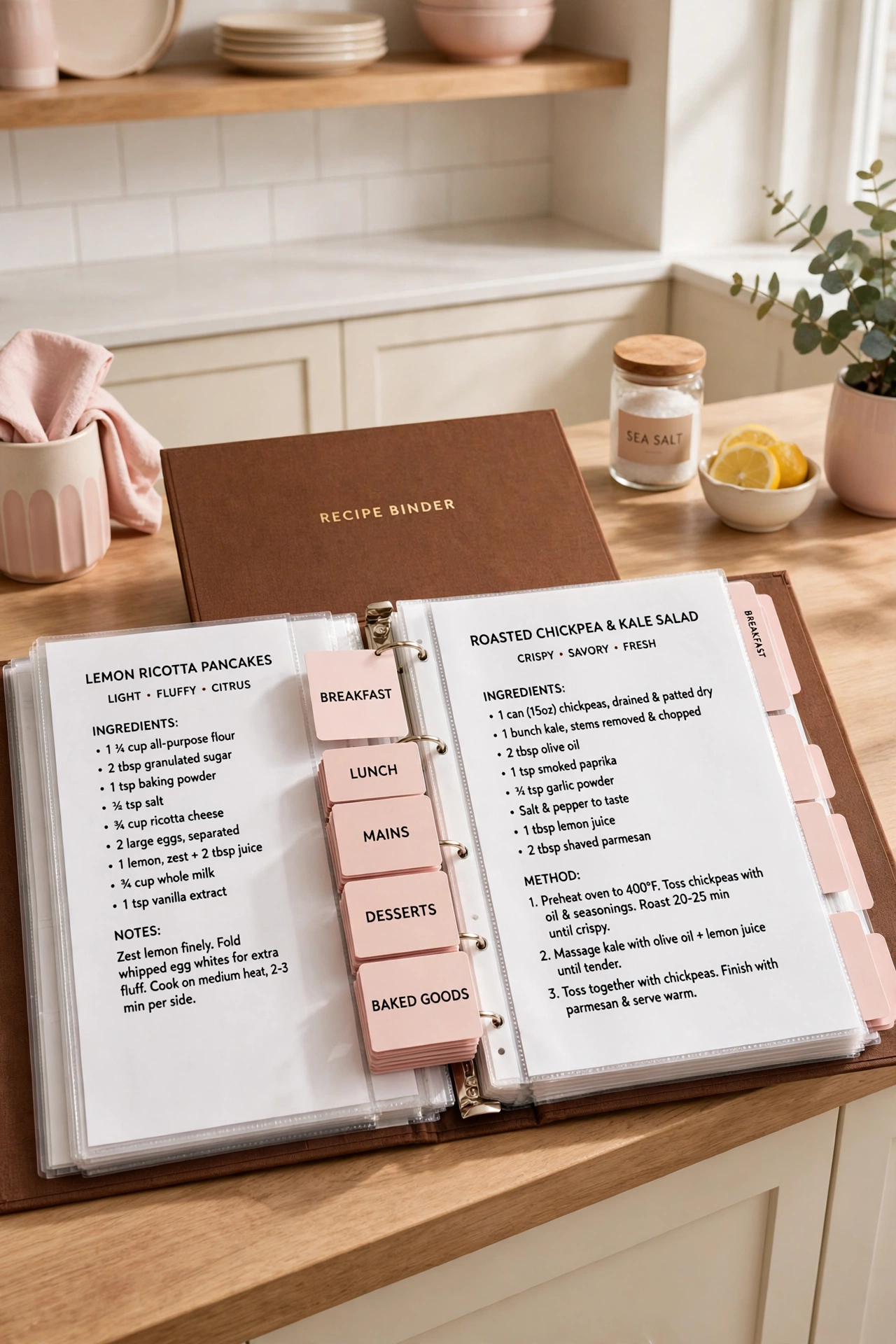
A labeled recipe binder organized by weeknight makes finding tonight dinner fast. Use dividers for Monday through Sunday, and slip the recipes for each night behind its divider. When planning time comes, you flip to the right day and pick from the recipes that already live there.
Print the recipes you use most and keep them in clear sleeves so they stay clean in the kitchen. For more ideas on keeping recipes tidy, see these kitchen recipe organization ideas. A binder by weeknight turns a pile of loose recipes into a plan that runs itself.
25. End the Week with a Sunday Review and Plan
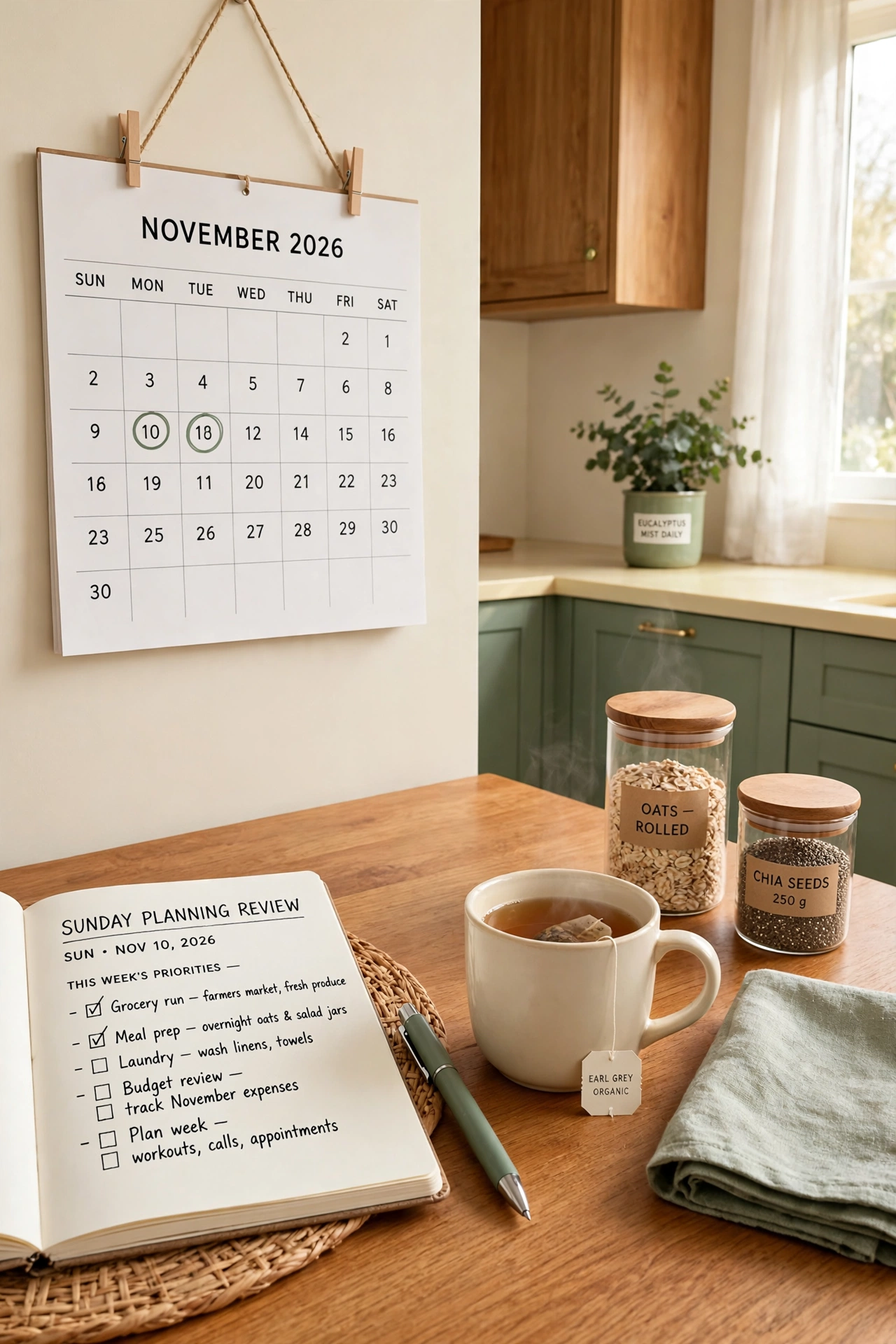
A Sunday review and plan is ten quiet minutes that set up the whole week. Look at what worked, what the family loved, and what ran out too fast. Then write the next week plan, the shopping list, and any prep work for Sunday evening in one sitting.
Keep the review light and quick, and end by choosing one new recipe to try in the coming week. A Sunday review keeps the meal plan honest, because it catches the meals that nobody enjoyed and the gaps that caused stress. Ten minutes on Sunday buys a calm week of dinners.
Conclusion
Family meal planning does not need to be complicated to change the way your week feels. From a board on the fridge to a labeled freezer system, there is an idea here for every family and every schedule. The best plan is the one your family will actually follow, week after week.
Pick one or two ideas that fit your home and start today. Put the board up, write the first week plan, and enjoy a calm dinner tonight. For a calm home beyond the kitchen, these nightly reset routine ideas will help you keep every room organized with just a few minutes each evening.
Frequently Asked Questions About Family Meal Planning Organization Ideas for Busy Weeks
How much time does weekly meal planning take?
About twenty to thirty minutes once a week is enough for most families. Pick the meals, write the shopping list, and do any quick prep in the same session. The time you spend planning saves far more time during the week, because dinner decisions are already made.
What if my family does not like the planned meals?
Let each family member choose one dinner a week and keep a master list of proven favorites. When a meal gets a poor reaction, drop it from the rotation and try a new one. A meal plan works best when the whole family has a voice in it.
How do I meal plan on a tight budget?
Plan meals around weekly sales and pantry items you already own. Cook once and eat twice, and use theme nights to repeat affordable ingredients. A tight budget gets easier when the plan, the shopping list, and the pantry all work together.
Should I plan breakfasts and lunches too?
Yes, planning breakfasts and lunches saves as much morning stress as dinner planning saves in the evening. Keep the same three or four easy options in rotation so the plan stays simple. A full day plan means no one wonders what to eat at any meal.
What is the best way to store leftover meals?
Store leftovers in clear, labeled containers and use them within three to four days. Label each container with the meal name and the date it was cooked. A tidy fridge with labeled containers makes leftovers easy to find and safe to eat.

Hi, I’m Emily! I turn messy corners into cozy, organized spots. DreamNestDecor is where I share simple, practical home ideas — decor, organization, and small-space solutions that work in real life, not just in photos. Every idea here is carefully researched before it’s shared.